Feeds:
Posts
Comments

Archive for the ‘Gene Regulation’ Category

Huge Data Network Bites into Cancer Genomics

Larry H. Bernstein, MD, FCAP, Curator

LPBI


Closer to a Cure for Gastrointestinal Cancer

Suzanne Tracy, Editor-in-Chief, Scientific Computing and HPC Source
http://www.scientificcomputing.com/news/2015/11/closer-cure-gastrointestinal-cancer

In order to streamline workflows and keep pace with data-intensive discovery demands, CCS integrated its HPC environment with data capture and analytics capabilities, allowing data to move transparently between research steps, and driving discoveries such as a link between certain viruses and gastrointestinal cancers.


SANTA CLARA, CA — At the University of Miami’s Center for Computational Science (CCS), more than 2,000 internal researchers and a dozen expert collaborators across academic and industry sectors worldwide are working together in workflow management, data management, data mining, decision support, visualization and cloud computing. CCS maintains one of the largest centralized academic cyberinfrastructures in the country, which fuels vital and critical discoveries in Alzheimer’s, Parkinson’s, gastrointestinal cancer, paralysis and climate modeling, as well as marine and atmospheric science research.

In order to streamline workflows and keep pace with data-intensive discovery demands, CCS integrated its high performance computing (HPC) environment with data capture and analytics capabilities, allowing data to move transparently between research steps. To speed scientific discoveries and boost collaboration with researchers around the world, the center deployed high-performance DataDirect Networks (DDN) GS12K scale-out file storage. CCS now relies on GS12K storage to handle bandwidth-driven workloads while serving very high IOPS demand resulting from intense user interaction, which simplifies data capture and analysis. As a result, the center is able to capture, store and distribute massive amounts of data generated from multiple scientific models running different simulations on 15 Illumina HiSeq sequencers simultaneously on DDN storage. Moreover, number-crunching time for genome mapping and SNP calling has been reduced from 72 to 17 hours.

“DDN enabled us to analyze thousands of samples for the Cancer Genome Atlas, which amounts to nearly a petabyte of data,” explained Dr. Nicholas Tsinoremas, director of the Center for Computational Sciences at the University of Miami. “Having a robust storage platform like DDN is essential to driving discoveries, such as our recent study that revealed a link between certain viruses and gastrointestinal cancers. Previously, we couldn’t have done that level of computation.”

In addition to providing significant storage processing power to meet both high I/O and interactive processing requirements, CCS needed a flexible file system that could support large parallel and short serial jobs. The center also needed to address “data in flight” challenges that result from major data surges during analysis, and which often cause a 10x spike in storage. The system’s performance for genomics assembly, alignment and mapping is enabling CCS to support all its application needs, including the use of BWA and Bowtie for initial mapping, as well as SamTools and GATK for variant analysis and SNP calling.

“Our arrangement is to share data or make it available to anyone asking, anywhere in the world,” added Tsinoremas. “Now, we have the storage versatility to attract researchers from both within and outside the HPC community … we’re well-positioned to generate, analyze and integrate all types of research data to drive major scientific discoveries and breakthroughs.”

About DDN

DataDirect Networks is a big data storage supplier to data-intensive, global organizations. For more than 15 years, the company has designed, developed, deployed and optimized systems, software and solutions that enable enterprises, service providers, universities and government agencies to generate more value and to accelerate time to insight from their data and information, on premise and in the cloud. Organizations leverage DDN technology and the technical expertise of its team to capture, store, process, analyze, collaborate and distribute data, information and content at largest scale in the most efficient, reliable and cost effective manner. DDN customers include financial services firms and banks, healthcare and life science organizations, manufacturing and energy companies, government and research facilities, and web and cloud service providers.


“Where DDN really stood out is in the ability to adapt to whatever we would need. We have both IOPS-centric storage and the deep, slower I/O pool at full bandwidth. No one else could do that.”

Joel P. Zysman

Director of High Performance Computing

Center for Computational Science at the University of Miami

The University of Miami maintains one of the largest centralized, academic, cyber infrastructures in the US, which is integral to addressing and solving major scientific challenges. At its Center for Computational Science (CCS), more than 2,000 researchers, faculty, staff and students across multiple disciplines collaborate on diverse and interdisciplinary projects requiring HPC resources.

With 50% of the center’s users come from University of Miami’s Miller School of Medicine with ongoing projects at the Hussman Institute for Human Genomics, the explosion of next-generation sequencing has had a major impact on compute and storage demands. At CCS, the heavy I/O required to create four billion reads from one genome in a couple of days only intensifies when the data from the reads needs to be managed and analyzed

Aside from providing sufficient storage power to meet both high I/O and interactive processing demands, CCS needed a powerful file system that was flexible enough to handle very large parallel jobs as well as smaller, shorter serial jobs. CCS also needed to address as much as 10X spikes in storage, so it was critical to scale and support petabytes of machine-generated data without adding a layer of complexity or creating inefficiencies.

Read their success story to learn how high-performance DDN® Storage I/O has helped the University of Miami:

  • Establish links between certain viruses and gastrointestinal cancers discovered with computation that were not possible before
  • Reduce genomics compute and analysis time from 72 to 17 hours
CHALLENGES

  • Diverse, interdisciplinary research projects required massive compute and storage power as well as integrated data lifecycle movement and management
  • Highly demanding I/O and heavy interactivity requirements from next-gen sequencing intensified data generation, analysis and management
  • Handle large parallel jobs and smaller, shorter serial jobs
  • Data surges during analysis created “data-in-flight” challenges

SOLUTION

An end-to-end, high performance DDN GRIDScaler® solution featuring a GS12K™ scale-out appliance with an embedded IBM® GPFS™ parallel file system

TECHNICAL BENEFITS

  • Centralized storage with an embedded file system makes it easy to add storage where needed—in the high-performance, high-transaction or slower storage pools—and then manage it all through a single pane of glass
  • DDN’s transparent data movement enables using one platform for data capture, download, analysis and retention
  • The ability to maintain an active archive of storage lets the center accommodate different types of analytics with varied I/O needs

Read Full Post »

Renal Cell Carcinoma Classified

Larry H. Bernstein, MD, FCAP, Curator

LPBI


TCGA Analysis Points to Kidney Cancer Subtypes With Prognosis, Treatment Clues

NEW YORK (GenomeWeb) – Members of the Cancer Genome Atlas Research Network have described two molecularly distinct types within the kidney cancer papillary renal cell carcinoma, including one group containing three prognostically informative subtypes.

As they reported in the New England Journal of Medicine last night, the researchers used whole-exome sequencing, transcriptome sequencing, microRNA sequencing, proteomic analyses, and array-based methylation and copy number profiling to characterize 161 primary papillary renal cell carcinomas.

Bringing these data together, the researchers defined two main papillary renal cell carcinoma groups: type 1 tumors, which were frequently marked by glitches in the MET gene pathway, and type 2 tumors, which fell into three further subtypes with variable molecular features and patient outcomes.

The findings “really help us understand the phenotypes of sporadic papillary kidney cancer,” corresponding author Marston Linehan, a urologic oncology researcher with the National Cancer Institute, told GenomeWeb. “It also confirms that type 1 and type 2 [papillary renal cell carcinoma] really are two very separate diseases.”

It’s expected that molecular patterns within these groups could help predict disease aggressiveness in papillary renal cell carcinoma patients and, in some cases, highlight possible treatment targets.


Comprehensive Molecular Characterization of Papillary Renal-Cell Carcinoma

The Cancer Genome Atlas Research Network Group

NEJM   Nov 4, 2015     DOI: http://dx.doi.org:/10.1056/NEJMoa1505917

Papillary renal-cell carcinoma, which accounts for 15 to 20% of renal-cell carcinomas, is a heterogeneous disease that consists of various types of renal cancer, including tumors with indolent, multifocal presentation and solitary tumors with an aggressive, highly lethal phenotype. Little is known about the genetic basis of sporadic papillary renal-cell carcinoma, and no effective forms of therapy for advanced disease exist.

Type 1 and type 2 papillary renal-cell carcinomas were shown to be different types of renal cancer characterized by specific genetic alterations, with type 2 further classified into three individual subgroups on the basis of molecular differences associated with patient survival. Type 1 tumors were associated with METalterations, whereas type 2 tumors were characterized by CDKN2Asilencing, SETD2 mutations, TFE3 fusions, and increased expression of the NRF2–antioxidant response element (ARE) pathway. A CpG island methylator phenotype (CIMP) was observed in a distinct subgroup of type 2 papillary renal-cell carcinomas that was characterized by poor survival and mutation of the gene encoding fumarate hydratase (FH).

Type 1 and type 2 papillary renal-cell carcinomas were shown to be clinically and biologically distinct. Alterations in the MET pathway were associated with type 1, and activation of the NRF2-ARE pathway was associated with type 2; CDKN2A loss and CIMP in type 2 conveyed a poor prognosis. Furthermore, type 2 papillary renal-cell carcinoma consisted of at least three subtypes based on molecular and phenotypic features. (Funded by the National Institutes of Health.)

Figure 1. Somatic Alterations in Papillary Renal-Cell Carcinoma and Molecular Differences between Type 1 and Type 2 Cancers.

http://www.nejm.org/na101/home/literatum/publisher/mms/journals/content/nejm/0/nejm.ahead-of-print/nejmoa1505917/20151104-02/images/small/nejmoa1505917_f1.gif

Unsupervised clustering of DNA copy profiles of 161 papillary renal-cell carcinomas (PRCCs) (Panel A) revealed three molecular subtypes, one of which was highly enriched for type 1 tumors and the other two for type 2 tumors. SCNA denotes somatic copy-number alterations. Significantly mutated genes (SMGs) in PRCC (Panel B) were determined by considering all genes (q<0.1 [range, 0.0 to 1.0]) or focusing on the set of 260 genes previously implicated in cancer by large-scale, pan-cancer exome analyses15 (q<0.1). P values were calculated with the MutSigCV algorithm, version 2.0. A pathway-centric view of gene mutations in PRCC (Panel C) shows key pathways and genes implicated in cancer, either in the current study or elsewhere.15 The tumors were classified according to histologic type (from left to right) and according to gene or pathway altered (from top to bottom). Pathways and genes represented include MET, the Hippo pathway (NF2, SAV1, and WWC1), the NRF2 pathway (NFE2L2, KEAP1, CUL3, SIRT1, and FH), chromatin modification (CREBBP, DOTL1, EHMT1/2, EP300, EZH1/2, KAT2A/B, KDM1A/B, KDM4A/B, KDM5A/B/C, KDM6A/B, MLL1/2/3/4/5, NSD1, SETD2, SMYD4, and SRCAP), the SWI/SNF complex (ACTB, ACTL6A/B, ARID1A/B, ARID2, BCL6A/B/C, BCL11A/B, BRD7/9, DPF1/2/3, PHF10, PBRM1, SMARCA2/4

Figure 2. Alterations in Papillary Renal-Cell Carcinoma Involving the MET Oncogene.

http://www.nejm.org/na101/home/literatum/publisher/mms/journals/content/nejm/0/nejm.ahead-of-print/nejmoa1505917/20151104-02/images/small/nejmoa1505917_f2.gif

Panel A is a schematic representation of somatic mutations in MET, along with germline variant H1112R, which was previously implicated in hereditary papillary renal-cell carcinoma,17 and the novel RNA transcript variant of MET lacking the canonical exons 1 and 2 but containing a novel exon 1 that splices to the canonical exon 3. IPT denotes immunoglobulin-like, plexins, and transcription factors, and PSI plexins, semaphorins, and integrins. Panel B shows the crystal structure for the MET tyrosine kinase catalytic domain (RCSB-PDB 3I5 N18), on which are mapped the residues that are altered in papillary renal-cell carcinoma. All numbering of amino acids is based on the MET protein sequences.

We used a comprehensive genomics approach to characterize the biologic foundation of papillary renal-cell carcinoma and found that type 1 and type 2 papillary renal-cell carcinoma are distinctly different diseases and that type 2 papillary renal-cell carcinoma is a heterogeneous disease with multiple distinct subgroups. Common driver mutations among the different subtypes were relatively rare, as had been observed in two recent studies.7,30 Molecular and phenotypic differences between type 1 and type 2 papillary renal-cell carcinoma were reflected in individual and combined analyses of various data platforms. The usefulness of CDKN2A alterations as an independent prognostic marker associated with type 2 tumors requires validation. This study suggests that gene fusions involving TFE3 or TFEB are underappreciated in type 2 tumors in adults and should be considered in any patient with type 2 disease. Although papillary renal-cell carcinomas with fusions involving TFE3 or TFEB are generally considered to be diseases of children and young adults,16the mean age in our study was 52 years, and we found tumors with TFEB fusions in patients 64 and 71 years of age.

The most distinct of the three type 2 subgroups was the subgroup defined by the CIMP, which was associated with the worst overall survival. CIMP hypermethylation patterns have been observed in a number of other cancer subtypes, including glioblastoma,31 lung adenocarcinoma,32 and gastric adenocarcinoma.33 The CIMP-associated tumors showed low levels of FH mRNA expression, and five had germline or somatic mutation of FH. Germline mutation of FH has been observed in the aggressive type 2 tumor associated with the hereditary leiomyomatosis and renal-cell cancer syndrome.9,34 In this syndrome, the high levels of fumarate accumulating from loss of fumarate hydratase enzyme activity result in impaired function of enzymes such as the TET family of enzymes, which play a role in maintaining appropriate DNA methylation within the genome.35 The subgrouping of type 2 tumors according to molecular features and the presence of specific subsets of type 2 tumors, such as those with TFE3 fusions or CIMP, suggest that substratification of type 2 papillary renal-cell carcinoma according to specific molecular markers may allow more accurate diagnosis that could lead to the development of mechanistic, disease-specific targeted therapies.

This classification of papillary renal-cell carcinoma could potentially have a substantial effect on clinical and therapeutic management and on the design of clinical trials. Alteration of MET or gain of chromosome 7 was observed in a large percentage (81%) of type 1 tumors. Antitumor activity of an agent targeting the MET and VEGFR2 pathways has been shown in a phase 2 trial involving patients with papillary renal-cell carcinoma, with a particularly high response rate among patients who had tumors with MET mutations.36 Mutation of the Hippo pathway tumor suppressor, NF2, was observed in a number of papillary renal-cell carcinomas. This pathway has been targeted in other cancers with agents such as dasatinib, an inhibitor of the YES1 kinase that interacts with the YAP transcription factor that is up-regulated with Hippo pathway dysregulation.37 The CIMP-associated tumors showed a Warburg-like metabolic shift, similar to that observed in fumarate hydratase–deficient tumors in patients with the hereditary leiomyomatosis and renal-cell cancer syndrome.11,25,26 A clinical trial targeting this metabolic shift in papillary renal-cell carcinoma is currently under way (ClinicalTrials.gov number, NCT01130519). Increased expression of the NRF2-ARE pathway has been observed in both hereditary and sporadic type 2 papillary renal-cell carcinomas.12 Immunohistochemical analysis for NQO1 could provide a valuable marker of activation of the NRF2-ARE pathway. Currently, there is intense interest in the NRF2-ARE pathway in cancer,38 and novel strategies have recently been developed to target this pathway.39

The identification of altered genes and pathways provides a comprehensive foundation for an understanding of the molecular basis of papillary renal-cell carcinoma. This refined classification more accurately reflects the genotypic and phenotypic differences among the various types of these tumors and may lead to more appropriate clinical management and development of more effective forms of therapy.

Read Full Post »

Neural Networks in Alzheimer’s

Larry H. Bernstein, MD, FCAP, Curator

LPBI

SfN 2015 Recap: The Role of Synapses, Neural Networks in Alzheimer’s

Stephanie Guzowski, Editor

http://www.dddmag.com/articles/2015/11/sfn-2015-recap-role-synapses-neural-networks-alzheimers

http://www.dddmag.com/sites/dddmag.com/files/perineuronal%20nets_SfN.jpg

Perineuronal nets, shown in green, in three regions of the mouse brain. Credit: S.F. Palida et al.

Cognition and behavior rely on communication between individual neurons and extensive interactions between neural networks. But when synaptic dysfunction occurs, the results can be dire, leading to neurodegenerative symptoms in Alzheimer’s disease.

“The brain is the seed of our personal identity,” said Valina Dawson, Ph.D., director of neurogeneration and stem cell programs at Johns Hopkins University in Baltimore, Maryland. “It allows us to interact with our world but when things go wrong in the brain, it’s disastrous for the individual as well as the family.

“Our ability to treat these diseases is limited at the moment. We need new insight into what goes wrong.”

A lesser-known protein

Researchers, for years, have targeted amyloid beta (Aβ) in attempts to halt the progression of Alzheimer’s disease, and have recently, shown increased interest in the protein, tau.

But Paula Pousinha, Ph.D., at the French National Centre for Scientific Research, has focused her research on a lesser-known protein fragment: amyloid precursor protein intracellular domain (AICD). AICD is a fragment of amyloid precursor protein (APP), which is formed at the same time as Aβ in the brain. New evidence suggests that in addition to Aβ, AICD also disrupts communication between neurons during the progression of Alzheimer’s disease. Pousinha presented thesepublished findings at this year’s Society for Neuroscience (SfN) conference, which took place from October 17 to 21 in Chicago.

“Although AICD has been known for more than 10 years, it has been poorly studied,” said Pousinha.

Pousinha’s research team demonstrated that overexpressing AICD levels with AAV vector in rats’ brains “perturbs neuronal communication in the hippocampus,” a key structure necessary in forming memories and an area earliest affected in Alzheimer’s disease.

“In normal animals, if we apply to these neurons a high-frequency stimulation, afterward the neurons are stronger,” said Pousinha. “Neurons where we overexpressed AICD failed to have this potentization.”

Pousinha doesn’t negate the importance of Aβ in the development of neurodegenerative diseases. “Our study doesn’t exclude the pathological effects of Aβ,” she said. “We believe that Alzheimer’s disease is much more complex and has more than one candidate that has implications.

“It’s very important for the scientific community to understand the role of all these APP fragments of neuroinflammation — different pieces of the puzzle of how we can stop the disease progression.”

How do memories persist in the brain long term?

New research, also presented at this year’s SfN, has implications for understanding memory to develop treatments for Alzheimer’s disease and dementias. Sakina Palida, a graduate student at the University of California, San Diego found that localized modifications in the perineuronal net (PNN) at synapses could be a mechanism by which information is stably encoded and preserved in the brain over time.

“We still don’t understand how we stably encode and store memories in our brains for up to our entire lifetimes,” said Palida. The prevailing idea on how memories are maintained over time generally focus on postsynaptic proteins, said Palida. “But the problem with looking at intracellular synaptic proteins is that the majority turn over rapidly, of hours to at most a few days. So they’re very unstable.”

So, Palida and her team identified PNN as an ideal substrate for long-term memory. “Kind of like how you carve into stone — stone is a stable substrate — you retain the information regardless of what comes and goes over it.” They demonstrated that individual PNN proteins are highly stable, and that the PNN is locally degraded when synapses are strengthened.

And the team also demonstrated that mice lacking enzymes that degrade the PNN have deficient long-term, but not short-term, memory. “Which is a really exciting new result,” said Palida.

To track the PNN in live animals, Palida and her team fused a fluorescent protein to a small link protein in the PNN to allow tracking of PNN dynamics in real time. They also monitored PNN degradation in live cells after stimulating neurons with brain-derived neurotrophic factor (BDNF), a chemical secreted in the nervous system to enhance signaling — and observed localized degradation of the PNN at some newly formed synapses.

Crtl 1-Venus. Fusion of a fluorescent protein to small link proteins in the PNN allows tracking of PNN dynamics over time. Credit: S.F. Palida et al. Crtl1-Venus Neurons. Tracking PNN dynamics in live cells, in mouse brain tissue. Credit: S.F. Palida et al.

What’s next? “We’re currently making transgenic animals to express this protein, which would allow us to monitor PNN dynamics simultaneously with synaptic dynamics in a live animal brain, and really investigate this hypothesis further,” said Palida.

Increased APP intracellular domain (AICD) production perturbs synaptic signal integration via increased NMDAR function

*Paula A Pousinha1PubmedElisabeth Raymond1PubmedXavier Mouska1PubmedMichael Willem2PubmedHélène Marie1Pubmed

1660 Route de Lucioles, CNRS IPMC UMR 7275, Valbonne, France2Ludwig-Maximilians-University Munich, Munich, Germany

Alzheimer’s disease (AD) is a neurodegenerative disease that begins as mild short-term memory deficits and culminates in total loss of cognition and executive functions. The main culprit of the disease, resulting from Amyloid-Precursor Protein (APP) processing, has been thought to be amyloid-b peptide (Ab). However, despite the genetic and cell biological evidence that supports the amyloid cascade hypothesis, it is becoming clear that AD etiology is complex and that Ab alone is unable to account for all aspects of AD [Pimplikar et al. J Neurosci.30: 14946. 2010]. Gamma-secretase not only liberates Ab, but also its C-terminal intracellular counterpart called APP intracellular domain (AICD) [Passer. et al. JAlzheimers Dis.2: 289-301. 2000], which is known to also accumulate in AD patient’s brain [Ghosal et al. PNAS.106:18367. 2009], but surprisingly little is known about its functions in the hippocampus. To address this crucial issue, we increased AICD production in vivo in adult CA1 pyramidal neurons, mimicking the human pathological condition. Different ex-vivo electrophysiological and pharmacological approaches, including double- patch of neighbor neurons were used. We clearly demonstrate that in vivo AICD production increases synaptic NMDA receptor currents. This causes a frequency-dependent disruption of synaptic signal integration, leading to impaired long-term potentiation, which we were able to rescue by different pharmacological approaches. Our results provide convincing and entirely novel evidence that increased in vivo production of AICD is enough, per se, to cause synaptic dysfunction in CA1 hippocampal neurons.

131.21P2X2R-FE65 interaction induces synaptic failure and neuronal dyshomeostasis after treatments with soluble oligomers of amyloid beta peptide

300.15Early synaptic deficits in Alzheimer’s disease involve neuronal adenosine A2A receptors

215.08Homeostatic coupling between surface trafficking and cleavage of amyloid precursor protein

280.11A novel mechanism for lowering Abeta

383.22Impact of intracellular soluble oligomers of amyloid-β peptide on glutamatergic synaptic transmission

Society for Neuroscience Annual Meeting Showcases Strides in Brain Research

10/23/2015 – Stephanie Guzowski, Editor

CHICAGO – Nearly 30,000 researchers from more than 80 countries gathered this week at the annual Society for Neuroscience (SfN) meeting, the world’s largest conference focused on scientific discovery related to the brain and nervous system.

The 45th annual SfN meeting at McCormick Place convention center showcased more than 15,000 scientific presentations on advances in technologies and new research about brain structure, disease and treatments, and 517 exhibitors, according to event organizers.

Presentations covered a wide variety of topics including new technologies to study the brain, the science behind addiction, potential treatments for spinal cord injuries, and the role of synapses in neurological conditions.

Of particular focus was the Brain Research through Advancing Innovative Neurotechnologies (BRAIN) Initiative, the large collaborative quest to develop technologies for a dynamic view of the brain. In early October, the National Institutes of Health announced its second round of funding to support goals, bringing the NIH investment to $85 million in fiscal year 2015.

Toxic Tau Could be Key to Alzheimer’s Treatment

01/06/2015 – Stephanie Guzowski, Editor

http://www.dddmag.com/articles/2015/01/toxic-tau-could-be-key-alzheimers-treatment

http://www.dddmag.com/sites/dddmag.com/files/tangles_Alz2.jpg

“But now, we know that tau is not simply a bystander but also a player,” Li said. “Both proteins work together to damage cell functions as the disease unfolds.”

Targeting tau

In the healthy brain, tau protein helps with the building and functioning of neurons. But when tau malfunctions, it creates abnormal clumps of protein fibers—neurofibrillary tangles—which spread rapidly throughout the brain. This highly toxic and altered form of the brain protein tau is called “tau oligomer.”

“There’s growing evidence that tau oligomers, not tau protein in general, are responsible for the development of neurodegenerative diseases, like Alzheimer’s,” said Julia Gerson, a graduate student in neuroscience at the University of Texas Medical Branch.

In Gerson’s research, which she presented at this year’s Society for Neuroscience meeting in Washington, D.C., Gerson and her team injected tau oligomers from people with Alzheimer’s into the brains of healthy mice. Subsequent testing revealed that the mice had developed memory loss.

“When we inject mice with tau oligomers, we see that they spend the same amount of time exploring a familiar object as an unfamiliar object,” said Gerson. “So they’re incapable of remembering that they’ve already seen this familiar object.”

What’s more, the molecules had multiplied throughout the animals’ brains. “This suggests that tau oligomers may spread from the injection site to other unaffected regions,” said Gerson.

Future treatments

Understanding tau’s connection to Alzheimer’s could have implications for potential therapies. “If we can stop the spread of these toxic tau oligomers, we may be capable of either preventing, or reversing, symptoms,” said Gerson. Gerson’s lab is currently investigating antibodies, which specifically fight tau oligomers.

Click to Enlarge. Normal brain vs. Alzheimer’s brain (Credit: Garrondo)

Erik Roberson, M.D., Ph.D., at the University of Alabama at Birmingham, and colleagues looked at how boosting the function of a specific type of neurotransmitter receptor, the NMDA receptor, provided benefit to people with the second most common type of dementia: frontotemporal dementia (FTD), a disease in which people experience rapid and dramatic changes in behavior, personality and social skills. People often quickly deteriorate and usually die about three years after diagnosis; there is also no effective treatment for FTD.

Since mutated tau impairs synapses—the connections between neurons—by reducing the size of NMDA receptors, “boosting the function of remaining NMDA receptors may help restore synaptic firing, and reverse behavioral abnormalities,” said Roberson.

Roberson’s, along with others’ work presented at the Society of Neuroscience meeting, focused on using animal models that mimic developing tau pathology. “These new mouse models, which contain both tau tangles and amyloid plaques” said Dr. Li, “offer the possibility of more accurately testing therapies directed at delaying the onset of amyloid beta plaques, tau accumulation and neuronal loss, all characteristic features of Alzheimer’s.”

Are clinical trials next?

Potentially, yes. “This arena of academic research has been ongoing for several years—it’s a younger area in terms of involvement of drug discovery,” said Sangram Sisodia, Ph.D., director of the Center for Molecular Neurobiology at the University of Chicago. “But I believe there is growing interest in pharma companies about targeting tau.

“The tau protein plays an incredibly complex role in the development of Alzheimer’s and other neurodegenerative diseases,” said Sisodia. “We are in the early stages of understanding that role, which will be crucial for developing effective preventions or treatments.”

Read Full Post »

Diagnostic Revelations

Larry H. Bernstein, MD, FCAP, Curator

LPBI

New Liquid Biopsy Test Uses Platelet RNA as Cancer Diagnostic

  • Click Image To Enlarge +
    Using platelet RNA, scientists have been able to detect the presence of cancer and pinpoint its primary location. [Best et al., 2015, Cancer Cell 28, 1–11]

    The age of fast, accurate, and noninvasive cancer screening is rapidly becoming reality. The power of next-generation sequencing has allowed molecular diagnostic techniques to sample small amounts of blood for the genetic hallmarks of tumorigenesis. These liquid biopsy procedures, as they have been dubbed, typically search for circulating tumor DNA (ctDNA) that has made its way into the systemic circulation from tumor cells that have died or enrich for circulating tumor cells (CTCs) that have broken off from the primary cancer site.

    Now, a team of researchers lead by scientists at Massachusetts General Hospital (MGH), have developed a new diagnostic test that analyzes the tumor RNA picked up in circulating platelets. The investigators believe this new method could become even more useful than other molecular technologies for diagnosing cancer since it can also determine the primary location of the tumor and provide insight to potential therapeutic approaches.

    “By combining next-generation-sequencing gene expression profiles of platelet RNA with computational algorithms we developed, we were able to detect the presence of cancer with 96 percent accuracy,” explains co-senior author Bakhos Tannous, Ph.D., associate professor Harvard Medical School and associate neuroscientist at MGH. “Platelet RNA signatures also provide valuable information on the type of tumor present in the body and can guide the selection of the most optimal treatment for individual patients.

    The findings from this study were published recently in Cancer Cell through an article entitled “RNA-Seq of Tumor-Educated Platelets Enables Blood-Based Pan-Cancer, Multiclass, and Molecular Pathway Cancer Diagnostics.”

    In the current study the research team describes finding that the RNA profiles of tumor-educated platelets (TEPs)—those that have taken up molecules shed by tumors—can distinguish among blood samples of healthy individuals and those of patients with six types of cancer, determine the location of the primary tumor, and identify tumors carrying mutations that can guide therapeutic decision-making.

    Over the past several years, the scientific literature has shown that in addition to their role in promoting blood clotting, platelets take up protein and RNA molecules from tumors, possibly playing a role in tumor growth and metastasis. Dr. Tannous and his colleagues set out to determine whether tumor RNA carried in platelets could be used to diagnose and classify common types of cancer.

    The investigators isolated platelets from blood samples taken from 55 healthy donors, 39 individual with early-stage cancer and 189 patients with advanced, metastatic cancer. Among those patients with cancer, they were diagnosed with non-small-cell lung cancer, colorectal cancer, glioblastoma, pancreatic cancer, hepatobiliary cancer, or breast cancer.

    The comparison of RNA profiles from the healthy donors to those of the cancer patients identified increased levels of approximately 1,500 RNA molecules—many involved in cancer-associated processes—and a reduction of almost 800 in samples from cancer patients. Using their novel algorithm, the MGH group was able to examine close to 1,000 RNAs from almost 300 individuals with 96% accuracy for the presence of cancer.

    Additionally, the platelet mRNA profiles were able to identify the particular type of cancer within each patient participant, including distinguishing among three types of gastrointestinal adenocarcinoma: colorectal cancer, pancreatic cancer, and hepatobiliary cancer. Platelets from patients with tumors driven by mutations in KRAS or EGFR proteins—biomarkers that can guide the use of drugs targeting those mutations—proved to have unique RNA profiles as well.

    The researchers were excited by their findings and emphasize the uniqueness of their approach as currently utilized liquid biopsy approaches have been unable to diagnose cancer while simultaneously pinpointing the location of the primary tumor.

    “We observed that the mRNA profiles of tumor-educated platelets have the sensitivity and specificity to detect cancer, even in early, non-metastasized tumors,” noted Dr. Tannous. “We are further assessing the potential of TEP-based screening for therapeutic decision making and also investigating how non-cancerous diseases may further influence the RNA repertoire of TEPs.”

  • RNA-Seq of Tumor-Educated Platelets Enables Blood-Based Pan-Cancer, Multiclass, and Molecular Pathway Cancer Diagnostics

Myron G. Best Nik Sol, Jihane Tannous, Bart A. Westerman, François Rustenburg, Pepijn Schellen, Heleen Verschueren, Edward Post, Jan Koster, Bauke Ylstra, Irsan Kooi, et al.
Highlights

Tumors “educate” platelets (TEPs) by altering the platelet RNA profile

TEPs provide a RNA biosource for pan-cancer, multiclass, and companion diagnostics

TEP-based liquid biopsies may guide clinical diagnostics and therapy selection

A total of 100–500 pg of total platelet RNA is sufficient for TEP-based diagnostics

mRNA Profiles of Tumor-Educated Platelets Are Distinct from Platelets of Healthy Individuals

Summary

Tumor-educated blood platelets (TEPs) are implicated as central players in the systemic and local responses to tumor growth, thereby altering their RNA profile. We determined the diagnostic potential of TEPs by mRNA sequencing of 283 platelet samples. We distinguished 228 patients with localized and metastasized tumors from 55 healthy individuals with 96% accuracy. Across six different tumor types, the location of the primary tumor was correctly identified with 71% accuracy. Also, MET or HER2-positive, and mutant KRAS, EGFR, orPIK3CA tumors were accurately distinguished using surrogate TEP mRNA profiles. Our results indicate that blood platelets provide a valuable platform for pan-cancer, multiclass cancer, and companion diagnostics, possibly enabling clinical advances in blood-based “liquid biopsies”.

Figure thumbnail fx1

http://www.cell.com/cms/attachment/2039645414/2053235278/fx1.jpg

Significance

Blood-based “liquid biopsies” provide a means for minimally invasive molecular diagnostics, overcoming limitations of tissue acquisition. Early detection of cancer, clinical cancer diagnostics, and companion diagnostics are regarded as important applications of liquid biopsies. Here, we report that mRNA profiles of tumor-educated blood platelets (TEPs) enable for pan-cancer, multiclass cancer, and companion diagnostics in both localized and metastasized cancer patients. The ability of TEPs to pinpoint the location of the primary tumor advances the use of liquid biopsies for cancer diagnostics. The results of this proof-of-principle study indicate that blood platelets are a potential all-in-one platform for blood-based cancer diagnostics, using the equivalent of one drop of blood.

Introduction

Cancer is primarily diagnosed by clinical presentation, radiology, biochemical tests, and pathological analysis of tumor tissue, increasingly supported by molecular diagnostic tests. Molecular profiling of tumor tissue samples has emerged as a potential cancer classifying method (Akbani et al., 2014, Golub et al., 1999, Han et al., 2014, Hoadley et al., 2014, Kandoth et al., 2013,Ramaswamy et al., 2001, Su et al., 2001). In order to overcome limitations of tissue acquisition, the use of blood-based liquid biopsies has been suggested (Alix-Panabières et al., 2012, Crowley et al., 2013, Haber and Velculescu, 2014). Several blood-based biosources are currently being evaluated as liquid biopsies, including plasma DNA (Bettegowda et al., 2014, Chan et al., 2013, Diehl et al., 2008, Murtaza et al., 2013, Newman et al., 2014, Thierry et al., 2014) and circulating tumor cells (Bidard et al., 2014, Dawson et al., 2013, Maheswaran et al., 2008, Rack et al., 2014). So far, implementation of liquid biopsies for early detection of cancer has been hampered by non-specificity of these biosources to pinpoint the nature of the primary tumor (Alix-Panabières and Pantel, 2014,Bettegowda et al., 2014).

It has been reported that tumor-educated platelets (TEPs) may enable blood-based cancer diagnostics (Calverley et al., 2010, McAllister and Weinberg, 2014,Nilsson et al., 2011). Blood platelets—the second most-abundant cell type in peripheral blood—are circulating anucleated cell fragments that originate from megakaryocytes in bone marrow and are traditionally known for their role in hemostasis and initiation of wound healing (George, 2000, Leslie, 2010). More recently, platelets have emerged as central players in the systemic and local responses to tumor growth. Confrontation of platelets with tumor cells via transfer of tumor-associated biomolecules (“education”) is an emerging concept and results in the sequestration of such biomolecules (Klement et al., 2009,Kuznetsov et al., 2012, McAllister and Weinberg, 2014, Nilsson et al., 2011,Quail and Joyce, 2013). Moreover, external stimuli, such as activation of platelet surface receptors and lipopolysaccharide-mediated platelet activation (Denis et al., 2005, Rondina et al., 2011), induce specific splicing of pre-mRNAs in circulating platelets (Power et al., 2009, Rowley et al., 2011, Schubert et al., 2014). Platelets may also undergo queue-specific splice events in response to signals released by cancer cells and the tumor microenvironment—such as stromal and immune cells. The combination of specific splice events in response to external signals and the capacity of platelets to directly ingest (spliced) circulating mRNA can provide TEPs with a highly dynamic mRNA repertoire, with potential applicability to cancer diagnostics (Calverley et al., 2010, Nilsson et al., 2011) (Figure 1A). In this study, we characterize the platelet mRNA profiles of various cancer patients and healthy donors and investigate their potential for TEP-based pan-cancer, multiclass cancer, and companion diagnostics.

  
Results

We prospectively collected and isolated blood platelets from healthy donors (n = 55) and both treated and untreated patients with early, localized (n = 39) or advanced, metastatic cancer (n = 189) diagnosed by clinical presentation and pathological analysis of tumor tissue supported by molecular diagnostics tests. The patient cohort included six tumor types, i.e., non-small cell lung carcinoma (NSCLC, n = 60), colorectal cancer (CRC, n = 41), glioblastoma (GBM, n = 39), pancreatic cancer (PAAD, n = 35), hepatobiliary cancer (HBC, n = 14), and breast cancer (BrCa, n = 39) (Figure 1B; Table 1; Table S1). The cohort of healthy donors covered a wide range of ages (21–64 years old, Table 1).

Table 1Summary of Patient Characteristics
PATIENT GROUP TOTAL (N) GENDER M (%)A AGE (SD)B METASTASIS (%) MUTATION PRESENCE (%)
TRAINING VALIDATION TRAINING VALIDATION TRAINING VALIDATION TRAINING VALIDATION TRAINING VALIDATION
HD 39 16 21 (54) 6 (38) 41 (13) 38 (16)
GBM 23 16 18 (78) 10 (63) 59 (16) 62 (14) 0 (0) 0 (0)
NSCLC 36 24 14 (39) 14 (58) 60 (11) 59 (12) 33 (92) 23 (96) KRAS 15 (42) 11 (46)
EGFR 14 (39) 7 (29)
MET-overexpression 5 (14) 3 (13)
CRC 25 16 13 (52) 9 (56) 59 (13) 63 (16) 20 (80) 15 (94) KRAS 7 (28) 8 (50)
PAAD 21 14 12 (57) 7 (50) 66 (9) 66 (10) 15 (71) 9 (64) KRAS 13 (62) 9 (64)
BrCa 23 16 0 (0) 0 (0) 59 (11) 59 (11) 16 (70) 9 (56) HER2+ 7 (30) 5 (31)
PIK3CA 6 (26) 2 (13)
triple negative 5 (22) 3 (19)
HBC 8 6 6 (75) 2 (33) 68 (13) 62 (16) 6 (75) 4 (67) KRAS 3 (38) 1 (17)

HD, healthy donors; GBM, glioblastoma; NSCLC, non-small cell lung cancer; CRC, colorectal cancer; PAAD, pancreatic cancer; BrCa, breast cancer; HBC, hepatobiliary cancer. See also Table S1.

aIndicated are number of male individuals.
bIndicated is mean age in years.

Platelet purity was confirmed by morphological analysis of randomly selected and freshly isolated platelet samples (contamination is 1 to 5 nucleated cells per 10 million platelets, see Supplemental Experimental Procedures), and platelet RNA was isolated and evaluated for quality and quantity (Figure S1A). A total of 100–500 pg of platelet total RNA (the equivalent of purified platelets in less than one drop of blood) was used for SMARTer mRNA amplification and sequencing (Ramsköld et al., 2012) (Figures 1C and S1A). Platelet RNA sequencing yielded a mean read count of ∼22 million reads per sample. After selection of intron-spanning (spliced) RNA reads and exclusion of genes with low coverage (seeSupplemental Experimental Procedures), we detected in platelets of healthy donors (n = 55) and localized and metastasized cancer patients (n = 228) 5,003 different protein coding and non-coding RNAs that were used for subsequent analyses. The obtained platelet RNA profiles correlated with previously reported mRNA profiles of platelets (Bray et al., 2013, Kissopoulou et al., 2013, Rowley et al., 2011, Simon et al., 2014) and megakaryocytes (Chen et al., 2014) and not with various non-related blood cell mRNA profiles (Hrdlickova et al., 2014) (Figure S1B). Furthermore, DAVID Gene Ontology (GO) analysis revealed that the detected RNAs are strongly enriched for transcripts associated with blood platelets (false discovery rate [FDR] < 10−126).

Among the 5,003 RNAs, we identified known platelet markers, such as B2M, PPBP, TMSB4X, PF4, and several long non-coding RNAs (e.g., MALAT1). A total of 1,453 out of 5,003 mRNAs were increased and 793 out of 5,003 mRNAs were decreased in TEPs as compared to platelet samples of healthy donors (FDR < 0.001), while presenting a strong correlation between these platelet mRNA profiles (r = 0.90, Pearson correlation) (Figure 1D). Unsupervised hierarchical clustering based on the differentially detected platelet mRNAs distinguished two sample groups with minor overlap (Figure 1E; Table S2). DAVID GO analysis revealed that the increased TEP mRNAs were enriched for biological processes such as vesicle-mediated transport and the cytoskeletal protein binding while decreased mRNAs were strongly involved in RNA processing and splicing (Table S3). A correlative analysis of gene set enrichment (CAGE) GO methodology, in which 3,875 curated gene sets of the GSEA database were correlated to TEP profiles (see Experimental Procedures), demonstrated significant correlation of TEP mRNA profiles with cancer tissue signatures, histone deacetylases regulation, and platelets (Table 2). The levels of 20 non-protein coding RNAs were altered in TEPs as compared to platelets from healthy individuals and these show a tumor type-associated RNA profile (Figure S1C).

Thumbnail image of Figure 1. Opens large image

http://www.cell.com/cms/attachment/2039645414/2053235279/gr1.jpg

Tumor-Educated Platelet mRNA Profiling for Pan-Cancer Diagnostics

(A) Schematic overview of tumor-educated platelets (TEPs) as biosource for liquid biopsies.

(B) Number of platelet samples of healthy donors and patients with different types of cancer.

(C) TEP mRNA sequencing (mRNA-seq) workflow, as starting from 6 ml EDTA-coated tubes, to platelet isolation, mRNA amplification, and sequencing.

(D) Correlation plot of mRNAs detected in healthy donor (HD) platelets and cancer patients’ TEPs, including highlighted increased (red) and decreased (blue) TEP mRNAs.

(E) Heatmap of unsupervised clustering of platelet mRNA profiles of healthy donors (red) and patients with cancer (gray).

(F) Cross-table of pan-cancer SVM/LOOCV diagnostics of healthy donor subjects and patients with cancer in training cohort (n = 175). Indicated are sample numbers and detection rates in percentages.

(G) Performance of pan-cancer SVM algorithm in validation cohort (n = 108). Indicated are sample numbers and detection rates in percentages.

(H) ROC-curve of SVM diagnostics of training (red), validation (blue) cohort, and random classifiers, indicating the classification accuracies obtained by chance of the training and validation cohort (gray).

(I) Total accuracy ratios of SVM classification in five subgroups, including corresponding predictive strengths. Genes, number of mRNAs included in training of the SVM algorithm.

See also Figure S1 and Tables S1, S2, S3, and S4.

Table 2Pan-Cancer CAGE Gene Ontology
TOP 25 GO CORRELATIONS
# LOWESTA HIGHESTA
DOWN
Translation 10 −0.865 −0.890
Immune, T cell 5 −0.853 −0.883
Cancer-associated 2 −0.875 −0.887
Viral replication 2 −0.875 −0.878
IL-signaling 2 −0.869 −0.874
RNA processing 1 −0.886
Ago2-Dicer-silencing 1 −0.882
Protein metabolism 1 −0.879
Receptor processing 1 −0.869
UP
Cancer-associated 6 −0.783 −0.906
Infection 3 −0.798 −0.853
HDAC 3 −0.795 −0.852
Platelet 3 −0.837 −0.906
Cytoskeleton 2 −0.801 −0.886
Hypoxia 2 −0.763 −0.937
Protease 1 −0.854
Immunodeficiency 1 −0.812
Differentiation 1 −0.810
Immune differentiation 1 −0.801
Methylation 1 −0.778
Metabolism 1 −0.768

Top-ranking correlations of platelet-mRNA profiles with 3,875 Broad Institute curated gene sets. CAGE, Correlative Analysis of Gene Set Enrichment; GO, gene ontology; #, number of hits per annotation; IL, interleukin; HDAC, histone deacetylase.

aIndicated are lowest and highest correlations per annotation.

Next, we determined the diagnostic accuracy of TEP-based pan-cancer classification in the training cohort (n = 175), employing a leave-one-out cross-validation support vector machine algorithm (SVM/LOOCV, see Experimental Procedures; Figures S1D and S1E), previously used to classify primary and metastatic tumor tissues (Ramaswamy et al., 2001, Su et al., 2001, Vapnik, 1998, Yeang et al., 2001). Briefly, the SVM algorithm (blindly) classifies each individual sample as cancer or healthy by comparison to all other samples (175 − 1) and was performed 175 times to classify and cross validate all individuals samples. The algorithms we developed use a limited number of different spliced RNAs for sample classification. To determine the specific input gene lists for the classifying algorithms we performed ANOVA testing for differences (as implemented in the R-package edgeR), yielding classifier-specific gene lists (Table S4). For the specific algorithm of the pan-cancer TEP-based classifier test we selected 1,072 RNAs (Table S4) for the n = 175 training cohort, yielding a sensitivity of 96%, a specificity of 92%, and an accuracy of 95% (Figure 1F). Subsequent validation using a separate validation cohort (n = 108), not involved in input gene list selection and training of the algorithm, yielded a sensitivity of 97%, a specificity of 94%, and an accuracy of 96% (Figure 1G), with an area under the curve (AUC) of 0.986 to detect cancer (Figure 1H) and high predictive strength (Figure 1I). In contrast, random classifiers, as determined by multiple rounds of randomly shuffling class labels (permutation) during the SVM training process (see Experimental Procedures), had no predictive power (mean overall accuracy: 78%, SD ± 0.3%, p < 0.01), thereby showing, albeit an unbalanced representation of both groups in the study cohort, specificity of our procedure. A total of 100 times random class-proportional subsampling of the entire dataset in a training and validation set (ratio 60:40) yielded similar accuracy rates (mean overall accuracy: 96%, SD: ± 2%), confirming reproducible classification accuracy in this dataset. Of note, all 39 patients with localized tumors and 33 of the 39 patients with primary tumors in the CNS were correctly classified as cancer patients (Figure 1I). Visualization of 22 genes previously identified at differential RNA levels in platelets of patients with various non-cancerous diseases (Gnatenko et al., 2010, Healy et al., 2006, Lood et al., 2010,Raghavachari et al., 2007), revealed mixed levels in our TEP dataset (Figure S1F), suggesting that the platelet RNA repertoire in patients with non-cancerous disease is distinct from patients with cancer.

Tumor-Specific Educational Program of Blood Platelets Allows for Multiclass Cancer Diagnostics

In addition to the pan-cancer diagnosis, the TEP mRNA profiles also distinguished healthy donors and patients with specific types of cancer, as demonstrated by the unsupervised hierarchical clustering of differential platelet mRNA levels of healthy donors and all six individual tumor types, i.e., NSCLC, CRC, GBM, PAAD, BrCa, and HBC (Figures 2A, all p < 0.0001, Fisher’s exact test, and S2A; Table S5), and this resulted in tumor-specific gene lists that were used as input for training and validation of the tumor-specific algorithms (Table S4). For the unsupervised clustering of the all-female group of BrCa patients, male healthy donors were excluded to avoid sample bias due to gender-specific platelet mRNA profiles (Figure S2B). SVM-based classification of all individual tumor classes with healthy donors resulted in clear distinction of both groups in both the training and validation cohort, with high sensitivity and specificity, and 38/39 (97%) cancer patients with localized disease were classified correctly (Figures 2B and S2C). CAGE GO analysis showed that biological processes differed between TEPs of individual tumor types, suggestive of tumor-specific “educational” programs (Table S6). We did not detect sufficient differences in mRNA levels to discriminate patients with non-metastasized from patients with metastasized tumors, suggesting that the altered platelet profile is predominantly influenced by the molecular tumor type and, to a lesser extent, by tumor progression and metastases.

 We next determined whether we could discriminate three different types of adenocarcinomas in the gastro-intestinal tract by analysis of the TEP-profiles, i.e., CRC, PAAD, and HBC. We developed a CRC/PAAD/HBC algorithm that correctly classified the mixed TEP samples (n = 90) with an overall accuracy of 76% (mean overall accuracy random classifiers: 42%, SD: ± 5%, p < 0.01,Figure 2C). In order to determine whether the TEP mRNA profiles allowed for multiclass cancer diagnosis across all tumor types and healthy donors, we extended the SVM/LOOCV classification test using a combination of algorithms that classified each individual sample of the training cohort (n = 175) as healthy donor or one of six tumor types (Figures S2D and S2E). The results of the multiclass cancer diagnostics test resulted in an average accuracy of 71% (mean overall accuracy random classifiers: 19%, SD: ± 2%, p < 0.01,Figure 2D), demonstrating significant multiclass cancer discriminative power in the platelet mRNA profiles. The classification capacity of the multiclass SVM-based classifier was confirmed in the validation cohort of 108 samples, with an overall accuracy of 71% (Figure 2E). An overall accuracy of 71% might not be sufficient for introduction into cancer diagnostics. However, of the initially misclassified samples according to the SVM algorithms choice with strongest classification strength the second ranked classification was correct in 60% of the cases. This yields an overall accuracy using the combined first and second ranked classifications of 89%. The low validation score of HBC samples can be attributed to the relative low number of samples and possibly to the heterogenic nature of this group of cancers (hepatocellular cancers and cholangiocarcinomas).
large Image

Tumor-Educated Platelet mRNA Profiles for Multiclass Cancer Diagnostics

(A) Heatmaps of unsupervised clustering of platelet mRNA profiles of healthy donors (HD; n = 55) (red) and patients with non-small cell lung cancer (NSCLC; n = 60), colorectal cancer (CRC; n = 41), glioblastoma (GBM; n = 39), pancreatic cancer (PAAD, n = 35), breast cancer (BrCa; n = 39; female HD; n = 29), and hepatobiliary cancer (HBC; n = 14).

(B) ROC-curve of SVM diagnostics of healthy donors and individual tumor classes in both training (left) and validation (right) cohort. Random classifiers, indicating the classification accuracies obtained by chance, are shown in gray.

(C) Confusion matrix of multiclass SVM/LOOCV diagnostics of patients with CRC, PAAD, and HBC. Indicated are detection rates as compared to the actual classes in percentages.

(D) Confusion matrix of multiclass SVM/LOOCV diagnostics of the training cohort consisting of healthy donors (healthy) and patients with GBM, NSCLC, PAAD, CRC, BrCa, and HBC. Indicated are detection rates as compared to the actual classes in percentages.

(E) Confusion matrix of multiclass SVM algorithm in a validation cohort (n = 108). Indicated are sample numbers and detection rates in percentages. Genes, number of mRNAs included in training of the SVM algorithm.

See also Figure S2 and Tables S4, S5, and S6.

Companion Diagnostics Tumor Tissue Biomarkers Are Reflected by Surrogate TEP mRNA Onco-signatures

Blood provides a promising biosource for the detection of companion diagnostics biomarkers for therapy selection (Bettegowda et al., 2014, Crowley et al., 2013,Papadopoulos et al., 2006). We selected platelet samples of patients with distinct therapy-guiding markers confirmed in matching tumor tissue. Although the platelet mRNA profiles contained undetectable or low levels of these mutant biomarkers, the TEP mRNA profiles did allow to distinguish patients with KRASmutant tumors from KRAS wild-type tumors in PAAD, CRC, NSCLC, and HBC patients, and EGFR mutant tumors in NSCLC patients, using algorithms specifically trained on biomarker-specific input gene lists (all p < 0.01 versus random classifiers, Figures 3A–3E ; Table S4). Even though the number of samples analyzed is relatively low and the risk of algorithm overfitting needs to be taken into account, the TEP profiles distinguished patients with HER2-amplified, PIK3CA mutant or triple-negative BrCa, and NSCLC patients with MET overexpression (all p < 0.01 versus random classifiers, Figures 3F–3I).

 We subsequently compared the diagnostic accuracy of the TEP mRNA classification method with a targeted KRAS (exon 12 and 13) and EGFR (exon 20 and 21) amplicon deep sequencing strategy (∼5,000× coverage) on the Illumina Miseq platform using prospectively collected blood samples of patients with localized or metastasized cancer. This method did allow for the detection of individual mutant KRAS and EGFR sequences in both plasma DNA and platelet RNA (Table S7), indicating sequestration and potential education capacity of mutant, tumor-derived RNA biomarkers in TEPs. Mutant KRAS was detected in 62% and 39%, respectively, of plasma DNA (n = 103, kappa statistics = 0.370, p < 0.05) and platelet RNA (n = 144, kappa statistics = 0.213, p < 0.05) of patients with a KRAS mutation in primary tumor tissue. The sensitivity of the plasma DNA tests was relatively poor as reported by others (Bettegowda et al., 2014, Thierry et al., 2014), which may partly be attributed to the loss of plasma DNA quality due to relatively long blood sample storage (EDTA blood samples were stored up to 48 hr at room temperature before plasma isolation). To discriminate KRAS mutant from wild-type tumors in blood, the TEP mRNA profiles provided superior concordance with tissue molecular status (kappa statistics = 0.795–0.895, p < 0.05) compared to KRAS amplicon sequencing analysis of both plasma DNA and platelet RNA (Table S7). Thus, TEP mRNA profiles can harness potential blood-based surrogate onco-signatures for tumor tissue biomarkers that enable cancer patient stratification and therapy selection.
large Image

Tumor-Educated Platelet mRNA Profiles for Molecular Pathway Diagnostics

Cross tables of SVM/LOOCV diagnostics with the molecular markers KRAS in (A) CRC, (B) PAAD, and (C) NSCLC patients, (D) KRAS in the combined cohort of patients with either CRC, PAAD, NSCLC, or HBC, (E) EGFR and (F) MET in NSCLC patients, (G) PIK3CA mutations, (H) HER2-amplification, and (I) triple negative status in BrCa patients. Genes, number of mRNAs included in training of the SVM algorithm. See alsoTables S4 and S7.

TEP-Profiles Provide an All-in-One Biosource for Blood-Based Liquid Biopsies in Patients with Cancer

Unequivocal discrimination of primary versus metastatic nature of a tumor may be difficult and hamper adequate therapy selection. Since the TEP profiles closely resemble the different tumor types as determined by their organ of origin—regardless of systemic dissemination—this potentially allows for organ-specific cancer diagnostics. Hence we selected all healthy donors and all patients with primary or metastatic tumor burden in the lung (n = 154), brain (n = 114), or liver (n = 127). We performed “organ exams” and instructed the SVM/LOOCV algorithm to determine for lung, brain, and liver the presence or absence of cancer (96%, 91%, and 96% accuracy, respectively), with cancer subclassified as primary or metastatic tumor (84%, 93%, and 90% accuracy, respectively) and in case of metastases to identify the potential organ of origin (64%, 70%, and 64% accuracy, respectively). The platelet mRNA profiles enabled assignment of the cancer to the different organs with high accuracy (Figure 4). In addition, using the same TEP mRNA profiles we were able to again indicate the biomarker status of the tumor tissues (90%, 82%, and 93% accuracy, respectively) (Figure 4).

large Image

Organ-Focused TEP-Based Cancer Diagnostics

SVM/LOOCV diagnostics of healthy donors (n = 55) and patients with primary or metastatic tumor burden in the lung (n = 99; totaling 154 tests), brain (n = 62; totaling 114 tests), or liver (n = 72; totaling 127 tests), to determine the presence or absence of cancer, with cancer subclassified as primary or metastatic tumor, in case of metastases the identified organ of origin, and the correctly identified molecular markers. Of note, at the exam level of mutational subtypes some samples were included in multiple classifiers (i.e., KRAS, EGFR, PIK3CA,HER2-amplification, MET-overexpression, or triple negative status), explaining the higher number in mutational tests than the total number of included samples. TP, true positive; FP, false positive; FN, false negative; TN, true negative. Indicated are sample numbers and detection rates in percentages.

Discussion

The use of blood-based liquid biopsies to detect, diagnose, and monitor cancer may enable earlier diagnosis of cancer, lower costs by tailoring molecular targeted treatments, improve convenience for cancer patients, and ultimately supplements clinical oncological decision-making. Current blood-based biosources under evaluation demonstrate suboptimal sensitivity for cancer diagnostics, in particular in patients with localized disease. So far, none of the current blood-based biosources, including plasma DNA, exosomes, and CTCs, have been employed for multiclass cancer diagnostics (Alix-Panabières and Pantel, 2014, Bettegowda et al., 2014, Skog et al., 2008), hampering its implementation for early cancer detection. Here, we report that molecular interrogation of blood platelet mRNA can offer valuable diagnostics information for all cancer patients analyzed—spanning six different tumor types. Our results suggest that platelets may be employable as an all-in-one biosource to broadly scan for molecular traces of cancer in general and provide a strong indication on tumor type and molecular subclass. This includes patients with localized disease possibly allowing for targeted diagnostic confirmation using routine clinical diagnostics for each particular tumor type.

Since the discovery of circulating tumor material in blood of patients with cancer (Leon et al., 1977) and the recognition of the clinical utility of blood-based liquid biopsies, a wealth of studies has assessed the use of blood for cancer diagnostics, prognostication and treatment monitoring (Alix-Panabières et al., 2012, Bidard et al., 2014, Crowley et al., 2013, Haber and Velculescu, 2014). By development of highly sensitive targeted detection methods, such as targeted deep sequencing (Newman et al., 2014), droplet digital PCR (Bettegowda et al., 2014), and allele-specific PCR (Maheswaran et al., 2008, Thierry et al., 2014), the utility and applicability of liquid biopsies for clinical implementation has accelerated. These advances previously allowed for a pan-cancer comparison of various biosources and revealed that in >75% of cancers, including advanced stage pancreas, colorectal, breast, and ovarian cancer, cell-free DNA is detectable although detection rates are dependent on the grade of the tumor and depth of analysis (Bettegowda et al., 2014). Here, we show that the platelet RNA profiles are affected in nearly all cancer patients, regardless of the type of tumor, although the abundance of tumor-associated RNAs seems variable among cancer patients. In addition, surrogate RNA onco-signatures of tissue biomarkers, also in 88% of localized KRAS mutant cancer patients as measured by the tumor-specific and pan-cancer SVM/LOOCV procedures, are readily available from a minute amount (100–500 pg) of platelet RNA. As whole blood can be stored up to 48 hr on room temperature prior to isolation of the platelet pellet, while maintaining high-quality RNA and the dominant cancer RNA signatures, TEPs can be more readily implemented in daily clinical laboratory practice and could potentially be shipped prior to further blood sample processing.

Blood platelets are widely involved in tumor growth and cancer progression (Gay and Felding-Habermann, 2011). Platelets sequester solubilized tumor-associated proteins (Klement et al., 2009) and spliced and unspliced mRNAs (Calverley et al., 2010, Nilsson et al., 2011), whereas platelets do also directly interact with tumor cells (Labelle et al., 2011), neutrophils (Sreeramkumar et al., 2014), circulating NK-cells (Palumbo et al., 2005, Placke et al., 2012), and circulating tumor cells (Ting et al., 2014, Yu et al., 2013). Interestingly, in vivo experiments have revealed breast cancer-mediated systemic instigation by supplying circulating platelets with pro-inflammatory and pro-angiogenic proteins, supporting outgrowth of dormant metastatic foci (Kuznetsov et al., 2012). Using a gene ontology methodology, CAGE, we correlated TEP-cancer signatures with publicly available curated datasets. Indeed, we identified widespread correlations with cancer tissues, hypoxia, platelet-signatures, and cytoskeleton, possibly reflecting the “alert” and pro-tumorigenic state of TEPs. We observed strong negative correlations with RNAs implicated in RNA translation, T cell immunity, and interleukin-signaling, implying diminished needs of TEPs for RNAs involved in these biological processes or orchestrated translation of these RNAs to proteins (Denis et al., 2005). We observed that the tumor-specific educational programs in TEPs are predominantly influenced by tumor type and, to a lesser extent, by tumor progression and metastases. Although we were not able to measure significant differences between non-metastasized and metastasized tumors, we do not exclude that the use of larger sample sets could allow for the generation of SVM algorithms that do have the power to discriminate between certain stages of cancer, including those with in situ carcinomas and even pre-malignant lesions. In addition, different molecular tumor subtypes (e.g., HER2-amplified versus wild-type BrCa) result in different effects on the platelet profiles, possibly caused by different “educational” stimuli generated by the different molecular tumor subtypes (Koboldt et al., 2012). Altogether, the RNA content of platelets in patients with cancer is dependent on the transcriptional state of the bone-marrow megakaryocyte (Calverley et al., 2010, McAllister and Weinberg, 2014), complemented by sequestration of spliced RNA (Nilsson et al., 2011), release of RNA (Clancy and Freedman, 2014, Kirschbaum et al., 2015, Rak and Guha, 2012, Risitano et al., 2012), and possibly queue-specific pre-mRNA splicing during platelet circulation. Partial or complete normalization of the platelet profiles following successful treatment of the tumor would enable TEP-based disease recurrence monitoring, requiring the analysis of follow-up platelet samples. Future studies will be required to address the tumor-specific “educated” profiles on both an (small non-coding) RNA (Laffont et al., 2013, Landry et al., 2009, Leidinger et al., 2014, Lu et al., 2005) and protein (Burkhart et al., 2014,Geiger et al., 2013, Klement et al., 2009) level and determine the ability of gene ontology, blood-based cancer classification.

In conclusion, we provide robust evidence for the clinical relevance of blood platelets for liquid biopsy-based molecular diagnostics in patients with several types of cancer. Further validation is warranted to determine the potential of surrogate TEP profiles for blood-based companion diagnostics, therapy selection, longitudinal monitoring, and disease recurrence monitoring. In addition, we expect the self-learning algorithms to further improve by including significantly more samples. For this approach, isolation of the platelet fraction from whole blood should be performed within 48 hr after blood withdrawal, the platelet fraction can subsequently be frozen for cancer diagnosis. Also, future studies should address causes and anticipated risks of outlier samples identified in this study, such as healthy donors classified as cancer patients. Systemic factors such as chronic or transient inflammatory diseases, or cardiovascular events and other non-cancerous diseases may also influence the platelet mRNA profile and require evaluation in follow-up studies, possibly also including individuals predisposed for cancer.

References   

Authors  Title
Source

Akbani, R., Ng, P.K.S., Werner, H.M.J., Shahmoradgoli, M., Zhang, F., Ju, Z., Liu, W., Yang, J.-Y., Yoshihara, K., Li, J. et al. A pan-cancer proteomic perspective on The Cancer Genome Atlas.

Nat. Commun. 2014; 5: 3887

Alix-Panabières, C. and Pantel, K. Challenges in circulating tumour cell research.

Nat. Rev. Cancer. 2014; 14:623–631

Alix-Panabières, C., Schwarzenbach, H., and Pantel, K. Circulating tumor cells and circulating tumor DNA.

Annu. Rev. Med. 2012; 63:199–215

Bettegowda, C., Sausen, M., Leary, R.J., Kinde, I., Wang, Y., Agrawal, N., Bartlett, B.R., Wang, H., Luber, B., Alani, R.M. et al. Detection of circulating tumor DNA in early- and late-stage human malignancies.

Sci. Transl. Med. 2014; 6:224ra24

Bidard, F.-C., Peeters, D.J., Fehm, T., Nolé, F., Gisbert-Criado, R., Mavroudis, D., Grisanti, S., Generali, D., Garcia-Saenz, J.A., Stebbing, J. et al. Clinical validity of circulating tumour cells in patients with metastatic breast cancer: a pooled analysis of individual patient data.

Lancet Oncol. 2014; 15: 406–414

Bray, P.F., McKenzie, S.E., Edelstein, L.C., Nagalla, S., Delgrosso, K., Ertel, A., Kupper, J., Jing, Y., Londin, E., Loher, P. et al. The complex transcriptional landscape of the anucleate human platelet.

BMC Genomics. 2013; 14: 1

Burkhart, J.M., Gambaryan, S., Watson, S.P., Jurk, K., Walter, U., Sickmann, A., Heemskerk, J.W.M., and Zahedi, R.P.  What can proteomics tell us about platelets?.

Circ. Res. 2014; 114: 1204–1219

Calverley, D.C., Phang, T.L., Choudhury, Q.G., Gao, B., Oton, A.B., Weyant, M.J., and Geraci, M.W. Significant downregulation of platelet gene expression in metastatic lung cancer.

Clin. Transl. Sci. 2010; 3:227–232

Chan, K.C.A., Jiang, P., Chan, C.W.M., Sun, K., Wong, J., Hui, E.P., Chan, S.L., Chan, W.C., Hui, D.S.C., Ng, S.S.M. et al. Noninvasive detection of cancer-associated genome-wide hypomethylation and copy number aberrations by plasma DNA bisulfite sequencing.

Proc. Natl. Acad. Sci. USA.2013; 110: 18761–18768

Abstract Image
Chi-Ping Day, Glenn Merlino, Terry Van Dyke
Cell, Vol. 163, Issue 1, p39–53
Published in issue: September 24, 2015
Abstract Image
Katherine A. Hoadley, Christina Yau, Denise M. Wolf, Andrew D. Cherniack, David Tamborero, Sam Ng, Max D.M. Leiserson, Beifang Niu, Michael D. McLellan, Vladislav Uzunangelov, Jiashan Zhang, Cyriac Kandoth, Rehan Akbani, Hui Shen, Larsson Omberg, Andy Chu, Adam A. Margolin, Laura J. van’t Veer, Nuria Lopez-Bigas, Peter W. Laird, Benjamin J. Raphael, Li Ding, A. Gordon Robertson, Lauren A. Byers, Gordon B. Mills, John N. Weinstein, Carter Van Waes, Zhong Chen, Eric A. Collisson, The Cancer Genome Atlas Research Network, Christopher C. Benz, Charles M. Perou, Joshua M. Stuart
Cell, Vol. 158, Issue 4, p929–944
Published online: August 7, 2014

Open Archive

Abstract Image
Pau Creixell, Erwin M. Schoof, Craig D. Simpson, James Longden, Chad J. Miller, Hua Jane Lou, Lara Perryman, Thomas R. Cox, Nevena Zivanovic, Antonio Palmeri, Agata Wesolowska-Andersen, Manuela Helmer-Citterich, Jesper Ferkinghoff-Borg, Hiroaki Itamochi, Bernd Bodenmiller, Janine T. Erler, Benjamin E. Turk, Rune Linding
Cell, Vol. 163, Issue 1, p202–217
Published online: September 17, 2015
Abstract Image
Cell, Vol. 155, Issue 1, p9–10
Published in issue: September 26, 2013

Open Archive

Abstract Image
Corina E. Antal, Andrew M. Hudson, Emily Kang, Ciro Zanca, Christopher Wirth, Natalie L. Stephenson, Eleanor W. Trotter, Lisa L. Gallegos, Crispin J. Miller, Frank B. Furnari, Tony Hunter, John Brognard, Alexandra C. Newton
Cell, Vol. 160, Issue 3, p489–502
Published online: January 22, 2015
Abstract Image
Cell, Vol. 160, Issues 1-2, p7
Published in issue: January 15, 2015
Abstract Image
Amelia J. Johnston, Kate T. Murphy, Laura Jenkinson, David Laine, Kerstin Emmrich, Pierre Faou, Ross Weston, Krishnath M. Jayatilleke, Jessie Schloegel, Gert Talbo, Joanne L. Casey, Vita Levina, W. Wei-Lynn Wong, Helen Dillon, Tushar Sahay, Joan Hoogenraad, Holly Anderton, Cathrine Hall, Pascal Schneider, Maria Tanzer, Michael Foley, Andrew M. Scott, Paul Gregorevic, Spring Yingchun Liu, Linda C. Burkly, Gordon S. Lynch, John Silke, Nicholas J. Hoogenraad
Cell, Vol. 162, Issue 6, p1365–1378
Published in issue: September 10, 2015
Abstract Image
Levi A. Garraway, Eric S. Lander
Cell, Vol. 153, Issue 1, p17–37
Published in issue: March 28, 2013

Open Archive

Abstract Image
Hector L. Franco, W. Lee Kraus
Cell, Vol. 163, Issue 1, p28–30
Published in issue: September 24, 2015

Read Full Post »

RNAi, CRISPR and Gene Expression

Larry H. Bernstein, MD, FCAP, Curator

LPBI

2.2.16

2.2.16   RNAi, CRISPR and Gene Expression, Volume 2 (Volume Two: Latest in Genomics Methodologies for Therapeutics: Gene Editing, NGS and BioInformatics, Simulations and the Genome Ontology), Part 2: CRISPR for Gene Editing and DNA Repair

Down and Out with RNAi and CRISPR

Gene-Silencing and Gene-Disabling Techniques Are Moving To the Heart of Drug Discovery

  • Click Image To Enlarge +
    RNA interference (RNAi) silences, or knocks down, the translation of a gene by inducing degradation of a gene target’s transcript. To advance RNAi applications, Thermo Fisher Scientific has developed two types of small RNA molecules: short interfering RNAs and microRNAs. The company also offers products for RNAi analysis in vitro and in vivo, including libraries for high-throughput applications.

    Genes can be knocked down with RNA interference (RNAi) or knocked out with CRISPR-Cas9. RNAi, the screening workhorse, knocks down the translation of genes by inducing rapid degradation of a gene target’s transcript.

    CRISPR-Cas9, the new but already celebrated genome-editing technology, cleaves specific DNA sequences to render genes inoperative. Although mechanistically different, the two techniques complement one another, and when used together facilitate discovery and validation of scientific findings.

    RNAi technologies along with other developments in functional genomics screening were discussed by industry leaders at the recent Discovery on Target conference. The conference, which emphasized the identification and validation of novel drug targets and the exploration of unknown cellular pathways, included a symposium on the development of CRISPR-based therapies.

    RNAi screening can be performed in either pooled or arrayed formats. Pooled screening provides an affordable benchtop option, but requires back-end deconvolution and deep sequencing to identify the shRNA causing the specific phenotype. Targets are much easier to identify using the arrayed format since each shRNA clone is in an individual well.

    “CRISPR complements RNAi screens,” commented Ryan Raver, Ph.D., global product manager of functional genomics at Sigma-Aldrich. “You can do a whole genome screen with either small interfering RNA (siRNA) or small hairpin RNA (shRNA), then validate with individual CRISPRs to ensure it is a true result.”

    A powerful and useful validation method for knockdown or knockout studies is to use lentiviral open reading frames (ORFs) for gene re-expression, for rescue experiments, or to detect whether the wild-type phenotype is restored. However, the ORF randomly integrates into the genome. Also, with this validation technique, gene expression is not acting under the endogenous promoter. Accordingly, physiologically relevant levels of the gene may not be expressed unless controlled for via an inducible system.

    In the future, CRISPR activators may provide more efficient ways to express not only wild-type but also mutant forms of genes under the endogenous promoter.

    Choice of screening technique depends on the researcher and the research question. Whole gene knockout may be necessary to observe a phenotype, while partial knockdown might be required to investigate functions of essential or lethal genes. Use of both techniques is recommended to identify all potential targets.

    For example, recently, a whole genome siRNA screen on a human glioblastoma cell line identified a gene, known as FAT1, as a negative regulator of apoptosis. A CRISPR-mediated knockout of the gene also conferred sensitivity to death receptor–induced apoptosis with an even stronger phenotype, thereby validating FAT1’s new role and link to extrinsic apoptosis, a new model system.

    Dr. Raver indicated that next-generation RNAi libraries that are microRNA-adapted might have a more robust knockdown of gene expression, up to 90–95% in some cases. Ultracomplex shRNA libraries help to minimize both false-negative and false-positive rates by targeting each gene with ~25 independent shRNAs and by including thousands of negative-control shRNAs.

    Recently, a relevant paper emerged from the laboratory of Jonathan Weissman, Ph.D., a professor of cellular and molecular pharmacology at the University of California, San Francisco. The paper described how a new ultracomplex pooled shRNA library was optimized by means of a microRNA-adapted system. This system, which was able to achieve high specificity in the detection of hit genes, produced robust results. In fact, they were comparable to results obtained with a CRISPR pooled screen. Members of the Weissman group systematically optimized the promoter and microRNA contexts for shRNA expression along with a selection of guide strands.

    Using a sublibrary of proteostasis genes (targeting 2,933 genes), the investigators compared CRISPR and RNAi pooled screens. Data showed 48 hits unique to RNAi, 40 unique to CRISPR, and an overlap of 21 hits (with a 5% false discovery rate cut-off). Together, the technologies provided a more complete research story.

    Arrayed CRISPR Screens

  • Click Image To Enlarge +
    Synthetic crRNA:tracrRNA reagents can be used in a similar manner to siRNA reagents for assessment of phenotypes in a cell population. Top row: A reporter cell line stably expressing Cas9 nuclease was transfected with GE Dharmacon’s Edit-R synthetic crRNA:tracrRNA system, which was used to target three positive control genes (PSMD7, PSMD14, and VCP) and a negative control gene (PPIB). Green cells indicate EGFP signaling occuring as a result of proteasome pathway disruption. Bottom row: A siGENOME siRNA pool targeting the same genes was used in the same reporter cell line.

    “RNA screens are well accepted and will continue to be used, but it is important biologically that researchers step away from the RNA mechanism to further study and validate their hits to eliminate potential bias,” explained Louise Baskin, senior product manager, Dharmacon, part of GE Healthcare. “The natural progression is to adopt CRISPR in the later stages.”

    RNAi uses the cell’s endogenous mechanism. All of the components required for gene knockdown are already within the cell, and the delivery of the siRNA starts the process. With the CRISPR gene-editing system, which is derived from a bacterial immune defense system, delivery of both the guide RNA and the Cas9 nuclease, often the rate limiter in terms of knockout efficiency, are required.

    In pooled approaches, the cell has to either drop out or overexpress so that it is sortable, limiting the types of addressable biological questions. A CRISPR-arrayed approach opens up the door for use of other analytical tools, such as high-content imaging, to identify hits of interest.

    To facilitate use of CRISPR, GE recently introduced Dharmacon Edit-R synthetic CRISPR RNA (crRNA) libraries that can be used to carry out high-throughput arrayed analysis of multiple genes. Rather than a vector- or plasmid-based gRNA to guide the targeting of the Cas9 cleavage, a synthetic crRNA and tracrRNA are used. These algorithm-designed crRNA reagents can be delivered into the cells very much like siRNA, opening up the capability to screen multiple target regions for many different genes simultaneously.

    GE showed a very strong overlap between CRISPR and RNAi using this arrayed approach to validate RNAi screen hits with synthetic crRNA. The data concluded that CRISPR can be used for medium- or high-throughput validation of knockdown studies.

    “We will continue to see a lot of cooperation between RNAi and gene editing,” declared Baskin. “Using the CRISPR mechanism to knockin could introduce mutations to help understand gene function at a much deeper level, including a more thorough functional analysis of noncoding genes.

    “These regulatory RNAs often act in the nucleus to control translation and transcription, so to knockdown these genes with RNAi would require export to the cytoplasm. Precision gene editing, which takes place in the nucleus, will help us understand the noncoding transcriptome and dive deeper into how those genes regulate disease progression, cellular development and other aspects of human health and biology.”

    Tool Selection

    Click Image To Enlarge +
    Schematic of a pooled shRNA screening workflow developed by Transomic Technologies. Cells are transduced, and positive or negative selection screens are performed. PCR amplification and sequencing of the shRNA integrated into the target cell genome allows the determination of shRNA representation in the population.

    The functional genomics tool should fit the specific biology; the biology should not be forced to fit the tool. Points to consider include the regulation of expression, the cell line or model system, as well as assay scale and design. For example, there may be a need for regulatable expression. There may be limitations around the cell line or model system. And assay scale and design may include delivery conditions and timing to optimally complete perturbation and reporting.

    “Both RNAi- and CRISPR-based gene modulation strategies have pros and cons that should be considered based on the biology of the genes being studied,” commented Gwen Fewell, Ph.D., chief commercial officer, Transomic Technologies.

    RNAi reagents, which can produce hypomorphic or transient gene-suppression states, are well known for their use in probing drug targets. In addition, these reagents are enriching studies of gene function. CRISPR-Cas9 reagents, which produce clean heterozygous and null mutations, are important for studying tumor suppressors and other genes where complete loss of function is desired.

    Timing to readout the effects of gene perturbation must be considered to ensure that the biological assay is feasible. RNAi gene knockdown effects can be seen in as little as 24–72 hours, and inducible and reversible gene knockdown can be realized. CRISPR-based gene knockout effects may become complete and permanent only after 10 days.

    Both RNAi and CRISPR reagents work well for pooled positive selection screens; however, for negative selection screens, RNAi is the more mature tool. Current versions of CRISPR pooled reagents can produce mixed populations containing a fraction of non-null mutations, which can reduce the overall accuracy of the readout.

    To meet the needs of varied and complex biological questions, Transomic Technologies has developed both RNAi and CRISPR tools with options for optimal expression, selection, and assay scale. For example, the company’s shERWOOD-UltramiR shRNA reagents incorporate advances in design and small RNA processing to produce increased potency and specificity of knockdown, particularly important for pooled screens.

    Sequence-verified pooled shRNA screening libraries provide flexibility in promoter choice, in vitro formats, in vivo formats, and a choice of viral vectors for optimal delivery and expression in biologically relevant cell lines, primary cells or in vivo.

    The company’s line of lentiviral-based CRISPR-Cas9 reagents has variable selectable markers such that guide RNA- and Cas9-expressing vectors, including inducible Cas9, can be co-delivered and selected for in the same cell to increase editing efficiency. Promoter options are available to ensure expression across a range of cell types.

    “Researchers are using RNAi and CRISPR reagents individually and in combination as cross-validation tools, or to engineer CRISPR-based models to perform RNAi-based assays,” informs Dr. Fewell. “Most exciting are parallel CRISPR and RNAi screens that have tremendous potential to uncover novel biology.”

    Converging Technologies

    The convergence of RNAi technology with genome-editing tools, such as CRISPR-Cas9 and transcription activator-like effector nucleases, combined with next-generation sequencing will allow researchers to dissect biological systems in a way not previously possible.

    “From a purely technical standpoint, the challenges for traditional RNAi screens come down to efficient delivery of the RNAi reagents and having those reagents provide significant, consistent, and lasting knockdown of the target mRNAs,” states Ross Whittaker, Ph.D., a product manager for genome editing products at Thermo Fisher Scientific. “We have approached these challenges with a series of reagents and siRNA libraries designed to increase the success of RNAi screens.”

    Thermo Fisher’ provides lipid-transfection RNAiMax reagents, which effectively deliver siRNA. In addition, the company’s Silencer and Silencer Select siRNA libraries provide consistent and significant knockdown of the target mRNAs. These siRNA libraries utilize highly stringent bioinformatic designs that ensure accurate and potent targeting for gene-silencing studies. The Silencer Select technology adds a higher level of efficacy and specificity due to chemical modifications with locked nucleic acid (LNA) chemistry.

    The libraries alleviate concerns for false-positive or false-negative data. The high potency allows less reagent use; thus, more screens or validations can be conducted per library.

    Dr. Whittaker believes that researchers will migrate regularly between RNAi and CRISPR-Cas9 technology in the future. CRISPR-Cas9 will be used to create engineered cell lines not only to validate RNAi hits but also to follow up on the underlying mechanisms. Cell lines engineered with CRISPR-Cas9 will be utilized in RNAi screens. In the long term, CRISPR-Cas9 screening will likely replace RNAi screening in many cases, especially with the introduction of arrayed CRISPR libraries.

    Validating Antibodies with RNAi

    Unreliable antibody specificity is a widespread problem for researchers, but RNAi is assuaging scientists’ concerns as a validation method.

    The procedure introduces short hairpin RNAs (shRNAs) to reduce expression levels of a targeted protein. The associated antibody follows. With its protein knocked down, a truly specific antibody shows dramatically reduced or no signal on a Western blot. Short of knockout animal models, RNAi is arguably the most effective method of validating research antibodies.

    The method is not common among antibody suppliers—time and cost being the chief barriers to its adoption, although some companies are beginning to embrace RNAi validation.

    “In the interest of fostering better science, Proteintech felt it was necessary to implement this practice,” said Jason Li, Ph.D., founder and CEO of Proteintech Group, which made RNAi standard protocol in February 2015. “When researchers can depend on reproducibility, they execute more thorough experiments and advance the treatment of human diseases and conditions.”

Junk DNA Kept in Good Repair by Nuclear Membrane  

Heterochromatin has the dubious distinction of being called the “dark matter” of DNA, and it has even suffered the indignity of being dismissed as “junk DNA.” But it seems to get more respectful treatment inside the nucleus, where it has the benefit of a special repair mechanism. This mechanism, discovered by scientists based at the University of Southern California (USC), transports broken heterochromatin sequences from the hurly-burly of the heterochromatin domain so that they can be repaired in the relative peace and quiet of the nuclear periphery.

This finding suggests that the nuclear membrane is more versatile than is generally appreciated. Yes, it serves as a protective container for nuclear material, and it uses its pores to manage the transport of molecules in and out of the nucleus. But it may also play a special role in maintaining the integrity of heterochromatin, which tends to be overlooked because it consists largely of noncoding DNA, including repetitive stretches of no apparent function.

“Scientists are now starting to pay a lot of attention to this mysterious component of the genome,” said Irene E. Chiolo, Ph.D., an assistant professor at USC. “Heterochromatin is not only essential for chromosome maintenance during cell division; it also poses specific threats to genome stability. Heterochromatin is potentially one of the most powerful driving forces for cancer formation, but it is the ‘dark matter’ of the genome. We are just beginning to unravel how repair works here.”

Dr. Chilo led an effort to understand how heterochromatin stays in good repair, even though it is particularly vulnerable to a kind of repair error called ectopic recombination. This kind of error is apt to occur when flaws in repeated sequences undergo homologous recombination (HR) by means of double-strand break (DSB) repair. Specifically, repeated sequences tend to recombine with each other during DNA repair.

Working with the fruit fly Drosophila melanogaster, Dr. Chilo’s team observed that breaks in heterochromatin are repaired after damaged sequences move away from the rest of the chromosome to the inner wall of the nuclear membrane. There, a trio of proteins mends the break in a safe environment, where it cannot accidentally get tangled up with incorrect chromosomes.

The details appeared October 26 in Nature Cell Biology, in an article entitled, “Heterochromatic breaks move to the nuclear periphery to continue recombinational repair.”

“[Heterochromatic] DSBs move to the nuclear periphery to continue HR repair,” the authors wrote. “Relocalization depends on nuclear pores and inner nuclear membrane proteins (INMPs) that anchor repair sites to the nuclear periphery through the Smc5/6-interacting proteins STUbL/RENi. Both the initial block to HR progression inside the heterochromatin domain, and the targeting of repair sites to the nuclear periphery, rely on SUMO and SUMO E3 ligases.”

“We knew that nuclear membrane dysfunctions are common in cancer cells,” Dr. Chiolo said. “Our studies now suggest how these dysfunctions can affect heterochromatin repair and have a causative role in cancer progression.”

This study may help reveal how and why organisms become more predisposed to cancer as they age—the nuclear membrane progressively deteriorates as an organism ages, removing this bulwark against genome instability.

Next, Dr. Chiolo and her team will explore how the movement of broken sequences is accomplished and regulated, and what happens in cells and organisms when this membrane-based repair mechanism fails. Their ultimate goal is to understand how this mechanism functions in human cells and identify new strategies to prevent their catastrophic failure and cancer formation.

Gene Found that Regulates Stem Cell Number Production

Gene Found that Regulates Stem Cell Number Production

The gene Prkci promotes the generation of differentiated cells (red). However if Prkci activity is reduced or absent, neural stem cells (green) are promoted. [In Kyoung Mah]

A scientific team from the University of Southern California (USC) and the University of California, San Diego have described an important gene that maintains a critical balance between producing too many
and too few stem cells. Called Prkci, the gene influences whether stem cells self-renew to produce more stem cells, or differentiate into more specialized cell types, such as blood or nerves.

When it comes to stem cells, too much of a good thing isn’t necessarily a benefit: producing too many new stem cells may lead to cancer; making too few inhibits the repair and maintenance of the body.

In their experiments, the researchers grew mouse embryonic stem cells, which lacked Prkci, into embryo-like structures in the laboratory. Without Prkci, the stem cells favored self-renewal, generating large numbers of stem cells and, subsequently, an abundance of secondary structures.

Upon closer inspection, the stem cells lacking Prkci had many activated genes typical of stem cells, and some activated genes typical of neural, cardiac, and blood-forming cells. Therefore, the loss of Prkci can also encourage stem cells to differentiate into the progenitor cells that form neurons, heart muscle, and blood.

Prkci achieves these effects by activating or deactivating a well-known group of interacting genes that are part of the Notch signaling pathway. In the absence of Prkci, the Notch pathway produces a protein that signals to stem cells to make more stem cells. In the presence of Prkci, the Notch pathway remains silent, and stem cells differentiate into specific cell types.

These findings have implications for developing patient therapies. Even though Prkci can be active in certain skin cancers, inhibiting it might lead to unintended consequences, such as tumor overgrowth. However, for patients with certain injuries or diseases, it could be therapeutic to use small molecule inhibitors to block the activity of Prkci, thus boosting stem cell production.

“We expect that our findings will be applicable in diverse contexts and make it possible to easily generate stem cells that have typically been difficult to generate,” said Francesca Mariani, Ph.D., principal investigator at the Eli and Edythe Broad Center for Regenerative Medicine and Stem Cell Research at USC.

Their study (“Atypical PKC-iota Controls Stem Cell Expansion via Regulation of the Notch Pathway”) was published in a Stem Cell Reports.

Atypical PKC-iota Controls Stem Cell Expansion via Regulation of the Notch Pathway

In Kyoung Mah,1 Rachel Soloff,2,3 Stephen M. Hedrick,2 and Francesca V. Mariani1, *

Stem Cell Reports (2015),     http://dx.doi.org/10.1016/j.stemcr.2015.09.021

The number of stem/progenitor cells available can profoundly impact tissue homeostasis and the response to injury or disease. Here, we propose that an atypical PKC, Prkci, is a key player in regulating the switch from an expansion to a differentiation/maintenance phase via regulation of Notch, thus linking the polarity pathway with the control of stem cell self-renewal. Prkci is known to influence symmetric cell division in invertebrates; however a definitive role in mammals has not yet emerged. Using a genetic approach, we find that loss of Prkci results in a marked increase in the number of various stem/progenitor cells. The mechanism used likely involves inactivation and symmetric localization of NUMB, leading to the activation of NOTCH1 and its downstream effectors. Inhibition of atypical PKCs may be useful for boosting the production of pluripotent stem cells, multipotent stem cells, or possibly even primordial germ cells by promoting the stem cell/progenitor fate.

The control of asymmetric versus symmetric cell division in stem and progenitor cells balances self-renewal and differentiation to mediate tissue homeostasis and repair and involves key proteins that control cell polarity. In the case of excess symmetric division, too many stem-cell-like daughter cells are generated that can lead to tumor initiation and growth. Conversely, excess asymmetric cell division can severely limit the number of cells available for homeostasis and repair (Go´mez-Lo´pez et al., 2014; Inaba and Yamashita, 2012). The Notch pathway has been implicated in controlling stem cell self-renewal in a number of different contexts (Hori et al., 2013). However, how cell polarity, asymmetric cell division, and the activation of determinants ultimately impinges upon the control of stem cell expansion and maintenance is not fully understood. In this study, we examine the role of an atypical protein kinase C (aPKC), PRKCi, in stem cell self-renewal and, in particular, determine whether PRKCi acts via the Notch pathway. PKCs are serine-threonine kinases that control many basic cellular processes and are typically classified into three subgroups—conventional, novel, and the aPKCs iota and zeta, which, in contrast to the others, are not activated by diacylglyceride or calcium. The aPKC proteins are best known for being central components of an evolutionarily conserved Par3-Par6-aPKC trimeric complex that controls cell polarity in C. elegans, Drosophila, Xenopus, zebrafish, and mammalian cells (Suzuki and Ohno, 2006).

Before Notch influences stem cell self-renewal, the regulation of cell polarity, asymmetric versus symmetric cell division, and the segregation of cell fate determinants such as NUMB may first be required (Knoblich, 2008). For example, mutational analysis in Drosophila has demonstrated that the aPKC-containing trimeric complex is required for maintaining polarity and for mediating asymmetric cell division during neurogenesis via activation and segregation of NUMB (Wirtz-Peitz et al., 2008). NUMB then functions as a cell fate determinant by inhibiting Notch signaling and preventing self-renewal (Wang et al., 2006). In mammals, the PAR3-PAR6-aPKC complex also can bind and phosphorylate NUMB in epithelial cells and can regulate the unequal distribution of Numb during asymmetric cell division (Smith et al., 2007). During mammalian neurogenesis, asymmetric division is also thought to involve the PAR3-PAR6-aPKC complex, NUMB segregation, and NOTCH activation (Bultje et al., 2009).

Mice deficient in Prkcz are grossly normal, with mild defects in secondary lymphoid organs (Leitges et al., 2001). In contrast, deficiency of the Prkci isozyme results in early embryonic lethality at embryonic day (E)9.5 (Seidl et al., 2013; Soloff et al., 2004). A few studies have investigated the conditional inactivation of Prkci; however, no dramatic changes in progenitor generation were detected in hematopoietic stem cells (HSCs) or the brain (Imai et al., 2006; Sengupta et al., 2011), although one study found evidence of a role for Prkci in controlling asymmetric cell division in the skin (Niessen et al., 2013). Analysis may be complicated by functional redundancy between the iota and zeta isoforms and/or because further studies perturbing aPKCs in specific cell lineages and/or at specific developmental stages are needed.

Here, we investigate the requirement of Prkci in mouse cells using an in vitro system that bypasses early embryonic lethality. Embryonic stem (ES) cells are used to make embryoid bodies (EBs) that develop like the early post-implantation embryo in terms of lineage specification and morphology and can also be maintained in culture long enough to observe advanced stages of cellular differentiation (Desbaillets et al., 2000). Using this approach, we provide genetic evidence that inactivation of Prkci signaling leads to enhanced generation of pluripotent cells and some types of multipotent stem cells, including cells with primordial germ cell (PGC) characteristics. In addition, we provide evidence that aPKCs ultimately regulate stem cell fate via the Notch pathway.

Figure 1. Prkci/ EBs Contain Cells with Pluripotency Characteristics (A and A0 ) Day (d) 12 heterozygous EBs have few OCT4/E-CAD+ cells, while null EBs contain many in clusters at the EB periphery. Inset: OCT4 (nucleus)/E-CAD (cytoplasm) double-positive cells. (B and B0 ) Adjacent sections in a null EB show that OCT4+ cells are likely also SSEA1+. (C) Dissociated day-12 Prkci/ EBs contain five to six times more OCT4+ and approximately three times more SSEA1+ cells than heterozygous EBs (three independent experiments). (D and D0 ) After 2 days in ES cell culture, no colonies are visible in null SSEA1 cultures while present in null SSEA1+ cultures (red arrows). (E–E00) SSEA1+ sorted cells can be maintained for many passages, 27+. (E) Prkci+/ sorted cells make colonies with differentiated cells at the outer edges (n = 27/35). (E0 ) Null cells form colonies with distinct edges (n = 39/45). (E00) The percentage of undifferentiated colonies is shown. ***p < 0.001. (F) Sorted null cells express stem cell and differentiation markers at similar levels to normal ES cells (versus heterozygous EBs) (three independent experiments). (G) EBs made from null SSEA1+ sorted cells express germ layer marker genes at the indicated days. Error bars indicate mean ± SEM, three independent experiments. Scale bars, 100 mm in (A, D, and E); 25 mm in (B). See also Figure S1.

RESULTS

Prkci/ Cultures Have More Pluripotent Cells Even under Differentiation Conditions First, we compared Prkci null EB development to that of Prkci/ embryos. Consistent with another null allele (Seidl et al., 2013), both null embryos and EBs fail to properly cavitate (Figures S1A and S1B). The failure to cavitate is unlikely to be due to the inability to form one of the three germ layers, as null EBs express germ-layer-specific genes (Figure S1E). A failure of cavitation could alternatively be caused by an accumulation of pluripotent cells. For example, EBs generated from Timeless knockdown cells do not cavitate and contain large numbers of OCT4-expressing cells (O’Reilly et al., 2011). In addition, EBs generated with Prkcz isoform knockdown cells contain OCT4+ cells under differentiation conditions (Dutta et al., 2011; Rajendran et al., 2013). Thus, we first evaluated ES colony differentiation by alkaline phosphatase (AP) staining. After 4 days without leukemia inhibitory factor (LIF), Prkci/ ES cell colonies retained crisp boundaries and strong AP staining. In contrast, Prkci+/ colonies had uneven colony boundaries with diffuse AP staining (Figures S1F–S1F00). To definitively detect pluripotent cells, day-12 EBs were assayed for OCT4 and E-CADHERIN (E-CAD) protein expression. Prkci+/ EBs had very few OCT4/E-CAD double-positive cells (Figure 1A); however, null EBs contained large clusters of OCT4/E-CAD double-positive cells, concentrated in a peripheral zone (Figure 1A0 ). By examining adjacent sections, we found that OCT4+ cells could also be positive for stage-specific embryonic antigen 1 (SSEA1) (Figures 1B and 1B0 ). Quantification by fluorescence-activated cell sorting (FACS) analysis showed that day-12 Prkci/ EBs had more OCT4+ and SSEA1+ cells than Prkci+/ EBs (Figure 1C). We did not find any difference between heterozygous and wild-type cells with respect to the number of OCT4+ or SSEA1+ cells or in their levels of expression for Oct4, Nanog, and Sox2 (Figures S1I, S1I0 and S1J). However, we did find that Oct4, Nanog, and Sox2 were highly upregulated in OCT4+ null cells (Figure S1G). Thus, together, these data indicate that Prkci/ EBs contain large numbers of pluripotent stem cells, despite being cultured under differentiation conditions.

Functional Pluripotency Tests If primary EBs have a pluripotent population with the capacity to undergo self-renewal, they can easily form secondary EBs (O’Reilly et al., 2011). Using this assay, we found that more secondary EBs could be generated from Prkci/ versus Prkci+/ EBs, especially at days 6, 10, and 16; even when plated at a low density to control for aggregation (Figure S1H). To test whether SSEA1+ cells could maintain pluripotency long term, FACS-sorted Prkci/ SSEA1+ and SSEA1 cells were plated at a low density and maintained under ES cell culture conditions. SSEA1 cells were never able to form identifiable colonies and could not be maintained in culture (Figure 1D). SSEA1+ cells, however, formed many distinct colonies after 2 days of culture, and these cells could be maintained for over 27 passages (Figures 1D0 , 1E0 , and 1E00). Prkci+/ SSEA1+ cells formed colonies that easily differentiated at the outer edge, even in the presence of LIF (Figure 1E). In contrast Prkci/ SSEA1+ cells maintained distinct round colonies (Figure 1E0 ). Next, we determined whether null SSEA1+ cells expressed pluripotency and differentiation markers similarly to normal ES cells. Indeed, we found that Oct4, Nanog, and Sox2 were upregulated in both null SSEA1+ EB cells and heterozygous ES cells. In addition, differentiated markers (Fgf5, T, Wnt3, and Afp) and tissue stem/progenitor cell markers (neural: Nestin, Sox1, and NeuroD; cardiac: Nkx2-5 and Isl1; and hematopoietic: Gata1 and Hba-x) were downregulated in both SSEA1+ cells and heterozygous ES cells (Figure 1F). SSEA1+ cells likely have a wide range of potential, since EBs generated from these cells expressed markers for all three germ layers (Figure 1G).

Figure 2. Prkci and Pluripotency Pathways (A) ERK1/2 phosphorylation (Y202/Y204) is reduced in null ES cells and early day (d)-6 null EBs compared to heterozygous EBs and strongly increased at later stages. The first lane shows ES cells activated (A) by serum treatment 1 day after serum depletion. (B) Quantification of pERK1/2 normalized to non-phosphorylated ERK1/2 (three independent experiments; mean ± SEM; **p < 0.01). (C) pERK1/2 Y202/Y204 is strongly expressed in the columnar epithelium of heterozygous EBs that have just cavitated. Null EBs have lower expression. OCT4 and pERK1/2 expression do not co-localize. Scale bar, 100 mm. (D) pERK1/2Y202/Y204 levels are lower in null SSEA1+ sorted cells than in heterozygous or in null day-12 EBs that have undergone further differentiation. pSTAT3 and STAT levels are unchanged. See also Figure S2.

ERK1/2 Signaling during EB Development Stem cell self-renewal has been shown to require the activation of the JAK/STAT3 and PI3K/AKT pathways and the inhibition of ERK1/2 and GSK3 pathways (Kunath et al., 2007; Niwa et al., 1998; Sato et al., 2004; Watanabe et al., 2006). We found that both STAT3 and phosphorylated STAT3 levels were not grossly altered and that the p-STAT3/STAT3 ratio was similar between heterozygous and null ES cells and EBs (Figures S2A and S2B). In addition we did not see any difference in AKT, pAKT, or b-CATENIN levels when comparing heterozygous to null ES cells or EBs (Figures S2A and S2C). Thus, the effects observed by the loss of Prkci are unlikely to be due to a significant alteration in the JAK/STAT3, PI3K/AKT, or GSK3 pathways.

Next, we investigated ERK1/2 expression and activation. Consistent with other studies showing ERK1/2 activation to be downstream of Prkci in some mammalian cell types (Boeckeler et al., 2010; Litherland et al., 2010), pERK1/2 was markedly inactivated in Prkci null versus heterozygous ES cells. In addition, during differentiation, null EBs displayed strong pERK1/2 inhibition early (until day 6). Later, pERK1/2 was activated strongly, as the EB began differentiating (Figures 2A and 2B). By immunofluorescence, pERK1/2 was strongly enriched in the columnar epithelium of control EBs, while overall levels were much lower in Prkci/ EBs (Figure 2C). In addition, high OCT4 expression correlated with a marked inactivation of pERK1/2 (Figure 2C). Next, we examined Prkci/ SSEA1+ cells by western blot. We found that SSEA1+ cells isolated from day-12 null EBs had pSTAT3 expression levels similar to whole EBs, while pERK1/2 levels were low (Figure 2D). Thus, these experiments indicate that the higher numbers of pluripotent cells in null EBs correlate with a strong inactivation of ERK1/2.

Neural Stem Cell Fate Is Favored in Prkci/ EBs It is well known that ERK/MEK inhibition is not sufficient for pluripotent stem cell maintenance (Ying et al., 2008); thus, other pathways are likely involved. Therefore, we used a TaqMan Mouse Stem Cell Pluripotency Panel (#4385363) on an OpenArray platform to investigate the mechanism of Prkci action. Day 13 and day 20 Prkci/ EBs expressed high levels of pluripotency and stemness markers versus heterozygous EBs, including Oct4, Utf1, Nodal, Xist, Fgf4, Gal, Lefty1, and Lefty2. However, interestingly, EBs also expressed markers for differentiated cell types and tissue stem cells, including Sst, Syp, and Sycp3 (neural-related genes), Isl1 (cardiac progenitor marker), Hba-x, and Cd34 (hematopoietic markers). Based on this first-pass test, we sought to determine whether loss of Prkci might favor the generation of neural, cardiac, and hematopoietic cell types and/or their progenitors.

Figure 3. Neural Stem Cell Populations Are Increased in Null EBs (A–C0 ) Prkci/ EBs (B) have more NESTINpositive cells than Prkci+/ EBs (A). (C and C0 ) MAP2 and TUJ1 are expressed in null EBs, similarly to heterozygous EBs (data not shown). (D) EBs were assessed for PAX6 expression, and the images were used for quantification (Figures S3A and S3B). The pixel count ratio of PAX6+ cells in null EBs (green) is substantially higher than that found in heterozygous EBs (black) (three independent experiments; mean ± SEM; *p < 0.05). (E–F000) Day 4 after RA treatment, Prkci/ EBs have more NESTIN- than TUJ1-positive neurons (E and F). However, null cells can still terminally differentiate into NEUROD-, NEUN-, and MAP2-positive cells (F0 –F000). Scale bars, 25 mm in (A and C) and 50 mm in (E). See also Figure S3. Ste

The Generation of Cardiomyocyte and Erythrocyte Progenitors Is Also Favored Next, we examined ISL1 expression (a cardiac stem cell marker) by immunofluorescence and found that Prkci/ EBs contained larger ISL1 clusters compared with Prkci+/ EBs; this was confirmed using an image quantification assay (Figures 4A, 4A0 , and 4C). Differentiated cardiac cells and ventral spinal neurons can also express ISL1 (Ericson et al., 1992); therefore, we also examined Nkx2-5 expression, a better stem cell marker and regulator of cardiac progenitor determination (Brown et al., 2004), by RT-PCR and immunofluorescence. In null EBs, Nkx2-5 was upregulated (Figure 4D). In addition, in response to RA, which can promote cardiac fates in vitro (Niebruegge et al., 2008), cells expressing NKX2-5 were more prevalent in null versus heterozygous EBs (Figures 4B and 4B0 ).The abundant cardiac progenitors found in null EBs were still capable of undergoing differentiation (Figures 4E–4F0 ).

Figure 4. Cardiomyocyte and Erythrocyte Progenitors Are Increased in Prkci/ EBs (A–F0 ) In (A, A0 , E, and E0 ), Prkci/ EBs cultured without LIF have more ISL1 (cardiac progenitor marker) and a-ACTININ-positive cells compared to heterozygous EBs. (C) At day (d) 9, the pixel count ratio for ISL1 expression indicates that null EBs (green) have larger ISL1 populations than heterozygous EBs (black) (three independent experiments, n = 20 heterozygous EBs, 21 null EBs total; mean ± SEM; *p < 0.05). In (B, B0 , D, F, and F0 ), RA treatment induces more NKX2-5 (both nuclear and cytoplasmic) and a-ACTININ expression in null EBs. Arrows point to fibers in (F0 ). (G) Null EBs (green) generate more beating EBs with RA treatment compared to heterozygous EBs (black) (four independent experiments; mean ± SEM; *p < 0.05, ***p < 0.001). (H) Dissociated null EBs of different stages (green) generate more erythrocytes in a colony-forming assay (CFU-E) (four independent experiments; mean ± SEM; **p < 0.01). (I) Examples of red colonies. (J) Gene expression for primitive HSC markers is upregulated in null EBs (relative to heterozygous EBs) (three independent experiments; mean ± SEM). Scale bars, 50 mm in (A, B, and E); 100 mm in (F), and 25 mm in (I). See also Figure S4. 6

Hba-x expression is restricted to yolk sac blood islands and primitive erythrocyte populations (Lux et al., 2008; Trimborn et al., 1999). Cd34 is also a primitive HSC marker (Sutherland et al., 1992). Next, we determined whether the elevated expression of these markers observed with OpenArray might represent higher numbers of primitive hematopoietic progenitors. Using a colony-forming assay (Baum et al., 1992), we found that red colonies (indicative of erythrocyte differentiation; examples in Figure 4I) were produced significantly earlier and more readily from cells isolated from null versus heterozygous EBs (Figure 4H). By quantitative real-time PCR, upregulation of Hba-x and Cd34 genes confirmed the OpenArray results (Figure 4J). In addition, we found Gata1, an erythropoiesis-specific factor, and Epor, an erythropoietin receptor that mediates erythroid cell proliferation and differentiation (Chiba et al., 1991), to be highly upregulated in null versus heterozygous EBs (Figure 4J). These data suggest that the loss of Prkci promotes the generation of primitive erythroid progenitors that can differentiate into erythrocytes.

To determine whether the aforementioned tissue stem cells identified were represented in the OCT4+ population that we described earlier, we examined the expression of PAX6, ISL1, and OCT4 in adjacent EB sections. We found that cells expressing OCT4 appeared to represent a distinct population from those expressing PAX6 and ISL1 (although some cells were PAX6 and ISL1 double-positive) (Figures S4A–S4C).

Prkci/ Cells Are More Likely to Inherit NUMB/aNOTCH1 Symmetrically The enhanced production of both pluripotent and tissue stem cells suggests that the mechanism underlying the action of Prkci in these different contexts is fundamentally similar. Because the Notch pathway controls stem cell self-renewal in many contexts (Hori et al., 2013), and because previous studies implicated a connection between PRKCi function and the Notch pathway (Bultje et al., 2009; Smith et al., 2007), we examined the localization and activation of a key player in the Notch pathway, NUMB, (Inaba and Yamashita, 2012). Differences in NUMB expression were first evident in whole EBs, where polarized expression was evident in the ectodermal and endodermal epithelia of heterozygous EBs, while Prkci/ EBs exhibited a more even distribution (Figures 5A–5B0 ). To more definitively determine the inheritance of NUMB during cell division, doublets undergoing telophase or cytokinesis were scored for symmetric (evenly distributed in both cells) or asymmetric (unequally distributed) NUMB localization (examples: Figures 5C and 5C0 ).

Because NUMB can be directly phosphorylated by aPKCs (both PRKCi and PRKCz) (Smith et al., 2007; Zhou et al., 2011), loss of Prkci might be expected to lead to decreased NUMB phosphorylation. Three NUMB phosphorylation sites—Ser7, Ser276, and Ser295—could be aPKC mediated (Smith et al., 2007). By immunofluorescence, we found that one of the most well-characterized sites (Ser276), was strongly inactivated in null versus heterozygous EBs, especially in the core (Figures 5F and 5G). Western analysis also confirmed that the levels of pNUMB (Ser276) were decreased in null versus heterozygous EBs (Figure S5F). Thus, genetic inactivation of Prkci leads to a marked decrease in the phosphorylation status of NUMB.

Notch pathway inhibition by NUMB has been observed in flies and mammals (Berdnik et al., 2002; French et al., 2002). Therefore, we investigated whether reduced Numb activity in Prkci/ EBs might lead to enhanced NOTCH1 activity and the upregulation of the downstream transcriptional readouts (Meier-Stiegen et al., 2010). An overall increase in NOTCH1 activation was supported by western blot analysis showing that the level of activated NOTCH1 (aNOTCH1) was strongly increased in day 6 and day 10 null versus heterozygous EBs (Figure S5G). This was supported by immunofluorescence in EBs, where widespread strong expression of aNOTCH1 was seen in most null cells (Figures 5I and 5I0 ), while in heterozygous EBs, this pattern was observed only in the OCT4+ cells (Figures 5H and 5H0 ).

Figure 5. Prkci/ Cells Preferentially Inherit Symmetric Localization of NUMB and aNOTCH1 and Notch Signaling Is Required for Stem Cell Self-Renewal in Null Cells (A–B0 ) In (A and B), day (d)-7 heterozygous EBs have polarized NUMB localization within epithelia and strong expression in the endoderm, while null EBs have a more even distribution. (A0 and B0 ) Enlarged views. (C and C0 ) Asymmetric and symmetric NUMB expression examples. (D) Doublets from day-10 null EBs have more symmetric inheritance when compared to day-10 heterozygous doublets (three independent experiments; mean ± SEM; **p < 0.01). A red line indicates a ratio of 1 (equal percent symmetric and asymmetric). (E) CD24high null doublets exhibited more symmetric NUMB inheritance than CD24high heterozygous doublets (three independent experiments; mean ± SEM; *p < 0.05). A red line indicates where the ratio is 1. (F and G) Decreased pNUMB (Ser276) is evident in the core of null versus heterozygous EBs (n = 10 of each genotype). (H–I0 ) In (H and I), aNOTCH1 is strongly expressed in heterozygous EBs, including both OCT4+ and OCT4 cells, while strong aNOTCH1 expression is predominant in OCT4+ cells of null EBs (n = 10 of each genotype)). (H0 and I0 ) Enlarged views of boxed regions. OCT4+ cells are demarcated with dotted lines. (J and J0 ) OCT4+ cells express HES5 strongly in the nucleus (three independent experiments). (K) Null doublets from dissociated EBs have more symmetric aNOTCH1 inheritance compared to heterozygous doublets (three independent experiments; mean ± SEM; **p < 0.01). A red line indicates where the ratio is 1. (L) CD24high Prkci/ doublets exhibit more symmetric aNOTCH1 than CD24high heterozygous doublets (three independent experiments; mean ± SEM; *p < 0.05). A red line indicates where the ratio is 1. (M and M0 ) Examples of asymmetric and symmetric aNOTCH1 localization. (N and O) Day-3 DMSO-treated null ES colonies show strong AP staining all the way to the colony edge in (N). Treatment with 3 mM DAPT led to more differentiation in (O). (P–R) OCT4 is strongly expressed in day-4 DMSO-treated null ES cultures (P). With DAPT (Q,R), OCT4 expression is decreased. (S) Working model: In daughter cells that undergo differentiation, PRKCi can associate with PAR3 and PAR6. NUMB is recruited and directly phosphorylated. The activation of NUMB then leads to an inhibition in NOTCH1 activation and stimulation of a differentiation/maintenance program. In the absence of Prkci, the PAR3/PAR6 complex cannot assemble (although it may do so minimally with Prkcz). NUMB asymmetric localization and phosphorylation is reduced. Low levels of pNUMB are not sufficient to block NOTCH1 activation, and activated NOTCH1 preserves the stem cell self-renewal program. We suggest that PRKCi functions to drive differentiation by pushing the switch from an expansion phase that is symmetric to a differentiation and/or maintenance phase that is predominantly asymmetric. In situations of low or absent PRKCi, we propose that the expansion phase is prolonged. Scale bars, 50 mm in (A, B, F, G, H, I, J, J0 , P–R); 200 mm in (A0 and B0 ); 25 mm in (C, C0 , M, and M0 ); and 100 mm in (H0 , I0 , N, and O). See also Figure S5.

Figure 6. Additional Inhibition of PRKCz Results in an Even Higher Percentage of OCT4-, SSEA1-, and STELLA-Positive Cells (A and A0 ) After day 4 without LIF, heterozygous ES cells undergo differentiation in the presence of Go¨6983, while null ES cells stay as distinct colonies in (A0 ). (B and B0 ) Go¨6983 stimulates an increase in OCT4+ populations in heterozygous EBs and an even larger OCT4+ population in null EBs in (B0 , insets: green and red channels separately). (C–D0 ) An even higher percentage of cells are OCT4+ (C and C0 ) and SSEA1+ (D and D0 ) with Go¨6983 treatment (day 12, three independent experiments). (E and F) More STELLA+ clusters containing a larger number of cells are present in drugtreated heterozygous EBs. (G and H) Null EBs also have more STELLA+ clusters and cells. Drug-treated null EBs exhibit a dramatic increase in the number of STELLA+ cells. (I–K) Some cells are double positive for STELLA and VASA in drug-treated null EBs (yellow arrows). There are also VASAonly (green arrows) and STELLA-only cells (red arrows) (three independent experiments). (L–P) Treatment with ZIP results in an increase in OCT4+ and STELLA+ cells. ZIP treatment also results in more cells that are VASA+ (three independent experiments); n = 11 for Prkci+/, and n = 13 for Prkci+/ + ZIP; n = 14 for Prkci/, and n = 20 for Prkci/ + ZIP; eight EBs assayed for both STELLA and VASA expression). Scale bars, 100 mm in (A and A0 ); 50 mm in (B and B0 ); and 25 mm in (E, I, and L).

DISCUSSION In this report, we suggest that Prkci controls the balance between stem cell expansion and differentiation/maintenance by regulating the activation of NUMB, NOTCH1, and Hes /Hey downstream effector genes. In the absence of Prkci, the pluripotent cell fate is favored, even without LIF, yet cells still retain a broad capacity to differentiate. In addition, loss of Prkci results in enhanced generation of tissue progenitors such as neural stem cells and cardiomyocyte and erythrocyte progenitors. In contrast to recent findings on Prkcz (Dutta et al., 2011), loss of Prkci does not appear to influence STAT3, AKT, or GSK3 signaling but results in decreased ERK1/2 activation. We hypothesize that, in the absence of Prkci, although ERK1/2 inhibition may be involved, it is the decreased NUMB phosphorylation and increased NOTCH1 activation that promotes stem and progenitor cell fate. Thus, we conclude that PRKCi, a protein known to be required for cell polarity, also plays an essential role in controlling stem cell fate and generation via regulating NOTCH1 activation.

Notch Activation Drives the Decision to Self-Renew versus Differentiate Notch plays an important role in balancing stem cell selfrenewal and differentiation in a variety of stem cell types and may be one of the key downstream effectors of Prkci signaling. Sustained Notch1 activity in embryonic neural progenitors has been shown to maintain their undifferentiated state (Jadhav et al., 2006). Similarly, sustained constitutive activation of NOTCH1 stimulates the proliferation of immature cardiomyocytes in the rat myocardium (Collesi et al., 2008). In HSCs, overexpression of constitutively active NOTCH1 in hematopoietic progenitors and stem cells supports both primitive and definitive HSC selfrenewal (Stier et al., 2002). Together, these studies suggest that activation and/or sustained Notch signaling can lead to an increase in certain tissue stem cell populations. Thus, a working model for how tissue stem cell populations are favored in the absence of Prkci involves a sequence of events that ultimately leads to Notch activation. Recent studies have shown that aPKCs can be found in a complex with NUMB in both Drosophila and mammalian cells (Smith et al., 2007; Zhou et al., 2011); hence, in our working model (Figure 5S), we propose that the localization and phosphorylation of NUMB is highly dependent on the activity of PRKCi. When Prkci is downregulated or absent (as shown here), cell polarity is not promoted, leading to diffuse distribution and decreased phosphorylation of NUMB. Without active NUMB, NOTCH1 activation is enhanced, Hes/Hey genes are upregulated, and stem/progenitor fate generation is favored. To initiate differentiation, polarization could be stochastically determined but could also be dependent on external cues such as the presentation of certain ligands or extracellular matrix (ECM) proteins (Habib et al., 2013). When PRKCi is active and the cell becomes polarized, a trimeric complex is formed with PRKCi, PAR3, and PAR6. Numb is then recruited and phosphorylated, leading to Notch inactivation, the repression of downstream Hes/Hey genes, and differentiation is favored (see Figure 5S). Support for this working model comes from studies in Drosophila showing that the aPKC complex is essential for Numb activation and asymmetric localization (Knoblich, 2008; Smith et al., 2007; Wang et al., 2006). Additional studies on mouse neural progenitors show that regulating Numb localization and Notch activation is critical for maintaining the proper number of stem/progenitor cells in balance with differentiation (Bultje et al., 2009). Thus, an important function for PRKCi may be to regulate the switch between symmetric expansion of stem/progenitor cells to an asymmetric differentiation/maintenance phase. In situations of low or absent PRKCi, we propose that the expansion phase is favored. Thus, temporarily blocking either, or both, of the aPKC isozymes may be a powerful approach for expanding specific stem/progenitor populations for use in basic research or for therapeutic applications.

Although we do not see changes in the activation status of the STAT3, AKT, or GSK3 pathway, loss of Prkci results in an inhibition of ERK1/2 (Figures 2A and 2B). This result is consistent with the findings that ERK1/2 inhibition is both correlated with and directly increases ES cell selfrenewal (Burdon et al., 1999). Modulation of ERK1/2 activity by Prkci has been observed in cancer cells and chondrocytes (Litherland et al., 2010; Murray et al., 2011). Although it is not clear whether a direct interaction exists between Prkci and ERK1/2, Prkcz directly interacts with ERK1/2 in the mouse liver and in hypoxia-exposed cells (Das et al., 2008; Peng et al., 2008). The Prkcz isozyme is still expressed in Prkci null cells but evidently cannot suf- ficiently compensate and activate the pathway normally. Furthermore, knocking down Prkcz function in ES cells does not result in ERK1/2 inhibition, suggesting that this isozyme does not impact ERK1/2 signaling in ES cells (Dutta et al., 2011). Therefore, although PRKCi may interact with ERK1/2 and be directly required for its activation, ERK1/2 inhibition could also be a readout for cells that are more stem-like. Further studies will be needed to address this question.

Utility of Inhibiting aPKC Function Loss of Prkci resulted in EBs that contained slightly more STELLA+ cells than EBs made from +/ cells. Furthermore, inhibition of both aPKC isozymes by treating Prkci null cells with the PKC inhibitor Go¨6983 or the more specific inhibitor, ZIP, strongly promoted the generation of large clusters of STELLA+ and VASA+ cells, suggesting that inhibition of both isozymes is important for PGC progenitor expansion (Figure 6). It is unclear what the mechanism for this might be; however, one possibility is that blocking both aPKCs is necessary to promote NOTCH1 activation in PGCs or in PGC progenitor cells that may ordinarily have strong inhibitions to expansion (Feng et al., 2014). Regardless of mechanism, the ability to generate PGC-like cells in culture is notoriously challenging, and our results provide a method for future studies on PGC specification and differentiation. Expansion of stem/progenitor pools may not be desirable in the context of cancer. Prkci has been characterized as a human oncogene, a useful prognostic cancer marker, and a therapeutic target for cancer treatment. Overexpression of Prkci is found in epithelial cancers (Fields and Regala, 2007), and Prkci inhibitors are being evaluated as candidate cancer therapies (Atwood et al., 2013; Mansfield et al., 2013). However, because our results show that Prkci inhibition leads to enhanced stem cell production in vitro, Prkci inhibitor treatment as a cancer therapy might lead to unintended consequences (tumor overgrowth), depending on the context and treatment regimen. Thus, extending our findings to human stem and cancer stem cells is needed.

In summary, here, we demonstrate that loss of Prkci leads to the generation of abundant pluripotent cells, even under differentiation conditions. In addition, we show that tissue stem cells such as neural stem cells, primitive erythrocytes, and cardiomyocyte progenitors can also be abundantly produced in the absence of Prkci. These increases in stem cell production correlate with decreased NUMB activation and symmetric NUMB localization and require Notch signaling. Further inhibition of Prkcz may have an additive effect and can enhance the production of PGC-like cells. Thus, Prkci (along with Prkcz) may play key roles in stem cell self-renewal and differentiation by regulating the Notch pathway. Furthermore, inhibition of Prkci and or Prkcz activity with specific small-molecule inhibitors might be a powerful method to boost stem cell production in the context of injury or disease.

Read Full Post »

Obesity Variant Circuitry

Larry H. Bernstein, MD, FCAP, Curator

LPBI

2.2.17

2.2.17   Obesity Variant Circuitry, Volume 2 (Volume Two: Latest in Genomics Methodologies for Therapeutics: Gene Editing, NGS and BioInformatics, Simulations and the Genome Ontology), Part 2: CRISPR for Gene Editing and DNA Repair

FTO Obesity Variant Circuitry and Adipocyte Browning in Humans

Melina Claussnitzer,  Simon N. Dankel, Kyoung-Han Kim,  Gerald Quon,  Wouter Meuleman,  Christine Haugen,  Viktoria Glunk,  Isabel S. Sousa, et al.

N Engl J Med 2015; 373:895-907  Sept 3, 2015    DOI: http://dx.10.org1/056/NEJMoa1502214   http://www.nejm.org/doi/full/10.1056/NEJMoa1502214

BACKGROUND

Genomewide association studies can be used to identify disease-relevant genomic regions, but interpretation of the data is challenging. The FTO region harbors the strongest genetic association with obesity, yet the mechanistic basis of this association remains elusive.

Full Text of Background…

METHODS

We examined epigenomic data, allelic activity, motif conservation, regulator expression, and gene coexpression patterns, with the aim of dissecting the regulatory circuitry and mechanistic basis of the association between the FTO region and obesity. We validated our predictions with the use of directed perturbations in samples from patients and from mice and with endogenous CRISPR–Cas9 genome editing in samples from patients.

Full Text of Methods…

RESULTS

Our data indicate that the FTO allele associated with obesity represses mitochondrial thermogenesis in adipocyte precursor cells in a tissue-autonomous manner. The rs1421085 T-to-C single-nucleotide variant disrupts a conserved motif for the ARID5B repressor, which leads to derepression of a potent preadipocyte enhancer and a doubling of IRX3 and IRX5 expression during early adipocyte differentiation. This results in a cell-autonomous developmental shift from energy-dissipating beige (brite) adipocytes to energy-storing white adipocytes, with a reduction in mitochondrial thermogenesis by a factor of 5, as well as an increase in lipid storage. Inhibition of Irx3 in adipose tissue in mice reduced body weight and increased energy dissipation without a change in physical activity or appetite. Knockdown of IRX3 or IRX5 in primary adipocytes from participants with the risk allele restored thermogenesis, increasing it by a factor of 7, and overexpression of these genes had the opposite effect in adipocytes from nonrisk-allele carriers. Repair of the ARID5B motif by CRISPR–Cas9 editing of rs1421085 in primary adipocytes from a patient with the risk allele restored IRX3 and IRX5 repression, activated browning expression programs, and restored thermogenesis, increasing it by a factor of 7.

Effect of the FTO Locus on IRX3 and IRX5 in Human Adipocyte Progenitor Cells

To identify the cell types in which the causal variant may act, we examined chromatin state maps15,16 of the FTO obesity region across 127 cell types. An unusually long enhancer (12.8 kb) in mesenchymal adipocyte progenitors indicated a major regulatory locus (Figure 1B; and Fig. S1A, S1B, and S1C in the Supplementary Appendix). Haplotype-specific enhancer assays showed activity in association with the risk haplotype that was 2.4 times as high as that associated with the nonrisk haplotype in human SGBS adipocytes (i.e., adipocytes derived from a patient with the Simpson–Golabi–Behmel syndrome), which indicated genetic control of enhancer activity (Figure 1C). Enhancers in brain cells and other cell types were considerably shorter than those in mesenchymal adipocyte progenitors and lacked allelic activity (Fig. S1C and S1D in the Supplementary Appendix).

Figure 1. Activation of a Superenhancer in Human Adipocyte Progenitors by the FTO Obesity Risk Haplotype.

http://www.nejm.org/na101/home/literatum/publisher/mms/journals/content/nejm/2015/nejm_2015.373.issue-10/nejmoa1502214/20150828/images/small/nejmoa1502214_f1.gif

Panel A shows the genetic association with body-mass index (BMI) for all common FTO locus variants,14 including the reported single-nucleotide variant (SNV) rs1558902 (red diamond) and the predicted causal SNV rs1421085 (red square). Gray shading delineates consecutive 10-kb segments. CEU denotes a population of Utah residents with northern and western European ancestry, and LD linkage disequilibrium. Panel B shows chromatin state annotations for the locus across 127 reference epigenomes (rows) for cell and tissue types profiled by the Roadmap Epigenomics Project.15,16 For information on the colors used to denote chromatin states, see Figure S1A in the Supplementary Appendix. Vertical lines delineate the consecutive 10-kb segments shown in Panel A. ESC denotes embryonic stem cell, HSC hematopoietic stem cell, and iPSC induced pluripotent stem cell. Panel C shows human SGBS adipocyte enhancer activity, for 10-kb tiles, of the risk and nonrisk haplotypes with the use of relative luciferase expression. The boxes indicate means from seven triplicate experiments, and T bars indicate standard deviations.

To predict putative target genes, we examined large domains that had long-range three-dimensional chromatin interactions surrounding FTO and identified eight candidate genes (Figure 2A and 2B)

FIGURE 2   http://www.nejm.org/na101/home/literatum/publisher/mms/journals/content/nejm/2015/nejm_2015.373.issue-10/nejmoa1502214/20150828/images/small/nejmoa1502214_f2.gif

Figure 2. Activation of IRX3 and IRX5 Expression in Human Adipocyte Progenitors by the FTO Obesity Risk Genotype.

Panel A shows gene annotations and LD with array tag variant rs9930506 in a 2.5-Mb window; LD is expressed as r2 values in the CEU population. Arrows indicate the direction of transcription of annotated genes in the locus. Panel B shows chromosome conformation capture (Hi-C) interactions contact probabilities in human IMR90 myofibroblasts,22 revealing a 2-Mb topologically associating domain, and LD mean r2 statistics for all SNV pairs at 40-kb resolution. Panel C shows box plots for expression levels, after 2 days of differentiation, in human adipose progenitors isolated from 20 risk-allele carriers and 18 nonrisk-allele carriers, evaluated by means of a quantitative polymerase-chain-reaction analysis for all genes in the 2.5-Mb locus. The horizontal line within each box represents the median, the top and bottom of each box indicate the 75th and 25th percentile, and I bars indicate the range.

Among them, the developmental regulators IRX3 and IRX5 had genotype-associated expression, which indicated long-range (1.2-Mb) genetic control in primary preadipocytes (Figure 2C). Genotype-associated expression was not observed in whole-adipose tissue, a finding consistent with previous reports23,24; this indicated that the effect was cell type–specific and restricted to preadipocytes, which represent a minority of cells in adipose tissue (Fig. S2A in the Supplementary Appendix).

Effect of the FTO Locus on Mitochondrial Thermogenesis and Lipid Storage

To identify the biologic processes affected by altered IRX3 and IRX5expression in adipocytes, we used genomewide expression patterns in brown adipocyte–containing perirenal adipose tissue from a separate cohort of 10 nongenotyped, healthy kidney donors to identify genes with expression that was positively or negatively correlated with IRX3 and IRX5 expression. Genes that are associated with mitochondrial functions were found to have a negative correlation with IRX3 and IRX5, and genes with FXR and RXR lipid-metabolism functions were found to have a positive correlation, which suggests thatIRX3 and IRX5 may play roles in energy dissipation and storage

Figure 3A

FIGURE 3   http://www.nejm.org/na101/home/literatum/publisher/mms/journals/content/nejm/2015/nejm_2015.373.issue-10/nejmoa1502214/20150828/images/small/nejmoa1502214_f3.gif

Regulation of Obesity-Associated Cellular Phenotypes in Human Adipocytes by IRX3and IRX5., and Table S1 in the Supplementary Appendix). IRX3 and IRX5 had consistently higher mean expression in white adipose tissue from nine participants, as well as negative correlation with PGC1A and UCP1expression, as assessed with the use of interindividual expression patterns in perithyroid brown adipose tissue (Fig. S2B and S2C in the Supplementary Appendix); these findings indicated potential roles for IRX3 and IRX5 in the repression of thermogenesis.

To examine the trans-eQTL genetic control of energy balance by the FTOobesity locus, we used primary preadipocytes from risk-allele carriers and nonrisk-allele carriers to evaluate the genes with mitochondrial and FXR and RXR functions that had expression patterns most closely correlated with those of IRX3 and IRX5, as well as several known markers of energy-balance regulation (Fig. S2D and S2E in the Supplementary Appendix). As compared with nonrisk-allele carriers, risk-allele carriers had lower expression of mitochondrial, browning, and respiration genes and higher expression of lipid-storage markers, which indicated a shift from energy dissipation to energy storage.

These differences in expression were also reflected in the cellular signatures of obesity. Risk-allele carriers had increased adipocyte size, reduced mitochondrial DNA content, and a loss of UCP1 response to β-adrenergic stimulus or cold exposure (Figure 3B and 3C, and Fig. S2F in theSupplementary Appendix), as well as resistance to isoproterenol-mediated uncoupling, a decreased basal oxygen consumption rate, and a reduction in mitochondrial thermogenesis by a factor of 5 (Fig. S2G in the Supplementary Appendix); this indicated excessive accumulation of triglycerides, reduced mitochondrial oxidative capacity, reduced white adipocyte browning, and reduced thermogenesis.

Adipocyte-Autonomous Effects of IRX3 and IRX5 on Energy Balance

We next quantified the effect that manipulation of IRX3 and IRX5 expression had on thermogenesis in primary preadipocytes that were isolated from both risk-allele carriers and nonrisk-allele carriers. In preadipocytes from risk-allele carriers, IRX3 and IRX5 knockdown restored oxygen consumption and thermogenesis response to nonrisk levels, increased thermogenesis by a factor of 7 (Figure 3D), and restored UCP1 expression levels (Fig. S3A in the Supplementary Appendix). In preadipocytes from nonrisk-allele carriers, IRX3 and IRX5 overexpression reduced basal respiration and thermogenesis to risk-allele levels (with thermogenesis reduced by a factor of 8) (Figure 3D) and decreased the expression of UCP1, other regulators of mitochondrial function and thermogenesis (PGC1A, PGC1B, and PRDM16), and the β-adrenergic receptor (ADRB3), which also regulates UCP1-independent thermogenesis programs (Fig. S3B and S3C in the Supplementary Appendix). These manipulations had no significant effect on preadipocytes from participants with the reciprocal genotypes, which indicated that IRX3 and IRX5 levels recapitulate the effect that the FTO genetic variant has on thermogenesis.

http://www.nejm.org/na101/home/literatum/publisher/mms/journals/content/nejm/2015/nejm_2015.373.issue-10/nejmoa1502214/20150828/images/small/nejmoa1502214_f4.gif

To examine the organism-level effects of the repression of Irx3 in adipose tissue, we used adipose Irx3 dominant-negative (aP2-Irx3DN) mice. These mice had pronounced antiobesity characteristics, including reduced body size, body weight, fat mass, white and brown fat depots, and adipocyte size (Fig. S4A through S4G in the Supplementary Appendix). These aP2-Irx3DN mice also had resistance to weight gain on a high-fat diet, increased energy expenditure both at night and during the day, and increased oxygen consumption both at room temperature (22°C) and in thermoneutral conditions (30°C), but they did not have significant differences from control mice in food intake or locomotor activity (Fig. S4A and S4H through S4L in the Supplementary Appendix). At the molecular and cellular levels, these mice had increased mitochondrial activity and thermogenesis marker expression, reduced lipid-storage marker expression in both white and brown fat compartments, and markedly smaller adipocytes than did control mice (Fig. S4M, S4N, and S4O in the Supplementary Appendix).

Figure 4. Disruption of a Conserved ARID5B Repressor Motif by Causal SNV rs1421085 in Humans.

Panel A shows disruption of an ARID5B repressor motif in the evolutionarily conserved motif module surrounding rs1421085. The sequences shown at the top of the panel indicate the frequencies of each nucleotide, with the size scaled to indicate the information content (measured as entropy) at each position. Panel B shows adapted phylogenetic module complexity analysis (PMCA)25 scores in the FTO region for all 82 noncoding SNPs in LD (r2≥0.8) with tag SNV rs1558902, which was identified in a genomewide association study26; rs1421085 had the maximal score. Chromatin state annotation is shown for Roadmap Epigenomics reference genome E025, which corresponds to adipose-derived mesenchymal stem cells; for information on the colors used to denote chromatin states, see Figure S1A in the Supplementary Appendix. Panel C shows increased endogenous expression of IRX3 and IRX5 on single-nucleotide T-to-C editing of rs1421085 in the nonrisk haplotype of a nonrisk-allele carrier, using CRISPR–Cas9 (five clonal expansions). CRISPR–Cas9 re-editing from the engineered C risk allele back to a T nonrisk allele with the use of an alternative single guide RNA restores low endogenous IRX3 and IRX5 gene expression. Panel D shows reduced expression of IRX3 and IRX5 on C-to-T editing of the risk allele in adipocyte progenitors from a risk-allele carrier. Knockdown of ARID5B increases IRX3 and IRX5 levels, as compared….

We next evaluated the tissue-autonomous versus brain-mediated roles of Irx3 by comparing the aP2-Irx3DN mice with hypothalamus dominant-negative Ins2-Irx3DN mice.19 The aP2-Irx3DN mice had a reduction in fat-mass ratio that was 3 times as great as that in Ins2-Irx3DN mice (a reduction of 57% vs. 19%), despite the fact that transgene expression in the hypothalamus was 3 times lower than that in Ins2-Irx3DN mice (Fig. S4P and S4Q in the Supplementary Appendix), which indicated that Irx3 has a hypothalamus-independent regulatory role in whole-body energy regulation. The phenotypic effects of Irx3 repression in aP2-Irx3DN mice were also stronger than those in whole-body Irx3 knockout mice, which suggested potential dominant repressor effects in adipocytes or other tissues, and were independent of Fto gene expression, which did not change (Fig. S4P and S4R in the Supplementary Appendix).

Our findings indicate that both Irx3 and Irx5 have cell-autonomous roles: manipulation of Irx3 andIrx5 led to energy-balance differences in three mouse cellular models, including mouse embryonic fibroblast–derived adipocytes, white 3T3-L1 preadipocytes, and β-adrenergic–stimulated beige ME3 preadipocytes (Fig. S5 in the Supplementary Appendix). In each case, our results indicated that Irx3 and Irx5 induced adipocyte lipid accumulation and repressed thermogenesis in a cell-autonomous way.

Determination of the Causal Variant and Disruption of Repression by ARID5B

To predict the causal variant, the disruption of which is necessary and sufficient to cause IRX3 andIRX5 dysregulation in human preadipocytes, we used phylogenetic module complexity analysis (PMCA)25

(Figure 4A 

FIGURE 4  http://www.nejm.org/na101/home/literatum/publisher/mms/journals/content/nejm/2015/nejm_2015.373.issue-10/nejmoa1502214/20150828/images/small/nejmoa1502214_f4.gif

Disruption of a Conserved ARID5B Repressor Motif by Causal SNV rs1421085 in Humans., and Fig. S6A and S6B in the Supplementary Appendix). The highest PMCA score was found for the rs1421085 T-to-C SNV, which is in perfect linkage disequilibrium with the most significant reported SNV, rs1558902, across multiple populations (1000 Genomes Phase 1 data), a finding that is consistent with a potentially causal role.

To evaluate whether rs1421085 plays a causal role in enhancer activity, we introduced the C allele into the nonrisk haplotype in our luciferase reporter assay. The T-to-C single-nucleotide alteration increased enhancer activity levels for 10-kb and 1-kb segments centered on the variant, in both orientations and both upstream and downstream of the transcription start, which indicated a gain of enhancer activity in association with the rs1421085 risk allele (Fig. S6C and S6D in the Supplementary Appendix).

To evaluate the effect of the variant on regulator binding, we used electrophoretic mobility-shift assays (EMSAs) of adipocyte nuclear extract with probes for the risk allele and the nonrisk allele of rs1421085. We found binding for the nonrisk allele, T, which lacked enhancer activity, but no binding for the risk allele, C; this indicated that the increased enhancer activity associated with the risk allele is probably due to a loss of repressor binding rather than to a gain of activator binding (Fig. S6E in the Supplementary Appendix).

We examined disrupted motifs and regulator expression to identify potential upstream regulators. The T-to-C substitution disrupted conserved motifs for NKX6-3, LHX6, and the ARID family of regulators (Figure 4A). Among them, ARID5B had the highest expression in adipose tissue and adipocytes and was bound specifically to the nonrisk allele in EMSA competition experiments (Fig. S6E and S6F in the Supplementary Appendix). ARID5B is known to play both repressive and activating roles and was previously implicated in adipogenesis and lipid metabolism in mice.27,28. Among nonrisk-allele carriers, expression of ARID5B was negatively correlated with expression ofIRX3 and IRX5, a finding consistent with ARID5B having a repressive role. No correlation was found in risk-allele carriers, which indicates a loss of ARID5B regulation (Fig. S6G in the Supplementary Appendix).

To evaluate the causal role of ARID5B, we next examined the effects of its knockdown and overexpression on IRX3 and IRX5. ARID5B knockdown increased IRX3 and IRX5 expression in primary preadipocytes from nonrisk-allele carriers to risk-allele levels, which indicates a loss of repression, but it had no effect on preadipocytes from risk-allele carriers, which indicates epistasis with the obesity-risk haplotype (Fig. S6H in the Supplementary Appendix). Consistent with this finding, in SGBS enhancer assays, ARID5B knockdown increased the activity of preadipocytes with the nonrisk allele to risk-allele levels, which indicates a loss of repression, but had no effect on risk-allele constructs, indicating epistasis with the rs1421085 risk allele (Fig. S6I in the Supplementary Appendix). ARID5B overexpression further reduced IRX3 and IRX5 levels in nonrisk-allele carriers, which indicated that repression was strengthened, but had no significant effect on risk-allele carriers, a finding consistent with impaired ARID5B repression in association with the risk haplotype (Fig. S6J in the Supplementary Appendix).

We also evaluated the cellular effects of ARID5B-directed perturbations in primary preadipocytes from risk-allele carriers and nonrisk-allele carriers. In preadipocytes from nonrisk-allele carriers,ARID5B knockdown reduced basal oxygen consumption and lipolysis (Fig. S6K and S6L in theSupplementary Appendix) and shifted expression patterns from mitochondrial to lipid markers (Fig. S2E in the Supplementary Appendix), which indicated that ARID5B plays causal roles in energy-balance regulation. In contrast, ARID5B knockdown had no effect on preadipocytes from risk-allele carriers, a finding consistent with a loss of ARID5B control.

These results suggest that the FTO obesity variant acts through disruption of ARID5B binding in the risk haplotype, leading to a loss of repression, a gain of enhancer activity, and increases inIRX3 and IRX5 expression (Fig. S6M in the Supplementary Appendix).

C-to-T Editing of the rs1421085 Risk Variant and the Effect on Thermogenesis

Targeted genome editing technology involving CRISPR–Cas929 makes it possible to test the phenotypic effect of altering the predicted causal nucleotide rs1421085 in its endogenous genomic context, in isolation from the other obesity-associated genetic variants in the same haplotype. We used CRISPR–Cas9 in primary preadipocytes with two separate guide RNAs, one for rs1421085 C-to-T rescue of the ARID5B motif disruption in risk-allele carriers and one for rs1421085 T-to-C disruption of the ARID5B motif in nonrisk-allele carriers.

We first evaluated the effect of rs1421085 editing on IRX3 and IRX5 expression levels. Starting from preadipocytes of a nonrisk-allele carrier, T-to-C editing doubled endogenous IRX3 and IRX5expression, to levels seen in risk-allele carriers; starting from the edited preadipocytes, C-to-T re-editing back to the nonrisk allele restored low expression levels (Figure 4C). Starting from the risk haplotype, C-to-T editing reduced IRX3 and IRX5 to nonrisk-allele levels, but only in the presence of ARID5B (Figure 4D); this established that disruption of ARID5B repression by rs1421085 is the mechanistic basis of the IRX3 and IRX5 dysregulatory event that mediates the effects of the FTOlocus on obesity.

Next, we evaluated the role of rs1421085 editing during differentiation of white and beige adipocytes, by studying differences in expression between edited and unedited preadipocytes during differentiation. Unedited adipocytes from a risk-allele carrier had a peak in IRX3 and IRX5expression during days 0 and 2 of preadipocyte differentiation into adipocytes; expression during early differentiation was reduced to nonrisk-allele levels by rs1421085 editing, which indicated a causal role of rs1421085 in developmental gene expression programs.

(Figure 5A

FIGURE 5 http://www.nejm.org/na101/home/literatum/publisher/mms/journals/content/nejm/2015/nejm_2015.373.issue-10/nejmoa1502214/20150828/images/small/nejmoa1502214_f5.gif

Rescue of Metabolic Effects on Adipocyte Thermogenesis through Editing of SNV rs1421085 in a Risk-Allele Carrier. The causal role of rs1421085 was further reflected in a significant increase in the expression of thermogenesis regulators (ADRB3, DIO2, PGC1A, and UCP1) and mitochondrial markers (NDUFA10, COX7A, and CPT1) in differentiating preadipocytes (Figure 5B), which indicated that C-to-T editing of the risk allele rescued thermogenesis regulatory programs.

Last, we evaluated the role of rs1421085 editing in cellular signatures of obesity by quantifying phenotypic differences between edited and unedited adipocytes. A causal role in the regulation of energy balance was indicated by the fact that C-to-T rescue of rs1421085 in edited adipocytes resulted in a reduction in gene expression for lipid storage and lipolytic markers (Fig. S2E and S8A in the Supplementary Appendix), an increase by a factor of 4 in basal metabolic rate and β-adrenergic oxygen consumption, and an increase by a factor of 7 in thermogenesis (Figure 5C, and Fig. S7B in the Supplementary Appendix). In particular, rescue of the ARID5B motif in C-to-T edited preadipocytes restored the strong dependence of mitochondrial respiration on ARID5B that is seen in nonrisk-allele carriers (Fig. S7C in the Supplementary Appendix).

These results indicate that the rs1421085 T-to-C single-nucleotide alteration underlies the association between FTO and obesity by disrupting ARID5B-mediated repression of IRX3 andIRX5. This disruption leads to a developmental shift from browning to whitening programs and loss of mitochondrial thermogenesis (Figure 5D).

DISCUSSION

Our work elucidates a potential mechanistic basis for the genetic association between FTO and obesity and indicates that the causal variant rs1421085 can disrupt ARID5B repressor binding; this disruption results in derepression of IRX3 and IRX5 during early adipocyte differentiation. This process could lead to a cell-autonomous shift from white adipocyte browning and thermogenesis to lipid storage, increased fat stores, and body-weight gain.

To translate the results of genomewide association studies into mechanistic insights, we combined public resources (epigenomic annotations, chromosome conformation, and regulatory motif conservation), targeted experiments for risk and nonrisk haplotypes (enhancer tiling, gene expression, and cellular profiling), and directed perturbations in human primary cells and mouse models (regulator–target knockdown and overexpression and CRISPR–Cas9 genome editing). These methods are specific to the elucidation of noncoding variants, which constitute the majority of signals in genomewide association studies; 80% of the trait-associated loci identified in such studies lack protein-altering variants, and 93% of the top hits are noncoding.30

The FTO association with obesity is unusual in many ways. First, rs1421085 has both a high frequency and a strong effect size,31 which suggests positive selection or bottlenecks (e.g., 44% frequency in European populations vs. 5% in African populations). Second, rs1421085 has switchlike behavior in enhancer activity, target-gene expression, and cellular phenotypes, possibly because of selective pressures on energy-balance control for rapid adaptation. Third, rs1421085 acts specifically in the early differentiation of preadipocytes, which emphasizes the importance of profiling diverse tissues, cell types, and developmental stages. Fourth, enhancer activity is found only for the risk allele, which emphasizes the importance of profiling both alleles. Finally, rs1421085 leads to a gain of function (increased enhancer, IRX3, and IRX5 activity); this is a rare property in protein-coding variants but may be common in noncoding variants.

The apparent genetic link between obesity and cell-autonomous adipocyte browning suggests a central role of beige adipocyte thermogenesis in whole-body energy metabolism in humans, a role that is consistent with that suggested in recent reports on PRDM16 in mice.9 IRX3 and IRX5 have evolutionarily conserved roles, and the ARID5B motif lies in a module that is functionally conserved across multiple mammalian species; this indicates that adaptive thermogenesis circuits are conserved, and IRX3 and IRX5 probably play both UCP1-dependent and UCP1-independent roles. Even though IRX3 and IRX5 dysregulation by rs1421085 was restricted to early differentiation, their effects persisted in mature adipocytes, and the targeting of these genes can have broader effects.

Last, we found that direct manipulation of the ARID5B–rs1421085–IRX3/IRX5 regulatory axis in primary cell cultures of adipocytes from patients reversed the signatures of obesity. This indicates that in addition to changes in physical activity and nutrition, manipulation of mitochondrial thermogenesis26 offers a potential third pathway for shifting between energy storage and expenditure in a brain-independent and tissue-autonomous way in humans.

In summary, our work elucidates a mechanistic basis for the strongest genetic association with obesity. Our results indicate that the SNV rs1421085 underlies the genetic association between theFTO locus and obesity. The SNV disrupts an evolutionarily conserved motif for the ARID5B repressor, which leads to loss of binding, derepression of a potent preadipocyte superenhancer, and activation of downstream targets IRX3 and IRX5 during early differentiation of mesenchymal progenitors into adipocyte subtypes. This results in a cell-autonomous shift from white adipocyte browning to lipid-storage gene expression programs and to repression of basal mitochondrial respiration, a decrease in thermogenesis in response to stimulus, and an increase in adipocyte size. Manipulation of the uncovered pathway, including knockdown or overexpression of the upstream regulator ARID5B, genome editing of the predicted causal variant rs1421085, and knockdown or overexpression of target genes IRX3 and IRX5, had a significant effect on obesity phenotypes.

Read Full Post »

What’s new with CRISPR-Cas9?

Larry H. Bernstein, MD, FCAP, Curator

LPBI

Where is the most promising avenue to success in Pharmaceuticals with CRISPR-Cas9?

Author: Larry H. Bernstein, MD, FCAP

2.2.18

2.2.18   CRISPR-Cas9 and Regenerative Medicine, Volume 2 (Volume Two: Latest in Genomics Methodologies for Therapeutics: Gene Editing, NGS and BioInformatics, Simulations and the Genome Ontology), Part 2: CRISPR for Gene Editing and DNA Repair

http://pharmaceuticalintelligence.com/2015/09/01/where-is-the-most-promising-avenue-to-success-in-pharmaceuticals-with-crispr-cas9/

There has been a rapid development of methods for genetic engineering that is based on an initial work on bacterial resistance to viral invasion.  The engineering called RNA inhibition (RNAi) has gone through several stages leading to a more rapid and more specific application with minimal error.

It is a different issue to consider this application with respect to bacterial, viral, fungal, or parasitic invasion than it would be for complex human metabolic conditions and human cancer. The difference is that humans and multi-organ species are well differentiated systems with organ specific genome translation to function.

I would expect to see the use of genomic alteration as most promising in the near term for the enormous battle against antimicrobial, antifungal, and antiparasitic drug resistance.  This could well be expected to be a long-term battle because of the invading organisms innate propensity to develop resistance.

A CRISPR/Cas system mediates bacterial innate immune evasion and virulence

Timothy R. Sampson, Sunil D. Saroj, Anna C. Llewellyn, Yih-Ling Tzeng David S. Weiss

Affiliations, Contributions, Corresponding author

Nature 497, 254–257 (09 May 2013),  http://dx.doi.org:/10.1038/nature12048

CRISPR/Cas (clustered regularly interspaced palindromic repeats/CRISPR-associated) systems are a bacterial defence against invading foreign nucleic acids derived from bacteriophages or exogenous plasmids1234. These systems use an array of small CRISPR RNAs (crRNAs) consisting of repetitive sequences flanking unique spacers to recognize their targets, and conserved Cas proteins to mediate target degradation5678. Recent studies have suggested that these systems may have broader functions in bacterial physiology, and it is unknown if they regulate expression of endogenous genes910. Here we demonstrate that the Cas protein Cas9 of Francisella novicida uses a unique, small, CRISPR/Cas-associated RNA (scaRNA) to repress an endogenous transcript encoding a bacterial lipoprotein. As bacterial lipoproteins trigger a proinflammatory innate immune response aimed at combating pathogens1112, CRISPR/Cas-mediated repression of bacterial lipoprotein expression is critical for F. novicida to dampen this host response and promote virulence. Because Cas9 proteins are highly enriched in pathogenic and commensal bacteria, our work indicates that CRISPR/Cas-mediated gene regulation may broadly contribute to the regulation of endogenous bacterial genes, particularly during the interaction of such bacteria with eukaryotic hosts.

http://www.nature.com/nature/journal/v497/n7448/carousel/nature12048-f1.2.jpg

http://www.nature.com/nature/journal/v497/n7448/carousel/nature12048-f2.2.jpg

http://www.nature.com/nature/journal/v497/n7448/carousel/nature12048-f4.2.jpg

Zhang lab unlocks crystal structure of new CRISPR/Cas9 genome editing tool

Paul Goldsmith,  2015 Aug

In a paper published today in Cell researchers from the Broad Institute and University of Tokyo revealed the crystal structure of theStaphylococcus aureus Cas9 complex (SaCas9)—a highly efficient enzyme that overcomes one of the primary challenges to in vivo mammalian genome editing.

First identified as a potential genome-editing tool by Broad Institute core member Feng Zhang and his colleagues (and published by Zhang lab in April 2015), SaCas9 is expected to expand scientists’ ability to edit genomes in vivo. This new structural study will help researchers refine and further engineer this promising tool to accelerate genomic research and bring the technology closer to use in the treatment of human genetic disease.

“SaCas9 is the latest addition to our Cas9 toolbox, and the crystal shows us its blueprint,” said co-senior author Feng Zhang, who in addition to his Broad role, is also an investigator at the McGovern Institute for Brain Research, and an assistant professor at MIT.

The engineered CRISPR-Cas9 system adapts a naturally-occurring system that bacteria use as a defense mechanism against viral infection. The Zhang lab first harnessed this system as an effective genome-editing tool in mammalian cells using the Cas9 enzymes from Streptococcus thermophilus (StCas9) andStreptococcus pyogenes (SpCas9). Now, Zhang and colleagues have detailed the molecular structure of SaCas9, providing scientists with a high-resolution map of this enzyme. By comparing the crystal structure of SaCas9 to the crystal structure of the more commonly-used SpCas9 (published by the Zhang lab in February 2014), the team was able to focus on aspects important to Cas9 function— potentially paving the way to further develop the experimental and therapeutic potential of the CRISPR-Cas9 system.

Paper cited: Nishimasu H et al. “Crystal Structure of Staphylococcus aureus Cas9.” Cell, http://dx.doi.org:/10.1016/j.cell.2015.08.007

Advances in CRISPR-Cas9 genome engineering: lessons learned from RNA interference

Rodolphe Barrangou1,†, Amanda Birmingham2,†, Stefan Wiemann3, Roderick L. Beijersbergen4, Veit Hornung5 and Anja van Brabant Smith2
Nucleic Acids Research, 2015 Mar 23.  http:dx.doi.org:/10.1093/nar/gkv226

RNAi and CRISPR-Cas9 have many clear similarities. Indeed, the mechanisms of both use small RNAs with an on-target specificity of ∼18–20 nt. Both methods have been extensively reviewed recently (3–5) so we only highlight their main features here. RNAi operates by piggybacking on the endogenous eukaryotic pathway for microRNA-based gene regulation (Figure 1A). microRNAs (miRNAs) are small, ∼22-nt-long molecules that cause cleavage, degradation and/or translational repression of RNAs with adequate complementarity to them(6).RNAi reagentsfor research aim to exploit the cleavage pathway using perfect complementarity to their targets to produce robust downregulation of only the intended target gene. The CRISPRCas9 system, on the other hand, originates from the bacterial CRISPR-Cas system, which provides adaptive immunity against invading genetic elements (7). Generally, CRISPR-Cas systems provide DNA-encoded (7), RNAmediated (8), DNA- (9) or RNA-targeting(10) sequencespecific targeting. Cas9 is the signature protein for Type II CRISPR-Cas systems (11).

…….

Both RNAi and CRISPR-Cas9 have experienced significant milestones in their technological development, as highlighted in Figure 2 (7–14,16–22,24–51) (highlighted topics have been detailed in recent reviews (2,4,52–58)). The CRISPR-Cas9 milestones to date have mimicked a compressed version of those for RNAi, underlining the practical benefit of leveraging similarities to this well-trodden research path. While RNAi has already influenced many advances in the CRISPR-Cas9 field, other applications of CRISPR-Cas9 have not yet been attained but will likely continue to be inspired by the corresponding advances in the RNAi field (Table 1). Of particular interest are the potential parallels in efficiency, specificity, screening and in vivo/therapeutic applications, which we discuss further below.

Figure2. Timeline of milestones for RNAi and CRISPR-Cas9. Milestones in the RNAi field are noted above the line and milestones in the CRISPR-Cas9 field are noted below the line. These milestones have been covered in depth in recent reviews (2,4,52–29).
Table 1. Summary of improvements in the CRISPR-Cas9 field that can be anticipated by corresponding RNAi advances

more….  see at  http://pharmaceuticalintelligence.com/2015/09/01/where-is-the-most-promising-avenue-to-success-in-pharmaceuticals-with-crispr-cas9/

Early Diagnosis

http://pharmaceuticalintelligence.com/tag/research/

Reporter: Stephen J. Williams, Ph.D.

This post contains a curation of all Early Diagnosis posts on this site as well as a curation of the Early Detection Research Network.

Highlights of the accomplishments of the Early Detection Research Network.

A brief list of major EDRN-developed assays that have been adapted for clinical use is described in the table below:

Detection/Biomarker Assay Discovery Refine/Adapt for Clin Use Clinical Validation Clinical Translation
Blood proPSA FDA approved
Urine PCA3 FDA approved
OVA1™ for Ovarian Cancer FDA approved
ROMA Algorithm for CA125 and HE4 Tests for Pelvic Mass Malignancies FDA approved
Blood/DCP and AFP-L3 for Hepatocellular Carcinoma FDA approved
Blood GP73 Together with AFP-L3 used  for monitoring cirrhotic patients for HCC in China
MiPS (Mi Prostate Score Urine test), Multiplex analysis of T2-ERG gene fusion, PCA3 and serum PSA In CLIA Lab
FISH to detect T2S:Erg fusion for Prostate Cancer In CLIA Lab
GSTP1 methylation for repeat biopsies in prostate cancer In CLIA Lab
Mitochondrial deletion for detection of prostate cancer In CLIA Lab
Somalogic 12-marker panel for Lung Cancer In CLIA Lab
80-gene panel for Lung Cancer In CLIA Lab
Vimentin Methylation Marker for Colon Cancer In CLIA Lab
Galectin-3 ligand for detection of adenomas and colon cancer In CLIA Lab
8-gene panel for Barrett’s Esophagus In CLIA Lab
SOPs for Blood (Serum, Plasma), Urine, Stool Frequently used by biomarker research community
EDRN Pre/Validation Specimen Reference Sets (specimens from well characterized and matched cases and controls from specific disease spectra) Frequently used by biomarker research community

Since its inception in 1999 EDRN has achieved several key milestones, summarized below:

1998 through 2000: Inception and Inauguration of EDRN

……

The European Society for Gene and Cell Therapy and the Spanish Society for Gene and Cell Therapy Collaborative Congress 2013

HUMAN GENE THERAPY XX:A2–A172 (XXXX 2013) ª Mary Ann Liebert, Inc.   http://dx.doi.org:/10.1089/hum.2013.2513

Bases of gene therapy in leukemias
C. Bonini Experimental Hematology Unit, Division of Regenerative Medicine, Gene Therapy and Stem Cells,
Program of Immunology, Gene Therapy and Bio-Immunotherapy of Cancer, Leukemia Unit, San Raffaele Scientific Institute, Milan, Italy

Hematopoietic stem cell transplantation from a healthy donor (allo-HSCT) represents the most potent form of cellular adoptive immunotherapy to treat leukemias. During the past decades, allo-HSCT has developed from being an experimental therapy offered to patients with end-stage leukemia into a wellestablished therapeutic option for patients affected by several hematological malignancies. In allo-HSCT, donor T cells are double edge-swords, highly potent against residual tumor cells, but potentially highly toxic, and responsible of the graft versus host disease (GVHD), a major clinical complication of transplantation. Gene transfer technologies can improve the safety (ie: use of suicide genes), and the efficacy (ie: TCR gene transfer, TCR gene editing, CAR gene transfer) of adoptive T-cell therapy in the context of allo-HSCT. The encouraging preclinical and clinical results obtained in these years with genetically engineered T lymphocytes in the treatment of leukemias will be discussed.

Recent developments in gene therapy of solid tumors
R. Hernandez Division of Gene Therapy and Hepatology,
Universidad de Navarra, Madrid, Spain

Treatment of cancer has been one of the earliest and most frequent applications of gene therapy in experimental medicine. However, this indication entails unique difficulties, especially in the case of solid tumors. Pioneering strategies were aimed to reverse the malignant phenotype or to induce the death of cancer cells by transferring tumor-suppressor genes, inhibiting oncogenes or selectively expressing toxic genes. Proof of principle has been generated in abundant pre-clinical models and in humans. However, clinical efficacy is hampered by the diffi- culty in delivering therapeutic genes to a significant proportion of cancer cells in solid tumors using the currently available vectors. Therefore, current work aims to extend the effect to non-transduced cancer cells. This can be achieved by local or systemic expression of secreted proteins with the ability to block key pathways involved in angiogenesis, cell proliferation and invasion. Recent advances in gene therapy vectors allow sustained expression of transgenes and make these strategies feasible in the clinic. Another attractive option is the stimulation of immune reactions against cancer cells using gene transfer. In this case the therapeutic genes are antigens, cytokines or proteins capable of blocking the immunosuppressive microenvironment of tumors. Adaptation of replication-competent (oncolytic) viruses as vectors for these genes combines the intrinsic immunogenicity of viruses, their capacity to amplify gene expression and their direct lytic effect on cancer cells. In general, the ‘‘immunogene therapy’’ strategies offer the opportunity to destroy primary and distant lesions, especially if they are combined with other treatments that reduce tumor burden. More importantly, vaccination against cancer cells could prevent cancer relapse. Finally, gene and cell therapies are joining forces to improve the efficacy of adoptive cell therapy. Ex vivo gene transfer of natural or chimeric tumor-specific receptors in T lymphocytes enhances the cytotoxic potency of the cells and is expanding the applicability of this promising approach to different tumor types.

Production of vector and genetically modified stem cells
A. Galy and E. de Barbeyrac Genethon, 1
bis rue de l’Internationale, F91002 Evry, France

Hematopoietic gene therapy is currently used to treat a variety of genetic disorders of the blood and immune systems, or metabolic diseases, with promising results. The approach currently relies on the infusion of patient-autologous hematopoietic stem cells that have been subjected to gene-transfer ex vivo with a viral vector of clinical grade, during a short period of culture. The manufacture of such advanced therapy medicinal products for clinical trials should comply with the clinical trials EC directive. Requirements for gene and cell-based medicinal products both apply, therefore a high level of complexity is involved in the development of such products. Hematopoietic cell and gene therapy has many potential indications based on encouraging preclinical and early-phase clinical results. However, somatic cell and gene therapy medicinal products are still in early phases of development and no such product has been registered yet. The standardization of the manufacturing process and characterization of the drug product (i.e. geneticallymodified cells) are important but present challenges. Many aspects, and in particular limited available patient material, complicate a precise characterization of the drug product. On the other hand, clinical-grade gene transfer retroviral vectors are well-characterized starting materials that are described in a pharmacopeia monograph and can be robustly manufactured in successive campaigns of production under GMP conditions. Examples obtained in preclinical and ongoing clinical studies to treat Wiskott Aldrich Syndrome illustrate the vast differences in the level of characterization between the viral vector starting material and the drug product used in hematopoietic gene therapy. Characterization of the products and standardization/ validation of the manufacturing process are the next challenges in the field.

Gammaretro and lentiviral vectors for the gene therapy of X-linked chronic Granulomatous disease
M. Grez Institute for Biomedical Research,
Georg-Speyer-Haus, Frankfurt, Germany

Gene therapy of inherited diseases has provided convincing evidence of therapeutic benefits for many treated patients. In particular, treatment of primary severe congenital immunodeficiencies by gene transfer into hematopoietic stem cells (HSCs) has proven in some cases to be as beneficial as allogeneic stem cell transplantation, the treatment of choice for these diseases if HLA-matched donors are available. We conducted a Phase I clinical trial aimed at the correction of X-CGD, a rare inherited immunodeficiency characterized by severe and life threatening bacterial and fungal infections as well as widespread tissue granuloma formation. Phagocytic cells of CGD patients fail to kill ingested microbes due to a defect in the nicotinamide dinucleotide phosphate (NADPH) oxidase complex resulting in compromised antimicrobial activity. In this clinical trial we used a gammaretroviral vector with strong enhancer-promoter sequences in the long terminal repeats (LTRs) to genetically modify CD34 + cells in two X-CGD patients. After successful reconstitution of phagocytic functions, both patients experienced a clonal outgrowth of gene marked cells caused by vector-mediated insertional activation of proto-oncogenes leading to the development of myeloid malignancies. Moreover, functional correction of gene transduced cells decreased with time, due to epigenetic inactivation of the vector promoter within the LTR, resulting in the accumulation of nonfunctional gene transduced cells. The understanding of the molecular basis of insertional mutagenesis has motivated the development of advanced integrating vectors with equal therapeutic potency but reduced genotoxicity. In particular, the deletion of the enhancer elements within the viral LTR U3 regions has significantly contributed to the reduction of genotoxic effects associated with LTR-driven gammaretroviral vectors. Moreover, the use of tissue specific promoters, which are inactive in stem/progenitor cells but active in terminally differentiated cells, should further increase the safety level of SIN vectors. Based on the aforementioned advancements, we developed SIN gammaretroviral and lentiviral vectors for the safe and effective gene therapy of X-linked CGD. We combined the SIN configuration with an internal promoter, with preferential expression in myeloid cells. However, the introduction of a new vector into the clinic demands a series of sophisticated pre-clinical studies, which are quite challenging in particular within an academic environment. In this presentation we will report on the comprehensive and thorough preclinical efficacy and safety testing of both SIN vectors assessing dosage requirements, therapeutic efficacy, resistance to transgene silencing and genotoxic potential.

Progress and challenges of in vivo gene transfer with AAV vectors
F. Mingozzi1,2 1 Genethon, Evry, France; 2
University Pierre and Marie Curie, Paris, France

In vivo gene replacement for the treatment of an inherited disease is one of the most compelling concepts in modern medicine. Adeno-associated virus (AAV) vectors have been extensively used for this purpose and have shown therapeutic efficacy in a range of animal models. The translation of preclinical results to the clinic was initially slow, but early studies in humans helped defining the roadblocks to successful therapeutic gene transfer in vivo, which are highly depending on the target tissue, the route of vector delivery, and the specific disease. The development of strategies to overcome these limitations allowed achieving long-term expression of donated genes at therapeutic levels in patients with inherited retinal disorders, hemophilia B and other diseases. The recent market approval of Glybera, an AAV vector-based gene therapy product for lipoprotein lipase deficiency, further con- firmed the potential of AAV vectors as a therapeutic platform, raising hopes for the development of in vivo gene transfer treatments for many additional inherited and acquired diseases.

Glybera approval: a road map for advanced therapies in the orphan space
H. Petry
uniQure, Amsterdam, Netherlands

Glybera, is a gene therapy product based on the use of recombinant adeno-associated virus for gene delivery. It is designed for patients with Lipoprotein Lipase Deficiency (LPLD). On November 2, 2012, the European Commission approved the marketing authorisation for Glybera as a treatment for LPLD, under exceptional circumstances, in all 27 EU member states. Glybera is intended to treat patients with lipoprotein lipase deficiency. LPLD is caused by errors in the gene that codes for the protein lipoprotein lipase (LPL). LPL has a central role in fat metabolism. Non-functional LPL can lead to pancreatitis attacks, the most sever phenotype of this disease. The presentation will cover a summary of the clinical development, as well as a summary of the regulatory process. In addition post approval commitments will be discussed and their importance to follow up on the long term safety and efficacy of the this gene therapy product.

Phase Ib/IIa, escalating dose, single blind, clinical trial to assess the safety of the intravenous administration of expanded allogeneic adipose-derived mesenchymal stem cells (eASCs) to refractory rheumatoid arthritis (RA) patients
L. Dorrego
Tigenix, Madrid, Spain

Advanced therapies are emerging and fast-growing biotechnology sector paves the way for new, highly promising treatment opportunities for European patients. TiGenix is a leading European cell therapy company a marketed product for cartilage repair, and a strong pipeline with advanced clinical stage allogeneic adult stem cell programs for the treatment of autoimmune and inflammatory diseases. TiGenix has developed an innovative trial design in the stem cell area for treating refractory rheumatoid arthritis (RA) using expanded allogeneic adipose-derived mesenchymal stem cells (eASCS). The multicenter, randomized, double blind, placebocontrolled Phase IIa trial enrolled 53 patients with active refractory rheumatoid arthritis (mean time since diagnosis 15 years), who failed to respond to at least two biologics (mean previous treatment with 3 or more disease-modifying antirheumatic drugs and 3 or more biologics). The study design was based on a threecohort dose-escalating protocol. For both the low and medium dose regimens 20 patients received active treatment versus 3 patients on placebo; for the high dose regimen 6 patients received active treatment versus 1 on placebo. Patients were dosed at day 1, 8, and 15 and were followed up monthly over a six-month period. Follow-up consisted of a detailed monthly workup of all patients measuring all pre-defined parameters. The aim was to evaluate the safety, tolerability and optimal dosing over the full 6 months of the trial, as well as exploring therapeutic activity. Twenty five Spanish sites participated in this clinical trial. Coordinating Investigator: Dr. Jose´ Marı´a Alvaro-Gracia

Induction of multi-, pluri- and totipotency
H.R. Scho¨ler
Department Cell and Developmental Biology, Max Planck Institute for Molecular Biomedicine, Muenster, 48149, Germany

The pluripotent and multipotent states of stem cells are governed by the expression of few, specific transcription factors forming a highly interconnected regulatory network with more numerous, widely expressed transcription factors. When the set of master transcription factors comprising Oct4, Sox2, Klf4, and Myc is expressed ectopically in somatic cells, this network organizes itself to support a pluripotent cell state. But when Oct4 is replaced by Brn4, another POU transcription factor, fibroblasts are converted into multipotent neural stem cells. These two transcription factors appear to play distinct but interdependent roles in remodelling gene expression by influencing the local chromatin status during reprogramming. Furthermore, structural analysis of Oct4 bound to DNA shows that the Oct4 linker—a region connecting the two POU domains of Oct4—is exposed to the surface, and we therefore postulate that it recruits key epigenetic players onto Oct4 target genes during reprogramming. The role of Oct4 in defining totipotency and inducing pluripotency during embryonic development remains unclear, however. We genetically eliminated maternal Oct4 using a Cre/ lox approach and found no effect on the establishment of totipotency, as shown by the generation of live pups. After complete inactivation of both maternal and zygotic Oct4 expression, the embryos still formed Oct4-GFP– and Nanog–expressing inner cell masses, albeit nonpluripotent, indicating that Oct4 is not a determinant for the pluripotent cell lineage separation. Interestingly, Oct4-deficient oocytes were able to reprogram fibroblasts into pluripotent cells. Our results indicate that, in contrast to its crucial role in the maintenance of pluripotency, maternal Oct4 is crucial for neither the establishment of totipotency in embryos, nor the induction of pluripotency in somatic cells using oocytes.

Reprogramming in vivo is possible and generates a new type of iPS
M. Serrano
Spanish National Cancer Research Center (CNIO), Madrid, Spain

Reprogramming into induced pluripotent stem cells (iPSCs) has opened new therapeutic opportunities, however, little is known about the possibility of in vivo reprogramming within tissues. We have generated transgenic mice with inducible expression of the four Yamanaka factors. Interestingly, transitory induction of the reprogramming factors results in teratomas emerging from multiple organs, thereby, implying that full reprogramming can occur in vivo. Analyses of the stomach, intestine, pancreas and kidney reveal groups of dedifferentiated cells that express the pluripotency marker NANOG, indicative of in situ reprogramming. Also, by bone marrow transplantation, we demonstrate that hematopoietic cells can also be reprogrammed in vivo. Remarkably, induced reprogrammable mice also present circulating iPSCs in the blood. These in vivo-generated iPSCs can be purified and grown (in the absence of further induction of the reprogramming factors). Strikingly, at the transcriptome level, the in vivo-generated iPSCs are closer to embryonic stem cells (ESCs) than to standard in vitro-generated iPSCs. Moreover, in vivo-iPSCs efficiently contribute to the trophectoderm lineage, suggesting that they achieve a more plastic or primitive state than ESCs. Finally, in vivo-iPSCs show an unprecedented capacity to form embryo-like structures upon intraperitoneal injection, including the three germ layers of the proper embryo and extraembryonic tissues, such as extraembryonic ectoderm and yolk sac-like with associated embryonic erythropoiesis. These capacities are absent in ESCs or in standard in vitro-iPSCs. In summary, in vivo-iPSCs represent a more primitive or plastic state than ESCs or in vitro-iPSCs. These discoveries could be relevant for future applications of reprogramming in regenerative medicine.

Sleeping Beauty transpsons for molecular medicine
J.C. Izpisua
Belmonte Salk Institute for Biological Studies, La Jolla, CA, USA

The development of gene-editing technologies in combination with the generation of patient-specific induced pluripotent stem cells (iPSCs) represents the merge of both the stem cell and gene therapy fields. Novel gene-editing technologies in combination with iPSCs derivation methodologies open the possibility not only for direct gene therapy but also for the replenishment of loss and/or defective cell populations with gene-corrected cells. We will present recent examples developed in our laboratory to illustrate some of the different approaches being undertaken in these fields.

The Sleeping Beauty transposon system for molecular medicine
Z. Ivics
Paul Ehrlich Institute, Langen, Germany

Non-viral gene transfer approaches typically result in only short-lived transgene expression in primary cells, due to the lack of nuclear maintenance of the vector over time and cell division. The development of efficient and safe non-viral vectors armed with an integrating feature would thus greatly facilitate clinical gene therapy studies. The latest generation transposon technology based on the Sleeping Beauty (SB) transposon may potentially overcome some of these limitations. SB was recently shown to provide efficient stable gene transfer and sustained transgene expression in primary cell types, including human hematopoietic progenitors, mesenchymal stem cells, muscle stem/progenitor cells (myoblasts), iPSCs and T cells. The first-in-man clinical trial has been launched to use redirected T cells engineered with SB for gene therapy of B cell lymphoma. In addition, an EU FP7 project was recently initiated with the aim of replacing degenerated retinal pigment epithelial cells with cells that have been genetically modified by SB gene vectors ex vivo to produce an anti-angiogenic and neuroprotective factor for the potential treatment of patients suffering from age-related macular degeneration.

X-reactivation impacts human iPSC differentiation potential towards blood
N-B. Woods
Lund’s Stem Cell Center, Lund University, Sweden

To determine novel key regulators that direct ES/iPS cell differentiation to hematopoietic lineages, we compared the gene expression profiles of multiple iPS cell lines with differential blood forming capacity. We generated multiple iPS cell lines from amniotic fluid derived mesenchymal stromal cells (AFiPS) which differentiated towards hematopoietic lineages using our standardized and highly reproducible differentiation protocol. Of the 9 AF-iPS cell lines derived from an individual female patient, the average efficiency of CD45 + hematopoietic cells was 14.2 + / – 9% (range 1.6 to 26.3%). To elucidate the possible reasons for this diversity in efficiency, we grouped the AF-iPS cell lines on the basis of lowest and highest blood differentiation capacity and compared their gene expression pro- files by microarray. We found very few changes above 1.5-fold, but interestingly, among the 11 genes that were over-expressed in the AF-iPSC lines with poor blood differentiation efficiency, 10 were located on X chromosome, and the remaining one reported to be involved in Notch signalling. A combination of cumulative sum analysis and the location of differentially expressed genes on the X chromosome identified putative regions of reactivation at multiple, but distinct locations. The possibility of X-reactivation in these female lines was reinforced further where lower levels of XIST were seen in AF-iPSC lines shown to have low blood forming potential, however only half of the iPS cell lines with high blood differentiation capacity showed normal XIST expression when compared to the amniotic fluid mesenchymal starting cell material. To determine whether the block in differentiation was tissue specific we tested the differentiation capacity of the AF-iPSC lines towards neuronal lineages. Intriguingly, we found neural cell differentiation was not hampered within all lines with poor blood potential suggesting that the over-expression of genes as a consequence of X-reactivation can impart a specific negative effect on differentiation towards the blood lineages from pluripotency stage, while not having an effect on neuronal cell development. To further define the source of this block, we have begun working knocking down the overexpressed genes on X chromosome in lines with poor blood differentiation potential to determine whether the efficiency can be increased (or fully rescued) with one, or a combination of these 11 candidate genes. These results have implications for the identification and selection of female iPS lines suitable for therapeutic purposes. I will also discuss the identification of three new factors for improving blood lineage potential of iPS cells lines.

DLL4/Notch1 signaling is required for endothelial-tohematopoietic transition in a hESC model of human embryonic hematopoiesis
V. Ayllon1 , V. Ramos-Mejı´a1 , P.J. Real1 , O. Navarro-Montero1 , T. Romero1 , C. Bueno1,2, P. Menendez1,2,3 1
GENyO, Centre for Genomics & Oncological Research: Pfizer/ University of Granada / Andalusian Government, Granada, Spain; 2 Josep Carreras Leukemia Research Institute and Cell Therapy Program of University of Barcelona, Barcelona, Spain; 3 ICREA: Institucio´ Catalana de Reserca i Estudis Avanc¸ats, Catalunya Government, Spain

Notch signaling is essential for definitive embryonic hematopoiesis, but little is known on how Notch regulates hematopoiesis in early human embryonic development. Here we analyzed the contribution of Notch signaling to human embryonic hematopoietic differentiation using hESCs. We determined the expression of Notch receptors and ligands during hematopoietic differentiation of hESCs and found that expression of the Notch ligand DLL4 strongly parallels the emergence of bipotent hematoendothelial progenitors (HEPs). Co-cultures of hESCs with OP9-DLL4 cells demonstrated that DLL4 has a dual role in hematopoietic differentiation: during HEPs specification untimely DLL4-mediated Notch activation is detrimental for HEPs generation; however, once HEPs are specified, activation of Notch by DLL4 enhances hematopoietic commitment of these HEPs. We determined by flow cytometry that in hESCs differentiation, DLL4 is only expressed in a subpopulation of HEPs. Gene expression profiling of DLL4high and DLL4low/- HEPs showed that these two subpopulations already exhibit a distinct transcriptome program which determines their differentiation commitment: DLL4high HEPs are highly enriched in endothelial genes, while DLL4low/- HEPs display a clear hematopoietic transcriptional signature. Single cell cloning analysis of these two populations confirmed that DLL4high HEPs are enriched in committed endothelial precursors, while DLL4low/- HEPs contain committed hematopoietic progenitors. Confocal microscopy analysis of whole embryoid bodies revealed that DLL4high HEPs are located in close proximity to DLL4low/- HEPs, and at the base of clusters of CD45 + cells forming structures that resemble AGM hematopoietic clusters found in mouse embryos. Moreover, we found active Notch1 in clusters of emerging CD45 + cells. Overall, our data indicate that DLL4 regulates blood formation from hESCs, with DLL4high HEPs enriched in endothelial potential, whereas DLL4low/- HEPs are transcriptional and functionally committed to hematopoietic development. We propose a model for human embryonic hematopoiesis in which DLL4low/- HEPs receive a signal from DLL4high HEPs to activate Notch1, to undergo an endothelial-to-hematopoietic transition and differentiate into CD45 + hematopoietic cells, resembling what occurs in mouse AGM hematopoietic clusters.

Researchers Investigate Importance of STAT1 Phosphorylation in NK Cells

“If we can stop CDK8 from inactivating STAT1 in NK cells, we could stimulate tumor surveillance and thus possibly have a new handle on treating cancer, harnessing the body’s own weapons against malignant cells.” –Dr. Eva Maria Putz.


http://www.regenerativemedicine.net/NewsletterArchives.asp?qEmpID=8422&qCat=WN

http://www.regenerativemedicine.net/images/Newsletter/uvmpic%20rs.jpg

Mammals contain cells whose primary function is to kill other cells in the body. The so-called Natural Killer (NK) cells are highly important in defending our bodies against viruses or even cancer. Scientists at the University of Veterinary Medicine, Vienna (Vetmeduni Vienna) provide evidence that NK cell activity can be influenced by phosphorylating a protein (STAT1) in NK cells. The results, which could be of immediate therapeutic relevance, were recently published.

Since its discovery in the early 1990s, the protein STAT1 (Signal Transducer and Activator of Transcription 1) has been found to be central in passing signals across immune cells, ensuring that our bodies react quickly and appropriately to threats from viruses or other pathogens. Animals without STAT1 are also prone to develop cancer, suggesting that STAT1 is somehow involved in protection against malignant cells. The STAT1 protein is known to be phosphorylated on at least two positions: phosphorylation of a particular tyrosine (tyr-701) is required for the protein to enter the cell nucleus (where it exerts its effects), while subsequent phosphorylation of a serine residue alters the way it interacts with other proteins, thereby affecting its function.

Natural Killer (NK) cells are among the first cells to respond to infections by viruses or to attack malignant cells when tumors develop. When they detect cells to be targeted, they produce a number of proteins, such as granzyme B and perforin, which enter infected cells and destroy them from within. Clearly, the lethal activity must be tightly controlled to prevent NK cells from running wild and destroying healthy cells or tissues. How is this done?

Eva Maria Putz and colleagues at the Institute of Pharmacology and Toxicology of the University of Veterinary Medicine, Vienna (Vetmeduni) have now investigated the importance of STAT1 phosphorylation in NK cells. The researchers found that when a particular serine residue (ser-727) in the STAT1 protein is mutated, NK cells produce far higher amounts of granzyme B and perforin and are far more effective at killing a wide range of tumor cells. Mice with the correspondingly mutated Stat1 gene are far less likely to develop melanoma, leukemia, or metastasizing breast cancer. On the other hand, when the same serine residue is phosphorylated, the NK cells are less able to kill infected or cancerous cells.

The Vetmeduni researchers have accumulated a body of evidence to suggest that the cyclin-dependent kinase CDK8 phosphorylates STAT1 on serine 727. Surprisingly, this phosphorylation does not require prior phosphorylation of the activating tyrosine residue, at least in NK cells. Instead, it seems to represent a way in which the lethal activity of the NK cells is kept in check. Putz is keen to note the potential significance of the finding. As she says, “If we can stop CDK8 from inactivating STAT1 in NK cells, we could stimulate tumor surveillance and thus possibly have a new handle on treating cancer, harnessing the body’s own weapons against malignant cells.”

Illustration: Inhibition of NK cells by phosphorylation of STAT1-Serin 727 mediated by CDK8. –Eva-Maria Putz/Vetmeduni Vienna.

Read more…

University of Veterinary Medicine, Vienna News Release (09/06/13)

Important Step in Development of Artificial Nerves via Regenerative Medicine  

The new cells successfully regenerated axons and extended their growth farther across nerve cell gaps toward damaged nerve stumps, with healthier vascularity.

http://www.regenerativemedicine.net/NewsletterArchives.asp?qEmpID=277&qCat=WN

http://www.regenerativemedicine.net/images/Newsletter/schwann%20cell2.jpg

A study carried out by researchers at the Kyoto University School of Medicine has shown that when transplanted bone marrow cells (BMCs) containing adult stem cells are protected by a 15mm silicon tube and nourished with bio-engineered materials, they successfully help regenerate damaged nerves. The research may provide an important step in developing artificial nerves.

“We focused on the vascular and neurochemical environment within the tube,” said Tomoyuki Yamakawa, MD, the study’s lead author. “We thought that BMCs containing adult stem cells, with the potential to differentiate into bone, cartilage, fat, muscle, or neuronal cells, could survive by obtaining oxygen and nutrients, with the result that rates of cell differentiation and regeneration would improve.”

Nourished with bioengineered additives, such as growth factors and cell adhesion molecules, the BMCs after 24 weeks differentiated into cells with characteristics of Schwann cells – a variety of neural cell that provides the insulating myelin around the axons of peripheral nerve cells. The new cells successfully regenerated axons and extended their growth farther across nerve cell gaps toward damaged nerve stumps, with healthier vascularity.

“The differentiated cells, similar to Schwann cells, contributed significantly to the promotion of axon regeneration through the tube,” explained Yamakawa. “This success may be a further step in developing artificial nerves.”

Grafting self-donated (autologous) nerve cells to damaged nerves has been widely practiced and considered the “gold standard.” However, autologous cells for transplant are in limited supply. Allologous cells, donated by other individuals, require the host to take heavy immunosuppressant drugs.

Translating dosage compensation to trisomy 21

Authors: Jun Jiang, Yuanchun Jing, Gregory J. Cost, Jen-Chieh Chiang, Heather J. Kolpa, Allison M. Cotton, Dawn M. Carone, Benjamin R. Carone, David A. Shivak, Dmitry Y. Guschin, Jocelynn R. Pearl, Edward J. Rebar, Meg Byron, Philip D. Gregory, Carolyn J. Brown, Fyodor D. Urnov, Lisa L. Hall, & Jeanne B. Lawrence

Down’s syndrome is a common disorder with enormous medical and social costs, caused by trisomy for chromosome 21. We tested the concept that gene imbalance across an extra chromosome can be de facto corrected by manipulating a single gene, XIST (the X-inactivation gene). Using genome editing with zinc finger nucleases, we inserted a large, inducible XIST transgene into the DYRK1A locus on chromosome 21, in Down’s syndrome pluripotent stem cells. The XIST non-coding RNA coats chromosome 21 and triggers stable heterochromatin modifications, chromosome-wide transcriptional silencing and DNA methylation to form a ‘chromosome 21 Barr body’. This provides a model to study human chromosome inactivation and creates a system to investigate genomic expression changes and cellular pathologies of trisomy 21, free from genetic and epigenetic noise. Notably, deficits in proliferation and neural rosette formation are rapidly reversed upon silencing one chromosome 21. Successful trisomy silencing in vitro also surmounts the major first step towards potential development of ‘chromosome therapy’.

Source: Nature; (07/17/13) 

New article reviews latest advances in magnetic particle tracking in cell therapy

http://www.news-medical.net/news/20151027/New-article-reviews-latest-advances-in-magnetic-particle-tracking-in-cell-therapy.aspx

A new article published in Regenerative Medicine reviews the latest advances in magnetic particle tracking in cell therapy, a potentially groundbreaking strategy in disease treatment and regenerative medicine.

Cell therapy is one of the most promising avenues for regenerative medicine, however, its success is restricted by a number of limitations, such as inefficient delivery and retention of the therapeutic cells at the target organ, difficulties in monitoring the safety and efficacy of the therapy, in addition to issues obtaining and maintaining therapeutic cell phenotypes.

In a review by a group from the UCL Centre for Advanced Biomedical Imaging team (London, UK), emerging and established magnetic particle-based techniques for targeting, imaging and stimulating cells in vivo are discussed, in addition to potential benefits of their application in cell-based regenerative medicine therapies the clinic.

“The magnetic control of stem cells inside the body is a fascinating and promising concept for treatment of a vast range of diseases” commented Mark Lythgoe, director of the Centre for Advanced Biomedical Imaging at UCL. “Using microscopic nanomagnets we now have the potential to image, guide and activate therapeutic cells, combining therapy and diagnosis – theranostics – creating a novel type of dual imaging/therapy’

Commissioning Editor for Regenerative Medicine, Elena Conroy, added: “This timely review provides a much needed update on the different methods by which researchers can track cells with magnetic particles and how these can be used for cell therapy. I strongly believe that this will be of great use to cell biologists in both regenerative medicine and other research areas.”

Read Full Post »

Targeting of GLUT1 Glucose Transporter

Larry H. Bernstein, MD, FCAP, Curator

LPBI


Prolactin-induced Subcellular Targeting of GLUT1 Glucose Transporter in Living Mammary Epithelial Cells

Arieh Riskin, M.D., M.H.A., and Yehudit Mond, M.Sc.
Rambam Maimonides Med J  Oct 2015; 6( 4): e003         http://www.rmmj.org.il/userimages/525/1/PublishFiles/531Article.pdf

Abbreviations: ECFP, enhanced cyan fluorescent protein; EGFP, enhanced GFP; GFP, green fluorescent protein; GM, growth medium; HMEC, human mammary epithelial cells; MEC, mammary epithelial cells; MMEC, mouse mammary epithelial cells; pECFP, plasmid vector ECFP; pEGFP, plasmid vector EGFP; PCR, polymerase chain reaction; SM, secretion medium. Citation: Riskin A, Mond Y. Prolactin-induced Subcellular Targeting of GLUT1 Glucose Transporter in Living Mammary Epithelial Cells. Rambam Maimonides Med J 2015;6 (4):e0038. http://dx.doi.org:/10.5041/RMMJ.10223

Background: Studying the biological pathways involved in mammalian milk production during lactation could have many clinical implications. The mammary gland is unique in its requirement for transport of free glucose into the cell for the synthesis of lactose, the primary carbohydrate in milk. Objective: To study GLUT1 trafficking and subcellular targeting in living mammary epithelial cells (MEC) in culture.

Methods:Immunocytochemistry was used to study GLUT1 hormonally regulated subcellular targeting in human MEC (HMEC). To study GLUT1 targeting and recycling in living mouse MEC (MMEC) in culture, we constructed fusion proteins of GLUT1 and green fluorescent protein (GFP) and expressed them in CIT3 MMEC. Cells were maintained in growth medium (GM), or exposed to secretion medium (SM), containing prolactin.

Results: GLUT1 in HMEC localized primarily to the plasma membrane in GM. After exposure to prolactin for 4 days, GLUT1 was targeted intracellularly and demonstrated a perinuclear distribution, co-localizing with lactose synthetase. The dynamic trafficking of GFP-GLUT1 fusion proteins in CIT3 MMEC suggested a basal constitutive GLUT1 recycling pathway between an intracellular pool and the cell surface that targets most GLUT1 to the plasma membrane in GM. Upon exposure to prolactin in SM, GLUT1 was specifically targeted intracellularly within 90–110 minutes.

Conclusions: Our studies suggest intracellular targeting of GLUT1 to the central vesicular transport system upon exposure to prolactin. The existence of a dynamic prolactin-induced sorting machinery for GLUT1 could be important for transport of free glucose into the Golgi for lactose synthesis during lactation.

KEY WORDS: CIT3 mouse mammary epithelial cells, green fluorescent protein, GLUT1 glucose transporter, human mammary epithelial cells, prolactin


Biology of Milk Production and Transport Pathways of Milk Constituents Females of all mammalians bear mammary glands, and milk secretion and lactation is a characteristic feature of all mammalian species, which are the only organisms that produce copious glandular skin secretions to feed their young.1,2 Lactation is a highly complex and evolutionarily ancient strategy of all mammals, providing their offspring with a highly digestible, concentrated, nutritionally balanced diet, while allowing adult mammals to evolve a wide range of developmental and reproductive strategies and specialize on diets that could either be too difficult to capture or digest or would be insufficient to cover the high nutritional needs of their small rapidly growing offspring.1–3 Lactation helps mammalian mothers cope with unreliable food supplies, because lactating females can draw on their nutrient reserves for milk production, suggesting an evolutionary advantage for their dependent offspring, since milk intake promotes growth, fitness, and survival of the young.2,4,5 Beyond nourishment of the neonate, milk also helps establish immunological and endocrine competence in the offspring. Milk’s nutrient composition varies extensively across mammalian species, as a function of evolutionary history, maternal nutrient intake, duration of milk production, and stage of lactation.2,5 Milk is a complex mixture whose composition reflects different transport and secretion mechanisms within the mammary gland that aim to answer the different nutritional needs of mammalian neonates.6

The lactating mammary gland is composed of branching ducts ending in alveolar clusters where milk is produced. A single layer of polarized secretory epithelial cells forms the alveolar wall. The alveoli are surrounded by myoepithelial cells and are embedded in vascularized connective tissue stroma. While growth of the mammary gland and secretion of milk are stimulated by growth hormone, prolactin, adrenocortical steroids, estrogens, and progesterone, ejection of milk requires contraction of myoepithelial cells stimulated by oxytocin.6,7 The cytoplasm of the secretory alveolar epithelial cells is filled with numerous mitochondria, extensive rough endoplasmic reticulum network, well-developed Golgi apparatus, and secretory vesicles in the apical region of the cell adjacent to the alveolar lumen. The basal side of the alveolar epithelial cells lies on a basement membrane that separates them from the stroma and vascular system. In between, epithelial cells are connected to each other by an apical complex of tight junctions that inhibit direct paracellular exchange of substances between the vascular compartment and milk in the alveolar lumen. There are five pathways by which solutes, including proteins, lipids, ions, nutrients, and water, can be transported into the milk. Four are transcellular, involving transport across at least two membrane barriers, while the fifth is para-cellular and allows direct exchange of interstitial and milk components: (1) The exocytic pathway is for endogenously generated aqueous soluble substances, including lactose, oligosaccharides, the major milk proteins, citrate, phosphate, calcium, and other nutrients, which is similar to exocytic pathways in other cell types; (2) The transport pathway for milk lipids is unique to the mammary gland generating the milk fat globules; milk lipids, primarily triacylglycerides, are synthesized in the smooth endoplasmic reticulum in the basal region of the lactating alveolar cell—the newly synthesized lipid molecules are coated by protein membranes to form small storage structures called cytoplasmic lipid droplets that are transported to the apical plasma membrane, where they are secreted by a unique budding process as membrane-enveloped structures, i.e. the milk fat globules; (3) The trans-cytosis pathway transports macromolecules derived from the serum or stromal cells, including serum proteins (such as immunoglobulin, albumin, and transferrin), hormones (such as insulin, prolactin, and estrogen), and stromalderived substances (such as secretory immunoglobulin A, cytokines, and lipoprotein lipase); (4) Various membrane transport pathways transport ions and small molecules (such as glucose, amino acids, and water) across the basal and apical plasma membranes of the polarized alveolar epithelial cell; and (5) The para-cellular pathway provides a direct route for transfer of serum and interstitial substances into the milk. These transport pathways are regulated by the functional stage of the mammary gland and by hormones and growth factors.6

Studying mammary gland biology, transport pathways of milk constituents, and their influence on milk production in general, and specifically investigating glucose transport mechanisms in mammary epithelial cells (MEC) that could influence lactose synthesis and thus milk volume, is important and could have many clinical implications, including in breastfeeding support to mothers, in the dairy industry, and in oncology. Breast cancer tumor cells may utilize some of the MEC transport pathways to support metabolically their rapid uncontrolled growth.6,8

Glucose Transport Pathways in the Mammary Epithelial Cells Human milk is rich in lactose, which is the major osmotic constituent of human milk and thus the major determinant of milk volume.9 Lactose is a disaccharide composed of glucose and galactose. Lactose is found only in milk and is the primary carbohydrate in milk. The final step in the biosynthesis of lactose from UDP-galactose and glucose is catalyzed by lactose synthetase, a complex of - lactalbumin and the Golgi enzyme 1,4-galactosyltransferase.10 1,4-Galactosyltransferase is embedded in the inner surface of Golgi membranes. It is membrane-bound and directed towards the lumen of the cisternal space.10,11 Galactosyltransferase is found in most tissues and is involved in protein glycosylation. In mammals 1,4-galactosyltransferase has been recruited for a second biosynthetic function, the production of lactose. This function takes place exclusively in the lactating mammary gland. Galactosyltransferase has a relatively poor affinity for glucose (Km~1 M). The affinity of this enzyme is profoundly modified by transient association with -lactalbumin, which creates a binding site for glucose, so that the affinity of the transferase for glucose increases about 500-fold (Km~2 mM).10 This allows the synthesis of lactose in the Golgi to occur at the physiological concentrations found in the mammary cell. -Lactalbumin is a milk whey protein that is not catalytically active by itself, but is necessary for the synthesis of lactose. The initiation of -lactalbumin synthesis that occurs at parturition is required for the initiation of copious milk production, but is neither the only factor nor the limiting factor controlling lactose synthesis.11,12 Availability of glucose and UDP-galactose to the lactose synthase enzyme complex in the Golgi apparatus may be rate-limiting for lactose synthesis. Many cells possess active mechanisms for the uptake of nucleotide sugars such as UDP-galactose into the Golgi, which are essential to protein glycosylation. In contrast, the mammary gland is unique in its need to transport free glucose into the Golgi. The main known isoform of glucose transporters expressed in the mammary gland is GLUT1 (SLC2A1).9,13,14–20 Levels of GLUT1 increase progressively during pregnancy, reaching their highest levels during lactation,15,16 and this is dependent on prolactin.21 In most cells GLUT1 normally resides in the plasma membrane and is responsible for basal glucose uptake. In polarized epithelial cells, including mammary cells, GLUT1 is targeted primarily to the basolateral membrane.22 The role of GLUT1 in glucose transport into Golgi has been controversial.15,23,24 Evidence from in vivo and in vitro studies demonstrated unique hormonally regulated intracellular targeting of GLUT1 from the plasma membrane to a low-density intracellular compartment in mouse mammary gland during lactation.16,23–25 Further work distinguished this compartment from Golgi, suggesting that the hormonally induced intracellular targeting of GLUT1 in lactating MEC is into a Brefeldin A-sensitive low-density vesicle that may represent a subcompartment of cisGolgi.25 This hormonally regulated subcellular targeting of GLUT1 may have an important role for lactose synthesis in MEC during lactation.

The aim of this work was to study GLUT1 subcellular targeting in living human and mouse mammary epithelial cells (HMEC and MMEC) in culture; and to study GLUT1 intracellular trafficking in living MMEC in culture under the effects of the lactogenic hormones that regulate it. Our hypothesis was that there would be dynamic basal trafficking of GLUT1 in living MEC that would target most GLUT1 to the basolateral membrane under maintenance conditions, and intracellularly upon exposure to prolactin, which should be the main hormonal stimulus that drives this translocation during lactation. Our studies could then complete the previous in vitro findings in fixed cell25 by adding the dynamic observations in living MEC that could in turn relate to the in vivo findings.16

RESULTS
GLUT1 Subcellular Targeting in HMEC Immunocytochemistry of HMEC in maintenance MEGM medium using highly specific anti-GLUT1 antibody demonstrated plasma membrane distribution of GLUT1 as well as an intracellular, mostly perinuclear, pattern (Figure 1A). After exposure to the prolactin-rich MESM for 4 days, GLUT1 was specifically targeted intracellularly, demonstrating a perinuclear pattern. A distinct nuclear membrane distribution of GLUT1 was also observed under these conditions (Figure 1B). In secretion medium GLUT1 green signal colocalized with the blue signal of pECFP-Golgi (Figure 2A, B, C). It also co-localized with the red signal of alpha-lactalbumin and alpha-mannosidase II (Figure 2D, E, F, and G, H, I, respectively). Partial co-localization was demonstrated with the red signal of beta-COP and with transferrin-Texas Red (Figure 3A, B, C, and D, E, F, respectively). No co-localization was demonstrated after staining the cells with the red stain, BODIPY-TR ceramide (Figure 4A, B, C, D, E, F). GLUT1 Fusion Chimeras to EGFP Exhibit Normal GLUT1 Targeting in Vitro We subcloned GLUT1 cDNA into pEGFP to create N- and C-terminus fusions. The recombinant plasmid vectors were introduced into CIT3 cells by transient liposome-mediated transfection, achieving fluorescent expression in 20%–30% of the cells.

Figure 1. Exposure to Prolactin Causes Intracellular Targeting of GLUT1. Cells were fixed and exposed to specific anti-GLUT1 primary antibody. Bar 15 m. A: In maintenance medium, GLUT1 demonstrates primarily a plasma membrane distribution as well as some intracellular mostly perinuclear staining. B: After exposure to prolactin-rich medium for 4 days, GLUT1 was specifically targeted intracellularly, demonstrating a perinuclear pattern, as well as a distinct nuclear membrane staining.

Figure 2. After Exposure to Prolactin, GLUT1 Colocalizes with ECFP-Golgi, alpha-Lactalbumin and alpha- Mannosidase II. Fluorescent images were captured 60 hours after transfection with 1 microgram of pECFP-Golgi. Cells were maintained in prolactin-rich medium for 4 days, before they were fixed and stained with specific anti-GLUT1, anti-alpha- lactalbumin or anti-alpha-mannosidase II. GLUT1 is shown in green, and alpha-lactalbumin or alpha-mannosidase II in red after staining with FITC-conjugated and Texas Redconjugated secondary antibodies, respectively. ECFPGolgi emits cyan-blue fluorescence when exposed to fluorescent light at the appropriate wavelength. Bar 10 microm. A, D, G: GLUT1 signal. B: ECFP-Golgi signal. E, H: alpha-Lactalbumin and alpha-mannosidase II signals, respectively. C, F, I: Superimposed images. Perinuclear colocalization of GLUT1 and ECFP-Golgi is shown as areas of coincident staining (C). Co-localization of GLUT1 and alpha-lactalbumin or alpha-mannosidase II appear as areas of coincident staining, giving rise to yellow signal (F, I).

Figure 3. After Exposure to Prolactin, GLUT1 only Partially Co-localizes with beta-COP and TransferrinTexas Red in Endosomes. Cells were maintained in prolactin-rich medium for 4 days, before they were fixed and stained with specific anti-GLUT1 or anti-beta-COP primary antibodies. Some cells were exposed shortly to transferrin-Texas Red staining before fixation and exposure to anti-GLUT1. GLUT1 is shown in green, and beta-COP in red after staining with FITC-conjugated and Texas Redconjugated secondary antibodies, respectively. Transferrin stain appears in red. A, D: GLUT1 signal. B, E: beta-COP and transferrin (short-term exposure) signals, respectively. C, F: Superimposed images. Partial co-localization of GLUT1 with beta-COP or transferrin in endosomes appears as areas of coincident staining, giving rise to yellow signal.

Figure 4. After Exposure to Prolactin, GLUT1 Does not Co-localize with BODIPY-TR Ceramide. Cells were maintained in prolactin-rich medium for 4 days, before they were fixed and stained with specific anti-GLUT1 primary antibody, or stained with BODIPYTR ceramide. GLUT1 is shown in green after staining with FITC-conjugated secondary antibody. BODIPY-TR ceramide appears in red. A, D: GLUT1 signal. B, E: BODIPY-TR ceramide signal. C, F: Superimposed image. There is little overlap of GLUT1 green signal with BODIPY-TR ceramide.

GLUT1 Fusion Chimeras to EGFP Exhibit Normal GLUT1 Targeting in Vitro We subcloned GLUT1 cDNA into pEGFP to create N- and C-terminus fusions. The recombinant plasmid vectors were introduced into CIT3 cells by transient liposome-mediated transfection, achieving fluorescent expression in 20%–30% of the cells.

Immunocytochemistry studies with antibodies against the C-terminus of native GLUT1 showed that the fluorescent signal of both GLUT1 chimeras to GFP co-localized extensively with native GLUT1 (Figure 5). This result validated the use of the GLUT1-GFP fusion proteins to study dynamic aspects of GLUT1 targeting.

Figure 5. GLUT1 Chimeras to GFP Co-localize with Native GLUT1 in CIT3 Cells in SM. EGFP-GLUT1 fusion protein (B) exhibits the same intracellular distribution as native GLUT1 (A). Superimposed images (C) demonstrate that co-localization of native GLUT1 and EGFP-GLUT1 fusion protein appears as areas of coincident staining, giving rise to yellow signal. GLUT1-EGFP fusion protein (E) exhibits the same intracellular distribution as native GLUT1 (D). Superimposed images (F) demonstrate that co-localization of native GLUT1 and GLUT1-EGFP fusion protein appears as areas of coincident staining, giving rise to yellow signal.

EGFP chimeras to GLUT1 demonstrated change in subcellular distribution, after 96 hours of exposure to SM. In GM the fusion proteins were targeted mainly to the basolateral plasma membrane. In SM GLUT1-EGFP chimeras were mostly targeted into the cell, exhibiting unique perinuclear distribution with punctate pattern scattered through the cytoplasm (Figures 5 and 6). Both the N- and C-terminus fusions to GLUT1 (EGFP-GLUT1 and GLUT1-EGFP, respectively) exhibited the same targeting patterns (Figure 6).

Figure 6. CIT3 Cells Expressing EGFP Fusion to the N- and C-termini of GLUT1 in GM and after 4 Days in SM. High-power images. Upper left: Plasma membrane targeting of EGFP-GLUT1 in GM. Lower left: Intracellular pattern of EGFP-GLUT1 signal in differentiated cells in SM. Upper right: Plasma membrane targeting of GLUT1-EGFP in GM. Lower right: Intracellular targeting of GLUT1-EGFP with perinuclear punctate distribution in cells exposed to SM. All images captured with 0.25 s exposure time and are at 40× magnification, except for the upper left image, which was optimized at 0.5 s exposure time and higher power (60×).

Degree of Differentiation Affects Intracellular Targeting of GLUT1 Static images of cells at different levels of differentiation in SM demonstrated that the degree of differentiation affected the level and distribution of GLUT1 targeting in perinuclear localization (Figure 7). In GM the GLUT1-EGFP signal was mostly targeted to the plasma membrane (Figure 7A). In SM GLUT1-EGFP fusion proteins exhibited the unique perinuclear punctate pattern, described above (Figure 7B). However, in the more differentiated MEC in SM, where vesicles and fat globules were morphologically prominent, the GLUT1-EGFP signal was no longer punctate, but targeted to the boundaries of these vesicles, still maintaining mostly perinuclear distribution. There was signal throughout the cytoplasm as well (Figure 7C, D). This differentiation-related GLUT1 subcellular targeting may also support the assumption that dynamic transport systems are involved in the trafficking of the GFP-GLUT1 fusion proteins, as will be shown below.

Figure 7. Degree of Differentiation Affects Intracellular Targeting of GLUT1. Static images of CIT3 cells in GM and at different levels of differentiation in SM. Panel A: In GM; B, C, D: In SM at different levels of differentiation. The upper left figure of each panel is GLUT1-EGFP signal. The upper right figure is staining of the same cells with BODIPY-TR ceramide (Molecular Probes, Inc., Eugene, OR, USA), which is a dye that marks the trans-Golgi in red. Living CIT3 cells were pre-incubated with 5 nmol/mL of BODIPY-TR ceramide at 4C for 30 minutes. Lower left figure is superimposed image of the upper figures. Lower right figure is phase contrast image of the cells to show the different levels of differentiation.

GLUT1 Intracellular Trafficking in Secretion Media Seems to be Dynamic Living CIT3 cells transfected with GLUT1-EGFP and kept in SM were followed by time-lapse imaging, where trafficking of GLUT1 fusion proteins could be seen (Figure 8; also available online as a supplemental YouTube video clip). This trafficking seems to be dynamic and could suggest that transport systems are possibly involved in it.

Figure 8. GLUT1 Intracellular Trafficking in SM is Dynamic. Figure 8 is also available online as a YouTube video clip at: https://youtu.be/lEby2cqSDek. The figure plates are from frames 8 minutes apart. All images captured with 0.25 s exposure time and are at 40× magnification.

Secretion Medium Induces GLUT1 Intracellular Targeting in Living Mammary Cells When living CIT3 cells, transfected with GLUT1- EGFP and kept in GM, were exposed to SM, dynamic trafficking of GLUT1 fusion proteins was demonstrated intracellularly, starting after approximately 50–60 minutes, with maximal intracellular targeting within 90–110 minutes. When the cells were returned to GM, most of the changes were reversible within 1–2 hours, although not fully, with redistribution of the fluorescent GLUT1 chimera mostly in the plasma membrane (Figure 9; also available online as a supplemental YouTube video clip).

Figure 9. Lactogenic Hormones in SM Induce GLUT1 Intracellular Targeting in Living Mammary Cells. Figure 9 is also available online as a YouTube video clip at: https://youtu.be/3oYv21jcAj4. The figure plates are from frames 16 minutes apart. All images captured with 0.5 s exposure time and are at 40× magnification.

Prolactin Induces GLUT1 Intracellular Targeting in Living Mammary Cells Exposure of CIT3 cells kept in GM to SM containing prolactin without hydrocortisone caused the same changes in GLUT1 subcellular targeting as were seen with full SM. Dynamic trafficking of GLUT1 fusion proteins intracellularly was demonstrated, starting after approximately 50–60 minutes, with maximal intracellular targeting within 90–110 minutes. When the cells were returned to GM, most of the changes were reversible within 1–2 hours, although not fully. The same response was reproduced with different prolactin concentrations (300 ng/mL, 30 ng/mL), as low as 3 ng/mL (compared to the 3 microg/mL of prolactin usually used in SM). Representative results after exposure of CIT3 cells kept in GM to 30 ng/mL prolactin are shown (Figure 10; also available online as a supplemental YouTube video clip). We were not able to demonstrate doseresponse relations with the different prolactin concentrations, possibly because the results are qualitative, rather than quantitative. There was no difference in the time required to achieve maximal effect with different prolactin concentrations. Secretion medium containing hydrocortisone (3 microg/mL as in full SM) without any prolactin caused no change in GLUT1 subcellular distribution.

Figure 10. Prolactin Induces GLUT1 Intracellular Targeting in Living Mammary Cells. The response here was reproduced with prolactin concentrations of 30 ng/mL. Figure 10 is also available online as a YouTube video clip at: https://youtu.be/bUkUHZ0soPI. The figure plates are from frames 20 minutes apart. All images captured with 2 s exposure time and are at 60× magnification.

DISCUSSION Human milk contains about three times more lactose than does rodent milk, suggesting that glucose transport mechanisms can be very important in humans. Thus, before studying GLUT1 subcellular trafficking in a CIT3 MMEC model, we first examined whether hormonally regulated subcellular targeting of GLUT1 occurs in HMEC upon conditions mimicking lactation. For this, we utilized immunofluorescent staining of HMEC to demonstrate prolactin-dependent co-localization of GLUT1 with several Golgi markers.

The distribution of GLUT1, as demonstrated using immunocytochemistry with C-terminusspecific anti-GLUT1 antibody, was primarily in plasma membrane, as well as some intracellular perinuclear punctate pattern, when the cells were maintained in baseline growth medium. Upon exposure to prolactin in secretion media, GLUT1 specifically redistributed from the plasma membrane, demonstrating a perinuclear distribution with a pattern that may represent the Golgi or related structures in the central intracellular vacuolar trafficking system. A distinct perinuclear membrane distribution of GLUT1 was also observed under these conditions. Co-localization studies gave insight as to the possible Golgi subcompartment that GLUT1 resides in. GLUT1 was targeted intracellularly, co-localizing with components of lactose synthetase complex. It co-localized with ECFP-Golgi, the cyan fluorescent protein fused to the membrane-anchoring signal specific to beta 1,4-galactosyltransferase, identifying the medial/trans region of the Golgi. This colocalization gave another spatial support to its role in the transport of free glucose for lactose synthesis by beta 1,4-galactosyltransferase in the inner cisternae of the Golgi apparatus. This was further supported by the co-localization of GLUT1 with alpha-lactalbumin, which is the milk whey protein that is not catalytically active, by itself, but which in association with beta 1,4-galactosyltransferase is necessary for the synthesis of lactose.53 The initiation of alpha-lactalbumin synthesis that occurs at parturition is required for the initiation of copious milk production, but is neither the only factor nor the limiting factor controlling lactose synthesis.54 GLUT1 also colocalized with the medial-Golgi marker, alpha- mannosidase II; however, it did not co-localize with the trans-Golgi marker, BODIPY-TR ceramide. Only partial co-localization was demonstrated with beta- COP, which is a cis-Golgi marker.

The co-localization studies suggest intracellular targeting to the central vesicular transport system, which may represent a cis/medial-Golgi subcompartment. These findings are in agreement with previous findings in the mouse mammary gland16 and in CIT3 MMEC.25,55 Partial co-localization was also noted with transferrin-Texas Red after brief exposure, which marks the endosomes. The possible identification of GLUT1 in endosomes suggests that GLUT1 sorting is a continuous, dynamic process.55 Further work delineating the molecular mechanism of GLUT1 sorting and the targeting determinants it recognizes should improve our understanding of a key regulatory step of milk production in the nursing mother.

Apparent nuclear membrane staining for GLUT1 seen in HMEC has not been reported previously in any cell type, and its significance is a matter for speculation and further study. There is evidence to suggest that the apical nuclear envelope may serve as an intermediary connection between the endoplasmic reticulum and the Golgi.56 Also, the perinuclear staining of GLUT1 noted may actually be one of the perinuclear endosomal recycling compartments.52

Our findings in HMEC illustrate a potential mechanism for the delivery of free glucose to the Golgi, in what may be the rate-limiting step for lactose synthesis and milk production. In addition to its widely recognized role in the uptake of glucose by cells, GLUT1 may also mediate glucose transport between intracellular compartments.

The in vitro study of a dynamic process required developing a system of living cells with labeling of GLUT1. Green fluorescent protein is a reporter molecule for monitoring gene expression and protein localization in vivo, in situ, and in real time.57–63 Green fluorescent protein is expressed in eukaryotic cells as a fusion protein that serves as a “fluorescent tag.” The use of fluorescent fusion proteins of GLUT1 allows the study of the same cells over time, permitting studies of exocytosis and endocytosis, not just steady-state distributions. Using GFP fusion to GLUT1 is ideal for studying intracellular trafficking and subcellular targeting of GLUT1 in MEC under hormonal stimulation. It also permits evaluation of chimeric protein targeting in an antibody-independent fashion and confirms that we are studying GLUT1 and not a novel, lactation specific glucose transporter isoform that shares the GLUT1 epitope. The GLUT1 cDNA sequence29 was subcloned into pEGFP and introduced into CIT3 cells by transient transfection, with over-expression of the fluorescent GLUT1 in approximately a quarter of the cells. The intracellular targeting of GLUT1- EGFP chimera was consistent from cell to cell.

Lactogenic hormones in SM changed subcellular targeting of GFP fusion chimeras to GLUT1 from a plasma membrane distribution to an intracellular pattern, predominantly perinuclear and punctate, but also throughout the cytoplasm. The fact that this pattern was consistent with the distribution of native GLUT1 supported the use of GLUT1 chimeras to GFP as a model for studying GLUT1 intracellular targeting in MEC. Since the behavior and intracellular distribution of both the N- and C-fusion chimeras of GLUT1 to GFP were consistently the same, further studies were carried out with only one of them (GLUT1-EGFP). The level of differentiation of the lactating MEC in SM affected the degree of GLUT1 intracellular targeting and the distribution of its cytoplasmic, mostly perinuclear, localization. This fits well the previous in vivo and in vitro findings16,25 and actually also points to the possible involvement of intracellular membrane vesicular trafficking systems in GLUT1 intracellular targeting.

Living mouse MEC kept in SM demonstrated dynamic trafficking of GLUT1-EGFP fusion proteins. Careful tracking of these fluorescent GLUT1 vesicles excluded random movement and actually suggested that the dynamic intracellular targeting of GLUT1 may be mediated through altering GLUT1 exocytosis and endocytosis.

When CIT3 cells kept in GM were exposed to SM, the changes in GLUT1 targeting from mostly a plasma membrane pattern to an intracellular pattern occurred within 60–120 minutes. The maximal intracellular translocation of GLUT1-EGFP green fluorescent signal after exposure to SM was noted at 100–110 minutes. Some of this effect was reversible within 60–120 minutes upon withdrawal of SM, but we were not able to demonstrate full reversibility of the process in our in vitro system. The relatively rapid changes in GLUT1 targeting in living MMEC exposed to SM, which took place within minutes to hours, were in accordance with the findings from the in vivo studies of forced weaning, demonstrating reversible changes in GLUT1 subcellular targeting within 3–5 hours.16 These findings are also supported by the previous observation that, as early as 15 minutes after exposure of mammary tissue fragments from lactating rabbits to prolactin, the cell morphology already changed with marked increase in the relative volume occupied by the Golgi region.64

The next step was to define which of the hormones in SM is responsible for GLUT1 intracellular targeting. Exposure of CIT3 cells kept in GM to SM containing prolactin without hydrocortisone caused the same changes in GLUT1 subcellular targeting as seen with full SM. The same response was reproduced with prolactin concentrations as low as 3 ng/mL (compared to the 3 g/mL of prolactin usually used in SM). The serum concentration range of prolactin in lactating mothers is 20–300 ng/mL.65 However, we were not able to demonstrate dose-response effects with the different prolactin concentrations. The GLUT1-EGFP intracellular signal translocation took place at approximately the same time (100–120 minutes) with 3 ng/mL prolactin as it did with 3 g/mL of prolactin in the full SM. Further studies are needed to demonstrate dosedependent effects of prolactin, expressed as different levels of intracellular green fluorescent signal of GLUT1 chimeras, but this requires a more quantitative recording of the signal that unfortunately we did not have in these studies. Secretion medium containing hydrocortisone without any prolactin caused no change in GLUT1 subcellular distribution, thus excluding it as a cause for GLUT1 intracellular targeting in SM. Further studies are also needed to explore the effects of prolactin combined with other hormones, such as estrogen.

The suggestion that GLUT1 does not solely act at the plasma membrane, but may function in an intracellular organelle as well, conceptually complements the well-known insulin-regulated targeting of GLUT4,66 and to a lesser extent of GLUT1,38 to their site of action, the plasma membrane, in fat and muscle cells. Our results suggest the existence of a prolactin-induced, cell type-specific, developmental stage-specific sorting machinery for GLUT1 in MEC, and supports glucose transport as a potential ratelimiting step for lactose synthesis during lactation. The ability of the system to respond quickly to hormonal changes by altering the transport, and thus the availability of free glucose for lactose synthesis, is complementary to the well-known insulin-regulated targeting of GLUT4 to the plasma membrane in fat and muscle cells, where GLUT4 is available for glucose uptake into the cell within minutes.67 This machinery offers another level of regulation of lactose synthesis by altering GLUT1 targeting within minutes to hours, as was demonstrated also in vivo. 16 This step may not require new protein synthesis, or increase in the total amount of GLUT1 or enzymes involved in lactose synthesis, which takes longer. Our study relied only on immuno-histochemistry analysis, and further studies including Western blot and real-time PCR are needed to address the possibility of up- or downregulation of GLUT1.

Despite the fact that in our first experiments we have demonstrated specific intracellular targeting of GLUT1 from the plasma membrane of HMEC upon exposure to prolactin, the main limitation of this part of the dynamic studies is that it was limited to MMEC, and more specifically to CIT3 cell lines. Thus, these conclusions cannot be currently generalized or extended to other mammals, including humans. The suggestion that glucose transporters, other than GLUT1, may be involved in glucose regulation in MEC during lactation,18,68–71 and that their role may be more significant in other mammals, and influenced by factors other than lactogenic hormones,72–75 needs to be addressed.

Another limitation of this study is the issue of cell-to-cell variability in the phenotype of mouse MEC in the culture. Cell phenotype could vary in many ways, including morphology, intracellular lipid deposition, apparent states of differentiation, and GLUT1 targeting kinetics. This is an inherent limitation of a descriptive study based on microscopic findings. To decrease a possible selection bias of the cells we were studying, we tried to select representative cells on a lower-power field before studying them in a high-power field. We also repeated each experiment more than three times, and verified that the results were reproducible. Yet, such selection bias cannot be fully excluded.

A further limitation of our descriptive colocalization studies is the use of fluorescent microscopy. Confocal microscopy should be preferred in future studies like this, because it gives higher resolution and better color separation, enables the use of more colors at the same time, and is more accurate in differentiating true colocalization from proteins in close proximity.

Also, being a descriptive morphological study, our study did not deal with the ability of the cells to synthesize and secrete lactose in culture. This is a complex issue that is not dependent only on the presence of lactogenic hormones in the medium, and may be affected by many factors, such as the intracellular matrix. However, if these results were obtained in cells expressing lactose, then the issues of cell-to-cell variations and possible phenotypic effects discussed above would have been minimized.

The fact that this work is based on two previous works, one in vivo on mammary glands from lactating mice16 and the second in vitro on the same CIT3 cells, 25,55 establishes a continuum that supports our results within their limited scope. These results can possibly form the basis and methodological approach for future works in other primary MEC in order to try and generalize the conclusions.

In summary, our results demonstrated a basal constitutive GLUT1 membrane-recycling pathway between an intracellular pool and the cell surface in CIT3 MMEC, which targets most of the GLUT1 to the plasma membrane in GM. As in other cell types it is responsible for maintaining basal glucose uptake. But, in these MEC there is hormonally regulated cell type-specific, developmental stage-specific sorting machinery for GLUT1 intracellular targeting in lactation. This process is induced by prolactin and is highly sensitive to low concentrations of prolactin. It provides the cell with a quick mechanism by which it can supply free glucose intracellularly to serve as substrate for lactose synthesis in the Golgi. This machinery offers another level of regulation of lactose synthesis by altering GLUT1 targeting within minutes to hours, as was demonstrated also in vivo.16 The rapid responsiveness of GLUT1 targeting suggests that this machinery does not require new protein synthesis. It may also support glucose transport as a rate-limiting step for lactose synthesis during lactation.

REFERENCES

1. Oftedal OT. The evolution of milk secretion and its ancient origins. Animal 2012;6:355–68. Full Text

2. Capuco AV, Akers RM. The origin and evolution of lactation. J Biol 2009;8:37. Full Text

3. Lefevre CM, Sharp JA, Nicholas KR. Evolution of lactation: ancient origin and extreme adaptations of the lactation system. Annu Rev Genomics Hum Genet 2010;11:219–38. Full Text

4. Dall SR, Boyd IL. Evolution of mammals: lactation helps mothers to cope with unreliable food supplies. Proc Biol Sci 2004;271:2049–57. Full Text

5. Skibiel AL, Downing LM, Orr TJ, Hood WR. The evolution of the nutrient composition of mammalian milks. J Anim Ecol 2013;82:1254–64. Full Text

6. McManaman JL, Neville MC. Mammary physiology and milk secretion. Adv Drug Deliv Rev 2003;55: 629–41. Full Text

7. Svennersten-Sjaunja K, Olsson K. Endocrinology of milk production. Domest Anim Endocrinol 2005;29: 241–58. Full Text

8. Strange R, Metcalfe T, Thackray L, Dang M. Apoptosis in normal and neoplastic mammary gland development. Microsc Res Tech 200115;52:171–81.

9. Zhao FQ. Biology of glucose transport in the mammary gland. J Mammary Gland Biol Neoplasia 2014;19:3–17. Full Text

10. Strous GJ. Golgi and secreted galactosyltransferase. CRC Crit Rev Biochem 1986;21:119–51. Full Text

11. Dils RR. Synthetic and secretory processes of lactation. Proc Nutr Soc 1989;48:9–15. Full Text

12. Nicholas KR, Hartmann PE, McDonald BL. AlphaLactalbumin and lactose concentrations in rat milk during lactation. Biochem J 1981;194:149–54. Full Text

13. Joost HG, Thorens B. The extended GLUT-family of sugar/polyol transport facilitators: nomenclature, sequence characteristics, and potential function of its novel members (review). Mol Membr Biol 2001;18: 247–56. Full Text

14. Burnol AF, Leturque A, Loizeau M, Postic C, Girard J. Glucose transporter expression in rat mammary gland. Biochem J 1990;270:277–9. Full Text

15. Camps M, Vilaro S, Testar X, Palacin M, Zorzano A. High and polarized expression of GLUT1 glucose transporters in epithelial cells from mammary gland: acute down-regulation of GLUT1 carriers by weaning. Endocrinology 1994;134:924–34.


JEWISH ETHICS IN MEDICINE
The Angelina Jolie Effect in Jewish Law: Prophylactic Mastectomy and Oophorectomy in BRCA Carriers
Sharon Galper Grossman
Rambam Maimonides Med J 2015 October;6(4):e0037   http://www.rmmj.org.il/(S(zgs5agxe5czk4nak0stlsn1c))/Pages/Article.aspx

Background: Following the announcement of actress Angelina Jolie’s prophylactic bilateral mastectomies and subsequent prophylactic oophorectomy, there has been a dramatic increase in interest in BRCA testing and prophylactic surgery.

Objective: To review current medical literature on the benefits of prophylactic mastectomy and oophorectomy among BRCA-positive women and its permissibility under Jewish law.
Results: Recent literature suggests that in BRCA-positive women who undergo prophylactic oophorectomy the risk of dying of breast cancer is reduced by 90%, the risk of dying of ovarian cancer is reduced by 95%, and the risk of dying of any cause is reduced by 77%. The risk of breast cancer is further reduced by prophylactic mastectomy. Prophylactic oophorectomy and prophylactic mastectomy pose several challenges within Jewish law that call into question the permissibility of surgery, including mutilation of a healthy organ, termination of fertility, self-wounding, and castration. A growing number of Jewish legal scholars have found grounds to permit prophylactic surgery among BRCA carriers, with some even obligating prophylactic mastectomy and oophorectomy.
Conclusion: Current data suggest a significant reduction in mortality from prophylactic mastectomy and oophorectomy in BRCA carriers. While mutilation of healthy organs is intrinsically forbidden in Jewish law, the ability to preserve human life may contravene and even mandate prophylactic surgery.
INTRODUCTION In May 2013, the widely acclaimed Hollywood celebrity, Angelina Jolie, published an op-ed in The New York Times announcing that her mother, grandmother, and aunt had had cancer, that she had tested positive for the BRCA mutation, and that she had undergone bilateral prophylactic mastectomies to prevent breast cancer.1 This announcement led to what oncologists refer to as “The Angelina Jolie Effect,” a more than doubling in the demand for BRCA testing in women who would not otherwise have gone for testing, but were at high risk for carrying the mutation based on family history and therefore should have undergone genetic testing.2 In March 2015, Angelina Jolie published a second oped in The New York Times disclosing that she had undergone laparoscopic oophorectomy, removal of the ovaries to prevent ovarian cancer, and that she was receiving hormone replacement therapy to prevent the side-effects of premature menopause.3

SCIENTIFIC BACKGROUND Hereditary breast cancer accounts for 5%–10% of all breast cancer.4–7 The vast majority of inherited breast cancers are due to mutations in two breast cancer genes referred to as BRCA1 and 2.6 The risks of developing breast and ovarian cancer are higher in carriers of the BRCA1 mutation compared to carriers of BRCA2.8 In addition, cancer is more likely to occur at a younger age in carriers of BRCA1 mutations than in carriers of BRCA2. An average woman has a 12% lifetime risk of developing breast cancer.9 In a recent population-based study of Ashkenazi Jews in Israel, regardless of family history, the risks of developing breast cancer among BRCA1 and 2 carriers were 60% and 40%, respectively, and the risks of developing ovarian cancer were 53% and 62%, respectively.10 These results are consistent with the findings of a meta-analysis of 10 studies of patients in high-risk clinics which reported that the risks of developing breast cancer by the age of 70 in BRCA1 and 2 carriers are 57% and 49%, respectively, and the risks of ovarian cancer are 40% and 18%, respectively.8 These risks are significantly higher among women born more recently than among women born earlier, a birth cohort effect presumably due to modifications in non-genetic factors such as earlier menarche and later childbearing.10
Possible interventions for BRCA carriers might include increased surveillance, chemoprevention, and prophylactic surgery. Surveillance for breast cancer has consisted of MRI and mammogram beginning at age 25 or individualized to 10 years before the first cancer diagnosed in the family. While the addition of MRI to mammogram increases cancer detection rates and diagnoses cancer at an earlier stage, this strategy has not been shown to prolong survival in BRCA carriers.11–14 Surveillance for ovarian cancer has consisted of trans-vaginal ultrasound and blood tests for elevated tumor markers such as CA-125. However, this strategy has not been found to be effective.15,16 In fact, the National Cancer Institute does not recommend surveillance for ovarian cancer among BRCA carriers.
Another approach to reducing the risk of cancer among BRCA carriers is chemoprevention: tamoxifen to reduce the risk of breast cancer, and oral contraceptive pills to reduce the risks of ovarian cancer. Tamoxifen appears to be effective in reducing breast cancer in carriers of BRCA2 but not in carriers of BRCA1.17,18 The differential effect of tamoxifen may be due to the differential expression of the estrogen receptor in tumors of BRCA carriers. The BRCA1 carriers tend to develop estrogen receptor-negative breast cancers which do not depend on estrogen to grow, and the BRCA2 carriers tend to develop breast cancers that are estrogen receptor-positive and depend on estrogen to grow.19–21 Chemoprevention with tamoxifen has not been shown to prolong survival in BRCA2 carriers.17,18 Oral contraceptive pills have been shown to reduce the chances of developing ovarian cancer in BRCA carriers by 50% without increasing the risk of breast cancer, but this intervention has not been shown to reduce the chances of dying of ovarian cancer.22
PROPHYLACTIC SURGERY Prophylactic surgery consists of mastectomy, removal of the breasts to prevent breast cancer, and oophorectomy, removal of the ovaries to prevent ovarian cancer. Prophylactic mastectomy reduces the chances of developing breast cancer by 90% or more.23–30 In one series, there were no cases of breast cancer 3 years after prophylactic surgery.29 Prophylactic oophorectomy reduces the chances of developing ovarian cancer by 80% and can also reduce the chances of developing breast cancer by 50%.31–35 Carriers of the BRCA mutation may opt for mastectomy alone with surveillance of the ovaries (as Angelina Jolie chose to do between 2013 and 2015), prophylactic oophorectomy alone which will reduce the chances of developing both breast and ovarian cancer, or prophylactic mastectomy and oophorectomy (which Angelina Jolie ultimately chose to do). The ideal age to perform prophylactic oophorectomy is not known, but the recommendation is to complete childbearing by age 35–40 and then undergo prophylactic surgery as there is concern that delaying oophorectomy would increase the chances of developing ovarian cancer.35 In addition, the magnitude of the protective effects of oophorectomy in reducing the chances of breast cancer is greater the younger the age of oophorectomy.29,36 Oophorectomy at this age does cause premature menopause; however, as Angelina Jolie has illustrated, these symptoms can safely be managed with short-term hormone replacement therapy.37–39
How do BRCA carriers cope with prophylactic surgery? Emerging data would suggest that overall quality of life for BRCA carriers who undergo prophylactic surgery is not compromised by surgery. The BRCA carriers who undergo prophylactic surgery report high satisfaction with surgery and less cancer worry than BRCA carriers who opt for surveillance.40,41 However, prophylactic surgery may be associated with sexual dysfunction and menopausal symptoms which can be addressed by proper medical intervention. Although it was initially thought, based on theoretical modeling, that BRCA carriers who underwent prophylactic surgery would live longer than those who opted for surveillance, this was not based on actual prospective patient data.42 Recently, a number of studies have confirmed that BRCA carriers who undergo prophylactic surgery live longer than those who undergo surveillance.29,35,43 In one series, the chances of dying of ovarian cancer were reduced by 95% among BRCA carriers who opted for prophylactic oophorectomy compared to carriers who opted for surveillance, the chances of dying of breast cancer were reduced by 90%, and the chances of dying of any cause were reduced by 70%.29 Previously, it was assumed that prophylactic oophorectomy would reduce the chances of a BRCA carrier dying of ovarian cancer but that inducing premature menopause would be harmful and negate any beneficial effects of preventing ovarian cancer. Physicians believed that the BRCA carrier who opted for prophylactic oophorectomy was “trading” ovarian cancer for a host of new medical problems associated with entering premature menopause for no “net” benefit. Yet, the most recent studies show that, overall, BRCA carriers who undergo prophylactic surgery live longer than those who opt for surveillance, demonstrating that, regardless of what medical problems premature menopause may cause, the net effect of prophylactic surgery is that carriers who undergo such surgery live longer. The medical benefits clearly outweigh the risks.
HALACHIC ISSUES From a Halachic perspective, there are several concerns arguing against prophylactic surgery (Table 1). First of all, prophylactic surgery involves mutilation of a healthy organ. Secondly, removing a healthy organ—especially one that defines a woman’s sexuality and her appearance—may cause significant psychological distress, although the available quality of life data would suggest that from a psychological perspective this surgery is well tolerated.40,41
In addition, there are two other potential Halachic concerns regarding removal of ovaries. First, removal of ovaries may prevent the BRCA carrier from fulfilling the mitzvah to “be fruitful and multiply” (pru u’revu). Second, removal of ovaries may violate the prohibition against castration (sirus). Arguing in favor of prophylactic surgery are new, emerging, compelling medical data showing that BRCA carriers who undergo prophylactic surgery are less likely to die of cancer and more likely to live longer than women who opt for surveillance. Angelina Jolie’s decision prophylactically to remove her healthy breasts and most recently her healthy ovaries raises several Halachic questions including the following: (1) is there a Halachic obligation to prevent disease; (2) is it permitted for a BRCA carrier to remove a healthy organ; (3) does prophylactic surgery violate the prohibition against harming one’s body (chovel); (4) does prophylactic oophorectomy prevent the BRCA carrier from fulfilling the mitzvah to procreate; (5) does prophylactic oophorectomy violate the prohibition against castration; (6) is it permitted to perform prophylactic surgery in a BRCA carrier; (7) is a BRCA carrier obligated by Halacha to undergo prophylactic surgery; and, lastly, (8) are we as a Jewish society, particularly in Israel, obligated to pay for prophylactic surgery in BRCA carriers?
In summary, there is a clear Halachic obligation to prevent disease. It is permitted to remove a healthy body part to prevent disease in the future. Prophylactic oophorectomy interferes with obligations to procreate and prohibitions of castration. Oophorectomy after completing childbearing helps eliminate issues relating to “procreation.” When performed after menopause, prophylactic oophorectomy may obviate the prohibition against castration. Ultimately, saving a life overrides castration and any prohibitions including the prohibition against harming one’s body. Given the emerging data favoring prophylactic surgery, a growing number of Jewish arbiters believe that prophylactic surgery is Halachically permitted, with some positing that a BRCA carrier is obligated to undergo prophylactic surgery.
Angelina Jolie’s Status in Judaism Angelina Jolie’s very public medical journey has increased awareness of the BRCA mutation and the demand for testing in high-risk women who would not otherwise have been tested. In addition, she has increased interest in potentially life-saving prophylactic surgery. It is not possible to measure how many lives she has saved by making her very personal, medical odyssey public. Regardless of her other behaviors and politics, her decision to publicize her status as a BRCA carrier and her decisions to undergo prophylactic surgery make her worthy of the description in Sanhedrin, “Whoever saves one Jewish life is considered to have created an entire world.”63
Angelina Jolie has created many worlds, and for this we as a Jewish people must be eternally grateful.

Read Full Post »

Gene Editing by creation of a complement without transcription error

Larry H. Bernstein, MD, FCAP, Curator

LPBI

2.2.19

2.2.19   Gene Editing by Creation of a Complement without Transcription Error, Volume 2 (Volume Two: Latest in Genomics Methodologies for Therapeutics: Gene Editing, NGS and BioInformatics, Simulations and the Genome Ontology), Part 2: CRISPR for Gene Editing and DNA Repair

Nanoparticle-Based Artificial Transcription Factor  

NanoScript: A Nanoparticle-Based Artificial Transcription Factor for Effective Gene Regulation

Abstract Image

Transcription factor (TF) proteins are master regulators of transcriptional activity and gene expression. TF-based gene regulation is a promising approach for many biological applications; however, several limitations hinder the full potential of TFs. Herein, we developed an artificial, nanoparticle-based transcription factor, termed NanoScript, which is designed to mimic the structure and function of TFs. NanoScript was constructed by tethering functional peptides and small molecules called synthetic transcription factors, which mimic the individual TF domains, onto gold nanoparticles. We demonstrate that NanoScript localizes within the nucleus and initiates transcription of a reporter plasmid by over 15-fold. Moreover, NanoScript can effectively transcribe targeted genes on endogenous DNA in a nonviral manner. Because NanoScript is a functional replica of TF proteins and a tunable gene-regulating platform, it has great potential for various stem cell applications.

NanoScript_emulates_TF_Structure_and_Function_large.jpg

http://www.energyigert.rutgers.edu/sites/default/files/faculty/kibumlee/NanoScript_emulates_TF_Structure_and_Function_large.jpg

HIGHLIGHTS

  • Transcription Factors (TF) are proteins that regulate transcription and gene expression
  • NanoScript is an versatile, nanoparticle-based platform that mimics TF structure and biological function
  • NanoScript is stable in physiological environments and localizes within the nucleus
  • NanoScript initiates targeted gene expression by over 15-fold to 30 fold, which would be critical for stem cell differentiation and cellular reprogramming
  • NanoScript transcribes endogenous genes on native DNA in a non-viral manner

Transcription factor (TF) proteins are master regulators of transcriptional activity and gene expression. TF-based gene regulation is an essential approach for many biological applications such as stem cell differentiation and cellular programming, however, several limitations hinder the full potential of TFs.

To address this challenge, researchers in Prof. KiBum Lee’s group (Sahishnu Patel and Perry Yin) developed an artificial, nanoparticle-based transcription factor, termed NanoScript, which is designed to mimic the structure and function of TFs. NanoScript was constructed by tethering functional peptides and small molecules called synthetic transcription factors, which mimic the individual TF domains, onto gold nanoparticles. They demonstrated that NanoScript localizes within the nucleus and initiates transcription of a targeted gene with high efficiency. Moreover, NanoScript can effectively transcribe targeted genes on endogenous DNA in a non-viral manner.

NanoScript is a functional replica of TF proteins and a tunable gene-regulating platform. NanoScript has two attractive features that make this the perfect platform for stem cell-based application. First, because gene regulation by NanoScript is non-viral, it serves as an attractive alternative to current differentiation methods that use viral vectors. Second, by simply rearranging the sequence of one molecule on NanoScript, NanoScript can target any differentiation-specific genes and induce differentiation, and thus has excellent prospect for applications in stem cell biology and cellular reprogramming.

Perry To-tien Yin
PhD Candidate, Rutgers University
Prospects for graphene–nanoparticle-based hybrid sensors

PT Yin, TH Kim, JW Choi, KB Lee
Physical Chemistry Chemical Physics 15 (31), 12785-12799
31 2013
Axonal Alignment and Enhanced Neuronal Differentiation of Neural Stem Cells on Graphene‐Nanoparticle Hybrid Structures

A Solanki, STD Chueng, PT Yin, R Kappera, M Chhowalla, KB Lee
Advanced Materials 25 (38), 5477-5482
22 2013
Label‐Free Polypeptide‐Based Enzyme Detection Using a Graphene‐Nanoparticle Hybrid Sensor

S Myung, PT Yin, C Kim, J Park, A Solanki, PI Reyes, Y Lu, KS Kim, …
Advanced Materials 24 (45), 6081-6087
22 2012
Guiding Stem Cell Differentiation into Oligodendrocytes Using Graphene‐Nanofiber Hybrid Scaffolds

S Shah, PT Yin, TM Uehara, STD Chueng, L Yang, KB Lee
Advanced materials 26 (22), 3673-3680
21 2014
Design, Synthesis, and Characterization of Graphene–Nanoparticle Hybrid Materials for Bioapplications

PT Yin, S Shah, M Chhowalla, KB Lee
Chemical reviews 115 (7), 2483-2531
16 2015
Multimodal Magnetic Core–Shell Nanoparticles for Effective Stem‐Cell Differentiation and Imaging

B Shah, PT Yin, S Ghoshal, KB Lee
Angewandte Chemie 125 (24), 6310-6315
16 2013
Nanotopography-mediated reverse uptake for siRNA delivery into neural stem cells to enhance neuronal differentiation

A Solanki, S Shah, PT Yin, KB Lee
Scientific reports 3
14 2013
Combined Magnetic Nanoparticle‐based MicroRNA and Hyperthermia Therapy to Enhance Apoptosis in Brain Cancer Cells

PT Yin, BP Shah, KB Lee
small 10 (20), 4106-4112
11 2014

A highly robust, efficient nanoparticle-based platform to advance stem cell therapeutics

(Nanowerk News) Associate Professor Ki-Bum Lee has developed patent-pending technology that may overcome one of the critical barriers to harnessing the full therapeutic potential of stem cells.
One of the major challenges facing researchers interested in regenerating cells and growing new tissue to treat debilitating injuries and diseases such as Parkinson’s disease, heart disease, and spinal cord trauma, is creating an easy, effective, and non-toxic methodology to control differentiation into specific cell lineages. Lee and colleagues at Rutgers and Kyoto University in Japan have invented a platform they call NanoScript, an important breakthrough for researchers in the area of gene expression. Gene expression is the way information encoded in a gene is used to direct the assembly of a protein molecule, which is integral to the process of tissue development through stem cell therapeutics.
Stem cells hold great promise for a wide range of medical therapeutics as they have the ability to grow tissue throughout the body. In many tissues, stem cells have an almost limitless ability to divide and replenish other cells, serving as an internal repair system.
Nanoscript

Schematic representation of NanoScript’s design and function. (a) By assembling individual STF molecules, including the DBD (DNA-binding domain), AD (activation domain), and NLS (nuclear localization signal), onto a single 10 nm gold nanoparticle, we have developed the NanoScript platform to replicate the structure and function of TFs. This NanoScript penetrates the cell membrane and enters the nucleus through the nuclear receptor with the help of the NLS peptide. Once in the nucleus, NanoScript interacts with DNA to initiate transcriptional activity and induce gene expression. (b) When comparing the structure of NanoScript to representative TF proteins, the three essential domains are effectively replicated. The linker domain (LD) fuses the multidomain protein together and is replicated by the gold nanoparticle (AuNP). (c) The DBD binds to complementary DNA sequences, while the AD recruits transcriptional machinery components such as RNA polymerase II (RNA Pol II), mediator complex, and general transcription factors (GTFs). The synergistic function of the DBD and AD moieties on NanoScript initiates transcriptional activity and expression of targeted genes. (d) The AuNPs are monodisperse and uniform. The NanoScript constructs are shown to effectively localize within the nucleus, which is important because transcriptional activity occurs only in the nucleus. (Reprinted with permission y American Chemical Society) (click on image to enlarge)

Read more: Using nanotechnology to regulate gene expression at the transcriptional level

Transcription factor (TF) proteins are master regulators of gene expression. TF proteins play a pivotal role in regulating stem cell differentiation. Although some have tried to make synthetic molecules that perform the functions of natural transcription factors, NanoScript is the first nanomaterial TF protein that can interact with endogenous DNA.
ACS Nano, a publication of the American Chemical Society (ACS), has published Lee’s research on NanoScript (“NanoScript: A Nanoparticle-Based Artificial Transcription Factor for Effective Gene Regulation”). The research is supported by a grant from the National Institutes of Health (NIH).
“Our motivation was to develop a highly robust, efficient nanoparticle-based platform that can regulate gene expression and eventually stem cell differentiation,” said Lee, who leads a Rutgers research group primarily focused on developing and integrating nanotechnology with chemical biology to modulate signaling pathways in cancer and stem cells. “Because NanoScript is a functional replica of TF proteins and a tunable gene-regulating platform, it has great potential to do exactly that. The field of stem cell biology now has another platform to regulate differentiation while the field of nanotechnology has demonstrated for the first time that we can regulate gene expression at the transcriptional level.”
NanoScript was constructed by tethering functional peptides and small molecules called synthetic transcription factors, which mimic the individual TF domains, onto gold nanoparticles.
“NanoScript localizes within the nucleus and initiates transcription of a reporter plasmid by up to 30-fold,” said Sahishnu Patel, Rutgers Chemistry graduate student and co-author of the ACS Nano publication. “NanoScript can effectively transcribe targeted genes on endogenous DNA in a nonviral manner.”
Lee said the next step for his research is to study what happens to the gold nanoparticles after NanoScript is utilized, to ensure no toxic effects arise, and to ensure the effectiveness of NanoScript over long periods of time.
“Due to the unique tunable properties of NanoScript, we are highly confident this platform not only will serve as a desirable alternative to conventional gene-regulating methods,” Lee said, “but also has direct employment for applications involving gene manipulation such as stem cell differentiation, cancer therapy, and cellular reprogramming. Our research will continue to evaluate the long-term implications for the technology.”
Lee, originally from South Korea, joined the Rutgers faculty in 2008 and has earned many honors including the NIH Director’s New Innovator Award. Lee received his Ph.D. in Chemistry from Northwestern University where he studied with Professor Chad. A. Mirkin, a pioneer in the coupling of nanotechnology and biomolecules. Lee completed his postdoctoral training at The Scripps Research Institute with Professor Peter G. Schultz. Lee has served as a Visiting Scholar at both Princeton University and UCLA Medical School.
The primary interest of Lee’s group is to develop and integrate nanotechnologies and chemical functional genomics to modulate signaling pathways in mammalian cells towards specific cell lineages or behaviors. He has published more than 50 articles and filed for 17 corresponding patents.
Source: Rutgers University

Read more: A highly robust, efficient nanoparticle-based platform to advance stem cell therapeutics

Nanoparticle-based transcription factor mimics

http://nanomedicine.ucsd.edu/blog/article/nanoparticle-based-transcription-factor-mimics

Biologists have been enhancing expression of specific genes with plasmids and viruses for decades, which has been essential to uncovering the function of numerous genes and the relationships among the proteins they encode. However, tools that allow enhancement of expression of endogenous genes at the transcriptional level could be a powerful complement to these strategies. Many chemical biologists have made enormous progress developing molecular tools for this purpose; recent work by a group at Rutgers suggests how nanotechnology might allow application of this strategy in living organisms, and perhaps one day in patients.

In a paper published in ACS Nano, researchers led by KiBum Lee synthesized gold nanoparticles bearing synthetic or shortened versions of the three essential components of transcription factors (TFs), the proteins that “turn on” expression of specific genes in cells. Specifically, polyamides previously designed to bind to a specific promoter sequence, transactivation peptides, and nuclear localization peptides were conjugated to the nanoparticle surface. These nanoparticles enhanced expression of both a reporter plasmid (by ~15-fold) and several endogenous genes (by up to 65%). This enhancement is much greater than that possible using previous constructs lacking nuclear localization sequences; the team incorporated a high proportion of those peptides to ensure efficient delivery to the nucleus.

Nanoscript, a synthetic transciption factor
Diagram of the synthetic TF mimic (termed NanoScript). Decorated particles are ~35 nm in diameter. Letters are amino acid sequences; Py-Im, N-methylpyrrole-N-methylimidazole.

These nanoparticles offer an alternative to delivering protein TFs, which remains extremely challenging despite considerable effort towards the development of delivery systems that transport cargo into cells. Among other barriers to the use of native TFs, incorporating them into polymeric or lipid-based carriers often alters their shape, which would likely reduce their function.

While the group suggests future generations of these nanoparticles might one day be used to treat diseases caused by defects in TF genes, many questions remain. First, the duration of gene expression enhancement is not known; the study only assesses effects at 48 h post-administration. Further, whether gold is the best material for the core remains unclear, as its non-biodegradability means the particles would likely accumulate in the liver over time; synthetic TFs with biodegradable cores might also be considered.

Patel S et al., NanoScript: a nanoparticle-based artificial transcription factor for effective gene regulation,ACS Nano 2014; published online Sep 3.

http://www.wtec.org/bem/docs/BEM-FinalReport-Web.pdf

Biocompatibility and Toxicity of Nanobiomaterials

“Biocompatibility and Toxicity of Nanobiomaterials” is an annual special issue published in “Journal of Nanomaterials.”

http://www.hindawi.com/journals/jnm/toxicity.nanobiomaterials/

Porous Ti6Al4V Scaffold Directly Fabricated by Sintering: Preparation and In Vivo Experiment
Xuesong Zhang, Guoquan Zheng, Jiaqi Wang, Yonggang Zhang, Guoqiang Zhang, Zhongli Li, and Yan Wang
Department of Orthopaedics, Chinese People’s Liberation Army General Hospital, Beijing 100853, China AcademicEditor:XiaomingLi
The interface between the implant and host bone plays a key role in maintaining primary and long-term stability of the implants. Surface modification of implant can enhance bone in growth and increase bone formation to create firm osseo integration between the implant and host bone and reduce the risk of implant losing. This paper mainly focuses on the fabricating of 3-dimensiona interconnected porous titanium by sintering of Ti6Al4V powders, which could be processed to the surface of the implant shaft and was integrated with bone morphogenetic proteins (BMPs). The structure and mechanical property of porous Ti6Al4V was observed and tested. Implant shaft with surface of porous titanium was implanted into the femoral medullary cavity of dog after combining with BMPs. The results showed that the structure and elastic modulus of 3D interconnected porous titanium was similar to cancellous bone; porous titanium combined with BMP was found to have large amount of fibrous tissue with fibroblastic cells; bone formation was significantly greater in 6 weeks postoperatively than in 3 weeks after operation. Porous titanium fabricated by powders sintering and combined with BMPs could induce tissue formation and increase bone formation to create firm osseo integration between the implant and host bone.

Journal of Materials Chemistry B   Issue 39, 2013

Materials for biology and medicine
Synthesis of nanoparticles, their biocompatibility, and toxicity behavior for biomedical applications
J. Mater. Chem. B, 2013,1, 5186-5200    DOI: http://dx.doi.org:/10.1039/C3TB20738B

Nanomaterials research has in part been focused on their use in biomedical applications for more than several decades. However, in recent years this field has been developing to a much more advanced stage by carefully controlling the size, shape, and surface-modification of nanoparticles. This review provides an overview of two classes of nanoparticles, namely iron oxide and NaLnF4, and synthesis methods, characterization techniques, study of biocompatibility, toxicity behavior, and applications of iron oxide nanoparticles and NaLnF4nanoparticles as contrast agents in magnetic resonance imaging. Their optical properties will only briefly be mentioned. Iron oxide nanoparticles show a saturation of magnetization at low field, therefore, the focus will be MLnF4 (Ln = Dy3+, Ho3+, and Gd3+) paramagnetic nanoparticles as alternative contrast agents which can sustain their magnetization at high field. The reason is that more potent contrast agents are needed at magnetic fields higher than 7 T, where most animal MRI is being done these days. Furthermore we observe that the extent of cytotoxicity is not fully understood at present, in part because it is dependent on the size, capping materials, dose of nanoparticles, and surface chemistry, and thus needs optimization of the multidimensional phenomenon. Therefore, it needs further careful investigation before being used in clinical applications.

Graphical abstract: Synthesis of nanoparticles, their biocompatibility, and toxicity behavior for biomedical applications

http://pubs.rsc.org/services/images/RSCpubs.ePlatform.Service.FreeContent.ImageService.svc/ImageService/image/GA?id=C3TB20738B

Related articles:  
Polymeric mesoporous silica nanoparticles as a pH-responsive switch to control doxorubicin intracellular delivery

Ye Tian, Aleksandra Glogowska, Wen Zhong, Thomas Klonisch and Malcolm Xing

J. Mater. Chem. B, 2013,1, 5264-5272

Tao Cai, Min Li, Bin Zhang, Koon-Gee Neoh and En-Tang Kang

J. Mater. Chem. B, 2014,2, 814-825
From themed collection Nanoparticles in Biology

pH-responsive physical gels from poly(meth)acrylic acid-containing crosslinked particles: the relationship between structure and mechanical properties

Silvia S. Halacheva, Tony J. Freemont and Brian R. Saunders

J. Mater. Chem. B, 2013,1, 4065-4078

citations…

HAMLET interacts with lipid membranes and perturbs their structure and integrity

HAMLET (human α-lactalbumin made lethal to tumor cells) is a tumoricidal …. of the alternative complement pathway preserves photoreceptors after retinal injury ….. Life-long in vivo cell-lineage tracing shows that no oogenesis originates from …. ananoparticle-based artificial transcription factor for effective gene regulation …

Authors: Ann-Kristin Mossberg, Maja Puchades, Øyvind Halskau, Anne Baumann, Ingela Lanekoff, Yinxia Chao, Aurora Martinez, Catharina Svanborg, & Roger Karlsson

www.regenerativemedicine.net/NewsletterArchives.asp?qEmpID…

Summary: 

Background – Cell membrane interactions rely on lipid bilayer constituents and molecules inserted within the membrane, including specific receptors. HAMLET (human α-lactalbumin made lethal to tumor cells) is a tumoricidal complex of partially unfolded α-lactalbumin (HLA) and oleic acid that is internalized by tumor cells, suggesting that interactions with the phospholipid bilayer and/or specific receptors may be essential for the tumoricidal effect. This study examined whether HAMLET interacts with artificial membranes and alters membrane structure.

Methodology/Principal Findings – We show by surface plasmon resonance that HAMLET binds with high affinity to surface adherent, unilamellar vesicles of lipids with varying acyl chain composition and net charge. Fluorescence imaging revealed that HAMLET accumulates in membranes of vesicles and perturbs their structure, resulting in increased membrane fluidity. Furthermore, HAMLET disrupted membrane integrity at neutral pH and physiological conditions, as shown by fluorophore leakage experiments. These effects did not occur with either native HLA or a constitutively unfolded Cys-Ala HLA mutant (rHLAall-Ala). HAMLET also bound to plasma membrane vesicles formed from intact tumor cells, with accumulation in certain membrane areas, but the complex was not internalized by these vesicles or by the synthetic membrane vesicles.

Conclusions/Significance – The results illustrate the difference in membrane affinity between the fatty acid bound and fatty acid free forms of partially unfolded HLA and suggest that HAMLET engages membranes by a mechanism requiring both the protein and the fatty acid. Furthermore, HAMLET binding alters the morphology of the membrane and compromises its integrity, suggesting that membrane perturbation could be an initial step in inducing cell death.

Source: Public Library of Science ONE; 5(2) (02/23/10) 

Read Full Post »
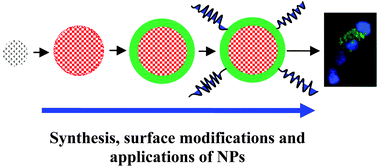
Anatomy of a $105M Deal for Joint R&D in Genomics: CRISPR Therapeutics & Vertex Pharmaceuticals, Volume 2 (Volume Two: Latest in Genomics Methodologies for Therapeutics: Gene Editing, NGS and BioInformatics, Simulations and the Genome Ontology), Part 2: CRISPR for Gene Editing and DNA Repair

Anatomy of a $105M Deal for Joint R&D in Genomics: CRISPR Therapeutics & Vertex Pharmaceuticals

Reporter: Aviva Lev-Ari, PhD, RN

Under the terms of the agreement:

  • the partners will also evaluate an enumerated but undisclosed number of targets.
  • Vertex will provide CRISPR Therapeutics with a $75 million up-front cash payment
  • as well as a $30 million equity investment.
  • CRISPR Therapeutics is also eligible to receive development, regulatory, and sales milestone payments of up to $420 million
  • as well as royalty payments on future sales.
  • CRISPR Therapeutics will conduct the research,
  • with Vertex covering all related expenses.
  • Vertex holds the option to exclusively license up to six of any gene-based therapies that emerge from the collaboration.


CRISPR Therapeutics, Vertex Pharmaceuticals Ink $105M Collaboration Deal

NEW YORK (GenomeWeb) – CRISPR Therapeutics and Vertex Pharmaceuticals have linked up for a four-year strategic research collaboration to develop new treatments of genetic diseases using CRISPR/Cas9 genome editing.

The partners will evaluate the use of CRISPR/Cas9 in multiple diseases where gene targets have already been established by genetics research, including cystic fibrosis and sickle cell disease. Under the terms of the agreement, the partners will also evaluate an enumerated but undisclosed number of targets. Vertex will provide CRISPR Therapeutics with a $75 million up-front cash payment as well as a $30 million equity investment. CRISPR Therapeutics is also eligible to receive development, regulatory, and sales milestone payments of up to $420 million as well as royalty payments on future sales.

CRISPR Therapeutics will conduct the research, with Vertex covering all related expenses. Vertex holds the option to exclusively license up to six of any gene-based therapies that emerge from the collaboration.

The firms said in a statement that the initial focus of the collaboration will be to try to correct mutations in the cystic fibrosis transmembrane conductance regulator gene.

The collaboration will also focus on treatments for hemoglobinopathies, such as sickle cell disease. For treatments of these diseases, the partners will share all R&D costs equally and CRISPR Therapeutics will lead commercialization activities in the US.

The collaboration also provides Vertex with an observer seat on the CRISPR Therapeutics board of directors.

Basel, Switzerland-based CRISPR Therapeutics was co-founded by CRISPR/Cas9 pioneer Emmanuelle Charpentier and Nobel laureate Craig Mello, among others. The firm has R&D operations based in Cambridge, Massachusetts and corporate offices in London.

In May 2014, CRISPR Therapeutics raised $25 million in Series A funding.

SOURCE

https://www.genomeweb.com/business-news/crispr-therapeutics-vertex-pharmaceuticals-ink-105m-collaboration-deal

Read Full Post »

« Newer Posts - Older Posts »