Feeds:
Posts
Comments

Archive for the ‘Curation’ Category

3D revolution and tissue repair

Curator: Larry H. Bernstein, MD, FCAP


Berkeley Lab captures first high-res 3D images of DNA segments

DNA segments are targeted to be building blocks for molecular computer memory and electronic devices, nanoscale drug-delivery systems, and as markers for biological research and imaging disease-relevant proteins

In a Berkeley Lab-led study, flexible double-helix DNA segments (purple, with green DNA models) connected to gold nanoparticles (yellow) are revealed from the 3D density maps reconstructed from individual samples using a Berkeley Lab-developed technique called individual-particle electron tomography (IPET). Projections of the structures are shown in the green background grid. (credit: Berkeley Lab)

An international research team working at the Lawrence Berkeley National Laboratory (Berkeley Lab) has captured the first high-resolution 3D images of double-helix DNA segments attached at either end to gold nanoparticles — which could act as building blocks for molecular computer memory and electronic devices (see World’s smallest electronic diode made from single DNA molecule), nanoscale drug-delivery systems, and as markers for biological research and for imaging disease-relevant proteins.

The researchers connected coiled DNA strands between polygon-shaped gold nanoparticles and then reconstructed 3D images, using a cutting-edge electron microscope technique coupled with a protein-staining process and sophisticated software that provided structural details at the scale of about 2 nanometers.

“We had no idea about what the double-strand DNA would look like between the gold nanoparticles,” said Gang “Gary” Ren, a Berkeley Lab scientist who led the research. “This is the first time for directly visualizing an individual double-strand DNA segment in 3D,” he said.

The results were published in an open-access paper in the March 30 edition of Nature Communications.

The method developed by this team, called individual-particle electron tomography (IPET), had earlier captured the 3-D structure of a single protein that plays a key role in human cholesterol metabolism. By grabbing 2D images of an object from different angles, the technique allows researchers to assemble a 3D image of that object.

The team has also used the technique to uncover the fluctuation of another well-known flexible protein, human immunoglobulin 1, which plays a role in the human immune system.

https://youtu.be/lQrbmg9ry90
Berkeley Lab | 3-D Reconstructions of Double strand DNA and Gold Nanoparticle Structures

For this new study of DNA nanostructures, Ren used an electron-beam study technique called cryo-electron microscopy (cryo-EM) to examine frozen DNA-nanogold samples, and used IPET to reconstruct 3-D images from samples stained with heavy metal salts. The team also used molecular simulation tools to test the natural shape variations (“conformations”) in the samples, and compared these simulated shapes with observations.

First visualization of DNA strand dynamics without distorting x-ray crystallography

Ren explained that the naturally flexible dynamics of samples, like a man waving his arms, cannot be fully detailed by any method that uses an average of many observations.

A popular way to view the nanoscale structural details of delicate biological samples is to form them into crystals and zap them with X-rays, but that destroys their natural shape, especially fir the DNA-nanogold samples in this study, which the scientists say are incredibly challenging to crystallize. Other common research techniques may require a collection of thousands of near-identical objects, viewed with an electron microscope, to compile a single, averaged 3-D structure. But an averaged 3D image may not adequately show the natural shape fluctuations of a given object.

The samples in the latest experiment were formed from individual polygon gold nanostructures, measuring about 5 nanometers across, connected to single DNA-segment strands with 84 base pairs. Base pairs are basic chemical building blocks that give DNA its structure. Each individual DNA segment and gold nanoparticle naturally zipped together with a partner to form the double-stranded DNA segment with a gold particle at either end.

https://youtu.be/RDOpgj62PLU
Berkeley Lab | These views compare the various shape fluctuations obtained from different samples of the same type of double-helix DNA segment (DNA renderings in green, 3D reconstructions in purple) connected to gold nanoparticles (yellow).

The samples were flash-frozen to preserve their structure for study with cryo-EM imaging. The distance between the two gold nanoparticles in individual samples varied from 20 to 30 nanometers, based on different shapes observed in the DNA segments.

Researchers used a cryo-electron microscope at Berkeley Lab’s Molecular Foundry for this study. They collected a series of tilted images of the stained objects, and reconstructed 14 electron-density maps that detailed the structure of individual samples using the IPET technique.

Sub-nanometer images next

Ren said that the next step will be to work to improve the resolution to the sub-nanometer scale.

“Even in this current state we begin to see 3-D structures at 1- to 2-nanometer resolution,” he said. “Through better instrumentation and improved computational algorithms, it would be promising to push the resolution to that visualizing a single DNA helix within an individual protein.”

In future studies, researchers could attempt to improve the imaging resolution for complex structures that incorporate more DNA segments as a sort of “DNA origami,” Ren said. Researchers hope to build and better characterize nanoscale molecular devices using DNA segments that can, for example, store and deliver drugs to targeted areas in the body.

“DNA is easy to program, synthesize and replicate, so it can be used as a special material to quickly self-assemble into nanostructures and to guide the operation of molecular-scale devices,” he said. “Our current study is just a proof of concept for imaging these kinds of molecular devices’ structures.”

The team included researchers at UC Berkeley, the Kavli Energy NanoSciences Institute at Berkeley Lab and UC Berkeley, and Xi’an Jiaotong University in China. This work was supported by the National Science Foundation, DOE Office of Basic Energy Sciences, National Institutes of Health, the National Natural Science Foundation of China, Xi’an Jiaotong University in China, and the Ministry of Science and Technology in China. View more about Gary Ren’s research group here.


Abstract of Three-dimensional structural dynamics and fluctuations of DNA-nanogold conjugates by individual-particle electron tomography

DNA base pairing has been used for many years to direct the arrangement of inorganic nanocrystals into small groupings and arrays with tailored optical and electrical properties. The control of DNA-mediated assembly depends crucially on a better understanding of three-dimensional structure of DNA-nanocrystal-hybridized building blocks. Existing techniques do not allow for structural determination of these flexible and heterogeneous samples. Here we report cryo-electron microscopy and negative-staining electron tomography approaches to image, and three-dimensionally reconstruct a single DNA-nanogold conjugate, an 84-bp double-stranded DNA with two 5-nm nanogold particles for potential substrates in plasmon-coupling experiments. By individual-particle electron tomography reconstruction, we obtain 14 density maps at ~2-nm resolution. Using these maps as constraints, we derive 14 conformations of dsDNA by molecular dynamics simulations. The conformational variation is consistent with that from liquid solution, suggesting that individual-particle electron tomography could be an expected approach to study DNA-assembling and flexible protein structure and dynamics.


World’s smallest electronic diode made from single DNA molecule

Electronic components 1,000 times smaller than with silicon may be possible
http://www.kurzweilai.net/worlds-smallest-electronic-diode-made-from-single-dna-molecule
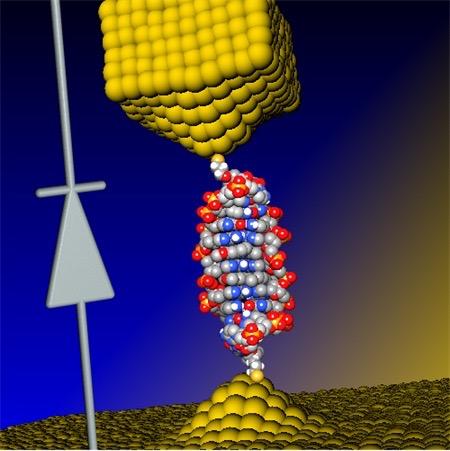
By inserting a small “coralyne” molecule into DNA, scientists were able to create a single-molecule diode (connected here by two gold electrodes), which can be used as an active element in future nanoscale circuits. The diode circuit symbol is shown on the left. (credit: University of Georgia and Ben-Gurion University)

Nanoscale electronic components can be made from single DNA molecules, as researchers at the University of Georgia and at Ben-Gurion University in Israel have demonstrated, using a single molecule of DNA to create the world’s smallest diode.

DNA double helix with base pairs (credit: National Human Genome Research Institute)

A diode is a component vital to electronic devices that allows current to flow in one direction but prevents its flow in the other direction. The development could help stimulate development of DNA components for molecular electronics.

As noted in an open-access Nature Chemistry paper published this week, the researchers designed a 11-base-pair (bp) DNA molecule and inserted a small molecule named coralyne into the DNA.*

They found, surprisingly, that this caused the current flowing through the DNA to be 15 times stronger for negative voltages than for positive voltages, a necessary feature of a diode.

Electronic elements 1,00o times smaller than current components

“Our discovery can lead to progress in the design and construction of nanoscale electronic elements that are at least 1,000 times smaller than current components,” says the study’s lead author, Bingqian Xu an associate professor in the UGA College of Engineering and an adjunct professor in chemistry and physics.

The research team plans to enhance the performance of the molecular diode and construct additional molecular devices, which may include a transistor (similar to a two-layer diode, but with one additional layer).

A theoretical model developed by Yanantan Dubi of Ben-Gurion University indicated the diode-like behavior of DNA originates from the bias voltage-induced breaking of spatial symmetry inside the DNA molecule after the coralyne is inserted.

The research is supported by the National Science Foundation.

*“We prepared the DNA–coralyne complex by specifically intercalating two coralyne molecules into a custom-designed 11-base-pair (bp) DNA molecule (5′-CGCGAAACGCG-3′) containing three mismatched A–A base pairs at the centre,” according to the authors.

UPDATE April 6, 2016 to clarify the coralyne intercalation (insertion) into the DNA molecule.


Abstract of Molecular rectifier composed of DNA with high rectification ratio enabled by intercalation

The predictability, diversity and programmability of DNA make it a leading candidate for the design of functional electronic devices that use single molecules, yet its electron transport properties have not been fully elucidated. This is primarily because of a poor understanding of how the structure of DNA determines its electron transport. Here, we demonstrate a DNA-based molecular rectifier constructed by site-specific intercalation of small molecules (coralyne) into a custom-designed 11-base-pair DNA duplex. Measured current–voltage curves of the DNA–coralyne molecular junction show unexpectedly large rectification with a rectification ratio of about 15 at 1.1 V, a counter-intuitive finding considering the seemingly symmetrical molecular structure of the junction. A non-equilibrium Green’s function-based model—parameterized by density functional theory calculations—revealed that the coralyne-induced spatial asymmetry in the electron state distribution caused the observed rectification. This inherent asymmetry leads to changes in the coupling of the molecular HOMO−1 level to the electrodes when an external voltage is applied, resulting in an asymmetric change in transmission.


A stem-cell repair system that can regenerate any kind of human tissue …including disease and aging; human trials next year
http://www.kurzweilai.net/a-stem-cell-repair-system-that-can-regenerate-any-kind-of-human-tissue

http://www.kurzweilai.net/images/spinal_disc_regeneration.jpg

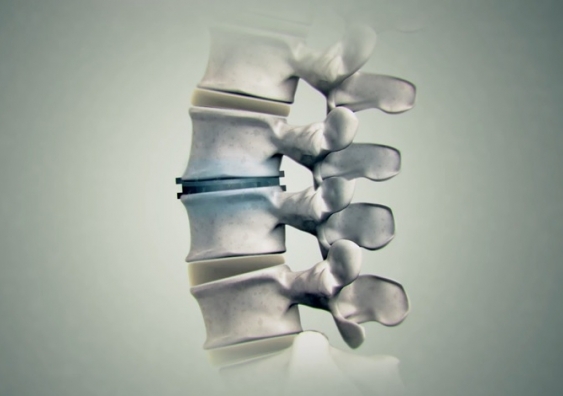
UNSW researchers say the therapy has enormous potential for treating spinal disc injury and joint and muscle degeneration and could also speed up recovery following complex surgeries where bones and joints need to integrate with the body (credit: UNSW TV)

A stem cell therapy system capable of regenerating any human tissue damaged by injury, disease, or aging could be available within a few years, say University of New South Wales (UNSW Australia) researchers.

Their new repair system*, similar to the method used by salamanders to regenerate limbs, could be used to repair everything from spinal discs to bone fractures, and could transform current treatment approaches to regenerative medicine.

The UNSW-led research was published this week in the Proceedings of the National Academy of Sciences journal.

Reprogramming bone and fat cells

The system reprograms bone and fat cells into induced multipotent stem cells (iMS), which can regenerate multiple tissue types and has been successfully demonstrated in mice, according to study lead author, haematologist, and UNSW Associate Professor John Pimanda.

“This technique is a significant advance on many of the current unproven stem cell therapies, which have shown little or no objective evidence they contribute directly to new tissue formation,” Pimanda said. “We have taken bone and fat cells, switched off their memory and converted them into stem cells so they can repair different cell types once they are put back inside the body.”

“We are currently assessing whether adult human fat cells reprogrammed into iMS cells can safely repair damaged tissue in mice, with human trials expected to begin in late 2017.”

http://www.kurzweilai.net/images/UNSW-stem-cell-repair.jpg

Advantages over stem-cell types

There are different types of stem cells including embryonic stem (ES) cells, which during embryonic development generate every type of cell in the human body, and adult stem cells, which are tissue-specific, but don’t regenerate multiple tissue types. Embryonic stem cells cannot be used to treat damaged tissues because of their tumor forming capacity. The other problem when generating stem cells is the requirement to use viruses to transform cells into stem cells, which is clinically unacceptable, the researchers note.

Research shows that up to 20% of spinal implants either don’t heal or there is delayed healing. The rates are higher for smokers, older people and patients with diseases such diabetes or kidney disease.

Human trials are planned next year once the safety and effectiveness of the technique using human cells in mice has been demonstrated.

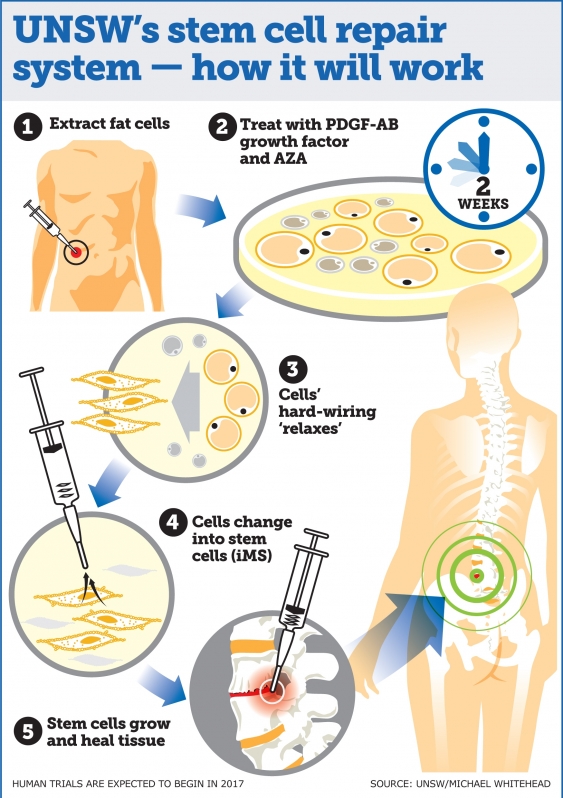
* The technique involves extracting adult human fat cells and treating them with the compound 5-Azacytidine (AZA), along with platelet-derived growth factor-AB (PDGF-AB) for about two days. The cells are then treated with the growth factor alone for a further two-three weeks.

AZA is known to induce cell plasticity, which is crucial for reprogramming cells. The AZA compound relaxes the hard-wiring of the cell, which is expanded by the growth factor, transforming the bone and fat cells into iMS cells. When the stem cells are inserted into the damaged tissue site, they multiply, promoting growth and healing.

The new technique is similar to salamander limb regeneration, which is also dependent on the plasticity of differentiated cells, which can repair multiple tissue types, depending on which body part needs replacing.

Along with confirming that human adult fat cells reprogrammed into iMS stem cells can safely repair damaged tissue in mice, the researchers said further work is required to establish whether iMS cells remain dormant at the sites of transplantation and retain their capacity to proliferate on demand.

https://youtu.be/zAMCBNujzzw

Abstract of PDGF-AB and 5-Azacytidine induce conversion of somatic cells into tissue-regenerative multipotent stem cells

Current approaches in tissue engineering are geared toward generating tissue-specific stem cells. Given the complexity and heterogeneity of tissues, this approach has its limitations. An alternate approach is to induce terminally differentiated cells to dedifferentiate into multipotent proliferative cells with the capacity to regenerate all components of a damaged tissue, a phenomenon used by salamanders to regenerate limbs. 5-Azacytidine (AZA) is a nucleoside analog that is used to treat preleukemic and leukemic blood disorders. AZA is also known to induce cell plasticity. We hypothesized that AZA-induced cell plasticity occurs via a transient multipotent cell state and that concomitant exposure to a receptive growth factor might result in the expansion of a plastic and proliferative population of cells. To this end, we treated lineage-committed cells with AZA and screened a number of different growth factors with known activity in mesenchyme-derived tissues. Here, we report that transient treatment with AZA in combination with platelet-derived growth factor–AB converts primary somatic cells into tissue-regenerative multipotent stem (iMS) cells. iMS cells possess a distinct transcriptome, are immunosuppressive, and demonstrate long-term self-renewal, serial clonogenicity, and multigerm layer differentiation potential. Importantly, unlike mesenchymal stem cells, iMS cells contribute directly to in vivo tissue regeneration in a context-dependent manner and, unlike embryonic or pluripotent stem cells, do not form teratomas. Taken together, this vector-free method of generating iMS cells from primary terminally differentiated cells has significant scope for application in tissue regeneration.


First transistors made entirely of nanocrystal ‘inks’ in simplified process

Transistors and other electronic components to be built into flexible or wearable applications; 3D printing planned
http://www.kurzweilai.net/first-transistors-made-entirely-of-nanocrystal-inks
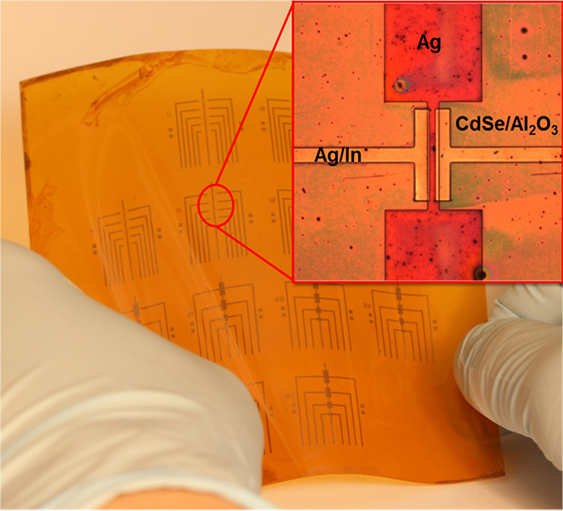
Because this process works at relatively low temperatures, many transistors can be made on a flexible backing at once. (credit: University of Pennsylvania)

University of Pennsylvania engineers have developed a simplified new approach for making transistors by sequentially depositing their components in the form of liquid nanocrystal “inks.” The new process open the door for transistors and other electronic components to be built into flexible or wearable applications. It also avoids the highly complex current process for creating transistors, which requires high-temperature, high-vacuum equipment. Also, the new lower-temperature process is compatible with a wide array of materials and can be applied to larger areas.

Transistors patterned on plastic backing

The researchers’ nanocrystal-based field effect transistors were patterned onto flexible plastic backings using spin coating, but could eventually be constructed by additive manufacturing systems, like 3D printers.

Published in the journal Science,  the study was lead by Cherie Kagan, the Stephen J. Angello Professor in the School of Engineering and Applied Science, and Ji-Hyuk Choi, then a member of her lab, now a senior researcher at the Korea Institute of Geoscience and Mineral Resources. Researchers at Korea University Korea’s Yonsei University were also involved.

[+]

Kagan’s group developed four nanocrystal inks that comprise the transistor, then deposited them on a flexible backing. (credit: University of Pennsylvania)

The researchers began by dispersing a specific type of nanocrystals in a liquid, creating nanocrystal inks. They developed a library of four of these inks: a conductor (silver), an insulator (aluminum oxide), a semiconductor (cadmium selenide), and a conductor combined with a dopant (a mixture of silver and indium). (“Doping” the semiconductor layer of a transistor with impurities controls whether the device creates a positive or negative charge.)

“These materials are colloids just like the ink in your inkjet printer,” Kagan said, “but you can get all the characteristics that you want and expect from the analogous bulk materials, such as whether they’re conductors, semiconductors or insulators.” Although the electrical properties of several of these nanocrystal inks had been independently verified, they had never been combined into full devices. “Our question was whether you could lay them down on a surface in such a way that they work together to form functional transistors.”

Laying down patterns in layers

Such a process entails layering or mixing them in precise patterns.

First, the conductive silver nanocrystal ink was deposited from liquid on a flexible plastic surface that was treated with a photolithographic mask, then rapidly spun to draw it out in an even layer. The mask was then removed to leave the silver ink in the shape of the transistor’s gate electrode.

The researchers followed that layer by spin-coating a layer of the aluminum oxide nanocrystal-based insulator, then a layer of the cadmium selenide nanocrystal-based semiconductor and finally another masked layer for the indium/silver mixture, which forms the transistor’s source and drain electrodes. Upon heating at relatively low temperatures, the indium dopant diffused from those electrodes into the semiconductor component.

“The trick with working with solution-based materials is making sure that, when you add the second layer, it doesn’t wash off the first, and so on,” Kagan said. “We had to treat the surfaces of the nanocrystals, both when they’re first in solution and after they’re deposited, to make sure they have the right electrical properties and that they stick together in the configuration we want.”

Because this entirely ink-based fabrication process works at lower temperatures than existing vacuum-based methods, the researchers were able to make several transistors on the same flexible plastic backing at the same time.

[+]

The inks’ specialized surface chemistry allowed them to stay in configuration without losing their electrical properties. (credit: University of Pennsylvania)

“Making transistors over larger areas and at lower temperatures have been goals for an emerging class of technologies, when people think of the Internet of things, large area flexible electronics and wearable devices,” Kagan said. “We haven’t developed all of the necessary aspects so they could be printed yet, but because these materials are all solution-based, it demonstrates the promise of this materials class and sets the stage for additive manufacturing.”

Because this entirely ink-based fabrication process works at lower temperatures than existing vacuum-based methods, the researchers were able to make several transistors on the same flexible plastic backing at the same time.

3D-printing transistors for wearables

“This is the first work,” Choi said, “showing that all the components, the metallic, insulating, and semiconducting layers of the transistors, and even the doping of the semiconductor, could be made from nanocrystals.”

“Making transistors over larger areas and at lower temperatures have been goals for an emerging class of technologies, when people think of the Internet of things, large area flexible electronics and wearable devices,” Kagan said. “We haven’t developed all of the necessary aspects so they could be printed yet, but because these materials are all solution-based, it demonstrates the promise of this materials class and sets the stage for additive manufacturing.”

The research was supported by the National Science Foundation, the U.S. Department of Energy, the Office of Naval Research, and the Korea Institute of Geoscience and Mineral Resources funded by the Ministry of Science, ICT, and Future Planning of Korea.


Abstract of Exploiting the colloidal nanocrystal library to construct electronic devices

Synthetic methods produce libraries of colloidal nanocrystals with tunable physical properties by tailoring the nanocrystal size, shape, and composition. Here, we exploit colloidal nanocrystal diversity and design the materials, interfaces, and processes to construct all-nanocrystal electronic devices using solution-based processes. Metallic silver and semiconducting cadmium selenide nanocrystals are deposited to form high-conductivity and high-mobility thin-film electrodes and channel layers of field-effect transistors. Insulating aluminum oxide nanocrystals are assembled layer by layer with polyelectrolytes to form high–dielectric constant gate insulator layers for low-voltage device operation. Metallic indium nanocrystals are codispersed with silver nanocrystals to integrate an indium supply in the deposited electrodes that serves to passivate and dope the cadmium selenide nanocrystal channel layer. We fabricate all-nanocrystal field-effect transistors on flexible plastics with electron mobilities of 21.7 square centimeters per volt-second.

Best textile manufacturing methods for creating human tissues with stem cells
Bioengineers determine three best processes for engineering tissues needed for organ and tissue repair
http://www.kurzweilai.net/best-textile-manufacturing-methods-for-creating-human-tissues-with-stem-cells
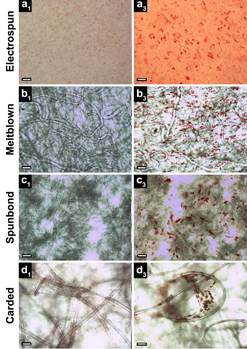
All four textile manufacturing processes and corresponding scaffold (structure) types studied exhibited the presence of lipid vacuoles (small red spheres, right column, indicating stem cells undergoing random differentiation), compared to control (left). Electrospun scaffolds (row a) exhibited only a monolayer of lipid vacuoles in a single focal plane, while meltblown, spunbond, and carded scaffolds (rows b, c, d) exhibited vacuoles in multiple planes throughout the fabric thickness. Scale bars: 100 μm (credit: S. A. Tuin et al./Biomedical Materials)

Elizabeth Loboa, dean of the Missouri University College of Engineering, and her team have tested new tissue- engineering methods (based on textile manufacturing) to find ones that are most cost-effective and can be produced in larger quantities.

Tissue engineering is a process that uses novel biomaterials seeded with stem cells to grow and replace missing tissues. When certain types of materials are used, the “scaffolds” that are created to hold stem cells eventually degrade, leaving natural tissue in its place. The new tissues could help patients suffering from wounds caused by diabetes and circulation disorders, patients in need of cartilage or bone repair, and women who have had mastectomies by replacing their breast tissue. The challenge is creating enough of the material on a scale that clinicians need to treat patients.

Comparing textile manufacturing techniques

http://www.kurzweilai.net/images/electrospinning.png

Electrospinning experiment: nanofibers are collected into an ethanol bath and removed at predefined time intervals (credit: J. M. Coburn et al./The Johns Hopkins University/PNAS)

In typical tissue engineering approaches that use fibers as scaffolds, non-woven materials are often bonded together using an electrostatic field. This process, called electrospinning (see Nanoscale scaffolds and stem cells show promise in cartilage repair and Improved artificial blood vessels), creates the scaffolds needed to attach to stem cells.

However, large-scale production with electrospinning is not cost-effective. “Electrospinning produces weak fibers, scaffolds that are not consistent, and pores that are too small,” Loboa said. “The goal of ‘scaling up’ is to produce hundreds of meters of material that look the same, have the same properties, and can be used in clinical settings. So we investigated the processes that create textiles, such as clothing and window furnishings like drapery, to scale up the manufacturing process.”

The group published two papers using three industry-standard, high-throughput manufacturing techniques — meltblowing, spunbonding, and carding — to determine if they would create the materials needed to mimic native tissue.

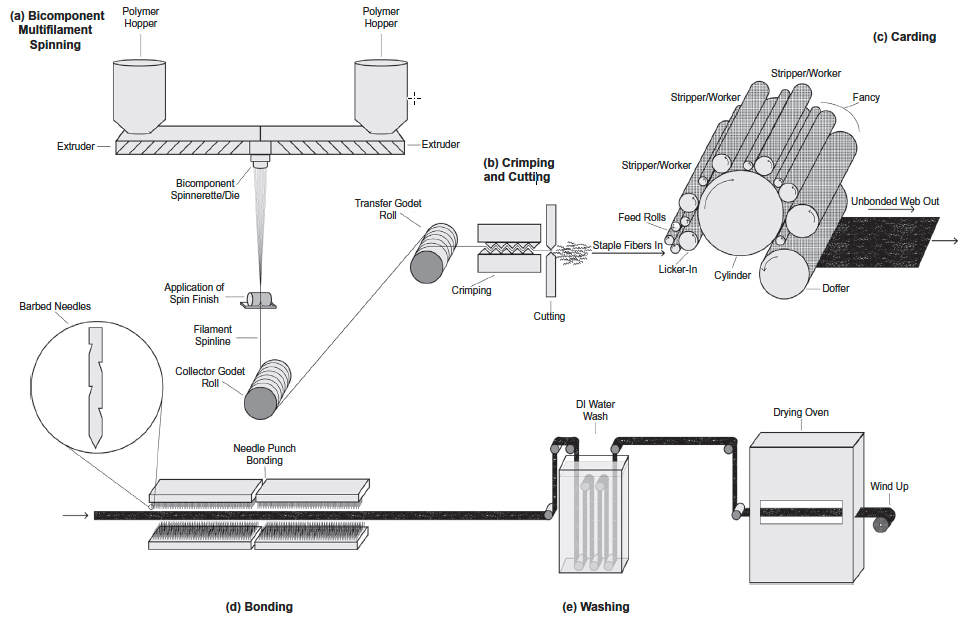
Meltblowing is a technique during which nonwoven materials are created using a molten polymer to create continuous fibers. Spunbond materials are made much the same way but the fibers are drawn into a web while in a solid state instead of a molten one. Carding involves the separation of fibers through the use of rollers, forming the web needed to hold stem cells in place.

http://www.kurzweilai.net/images/carded-scaffold-fabrication.jpg

Schematic of gilled fiber multifilament spinning and carded scaffold fabrication (credit: Stephen A. Tuin et al./Acta Biomaterialia)

Cost-effective methods

Loboa and her colleagues tested these techniques to create polylactic acid (PLA) scaffolds (a Food and Drug Administration-approved material used as collagen fillers), seeded with human stem cells. They then spent three weeks studying whether the stem cells remained healthy and if they began to differentiate into fat and bone pathways, which is the goal of using stem cells in a clinical setting when new bone and/or new fat tissue is needed at a defect site. Results showed that the three textile manufacturing methods proved as viable if not more so than electrospinning.

“These alternative methods are more cost-effective than electrospinning,” Loboa said. “A small sample of electrospun material could cost between $2 to $5. The cost for the three manufacturing methods is between $.30 to $3.00; these methods proved to be effective and efficient. Next steps include testing how the different scaffolds created in the three methods perform once implanted in animals.”

Researchers at North Carolina State University and the University of North Carolina at Chapel Hill were also involved in the two studies, which were published in Biomedical Materials (open access) and Acta Biomaterialia. The National Science Foundation, the National Institutes of Health, and the Nonwovens Institute provided funding for the studies.


Abstract of Creating tissues from textiles: scalable nonwoven manufacturing techniques for fabrication of tissue engineering scaffolds

Electrospun nonwovens have been used extensively for tissue engineering applications due to their inherent similarities with respect to fibre size and morphology to that of native extracellular matrix (ECM). However, fabrication of large scaffold constructs is time consuming, may require harsh organic solvents, and often results in mechanical properties inferior to the tissue being treated. In order to translate nonwoven based tissue engineering scaffold strategies to clinical use, a high throughput, repeatable, scalable, and economic manufacturing process is needed. We suggest that nonwoven industry standard high throughput manufacturing techniques (meltblowing, spunbond, and carding) can meet this need. In this study, meltblown, spunbond and carded poly(lactic acid) (PLA) nonwovens were evaluated as tissue engineering scaffolds using human adipose derived stem cells (hASC) and compared to electrospun nonwovens. Scaffolds were seeded with hASC and viability, proliferation, and differentiation were evaluated over the course of 3 weeks. We found that nonwovens manufactured via these industry standard, commercially relevant manufacturing techniques were capable of supporting hASC attachment, proliferation, and both adipogenic and osteogenic differentiation of hASC, making them promising candidates for commercialization and translation of nonwoven scaffold based tissue engineering strategies.


Abstract of Fabrication of novel high surface area mushroom gilled fibers and their effects on human adipose derived stem cells under pulsatile fluid flow for tissue engineering applications

The fabrication and characterization of novel high surface area hollow gilled fiber tissue engineering scaffolds via industrially relevant, scalable, repeatable, high speed, and economical nonwoven carding technology is described. Scaffolds were validated as tissue engineering scaffolds using human adipose derived stem cells (hASC) exposed to pulsatile fluid flow (PFF). The effects of fiber morphology on the proliferation and viability of hASC, as well as effects of varied magnitudes of shear stress applied via PFF on the expression of the early osteogenic gene marker runt related transcription factor 2 (RUNX2) were evaluated. Gilled fiber scaffolds led to a significant increase in proliferation of hASC after seven days in static culture, and exhibited fewer dead cells compared to pure PLA round fiber controls. Further, hASC-seeded scaffolds exposed to 3 and 6 dyn/cm2 resulted in significantly increased mRNA expression of RUNX2 after one hour of PFF in the absence of soluble osteogenic induction factors. This is the first study to describe a method for the fabrication of high surface area gilled fibers and scaffolds. The scalable manufacturing process and potential fabrication across multiple nonwoven and woven platforms makes them promising candidates for a variety of applications that require high surface area fibrous materials.

Statement of Significance

We report here for the first time the successful fabrication of novel high surface area gilled fiber scaffolds for tissue engineering applications. Gilled fibers led to a significant increase in proliferation of human adipose derived stem cells after one week in culture, and a greater number of viable cells compared to round fiber controls. Further, in the absence of osteogenic induction factors, gilled fibers led to significantly increased mRNA expression of an early marker for osteogenesis after exposure to pulsatile fluid flow. This is the first study to describe gilled fiber fabrication and their potential for tissue engineering applications. The repeatable, industrially scalable, and versatile fabrication process makes them promising candidates for a variety of scaffold-based tissue engineering applications.

Read Full Post »

Genomics and epigenetics link to DNA structure, Volume 2 (Volume Two: Latest in Genomics Methodologies for Therapeutics: Gene Editing, NGS and BioInformatics, Simulations and the Genome Ontology), Part 1: Next Generation Sequencing (NGS)

Genomics and epigenetics link to DNA structure

Larry H. Bernstein, MD, FCAP, Curator

LPBI


Sequence and Epigenetic Factors Determine Overall DNA Structure

http://www.genengnews.com/gen-news-highlights/sequence-and-epigenetic-factors-determine-overall-dna-structure/81252592/

http://www.genengnews.com/Media/images/GENHighlight/Atomiclevelsimulationsshowingelectrostaticforcesbetweeneachatom1259202113.jpg

Atomic-level simulations show electrostatic forces between each atom. [Alek Aksimentiev, University of Illinois at Urbana-Champaign]


The traditionally held hypothesis about the highly ordered organization of DNA describes the interaction of various proteins with DNA sequences to mediate the dynamic structure of the molecule. However, recent evidence has emerged that stretches of homologous DNA sequences can associate preferentially with one another, even in the absence of proteins.

Researchers at the University of Illinois Center for the Physics of Living Cells, Johns Hopkins University, and Ulsan National Institute of Science and Technology (UNIST) in South Korea found that DNA molecules interact directly with one another in ways that are dependent on the sequence of the DNA and epigenetic factors, such as methylation.

The researchers described evidence they found for sequence-dependent attractive interactions between double-stranded DNA molecules that neither involve intermolecular strand exchange nor are mediated by DNA-binding proteins.

“DNA molecules tend to repel each other in water, but in the presence of special types of cations, they can attract each other just like nuclei pulling each other by sharing electrons in between,” explained lead study author Hajin Kim, Ph.D., assistant professor of biophysics at UNIST. “Our study suggests that the attractive force strongly depends on the nucleic acid sequence and also the epigenetic modifications.”

The investigators used atomic-level supercomputer simulations to measure the forces between a pair of double-stranded DNA helices and proposed that the distribution of methyl groups on the DNA was the key to regulating this sequence-dependent attraction. To verify their findings experimentally, the scientists were able to observe a single pair of DNA molecules within nanoscale bubbles.

“Here we combine molecular dynamics simulations with single-molecule fluorescence resonance energy transfer experiments to examine the interactions between duplex DNA in the presence of spermine, a biological polycation,” the authors wrote. “We find that AT-rich DNA duplexes associate more strongly than GC-rich duplexes, regardless of the sequence homology. Methyl groups of thymine act as a steric block, relocating spermine from major grooves to interhelical regions, thereby increasing DNA–DNA attraction.”

The findings from this study were published recently in Nature Communications in an article entitled “Direct Evidence for Sequence-Dependent Attraction Between Double-Stranded DNA Controlled by Methylation.”

After conducting numerous further simulations, the research team concluded that direct DNA–DNA interactions could play a central role in how chromosomes are organized in the cell and which ones are expanded or folded up compactly, ultimately determining functions of different cell types or regulating the cell cycle.

“Biophysics is a fascinating subject that explores the fundamental principles behind a variety of biological processes and life phenomena,” Dr. Kim noted. “Our study requires cross-disciplinary efforts from physicists, biologists, chemists, and engineering scientists and we pursue the diversity of scientific disciplines within the group.”

Dr. Kim concluded by stating that “in our lab, we try to unravel the mysteries within human cells based on the principles of physics and the mechanisms of biology. In the long run, we are seeking for ways to prevent chronic illnesses and diseases associated with aging.”


Direct evidence for sequence-dependent attraction between double-stranded DNA controlled by methylation

Jejoong Yoo, Hajin Kim, Aleksei Aksimentiev, and Taekjip Ha
Nature Communications 7 11045 (2016)    DOI:10.1038/ncomms11045BibTex

http://bionano.physics.illinois.edu/sites/default/files/styles/large/public/telepathy_figures_0.png?itok=VUJIHX2_

Although proteins mediate highly ordered DNA organization in vivo, theoretical studies suggest that homologous DNA duplexes can preferentially associate with one another even in the absence of proteins. Here we combine molecular dynamics simulations with single-molecule fluorescence resonance energy transfer experiments to examine the interactions between duplex DNA in the presence of spermine, a biological polycation. We find that AT-rich DNA duplexes associate more strongly than GC-rich duplexes, regardless of the sequence homology. Methyl groups of thymine acts as a steric block, relocating spermine from major grooves to interhelical regions, thereby increasing DNA–DNA attraction. Indeed, methylation of cytosines makes attraction between GC-rich DNA as strong as that between AT-rich DNA. Recent genome-wide chromosome organization studies showed that remote contact frequencies are higher for AT-rich and methylated DNA, suggesting that direct DNA–DNA interactions that we report here may play a role in the chromosome organization and gene regulation.

Formation of a DNA double helix occurs through Watson–Crick pairing mediated by the complementary hydrogen bond patterns of the two DNA strands and base stacking. Interactions between double-stranded (ds)DNA molecules in typical experimental conditions containing mono- and divalent cations are repulsive1, but can turn attractive in the presence of high-valence cations2. Theoretical studies have identified the ion–ion correlation effect as a possible microscopic mechanism of the DNA condensation phenomena3, 4, 5. Theoretical investigations have also suggested that sequence-specific attractive forces might exist between two homologous fragments of dsDNA6, and this ‘homology recognition’ hypothesis was supported by in vitro atomic force microscopy7 and in vivo point mutation assays8. However, the systems used in these measurements were too complex to rule out other possible causes such as Watson–Crick strand exchange between partially melted DNA or protein-mediated association of DNA.

Here we present direct evidence for sequence-dependent attractive interactions between dsDNA molecules that neither involve intermolecular strand exchange nor are mediated by proteins. Further, we find that the sequence-dependent attraction is controlled not by homology—contradictory to the ‘homology recognition’ hypothesis6—but by a methylation pattern. Unlike the previous in vitro study that used monovalent (Na+) or divalent (Mg2+) cations7, we presumed that for the sequence-dependent attractive interactions to operate polyamines would have to be present. Polyamine is a biological polycation present at a millimolar concentration in most eukaryotic cells and essential for cell growth and proliferation9, 10. Polyamines are also known to condense DNA in a concentration-dependent manner2, 11. In this study, we use spermine4+(Sm4+) that contains four positively charged amine groups per molecule.

Sequence dependence of DNA–DNA forces

To characterize the molecular mechanisms of DNA–DNA attraction mediated by polyamines, we performed molecular dynamics (MD) simulations where two effectively infinite parallel dsDNA molecules, 20 base pairs (bp) each in a periodic unit cell, were restrained to maintain a prescribed inter-DNA distance; the DNA molecules were free to rotate about their axes. The two DNA molecules were submerged in 100mM aqueous solution of NaCl that also contained 20 Sm4+molecules; thus, the total charge of Sm4+, 80 e, was equal in magnitude to the total charge of DNA (2 × 2 × 20 e, two unit charges per base pair; Fig. 1a). Repeating such simulations at various inter-DNA distances and applying weighted histogram analysis12 yielded the change in the interaction free energy (ΔG) as a function of the DNA–DNA distance (Fig. 1b,c). In a broad agreement with previous experimental findings13, ΔG had a minimum, ΔGmin, at the inter-DNA distance of 25−30Å for all sequences examined, indeed showing that two duplex DNA molecules can attract each other. The free energy of inter-duplex attraction was at least an order of magnitude smaller than the Watson–Crick interaction free energy of the same length DNA duplex. A minimum of ΔG was not observed in the absence of polyamines, for example, when divalent or monovalent ions were used instead14, 15.

Figure 1: Polyamine-mediated DNA sequence recognition observed in MD simulations and smFRET experiments.
Polyamine-mediated DNA sequence recognition observed in MD simulations and smFRET experiments.

(a) Set-up of MD simulations. A pair of parallel 20-bp dsDNA duplexes is surrounded by aqueous solution (semi-transparent surface) containing 20 Sm4+ molecules (which compensates exactly the charge of DNA) and 100mM NaCl. Under periodic boundary conditions, the DNA molecules are effectively infinite. A harmonic potential (not shown) is applied to maintain the prescribed distance between the dsDNA molecules. (b,c) Interaction free energy of the two DNA helices as a function of the DNA–DNA distance for repeat-sequence DNA fragments (b) and DNA homopolymers (c). (d) Schematic of experimental design. A pair of 120-bp dsDNA labelled with a Cy3/Cy5 FRET pair was encapsulated in a ~200-nm diameter lipid vesicle; the vesicles were immobilized on a quartz slide through biotin–neutravidin binding. Sm4+ molecules added after immobilization penetrated into the porous vesicles. The fluorescence signals were measured using a total internal reflection microscope. (e) Typical fluorescence signals indicative of DNA–DNA binding. Brief jumps in the FRET signal indicate binding events. (f) The fraction of traces exhibiting binding events at different Sm4+ concentrations for AT-rich, GC-rich, AT nonhomologous and CpG-methylated DNA pairs. The sequence of the CpG-methylated DNA specifies the methylation sites (CG sequence, orange), restriction sites (BstUI, triangle) and primer region (underlined). The degree of attractive interaction for the AT nonhomologous and CpG-methylated DNA pairs was similar to that of the AT-rich pair. All measurements were done at [NaCl]=50mM and T=25°C. (g) Design of the hybrid DNA constructs: 40-bp AT-rich and 40-bp GC-rich regions were flanked by 20-bp common primers. The two labelling configurations permit distinguishing parallel from anti-parallel orientation of the DNA. (h) The fraction of traces exhibiting binding events as a function of NaCl concentration at fixed concentration of Sm4+ (1mM). The fraction is significantly higher for parallel orientation of the DNA fragments.

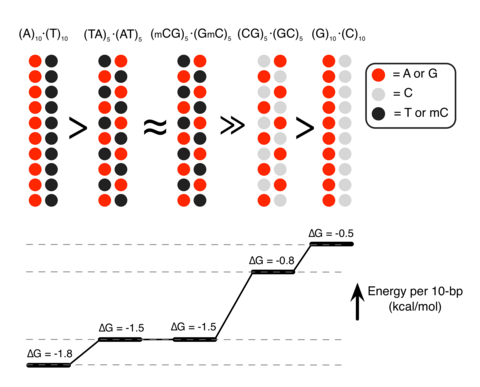
Unexpectedly, we found that DNA sequence has a profound impact on the strength of attractive interaction. The absolute value of ΔG at minimum relative to the value at maximum separation, |ΔGmin|, showed a clearly rank-ordered dependence on the DNA sequence: |ΔGmin| of (A)20>|ΔGmin| of (AT)10>|ΔGmin| of (GC)10>|ΔGmin| of (G)20. Two trends can be noted. First, AT-rich sequences attract each other more strongly than GC-rich sequences16. For example, |ΔGmin| of (AT)10 (1.5kcalmol−1 per turn) is about twice |ΔGmin| of (GC)10 (0.8kcalmol−1 per turn) (Fig. 1b). Second, duplexes having identical AT content but different partitioning of the nucleotides between the strands (that is, (A)20 versus (AT)10 or (G)20 versus (GC)10) exhibit statistically significant differences (~0.3kcalmol−1 per turn) in the value of |ΔGmin|.

To validate the findings of MD simulations, we performed single-molecule fluorescence resonance energy transfer (smFRET)17 experiments of vesicle-encapsulated DNA molecules. Equimolar mixture of donor- and acceptor-labelled 120-bp dsDNA molecules was encapsulated in sub-micron size, porous lipid vesicles18 so that we could observe and quantitate rare binding events between a pair of dsDNA molecules without triggering large-scale DNA condensation2. Our DNA constructs were long enough to ensure dsDNA–dsDNA binding that is stable on the timescale of an smFRET measurement, but shorter than the DNA’s persistence length (~150bp (ref. 19)) to avoid intramolecular condensation20. The vesicles were immobilized on a polymer-passivated surface, and fluorescence signals from individual vesicles containing one donor and one acceptor were selectively analysed (Fig. 1d). Binding of two dsDNA molecules brings their fluorescent labels in close proximity, increasing the FRET efficiency (Fig. 1e).

FRET signals from individual vesicles were diverse. Sporadic binding events were observed in some vesicles, while others exhibited stable binding; traces indicative of frequent conformational transitions were also observed (Supplementary Fig. 1A). Such diverse behaviours could be expected from non-specific interactions of two large biomolecules having structural degrees of freedom. No binding events were observed in the absence of Sm4+ (Supplementary Fig. 1B) or when no DNA molecules were present. To quantitatively assess the propensity of forming a bound state, we chose to use the fraction of single-molecule traces that showed any binding events within the observation time of 2min (Methods). This binding fraction for the pair of AT-rich dsDNAs (AT1, 100% AT in the middle 80-bp section of the 120-bp construct) reached a maximum at ~2mM Sm4+(Fig. 1f), which is consistent with the results of previous experimental studies2, 3. In accordance with the prediction of our MD simulations, GC-rich dsDNAs (GC1, 75% GC in the middle 80bp) showed much lower binding fraction at all Sm4+ concentrations (Fig. 1b,c). Regardless of the DNA sequence, the binding fraction reduced back to zero at high Sm4+ concentrations, likely due to the resolubilization of now positively charged DNA–Sm4+ complexes2, 3, 13.

Because the donor and acceptor fluorophores were attached to the same sequence of DNA, it remained possible that the sequence homology between the donor-labelled DNA and the acceptor-labelled DNA was necessary for their interaction6. To test this possibility, we designed another AT-rich DNA construct AT2 by scrambling the central 80-bp section of AT1 to remove the sequence homology (Supplementary Table 1). The fraction of binding traces for this nonhomologous pair of donor-labelled AT1 and acceptor-labelled AT2 was comparable to that for the homologous AT-rich pair (donor-labelled AT1 and acceptor-labelled AT1) at all Sm4+ concentrations tested (Fig. 1f). Furthermore, this data set rules out the possibility that the higher binding fraction observed experimentally for the AT-rich constructs was caused by inter-duplex Watson–Crick base pairing of the partially melted constructs.

Next, we designed a DNA construct named ATGC, containing, in its middle section, a 40-bp AT-rich segment followed by a 40-bp GC-rich segment (Fig. 1g). By attaching the acceptor to the end of either the AT-rich or GC-rich segments, we could compare the likelihood of observing the parallel binding mode that brings the two AT-rich segments together and the anti-parallel binding mode. Measurements at 1mM Sm4+ and 25 or 50mM NaCl indicated a preference for the parallel binding mode by ~30% (Fig. 1h). Therefore, AT content can modulate DNA–DNA interactions even in a complex sequence context. Note that increasing the concentration of NaCl while keeping the concentration of Sm4+ constant enhances competition between Na+ and Sm4+ counterions, which reduces the concentration of Sm4+ near DNA and hence the frequency of dsDNA–dsDNA binding events (Supplementary Fig. 2).

Methylation determines the strength of DNA–DNA attraction

Analysis of the MD simulations revealed the molecular mechanism of the polyamine-mediated sequence-dependent attraction (Fig. 2). In the case of the AT-rich fragments, the bulky methyl group of thymine base blocks Sm4+ binding to the N7 nitrogen atom of adenine, which is the cation-binding hotspot21, 22. As a result, Sm4+ is not found in the major grooves of the AT-rich duplexes and resides mostly near the DNA backbone (Fig. 2a,d). Such relocated Sm4+ molecules bridge the two DNA duplexes better, accounting for the stronger attraction16, 23, 24, 25. In contrast, significant amount of Sm4+ is adsorbed to the major groove of the GC-rich helices that lacks cation-blocking methyl group (Fig. 2b,e).

Figure 2: Molecular mechanism of polyamine-mediated DNA sequence recognition.
Molecular mechanism of polyamine-mediated DNA sequence recognition.

(ac) Representative configurations of Sm4+ molecules at the DNA–DNA distance of 28Å for the (AT)10–(AT)10 (a), (GC)10–(GC)10 (b) and (GmC)10–(GmC)10 (c) DNA pairs. The backbone and bases of DNA are shown as ribbon and molecular bond, respectively; Sm4+ molecules are shown as molecular bonds. Spheres indicate the location of the N7 atoms and the methyl groups. (df) The average distributions of cations for the three sequence pairs featured in ac. Top: density of Sm4+ nitrogen atoms (d=28Å) averaged over the corresponding MD trajectory and the z axis. White circles (20Å in diameter) indicate the location of the DNA helices. Bottom: the average density of Sm4+ nitrogen (blue), DNA phosphate (black) and sodium (red) atoms projected onto the DNA–DNA distance axis (x axis). The plot was obtained by averaging the corresponding heat map data over y=[−10, 10] Å. See Supplementary Figs 4 and 5 for the cation distributions at d=30, 32, 34 and 36Å.

If indeed the extra methyl group in thymine, which is not found in cytosine, is responsible for stronger DNA–DNA interactions, we can predict that cytosine methylation, which occurs naturally in many eukaryotic organisms and is an essential epigenetic regulation mechanism26, would also increase the strength of DNA–DNA attraction. MD simulations showed that the GC-rich helices containing methylated cytosines (mC) lose the adsorbed Sm4+ (Fig. 2c,f) and that |ΔGmin| of (GC)10 increases on methylation of cytosines to become similar to |ΔGmin| of (AT)10 (Fig. 1b).

To experimentally assess the effect of cytosine methylation, we designed another GC-rich construct GC2 that had the same GC content as GC1 but a higher density of CpG sites (Supplementary Table 1). The CpG sites were then fully methylated using M. SssI methyltransferase (Supplementary Fig. 3; Methods). As predicted from the MD simulations, methylation of the GC-rich constructs increased the binding fraction to the level of the AT-rich constructs (Fig. 1f).

The sequence dependence of |ΔGmin| and its relation to the Sm4+ adsorption patterns can be rationalized by examining the number of Sm4+ molecules shared by the dsDNA molecules (Fig. 3a). An Sm4+ cation adsorbed to the major groove of one dsDNA is separated from the other dsDNA by at least 10Å, contributing much less to the effective DNA–DNA attractive force than a cation positioned between the helices, that is, the ‘bridging’ Sm4+ (ref. 23). An adsorbed Sm4+ also repels other Sm4+ molecules due to like-charge repulsion, lowering the concentration of bridging Sm4+. To demonstrate that the concentration of bridging Sm4+ controls the strength of DNA–DNA attraction, we computed the number of bridging Sm4+ molecules, Nspm (Fig. 3b). Indeed, the number of bridging Sm4+ molecules ranks in the same order as |ΔGmin|: Nspm of (A)20>Nspm of (AT)10Nspm of (GmC)10>Nspm of (GC)10>Nspm of (G)20. Thus, the number density of nucleotides carrying a methyl group (T and mC) is the primary determinant of the strength of attractive interaction between two dsDNA molecules. At the same time, the spatial arrangement of the methyl group carrying nucleotides can affect the interaction strength as well (Fig. 3c). The number of methyl groups and their distribution in the (AT)10 and (GmC)10 duplex DNA are identical, and so are their interaction free energies, |ΔGmin| of (AT)10Gmin| of (GmC)10. For AT-rich DNA sequences, clustering of the methyl groups repels Sm4+ from the major groove more efficiently than when the same number of methyl groups is distributed along the DNA (Fig. 3b). Hence, |ΔGmin| of (A)20>|ΔGmin| of (AT)10. For GC-rich DNA sequences, clustering of the cation-binding sites (N7 nitrogen) attracts more Sm4+ than when such sites are distributed along the DNA (Fig. 3b), hence |ΔGmin| is larger for (GC)10 than for (G)20.

Figure 3: Methylation modulates the interaction free energy of two dsDNA molecules by altering the number of bridging Sm4+.
Methylation modulates the interaction free energy of two dsDNA molecules by altering the number of bridging Sm4+.

(a) Typical spatial arrangement of Sm4+ molecules around a pair of DNA helices. The phosphates groups of DNA and the amine groups of Sm4+ are shown as red and blue spheres, respectively. ‘Bridging’ Sm4+molecules reside between the DNA helices. Orange rectangles illustrate the volume used for counting the number of bridging Sm4+ molecules. (b) The number of bridging amine groups as a function of the inter-DNA distance. The total number of Sm4+ nitrogen atoms was computed by averaging over the corresponding MD trajectory and the 10Å (x axis) by 20Å (y axis) rectangle prism volume (a) centred between the DNA molecules. (c) Schematic representation of the dependence of the interaction free energy of two DNA molecules on their nucleotide sequence. The number and spatial arrangement of nucleotides carrying a methyl group (T or mC) determine the interaction free energy of two dsDNA molecules.

Genome-wide investigations of chromosome conformations using the Hi–C technique revealed that AT-rich loci form tight clusters in human nucleus27, 28. Gene or chromosome inactivation is often accompanied by increased methylation of DNA29 and compaction of facultative heterochromatin regions30. The consistency between those phenomena and our findings suggest the possibility that the polyamine-mediated sequence-dependent DNA–DNA interaction might play a role in chromosome folding and epigenetic regulation of gene expression.

  1. Rau, D. C., Lee, B. & Parsegian, V. A. Measurement of the repulsive force between polyelectrolyte molecules in ionic solution: hydration forces between parallel DNA double helices. Proc. Natl Acad. Sci. USA 81, 26212625 (1984).
  2. Raspaud, E., Olvera de la Cruz, M., Sikorav, J. L. & Livolant, F. Precipitation of DNA by polyamines: a polyelectrolyte behavior. Biophys. J. 74, 381393 (1998).
  3. Besteman, K., Van Eijk, K. & Lemay, S. G. Charge inversion accompanies DNA condensation by multivalent ions. Nat. Phys. 3, 641644 (2007).
  4. Lipfert, J., Doniach, S., Das, R. & Herschlag, D. Understanding nucleic acid-ion interactions.Annu. Rev. Biochem. 83, 813841 (2014).
  5. Grosberg, A. Y., Nguyen, T. T. & Shklovskii, B. I. The physics of charge inversion in chemical and biological systems. Rev. Mod. Phys. 74, 329345 (2002).
  6. Kornyshev, A. A. & Leikin, S. Sequence recognition in the pairing of DNA duplexes. Phys. Rev. Lett. 86, 36663669 (2001).
  7. Danilowicz, C. et al. Single molecule detection of direct, homologous, DNA/DNA pairing.Proc. Natl Acad. Sci. USA 106, 1982419829 (2009).
  8. Gladyshev, E. & Kleckner, N. Direct recognition of homology between double helices of DNA in Neurospora crassa. Nat. Commun. 5, 3509 (2014).
  9. Tabor, C. W. & Tabor, H. Polyamines. Annu. Rev. Biochem. 53, 749790 (1984).
  10. Thomas, T. & Thomas, T. J. Polyamines in cell growth and cell death: molecular mechanisms and therapeutic applications. Cell. Mol. Life Sci. 58, 244258 (2001).

Read Full Post »

Y chromosome

Larry H. Bernstein, MD, FCAP, Curator

LPBI


Y Chromosome Is More Than a Sex Switch


Here to stay. The Y chromosome is small compared with the X, but is required to keep levels of some genes high enough for mammals to survive.

http://www.sciencemag.org/sites/default/files/styles/article_main_small/public/images/sn-genes.jpg?itok=7mnkSPKy&timestamp=1398272995

Here to stay. The Y chromosome is small compared with the X, but is required to keep levels of some genes high enough for mammals to survive.

Andrew Syred/Science Source

The small, stumpy Y chromosome—possessed by male mammals but not females, and often shrugged off as doing little more than determining the sex of a developing fetus—may impact human biology in a big way. Two independent studies have concluded that the sex chromosome, which shrank millions of years ago, retains the handful of genes that it does not by chance, but because they are key to our survival. The findings may also explain differences in disease susceptibility between men and women.

“The old textbook description says that once maleness is determined by a few Y chromosome genes and you have gonads, all other sex differences stem from there,” says geneticist Andrew Clark of Cornell University, who was not involved in either study. “These papers open up the door to a much richer and more complex way to think about the Y chromosome.”

The sex chromosomes of mammals have evolved over millions of years, originating from two identical chromosomes. Now, males possess one X and one Y chromosome and females have two Xs. The presence or absence of the Y chromosome is what determines sex—the Y chromosome contains several genes key to testes formation. But while the X chromosome has remained large throughout evolution, with about 2000 genes, the Y chromosome lost most of its genetic material early in its evolution; it now retains less than 100 of those original genes. That’s led some scientists to hypothesize that the chromosome is largely indispensable and could shrink away entirely.

To determine which Y chromosome genes are shared across species, Daniel Winston Bellott, a biologist at the Whitehead Institute for Biomedical Research in Cambridge, Massachusetts, and colleagues compared the Y chromosomes of eight mammals, including humans, chimpanzees, monkeys, mice, rats, bulls, and opossums. The overlap, they found, wasn’t just in those genes known to determine the sex of an embryo. Eighteen diverse genes stood out as being highly similar between the species. The genes had broad functions including controlling the expression of genes in many other areas of the genome. The fact that all the species have retained these genes, despite massive changes to the overall Y chromosome, hints that they’re vital to mammalian survival.

“The thing that really came home to us was that these ancestral Y chromosome genes—these real survivors of millions of years of evolution—are regulators of lots of different processes,” Bellott says.

Bellott and his colleagues looked closer at the properties of the ancestral Y chromosome genes and found that the majority of them were dosage-dependent—that is, they required two copies of the gene to function. (For many genes on the sex chromosomes, only one copy is needed; in females, the copy on the second X chromosome is turned off and in males, the gene is missing altogether.) But with these genes, the female has one on each X chromosome and the male has a copy on both the X and Y chromosomes. Thus, despite the disappearance of nearby genes, these genes have persisted on the Y chromosome, the team reports online today in Nature.

“The Y chromosome doesn’t just say you’re a male; it doesn’t just say you’re a male and you’re fertile. It says that you’re a male, you’re fertile, and you’re going to survive,” Bellott explains. His group next plans to look in more detail at what the ancestral Y chromosome genes do, where they’re expressed in the body, and which are required for an organism’s survival.

In a second Nature paper, also published online today, another group of researchers used a different genetic sequencing approach, and a different set of mammals, to ask similar questions about the evolution of the Y chromosome. Like Bellott’s paper, the second study concluded that one reason that the Y chromosome has remained stable over recent history is the dosage dependence of the remaining genes.

“Knowing now that the Y chromosome can have effects all over the genome, I think it becomes even more important to look at its implications on diseases,” Clark says. “The chromosome is clearly much more than a single trigger that determines maleness.” Because genes on the Y chromosome often vary slightly in sequence—and even function—from the corresponding genes on the X, males could have slightly different patterns of gene expression throughout the body compared with females, due to not only their hormone levels, but also their entire Y chromosome. These gene expression variances could explain the differences in disease risks, or disease symptoms, between males and females, Clark says.

 
(1) http://www.sciencemag.org/news/2014/04/y-chromosome-more-sex-switch
https://docs.google.com/viewer?a=v&pid=sites&srcid=ZGVmYXVsdGRvbWFpbnxuYWxsYXNldGhmc3xneDo0MTI4NzdjNWZiNTBmNDFk
(2) https://docs.google.com/viewer?a=v&pid=sites&srcid=ZGVmYXVsdGRvbWFpbnxuYWxsYXNldGhmc3xneDoxZTJiYjc1OTU5ODFmZmJh
(3) https://docs.google.com/viewer?a=v&pid=sites&srcid=ZGVmYXVsdGRvbWFpbnxuYWxsYXNldGhmc3xneDo0ZTNmYjQwODA2M2JhY2E
(4) https://docs.google.com/viewer?a=v&pid=sites&srcid=ZGVmYXVsdGRvbWFpbnxuYWxsYXNldGhmc3xneDo1MzU2YzczNzgxNTI5YmEz

Read Full Post »

Avoiding chemotherapy toxicities

Larry H. Bernstein, MD, FCAP, Curator

LPBI


Nanoparticle ‘cluster bombs’ destroy cancer cells

New delivery method directly penetrates tumor cells, avoiding toxic side effects of cisplatin chemotherapy drug
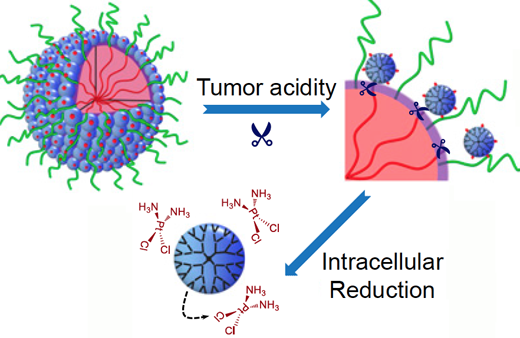
The nanoparticles start out relatively large (100 nm) (large blue circle, upper left) to enable smooth transport into the tumor through leaky blood vessels. Then, in acidic conditions found close to tumors, the particles discharge “bomblets” (right, small blue circles) just 5 nm in size. Once inside tumor cells, a second chemical step activates the platinum-based drug cisplatin (bottom) to attack the cancer directly. (credit: Emory Health Sciences)

Scientists have devised a triple-stage stealth “cluster bomb” system for delivering the anti-cancer chemotherapy drug cisplatin, using nanoparticles designed to break up when they reach a tumor:

  1. The nanoparticles start out relatively large  — 100 nanometers wide — so that they can move through the bloodstream and smoothly transport into the tumor through leaky blood vessels.
  2. As they detect acidic conditions close to tumors, the nanoparticles discharge “bomblets” just 5 nanometers in size to penetrate tumor cells.
  3. Once inside tumor cells, the bomblets release the platinum-based cisplatin, which kills by crosslinking and damaging DNA.

Doctors have used cisplatin to fight several types of cancer for decades, but toxic side effects — to the kidneys, nerves and inner ear — have limited its effectiveness. But in research with three different mouse tumor models*, the researchers have now shown that their nanoparticles can enhance cisplatin drug accumulation in tumor tissues for several types of cancer.

Details of the research — by teams led by professor Jun Wang, PhD, at the University of Science and Technology of China and by professor Shuming Nie, PhD, in the Wallace H. Coulter Department of Biomedical Engineering at Georgia Tech and Emory — were published this week in the journal PNAS.

* When mice bearing human pancreatic tumors were given the same doses of free cisplatin or cisplatin clothed in pH-sensitive nanoparticles, the level of platinum in tumor tissues was seven times higher with the nanoparticles. This suggests the possibility that nanoparticle delivery of a limited dose of cisplatin could restrain the toxic side effects during cancer treatment.

The researchers also showed that the nanoparticles were effective against a cisplatin-resistant lung cancer model and an invasive metastatic breast cancer model in mice. In the lung cancer model, a dose of free cisplatin yielded just 10 percent growth inhibition, while the same dose clothed in nanoparticles yielded 95 percent growth inhibition, the researchers report. In the metastatic breast cancer model, treating mice with cisplatin clothed in nanoparticles prolonged animal survival by weeks; 50 percent of the mice were surviving at 54 days with nanoparticles compared with 37 days for the same dose of free cisplatin.


Abstract of Stimuli-responsive clustered nanoparticles for improved tumor penetration and therapeutic efficacy

A principal goal of cancer nanomedicine is to deliver therapeutics effectively to cancer cells within solid tumors. However, there are a series of biological barriers that impede nanomedicine from reaching target cells. Here, we report a stimuli-responsive clustered nanoparticle to systematically overcome these multiple barriers by sequentially responding to the endogenous attributes of the tumor microenvironment. The smart polymeric clustered nanoparticle (iCluster) has an initial size of ∼100 nm, which is favorable for long blood circulation and high propensity of extravasation through tumor vascular fenestrations. Once iCluster accumulates at tumor sites, the intrinsic tumor extracellular acidity would trigger the discharge of platinum prodrug-conjugated poly(amidoamine) dendrimers (diameter ∼5 nm). Such a structural alteration greatly facilitates tumor penetration and cell internalization of the therapeutics. The internalized dendrimer prodrugs are further reduced intracellularly to release cisplatin to kill cancer cells. The superior in vivo antitumor activities of iCluster are validated in varying intractable tumor models including poorly permeable pancreatic cancer, drug-resistant cancer, and metastatic cancer, demonstrating its versatility and broad applicability.

The facts suggest that big pharma represents only a few companies in most fields of disease. They spend an enormous amount of money in lobbying congress and doctors to get them to do their bidding.They wouldn’t spend the money if they didn’t need to do so.The profit motive is central with patient well being only being practiced if it pays off.Cancer is a superb example, with new drugs being offered usually at astronomical prices in this country. Like wise the FDA is controlled by them and it is in their best interests to make the cost of developing new drugs outrageously expensive.Only big pharma can afford to get new drugs approved.
After the phase 3 trials are completed usually the documentation to ask for approval to market a drug is at least 100,000 pages long. The legal talent needed to compile such documents ( and this is only one of many documents produced in the process) is extremely expensive. The time taken for approval stretches into many years and then the drugs are often not approved.(only a small percentage are approved).
Antibiotics were one example of a group of drugs that really did cure many diseases. Big pharma found it didn’t pay to develop new antibiotics because the treatment was short and so successful that patients used the drugs only for a short time.
Over time, as Alexander Fleming forsaw, the bacteria would develop resistance, especially if they were extensively used indiscriminantly. Now many dangerous bacteria are resistant to many or all antibiotics and there is no treatment available. Since bacteria can pass this resistance to specific antibiotics to almost any species of bacteria, its only a matter of time before we will be back in the pre-antibiotic era.
SINCE IT DOES NOT PAY FOR BIG PHARMA TO DEVELOP NEW ANTIBIOTICS THEY ARE NOW NOT DOING SO AT ALL.
…..

“In the metastatic breast cancer model, treating mice with cisplatin clothed in nanoparticles prolonged animal survival by weeks; 50 percent of the mice were surviving at 54 days with nanoparticles compared with 37 days for the same dose of free cisplatin.”

I’m not so convinced after all. But this is perfectly in line with big pharma goals. Only an idiot would kill its main source of income.

…….

It is almost impossible to set up a conspiracy against big pharma’s abusive practices.Every avenue their high priced lawyers can think of to stop budding conspiracies has been blocked by law where possible. One possible road might be to do research and development in other countries outside US legal juristiction, however most drugs without FDA approval can and are stopped at the border and confiscated even if as in Canada the same drug produced in the US is being manufactured in Canada.Almost certainly Cisplatin is under patent in the US and the patent holder has the right to refuse the use of the drug for any reason they want, including being used in this cluster bomb drug. The manufacturer is almost certainly making huge profits from selling Cisplatin and I doubt they want to see a cheap drug cure many cancers. I guess the only way to go is to try and turn to a country like India.A number of cancer drugs were being sold by US patent holders at wholesale prices that were to high for most Indians. The government of India refused to allow these companies to patent their medicines in India and forced them to license the drugs and much cheaper prices.Most US patents are not operative in India, they can produce US style insulin pumps at a fraction of our cost as they can in China and Vietnam or Mexico. It would be difficult to send these pumps to buyers in the US from India but by shipping them from another country, say Canada or Mexico most would make it past customs. As for Cancer treatment, India and china have some very fine trained biochemist and doctors, who could easily apply many of the immunological treatments against cancer. All arms of the immune system have been used to produce miracle treatments that have cured some patients that were on their death beds.The treatments can be tested carefully in these countries, and improved by any methods including some I have suggested.By advertising in the US to cancer patients that they can inexpensively have these working treatments cheaply as a medical tourist, it is only a matter of time before they will cure the disease wholesale and break the medical industrial complex down. As far as generics that are not being produced here, by setting up a non profit corporation that produces any and all drugs that come off patent as a goal, at the cheapest price less a reasonable markup for cost of manufacture etc. one by one they will end the abuse of not producing or overpricing generics.

………

Significance

Successively overcoming a series of biological barriers that cancer nanotherapeutics would encounter upon intravenous administration is required for achieving positive treatment outcomes. A hurdle to this goal is the inherently unfavorable tumor penetration of nanoparticles due to their relatively large sizes. We developed a stimuli-responsive clustered nanoparticle (iCluster) and justified that its adaptive alterations of physicochemical properties (e.g. size, zeta potential, and drug release rate) in accordance with the endogenous stimuli of the tumor microenvironment made possible the ultimate overcoming of these barriers, especially the bottleneck of tumor penetration. Results in varying intractable tumor models demonstrated significantly improved antitumor efficacy of iCluster than its control groups, demonstrating that overcoming these delivery barriers can be achieved by innovative nanoparticle design.

http://www.pnas.org/content/early/2016/03/23/1522080113.full


  1. Engineering of self-assembled nanoparticle platform for precisely controlled combination drug therapy.
    Nagesh Kolishetti et al., Proc Natl Acad Sci U S A, 2010
  2. Enhanced anticancer activity of nanopreparation containing an MMP2-sensitive PEG-drug conjugate and cell-penetrating moiety.
    Lin Zhu et al., Proc Natl Acad Sci U S A, 2013
  3. Protein-assisted self-assembly of multifunctional nanoparticles.
    Maxim P Nikitin et al., Proc Natl Acad Sci U S A, 2010
  4. Photoswitchable nanoparticles for in vivo cancer chemotherapy.
    Rong Tong et al., Proc Natl Acad Sci U S A, 2013
  5. Investigating the optimal size of anticancer nanomedicine.
    Li Tang et al., Proc Natl Acad Sci U S A, 2014 
  6. Nanoparticles seek and destroy glioblastoma in mice
    Sanford-Burnham Medical Research Institute,ScienceDaily, 2011
  7. Nanoparticle ‘alarm clock’ tested to awaken immune systems put to sleep by cancer
    Norris Cotton Cancer CenterDartmouth-Hitchcock Medical Center, ScienceDaily, 2014
  8. Injectable nanoparticle generator could radically transform metastatic cancer treatment
    Houston Methodist, ScienceDaily, 2016
  9. Introducing the multi-tasking nanoparticle
    UC Davis Comprehensive Cancer Center,ScienceDaily, 2014
  10. First-of-its-kind self-assembled nanoparticle for targeted and triggered thermo-chemotherapy
    Brigham and Women’s Hospital, ScienceDaily, 2012
 Researchers use optogenetic light to block tumor development
Uses light-triggered bioelectric current

Tufts University biologists have demonstrated (using a frog model*) for the first time that it is possible to prevent tumors from forming (and to normalize tumors after they have formed) by using optogenetics (light) to control bioelectrical signalling among cells.

Light/bioelectric control of tumors

Virtually all healthy cells maintain a more negative voltage in the cell interior compared with the cell exterior. But the opening and closing of ion channels in the cell membrane can cause the voltage to become more positive (depolarizing the cell) or more negative (polarizing the cell). That makes it possible to detect tumors by their abnormal bioelectrical signature before they are otherwise apparent.

The study was published online in an open-access paper in Oncotarget on March 16.

The use of light to control ion channels has been a ground-breaking tool in research on the nervous system and brain, but optogenetics had not yet been applied to cancer.

The researchers first injected  cells in Xenopus laevis (frog) embryos with RNA that encoded a mutant RAS oncogene known to cause cancer-like growths.

The researchers then used blue light to activate positively charged ion channels,which induced an electric current that caused the cells to go from a cancer-like depolarized state to a normal, more negative polarized state. The did the same with a green light-activated proton pump, Archaerhodopsin (Arch). Activation of both agents significantly lowered the incidence of tumor formation and also increased the frequency with which tumors regressed into normal tissue.

“These electrical properties are not merely byproducts of oncogenic processes. They actively regulate the deviations of cells from their normal anatomical roles towards tumor growth and metastatic spread,” said senior and corresponding author Michael Levin, Ph.D., who holds the Vannevar Bush chair in biology and directs the Center for Regenerative and Developmental Biology at Tufts School of Arts and Sciences.

“Discovering new ways to specifically control this bioelectrical signaling could be an important path towards new biomedical approaches to cancer. This provides proof of principle for a novel class of therapies which use light to override the action of oncogenic mutations,” said Levin. “Using light to specifically target tumors would avoid subjecting the whole body to toxic chemotherapy or similar reagents.”

This work was supported by the G. Harold and Leila Y. Mathers Charitable Foundation.

* Frogs are a good model for basic science research into cancer because tumors in frogs and mammals share many of the same characteristics. These include rapid cell division, tissue disorganization, increased vascular growth, invasiveness and cells that have an abnormally positive internal electric voltage.


Abstract of Use of genetically encoded, light-gated ion translocators to control tumorigenesis

It has long been known that the resting potential of tumor cells is depolarized relative to their normal counterparts. More recent work has provided evidence that resting potential is not just a readout of cell state: it regulates cell behavior as well. Thus, the ability to control resting potential in vivo would provide a powerful new tool for the study and treatment of tumors, a tool capable of revealing living-state physiological information impossible to obtain using molecular tools applied to isolated cell components. Here we describe the first use of optogenetics to manipulate ion-flux mediated regulation of membrane potential specifically to prevent and cause regression of oncogene-induced tumors. Injection of mutant-KRAS mRNA induces tumor-like structures with many documented similarities to tumors, in Xenopus tadpoles. We show that expression and activation of either ChR2D156A, a blue-light activated cation channel, or Arch, a green-light activated proton pump, both of which hyperpolarize cells, significantly lowers the incidence of KRAS tumor formation. Excitingly, we also demonstrate that activation of co-expressed light-activated ion translocators after tumor formation significantly increases the frequency with which the tumors regress in a process called normalization. These data demonstrate an optogenetic approach to dissect the biophysics of cancer. Moreover, they provide proof-of-principle for a novel class of interventions, directed at regulating cell state by targeting physiological regulators that can over-ride the presence of mutations.

A biosensor that’s 1 million times more sensitive

Aims at detecting cancers earlier, improving treatment and outcomes
A schematic representation of the miniaturized gold-aluminum oxide hyperbolic metamaterial (HMM) sensor device with a fluid flow channel, showing a scanning electron microscope (SEM) image [gray inset] of the 2D subwavelength gold diffraction grating on top of the hyperbolic metamaterials layers (scale bar, 2 µm) (credit: Kandammathe Valiyaveedu Sreekanth et al./Nature Materials
An optical sensor that’s 1 million times more sensitive than the current best available has been developed by Case Western Reserve University researchers. Based on nanostructured metamaterials, it can identify a single lightweight molecule in a highly dilute solution.The research goal is to provide oncologists a way to detect a single molecule of an enzyme produced by circulating cancer cells. That could allow doctors to diagnose and monitor patients with certain cancers far earlier than possible today.

“The prognosis of many cancers depends on the stage of the cancer at diagnosis,” said Giuseppe “Pino” Strangi, professor of physics at Case Western Reserve and research leader. “Very early, most circulating tumor cells express proteins of a very low molecular weight, less than 500 Daltons,” Strangi explained. “These proteins are usually too small and in too low a concentration to detect with current test methods, yielding false negative results.

“With this platform, we’ve detected proteins of 244 Daltons, which should enable doctors to detect cancers earlier — we don’t know how much earlier yet,” he said. “This biosensing platform may help to unlock the next era of initial cancer detection.”

The researchers believe the sensing technology will also be useful in diagnosing and monitoring other diseases.

A biological sieve

The nanosensor, which fits in the palm of a hand, acts like a biological sieve, capable of isolating a small protein molecule weighing less than 800 quadrillionths of a nanogram from an extremely dilute solution.

To make the device so sensitive, Strangi’s team faced two long-standing barriers: Light waves cannot detect objects smaller than their own physical dimensions (about 500 nanometers, depending on wavelength). And molecules in dilute solutions float in Brownian (random) motion and are unlikely to land on the sensor’s surface.

The solution was to use a microfluidic channel to restrict the molecules’ ability to float around and a plasmon-based metamaterial made of 16 nanostructured layers of reflective and conductive gold and transparent aluminum oxide, a dielectric, each 10s of atoms thick. Light directed onto and through the layers is concentrated into a very small volume much smaller than the wavelength of light.*

“It’s extremely sensitive,” Strangi said. “When a small molecule lands on the surface, it results in a large local modification, causing the light to shift.” Depending on the size of the molecule, the reflecting light shifts different amounts. The researchers hope to learn to identify specific biomarker and other molecules for different cancers by their light shifts.

To add specificity to the sensor, the team added a layer of trap molecules — molecules that bind specifically with the molecules they hunt. In tests, the researchers used two trap molecules to catch two different biomolecules: bovine serum albumin, with a molecular weight of 66,430 Daltons, and biotin, with a molecular weight of 244 Daltons. Each produced a signature light shift.

Other researchers have reported using plasmon-based biosensors to detect biotin in solutions at concentrations ranging from more than 100 micromoles per liter to 10 micromoles per liter. This device proved 1 million times more sensitive, finding and identifying biotin at a concentration of 10 picomoles per liter.

Testing and clinical use in process

Strangi’s lab is working with other oncologists worldwide to test the device and begin moving the sensor toward clinical use.

In Cleveland, Strangi and Nima Sharifi, MD, co-leader of the Genitourinary Cancer Program for the Case Comprehensive Cancer Center, have begun testing the sensor with proteins related to prostate cancers.

“For some cancers, such as colorectal and pancreatic cancer, early detection is essential,” said Sharifi, who is also the Kendrick Family Chair for Prostate Cancer Research at Cleveland Clinic. “High sensitivity detection of cancer-specific proteins in blood should enable detection of tumors when they are at an earlier disease stage.

“This new sensing technology may help us not only detect cancers, but what subset of cancer, what’s driving its growth and spread, and what it’s sensitive to,” he said. “The sensor, for example, may help us determine markers of aggressive prostate cancers, which require treatments, or indolent forms that don’t.”

The research is published online in the journal Nature Materials.

* The top gold layer is perforated with holes, creating a grating that diffuses light shone on the surface into two dimensions. The incoming light, which is several hundreds of nanometers in wavelength, appears to be confined and concentrated in a few nanometers at the interface between the gold and the dielectric layer.  As the light strikes the sensing area, it excites free electrons causing them to oscillate and generate a highly confined propagating surface wave, called a surface plasmon polariton. This propagating surface wave will in turn excite a bulk wave propagating across the sensing platform. The presence of the waves cause deep sharp dips in the spectrum of reflecting light. The combination and the interplay of surface plasmon and bulk plasmon waves are what make the sensor so sensitive. Strangi said. By exciting these waves through the eight bilayers of the metamaterial, they create remarkably sharp resonant modes. Extremely sharp and sensitive resonances can be used to detect smaller objects.


Abstract of Extreme sensitivity biosensing platform based on hyperbolic metamaterials

Optical sensor technology offers significant opportunities in the field of medical research and clinical diagnostics, particularly for the detection of small numbers of molecules in highly diluted solutions. Several methods have been developed for this purpose, including label-free plasmonic biosensors based on metamaterials. However, the detection of lower-molecular-weight (<500 Da) biomolecules in highly diluted solutions is still a challenging issue owing to their lower polarizability. In this context, we have developed a miniaturized plasmonic biosensor platform based on a hyperbolic metamaterial that can support highly confined bulk plasmon guided modes over a broad wavelength range from visible to near infrared. By exciting these modes using a grating-coupling technique, we achieved different extreme sensitivity modes with a maximum of 30,000 nm per refractive index unit (RIU) and a record figure of merit (FOM) of 590. We report the ability of the metamaterial platform to detect ultralow-molecular-weight (244 Da) biomolecules at picomolar concentrations using a standard affinity model streptavidin–biotin.

Read Full Post »

Lipids link to breast cancer

Larry H. Bernstein, MD, FCAP, Curator

LPBI


Lipids Found Critical to Breast Cancer Cell Proliferation

http://www.genengnews.com/gen-news-highlights/lipids-found-critical-to-breast-cancer-cell-proliferation/81252572/

http://www.genengnews.com/Media/images/GENHighlight/112523_webApr6_2016_IRBBarcelona_BreastTumorsLIPD3119618425.jpg


Scientists in Spain report finding that breast cancer cells need to take up lipids from the extracellular environment so that they can continue to proliferate. The main protein involved in this process is LIPG, an enzyme found in the cell membrane and without which tumor cell growth is arrested. Analyses of more than 500 clinical samples from patients with various kinds of breast tumors reveal that 85% have high levels of LIPG expression.

The research (“FoxA and LIPG Endothelial Lipase Control the Uptake of Extracellular Lipids for Breast Cancer Growth”) is published in Nature Communications.

In Spain, breast cancer is the most common tumor in women and the fourth most common type in both sexes (data from the Spanish Society of Medical Oncology, 2012), registering more than 25,000 new diagnoses each year. According to figures from the World Health Organization, every year 1.38 million new cases of breast cancer are diagnosed and 458,000 people die from this disease (International Agency for Research on Cancer Globocan, 2008).

It was already known that cancer cells require extracellular glucose to grow and that they reprogram their internal machinery to produce greater amounts of lipids. The relevance of this study is that it reveals for the first time that tumor cells must import extracellular lipids to grow.

“This new knowledge related to metabolism could be the Achilles heel of breast cancer,” explains ICREA researcher and Institute for Research in Biomedicine–Barcelona group leader Roger Gomis, Ph.D., co-leader of the study together with Joan J. Guinovart, Ph.D., director of IRB Barcelona and professor at the University of Barcelona. Using animal models and cancer cell cultures, the scientists have demonstrated that blocking of LIPG activity arrests tumor growth.

“What is promising about this new therapeutic target is that LIPG function does not appear to be indispensable for life, so its inhibition may have fewer side effects than other treatments,” explains the first author of the study, Felipe Slebe, a Ph.D. Fellow at IRB Barcelona.

According to Dr. Guinovart, “because LIPG is a membrane protein, it is potentially easier to design a pharmacological agent to block its activity.”

“If a drug were found to block its activity, it could be used to develop more efficient chemotherapy treatments that are less toxic than those currently available,” adds Dr. Gomis.

The scientists are now looking into international collaborations for developing LIPG inhibitors.

FoxA and LIPG endothelial lipase control the uptake of extracellular lipids for breast cancer growth

Felipe SlebeFederico RojoMaria Vinaixa,…Joan AlbanellJoan J. Guinovart & Roger R. Gomis

Nature Communications7,Article number:11199      http://dx.doi.org:/10.1038/ncomms11199

The mechanisms that allow breast cancer (BCa) cells to metabolically sustain rapid growth are poorly understood. Here we report that BCa cells are dependent on a mechanism to supply precursors for intracellular lipid production derived from extracellular sources and that the endothelial lipase (LIPG) fulfils this function. LIPG expression allows the import of lipid precursors, thereby contributing to BCa proliferation. LIPG stands out as an essential component of the lipid metabolic adaptations that BCa cells, and not normal tissue, must undergo to support high proliferation rates. LIPG is ubiquitously and highly expressed under the control of FoxA1 or FoxA2 in all BCa subtypes. The downregulation of either LIPG or FoxA in transformed cells results in decreased proliferation and impaired synthesis of intracellular lipids.

FoxA1 and FoxA2 in BCa growth

The importance of FoxA1 in BCa cells differentiation and its contribution to controlling the expression of metabolic genes in several other tissues makes this transcription factor a highly attractive target to explain the metabolic alterations reported in BCa. For these reason, we decided to ascertain the metabolic processes controlled by FoxA1 in BCa. We first confirmed the association between high FoxA1 expression (mRNA and protein) and luminal subtype (Fig. 1a). To this end, we used two cohorts of primary breast tumours with annotated clinical features and follow-up. The MSKCC/EMC BCa data set is based on gene expression profiles from an original series of 560 cases10, whereas the Spanish BCa data set (n=439) is a tissue microarray of formalin-fixed paraffin-embedded stage I–III breast tumour specimens11 (details provided in Methods Section). High FoxA1 gene expression significantly correlated with high expression of well-established luminal markers, such as GATA3 and ESR1, in primary tumours (Supplementary Fig. 1a). Next we explored FoxA1 expression beyond the luminal subtype. Lower FoxA1 expression was observed in non-luminal tumours (Fig. 1a,b); however, a subset also expressed higher FoxA1 levels (Supplementary Fig. 1b and Supplementary Table 1). Given that FoxA2, in conjunction with FoxA1, is also involved in the regulation of several metabolic pathways, we determined the expression of this factor in BCa samples. Unfortunately, no FoxA2 probes in the Affymetrix platform used in the MSKCC/EMC data set provided a reliable interpretation. To overcome this limitation, we used tissue arrays of early BCa samples (Spanish BCa set). Histological examination of FoxA2-stained tissue microarray slides from the Spanish BCa set revealed the expression of this factor in six non-luminal samples, which were scored as FoxA1 (examples in Fig. 1b and summarized inSupplementary Table 1). Collectively, the number of FoxA+ BCa samples detected by immunohistochemistry accounted for 81.3% of all samples in the Spanish BCa set (Supplementary Table 1), which represent a significant proportion of BCa and point to the participation of FoxA in this disease, beyond to its involvement in differentiation and control of hormonal responses.

Figure 1: FoxA1 and FoxA2 in BCa growth.

http://www.nature.com/ncomms/2016/160405/ncomms11199/images_article/ncomms11199-f1.jpg

(a, top) FoxA1 mRNA expression in the MSKCC/EMC set. BCa samples were stratified in Luminal A, Luminal B, Her2, triple negative and unknown subgroups. The unknown group represents specimens that were not classified in any group. (bottom) FoxA1 protein levels by IHC staining in Luminal, Her2 and triple negative samples in the Spanish BCa set (cohort of 439 BCa patients). Data is average±s.d. (b) FoxA1 and FoxA2 IHC staining in FFPE human specimens representative of the different BCa subtypes. Six independent cases are depicted. FoxA1 and FoxA2 are expressed mainly in the nuclei of tumour cells. Scale bar, 50μm. (c) FoxA1 and FoxA2 mRNA expression analysis by qRT-PCR and protein expression by western blot in human BCa cell lines compared with HMECs. T-test was used. Data are average±s.e.m.; n= 3. Of note, MDA435 are of melanoma origin. (d) FoxA1 and FoxA2 expression in MCF7, MDA231 and their derivatives cells by qRT-PCR and western blot. FoxA1 and FoxA2 depletion was achieved with a doxycycline-inducible short hairpin vector. FoxA-depleted cells were rescued by expression of FoxA2 in MCF7 cells or FoxA1 in MDA231 cells. Cell populations were cultured in the presence or absence of doxycycline for 6 days. P value is the result of T-test. Data are average±s.e.m.;n=3. *P≤0.05, ***P≤0.001 (e, left) Schematic representation of MDA231 and MCF7 cells grown without doxycycline and inoculated in Balb/c nude mice treated with or without doxycycline to induce the expression of the indicated FoxA short hairpins. All tumour cell lines have GFP constitutive expression, and tRFP concomitantly with the short hairpin were expressed in doxycycline treated tumours. (right) Tumour growth of the indicated cell populations inoculated in Balb/c nude mice are determined at the indicated time points. P value is the result of T-test. Data are average±s.e.m.; n= 5–8 tumours. *P≤0.05,**P≤0.01, ***P≤0.001. FFPE, formalin-fixed paraffin-embedded.

Next, we extended our analysis to BCa cell lines for further mechanistic studies. We compared FoxA1 and FoxA2 mRNA expression in four estrogen receptor positive (ER+) (MCF7, T47D, BT474 and ZR75) and four estrogen receptor negative (ER−) (SKBR3, MDA468, BT20 and MDA231) BCa cell lines, a cell line of melanoma origin (MDA435), and human mammary epithelial cells (HMECs). Of note, two of the BCa lines tested were HER2+ (BT474 and SKBR3) (Fig. 1c). All ER+ BCa cells (MCF7, T47D, BT474 and ZR75), the ER−/HER2+ SKBR3 and both triple negative-like MDA468 and BT20 cell lines expressed FoxA1. Interestingly, MDA231 triple negative-like cells expressed high levels of FoxA2 but not FoxA1, and the non-tumour HMECs did not express these factors (Fig. 1c). No BCa cells co-expressed these two proteins (Fig. 1c). Our results suggest that the expression of FoxA transcription factors is a common feature of breast tumours, as well as of BCa cell lines. This notion implies that FoxA factors play a major role in BCa growth, independently of luminal fate specification.

To examine the molecular basis of the contribution of FoxA1 and FoxA2 to BCa growth, we engineered constitutive GFP-luciferase-expressing MCF7 and MDA231 cells with a doxycycline-inducible short-hairpin RNA (sh-RNA) vector targeting either FoxA1 or FoxA2. Doxycycline addition to the cell culture media decreased FoxA expression in both cell lines compared with control cells (ShControl (Dox+) and Sh FoxA1 or Sh FoxA2 (Dox−))(Fig. 1d), with the concomitant expression of tRFP (Supplementary Fig. 1c). Of note, there was no gain of expression of FoxA2 in FoxA1-depleted cells or vice versa (Fig. 1d). Interestingly, cancer cell proliferation was impaired in vitroupon depletion of either FoxA1 or FoxA2 in MCF7 and MDA231 cells, respectively (Supplementary Fig. 1d,e). Similarly, when Balb/c nude mice implanted with xenograft tumours from the above described cellular populations were treated with doxycycline and the short hairpins were induced, striking differences in tumour growth were observed. FoxA1-depleted MCF7 and FoxA2-depleted MDA231 tumour growth was blunted (Fig. 1e and additional controls in Supplementary Fig. 1f. Experimental details in the Supplementary Methods Section). Collectively, these observations confirm that FoxA1 or FoxA2 expression is required for BCa growth.

Previous studies indicate that FoxA1 and FoxA2 transcriptionally regulate common genes in the liver and pancreas that are central to development and metabolism. We therefore hypothesized that crossed expression of FoxA factors could rescue tumour growth by restoring the expression of essential metabolic genes. To this end, we engineered doxycycline-driven shFoxA1 MCF7 cells to express exogenous FoxA2 and doxycycline-driven shFoxA2 MDA231 cells to express exogenous FoxA1 (Fig. 1d). Interestingly, when these BCa modified cells were implanted in Balb/c nude mice and FoxA depletion was induced with doxycycline, the sustained expression of another FoxA factor (FoxA2 in MCF7 and FoxA1 in MDA231 cells) was sufficient for tumours to continuously grow (Fig. 1e and additional controls in Supplementary Fig. 1f). Quantitative real-time PCR (qRT-PCR) analysis confirmed FoxA expression in the distinct tumour populations ex-vivo (Supplementary Fig. 1g). These results showed that retention of minimal levels of FoxA1 or FoxA2 expression is necessary for BCa cell growth.

FoxA1- and FoxA2-regulated transcripts for BCa growth

Figure 2: A genomic approach to identify FoxA1- and FoxA2-regulated transcripts in MCF7 and MDA231 cells.

http://www.nature.com/ncomms/2016/160405/ncomms11199/images_article/ncomms11199-f2.jpg

(a) FACS profiling of MCF7 and MDA231 cells derived from tumours isolated from mice on the basis of the expression of GFP+ and RFP− (control group) or GFP+ and tRFP+ (knockdown and rescue groups). (b) Representation of the transcripts up- and downregulated by FoxA in MCF7 and MDA231 cells isolated from tumours. Up- and downregulated transcripts present a Bayesian false discovery rate below 5% and fold change >2.5. (c) LIPG, Bcl2 and Cdh11OB mRNA levels of the indicated genetically modified MCF7 and MDA231 tumour xenografts analysed by qRT-PCR. P value is the result of T-test. Data are average±s.e.m.; n= 5–8 tumours. *P≤0.05, ***P≤0.001. (d) LIPG protein expression in constitutive shFoxA1 MCF7 or shFoxA2 MDA231 cells. (e) Promoter reporter assay in HEK 293 cells. Cells were transfected with LIPG promoter reporter and FoxA1 or FoxA2 expressing vectors when indicated. P value is the result of T-test. Data are average±s.e.m.; n=3. ****P≤0.0001.

LIPG expression in BCa

Next, we showed that LIPG expression in primary tumours was specific to BCa tumour cells and not to other stroma cellular entities (Fig. 3a). Subsequently, we tested LIPG expression in normal breast epithelia and interrogated 20 samples from mammoplasty reductions. Normal breast epithelial cells showed a lower expression of LIPG than cells from tumour specimens (Fig. 3b). Similar results were obtained for LIPG protein levels in a panel from BCa lines compared with HMEC cells. Of the cellular populations tested, the eight BCa cell lines expressing FoxA1 or FoxA2 had very high levels of LIPG protein compared with the melanoma MDA435 cell line and the human epithelial cell (Fig. 3c). Consistent with this observation, 83.8% of BCa samples in the Spanish tumour cohort were LIPG+ (Fig. 3d and Supplementary Table 3), and LIPG expression correlated with FoxA expression (Spearman correlation; r=0.477, P=0.000001; Fig. 3e). Further analysis showed that LIPG expression levels in primary tumours do not have the capacity to stratify patients for differential risk of overall or disease-free survival (Supplementary Fig. 2a) and are not dependent on estrogen signalling (Supplementary Fig. 2b), thus reinforcing the notion that LIPG is essential for BCa growth.

Figure 3: LIPG contributes to BCa growth.

http://www.nature.com/ncomms/2016/160405/ncomms11199/images_article/ncomms11199-f3.jpg

a) Representative LIPG IHC staining on primary BCa tissues (cohort of 439 BCa patients). LIPG is expressed in the cytoplasm of tumour cells. Faint staining is also detected in the extracellular area. Scale bar, 50μm. (b) Representative LIPG IHC staining in normal breast tissue from mammoplasty reductions. Weak LIPG expression occurs in epithelial cells from ducts and lobuli. Scale bar, 50μm. (c) LIPG protein expression in human cancer cell lines compared with HMECs. Actin was used as loading control.*Unspecific band. Of note, MDA435 are of melanoma origin. (d) LIPG protein levels by IHC staining in Luminal, Her2, and triple negative samples in the Spanish BCa set (cohort of 439 BCa patients). Data is average±s.d. (e) Spearman correlation (P=0.000001) between FoxA and LIPG IHC staining intensities in Spanish BCa set (cohort of 439 BCa patients). (f) Left panel, in vitro proliferation curves of MCF7 and MDA231 cells transduced with a control or a LIPG short hairpin. Data are average±s.e.m.; n=3. (right) LIPG protein expression in shLIPG MCF7 and shLIPG MDA231 cells. The blot shown is representative of three independent experiments. P value is the result of T-test.**P≤0.01, ***P≤0.001. (g) Tumour growth of the indicated cell populations inoculated in Balb/c nude mice are determined at the indicated time points.P value is the result of T-test. Data are average±s.e.m.; n= 6–8 tumours. *P≤0.05.

LIPG is a phospholipase located in the cytosol and cellular membrane and has been shown to hydrolyse extracellular phospholipids from high-density lipoprotein that are afterwards incorporated into intracellular lipid species thus providing lipid precursors of cell metabolism17, 18. Thus we questioned whether LIPG regulates essential lipid intake in BCa and whether it is necessary for proliferation. To validate this hypothesis, we genetically downregulated the expression of this protein in MCF7 and MDA231 cells by means of sh-RNA (Fig. 3f and Supplementary Fig. 2c). LIPG depletion blunted BCa cell capacity to proliferate in vitro (Fig. 3f), as previously observed in FoxA-depleted cells (Supplementary Fig. 1d,e), and caused a reduction in invasion and self-renewal properties (Supplementary Fig. 3a–d). Similarly, LIPG-depleted cells were unable to grow tumours in vivo (Fig. 3g).

LIPG induces BCa cells lipid metabolic reprograming

Figure 4: LIPG regulates the uptake of lipids in BCa cells inducing a lipid metabolic reprograming.

LIPG regulates the uptake of lipids in BCa cells inducing a lipid metabolic reprograming.

http://www.nature.com/ncomms/2016/160405/ncomms11199/images_article/ncomms11199-f4.jpg

(a) Schematic representation of LIPG action. (b) Heat map representation of the downregulated (blue) lipids identified by MS/MS in the cell homogenates of MCF7 or MDA231 LIPG-depleted cells compared with shControl cells. Depicted lipids have a fold change >1.5 and P value<0.05 using the Welch’s t-testn=5. (c) Downregulated lipid species (previously identified in b) that are common to LIPG-depleted MCF7 and LIPG-depleted MDA231 cells. ShControl cells (red box), and shLIPG (blue box). P values are <0.05 and calculated using Welch’s t-test, n=5. Whiskers extend to a maximum of 1.5 × IQR beyond the box. (d) Heat map representation of the upregulated (red) lipids identified by MS/MS in the media of MCF7 or MDA231 LIPG-depleted cells compared with the corresponding shControl cells. Characterized lipids have a fold change >1.5 and P value<0.05 using the Welch’s t-test n=5. (e) Upregulated lipid species in the media (previously identified in d) that are common to LIPG-depleted MCF7 and LIPG-depleted MDA231 cells. ShControl cells (red box), and shLIPG cells (blue box). P values are <0.05 and calculated using Welch’s t-test, n=5. Whiskers extend to a maximum of 1.5 × IQR beyond the box. (f) Heat map representation of the MS/MS downregulated (blue) lipids in the cell media of MCF7/MDA231 LIPG-depleted or shControl cells (as described in d) compared with fresh medium (without cell incubation). Depicted lipid species have a log2 fold change>1.5 and P value<0.05 using the Welch’s t-test n=5. (g) MDA231 and MCF7 cell growth for 48h in complete medium: medium containing 10% FBS 10%); lipoprotein-free medium: medium containing 10% free lipoprotein FBS; and LPC (18:0): medium containing 10% free lipoprotein FBS and 20μM of LPC (18:0). P value is the result of T-test. Data are average±s.e.m.; n=3. **P≤0.01, ***P≤0.001, ****P≤0.0001. (h) Above, schematic representation of the experimental protocol used. (bottom) Tumour growth of the indicated cell populations inoculated in Balb/c nude mice treated with high-fat diet (HFD) are determined at the indicated time points. P value is the result of T-test. Data are average±s.e.m.; n= 6–8 tumours. *P≤0.05, **P≤0.01. Inside graph, plasma cholesterol levels of animals treated with standard diet (SD) or HFD. P value is the result of T-test. Data are average±s.e.m.; n= 4 animals per group. **P≤0.01, ***P≤0.001.

LIPG location has been shown to be functional on the outer face of the cellular membrane (Fig. 4a)18, thus we postulated the possibility that BCa cells are dependent on LIPG function to access extracellular lipids to support their growth needs. To test this notion, we profiled the media of control and LIPG-depleted MCF7 and MDA231 cells following the same liquid chromatography-mass spectrometry-based untargeted lipidomic approach as for cell homogenates. LIPG depletion prevented the absorption of particular lipids from the media (Supplementary Fig. 4a). The structural identification of the lipids by MS/MS confirms the absence of degradation of glycerophospholipids belonging to the LPC class in both MCF7 and MDA231 cells, which is depicted by higher levels in the media of these species in LIPG-depleted when compared with control cells (Fig. 4d,e). Interestingly when we analysed the LPCs species in the media of control and LIPG-depleted cells and compared with fresh media (without cells), all LPC species from control cell media were decreased. This reduction was weaker in the media of Sh LIPG cells, indicating that LIPG-depleted cells have a defect in processing and importing of pre-existing lipid species from the medium (Fig. 4f).

Finally, we evaluated which of the commonly identified potential substrates of LIPG sustains BCa cell proliferation. Initially, we confirmed that the growth of MCF7 and MDA231 cells is impaired when grown in vitro in lipoprotein-depleted media (Fig. 4g). Next we tested the capacity of LPC (18:0) to rescue BCa cell growth in the absence of lipoproteins and confirmed that this lysophosphatidylcholine was able to restore the cells’ capacity to proliferate (Fig. 4g). In accordance, this process was dependent on LIPG expression (Fig. 4g). Similarly, LIPG-depleted cells were not able to grow in vivo in animals fed with high-fat diet (Fig. 4h) indicating that LIPG is indispensable to process the extracellular lipids and mediate their uptake by the cells, irrespectively of the concentration of lipid substrates in circulation, a phenotype also observed in FoxA-depleted cells (Fig. 4h).

LIPG activity supports BCa growth

Figure 5: LIPG activity is essential for BCa growth.

LIPG activity is essential for BCa growth.

http://www.nature.com/ncomms/2016/160405/ncomms11199/images_article/ncomms11199-f5.jpg

(a, top) Homology 3D structural model of LIPG (backbone coloured according to the QMEANlocal parameter values; red residues with low error). The heavy atoms of the three catalytic residues are shown explicitly and the residue mutated in this study is shown in green (Asp 193). (b) FoxA1, FoxA2 and LIPG protein expression in MCF7, MDA231 and their derivative cells determine by western blot. FoxA1 and FoxA2 depletion was achieved with a doxycycline-inducible short hairpin vector. FoxA-depleted cells were rescued by expression of a WT or Inactive LIPG. Cell populations were cultured in the presence or absence of doxycycline for 6 days. *blots represent different exposition times. (c) Tumour growth of the indicated cell populations inoculated in Balb/c nude mice are determined at the indicated time points. Pvalue is the result of T-test. Data are average±s.e.m.; n=5–8 tumours. *P≤0.05, **P≤0.01. (d) MDA231 and MCF7 cell growth for 48h treated with DMSO (control), FAS inhibitor (C75) and/or lipase inhibitor (Orlistat). For MDA231 cells C75 was used at a final concentration of 10μgml−1 and for MCF7 cells 8μgml−1. Orlistat was used at a final concentration of 30 or 10μgml−1 in MCF7 or MD231 respectively. Pvalue is the result of T-test. Data are average±s.e.m.; n=3.*P≤0.05, **P≤0.01, ***P≤0.001. (e) Forty-eight hours cell growth of MDA231 or MCF7 cells overexpressing exogenous WT or Inactive LIPG. Cells were treated with DMSO (control) and FAS inhibitor (C75) at a final concentration of 20μgml−1. P value is the result of T-test. Data are average±s.e.m.; n=3.***P≤0.001, ****P≤0.0001 (f) Schematic representation showing how FoxA controls LIPG and lipid metabolism to support tumour growth.

As previous reports showed that de novo lipid metabolism is necessary for BCa growth3, 22, we next questioned whether this lipid synthesis was sufficient or, instead, whether exogenous sources are also required to support BCa cell growth and proliferation, as suggested by our experimental data. To this end, we inhibited the activity of fatty acid synthase (FAS) in BCa cells by means of the chemical inhibitor C75 (ref. 23). FAS activity is crucial for de novo lipid synthesis in cancer cells3,22. To test the complementarity of both de novo and/or exogenous lipid supplies, we used a C75 concentration causing a 50% reduction in BCa cell growth in vitro 48h post incubation (Fig. 5d andSupplementary Fig. 5d). Similarly, we tested the contribution of LIPG inhibition by means of treatment with a lipase inhibitor, Orlistat21. A specific dose causing a 50% reduction in the growth of each BCa cell line was further used (Fig. 5d and Supplementary Fig. 5d). Interestingly, concomitant treatment with FAS and LIPG inhibitors caused an additive effect, blunting BCa cell growth (Fig. 5d). Next, we evaluated whether LIPG activity was sufficient to rescue the chemical inhibition of FAS. To this end, we overexpressed WT and inactive LIPG and grew MCF7 and MDA231 cells in the presence or absence of a high dose of C75 (20mgml−1), which blocks cell growth (Supplementary Fig. 5d). Complete blockade of FAS was not rescued by LIPG (Fig. 5e). Collectively, our results suggest that both exogenous lipid precursors provided by means of LIPG activity and de novo lipid synthesis mediated by FAS are necessary for BCa cell growth.


Here we reveal that FoxA factors provide a central metabolic growth function by specifically regulating LIPG expression, thereby allowing the acquisition of indispensable extracellular lipids for BCa tumour proliferation. FoxA family of transcription factors are expressed in the vast majority of BCa and FoxA1 is expressed across various BCa subtypes. Moreover we show that, in some cases, its absence is associated with the expression of FoxA2. Interestingly, in addition of FoxA1 contribution to luminal commitment24, 25, 26, 27 the factor may drive BCa growth by specifically regulating LIPG levels.

The catalytic activity of LIPG generates extracellular lipid precursors that are imported to fulfill the intracellular production of lipid species (Fig. 5f). LIPG downregulation blocks BCa cell growth, thereby indicating that the import of extracellular lipid precursors is important for the proliferation of these cells. This is a striking observation given that it is generally believed that de novo fatty acid synthesis is the main driver of tumour growth22. Indeed, our experimental data with LIPG-depleted BCa cells revealed a massive decrease of most intracellular glycerolipid intermediates in the synthesis of TG (PC, PE, PG and DG) and their derivatives (LPC and LPE). Accordingly, certain lipid species (LPC) in the media were not decreased in LIPG-depleted cells as much as in control cells, thus indicating that extracellular lipids are the substrates for intracellular lipid production. In particular, we demonstrate the relevance of extracellular LPC (18:0) for BCa cell proliferation in a lipoprotein-depleted medium, a process dependent on LIPG. In this context, a high-fat diet was shown to rescue the absence of a critical intracellular lipase, Monoacylglycerol lipase, for cancer pathogenesis given cancer cells ability to uptake lipids from the extracellular compartment was functional19. Herein, we showed that this rescue mechanism is not functional in BCa cells in the absence of FoxA2 or LIPG. In support of this notion, it is worth noting that extracellular LIPG activity releases fatty acids from high-density lipoprotein phospholipids and these acids are further employed for intracellular lipid production in the human hepatic cell line HepG2 (refs 28, 29).

In conclusion, BCa cells are dependent on a mechanism to supply precursors derived from extracellular sources for intracellular lipid production, and LIPG fulfills this function. Therefore, LIPG stands out as an important component of the lipid metabolic adaptations that BCa cells, and not normal tissue, must undergo to support high proliferation rates. Our results also suggest thatde novo lipid synthesis is necessary but not sufficient to support lipid production for BCa tumour growth. Accordingly, recent clinical studies demonstrate the association between lipids and lipoproteins in circulation and risk of BCa in women with extensive mammographic density. This observation implies that interventions aimed to reduce them may have effect on BCa risk30. All together, these observations make LIPG activity an Achilles heel of luminal and, more importantly, of triple negative/basal-like breast tumours, for which limited therapeutic options are currently available.

In normal cells, the glucose carbon flow is directed into a de novo lipogenic pathway that is regulated, in part, via phosphoinositide-3 kinase (PI-3K)-dependent activation of ATP citrate lyase (ACL), a key rate-limiting, enzyme in de novo lipogenesis. ACL is a cytosolic enzyme that catalyzes the generation of acetyl CoA from citrate. Inhibition of ACL results in a loss of B-cell growth and cell viability [10] .
The plasma membrane and its constituent phosphoinositides form the basis of the phosphatidylinositol 3-kinase (PI3-K) signaling pathway, which is crucial for cell proliferation and survival. Phosphatase and tensin-homolog deleted on chromosome 10 (PTEN) is a tumor-suppressor protein that regulates phosphatidylinositol 3-kinase (PI3-K) signaling by binding to the plasma membrane and hydrolyzing the 3′ phosphate from phosphatidylinositol (3,4,5)-trisphosphate (PI(3,4,5)P3) to form phosphatidylinositol (4,5)-bisphosphate (PI(4,5)P2). Several loss-of-function mutations in PTEN that impair lipid phosphatase activity and membrane binding are oncogenic, leading to the development of a variety of cancers. Of these three residues, R335 was observed to interact with the membrane to the greatest extent across all of the simulations. R335L, in common with several other germline mutations, has been associated with the inherited cancer [11] .
ACLY is up-regulated or activated in several types of cancers, and its inhibition is known to induce proliferation arrest in cancer cells both in vitro and in vivo. The last studies were showed that BCR-mediated signaling is regulated in part by the amount of membrane cholesterol. It was observed that statins (Lovostatin), the pharmacological inhibitors of cholesterol synthesis, induce apoptosis of CLL cells in vitro and in vivo. Also the ectopic expression of CD5 in a B-cell line stimulates the transcription of genes involved in the synthesis of cholesterol [12] .

[10] Zaidi N, Swinnen JV, Smans K. ATP-citrate lyase: a key player in cancer metabolism Cancer Res; 2012 (11): 3709-14.

[11] Craig N, Mark S.P. Sansom. Defining the Membrane-Associated State of the PTEN Tumor Suppressor Protein. Biophys J 2013; 5; 104(3: 613–21.

[12] Tomowiak C, Kennel A, Gary-Gouy, Hadife N. High Membrane Cholesterol in CLL B-Cells and Differential Expression of Cholesterol Synthesis Genes in IG GENE Unmutated vs Mutated Cells. British Journal of Medicine & Medical Research 2012; 2(3): 313-26.


Cancer’s Vanguard

Exosomes are emerging as key players in metastasis.

By Catherine Offord | April 1, 2016   http://www.the-scientist.com/?articles.view/articleNo/45577/title/Cancer-s-Vanguard/

http://www.the-scientist.com/images/April2016/AprLongLit_640px.jpg

PREPARING THE TURF: Before tumor cells arrive at their metastatic destination, part of the site is readied for them. One recent study of liver metastasis in mice found that resident macrophages called Kupffer cells take up exosomes from the original tumor (1). Additionally, macrophages from the bone marrow show up upon the release of fibronectin by other liver cells called stellate cells (2). A current proposal for additional steps in metastatic niche development includes the recruitment of epithelial cells and fibroblasts, which contribute to angiogenesis, and, finally, the arrival of tumor cells themselves (3).© IKUMI KAYAMA/STUDIO KAYAMA

In 2005, David Lyden noticed something unexpected. He and his colleagues at Weill Cornell Medical College had been researching metastasis—the spread of cancer from one part of the body to another. The team had shown that bone marrow–derived cells (BMDCs) were recruited to future metastatic sites before the arrival of tumor cells, confirming that metastasis occurred after a habitable microenvironment, or “premetastatic niche,” had been prepared.1

But carefully studying images of this microenvironment in the lung tissue of mice, Lyden saw something else. Amongst the BMDCs, the micrographs showed tiny specks, far too small to be cells, gathering at the future site of metastasis. “I said, ‘What are these viruses doing here?’” recalls Lyden. “I had no idea about exosomes, microvesicles, and microparticles.”

Those specks, Lyden would come to realize, were in fact primary tumor–derived exosomes. These membrane-enclosed vesicles packed full of molecules are now attracting growing attention as important mediators of intercellular communication, particularly when it comes to cancer’s insidious capacity to spread from one organ to another.

Preparing the ground

Tumors require a community of support cells, including fibroblasts, BMDCs, and endothelial cells, to provide functional and structural assistance and to modulate immune system behavior. Bringing together the first members of this community before the arrival of tumor cells is all part of cancer’s survival strategy, says Joshua Hood, a cancer researcher at the University of Louisville.

“It wouldn’t be efficient for tumor cells to strike out on their own, and just say, ‘Oh, here we are!’” he says. “They would run the risk of being destroyed.” Preparing a “nest” in advance makes the process much safer. “Then the tumor can just efficiently come along and set up shop without ever having to fight much of a battle with the immune system.”

But although Lyden’s group had shown that this preparation was taking place, it remained unclear how such a process might be regulated. For the next few years, many cancer researchers believed that tumor cells must communicate with the premetastatic niche primarily through tumor-secreted signaling molecules such as cytokines.

Meanwhile, research into extracellular vesicles, previously considered biological garbage bags, was revealing new modes of intercellular communication. In 2007, a group of scientists in Sweden discovered that exosomes, tiny vesicles measuring just 30 nanometers to 100 nanometers across, transport mRNA and microRNAs intercellularly, with the potential to effect changes in protein synthesis in recipient cells.2 A new means for tumors to regulate distant cellular environments came into focus, and research on exosomes exploded. In 2011, Hood and his colleagues showed that exosomes facilitate melanoma metastasis through the lymphatic system.3 The following year, Lyden’s group demonstrated that tumor-derived exosomes can direct BMDCs to one of melanoma’s most common sites of metastasis, the lung.4 Exosomes, it seemed, had been underestimated.

Tiny terraformers

Armed with the knowledge that exosomes are involved in multiple stages of melanoma metastasis, Lyden’s lab went searching for the vesicles’ potential role in the metastasis of other cancers. Turning to pancreatic ductal adenocarcinoma (PDAC)—one of the most lethal cancers in humans—postdoctoral researcher Bruno Costa-Silva led a series of exhaustive in vitro and in vivo experiments in mouse models to detail the process of premetastatic niche formation in the liver, PDAC’s most common destination. The team’s results, published last May, reveal an intricate series of sequential steps—mediated by PDAC-derived exosomes (Nature Cell Biol, 17:816-26, 2015).

Using fluorescence labeling, Lyden’s group observed that PDAC-derived exosomes are taken up by Kupffer cells, specialized macrophages lining the outer walls of blood vessels in the liver. There, the exosomes trigger the cells’ secretion of transforming growth factor β (a type of cytokine involved in cell proliferation), plus the production of fibronectin by neighboring hepatic stellate cells, and the recruitment of BMDCs.

The researchers also showed that this cascade of events could be inhibited by depleting exosomal macrophage migratory inhibitory factor (MIF), an abundant protein in PDAC exosomes. “If you target the specific proteins of exosomes, you can reduce metastasis,” explains coauthor Héctor Peinado, leader of the microenvironment and metastasis group at the Spanish National Cancer Research Center.

For Hood, the findings add to a developing picture of exosomes’ vital role as “vanguard” in the progression of cancer. “It’s like the colonization of a new planet,” he says. “They’re terraforming the environment to make it hospitable.”

MOLECULAR & CELLULAR BIOLOGY

THE PAPERS

  • B. Costa-Silva et al., “Pancreatic cancer exosomes initiate pre-metastatic niche formation in the liver,”Nature Cell Biol, 17:816-26, 2015.
  • A. Hoshino et al., “Tumour exosome integrins determine organotropic metastasis,” Nature, 527:329-35, 2015.
  • L. Zhang et al., “Microenvironment-induced PTEN loss by exosomal microRNA primes brain metastasis outgrowth,”Nature, 527:100-04, 2015.

Internal mail

Although research was revealing the steps involved in forming premetastatic sites, it was less clear how these sites were being selected. “This has always been a great mystery in cancer,” says Ayuko Hoshino, a research associate in Lyden’s lab. “Why do certain cancers metastasize to certain organs?”

One theory, proposed in 1928 by pathologist James Ewing, suggested that anatomical and mechanical factors explained organ specificity in metastasis. The premetastatic niche, then, might form wherever exosomes are likely to land. But this couldn’t be the whole story, says Hoshino. “For instance, there’s eye melanoma. Thinking about that site, you could imagine it metastasizing to the brain. But actually, it almost only metastasizes to the liver.”

Because exosomes arrive at metastatic sites before tumor cells, the team reasoned, perhaps the exosomes themselves were organotropic (i.e., attracted to particular organs or tissues). Sure enough, Lyden says, when Hoshino and Costa-Silva began injecting tumor-derived exosomes into mice, “their preliminary findings were that wherever they injected the exosomes, the pancreatic cancer ones were ending up in the liver and the breast metastasis exosomes would end up in the lung.”

Using mass spectrometry, the researchers analyzed the protein content of exosomes from lung-tropic, liver-tropic, and brain-tropic tumors. They found that the composition of exosomes’ integrins—membrane proteins involved in cell adhesion—was destination-specific (Nature, 527:329-35, 2015). Exosomes bearing integrin α6β4, for example, were directed to the lung, where they could prepare a premetastatic niche potent enough even for normally bone-tropic tumor cells to colonize. Integrin αvβ5, meanwhile, directed metastasis to the liver.

The researchers also showed that exosomal integrins didn’t necessarily correspond to the parent-cell proteins, making exosomes potentially better indicators of where a cancer will spread than the tumor cells themselves. “We can show that an integrin that’s high in the tumor cell might be completely absent in the tumor exosome or vice versa,” says Lyden, adding that, taken together, the results point to a role for exosomes in “dictating the future sites of metastasis.”

“It’s a beautiful story,” says Dihua Yu, a molecular and cellular oncologist at the University of Texas MD Anderson Cancer Center. “This is a very novel finding that gives really good indicators for potential strategies to intervene in metastasis.”

Metastatic crosstalk

In the same month that Lyden’s group published its work on organotropism, Yu’s own lab published a different exosome study—one that told another side of the story.

Yu and her colleagues had found that when tumor cells in mice metastasized to the brain, they downregulated expression of a tumor suppressor gene called PTEN, and became primed for growth at the metastatic site. When the tumor cells were taken out of the microenvironment and put in culture, however, they restored normal PTEN expression.

The researchers demonstrated that a microRNA from astrocytes—star-shape glial cells in the brain—reversibly downregulated the levels of PTEN transcripts in the tumor cells, but they couldn’t figure out how the microRNA was getting into the tumor. Blocking “obvious signaling pathways,” such as gap junctions, failed to have an effect, Yu says.

Scrutinizing astrocyte-conditioned media using electron microscopy, the researchers identified spherical vesicles between 30 nanometers and 100 nanometers in diameter—the defining size of exosomes. Exposing mouse tumor cells to these vesicles increased cell microRNA content and reduced PTENexpression (Nature, 527:100-04, 2015). The study revealed yet another role for exosomes in the communication between tumors and their microenvironment.

The findings were a surprise, says Yu, not least because they showed a different perspective from the bulk of recent research. “We’re talking about astrocytes in the brain secreting exosomes to give welcome help to the cancer cells,” she says.

“I find it an extremely interesting paper because it shows that the astrocytes can change the whole phenotype of the tumor in the brain,” says Lyden. He adds that the results underline the importance of studying the mutational status of tumors at various sites. “All this work in exosomes, it adds to the complexity,” he says. “We can’t just target tumor cells at the primary site. We’ll have to understand all the details of metastasis if we’re really going to tackle it.”

What’s next?

The discovery of multiple roles for exosomes in metastasis has generated excitement about the potential for their use in diagnostics and treatment. As protective containers of tumor-derived genetic material, exosomes could provide information about the status of cancer progression. And as mediators of premetastatic niche formation, they make obvious targets for inhibition. (See “Banking on Blood Tests,”here.)

Exosomes might even be useful as vehicles to deliver drugs because they’re patient-matched and “naturally designed to function in a biocompatible way with living systems,” says Hood. “You could take them out of people, and at some point down the road try to have patients be their own nanofactory, using their own particles for treatment purposes.”

Pancreatic cancer exosomes initiate pre-metastatic nihe formation in the liver

Bruno Costa-SilvaNicole M. AielloAllyson J. Ocean, et al.   Nature Cell Biology 2015; 17,816–826   http://dx.doi.org:/10.1038/ncb3169

Pancreatic ductal adenocarcinomas (PDACs) are highly metastatic with poor prognosis, mainly due to delayed detection. We hypothesized that intercellular communication is critical for metastatic progression. Here, we show that PDAC-derived exosomes induce liver pre-metastatic niche formation in naive mice and consequently increase liver metastatic burden. Uptake of PDAC-derived exosomes by Kupffer cells caused transforming growth factor β secretion and upregulation of fibronectin production by hepatic stellate cells. This fibrotic microenvironment enhanced recruitment of bone marrow-derived macrophages. We found that macrophage migration inhibitory factor (MIF) was highly expressed in PDAC-derived exosomes, and its blockade prevented liver pre-metastatic niche formation and metastasis. Compared with patients whose pancreatic tumours did not progress, MIF was markedly higher in exosomes from stage I PDAC patients who later developed liver metastasis. These findings suggest that exosomal MIF primes the liver for metastasis and may be a prognostic marker for the development of PDAC liver metastasis.

Ayuko HoshinoBruno Costa-SilvaTang-Long ShenGoncalo RodriguesAyako HashimotoMilica Tesic Mark, et al. Nature Nov 2015; 527,329–335  http://dx.doi.org:/10.1038/nature15756

Ever since Stephen Paget’s 1889 hypothesis, metastatic organotropism has remained one of cancer’s greatest mysteries. Here we demonstrate that exosomes from mouse and human lung-, liver- and brain-tropic tumour cells fuse preferentially with resident cells at their predicted destination, namely lung fibroblasts and epithelial cells, liver Kupffer cells and brain endothelial cells. We show that tumour-derived exosomes uptaken by organ-specific cells prepare the pre-metastatic niche. Treatment with exosomes from lung-tropic models redirected the metastasis of bone-tropic tumour cells. Exosome proteomics revealed distinct integrin expression patterns, in which the exosomal integrins α6β4 and α6β1 were associated with lung metastasis, while exosomal integrin αvβ5 was linked to liver metastasis. Targeting the integrins α6β4 and αvβ5 decreased exosome uptake, as well as lung and liver metastasis, respectively. We demonstrate that exosome integrin uptake by resident cells activates Src phosphorylation and pro-inflammatory S100 gene expression. Finally, our clinical data indicate that exosomal integrins could be used to predict organ-specific metastasis.

  1. Paget, S. The distribution of secondary growths in cancer of the breast. 1889. Cancer Metastasis Rev. 8, 98101 (1989)
  2. Hart, I. R. & Fidler, I. J. Role of organ selectivity in the determination of metastatic patterns of B16 melanoma. Cancer Res. 40, 22812287 (1980)
  3. Müller, A. et al. Involvement of chemokine receptors in breast cancer metastasis. Nature410, 5056 (2001)
  4. Weilbaecher, K. N., Guise, T. A. & McCauley, L. K. Cancer to bone: a fatal attraction. Nature Rev. Cancer 11, 411425 (2011)
  5. Zhou, W. et al. Cancer-secreted miR-105 destroys vascular endothelial barriers to promote metastasis. Cancer Cell 25, 501515 (2014)
  6. Chang, Q. et al. The IL-6/JAK/Stat3 feed-forward loop drives tumorigenesis and metastasis.Neoplasia 15, 848862 (2013)
  7. Lu, X. & Kang, Y. Organotropism of breast cancer metastasis. J. Mammary Gland Biol. Neoplasia 12, 153162 (2007)

…….

Microenvironment-induced PTEN loss by exosomal microRNA primes brain metastasis outgrowth

Lin ZhangSiyuan ZhangJun YaoFrank J. LoweryQingling ZhangWen-Chien Huang, et al.  Nature  Nov 2015; 527,100–104   http://dx.doi.org:/10.1038/nature15376

The development of life-threatening cancer metastases at distant organs requires disseminated tumour cells’ adaptation to, and co-evolution with, the drastically different microenvironments of metastatic sites1. Cancer cells of common origin manifest distinct gene expression patterns after metastasizing to different organs2. Clearly, the dynamic interaction between metastatic tumour cells and extrinsic signals at individual metastatic organ sites critically effects the subsequent metastatic outgrowth3, 4. Yet, it is unclear when and how disseminated tumour cells acquire the essential traits from the microenvironment of metastatic organs that prime their subsequent outgrowth. Here we show that both human and mouse tumour cells with normal expression of PTEN, an important tumour suppressor, lose PTEN expression after dissemination to the brain, but not to other organs. The PTEN level in PTEN-loss brain metastatic tumour cells is restored after leaving the brain microenvironment. This brain microenvironment-dependent, reversible PTEN messenger RNA and protein downregulation is epigenetically regulated by microRNAs from brain astrocytes. Mechanistically, astrocyte-derived exosomes mediate an intercellular transfer of PTEN-targeting microRNAs to metastatic tumour cells, while astrocyte-specific depletion of PTEN-targeting microRNAs or blockade of astrocyte exosome secretion rescues the PTEN loss and suppresses brain metastasis in vivo. Furthermore, this adaptive PTEN loss in brain metastatic tumour cells leads to an increased secretion of the chemokine CCL2, which recruits IBA1-expressing myeloid cells that reciprocally enhance the outgrowth of brain metastatic tumour cells via enhanced proliferation and reduced apoptosis. Our findings demonstrate a remarkable plasticity of PTEN expression in metastatic tumour cells in response to different organ microenvironments, underpinning an essential role of co-evolution between the metastatic cells and their microenvironment during the adaptive metastatic outgrowth. Our findings signify the dynamic and reciprocal cross-talk between tumour cells and the metastatic niche; importantly, they provide new opportunities for effective anti-metastasis therapies, especially of consequence for brain metastasis patients.

  1. Quail, D. F. & Joyce, J.A. Microenvironmental regulation of tumor progression and metastasis. Nature Med. 19, 14231437 (2013)
  2. Park, E. S. et al. Cross-species hybridization of microarrays for studying tumor transcriptome of brain metastasis. Proc. Natl Acad. Sci. USA 108, 1745617461 (2011)
  3. Joyce, J. A. & Pollard, J. W. Microenvironmental regulation of metastasis. Nature Rev. Cancer 9, 239252 (2009)
  4. Vanharanta, S. & Massagué, J. Origins of metastatic traits. Cancer Cell 24, 410421 (2013)
  5. Gray, J. Cancer: genomics of metastasis. Nature 464, 989990 (2010)
  6. Friedl, P. & Alexander, S. Cancer invasion and the microenvironment: plasticity and reciprocity. Cell 147, 9921009 (2011)

Banking on Blood Tests

How close are liquid biopsies to replacing current diagnostics?

By Jyoti Madhusoodanan | April 1, 2016  http://www.the-scientist.com/?articles.view/articleNo/45584/title/Banking-on-Blood-Tests/

No matter where a tumor lurks in the body, its secrets circulate in the blood. Stray tumor cells begin metastatic migrations by slipping into the vasculature. Vesicles secreted by cancer cells and free-floating DNA are also released into the bloodstream. Because these bits of cellular debris are a grab-bag of biomarkers that could both signal a cancer’s presence and predict its progression and response to treatment, the use of blood-based tests, or liquid biopsies, to detect and evaluate them is now drawing significant commercial interest.

Last year, San Diego–based Pathway Genomics began advertising a screen “for the early detection of up to 10 different cancer types in high-risk populations.” But the screen had only been tested in already-diagnosed patients, not in at-risk individuals, and within weeks of making it commercially available, the company received an FDA notice to provide more information about their promotional claims before further marketing. “We . . . have not found any published evidence that this test or any similar test has been clinically validated as a screening tool for early detection of cancer in high risk individuals,” the agency wrote.

The Forces of Cancer

A tumor’s physical environment fuels its growth and causes treatment resistance.

By Lance L. Munn and Rakesh K. Jain | April 1, 2016   http://www.the-scientist.com/?articles.view/articleNo/45603/title/The-Forces-of-Cancer/

Ahelium balloon tugs gently at the end of its string. The tension in the string resists the buoyant force of the helium, and the elastic nature of the balloon’s rubber contains the helium gas as it tries   to expand. Cutting the string or poking the rubber with a pin reveals the precarious balance between the forces, upsets the equilibrium, and sets the system into motion.

Some biological tissues also exist in such a state of offsetting forces. The most familiar example is the balance between blood pressure and the elastic tension in the cardiovascular system that contains and conveys blood without bursting or collapsing. And in tumors, both solid and fluid forces are generated that make the cancerous tissue a lot like that helium balloon: cut a tumor with a scalpel and it rapidly swells and deforms as pent-up forces break free from structural elements that are severed.1

One force that is notably higher in tumors than in healthy tissues is fluid pressure, resulting from hyperpermeable, leaky blood vessels and a dearth of draining lymphatic vessels. Researchers have known since the 1950s that tumors exhibit elevated fluid pressure, but the implications for tumor progression and drug delivery were not realized until the late 1980s. That was when we (R.K.J. and colleagues) used a mathematical model to predict—and subsequently validate in animal and human tumors—that a precipitous drop in fluid pressure at the tumor–normal tissue interface causes interstitial fluid to ooze out of the tumor.2 This seeping fluid pushes drugs, growth factors, and cancer cells into the surrounding tissue and lymphatics, reducing drug delivery and facilitating local tumor invasion and distant metastasis.

Based on this insight, we suggested in 2001 that anti-angiogenic drugs could be used to lower a tumor’s fluid pressure and improve treatment outcome.3 This hypothesis changed the thinking about how existing anti-angiogenesis therapies actually work and spurred research into other physical forces acting in cancer.4 In the last 15 years, researchers have identified diverse sources of increased pressure in tumors, which may serve as possible targets for cancer therapy.5 For example, solid forces exerted by the extracellular matrix can be reduced by treatment with drugs approved by the US Food and Drug Administration (FDA) for controlling hypertension (angiotensin blockers) or diabetes (metformin). Retrospective clinical studies have found improved survival in cancer patients who were treated with these agents, which are now being tested in prospective trials for a variety of solid tumors.6,7

Tumors under pressure

In vitro experiments showing that cancer cells actively migrate in response to fluid flow have supported the hypothesis that fluid escaping from the boundary of a tumor may guide the invasive migration of cancer cells toward lymphatic or blood vessels, potentially encouraging metastasis. There remains controversy over how the fluid forces induce the migration; the cells may respond to chemical gradients created by the cells and distorted by the flowing fluid,8 or the fluid may activate cell mechanosensors.9 Because of the potential for new therapeutic interventions, the transduction of mechanical fluid forces into biochemical signals by cell mechanosensors is an active area of investigation. In a more direct manner, the fluid flow can physically carry cancer cells to lymph nodes.

Fluid forces may also promote tumor progression by recruiting blood vessels into the cancerous mass.10 Because tumor blood vessels are leaky, plasma can pass freely between vessels that have different pressures. When this happens at the periphery of a tumor, where angiogenic growth factors are prevalent, there can be synergistic induction of new vessel sprouts.

UNDER PRESSURE    See full infographic: WEB | PDF© N.R.FULLER, SAYO-ART LLC

And fluid pressure is just one of the many forces in a tumor that can influence its development and progression. Tumors also develop increased solid pressure, as compared with normal tissue, stemming from the uncontrolled division of cancer cells and from the infiltration and proliferation of stromal and immune cells from the surrounding tissue and circulation. High-molecular-weight polysaccharides known as hydrogels found in the extracellular matrix (ECM) also add pressure on a tumor. The most well-studied of these hydrogels is hyaluronan; when the polysaccharide absorbs water, it swells, pressing on surrounding cells and structural elements of the tissue.

The ECM contains a highly interconnected network of collagen and other fibers and is normally very good at resisting and containing such tension. It also has support from infiltrating myofibroblasts, which detect areas where the ECM density or tension is not normal and initiate actomyosin-based contraction of collagen and elastin matrix structures to restore tensional homeostasis. But while this repair effort is typically effective in healthy tissues, uncooperative tumor cells interfere with these efforts, both by themselves generating pressure and by hyperactivating cancer-associated fibroblasts to produce more ECM and thus produce even more force.11

Because cell growth and ECM composition are not spatially uniform in cancer, tumors are subjected to multiple, dispersed sources of pressure associated with matrix “containers” of various sizes. This solid pressure from within the tumor deforms the surrounding normal tissue, potentially facilitating the metastatic escape of cancer cells. The physical forces also compress blood vessels and lymphatic vessels in the tumor and adjacent normal tissue,12 increasing the fluid pressure in the tumor13  and interrupting the delivery of nutrients, removal of waste, and entry of tumor-targeted drugs via the blood.4 Insufficient blood flow also results in poor oxygenation, which has been linked to immunosuppression, inflammation, invasion, and metastasis, as well as lowered efficacy of chemo-, radio-, and immunotherapies.4 These are all indirect consequences of solid stresses in and on tumors.

Such forces can also have direct effects on cancer cells, and may serve as independent triggers for tumor invasion. Mechanical forces are central to many of our sense systems, such as hearing, touch, and pain, and to tissue maintenance programs, such as bone regeneration and blood vessel remodeling. In these systems, mechanical forces are transduced by mechanosensors to activate downstream biochemical and genetic pathways. (See “Full Speed Ahead,” The Scientist, December 2009.) Cancer cells may similarly be able to sense and respond to dynamic forces in tumors. We have shown, for example, that metastatic cancer cells exposed to compressive stresses in a culture dish undergo a phenotypic transformation to become more invasive,14 and others have shown that compressive forces applied in vivo can also induce oncogenes in normal epithelium of the mouse colon.15

It is thus becoming quite clear that the physical environment can influence a tumor’s development and spread, and it may even be possible for physical forces to kick-start cancerous growth.

…..

Full Speed Ahead

Physical forces acting in and around cells are fast—and making waves in the world of molecular biology.

By Jef Akst | December 1, 2009    http://www.the-scientist.com/?articles.view/articleNo/27816/title/Full-Speed-Ahead/

When it comes to survival, few things are more important than being able to respond quickly to a change of circumstances. And when it comes to fast-acting indicators, it turns out that signals induced by physical forces acting in and around cells, appropriately dubbed biomechanical signals, are the champions of the cellular world.

“If you look at this mechanical signaling, it’s about 30 meters per second—that’s very fast,” says bioengineer Ning Wang of the University of Illinois at Urbana-Champaign. That’s faster than most family-owned speedboats, and second only to electrical (e.g., nerve) impulses in biological signaling. By comparison, small chemicals moving by diffusion average a mere 2 micrometers per second—a speed even the slowest row boater could easily top.

Indeed, when the two signal types were pitted against each other in a cellular race last year, the mechanical signals left chemical signals in their wake, activating proteins at distant sites in the cytoplasm in just a fraction of a second, at least 40 times faster than their growth factor opponent.1 Mechanical signals are so fast, Wang adds, they are “beyond our resolution,” meaning that current imaging techniques cannot capture the very first cellular changes that result from mechanical stress, which occur within nanoseconds.

For centuries, scientists have scrutinized the molecular inner workings of the body, with little or no regard to the physical environment in which these biological reactions take place. But the growing realization that physical forces have a pervasive presence in physiology (operating in a variety of bodily systems in thebone, blood, kidney, and ear, for instance), and act with astonishing speed, has caused many to consider the possibility that mechanical signaling may be just as important as chemical communication in the life of a cell.

“Biologists have traditionally ignored the role of mechanics in biology,” says biomechanical engineer Mohammad Mofrad of the University of California, Berkley, “[but] biomechanics is becoming increasingly accepted, and people are recognizing its role in development, in disease, and in general cellular and tissue function.”

The wave within: Mechanical forces acting inside the cell

Once believed to be little more than sacks of chemically active goop, cells didn’t seem capable of transmitting physical forces into their depths, and researchers largely limited their search for molecules or structures that respond to physical forces, or mechanosensors, to the plasma membrane.

Mechanical signaling may be just as important as chemical communication in the life of a cell.

In the late 1990s, however, closer examination revealed that the cell’s interior is in fact a highly structured environment, composed of a network of filaments.2 Pull on one side of the cell, and these filaments will transmit the force all the way to other side, tugging on and bumping into a variety of cellular structures along the way—similar to how a boat’s wake sends a series of small waves lapping up on a distant and otherwise peaceful shoreline. Scientists are now realizing the potential of such intracellular jostling to induce molecular changes throughout the cell, and the search for mechanosensing molecules has escalated dramatically in scope, including, for example, several proteins of the nucleus.

It’s a search that will likely last a while, predicts cell biologist Donald Ingber, director of the Wyss Institute for Biologically Inspired Engineering at Harvard University. “To try to find out what’s the mechanosensor is kind of crazy at this point,” he says. As scientists are now learning, “the whole cell is the mechanosensor.”

A key player, most agree, is the cytoskeleton, which is comprised of a variety of microfilaments, including rigid actin filaments and active myosin motors—the two principle components of muscle. Activation of the so-called nonmuscle myosins causes the cytoskeleton to contract, much like an arm muscle does when it lifts a heavy object.

The first intimation that the cytoskeleton could go beyond its established inner-cell duties (molecule transport and cell movement and division) came in 1997, when Ingber did the logical (in hindsight, at least) experiment of pulling on the cells to see what happened inside.2 Using a tiny glass micropipette coated in ligands, Ingber and his team gently probed the surface proteins known as integrins, which secure the cell to the extracellular matrix. When they quickly pulled the micropipette away, they saw an immediate cellular makeover: cytoskeletal elements turned 90 degrees, the nucleus distorted, and the nucleolus—a small, dense structure within the nucleus that functions primarily in ribosome assembly—aligned itself with the direction of the applied force.

“That kind of blew people away,” Ingber recalls. “It revealed that cells have incredible levels of structure not only in the cytoplasm but in the nucleus as well.”

Wang (once a postdoc in Ingber’s lab at the Harvard School of Public Health) and other collaborators combined a similar technique with fluorescent imaging technology to visualize how these forces were channeled within the cell’s interior. Upping the resolution and further refining these techniques, Wang began mapping these intracellular forces as they made their way through the cell. In 2005, the maps confirmed the physical connection between the cell-surface integrins and the nucleus, and showed that these external forces follow a nonrandom path dictated by the tension of the cytoskeletal elements.3

“Biomechanics is becoming increasingly accepted, and people are recognizing its role in development, in disease, and in general cellular and tissue function.”
–Mohammad Mofrad

The end point of these mechanical pathways is likely a mechanosensitive protein, which changes shape in response to the force, thereby exposing new binding areas or otherwise changing the protein’s function. In mitochondria, for example, mechanical forces may trigger the release of reactive oxygen species and activation of signaling molecules that contribute to inflammation and atherosclerosis.

Similarly, proteins on the nuclear membrane may pass mechanical signals into the nucleus by way of a specialized structure known as LINC (linker of nucleoskeleton and cytoskeleton), which physically links the actin cytoskeleton to proteins important in nuclear organization and gene function. To determine if mechanical forces directly affect gene expression, last year scientists began exploiting the increasingly popular fluorescence resonance energy transfer (FRET) technology,1 in which energy emitted by one fluorescent molecule can stimulate another, resulting in a visible energy transfer that can track enzymatic activities in live cells. By combining FRET technology with the techniques that apply physical forces to specific cell membrane proteins, scientists can visualize entire mechanochemical transduction pathways, Wang says.

“The big issue right now in the field of mechanotransduction is whether the genes in the nucleus can be directly activated by forces applied to the cell surface,” Wang explains. While the physical maps of the cytoskeleton tentatively sketch out a path that supports this possibility, confirmatory data is lacking. This combination of new technologies will be “tremendously” helpful in answering that question, he says, and “push the field” towards a more complete understanding of how mechanical forces can influence cellular life.

An early start: Mechanical forces in development

In the world of developmental biology, the cytoskeleton’s role in biomechanics really comes into its own. As the embryo develops, the cells themselves are the force generators, and by contracting at critical times, the cytoskeleton can initiate many key developmental steps, from invagination and gastrulation to proliferation and differentiation, and overall cellular organization.

The idea that physical forces play a role in development is not a new one. In the early 20th century, back when Albert Einstein was first developing the molecular basis of viscosity and scientists were realizing molecules are distinct particles, biologist and mathematician D’Arcy Thompson of the University of Dundee in Scotland suggested that mechanical strain is a key player in morphogenesis. Now, nearly a century later, biologists are finally beginning to agree.

Because Thompson “couldn’t measure [the forces] at that time, that kind of thinking got pushed to the wayside as genetic thinking took over biology,” says bioengineer Christopher Chen of the University of Pennsylvania. That is, until 2003, when Emmanuel Farge of the Curie Institute in France squeezedDrosophila embryos to mimic the compression experienced during early development and activated twist—a critical gene in the formation of the digestive tract.4 These results gave weight to Thompson’s idea that stress in the embryo stimulates development and growth, and inspired developmental scientists to begin considering mechanical effects, Chen says. “Now we’re at the stage where there’s a lot of interest and willingness to consider the fact that mechanical forces are not only shaping the embryo, but are linked to the differentiation programs that are going on.”

Again, the cytoskeleton is a key player in this process. In fruit flies and frogs, for example, nonmuscle myosins contract the actin filaments to generate the compressive forces necessary for successful gastrulation—the first major shape-changing event of development. Myosins similarly influence proliferation in the development of the Drosophila egg chamber, with increased myosin activity resulting in increased cell division.

Cytoskeleton contractility also appears to direct stem cell differentiation. In 2006, Dennis Discher of the University of Pennsylvania demonstrated that the tension of the substrate on which cells are grown in culture is important for determining what type of tissue the cells will form.5 Cells grown on soft matrices that mimic brain tissue tended to grow into neural cells, while cells grown on stiffer matrices grew into muscle cell precursors, and hard matrices yielded bone. In this case, it seems that stiffer substrates increased the expression of nonmuscle myosin, generating greater tension in the actin cytoskeleton and affecting differentiation. (Altering or inhibiting myosin contraction can also affect differentiation.)

“To try to find out what’s the mechanosensor is kind of crazy at this point. As scientists are now learning, the whole cell is the mechanosensor.”
–Donald Ingber
……..
Shaping a tumor

In addition to the influence of physical forces on cancer growth and invasion, forces can alter a tumor’s mechanical properties, and vice versa. Tumors are more rigid, or stiffer, than surrounding tissues, usually because they contain excess collagen in the ECM,5 and this can contain and amplify local forces produced by proliferating cancer cells. On the other hand, tumor rigidity can be further enhanced if the cells exert tension on ECM collagen fibers by pulling on them, or by stretching them, as occurs when tumors grow uncontrollably. Fluid forces can also influence the assembly of collagen fibers within and around tumors,8potentially increasing stiffness.

Importantly, tumor stiffness tends to be associated with poor prognoses, though the reasons for this are not fully understood. Cells are known to differentiate into different lineages depending on the local rigidity;16 for example, stem cells differentiate into bone on stiff substrates, but make adipose (fat) cells on softer substrates. Similar mechanisms are thought to affect tumor progression when the ECM changes rigidity, inducing cancer cells to become more invasive as well as more likely to metastasize. Indeed, longer collagen fibers in the matrix are associated with increased invasion and metastasis, as well as reduced survival, in mice.17

In addition, the abnormal ECM in tumors can affect cancer progression by activating normal stromal cells, such as macrophages and fibroblasts, that accelerate tumor growth and treatment resistance. These activated stromal cells further strengthen and stretch the ECM, causing a snowball effect.

The biochemical composition and organization of the ECM also influences tumor biology. Dysregulation of normal matrix signals can lead to tumor progression, characterized by excessive cell proliferation, immortality, enhanced migration, changes in metabolism, and evasion of the immune response. More research is needed to dissect the relationships between the ECM’s mechanical properties, forces, and cell signaling pathways.

Targeting the ECM

Because unchecked proliferation of cancer cells increases solid stress in the tumor, anticancer therapies should decrease the compressive forces in tumors and reopen collapsed blood and lymphatic vessels.11 This is exactly what happens when tumors are treated with certain doses of paclitaxel or docetaxel, two widely used cancer drugs. Shrinking tumors increases blood flow and allows more efficient fluid movement through the extravascular space, lowering the tumor interstitial fluid pressure in mouse models and in patients with breast cancer.5 However, cancer cells invariably develop resistance to treatment and begin to regrow, increasing solid stress again. As a result, other targets for reducing solid stresses are needed.

Because of its role in containing and concentrating the forces in a tumor, the collagen matrix within and around the tumor is another potential target for relieving tumor-related stresses. Indeed, solid stress in tumors can be reduced by drugs that selectively reprogram activated fibroblasts or modify the assembly of matrix components such as collagen and hyaluronan. In rodent studies, targeting these force-altering components in the tumor microenvironment has been shown to decrease solid stress, improve blood perfusion and drug delivery, and improve tumor response to chemotherapy and animal survival.6 We have found, for example, that injecting tumors with a collagen-digesting enzyme increases the diffusion of antibodies and viral particles and improves drug penetration in the tumor. Similarly, treatments that target transforming growth factor–beta (TGF-β), which controls the production of collagen by myofibroblasts, increase perfusion, improve the delivery of drugs of all sizes in mammary tumors, and improve treatment outcomes in mice.5

A class of drugs that is widely used to control blood pressure in hypertensive patients also blocks the TGF-β pathway. These drugs, known as angiotensin receptor 1 blockers, can reduce collagen production in and around the tumor by reducing the activity of TGF-β, as well as by blocking the function of connective tissue growth factor (CTGF), which is involved in stabilizing collagen and inducing resistance to chemotherapy.6Losartan and other angiotensin inhibitors reduce levels of collagen in various experimental models of fibrosis, and decrease renal and cardiac fibrosis in hypertensive patients. When given to mice with one of four different types of tumors characterized by high levels of cancer-associated fibroblasts (CAFs) and excess extracellular matrix—pancreatic ductal adenocarcinoma, breast cancer, sarcoma, and melanoma—losartan treatment caused a decrease in collagen content in a dose-dependent manner, enhanced penetration of nanoparticles into the tumor, and improved efficacy of diverse anticancer drugs. This is supported by a number of retrospective studies in patients with pancreatic, lung, and kidney cancers.6Researchers at Massachusetts General Hospital are now running a Phase 1/2 clinical trial to test losartan in pancreatic cancer patients.

http://www.the-scientist.com/images/April2016/forces_cancer_2.jpg

THE TUMOR ENVIRONMENT: The extracellular matrix and stromal cells within a tumor’s microenvironment influence the physical forces a tumor experiences. Left: The immunofluorescent image shows stromal cells (red and green) surrounding tumor cells (red cluster with blue nuclei); the cells were isolated from a mouse model of lung adenocarcinoma. Right: In this immunofluorescent image of triple-negative breast cancer, tumor cells (blue) are in close contact with matrix collagen (purple). Immune cells are labeled in red and green.VASILENA GOCHEVA, JACKS LAB, KOCH INSTITUTE AT MIT; DONGMEI ZUO, LABORATORY DR. MORAG PARK

Another potential cancer treatment target is hyaluronan, which is abundant in 20 percent to 30 percent of human tumors, most notably breast, colon, and prostate cancers. In addition to its role as a pressure-creating gel, hyaluronan can sequester growth factors and inhibit interstitial fluid movement within the tumor. Hyaluronidase, an enzyme that digests hyaluronan, reduces mechanical stress in tumors grown in mice.1 And San Diego–based Halozyme Therapeutics’s PEGPH20, a formulation of hyaluronidase coated with polyethylene glycol to enhance bioavailability, can decompress blood vessels and improve treatment outcome in genetically engineered mouse models of pancreatic ductal adenocarcinoma. Based on these studies, Halozyme researchers are now testing PEGPH20 in a randomized clinical trial of pancreatic cancer patients. Another matrix-altering drug is the widely-prescribed antidiabetic drug metformin, which has been shown to decrease collagen and hyaluronan levels in pancreatic tumors in obese mice and patients.7 Metformin is currently being tested in more than 200 clinical trials worldwide as a treatment for different types of cancer.

Clearly, tumors should be studied not only in light of their biochemical processes and genetic underpinnings, but also for the specific physical forces and mechanical properties that may influence progression. Understanding the physical microenvironment of tumors, as well as its interplay with the biochemical environment, is necessary to improve cancer detection, prevention, and treatment.

  1. T. Stylianopoulos et al., “Causes, consequences, and remedies for growth-induced solid stress in murine and human tumors,” PNAS, 109:15101-08, 2012.
  2. R.K. Jain, L.T. Baxter, “Mechanisms of heterogeneous distribution of monoclonal antibodies and other macromolecules in tumors: Significance of elevated interstitial pressure,” Cancer Res, 48:7022-32, 1988.
  3. R.K. Jain, “Normalization of tumor vasculature: An emerging concept in antiangiogenic therapy,”Science, 307:58-62, 2005.
  4. R.K. Jain, “Antiangiogenesis strategies revisited: From starving tumors to alleviating hypoxia,”Cancer Cell, 26:605-22, 2014.
  5. R.K. Jain et al., “The role of mechanical forces in tumor growth and therapy,” Annu Rev Biomed Eng, 16:321-46, 2014.
  6. V.P. Chauhan et al., “Angiotensin inhibition enhances drug delivery and potentiates chemotherapy by decompressing tumour blood vessels,” Nat Commun, 4:2516, 2013.
  7. J. Incio et al., “Metformin reduces desmoplasia in pancreatic cancer by reprogramming stellate cells and tumor-associated macrophages,” PLOS ONE, 10:e0141392, 2015.
  8. M.A. Swartz, A.W. Lund, “Lymphatic and interstitial flow in the tumour microenvironment: linking mechanobiology with immunity,” Nat Rev Cancer, 12:210-19, 2012.
  9. H. Qazi et al., “Cancer cell glycocalyx mediates mechanotransduction and flow-regulated invasion,”Integr Biol, 5:1334-43, 2013.
  10. J.W. Song, L.L. Munn, “Fluid forces control endothelial sprouting,” PNAS, 108:15342-47, 2011.

Read Full Post »

Microbe meets cancer

Larry H. Bernstein, MD, FCAP, Curator

LPBI


Microbes Meet Cancer

Understanding cancer’s relationship with the human microbiome could transform immune-modulating therapies.

By Kate Yandell | April 1, 2016  http://www.the-scientist.com/?articles.view/articleNo/45616/title/Microbes-Meet-Cancer

 © ISTOCK.COM/KATEJA_FN; © ISTOCK.COM/FRANK RAMSPOTT  http://www.the-scientist.com/images/April2016/feature1.jpg

In 2013, two independent teams of scientists, one in Maryland and one in France, made a surprising observation: both germ-free mice and mice treated with a heavy dose of antibiotics responded poorly to a variety of cancer therapies typically effective in rodents. The Maryland team, led by Romina Goldszmidand Giorgio Trinchieri of the National Cancer Institute, showed that both an investigational immunotherapy and an approved platinum chemotherapy shrank a variety of implanted tumor types and improved survival to a far greater extent in mice with intact microbiomes.1 The French group, led by INSERM’s Laurence Zitvogel, got similar results when testing the long-standing chemotherapeutic agent cyclophosphamide in cancer-implanted mice, as well as in mice genetically engineered to develop tumors of the lung.2

The findings incited a flurry of research and speculation about how gut microbes contribute to cancer cell death, even in tumors far from the gastrointestinal tract. The most logical link between the microbiome and cancer is the immune system. Resident microbes can either dial up inflammation or tamp it down, and can modulate immune cells’ vigilance for invaders. Not only does the immune system appear to be at the root of how the microbiome interacts with cancer therapies, it also appears to mediate how our bacteria, fungi, and viruses influence cancer development in the first place.

“We clearly see shifts in the [microbial] community that precede development of tumors,” says microbiologist and immunologist Patrick Schloss, who studies the influence of the microbiome on colon cancer at the University of Michigan.

But the relationship between the microbiome and cancer is complex: while some microbes promote cell proliferation, others appear to protect us against cancerous growth. And in some cases, the conditions that spur one cancer may have the opposite effect in another. “It’s become pretty obvious that the commensal microbiota affect inflammation and, through that or through other mechanisms, affect carcinogenesis,” says Trinchieri. “What we really need is to have a much better understanding of which species, which type of bug, is doing what and try to change the balance.”

Gut feeling

In the late 1970s, pathologist J. Robin Warren of Royal Perth Hospital in Western Australia began to notice that curved bacteria often appeared in stomach tissue biopsies taken from patients with chronic gastritis, an inflammation of the stomach lining that often precedes the development of stomach cancer. He and Barry J. Marshall, a trainee in internal medicine at the hospital, speculated that the bacterium, now called Helicobacter pylori, was somehow causing the gastritis.3 So committed was Marshall to demonstrating the microbe’s causal relationship to the inflammatory condition that he had his own stomach biopsied to show that it contained no H. pylori, then infected himself with the bacterium and documented his subsequent experience of gastritis.4 Scientists now accept that H. pylori, a common gut microbe that is present in about 50 percent of the world’s population, is responsible for many cases of gastritis and most stomach ulcers, and is a strong risk factor for stomach cancer.5 Marshall and Warren earned the 2005 Nobel Prize in Physiology or Medicine for their work.

H. pylori may be the most clear-cut example of a gut bacterium that influences cancer development, but it is likely not the only one. Researchers who study cancer in mice have long had anecdotal evidence that shifts in the microbiome influence the development of diverse tumor types. “You have a mouse model of carcinogenesis. It works beautifully,” says Trinchieri. “You move to another institution. It works completely differently,” likely because the animals’ microbiomes vary with environment.

IMMUNE INFLUENCE: In recent years, research has demonstrated that microbes living in and on the mammalian body can affect cancer risk, as well as responses to cancer treatment. Although the details of this microbe-cancer link remain unclear, investigators suspect that the microbiome’s ability to modulate inflammation and train immune cells to react to tumors is to blame.
See full infographic: WEB | PDF
© AL GRANBERG

Around the turn of the 21st century, cancer researchers began to systematically experiment with the rodent microbiome, and soon had several lines of evidence linking certain gut microbes with a mouse’s risk of colon cancer. In 2001, for example, Shoichi Kado of the Yakult Central Institute for Microbiological Research in Japan and colleagues found that a strain of immunocompromised mice rapidly developed colon tumors, but that germ-free versions of these mice did not.6 That same year, an MIT-based group led by the late David Schauer demonstrated that infecting mice with the bacterium Citrobacter rodentium spurred colon tumor development.7 And in 2003, MIT’s Susan Erdman and her colleagues found that they could induce colon cancer in immunocompromised mice by infecting them with Helicobacter hepaticus, a relative of? H. pylori that commonly exists within the murine gut microbiome.8

More recent work has documented a similar link between colon cancer and the gut microbiome in humans. In 2014, a team led by Schloss sequenced 16S rRNA genes isolated from the stool of 90 people, some with colon cancer, some with precancerous adenomas, and still others with no disease.9 The researchers found that the feces of people with cancer tended to have an altered composition of bacteria, with an excess of the common mouth microbes Fusobacterium or Porphyromonas. A few months later, Peer Bork of the European Molecular Biology Laboratory performed metagenomic sequencing of stool samples from 156 people with or without colorectal cancer. Bork and his colleagues found they could predict the presence or absence of cancer using the relative abundance of 22 bacterial species, including Porphyromonas andFusobacterium.10 They could also use the method to predict colorectal cancer with about the same accuracy as a blood test, correctly identifying about 50 percent of cancers while yielding false positives less than 10 percent of the time. When the two tests were combined, they caught more than 70 percent of cancers.

Whether changes in the microbiota in colon cancer patients are harbingers of the disease or a consequence of tumor development remained unclear. “What comes first, the change in the microbiome or tumor development?” asks Schloss. To investigate this question, he and his colleagues treated mice with microbiome-altering antibiotics before administering a carcinogen and an inflammatory agent, then compared the outcomes in those animals and in mice that had received only the carcinogenic and inflammatory treatments, no antibiotics. The antibiotic-treated animals had significantly fewer and smaller colon tumors than the animals with an undisturbed microbiome, suggesting that resident bacteria were in some way promoting cancer development. And when the researchers transferred microbiota from healthy mice to antibiotic-treated or germ-free mice, the animals developed more tumors following carcinogen exposure. Sterile mice that received microbiota from mice already bearing malignancies developed the most tumors of all.11

Most recently, Schloss and his colleagues showed that treating mice with seven unique combinations of antibiotics prior to exposing them to carcinogens yielded variable but predictable levels of tumor formation. The researchers determined that the number of tumors corresponded to the unique ways that each antibiotic cocktail modulated the microbiome.12

“We’ve kind of proven to ourselves, at least, that the microbiome is involved in colon cancer,” says Schloss, who hypothesizes that gut bacteria–driven inflammation is to blame for creating an environment that is hospitable to tumor development and growth. Gain or loss of certain components of the resident bacterial community could lead to the release of reactive oxygen species, damaging cells and their genetic material. Inflammation also involves increased release of growth factors and blood vessel proliferation, potentially supporting the growth of tumors. (See illustration above.)

Recent research has also yielded evidence that the gut microbiota impact the development of cancer in sites far removed from the intestinal tract, likely through similar immune-modulating mechanisms.

Systemic effects

In the mid-2000s, MIT’s Erdman began infecting a strain of mice predisposed to intestinal tumors withH. hepaticus and observing the subsequent development of colon cancer in some of the animals. To her surprise, one of the mice developed a mammary tumor. Then, more of the mice went on to develop mammary tumors. “This told us that something really interesting was going on,” Erdman recalls. Sure enough, she and her colleagues found that mice infected with H. hepaticus were more likely to develop mammary tumors than mice not exposed to the bacterium.13The researchers showed that systemic immune activation and inflammation could contribute to mammary tumors in other, less cancer-prone mouse models, as well as to the development of prostate cancer.

MICROBIAL STOWAWAYS: Bacteria of the human gut microbiome are intimately involved in cancer development and progression, thanks to their interactions with the immune system. Some microbes, such as Helicobacter pylori, increase the risk of cancer in their immediate vicinity (stomach), while others, such as some Bacteroides species, help protect against tumors by boosting T-cell infiltration.© EYE OF SCIENCE/SCIENCE SOURCE
http://www.the-scientist.com/images/April2016/immune_2.jpg


© DR. GARY GAUGLER/SCIENCE SOURCE  http://www.the-scientist.com/images/April2016/immune3.jpg

At the University of Chicago, Thomas Gajewski and his colleagues have taken a slightly different approach to studying the role of the microbiome in cancer development. By comparing Black 6 mice coming from different vendors—Taconic Biosciences (formerly Taconic Farms) and the Jackson Laboratory—Gajewski takes advantage of the fact that the animals’ different origins result in different gut microbiomes. “We deliberately stayed away from antibiotics, because we had a desire to model how intersubject heterogeneity [in cancer development] might be impacted by the commensals they happen to be colonized with,” says Gajewski in an email to The Scientist.

Last year, the researchers published the results of a study comparing the progression of melanoma tumors implanted under the mice’s skin, finding that tumors in the Taconic mice grew more aggressively than those in the Jackson mice. When the researchers housed the different types of mice together before their tumors were implanted, however, these differences disappeared. And transferring fecal material from the Jackson mice into the Taconic mice altered the latter’s tumor progression.14

Instead of promoting cancer, in these experiments the gut microbiome appeared to slow tumor growth. Specifically, the reduced tumor growth in the Jackson mice correlated with the presence of Bifidobacterium, which led to the greater buildup of T?cells in the Jackson mice’s tumors. Bifidobacteriaactivate dendritic cells, which present antigens from bacteria or cancer cells to T?cells, training them to hunt down and kill these invaders. Feeding Taconic mice bifidobacteria improved their response to the implanted melanoma cells.

“One hypothesis going into the experiments was that we might identify immune-suppressive bacteria, or commensals that shift the immune response towards a character that was unfavorable for tumor control,” says Gajewski.  “But in fact, we found that even a single type of bacteria could boost the antitumor immune response.”

http://www.the-scientist.com/images/April2016/immune4.jpg


Drug interactions

Ideally, the immune system should recognize cancer as invasive and nip tumor growth in the bud. But cancer cells display “self” molecules that can inhibit immune attack. A new type of immunotherapy, dubbed checkpoint inhibition or blockade, spurs the immune system to attack cancer by blocking either the tumor cells’ surface molecules or the receptors on T?cells that bind to them.

CANCER THERAPY AND THE MICROBIOME

In addition to influencing the development and progression of cancer by regulating inflammation and other immune pathways, resident gut bacteria appear to influence the effectiveness of many cancer therapies that are intended to work in concert with host immunity to eliminate tumors.

  • Some cancer drugs, such as oxaliplatin chemotherapy and CpG-oligonucleotide immunotherapy, work by boosting inflammation. If the microbiome is altered in such a way that inflammation is reduced, these therapeutic agents are less effective.
  • Cancer-cell surface proteins bind to receptors on T cells to prevent them from killing cancer cells. Checkpoint inhibitors that block this binding of activated T cells to cancer cells are influenced by members of the microbiota that mediate these same cell interactions.
  • Cyclophosphamide chemotherapy disrupts the gut epithelial barrier, causing the gut to leak certain bacteria. Bacteria gather in lymphoid tissue just outside the gut and spur generation of T helper 1 and T helper 17 cells that migrate to the tumor and kill it.

As part of their comparison of Jackson and Taconic mice, Gajewski and his colleagues decided to test a type of investigational checkpoint inhibitor that targets PD-L1, a ligand found in high quantities on the surface of multiple types of cancer cells. Monoclonal antibodies that bind to PD-L1 block the PD-1 receptors on T?cells from doing so, allowing an immune response to proceed against the tumor cells. While treating Taconic mice with PD-L1–targeting antibodies did improve their tumor responses, they did even better when that treatment was combined with fecal transfers from Jackson mice, indicating that the microbiome and the immunotherapy can work together to take down cancer. And when the researchers combined the anti-PD-L1 therapy with a bifidobacteria-enriched diet, the mice’s tumors virtually disappeared.14

Gajewski’s group is now surveying the gut microbiota in humans undergoing therapy with checkpoint inhibitors to better understand which bacterial species are linked to positive outcomes. The researchers are also devising a clinical trial in which they will give Bifidobacterium supplements to cancer patients being treated with the approved anti-PD-1 therapy pembrolizumab (Keytruda), which targets the immune receptor PD-1 on T?cells, instead of the cancer-cell ligand PD-L1.

Meanwhile, Zitvogel’s group at INSERM is investigating interactions between the microbiome and another class of checkpoint inhibitors called CTLA-4 inhibitors, which includes the breakthrough melanoma treatment ipilimumab (Yervoy). The researchers found that tumors in antibiotic-treated and germ-free mice had poorer responses to a CTLA-4–targeting antibody compared with mice harboring unaltered microbiomes.15 Particular Bacteroides species were associated with T-cell infiltration of tumors, and feedingBacteroides fragilis to antibiotic-treated or germ-free mice improved the animals’ responses to the immunotherapy. As an added bonus, treatment with these “immunogenic” Bacteroides species decreased signs of colitis, an intestinal inflammatory condition that is a dangerous side effect in patients using checkpoint inhibitors. Moreover, Zitvogel and her colleagues showed that human metastatic melanoma patients treated with ipilimumab tended to have elevated levels of B. fragilis in their microbiomes. Mice transplanted with feces from patients who showed particularly strong B. fragilis gains did better on anti-CTLA-4 treatment than did mice transplanted with feces from patients with normal levels of B. fragilis.

“There are bugs that allow the therapy to work, and at the same time, they protect against colitis,” says Trinchieri. “That is very exciting, because not only [can] we do something to improve the therapy, but we can also, at the same time, try to reduce the side effect.”

And these checkpoint inhibitors aren’t the only cancer therapies whose effects are modulated by the microbiome. Trinchieri has also found that an immunotherapy that combines antibodies against interleukin-10 receptors with CpG oligonucleotides is more effective in mice with unaltered microbiomes.1He and his NCI colleague Goldszmid further found that the platinum chemotherapy oxaliplatin (Eloxatin) was more effective in mice with intact microbiomes, and Zitvogel’s group has shown that the chemotherapeutic agent cyclophosphamide is dependent on the microbiota for its proper function.

Although the mechanisms by which the microbiome influences the effectiveness of such therapies remains incompletely understood, researchers once again speculate that the immune system is the key link. Cyclophosphamide, for example, spurs the body to generate two types of T?helper cells, T?helper 1 cells and a subtype of T?helper 17 cells referred to as “pathogenic,” both of which destroy tumor cells. Zitvogel and her colleagues found that, in mice with unaltered microbiomes, treatment with cyclophosphamide works by disrupting the intestinal mucosa, allowing bacteria to escape into the lymphoid tissues just outside the gut. There, the bacteria spur the body to generate T?helper 1 and T?helper 17 cells, which translocate to the tumor. When the researchers transferred the “pathogenic” T?helper 17 cells into antibiotic-treated mice, the mice’s response to chemotherapy was partly restored.

Microbiome modification

As the link between the microbiome and cancer becomes clearer, researchers are thinking about how they can manipulate a patient’s resident microbial communities to improve their prognosis and treatment outcomes. “Once you figure out exactly what is happening at the molecular level, if there is something promising there, I would be shocked if people don’t then go in and try to modulate the microbiome, either by using pharmaceuticals or using probiotics,” says Michael Burns, a postdoc in the lab of University of Minnesota genomicist Ran Blekhman.

Even if researchers succeed in identifying specific, beneficial alterations to the microbiome, however, molding the microbiome is not simple. “It’s a messy, complicated system that we don’t understand,” says Schloss.

So far, studies of the gut microbiome and colon cancer have turned up few consistent differences between cancer patients and healthy controls. And the few bacterial groups that have repeatedly shown up are not present in every cancer patient. “We should move away from saying, ‘This is a causal species of bacteria,’” says Blekhman. “It’s more the function of a community instead of just a single bacterium.”

But the study of the microbiome in cancer is young. If simply adding one type of microbe into a person’s gut is not enough, researchers may learn how to dose people with patient-specific combinations of microbes or antibiotics. In February 2016, a team based in Finland and China showed that a probiotic mixture dubbed Prohep could reduce liver tumor size by 40 percent in mice, likely by promoting an anti-inflammatory environment in the gut.16

“If it is true that, in humans, we can alter the course of the disease by modulating the composition of the microbiota,” says José Conejo-Garcia of the Wistar Institute in Philadelphia, “that’s going to be very impactful.”

Kate Yandell has been a freelance writer living Philadelphia, Pennsylvania. In February she became an associate editor at Cancer Today.

GENETIC CONNECTION

The microbiome doesn’t act in isolation; a patient’s genetic background can also greatly influence response to therapy. Last year, for example, the Wistar Institute’s José Garcia-Conejo and Melanie Rutkowski, now an assistant professor at the University of Virginia, showed that a dominant polymorphism of the gene for the innate immune protein toll-like receptor 5 (TLR5) influences clinical outcomes in cancer patients by changing how the patients’ immune cells interact with their gut microbes (Cancer Cell, 27:27-40, 2015).

More than 7 percent of people carry a specific mutation in TLR5 that prevents them from mounting a full immune response when exposed to bacterial flagellin. Analyzing both genetic and survival data from the Cancer Genome Atlas, Conejo-Garcia, Rutkowski, and their colleagues found that estrogen receptor–positive breast cancer patients who carry the TLR5 mutation, called the R392X polymorphism, have worse outcomes than patients without the mutation. Among patients with ovarian cancer, on the other hand, those with the TLR5 mutation were more likely to live at least six years after diagnosis than patients who don’t carry the mutation.

Investigating the mutation’s contradictory effects, the researchers found that mice with normal TLR5produce higher levels of the cytokine interleukin 6 (IL-6) than those carrying the mutant version, which have higher levels of a different cytokine called interleukin 17 (IL-17). But when the researchers knocked out the animals’ microbiomes, these differences in cytokine production disappeared, as did the differences in cancer progression between mutant and wild-type animals.

“The effectiveness of depleting specific populations or modulating the composition of the microbiome is going to affect very differently people who are TLR5-positive or TLR5-negative,” says Conejo-Garcia. And Rutkowski speculates that many more polymorphisms linked to cancer prognosis may act via microbiome–immune system interactions. “I think that our paper is just the tip of the iceberg.”

References

  1. N. Iida et al., “Commensal bacteria control cancer response to therapy by modulating the tumor microenvironment,” Science, 342:967-70, 2013.
  2. S. Viaud et al., “The intestinal microbiota modulates the anticancer immune effects of cyclophosphamide,” Science, 342:971-76, 2013.
  3. J.R. Warren, B. Marshall, “Unidentified curved bacilli on gastric epithelium in active chronic gastritis,”Lancet, 321:1273-75, 1983.
  4. B.J. Marshall et al., “Attempt to fulfil Koch’s postulates for pyloric Campylobacter,” Med J Aust, 142:436-39, 1985.
  5. J. Parsonnet et al., “Helicobacter pylori infection and the risk of gastric carcinoma,” N Engl J Med, 325:1127-31, 1991.
  6. S. Kado et al., “Intestinal microflora are necessary for development of spontaneous adenocarcinoma of the large intestine in T-cell receptor β chain and p53 double-knockout mice,” Cancer Res, 61:2395-98, 2001.
  7. J.V. Newman et al., “Bacterial infection promotes colon tumorigenesis in ApcMin/+ mice,” J Infect Dis, 184:227-30, 2001.
  8. S.E. Erdman et al., “CD4+ CD25+ regulatory T lymphocytes inhibit microbially induced colon cancer in Rag2-deficient mice,” Am J Pathol, 162:691-702, 2003.
  9. J.P. Zackular et al., “The human gut microbiome as a screening tool for colorectal cancer,” Cancer Prev Res, 7:1112-21, 2014.
  10. G. Zeller et al., “Potential of fecal microbiota for early-stage detection of colorectal cancer,” Mol Syst Biol, 10:766, 2014.
  11. J.P. Zackular et al., “The gut microbiome modulates colon tumorigenesis,” mBio, 4:e00692-13, 2013.
  12. J.P. Zackular et al., “Manipulation of the gut microbiota reveals role in colon tumorigenesis,”mSphere, doi:10.1128/mSphere.00001-15, 2015.
  13. V.P. Rao et al., “Innate immune inflammatory response against enteric bacteria Helicobacter hepaticus induces mammary adenocarcinoma in mice,” Cancer Res, 66:7395, 2006.
  14. A. Sivan et al., “Commensal Bifidobacterium promotes antitumor immunity and facilitates anti-PD-L1 efficacy,” Science, 350:1084-89, 2015.
  15. M. Vétizou et al., “Anticancer immunotherapy by CTLA-4 blockade relies on the gut microbiota,”Science, 350:1079-84, 2015.

……..


Microbially Driven TLR5-Dependent Signaling Governs Distal Malignant Progression through Tumor-Promoting Inflammation

Melanie R. Rutkowski, Tom L. Stephen, Nikolaos Svoronos, …., Julia Tchou,  Gabriel A. Rabinovich, Jose R. Conejo-Garcia
Cancer cell    12 Jan 2015; Volume 27, Issue 1, p27–40  http://dx.doi.org/10.1016/j.ccell.2014.11.009
Figure thumbnail fx1
  • TLR5-dependent IL-6 mobilizes MDSCs that drive galectin-1 production by γδ T cells
  • IL-17 drives malignant progression in IL-6-unresponsive tumors
  • TLR5-dependent differences in tumor growth are abrogated upon microbiota depletion
  • A common dominant TLR5 polymorphism influences the outcome of human cancers

The dominant TLR5R392X polymorphism abrogates flagellin responses in >7% of humans. We report that TLR5-dependent commensal bacteria drive malignant progression at extramucosal locations by increasing systemic IL-6, which drives mobilization of myeloid-derived suppressor cells (MDSCs). Mechanistically, expanded granulocytic MDSCs cause γδ lymphocytes in TLR5-responsive tumors to secrete galectin-1, dampening antitumor immunity and accelerating malignant progression. In contrast, IL-17 is consistently upregulated in TLR5-unresponsive tumor-bearing mice but only accelerates malignant progression in IL-6-unresponsive tumors. Importantly, depletion of commensal bacteria abrogates TLR5-dependent differences in tumor growth. Contrasting differences in inflammatory cytokines and malignant evolution are recapitulated in TLR5-responsive/unresponsive ovarian and breast cancer patients. Therefore, inflammation, antitumor immunity, and the clinical outcome of cancer patients are influenced by a common TLR5 polymorphism.

see also… Immune Influence

In recent years, research has demonstrated that microbes living in and on the mammalian body can affect cancer risk, as well as responses to cancer treatment.

By Kate Yandell | April 1, 2016

http://www.the-scientist.com/?articles.view/articleNo/45644/title/Immune-Influence

Although the details of this microbe-cancer link remain unclear, investigators suspect that the microbiome’s ability to modulate inflammation and train immune cells to react to tumors is to blame. Here are some of the hypotheses that have come out of recent research in rodents for how gut bacteria shape immunity and influence cancer.

HOW THE MICROBIOME PROMOTES CANCER

Gut bacteria can dial up inflammation locally in the colon, as well as in other parts of the body, leading to the release of reactive oxygen species, which damage cells and DNA, and of growth factors that spur tumor growth and blood vessel formation.

http://www.the-scientist.com/images/April2016/ImmuneInfluence1_640px.jpg

http://www.the-scientist.com/images/April2016/ImmuneInfluence2_310px1.jpg

Helicobacter pylori can cause inflammation and high cell turnover in the stomach wall, which may lead to cancerous growth.

HOW THE MICROBIOME STEMS CANCER

Gut bacteria can also produce factors that lower inflammation and slow tumor growth. Some gut bacteria (e.g., Bifidobacterium)
appear to activate dendritic cells,
which present cancer-cell antigens to T cells that in turn kill the cancer cells.

http://www.the-scientist.com/images/April2016/ImmuneInfluence3_310px1.jpg

http://www.the-scientist.com/images/April2016/ImmuneInfluence4_310px1.jpg

Read the full story.


Read Full Post »

Blood test uses DNA strands of dying cells

Curators:  Larry H. Bernstein, MD, FCAP and Aviva Lev-Ari, PhD, RN

LPBI


Hadassah-Developed Blood Test Detects Multiple Sclerosis, Cancer & Brain Damage

http://www.hadassah.org/news-stories/blood-test-detects-neurodegenerative-disease.html

A new blood test that uses the DNA strands of dying cells to detect diabetes, cancer, traumatic brain injury, and neurodegenerative disease has been developed by researchers at Hadassah Medical Organization (HMO) and The Hebrew University.

In a study involving 320 patients, the researchers were able to infer cell death in specific tissues by looking at the unique chemical modifications (called methylation patterns) of circulating DNA that these dying cells release. Previously, it had not been possible to measure cell death in specific human tissues non-invasively.

The findings are reported in the March 14, 2016 online edition of Proceedings of National Academy of Sciences USA, in an article entitled “Identification of tissue specific cell death using methylation patterns of circulating DNA.”  Prof. Benjamin Glaser, head of Endocrinology at Hadassah, and Dr. Ruth Shemer and Prof. Yuval Dor from The Hebrew University of Jerusalem led an international team in performing the groundbreaking research.

Cell death is a central feature in health and disease. It can signify the early stages of pathology (e.g. a developing tumor or the beginning of an autoimmune or neurodegenerative disease); it can illuminate whether a disease has progressed and whether a particular treatment, such as chemotherapy, is working; and it can alert physicians to unintended toxic effects of treatment or the early rejection of a transplant.

As the researchers relate: “The approach can be adapted to identify cfDNA (cell-free circulating DNA) derived from any cell type in the body, offering a minimally invasive window for diagnosing and monitoring a broad spectrum of human pathologies as well as providing a better understanding of normal tissue dynamics.”

“In the long run,” notes Prof. Glaser, “we envision a new type of blood test aimed at the sensitive detection of tissue damage, even without a-priori suspicion of disease in a specific organ. We believe that such a tool will have broad utility in diagnostic medicine and in the study of human biology.”

The research was performed by Hebrew University students Roni Lehmann-Werman, Daniel Neiman, Hai Zemmour, Joshua Moss and Judith Magenheim, aided by clinicians and scientists from Hadassah Medical Center, Sheba Medical Center, and from institutions in Germany, Sweden, the USA and Canada, who provided precious blood samples from patients.

Scientists have known for decades that dying cells release fragmented DNA into the blood; however, since the DNA sequence of all cells in the body is identical, it had not been possible to determine the tissue of origin of the circulating DNA.  Knowing that the DNA of each cell type carries a unique methylation and that methylation patterns of DNA account for the identity of cells, the researchers were able to use patterns of methylated DNA sequences as biomarkers to detect the origin of the DNA and to identify a specific pathology. For example, they were able to detect evidence of pancreatic beta-cell death in the blood of patients with new-onset type 1 diabetes, oligodendrocyte cell death in patients with relapsing multiple sclerosis, brain cell death in patients after traumatic or ischemic brain damage, and exocrine pancreatic tissue cell death in patients with pancreatic cancer or pancreatitis.

Support for the research came from the Juvenile Diabetes Research Foundation, the Human Islet Research Network of the National Institutes of Health, the Sir Zalman Cowen Universities Fund, the DFG (a Trilateral German-Israel-Palestine program), and the Soyka pancreatic cancer fund.

 Identification of tissue-specific cell death using methylation patterns of circulating DNA.
Minimally invasive detection of cell death could prove an invaluable resource in many physiologic and pathologic situations. Cell-free circulating DNA (cfDNA) released from dying cells is emerging as a diagnostic tool for monitoring cancer dynamics and graft failure. However, existing methods rely on differences in DNA sequences in source tissues, so that cell death cannot be identified in tissues with a normal genome. We developed a method of detecting tissue-specific cell death in humans based on tissue-specific methylation patterns in cfDNA. We interrogated tissue-specific methylome databases to identify cell type-specific DNA methylation signatures and developed a method to detect these signatures in mixed DNA samples. We isolated cfDNA from plasma or serum of donors, treated the cfDNA with bisulfite, PCR-amplified the cfDNA, and sequenced it to quantify cfDNA carrying the methylation markers of the cell type of interest. Pancreatic β-cell DNA was identified in the circulation of patients with recently diagnosed type-1 diabetes and islet-graft recipients; oligodendrocyte DNA was identified in patients with relapsing multiple sclerosis; neuronal/glial DNA was identified in patients after traumatic brain injury or cardiac arrest; and exocrine pancreas DNA was identified in patients with pancreatic cancer or pancreatitis. This proof-of-concept study demonstrates that the tissue origins of cfDNA and thus the rate of death of specific cell types can be determined in humans. The approach can be adapted to identify cfDNA derived from any cell type in the body, offering a minimally invasive window for diagnosing and monitoring a broad spectrum of human pathologies as well as providing a better understanding of normal tissue dynamics.

While impressively organ specific, they did not specifically prove that the DNA was from an actual dying cell. For example, you would need to see if Troponin levels were elevated when assuming the DNA is from injured myocardium. Also, for brain, though impractical , you’d want to see a brain biopsy or imaging for the brain related cases. The experiment of spiking with DNA was clever though. Also, what is the turnaround time for this test in practical use?

Larry HB

Very good comment. I was reluctant to put this up, but it was of interest and published in PNAS.  Perhaps I can find more information.  Troponin levels would be good for 48 hours, longer than CK and comparable to LD.  What about Nat peptides?

Glutamine and cancer: cell biology, physiology, and clinical opportunities

Christopher T. Hensley,1 Ajla T. Wasti,1,2 

J Clin Invest 2013   https://www.jci.org/articles/view/69600

Glutamine is an abundant and versatile nutrient that participates in energy formation, redox homeostasis, macromolecular synthesis, and signaling in cancer cells. These characteristics make glutamine metabolism an appealing target for new clinical strategies to detect, monitor, and treat cancer. Here we review the metabolic functions of glutamine as a super nutrient and the surprising roles of glutamine in supporting the biological hallmarks of malignancy. We also review recent efforts in imaging and therapeutics to exploit tumor cell glutamine dependence, discuss some of the challenges in this arena, and suggest a disease-focused paradigm to deploy these emerging approaches.

It has been nearly a century since the discovery that tumors display metabolic activities that distinguish them from differentiated, non-proliferating tissues and presumably contribute to their supraphysiological survival and growth (1). Interest in cancer metabolism was boosted by discoveries that oncogenes and tumor suppressors could regulate nutrient metabolism, and that mutations in some metabolic enzymes participate in the development of malignancy (2, 3). The persistent appeal of cancer metabolism as a line of investigation lies both in its ability to uncover fundamental aspects of malignancy and in the translational potential of exploiting cancer metabolism to improve the way we diagnose, monitor, and treat cancer. Furthermore, an improved understanding of how altered metabolism contributes to cancer has a high potential for synergy with translational efforts. For example, the demonstration that asparagine is a conditionally essential nutrient in rapidly growing cancer cells paved the way for L-asparaginase therapy in leukemia. Additionally, the avidity of some tumors for glucose uptake led to the development of 18fluoro-2-deoxyglucose imaging by PET; this in turn stimulated hundreds of studies on the biological underpinnings of tumor glucose metabolism.

There continue to be large gaps in understanding which metabolic pathways are altered in cancer, whether these alterations benefit the tumor in a substantive way, and how this information could be used in clinical oncology. In this Review, we consider glutamine, a highly versatile nutrient whose metabolism has implications for tumor cell biology, metabolic imaging, and perhaps novel therapeutics.

Glutamine in intermediary metabolism

Glutamine metabolism has been reviewed extensively and is briefly outlined here (4, 5). The importance of glutamine as a nutrient in cancer derives from its abilities to donate its nitrogen and carbon into an array of growth-promoting pathways (Figure 1). At concentrations of 0.6–0.9 mmol/l, glutamine is the most abundant amino acid in plasma (6). Although most tissues can synthesize glutamine, during periods of rapid growth or other stresses, demand outpaces supply, and glutamine becomes conditionally essential (7). This requirement for glutamine is particularly true in cancer cells, many of which display oncogene-dependent addictions to glutamine in culture (8). Glutamine catabolism begins with its conversion to glutamate in reactions that either donate the amide nitrogen to biosynthetic pathways or release it as ammonia. The latter reactions are catalyzed by the glutaminases (GLSs), of which several isozymes are encoded by human genes GLS and GLS2 (9). Classical studies revealed that GLS isozymes, particularly those encoded by GLS, are expressed in experimental tumors in rats and mice, where their enzyme activity correlates with growth rate and malignancy. Silencing GLS expression or inhibiting GLS activity is sufficient to delay tumor growth in a number of models (1013). The role of GLS2 in cancer appears to be context specific and regulated by factors that are still incompletely characterized. In some tissues, GLS2 is a p53 target gene and seems to function in tumor suppression (14). On the other hand, GLS2 expression is enhanced in some neuroblastomas, where it contributes to cell survival (15). These observations, coupled with the demonstration that c-Myc stimulates GLS expression (12, 16), position at least some of the GLS isozymes as pro-oncogenic.

Glutamine metabolism as a target for diagnostic imaging and therapy in cancFigure 1Glutamine metabolism as a target for diagnostic imaging and therapy in cancer. Glutamine is imported via SLC1A5 and other transporters, then enters a complex metabolic network by which its carbon and nitrogen are supplied to pathways that promote cell survival and growth. Enzymes discussed in the text are shown in green, and inhibitors that target various aspects of glutamine metabolism are shown in red. Green arrows denote reductive carboxylation. 18F-labeled analogs of glutamine are also under development as PET probes for localization of tumor tissue. AcCoA, acetyl-CoA; DON, 6-diazo-5-oxo-L-norleucine; GSH, glutathione; NEAA, nonessential amino acids; ME, malic enzyme; OAA, oxaloacetate; TA, transaminase; 968, compound 968; α-KG, α-ketoglutarate.

Glutamate, the product of the GLS reaction, is a precursor of glutathione, the major cellular antioxidant. It is also the source of amino groups for nonessential amino acids like alanine, aspartate, serine, and glycine, all of which are required for macromolecular synthesis. In glutamine-consuming cells, glutamate is also the major source of α-ketoglutarate, a TCA cycle intermediate and substrate for dioxygenases that modify proteins and DNA. These dioxygenases include prolyl hydroxylases, histone demethylases, and 5-methylcytosine hydroxylases. Their requirement for α-ketoglutarate, although likely accounting for only a small fraction of total α-ketoglutarate utilization, makes this metabolite an essential component of cell signaling and epigenetic networks.

Conversion of glutamate to α-ketoglutarate occurs either through oxidative deamination by glutamate dehydrogenase (GDH) in the mitochondrion or by transamination to produce nonessential amino acids in either the cytosol or the mitochondrion. During avid glucose metabolism, the transamination pathway predominates (17). When glucose is scarce, GDH becomes a major pathway to supply glutamine carbon to the TCA cycle, and is required for cell survival (17, 18). Metabolism of glutamine-derived α-ketoglutarate in the TCA cycle serves several purposes: it generates reducing equivalents for the electron transport chain (ETC) and oxidative phosphorylation, becoming a major source of energy (19); and it is an important anaplerotic nutrient, feeding net production of oxaloacetate to offset export of intermediates from the cycle to supply anabolism (20). Glutamine oxidation also supports redox homeostasis by supplying carbon to malic enzyme, some isoforms of which produce NADPH (Figure 1). In KRAS-driven pancreatic adenocarcinoma cells, a pathway involving glutamine-dependent NADPH production is essential for redox balance and growth (21). In these cells, glutamine is used to produce aspartate in the mitochondria. This aspartate is then trafficked to the cytosol, where it is deaminated to produce oxaloacetate and then malate, the substrate for malic enzyme.

Recent work has uncovered an unexpected role for glutamine in cells with reduced mitochondrial function. Despite glutamine’s conventional role as a respiratory substrate, several studies demonstrated a persistence of glutamine dependence in cells with permanent mitochondrial dysfunction from mutations in the ETC or TCA cycle, or transient impairment secondary to hypoxia (2225). Under these conditions, glutamine-derived α-ketoglutarate is reductively carboxylated by NADPH-dependent isoforms of isocitrate dehydrogenase to produce isocitrate, citrate, and other TCA cycle intermediates (Figure 1). These conditions broaden glutamine’s utility as a carbon source because it becomes not only a major source of oxaloacetate, but also generates acetyl-CoA in what amounts to a striking rewiring of TCA cycle metabolism.

Glutamine promotes hallmarks of malignancy

Deregulated energetics. One hallmark of cancer cells is aberrant bioenergetics (26). Glutamine’s involvement in the pathways outlined above contributes to a phenotype conducive to energy formation, survival, and growth. In addition to its role in mitochondrial metabolism, glutamine also suppresses expression of thioredoxin-interacting protein, a negative regulator of glucose uptake (27). Thus, glutamine contributes to both of the energy-forming pathways in cancer cells: oxidative phosphorylation and glycolysis. Glutamine also modulates hallmarks not traditionally thought to be metabolic, as outlined below. These interactions highlight the complex interplay between glutamine metabolism and many aspects of cell biology.

Sustaining proliferative signaling. Pathological cancer cell growth relies on maintenance of proliferative signaling pathways with increased autonomy relative to non-malignant cells. Several lines of evidence argue that glutamine reinforces activity of these pathways. In some cancer cells, excess glutamine is exported in exchange for leucine and other essential amino acids. This exchange facilitates activation of the serine/threonine kinase mTOR, a major positive regulator of cell growth (28). In addition, glutamine-derived nitrogen is a component of amino sugars, known as hexosamines, that are used to glycosylate growth factor receptors and promote their localization to the cell surface. Disruption of hexosamine synthesis reduces the ability to initiate signaling pathways downstream of growth factors (29).

Enabling replicative immortality. Some aspects of glutamine metabolism oppose senescence and promote replicative immortality in cultured cells. In IMR90 lung fibroblasts, silencing either of two NADPH-generating isoforms of malic enzyme (ME1, ME2) rapidly induced senescence, while malic enzyme overexpression suppressed senescence (30). Both malic enzyme isoforms are repressed at the transcriptional level by p53 and contribute to enhanced levels of glutamine consumption and NADPH production in p53-deficient cells. The ability of p53-replete cells to resist senescence required the expression of ME1 and ME2, and silencing either enzyme reduced the growth of TP53+/+ and, to a lesser degree, TP53–/– tumors (30). These observations position malic enzymes as potential therapeutic targets.

Resisting cell death. Although many cancer cells require glutamine for survival, cells with enhanced expression of Myc oncoproteins are particularly sensitive to glutamine deprivation (8, 12, 16). In these cells, glutamine deprivation induces depletion of TCA cycle intermediates, depression of ATP levels, delayed growth, diminished glutathione pools, and apoptosis. Myc drives glutamine uptake and catabolism by activating the expression of genes involved in glutamine metabolism, including GLSand SLC1A5, which encodes the Na+-dependent amino acid transporter ASCT2 (12, 16). SilencingGLS mimicked some of the effects of glutamine deprivation, including growth suppression in Myc-expressing cells and tumors (10, 12). MYCN amplification occurs in 20%–25% of neuroblastomas and is correlated with poor outcome (31). In cells with high N-Myc levels, glutamine deprivation triggered an ATF4-dependent induction of apoptosis that could be prevented by restoring downstream metabolites oxaloacetate and α-ketoglutarate (15). In this model, pharmacological activation of ATF4, inhibition of glutamine metabolic enzymes, or combinations of these treatments mimicked the effects of glutamine deprivation in cells and suppressed growth of MYCN-amplified subcutaneous and transgenic tumors in mice.

The PKC isoform PKC-ζ also regulates glutamine metabolism. Loss of PKC-ζ enhances glutamine utilization and enables cells to survive glucose deprivation (32). This effect requires flux of carbon and nitrogen from glutamine into serine. PKC-ζ reduces the expression of phosphoglycerate dehydrogenase, an enzyme required for glutamine-dependent serine biosynthesis, and also phosphorylates and inactivates this enzyme. Thus, PKC-ζ loss, which promotes intestinal tumorigenesis in mice, enables cells to alter glutamine metabolism in response to nutrient stress.

Invasion and metastasis. Loss of the epithelial cell-cell adhesion molecule E-cadherin is a component of the epithelial-mesenchymal transition, and is sufficient to induce migration, invasion, and tumor progression (33, 34). Addiction to glutamine may oppose this process because glutamine favors stabilization of tight junctions in some cells (35). Furthermore, the selection of breast cancer cells with the ability to grow without glutamine yielded highly adaptable subpopulations with enhanced mesenchymal marker expression and improved capacity for anchorage-independent growth, therapeutic resistance, and metastasis in vivo (36). It is unknown whether this result reflects a primary role for glutamine in suppressing these markers of aggressiveness in breast cancer, or whether prolonged glutamine deprivation selects for cells with enhanced fitness across a number of phenotypes.

Organ-specific glutamine metabolism in health and disease

As a major player in carbon and nitrogen transport, glutamine metabolism displays complex inter-organ dynamics, with some organs functioning as net producers and others as consumers (Figure 2). Organ-specific glutamine metabolism has frequently been studied in humans and animal models by measuring the arteriovenous difference in plasma glutamine abundance. In healthy subjects, the plasma glutamine pool is largely the result of release from skeletal muscle (3739). In rats, the lungs are comparable to muscle in terms of glutamine production (40, 41), and human lungs also have the capacity for marked glutamine release, although such release is most prominent in times of stress (42, 43). Stress-induced release from the lung is regulated by an induction of glutamine synthase expression as a consequence of glucocorticoid signaling and other mechanisms (44, 45). Although this results in a small arteriovenous difference, the overall release of glutamine is significant because of the large pulmonary perfusion. In rats and humans, adipose tissue is a minor but potentially important source of glutamine (46, 47). The liver has the capacity to synthesize or catabolize glutamine, with these activities subject both to regional heterogeneity among hepatocytes and regulatory effects of systemic acidosis and hyperammonemia. However, the liver does not appear to be a major contributor to the plasma glutamine pool in healthy rats and humans (39, 48, 49).

Model for inter-organ glutamine metabolism in health and cancer.Figure 2Model for inter-organ glutamine metabolism in health and cancer. Organs that release glutamine into the bloodstream are shown in green, and those that consume glutamine are in red; the shade denotes magnitude of consumption/release. For some organs (liver, kidneys), evidence from model systems and/or human studies suggests that there is a change in net glutamine flux during tumorigenesis.

Glutamine consumption occurs largely in the gut and kidney. The organs of the gastrointestinal tract drained by the portal vein, particularly the small intestine, are major consumers of plasma glutamine in both rats and humans (37, 38, 49, 50). Enterocytes oxidize more than half of glutamine carbon to CO2, accounting for a third of the respiration of these cells in fasting animals (51). The kidney consumes net quantities of glutamine to maintain acid-base balance (37, 38, 52, 53). During acidosis, the kidneys substantially increase their uptake of glutamine, cleaving it by GLS to produce ammonia, which is excreted along with organic acids to maintain physiologic pH (52, 54). Glutamine is also a major metabolic substrate in lymphocytes and macrophages, at least during mitogenic stimulation of primary cells in culture (5557).

Importantly, cancer seems to cause major changes in inter-organ glutamine trafficking (Figure 2). Currently, much work in this area is derived from studies in methylcholanthrene-induced fibrosarcoma in the rat, a model of an aggressively growing, glutamine-consuming tumor. In this model, fibrosarcoma induces skeletal muscle expression of glutamine synthetase and greatly increases the release of glutamine into the circulation. As the tumor increases in size, intramuscular glutamine pools are depleted in association with loss of lean muscle mass, mimicking the cachectic phenotype of humans in advanced stages of cancer (52). Simultaneously, both the liver and the kidneys become net glutamine exporters, although the hepatic effect may be diminished as the tumor size becomes very large (48, 49, 52). Glutamine utilization by organs supplied by the portal vein is diminished in cancer (48). In addition to its function as a nutrient for the tumor itself, and possibly for cancer-associated immune cells, glutamine provides additional, indirect metabolic benefits to both the tumor and the host. For example, glutamine was used as a gluconeogenic substrate in cachectic mice with large orthotopic gliomas, providing a significant source of carbon in the plasma glucose pool (58). This glucose was taken up and metabolized by the tumor to produce lactate and to supply the TCA cycle.

It will be valuable to extend work in human inter-organ glutamine trafficking, both in healthy subjects and in cancer patients. Such studies will likely produce a better understanding of the pathophysiology of cancer cachexia, a major source of morbidity and mortality. Research in this area should also aid in the anticipation of organ-specific toxicities of drugs designed to interfere with glutamine metabolism. Alterations of glutamine handling in cancer may induce a different spectrum of toxicities compared with healthy subjects.

Tumors differ according to their need for glutamine

One important consideration is that not all cancer cells need an exogenous supply of glutamine. A panel of lung cancer cell lines displayed significant variability in their response to glutamine deprivation, with some cells possessing almost complete independence (59). Breast cancer cells also demonstrate systematic differences in glutamine dependence, with basal-type cells tending to be glutamine dependent and luminal-type cells tending to be glutamine independent (60). Resistance to glutamine deprivation is associated with the ability to synthesize glutamine de novo and/or to engage alternative pathways of anaplerosis (10, 60).

Tumors also display variable levels of glutamine metabolism in vivo. A study of orthotopic gliomas revealed that genetically diverse, human-derived tumors took up glutamine in the mouse brain but did not catabolize it (58). Rather, the tumors synthesized glutamine de novo and used pyruvate carboxylation for anaplerosis. Cells derived from these tumors did not require glutamine to survive or proliferate when cultured ex vivo. Glutamine synthesis from glucose was also a prominent feature of primary gliomas in human subjects infused with 13C-glucose at the time of surgical resection (61). Furthermore, an analysis of glutamine metabolism in lung and liver tumors revealed that both the tissue of origin and the oncogene influence whether the tumor produces or consumes glutamine (62). MET-induced hepatic tumors produced glutamine, whereas Myc-induced liver tumors catabolized it. In the lung, however, Myc expression was associated with glutamine accumulation.

This variability makes it imperative to develop ways to predict which tumors have the highest likelihood of responding to inhibitors of glutamine metabolism. Methods to image or otherwise quantify glutamine metabolism in vivo would be useful in this regard (63). Infusions of pre-surgical subjects with isotopically labeled glutamine, followed by extraction of metabolites from the tumor and analysis of 13C enrichment, can be used to detect both glutamine uptake and catabolism (58, 62). However, this approach requires a specimen of the tumor to be obtained. Approaches for glutamine-based imaging, which avoid this problem, include a number of glutamine analogs compatible with PET. Although glutamine could in principle be imaged using the radioisotopes 11C, 13N, or 18F, the relatively long half-life of the latter increases its appeal. In mice, 18F-(2S, 4R)4-fluoroglutamine is avidly taken up by tumors derived from highly glutaminolytic cells, and by glutamine-consuming organs including the intestine, kidney, liver, and pancreas (64). Labeled analogs of glutamate are also taken up by some tumors (65, 66). One of these, (4S)-4-(3-[18F] fluoropropyl)-L-glutamate (18F-FSPG, also called BAY 94-9392), was evaluated in small clinical trials involving patients with several types of cancer (65, 67). This analog enters the cell through the cystine/glutamate exchange transporter (xCtransport system), which is linked to glutathione biosynthesis (68). The analog was well tolerated, with high tumor detection rates and good tumor-to-background ratios in hepatocellular carcinoma and lung cancer.

PET approaches detect analog uptake and retention but cannot provide information about downstream metabolism. Analysis of hyperpolarized nuclei can provide a real-time view of enzyme-catalyzed reactions. This technique involves redistribution of the populations of energy levels of a nucleus (e.g., 13C, 15N), resulting in a gain in magnetic resonance signal that can temporarily exceed 10,000-fold (69). This gain in signal enables rapid detection of both the labeled molecule and its downstream metabolites. Glutamine has been hyperpolarized on 15N and 13C (70, 71). In the latter case, the conversion of hyperpolarized glutamine to glutamate could be detected in intact hepatoma cells (70). If these analogs are translated to clinical studies, they might provide a dynamic view of the proximal reactions of glutaminolysis in vivo.

Pharmacological strategies to inhibit glutamine metabolism in cancer

Efforts to inhibit glutamine metabolism using amino acid analogs have an extensive history, including evaluation in clinical trials. Acivicin, 6-diazo-5-oxo-L-norleucine, and azaserine, three of the most widely studied analogs (Figure 1), all demonstrated variable degrees of gastrointestinal toxicity, myelosuppression, and neurotoxicity (72). Because these agents non-selectively target glutamine-consuming processes, recent interest has focused on developing methods directed at specific nodes of glutamine metabolism. First, ASCT2, the Na+-dependent neutral amino acid transporter encoded by SLC1A5, is broadly expressed in lung cancer cell lines and accounts for a majority of glutamine transport in those cells (Figure 1). It has been shown that γ-L-glutamyl-p-nitroanilide (GPNA) inhibits this transporter and limits lung cancer cell growth (73). Additional interest in GPNA lies in its ability to enhance the uptake of drugs imported via the monocarboxylate transporter MCT1. Suppressing glutamine uptake with GPNA enhances MCT1 stability and stimulates uptake of the glycolytic inhibitor 3-bromopyruvate (3-BrPyr) (74, 75). Because enforced MCT1 overexpression is sufficient to sensitize tumor xenografts to 3-BrPyr (76), GPNA may have a place in 3-BrPyr–based therapeutic regimens.

Two inhibitors of GLS isoforms have been characterized in recent years (Figure 1). Compound 968, an inhibitor of the GLS-encoded splice isoform GAC, inhibits the transformation of fibroblasts by oncogenic RhoGTPases and delays the growth of GLS-expressing lymphoma xenografts (13). Bis-2-(5-phenylacetamido-1,2,4-thiadiazol-2-yl)ethyl sulfide (BPTES) also potently inhibits GLS isoforms encoded by GLS (77). BPTES impairs ATP levels and growth rates of P493 lymphoma cells under both normoxic and hypoxic conditions and suppresses the growth of P493-derived xenografts (78).

Evidence also supports a role for targeting the flux from glutamate to α-ketoglutarate, although no potent, specific inhibitors yet exist to inhibit these enzymes in intact cells. Aminooxyacetate (AOA) inhibits aminotransferases non-specifically, but milliomolar doses are typically used to achieve this effect in cultured cells (Figure 1). Nevertheless, AOA has demonstrated efficacy in both breast adenocarcinoma xenografts and autochthonous neuroblastomas in mice (15, 79). Epigallocatechin gallate (EGCG), a green tea polyphenol, has numerous pharmacological effects, one of which is to inhibit GDH (80). The effects of EGCG on GDH have been used to kill glutamine-addicted cancer cells during glucose deprivation or glycolytic inhibition (17, 18) and to suppress growth of neuroblastoma xenografts (15).

A paradigm to exploit glutamine metabolism in cancer

Recent advances in glutamine-based imaging, coupled with the successful application of glutamine metabolic inhibitors in mouse models of cancer, make it possible to conceive of treatment plans that feature consideration of tumor glutamine utilization. A key challenge will be predicting which tumors are most likely to respond to inhibitors of glutamine metabolism. Neuroblastoma is used here as an example of a tumor in which evidence supports the utility of strategies that would involve both glutamine-based imaging and therapy (Figure 3). Neuroblastoma is the second most common extracranial solid malignancy of childhood. High-risk neuroblastoma is defined by age, stage, and biological features of the tumor, including MYCN amplification, which occurs in some 20%–25% of cases (31). Because MYCN-amplified tumor cells require glutamine catabolism for survival and growth (15), glutamine-based PET at the time of standard diagnostic imaging could help predict which tumors would be likely to respond to inhibitors of glutamine metabolism. Infusion of 13C-glutamine coordinated with the diagnostic biopsy could then enable inspection of 13C enrichment in glutamine-derived metabolites from the tumor, confirming the activity of glutamine catabolic pathways. Following on evidence from mouse models of neuroblastoma, treatment could then include agents directed against glutamine catabolism (15). Of note, some tumors were sensitive to the ATF4 agonist fenretinide (FRT), alone or in combination with EGCG. Importantly, FRT has already been the focus of a Phase I clinical trial in children with solid tumors, including neuroblastoma, and was fairly well tolerated (81).

A strategy to integrate glutamine metabolism into the diagnosis, classificaFigure 3A strategy to integrate glutamine metabolism into the diagnosis, classification, treatment, and monitoring of neuroblastoma. Neuroblastoma commonly presents in children as an abdominal mass. A standard evaluation of a child with suspected neuroblastoma includes measurement of urine catecholamines, a bone scan, and full-body imaging with meta-iodobenzylguanidine (MIBG), all of which contribute to diagnosis and disease staging. In animal models, a subset of these tumors requires glutamine metabolism. This finding implies that approaches to image, quantify, or block glutamine metabolism (highlighted in red) in human neuroblastoma could be incorporated into the diagnosis and management of this disease. In particular, glutamine metabolic studies may help predict which tumors would respond to therapies targeting glutamine metabolism. HVA, homovanillic acid; VMA, vanillylmandelic acid.

Conclusions

Glutamine is a versatile nutrient required for the survival and growth of a potentially large subset of tumors. Work over the next several years should produce a more accurate picture of the molecular determinants of glutamine addiction and the identification of death pathways that execute cells when glutamine catabolism is impaired. Advancement of glutamine-based imaging into clinical practice should soon make it possible to differentiate tumors that take up glutamine from those that do not. Finally, the development of safe, high-potency inhibitors of key metabolic nodes should facilitate therapeutic regimens featuring inhibition of glutamine metabolism.

Therapeutic strategies impacting cancer cell glutamine metabolism

The metabolic adaptations that support oncogenic growth can also render cancer cells dependent on certain nutrients. Along with the Warburg effect, increased utilization of glutamine is one of the metabolic hallmarks of the transformed state. Glutamine catabolism is positively regulated by multiple oncogenic signals, including those transmitted by the Rho family of GTPases and by c-Myc. The recent identification of mechanistically distinct inhibitors of glutaminase, which can selectively block cellular transformation, has revived interest in the possibility of targeting glutamine metabolism in cancer therapy. Here, we outline the regulation and roles of glutamine metabolism within cancer cells and discuss possible strategies for, and the consequences of, impacting these processes therapeutically.

Cancer cell metabolism & glutamine addiction

Interest in the metabolic changes characteristic of malignant transformation has undergone a renaissance of sorts in the cancer biology and pharmaceutical communities. However, the recognition that an important connection exists between cellular metabolism and cancer began nearly a century ago with the work of Otto Warburg [13]. Warburg found that rapidly proliferating tumor cells exhibit elevated glucose uptake and glycolytic flux, and furthermore that much of the pyruvate generated by glycolysis is reduced to lactate rather than undergoing mitochondrial oxidation via the tricarboxylic acid (TCA) cycle (Figure 1). This phenomenon persists even under aerobic conditions (‘aerobic glycolysis’), and is known as the Warburg effect [4]. Warburg proposed that aerobic glycolysis was caused by defective mitochondria in cancer cells, but it is now known that mitochondrial dysfunction is relatively rare and that most tumors have an unimpaired capacity for oxidative phosphorylation [5]. In fact, the most important selective advantages provided by the Warburg effect are still debated. Although aerobic glycolysis is an inefficient way to produce ATP (2 ATP/glucose vs ~36 ATP/glucose by complete oxidation), a high glycolytic flux can generate ATP rapidly and furthermore can provide a biosynthetic advantage by supplying precursors and reducing equivalents for the synthesis of macromolecules [4]. The mechanisms underlying the Warburg effect are also not yet fully resolved, although it is increasingly clear that a number of oncogenes and tumor suppressors contribute to the phenomenon. The PI3K/Akt/mTORC1 signaling axis, for example, is a key regulator of aerobic glycolysis and biosynthesis, driving the surface expression of nutrient transporters and the upregulation of glycolytic enzymes [6]. The HIF transcription factor also upregulates expression of glucose transporters and glycolytic enzymes in response to hypoxia and growth factors (or loss of the von Hippel–Landau [VHL] tumor suppressor), and the oncogenic transcription factor c-Myc similarly induces expression of proteins important for glycolysis [6].

An external file that holds a picture, illustration, etc. Object name is nihms610340f1.jpg

http://www.ncbi.nlm.nih.gov/pmc/articles/PMC4154374/bin/nihms610340f1.jpg

Cell proliferation requires metabolic reprogramming

A second major change in the metabolic program of many cancer cells, and the primary focus of this review, is the alteration of glutamine metabolism. Glutamine is the major carrier of nitrogen between organs, and the most abundant amino acid in plasma [7]. It is also a key nutrient for numerous intracellular processes including oxidative metabolism and ATP generation, biosynthesis of proteins, lipids and nucleic acids, and also redox homeostasis and the regulation of signal transduction pathways [810]. Although most mammalian cells are capable of synthesizing glutamine, the demand for this amino acid can become so great during rapid proliferation that an additional extracellular supply is required; hence glutamine is considered conditionally essential [11]. Indeed, many cancer cells are ‘glutamine addicted’, and cannot survive in the absence of an exogenous glutamine supply [12,13].

An important step in the elevation of glutamine catabolism is the activation of the mitochondrial enzyme glutaminase, which catalyzes the hydrolysis of glutamine to generate glutamate and ammonium. The subsequent deamination of glutamate releases a second ammonium to yield the TCA cycle intermediate α-ketoglutarate (α-KG), a reaction catalyzed by glutamate dehydrogenase (GLUD1). This series of reactions is particularly important in rapidly proliferating cells, in which a considerable proportion of the TCA cycle metabolite citrate is exported from mitochondria in order to generate cytosolic acetyl-CoA for lipid biosynthesis [14]. Replenishment of TCA cycle intermediates (anaplerosis) is therefore required, and glutamine often serves as the key anaplerotic substrate through its conversion via glutamate to α-KG (Figure 1).

Mammals express two genes for glutaminase enzymes [1517]. The GLS gene encodes a protein initially characterized in kidney and thus called kidney-type glutaminase (KGA), although this enzyme and its shorter splice variant glutaminase C (GAC), collectively referred to as GLS, are now known to be widely distributed [1820]. The KGA and GAC isoforms share identical N-terminal and catalytic domains, encoded by exons 1–14 of the GLS gene, but have distinct C-termini derived from exon 15 in the case of GAC and exons 16–19 in the case of KGA [21]. Upregulation of GLS, in particular the GAC iso-form, is common in cancer cells and the degree of GLS overexpression correlates with both the degree of malignancy and the tumor grade in human breast cancer samples [22,23]. The GLS2 gene encodes a protein originally discovered and characterized in liver, which has thus been referred to as liver-type glutaminase and, more recently, as glutaminase 2 (GLS2) [15].

Both KGA and GAC can be activated by inorganic phosphate (Pi), and this activation correlates closely with a dimer-to-tetramer transition for each enzyme [7, 22]. As the concentration of Pi is raised the apparent catalytic constant, kcatapp, increases and simultaneously the apparent Michaelis constant, Kmapp, decreases; consequently the catalytic efficiency rises dramatically, especially in the case of GAC [22]. x-ray crystal structures of GAC and KGA in different states indicate that the positioning of a key loop within each monomer (Glu312 to Pro329), located between the active site and the dimer–dimer interface, is critical for mediating tetramerization-induced activation [22,24]. Given the ability of Pi to promote tetramerization and activation of GAC and KGA, it has been proposed that the elevated mitochondrial Pi levels found under hypoxic conditions, which are commonly encountered in the tumor microenvironment, could be one trigger for GLS activation [22].

Oncogenic alterations affecting glutamine metabolism

At least two classes of cellular signals regulate glutamine metabolism, influencing both the expression level and the enzymatic activity of GLS. The transcription factor c-Myc can suppress the expression of microRNAs miR-23a and miR-23b and, in doing so, upregulates GLS (specifically GAC) expression [13,25]. Independent of changes in GAC expression, oncogenic diffuse B-cell lymphoma protein (Dbl), a GEF for Rho GTPases and oncogenic variants of downstream Rho GTPases are able to signal to activate GAC in a manner that is dependent on NF-κB [23]. Mitochondria isolated from Dbl- or Rho GTPase-transformed NIH-3T3 fibroblasts demonstrate significantly higher basal glutaminase activity than mitochondria isolated from non-transformed cells [23]. Furthermore, the enzymatic activity of GAC immunoprecipitated from Dbl-transformed cells is elevated relative to GAC from non-transformed cells, indicating the presence of activating post-translational modification(s) [23]. Indeed, when GAC isolated from Dbl-transformed cells is treated with alkaline phosphatase, basal enzymatic activity is dramatically reduced [23]. Collectively, these findings point to phosphorylation events underlying the activation of GAC in transformed cells. Similarly, phosphorylation-dependent regulation of KGA activity downstream of the Raf-Mek-Erk signaling axis occurs in response to EGF stimulation [24].

It is becoming clear that, in addition to c-Myc and Dbl, many other oncogenic signals and environmental conditions can impact cellular glutamine metabolism. Loss of the retinoblastoma tumor suppressor, for example, leads to a marked increase in glutamine uptake and catabolism, and renders mouse embryonic fibroblasts dependent on exogenous glutamine [26]. Cells transformed by KRAS also illustrate increased expression of genes associated with glutamine metabolism and a corresponding increased utilization of glutamine for anabolic synthesis [27]. In fact, KRAS signaling appears to induce glutamine dependence, since the deleterious effects of glutamine withdrawal in KRAS-driven cells can be rescued by expression of a dominant-negative GEF for Ras [28]. Downstream of Ras, the Raf-MEK-ERK signaling pathway has been implicated in the upregulation of glutamine uptake and metabolism [24,29]. A recent study using human pancreatic ductal adenocarcinoma cells identified a novel KRAS-regulated metabolic pathway, through which glutamine supports cell growth [30]. Proliferation of KRAS-mutant pancreatic ductal adenocarcinoma cells depends on GLS-catalyzed production of glutamate, but not on downstream deamination of glutamate to α-KG; instead, transaminase-mediated glutamate metabolism is essential for growth. Glutamine-derived aspartate is subsequently transported into the cytoplasm where it is converted by aspartate transaminase into oxaloacetate, which can be used to generate malate and pyruvate. The series of reactions maintains NADPH levels and thus the cellular redox state [30].

Other recent studies have revealed that another pathway for glutamine metabolism can be essential under hypoxic conditions, and also in cancer cells with mitochondrial defects or loss of the VHL tumor suppressor [3135]. In these situations, glutamine-derived α-KG undergoes reductive carboxylation by IDH1 or IDH2 to generate citrate, which can be exported from mitochondria to support lipogenesis (Figure 1). Activation of HIF is both necessary and sufficient for driving the reductive carboxylation phenotype in renal cell carcinoma, and suppression of HIF activity can induce a switch from glutamine-mediated lipogenesis back to glucose-mediated lipogenesis [32,35]. Furthermore, loss of VHL and consequent downstream activation of HIF renders renal cell carcinoma cells sensitive to inhibitors of GLS [35]. Evidently, the metabolic routes through which glutamine supports cancer cell proliferation vary with genetic background and with microenvironmental conditions. Nevertheless, it is increasingly clear that diverse oncogenic signals promote glutamine utilization and furthermore that hypoxia, a common condition within poorly vascularized tumors, increases glutamine dependence.

…….

Consistent with the critical role of TCA cycle anaplerosis in cancer cell proliferation, a range of glutamine-dependent cancer cell lines are sensitive to silencing or inhibition of GLS [23,93]. Although loss of GLS suppresses proliferation, in some cases the induction of a compensatory anaplerotic mechanism mediated by pyruvate carboxylase (PC) allows the use of glucose- rather than glutamine-derived carbon for anaplerosis [93]. Low glutamine conditions render glioblastoma cells completely dependent on PC for proliferation; reciprocally, glucose deprivation causes them to become dependent on GLUD1, presumably as a mediator of glutamine-dependent anaplerosis [94]. These studies provide insight into the possibility of inhibiting glutamine-dependent TCA cycle anaplerosis (e.g., with 968 or BPTES) and indicate that high expression of PC could represent a means of resistance to GLS inhibitors.

In c-Myc-induced human Burkitt lymphoma P493 cells, entry of glucose-derived carbon into the TCA cycle is attenuated under hypoxia, whereas glutamine oxidation via the TCA cycle persists [95]. Upon complete withdrawal of glucose, the TCA cycle continues to function and is driven by glutamine. The proportions of viable and proliferating cell populations are almost identical in glucose-replete and -deplete conditions so long as glutamine is present. Inhibition of GLS by BPTES causes a decrease in ATP and glutathione levels, with a simultaneous increase in reactive oxygen species production. Strikingly, whereas BPTES treatment under aerobic conditions suppresses proliferation, under hypoxic conditions it results in cell death, an effect ascribed to glutamine’s critical roles in alleviating oxidative stress in addition to supporting bioenergetics.

In addition to deamidation, glutamine-derived carbon can also reach the TCA cycle through transamination [96], and recent studies indicate that inhibition of this process could be a promising strategy for cancer treatment [30,97,98]. The transaminase inhibitor amino-oxyacetate selectively suppresses proliferation of the aggressive breast cancer cell line MDA-MB-231 relative to normal human mammary epithelial cells, and similar effects were observed with siRNA knockdown of aspartate transaminase [97]. Treatment with amino-oxyacetate killed glutamine-dependent glioblastoma cells, in a manner that could be rescued by α-KG and was dependent on c-Myc expression [13]. Transaminase inhibitors have also been found to suppress both anchorage-dependent and anchorage-independent growth of lung carcinoma cells [98].

Reductive carboxylation

The central metabolic precursor for fatty acid biosynthesis is acetyl-CoA, which can be generated from pyruvate in the mitochondria by pyruvate dehydrogenase. Since acetyl-CoA cannot cross the inner mitochondrial membrane, it is exported to the cytosol via the citrate shuttle following its condensation with oxaloacetate in the TCA cycle (Figure 3). In the cytosol, citrate is converted back to acetyl-CoA and oxaloacetate in a reaction catalyzed by ATP citrate lyase. In addition to its synthesis from glycolytic pyruvate, citrate can also be generated by reductive carboxylation of α-KG [99]. Across a range of cancer cell lines, 10–25% of lipogenic acetyl-CoA is generated from glutamine via this reductive pathway; indeed, reductive metabolism is the primary route for incorporation of glutamine, glutamate and α-KG carbon into lipids [32]. Some of the reductive carboxylation of α-KG is catalyzed by cytosolic IDH1, as well as by mitochondrial IDH2 and/or IDH3.

In A549 lung carcinoma cells, glutamine dependence and reductive carboxylation flux increases under hypoxic conditions [32,34], such that glutamine-derived α-KG accounts for approximately 80% of the carbon used for de novo lipogenesis. Similarly, in melanoma cells, the major source of carbon for acetyl-CoA, citrate and fatty acids switches from glucose under normoxia to glutamine (via reductive carboxylation) under hypoxia [31]. The hypoxic switch to reductive glutamine metabolism is dependent on HIF, and constitutive activation of HIF is sufficient to induce the preferential reductive metabolism of α-KG even under normoxic conditions [32]. Tumor cells with mitochondrial defects, such as electron-transport chain mutations/inhibition, also use glutamine-dependent reductive carboxylation as the major pathway for citrate generation, and loss of electron-transport chain activity is sufficient to induce a switch from glucose to glutamine as the primary source of lipogenic carbon [33].

Together these studies indicate that mitochondrial defects/inhibition, and/or hypoxia, might sensitize cancer cells to inhibition of GLS. The fact that P493 cells are more sensitive to BPTES under hypoxic conditions could in part be explained by an increased reliance on glutamine-dependent reductive carboxylation for lipogenesis [95]. Intriguingly, cancer cells harboring neoenzymatic mutations in IDH1, which results in production of the oncometabolite 2-hydroxyglutarate, are also sensitized to GLS inhibition [100]. 2-hydroxyglutarate is generated primarily from glutamine-derived α-KG [100,101], and therefore tumors expressing mutant IDH might be especially susceptible to alterations in α-KG levels.

……

As with all therapies, the potential side effects of strategies impacting glutamine metabolism must be seriously considered. The widespread use of l-asparaginase to lower plasma asparagine and glutamine concentrations in ALL patients demonstrates the potential for glutamine metabolism to be safely targeted, and also sheds light on potential toxicological consequences. For example, glutamine is known to be essential for the proliferation of lymphocytes, macrophages and neutrophils, and immunosuppression is a known side effect of l-asparaginase treatment, requiring close monitoring [11,105]. Evidence from early trials using glutamine-mimetic anti-metabolites, such as l-DON, indicates that these unselective molecules can cause excessive gastrointestinal toxicity and neurotoxicity. Within the brain, GLS converts glutamine into the neurotransmitter glutamate in neurons; astrocytes then take up synaptically released glutamate and convert it back to glutamine, which is subsequently transported back to neurons [106,107].

……

It has become clear during the past decade that altered metabolism plays a critical, in some cases even causal, role in the development and maintenance of cancers. It is now accepted that virtually all oncogenes and tumor suppressors impact metabolic pathways [5]. Furthermore, mutations in certain metabolic enzymes (e.g., isocitrate dehydrogenase, succinate dehydrogenase and fumarate hydratase) are associated with both familial and sporadic human cancers [113]. With this realization has come a renewed interest in the possibility of selectively targeting the metabolism of cancer cells as a therapeutic strategy. The use of l-asparaginase to treat ALL by depleting plasma asparagine and glutamine levels and the promising outcome of the first use of dichloroacetate (which acts, at least in part, through its inhibition of the metabolic enzyme pyruvate dehydrogenase kinase) in glioblastoma patients [114,115], support the notion that cancer metabolism can be safely and effectively targeted in the clinic. The metabolic adaptations of cancer cells must balance the requirements for modestly increased ATP synthesis, dramatically upregulated macromolecular biosynthesis and maintenance of redox balance. By serving as a carbon source for energy generation, a carbon and nitrogen source for biosynthesis and a precursor of the cellular antioxidant glutathione, glutamine is able to contribute to each of these requirements.

The countless combinations of genetic alterations that are found in human neo-plasias mean that there is not a single rigid metabolic program that is characteristic of all transformed cells. This perhaps explains why some current anti-metabolite chemotherapies (e.g., those targeting nucleotide synthesis) are effective only for certain malignancies. A deeper understanding of the metabolic alterations within specific genetic contexts will allow for better-targeted therapeutic interventions. Furthermore, it seems highly likely that combination therapies based on drug synergisms will be especially important for exploiting therapeutic windows within which cancer cells, but not normal cells, are impacted [37]. Glucose and glutamine metabolic pathways, for example, might be able to compensate for one another under some circumstances. When glucose metabolism is impaired in glioblastoma cells, glutamine catabolism becomes essential for survival [94]; reciprocally, suppression of GLS expression causes cells to become fully dependent on glucose-driven TCA cycle anaplerosis via PC [93]. The implication is that PC inhibition could synergize with GLS inhibition.

A topic warranting further investigation is the role that GLS2 plays in cellular metabolism. GLS, in particular the GAC isoform, is upregulated downstream of oncogenes and downregulated by tumor suppressors, and is essential for growth of many cancer cells. In contrast, GLS2 is activated by the ‘universal’ tumor suppressor p53, and furthermore is significantly downregulated in liver tumors and can block transformed characteristics of some cancer cells when overexpressed [116118]. Emphasizing the importance of genetic context, it was recently reported that GLS2 is significantly upregulated in neuroblastomas overexpressing N-Myc [119]. There are various possible explanations for the apparently different roles of two enzymes that catalyze the same reaction. Because the regulation of GLS and GLS2 is distinct, they will be called up under different conditions. The two enzymes have different kinetic characteristics, and therefore might influence energy metabolism and antioxidant defense in different manners [20]. There is also evidence that GLS2 may act, directly or indirectly, as a transcription factor [118]. Finally, it is possible that the different interactions of GLS and GLS2 with other proteins are responsible for their apparently different roles.


Mitochondria as biosynthetic factories for cancer proliferation

Christopher S Ahn and Christian M Metallo

Cancer & Metabolism (2015) 3:1      http://dx.doi.org:/10.1186/s40170-015-0128-2

Unchecked growth and proliferation is a hallmark of cancer, and numerous oncogenic mutations reprogram cellular metabolism to fuel these processes. As a central metabolic organelle, mitochondria execute critical biochemical functions for the synthesis of fundamental cellular components, including fatty acids, amino acids, and nucleotides. Despite the extensive interest in the glycolytic phenotype of many cancer cells, tumors contain fully functional mitochondria that support proliferation and survival. Furthermore, tumor cells commonly increase flux through one or more mitochondrial pathways, and pharmacological inhibition of mitochondrial metabolism is emerging as a potential therapeutic strategy in some cancers. Here, we review the biosynthetic roles of mitochondrial metabolism in tumors and highlight specific cancers where these processes are activated.

………………

Recent characterizations of metabolic enzymes as tumor suppressors and oncogene-driven metabolic reprogramming have reinvigorated interest in cancer metabolism. Although therapies targeting metabolic processes have long been a staple in cancer treatment (e.g. inhibition of folate metabolism via methotrexate), the focused therapeutic potential surrounding these findings have generated a renewed appreciation for Otto Warburg’s work almost a century ago. Warburg observed that tumor cells ferment much of the glucose taken up during growth to lactate, thus using glycolysis as a major means of adenosine triphosphate (ATP) regeneration [1]. However, the observation of decreased respiration in cancer cells and idea that “the respiration of all cancer cells is damaged” belies the critical role of mitochondria in biosynthesis and cell survival [1]. On the contrary, functional mitochondria are present in all proliferative cells within our body (including all tumors), as they are responsible for converting the diverse nutrients available to cells into the fundamental building blocks required for cell growth. These organelles execute numerous functions in cancer cells to promote tumor growth and survival in response to stress. Here, we outline the critical biosynthetic functions served by mitochondria within tumors (Figure 1). Although many of these functions are similarly important in normal, proliferating cells, we have attempted to highlight potential points where mitochondrial metabolism may be therapeutically targeted to slow cancer growth. This review is organized by specific metabolic pathways or processes (i.e., glucose metabolism and lipogenesis, amino acid metabolism, and nucleotide biosynthesis). Tumors or cancer cell types where enzymes in each pathway have been specifically observed to by dysregulated are described within the text and summarized in Table 1.

https://static-content.springer.com/image/art%3A10.1186%2Fs40170-015-0128-2/MediaObjects/40170_2015_128_Fig1_HTML.gif

Figure 1

Biosynthetic nodes within mitochondria. Metabolic pathways within mitochondria that contribute to biosynthesis in cancer and other proliferating cells. TCA metabolism and FOCM enable cells to convert carbohydrates and amino acids to lipids, non-essential amino acids, nucleotides (including purines used for cofactor synthesis), glutathione, heme, and other cellular components. Critical biosynthetic routes are indicated by yellow arrows. Enzymatic reactions that are dependent on redox-sensitive cofactors are depicted in red.  https://static-content.springer.com/image/art%3A10.1186%2Fs40170-015-0128-2/MediaObjects/40170_2015_128_Fig1_HTML.gif

Table 1

Overview of mitochondrial biosynthetic enzymes important in cancer

TCA cycle, anaplerosis, and AcCoA metabolism

Cancers in which three or more mitochondrial enzymes have been studied and found to be differentially regulated (or mutated, as indicated) in cancers vs. control groups are included. Dysregulation of each enzyme was demonstrated in clinical tumors samples, animal models, or cell lines at the levels of genes, mRNA, protein, metabolites, and/or flux.

https://static-content.springer.com/image/art%3A10.1186%2Fs40170-015-0128-2/MediaObjects/40170_2015_128_Fig2_HTML.gif

Figure 2

Coordination of carbon and nitrogen metabolism across amino acids. Glutamate and aKG are key substrates in numerous transamination reactions and can also serve as precursors for glutamine, proline, and the TCA cycle. Mitochondrial enzymes catalyzing these reactions are highlighted in blue, and TCA cycle intermediates are highlighted in orange (pyruvate enters the TCA cycle as acetyl-CoA or oxaloacetate).
https://static-content.springer.com/image/art%3A10.1186%2Fs40170-015-0128-2/MediaObjects/40170_2015_128_Fig2_HTML.gif

https://static-content.springer.com/image/art%3A10.1186%2Fs40170-015-0128-2/MediaObjects/40170_2015_128_Fig3_HTML.gif

Figure 3

Biosynthetic sources for purine and pyrimidine synthesis. Sources and fates of nitrogen, carbon, and oxygen atoms are colored as indicated. Italicized metabolites can be sourced from the mitochondria or cytosol. The double bond formed by the action of DHODH/ubiquinone is also indicated.      https://static-content.springer.com/image/art%3A10.1186%2Fs40170-015-0128-2/MediaObjects/40170_2015_128_Fig3_HTML.gif

Mitochondria operate as both engine and factory in eukaryotes, coordinating cellular energy production and the availability of fundamental building blocks that are required for cell proliferation. Cancer cells must therefore balance their relative bioenergetic and biosynthetic needs to grow, proliferate, and survive within the physical constraints of energy and mass conservation. In contrast to quiescent cells, which predominantly use oxidative mitochondrial metabolism to produce ATP and uptake glucose at much lower rates than proliferating cells, tumor cells exhibit increased glycolytic rates to provide an elevated flux of substrate for biosynthetic pathways, including those executed within mitochondria. Given these higher rates of nutrient utilization, metabolic flux through mitochondrial pathways and the associated ROS production can often be higher in cancer cells. Not surprisingly, activation of cellular antioxidant response pathways is commonly observed in cancer or subpopulations of cells within tumors [46,78]. Cellular compartmentalization affords a degree of protection from such damaging side products of metabolism, and methods which are able to deconvolute the relative contributions of each cellular compartment (e.g. mitochondria, cytosol, peroxisome, etc.) to cancer metabolism will be crucial to more completely understand the metabolism of cancer cells in the future [74,79]. Ultimately, while mitochondrial dysregulation is widely considered to be a hallmark of cancer, numerous mitochondrial functions remain critical for tumor growth and are emerging as clinical targets.

Following this point, it comes as no surprise that mitochondrial metabolism is highly active in virtually all tumors (i.e., cancer cells, stroma, or both), and investigators have begun targeting these pathways to explore potential efficacy. Indeed, some evidence suggests that biguanides such as metformin or phenformin may limit tumor incidence and burden in humans and animals [80,81]. These effects are presumably due, at least in part, to complex I inhibition of the ETC, which significantly perturbs mitochondrial function [82,83]. However, more insights are needed into the mechanisms of these compounds in patients to determine the therapeutic potential of targeting this and other components of mitochondria. In developing new therapies that target cancer metabolism, researchers will face challenges similar to those that are relevant for many established chemotherapies since deleterious effects on normal proliferating cells that also depend on mitochondrial metabolism (and aerobic glycolysis) are likely to arise.

As we acquire a more detailed picture of how specific genetic modifications in a patient’s tumor correlate with its metabolic profile, opportunities for designing targeted or combinatorial therapies will become increasingly apparent. Cancer therapies that address tumor-specific mitochondrial dysregulation and dysfunction may be particularly effective. For example, some cancer cells harbor mutations in TCA enzymes (e.g., FH, SDH, IDH2) or regulatory proteins that control mitophagy (i.e., LKB1) [84]. Such tumors may be compromised with respect to some aspects of mitochondrial biosynthesis and dependent on alternate pathways for growth and/or survival such that synthetically lethal targets emerge. Ultimately, such strategies will require clinicians and researchers to coordinate metabolic, biochemical, and genetic information in the design of therapeutic strategies.


David Terrano, M.D., Ph.D. commented on your update
“Not well versed in Nat peptides so I could not say. I also hesitate with any PNAS paper because those in their academy tend to have a fast track to publication. It has been that way since at least early 2000’s wh n I began research. I don’t doubt their goal and approach (this same group leads the way in methylation-based diagnosis of CNS neoplasms, which is apparently highly accurate). But when I see “dying cells” I know what that means biochemically and look for those hallmarks. Organ specific oligonucleosomes would be a nice cell death surrogate. “

Read Full Post »

Double Downside of HIV CRISPR therapy

Larry H. Bernstein, MD, FCAP, Curator


Hitting HIV with CRISPR/Cas9 Can Arouse Resistance

http://www.genengnews.com/gen-news-highlights/

This visual abstract depicts how HIV-1 can escape Cas9/sgRNA-mediated inhibition. The researchers reveal that the NHEJ repair machinery generates mutations in the HIV-1 Cas9 cleavage site that result in two outcomes: viral replication suppression and viral escape. [Wang et al./Cell Reports]   http://www.genengnews.com/Media/images/GENHighlight/thumb_Apr8_2016_CellReports_HIVCas90718814213.jpg

Stretches of DNA altered by the human immunodeficiency virus (HIV) can be targeted by the CRISPR/Cas9 endonuclease system, resulting in strategically placed cuts, imperfect repairs to those cuts, and—finally—the end of viral replication. But in some cases, the battle-scarred DNA that CRISPR/Cas9 leaves behind won’t give up the fight. Worse, this DNA becomes harder to recognize, by dint of its scars, and becomes even more dangerous. It acquires a form of resistance, the ability to duck renewed attacks from CRISPR/Cas9.

This finding emerged from a study carried out by an international team of scientists that represented McGill University, the University of Montreal, the Chinese Academy of Medical Sciences, and Peking Union Medical College. These scientists, led by McGill’s Chen Liang, Ph.D., found that when CRISPR/Cas9 is used to mutate HIV-1 within cellular DNA, two outcomes are possible: (1) inactivation of HIV-1 and (2) acceleration of viral escape. This finding, the researchers cautioned, potentially limits the use of CRISPR/Cas9 in HIV-1 therapy.

The researchers also sounded an optimistic note. They pointed to strategies that could help overcome HIV’s tendency to escape CRISPR/Cas9’s antiviral action. For example, targeting multiple sites with CRISPR/Cas9 or using other enzymes aside from Cas9. Once a solution is identified, the next barrier will be identifying ways to deliver the treatment to patients.

The research team’s work appeared April 7 in the journal Cell Reports, in an article entitled, “CRISPR/Cas9-Derived Mutations Both Inhibit HIV-1 Replication and Accelerate Viral Escape.” The article emphasized the importance of the CRISPR/Cas9 system’s reliance on single guide RNA (sgRNA), the programmable element of the system that allows DNA to be cleaved at specific sequences.

“Using HIV-1, we have now demonstrated that many of [CRISPR/Cas9-derived mutations or indels] are indeed lethal for the virus, but that others lead to the emergence of replication competent viruses that are resistant to Cas9/sgRNA,” wrote the article’s authors. “This unexpected contribution of Cas9 to the development of viral resistance is facilitated by some indels that are not deleterious for viral replication, but that are refractory to recognition by the same sgRNA as a result of changing the target DNA sequences.”

The authors added that indels that are compatible with viral viability should be taken into consideration if Cas9/sgRNA is used to treat virus infection and genetic diseases. They expect that such indels would contribute to virus escape not only when Cas9/sgRNA is utilized to control new infections, but also in the context of eliminating latent viral DNA of herpes viruses, hepatitis B virus (HBV), and HIV, among others.

“CRISPR/Cas9 gives a new hope toward finding a cure, not just for HIV-1, but for many other viruses,” said Dr. Liang. “We have a long road toward the goal, and there may be many barriers and limitations that we need to overcome, but we’re confident that we will find success.”


CRISPR/Cas9-Derived Mutations Both Inhibit HIV-1 Replication and Accelerate Viral Escape

Zhen Wang, Qinghua Pan, Patrick Gendron, …, Chen Liangcorrespondence

Figure thumbnail fx1

  • Cas9/sgRNA suppresses HIV-1 replication
  • HIV-1 escapes from inhibition mediated by Cas9/sgRNA
  • Escape mutations are located to the Cas9 cleavage site within the target viral DNA
  • Cas9/sgRNA-induced mutations assist viral escape

Cas9 cleaves specific DNA sequences with the assistance of a programmable single guide RNA (sgRNA). Repairing this broken DNA by the cell’s error-prone non-homologous end joining (NHEJ) machinery leads to insertions and deletions (indels) that often impair DNA function. Using HIV-1, we have now demonstrated that many of these indels are indeed lethal for the virus, but that others lead to the emergence of replication competent viruses that are resistant to Cas9/sgRNA. This unexpected contribution of Cas9 to the development of viral resistance is facilitated by some indels that are not deleterious for viral replication, but that are refractory to recognition by the same sgRNA as a result of changing the target DNA sequences. This observation illustrates two opposite outcomes of Cas9/sgRNA action, i.e., inactivation of HIV-1 and acceleration of viral escape, thereby potentially limiting the use of Cas9/sgRNA in HIV-1 therapy.

HIV-1 Escapes from Suppression Mediated by Cas9/sgRNA

To investigate whether HIV-1 is able to escape from Cas9/sgRNA-mediated inhibition, we first generated CD4+ SupT1 cell lines that stably expressed both Cas9 and sgRNA that we previously showed could inhibit HIV-1 production in transient transfection experiments (Zhu et al., 2015). These Cas9 and sgRNA genes were stably transduced into SupT1 cells using a lentiviral vector (Sanjana et al., 2014). These Cas9/sgRNA-expressing cells showed growth capacity similar to that of the control cells (Figure S1A). The T4 sgRNA targets the overlapping open reading frames (ORFs) of HIV-1 gag/pol genes, while T10 targets the overlapping ORFs of HIV-1 env/rev genes (Figure 1A). Both viral targets are very conserved in HIV-1 sequences that are registered in the HIV database (Figure S1B). Since each of these two sgRNAs targets two specific viral genes, we conjectured that the genetic barrier should be high for HIV-1 to mutate and escape from inhibition. A control SupT1 cell line expressed Cas9 only.

We first tested these SupT1 cell lines by exposing them to the NL4-3 HIV-1 strain for a short term of infection. The results showed that T4 or T10 sgRNA together with Cas9 reduced the number of HIV-1 infected cells (Figure 1B) and diminished the production of infectious viruses (Figure 1C). To demonstrate that these reductions had resulted from the action of Cas9/sgRNA that causes indels, we extracted total cellular DNA from the infected cells, amplified the viral DNA region that was targeted by the T4 or T10 sgRNA, cloned the PCR products, and sequenced the DNA clones. Although no mutations were detected in the targeted viral DNA that was extracted from the infected control SupT1 cells, rich arrays of indels were identified in viral DNA from the infected SupT1 cells that expressed T4 or T10 sgRNA (Figures 1D and 1E). The percentages of indels for the T4 and T10 sgRNAs were approximately 25% and 30%, respectively. We also tested a number of these indels by inserting them into the HIV-1 DNA and observed that the majority of them abolished the production of infectious viruses in addition to the two substitution mutations that produced as much infectious viruses as the wild-type viral DNA did (Figure S1C). In addition to the NL4-3 HIV-1 strain, we further tested the T4 sgRNA against two primary HIV-1 isolates 89.6 and YU-2, as well as three transmitted founder viruses CH040, CH077, and CH106. The results showed that Cas9/T4 sgRNA caused indels in these viral DNA and strongly inhibited the production of each of these latter viruses (Figures S1D and S1E). Together, these results confirm that Cas9/sgRNA inhibits HIV-1 infection by introducing various mutations into viral DNA.

We next performed HIV-1 evolution experiments and monitored viral growth over prolonged times by measuring viral reverse transcriptase (RT) activity in culture supernatants. The results showed that HIV-1 replication was delayed in SupT1 cells expressing T4 or T10 sgRNA compared to viral replication in control SupT1 cells (Figure 2A). Nonetheless, viral production eventually peaked in the T4 and T10 SupT1 cells, showing that HIV-1 had escaped from suppression by Cas9/sgRNA. To further demonstrate viral escape, we collected viruses at the peaks of viral RT levels in the control, T4, and T10 cells, and then utilized the same RT levels of each virus to infect the corresponding SupT1 cell line. The T4 and T10 viruses displayed even moderately faster replication kinetics than the control virus in this second round of replication (Figure 2B), which suggests that the escape viruses might have gained mutations that improve viral infectivity.

The Cas9/sgRNA-Resistant HIV-1 Bears Mutations in the Viral DNA Region that Is Targeted by sgRNA

Thumbnail image of Figure 1. Opens large image

http://www.cell.com/cms/attachment/2052606220/2059839335/gr1.jpg


How HIV Can Escape an Experimental CRISPR Therapy

How HIV Can Escape an Experimental CRISPR Therapy

By Tanya Lewis   http://www.the-scientist.com/?articles.view/articleNo/45757/title/How-HIV-Can-Escape-an-Experimental-CRISPR-Therapy

Targeting HIV-1 with CRISPR/Cas9 stops the virus from replicating, but can also help it escape, two recent studies show.

http://www.the-scientist.com/images/News/April2016/HIV-infected_T_cell.jpg

CRISPR/Cas9 gene editing has shown remarkable therapeutic potential, including the ability to fightpathogens like HIV. But the same process that inactivates the deadly virus may also enable it to escape the treatment, according to research led byChen Liang of McGill University in Montreal, published today (April 7) in Cell Reports.

“It’s very nice work which offers important information related to development and use of CRISPR/Cas9 for suppressing viruses—in this case, HIV infection,” neuroscientist Kamel Khalili of Temple University’s Lewis Katz School of Medicine in Philadelphia who was not part of the study told The Scientist. “Their data suggest targeting a single site within a viral gene can accelerate viral escape and emergence of mutant virus that remains resistant to initial targeting molecules.”

The findings essentially replicate those of another group, led by Atze Das of the Center for Infection and Immunity Amsterdam. The Das team’s findings appeared last month (February 16) in Molecular Therapy.

“We both demonstrated HIV-1 can be inhibited by the CRISPR/Cas system, and [that] the virus can escape,” Das, who was not involved in the new research, told The Scientist. He said the similarity of the studies was a coincidence.

A number of previous studies have demonstrated that CRISPR/Cas9 can be used to prevent HIV from replicating, but there wasn’t much evidence that the virus could escape that repression.

For the present study, Liang and colleagues used single guide RNAs (sgRNAs) and the Cas9 enzyme to target and snip out HIV-1 DNA from the genome of human T cells in vitro.

When Cas9 cuts the DNA, the cell repairs it using a process called nonhomologous end joining. This process is prone to errors, resulting in insertion and deletion mutations, or indels. By culturing cells with CRISPR-modified HIV, the researchers showed that these indels are lethal for the virus—they reduce the number of infected cells, and produce fewer infectious viruses.

However, some of the mutations were minor enough that the virus was able to escape and infect other cells. When the researchers cloned and sequenced the DNA from the escaped virus, they expected to see mutations throughout the DNA. “But we found that the mutations were all clustered at one site—where the Cas9 enzyme cleaves the viral DNA,” Liang told The Scientist. As a result, the sgRNA could no longer recognize the viral sequence, rendering it immune to future CRISPR attack.

The study provides “experimental evidence to show the existence of HIV viral escape for single guide RNA/Cas9,” neurovirologist Wenhui Hu of Temple University who was not involved in the work told The Scientist in an email, “although it was predicted and the proof of concept had been proposed or tested,” he added.

Liang’s team is now working on ways to address the problem. One method the authors suggest—demonstrated by Hu’s team and other groups—is to target the viral DNA using multiple guide RNAs, which increases the chances of disabling the virus.

………

We have shown that the indels generated by Cas9/sgRNA confer resistance against Cas9/sgRNA. Following recognition of PAM by Cas9, the adjacent target DNA unwinds and initially binds to the first 10-nt seed sequence of sgRNA (Jiang et al., 2015). Cas9 then cleaves the target DNA at a position three nucleotides away from PAM. The NHEJ machinery is then recruited to the double-stranded DNA break. While repairing this DNA lesion, NHEJ often introduces insertion or deletion mutations (Hsu et al., 2014). These indels result in a change in the target DNA sequence, thus preventing sgRNA from binding and leading to resistance to Cas9/sgRNA. If the sgRNA targets a viral DNA sequence that is not essential for viral replication, then the indels that are generated should quickly lead to the emergence of Cas9/sgRNA-resistant, replication-competent viruses, as we observed with the LTR-B sgRNA (Figure 4D). When essential viral genes are targeted by sgRNA, the resistance-conferring indels should contribute to viral escape if they minimally affect the functions of the targeted viral genes. These latter indels should maintain the ORFs of viral genes and lead to only minimal changes in numbers of amino acids (one or two). The results of our MiSeq experiments reveal that these types of indels do exist in transiently infected cells as well as in the escape viruses (Figures 4B and 4C). Results of our study do not exclude the possibility that, when cells contain two or more copies of proviral DNA, homologous repair may contribute to the generation of escape mutations. Our findings are corroborated by a recent report showing HIV-1 escapes from Cas9/sgRNA inhibition by mutating the sgRNA target sequence (Wang et al., 2016).

The indels that are compatible with viral viability should be taken into consideration if Cas9/sgRNA is used to treat virus infection and genetic diseases. We expect that such indels would contribute to virus escape not only when Cas9/sgRNA is utilized to control new infections, but also in the context of eliminating latent viral DNA of herpes viruses, HBV, and HIV, among others. This is because introduction of a viable indel into latent viral DNA should lead to the mutated viral DNA being resistant to Cas9/sgRNA, but still able to produce infectious viruses upon activation. One potential solution might be to simultaneously target two or multiple sites in the viral genome with an array of sgRNAs in the way that multiple siRNAs have been used to durably suppress HIV-1 replication (Schopman et al., 2010).

………………

CRISPR-Cas9 Can Inhibit HIV-1 Replication but NHEJ Repair Facilitates Virus Escape

Gang Wang1, Na Zhao1, Ben Berkhout1 and Atze T Das1

Molecular Therapy (2016); 24 3, 522–526.   http://dx.doi.org:/10.1038/mt.2016.24

Several recent studies demonstrated that the clustered regularly interspaced short palindromic repeats (CRISPR)-associated endonuclease Cas9 can be used for guide RNA (gRNA)-directed, sequence-specific cleavage of HIV proviral DNA in infected cells. We here demonstrate profound inhibition of HIV-1 replication by harnessing T cells with Cas9 and antiviral gRNAs. However, the virus rapidly and consistently escaped from this inhibition. Sequencing of the HIV-1 escape variants revealed nucleotide insertions, deletions, and substitutions around the Cas9/gRNA cleavage site that are typical for DNA repair by the nonhomologous end-joining pathway. We thus demonstrate the potency of CRISPR-Cas9 as an antiviral approach, but any therapeutic strategy should consider the viral escape implications.

The clustered regularly interspaced short palindromic repeats-Cas9 system represents a versatile tool for genome engineering by enabling the induction of double-stranded breaks at specific sites in DNA.1 Sequence specificity is due to the gRNA that directs Cas9 to the complementary sequence present immediately upstream of a 3-nt protospacer adjacent motif in the target DNA. In mammalian cells, the double-stranded breaks can be repaired by the nonhomologous end-joining (NHEJ) pathway, which results in the frequent introduction of insertions, deletions, and nucleotide substitutions at the cleavage site, or by homology-directed repair, which depends on the presence of homologous DNA sequences.1,2

Several studies demonstrated that the Cas9/gRNA system can be used for inhibition of human pathogenic DNA viruses, including hepatitis B virus,3,4,5,6,7,8 Epstein–Barr virus,9 and human papilloma virus.10 Replication of retroviruses, like HIV-1, can also be inhibited with the Cas9/gRNA system by targeting the reverse-transcribed HIV-1 DNA replication intermediate or the proviral DNA upon integration into the cellular genome.2,11,12,13 Gene therapy approaches for the treatment of HIV-1 infected individuals have been proposed in which the Cas9 and antiviral gRNAs are directed to HIV-1 infected cells to inactivate or delete the integrated provirus, or in which blood stem cells are harnessed against new infections. However, Cas9/gRNA-mediated inhibition of virus production and/or replication has been shown only in short-term experiments, while we know that HIV-1 can escape from most if not all types of inhibitors, including small molecule antiviral drugs and sequence-specific attack by RNA interference. We therefore set out to identify viral escape strategies from Cas9/gRNA-mediated inhibition.

Design of gRNAs that effectively target the HIV-1 DNA genome

In silico algorithms were used to select 19 gRNAs that should target HIV-1 DNA with high efficiency and exhibit no off-target effects on cellular DNA (see Supplementary Table S1). Seven gRNAs were selected that target the long terminal repeat (LTR) region present at the 5′ and 3′ ends of the proviral genome (Figure 1a). Five of these (gLTR1–5) also target the accessory nef gene that overlaps the 3′ LTR, but that is not essential for in vitrovirus replication. Twelve gRNAs target sequences that encode other viral proteins, including well-conserved domains in the essential gag, pol and env genes and sequences of overlapping reading frames, like the tat and rev genes (Figure 1a). Nine selected gRNAs target sequences that are highly conserved among different HIV-1 isolates (Shannon entropy <0.2; gLTR7, gGag1, gGagPol, gPol1–4, gTatRev, and gEnv2), while the other gRNAs target less conserved HIV-1 domains (Shannon entropy ≥0.20; gLTR1–6, gGag2, gVpr, gEnv1, and gNef).

Figure 1.

Figure 1 - Unfortunately we are unable to provide accessible alternative text for this. If you require assistance to access this image, please contact help@nature.com or the authorCas9/gRNA targeting of the HIV-1 genome. (a) The HIV-1 proviral DNA with the position of gRNAs tested in this study. (b) The efficiency of gRNAs to silence HIV-1 DNA was tested in 293T cells transfected with plasmids expressing Cas9, gRNA, and HIV-1 LAI. To quantify viral gene expression, the viral capsid protein (CA-p24) was measured in the culture supernatant at 2 days after transfection. Average values (±SD) of four experiments are shown. Statistical analysis (independent samples’ t-test analysis) demonstrated that CA-p24 expression in the presence of antiviral gRNAs differed significantly from values measured with control gRNAs against luciferase and GFP (*P < 0.05).

Full figure and legend (58K)

We first tested the antiviral activity in transient transfections of 293T cells with plasmids expressing HIV-1, Cas9 and one of the anti-HIV gRNAs or control gRNAs targeting non-HIV sequences (luciferase, GFP). To quantify HIV-1 gene expression, we measured viral capsid protein (CA-p24) produced at 2 days after transfection (Figure 1b). A similar high CA-p24 level was observed when different control gRNAs were tested, but this level was significantly reduced for all anti-HIV gRNAs, which is likely due to Cas9/gRNA induced cleavage of the HIV-1 plasmid. Accordingly, the inhibitory effect was not observed in control experiments with only Cas9 or gRNA (data not shown). There may be some small differences in antiviral activity among the gRNAs, but we decided to move all inhibitors forward to antiviral tests in stably transduced T cells.

Inhibition of HIV-1 replication by the Cas9/gRNA system

SupT1 T cells were first transduced with a Cas9-expressing lentiviral vector. Stably transduced cells were selected and subsequently transduced with a lentiviral vector expressing one of the antiviral gRNAs. Of note, none of the selected gRNAs target the lentiviral vectors. Upon infection of transduced cells with the HIV-1 LAI isolate, virus replication was monitored by measuring the CA-p24 level in the culture supernatant. Efficient virus replication was apparent in control nontransduced SupT1 cells and in Cas9-only transduced cells, as reflected by a rapid increase in the CA-p24 level (Figure 2a) and the appearance of large virus-induced syncytia and cell death around day 10 after infection (Figure 2b; average time of HIV-1 breakthrough replication of four experiments are shown). HIV-1 replication in cells transduced with Cas9 and gRNAs targeting poorly conserved LTR sequences (gLTR1–6) was only marginally delayed (Figure 2a and data not shown) and breakthrough replication resulting in large syncytia was observed at 12–14 days (Figure 2b). Replication in cells transduced with Cas9 and gLTR7, which targets the highly conserved and essential TATA-box region of the LTR promoter, was more delayed and resulted in breakthrough replication at 19 days. A similar split was observed when targeting protein-coding regions. Targeting highly conserved HIV-1 sequences (gGag1, gGagPol, gPol1–4, gTatRev, and gEnv2) exhibits a more sustained antiviral effect (breakthrough replication in 20–43 days; Figure 2b) than targeting less conserved domains (gGag2, gVpr, gEnv1, and gNef; breakthrough replication in 11–17 days; Figure 2b). Surprisingly, despite their potency to suppress virus production (Figure 1b), some of the gRNAs inhibited virus replication only briefly and none prevented breakthrough virus replication. Moreover, the time required for breakthrough replication did not correlate with the potency of inhibiting HIV-1 production in 293T cells (see Supplementary Figure S1).

Figure 2.

Figure 2 - Unfortunately we are unable to provide accessible alternative text for this. If you require assistance to access this image, please contact help@nature.com or the authorHIV-1 replication in Cas9 and gRNA expressing cells. (a,b) SupT1 cells stably transduced with Cas9 and gRNA expressing lentiviral vectors were infected with HIV-1 LAI. Virus replication was monitored by measuring the CA-p24 level in the culture supernatant (a) and by scoring the formation of virus-induced syncytia (b). The day at which massive syncytia were observed, which reflects breakthrough virus replication, is indicated. Average values of four experiments (±SD) are shown. SupT1, control nontransduced cells. SupT1-Cas9, cells transduced only with the Cas9 expressing vector. (c) Correlation between the level of inhibition (day of breakthrough replication; as shown in b and the conservation of target sequence amongst different HIV-1 isolates (Shannon entropy as shown in Supplementary Table S1). The Pearson’s correlation coefficient was calculated: r = −0.58.

Full figure and legend (96K)

The breakthrough viruses could represent viral escape variants that are no longer suppressed by the Cas9/gRNA system. Interestingly, the time required for breakthrough virus replication was longer for target sequences that are more conserved (Figure 2c: inverse correlation between the day of breakthrough replication and the Shannon entropy). Along these lines, the early escape observed for the gRNAs targeting nonconserved domains could be explained by many escape options that are available to the virus, whereas the relatively late escape observed for gRNAs targeting conserved domains could be due to the fewer escape options because important sequences are targeted. Nevertheless, the poor inhibition and very swift viral escape observed for some of the gRNAs is remarkable, as the evolutionary process underlying viral escape, i.e., the generation of sequence variation and subsequent outgrowth of variants with improved fitness, usually takes several weeks or even months, e.g., for RNA interference inhibitors tested in the same experimental system.14

NHEJ-induced mutations around the Cas9 cleavage site cause rapid HIV-1 escape

We first tested whether the breakthrough viruses were indeed resistant to the specific Cas9/gRNA set by passage onto fresh matching Cas9/gRNA SupT1 cells and control nontransduced cells. The breakthrough viruses replicated with similar efficiency on both cell lines (see Supplementary Figure S2), which confirmed the escape phenotype. Both cell lines were also infected with wild-type HIV-1 LAI, showing the selective replication block in restricted Cas9/gRNA cells.

…..

 CRISPR debate fueled by publication of second human embryo–editing paper

Xiangjin Kang, Wenyin He, Yuling Huang, Qian Yu, Yaoyong Chen,Xingcheng Gao, Xiaofang Sun, Yong Fan
Journal of Assisted Reproduction and Genetics 6 April 2016, pp 1-8

As a powerful technology for genome engineering, the CRISPR/Cas system has been successfully applied to modify the genomes of various species.

The purpose of this study was to evaluate the technology and establish principles for the introduction of precise genetic modifications in early human embryos.  Methods   3PN zygotes were injected with Cas9 messenger RNA (mRNA) (100 ng/μl) and guide RNA (gRNA) (50 ng/μl). For oligo-injections, donor oligo-1 (99 bp) or oligo-2 (99 bp) (100 ng/μl) or dsDonor (1 kb) was mixed with Cas9 mRNA (100 ng/μl) and gRNA (50 ng/μl) and injected into the embryos.   Results   By co-injecting Cas9 mRNA, gRNAs, and donor DNA, we successfully introduced the naturally occurring CCR5Δ32 allele into early human 3PN embryos. In the embryos containing the engineered CCR5Δ32 allele, however, the other alleles at the same locus could not be fully controlled because they either remained wild type or contained indel mutations.   Conclusions   This work has implications for the development of therapeutic treatments of genetic disorders, and it demonstrates that significant technical issues remain to be addressed. We advocate preventing any application of genome editing on the human germline until after a rigorous and thorough evaluation and discussion are undertaken by the global research and ethics communities.

Read Full Post »

BET Proteins Connect Diabetes and Cancer

Larry H. Bernstein, MD, FCAP, Curator

LPBI


New Proteins Discovered That Link Obesity-Driven Diabetes to Cancer

http://www.dddmag.com/news/2016/03/new-proteins-discovered-link-obesity-driven-diabetes-cancer

 Killer T cells surround a cancer cell. Credit: NIH

Killer T cells surround a cancer cell. Credit: NIH


For the first time, researchers have determined how bromodomain (BRD) proteins work in type 2 diabetes, which may lead to a better understanding of the link between adult-onset diabetes and certain cancers.

The findings, which appear in PLOS ONE, show that reducing levels in pancreatic beta cells of individual BRDs, called BET proteins, previously shown to play a role in cancer, may also help patients who are obese and diabetic.

The research was led by Gerald V. Denis, PhD, associate professor of pharmacology and medicine at Boston University School of Medicine, who was the first to show that BET protein functions are important in cancer development.

Adult-onset diabetes has been known for decades to increase the risk for specific cancers. The three main members of the BET protein family, BRD2, BRD3 and BRD4, are closely related to each other and often cooperate. However at times, they work independently and sometimes against each other.

According to the researchers new small molecule BET inhibitors have been developed that block all three BET proteins in cancer cells, but they interfere with too many functions.

“The BET proteins provide a new pathway to connect adult-onset diabetes with cancer, so properly targeting BET proteins may be helpful for both,” explained Denis, who is the corresponding author of the study.

He believes this discovery shows the need for deeper analysis of individual BET proteins in all human cell types, starting with boosting insulin and improving metabolism in the pancreas of adults who are obese.

“Without better targeted drugs, some ongoing cancer clinical trials for BET inhibitors are premature. These new results offer useful insight into drug treatments that have failed so far to appreciate the complexities in the BET family.”


Epigenetic modulation of type-1 diabetes via a dual effect on pancreatic macrophages and β cells

eLife. 2014; 3: e04631.     doi:  10.7554/eLife.04631

Epigenetic modifiers are an emerging class of anti-tumor drugs, potent in multiple cancer contexts. Their effect on spontaneously developing autoimmune diseases has been little explored. We report that a short treatment with I-BET151, a small-molecule inhibitor of a family of bromodomain-containing transcriptional regulators, irreversibly suppressed development of type-1 diabetes in NOD mice. The inhibitor could prevent or clear insulitis, but had minimal influence on the transcriptomes of infiltrating and circulating T cells. Rather, it induced pancreatic macrophages to adopt an anti-inflammatory phenotype, impacting the NF-κB pathway in particular. I-BET151 also elicited regeneration of islet β-cells, inducing proliferation and expression of genes encoding transcription factors key to β-cell differentiation/function. The effect on β cells did not require T cell infiltration of the islets. Thus, treatment with I-BET151 achieves a ‘combination therapy’ currently advocated by many diabetes investigators, operating by a novel mechanism that coincidentally dampens islet inflammation and enhances β-cell regeneration.

DOI:http://dx.doi.org/10.7554/eLife.04631.001

eLife digest

The DNA inside a cell is often tightly wrapped around proteins to form a compact structure called chromatin. Chemical groups added to the chromatin can encourage nearby genes to either be switched on or off; and several enzymes and other proteins help to read, add, or remove these marks from the chromatin. If these chromatin modifications (or the related enzymes and proteins) are disturbed it can lead to diseases like cancer. It has also been suggested that similar changes may influence autoimmune diseases, in which the immune system attacks the body’s own tissues.

Drugs that target the proteins that read, add, or remove these chromatin modifications are currently being developed to treat cancer. For example, drugs that inhibit one family of these proteins called BET have helped to treat tumors in mice that have cancers of the blood or lymph nodes. However, because these drugs target pathways involved in the immune system they may also be useful for treating autoimmune diseases.

Now Fu et al. have tested whether a BET inhibitor might be a useful treatment for type-1 diabetes. In patients with type-1 diabetes, the cells in the pancreas that produce the insulin hormone are killed off by the immune system. Without adequate levels of insulin, individuals with type-1 diabetes may experience dangerous highs and lows in their blood sugar levels and must take insulin and sometimes other medications.

Using mice that spontaneously develop type-1 diabetes when still relatively young, Fu et al. tested what would happen if the mice received a BET inhibitor for just 2 weeks early on in life. Treated mice were protected from developing type-1 diabetes for the rest of their lives. Specifically, the treatment protected the insulin-producing cells and allowed them to continue producing insulin. The drug reduced inflammation in the pancreas and increased the expression of genes that promote the regeneration of insulin-producing cells.

Diabetes researchers have been searching for drug combinations that protect the insulin-producing cells and boost their regeneration. As such, Fu et al. suggest that these findings justify further studies to see if BET inhibitors may help to treat or prevent type-1 diabetes in humans.

Introduction

Acetylation of lysine residues on histones and non-histone proteins is an important epigenetic modification of chromatin (Kouzarides, 2000). Multiple ‘writers’, ‘erasers’, and ‘readers’ of this modification have been identified: histone acetyltransferases (HATs) that introduce acetyl groups, histone deacetylases (HDACs) that remove them, and bromodomain (BRD)-containing proteins that specifically recognize them. Chromatin acetylation impacts multiple fundamental cellular processes, and its dysregulation has been linked to a variety of disease states, notably various cancers (Dawson and Kouzarides, 2012). Not surprisingly, then, drugs that modulate the activities of HATs or HDACs or, most recently, that block acetyl-lysine:BRD interactions are under active development in the oncology field.

BRDs, conserved from yeast to humans, are domains of approximately 110 amino-acids that recognize acetylation marks on histones (primarily H3 and H4) and certain non-histone proteins (e.g., the transcription factor, NF-κB), and serve as scaffolds for the assembly of multi-protein complexes that regulate transcription (Dawson et al., 2011; Prinjha et al., 2012). The BET subfamily of BRD-containing proteins (BRDs 2, 3, 4 and T) is distinguished as having tandem bromodomains followed by an ‘extra-terminal’ domain. One of its members, Brd4, is critical for both ‘bookmarking’ transcribed loci post-mitotically (Zhao et al., 2011) and surmounting RNA polymerase pausing downstream of transcription initiation (Jang et al., 2005; Hargreaves et al., 2009; Anand et al., 2013; Patel et al., 2013).

Recently, small-molecule inhibitors of BET proteins, for example, JQ1 and I-BET, were found to be effective inhibitors of multiple types of mouse tumors, including a NUT midline carcinoma, leukemias, lymphomas and multiple myeloma (Filippakopoulos et al., 2010; Dawson et al., 2011; Delmore et al., 2011; Zuber et al., 2011). A major, but not the unique, focus of inhibition was the Myc pathway (Delmore et al., 2011; Mertz et al., 2011; Zuber et al., 2011; Lockwood et al., 2012). In addition, BET-protein inhibitors could prevent or reverse endotoxic shock induced by systemic injection of bacterial lipopolysaccharide (LPS) (Nicodeme et al., 2010; Seal et al., 2012; Belkina et al., 2013). The primary cellular focus of action was macrophages, and genes induced by the transcription factor NF-κB were key molecular targets (Nicodeme et al., 2010; Belkina et al., 2013).

Given several recent successes at transposing drugs developed for cancer therapy to the context of autoimmunity, it was logical to explore the effect of BET-protein inhibitors on autoimmune disease. We wondered how they might impact type-1 diabetes (T1D), hallmarked by specific destruction of the insulin-producing β cells of the pancreatic islets (Bluestone et al., 2010). NOD mice, the ‘gold standard’ T1D model (Anderson and Bluestone, 2005), spontaneously and universally develop insulitis at 4–6 weeks of age, while overt diabetes manifests in a subset of individuals beginning from 12–15 weeks, depending on the particular colony. NOD diabetes is primarily a T-cell-mediated disease, but other immune cells—such as B cells, natural killer cells, macrophages (MFs) and dendritic cells (DCs)—also play significant roles. We demonstrate that a punctual, 2-week, treatment of early- or late-stage prediabetic NOD mice with I-BET151 affords long-term protection from diabetes. Mechanistic dissection of this effect revealed important drug influences on both MFs and β cells, in particular on the NF-κB pathway. On the basis of these findings, we argue that epigenetic modifiers are an exciting, emerging option for therapeutic intervention in autoimmune diabetes.

I-BET151 protects NOD mice from development of diabetes

T1D progresses through identifiable phases, which are differentially sensitive to therapeutic intervention (Bluestone et al., 2010). Therefore, we treated NOD mice with the BET-protein inhibitor, I-BET151 (GSK1210151A [Dawson et al., 2011;Seal et al., 2012]) according to three different protocols: from 3–5 weeks of age (incipient insulitis), from 12–14 weeks of age (established insulitis), or for 2 weeks beginning within a day after diagnosis of hyperglycemia (diabetes). Blood-glucose levels of insulitic mice were monitored until 30 weeks of age, after which animals in our colony generally do not progress to diabetes.

I-BET151 prevented diabetes development, no matter whether the treated cohort had incipient (Figure 1A) or established (Figure 1B) insulitis. However, the long-term protection afforded by a 2-week treatment of pre-diabetic mice was only rarely observed with recent-onset diabetic animals. Just after diagnosis, individuals were given a subcutaneous insulin implant, which lowers blood-glucose levels to the normal range within 2 days, where they remain for only about 7 days in the absence of further insulin supplementation (Figure 1C, upper and right panels). Normoglycemia was significantly prolonged in mice treated for 2 weeks with I-BET151; but, upon drug removal, hyperglycemia rapidly ensued in most animals (Figure 1C, lower and right panels). The lack of disease reversal under these conditions suggests that β-cell destruction had proceeded to the point that dampening the autoinflammatory attack was not enough to stem hyperglycemia. However, there was prolonged protection from diabetes in a few cases, suggesting that it might prove worthwhile to explore additional treatment designs in future studies.

I-BET151 inhibits diabetes and insulitis in NOD mice.

…..

BET protein inhibition has a minimal effect on T cells in NOD mice

Given that NOD diabetes is heavily dependent on CD4+ T cells (Anderson and Bluestone, 2005), and that a few recent reports have highlighted an influence of BET-protein inhibitors on the differentiation of T helper (Th) subsets in induced models of autoimmunity (Bandukwala et al., 2012; Mele et al., 2013), we explored the effect of I-BET151 treatment on the transcriptome of CD4+ T cells isolated from relevant sites; that is, the infiltrated pancreas, draining pancreatic lymph nodes (PLNs), and control inguinal lymph nodes (ILNs). Microarray analysis of gene expression revealed surprisingly little impact of the 2-week treatment protocol on any of these populations, similar to what was observed when comparing randomly shuffled datasets (Figure 2A). It is possible that the above protocol missed important effects on T cells because those remaining after prolonged drug treatment were skewed for ‘survivors’. Therefore, we also examined the transcriptomes of pancreas-infiltrating CD4+ T cells at just 12, 24 or 48 hr after a single administration of I-BET151. Again, minimal, background-level, differences were observed in the gene-expression profiles of drug- and vehicle-treated mice (Figure 2B).

Little impact of BET-protein inhibition on CD4+T cells in NOD mice.

I-BET151 induces a regulatory phenotype in the pancreatic macrophage population

I-BET151 treatment promotes an MF-like, anti-inflammatory transcriptional program in pancreatic CD45+ cells.
The NF-κB signaling pathway is a major focus of I-BET151’s influence on NOD leukocytes.

BET-protein inhibition promotes regeneration of NOD β cells

BET-protein inhibition promotes regeneration of islet β cells

The studies presented here showed that treatment of NOD mice with the epigenetic modifier, I-BET151, for a mere 2 weeks prevented the development of NOD diabetes life-long. I-BET151 was able to inhibit impending insulitis as well as clear existing islet infiltration. The drug had a dual mechanism of action: it induced the pancreatic MF population to adopt an anti-inflammatory phenotype, primarily via the NF-κB pathway, and promoted β-cell proliferation (and perhaps differentiation). These findings raise a number of intriguing questions, three of which we address here.

First, why do the mechanisms uncovered in our study appear to be so different from those proposed in the only two previous reports on the effect of BET-protein inhibitors on autoimmune disease? Bandukwala et al. found that I-BET762 (a small-molecule inhibitor similar to I-BET151) altered the differentiation of Th subsets in vitro, perturbing the typical profiles of cytokine production, and reducing the neuropathology provoked by transfer of in-vitro-differentiated Th1, but not Th17, cells reactive to a peptide of myelin oligodendrocyte glycoprotein (Bandukwala et al., 2012). Unfortunately, with such transfer models, it is difficult to know how well the in vitro processes reflect in vivo events, and to distinguish subsidiary effects on cell survival and homing. Mele et al. reported that JQ1 primarily inhibited the differentiation of and cytokine production by Th17 cells, and strongly repressed collagen-induced arthritis and experimental allergic encephalomyelitis (Mele et al., 2013). However, with adjuvant-induced disease models such as these, it is difficult to discriminate influences of the drug on the unfolding of autoimmune pathology vs on whatever the adjuvant is doing. Thus, the very different dual mechanism we propose for I-BET151’s impact on spontaneously developing T1D in NOD mice may reflect several factors, including (but not limited to): pathogenetic differences in induced vs spontaneous autoimmune disease models; our broader analyses of immune target cell populations; and true mechanistic differences between T1D and the other diseases. As concerns the latter, it has been argued that T1D is primarily a Th1-driven disease, with little, or even a negative regulatory, influence by Th17 cells (discussed in [Kriegel et al., 2011]).

Second, how does I-BET151’s effect, focused on MFs and β cells, lead to life-long protection from T1D? MFs seem to play a schizophrenic role in the NOD disease. They were shown long ago to be an early participant in islet infiltration (Jansen et al., 1994), and to play a critical effector role in diabetes pathogenesis, attributed primarily to the production of inflammatory cytokines and other mediators, such as iNOS (Hutchings et al., 1990; Jun et al., 1999a, 1999b; Calderon et al., 2006). More recently, there has been a growing appreciation of their regulatory role in keeping diabetes in check. For example, the frequency of a small subset of pancreatic MFs expressing the complement receptor for immunoglobulin (a.k.a. CRIg) at 6–10 weeks of age determined whether or not NOD diabetes would develop months later (Fu et al., 2012b), and transfer of in-vitro-differentiated M2, but not M1, MFs protected NOD mice from disease development (Parsa et al., 2012).

One normally thinks of immunological tolerance as being the purview of T and B cells, but MFs seem to be playing the driving role in I-BET151’s long-term immunologic impact on T1D. Chronic inflammation (as is the insulitis associated with T1D) typically entails three classes of participant: myeloid cells, in particular, tissue-resident MFs; lymphoid cells, including effector and regulatory T and B cells; and tissue-target cells, that is, islet β cells in the T1D context. The ‘flavor’ and severity of inflammation is determined by three-way interactions amongst these cellular players. One implication of this cross-talk is that a perturbation that targets primarily one of the three compartments has the potential to rebalance the dynamic process of inflammation, resetting homeostasis to a new level either beneficial or detrimental to the individual. BET-protein inhibition skewed the phenotype of pancreatic MFs towards an anti-inflammatory phenotype, whether this be at the population level through differential influx, efflux or death, or at the level of individual cells owing to changes in transcriptional programs. The ‘re-educated’ macrophages appeared to be more potent at inhibiting T cell proliferation. In addition, it is possible that MFs play some role in the I-BET151 influences on β-cell regeneration. The findings on Rag1-deficient mice ruled out the need for adaptive immune cells in the islet infiltrate for I-BET151’s induction of β-cell proliferation, but MFs are not thought to be compromised in this strain. Relatedly, the lack of a consistent I-BET151 effect on cultured mouse and human islets might result from a dearth of MFs under our isolation and incubation conditions (e.g., [Li et al., 2009]). Several recent publications have highlighted a role for MFs, particularly M2 cells, in promoting regeneration of β cells in diverse experimental settings (Brissova et al., 2014; Xiao et al., 2014), a function foretold by the reduced β-cell mass in MF-deficient Csf1op/op mice reported a decade ago (Banaei-Bouchareb et al., 2004).

Whether reflecting a cell-intrinsic or -extrinsic impact of the drug, several pro-regenerative pathways appear to be enhanced in β-cells from I-BET151-treated mice. Increased β-cell proliferation could result from up-regulation of the genes encoding Neurod1 (Kojima et al., 2003), GLP-1R (De Leon et al., 2003), or various of the Reg family members (Unno et al., 2002; Liu et al., 2008), the latter perhaps a consequence of higher IL-22R expression (Hill et al., 2013) (see Figure 6B and Supplementary file 4). Protection of β-cells from apoptosis is likely to be an important outcome of inhibiting the NF-κB pathway (Takahashi et al., 2010), but could also issue from enhanced expression of other known pro-survival factors, such as Cntfr (Rezende et al., 2007) and Tox3 (Dittmer et al., 2011) (see Figures 4 and 6B). Lastly, β-cell differentiation and function should be fostered by up-regulation of genes encoding transcription factors such as Neurod1, Pdx1, Pax6, Nkx6-1 and Nkx2-2. The significant delay in re-onset of diabetes in I-BET151-treated diabetic mice suggests functionally relevant improvement in β-cell function. In brief, the striking effect of I-BET151 on T1D development in NOD mice seems to reflect the fortunate concurrence of a complex, though inter-related, set of diabetes-protective processes.

Lastly, why does a drug that inhibits BET proteins, which include general transcription factors such as Brd4, have such circumscribed effects? A 2-week I-BET151 treatment might be expected to provoke numerous side-effects, but this regimen seemed in general to be well tolerated in our studies. This conundrum has been raised in several contexts of BET-inhibitor treatment, and was recently discussed at length (Shi and Vakoc, 2014). The explanation probably relates to two features of BET-protein, in particular Brd4, biology. First: Brd4 is an important element of so-called ‘super-enhancers’, defined as unusually long transcriptional enhancers that host an exceptionally high density of TFs—both cell-type-specific and general factors, including RNA polymerase-II, Mediator, p300 and Brd4 (Hnisz et al., 2013). They are thought to serve as chromatin depots, collecting TFs and coordinating their delivery to transcriptional start-sites via intra-chromosome looping or inter-chromosome interactions. Super-enhancers are preferentially associated with loci that define and control the biology of particular cell-types, notably developmentally regulated and inducible genes; intriguingly, disease-associated, including T1D-associated, nucleotide polymorphisms are especially enriched in the super-enhancers of disease-relevant cell-types (Hnisz et al., 2013;Parker et al., 2013). Genes associated with super-enhancers show unusually high sensitivity to BET-protein inhibitors (Chapuy et al., 2013; Loven et al., 2013;Whyte et al., 2013). Second: although the bromodomain of Brd4 binds to acetyl-lysine residues on histone-4, and I-BET151 was modeled to inhibit this interaction, it is now known to bind to a few non-histone chromosomal proteins as well, notably NF-κB, a liaison also blocked by BET-protein inhibitors (Huang et al., 2009; Zhang et al., 2012; Zou et al., 2014). Abrogating specific interactions such as these, differing according to the cellular context, might be the dominant impact of BET inhibitors, a scenario that would be consistent with the similar effects we observed with I-BET151 and BAY 11–7082 treatment. Either or both of these explanations could account for the circumscribed effect of I-BET151 on NOD diabetes. Additionally, specificity might be imparted by different BET-family members or isoforms—notably both Brd2 and Brd4 are players in MF inflammatory responses (Belkina et al., 2013). According to either of these explanations, higher doses might unleash a broader array of effects.


Islet inflammation: A unifying target for diabetes treatment?

In the last decade, islet inflammation has emerged as a contributor to the loss of functional β cell mass in both type 1 (T1D) and type 2 diabetes (T2D). Evidence supports that over-nutrition and insulin resistance result in the production of proinflammatory mediators by β cells. In addition to compromising β cell function and survival, cytokines may recruit macrophages into islets, thus augmenting inflammation. Limited, but intriguing, data implies a role of adaptive immune response in islet dysfunction in T2D. Clinical trials validated anti-inflammatory therapies in T2D, while immune therapy for T1D remains challenging. Further research is required to improve our understanding of islet inflammatory pathways, and to identify more effective therapeutic targets for T1D and T2D.
Islet inflammation: an emerging and unifying target for diabetes treatment

The current epidemic of T2D is closely associated with increases in obesity [1]. Excessive energy balance results in insulin resistance that is compensated for by increasing insulin secretion. However, insufficient compensation results in T2D, which is characterized by the reduction in islet mass and function. In recent years, overwhelming evidence defines insulin resistance as a state of chronic inflammation involving both innate and adaptive immune responses [1]. Although the presence of islet inflammation is acknowledged for autoimmune destruction of β cells in T1D, new data implicates overlapping pathogenesis between T1D and T2D. Epidemiologic studies suggest that obesity modifies the risk of T1D development [2, 3]. Importantly, small but seminal human studies have also provided evidences that anti-inflammatory therapy can improve glycemia and β cell function in T2D [4, 5]. Here, we focus on recent discoveries (past five years) to discuss the contribution of inflammatory pathways to islet dysfunction in T2D, and to provide updates on the pathogenesis of T1D.

What triggers inflammation in islets under insulin resistance?

Ample evidence from rodent and human studies indicates that in obesity, adipose tissue (AT) inflammation is a major source of pro-inflammatory mediators, and a primary response to excessive caloric intake. AT contributes to inflammation in obesity by means of increased mass, modified adipocyte phenotype, and increased infiltration of immune cells, which affects islet function through humoral and neuronal pathways [1, 6, 7]. In addition, it is noteworthy that pancreatic islets are under similar stress as adipocytes in T2D. The chronic inflammatory state of T2D is reflected in the elevation of circulatory cytokines that potentially affect islets as well as adipocytes [6, 8]. Both islets and adipocytes are exposed to excess glucose and lipids, especially free fatty acids (FFA). Over-nutrition forces adipose tissue to remodel and accommodate enlarged adipocytes, which results in endoplasmic reticulum (ER) stress, hypoxia, and mechanical stresses [911]. Under insulin resistance, insulin production increases to meet the high demand, resulting in the expansion of islet mass [12]. Recent findings revealed that obesity is associated with the activation of inflammatory pathway in the hypothalamus, which may alter functions of AT and islets through neuronal regulation [13]. Considering the multiple stressors potentially shared by AT and islets, it is plausible that islets exist also in a chronic inflammatory state, in T2D.

Adipose tissue dysfunction in obesity: a contributor to β cell inflammation in T2D?

The relationship between the pancreatic islet and AT was thought to be unidirectional, by placing insulin secretion as the major determinant of adipocyte glucose uptake and triglyceride storage. However, several recent studies suggest that insulin resistance in AT significantly contributes to β cell failure, through altered secretion of humoral factors from adipocytes and signals from the adipocyte sensory nerve (Figure. 1) [6, 7]. Of particular interest are adipocytokines that are uniquely produced by adipocytes, such as leptin, adiponectin, omentin, resistin, and visfatin, which may contribute to β cell dysfunction during insulin resistance (Box 1). Circulating cytokines may also connect AT inflammation to β cell dysfunction. Overnight exposure of mouse islets to tumor necrosis factor-alpha (TNFα), Interleukin beta (IL-1β), plus Interferon-gamma (IFNγ), at levels comparable to those seen in human obesity, disrupts the regulation of intracellular calcium [8]. Although glucose stimulated insulin secretion (GSIS) was maintained in this study, circulating cytokines might contribute to islet dysfunction after a prolonged period of exposure and when combined with other stresses [8]. TNFα, a cytokine implicated in insulin resistance, reportedly increased islet amyloid polypeptide (IAPP, amylin) expression in β cells with no concurrent expression of proinsulin. This may lead to amyloid production and β cell death [14]. Recent findings showed that the enzyme dipeptidyl peptidase-4 (DPPIV) is secreted by human adipocytes, and therefore may reduce the half-life of DPPIV substrate glucagon-like peptide-1 (GLP-1) with important implications on the insulinotropic effects of this gut peptide on the β cells [15]. Although it is not clear if obesity is associated with increased levels of DPPIV, inhibition of the latter by sitagliptin in a rodent model of obesity and insulin resistance reduced inflammatory cytokine production both in islets and in AT, and improved glucose-stimulated insulin secretion (GSIS) in islets in vitro [16]. Collectively, dysfunctional AT in obesity produces cytokines and peptides that affect islet health and potentially contribute to islet inflammation in T2D.

Read Full Post »

Real Time 3 D Holograms

Larry H. Bernstein, MD, FCAP, Curator

LPBI


Next-Gen Holographic Microscope Offers Real-Time 3D Imaging

http://www.rdmag.com/news/2016/03/next-gen-holographic-microscope-offers-real-time-3d-imaging       KAIST

3-D Images of representative biological cells taken with the HT-1

3-D Images of representative biological cells taken with the HT-1

Researchers have developed a powerful method for 3D imaging of live cells without staining.

Professor YongKeun Park of the Physics Department at the Korea Advanced Institute of Science and Technology (KAIST) is a leading researcher in the field of biophotonics and has dedicated much of his research career to working on digital holographic microscopy technology. Park and his research team collaborated with the R&D team of a start-up that Park co-founded to develop a state-of-the-art, 2D/3D/4D holographic microscope that would allow a real-time label-free visualization of biological cells and tissues.

The HT is an optical analogy of X-ray computed tomography (CT). Both X-ray CT and HT share the same physical principle—the inverse of wave scattering. The difference is that HT uses laser illumination, whereas X-ray CT uses X-ray beams. From the measurement of multiple 2D holograms of a cell, coupled with various angles of laser illuminations, the 3-D refractive index (RI) distribution of the cell can be reconstructed. The reconstructed 3D RI map provides structural and chemical information of the cell including mass, morphology, protein concentration and dynamics of the cellular membrane.

The HT enables users to quantitatively and non-invasively investigate the intrinsic properties of biological cells, for example, dry mass and protein concentration. Some of the research team’s breakthroughs that have leveraged HT’s unique and special capabilities can be found in several recent publications, including a lead article on the simultaneous 3-D visualization and position tracking of optically trapped particles which was published in Optica on April 20, 2015.

Current fluorescence confocal microscopy techniques require the use of exogenous labeling agents to render high-contrast molecular information. Therefore, drawbacks include possible

  • photo-bleaching
  • photo-toxicity
  • interference with normal molecular activities

Immune or stem cells that need to be reinjected into the body are considered particularly difficult to employ with fluorescence microscopy.

“As one of the two currently available, high-resolution tomographic microscopes in the world, I believe that the HT-1 is the best-in-class regarding specifications and functionality. Users can see 3D/4D live images of cells, without fixing, coating or staining cells. Sample preparation times are reduced from a few days or hours to just a few minutes,” said Park.

“Our technology has set a new paradigm for cell observation under a microscope. I expect that this tomographic microscopy will be more widely used in future in various areas of pharmaceuticals, neuroscience, immunology, hematology and cell biology,” Park added.

The researchers announced the launch of their new microscopic tool, the holotomography (HT)-1, to the global marketplace through the Korean start-up TomoCube. Two Korean hospitals, Seoul National University Hospital in Bundang and Boramae Hospital in Seoul, are currently using this microscope. The research team has also introduced the HT-1 at the Photonics West Exhibition 2016 that took place on February 16-18, 2016, in San Francisco, CA.


Chip-Based Atomic Physics Makes Second Quantum Revolution a Reality

http://www.rdmag.com/news/2016/03/chip-based-atomic-physics-makes-second-quantum-revolution-reality

A quartz surface above the electrodes used to trap atoms. The color map on the surface shows the electric field amplitude.

A quartz surface above the electrodes used to trap atoms. The color map on the surface shows the electric field amplitude.

A University of Oklahoma-led team of physicists believes chip-based atomic physics holds promise to make the second quantum revolution—the engineering of quantum matter with arbitrary precision—a reality. With recent technological advances in fabrication and trapping, hybrid quantum systems are emerging as ideal platforms for a diverse range of studies in quantum control, quantum simulation and computing.

James P. Shaffer, professor in the Homer L. Dodge Department of Physics and Astronomy, OU College of Arts and Sciences; Jon Sedlacek, OU graduate student; and a team from the University of Nevada, Western Washington University, The United States Naval Academy, Sandia National Laboratories and Harvard-Smithsonian Center for Astrophysics, have published research important for integrating Rydberg atoms into hybrid quantum systems and the fundamental study of atom-surface interactions, as well as applications for electrons bound to a 2-D surface.

“A convenient surface for application in hybrid quantum systems is quartz because of its extensive use in the semiconductor and optics industries,” Sedlacek said. “The surface has been the subject of recent interest as a result of it stability and low surface energy. Mitigating electric fields near ‘trapping’ surfaces is the holy grail for realizing hybrid quantum systems,” added Hossein Sadeghpour, director of the Institute for Theoretical Atomic Molecular and Optical Physics, Harvard-Smithsonian Center for Astrophysics.

In this work, Shaffer finds ionized electrons from Rydberg atoms excited near the quartz surface form a 2-D layer of electrons above the surface, canceling the electric field produced by rubidium surface adsorbates. The system is similar to electron trapping in a 2-D gas on superfluid liquid helium. The binding of electrons to the surface substantially reduces the electric field above the surface.

“Our results show that binding is due to the image potential of the electron inside the quartz,” said Shaffer. “The electron can’t diffuse into the quartz because the rubidium adsorbates make the surface have a negative electron affinity. The approach is a promising pathway for coupling Rydberg atoms to surfaces, as well as for using surfaces close to atomic and ionic samples.”

A paper on this research was published in the American Physics Society’s Physical Review Letters. The OU part of this work was supported by the Defense Advanced Research Projects Agency Quasar program by a grant through the Army Research Office, the Air Force Office of Scientific Research and the National Science Foundation.


New Spin on Biomolecular Tags Lets MRI Catch Metabolic Wobbles

http://www.genengnews.com/gen-news-highlights/new-spin-on-biomolecular-tags-lets-mri-catch-metabolic-wobbles/81252531/

Duke scientists have discovered a new class of inexpensive and long-lived molecular tags that enhance MRI signals by 10,000-fold. To activate the tags, the researchers mix them with a newly developed catalyst (center) and a special form of hydrogen (gray), converting them into long-lived magnetic resonance “lightbulbs” that might be used to track disease metabolism in real time. [Thomas Theis, Duke University]

In principle, magnetic resonance imaging (MRI) could be used to track disease-related biomolecular processes. In practice, magnetic resonance signals die out too quickly. Also, these signals are detectable only with incredibly expensive equipment. The necessary devices, called hyperpolarizers, are commercially available, but they cost as much as $3 million each.

Yet magnetic resonance can be more practical, report scientists from Duke University. These scientists say that they have discovered a new class of molecular tags that enhance magnetic resonance signals by 10,000-fold and generate detectable signals that last over an hour, and not just a few seconds, as is the case with currently available tags. Moreover, the tags are biocompatible and inexpensive to produce, paving the way for widespread use of MRI to monitor metabolic process of conditions such as cancer and heart disease in real time.

According to the Duke team, which was led by physicist Warren S. Warren, Ph.D., and chemist Thomas Theis, Ph.D., the hyperpolarization window to in vitro and in vivo biochemistry can be opened by combining two advances: (1) the use of 15N2-diazirines as storage vessels for hyperpolarization, and (2) a relatively simple and inexpensive approach to hyperpolarization called SABRE-SHEATH.

The details appeared March 25 in the journal Science Advances, in an article entitled, “Direct and Cost-Efficient Hyperpolarization of Long-Lived Nuclear Spin States on Universal 15N2-Diazirine Molecular Tags.” The article explains that the promise of magnetic resonance in tracking chemical transformations has not been realized because of the limitations of existing techniques, such as dissolution dynamic nuclear polarization (d-DNP). Such techniques have lacked adequate sensitivity and are unable to detect small number of molecules without using unattainably massive magnetic fields.

MRI takes advantage of a property called spin, which makes the nuclei in hydrogen atoms act like tiny magnets. Applying a strong magnetic field, followed by a series of radio waves, induces these hydrogen magnets to broadcast their locations. Most of the hydrogen atoms in the body are bound up in water; therefore, the technique is used in clinical settings to create detailed images of soft tissues like organs, blood vessels, and tumors inside the body.

With greater sensitivity, however, magnetic resonance techniques could be used to track chemical transformations in real time. This degree of sensitivity, say the Duke scientists, could be within reach.

“We use a recently developed method, SABRE-SHEATH, to directly hyperpolarize 15N2 magnetization and long-lived 15N2 singlet spin order, with signal decay time constants of 5.8 and 23 minutes, respectively,” wrote the authors of the Science Advances article. “We find >10,000-fold enhancements generating detectable nuclear MR signals that last for over an hour.” The authors added that 15N2-diazirines represent a class of particularly promising and versatile molecular tags and can be incorporated into a wide range of biomolecules without significantly altering molecular function.

“This represents a completely new class of molecules that doesn’t look anything at all like what people thought could be made into MRI tags,” said Dr. Warren “We envision it could provide a whole new way to use MRI to learn about the biochemistry of disease.”

Qiu Wang, Ph.D., an assistant professor of chemistry at Duke and co-author on the paper, said the structure of 15N2-diazirine is a particularly exciting target for hyperpolarization because it has already been demonstrated as a tag for other types of biomedical imaging.

“It can be tagged on small molecules, macromolecules, amino acids, without changing the intrinsic properties of the original compound,” said Dr. Wang. “We are really interested to see if it would be possible to use it as a general imaging tag.” Magnetic resonance, added Dr. Theis, is uniquely sensitive to chemical transformations: “With magnetic resonance, you can see and track chemical transformations in real time.”

The scientists believe their SABRE-SHEATH catalyst could be used to hyperpolarize a wide variety of chemical structures at a fraction of the cost of other methods. “You could envision, in five or ten years, you’ve got the container with the catalyst, you’ve got the bulb with the hydrogen gas,” explained Dr. Warren. “In a minute, you’ve made the hyperpolarized agent, and on the fly you could actually take an image. That is something that is simply inconceivable by any other method.”


Direct and cost-efficient hyperpolarization of long-lived nuclear spin states on universal 15N2-diazirine molecular tags
Conventional magnetic resonance (MR) faces serious sensitivity limitations which can be overcome by hyperpolarization methods, but the most common method (dynamic nuclear polarization) is complex and expensive, and applications are limited by short spin lifetimes (typically seconds) of biologically relevant molecules. We use a recently developed method, SABRE-SHEATH, to directly hyperpolarize 15N2 magnetization and long-lived 15N2 singlet spin order, with signal decay time constants of 5.8 and 23 minutes, respectively. We find >10,000-fold enhancements generating detectable nuclear MR signals that last for over an hour. 15N2-diazirines represent a class of particularly promising and versatile molecular tags, and can be incorporated into a wide range of biomolecules without significantly altering molecular function.

Hyperpolarization enables real-time monitoring of in vitro and in vivo biochemistry

Conventional magnetic resonance (MR) is an unmatched tool for determining molecular structures and monitoring structural transformations. However, even very large magnetic fields only slightly magnetize samples at room temperature and sensitivity remains a fundamental challenge; for example, virtually all MR images are of water because it is the molecule at the highest concentration in vivo. Nuclear spin hyperpolarization significantly alters this perspective by boosting nuclear MR (NMR) sensitivity by four to nine orders of magnitude (13), giving access to detailed chemical information at low concentrations. These advances are beginning to transform biomedical in vivo applications (49) and structural in vitro studies (1016).

Current hyperpolarization technology is expensive and associated with short signal lifetimes

Still, two important challenges remain. First, hyperpolarized MR is associated with high cost for the most widespread hyperpolarization technology [dissolution dynamic nuclear polarization (d-DNP), $2 million to $3 million for commercial hyperpolarizers]. Second, hyperpolarized markers typically have short signal lifetimes: typically, hyperpolarized signals may only be tracked for 1 to 2 min in the most favorable cases (6), greatly limiting this method as a probe for slower biological processes.

The presented approach is inexpensive and produces long-lived signals

Here, we demonstrate that both of these challenges can be overcome simultaneously, setting the stage for hour-long tracking of molecular markers with inexpensive equipment. Specifically, we illustrate the potential of 15N2-diazirines as uniquely powerful storage vessels for hyperpolarization. We show that diazirine can be hyperpolarized efficiently and rapidly (literally orders of magnitude cheaper and quicker than d-DNP), and that this hyperpolarization can be induced in states that maintain hyperpolarization for more than an hour.

Our approach uses parahydrogen (p-H2) to directly polarize long-lived nuclear spin states. The first demonstration of parahydrogen-induced polarization (PHIP) was performed in the late 1980s (1719). Then, PHIP was used to rely on the addition of p-H2 to a carbon double or triple bond, incorporating highly polarized hydrogen atoms into molecules. This approach generally requires specific catalyst-substrate pairs; in addition, hydrogen atoms usually have short relaxation times (T1) that cause signal decay within a few seconds. A more recent variant, SABRE (signal amplification by reversible exchange) (20, 21), uses p-H2 to polarize 1H atoms on a substrate without hydrogenation. In SABRE, both p-H2 and substrate reversibly bind to an iridium catalyst and the hyperpolarization is transferred from p-H2 to the substrate through J-couplings established on the catalytic intermediate. Recently, we extended this method to SABRE-SHEATH (SABRE in SHield Enables Alignment Transfer to Heteronuclei) for direct hyperpolarization of 15N molecular sites (2224). This method has several notable features. Low-γ nuclei (13C, 15N) tend to have long relaxation times, particularly if a proton is not attached. In addition, conventional SABRE relies on small differences between four-bond proton-proton J-couplings (detailed in the Supplementary Materials), whereas SABRE-SHEATH uses larger two-bond heteronuclear J-couplings. It is extremely simple: SABRE-SHEATH requires nothing but p-H2, the catalyst, and a shield to reduce Earth’s field by about 99%. After 1 to 5 min of bubbling p-H2into the sample in the shield, we commonly achieve 10% nitrogen polarization, many thousands of times stronger than thermal signals (22). In contrast, d-DNP typically produces such polarization levels in an hour, at much higher cost.

Diazirines are small and versatile molecular tags

A general strategy for many types of molecular imaging is the creation of molecular tags, which ideally do not alter biochemical pathways but provide background-free signatures for localization. This strategy has not been very successful in MR because of sensitivity issues. Here, we demonstrate that SABRE-SHEATH enables a MR molecular beacon strategy using diazirines Embedded Image (three-membered rings containing a nitrogen-nitrogen double bond). They are highly attractive as molecular tags, primarily because of their small size. Diazirines have already been established as biocompatible molecular tags for photoaffinity labeling (25). They can be incorporated into many small molecules, metabolites, and biomolecules without drastically altering biological function. Diazirines share similarities with methylene (CH2) groups in terms of electronic and steric properties such that they can replace methylene groups without drastically distorting biochemical behavior. Furthermore, diazirines are stable at room temperature, are resistant to nucleophiles, and do not degrade under either acidic or alkaline conditions (25). With these attractive properties, diazirines have been used for the study of many signaling pathways. For example, they have been incorporated into hormones (26), epileptic drugs (27), antibiotics (28), hyperthermic drugs (29), anticancer agents (30), anesthetics (31), nucleic acids (32), amino acids (33), and lipids (34). They also have been introduced into specific molecular reporters to probe enzyme function and their binding sites such as in kinases (35), aspartic proteases (36), or metalloproteinases (37), to name a few. The nitrogen-nitrogen moiety is also intrinsically interesting, because the two atoms are usually very close in chemical shift and strongly coupled, thus suited to support a long-lived singlet state as described below.


Fig. 1The hyperpolarization mechanism.

(A) The precatalyst, 15N2-diazirine substrate, and p-H2 are mixed, resulting in the activated species depicted in (B). (B) Both p-H2 and the free 15N2-diazirine [2-cyano-3-(D3 methyl-15N2-diazirine)-propanoic acid] are in reversible exchange with the catalytically active iridium complex. The catalyst axial position is occupied by IMes [1,3-bis(2,4,6-trimethylphenyl)-imidazolium] and Py (pyridine) as nonexchanging ligands. The structure shown is a local energy minimum of the potential energy surface based on all-electron DFT calculations and the dispersion-corrected PBE density functional. In the complex, hyperpolarization is transferred from the parahydrogen (p-H2)–derived hydrides to the 15N nuclei (white, hydrogen; gray, carbon; blue, nitrogen; red, oxygen).

Density functional theory calculations shed light on polarization transfer catalyst

The Ir complex conformation shown in Fig. 1B was determined by all-electron density functional theory (DFT) calculations [semilocal Perdew-Burke-Ernzerhof (PBE) functional (38), corrected for long-range many-body dispersion interactions (39), in the FHI-aims software package (40, 41); see the Supplementary Materials for details]. The calculations indicate a η1 single-sided N attachment rather than η2-N=N attachment of the diazirines. In the Ir complex, hyperpolarization is transferred from p-H2 gas (~92% para-state, 7.5 atm) to the 15N2-diazirine. Both p-H2 and substrate are in reversible exchange with the central complex, which results in continuous pumping of hyperpolarization: p-H2 is continually refreshed and hyperpolarization accumulated on the diazirine substrate.

An alternate polarization transfer catalyst is introduced

As opposed to the traditional [Ir(COD)(IMes)(Cl)] catalyst (18), the synthesized [Ir(COD)(IMes)(Py)][PF6] results in a pyridine ligand trans to IMes, improving our hyperpolarization levels by a factor of ~3 (see the Supplementary Materials). We have found that this new approach, which avoids competition from added pyridine, makes it possible to directly hyperpolarize a wide variety of different types of15N-containing molecules (and even 13C). However, diazirines represent a particularly general and interesting class of ligands for molecular tags and are the focus here.

As depicted in Fig. 2A, the hyperpolarization proceeds outside the high-field NMR magnet at low magnetic fields, enabling SABRE-SHEATH directly targeting 15N nuclei (22). To establish the hyperpolarization, we bubble p-H2 for ~5 min at the adequate field. Then, the sample is transferred into the NMR magnet within ~10 s, and 15N2 signal detection is performed with a simple 90° pulse followed by data acquisition.


Fig. 2Experimental and spectral distinction between magnetization and singlet spin order.

(A) Experimental procedure. The sample is hyperpolarized by bubbling parahydrogen (p-H2) through the solution in the NMR tube for 5 min and subsequently transferred into the high-field magnet for detection. If the hyperpolarization/bubbling is performed in a magnetic shield at ~6 mG, z-magnetization is created (black). If the hyperpolarization/bubbling is performed in the laboratory field anywhere between ~0.1 and ~1 kG, singlet order is created (blue). (B) Z-magnetization and singlet spin order can easily be distinguished based on their spectral appearance. a.u., arbitrary units. Z-magnetization produces an in-phase quartet (black). Singlet order gives an anti-phase quartet (blue). The spin system parameters for the 15N2 two-spin system are JNN = 17.3 Hz and Δδ = 0.58 parts per million.

Two types of hyperpolarized states can be created: Magnetization and singlet order

We create two different types of hyperpolarization on the 15N2-diazirine. We can hyperpolarize traditional z-magnetization, which corresponds to nuclear spins aligned with the applied magnetic field and is associated with pure in-phase signal as illustrated with the black trace in Fig. 2B. Alternatively, we can hyperpolarize singlet order on the 15N2-diazirine, which corresponds to an anti-aligned spin state, with both spins pointing in opposite directions, entangled in a quantum mechanically “hidden” state. This hidden singlet order is converted into a detectable state when transferred to a high magnetic field and associated with the anti-phase signal illustrated by the blue trace in Fig. 2B (see the Supplementary Materials for details). The difference in symmetry of z-magnetization and singlet order leads to differences in signal decay rates; z-magnetization is directly exposed to all NMR relaxation mechanisms and is often associated with shorter signal lifetimes, which may impede molecular tracking on biologically relevant time scales. Singlet order, on the other hand, is protected from many relaxation mechanisms because it has no angular momentum (4252) and can therefore exhibit much longer lifetimes, enabling hour-long molecular tracking.

The type of hyperpolarized state is selected by the magnetic field

We can control which type of hyperpolarization we create by choosing the appropriate magnetic fields for the bubbling process. Z-magnetization is created in the SABRE-SHEATH mode at low magnetic fields inside a magnetic shield (2224, 53, 54). This behavior is explained by resonance conditions for hyperpolarizing magnetization versus singlet order that we derive in the Supplementary Materials. The condition for creating magnetization, νH − νN = |JHH ± JNN|, is field-dependent in the NMR frequencies, νH and νN, and field-independent in the J-couplings. Accordingly, hyperpolarized magnetization is created at a magnetic field where the frequency difference matches the J-couplings. This magnetic field is ~6 mG, which is obtained by using JHH = −10 Hz, JNN = −17.3 Hz, γ1H = 4.2576 kHz/G, and γ15N = −0.4316 kHz/G (see the Supplementary Materials). The theoretical prediction of 6 mG matches the experimental maximum for hyperpolarized z-magnetization illustrated by the blue data in Fig. 3A.

………


The demonstrated hyperpolarization lifetimes, combined with the ease of hyperpolarization in these broadly applicable biomolecular tags, may establish a paradigm shift for biomolecular sensing and reporting in optically opaque tissue. The demonstrated lifetimes even exceed lifetimes of some common radioactive tracers used in positron emission tomography (PET) (for example, 11C, 20.3 min). However, unlike PET, MR is exquisitely sensitive to chemical transformations and does not use ionizing radiation (such that, for example, daily progression monitoring of disease is easily possible). The presented work may allow direct access to biochemical mechanisms and kinetics in optically opaque media. We therefore envision tracking subtle biochemical processes in vitro with unprecedented NMR sensitivities as well as real-time in vivo biomolecular imaging with hyperpolarized diazirines.

Read Full Post »

« Newer Posts - Older Posts »