Feeds:
Posts
Comments

Archive for the ‘Chemical Biology and its relations to Metabolic Disease’ Category

Renal Distal Tubular Ca2+ Exchange Mechanism in Health and Disease

Author and Curator: Larry H. Bernstein, MD, FCAP

Curator:  Stephen J. Williams, PhD
and

Curator: Aviva Lev-Ari, PhD, RN

Article III Renal Distal Tubular Ca2+ Exchange Mechanism in Health and Disease

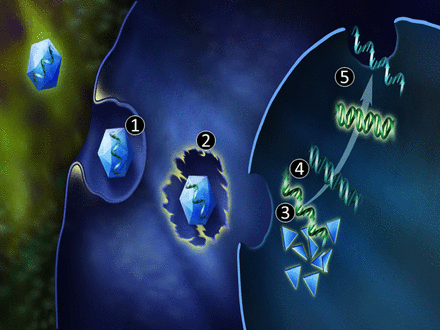
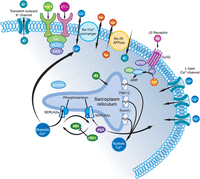
Image generated by Adina Hazan, 06/30/2021

This is Part III in a series of articles on the role of Calcium Release Mechanism in cell biology and physiology.

The Series consists of the following articles:

Part I: Identification of Biomarkers that are Related to the Actin Cytoskeleton

Larry H Bernstein, MD, FCAP

http://pharmaceuticalintelligence.com/2012/12/10/identification-of-biomarkers-that-are-related-to-the-actin-cytoskeleton/

Part II: Role of Calcium, the Actin Skeleton, and Lipid Structures in Signaling and Cell Motility

Larry H. Bernstein, MD, FCAP, Stephen Williams, PhD and Aviva Lev-Ari, PhD, RN

http://pharmaceuticalintelligence.com/2013/08/26/role-of-calcium-the-actin-skeleton-and-lipid-structures-in-signaling-and-cell-motility/

Part III: Renal Distal Tubular Ca2+ Exchange Mechanism in Health and Disease

Larry H. Bernstein, MD, FCAP, Stephen J. Williams, PhD
 and Aviva Lev-Ari, PhD, RN

http://pharmaceuticalintelligence.com/2013/09/02/renal-distal-tubular-ca2-exchange-mechanism-in-health-and-disease/

Part IV: The Centrality of Ca(2+) Signaling and Cytoskeleton Involving Calmodulin Kinases and Ryanodine Receptors in Cardiac Failure, Arterial Smooth Muscle, Post-ischemic Arrhythmia, Similarities and Differences, and Pharmaceutical Targets

Larry H Bernstein, MD, FCAP, Justin Pearlman, MD, PhD, FACC and Aviva Lev-Ari, PhD, RN

http://pharmaceuticalintelligence.com/2013/09/08/the-centrality-of-ca2-signaling-and-cytoskeleton-involving-calmodulin-kinases-and-ryanodine-receptors-in-cardiac-failure-arterial-smooth-muscle-post-ischemic-arrhythmia-similarities-and-differen/

Part V: Ca2+-Stimulated Exocytosis:  The Role of Calmodulin and Protein Kinase C in Ca2+ Regulation of Hormone and Neurotransmitter

Larry H Bernstein, MD, FCAP
and
Aviva Lev-Ari, PhD, RN

http://pharmaceuticalintelligence.com/2013/12/23/calmodulin-and-protein-kinase-c-drive-the-ca2-regulation-of-hormone-and-neurotransmitter-release-that-triggers-ca2-stimulated-exocytosis/

Part VI: Calcium Cycling (ATPase Pump) in Cardiac Gene Therapy: Inhalable Gene Therapy for Pulmonary Arterial Hypertension and Percutaneous Intra-coronary Artery Infusion for Heart Failure: Contributions by Roger J. Hajjar, MD

Aviva Lev-Ari, PhD, RN

http://pharmaceuticalintelligence.com/2013/08/01/calcium-molecule-in-cardiac-gene-therapy-inhalable-gene-therapy-for-pulmonary-arterial-hypertension-and-percutaneous-intra-coronary-artery-infusion-for-heart-failure-contributions-by-roger-j-hajjar/

Part VII: Cardiac Contractility & Myocardium Performance: Ventricular Arrhythmias and Non-ischemic Heart Failure – Therapeutic Implications for Cardiomyocyte Ryanopathy (Calcium Release-related Contractile Dysfunction) and Catecholamine Responses

Justin Pearlman, MD, PhD, FACC, Larry H Bernstein, MD, FCAP and Aviva Lev-Ari, PhD, RN

http://pharmaceuticalintelligence.com/2013/08/28/cardiac-contractility-myocardium-performance-ventricular-arrhythmias-and-non-ischemic-heart-failure-therapeutic-implications-for-cardiomyocyte-ryanopathy-calcium-release-related-contractile/

Part VIII: Disruption of Calcium Homeostasis: Cardiomyocytes and Vascular Smooth Muscle Cells: The Cardiac and Cardiovascular Calcium Signaling Mechanism

Justin Pearlman, MD, PhD, FACC, Larry H Bernstein, MD, FCAP and Aviva Lev-Ari, PhD, RN

http://pharmaceuticalintelligence.com/2013/09/12/disruption-of-calcium-homeostasis-cardiomyocytes-and-vascular-smooth-muscle-cells-the-cardiac-and-cardiovascular-calcium-signaling-mechanism/

Part IX: Calcium-Channel Blockers, Calcium Release-related Contractile Dysfunction (Ryanopathy) and Calcium as Neurotransmitter Sensor

Justin Pearlman, MD, PhD, FACC, Larry H Bernstein, MD, FCAP and Aviva Lev-Ari, PhD, RN

Part X: Synaptotagmin functions as a Calcium Sensor: How Calcium Ions Regulate the fusion of vesicles with cell membranes during Neurotransmission

Larry H Bernstein, MD, FCAP and Aviva Lev-Ari, PhD, RN

http://pharmaceuticalintelligence.com/2013/09/10/synaptotagmin-functions-as-a-calcium-sensor-how-calcium-ions-regulate-the-fusion-of-vesicles-with-cell-membranes-during-neurotransmission/

Part XI: Sensors and Signaling in Oxidative Stress

Larry H. Bernstein, MD, FCAP

http://pharmaceuticalintelligence.com/2013/11/01/sensors-and-signaling-in-oxidative-stress/

Part XII: Atherosclerosis Independence: Genetic Polymorphisms of Ion Channels Role in the Pathogenesis of Coronary Microvascular Dysfunction and Myocardial Ischemia (Coronary Artery Disease (CAD))

Larry H Bernstein, MD, FCAP and Aviva Lev-Ari, PhD, RN

http://pharmaceuticalintelligence.com/2013/12/21/genetic-polymorphisms-of-ion-channels-have-a-role-in-the-pathogenesis-of-coronary-microvascular-dysfunction-and-ischemic-heart-disease/

Renal Distal Tubular Ca2+ Exchange Mechanism

This is the Third article of a multipart series covering Ca(2+) signaling and the cytoskeleton, and two on Ca2+ in cardiac contractility governed by the activations involving a ryanodine (RyR2) receptor and a specific calmodulin protein CaKIIδ with B and C splice variants.  In all of these discussions, Ca(2+) has a crucial role in many cellular events, not all of which are detailed, and its importance to cardiac function and function disorders is critical.   We shall next undertake the difficult examination of Ca(2+) movements in the kidney, which has a special relationship to vitamin D and bone mineral metabolism that is not of interest here.   Nor will we go into any depth on the importance of the kidney to maintenance of plasma H+ and K+ balance and metabolic acidosis.   Whereas the lung has a large role in pH maintenance by the respiratory rate (under sympathetic control), it maintains the balance through the expiration of CO2, with H+ tied up in water via the carbonic anhydrase reaction.

Key words, abbreviations:

calcium, magnesium, phosphate, renal calcium transport, calcium channels, diltiazem, mibefradil, ω-conotoxin. FGF23, Parathyroid hormone (PTH), Thick Ascending Loop (TAL), cTAL, proximal tubule, distal convoluted tubule (DCL), chronic kidney disease, Ca2+-ATPase, Ca2+-stimulated adenosine triphosphatase, Na++K-E-ATPase: (Na++K+)-stimulated adenosine triphosphatase, Na+-K+-2Cl cotransporter (NKCC@),TRPV6, calbindin- D9K, Ca2+ – ATPase, 4-(2-hydroxyethyl)-1-piperazine-ethanesulphonic acid, Non-hypertensive uremic, de novo cardiomyopathy, renal transplantation, karyotypes, isoform, Angiotensin converting enzyme (ACE), Basic fibroblast growth factor (BFGF), Extracellular signal regulated kinase (ERK), Friend leukemia integration-1 transcription factor (Fli-1), Growth hormone (GSH),  oxidative stress, Nitric oxide (NO),  Protein kinase C (PKC),angiotensin II,  Renin-angiotensin system (RAS), Transforming growth factor-beta (TGF-b), Vascular endothelial growth factor (VEGF), 22-oxacalcitriol (OCT), Calcium-sensing receptor (CaSR),  Claudin14, Claudin 16, bradykinin,  bradykinin B2 receptor antagonists, inosine,  marino-bufagenin (MBG),  ramipril, nifedipine or moxonidine, calcitriol, Vitamin D receptor (VDR), Alpha-Kloth and FGf23

The first part in the Series, excludes calcium related heart failure and  arrhythmias of calcium  and includes the following:

(Part I) Identification of Biomarkers that are Related to the Actin Cytoskeleton
Curator: Larry H Bernstein, MD, FCAP

http://pharmaceuticalintelligence.com/2012/12/10/identification-of-biomarkers-that-are-related-to-the-actin-cytoskeleton/

(Part II) Role of Calcium, the Actin Skeleton, and Lipid Structures in Signaling and Cell Motility  
Larry H. Bernstein, MD, FCAP, Stephen Williams, PhD and Aviva Lev-Ari, PhD, RN

http://pharmaceuticalintelligence.com/2013/08/26/role-of-calcium-the-actin-skeleton-and-lipid-structures-in-signaling-and-cell-motility/

(Part III) Renal Distal Tubular Ca2+ Exchange Mechanism in Health and Disease Larry H. Bernstein, MD, FCAP, Stephen J. Williams, PhD
 and

Aviva Lev-Ari, PhD, RN

http://pharmaceuticalintelligence.com/2013/09/02/renal-distal-tubular-ca2-exchange-mechanism-in-health-and-disease/ 

This article is a continuation to the following article series on tightly related topics:

Part I: Identification of Biomarkers that are Related to the Actin Cytoskeleton

Larry H Bernstein, MD, FCAP

http://pharmaceuticalintelligence.com/2012/12/10/identification-of-biomarkers-that-are-related-to-the-actin-cytoskeleton/

(Part II) Role of Calcium, the Actin Skeleton, and Lipid Structures in Signaling and Cell Motility  
Larry H. Bernstein, MD, FCAP, Stephen Williams, PhD and Aviva Lev-Ari, PhD, RN

http://pharmaceuticalintelligence.com/2013/08/26/role-of-calcium-the-actin-skeleton-and-lipid-structures-in-signaling-and-cell-motility/

 (Part III) Renal Distal Tubular Ca2+ Exchange Mechanism in Health and Disease

Larry H. Bernstein, MD, FCAP, Stephen J. Williams, PhD
 and Aviva Lev-Ari, PhD, RN

http://pharmaceuticalintelligence.com/2013/09/02/renal-distal-tubular-ca2-exchange-mechanism-in-health-and-disease/ 

(Part IV) The Centrality of Ca(2+) Signaling and Cytoskeleton Involving Calmodulin Kinases and Ryanodine Receptors in Cardiac Failure, Arterial Smooth Muscle, Post-ischemic Arrhythmia, Similarities and Differences, and Pharmaceutical Targets

Larry H Bernstein, MD, FCAP, Justin Pearlman, MD, PhD, FACC and Aviva Lev-Ari, PhD, RN

http:/pharmaceuticalintelligence.com/2013.09.089/lhbern/The Centrality of Ca(2+) Signaling and Cytoskeleton Involving Calmodulin Kinases and Ryanodine Receptors in Cardiac Failure, Arterial Smooth Muscle, Post-ischemic Arrhythmia, Similarities and Differences, and Pharmaceutical Targets

Part V:  Heart Failure and Arrhythmia: Potential for Targeted Intervention — The Effects of Ca 2+ -calmodulin (Ca-CaM) phosphorylation/dephosphorylation/hyperphosphorylation

Larry H Bernstein, MD, FCAP, Justin Pearlman, MD, PhD, FACC and Aviva Lev-Ari, PhD, RN

http://pharmaceuticalintelligence.com/2013/08/29/ryanodine-receptor-ryr2-subunits-in-heart-failure-and-arrhythmia-potential-for-targeted-intervention-the-effects-of-ca-2-calmodulin-ca-cam-phosphorylationdephosphorylationhyperphosphoryla/

(VI) Calcium Cycling (ATPase Pump) in Cardiac Gene Therapy: Inhalable Gene Therapy for Pulmonary Arterial Hypertension and Percutaneous Intra-coronary Artery Infusion for Heart Failure: Contributions by Roger J. Hajjar, MD
Curator: Aviva Lev-Ari, PhD, RN
http://pharmaceuticalintelligence.com/2013/08/01/calcium-molecule-in-cardiac-gene-therapy-inhalable-gene-therapy-for-pulmonary-arterial-hypertension-and-percutaneous-intra-coronary-artery-infusion-for-heart-failure-contributions-by-roger-j-hajjar/

Cardiac Contractility & Myocardium Performance: Ventricular Arrhythmias and Non-ischemic Heart Failure – Therapeutic Implications for Cardiomyocyte Ryanopathy (Calcium Release-related Contractile Dysfunction) and Catecholamine Responses in the Human Heart

Justin Pearlman, MD, PhD, FACC, Larry H Bernstein, MD, FCAP and Aviva Lev-Ari, PhD, RN
http://pharmaceuticalintelligence.com/2013/08/28/cardiac-contractility-myocardium-performance-ventricular-arrhythmias-and-non-ischemic-heart-failure-therapeutic-implications-for-cardiomyocyte-ryanopathy-calcium-release-related-contractile/

Calcium Ion Transport across Plasma Membranes

Basal-lateral-plasma-membrane vesicles and brush-border-membrane vesicles were isolated from rat kidney cortex by differential centrifugation followed by free-flow electrophoresis. Ca2+ uptake into these vesicles was investigated by a rapid filtration method. Both membranes show a considerable binding of Ca2+ to the vesicle interior, making the analysis of passive fluxes in uptake experiments difficult. Only the basal-lateral-plasma-membrane vesicles exhibit an ATP-dependent pump activity which can be distinguished from the activity in mitochondrial and endoplasmic reticulum by virtue of the different distribution during free-flow electrophoresis and its lack of sensitivity to oligomycin. The basal-lateral plasma membranes contain in addition a Na+/Ca2+-exchange system which mediates a probably rheogenic counter-transport of Ca2+ and Na+ across the basal cell border. The latter system is probably involved in the secondary active Na+-dependent and ouabain-inhibitable Ca2+ reabsorption in the proximal tubule, the ATP-driven system is probably more important for the maintenance of a low concentration of intracellular Ca2+.

In recent micropuncture studies using simultaneously tubular and capillary perfusion it could be demonstrated that in the rat kidney proximal tubule Ca2+ reabsorption is dependent on the presence of Na+- ions and sensitive to ouabain (Ullrich et al., 1976). On the other hand cell-fractionation studies on the distribution of plasma-membrane-bound enzymes in rat proximal tubular epithelial cells revealed a contraluminal localization of a Ca2+-stimulated ATPase (Kinne-Saffran & Kinne, 1974). These results suggested that both Na+-driven and ATP-driven Ca2+ transport systems might be involved in proximal tubular transepithelial Ca2+ transport. Considering the low concentration of intracellular Ca2+ one could expect that these active steps in Ca2+ reabsorption are located at the basal cell pole.

To our knowledge there have been two attempts to study the role of ATP in the Ca2+ transport of renal membranes. In one study increase in Ca2+ uptake by rabbit kidney membranes was observed, but this increase was attributed to a phosphorylation of the membranes and a concomitant binding of Ca2+ to the negative charges newly generated at the membrane surface. Moore et al. (1974) observed an ATP-dependent Ca2+ uptake distinct from that of the mitochondria in a crude fraction of renal plasma membranes as well as in rat renal microsomes. The two uptake systems differed in their capacity, their sensitivity to Na+ and their apparent Km values for Mg2+-ATP.

Experiments are described on the Ca2+ transport into brush-border-membrane vesicles and basal-lateral plasma-membrane vesicles isolated from rat renal cortex. The results show that a primary active ATP-driven Ca2+ pump and an Na+/Ca2+-exchange system are present in the basal-lateral plasma membranes, but not in the brush-border membrane.

These findings indicate that trans-epithelial Ca2+ transport in rat proximal tubule can be

  1. primarily active via the ATP-driven system as well as
  2. secondarily active if the Na+/Ca2+ exchange system is involved.

It appears that the Na+/Ca2+ exchange system

  • is responsible for the bulk flow of Ca2+ across the epithelium, whereas
  • the ATP-driven system might be involved in the fine regulation of the concentration of intracellular Ca2+.

(Gmaj P, Murer  H, and Kinne R. 1979)

The Renal Na+/Ca2+ Exchange System of the Nephron

The movement of Ca2+ across the basolateral plasma membrane was studied from rabbit proximal and distal convoluted tubules and ATP-dependent Ca2+ uptake was found in both. But the activity was higher distal.  The distal tubular membranes had a very active Na+/Ca2+ exchange system, which was absent in the proximal segment. The ATP-dependent Ca2+ uptake in the distal tubular membrane preparations was gradually inhibited by Na+ outside the vesicles, and was a function of the imposed Na+ gradient.  The results indicate that an active Na+/Ca2+ exchange system is absent in the proximal tubule. Ramachandram & Brunette, 1989).  Parathyroid hormone (PTH) and calcitonin increase Ca2+ uptake by purified distal tubular luminal membranes (DTLM), and both hormone stimulate adenylate cyclase and phospholipase C.  Therefore, distal tubules were incubated with dibutyryl cAMP (dbcAMP) and the result was that dbcAMP increased the Ca2+ transport by luminal membranes, but phorbol 12-myristate 13 acetate (PMA) had no such effect. But when PMA was added to low concentrations of dbcAMP the uptake significantly increased. Protein kinase C inhibitors prevented the effect. This indicated that in the distal tubule Ca2+ transport required both the combined effect of PK  A and C involves both components of the transport kinetics.  (Hila, Claveau, Laclerc, Brunette, 1997)

In the rabbit, calcitonin enhances Ca2+ reabsorption in the distal tubule.  Tubules were incubated with or in the absence of calcitonin, and the luminal or basolateral membranes were purified and Ca2+ transport was measured through the vesicles.  The results were compared with those obtained from proximal tubule membranes, and the results were no effect of calcitonin on Ca2+ uptake in the proximal tubules.  In the distal tubules there was the expected uptake, but the presence of Na+ in the suspension decreased the Ca2+ uptake.  The uptake was partially restored by preincubation with calcitonin.  Recall the experiment demonstrating a requirement for PK A and C in Ca2+ uptake indicating a dual kinetics of Ca2+ uptake by the distal luminal membranes.  Calcitonin enhanced Ca2+ transport by the low affinity component, increasing the Vmax and leaving the K(m) unchanged. Renal calcitonin receptors usually couple to both adenylate cyclase and phospholipase C.  Calcitonin stimulates cAMP and IP3 release. Incubation of the distal tubules with 10(-7) M calcitonin significantly increased both messengers. In contrast, calcitonin did not influence the IP3 nor the cAMP content of proximal tubules.  Incubation of distal tubule suspensions with dbcAMP significantly increased Ca2+ uptake by the luminal membranes. However, incubation of these tubules with various concentrations of PMA (10 nM, 100 nM and 1 microM) had no effect on this uptake.  Calcitonin also influenced Ca2+ transport by the distal basolateral membrane. Incubation of distal tubule suspensions with 10(-7) M calcitonin activated the Na+/Ca2+ exchanger activity, almost doubling the Na+ dependent Ca2+ uptake. Here again this action was mimicked by cAMP. The researchers concluded that calcitonin increases Ca2+ transport by the distal tubule through two mechanisms:

  1. the opening of low affinity Ca2+ channels in the luminal membrane and
  2. the stimulation of the Na+/Ca2+ exchanger in the basolateral membrane, both actions depending on the activation of adenylate cyclase.
    (Zuo Q, Claveau D, Hilal G, Leclerc M, Brunette MG. 1997)

Calcium (Ca2+) filtered in the glomerulus is reabsorbed by the luminal membrane of the proximal and distal nephron. Ca2+ enters cells across apical plasma membranes along a steep electrochemical gradient, through Ca2+ channels. Regulation by hormones requires

  1. binding of these hormones to the basolateral membrane,
  2. interaction with G proteins,
  3. liberation of messengers,
  4. activation of kinases
  5. opening of the channels at the opposite pole of the cells.

It follows that if the Ca2+ entry through the luminal membranes of proximal and distal tubules is a membrane-limited process, then G proteins have a regulatory role. Luminal membranes were purified from rabbit proximal and distal tubule suspensions, and their vesicles were loaded with GTPγs or the carrier. Then, the 45Ca2+ uptake by these membrane vesicles was measured in the presence and absence of 100 mM NaCl. In the absence of Na+, intravesicular GTPγs significantly enhanced 0.5 mM Ca2+ uptake by the proximal membrane vesicles (p < 0.05). In the presence of Na+, however, this effect disappeared. In the distal tubules, intravesicular GTPγs increased 0.5 mM Ca2+ uptake in the absence (p < 0.02) and in the presence (p < 0.02) of Na+. The action of GTPγs, when present, was dose dependent. The distal luminal membrane is the site of two Ca2+ channels with different kinetics parameters. GTPγs increased the Vmax value of the low-affinity component exclusively, in the presence as in the absence of Na+. Finally, Ca2+ uptake by the membranes of the two segments was differently influenced by toxins: cholera toxin slightly stimulated transport by the proximal membrane, but had no influence on the distal membrane, whereas pertussis toxin decreased the cation uptake by the distal tubule membrane exclusively. We conclude that the nature of Ca2+ channels differs in the proximal and distal luminal membranes: Ca2+ channels present in the proximal tubule and the low-affinity Ca2+ channels present in the distal tubule membranes are directly regulated by Gs and Gi proteins respectively, whereas the high-affinity Ca2+ channel in the distal tubule membrane is insensitive to any of them.
(Brunette MG, Hilal G, Mailloux J, Leclerc M. 2000)

We previously reported a dual kinetics of Ca2+ transport by the distal tubule luminal membrane of the kidney, suggesting the presence of several types of channels. We, therefore, examined the effects of specific inhibitors (i.e., diltiazem, an L-type channel; ω-conotoxin MVIIC, a P/Q-type channel; and mibefradil, a T-type channel antagonist) on Ca2+ uptake by rabbit nephron luminal membranes. None of these inhibitors influenced Ca2+ uptake by the proximal tubule membranes. In contrast, in the absence of sodium (Na+), the three channel antagonists decreased Ca2+ transport by the distal membranes, and their action depended on the substrate concentrations: (P < 0.05) without influencing 0.5 mM Ca2+ transport, whereas ω-conotoxin MVIIC decreased 0.5 mM Ca2+ (P < 0.02) and 1 µM mibefradil decreased it (P < 0.05); the latter two inhibitors [P/Q type, T-type] left 0.1 mM Ca2+ transport unchanged. Diltiazem [L-type] decreased the Vmax of the high-channels, whereas ω-conotoxin MVIIC and mibefradil influenced exclusively the Vmax of the low-affinity channels. These results not only confirm that the distal luminal membrane is the site of Ca2+ channels, but they suggest that these channels belong to the L, P/Q, and T types. (M G Brunette, M Leclerc, D Couchourel, J Mailloux, Y Bourgeois. 2000)

Calcium (Ca2+) transport by the distal tubule (DT) luminal membrane

Calcium (Ca2+) transport by the distal tubule (DT) luminal membrane is regulated by

  • the parathyroid hormone (PTH) and calcitonin (CT) through the action of messengers,
  • protein kinases, and
  • ATP as the phosphate donor.

Could ATP itself, when directly applied to the cytosolic surface of the membrane influence the Ca2+ channels previously detected in this membrane. We purified the luminal membranes of rabbit proximal (PT) and DT separately and measured Ca2+ uptake by these vesicles loaded with ATP or the carrier. The presence of 100 μM ATP in the DT membrane vesicles significantly enhanced 0.5 mM Ca2+ uptake           in the absence of Na+ (P < 0.01) and in the presence of 100 mM Na+ (P < 0.01). This effect was dose dependent with an EC50 value of approximately 40 μM. ATP action involved the high-affinity component of Ca2+ transport, decreasing the Km from 0.08 ± 0.01 to 0.04 ± 0.01 mM (P< 0.02). Replacement of the nucleotide by the nonhydrolyzable ATPγs abolished this action. Because ATP has been reported to be necessary for cytoskeleton integrity, they investigated the effect of intravesicular cytochalasin on Ca2+ transport. Cytochalasin B decreased 0.5 mM Ca2+ uptake (P< 0.01). However, when both ATP and cytochalasin were present in the vesicles, the uptake was not different from that observed with ATP alone. Neither ATP nor cytochalasin had any influence on Ca2+ uptake by the PT luminal membrane. They conclude from this that the high-affinity Ca2+ channel of the DT luminal membrane is regulated by ATP and that ATP plays a crucial role in the integrity of the cytoskeleton which is also involved in the control of Ca2+ channels within this membrane. (MG. Brunette*, J Mailloux, G Hilal. 1999)

Proximal tubular sodium-calcium exchanger

The functional expression of the renal sodium-calcium exchanger has been amply documented in studies on renal cortical basolateral membranes. In perfused renal tubules, other investigators have shown sodium-calcium exchange activity in the

  • proximal convolution
  • in the distal convolution,
  • the connecting tubule, and
  • the collecting tubule of the rabbit.

In rat proximal tubules, we found that the sodium-calcium exchanger is an important determinant of cytosolic calcium homeostasis, since

  • inhibition of sodium-dependent calcium efflux mode caused a large accumulation of tubular calcium.

In membranes from rat proximal tubules sodium-calcium activity was high, and in intact proximal tubules,

  • the tubular sodium-calcium exchanger exhibited a high affinity for cytosolic calcium

and had a substantial transport capacity, which may be absolute requirements for the maintenance of stable cytosolic calcium in proximal tubules. (Dominguez JH, Juhaszova M, Feister HA. 1992.)

Proximal tubule Na(+)-Ca2+ exchanger protein is same as the cardiac protein

The activity of the Na(+)-Ca2+ exchanger, a membrane transporter that mediates Ca2+ efflux, has been described in amphibian and mammalian renal proximal tubules. However, demonstration of cell-specific

  • expression of the Na(+)-Ca2+ exchanger in proximal renal tubules has been restricted to functional assays.

In this work, Na(+)-Ca2+ exchanger gene expression in rat proximal tubules was characterized by three additional criteria:

  1. functional assay of transport activity in membrane vesicles derived from proximal tubules, expression of
  2. specific Na(+)-Ca2+ exchanger protein detected on Western blots, and
  3. determination of specific mRNA encoding Na(+)-Ca2+ exchanger protein on Northern blots.

A new transport activity assay showed that proximal tubule membranes

  • contained the highest Na(+)-Ca2+ exchanger transport activity reported in renal tissues.

In dog renal proximal tubules and sarcolemma, a specific protein of approximately 70 kDa was detected, whereas in rat proximal tubules and sarcolemma, the specific protein approximated 65 kDa and was localized to the basolateral membrane. On Northern blots, a single 7-kb transcript isolated from rat

  • proximal tubules,
  • whole kidney, and
  • heart

hybridized with rat heart cDNA.

These data indicate that Na(+)-Ca2+ exchanger protein expressed in rat proximal tubule is similar, if not identical, to the cardiac protein. We suggest that the tubular Na(+)-Ca2+ exchanger characterized herein represents the Na(+)-Ca2+ exchanger described in functional assays of renal proximal tubules. (Dominguez JH, Juhaszova M, Kleiboeker SB, Hale CC, Feister HA. 1992.)

Calcium reabsorption regulated by the distal tubules

Extracellular calcium homeostasis involves coordinated calcium absorption by

  1. the intestine,
  2. calcium resorption from bone, and
  3. calcium reabsorption by the kidney.

This review addresses the mechanism and regulation of renal calcium transport. Calcium reabsorption occurs throughout the nephron. However, distal tubules are the nephron site at which calcium reabsorption is regulated by

  1. parathyroid hormone,
  2. calcitonin, and
  3. 1 alpha,25-dihydroxyvitamin D3 and

where the magnitude of net reabsorption is largely determined. These and related observations underscore the view that distal tubules are highly specialized

  • to permit fine regulation of calcium excretion in response to
  • alterations in extracellular calcium levels.

Progress in understanding the mechanism and regulation of calcium transport has emerged from application of

  • single cell fluorescence,
  • patch clamp, and
  • molecular biological approaches.

These techniques permit the examination of

  1. ion transport at the cellular level and
  2.  its regulation at subcellular and molecular levels.

This editorial review focuses on recent and emerging observations and attempts to integrate them into models of cellular calcium transport. (Friedman PA , Gesek FA.  1993)

Calcium-Sensing Receptor (CSR)

Renal tubular calcium reabsorption is a critical determinant of extracellular fluid (ECF) calcium concentration; for the need of constancy of ECF calcium concentration,

  • the renal tubular handling of calcium is tightly controlled
  • in order to match renal calcium excretion to the net amount of calcium entering the ECF.

Both parathyroid hormone (PTH) and vitamin D metabolites are involved in

  1. the control of renal tubular calcium reabsorption and
  2. ECF calcium concentration [1].

Besides this hormonal control, it has been recognized recently that

  • ECF calcium is able to regulate its own reabsorption by the mammalian tubule.

Indeed, a large body of evidence supports the view that ECF calcium exerts this action

  • by activating the calcium/polyvalent cation-sensing receptor (CaSR)
  • located in the plasma membrane of many tubular cell types.

First, increasing ECF calcium concentration

  • elicits a marked increase in urinary calcium (and magnesium) excretion [2,3] and
  • this occurs independently of any change in the calcium-regulating hormones [2,3].

Second, the inhibitory effect of ECF calcium on its own reabsorption is shared by other CaSR agonists, e.g. magnesium [4].

Third, the relationship between ECF calcium and urinary calcium excretion

is altered in patients bearing mutations of the CASR gene: renal tubular calcium reabsorption

  • is enhanced in patients with inactivating mutations [5,6]
  • and decreased in patients with activating mutations.

Therefore, there is abundant evidence that renal tubular CaSR plays a role

  • in the control of divalent cations reabsorption under
  • both normal and pathological conditions.

Localization of the extracellular CaSR

Transcripts of the CASR gene are expressed in many nephron segments of rat kidney, extending from glomeruli to the inner medullary collecting duct (IMCD) [7]. The CaSR protein is expressed in

  • the proximal tubule,
  • medullary and cortical thick ascending limb (TAL) segments,
  • macula densa cells,
  • distal convoluted tubule (DCT) and
  • type-A intercalated cells in the distal tubule and cortical collecting duct [8]
  • and in inner medullary collecting duct cells [9].

The polarity of expression varies from segment to segment, the protein being expressed in

  • the apical membrane of proximal tubule and
  • IMCD cells and
  • in the basolateral membrane of TAL and DCT cells [8,9].

Interestingly, the highest density of protein expression has been observed in the cortical TAL (cTAL),

  • known to reabsorb calcium and magnesium in a regulated manner.

CaSR under physiological conditions

Consistent with its polarized plasma membrane localization,

  • CaSR has been shown to be involved in the control of thick ascending limb (TAL) calcium and magnesium reabsorption.

In the mouse and rat TAL,

  • both calcium and magnesium are reabsorbed selectively in the cortical portion (cTAL) [10]
  • and this reabsorption is passive along an electrical gradient

through the paracellular pathway [10,11]. The electrical gradient is related to

  • transcellular NaCl reabsorption.

The first step is NaCl entry into the cell via

  • the electroneutral apical Na- K-2Cl co-transporter BSC1 (NKCC2).

Subsequently, most of the potassium recycles back to the lumen, through an apical potassium channel,

  • necessary to maintain NaCl absorption via BSC1 (NKCC2).

In the absence of recycling, NaCl absorption is inhibited because of

  • the low availability of potassium in luminal fluid.

In addition, potassium recycling hyperpolarizes the apical membrane.

Chloride exits the cell

  • across the basolateral membrane
  • mainly via the CLC-Kb channel,
  • which depolarizes the basolateral membrane.

The overall consequence is a lumen-positive transepithelial voltage that

  • drives calcium, magnesium and also sodium through the paracellular pathway.

The pathway permeability for calcium and magnesium requires the presence of a specific protein,

  • paracellin-1 (also known as claudin-16),
  • co-expressed with occludin
    • in the tight junctions of thick ascending limb (TAL) [12].

Inactivating mutations of the paracellin-1 gene cause a specific

  1. decrease in cTAL calcium and magnesium reabsorption and
  2. renal loss of both cations without renal sodium loss,

which is the landmark of an inherited disease referred to as hypercalciuric hypomagnesaemia with nephrocalcinosis [4].

Calcium and magnesium reabsorption in the cTAL is tightly regulated. Micropuncture studies have shown that peptide hormones, such as

  • PTH,
  • arginine vasopressin,
  • calcitonin and
  • glucagon,

stimulate NaCl as well as calcium and magnesium reabsorption in the loop of Henle and decrease their excretion in final urine. PTH, the most important peptide hormone for the stimulation of renal calcium transport, elicits an increase in calcium and magnesium reabsorption cTAL.
Wittner et al. [14] demonstrated that PTH stimulation of calcium and magnesium transport

  • involves an increase in paracellular pathway permeability.

The activation of CaSR also affects a number of intracellular events in TAL cells and

  • modulates transport processes along the cTAL epithelium.

Activating CaSR increases intracellular free calcium concentration in

  • cTAL,
  • DCT and
  • cortical as well as
  • outer medullary collecting duct.

This also decreases hormone-dependent cAMP accumulation in cTAL by

  • inhibition of type-6 adenylyl cyclase [20],
  • increases inositol phosphate formation [21] and
  • elicits an increase in phospholipase A2 activity and
  • in intracellular cellular production of 20-hydroxyeicosatetraenoic acid [22].   ….

In conclusion, a large body of evidence supports the view that CaSR is

  • a major regulator of calcium and magnesium reabsorption in the cTAL and,
  • of overall tubular divalent cation handling.

However, several issues remain unresolved. It is still unclear whether CaSR activation in the cTAL decreases NaCl reabsorption in this segment or not. The mechanism through which CaSR activation could alter the function of paracellin-1 and the paracellular pathway permeability also remains unsettled. Finally, the role of CaSR in the medullary part of TAL should be investigated: a CaSR-dependent inhibition of NaCl reabsorption could explain at least part of the polyuria that accompanies hypercalcaemic states.   (P Houillier and M Paillar. 2003)

Alpha-Kloth and FGf23

Recent advances that have given rise to marked progress in clarifying actions of alpha(α)-Klotho (alpha-Kl) and FGf23 can be summarized as follows ;

(i) α-Kl binds to Na(+), K(+)-ATPase, and Na(+), K(+)-ATPase is recruited to the plasma membrane by a novel α-Kl dependent pathway in correlation with cleavage and secretion of α-Kl in response to extracellular Ca(2+) fluctuation.

(ii) The increased Na(+) gradient created by Na(+), K(+)-ATPase activity drives the transepithelial transport of Ca(2+) in the choroid plexus and the kidney, this is defective in α-kl(-/-) mice.

(iii) The regulated PTH secretion in the parathyroid glands is triggered via recruitment of Na(+), K(+)-ATPase to the cell surface in response to extracellular Ca(2+) concentrations.

(iv) α-Kl, in combination with FGF23, regulates the production of 1,25 (OH) (2)D in the kidney. In this pathway, α-Kl binds to FGF23, and α-Kl converts the canonical FGF receptor 1c to a specific receptor for FGF23, enabling the high affinity binding of FGF23 to the cell surface of the distal convoluted tubule where α-Kl is expressed.

(v) FGF23 signal down-regulates serum phosphate levels, due to decreased NaPi-IIa abundance in the apical membrane of the kidney proximal tubule cells.

(vi) α-Kl in urine increases TRPV5 channel abundance at the luminal cell surface by hydrolyzing the N-linked extracellular sugar residues of TRPV5, resulting in increased Ca(2+) influx from the lumen.

These findings revealed a comprehensive regulatory scheme of mineral homeostasis that is illustrated by the mutually regulated positive/negative feedback actions of α-Kl, FGF23, PTH and 1,25 (OH) (2)D. In this regard, α-Kl and FGF23 might play pivotal roles in mineral metabolism as regulators that integrate calcium and phosphate homeostasis, although this concept requires further verification in the light of related findings. Here, the unveiling of the molecular functions of α-Klotho and FGF23 has recently given new insight into the field of calcium and phosphate homeostasis. Unveiled molecular functions of α-Kl and FGF23 provided answers for several important questions regarding the mechanisms of calcium and phosphate homeostasis that remained to be solved, such as :

(i) what is the non-hormonal regulatory system that directly responds to the fluctuation of extracellular Ca(2+),
(ii) how is Na(+), K(+)-ATPase activity enhanced in response to low calcium stimuli in the parathyroid glands,
(iii) what is the exact role of FGF23 in calcium and phosphorus metabolism,
(iv) how is Ca(2+) influx through TRPV5 controlled in the DCT nephron, and finally
(v) how is calcium homeostasis regulated in cerebrospinal fluid. However, several critical questions still remain to be solved. So far reported,

  • α-Kl binds to Na(+),
  • K(+)-ATPase,
  • FGF receptors and FGF23, and
  • α-Kl hydrolyzes the sugar moieties of TRPV5.

The following questions are unresolved:

Does alpha-Kl recognize these proteins directly or indirectly?
Is there any common mechanism?
How can we reconcile such diverse functions of alpha-Kl?What is the Ca(2+) sensor machinery and how can we isolate it?
How do hypervitaminosis D and the subsequently altered mineral-ion balance lead to the multiple phenotypes?
What is the phosphate sensor machinery and how can we isolate it?
How does the Fgf23/α-Kl system regulate phosphorus homeostasis?
How are serum concentrations of Ca(2+) and phosphate mutually regulated?
(Nabeshima Y. 2008)

Cilium and Calcium Signal

We tested the hypothesis that the primary cilium of renal epithelia is mechanically sensitive and serves as a flow sensor in MDCK cells using differential interference contrast and fluorescence microscopy. Bending the cilium, either by suction with a micropipette or by increasing the flow rate of perfusate, causes intracellular calcium to substantially increase as indicated by the fluorescent indicator, Fluo-4. This calcium signal is initiated by Ca2+-influx through mechanically sensitive channels that probably reside in the cilium or its base. The influx is followed by calcium release from IP3-sensitive stores. The calcium signal then spreads as a wave from the perturbed cell to its neighbors by diffusion of a second messenger through gap junctions. This spreading of the calcium wave points to flow sensing as a coordinated event within the tissue, rather than an isolated phenomenon in a single cell. Measurement of the membrane potential difference by microelectrode during perfusate flow reveals a profound hyperpolarization during the period of elevated intracellular calcium. We conclude that the primary cilium in MDCK cells is mechanically sensitive and responds to flow by greatly increasing intracellular calcium.  (Praetorius HA, Spring KR. 2001)

Fgf23 regulation in chronic renal disease

The mechanism of FGF23 action in calcium/phosphorus metabolism of patients with chronic kidney disease (CKD) was studied using a mathematical model and clinical data in a public domain. We have previously built a physiological model that describes interactions of PTH, calcitriol, and FGF23 in mineral metabolism encompassing organs such as bone, intestine, kidney, and parathyroid glands. Since an elevated FGF23 level in serum is a characteristic symptom of CKD patients, we evaluate herein potential metabolic alterations in response to administration of a neutralizing antibody against FGF23. Using the parameters identified from available clinical data, we observed that a transient decrease in the FGF23 level elevated the serum concentrations of PTH, calcitriol, and phosphorus. The model also predicted that the administration reduced a urinary output of phosphorous. This model-based prediction indicated that the therapeutic reduction of FGF23 by the neutralizing antibody did not reduce phosphorus burden of CKD patients and decreased the urinary phosphorous excretion. Thus, the high FGF23 level in CKD patients was predicted to be a failure of FGF23-mediated phosphorous excretion. The results herein indicate that it is necessary to understand the mechanism in CKD in which the level of FGF23 is elevated without effectively regulating phosphorus.

A traditional, physiological model with PTH and calcitriol needs to be rebuilt in accordance with the emerging role of FGF23 and its interacting molecules. To understand probable interactions among FGF23, PTH and calcitriol, we previously developed a minimum physiological model of calcium/phosphorus metabolism and investigated potential influences of FGF23 on the observable state variables such as the serum concentrations of PTH, calcitriol, calcium (Ca), and phosphorous (P), as well as the urinary excretion of Ca and P.3 In this study, we extended the model and evaluated the mechanism of FGF23-mediated regulation in chronic kidney diseases (CKD).

The FGF23 gene was identified by its mutations associated with autosomal dominant hypophosphatemic rickets (ADHR), which is an inherited phosphate wasting disorder.4 Thereafter, a variety of disorders resulting from gain or loss of FGF23 bioactivity have been reported.5 These disorders, which are caused by mutations in the genes that directly or indirectly interact with FGF23, include hyperphosphatemic familial tumoral calcinosis (HFTC), hereditary hypo-phosphatemic rickets with hypercalciuria (HHRH), autosomal recessive hypophosphatemic rickets (ARHR), and X-linked dominant hypophosphatemic rickets (XLH, HYP). CKD patients who need dialysis have very high levels of FGF23 in serum that are linked with increased rates of death.6
We examined the effect of reduction of FGF23 by neutralizing antibody would modulate phosphorus balance of CKD patients. We evaluated the levels of physiological variables such as the levels of PTH, calcitriol, FGF23, Ca, and P in serum as well as urinary outputs of Ca and P using clinical data. Since a glomerular filtration rate (GFR) is a good indicator of severity of CKD, data were processed as a function of GFR. We then employed the previously developed mathematical model for mineral metabolism, and conducted numerical simulations in response to the modulation of FGF23 by neutralizing antibody.

Estimation of the relationship of the FGF23 level to other physiological variables

The FGF23 concentrations, reported in literature, considerably varied among available datasets, presumably caused by differential baseline levels or sensitivity variations among individual assays. To predict a quantitative relationship among the FGF23 level and other physiological variables, the reported FGF23 level was linearly modified:

[FGF23]AB = {[FGF23]-A}/B         (1)

in which [FGF23] = reported FGF23 level, [FGF23]AB = linearly modified FGF23 level, and A and B = two correction factors. Note that these correction factors are constant and they were chosen independently for each of the physiological variables such as the serum level of PTH and the urinary output of P. The “+” and “-” values of the factor B indicate positive and negative correlations to the FGF23 level, respectively. We applied the described modification in analyzing clinical data since the observed FGF23 variation was larger than others. Without this procedure, it was difficult to estimate a quantitative relationship of its concentrations to other variables.  [With the significant variation around the linear fit, it might well have been warranted to use the log transform of the modified level, LHB].

Mathematical model and prediction of effects of FGF23 antibody

We previously developed a pair of metabolism models of calcium and phosphorus with and without including the predicted action of FGF23.3,20 In this study we considered an additional state variable, GFRf, as a multiplicative term pertaining to the calcium and phosphorus renal thresholds and the kidney production of calcitriol:

GFRf = (GFR/GFR0)k       (2)

in which GFR0 and GFR = glomerular filtration rates in the control state and at any given degree of renal failure, respectively, and a factor k (>0) was chosen so as to fit the clinical data as described previously.7

To predict the effects of intravenous administration of a neutralizing antibody against FGF23, we numerically examined 5 different dosages for i.v. administration at 0.003, 0.01, 0.03, 0.1 and 0.3 mg/kg (dosage levels 1–5). These dosages corresponded to a clinical trial study being proposed for a dose-escalation study of KRN23 (Kyowa Hakko Kirin Pharma Inc.). A primary outcome measure of this Phase I clinical trial is a change in a serum phosphate level, and a single dose by intravenous or subcutaneous administration is planned. The initial target is X-linked hypophosphatemia but no clinical data regarding efficacy and side effects are available. To simulate a probable injection procedure, we assumed a form of a single, smoothed-out pulse. The rise in the antibody concentration was modeled using a Gaussian type diffusion profile with a period dependent on the distribution volume and cardiac output.

Glomerular filtration rate (GFR) as an indicator in cKD patients

We plotted physiological variables of CKD patients as a function of GFR in ml/min/1.73 m2. Figure 1 illustrated the levels of PTH (pg/ml), calcitriol (pg/ml), Ca (mg/dl), and P (mg/dl) in serum as well as urinary outputs of Ca and P expressed as a fraction of the glomerular loads. The numbers in the brackets in Figure 1 were the numbers of patients. The average and SEM values were obtained in each of the sampling bins. As GFR was normal above 90, the levels of PTH and P in serum as well as the fractions of urinary Ca and P outputs were lowered. On the contrary, the level of calcitriol in serum was higher as GFR increased.

Estimation of FGF23 levels in serum in cKD patients

The relationships of the linearly modified FGF23 concentration in serum, [FGF23]AB, to the selected physiological variables in CKD patients were illustrated in Figure 2. First, a strong correlation was observed between log.e(GFR) and a negative form of log.e[FGF23]AB, indicating that the FGF23 level was sharply elevated in CKD patients with reduction in GFR. Second, an increase in [FGF23]AB was correlated to the levels of PTH, calcitriol, P in serum, and the renal threshold for P. Note that a positive correlation (i.e. B > 0) was observed for the levels of PTH and P in serum, while a negative correlation (i.e. B < 0) for the serum level of calcitriol and the renal threshold for P. Note that a majority of data points had the PTH level above 50 pg/ml, indicating a poor balance of mineral metabolism in CKD patients.

 Linkage of FGF23 and P levels in serum

In all groups, a positive correction was observed between the level of P and the modified level of FGF23 in serum. Note that CKD data in Figure 2D showed the elevated P level up to 6 mg/dl, while the higher bound of the P level was ∼2 mg/dl (Tumor Induced Osteomalacia), 3.5 ∼4 mg/dl (Fibrous Dysplasia and XLH), and 4.5 mg/dl (healthy populations).

Predicted effects of the antibody specific to FGF23

Although the observed increase of FGF23 in CKD is apparently a physiological response to hyperphos-phatemia, the use of FGF23 antibody is suggested for transplanted hypophosphatemic patients of CKD with a high level of FGF23.21 In response to intravenous administration of the antibody specific to FGF23, we evaluated the predicted changes in the serum levels of PTH, calcitriol, and P as well as a normalized urinary output of P.  The results were positive.
(Yokota H, Pires A, Raposa JF, Ferreira HG. 2010.)

Overview of renal Ca2+ handling

About 50% of plasma calcium (ionized and complexed form; ultrafilterable fraction, excluding the protein bound form) is freely filtered through the renal glomerulus, and 99% of the filtered calcium is actually reabsorbed along renal tubules (Table 1- see Fig below on right)). The excreted calcium in the final urine is about 200 mg per day in an adult person with an average diet. Several factors are involved in the regulation of calcium in renal tubules. PTH and activated vitamin D enhance calcium reabsorption in the thick ascending limb (TAL), distal convoluted tubule (DCT) and/or connecting tubule (CNT).

Acidosis contributes to hypercalciuria by reducing calcium reabsorption in the proximal tubule (PT) and DCT, and alkalosis vice versa3). Diuretics like thiazide and furosemide also alter calcium absorption in the renal tubules; thiazide promotes calcium reabsorption and furosemide inhibits it. Plasma calcium itself also controls renal calcium absorption through altered PTH secretion as well as via binding to the calcium sensing receptor (CaSR) in the TAL.

To facilitate Ca2+ reabsorption along renal tubules;

(i) voltage difference between the lumen and blood compartment should be favorable for Ca2+ passage, i.e., a positive voltage in the lumen;
(ii) concentration difference should be favorable for Ca2+ passage with a higher Ca2+ concentration in the lumen;
(iii) an active transporter should exist if the voltage or concentration difference is not favorable for Ca2+ reabsorption. Each renal tubular segment has a different Ca2+ concentration difference or voltage environment for its unique mechanism for calcium re-absorption.

Calcium handling along the tubules

Fifty to sixty percent of filtered calcium is absorbed in parallel with sodium and water in the PT, suggesting that the passive pathway is the main route of Ca2+ absorption in this segment. Claudin-2 is especially concentrated in the tight junction and also expressed in the basolateral membrane of the PT as the candidate for paracellular Ca2+ channel in the PT. There is no evidence that Ca2+ reabsorption occurs in the thin descending and ascending limb. In the TAL, 15% of filtered calcium is absorbed, and the passive absorption through paracellular space is known as the main mechanism (Fig. 1). Paracellin-1 (claudin-16) is exclusively expressed in the tight junction of TAL and has been known as the important magnesium channel in the TAL. Paracellin-1 mutation caused hypercalciuria and nephrocalcinosis in addition to hypomagnesemia. This finding supports that paracellin-1 is not only the main Mg2+ channel, but also works as the paracellular Ca2+ channel in the TAL. There are some evidences that active transport occurs in the TAL, but no specific channel has yet been identified). The CaSR is a member of G protein-coupled receptors and suppresses PTH secretion by sensing high plasma Ca2+ level in the parathyroid glands). In the kidney, the CaSR is most highly expressed in the TAL..
Although only 10-15% of filtered Ca2+ is absorbed in the DCT and CNT, these are the main sites in which the fine regulation of Ca2+ excretion and the major action of PTH and activated vitamin D occur. In the DCT and CNT, the luminal voltage is negative and Ca2+ concentration in the lumen is lower than that of plasma. Thus, active transport mechanism against voltage and concentration gradient should exist in these segments. Several Ca2+ transporting proteins are involved in this active transmembrane transport of Ca2+ in the DCT and CNT. Transcellular Ca2+ re-absorption can occur by three steps;
(i) entry of Ca2+ through the calcium channels (TRPV5, TRPV6) in the apical membrane,
(ii) binding of Ca2+ with calcium-binding protein (calbindin) and diffusion in the cytoplasm (which enables no significant change in the intracellular i[Ca2+], and
(iii) Ca2+ extrusion via an ATP-dependent plasma membrane Ca2+-ATPase (PMCA1b) and an Na2+/Ca2+ exchanger (NCX1) in the basolateral membrane (see Fig below on right).
  • In the collecting duct (CD), there is no evidence that Ca2+ reabsorption occurs even though calcium channel (TRPV6) was documented to be expressed in CD cells.
  • Each renal tubule has a unique environment and plays a different role in Ca2+ reabsorption.
  • The coordinated play of different renal tubules could maintain harmony of renal Ca2+ handling.

Transient receptor potential (TRP) channel is a super-family of ion channels permeable to monovalent and/or divalent cations with six-transmembrane domains. The mammalian TRP family consists of six subfamilies like TRPC (canonical), TRPV (vanilloid), TRPM (melastatin), TRPP (polycystin), TRPML (mucolipin), and TRPA (ankyrin). TRPV is one of them and consists of six members in mammalians; TRPV1 to TRPV6. TRPV5 (previously known as ECaC1) and TRPV6 (ECaC2), both cloned in 1999, have characteristics distinguished from other TRPV channels; (i) constitutively active at low intracellular Ca2+ concentration, and (ii) exclusively selective for Ca2+ (PCa/PNa >100)9). TRPV5 and TRPV6 have the highest sequence homology (~730 amino acids, amino-terminal ankyrin repeats, TM5 and TM6 each forming the pore-region composed with tetramer, on human chromosome 7q34-35) (Fig. 3a). TRPV5 is exclusively expressed in the DCT and CNT in the kidney10) (Fig. 3b). On the contrary, TRPV6 is more ubiquitously distributed, especially in the intestine, and also found from the DCT to the CD in the kidney11) (Fig. 3b). Both TRPV5 and TRPV6 are located in the apical plasma membrane of the tubular epithelium, and serve as the entrance of Ca2+ from the lumen into the cytoplasm. TRPV5 knockout mice exhibited severe hypercalciuria (more than 6 times of wild type mouse) and low bone densities, but without hypocalcemia due to the compensatory elevation of activated vitamin D, clearly demonstrating that TRPV5 plays a crucial role in renal calcium reabsorption12). TRPV6 knockout mice also showed significant hypercalciuria and bone disease13). Even though TRPV5 and TRPV6 knockout mice showed congenital hypercalciuria, the mutation of the proteins has not been found in the human. Until now, TRPV5 is known
as the main entry of Ca2+ in renal tubular epithelial cells in the DCT and CNT, and TRPV6 is also known to contribute to renal Ca2+ reabsorption in the distal nephron.
Several factors (PTH, 1,25(OH)2D3, calcitonin, estrogen, i[Ca2+], acid-base status, klotho, diuretics, and im-munosuppressive drugs, etc) are involved in the regulation of both TRPV5 and TRPV610) (Table 2). Alteration of TRPV5 and TRPV6 by these factors contributes in disturbance of calcium metabolism: dyscalcemia, hypo- and hypercalciuria. 1,25(OH)2D3-depleted rats showed decreased expression of TRPV5 and calbindin-D28K mRNA and protein, and repletion of the hormone restored the expression of them.

TRPV

Transient receptor potential (TRP) channel is a super-family of ion channels permeable to monovalent and/or divalent cations with six-transmembrane domains. The mammalian TRP family consists of six subfamilies like TRPC (canonical), TRPV (vanilloid), TRPM (melastatin), TRPP (polycystin), TRPML (mucolipin), and TRPA (ankyrin). TRPV is one of them and consists of six members in mammalians; TRPV1 to TRPV6. TRPV5 (previously known as ECaC1) and TRPV6 (ECaC2), both cloned in 1999, have characteristics distinguished from other TRPV channels;
(i) constitutively active at low intracellular Ca2+ concentration, and
(ii) exclusively selective for Ca2+ (PCa/PNa >100)9). TRPV5 and TRPV6 have the highest sequence homology (~730 amino acids, amino-terminal ankyrin repeats, TM5 and TM6 each forming the pore-region composed with tetramer, on human chromosome 7q34-35). TRPV5 is exclusively expressed in the DCT and CNT in the kidney.
  • On the contrary, TRPV6 is more ubiquitously distributed, especially in the intestine, and also found from the DCT to the CD in the kidney
  • Both TRPV5 and TRPV6 are located in the apical plasma membrane of the tubular epithelium, and serve as the entrance of Ca2+ from the lumen into the cytoplasm.
TRPV5 knockout mice exhibited severe hypercalciuria (more than 6 times of wild type mouse) and low bone densities, but without hypocalcemia due to the compensatory elevation of activated vitamin D, clearly demonstrating that TRPV5 plays a crucial role in renal calcium reabsorption. TRPV6 knockout mice also showed significant hypercalciuria and bone disease. Even though TRPV5 and TRPV6 knockout mice showed congenital hypercalciuria, the mutation of the proteins has not been found in the human. Until now, TRPV5 is known as the main entry of Ca2+ in renal tubular epithelial cells in the DCT and CNT, and TRPV6 is also known to contribute to renal Ca2+ reabsorption in the distal nephron.
Several factors (PTH, 1,25(OH)2D3, calcitonin, estrogen, i[Ca2+], acid-base status, klotho, diuretics, and im-munosuppressive drugs, etc) are involved in the regulation of both TRPV5 and TRPV6. Alteration of TRPV5 and TRPV6 by these factors contributes in disturbance of calcium metabolism: dyscalcemia, hypo- and hypercalciuria. 1,25(OH)2D3-depleted rats showed decreased expression of TRPV5 and calbindin-D28K mRNA and protein, and repletion of the hormone restored the expression of them.
Table . The regulation of calcium transporting proteins in the DCT and CNT
Factors TRPV5  TRPV6  Calbindin- Mechanisms

D28K

PTH + NC + transcription
Vit D + + + transcription
Estrogen + + + transcription
Low Ca2+ diet + + NC transcription
Acidosis ND transcription
Thiazide C ND C transcription
Furosemide + + + transcription
Tacrolimus ND transcription
[Ca2+] Channel activity
Calbindin-D28K + NC Channel activity
Klotho + + ND trafficking

FGF23

FGF23, a member of the FGF family (type I trans-membrane phosphotyrosine kinase receptors), is a 30 kDa secreted protein and inactivated by cleavage into two smaller fragments (N-terminal 18 kDa fragment and C-terminal 12 kDa fragment) by a pro-convertase enzyme, furin . It was first cloned as the candidate gene for autosomal dominant hypophosphatemic rickets (ADHR). FGF23 is primarily expressed in the osteoblasts and osteocytes. Because Fgf23 knockout mice showed very similar phenotype to Klotho knockout mice including severe hyperphophatemia and osteoporosis, and gain of function mutation of Fgf23 gene was observed in ADHR patients. The main studies about the role of FGF23 in the kidney have focused on phosphate metabolism rather than calcium metabolism.

It is unknown how the FGF23:klotho complex from the DCT acts in the PT because the main action site of FGF23 in the kidney is the PT, whereas the FGF23:klotho complex is most abundant in the DCT. Both overexpression and deficiency of FGF23 cause several clinical diseases including ADHR and HFTC (hyperphosphatemic familial tumorial calcino-sis). Recently, FGF23 was suggested as a potential bio-marker for management of phosphate balance in chronic kidney disease (CKD) patients because the circulating FGF23 level was higher in CKD patients than healthy controls and the increased FGF23 level was an independent risk factor for higher mortality among dialysis patients26). FGF23 also plays some roles in the parathyroid glands and other organs like the choroid plexus, pituitary gland, and bone. However, further studies are needed to clarify the roles and the mechanisms.

Conclusion

The kidney has been known as the central organ for calcium homeostasis through fine regulation of renal calcium excretion. For the past decade, there has been big progress in the understanding of the roles of the kidney in calcium homeostasis. The identification of calcium transport proteins and the molecular approach to the regulatory mechanisms achieved a major contribution to this progress. TRPV5, TRPV6, calbindin-D28K, NCX1, and PMCA1b have been identified as the main calcium transport proteins in the distal nephron. PTH, vitamin D, i[Ca2+], CaSR, and other various conditions control renal calcium excretion through the regulation of these transport proteins. Klotho and FGF23 emerged as new players in calcium metabolism in the kidney. Thus, the role of the klotho-FGF23 axis in the regulatory mechanisms of calcium transport needs to be addressed.

Disorders of Calcium, Phosphorus and Magnesium Metabolism

Infrequently patients might present in the outpatient settings with non-specific symptoms that might be due to abnormalities of divalent cation (magnesium, calcium) or phosphorous metabolism. Several inherited disorders have been identified that result in renal or intestinal wasting of these elements. Physicians need to have a thorough understanding of the mechanism of calcium, magnesium and phosphorous metabolism and diagnoses disorders due to excess or deficiency of these elements. Prompt identification and treatment of the underlying disorders result in prevention of serious morbidity and mortality.

Maintenance of serum calcium in the extra cellular fluid space (ECF) is tightly regulated. Most calcium (around 99%) is bound and complexed in the bones. Calcium in the ECF is found in three fractions, of which 45% is in biological ionized fraction, 45% is protein bound and not filterable in the kidney and 10% is complexed with anions such as bicarbonate, citrate, phosphate, and lactate (Fig. 1 ). Most of the protein bound calcium is complexed with albumin, and a smaller amount to globulin. Each 1 g/dL of albumin binds 0.8 mg/dL (0.2 mmol/L) calcium. Hence, for each 1g/ dl decrease in serum albumin below normal value of 4.0 g/dl, one needs to add 0.8 mg/ dl to the measured serum calcium. Levels of calcium are also influenced by acid-base status, with acidosis increasing serum calcium while alkalosis decreases serum calcium levels.

Maintenance of normal calcium in ECF is dependent on fluxes of calcium between the intestine, kidneys and bone. The regulation of calcium in serum is regulated by calcium itself, through a calcium sensing receptor (Ca RG) and hormones like parathormone (PTH) and 1, 25-dihydroxyvitamin D3.

Calcium transport across the intestine occurs in two directions, absorption and secretion. The factors that influence calcium absorption in the intestine include daily amount of calcium that is ingested and 1, 25-dihydroxyvitamin D3 that binds to and activates the Vitamin D receptor (VDR) and induces the expression of calcium channel TRPV6, calbindin- D9K, and Ca2+ – ATPase. Other hormones like PTH, estrogen, prolactin and growth hormone may play a minor role in calcium absorption. Conditions that result in decreased intestinal calcium transport include high vegetable fiber and fat content of food, corticosteroid deficiency, estrogen deficiency, advanced age, gastrectomy, intestinal malabsorption, diabetes mellitus, renal failure and low Ca2+ phosphate ratio in the food.

PTH and 1, 25- dihydroxyvitamin D3 stimulate osteoclasts in bones and promote release of calcium in ECF. PTH promotes hydroxylation of 25(OH) D3 to 1, 25(OH) D3 and distal tubular calcium reabsorption.

Hypocalcaemia occurs when the loss of calcium from the ECF via renal excretion is greater than influx of Ca 2+ from intestine or bones. One of the commonest cause of low calcium is hypoalbuminemia, though the level of ionized Ca2+ is normal. The causes of hypocalcaemia is summarized in Table 1 . Acute hypocalcaemia is often seen in acute respiratory alkalosis due to hyperventilation. Idiopathic or acquired (post surgery, radiotherapy) hypoparathyroid states are usually accompanied with elevated phosphate level. Pseudo hypoparathyroidism is characterized by short neck, round face and short metacarpal and results from end-organ resistance to PTH. Chronic kidney disease and massive phosphate administration can result in hypocalcaemia with high serum phosphate levels. Familial hypocalcaemia is linked with activating mutation of Ca RG.  Hypocalcaemia with low phosphate levels occur in Vitamin D deficiency, resistance to calcitriol (Type 2 vitamin D- dependent rickets) acute pancreatitis and magnesium deficiency.

Table 1 : Causes of Hypocalcemia
Idiopathic Hypoparathyroidism
Post parathyroidectomy (Hungry bones syndrome)
Pseudo-hypoparathyroidism
Familial hypocalcemia
Rapid correction of severe acidosis with dialysis
Acute respiratory and metabolic alkalosis
Acute pancreatitis
Rhabdomyolysis
Hypomagnesemia
Septic shock
Ethylene glycol toxicity
Vitamin D deficiency
Chronic kidney disease
Massive transfusion- Citrate toxicity

Hypercalcemia occurs when in influx of calcium into the ECF exceeds the efflux of calcium from intestine and kidneys. The normal calcium level ranges from 8.9- 10.1 mg/ dL. The range of serum calcium levels in mild hypercalcemia is (10.1- 12.0 mg/dL), moderate hypercalcemia (12.0 – 14.0 mg/dl) and severe hypercalcemia > 14.0 mg/ dL respectively. The various causes of hypercalcemia is depicted in Table 2. Mutation of the gene for Ca RG results in hypercalcemia in few cases.

Table 2. : Causes of hypercalcemia
Parathormone             Primary hyperparathyroidism
(PTH) mediated           Lithium induced
Familial hypocalciuric hypercalcemia
Tertiary hyperparathyroidism
Cancer                          Multiple myeloma
PTHrp mediated-Breast, lung,
Exogenous Vitamin D
Dialysis patients (exogenous Vit D)
Other causes               Vitamin A toxicity
Thyrotoxicosis
Paget’s disease
Adrenal insufficiency
Thiazide use

Deficiency of calcium, magnesium and phosphorous are common in general practice. A thorough understanding of pathophysiology of these elements, common dietary sources of these elements and pharmacological measures that might be necessary to correct these deficiencies could guide the physician to make an accurate diagnosis, initiate appropriate treatment and prevent future recurrences.  (Ghosh AK*, Joshi SR. 2008.)

Renal Disease and the Cardiovascular System

Cardiovascular disease is a leading cause of death among patients with end stage renal failure. Animal models have played a crucial role in teasing apart the complex pathological processes involved. In addition to the anatomical and histological characteristics humans share with other species, human diseases can be reproduced in these species using pharmacological, surgical or genetic manipulation. Experimentation still provides the best evidence for disease causation, and only with this evidence can clinical science proceed to developing treatments. However, experimentation is often not possible or ethical in human subjects, and thus without these animal models the advancement in knowledge of the patho-physiology of disease would come to a standstill.

The way in which kidneys succumb to disease and the development of renal failure involves complex interactions between numerous different systems, mediated by a multitude of chemicals. Current understanding of renal disease is merely the tip of the metaphorical iceberg. The history of renal pathology is plagued by controversy, and nowhere is this more evident than in the development of cardiovascular disease in patients with chronic renal failure. Impairment of renal function increases the risk of cardiac disease to 15-20 times that of individuals with normal renal function. The result is that cardiac disease causes 40% of deaths in patients on dialysis.

This review discusses the principles of using animal models, the history of their use in the study of renal hypertension, the controversies arising from experimental models of non-hypertensive uraemic cardiomyopathy and the lessons learned from these models, and highlights important areas of future research in this field, including de novo cardiomyopathy secondary to renal transplantation.

Myocardial Interstitial Fibrosis, Cardiac Compliance and Vascular Architecture

Using subtotally nephrectomised Sprague-Dawley rats, Mall et al. showed that the increase in total heart weight demonstrated by Rambausek et al. after 21 days of uremia (as well as an increase in both right and left ventricular weight) was secondary to an increase in true interstitial volume, both cellular and non-cellular, with increased deposition of collagen. This was associated with activated interstitial cells, and a reduced capillary cross-sectional area. In 1992, this latter point was confirmed using stereological techniques to analyse perfusion-fixed hearts of subtotally nephrectomised Sprague-Dawley rats. Uremia resulted in increased blood pressure and reduced capillary length per unit myocardial volume, as well as reduced capillary luminal surface density and volume density, compared to control rats. The same group found a blood pressure-independent increase in the wall to lumen ratio of intramyocardial arteries, and in the aorta media thickness of subtotally nephrectomised rats. The intramyocardial arterial wall thickening has been found to be due to hypertrophy rather than hyperplasia, independent of blood pressure.  These architectural changes were reported again in 1996. In that experiment, nephrectomised Sprague-Dawley rats were given ramipril, nifedipine or moxonidine to normalise blood pressure; these drugs had differential effects on the above architectural changes, and also acted to prevent these changes.  The different changes in interstitial and capillary density in uremic cardiomyopathy have not yet been explained, but the role of growth factors such as basic fibroblast growth factor (BFGF) and vascular endothelial growth factor (VEGF) has been proposed.

Cardiac Function and Energetics in Uremia

The above experiments provided some insight into the structural changes seen in uraemic hearts. They were followed by a study using the subtotal (5/6) nephrectomy model on Wistar rats, in which the authors focused on the mechanical effects of these structural changes in vitro, thereby removing neurohormonal influences on cardiac contractility. Four weeks after surgery, isolated perfusing working heart preparations demonstrated reduced cardiac output. However, blood pressure was not controlled during the four weeks post-operatively, and could have contributed to the effects. An increased susceptibility to ischemic damage was also shown via decreased phosphocreatine content, and an increased release of inosine (a marker of ischaemic damage). These hearts failed in response to increases in calcium; the authors proposed that impaired cytosolic calcium control played a role in the relationship between renal failure and impaired cardiac function.

This in vitro experiment demonstrated the fact that impaired cardiac function was independent of circulating urea and creatinine, as the hearts were perfused with physiological saline, with no effect from the addition of urea and creatinine. The opposite has been shown in spontaneously beating mouse cardiac myocytes, in response to sera from patients on haemodialysis for chronic renal failure. Urea, creatinine, and combinations of the two reduced the cardiac inotropy and resulted in arrhythmias and asynchronies.

These experiments make a good case for uremic cardiomyopathy to be a distinct entity from hypertensive cardiac dysfunction and atherosclerotic cardiac disease secondary to the risk factors common to both heart and kidney disease. The cause of this phenomenon is still controversial, with parathyroid hormone (PTH), angiotensin II, marino-bufagenin (MBG), oxidative stress, and growth hormone.

The Role of Calcium in Uremic Cardiomyopathy

Calcium ions play a crucial role in cardiac physiology, particularly in myocardial excitation-contraction coupling. Therefore, PTH was one of the first culprits to be suspected of playing a role in the pathophysiology of uremic cardiomyopathy; this was as early as 1984. As reviewed by Rostand and Drüeke, there are numerous theories pertaining to the mechanisms whereby PTH could act as an intermediary between renal impairment and cardiomyopathy. These include

  • direct trophic effects on myocytes
  • interstitial fibroblasts,
  • indirect effects via anaemia or large and small vessel changes.

Rostand and Drüeke suggest an increase in blood pressure via hypercalcemia, but the effects on the heart appear to be independent of blood pressure.

Rambausek et al. noted increased cardiac calcium content in experimental rats, and that an increase in heart weight still occurred after parathyroidectomy with calcium supplementation. This was followed in the 1990s by in vitro experiments that demonstrated; an increased cytosolic calcium concentration in isolated rat myocytes in response to PTH, a reduced expression of PTH-related peptide receptor mRNA in rat hearts secondary to hyperparathyroidism due to chronic renal failure, and increased force and frequency of contraction of isolated, beating rat cardiomyocytes.

Subsequent to “chance observations” in the laboratory, Amann et al. argued for the role of PTH in the wall thickening of intramyocardial arterioles and for fibroblast activation and subsequent cardiac fibrosis. Abolishing hyperparathyroidism prevented the cardiac fibrosis and capillary changes normally seen in nephrectomised rats, which was independent of blood pressure.

The Renin-Angiotensin System (RAS) and Endothelin

Many studies have highlighted the importance of the RAS in the development of uremic cardiomyopathy. Tornig et al. showed that in nephrectomised rats, ramipril, an ACE inhibitor, prevented the increased wall thickness of the intramyocardial arterioles, as well as the expansion of nonvascular cardiac interstitial volume and the aortic wall and lumen changes, but not the reduced capillary length density. The same group subsequently repeated these observations, and demonstrated that the beneficial effects of ramipril were prevented by the use of specific bradykinin B2 receptor antagonists, suggesting a role for increased bradykinin as a mediator for the effects of ramipril.

CONCLUSIONS

Experimental models have played a crucial role in the study of the complex interplay between the heart and the kidney in chronic renal disease. In view of the numerous differences in animal and human anatomy, physiology and pathology, the results of these experiments should be interpreted with caution, but in some areas, these studies have led directly to advances in therapeutics.
(RC Grossman. 2010.)

Deficiency of the Calcium-Sensing Receptor

Rare loss-of-function mutations in the calcium-sensing receptor (Casr) gene lead to decreased urinary calcium excretion in the context of parathyroid hormone (PTH)–dependent hypercalcemia, but the role of Casr in the kidney is unknown. Using animals expressing Cre recombinase driven by the Six2 promoter, we generated mice that appeared grossly normal but had undetectable levels of Casr mRNA and protein in the kidney. Baseline serum calcium, phosphorus, magnesium, and PTH levels were similar to control mice. When challenged with dietary calcium supplementation, however, these mice had significantly lower urinary calcium excretion than controls (urinary calcium to creatinine, 0.31±0.03 versus 0.63±0.14; P=0.001). Western blot analysis on whole-kidney lysates suggested an approximately four-fold increase in activated Na+-K+-2Cl cotransporter (NKCC2). In addition, experimental animals exhibited significant downregulation of Claudin14, a negative regulator of paracellular cation permeability in the thick ascending limb, and small but significant upregulation of Claudin16, a positive regulator of paracellular cation permeability. Taken together, these data suggest that renal Casr regulates calcium reabsorption in the thick ascending limb, independent of any change in PTH, by increasing the lumen-positive driving force for paracellular Ca2+ transport.
(Toka HR, Al-Romaih K, Koshy JM, DiBartolo, III S, et al. 2012)

References:

The renal sodium-calcium exchanger.
Dominguez JH, Juhaszova M, Feister HA.
J Lab Clin Med. 1992 Jun;119(6):640-9.
http://www.ncbi.nlm.nih.gov/pubmed/1593210

Na(+)-Ca2+ exchanger of rat proximal tubule: gene expression and subcellular localization.
Dominguez JH, Juhaszova M, Kleiboeker SB, Hale CC, Feister HA.
Am J Physiol. 1992 Nov;263(5 Pt 2):F945-50.
http://www.ncbi.nlm.nih.gov/pubmed/1443182

Calcium transport in renal epithelial cells
PA Friedman, FA Gesek
Am J Physiol – Renal Physiology 1993; 264(F181-F198)
http://ajprenal.physiology.org/content/264/2/F181

Effect of calcitonin on calcium transport by the luminal and basolateral membranes of the rabbit nephron.
Zuo Q, Claveau D, Hilal G, Leclerc M, Brunette MG.
Kidney Int. 1997; 51(6):1991-9.
http://www.ncbi.nlm.nih.gov/pubmed/9186893

Ca2+ transport by the luminal membrane of the distal nephron: action and interaction of protein kinases A and C.
Hilal G, Claveau D, Leclerc M, Brunette MG.
Biochem J. 1997 Dec 1;328 ( Pt 2):371-5
http://www.ncbi.nlm.nih.gov/pubmed/9371690

Calcium-sensing receptor and renal cation handling
Pascal Houillier and Michel Paillar
Nephrol. Dial. Transplant. (2003) 18 (12): 2467-2470. http://ndt.oxfordjournals.org/content/18/12/2467.full
http://dx.doi.org/10.1093/ndt/gfg420

Patch-clamp evidence for calcium channels in apical membranes of rabbit kidney connecting tubules.
S Tan and K Lau
J Clin Invest. 1993; 92(6): 2731–2736
http://www.ncbi.nlm.nih.gov/pmc/articles/PMC288471/
http://dx.doi.org/10.1172/JCI116890

Bending the MDCK Cell Primary Cilium Increases Intracellular Calcium
H.A. Praetorius, K.R. Spring
J Membrane Biol 2001; 184(1), pp 71-7
http://link.springer.com/article/10.1007/s00232-001-0075-4

Branching points of renal resistance arteries are enriched in L-type calcium channels and initiate vasoconstriction.
M S Goligorsky, D Colflesh, D Gordienko, L C Moore
Am J Physiol 03/1995; 268(2 Pt 2):F251-7.
http://www.ncbi.nlm.nih.gov/pmc/articles/PMC9186893/

G proteins regulate calcium channels in the luminal membranes of the rabbit nephron
Brunette MG, Hilal G, Mailloux J, Leclerc M.
Nephron. 2000 Jul;85(3):238-47.
http://www.ncbi.nlm.nih.gov/pmc/articles/PMC10867539/

Characterization of three types of calcium channel in the luminal membrane of the distal nephron
MG Brunette, M Leclerc, D Couchourel, J Mailloux, Y Bourgeois
Can J Phy Pharma 2004; 82(1): 30-37     http://dx.doi.org/10.1139/y03-127

ATP directly enhances calcium channels in the luminal membrane of the distal nephron
MG Brunette, J Mailloux, G Hilal
J Cell Phys 1999; 181(3), pp 416–423
http://dx.doi.org/10.1002/(SICI)1097-4652(199912)181:3<416::AID-JCP5>3.0.CO;2-X

Discovery of alpha-Klotho and FGF23 unveiled new insight into calcium and phosphate homeostasis
Nabeshima Y.
Clin Calcium. 2008;18(7):923-34. http://dx.doi.org/CliCa0807923934

Deficiency of the calcium-sensing receptor in the kidney causes parathyroid hormone-independent hypocalciuria
Toka HR, Al-Romaih K, Koshy JM, DiBartolo S, III, Kos, CH, et al.
J Am Soc Nephrol 2012; 23: 1879-1890.   http://dx.doi.org/10.1681/ASN.2012030323

The renal Na+/Ca2+ exchange system is located exclusively in the distal tubule
Ramachandram C, Brunette MG.
Biochem J 1989;257:259-264

Calcium ion transport across plasma membranes isolated from rat kidney cortex
Gmaj P, Murer H, Kinne R
Biochem J 1979; 178:549-557

Model-based analysis of Fgf23 regulation in chronic renal disease
Yokota H, Pires A, Raposo JF, Ferreira HG.
Gene Reg and Systems Biol 2010; 4: 53-60

Kidney and Calcium Homeostasis
Un Sil Jeon
Electrolyte & Blood Pressure  2008; 6:68-76

Related Articles including Pharma Intel

The Amazing Structure and Adaptive Functioning of the Kidneys: Nitric Oxide – Part I
http://pharmaceuticalintelligence.com/2012/11/26/the-amazing-structure-and-adaptive-functioning-of-the-kidneys/

Nitric Oxide and iNOS have Key Roles in Kidney Diseases – Part II  Larry H Bernstein, writer and curator
http://pharmaceuticalintelligence.com/2012/11/26/nitric-oxide-and-inos-have-key-roles-in-kidney-diseases/

The Molecular Biology of Renal Disorders: Nitric Oxide- Part III.
Curator and Author: Larry H. Bernstein, MD, FCAP
https://pharmaceuticalintelligence.com/wp-admin/post.php?post=5009&action=edit

New Insights on Nitric Oxide donors- Part IV.
Curator and Author: Larry H. Bernstein, MD, FCAP
https://pharmaceuticalintelligence.com/wp-admin/post.php?post=5043&action=edit

The Essential Role of Nitric Oxide and Therapeutic NO Donor Targets in Renal Pharmacotherapy- Part V.
Curator and Author: Larry H. Bernstein, MD, FCAP
https://pharmaceuticalintelligence.com/wp-admin/post.php?post=5060&action=edit

Prostacyclin and Nitric Oxide: Adventures in vascular biology –  a tale of two mediators
Reporter: Aviva Lev-Ari, PhD, RN
https://pharmaceuticalintelligence.com/wp-admin/post.php?post=12604&action=edit

Nitric Oxide and it’s impact on Cardiothoracic Surgery
Author, curator: Tilda Barliya PhD
https://pharmaceuticalintelligence.com/wp-admin/post.php?post=5908&action=edit

Advanced Topics in Sepsis and the Cardiovascular System at its End Stage   Larry H Bernstein, writer and curator
http://pharmaceuticalintelligence.com/2013/08/18/advanced-topics-in-sepsis-and-the-cardiovascular-system-at-its-end-stage/

The Cardio-Renal Syndrome (CRS) in Heart Failure (HF)  Larry H Bernstein, writer and curator
http://pharmaceuticalintelligence.com/2013/06/30/the-cardiorenal-syndrome-in-heart-failure/

Hypertension and Vascular Compliance: 2013 Thought Frontier – An Arterial Elasticity Focus
Curator: Aviva Lev-Ari, PhD, RN
http://pharmaceuticalintelligence.com/2013/05/11/arterial-elasticity-in-quest-for-a-drug-stabilizer-isolated-systolic-hypertension-caused-by-arterial-stiffening-ineffectively-treated-by-vasodilatation-antihypertensives/

Inhaled Nitric Oxide in Adults: Clinical Trials and Meta Analysis Studies – Recent Findings
Curator: Aviva Lev-Ari, PhD, RN
https://pharmaceuticalintelligence.com/wp-admin/post.php?post=13840&action=edit

Low Bioavailability of Nitric Oxide due to Misbalance in Cell Free Hemoglobin in Sickle Cell Disease – A Computational Model
Author and Reporter: Anamika Sarkar, Ph.D.
https://pharmaceuticalintelligence.com/wp-admin/post.php?post=4655&action=edit

Differential Distribution of Nitric Oxide – A 3-D Mathematical Model
Author and Reporter: Anamika Sarkar, Ph.D.
https://pharmaceuticalintelligence.com/wp-admin/post.php?post=4268&action=edit

68-76.hwp

1 Ca2+ absorption in the thick ascending limb of Henle (TAL).
 The schematic view of Ca2+ reabsorption in the TAL.
Paracellin-1 (claudin-16) is located in the tight junction of
TAL  and serves as the paracellular route for divalent cations.
The mechanism of Ca2+ absorption in the renal epithelium.  Transcellular Ca2+

reabsorption in the distal convoluted tubule (DCT) and connecting tubule (CNT)
occurs by three steps;
(i) entry of Ca2+ through the calcium channels [transient receptor potential
vanilloid (TRPV) 5, TRPV6] in the apical membrane,
(ii) binding of Ca2+ with calcium-binding protein (calbindin) and diffusion in the
cytoplasm (without significant change in the intracellular i[Ca2+]), and
(iii) Ca2+ extrusion via an ATP-dependent Ca2+-ATPase (PMCA1b) or an
Na2+/Ca2+ exchanger (NCX1) in the basolateral membrane.

Read Full Post »

Role of Calcium, the Actin Skeleton, and Lipid Structures in Signaling and Cell Motility

Author: Larry H. Bernstein, MD

Author: Stephen Williams, PhD

and

Curator: Aviva Lev-Ari, PhD, RN

Article II Role of Calcium, the Actin Skeleton, and Lipid Structures in Signaling and Cell Motility

Image generated by Adina Hazan, 06/30/2021

This article is Part II in a series of articles on Calcium and its role in Cell motility

The Series consists of the following articles:

Part I: Identification of Biomarkers that are Related to the Actin Cytoskeleton

Larry H Bernstein, MD, FCAP

http://pharmaceuticalintelligence.com/2012/12/10/identification-of-biomarkers-that-are-related-to-the-actin-cytoskeleton/

Part II: Role of Calcium, the Actin Skeleton, and Lipid Structures in Signaling and Cell Motility

Larry H. Bernstein, MD, FCAP, Stephen Williams, PhD and Aviva Lev-Ari, PhD, RN

http://pharmaceuticalintelligence.com/2013/08/26/role-of-calcium-the-actin-skeleton-and-lipid-structures-in-signaling-and-cell-motility/

Part III: Renal Distal Tubular Ca2+ Exchange Mechanism in Health and Disease

Larry H. Bernstein, MD, FCAP, Stephen J. Williams, PhD
 and Aviva Lev-Ari, PhD, RN

http://pharmaceuticalintelligence.com/2013/09/02/renal-distal-tubular-ca2-exchange-mechanism-in-health-and-disease/

Part IV: The Centrality of Ca(2+) Signaling and Cytoskeleton Involving Calmodulin Kinases and Ryanodine Receptors in Cardiac Failure, Arterial Smooth Muscle, Post-ischemic Arrhythmia, Similarities and Differences, and Pharmaceutical Targets

Larry H Bernstein, MD, FCAP, Justin Pearlman, MD, PhD, FACC and Aviva Lev-Ari, PhD, RN

http://pharmaceuticalintelligence.com/2013/09/08/the-centrality-of-ca2-signaling-and-cytoskeleton-involving-calmodulin-kinases-and-ryanodine-receptors-in-cardiac-failure-arterial-smooth-muscle-post-ischemic-arrhythmia-similarities-and-differen/

Part V: Ca2+-Stimulated Exocytosis:  The Role of Calmodulin and Protein Kinase C in Ca2+ Regulation of Hormone and Neurotransmitter

Larry H Bernstein, MD, FCAP
and
Aviva Lev-Ari, PhD, RN

http://pharmaceuticalintelligence.com/2013/12/23/calmodulin-and-protein-kinase-c-drive-the-ca2-regulation-of-hormone-and-neurotransmitter-release-that-triggers-ca2-stimulated-exocytosis/

Part VI: Calcium Cycling (ATPase Pump) in Cardiac Gene Therapy: Inhalable Gene Therapy for Pulmonary Arterial Hypertension and Percutaneous Intra-coronary Artery Infusion for Heart Failure: Contributions by Roger J. Hajjar, MD

Aviva Lev-Ari, PhD, RN

http://pharmaceuticalintelligence.com/2013/08/01/calcium-molecule-in-cardiac-gene-therapy-inhalable-gene-therapy-for-pulmonary-arterial-hypertension-and-percutaneous-intra-coronary-artery-infusion-for-heart-failure-contributions-by-roger-j-hajjar/

Part VII: Cardiac Contractility & Myocardium Performance: Ventricular Arrhythmias and Non-ischemic Heart Failure – Therapeutic Implications for Cardiomyocyte Ryanopathy (Calcium Release-related Contractile Dysfunction) and Catecholamine Responses

Justin Pearlman, MD, PhD, FACC, Larry H Bernstein, MD, FCAP and Aviva Lev-Ari, PhD, RN

http://pharmaceuticalintelligence.com/2013/08/28/cardiac-contractility-myocardium-performance-ventricular-arrhythmias-and-non-ischemic-heart-failure-therapeutic-implications-for-cardiomyocyte-ryanopathy-calcium-release-related-contractile/

Part VIII: Disruption of Calcium Homeostasis: Cardiomyocytes and Vascular Smooth Muscle Cells: The Cardiac and Cardiovascular Calcium Signaling Mechanism

Justin Pearlman, MD, PhD, FACC, Larry H Bernstein, MD, FCAP and Aviva Lev-Ari, PhD, RN

http://pharmaceuticalintelligence.com/2013/09/12/disruption-of-calcium-homeostasis-cardiomyocytes-and-vascular-smooth-muscle-cells-the-cardiac-and-cardiovascular-calcium-signaling-mechanism/

Part IX: Calcium-Channel Blockers, Calcium Release-related Contractile Dysfunction (Ryanopathy) and Calcium as Neurotransmitter Sensor

Justin Pearlman, MD, PhD, FACC, Larry H Bernstein, MD, FCAP and Aviva Lev-Ari, PhD, RN

Part X: Synaptotagmin functions as a Calcium Sensor: How Calcium Ions Regulate the fusion of vesicles with cell membranes during Neurotransmission

Larry H Bernstein, MD, FCAP and Aviva Lev-Ari, PhD, RN

http://pharmaceuticalintelligence.com/2013/09/10/synaptotagmin-functions-as-a-calcium-sensor-how-calcium-ions-regulate-the-fusion-of-vesicles-with-cell-membranes-during-neurotransmission/

Part XI: Sensors and Signaling in Oxidative Stress

Larry H. Bernstein, MD, FCAP

http://pharmaceuticalintelligence.com/2013/11/01/sensors-and-signaling-in-oxidative-stress/

Part XII: Atherosclerosis Independence: Genetic Polymorphisms of Ion Channels Role in the Pathogenesis of Coronary Microvascular Dysfunction and Myocardial Ischemia (Coronary Artery Disease (CAD))

Larry H Bernstein, MD, FCAP and Aviva Lev-Ari, PhD, RN

http://pharmaceuticalintelligence.com/2013/12/21/genetic-polymorphisms-of-ion-channels-have-a-role-in-the-pathogenesis-of-coronary-microvascular-dysfunction-and-ischemic-heart-disease/

This article, constitute, Part II, it is a broad, but not complete review of the emerging discoveries of the critical role of calcium signaling on cell motility and by extension, embryonic development, cancer metastasis, changes in vascular compliance at the junction between the endothelium and the underlying interstitial layer.  The effect of calcium signaling on the heart in arrhtmogenesis and heart failure will be a third in this series, while the binding of calcium to troponin C in the synchronous contraction of the myocardium had been discussed by Dr. Lev-Ari in Part I.

Universal MOTIFs essential to skeletal muscle, smooth muscle, cardiac syncytial muscle, endothelium, neovascularization, atherosclerosis and hypertension, cell division, embryogenesis, and cancer metastasis. The discussion will be presented in several parts:
1.  Biochemical and signaling cascades in cell motility
2.  Extracellular matrix and cell-ECM adhesions
3.  Actin dynamics in cell-cell adhesion
4.  Effect of intracellular Ca++ action on cell motility
5.  Regulation of the cytoskeleton
6.  Role of thymosin in actin-sequestration
7.  T-lymphocyte signaling and the actin cytoskeleton

Part 1.  Biochemical and Signaling Cascades in Cell Motility

BIOCHEMISTRY AND BIOMECHANICS OF CELL MOTILITY

Song Li, Jun-Lin Guan, and Shu Chien
Annu. Rev. Biomed. Eng. 2005. 7:105–50   [doi:10.1146/annurev.bioeng.7.060804.100340]
Cell motility or migration is an essential cellular process for a variety of biological events. In embryonic development, cells migrate to appropriate locations for the morphogenesis of tissues and organs. Cells need to migrate to heal the wound in repairing damaged tissue. Vascular endothelial cells (ECs) migrate to form new capillaries during angiogenesis. White blood cells migrate to the sites of inflammation to kill bacteria. Cancer cell metastasis involves their migration through the blood vessel wall to invade surrounding tissues.

Variety of important roles for cell migration:

1. Embryogenesis
2. Wound healing (secondary extension)
3. Inflammatory infiltrate (chemotaxis)
4. Angiogenesis
5. Cancer metastasis
6. Arterial compliance
7. Myocardial and skeletal muscle contraction
8. Cell division

Portrait of Cell in Migration:

1. protrusion of leading edge
2. Formation of new adhesions at front
3. Cell contraction
4. Release of adhesions at rear
Microenvironmental factor:
1. Concentration gradient of chemoattractants
2. Gradient of immobilized ECM proteins
3. Gradient of matrix rigidity
4. Mechanotaxis
Extracellular signals are sensed by receptors or mechanosensors on cell surface or in cell interior to initiate migration. Actin polymerization is the key event leading to protrusion at the leading edge and new focal adhesions anchor the actin filaments and the cell to the underlying surface.  This is followed by contraction of the actin filaments.  The contraction of actomyosin filaments pulls the elongate body forward and at the same time the tail retracts.

Part 2.  Cell-ECM Adhesions

Cytoskeleton and cell-ECM adhesions are two major molecular machineries involved in mechano-chemical signal transduction during cell migration. Although all three types of cytoskeleton (actin microfilaments, microtubules, and intermediate filaments) contribute to cell motility, actin cytoskeleton plays the central role. The polymerization of actin filaments provides the driving force for the protrusion of the leading edge as lamellipodia (sheet-like protrusions) or filopodia (spike-like protrusions), and actomyosin contraction generates the traction force at (focal adhesions) FAs and induces the retraction at the rear. It is generally accepted that actin filaments interact with the double-headed myosin to generate the force for cell motility and that actomyosin contraction/relaxation involves the modulation of myosin light chain (MLC) phosphorylation.  Rho family GTPases, including Cdc42, Rac, and Rho, are the key regulators of actin polymerization, actomyosin contraction, and cell motility.  Cdc42 activation induces the formation of filopodia; Rac activation induces lamellipodia; and Rho activation increases actin polymerization, stress fiber formation, and actomyosin contractility. All three types of Rho GTPases stimulate new FA formation.
Integrins are the major receptors for ECM proteins. The integrin family includes more than 20  transmembrane heterodimers composed of α and β subunits with noncovalent association. The extracellular domain of integrin binds to specific ligands, e.g., ECM proteins such as fibronectin (FN), vitronectin, collagen, and laminin. The cytoplasmic domain interacts with cytoskeletal proteins (e.g., paxillin, talin, vinculin, and actin) and signaling molecules in the focal adhesion (FA) sites. The unique structural features of integrins enable them to mediate outside-in signaling, in which extracellular stimuli induce the intracellular signaling cascade via integrin activation, and inside-out signaling, in which intracellular signals modulate integrin activation and force generation through FAs.

Part 3. Actin Dynamics in Cell-cell Adhesion

Actin filaments are linked to the focal adhesions (Fas) between cell and ECM through a protein complex that includes talin, vinculin, α-actinin, and filamin. Such a complex couples the actomyosin contractile apparatus to FAs, and plays an important role in the force transmission between ECM and the cell.

3a. Actin dynamics and cell–cell adhesion in epithelia

Valeri Vasioukhin and Elaine Fuchs
Howard Hughes Medical Institute, Department of Molecular Genetics and Cell Biology, The University of Chicago, Chicago, IL
Current Opinion in Cell Biology 2001, 13:76–84
Recent advances in the field of intercellular adhesion highlight the importance of adherens junction association with the underlying actin cytoskeleton. In skin epithelial cells a dynamic feature of adherens junction formation involves filopodia, which physically project into the membrane of adjacent cells, catalyzing the clustering of adherens junction protein complexes at their tips. In turn, actin polymerization is stimulated at the cytoplasmic interface of these complexes. Although the mechanism remains unclear, the VASP/Mena family of proteins seems to be involved in organizing actin polymerization at these sites. In vivo, adherens junction formation appears to rely upon filopodia in processes where epithelial sheets must be physically moved closer to form stable intercellular connections, for example, in ventral closure in embryonic development or wound healing in the postnatal animal.
Located at cell–cell borders, adherens junctions are electron dense transmembrane structures that associate with the actin cytoskeleton. In their absence, the formation of other cell–cell adhesion structures is dramatically reduced. The transmembrane core of adherens junctions consists of cadherins, of which E-cadherin is the epithelial prototype. Its extracellular domain is responsible for homotypic, calcium-dependent, adhesive interactions with E-cadherins on the surface of opposing cells. Its cytoplasmic domain is important for associations with other intracellular proteins involved in the clustering of surface cadherins to form a junctional structure.
The extracellular domain of the transmembrane E-cadherin dimerizes and interacts in a calcium-dependent manner with similar molecules on neighboring cells. The intracellular juxtamembrane part of E-cadherin binds to p120ctn, an armadillo repeat protein capable of modulating E-cadherin clustering. The distal segment of E-cadherin’s cytoplasmic domain can interact with β-catenin or plakoglobin, armadillo repeat proteins which in turn bind to α-catenin. The carboxyl end of α-catenin binds directly to f-actin, and, through a direct mechanism, α-catenin can link the membrane-bound cadherin–catenin complex to the actin cytoskeleton. Additionally, α-catenin can bind to either vinculin or ZO1, and it is required for junctional localization of zyxin. Vinculin and zyxin can recruit VASP (and related family members), which in turn can associate with the actin cytoskeleton, providing the indirect mechanism to link the actin cytoskeleton to adherens junctions. ZO1 is also a member of tight junctions family, providing a means to link these junctions with adherens junctions.
Through a site near its transmembrane domain, cadherins bind directly to the catenin p120ctn, and through a more central site within the cytoplasmic domain, cadherins bind preferentially to β-catenin. Cell migration appears to be promoted by p120ctn through recruiting and activating small GTPases. β-catenin is normally involved in adherens junction formation through its ability to bind to β-catenin and link cadherins to the actin cytoskeleton. However, β-catenin leads a dual life in that it can also act as a transcriptional cofactor when stimulated by the Wnt signal transduction pathway

α-Catenin: More than just a Bridge between Adherens Junctions and the Actin Cytoskeleton

α-catenin was initially discovered as a member of the E-cadherin–catenin complex.  It is related to vinculin, an actin-binding protein that is found at integrin-based focal contacts. The amino-terminal domain of α-catenin is involved in α-catenin/plakoglobin binding and is also important for dimerization. Its central segment can bind to α-actinin and to vinculin, and it partially encompasses the region of the protein necessary for cell adhesion (which is the adhesion-modulation domain; amino acids 509–643). The carboxy-terminal domain of both vinculin and α-catenin is involved in filamentous actin (f-actin) binding, and for α-catenin, this domain is also involved in binding to ZO1.  VH1, VH2 and VH3 are three regions sharing homology to vinculin. The percentage amino acid identity and the numbers correspond to the amino acid residues of the α-catenin polypeptide.
α-catenin is the only catenin that can directly bind to actin filaments , and E-cadherin–catenin complexes do not associate with the actin cytoskeleton after α-catenin is removed by extraction with detergent. Cancer cell lines lacking α-catenin still express E-cadherin and β-catenin, but do not show proper cell–cell adhesion unless the wild-type gene is reintroduced into the cancer cell. This provides strong evidence that clustering of the E-cadherin–catenin complex and cell–cell adhesion requires the presence of α-catenin.
Although intercellular adhesion is dependent upon association of the E-cadherin–β-catenin protein complex with α-catenin and the actin cytoskeleton, it is unclear whether α-catenin’s role goes beyond linking the two structures. Fusion of a nonfunctional tailless E-cadherin (E C71) with α-catenin resulted in a chimeric protein able to confer cell–cell adhesion on mouse fibroblasts in vitro, and generation of additional chimeric proteins enabled delineation of the region of α-catenin that is important for cell aggregation. Not surprisingly, the essential domain of α-catenin was its carboxy-terminal domain (~amino acids 510–906), containing the actin-binding site, which encompasses residues 630–906 of this domain.
The binding of α-catenin to the actin cytoskeleton is required for cell–cell adhesion,  but α-catenin appears to have additional function(s) beyond its ability to link E-cadherin–β-catenin complexes to actin filaments.  The domain encompassing residues 509–643 of α-catenin has been referred to as an adhesion-modulation domain to reflect this added, and as yet unidentified, function.  Besides its association with β-catenin and f-actin, α-catenin binds to a number of additional proteins, some of which are actin binding proteins themselves.  Additionally, the localization of vinculin to cell–cell borders is dependent upon the presence of α-catenin. α-catenin can also bind to the MAGUK (membrane-associated guanylate kinase) family members ZO1 and ZO2.  Thus, the role for α-catenin might not simply be to link E-cadherin–catenin complexes to the actin cytoskeleton but rather to organize a multiprotein complex with multiple actin-binding, bundling and polymerization activities.
The decisive requirement for α-catenin’s actin-binding domain in adherens junction formation underscores the importance of the actin cytoskeleton in intercellular adhesion. Thus, it is perhaps not surprising that the majority of f-actin in epithelial cells localizes to cell–cell junctions.  When epidermal cells are incubated in vitro in culture media with calcium concentrations below 0.08 mM they are unable to form adherens junctions. However, when the calcium concentrations are raised to the levels naturally occurring in skin (1.5–1.8 mM), intercellular adhesion is initiated.
This switch in part promotes a calcium-dependent conformational change in the extracellular domain of E-cadherin that is necessary for homotypic interactions to take place.  It appears that the actin cytoskeleton has a role in facilitating the process that brings opposing membranes together and stabilizing them once junction formation has been initiated. In this regard, the formation of cell–cell adhesion can be divided into two categories:
  • active adhesion, a process that utilizes the actin cytoskeleton to generate the force necessary to bring opposing membranes together, and
  • passive adhesion, a process which may not require actin if the membranes are already closely juxtaposed and stabilized by the deposition of cadherin–catenin complexes.
Upon a switch from low to high calcium, cadherin-mediated intercellular adhesion is activated. Passive adhesion: in cells whose actin cytoskeleton has been largely disrupted by cytochalasin D, cadherin–catenin complexes occur at sites where membranes of neighboring cells directly contact each other. Active adhesion: neighboring cells with functional actin cytoskeletons can draw their membranes together, forming a continuous epithelial sheet.  Upon initial membrane contact, E-cadherin forms punctate aggregates or puncta along regions where opposing membranes are in contact with one another. Each of these puncta is contacted by a bundle of actin filaments that branch off from the cortical belt of actin filaments underlying the cell membrane. At later stages in the process, those segments of the circumferential actin cables that reside along the zone of cell–cell contacts disappear, and the resulting semi-circles of cortical actin align to form a seemingly single circumferential cable around the perimeter of the two cells. At the edges of the zone of cell–cell contact, plaques of E-cadherin–catenin complexes connect the cortical belt of actin to the line of adhesion. At the center of the developing zone of adhesion, E-cadherin puncta associate with small bundles of actin filaments oriented perpendicular to the zone.
Multiple E-cadherin-containing puncta that form along the developing contact rapidly associate with small bundles of actin filaments. As the contact between cells lengthens, puncta continue to develop at a constant average density, with new puncta at the edges of the contact. The segment of the circumferential actin cable that underlies the developing contact gradually ‘dissolves’, and merges into a large cable, encompassing both cells. This is made possible through cable-mediated connections to the E-cadherin plaques at the edges of the contact. As contact propagates, E-cadherin is deposited along the junction as a continuous line. The actin cytoskeleton reorganizes and is now oriented along the cell–cell contact. In primary keratinocytes, two neighboring cells send out filopodia, which, upon contact, slide along each other and project into the opposing cell’s membrane. Filopodia are rich in f-actin. Embedded tips of filopodia are stabilized by puncta, which are transmembrane clusters of adherens junction proteins.
This process draws regions of the two cell surfaces together, which are then clamped by desmosomes. Radial actin fibers reorganize at filopodia tips in a zyxin-, vinculin-, VASP-, and Mena-dependent fashion.  Actin polymerization is initiated at stabilized puncta, creating the directed reverse force needed to push and merge puncta into a single line as new puncta form at the edges. The actin-based movement physically brings remaining regions of opposing membranes together and seals them into epithelial sheets. As filopodia contain actin rather than keratin intermediate filaments, they become natural zones of adherens junctions, whereas the cell surface flanking filopodia becomes fertile ground for desmosome formation, alternating adherens junctions and desmosomes.

Possible Roles of Myosin in Cell–cell Adhesion.

[a] A hypothetical ‘purse string’ model for myosin-driven epithelial sheet closure at a large circular wound site in the cornea of an adult mouse. At the edge of wound site epithelial cables of actin appear to extend from cell to cell, forming a ring around the wound circumference. Contraction of actin cables  driven by myosin can lead to wound closure.
[b] Inside out ‘purse string’ model for contact propagation (compaction) in MDCK cells. During contact formation in MDCK cells, circumferential actin cables contact cadherin–catenin plaques at the edges of the contact. Contraction of actin cables driven by myosin can lead to the contact expansion.

What Regulates the Actin Dynamics that are Important for Cell–cell Adhesion?

The answer to this remains uncertain, but the small GTPases of the Rho family seem to be likely candidates, given that Rho, Rac1 and Cdc42 promote stress fiber, lamellipodia and filopodia formation, respectively.
In vivo mutagenesis studies in Drosophila reveal a role for Rac1 and Rho in dorsal closure and/or in head involution, processes that involve complex and well orchestrated rearrangements of cells. In contrast, Cdc42 appears to be involved in regulating polarized cell shape changes. In vitro, keratinocytes microinjected with dominant negative Rac1 or with C3 toxin, a specific inhibitor of Rho, are unable to form cadherin-based cell–cell contacts.  Similarly, overexpression of a constitutively active form of Rac1 or Cdc42 in MDCK cells increases junctional localization of E-cadherin–catenin complexes, whereas the dominant negative forms of Rac1 and Cdc42, or C3 microinjection, have the opposite effect. The finding that Tiam1, a guanine nucleotide exchange factor for Rac1, increases E-cadherin mediated cell–cell adhesion, inhibits hepatocyte growth-factor-induced cell scattering and reverses the loss of adhesion in Ras-transformed cells is consistent with the above.  Together, these findings provide compelling evidence that activation of the Rho family of small GTPases plays a key role in the actin dynamics that are necessary for adherens junction formation.
We found that E-cadherin–catenin-enriched puncta, which assemble during the first stages of epithelial sheet formation, are sites of de novo actin polymerization. This led us to postulate that actin polymerization might provide the force that is subsequently necessary to merge the double role of puncta into a single row and ultimately into an epithelial sheet. Knowledge of how actin polymerization might generate movement comes largely from studies of the mechanism by which the pathogen Listeria monocytogenes pirates actin polymerization and utilizes it for intracellular propulsion. For this endeavor, these bacteria recruit two types of cellular components, the VASP family of proteins and the Arp2/3 complex. The Arp2/3 protein complex is required for de novo nucleation of actin filament polymerization, whereas VASP appears to accelerate bacterial movement by about 10 fold.
Although most studies have revealed positive roles for VASP and its cousins in actin reorganization/ polymerization, recent experiments have shown that in certain instances these proteins act negatively in directing cell movement. A further complication is the finding that VASP family proteins can be phosphorylated, thereby inhibiting their actin nucleation and f-actin binding ability. A  role for VASP may be in the actin polymerization necessary for filopodia  extensions. In this regard, VASP family proteins localize to the tips of filopodia during neural growth and in calcium-stimulated keratinocytes. VASP family proteins in this process might provide directionality to the process of actin polymerization, reshaping f-actin into parallel bundles to produce and extend filopodia-like structures from branched lamellipodial networks.

The Might of Myosins

Although actin polymerization seems to be important in generating the cellular movement necessary for intercellular adhesion, this does not rule out the possibility that the myosin family of actin motor proteins may also play a role.  It is known, for instance, that cells can use myosin–actin contractile forces to alter cell shape, and myosin II is a ubiquitously expressed protein involved in such diverse processes as cell spreading, cytokinesis, cell migration, generation of tension within actin stress fiber networks and retrograde flow of actin filaments at the leading edge of moving cells. Interestingly, mouse corneal cells at a wound edge assemble cables of actin filaments anchored to E-cadherin–catenin complexes. The cells surrounding the wound site display myosin-II-associated actin filaments that are aligned in a structure resembling a purse string. It has been postulated that closure of the wound may be achieved through myosin-directed contraction of the actin filaments, in a mechanism similar to that of pulling on a purse string.
Overall, through guilt by association, myosins have been implicated in cell–cell adhesion and in adherens junction formation and although the models proposed are attractive, direct experimental evidence is still lacking. BDM (2,3-butanedione monoxime), a general inhibitor of myosin function, had no obvious effect on intercellular junction formation in our keratinocyte adhesion assays (V Vasioukhin, E Fuchs, unpublished data). However, the role of myosins clearly deserves a more detailed investigation, and this awaits the development of new and improved inhibitors and activators of myosin action.

 Key references:

1. Imamura Y, Itoh M, Maeno Y, Tsukita S, Nagafuchi A: Functional  domains of α-catenin required for the strong state of cadherin based cell adhesion. J Cell Biol 1999, 144:1311-1322.
Three distinct functional domains for α-catenin were identified: a vinculin binding domain, a ZO-1-binding domain and an adhesion modulation domain. Both ZO1-binding (also actin binding) and adhesion modulation domains are necessary for strong adhesion.
2. Vasioukhin V, Bauer C, Yin M, Fuchs E: Directed actin polymerization is the driving force for epithelial cell–cell adhesion. Cell 2000, 100:209-219.
A dynamic filopodia-driven process of cell–cell adhesion is described in primary mouse keratinocyte cultures. Newly forming adherens junctions were identified as sites of actin polymerization and/or reorganization, involving VASP/Mena family members.
3. Raich WB, Agbunag C, Hardin J: Rapid epithelial-sheet sealing in the Caenorhabditis elegans embryo requires cadherin-dependent filopodial priming. Curr Biol 1999, 9:1139-1146.
An elegant in vivo analysis of filopodia-based cell–cell junction formation during epithelial-sheet closure in embryonic development of C. elegans.
4. Loisel TP, Boujemaa R, Pantaloni D, Carlier MF: Reconstitution of actin-based motility of Listeria and Shigella using pure proteins.  Nature 1999, 401:613-616.
Using an in vitro reconstitution approach, the authors show that Arp2/3, actin, cofilin and capping proteins are required for motility of Listeria, in contrast VASP seems to act by increasing the speed of movement by about 10 fold.

3b.  Role for Gelsolin in Actuating Epidermal Growth Factor Receptor-mediated Cell Motility

Philip Chen,  Joanne E. Murphy-Ullrich, and Alan Wells
Department of Pathology, University of Alabama at Birmingham, AL
J Cell Biology Aug 1996; 134(3): 689-698
Phospholipase C-~/(PLC~/) is required for EGF-induced motility (Chen, P., H. Xie, M.C. Sekar, K.B. Gupta, and A. Wells. J. Cell Biol. 1994. 127:847-857); however, the molecular basis of how PLC~/modulates the actin filament network underlying cell motility remains undetermined. One connection to the actin cytoskeleton may be direct hydrolysis of PIP 2 with subsequent mobilization of membrane-associated actin modifying proteins. We used signaling restricted EGFR mutants expressed in receptor-devoid NR6 fibroblast cells to investigate whether EGFR activation of PLC causes gelsolin mobilization from the cell membrane in vivo and whether this translocation facilitates cell movement. Gelsolin anti-sense  oligonucleotide (20 p,M) treatment of NR6 ceils expressing the motogenic full-length (WT) and  truncated c’ 1000 EGFR decreased endogenous gelsolin by 30–60%; this resulted in preferential reduction of EGF (25 nM)-induced cell movement by >50% with little effect on the basal motility. As 14 h of EGF stimulation of cells did not increase total cell gelsolin content, we determined whether EGF induced redistribution of gelsolin from the membrane fraction. EGF treatment decreased the gelsolin mass associated with the membrane fraction in motogenic WT and c’1000 EGFR NR6 cells but not in cells expressing the fully mitogenic, but nonmotogenic c’973 EGFR. Blocking PLC activity with the pharmacologic agent U73122 (1 ~M) diminished both this mobilization of gelsolin and EGF-induced motility, suggesting that gelsolin mobilization is downstream of PLC. Concomitantly observed was reorganization of submembranous actin filaments correlating directly with PLC activation and gelsolin mobilization. In vivo expression of a peptide that is reported to compete in vitro with gelsolin in binding to PIP2 dramatically increased basal cell motility in NR6 cells expressing either motogenic (WT and c’1000) or nonmotogenic (c’973) EGFR; EGF did not further augment cell motility and gelsolin mobilization. Cells expressing this peptide demonstrated actin reorganization similar to that observed in EGF-treated control cells; the peptide-induced changes were unaffected by U73122. These data suggest that much of the EGF induced motility and cytoskeletal alterations can be reproduced by displacement of select actin-modifying proteins from a PIP2-bound state. This provides a signaling mechanism for translating cell surface receptor mediated biochemical reactions to the cell movement machinery.

3c.  Actomyosin Contraction at the Cell Rear Drives Nuclear Translocation in Migrating Cortical Interneurons

Francisco J. Martini and Miguel Valdeolmillos
Instituto de Neurociencias de Alicante, Universidad Miguel Hernandez, Alacant, Spain
Journal of Neuroscience 2010 • 30(25):8660–8670
Neuronal migration is a complex process requiring the coordinated interaction of cytoskeletal components and regulated by calcium signaling among other factors. Migratory neurons are polarized cells in which the largest intracellular organelle, the nucleus, has to move repeatedly. Current views support a central role for pulling forces that drive nuclear movement. By analyzing interneurons migrating in cortical slices of mouse brains, we have found that nucleokinesis is associated with a precise pattern of actin dynamics characterized by the initial formation of a cup-like actin structure at the rear nuclear pole. Time-lapse experiments show that progressive actomyosin contraction drives the nucleus forward. Nucleokinesis concludes with the complete contraction of the cup-like structure, resulting in an actin spot at the base of the retracting trailing process. Our results demonstrate that this actin remodeling requires a threshold calcium level provided by low-frequency spontaneous fast intracellular calcium transients. Microtubule stabilization with taxol treatment prevents actin remodeling and nucleokinesis, whereas cells with a collapsed microtubule cytoskeleton induced by nocodazole treatment, display nearly normal actin dynamics and nucleokinesis. In summary, the results presented here demonstrate that actomyosin forces acting at the rear side of the nucleus drives nucleokinesis in tangentially migrating interneurons in a process that requires calcium and a dynamic cytoskeleton of microtubules.

3d. Migration of Zebrafish Primordial Germ Cells: A Role for Myosin Contraction and Cytoplasmic Flow

H Blaser, M Reichman-Fried, I Castanon, K Dumstrei, F L Marlow, et al.
Max Planck Institute, Gottingen & Dresden, Germany;  Vanderbilt University, Nashville, Tenn; National Institute of Genetics, Shizuoka, Japan
Developmental Cell 2006; 11: 613–627 [DOI 10.1016/j.devcel.2006.09.023]
The molecular and cellular mechanisms governing cell motility and directed migration in response to the chemokine SDF-1 are largely unknown. Here, we demonstrate that zebrafish primordial germ cells whose migration is guided by SDF-1 generate bleb-like protrusions that are powered by cytoplasmic flow. Protrusions are formed at sites of higher levels of free calcium where activation of myosin contraction occurs. Separation of the acto-myosin cortex from the plasma membrane at these sites is followed by a flow of cytoplasm into the forming bleb. We propose that polarized activation of the receptor CXCR4 leads to a rise in free calcium that in turn activates myosin contraction in the part of the cell responding to higher levels of the ligand SDF-1. The biased formation of new protrusions in a particular region of the cell in response to SDF-1 defines the leading edge and the direction of cell migration.

Part 4.  Calcium Signaling

4a. Indirect Association of Ezrin with F-Actin: Isoform Specificity and Calcium Sensitivity

Charles B. Shuster and Ira M. Herman
Tufts University Health Science Schools, Boston, MA
J Cell Biology Mar 1995; 128(5): 837-848
Muscle and nonmuscle isoactins are segregated into distinct cytoplasmic domains,  but the mechanism regulating subcellular sorting is unknown (Herman, 1993a). To reveal whether isoform-specific actin-binding proteins function to coordinate these events, cell extracts derived from motile (Era) versus stationary (Es) cytoplasm were selectively and sequentially fractionated over filamentous isoactin affinity columns prior to elution with a KC1 step gradient.  A polypeptide of interest, which binds specifically to/3-actin filament columns, but not to muscle actin columns has been conclusively identified as the ERM family member, ezrin. We studied ezrin-/3 interactions in vitro by passing extracts (Era) over isoactin affinity matrices in the presence of Ca2+-containing versus Ca2+-free buffers, with or without cytochalasin D. Ezrin binds and can be released from/3-actin Sepharose-4B in the presence of Mg2+/EGTA and 100 mM NaC1 (at 4°C and room temperature), but not when affinity fractionation of Em is carried out in the presence of 0.2 mM CaC12 or 2/~M cytochalasin D. N-acetyl-(leucyl)2-norleucinal and E64, two specific inhibitors of the calcium-activated protease, calpain I, protect ezrin binding to β-actin in the presence of calcium. Biochemical analysis of endothelial lysates reveals that a calpain I cleavage product of ezrin emerges when cell locomotion is stimulated in response to monolayer injury. Immunofluorescence analysis shows that anti-ezrin and anti-β-actin IgGs can be simultaneously co-localized, extending the results of isoactin affinity fractionation of Em-derived extracts and suggesting that ezrin and β-actin interact in vivo. To test the hypothesis that ezrin binds directly to β-actin, we performed three sets of studies under a wide range of physiological conditions (pH 7.0-8.5) using purified pericyte ezrin and either α- or β-actin. Results of these experiments reveal that purified ezrin does not directly bind to β-actin filaments. We mapped cellular free calcium in endothelial monolayers crawling in response to injury. Confocal imaging of fluo-3 fluorescence followed by simultaneous double antibody staining reveals a transient rise of free calcium within ezrin-/3-actin-enriched domains in the majority of motile cells bordering the wound edge. These results support the notion that calcium and calpain I modulate ezrin and β-actin interactions during forward protrusion formation.

4b.  Calcium channel and glutamate receptor activities regulate actin organization in salamander retinal neurons

Massimiliano Cristofanilli and Abram Akopian
New York University School of Medicine, New York, NY
J Physiol 575.2 (2006) pp 543–554
Intracellular Ca2+ regulates a variety of neuronal functions, including neurotransmitter release, protein phosphorylation, gene expression and synaptic plasticity. In a variety of cell types, including neurons, Ca2+ is involved in actin reorganization, resulting in either actin polymerization or depolymerization. Very little, however, is known about the relationship between Ca2+ and the actin cytoskeleton organization in retinal neurons. We studied the effect of high-K+-induced depolarization on F-actin organization in salamander retina and found that Ca2+ influx through voltage-gated L-type channels causes F-actin disruption, as assessed by 53±5% (n=23, P <0.001) reduction in the intensity of staining with Alexa-Fluor488-phalloidin, a compound that permits visualization and quantification of polymerized actin. Calcium-induced F-actin depolymerization was attenuated in the presence of protein kinase C antagonists, chelerythrine or bis-indolylmaleimide hydrochloride (GF 109203X). In addition, phorbol 12-myristate 13-acetate (PMA), but not 4α-PMA, mimicked the effect of Ca2+ influx on F-actin. Activation of ionotropic AMPA and NMDA glutamate receptors also caused a reduction in F-actin. No effect on F-actin was exerted by caffeine or thapsigargin, agents that stimulate Ca2+ release from internal stores. In whole-cell recording from a slice preparation, light-evoked ‘off’ but not ‘on’ EPSCs in ‘on–off’ ganglion cells were reduced by 60±8% (n=8, P <0.01) by cytochalasin D. These data suggest that elevation of intracellular Ca2+ during excitatory synaptic activity initiates a cascade for activity-dependent  actin remodelling, which in turn may serve as a feedback mechanism to attenuate excite-toxic Ca2+ accumulation induced by synaptic depolarization.

4c.  Electric Field-directed Cell Shape Changes, Displacement, and Cytoskeletal Reorganization Are Calcium Dependent

Edward K. Onuma and Sek-Wen Hui
Roswell Park Memorial Institute, Buffalo, New York
J Cell Biology 1988; 106: 2067-2075

C3H/10T1/2 mouse embryo fibroblasts were stimulated by a steady electric field ranging up to 10 V/cm. Some cells elongated and aligned perpendicular to the field direction. A preferential positional shift toward the cathode was observed which was inhibited by the calcium channel blocker D-600 and the calmodulin antagonist trifluoperazine. Rhodaminephalloidin labeling of actin filaments revealed a field induced disorganization of the stress fiber pattern, which was reduced when stimulation was conducted in calcium-depleted buffer or in buffer containing calcium antagonist CoC12, calcium channel blocker D-600, or calmodulin antagonist trifluoperazine. Treatment with calcium ionophore A23187 had similar effects, except that the presence of D-600 did not reduce the stress fiber disruption. The calcium-sensitive photoprotein aequorin was used to monitor changes in intracellular-free calcium. Electric stimulation caused an increase of calcium to the micromolar range. This increase was inhibited by calcium-depleted buffer or by CoC12, and was reduced by D-600. A calcium-dependent mechanism is proposed to explain the observed field-directed cell shape changes, preferential orientation, and displacement.

4d. Local Calcium Elevation and Cell Elongation Initiate Guided Motility in Electrically Stimulated osteoblast-Like Cells

N Ozkucur, TK Monsees, S Perike, H Quynh Do, RHW Funk.
Carl Gustav Carus, TU-Dresden, Dresden, Germany; University of the Western Cape, SAfrica.
Plos ONE 2009; 4 (7): e6131

Investigation of the mechanisms of guided cell migration can contribute to our understanding of many crucial biological processes, such as development and regeneration. Endogenous and exogenous direct current electric fields (dcEF) are known to induce directional cell migration, however the initial cellular responses to electrical stimulation are poorly understood. Ion fluxes, besides regulating intracellular homeostasis, have been implicated in many biological events, including regeneration. Therefore understanding intracellular ion kinetics during EF-directed cell migration can provide useful information for development and regeneration.
We analyzed the initial events during migration of two osteogenic cell types, rat calvarial and human SaOS-2 cells, exposed to strong (10–15 V/cm) and weak (#5 V/cm) dcEFs. Cell elongation and perpendicular orientation to the EF vector occurred in a time- and voltage-dependent manner. Calvarial osteoblasts migrated to the cathode as they formed new filopodia or lamellipodia and reorganized their cytoskeleton on the cathodal side. SaOS-2 cells showed similar responses except towards the anode. Strong dcEFs triggered a rapid increase in intracellular calcium levels, whereas a steady state level of intracellular calcium was observed in weaker fields. Interestingly, we found that dcEF induced intracellular calcium elevation was initiated with a local rise on opposite sides in calvarial and SaOS-2 cells, which may explain their preferred directionality. In calcium-free conditions, dcEFs induced neither intracellular calcium elevation nor directed migration, indicating an important role for calcium ions. Blocking studies using cadmium chloride revealed that voltage-gated calcium channels (VGCCs) are involved in dcEF-induced intracellular calcium elevation. Taken together, these data form a time scale of the morphological and physiological rearrangements underlying EF-guided migration of osteoblast-like cell types and reveal a requirement for calcium in these reactions. We show for the first time here that dcEFs trigger different patterns of intracellular calcium elevation and positional shifting in osteogenic cell types that migrate in opposite directions.

4e. TRPM4 Regulates Migration of Mast Cells in Mice

T Shimizua, G Owsianik, M Freichelb, V Flockerzi, et al.
Laboratory of Ion Channel Research, KU Leuven, Leuven, Belgium; Universität des Saarlandes, Homburg, Germany; National Institute for Physiological Sciences,Okazaki, Japan
Cell Calcium 2008; xxx–xxx

We demonstrate here that the transient receptor potential melastatin subfamily channel, TRPM4, controls migration of bone marrow-derived mast cells (BMMCs), triggered by dinitrophenylated human serum albumin (DNP-HSA) or stem cell factor (SCF). Wild-type BMMCs migrate after stimulation with DNPHSA or SCF whereas both stimuli do not induce migration in BMMCs derived from TRPM4 knockout mice (trpm4−/−). Mast cell migration is a Ca2+-dependent process, and TRPM4 likely controls this process by setting the intracellular Ca2+ level upon cell stimulation. Cell migration depends on filamentous actin (F-actin) rearrangement, since pretreatment with cytochalasin B, an inhibitor of F-actin formation, prevented both DNP-HSA- and SCF-induced migration in wild-type BMMC. Immunocytochemical experiments using fluorescence-conjugated phalloidin demonstrate a reduced level of F-actin formation in DNP-HSA-stimulated BMMCs from trpm4−/− mice. Thus, our results suggest that TRPM4 is critically involved in migration of BMMCs by regulation of Ca2+-dependent actin cytoskeleton rearrangements.
4f. Nuclear and cytoplasmic free calcium level changes induced by elastin peptides in human endothelial cells
G FAURY, Y USSON, M ROBERT-NICOUD, L ROBERT, AND J VERDETTI.
Institut Albert Bonniot, Universite´ J. Fourier, Grenoble, Fr; and Universite´ Paris, Paris, Fr
PNAS: Cell Biology 1998; 95: pp. 2967–2972.

The extracellular matrix protein ‘‘elastin’’ is the major component of elastic fibers present in the arterial wall. Physiological degradation of elastic fibers, enhanced in vascular pathologies, leads to the presence of circulating elastin peptides (EP). EP have been demonstrated to influence cell migration and proliferation. EP also induce, at circulating pathophysiological concentrations (and not below), an endothelium-and NO- dependent vasorelaxation mediated by the 67-kDa subunit of the elastin-laminin receptor. Here, by using the techniques of patch-clamp, spectrofluorimetry and confocal microscopy, we demonstrate that circulating concentrations of EP activate low specificity calcium channels on human umbilical venous endothelial cells, resulting in increase in cytoplasmic and nuclear free calcium concentrations. This action is independent of phosphoinositide metabolism. Furthermore, these effects are inhibited by lactose, an antagonist of the elastin-laminin receptor, and by cytochalasin D, an actin microfilament depolymerizer. These observations suggest that EP-induced signal transduction is mediated by the elastin-laminin receptor via coupling of cytoskeletal actin microfilaments to membrane channels and to the nucleus. Because vascular remodeling and carcinogenesis are accompanied by extracellular matrix modifications involving elastin, the processes here described could play a role in the elastin-laminin receptor-mediated cellular migration, differentiation, proliferation, as in atherogenesis, and metastasis formation.

Part 5. Regulation of the Cytoskeleton

5a Regulation of the Actin Cytoskeleton by PIP2 in Cytokinesis

MR Logan and CA Mandato
McGill University, Montreal, Ca
Biol. Cell (2006) 98, 377–388 [doi:10.1042/BC20050081]

Cytokinesis is a sequential process that occurs in three phases:

  • assembly of the cytokinetic apparatus, 
  • furrow progression and 
  • fission (abscission) of the newly formed daughter cells.

The ingression of the cleavage furrow is dependent on the constriction of an equatorial actomyosin ring in many cell types. Recent studies have demonstrated that this structure is highly dynamic and undergoes active polymerization and depolymerization throughout the furrowing process. Despite much progress in the identification of contractile ring components, little is known regarding the mechanism of its assembly and structural rearrangements. PIP2 (phosphatidylinositol 4,5-bisphosphate) is a critical regulator of actin dynamics and plays an essential role in cell motility and adhesion. Recent studies have indicated that an elevation of PIP2 at the cleavage furrow is a critical event for furrow stability. We discuss the role of PIP2-mediated signaling in the structural maintenance of the contractile ring and furrow progression. In addition, we address the role of other phosphoinositides, PI(4)P (phosphatidylinositol-4-phosphate) and PIP3 (phosphatidylinositol 3,4,5-triphosphate) in these processes.

Regulation of the actin cytoskeleton by PIPKs (phosphatidylinositol phosphate kinases) and PIP2 (phosphatidylinositol 4,5-bisphosphate)

PIP2 is generated by the activity of type I (PIPKIs) or type II (PIPKII) kinase isoforms (α, β, γ) which utilize PI(4)P (phosphatidylinositol 4-phosphate) and PI(5)P (phosphatidylinositol 5-phosphate) as substrates respectively. PIPKIs are localized to the plasma membrane and are thought to account for the majority of PIP2 synthesis, whereas PIPKIIs are predominantly localized to intracellular sites. PIP2 plays a key role in re-structuring the actin cytoskeleton in several ways. In general, high levels of PIP2 are associated with actin polymerization, whereas low levels block assembly or promote actin severing activity. PIP2 facilitates actin polymerization in multiple ways such as:

(i) activating N-WASp (neuronal Wiskott–Aldrich syndrome protein)- and Arp2/3 (actin-related protein 2/3)-mediated actin branching, 
(ii) binding and impairing the activity of actin-severing proteins, such as gelsolin and cofilin/ADF (actin depolymerizing factor); and
(iii) uncapping actin filaments for the addition on new actin monomers

This polymerization signal is counteracted by the generation of IP3 (inositol 1,4,5-triphosphate) and DAG (diacylglycerol), following PLC (phospholipase C)-mediated hydrolysis of PIP2. IP3-mediated activation of Ca2+/CaM (calmodulin) promotes the activation of severing proteins such as gelsolins and cofilin, which lead to solubilization of the actin network (Figure 1). In addition to influencing actin polymerization, PIP2 modulates the function of several actin cross-linking and regulatory proteins which are critical for the assembly of stress fibres, gel meshworks and membrane attachment. For example, PIP2 negatively regulates cross-linking mediated by filamin and the actin-bundling activity of α-actinin. In contrast, PIP2 induces conformational changes in vinculin, talin and ERM (ezrin/radixin/moesin) family proteins to promote anchoring of the actin cytoskeleton to the plasma membrane. PLC-mediated hydrolysis of PIP2 and the downstream activation of Ca2+/CaM and PKC (protein kinase C) also influences actin-myosin based contractility. Ca2+/CaM activates MLCK (myosin regulatory light chain kinase), leading to phosphorylation of the MLC (myosin regulatory light chain). Similarly, PKC has been shown to phosphorylate and activate MLC (Figure 1).

Figure 1 Summary of PIP2-mediated regulation of the actin cytoskeleton

Role of PIP2-mediated signaling in cell division

Prior to cell division cells undergo a global cell rounding which is a prerequisite step for the initiation of the cleavage furrow. In frog, sea urchin and newt eggs these shape changes correlate with an increase in cortical tension that precedes or occurs near the onset of the cleavage furrow.  Precise mapping of the changes in cortical tension have shown that peaks of tension are propagated in waves that occur in front of and at the same time as furrow initiation. These tension waves are generated by actomyosin-based contractility and subside after the furrow has passed. Experiments in Xenopus eggs, zebrafish and  Xenopus embryos indicated that site-specific Ca2+ waves were generated within the cleavage furrow that would be predicted to coincide with peaks of cortical tension. The injection of heparin, a competitive inhibitor of IP3 receptors, or Ca2+ chelators were both demonstrated to significantly delay or arrest furrowing , and a similar inhibitory effect was observed of microinjected PIP2 antibodies that caused a depletion of the intracellular pool of DAG and Ca2+ in Xenopus blastomeres. In addition, the increase in cortical contractility of Xenopus oocytes has been shown to occur via a PKC-dependent pathway. Together, these studies demonstrate a role for PIP2-mediated signaling at the early stages of cytokinesis.
Recent studies have supported that PIP2-mediated signaling also plays a critical role in ingression of the cleavage furrow, although significant differences have been shown in the localization of PIP2 and the role of PLC. Lithium and the PLC inhibitor, U73122, caused a rapid (within minutes) regression of cleavage furrows in crane fly spermatocytes, but did not block their initial formation. PIP2 may become concentrated within the cleavage furrow and could facilitate anchoring of the plasma membrane to structural components of the actomyosin ring. A PIPKI homologue, its3, and PIP2 were reported at the septum of dividing fission yeast, Schizosaccharomyces pombe. A temperature sensitive mutant of its3 exhibited disrupted actin patches, following a shift to the restrictive temperature, and also impaired cytokinesis. Although a contractile ring was still evident in these cells, abnormalities, such as an extra ring, were found. Two recent studies demonstrated an increase in PIP2-specific GFP-labeled PH domains within the cleavage furrow of mammalian cells. Both of these reports suggested de novo synthesis of PIP2 occurs within the furrow. Another study found that endogenous and over-expressed PIPKIβ, but not PIPKIγ, concentrated in the cleavage furrow of CHO (Chinese hamster ovary) cells. The expression of a kinase-dead mutant of this isoform and microinjection of PIP2-specific antibodies both caused a significant increase in the number of multinucleated cells. A multinucleated phenotype was, similarly, observed in multiple cell lines (CHO, HeLa, NIH 3T3 and 293T) transfected with high levels of PIP2-specific PH domains, synaptojanin [which dephosphorylates PIP2 to PI(4)P], or a kinase-dead mutant of PIPKIα. In addition, a small percentage of CHO and HeLa cells expressing high levels of PIP2-specific PH domains or synaptojanin showed signs of F-actin dissociation from the plasma membrane.  CHO cells transfected with PIP2 PH domains, but not PH domains specific for PI(3,4)P2 (phosphatidylinositol 3,4-bisphosphate) and PIP3, also exhibited impaired furrow expansion induced by the application of hypotonic buffer. This suggests one of the primary roles of PIP2 is to promote cytoskeleton–membrane anchoring at the furrow.
Role of PI3Ks (phosphoinositide 3-kinases) and PI4Ks (phosphoinositide 4-kinases) in cytokinesis PI4Ks generate the PIPKI substrate, PI(4)P, and play a critical role in PIP2 generation.  Studies in lower organisms support  the requirement of PI4Ks for cytokinesis. In Saccharomyces cerevisiae two PI4Ks, STT4 and PIK1, have non-overlapping functions in Golgi-tomembrane trafficking and cell-wall integrity respectively.  Both genes are also required for cell division. Conditional mutants of Pik1p exhibited a cytokinesis defect: cells arrest with large buds and fully divided nuclei. In addition, STT4 was identified as a gene implicated in reorientation of the mitotic spindle prior to cytokinesis.  Spermatocytes derived from fwd mutant males had unstable furrows that failed to ingress and abnormal contractile rings with dissociated myosin II and F-actin, fwd has homology with yeast PIK1 and human PI4KIIIβ. Although PIK1 is an essential gene in yeast, the deletion of fwd was not lethal and female flies were fertile.  A study in fission yeast suggests that PI4Ks may be recruited to the furrow, as reported for PIPKs. Desautels et al. (2001) identified a PI4K as a binding partner of Cdc4p, a contractile ring protein with homology to the myosin essential light chain. A Cdc4p mutant, G107S, abolished the interaction with PI4K and induced the formation of multinucleated cells with defects in septum formation. This finding suggests that, at least for fission yeast, anchoring of PI4K to the contractile ring may concentrate PI(4)P substrate within the furrow for subsequent PIP2 generation.
An increased synthesis of PIP2 by PIPKIs at the cleavage furrow is anticipated to promote both actin polymerization and structural support to the contractile ring. Structural proteins of the contractile ring regulated by PIP2 include anillin, septin and ERM proteins. The concentration of PIP2 at the cleavage furrow is postulated to be a critical molecule in the recruitment of these proteins and their integration with the actomyosin ring. Anillin exhibits actin-bundling activity and is required at the terminal stages of cytokinesis in Drosophila and human cells.  The depletion of anillin in Drosophila and human cells causes cytokinesis failure, which is correlated with uncoordinated actomyosin contraction of the medial ring. Anillin also functions as a cofactor to promote the recruitment of septins to actin bundles. Mutations within the PH domain of anillin were recently demonstrated to impair septin localization to both the furrow canal and the contractile ring in Drosophila cells, blocking cellularization and furrow progression. Septins have also been shown to bind to phosphoinositides and this interaction regulates their subcellular localization. The mammalian septin, H5, bound PIP2 and PIP3 liposomes at its N-terminal basic region, which is conserved in most septin proteins. The over-expression of synaptojanin and treatment with neomycin (which depletes cellular PIP2) both caused disruption of actin stress fibres and dissociation of H5 from filamentous structures in Swiss 3T3 cells. Septins are co-localized with actin at the cleavage furrow and form ring structures that are postulated to structurally support  the contractile ring.
Studies suggest that PLC-mediated hydrolysis of PIP2 and the subsequent release of intracellular Ca2+ stores is a necessary event for furrow stability and ingression.  A role for Ca2+ is similarly supported by previous findings that Ca2+ waves were localized to the cleavage furrow in frog embryos, eggs and fish. PLC second messengers have also been implicated in cytokinesis. For example, CaM was localized to mitotic spindles of HeLa cells and the inhibition of its activity was reported to cause cytokinesis defects. A recent RNAi (RNA interference) screen also identified PI4Ks and PIPKs, but not PLC genes, as critical proteins for cytokinesis in Drosophila.  This may indicate PLC is required for completion of furrowing, rather than its initiation.
It is hypothesized that PLC activity may promote actin filament severing through the activation of Ca2+-dependent actin-severing proteins, such as gelsolin and cofilin. Depending on the localization of PLC, this could either drive disassembly of actin filaments of the medial ring or the cortical actin network. Furthermore, the activation of PKC and CaM would activate actomyosin contraction via the phosphorylation of MLCK. At the furrow, PKC and CaM could act in concert with the Rho effectors ROCK and Citron kinase, which also phosphorylate and activate MLC.
The activation of CaM and/or PKC may also provide positive feedback for the recruitment of PIP2 effectors and regulate GTPase-mediated actin polymerization. Both PKC and CaM have been shown to promote the dissociation of MARCKS (myristoylated alanine-rich C kinase substrates) family proteins from PIP2. MARCKS are postulated to play a major regulatory role in phosphoinositide signalling by sequestering PIP2 at the membrane. Thus the activation of PKC and CaM promotes PIP2 availability for the recruitment of PH-domain-containing effector proteins. Studies in yeast and mammalian cells have supported that CaM and PKC can mediate positive feedback for PIP2 synthesis by activating PIPKs.

Signaling Crosstalk: Role of GTPases and Phosphoinositides

On the basis of the present available data, PIP2 has been shown to be a critical molecule for structural integrity of the contractile ring and furrow stability. However, the observation that furrows are initiated in cells treated with agents that either sequester PIP2 or prevent its hydrolysis suggests PIP2 does not provide the originating signal for furrow formation. Recent studies suggest that the recruitment and activation of RhoA may provide this early signal.

Figure 2 Proposed model of PIP2 and GTPase signaling at the cleavage furrow

Ect2, is recruited to the cleavage furrow via its interaction withMgcRacGAP at the central spindle. Ect2 and MgcRacGAP regulate the activities of Rho GTPases (RhoA, Cdc42 and Rac) and are functionally implicated in the assembly of the contractile ring. Active RhoA and Cdc42 are increased at the furrow, whereas Rac is suppressed (grey). Furrow-recruited GTPases (RhoA, ARF6 and Cdc42) are predicted to activate PIPKI, leading to the generation of PIP2. PI3K activity is suppressed at the furrow (grey), which may be due to MgcRacGAP-mediated inhibition of Rac and/or the activity of the PIP3 phosphatase, PTEN. Cycles of PIP2 synthesis and hydrolysis by PLC are thought to play a critical role in re-structuring the contractile ring throughout the duration of furrowing. PIP2-mediated activation of anillin, septins and ERM proteins promotes cross-linking and membrane anchoring of the contractile ring. PLC-mediated activation of PKC and CaM can facilitate the contraction of the actomyosin ring, similar to RhoA effectors, ROCK and Citron kinase. CaM may also regulate IQGAP–Cdc42 interactions, and thereby modulate actin organization. It is hypothesized that Cdc42-mediated actin polymerization via effectors, such as N-WASp (neuronalWiskott–Aldrich syndrome protein) and Arp2/3 (actin-related protein 2/3), may reduce membrane tension outside the inner region of RhoA-mediated contractility.
Actin core bundle fimbrin

Actin core bundle fimbrin (Photo credit: Wikipedia)

English: Diagram showing Actin-Myosin filament...

English: Diagram showing Actin-Myosin filaments in Smooth muscle. The actin fibers attach to the cell wall and to dense bodies in the cytoplasm. When activated the slide over the myosin bundles causing shortening of the cell walls (Photo credit: Wikipedia)

English: Figure 2: The matrix can play into ot...

English: Figure 2: The matrix can play into other pathways inside the cell even through just its physical state. Matrix immobilization inhibits the formation of fibrillar adhesions and matrix reorganization. Likewise, players of other signaling pathways inside the cell can affect the structure of the cytoskeleton and thereby the cell’s interaction with the ECM. (Photo credit: Wikipedia)

Read Full Post »

Reporter and Curator: Dr. Sudipta Saha, Ph.D.

Conventional tumor markers are unsuitable for detecting carcinoma at an early stage and lack clinical efficacy and utility. Multiple classification analysis revealed that the variations in the levels of malonic acid and L-serine largely contributed to the separation of esophageal cancer; gastric cancer was characterized by changes in the levels of 3-hydroxypropionic acid and pyruvic acid; and L-alanine, glucuronoic lactone and L-glutamine contributed to the separation of colorectal cancer. Some metabolites are more sensitive for detecting gastrointestinal cancer than conventional biomarkers and thus metabolomics has the potential as an early diagnostic tool for cancer. Studies also showed that global metabolic profiling of colon mucosae would define metabolic signatures that not only discriminate malignant from normal mucosae, but also could distinguish the anatomical and clinicopathological characteristics of colorectal cancer. Thus it is suggested that metabolic profiling of colorectal cancer mucosae could provide new phenotypic biomarkers for colorectal cancer management.

A full spectrum of metabolic aberrations that are directly linked to colorectal cancer at early curable stages is critical for developing and deploying molecular diagnostic and therapeutic approaches that will significantly improve patient survival. A number of dysregulated metabolic pathways, such as glycolysis, tricarboxylic acid cycle, urea cycle, pyrimidine metabolism, tryptophan metabolism, polyamine metabolism, as well as gut microbial-host co-metabolism in colorectal cancer subjects are reported. Significantly increased tryptophan metabolism, and disturbed tricarboxylic acid cycle and the gut microflora metabolism were observed in the colorectal cancer patients. The urinary metabolite profile of postoperative colorectal cancer subjects altered significantly from that of the preoperative stage. The significantly down-regulated gut microflora metabolism and tricarboxylic acid cycle were observed in postoperative colorectal cancer subjects, presumably due to the colon flush involved in the surgical procedure and weakened physical conditions of the patients. The expression of 5-hydroxytryptophan significantly decreased in postsurgery cases, suggesting a recovered tryptophan metabolism toward healthy state. Abnormal histamine metabolism and glutamate metabolism were found only in the urine samples of colorectal cancer patients. There are distinct urinary metabolic footprints of colorectal cancer patients characterized by altered levels of metabolites derived from gut microbial-host co-metabolism. A panel of metabolite markers composed of citrate, hippurate, p-cresol, 2-aminobutyrate, myristate, putrescine, and kynurenate was able to discriminate colorectal cancer subjects from their healthy counterparts. These potential metabolite markers provide a novel and promising molecular diagnostic approach for the early detection of colorectal cancer.

Source References:

http://www.ncbi.nlm.nih.gov/pubmed/21773981

http://www.ncbi.nlm.nih.gov/pubmed/22792336

http://www.ncbi.nlm.nih.gov/pubmed/19063642

http://www.ncbi.nlm.nih.gov/pubmed/20121166

http://www.ncbi.nlm.nih.gov/pubmed/22148915

Read Full Post »

Reporter and Curator: Dr. Sudipta Saha, Ph.D.

The metabolite pool of cells and tissues represents the end result of metabolism determined by genetic, environmental and nutritional factors. The metabolic profile of biological systems is closely related to the individual phenotype and reflects the biological endpoint of a multitude of pathways and their interaction with any confounding stimuli. Cancer cells exhibit activation of specific metabolic pathways to compensate for their extremely high energy demands. Indeed increased glucose uptake and lactate production and decreased respiration are key phenomena of tumour cell metabolism. In particular, the generation of an acidic microenvironment through increased lactate production, even under aerobic conditions, may confer extracellular matrix degeneration and exert toxic effects on surrounding cell populations, while being harmless for the cancer cell itself. Thus, the metabolic adaptations may indeed be critical for the development of accelerated proliferation and the invasive growth of tumour cell populations. The molecular mechanisms underlying the metabolic hallmarks of cancer are still poorly understood, although genetic, epigenetic and environmental factors driving cancer development and progression will interact to determine the metabolic phenotype of tumour cells. Recent studies suggest that metabolic changes play a pivotal role in the biology of renal cell carcinoma – a tumour entity that is largely resistant to conventional chemo- and radiotherapy. The metabolic profile of renal tumours may thus serve as a reliable biomarker of malignant transformation and biological behaviour.

Recent advances in metabolic profiling technologies by providing quantitative measures of metabolite profiles from gas chromatography time-of-flight mass spectrometry (GC-TOF-MS) based technology present the opportunity to apply this technique in human specimens. Global metabolic profiling has emerged as a promising approach to characterize the metabolite pool within a cell, tissue or bodily fluid under certain conditions, such as health or disease status. Metabolic profiling is applied to monitor the health to disease continuum and has the potential of increasing our understanding of the mechanisms of disease. Thus the characterization of the metabolic features in tumours is expected to provide a better understanding of the mechanisms of malignant transformation and progression and may lead to the identification of metabolic biomarkers for cancer detection and prognostication. However, comparative profiling of low molecular weight compounds, such as sugars, lipids and amino acids, in cancer as compared to the corresponding normal tissue is a rather unexplored area. The objective of this study was to characterize the key metabolic features of renal cell carcinoma using GC-TOF-MS and mutual information as well as decision tree-based data analysis.

Hypoxia is key in tumour cell behaviour. Hypoxia, via hypoxia inducible factor, plays a key role in the metabolic changes in the kidney cancer cell and influences different pathways. Pathways that use tyrosine kinases and mammalian target of rapamycin are well studied. Hypoxia-related effects on vascular epithelial growth factors and angiogenesis will influence the metabolic status of the cell significantly. This is the basis of inhibitor-type drugs or antibody blocking agents and the effect on the clinical course of renal cell carcinoma patients. Detailed information about metabolic changes is crucial to understanding these mechanisms more clearly. Treating renal cell carcinoma patients is not like treating one disease. Renal cell carcinoma has different morphologic entities with distinct differences in cytogenetic background. These differences should be reflected in the different approaches of diagnostic and therapeutic strategies. This consideration will help to increase the efficacy of novel agents and decrease unnecessary side-effects. Metabolomics explains the importance of explaining genetic changes and the functional outcome of the tumour cells. In addition, epidemiologic differences in incidence and prevalence in different parts of the world may help provide insight into the etiology of kidney cancer. Factors that may influence renal cancer likelihood (eg, obesity, antihypertensive therapy) may have an explanation in metabolomics.

Source References:

http://www.europeanurology.com/article/S0302-2838(12)01352-8/fulltext

http://www.ncbi.nlm.nih.gov/pubmed/19845817

http://www.ncbi.nlm.nih.gov/pubmed/18072195

http://www.ncbi.nlm.nih.gov/pubmed/17123452

http://www.ncbi.nlm.nih.gov/pubmed/20464042

http://www.ncbi.nlm.nih.gov/pubmed/21930086

https://www.google.com.tw/url?sa=t&rct=j&q=&esrc=s&source=web&cd=8&cad=rja&ved=0CGwQFjAH&url=http%3A%2F%2Fjournals.sfu.ca%2Fcuaj%2Findex.php%2Fjournal%2Farticle%2Fdownload%2F665%2F466&ei=-ub8UbD0JcfolAXeyYGYBw&usg=AFQjCNFIzdti065pBEGKlEDkBDCPA4IwUw&sig2=scgq8qT9ffKa65MxAvpuNg&bvm=bv.50165853,d.dGI

Read Full Post »


Abstract:

The immune response mechanism is the holy grail of the human defense system for health.   IDO, indolamine 2, 3-dioxygenase, is a key gene for homeostasis of immune responses and producing an enzyme catabolizing the first rate-limiting step in tryptophan degradation metabolism. The hemostasis of immune system is complicated.  In this review, the  properties of IDO such as basic molecular genetics, biochemistry and genesis will be discussed.

IDO belongs to globin gene family to carry oxygen and heme.  The main function and genesis of IDO comes from the immune responses during host-microbial invasion and choice between tolerance and immunegenity.  In human there are three kinds of IDOs, which are IDO1, IDO2, and TDO, with distinguished mechanisms and expression profiles. , IDO mechanism includes three distinguished pathways: enzymatic acts through IFNgamma, non-enzymatic acts through TGFbeta-IFNalpha/IFNbeta and moonlighting acts through AhR/Kyn.

The well understood functional genomics and mechanisms is important to translate basic science for clinical interventions of human health needs. In conclusion, overall purpose is to find a method to manipulate IDO to correct/fix/modulate immune responses for clinical applications.

The first part of the review concerns the basic science information gained overall several years that lay the foundation where translational research scientist should familiar to develop a new technology for clinic. The first connection of IDO and human health came from a very natural event that is protection of pregnancy in human. The focus of the translational medicine is treatment of cancer or prevention/delay cancer by stem cell based Dendritic Cell Vaccine (DCvax) development.

Table of Contents:

  • Abstract

1         Introduction: IDO gene encodes a heme enzyme

2        Location, location, location

3        Molecular genetics

4        Types of IDO:

4.1       IDO1,

4.2       IDO2,

4.3       IDO-like proteins

5        Working mechanisms of IDO

6        Infection Diseases and IDO

7. Conclusion

  1. 1.     Indoleamine 2, 3-dioxygenase (IDO) gene encodes a heme enzyme

IDO is a key homeostatic regulator and confined in immune system mechanism for the balance between tolerance and immunity.  This gene encodes indoleamine 2, 3-dioxygenase (IDO) – a heme enzyme (EC=1.13.11.52) that catalyzes the first rate-limiting step in tryptophan catabolism to N-formyl-kynurenine and acts on multiple tryptophan substrates including D-tryptophan, L-tryptophan, 5-hydroxy-tryptophan, tryptamine, and serotonin.

The basic genetic information describes indoleamine 2, 3-dioxygenase 1 (IDO1, IDO, INDO) as an enzyme located at Chromosome 8p12-p11 (5; 6) that active at the first step of the Tryptophan catabolism.    The cloned gene structure showed that IDO contains 10 exons ad 9 introns (7; 8) producing 9 transcripts.

After alternative splicing only five of the transcripts encode a protein but the other four does not make protein products, three of transcripts retain intron and one of them create a nonsense code (7).  Based on IDO related studies 15 phenotypes of IDO is identified, of which, twelve in cancer tumor models of lung, kidney, endometrium, intestine, two in nervous system, and one HGMD- deletion.

  1. 2.     Location, Location and Location

The specific cellular location of IDO is in cytosol, smooth muscle contractile fibers and stereocilium bundle. The expression specificity shows that IDO is present very widely in all cell types but there is an elevation of expression in placenta, pancreas, pancreas islets, including dendritic cells (DCs) according to gene atlas of transcriptome (9).  Expression of IDO is common in antigen presenting cells (APCs), monocytes (MO), macrophages (MQs), DCs, T-cells, and some B-cells. IDO present in APCs (10; 11), due to magnitude of role play hierarchy and level of expression DCs are the better choice but including MOs during establishment of three DC cell subset, CD14+CD25+, CD14++CD25+ and CD14+CD25++ may increase the longevity and efficacy of the interventions.

IDO is strictly regulated and confined to immune system with diverse functions based on either positive or negative stimulations. The positive stimulations are T cell tolerance induction, apoptotic process, and chronic inflammatory response, type 2 immune response, interleukin-12 production (12).  The negative stimulations are interleukin-10 production, activated T cell proliferation, T cell apoptotic process.  Furthermore, there are more functions allocating fetus during female pregnancy; changing behavior, responding to lipopolysaccharide or multicellular organismal response to stress possible due to degradation of tryptophan, kynurenic acid biosynthetic process, cellular nitrogen compound metabolic process, small molecule metabolic process, producing kynurenine process (13; 14; 15).

IDO plays a role in a variety of pathophysiological processes such as antimicrobial and antitumor defense, neuropathology, immunoregulation, and antioxidant activity (16; 17; 18; 19).


 3.     Molecular Genetics of IDO:

A: Structure of human IDO2 gene and transcripts. Complete coding region is 1260 bps encoding a 420 aa polypeptide. Alternate splice isoforms lacking the exons indicated are noted. Hatch boxes represent a frameshift in the coding region to an alternate reading frame leading to termination. Black boxes represent 3' untranslated regions. Nucleotide numbers, intron sizes, and positioning are based on IDO sequence files NW_923907.1 and GI:89028628 in the Genbank database. (reference: http://atlasgeneticsoncology.org/Genes/IDO2ID44387ch8p11.html)

A: Structure of human IDO2 gene and transcripts. Complete coding region is 1260 bps encoding a 420 aa polypeptide. Alternate splice isoforms lacking the exons indicated are noted. Hatch boxes represent a frameshift in the coding region to an alternate reading frame leading to termination. Black boxes represent 3′ untranslated regions. Nucleotide numbers, intron sizes, and positioning are based on IDO sequence files NW_923907.1 and GI:89028628 in the Genbank database.
(reference: http://atlasgeneticsoncology.org/Genes/IDO2ID44387ch8p11.html)

Molecular genetics data from earlier findings based on reporter assay results showed that IDO promoter is regulated by ISRE-like elements and GAS-sequence at -1126 and -1083 region (20).  Two cis-acting elements are ISRE1 (interferon sequence response element 1) and interferon sequence response element 2 (ISRE2).

Analyses of site directed and deletion mutation with transfected cells demonstrated that introduction of point mutations at these elements decreases the IDO expression. Removing ISRE1 decreases the effects of IFNgamma induction 50 fold and deleting ISRE1 at -1126 reduced by 25 fold (3). Introducing point mutations in conserved t residues at -1124 and -1122 (from T to C or G) in ISRE consensus sequence NAGtttCA/tntttNCC of IFNa/b inducible gene ISG4 eliminates the promoter activity by 24 fold (21).

ISRE2 have two boxes, X box (-114/1104) and Y Box 9-144/-135), which are essential part of the IFNgamma response region of major histocompatibility complex class II promoters (22; 23).  When these were removed from ISRE2 or introducing point mutations at two A residues of ISRE2 at -111 showed a sharp decrease after IFNgamma treatment by 4 fold (3).

The lack of responses related to truncated or deleted IRF-1 interactions whereas IRF-2, Jak2 and STAT91 levels were similar in the cells, HEPg2 and ME180 (3). Furthermore, 748 bp deleted between these elements did not affect the IDO expression, thus the distance between ISRE1 and ISRE2 elements have no function or influence on IDO (3; 24)

B: Amino acid alignment of IDO and IDO2. Amino acids determined by mutagenesis and the crystal structure of IDO that are critical for catalytic activity are positioned below the human IDO sequence. Two commonly occurring SNPs identified in the coding region of human IDO2 are shown above the sequence which alter a critical amino acid (R248W) or introduce a premature termination codon (Y359stop).

B: Amino acid alignment of IDO and IDO2. Amino acids determined by mutagenesis and the crystal structure of IDO that are critical for catalytic activity are positioned below the human IDO sequence. Two commonly occurring SNPs identified in the coding region of human IDO2 are shown above the sequence which alter a critical amino acid (R248W) or introduce a premature termination codon (Y359stop).

4.     There are three types of IDO in human genome:

IDO was originally discovered in 1967 in rabbit intestine (25). Later, in 1990 the human IDO gene is cloned and sequenced (7).  However, its importance and relevance in immunology was not created until prevention of allocation of fetal rejection and founding expression in wide range of human cancers (26; 27).

There are three types of IDO, pro-IDO like, IDO1, and IDO2.  In addition, another enzyme called TDO, tryptophan 2, 3, dehydrogenase solely degrade L-Trp at first-rate limiting mechanism in liver and brain.

4.1.  IDO1:

IDO1 mechanism is the target for immunotherapy applications. The initial discovery of IDO in human physiology is protection of pregnancy (1) since lack of IDO results in premature recurrent abortion (28; 26; 29).   The initial rate-limiting step of tryptophan metabolism is catalyzed by either IDO or tryptophan 2, 3-dioxygenase (TDO).

Structural studies of IDO versus TDO presenting active site environments, conserved Arg 117 and Tyr113, found both in TDO and IDO for the Tyr-Glu motif, but His55 in TDO replaced by Ser167b in IDO (30; 2). As a result, they are regulated with different mechanisms (1; 2) (30).  The short-lived TDO, about 2h, responds to level of tryptophan and its expression regulated by glucorticoids (31; 32).  Thus, it is a useful target for regulation and induced by tryptophan so that increasing tryptophan induces NAD biosynthesis. Whereas, IDO is not activated by the level of Trp presence but inflammatory agents with its interferon stimulated response elements (ISRE1 and ISRE2) in its (33; 34; 35; 36; 3; 10) promoter.

TDO promoter contains glucorticoid response elements (37; 38) and regulated by glucocorticoids and other available amino acids for gluconeogenesis. This is how IDO binds to only immune response cells and TDO relates to NAD biosynthesis mechanisms. Furthermore, TDO is express solely in liver and brain (36).  NAD synthesis (39) showed increased IDO ubiquitous and TDO in liver and causing NAD level increase in rat with neuronal degeneration (40; 41).  NAM has protective function in beta-cells could be used to cure Type1 diabetes (40; 42; 43). In addition, knowledge on NADH/NAD, Kyn/Trp or Trp/Kyn ratios as well as Th1/Th2, CD4/CD8 or Th17/Threg are equally important (44; 40).

Active site of IDO–PI complex. (A) Stereoview of the residues around the heme of IDO viewed from the side of heme plane. The proximal ligand H346 is H-bonded to wa1. The 6-propionate of the heme contacts with wa2 and R343 Nε. The wa2 is H-bonded to wa1, L388 O, and 6-propionate. Mutations of F226, F227, and R231 do not lose the substrate affinity but produce the inactive enzyme. Two CHES molecules are bound in the distal pocket. The cyclohexan ring of CHES-1 (green) contacts with F226 and R231. The 7-propionate of the heme interacts with the amino group of CHES-1 and side chain of Ser-263. The mutational analyses for these distal residues are shown in Table 1. (B) Top view of A by a rotation of 90°. The proximal residues are omitted. (http://www.pnas.org/content/103/8/2611/F3.expansion.html)

Active site of IDO–PI complex. (A) Stereoview of the residues around the heme of IDO viewed from the side of heme plane. The proximal ligand H346 is H-bonded to wa1. The 6-propionate of the heme contacts with wa2 and R343 Nε. The wa2 is H-bonded to wa1, L388 O, and 6-propionate. Mutations of F226, F227, and R231 do not lose the substrate affinity but produce the inactive enzyme. Two CHES molecules are bound in the distal pocket. The cyclohexan ring of CHES-1 (green) contacts with F226 and R231. The 7-propionate of the heme interacts with the amino group of CHES-1 and side chain of Ser-263. The mutational analyses for these distal residues are shown in Table 1. (B) Top view of A by a rotation of 90°. The proximal residues are omitted. (http://www.pnas.org/content/103/8/2611/F3.expansion.html)

4.2. IDO2:

The third type of IDO, called IDO2 exists in lower vertebrates like chicken, fish and frogs (45) and in human with differential expression properties. The expression of IDO2 is only in DCs, unlike IDO1 expresses on both tumors and DCs in human tissues.  Yet, in lower invertebrates IDO2 is not inhibited by general inhibitor of IDO, D-1-methyl-tryptophan (1MT) (46).   Recently, two structurally unusual natural inhibitors of IDO molecules, EXIGUAMINES A and B, are synthesized (47).  LIP mechanism cannot be switch back to activation after its induction in IDO2 (46).

Crucial cancer progression can continue with production of IL6, IL10 and TGF-beta1 to help invasion and metastasis.  Inclusion of two common SNPs affects the function of IDO2 in certain populations.  SNP1 reduces 90% of IDO2 catalytic activity in 50% of European and Asian descent and SNP2 produce premature protein through inclusion of stop-codon in 25% of African descent lack functional IDO2 (Uniport).

4.3. IDO-like proteins: The Origin of IDO:

Knowing the evolutionary steps will helps us to identify how we can manage the regulator function to protect human health in cancer, immune disorders, diabetes, and infectious diseases.

Bacterial IDO has two types of IDOs that are group I and group II IDO (48).  These are the earliest version of the IDO, pro-IDO like, proteins with a quite complicated function.  Each microorganism recognized by a specific set of receptors, called Toll-Like Receptors (TLR), to activate the IDO-like protein expression based on the origin of the bacteria or virus (49; 35).   Thus, the genesis of human IDO originates from gene duplication of these early bacterial versions of IDO-like proteins after their invasion interactions with human host.  IDO1 only exists in mammals and fungi.

Fungi also has three types of IDO; IDOa, IDO beta, and IDO gamma (50) with different properties than human IDOs, perhaps multiple IDO is necessary for the world’s decomposers.

All globins, haemoglobins and myoglobins are destined to evolve from a common ancestor, which  is only 14-16kDa (51) length. Binding of a heme and being oxygen carrier are central to the enzyme mechanism of this family.  Globins are classified under three distinct origins; a universal globin, a compact globin, and IDO-like globin (52) IDO like globin widely distributed among gastropodic mollusks (53; 51).  The indoleamine 2, 3-dioxygenase 1–like “myoglobin” (Myb) was discovered in 1989 in the buccal mass of the abalone Sulculus diversicolor (54).

The conserved region between Myb and IDO-like Myb existed for at least 600 million years (53) Even though the splice junction of seven introns was kept intact, the overall homolog region between Myb and IDO is only about 35%.

No significant evolutionary relationship is found between them after their amino acid sequence of each exon is compared to usual globin sequences. This led the hint that molluscan IDO-like protein must have other functions besides carrying oxygen, like myoglobin.   Alignment of S. cerevisiae cDNA, mollusk and vertebrate IDO–like globins show the key regions for controlling IDO or myoglobin function (55). These data suggest that there is an alternative pathways of myoglobin evolution.  In addition, understanding the diversity of globin may help to design better protocols for interventions of diseases.

Mechanisms of IDO:

The dichotomy of IDO mechanism lead the discovery that IDO is more than an enzyme as a versatile regulator of innate and adaptive immune responses in DCs (66; 67; 68). Meantime IDO also involve with Th2 response and B cell mediated autoimmunity showing that it has three paths, short term (acute) based on enzymatic actions, long term (chronic) based on non-enzymatic role, and moonlighting relies of downstream metabolites of tryptophan metabolism (69; 70).

IFNgamma produced by DC, MQ, NK, NKT, CD4+ T cells and CD8+ T cells, after stimulation with IL12 and IL8.  Inflammatory cytokine(s) expressed by DCs produce IFNgamma to stimulate IDO’s enzymatic reactions in acute response.  Then, TDO in liver and tryptophan catabolites act through Aryl hydrocarbon receptor induction for prevention of T cell proliferation. This mechanism is common among IDO, IDO2 (expresses in brain and liver) and TDO expresses in liver) provide an acute response for an innate immunity (30). When the pDCs are stimulated with IFNgamma, activation of IDO is go through Jak, STAT signaling pathway to degrade Trp to Kyn causing Trp depletion. The starvation of tryptophan in microenvironment inhibits generation of T cells by un-read t-RNAs and induce apoptosis through myc pathway.  In sum, lack of tryptophan halts T cell proliferation and put the T cells in apoptosis at S1 phase of cell division (71; 62).

The intermediary enzymes, functioning during Tryptophan degradation in Kynurenine (Kyn) pathway like kynurenine 3-hydroxylase and kynureninase, are also induced after stimulation with liposaccaride and proinflammatory cytokines (72). They exhibit their function in homeostasis through aryl-hydrocarbon receptor (AhR) induction by kynurenine as an endogenous signal (73; 74).  The endogenous tumor-promoting ligand of AhR are usually activated by environmental stress or xenobiotic toxic chemicals in several cellular processes like tumorigenesis, inflammation, transformation, and embryogenesis (Opitz ET. Al, 2011).

Human tumor cells constitutively produce TDO also contributes to production of Kyn as an endogenous ligand of the AhR (75; 27).  Degradation of tryptophan by IDO1/2 in tumors and tumor-draining lymph nodes occur. As a result, there are animal studies and Phase I/II clinical trials to inhibit the IDO1/2 to prevent cancer and poor prognosis (NewLink Genetics Corp. NCT00739609, 2007).

 IDO mechanism for immune response

Systemic inflammation (like in sepsis, cerebral malaria and brain tumor) creates hypotension and IDO expression has the central role on vascular tone control (63).  Moreover, inflammation activates the endothelial coagulation activation system causing coagulopathies on patients.  This reaction is namely endothelial cell activation of IDO by IFNgamma inducing Trp to Kyn conversion. After infection with malaria the blood vessel tone has decreases, inflammation induce IDO expression in endothelial cells producing Kyn causing decreased trp, lower arterial relaxation, and develop hypotension (Wang, Y. et. al 2010).  Furthermore, existing hypotension in knock out Ido mice point out a secondary mechanism driven by Kyn as an endogenous ligand to activate non-canonical NfKB pathway (63).

Another study also hints this “back –up” mechanism by a significant outcome with a differential response in pDCs against IMT treatment.  Unlike IFN gamma conditioned pDC blocks T cell proliferation and apoptosis, methyl tryptophan fails to inhibit IDO activity for activating naïve T cells to make Tregs at TGF-b1 conditioned pDCs (77; 78).

 Indoleamine-Pyrrole 2,3,-Dioxygenase; IDO dioxygenase; Indeolamine-2,3

The second role of the IDO relies on non-enzymatic action as being a signal molecule. Yet, IDO2 and TDO are devoid of this function. This role mainly for maintenance of microenvironment condition. DCs response to TGFbeta-1 exposure starts the kinase Fyn induce phosphorylation of IDO-associated immunoreceptor tyrosine–based inhibitory motifs (ITIMs) for propagation of the downstream signals involving non-canonical (anti-inflammatory) NF-kB pathway for a long term response. When the pDCs are conditioned with TGF-beta1 the signaling (68; 77; 78) Phospho Inositol Kinase3 (PIK-3)-dependent and Smad independent pathways (79; 80; 81; 82; 83) induce Fyn-dependent phosphorylation of IDO ITIMs.  A prototypic ITIM has the I/V/L/SxYxxL/V/F sequence (84), where x in place of an amino acid and Y is phosphorylation sites of tyrosines (85; 86).

Smad independent pathway stimulates SHP and PIK3 induce both SHP and IDO phosphorylation. Then, formed SHP-IDO complex can induce non-canonical (non-inflammatory) NF-kB pathway (64; 79; 80; 82) by phosphorylation of kinase IKKa to induce nuclear translocation of p52-Relb towards their targets.  Furthermore, the SHP-IDO complex also may inhibit IRAK1 (68). SHP-IDO complex activates genes through Nf-KB for production of Ido1 and Tgfb1 genes and secretion of IFNalpha/IFNbeta.  IFNa/IFNb establishes a second short positive feedback loop towards p52-RelB for continuous gene expression of IDO, TGFb1, IFNa and IFNb (87; 68).  However, SHP-IDO inhibited IRAK1 also activates p52-RelB.  Nf-KB induction at three path, one main and two positive feedback loops, is also critical.  Finally, based on TGF-beta1 induction (76) cellular differentiation occurs to stimulate naïve CD4+ T cell differentiation to regulatory T cells (Tregs).  In sum, TGF-b1 and IFNalpha/IFNbeta stimulate pDCs to keep inducing naïve T cells for generation of Treg cells at various stages, initiate, maintain, differentiate, infect, amplify, during long-term immune responses (67; 66).

Moonlighting function of Kyn/AhR is an adaptation mechanism after the catalytic (enzymatic) role of IDO depletes tryptophan and produce high concentration of Kyn induce Treg and Tr1 cell expansion leading Tregs to use TGFbeta for maintaining this environment (67; 76). In this role, Kyn pathway has positive-feedback-loop function to induce IDO expression.

In T cells, tryptophan starvation induces Gcn2-dependent stress signaling pathway, which initiates uncharged Trp-tRNA binding onto ribosomes. Elevated GCN2 expression stimulates elF2alfa phosphorylation to stop translation initiation (88). Therefore, most genes downregulated and LIP, an alternatively initiated isoform of the b/ZIP transcription factor NF-IL6/CEBP-beta (89).

This mechanism happens in tumor cells based on Prendergast group observations. As a result, not only IDO1 propagates itself while producing IFNalpha/IFNbeta, but also demonstrates homeostasis choosing between immunegenity by production of TH17or tolerance by Tregs. This mechanism acts like a see-saw. Yet, tolerance also can be broken by IL6 induction so reversal mechanism by SOC-3 dependent proteosomal degradation of the enzyme (90).  All proper responses require functional peripheral DCs to generate mature DCs for T cells to avoid autoimmunity (91).

Niacin (vitamin B3) is the final product of tryptophan catabolism and first molecule at Nicotinomic acid (NDA) Biosynthesis.  The function of IDO in tryptophan and NDA metabolism has a great importance to develop new clinical applications (40; 42; 41).  NAD+, biosynthesis and tryptophan metabolisms regulate several steps that can be utilize pharmacologically for reformation of healthy physiology (40).

IDO for protection in Microbial Infection with Toll-like Receptors

The mechanism of microbial response and infectious tolerance are complex and the origination of IDO based on duplication of microbial IDO (49).  During microbial responses, Toll-like receptors (TLRs) play a role to differentiate and determine the microbial structures as a ligand to initiate production of cytokines and pro-inflammatory agents to activate specific T helper cells (92; 93; 94; 95). Uniqueness of TLR comes from four major characteristics of each individual TLR by ligand specificity, signal transduction pathways, expression profiles and cellular localization (96). Thus, TLRs are important part of the immune response signaling mechanism to initiate and design adoptive responses from innate (naïve) immune system to defend the host.

TLRs are expressed cell type specific patterns and present themselves on APCs (DCs, MQs, monocytes) with a rich expression levels (96; 97; 98; 99; 93; 100; 101; 102; 87). Induction signals originate from microbial stimuli for the genesis of mature immune response cells.  Co-stimulation mechanisms stimulate immature DCs to travel from lymphoid organs to blood stream for proliferation of specific T cells (96).  After the induction of iDCs by microbial stimuli, they produce proinflammatory cytokines such as TNF and IL-12, which can activate differentiation of T cells into T helper cell, type one (Th1) cells. (103).

Utilizing specific TLR stimulation to link between innate and acquired responses can be possible through simple recognition of pathogen-associated molecular patterns (PAMPs) or co-stimulation of PAMPs with other TLR or non-TLR receptors, or even better with proinflammatory cytokines.   Some examples of ligand- TLR specificity shown in Table1, which are bacterial lipopeptides, Pam3Cys through TLR2 (92; 104; 105).  Double stranded (ds) RNAs through TLR3 (106; 107), Lipopolysaccharide (LPS) through TLR4, bacterial flagellin through TLR5 (108; 109), single stranded RNAs through TLR7/8 (97; 98), synthetic anti-viral compounds imiquinod through TLR 7 and resiquimod through TLR8, unmethylated CpG DNA motifs through TLR9 (Krieg, 2000).

IDO action

Then, the specificity is established by correct pairing of a TLR with its proinflammatory cytokines, so that these permutations influence creation and maintenance of cell differentiation. For example, leading the T cell response toward a preferred Th1 or Th2 response possible if the cytokines TLR-2 mediated signals induce a Th2 profile when combined with IL-2 but TLR4 mediated signals lean towards Th1 if it is combined with IL-10 or Il-12, (110; 111)  (112).

TLR ligand TLR Reference
Lipopolysaccharide, LPS TLR4 (96).  (112).
Lipopeptides, Pam3Cys TLR2 (92; 104; 105)
Double stranded (ds) RNAs TLR3 (106; 107)
Bacterial flagellin TLR5 (108; 109)
Single stranded RNAs TLR7/8 (97; 98)
Unmethylated CpG DNA motifs TLR9 (Krieg, 2000)
Synthetic anti-viral compounds imiquinod and resiquimod TLR7 and TLR8 (Lee J, 2003)

Furthermore, if the DCs are stimulated with IL-6, DCs relieve the suppression of effector T cells by regulatory T cells (113).

The modification of IDO+ monocytes manage towards specific subset of T cell activation with specific TLRs are significantly important (94).

The type of cell with correct TLR and stimuli improves or decreases the effectiveness of stimuli. Induction of IDO in monocytes by synthetic viral RNAs (isRNA) and CMV was possible, but not in monocyte derived DCs or TLR2 ligand lipopeptide Pam3Cys since single- stranded RNA ligands target TLR7/8 in monocytes derive DCs only (Lee J, 2003).  These data show that TLRs has ligand specificity, signal transduction pathways, expression profiles and cellular localization so design of experiments should follow these rules.

Conclusion:

Overall our purpose of this information is to find a method to manipulate IDO to correct/fix/modulate immune responses for clinical applications.  This first part of the review concerns the basic science information gained overall several years that lay the foundation that translational research scientist should familiar to develop a new technology for clinic. The first connection of IDO and human health came from a very natural event that is protection of pregnancy in human. The focus of the translational medicine is treatment of cancer or prevention/delay cancer by stem cell based Dendritic Cell Vaccine (DCvax) development.

References

1. Biochemistry of tryptophan in health and disease. BenderDA. 1983, Mol Aspects Med , pp. 6:101–197.

2. Molecular insights into substrate recognition and catalysis by indolamine 2,3-dioxygenase. Forouhar, F., Anderson, R., Mowat, C.F, et al. 2006, PNAS, pp. vol. 104, no:2, 473-478.

3. Importance of the Two Interferon-stimulated Response Element. Konan KV, Taylor, MW. 1996, J. Biol. Chem.-, pp. 19140-5.

4. induction of indolamine 2,3 dioxygenase: A mechanism of the anti-tumor activity of interferon gamma. Ozaki, Y., Edelstein, M.P., Duch, D.S. 1998, PNAS USA., pp. vol:85, 1242-1246.

5. Localization of the human indoleamine 2,3-dioxygenase (IDO) gene to the pericentromeric region of human chromosome 8. . Burkin, D. J., Kimbro, K. S., Barr, B. L., Jones, C., Taylor, M. W., Gupta, S. L. 1993, Genomics , pp. 17: 262-263.

6. Localization of indoleamine 2,3-dioxygenase gene (INDO) to chromosome 8p12-p11 by fluorescent in situ hybridization. Najfeld, V., Menninger, J., Muhleman, D., Comings, D. E., Gupta, S. L. 1993, Cytogenet. Cell Genet. , pp. 64: 231-232.

7. Molecular cloning, sequencing and expression of human interferon-gamma-inducible indoleamine 2,3-dioxygenase cDNA. . Dai, W., Gupta, S. L. 1990, Biochem. Biophys. Res. Commun. , pp. 168: 1-8.

8. Gene structure of human indoleamine 2,3-dioxygenase. Kadoya, A., Tone, S., Maeda, H., Minatogawa, Y., Kido, R. 1992, Biochem. Biophys. Res. Commun. , pp. 189: 530-536.

9. A gene atlas of th emouse and human protein-encoding transcriptomes. Andrew I. Su, Tim Wiltshire, Serge Batalov , Hilmar Lapp , Keith A. Ching , David Block, Jie Zhang , Richard Soden , Mimi Hayakawa , Gabriel Kreiman , Michael P. Cooke , John R. Walker , and John B. Hogenesch. 2004, PNAS, pp. vol. 101, no. 166062-6067 (10.1073/pnas.0400782101).

10. Indoleamine 2,3-dioxygenase production by human dendritic cells results in the inhibition of T cell proliferation. Hwu P, Du MX, Lapointe R, Do M, Taylor MW, Young HA. 2000, J. Immunol, pp. 164:3596–3599.

11. Inhibition of T cell proliferation by acrophage tryptophan catabolism. Munn, D.H. et al. 1999, J. Exp. Med., p. 189:1363.

12. HeLa cells cocultured with peripheral blood lymphocytes acquire an immuno-inhibitory phenotype through up-regulation of indoleamine 2,3-dioxygenase activity. Logan, G. J., Smyth, C. M. F., Earl, J. W., Zaikina, I., Rowe, P. B., Smythe, J. A., Alexander, I. E. 2002, Immunology, pp. 105:478-487.

13. Indoleamine 2,3-Dioxygenase – Is It an Immun Suppressor? Soliman H, Mediaville-Varela M, Antonia S. 2010, Cancer J. , pp. 16:354-359.

14. Targeting the immunoregulatory indoleamine 2,3-dioxygenase pathway in immunotherapy. Johnson BA, III, Baban B, Mellor AL. 2009, Immunotherapy. , pp. 645–661.

15. Indoleamine 2,3-dioxygenase and regulation of T cell immunity. AL., Mellor. 2005, Biochem Biophys Res Commun. , pp. 338(1):20–24.

16. Fallarino, F., Grohmann, U., Hwang, K. W., Orabona, C., Vacca, C., Bianchi, R., Belladonna, M. L., Fioretti, M. C.Modulation of tryptophan catabolism by regulatory T cells. Fallarino, F., Grohmann, U., Hwang, K. W., Orabona, C., Vacca, C., Bianchi, R., Belladonna, M. L., Fioretti, M. C., Alegre, M.-L., Puccetti, P. 2003, Nature Immun., pp. 4: 1206-1212.

17. CTLA-4-Ig regulates tryptophan catabolism in vivo. Grohmann, U., Orabona, C., Fallarino, F., Vacca, C., Calcinaro, F., Falorni, A., Candeloro, P., Belladonna, M. L., Bianchi, R., Fioretti, M. C., Puccetti, P. 2002, Nature Immun. , pp. 3: 1097-1101.

18. Reverse signaling through GITR ligand enables dexamethasone to activate IDO in allergy. Grohmann, U., Volpi, C., Fallarino, F., Bozza, S., Bianchi, R., Vacca, C., Orabona, C., Belladonna, M. L., Ayroldi, E., Nocentini, G., Boon, L., Bistoni, F., Fioretti, M. C., Romani, L., Riccardi, C., Puccetti, P. 2007, Nature Med., pp. 13:579-586.

19. Cells expressing indoleamine 2,3-dioxygenase inhibit T cell responses. Mellor, A. L., Keskin, D. B., Johnson, T., Chandler, P., Munn, D. H. 2002, J. Immun. , pp. 168: 3771-3776.

20. Chon, SY, Hassanain, HH, Piine, R., and Gupta, SL. 1995, J. Interferon Cytokine Res. , pp. 15, 517-526.

21. Levy, ED, KEsler, DS, Pine, R., Reich, N, and Darnell, JE.Jr et al. 1988, Genes Dev, pp. 2,383-393.

22. Benoist, C. and Manthis, D. 1990, Annu. Rev of Immunol., pp. 8, 681-715.

23. Dorn, A, Durand, B., Marling, C., Meur, M.L., Beoist, C., and Mathis, D. 1987, PNAS USA, pp. 34, 6249-6253.

24. Konan, K.V. Ph.D. Thesis. Transcriptional Regulation of the Indolamine 2,3-oxygenase Gene. s.l. : Indiana University, Bloominigton, 1995.

25. Tryptophan pyrrolase of rabbit intestine: D- and L–tryptophan cleaving enzyme or enzymes. Yamamoto, S., and Hayashi, O. 1967, J Biol Chem, pp. 242: 5260-5266.

26. Prevention of allogeneic fetal rejection by tryptophan catabolism. Munn, DH, Zhou M, Attwood JT, Bondarev I, Conway SJ, Marshall B, Brown C, Mellor AL. 1998, Science, pp. 281:1191–3.

27. Evidence for a tumoral immune resistance mechanismbased on tryptophan degradation by indoleamine 2,3-dioxygenase. Uyttenhove, C. et al. 2003, Nature Med. 9,, pp. 1269–1274 .

28. Pregnancy: success and failure within the Th1/Th2/Th3 paradigm. Raghupathy, R. 2001., Seminars in Immunology, pp. Volume 13, Issue 4, Pages 219–227.

29. Why is the fetal allograft not rejected? Davies, C. J. March 2007 , J ANIM SCI , pp. vol. 85 no. 13 suppl E32-E35 .

30. Exploring the mechanism of tryptoophan 2,3-dioxygenase. Thackray, S., Mowat, C.G., Chapman, K. 2008, Biochem. Society Transaction., pp. 36, 1120-1123.

31. The new life of a centenarian: signalling functions of NAD(P). Berger F, Ramírez-Hernández MH, Ziegler M. 2004, Trends Biochem Sci , pp. 29:111–118 .

32. Biochemistry of tryptophan in health and disease. DA, Bender. 1983, Mol Aspects Med, pp. 6:101–197.

33. Poliovirus induces indoleamine-2,3-dioxygenase and quinolinic acid synthesis in macaque brain. Heyes MP, Saito K, Jacobowitz D, Markey SP, Takikawa O, Vickers JH. 1992, FASEB J., pp. 6:2977–2989.

34. Sanni LA, Thomas SR, Tattam BN, Moore DE, Chaudhri G, Stocker R, Hunt NH 1998Dramatic changes in oxidative tryptophan metabolism along the kynurenine pathway in experimental cerebral and noncerebral malaria. . Sanni LA, Thomas SR, Tattam BN, Moore DE, Chaudhri G, Stocker R, Hunt NH. 1998, Am J Pathol, pp. 152:611–619.

35. Induction of pulmonary indoleamine 2,3-dioxygenase by intraperitoneal injection of bacterial lipopolysaccharide. . Yoshida R, Hayaishi O. 1978, Proc Natl Acad Sci USA , pp. 75:3998–4000.

36. Induction of indoleamine 2,3-dioxygenase in mouse lung during virus infection. . Yoshida R, Urade Y, Tokuda M, Hayaishi O. 1979, Proc Natl Acad Sci USA , pp. 76:4084–4086.

37. Induction of pulmonary indoleamine 2,3-dioxygenase by intraperitoneal injection of bacterial lipopolysaccharide. Yoshida R, Hayaishi. 1978, PNAS USA, pp. 3998-4000.

38. Sequence of human 2,3-dioxygenase (TDO2): presence of a glucorticoid response-like element composed of a GTT repeat and intronic CCCCT repeat. Comings DE, Muhleman D, Dietz G, Sherman M, Forest. 1995, Genomics, pp. 29:390-396165.

39. Studies on the biosynthesis of Nicotinamide adenine inucleotide. II.Arole of picolinic carboxylase in the Biosynthesisofnicotinamideadeninedinucleotidefromtryptophan in mammals. Ikeda M, Tsuji H, Nakamura S, Ichiyama A, Nishizuka Y, HayaishiO. 1965, J. Biol. Chem. , pp. 240: 1395-1401.

40. The Secret Life of NAD+: An Old Metabolite Controlling New Metabolic Signaling Pathways. Houtkooper R.H., Carles Cantó C. , Wanders, R.J. and Auwerx, J. 2010, Endocrine Reviews , pp. vol. 31 no. 2 194-223, doi: 10.1210/er.2009-0026.

41. Stimulation of Nicotinamide adenine dinucleotide biosynthetic pathways delays axonal degeneration after axotomy. Sasaki Y, Araki T, Milbrandt J. 2006, J Neurosci , pp. 26: 8484–8491.

42. European Nicotinamide Diabetes Intervention Trial (ENDIT): a randomised controlled trial of intervention before the onset of type 1 diabetes. Gale EA, Bingley PJ, Emmett CL, CollierT. 2004, Lancet., pp. 363:925–931.

43. Safety of high-dose nicotinamide: a review. Knip M, Douek IF, Moore WP, Gillmor HA, McLean AE, Bingley PJ, Gale EA. 2000, Diabetologia, pp. 43:1337–1345.

44. Large supplements of nicotinic acid and nicotinamide increase tissue NAD and poly(ADP-ribose) levels but do not affect diethylnitrosamine-induced altered hepatic foci in Fischer-344 rats. JacksonTM, Rawling JM, Roebuck BD, Kirkland JB. 1995, J Nutr , p. 125:1455.

45. Characterization and evolution of vertebrate indelamine 2,3-dihydrogenases IDOs from monotremes and marsupials. Yuasa, HJ, Ball, HJ, Ho, YF, Austin, CJ, et al. 2009, Comp. Biochem. Physiol. B. Biochem.. Mol. Biol., pp. 153 (2): 137-144.

46. Novel tryptophan catabolic enzyme IDO2 is the preferred biochemical target of the antitumor indolamine 2,3-dihydrogenase inhibitor compound D-1 methyl-tryptophan. Metz, R., Duhadaway, JB, Kamasani, U, Laury-Kleintop, L., Muller, AJ, Prendergast, GC. 2007, Cancer Res., pp. 67 (15): 7082-7087.

47. Total synthesis of exiguamines A and B inspired by catechollamine chemistry. Sofiyev, V, Lumb, JP, Volgraf, M., Trauner, D. 2012, Chemistry., pp. 18 (16): 4999-5005.

48. Molecular evolution of bacterial indolamine 2,3-dioxygenase. Yuasa, H J, Ushigoe, A, Ball, HJ. 2011, Gene., pp. 484 (1) : 22-31.

49. Infectious tolerance and the long-term acceptance of transplant tissue. Waldman, H., Adams, E., Fairchild, P., and Cobbold, S. 2006, J. Immunol., pp. 212:301-313.

50. Molecular evolution and characterizationof fungal indolamine 2,3-dioxygenases. Yuasa, HJ and Ball, HJ. 2012, J. Mol. Eval., pp. 72 (2): 160-168.

51. convergent evolution. The gene structure of Sulculus 41 kDa myoglobin is homologous with tht of human indolamine dioxygenase. Suzuki, T, Imai, K. 1996, Biochim. Biophys. Acta., pp. 1308(1):41-48.

52. Evolutionof myoglobin. Suzuki, T., Imai, K. 1998, Cell Mol Life Sci, pp. 54(9):979-1004.

53. A myoglobin evolved from indolamine 2,3-dioxygenase, trtptophan-degrading enzyme. Suzuki, T., Kawamichi, H., Imai, K. 1998, Comp Biochem Phisiol. Mol. Biol., pp. 121(2):117-128.

54. Do molluscs possess indolamine 2,3-dioxygenase? Yuasa, HJ and Suzuki, T. 2005, Comp. Biochem. Physiol. B. Biochem. Mol. Biol. , pp. (3) 445-454.

55. Comparison studies of the indolamine dioxygenase-like myoglobin from the abalone Sulculus diversicolor. Suzuki, T., Imai, K. 1997, Comp. Biohem. Phsiol B Biochem Mol Biol, pp. 117 (4)599-604.

56. Orchestration of the immune response by dendritic cells. Buckwalter MR, Albert ML. 2009, Curr Biol., pp. 19(9):355–361.

57. Dendritic cells and the control of immunity. Banchereau J, Steinman RM. 1998, Nature., pp. 245–52.

58. IDO expression by dendritic cells: tolerance and tryptophan catabolism. . Munn DH, Mellor AL. 2004, Nat Rev Immunol. , pp. 762–74.

59. Monocyte and Macrophage. Gordon, S. and Taylor, P.R. 2005, NATURE REVIEWS | IMMUNOLOGY , pp. vol:5, 953-964.

60. Blood monocytes consist of two principal subsets with distinct migratory properties. Geissmann F, Jung S, Littman DR. 2003, Immunity. , pp. 19:71–82.

61. Identification of a novel cell type in peripheral lymphoid organs of mice. I Morphology, quantitation, tissue distribution. . Steinman RM, Cohn ZA. 1973, J Exp Med., pp. 137(5):1142–1162.

62. T cell apoptosis by tryptophan catabolism. Fallarino F, Grohmann U, Vacca C, Bianchi R, Orabona C, Spreca A, Fioretti MC, Puccetti P. 2002, Cell Death Differ , pp. 9:1069–1077.

63. Kynurenine is a novel endothelium derived relaxing factor produced during inflammation. Wang, et al. 2010, Nat. Med., pp. 16(3): 279-285.

64. Activation of the noncanonical NF-kB pathway by HIV controls a Dendritic cell immunoregulatory phenotype. Manches, O. Fernandez, V.M.,, Plumas, J., Chaperot, L., and Bhardwaj, N. 2012, PNAS, pp. vol: 109, 14122-14127.

65. B cells inhibit induction of T cell-dependent tumor immunity. Qin, Z., Richter, G., Schuler, T., Ibe, S., Cao, X, Blakenstein, T. 1998, Nat. Med, p. 4:627.

66. Different partners, Opposite Outcmes: A new perspective of immunobiology of Indolamine 2,3 dioxygenase. Orabona, C., Pallotta, M.T., Grohman, U. 2012, Molecular Medicine., pp. 18:834-842.

67. Indolamine 2,3-dioxygenase: From catalyst to signaling function. Fallarino, F., Grohman, U., and Puccetti, P. 2012, Eurepean J. of Immunol. , pp. 42:1932-1937.

68. IDO: more than an enzyme. Chen, W. 2011, Nature Immonology, pp. 809-811.

69. Indolamine2,3-dehydrogenase in lung dendritic cells promotes Th2 responses and allergic inflammation. Xu, H., Oriss, T.B., Fei, M., Henry, A.C., Melgert, B.N., Chen, L., Mellor, A.L. 2008, PNAS USA, pp. 105: 6690-6695.

70. The immunoregulatory enzyme IDO paradoxically drives B-cellmediated autoimmunity. Scott, G.N., DuHadaway, J., Pigott, E., Ridge, N., Prendergast, G.C., Muller, A.J., Mandik-Nayak, L. 2009, J. Immunol., pp. 182:7509-7517.

71. Tryptophan deprivation sensitizes activated T cells to apoptosis prior to cell division. Lee GK, Park HJ, Macleod M, Chandler P, Munn DH, Mellor AL. 2002, Immunology , pp. 107:452–460.

72. Enzymology of NAD+ homeostasis in man. . Magni G, Amici A, Emanuelli M, Orsomando G, Raffaelli N, Ruggieri S. 2004, Cell Mol Life Sci , pp. 61:19–34.

73. Kynurenine pathway enzymes in dendritic cells initiate tolerogenesis in the absence of functional IDO. . Belladonna ML, Grohmann U, Guidetti P, Volpi C, Bianchi R, Fioretti MC, Schwarcz R, Fallarino F, Puccetti P. 2006, J Immunol. , pp. ;177:130–7.

74. An indogenous tumour promoting ligand of the human aryl hydrocarbon receptor. Opitz, et. al. 2011, pp. doi: 10.1038/nature10491,.

75. Inhibition of indoleamine 2,3-dioxygenase, animmunoregulatorytarget of the cancer suppression gene Bin1, potentiates cancer chemotherapy. Muller, A. J. et al. 2005, Nature Med. , pp. 11, 312–319 .

76. TGF-b; a master of all T cell trades. Li, M.O., Fravell, R.A. 2008, Cell. , pp. 134: 392-404.

77. Palotta, M.T. et al. 2011, Nat. Immunol., pp. 12:870-878.

78. Chen, W. et al. 2003, J. Exp. Immunol., p. 198: 1875.

79. Smads: transcriptional activators of TGF-beta responses. . Derynck R, Zhang Y, Feng XH. 1998, Cell , pp. 95 (6): 737–40. doi:10.1016/S0092-8674(00)81696-7.PMID 9865691. .

80. Smad transcription factors. Massagué J, Seoane J, Wotton D. 2005, Genes Dev, pp. 19 (23): 2783–810. doi:10.1101/gad.1350705. PMID .

81. A structural basis for mutational inactivation of the tumour suppressor Smad4. Shi Y, Hata A, Lo RS, Massagué J, Pavletich NP. 1997, Nature., pp. 388 (6637): 87–93.doi:10.1038/40431. PMID 9214508.

82. Promoting bone morphogenetic protein signaling through negative regulation of inhibitory Smads. Itoh F, Asao H, Sugamura K, Heldin CH, ten Dijke P, Itoh S. 2001, EMBO J., pp. 20 (15): 4132– doi:10.1093/emboj/20.15.4132. PMC 149146. PMID 11483516.

83. SMAD_Signaling_Network. http://www.sabiosciences.com. [Online] 2013. http://www.sabiosciences.com/pathway.php?sn=SMAD_Signaling_Network.

84. Immune inhibitory receptors. Revetch, J.V., and Lanier, L.L. 2000, Science., pp. 290:84-89.

85. Soc3 drives proteasomal degradation of indolamine 2,3-dioxygenase (IDO) and antagonizes IDO-dependent tolerogenesis. Orabona, C., Pallotta, M., Volpi, C., et al. 2008, PNAS USA, pp. 105: 20828-20833.

86. Cutting edge; silencing supressor of cytokine signaling3 expression in dendritic cells turns CD28-Ig from immune adjuvant to supressant. Orabona, C.,, Belladonna, M.L., et all. 2005, J. Immunol., pp. 174: 6582-6586.

87. Molecular signatures of T-cell inhibition in HIV-1 infection. Larsson, M., Shankar. E.M, Che, K.F., Ellegard, R., Barathan, M., Velu, V., and Kamarulzaman, A. 2013, Retrovirology, p. 10:31.

88. TGF-beta and CD4+CD25+ regulatory cells. Huber, S. and Schramn, C. 2006, Front. Bioscie., pp. 11:1014-1023.

89. Immune Escape as a fundemental trait of cancer; focus on IDO. Prendergast, G.C. 2008, Oncogene., pp. 27, 3889-3900.

90. Il-6 inhibits the tolerogenic functionof CD8+ dendritic cells expressing indolamine 2,3-dioxygenase. Grohman, U., Fallarino, F., et al. 2001, J. Immunol., pp. 167:708-714.

91. Avoiding horror autotoxicus: Th eimportance of dentritic cells in peripheral T cell tolerance. Steinman, R.M., and Nussenzweig, M.C. 2002, PNAS, pp. no:1, 351-358.

92. Dendritic-cell function in Toll-like receptor- and MyD88-knockout mice . Kaisho, T., Akira, S. 2001, Trends Immunol , pp. 22,78-83.

93. Innate sensing of self and non-self RNAs by Toll-like receptors. Sioud, M. 2006., Trends Mol Med., pp. 12:67–76.

94. Impaired expression of indoleamine 2, 3-dioxygenase in monocyte-derived dendritic cells in response to Toll-like receptor-7/8 ligands. Furset, G., Fløisand, Y. and Sioud, M. 2008, Immunology., pp. 123(2): 263–271, doi: 10.1111/j.1365-2567.2007.02695.x.

95. Toll-;ike receptor 9 mediated induction of the immunorepressor pathway of tryptophan metabolism. Fallarino, F., and Puccetti, P. 2006, Eur. J. of Imm., pp. 36:8-11.

96. Toll-like receptors and host defense against microbial pathogens: bringing specificity to the innate immune system. . Netea MG, der Graaf C, Van der Meer JWM, Kullberg BJ. 2004, J Leukoc Biol. , pp. 75:749–55.

97. Species-specific recognition of single-stranded RNA via toll-like receptor 7 and 8. . Heil F, Hemmi H, Hochrein H, et al. 2004, Science. , pp. 303:1526–9.

98. Innate antiviral responses by means of TLR7-mediated recognition of single-stranded RNA. . Diebold SS, Kaisho T, Hemmi H, Akira S, Reis e Sousa C. 2004., Science. , pp. 303:1529–31. .

99. The role of CpG motifs in innate immunity. Krieg, A.M. 2000., Curr Opin Immunol., pp. 12:35–43.

100. Anendogenous tumour-promoting ligand of the human aryl hydrocarbon receptor. Opitz, C.A., Litzenburger, U.M., Sahm, F., Ott,M., Tritschler, I., Trump, S. 2011, Nature, pp. vol 478; 197-203.

101. Impaired impression of Indolamine 2,3-deoxygenase in monocyte derived DCs in response to TLR-7/8. Furset, G., Floisand, Y., Sioud, M. 2007, Immunology, pp. 263-271.

102. Activationof the noncanonical NF-kB pathway by HIV controls a Dendritic cell immunoregulatory phenotype. Manches, O. Fernandez, V.M.,, Plumas, J., Chaperot, L., and Bhardwaj, N. 2012, PNAS, pp. vol: 109, 14122-14127.

103. Regulation of dendritic cell numbers and maturation by lipopolysaccharide in vivo . de Smedt, T., Pajak, B., Muraille, E., Lespagnard, L., Heinen, E., De Baetselier, P., Urbain, J., Leo, O., Moser, M. 1996, J. Exp. Med., pp. 184,1413-1424.

104. Subsets of dendritic cell precursors express different Toll-like receptors and respond to different microbial antigens . Kadowaki, N., Ho, S., Antonenko, S., de Waal Malefyt, R., Kastelein, R. A., Bazan, F., Liu, Y-J. 2001, J. Exp. Med., pp. 194,863-869 .

105. TRAF6 is a critical factor for dendritic cell maturation and development . Kobayashi, T., Walsh, P. T., Walsh, M. C., Speirs, K. M., Chiffoleau, E., King, C. G., Hancock, W. W., Caamano, J. H., Hunter, C. A., Scott, P., Turka, L. A., Choi, Y. 2003, Immunity , pp. 19,353-363 .

106. Activation of interferon regulatory factor-3 via toll-like receptor 3 and immunomodulatory functions detected in A549 lung epithelial cells exposed to misplaced U1-snRNA. Sadik CD, Bachmann M, Pfeilschifter J, Mühl H. 2009, Nucleic Acids Res. , pp. 37(15):5041-56. doi: 10.1093/nar/gkp525. Epub 2009 Jun 18.

107. Triggering of the dsRNA sensors TLR3, MDA5, and RIG-I induces CD55 expression in synovial fibroblasts. Karpus ON, Heutinck KM, Wijnker PJ, Tak PP, Hamann J. 2012, PLoS One., p. 7(5):e35606. doi: 10.1371/journal.pone.0035606. Epub 2012 May 10.

108. The structure of the TLR5-flagellin complex: a new mode of pathogen detection, conserved receptor dimerization for signaling. Lu J, Sun PD. 2012, Sci Signal., p. 5(216):pe11. doi: 10.1126/scisignal.2002963. .

109. Flagellin/Toll-like receptor 5 response was specifically attenuated by keratan sulfate disaccharide via decreased EGFR phosphorylation in normal human bronchial epithelial cells. Shirato K, Gao C, Ota F, Angata T, Shogomori H, Ohtsubo K, Yoshida K, Lepenies B, Taniguchi N. 2013, Biochem Biophys Res Commun., pp. doi:pii: S0006-291X(13)00779-1. 10.1016/j.bbrc.2013.05.009. [Epub ahead of print].

110. Differential induction of interleukin-10 and interleukin-12 in dendritic cells by microbial Toll-like receptor activators and skewing of T-cell cytokine profiles Infect. Qi, H., Denning, T. L., Soong, L. 2003, Immun. , pp. 71,3337-3342 .

111. Thoma-Uszynski, S., Kiertscher, S. M., Ochoa, M. T., Bouis, D. A., Norgard, M. V., Miyake, K., Godowski, P. J., Roth, M. D.Activation of Toll-like receptor 2 on human dendritic cells triggers induction of IL-12, but not IL-10 . Thoma-Uszynski, S., Kiertscher, S. M., Ochoa, M. T., Bouis, D. A., Norgard, M. V., Miyake, K., Godowski, P. J., Roth, M. D., Modlin, R. L. 2000, J. Immunol. , pp. 165,3804-3810.

112. Toll-like receptor 2 (TLR2) and TLR4 differentially activate human dendritic cells . Re, F., Strominger, J. L. 2001, J. Biol. Chem. , pp. 276,37692-37699.

113. Pasare, C., Medzhitov, R. (2003) Toll pathway-dependent blockade of CD4+CD25+ T cell-mediated suppression by dendritic cells. Pasare, C., Medzhitov, R. 2003, Science , pp. 299,1033-1036 .


Read Full Post »

Calcium Cycling (ATPase Pump) in Cardiac Gene Therapy: Inhalable Gene Therapy for Pulmonary Arterial Hypertension and Percutaneous Intra-coronary Artery Infusion for Heart Failure: Contributions by Roger J. Hajjar, MD

Calcium Cycling (ATPase Pump) in Cardiac Gene Therapy: Inhalable Gene Therapy for Pulmonary Arterial Hypertension and Percutaneous Intra-coronary Artery Infusion for Heart Failure: Contributions by Roger J. Hajjar, MD

Curator: Aviva Lev-Ari, PhD, RN

This image has an empty alt attribute; its file name is ArticleID-73.png

WordCloud Image Produced by Adam Tubman

Article VI Calcium Cycling (ATPase Pump) in Cardiac Gene Therapy Inhalable Gene Therapy for Pulmonary Arterial Hypertension and Percutaneous Intra-coronary Artery Infusion for Heart

Image created by Adina Hazan 06/30/2021

This article is Part VI in a Series of articles on Calcium Release Mechanism, the series consists of the following articles:

Part I: Identification of Biomarkers that are Related to the Actin Cytoskeleton

Larry H Bernstein, MD, FCAP

http://pharmaceuticalintelligence.com/2012/12/10/identification-of-biomarkers-that-are-related-to-the-actin-cytoskeleton/

Part II: Role of Calcium, the Actin Skeleton, and Lipid Structures in Signaling and Cell Motility

Larry H. Bernstein, MD, FCAP, Stephen Williams, PhD and Aviva Lev-Ari, PhD, RN

http://pharmaceuticalintelligence.com/2013/08/26/role-of-calcium-the-actin-skeleton-and-lipid-structures-in-signaling-and-cell-motility/

Part III: Renal Distal Tubular Ca2+ Exchange Mechanism in Health and Disease

Larry H. Bernstein, MD, FCAP, Stephen J. Williams, PhD
 and Aviva Lev-Ari, PhD, RN

http://pharmaceuticalintelligence.com/2013/09/02/renal-distal-tubular-ca2-exchange-mechanism-in-health-and-disease/

Part IV: The Centrality of Ca(2+) Signaling and Cytoskeleton Involving Calmodulin Kinases and Ryanodine Receptors in Cardiac Failure, Arterial Smooth Muscle, Post-ischemic Arrhythmia, Similarities and Differences, and Pharmaceutical Targets

Larry H Bernstein, MD, FCAP, Justin Pearlman, MD, PhD, FACC and Aviva Lev-Ari, PhD, RN

http://pharmaceuticalintelligence.com/2013/09/08/the-centrality-of-ca2-signaling-and-cytoskeleton-involving-calmodulin-kinases-and-ryanodine-receptors-in-cardiac-failure-arterial-smooth-muscle-post-ischemic-arrhythmia-similarities-and-differen/

Part V: Ca2+-Stimulated Exocytosis:  The Role of Calmodulin and Protein Kinase C in Ca2+ Regulation of Hormone and Neurotransmitter

Larry H Bernstein, MD, FCAP
and
Aviva Lev-Ari, PhD, RN

http://pharmaceuticalintelligence.com/2013/12/23/calmodulin-and-protein-kinase-c-drive-the-ca2-regulation-of-hormone-and-neurotransmitter-release-that-triggers-ca2-stimulated-exocytosis/

Part VI: Calcium Cycling (ATPase Pump) in Cardiac Gene Therapy: Inhalable Gene Therapy for Pulmonary Arterial Hypertension and Percutaneous Intra-coronary Artery Infusion for Heart Failure: Contributions by Roger J. Hajjar, MD

Aviva Lev-Ari, PhD, RN

http://pharmaceuticalintelligence.com/2013/08/01/calcium-molecule-in-cardiac-gene-therapy-inhalable-gene-therapy-for-pulmonary-arterial-hypertension-and-percutaneous-intra-coronary-artery-infusion-for-heart-failure-contributions-by-roger-j-hajjar/

Part VII: Cardiac Contractility & Myocardium Performance: Ventricular Arrhythmias and Non-ischemic Heart Failure – Therapeutic Implications for Cardiomyocyte Ryanopathy (Calcium Release-related Contractile Dysfunction) and Catecholamine Responses

Justin Pearlman, MD, PhD, FACC, Larry H Bernstein, MD, FCAP and Aviva Lev-Ari, PhD, RN

http://pharmaceuticalintelligence.com/2013/08/28/cardiac-contractility-myocardium-performance-ventricular-arrhythmias-and-non-ischemic-heart-failure-therapeutic-implications-for-cardiomyocyte-ryanopathy-calcium-release-related-contractile/

Part VIII: Disruption of Calcium Homeostasis: Cardiomyocytes and Vascular Smooth Muscle Cells: The Cardiac and Cardiovascular Calcium Signaling Mechanism

Justin Pearlman, MD, PhD, FACC, Larry H Bernstein, MD, FCAP and Aviva Lev-Ari, PhD, RN

http://pharmaceuticalintelligence.com/2013/09/12/disruption-of-calcium-homeostasis-cardiomyocytes-and-vascular-smooth-muscle-cells-the-cardiac-and-cardiovascular-calcium-signaling-mechanism/

Part IXCalcium-Channel Blockers, Calcium Release-related Contractile Dysfunction (Ryanopathy) and Calcium as Neurotransmitter Sensor

Justin Pearlman, MD, PhD, FACC, Larry H Bernstein, MD, FCAP and Aviva Lev-Ari, PhD, RN

Part X: Synaptotagmin functions as a Calcium Sensor: How Calcium Ions Regulate the fusion of vesicles with cell membranes during Neurotransmission

Larry H Bernstein, MD, FCAP and Aviva Lev-Ari, PhD, RN

http://pharmaceuticalintelligence.com/2013/09/10/synaptotagmin-functions-as-a-calcium-sensor-how-calcium-ions-regulate-the-fusion-of-vesicles-with-cell-membranes-during-neurotransmission/

Part XI: Sensors and Signaling in Oxidative Stress

Larry H. Bernstein, MD, FCAP

http://pharmaceuticalintelligence.com/2013/11/01/sensors-and-signaling-in-oxidative-stress/

Part XII: Atherosclerosis Independence: Genetic Polymorphisms of Ion Channels Role in the Pathogenesis of Coronary Microvascular Dysfunction and Myocardial Ischemia (Coronary Artery Disease (CAD))

Larry H Bernstein, MD, FCAP and Aviva Lev-Ari, PhD, RN

http://pharmaceuticalintelligence.com/2013/12/21/genetic-polymorphisms-of-ion-channels-have-a-role-in-the-pathogenesis-of-coronary-microvascular-dysfunction-and-ischemic-heart-disease/

This article has THREE parts:

Part I: Scientific Leader in Cardiology, Contributions by Roger J. Hajjar, MD to Gene Therapy

Part II: Cardiac Gene Therapy: Inhalable Gene Therapy for Pulmonary Arterial Hypertension

Part III: Cardiac Gene Therapy: Percutaneous Intra-coronary Artery Infusion for Heart Failure

The following two discoveries in Cardiac Gene Therapies represent the FRONTIER IN CARDIOLOGY for 2012 – 2013: Solution Advancement for Improving Myocardial Contractility

Part I: Scientific Leader in Cardiology, Contributions by Roger J. Hajjar, MD to Gene Therapy

Roger J. Hajjar, MD, a pioneering Mount Sinai researcher who has published cutting-edge studies on heart failure, has been named the recipient of the 2013 BCVS Distinguished Achievement Award by theAmerican Heart Association and the Council on Basic Cardiovascular Sciences. Dr. Hajjar, who is The Arthur and Janet C. Ross Professor of Medicine and Director of The Helmsley Trust Translational Research Center, will be honored at the American Heart Association’s Scientific Sessions Annual Conference later this year.

“Dr. Hajjar will receive the award for his groundbreaking contributions to developing gene therapy treatments for cardiac disease,” says Joshua Hare, MD, who is President-elect of the Council on Basic Cardiovascular Sciences. He will also be recognized for his work on behalf of the Council.

Over the years, Dr. Hajjar’s laboratory has made important basic science discoveries that were translated into clinical trials. Most recently, Dr. Hajjar and his researchers identified a possible new drug target for treating or preventing heart failure. Says Mark A. Sussman, PhD, a former president of the Council, “Dr. Hajjar was among the first, and certainly the most successful, in combining gene therapy and treatment of heart failure. He shows a relentless pursuit of translating basic science into real-world treatment of heart disease.”

This article was first published in Inside Mount Sinai.

http://blog.mountsinai.org/blog/roger-j-hajjar-md-to-be-honored-for-research/

John Hopkins, Distinguished Alumnus Award 2011

Roger J. Hajjar, Engr ’86
Dr. Roger Hajjar received his bachelor’s degree in biomedical engineering from Johns Hopkins University in 1986. A cardiologist and translational scientist, he is a leader in gene therapy techniques and model testing for cardiovascular diseases. Dr. Hajjar is professor of medicine and cardiology, and professor of gene and cell medicine at Mount Sinai Medical Center in New York, as well as research director of Mount Sinai’s Wiener Family Cardiovascular Research Laboratories. Dr. Hajjar was recruited to Mt. Sinai from Harvard Medical School where he was assistant professor of medicine and staff cardiologist in the Heart Failure & Cardiac Transplantation Center. He received his medical degree from Harvard Medical School and trained in internal medicine and cardiology at Massachusetts General Hospital in Boston. Dr. Hajjar has concentrated his research efforts on understanding the basic mechanisms of heart failure. He has developed gene transfer methods and techniques in the heart to improve contractility. Dr. Hajjar’s laboratory focuses on targeting signaling pathways in cardiac myocytes to improve contractile function in heart failure and to block signaling pathways in hypertrophy and apoptosis. Dr. Hajjar has significant expertise in gene therapy. In 1996, he won the Young Investigator Award of the American Heart Association (Council on Circulation). In 1999, Dr. Hajjar was awarded the prestigious Doris Duke Clinical Scientist award and won first prize at the Astra Zeneca Young Investigator Forum. Dr. Hajjar holds a number of NIH grants.

http://alumni.jhu.edu/distinguishedalumni2011

Dr Hajjar is the Director of the Cardiovascular Research Center, and the Arthur & Janet C. Ross Professor of Medicine at Mount Sinai School of Medicine, New York, NY. He received his BS in Biomedical Engineering from Johns Hopkins University and his MD from Harvard Medical School and the Harvard-MIT Division of Health Sciences & Technology. He completed his training in internal medicine, cardiology and research fellowships at Massachusetts General Hospital in Boston.

Dr. Hajjar is an internationally renowned scientific leader in the field of cardiac gene therapy for heart failure. His laboratory focuses on molecular mechanisms of heart failure and has validated the cardiac sarcoplasmic reticulum calcium ATPase pump, SERCA2a, as a target in heart failure, developed methodologies for cardiac directed gene transfer that are currently used by investigators throughout the world, and examined the functional consequences of SERCA2a gene transfer in failing hearts. His basic science laboratory remains one of the preeminent laboratories for the investigation of calcium cycling in failing hearts and targeted gene transfer in various animal models. The significance of Dr Hajjar’s research has been recognized with the initiation and recent successful completion of phase 1 and phase 2 First-in-Man clinical trials of SERCA2a gene transfer in patients with advanced heart failure under his guidance.

Prior to joining Mount Sinai, Dr. Hajjar served as Director of the Cardiovascular Laboratory of Integrative Physiology and Imaging at Massachusetts General Hospital and Associate Professor of Medicine at Harvard Medical School. Dr. Hajjar has also been a staff cardiologist in the Heart Failure & Cardiac Transplantation Center at Massachusetts General Hospital.

Dr. Hajjar has won numerous awards and distinctions, including the Young Investigator Award of the American Heart Association. He was awarded a Doris Duke Clinical Scientist award and has won first prize at the Astra Zeneca Young Investigator Forum. He is a member of the American Society for Clinical Investigation. He was recently awarded the Distinguished Alumnus Award from Johns Hopkins University and the Mount Sinai Dean’s award for Excellence in Translational Science. He has authored over 260 peer-reviewed publications.

http://heart.sdsu.edu/~website/IRRI/Pages/faculty/roger-hajjar-md.html

Meet the Director of Mount Sinai’s Cardiovascular Research Center

“Cardiovascular diseases are the number one cause of death globally. In order to tackle them in all aspects, we must unite improved diagnostic techniques with more refined therapies.”

Roger J. Hajjar, MD, Director of the Cardiovascular Research Center, the Arthur & Janet C. Ross Professor of Medicine, Professor of Gene & Cell Medicine, Director of the Cardiology Fellowship Program, and Co-Director of the Transatlantic Cardiovascular Research Center, which combines Mount Sinai Cardiology Laboratories with those of the Universite de Paris – Madame Curie.

In the late 1990s, the possibility that discoveries in genetics and genomics could have a positive impact on the diagnosis, treatment, and prevention of cardiovascular diseases seemed to be just a distant promise. Today, a little more than a decade later, the promise is beginning to take shape. Roger J. Hajjar, MD and his multidisciplinary team of investigators are beginning to translate scientific findings into real therapies for cardiovascular diseases. As Director of the Cardiovascular Research Institute and a cardiologist by training, Dr. Hajjar guides the growth of a cutting-edge translational research laboratory, which is positioning Mount Sinai as the leader in cardiovascular genomics.

An internationally recognized scientific leader in the field of cardiac gene therapy for heart failure, Dr. Hajjar is expanding studies of the basic mechanisms of cardiac diseases and identification of high-risk groups and genomic predictors so that they can be part of the daily clinical care of patients. Unique biorepositories combined with cardiovascular areas of excellence across Mount Sinai make possible crucial genetic studies.

First Gene Therapy for Heart Failure

Under Dr. Hajjar’s leadership, the Cardiovascular Research Center has already developed the world’s first potential gene therapy for heart failure. Known as AAV1.SERCA2a, this therapy actually revives heart tissue that has stopped working properly. It has led to new treatment possibilities for patients with advanced heart failure, whose options used to be severely limited. The significance of this research has been recognized with the initiation and successful completion Phase 1 and Phase 2 First-in-Man clinical trials of SERCA2a gene transfer in patients with advanced heart failure. Phase 3 validation begins in 2011.

The Cardiovascular Research Center’s next research projects, already underway, focus on using novel gene therapy vectors to target diastolic heart failure, ventricular arrhythmias, pulmonary hypertension, and myocardial infarctions.

In addition to targeting signaling pathways to aid failing heart cells, ongoing work at the Cardiovascular Research Center involves studying how to block signaling pathways in cardiac hypertrophy as well as apoptosis. The laboratory team is also targeting a number of signaling pathways in the aging heart to improve dystolic function.

Prior to joining Mount Sinai in 2007, Dr. Hajjar served as Director of the Cardiovascular Laboratory of Integrative Physiology and Imaging at Massachusetts General Hospital and Associate Professor of Medicine at Harvard Medical School. Dr. Hajjar has also been a staff cardiologist in the Heart Failure & Cardiac Transplantation Center at Massachusetts General Hospital. After earning a bachelors of science degree in Biomedical Engineering from Johns Hopkins University and a medical degree from Harvard Medical School and the Harvard-MIT Division of Health Sciences and Technology, he completed his training in internal medicine, cardiology and research fellowships at Massachusetts General Hospital in Boston.

Scientific Advisors

Roger J. Hajjar, MD, Co-Founder and a Scientific Advisor of Celladon Co, plans to commercialize AAV1.SERCA2a for the treatment of heart failure.
Dr. Roger J. Hajjar is the Director of the Cardiovascular Research Center at the Mt. Sinai School of Medicine. Previously, he was the Director of the Cardiovascular Laboratory of Integrative Physiology and Imaging at Massachusetts General Hospital (MGH) and Associate Professor of Medicine at Harvard Medical School. Dr. Hajjar has an active basic science laboratory and concentrates his research efforts on understanding the basic mechanisms of heart failure. He has developed gene transfer methods and techniques targeting the heart as a therapeutic modality to improve contractility in heart failure. Dr. Hajjar’s laboratory focuses on targeting signaling pathways in cardiac myocytes to improve contractile function in heart failure and to block signaling pathways in hypertrophy and apoptosis.

Gene Therapy: Volume 19, Issue 6 (June 2012)

Special Issue: Cardiovascular Gene Therapy

Guest Editor

Roger J Hajjar MD, Mount Sinai School of Medicine, New York, NY Director, Cardiovascular Research Institute, Arthur & Janet C Ross Professor of Medicine

SDF-1 in myocardial repair  

M S Penn, J Pastore, T Miller and R Aras

Gene Ther 19: 583-587; doi:10.1038/gt.2012.32

Abstract | Full Text | PDF

Gene- and cell-based bio-artificial pacemaker: what basic and translational lessons have we learned?  

R A Li

Gene Ther 19: 588-595; doi:10.1038/gt.2012.33

Abstract | Full Text | PDF

Sarcoplasmic reticulum and calcium cycling targeting by gene therapy  

J-S Hulot, G Senyei and R J Hajjar

Gene Ther 19: 596-599; advance online publication, May 17, 2012; doi:10.1038/gt.2012.34

Abstract | Full Text | PDF

Gene therapy for ventricular tachyarrhythmias  

J K Donahue

Gene Ther 19: 600-605; advance online publication, April 26, 2012; doi:10.1038/gt.2012.35

Abstract | Full Text | PDF

Prospects for gene transfer for clinical heart failure  

T Tang, M H Gao and H Kirk Hammond

Gene Ther 19: 606-612; advance online publication, April 26, 2012; doi:10.1038/gt.2012.36

Abstract | Full Text | PDF

Targeting S100A1 in heart failure  

J Ritterhoff and P Most

Gene Ther 19: 613-621; advance online publication, February 16, 2012; doi:10.1038/gt.2012.8

Abstract | Full Text | PDF

VEGF gene therapy: therapeutic angiogenesis in the clinic and beyond  

M Giacca and S Zacchigna

Gene Ther 19: 622-629; advance online publication, March 1, 2012; doi:10.1038/gt.2012.17

Abstract | Full Text | PDF

Vein graft failure: current clinical practice and potential for gene therapeutics  

S Wan, S J George, C Berry and A H Baker

Gene Ther 19: 630-636; advance online publication, March 29, 2012; doi:10.1038/gt.2012.29

Abstract | Full Text | PDF

Percutaneous methods of vector delivery in preclinical models  

D Ladage, K Ishikawa, L Tilemann, J Müller-Ehmsen and Y Kawase

Gene Ther 19: 637-641; advance online publication, March 15, 2012; doi:10.1038/gt.2012.14

Abstract | Full Text | PDF

Lentiviral vectors and cardiovascular diseases: a genetic tool for manipulating cardiomyocyte differentiation and function  

E Di Pasquale, M V G Latronico, G S Jotti and G Condorelli

Gene Ther 19: 642-648; advance online publication, March 1, 2012; doi:10.1038/gt.2012.19

Abstract | Full Text | PDF

Intracellular transport of recombinant adeno-associated virus vectors  

M Nonnenmacher and T Weber

Gene Ther 19: 649-658; advance online publication, February 23, 2012; doi:10.1038/gt.2012.6

Abstract | Full Text | PDF

Gene delivery technologies for cardiac applications  

M G Katz, A S Fargnoli, L A Pritchette and C R Bridges

Gene Ther 19: 659-669; advance online publication, March 15, 2012; doi:10.1038/gt.2012.11

Abstract | Full Text | PDF

Cardiac gene therapy in large animals: bridge from bench to bedside  

K Ishikawa, L Tilemann, D Ladage, J Aguero, L Leonardson, K Fish and Y Kawase

Gene Ther 19: 670-677; advance online publication, February 2, 2012; doi:10.1038/gt.2012.3

Abstract | Full Text | PDF

Progress in gene therapy of dystrophic heart disease  

Y Lai and D Duan

Gene Ther 19: 678-685; advance online publication, February 9, 2012; doi:10.1038/gt.2012.10

Abstract | Full Text | PDF

Targeting GRK2 by gene therapy for heart failure: benefits above β-blockade  

J Reinkober, H Tscheschner, S T Pleger, P Most, H A Katus, W J Koch and P W J Raake

Gene Ther 19: 686-693; advance online publication, February 16, 2012; doi:10.1038/gt.2012.9

Abstract | Full Text | PDF

Directed evolution of novel adeno-associated viruses for therapeutic gene delivery  

M A Bartel, J R Weinstein and D V Schaffer

Gene Ther 19: 694-700; advance online publication, March 8, 2012; doi:10.1038/gt.2012.20

Abstract | Full Text | PDF

http://www.nature.com/gt/journal/v19/n6/index.html

Part II: Cardiac Gene Therapy: Inhalable Gene Therapy for Pulmonary Arterial Hypertension

Public release date: 30-Jul-2013

Contact: Lauren Woods
lauren.woods@mountsinai.org
212-241-2836
The Mount Sinai Hospital / Mount Sinai School of Medicine

Inhalable gene therapy may help pulmonary arterial hypertension patients

Gene therapy when inhaled may restore function of a crucial enzyme in the lungs to reverse deadly PAH

The deadly condition known as pulmonary arterial hypertension (PAH), which afflicts up to 150,000 Americans each year, may be reversible by using an inhalable gene therapy, report an international team of researchers led by investigators at the Cardiovascular Research Center at Icahn School of Medicine at Mount Sinai.

In their new study, reported in the July 30 issue of the journal Circulation, scientists demonstrated that gene therapy administered through a nebulizer-like inhalation device can completely reverse PAH in rat models of the disease. In the lab, researchers also showed in pulmonary artery PAH patient tissue samples reduced expression of the SERCA2a, an enzyme critical for proper pumping of calcium in calcium compartments within the cells. SERCA2a gene therapy could be sought as a promising therapeutic intervention in PAH.

“The gene therapy could be delivered very easily to patients through simple inhalation — just like the way nebulizers work to treat asthma,” says study co-senior investigator Roger J. Hajjar, MD, Director of the Cardiovascular Research Center and the Arthur & Janet C. Ross Professor of Medicine and Professor of Gene & Cell at Icahn School of Medicine at Mount Sinai. “We are excited about testing this therapy in PAH patients who are in critical need of intervention.”

This same SERCA2a dysfunction also occurs in heart failure. This new study utilizes the same gene therapy currently being tested in patients to reverse congestive heart failure in a large phase III clinical trial in the United States and Europe.

“What we have shown is that gene therapy restores function of this crucial enzyme in diseased lungs,” says Dr. Hajjar. “We are delighted with these new findings because it suggests that a gene therapy that is already showing great benefit in congestive heart failure patients may be able to help PAH patients who currently have no good treatment options — and are in critical need of a life sustaining therapy.”

When SERCA2a is down-regulated, calcium stays longer in the cells than it should, and it induces pathways that lead to overgrowth of new and enlarged cells. According to researchers, the delivery of the SERCA2a gene produces SERCA2a enzymes, which helps both heart and lung cells restore their proper use of calcium.

“We are now on a path toward PAH patient clinical trials in the near future,” says Dr. Hajjar, who developed the gene therapy approach. Studies in large animal models are now underway. SERCA2a gene therapy has already been approved by the National Institutes of Health for human study.

A Simple Inhalation Corrects Deadly Dysfunction

PAH most commonly results from heart failure in the left side of the heart or from a pulmonary embolism, when clots in the legs travel to the lungs and cause blockages. When the lung is damaged from these conditions, the tissue starts to quickly produce new and enlarged cells, which narrows pulmonary arteries. This increases the pressure inside them. The high pressure in these arteries resists the heart’s effort to pump through them and the blood flow between the heart and lungs is reduced. The right side of the heart then must overcome the resistance and work harder to push the blood through the pulmonary arteries into the lungs. Over time, the right ventricle becomes thickened and enlarged and heart failure develops.

The gene therapy that Dr. Hajjar developed uses a modified adeno-associated viral-vector that is derived from a parvovirus. It works by introducing a healthy SERCA2a gene into cells, but this gene does not incorporate into a patient’s chromosome, according to the study’s lead author, Lahouaria Hadri, PhD, an Instructor of Medicine in Cardiology at Icahn School of Medicine at Mount Sinai.

“The clinical trials in congestive heart failure have shown already that the gene therapy is very safe,” says Dr. Hadri. Between 40-50 percent of individuals have antecedent antibodies to the adeno-associated vectors, so potential patients need to be screened before gene therapy to make sure they are eligible to receive the vectors. In patients without antibodies, the restorative enzyme gene therapy does not cause an immune response, according to Dr. Hadri.

The clinical application of the gene therapy for patients with PAH will most likely differ from those with heart failure. The replacement gene needs to be injected through the coronary arteries of heart failure patients using catheters, while in PAH patients, the gene will need to be administered through inhalation.

This study was supported by National Institutes of Health grants (K01HL103176, K08111207, R01 HL078691, HL057263, HL071763, HL080498, HL083156, and R01 HL105301).

Other study co-authors include Razmig G. Kratlian, MD, Ludovic Benard, PhD, Kiyotake Ishikawa, MD, Jaume Aguero, MD, Dennis Ladage, MD, Irene C.Turnbull, MD, Erik Kohlbrenner, BA, Lifan Liang, MD, Jean-Sébastien Hulot, MD, PhD, and Yoshiaki Kawase, MD, from Icahn School of Medicine at Mount Sinai; Bradley A. Maron, MD and the study’s co-senior author Jane A. Leopold, MD, from Brigham and Women’s Hospital and Harvard Medical School in Boston, MA; Christophe Guignabert, PhD, from Hôpital Antoine-Béclère, Clamart, France; Peter Dorfmüller, MD, PhD, and Marc Humbert, MD, PhD, both of the Hôpital Antoine-Béclère and INSERM U999, Centre Chirurgical Marie-Lannelongue, Le Plessis-Robinson, France; Borja Ibanez, MD, from Fundación Centro Nacional de Investigaciones Cardiovasculares, Carlos III (CNIC), Madrid, Spain; and Krisztina Zsebo, PhD, of Celladon Corporation, San Diego, CA.

  • Dr. Hajjar and co-author Dr. Zsebo, have ownership interest in Celladon Corporation, which is developing AAV1.SERCA2a for the treatment of heart failure. Also,
  • Dr. Hajjar and co-authors Dr. Kawase and Dr. Ladage hold intellectual property around SERCA2a gene transfer as a treatment modality for PAH. In addition,
  • co-author Dr. Maron receives funding from Gilead Sciences, Inc. to study experimental pulmonary hypertension.
  • Other study co-authors have no financial interests to declare.

Therapeutic Efficacy of AAV1.SERCA2a in Monocrotaline-Induced Pulmonary Arterial Hypertension

  1. Lahouaria Hadri, PhD;
  2. Razmig G. Kratlian, MD;
  3. Ludovic Benard, PhD;
  4. Bradley A. Maron, MD;
  5. Peter Dorfmüller, MD, PhD;
  6. Dennis Ladage, MD;
  7. Christophe Guignabert, PhD;
  8. Kiyotake Ishikawa, MD;
  9. Jaume Aguero, MD;
  10. Borja Ibanez, MD;
  11. Irene C. Turnbull, MD;
  12. Erik Kohlbrenner, BA;
  13. Lifan Liang, MD;
  14. Krisztina Zsebo, PhD;
  15. Marc Humbert, MD, PhD;
  16. Jean-Sébastien Hulot, MD, PhD;
  17. Yoshiaki Kawase, MD;
  18. Roger J. Hajjar, MD*;
  19. Jane A. Leopold, MD*

+Author Affiliations


  1. From the Cardiovascular Research Center, Icahn School of Medicine at Mount Sinai, New York, NY (L.H., R.G.K., L.B., D.L., K.I., J.A., I.C.T., E.K., L.L., J.-S.H., Y.K., R.J.H.); Cardiovascular Medicine Division, Brigham and Women’s Hospital and Harvard Medical School, Boston, MA (B.A.M., J.A.L.); Hôpital Antoine-Béclère, Clamart, France (P.D., C.G., M.H.); INSERM U999, Centre Chirurgical Marie-Lannelongue, Le Plessis-Robinson, France (P.D., M.H.); Fundación Centro Nacional de Investigaciones Cardiovasculares, Carlos III (CNIC), Madrid, Spain (B.I.); and Celladon Corporation, San Diego, CA (K.Z.).
  1. Correspondence to Lahouaria Hadri, PhD, Cardiovascular Research Center, Box 1030, Icahn School of Medicine at Mount Sinai, 1470 Madison Ave, New York, NY 10029. E-mail lahouaria.hadri@mssm.edu

Abstract

Background—Pulmonary arterial hypertension (PAH) is characterized by dysregulated proliferation of pulmonary artery smooth muscle cells leading to (mal)adaptive vascular remodeling. In the systemic circulation, vascular injury is associated with downregulation of sarcoplasmic reticulum Ca2+-ATPase 2a (SERCA2a) and alterations in Ca2+homeostasis in vascular smooth muscle cells that stimulate proliferation. We, therefore, hypothesized that downregulation of SERCA2a is permissive for pulmonary vascular remodeling and the development of PAH.

Methods and Results—SERCA2a expression was decreased significantly in remodeled pulmonary arteries from patients with PAH and the rat monocrotaline model of PAH in comparison with controls. In human pulmonary artery smooth muscle cells in vitro, SERCA2a overexpression by gene transfer decreased proliferation and migration significantly by inhibiting NFAT/STAT3. Overexpresion of SERCA2a in human pulmonary artery endothelial cells in vitro increased endothelial nitric oxide synthase expression and activation. In monocrotaline rats with established PAH, gene transfer of SERCA2a via intratracheal delivery of aerosolized adeno-associated virus serotype 1 (AAV1) carrying the human SERCA2a gene (AAV1.SERCA2a) decreased pulmonary artery pressure, vascular remodeling, right ventricular hypertrophy, and fibrosis in comparison with monocrotaline-PAH rats treated with a control AAV1 carrying β-galactosidase or saline. In a prevention protocol, aerosolized AAV1.SERCA2a delivered at the time of monocrotaline administration limited adverse hemodynamic profiles and indices of pulmonary and cardiac remodeling in comparison with rats administered AAV1 carrying β-galactosidase or saline.

Conclusions—Downregulation of SERCA2a plays a critical role in modulating the vascular and right ventricular pathophenotype associated with PAH. Selective pulmonary SERCA2a gene transfer may offer benefit as a therapeutic intervention in PAH.

Key Words:

  • Received January 24, 2013.
  • Accepted June 13, 2013.

http://circ.ahajournals.org/content/128/5/512.abstract?sid=9b3b4fcc-e158-4e5d-bb8b-125586e2ec12

Circulation.2013; 128: 512-523 Published online before print June 26, 2013,doi: 10.1161/​CIRCULATIONAHA.113.001585

Part III: Cardiac Gene Therapy: Percutaneous Intra-coronary Artery Infusion for Heart Failure

Etiology of Heart Failure

  • Alcoholic
  • Hypertensive
  • Idiopathic
  • Inflammatory
  • Ischemic
  • Pregnancy-related
  • Toxic
  • Valvular Heart DIsease

Administration of Cardiac Gene Therapy for Heart Failure: via Percutaneous Intra-coronary Artery Infusion

  • Gene delivery to viable myocardium

dominance and coronary artery anatomy from angiography determines infusion scenario

  • Antegrade epicardial coronary artery infusion over 10 minutes

60 mL divided into 1,2,3 infusions depending on anatomy

Delivered via commercially available angiographic injection system & guide or diagnostic catheters

Dr. Roger J. Hajjar of the Mount Sinai School of Medicine will present at the ASGCT 15th Annual Meeting during a Scientific Symposium entitled: Cell and Gene Therapy in Cardiovascular Disease on Wednesday, May 16, 2012 at 8:00 am. Below is a brief preview of his presentation.

Roger J. Hajjar, MD

Mount Sinai School of Medicine

New York, NY

Novel Developments in Gene Therapy for Cardiovascular Diseases

Chronic heart failure is a leading cause of hospitalization affecting nearly 6 million people in the U.S. with 670,000 new cases diagnosed every year. Heart failure leads to about 280,000 deaths annually.

Congestive heart failure remains a progressive disease with a desperate need for innovative therapies to reverse the course of ventricular dysfunction. The most common symptoms of heart failure are shortness of breath, feeling tired and swelling in the ankles, feet, legs and sometimes the abdomen. Recent advances in understanding the molecular basis of myocardial dysfunction, together with the evolution of increasingly efficient gene transfer technology have placed heart failure within reach of gene-based therapies.

One of the key abnormalities in both human and experimental HF is a defect in sarcoplasmic reticulum (SR) function, which controls Ca2+ handling in cardiac myocytes on a beat to beat basis. Deficient SR Ca2+ uptake during relaxation has been identified in failing hearts from both humans and animal models and has been associated with a decrease in the activity of the SR Ca2+-ATPase (SERCA2a).

Over the last ten years we have undertaken a program of targeting important calcium cycling proteins in experimental models of heart by somatic gene transfer. This has led to the completion of a first-in-man phase 1 clinical trial of gene therapy for heart failure using adeno-associated vector (AAV) type 1 carrying SERCA2a. In this Phase I trial, there was evidence of clinically meaningful improvements in functional status and/or cardiac function which were observed in the majority of patients at various time points. The safety profile of AAV gene therapy along with the positive biological signals obtained from this phase 1 trial has led to the initiation and recent completion of a phase 2 trial of AAV1.SERCA2a in NYHA class III/IV patients. In the phase 2 trial, gene transfer of SERCA2a was found to be safe and associated with benefit in clinical outcomes, symptoms, functional status, NT-proBNP and cardiac structure.

The 12 month data presented showed that heart failure, which is a progressive disease, became stabilized in high dose AAV1.SERCA2a-treated patients: heart failure symptoms, exercise tolerance, serum biomarkers and cardiac function essentially improved or remained the same while these parameters deteriorated substantially in patients treated with placebo and concurrent optimal drug and device therapy. More recently, the 2-year CUPID data from long-term follow-up demonstrate a durable benefit in preventing major cardiovascular events.

The recent successful and safe completion of the CUPID trial along with the start of more recent phase 1 trials usher a new era for gene therapy for the treatment of heart failure. Furthermore, novel AAV derivatives with high cardiotropism and resistant to neutralizing antibodies are being developed to target a large number of cardiovascular diseases.

http://www.execinc.com/hosted/emails/asgct/file/Hajjar2(1).pdf

Power Point Presentation on Cardiac Gene Therapy –

VIEW SLIDE SHOW

http://my.americanheart.org/idc/groups/heart-public/@wcm/@global/documents/downloadable/ucm_311680.pdf

Gene Therapy for Heart Failure

  1. Lisa Tilemann,
  2. Kiyotake Ishikawa,
  3. Thomas Weber,
  4. Roger J. Hajjar

+Author Affiliations


  1. From the Cardiovascular Research Center, Mount Sinai Medical Center, New York, NY.
  1. Correspondence to Roger J. Hajjar, MD, Mount Sinai Medical Center, One Gustave Levy Place, Box 1030, New York, NY 10029. E-mail roger.hajjar@mssm.edu

Abstract

Congestive heart failure accounts for half a million deaths per year in the United States. Despite its place among the leading causes of morbidity, pharmacological and mechanic remedies have only been able to slow the progression of the disease. Today’s science has yet to provide a cure, and there are few therapeutic modalities available for patients with advanced heart failure. There is a critical need to explore new therapeutic approaches in heart failure, and gene therapy has emerged as a viable alternative. Recent advances in understanding of the molecular basis of myocardial dysfunction, together with the evolution of increasingly efficient gene transfer technology, have placed heart failure within reach of gene-based therapy. The recent successful and safe completion of a phase 2 trial targeting the sarcoplasmic reticulum calcium ATPase pump (SERCA2a), along with the start of more recent phase 1 trials, opens a new era for gene therapy for the treatment of heart failure.

Circulation Research.2012; 110: 777-793 doi: 10.1161/​CIRCRESAHA.111.252981

Key Words:

  • Received December 8, 2011.
  • Revision received January 29, 2012.
  • Accepted January 30, 2012.

Conclusions 

With a better understanding of the molecular mechanisms associated with heart failure and improved vectors with cardiotropic properties, gene therapy can now be considered as a viable adjunctive treatment to mechanical and pharmacological therapies for heart failure. In the coming years, more targets will emerge that are amenable to genetic manipulations, along with more advanced vector systems, which will undoubtedly lead to safer and more effective clinical trials in gene therapy for heart failure.

http://circres.ahajournals.org/content/110/5/777.full.pdf+html

Hijjar1
Figure 1.

AAV entry. 1 indicates receptor binding and endocytosis; 2, escape into cytoplasm; 3, nuclear import; 4, capsid disassembly; 5, double-strand synthesis; and 6, transcription.

Hijjar2

Figure 2.

Generation of mutant AAV library and directed evolution to identify cardiotropic AAVs. A, Creation of a library of AAVs through DNA shuffling.B, Selection of cardiotropic AAVs through directed evolution.

Hijjar3

Figure 3.

Antegrade coronary artery infusion. A, Coronary artery infusion. The vector is injected through a catheter without interruption of the coronary flow. B, Coronary artery infusion with occlusion of a coronary artery: The vector is injected through the lumen of an inflated angioplasty catheter. C, Coronary artery infusion with simultaneous blocking of a coronary artery and a coronary vein: The vector is injected through an inflated angioplasty catheter and resides in the coronary circulation until both balloons are deflated.

Hijjar4

Figure 4.

V-Focus system and retrograde coronary venous infusion. A, Recirculating antegrade coronary artery infusion: The vector is injected into a coronary artery, collected from the coronary sinus and after oxygenation readministered into the coronary artery. B, Retrograde coronary venous infusion with simultaneous blocking of a coronary artery and a coronary vein: The vector is injected into a coronary vein and resides in the coronary circulation until both balloons are deflated.

Hijjar5

Figure 5.

Direct myocardial injection and pericardial injection. A, Percutaneous myocardial injection: The vector is injected with an injection catheter via an endocardial approach.B, Surgical myocardial injection: The vector is injected via an epicardial approach. C, Percutaneous pericardial injection: The vector is injected via a substernal approach.

Hijjar6

Figure 6.

Excitation-contraction coupling in cardiac myocytes provides multiple targets for gene therapy.

SOURCE

http://circres.ahajournals.org/content/110/5/777.figures-only

Articles citing this article

  • ‘Ryanopathy’: causes and manifestations of RyR2 dysfunction in heart failureCardiovasc Res. 2013;98:240-247,
  • Up-regulation of sarcoplasmic reticulum Ca2+ uptake leads to cardiac hypertrophy, contractile dysfunction and early mortality in mice deficient in CASQ2Cardiovasc Res. 2013;98:297-306,
  • Myocardial Delivery of Stromal Cell-Derived Factor 1 in Patients With Ischemic Heart Disease: Safe and PromisingCirc. Res.. 2013;112:746-747,
  • Circulation Research Thematic Synopsis: Cardiovascular GeneticsCirc. Res.. 2013;112:e34-e50,
  • Gene and cytokine therapy for heart failure: molecular mechanisms in the improvement of cardiac functionAm. J. Physiol. Heart Circ. Physiol.. 2012;303:H501-H512,
  • Ryanodine Receptor Phosphorylation and Heart Failure: Phasing Out S2808 and “Criminalizing” S2814Circ. Res.. 2012;110:1398-1402,

http://circres.ahajournals.org/content/110/5/777.figures-only

For 154 References on Cardiac Gene Therapy

http://circres.ahajournals.org/content/110/5/777.full.pdf+html

Read Full Post »

Reporter and Curator: Dr. Sudipta Saha, Ph.D.

The prostate has long been known to exhibit unique metabolite profiles. In the last decade, advances in nuclear magnetic resonance spectroscopy and mass spectrometry have been applied toward identifying metabolic alterations in prostate cancer that may provide clinically useful biomarkers. As with genomics and proteomics, advances in technology and bioinformatics have led to the application of metabolomic profiling to prostate cancer—the high throughput evaluation of a large complement of metabolites in the prostate and how they are altered by disease perturbations. Recently, high profile publications have drawn attention to the potential of metabolomic analysis to identify biomarkers for early detection or disease progression from readily accessible body fluids as well as tissue specimens from biopsy and surgery.

Worldwide, the number of prostate cancer cases is approaching one million, and it is the sixth leading cause of cancer deaths in men. Both incidence and mortality are increasing in many traditionally low risk countries in Asia, and Central and Eastern Europe. Testing with serum prostate specific antigen has contributed to decreases in prostate cancer mortality in many developed countries, but the test and the diagnostic paradigm suffer from a number of problems, including low specificity of prostate specific antigen, inability to specify a cut-point below which cancer is unlikely, non-trivial false-negative rate for prostate biopsy, and over-diagnosis and over-treatment of relatively indolent tumors with low potential for morbidity or death if left untreated. For men diagnosed with prostate cancer, a number of algorithms primarily based on tumor pathology and prostate specific antigen are available to predict the likely clinical outcome. Although these prediction tools generally work well, there is still significant variability in outcomes for men at both the low and high end of the risk spectrum. Although distinct metabolic characteristics of the prostate have long been known, global metabolomic profiling of prostate cancer is at an early stage.

Studies of the metabolic alterations associated with prostate cancer have demonstrated characteristic decreases in citrate and polyamines, and increases in cholines, glycerophospholipids, lactate, and components of a number of pathways of amino acid metabolism. Results for sarcosine have been prominent but inconsistent. However, it is likely that inconsistent findings are not unique to sarcosine. Rather, the attention given to sarcosine has resulted in reports of validation efforts focused on this molecule, whereas reports from other metabolomic profiling studies have focused on discovery and have not emphasized null associations. Metabolite profiles with potential relevance to prostate cancer biology have been identified in tissue, bone, urine, expressed prostatic fluid, and plasma, and have correlated with clinical progression as well as established prognostic attributes. Given the relatively low cost of metabolomic profiling compared with the other ‘omics’ disciplines, and the parallel advances being made in molecular magnetic resonance imaging, metabolomics has great potential for application to detection of clinically significant disease and monitoring disease progression, in both the active surveillance and post-treatment settings. In addition, because of their functional significance, metabolomic biomarkers or profiles hold particular promise for addressing one of the current challenges to personalized medicine: co-development of targeted therapeutics and companion diagnostics.

Source References:

http://www.ncbi.nlm.nih.gov/pubmed/21930089

http://people.ucalgary.ca/~adeleon/paper_prostate.pdf

http://www.ctsi.ufl.edu/wp-content/uploads/2012/06/DeFeo-2011-A-decade-in-prostate.pdf

http://www.fasebj.org/cgi/content/meeting_abstract/21/6/A768-c

http://onlinelibrary.wiley.com/doi/10.1002/pros.22704/abstract

http://dept.stat.lsa.umich.edu/~gmichail/journal.pone.0021417.pdf

Read Full Post »

Reporter and Curator: Dr. Sudipta Saha, Ph.D.

Hepatocellular carcinoma is one of the most common malignancies worldwide, and it has a poor prognosis due to its rapid development and early metastasis. An understanding of tumor metabolism would be helpful for the clinical diagnosis and therapy of hepatocellular carcinoma. Chronic hepatitis B virus infection is the primary risk factor for hepatocellular carcinoma, and the majority of hepatocellular carcinoma cases develop from hepatitis infections and subsequent cirrhosis. Rapid development and early metastasis are the typical characteristics of hepatocellular carcinoma, which always results in a poor prognosis. Therefore, investigating the hepatocarcinogenesis mechanism is very important for decreasing the incidence and mortality of hepatocellular carcinoma. The abnormal metabolism of cancer has been considered an important characteristic of tumors, which could clarify the pathogenesis and provide potential therapeutic targets for clinical treatments. According to the Warburg effect, the deregulated energy metabolism of cancer cells may also modify many related metabolic pathways that influence various biological processes, such as cell proliferation and apoptosis. As a common characteristic of cancer cells, modified metabolism has been the focus of cancer research.

Because of its asymptomatic nature, hepatocellular carcinoma is usually diagnosed at late and advanced stages, for which there are no effective therapies. Thus, biomarkers for early detection and molecular targets for treating hepatocellular carcinoma are urgently needed. Emerging high-throughput metabolomics technologies have been widely applied, aiming at the discovery of candidate biomarkers for cancer staging, prediction of recurrence and prognosis, and treatment selection. Tissue metabolomics is a useful tool for studying the abnormal metabolisms of diseases, and it can provide information about the metabolic modifications and the upstream regulative mechanism in diseases. More importantly, the systemic metabolic characteristics of tissues could provide opportunities for exploring novel diagnostic markers or therapeutic targets for clinical applications. Tissue metabolomics is conducted using a pairwise comparison of different parts of tissue from each patient, which can remove individual differences, such as age, sex, region, etc. The differences between the tumor cells and their surrounding host cells may reflect the interactions of the tumor and the host, which are important clues for studying the invasion and metastasis of tumors. Metabolic profiles, which are affected by many physiological and pathological processes, may provide further insight into the metabolic consequences of this severe liver disease. Small-molecule metabolites have an important role in biological systems and represent attractive candidates to understand hepatocellular carcinoma phenotypes. The power of metabolomics allows an unparalleled opportunity to query the molecular mechanisms of hepatocellular carcinoma.

Source References:

http://www.ncbi.nlm.nih.gov/pubmed/23824744

http://www.ncbi.nlm.nih.gov/pubmed/23150189

http://onlinelibrary.wiley.com/doi/10.1002/hep.26350/abstract

http://www.ncbi.nlm.nih.gov/pubmed/21114800

http://www.ncbi.nlm.nih.gov/pubmed/19305372

Read Full Post »

Reporter and Curator: Dr. Sudipta Saha, Ph.D.

Metabolic analysis has been widely used in laboratory research applications. One of the main uses in this field was the metabolic phenotyping of mouse models of cardiovascular diseases; this approach was pioneered by the group of Julian Griffin mainly using models of Duchenne muscular distrophy where they were able to show different metabolic profiles associated with the expression of dystrophin and utrophin in heart muscle. In a later work the same group applied the FANCY approach (Functional Analysis by Co-responses in Yeast) to mouse models of cardiac diseases and showed that although the background strain of mice was an important source of metabolic variation, multivariate statistics were able to separate each disease model from the control strain.

Since the beginning of the 21st century the term ‘personalized medicine’ has continuously gained popularity and is now considered an essential trait of present and future medicine. For personalized medicine to be successful, it is necessary to properly identify subjects at increased risk of developing a disease, which patients will respond to a given therapy or how a disease will evolve in each case. In other words it is important to genotype and or phenotype the individual patient so that its individual response to disease and treatment can be predicted.

Sabatine et al. in 2005 showed that it was possible to apply metabolomic analysis in a carefully characterized cohort of patients undergoing exercise stress testing and to differentiate between patients that developed inducible ischemia from the ones that did not. This work was done by analyzing serum samples obtained before, during and after stress testing by high performance liquid chromatography coupled to mass spectroscopy; ischaemic patients had higher circulating levels of metabolites belonging to the citric acid pathway. Ischemic patients had relatively higher lactate levels than non ischemic suggesting an underlying ischemic process although it could not be directly related to myocardial ischemia.

It has been known for a time that patients with heart failure (HF) have an altered heart metabolism and that metabolic modulation (shifting the main substrate from free fatty acids to glucose) improved VO2max, left ventricular ejection fraction, symptoms, resting and peak stress myocardial function, and skeletal muscle energetics. Metabolic modulation as a tool to treat patients with heart failure has attracted interest but the metabolomic analysis has not followed suit until recently when Kang et al. 2011 showed by profiling urine by NMR spectroscopy that it was possible to detect changes between HF patients and controls. It could be interesting to evaluate possible changes in the urine metabolic profile of patients treated with drugs targeting heart metabolism for example, perhexiline or trimetazidine. In conclusion, the future of metabolomics is now. It is clear that metabolomics can be applied to various cardiovascular related diseases, although its clinical value in different settings remains to be determined; this is the next big challenge in the field.

Source References:

http://cdn.intechopen.com/pdfs/32774/InTech-Metabolomics_in_cardiovascular_disease_towards_clinical_application.pdf

http://www.biospec.net/pubs/pdfs/Dunn-Bioanalysis2011.pdf

http://www.dovepress.com/metabolic-biomarkers-for-predicting-cardiovascular-disease-peer-reviewed-article-VHRM

http://circgenetics.ahajournals.org/content/3/2/119.full

http://www.nibr.com/research/disease/cardiometabolism.shtml

http://www.ncbi.nlm.nih.gov/pubmed/23157406

Read Full Post »

Reporter and Curator: Dr. Sudipta Saha, Ph.D.

Molecular biomarkers could detect biochemical changes associated with disease processes. The key metabolites have become an important part for improving the diagnosis, prognosis, and therapy of diseases. Because of the chemical diversity and dynamic concentration range, the analysis of metabolites remains a challenge. Assessment of fluctuations on the levels of endogenous metabolites by advanced NMR spectroscopy technique combined with multivariate statistics, the so-called metabolomics approach, has proved to be exquisitely valuable in human disease diagnosis. Because of its ability to detect a large number of metabolites in intact biological samples with isotope labeling of metabolites using nuclei such as H, C, N, and P, NMR has emerged as one of the most powerful analytical techniques in metabolomics and has dramatically improved the ability to identify low concentration metabolites and trace important metabolic pathways. Multivariate statistical methods or pattern recognition programs have been developed to handle the acquired data and to search for the discriminating features from biosample sets. Furthermore, the combination of NMR with pattern recognition methods has proven highly effective at identifying unknown metabolites that correlate with changes in genotype or phenotype. The research and clinical results achieved through NMR investigations during the first 13 years of the 21st century illustrate areas where this technology can be best translated into clinical practice.

In the last decade, proteomics and metabolomics have contributed substantially to our understanding of cardiovascular diseases. The unbiased assessment of pathophysiological processes without a priori assumptions complements other molecular biology techniques that are currently used in a reductionist approach. A discrete biological function is very rarely attributed to a single molecule; more often it is the combined input of many proteins. In contrast to the reductionist approach, in which molecules are studied individually, “omics” platforms allow the study of more complex interactions in biological systems. Combining proteomics and metabolomics to quantify changes in metabolites and their corresponding enzymes will advance our understanding of pathophysiological mechanisms and aid the identification of novel biomarkers for cardiovascular disease.

Marginal deficiency of vitamin B-6 is common among segments of the population worldwide. Because pyridoxal 5′-phosphate serves as a coenzyme in the metabolism of amino acids, carbohydrates, organic acids, and neurotransmitters, as well as in aspects of one-carbon metabolism, vitamin B-6 deficiency could have many effects. NMR spectral features of selected metabolites indicated that vitamin B-6 restriction significantly increased the ratios of glutamine/glutamate and 2-oxoglutarate/glutamate and tended to increase concentrations of acetate, pyruvate, and trimethylamine-N-oxide. Tandem MS showed significantly greater plasma proline after vitamin B-6 restriction, but there were no effects on the profile of 14 other amino acids and 45 acylcarnitines. These findings demonstrate that marginal vitamin B-6 deficiency has widespread metabolic perturbations and illustrate the utility of metabolomics in evaluating complex effects of altered vitamin B-6 intake.

Hepatocellular carcinoma is one of the most common malignancies worldwide, and it has a poor prognosis due to its rapid development and early metastasis. An understanding of tumor metabolism would be helpful for the clinical diagnosis and therapy of hepatocellular carcinoma. To investigate the metabolic features of hepatocellular carcinoma, a non-targeted metabolic profiling strategy based on liquid chromatography-mass spectrometry was performed. The results revealed multiple metabolic changes in the tumor, and the principal changes included elevated glycolysis, inhibition of the tricarboxylic acid cycle, accelerated gluconeogenesis and β-oxidation for energy supply and down-regulated Δ-12 desaturase. Furthermore, increased levels of anti-oxidative molecules, such as glutathione, and decreased levels of inflammatory-related polyunsaturated fatty acids and the phospholipase A2 enzyme were also observed. The differential metabolites found in the tissue were tested in serum samples from the chronic hepatitis, cirrhosis and hepatocellular carcinoma patients. The combination of betaine and propionylcarnitine was confirmed to have a good diagnostic potential to distinguish hepatocellular carcinoma from chronic hepatitis and cirrhosis. External validation of cirrhosis and hepatocellular carcinoma serum samples further shows the combination biomarker is useful for hepatocellular carcinoma diagnosis.

Current diagnostic techniques have increased the detection of prostate cancer; however, these tools inadequately stratify patients to minimize mortality. Recent studies have identified a biochemical signature of prostate cancer metastasis, including increased sarcosine abundance. Prostate tumors had significantly altered metabolite profiles compared to cancer-free prostate tissues, including biochemicals associated with cell growth, energetics, stress, and loss of prostate-specific biochemistry. Many metabolites were further associated with clinical findings of aggressive disease. Aggressiveness-associated metabolites stratified prostate tumor tissues with high abundances of compounds associated with normal prostate function (e.g., citrate and polyamines) from more clinically advanced prostate tumors. These aggressive prostate tumors were further subdivided by abundance profiles of metabolites including NAD+ and kynurenine. When added to multiparametric nomograms, metabolites improved prediction of organ confinement and 5-year recurrence. These findings support and extend earlier metabolomic studies in prostate cancer and studies where metabolic enzymes have been associated with carcinogenesis and/or outcome. Furthermore, it suggests that panels of analytes may be valuable to translate metabolomic findings to clinically useful diagnostic tests.

Source References:

http://www.ncbi.nlm.nih.gov/pubmed/23828598

http://www.ncbi.nlm.nih.gov/pubmed/23827455

http://www.ncbi.nlm.nih.gov/pubmed/23776431

http://www.ncbi.nlm.nih.gov/pubmed/23824744

http://www.ncbi.nlm.nih.gov/pubmed/23824564

Published related articles on this open access online scientific journal:


World of Metabolites: Lawrence Berkeley National Laboratory developed Imaging Technique for their Capturing


Aviva Lev-Ari, PhD, RN 06/13/2013


http://pharmaceuticalintelligence.com/2013/06/13/world-of-metabolites-lawrence-berkeley-national-laboratory-developed-imaging-technique-for-their-capturing/


Metabolite Identification Combining Genetic and Metabolic Information: Genetic association links unknown metabolites to functionally related genes


Aviva Lev-Ari, PhD, RN 10/22/2012


http://pharmaceuticalintelligence.com/2012/10/22/metabolite-identification-combining-genetic-and-metabolic-information-genetic-association-links-unknown-metabolites-to-functionally-related-genes/


Metabolomics: its applications in food and nutrition research


Dr. Sudipta Saha, Ph.D., RN 05/12/2013


http://pharmaceuticalintelligence.com/2013/05/12/metabolomics-its-applications-in-food-and-nutrition-research/


Increased Cardiovascular Risk: Intestinal Microbial Metabolism


Aviva Lev-Ari, PhD, RN 05/07/2013


http://pharmaceuticalintelligence.com/2013/05/07/increased-cardiovascular-risk-intestinal-microbial-metabolism/


Late Onset of Alzheimer’s Disease and One-carbon Metabolism


Dr. Sudipta Saha, Ph.D., RN 05/06/2013


http://pharmaceuticalintelligence.com/2013/05/06/alzheimers-disease-and-one-carbon-metabolism/


Importance of Omega-3 Fatty Acids in Reducing Cardiovascular Disease


Dr. Sudipta Saha, Ph.D., RN 04/29/2013


http://pharmaceuticalintelligence.com/2013/04/29/importance-of-omega-3-fatty-acids-in-reducing-cardiovascular-disease/


Mitochondrial Metabolism and Cardiac Function


Larry H Bernstein, MD, FACP, RN 04/14/2013


http://pharmaceuticalintelligence.com/2013/04/14/mitochondrial-metabolism-and-cardiac-function/


How Methionine Imbalance with Sulfur-Insufficiency Leads to Hyperhomocysteinemia


Larry H Bernstein, MD, FACP, RN 04/04/2013


http://pharmaceuticalintelligence.com/2013/04/04/sulfur-deficiency-and-hyperhomocusteinemia/


Ca2+ Signaling: Transcriptional Control


Larry H Bernstein, MD, FACP, RN 03/06/2013


http://pharmaceuticalintelligence.com/2013/03/06/ca2-signaling-transcriptional-control/


Calcium (Ca) supplementation (>1400 mg/day): Higher Death Rates from all Causes and Cardiovascular Disease in Women


Aviva Lev-Ari, PhD, RN 02/19/2013


http://pharmaceuticalintelligence.com/2013/02/19/calcium-ca-supplementation-1400-mgday-higher-death-rates-from-all-causes-and-cardiovascular-disease-in-women/


A Second Look at the Transthyretin Nutrition Inflammatory Conundrum


Larry H Bernstein, MD, FACP, RN 12/03/2013


http://pharmaceuticalintelligence.com/2012/12/03/a-second-look-at-the-transthyretin-nutrition-inflammatory-conundrum/


Pancreatic Cell News: Beta cell dysfunction attributed to saturated non-esterified fatty acid palmitate


Aviva Lev-Ari, PhD, RN 11/27/2012


http://pharmaceuticalintelligence.com/2012/11/27/pancreatic-cell-news-beta-cell-dysfunction-attributed-to-saturated-non-esterified-fatty-acid-palmitate/


Metabolic drivers in aggressive brain tumors


Prabodh Kandala, PhD, RN 11/11/2012


http://pharmaceuticalintelligence.com/2012/11/11/metabolic-drivers-in-aggressive-brain-tumors/


Advances in Separations Technology for the “OMICs” and Clarification of Therapeutic Targets


Larry H Bernstein, MD, FACP, RN 10/22/2012


http://pharmaceuticalintelligence.com/2012/10/22/advances-in-separations-technology-for-the-omics-and-clarification-of-therapeutic-targets/


Expanding the Genetic Alphabet and Linking the Genome to the Metabolome


Larry H Bernstein, MD, FACP, RN 09/24/2012


http://pharmaceuticalintelligence.com/2012/09/24/expanding-the-genetic-alphabet-and-linking-the-genome-to-the-metabolome/


Risks of Hypoglycemia in Diabetics with CKD


Larry H Bernstein, MD, FACP, RN 08/01/2012


http://pharmaceuticalintelligence.com/2012/08/01/risks-of-hypoglycemia-in-diabetics-with-ckd/


Nitric Oxide in bone metabolism


Aviral Vatsa, PhD, MBBS, RN 07/16/2012


http://pharmaceuticalintelligence.com/2012/07/16/nitric-oxide-in-bone-metabolism/


Read Full Post »

« Newer Posts - Older Posts »