One or More Clinical Trials to get FDA Approve a Drug?
Reporter: Aviva Lev-Ari, PhD, RN
Almost half of all new drug approvals in 2018 relied on one clinical trial

SOURCE
Posted in FDA, FDA Regulatory Affairs on May 15, 2019| Leave a Comment »
Reporter: Aviva Lev-Ari, PhD, RN
SOURCE
Posted in An executive's guide to AI, Artificial Intelligence - Breakthroughs in Theories and Technologies, Artificial Intelligence - General, Artificial intelligence applications for cardiology, Artificial Intelligence Applications in Health Care, Artificial Intelligence in Health Care - Tools & Innovations, Artificial Intelligence in Medicine - Application for Diagnosis, Artificial Intelligence in Medicine - Applications in Therapeutics, CE Mark & Global Regulatory Affairs: process management and strategic planning - GCP, FDA, FDA Regulatory Affairs, FDA, CE Mark & Global Regulatory Affairs: process management and strategic planning - GCP, GLP, ISO 14155, ISO 10993 for Product Registration: FDA & CE Mark for Development of Medical Devices and Diagnostics, Regulated Clinical Trials: Design, Methods, Components and IRB related issues, Uncategorized on April 7, 2019| Leave a Comment »
Author and Curator: Dror Nir, PhD
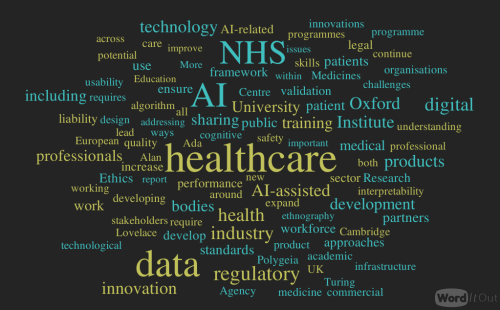
3.4.3 The Regulatory challenge in adopting AI, Volume 2 (Volume Two: Latest in Genomics Methodologies for Therapeutics: Gene Editing, NGS and BioInformatics, Simulations and the Genome Ontology), Part 2: CRISPR for Gene Editing and DNA Repair
In the last couple of years we are witnessing a surge of AI applications in healthcare. It is clear now, that AI and its wide range of health-applications are about to revolutionize diseases’ pathways and the way the variety of stakeholders in this market interact.
Not surprisingly, the developing surge has waken the regulatory watchdogs who are now debating ways to manage the introduction of such applications to healthcare. Attributing measures to known regulatory checkboxes like safety, and efficacy is proving to be a complex exercise. How to align claims made by manufacturers, use cases, users’ expectations and public expectations is unclear. A recent demonstration of that is the so called “failure” of AI in social-network applications like FaceBook and Twitter in handling harmful materials.
‘Advancing AI in the NHS’ – is a report covering the challenges and opportunities of AI in the NHS. It is a modest contribution to the debate in such a timely and fast-moving field! I bring here the report’s preface and executive summary hoping that whoever is interested in reading the whole 50 pages of it will follow this link: f53ce9_e4e9c4de7f3c446fb1a089615492ba8c

We and Polygeia as a whole are grateful to Dr Dror Nir, Director, RadBee, whose insights
were valuable throughout the research, conceptualisation, and writing phases of this work; and to Dr Giorgio Quer, Senior Research Scientist, Scripps Research Institute; Dr Matt Willis, Oxford Internet Institute, University of Oxford; Professor Eric T. Meyer, Oxford Internet Institute, University of Oxford; Alexander Hitchcock, Senior Researcher, Reform; Windi Hari, Vice President Clinical, Quality & Regulatory, HeartFlow; Jon Holmes, co-founder and Chief Technology Officer, Vivosight; and Claudia Hartman, School of Anthropology & Museum Ethnography, University of Oxford for their advice and support.
Lev Tankelevitch, University of Oxford
Alice Ahn, University of Oxford
Rachel Paterson, University of Oxford
Matthew Reid, University of Oxford
Emily Hilbourne, University of Oxford
Bryan Adriaanse, University of Oxford
Giorgio Quer, Scripps Research Institute
Dror Nir, RadBee
Parth Patel, University of Cambridge
All affiliations are at the time of writing.
Polygeia is an independent, non-party, and non-profit think-tank focusing on health and its intersection with technology, politics, and economics. Our aim is to produce high-quality research on global health issues and policies. With branches in Oxford, Cambridge, London and New York, our work has led to policy reports, peer-reviewed publications, and presentations at the House of Commons and the European Parliament. http://www.polygeia.com @Polygeia © Polygeia 2018. All rights reserved.
Almost every day, as MP for Cambridge, I am told of new innovations and developments that show that we are on the cusp of a technological revolution across the sectors. This technology is capable of revolutionising the way we work; incredible innovations which could increase our accuracy, productivity and efficiency and improve our capacity for creativity and innovation.
But huge change, particularly through adoption of new technology, can be difficult to communicate to the public, and if we do not make sure that we explain carefully the real benefits of such technologies we easily risk a backlash. Despite good intentions, the care.data programme failed to win public trust, with widespread worries that the appropriate safeguards weren’t in place, and a failure to properly explain potential benefits to patients. It is vital that the checks and balances we put in place are robust enough to sooth public anxiety, and prevent problems which could lead to steps back, rather than forwards.
Previous attempts to introduce digital innovation into the NHS also teach us that cross-disciplinary and cross-sector collaboration is essential. Realising this technological revolution in healthcare will require industry, academia and the NHS to work together and share their expertise to ensure that technical innovations are developed and adopted in ways that prioritise patient health, rather than innovation for its own sake. Alongside this, we must make sure that the NHS workforce whose practice will be altered by AI are on side. Consultation and education are key, and this report details well the skills that will be vital to NHS adoption of AI. Technology is only as good as those who use it, and for this, we must listen to the medical and healthcare professionals who will rightly know best the concerns both of patients and their colleagues. The new Centre for Data Ethics and Innovation, the ICO and the National Data Guardian will be key in working alongside the NHS to create both a regulatory framework and the communications which win society’s trust. With this, and with real leadership from the sector and from politicians, focused on the rights and concerns of individuals, AI can be advanced in the NHS to help keep us all healthy.
Daniel Zeichner
MP for Cambridge
Chair, All-Party Parliamentary Group on Data Analytics
Artificial intelligence (AI) has the potential to transform how the NHS delivers care. From enabling patients to self-care and manage long-term conditions, to advancing triage, diagnostics, treatment, research, and resource management, AI can improve patient outcomes and increase efficiency. Achieving this potential, however, requires addressing a number of ethical, social, legal, and technical challenges. This report describes these challenges within the context of healthcare and offers directions forward.
Data governance
AI-assisted healthcare will demand better collection and sharing of health data between NHS, industry and academic stakeholders. This requires a data governance system that ensures ethical management of health data and enables its use for the improvement of healthcare delivery. Data sharing must be supported by patients. The recently launched NHS data opt-out programme is an important starting point, and will require monitoring to ensure that it has the transparency and clarity to avoid exploiting the public’s lack of awareness and understanding. Data sharing must also be streamlined and mutually beneficial. Current NHS data sharing practices are disjointed and difficult to negotiate from both industry and NHS perspectives. This issue is complicated by the increasing integration of ’traditional’ health data with that from commercial apps and wearables. Finding approaches to valuate data, and considering how patients, the NHS and its partners can benefit from data sharing is key to developing a data sharing framework. Finally, data sharing should be underpinned by digital infrastructure that enables cybersecurity and accountability.
Digital infrastructure
Developing and deploying AI-assisted healthcare requires high quantity and quality digital data. This demands effective digitisation of the NHS, especially within secondary care, involving not only the transformation of paper-based records into digital data, but also improvement of quality assurance practices and increased data linkage. Beyond data digitisation, broader IT infrastructure also needs upgrading, including the use of innovations such as wearable technology and interoperability between NHS sectors and institutions. This would not only increase data availability for AI development, but also provide patients with seamless healthcare delivery, putting the NHS at the vanguard of healthcare innovation.
Standards
The recent advances in AI and the surrounding hype has meant that the development of AI-assisted healthcare remains haphazard across the industry, with quality being difficult to determine or varying widely. Without adequate product validation, including in
real-world settings, there is a risk of unexpected or unintended performance, such as sociodemographic biases or errors arising from inappropriate human-AI interaction. There is a need to develop standardised ways to probe training data, to agree upon clinically-relevant performance benchmarks, and to design approaches to enable and evaluate algorithm interpretability for productive human-AI interaction. In all of these areas, standardised does not necessarily mean one-size-fits-all. These issues require addressing the specifics of AI within a healthcare context, with consideration of users’ expertise, their environment, and products’ intended use. This calls for a fundamentally interdisciplinary approach, including experts in AI, medicine, ethics, cognitive science, usability design, and ethnography.
Regulations
Despite the recognition of AI-assisted healthcare products as medical devices, current regulatory efforts by the UK Medicines and Healthcare Products Regulatory Agency and the European Commission have yet to be accompanied by detailed guidelines which address questions concerning AI product classification, validation, and monitoring. This is compounded by the uncertainty surrounding Brexit and the UK’s future relationship with the European Medicines Agency. The absence of regulatory clarity risks compromising patient safety and stalling the development of AI-assisted healthcare. Close working partnerships involving regulators, industry members, healthcare institutions, and independent AI-related bodies (for example, as part of regulatory sandboxes) will be needed to enable innovation while ensuring patient safety.
The workforce
AI will be a tool for the healthcare workforce. Harnessing its utility to improve care requires an expanded workforce with the digital skills necessary for both developing AI capability and for working productively with the technology as it becomes commonplace.
Developing capability for AI will involve finding ways to increase the number of clinician-informaticians who can lead the development, procurement and adoption of AI technology while ensuring that innovation remains tied to the human aspect of healthcare delivery. More broadly, healthcare professionals will need to complement their socio-emotional and cognitive skills with training to appropriately interpret information provided by AI products and communicate it effectively to co-workers and patients.
Although much effort has gone into predicting how many jobs will be affected by AI-driven automation, understanding the impact on the healthcare workforce will require examining how jobs will change, not simply how many will change.
Legal liability
AI-assisted healthcare has implications for the legal liability framework: who should be held responsible in the case of a medical error involving AI? Addressing the question of liability will involve understanding how healthcare professionals’ duty of care will be impacted by use of the technology. This is tied to the lack of training standards for healthcare professionals to safely and effectively work with AI, and to the challenges of algorithm interpretability, with ”black-box” systems forcing healthcare professionals to blindly trust or distrust their output. More broadly, it will be important to examine the legal liability of healthcare professionals, NHS trusts and industry partners, raising questions
Posted in Cancer - General, Cancer and Current Therapeutics, CANCER BIOLOGY & Innovations in Cancer Therapy, Cancer Informatics, Cancer Screening, CT, FDA, FDA Regulatory Affairs, FDA, CE Mark & Global Regulatory Affairs: process management and strategic planning - GCP, GLP, ISO 14155, Fiction and medicine, Medical Imaging Technology, Medical Imaging Technology, Image Processing/Computing, MRI, CT, Nuclear Medicine, Ultra Sound, Uncategorized on April 7, 2019| Leave a Comment »

3.5.2.6 Imaging: seeing or imagining? (Part 2), Volume 2 (Volume Two: Latest in Genomics Methodologies for Therapeutics: Gene Editing, NGS and BioInformatics, Simulations and the Genome Ontology), Part 3: AI in Medicine
That is the question…
Anyone who follows healthcare news, as I do , cannot help being impressed with the number of scientific and non-scientific items that mention the applicability of Magnetic Resonance Imaging (‘MRI’) to medical procedures.
A very important aspect that is worthwhile noting is that the promise MRI bears to improve patients’ screening – pre-clinical diagnosis, better treatment choice, treatment guidance and outcome follow-up – is based on new techniques that enables MRI-based tissue characterisation.
Magnetic resonance imaging (MRI) is an imaging device that relies on the well-known physical phenomena named “Nuclear Magnetic Resonance”. It so happens that, due to its short relaxation time, the 1H isotope (spin ½ nucleus) has a very distinctive response to changes in the surrounding magnetic field. This serves MRI imaging of the human body well as, basically, we are 90% water. The MRI device makes use of strong magnetic fields changing at radio frequency to produce cross-sectional images of organs and internal structures in the body. Because the signal detected by an MRI machine varies depending on the water content and local magnetic properties of a particular area of the body, different tissues or substances can be distinguished from one another in the scan’s resulting image.
The main advantages of MRI in comparison to X-ray-based devices such as CT scanners and mammography systems are that the energy it uses is non-ionizing and it can differentiate soft tissues very well based on differences in their water content.
In the last decade, the basic imaging capabilities of MRI have been augmented for the purpose of cancer patient management, by using magnetically active materials (called contrast agents) and adding functional measurements such as tissue temperature to show internal structures or abnormalities more clearly.
In order to increase the specificity and sensitivity of MRI imaging in cancer detection, various imaging strategies have been developed. The most discussed in MRI related literature are:
T2 MRI pelvis with Endo Rectal Coil ( DATA of Dr. Lance Mynders, MAYO Clinic)
Axial MRI Lava DCE with Endo Rectal ( DATA of Dr. Lance Mynders, MAYO Clinic)
DW image of the left parietal glioblastoma multiforme (WHO grade IV) in a 59-year-old woman, Al-Okaili R N et al. Radiographics 2006;26:S173-S189
Source AJR: http://www.ajronline.org/content/196/6/W715/F3
In the last couple of years, medical opinion leaders are offering to use MRI to solve almost every weakness of the cancer patients’ pathway. Such proposals are not always supported by any evidence of feasibility. For example, a couple of weeks ago, the British Medical Journal published a study [1] concluding that women carrying a mutation in the BRCA1 or BRCA2 genes who have undergone a mammogram or chest x-ray before the age of 30 are more likely to develop breast cancer than those who carry the gene mutation but who have not been exposed to mammography. What is published over the internet and media to patients and lay medical practitioners is: “The results of this study support the use of non-ionising radiation imaging techniques (such as magnetic resonance imaging) as the main tool for surveillance in young women with BRCA1/2 mutations.”.
Why is ultrasound not mentioned as a potential “non-ionising radiation imaging technique”?
Another illustration is the following advert:
An MRI scan takes between 30 to 45 minutes to perform (not including the time of waiting for the interpretation by the radiologist). It requires the support of around 4 well-trained team members. It costs between $400 and $3500 (depending on the scan).
The important question, therefore, is: Are there, in the USA, enough MRI systems to meet the demand of 40 million scans a year addressing women with radiographically dense breasts? Toda there are approximately 10,000 MRI systems in the USA. Only a small percentage (~2%) of the examinations are related to breast cancer. A
A rough calculation reveals that around 10000 additional MRI centers would need to be financed and operated to meet that demand alone.
References
http://radiographics.rsna.org/content/26/suppl_1/S173.full
Posted in BioSimilars, Drug Development Process, FDA, FDA Regulatory Affairs, FDA, CE Mark & Global Regulatory Affairs: process management and strategic planning - GCP, GLP, ISO 14155, Patient Experience: Personal Memories of Invasive Medical Intervantion, Value-based Drug Pricing, tagged Biopharmaceutical, FDA, FDA commisioner, Food and Drug Administration, health costs, New Drug Application, Personalized and Precision Medicine & Genomic Research, pharma, Pharmaceutical industry, Scott Gottlieb on March 8, 2019| Leave a Comment »
Reporter: Stephen J. Williams, Ph.D.

Also under his command, the FDA took quick and decisive action on drug costs. The commissioner worked to boost generic approvals and crack down on regulatory “gaming” that stifles competition. He additionally blamed branded drug companies for an “anemic” U.S. biosimilars market and recently blasted insulin pricing.
His sudden departure will likely leave many agency efforts to lower costs up in the air. After the news broke, many pharma watchers posted on Twitter that Gottlieb’s resignation is a loss for the industry.
During his tenure as FDA commissioner, Gottlieb’s name had been floated for HHS chief when former HHS secretary Tom Price resigned due to a travel scandal, but Gottlieb said he was best suited for the FDA commissioner job. Now, former Eli Lilly executive Alex Azar serves as HHS secretary, and on Tuesday afternoon, Azar praised Gottlieb for his work at the agency.
Also read from FiercePharma:
AUDIT Podcast


WASHINGTON — Dr. Norman E. (Ned) Sharpless, director of the National Cancer Institute, will serve as acting commissioner of the Food and Drug Administration, Alex M. Azar III, secretary of health and human services, announced on Tuesday.
Dr. Sharpless temporarily will fill the post being vacated by Dr. Scott Gottlieb, who stunned public health experts, lawmakers and consumer groups last week when he abruptly announced that he was resigningfor personal reasons.
Dr. Sharpless has been director of the cancer center, part of the National Institutes of Health, since October 2017. He is also chief of the aging biology and cancer section in the National Institute on Aging’s Laboratory of Genetics and Genomics. His research focuses on the relationship between aging and cancer, and development of new treatments for melanoma, lung cancer and breast cancer.
“Dr. Sharpless’s deep scientific background and expertise will make him a strong leader for F.D.A.,” said Mr. Azar, in a statement. “There will be no let up in the agency’s focus, from ongoing efforts on drug approvals and combating the opioid crisis to modernizing food safety and addressing the rapid rise in youth use of e-cigarettes.”
Dr. Douglas Lowy, known for seminal research on the link between human papillomavirus and multiple cancer types including cervical, and ultimately leading to development of a vaccine, will be named head of the NCI to replace Dr. Sharpless. Dr. Lowy currently is Deputy Director of the NCI.
Regulatory Affairs: Publications on FDA-related Issues – Aviva Lev-Ari, PhD, RN
FDA Approves La Jolla’s Angiotensin 2
FDA Approval marks first presentation of bivalirudin in frozen, premixed, ready-to-use formulation
Skin Regeneration Therapy One of First Tissue Engineering Products Evaluated by FDA
‘Landmark FDA approval bolsters personalized medicine’ by Edward Abrahams, PhD, President, PMC
Posted in Chronic Thromboembolic Pulmonary Hypertension (CTEPH) and Pulmonary Arterial Hypertension (PAH), Drug Carrier Design, Drug Delivery Platform Technology, FDA, FDA Regulatory Affairs, tagged angiotensin 2, ATHOS-3 trial, Critical Care, FDA approval on March 5, 2019| Leave a Comment »
Reporter: Irina Robu, PhD
In La Jolla Pharmaceutical Company’s new drug application (NDA) for angiotensin 2, the treatment was given priority review status by the FDA, advancing the application process to 6 months. The US Food and Drug Administration has approved an IV agent to treat critically-low blood pressure angiotensin 2 injection (Giapreza) for the treatment of adults with septic or other distributive shock. The intravenous infusion therapy is considered to increase blood pressure in adult patients with hypotension. The condition can cause shock in which the brain, kidneys, and other vital organs are no longer getting the appropriate amount of blood flow to function correctly.
The trial was based on the 321-patient ATHOS-3 trial, in which 69.9% of patients with catecholamine-resistant hypotension treated with angiotensin II upgrading at hour 3 versus 23.4% with placebo. The exploratory therapy was run in combination with conventional treatments used to raise patients’ blood pressure. The treatment was revealed an increase blood pressure, reported safety and tolerability.
Even though the label indicates that the drug can cause thrombosis, concurrent prophylactic treatment should be used. In ATHOS-3, the incidence of arterial and venous thrombotic events was 13%, compared with 5% in the placebo group, mainly driven by deep vein thrombosis.
John A. Kellum, Director of Center for Critical Care Nephrology, University of Pittsburgh, said the treatment is now an additional tool for the critical care community.
SOURCE
Posted in Drug Development Process, FDA, CE Mark & Global Regulatory Affairs: process management and strategic planning - GCP, GLP, ISO 14155, Pharmaceutical Analytics, Pharmaceutical Drug Discovery, Pharmaceutical Industry Competitive Intelligence, Pharmaceutical R&D Investment on January 16, 2019| Leave a Comment »
Reporter: Aviva Lev-Ari, PhD, RN
BIOBUSINESS BRIEFS
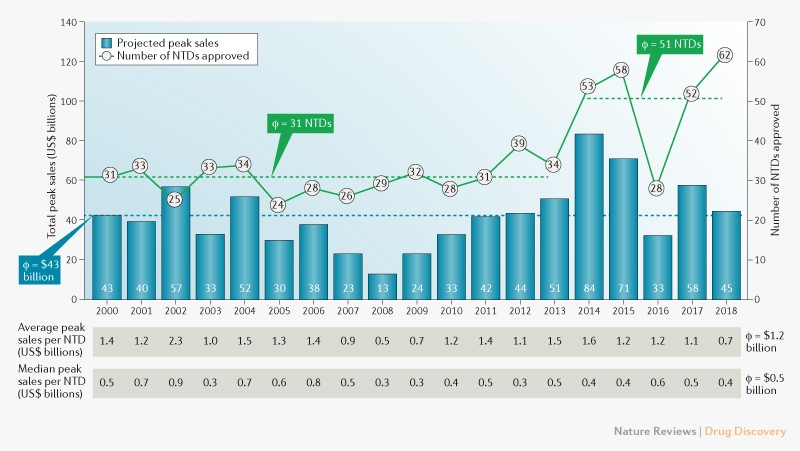
Fig. 1 | FDA approvals of new therapeutic drugs and aggregate projected peak global annual sales: 2000–2018. We analysed 2018 FDA approvals of new therapeutic drugs (NTDs), defined as new molecular entities approved by the FDA’s Center for Drug Evaluation and Research (CDER) and Center for Biologics Evaluation and Research (CBER), but with two adjustments: first, we excluded diagnostic imaging agents; and second, we included combination products with at least one new molecular entity as an active ingredient. The analysis is based exclusively on approvals by the FDA and the year in which the first indication approval took place. All peak sales values were obtained from EvaluatePharma and were inflation-adjusted to 2018 using standard global GDP-based inflators sourced from the Economist Intelligence Unit. To arrive at peak sales for each NTD, we reviewed both historical actual sales as well as the full range of forecast sales that are available from EvaluatePharma and selected the highest value. Sources: EvaluatePharma, FDA and Boston Consulting Group analysis.
SOURCE
Posted in BioIT: BioInformatics, NGS, Clinical & Translational, Pharmaceutical R&D Informatics, Clinical Genomics, Cancer Informatics, BioTechnology - Venture Creation, BioTechnology - Venture Creation, Venture Capital, Conference Coverage with Social Media, Curation, Drug Development Process, FDA, FDA Regulatory Affairs, Genetics & Pharmaceutical, Molecular Genetics & Pharmaceutical, Pharmaceutical Discovery, Pharmaceutical Drug Discovery, Pharmaceutical Industry Competitive Intelligence, Pharmaceutical R&D Informatics, Pharmaceutical R&D Investment, Precision Cancer Medicine, REAL TIME Conference Coverage Twitter's Hashtags and Handles per Presentation/session, Scientific & Biotech Conferences: Press Coverage, Transformative Technologies in Healthcare, Translational Science, Venture Capital, tagged #JPM2019, AstraZeneca, bioinvestment, Biotech Investment and Venture Growth: The Franchising of Intellectual Property as a Business Model, Biotechnology and Pharmaceuticals, Business News JP Morgan Healthcare Conference Adaptive Biotechnologies Counsyl Danaher Human Longevity JP Morgan Qiagen Thermo Fisher Scientific, Drug development, gene therapy, Global Partnering & Biotech Investment, healthcare, new drug development, ovarian cancer, pharma deals, pharmaceutical business, vaccine on January 10, 2019| Leave a Comment »
Reporter: Stephen J. Williams, Ph.D.
With the J.P. Morgan Healthcare Conference winding down, companies remain busy striking deals and informing investors about pipeline advances. BioSpace snagged some of the interesting news bits to come out of the conference from Wednesday.
SAGE Therapeutics – Following a positive Phase III report that its postpartum depression treatment candidate SAGE-217 hit the mark in its late-stage clinical trial, Sage Therapeutics is eying the potential to have multiple treatment options available for patients. At the start of J.P. Morgan, Sage said that patients treated with SAGE-217 had a statistically significant improvement of 17.8 points in the Hamilton Rating Scale for Depression, compared to 13.6 for placebo. The company plans to seek approval for SAGE-2017, but before that, the FDA is expected to make a decision on Zulresso in March. Zulresso already passed muster from advisory committees in November, and if approved, would be the first drug specifically for postpartum depression. In an interview with the Business Journal, Chief Business Officer Mike Cloonan said the company believes there is room in the market for both medications, particularly since the medications address different patient populations.
Mersana Therapeutics – After a breakup with Takeda Pharmaceutical and the shelving of its lead product, Cambridge, Mass.-based Mersana is making a new path. Even though a partial clinical hold was lifted following the death of a patient the company opted to shelve development of XMT-1522. During a presentation at JPM, CEO Anna Protopapas noted that many other companies are developing therapies that target the HER2 protein, which led to the decision, according to the Boston Business Journal. Protopapas said the HER2 space is highly competitive and now the company will focus on its other asset, XMT-1536, an ADC targeting NaPi2b, an antigen highly expressed in the majority of non-squamous NSCLC and epithelial ovarian cancer. XMT-1536 is currently in Phase 1 clinical trials for NaPi2b-expressing cancers, including ovarian cancer, non-small cell lung cancer and other cancers. Data on XMT-1536 is expected in the first half of 2019.
Novavax – During a JPM presentation, Stan Erck, CEO of Novavax, pointed to the company’s RSV vaccine, which is in late-stage development. The vaccine is being developed for the mother, in order to protect an infant. The mother transfers the antibodies to the infant, which will provide the baby with protection from RSV in its first six months. Erck called the program historic. He said the Phase III program is in its fourth year and the company has vaccinated 4,636 women. He said they are tracking the women and the babies. Researchers call the mothers every week through the first six months of the baby’s life to acquire data. Erck said the company anticipates announcing trial data this quarter. If approved, Erck said the market for the vaccine could be a significant revenue driver.
“You have 3.9 million birth cohorts and we expect 80 percent to 90 percent of those mothers to be vaccinated as a pediatric vaccine and in the U.S. the market rate is somewhere between $750 million and a $1 billion and then double that for worldwide market. So it’s a large market and we will be first to market in this,” Erck said, according to a transcript of the presentation.
Denali Therapeutics – Denali forged a collaboration with Germany-based SIRION Biotech to develop gene therapies for central nervous disorders. The two companies plan to develop adeno-associated virus (AAV) vectors to enable therapeutics to cross the blood-brain barrier for clinical applications in neurodegenerative diseases including Parkinson’s, Alzheimer’s disease, ALS and certain other diseases of the CNS.
AstraZeneca – Pharma giant AstraZeneca reported that in 2019 net prices on average across the portfolio will decrease versus 2018. With a backdrop of intense public and government scrutiny over pricing, Market Access head Rick Suarez said the company is increasing its pricing transparency. Additionally, he said the company is looking at new ways to price drugs, such as value-based reimbursement agreements with payers, Pink Sheet reported.
Amarin Corporation – As the company eyes a potential label expansion approval for its cardiovascular disease treatment Vascepa, Amarin Corporation has been proactively hiring hundreds of sales reps. In the fourth quarter, the company hired 265 new sales reps, giving the company a sales team of more than 400, CEO John Thero said. Thero noted that is a label expansion is granted by the FDA, “revenues will increase at least 50 percent over what we did in the prior year, which would give us revenues of approximate $350 million in 2019.”
Government Woes – As the partial government shutdown in the United States continues into its third week, biotech leaders at JPM raised concern as the FDA’s carryover funds are dwindling. With no new funding coming in, reviews of New Drug Applications won’t be able to continue past February, Pink Sheet said. While reviews are currently ongoing, no New Drug Applications are being accepted by the FDA at this time. With the halt of NDA applications, that has also caused some companies to delay plans for an initial public offering. It’s hard to raise potential investor excitement without the regulatory support of a potential drug approval. During a panel discussion, Jonathan Leff, a partner at Deerfield Management, noted that the ongoing government shutdown is a reminder of how “overwhelmingly dependent the whole industry of biotech and drug development is on government,” Pink Sheet said.
Posted in FDA Regulatory Affairs, Heart Failure (HF), Personalized and Precision Medicine & Genomic Research, Regenerative Biology and Medicine, Stem Cells for Regenerative Medicine on October 31, 2018| Leave a Comment »
Reporter: Aviva Lev-Ari, PhD, RN
https://www.thecrimson.com/article/2018/10/31/medical-school-paper-retracted/
NHLBI NEWS
Statement
Posted in FDA, FDA Regulatory Affairs, FDA, CE Mark & Global Regulatory Affairs: process management and strategic planning - GCP, GLP, ISO 14155, tagged polyneuropathy of hereditary transthyretin-mediated amyloidosis on October 18, 2018| Leave a Comment »
Reporter: Aviva Lev-Ari, PhD, RN
by Harvard-MIT Center for Regulatory Science
Free
Innovators in Therapeutics, a Student Speaker Series
Thu, November 15, 2018, 4:30 PM – 6:30 PM EST
Free
REGISTER
Please join us for the Innovators in Therapeutics student speaker series organized by the Harvard-MIT Center for Regulatory Science and the Harvard Program in Therapeutic Science. The first installment of this series will feature John Maraganore, the CEO of Alnylam, and Sara Nochur, Alnylam’s Senior Vice President for Regulatory Affairs. Dr. Maraganore and Dr. Nochur will describe Alnylam’s path through development and FDA approval of the first RNAi therapeutic, ONPATTRO™ (patisiran), for the treatment of polyneuropathy of hereditary transthyretin-mediated amyloidosis. Dr. Maraganore and Dr. Nochur will focus on the regulatory science aspects of gaining approval for this innovative therapeutic.
Prior to the seminar, please join us for a networking session that brings together faculty, students and trainees who are interested in translational research, pharmacology, biotechnology, and regulatory science. Following the speaking program, there will be a small group discussion for students and trainees to engage directly with the expert about the topic at hand. Participation in the small group discussion is limited to students who register and are confirmed prior to the event.
This event is free and open to the Boston research community. Please help us to plan by RSVPing here!
AGENDA
4:30 – 5:00pm: Pre-event reception (outside Cannon Room)
5:00 – 5:45pm: Innovators in Therapeutics with Alnylam’s John Maraganore & Sara Nochur (Cannon Room)
5:45 – 6:15pm: [Limited Space] Student and Trainee Q&A with John Maraganore & Sara Nochur (Folin Wu Room)
SOURCE
https://www.eventbrite.com/e/innovators-in-therapeutics-a-student-speaker-series-tickets-50806305026
Posted in BioTechnology - Venture Creation, BioTechnology - Venture Creation, Venture Capital, CANCER BIOLOGY & Innovations in Cancer Therapy, FDA Regulatory Affairs, Foundations for supporting Science and Education, Global Partnering & Biotech Investment, Intellectual Property, Innovations, Commercialization, Investment in technological breakthrough, Uncategorized, Venture Capital, tagged biotech startup, Biotechnology, early ventures, national cancer institute, National Institutes of Health (NIH) ’s Common Fund, NCI, SBIR, startup on September 27, 2018| Leave a Comment »
NIH SBIR Funding Early Ventures: September 26, 2018 sponsored by Pennovation
Stephen J. Williams PhD, Reporter
Penn Center for Innovation (Pennovation) sponsored a “Meet with NCI SBIR” program directors at University of Pennsylvania Medicine Smilow Center for Translational Research with a presentation on advice on preparing a successful SBIR/STTR application to the NCI as well as discussion of NCI SBIR current funding opportunities. Time was allotted in the afternoon for one-on-one discussions with NCI SBIR program directors.
To find similar presentations and one-on-one discussions with NCI/SBIR program directors in an area nearest to you please go to their page at:
https://sbir.cancer.gov/newsevents/events
For more complete information on the NCI SBIR and STTR programs please go to their web page at: https://sbir.cancer.gov/about
Budget levels were discussed as well as the waiver program, which allows for additional funds to be requested based on criteria set by NCI (usually for work that is deemed high priority or of a specialized nature which could not be covered sufficiently under the standard funding limits) as below:
Phase I: 150K standard but you can get waivers for certain work up to 300K
Phase II: 1M with waiver up to 2M
Phase IIB waiver up to 4M
You don’t need to apply for the waiver but grant offices may suggest citing a statement requesting a waiver as review panels will ask for this information
Fast Track was not discussed in the presentation but for more information of the Fast Track program please visit the website
NCI is working hard to cut review times to 7 months between initial review to funding however at beginning of the year they set pay lines and hope to fund 50% of the well scored grants
NCI SBIR is a Centralized system with center director and then program director with specific areas of expertise: Reach out to them
IMAT Program and Low-Resource Setting new programs more suitable for initial studies and also can have non US entities
Phase IIB Bridge funding to cross “valley of death” providing up to 4M for 2-3 years: most were for drug/biological but good amount for device and diagnostics
Also they have announced administrative supplements for promoting diversity within a project: can add to the budget
3 on biotherapies
2 imaging related
2 on health IT
4 on radiation therapy related: NOTE They spent alot of time discussing the contracts centered on radiation therapy and seems to be an area of emphasis of the NCI SBIR program this year
4 other varied topics
>70% of NCI SBIR budget went to grants (for instance Omnibus grants); about 20-30% for contracts; 16% for phase I and 34 % for phase II ;
ALSO the success rate considerably higher for companies that talk to the program director BEFORE applying than not talking to them; also contracts more successful than Omnibus applications
From the NCI SBIR website:
The Niche Assessment Program is designed to help small businesses “jump start” their commercialization efforts. All active HHS (NIH, CDC, FDA) SBIR/STTR Phase I awardees and Phase I Fast-Track awardees (by grant or contract) are eligible to apply. Registration is on a first-come, first-serve basis!
The Niche Assessment Program provides market insight and data that can be used to help small businesses strategically position their technology in the marketplace. The results of this program can help small businesses develop their commercialization plans for their Phase II application, and be exposed to potential partners. Services are provided by Foresight Science & Technology of Providence, RI.
Technology Niche Analyses® (TNA®) are provided by Foresight, for one hundred and seventy-five (175), HHS SBIR/STTR Phase I awardees. These analyses assess potential applications for a technology and then for one viable application, it provides an assessment of the:
Commercialization Acceleration Program (CAP)
From the NIH SBIR website:
NIH CAP is a 9-month program that is well-regarded for its combination of deep domain expertise and access to industry connections, which have resulted in measurable gains and accomplishments by participating companies. Offered since 2004 to address the commercialization objectives of companies across the spectrum of experience and stage, 1000+ companies have participated in the CAP. It is open only to HHS/NIH SBIR/STTR Phase II awardees, and 80 slots are available each year. The program enables participants to establish market and customer relevance, build commercial relationships, and focus on revenue opportunities available to them.
The I-Corps program provides funding, mentoring, and networking opportunities to help commercialize your promising biomedical technology. During this 8-week, hands-on program, you’ll learn how to focus your business plan and get the tools to bring your treatment to the patients who need it most.
Program benefits include:
ICORPS is an Entrepreneurial Program (8 week course) to go out talk to customers, get assistance with business models, useful resource which can guide the new company where they should focus on for the commercialization aspect
THE NCI Applicant Assistance Program (AAP)
The SBIR/STTR Applicant Assistance Program (AAP) is aimed at helping eligible small R&D businesses and individuals successfully apply for Phase I SBIR/STTR funding from the National Cancer Institute (NCI), National Institute for Neurological Disorders and Stroke (NINDS), National Heart, Lung and Blood Institute (NHLBI). Participation in the AAP will be funded by the NCI, NINDS, and NHLBI with NO COST TO PARTICIPANTS. The program will include the following services:
For more details about the program, please refer to NIH Notice NOT-CA-18-072.
These programs are free for first time grant applicants and must not have been awarded previous SBIR
Peer Learning Webinar Series goal to improve peer learning .Also they are starting to provide Regulatory Assistance (see below)
NIH also provides Mentoring programs for CEOS and C level
10. before you submit solicit independent readers
NCI SBIR can be found on Twitter @NCIsbir
I was able to sit down with Dr. Monique Pond, AAAS Science & Technology Policy Fellow, Health Scientist within the NCI SBIR Development Center to discuss the new assistance program in regulatory affairs she is developing for the NCI SBIR program. Dr Pond had received her PhD in chemistry from the Pennsylvania State University, completed a postdoctoral fellow at NIST and then spent many years as a regulatory writer and consultant in the private sector. She applied through the AAAS for this fellowship and will bring her experience and expertise in regulatory affairs from the private sector to the SBIR program. Dr. Pond discussed the difficulties that new ventures have in formulating regulatory procedures for their companies, the difficulties in getting face time with FDA regulators and helping young companies start thinking about regulatory issues such as pharmacovigilence, oversight, compliance, and navigating the complex regulatory landscape.
In addition Dr. Pond discussed the AAAS fellowship program and alternative career paths for PhD scientists.
A formal interview will follow on this same post.
 2012pharmaceutical
 sjwilliamspa