Feeds:
Posts
Comments

Archive for October, 2012

How Mobile Elements in “Junk” DNA Promote Cancer – Part 1: Transposon-mediated Tumorigenesis

Author, Writer and Curator: Stephen J. Williams, Ph.D.

How Mobile Elements in “Junk” DNA Promote Cancer – Part 1 Transposon-mediated Tumorigenesis

Word Cloud by Daniel Menzin

SOURCE

Landscape of Somatic Retrotransposition in Human Cancers. Science (2012); Vol. 337:967-971. (1)

Sequencing of the human genome via massive programs such as the Cancer Genome Atlas Program (CGAP) and the Encyclopedia of DNA Elements (ENCODE) consortium in conjunction with considerable bioinformatics efforts led by the National Center for Biotechnology Information (NCBI) have unlocked a myriad of yet unclassified genes (for good review see (2).  The project encompasses 32 institutions worldwide which, so far, have generated 1640 data sets, initially depending on microarray platforms but now moving to the more cost effective new sequencing technology.  Initially the ENCODE project focused on three types of cells: an immature white blood cell line GM12878, leukemic line K562, and an approved human embryonic cell line H1-hESC.  The analysis was rapidly expanded to another 140 cell types.  DNA sequencing had revealed 20,687 known coding regions with hints of 50 more coding regions.  Another 11,224 DNA stretches were classified as pseudogenes.  The ENCODE project reveals that many genes encode for an RNA, not protein product, so called regulatory RNAs.

However some of the most recent and interesting results focus on the noncoding regions of the human genome, previously discarded as uninteresting or “junk” DNA .  Only 2% of the human genome contains coding regions while 98% of this noncoding part of the genome is actually found to be highly active “with about 4 million constantly communicating switches” (3).  Some of these “switches” in the noncoding portion contain small, repetitive elements which are mobile throughout the genome, and can control gene expression and/or predispose to disease such as cancer.  These mobile elements, found in almost all organisms, are classified as transposable elements (TE), inserting themselves into far-reaching regions of the genome.  Retro-transposons are capable of generating new insertions through RNA intermediates.  These transposable elements are normally kept immobile by epigenetic mechanisms(4-6) however some TEs can escape epigenetic repression and insert in areas of the genome, a process described as insertional mutagenesis as the process can lead to gene alterations seen in disease(7).  In addition, this insertional mutagenesis can lead to the transformation of cells and, as described in Post 2, act as a model system to determine drivers of oncogenesis. This insertional mutagenesis is a different mechanism of genetic alteration and rearrangement seen in cancer like recombination and fusion of gene fragments as seen with the Philadelphia chromosome and BCR/ABL fusion protein (8).  The mechanism of transposition and putative effects leading to mutagenesis are described in the following figure:

Image

Figure.  Insertional mutagenesis based on transposon-mediated mechanism.  A) Basic structure of  transposon contains gene/sequence flanked by two inverted repeats (IR) and/or direct repeats (DR).  An enzyme, the transposase (red hexagon) binds and cuts at the IR/DR and transposon is pasted at another site in DNA, containing an insertion site.  B)   Multiple transpositions may results in oncogenic events by inserting in promoters leading to altered expression of genes driving oncogenesis or inserting within coding regions and inactivating tumor suppressors or activating oncogenes.  Deep sequencing of the resultant tumor genomes ( based on nested PCR from IR/DRs) may reveal common insertion sites (CIS) and oncogenic mutations could be identified.

In a bioinformatics study Eunjung Lee et al.(1), in collaboration with the Cancer Genome Atlas Research Network, the authors had analyzed 43 high-coverage whole-genome sequencing datasets from five cancer types to determine transposable element insertion sites.  Using a novel computational method, the authors had identified 194 high-confidence somatic TE insertion sites present in cancers of epithelial origin such as colorectal, prostate and ovarian, but not in brain or blood cancers.  Sixty four of the 194 detected somatic TE insertions were located within 62 annotated genes. Genes with TE insertion in colon cancers have commonly high mutation rates and enriched genes were associated with cell adhesion functions (CDH12, ROBO2,NRXN3, FPR2, COL1A1, NEGR1, NTM and CTNNA2) or tumor suppressor functions (NELL1m ROBO2, DBC1, and PARK2).  None of the somatic events were located within coding regions, with the TE sequences being detected in untranslated regions (UTR) or intronic regions.  Previous studies had shown insertion in these regions (UTR or intronic) can disrupts gene expression (9). Interestingly, most of the genes with insertion sites were down-regulated, suggested by a recent paper showing that local changes in methylation status of transposable elements can drive retro-transposition (10,11).  Indeed, the authors found that somatic insertions are biased toward the hypomethylated regions in cancer cell DNA.  The authors also confirmed that the insertion sites were unique to cancer and were somatic insertions, not germline (germline: arising during embryonic development) in origin by analyzing 44 normal genomes (41 normal blood samples from cancer patients and three healthy individuals).

The authors conclude:

“that some TE insertions provide a selective advantage during tumorigenesis,

rather than being merely passenger events that precede clonal expansion(1).”

The authors also suggest that more bioinformatics studies, which utilize the expansive genomic and epigenetic databases, could determine functional consequences of such transposable elements in cancerThe following Post will describe how use of transposon-mediated insertional mutagenesis is leading to discoveries of the drivers (main genetic events) leading to oncogenesis.

1.            Lee, E., Iskow, R., Yang, L., Gokcumen, O., Haseley, P., Luquette, L. J., 3rd, Lohr, J. G., Harris, C. C., Ding, L., Wilson, R. K., Wheeler, D. A., Gibbs, R. A., Kucherlapati, R., Lee, C., Kharchenko, P. V., and Park, P. J. (2012) Science 337, 967-971

2.            Pennisi, E. (2012) Science 337, 1159, 1161

3.            Park, A. (2012) Don’t Trash These Genes. “Junk DNA may lead to valuable cures. in Time, Time, Inc., New York, N.Y.

4.            Maksakova, I. A., Mager, D. L., and Reiss, D. (2008) Cellular and molecular life sciences : CMLS 65, 3329-3347

5.            Slotkin, R. K., and Martienssen, R. (2007) Nature reviews. Genetics 8, 272-285

6.            Yang, N., and Kazazian, H. H., Jr. (2006) Nature structural & molecular biology 13, 763-771

7.            Hancks, D. C., and Kazazian, H. H., Jr. (2012) Current opinion in genetics & development 22, 191-203

8.            Sattler, M., and Griffin, J. D. (2001) International journal of hematology 73, 278-291

9.            Han, J. S., Szak, S. T., and Boeke, J. D. (2004) Nature 429, 268-274

10.          Reichmann, J., Crichton, J. H., Madej, M. J., Taggart, M., Gautier, P., Garcia-Perez, J. L., Meehan, R. R., and Adams, I. R. (2012) PLoS computational biology 8, e1002486

11.          Byun, H. M., Heo, K., Mitchell, K. J., and Yang, A. S. (2012) Journal of biomedical science 19, 13

Other research paper on ENCODE and Cancer were published on this Scientific Web site as follows:

Expanding the Genetic Alphabet and linking the genome to the metabolome

Junk DNA codes for valuable miRNAs: non-coding DNA controls Diabetes

ENCODE Findings as Consortium

Reveals from ENCODE project will invite high synergistic collaborations to discover specific targets

ENCODE: the key to unlocking the secrets of complex genetic diseases

Impact of evolutionary selection on functional regions: The imprint of evolutionary selection on ENCODE regulatory elements is manifested between species and within human populations

Metabolite Identification Combining Genetic and Metabolic Information: Genetic association links unknown metabolites to functionally related genes

Advances in Separations Technology for the “OMICs” and Clarification of Therapeutic Targets

Commentary on Dr. Baker’s post “Junk DNA codes for valuable miRNAs: non-coding DNA controls Diabetes”

Cancer Genomics – Leading the Way by Cancer Genomics Program at UC Santa Cruz

Read Full Post »

Reporter: Aviva Lev-Ari, PhD, RN


According to The 2012 Johns Hopkins Heart Attack Prevention White Paper by Heart Experts

Roger S. Blumenthal, M.D. 

Director, Johns Hopkins Ciccarone Center for the Prevention of Heart Disease

Professor of Medicine, Johns Hopkins University School of Medicine

and

Simeon Margolis, M.D., Ph.D.

Professor of Medicine and Biological Chemistry

Johns Hopkins University School of Medicine


The death rate from heart attacks has been declining steadily for many years, in large part because people are receiving better medical care. Yet too many men and women are not taking the steps that could help protect them.

It’s easier than you think. But you’d be amazed how many people ignore the #1 tool for preventing a heart attack:

What really triggers a heart attack?

What you need to know sooner rather than later.

See who’s most likely to have a heart attack. You’ll learn the most common risk factors and how to minimize them. You’ll also learn the importance of primary prevention if you haven’t been diagnosed with coronary heart disease (CHD) or suffered a heart attack.

Discover the changes that take place in the coronary arteries leading up to a heart attack.

Learn what happens during a heart attack, and how the steps you take during the first hour can affect survival.

Find out why a yearly flu shot can protect your heart. You’ll learn about the importance of taming inflammation.

Learn what your waist measurement can reveal about the health of your heart.

But this is only the beginning. Learn about the standard screening tests, and the newer, potentially better alternatives being developed.

The heart-mind connection: How cognitive behavior therapy (CBT) may help ward off a heart attack

Evidence linking the flu vaccine to lower heart attack risk.

Angina: A critical warning of heart disease that should never be ignored.

Latest thinking on how ministrokes (TIAs) lead to heart attack.

Explore new technologies that are now available to assess the health of your coronary arteries. See how the tests are done and how they compare to traditional methods of predicting future heart attacks.

You will feel far better prepared to have an intelligent conversation with your doctor about the issues that concern you most.

How great is your risk?

A close look at the factors that set the stage for heart attack.

Simply, clearly and accurately, the specialists at Johns Hopkins explain the major risk factors that lead to heart attack.

You will take a close look at the different types of lipids. Understand cholesterol’s role in your body… the difference between “good” HDL and “bad” LDL cholesterol… why reducing cholesterol levels can help prevent coronary heart disease and heart attacks… how triglycerides differ from the other lipids.

You will see how inflammation and C-reactive protein are associated with risk of heart disease and heart attack. Examine the role of blood clots and coronary artery spasms in triggering heart attacks.

You will learn which risk factors (like age and family history) can’t be changed, although knowing about them can motivate you to take the preventive steps that can LOWER your risk of heart attack.

More important you will learn which risk factors are within your control. You’ll be able to set clear, practical goals for yourself with guidance from Johns Hopkins specialists. And you’ll discover what to do if you have risk factors like high blood pressure, abdominal obesity or metabolic syndrome working against you.

Learn the MOST IMPORTANT STEPS After a Heart Attack —

Steps That Could SAVE YOUR LIFE

A special feature in The 2012 Johns Hopkins Heart Attack Prevention White Paper details essential steps you should take if you experience the warning signs of a heart attack.

Let us assure you, there is no more powerful motivator to get your cholesterol, your blood pressure and your weight under control than the threat of undergoing a heart attack sometime in the future.

This is just one of many reasons to order your own copy of The 2012 Johns Hopkins Heart Attack Prevention White Paper and start putting it to good use right away.

Direct to you from Johns Hopkins Medicine

Since 1889, Johns Hopkins researchers have advanced the development of science and medicine, quickly transferring new knowledge from the research laboratory to the patient’s bedside. The School of Medicine is the largest recipient of biomedical research funds from the National Institutes of Health, and in 2003, Johns Hopkins University’s own Peter Agre, M.D., won the Nobel Prize in chemistry.

The White Papers give Johns Hopkins an effective, affordable way to extend new knowledge to the widest possible audience, benefiting countless men and women with serious medical concerns.

When it comes to the health of your heart, you should insist on knowing where your information comes from. Check the credentials of the experts who advise you before you decide whether they are worthy of your trust.

The 2012 Johns Hopkins Heart Attack Prevention White Paper draws on the vast resources and experience of The Johns Hopkins Hospital and the Johns Hopkins Ciccarone Center for the Prevention of Heart Disease. It gives Johns Hopkins specialists a forum to explore the combination of lifestyle adjustments and medical therapies that can slow the progression of heart disease and decrease your risk of heart attack or stroke.

Prepared by two of the most respected experts in the field

You can trust what you read in The 2012 Johns Hopkins Heart Attack Prevention White Paper. Coauthor Roger S. Blumenthal, M.D., is Professor of Medicine in the Division of Cardiology at The Johns Hopkins Hospital and the Director of the Johns Hopkins Ciccarone Center for the Prevention of Heart Disease. His interests include the development of new strategies to manage coronary heart disease risk factors and the noninvasive detection of coronary atherosclerosis.

Co-author Simeon Margolis, M.D., Ph.D., is Professor of Medicine and Biological Chemistry at the Johns Hopkins University School of Medicine and the medical editor of The Johns Hopkins newsletter, Health After 50.

Their impeccable credentials and reputations ensure that what you read is responsible, practical and useful in your quest for a healthier heart.

You can also be sure that it reflects the latest scientific research and clinical findings.

The expertise you need, in clear, plain English you can understand and use every day

The 2012 Johns Hopkins Heart Attack Prevention White Paper brings you the latest news you can use. It’s designed with YOU in mind, the busy person who has no time, money or energy to waste on old or inaccurate information, or heart attack “prevention strategies” that are really just myths or hype.

Drug-free steps to take RIGHT NOW to lower your risk of a heart attack

The right lifestyle changes can go a long way toward bringing down high blood pressure and cholesterol levels. These simple changes may be enough to let you avoid medication altogether. But if not, making a few well-chosen adjustments in your habits can boost the effectiveness of the medications you take, perhaps even reducing the dosage you require.

How to protect against heart attacks with fiber. Find out if you are getting the recommended daily amount.

What new research reveals about calcium supplements and your risk of coronary heart disease.

What about soy? Antioxidants? Limiting your sodium? Boosting your potassium intake? Learn effective ways to get your risk factors under control through the food choices you make every day.


What counts as “exercise?”

Do you have to break a sweat before it’s good for your heart?

You’ve heard it before: regular exercise can raise HDL cholesterol, control your weight, improve the work capacity of your heart, reduce your blood pressure and blood glucose and relieve stress.

So why is it so difficult to get up off the couch and get moving?

You’ll learn how often to exercise. Whether short bursts of activity can offer the same protection as longer exercise periods when it comes to reducing risk of coronary heart disease.

And you will read how to exercise safely — a must-see if you are concerned about having a heart attack or cardiac arrest during physical activity.

“Alcohol to protect my heart? I’ll drink to that!”

Should you? Will drinking alcoholic beverages really lower your risk of heart attack, as the headlines proclaim? The 2012 Johns Hopkins Heart Attack Prevention White Paper looks at how a small amount of alcohol can help raise “good” HDL cholesterol. Discover what the research says is “enough” alcohol to reduce your risk of heart attack, and what’s “too much.”

See your heart’s health in a whole new way

Because solid, authoritative medical research stands behind the recommendations of Johns Hopkins Medicine, each White Paper includes highlights of new studies that are relevant to you.

When you have The 2012 Johns Hopkins Heart Attack Prevention White Paper, you have the power to affect your health care as never before. Use what you learn to:

Recognize and respond to symptoms and significant changes in your heart health as they occur.

Make conscious, deliberate choices in what you eat and drink and do, based on what is known to lower the risk of cardiovascular disease.

Communicate effectively with your doctor. A helpful glossary takes the mystery out of “medical-speak.” Words like ischemia and ejection fraction will lose their power to intimidate or confuse you.

You will be better equipped to ask informed questions and to understand the answers.

Make the right decisions, based on a better understanding of the newest drugs, the latest surgical techniques and the most promising research.

Take control over your condition and act out of knowledge, rather than fear.


Who will benefit from this timely intelligence?

The fact that you are reading this suggests that you’re not willing to leave your fate in others’ hands. You want to know more. You need to know more. And you’re willing to seek out the best and most current information so you can raise important issues with your own doctors.

The 2012 Johns Hopkins Heart Attack Prevention White Paper will prove valuable to you if any of the following criteria describe your personal situation.

You are being treated for high cholesterol or high blood pressure or have other cardiovascular risk factors such as diabetes, smoking, obesity or a sedentary lifestyle.

You have a family history of heart disease and want to break the pattern.

You want to reduce the likelihood of needing bypass surgery or other invasive procedures.

You have already had a heart attack and want to avoid a second one.

You realize that first heart attacks often prove fatal to women because the early warning signs — which are different from men’s — may be misunderstood or ignored.

You live with or care for someone with cardiovascular risk factors and want to do everything possible to prevent a heart attack.


The specialists at Johns Hopkins created The 2012 Johns Hopkins Heart Attack Prevention White Paper to serve as your first line of defense against a heart attack. Special Bonus: Place your order today and we will include a free gift that could, literally, save your life.


The Johns Hopkins Ciccarone Center for the Prevention of Heart Disease takes a comprehensive approach to the management of heart health. In the FREE Special Report that you can download when you pay now for The 2012 Johns Hopkins Heart Attack Prevention White Paper, the experts share practical, specific advice on how you can slow the progression of cardiovascular disease and decrease your future risk of heart attack, stroke, bypass surgery or angioplasty.

What you need to know is yours free in Tested, Proven Ways To Save Your Heart. It’s our gift to you, when you order and pay by credit card… yours to keep and use even if you decide to return The 2012 Johns Hopkins Heart Attack Prevention White Paper for any reason.


FREE Heart Attack Prevention Special Report: 

Tested, Proven Ways To Save Your Heart

Heart Attack Prevention Strategies

The #1 Way to Prevent a Heart Attack 

The importance of smoking cessation cannot be underestimated.

Walking Your Way to a Healthier Heart 

Johns Hopkins specialists outline the best ways for starting a walking program to maximize your heart health.

Action Plan When a Heart Attack Strikes 

The crucial symptoms to look out for (which can often be different in men and inAs you wi women) and what to do and NOT do if you or a loved one starts to show the telltale signs.

Cholesterol Busting Foods

The latest research on stanols, sterols, soy, fiber, and more.

A Drink a Day for Heart Health?

Moderate alcohol intake has been suggested as a way to ward off heart attack. This special report discusses the pros and cons.


You’ll get BOTH — The 2012 Johns Hopkins Heart Attack Prevention White Paper mailed to you and your free Special Report as an instant electronic download, all for only $19.95 plus shipping and handling.

YOUR FREE GIFT shows you how to walk your way to a healthier heart. Yes, you’ve heard it again and again: Walking is a good way to protect your heart. Everyone knows how to do it. It doesn’t cost anything, and you don’t need special equipment other than the right shoes.

Do you know what a group of men did to lower their risk of coronary heart disease by 18 percent? Tested, Proven Ways to Save Your Heart reveals their winning walking approach that yielded big benefits. You will also discover:

A safe way to get started, and what’s “enough” exercise to give you the heart protection you’re after.

Is faster better? How to set a healthy pace for maximum cardiovascular benefit, and warning signs that you’re pushing too hard.

How to determine your “target” heart rate zone so your walks give you significant cardiovascular benefits.

The walking style that boosts your calorie burning by up to 10 percent.

How to make your walking plan work with the weather and your lifestyle.

Cool-down stretches that keep you from feeling sore afterward.


And so much more!

But walking is just the beginning. Your free copy of Tested, Proven Ways To Save Your Heart gives you a truly effective way to conquer your heart’s worst enemy. Despite everything the public has been taught for the last 40 years about the dangers of tobacco, cigarette smoking is responsible for about 440,000 premature deaths each year in the United States.

Smoking, or living with a smoker, can undermine your best efforts to achieve a healthy heart. Only 5 to 10 percent of people successfully quit on their own, which is why the information in this free gift is so essential. Based on vast clinical experience and knowledge of the full range of medications and techniques to help you quit, Johns Hopkins doctors give you tools that raise your chances of quitting for good.

Learn the three things that, if used in combination, give you a far greater likelihood of kicking the habit.

The latest scientific thinking on nicotine replacement gum, skin patches, nasal sprays and inhalers.

Who’s a candidate for the medications that can help reduce cravings and withdrawal symptoms.

Tips for people who have tried (perhaps many times) before without lasting success.

Why avoiding alcohol can help you avoid cigarettes…


and so much more…

The sooner you take steps to reduce your heart attack risk, the better. Prevention remains your most powerful medicine. But knowing how to respond in an emergency-whether it involves you or someone you are with-can be crucial to survival.

When heart attack strikes…

be prepared with a fast and appropriate response.

As you will learn in your free copy of Tested, Proven Ways To Save Your Heart, what you do and what you don’t do during the first crucial minutes and hours following a heart attack can make all the difference in the outcome.

Did you know that a third of all people having a heart attack never experience any chest pain at all? Your Johns Hopkins-designed “Action Plan When a Heart Attack Strikes” alerts you to the range of warning signs, including the less common ones that are more likely to occur in women.

At what point should you call an ambulance? When are you better off driving the person to the hospital instead of waiting for the ambulance to arrive? What information must the emergency personnel have right away? How do you handle the person in denial, who insists, “You’re overreacting” or “There’s nothing wrong?”

I hope you never need to use this information at all. But you’ll be much better prepared to respond calmly and effectively when you have your free gift, Tested, Proven Ways To Save Your Heart, on hand.

SOURCE:

http://www.johnshopkinshealthalerts.com/contact_us/


Read Full Post »

Reporter and Curator: Dr. Sudipta Saha, Ph.D.


Leptin is considered to have an important role in reproductive functions, including menstrual-cycle regulation, pregnancy, and lactation. The absence of leptin action caused by functional mutations in the leptin gene (LEP) or the leptin receptor gene (LEPR) has been linked to infertility in rodents and humans. A pregnancy was reported in a woman despite absent leptin signaling.

In 1998, it was reported the case of a morbidly obese patient with a rare homozygous LEPR mutation, which was shared by several affected siblings. The mutation was found in the patient’s blood and adipose tissue, indicating no evidence of chimerism. She had been followed for morbid obesity since early childhood, with abnormal compulsive-feeding behaviors and reduced levels of growth hormone and thyrotropin. She entered puberty late, with irregular cycles after the age of 17 years. Repeated evaluations of sex-hormone levels were considered to be normal after the age of 18 years. The patient underwent abdominoplasty at the age of 16 years and gastric-bypass surgery at the age of 24 years. Six months after gastric bypass, her weight had decreased from 220 kg (485 lb) to 170 kg (375 lb), with a concurrent decrease in the body-mass index (the weight in kilograms divided by the square of the height in meters) from 81 to 62. She was counseled regarding contraception and was prescribed oral contraceptives. Two years after gastric bypass, just before an unplanned pregnancy, she had no diabetes, hypertension, respiratory disorders, or other recognized complications of obesity.

Ultrasonographic examinations during pregnancy were considered normal except for suspected macrosomia in the third trimester. The patient’s total weight gain during pregnancy was 50 kg (110 lb) from a prepregnancy weight of 180 kg (397 lb). Routine screening for gestational diabetes was normal. Although occasional elevated blood sugar levels were documented during the pregnancy, the glycated hemoglobin level in the third trimester was 5.6%. At 37 weeks 5 days of gestation (on the basis of first-trimester ultrasonography), the patient delivered a son by elective cesarean section, which was performed because of breech presentation and suspected macrosomia under epidural anesthesia after the administration of glucocorticoids for fetal lung maturation. The birth weight was 3720 g (8.2 lb), and the length was 50 cm (19.7 in.); the head circumference was 36.5 cm (14.4 in.), which was above the 90th percentile. The patient’s postpartum course was complicated by a wound infection. The infant’s neonatal course was complicated by hypoglycemia, hypocalcemia, and jaundice requiring phototherapy. The patient briefly breast-fed her child. The child’s growth and development have been normal; his weight at 1 year was 14 kg (31 lb).

This case of a natural pregnancy in a woman with a homozygous LEPR mutation calls into question the belief that leptin function is critical to reproductive function.


Source References:


http://www.nejm.org/doi/full/10.1056/NEJMc1200116


Read Full Post »

Author and Curator: Ritu Saxena, Ph.D.

Introduction: Mitochondrial fission & fusion

Mitochondria, double membranous and semi-autonomous organelles, are known to convert energy into forms that are usable to the cell. Apart from being sites of cellular respiration, multiple roles of mitochondria have been emphasized in processes such as cell division, growth and cell death. Mitochondria are semi-autonomous in that they are only partially dependent on the cell to replicate and grow. They have their own DNA, ribosomes, and can make their own proteins. Mitochondria have been discussed in several posts published in the Pharmaceutical Intelligence blog.

Mitochondria do not exist as lone organelles, but are part of a dynamic network that continuously undergoes fusion and fission in response to various metabolic and environmental stimuli. Nucleoids, the assemblies of mitochondrial DNA (mtDNA) with its associated proteins, are distributed during fission in such a way that each mitochondrion contains at least one nucleoid. Mitochondrial fusion and fission within a cell is speculated to be involved in several functions including mtDNA DNA protection, alteration of cellular energetics, and regulation of cell division.

Proteins involved in mitochondrial fission & fusion

Multiple mitochondrial membrane GTPases that regulate mitochondrial networking have recently been identified. They are classified as fission and fusion proteins:

Fusion proteins: Members of dynamin family of protein, mitofusin 1 (Mfn-1) and mitofusin 2 (Mfn-2), are involved in fusion between mitochondria by tethering adjacent mitochondria. These proteins have two transmembrane segments that anchor them in the mitochondrial outer membrane. Mutations in Mitofusin proteins gives rise to fragmented mitochondria, but this can be reversed by mutations in mammalian Drp1. Mitochondrial inner membranes are fused by dynamin family members called Opa1.

Fission proteins: Another member of the dynamin family of proteins, dynamin-related protein 1 (Drp-1) mediates fission of mitochondria. Drp-1 is activated by phosphorylation. Drp-1 proteins are largely cytosolic, but cycle on and off of mitochondria as needed for fission. Fission is a complex process and involves a series of well-defined stages and proteins. Cytosolic Drp-1 is activated by calcineurin or other cytosolic signaling proteins after which it translocates to the mitochondrial tubules where it assembles into foci through its interaction with another protein, hFis1. Once Drp-1 rings assemble on the constricted spots, outer membrane of mitochondria undergoes fission through GTP hydrolysis. Drp-1 is now left bound to one of the newly formed mitochondrial ends after which it slowly disassembles before returning to the cytoplasm.

Control of mitochondrial fission & fusion

  • Mitochondrial fission and fusion are controlled by several regulatory mechanisms. Few of which are mentioned as follows:
  • Drp-1 activation by Cdk1/Cyclin B mediated phosphorylation during mitosis – triggers fission
  • Drp-1 inactivation by cAMP-dependent protein kinase (PKA) in quiescent cells- prevents fission
  • Drp-1 activation after reversal of PKA phosphorylation by Calcineurin- triggers fission
  • Ubiquination of fission and fusion proteins by E3 ubiquitin ligase- alters fission
  • Sumoylation of fission proteins – regulates fission

Imparied mitochondrial fission leads to loss of mtDNA

Mitochondrial fission plays an important role in mitochondrial and cellular homeostasis. It was reported by Parone et al (2008) that preventing mitochondrial fission by down-regulating expression of Drp-1 lead to loss of mtDNA and mitochondrial dysfunction. An increase in cellular reactive oxygen species (ROS) was observed. Other cellular implications included depletion of cellular ATP, inhibition of cell proliferation and autophagy. The observations were made in HeLa cells.

MicroRNA regulation of mitochondrial fission

Although several factors have been attributed to the regulation of mitochondrial fission, the mechanism still remains poorly understood. Recently, regulation of mitochondrial fission via miRNAs has become a topic of interest. Following miRNAs have been found to be involved in mitochondrial fission:

  • miR-484:  Wang et al (2012) demonstrated that miR-484 was able to regulate mitochondrial fission by suppressing the translation of a fission protein Fis1, leading to inhibition of Fis1-mediated fission and apoptosis in cardiomyocytes and in the adrenocortical cancer cells. The authors showed that Fis1 is necessary for mitochondrial fission and apoptosis, and is upregulated during anoxia, whereas miR-484 is downregulated. Underlying mechanism involved transactivation of miR-484 by a transcription factor, Foxo3a and miR-484 is able to attenuate Fis1 upregulation and mitochondrial fission, by binding to the amino acid coding sequence of Fis1 and inhibiting its translation.
  • miR-499: miR-499 was reported by Wang et al (2011) to be able to directly target both the α- and β-isoforms of the calcineurin catalytic subunit. Suppression of calcineurin-mediated dephosphorylation of  Drp-1 lead to inhibition of the fission machinery ultimately resulting in the inhibition of cardiomyocyte apoptosis. miR-499 levels, by altering mitochondrial fusion were able affect the severity of myocardial infarction and cardiac dysfunction induced by ischemia-reperfusion. Modulation of miR-499 expression could provide a therapeutic approach for myocardial infarction treatment.
  • miR-30: It was reported by Li et al (2010) that miR-30 family members were able to inhibit mitochondrial fission and also the resulting apoptosis. While exploring the underlying molecular mechanism, the authors identified that miR-30 family members can suppress p53 expression. When cell received apoptotic stimulation, p53 was found to transcriptionally activate the fission protein, Drp-1. Drp-1 was able to induce mitochondrial fission. miR-30 family members were observed to inhibit mitochondrial fission through attenuation of p53 expression and its downstream target Drp-1.

Mitochondrial fission & fusion as a therapeutic target

Since alteration of mitochondrial fission and fusion have been reported to affect various cellular processes including apoptosis, proliferation, ATP consumption, the proteins involved in the process of fission and fusion might be harnessed as therapeutic target.

Mentioned below is a description of research where dynamics of the mitochondrial organelle has been utilized as a therapeutic target:

Inhibition of mitochondrial fission prevents cell cycle progression in lung cancer

A recent article published by Rehman et al (2012) in the FASEB journal drew much attention after interesting observations were made in the mitochondria of lung adenocarcinoma cells. The mitochondrial network of these cells exhibited both impaired fusion and enhanced fission. It was also found that the fragmented phenotype in multiple lung adenocarcinoma cell lines was associated with both a down-regulation of the fusion protein, Mfn-2 and an upregulation of expression of fission protein, Drp-1. The imbalance of Drp-1/Mfn-2 expression in human lung cancer cell lines was reported to promote a state of mitochondrial fission. Similar increase in Drp-1 and decrease in Mfn-2 was observed in the tissue samples from patients compared to adjacent healthy lung. Authors used complementary approaches of Mfn-2 overexpression, Drp-1 inhibition, or Drp-1 knockdown and were able to observe reduction of cancer cell proliferation and an increase spontaneous apoptosis. Thus, the study identified mitochondrial fission and Drp-1 activation as a novel therapeutic target in lung cancer.

Image

Reference:

Research articles-

http://www.ncbi.nlm.nih.gov/pubmed/20556877

http://www.ncbi.nlm.nih.gov/pubmed?term=18806874

http://www.ncbi.nlm.nih.gov/pubmed/22510686

http://www.ncbi.nlm.nih.gov/pubmed/21186368

http://www.ncbi.nlm.nih.gov/pubmed?term=20062521

http://www.ncbi.nlm.nih.gov/pubmed?term=22321727

News brief:

http://www.uchospitals.edu/news/2012/20120221-mitochondria.html

http://news.uchicago.edu/article/2012/02/23/energy-network-within-cells-may-be-new-target-cancer-therapy

http://www.doctortipster.com/7881-mitochondria-could-represent-a-new-target-for-cancer-therapy-according-to-new-study.html

Related reading:

Reviewer: Larry H Bernstein, MD, FACP

http://pharmaceuticalintelligence.com/2012/10/28/mitochondrial-damage-and-repair-under-oxidative-stress/

Author and Curator: Larry H Bernstein, MD, FACP http://pharmaceuticalintelligence.com/2012/09/26/mitochondria-origin-from-oxygen-free-environment-role-in-aerobic-glycolysis-metabolic-adaptation/

Reporter and Editor: Larry H Bernstein, MD, FACP

http://pharmaceuticalintelligence.com/2012/09/16/nitric-oxide-has-a-ubiquitous-role-in-the-regulation-of-glycolysis-with-a-concomitant-influence-on-mitochondrial-function/

Author and Reporter: Ritu Saxena, PhD

http://pharmaceuticalintelligence.com/2012/09/10/%CE%B2-integrin-emerges-as-an-important-player-in-mitochondrial-dysfunction-associated-gastric-cancer/

Author: Ritu Saxena, PhD

http://pharmaceuticalintelligence.com/2012/09/01/mitochondria-and-cancer-an-overview/

Author and Reporter: Ritu Saxena, PhD

http://pharmaceuticalintelligence.com/2012/08/14/mitochondrial-mutation-analysis-might-be-1-step-away/

Reporter: Venkat S. Karra, PhD

http://pharmaceuticalintelligence.com/2012/08/14/detecting-potential-toxicity-in-mitochondria/

Reporter: Aviva Lev-Ari, PhD, RN http://pharmaceuticalintelligence.com/2012/08/01/mitochondrial-mechanisms-of-disease-in-diabetes-mellitus/

Author and Curator: Ritu Saxena, PhD; Consultants: Aviva Lev-Ari, PhD, RN and Pnina G. Abir-Am, PhD

http://pharmaceuticalintelligence.com/2012/07/09/mitochondria-more-than-just-the-powerhouse-of-the-cell/

Read Full Post »

Reporter: Aviva Lev-Ari, PhD, RN

Acoustic Neuroma

Diagnosis

Advances in medicine, especially imaging technology have made the identification of small Acoustic Neuromas (AN) possible. After routine auditory tests reveal loss of hearing and speech discrimination (i.e. “I can hear sound in that ear, but can’t understand what’s being said”) a special test for hearing which records responses from the brain-stem called the auditory brainstem response test (ABR, BAER, BSER) maybe done. The results of this test detect the cause of a poorly functioning 8th nerve. If an abnormality in the ABR test suggests an AN, imaging is done to confirm the diagnosis.   I do not perform the ABR test in all patients to diagnose an acoustic neuroma because imaging techniques (MRI/CT scans) are the gold standard for diagnosis. CT scan has proven to be a powerful tool in locating AN’s. The only drawback is that small tumors confined to the internal auditory canal (IAC) may not show on plain CT scan. Such cases require air or contrast materials to be introduced into the body in order to enhance the tumor. Therefore, the MRI, a more recently developed diagnostic test, has become the gold standard for diagnosis of AN. Gadolinium is the contrast material used to define & enhance the tumor.

Small tumorsA small tumor is also called intracanalicular because it is confined within the bony internal auditory canal (figure). A patient with such a tumor may have hearing loss, ringing in the ear or ear noise, and vertigo or dizziness. 
Medium tumorsA medium sized acoustic neuroma is one that has extended from the bony canal into the brain cavity, but has not yet produced pressure on the brain itself (figure). Patients with such tumors have worsening of their hearing, difficulty in balance, in addition to dizziness, and occasionally, the onset of headaches due to irritation of the lining of the brain called dura. Some patients may experience numbness of the mid-face or diminished sensation in the eye during the later stages. 
Large tumorsA large tumor is one that is extended out of the internal auditory canal in to the brain cavity and is sufficiently large to produce pressure on the brain and disturb vital centers in the brain (figure). During this stage, all previous symptoms worsen; facial twitch and weakness may occur, and finally patient may develop hydrocephalus due to the blockage of the cavity which contains CSF-the resultant symptoms are headache, visual loss and double vision. 

Microscopy

The AN usually arises within the nerve trunk of the vestibular part of the 8th nerve. It gradually grows out of the nerve as it increases in size and assumes a peripheral position. The AN’s usually arise halfway along the length of the vestibular nerve, which corresponds to the transition zone of the nerve structure. The typical microscopic appearance of AN’s has two distinct features of arrangement of the cells-either tightly packed (Antoni A) or loosely packed (Antoni B) fibers. The distinction of these two cell types is of no clinical importance. Indeed, regions of Antoni A and B may coexist in the same tumor. As the tumor grows, it follows the direction of least resistance, usually towards the brain (cerebellopontine angle) and may reach considerable size. Thus, most tumors consist of 2 parts: a stalk or stem within the internal auditory canal (IAC) and another portion near the brain region. Microscopic investigations into the effect of AN’s on adjacent facial or 7th nerve have shown tumor involvement in some cases. This involvement may not be recognized by the surgeon during removal of the AN.

This picture shows the microscopic appearance of a normal vestibular (8th) nerve passing through the internal auditory canal (IAC) to supply the organ of balance. The facial (7th) nerve runs along with the 8th nerve in the IAC. The organ of hearing (cochlea) is also seen in this picture.
This picture shows an AN tumor arising from the 8th nerve, within the IAC.
This is a higher magnification of the above picture showing the junction of the tumor and the VII nerve. The arrows indicate the sheath (covering layer) of the tumor.
This picture is a high magnification of the same tumor showing the arrangement of the fibers within the AN. The arrow indicates a whorled appearance of the fibers while the upper part of the tumor shows loosely packed (Antoni B) fibers.

Origin and Cause

diagram of ear

ACOUSTIC NEUROMA-THE BASIC FACTS
Origin and Cause

What is an acoustic neuroma? 

An acoustic neuroma (sometimes also termed a neurinoma or vestibular schwannoma) is a benign or non-cancerous growth that arises from the 8th or vestibulo-cochlear nerve. The 8th nerve is actually 2 separate nerves, the vestibular nerve and the cochlear nerve. The vestibular nerve is responsible for balance while the cochlear nerve is responsible for hearing. The vestibular nerve has 2 parts-the superior vestibular nerve (SVN) and the inferior vestibular nerve (IVN).These nerves lie adjacent to each other as they pass through a bony canal, from the inner ear to the brainstem. This bony canal is called the internal auditory canal (IAC) and it varies in length from 0.4 to 1.2 cm. We have two figures of a temporal bone (that part of the skull which has the ear in it) dissection to the right.The first figure is a view from the top showing the middle ear and the internal auditory canal (IAC) with the nerves passing through it. The organ of hearing (cochlea) and the dura lining the IAC can be seen clearly.The second figure is a magnification of the IAC region showing the different nerves passing through it. This figure also demonstrates clearly, the cochlear nerve supplying the cochlea. Acoustic neuromas usually arise from the cells of the VIII nerve within the internal auditory canal (third figure).

The third figure is a schematic drawing showing an acoustic neuroma arising from the vestibular nerve within the IAC. The facial or 7th nerve that is responsible for facial movement, along with important blood vessels, also passes with the 8th nerve in the canal (figures).

The cause of acoustic neuroma is unknown. A small percentage of individuals have a hereditary condition called neurofibromatosis type 2 (NF-2). These patients may have an acoustic neuroma on both sides with an aggressive growth pattern and often involve adjacent nerves.


What is the growth pattern? 

Acoustic neuromas usually grow very slowly over a period of many years. Once the tumor fully occupies the internal auditory canal, it often begins to erode the walls of the canal and enlarges it. This bony erosion however, does not always occur. They typically remain within their capsule or lining and displace the surrounding nerves and brain tissue very slowly. This is why the body has ample time to accommodate the abnormal growth. The tumor first distorts the 8th nerve, and then presses on the adjacent 7th nerve. The 7th nerve is gradually stretched into a ribbon like structure over the enlarging tumor (figure; cross section of the 7th nerve is shown in the right half of the figure). As the tumor slowly enlarges towards the brain, it protrudes from the internal auditory canal into an area of the skull called cerebello-pontine angle. The tumor is now pear or mushroom shaped with the smaller end within the canal and the larger part towards the brain (figure). It is at this stage that the tumor presses adjacent nerves like the trigeminal or 5th nerve responsible for facial sensation. Ultimately, with increasing tumor size, it can press on the brainstem which can be life threatening.

How often do acoustic neuromas occur?

Acoustic neuromas have been known to occur in all areas of the world without any predilection for individuals of any ethnic background. Small AN’s without any symptoms, have been found on autopsy in 2.5% of the general population. Estimates of symptomatic AN range from 1 in every 3,500 to 5 in every million people. It appears that women are more affected than men and most AN’s are diagnosed between the ages of 30 & 60 years.

For more information, you may visit the Acoustic Neuroma Association Web site

Symptoms
Early symptoms of AN can occur in other conditions of the ear that can be easily overlooked. Early diagnosis of AN is quite challenging because there is no typical pattern. However, there are symptoms that act as indicators to the possibility if an AN. Patients with “inner ear” problems should be completely evaluated to rule out AN as a cause of these symptoms. It is possible that Meniere’s disease or hardening of the bone of the middle ear (otosclerosis) could be causing these symptoms. Patients with AN may present the following symptoms:

  • Hearing loss
  • Ringing in the ears (tinnitus)
  • Dizziness (vertigo)
  • Difficulty in balance (imbalance or dysequilibrium)
  • Fullness or pressure in the ears
  • Facial numbness or paralysis (for very large tumors)

HEARING LOSS
In over 90 percent of the patients with AN, the first symptom is a reduction in hearing in one ear due to involvement of the VIII nerve. This is usually accompanied by ringing in the ears or ear noise-also called “tinnitus”. The hearing loss is usually subtle and worsens very slowly over a period of time. In some cases, the hearing loss may be sudden. Some patients may experience a sense of fullness in the affected ear. Unfortunately, since hearing loss is often mild and there is no pain, patients tend to ignore the change in hearing and merely shift the phone to the opposite ear or make other compromises for the one-sided hearing loss rather than seek medical attention.

VERTIGO & IMBALANCE
The tumor usually arises from the vestibular or balance nerve.  As a result, unsteadiness or balance problems may be one of the earlier symptoms in the growth of the tumor. Since the remainder of the balance system compensates for this loss, balance problems may be forgotten after some time.

If the tumor grows larger in size it may start to press on other nerves, mainly the trigeminal nerve, causing facial sensation to become affected.  Patients may then experience constant or intermittent numbness and facial tingling. Patients may also have facial tics or spasms. If the tumor grows larger and presses on the brainstem raised intracranial pressure may cause headaches, facial weakness, vertigo and an unsteady gait to ensue.

Treatment
There are 3 treatment options available for AN

1) Observation

2) Microsurgical removal (partial or total)

3) Stereotactic radiation therapy (radiosurgery)

Observation
AN are occasionally discovered incidentally while evaluating another problem or when the tumor is very small with subtle symptoms. Since AN are benign tumors and produce symptoms due to pressure on surrounding structures, careful observation over a period of time may be appropriate for some patients. For instance, a small tumor diagnosed in an elderly patient may only require observation to study the growth rate of the tumor if acute symptoms are not present. If it appears that the tumor will not need to be treated during the patient’s normal life expectancy, treatment and its potential risks and complications maybe avoided. In these patients, MRI is performed periodically to monitor growth of the tumor. If there is no growth, observation is continued. On the other hand, if the tumor shows increase in size, treatment may become necessary. Another group of patients for whom observation is preferred is in patients who have a tumor in their only or better hearing ear, particularly if it is a size where hearing preservation is unlikely. In such cases, periodic MRI is done to monitor growth and surgery is considered only if the hearing is lost or the tumor size becomes life threatening.

Microsurgical removal
At the present time, the only treatment that can cure the patient is removal of the tumor by surgery. Within the last 2 decades, microsurgical techniques have been pioneered and refined. Use of the operating microscope, finely scaled surgical instruments, alternate cutting & tumor reducing tools, and better anesthesia, have reduced the death rate extremely. In addition, results have improved as surgeons have gained experience in the delicate removal process of the tumor.

Three main surgical approaches are used depending upon the location, tumor size and hearing level of the patient. They are- middle fossa (MF), sub-occipital (SO), and the trans-labyrinthine (TL) approach. Surgery for AN’s is done under general anesthesia using an operating microscope. Postoperatively, one to several days may be spent in the intensive care with careful monitoring. Problems that may develop in the immediate postoperative period including headache, dizziness, imbalance, vomiting and decreased mental alertness due to the development of a blood clot causing obstruction to the flow of cerebrospinal fluid (CSF).

Other early complications may include cerebrospinal fluid leak and meningitis, an infection controlled with antibiotics that will require a longer hospitalization. Some patients and their surgeons prefer incomplete removal of an AN in order to reduce the risk of complications, realizing that further surgery maybe needed in the future. Occasionally in cases with large tumors, disturbances in the vital brain centers during surgery require ending the surgery prior to complete tumor removal. In these cases, the tumor which was left behind is followed with MRI scans and if tumor growth is demonstrated, further surgery maybe necessary to remove the growing tumor. On the other hand, if the tumor shows no growth, observation is continued. Partial tumor removal maybe also be required in a patient with an only hearing ear such as a Neurofibromatosis-2 (NF 2) patient. Unfortunately, partial removal may result in substantial hearing loss in these patients and this risk must be considered.

Small tumor

If the hearing is still preserved in such tumors, a middle fossa approach, incision for which is in front of the ear (figure) may be considered. A small square piece of bone from the side of the skull is then removed (blue shaded area in the figure). The tumor is removed completely in most cases. On rare occasions, partial removal is possible. This approach attempts to preserve the hearing in all cases while removing the tumor. In about half of the patients, the tumor involves the hearing nerve or the artery supplying the inner ear and in such cases, total loss of hearing occurs in the operated ear.  In addition, the risk to the facial nerve is far greater in this approach/

Medium tumor

The operation for medium sized tumors is performed by the sub-occipital and/or the trans-labyrinthine approach. The incision for these approaches is behind the ear, overlying the mastoid, the bony projection felt behind the ear (figures). The mastoid and the inner ear structures are removed to expose the tumor, and remove it completely. The opening created in the mastoid bone is closed with fat taken from the abdomen. The translabyrinthine approach sacrifices the hearing and balance mechanism since the inner ear is entered. Consequently, the ear is made permanently deaf. In such cases, the balance mechanism of the opposite ear compensates for the non-functioning operated ear and provides stabilization for the patient within few weeks to months.

Large tumor

Surgery for large tumors requires extensive removal of bone to properly expose the tumor and control the large blood vessels that make access to the tumor difficult. For this reason, special studies of the arteries (arteriograms) may be required in addition to the other investigations, in order to diagnose and establish the size of the acoustic tumor. The operation for large tumors is performed by the TL-SO approach as described for medium tumors. The figure to the right shows the area of the skull approached via the TL and the SO approaches. In these patients, total removal is attempted unless changes in vital signs occur. If there are changes in blood pressure, pulse rate, or respiratory rate, the surgery must be terminated even if the tumor has not been totally removed. The opening in the mastoid is closed with abdominal fat. For large tumors, it is often necessary to monitor the patient’s general status by inserting a small tube (arterial line) into an artery in the arm or leg. In these cases, occasionally a blood clot may form in the artery following surgery. In case this complication occurs, further surgery maybe required to remove the blood clot. A very rare complication of this arterial line monitoring is the loss of a finger, toe, or even a hand or a foot.

Stereotactic Radiation Therapy (Radiosurgery):
This is a technique based on the principle that a single relatively high dose of radiation delivered precisely to a small area will arrest or kill the tumor while minimizing injury to the surrounding nerves & brain tissue. The source of radiation is from either radioactive cobalt (called gamma ray) or a linear accelerator (LINAC). The treatment team consists of a neurosurgeon, radiophysicist and a radiation oncologist working together to develop a treatment plan based on the size & shape of the tumor. Radiation, even at relatively high doses such as those used in radiosurgery, does not kill or injure cells immediately. Some tumor cells die in weeks while others die more gradually over 6-18 months after radiation. This treatment usually arrests growth of the tumor and some tumors shrink, but they rarely disappear.

Follow-up of these patients is important because approximately 20% of tumors continue to grow after radiosurgery or at some time in the future. A tumor that has been irradiated and grows may be more difficult to remove than an un-radiated tumor. Symptoms such as dizziness & disturbances in balance typically improve earlier after microsurgical tumor removal than after radiosurgery. This is because effects of radiosurgery may require up to 18 months. Residual dizziness & imbalance may be less after microsurgical treatment. The side effects of radiosurgery may be headache, dizziness, nausea, facial numbness, or rarely, cranial nerve paralysis. In the long term requires follow-up MRI’s over the years and there is a potential for additional treatment in cases of continued growth or later re-growth.

Microsurgery requires follow-up MRI’s suggested at perhaps 1 and 5 years if the tumor has been completely removed. Radiosurgery may be considered in selected patients in whom the risk of surgery is excessive because of advanced age or pre-existing health problems, patients having small to moderate sized tumors or patients with tumors on both sides, or in the only hearing ear.

Postoperative

Microsurgery of an AN is a complex and delicate procedure. The smaller the tumor at the time of surgery, the fewer the chances are for complications. As the tumor size increases, the chances of complications become greater. Thus, there may be problems with the cranial nerves affected by the tumor (like facial paralysis or hearing loss) following surgery that may or may not have been present before tumor removal.  Here is a list of some of the more common post-operative issues and problems encountered.

Residual problems

This period is the days or perhaps weeks following surgery. There is a possibility of fatigue or tiredness and increased drowsiness, although some patients may experience “survival euphoria” and a renewed sense of energy and vigor. A period of emotional lows is common as the patient adjusts to physical changes. One symptom that may occur after discharge is a nasal drip of clear colorless fluid, which is particularly noticeable when bending over. This may indicate a cerebrospinal fluid leak and should be reported to the surgeon right away due to the risk of infection.

Follow-up period :After being discharged from the hospital, patients operated for an AN are followed up regularly (every 2-3 months for the first year, every 6 months for the 2nd year, and every year thereafter). These follow up visits are important to monitor the hearing (in patients operated by the MF or SO approach), facial nerve paralysis if any and for recurrence of tumor.

HEARING LOSS
With small tumors, it may be possible to save hearing. In larger tumors, especially those that have extended into the brain cavity, the hearing has usually been partially or totally lost and cannot be restored. This loss means the patient will continue having problems locating sound, hearing on the deaf side and understanding speech over high background noise. Consultation with an audiologist is required for these patients for amplification options like traditional hearing aids or a CROS hearing aid (a device which crosses sound over from the operated ear to the opposite ear) or a BAHA.

TINNITUS
Ear noises usually remain the same as before surgery, though in a few cases noises may increase or begin after surgery. A masking device may help some people affected by tinnitus.

FACIAL WEAKNESS OR PARALYSIS
Since the facial nerve which controls muscles of facial expression is in close proximity with the AN, it is usually necessary to manipulate and at times remove the portion of the nerve. In some cases however, even though the nerve is intact after surgery, nerve damage or swelling may cause temporary or in some cases permanent facial paralysis. Regrowth of the nerve is a slow process that may take up to a year for recovery to be noticeable. If recovery is not observed by 1 year, a second operation may be required to connect the healthy portion of the facial nerve to a nerve in the neck usually the one supplying one side of the tongue. This procedure is called the hypoglossal-facial nerve anastamosis and can restore some but not all facial movement. Spontaneous movements like laughing are asymmetric. There may be loss of tongue function. There are some other procedures that adapt available muscles and nerves to help in toning or reanimating the sagging face. If it becomes necessary to remove a portion of the facial nerve during surgery, the facial nerve may be reconnected directly or by inserting a nerve graft. Usually, the result is asymmetric but will provide some spontaneous movement.

EYE PROBLEMS

Studies have shown that at least half of those who have had an acoustic neuroma removed develop long term eye discomfort and other eye problems, particularly if the tumor was medium or large. Loss of eyelid function and/or altered tear production can cause irritation and scratchiness in the eye because it is dry & unprotected. To deal with this problem, there are various surgical procedures that can be done to protect the cornea. They include canthoplasty (bringing together tendons in either or both corners of the eye), a spring implantation in the upper lid, an elastic prosthesis secured around the upper and lower lids, a gold weight implant in the upper lid; and a tarsorapphy (sewing the lids together). Artificial tears or eye lubricants maybe needed for a short time or permanently. Taping part of the lids together, using protective glasses and moisture chamber, using bandage contact lenses and avoiding eye irritants may be helpful. In a few patients, double vision may be present due to pressure on the 6th cranial nerve that controls the muscles that move the eyes.

TASTE DISTURBANCE AND MOUTH DRYNESS OR EXCESSIVE SALIVATION
There maybe some changes in taste and amount of saliva secretion for a short time following surgery. In some cases this may be prolonged. In the others, increased salivation occurs while chewing or there maybe increased tearing while eating. The appetite maybe affected for some time.

SWALLOWING, THROAT AND VOICE PROBLEMS
In a small number of patients, AN surgery affects the nerves which control the throat, swallowing and voice production leading to hoarseness & difficulty in swallowing. These symptoms usually improve slowly over time.

BALANCE PROBLEMS
The vestibular portion of the VIII nerve is almost always removed during surgery. Usually this part of the nerve is non-functional and has already been destroyed because of the AN. Dizziness is common following surgery and maybe severe for a time. After a while, the balance apparatus of the opposite or normal ear compensates for this loss, and balance improves. This compensation may not be perfect, particularly in darkness, when the patient is fatigued, when there is a sudden change in body position, or while walking on uneven surfaces. Maintaining a good general physical health through proper diet and moderate exercise, can improve balance & general vitality to a great extent.

FATIGUE
Fatigue sometimes remains a prolonged problem for some patients after some of the other symptoms have subsided. It is important in such patients to adjust their pace of life in harmony with their energy level.

HEADACHE

Headaches can be a problem for some patients while still in the hospital. This maybe related to tension from holding the head rigidly, changes in intracranial pressure, muscle spasm, or anxiety. Headaches are almost never related to tumor recurrence. Treatment is with analgesics & muscle relaxation. If severe headaches persist after hospital discharge, medical help should be sought.

DENTAL CARE
If the patient has facial paralysis, food tends to get lost in the mouth on the affected side and can lead to dental problems. Washing and rinsing the mouth is therefore necessary, as well as brushing & flossing the teeth several times a day is important.

PROTECTING THE OTHER EAR
It is important to provide sensible protection to the opposite or good ear that has the remaining hearing apparatus. This is done by avoiding extreme or sudden exposure to loud noises like firearms or some cordless phones near the good ear. Some physicians suggest follow-up MRI scans and/or audiograms for some time following AN removal.

PSYCHOLOGICAL COPING
For some patients, adjustment to a new self after AN removal can be a challenging task. This is because in addition to changes in hearing, the appearance may now be altered along with the presence of other impairments. Return to normal activity may be slow. Concentrating on strengths rather than on weaknesses will help such patients to return to all former activities and also expand their abilities in new areas.

SOURCE:

http://www.toledoent.com/acoustic_neuroma.htm

Proton beam radiosurgery for vestibular schwannoma: tumor control and cranial nerve toxicity.

Weber DCChan AWBussiere MRHarsh GR 4thAncukiewicz MBarker FG 2ndThornton ATMartuza RLNadol JB JrChapman PHLoeffler JS.

Source

Department of Radiation Oncology, Massachusetts General Hospital, Boston, Massachusetts, USA. damien.weber@psi.ch

Abstract

OBJECTIVE:

We sought to determine the tumor control rate and cranial nerve function outcomes in patients with vestibular schwannomas who were treated with proton beam stereotactic radiosurgery.

METHODS:

Between November 1992 and August 2000, 88 patients with vestibular schwannomas were treated at the Harvard Cyclotron Laboratory with proton beam stereotactic radiosurgery in which two to four convergent fixed beams of 160-MeV protons were applied. The median transverse diameter was 16 mm (range, 2.5-35 mm), and the median tumor volume was 1.4 cm(3) (range, 0.1-15.9 cm(3)). Surgical resection had been performed previously in 15 patients (17%). Facial nerve function (House-Brackmann Grade 1) and trigeminal nerve function were normal in 79 patients (89.8%). Eight patients (9%) had good or excellent hearing (Gardner-Robertson [GR] Grade 1), and 13 patients (15%) had serviceable hearing (GR Grade 2). A median dose of 12 cobalt Gray equivalents (range, 10-18 cobalt Gray equivalents) was prescribed to the 70 to 108% isodose lines (median, 70%). The median follow-up period was 38.7 months (range, 12-102.6 mo).

RESULTS:

The actuarial 2- and 5-year tumor control rates were 95.3% (95% confidence interval [CI], 90.9-99.9%) and 93.6% (95% CI, 88.3-99.3%). Salvage radiosurgery was performed in one patient 32.5 months after treatment, and a craniotomy was required 19.1 months after treatment in another patient with hemorrhage in the vicinity of a stable tumor. Three patients (3.4%) underwent shunting for hydrocephalus, and a subsequent partial resection was performed in one of these patients. The actuarial 5-year cumulative radiological reduction rate was 94.7% (95% CI, 81.2-98.3%). Of the 21 patients (24%) with functional hearing (GR Grade 1 or 2), 7 (33.3%) retained serviceable hearing ability (GR Grade 2). Actuarial 5-year normal facial and trigeminal nerve function preservation rates were 91.1% (95% CI, 85-97.6%) and 89.4% (95% CI, 82-96.7%). Univariate analysis revealed that prescribed dose (P = 0.005), maximum dose (P = 0.006), and the inhomogeneity coefficient (P = 0.03) were associated with a significant risk of long-term facial neuropathy. No other cranial nerve deficits or cancer relapses were observed.

CONCLUSION:

Proton beam stereotactic radiosurgery has been shown to be an effective means of tumor control. A high radiological response rate was observed. Excellent facial and trigeminal nerve function preservation rates were achieved. A reduced prescribed dose is associated with a significant decrease in facial neuropathy.

Proton Beam Radiosurgery (Neurosurgery)

Font Size: [+] [-]
The Proton Beam Unit was founded in 1962 and has the largest experience with stereotactic radiosurgery of any center in the United States. Information regarding non-invasive proton beam radiosurgery and fractionated radiosurgery for brain and spinal tumors and arteriovenous malformations.The Purpose of this Center is to provide a complete range of services for the diagnosis, and treatment with non-invasive proton beam radiosurgery and fractionated radiosurgery for brain and spinal tumors and arteriovenous malformations. Patients may be referred for consultation only, care in partnership with referring physician, or complete management.

Bragg Peak Proton Beam Radiosurgery Unit – The Proton Beam Unit was founded in 1962 and has the largest experience with stereotactic radiosurgery of any center in the United States. Proton beam offers certain theoretical advantages over other modalities of stereotactic radiosurgery (i.e. gamma knife and linear accelerators) because it makes use of the quantum wave properties of protons to reduces doses to surrounding tissue beyond the target to a theoretical minimum of zero. In practice, the proton facility offers advantages for the treatment of unusually shaped brain tumors and arteriovenous malformations. The homogeneous doses delivered also makes fractionated therapy possible. Proton beam radiosurgery also has the ability to treat tumors outside of the cranial cavity. These properties make it the ideal post-resection therapy for many chordomas and certain chondrosarcomas of the spine and skull base as well as an excellent mode of therapy for many other types of tumors.

HCL: The Harvard Cyclotron Laboratory (HCL) has now closed. The ‘Particles Newsletters’ have been transfered to the MGH PTCOG web and the main PSI-PTCOG system.

NPTC: Information, proton radiosurgery treatments and support services have been transfered to the new The Northeast Proton Therapy Center (NPTC). Located on the main hospital campus of the Massachusetts General Hospital (MGH), the NPTC represents the forefront of technological advancement in radiation therapy. The construction of the facility was jointly funded by the hospital and the National Cancer Institute to meet the increasing medical demand for high precision radiation therapy provided by proton therapy. The program builds on more than forty years of pioneering work and experience gained by the physicians, physicists, and clinical support personnel at Harvard University’s Cyclotron Laboratory where more than nine thousand patients were treated with proton therapy from 1961 to it’s closing in 2002.

[Divider]

Selected Publications

  • Rabinov JD, Brisman JL, Cole AJ, Lee PL, Bussiere MR, Chapman PH, Loeffler JS, Cosgrove GR, Chaves T, Gonzalez RG.: MRI changes in the rat hippocampus following proton radiosurgery. Stereotact Funct Neurosurg. 2004;82(4):156-64.
  • Brisman JL, Cole AJ, Cosgrove GR, Thornton AF, Rabinov J, Bussiere M, Bradley-Moore M, Hedley-Whyte T, Chapman PH.: Radiosurgery of the rat hippocampus: magnetic resonance imaging, neurophysiological, histological, and behavioral studies. Neurosurgery. 2003 Oct;53(4):951-61; discussion 961-2.
  • Weber DC, Chan AW, Bussiere MR, Harsh GR 4th, Ancukiewicz M, Barker FG 2nd, Thornton AT, Martuza RL, Nadol JB Jr, Chapman PH, Loeffler JS.: Proton beam radiosurgery for vestibular schwannoma: tumor control and cranial nerve toxicity. Neurosurgery. 2003 Sep;53(3):577-86; discussion 586-8.
  • Barker FG 2nd, Butler WE, Lyons S, Cascio E, Ogilvy CS, Loeffler JS, Chapman PH.: Dose-volume prediction of radiation-related complications after proton beam radiosurgery for cerebral arteriovenous malformations. J Neurosurg. 2003 Aug;99(2):254-63.
  • Harsh GR, Thornton AF, Chapman PH, Bussiere MR, Rabinov JD, Loeffler JS.: Proton beam stereotactic radiosurgery of vestibular schwannomas. Int J Radiat Oncol Biol Phys. 2002 Sep 1;54(1):35-44.
  • Barker FG 2nd, Amin-Hanjani S, Butler WE, Lyons S, Ojemann RG, Chapman PH, Ogilvy CS.: Temporal clustering of hemorrhages from untreated cavernous malformations of the central nervous system. Neurosurgery. 2001 Jul;49(1):15-24; discussion 24-5.
  • Chapman PH, Tarbell: Proton beam therapy. In: Pediatric Neurosurgery. Surgery of the Developing Nervous System, 4th ed. Ed: McLone DG: WB Saunders: Philadelphia, pp. 1255-1262, 2001.
  • Loeffler JS, Singer RJ, Chapman PH, Ogilvy CS: Proton-beam radiation therapy. In: LINAC and Gamma Knife Radiosurgery. Ed: Germano IM. The American Association of Neurological Surgeons: Park Ridge, IL, pp. 71-74, 2000.
  • Harsh G, Loeffler JS, Thornton A, Smith A, Bussiere M, Chapman PH: Stereotactic Proton Radiosurgery. Neurosurg Clin N Am 1999; 10:243-256.
  • Tatter SB, Butler WE, Chapman PH. Technical and clinical aspects of proton-beam stereotactic radiosurgery. In: Textbook of Stereotactic and functional Neurosurgery. Eds: Gildenberg PL, Tasker RR. McGraw-Hill, New York pp. 705-710, 1998.
  • Serago CF, Thornton AF, Urie MM, Chapman P, Verhey L, Rosenthal SJ, Gall KP, Niemierko A: Comparison of proton and x-ray conformal dose distributions for radiosurgery applications. Med Phys 22:2111-16, 1995.
  • Butler WE, Ogilvy CS, Chapman PH, Verhy L , Zervas NT. “Stereotactic alignment for Bragg peak radiosurgery.” In Radiosurgery: Baseline and Trends, ed. L. Steiner. 85-91. New York: Raven Press, 1992.
  • Chapman PH, Ogilvy CS , Butler WE. “A new stereotactic alignment system for charged-particle radiosurgery at the Harvard Cyclotron Laboratory, Boston.” In Stereotactic Radiosurgery, ed. Eben Alexander III, Jay S. Loeffler, and L. Dade Lunsford. 105-108. New York: McGraw-Hill, 1993.
  • De Salles AA, Asfora WT, Abe M, Kjellberg RN: Transposition of target information from the magnetic resonance and computed tomography scan images to conventional X-ray stereotactic space. Applied Neurophysiology 50: 23-32, 1987.
  • Gall KP, Verhey LJ, Wagner M: Computer-assisted positioning of radiotherapy patients using implanted radiopaque fiducials. Medical Physics 20: 1153-9, 1993.
  • Kjellberg RN, Hanamura T, Davis KR, Lyons SL , Adams RD: Bragg-peak proton-beam therapy for arteriovenous malformations of the brain. New England Journal of Medicine 309: 269-74, 1983.
  • Kjellberg RN, Shintani A, Frantz AG, Kliman B: Proton-beam therapy in acromegaly. New England Journal of Medicine 278: 689-95, 1968.
  • Urie MM, Fullerton B, Tatsuzaki H, Birnbaum S, Suit HD, Convery K, Skates , Goitein M: A dose response analysis of injury to cranial nerves and/or nuclei following proton beam radiation therapy. International Journal of Radiation Oncology, Biology, Physics 23: 27-39, 1992.

SOURCE:
http://neurosurgery.mgh.harvard.edu/ProtonBeam/default.htm

Radiotherapy for vestibular schwannomas: a critical review.

Source

Department of Radiation Oncology, Taussig Cancer Institute, Cleveland Clinic, Cleveland, OH 44195, USA. murphye3@ccf.org

Abstract

Vestibular schwannomas are slow-growing tumors of the myelin-forming cells that cover cranial nerve VIII. The treatment options for patients with vestibular schwannoma include active observation, surgical management, and radiotherapy. However, the optimal treatment choice remains controversial. We have reviewed the available data and summarized the radiotherapeutic options, including single-session stereotactic radiosurgery, fractionated conventional radiotherapy, fractionated stereotactic radiotherapy, and proton beam therapy. The comparisons of the various radiotherapy modalities have been based on single-institution experiences, which have shown excellent tumor control rates of 91-100%. Both stereotactic radiosurgery and fractionated stereotactic radiotherapy have successfully improved cranial nerve V and VII preservation to >95%. The mixed data regarding the ideal hearing preservation therapy, inherent biases in patient selection, and differences in outcome analysis have made the comparison across radiotherapeutic modalities difficult. Early experience using proton therapy for vestibular schwannoma treatment demonstrated local control rates of 84-100% but disappointing hearing preservation rates of 33-42%. Efforts to improve radiotherapy delivery will focus on refined dosimetry with the goal of reducing the dose to the critical structures. As future randomized trials are unlikely, we suggest regimented pre- and post-treatment assessments, including validated evaluations of cranial nerves V, VII, and VIII, and quality of life assessments with long-term prospective follow-up. The results from such trials will enhance the understanding of therapy outcomes and improve our ability to inform patients.

Read Full Post »

Cardiovascular Risk Inflammatory Marker: Risk Assessment for Coronary Heart Disease and Ischemic Stroke – Atherosclerosis

Reporter: Aviva Lev-Ari, PhD, RN


Updated on 10/3/2018

Treatment concentration of high-sensitivity C-reactive protein

Published:November 13, 2017DOI:https://doi.org/10.1016/S0140-6736(17)32865-9

Interleukin 1β has multiple potential mechanisms that contribute to the pathogenesis of atherothrombotic cardiovascular disease.

Induction of interleukin 6 leads to the release of acute phase reactants including hsCRP. Thus, hsCRP serves as a surrogate marker of the overall inflammatory milieu,

often in situations where patients have multiple co-morbidities,

with a cumulative dose-response indicating a higher risk.

References

  • Ridker PM
  • Everett BM
  • Thuren T
  • et al.
Antiinflammatory therapy with canakinumab for atherosclerotic disease.

N Engl J Med. 2017; 3771119-1131

  • Libby P
Interleukin-1 beta as a target for atherosclerosis therapy: biological basis of CANTOS and beyond.

J Am Coll Cardiol. 2017; 702278-2289

  • Pokharel Y
  • Sharma PP
  • Qintar M
  • et al.
High-sensitivity C-reactive protein levels and health status outcomes after myocardial infarction.

Atherosclerosis. 2017; 26616-23

  • Wang A
  • Liu J
  • Li C
  • et al.
Cumulative exposure to high-sensitivity C-reactive protein predicts the risk of cardiovascular disease.

J Am Heart Assoc. 2017; 6e005610

    • Ridker PM
    • MacFadyen JG
    • Everett BM
    • et al.

on behalf of the CANTOS Trial Group

Relationship of C-reactive protein reduction to cardiovascular event reduction following treatment with canakinumab: a secondary analysis from the CANTOS randomised controlled trial.

Lancet. 2017; (published online Nov 13.)

SOURCE


Cardiovascular Risk Inflammatory Marker: Risk Assessment for Coronary Heart Disease and Ischemic StrokeAtherosclerosis.


Watch VIDEO

webinar

Lp-PLA2 Overview Webinar

Source: http://www.plactest.com/healthcare/webinar

Watch VIDEO

 american-heart-association-2007-lppla2-highlights

American Heart Association 2007 Lp-PLA2 Presentation

Source: http://www.plactest.com/healthcare/american-heart-association-2007-lppla2-highlights

diaDexus’s PLAC, the test measuting Lp-PLA2 as a novel and valuable cardiovascular risk inflammatory marker a vascular-specific inflammatory marker implicated in the formation of rupture-prone plaque, and is the only blood test cleared by the FDA to assess risk for coronary heart disease and ischemic stroke associated with atherosclerosis. (2003 and in 2005 received additional clearance as an aid in the assessment of risk for ischemic stroke associated with atherosclerosis.)


In 2007 the PLAC Test was granted a Category I CPT Code (83698) by the American Medical Association and is reimbursed by the Centers for Medicare and Medicaid Services (CMS) with a National Limitation Amount (NLA) of $47.77 in the 2011 CMS Clinical Laboratory Fee Schedule.

In July 2010, diaDexus completed a reverse merger with VaxGen. diaDexus currently trades on the OTC Bulletin Board (DDXS.OB).


PLAC Test is an alternative to C- Reactive Protein Test


The PLAC® Test is a simple blood test to detect Lp-PLA2 in the bloodstream. It is used to help predict risk for coronary heart disease and ischemic stroke associated with atherosclerosis.


  • The PLAC Test measures Lp-PLA2
    (lipoprotein-associated phospholipase A2), a vascular-specific inflammatory enzyme implicated in the formation of rupture-prone plaque. It is plaque rupture and thrombosis, not stenosis, that causes the majority of cardiac events.
  • A substantial body of evidence, including over 100 studies and abstracts in peer-reviewed journals and conferences, support Lp-PLA2 as a cardiovascular risk marker that provides new information, over and above traditional risk factors.
  • Consistent with ATP III and European guidelines, the PLAC Test should be used as an adjunct to traditional risk factor assessment to identify which moderate or high risk patients, as initially assessed by traditional risk factors, may actually be at higher risk.
  • An elevated PLAC Test may indicate a need for more aggressive patient management.
    • 50% of cardiovascular events strike in patients with unremarkable lipid levels, highlighting the prevalence of hidden cardiovascular risk.
    • LDL-C and total cholesterol have proven not to be reliable predictors of stroke; the PLAC Test addresses this unmet clinical need.
  • Lipid lowering therapies, including statins, are proven to reduce cardiovascular events regardless of baseline LDL-C levels.


Basic Science of Lp-PLA2

The PLAC® Test measures Lp-PLA2 (lipoprotein-associated phospholipase A2) a vascular-specific inflammatory enzyme implicated in the formation of rupture-prone plaque. It is plaque rupture and thrombosis that cause the majority of cardiac events, not stenosis.


Lp-PLA2 is a calcium-independent serine lipase that is associated with both low-density lipoprotein (LDL) and, to a lesser extent, high-density lipoprotein (HDL) in human plasma and serum and is distinct from other phospholipases such as cPLA2 and sPLA2. Lp-PLA2 is produced by macrophages and other inflammatory cells and is expressed in greater concentrations in advanced atherosclerotic lesions than early-stage lesions.


Lp-PLA2 has demonstrated modest intra- and inter-individual variation, commensurate with other cardiovascular lipid markers and substantially less than C-reactive protein (CRP). In addition, Lp-PLA2 is not elevated in systemic inflammatory conditions, and may be a more specific marker of vascular inflammation. The relatively small biological variation of Lp-PLA2 and its specificity are of value in the detection and monitoring of cardiovascular risk.

SOURCE:

http://www.plactest.com/healthcare/basic-science.html


Clinical Utility of the PLAC Test


The PLAC® Test Measures Lp-PLA2, a Unique Marker  
The PLAC Test for Lp-PLA2 is the only blood test cleared by the FDA to aid in assessing risk for both coronary heart disease and ischemic stroke associated with atherosclerosis. The PLAC Test measures lipoprotein-associated phospholipase A2 (Lp-PLA2), a vascular-specific biomarker implicated in the formation of rupture-prone plaque. The majority of all heart attacks and strokes are caused by plaque rupture and thrombosis (clots) – not stenosis (narrowing of arteries).

Lp-PLA2 is a unique marker for vascular-specific inflammation and is produced by macrophages in inflamed plaque. Lp-PLA2 provides additive risk information when combined with other markers such as hs-CRP to help you personalize your treatment options, beyond the limitations of the traditional cardiovascular (CV) risk factors.

The PLAC Test Helps Identify Hidden Risk
Lp-PLA2 is an independent risk marker for stroke. At every level of blood pressure, an Lp-PLA2 value above the median almost doubles the risk for stroke.  Current stroke guidelines include consideration of Lp-PLA2 measurement in asymptomatic patients to identify those who may be at increased risk of stroke.

The PLAC Test Helps Improve Patient Management 
Periodic measurement of the amount of Lp-PLA2 in the blood for patients with 2 or more CVD risk factors can aid clinical decisions for at-risk patients, allowing you to assess or reassess the effect of lipid lowering therapies on vascular inflammation, intensify therapeutic lifestyle changes, and reinforces doctors’ recommendations for patient management.


Essential Information to Guide Treatment

In accordance with ATP III Guidelines, patients with 2 or more CV risk factors may be candidates for advanced lipid testing.

Measure the amount of Lp-PLA2 in your patient’s blood stream with the PLAC Test to determine whether they may be at increased risk for heart attack or stroke.

If the PLAC Test results are 200 ng/mL or greater, cardiovascular disease may be present. Review your patient’s advanced lipid panel results to determine where more aggressive patient management may be needed.


* additional reduction of Lp-PLA2 seen when added to statin therapy.

Based on:

Shalwitz R, et al. ATVB Annual Mtg. 2007.

Kuvin J, et al. Am J Cardiol. 2006.

Albert M, et al. Atherosclerosis 2005.

Schaefer EJ, et al. Am J Cardiol. 2005.

Saougos VG, et al. ATVB 2007.

Muhlestein JB, et al. JACC 2006.

      Early detection and more aggressive treatment can help prevent cardiovascular events.


SOURCE:

http://www.plactest.com/Default.aspx?PageID=4620488&A=PrinterView


REFERENCES


Pathophysiology and Genetics Studies


A Twin Study of Heritability of Plasma Lipoprotein-Associated Phospholipase A2 (Lp-PLA2) Mass and ActivityLenzini L, Antezza K, Caroccia B, Wolfert RL, Szczech R, Cesari M, Narkiewicz K, Williams CJ, Rossi GP. A Twin Study of Heritability of Plasma Lipoprotein-Associated Phospholipase A2 (Lp-PLA2) Mass and Activity. Atherosclerosis. 2009; 205(1): 181-5.

Enhanced Expression of Lp-PLA2 and Lysophosphatidylcholine in Symptomatic Carotid Atherosclerotic PlaqueMannheim D, Herrmann J, Versari D, Gössl M, Meyer FB, McConnell JP, Lerman LO, Lerman A. Enhanced Expression of Lp-PLA2 and Lysophosphatidylcholine in Symptomatic Carotid Atherosclerotic Plaque. Stroke. 2008; 39: 1448-55.

Expression of Lipoprotein-Associated Phospholipase A2 in Carotid Artery Plaques Predicts Long-term Cardiac OutcHerrmann J, Mannheim D, Wohlert C, Versari D, Meyer FB, McConnell JP, Gössl M, Lerman LO, Lerman A. Expression of Lipoprotein-Associated Phospholipase A2 in Carotid Artery Plaques Predicts Long-term Cardiac Outcome. Eur. Heart J. 2009 Dec; 30(23): 2930-8.

Lipoprotein-Associated Phospholipase A2 is an Independent Marker for Coronary Endothelial Dysfunction in HumansYang EH, McConnell JP, Lennon RJ, Barsness GW, Pumper G, Hartman SJ, Rihal CS, Lerman LO, Lerman A. Lipoprotein-Associated Phospholipase A2 is an Independent Marker for Coronary Endothelial Dysfunction in Humans. Arterioscler Thromb Vasc Biol. 2006; 26(1): 106-11.

Lipoprotein-Associated Phospholipase A2 Protein Expression in the Natural Progression of Human Coronary AtherosclerosisKolodgie FD, Burke AP, Skorija KS, Ladich E, Kutys R, Makuria AT, Virmani R. Lipoprotein-Associated Phospholipase A2 Protein Expression in the Natural Progression of Human Coronary Atherosclerosis. Arterioscler Thromb Vasc Biol. 2006; 26: 2523-9.


Therapeutic Modulation Studies


Cardiovascular Events With Increased Lipoprotein-Associated Phospholipase A2 and Low High-Density Lipoprotein-Cholesterol. The Veterans Affairs HDL Intervention Trial.Robins SJ, Collins D, JJ, Bloomfield HE, Asztalos BF. Cardiovascular Events With Increased Lipoprotein-Associated Phospholipase A2 and Low High-Density Lipoprotein-Cholesterol. The Veterans Affairs HDL Intervention Trial. Arterioscler Thromb Vasc Biol. 2008; 28(6): 1172-8.

Changes in Lp-PLA2 activity in secondary prevention predict coronary events and treatment effect by pravastatin in long term intervention with pravastatin in ischemic disease (LIPID) TrialWhite HD, Simes J, Barnes, E et al. Changes in Lp-PLA2 activity in secondary prevention predict coronary events and treatment effect by pravastatin in long term intervention with pravastatin in ischemic disease (LIPID) Trial. Circulation, abstract 14857, AHA 2011

Differential Effect of Hypolipidemic Drugs on Lipoprotein-Associated Phospholipase A2Saougos VG, Tambaki AP, Kalogirou M, Kostapanos M, Gazi IF, Wolfert RL, Elisaf M, Tselepis AD. Differential Effect of Hypolipidemic Drugs on Lipoprotein-Associated Phospholipase A2. Arterioscler Thromb Vasc Biol. 2007; 27: 2236-43.

Effects of Atorvastatin Versus Other Statins on Fasting and Postprandial C-Reactive Protein and Lipoprotein-Associated Phospholipase A2 in Patients With Coronary Heart Disease Versus Control SubjectsSchaefer EJ, McNamara JR, Asztalos BF, Tayler T, Daly JA, Gleason JL, Seman LJ, Ferrari A, Rubenstein JJ. Effects of Atorvastatin Versus Other Statins on Fasting and Postprandial C-Reactive Protein and Lipoprotein-Associated Phospholipase A2 in Patients With Coronary Heart Disease Versus Control Subjects. Am J Cardiol. 2005; 95: 1025-32.

Effects of Extended-Release Niacin on Lipoprotein Particle Size, Distribution, and Inflammatory Markers in Patients With Coronary Artery DiseaseKuvin JT, Dave DM, Sliney KA, Mooney P, Patel AR, Kimmelstiel CD, Karas RH. Effects of Extended-Release Niacin on Lipoprotein Particle Size, Distribution, and Inflammatory Markers in Patients With Coronary Artery Disease. Am J Cardiol. 2006; 98: 743-5.

Cardiovascular Events With Increased Lipoprotein-Associated Phospholipase A2 and Low High-Density Lipoprotein-Cholesterol. The Veterans Affairs HDL Intervention Trial.Robins SJ, Collins D, JJ, Bloomfield HE, Asztalos BF. Cardiovascular Events With Increased Lipoprotein-Associated Phospholipase A2 and Low High-Density Lipoprotein-Cholesterol. The Veterans Affairs HDL Intervention Trial. Arterioscler Thromb Vasc Biol. 2008; 28(6): 1172-8.

Changes in Lp-PLA2 activity in secondary prevention predict coronary events and treatment effect by pravastatin in long term intervention with pravastatin in ischemic disease (LIPID) TrialWhite HD, Simes J, Barnes, E et al. Changes in Lp-PLA2 activity in secondary prevention predict coronary events and treatment effect by pravastatin in long term intervention with pravastatin in ischemic disease (LIPID) Trial. Circulation, abstract 14857, AHA 2011

Differential Effect of Hypolipidemic Drugs on Lipoprotein-Associated Phospholipase A2Saougos VG, Tambaki AP, Kalogirou M, Kostapanos M, Gazi IF, Wolfert RL, Elisaf M, Tselepis AD. Differential Effect of Hypolipidemic Drugs on Lipoprotein-Associated Phospholipase A2. Arterioscler Thromb Vasc Biol. 2007; 27: 2236-43.

Effects of Atorvastatin Versus Other Statins on Fasting and Postprandial C-Reactive Protein and Lipoprotein-Associated Phospholipase A2 in Patients With Coronary Heart Disease Versus Control SubjectsSchaefer EJ, McNamara JR, Asztalos BF, Tayler T, Daly JA, Gleason JL, Seman LJ, Ferrari A, Rubenstein JJ. Effects of Atorvastatin Versus Other Statins on Fasting and Postprandial C-Reactive Protein and Lipoprotein-Associated Phospholipase A2 in Patients With Coronary Heart Disease Versus Control Subjects. Am J Cardiol. 2005; 95: 1025-32.

Effects of Extended-Release Niacin on Lipoprotein Particle Size, Distribution, and Inflammatory Markers in Patients With Coronary Artery DiseaseKuvin JT, Dave DM, Sliney KA, Mooney P, Patel AR, Kimmelstiel CD, Karas RH. Effects of Extended-Release Niacin on Lipoprotein Particle Size, Distribution, and Inflammatory Markers in Patients With Coronary Artery Disease. Am J Cardiol. 2006; 98: 743-5.

Cardiovascular Events With Increased Lipoprotein-Associated Phospholipase A2 and Low High-Density Lipoprotein-Cholesterol. The Veterans Affairs HDL Intervention Trial.Robins SJ, Collins D, JJ, Bloomfield HE, Asztalos BF. Cardiovascular Events With Increased Lipoprotein-Associated Phospholipase A2 and Low High-Density Lipoprotein-Cholesterol. The Veterans Affairs HDL Intervention Trial. Arterioscler Thromb Vasc Biol. 2008; 28(6): 1172-8.

Changes in Lp-PLA2 activity in secondary prevention predict coronary events and treatment effect by pravastatin in long term intervention with pravastatin in ischemic disease (LIPID) TrialWhite HD, Simes J, Barnes, E et al. Changes in Lp-PLA2 activity in secondary prevention predict coronary events and treatment effect by pravastatin in long term intervention with pravastatin in ischemic disease (LIPID) Trial. Circulation, abstract 14857, AHA 2011

Differential Effect of Hypolipidemic Drugs on Lipoprotein-Associated Phospholipase A2Saougos VG, Tambaki AP, Kalogirou M, Kostapanos M, Gazi IF, Wolfert RL, Elisaf M, Tselepis AD. Differential Effect of Hypolipidemic Drugs on Lipoprotein-Associated Phospholipase A2. Arterioscler Thromb Vasc Biol. 2007; 27: 2236-43.

Effects of Atorvastatin Versus Other Statins on Fasting and Postprandial C-Reactive Protein and Lipoprotein-Associated Phospholipase A2 in Patients With Coronary Heart Disease Versus Control SubjectsSchaefer EJ, McNamara JR, Asztalos BF, Tayler T, Daly JA, Gleason JL, Seman LJ, Ferrari A, Rubenstein JJ. Effects of Atorvastatin Versus Other Statins on Fasting and Postprandial C-Reactive Protein and Lipoprotein-Associated Phospholipase A2 in Patients With Coronary Heart Disease Versus Control Subjects. Am J Cardiol. 2005; 95: 1025-32.

Effects of Extended-Release Niacin on Lipoprotein Particle Size, Distribution, and Inflammatory Markers in Patients With Coronary Artery DiseaseKuvin JT, Dave DM, Sliney KA, Mooney P, Patel AR, Kimmelstiel CD, Karas RH. Effects of Extended-Release Niacin on Lipoprotein Particle Size, Distribution, and Inflammatory Markers in Patients With Coronary Artery Disease. Am J Cardiol. 2006; 98: 743-5.


Read Full Post »

Reporter: Aviva Lev-Ari, PhD, RN

In researching Intracanalicular Meningiomas, Vestibular Schwannomas — we presented on 10/15/2012 the following article:

Facial Nerve, Intracanalicular Meningiomas, Vestibular Schwannomas: Surgical Planning

http://pharmaceuticalintelligence.com/2012/10/15/facial-nerve-intracanalicular-meningiomas-vestibular-schwannomas-surgical-planning/

Our research continues by tracing all Clinical Trials – active for Schwannoma

1 Recruiting Intraarterial Cerebral Infusion of Avastin for Vestibular Schwannoma (Acoustic Neuroma)

Condition: Vestibular Schwannoma
Intervention: Drug: Bevacizumab (Avastin)
2 Active, not recruiting Bevacizumab for Symptomatic Vestibular Schwannoma in Neurofibromatosis Type 2 (NF2)

Conditions: Neurofibromatosis 2;   Vestibular Schwannoma;   Acoustic Neuroma
Intervention: Drug: bevacizumab
3 Active, not recruiting Stereotactic Radiation in Vestibular Schwannoma

Condition: Vestibular Schwannoma
Interventions: Radiation: stereotactic radiotherapy;   Radiation: stereotactic radiosurgery
4 Not yet recruiting Study of RAD001 for Treatment of NF2-related Vestibular Schwannoma

Conditions: Neurofibromatosis Type 2;   Neuroma, Acoustic
Intervention: Drug: RAD001, everolimus
5 Active, not recruiting Efficacy and Safety Study of RAD001 in the Growth of the Vestibular Schwannoma(s) in Neurofibromatosis 2 (NF2) Patients

Condition: Neurofibromatosis 2
Intervention: Drug: RAD001
6 Recruiting Concentration and Activity of Lapatinib in Vestibular Schwannomas

Conditions: Vestibular Schwannoma;   NF2;   Neurofibromatosis 2;   Acoustic Neuroma;   Auditory Tumor
Intervention: Drug: lapatinib
7 Recruiting Hearing Outcomes Using Fractionated Proton Radiation Therapy for Vestibular Schwannoma

Conditions: Vestibular Schwannoma;   Acoustic Neuroma
Intervention: Radiation: Fractionated proton radiation
8 Recruiting A Study of Nilotinib in Growing Vestibular Schwannomas

Conditions: Volumetric Tumor Response and Lack of Tumor Progression;   Quality of Life of Patients on Nilotinib Versus Not
Intervention: Drug: Nilotinib
9 Active, not recruiting Lapatinib Study for Children and Adults With Neurofibromatosis Type 2 (NF2) and NF2-Related Tumors

Conditions: Neurofibromatosis 2;   Vestibular Schwannoma
Intervention: Drug: Lapatinib
10 Recruiting Stereotactic Body Radiotherapy for Spine Tumors

Conditions: Spinal Metastases;   Vertebral Metastases;   Benign Spinal Tumors;   Chordoma;   Meningioma;   Schwannoma;   Neurofibroma;   Paragangliomas;   Arteriovenous Malformations
Intervention: Radiation: stereotactic body radiotherapy
11 Recruiting Natural History Study of Patients With Neurofibromatosis Type 2

Conditions: Spinal Cord Disease;   Intracranial Central Nervous System Disorder;   Neurologic Disorders;   Brain Neoplasms
Intervention:
12 Recruiting Using Positron Emission Tomography to Predict Intracranial Tumor Growth in Neurofibromatosis Type II Patients

Conditions: Neoplasms;   Nervous System Disease;   Vestibular Disease
Intervention:
13 Unknown  Hippocampal Radiation Exposure and Memory

Conditions: Arteriovenous Malformation;   Schwannoma;   Trigeminal Neuralgia
Intervention:
14 Completed Recovery of Visual Acuity in People With Vestibular Deficits

Conditions: Vestibular Neuronitis;   Vestibular Neuronitis, Bilateral;   Vestibular Schwannoma
Interventions: Other: Control exercises;   Other: gaze stabilization exercises
15 Recruiting Bevacizumab in Treating Patients With Recurrent or Progressive Meningiomas

Conditions: Acoustic Schwannoma;   Adult Anaplastic Meningioma;   Adult Ependymoma;   Adult Grade I Meningioma;   Adult Grade II Meningioma;   Adult Meningeal Hemangiopericytoma;   Adult Papillary Meningioma;   Neurofibromatosis Type 1;   Neurofibromatosis Type 2;   Recurrent Adult Brain Tumor
Intervention: Biological: bevacizumab
16 Unknown  NF2 Natural History Consortium

Conditions: Schwannoma, Vestibular;   Neurofibromatosis 2;   Meningioma
Intervention:
17 Completed Analysis of NF2 Mutations in Radiation-Related Neural Tumors

Condition: Neural Tumors
Intervention:
18 Completed Corticosteroids in Prevention of Facial Palsy After Cranial Base Surgery

Condition: Facial Palsy
Intervention: Drug: methylprednisolone
19 Recruiting Phase II Study of Everolimus (RAD001) in Children and Adults With Neurofibromatosis Type 2

Condition: Neurofibromatosis Type II
Intervention: Drug: Everolimus (RAD001) , Afinitor®
20 Completed Phase II Study of Imatinib Mesylate in Patients With Life Threatening Malignant Rare Diseases

Condition: Life Threatening Diseases
Intervention: Drug: Imatinib mesylate
21 Recruiting Taste Disorders in Middle Ear Disease and After Middle Ear Surgery

Condition: Taste Disturbance
Interventions: Other: taste measurement;   Other: Symptom questionnaire;   Behavioral: Quality of life questionnaire;   Other: Nerve sample
22 Completed Vasopressin and V2 Receptor in Meniere’s Disease

Condition: Meniere Disease
Intervention: Genetic: vasopressin, V2 receptor and cyclic AMP
23 Recruiting Gemcitabine and Docetaxel in Combination With Pazopanib (Gem/Doce/Pzb) for the Neoadjuvant Treatment of Soft Tissue Sarcoma (STS)

Conditions: Sarcoma;   Leiomyosarcoma;   Malignant Peripheral Nerve Sheath Tumor;   Malignant Fibrous;   Histiocytoma/Undifferentiated Pleomorphic Sarcoma
Intervention: Drug: Gemcitabine and Docetaxel in Combination with Pazopanib
24 Recruiting Pazopanib Hydrochloride Followed By Chemotherapy and Surgery in Treating Patients With Soft Tissue Sarcoma

Conditions: Adult Alveolar Soft-part Sarcoma;   Adult Angiosarcoma;   Adult Desmoplastic Small Round Cell Tumor;   Adult Epithelioid Hemangioendothelioma;   Adult Epithelioid Sarcoma;   Adult Extraskeletal Chondrosarcoma;   Adult Fibrosarcoma;   Adult Leiomyosarcoma;   Adult Liposarcoma;   Adult Malignant Fibrous Histiocytoma;   Adult Malignant Hemangiopericytoma;   Adult Malignant Mesenchymoma;   Adult Neurofibrosarcoma;   Adult Synovial Sarcoma;   Dermatofibrosarcoma Protuberans;   Stage IIA Adult Soft Tissue Sarcoma;   Stage III Adult Soft Tissue Sarcoma;   Stage IV Adult Soft Tissue Sarcoma
Interventions: Drug: pazopanib hydrochloride;   Drug: doxorubicin hydrochloride;   Drug: ifosfamide;   Other: placebo;   Procedure: therapeutic conventional surgery;   Radiation: external beam radiation therapy;   Other: pharmacological study;   Other: laboratory biomarker analysis
25 Active, not recruiting Trial of Dasatinib in Advanced Sarcomas

Conditions: Rhabdomyosarcoma;   Malignant Peripheral Nerve Sheath Tumors;   Chondrosarcoma;   Sarcoma, Ewing’s;   Sarcoma, Alveolar Soft Part;   Chordoma;   Epithelioid Sarcoma;   Giant Cell Tumor of Bone;   Hemangiopericytoma;   Gastrointestinal Stromal Tumor (GIST)
Intervention: Drug: Dasatinib
26 Active, not recruiting Sorafenib and Dacarbazine in Soft Tissue Sarcoma

Conditions: Sarcoma;   Synovial Sarcoma;   Leiomyosarcoma;   Malignant Peripheral Nerve Sheath Tumor
Intervention: Drug: Sorafenib and Dacarbazine
27 Recruiting Safety Study of PLX108-01 in Patients With Solid Tumors

Conditions: Solid Tumors;   Mucoepidermal Carcinoma (MEC) of the Salivary Gland;   Pigmented Villo-nodular Synovitis (PVNS);   Gastrointestinal Stromal Tumors (GIST);   Anaplastic Thyroid Carcinoma (ATC);   Solid Tumors With Documented Malignant Pleural or Peritoneal Effusions;   Malignant Peripheral Nerve Sheath Tumor (MPNST);   Neurofibromatosis Type I (NF-1);   Melanoma
Intervention: Drug: PLX3397
28 Active, not recruiting Depsipeptide (Romidepsin) in Treating Patients With Metastatic or Unresectable Soft Tissue Sarcoma

Conditions: Adult Alveolar Soft-part Sarcoma;   Adult Angiosarcoma;   Adult Epithelioid Sarcoma;   Adult Extraskeletal Chondrosarcoma;   Adult Extraskeletal Osteosarcoma;   Adult Fibrosarcoma;   Adult Leiomyosarcoma;   Adult Liposarcoma;   Adult Malignant Fibrous Histiocytoma;   Adult Malignant Hemangiopericytoma;   Adult Malignant Mesenchymoma;   Adult Neurofibrosarcoma;   Adult Rhabdomyosarcoma;   Adult Synovial Sarcoma;   Gastrointestinal Stromal Tumor;   Metastatic Ewing Sarcoma/Peripheral Primitive Neuroectodermal Tumor;   Recurrent Adult Soft Tissue Sarcoma;   Recurrent Ewing Sarcoma/Peripheral Primitive Neuroectodermal Tumor;   Stage III Adult Soft Tissue Sarcoma;   Stage IV Adult Soft Tissue Sarcoma
Intervention: Drug: romidepsin
29 Completed S0330 Erlotinib in Treating Patients With Unresectable or Metastatic Malignant Peripheral Nerve Sheath Tumor

Condition: Sarcoma
Intervention: Drug: erlotinib hydrochloride
30 Recruiting IMC-A12 and Doxorubicin Hydrochloride in Treating Patients With Unresectable, Locally Advanced, or Metastatic Soft Tissue Sarcoma

Conditions: Adult Angiosarcoma;   Adult Desmoplastic Small Round Cell Tumor;   Adult Epithelioid Sarcoma;   Adult Extraskeletal Chondrosarcoma;   Adult Extraskeletal Osteosarcoma;   Adult Fibrosarcoma;   Adult Leiomyosarcoma;   Adult Liposarcoma;   Adult Malignant Fibrous Histiocytoma of Bone;   Adult Malignant Hemangiopericytoma;   Adult Malignant Mesenchymoma;   Adult Neurofibrosarcoma;   Adult Rhabdomyosarcoma;   Adult Synovial Sarcoma;   Childhood Angiosarcoma;   Childhood Desmoplastic Small Round Cell Tumor;   Childhood Epithelioid Sarcoma;   Childhood Fibrosarcoma;   Childhood Leiomyosarcoma;   Childhood Liposarcoma;   Childhood Malignant Hemangiopericytoma;   Childhood Malignant Mesenchymoma;   Childhood Neurofibrosarcoma;   Childhood Synovial Sarcoma;   Dermatofibrosarcoma Protuberans;   Metastatic Childhood Soft Tissue Sarcoma;   Mixed Childhood Rhabdomyosarcoma;   Pleomorphic Childhood Rhabdomyosarcoma;   Previously Treated Childhood Rhabdomyosarcoma;   Previously Untreated Childhood Rhabdomyosarcoma;   Recurrent Adult Soft Tissue Sarcoma;   Recurrent Childhood Rhabdomyosarcoma;   Recurrent Childhood Soft Tissue Sarcoma;   Stage III Adult Soft Tissue Sarcoma;   Stage IV Adult Soft Tissue Sarcoma
Interventions: Biological: cixutumumab;   Drug: doxorubicin hydrochloride;   Other: laboratory biomarker analysis
31 Active, not recruiting Combination Chemotherapy in Treating Patients With Stage III or Stage IV Malignant Peripheral Nerve Sheath Tumors

Conditions: Neurofibromatosis Type 1;   Sarcoma
Interventions: Biological: filgrastim;   Drug: doxorubicin hydrochloride;   Drug: etoposide;   Drug: ifosfamide;   Procedure: conventional surgery;   Radiation: radiation therapy
32 Terminated Imatinib Mesylate Treatment of Patients With Malignant Peripheral Nerve Sheath Tumors

Condition: Malignant Peripheral Nerve Sheath Tumors
Intervention: Drug: imatinib mesylate
33 Recruiting Study of Everolimus With Bevacizumab to Treat Refractory Malignant Peripheral Nerve Sheath Tumors

Conditions: Malignant Peripheral Nerve Sheath Tumors;   MPNST;   Sarcoma
Interventions: Drug: everolimus;   Drug: bevacizumab
34 Recruiting Gemcitabine Hydrochloride With or Without Pazopanib Hydrochloride in Treating Patients With Refractory Soft Tissue Sarcoma

Conditions: Adult Alveolar Soft-part Sarcoma;   Adult Angiosarcoma;   Adult Desmoplastic Small Round Cell Tumor;   Adult Epithelioid Hemangioendothelioma;   Adult Epithelioid Sarcoma;   Adult Extraskeletal Chondrosarcoma;   Adult Extraskeletal Osteosarcoma;   Adult Fibrosarcoma;   Adult Leiomyosarcoma;   Adult Liposarcoma;   Adult Malignant Fibrous Histiocytoma;   Adult Malignant Hemangiopericytoma;   Adult Malignant Mesenchymoma;   Adult Neurofibrosarcoma;   Adult Rhabdomyosarcoma;   Adult Synovial Sarcoma;   Childhood Alveolar Soft-part Sarcoma;   Childhood Angiosarcoma;   Childhood Desmoplastic Small Round Cell Tumor;   Childhood Epithelioid Hemangioendothelioma;   Childhood Epithelioid Sarcoma;   Childhood Fibrosarcoma;   Childhood Leiomyosarcoma;   Childhood Liposarcoma;   Childhood Malignant Hemangiopericytoma;   Childhood Malignant Mesenchymoma;   Childhood Neurofibrosarcoma;   Childhood Synovial Sarcoma;   Dermatofibrosarcoma Protuberans;   Metastatic Childhood Soft Tissue Sarcoma;   Nonmetastatic Childhood Soft Tissue Sarcoma;   Recurrent Adult Soft Tissue Sarcoma;   Recurrent Childhood Soft Tissue Sarcoma;   Stage III Adult Soft Tissue Sarcoma;   Stage IV Adult Soft Tissue Sarcoma
Interventions: Drug: gemcitabine hydrochloride;   Drug: pazopanib hydrochloride;   Other: placebo;   Other: laboratory biomarker analysis
35 Recruiting Proton Therapy for Spinal Tumors

Conditions: Malignant Peripheral Nerve Sheath Tumors of the Spine;   Neurofibroma
Intervention: Radiation: Proton Therapy
36 Recruiting Natural History Study of Patients With Neurofibromatosis Type I

Conditions: Neurofibromatosis Type 1;   Malignant Peripheral Nerve Sheath Tumor;   Plexiform Neurofibroma;   Optic Glioma;   Neurofibroma
Intervention:
37 Completed Phase II Study of the Multichannel Auditory Brain Stem Implant for Deafness Following Surgery for Neurofibromatosis 2

Condition: Neurofibromatosis 2
Intervention: Device: Multichannel Auditory Brain Stem Implant
38 Completed An Implant for Hearing Loss Due to Removal of Neurofibromatosis 2 Tumors

Condition: Neurofibromatosis 2
Intervention: Device: Penetrating auditory brainstem implant
39 Suspended PTC299 for Treatment of Neurofibromatosis Type 2

Condition: Neurofibromatosis 2
Intervention: Drug: PTC299
40 Unknown  Sunitinib in Treating Patients With Recurrent or Unresectable Meningioma, Intracranial Hemangiopericytoma, or Intracranial Hemangioblastoma

Conditions: Brain and Central Nervous System Tumors;   Neurofibromatosis Type 1;   Neurofibromatosis Type 2;   Precancerous Condition
Intervention: Drug: sunitinib malate

SOURCE:

http://clinicaltrials.gov/ct2/results?term=schwannoma&pg=1

http://clinicaltrials.gov/ct2/results?term=schwannoma&pg=2

Benign Intracranial Tumors Radiosurgery Treatment

Points to remember

  • Radiosurgery is focused delivery of radiation to an image-defined target performed in 1 to 5 sessions.
  • When used as an alternative to or in conjunction with open neurosurgical techniques, radiosurgery is an effective, less invasive option for treating many benign intracranial tumors, including meningiomas, vestibular schwannomas, and pituitary adenomas.

The challenge

Benign intracranial tumors occur about as often as primary malignant brain tumors. Most benign tumors are noninvasive, well defined and well visualized on MRI, and have a slow rate of progression. Each of these features makes them good candidates for radiosurgery.

Radiosurgery can deliver a destructive dose of radiation to the target with little or no radiation effects on adjacent structures. Proper patient selection for this procedure is critical.

Defining selection criteria

With 2 decades of experience performing radiosurgery, Mayo Clinic neurosurgeons have accumulated a depth of expertise and a vast database that includes patient characteristics, radiosurgical dosimetry, and outcomes.

After reviewing more than 1,400 cases of meningiomas, vestibular schwannomas, and pituitary adenomas, Mayo clinicians observe that radiosurgery is an excellent choice when these types of benign tumors are small, occur in critical locations, or have recurred following previous surgery.

Radiosurgery is also well tolerated and of particular utility in elderly patients with medical conditions that put them at risk for an open procedure. Additionally, radiosurgery does not preclude an open procedure, should that be necessary at a later time.

Radiosurgery for meningiomas

The rate of recurrence for a surgically removed meningioma is about 18% to 25% at 10 years. For this reason, Mayo neurosurgeons recommend maintaining extended surveillance of meningiomas. In contrast, radiosurgery has been found to reduce the risk of recurrence or progression.

Tumor progression outside the field of radiation and tumor histology can affect both long- and short-term outcomes. Tumors that can be clearly imaged and those that are benign and without atypical histology have a far greater rate of 5-year progression-free survival.

Radiosurgery is also an effective therapy for cavernous sinus meningiomas, except when there is symptomatic mass effect, an unusual clinical presentation, or nontypical features on imaging.

Radiosurgery is typically not recommended for convexity and parasagittal meningiomas.

Radiosurgery for vestibular schwannomas

Several studies report that radiosurgery for small to moderate-sized vestibular schwannomas is associated with higher rates of hearing preservation and improved facial nerve outcomes when compared to surgical removal. This conclusion was supported by a Mayo Clinic study comparing surgical resection and radiosurgery for vestibular schwannomas with an average diameter of less than 3 cm. These Mayo investigators also found that the radiosurgical patients experienced less postprocedure dizziness.

Image of MRI of patient's brain with parathyroid carcinoma before radiosurgery

MRI of patient’s brain with parathyroid carcinoma before radiosurgery

Enlarge

Image of MRI of patient's brain with parathyroid carcinoma 12 years after radiosurgery

MRI of patient’s brain with parathyroid carcinoma 12 years after radiosurgery

Enlarge

Radiosurgery for pituitary adenomas

Radiosurgery is considered safe and effective for hormone-secreting pituitary adenomas. When compared with radiotherapy, radiosurgery appears to shorten by more than half the time required to achieve biochemical remission and normal hormone levels.

Controversy remains over whether pituitary-suppressive medications at the time of surgery have a negative impact on tumor control. Several studies, however, including a series of 46 acromegaly cases at Mayo Clinic, found that patients were more than 4 times as likely to reach normal hormone levels if they were taken off such medications before surgery.

At Mayo Clinic, patients with oversecretion of growth hormone or adrenocorticotropic hormone and patients who experience new or progressing visual field deficits are referred for surgical resection. Patients with tumors that extend into the cavernous sinuses and patients with recurrent tumors after prior surgery, however, are generally treated with radiosurgery if the tumor does not directly involve the optic nerves and chiasm.

Across Mayo Clinic’s 3 sites in Arizona, Florida, and Minnesota, patients are seen by neurosurgeons with expertise in both open procedures and radiosurgery. When used as an alternative to or in conjunction with traditional neurosurgery, radiosurgery is an effective, noninvasive option for treating benign intracranial tumors.

Source:

http://www.mayoclinic.org/medicalprofs/radiosurgery-for-benign-intracranial-tumors.html

http://www.mayoclinic.org/mcitems/mc2000-mc2099/mc2024-0410.pdf

Radiosurgery Treatment is  Radiotherapy in following versions:

  • single-session stereotactic radiosurgery,
  • fractionated conventional radiotherapy,
  • fractionated stereotactic radiotherapy, and
  • proton beam therapy.

Radiotherapy for vestibular schwannomas: a critical review.

Murphy ESSuh JH.

Source

Department of Radiation Oncology, Taussig Cancer Institute, Cleveland Clinic, Cleveland, OH 44195, USA. murphye3@ccf.org

Abstract

Vestibular schwannomas are slow-growing tumors of the myelin-forming cells that cover cranial nerve VIII. The treatment options for patients with vestibular schwannoma include active observation, surgical management, and radiotherapy. However, the optimal treatment choice remains controversial. We have reviewed the available data and summarized the radiotherapeutic options, including single-session stereotactic radiosurgery, fractionated conventional radiotherapy, fractionated stereotactic radiotherapy, and proton beam therapy. The comparisons of the various radiotherapy modalities have been based on single-institution experiences, which have shown excellent tumor control rates of 91-100%. Both stereotactic radiosurgery and fractionated stereotactic radiotherapy have successfully improved cranial nerve V and VII preservation to >95%. The mixed data regarding the ideal hearing preservation therapy, inherent biases in patient selection, and differences in outcome analysis have made the comparison across radiotherapeutic modalities difficult. Early experience using proton therapy for vestibular schwannoma treatment demonstrated local control rates of 84-100% but disappointing hearing preservation rates of 33-42%. Efforts to improve radiotherapy delivery will focus on refined dosimetry with the goal of reducing the dose to the critical structures. As future randomized trials are unlikely, we suggest regimented pre- and post-treatment assessments, including validated evaluations of cranial nerves V, VII, and VIII, and quality of life assessments with long-term prospective follow-up. The results from such trials will enhance the understanding of therapy outcomes and improve our ability to inform patients.

SOURCE:

Below, seminal papers on the subject

Meningioma of the internal auditory canal.

Laudadio PCanani FBCunsolo E.

Source

Department of Otolaryngology–Head and Neck Surgery, Maggiore Hospital, Bologna, Italy.

Abstract

A comprehensive literature search identified only 14 well-documented cases of intracanalicular meningioma. A case is presented of meningioma confined to the internal auditory canal which was excised using a sub-occipital retrosigmoid approach. Preoperative MRI and CT scans were suggestive of intracanalicular vestibular schwannoma. Only the intraoperative findings, which were confirmed by the histological data, revealed that the tumor was a meningioma. We review the literature and discuss the diagnostic and therapeuticissues relating to these tumors.

Facial nerve paralysis and meningioma of the internal auditory canal.

Hilton MPKaplan DMAng LChen JM.

Source

Department of Otorhinolaryngology, Sunnybrook and Women’s College Health Science Centre, University of Toronto, Canada. malcolmhilton@hotmail.com

Abstract

Pathological lesions confined to the internal auditory canal (IAC) commonly present with cochleovestibular symptoms; sensorineural hearing loss, tinnitus and balance disturbance. The commonest lesion of the IAC is vestibular schwannoma. Other lesions include meningioma, facial neuroma, cavernous haemangioma, lipoma and arachnoid cyst. Presentation with facial palsy and an intracanalicular lesion is suggestive of pathology other than acoustic neuroma. Magnetic resonance imaging (MRI) cannot reliably distinguish intracanalicular vestibular schwannomas from meningiomas. Particular care is required for surgery of these lesions: the facial nerve typically does not lie in a protected anterior position within the IAC.

Meningiomas of the internal auditory canal.

Nakamura MRoser FMirzai SMatthies CVorkapic PSamii M.

Source

Department of Neurosurgery, Nordstadt Hospital, Teaching Hospital Hannover Medical School, Hannover, Germany. mnakamura@web.de

Abstract

OBJECTIVE:

Meningiomas arising primarily within the internal auditory canal (IAC) are notably rare. By far the most common tumors that are encountered in this region are neuromas. We report a series of eight patients with meningiomas of the IAC, analyzing the clinical presentations, surgical management strategies, and clinical outcomes.

METHODS:

The charts of the patients, including histories and audiograms, imaging studies, surgical records, discharge letters, histological records, and follow-up records, were reviewed.

RESULTS:

One thousand eight hundred meningiomas were operated on between 1978 and 2002 at the Neurosurgical Department of Nordstadt Hospital. Among them, there were 421 cerebellopontine angle meningiomas; 7 of these (1.7% of cerebellopontine angle meningiomas) were limited to the IAC. One additional patient underwent surgery at the Neurosurgical Department of the International Neuroscience Institute, where a total of 21 cerebellopontine angle meningiomas were treated surgically from 2001 to 2003. As a comparison, the incidence of intrameatal vestibular schwannomas during the same period, 1978 to 2002, was 168 of 2400 (7%). There were five women and three men, and the mean age was 49.3 years (range, 27-59 yr). Most patients had signs and symptoms of vestibulocochlear nerve disturbance at presentation. One patient had sought treatment previously for total hearing loss before surgery. No patient had a facial paresis at presentation. The neuroradiological workup revealed a homogeneously contrast-enhancing tumor on magnetic resonance imaging in all patients with hypointense or isointense signal intensity on T1- and T2-weighted images. Some intrameatal meningiomas showed broad attachment, and some showed a dural tail at the porus. In all patients, the tumor was removed through the lateral suboccipital retrosigmoid approach with drilling of the posterior wall of the IAC. Total removal was achieved in all cases. Severe infiltration of the facial and vestibulocochlear nerve was encountered in two patients. There was no operative mortality. Hearing was preserved in five of seven patients; one patient was deaf before surgery. Postoperative facial weakness was encountered temporarily in one patient.

CONCLUSION:

Although intrameatal meningiomas are quite rare, they must be considered in the differential diagnosis of intrameatal mass lesions. The clinical symptoms are very similar to those of vestibular schwannomas. A radiological differentiation from vestibular schwannomas is not always possible. Surgical removal of intrameatal meningiomas should aim at wide excision, including involved dura and bone, to prevent recurrences. The variation in the anatomy of the faciocochlear nerve bundle in relation to the tumor has to be kept in mind, and preservation of these structures should be the goal in every case.

Surgical management of jugular foramen schwannomas with hearing and facial nerve function preservation: a series of 23 cases and review of the literature.

Sanna MBacciu AFalcioni MTaibah A.

Source

Gruppo Otologico, Piacenza-Rome, Rome, Italy. mario.sanna@gruppotologico.it

Abstract

OBJECTIVE:

Schwannomas of the jugular foramen are rare lesions and controversy regarding their management still exists. The objective of this retrospective study was to analyze the management and outcome in a series of 23 cases collected at a single center.

SETTING:

This study was conducted at a quaternary private otology and skull base center.

METHODS:

Charts belonging to patients with a diagnosis of jugular foramen schwannoma attending our center between May 1988 and April 2006 were examined retrospectively.

RESULTS:

The study group consisted of 23 patients. One patient (a 73-year-old woman) with normal lower cranial nerves function was managed with watchful expectancy and regular clinical and radiologic follow ups. The infratemporal fossa approach-type A (IFTA-A) was performed in 3 cases. One patient underwent a transcochlear-transjugular approach. Of the 22 patients surgically treated, 12 patients were operated on by the petrooccipital transsigmoid approach (POTS). In one patient with a preoperative dead ear, a combined POTS-translabyrinthine approach was adopted. Two patients were operated on through the POTS approach combined with the transotic approach. In another case (a 67-year-old woman), a subtotal tumor removal through a transcervical approach was planned to resect a 10-cm mass in the neck. One patient underwent a first-stage combined transcervical-subtotal petrosectomy approach to remove a huge tumor in the neck; the second-stage intradural removal of the tumor was accomplished through a translabyrinthine-transsigmoid-transjugular approach. The last patient underwent a first-stage combined transcervical-subtotal petrosectomy approach to remove the neck tumor component; this patient is now waiting for the second-stage intradural removal of the tumor. Complete tumor removal was accomplished in 21 cases and in one case, a residual schwannoma was left in place in the area of the jugular foramen. The 3 patients who were operated on by IFTA-A underwent permanent anterior transposition of the facial nerve. At 1-year follow up, 2 of these patients had House-Brackmann grade I and 1 reached grade IV. The patient who underwent a transcochlear-transjugular approach had a permanent posterior transposition of the facial nerve. At 1-year follow up, he had grade III facial nerve function. Postoperative facial nerve function was normal (House-Brackmann grade I) in all patients operated on by the POTS approach. Twelve patients had hearing-preserving surgery using the POTS approach. Good hearing was preserved in 10 cases (83.3%), the majority of whom (58.3%) maintained their preoperative hearing level. There was no perioperative mortality. One patient (4.5%) experienced a postoperative cerebrospinal fluid leak. After surgery, all patients did not recover the function of the preoperatively paralyzed lower cranial nerves. A new deficit of one or more of the lower cranial nerves was recorded in 50% of cases. So far, no patient has experienced recurrence during the follow-up period as ascertained by computed tomography or magnetic resonance imaging.

CONCLUSIONS:

Surgical resection is the treatment of choice for jugular foramen schwannomas. The POTS approach allowed single-stage, total tumor removal with preservation of the facial nerve and of the middle and inner ear functions in the majority of cases. Despite the advances in skull base surgery, new postoperative lower cranial nerve deficits still represent a challenge.

Meningiomas and schwannomas: molecular subgroup classification found by expression arrays.

Martinez-Glez VFranco-Hernandez CAlvarez LDe Campos JMIsla AVaquero JLassaletta LCasartelli CRey JA.

Source

Unidad de Investigación, Hospital Universitario La Paz, 28046 Madrid, Spain. vmartinezg.hulp@salud.madrid.org

Abstract

Microarray gene expression profiling is a high-throughput system used to identify differentially expressed genes and regulation patterns, and to discover new tumor markers. As the molecular pathogenesis of meningiomas and schwannomas, characterized by NF2 gene alterations, remains unclear and suitable molecular targets need to be identified, we used low density cDNA microarrays to establish expression patterns of 96 cancer-related genes on 23 schwannomas, 42 meningiomas and 3 normal cerebral meninges. We also performed a mutational analysis of the NF2 gene (PCR, dHPLC, Sequencing and MLPA), a search for 22q LOH and an analysis of gene silencing by promoter hypermethylation (MS-MLPA). Results showed a high frequency of NF2 gene mutations (40%), increased 22q LOH as aggressiveness increased, frequent losses and gains by MLPA in benign meningiomas, and gene expression silencing by hypermethylation. Array analysis showed decreased expression of 7 genes in meningiomas. Unsupervised analyses identified 2 molecular subgroups for both meningiomas and schwannomas showing 38 and 20 differentially expressed genes, respectively, and 19 genes differentially expressed between the two tumor types. These findings provide a molecular subgroup classification for meningiomas and schwannomas with possible implications for clinical practice.

Histological classification and molecular genetics of meningiomas.

Riemenschneider MJPerry AReifenberger G.

Source

Department of Neuropathology, Heinrich-Heine-University, Duesseldorf, Germany.

Abstract

Meningiomas account for up to 30% of all primary intracranial tumours. They are histologically classified according to the World Health Organization (WHO) classification of tumours of the nervous system. Most meningiomas are benign lesions of WHO grade I, whereas some meningioma variants correspond with WHO grades II and III and are associated with a higher risk of recurrence and shorter survival times. Mutations in the NF2 gene and loss of chromosome 22q are the most common genetic alterations associated with the initiation of meningiomas. With increase in tumour grade, additional progression-associated molecular aberrations can be found; however, most of the relevant genes are yet to be identified. High-throughput techniques of global genome and transcriptome analyses and new meningioma models provide increasing insight into meningioma biology and will help to identify common pathogenic pathways that may be targeted by new therapeutic approaches.

The neurofibromatosis type 2 gene is inactivated in schwannomas.

Twist ECRuttledge MHRousseau MSanson MPapi LMerel PDelattre OThomas GRouleau GA.

Source

Centre for Research in Neuroscience, McGill University, Montreal, Canada.

Abstract

Schwannomas are tumors arising from schwann cells surrounding peripheral nerves. Although most schwannomas are sporadic, they are seen in approximately 90% of individuals with neurofibromatosis type 2 (NF2), an autosomal dominantly inherited disease with an incidence of 1:40000 live births. The NF2 gene has recently been isolated on chromosome 22 and encodes a putative membrane organizing protein named schwannomin. It is believed to act as a tumor suppressor gene based on the high frequency of loss of heterozygosity (LOH) on this autosome in both sporadic and NF2 associated schwannomas and meningiomas and the identification of inactivating mutation in NF2 patients. In this study we examined 61 schwannomas including 48 sporadic schwannomas (46 of which are vestibular schwannomas) and 12 schwannomas obtained from NF2 patients, for mutations in 10 of the 16 coding exons of the NF2 gene. Twelve inactivating mutations were identified, 8 in sporadic tumours and 4 in tumors from people with NF2. These results support the hypothesis that loss of function of schwannomin is a frequent and fundamental event in the genesis of schwannomas.

Read Full Post »

Ubiquinin-Proteosome pathway, autophagy, the mitochondrion, proteolysis and cell apoptosis

Original description - :Cartoon representation...

Original description – :Cartoon representation of ubiquitin protein, highlighting the secondary structure. α-helices are coloured in blue and the β-sheet in green. The normal attachment point for a further ubiquitin molecule in polyubiquitin chain formation, lysine 48, is shown in pink. :Image was created using PyMOL (Photo credit: Wikipedia)

Ubiquinin-Proteosome pathway, autophagy, the mitochondrion, proteolysis and cell apoptosis

Larry H Bernstein, MD, FACP, Curator, Reporter, AEW

The work reviewed follows a seminal contribution by two Israeli and an American molecular biologists who shared the Nobel Prize in Chemistry in 2004.

The Royal Swedish Academy of Sciences awarded the Nobel Prize in Chemistry for 2004 “for the discovery of ubiquitin-mediated protein degradation” jointly to Aaron Ciechanover Technion – Israel Institute of Technology, Haifa, Israel, Avram Hershko Technion – Israel Institute of Technology, Haifa, Israel and Irwin Rose – University of California, Irvine, USA.

Aaron Ciechanover, born 1947 (57 years) in Haifa, Israel (Israeli citizen) received a Doctor’s degree in medicine in 1975 at Hebrew University of Jerusalem, and in biology in 1982 at the Technion (Israel Institute of Technology), Haifa. He is a Distinguished Professor at the Center for Cancer and Vascular Biology, and the Rappaport Faculty of Medicine and Research Institute at the Technion, Haifa,
Israel.

Avram Hershko, born 1937 (67 years) in Karcag, Hungary (Israeli citizen) earned the Doctor’s degree in medicine in 1969 at the Hadassah and the Hebrew University Medical School, Jerusalem.  He is a Distinguished Professor at the Rappaport Family Institute for Research in Medical Sciences at the Technion (Israel Institute of Technology), Haifa, Israel.

Irwin Rose, born 1926 (78 years) in New York, USA (American citizen) achieved a Doctor’s degree in 1952 at the University of Chicago, USA. Specialist at the Department of Physiology and Biophysics, College of Medicine, University of California, Irvine, USA.

Proteins labelled for destruction
Proteins build up all living things: plants, animals and therefore us humans. In the past few decades biochemistry has come a long way towards explaining how the cell produces all its various proteins. But as to the breaking down of proteins, not so many researchers were interested. Aaron Ciechanover, Avram Hershko and Irwin Rose went against the stream and at the beginning of the 1980s discovered one of the cell’s most important cyclical processes, regulated protein degradation. For this, they are being rewarded
with the 2004 Nobel Prize in Chemistry.

The label consists of a molecule called ubiquitin. This fastens to the protein to be destroyed, accompanies it to the proteasome where it is recognised as the key in a lock, and signals that a protein is on the way for disassembly. Shortly before the protein is squeezed into the proteasome, its ubiquitin label is disconnected for re-use.

Aaron Ciechanover, Avram Hershko and Irwin Rose have brought us to realise that the cell functions as a highly-efficient checking station where proteins are built up and broken down at a furious rate. The degradation is not indiscriminate but takes place through a process that is controlled in detail so that the proteins to be broken down at any given moment are given a molecular label, a ‘kiss of death’, to be dramatic. The labelled proteins are then fed into the cells’ “waste disposers”, the so called proteasomes, where they are chopped into small pieces and destroyed.

Animation (Plug in requirement: Flash Player 6)

Thanks to the work of the three Laureates it is now possible to understand at  molecular level how the cell controls a number of central processes by breaking down certain proteins and not others. Examples of processes governed by ubiquitin-mediated protein degradation are cell division, DNA repair, quality control of newly-produced proteins, and important parts of the immune defence. When the degradation does not work correctly, we fall ill. Cervical cancer and cystic fibrosis are two examples. Knowledge of
ubiquitin-mediated protein degradation offers an opportunity to develop drugs against these diseases and others.

Aaron Ciechanover and Ronen Ben-Saadon. N-terminal ubiquitination: more protein substrates join in. TRENDS in Cell Biology 2004; 14 (3):103-106.

The ubiquitin–proteasome system (UPS) is involved in selective targeting of innumerable cellular proteins through a complex pathway that plays important roles in a broad array of processes. An important step in the proteolytic cascade is specific recognition of the substrate by one of many ubiquitin ligases, E3s, which is followed by generation of the polyubiquitin degradation signal. For most substrates, it is believed that the first ubiquitin moiety is conjugated, through its C-terminal Gly76 residue, to an 1-NH2 group of an internal Lys residue. Recent findings indicate that, for several proteins, the first ubiquitin moiety is fused linearly to the a-NH2 group of the N-terminal residue.

The ubiquitin–proteasome system (UPS). Ubiquitin is first activated to a high-energy intermediate by E1. It is then transferred to a member of the E2 family of enzymes. From E2 it can be transferred directly to the substrate (S, red) that is bound specifically to a member of the ubiquitin ligase family of proteins, E3

  • (a). This occurs when the E3 belongs to the RING finger family of ligases. In the case of a HECT-domain-containing ligase
  • (b), the activated ubiquitin is transferred first to the E3 before it is conjugated to the E3-bound substrate . Additional ubiquitin moieties are added successively to the previously conjugated moiety to generate a polyubiquitin chain.
  • The polyubiquitinated substrate binds to the 26S proteasome complex (comprising 19S and 20S sub-complexes): the substrate is degraded to short peptides, and free and reusable ubiquitin is released through the activity of de-ubiquitinating enzymes (DUBs).

Ubiquitination on an internal lysine and on the N-terminal residue of the target substrate.

  • (a) The first ubiquitin moiety is conjugated, through its C-terminal Gly76 residue, to the 1-NH2 group of an internal lysine residue of the target substrate (Kn).
  • (b) The first ubiquitin moiety is conjugated to a free a-NH2 group of the N-terminal residue, X.
  • In both cases, successive addition of activated ubiquitin moieties to internal Lys48 on the previously conjugated ubiquitin moiety leads to the synthesis of a  polyubiquitin chain that serves as the degradation signal for the 26S proteasome


A UPS Autophagy Review

Summary: This discussion is another in a series discussing mitochondrial metabolism, energetics and regulatory function, and dysfunction, and the process leading to apoptosis and a larger effect on disease, with a specific targeting of neurodegeneration. Why neurological and muscle damage are more sensitive than other organs is not explained easily, but recall in the article on mitochondrial oxidation-reduction reactions and repair that there are organ specific differences in the rates of organelle mutation errors and in the rates of repair. In addition, consider the effect of iron-binding in the function of the cell, and Ca2+ binding in the creation of the mechanic work or signal transmission carried out by the neuromuscular system. We target the previously mentioned role of ubiquitin-proteosome, and interaction with autophagy, mitophagy, and disease.

Keywords: autophagy, ubiquitin-proteosome, UPS, protein degradation, defective organelle removal, selective degradation, E3, neurodegenerative disease, mitochondria, mitophagy, proteolysis, ribosomes, apoptosis, Ca++, rapamycin, TORC1, atg1p kinase, ubiqitization, trafficking pathways, unfolded protein response (UPS), p52/sequestrome, IC3, nitrogen starvation, acetaldehyde dehydrogenase (Ald6p), Ut1hp, toxisomes, Pex3/14 proteins, Bax, E3 Ligase, TRAP1, TNF-a, NFkB.

Ubiquitin-Proteosome Pathway
Three recent papers, describing three apparently independent biological processes, highlight the role of the ubiquitin-proteasome system as a major, however selective, proteolytic and regulatory pathway. Using specific inhibitors to the proteasome, Rock et al. (1994) demonstrate a role for this protease in the degradation of the major bulk of cellular proteins. They also showed that antigen processing requires the ubiquitin-activating enzyme, El. This indicates that antigen processing is both ubiquitin dependent and proteasome dependent. Furthermore, inhibitors to the proteasome prevent tumor necrosis factor a (TNFa)-induced activation of mature NFKB and its entry into the nucleus. The two studies clearly demonstrate that the ubiquitin-proteasome system is involved not only in complete destruction of its protein substrates, but also in limited proteolysis and posttranslational processing in which biologically active peptides or fragments are generated. In addition, the unstable c-Jut but not the stable v-Jun, is multiubiquitinated and degraded. The escape of the oncogenic v-Jun from ubiquitin-dependent degradation suggests a novel route to malignant transformation. Presented here is a review of the components, mechanisms of action, and cellular physiology of the ubiquitin-proteasome pathway.

Experimental evidence implicates the ubiquitin system in the degradation of

  • mitotic cyclins,
  • oncoproteins,
  • the tumor suppressor protein p53,
  • several cell surface receptors,
  • transcriptional regulators, and
  • mutated and damaged proteins.

Some of the proteolytic processes occur throughout the cell cycle, whereas others are tightly programmed and occur following cell cycle-dependent posttranslational modifications of the components involved. Signaling and degradation of other proteins (cell surface receptors, for example) may occur only following structural changes or modification(s) in the target molecule that results from ligand binding. Cell cycle-and modification-dependent degradation, as well the ability of the system to destroy completely or only partially its protein substrates, reflects the complexity involved in regulated intracellular protein degradation.

Enzymes of the System
The reaction occurs in two distinct steps:

  1. signaling of the protein by covalent attachment of multiple ubiquitin molecules and
  2. degradation of the targeted protein with the release of free and reutilizable ubiquitin.

Conjugation of ubiquitin to proteins destined for degradation proceeds, in general, in a three-step mechanism.

  1. Initially, the C-terminal Gly of ubiquitin is activated by ATP to a high energy thiol ester intermediate in a reaction catalyzed by the ubiquitin-activating enzyme, El.
  2. Following activation, E2 (ubiquitin carrier protein or ubiquitin-conjugating enzyme [USC]) transfers ubiquitin from El to the substrate that is bound to a ubiquitin-protein ligase, E3.
  3. Here an isopeptide bond is formed between the activated C-terminal Gly of ubiquitin and an c-NH2 group of a Lys residue of the substrate.

As E3 enzymes specifically synthesized by processive transfer of ubiquitin moieties to Lys-48 of the previous (and already conjugated) ubiquitin molecule. In many cases, E2 transfers activated ubiquitin directly to the protein substrate. Thus, E2 enzymes also play an important role in substrate recognition, although, in most cases, this modification is of the monoubiquitin type.

The Ubiquitin-Mediated Proteolytic Pathway
(1) Activation of ubiquitin by El and E2.
(2) Binding of the protein substrate to E3.
(3) EP dependent but EM independent monoubiquitination.
(4) EP-dependent but EM independent polyubiquitination?
(5) Ed-dependent polyubiquitination.
(6) Degradation of ubiquitin-protein conjugate by the 26s protease.
(7) “Correction” function of C-terminal hydrolase(s).
(6) Release of ubiquitin from terminal proteolytic products by &terminal hydrolase(s).

It is essential for the system that ubiquitin recycles. This function is carried out by ubiquitin C-terminal hydrolases (isopeptidases). In protein degradation, hydrolase(s) is required to release ubiquitin from isopeptide linkage with Lys residues of the protein substrate at the final stage of the proteolytic process. A ubiquitin C-terminal hydrolytic activity is also required to disassemble polyubiquitin chains linked to the protein substrate, following or during the degradative process. A “proofreading” function has been proposed for hydrolases to release free protein from “incorrectly” ubiquitinated proteins. Another possibility is that ubiquitin C-terminal hydrolases are required for trimming polyubitin chains.

Hydrolases are probably required for the processing of biosynthetic precursors of ubiquitin, since most ubiquitin genes are arranged either in linear polyubiquitin arrays or are fused to ribosomal proteins. Yet another hydrolase may be required for the removal of extra amino acid residues that are encoded by certain genes at the C-termini of some polyubiquitin molecules. Ubiquitin C-terminal hydrolases may have other functions as well. High energy El-ubiquitin and E2-ubiquitin thiol esters may react with intracellular nucleophiles (such as glutathione or polyamines). Such reactions may lead to rapid depletion of free ubiquitin unless such side products are rapidly cleaved.

Recognition of Substrates
Short-lived proteins contain a region enriched with Pro, Glu, Ser, and Thr (PEST region). However, it has not been shown that this region indeed serves as a consensus proteolysis targeting signal. An interesting problem involves the evolution of the N-end rule pathway and its physiological roles. Proteins that are derived from processing of polyproteins (Sindbis virus RNA polymerase, for example) may contain destabilizing N-termini and thus are proteolyzed via the N-end rule pathway.

Using a “synthetic lethal” screen, Ota and Varshavsky attempted to isolate a mutant that requires the N-end rule pathway for viability. They characterized an extragenic suppressor of the mutation and found that it encodes a protein with a strong correlation to protein phosphotyrosine phosphatase. The target protein or the connection between dephosphorylation of phosphotyrosine and the N-end rule pathway is still obscure. In an additional study, these researchers have shown that a missense mutation in SLNI, a member of a two-component signal transduction system in yeast, is lethal in the absence, but not in the presence, of the N-end rule pathway. Further studies are required to isolate the target protein and identify the signal transduction pathway.

Two recent studies have shed light on the role of the ubiquitin system and the proteasome in the process. Michalek et al. (1993) have shown that a mutant cell that harbors a thermolabile El cannot present peptides derived from ovalbumin following inactivation of the enzyme. In contrast, presentation of a minigene-expressed antigene peptide or presentation of exogenous similar peptide was not perturbed at the nonpermissive temperature. The important conclusion of the researchers is that the processing of the protein to peptides requires the complete ubiquitin pathway. In a complementary study, Rock et al. (1994) have shown that inhibitors that block the chymotryptic activity of the proteasome also block antigen presentation, most probably by inhibiting proteolysis of the antigen (ovalbumin). Thus, it appears that processing of MHC restricted class I antigens requires both ubiquitination and subsequent degradation by the proteasome. It is likely that the proteasome catalyzes processing of these antigens as part of the 26s protease complex.
Ciechanover A. The Ubiquitin-Proteasome Proteolytic Pathway. Cell 1994; 79:13-21.
Regulation of autophagy
The protein content of the cell is determined by the balance between protein synthesis and protein degradation. At constant intracellular protein concentration, i.e. at steady state, rates of protein synthesis and degradation are equal. Although turnover of protein results in energy dissipation, regulation at the level of protein degradation effectively controls protein levels.
Intracellular proteins to be degraded in the lysosomes can get access to these organelles by the following processes:

  • macroautophagy,
  • microautophagy,
  • crinophagy and selective,
  • chaperonin mediated, direct uptake of proteins.

Overview of the involvement of signal transduction in the regulation of macroautophagic proteolysis by amino acids and cell swelling.

  1. Amino acids (AA) stimulate a protein kinase cascade via a plasma membrane receptor.
  2. Receptor activation results in activation of PtdIns 3-kinase (PI3K), possibly via a heterotrimeric Gái3 protein.
  3. followed by activation of PKC-æ, PKB/Akt, p70S6 kinase (p70S6k) and finally phosphorylation of ribosomal protein S6 (S6P).
  4. The GDP-bound form of Gái3 is required for autophagic sequestration, whereas the GTP-bound form is inhibitory.
  5. The constitutively formed phosphatidylinositol 3-phosphate (PI3P) is also required for autophagic sequestration. Therefore,

inhibition of PtdIns 3-kinase activity by

  • wortmannin (W),
  • LY294002 (LY) or
  • 3-methyladenine (3MA) prevents autophagic sequestration.

Activation of PKC-æ and PKB/Akt is mediated by the 3,4- and 3,4,5-phosphate forms of phosphatidylinositol (PI3,4P2 and PI3,4,5P3) that are produced upon activation of PtdIns 3-kinase.

As a result of this, the first step of the macroautophagic pathway is

  • inhibited by components of the cascade that are downstream of PtdIns 3-kinase.
  • inhibition of this downstream cascade by rapamycin (RAPA) accelerates autophagic sequestration.
  • cell swelling potentiates the effect of amino acids via a change in the receptor owing to membrane stretch.

Furthermore, the site of action of the different effectors of the cytoskeleton (okadaic acid, cytochalasin, nocodazole, vinblastin and colchicine) are indicated.

  • AVi,
  • initial autophagic vacuole;
  • AVd,
  • mature degradative autophagic vacuole,
  • ER, endoplasmic reticulum.

The rate of proteolysis , an important determinant of the intracellular protein content, and part of its degradation occurs in the lysosomes and is mediated by macroautophagy. In liver, macroautophagy is very active and almost completely accounts for starvation-induced proteolysis. Factors inhibiting this process include

  • amino acids,
  • cell swelling and
  • insulin.

In the mechanisms controlling macroautophagy, protein phosphorylation plays an important role.

  • Activation of a signal transduction pathway, ultimately
  • leading to phosphorylation of ribosomal protein S6,
  • accompanies Inhibition of macroautophagy.

Components of this pathway may include

  • a heterotrimeric Gi3-protein,
  • phosphatidylinositol 3-kinase and
  • p70S6 kinase.

Selectivity of Autophagy
It has been assumed for a long time that macroautophagy is a non-selective process, in which macromolecules are randomly degraded in the same ratio as they occur in the cytoplasm . However, recent observations strongly suggest that this may not always be the case, and that macroautophagy can be selective. Lysosomal protein degradation can selectively occur via ubiquitin-dependent and -independent pathways. In the perfused liver, although autophagic breakdown of protein and RNA (mainly ribosomal RNA) is sensitive to inhibition by amino acids and insulin, glucagon accelerates proteolysis but has no effect on RNA degradation.

Another example of selective autophagy is the degradation of superfluous peroxisomes in hepatocytes from clofibrate-treated rats. When hepatocytes from these rats, in which the number of peroxisomes is greatly increased, are incubated in the absence of amino acids to ensure maximal flux through the macroautophagic pathway, peroxisomes are degraded at a relative rate that exceeds that of any other component in the liver cell. The accelerated degradation of peroxisomes was sensitive to inhibition by 3-methyladenine, a specific autophagic sequestration inhibitor. Interestingly, the accelerated removal of peroxisomes was prevented by long-chain but not short-chain fatty acids. Since long-chain fatty acids are substrates for peroxisomal â-oxidation, this indicates that these organelles are removed by autophagy when they are functionally redundant.  Our hypothesis is that acylation (palmitoylation?) of a peroxisomal membrane protein protects the peroxisome against autophagic sequestration.

Under normal conditions macroautophagy may be largely unselective and serves, for example, to produce amino acids for gluconeogenesis and the synthesis of essential proteins in starvation. When cell structures are functionally redundant or when they become damaged, the autophagic system is able to recognize this and is able to degrade the structure concerned. As yet, nothing is known about the recognition signals. A possibility is that ubiquitination of membrane proteins is required to mark the structure to be degraded for autophagic sequestration.

Ubiquitin may be involved in macroautophagy
Ubiquitin not only contributes to extralysosomal proteolysis but is also involved in autophagic protein degradation. Thus, in fibroblasts ubiquitin–protein conjugates can be found in the lysosomes, as shown by immunohistochemistry and immunogold electron microscopy. Free ubiquitin can also be found inside lysosomes. Accumulations of ubiquitin–protein conjugates in filamentous, presumably lysosomal, structures are also found in a large number of neurodegenerative diseases. Mallory bodies in the liver of alcoholics also contain ubiquitin–protein conjugates.

This presence of ubiquitin–protein conjugates in filamentous inclusions in neurons and other cells can be caused by a defect in the extralysosomal ubiquitin-dependent proteolytic pathway. However, it is also possible that these filamentous inclusions represent an attempt of the cell to get rid of unwanted material (proteins, organelles) via autophagy. Direct evidence that ubiquitin may be involved in the control of macroautophagy came from experiments with CHO cells with a temperature-sensitive mutation in the ubiquitin-activating enzyme E1. Wild-type cells increased their rate of proteolysis in response to stress (amino acid depletion, increased temperature). This was prevented by the acidotropic agent ammonia or by the autophagic sequestration inhibitor 3-methyladenine, indicating that the accelerated proteolysis occurred by autophagy. In the mutant cells, there was no such increase in proteolysis in response to stress at the restrictive temperature.

Autophagy and carcinogenesis
In cancer development, cell growth is mainly induced by inhibition of protein degradation, since differences in the rate of protein synthesis between tumorigenic cells and their normal counterparts are rather small. A striking example of how reduced autophagic proteolysis can contribute to cell growth can be found in the development of liver carcinogenesis. This decrease in autophagic flux results from a decrease in the rate of autophagic sequestration and is already detectable in the early preneoplastic stage. Autophagic flux is then hardly inhibitable by amino acids nor is it inducible by catabolic stimuli
and declines in the more advanced stage of cancer development to a rate of less than 20% of that seen in normal hepatocytes. The fact that the addition of 3-methyladenine to hepatocytes from normal rats increased hepatocyte viability to the same level as observed for the tumour cells strongly suggests that the fall in autophagic proteolysis contributes to the rapid growth rate of these cells and gives them a selective advantage over the normal hepatocytes.

Underlying control mechanisms for autophagy are gradually being unravelled. It is perhaps not surprising that protein phosphorylation and signal transduction are key elements in these mechanisms. The discovery of an amino acid receptor in the plasma membrane of the hepatocyte with a signal transduction pathway coupled to it may have important repercussions, not only for the control of macroautophagy but also for the control of other pathways.

It remains to be seen whether the details of the mechanisms controlling the process in yeast are similar to those in mammalian cells. For example, it is not known whether amino acids are able to control the process as they do in mammalian cells.

Blommaart EFC, Luiken JJFP, Meijer AJ. Autophagic proteolysis: control and specificity. Histochemical Journal (1997); 29:365–385.
A Novel Type of Selective Autophagy
Eukaryotic cells use autophagy and the ubiquitin–proteasome system (UPS) as their major protein degradation pathways. Whereas the UPS is required for the rapid degradation of proteins when fast adaptation is needed, autophagy pathways selectively remove protein aggregates and damaged or excess organelles. However, little is known about the targets and mechanisms that provide specificity to this process. Here we show that mature ribosomes are rapidly degraded by autophagy upon nutrient starvation in Saccharomyces cerevisiae. Surprisingly, this degradation not only occurs by a nonselective mechanism, but also involves a novel type of selective autophagy, which we term ‘ribophagy’. A genetic screen revealed that selective degradation of ribosomes requires catalytic activity of the Ubp3p/Bre5p ubiquitin protease. Although Ubp3p and Bre5p cells strongly accumulate 60S ribosomal particles upon starvation, they are proficient in starvation sensing and in general trafficking and autophagy pathways. Moreover, ubiquitination of several ribosomal subunits and/or ribosome associated proteins was specifically enriched in Ubp3p cells, suggesting that the regulation of ribophagy by ubiquitination may be direct. Interestingly, Ubp3p cells are sensitive to rapamycin and nutrient starvation, implying that selective degradation of ribosomes is functionally important in vivo. Taken together, our results suggest a link between ubiquitination and the regulated degradation of mature ribosomes by autophagy.
Kraft C, Deplazes A, Sohrmann M,Peter M. Mature ribosomes are selectively degraded upon starvation by an autophagy pathway requiring the Ubp3p/Bre5p ubiquitin protease. Nature Cell Biology 2008; 10(5): 603-609. DOI: 10.1038/ncb1723.  www.nature.com/naturecellbiology

Mitochondrial Failure and Protein Degradation

Progressive mitochondrial failure is tightly associated with the the development of most age-related human diseases including neurodegenerative diseases, cancer, and type 2 diabetes.

This tight connection results from the double-edged sword of mitochondrial respiration, which is responsible for generating both ATP and ROS, as well as from risks that are inherent to mitochondrial biogenesis. To prevent and treat these diseases, a precise understanding of the mechanisms that maintain functional mitochondria is necessary. Mitochondrial protein quality control is one of the mechanisms that protect mitochondrial integrity, and increasing evidence implicates the cytosolic ubiquitin/proteasome system (UPS) as part of this surveillance network. In this review, we will discuss our current understanding of UPS-dependent mitochondrial protein degradation, its roles in diseases progression, and insights into future studies.

While mitochondria have their own genome, about 99% of the roughly 1000 mitochondrial proteins are encoded in the nuclear genome. Most mitochondrial proteins are therefore

  • synthesized in the cytoplasm,
  • unfolded,
  • transported across one or both mitochondrial membranes,
  • then refolded and/or assembled into complexes (Tatsuta, 2009).

Failure of this complex series of events generates unfolded or misfolded proteins within mitochondria, often disrupting critical functions.

Mitochondrial oxidative phosphorylation generates usable cellular energy in the form of ATP, but also produces reactive oxygen species (ROS) . ROS tend to react quickly, so their predominant sites of damage are mitochondrial macromolecules that are localized nearby the source of ROS production.

Exposure to oxidative stress facilitates misfolding and aggregation of these mitochondrial proteins, leading to disassembly of protein complexes and eventual loss of mitochondrial integrity.

The clearance of misfolded and aggregated proteins is constantly needed to maintain functional mitochondria.
There are several systems promoting this turnover.

  1. Mitophagy, a selective mitochondrial autophagy, mediates a bulk removal of damaged mitochondria.
  2. mitochondria intrinsically contain proteases in each of their compartments and these proteases recognize misfolded mitochondrial proteins and mediate their degradation.

Accumulating evidence shows that the ubiquitin proteasome system (UPS) plays an important role in mitochondrial protein degradation. At various cellular sites, the UPS is involved in protein degradation. With the help of ubiquitin E1–E2–E3 enzyme cascades, target proteins destined for destruction are marked by conjugation of K48-linked poly-ubiquitin chain. This poly-ubiquitinated protein is then targeted to the proteasome for degradation.

Cells treated with proteasome inhibitors exhibit elevated levels of ubiquitinated mitochondrial proteins, suggesting the potentially important roles of the proteasome on mitochondrial protein degradation. Studies have also identified mitochondrial substrates of the UPS.

  • Fzo1, an outer mitochondrial membrane (OMM) protein involved in mitochondrial fusion, is partially dependent on the proteasome for its degradation in yeast.
  • The F box protein Mdm30 mediates ubiquitination of Fzo1 by Skp1-Cullin-F-boxMdm30 ligase, which leads to proteasomal degradation.

The UPS has also been implicated in mitochondrial protein degradation in higher organisms. In mammals,

  • the OMM proteins mitofusin 1 and 2 (Mfn1/2; the mammalian orthologs of Fzo1) and Mcl1 are polyubiquitinated and degraded by the proteasome.
  • VDAC1, Tom20 and Tom70 were also suggested as targets of proteasomal degradation as they are stabilized by proteasome inhibition.
  •  inactivation of the proteasome also induces accumulation of intermembrane space (IMS) proteins and, consistent with this, the proteasome plays a role in degradation of the IMS protein, Endonuclease G.

Turnover of some inner mitochondrial membrane (IMM) proteins is also dependent upon the proteasome. Uncoupling proteins (UCPs) 2 and 3 exhibit an unusually short half-life compared with other IMM proteins, and Brand and colleagues showed that inactivation of the proteasome prevents their turnover in vivo and in a reconstituted in vitro system. Finally, mitochondrial matrix proteins can also be degraded by the proteasome.

Cdc48/p97 is involved in many cellular processes through its role in protein degradation and is targeted to different subcellular sites by adaptor proteins. For example, Cdc48/p97 is recruited to the endoplasmic reticulum with the help of two adaptor proteins, Npl4 and Ufd1. This implies the existence of specific adaptors that recruit Cdc48/p97 to mitochondria. Consistent with this notion, the authors recently identified a mitochondrial adaptor protein for Cdc48, which we named Vms1 (VCP/Cdc48-associated mitochondrial stress responsive 1). Vms1 interacts with Cdc48/p97 and Npl4, but not with Ufd1, which indicates that the Cdc48/p97–Npl4–Ufd1 complex functions in ER protein degradation while the Vms1–Cdc48/p97–Npl4 complex acts in mitochondria. In agreement with this notion, overexpression of Cdc48 or Npl4 rescues the Vms1 mutant phenotype while Ufd1 has no effect.

Normally, Vms1 is cytoplasmic. Upon mitochondrial stress, however, Vms1 recruits Cdc48 and Npl4 to mitochondria. In agreement with the role of Cdc48/p97 in OMM protein degradation, loss of the Vms1 system results in accumulation of ubiquitin-conjugated proteins in purified mitochondria as well as stabilization of Fzo1 under mitochondrial stress conditions. Accumulation of damaged and misfolded mitochondrial proteins disturbs the normal physiology of the mitochondria, leading to mitochondrial dysfunction. As expected, the Vms1 mutants progressively lose mitochondrial respiratory activity, eventually leading to cell death. The VMS1 gene is broadly conserved in eukaryotes, implying an important functional role in a wide range of organisms. The C. elegans Vms1 homolog exhibits a similar pattern of mitochondrial stress responsive translocation and is required for normal lifespan. Additionally, mammalian Vms1 also forms a stable complex with p97. Combining these observations, the authors conclude that Vms1 is a conserved component of the UPS-dependent mitochondrial protein quality control system.

The UPS regulates mitochondrial dynamics and initiation of mitophagy
The UPS regulates mitochondrial dynamics. Major proteins involved in mitochondrial fission or fusion (e.g. Mfn1/2, Drp1 and Fis1) are degraded by the UPS.  MITOL, a mitochondrial E3 ubiquitin ligase, is required for Drp1-dependent mitochondrial fission as depletion or inactivation of MITOL blocks mitochondrial fragmentation. Moreover, knockdown of USP30, an OMM-localized deubiquitinating enzyme, induces an elongated mitochondrial morphology, suggesting a defect in fission. Through this regulatory process, the UPS controls mitochondrial dynamics. Parkin, an E3 ligase involved in mitophagy, utilizes the UPS to enhance mitochondrial fission through degradation of components of the fusion machinery. By facilitating fragmentation of damaged mitochondria, which is essential for initiation of mitophagy, Parkin stimulates mitophagy. The underlying mechanisms linking the UPS to the regulation of mitochondrial dynamics remain unclear.

Accumulation of aberrant proteins and human diseases
In neurodegenerative diseases wherein aberrant pathological proteins accumulate throughout the cell, including sites in mitochondria. Amyloid precursor protein (APP), a protein associated with Alzheimer’s disease, accumulates within mitochondria and is implicated in blockade of mitochondrial protein import. A, a neurotoxic APP cleavage product, can also facilitate the formation of the mitochondrial permeability transition pore (mPTP) by binding to mPTP components VDAC1, CypD and ANT, which provokes cell death.
-Synuclein, a protein associated with the development of Parkinson’s disease, is targeted to the IMM where it binds to the mitochondrial respiratory complex I and impairs its function. -Synuclein interferes with mitochondrial dynamics as its unique interaction with the mitochondrial membrane disturbs the fusion process. Finally, in Huntington’s disease, increased association of the mutant huntingtin protein with mitochondria can impair mitochondrial trafficking. Moreover, accumulation of mutant huntingtin protein disrupts cristae structure and it facilitates mitochondrial fragmentation by activation of Drp1. These examples demonstrate the crucial importance of prompt removal of dysfunctional and/or aberrant proteins in maintaining functional mitochondria.

UPS-mediated mitochondrial protein degradation.
Misfolded and/or damaged mitochondrial proteins destined for proteasomal degradation in the cytosol are recruited to the outer mitochondrial membrane (OMM) from each mitochondrial compartment by unknown mechanisms. Upon reaching the OMM, these proteins are presented to the proteasome through a series of events. They are K48 polyubiquitinated by the cytoplasmic (e.g. Parkin) or mitochondrial ubiquitin E3 ligases. For proteasomal degradation, polyubiquitinated mitochondrial substrate proteins need to be retrotranslocated to the cytoplasm, probably, either by the proteasome per se or by the help of UPS components such as Vms1, Cdc48/p97 and Npl4. Following dislocation to the cytoplasm, these substrate proteins are degraded by the proteasome.

Treatment of diseases that arise from defects in protein quality control will depend on greater depth in our understanding of this process, which could contribute to the development of novel therapeutic approaches. For instance, both mutant SOD1, a misfolded mitochondrial protein associated with the onset of amyotrophic lateral sclerosis, and polyglutamine expanded ataxin-3, a pathogenic protein causing Machado-Joseph disease, are ubiquitinated by MITOL and then degraded by the proteasome. Facilitating the proteasomal degradation of these aberrant proteins might therefore efficiently control diseases progression and, eventually, cure the diseases. Answering these questions would partially unveil the mysterious physiology of mitochondria, which, in turn, would facilitate the development of therapeutics to prevent and cure devastating human diseases.

Heo JM, Rutter J. Ubiquitin-dependent mitochondrial protein degradation. The International Journal of Biochemistry & Cell Biology 2011; 43:1422– 1426. http://www.elsevier.com/locate/biocel
UPS Inhibitors and Apoptotic Machinery
Over the past decade, the promising results of UPSIs (UPS inhibitors) in eliciting apoptosis in various cancer cells, and the approval of the first UPSI (Bortezomib/Velcade/PS-341) for the treatment of multiple myeloma have raised interest in assessing the death program activated upon proteasomal blockage. Several reports indicate that UPSIs stimulate apoptosis in malignant cells by operating at multiple levels, possibly by inducing different types of cellular stress. Normally cellular stress signals converge on the core elements of the apoptotic machinery to trigger the cellular demise. In addition to eliciting multiple stresses, UPSIs can directly operate on the core elements of the apoptotic machinery to control their abundance. Alterations in the relative levels of anti and pro-apoptotic factors can render cancer cells more prone to die in response to other anti-cancer treatments. Aim of the present review is to discuss those core elements of the apoptotic machinery that are under the control of the UPS.

The UPS (Ubquitin-Proteasome System)
To fulfill the protein-degradation process two branches, operating at different levels, principally comprise the UPS.

  • The first branch is formed by the enzymatic activities responsible for delivering the substrate to the degradative machinery: the targeting branch.
  • The second branch is represented by the proteolytic machinery, which ultimately fragments the protein substrate into small oligopeptides.

Oligopeptides are further digested to single amino acids by cytosolic proteases.
It is important to remember that conjugation of ubiquitin to a specific protein is not sufficient to determine its degradation. In fact, mono-ubiquitination or poly-monoubiquitination and in certain cases also poly-ubiquitination of proteins are post-translational modifications related to various cellular functions including DNA repair or membrane trafficking . To deliver polypeptides for proteasomal degradation poly-ubiquitin chains of more than 4 ubiquitins must be assembled through lysine-48 linkages.

There are 3 catalytic sites for each polyubiquitin chain. These sites show specific requirements in terms of substrate specificities and catalytic activities, and they are identified as

  1. trypsin-like, which prefer to cleave after hydrophobic bonds, chymotrypsin-like, which cleave at basic residues and
  2. postglutamyl peptide hydrolase-like or
  3. caspase-like activities, which cut after acidic amino acid.

Each proteasome active site uses the side chain hydroxyl group of an NH2-terminal threonine as the catalytic nucleophile, a mechanism that distinguishes the proteasome from other cellular proteases. The presence of substrate proteolysis small size peptides ranging from 3 to 22 residues are generated. Alternative catalytic sites guarantees the efficient processing of several different substrates.

UPS Inhibitors
By UPS inhibitors (UPSI) we mean small molecules that share the ability to target and inhibit specific activities of the UPS, causing the accumulation of poly-ubiquitinated proteosomal substrates. UPSIs are heterogeneous compounds and among them bortezomib is the only one used in clinical practice.

PR-171, a modified peptide related to the natural product epoxomicin, is composed of two key elements:

  1. a peptide portion that selectively binds with high affinity in the substrate binding pocket(s) of the proteasome and
  2. an epoxyketone pharmacophore that stereospecifically interacts with the catalytic threonine residue and irreversibly inhibits enzyme activity.

In comparison to bortezomib, PR-171 exhibits equal potency, but greater selectivity, for the chymotrypsin-like activity of the proteasome. In cell culture PR-171 is more cytotoxic than bortezomib. In mice PR-171 is well tolerated and shows stronger anti-tumor activity when compared with bortezomib . Clinical studies are in progress to test the safety of PR-171 at different dose levels on some hematological cancers.

Cell Death by UPSI
In vitro experiments have unambiguously established that incubation of neoplastic cells with UPSIs including bortezomib triggers their death. Apoptosis or type I cell death relies on the timed activation of caspases, a group of cysteine proteases, which cleave selected cellular substrates after aspartic residues. Two main apoptotic pathways keep in check caspase activation.

The turnover of a large number of cellular proteins is under the control of the UPS. Thus in principle any proteosomal substrate could contribute directly or indirectly to the cell death phenotype. This is perfectly exemplified by two master regulators of cell life and death, p53 and NFkB.  UPSIs cause

  • NF-kB inhibition through reduced IkB degradation and,
  • in opposition; they promote stabilization and accumulation of p53.

c-FLIP is the most important element of the extrinsic pathway under the direct control of the UPS. Two different FLIP isoforms exist:

  1. c-FLIPL (Long) and
  2. c-FLIPS (Short).

c-FLIPL is highly homologus to caspase-8 and contains two tandem repeat Death Effector Domains (DED) and a catalytically inactive caspase-like domain. Both FLIPs can be degraded by the UPS; however they display distinct half-lives and the unique C terminus of c-FLIPS possesses a destabilizing function. The regulation of c-FLIP levels in response to UPSIs is rather controversial. Some reports indicate that UPSIs can reduce c-FLIP levels and in this manner synergize with TRAIL to promote apoptosis.

UPSIs activate multiple cellular responses and different stress signals that ultimately cause cell death. For this reason they represent broad inducers of apoptosis. In addition, since many of the available UPSIs alter the proteolytic activity of the proteasome, they represent non-specific modulators of the expression/activity of various components of the apoptotic machinery. Paradoxically they can simultaneously favor the accumulation of pro- and anti-apoptotic factors.
Brancolini C. Inhibitors of the Ubiquitin-Proteasome System and the Cell Death Machinery: How Many Pathways are Activated? Current Molecular Pharmacology, 2008; 1:24-37.

Mitochondrial Quality Control
The PINK1–Parkin pathway plays a critical role in mitochondrial quality control by selectively targeting damaged mitochondria for autophagy. The AAA-type ATPase p97 acts downstream of PINK1 and Parkin to segregate fusion-incompetent mitochondria for turnover. [Tanaka et al. (2010. J. Cell Biol. doi: 10.1083/jcb.201007013)]. p97 acts by targeting the mitochondrial fusion-promoting factor mitofusin for degradation through an endoplasmic reticulum–associated degradation (ERAD)-like mechanism.

Pallanck LJ. Culling sick mitochondria from the herd. J Cell Biol 2012;191(7):1225–1227. http://www.jcb.org/cgi/doi/10.1083/jcb.201011068

PINK1 and Parkin and Parkinson’s Disease

Studies of the familial Parkinson disease-related proteins PINK1 and Parkin have demonstrated that these factors promote the fragmentation and turnover of mitochondria following treatment of cultured cells with mitochondrial depolarizing agents. Whether PINK1 or Parkin influence mitochondrial quality control under normal physiological conditions in dopaminergic neurons, a principal cell type that degenerates in Parkinson disease, remains unclear. To address this matter, we developed a method to purify and characterize neural subtypes of interest from the adult Drosophila brain.

Using this method, we find that dopaminergic neurons from Drosophila parkin mutants accumulate enlarged, depolarized mitochondria, and that genetic perturbations that promote mitochondrial fragmentation and turnover rescue the mitochondrial depolarization and neurodegenerative phenotypes of parkin mutants. In contrast, cholinergic neurons from parkin mutants accumulate enlarged depolarized mitochondria to a lesser extent than dopaminergic neurons, suggesting that a higher rate of mitochondrial damage, or a deficiency in alternative mechanisms to repair or eliminate damaged mitochondria explains the selective vulnerability of dopaminergic neurons in Parkinson disease.

Our study validates key tenets of the model that PINK1 and Parkin promote the fragmentation and turnover of depolarized mitochondria in dopaminergic neurons. Moreover, our neural purification method provides a foundation to further explore the pathogenesis of Parkinson disease, and to address other neurobiological questions requiring the analysis of defined neural cell types.

Burmana JL, Yua S, Poole AC, Decala RB , Pallanck L. Analysis of neural subtypes reveals selective mitochondrial dysfunction in dopaminergic neurons from parkin mutants.

Autophagy in Parkinson’s Disease.
Parkinson’s disease is a common neurodegenerative disease in the elderly. To explore the specific role of autophagy and the ubiquitin-proteasome pathway in apoptosis, a specific proteasome inhibitor and macroautophagy inhibitor and stimulator were selected to investigate pheochromocytoma (PC12) cell lines transfected with human mutant (A30P) and wildtype (WT) -synuclein.

The apoptosis ratio was assessed by flow cytometry. LC3, heat shock protein 70 (hsp70) and caspase-3 expression in cell culture were determined by Western blot. The hallmarks of apoptosis and autophagy were assessed with transmission electron microscopy. Compared to the control group or the rapamycin (autophagy stimulator) group, the apoptosis ratio in A30P and WT cells was significantly higher after treatment with inhibitors of the proteasome and macroautophagy. The results of Western blots for caspase-3 expression were similar to those of flow cytometry; hsp70 protein was significantly higher in the proteasome inhibitor group than in control, but in the autophagy inhibitor and stimulator groups, hsp70 was similar to control. These findings show that inhibition of the proteasome and autophagy promotes apoptosis, and the macroautophagy stimulator rapamycin reduces the apoptosis ratio. And inhibiting or stimulating autophagy has less impact on hsp70 than the proteasome pathway.

In conclusion, either stimulation or inhibition of macroautophagy, has less impact on hsp70 than on the proteasome pathway. This study found that rapamycin decreased apoptotic cells in A30P cells independent of caspase-3 activity. Although several lines of evidence recently demonstrated crosstalk between autophagy and caspase-independent apoptosis, we could not confirm that autophagy activation protects cells from caspase-independent cell death. Undoubtedly, there are multiple connections between the apoptotic and autophagic processes.

Inhibition of autophagy may subvert the capacity of cells to remove damaged organelles or to remove misfolded proteins, which would favor apoptosis. However, proteasome inhibition activated macroautophagy and accelerated apoptosis. A likely explanation is inhibition of the proteasome favors oxidative reactions that trigger apoptosis, presumably through

1. a direct effect on mitochondria, and
2. the absence of NADPH2 and ATP

which may deinhibit the activation of caspase-2 or MOMP. Another possibility is that aggregated proteins induced by proteasome inhibition increase apoptosis.

Yang F, Yanga YP, Maoa CJ, Caoa BY, et al. Role of autophagy and proteasome degradation pathways in apoptosis of PC12 cells overexpressing human -synuclein. Neuroscience Letters 2009; 454:203–208. doi:10.1016/j.neulet.2009.03.027. http://www.elsevier.com/locate/neulet

Parkin-dependent Ubiquitination of Endogenous Bax 

Autosomal recessive loss-of-function mutations within the PARK2 gene functionally inactivate the E3 ubiquitin ligase parkin, resulting in neurodegeneration of catecholaminergic neurons and a familial form of Parkinson disease. Current evidence suggests both a mitochondrial function for parkin and a neuroprotective role, which may in fact be interrelated. The antiapoptotic effects of Parkin have been widely reported, and may involve fundamental changes in the threshold for apoptotic cytochrome c release, but the substrate(s) involved in Parkin dependent protection had not been identified. Here, we demonstrate the Parkin-dependent ubiquitination of endogenous Bax comparing primary cultured neurons from WT and Parkin KO mice and using multiple Parkin-overexpressing cell culture systems. The direct ubiquitination of purified Bax was also observed in vitro following incubation with recombinant parkin. The authors found that Parkin prevented basal and apoptotic stress induced translocation of Bax to the mitochondria. Moreover, an engineered ubiquitination-resistant form of Bax retained its apoptotic function, but Bax KO cells complemented with lysine-mutant Bax did not manifest the antiapoptotic effects of Parkin that were observed in cells expressing WT Bax. These data suggest that Bax is the primary substrate responsible for the antiapoptotic effects of Parkin, and provide mechanistic insight into at least a subset of the mitochondrial effects of Parkin.

Johnson BN, Berger AK, Cortese GP, and LaVoie MJ. The ubiquitin E3 ligase Parkin regulates the proapoptotic function of Bax. PNAS 2012, pp 6. http://www.pnas.org/cgi/doi/10.1073/pnas.1113248109
Parkin Promotes Mitochondrial Loss in Autophagy
Parkin, an E3 ubiquitin ligase implicated in Parkinson’s disease, promotes degradation of dysfunctional mitochondria by autophagy. Using proteomic and cellular approaches, we show that upon translocation to mitochondria, Parkin activates the ubiquitin–proteasome system (UPS) for widespread degradation of outer membrane proteins. This is evidenced by an increase in K48-linked polyubiquitin on mitochondria, recruitment of the 26S proteasome and rapid degradation of multiple outer membrane proteins. The degradation of proteins by the UPS occurs independently of the autophagy pathway, and inhibition of the 26S proteasome completely abrogates Parkin-mediated mitophagy in HeLa, SH-SY5Y and mouse cells. Although the mitofusins Mfn1 and Mfn2 are rapid degradation targets of Parkin, degradation of additional targets is essential for mitophagy. These results indicate that remodeling of the mitochondrial outer membrane proteome is important for mitophagy, and reveal a causal link between the UPS and autophagy, the major pathways for degradation of intracellular substrates.

Chan NC, Salazar AM, Pham AH, Sweredoski MJ, et al. Broad activation of the ubiquitin–proteasome system by Parkin is critical for mitophagy. Human Molecular Genetics 2011; 20(9): 1726–1737. doi:10.1093/hmg/ddr048.

TRAP1 and TBP7 Interaction in Refolding of Damaged Proteins
TRAP1 is a mitochondrial antiapoptotic heat shock protein. The information available on the TRAP1 pathway describes just a few well-characterized functions of this protein in mitochondria. However, our group’s use of mass spectrometry analysis identified TBP7, an AAA-ATPase of the 19S proteasomal subunit, as a putative TRAP1-interacting protein. Surprisingly, TRAP1 and TBP7 co-localize in the endoplasmic reticulum (ER), as demonstrated by biochemical and confocal/electron microscopy analyses, and directly interact, as confirmed by FRET analysis. This is the first demonstration of TRAP1 presence in this cellular compartment. TRAP1 silencing by shRNAs, in cells exposed to thapsigargin-induced ER stress, correlates with up-regulation of BiP/Grp78, thus suggesting a role of TRAP1 in the refolding of damaged proteins and in ER stress protection. Consistently, TRAP1 and/or TBP7 interference enhanced stress-induced cell death and increased intracellular protein ubiquitination. These experiments led us to hypothesize an involvement of TRAP1 in protein quality control for mistargeted/misfolded mitochondria-destined proteins, through interaction with the regulatory proteasome protein TBP7. Remarkably, the expression of specific mitochondrial proteins decreased upon TRAP1 interference as a consequence of increased ubiquitination. The proposed TRAP1 network has an impact in vivo, since it is conserved in human colorectal cancers, is controlled by ER-localized TRAP1 interacting with TBP7 and provides a novel model of ER-mitochondria crosstalk.

Amoroso MR, Matassa DS, Laudiero G, Egorova AV. TRAP1 AND THE PROTEASOME REGULATORY PARTICLE TBP7/Rpt3 INTERACT IN THE ENDOPLASMIC RETICULUM AND CONTROL CELLULAR UBIQUITINATION OF SPECIFIC MITOCHONDRIAL PROTEINS. Cell Death and Differentiation 2012; pp? DOI : 10.1038/cdd.2011.128

VMS1 and Mitochondrial Protein Degradation
We show that Ydr049 (renamed VCP/Cdc48-associated mitochondrial stress-responsive—Vms1), a member of an unstudied pan-eukaryotic protein family, translocates from the cytosol to mitochondria upon mitochondrial stress. Cells lacking Vms1 show progressive mitochondrial failure, hypersensitivity to oxidative stress, and decreased chronological life span. Both yeast and mammalian Vms1 stably interact with Cdc48/VCP/p97, a component of the ubiquitin/proteasome system with a well-defined role in endoplasmic reticulum-associated protein degradation (ERAD), wherein misfolded ER proteins are degraded in the cytosol. We show that oxidative stress triggers mitochondrial localization of Cdc48 and this is dependent on Vms1. When this system is impaired by mutation of Vms1,

  • ubiquitin-dependent mitochondrial protein degradation,
  • mitochondrial respiratory function,and
  • cell viability are compromised.

We demonstrate that Vms1 is a required component of an evolutionarily conserved system for mitochondrial protein degradation, which is
necessary to maintain

  • mitochondrial,
  • cellular, and
  • organismal viability.

Heo JM, Livnat-Levanon N, Taylor EB, Jones KT. A Stress-Responsive System
for Mitochondrial Protein Degradation. Molecular Cell 2010; 40:465–480.
DOI 10.1016/j.molcel.2010.10.021

Mitochondrial Protein Degradation
The biogenesis of mitochondria and the maintenance of mitochondrial functions depends on an autonomous proteolytic system in the organelle which is highly conserved throughout evolution. Components of this system include processing

  • peptidases and
  • ATP-dependent proteases, as well as
  • molecular chaperone proteins and
  • protein complexes with apparently regulatory functions.

While processing peptidases mediate maturation of nuclear-encoded mitochondrial preproteins, quality control within various subcompartments of mitochondria is ensured by ATP-dependent proteases which selectively remove non-assembled or misfolded polypeptides. Moreover, these proteases appear to control the activity- or steady-state levels of specific regulatory proteins and thereby ensure mitochondrial genome integrity, gene expression and protein assembly.

Kaser M and Langer T. Protein degradation in mitochondria. CELL & DEVELOPMENTAL BIOLOGY 2000; 11:181–190. doi: 10.1006/10.1006/scdb.2000.0166.

RING finger E3s

Ubiquitin-ligases or E3s are components of the ubiquitin proteasome system (UPS) that coordinate the transfer of ubiquitin to the target protein. A major class of ubiquitin-ligases consists of RING-finger domain proteins that include the substrate recognition sequences in the same polypeptide; these are known as single-subunit RING finger E3s. We are studying a particular family of RING finger E3s, named ATL, that contain a transmembrane domain and the RING-H2 finger domain; none of the member of the family contains any other previously described domain. Although the study of a few members in A. thaliana and O. sativa has been reported, the role of this family in the life cycle of a plant is still vague.

To provide tools to advance on the functional analysis of this family we have undertaken a phylogenetic analysis of ATLs in twenty-four plant genomes. ATLs were found in all the 24 plant species analyzed, in numbers ranging from 20–28 in two basal species to 162 in soybean. Analysis of ATLs arrayed in tandem indicates that sets of genes are expanding in a species-specific manner. To
get insights into the domain architecture of ATLs we generated 75 pHMM LOGOs from 1815 ATLs, and unraveled potential protein-protein interaction regions by means of yeast two-hybrid assays. Several ATLs were found to interact with DSK2a/ubiquilin through a region at the amino-terminal end, suggesting that this is a widespread interaction that may assist in the mode of action of ATLs; the region was traced to a distinct sequence LOGO. Our analysis provides significant observations on the evolution and expansion of the ATL family in addition to information on the domain structure of this class of ubiquitin-ligases that may be involved in plant adaptation to environmental stress.

Aguilar-Hernandez V, Aguilar-Henonin L, Guzman P. Diversity in the Architecture of ATLs, a Family of Plant Ubiquitin-Ligases, Leads to Recognition and Targeting of Substrates in Different Cellular Environments. PLoS ONE 2011; 6(8): e23934. doi:10.1371/journal.pone.0023934
UPS Proteolytic Function Inadequate in Proteinopathies
Proteinopathies are a family of human disease caused by toxic aggregation-prone proteins and featured by the presence of protein aggregates in the affected cells. The ubiquitin-proteasome system (UPS) and autophagy are two major intracellular protein degradation pathways. The UPS mediates the targeted degradation of most normal proteins after performing their normal functions as well as the removal of abnormal, soluble proteins. Autophagy is mainly responsible for degradation of defective organelles and the bulk degradation of cytoplasm during starvation. The collaboration between the UPS and autophagy appears to be essential to protein quality control in the cell.

UPS proteolytic function often becomes inadequate in proteinopathies which may lead to activation of autophagy, striving to remove abnormal proteins especially the aggregated forms. HADC6, p62, and FoxO3 may play an important role in mobilizing this proteolytic consortium. Benign measures to enhance proteasome function are currently lacking; however, enhancement of autophagy via pharmacological intervention and/or lifestyle change has shown great promise in alleviating bona fide proteinopathies in the cell and animal models. These pharmacological interventions are expected to be applied clinically to treat human proteinopathies in the near future.

Zheng Q, Li J, Wang X. Interplay between the ubiquitin-proteasome system and
autophagy in proteinopathies. Int J Physiol Pathophysiol Pharmacol 2009;1:127-142. http://www.ijppp.org/IJPPP904002

Ubiquitin-associated Protein-Protein Interactions

Applicability of in vitro biotinylated ubiquitin for evaluation of endogenous ubiquitin conjugation and analysis of ubiquitin-associated protein-protein interactions has been investigated. Incubation of rat brain mitochondria with biotinylated ubiquitin followed by affinity chromatography on avidin-agarose, intensive washing, tryptic digestion of proteins bound to the affinity sorbent and their mass spectrometry analysis resulted in reliable identification of 50 proteins belonging to mitochondrial and extramitochondrial compartments. Since all these proteins were bound to avidin-agarose only after preincubation of the mitochondrial fraction with biotinylated ubiquitin, they could therefore be referred to as specifically bound proteins. A search for specific
ubiquitination signature masses revealed several extramitochondrial and intramitochondrial ubiquitinated proteins representing about 20% of total number of proteins bound to avidin-agarose. The interactome analysis suggests that the identified non-ubiquitinated proteins obviously form tight complexes either with ubiquitinated proteins or with their partners and/or mitochondrial membrane components. Results of the present study demonstrate that the use of biotinylated ubiquitin may be considered as the method of choice for in vitro evaluation of endogenous ubiquitin-conjugating machinery in particular
subcellular organelles and changes in ubiquitin/organelle associated interactomes. This may be useful for evaluation of changes in interactomes induced by protein ubiquitination.

Buneeva OA, Medvedeva MV, Kopylov AT, Zgoda VG, Medvedev AE. Use of Biotinylated Ubiquitin for Analysis of Rat Brain Mitochondrial Proteome and Interactome. Int J Mol Sci 2012; 13: 11593-11609; doi:10.3390/ijms130911593
IL-6 regulation on mitochondrial remodeling/dysfunction

Muscle protein turnover regulation during cancer cachexia is being rapidly defined, and skeletal muscle mitochondria function appears coupled to processes regulating muscle wasting. Skeletal muscle oxidative capacity and the expression of proteins regulating mitochondrial biogenesis and dynamics are disrupted in severely cachectic ApcMin/+ mice. It has not been determined if these changes occur at the onset of cachexia and are necessary for the progression of muscle wasting. Exercise and anti-cytokine therapies have proven effective in preventing cachexia development in tumor bearing mice, while their effect on mitochondrial content, biogenesis and dynamics is not well understood.

The purposes of this study were to

1) determine IL-6 regulation on mitochondrial remodeling/dysfunction during the progression of cancer cachexia and
2) to determine if exercise training can attenuate mitochondrial dysfunction and the induction of proteolytic pathways during IL-6 induced cancer cachexia.

ApcMin/+ mice were examined during the progression of cachexia, after systemic interleukin (IL)-6r antibody treatment, or after IL-6 over-expression with or without exercise. Direct effects of IL-6 on mitochondrial remodeling were examined in cultured C2C12 myoblasts.

Mitochondrial content was not reduced during the initial development of cachexia, while muscle PGC-1α and fusion (Mfn1, Mfn2) protein expression was repressed.

With progressive weight loss mitochondrial content decreased, PGC-1α and fusion proteins were further suppressed, and fission protein (FIS1) was induced.

IL-6 receptor antibody administration after the onset of cachexia

  • improved mitochondrial content,
  • PGC-1α,
  • Mfn1/Mfn2 and
  • FIS1 protein expression.

IL-6 over-expression in pre-cachectic mice

  • accelerated body weight loss and muscle wasting, without reducing mitochondrial content,
  • while PGC-1α and Mfn1/Mfn2 protein expression was suppressed
  • and FIS1 protein expression induced.

Exercise normalized these IL-6 induced effects. C2C12 myotubes administered IL-6 had

  • increased FIS1 protein expression,
  • increased oxidative stress, and
  • reduced PGC-1α gene expression
  • without altered mitochondrial protein expression.

Altered expression of proteins regulating mitochondrial biogenesis and fusion are early events in the initiation of cachexia regulated by IL-6, which precede the loss of muscle mitochondrial content. Furthermore, IL-6 induced mitochondrial remodeling and proteolysis can be rescued with moderate exercise training even in the presence of high circulating IL-6 levels.

White JP, Puppa MJ, Sato S, Gao S. IL-6 regulation on skeletal muscle mitochondrial remodeling during cancer cachexia in the ApcMin/+ mouse. Skeletal Muscle 2012; 2:14-30.
http://www.skeletalmusclejournal.com/content/2/1/14

Starvation-induced Autophagy
Upon starvation cells undergo autophagy, a cellular degradation pathway important in the turnover of whole organelles and long lived proteins. Starvation-induced protein degradation has been regarded as an unspecific bulk degradation process. We studied global protein dynamics during amino acid starvation-induced autophagy by quantitative mass spectrometry and were able to record nearly 1500 protein profiles during 36 h of starvation. Cluster analysis of the recorded protein profiles revealed that cytosolic proteins were degraded rapidly, whereas proteins annotated to various complexes and organelles were degraded later at different time periods. Inhibition of protein degradation pathways identified the lysosomal/autophagosomal system as the main degradative route.

Thus, starvation induces degradation via autophagy, which appears to be selective and to degrade proteins in an ordered fashion and not completely arbitrarily as anticipated so far.

Kristensen AR, Schandorff S, Høyer-Hansen M, Nielsen MO, et al. Ordered Organelle Degradation during Starvation-induced Autophagy. Molecular & Cellular Proteomics 2008; 7:2419–2428.

Skeletal Muscle Macroautophagy
Skeletal muscles are the agent of motion and one of the most important tissues responsible for the control of metabolism. Coordinated movements are allowed by the highly organized structure of the cytosol of muscle fibers (or myofibers), the multinucleated and highly specialized cells of skeletal muscles involved in contraction. Contractile proteins are assembled into repetitive structures, the basal unit of which is the sarcomere, that are well packed into the myofiber cytosol. Myonuclei are located at the edge of the myofibers, whereas the various organelles such as mitochondria and sarcoplasmic reticulum are embedded among the myofibrils. Many different changes take place in the cytosol of myofibers during catabolic conditions:

  • proteins are mobilized
  • organelles networks are reorganized for energy needs
  • the setting of myonuclei can be modified.

Further,

  • strenuous physical activity,
  • improper dietary regimens and
  • aging

lead to mechanical and metabolic damages of myofiber organelles, especially mitochondria, and contractile proteins. During aging the protein turnover is slowed down, therefore it is easier to accumulate aggregates of dysfunctional proteins. Therefore, a highly dynamic tissue such as skeletal muscle requires a rapid and efficient system for the removal of altered organelles, the elimination of protein aggregates, and the disposal of toxic products.

The two major proteolytic systems in muscle are the ubiquitin-proteasome and the autophagy-lysosome pathways. The proteasome system requires

  • the transcription of the two ubiquitin ligases (atrogin-1 and MuRF1) and
  • the ubiquitination of the substrates.

Therefore, the ubiquitin-proteasome system can provide the rapid elimination of single proteins or small aggregates. Conversely, the autophagic system is able to degrade entire organelles and large proteins aggregates. In the autophagy-lysosome system, double-membrane vesicles named autophagosomes are able to engulf a portion of the cytosol and fuse with lysosomes, where their content is completely degraded by lytic enzymes.

The autophagy flux can be biochemicaly monitored following LC3 lipidation and p62 degradation. LC3 is the mammalian homolog of the yeast Atg8 gene, which is lipidated when recruited for the double-membrane commitment and growth. p62 (SQSTM-1) is a polyubiquitin-binding protein involved in the proteasome system and that can either reside free in the cytosol and nucleus or occur within autophagosomes and lysosomes. The GFP-LC3 transgenic mouse model allows easy detection of autophagosomes by simply monitoring the presence of bright GFP-positive puncta inside the myofibrils and beneath the plasma membrane of the myofibers, thus investigate the activation of autophagy in skeletal muscles with different contents of slow and fast-twitching myofibers and in response to stimuli such as fasting. For example, in the fast-twiching extensor digitorum longus muscle few GFP-LC3 dots were observed before starvation, while many small GFP-LC3 puncta appeared between myofibrils and in the perinuclear regions after 24 h starvation. Conversely, in the slow-twitching soleus muscle, autophagic puncta were almost absent in standard condition and scarcely induced after 24 h starvation.
Autophagy in Muscle Homeostasis
The autophagic flux was found to be increased during certain catabolic conditions, such as fasting, atrophy , and denervation , thus contributing to protein breakdown. Food deprivation is one of the strongest stimuli known to induce autophagy in muscle. Indeed skeletal muscle, after the liver, is the most responsive tissue to autophagy activation during food deprivation. Since muscles are the biggest reserve of amino acids in the body, during fasting autophagy has the vital role to maintain the amino acid pool by digesting muscular protein and organelles. In mammalian cells, mTORC1, which consists of

  • mTOR and
  • Raptor,

is the nutrient sensor that negatively regulates autophagy.

During atrophy, protein breakdown is mediated by atrogenes, which are under the forkhead box O (FoxO) transcription factors control, and activation of autophagy seems to aggravate muscle loss during atrophy. In vivo and in vitro studies demonstrated that several genes coding for components of the autophagic machinery, such as

  • LC3,
  • GABARAP,
  • Vps34,
  • Atg12 and
  • Bnip3,

are controlled by FoxO3 transcription factor. FoxO3 is able to regulate independently the ubiquitin-proteasome system and the autophagy-lysosome machinery in vivo and in vitro. Denervation is also able to induce autophagy in skeletal muscle, although at a slower rate than fasting. This effect is mediated by RUNX1, a transcription factor upregulated during autophagy; the lack of RUNX1 results in excessive autophagic flux in denervated muscle and leads to atrophy. The generation of Atg5 and Atg7 muscle-specific knockout mice have shown that with suppression of autophagy both models display muscle weakness and atrophy and a significant reduction of weight, which is correlated with the important loss of muscle tissue due to an atrophic condition. An unbalanced autophagy flux is highly detrimental for muscle, as too much induces atrophy whereas too little leads to muscle weakness and degeneration. Muscle wasting associated with autophagy inhibition becomes evident and symptomatic only after a number of altered proteins and dysfunctional organelles are accumulated, a condition that becomes evident after months or even years. On the other hand, the excessive increase of autophagy flux is able to induce a rapid loss of muscle mass (within days or weeks).
Alterations of autophagy are involved in the pathogenesis of several myopathies and dystrophies.

The maintenance of muscle homeostasis is finely regulated by the balance between catabolic and anabolic process. Macroautophagy (or autophagy) is a catabolic process that provides the degradation of protein aggregation and damaged organelles through the fusion between autophagosomes and lysosomes. Proper regulation of the autophagy flux is fundamental for the homeostasis of skeletal muscles during physiological situations and in response to stress. Defective as well as excessive autophagy is harmful for muscle health and has a pathogenic role in several forms of muscle diseases.
Grumati P, Bonaldo P. Autophagy in Skeletal Muscle Homeostasis and in Muscular Dystrophies. Cells 2012, 1, 325-345; doi:10.3390/cells1030325. ISSN 2073-4409. http://www.mdpi.com/journal/cells

Parkinson’s Disease Mutations
Mutations in parkin, a ubiquitin ligase, cause early-onset familial Parkinson’s disease (AR-JP). How Parkin suppresses Parkinsonism remains unknown. Parkin was recently shown to promote the clearance of impaired mitochondria by autophagy, termed mitophagy. Here, we show that Parkin promotes mitophagy by catalyzing mitochondrial ubiquitination, which in turn recruits ubiquitin-binding autophagic components, HDAC6 and p62, leading to mitochondrial clearance.

During the process, juxtanuclear mitochondrial aggregates resembling a protein aggregate-induced aggresome are formed. The formation of these “mito-aggresome” structures requires microtubule motor-dependent transport and is essential for efficient mitophagy. Importantly, we show that AR-JP–causing Parkin mutations are defective in supporting mitophagy due to distinct defects at

  • recognition,
  • transportation, or
  • ubiquitination of impaired mitochondria,

thereby implicating mitophagy defects in the development of Parkinsonism. Our results show that impaired mitochondria and protein aggregates are processed by common ubiquitin-selective autophagy machinery connected to the aggresomal pathway, thus identifying a mechanistic basis for the prevalence of these toxic entities in Parkinson’s disease.
Lee JY,Nagano Y, Taylor JP,Lim KL, and Yao TP. Disease-causing mutations in Parkin impair mitochondrial ubiquitination, aggregation, and HDAC6-dependent mitophagy. J Cell Biol 2010; 189(4):671-679. http://www.jcb.org/cgi/doi/10.1083/jcb.201001039

Drosophila Parkin Requires PINK1

Loss of the E3 ubiquitin ligase Parkin causes early onset Parkinson’s disease, a neurodegenerative disorder of unknown etiology. Parkin has been linked to multiple cellular processes including

  • protein degradation,
  • mitochondrial homeostasis, and
  • autophagy;

however, its precise role in pathogenesis is unclear. Recent evidence suggests that Parkin is recruited to damaged mitochondria, possibly affecting

  • mitochondrial fission and/or fusion,
  • to mediate their autophagic turnover.

The precise mechanism of recruitment and the ubiquitination target are unclear. Here we show in Drosophila cells that PINK1 is required to recruit Parkin to dysfunctional mitochondria and promote their degradation. Furthermore, PINK1 and Parkin mediate the ubiquitination of the profusion factor Mfn on the outer surface of mitochondria. Loss of Drosophila PINK1 or parkin causes an increase in Mfn abundance in vivo and concomitant elongation of mitochondria. These findings provide a molecular mechanism by which the PINK1/Parkin pathway affects mitochondrial fission/fusion as suggested by previous genetic interaction studies. We hypothesize that Mfn ubiquitination may provide a mechanism by which terminally damaged mitochondria are labeled and sequestered for degradation by autophagy.

Ziviani E, Tao RN, and Whitworth AJ. Drosophila Parkin requires PINK1 for mitochondrial translocation and ubiquitinates Mitofusin. PNAS 2010. Pp6 http://www.pnas.org/cgi/doi/10.1073/pnas.0913485107

Dynamin-related protein 1 (Drp1) in Parkinson’s
Mutations in Parkin, an E3 ubiquitin ligase that regulates protein turnover, represent one of the major causes of familial Parkinson’s disease (PD), a neurodegenerative disorder characterized by the loss of dopaminergic neurons and impaired mitochondrial functions. The underlying mechanism by which pathogenic parkin mutations induce mitochondrial abnormality is not fully understood. Here we demonstrate that Parkin interacts with and subsequently ubiquitinates dynamin-related protein 1 (Drp1), for promoting its proteasome-dependent degradation. Pathogenic mutation or knockdown of Parkin inhibits the ubiquitination and degradation of Drp1, leading to an increased level of Drp1 for mitochondrial fragmentation. These results identify Drp1 as a novel substrate of Parkin and suggest a potential mechanism linking abnormal Parkin expression to mitochondrial dysfunction in the pathogenesis of PD.

Wang H, Song P, Du L, Tian W. Parkin ubiquitinates Drp1 for proteasome-dependent degradation: implication of dysregulated mitochondrial dynamics in Parkinson’s disease.
JBC Papers in Press. Published on February 3, 2011 as Manuscript M110.144238. http://www.jbc.org/cgi/doi/10.1074/jbc.M110.144238

Pink1, Parkin, and DJ-1 Form a Complex
Mutations in the genes PTEN-induced putative kinase 1 (PINK1), PARKIN, and DJ-1 cause autosomal recessive forms of Parkinson disease (PD), and the Pink1/Parkin pathway regulates mitochondrial integrity and function. An important question is whether the proteins encoded by these genes function to regulate activities of other cellular compartments. A study in mice, reported by Xiong et al. in this issue of the JCI, demonstrates that Pink1, Parkin, and DJ-1 can form a complex in the cytoplasm, with Pink1 and DJ-1 promoting the E3 ubiquitin ligase activity of Parkin to degrade substrates via the proteasome (see the related article, doi:10.1172/ JCI37617).

This protein complex in the cytosol may or may not be related to the role of these proteins in regulating mitochondrial function or oxidative stress in vivo.
Three models for the role of the PPD complex. In this issue of the JCI, Xiong et al. report that Pink1, Parkin, and DJ-1 bind to each other and form a PPD E3 ligase complex in which Pink1 and DJ-1 modulate Parkin-dependent ubiquitination and subsequent degradation of substrates via the proteasome. Previous work suggests that the Pink1/Parkin pathway regulates mitochondrial integrity and promotes mitochondrial fission in Drosophila.

(A) Parkin and DJ-1 may be recruited to the mitochondrial outer membrane during stress and interact with Pink1. These interactions may facilitate the ligase activity of Parkin, thereby facilitating the turnover of molecules that regulate mitochondrial dynamics and mitophagy. The PPD complex may have other roles in the cytosol that result in degradative ubiquitination and/or relay information from mitochondria to other cellular compartments.
(B) Alternatively, Pink1 may be released from mitochondria after cleavage to interact with DJ-1 and Parkin in the cytosol.
A and B differ in the site of action of the PPD complex and the cleavage status of Pink1.
The complex forms on the mitochondrial outer membrane potentially containing full-length Pink1 in A, and in the cytosol with cleaved Pink1 in B.
Lack of DJ-1 function results in phenotypes that are distinct from the mitochondrial phenotypes observed in null mutants of Pink1 or Parkin in Drosophila. Thus, although the PPD complex is illustrated here as regulating mitochondrial fission, the role of DJ-1 in vivo remains to be clarified.
(C) It is also possible that the action occurs in the cytosol and is independent of the function of Pink1/Parkin in regulating mitochondrial integrity and function.

The Xiong et al. study offers an entry point for explorations of the role of Pink1, Parkin, and DJ-1 in the cytoplasm. It remains to be shown whether Parkin, in complex with Pink1 and DJ-1, carries out protein degradation in vivo.

Li H, and Guo M. Protein degradation in Parkinson disease revisited: it’s complex. commentaries. J Clin Invest.  doi:10.1172/JCI38619. http://www.jci.org

Xiong, H., et al. Parkin, PINK1, and DJ-1 form a ubiquitin E3 ligase complex promoting unfolded protein degradation. J. Clin. Invest. 2009; 119:650–660.

 Mitochondrial Ubiquitin Ligase, MITOL, protects neuronal cells

Nitric oxide (NO) is implicated in neuronal cell survival. However, excessive NO production mediates neuronal cell death, in part via mitochondrial dysfunction. Here, we report that the mitochondrial ubiquitin ligase, MITOL, protects neuronal cells from mitochondrial damage caused by accumulation of S-nitrosylated microtubule associated protein 1B-light chain 1 (LC1). S-nitrosylation of LC1 induces a conformational change that serves both to activate LC1 and to promote its ubiquination by MITOL, indicating that microtubule
stabilization by LC1 is regulated through its interaction with MITOL. Excessive NO production can inhibit MITOL, and MITOL inhibition resulted in accumulation of S-nitrosylated LC1 following stimulation of NO production by calcimycin and N-methyl-D-aspartate. LC1 accumulation under these conditions resulted in mitochondrial dysfunction and neuronal cell death. Thus, the balance between LC1 activation by S-nitrosylation and down-regulation by MITOL is critical for neuronal cell survival. Our findings may contribute significantly to an understanding of the mechanisms of neurological diseases caused by nitrosative stress-mediated mitochondrial dysfunction.

Yonashiro R, Kimijima Y, Shimura T, Kawaguchi K, et al. Mitochondrial ubiquitin ligase MITOL blocks S-nitrosylated MAP1B-light chain 1-mediated mitochondrial dysfunction and neuronal cell death. PNAS; 2012. pp 6. http://www.pnas.org/cgi/doi/10.1073/pnas.1114985109

Ubiquitin–Proteasome System in Neurodegeneration
A common histopathological hallmark of most neurodegenerative diseases is the presence of aberrant proteinaceous inclusions inside affected neurons. Because these protein aggregates are detected using antibodies against components of the ubiquitin–proteasome system (UPS), impairment of this machinery for regulated proteolysis has been suggested to be at the root of neurodegeneration. This hypothesis has been difficult to prove in vivo owing to the lack of appropriate tools. The recent report of transgenic mice with ubiquitous expression of a UPS-reporter protein should finally make it possible to test in vivo the role of the UPS in neurodegeneration.

Hernandez F, Dıaz-Hernandez M, Avila J and Lucas JJ. Testing the ubiquitin–proteasome hypothesis of neurodegeneration in vivo. TRENDS in Neurosciences 2004; 27(2): 66-68.

ALP in Parkinson’s
The ubiquitin-proteasome system (UPS) and autophagy-lysosome pathway (ALP) are the two most important mechanisms that normally repair or remove abnormal proteins. Alterations in the function of these systems to degrade misfolded and aggregated proteins are being increasingly recognized as playing a pivotal role in the pathogenesis of many neurodegenerative disorders such as Parkinson’s disease. Dysfunction of the UPS has been already strongly implicated in the pathogenesis of this disease and, more recently, growing interest has been shown in identifying the role of ALP in neurodegeneration. Mutations of a-synuclein and the increase of intracellular concentrations of non-mutant a-synuclein have been associated with Parkinson’s disease phenotype.

The demonstration that a-synuclein is degraded by both proteasome and autophagy indicates a possible linkage between the dysfunction of the UPS or ALP and the occurrence of this disorder.The fact that mutant a-synucleins inhibit ALP functioning by tightly binding to the receptor on the lysosomal membrane for autophagy pathway further supports the assumption that impairment of the ALP may be related to the development of Parkinson’s disease.

In this review, we summarize the recent findings related to this topic and discuss the unique role of the ALP in this neurogenerative disorder and the putative therapeutic potential through ALP enhancement.

Pan Y, Kondo S, Le W, Jankovic J. The role of autophagy-lysosome pathway in
neurodegeneration associated with Parkinson’s disease. Brain 2008; 131: 1969-1978. doi:10.1093/brain/awm318.

Ubiquitin-Proteasome System in Parkinson’s

There is growing evidence that dysfunction of the mitochondrial respiratory chain and failure of the cellular protein degradation machinery, specifically the ubiquitin-proteasome system, play an important role in the pathogenesis of Parkinson’s disease. We now show that the corresponding pathways of these two systems are linked at the transcriptomic level in Parkinsonian substantia nigra. We examined gene expression in medial and lateral substantia nigra (SN) as well as in frontal cortex using whole genome DNA oligonucleotide microarrays. In this study, we use a hypothesis-driven approach in analysing microarray data to describe the expression of mitochondrial and ubiquitin-proteasomal system (UPS) genes in Parkinson’s disease (PD).

Although a number of genes showed up-regulation, we found an overall decrease in expression affecting the majority of mitochondrial and UPS sequences. The down-regulated genes include genes that encode subunits of complex I and the Parkinson’s-disease-linked UCHL1. The observed changes in expression were very similar for both medial and lateral SN and also affected the PD cerebral cortex. As revealed by “gene shaving” clustering analysis, there was a very significant correlation between the transcriptomic profiles of both systems including in control brains.

Therefore, the mitochondria and the proteasome form a higher-order gene regulatory network that is severely perturbed in Parkinson’s disease. Our quantitative results also suggest that Parkinson’s disease is a disease of more than one cell class, i.e. that it goes beyond the catecholaminergic neuron and involves glia as well.

Duke DC, Moran LB, Kalaitzakis ME, Deprez M, et al. Transcriptome analysis reveals link between proteasomal and mitochondrial pathways in Parkinson’s disease. Neurogenetics 2006; 7:139-148.
Bax Degradation a Novel Mechanism for Survival in Bcl-2 overexpressed cancer cells
The authors previously reported that proteasome inhibitors were able to overcome Bcl-2-mediated protection from apoptosis, and now show that inhibition of the proteasome activity in Bcl-2-overexpressing cells accumulates the proapoptotic Bax protein to mitochondrial cytoplasm, where it interacts to Bcl-2 protein. This event was followed by release of mitochondrial cytochrome c into the cytosol and activation of caspase-mediated apoptosis. In contrast, proteasome inhibition did not induce any apparent changes in Bcl-2 protein levels. In addition, treatment with a proteasome inhibitor increased levels of ubiquitinated forms of Bax protein, without any effects on Bax mRNA expression. They also established a cell-free Bax degradation assay in which an in vitro-translated, 35S-labeled Bax protein can be degraded by a tumor cell protein extract, inhibitable by addition of a proteasome inhibitor or depletion of the proteasome or ATP. The Bax degradation activity can be reconstituted in the proteasome-depleted supernatant by addition of a purified 20S proteasome or proteasome-enriched fraction. Finally, by using tissue samples of human prostate adenocarcinoma, they demonstrated that increased levels of Bax degradation correlated well with decreased levels of Bax protein and increased Gleason scores of prostate cancer. These studies strongly suggest that ubiquitin-proteasome-mediated Bax degradation is a novel survival mechanism in human cancer cells and that selective targeting of this pathway should provide a unique approach for treatment of human cancers, especially those overexpressing Bcl-2.
In the current study, These investigators report that

  • (i) proteasome inhibition results in Bax accumulation before release of cytochrome c and induction of apoptosis, which is associated with the ability of proteasome inhibitors to overcome Bcl-2-mediated antiapoptotic function;
  • (ii) Bax is regulated by an ATP-ubiquitin-proteasome-dependent degradation pathway; and
  • (iii) decreased levels of Bax protein correlate with increased levels of Bax degradation in aggressive human prostate cancer.

Li B and Dou QP. Bax degradation by the ubiquitin-proteasome-dependent pathway: Involvement in tumor survival and progression. PNAS 2000; 97(8): 3851-3855. http://www.pnas.org

p97 and DBeQ, ATP-competitive p97 inhibitor
A major limitation to current studies on the biological functions of p97/Cdc48 is that there is no method to rapidly shut off its ATPase activity. Given the range of cellular processes in which Cdc48 participates, it is difficult to determine whether any particular phenotype observed in the existing mutants is due to a direct or indirect effect. Moreover, inhibition of p97 activity in animal cells by siRNA or expression of a dominant-negative version is challenged by its high abundance and is not suited to evaluating proximal phenotypic effects of p97 loss of function.

A specific small-molecule inhibitor of p97 would provide an important tool to investigate diverse functions of this essential ATPase associated with diverse cellular activities (AAA) ATPase and to evaluate its potential to be a therapeutic target in human disease. Cancer cells may be particularly sensitive to killing by suppression of protein degradation mechanisms, because they may exhibit a heightened dependency on these mechanisms to clear an elevated burden of quality-control substrates. For example, some cancers produce high levels of a specific protein that is a prominent quality-control substrate (e.g., Ig light chains in multiple myeloma) or produce high levels of reactive oxygen species, which can result in excessive protein damage via oxidation. Therefore, a specific p97 inhibitor would be a valuable research tool to investigate p97 function in cells.

We carried out a high-throughput screen to identify inhibitors of p97 ATPase activity. Dual-reporter cell lines that simultaneously express p97-dependent and p97-independent proteasome substrates were used to stratify inhibitors that emerged from the screen. N2,N4-dibenzylquinazoline-2,4-diamine (DBeQ) was identified as a selective,potent, reversible, and ATP-competitive p97 inhibitor.

DBeQ blocks multiple processes that have been shown by RNAi to depend on p97, including degradation of ubiquitin fusion degradation and endoplasmic reticulum-associated degradation pathway reporters, as well as autophagosome maturation. DBeQ also potently inhibits cancer cell growth and is more rapid than a proteasome inhibitor at mobilizing the executioner caspases-3 and -7.

Simultaneous inhibition of proteasome and histone deacetylase 6 (HDAC6) [which is required for autophagy results in synergistic killing of multiple myeloma cells]. Interestingly, more than one dozen human clinical trials (www.clinicaltrials.gov) combine bortezomib with the broad-spectrum HDAC inhibitor vorinostat, which is active toward HDAC6. Targeting p97
may provide an alternative route to achieving the same objective. Our results provide a rationale for targeting p97 in cancer therapy. Future work will provide molecular insight into how inhibition of p97 activity by DBeQ results in apoptosis and could strengthen the rationale for a p97-targeted cancer therapeutic.

Chou TF, Brown SJ, Minond D, Nordin BE, et al. Reversible inhibitor of p97, DBeQ, impairs both ubiquitin-dependent and autophagic protein clearance pathways. PNAS 2011; pp 6 http://www.pnas.org/cgi/doi/10.1073/pnas.1015312108

The causes of various neurodegenerative diseases, particularly sporadic cases, remain unknown, but increasing evidence suggests that these diseases may share similar molecular and cellular mechanisms of pathogenesis. One prominent feature common to most neurodegenerative diseases is the accumulation of misfolded proteins in the form of insoluble protein aggregates or inclusion bodies. Although these aggregates have different protein compositions, they all contain ubiquitin and proteasome subunits, implying a failure of the ubiquitin-proteasome system (UPS) in the removal of misfolded proteins.

A direct link between UPS dysfunction and neurodegeneration has been
provided by recent findings that genetic mutations in UPS components cause several rare, familial forms of neurodegenerative diseases. Furthermore, it is becoming increasingly clear that oxidative stress, which results from aging or exposure to environmental toxins, can directly damage UPS components, thereby contributing to the pathogenesis of sporadic forms of neurodegenerative diseases.

Aberrations in the UPS often result in defective proteasome-mediated protein degradation, leading to accumulation of toxic proteins and eventually to neuronal cell death. Interestingly, emerging evidence has begun to suggest that impairment in substrate-specific components of the UPS, such as E3 ubiquitin-protein ligases, may cause aberrant ubiquitination and neurodegeneration in a proteasome-independent manner. This provides an overview of the molecular components of the UPS and their impairment in familial and sporadic forms of neurodegenerative diseases, and summarizes present knowledge about the pathogenic mechanisms of UPS dysfunction in neurodegeneration.

Molecular mechanisms of protein ubiquitination and degradation by the UPS. Ubiquitination involves a highly specific enzyme cascade in which

  • ubiquitin (Ub) is first activated by the ubiquitinactivating enzyme (E1),
  • then transferred to an ubiquitin-conjugating enzyme (E2), and
  • finally covalently attached to the substrate by an ubiquitin-protein ligase (E3).

Ubiquitination is a reversible posttranslational modification in which the removal of Ub is mediated by a deubiquitinating enzyme (DUB).

  • Substrate proteins can be either monoubiquitinated or polyubiquitinated through successive conjugation of Ub moieties to an internal lysine residue in Ub.
  • K48-linked poly-Ub chains are recognized by the 26S proteasome, resulting in degradation of the substrate and recycling of Ub.
  • Monoubiquitination or K63-linked polyubiquitination plays a number of regulatory roles in cells that are proteasome-independent.

Parkin

Loss-of-function mutations in parkin, a 465-amino-acid RING-type E3 ligase, were first identified as the cause for autosomal recessive juvenile Parkinsonism (AR-JP) and subsequently found to account for ~50% of all recessively transmitted early-onset PD cases. Interestingly, patients with parkin mutations do not exhibit Lewy body pathology.

Possible pathogenic mechanisms by which impaired UPS components cause neurodegeneration. Genetic mutations or oxidative stress from aging and/or exposure to environmental toxins have been shown to impair the ubiquitination machinery (particularly E3 ubiquitin-protein ligases) and deubiquitinating enzymes (DUBs), resulting in abnormal ubiquitination. Depending on the type of ubiquitination affected, the impairment could cause neurodegeneration through two different mechanisms.

In the first model, aberrant K48-linked polyubiquitination resulting from impaired E3s or DUBs alters protein degradation by the proteasome, leading to accumulation of toxic proteins and subsequent neurodegeneration. The proteasomes could be directly damaged by oxidative stress or might be inhibited by protein aggregation, which exacerbates the neurotoxicity.

In the second model, aberrant monoubiquitination or K63-linked polyubiquitination resulting from impaired E3s or DUBs alters crucial non-proteasomal functions, such as gene transcription and protein trafficking, thereby causing neurodegeneration without protein aggregation.

These two models are not mutually exclusive because a single E3 or DUB enzyme, such as parkin or UCH-L1, could regulate more than one type of ubiquitination. In addition, abnormal ubiquitination and neurodegeneration could also result from mutation or oxidative stress-induced structural changes in the protein substrates that alter their recognition and degradation by the UPS.

Lian Li and Chin LS. IMPAIRMENT OF THE UBIQUITIN-PROTEASOME SYSTEM: A COMMON PATHOGENIC MECHANISM IN NEURODEGENERATIVE DISORDERS. In The Ubiquitin Proteasome System…Chapter 23. (Eds: Eds: Mario Di Napoli and Cezary Wojcik) 553-577 © 2007 Nova Science Publishers, Inc. ISBN 978-1-60021-749-4.
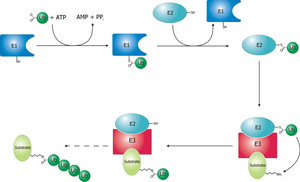
filedesc Schematic diagram of the ubiquitylati...

filedesc Schematic diagram of the ubiquitylation system. Created by Roger B. Dodd (Photo credit: Wikipedia)


Current Noteworthy Work

Nassif M and Hetz C.  Autophagy impairment: a crossroad between neurodegeneration and tauopathies.  BMC Biology 2012; 10:78. http://www.biomedcentral.com/1741-7007/10/78

Impairment of protein degradation pathways such as autophagy is emerging as a consistent and transversal pathological phenomenon in neurodegenerative diseases, including Alzheimer´s, Huntington´s, and Parkinson´s disease. Genetic inactivation of autophagy in mice has demonstrated a key role of the pathway in maintaining protein homeostasis in the brain, triggering massive neuronal loss and the accumulation of abnormal protein inclusions.  A paper in Molecular Neurodegeneration from Abeliovich´s group now suggests a role for phosphorylation of Tau and the activation of glycogen synthase kinase 3β (GSK3β) in driving neurodegeneration in autophagy-deficient neurons. We discuss the implications of this study for understanding the factors driving neurofibrillary tangle formation in Alzheimer´s disease and tauopathies.

Cajee UF, Hull R and Ntwasa M. Modification by Ubiquitin-Like Proteins: Significance in Apoptosis and Autophagy Pathways. Int. J. Mol. Sci. 2012, 13, 11804-11831; doi:10.3390/ijms130911804

Ubiquitin-like proteins (Ubls) confer diverse functions on their target proteins. The modified proteins are involved in various biological processes, including DNA replication, signal transduction, cell cycle control, embryogenesis, cytoskeletal regulation,
metabolism, stress response, homeostasis and mRNA processing. Modifiers such as SUMO, ATG12, ISG15, FAT10, URM1, and UFM have been shown to modify proteins thus conferring functions related to programmed cell death, autophagy and regulation of
the immune system. Putative modifiers such as Domain With No Name (DWNN) have been identified in recent times but not fully characterized. In this review, we focus on cellular processes involving human Ubls and their targets.

Aloy P. Shaping the future of interactome networks. (A report of the third Interactome Networks Conference, Hinxton, UK, 29 August-1 September 2007). Genome Biology 2007; 8:316 (doi:10.1186/gb-2007-8-10-316)

Complex systems are often networked, and biology is no exception. Following on from the genome sequencing projects,
experiments show that proteins in living organisms are highly connected, which helps to explain how such great complexity
can be achieved by a comparatively small set of gene products. At a recent conference on interactome networks held outside
Cambridge, UK, the most recent advances in research on cellular networks were discussed. This year’s conference focused on
identifying the strengths and weaknesses of currently resolved interaction networks and the techniques used to determine
them – reflecting the fact that the field of mapping interaction networks is maturing.

Peroutka RJ, Orcutt SJ, Strickler JE, and Butt TR. SUMO Fusion Technology for Enhanced Protein Expression and Purification in Prokaryotes and Eukaryotes. Chapter 2. in T.C. Evans, M.-Q. Xu (eds.), Heterologous Gene Expression in E. coli, Methods in Molecular Biology 705:15-29. DOI 10.1007/978-1-61737-967-3_2, © Springer Science+Business Media, LLC 2011

The preparation of sufficient amounts of high-quality protein samples is the major bottleneck for structural proteomics. The use of recombinant proteins has increased significantly during the past decades. The most commonly used host, Escherichia coli, presents many challenges including protein misfolding, protein degradation, and low solubility. A novel SUMO fusion technology appears to enhance protein expression and solubility (www.lifesensors.com). Efficient removal of the SUMO tag by SUMO protease in vitro facilitates the generation of target protein with a native N-terminus. In addition to its physiological relevance in eukaryotes, SUMO can be used as a powerful biotechnology tool for enhanced functional protein expression in prokaryotes and eukaryotes.

Juang YC, Landry MC, et al. OTUB1 Co-opts Lys48-Linked Ubiquitin Recognition to Suppress E2 Enzyme Function. Molecular Cell 2012; 45: 384–397. DOI 10.1016/j.molcel.2012.01.011

Ubiquitylation entails the concerted action of E1, E2, and E3 enzymes. We recently reported that OTUB1, a deubiquitylase, inhibits the DNA damage response independently of its isopeptidase activity. OTUB1 does so by blocking ubiquitin transfer by UBC13, the cognate E2 enzyme for RNF168. OTUB1 also inhibits E2s of the UBE2D and UBE2E families. Here we elucidate the structural mechanism by which OTUB1 binds E2s to inhibit ubiquitin transfer. OTUB1 recognizes ubiquitin-charged E2s through contacts with both donor ubiquitin and the E2 enzyme. Surprisingly, free ubiquitin associates with the canonical distal ubiquitin-binding site on OTUB1 to promote formation of the inhibited E2 complex. Lys48 of donor ubiquitin lies near the OTUB1 catalytic site and the C terminus of free ubiquitin, a configuration that mimics the products of Lys48-linked ubiquitin chain cleavage. OTUB1 therefore co-opts Lys48-linked ubiquitin chain recognition to suppress ubiquitin conjugation and the DNA damage response.

Hunter T. The Age of Crosstalk: Phosphorylation, Ubiquitination, and Beyond. Molecular Cell  2007; 28:730-738. DOI 10.1016/ j.molcel.2007.11.019.

Crosstalk between different types of posttranslational modification is an emerging theme in eukaryotic biology. Particularly prominent are the multiple connections between phosphorylation and ubiquitination, which act either positively or negatively in both directions to regulate these processes.

Tu Y, Chen C, et al. The Ubiquitin Proteasome Pathway (UPP) in the regulation of cell cycle control and DNA damage repair and its implication in tumorigenesis. Int J Clin Exp Pathol 2012;5(8):726-738. www.ijcep.com /ISSN:1936-2625/IJCEP1208018

Accumulated evidence supports that the ubiquitin proteasome pathway (UPP) plays a crucial role in protein
metabolism implicated in the regulation of many biological processes such as cell cycle control, DNA damage
response, apoptosis, and so on. Therefore, alterations for the ubiquitin proteasome signaling or functional impairments
for the ubiquitin proteasome components are involved in the etiology of many diseases, particularly in cancer
development.The authors discuss the ubiquitin proteasome pathway in the regulation of cell cycle control and DNA
damage response, the relevance for the altered regulation of these signaling pathways in tumorigenesis, and finally
assess and summarize the advancement for targeting the ubiquitin proteasome pathway in cancer therapy.

Cebollero E , Reggiori F  and Kraft C.  Ribophagy: Regulated Degradation of Protein Production Factories. Int J Cell Biol. 2012; 2012: 182834. doi:  10.1155/2012/182834 (online).

During autophagy, cytosol, protein aggregates, and organelles are sequestered into double-membrane vesicles called autophagosomes and delivered to the lysosome/vacuole for breakdown and recycling of their basic components. In all eukaryotes this pathway is important for adaptation to stress conditions such as nutrient deprivation, as well as to regulate intracellular homeostasis by adjusting organelle number and clearing damaged structures. For a long time, starvation-induced autophagy has been viewed as a nonselective transport pathway; however, recent studies have revealed that autophagy is able to selectively engulf specific structures, ranging from proteins to entire organelles. In this paper, we discuss recent findings on the mechanisms and physiological implications of two selective types of autophagy: ribophagy, the specific degradation of ribosomes, and reticulophagy, the selective elimination of portions of the ER.

Lee JH, Yu WH,…, Nixon RA.  Lysosomal Proteolysis and Autophagy Require Presenilin 1 and Are Disrupted by Alzheimer-Related PS1 Mutations. Cell 2010; 141, 1146–1158. DOI 10.1016/j.cell.2010.05.008.

Macroautophagy is a lysosomal degradative pathway essential for neuron survival. Here, we show that macroautophagy requires the Alzheimer’s disease (AD)-related protein presenilin-1 (PS1). In PS1 null blastocysts, neurons from mice hypomorphic for PS1 or
conditionally depleted of PS1, substrate proteolysis and autophagosome clearance during macroautophagy are prevented as a result of a selective impairment of autolysosome acidification and cathepsin activation. These deficits are caused by failed PS1-dependent
targeting of the v-ATPase V0a1 subunit to lysosomes. N-glycosylation of the V0a1 subunit, essential for its efficient ER-to-lysosome delivery, requires the selective binding of PS1 holoprotein to the unglycosylated subunit and the  sec61alpha/ oligosaccharyltransferase complex. PS1 mutations causing early-onset AD produce a similar lysosomal/autophagy phenotype in
fibroblasts from AD patients. PS1 is therefore essential for v-ATPase targeting to lysosomes, lysosome acidification, and proteolysis during autophagy. Defective lysosomal proteolysis represents a basis for pathogenic protein accumulations and neuronal cell death in AD and suggests previously unidentified therapeutic targets.

Pohl C and Jentsch S. Midbody ring disposal by autophagy is a post-abscission event of cytokinesis. nature cell biology 2009; 11 (1): 65-70.  DOI: 10.1038/ncb1813.

At the end of cytokinesis, the dividing cells are connected by an intercellular bridge, containing the midbody along with a single,
densely ubiquitylated, circular structure called the midbody ring (MR). Recent studies revealed that the MR serves as a target
site for membrane delivery and as a physical barrier between the prospective daughter cells. The MR materializes in telophase,
localizes to the intercellular bridge during cytokinesis, and moves asymmetrically into one cell after abscission. Daughter
cells rarely accumulate MRs of previous divisions, but how these large structures finally disappear remains unknown.
Here, we show that MRs are discarded by autophagy, which involves their sequestration into autophagosomes and delivery to
lysosomes for degradation. Notably, autophagy factors, such as the ubiquitin adaptor p62 and the ubiquitin-related protein Atg8 , associate with the MR during abscission, suggesting that autophagy is coupled to cytokinesis. Moreover, MRs accumulate in cells of patients with lysosomal storage disorders, indicating that defective MR disposal is characteristic of these diseases. Thus our findings suggest that autophagy has a broader role than previously assumed, and that cell renovation by clearing from superfluous large macromolecular assemblies, such as MRs, is an important autophagic function.


Hanai JI, Cao P, Tanksale P, Imamura S, et al. The muscle-specific ubiquitin ligase atrogin-1/MAFbx mediates statin-induced muscle toxicity. The Journal of Clinical Investigation  2007; 117(12):3930-3951.    http://www.jci.org

Statins inhibit HMG-CoA reductase, a key enzyme in cholesterol synthesis, and are widely used to treat hypercholesterolemia.
These drugs can lead to a number of side effects in muscle, including muscle fiber breakdown; however, the mechanisms of muscle injury by statins are poorly understood. We report that lovastatin induced the expression of atrogin-1, a key gene involved in skeletal muscle atrophy, in humans with statin myopathy, in zebrafish embryos, and in vitro in murine skeletal muscle cells. In cultured mouse myotubes, atrogin-1 induction following lovastatin treatment was accompanied by distinct morphological changes, largely absent in
atrogin-1 null cells. In zebrafish embryos, lovastatin promoted muscle fiber damage, an effect that was closely mimicked by knockdown of zebrafish HMG-CoA reductase. Moreover, atrogin-1 knockdown in zebrafish embryos prevented lovastatin-induced muscle injury. Finally, overexpression of PGC-1α, a transcriptional coactivator that induces mitochondrial biogenesis and protects against the development of muscle atrophy, dramatically prevented lovastatin-induced muscle damage and abrogated atrogin-1 induction both in fish and in cultured mouse myotubes. Collectively, our human, animal, and in vitro findings shed light on the molecular mechanism of statin-induced myopathy and suggest that atrogin-1 may be a critical mediator of the muscle
damage induced by statins.

Inami Y, Waguri S, Sakamoto A, Kouno T, et al.  Persistent activation of Nrf2 through p62 in hepatocellular carcinoma cells. J. Cell Biol. 2011; 193(2): 275–284. http://www.jcb.org/cgi/doi/10.1083/jcb.201102031

Macroautophagy (hereafter referred to as autophagy) is a cellular degradation system in which cytoplasmic components, including
organelles, are sequestered by double membrane structures called autophagosomes and the sequestered materials are
degraded by lysosomal hydrolases for supply of amino acids and for cellular homeostasis. Although autophagy has generally been considered nonselective, recent studies have shed light on another indispensable role for basal autophagy in cellular homeostasis, which is mediated by selective degradation of a specific substrate(s).  p62 is a ubiquitously expressed cellular protein that is conserved in metazoa but not in plants and fungi, and recently it has been known as one of the selective substrates for autophagy.
This protein is localized at the autophagosome formation site  and directly interacts with LC3, an autophagosome localizing protein . Subsequently, the p62 is incorporated into the autophagosome and then degraded. Therefore, impaired autophagy is accompanied by
accumulation of p62 followed by the formation of p62 and ubiquitinated protein aggregates because of the nature of both self- oligomerization and ubiquitin binding of p62.


Kima K, Khayrutdinov BI, Leeb CK, et al. Solution structure of the Zβ domain of human DNA-dependent activator of IFN-regulatory factors and its binding modes to B- and Z-DNAs. PNAS 2010; Early Edition ∣ pp 6. www.pnas.org/cgi/doi/10.1073/pnas.1014898107

The DNA-dependent activator of IFN-regulatory factors (DAI), also known as DLM-1/ZBP1, initiates an innate immune response by binding to foreign DNAs in the cytosol. For full activation of the immune response, three DNA binding domains at the N terminus are required: two Z-DNA binding domains (ZBDs), Zα and Zβ, and an adjacent putative B-DNA binding domain. The crystal structure of the Zβ domain of human DAI (hZβDAI) in complex with Z-DNA revealed structural features distinct from other known Z-DNA binding proteins, and it was classified as a group II ZBD. To gain structural insights into the DNA binding mechanism of hZβDAI, the solution structure of the free hZβDAI was solved, and its bindings to B- and Z-DNAs were analyzed by NMR spectroscopy. Compared to the Z-DNA–bound structure, the conformation of free hZβDAI has notable alterations in the α3 recognition helix, the “wing,” and Y145, which are critical in Z-DNA recognition. Unlike some other Zα domains, hZβDAI appears to have conformational flexibility, and structural adaptation is required for Z-DNA binding. Chemical-shift perturbation experiments revealed that hZβDAI also binds weakly to B-DNA via a different binding mode. The C-terminal domain of DAI is reported to undergo a conformational change on B-DNA binding; thus, it is possible that these changes are correlated. During the innate immune response, hZβDAI is likely to play an active role in binding to DNAs in both B and Z conformations in the recognition of foreign DNAs.


Epicrisis

This extensive review leaves little left unopened. We have seen the central role that the UPS system plays in normal organelle proteolysis in concert with autophagy. Impaired ubiquitination occurs from aging, and/or toxins, under oxidative stress involving E3s or DUBs.

This leads to altered gene transcripton, altered protein trafficking, and plays a role in neurodegenative disease, muscle malfunction, and cancer as well.

English: A cartoon representation of a lysine ...

English: A cartoon representation of a lysine 48-linked diubiquitin molecule. The two ubiquitin chains are shown as green cartoons with each chain labelled. The components of the linkage are indicated and shown as orange sticks. Image was created using PyMOL from PDB id 1aar. (Photo credit: Wikipedia)

Different forms of protein ubiquitylation

Different forms of protein ubiquitylation (Photo credit: Wikipedia)

Related articles

Read Full Post »

Reporter: Aviva Lev-Ari, PhD, RN

October 24, 2012

Sequoia Supercomputer Pumps Up Heart Research

Tiffany Trader


Cardioid code imageThe Cardioid code developed by a team of Livermore and IBM scientists divides the heart into a large number of manageable pieces, or subdomains. The development team used two approaches, called Voronoi (left) and grid (right), to break the enormous computing challenge into much smaller individual tasks.Source: LLNLThe world’s fastest computer has created the fastest computer simulation of the human heart.

The Lawrence Livermore National Laboratory‘s Sequoia supercomputer, a TOP500 chart topper, was built to handle top secret nuclear weapons simulations, but before it goes behind the classified curtain, it is pumping out sophisticated cardiac simulations.

Earlier this month, Sequoia, which currently ranks number one on the TOP500 list of the world’s fastest computer systems, received a 2012 Breakthrough Award from Popular Mechanics magazine. Now the magazine is reporting on Sequoia’s ground-breaking heart simulations.

Clocking in at 16.32 sustained petaflops (20 PF peak), Sequoia is taking modeling and simulation to new heights, enabling researchers to capture greater complexity in a shorter time frame. With this advanced capability, LLNL scientists have been able to simulate the human heart down to the cellular level and use the resulting model to predict how the organ will respond to different drug compounds.

Principal investigator Dave Richards couldn’t resist a little showboating: “Other labs are working on similar models for many body systems, including the heart,” he told Popular Mechanics. “But Lawrence Livermore’s model has one major advantage: It runs on Sequoia, the most powerful supercomputer in the world and a recent PM Breakthrough Award winner.”

The simulations were made possible by an advanced modeling program, calledCardioid, that was developed by a team of scientists from LLNL and the IBM T. J. Watson Research Center. The highly scalable code simulates the electrophysiology of the heart. It works by breaking down the heart into units; the smaller the unit, the more accurate the model.

Until now the best modeling programs could achieve 0.2 mm in each direction. Cardioid can get down to 0.1 mm. Where previously researchers could run the simulations for tens of heartbeats, Cardioid executing on Sequoia captures thousands of heartbeats.

Scientists are seeing 300-fold speedups. It used to take 45 minutes to simulate just one beat, but now researchers can simulate an hour of heart activity – several thousand heartbeats – in seven hours.

With the less sophisticated codes, it was impossible to model the heart’s response to a drug or perform an electrocardiogram trace for a particular heart disorder. That kind of testing requires longer run times, which just wasn’t possible before Cardioid.

The model could potentially test a range of drugs and devices like pacemakers to examine their affect on the heart, paving the way for safer and more effective human testing. But it is especially suited to studying arrhythmia, a disorder of the heart in which the organ does not pump blood efficiently. Arrhythmias can lead to congestive heart failure, an inability of the heart to supply sufficient blood flow to meet the needs of the body.

There are various types of medications that disrupt cardiac rhythms. Even those designed to prevent arrhythmias can be harmful to some patients, and researchers do not yet fully understand exactly what causes these negative side effects. Cardioid will enable LLNL scientists to examine heart function as an anti-arrhythmia drug enters the bloodstream. They’ll be able to identify when drug levels are highest and when they drop off.

“Observing the full range of effects produced by a particular drug takes many hours,” noted computational scientist Art Mirin of LLNL. “With Cardioid, heart simulations over this timeframe are now possible for the first time.”

The Livermore–IBM team is also working on a mechanical model that simulates the contraction of the heart and pumping of blood. The electrical and mechanical simulations will be allowed to interact with each other, adding more realism to the heart model.

It’s not entirely clear why a national defense lab took on this heart simulation work. Fred Streitz, director of the Institute for Scientific Computing Research at LLNL, would say only that “there are legitimate national security implications for understanding how drugs affect human organs,” adding that the project stretched the limits of supercomputing in a manner that is relatable to the American people.

The cardiac modeling work was performed during the system’s “shakedown period” – the set-up and testing phase – and the team had to hurry to finish in the allotted time span. Once Sequoia becomes classified, it’s unclear if it will still be available to run Cardioid and other unclassified programs, although access will certainly be more difficult since the machine’s principle mission is running nuclear weapons codes.

Sequoia is an integral part of the NNSA’s Advanced Simulation and Computing (ASC) program, which is run by partner organizations LLNL, Los Alamos National Laboratory and Sandia National Laboratories. With 96 racks, 98,304 compute nodes, 1.6 million cores, and 1.6 petabytes of memory, Sequoia will help the NNSA fulfill its mission to “maintain and enhance the safety, security, reliability and performance of the U.S. nuclear weapons stockpile without nuclear testing.”

The Cardioid simulation has been named as a finalist in the 2012 Gordon Bell Prize competition, awarded each year to recognize supercomputing’s crowning achievements. Research partners, Streitz, Richards, and Mirin, will reveal their results at the Supercomputing Conference in Salt Lake City, Utah, on November 13.

SOURCE:

http://www.hpcwire.com/hpcwire/2012-10-24/sequoia_supercomputer_pumps_up_heart_research.html

Human heart simulated on world’s fastest supercomputer

October 29, 2012 | By 

Before the U.S. government cloaks the operations of the Sequoia supercomputer for classified nuclear arms analyses, scientists have tapped the world’s fastest computer for an unprecedented simulation of the human heart. With the aid of the supercomputer, according to an HPC Wire report, researchers have been able to model the heart down to the cellular level and simulate how the organ would react to certain drugs.

The supercomputer has been performing simulations of the heart with a modeling program, Cardioid, from researchers at Lawrence Livermore National Laboratory (LLNL) and IBM’s T.J. Watson Research Center, HPC Wire reported. The computing power and capabilities of the modeling program have advanced heart modeling from simulations of a handful of heartbeats to thousands. It enables researchers to get closer to the real thing as they boost their capacity to capture activities in the heart at finer levels of detail and complexity.

Drugmakers have spent billions of dollars on studies to improve their understanding of the heart, and computer simulations offer a way for researchers to gauge the potential impacts of a compound before testing it in living subjects. Researchers believe that Cardioid could help them understand the activity and potential side effects of drugs for an inefficient heart-pumping condition known as an arrhythmia, which can trigger congestive heart failure and other medical problems.

“Observing the full range of effects produced by a particular drug takes many hours,” Art Mirin, an LLNL computational scientist, noted, as quoted by HPC Wire. “With Cardioid, heart simulations over this timeframe are now possible for the first time.”

SOURCE:

http://www.fiercebiotechit.com/story/human-heart-simulated-worlds-fastest-supercomputer/2012-10-29


Read Full Post »

Cancer Genomics – Leading the Way by Cancer Genomics Program at UC Santa Cruz

Reporter: Aviva Lev-Ari, PhD, RN

UPDATED ON 6/17/2013

UCSC Designing Social Network-type Model for Analyzing Cancer Data

June 17, 2013
 

NEW YORK (GenomeWeb News) – Seeking to make the masses of cancer sequence data that is being generated more useful for researchers, investigators at University of California, Santa Cruz, plan to use a $3.5 million grant from the National Cancer Institute to create a new platform for organizing and accessing these data.

The UCSC group plans to create a method for making the raw sequence information in repositories like the university’s Cancer Genomics Hub more useful for investigators seeking to make clinical predictions about how cancer mutations respond to drugs, for example.

The aim of the project will be to develop a new database called the Biomedical Evidence Graph, or BMEG, which will use a graph database structure, like Facebook does, to enable swift access to complex and interconnected datasets.

Principal investigator Joshua Stuart, a UCSC associate professor of engineering, likened the difficulty for many investigators of using raw sequence data to average computer users trying to work directly with binary code.

“Your web browser doesn’t understand zeros and ones. There are layers and layers of software programs between that and what you see on a web page. We need to do the same thing for DNA sequences to reach the higher levels of interpretation needed for scientific discovery,” Stuart said in a statement.

Stuart said that a platform similar to what social networks like Facebook use offer a “natural way” to represent data from tumor samples based upon the connections between their molecular profiles.

CGHub, which launched last year to house data from The Cancer Genome Atlas consortium and similar projects, holds thousands of genome sequences from individual patients and access is highly controlled and limited to approved projects.

BMEG, however, will not require such security because it will host higher-level data from analyses of the raw genome sequencing. This will enable a broader group of investigators to use and analyze these datasets without having to download massive files to their computers.

“TCGA researchers have built a lot of great tools for data analysis, and we need to get those installed in the BMEG so the rest of the world can engage in that higher level analysis,” Stuard said. “The idea is to build a shared knowledge base and create a playground where lots of researchers can interact, test their algorithms, and compare results.”

The BMEG will be located with the CGHub servers at the San Diego Supercomputer Center, and investigators will be able to run their analyses as apps on the BMEG, UCSC said.

SOURCE

http://www.genomeweb.com//node/1242591?hq_e=el&hq_m=1590835&hq_l=3&hq_v=e1df6f3681

Five3, maker of cancer genomics software, takes off from UCSC labs

October 29, 2012 | By 

A group from the University of California, Santa Cruz (UCSC), has embarked on a new project to commercialize cancer genomics software through a new startup company called Five3 Genomics. The company has attracted a few of the biggest names in genomics and biotech to serve as advisers.

Recent software applications have enabled scientists to analyze cancer genomic data to track molecular changes in cells, spotting some of the triggers that cause tumors to grow. Led by CEO and co-founder Steve Benz, Five3 Genomics plans to sell its cancer genomics software to healthcare companies and pharmaceutical firms. Drugmakers could use the company’s software to discover new targets for cancer therapies, while hospitals could use the technology to put patients on existing drugs that home in on the molecular triggers of their cancer.

Benz and his fellow co-founders have a crack group of bioinformatics and biotech experts to help guide their startup. They’ve called on their UCSC mentors, David Haussler and Joshua Stuart. Haussler’s lab has participated in some of the most pioneering efforts in genomics over the past couple of decades, including the Human Genome Project that raced to decode an entire human genome. Also, Dr. Patrick Soon-Shiong, who has made billions of dollars in biotech, is serving as a scientific adviser.

“We’re working with academic collaborators to build out the platform and starting conversations with pharmaceutical companies and insurance companies,” Benz, who recently wrapped up his doctorate at UCSC, told the Santa Cruz Sentinel newspaper. “It’s a great opportunity to be able to take this technology and commercialize it so that it can be used to help patients.”

SOURCE:

http://www.fiercebiotechit.com/story/five3-maker-cancer-genomics-software-takes-ucsc-labs/2012-10-29

UCSC grad students launch cancer genomics company in Santa Cruz

By Sentinel Staff Report

Santa Cruz Sentinel

Posted:   10/24/2012 04:11:37 PM PDT

SANTA CRUZ — The co-founders of Five3 Genomics, a new biotech company based in Santa Cruz, are former graduate students in the Baskin School of Engineering at UC Santa Cruz, where they helped develop innovative cancer genomics software.

Their company, which has signed a license agreement with UCSC, offers software and services for cancer researchers, pharmaceutical companies, and health-care organizations. Its goal is to provide the data processing and analysis required for personalized cancer therapy, in which treatments are matched to the specific genetic aberrations found in an individual patient’s cancer cells.

“We’re working with academic collaborators to build out the platform and starting conversations with pharmaceutical companies and insurance companies,” said CEO Steve Benz, who completed his doctorate in bioinformatics this year. “It’s a great opportunity to be able to take this technology and commercialize it so that it can be used to help patients.”

In addition to Benz, the co-founders of Five3 Genomics include Chief Technical Officer Zachary Sanborn and Chief Scientific Officer Charles Vaske. All three of them worked as graduate students with UC Santa Cruz bioinformatics experts David Haussler and Joshua Stuart, who are doing pioneering work in the field of cancer genomics. Haussler, a professor of biomolecular engineering and Howard Hughes Medical Institute investigator, said that Benz, Sanborn, and Vaske were “brilliant gradstudents.”

“Working at UCSC they were exposed to the cutting edge in computational genomics,” Haussler said. “They played a key role in developing our cancer genomics program.”

Vaske, who earned his doctorate in 2009, and Benz were lead developers of a software program from Stuart’s lab called Paradigm. Stuart, a professor of biomolecular engineering, has been a close collaborator with Haussler on cancer genomics projects, including The Cancer Genome Atlas funded by the National Institutes of Health and two cancer research “Dream Teams” funded by Stand Up To Cancer and other organizations.

Paradigm, one of the core technologies for Five3 Genomics, is used to understand which molecular pathways are affected by the genetic changes in a patient’s cancer cells. This information can be used in a clinical setting to guide therapeutic decisions and by pharmaceutical companies to identify new targets for drug development.

“On the pharmaceutical side, we can provide indications for new uses for drugs that are already out there, as well as identify targets for new drugs,” Benz said.

Sanborn, who will finish his doctorate this year, worked in Haussler’s lab on a DNA sequence analysis program called BamBam, which is used to identify the genetic changes in cancer cells. Sanborn and Benz also contributed to the development of the UCSC Cancer Genome Browser in Haussler’s lab.

The scientific advisers for Five3 Genomics include Haussler and Stuart, as well as Dr. Patrick Soon-Shiong, a surgeon, medical researcher, and biotechnology entrepreneur, and Dr. Margaret Tempero, deputy director and director of research programs at the UCSC Helen Diller Family Comprehensive Cancer Center.

“It’s particularly gratifying to see this UCSC research transition to a commercial product, so these cutting-edge techniques can begin to benefit the public as quickly as possible,” said Bruce Margon, vice chancellor for research at UCSC.

SOURCE:

http://www.santacruzsentinel.com/localnews/ci_21846767

Biotech billionaire’s supercomputer cuts cancer analysis to 47 seconds

October 4, 2012 | By 

Dr. Patrick Soon-Shiong, a surgeon and biotech mogul, has spotlighted a supercomputer-based system and network to rapidly transfer and analyze cancer genetic data in mere seconds as opposed to the weeks or months of previous approaches. The supercomputer crunches genetic data from a tumor with results on abnormalities in 47 seconds, and the high-speed fiber-optic network Soon-Shiong has championed transfers samples in shy of 18 seconds, according to an announcement Wednesday.

Soon-Shiong’s L.A.-based company NantHealth has joined forces with Verizon, Intel, Hewlett-Packard, Blue Shield of California and other players to advance a national system to enable rapid sharing of genomic information among cancer doctors, aiding physicians in making the right call on treatments for patients based on the characteristics of their tumors. It’s a big deal because lack of such information contributes to misdiagnoses.

Via NantHealth and other vehicles, Soon-Shiong has worked on integrating a variety of digital technologies to revolutionize scientific research and medicine. As Reuters reports, he’s poured more than $400 million from his estimated fortune of more than $7 billion into building the fiber-optic network. His nonprofit is working on connecting sequencing centers, medical research hubs and hospitals to the network to create an infrastructure for these groups to share data from big science endeavors such as The Cancer Genome Atlas.

Soon-Shiong built most of his fortune with the sales of Abraxis BioScience to Celgene ($CELG) in 2010 for $2.9 billion and APP Pharmaceuticals to Germany’s Fresenius two years earlier for billions. (Abraxis developed Celgene’s anti-cancer drug Abraxane.) He’s now reportedly the richest man in Los Angeles, where he owns a piece of the NBA’s Los Angeles Lakers and has been connected with efforts to bring an NFL franchise back to the city.

SOURCE:

http://www.fiercebiotechit.com/story/biotech-billionaires-supercomputer-cuts-cancer-analysis-47-seconds/2012-10-04

Bringing genomic medicine into clinical practice by placing supercomputers in the hands of physicians at point of care

WASHINGTON—-Dr. Patrick Soon-Shiong, Chairman of NantHealth and the Chan Soon-Shiong Institute for Advanced Health announced a revolutionary advance in cancer treatment that will reduce the necessary time for analysis from 8 weeks to an unprecedented 47 seconds per patient. For the first time, oncologists can compare virtually every known treatment option on the basis of genetics, risk, and cost – before treatment begins, not after.

Alongside Senator Bill Frist, MD, of the Bipartisan Policy Center and J. Michael McGinnis, MD of the Institute of Medicine and Doctors Helping Doctors, Dr. Soon-Shiong reported on the successful real-time analysis of the largest collection of tumor genomes in the United States, of 6,017 cancer genomes from 3,022 patients with 19 different cancer types, in the record time of 69 hours. Genomic analysis has taken an average of 8 to 10 weeks to complete. That delay leads not just to less efficient, more costly care, but sometimes to the wrong course of treatment altogether – and, thus, higher mortality. “Incorrect care that leads to loss of life is unacceptable,” said Dr. Soon-Shiong, “and from today onward, it will no longer be necessary.”

Oncologists currently prescribe a course of cancer treatment based on the anatomical location of the cancer. Yet a patient with breast cancer could benefit from the positive results discovered from a patient with lung cancer, if the underlying molecular pathways involving both cancers were the same. The inability to utilize genomic sequencing to guide treatment has been due to the inability to convert a patient’s DNA into actionable information in actionable time.

But by collaborating with Blue Shield of California, the Chan Soon-Shiong Institute for Advanced Health, the National LambdaRail, Doctors Helping Doctors, Verizon, Bank of America, AT&T, Intel, and Hewlett-Packard, NantHealth has built a supercomputer-based high-speed fiber network that will not only provide thousands of oncology practices with life-saving information, but do so in exponentially faster time. “Doctors will finally be able to provide higher-quality treatment in a dramatically more efficient, effective, and affordable manner,” says Dr. Soon-Shiong.

“It currently takes approximately two months and tens of thousands of dollars to perform the sequencing and analysis of a single cancer patient’s genome. We can’t reduce the cost of care and improve outcomes in cancer if we don’t have the capability to know the right treatment for the right patient before treatment begins. We needed a national supercomputing infrastructure that brings genomic medicine into clinical practice. By placing supercomputers in the hands of physicians, that need is now a reality,” said Dr. Soon-Shiong.

Accuracy will also be radically improved. Among NantHealth’s partner oncologists utilizing its fact-based software platform (eviti – http://www.eviti.com) the number of cases where doctors have made incorrect recommendations has dropped from 32% to virtually zero“With this patient-centered, fact-based approach to collecting and analyzing data, millions more patients will have a better chance of beating cancer,” Dr. Soon-Shiong emphasized. Over the past 12 months over 2,000 oncology practices representing 8,000 oncologists and nurses have successfully installed and utilized this fact-based (eviti) software platform, positively impacting thousands of cancer patients lives.

THE RESEARCH PROCESS

In July 2012, NantWorks’ scientific team (Five3 Genomics – http://www.Five3Genomics.com) collected 6,017 tumor and germline exomes, representing 3,022 cancer patients with 19 unique cancer types. The sample collection included: 999 breast cancer; 1.156 kidney and bladder cancer; 985 gastrointestinal cancer; 744 brain cancer; 745 lung cancer; 670 ovarian, uterine and cervical caner; 436 head and neck cancer; 177 prostate cancer; 70 melanoma cancer; and 35 blood tumor samples.

This massive amount of data totaled 96,512 gigabytes and was successfully transferred and processed via our supercomputing, high-speed fiber netowrk in 69 hours. This overall transfer speed represents a stream of one sample every 17.4 seconds, and the supercomputer analysis for genetic and protein alterations between the tumor and normal sample completed every 47 seconds per patient.

Given the nation’s estimated cancer rate of 1.8 million new cases in 2012, this infrastructure now brings the capability of analyzing 5,000 patients per day.

He noted that medicine has continued to make dramatic advances, but the delivery of medicine has lagged far behind, stuck in a world where information is trapped, patterns get missed, and patients suffer. Powered by advanced supercomputing technology and wireless mobile health, the network has become one of country’s fastest genomic platforms with connectivity to over 8000 practicing oncologists and nurses. “This revolution in healthcare is long overdue – converging 21st century medical science with 21st century technology,” Dr. Soon-Shiong concluded.

Through NantHealth’s genomic analysis network, doctors can finally make cancer treatment more efficient, more effective, and more affordable for more patients. And with public and private partners equally as committed to reshaping the way doctors deliver healthcare and treat cancer, there are no limits to what this health information breakthrough might lead to for all cancer patients.

A network of major cancer centers including those at City of Hope, John Wayne Cancer Institute, and Methodist Hospital in Houston, have contributed to this collection of over 6,000 genomes, which also included the entire collection of exome samples from The Cancer Genome Atlas.

About NantWorks

The core mission of NantWorks, LLC, is to converge a wide range of technologies to accelerate scientific discoveries, enhance research and improve healthcare treatment and outcomes. Founded and led by Dr. Patrick Soon-Shiong, NantWorks is building an integrated fact-based, genomically-informed, personalized approach to the delivery of care and the development of next generation diagnostics and therapeutics. For more information, see http://www.nantworks.com.

Contacts

NantWorks, LLC
Jen Hodson
310.405.7539
jhodson@nantworks.com

SOURCE:

http://www.fiercebiotechit.com/press-releases/launch-nations-fastest-genomic-supercomputing-platform-reduces-cancer-genom

Research cache in works

by Emily Gersema – Jan. 28, 2012 01:29 PM

The Republic | azcentral.com

Supercomputing supports genetic, cancer research in Arizona: compare patient cases to tailor care

A massive building near Phoenix Sky Harbor International Airport is now home to a supercomputer that one day is expected to store clinical-research reports, medical records and the decoded genetic makeup of millions of patients and their cancers.

Having this vault of medical information is a dream for doctors, specialists and researchers who are trying to tailor medical care to the individual needs of their cancer patients. Despite huge advances in research and medicine, doctors have no one-stop shop for up-to-date clinical-trial results, other medical cases and genetic maps of their patients.

With access to this massive library, cancer doctors potentially could specify with precision the dosages of medicines, chemotherapy and radiation therapy for their patients by comparing those cases to those of other patients with similar genetic makeups and similar cancers.

In effect, this supercomputer could be a gateway to personalized medical care, as its creator, billionaire scientist Patrick Soon-Shiong, envisions it. His staff at CSS Institute for Advanced Health in California, which owns the project, and supporters of personalized medicine said the vault also could help reduce doctor error in the diagnosis and treatment of patients.

Better treatments and more accurate diagnoses could help lower the cost of medical care and enable patients to get treatment at home instead of at the hospital, they said.

The presence of the supercomputer could put Phoenix on the cutting edge of medical research and treatment. The path to these potential medical breakthroughs, however, is fraught with privacy concerns. Patient advocates fear the project could open a pathway to exploitation if patient information isn’t confidential. They want assurances that the institute would require patient consent to obtain records, the records would be kept private and the project would be under close regulatory oversight.

The engine: A supercomputer

While the word “supercomputer” evokes an image of a giant computer, the machine located in the Phoenix storage site resembles a large herd of smaller computers that have been linked to one another.

“It used to be a one big monolithic thing,” said Anoj Willy, of the CSS Institute. “But now what we’re able to do is take lots of general-purpose computers and band them to create a big, superprocessing engine.”

The CSS Institute project, which involves equipment and products from Hewlett-Packard and Intel Corp., is in its earliest stages, Willy said. The institute plans to focus data collection on genetic research and cancer.

The endeavor would create at least 50 jobs with annual salaries of about $75,000. Soon-Shiong also would invest at least $200 million in development, construction, machinery and equipment to build the electronic-data-storage facility.

The institute is in the process of signing agreements with various institutions that have been sequencing genomes — the maps of DNA strands that make up living things.

Bob Peirce, senior vice president of Soon-Shiong’s Nant Holdings in Los Angeles, said that while scientists have made strides in human genomic sequencing, the maps of these sequences are scattered at different sites around the world, depending on which institution decoded them.

Researchers have not yet decoded the whole human genome, Peirce said. They have each decoded snippets.

The lack of a complete map and a one-stop shop for the genomic information for doctors and researchers impedes their progress in personalized medical treatment, he said.

This means genomic sequences currently aren’t “relevant to the average patient or the average doctor,” Peirce said.

Creating a complete map of the human genome would require a massive, computerized data center, like the one being built by Soon-Shiong in Phoenix — to decode what scientists estimate are 3 billion pairs of DNA strands.

In addition, Soon-Shiong wants the supercomputer and its data centers, including one planned for Scottsdale, to aid in mapping the genetic makeup of individual patients’ cancerous cells.

“We need to be in a position where we can analyze the genome of the cancer and determine the genome of the host patient (to treat them),” Peirce said.

Peirce offered assurances that the data would be highly secured to guard against hackers. The data could be accessed by people who are deemed “authorized users,” he said, which could include the patients themselves who are trying to monitor their conditions and care. The institute has been working with a “chief technical officer,” who worked at the Pentagon, on securing the data centers and information they contain, Peirce said. He declined to name the officer.

The concern: Privacy

Edward Abrahams, president of the Personalized Medicine Coalition, a non-profit group in Washington, D.C., said researchers are on the cusp of creating medical care tailored to each person’s needs, and they can reach that with a supercomputer.

But they are faced with several challenges. Chief among them is patient privacy, he said.

The federal Health Insurance Portability and Accountability Act guards patient privacy, but its reach is limited. Patient information is kept private within the realm of health care — at the doctor’s office, the hospital and with the patient’s insurance company, said Bob Gellman, a privacy expert in Washington, D.C.

“An institution like this (CSS Institute) is not covered by health-privacy laws,” Gellman said. “It’s not a health-care provider. It’s not an insurer.”

Gellman said a worst-case scenario would involve a patient sharing genetic information with a company or organization, only to have it misused or exploited by another party.

“The information when it sat in the health-care system — when it sat in your doctor’s office — had all kinds of protections,” Gellman said. “But if you give the information with your consent to somebody else, then someone could just go to that third party and say, ‘Give me all your information.’ “

In that scenario, the records and data are out of the patient’s control and are unprotected.

Individuals trying to solve the health problems of their autistic children, for example, may want to participate.

“That may be a perfectly rational decision.” Gellman said. “But for people who don’t know or aren’t aware of that (institution’s) motivation … you might agree to give this information, and 20 years later, you’re in litigation with somebody or you’re applying for a job and it comes up.”


Read more: http://www.azcentral.com/arizonarepublic/business/articles/2012/01/26/20120126medical-research-cache-in-works.html?nclick_check=1#ixzz2AjfTgdsf

http://www.azcentral.com/arizonarepublic/business/articles/2012/01/26/20120126medical-research-cache-in-works.html

Cancer Research targets human genome breathrough with supercomputer

Platform Computing LSF integrated with genetic sequencing technology

By Antony Savvas | Published: 16:04 GMT, 09 December 11 | Computerworld UK


A new supercomputing workload management system is aiding scientific work by Cancer Research and the Cambridge Research Institute’s human genome project.

Cancer Research UK is using Platform Computing’s LSF software to improve cluster efficiency and reduce IT costs on the CRI genome research.

By integrating Platform LSF with a new advanced genetic sequencing platform, the institute has already gained greater insight into genetic cancer mutations that will lead to scientific breakthroughs in the areas of cancer diagnosis, treatment and prevention, said Cancer Research.

“Platform LSF gives us the means to produce and manage a wealth of gene sequencing data that we could only have dreamed about previously,” said Peter Maccallum, head of IT and scientific computing at Cancer Research UK in Cambridge. “This has already lead to tangible published work looking into breast cancer, and is proving its worth in helping our researchers further the understanding of how cancers progress.”

Prior to implementing Platform LSF, CRI’s 21 research groups employed separate computing resources in separate locations, which drove up server costs, reduced utilisation rates and increased server maintenance.

By orchestrating workloads and managing CRI’s research applications in a single data centre, Platform LSF has enabled CRI to save approximately £50,000 by removing hardware and maintenance duplication across each location, while increasing the amount of data processed. Cancer Research says the institute can now direct more computing resources directly to its research teams “to use in a more timely and cost efficient manner”.

CRI has already saved the equivalent in man hours of one full-time employee by integrating Platform LSF, says Cancer Research. As a result, the institute plans to scale Platform LSF internally by adding more servers as compute requirements increase.

CRI is also collaborating with Platform Computing to architecturally support cross-organisation systems for HPC (high performance computing) clusters, that will enable CRI to collaborate with other research organisations in order to meet the growing demand for genomics research.

In other recent medical technology news, scientists at Cambridge University are developing a computer system that can read vast amounts of scientific literature, make rapid connections between facts and develop hypotheses. Cambridge University said most biomedical scientists cannot keep on top of reading all of the publications in their field, let alone an adjacent field. As a first step to solving the problem, Cambridge has developed its CRAB text-mining tool.

SOURCES:

http://www.cio.co.uk/news/3324141/cancer-research-targets-human-genome-breathrough-with-supercomputer/


Read Full Post »

Older Posts »
