Feeds:
Posts
Comments

Posts Tagged ‘stem cells’

What’s new with CRISPR-Cas9?

Larry H. Bernstein, MD, FCAP, Curator

LPBI

Where is the most promising avenue to success in Pharmaceuticals with CRISPR-Cas9?

Author: Larry H. Bernstein, MD, FCAP

2.2.18

2.2.18   CRISPR-Cas9 and Regenerative Medicine, Volume 2 (Volume Two: Latest in Genomics Methodologies for Therapeutics: Gene Editing, NGS and BioInformatics, Simulations and the Genome Ontology), Part 2: CRISPR for Gene Editing and DNA Repair

http://pharmaceuticalintelligence.com/2015/09/01/where-is-the-most-promising-avenue-to-success-in-pharmaceuticals-with-crispr-cas9/

There has been a rapid development of methods for genetic engineering that is based on an initial work on bacterial resistance to viral invasion.  The engineering called RNA inhibition (RNAi) has gone through several stages leading to a more rapid and more specific application with minimal error.

It is a different issue to consider this application with respect to bacterial, viral, fungal, or parasitic invasion than it would be for complex human metabolic conditions and human cancer. The difference is that humans and multi-organ species are well differentiated systems with organ specific genome translation to function.

I would expect to see the use of genomic alteration as most promising in the near term for the enormous battle against antimicrobial, antifungal, and antiparasitic drug resistance.  This could well be expected to be a long-term battle because of the invading organisms innate propensity to develop resistance.

A CRISPR/Cas system mediates bacterial innate immune evasion and virulence

Timothy R. Sampson, Sunil D. Saroj, Anna C. Llewellyn, Yih-Ling Tzeng David S. Weiss

Affiliations, Contributions, Corresponding author

Nature 497, 254–257 (09 May 2013),  http://dx.doi.org:/10.1038/nature12048

CRISPR/Cas (clustered regularly interspaced palindromic repeats/CRISPR-associated) systems are a bacterial defence against invading foreign nucleic acids derived from bacteriophages or exogenous plasmids1234. These systems use an array of small CRISPR RNAs (crRNAs) consisting of repetitive sequences flanking unique spacers to recognize their targets, and conserved Cas proteins to mediate target degradation5678. Recent studies have suggested that these systems may have broader functions in bacterial physiology, and it is unknown if they regulate expression of endogenous genes910. Here we demonstrate that the Cas protein Cas9 of Francisella novicida uses a unique, small, CRISPR/Cas-associated RNA (scaRNA) to repress an endogenous transcript encoding a bacterial lipoprotein. As bacterial lipoproteins trigger a proinflammatory innate immune response aimed at combating pathogens1112, CRISPR/Cas-mediated repression of bacterial lipoprotein expression is critical for F. novicida to dampen this host response and promote virulence. Because Cas9 proteins are highly enriched in pathogenic and commensal bacteria, our work indicates that CRISPR/Cas-mediated gene regulation may broadly contribute to the regulation of endogenous bacterial genes, particularly during the interaction of such bacteria with eukaryotic hosts.

http://www.nature.com/nature/journal/v497/n7448/carousel/nature12048-f1.2.jpg

http://www.nature.com/nature/journal/v497/n7448/carousel/nature12048-f2.2.jpg

http://www.nature.com/nature/journal/v497/n7448/carousel/nature12048-f4.2.jpg

Zhang lab unlocks crystal structure of new CRISPR/Cas9 genome editing tool

Paul Goldsmith,  2015 Aug

In a paper published today in Cell researchers from the Broad Institute and University of Tokyo revealed the crystal structure of theStaphylococcus aureus Cas9 complex (SaCas9)—a highly efficient enzyme that overcomes one of the primary challenges to in vivo mammalian genome editing.

First identified as a potential genome-editing tool by Broad Institute core member Feng Zhang and his colleagues (and published by Zhang lab in April 2015), SaCas9 is expected to expand scientists’ ability to edit genomes in vivo. This new structural study will help researchers refine and further engineer this promising tool to accelerate genomic research and bring the technology closer to use in the treatment of human genetic disease.

“SaCas9 is the latest addition to our Cas9 toolbox, and the crystal shows us its blueprint,” said co-senior author Feng Zhang, who in addition to his Broad role, is also an investigator at the McGovern Institute for Brain Research, and an assistant professor at MIT.

The engineered CRISPR-Cas9 system adapts a naturally-occurring system that bacteria use as a defense mechanism against viral infection. The Zhang lab first harnessed this system as an effective genome-editing tool in mammalian cells using the Cas9 enzymes from Streptococcus thermophilus (StCas9) andStreptococcus pyogenes (SpCas9). Now, Zhang and colleagues have detailed the molecular structure of SaCas9, providing scientists with a high-resolution map of this enzyme. By comparing the crystal structure of SaCas9 to the crystal structure of the more commonly-used SpCas9 (published by the Zhang lab in February 2014), the team was able to focus on aspects important to Cas9 function— potentially paving the way to further develop the experimental and therapeutic potential of the CRISPR-Cas9 system.

Paper cited: Nishimasu H et al. “Crystal Structure of Staphylococcus aureus Cas9.” Cell, http://dx.doi.org:/10.1016/j.cell.2015.08.007

Advances in CRISPR-Cas9 genome engineering: lessons learned from RNA interference

Rodolphe Barrangou1,†, Amanda Birmingham2,†, Stefan Wiemann3, Roderick L. Beijersbergen4, Veit Hornung5 and Anja van Brabant Smith2
Nucleic Acids Research, 2015 Mar 23.  http:dx.doi.org:/10.1093/nar/gkv226

RNAi and CRISPR-Cas9 have many clear similarities. Indeed, the mechanisms of both use small RNAs with an on-target specificity of ∼18–20 nt. Both methods have been extensively reviewed recently (3–5) so we only highlight their main features here. RNAi operates by piggybacking on the endogenous eukaryotic pathway for microRNA-based gene regulation (Figure 1A). microRNAs (miRNAs) are small, ∼22-nt-long molecules that cause cleavage, degradation and/or translational repression of RNAs with adequate complementarity to them(6).RNAi reagentsfor research aim to exploit the cleavage pathway using perfect complementarity to their targets to produce robust downregulation of only the intended target gene. The CRISPRCas9 system, on the other hand, originates from the bacterial CRISPR-Cas system, which provides adaptive immunity against invading genetic elements (7). Generally, CRISPR-Cas systems provide DNA-encoded (7), RNAmediated (8), DNA- (9) or RNA-targeting(10) sequencespecific targeting. Cas9 is the signature protein for Type II CRISPR-Cas systems (11).

…….

Both RNAi and CRISPR-Cas9 have experienced significant milestones in their technological development, as highlighted in Figure 2 (7–14,16–22,24–51) (highlighted topics have been detailed in recent reviews (2,4,52–58)). The CRISPR-Cas9 milestones to date have mimicked a compressed version of those for RNAi, underlining the practical benefit of leveraging similarities to this well-trodden research path. While RNAi has already influenced many advances in the CRISPR-Cas9 field, other applications of CRISPR-Cas9 have not yet been attained but will likely continue to be inspired by the corresponding advances in the RNAi field (Table 1). Of particular interest are the potential parallels in efficiency, specificity, screening and in vivo/therapeutic applications, which we discuss further below.

Figure2. Timeline of milestones for RNAi and CRISPR-Cas9. Milestones in the RNAi field are noted above the line and milestones in the CRISPR-Cas9 field are noted below the line. These milestones have been covered in depth in recent reviews (2,4,52–29).
Table 1. Summary of improvements in the CRISPR-Cas9 field that can be anticipated by corresponding RNAi advances

more….  see at  http://pharmaceuticalintelligence.com/2015/09/01/where-is-the-most-promising-avenue-to-success-in-pharmaceuticals-with-crispr-cas9/

Early Diagnosis

http://pharmaceuticalintelligence.com/tag/research/

Reporter: Stephen J. Williams, Ph.D.

This post contains a curation of all Early Diagnosis posts on this site as well as a curation of the Early Detection Research Network.

Highlights of the accomplishments of the Early Detection Research Network.

A brief list of major EDRN-developed assays that have been adapted for clinical use is described in the table below:

Detection/Biomarker Assay Discovery Refine/Adapt for Clin Use Clinical Validation Clinical Translation
Blood proPSA FDA approved
Urine PCA3 FDA approved
OVA1™ for Ovarian Cancer FDA approved
ROMA Algorithm for CA125 and HE4 Tests for Pelvic Mass Malignancies FDA approved
Blood/DCP and AFP-L3 for Hepatocellular Carcinoma FDA approved
Blood GP73 Together with AFP-L3 used  for monitoring cirrhotic patients for HCC in China
MiPS (Mi Prostate Score Urine test), Multiplex analysis of T2-ERG gene fusion, PCA3 and serum PSA In CLIA Lab
FISH to detect T2S:Erg fusion for Prostate Cancer In CLIA Lab
GSTP1 methylation for repeat biopsies in prostate cancer In CLIA Lab
Mitochondrial deletion for detection of prostate cancer In CLIA Lab
Somalogic 12-marker panel for Lung Cancer In CLIA Lab
80-gene panel for Lung Cancer In CLIA Lab
Vimentin Methylation Marker for Colon Cancer In CLIA Lab
Galectin-3 ligand for detection of adenomas and colon cancer In CLIA Lab
8-gene panel for Barrett’s Esophagus In CLIA Lab
SOPs for Blood (Serum, Plasma), Urine, Stool Frequently used by biomarker research community
EDRN Pre/Validation Specimen Reference Sets (specimens from well characterized and matched cases and controls from specific disease spectra) Frequently used by biomarker research community

Since its inception in 1999 EDRN has achieved several key milestones, summarized below:

1998 through 2000: Inception and Inauguration of EDRN

……

The European Society for Gene and Cell Therapy and the Spanish Society for Gene and Cell Therapy Collaborative Congress 2013

HUMAN GENE THERAPY XX:A2–A172 (XXXX 2013) ª Mary Ann Liebert, Inc.   http://dx.doi.org:/10.1089/hum.2013.2513

Bases of gene therapy in leukemias
C. Bonini Experimental Hematology Unit, Division of Regenerative Medicine, Gene Therapy and Stem Cells,
Program of Immunology, Gene Therapy and Bio-Immunotherapy of Cancer, Leukemia Unit, San Raffaele Scientific Institute, Milan, Italy

Hematopoietic stem cell transplantation from a healthy donor (allo-HSCT) represents the most potent form of cellular adoptive immunotherapy to treat leukemias. During the past decades, allo-HSCT has developed from being an experimental therapy offered to patients with end-stage leukemia into a wellestablished therapeutic option for patients affected by several hematological malignancies. In allo-HSCT, donor T cells are double edge-swords, highly potent against residual tumor cells, but potentially highly toxic, and responsible of the graft versus host disease (GVHD), a major clinical complication of transplantation. Gene transfer technologies can improve the safety (ie: use of suicide genes), and the efficacy (ie: TCR gene transfer, TCR gene editing, CAR gene transfer) of adoptive T-cell therapy in the context of allo-HSCT. The encouraging preclinical and clinical results obtained in these years with genetically engineered T lymphocytes in the treatment of leukemias will be discussed.

Recent developments in gene therapy of solid tumors
R. Hernandez Division of Gene Therapy and Hepatology,
Universidad de Navarra, Madrid, Spain

Treatment of cancer has been one of the earliest and most frequent applications of gene therapy in experimental medicine. However, this indication entails unique difficulties, especially in the case of solid tumors. Pioneering strategies were aimed to reverse the malignant phenotype or to induce the death of cancer cells by transferring tumor-suppressor genes, inhibiting oncogenes or selectively expressing toxic genes. Proof of principle has been generated in abundant pre-clinical models and in humans. However, clinical efficacy is hampered by the diffi- culty in delivering therapeutic genes to a significant proportion of cancer cells in solid tumors using the currently available vectors. Therefore, current work aims to extend the effect to non-transduced cancer cells. This can be achieved by local or systemic expression of secreted proteins with the ability to block key pathways involved in angiogenesis, cell proliferation and invasion. Recent advances in gene therapy vectors allow sustained expression of transgenes and make these strategies feasible in the clinic. Another attractive option is the stimulation of immune reactions against cancer cells using gene transfer. In this case the therapeutic genes are antigens, cytokines or proteins capable of blocking the immunosuppressive microenvironment of tumors. Adaptation of replication-competent (oncolytic) viruses as vectors for these genes combines the intrinsic immunogenicity of viruses, their capacity to amplify gene expression and their direct lytic effect on cancer cells. In general, the ‘‘immunogene therapy’’ strategies offer the opportunity to destroy primary and distant lesions, especially if they are combined with other treatments that reduce tumor burden. More importantly, vaccination against cancer cells could prevent cancer relapse. Finally, gene and cell therapies are joining forces to improve the efficacy of adoptive cell therapy. Ex vivo gene transfer of natural or chimeric tumor-specific receptors in T lymphocytes enhances the cytotoxic potency of the cells and is expanding the applicability of this promising approach to different tumor types.

Production of vector and genetically modified stem cells
A. Galy and E. de Barbeyrac Genethon, 1
bis rue de l’Internationale, F91002 Evry, France

Hematopoietic gene therapy is currently used to treat a variety of genetic disorders of the blood and immune systems, or metabolic diseases, with promising results. The approach currently relies on the infusion of patient-autologous hematopoietic stem cells that have been subjected to gene-transfer ex vivo with a viral vector of clinical grade, during a short period of culture. The manufacture of such advanced therapy medicinal products for clinical trials should comply with the clinical trials EC directive. Requirements for gene and cell-based medicinal products both apply, therefore a high level of complexity is involved in the development of such products. Hematopoietic cell and gene therapy has many potential indications based on encouraging preclinical and early-phase clinical results. However, somatic cell and gene therapy medicinal products are still in early phases of development and no such product has been registered yet. The standardization of the manufacturing process and characterization of the drug product (i.e. geneticallymodified cells) are important but present challenges. Many aspects, and in particular limited available patient material, complicate a precise characterization of the drug product. On the other hand, clinical-grade gene transfer retroviral vectors are well-characterized starting materials that are described in a pharmacopeia monograph and can be robustly manufactured in successive campaigns of production under GMP conditions. Examples obtained in preclinical and ongoing clinical studies to treat Wiskott Aldrich Syndrome illustrate the vast differences in the level of characterization between the viral vector starting material and the drug product used in hematopoietic gene therapy. Characterization of the products and standardization/ validation of the manufacturing process are the next challenges in the field.

Gammaretro and lentiviral vectors for the gene therapy of X-linked chronic Granulomatous disease
M. Grez Institute for Biomedical Research,
Georg-Speyer-Haus, Frankfurt, Germany

Gene therapy of inherited diseases has provided convincing evidence of therapeutic benefits for many treated patients. In particular, treatment of primary severe congenital immunodeficiencies by gene transfer into hematopoietic stem cells (HSCs) has proven in some cases to be as beneficial as allogeneic stem cell transplantation, the treatment of choice for these diseases if HLA-matched donors are available. We conducted a Phase I clinical trial aimed at the correction of X-CGD, a rare inherited immunodeficiency characterized by severe and life threatening bacterial and fungal infections as well as widespread tissue granuloma formation. Phagocytic cells of CGD patients fail to kill ingested microbes due to a defect in the nicotinamide dinucleotide phosphate (NADPH) oxidase complex resulting in compromised antimicrobial activity. In this clinical trial we used a gammaretroviral vector with strong enhancer-promoter sequences in the long terminal repeats (LTRs) to genetically modify CD34 + cells in two X-CGD patients. After successful reconstitution of phagocytic functions, both patients experienced a clonal outgrowth of gene marked cells caused by vector-mediated insertional activation of proto-oncogenes leading to the development of myeloid malignancies. Moreover, functional correction of gene transduced cells decreased with time, due to epigenetic inactivation of the vector promoter within the LTR, resulting in the accumulation of nonfunctional gene transduced cells. The understanding of the molecular basis of insertional mutagenesis has motivated the development of advanced integrating vectors with equal therapeutic potency but reduced genotoxicity. In particular, the deletion of the enhancer elements within the viral LTR U3 regions has significantly contributed to the reduction of genotoxic effects associated with LTR-driven gammaretroviral vectors. Moreover, the use of tissue specific promoters, which are inactive in stem/progenitor cells but active in terminally differentiated cells, should further increase the safety level of SIN vectors. Based on the aforementioned advancements, we developed SIN gammaretroviral and lentiviral vectors for the safe and effective gene therapy of X-linked CGD. We combined the SIN configuration with an internal promoter, with preferential expression in myeloid cells. However, the introduction of a new vector into the clinic demands a series of sophisticated pre-clinical studies, which are quite challenging in particular within an academic environment. In this presentation we will report on the comprehensive and thorough preclinical efficacy and safety testing of both SIN vectors assessing dosage requirements, therapeutic efficacy, resistance to transgene silencing and genotoxic potential.

Progress and challenges of in vivo gene transfer with AAV vectors
F. Mingozzi1,2 1 Genethon, Evry, France; 2
University Pierre and Marie Curie, Paris, France

In vivo gene replacement for the treatment of an inherited disease is one of the most compelling concepts in modern medicine. Adeno-associated virus (AAV) vectors have been extensively used for this purpose and have shown therapeutic efficacy in a range of animal models. The translation of preclinical results to the clinic was initially slow, but early studies in humans helped defining the roadblocks to successful therapeutic gene transfer in vivo, which are highly depending on the target tissue, the route of vector delivery, and the specific disease. The development of strategies to overcome these limitations allowed achieving long-term expression of donated genes at therapeutic levels in patients with inherited retinal disorders, hemophilia B and other diseases. The recent market approval of Glybera, an AAV vector-based gene therapy product for lipoprotein lipase deficiency, further con- firmed the potential of AAV vectors as a therapeutic platform, raising hopes for the development of in vivo gene transfer treatments for many additional inherited and acquired diseases.

Glybera approval: a road map for advanced therapies in the orphan space
H. Petry
uniQure, Amsterdam, Netherlands

Glybera, is a gene therapy product based on the use of recombinant adeno-associated virus for gene delivery. It is designed for patients with Lipoprotein Lipase Deficiency (LPLD). On November 2, 2012, the European Commission approved the marketing authorisation for Glybera as a treatment for LPLD, under exceptional circumstances, in all 27 EU member states. Glybera is intended to treat patients with lipoprotein lipase deficiency. LPLD is caused by errors in the gene that codes for the protein lipoprotein lipase (LPL). LPL has a central role in fat metabolism. Non-functional LPL can lead to pancreatitis attacks, the most sever phenotype of this disease. The presentation will cover a summary of the clinical development, as well as a summary of the regulatory process. In addition post approval commitments will be discussed and their importance to follow up on the long term safety and efficacy of the this gene therapy product.

Phase Ib/IIa, escalating dose, single blind, clinical trial to assess the safety of the intravenous administration of expanded allogeneic adipose-derived mesenchymal stem cells (eASCs) to refractory rheumatoid arthritis (RA) patients
L. Dorrego
Tigenix, Madrid, Spain

Advanced therapies are emerging and fast-growing biotechnology sector paves the way for new, highly promising treatment opportunities for European patients. TiGenix is a leading European cell therapy company a marketed product for cartilage repair, and a strong pipeline with advanced clinical stage allogeneic adult stem cell programs for the treatment of autoimmune and inflammatory diseases. TiGenix has developed an innovative trial design in the stem cell area for treating refractory rheumatoid arthritis (RA) using expanded allogeneic adipose-derived mesenchymal stem cells (eASCS). The multicenter, randomized, double blind, placebocontrolled Phase IIa trial enrolled 53 patients with active refractory rheumatoid arthritis (mean time since diagnosis 15 years), who failed to respond to at least two biologics (mean previous treatment with 3 or more disease-modifying antirheumatic drugs and 3 or more biologics). The study design was based on a threecohort dose-escalating protocol. For both the low and medium dose regimens 20 patients received active treatment versus 3 patients on placebo; for the high dose regimen 6 patients received active treatment versus 1 on placebo. Patients were dosed at day 1, 8, and 15 and were followed up monthly over a six-month period. Follow-up consisted of a detailed monthly workup of all patients measuring all pre-defined parameters. The aim was to evaluate the safety, tolerability and optimal dosing over the full 6 months of the trial, as well as exploring therapeutic activity. Twenty five Spanish sites participated in this clinical trial. Coordinating Investigator: Dr. Jose´ Marı´a Alvaro-Gracia

Induction of multi-, pluri- and totipotency
H.R. Scho¨ler
Department Cell and Developmental Biology, Max Planck Institute for Molecular Biomedicine, Muenster, 48149, Germany

The pluripotent and multipotent states of stem cells are governed by the expression of few, specific transcription factors forming a highly interconnected regulatory network with more numerous, widely expressed transcription factors. When the set of master transcription factors comprising Oct4, Sox2, Klf4, and Myc is expressed ectopically in somatic cells, this network organizes itself to support a pluripotent cell state. But when Oct4 is replaced by Brn4, another POU transcription factor, fibroblasts are converted into multipotent neural stem cells. These two transcription factors appear to play distinct but interdependent roles in remodelling gene expression by influencing the local chromatin status during reprogramming. Furthermore, structural analysis of Oct4 bound to DNA shows that the Oct4 linker—a region connecting the two POU domains of Oct4—is exposed to the surface, and we therefore postulate that it recruits key epigenetic players onto Oct4 target genes during reprogramming. The role of Oct4 in defining totipotency and inducing pluripotency during embryonic development remains unclear, however. We genetically eliminated maternal Oct4 using a Cre/ lox approach and found no effect on the establishment of totipotency, as shown by the generation of live pups. After complete inactivation of both maternal and zygotic Oct4 expression, the embryos still formed Oct4-GFP– and Nanog–expressing inner cell masses, albeit nonpluripotent, indicating that Oct4 is not a determinant for the pluripotent cell lineage separation. Interestingly, Oct4-deficient oocytes were able to reprogram fibroblasts into pluripotent cells. Our results indicate that, in contrast to its crucial role in the maintenance of pluripotency, maternal Oct4 is crucial for neither the establishment of totipotency in embryos, nor the induction of pluripotency in somatic cells using oocytes.

Reprogramming in vivo is possible and generates a new type of iPS
M. Serrano
Spanish National Cancer Research Center (CNIO), Madrid, Spain

Reprogramming into induced pluripotent stem cells (iPSCs) has opened new therapeutic opportunities, however, little is known about the possibility of in vivo reprogramming within tissues. We have generated transgenic mice with inducible expression of the four Yamanaka factors. Interestingly, transitory induction of the reprogramming factors results in teratomas emerging from multiple organs, thereby, implying that full reprogramming can occur in vivo. Analyses of the stomach, intestine, pancreas and kidney reveal groups of dedifferentiated cells that express the pluripotency marker NANOG, indicative of in situ reprogramming. Also, by bone marrow transplantation, we demonstrate that hematopoietic cells can also be reprogrammed in vivo. Remarkably, induced reprogrammable mice also present circulating iPSCs in the blood. These in vivo-generated iPSCs can be purified and grown (in the absence of further induction of the reprogramming factors). Strikingly, at the transcriptome level, the in vivo-generated iPSCs are closer to embryonic stem cells (ESCs) than to standard in vitro-generated iPSCs. Moreover, in vivo-iPSCs efficiently contribute to the trophectoderm lineage, suggesting that they achieve a more plastic or primitive state than ESCs. Finally, in vivo-iPSCs show an unprecedented capacity to form embryo-like structures upon intraperitoneal injection, including the three germ layers of the proper embryo and extraembryonic tissues, such as extraembryonic ectoderm and yolk sac-like with associated embryonic erythropoiesis. These capacities are absent in ESCs or in standard in vitro-iPSCs. In summary, in vivo-iPSCs represent a more primitive or plastic state than ESCs or in vitro-iPSCs. These discoveries could be relevant for future applications of reprogramming in regenerative medicine.

Sleeping Beauty transpsons for molecular medicine
J.C. Izpisua
Belmonte Salk Institute for Biological Studies, La Jolla, CA, USA

The development of gene-editing technologies in combination with the generation of patient-specific induced pluripotent stem cells (iPSCs) represents the merge of both the stem cell and gene therapy fields. Novel gene-editing technologies in combination with iPSCs derivation methodologies open the possibility not only for direct gene therapy but also for the replenishment of loss and/or defective cell populations with gene-corrected cells. We will present recent examples developed in our laboratory to illustrate some of the different approaches being undertaken in these fields.

The Sleeping Beauty transposon system for molecular medicine
Z. Ivics
Paul Ehrlich Institute, Langen, Germany

Non-viral gene transfer approaches typically result in only short-lived transgene expression in primary cells, due to the lack of nuclear maintenance of the vector over time and cell division. The development of efficient and safe non-viral vectors armed with an integrating feature would thus greatly facilitate clinical gene therapy studies. The latest generation transposon technology based on the Sleeping Beauty (SB) transposon may potentially overcome some of these limitations. SB was recently shown to provide efficient stable gene transfer and sustained transgene expression in primary cell types, including human hematopoietic progenitors, mesenchymal stem cells, muscle stem/progenitor cells (myoblasts), iPSCs and T cells. The first-in-man clinical trial has been launched to use redirected T cells engineered with SB for gene therapy of B cell lymphoma. In addition, an EU FP7 project was recently initiated with the aim of replacing degenerated retinal pigment epithelial cells with cells that have been genetically modified by SB gene vectors ex vivo to produce an anti-angiogenic and neuroprotective factor for the potential treatment of patients suffering from age-related macular degeneration.

X-reactivation impacts human iPSC differentiation potential towards blood
N-B. Woods
Lund’s Stem Cell Center, Lund University, Sweden

To determine novel key regulators that direct ES/iPS cell differentiation to hematopoietic lineages, we compared the gene expression profiles of multiple iPS cell lines with differential blood forming capacity. We generated multiple iPS cell lines from amniotic fluid derived mesenchymal stromal cells (AFiPS) which differentiated towards hematopoietic lineages using our standardized and highly reproducible differentiation protocol. Of the 9 AF-iPS cell lines derived from an individual female patient, the average efficiency of CD45 + hematopoietic cells was 14.2 + / – 9% (range 1.6 to 26.3%). To elucidate the possible reasons for this diversity in efficiency, we grouped the AF-iPS cell lines on the basis of lowest and highest blood differentiation capacity and compared their gene expression pro- files by microarray. We found very few changes above 1.5-fold, but interestingly, among the 11 genes that were over-expressed in the AF-iPSC lines with poor blood differentiation efficiency, 10 were located on X chromosome, and the remaining one reported to be involved in Notch signalling. A combination of cumulative sum analysis and the location of differentially expressed genes on the X chromosome identified putative regions of reactivation at multiple, but distinct locations. The possibility of X-reactivation in these female lines was reinforced further where lower levels of XIST were seen in AF-iPSC lines shown to have low blood forming potential, however only half of the iPS cell lines with high blood differentiation capacity showed normal XIST expression when compared to the amniotic fluid mesenchymal starting cell material. To determine whether the block in differentiation was tissue specific we tested the differentiation capacity of the AF-iPSC lines towards neuronal lineages. Intriguingly, we found neural cell differentiation was not hampered within all lines with poor blood potential suggesting that the over-expression of genes as a consequence of X-reactivation can impart a specific negative effect on differentiation towards the blood lineages from pluripotency stage, while not having an effect on neuronal cell development. To further define the source of this block, we have begun working knocking down the overexpressed genes on X chromosome in lines with poor blood differentiation potential to determine whether the efficiency can be increased (or fully rescued) with one, or a combination of these 11 candidate genes. These results have implications for the identification and selection of female iPS lines suitable for therapeutic purposes. I will also discuss the identification of three new factors for improving blood lineage potential of iPS cells lines.

DLL4/Notch1 signaling is required for endothelial-tohematopoietic transition in a hESC model of human embryonic hematopoiesis
V. Ayllon1 , V. Ramos-Mejı´a1 , P.J. Real1 , O. Navarro-Montero1 , T. Romero1 , C. Bueno1,2, P. Menendez1,2,3 1
GENyO, Centre for Genomics & Oncological Research: Pfizer/ University of Granada / Andalusian Government, Granada, Spain; 2 Josep Carreras Leukemia Research Institute and Cell Therapy Program of University of Barcelona, Barcelona, Spain; 3 ICREA: Institucio´ Catalana de Reserca i Estudis Avanc¸ats, Catalunya Government, Spain

Notch signaling is essential for definitive embryonic hematopoiesis, but little is known on how Notch regulates hematopoiesis in early human embryonic development. Here we analyzed the contribution of Notch signaling to human embryonic hematopoietic differentiation using hESCs. We determined the expression of Notch receptors and ligands during hematopoietic differentiation of hESCs and found that expression of the Notch ligand DLL4 strongly parallels the emergence of bipotent hematoendothelial progenitors (HEPs). Co-cultures of hESCs with OP9-DLL4 cells demonstrated that DLL4 has a dual role in hematopoietic differentiation: during HEPs specification untimely DLL4-mediated Notch activation is detrimental for HEPs generation; however, once HEPs are specified, activation of Notch by DLL4 enhances hematopoietic commitment of these HEPs. We determined by flow cytometry that in hESCs differentiation, DLL4 is only expressed in a subpopulation of HEPs. Gene expression profiling of DLL4high and DLL4low/- HEPs showed that these two subpopulations already exhibit a distinct transcriptome program which determines their differentiation commitment: DLL4high HEPs are highly enriched in endothelial genes, while DLL4low/- HEPs display a clear hematopoietic transcriptional signature. Single cell cloning analysis of these two populations confirmed that DLL4high HEPs are enriched in committed endothelial precursors, while DLL4low/- HEPs contain committed hematopoietic progenitors. Confocal microscopy analysis of whole embryoid bodies revealed that DLL4high HEPs are located in close proximity to DLL4low/- HEPs, and at the base of clusters of CD45 + cells forming structures that resemble AGM hematopoietic clusters found in mouse embryos. Moreover, we found active Notch1 in clusters of emerging CD45 + cells. Overall, our data indicate that DLL4 regulates blood formation from hESCs, with DLL4high HEPs enriched in endothelial potential, whereas DLL4low/- HEPs are transcriptional and functionally committed to hematopoietic development. We propose a model for human embryonic hematopoiesis in which DLL4low/- HEPs receive a signal from DLL4high HEPs to activate Notch1, to undergo an endothelial-to-hematopoietic transition and differentiate into CD45 + hematopoietic cells, resembling what occurs in mouse AGM hematopoietic clusters.

Researchers Investigate Importance of STAT1 Phosphorylation in NK Cells

“If we can stop CDK8 from inactivating STAT1 in NK cells, we could stimulate tumor surveillance and thus possibly have a new handle on treating cancer, harnessing the body’s own weapons against malignant cells.” –Dr. Eva Maria Putz.


http://www.regenerativemedicine.net/NewsletterArchives.asp?qEmpID=8422&qCat=WN

http://www.regenerativemedicine.net/images/Newsletter/uvmpic%20rs.jpg

Mammals contain cells whose primary function is to kill other cells in the body. The so-called Natural Killer (NK) cells are highly important in defending our bodies against viruses or even cancer. Scientists at the University of Veterinary Medicine, Vienna (Vetmeduni Vienna) provide evidence that NK cell activity can be influenced by phosphorylating a protein (STAT1) in NK cells. The results, which could be of immediate therapeutic relevance, were recently published.

Since its discovery in the early 1990s, the protein STAT1 (Signal Transducer and Activator of Transcription 1) has been found to be central in passing signals across immune cells, ensuring that our bodies react quickly and appropriately to threats from viruses or other pathogens. Animals without STAT1 are also prone to develop cancer, suggesting that STAT1 is somehow involved in protection against malignant cells. The STAT1 protein is known to be phosphorylated on at least two positions: phosphorylation of a particular tyrosine (tyr-701) is required for the protein to enter the cell nucleus (where it exerts its effects), while subsequent phosphorylation of a serine residue alters the way it interacts with other proteins, thereby affecting its function.

Natural Killer (NK) cells are among the first cells to respond to infections by viruses or to attack malignant cells when tumors develop. When they detect cells to be targeted, they produce a number of proteins, such as granzyme B and perforin, which enter infected cells and destroy them from within. Clearly, the lethal activity must be tightly controlled to prevent NK cells from running wild and destroying healthy cells or tissues. How is this done?

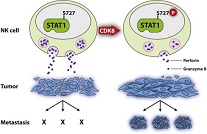
Eva Maria Putz and colleagues at the Institute of Pharmacology and Toxicology of the University of Veterinary Medicine, Vienna (Vetmeduni) have now investigated the importance of STAT1 phosphorylation in NK cells. The researchers found that when a particular serine residue (ser-727) in the STAT1 protein is mutated, NK cells produce far higher amounts of granzyme B and perforin and are far more effective at killing a wide range of tumor cells. Mice with the correspondingly mutated Stat1 gene are far less likely to develop melanoma, leukemia, or metastasizing breast cancer. On the other hand, when the same serine residue is phosphorylated, the NK cells are less able to kill infected or cancerous cells.

The Vetmeduni researchers have accumulated a body of evidence to suggest that the cyclin-dependent kinase CDK8 phosphorylates STAT1 on serine 727. Surprisingly, this phosphorylation does not require prior phosphorylation of the activating tyrosine residue, at least in NK cells. Instead, it seems to represent a way in which the lethal activity of the NK cells is kept in check. Putz is keen to note the potential significance of the finding. As she says, “If we can stop CDK8 from inactivating STAT1 in NK cells, we could stimulate tumor surveillance and thus possibly have a new handle on treating cancer, harnessing the body’s own weapons against malignant cells.”

Illustration: Inhibition of NK cells by phosphorylation of STAT1-Serin 727 mediated by CDK8. –Eva-Maria Putz/Vetmeduni Vienna.

Read more…

University of Veterinary Medicine, Vienna News Release (09/06/13)

Important Step in Development of Artificial Nerves via Regenerative Medicine  

The new cells successfully regenerated axons and extended their growth farther across nerve cell gaps toward damaged nerve stumps, with healthier vascularity.

http://www.regenerativemedicine.net/NewsletterArchives.asp?qEmpID=277&qCat=WN

http://www.regenerativemedicine.net/images/Newsletter/schwann%20cell2.jpg

A study carried out by researchers at the Kyoto University School of Medicine has shown that when transplanted bone marrow cells (BMCs) containing adult stem cells are protected by a 15mm silicon tube and nourished with bio-engineered materials, they successfully help regenerate damaged nerves. The research may provide an important step in developing artificial nerves.

“We focused on the vascular and neurochemical environment within the tube,” said Tomoyuki Yamakawa, MD, the study’s lead author. “We thought that BMCs containing adult stem cells, with the potential to differentiate into bone, cartilage, fat, muscle, or neuronal cells, could survive by obtaining oxygen and nutrients, with the result that rates of cell differentiation and regeneration would improve.”

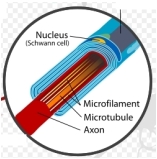
Nourished with bioengineered additives, such as growth factors and cell adhesion molecules, the BMCs after 24 weeks differentiated into cells with characteristics of Schwann cells – a variety of neural cell that provides the insulating myelin around the axons of peripheral nerve cells. The new cells successfully regenerated axons and extended their growth farther across nerve cell gaps toward damaged nerve stumps, with healthier vascularity.

“The differentiated cells, similar to Schwann cells, contributed significantly to the promotion of axon regeneration through the tube,” explained Yamakawa. “This success may be a further step in developing artificial nerves.”

Grafting self-donated (autologous) nerve cells to damaged nerves has been widely practiced and considered the “gold standard.” However, autologous cells for transplant are in limited supply. Allologous cells, donated by other individuals, require the host to take heavy immunosuppressant drugs.

Translating dosage compensation to trisomy 21

Authors: Jun Jiang, Yuanchun Jing, Gregory J. Cost, Jen-Chieh Chiang, Heather J. Kolpa, Allison M. Cotton, Dawn M. Carone, Benjamin R. Carone, David A. Shivak, Dmitry Y. Guschin, Jocelynn R. Pearl, Edward J. Rebar, Meg Byron, Philip D. Gregory, Carolyn J. Brown, Fyodor D. Urnov, Lisa L. Hall, & Jeanne B. Lawrence

Down’s syndrome is a common disorder with enormous medical and social costs, caused by trisomy for chromosome 21. We tested the concept that gene imbalance across an extra chromosome can be de facto corrected by manipulating a single gene, XIST (the X-inactivation gene). Using genome editing with zinc finger nucleases, we inserted a large, inducible XIST transgene into the DYRK1A locus on chromosome 21, in Down’s syndrome pluripotent stem cells. The XIST non-coding RNA coats chromosome 21 and triggers stable heterochromatin modifications, chromosome-wide transcriptional silencing and DNA methylation to form a ‘chromosome 21 Barr body’. This provides a model to study human chromosome inactivation and creates a system to investigate genomic expression changes and cellular pathologies of trisomy 21, free from genetic and epigenetic noise. Notably, deficits in proliferation and neural rosette formation are rapidly reversed upon silencing one chromosome 21. Successful trisomy silencing in vitro also surmounts the major first step towards potential development of ‘chromosome therapy’.

Source: Nature; (07/17/13) 

New article reviews latest advances in magnetic particle tracking in cell therapy

http://www.news-medical.net/news/20151027/New-article-reviews-latest-advances-in-magnetic-particle-tracking-in-cell-therapy.aspx

A new article published in Regenerative Medicine reviews the latest advances in magnetic particle tracking in cell therapy, a potentially groundbreaking strategy in disease treatment and regenerative medicine.

Cell therapy is one of the most promising avenues for regenerative medicine, however, its success is restricted by a number of limitations, such as inefficient delivery and retention of the therapeutic cells at the target organ, difficulties in monitoring the safety and efficacy of the therapy, in addition to issues obtaining and maintaining therapeutic cell phenotypes.

In a review by a group from the UCL Centre for Advanced Biomedical Imaging team (London, UK), emerging and established magnetic particle-based techniques for targeting, imaging and stimulating cells in vivo are discussed, in addition to potential benefits of their application in cell-based regenerative medicine therapies the clinic.

“The magnetic control of stem cells inside the body is a fascinating and promising concept for treatment of a vast range of diseases” commented Mark Lythgoe, director of the Centre for Advanced Biomedical Imaging at UCL. “Using microscopic nanomagnets we now have the potential to image, guide and activate therapeutic cells, combining therapy and diagnosis – theranostics – creating a novel type of dual imaging/therapy’

Commissioning Editor for Regenerative Medicine, Elena Conroy, added: “This timely review provides a much needed update on the different methods by which researchers can track cells with magnetic particles and how these can be used for cell therapy. I strongly believe that this will be of great use to cell biologists in both regenerative medicine and other research areas.”

Read Full Post »

Heart Stem Cells

Curator: Larry H. Bernstein, MD, FCAP


UPDATED on 5/22/2019

The Mount Sinai researchers believe Cdx2 placental cells offer several important advantages over other types of cells that have been studied in cardiovascular disorders. They not only express proteins that have the ability to generate all the organs in the body, they also have proteins that allow them to travel to injury sites. Plus, they don’t seem to cause a damaging immune response, they reported.

The team was able to isolate Cdx2 cells from full-term human placentas, too, raising the possibility of being able to harvest the treatment from an almost “limitless source” of placentas that would normally be discarded, said principal investigator Hina Chaudhry, M.D., director of cardiovascular regenerative medicine at the Icahn School, in a statement.

“These findings may also pave the way to regenerative therapy of other organs besides the heart,” Chaudhry added.

SOURCE

https://www.fiercebiotech.com/research/mount-sinai-researchers-isolate-placental-cells-regenerate-damaged-hearts-mice?mkt_tok=eyJpIjoiTnpjM05tRTJPRGxqTVdGbSIsInQiOiJvSmx2QTdwNFJqYk91UHBLamFidUIrR3NPR2RLT2JUY0VETW5xdkpTN1NVamZzMXRnSEFwbFwvU3ZXUitURCtpQjVGZTVqZk9POG9jVHRPNzFpOE4yTWlpb1Y1aHg4NFVhemdNZjBLNFRvQklueEE0bnV5VTZzbGtvS2FcL09NMjdSIn0%3D&mrkid=993697


Latest in Heart Stem Cell Debate

Given the right environment, cKit+ cells from the mouse heart can develop into new cardiac muscle, according to a study.

By Kerry Grens | October 26, 2015

http://www.the-scientist.com//?articles.view/articleNo/44341/title/Latest-in-Heart-Stem-Cell-Debate/

Cells in the heart expressing the marker cKit were once thought to be the key to cardiac regeneration. These cardiac precursors, researchers found, could proliferate—opening up the opportunity for a way to regrow an organ that until this century was thought incapable of regeneration.

But even as positive results shook out of an early stage clinical trial, a shadow moved in over cKit+ cells, with several labs producing data questioning their reparative powers. Skepticism culminated with a report in 2014 showing that cKit+ cells in mice very rarely produce new heart muscle cells, or cardiomyocytes. The story of cKit+ cells, said Joshua Hare of the University of Miami Miller School of Medicine, “is a very controversial one.”

In the latest development in the cKit+ saga, published this month (October 5) in PNAS, Hare’s team found that cKit+ cells readily become cardiac muscle cells in vitro, as long as the right cellular conditions are present. This could perhaps explain why other groups haven’t seen cKit+ cells becoming cardiomyocytes in vivo that often, he said. “It’s not that the cells don’t have the capacity [to differentiate], but they’re entering the heart at a time that’s nonpermissive for them to become cardiac myocytes.”

Specifically, the researchers found that if they interfered with bone morphogenetic protein signaling—crucial during the development of the heart and other tissues—mouse induced pluripotent stem cells (iPSCs) expressing KIT would become cardiomyocytes. They also demonstrated with genetic fate-mapping that cKit+ cells derive from the neural crest during development and are present in the mouse embryonic heart.

Hare’s group did not find that cKit+ cells have a high propensity to become endothelium, as did the aforementioned 2014 study, which also used genetic fate-mapping. Jeffery Molkentin of Cincinnati Children’s Hospital Medical Center who led that work declined to be interviewed for this story. Hare said the discrepancy could be due to the teams’ different genetic constructs.

Bernardo Nadal-Ginard, an honorary professor at King’s College London whose work has supported the myogenic capacity of cKit+ cells, said he found the evidence from Hare showing they can become myocytes “convincing.” However, he added, “the paper claims the quandary and the dispute is over. But, unfortunately, it is not.”

The paper is more qualitative than quantitative, said Nadal-Ginard, meaning researchers still don’t know how often cKit+ cells become myocytes and whether they become other types of cells (and at what frequency).

Michael Kotlikoff of Cornell University pointed out that Hare’s team didn’t demonstrate that cKit+ cells in vivo have the same regenerative capacity as the iPSCs in vitro. “They never show the myogenic potential of those cells and don’t show them giving rise to cardiomyogensis” in vivo, Kotlikoff told The Scientist. “The expression of [cKit], per se, is not sufficient to identify cells as precursors and the further presumption that signaling processes observed in in vitro differentiation experiments limit such cells from undergoing myogenesis in the adult heart, the stage at which clinical regenerative efforts are focussed, is not supported by data,” he added in an email.

Hare is involved in two planned clinical trials that will administer cKit+ cells to patients with heart failure. (He founded a company called Vestion that is developing cardiac cell therapies.) Already, a phase 1 trial called SCIPIO, which Hare was not part of, found positive signs of tissue repair among patients given their own cKit+ cells. But as questions were raised about the regenerative abilities of these cells, some advocated to wait on the clinical trials until the biology was worked out. Hare said his study does not explain SCIPIO’s results; rather, it offers some clues as to how researchers can boost the reparative potential of these cells.

“To say human trials should be stopped because the experiment didn’t work in the mouse is a bit aggressive,” said Brigham and Women’s Hospital’s Piero Anversa, a leading proponent of cKit+ cells who was involved in SCIPIO and who also found Hare’s results convincing. (Anversa’s own work in the field has been a source of controversy, with an expression of concern issued about some SCIPIO results.) “The answer is going to be in the trial. If the trial goes well we win, if the trial doesn’t go well, we lose.”

K.E. Hatzistergos et al., “cKit+ cardiac progenitors of neural crest origin,” PNAS, 112:13051-56, 2015


More Doubt Cast Over Cardiac Stem Cells

Contrary to previous reports, cell lineage tracing reveals stem cells in the heart rarely contribute to new muscle.

By Kerry Grens | May 7, 2014

http://www.the-scientist.com/?articles.view/articleNo/39912/title/More-Doubt-Cast-Over-Cardiac-Stem-Cells/
FLICKR, GEORGE SHULKINC-kit cells, which are found in the heart and supposedly act as cardiac stem cells, are the basis of a clinical trial to repair cardiac injury. But a new study published in Nature today (May 7) adds what some researchers are calling “definitive” evidence to the idea that these cells hardly ever produce new heart muscle in vivo. Using genetic lineage tracing in a mouse, a team led by Jeff Molkentin of Cincinnati Children’s Hospital Medical Center found that, while c-kit cells readily produce cardiac endothelium, they very rarely generate cardiomyocytes.

“The conclusion I am led to from this is that the c-kit cell is not a cardiac stem cell, at least in term of its normal, in vivo role,” said Charles Murry, a heart regeneration researcher at the University of Washington who was not involved in this study.

The latest findings add to a string of recent setbacks for advancing the use of these cells as a therapy—including a retraction and an expression of concern regarding two publications and an institutional investigation of one of the leaders in the field, Piero Anversa at Harvard Medical School. “There’s been a tidal wave in the last few weeks of rising skepticism,” said Eduardo Marbán, an author of the new study and a cardiologist at the Cedars-Sinai Heart Institute in Los Angeles. Still, he said, the dispute is not settled, and many stand by the regenerative power of these cells.

“Unequivocal” results

Research led by Anversa has shown that c-kit cells—cardiac progenitor cells expressing the cell surface protein c-kit—can produce new cardiomyocytes. Anversa and others have helped usher the cells into clinical trials to test whether they might help repair damaged cardiac tissue.

Work by other teams, however, has raised doubts about the potential for c-kit cells to actually build new heart muscle. To help resolve the discrepancy, Molkentin and his colleagues developed a mouse in which any cell expressing c-kit—and any of that cell’s progeny—would glow green by a green fluorescent protein tagged to the Kit locus. They found that just 0.027 percent of the myocytes in the mouse heart originated from c-kit cells. “C-kit cells in the heart don’t like to make myocytes,” Molkentin told The Scientist. “We’re not saying anything that’s different” from groups that have not had success with c-kit cells in the past, Molkentin said, “we’re just saying we did it in a way that’s unequivocal.”

Molkentin’s study did not address why there’s a discrepancy between his results and those of Anversa and another leader in the c-kit field, Bernardo Nadal-Ginard, an honorary professor at King’s College London. Last year, Nadal-Ginard and his colleagues showed in Cell that heart regeneration in rodents relies on c-kit positive cells and that depleting these cells abolishes the heart’s ability to repair itself. Nadal-Ginard toldThe Scientist that technical issues with Molkentin’s mouse model could have affected his results, causing too few c-kit cells to be labeled. Additionally, “the work presented by Molkentin used none of our experimental approaches; therefore, it is not possible to compare the results,” Nadal-Ginard said in an e-mail.

In an e-mail to The Scientist, Anversa said his lab is working with the same mouse model Molkentin used, “but our data are too preliminary to make any specific comment. Time will tell.”

Clinical future

Molkentin’s paper only serves to darken the cloud that has moved over Anversa’s work on c-kit cells. Last month, a 2012 paper in Circulation by Anversa’s team was retracted because the data were “sufficiently compromised.” Days later, The Lancet published an expression of concern regarding supplemental data in the published results from the human clinical trial using autologous c-kit cells. Harvard Medical School and Brigham and Women’s Hospital continue to investigate what may have gone wrong.

Meanwhile, Marbán is advancing another type of stem cell, called cardiosphere-derived cells, through human clinical trials to try and treat tissue damage after a heart attack. Marbán said he had been a true believer in c-kit cells, until the data started mounting against them. “The totality of the evidence now says the c-kit cell is no longer a cardiomyocyte progenitor,” he told The Scientist.

If c-kit cells don’t produce new cardiomyocytes, as Molkentin and Marbán assert, where does that leave the clinical trial? Murry said that just because the preclinical, mechanistic basis for the human study is foundering, any promising clinical results are not to be dismissed. “Those results can be considered independent,” he said. Molkentin said it’s possible that c-kit cells work in unknown ways to repair heart tissue. He noted that clinical treatment involves high levels of c-kit cells immersed in culture conditions. “Perhaps these cells act a little different,” Molkentin said.

Nadal-Ginard did not dispute that discrepancies exist between his data and those of others, and agreed that these differences ought to be addressed. He said he’d be willing to work with Molkentin to get to the bottom of it. “The concept under dispute is too important for the field of regenerative medicine—and regenerative cardiology, in particular—to turn into a philosophical/dogmatic argument instead of settling it in a proper scientific manner.”

J.H. van Berlo et al., “c-kit1 cells minimally contribute cardiomyocytes to the heart,” Nature, doi:10.1038/nature13309, 2014.

cKit+ cardiac progenitors of neural crest origin

Konstantinos E. HatzistergosaLauro M. TakeuchiaDieter SaurbBarbara SeidlerbSusan M. Dymeckic, Jia Jia MaicIan A. WhiteaWayne BalkanaRosemeire M. Kanashiro-Takeuchia,dAndrew V. Schallye,1, and Joshua M. Harea,1

Author Affiliations

Contributed by Andrew V. Schally, August 29, 2015 (sent for review April 27, 2015; reviewed by Roger Joseph Hajjar)

Abstract Full Text Authors & Info Figures Related Content PDF

PNAS Oct 20, 2015; 112(42): 13051-13056 http://dx.doi.org:/10.1073/pnas.1517201112


Significance

A high-resolution genetic lineage-tracing study in mice reveals that cKit identifies multipotent progenitors of cardiac neural crest (CNC) origin. Normally, the proportion of cardiomyocytes produced from this lineage is limited, not because of poor differentiation capacity as previously thought, but because of stage-specific changes in the activity of the bone morphogenetic protein pathway. Transient bone morphogenetic protein antagonism efficiently directs mouse iPSCs toward the CNC lineage and, consequently, the generation of cKit+ CNCs with full capacity to form cardiomyocytes and other CNC derivatives in vitro. These findings resolve a long-standing controversy regarding the role of cKit in the heart, and are expected to lead to the development of novel stem cell-based therapies for the prevention and treatment of cardiovascular disease.

Abstract

The degree to which cKit-expressing progenitors generate cardiomyocytes in the heart is controversial. Genetic fate-mapping studies suggest minimal contribution; however, whether or not minimal contribution reflects minimal cardiomyogenic capacity is unclear because the embryonic origin and role in cardiogenesis of these progenitors remain elusive. Using high-resolution genetic fate-mapping approaches withcKitCreERT2/+ and Wnt1::Flpe mouse lines, we show that cKit delineates cardiac neural crest progenitors (CNCkit). CNCkit possess full cardiomyogenic capacity and contribute to all CNC derivatives, including cardiac conduction system cells. Furthermore, by modeling cardiogenesis in cKitCreERT2-induced pluripotent stem cells, we show that, paradoxically, the cardiogenic fate of CNCkit is regulated by bone morphogenetic protein antagonism, a signaling pathway activated transiently during establishment of the cardiac crescent, and extinguished from the heart before CNC invasion. Together, these findings elucidate the origin of cKit+ cardiac progenitors and suggest that a nonpermissive cardiac milieu, rather than minimal cardiomyogenic capacity, controls the degree of CNCkit contribution to myocardium.

Read Full Post »

Rat Hearts Healed by a Protein-rich Gel

Reporter: Irina Robu, PhD

John Hopkins researchers  created a sticky protein rich gel which appear to help stem cells stay on or in rat hearts and have the ability to restore metabolism after transplantation in addition to improving cardiac function after simulated heart attacks.  When the heart beats, it pushes cells injected into the heart wall out in the lungs before they get a chance to attach to the wall.  John Hopkins researchers applied a hydrogel to the beating rat hearts to improve cell stem uptake to the heart muscle and speed up tissue healing after the heart attack.

In an effort solve the difficulties, M. Roselle Abraham, M.D. along with  Angel Chan, M.D., Ph.D. and  Jennifer Elisseeff, Ph.D. developed a hydrogel that combines serum, a protein-filled component of blood that contains everything cells need to survive, with hyaluronic acid, a molecule already present in the heart and in the matrix that surrounds and supports cells.

By mixing these two components, the researchers created a sticky gel that functioned as a synthetic stem cell niche: It encapsulated stem cells while nurturing them and rapidly restored their metabolism.

Their tests showed that encapsulated stem embryonic and adult stem cells survived at levels near 100 percent but still proliferated and survived for days.  According to their article being published in December 2015 issue of Biomaterials, when cell-gel combination was injected into the living hearts about 73% of cells were retained in the hearts after an hour and for the seven days the cells encapsulated into the hydrogel increased in number.

In rat models of heart attack damage, Abraham’s team shows that the hydrogel with encapsulated cells improved pumping efficiency of the left ventricle over the four weeks after injection by 15 percent, compared with 8 percent from cells in solution.  Abraham’s group showed that even injections of the hydrogel by itself improved heart function and increased the number of blood vessels in the region of the heart attack.

SOURCE

http://www.mdtmag.com/news/2015/09/sticky-gel-helps-stem-cells-heal-rat-hearts?et_cid=4839332&et_rid=461755519&location=top

Read Full Post »

Stem Cells and Cancer

Larry H. Bernstein, MD, FCAP, Curator

Leaders in Pharmaceutical Intelligence

Series E. 2; 8.09

Cancer cells programmed back to normal by US scientists

By Sarah Knapton, Science Editor

Scientists have turned cancerous cells back to normal by switching back on the process which stops normal cells from replicating too quickly. Cancer cells could be stopped from replicating after scientists found how to switch on the brakes.

http://www.telegraph.co.uk/news/science/science-news/11821334/Cancer-cells-programmed-back-to-normal-by-US-scientists.html

Cancer cells have been programmed back to normal by scientists in a breakthrough which could lead to new treatments and even reverse tumour growth.

For the first time aggressive breast, lung and bladder cancer cells have been turned back into harmless benign cells by restoring the function which prevents them from multiplying excessively and forming dangerous growths.

Scientists at the Mayo Clinic in Florida, US, said it was like applying the brakes to a speeding car.

So far it has only been tested on human cells in the lab, but the researchers are hopeful that the technique could one day be used to target tumours so that cancer could be ‘switched off’ without the need for harsh chemotherapy or surgery.

“We should be able to re-establish the brakes and restore normal cell function,” said Profesor Panos Anastasiadis, of the Department for Cancer Biology.

“Initial experiments in some aggressive types of cancer are indeed very promising.

“It represents an unexpected new biology that provides the code, the software for turning off cancer.”

Cells need to divide constantly to replace themselves. But in cancer the cells do not stop dividing leading to huge cell reproduction and tumour growth.

The scientists discovered that the glue which holds cells together is regulated by biological microprocessors called microRNAs. When everything is working normally the microRNAs instruct the cells to stop dividing when they have replicated sufficiently. They do this by triggering production of a protein called PLEKHA7 which breaks the cell bonds. But in cancer that process does not work.

Scientists discovered they could switch on cancer in cells by removing the microRNAs from cells and preventing them from producing the protein.

And, crucially they found that they could reverse the process switching the brakes back on and stopping cancer. MicroRNAs are small molecules which can be delivered directly to cells or tumours so an injection to increase levels could switch off disease.

“We have now done this in very aggressive human cell lines from breast and bladder cancer,” added Dr Anastasiadis.

“These cells are already missing PLEKHA7. Restoring either PLEKHA7 levels, or the levels of microRNAs in these cells turns them back to a benign state. We are now working on better delivery options.”

Cancer experts in Britain said the research solved a riddle that biologists had puzzled over for decades, why cells did not naturally prevent the proliferation of cancer.

“This is an unexpected finding,” said Dr Chris Bakal, a specialist in how cells change shape to become cancerous, at the Institute for Cancer Research in London.

“We have been trying to work out how normal cells might be suppressing cancer, and stopping dividing when they form contacts with each other, which has been a big mystery.

“Normal cells touch each other and form junctions then they shut down proliferation. If there is a way to turn that back on then that would be a way to stop tumours from growing.

“I think in reality it is unlikely that you could reverse tumours by reversing just one mechanism, but it’s a very interesting finding.”

Henry Scowcroft, Cancer Research UK’s senior science information manager, said: “This important study solves a long-standing biological mystery, but we mustn’t get ahead of ourselves.

“There’s a long way to go before we know whether these findings, in cells grown in a laboratory, will help treat people with cancer. But it’s a significant step forward in understanding how certain cells in our body know when to grow, and when to stop. Understanding these key concepts is crucial to help continue the encouraging progress against cancer we’ve seen in recent years.”

The research was published in the journal Nature Cell Biology.

Biomaterial Sponge-Like Impant Traps Spreading Cancer Cells

September 9, 2015 by mburatov http://wp.me/ptV19-1vG

Prof Lonnie Shea, from the Department of Biomedical Engineering at the University of Michigan and his team have designed a small sponge-like implant that has the ability to mop up cancer cells as they move through the body. This device has been tested in mice, but there is hope that the device could act as an early warning system in patients, alerting doctors to cancer spread. The sponge-like implant also seemed to stop rogue cancer cells from reaching other areas where they could establish the growth of new tumors. Shea and others published their findings in the journal Nature Communications.

According to Cancer Research UK, nine in 10 cancer deaths are caused by the disease-spreading to other areas of the body. Stopping the spread of cancer cells, or metastasis, is one of the ways to prevent cancers from becoming worse. Complicating this venture is the fact that cancer cells that circulate in the bloodstream are rare and difficult to detect.

Shea’s device is about 5mm or 0.2 inches in diameter and made of a “biomaterial” already approved for use in medical devices. So far, this implant has so far been tested in mice with breast cancer. Implantation experiments showed that it can be placed either in the abdominal fat or under the skin and that it tended to suck up cancer cells that had started to circulate in the body.

The implant mimicked a process known as chemoattraction in which cells that have broken free from a tumor are attracted to other areas in the body by immune cells. Shea and others found that these immune cells are drawn to the implant where they “set up shop.” This is actually a natural reaction to any foreign body, and the presence of the immune cells also attracts the cancer cells to the implant.

Initially, Shea and others labeled cancer cells with fluorescent proteins that caused them to glow under certain lights, which allowed them to be easily spotted. However, they eventually went on to use a special imaging technique that can distinguish between cancerous and normal cells. They discovered that they could definitively detect cancer cells that had been caught within the implant.

Unexpectedly, when they measured cancer cells that had spread in mice with and without the implant, they showed that the implant not only captured circulating cancer cells, but it also reduced the numbers of cancer cells present at other sites in the body.

Shea, said that he and his team were planning the first clinical trials in humans fairly soon: “We need to see if metastatic cells will show up in the implant in humans like they did in the mice, and if it’s a safe procedure and that we can use the same imaging to detect cancer cells.”

Shea and his coworkers are continuing their work in animals to determine what the outcomes if the spread of the cancer spread was detected at a very early stage, which is something that is presently not yet fully understood.

Lucy Holmes, Cancer Research UK’s science information manager, said: “We urgently need new ways to stop cancer in its tracks. So far this implant approach has only been tested in mice, but it’s encouraging to see these results, which could one day play a role in stopping cancer spread in patients.”


U of Penn Group Releases Hopeful Results of CAR T-Cells Trial

Sept 8, 2015 by mburatov

https://beyondthedish.wordpress.com/2015/09/08/u-of-penn-group-releases-hopeful-results-of-car-t-cells-trial/

Chimeric Antigen Receptor T-Cells (CART-cells) are a type of genetically engineered type of immune cell that represents one of the most promising avenues of cancer therapy. Such treatments can induce sustained remissions in patients with stubborn disease.

Studies with CART-cells have been tested in patients with relapsed and stubborn chronic lymphocytic leukemia (CLL). Now a new publication by Porter and others reports the results of a clinical trial that examined CART-cells as a treatment for blood-based cancers. This study reports that infused CART-cells were functional up to 4 years after treatment. Patients also achieved completely remission, and no patient who achieved complete remission relapsed, and no minimal residual disease was detected, suggesting that in a subset of patients, CAR T cells may drive disease eradication.

Patients enrolled in this study suffered from CLL and had a poor prognosis. The CART-cells employed in this study targeted the molecule CD19. Porter and others report the mature results of the treatment of 14 patients with relapsed and refractory CLL.

The patient’s own T-Cells were extracted from circulating blood, and genetically engineered to express a CD19-directed receptor. Patients received doses of 0.14 × 10[8] to 11 × 10[8] CTL019 cells. Patients were monitored for toxicity, response, expansion, and persistence of circulating CTL019 T cells.

The overall response rate in these heavily pretreated CLL patients was 8 of 14 (57%), and there were 4 complete remissions (CR) and 4 partial remissions (PR). The expansion of the CAR T-cells in culture correlated with clinical responses; the better the engineered T-cells grew in culture the better they performed in the Patient’s bodies. Furthermore, the CAR T-cells persisted and remained functional beyond 4 years in the first two patients achieving Complete Remission. None of the patients who experienced Complete Remission have relapsed.

All the patients who responded to the treatment developed “B cell aplastic” (abnormally low B-cell levels) and experienced cytokine release syndrome, which was part and partial of T cell proliferation.

Minimal residual disease was not detectable in patients who achieved Complete Remission, suggesting that disease eradication may be possible in some patients with advanced CLL.


New Method to Regulate Stem Cell Differentiation

GEN News Highlights Sep 2, 2015
http://www.genengnews.com/gen-news-highlights/new-method-developed-to-regulate-stem-cell-differentiation/81251707/

Researchers have developed a method that enables the regulation of a single gene’s behavior without changing the genome itself. [Professor Otonkoski Lab, University of Helsinki]

http://www.genengnews.com/Media/images/GENHighlight/thumb_Sep0915_UnivHelsinki_StemCellDifferentiationGraph3620321462.jpg

Scientists at the University of Helsinki in Finland say they have developed a new method that enables the activation of genes in a cell without changing the genome. Applications of the method include directing the differentiation of stem cells.

The method was developed by researchers Diego Balboa and Jere Weltner, who are working on their doctoral dissertations in the lab of  Timo Otonkoski, Ph.D., at the Meilahti medical campus of the University of Helsinki. The research study (“Conditionally Stabilized dCas9 Activator for Controlling Gene Expression in Human Cell Reprogramming and Differentiation”) was published in Stem Cell Reports.

The hottest topics in stem cell research at the moment are methods that can regulate the differentiation of cells. The differentiation process is based on how genes in a cell are activated and deactivated, so researchers are looking for ways to control the activation of the genes. The researchers dream of being able to activate and deactivate genes precisely at specific moments.

“We can produce undifferentiated stem cells from specialized cells, also known as iPS, or induced pluripotent stem cells, and we can regulate the differentiation of these cells by providing them with the right kinds of growth environments. However, we cannot control the differentiation process sufficiently. The process may go smoothly, but then at the very end, a single gene won’t activate at the necessary time, and the cell remains immature,” Dr. Otonkoski explains.

Researchers in Dr. Otonkoski’s laboratory have now developed a method that enables the regulation of a single gene’s behavior without changing the genome itself. The method employs CRISPR technology, but the regulation itself is controlled by the addition of chemicals. The desired gene is made receptive to the drug by introducing bits of RNA into the cell that will bind to the activator protein and the gene’s regulatory area. The gene will then activate in the desired way when the chemicals that regulates the activator protein are provided to the cell.

“In our research, we used two common antibiotics, doxycycline and trimethoprim, and these chemicals enabled us to regulate the expression of many genes precisely and effectively. The method worked on all cells we tested, including stem cells. We used human cells in our development,” continued Dr. Otonkoski, who emphasized that the method is currently being used in experimental models. It is far too early to discuss therapeutic applications.

“The basic idea has now been developed, and the method has been demonstrated to be viable, and I believe that it can become a very important research tool. In my laboratory we use the method to regulate the differentiation of stem cells, but it has many potential applications in other research fields, for example, in cancer biology.”


Single Cell Analysis (SCA): Expanding in Importance in Life Science Research — circa 2015

Technologies Impacting SCA and Driving Translation Towards Single Cell-based Diagnostics

GEN Sep 2, 2015  http://www.genengnews.com/insight-and-intelligence/single-cell-analysis-sca-expanding-in-importance-in-life-science-research-circa-2015/77900516/

The focus of this GEN Market & Tech Analysis report is Single Cell Analysis (SCA) Trends.

  • Select Biosciences performed a study of the en bloc Single Cell Analysis (SCA) space in August 2015 to reveal trends in this evolving field—the results from these analyses are presented in this GENReport
  • The field is evolving as it is permeating into life sciences research as well as diagnostics development — this represents the translation of SCA and is evidenced for instance by the increasing penetrance of circulating tumor cell (CTC) research in the SCA space
  • The field of SCA is intersecting with nucleic acid and protein characterizing approaches/technologies which suggests that the “cargo” of single cells is a current area of study
  • The utilization of microfluidics approaches in SCA is a key and growing theme and suggests that the use of microfluidics for single cell capture and interrogation is gaining momentum

Shedding Light On Century-Old Biochemical Mystery

Aug 20, 2015  http://www.technologynetworks.com/Metabolomics/news.aspx?ID=182141

Yale scientists have used magnetic resonance measurements to show how glucose is metabolized in yeast to answer the puzzle of the “Warburg Effect.”

Given plenty of glucose and oxygen, yeast and cancer cells do not burn it all to produce energy but convert much of it to the byproducts ethanol and lactate, respectively.

In the 1920s Nobel laureate Otto Heinrich Warburg asked why these cells were so wasteful of energy. He suggested that this seemingly inefficient cellular use of resources was a root cause of cancer, a hypothesis that has been the subject of research ever since.

Almost a century later, two Yale scientists have used magnetic resonance measurements showing how glucose is metabolized in yeast to answer the puzzle of the “Warburg Effect.” The production of these byproducts is a result of the cell’s need to keep its internal state constant during glucose consumption, they report.

This biochemical response is an example of homeostasis, a fundamental need of all life forms.

“It’s the cell’s way of saying it has enough to eat,” said Robert Shulman, professor emeritus of molecular biophysics and biochemistry.

In the 1980s, Shulman conducted pioneering studies of metabolism in yeast using magnetic resonance spectroscopy, a method then confined to the study of cells but now used routinely in patients.

More recently, Shulman and co-author Douglas Rothman, professor of diagnostic radiology and of biomedical engineering, reviewed the data applying new methods of analyzing metabolic control. They found key intermediate molecular steps involved in the conversion of glucose to ethanol as well as to ATP, the chief energy source of cells. When these molecular switches that maintained homeostasis were disabled by mutations, the cells died from accumulated excesses of both byproducts and ATP.

This chemical balancing act explains why yeast and likely cancer cells do not convert all available fuel to energy that they could use to divide and flourish.

“Cancer cells have to survive first,” Rothman said.

Shulman and Rothman point out that their results open a new direction for cancer researchers — identifying metabolic homeostasis mechanisms and targeting them for treatment.

“By taking another look at the in vivo data available from magnetic resonance experiments, I think we can revitalize research efforts in a host of areas,” Shulman said.

Orchestrating Organoids

A guide to crafting tissues in a dish that reprise in vivo organs

By Kelly Rae Chi | Sep 1, 2015 http://www.the-scientist.com//?articles.view/articleNo/43842/title/Orchestrating-Organoids/

In 2009, at the Hubrecht Institute in Utrecht, Netherlands, Hans Clevers and postdoc Toshiro Sato took adult stem cells from the mouse intestine and created the first mini-guts they called organoids—three-dimensional organized clusters of cells that would allow the researchers to glean new insights into the biology of gut health and disease, including colorectal cancer.

This method inspired many other scientists, working with both mouse and human tissues, to create a rapidly expanding palette of organoids that now includes kidney, brain, liver, prostate, and pancreas. These cultured clumps are tiny enough to be sustained without a blood supply, but large and diverse enough in their cell compositions to tell us something about tissue development and whole-organ physiology.

A typical organoid protocol starts with isolated embryonic or pluripotent stem cells. Scientists culture the cells in a proteinaceous matrix (such as Matrigel) that supports three-dimensional growth. After a set period of time the organoids grow mature enough for study, or for engrafting into a mouse to allow them to further develop. Researchers then harvest the organoids and slice them for immunohistochemistry, funnel them through a flow cytometer to study their cell surface markers, or blend them for PCR.

Of course, the devil’s in the details. Although the field of organoid research is maturing rapidly (see “2013’s Big Advances in Science,” The Scientist, December 24, 2013), with some organoids already moving into clinical studies to test drug efficacy, culture methods are still in their infancy, says Michael Shen, professor of medicine and of genetics and development at Columbia University in New York City. “Certainly there are different ways to pursue organoid culture, and some of these are just beginning to be explored. I don’t think we’re at the point yet where this is all entirely cookbook.”

The Scientist talked with researchers about how they’re producing organoids, and what beginners should know. Here’s what we learned.

BRAIN BEADS
Researcher: Madeline Lancaster, group leader, MRC Laboratory of Molecular Biology, Cambridge, U.K.

Project: Understanding early brain development and disease using organoids cultured from human stem cells

Background: In 2013, as a postdoctoral researcher in the lab of Jürgen Knoblich at the Institute of Molecular Biotechnology in Vienna, Austria, Lancaster developed organoids from neural stem cells that she had been studying in 2-D culture conditions. She used the method to coax human induced pluripotent stem cells into brain organoids in order to understand the biology of microcephaly, a disorder that is difficult to re-create in animal models (Nature, 501:373-79, 2013).

Researchers have adopted Lancaster’s methods to create models of embryonic brain development, analogous to what happens in the first trimester of pregnancy, and to probe the molecular mechanisms of brain disorders, including autism, schizophrenia, and neurodegenerative diseases such as Parkinson’s and Alzheimer’s.

Getting started: The group’s protocol addresses some of the common questions asked by new users and provides photos showing the appearance of healthy organoids (Nat Protoc, 9:2329-40, 2014).

For those well versed in cell and tissue culture, the time and financial investment required to delve into organoids is minimal, Lancaster says. You need two main things: Matrigel (the supportive structure that allows the organoids to develop into more complex tissue) and equipment that will allow you to agitate the organoids to enhance nutrient and oxygen exchange in the media, making bigger organoids possible. If you don’t have a spinning bioreactor, you can use an orbital shaker set inside a standard tissue culture incubator.

Considerations: You should closely characterize the first few batches using RT-PCR or immunofluorescence to check for the expression of certain genes that indicate the organoids are indeed brain cells, Lancaster says.

Researchers studying neurodegeneration might consider examining their organoids starting at about four months. Although the organoids survive for up to 15 months, by that time they don’t look healthy. They start to decline at around six or seven months, as the neurons begin to disappear and are replaced by glia.

Tip: It takes some time and practice to develop an eye for healthy organoids. A good way to learn is to take pictures of your organoids as they develop. “You can always look back and say, ‘Oh, at that point I think it started going bad,’” Lancaster says.

Cost: Roughly $150 per organoid (not including equipment), according to Lancaster’s calculations

Looking ahead: Lancaster has already tweaked the method to improve the reproducibility, using a combination of timing and media formulations, and some new additives. She expects to publish a revised protocol by the end of the year.

GUTSY GLOBS
INTIMATING INTESTINE: Mini-gut methods are the most established of organoid protocols. Proliferating epithelial cells in small intestinal aggregations from mouse (green, left) and human (pink, right) will pave the way for patient-specific organoids.COURTESY OF HELMRATH LABResearcher: Maxime Mahé, postdoctoral research fellow inMichael Helmrath’s lab at Cincinnati Children’s Hospital Medical Center, Ohio

Project: Understanding gastrointestinal development and homeostasis and generating patient-specific organoids for study

Background: The intestinal epithelial layer is made up of tiny, slender projections, called villi, resembling the strands of a shag carpet. The nooks formed at the bases of the villi, known as crypts, are home to intestinal stem cells responsible for constant renewal of the intestinal lining. Building on Sato’s protocol, Mahé added two new twists: he used manual dissection to extract the crypts, rather than shaking the tissue to dissociate the cells; and he added a small-molecule activator of the Wnt3A pathway to boost expansion of the cells (Curr Protoc Mouse Biol, 3:217-40, 2013).

Helmrath’s group grew such “enteroids” from intestinal stem cells isolated from the crypts of surgically removed human intestine. In principle, such organoids could be developed from the tissue of specific patients for diagnostic and clinical uses. A video protocol is available in the Journal of  Visualized Experiments (doi: 10.3791/52483, 2015).

Getting started: It takes five or six attempts to get comfortable with the procedure, especially mastering the hardest part: the initial dissection. “The tissue is not always the same; it’s not something you can standardize,” Mahé says. “Sometimes you get a high number of crypts, sometimes you have a few.”

Tip: Many questions about cell proliferation, migration, and differentiation can be answered using in vitro organoids, Mahé says. “You save time, you save money, you save animals as well.” After that, you might consider moving into an animal model, depending on your goals: for example, to see muscle development, you should work in vivo, Mahé adds.

Looking ahead: The group is still working to be able to efficiently engraft human adult intestinal stem cell–derived organoids into mice. Although their first attempts were unsuccessful, they have since generated organoids for research from human embryonic stem cells (ESCs) and human induced pluripotent stem cells (iPSCs) derived by reprogramming fibroblasts. When organoids created from the either type of pluripotent stem cells are engrafted into immunodeficient mice to allow the cells to mature further, they develop into a human intestine (Nat Med, 20:1310-14, 2014), which may eventually lead to bioengineering a custom human intestine.

Cost: The Helmrath group spends roughly $150/sample in reagents to culture their organoids for a month. The medical center’s Pluripotent Stem Cell Facility provides training for a fee, and sells human intestinal organoids for roughly $400/plate (which contains 20–30 organoids).

B-CELL BALLS
PROSTRATE PROGRESS: Researchers have grown prostate organoids that consist of basal cells (green/blue) and luminal cells (red/blue).MAHO SHIBATAResearcher: Ankur Singh, assistant professor of mechanical and aerospace engineering, Cornell University

Project: In vitro modeling of immune reactions in mice

Background: When naive B cells in the body are exposed to antigens, they form clumps of cells called germinal centers in a lymph node or the spleen, where they proliferate, mutate to generate high-affinity antibodies, and undergo clonal expansion. Until now, this process has been difficult to recapitulate in vitro. Adding the necessary (stromal) support cells to primary naive B cells and culturing them in 2-D does not enable them to differentiate into cells resembling those from germinal centers, Singh says. Unlike stem cells, naive B cells do not tend to grow in clusters, so they need a little extra help.

Rather than using the conventional Matrigel for 3-D culture, Singh and his collaborators developed a gelatin and silicate-nanoparticle mix that mimics the softness of the body’s lymphoid organs. Within four to six days, the B cells in these organoids mature—100 times faster than B cells in 2-D culture—and produce two classes of antibodies important for fighting infections. The scientists use collagenase to dissolve the gel and harvest the organoid’s cells for analysis using flow cytometry. These new germinal center organoids were described this year in Biomaterials (63:24-34).

Getting started: Making the gelatin-nanoparticle mix is as easy as making Jell-O at home, Singh says, and the ingredients are commercially available. You’ll need experience with animal dissection (the necessary starting point is isolation of naive B cells from the spleen) and with cell culture. Once these techniques have been mastered, it takes roughly one week to get your first batch of organoids with mature antibody-producing cells.

Considerations: Singh’s group has already determined an optimal gelatin-nanoparticle ratio (2% gelatin/1.5% nanoparticle), but if you you’re using genetically mutated B cells, you may need to tweak the ratios. “It can be easily tuned,” Singh says.

Tip: After four days of incubating the cells with gel, you will see dark spots—a sign that the cells are proliferating and that you’re on the right track.

Cost: Not including the cost of generating immortalized stromal cell lines, it costs roughly $1 to produce one germinal center.

Looking ahead: Eventually, Singh’s group hopes to adapt the technique for use with patient-specific stem cells, though it has proven challenging to produce immune cells from stem cells. “It’s a very complicated process,” says Singh, “[but] it will happen one day in the context of this system.”

PROSTATE PELLETS
Researcher: Michael Shen, professor of medicine and of genetics and development, Columbia University Medical Center, New York

Project: Understanding basic prostate regeneration and prostate cancer

Background: In 2009, Shen’s group discovered a rare population of stem cells from which prostate cancer can originate (Nature, 461:495-500, 2009). Calling them CARNS, for castration-resistant Nkx3.1-expressing cells, the group knew they would face challenges culturing the cells because they are a type of luminal epithelial cell, which had historically proven difficult to expand using 2-D methods. “We thought if any type of approach would succeed it would be 3-D,” Shen recalls.

Through a trial-and-error approach, postdoctoral researcher Chee Wai Chua eventually converted mouse CARNS into organoids (Nat Cell Biol, 16:951-61, 2014). The resulting cell types and tissue architecture resembled those characteristic of normal prostate epithelium. The researchers then engrafted the organoids into mice to generate prostatic tissues.

Getting started: Shen’s group has made their method available via the Nature Protocol Exchange. The most difficult part for beginners is the initial tissue-dissociation step, which is typical of any organoid protocol. “To work out the details of how to do this is not straightforward,” Shen says. “In our case, we’re still working on this. We’re continually seeking to improve dissociation conditions.”

Considerations: When applied to the prostate, Clevers’s conditions seem to favor the growth of a different type of prostate cell known as a basal cell, though his group also grew luminal cells. Shen’s conditions are less defined than those of Clevers, using serum instead of specific growth factors. Shen’s group doesn’t know exactly which growth factors in the serum drive organoid growth and development.

Tip: If you are making the organoids from normal prostate for the first time, you might consider assessing their response to androgen deprivation. They should lose expression of Nkx3.1 in response to this condition.

Cost: It costs $1 or less for one mouse prostate organoid (not counting animal, equipment or labor costs).

Looking ahead: The group has been able to create organoids derived from human prostate cells, but determining the ideal conditions for these cells is still a work in progress, Shen says.

Tags

techniquesorganoidsdisease/medicine and 3-D cell culture

Aurelian Udristioiu commented on your update

“The human body emits low levels light, heat, and acoustical energy, these wavelengths of radiations having the electrical and magnetic properties and may also to be transformed in kinds of energy that cannot be easily defined by classical physical sciences and chemistry. In last time most researches has focused on electromagnetic aspects of the bio-magnetic field Bio-energetic fluids can be used in technology of preparation of drugs, from homeopath medicine and in laboratory medicine by the changes of pH in liquid medium with cultivated stem cells for to prolong the span life of cells, in view of cell-stem transplantation in chronic diseases. ”

Umbilical Cord Blood Contains c-kit+ Cells that Can Differentiate into Heart-like Cells

https://beyondthedish.wordpress.com/2015/09/10/umbilical-cord-blood-contains-c-kit-cells-that-can-differentiate-into-heart-like-cells/

Directed Neural Differentiation of Induced Pluripotent Stem Cells in the Marmoset

Peter J. Hornsby Ph.D. | 10th-Sep-2015

http://medical.wesrch.com/paper-details/pdf-ME1XXFT06ILUR-directed-neural-differentiation-of-induced-pluripotent-stem-cells-in-the-marmoset#page1

Description: Personalized cell therapy: The marmoset as a model- Before personalized cell therapy is used in humans, need to move beyond rodent models, Beyond rodents, nonhuman primates play key roles, Within nonhuman primates, the marmoset is a suitable size and life span for stem cell studies, Has been used in drug studies and in disease models, e.g. Parkinson’s disease, The marmoset was the first nonhuman primate to have transgenics with germline transmission, The second nonhuman primate (after the rhesus macaque) for which induced pluripotent stem cells were derived (our work, 2010).

DMSO treatment/differentiation: Conclusions- Despite some differences in growth characteristics of 3 marmoset iPS cell lines, all can be directed to a uniform pattern of neural differentiation by prior exposure to 24 h DMSO, The optimal DMSO concentration should be determined for each cell line, Therefore we should be able to differentiate any given (newly created) iPS cell population “on demand” by a protocol similar to the one used here.

Progress so far; next step- Marmoset iPS cells generated by a reproducible reprogramming method, Many marmoset iPS cell lines continuously grown for >1 year – immortal; maintain pluripotency, Rapid differentiation into the neural lineage using combinations of drugs with iterative testing, Rapid reprogramming of samples from living individuals, Rapid differentiation of living individual iPS cells. .

Read Full Post »

Mature cells can be reprogrammed to become pluripotent – John Gurdon and Shinya Yamanaka

Larry H. Bernstein, MD, FCAP, Curator

Leaders in Pharmaceutical Innovation

Series E: 2; 7.1

In 1962, John B. Gurdon successfully cloned frogs. He took the nucleus of an adult frog cell – the part of the cell that holds the DNA – and put it into a frog egg cell. The egg was able to develop into a normal tadpole. These experiments showed that an adult, specialised cell still had the information needed to form a new tadpole. The same technique was later used to produce the famous cloned sheep, Dolly.

In 2006, Shinya Yamanaka’s work again took the scientific community by surprise and changed the way researchers think about how cells develop.Yamanaka showed that adult, fully specialised mouse cells could be reprogrammed to become cells that behave like embryonic stem cells – so-called induced pluripotent stem cells, which can develop into all types of cells in the body.

Gurdon and Yamanaka’s work is celebrated and explained in the award-winning documentary, Stem Cell Revolutions, by Clare Blackburn and Amy Hardie. The short clip above is taken from the film and links Gurdon and Yamanaka’s work (click the red button on the image above to watch the clip). Amy Hardie, who directed the film, commented: “So many scientists have said that Shinya Yamanaka has overturned our understanding of basic developmental biology. And he has – with the discovery of iPS cells. What Shinya Yamanaka himself points out and we were able to show in our film, Stem Cell Revolutions, is the lineage from John Gurdon who cloned frogs in Cambridge. Shinya’s groundbreaking discovery would not have been possible without Gurdon’s pioneering work.

Proc Natl Acad Sci U S A. 2013 Apr 9; 110(15): 5740–5741.

Published online 2013 Mar 28. doi:  10.1073/pnas.1221823110

Sir John Bertrand Gurdon, FRS, FMedSci (born 2 October 1933), is an English developmental biologist. He is best known for his pioneering research in nuclear transplantation[2][3][4] and cloning.[1][5][6][7] He was awarded the Lasker Award in 2009. In 2012, he and Shinya Yamanaka were awarded the Nobel Prize for Physiology or Medicine for the discovery that mature cells can be converted to stem cells.[8]

The Nobel Prize in Physiology or Medicine 2012
Sir John B. Gurdon, Shinya Yamanaka

ohn Bertrand Gurdon (JBG), born 2 October 1933, was brought up in a comfortable home by his parents (fig.1) on the Surrey/Hampshire border in a village, Frensham in South England, endowed with a large amount of National Trust heathland and ponds. His mother, Marjorie Byass, was from an East Yorkshire farming family. Brought up on a farm, and educated in that region, she became a physical training teacher working for some time in an American private school. When her son and daughter (Caroline, who trained as a nurse) had been raised, she gave much time to the regional administration of the “Women’s Institute,” a voluntary organisation for educating women.

His father, William Gurdon, was from a longstanding Suffolk family whose ancestors go back to 1199 (fig. 2; Muskett, 1900; Cunnington, 2008); with the family motto “virtus viget in arduis” [virtue flourishes in adversity].

Paternal lineage of JBG.

Many of them had distinguished careers in government and as regional administrators, including Sir Adam Gurdon [Muskett, 1900]. JBG’s ancestors lived in a stately home, Assington Hall, in West Suffolk (fig. 3).

His grandfather had to leave the family home through lack of money to maintain it, due to repeal of the Corn Laws (1846) so that tenant farmers could no longer pay their rent, because of foreign imports. Assington Hall was requisitioned by the army during World War II, and was burnt down in a supposedly accidental fire in 1957. The remaining part of the house was partly restored and part of the original home, including its minarets, is still present in Assington. One of JBG’s ancestors married again after his first wife died and the outcome of a second marriage yielded a distinguished lawyer who accepted the hereditary title of Baron Cranworth. JBG’s father left school at the age of 16 and took a position in a rice broking firm in Burma. He was an early volunteer in the First World War and was decorated with the Distinguished Conduct Medal (DCM) before being commissioned to an officer rank. After that he led a career in banking in Assam and East India. He retired, in his forties, and in retirement, he gave much time to the transcribing of professional textbooks (especially legal) into Braille for the blind as voluntary work.

World War II started in 1939 when JBG was aged six. It was a time of austerity. Limited rations of food were managed by his mother, and the garden was used to raise chickens. He did not see luxuries like a banana or an orange until well after the end of the war. At the age of eight he was sent to a local private school, Frensham Heights. In an intelligence test at that age, he was asked to draw an orange. He started drawing the stalk by which the orange would hang from a tree, reasoning that an orange would not exist in space. The teacher tore up the piece of paper and reported to his parents that he was mentally subnormal and would need special teaching. The teacher meant to say, draw a circle. He was moved to another private school in the village, namely Edgeborough, where he thrived. At that age he had an intense interest in plants and insects. In most of his spare time he collected butterflies and moths and raised their caterpillars.

At the age of 13, he started school at Eton as a boarder. He found life there intensely uncomfortable, because senior boys acted as despots, administering punishments for trivial misdemeanours. As a means of survival, he took up squash, and as a result of hard work rather than ability, he became eventually the school captain in this sport. While at school he continued his interest in Lepidoptera, raising large numbers of moths from their larval stage.

Gurdon attended Edgeborough and then Eton College, where he ranked last out of the 250 boys in his year group at biology, and was in the bottom set in every other science subject. A schoolmaster wrote a report stating “I believe he has ideas about becoming a scientist; on his present showing this is quite ridiculous.”[9] Gurdon explains it is the only document he ever framed; Gurdon also told a reporter “When you have problems like an experiment doesn’t work, which often happens, it’s nice to remind yourself that perhaps after all you are not so good at this job and the schoolmaster may have been right.”[10]

It was during his first term of being taught Science at the school, at the age of 15, that he received a totally damning report from the Biology master (fig. 4). This report resulted from JBG being placed in the bottom position of the lowest form in a group of 250 students of the same age. The report, sent to his housemaster, resulted in him being taken off any further study of Science of any kind at the school. For the rest of his school days, for the next three years, he was given no Science teaching and was placed in a class which studied Ancient Greek, Latin and a modern language, a course intended for those judged to be unsuited for studying any subject in depth.

Eton school report for JBG from Biology master, 1949.


Entrance to University was a problem: having sat the Entrance examination in Latin and Greek, the Admissions tutor at Christ Church Oxford University told JBG that he would be accepted for Entrance on condition that he did not plan to study the subject in which he took the Entrance (Classics). Later the Admissions tutor admitted that he had under-filled the college and had his mind on other things; he was Hugh Trevor-Roper, later Lord Dacre, and author of The Last Days of Hitler. In due course it emerged that JBG’s acceptance for Christ Church involved a complicated arrangement between JBG’s uncle, at that time a Fellow of Christ Church, JBG’s school housemaster and a friend of his uncle, Sir John Masterman, who was Master of Worcester College, Oxford and in charge of the wartime Enigma operation at Bletchley, agreeing to accept the housemaster’s son. Such a manoeuvre, and admission to Oxford on those terms, could never happen now. At that time, 1952, it was not very easy to fill a college with paying students. Before entering University, JBG had to take a year off to learn elementary Biology with a private tutor, generously funded by his parents who had already paid several years of Eton fees. He was told that he could formally enter the Department of Zoology course at Oxford if he passed the elementary exams in Physics, Chemistry and Biology in a preliminary year. He survived this and started the course in Zoology at Oxford in 1953. The course was extremely oldfashioned, by today’s standards. A major part of the teaching involved learning Palaeontology, and the names of skeletal parts of dinosaurs. JBG later became a personal friend of Sir Alister Hardy, the Head of that department, through his Oxford aunt (see later).

As the Zoology course came to an end, JBG enquired about the possibility of doing a PhD in Entomology, in accord with his continuing interest in insects. While still a student, he had got permission to go to Oxford University’s nature reserve, namely Wytham Woods, with his butterfly net. No butterflies were to be seen, but he caught the only moving thing, which was a kind of fly. He used the taxonomic reference works to try to identify this “fly.” Having realised that the fly was a Hymenopteron, he was still unable to identify it. He therefore went to the Natural History Museum in London for help. They pronounced that it was in fact a species of sawfly new to Britain. This must have been intensely irritating to the Professor of Entomology, whose main research project was to identify animals and plants in Wytham Woods. JBG was later rejected for PhD work in Entomology. This was a great blessing because the work he would have done in Entomology was not well regarded and had very little, if any, analytical component to it. By his immense good fortune, he was invited to do a PhD with the Oxford University lecturer who taught Developmental Biology, Dr Michael Fischberg.

Fischberg was born in St Petersburg, Russia, in 1919. He was educated in Switzerland and was a PhD student of E. Hadorn. Hadorn in turn was a student of F. Baltzer, who was a student of H. Spemann, himself a student of T. Boveri. This German-Swiss lineage of eminent Developmental Biologists turns out to be the background of a great many of the successful Developmental Biologists of the mid-1950s. Most of those that did not have this background can trace their own training back to R. G. Harrison (1870–1959) of the USA, who pioneered cell culture. Having finished his PhD with Hadorn, Fischberg took a position in the Institute of Animal Genetics under Waddington in Edinburgh, from where he accepted his appointment in the Oxford Zoology department, headed by Professor Sir Alister Hardy, an eminent marine biologist [Royal Society memoirs].

Starting his PhD work in 1956, Fischberg suggested to JBG that he should try to carry out somatic cell nuclear transfer in Xenopus, a procedure for this having been recently published by Briggs and King (1952). The advisability and technical problems that arose at this point are described in the accompanying papers (Gurdon 2013 a,b). Once these technical obstacles had been overcome, largely as a result of good luck, JBG’s work proceeded extraordinarily fast; strongly motivated by early success, he became an intensely hard worker. By the end of his PhD he had succeeded in obtaining normal development of intestinal epithelium cell nuclei transplanted to enucleated eggs of Xenopus. When these tadpoles had eventually reached sexual maturity, he was able to publish a paper entitled “Fertile intestine nuclei.”This was the first decisive evidence that all cells of the body contain the same complete set of genes. This answered a long-standing and important question in the field of Developmental Biology. However it also showed very clearly, as was commented on in JBG’s papers at the time, the remarkable ability of eggs to reprogram somatic cell nuclei back to an embryonic state. Eventually this phenomenon attracted increasingly large interest, and led to the idea of cell replacement using accessible adult cells, such as skin. A key future discovery was that of Martin Evans (Nobel Prize, 2006) that a permanently proliferating embryonic stem cell line could be established from mouse embryos. Under appropriate conditions these cells could be caused to differentiate into all different cell types. The combination of somatic cell nuclear transfer and the derivation of embryonic stem cells in mammals made it realistic to think of cell replacement for human diseases. A huge boost for this idea was later provided by Takahashi and Yamanaka (2006), with their discovery that the overexpression of certain transcription factors can also yield embryonic stem cells from adult somatic tissue. The accompanying Nobel lecture provides more detail of the later scientific part of JBG’s career.

A visit by the Nobel Laureate George Beadle to the Fischberg Group in the Oxford Zoology department in 1960 led to an offer from the California Institute of Technology (CalTech) (previous chairman George Beadle) for JBG to do postdoctoral work there. Fischberg very wisely advised JBG to accept the CalTech offer of postdoctoral work rather than offers from other nuclear transplant labs. Stimulated by his mother’s adventurous spirit, JBG decided to buy a secondhand Chevrolet in New York and drive across the USA to California, using the famous Route 66 (now replaced). He gave lectures as he travelled across the USA and stopped at laboratories of Briggs and King, Alexander Brink (paramutation) etc. He had hoped to become a post-doctoral student of R. Dulbecco at CalTech (Nobel Prize), but the chairman of that department advised against this because JBG had no training in virology. Therefore JBG did his postdoctoral work with Robert Edgar on Bacteriophage Genetics. JBG found he had no aptitude at all for Phage Genetics and decided to return to Britain after one year at CalTech. Nevertheless, that year at CalTech was extremely formative because it provided some acquaintance with Molecular Biology, which had so far entirely escaped his training. During that year he met Sturtevant, a student of Morgan, who pioneered the whole field of Drosophila Genetics. He also got to know Ed Lewis (future Nobel Laureate). Thanks to James Ebert (director of the Department of Embryology, Carnegie Institute of Washington, in Baltimore) JBG visited various labs in the USA at the end of his post-doctoral period and met Donald Brown in Baltimore on that visit. Meantime, the success of the nuclear transfer work in Oxford had led to Michael Fischberg being offered a head of department professorship in Geneva, Switzerland. JBG was offered the teaching position in Oxford vacated by M. Fischberg. JBG returned from California to England via Japan and many other countries over a two-month period. One month of that time he spent in Japan and met Tokindo Okada and made other friends in Japan, including M. Furusawa and subsequently Koichiro Shiokawa.

While doing graduate and postdoctoral work in Oxford, JBG made other contacts and friendships. His mother’s sister lived in Oxford, and he spent much time at her house and visiting famous gardens, fostering a lifelong interest in plants. Through that connection he met Miriam Rothschild, and became a lifelong friend of hers (Van Emden and Gurdon, 2006). This friendship contained, through Miriam Rothschild’s generosity, ski mountaineering holidays based in her house in Wengen. JBG had achieved the British ski club’s Gold standard ski medal, again through relentless practice rather than any natural ability. Also, in accord with his interest in the open air and dogged determination, he became a reasonably accomplished ice figure skater.

Nobel Lecture by Sir John B. Gurdon (42 minutes)

Sir John B. Gurdon delivered his Nobel Lecture on 7 December 2012 at Karolinska Institutet in Stockholm. He was introduced by Professor Urban Lendahl, Chairman of the Nobel Committee for Physiology or Medicine.
Credits: Sveriges Television AB (production)

Copyright © Nobel Media AB 2012

The Nobel Prize in Physiology or Medicine 2012    Lecture (pdf)

Nuclear transfer

In 1958, Gurdon, then at the University of Oxford, successfully cloned a frog using intact nuclei from the somatic cells of a Xenopus tadpole.[14][15] This work was an important extension of work of Briggs and King in 1952 on transplanting nuclei from embryonic blastula cells[16] and the successful induction of polyploidy in fish Stickleback, Gasterosteus aculatus, in 1956 by Har Swarup reported in Nature.[17] However, he could not yet conclusively show that the transplanted nuclei derived from a fully differentiated cell. This was finally shown in 1975 by a group working at the Basel Institute for Immunology in Switzerland.[18] They transplanted a nucleus from an antibody-producing lymphocyte (proof that it was fully differentiated) into an enucleated egg and obtained living tadpoles.

Gurdon’s experiments captured the attention of the scientific community and the tools and techniques he developed for nuclear transfer are still used today. The term clone[19] (from the ancient Greek word κλών (klōn, “twig”)) had already been in use since the beginning of the 20th century in reference to plants. In 1963 the British biologist J. B. S. Haldane, in describing Gurdon’s results, became one of the first to use the word “clone” in reference to animals.

Messenger RNA expression

Gurdon and colleagues also pioneered the use of Xenopus (genus of highly aquatic frog) eggs and oocytes to translate microinjected messenger RNA molecules,[20] a technique which has been widely used to identify the proteins encoded and to study their function.

Recent research

Gurdon’s recent research has focused on analysing intercellular signalling factors involved in cell differentiation, and on elucidating the mechanisms involved in reprogramming the nucleus in transplantation experiments, including the role of histone variants,[21][22] and demethylation of the transplanted DNA.[23]

Reprogramming of Mature Cells

Our lives begin when a fertilized egg divides and forms new cells that, in turn, also divide. These cells are identical in the beginning, but become increasingly varied over time. As a result of this process, our cells become specialized for their location in the body – perhaps in a nerve, a muscle, or a kidney. It was long thought that a mature or specialized cell could not return to an immature state, but this has been proven incorrect.

In 1962, John Gurdon removed the nucleus of a fertilized egg cell from a frog and replaced it with the nucleus of a mature cell taken from a tadpole’s intestine. This modified egg cell grew into a new frog, proving that the mature cell still contained the genetic information needed to form all types of cells. In 2006, Shinya Yamanaka succeeded in identifying a small number of genes within the genome of mice that proved decisive in this process. When activated, skin cells from mice could be reprogrammed to immature stem cells, which, in turn, can grow into all types of cells within the body. In the long-term, these discoveries may lead to new medical treatments.

Shinya Yamanaka

A winding road to pluripotency

http://www.nobelprize.org/nobel_prizes/medicine/laureates/2012/yamanaka-lecture.pdf

http://www.nobelprize.org/nobel_prizes/medicine/laureates/2012/ypdfamanaka-lecture_slides.

Nobel Lecture

46 min.
by Shinya Yamanaka Center for iPS Cell Research and Application (CiRA), Kyoto University, Kyoto 606-8507, Japan.
Gladstone Institute of Cardiovascular Disease, San Francisco, CA 94158, USA.
INTRODUC TION John Gurdon received recognition for his landmark achievement in 1962, which provided the first experimental evidence of reprogramming by the transplantation of amphibian somatic cell nuclei into enucleated oocytes [1]. This breakthrough in technology introduced a new paradigm; that each nucleus of a differentiated cell retains a complete set of blueprints for the whole body, while oocytes possess a certain potential for reprogramming. Inspired by this paradigm shift and subsequent research achievements, we identified four transcription factors that could induce pluripotency in somatic cells by their forced expression and successfully consolidated effective reprogramming methods in mouse cells in 2006 [2] and in human cells in 2007 [3]. The established reprogrammed cells were named “induced pluripotent stem (iPS) cells.” I would like to provide an overview focusing on the experimental background of the generation of iPS cells, and the future perspectives regarding iPS cell research, which has been developing rapidly.

Figure 1. My first experiment as a graduate student. Intravenous injection of a vasoactive molecule platelet activating factor (PAF) caused a transient decrease in blood pressure in dogs (upper panel). We hypothesized that this hypotension would be blocked by pretreatment with a thromboxane A2 inhibitor (lower left panel). Unexpectedly, we observed a profound hypotension (lower right panel).

In 1989, however, my life took a new turn from clinical medicine in orthopedic surgery to basic science research for two reasons. First, I found that I was not a very talented surgeon. Second, I saw many patients suffering from intractable diseases and injuries, which even highly talented surgeons and physicians were not able to cure. For example, I had encountered patients suffering from spinal cord injuries, amyotrophic lateral sclerosis and osteosarcomas. Furthermore, I lost my father due to liver cirrhosis during my residency. Basic medical research is the only way to find cures for these patients. For these reasons, I decided to go back to school. I became a Ph.D. student at Osaka City University Medical School in April of 1989.

Among the many departments at the school, I applied to the Department of Pharmacology, directed by Dr. Kenjiro Yamamoto.  Dr. Ikemoto repeatedly told me that we should not perform research that simply reproduced somebody else’s re-sults. Rather, we should do something unique and new. During my training as a scientist, I was very fortunate to have two types of teachers: namely, great men-tors and unexpected results from my experiments.
My direct mentor at the graduate school was Dr. Katsuyuki Miura. In my first few months as a Ph.D. student, Dr. Miura told me to read as many manuscripts as possible and propose new projects. I felt like I was given a blank canvas and told that I could draw whatever I wanted. This mentorship was very different from what I had experienced during my residency. At the hospital, I’d had little freedom, and had to follow instructions from senior physicians and textbooks. I thought “wow, I like this system!” Another thing that Dr. Miura often told me was that we were competing worldwide. Whatever project you chose, you will compete with other scientists throughout the world, mostly in the U.S. or Europe, on the same or similar projects. This was again very different from my experience at the hospital, where I was competing only with other residents at the same hospital. The idea of “worldwide” competition had never entered my mind when I was working at the hospital. For all of these reasons, I found that basic research was a more suitable career, based on my interests and temperament.
In the summer of 1989, I was still struggling to find my project. Dr. Miura proposed a simpler project to begin my research studies. He suggested that I examine the role of a vasoactive molecule, platelet activating factor (PAF), in dogs to study the regulation of blood pressure (Fig. 1). Because it was known that the intravenous injection of PAF into dogs caused a transient decrease in blood pressure (transient hypotension), Dr. Miura hypothesized that this decrease in blood pressure would be mediated by another vasoactive molecule, thromboxane A2. If that hypothesis was correct, then pretreatment with a thromboxane A2 inhibitor should block the PAF-induced transient decrease in blood pressure. My first experiment, where I treated dogs with an inhibitor of thromboxane A2, was performed based on his hypothesis, and I had expected no decrease in the blood pressure in the pretreated dogs. It should have been a simple experiment suitable for a beginner. However, the result was totally unexpected. In the beginning, the thromboxane A2 inhibitor did not seem to be effective, with subsequent PAF treatment inducing the normal transient decrease in the blood pressure. Surprisingly, however, a few minutes after the treatment, a profound and prolonged decrease in blood pressure was observed, which we had never observed following treatment with PAF alone (Fig. 1). I got so excited! I ran into Dr. Miura’s office to report this result excitedly. Although the result did not support his hypothesis, Dr. Miura responded with excitement, too, and encouraged me to explore the finding further. I spent another two years uncovering the mechanism responsible for this unexpected result [4, 5]. I was extremely lucky to obtain this kind of unexpected result in my very first experiment as a graduate student.

A scandal involving Japanese stem-cell research took a surprising turn Monday when the nation’s most revered researcher in the field, Nobel Prize laureate Shinya Yamanaka, apologized for what he described as poor record-keeping.

The apology came after months of soul-searching in Japan over research ethics. A researcher at the prestigious Riken institute, Haruko Obokata, apologized earlier this month after admitting errors in a paper in the journal Nature that described a possible new method of creating stem cells.

Last week, the head of the Riken panel investigating Dr. Obokata had to resign from the panel after admitting that a paper he co-authored used some of the same improper methods of cutting and pasting images that he had criticized in Dr. Obokata’s work.

On Monday evening, Dr. Yamanaka, a professor at Kyoto University, spoke at a news conference after questions arose about an image in a 2000 paper on which he was the lead author. In the paper, Dr. Yamanaka, then at Nara University, described a protein that played a role in turning embryo cells into cells specific to a part of the body.

The university said it conducted an investigation after Dr. Yamanaka informed administrators about allegations he discovered online that an image in the paper was doctored.


Read Full Post »

Observing the spleen colonies in mice and proving the existence of stem cells – Till and McCulloch

Larry H. Bernstein, MD, FCAP, Curator

Leaders in Pharmaceutical Innovation

Series E. 2; 7.2


Till & McCulloch are Doctors James Till and Ernest McCulloch who, while studying the effect of radiation on the bone marrow of mice at the Ontario Cancer Institute, in Toronto, demonstrated the existence of multipotent stem cells in 1961.

Now recognized as the Fathers of Stem Cell Science, Till & McCulloch exemplified the importance of multidisciplinary collaboration in scientific research and have received many awards for their collaborative and ground-breaking research.

They first published their findings of the discovery of stem cells in the journal Radiation Research.[1][2] In later work, joined by graduate student Andy Becker, they cemented their stem cell theory and published the results in the journal Nature in 1963.[3]

After their pioneering discovery, Till & McCulloch continued to help this new field develop; not only by continuing to expand their research activities, but also by mentoring other young scientists. Together, Till & McCulloch spawned successive generations of scientists who continue to deepen the understanding of how the different types of stem cells work and their application to different diseases and medical conditions—many have also become globally recognized leaders in their field.

Dr. Till’s focus shifted increasingly towards the evaluation of cancer therapies and quality of life issues in the 1980s. He has held a wide range of positions in organizations ranging from the Stem Cell Network to Project Open Source to the Canadian Breast Cancer Foundation, and many others.

Dr. McCulloch continued to expand the depth of work in his field with a heavy emphasis on cellular and molecular mechanisms affecting the growth of malignant blast stem cells from the blood of patients with Acute Myeloblastic Leukemia. Unfortunately, Dr. McCulloch died on January 20, 2011, shortly before the 50th anniversary of the publication of the 1961 paper in Radiation Research.

Lifetime Achievement: Drs. James Till and Ernest McCulloch

http://oicr.on.ca/news/portal-news/lifetime-achievement-drs-james-till-and-ernest-mcculloch

In the early 1960s, two Canadian scientists started a series of experiments involving injection of bone marrow cells into irradiated mice.

Dr. James E. Till, a native of Saskatchewan who completed his PhD in biophysics at Yale, and Dr. Ernest McCulloch, a Toronto-born doctor who completed his research training in England, were working together on research related to leukemia at the Ontario Cancer Institute. Their immediate aim was to investigate a controversial new finding by Colorado scientist Theodore Puck, which seemed to show that normal cells are just as susceptible to radiation as cancer cells. At the time, scientists believed radiation “melted” away cancer cells while leaving normal tissue intact. While there was no doubt that radiation is an effective way to kill cancer cells, Puck’s research suggested scientists must be wrong about the way it acts on cells.

Till and McCulloch’s study proved Puck’s finding was correct. But this wasn’t all that their research proved.

In the mouse experiments, they observed nodules in the animals’ spleens when the bone marrow cells were injected. These nodules appeared in proportion to the number of cells injected, leading the two young scientists to speculate that the nodules – which they termed “spleen colonies” – were arising from a single marrow cell. If this were true, the experiment would be a breakthrough, since scientists had not yet proved that it was possible for cells to act in this fashion.

Till and McCulloch conducted further experiments that proved the cells they were observing were indeed stem cells. The rest, as they say, is history.

Still a groundbreaking field

Stem cell research is often discussed in the media as a new, groundbreaking field, but the idea that certain special cells might be responsible for creating many other types of cell goes back quite a bit further than Till and McCulloch’s experiments in the 1960s. The problem of where cells come from is fundamental to biology; for centuries, or perhaps longer, scientists have searched for the origin of the building blocks of life.

Since early in the 1900s, scientists had suspected that there must be some sort of stem cell in the blood forming system. But stem cells proved extraordinarily tricky to observe.

By observing the spleen colonies in mice and proving the existence of stem cells, Till and McCulloch sparked worldwide interest. Once they had established proof that spleen colonies originate from stem cells, there was solid reason to believe that other cells originate from them too – something that has been confirmed through further research.

Developments in technology, biology and research ethics have recently propelled stem cell research to the forefront of public debates on science. Scientists now know that embryonic stem cells can differentiate into all of the specialized embryonic tissues, while adult organisms’ stem cells and progenitor cells can act as a repair system for the body, replenishing specialized cells and maintaining the normal turnover of regenerative organs, such as blood, skin or intestinal tissues.
In the United States, and to a lesser extent in other countries, controversy has erupted as scientists have proposed to explore using human embryonic stem cells – which, by definition, have to be harvested from human embryos – as treatments for disease.

While they tend to garner fewer headlines, there are also many projects exploring the use of adult stem cells in medicine to regenerate parts of the body affected by disease or injury. Research in this area has become very promising since 2006, when Shinya Yamanaka, a researcher at Kyoto University in Japan, showed that adult somatic cells can be “reprogrammed” to act like embryonic stem cells – opening the possibility of using pluripotent stem cells in medicine without harvesting cells from human embryos. The reprogrammed cells, called induced pluripotent stem cells, are an area of intense research activity. In the few years since Yamanaka’s discovery, researchers have already refined and improved techniques for creating induced pluripotent stem cells.

Remarkable careers

In the decades after their discovery, Till and McCulloch continued their research on stem cells, publishing several groundbreaking papers and eventually developing the framework through which stem cells are currently understood. They later moved on to other projects, with McCulloch focusing on cellular and molecular mechanisms affecting the growth of malignant blast stem cells obtained from the blood of patients with acute myeloblastic leukemia, and Till branching out into a number of other health-related fields including evaluation of cancer therapies, quality of life issues and the ethics of Internet research.

Till and McCulloch have received many honours for their research, including the Albert Lasker Award for Basic Medical Research and the Gairdner International Award, Canada’s major award for biomedical research. Both are University Professors Emeritus at the University of Toronto, Officers of the Order of Canada and members of the Order of Ontario and the Canadian Medical Hall of Fame. Till’s research on the impact of the Internet and advocacy for open access to research publications continues to this day. McCulloch is now retired.

Although Till and McCulloch are no longer working in the stem cell field, there are plenty of Ontario scientists who are. The University of Toronto and Ontario Cancer Institute have retained their early lead, developing programs to harness stem cell research for a wide range of applications in medicine. The province rose to international prominence again in the 1990s when Dr. John Dick, a scientist at the Ontario Cancer Institute, proved the existence of cancer stem cells – a subpopulation of cancer cells that are responsible for the growth and spread of cancer.

In the years since, Dick has established a major hub of cancer stem cell research in Ontario. In 2007 the Ontario Institute for Cancer Research appointed Dick as Director of a new Cancer Stem Cell Program to develop and implement a strategy to further understand cancer stem cells and use the concept as the basis for developing new treatments. The program has already recruited rising stars in the cancer stem cell field and has begun working on its ambitious research plan.

“The truly remarkable thing about Drs. Till and McCulloch is that the stem cell discovery was just one part of two very outstanding careers. They also worked tirelessly behind the scenes as builders, teachers and mentors in the decades when Ontario solidified its presence in cancer research,” says Dr. Bob Phillips, Deputy Director of OICR and a former colleague of Till and McCulloch’s at the Ontario Cancer Institute.

“And the remarkable thing about the discovery itself is that we’re just starting to realize the potential of stem cells for medicine. In the 1960s, scientists recognized that Drs. Till and McCulloch’s discovery was important, but I don’t think anyone could have imagined that more than 45 years down the road their work would still be laying the basis for new ideas, new strategies, even new research institutes built around the concept of stem cells.”

Ernest McCulloch: Cell Biology – Conducted a series of experiments that would eventually result in the first proof of the existence of stem cells, a discovery that would revolutionize our understanding of human biology and disease.

“I learned enough about myself to settle on a career in medicine: I did not like discipline – therefore I wanted to work for myself – to be my own boss.”

On an ordinary Sunday more than half a century ago, so ordinary a day that its exact date would later be forgotten, a young faculty member at the Ontario Cancer Institute in Toronto went to work to perform a routine check on his experimental animals. Many years later, he only remembered that it was a cold day, perhaps in the autumn. Navigating his way through quiet streets, Dr. Ernest McCulloch arrived at the Institute and entered the building. After donning his lab coat, McCulloch went to the animal quarters and checked his experimental mice. McCulloch followed a routine process for obtaining samples of their blood-forming tissues, a process which he had done many times before. His goal, working with his research partner James Till, was to determine if, by irradiating mouse bone marrow cells before transplanting them into irradiated mice, changes might later be found in the kinds of cells responsible for blood formation. It was a routine collection of samples on an ordinary day, noteworthy only because it was a Sunday.

After the samples were processed McCulloch, ever the sharp-eyed observer, noticed the unexpected presence of several small rounded bumps on the spleens of mice that had received bone marrow cells, and he decided to count them. He found that the number of nodules on each spleen was directly related to the number of bone marrow cells the mouse had received.

Suddenly things got very exciting for this unlikely duo of researchers. McCulloch was short, a medical doctor, raised in affluent downtown Toronto, with a penchant for classical literature, cinema and poetry. Till, on the other hand, was tall and athletic, a straight-shooting biophysicist who grew up on the Canadian Prairies and loved the sport of curling.

Although it had long been postulated that a single type of cell—a so-called stem cell— could give rise to multiple different cell types, no definitive evidence proved that they existed. The potential of such a “stem cell”, if discovered, would be dramatic, because its ability to regenerate different human body tissues could be used to treat all sorts of diseases. Following this cold, ordinary yet ultimately incredibly exciting day, McCulloch and Till went on to perform a series of seminal experiments in the 1960s that proved, for the first time, the existence of stem cells detected by their “spleen colony formation” assays.

The initial discovery of a direct relationship between the number of colonies and the number of transplanted cells suggested that single rare cells were able to initiate these colonies, but the suggestion required further validation. They knew that they were onto something very interesting, because they found that the colonies contained a variety of precursors of mature blood cell types—red cells, white cells and platelets—the normal cellular components of blood. These foundational observations were published in the specialty journal “Radiation Research” in 1961 under the un-dramatic title “A Direct Measurement of Radiation Sensitivity of Normal Bone Marrow Cells”. The paper did not use the words ”stem cell”, because Till and McCulloch, being rigorous scientists, required stronger evidence before making such a bold interpretation of their findings. Hence, their paper went unnoticed by the general biology community.

Their next paper, published in Nature in 1963, changed this and really brought Till and McCulloch to the forefront of hematological biology —the study of blood. Till’s PhD student Andy Becker found a way to trace the source of the cells in the spleen colonies to demonstrate that they originated from individual cells (not clusters of cells) in the bone marrow and could generate three types of progenitors required to make blood. The paper, titled “Cytological Demonstration of the Clonal Nature of Spleen Colonies Derived from Transplanted Mouse Marrow Cells”, still did not use the word “stem cell” as this was not the nature of these exacting scientists, who demanded that any degree of doubt be extinguished before making such claims.

McCulloch and Till went on to publish a number of subsequent papers, which have now been cited thousands of times, unequivocally demonstrating the presence of special cells within the bone marrow. They, with colleague Louis Siminovitch, offered the first biological definition of stem cells, which included two key characteristics: 1) self renewal – to be a stem cell, a cell must be able to give rise to new copies of itself; 2) differentiation – stem cells are able to divide and generate more mature cells that, following subsequent divisions, are eventually able to generate the highly specialized and functional cells essential for complex multi-cellular organisms work. An example of this can be seen in the hematopoietic (e.g. blood forming) stem cells they described, with a single undifferentiated stem cell being able to eventually form all the different types of cells that comprise our blood.

After these breakthroughs in the 1960s, the pair continued to work together in the field of experimental hematology for the next two decades.  Although they continued to make more discoveries, it was those first findings that caused a huge impact on biology today by demonstrating the presence of stem cells. The field of stem cell biology has expanded dramatically and is now on the verge of a potential revolution in how we understand health and treat disease.

Born in an affluent neighborhood of Toronto, on Warren Road south of St. Clair Avenue, Ernest “Bun” McCulloch was raised well, with a private school education at Upper Canada College and summers at the cottage in the country. Given the nickname “Bun” by his grandmother, the name stuck with him for his entire life. McCulloch was educated as a medical doctor at the University of Toronto, graduating with an MD in 1948, then going on to the Lister Institute in London, England, where he had his first experience with scientific research.

“Bun” returned to Canada in 1949 where he interned at the Toronto General Hospital, specializing in internal medicine. His medical career began at the Sunnybrook Hospital in Toronto where he became an assistant resident and a research fellow in pathology at the Banting Institute. In 1954, McCulloch joined the University of Toronto as a teacher in the Department of Medicine. His next move, taking on the Head of Hematology in the Biology Division at the Ontario Cancer Institute in 1957, would result in his most famous work. He became part of a team of new promising young cancer researchers in the newly founded Department of Medical Biophysics, McCulloch quickly partnered up with James Till to study the effects of radiation on mouse bone marrow cells. The pair conducted a series of experiments that would eventually result in the first proof of the existence of stem cells, a discovery that would revolutionize our understanding of human biology and disease.

Ernest McCulloch was a man of incredible personality and charm. He was extremely well read and enjoyed discussing a wide variety of poetry, classical literature and theatre with his colleagues. He is known for his long-lasting impact on the Canadian medical research community. A list of the notable scientists mentored by Till and McCulloch is a who’s who of Canadian medical scientists, including (but not limited to): former president of the Canadian Institute for Health Research, Alan Bernstein; the discoverer of the T-cell receptor, Tak Mak, and a world leader in the field of hematopoietic stem cell biology, Connie Eaves.

McCulloch and Till’s work resulted in almost every top honor in science, except for the Noble Prize. Widely expected to be a joint winner of this top prize in science with Jim Till, sadly McCulloch passed away in 2011 preventing him from receiving this distinction. Till and McCulloch’s legacy in Canadian biomedical research cannot be understated, with their foundational work in establishing the presence of stem cells within bone marrow and prolific scientific mentorship. With two recent Nobel prizes, 2007 and 2012, going to stem cell researchers who worked on embryonic stem cells and induced pluripotent stem cells, respectively, it is still expected by many scientists that Till’s seminal experiments on adult stem cells will garner him the Nobel prize in the future.

by Ben Paylor

Read Full Post »

McEwen Award for Innovation: Irving Weissman, M.D., Stanford School of Medicine, and Hans Clevers, M.D., Ph.D., Hubrecht Institute

Larry H. Bernstein, MD, FCAP, Curator
Leaders in Pharmaceutical Innovation

Series E. 2; 7.3

Past winners include Azim Surani, James Thomson, Rudolf Jaenisch and Kazutoshi Takahashi with Shinya Yamanaka

The International Society for Stem Cell Research (ISSCR) has presented EuroStemCell partner Hans Clevers with the McEwen Award for Innovation at the opening of its annual meeting, today (24 June) in Stockholm, Sweden.

The prizes awarded by ISSCR in 2015 are:

McEwen Award for Innovation: Irving Weissman, M.D., Stanford School of Medicine, and Hans Clevers, M.D., Ph.D., Hubrecht Institute

ISSCR-BD Biosciences Outstanding Young Investigator Award: Paul Tesar, Ph.D., Case Western Reserve University School of Medicine

ISSCR Public Service Award: Alan Trounson, Ph.D., MIMR-PHI Institute of Medical Research


In 2015, the ISSCR recognizes long-standing contributors to the field, Weissman and Clevers, for the identification, prospective purification and characterization of somatic (adult) tissue-associated stem cells and advancement of their research findings toward clinical applications.

Award recipient Weissman’s many discoveries have helped map the direction of the stem cell field and have served as the basis for important research and work by scientists all over the world.  He was the first to isolate and characterize hematopoietic (blood) stem cells from mice and humans. He developed the approaches and technologies, now widely used within the field, for isolating blood stem and progenitor cells and defining their properties. Weissman pioneered the extension of his approaches to isolation of other stem cell types, including human nervous system cells and skeletal muscle myogenic stem/progenitor cells. Further, he discovered several independent leukemia stem cells and, more recently, bladder cancer stem cells, head and neck cancer stem cells and malignant melanoma stem cells. Weissman has pursued these discoveries to develop several promising means of cancer therapy.

Award recipient Clevers has been a leader in biomedical sciences and the area of Wnt signaling in colon cancer for more than three decades. He and his lab developed tools to identify and track an adult stem cell population able to give rise to the entire lining of the gut and later to demonstrate that these cells can be isolated and grown in culture as “miniguts,” recapitulating the normal structure and function of the gut. These discoveries are a move toward promising therapies for colon conditions, like ulcers, in which the lining of the intestine has been destroyed in patches, and provide a powerful resource for modeling disease pathology and for drug screening.

“Irv Weissman and Hans Clevers have made enormous contributions to stem cell science. Working in the blood and gut systems, respectively, and extending their findings in different tissues, they have defined the concepts and technologies that underpin many avenues of research,” Hans Schöler, chair of the ISSCR’s McEwen Awards selection committee, said. “Each has made pioneering conceptual advances in disease modeling and regenerative medicine.”


The ISSCR-BD Biosciences Outstanding Young Investigator Award recognizes exceptional achievements by an ISSCR member and investigator in the early part of their independent career in stem cell research.  The winner receives a $7,500 USD personal award and is invited to present at the ISSCR’s annual meeting. Past winners include Valentina Greco, Marius Wernig, Cédric Blanpain, Robert Blelloch, Joanna Wysocka and Konrad Hochedlinger.

Award recipient Tesar established his independent laboratory five years ago and has rapidly risen to his current position as the Dr. Donald and Ruth Weber Goodman Professor of Innovative Therapeutics and tenured Associate Professor in the Department of Genetics and Genome Sciences at Case Western Reserve University School of Medicine. Tesar’s studies have shaped the global understanding of both pluripotent stem cell and oligodendrocyte biology. His seminal and highly cited report on epiblast stem cells, published in Nature in 2007, along with similar findings by Pedersen, Vallier and colleagues, led to a complete shift in the understanding of how pluripotency is regulated in the mammalian embryo.  He has continued to provide high impact contributions to the field, pioneering new methods to generate and mature oligodendrocyte progenitor cells, and to use these to enhance repair in animal models of multiple sclerosis.

Stanford stem cell pioneer Irving Weissman wins international honors

by Krista Conger on Feb 10, 2015
http://news.stanford.edu/thedish/2015/02/10/stanford-stem-cell-pioneer-irving-weissman-wins-international-honors/

IRVING WEISSMAN, a professor of pathology and of developmental biology at Stanford Medical School, was recently awarded the Charles Rodolphe Brupbacher Prize for Cancer Research in Zurich.

Weissman, who directs the Stanford Institute for Stem Cell Biology and Regenerative Medicine, was honored for his role in identifying and isolating the first hematopoetic, or blood-forming, stem cell in mice in 1988, and then in humans in 1992. In 2000, he also isolated leukemia cancer stem cells from humans. Recently, he and his colleagues have devoted themselves to understanding how cancer cells escape destruction by the immune system by expressing a “don’t eat me” signal on their cell membranes.

“His discoveries on aging processes in stem-cell systems and ultimately his contribution toward understanding cancer stem cells and the way in which the immune system can control these cells are pioneering achievements with far-reaching clinical implications,” Markus Manz, director of the Department of Hematology at the University Hospital Zurich, said of Weissman at a symposium titled “Breakthroughs in Cancer Research and Therapy” where the prize was announced.

Weissman also is the director of Stanford’s Ludwig Center for Cancer Stem Cell Research and Medicine and holds the Virginia and Daniel K. Ludwig Professorship in Clinical Investigation in Cancer Research.

The prize, presented by the Charles Rodolphe Brupbacher Foundation, included 100,000 Swiss francs, or about $108,000.

The Charles Rodolphe Brupbacher Foundation was founded in 1991 by Brupbacher’s wife, Frederique, in honor of her late husband. This is the 12th time the prize, which is meant to recognize internationally acknowledged achievements in fundamental cancer research, has been awarded. Brupbacher was a Swiss banker, economist and international currency expert.

In addition to the Brupbacher Prize, it was recently announced that Weissman will receive theMcEwen Award for Innovation, supported by the McEwen Centre for Regenerative Medicine in Toronto. The award will be presented in June at the annual meeting of the International Society for Stem Cell Research in Stockholm. It recognizes the work of Weissman and Hans Clevers, of the Hubrecht Institute in the Netherlands, in the identification, purification and characterization of adult stem cells from a variety of human tissues and cancers. Weissman and Clevers will share a $100,000 award.

Anti-CD47 antibody may offer new route to successful cancer vaccination

Scientists at the School of Medicine have shown that their previously identified therapeutic approach to fight cancer via immune cells called macrophages also prompts the disease-fighting killer T cells to attack the cancer.

The research, published online May 20 in the Proceedings of the National Academy of Sciences, demonstrates that the approach may be a promising strategy for creating custom cancer vaccines.

Various researchers have been working over the years to create vaccines against cancer, but the resulting vaccines have not been highly effective. Current approaches to developing the vaccines rely on using immune cells called dendritic cells to introduce cancer protein fragments to T cells — a process known as antigen presentation. The hope has been that the process would stimulate the body’s T cells to identify cancer cells as diseased or damaged and target them for elimination. However, this process often only modestly activates the most potent cancer-fighting kind of T cell, called killer T cells or CD8+ T cells.

The Stanford team discovered that there was another viable vaccine approach, using the macrophage pathway to program killer T cells against cancer. Irving Weissman, MD, professor of pathology and of developmental biology, and his team previously showed that nearly all cancers use the molecule CD47 as a “don’t-eat-me” signal to escape from being eaten and eliminated by macrophages. The researchers found that anti-CD47 antibodies, which can block the “don’t-eat-me” signal and enable macrophages to engulf cancer cells, eliminated or inhibited the growth of various blood cancers and solid tumors.

In the new study, the Stanford team showed that after engulfing the cancer cells, the macrophages presented pieces of the cancer to CD8+ T cells, which, in addition to attacking cancer, are also potent attackers of virally infected or damaged cells. As a result, the CD8+ T cells were activated to attack the cancer cells on their own. “It was completely unexpected that CD8+ T cells would be mobilized when macrophages engulfed the cancer cells in the presence of CD47-blocking antibodies,” said MD/PhD student Diane Tseng, the lead author of the study. Following engulfment of cancer cells, macrophages activate T cells to mobilize their own immune attack against cancer, she said.

The Stanford group plans to start human clinical trials of the anti-CD47 cancer therapy in 2014. The new research provides hope that the therapy will cause the immune system to wage a two-pronged attack on cancer — through both macrophages and T cells. The approach may also give physicians early indicators of how the treatment is working in patients. “Monitoring T-cell parameters in patients receiving anti-CD47 antibody may help us identify the immunological signatures that tell us whether patients are responding to therapy,” said co-author Jens Volkmer, MD, an instructor at the Stanford Institute for Stem Cell Biology and Regenerative Medicine.

The research revives interest in an aspect of macrophages that has been neglected for decades: their role in presenting antigens to T cells. For many years, researchers have focused on the dendritic cell as the main antigen-presenting cell, and have generally believed that macrophages specialize in degrading antigens rather presenting them. This research shows that macrophages can be effective at antigen presentation and are powerful initiators of the CD8+T cell response.

The fact that T cells become involved in fighting cancer as a result of CD47-blocking antibody therapy could have important clinical implications. The antibody might be used as a personalized cancer vaccine allowing T cells to recognize the unique molecular markers on an individual patient’s cancer. “Because T cells are sensitized to attack a patient’s particular cancer, the administration of CD47-blocking antibodies in a sense could act as a personalized vaccination against that cancer,” Tseng added.

Weissman, who is senior author of the new study, is the director of the Stanford Institute for Stem Cell Biology and Regenerative Medicine and the director of the Stanford Ludwig Center for Cancer Stem Cell Research and Medicine.

Other Stanford investigators involved in the research were senior scientist Stephen Willingham, PhD; postdoctoral scholars John Fathman, PhD, Nathaniel Fernhoff, PhD, Matthew Inlay, PhD, and Masanori Miyanishi, MD, PhD; instructor Jun Seita, MD, PhD; graduate student Kipp Weisskopf, MPhil; and life sciences research associate Humberto Contreras-Trujillo.

The research was supported by the Virginia and D.K. Ludwig Fund for Cancer Research, the Joseph and Laurie Lacob Gynecologic/Ovarian Cancer Fund, the National Institutes of Health (grants R01CA86017, P01CA139490, P30CA124435 and F30CA168059), and the Student Training and Research in Tumor Immunology Program of the Cancer Research Institute.

Christopher Vaughan is communications manager at the Stanford Institute for Stem Cell Biology and Regenerative Medicine.


Clinical Investigation of a Humanized Anti-CD47 Antibody in Targeting Cancer Stem Cells in Hematologic Malignancies and Solid Tumors

Funding Type:

Disease Team Therapy Development III

Grant Number: DR3-06965

Investigator(s): Irving Weissman – PI

Institution: Stanford University

Disease Focus:
Cancer
Solid Tumor
Blood Cancer

Most normal tissues are maintained by a small number of stem cells that can both self-renew to maintain stem cell numbers, and also give rise to progenitors that make mature cells. We have shown that normal stem cells can accumulate mutations that cause progenitors to self-renew out of control, forming cancer stem cells (CSC). CSC make tumors composed of cancer cells, which are more sensitive to cancer drugs and radiation than the CSC. As a result, some CSC survive therapy, and grow and spread. We sought to find therapies that include all CSC as targets. We found that all cancers and their CSC protect themselves by expressing a ‘don’t eat me’ signal, called CD47, that prevents the innate immune system macrophages from eating and killing them. We have developed a novel therapy (anti-CD47 blocking antibody) that enables macrophages to eliminate both the CSC and the tumors they produce. This anti-CD47 antibody eliminates human cancer stem cells when patient cancers are grown in mice. At the time of funding of this proposal, we will have fulfilled FDA requirements to take this antibody into clinical trials, showing in animal models that the antibody is safe and well-tolerated, and that we can manufacture it to FDA specifications for administration to humans.

Here, we propose the initial clinical investigation of the anti-CD47 antibody with parallel first-in-human Phase 1 clinical trials in patients with either Acute Myelogenous Leukemia (AML) or separately a diversity of solid tumors, who are no longer candidates for conventional therapies or for whom there are no further standard therapies. The primary objectives of our Phase I clinical trials are to assess the safety and tolerability of anti-CD47 antibody. The trials are designed to determine the maximum tolerated dose and optimal dosing regimen of anti-CD47 antibody given to up to 42 patients with AML and up to 70 patients with solid tumors. While patients will be clinically evaluated for halting of disease progression, such clinical responses are rare in Phase I trials due to the advanced illness and small numbers of patients, and because it is not known how to optimally administer the antibody. Subsequent progression to Phase II clinical trials will involve administration of an optimal dosing regimen to larger numbers of patients. These Phase II trials will be critical for evaluating the ability of anti-CD47 antibody to either delay disease progression or cause clinical responses, including complete remission. In addition to its use as a stand-alone therapy, anti-CD47 antibody has shown promise in preclinical cancer models in combination with approved anti-cancer therapeutics to dramatically eradicate disease. Thus, our future clinical plans include testing anti-CD47 antibody in Phase IB studies with currently approved cancer therapeutics that produce partial responses. Ultimately, we hope anti-CD47 antibody therapy will provide durable clinical responses in the absence of significant toxicity.

New insights into the biology of cancer have provided a potential explanation for the challenge of treating cancer. An increasing number of scientific studies suggest that cancer is initiated and maintained by a small number of cancer stem cells that are relatively resistant to current treatment approaches. Cancer stem cells have the unique properties of continuous propagation, and the ability to give rise to all cell types found in that particular cancer. Such cells are proposed to persist in tumors as a distinct population, and because of their increased ability to survive existing anti-cancer therapies, they regenerate the tumor and cause relapse and metastasis. Cancer stem cells and their progeny produce a cell surface ‘invisibility cloak’ called CD47, a ‘don’t eat me signal’ for cells of the native immune system to counterbalance ‘eat me’ signals which appear during cancer development. Our anti-CD47 antibody counters the ‘cloak’, enabling the patient’s natural immune system to eliminate the cancer stem cells and cancer cells. Our preclinical data provide compelling support that anti-CD47 antibody might be a treatment strategy for many different cancer types, including breast, bladder, colon, ovarian, glioblastoma, leiomyosarcoma, squamous cell carcinoma, multiple myeloma, lymphoma, and acute myelogenous leukemia.

Development of specific therapies that target all cancer stem cells is necessary to achieve improved outcomes, especially for sufferers of metastatic disease. We hope our clinical trials proposed in this grant will indicate that anti-CD47 antibody is a safe and highly effective anti-ancer therapy that offers patients in California and throughout the world the possibility of increased survival and even complete cure.

We have previously developed a new therapeutic candidate, the anti-CD47 humanized antibody, Hu5F9-G4, which demonstrates potent anti-cancer activity in animal models of malignancy. The goal of CIRM DTIII Grant DR3-06965 is to conduct initial phase I clinical trials of this antibody in advanced cancer patients. We originally proposed to conduct two separate Phase I clinical trials: one in solid tumor patients with advanced malignancy (commenced in August 2014), the other in relapsed, refractory AML patients (anticipated to start in September 2015). The primary endpoints for these trials will be to assess safety and tolerability, and additional endpoints include obtaining information about the dosing regimen for subsequent clinical investigations, and initial efficacy assessments.

CD47 is a dominant anti-phagocytosis signal that is expressed on all types of human cancers assessed thus far. It binds to SIRPα, an inhibitory receptor on macrophages, and in so doing, blocks the ability of macrophages to engulf and eliminate cancer cells. Hu5F9-G4 blocks binding of CD47 to SIRPα, and restores the ability of macrophages to engulf or phagocytose cancer cells. In pre-clinical cancer models, treatment with Hu5F9-G4 shrunk tumors, eliminated metastases, and in some cases resulted in long-term protection from cancer recurrence. These results suggest that Hu5F9-G4 leads to elimination of cancer stem cells in addition to differentiated cancer cells.

We have developed Hu5F9-G4 for human clinical trials by demonstrating safety and tolerability in pre-clinical toxicology studies. These studies also indicated that we can achieve serum levels associated with potent efficacy in pre-clinical models. The regulatory agencies (FDA in the U.S., and MHRA in the U.K.) reviewed the large package of pre-clinical data describing Hu5F9-G4, and approved our requests to commence separate Phase I clinical trials in solid tumor and AML patients. The solid tumor trial commenced at Stanford in August 2014 and has been designed to assess patients in separate groups, or cohorts, treated with increasing doses of Hu5F9-G4. The trial is ongoing as primary endpoints have not been met. The acute myeloid leukemia trial has been given regulatory approval in the U.K., and will start enrolling patients in September 2015. In summary, during the last year, the Hu5F9-G4 clinical trials have made substantial progress and all milestones have been met.

Stem Cell Research: Promise and Progress

Hans Clevers: “Every day new research is showing us that many types of cancers are fed by tumour stem cells”

http://www.irbbarcelona.org/en/news/hans-clevers-every-day-new-research-is-showing-us-that-many-types-of-cancers-are-fed-by-tumour

The biggest challenge in designing new cancer therapies lies in successfully identifying and targeting tumour stem cells, which are responsible for the regrowth of the tumour.

The Barcelona BioMed Conference on “Normal and Tumour Stem Cells”, aims to analyze the function of stem cells in cancer. The conference, which begins today and runs until November 14 at the Institut d’Estudis Catalans, is co-organized by colon cancer research experts Eduard Batlle (IRB Barcelona) andHans Clevers (Hubrecht Institute, the Netherlands), with the support of the BBVA Foundation. During the three-day event, 21 world experts in the field will meet with a further 130 participants to share their latest research findings on tumour stem cells.

“In 2007 we held the first Barcelona BioMed Conference on this topic. At the time there was only very preliminary data on the relationship between stem cells and cancer. Five years on, many convincing data have emerged to indicate that the majority of tumours are indeed fed by tumour stem cells,” explains Hans Clevers, the scientist who first identified stem cells in the intestine and who today is one of the world leaders in research on normal stem cells and their potential for regenerative therapy.

A number of important studies have demonstrated that at the heart of cancers of the breast, colon, skin, brain, lung and leukemias lie a small group of malignant cells that have retained the properties of the stem cell that gave rise to the cancers in the first place. It is these cells that allow the tumour to grow and can regenerate it. The efforts of many research groups worldwide now focusses on unraveling this process, identifying the specific genes that allow it to occur, and finding ways to detect and eliminate these malignant stem cells.

Stem cells and the origin of tumours

One of the principal characteristics of stem cells is that they are able to copy themselves indefinitely, giving rise to one stem cell and one specialized cell. This capacity for unlimited replication ensures the constant renewal of healthy tissues, which is fundamental for survival and is the basis of regenerative medicine. When the stem cells undergo cancerous mutations or when normal tumour cells acquire stem cell properties, however, this can lead to the formation of tumours.

“This conference gives us a valuable opportunity to learn about the latest work on the two types of stem cells, normal and tumour, in different tissues. What we have been observing over recent years is that the tumour mimcs the hierarchies that exist in normal tissues. In order to understand the tumour, we need to understand the healthy tissue. Most of the scientists invited to the conference are working on both aspects,” explains Batlle. The list of speakers includes pioneers in the field, such as Irving L. Weissman, director of the Institute for Stem Cell Biology & Regenerative Medicine in Stanford, California. Weissman, known as the “father of haematopoiesis”, first identified stem cells in the blood and determined how they give rise to the different types of blood cells, making major contributions to our understanding of leukemias and other ‘liquid’ tumours.

Stem cells and metastasis

In addition to being at the root of the tumour and allowing it to grow, stem cells may also cause metastasis. In order for metastasis to occur, cells from the original tumour must escape into the blood stream and invade new organs to seed new tumours there. “Only cells with stem cell properties are able to make this happen, since they are the only type of cell that can generate all the cell types of the tumor,” explains Batlle. But in order to cause metastasis, these cells also need to be able to do other things. “We have discovered that in the case of colon cancer, stem cells must be able to trick the healthy tissue of the organ they have invaded into helping them survive in this hostile environment.” Batlle’s study, to be published tomorrow inCancer Cell, will be presented during the conference. This is the first piece of work to reveal a key role for the tumour microenvironment in fostering the process of metastasis, a discovery which will open doors to similar findings in other types of tumours.

Normal stem cells vs. tumour stem cells

One of the keys in the fight against cancer is the ability to identify tumour stem cells and differentiate them from healthy stem cells. The conference co-organizers maintain that “this is still a central question. We don’t yet know enough about normal stem cells, and technical issues make things difficult. We are making rapid progress, however, and in the next few years we expect to be able to make great strides both in figuring out the similarities and differences in the two types of cells, and in coming up with new strategies to fight the growth and spread of tumours.”

PROFILES OF CONFERENCE CO-ORGANIZERS

EDUARD BATLLE – Group Leader of the Colorectal Cancer Laboratory and Coordinator of the Oncology Programme at IRB Barcelona. ICREA Research Professor (Instituto Catalán para la Investigación y Estudios Avanzados).

Dr. Batlle’s research over the past decade has focused on the characterization of the mechanisms that cause the initiation, progression and metastasis of colon cancer. He has published studies in several high-impact journals such as Cell, Nature, Nature Genetics and Cancer Cell. His achievements include the discovery of the transcription factor Snail in tumour cells and the elucidation of the function of EphB membrane receptors in colorrectal cancer. During the Barcelona BioMed Conference, Dr. Batlle will present the results of a study to be published in Cancer Cell on a process indispensable for colon cancer metastasis.

Among his recognitions, Batlle has received the Banc Sabadell Prize for Biomedical Research (2010) and the “Debiopharm Life Sciences Award for Outstanding Research in Oncology” given by the Ecole Polytechnique Fédérale de Lausanne in Switzerland (2006). He is the recipient of an ERC Starting Grant awarded by the European Research Council in 2007.


HANS CLEVERS – Group leader at the Hubrecht Institute (director 2002-2012 ) and President of the Royal Netherlands Academy of Arts and Sciences. Dr. Clevers was the first scientist to identify intestinal stem cells and remains one of the leading researchers in this field. His discoveries have had significant impact in cancer as well as in regenerative therapy with stem cells and in vitro organ culture. Clevers’ work in developmental biology and cancer led him to discover the beta-catenin/Tcf4 transcriptional complex, which causes the majority of colorrectal cancer.

http://apoorvamandavilli.com/wp-content/uploads/2010/10/2010stem-cells-and-cancer.pdf


In 1991 Clevers became a professor of immunology at the University Medical Center in Utrecht. Since 2002 he has been a professor of molecular genetics at UMC Utrecht. Also in 2002 he became director of the Hubrecht Institute for Developmental Biology and Stem-Cell Research at the Royal Dutch Academy of Sciences, where until May 2012 he led the WNT Signaling and Cancer research group and was project leader of the Netherlands Proteomics Centre and Cancer Genomics Centre. Clevers discovered similarities between the normal renewal of intestinal tissue and the onset of colon cancer. In 2007 he received a grant of two million euros from the KWF Cancer Society to study the function of stem cells in the normal intestines and in colon cancer, and in 2008 he received an ERC Advanced Investigator Grant. In March 2012, Clevers, who since 2000 had been a member of the Royal Netherlands Academy of Arts and Sciences, was elected its president, a position he assumed on June 1 of that year, succeeding Robbert Dijkgraaf. In connection with his election to this position, he resigned from the Hubrecht Institute and began to carry out research two days a week at the UMC-U.[4][5][6][7][9]

Asked in a 2008 interview what had been the highlights of his research up to that point, Clevers said “there would probably be three. There was a first one, when I just started my lab, within the first few months we cloned the gene that they call TCF1, t-cell factor 1, I used to be a t-cell embryologist when we first started out. And that paper was published in EMBO in ’91, first author. So in that paper we described cloning of this vector, which at that time maybe on the world scale was not great but for my own lab to clone this gene was my first thing I ever did alone. This gene then in ’96 we found to be the crucial missing component of what’s called the Wnt signaling pathway, and this [was] generally seen as a major breakthrough we had. There were papers in ’96 and ’97 in Cell, and we had two papers in Science in the same two years.”

Clevers and his team thus showed that “there is that this TCF transcription factor, there is a small family of them, they occur in every animal on the planet, they are the end point of the signal transcription cascade, and they control virtually every decision in a developing animal. When we realized this we started changing our model systems, we used to work on lymphocytes, and we changed it, first to frogs and flies, drosophila, where the Wnt pathway had been studied by many other people that way we could use assays of those people. We then realized that in mammals Wnt signaling…was not only important in embryos but also crucial in adults, which is novel. And we switched to the gut, we found that one of our knockouts, the TCF4 knockout, one of the four members of that family had no stem cells in the gut. And this is the first link in the literature, this was also a ’97 paper in Nature Genetics, between Wnt signaling and stem cells in adults. And in that same year we found that colon cancer comes about by the disregulation of TCF4, and those two phenomena are really linked. So stem cells need TCF4, cancers disregulate TCF4 by mutating a gene upstream in that pathway called APC.”

After this Clevers’s team “continued to work on the intestine and on the physiology of the intestine, which was essentially an unstudied field, much to my surprise. May I emphasize, there are thousands of very competent embryologists, and they work on tiny details, and they fight over the smallest details, are extremely competent. In this intestinal field there are thousands of gastroentromologists that study cancer or colitis or Crohn’s Disease, but there are very few, if any, labs studying normal tissue, which is amazing because that is a tissue that we use every five days. It’s the most rapidly proliferating tissue in a normal body. So my lab actually build up a lot of mouse models and we learn a lot about how that’s being done, and then finally…last year we finally identified the stem cells in the gut. And we now can purify them in large numbers and study their characteristics.”[4]

A recent posting at the website of the Royal Netherlands Academy of Arts and Sciences provides a capsule summary of Clevers’s research to date: “His research deals with the intestine, in both its healthy and diseased state. He has discovered that there are numerous similarities between the normal process whereby intestinal tissue is renewed and the development of intestinal cancer. Improved understanding of these processes is crucial to developing new ways of treating cancer. Hans Clevers has described the molecular signalling pathways that are disrupted by cancer and has identified a protein that is specific to stem cells in the intestine. He has then been able to grow ‘mini-intestines’ from individual stem cells. These are the first steps on the road to regenerative medicine, in this case the regeneration of intestinal tissue.”[7]

Q&A: Hans Clevers

Eric Bender

Nature 521, S15 (14 May 2015) http://dx.doi.org://10.1038/521S15a

n 2009, Hans Clevers and Toshiro Sato (then a postdoc in Clevers’ lab) demonstrated a powerful new model to study development and disease: a three-dimensional ‘organoid’ derived from adult stem cells that replicates the structure of cells lining the intestine. More than 100 labs worldwide are now working with different types of organoid to study cancer and other diseases. Clevers, at the Hubrecht Institute in Utrecht, the Netherlands, discusses the potential of this approach.

Why might it be better to screen drugs in organoids rather than in cell lines?

We don’t currently understand why certain tumours are sensitive or resistant to particular drugs. With targeted therapies, you can make a prediction, but for classical chemotherapy drugs, such as cisplatin or 5-fluorouracil, it is totally unpredictable which tumours will respond. Tumours can be sequenced in great detail, but drugs against them cannot be tested effectively other than in clinical trials. Organoids are a very good genetic representation of the tumour, so they let us bridge the gap between deep-sequencing efforts and patient outcomes.

How do you see organoids contributing to the study of colorectal cancer?

We are collaborating with groups at the Broad Institute in Cambridge, Massachusetts, and the Sanger Institute in Hinxton, UK, to build a biobank of organoids from 20 or so people with colon cancer. We have organoids of the cancer and of normal cells from individual patients, as well as sequences of their protein-coding genes. We have established the non-profit Hubrecht Organoid Technology (HUB) to expand our organoid biobanks. The HUB shares these biobanks with academic groups around the world, and now works with about 15 companies on drug-development programmes. We can culture tumours from almost every person with colon cancer, sequence them and test them against drugs. Additionally, we can use research techniques that have been developed for cell lines, such as genetic tools, fluorescence-activated cell sorting and microarrays.

Is this research moving towards clinical trials?

Yes, my group and the HUB are collaborating with Emile Voest at the Netherlands Cancer Institute in Amsterdam on an observational trial. We already have some organoid models from people with colon cancer who receive chemotherapy. The organoids are screened against a panel of common colon-cancer drugs. The patients will be treated the same way the oncologists would normally treat them, but we’ll see if we could have predicted the response from our organoids. We’re also starting another trial in which we will enrol advanced-colon-cancer patients, for whom there is no standard treatment. We will make organoids, test drug sensitivity and resistance, and then advise the oncologists as to what drug to use for that particular patient. We will be looking at multiple drugs, so we need large numbers of patients — that’s the only way we will be able to produce enough data to help us match drugs to tumour types.

To benefit individual patients, won’t you need to test the drugs very quickly?

Yes — and that’s really where we want to take this technology. When you have pneumonia, your bacterial cultures are tested and you get answers in three days. With this technology, we can tell the oncologist the best odds for a combination of therapeutics, maybe not in three days, but in several weeks. We have an organoid-based test in cystic fibrosis that gives us a result in about two weeks.

How does the organoid approach differ from patient-derived xenografts, in which patients’ tumours are transplanted into immune-suppressed mice for testing drugs?

It’s the same principle — you get a functional readout of the patient’s tumour. But organoids can be tested against an unlimited amount of compounds and combinations. Furthermore, in contrast to xenografts, organoids can be established from almost all patients.

What are some of the next steps in your cancer research?

Organoids model the key component of the tumour but they lack some important elements. We want to combine organoids with other elements to make more-complete tools. For instance, we would like to introduce the immune system so that we can study the effects of the fantastic new immunotherapy drugs. We think that we can build it up in a reductionist way — take lymphocytes isolated from a tumour, bring these together with cancer organoids derived from the same tumour and watch what happens. And maybe we can also put microorganisms in these organoids. For example, we could add Helicobacter, a major cause of stomach cancer, to stomach organoids.

Can organoids also help to test drug combinations?

Yes, tumours are genetically heterogeneous, and there can be vast differences in drug sensitivity between clones for the same tumour. We can possibly advance sequence-based therapy by testing millions of drug combinations in organoids.

Single Lgr5 stem cells build crypt–villus structures in vitro without a mesenchymal niche

Toshiro Sato1, Robert G. Vries1, Hugo J. Snippert1, Marc van de Wetering1, Nick Barker1, Daniel E. Stange1, Johan H. van Es1, Arie Abo2, Pekka Kujala3, Peter J. Peters3 & Hans Clevers1
Nature 459, 262-265 (14 May 2009) |   http://dx.doi.org:/10.1038/nature07935    Received 16 July 2008; Accepted 24 February 2009

The intestinal epithelium is the most rapidly self-renewing tissue in adult mammals. We have recently demonstrated the presence of about six cycling Lgr5+ stem cells at the bottoms of small-intestinal crypts1. Here we describe the establishment of long-term culture conditions under which single crypts undergo multiple crypt fission events, while simultanously generating villus-like epithelial domains in which all differentiated cell types are present. Single sorted Lgr5+ stem cells can also initiate these crypt–villus organoids. Tracing experiments indicate that the Lgr5+ stem-cell hierarchy is maintained in organoids. We conclude that intestinal crypt–villus units are self-organizing structures, which can be built from a single stem cell in the absence of a non-epithelial cellular niche.

  • A Model for Life
Dis. Model. Mech. September 2013, doi: 10.1242/dmm.013367 vol. 6 no. 5 1053-1056

A gutsy approach to stem cells and signalling: an interview with Hans Clevers

Hans Clevers, Professor of Molecular Genetics at Utrecht University, began his career in immunology and developmental biology, but a shift towards intestinal research in the late 1990s led to his group’s pioneering discovery that Lgr5 is a marker of tissue stem cells – a finding that paved the way for a cascade of key insights into the molecular signalling pathways that are dysregulated in cancer. Interviewed here by Ross Cagan, Editor-in-Chief of Disease Models & Mechanisms, Hans recalls the mentors and discoveries that motivated his transition from basic to applied science, discusses his style of lab management and mentorship, and highlights the potential of organoid-based therapy for personalised medicine.

Johannes (Hans) Clevers was born in 1957 in Eindhoven, home to Philips Electronics, in the south of The Netherlands. From a young age he showed enthusiasm and a natural talent for science, and as an undergraduate became fascinated with molecular biology. He obtained his PhD in immunology from Utrecht University during the mid-1980s, and simultaneously studied medicine. Making the pivotal decision to move back into the lab after completing his clinical training, he undertook postdoctoral research in Cox Terhorst’s lab at the Dana-Farber Cancer Institute at Harvard University. He then returned to Utrecht to set up his own lab, and was a Professor of Immunology at the university between 1991 and 2002. From 2002 to 2012 he was Director of the nearby Hubrecht Institute for Stem Cell Research. During this time, Hans moved gradually into the gastroenterology field, and made groundbreaking discoveries regarding the role of Wnt signalling in stem cells and colon cancer. His unique contributions to cancer, stem cell research and regenerative medicine have been recognised in the form of numerous awards, and in 2013 he was one of the eleven winners of a $3 million award from the Breakthrough Prize in Life Sciences Foundation. Currently, he is Professor of Molecular Genetics at Utrecht University, and is also President of the Royal Netherlands Academy of Arts and Sciences (KNAW). Hans has also been involved in setting up several biotechnology companies.

Before we get to your background, I want to congratulate you on being, unsurprisingly, one of the Breakthrough Prize award winners. You have a long list of prizes now – is it something you’ve gotten used to?

This last one was unusual for me – prior to the Breakthrough award I had only ever received one American prize and that was in gastroenterology. To be the only researcher in Europe awarded, and to see my name on the list together with people like Robert Weinberg and Bert Vogelstein, who were the big shots when I was a postdoc, was a truly great honour. I went to the ceremony for the physics prize in Geneva, and it was like being at the Oscars – very surreal, as a scientist.

The first thing I did when I found out about my award was to invite the current and previous members of my lab to a huge party in Amsterdam, which will take place in September [2013]. There will be around 100 attendees – most of which are still in science. There will be good food and drink, stand-up comedy, and a small symposium.

Taking a step back into your past, why did you choose a career in science and medicine?

My high school system was very geared towards languages. I started learning biology at university in 1975 at the age of 18, and I was disappointed. Molecular biology was being developed in England, Switzerland and the US, but in Dutch universities there was no legal framework to do this, and so the courses – where available – focused only on technical details. Biology in general lacked charisma. At the time, my friends and brothers were junior medics, and as I had an interest in medicine I decided to take it on in addition to biology. I ended up spending a year in Nairobi and half a year at NIH for my biology rotations, and essentially I never went to any lectures (although this is something I never tell my students!). Anyway, I really started getting sucked into the clinical training, and found that working in a clinical environment is much more sociable than being in a lab. You’re part of a big organisation and there are lots of people to talk to, whereas in the lab there are only a few people, and small issues – such as somebody not cleaning up – can really cause friction. After medical school, I was picked, mainly because of my research background, for a training position in paediatrics. They suggested that I should start work for a PhD, so I went back into the lab. That’s when I realised that, despite the social attractiveness of working in a hospital, I was much more of a scientist than a doctor. I got my PhD – together with four published papers – in just 1 year. However, it was during my first postdoc position in Boston that I think I was really exposed to science for the first time. It was tough, but I knew I’d made the right decision.

Are there particular mentors who influenced your decision to choose the lab over clinics, and shaped your career moves?

When I received the Heineken Prize from the Royal Netherlands Academy of Arts and Sciences in 2012, I had to think deeply about my mentors and realised that there were two that I had almost forgotten. The first was my high school chemistry teacher, who sold laboratory chemicals to students from his home, during the evenings (in a well-regulated way). I had built a small lab in the attic of my parents’ house and I really had fun mixing things together and doing all the experiments that are possible to do at home. Because of this chemistry teacher, I learned the joy of being in a lab.

The second crucial mentor was my thesis advisor, who didn’t supervise me very much but did give me key advice that has stayed with me until now. He taught me that it’s important to trust everybody you work with, at least until they show you that they can’t be trusted. I emphasize this in my own lab – I encourage my students and postdocs to be open and transparent and to discuss their work. Some scientists are intuitively secretive and paranoid – cultural differences perhaps play a part in this. In my view, only when someone damages your trust can you justify being paranoid, and until then it is important to share information.

“…it’s important to trust everybody you work with, at least until they show you that they can’t be trusted”

There are many ways to run a lab; for example, you can micro-manage it or you can focus on the big picture and step back from the day-to-day issues. What is your style of running a lab?

When I first became a PI, I really liked doing experimental work. Even after 5 years as a postdoc, I enjoyed doing minipreps! As a consequence, I really micro-managed the few lab members I had, and I’m sure they were ultimately happy to get away from me. But when the lab grew a little bigger and I became Head of Department, it took me away from the lab much of the time. Nowadays, I informally talk with my lab colleagues as much as I can, preferably at the bench. As we speak, I know that there is someone in my group who will find out the results of a 3-month effort, today. I always insist on looking at the raw data, never the digested, analysed data. It could be 5 minutes or 2 hours, but when I’m needed in the lab I will always try to make time for it and be part of the troubleshooting process. When you can no longer troubleshoot in your own lab, you’re lost.

Well clearly success builds on success – some impressive scientists have come out of your lab. Do you encourage all of your group members to pursue academic positions?

I’ve had many ‘super postdocs’ in my lab but some of these individuals would not be happy as PIs. It’s not about capability, but about wanting to deal with the paperwork, the responsibility and the decision-making that come with being a PI. Such individuals can make a valuable contribution to a lab, given their years of experience, as well as acting as great mentors and role models for the newer group members. When, having gained experience in the pharmaceutical industry, Nick Barker re-joined my group in 2006 as Senior Staff Scientist, we spent 6–7 years looking for stem cell markers, and then broke open the field by identifying Lgr5 as a marker of cancer stem cell populations. Nick has now set up his own group in Singapore, but I have had several other very talented experimentalists in my lab for many years. Overall, I think that intermediate positions are fantastic for successful postdocs who might end up unhappy as PIs.

How did you get involved with intestinal stem cell research? You didn’t start in this field but somehow ended up there.

As an undergraduate student, I did a brief rotation project on T cells. This led to a PhD and postdoc focused on T cells. I learned molecular biology, which inspired me to clone a T-lymphocyte transcription factor, TCF-1, when I subsequently set up my own lab in Holland. We (Marc van der Wetering and I) cloned TCF-1 within a few months and showed that it binds DNA; but, despite trying all kinds of functional assays, we couldn’t show that it regulates transcription. It took 6 or 7 years to figure out that β-catenin, a signal transducer in the Wnt signalling pathway, was needed. We heard that Walter Birchmeier had made a complementary discovery in Berlin, and our papers came out at the same time.

Around that time, I was Clinical Professor in Immunology at Utrecht, and I started studying TCFs in mice, frogs, flies and worms. We soon established that TCFs are always the endpoint of the Wnt pathway. In 1996–1997, we knocked out TCF-4 in mice and, remarkably, observed a gut phenotype – the mice had no crypts. Simultaneously, we realised that the pathway is overactivated in colon cancer. That’s when I decided to move into studying the gut. It wasn’t easy as an immunologist, but I gradually got to know the gastroenterology field. At the time, this field was dominated by clinical research, and in fact our work didn’t really become known to gastroenterologists until around 3–4 years ago. They were totally unaware that mice could give clues about human disease, which surprised me, as in haematology and immunology, there is a good balance between basic and clinical science. There are other clinically well-developed fields, such as prostate and lung cancer research, that could really benefit from a stronger basic approach.

A key discovery for you was that Lgr5 is a marker of stem cells. When did you realise the implications of this discovery?

There were two ‘eureka’ moments with the stem cell story. The dogma at the time was the ‘+4’ stem cell model, which was pioneered by Chris Potten, who recently passed away. I tried to provide experimental support for this model, together with Nick Barker, but it never really went anywhere. Having realised that β-catenin and TCFs controlled crypts in the gut and cancer, we set out to determine the genetic programme controlled by this pathway. At the time (1997), there was no technology to do this properly, but in 2000 we performed one of the first microarrays with Pat Brown. Our array looked at expression in a colon cancer cell line. The array contained only two samples – plus or minus the Wnt pathway – but it opened the field for us by providing a list of markers to investigate further. This was the first, key step. From the list of markers, we picked a few that we thought were marking +4 cells, but these led us nowhere. Eventually, based on its unique expression pattern, we came up with Lgr5. We made numerous mouse strains, including Lgr5-GFP tagged mice. The moment we saw tiny cells lighting up under the microscope, I started writing our next ten big papers in my head. It was a remarkable moment – the cells exist, and we could visualise them using these mice.

And why exactly is Lgr5 so important, both from a basic and an applied standpoint?

Lgr5 is an exquisite protein. We and several other labs have shown that it is a marker for stem cells in many tissues. Originally, we saw it only in spontaneously dividing tissues, but we’ve recently found that it also appears in organs that have undergone damage. Lgr5 is unique in that it – on its own – it specifically marks homogenous populations of stem cells but not their progenitors, unlike most other markers. We now know that this is because it is a cell surface receptor protein in the Wnt pathway, and only stem cells require Wnts. In the gut, the stem cells are particularly active – in mice, they divide every day for 2.5 years, so they go through a thousand cell divisions.

Discovering Lgr5 led to another eureka moment: the generation of long-term culture systems that maintain crypt physiology. A Japanese gastroenterologist who I invited to my lab, Toshiro Sato, was the first to set up the right culture conditions, and now multiple labs are creating these systems, which are called organoids or ‘mini-guts’. Once the system was up and running, Toshiro showed that Paneth cells provide the niche for stem cells at crypt bottoms, and that stem cells produce their own daughters which then produce growth factors. With his former Japanese lab, we showed that normal tissue can be generated from a single stem cell, and it can survive in a mouse for as long as you want. Based on this finding, our lab evolved and now we’re culturing prostate, liver, pancreas, kidney, lung and breast tissue, all for prolonged periods of time, all from humans. There are no changes in chromosomal structure in the cultured cells, and deep sequencing reveals very few mutations. The next step will be to take single cells, genetically modify them like we do with embryonic stem cells, pick a safe clone, expand it and use it for therapy, particularly transplantation.

Do you think we will be able to take organoid-based therapy to the personalised level? Colorectal cancer, for example, only has a 3% success rate in clinical trials. Are organoids going to provide the answer?

We’re finalising a pilot sequencing study now involving 20 patients with normal crypts and colon cancer. With the wild-type and colon cancer organoids, we can potentially predict patient outcome and response to drugs. In the future, we hope to rapidly build large, living biobanks for other cancers, too. In line with this, we’re building up a ‘Stand Up 2 Cancer’ dream team involving several American labs and the Sanger Institute, with the aim of taking the organoid approach to the next level in cancer therapy. Sanger has robotised screening set-ups that allow thousands of compounds to be screened across hundreds of cell lines. We can now do this with patient-derived organoids. From these tests we could establish new effective drug combinations, and we could link genetics to function to help design smarter trials. The great thing about organoids is that they contain only epithelium – there is no immune system, no blood system, only the diseased tissue, making it a very clean system.

We’ve also recently collaborated with clinicians on a cystic fibrosis project. We can predict using cystic fibrosis ‘mini-guts’ that certain drugs that are currently in trials will work for one patient and not for another, and that certain drug combinations work better than others. From biopsy to drug response, it takes only 10 days. Industry is now very interested in using this assay to pre-screen and design trials.

“The great thing about organoids is that they contain only epithelium – there is no immune system, no blood system, only the diseased tissue, making it a very clean system”

In the past, you’ve suggested that classic hypothesis-driven science isn’t the right way to do science. Could you say a little bit more about this?

Now that I’m a bit older I’m more interested in how the process of science works. I always ask my colleagues: how do you run the lab and how do you make discoveries? In my lab, I try to establish a reproducible, quantitative system, like GFP mice and arrays. Then, I throw something at the system and look, without formulating a hypothesis. This is difficult because our brains like to produce causal relationships, even though these are often wrong. I’m constantly telling my group members that they should keep their minds open and make observations without assuming that they know what’s going on. In molecular biology, we can go anywhere we want and there are billions of effects to discover. You cannot do this in a hypothesis-driven way because you’re essentially retracing evolution. There are many solutions to a particular problem but evolution picked one – it’s very arrogant to think we can reconstruct this in our minds.

Some of my most elegant hypotheses have fallen by the wayside. The importance of establishing formal rules for innovation is a discussion worth having in biology. I understand that you have embraced movies to explain scientific concepts. What’s the story behind this?

I was inspired by Leonard Zon – I came across one of his movies about 8 years ago. I realised it’s much easier to convey messages visually than in words so I started working with a small company in Holland to produce science movies. The lab provides the idea and the images, and the company writes the script. We end up going back and forth a few times to make the message as accurate as possible, and it really shows us as scientists how ambiguous language can be. Often, feedback from the company sends us back into the lab to find out something we hadn’t looked into, for example how fast do the cells move, how many cells are there? Gradually, the movie comes together. Nowadays, I typically use the movies in my talks to explain a problem, and I’ve found that it’s much more effective to show the movie before explaining the experiments. People understand the experiments much better that way, and listen effortlessly. Now, whenever we have a story to write up I try to turn it into a 30-second movie before putting pen to paper. This really forces us to think about the core of the paper.

“In molecular biology, we can go anywhere we want and there are billions of effects to discover…There are many solutions to a particular problem but evolution picked one – it’s very arrogant to think we can reconstruct this in our minds”

In your view, is being a scientist a good career choice? What advice would you give to a young scientist thinking about this career?

Science is frustrating because things don’t work 90% of the time: ideas are wrong, experiments fail. You have to have the personality that thrives by those few fantastic moments of success that you have once a year or even once a career. Moving from being a clinician to being a scientist was one of the hardest decisions I ever made. A clinician gets rewards multiple times a day, so if you’re a person who needs that kind of reward and social interaction, then you shouldn’t be a scientist. Luckily there are now many alternative careers, such as pharma, government and teaching, that didn’t exist when I was a young scientist. However, there needs to be a radical change in the way we view these alternative routes. Maybe in the US it’s different, but here, if you step out of the system you are treated like a failure. I tell young scientists that failure comes with ending up as a miserable PI, with no funding and no papers.

PhD students and junior postdocs have to be aware that the people they see at meetings who give the great talks are in the minority – as scientists we have to be ready to do something else at any point during our career. I think the whole system has to realise that every other job can be as interesting as a job in science. That’s not what we always convey to young people – we describe academia as where it’s happening and everything else as dull or uncreative.

If you hadn’t chosen science as a career, what would you have done instead?

I would probably be a novelist. It’s even more competitive than being a scientist, but it’s also creative, so the perfect blend for me.

Read Full Post »

Modification of genes by homologous recombination

Larry H. Bernstein, MD, FCAP, Curator

Leaders in Pharmaceutical Innovation

Series E: 2; 2.15

Mario Capecchi, Martin Evans, Oliver Smithies

2007 Nobel Prize for their work on targeted gene modification.

Born in Italy in 1937, scientist Mario R. Capecchi emigrated to the United States after World War II and later became a geneticist and professor. His groundbreaking work on targeted gene modification won him a Nobel Prize in 2007. He is Distinguished Professor of Human Genetics at the University of Utah School of Medicine. Mario Capecchi is interested in the molecular genetic analysis of mammalian development, with emphasis on neurogenesis, organogenesis, patterning of the vertebral column, and limb development. He also contributes to the modeling of human disease in the mouse, from cancer to neuropsychiatric disorders.

Capecchi MR. (2005). Gene targeting in mice: functional analysis of the mammalian genome for the twenty-first century. Nat Rev Genet, Jun;6(6):507-12. Review.

https://youtu.be/WQr6ZeNe-vE


Sir Martin John Evans FRS FMedSci (b. 1 January 1941, StroudGloucestershire[1][5]) is a Welsh biologist who, with Matthew Kaufman, was the first to culture mice embryonic stem cells and cultivate them in a laboratory in 1981. He is also known, along with Mario Capecchi and Oliver Smithies, for his work in the development of the knockout mouse and the related technology of gene targeting, a method of using embryonic stem cells to create specific gene modifications in mice.[5][6] In 2007, the three shared the Nobel Prize in Physiology or Medicine in recognition of their discovery and contribution to the efforts to develop new treatments for illnesses in humans.[7][8][9][10][11]

He won a major scholarship to Christ’s College, Cambridge at a time when advances in genetics were occurring there and became interested in biology and biochemistry. He then went to University College London where he learned laboratory skills supervised by Elizabeth Deuchar. In 1978, he moved to the Department of Genetics, at the University of Cambridge, and in 1980 began his collaboration with Matthew Kaufman. They explored the method of using blastocysts for the isolation of embryonic stem cells. After Kaufman left, Evans continued his work, upgrading his laboratory skills to the newest technologies, isolated the embryonic stem cell of the early mouse embryo and established it in a cell culture. He genetically modified and implanted it into adult female mice with the intent of creating genetically modified offspring, work for which he was awarded the Nobel Prize in 2007.

In 1981, Evans and Kaufman published results for experiments in which they described how they isolated embryonic stem cells from mouse blastocysts and grew them in cell cultures.[23][24] This was also achieved by Gail R. Martin, independently, in the same year.[25] Eventually, Evans was able to isolate the embryonic stem cell of the early mouse embryo and establish it in a cell culture. He then genetically modified it and implanted it into adult female mice with the intent of creating genetically modified offspring, the forbearers of the laboratory mice that are considered so vital to medical research today.[23] The availability of these cultured stem cells eventually made possible the introduction of specific gene alterations into the germ line of mice and the creation of transgenic mice to use as experimental models for human illnesses.[23]

Evans and his collaborators showed that they could introduce a new gene into cultured embryonic stem cells and then use such genetically transformed cells to make chimeric embryos.[26] In some chimeric embryos, the genetically altered stem cells produced gametes, thus allowing transmission of the artificially induced mutation into future generations of mice.[27] In this way, transgenic mice with induced mutations in the enzyme Hypoxanthine-guanine phosphoribosyltransferase (HPRT) were created.[28] Today, genetically modified mice are considered vital for medical research.

In the 1990s, he was a fellow at St Edmund’s College, Cambridge. In 1999, he became Professor of Mammalian Genetics and Director of the School of Biosciences at Cardiff University,[5][17] where he worked until he retired at the end of 2007.[18] He became a Knight Bachelor in the 2004 New Year Honours in recognition of his work in stem cell research.[5][19] He received the accolade from Prince Charles at Buckingham Palace on 25 June 2004.[20] In 2007, he was awarded the Nobel Prize in Physiology or Medicine along with Mario Capecchi and Oliver Smithies for their work in discovering a method for introducing homologous recombination in mice employing embryonic stem cells.[7] Evans was appointed president of Cardiff University and was inaugurated into that position on 23 November 2009.[21] Subsequently Evans became Chancellor of Cardiff University in 2012. [22]


The Whole of a Scientific Career: An Interview with Oliver Smithies

Jane Gitschier*

PLoS Genet. 2015 May; 11(5): e1005224.

Published online 2015 May 28. doi:  10.1371/journal.pgen.1005224

Smithies, of course, is well worth any pilgrimage. Nearing 90 years of age, he still works at the bench, seven days a week. He is enthusiastic, curious, gentle, and fearless in attacking new problems, to which he applies his gifts both as a tinkerer and a thinker. He is generous with his ideas and advice and beloved by his colleagues, students, and postdocs, now numbering so many that he has lost count. His scientific journey began in the mid-late 1940s as an undergraduate at Balliol College, Oxford, where his tutor introduced him to a new field, now called “molecular biology.” Smithies embraced the young field, and after a brief postdoctoral stint at University of Wisconsin, took his first job in Toronto. There, in the early 1950s, he invented starch gel electrophoresis, which had the property of fractionating proteins on the basis of size and led him to discover inherited differences in haptoglobin, a serum protein that binds hemoglobin. One variant, the product of an abnormal genetic exchange, piqued his life-long interest in homologous recombination. Three decades later, after an arduous, three-year experiment, he was able to demonstrate homologous recombination between a plasmid and the human genome in the pursuit of correcting genetic defects, a discovery for which he, much later, won the Nobel Prize.


Genetic engineering, also called genetic modification, is the direct manipulation of an organism’s genome using biotechnology. It is therefore a set of technologies used to change the genetic makeup of cells, including the transfer of genes within and across species boundaries to produce improved or novel organisms. New DNA may be inserted in the host genome by first isolating and copying the genetic material of interest using molecular cloning methods to generate a DNA sequence, or by synthesizing the DNA, and then inserting this construct into the host organism. Genes may be removed, or “knocked out”, using a nuclease. Gene targeting is a different technique that uses homologous recombination to change an endogenous gene, and can be used to delete a gene, remove exons, add a gene, or introduce point mutations.

An organism that is generated through genetic engineering is considered to be a genetically modified organism (GMO). The first GMOs were bacteria generated in 1973 and GM mice in 1974. Insulin-producing bacteria were commercialized in 1982 and genetically modified food has been sold since 1994. Glofish, the first GMO designed as a pet, was first sold in the United States December in 2003.[1]

Genetic engineering techniques have been applied in numerous fields including research, agriculture, industrial biotechnology, and medicine. Enzymes used in laundry detergent and medicines such as insulin and human growth hormone are now manufactured in GM cells, experimental GM cell lines and GM animals such as mice or zebrafish are being used for research purposes, and genetically modified crops have been commercialized.

In 1972 Paul Berg created the first recombinant DNA molecules by combining DNA from the monkey virus SV40 with that of the lambda virus.[26] In 1973 Herbert Boyer andStanley Cohen created the first transgenic organism by inserting antibiotic resistance genes into the plasmid of an E. coli bacterium.[27][28] A year later Rudolf Jaenisch created a transgenic mouse by introducing foreign DNA into its embryo, making it the world’s first transgenic animal.[29] These achievements led to concerns in the scientific community about potential risks from genetic engineering, which were first discussed in depth at the Asilomar Conference in 1975. One of the main recommendations from this meeting was that government oversight of recombinant DNA research should be established until the technology was deemed safe.[30][31]

In 1976 Genentech, the first genetic engineering company, was founded by Herbert Boyer and Robert Swanson and a year later the company produced a human protein (somatostatin) in E.coli. Genentech announced the production of genetically engineered human insulin in 1978.[32] In 1980, the U.S. Supreme Court in the Diamond v. Chakrabarty case ruled that genetically altered life could be patented.[33] The insulin produced by bacteria, branded humulin, was approved for release by the Food and Drug Administration in 1982.[34]

The most common form of genetic engineering involves inserting new genetic material randomly within the host genome.[citation needed] Other techniques allow new genetic material to be inserted at a specific location in the host genome or generate mutations at desired genomic loci capable of knocking out endogenous genes. The technique of gene targeting uses homologous recombination to target desired changes to a specific endogenous gene. This tends to occur at a relatively low frequency in plants and animals and generally requires the use of selectable markers. The frequency of gene targeting can be greatly enhanced with the use of engineered nucleases such as zinc finger nucleases,[62][63] engineered homing endonucleases,[64][65] or nucleases created from TAL effectors.[66][67] In addition to enhancing gene targeting, engineered nucleases can also be used to introduce mutations at endogenous genes that generate a gene knockout.[68][69]

Read Full Post »

Graft-versus-Host Disease

Writer and Curator: Larry H. Bernstein, MD, FCAP 


Introduction

This piece is a follow up to the article on allogeneic transfusion reactions, which extends into transplantation and transplantation outcomes for hematological diseases, both malignant and nonmalignant. The safety of transfusions in Western countries has improved substantially, and the causes for transfusion mishaps has been reduced to unexpected infectious sources, uncommon immune incompatibilities, and errors in processing the blood products.  The greatest risk is incurred in platelet transfusions because of the short shelf-life of the product, and the time needed for testing prior to release.  This portion of the review is concerned with Graft-versus-Host Disease, which is unique to transfusion and transplanting of blood. In other transplantation, there is graft failure because of host versus graft incompatibility or complications.  The reverse order applies to blood.  In this case, on the contrary, the transfused or grafted donor tissue becomes a pursuer after the recipients hematopoietic cells.

Peter Brian Medawar: Father of Transplantation

Thomas E. Starzl, M.D., PH.D., F.A.C.S.
J Am Coll Surg. 1995 Mar; 180(3): 332–336

Most of the surgical specialities can be tracked to the creative vision of a surgeon. Transplantation is an exception. Here, the father of the field is succinctly defined in the dictionary as: “Peter Brian Medawar: a Brazilian born British Zoologist who at the age of 45 shared a 1960 Nobel Prize for his work on acquired immunologic tolerance”. Medawar was mysteriously overwhelming to many colleagues and observers, even when he was young. He was the son of a Lebanese father and an English mother—tall, athletic, abnormally handsome, hypnotically articulate in public, and politely cordial in his personal relations. In September 1969, at the age of 54, he had the first of a series of strokes. These crippled him physically but not in spirit. Although I saw Medawar often professionally and privately over a 22 year period, before and after he was disabled, this sporadic exposure was not enough to understand him. My sense is that no one did, except perhaps Jean, his wife for nearly 50 years.

Medawar’s dazzling personality before and great courage after his strokes was inspirational, but his fame was based on the unique achievement in 1953 captured by the terse dictionary mention of “acquired immunologic tolerance.” The roots leading to this accomplishment had fed on the blood of war. More than 12 years earlier, the recently wed zoologist Medawar—24 years of age and fresh from graduate studies at Oxford University—was assigned to
the service of the British surgeon, Dr. Thomas Gibson, to determine if skin allografts could be used to treat casualties from the Battle of Britain. First,
in human studies with Gibson, and then with simple and logical rabbit experiments, Medawar showed that rejection of the skin was an immunologic phenomenon. This later was shown  to be analogous to the cell-mediated delayed hypersensitivity that confers immunity to diseases such as tuberculosis. The principal evidence in the early studies was that repetitive grafts from the same donor were rejected more rapidly with each successive attempt —the sensitization and donor specificity confirming an earlier clinical observations by Emil Holman of Stanford in skin-grafted burn victims. Once it was established that rejection was an immune reaction, strategies began to evolve to weaken the recipient immune system. By 1953, total body irradiation and adrenal cortical steroids had been shown to delay skin rejection. However, this immunosuppressive effect was either minor if the animals survived, or lethal to the recipient if the grafts were spared.

Bombshell

In the resulting atmosphere of nihilism about clinical applications, a three and one-half page article by Billingham, Brent, and Medawar in the October 3, 1953 issue of Nature describing acquired tolerance, came as a blinding beacon of hope. The three men had learned that donor splenocytes could be engrafted by their intravenous infusion into immunologically immature mice in utero or perinatally. When these inoculated recipients matured, they could accept skin and other tissues from the donor (but from no other) mouse strain. The immune system of the recipients had been populated by the immunocytes of the donor, meaning that they were now chimeras. The race was on to convert this principle to humans. However, the dark side of their accomplishment soon was revealed by the two younger members of Medawar’s team, Billingham and Brent and by the Dane, Simonsen. The engrafted donor cells could turn the tables and reject the defenseless recipient unless the tissue match was a good one. This was the dreaded graft versus host disease (GVHD) in which transplanted donor cells attacked the recipient skin, gastrointestinal tract, lungs, liver, and the bone marrow itself. Medawar’s dream of 1953 was suddenly a nightmare. Or was it?

On the contrary, the work took a straight line to clinical application, after the demonstration by Prehn and Main that similar tolerance could be induced in adult mice rendered immunologically defenseless by total body irradiation before splenocyte (or later bone marrow) infusion. The recipient conditioning, known as cytoablation, also could be accomplished with myelotoxic drugs. However, as Billingham, Brent, and Medawar had predicted, donor specific tolerance could be induced in humans without GVHD only if there was a good tissue (HLA) match. In 1968, 15 years after the epic Billingham, Brent and Medawar publication, Robert Good and Fritz Bach reported the first two successful human bone marrow transplants. Both recipients of well matched bone marrow from blood relatives are still alive. This was a triumph in which the principal clinicians were internists, as summarized 25 years later in the acceptance speech by the 1990 Nobel Laureate Donnall Thomas.

The growth of bone marrow and whole organ transplantation

The growth of bone marrow and whole organ transplantation

http://www.ncbi.nlm.nih.gov/pmc/articles/PMC2681237/bin/nihms-87975-f0001.gif

The growth of bone marrow (right) and whole organ transplantation (left) from the seed planted by Peter Medawar during World War II. GVHD, Graft versus host disease.

Immunological Tolerance: Medawar Nobel Acceptance Lecture

“Immunological tolerance” may be described as a state of indifference or non-reactivity towards a substance that would normally be expected to excite an immunological response. The term first came to be used in the context of tissue transplantation immunity, i.e. of the form of immunity that usually prohibits the grafting of tissues between individuals of different genetic make-up; and it was used to refer only to a non-reactivity caused by exposing animals to antigenic stimuli before they were old enough to undertake an immunological response. For example, if living cells from a mouse of strain CBA are injected into an adult mouse of strain A, the CBA cells will be destroyed by an immunological process, and the A-line mouse that received them will destroy any later graft of the same origin with the speed to be expected of an animal immunologically forearmed. But if the CBA cells are injected into a foetal or newborn A-line mouse, they are accepted; more than that, the A-line mouse, when it grows up, will accept any later graft from a CBA donor as if it were its own. I shall begin by using the term “immunological tolerance” in the rather restricted sense that is illustrated by this experiment, and shall discuss its more general usage later on.

The experiment I have just described can be thought of as an artificial reproduction of an astonishing natural curiosity, the phenomenon of red-cell chimerism in certain dizygotic twins. The blood systems of twin cattle before birth are not sharply distinct from each other, as they are in most other twins; instead, the blood systems make anastomoses with each other, with the effect that the twins can indulge in a prolonged exchange of blood before birth. In 1945, R.D. Owen2 made the remarkable discovery that most twin cattle are born with, and may retain throughout life, a stable mixture – not necessarily a fifty-fifty mixture – of each other’s red cells; it followed, then, that the twin cattle must have exchanged red-cell precursors and not merely red cells in their mutual transfusion before birth. This is the first example of the phenomenon we came to call immunological tolerance; the red cells could not have “adapted” themselves to their strange environment, because they were in fact identified as native or foreign by those very antigenie properties which, had an adaptation occurred, must necessarily have been transformed. A few years later R.E. Billingham and I3, with the help of three members of the scientific staff of the Agricultural Research Council, showed that most dizygotic cattle twins would accept skin grafts from each other, and that this mutual tolerance was specific, for skin transplanted from third parties was cast off in the expected fashion.

Some properties of the tolerant state

The main points that emerged from our analysis of the tolerant state were these. In the first place, tolerance must be due to an alteration of the host, not to an antigenic adaptation of the grafted cells, for grafts newly transplanted in adult life have no opportunity to adapt themselves, and the descendants of the cells injected into foetal or newborn animals can be shown by N.A. Mitcbison’s methods to retain their antigenic power10. Once established, the state of tolerance is systemic; if one part of the body will tolerate a foreign graft, so will another; we found no evidence that a tolerated graft builds up a privileged position for itself within its own lymphatic territory. The stimulus that is responsible for instating tolerance is an antigenic stimulus – one which, had it been applied to older animals, would have caused them to become sensitive or immune. A plural stimulus can induce plural tolerance; the donor will usually contain several important antigens that are lacking in the recipient, and long-lasting tolerance must imply tolerance of them all. The state of tolerance is specific in the sense that it will discriminate between one individual and another, for an animal made tolerant of grafts from one individual will not accept grafts from a second individual unrelated to the first; but it will not discriminate between one tissue and another from the same donor.

Tolerance and auto-immunity: 50 years after Burnet.

Martini A1, Burgio GR
Eur J Pediatr. 1999 Oct;158(10):769-75.

Fifty years ago Sir F. Macfarlane Burnet published his first fundamental contribution to the theory of immune tolerance he perfected 10 years later. Since then an impressive amount of new information on the function of the immune system has been gathered. As any original meaningful theory, Burnet’s hypothesis on the development of immune tolerance has undergone extensive modifications to take into account all these new findings. An improved understanding of the mechanisms of tolerance has led to new possibilities for the treatment of auto-immune diseases.

Clonal Selection
http://en.wikipedia.org/wiki/Clonal_selection

Clonal selection theory is a scientific theory in immunology that explains the functions of cells (lymphocytes) of the immune system in response to specific antigens invading the body. The concept was introduced by an Australian doctor Frank Macfarlane Burnet in 1957 in an attempt to explain the formation of a diversity of antibodies during initiation of the immune response. The theory has become a widely accepted model for how the immune system responds to infection and how certain types of B and T lymphocytes are selected for destruction of specific antigens.

The theory states that in a pre-existing group of lymphocytes (specifically B cells), a specific antigen only activates (i.e. selection) its counter-specific cell so that particular cell is induced to multiply (producing its clones) for antibody production. In short the theory is an explanation of the mechanism for the generation of diversity of antibody specificity. The first experimental evidence came in 1958, when Gustav Nossal and Joshua Lederberg showed that one B cell always produces only one antibody. The idea turned out to be the foundation of molecular immunology, especially in adaptive immunity.

The fundamental contribution of Robert A. Good to the discovery of the crucial role of thymus in mammalian immunity

Domenico Ribatti
Immunology. 2006 Nov; 119(3): 291–295.
http://dx.doi.org:/10.1111/j.1365-2567.2006.02484.x

Robert Alan Good was a pioneer in the field of immunodeficiency diseases. He and his colleagues defined the cellular basis and functional consequences of many of the inherited immunodeficiency diseases. His was one of the groups that discovered the pivotal role of the thymus in the immune system development and defined the separate development of the thymus-dependent and bursa-dependent lymphoid cell lineages and their responsibilities in cell-mediated and humoral immunity.  Keywords: bursa of Fabricius, history of medicine, immunology, thymus

Robert Alan Good (May 21, 1922 – June 13, 2003) was an American physician who performed the first successful human bone marrow transplant

Robert A. Good began his intellectual and experimental queries related to the thymus in 1952 at the University of Minnesota, initially with pediatric patients. However, his interest in the plasma cell, antibodies and the immune response began in 1944, while still in Medical School at the University of Minnesota in Minneapolis, with his first publication appearing in 1945.

Idiopathic Acquired Agammaglobulinemia Associated with Thymoma (1953)

  • a markedly deficient ability to produce antibodies and significant deficits of all or most of the cell-mediated immunities
  • in no instance did removal of the thymic tumour restore immunological function or correct the protein deficit

Good syndrome: thymoma with immunodeficiency

  • increased susceptibility to bacterial infections by encapsulated organisms and opportunistic viral and fungal infections
  • immunodeficiencies, leukopenia, lymphopenia and eosinophylopenia
  • severely hypogammaglobulinemic rather than agammaglobulinemic

Good and others found that the patients lacked all of the subsequently described immunoglobulins. These patients were found not to have plasma cells or germinal centers in their hematopoietic and lymphoid tissues. They possessed circulating lymphocytes in normal numbers.

Speculation on the reason for immunological failure following neonatal thymectomy has centered on the thymus as a source of cells or humoral factors essential to normal lymphoid development and immunological maturation.

The bursa of Fabricius and the thymus are ‘central lymphoid organs’ in the chicken, essential to the ontogenetic development of adaptive immunity in that species. Studies by Papermaster and co-workers in Good’s laboratory34,35 indicated that bursectomy in the newly hatched chicks did not completely abolish immunological potential in the adult animal but rather produced a striking quantitative reduction insufficient to eliminate the homograft reaction. The failure of thymectomy in newly hatched chicks to alter the immunological potential of the maturing animal probably only reflected the participation of the bursa of Fabricius in the development of full immunological capacity.

Bursectomized and irradiated birds were completely devoid of germinal centers, plasma cells and the capacity to make antibodies yet they had perfectly normal development of thymocytes and lymphocytes elsewhere in the body that mediated cellular immune reactions. On the other hand, thymectomized and irradiated animals were deficient in lymphocytes that mediated cellular immunity as assessed by skin graft rejection, delayed-type hypersensitivity and graft versus host assays, but they still produced germinal centers, plasma cells and circulating immunoglobulins.


Graft vs Host Disease

Graft-versus-host disease (GVHD) is a complication that can occur after a stem cell or bone marrow transplant. With GVHD, the newly transplanted donor cells attack the transplant recipient’s body.

Graft-versus-host disease (GVHD) is a common complication following an allogeneic tissue transplant. It is commonly associated with stem cell or bone marrow transplant but the term also applies to other forms of tissue graft. Immune cells (white blood cells) in the tissue (the graft) recognize the recipient (the host) as “foreign“. The transplanted immune cells then attack the host’s body cells. GVHD can also occur after a blood transfusion if the blood products used have not been irradiated or treated with an approved pathogen reduction system.

http://en.wikipedia.org/wiki/Graft-versus-host_disease

Causes

GVHD may occur after a bone marrow or stem cell transplant in which someone receives bone marrow tissue or cells from a donor. This type of transplant is called allogeneic. The new, transplanted cells regard the recipient’s body as foreign. When this happens, the newly transplanted cells attack the recipient’s body.

GVHD does not occur when someone receives his or her own cells during a transplant. This type of transplant is called autologous.

Before a transplant, tissue and cells from possible donors are checked to see how closely they match the person having the transplant. GVHD is less likely to occur, or symptoms will be milder, when the match is close. The chance of GVHD is:

  • Around 30 – 40% when the donor and recipient are related
  • Around 60 – 80% when the donor and recipient are not related

There are two types of GVHD: acute and chronic. Symptoms in both acute and chronic GVHD range from mild to severe.

  • Acute GVHD usually happens within the first 6 months after a transplant.
  • Chronic GVHD usually starts more than 3 months after a transplant, and can last a lifetime.

Bone marrow transplant

A bone marrow transplant is a procedure to replace damaged or destroyed bone marrow with healthy bone marrow stem cells.  Stem cells are immature cells in the bone marrow that give rise to all of your blood cells.

There are three kinds of bone marrow transplants:

  • Autologous bone marrow transplant: The term auto means self. Stem cells are removed from you before you receive high-dose chemotherapy or radiation treatment. The stem cells are stored in a freezer (cryopreservation). After high-dose chemotherapy or radiation treatments, your stems cells are put back in your body to make (regenerate) normal blood cells. This is called a rescue transplant.
  • Allogeneic bone marrow transplant: The term allo means other. Stem cells are removed from another person, called a donor. Most times, the donor’s genes must at least partly match your genes. Special blood tests are done to see if a donor is a good match for you. A brother or sister is most likely to be a good match. Sometimes parents, children, and other relatives are good matches. Donors who are not related to you may be found through national bone marrow registries.
  • Umbilical cord blood transplant: This is a type of allogeneic transplant. Stem cells are removed from a newborn baby’s umbilical cord right after birth. The stem cells are frozen and stored until they are needed for a transplant. Umbilical cord blood cells are very immature so there is less of a need for matching. But blood counts take much longer to recover.

Before the transplant, chemotherapy, radiation, or both may be given. This may be done in two ways:

  • Ablative (myeloablative) treatment: High-dose chemotherapy, radiation, or both are given to kill any cancer cells. This also kills all healthy bone marrow that remains, and allows new stem cells to grow in the bone marrow.
  • Reduced intensity treatment, also called a mini transplant: Patients receive lower doses of chemotherapy and radiation before a transplant. This allows older patients, and those with other health problems to have a transplant.

Histocompatibility antigen:

  • A histocompatibility antigen blood test looks at proteins called human leukocyte antigens (HLAs). These are found on the surface of almost all cells in the human body. HLAs are found in large amounts on the surface of white blood cells. They help the immune system tell the difference between body tissue and substances that are not from your own body.

http://www.nlm.nih.gov/medlineplus/ency/article/001309.htm

Induction of transplantation tolerance in haploidenical transplantation under reduced intensity conditioning: The role of ex-vivo generated donor CD8+ T cells with central memory phenotype

Eran Ophir, Y Eidelstein, E Bachar-Lustig, D Hagin, N Or-Geva, A Lask, , Y Reisner
Best Practice & Research Clinical Haematology 24 (2011) 393–401
http://dx.doi.org:/10.1016/j.beha.2011.05.007

Haploidentical hematopoietic stem cell transplantation (HSCT) offers the advantage of readily available family member donors for nearly all patients. A ‘megadose’ of purified CD34þ hematopoietic stem cells is used to overcome the host’s residual immunity surviving the myeloablative conditioning, while avoiding severe GVHD. However, the number of CD34+ cells that can be harvested is insufficient for overcoming the large numbers of host T cells remaining after reduced intensity conditioning (RIC). Therefore, combining a ‘megadose’ of CD34+ HSCT with other tolerizing cells could potentially support and promote successful engraftment of haploidentical purified stem cell transplantation under a safer RIC. One approach to address this challenge
could be afforded by using Donor CD8 T cells directed against 3rd-party stimulators, bearing an ex-vivo induced central memory phenotype (Tcm). These Tcm cells, depleted of GVH reactivity, were shown to be highly
efficient in overcoming host T cells mediated rejection and in promoting
fully mismatched bone-marrow (BM) engraftment, in HSCT murine models.
This is likely due to the marked lymph node homing of the Tcm, their strong proliferative capacity and prolonged persistence in BM transplant recipients. Thus, combining anti 3rd-party Tcm cell therapy with a ‘megadose’ of purified CD34+ stem cells, could offer a safer RIC protocol for attaining hematopoietic chimerism in patients with hematological diseases and as a platform for organ transplantation or cell therapy in cancer patients.

Induction of tolerance in organ recipients by hematopoietic stem cell transplantation

Eran Ophir, Yair Reisner
International Immunopharmacology 9 (2009) 694–700
http://dx.doi.org:/10.1016/j.intimp.2008.12.009

The use of hematopoietic stem cell transplantation (HSCT) for the establishment of mixed chimerism represents a viable and attractive approach for generating tolerance in transplantation biology, as it generally leads to durable immune tolerance, enabling the subsequent engraftment of organ transplants without the need for a deleterious continuous immunosuppressive therapy. However, in order to apply HSCT to patients in a manner that enables long term survival, transplant-related mortality must be minimized by eliminating the risk for graft-versus-host-disease (GVHD) and by reducing the toxicity of the conditioning protocol. T-cell depleted bone marrow transplants (TDBMT) have been shown to adequately eliminate GVHD. However, even in leukemia patients undergoing supralethal conditioning, mismatched TDBMT are vigorously rejected. This barrier can be overcome through the modulatory activity of CD34 cells, which are endowed with veto activity, by the use of megadose stem cell transplants. In mice, megadoses of Sca+linhematopoietic stem cells can induce mixed chimerism following sub-lethal conditioning. Nevertheless, the number of human CD34 cells that can be harvested is not likely to be sufficient to overcome rejection under reduced intensity conditioning (RIC), which might be acceptable in recipients of organ transplantation. To address this challenge, we investigated a novel source of veto cells, namely anti 3rd-party cytotoxic T cells (CTLs) which are depleted of GVH reactivity, combined with megadoses of purified stem cells and a RIC protocol. This approach might provide a safer modality for the induction of durable chimerism.

Intrinsic unresponsiveness of Mertk/B cells to chronic graft-versus-host disease is associated with unmodulated CD1d expression

Wen-Hai Shao, Y Zhen, FD Finkelman, RA Eisenberg, PL Cohen
Journal of Autoimmunity 39 (2012) 412e419
http://dx.doi.org/10.1016/j.jaut.2012.07.001

Activation and migration of marginal zone B (MZB) cells into follicular (FO) regions of the spleen has been proposed as one of the mechanisms that regulate the development of autoreactive B cells. The mer receptor tyrosine kinase (Mertk) mediates apoptotic cell clearance and regulates activation and cytokine secretion. In the well-studied class II chronic GVH model of bm12 cells into B6 hosts, we observed that Mertk deficient B6 mice did not generate autoantibodies in response to this allogeneic stimulus. We posited that Mertk is important in MHC-II-mediated B cell signaling. In the present study, we show that B cells from Mertk-/- mice but not WT B6 mice exhibited decreased calcium mobilization and tyrosine phosphorylation when stimulated by MHC-II cross-linking. The finding that Mertk was important for class II signaling in B cells was further supported by the preponderance of a-allotype autoantibodies in cGVH in RAG-KO mice reconstituted with a mixture of bone marrow from Mertk-/-mice (b-allotype) and C20 mice (a-allotype). MZB cells from Mertk-/-  mice were unable to down regulate surface CD1d expression and subsequent inclusion in the MZ, associated with significantly lower germinal center responses compared to MZB cells from WT. Moreover, Mertk-/- mice treated with an anti-CD1d down regulating antibody responded significantly to bm12 cells, while no response was observed in Mertk-/- mice treated with control antibodies. Taken together, these findings extend the role of Mertk to include CD1d down regulation on MZB cells, a potential mechanism limiting B cell activation in cGVH.

Galectin-9 ameliorates acute GVH disease through the induction of T-cell apoptosis

Kazuki Sakai, Eri Kawata, Eishi Ashihara, Yoko Nakagawa, et al.
Eur. J. Immunol. 2011. 41: 67–75 http://dx.doi.org:/10.1002/eji.200939931

Galectins comprise a family of animal lectins that differ in their affinity for β-galactosides. Galectin-9 (Gal-9) is a tandem-repeat-type galectin that was recently shown to function as a ligand for T-cell immunoglobin domain and mucin domain-3 (Tim-3) expressed on terminally differentiated CD41 Th1 cells. Gal-9 modulates immune reactions, including the induction of apoptosis in Th1 cells. In this study, we investigated the effects of Gal-9 in murine models of acute GVH disease (aGVHD). First, we demonstrated that recombinant human Gal-9 inhibit MLR in a dose-dependent manner, involving both Ca21 influx and apoptosis in T cells. Next, we revealed that recombinant human Gal-9 significantly inhibit the progression of aGVHD in murine BM transplantation models. In conclusion, Gal-9 ameliorates aGVHD, possibly by inducing T-cell apoptosis, suggesting that gal-9 may be an attractive candidate for the treatment of aGVHD.


GVHD Prevention: An Ounce Is Better Than a Pound

Pavan Reddy, Gerard Socie, Corey Cutler, Daniel Weisdorf
Biol Blood Marrow Transplant 18:S17-S26, 2012  http://dx.doi.org:/10.1016/j.bbmt.2011.10.034

The pathophysiology of acute graft-versus-host disease (aGVHD) is known to involve donor T cells responding to host histoincompatible allo-antigens presented by the host antigen presenting cells (APCs) and the subsequent induction of pro-inflammatory cytokines and cellular effectors that cause target organ damage. In a more general sense, GVHD can be considered as an immune response against foreign antigens that has gone awry. Similar to all immune responses, GVHD, can be understood as a process that consists of (A) triggers, (B) sensors, (C) mediators, and (D) effectors of GVHD.

Like all immune responses, certain triggers are critical for induction of acute graft-versus-host disease (aGVHD). These include: (1) Disparities between histocompatibility antigens: antigen disparity can be at the level of major histocompatibility complex (MHC), that is, MHC mismatched or at the level of minor histocompatibility antigens (miHA), that is, MHC matched but miHA mismatched. The severity of aGVHD is directly related to the degree of M HC mismatch. In bone marrow transplants (BMT) that are MHC matched but miHA disparate, donor T cells still recognize MHC-peptide derived from the products of recipient polymorphic genes, the miHAs.

Damage induced by conditioning regimens and underlying diseases: under most circumstances, the initiation of an adaptive immune response is triggered by the innate immune response. The innate immune system is triggered by certain exogenous and endogenous molecules. This is likely the case in the induction of aGVHD. Pattern recognition receptors such as Toll-like receptors (TLR), nucleotide-binding oligomerization domain containing 2 (NOD2) play an essential role in innate immunity and in initiating the cellular signaling pathways that activate cytokine secretion, such as NF-kB. Some of their ligands, such as lipopolysaccharide, CpG, and MDP2, which is recognized by TLR-4, TLR-9, and NOD2, respectively, are released by the preparative regimens and contribute to the induction and enhancement of allo-T cell responses. In this way, the conditioning regimens amplify the secretion of proinflammatory cytokines like interleukin (IL)-1, tumor necrosis factor (TNF)-α,  IL-6, and other interferon family members in a process described as a ‘‘cytokine storm.’’

The triggers that initiate an immune response have to be sensed and presented. APCs might be considered the sensors for aGVHD. The APCs sense the DAMPs, present the MHC disparate or miHA disparate protein, and provide the critical secondary (costimulatory) and tertiary (cytokine) signals for activation of the alloreactive T cells, the mediators of aGVHD. APCs sense allo-disparity through MHC and peptide complexes. Dendritic cells (DCs) are the most potent APCs and the primary sensors of allo-disparity.

APCs provide the critical costimulation signals for turning on the aGVHD process. The interaction between the MHC/allopeptide complex on APCs and the T cell receptor of donor T cells along with the signal via T cell costimulatory molecules and their ligands on APCs is required to achieve T cell activation, proliferation, differentiation, and survival and the in vivo blockade of positive costimulatory molecules (such as CD28, ICOS, CD40, CD30, etc.), or inhibitory signals (such as PD-1 and CTLA-4) mitigate or exacerbate aGVHD, respectively.

Evidence suggests that alloreactive donor T cells consist of several subsets with different stimuli responsiveness, activation thresholds, and effector functions.

The allo-antigen composition of the host determines which donor T cells subsets differentiate and proliferate. As mentioned previously, in the majority of HLA-matched HCT, aGVHD may be induced by either or both CD41 and CD81 subsets responses to miHAs. The repertoire and immunodominance of the GVHD-associated peptides presented by MHC class I and class II molecules has not been defined. Donor naive CD62L1 T cells are the primary alloreactive T cells that drive the GVHD reaction while the donor effector memory CD62L2 T cells do not. Interestingly, donor regulatory T cells (Tregs) expressing CD62L are also critical to the regulation of GVHD. We now know that it is possible to modulate the alloreactivity of na€ıve T cells by inducing anergy with costimulation blockade, deletion via cytokine modulation, or mixed chimerism. Donor effector memory T cells that are nonalloreactive do not induce GVHD, yet are able to transfer functional memory. In contrast, memory T cells that are alloreactive can cause severe GVHD.

The effector phase that leads to GVHD target organ damage is a complex cascade that involves cytolytic cellular effectors such as CD8 cytotoxic T lymphocytes (CTLs), CD4 T cells, natural killer cells, and inflammatory molecules such as IL-1β, TNF-α, IFN-ϒ, IL-6, and reactive oxygen species. The cellular effectors require cell-cell contact to kill the cells of the target tissues via activation of perforin granzyme, Fas-FasL (CD95-CD95L), or TNFR TRAIL pathways. Other CTLs killing mechanisms such as TWEAK, and LTβ/LIGHT pathways have also been implicated in GVHD. It is important to note that
CTL pathways are essential for GVL effects as well.

All of the above aspects of the biology of aGVHD have been summarized in the mold of a normal immune response. Although this allows for accessing the biology of GVHD, it is important to note that GVHD is a complicated systemic process with as yet still many unknowns and is not a simplified, linear, or cyclical process.

Kinetics of CD4+ and CD8+ T-cell subsets in graft-versus-host reaction (GVHR) in ginbuna crucian carp Carassius auratus langsdorfii

Yasuhiro Shibasakia, H Todaa, Isao kobayashib, T Moritomoa, T Nakanishia
Developmental and Comparative Immunology 34 (2010) 1075–1081
http://dx.doi.org:/10.1016/j.dci.2010.05.009

We have previously demonstrated the presence of graft-versus-host reaction (GVHR) in fish employing a model system of clonal triploid ginbuna and tetraploid ginbuna-goldfish hybrids. To elucidate the role of CD8+ T cells in the induction of GVHR, we investigate the kinetics of CD4+ and CD8+ T-cell subsets in GVHR along with the pathological changes associated with GVH disease (GVHD) in ginbuna. GVHR was not induced with a leukocyte fraction lacking CD8+ T cells separated by magnetic cell sorting. Ploidy and immunofluorescence analysis revealed that CD4+ and CD8+  T cells from sensitized donors greatly

increased in the host trunk kidney, constituting more than 80% of total cells 1–2 weeks after donor cell injection, while those from non-sensitized donors constituted less than 50% of cells present. The increase of CD4+ T cells was greater and more rapid than that of CD8+ T cells. The number of donor CD4+ and CD8+ T cells was highest in trunk kidney followed by spleen. Increases in donor CD4+ and CD8+ T cells were also found in liver and PBL, although the percentages were not as high. Pathologic changes similar to those in human and murine acute GVHD were observed in the lymphoid organs as well as target organs such as skin, liver and intestine, including the destruction of cells and tissues and massive leukocyte infiltration. The pathologic changes became more severe with the increase of CD8+ T cells. These results suggest that donor-derived CD8+ T cells play essential roles for the induction of acute GVHR/D in teleosts as in mammals.

Fludarabine and Exposure-Targeted Busulfan Compares Favorably with Busulfan/Cyclophosphamide-Based Regimens in Pediatric Hematopoietic
Cell Transplantation: Maintaining Efficacy with Less Toxicity

I.H. Bartelink, E.M.L. van Reij, C.E. Gerhardt, E.M. van Maarseveen, et al
Biol Blood Marrow Transplant 20 (2014) 345e353
http://dx.doi.org/10.1016/j.bbmt.2013.11.027

Busulfan (Bu) is used as a myeloablative agent in conditioning regimens before allogeneic hematopoietic cell transplantation (allo-HCT). In line with strategies explored in adults, patient outcomes may be optimized by replacing cyclophosphamide (Cy) with or without melphalan (Mel) with fludarabine (Flu). We compared outcomes in 2 consecutive cohorts of HCT recipients with a nonmalignant HCT indication, a myeloid malignancy, or a lymphoid malignancy with a contraindication for total body irradiation (TBI). Between 2009 and 2012, 64 children received Flu + Bu at a target dose of 80-95 mg-h/L, and between 2005 and 2008, 50 children received Bu targeted to 74-80 mg-h/L þ Cy. In the latter group, Mel was added for patients with myeloid malignancy (n = 12). Possible confounding effects of calendar time were studied in 69 patients receiving a myeloablative dose of TBI between 2005 and 2012. Estimated 2-year survival and event-free survival were 82% and 78%, respectively, in the FluBu arm and 78% and 72%, respectively, in the BuCy (Mel) arm (P,  not significant). Compared with the BuCy (Mel) arm, less toxicity was noted in the FluBu arm, with lower rates of acute (noninfectious) lung injury (16% versus 36%; P < .007), veno-occlusive disease (3% versus 28%; P < .003), chronic graft-versus-host disease (9% versus 26%; P < .047), adenovirus infection (3% versus 32%; P < .001), and human herpesvirus 6 infection reactivation (21% versus 44%; P < .005). Furthermore, the median duration of neutropenia was shorter in the FluBu arm (11 days versus 22 days; P < .001), and the patients in this arm required fewer transfusions. Our data indicate that Flu (160 mg/m2) with targeted myeloablative Bu (90 mg-h/L) is less toxic than and equally effective
as BuCy (Mel) in patients with similar indications for allo-HCT.

Fibrotic and Sclerotic Manifestations of Chronic Graft-versus-Host Disease

Carrie L. Kitko, Eric S. White, Kristin Baird
Biol Blood Marrow Transplant 18:S46-S52, 2012
http://dx.doi.org:/10.1016/j.bbmt.2011.10.021

Chronic graft-versus-host disease (cGVHD) is a common cause of morbidity
and mortality following allogeneic stem cell transplantation (HCT), with approximately 50% to 60% of long-term HCT survivors developing one or more manifestations of the disorder. Although acute GVHD is typically limited to skin, liver, and gastrointestinal involvement, virtually every organ is at risk for the development of cGVHD. Although the pathophysiology of cGVHD remains poorly understood, some of the most severe organ manifestations are linked by end-organ fibrosis. In particular, fibrotic cutaneous and bronchiolar changes, resulting in scleroderma-like changes and bronchiolitis obliterans syndrome (BOS), respectively, are two of the most devastating outcomes for these patients. Both sclerotic GVHD (ScGVHD) and BOS have been reported in 5% to 15% of patients with cGVHD.

Many of the manifestations of cGVHD share clinical characteristics seen in nontransplant conditions, including systemic sclerosis or pulmonary fibrosis. Thus, understanding the pathophysiology underlying these related conditions may help identify potential mechanisms and ultimately new therapeutic options for patients with cGVHD.

Tyrosine kinase inhibitors (TKIs) have been shown to inhibit two different profibrotic pathways (transforming growth factor β [TGF-β] and platelet-derived growth factor [PDGF]) in various mouse models of fibrotic disease and offer a possible novel treatment approach for cGVHD patients suffering from severe sclerosis. Likewise, overexpression of TNF-α has been shown to induce fibrogenesis in experimental hepatocellular disease and has been linked with human scleroderma-associated interstitial pulmonary fibrosis and profibrotic responses in human osteoarthritic hip joint fibroblasts. The use of TNF antagonists has been examined in some clinical situations associated with fibrosis, suggesting they may also be of some benefit to patients with cGVHD; however, this must first be prospectively tested.

Table. Proposed Modifications to NIH BOS Clinical Definition

  • Absence of infection (no change)
  • Another cGVHD manifestation in another organ (no change)
  • FEV1 <75% predicted (no change) or >10% decline from pre-HCT value (modification)
  • Signs of Obstruction
  • FEV1/SVC ratio <0.7 (modification), or
  • RV >120% predicted (no change), or
  • RV/TLC >120% (modification), and
  • HRCT with evidence of air trapping (no change)

SVC indicates slow vital capacity; RV, residual volume; TLC, total lung capacity; HRCT, high-resolution computed tomography

Figure (not shown)
Effect of etanercept on survival in post-HCT patients with subacute lung injury. (A) Overall 5-year survival by pulmonary function testing defect. Patients with an obstructive defect (solid line) had a 5-year survival of 67% compared with 44% in those with a restrictive lung defect (dashed line) (P 5 .19). (B) Overall 5-year survival by response to therapy. Patients who responded to etanercept therapy (solid line) had a 5-year survival of 90% compared with 55% in patients who failed to respond (dashed line) (P 5.07). (Figures reprinted with permission, Biol Blood and Marrow Trans).

Extensive, sclerotic skin changes with superficial or deep subcutaneous or fascial involvement are seen in approximately 4% to 13% of patients with cGVHD and can be a life-threatening manifestation. ScGVHD of the skin includes several cutaneous presentations characterized by inflammation and progressive fibrosis of the dermis and subcutaneous tissues. These changes can resemble morphea, systemic sclerosis, or eosinophilic fasciitis and may or may not occur in the setting of concurrent overlying epidermal GVHD. When severe, ScGVHD can result in contractures, severe wasting, and chest wall restriction.

Development of clinical trials for patients with cGVHD is difficult because of the complexity and heterogeneity of disease, variable approaches to treatment, and the lack of standardized assessments of disease. In particular, the study of ScGVHD lacks universally accepted measures of disease burden and response. Investigators have used several measures to assess ScGVHD involvement including body surface area, magnetic resonance imaging, ultrasound, and range-of-motion measurements. Additionally, investigators have tried to apply the Rodnan score, the standardmeasure for skin involvement in scleroderma. Thus far, none of these measures has proven
to be completely reliable in the setting of ScGVHD, and it is likely that multiple measures will need to be integrated into the assessment of ScGVHD.

Imatinib mesylate (Gleevec in the US; Glivec in Europe, Australia, and Latin America, marketed by Novartis) is a TKI that has biological activity against both PDGF and TGF-β signaling pathways. Both cytokines have been implicated in the pathogenesis of several fibrosing diseases, including hepatic, renal, and lung, as well as in scleroderma, a disease that closely resembles ScGVHD. In addition, stimulatory antibodies specific for the PDGF receptor (PDGFR) were identified in a series of 39 patients with extensive cGVHD with higher levels detected in those patients with skin involvement. Similar stimulatory antibodies targeting PDGFR have been reported in patients with scleroderma, suggesting an important therapeutic target for these fibrosing conditions. Imatinib mesylate has particularly potent activity against PDGF and is FDA approved in the United States for the treatment of several disorders associated with aberrant PDGFR signaling. The side effect profile of the drug is well established in non-HCT patients, which is helpful in the setting of a therapy for allogenic HCT patients, many of whom have multiorgan system symptoms and possible dysfunction and who will require ongoing immunosuppressive therapy.

Through the efforts of the Chronic GVHD Consortium, led by Stephanie Lee at the Fred Hutchinson Cancer Research Center, there is a multicenter, ongoing prospective evaluation of the NIH diagnostic and assessment tools. This effort has already resulted in several publications that have further refined essential criteria for cGVHD evaluation, including organ-specific manifestations such as BOS and ScGVHD. Currently, the Consortium is conducting a multicenter prospective clinical trial of fluticasone propionate, azithromycin, and montelukast for the treatment of BOS (ClinicalTrials.gov NCT01307462); a separate trial of imatinib versus rituximab for treatment of ScGVHD is also enrolling subjects (ClinicalTrials.gov NCT01309997).

Although cGVHD remains a significant problem for many long-term survivors of HCT, critical advances in cGVHD research and treatment can be achieved by cooperative group efforts such as those put forth by the Chronic GVHD Consortium and the Clinical Trials Network.

Hematopoietic stem cell transplantation (HSCT): An approach to autoimmunity

Carmen Alaez, Mariana Loyola, Andrea Murguıa, Hilario Flores, et al.
Autoimmunity Reviews 5 (2006) 167– 179
http://dx.doi.org:/10.1016/j.autrev.2005.06.003

HSCT provides the opportunity to replace a damaged tissue. It is the most important treatment for high risk hematologic malignant and nonmalignant disorders. An important challenge in the identification of matched donors/patients is the HLA diversity. The Mexican Bone Marrow Registry (DONORMO) has nowadays N5000 donors. The prevalent alleles are Amerindian, Mediterranean (Semitic and Spanish genes) and African. In theory, it is possible to find 11% of 6/6 A–B–DR low resolution matches for 70% of patients with Mexican ancestry. We contributed with 39 unrelated, cord blood and autologous HSCT for patients with malignant, genetic and autoimmune disorders. Overall disease survival was 50% (2–7 years) depending on the initial diagnosis, conditioning, disease evolution or other factors. Clinical studies using autologous and unrelated HSC are performed on patients with refractory autoimmune diseases producing mixed results: mainly, T1D, RA, MS, SLE. Improvement has been observed in skin damage and quality of life in SLE and systemic sclerosis. Disease stabilization in 2/3 of MS patients. However, in RA and T1D, initial benefits have been followed by eventual relapse. With growing clinical experience and protocol improvement, treatment-related mortality is decreasing. Proof efficacy will be achieved by comparing HSCT with standard therapy in autoimmunity.

Monoclonal Antibody-Mediated Targeting of CD123, IL-3 Receptor α Chain, Eliminates Human Acute Myeloid Leukemic Stem Cells

Liqing Jin, Erwin M. Lee, Hayley S. Ramshaw, Samantha J. Busfield, et al.
Cell: Stem Cell 5, 31–42, July 2, 2009
http://dx.doi.org:/10.1016/j.stem.2009.04.018

Leukemia stem cells (LSCs) initiate and sustain the acute myeloid leukemia (AML) clonal hierarchy and possess biological properties rendering them resistant to conventional chemotherapy. The poor survival of AML patients raises expectations that LSC-targeted therapies might achieve durable remissions. We report that an anti-interleukin-3 (IL-3) receptor α chain (CD123)-neutralizing antibody (7G3) targeted AML-LSCs, impairing homing
to bone marrow (BM) and activating innate immunity of nonobese diabetic/ severe-combined immunodeficient (NOD/SCID) mice. 7G3 treatment profoundly reduced AML-LSC engraftment and improved mouse survival.
Mice with preestablished disease showed reduced AML burden in the BM
and periphery and impaired secondary transplantation upon treatment, establishing that AMLLSCs were directly targeted. 7G3 inhibited IL-3-mediated intracellular signaling of isolated AML CD34+ CD38[1] cells in vitro and reduced their survival. These results provide clear validation for therapeutic monoclonal antibody (mAb) targeting of AML-LSCs and for translation of in vivo preclinical research findings toward a clinical application.

Many Days at Home during Neutropenia after Allogeneic Hematopoietic Stem Cell Transplantation Correlates with Low Incidence of Acute Graft-versus-Host Disease

Olle Ringdén, Mats Remberger, Katarina Holmberg, Charlotta Edeskog, et al.
Biol Blood Marrow Transplant 19 (2013) 314e320
http://dx.doi.org/10.1016/j.bbmt.2012.10.011

Patients are isolated in the hospital during the neutropenic phase after allogeneic hematopoietic stem cell transplantation. We challenged this by allowing patients to be treated at home. A nurse from the unit visited and checked the patient. One hundred forty-six patients treated at home were compared with matched hospital control subjects. Oral intake was intensified from September 2006 and improved (P < .002). We compared 4 groups: home care and control subjects before and after September 2006. The cumulative incidence of acute graft-versus-host disease (GVHD) of grades II to IV was 15% in the “old” home care group, which was significantly lower than that of 32% to 44% in the other groups (P <.03). Transplantation-related mortality, chronic GVHD, and relapse were similar in the groups. The “new” home care patients spent fewer days at home (P < .002). In multivariate analysis, GVHD of grades 0 to I was associated with home care (hazard ratio [HR], 2.46; P <.02) and with days spent at home (HR, .92; P < .005) but not with oral nutrition (HR, .98; P = .13). Five year survival was 61% in the home care group as compared with 49% in the control subjects (P < .07). Home care is safe. Home care and many days spent at home were correlated with a low risk of acute GVHD.

Impact on Outcomes of Human Leukocyte Antigen Matching by Allele-Level Typing in Adults with Acute Myeloid Leukemia Undergoing Umbilical Cord Blood Transplantation

Jaime Sanz, Francisco J. Jaramillo, Dolores Planelles, Pau Montesinos, et al.
Biol Blood Marrow Transplant 20 (2014) 106e110
http://dx.doi.org/10.1016/j.bbmt.2013.10.016

This retrospective study analyzed the impact of directional donor-recipient human leukocyte antigen (HLA) disparity using allele-level typing at HLA-A, -B, -C, and -DRB1 in 79 adults with acute myeloid leukemia (AML) who received single-unit umbilical cord blood (UCB) transplant at a single institution. With extended high resolution HLA typing, the donor-recipient compatibility ranged from 2/8 to 8/8. HLA disparity showed no negative impact on nonrelapse mortality (NRM), graft-versus-host (GVH) disease or engraftment. Considering disparities in the GVH direction, the 5-year cumulative incidence of relapse was 44% and 22% for patients receiving an UCB unit matched > 6/8 and < 6/8, respectively (P <.04). In multivariable analysis, a higher HLA disparity in the GVH direction using extended high-resolution typing (Risk ratio [RR] 2.8; 95% confidence interval [CI], 1.5 to 5.1; P ¼.0009) and first complete remission at time of transplantation (RR 2.1; 95% CI, 1.2 to 3.8; P < .01) were the only variables significantly associated with an improved disease-free survival. In conclusion, we found that in adults with AML undergoing single-unit UCBT, an increased number of HLA disparities at allele-level typing improved disease-free survival by decreasing the relapse rate without a negative effect on NRM.

HLA mismatch direction in cord blood transplantation: impact on outcome and implications for cord blood unit selection
Cladd E. Stevens, C Carrier, C Carpenter, D Sung, and A Scaradavou

Blood. 2011; 118(14):3969-3978
http://dx.doi.org:/10.1182/blood-2010-11-317271

Donor-recipient human leukocyte antigen mismatch level affects the outcome of unrelated cord blood (CB) transplantation. To identify possible “permissive” mismatches, we examined the relationship between  direction of human leukocyte antigen mismatch (“vector”) and transplantation outcomes in 1202 recipients of single CB units from the New York Blood Center National Cord Blood Program treated in United States Centers from 1993-2006. Altogether, 98 donor/patient pairs had only unidirectional mismatches: 58 in the graft-versus-host (GVH) direction only (GVH-O) and 40 in the host-versus-graft or rejection direction only (R-O). Engraftment was faster in patients with GVH-O mismatches compared with those with 1 bidirectional mismatch (hazard ratio [HR] = 1.6, P < .003). In addition, patients with hematologic malignancies given GVH-O grafts had lower transplantation-related mortality (HR = 0.5, P < .062), overall mortality (HR = 0.5, P < .019), and treatment failure (HR = 0.5, P < .016), resulting in outcomes similar to those of matched CB grafts. In contrast, R-O mismatches had slower engraftment, higher graft failure, and higher relapse rates (HR = 2.4, P < .010). Based on our findings, CB search algorithms should be modified to identify unidirectional mismatches. We recommend that transplant centers give priority to GVH-O-mismatched units over other mismatches and avoid selecting R-O mismatches, if possible.

Mutation of the NPM1 gene contributes to the development of donor cell–derived acute myeloid leukemia after unrelated cord blood transplantation
for acute lymphoblastic leukemia

G Rodríguez-Macías, C Martínez-Laperche, J Gayoso, V Noriega, .., Ismael Buño
Human Pathology (2013) 44, 1696–1699
http://dx.doi.org/10.1016/j.humpath.2013.01.001

Donor cell leukemia (DCL) is a rare but severe complication after allogeneic stem cell transplantation. Its true incidence is unknown because of a lack of correct recognition and reporting, although improvements in molecular analysis of donor-host chimerism are contributing to a better diagnosis of this complication. The mechanisms of leukemogenesis are unclear, and multiple factors can contribute to the development of DCL. In recent years, cord blood has emerged as an alternative source of hematopoietic progenitor cells, and at least 12 cases of DCL have been reported after unrelated cord blood transplantation. We report a new case of DCL after unrelated cord blood transplantation in a 44-year-old woman diagnosed as having acute lymphoblastic leukemia with t(1;19) that developed acute myeloid leukemia with normal karyotype and nucleophosmin (NPM1) mutation in donor cells. To our knowledge, this is the first report of NPM1 mutation contributing to DCL development.

Graft-versus-leukemia in the bone marrow
Blood, 23 JAN 2014; 123(4)
http://imagebank.hematology.org.

63-year-old female with relapsed acute myeloid leukemia (AML) after allogeneic stem cell transplantation reached CR2 after re-induction therapy followed by consolidation with donor lymphocyte infusions: 3 x 10⁷/kg and 3 x 10⁸/kg after 1 and 2.5 months, respectively. No signs of graft-versus-host disease were observed at this time. At 5 months follow-up, her blood count deteriorated: hemoglobin: 6.9 mmol/L, thrombocytes: 58 x 109/L and leukocytes: 1.37 x 10⁹/L. Bone marrow aspirate was not evaluable. Bone marrow trephine biopsy showed relapse AML with hypercellularity in the H&E staining (340 objective lens, panel A) and 20% CD341 blast cells without any signs of maturation (panel B). Also, a high number of CD3 positive T cells (panel C) was noted, intermingling with the CD34 positive blasts, both staining positively with CD43 (panel D). Only supportive care was given. However, normalization of the blood count was observed in the following months and she developed graft-versus-host disease of the lung, which was treated with ciclosporin and prednisone. A bone marrow aspirate performed 3 months after relapse showed a third remission with 0.8% myeloid blasts. In retrospect, one could therefore consider the picture of the bone marrow trephine biopsy at the second relapse as graft-versus-leukemia in the bone marrow.

GVL- panel A

GVL- panel A

GVL - panel B

GVL – panel B

GVL - panel C

GVL – panel C

GVL - panel D

Long-Term Outcomes of Alemtuzumab-Based Reduced-Intensity Conditioned Hematopoietic Stem Cell Transplantation for Myelodysplastic Syndrome and Acute Myelogenous Leukemia Secondary to Myelodysplastic Syndrome

Victoria T. Potter, Pramila Krishnamurthy, Linda D. Barber, ZiYi Lim, et al.
Biol Blood Marrow Transplant 20 (2014) 111e117
http://dx.doi.org/10.1016/j.bbmt.2013.10.021

Allogeneic hematopoietic stem cell transplantation (HSCT) with reduced-intensity conditioning (RIC) offers a potential cure for patients with myelodysplastic syndrome (MDS) who are ineligible for standard-intensity regimens. Previously published data from our institution suggest excellent outcomes at 1 yr using a uniform fludarabine, busulfan, and alemtuzumab-based regimen. Here we report long-term follow-up of 192 patients with MDS and acute myelogenous leukemia (AML) secondary to MDS (MDS-AML) transplanted with this protocol, using sibling (n = 45) or matched unrelated (n = 147) donors. The median age of the cohort was 57 yr (range, 21 to 72 yr), and median follow-up was 4.5 yr (range, 0.1 to 10.6 yr). The 5-yr overall survival (OS), event-free survival, and nonrelapse mortality were 44%, 33%, and 26% respectively. The incidence of de novo chronic graft-versus-host disease (GVHD) was low at 19%, illustrating the efficacy of alemtuzumab for GVHD prophylaxis. Conversely, the 5-yr relapse rate was 51%. For younger patients (age <50 yr), the 5-yr OS and relapse rates were 58% and 39%, respectively. On multivariate analysis, advanced age predicted significantly worse outcomes, with patients age >60 yr having a 5-yr OS of 15% and relapse rate of 66%. Patients receiving preemptive donor lymphocyte infusions had an impressive 5-yr OS of 67%, suggesting that this protocol may lend itself to the incorporation of immunotherapeutic strategies. Overall, these data demonstrate good 5-yr OS for patients with MDS and MDS-AML undergoing alemtuzumab-based RIC-HSCT. The low rate of chronic GVHD is encouraging, and comparative studies with other RIC protocols are warranted.

Natural killer cell activity influences outcome after T cell depleted stem cell transplantation from matched unrelated and haploidentical donors

Peter Lang, Matthias Pfeiffer,  Heiko-Manuel Teltschik, Patrick Schlegel, et al.
Best Practice & Research Clinical Haematology 24 (2011) 403–411
http://dx.doi.org:/10.1016/j.beha.2011.04.009

Lytic activity and recovery of natural killer (NK) cells was monitored in pediatric patients with leukemias (ALL, AML, CML, JMML) and myelodysplastic syndromes after transplantation of T cell depleted stem cells from matched unrelated (n = 18) and mismatched related (haploidentical, n = 29) donors. CD34+ selection with magnetic microbeads resulted in 8 x 10³/kg residual T cells. No post-transplant immune suppression was given. NK cells recovered rapidly after transplantation (300 CD56+/mL at day 30, median), whereas T cell recovery was delayed (median: 12 CD3+/mL at day 90). NK activity was measured as specific lysis of K 562 targets several times (mean: 3 assays per patient). Four temporal patterns of lytic activity could be differentiated: consistently low, consistently high, decreasing and increasing activity. Patients with consistently high or increasing activity had significantly lower relapse probability than patients with consistently low or decreasing levels (0.18 vs 0.73 at 2 years, p < 0.05). The subgroup of patients with ALL showed similar results (0.75 vs 0.14 at 2 years, p < 0.05). Speed of T cell recovery had no influence. These data suggest that both achieving and maintaining a high level of NK activity may contribute to prevent relapse. Since NK activity could be markedly increased by in vitro stimulation with Interleukin 2 (IL-2), in vivo administration should be considered.

Graft-versus-host disease: Pathogenesis and clinical manifestations of graft-versus-host disease

Sharon R. Hymes, Amin M. Alousi,  and Edward W. Cowen
J Am Acad Dermatol  2012; 66: 515.e1-18.

  • Graft-versus-host disease is the primary cause of morbidity and nonerelapse related mortality in patients who undergo allogeneic hematopoietic cell transplantation.
  • Acute graft-versus-host disease manifests as a skin exanthem, liver dysfunction, and gastrointestinal involvement.
  • Chronic graft-versus-host disease of the skin is remarkably variable in its clinical presentation.
  • Chronic graft-versus-host disease is a multisystem disorder that may affect nearly any organ; the most common sites are the skin, oral mucosa, and eyes.

Key points

  • Allogeneic transplantation is in widespread use for hematologic malignancies, but is also increasingly used for marrow failure syndromes, immunodeficiencies, and other life-threatening conditions
  • Graft-versus-host disease is the primary cause of morbidity and nonerelapse related mortality after allogeneic hematopoietic cell transplantation
  • Minimizing graft-versus-host disease without losing the graft-versus-tumor effect is an area of active research
  • The skin is the most common organ affected in patients with graft-versus-host disease

Outcomes of Thalassemia Patients Undergoing Hematopoietic Stem Cell Transplantation by Using a Standard Myeloablative versus a Novel Reduced-Toxicity Conditioning Regimen According to a New Risk Stratification

Usanarat Anurathapan, S Pakakasama, P Mekjaruskul, N Sirachainan, et al.
Biol Blood Marrow Transplant 20 (2014) 2056e2075
http://dx.doi.org/10.1016/j.bbmt.2014.07.016

Improving outcomes among class 3 thalassemia patients receiving allogeneic hematopoietic stem cell transplantations (HSCT) remains a challenge. Before HSCT, patients who were > 7 years old and had a liver size > 5 cm constitute what the Center for International Blood and Marrow Transplant Research defined as a very high risk subset of a conventional high-risk class 3 group (here referred to as class 3 HR). We performed HSCT in 98 patients with related and unrelated donor stem cells. Seventy-six of the patients with age < 10 years received the more conventional myeloablative conditioning (MAC) regimen (cyclophos-phamide, busulfan,  + fludarabine); the remaining 22 patients with age > 10 years and hepatomegaly (class 3 HR), and in several instances additional comorbidity problems, underwent HSCT with a novel reduced-toxicity conditioning (RTC) regimen (fludarabine and busulfan). We then compared the outcomes between these 2 groups (MAC versus RTC). Event-free survival (86% versus 90%) and overall survival (95% versus 90%) were not significantly different between the respective groups; however, there was a higher incidence of serious treatment-related complications in the MAC group, and although we experienced 6 graft failures in the MAC group (8%), there were none in the RTC group. Based on these results, we suggest that (1) class 3HRthalassemia patients can safely receive HSCT with our novel RTC regimen and achieve the same excellent outcome as low/standard-risk thalassemia patients who received the standard MAC regimen, and further, (2) that this novel RTC approach should be tested in the low/standard-risk patient population.

Pharmacological Immunosuppression Reduces But Does Not Eliminate the Need for Total-Body Irradiation in Nonmyeloablative Conditioning Regimens for Hematopoietic Cell Transplantation

Marco Mielcarek, Beverly Torok-Storb, Rainer Storb
Biol Blood Marrow Transplant 17: 1255-1260 (2011)
http://dx.doi.org:/10.1016/j.bbmt.2011.01.003

In the dog leukocyte antigen (DLA)-identical hematopoietic cell transplantation (HCT) model, stable marrow engraftment can be achieved with total-body irradiation (TBI) of 200 cGy when used in combination with postgrafting immunosuppression. The TBI dose can be reduced to 100 cGy without compromising engraftment rates if granulocyte colony-stimulating factor (G-CSF)-mobilized peripheral blood mononuclear cells (G-PBMC) are infused with the marrow. T cell-depleting the G-PBMC product abrogates this effect. These results were interpreted to suggest that the additional T cells provided with G-PBMC facilitated engraftment by overcoming host resistance.We therefore hypothesized that the TBI dose may be further reduced to 50 cGy by augmenting immunosupression either by (1) tolerizing or killing recipient T cells, or (2) enhancing the graft-versus-host (GVH) activity of donor T cells. To test the first hypothesis, recipient T cells were activated before HCT by repetitive donor-specific PBMC infusions followed by administration of methotrexate (MTX) (n 5 5), CTLA4-Ig (n = 4), denileukin diftitox (Ontak; n = 4), CTLA4-Ig 1 MTX (n = 8), or 5c8 antibody (anti-CD154) 1 MTX (n = 3). To test the second hypothesis, recipient dendritic cells were expanded in vivo by infusion of Flt3 ligand given either pre-HCT (n = 4) or pre- and post-HCT (n = 5) to augment GVH reactions. Although all dogs showed initial allogeneic engraftment, sustained engraftment was seen in only 6 of 42 dogs (14% of all dogs treated in 9 experimental groups). Hence, unless more innovative pharmacotherapy can be developed that more forcefully shifts the immunologic balance in favor of the donor, noncytotoxic immunosuppressive drug therapy as the sole component of HCT preparative regimens may not suffice to ensure sustained engraftment.

Pretransplant Immunosuppression followed by Reduced-Toxicity Conditioning and Stem Cell Transplantation in High-Risk Thalassemia: A Safe Approach to Disease Control

Usanarat Anurathapan, S Pakakasama, P Rujkijyanont, N Sirachainan, et al.
Biol Blood Marrow Transplant 19 (2013) 1254e1270
http://dx.doi.org/10.1016/j.bbmt.2013.04.023

Patients with class 3 thalassemia with high-risk features for adverse events after high-dose chemotherapy with hematopoietic stem cell transplantation (HSCT) are difficult to treat, tending to either suffer serious toxicity or fail to establish stable graft function. We performed HSCT in 18 such patients age 7 years and hepatomegaly using a novel approach with pretransplant immunosuppression followed by a myeloablative reduced-toxicity conditioning regimen (fludarabine and i.v. busulfan [Flu-IV Bu]) and then HSCT. The median patient age was 14 years (range, 10 to 18 years). Before the Flu-IV Bu þ antithymocyte globulin conditioning regimen, all patients received 1 to 2 cycles of pretransplant immunosuppression with fludarabine and dexamethasone. Thirteen patients received a related donor graft, and 5 received an unrelated donor graft. An initial prompt engraftment of donor cells with full donor chimerism was observed in all 18 patients, but 2 patients developed secondary mixed chimerism that necessitated withdrawal of immunosuppression to achieve full donor chimerism. Two patients (11%) had acute grade III-IV graft-versus-host disease, and 5 patients had limited chronic graft-versus-host disease. The only treatment-related mortality was from infection, and with a median follow-up of 42 months (range, 4 to 75), the 5-year overall survival and thalassemia-free survival were 89%. We conclude that this novel sequential immunoablative pretransplant-ation conditioning program is safe and effective for patients with high-risk class 3 thalassemia exhibiting additional comorbidities.

Profiling antibodies to class II HLA in transplant patient sera

Curtis McMurtrey, D Lowe, R Buchli, S Daga, D Royer, A Humphrey, et al.
Human Immunology 75 (2014) 261–270
http://dx.doi.org/10.1016/j.humimm.2013.11.015

Immunizing events including pregnancy, transfusions, and transplantation promote strong alloantibody responses to HLA. Such alloantibodies to HLA preclude organ transplantation, foster hyperacute rejection, and contribute to chronic transplant failure. Diagnostic antibody-screening assays detect alloreactive antibodies, yet key attributes including antibody concentration and isotype remain largely unexplored. The goal here was to provide a detailed profile of allogeneic antibodies to class II HLA. Methodologically, alloantibodies were purified from sensitized patient sera using an HLA-DR11 immunoaffinity column and subsequently categorized. Antibodies to DR11 were found to fix complement, exist at a median serum concentration of 2.3 lg/mL, consist of all isotypes, and isotypes IgG2, IgM, and IgE were elevated. Because multimeric isotypes can confound diagnostic determinations of antibody concentration, IgM and IgA isotypes were removed and DR11-IgG tested alone. Despite removal of multimeric isotypes, patient-to patient antibody concentra-tions did not correlate with MFI values. In conclusion, allogeneic antibody responses to DR11 are comprised of all antibody isotypes at differing proportions, these combined isotypes fix complement at nominal serum concentrations, and enhancements other than the removal of IgM and IgA multimeric isotypes may be required if MFI is to be used as a means of determining anti-HLA serum antibody concentrations in diagnostic clinical assays.

Reduced-intensity conditioning and HLA-matched hemopoietic stem-cell transplantation in patients with chronic granulomatous disease: a prospective multicenter study

Tayfun Güngör, P Teira, M Slatter, G Stussi, P Stepensky, D Moshous, et al.
Lancet 2014; 383: 436–48
http://dx.doi.org/10.1016/S0140-6736(13)62069-3

Background In chronic granulomatous disease allogeneic hemopoietic stem-cell transplantation (HSCT) in adolescents and young adults and patients with high-risk disease is complicated by graft-failure, graft-versus-host disease (GVHD), and transplant-related mortality. We examined the effect of a reduced-intensity conditioning regimen designed to enhance myeloid engraftment and reduce organ toxicity in these patients.       Methods This prospective study was done at 16 centers in ten countries worldwide. Patients aged 0–40 years with chronic granulomatous disease were assessed and enrolled at the discretion of individual centers. Reduced-intensity conditioning consisted of high-dose fludarabine (30 mg/m² [infants <9 kg 1∙2 mg/kg]; one dose per day on days –8 to –3), serotherapy (anti-thymocyte globulin [10 mg/kg, one dose per day on days –4 to –1; or thymoglobulin 2·5 mg/kg, one dose per day on days –5 to –3]; or low-dose alemtuzumab [<1 mg/kg on days –8 to –6]), and low-dose (50–72% of myeloablative dose) or targeted busulfan administration (recommended cumulative area under the curve: 45–65 mg/L × h). Busulfan was administered mainly intravenously and exceptionally orally from days –5 to –3. Intravenous busulfan was dosed according to weight-based recommendations and was administered in most centers (ten) twice daily over 4 h. Unmanipulated bone marrow or peripheral blood stem cells from HLA-matched related donors or HLA-9/10 or HLA-10/10 matched unrelated-donors were infused. The primary endpoints were overall survival and event-free survival (EFS), probabilities of overall survival and EFS at 2 years, incidence of acute and chronic GVHD, achievement of at least 90% myeloid donor chimerism, and incidence of graft failure after at least 6 months of follow-up. Findings 56 patients (median age 12∙7 years; IQR 6·8–17·3) with chronic granulomatous disease were enrolled from June 15, 2003, to Dec 15, 2012. 42 patients (75%) had high-risk features (ie, intractable infections and autoinflammation), 25 (45%) were adolescents and young adults (age 14–39 years). 21 HLA-matched related-donor and 35 HLA-matched unrelated-donor transplants were done. Median time to engraftment was 19 days (IQR 16–22) for neutrophils and 21 days (IQR 16–25) for platelets. At median follow-up of 21 months (IQR 13–35) overall survival was 93% (52 of 56) and EFS was 89% (50 of 56). The 2-year probability of overall survival was 96% (95% CI 86∙46–99∙09) and of EFS was 91% (79∙78–96∙17). Graft-failure occurred in 5% (three of 56) of patients. The cumulative incidence of acute GVHD of grade III–IV was 4% (two of 56) and of chronic graft-versus-host disease was 7% (four of 56). Stable (≥90%) myeloid donor chimerism was documented in 52 (93%) surviving patients. Interpretation This reduced-intensity conditioning regimen is safe and efficacious in high-risk patients with chronic granulomatous disease.

Refinement of the Definition of Permissible HLA-DPB1 Mismatches with Predicted Indirectly ReCognizable HLA-DPB1 Epitopes

Kirsten A. Thus, MTA Ruizendaal, TA de Hoop, Eric Borst, et al.
Biol Blood Marrow Transplant 20 (2014) 1705e1710
http://dx.doi.org/10.1016/j.bbmt.2014.06.026

Hematopoietic stem cell transplantation with HLA-DPB1emismatched donors leads to an increased risk of acute graft-versus-host disease (GVHD). Studies have indicated a prognostic value for classifying HLA-DPB1 mismatches based on T cell epitope (TCE) groups. The aim of this study was to determine the contribution of indirect recognition of HLA-DPe derived epitopes, as determined with the Predicted Indirectly ReCognizable HLA Epitopes (PIRCHE) method. We therefore conducted a retrospective single-center analysis on 80 patients transplanted with a 10/10 matched unrelated donor that was HLA-DPB1 mismatched. HLADPB1 mismatches that were classified as GVH nonpermissive by the TCE algorithm correlated to higher numbers of HLA class I as well as HLA class II presented PIRCHE (PIRCHE-I and -II) compared with permissive or host-versus-graft nonpermissive mismatches. Patients with acute GVHD grades II to IV presented significantly higher numbers of PIRCHE-I compared with patients without acute GVHD (P < .05). Patients were divided into 2 groups based on the presence or absence of PIRCHE. Patients with PIRCHE-I or -II have an increased hazard of acute GVHD when compared with patients without PIRCHE-I or -II (hazard ratio [HR], 3.19; 95% confidence interval [CI], 1.10 to 9.19; P <.05; and HR, 4.07; 95% CI, .97 to 17.19; P < .06, respectively). Patients classified as having an HLA-DPB1 permissive mismatch by the TCE model had an increased risk of acute GVHD when comparing presence of PIRCHE-I with absence of PIRCHE-I (HR, 2.96; 95% CI, .84 to 10.39; P < .09). We therefore conclude that the data presented in this study describe an attractive and feasible possibility to better select permissible HLA-DPB1 mismatches by including both a direct and an indirect recognition model.

Treosulfan-Thiotepa-FludarabineeBased Conditioning Regimen for
Allogeneic Transplantation in Patients with Thalassemia Major: A
Single-Center Experience from North India

Dharma Choudhary, SK Sharma, N Gupta,…, Satyendra Katewa
Biol Blood Marrow Transplant 19 (2013) 492e503
http://dx.doi.org/10.1016/j.bbmt.2012.11.007

Hematopoietic stem cell transplantation (HSCT) is the definite treatment
for patients with thalassemia major. A busulfan (Bu) and cyclophosphamide
(Cy)ebased regimen has been the standard myeloablative chemotherapy,
but it is associated with higher treatment-related toxicity, particularly in
patients classified as high risk by the Pesaro criteria. Treosulfan-based
conditioning regimens have been found to be equally effective and less
toxic. Consequently, we analyzed the safety and efficacy of treosulfan/
thiotepa/fludarabine (treo/thio/flu)-based conditioning regimens for
allogeneic HSCT in patients with thalassemia major between February
2010 and September 2012. We compared those results retrospectively
with results in patients who underwent previous HSCT with a Bu/Cy/
antithymocyte globulin (ATG)ebased conditioning regimen. A treo/thio/
flu-based conditioning regimen was used in 28 consecutive patients with
thalassemia major. The median patient age was 9.7 years (range, 2-18
years), and the mean CD34+ stem cell dose was 6.18 x 10⁶/kg. Neutrophil
and platelet engraftment occurred at a median of 15 days (range, 12-23
days) and 21 days (range, 14-34 days), respectively. Three patients
developed veno-occlusive disease, 4 patients developed acute graft
versus-host disease (GVHD), and 2 patients had chronic GVHD. Treatment-
related mortality (TRM) was 21.4%. Two patients experienced secondary
graft rejection. We compared these results with results in patients who
underwent previous HSCT using a Bu/Cy/ATG-based conditioning regimen.
Twelve patients were treated with this protocol, at a median age of 7.2
years (range, 2-11 years). One patient had moderate veno-occlusive disease,
2 patients developed acute GVHD, 2 patients had chronic GVHD, and 2
patients experienced graft rejection. There was no TRM in this group. We
found no significant differences between the 2 groups (treo/thio/flu vs Bu/
Cy/ATG) in terms of the incidence of acute GVHD, chronic GVHD, TRM,
and graft failure, although a trend toward higher TRM was seen with the
treo/thio/flu regimen.

Graft-versus-Host Disease
James L.M. Ferrara, John E. Levine, Pavan Reddy, and Ernst Holler
Lancet. 2009 May 2; 373(9674): 1550–1561
http:dx.doi.org:/10.1016/S0140-6736(09)60237-3

The number of allogeneic hematopoietic cell transplantations (HCT)
continues to increase with more than 25,000 allogeneic transplantations
performed annually. The graft-versus leukemia/ tumor (GVL) effect during
allogeneic HCT effectively eradicates many hematological malignancies.
The development of novel strategies that use donor leukocyte infusions,
non-myeloablative conditioning and umbilical cord blood (UCB)
transplantation have helped expand the indications for allogeneic HCT
over the last several years, especially among older patients. Improvements
in infectious prophylaxis, immunosuppressive medications, supportive care
and DNA-based tissue typing have also contributed to improved outcomes
after allogeneic HCT. Yet the major complication of allogeneic HCT, graft-
versus-host disease (GVHD), remains lethal and limits the use of this
important therapy. Given current trends, the number of transplants from
unrelated donors is expected to double within the next five years,
significantly increasing the population of patients with GVHD. In this
seminar we review advances made in identifying the genetic risk
factors and pathophysiology of this major HCT complication, as well
as its prevention, diagnosis and treatment.

Non-HLA Genetics—Despite HLA identity between a patient and donor,
approximately 40% of patients receiving HLA-identical grafts develop
acute GVHD due to genetic differences that lie outside the HLA loci,
or “minor” histocompatibility antigens (HA). Some minor HAs, such as HY
and HA-3, are expressed on all tissues and are targets for both GVHD
and GVL. Other minor HAs, such as HA-1 and HA-2, are expressed most
abundantly on hematopoietic cells (including leukemic cells) and may
therefore induce a greater GVL effect with less GVHD. Polymorphisms
in both donors and recipients for cytokines that are involved in the
classical `cytokine storm’ of GVHD have been implicated as risk factors
for GVHD. Tumor Necrosis Factor (TNF)-α, Interleukin 10 (IL-10),
Interferon-γ (IFNγ) variants have correlated with GVHD in some, but
not all, studies. Genetic polymorphisms of proteins involved in innate
immunity, such as nucleotide oligomerization domain 2 and Keratin 18
receptors, have also been associated with GVHD.

Future strategies to identify the best possible transplant donor will
probably incorporate both HLA and non-HLA genetic factors. Skin is most
commonly affected and is usually the first organ involved, often coinciding
with engraftment of donor cells. The characteristic maculopapular rash is
pruritic and can spread throughout the body, sparing the scalp. In severe
cases the skin may blister and ulcerate. Apoptosis at the base of epidermal
rete pegs is a characteristic pathologic finding. Other features include
dyskeratosis, exocytosis of lymphocytes, satellite lymphocytes adjacent
to dyskeratotic epidermal keratinocytes, and a perivascular lymphocytic
infiltration in the dermis.

Gastrointestinal tract involvement of acute GVHD usually presents as
diarrhea but may also include vomiting, anorexia, and/or abdominal pain
when severe. The diarrhea of GVHD is secretory and often voluminous
(greater than two liters per day). Bleeding, which carries a poor prognosis,
occurs as a result of mucosal ulceration but patchy involvement of the
mucosa often leads to a normal appearance on endoscopy.

The incidence of the severity of acute GVHD is determined by the extent
of involvement of  three principal target organs. The overall grades are
classified as I (mild), II (moderate), III (severe) and IV (very severe). Severe
GVHD carries a poor prognosis, with 25% long term survival for grade III and
5% for grade IV. The incidence of acute GVHD is directly related to the
degree of mismatch between HLA proteins and ranges from 35-45% in
recipients of full matched sibling donor grafts to 60-80% in recipients of
one-antigen HLA mismatched unrelated donor grafts. The same degree
of mismatch causes less GVHD using UCB grafts and incidence of acute
GVHD is lower following the transplant of partially matched UCB units
and ranges from 35-65%.

Two important principles are important to consider regarding the
pathophysiology of acute GVHD. First, acute GVHD reflects exaggerated
but normal inflammatory mechanisms mediated by donor lymphocytes infused
into the recipient where they function appropriately, given the foreign
environment they encounter. Second, the recipient tissues that stimulate
donor lymphocytes have usually been damaged by underlying disease,
prior infections, and the transplant conditioning regimen. As
a result, these tissues produce molecules (sometimes referred to as
“danger” signals) that promote the activation and proliferation of donor
immune cells.  Based largely on experimental models, the development
of acute GVHD can be conceptualized in three sequential steps or phases:
(1) activation of the APCs; (2) donor T cell activation, proliferation,
differentiation and migration; and (3) target tissue destruction.

Alemtuzumab is a monoclonal antibody that binds CD52, a protein
expressed on a broad spectrum of leukocytes including lymphocytes,
monocytes, and dendritic cells. Its use in GVHD prophylaxis in a
Phase II trial decreased the incidence of acute and chronic GVHD
following reduced intensity transplant.98 In two prospective studies,
patients who received alemtuzumab rather than methotrexate showed
significantly lower rates of acute and chronic GVHD, but experienced
more infectious complications and higher rates of relapse, so that there
was no overall survival benefit. Alemtuzumab may also contribute to
graft failure when used with minimal intensity conditioning regimens.

An alternative strategy to TCD attempted to induce anergy in donor
T cells by ex vivo antibody blockade of co-stimulatory pathways prior
to transplantation. A small study using this approach in haploidentical
HCT recipients was quite encouraging, but has not yet been replicated.
Thus the focus of most prevention strategies remains  pharmacological
manipulation of T cells after transplant.

Administration of anti-T cell antibodies in vivo as GVHD prophylaxis
has also been extensively tested. The best studied drugs are anti-
thymocyte globulin (ATG) or antilymphocyte globulin (ALG) preparations.
These sera, which have high titers of polyclonal antibodies, are made
by immunizing animals (horses or rabbits) to thymocytes or lymphocytes,
respectively. A complicating factor in determining the role of these
polyclonal sera in transplantation is the observation that even different
brands of the same class of sera exert different biologic effects. However,
the side effects of ATG/ALG infusions are common across different
preparations and include fever, chills, headache, thrombocytopenia
(from cross-reactivity to platelets), and, infrequently, anaphylaxis. In
retrospective studies, rabbit ATG reduced the incidence of GVHD in
related donor HSCT recipients without appearing to improve survival.
In recipients of unrelated donor HSCT, addition of ALG to standard
GVHD prophylaxis effectively prevented severe GVHD, but did not
result in improved survival because of increased infections. In a long
term follow-up study, however, pretransplant ATG provided significant
protection against extensive chronic GVHD and chronic lung dysfunction.

As allogeneic transplantation becomes an increasingly attractive therapeutic
option, the need for novel approaches to GVHD has accelerated. The
number of patients receiving transplants from unrelated donors is
expected to double in the next five years, significantly increasing
the population of patients with GVHD. The advent of RIC regimens
has reduced transplant-related mortality and lengthened the period
during which acute GVHD may develop (many new cases present up
to day 200) and the need for close monitoring of patients in this period
has increased. Patients have often returned to the care of their primary
hematologists by this time, increasing the need for these physicians to
collaborate with transplant specialists in the management of GVHD and
its complications.

Identification of biomarkers for GVHD with diagnostic (and possibly
prognostic) significance may eventually make the treatment of GVHD
preemptive rather than prophylactic. The use of cellular component therapy,
such as regulatory T cells that have been expanded ex vivo. will also
enter clinical trials in the near future, but the extensive infrastructure
required for such cellular approaches will likely limit their use initially.

Immunomodulatory Effects of Palifermin (Recombinant Human
Keratinocyte Growth Factor) in 
an SLE-Like Model of Chronic
Graft-Versus-Host Disease

C. A. Ellison, Y. V. Lissitsyn, I. Gheorghiu & J. G. Gartner
Scandinavian Journal of Immunology 2011; 75, 69–76
http://dx.doi.org:/10.1111/j.1365-3083.2011.02628.x

Keratinocyte growth factor (KGF) promotes epithelial cell proliferation
and survival. Recombinant human KGF, also known as palifermin, protects
epithelial cells from injury induced by chemicals, irradiation and acute murine
graft versus-host disease (GVHD). Findings from our studies and others
have shown that palifermin also has immunomodulatory properties. In a
model of acute GVHD, we showed that it shifts the immune response
from one in which Th1 cytokines dominate to mixed Th1 and Th2 cytokine
profile. Using the DBA⁄ 2 fi (C57BL ⁄ 6 · DBA⁄ 2)F1-hybrid model of chronic,
systemic lupus erythematosus-like GVHD, we showed that palifermin
treatment is associated with higher levels of Th2 cytokines, the production
of anti-nuclear antibodies, cryoglobulinemia and the development of more
severe pathological changes in the kidney. The aim of our current study
was to gain a better understanding of the immunobiology of KGF by
further characterizing the palifermin-mediated effects in this model of
chronic GVHD. Because the pathological changes we observed resemble
those seen in thymic stromal lymphopoietin (TSLP) transgenic mice, we
had originally hypothesized that palifermin might augment TSLP levels.
Surprisingly, we did not observe an increase in thymic

TSLP mRNA expression in palifermin-treated recipients. We did, however,
observe some differences in the percentages of CD4+CD25+Foxp3+
regulatory T cells in the spleen at some time points in palifermin-treated
recipients. Most importantly, we found that TGFβ levels were higher in
palifermin-treated recipients early in the GVH reaction, raising the
possibility that KGF might indirectly induce the development of fibrosis
and glomerulonephritis through a pathway involving TGFβ.

Keratinocyte growth factor (KGF) is an epithelial cell growth factor that is
produced by both mesenchymal cells and intraepithelial cdT cells. It is
also known as fibroblast growth factor 7. Its receptor, (KGFR⁄FGF7R), an
alternatively spliced form of FGFR2 ⁄ bek, is found on epithelial cells in
the intestine, mammary glands, ovaries and urinary tract, and on
hepatocytes, keratinocytes and alveolar type II cells. Previously, it
was shown that recombinant human KGF, also known as palifermin,
can protect the lung, bladder or intestine from chemical- or irradiation-
induced injury. This has been attributed to the ability of KGF to reduce
oxidative damage and enhance DNA repair.

Our own studies have provided a better understanding of the immuno-
biological properties of KGF in pathologically distinct models of systemic
disease driven by intense immunological and inflammatory responses.
The acute GVHD that develops in the C57BL ⁄ 6 fi (C57BL ⁄ 6 · DBA⁄ 2)F1-
hybrid model is characterized by the activation of alloreactive donor T cells,
the production of Th1 cytokines and tissue injury in the skin, gastrointestinal
tract, liver, thymus and lung, where epithelia are present. Injury to the
intestinal mucosa permits the translocation of endotoxin into the system,
which, if untreated, leads to the development of endotoxemic shock. We
showed that palifermin treatment protects recipients from epithelial
cell injury, endotoxemia and morbidity in GVH mice. Palifermin also
shifts the immune response away from one that is predominated by Th1
cytokines towards a profile of mixed Th1 and Th2 cytokines, with a
preponderance of Th2 cytokines. The DBA⁄ 2 fi (C57BL ⁄ 6 · DBA⁄ 2)F1-
hybrid model of chronic GVHD is characterized by pathological changes
resembling those seen in systemic lupus erythematosus (SLE). Using this
model, we showed that palifermin treatment augments the production of Th2
cytokines such as IL-4, IL-5 and IL-13 and obviates IFN-c production. Both
untreated and palifermin-treated recipients developed pathological changes
in the kidney, but these changes were more severe in palifermin-treated
recipients. Some of the changes that developed in the palifermin-treated
recipients resemble those seen in thymic stromal lymphopoietin (TSLP)
transgenic mice. These similarities include the presence of ANA in the
sera, the development of cryoglobulinemia and the development of
glomerulonephritis featuring the deposition of immune complexes
consisting of IgG, IgA, IgM and C3 in the mesangium and the glomerular
capillaries. This led us to hypothesize that treating the recipient mice with
palifermin might induce TSLP expression in this model.

In this study, we were interested in determining whether palifermin
treatment was indeed associated with increased TSLP expression.
We were also interested in knowing whether palifermin treatment
changes the percentage of CD4+CD25+FoxP3+ cells in the spleen,
because palifermin treatment has been associated with increased
percentages of CD4+CD25+FoxP3+ cells in other studies including
our own. Lastly, we wished to study the effect of palifermin treatment
on TGFb levels, because this cytokine is known to play a pivotal role
in the development of glomerulonephritis.

We studied the histopathological changes to confirm that the pathological
changes seen in the kidney in this study were the same as those reported
by us previously.We examined kidney sections from both untreated and
palifermin-treated recipients. In these experiments, we were able to
reproduce findings from an earlier study that showed that palifermin-
treated recipients mice in this model of chronic GVHD develop a severe,
extracapillary proliferative glomerular nephritis characterized by epithelial
crescents and hyaline thrombi. These changes were associated with higher
levels of protein in the urine and the development of ascites, presumably
related to the development of nephrotic syndrome, as a consequence
of glomerular injury.

Pathological changes in the kidney

Pathological changes in the kidney. (A) shows a section from a BDF1-hybrid control
mouse that did not receive a graft. (B) shows increased epithelial cellularity within a
glomerulus from an untreated recipient with chronic graft-versus-host disease, on
day 50. No crescents were observed in sections from this group of recipients.
(C and D) show examples of pathological changes observed in kidneys from
palifermin-treated recipients on day 50. Arrows indicate examples of crescentic
glomerulonephritis and the development of protein casts within tubular lumena.
(E and F) show examples of the hyaline thrombi (arrows) seen in the glomeruli
in kidney sections from palifermin-treated recipients on day 50. All sections
were stained with haematoxylin and eosin except for that shown in (F), which
was stained with Masson Trichrome. The concentration of protein measured in
the urine is shown in the lower left corner of each photomicrograph. Original
magnification: ·200 (B–E) and ·400 (A and F).

TGFβ is a highly pleiotropic cytokine with three isoforms, TGFβ1, TGFβ2 and
TGFβ3 . Nearly, all cells have receptors for at least one of these isoforms,
but cells of the immune system primarily express TGFβ1. This cytokine
was implicated in the development of experimental glomerulonephritis in
experiments in which rats were treated with antiserum directed against
TGFβ1. The ability of palifermin to induce TGFβ release and reverse
limited airflow was demonstrated in a mouse model of emphysema. The
authors further showed that palifermin induced the release of TGFβ1
from primary cultures of mouse alveolar type 2 cells. Our results show
that palifermin treatment is associated with a rise in splenic TGFβ levels
during the first month of the GVH reaction. It is possible that by inducing
TGFβ production shortly after transplantation, palifermin treatment is able
to promote the development of the severe, crescentic glomerulonephritis
that we observed at later time points. As such, our findings raise the
possibility that endogenous KGF might play a role in the development
of glomerulonephritis and ⁄ or other autoimmune phenomena associated
with chronic GVHD and ⁄ or SLE.

T cells, murine chronic graft-versus-host disease and autoimmunity

Robert A. Eisenberg, Charles S. Via
Journal of Autoimmunity 39 (2012) 240e247
http://dx.doi.org:/10.1016/j.jaut.2012.05.017

The chronic graft-versus-host disease (cGVHD) in mice is characterized by
the production of autoantibodies and immunopathology characteristic of
systemic lupus erythematosus (lupus). The basic pathogenesis involves
the cognate recognition of foreign MHC class II of host B cells by alloreactive
CD4 T cells from the donor. CD4 T cells of the host are also necessary for
the full maturation of host B cells before the transfer of donor T cells.
CD8 T cells play critical roles as well. Donor CD8 T cells that are highly
cytotoxic can ablate or prevent the lupus syndrome, in part by killing
recipient B cells. Host CD8 T cells can reciprocally downregulate donor
CD8 T cells, and thus prevent them from suppressing the autoimmune
process. Thus, when the donor inoculum contains both CD4 T cells and
CD8 T cells, the resultant syndrome depends on the balance of activities
of these various cell populations. For example, in one cGVHD model
(DBA/2 (C57BL/6xDBA/2)F1, the disease is more severe in females, as
it is in several of the spontaneous mouse models of lupus, as well as in
human disease. The mechanism of this female skewing of disease
appears to depend on the relative inability of CD8 cells of the female host
to downregulate the donor CD4 T cells that drive the autoantibody response.
In general, then, the abnormal CD4 T cell help and the modulating roles
of CD8 T cells seen in cGVHD parallel the participation of T cells in
genetic lupus in mice and human lupus, although these spontaneous
syndromes are presumably not driven by overt alloreactivity.

Systemic lupus erythematosus (SLE) is characterized by a spectrum of auto-
antibodies that targets multiple normal cellular components, particularly
nucleic acids or proteins that are physiologically bound to nucleic acids.
Although SLE is highly diverse in its manifestations, a common theme
is the loss of B cell tolerance to these cellular autoantigens. More than
for any other human condition, several spontaneously arising mouse
models for SLE have been described, beginning with the New Zealand
strains in 1959. These models are largely genetic. In some cases, an
individual gene such as fas or Yaa plays a major role in driving the loss
of tolerance. However, in general the genetic contribution is complex and
involves multiple loci, which are not yet fully defined.

Despite extensive investigations, the failures in immunoregulation that
underlie the genetic SLE models remain poorly understood. It is not known
for sure which B cell tolerance checkpoints are breached in a given model,
and why. The autoantibody response to DNA, Sm, and other autoantigens
resembles the normal response to exogenous antigens: it involves clonal
expansion, somatic mutation, and a pattern of isotype use characteristic of
a T-cell dependent immunization. Thus the cellular dynamics of the response
may be basically normal. Yet the B-cell repertoire is abnormally autoreactive.

In this review we wish to focus more on the role of the T cell in SLE. As
stated above, the loss of B cell tolerance in SLE does appear in general
to require the participation of T cells. Multiple T cells abnormalities have
been described in human and in murine SLE, although in most cases it is
not clear if these are primary or secondary manifestations. Nevertheless,
it is striking how difficult it has been to demonstrate definitively the specificity
of the T cells that provide help for autoantibody production.

The key cellular mechanism in the cGVHD that results in the loss of B cell
tolerance and the production of the autoantibodies typical of SLE is the
cognate interaction of CD4 T cells with an MHC class II determinant on
the B cell surface. A variety of protocols have achieved this interaction.
In general, either the donor/recipient strains are paired in such away
that they only differ at the MHC class II loci, or the CD4 cells are isolated
free of CD8 cells that would recognize MHC class I. If the allorecognition
involves both CD4 T cell interaction with MHC II and CD8 interaction with
MHC I, an acute GVHD occurs, which is immunosuppressive, rather than
immunostimulatory. The DBA/2 (C57BL/6 DBA/2)F1 (B6D2F1) and the
BALB/c (BALB/c A/J)F1 models are exceptions to this rule. The former
has been investigated extensively for a deficiency in CD8 cytotoxic
lymphocytes.

The MHC class II recognition may be at either the I-A or the I-E locus.
However, the autoantibody specificities seen and the degree of immuno-
pathology differ depending on the locus targeted. In one set of experiments,
F1 mice were bred between either B6 or coisogenic bm12 mice and
B10.A(2R) or B10.A(4R) MHC recombinant congenics. The MHC class II
of B6 is I-Ab, while that of bm12 is I-Abm12. These two alleles differ by
only three amino acids, which is sufficient for a full strength MLR (mixed
lymphocyte reaction) between the two strains. Otherwise B6 and bm12
are identical. B10.A(2R) and B10.A(4R) differ only by the expression of
I-E in the former strain, but not in the latter strain. Thus, donor/recipient
combinations could be employed that provided for allogeneic differs only
at I-A, only at I-E, or at both loci.

Results from Busser et al. delineate requirements for this MHC class II
recognition. Utilizing several transgenic mouse strains that express a
more or less constricted CD4 autoreactive repertoire, they showed that
a diverse repertoire was essential to the production of SLE autoantibodies
by MHC II recognition. On the other hand, the non-specific, early polyclonal
B cell activation phase of cGVHD occurred even with a limited CD4 repertoire.

Figure not shown. Chronic GVHD in bm12 C57BL/6 mice. The MHC of the
bm12 donor differs from the MHC of the C57BL/6 recipient just in three
amino acids in the I-A class II molecule. Thus donor CD4 T cells recognize
MHC IIþ B cells as foreign. Donor CD8 T cells see only self MHC I. All T
cells do not express MHC II. Polyclonal activation and specific lupus
autoantibody responses ensue..

Lupus can result from unchecked CD4 T cell cognate help to a polyclonal
population of B cells. CD8 T cells can downregulate this CD4 driven B-cell
hyperactivity through CD8 CTL effectors and can maintain remission,
possibly through memory CD8 T cells. Whether CD8 CTL actually prevent
lupus in normals and fail in lupus prone individuals is not known; however,
data from the P F1 model suggest that therapeutic induction of CD8 CTL
and possibly long term memory cells may be beneficial in preventing or
limiting disease expression. The potential major role played by either
IFNa and IL-21 in both lupus expression and CD8 CTL function remains
to be further defined, but already these cytokines are being targeted in
human or murine lupus.

It is not surprising that the T cells have been shown to have diverse roles in
the autoimmune cGVHD in mice. Donor CD4 T cells drive the host B cell
activation, while host CD4 T cells are required to mature these B cells prior
to their encounter with donor T cells. Donor CD4 T cells also help activate
donor CD8 T cells, which in turn can downregulate or even ablate the
autoimmune response. Donor CD4 T cells license host DC cells, which in
turn can interact with donor CD8 T cells. Host CD8 T cells can suppress
the activity of donor CD8 T cells, and thereby favor the development of
the lupus syndrome. Although the precise mechanisms of T cell participation
in spontaneous lupus are still being defined, it seems reasonable to probe
these syndromes in humans and in mice for T cell mechanism that have
been shown to participate in cGVHD, CD4-B cell interactions almost
certainly are central to the pathogenesis of spontaneous lupus, and they
have been a target of investigation for several decades. If we understood
the peptide specificity of the alloreactive CD4 T cells that drive the formation
of the characteristic lupus autoantibodies, we would have a much clearer
idea where to look for such epitopes in spontaneous disease. Much less
is known about the other T cell activities defined in cGVHD, particularly
those that involve CD8 T cells. This area should invite further detailed
investigation. For example, the striking role of CD8 T cells in the stronger
female disease in the DBA BDF1 model clearly demands that similar
mechanisms be sought for in spontaneous disease.

Understanding Chronic GVHD from Different Angles

Bruce Blazar, Eric S. White, Daniel Couriel
Biol Blood Marrow Transplant 18:S184-S188, 2012
http://dx.doi.org:/10.1016/j.bbmt.2011.10.025

Whereas acute graft-versus-host disease (aGVHD) rates have decreased
with more intensive GVHD preventive agents and use of single and double
umbilical cord blood units as a source of donor cells in adult recipients,
significant chronic GVHD (cGVHD) rates unexpectedly have remained high.
Moreover, granulocyte colony stimulating factor mobilized peripheral blood
stem cell grafts have been associated with an increased overall risk of
cGVHD. As such, cGVHD has emerged as a primary cause of morbidity
and mortality following allogeneic hematopoietic stem cell transplantation.
Progress in developing cGVHD interventional strategies has been hampered
by variable onset and clinical and pathological manifestations of cGVHD, now
better defined by the National Institutes of Health (NIH) consensus conference,
and a dearth of preclinical models that closely mimic the conditions in which
cGVHD is generated and manifested. Although the exact causes of cGVHD
remain unknown, higher antibody levels have been associated with auto-
immunity and implicated in cGVHD. Newly diagnosed patients with
extensive cGVHD had elevated soluble B cell activating factor levels and
anti-double-strand DNA antibodies were found, which was associated with
higher circulating levels of pregerminal center (GC) B cells and post-GC
plasmablasts. B cells from cGVHD patients were hyperresponsive to Toll-like
receptor-9 signaling and have up-regulated CD86 levels.

By using a Cy and low doses of donor T cells, aGVHD was avoided and
cGVHD with BO favored. Histologic changes were similar to the findings in
human cGVHD with peribronchiolar and perivascular cuffing and infiltration
of the airway epithelium. The liver had inflammation and lymphocytic
infiltration, along with collagen deposition. The parotid and submandibular
salivary glands displayed lymphocytic infiltrates in both the bone marrow
and cGVHD groups, likely because of transplantation conditioning.

Treatment of steroid refractory cGVHD patients with rituximab, a B cell–
depleting anti-CD20 monoclonal antibody, has shown a beneficial role in
resolution of the autoimmune disorders such as systemic lupus erythmatosus
and rheumatoid arthritis, andcGVHD, with overall response rates of 29%
to 36% for oral, hepatic, gastrointestinal, and lung cGVHD, and 60% for
cutaneous cGVHD in aggregate data from multiple trials. Thus, we recently
undertook studies to identify the presence of CD41 T helper cells and B2201
B cells in the airways of mice that had BO, tissue-specific antibodies from sera,
and alloantibody deposition in the lung and liver of cGVHD recipients. cGVHD
development was associated with IgG2c deposition in the lung and liver,
abrogated if the donor bone marrow was deficient in mature B cells or
incapable of producing antihost reactive IgG. Robust GC formation was
seen in mice with cGVHD. Alleviation of symptoms in mice that received
B cell–deficient bone marrow confirms the requirement of B cells for lung
dysfunction and inflammation and fibrosis in the lung and liver.

Given a role for IgG antibodies, allo- or auto-Ab binding to the cGVHD organs
could enable tissue destruction or the pathology could be defined by the
specific function of these secreted antibodies. Pathogenic antibody production
therefore is likely to be an important inducer of cGVHD, and targeting this
specific function of the B cells is an attractive strategy for cGVHD. Because
GC B cells display lower susceptibility to rituximab-mediated clearance, probably
because they reside in a nonoptimal environment for antibody-based depletion,
our observation that GC B cells are critical to the development of cGVHD
suggests that agents that are more effective at disrupting the GC might be
more clinically useful. Treatment with LTbR-Ig, a fusion protein that blocks
interactions between LTbR and its ligands, had a direct effect on the
symptoms of cGVHD, at least in part by blocking GC formation and suggest
that LTbR-Ig could be a potential clinical interventional strategy for prevention
and therapy of cGVHD.

Fibrosis is the end result of a number of inflammatory and other injurious events,
resulting in replacement of normal tissue with a dense extracellular matrix (ECM)
scar composed primarily of collagens. While some degree of tissue fibrosis is
considered protective (e.g. in the setting of cutaneous wound healing),
exaggerated or unrelenting ECM deposition with replacement of the normal
tissue architecture is considered pathologic. Fibroproliferative disorders as
a class involving multiple organs (e.g. cGVHD following hematopoietic stem
cell transplant [affecting up to 30% of recipients surviving more than 100 days,
scleroderma [estimated to affect 70,000 in the US], idiopathic pulmonary fibrosis
[estimated to affect 200,000 in the US], hepatic cirrhosis [estimated to affect
up to 400,000 in the US], and renal fibrosis due to diabetic nephropathy and
other causes [estimated to affect over 400,000 in the US]) are a major cause
of morbidity and mortality. Combined, these disorders alone are conservatively
estimated to affect approximately 1 in 300 persons in the United States. When
coupled with a host of other disorders in which tissue fibrosis contributes to
morbidity (e.g. fibroproliferative acute respiratory distress syndrome,
hypersensitivity pneumonitis, solid organ transplant rejection), that estimate
is likely to be much greater.

Wound healing occurs by a highly orchestrated, complex process that has
been well defined. In general, wound repair occurs in 4 stages which overlap
considerably: clotting/coagulation, inflammation, fibroproliferation, and tissue
remodeling. The initial injury leads to a local disruption of epithelial and
endothelial barriers resulting in the elaboration of inflammatory mediators and
extravasation of cells and plasma proteins that serve to achieve hemostasis
and provide a provisional fibrin-rich matrix for the influx of inflammatory and
other reparative cells. Simultaneously, platelet degranulation provides a local
“boost” of vasodilators, growth factors, and ECM proteins that aid in the wound
healing response. Inflammatory cell influx occurs next, with polymorphonuclear
leukocytes (PMNs) arriving first. Following PMN degranulation, mononuclear
cells (macrophages and lymphocytes) arrive next and, along with PMN derived
products, sterilize and remove foreign materials from the wound. This process
also results in the elaboration of cytokines and chemokines designed to
augment the inflammatory response, to promote angiogenesis (allowing for
enhanced nutrient and oxygen delivery to the wound bed), and to recruit
fibroblasts to the wound bed. Fibroblast recruitment and transdifferentiation to
myofibroblasts (or recruitment of already-differentiated myofibroblasts or
fibroblast precursors; this point is still controversial) marks the fibroproliferative
stage, with the result being the elaboration of ECM proteins (collagens,
fibronectins) to repair the tissue defect.

Vorinostat plus tacrolimus and mycophenolate to prevent graft-versus-host
disease after related-donor reduced-intensity conditioning allogeneic
hemopoietic 
stem-cell transplantation: a phase 1/2 trial

Sung Won Choi, T Braun, L Chang, JLM Ferrara, A Pawarode, et al.
Lancet Oncol 2014; 15: 87–95
http://dx.doi.org/10.1016/S1470-2045(13)70512-6

Background Acute graft-versus-host disease (GVHD) remains a barrier to more
widespread application of allogeneic hemopoietic stem-cell transplantation.
Vorinostat is an inhibitor of histone deacetylases and was shown to attenuate
GVHD in preclinical models. We aimed to study the safety and activity of
vorinostat, in combination with standard immunoprophylaxis, for prevention of
GVHD in patients undergoing related-donor reduced-intensity conditioning
hemopoietic stem-cell transplantation. Methods Between March 31, 2009,
and Feb 8, 2013, we did a prospective, single-arm, phase 1/2 study at two
centers in the USA. We recruited adults (aged ≥18 years) with high-risk
hematological malignant diseases who were candidates for reduced-intensity
conditioning hemopoietic stem-cell transplantation and had an available 8/8
or 7/8 HLA matched related donor. All patients received a conditioning regimen
of fl udarabine (40 mg/m² daily for 4 days) and busulfan (3·2 mg/kg daily for
2 days) and GVHD immunoprophylaxis of mycophenolate mofetil (1 g three
times a day, days 0–28) and tacrolimus (0·03 mg/kg a day, titrated to a goal
level of 8–12 ng/mL, starting day –3 until day 180). Vorinostat (either 100 mg
or 200 mg, twice a day) was initiated 10 days before haemopoietic stem-cell
transplantation until day 100. The primary endpoint was the cumulative
incidence of grade 2–4 acute GVHD by day 100. This trial is registered with
ClinicalTrials.gov, number NCT00810602.
Findings 50 patients were assessable for both toxic effects and response;
eight additional patients were included in the analysis of toxic effects. All
patients engrafted neutrophils and platelets at expected times after
hemopoietic stem-cell transplantation. The cumulative incidence of grade
2–4 acute GVHD by day 100 was 22% (95% CI 13–36). The most common
non-hematological adverse events included electrolyte disturbances (n=15),
hyperglycemia (11), infections (six), mucositis (four), and increased activity
of liver enzymes (three). Non-symptomatic thrombocytopenia after
engraftment was the most common hematological grade 3–4 adverse
event (nine) but was transient and all cases resolved swiftly.
Interpretation Administration of vorinostat in combination with standard
GVHD prophylaxis after related-donor reduced-intensity conditioning
hemopoietic stem-cell transplantation is safe and is associated with a
lower than expected incidence of severe acute GVHD. Future studies
are needed to assess the effect of vorinostat for prevention of GVHD in
broader settings of hemopoietic stem-cell transplantation.

Read Full Post »

Epilogue: Volume 4 – Translational, Post-Translational and Regenerative Medicine in Cardiology

  • Larry H Bernstein, MD, FCAP, Author and Curator, Volume Four, Co-Editor
  • Justin Pearlman, MD, PhD, FACC, Content Consultant for Series A: Cardiovascular Diseases
  • Aviva Lev-Ari, PhD, RN, Co-Editor of Volume Four and Editor-in-Chief, BioMed e-Series


This completes Chapter 4 in two parts on the most dynamic developments in the regulatory pathways guiding cardiovascular dynamics and function in health and disease.  I have covered key features of these in two summaries, so I shall try to look further into important expected future directions and their anticipated implications.

1. Mechanisms of Disease

Signal Transduction: Akt Phosphorylates HK-II at Thr-473 and Increases Mitochondrial HK-II Association to Protect Cardiomyocytes

David J. Roberts, Valerie P. Tan-Sah, Jeffery M. Smith and Shigeki Miyamoto
J. Biol. Chem. 2013, 288:23798-23806.  http://dx.doi.org/ 10.1074/jbc.M113.482026

Backgound: Hexokinase II binds to mitochondria and promotes cell survival.
Results: Akt phosphorylates HK-II but not the threonine 473 mutant. The phosphomimetic T473D mutant decreases its dissociation from mitochondria induced by G-6P and increases cell viability against stress.
Conclusion: Akt phosphorylates HK-II at Thr-473, resulting in increased mitochondrial HK-II and cell protection.
Significance: The Akt-HK-II signaling nexus is important in cell survival.

HK-II Phosphorylation

HK-II Phosphorylation


It has been demonstrated that an increased level of HK-II at mitochondria is protective and is increased by protective interventions but decreased under stress.

It   has not  been fully determined   which  molecular  signals  regulate  the    level    of  HK-II at mitochondria.

Thr-473 in HK-II  is phosphorylated by Akt and this phosphorylation  leads to  increases  in  mitochondrial  HK-II binding  through inhibition  of  G-6P-dependent  dissociation, conferring resistance to oxidative stress  (Fig.     7).

Overexpression of  WTHK-II increases mitochondrial HK-II and confers protection against  hydrogen peroxide,  which  is enhanced significantly  in   HK-II   T473D-expressing  cells, whereas  NHK-II, lacking the ability to bind to mitochondria, does not confer protection.   Conversely,  mitochondrial  HK-II from mitochondria (Fig.6, and B) inhibits  the  IGF-1-mediated increase in mitochondrial HK-II and cellular protection.   Similar   dose-dependent  curves were obtained in mitochondrial   HK-II     against stress    (15–25).

Gene Expression and Genetic Variation in Human Atria

Honghuang Lin PhD, Elena V. Dolmatova MD, Michael P. Morley, PhD, Kathryn L. Lunetta PhD, David D. McManus MD, ScM, et al.
Heart Rhythm  2013   http://dx.doi.org/10.1016/j.hrthm.2013.10.051

Background— The human left and right atria have different susceptibilities to develop atrialfibrillation (AF). However, the molecular events related to structural and functional changes that
enhance AF susceptibility are still poorly understood.
Objective— To characterize gene expression and genetic variation in human atria.
Results— We found that 109 genes were differentially expressed between left and right atrial tissues. A total of 187 and 259 significant cis-associations between transcript levels and genetic
variants were identified in left and right atrial tissues, respectively. We also found that a SNP at a known AF locus, rs3740293, was associated with the expression of MYOZ1 in both left and right
atrial tissues.
Conclusion— We found a distinct transcriptional profile between the right and left atrium, and extensive cis-associations between atrial transcripts and common genetic variants. Our results
implicate MYOZ1 as the causative gene at the chromosome 10q22 locus for AF.

Long-Term Caspase Inhibition Ameliorates Apoptosis, Reduces Myocardial Troponin-I Cleavage, Protects Left Ventricular Function, and Attenuates Remodeling in Rats With Myocardial Infarction

Y. Chandrashekhar,  Soma Sen, Ruth Anway,  Allan Shuros,  Inder Anand,

J Am Col  Cardiol  2004; 43(2)   http://dx.doi.org/10.1016/j.jacc.2003.09.026

This study was designed to evaluate whether in vivo caspase inhibition can prevent myocardial contractile protein degradation, improve myocardial function, and attenuate ventricular remodeling.
Apoptosis is thought to play an important role in the development and progression of heart failure (HF) after a myocardial infarction (MI). However, it is not known whether inhibiting apoptosis can attenuate left ventricular (LV) remodeling and minimize systolic dysfunction.

A 28-day infusion of caspase inhibitor was administeredimmediately after an anterior MI. In addition, five sham-operated rats given the caspase inhibitor were compared with 17 untreated sham-operated animals to study effects in non-MI rats. Left ventricular function, remodeling parameters, and hemodynamics were studied four weeks later. Myocardial caspase 3 activation and troponin-I contractile protein cleavage were studied in the non-infarct, remote LV myocardium using Western blots. Apoptosis was assessed using immunohistochemistry for activated caspase-positive cells as well as the TUNEL method. Collagen volume was estimated using morphometry.

Caspase inhibition reduced myocardial caspase 3 activation. This was accompanied by less cleavage of troponin-I, an important component of the cardiac contractile apparatus, and fewer apoptotic cardiomyocytes. Furthermore, caspase inhibition reduced LV-weight-to- body-weight ratio, decreased myocardial interstitial collagen deposition, attenuated LV remodeling, and better preserved LV systolic function after MI.

Caspase inhibition, started soon after MI and continued for four weeks, preserves myocardial contractile proteins, reduces systolic dysfunction, and attenuates ventricular remodeling.

These findings may have important therapeutic implications in post-MI HF. J Am Col Cardiol 2004;43:295–301)

Precardiac deletion of Numb and Numblike reveals renewal of cardiac progenitors

Lincoln T Shenje,  Peter P Rainer , Gun-sik Cho , Dong-ik Lee , Weimin Zhong , Richard P Harvey , David A Kass , Chulan Kwon *,  et al.
eLife 2014.    http://dx.doi.org/10.7554/eLife.02164.001

Cardiac progenitor cells (CPCs) must control their number and fate to sustain the rapid heart growth during development, yet the intrinsic factors and environment governing these processes remain unclear. Here, we show that deletion of the ancient cell-fate regulator Numb (Nb) and its homologue Numblike (Nbl) depletes CPCs in second pharyngeal arches (PA2s) and is associated with an atrophic heart. With histological, fow cytometric and functional analyses, we fnd that CPCs remain undifferentiated and expansive in the PA2, but differentiate into cardiac cells as they exit the arch. Tracing of Nb- and Nbl-defcient CPCs by lineage-specifc mosaicism reveals that the CPCs normally populate in the PA2, but lose their expansion potential in the PA2. These fndings demonstrate that Nb and Nbl are intrinsic factors crucial for the renewal of CPCs in the PA2 and
that the PA2 serves as a microenvironment for their expansion.

2. Diagnostics and Risk Assessment

Classical and Novel Biomarkers for Cardiovascular Risk Prediction in the United States

Aaron R. Folsom
J Epidemiol 2013;23(3):158-162   http://dx.doi.org/10.2188/jea.JE20120157

Cardiovascular risk prediction models based on classical risk factors identified in epidemiologic cohort studies are useful in primary prevention of cardiovascular disease in individuals. This article briefly reviews aspects of
cardiovascular risk prediction in the United States and efforts to evaluate novel risk factors. Even though many novel risk markers have been found to be associated with cardiovascular disease, few appear to improve risk prediction
beyond the powerful, classical risk factors. A recent US consensus panel concluded that clinical measurement of certain novel markers for risk prediction was reasonable, namely,

  1. hemoglobin A1c (in all adults),
  2. microalbuminuria (in patients with hypertension or diabetes), and
  3. C-reactive protein,
  4. lipoprotein-associated phospholipase,
  5. coronary calcium,
  6. carotid intima-media thickness, and
  7. ankle/brachial index (in patients deemed to be at intermediate cardiovascular risk, based on traditional risk factors).

Diagnostic accuracy of NT-proBNP ratio (BNP-R) for early diagnosis of tachycardia-mediated cardiomyopathy: a pilot study

Amir M. Nia, Natig Gassanov, Kristina M. Dahlem, Evren Caglayan, Martin Hellmich, et al.
Clin Res Cardiol (2011) 100:887–896    http://dx.doi.org/10.1007/s00392-011-0319-y

Tachycardia-mediated cardiomyopathy (TMC) occurs as a consequence of prolonged high heart rate due to ventricular and supraventricular tachycardia. In animal models, rapid pacing induces severe biventricular remodeling with dilation and dysfunction [7]. On a cellular basis, cardiomyocytes exert fundamental morphological and functional roles.

When heart failure and tachycardia occur simultaneously, a useful diagnostic tool for early discrimination of patients with benign tachycardia-mediated  cardiomyopathy (TMC) versus major structural heart disease  (MSHD) is not available. Such a tool is required to prevent unnecessary and wearing diagnostics in patients with reversible TMC. Moreover, it could lead to early additional diagnostics and therapeutic approaches in patients with  MSHD.

A total of 387 consecutive patients with supraventricular arrhythmia underwent assessment.  Of these patients, 40 fulfilled the inclusion criteria
with a resting heart rate C100 bpm and an impaired left ventricular ejection fraction \40%. In all patients, successful electrical cardioversion was performed. At baseline, day 1 and weekly for 4 weeks, levels of NT-proBNP and echocardiographic parameters were evaluated.

NT-proBNP ratio (BNP-R) was calculated as a quotient of baseline NT-proBNP/follow-up NT-proBNP. After 4 weeks, cardiac catheterization was performed to identify patients with a final diagnosis of TMC versus MSHD.

Initial NT-proBNP concentrations were elevated and consecutively decreased after cardioversion in all patients studied. The area under the ROC curve for BNP-R to detect TMC was 0.90 (95% CI 0.79–1.00; p \ 0.001) after 1 week  and 0.995 (95% CI 0.99–1.00; p \ 0.0001) after 4 weeks. One week after cardioversion already, a BNP-R cutoff C2.3 was useful for TMC diagnosis indicated by an accuracy of 90%, sensitivity of 84% and specificity of 95%.

BNP-R was found to be highly accurate for the early diagnosis of TMC.

Omega-3 Index and Cardiovascular Health

Clemens von Schacky
Nutrients 2014; 6: 799-814;  http://dx. doi.org/10.3390/nu602099

Fish, marine oils, and their concentrates all serve as sources of the two marine omega-3 fatty acids eicosapentaenoic acid (EPA) and docosahexaenoic acid (DHA), as do some products from algae.
To demonstrate an effect of EPA + DHA on heart health, a number of randomized, controlled intervention studies with clinical endpoints like overall mortality or a combination of adverse cardiac events were conducted in populations with elevated cardiovascular risk. One early intervention study with oily fish, rich in EPA + DHA, and some early studies with fish oil or fish oil concentrate or even purified EPA at doses ranging between 0.9 and 1.8 g/day indeed demonstrated effects in terms of fewer sudden cardiac deaths, fatal or non-fatal myocardial infarctions, or a combination of adverse cardiac events.

Recent meta-analyses found no significant benefits on total mortality, cardiovascular mortality, and other adverse cardiac or cardiovascular events [13–18]. This is in contrast to findings in epidemiologic studies, where intake of EPA + DHA had been found to correlate generally with an up to 50% lower incidence of adverse cardiac events [18,19], and in even sharper contrast to epidemiologic studies based on levels of EPA + DHA, demonstrating e.g., a 10-fold lower incidence of sudden cardiac death associated with high levels of the
fatty acids, as compared to low levels.

This seemingly contradictory evidence has led the American Heart Association to recommend “omega-3 fatty acids from fish or fish oil capsules (1 g/day) for cardiovascular disease risk reduction” for secondary prevention, whereas the European Society for Cardiology recommends “Fish at least twice a week, one of which to be oily fish”, but no supplements for cardiovascular prevention.

A similar picture emerges for atrial fibrillation: In epidemiologic studies, consumption of EPA + DHA or higher levels of EPA + DHA were associated with lower risk for developing atrial fibrillation, while intervention studies found no effect. Pertinent guidelines do not mention EPA + DHA. A similar picture also emerges for severe ventricular rhythm disturbances.

Why is it that trial results are at odds with results from epidemiology? What needs to be done to better translate the epidemiologic findings into trial results? The current review will try to shed some light on this  issue, with a special consideration of the Omega-3 Index.

Recent large trials with eicosapentaenoic acid (EPA) and docosahexaenoic acid (DHA) in the cardiovascular field did not demonstrate a beneficial effect in terms of reductions of clinical endpoints like

  • total mortality,
  • sudden cardiac arrest or
  • other major adverse cardiac events.

Pertinent guidelines do not uniformly recommend EPA + DHA for cardiac patients. In contrast,

  • in epidemiologic findings, higher blood levels of EPA + DHA were consistently associated with a lower risk for the endpoints mentioned.

The following points argue for the use of erythrocytes: erythrocyte fatty acid
composition has a low biological variability, erythrocyte fat consists almost exclusively of phospholipids, erythrocyte fatty acid composition reflects tissue fatty acid composition, pre-analytical stability, and other points.  In 2004, EPA + DHA in erythrocyte fatty acids were defined as the Omega-3 Index and suggested as a risk factor for sudden cardiac death [39]. Integral to the definition was a specific and standardized analytical procedure, conforming the quality management routinely implemented in the field of clinical chemistry.

The laboratories adhering to the HS-Omega-3 Index methodology perform regular proficiency testing, as mandated in routine Clinical Chemistry labs. So far, the HS-Omega-3 Index is the only analytical procedure used in several laboratories. A standardized analytical procedure is a prerequisite to generate the data base necessary to transport a laboratory parameter from research into clinical routine. Moreover, standardization of the analytical procedure is the first important criterion for establishing a new biomarker for cardiovascular risk set forth by the American Heart Association and the US Preventive Services Task Force.

Because of low biological and analytical variability, a standardized analytical procedure, a large database and for other reasons,

  • blood levels of EPA + DHA are frequently assessed in erythrocytes, using the HS-Omega-3 Index methodology.

Table 1. Mean HS-Omega-3 Index values in various populations, Mean (±standard deviation (SD)). Please note that in every population studied, a lower value was found to be associated with a worse condition than a higher value. References are given, if not, unpublished, n = number of individuals measured.

All levels of fatty acids are determined by the balance of substance entering the body and those leaving the body. Neither a recent meal, even if rich in EPA + DHA, nor severe cardiac events altered the HS-Omega-3 Index. However, while long-term intake of EPA + DHA, e.g., as assessed with food questionnaires, was the main predictor of the HS-Omega-3 Index, long-term intake explained only 12%–25% of its variability. A hereditary component of 24% exists. A number of other factors correlated positively (+) or negatively (−), like age (+), body mass index (−), socioeconomic status (+), smoking (−), but no other conventional cardiac risk factors. More factors determining the level of the HS-Omega-3 Index, especially regarding efflux remain to be  defined. Therefore, it is impossible to predict the HS-Omega-3 Index in an individual, as it is impossible to predict the increase in the HS-Omega-3 Index in an individual in response to a given dose of EPA + DHA. In Table 2, current evidence is presented on the relation of the HS-Omega-3 Index to CV events.

The HS-Omega-3 Index has made it possible to reclassify individuals from intermediate cardiovascular risk into the respective high risk and low risk strata, the third criterion for establishing a new biomarker for CV  risk.

A low Omega-3 Index fulfills the current criteria for a novel cardiovascular risk factor.

Increasing the HS-Omega-3 Index by increased intake of EPA + DHA in randomized controlled trials improved a number of surrogate parameters for cardiovascular risk:

  1. heart rate was reduced,
  2. heart rate variability was increased,
  3. blood pressure was reduced,
  4. platelet reactivity was reduced,
  5. triglycerides were reduced,
  6. large buoyant low-density lipoprotein (LDL)-particles were increased and
  7. small dense LDL-particles were reduced,
  8. large buoyant high-density lipoproteins (HDL)2 were increased,
  9. very low-density lipoprotein (VLDL1) + 2 was reduced,
  10. pro-inflammatory cytokines (e.g., tumor necrosis factor alpha, interleukin-1β, interleukins-6,8,10 and monocyte chemoattractant protein-1) were reduced,
  11. anti-inflammatory oxylipins were increased.

Importantly, in a two-year randomized double-blind angiographic intervention trial, increased erythrocyte EPA + DHA

  • reduced progression and increased regression of coronary lesions, an intermediate parameter.

Taken together, increasing the HS-Omega-3 Index improved surrogate and intermediate parameters for cardiovascular events. A large intervention trial with clinical endpoints based on the HS-Omega-3 Index remains to be conducted. Therefore, the fourth criterion, proof of therapeutic consequence of determining the HS-Omega- Index, is only partially fulfilled.


Neutral results of intervention trials can be explained by issues of bioavailability and trial design that surfaced after the trials were initiated.

In the future, incorporating the Omega-3 Index into trial designs by

  1. recruiting participants with a low Omega-3 Index and
  2. treating them within a pre-specified target range (e.g., 8%–11%),
  3. will make more efficient trials possible and
    • provide clearer answers to the questions asked than previously possible.


3. Stem Cells and Regenerative Biology

Adult Stem Cells Reverse Muscle Atrophy In Elderly Mice   http://www.science20.com/profile/news_staff

Bioengineers at the University of California, Berkeley in a new study published in Nature say they have identified two key regulatory pathways that control how well adult stem cells repair and replace damaged tissue. They then tweaked how those stem cells reacted to those biochemical signals to revive the ability of muscle tissue in old mice to repair itself nearly as well as the muscle in the mice’s much younger counterparts. Irina Conboy, an assistant professor of bioengineering and an investigator at the Berkeley Stem Cell Center and at the California Institute for Quantitative Biosciences (QB3), led the research team conducting this study. Because the findings relate to adult stem cells that reside in existing tissue, this approach to rejuvenating degenerating muscle eliminates the ethical and medical complications associated with transplanting tissues grown from embryonic stem cells. The researchers focused on

  • the interplay of two competing molecular pathways that control the stem cells,

which sit next to the mature, differentiated cells that make up our working body parts. When the mature cells are damaged or wear out, the stem cells are called into action to begin the process of rebuilding.

old muscle tissue is left with

old muscle tissue is left with


“We don’t realize it, but as we grow our bodies are constantly being remodeled,” said Conboy. “We are constantly falling apart, but we don’t notice it much when we’re young because we’re always being restored. As we age, our stem cells are prevented, through chemical signals, from doing their jobs.” The good news, the researchers said, is that

  • the stem cells in old tissue are still ready and able to perform their regenerative function
  • if they receive the appropriate chemical signals.

Studies have shown that when old tissue is placed in an environment of young blood, the stem cells behave as if they are young again. “Conversely, we have found in a study published last year that even young stem cells rapidly age when placed among blood and tissue from old mice,” said Carlson, who will stay on at UC Berkeley to expand his work on stem cell engineering.

  • Adult stem cells have a receptor called Notch that, when activated,
  • tells them that it is time to grow and divide
  • stem cells also have a receptor for the protein TGF-beta
  • that sets off a chain reaction activatingthemoleculepSmad3 and
    • ultimately producing cyclin-dependent kinase (CDK) inhibitors, which regulate the cell’s ability to divide.
  • activated Notch competeswithactivatedpSmad3 for
    • binding to the regulatory regions of the same CDK inhibitors in the stem cell

“We found that Notch is capable of physically kicking off pSmad3 from the promoters for the CDK inhibitors within the stem cell’s nucleus, which tells us that a precise manipulation of the balance of these pathways would allow the ability to control stem cell responses.” Notch and TGF-beta are well known in molecular biology, but Conboy’s lab is the first to connect them to the process of aging, and the first to show that they act in opposition to each other within the nucleus of the adult stem cell. Aging and the inevitable march towards death are, in part, due to the progressive decline of Notch and the increased levels of TGF-beta , producing a one-two punch to the stem cell’s capacity to effectively rebuild the body, the researchers said.

The researchers disabled the “aging pathway” that tells stem cells to stop dividing by using an established method of RNA interference that reduced levels of pSmad3. The researchers then examined the muscle of the different groups of mice one to five days after injury to compare how well the tissue repaired itself. As expected,

  •  muscle tissue in the young mice easily replaced damaged cells with new, healthy cells. In contrast,
  • the areas of damaged muscle in the control group of old mice were characterized by fibroblasts and scar tissue. However,
  • muscles in the old mice whose stem cell “aging pathway”had been dampened showed levels of cellular regeneration that were
    • comparable to their much younger peers, and that were 3 to 4 times greater than those of the group of “untreated” old mice.

Adult Stem Cells To Repair Damaged Heart Muscle

http://www.science20.com/profile/news_staff

In the first trial of its kind in the world, 60 patients who have recently suffered a major heart attack will be injected with selected stem cells from their own bone marrow during routine coronary bypass surgery. The Bristol trial will test

  • whether the stem cells will repair heart muscle cells damaged by the heart attack,
  • by preventing late scar formation and hence impaired heart contraction.

“ Cardiac stem cell therapy aims to repair the damaged heart as it has the potential to replace the damaged tissue.” We have elected to use a very promising stem cell type selected from the patient’s own bone marrow. This approach ensures no risk of rejection or infection. It also gets around the ethical issues that would result from use of stem cells from embryonic or foetal tissue.

In this trial (known as TransACT), all patients will have bone marrow harvested before their heart operation. Then either stem cells from their own bone marrow or a placebo will be injected into the patients’ damaged hearts during routine coronary bypass surgery. The feasibility and safety of this technique has already been demonstrated. As a result of the chosen double blind placebo-controlled design, neither the patients nor the surgeon knows whether the patient is going to be injected with stem cells or placebo. This ensures that results are not biased in any way, and is the most powerful way to prove whether or not the new treatment is effective.

Research of Stem Cells Repair Damaged Heart

By Kelvinlew Minhan | March 26th 2008

Under highly specific growth conditions in laboratory culture dishes, stem cells

  • can be coaxed into developing as new cardiomyocytes and vascular endothelial cells (Kirschstein and Skirboll, 2001).

Discoveries that have triggered the interest in the application of adult stem cells to heart muscle repair in animal models have been made by researchers in the past few years (Kirschstein and Skirboll, 2001). One  study demonstrated that cardiac tissue can be regenerated in the mouse heart attack model through the introduction of adult stem cells from mouse bone marrow (Kirschstein and Skirboll, 2001). These cells were transplanted into the marrow of irradiated mice approximately 10 weeks before the recipient mice were subjected to heart attack thru tying off different major heart blood vessel, the left anterior descending (LAD) coronary artery. The survival rate was 26 percent at two to four weeks after the induced cardiac injury (Kirschstein and Skirboll, 2001). Another study of the region surrounding the damaged tissue in surviving mice showed the presence of donor-derived cardiomyocytes and endothelial cells (Kirschstein and Skirboll, 2001).

  • the mouse hematopoietic stem cells transplanted into the bone marrow had migrated to the border part of the damaged area, and differentiated into several types of tissue for cardiac repair.

Regenerating heart tissue through stem cell therapy

http://www.mayo.edu/research/discoverys-edge/regenerating-heart-tissue-stem-cell-therapy

Summary

A groundbreaking study on repairing damaged heart tissue through stem cell therapy has given patients hope that they may again live active lives. An international team of Mayo Clinic researchers and collaborators has done it by discovering a way to regenerate heart tissue.

“It’s a paradigm shift,” says Andre Terzic, M.D., Ph.D., director of Mayo Clinic’s Center for Regenerative Medicine and senior investigator of the stem cell trial. “We are moving from traditional medicine, which addresses the symptoms of disease to cure disease.” Treating patients with cardiac disease has typically involved managing heart damage with medication.  In collaboration with European researchers, Mayo Clinic researchers have discovered a novel way to repair a damaged heart. In Mayo Clinic’s breakthrough process,
  • stem cells are harvested from a patient’s bone marrow.
  •  undergo a laboratory treatment that guides them into becoming cardiac cells,
  • which are then injected into the patient’s heart in an effort to grow healthy heart tissue.
The study is the first successful demonstration in people of the feasibility and safety of transforming adult stem cells into cardiac cells. Beyond heart failure, the Mayo Clinic research also is a milestone in the emerging field of regenerative medicine, which seeks to fully heal damaged tissue and organs.

Creating a heart repair kit

Process of converting bone marrow cells to heart cells
This image shows the process used in the clinical trials to repair damaged hearts. Cardioprogenitor cells is another term for cardiopoietic cells, those that were transformed into cardiac cells.
Stem cells transforming to cardiac tissue
Transformation: The cardiopoietic cells on the left react to the cardiac environment, cluster together with like cells and form tissue.
 Mayo Clinic researchers pursued this research, inspired by an intriguing discovery. In the early 2000s, they analyzed stem cells from 11 patients undergoing heart bypass surgery. The stem cells from two of the patients had an unusually high expression of certain transcription factors — the proteins that control the flow of genetic information between cells. Clinically, the two patients appeared no different from the others, yet their stem cells seemed to show unique capacity for heart repair.
That observation drove them to  determine how to convert  nonreparative stem cells to become reparative. Doing so required determining precisely how the human heart naturally develops, at a subcellular level. That painstaking work was led by Atta Behfar, M.D., Ph.D., a cardiovascular researcher at Mayo Clinic in Rochester, Minn. With other members of the Terzic research team, Dr. Behfar identified hundreds of proteins involved in the process of heart development (cardiogenesis). The researchers then set out to identify which of these proteins are essential in driving a stem cell to become a cardiac cell. Using computer models,
  • they simulated the effects of eliminating proteins one by one from the process of heart development.
  • That method yielded about 25 proteins.
    • The team then pared that number down to 8 proteins that their data indicated were essential.
The research team was then able to develop the lab procedure that guides stem cells to become heart cells.
The treated stem cells were dubbed cardiopoietic, or heart creative. A proof of principle study about guided cardiopoiesis, whose results were published in the Journal of the American College of Cardiology in 2010, demonstrated that animal models with heart disease that had been injected with caridiopoietic cells had improved heart function compared with animals injected with untreated stem cells. Hailed as “landmark work,” by the journal’s editorial writer, the study showed it was indeed possible to teach stem cells to become cardiac cells. Stem cells from each patient in the cardiopoiesis group were successfully guided to become cardiac cells. The treated cells were injected into the heart wall of each of those patients without apparent complications.
“Ihis newprocessofcardiopoiesiswas achieved in 100 percent of cases, with a very good safety profile,” Dr.Terzic says. “We are enabling the heart toregainitsinitial structure and function,” Dr.Terzic says, “and we will not stop here.” The clinicaltrialfindingsareexpectedto be published in the Journal of the American College of Cardiology in 2013.  Meanwhile, research to improve the injection process and effectiveness is underway.

Stem Cells from Humans Repair Heart Damage in Monkeys

GEN News Highlights  May1, 2014

GPCR Insights Brighten Drug Discovery Outlook

Ken Doyle, Ph.D.

GEN Apr 15, 2014 (Vol. 34, No. 8)

Recent years have seen major advances in understanding the structure-function relationships of G protein-coupled receptors (GPCRs). This large superfamily of transmembrane receptors comprises over 800 members in humans.

GPCRs regulate a wide variety of physiological processes including

  • sensation (vision, taste, and smell),
  • growth,
  • hormone responses, and
  • regulation of the immune and
  • autonomic nervous systems.

Their involvement in multiple disease pathways makes GPCRs attractive targets for drug discovery efforts.

These multifaceted proteins will be the subject of “GPCR Structure, Function and Drug Discovery,” a Global Technology Community conference scheduled to take place May 22–23 in Boston. The conference is expected to cover a broad range of topics including biased signaling, membrane protein structures, GPCR signaling dynamics, computational approaches to disease.

According to Bryan Roth, M.D., Ph.D., Michael Hooker Distinguished Professor at the University of North Carolina, Chapel Hill,

  • drugs that can selectively target various downstream GPCR pathways hold the most promise.

Dr. Roth’s laboratory studies approximately 360 different GPCRs with therapeutic potential using massively parallel screening methods. His research focuses on “functional selectivity,” which he describes as

  • “the ligand-dependent selectivity for certain signal transduction pathways in one and the same receptor.”

Dr. Roth notes that structural data have demonstrated that GPCRs exist in multiple conformations: “The structures of the 5-hydroxytryptamine 2B receptor and the recent high-resolution delta-opioid receptor structure have provided evidence for conformational rearrangements that contribute to functional selectivity.” Drugs that take advantage of this selectivity by preferentially stabilizing certain conformations may have unique therapeutic utility.

“Generally, we look at G protein versus arrestin-based signaling, although it’s also possible to examine how drugs activate one G protein-mediated signaling pathway versus another.


fluorescently tagged Arrestin and GPRC of interest

fluorescently tagged Arrestin and GPRC of interest


  • β-Arrestins constitute a major class of intracellular scaffolding proteins that regulate GPCR signaling by preventing or enhancing the binding of GPCRs to intracellular signaling molecules. Laura Bohn, Ph.D., associate professor at Scripps Florida,  studies the roles that β-arrestins play in GPCR-mediated signaling.
  • a particular β-arrestin can play multiple, tissue-specific roles—shutting down the signaling of a receptor in one tissue while activating signaling in another.
  • different ligands can direct GPCR signaling to different effectors, which could result in different physiological effects,” comments Dr. Bohn. “Our challenge is in determining what signaling pathways to harness to promote certain effects, while avoiding others.”
Arrestin binding to active GPCR kinase (GRK)-phosphorylated GPCRs blocks G protein coupling

Arrestin binding to active GPCR kinase (GRK)-phosphorylated GPCRs blocks G protein coupling


Using Designer Proteins

The multifunctional signaling abilities of β-arrestins has prompted large-scale study of their properties. Vsevolod Gurevich, Ph.D., professor of pharmacology at Vanderbilt University, studies

  1. the structure,
  2. function, and
  3. biology of arrestin proteins.

β-arrestins have three main functions.

  1. First, they prevent the coupling of GPCRs to G proteins, thereby blocking further G protein-mediated signaling (a process known as desensitization).
  2. Second, the binding of a GCPR releases the β-arrestin’s carboxy-terminal “tail” and promotes internalization of the receptor.
  3. Third, receptor-bound β-arrestins bind other signaling proteins, resulting in a second wave of arrestin-mediated signaling.

Dr. Gurevich’s laboratory studies β-arrestin biology through the use of three types of specially designed mutants—

  1. enhanced phosphorylation-dependent,
  2. receptor-specific, and
  3. signaling-biased mutants.

an enhanced mutant of visual β-arrestin-1 partially compensates for defects of rhodopsin phosphorylation in vivo,

“Several congenital disorders are caused by mutant GPCRs that cannot be normally phosphorylated because they have lost GPCR kinase (GRK) sites. Enhanced super-active arrestins have the potential to compensate for these defects, bringing the signaling closer to normal.”

  • Dr. Gurevich explains the strategy involved in creating designer β-arrestins: “We identify residues critical for individual β-arrestin functions by mutagenesis, using limited structural information as a guide.
  • We also work on getting more structural information. In collaboration with different crystallographers, we solved the crystal structures of all four vertebrate β-arrestin subtypes in the basal state, as well as the structure of the arrestin-1-rhodopsin complex.”
  • Dr. Gurevich believes that designer β-arrestins “are the next step in research and therapy, moving way beyond what small molecules can achieve.
  • The difference in capabilities between redesigned signaling proteins, including β-arrestins, and conventional small molecule drugs is about the same as that between airplanes and horse-driven carriages.”
  • Dr. Gurevich observes that redesigned signaling proteins face considerable obstacles in terms of gene delivery, but that the efforts are worth it. “Using designer signaling proteins, we can tell the cell what to do in a language it cannot disobey,” asserts Dr. Gurevich.

Synthesis and Antihypertensive Screening of Novel Substituted 1,2- Pyrazoline Sulfonamide Derivatives

Avinash M. Bhagwat , Anilchandra R. Bha , Mahesh S. Palled , Anand P. Khadke , Anuradha M. Patil, et al.

Am. J. PharmTech Res. 2014; 4(2).    http://www.ajptr.com/ 

Angiotensin II receptor antagonists, also known as angiotensin receptor blockers , AT1-receptor antagonists or sartans, are a group of pharmaceuticals which modulate the renin-angiotensin-aldosterone system. Their main use is in hypertension, diabetic nephropathy and congestiveheart failure. These substances are AT1-receptor antagonists which

  • block the activationof angiotensin II AT1 receptors.

Blockade of AT1 receptors directly causes

1 vasodilation,

2 reduces secretion of vasopressin,

3 reduces production and secretion of aldosterone, amongst other actions –

4 the combined effect of which is reduction of blood pressure.

Irbesartan is a safe and effectiveangiotensin II receptor antagonist with an affinity for the AT1 receptor that is more than 8,500times greater than its affinity for AT2 receptor. This agent has a higher bioavailability (60-80%) than other drugs in its class . In both Losartan and Irbesartan structures imidazole moiety is being present. A structure analog of losartan and Irbesartan are designed by incorporating the heterocycles like pyrazoline group. We felt it would be interesting to explore the possibilities of 1,2-pyrazoline derivatives for Angiotensin II receptor antagonistic activity.

The Irbesartan structure was a modified Losartan structure, which had all the identity of a Losartan molecule but with groups that would fit the hydrophobic cavity with a tetramethylene group and an alkyl side chain that would fit in the pocket in the AT1 receptor. The hydroxyl methyl group of Losartan being replaced with carbonyl group of Irbesartan. With a view to introduce a hydrogen bonding interaction with AT1 receptor, these structures were further modified with a view of retaining both hydrogen bonding characteristics and as well as lipophilic groups. Losartan and Irbesartan structure contains a diphenyl molecule & imidazole ring.

In Losartan and Irbesartan diphenyl molecule is attached to the nitrogen of the imidazole ring. It is interesting to to see the activity of compounds containing two phenyl rings attached at two different positions namely3,5 position of 1, 2-pyrazoline ring. The sulphonamide derivatives known for its diuretics activity which reduces renal hypertension. We use to synthesize sulphonamide and pyrazoline in one molecule to check its possible Angiotensin II receptor antagonist property. For this reason chalcones were synthesized reacted with hydrazine hydrate to yield the corresponding 1,2-pyrazoline derivatives which further condensed with sulphanilamide and formaldehyde by mannich condensation reaction.

Acute Toxicity Study (LD50)

This study was carried out in order to establish the therapeutic and toxic doses of the newly synthesized 1,2 pyrazoline derivatives. To establish LD50 of these compounds the method described by Miller & Tainter was employed.

Read Full Post »

« Newer Posts - Older Posts »