Healthcare analytics, AI solutions for biological big data, providing an AI platform for the biotech, life sciences, medical and pharmaceutical industries, as well as for related technological approaches, i.e., curation and text analysis with machine learning and other activities related to AI applications to these industries.
eProceedings – Day 1: Charles River Laboratories – 3rd World Congress, Delivering Therapies to the Clinic Faster, September 23 – 24, 2019, 25 Edwin H. Land Boulevard, Cambridge, MA, Volume 2 (Volume Two: Latest in Genomics Methodologies for Therapeutics: Gene Editing, NGS and BioInformatics, Simulations and the Genome Ontology), Part 1: Next Generation Sequencing (NGS)
eProceedings – Day 1: Charles River Laboratories – 3rd World Congress, Delivering Therapies to the Clinic Faster, September 23 – 24, 2019, 25 Edwin H. Land Boulevard, Cambridge, MA
Join us this year as we explore novel approaches to drug development that effectively reduce program timelines and accelerate delivery to the clinic. Using a variety of case studies, our speakers will illustrate methods that successfully cut time to market and highlight how artificial intelligence and genomics are expediting target discovery and drug development. In an agenda that includes presentations, panel discussions, and short technology demonstrations, you will learn how the latest science and regulatory strategies are helping us get drugs to patients faster than ever.
AGENDA
Day One, September 23, 2019
Novel approaches to silence disease drivers
The role of AI in expediting drug discovery
Monday, September 23
8:30 – 9:00 a.m.
Introduction and Welcome Remarks James C. Foster, Chairman of the Board, President, and Chief Executive Officer, Charles River
9:00 – 9:30 a.m.
2019 Award Winner: A Silicon Valley Approach to Understanding and Treating Disease Matt Wilsey, Chairman, President, and Co-Founder, Grace Science Foundation
9:30 – 10:15 a.m.
Keynote Session Brian Hubbard, PhD, Chief Executive Officer, Dogma Therapeutics
10:15 – 10:30 a.m.
Break
10:30 – 11:15 a.m.
Novel Approaches to Silence Disease Drivers Systemic Delivery of Investigational RNAi Therapeutics: Safety Considerations and Clinical Outcomes Peter Smith, PhD, Senior Vice President, Early Development, Alnylam Pharmaceuticals
11:15 a.m. – 12:00 p.m.
Novel Approaches to Silence Disease Drivers: Considerations for Viral Vector Manufacturing to Support Product Commercialization Richard Snyder, PhD, Chief Scientific Officer and Founder, Brammer Bio
12:00 – 1:00 p.m.
Lunch
1:00 – 1:45 p.m.
Accelerating Drug Discovery Through the Power of Microscopy Images Anne E. Carpenter, Ph.D., Institute Scientist, Sr. Director, Imaging Platform, Merkin Institute Fellow, Broad Institute of Harvard and MIT
1:45 – 2:30 p.m.
The Role of AI in Expediting Drug Discovery Target Identification for Nonalcoholic Steatohepatitis Using Machine Learning: The Case for nference Tyler Wagner PhD, Head of Cardiovascular Research, nference
2:30 – 2:45 p.m.
Break
2:45 – 3:30 p.m.
Technobite Sessions with Emulate Bio and University of Pittsburgh Drug Discovery Institute
Kyung Jin H Jang, VP of Bio Product development, Emulate, Inc.
Albert Gough, PhD, U Pittsburg School of Medicine
3:30 – 4:15 p.m.
Artificial Intelligence Panel Discussion: Real World Applications from Discovery to Clinic Moderated by Carey Goldberg, WBUR
4:15 – 4:45 p.m.
Jack’s Journey Jake and Elizabeth Burke, Cure NF with Jack
4:45 – 5:00 p.m.
Closing Remarks
5:00 – 6:00 p.m.
Networking Reception
Day Two – September 24, 2019
How genomics is expediting drug discovery
Accelerating therapies through the regulatory process
Tuesday, September 24
8:45 – 9:00 a.m.
Opening Remarks and Recap James C. Foster, Chairman of the Board, President, and Chief Executive Officer, Charles River
9:00 – 9:30 a.m.
2018 Award Winner Update David Hysong, Patient Founder and Chief Executive Officer, Shepherd Therapeutics William Siders, CDO, Shepherd Therapeutics
9:30 – 10:15 a.m.
Advances in Human Genetics and Therapeutic Modalities Enable Novel Therapies Eric Green, Vice President of Research and Development, Maze Therapeutics
10:15 – 11:00 a.m.
How Genomics is Expediting Drug Discovery Manuel Rivas, Assistant Professor, Department of Biomedical Data Science, Stanford University
11:00 – 11:15 a.m.
Break
11:15 a.m. – 12:00 p.m.
Genomics Panel Discussion: Signposting Targets That Will Speed the Path to Market Moderated by Martin Mackay, Co-Founder, RallyBio
12:00 – 1:00 p.m.
Lunch
1:00 – 1:45 p.m
Truly Personalized Medicines for Ultra-rare Diseases: New Opportunities in Genomic Medicine Timothy Yu, Attending Physician, Division of Genetics and Genomics and Assistant Professor in Pediatrics, Boston Children’s Hospital
1:45 – 2:30 p.m.
Application of Machine Learning Technology for the Assessment of Bulbar Symptoms in ALS Fernando Vieira, Chief Scientific Officer, ALS Therapy Development Institute
2:30 – 2:45 p.m.
Break
2:45 – 3:30 p.m.
Accelerating Rare Disease Therapies Through the Regulatory Process Martine Zimmermann, Senior Vice President and Head of Global Regulatory Affairs, Alexion Pharmaceuticals, Inc.
3:30 – 4:00 p.m.
Wearing ALL the Hats: From Impossible to Possible Allyson Berent, Chief Operating Officer, GeneTx Biotherapeutics
4:00 – 4:15 p.m.
Closing Remarks
Introduction and Welcome Remarks
8:30 AM-9:00 AM
A Silicon Valley Approach to Understanding and Treating Disease
9:00 AM-9:30 AM
Accelerating Therapies Through the Regulatory Process
Keynote Session
9:30 AM-10:15 AM
Keynote Session Brian Hubbard, PhD, Chief Executive Officer, Dogma Therapeutics
Find a cause and work with passion
CVD increased 53% from 2005 to 2016
Cholesterol, LDL receptor and CV disease
Genetics evolution and discovery of PCSK9
A PCSK9 Variant lowers CV risk
complete lack of PCSK9 is safe – protects from CVD
LDL receptor
Statins do not work on LDL receptor if the mutation exists
Antibody and antisense for the PCSK9 mutation – Inexpensive Oral Medications can change Global Diseases
Dogma of Drug DIscovery: Approach a Patent vs Approach a Disease
Ligands bind within a cryptic binding pocket adjacent to a novel PCSK9 polymorphism
12 years of drug discovery
2003: PCSK9 mutation discovered
2005:
2006:
2012;
2012: Dogma Scientists begin
compound found binds to primates
2015:
2018: Efficiency DGM-4403 lowers LDL-c by 55% 0ver 14 days
Break
10:15 AM-10:30 AM
Systemic Delivery of Investigational RNAi Therapeutics: Safety Considerations and Clinical Outcomes
10:30 AM-11:15 AM
Novel Approaches to Silence Disease Drivers
2014 – @Moderna, mRNA
2017 – Alnylam
RNAi – delivery is the most difficult
gene silencing changes medicine and diseases
Small Interfeering RNA (siRNA) Therapeutics
Delivery challenges – stability and targeting
RNA Interference (RNAi) – Onpattro (patisiran)
GalNAc-siRNA Conjugates – delivery to the hepatocytes
N-Acetyl Galactosamine (GalNACc-siRNA conjugates
Hepatocyte specific : Liver across species: ASGPR expression
Metabolic Stability: Chemistry to Improve siRNA
Platform for genetic diseases
Evolution of COnjugate Design: GalNAc-siRNA – enhanced stabilization chemistry
V30M TTR Transgenic Mouse Model: Patisiran Phase 1 Study to Phase 3 APOLLA Study Design for any TTR mutation – Prior tetramer stabilizer used permitted
hATTR Amyloidosis and APOLLO Assessment: Phase 3 is Global – Cardiomyopathy – potential,
Patisiran met all secondary Endpoints: Canadian, Japanese approval – US approved indication, European approved
Alnylam Investigational RNAi Therapeutics:
Pipeline: Genetic medicines
Hepatic Infectious diseases
CNS & Ocular
Cardiovascular
11:15 AM-12:00 PM
Considerations for Viral Vector Manufacturing to Support Product Commercialization
Three years after purchasing Medivation for $14.3 billion, Pfizer is back with another hefty M&A deal. And once again, it’s betting on oncology.
In the first big M&A deal under new CEO Albert Bourla, Pfizer has agreed to buy oncology specialist Array BioPharma for a total value of about $11.4 billion, the two companies unveiled Monday. The $48-per-share offer represents a premium of about 62% to Array stock’s closing price on Friday.
With the acquisition, Pfizer will beef up its oncology offerings with two marketed drugs, MEK inhibitor Mektovi and BRAF inhibitor Braftovi, which are approved as a combo treatment for melanoma and recently turned up positive results in colon cancer.
The buy will enhance the Pfizer innovative drug business’ “long-term growth trajectory,” Bourla said in a Monday statement, dubbing Mektovi-Braftovi “a potentially industry-leading franchise for colorectal cancer.”
In a recent interim analysis of a trial in BRAF-mutant metastatic colorectal cancer, the pair, used in tandem with Eli Lilly and Merck KGaA’s Erbitux, produced a benefit in 26% of patients, versus the 2% that chemotherapy helped. The combo also showed it could reduce the risk of death by 48%. SVB Leerink analysts at that time called the data “extremely compelling.”
Right now, one in every three new patients with mutated metastatic melanoma is getting the combo, despite its third-to-market behind combos from Roche and Novartis, Andy Schmeltz, Pfizer’s oncology global president, said during an investor briefing on Monday.
It is being studied in more than 30 clinical studies across several solid tumor indications. Moving forward, Pfizer believes the combo could potentially be used in the adjuvant setting to prevent tumor recurrence after surgery, Pfizer’s chief scientific officer, Mikael Dolsten, said on the call. The company is also keen to know how it could be paired up with Pfizer’s own investigational PD-1, he said, as the combo is already in studies with other PD-1/L1s.
But as Pfizer execs have previously said, the company’s current business development strategy no longer centers on adding revenues “now or soon,” but rather on strengthening Pfizer’s pipeline with earlier-stage assets. And Array can help there, too.
“We are very excited by Array’s impressive track record of successfully discovering and developing innovative small-molecules and targeted cancer therapies,” Dolsten said in a statement.
On top of Mektovi and Braftovi, Array has a long list of out-licensed drugs that could generate big royalties over time. For example, Vitrakvi, the first drug to get an initial FDA approval in tumors with a particular molecular feature regardless of their location, was initially licensed to Loxo Oncology—which was itself snapped up by Eli Lilly for $8 billion—but was taken over by pipeline-hungry Bayer. There are other drugs licensed to the likes of AstraZeneca, Roche, Celgene, Ono Pharmaceutical and Seattle Genetics, among others.
Those drugs are also a manifestation of Array’s strong research capabilities. To keep those Array scientists doing what they do best, Pfizer is keeping a 100-person team in Colorado as a standalone research unit alongside Pfizer’s existing hubs, Schmeltz said.
Pfizer is counting on Array to augment its leadership in breast cancer, an area championed by Ibrance, and prostate cancer, the pharma giant markets Astellas-partnered Xtandi. For 2018, revenues from the Pfizer oncology portfolio jumped to $7.20 billion—up from $6.06 billion in 2017—mainly thanks to those two drugs.
Array markets BRAFTOVI® (encorafenib) capsules in combination with MEKTOVI® (binimetinib) tablets for the treatment of patients with unresectable or metastatic melanoma with a BRAFV600E or BRAFV600K mutation in the United States and with partners in other major worldwide markets.* Array’s lead clinical programs, encorafenib and binimetinib, are being investigated in over 30 clinical trials across a number of solid tumor indications, including a Phase 3 trial in BRAF-mutant metastatic colorectal cancer. Array’s pipeline includes several additional programs being advanced by Array or current license-holders, including the following programs currently in registration trials: selumetinib (partnered with AstraZeneca), LOXO-292 (partnered with Eli Lilly), ipatasertib (partnered with Genentech), tucatinib (partnered with Seattle Genetics) and ARRY-797. Vitrakvi® (larotrectinib, partnered with Bayer AG) is approved in the United States and Ganovo® (danoprevir, partnered with Roche) is approved in China.
Other Articles of Note of Pfizer Merger and Acquisition deals on this Open Access Journal Include:
Real Time Coverage @BIOConvention #BIO2019: Issues of Risk and Reproduceability in Translational and Academic Collaboration; 2:30-4:00 June 3 Philadelphia PA
Reporter: Stephen J. Williams, PhD @StephenJWillia2Article ID #267: Real Time Coverage @BIOConvention #BIO2019: Issues of Risk and Reproduceability in Translational and Academic Collaboration; 2:30-4:00 June 3 Philadelphia PA. Published on 6/3/2019
WordCloud Image Produced by Adam Tubman
Translating academic research into products and new therapies is a very risky venture as only 1% of academic research has been successfully translated into successful products.
Collaboration from Chicago area universities like U of Chicago, Northwestern, etc. First phase was enhance collaboration between universities by funding faculty recruitment and basic research. Access to core facilities across universities. Have expanded to give alternatives to company formation.
Most academic PI are not as savvy to start a biotech so they bring in biotechs and build project teams as well as developing a team of ex pharma and biotech experts. Derisk as running as one asset project. Partner as early as possible. A third of their pipeline have been successfully partnered. Work with investors and patent attorneys.
Focused on getting PIs to get to startup. Focused on oncology and vaccines and I/O. The result can be liscensing or partnership. Running around 50 to 60 projects. Creating a new company from these US PI partnerships.
Most projects from Harvard have been therapeutics-based. At Harvard they have a network of investors ($50 million). They screen PI proposals based on translateability and what investors are interested in.
In Chicago they solicit multiple projects but are agnostic on area but as they are limited they are focused on projects that will assist in developing a stronger proposal to investor/funding mechanism.
NYU goes around university doing due diligence reaching out to investigators. They shop around their projects to wet their investors, pharma appetite future funding. At Takeda they have five centers around US. They want to have more input so go into the university with their scientists and discuss ideas.
Challenges:
Takeda: Data Validation very important. Second there may be disconnect with the amount of equity the PI wants in the new company as well as management. Third PIs not aware of all steps in drug development.
Harvard: Pharma and biotech have robust research and academic does not have the size or scope of pharma. PIs must be more diligent on e.g. the compounds they get from a screen… they only focus narrowly
NYU: bring in consultants as PIs don’t understand all the management issues. Need to understand development so they bring in the experts to help them. Pharma he feels have to much risk aversion and none of their PIs want 100% equity.
Chicago: they like to publish at early stage so publication freedom is a challenge
Dr. Freedman: Most scientists responding to Nature survey said yes a reproduceability crisis. The reasons: experimental bias, lack of validation techniques, reagents, and protocols etc.
And as he says there is a great ECONOMIC IMPACT of preclinical reproducability issues: to the tune of $56 billion of irreproducable results (paper published in PLOS Biology). If can find the core drivers of this issue they can solve the problem. STANDARDS are constantly used in various industries however academic research are lagging in developing such standards. Just the problem of cell line authentication is costing $4 billion.
Dr. Cousins: There are multiple high throughput screening (HTS) academic centers around the world (150 in US). So where does the industry go for best practices in assays? Eli Lilly had developed a manual for HTS best practices and in 1984 made publicly available (Assay Guidance Manual). To date there have been constant updates to this manual to incorporate new assays. Workshops have been developed to train scientists in these best practices.
NIH has been developing new programs to address these reproducability issues. Developed a method called
“Ring Testing Initiative” where multiple centers involved in sharing reagents as well as assays and allowing scientists to test at multiple facilities.
Dr.Tong: Reproduceability of Microarrays: As microarrays were the only methodology to do high through put genomics in the early 2000s, and although much research had been performed to standardize and achieve best reproduceability of the microarray technology (determining best practices in spotting RNA on glass slides, hybridization protocols, image analysis) little had been done on evaluating the reproducibility of results obtained from microarray experiments involving biological samples. The advent of Artificial Intelligence and Machine Learning though can be used to help validate microarray results. This was done in a Nature Biotechnology paper (Nature Biotechnologyvolume28, pages827–838 (2010)) by an international consortium, the International MAQC (Microarray Quality Control) Society and can be found here
However Dr. Tong feels there is much confusion in how we define reproduceability. Dr. Tong identified a few key points of data reproduceability:
Traceability: what are the practices and procedures from going from point A to point B (steps in a protocol or experimental design)
Repeatability: ability to repeat results within the same laboratory
Replicatablilty: ability to repeat results cross laboratory
Transferability: are the results validated across multiple platforms?
The panel then discussed the role of journals and funders to drive reproduceability in research. They felt that editors have been doing as much as they can do as they receive an end product (the paper) but all agreed funders need to do more to promote data validity, especially in requiring that systematic evaluation and validation of each step in protocols are performed.. There could be more training of PIs with respect to protocol and data validation.
Other Articles on Industry/Academic Research Partnerships and Translational Research on this Open Access Online Journal Include
Tweets and Retweets by @AVIVA1950 and by @pharma_BI for @USAIC and #USAIC2019 at the 13th Annual BioPharma & Healthcare Summit, Thursday, May 9, 2019, Marriott Hotel, Cambridge, MA
@DrMRosenblatt@FlagshipPioneer Talk @USAIC#usaic2019: #clinicaltrial design now depends on #drugdelivery systems e.g. organelle delivery. #pharma only wants accelerated approval not conditional approval. Surrogate markers critical for new trial design @Pharma_BI@AVIVA1950
@USAIC#usaic2019@pharma_BI@AVIVA1950@USAIC#usaic19@pharma_BI@AVIVA1950 CAR-T Dr. Carl June, UPenn Moderator: Kucherlapati, Professor of Genetics, @harvardmed China moved fast on CAR-T by National declaring priority government Investment regulatory strategy in China not FDA
Discussion of cyber security at #USAIC19 panel moderated by @Venkat101– realization that everything is interconnected: risks to business-critical functions. Much to learn from FinTech & others’ prior experience.
Most humbling & touching moment: meeting an exec who nodded & teared up as I told him what we do @revealpharma His 9 yo child needs frequent contrast enhanced MRI scans for a rare disease. We felt like the smallest co at #USAIC19 yet so important for hope & health #whywedoit
Dr. William Chin @HarvardChanSPH@harvardmed#clinicaltrials design challenges with newer #biotech#DNA#therapies in recruiting patients; use Basket&Umbrella Trial design Live @BiotechWkBoston#USAIC2019@Pharma_BI@AVIVA1950
Closing R&D strategies panel at #USAIC2019 is with NIBR’s @jaybradner Janssen’s @mmammen and Takeda’s Andy Plump. Moderator Martin Mackay (now of newco Rallybio) asks: What are you most excited about?
Our 13th Biopharma & Healthcare Summit has kicked off with introductory remarks from USAIC President Karun Rishi and emcee Dr. Andrew Plump, President of R&D for Takeda. #USAIC2019#USAIC19
The session is starting as I attend the #USAIC2019 focused on US-India bio-pharma healthcare summit. The focus is on #ecosystems and #innovation to deliver compelling affordable care with key role for #digital technologies. @USAIC
#USAIC2019#USAIC19@pharma_BI@AVIVA1950 Dr. Maus @MGHCancerCenter monitoring data from clinical trial is very important development of new targets multiple drugs multiple mechanism multiple specificities more modification to one cell contamination results
Sanat Chattopadhyay of US Merck says costs of manufacturing in US/Europe is significantly higher because technology deployed is ancient, both in small molecules and biologics. #USAIC19
Enjoyed moderating the panel on manufacturing in the future as bio pharma companies explore ways to deliver drugs at affordable price and address access challenges. Digital innovation in manufacturing and supply chains will be key. #USAIC2019
All diseases are unique Your perspective changes when you or someone you love is diagnosed with a life-altering disease – @davidlucchino#USAIC19 rare diseases panel
Regulators will “provide complete support” for clinical trials in India provided drug developers meet the new requirements – Drug Controller General of India Eswara Reddy #USAIC2019
#USAIC19@mmammen discusses prevention and treatment of early disease e.g. precancer The challenge is to work out the commercial model @jaybradner says organize around prevention Early diagnosis / discovery of disease processes saves lives (@revealpharma’s raison d’etre)
Dr. James Bradner, President, Novartis Institutes for BioMedical Research biophysical biochemical protein degradation – rewire disease cells with biomolecules combing propertitie of permiability of small molecules @USAIC#USAIC2019@pharma_BI@AVIVA1950
Takeda R&D Head Andy Plump asks question from audience to peers on stage: “I’ve been in the industry for 18 years and I can’t understand why a clinical trial costs so much. Why does it?” #USAIC19#USAIC2019
The so-called low-cost manufacturing edge of India will go away in a few years, says Hari Bhartia, Jubilant…being closer to the customer will be important #usaic2019
Tricky question: getting patients to cancer centers to participate in clinical trials. Should patients be reimbursed for long travels and other expenses or will it be seen as an inducement? #usaic2019
A chance to collaborate with my old colleague & friend @VikasReports! -> another point from same #USAIC2019 panel: AbbVie CMO Rob Scott predicts tele-health solutions for clinical trial patients will be scalable soon
Josh Berlin added,
Vikas Dandekar@VikasReports
Tricky question: getting patients to cancer centers to participate in clinical trials. Should patients be reimbursed for long travels and other expenses or will it be seen as an inducement? #usaic2019
Carl June: There are no CAR-T clinical trials in India. But says countries like India could eventually leapfrog to next gen (outpatient) cell therapy which will require less infrastructure + lower COG #USAIC2019#USAIC19
The 13th Annual BioPharma & Healthcare Summit is being kicked off by Andrew Plump. In his opening remarks, he commented that we should feel privileged as attendees because not even @JohnCendpts or @jpmorgan is invited to this meeting. #usaic2019@USAIC
A well-represented panel of scientists, CEOs and entrepreneurs discuss a range of discovery research from CAR-Ts to small molecules…on the same panel is Arjun Surya of Curadev that licensed a preclinical oncology lead to Takeda. #usaic2019
The promise of India is the largest democracy, the educated workforce the size of the market for therapeutics, access and price, reimbursement and regulation. DCGI the analogue of FDA is very active and innovated the challenge of 1.3 Billion a population of patients @Pharma_BI
Aviva Lev-Ari added,
N Venkatraman@NVenkatraman
The session is starting as I attend the #USAIC2019 focused on US-India bio-pharma healthcare summit. The focus is on #ecosystems and #innovation to deliver compelling affordable care with key role for #digital technologies. @USAIC
GREAT Conference of who is who in BioPharma, Boston at the top 500 startats of Biotech in Cambridge, MA ten years afo only a handful, boost by Novartis HQS in Cambridge, MA @Pharma_BI@AVIVA1950
Aviva Lev-Ari added,
USAIC@USAIC
Our 13th Biopharma & Healthcare Summit has kicked off with introductory remarks from USAIC President Karun Rishi and emcee Dr. Andrew Plump, President of R&D for Takeda. #USAIC2019#USAIC19
Andy Plump @TakedaPharma is hosting #USAIC2019 and called it the JPM of the East with cheaper hotel rates. We all chuckled. Then @Fidelity biotech investor Rajiv Kaul walks in and grabs a seat as Carl June takes the stage….
Presentation on CAR (chimeric antigen receptor) T-cell Therapies Dr. Carl June, Director of Translational Research, Abramson Cancer Center University of PennsylvaniaModerator:Dr. Raju Kucherlapati, Professor of Genetics, Harvard Medical School
9:40 AM – 10:00 AM Presentation on CAR (chimeric antigen receptor) T-cell Therapies Dr. Carl June, Director of Translational Research, Abramson Cancer Center University of PennsylvaniaModerator:Dr. Raju Kucherlapati, Professor of Genetics, Harvard Medical School
Dr. Alise Reicin, President, Global Clinical Development, Celgene
endpoints need to be redefined it effect price of drug development
in Oncology – Basket and Umbrellas Trial – two stufies approval for melanoma, biomarker
Is response rate is 30% va 50% and Phase 3 is negative Kertuda when worked at Merck dose ranging last phase when response dropped from 60% to 30% in the case of Study C3
30% of the cost of the study – 30% was translational
CRO model appropriate oversite vs douplication of tasks
Dr. Bruce Chabner, Director of Clinical Research, Mass General Hospital Cancer Center
Old paradigm Phase 1,2,3 – off the board now, New drugs do not need the old paradigm
Phase i1 changed if genomics is involved multiple cohorts at same time
FDA play amazing role
patient selection is key
mutations in rare disease vs mutations in cancer
immunotherapy and endogenic drugs with chemo in RENAL cancer
check-points – lung cancer understood money spent to find responders
HOW to select which cheno therapy — no improvement today vs past
40 drugs approved by accelerated approval one came back on the market
Financial burden of being in a clinical trial
Foundation gives money to Institutions to reimburse patients for flights, meals, acommodation, Pharma are reluctant to participants due to potential accusation of bias id Pharma pays Patients that participate in Clinical Trials
Safety – benefit risk is what physicians work with every day
Drugs paradign of small molecules does not hold is you have a drug that deliver entire organelle – how you dose for half life how you prive the rate of replication in the body
Surrogate markers
Taking a drug off the market ->> conditional approvals [approval can be taken back or require additional studies] not a favorable view of Pharma in the present to support Conditional approval vs accelerated approval
Dr. Daniel Curran, Head of the Rare Diseases Therapeutic Area Unit, Takeda
worked with Academic community on how to treat rare disease in the future
David Lucchino, Co-Founder and CEO, Frequency Therapeutics
Show clinical benefit and impact multiplemyeloma
patients becoming activists
access
foundation by patients
Patient to get cloud
Dr. Dhaval Patel, Executive Vice President and Chief Scientific Officer, UCB
if a modality will cure a disease justify innovation Model for payment: Mortgage Model
Access INDEX pricing – US will benchmark the price in other parts of the world
Gene therapy is not only got monognenic diseases but for
decrease work involved in development of drugs
Dr. James Wilson, Director – Gene Therapy Program, University of Pennsylvania
tension between physicians and development of the perfect drug.
AV
Protein replacement therapy repeated infusion gene therapy infrastructure develop in China for China, Develop in India for India vs develop in US for India or China
Cost of manufacturing to decrease
Dr. Timothy Yu, Assistant Professor in Pediatrics, Harvard Medical School
Scalability beyond the one case: the mechanism for the drug has generability for other aptients iwth same mutation the method has no limit
Molecular type of mutation Spice Switching strategy, just-in-time manufacturing
since 2003 testify in the House, against Canadian David Brenner was asked about importation from Canada of breast cancer tamoxiphen at a lower price than in the US.
From importation crisis to Obama Care – stable system Medicare Part D – drug coverage for Olderly
After Obama – Price is part of doing business REBATES $100Billion the valur of REBATES
Neuroscience – Pharma understand biomarkers and now genetics
Vaccines – across species in the animal WORLD
Dr. James Bradner, President, Novartis Institutes for BioMedical Research
Attempt not to tweak the PIPELINE: CVD, NEUROSCIENCE AND CANCER
485 Teams doing R&D convluence of interests to develop cure
Modularity – BioMolecule — multimodality biophysical biochemical protein degradation – rewire disease cells with biomolecules combing propertitie of permiability of small molecules
PHARMACOLOGICAL PREVENTION – biotech is inspiring only Pharma can solve
Dr. Mathai Mammen, Global Head of R&D, Janssen Pharmaceutical Companies of J&J
immunooncology – mutation signature – marker protein signature — that group of diseases respond to
colon cancer and multiple myeloma — understanding of the biology was deep
From Thalidomide to Revlimid: Celgene to Bristol Myers to possibly Pfizer; A Curation of Deals, Discovery and the State of Pharma
Curator: Stephen J. Williams, Ph.D.
Updated 6/24/2019
Updated 4/12/2019
Updated 2/28/2019
Lenalidomide (brand name Revlimid) is an approved chemotherapeutic used to treat multiple myeloma, mantle cell lymphoma, and certain myedysplastic syndromes. It is chemically related to thalidomide analog with potential antineoplastic activity. Lenalidomide inhibits TNF-alpha production, stimulates T cells, reduces serum levels of the cytokines vascular endothelial growth factor (VEGF) and basic fibroblast growth factor (bFGF), and inhibits angiogenesis. This agent also promotes G1 cell cycle arrest and apoptosis of malignant cells. It is usually given with dexamethasone for multiple myeloma. Revlimid was developed and sold by Celgene Corp. However, recent news of deals with Bristol Myers Squib
Revlimid (lenalidomide) is an immunomodulatory drug indicated for the treatment of patients with multiple myeloma, transfusion-dependent anemia due myelodysplastic syndromes (MDS), and mantle cell lymphoma.
Development History and FDA Approval Process for Revlimid
Right before the 2019 JP Morgan Healthcare Conference and a month before Bristol Myers quarterly earings reports, Bristol Myers Squib (BMY) announes a $74 Billion offer for Celgene Corp. From the Bristol Myers website press realease:
Highly Complementary Portfolios with Leading Franchises in Oncology, Immunology and Inflammation and Cardiovascular Disease
Significantly Expands Phase III Assets with Six Expected Near-Term Product Launches, Representing Greater Than $15 Billion in Revenue Potential
Registrational Trial Opportunities and Early-Stage Pipeline Position Combined Company for Sustained Leadership Underpinned by Cutting-Edge Technologies and Discovery Platforms
Strong Combined Cash Flows, Enhanced Margins and EPS Accretion of Greater Than 40% in First Full Year
Approximately $2.5 Billion of Expected Run-Rate Cost Synergies to Be Achieved by 2022
THURSDAY, JANUARY 3, 2019 6:58 AM EST
NEW YORK & SUMMIT, N.J.,–(BUSINESS WIRE)–Bristol-Myers Squibb Company (NYSE:BMY) and Celgene Corporation (NASDAQ:CELG) today announced that they have entered into a definitive merger agreement under which Bristol-Myers Squibb will acquire Celgene in a cash and stock transaction with an equity value of approximately $74 billion. Under the terms of the agreement, Celgene shareholders will receive 1.0 Bristol-Myers Squibb share and $50.00 in cash for each share of Celgene. Celgene shareholders will also receive one tradeable Contingent Value Right (CVR) for each share of Celgene, which will entitle the holder to receive a payment for the achievement of future regulatory milestones. The Boards of Directors of both companies have approved the combination.
The transaction will create a leading focused specialty biopharma company well positioned to address the needs of patients with cancer, inflammatory and immunologic disease and cardiovascular disease through high-value innovative medicines and leading scientific capabilities. With complementary areas of focus, the combined company will operate with global reach and scale, maintaining the speed and agility that is core to each company’s strategic approach.
Based on the closing price of Bristol-Myers Squibb stock of $52.43 on January 2, 2019, the cash and stock consideration to be received by Celgene shareholders at closing is valued at $102.43 per Celgene share and one CVR (as described below). When completed, Bristol-Myers Squibb shareholders are expected to own approximately 69 percent of the company, and Celgene shareholders are expected to own approximately 31 percent.
“Together with Celgene, we are creating an innovative biopharma leader, with leading franchises and a deep and broad pipeline that will drive sustainable growth and deliver new options for patients across a range of serious diseases,” said Giovanni Caforio, M.D., Chairman and Chief Executive Officer of Bristol-Myers Squibb. “As a combined entity, we will enhance our leadership positions across our portfolio, including in cancer and immunology and inflammation. We will also benefit from an expanded early- and late-stage pipeline that includes six expected near-term product launches. Together, our pipeline holds significant promise for patients, allowing us to accelerate new options through a broader range of cutting-edge technologies and discovery platforms.”
Dr. Caforio continued, “We are impressed by what Celgene has accomplished for patients, and we look forward to welcoming Celgene employees to Bristol-Myers Squibb. Our new company will continue the strong patient focus that is core to both companies’ missions, creating a shared organization with a goal of discovering, developing and delivering innovative medicines for patients with serious diseases. We are confident we will drive value for shareholders and create opportunities for employees.”
“For more than 30 years, Celgene’s commitment to leading innovation has allowed us to deliver life-changing treatments to patients in areas of high unmet need. Combining with Bristol-Myers Squibb, we are delivering immediate and substantial value to Celgene shareholders and providing them meaningful participation in the long-term growth opportunities created by the combined company,” said Mark Alles, Chairman and Chief Executive Officer of Celgene. “Our employees should be incredibly proud of what we have accomplished together and excited for the opportunities ahead of us as we join with Bristol-Myers Squibb, where we can further advance our mission for patients. We look forward to working with the Bristol-Myers Squibb team as we bring our two companies together.”
Compelling Strategic Benefits
Leading franchises with complementary product portfolios provide enhanced scale and balance. The combination creates:
Leading oncology franchises in both solid tumors and hematologic malignancies led by Opdivo and Yervoy as well as Revlimid and Pomalyst;
A top five immunology and inflammation franchise led by Orencia and Otezla; and
The #1 cardiovascular franchise led by Eliquis.
The combined company will have nine products with more than $1 billion in annual sales and significant potential for growth in the core disease areas of oncology, immunology and inflammation and cardiovascular disease.
Near-term launch opportunities representing greater than $15 billion in revenue potential. The combined company will have six expected near-term product launches:
Two in immunology and inflammation, TYK2 and ozanimod; and
Four in hematology, luspatercept, liso-cel (JCAR017), bb2121 and fedratinib.
These launches leverage the combined commercial capabilities of the two companies and will broaden and enhance Bristol-Myers Squibb’s market position with innovative and differentiated products. This is in addition to a significant number of lifecycle management registrational readouts expected in Immuno-Oncology (IO).
Early-stage pipeline builds sustainable platform for growth. The combined company will have a deep and diverse early-stage pipeline across solid tumors and hematologic malignancies, immunology and inflammation, cardiovascular disease and fibrotic disease leveraging combined strengths in innovation. The early-stage pipeline includes 50 high potential assets, many with important data readouts in the near-term. With a significantly enhanced early-stage pipeline, Bristol-Myers Squibb will be well positioned for long-term growth and significant value creation.
Powerful combined discovery capabilities with world-class expertise in a broad range of modalities. Together, the Company will have expanded innovation capabilities in small molecule design, biologics/synthetic biologics, protein homeostasis, antibody engineering and cell therapy. Furthermore, strong external partnerships provide access to additional modalities.
Compelling Financial Benefits
Strong returns and significant immediate EPS accretion. The transaction’s internal rate of return is expected to be well in excess of Celgene’s and Bristol-Myers Squibb’s cost of capital. The combination is expected to be more than 40 percent accretive to Bristol-Myers Squibb’s EPS on a standalone basis in the first full year following close of the transaction.
Strong balance sheet and cash flow generation to enable significant investment in innovation. With more than $45 billion of expected free cash flow generation over the first three full years post-closing, the Company is committed to maintaining strong investment grade credit ratings while continuing its dividend policy for the benefit of Bristol-Myers Squibb and Celgene shareholders. Bristol-Myers Squibb will also have significant financial flexibility to realize the full potential of the enhanced late- and early-stage pipeline.
Meaningful cost synergies. Bristol-Myers Squibb expects to realize run-rate cost synergies of approximately $2.5 billion by 2022. Bristol-Myers Squibb is confident it will achieve efficiencies across the organization while maintaining a strong, core commitment to innovation and delivering the value of the portfolio.
Terms and Financing
Based on the closing price of Bristol-Myers Squibb stock on January 2, 2019, the cash and stock consideration to be received by Celgene shareholders is valued at $102.43 per share. The cash and stock consideration represents an approximately 51 percent premium to Celgene shareholders based on the 30-day volume weighted average closing stock price of Celgene prior to signing and an approximately 54 percent premium to Celgene shareholders based on the closing stock price of Celgene on January 2, 2019. Each share also will receive one tradeable CVR, which will entitle its holder to receive a one-time potential payment of $9.00 in cash upon FDA approval of all three of ozanimod (by December 31, 2020), liso-cel (JCAR017) (by December 31, 2020) and bb2121 (by March 31, 2021), in each case for a specified indication.
The transaction is not subject to a financing condition. The cash portion will be funded through a combination of cash on hand and debt financing. Bristol-Myers Squibb has obtained fully committed debt financing from Morgan Stanley Senior Funding, Inc. and MUFG Bank, Ltd. Following the close of the transaction, Bristol-Myers Squibb expects that substantially all of the debt of the combined company will be pari passu.
Accelerated Share Repurchase Program
Bristol-Myers Squibb expects to execute an accelerated share repurchase program of up to approximately $5 billion, subject to the closing of the transaction, market conditions and Board approval.
Corporate Governance
Following the close of the transaction, Dr. Caforio will continue to serve as Chairman of the Board and Chief Executive Officer of the company. Two members from Celgene’s Board will be added to the Board of Directors of Bristol-Myers Squibb. The combined company will continue to have a strong presence throughout New Jersey.
Approvals and Timing to Close
The transaction is subject to approval by Bristol-Myers Squibb and Celgene shareholders and the satisfaction of customary closing conditions and regulatory approvals. Bristol-Myers Squibb and Celgene expect to complete the transaction in the third quarter of 2019.
Advisors
Morgan Stanley & Co. LLC is serving as lead financial advisor to Bristol-Myers Squibb, and Evercore and Dyal Co. LLC are serving as financial advisors to Bristol-Myers Squibb. Kirkland & Ellis LLP is serving as Bristol-Myers Squibb’s legal counsel. J.P. Morgan Securities LLC is serving as lead financial advisor and Citi is acting as financial advisor to Celgene. Wachtell, Lipton, Rosen & Katz is serving as legal counsel to Celgene.
Bristol-Myers Squibb 2019 EPS Guidance
In a separate press release issued today, Bristol-Myers Squibb announced its 2019 EPS guidance for full-year 2019, which is available on the “Investor Relations” section of the Bristol-Myers Squibb website at https://www.bms.com/investors.html.
Conference Call
Bristol-Myers Squibb and Celgene will host a conference call today, at 8:00 a.m. ET to discuss the transaction. The conference call can be accessed by dialing (800) 347-6311 (U.S. / Canada) or (786) 460-7199 (International) and giving the passcode 4935567. A replay of the call will be available from January 3, 2019 until January 17, 2019 by dialing (888) 203-1112 (U.S. / Canada) or (719) 457-0820 (International) and giving the passcode 4935567.
2. Then through news on Bloomberg and some other financial sites on a possible interest of a merged Celgene-Bristol Myers from Pfizer as well as other pharma groups
Billionaire John Paulson sees a 10 percent to 20 percent chance that Bristol-Myers Squibb Co. receives a takeover bid and he’s positioning his Celgene Corp. trade based on that risk, he said in an interview on Mike Samuels’ “According to Sources” podcast.
Bristol-Myers “is vulnerable and it has an attractive pipeline to several potential acquirers,” Paulson said in the podcast released Monday. “It’s a reasonable probability,” he said. “You have to be prepared someone may show up. It’s an attractive spread, but you can’t take that big a position.”
John Paulson
Photographer: Jin Lee/Bloomberg
Paulson has the Celgene/Bristol-Myers trade as a 3 percent portfolio position, though his firm is short a pharma index rather than Bristol-Myers for about half of the position. If an activist did show up, it would likely blow out the spread from its current $13.85 to probably $20 and, if an actual bid arrived, he said the spread could move out to $40.
“I just don’t feel comfortable being short Bristol in this environment,” Paulson said. “You can sort of get the same economics by shorting an index, maybe even do better because, since Bristol came down, if the pharma sector goes up, Bristol may go up more than the pharma sector, which would increase the profitability on the Celgene. ”
Celgene fell as much as 2.2 percent on Tuesday, its biggest intraday drop since Dec. 27. Bristol-Myers also sank as much as 2.2 percent, the most since Jan. 9.
The question of whether Bristol-Myers receives a hostile takeover offerhas been the top issue for investors since the Celgene deal was announced. The drugmaker was pressured in February 2017 to add three new directors after holding talks with activist hedge fund Jana Partners LLC. The same month, the Wall Street Journal reported that Carl Icahn had taken a stake and saw Bristol-Myers as a takeover target.
Pfizer Inc., AbbVie Inc. or Amgen Inc. “make varying amounts of sense as suitors, though we see many barriers to someone making an offer,” Credit Suisse analyst Vamil Divan wrote in a note earlier this month. AbbVie and Amgen “have the balance sheet strength and could look to beef up their oncology presence.”
CNBC’s David Faber said Jan. 3 — the day the Celgene deal was announced — that there had been “absolutely” no talks between Bristol-Myers and potential acquirers.
Jefferies analyst Michael Yee wrote in note Tuesday that he doesn’t expect an unsolicited offer for Bristol-Myers to “thwart” its Celgene purchase. He sees the deal spread as “quite attractive” again at the current range of 18 percent to 20 percent after it had earlier narrowed to 11 percent to 12 percent.
Paulson managed about $8.7 billion at the the beginning of November.
Nina Kjellson was just two years out of college, working as a research associate at Oracle Partners, a hedge fund in New York, when a cabbie gave her a stock tip. There was a company in New Jersey, he told her, trying to resurrect thalidomide, a drug that was infamous for causing severe birth defects, as a treatment for cancer.
Kjellson was born in Finland, where the memory of thalidomide, which was given to mothers to treat morning sickness but led to babies born without arms or legs, was particularly raw because the drug hit Northern Europe hard. But she was on the hunt for new cancer drugs, and her interest was piqued. She ended up investing a small amount of her own money in Celgene. That was 1999.
Since then, Celgene shares have risen more than 100-fold; the company became one of the largest biotechnology firms in the world. Earlier this month, rival Bristol-Myers Squibb announced plans to purchase Celgene for $74 billion in cash and stock.
Reflecting on a company she watched for two decades, Kjellson, now a venture capitalist at Canaan Partners in San Francisco, marveled at the “grit and chutzpah” that it took to push thalidomide back onto the market. “The company started taking off,” she remembered, “but not without an incredible reversal.” Celgene faced resistance from some thalidomide victims, and the Food and Drug Administration was lobbied not to revive the drug. In the end, she said, it built a golden egg and became a favorite partner of smaller biotech companies like the ones she funds. And it populated the rest of the pharmaceutical industry with its alumni. “If I had a nickel for every company that says we want to do Celgene-like deals,” she said, “I’d have better returns than from my venture career.”
But there’s another side to Celgene. When the company launched thalidomide as a treatment for leprosy in 1998, it cost $6 a pill. As it became clear that it was also an effective cancer drug, Celgene slowly raised the price, quadrupling it by the time it received approval for an improved molecule, Revlimid. Then, it slowly increased the price of Revlimid by a total of 145 percent, according to Sector & Sovereign LLC, a pharmaceutical consultancy.
Revlimid now costs $693 a pill. In 2017, Revlimid and another thalidomide-derived cancer drug represented 76 percent of Celgene’s $12.9 billion in annual sales. Kjellson gives the company credit for guts in science, for taking a terrible drug and resurrecting it. But it also had chutzpah when it came to what it charged.
A pioneer in ‘modern pricing’
How did the price of thalidomide, and then Revlimid, increase so much? Celgene explained it in a 2004 front-page story in the Wall Street Journal. “When we launched it, it was going to be an AIDS-wasting drug,” Celgene’s chief executive at the time, John Jackson, said. “We couldn’t charge more or there would have been demonstrations outside the company.” But once Celgene realized that the drug was a cancer treatment, the company decided to slowly bring thalidomide’s price more in line with other cancer medicines, such as Velcade, a rival medicine now sold by the Japanese drug giant Takeda. In 2003, it cost more than twice as much as thalidomide. “By bringing [the price] up every year, it was heading toward where it should be as a cancer drug,” Jackson told the Journal.
Thalidomide was not actually approved as a myeloma treatment until 2006. That same year, Revlimid, which causes less sleepiness and nerve pain than thalidomide, was approved, and Barer, the chemist behind Celgene’s thalidomide strategy, took over as chief executive. He made good on thalidomide’s promise, churning out one blockbuster after another. In 2017 Revlimid generated $8.2 billion. Another cancer drug derived from thalidomide, Pomalyst, generated $1.6 billion. Otezla, a very different drug also based on thalidomide’s chemistry, treats psoriasis and psoriatic arthritis. Its 2017 sales: $1.3 billion.
With persistent price increases, quarter after quarter, Celgene pioneered something else: what Wall Street calls “modern pricing.” Cancer drug prices have risen inexorably.
Activist investor Starboard Value is officially rallying the troops against Bristol-Myers Squibb’s $74 billion Celgene deal, and thanks to a big investor’s thumbs-down, it’ll have more support than some expected. But the question is whether it’ll be enough to scuttle the merger.
Starboard CEO Jeffrey Smith penned a letter (PDF) to Bristol-Myers’ shareholders on Thursday labeling the transaction “poorly conceived and ill-advised.” It intends to vote its shares—which number 1.63 million, though the hedge fund is seeking more—against the deal, and it wants to see other shareholders do the same. It’ll be filing proxy materials “in the coming days” to solicit “no” votes from BMS investors, Smith said.
Starboard picked up its stake early this year after the deal was announced, BMS confirmed last week, but until now, the activist fund hasn’t been forthcoming about its intentions. But the timing of its reveal is likely no coincidence; just Wednesday, Wellington Management—which owns about 8% of Bristol-Myers’ shares and ranked as its largest institutional shareholder as of earlier this week—came out publicly against the “risky” buyout.
But while “we believe it is possible at least one other long-term top-five [shareholder] may disagree with the transaction, too,” RBC Capital Markets’ Michael Yee wrote in his own investor note, he—as many of his fellow analysts do—still expects to see the deal go through. “We think the vast majority of the acquirer holder base that would not like the deal already voted by selling their shares earlier, leaving investors who are mostly supportive of the deal,” he wrote.
Meanwhile, Starboard has been clear about one other thing: It wants board seats. It’s nominated five new directors, including CEO Smith, and investors will vote on that group at an as-yet-unscheduled meeting. Thing is, that meeting will take place after BMS investors vote on the Celgene deal in April, so Starboard will have to rally sufficient support against the deal if it wants to see them installed.
The “probability of a third-party buyer for Bristol-Myers Squibb” before the April vote is “very low,” BMO Capital Markets analysts wrote recently, adding that “we do not believe a potential activist can change that.” Barclays analysts agreed Wednesday, pointing to a “lack of realistic, potential alternatives that could collectively provide a similar level of upside.”
Three quarters of Bristol-Myers Squibb shareholders vote to approve the deal with Celgene, paving the way for the largest pharmaceutical takeover in history.
Bristol-Myers Squibb (BMY – Get Report) on Friday announced that it had secured enough shareholder votes to approve its roughly $74 billion takeover of Celgene (CELG – Get Report) , putting the company closer to finalizing the largest pharmaceutical merger in history.
More than 75% of Bristol-Myers shareholders voted to approve the deal, according to a preliminary tally announced by Bristol-Myers on Friday.
Bristol-Myers’ position took a positive turn in late March after an influential shareholder advisory group recommended investors vote in favor of the cancer drug specialist’s takeover, and a key activist dropped its opposition to the deal.
Institutional Shareholder Services recommended the deal, which had been challenged by key Bristol-Myers shareholders Starboard Value and Wellington Management, ahead of Friday’s vote.
Updated 6/24/2019
Bristol Myers agrees to sell off Celgene blockbuster psoriasis and arthritis drug Otezla to satisfy FTC in hopes to speed up merger
Bristol-Myers Squibb hasn’t exactly had a pristine path to its proposed acquisition of Celgene. Sure, the legacy pharma giant racked up more than 75% of shareholder votes to approve the $74 billion acquisition following a quickly-quashed rebellion from some activist naysayers. But the company hit another hurdle in its Celgene acquisition quest that sent Bristol Myers stock tumbling nearly 7.5%, a $6 billion erasure in market value.
The reason(s)? For one, Bristol-Myers Squibb reported an unfortunate clinical trial result from a late-stage study of its cancer immunotherapy superstar Opdivo in liver cancer. For another—BMS made a somewhat surprising announcement that it would spin off Celgene’s blockbuster psoriasis and arthritis drug Otezla, slated to rake in nearly $2 billion in sales this year alone, in order to address Federal Trade Commission (FTC) antitrust concerns over the M&A.
That means the Bristol-Myers Celgene deal may not close until early 2020, rather than the originally expected timeline by the end of this year.
“Bristol-Myers Squibb reaffirms the significant value creation opportunity of the acquisition of Celgene,” the firm said in a statement. “Together with $2.5 billion of cost synergies, a compelling pipeline and a strong portfolio of marketed products, the company continues to expect growth in sales and earnings through 2025.”
Investors can be a fickle bunch. For now, though, they don’t seem particularly pleased at the decision to lop off one of Celgene’s tried and true cash cows.
Additional posts on Pharma Mergers and Deals on this Open Access Journal include:
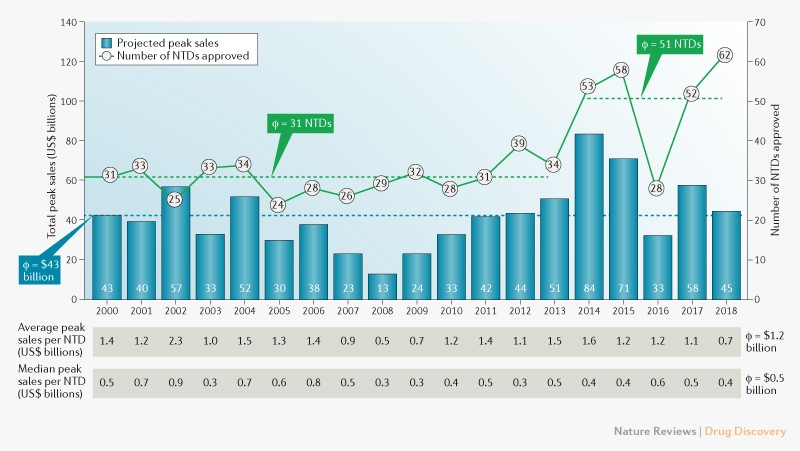
In 2018, FDA approved an all-time record of 62 new therapeutic drugs (NTDs) [Not including diagnostic imaging agents, included are combination products with at least one new molecular entity as an active ingredient] with average Peak Sales per NTD $1.2Billion.
Reporter: Aviva Lev-Ari, PhD, RN
BIOBUSINESS BRIEFS
2018 FDA approvals hit all-time high — but average value slips again
In 2018, the FDA approved an all-time record of 62 new therapeutic drugs (NTDs; see Fig. 1 for the definition and the difference compared with new molecular entities). This is consistent with the increase we predicted last year (Nat. Rev. Drug Discov.17, 87; 2018) and the overall resurgence of R&D in the last 5 years, with an average of 51 approvals per year in this period even with a low count in 2016. This is substantially more than the average of 31 approvals per year in the period 2000–2013 (Fig. 1).
Fig. 1 | FDA approvals of new therapeutic drugs and aggregate projected peak global annual sales: 2000–2018. We analysed 2018 FDA approvals of new therapeutic drugs (NTDs), defined as new molecular entities approved by the FDA’s Center for Drug Evaluation and Research (CDER) and Center for Biologics Evaluation and Research (CBER), but with two adjustments: first, we excluded diagnostic imaging agents; and second, we included combination products with at least one new molecular entity as an active ingredient. The analysis is based exclusively on approvals by the FDA and the year in which the first indication approval took place. All peak sales values were obtained from EvaluatePharma and were inflation-adjusted to 2018 using standard global GDP-based inflators sourced from the Economist Intelligence Unit. To arrive at peak sales for each NTD, we reviewed both historical actual sales as well as the full range of forecast sales that are available from EvaluatePharma and selected the highest value. Sources: EvaluatePharma, FDA and Boston Consulting Group analysis.
Health-Care CEOs Outline Strategies at J.P. Morgan Conference
Chiefs at Johnson & Johnson, CVS discuss what’s next on a range of industry issues
One of the biggest health conferences of the year for investors, the J.P. Morgan Health-Care Conference, is taking place this week in San Francisco. Here are some of the hot topics covered at the four-day event, which wraps up Thursday.
BioMarin Mulls Payment Plans
BioMarin Pharmaceutical Inc. CEO Jean-Jacques Bienaimé said he would consider pursuing installment payment arrangements for the biotech’s experimental gene therapy for hemophilia. At the conference, Mr. Bienaimé told the Wall Street Journal that the one-time infusion, Valrox, is likely to cost in the millions because studies have shown it can eliminate bleeding episodes in patients, and current hemophilia treatments taken chronically can cost millions over several years. “We’re not trying to charge more than existing therapies,” he said. “We want to offer a better treatment at the same or lower cost.”
Johnson & Johnson Warns on Pricing
As politicians hammer drug prices, Johnson & Johnson CEO Alex Gorsky suggested companies need to police themselves. At the conference, Mr. Gorsky told investors that drug companies should price drugs reasonably and be transparent. “If we don’t do this as an industry, I think there will be other alternatives that will be more onerous for us,” Mr. Gorsky says. Some drugmakers pulled back from price increases in mid-2018 amid heightened political scrutiny, but prices went up for many drugs at the start of 2019.
Marijuana-Derived Drugs Show Promise
GW Pharmaceuticals PLC last year secured the first U.S. FDA approval of a prescription drug derived from the marijuana plant to treat rare forms of epilepsy. Discussing the drug, Epidiolex, GW CEO Justin Gover told the Journal that the launch is going well and that there is a lot of demand. GW is pursuing additional uses of Epidiolex and is developing other experimental cannabinoid-based drugs to treat diseases including autism. “We’ve broken through all the stigma,” he said. “We’ve shown how cannabinoids can be bona fide medical treatments.”
CVS Discusses New Stores
CVS Health Corp. Chief Executive Larry Merlo began showing initial concepts the company will be testing as it begins piloting new models of its drugstores that incorporate its Aetna combination. The first new test store will open next month in Houston, he told investors, and it will include expanded health-care services including a new concierge who will help patients with questions.
Aetna Savings On the Way
Mr. Merlo also spelled out when the company will achieve the initial $750 million in synergies it has promised from the CVS-Aetna deal. In the first quarter, he said the company will see benefits from consolidating corporate functions. Savings from procurement and aligning lists of covered drugs should be seen in the first half, he says. Medical-cost savings will start affecting results toward the end of the year, he noted.
Lilly Cuts Price
Drugmaker Eli Lilly & Co. expects average net US pricing for its drugs–after rebates and discounts–to decline in the low- to mid-single digits on a percentage basis this year, Chief Financial Officer Josh Smiley told the Journal. Lilly’s net prices had risen during the first half of 2018, but dropped in the third quarter as the company took a “restrained approach,” Mr. Smiley said. Lilly, which hasn’t yet reported fourth-quarter results, took some list price increases for cancer drugs in late December but hasn’t raised prices in the new year, he said.
JP Morgan Healthcare Conference Update: Sage, Mersana, Shutdown Woes and Babies
Published: Jan 10, 2019By Alex Keown
With the J.P. Morgan Healthcare Conference winding down, companies remain busy striking deals and informing investors about pipeline advances. BioSpace snagged some of the interesting news bits to come out of the conference from Wednesday.
SAGE Therapeutics – Following a positive Phase III report that its postpartum depression treatment candidate SAGE-217 hit the mark in its late-stage clinical trial, Sage Therapeutics is eying the potential to have multiple treatment options available for patients. At the start of J.P. Morgan, Sage said that patients treated with SAGE-217 had a statistically significant improvement of 17.8 points in the Hamilton Rating Scale for Depression, compared to 13.6 for placebo. The company plans to seek approval for SAGE-2017, but before that, the FDA is expected to make a decision on Zulresso in March. Zulresso already passed muster from advisory committees in November, and if approved, would be the first drug specifically for postpartum depression. In an interview with the Business Journal, Chief Business Officer Mike Cloonan said the company believes there is room in the market for both medications, particularly since the medications address different patient populations.
Mersana Therapeutics – After a breakup with Takeda Pharmaceutical and the shelving of its lead product, Cambridge, Mass.-based Mersana is making a new path. Even though a partial clinical hold was lifted following the death of a patient the company opted to shelve development of XMT-1522. During a presentation at JPM, CEO Anna Protopapas noted that many other companies are developing therapies that target the HER2 protein, which led to the decision, according to the Boston Business Journal. Protopapas said the HER2 space is highly competitive and now the company will focus on its other asset, XMT-1536, an ADC targeting NaPi2b, an antigen highly expressed in the majority of non-squamous NSCLC and epithelial ovarian cancer. XMT-1536 is currently in Phase 1 clinical trials for NaPi2b-expressing cancers, including ovarian cancer, non-small cell lung cancer and other cancers. Data on XMT-1536 is expected in the first half of 2019.
Novavax – During a JPM presentation, Stan Erck, CEO of Novavax, pointed to the company’s RSV vaccine, which is in late-stage development. The vaccine is being developed for the mother, in order to protect an infant. The mother transfers the antibodies to the infant, which will provide the baby with protection from RSV in its first six months. Erck called the program historic. He said the Phase III program is in its fourth year and the company has vaccinated 4,636 women. He said they are tracking the women and the babies. Researchers call the mothers every week through the first six months of the baby’s life to acquire data. Erck said the company anticipates announcing trial data this quarter. If approved, Erck said the market for the vaccine could be a significant revenue driver.
“You have 3.9 million birth cohorts and we expect 80 percent to 90 percent of those mothers to be vaccinated as a pediatric vaccine and in the U.S. the market rate is somewhere between $750 million and a $1 billion and then double that for worldwide market. So it’s a large market and we will be first to market in this,” Erck said, according to a transcript of the presentation.
Denali Therapeutics – Denali forged a collaboration with Germany-based SIRION Biotech to develop gene therapies for central nervous disorders. The two companies plan to develop adeno-associated virus (AAV) vectors to enable therapeutics to cross the blood-brain barrier for clinical applications in neurodegenerative diseases including Parkinson’s, Alzheimer’s disease, ALS and certain other diseases of the CNS.
AstraZeneca – Pharma giant AstraZeneca reported that in 2019 net prices on average across the portfolio will decrease versus 2018. With a backdrop of intense public and government scrutiny over pricing, Market Access head Rick Suarez said the company is increasing its pricing transparency. Additionally, he said the company is looking at new ways to price drugs, such as value-based reimbursement agreements with payers, Pink Sheet reported.
Amarin Corporation – As the company eyes a potential label expansion approval for its cardiovascular disease treatment Vascepa, Amarin Corporation has been proactively hiring hundreds of sales reps. In the fourth quarter, the company hired 265 new sales reps, giving the company a sales team of more than 400, CEO John Thero said. Thero noted that is a label expansion is granted by the FDA, “revenues will increase at least 50 percent over what we did in the prior year, which would give us revenues of approximate $350 million in 2019.”
Government Woes – As the partial government shutdown in the United States continues into its third week, biotech leaders at JPM raised concern as the FDA’s carryover funds are dwindling. With no new funding coming in, reviews of New Drug Applications won’t be able to continue past February, Pink Sheet said. While reviews are currently ongoing, no New Drug Applications are being accepted by the FDA at this time. With the halt of NDA applications, that has also caused some companies to delay plans for an initial public offering. It’s hard to raise potential investor excitement without the regulatory support of a potential drug approval. During a panel discussion, Jonathan Leff, a partner at Deerfield Management, noted that the ongoing government shutdown is a reminder of how “overwhelmingly dependent the whole industry of biotech and drug development is on government,” Pink Sheet said.
Other posts on the JP Morgan 2019 Healthcare Conference on this Open Access Journal include:




 2012pharmaceutical
 sjwilliamspa
Other posts on the JP Morgan 2019 Healthcare Conference on this Open Access Journal include:
#JPM19 Conference: Dublin HealthBeacon Raises Funding
#JPM19 Conference: Lilly Announces Agreement To Acquire Loxo Oncology
37th Annual J.P. Morgan HEALTHCARE CONFERENCE: #JPM2019 for Jan. 8, 2019; Opening Videos, Novartis expands Cell Therapies, January 7 – 10, 2019, Westin St. Francis Hotel | San Francisco, California
37th Annual J.P. Morgan HEALTHCARE CONFERENCE: News at #JPM2019 for Jan. 8, 2019: Deals and Announcements
37th Annual J.P. Morgan HEALTHCARE CONFERENCE: News at #JPM2019 for Jan. 10, 2019: Deals and Announcements