Feeds:
Posts
Comments

Archive for the ‘Variation in human protein-coding regions’ Category

Single-cell Genomics: Directions in Computational and Systems Biology – Contributions of Prof. Aviv Regev @Broad Institute of MIT and Harvard, Cochair, the Human Cell Atlas Organizing Committee with Sarah Teichmann of the Wellcome Trust Sanger Institute

Curator: Aviva Lev-Ari, PhD, RN

4.1.3

4.1.3   Single-cell Genomics: Directions in Computational and Systems Biology – Contributions of Prof. Aviv Regev @Broad Institute of MIT and Harvard, Cochair, the Human Cell Atlas Organizing Committee with Sarah Teichmann of the Wellcome Trust Sanger Institute, Volume 2 (Volume Two: Latest in Genomics Methodologies for Therapeutics: Gene Editing, NGS and BioInformatics, Simulations and the Genome Ontology), Part 4: Single Cell Genomics

Dana Pe’er, PhD, now chair of computational and systems biology at the Sloan Kettering Institute at the Memorial Sloan Kettering Cancer Center and a member of the Human Cell Atlas Organizing Committee,

what really sets Regev apart is the elegance of her work. Regev, says Pe’er, “has a rare, innate ability of seeing complex biology and simplifying it and formalizing it into beautiful, abstract, describable principles.”

Dr. Aviv Regev, an MIT biology professor who is also chair of the faculty of the Broad and director of its Klarman Cell Observatory and Cell Circuits Program, was reviewing a newly published white paper detailing how the Human Cell Atlas is expected to change the way we diagnose, monitor, and treat disease at a gathering of international scientists at Israel’s Weizmann Institute of Science, 10/2017.

For Regev, the importance of the Human Cell Atlas goes beyond its promise to revolutionize biology and medicine. As she once put it, without an atlas of our cells, “we don’t really know what we’re made of.”

Regev, turned to a technique known as RNA interference (she now uses CRISPR), which allowed her to systematically shut genes down. Then she looked at which genes were expressed to determine how the cells’ response changed in each case. Her team singled out 100 different genes that were involved in regulating the response to the pathogens—some of which weren’t previously known to be involved in immune function. The study, published in Science, generated headlines.

The project, the Human Cell Atlas, aims to create a reference map that categorizes all the approximately 37 trillion cells that make up a human. The Human Cell Atlas is often compared to the Human Genome Project, the monumental scientific collaboration that gave us a complete readout of human DNA, or what might be considered the unabridged cookbook for human life. In a sense, the atlas is a continuation of that project’s work. But while the same DNA cookbook is found in every cell, each cell type reads only some of the recipes—that is, it expresses only certain genes, following their DNA instructions to produce the proteins that carry out a cell’s activities. The promise of the Human Cell Atlas is to reveal which specific genes are expressed in every cell type, and where the cells expressing those genes can be found.

Regev says,

The final product, will amount to nothing less than a “periodic table of our cells,” a tool that is designed not to answer one specific question but to make countless new discoveries possible.

Sequencing the RNA of the cells she’s studying can tell her only so much. To understand how the circuits change under different circumstances, Regev subjects cells to different stimuli, such as hormones or pathogens, to see how the resulting protein signals change.

“the modeling step”—creating algorithms that try to decipher the most likely sequence of molecular events following a stimulus. And just as someone might study a computer by cutting out circuits and seeing how that changes the machine’s operation, Regev tests her model by seeing if it can predict what will happen when she silences specific genes and then exposes the cells to the same stimulus.

By sequencing the RNA of individual cancer cells in recent years—“Every cell is an experiment now,” she says—she has found remarkable differences between the cells of a single tumor, even when they have the same mutations. (Last year that work led to Memorial Sloan Kettering’s Paul Marks Prize for Cancer Research.) She found that while some cancers are thought to develop resistance to therapy, a subset of melanoma cells were resistant from the start. And she discovered that two types of brain cancer, oligodendroglioma and astrocytoma, harbor the same cancer stem cells, which could have important implications for how they’re treated.

As a 2017 overview of the Human Cell Atlas by the project’s organizing committee noted, an atlas “is a map that aims to show the relationships among its elements.” Just as corresponding coastlines seen in an atlas of Earth offer visual evidence of continental drift, compiling all the data about our cells in one place could reveal relationships among cells, tissues, and organs, including some that are entirely unexpected. And just as the periodic table made it possible to predict the existence of elements yet to be observed, the Human Cell Atlas, Regev says, could help us predict the existence of cells that haven’t been found.

This year alone it will fund 85 Human Cell Atlas grants. Early results are already pouring in.

  • In March, Swedish researchers working on cells related to human development announced they had sequenced 250,000 individual cells.
  • In May, a team at the Broad made a data set of more than 500,000 immune cells available on a preview site.

The goal, Regev says, is for researchers everywhere to be able to use the open-source platform of the Human Cell Atlas to perform joint analyses.

Eric Lander, PhDthe founding director and president of the Broad Institute and a member of the Human Cell Atlas Organizing Committee, likens it to genomics.

“People thought at the beginning they might use genomics for this application or that application,” he says. “Nothing has failed to be transformed by genomics, and nothing will fail to be transformed by having a cell atlas.”

“How did we ever imagine we were going to solve a problem without single-cell resolution?”

SOURCE

https://www.technologyreview.com/s/611786/the-cartographer-of-cells/?utm_source=MIT+Technology+Review&utm_campaign=Alumni-Newsletter_Sep-Oct-2018&utm_medium=email

Other related articles published in this Open Access Online Scientific Journal include the following:

University of California Santa Cruz’s Genomics Institute will create a Map of Human Genetic Variations

Reporter: Aviva Lev-Ari, PhD, RN

https://pharmaceuticalintelligence.com/2015/01/13/university-of-california-santa-cruzs-genomics-institute-will-create-a-map-of-human-genetic-variations/

Recognitions for Contributions in Genomics by Dan David Prize Awards

Reporter: Aviva Lev-Ari, PhD, RN

https://pharmaceuticalintelligence.com/2017/07/31/recognitions-for-contributions-in-genomics-by-dan-david-prize-awards/

ENCODE (Encyclopedia of DNA Elements) program: ‘Tragic’ Sequestration Impact on NHGRI Programs

Reporter: Aviva Lev-Ari, PhD, RN

https://pharmaceuticalintelligence.com/2013/09/18/encode-encyclopedia-of-dna-elements-program-tragic-sequestration-impact-on-nhgri-programs/

Single-cell Sequencing

Genomic Diagnostics: Three Techniques to Perform Single Cell Gene Expression and Genome Sequencing Single Molecule DNA Sequencing

Curator: Aviva Lev-Ari, PhD, RN

https://pharmaceuticalintelligence.com/2017/07/04/genomic-diagnostics-three-techniques-to-perform-single-cell-gene-expression-and-genome-sequencing-single-molecule-dna-sequencing/

LIVE – Real Time – 16th Annual Cancer Research Symposium, Koch Institute, Friday, June 16, 9AM – 5PM, Kresge Auditorium, MIT – See, Aviv Regev

REAL TIME PRESS COVERAGE & Reporter: Aviva Lev-Ari, PhD, RN

https://pharmaceuticalintelligence.com/2017/03/13/16th-annual-cancer-research-symposium-koch-institute-friday-june-16-9am-5pm-kresge-auditorium-mit/

LIVE 11/3/2015 1:30PM @The 15th Annual EmTech MIT – MIT Media Lab: Top 10 Breakthrough Technologies & 2015 Innovators Under 35 – See, Gilead Evrony

REAL TIME PRESS COVERAGE & Reporter: Aviva Lev-Ari, PhD, RN
https://pharmaceuticalintelligence.com/2015/11/03/live-1132015-130pm-the-15th-annual-emtech-mit-mit-media-lab-top-10-breakthrough-technologies-2015-innovators-under-35/

Cellular Guillotine Created for Studying Single-Cell Wound Repair

Reporter: Irina Robu, PhD

https://pharmaceuticalintelligence.com/2017/06/29/cellular-guillotine-created-for-studying-single-cell-wound-repair/

New subgroups of ILC immune cells discovered through single-cell RNA sequencing

Reporter: Stephen J Williams, PhD

https://pharmaceuticalintelligence.com/2016/02/17/new-subgroups-of-ilc-immune-cells-discovered-through-single-cell-rna-sequencing-from-karolinska-institute/

#JPM16: Illumina’s CEO on new genotyping array called Infinium XT and Bio-Rad Partnership for single-cell sequencing workflow

Reporter: Aviva Lev-Ari, PhD, RN

https://pharmaceuticalintelligence.com/2016/01/12/jpm16-illuminas-ceo-on-new-genotyping-array-called-infinium-xt-and-bio-rad-partnership-for-single-cell-sequencing-workflow/

Juno Acquires AbVitro for $125M: high-throughput and single-cell sequencing capabilities for Immune-Oncology Drug Discovery

Reporter: Aviva Lev-Ari, PhD, RN

https://pharmaceuticalintelligence.com/2016/01/12/juno-acquires-abvitro-for-125m-high-throughput-and-single-cell-sequencing-capabilities-for-immune-oncology-drug-discovery/

NIH to Award Up to $12M to Fund DNA, RNA Sequencing Research: single-cell genomics,  sample preparation,  transcriptomics and epigenomics, and  genome-wide functional analysis.

Reporter: Aviva Lev-Ari, PhD, RN

https://pharmaceuticalintelligence.com/2015/10/27/nih-to-award-up-to-12m-to-fund-dna-rna-sequencing-research-single-cell-genomics-sample-preparation-transcriptomics-and-epigenomics-and-genome-wide-functional-analysis/

Genome-wide Single-Cell Analysis of Recombination Activity and De Novo Mutation Rates in Human Sperm

Reporter and Curator: Dr. Sudipta Saha, Ph.D.

https://pharmaceuticalintelligence.com/2012/08/07/genome-wide-single-cell-analysis-of-recombination-activity-and-de-novo-mutation-rates-in-human-sperm/

REFERENCES to Original studies

In Science, 2018

Single-cell RNA-seq reveals new types of human blood dendritic cells, monocytes, and progenitors

 See all authors and affiliations

Science  21 Apr 2017:
Vol. 356, Issue 6335, eaah4573
DOI: 10.1126/science.aah4573
Single-cell reconstruction of developmental trajectories during zebrafish embryogenesis

See all authors and affiliations

Science  26 Apr 2018:
eaar3131
DOI: 10.1126/science.aar3131

In Nature, 2018 and 2017

How to build a human cell atlas

Aviv Regev is a maven of hard-core biological analyses. Now she is part of an effort to map every cell in the human body.

  1. Research | 

  2. Research | 

  3. Research | 

  4. Research | 

  5. Research | 

  6. Amendments and Corrections | 

  7. Research |  | OPEN

  8. Research | 

  9. Amendments and Corrections | 

  10. Comments and Opinion | 

  11. Research | 

Read Full Post »

Emerging STAR in Molecular Biology, Synthetic Virology and Genomics: Clodagh C. O’Shea: ChromEMT – Visualizing 3D chromatin structure

Article ID #241: Emerging STAR in Molecular and Cell Biology, Synthetic Virology and Genomics: Clodagh C. O’Shea: ChromEMT – Visualizing 3D chromatin structure. Published on 8/31/2017

WordCloud Image Produced by Adam Tubman

Curator: Aviva Lev-Ari, PhD, RN

On 8/28/2017, I attend and covered in REAL TIME the CHI’s 5th Immune Oncology Summit – Oncolytic Virus Immunotherapy, August 28-29, 2017 Sheraton Boston Hotel | Boston, MA

I covered in REAL TIME this event and Clodagh C. O’Shea talk at the conference.

On that evening, I e-mailed my team that

“I believe that Clodagh C. O’Shea will get the Nobel Prizebefore CRISPR

11:00 Synthetic Virology: Modular Assembly of Designer Viruses for Cancer Therapy

Clodagh_OShea

Clodagh O’Shea, Ph.D., Howard Hughes Medical Institute Faculty Scholar; Associate Professor, William Scandling Developmental Chair, Molecular and Cell Biology Laboratory, Salk Institute for Biological Studies

Design is the ultimate test of understanding. For oncolytic therapies to achieve their potential, we need a deep mechanistic understanding of virus and tumor biology together with the ability to confer new properties.

To achieve this, we have developed

  • combinatorial modular genome assembly (ADsembly) platforms,
  • orthogonal capsid functionalization technologies (RapAd) and
  • replication assays that have enabled the rational design, directed evolution, systematic assembly and screening of powerful new vectors and oncolytic viruses.

Clodagh O’Shea’s Talk In Real Time:

  • Future Cancer therapies to be sophisticated as Cancer is
  • Targer suppresor pathways (Rb/p53)
  • OV are safe their efficacy ishas been limited
  • MOA: Specify Oncolytic Viral Replication in Tumor cells Attenuate – lack of potency
  • SOLUTIONS: Assembly: Assmble personalized V Tx fro libraries of functional parts
  • Adenovirus – natural & clinical advantages
  • Strategy: Technology for Assmbling Novel Adenovirus Genomes using Modular Genomic Parts
  • E1 module: Inactives Rb & p53
  • core module:
  • E3 Module Immune Evasion Tissue targeting
  • E4 Module Activates E2F (transcription factor TDP1/2), PI3K
  • Adenovirus promoters for Cellular viral replication — Tumor Selective Replication: Novel Viruses Selective Replicate in RB/p16
  • Engineering Viruses to overcome tumor heterogeneity
  • Target multiple & Specific Tumor Cel Receptors – RapAd Technology allows Re-targeting anti Rapamycin – induced targeting of adenovirus
  • Virus Genome: FKBP-fusion FRB-Fiber
  • Engineer Adenovirus Caspids that prevent Liver uptake and Sequestration – Natural Ad5 Therapies 
  • Solution: AdSyn335 Lead candidat AdSyn335 Viruses targeting multiple cells
  • Engineering Mutations that enhanced potency
  • Novel Vector: Homes and targets
  • Genetically engineered PDX1 – for Pancreatic Cancer Stroma: Early and Late Stage
On Twitter:
 

Engineer Adenovirus Caspids prevent Liver uptake and Sequestration – Natural Ad5 Therapies C. O’Shea, HHDI


Scientist’s Profile: Clodagh C. O’Shea

http://www.salk.edu/scientist/clodagh-oshea/


EDUCATION

BS, Biochemistry and Microbiology, University College Cork, Ireland
PhD, Imperial College London/Imperial Cancer Research Fund, U.K.
Postdoctoral Fellow, UCSF Comprehensive Cancer Center, San Francisco, U.S.A

VIDEOS

http://www.salk.edu/scientist/clodagh-oshea/videos/

O’Shea Lab @Salk

http://oshea.salk.edu/

AWARDS & HONORS

  • 2016 Howard Hughes Medical Institute Faculty Scholar
  • 2014 W. M. Keck Medical Research Program Award
  • 2014 Rose Hills Fellow
  • 2011Science/NSF International Science & Visualization Challenge, People’s Choice
  • 2011 Anna Fuller Award for Cancer Research
  • 2010, 2011, 2012 Kavli Frontiers Fellow, National Academy of Sciences
  • 2009 Sontag Distinguished Scientist Award
  • 2009 American Cancer Society Research Scholar Award
  • 2008 ACGT Young Investigator Award for Cancer Gene Therapy
  • 2008 Arnold and Mabel Beckman Young Investigator Award
  • 2008 William Scandling Assistant Professor, Developmental Chair
  • 2007 Emerald Foundation Schola

READ 

Clodagh C. O’Shea: ChromEMT: Visualizing 3D chromatin structure and compaction in interphase and mitotic cells | Science

http://science.sciencemag.org/content/357/6349/eaag0025

and 

https://www.readbyqxmd.com/keyword/93030


Clodagh C. O’Shea

In Press

Jul 27, 2017 – Salk scientists solve longstanding biological mystery of DNA organization

Sep 22, 2016 – Clodagh O’Shea named HHMI Faculty Scholar for groundbreaking work in designing synthetic viruses to destroy cancer

Oct 05, 2015 – Clodagh O’Shea awarded $3 million to unlock the “black box” of the nucleus

Aug 27, 2015 – The DNA damage response goes viral: a way in for new cancer treatments

Apr 12, 2013 – Salk Institute promotes three top scientists

Oct 16, 2012 – Cold viruses point the way to new cancer therapies

Aug 25, 2010 – Use the common cold virus to target and disrupt cancer cells?

Oct 22, 2009 – Salk scientist receives The Sontag Foundation’s Distinguished Scientist Award

May 15, 2008 – Salk scientist wins 2008 Beckman Young Investigator Award

Mar 24, 2008 – Salk scientist wins 2007 Young Investigator’s Award in Gene Therapy for Cancer

Read Full Post »

Personalized Medicine been Positively affected by FDA Drug Approval Record

Reporter: Aviva Lev-Ari, PhD, RN

FDA to Clear Path for Drugs Aimed at Cancer-Causing Genes

By Anna Edney and Michelle Cortez

June 20, 2017, 10:41 AM EDT June 20, 2017, 3:02 PM EDT

https://www.bloomberg.com/news/articles/2017-06-20/fda-moves-to-clear-path-for-drugs-aimed-at-cancer-causing-genes


‘Landmark FDA approval bolsters personalized medicine’

PMC – An Op-Ed in STAT News

by Edward Abrahams

June 21, 2017

Our understanding of cancer has been morphing from a tissue-specific disease — think lung cancer or breast cancer — to a disease characterized more by specific genes or biomarkers than by location. A recent FDA decision underscores that transition and further opens the door to personalized medicine.

Two years ago, the director of the FDA’s Office of Hematology and Oncology Products told the Associated Press that there was no precedent for the agency to approve a drug aimed at treating tumors that generate a specific biomarker no matter where the cancer is in the body. Such a drug had long been seen as the epitome of personalized medicine. But with the rapid pace of progress in the field, director Dr. Richard Pazdur said, such an approval could one day be possible.

That day has arrived.

In a milestone decision for personalized medicine, the FDA approved Merck’s pembrolizumab (Keytruda) late last month for the treatment of tumors that express one of two biomarkers regardless of where in the body the tumors are located. The decision marks the first time FDA has approved a cancer drug for an indication based on the expression of specific biomarkers rather than the tumor’s location in the body.

Keytruda is designed to help the immune system recognize and destroy cancer cells by targeting a specific cellular pathway. The FDA notes that the two biomarkers — microsatellite instability-high (MSI-H) and mismatch repair deficient (dMMR) — affect the proper repair of DNA inside cells.

The approval represents an important first for the field of personalized medicine, which anticipates an era in which physicians use molecular tests to classify different forms of cancer based on the biomarkers they express, then choose the right treatment for it. In contrast to standard cancer treatments, which are given to large populations of patients even though only a fraction of them will benefit, Keytruda was approved only for the 4 percent of cancer patients whose tumors exhibit MSI-H or dMMR mutations. That may help the health system save money by focusing resources only on patients who are likely to benefit from Keytruda.

Such “personalized” strategies now dominate the landscape for cancer drug development. Personalized medicines account for nearly 1 of every 4 FDA approvals from 2014 to 2016, and the Tufts Center for the Study of Drug Development estimates that more than 70 percent of cancer drugs now in development are personalized medicines.

While this is encouraging, the U.S. research, regulatory, and reimbursement systems aren’t aligned to stimulate the development of personalized medicines, and may even deter progress.

The Trump administration’s proposal to cut biomedical research spending at the National Institutes of Health by 18 percent in fiscal year 2018, for example, would undermine its ability to fund more studies like the National Cancer Institute’s Molecular Analysis for Therapy Choice (MATCH) trial, which is designed to test targeted therapies across tumor types.

While the regulatory landscape for these targeted medicines is clear, the path to market for the molecular tests that do the targeting is not. That uncertainty continues to stifle investment in the innovative tests that make personalized medicine possible. The result is a clinical environment in which the patients who could benefit from personalized medicines are often never identified because the necessary tests aren’t available to them.

Finally, increasing pressure on pharmaceutical and diagnostic companies to decrease prices without considering their value to individual patients and the health system could also deter investment in innovative solutions that address unmet medical needs, particularly for smaller patient populations.

Confronted with unprecedented opportunities in personalized medicine, policymakers would do well to ensure that our research, regulatory, and reimbursement systems facilitate the development of and access to these promising new therapies. Only then can we ensure that Keytruda’s groundbreaking approval represents the beginning of a new era that promises better health and a more cost-effective health system.

Edward Abrahams, Ph.D., is president of the Personalized Medicine Coalition.


SOURCE

From: <cwells@personalizedmedicinecoalition.org>

Date: Wednesday, June 21, 2017 at 1:38 PM

To: Aviva Lev-Ari <AvivaLev-Ari@alum.berkeley.edu>

Subject: PMC in STAT: “Landmark FDA Approval Bolsters Personalized Medicine”

Read Full Post »

Evaluating the Genetic Profiles of Tumor Cells circulating in the Bloodstream could transform Cancer Care: A Blood Test for managing Lung Cancer @Stanford University Medical School

Reporter: Aviva Lev-Ari, PhD, RN


A Legacy of Innovation @Stanford University Medical School

  1. 1967

    First synthesis of biologically active DNA in test tube

  2. 1968

    First adult human heart transplant in the United States

    Norman Shumway successfully transplants a heart into 54-year-old steelworker Mike Kasperak, who survives for 14 days.


  3. 1973

    First expression of a foreign gene implanted in bacteria by recombinant DNA methods

  4. 1981

    First successful human combined heart/lung transplant in the world (fourth attempted worldwide)

  5. 1984

    Isolation of a gene coding for part of the T-cell receptor, a key to the immune system’s function

  6. 1988

    Isolation of pure hematopoietic stem cells from mice

  7. 2002

    First use of gene expression profiling to predict cancer outcomes

  8. 2007

    Application and expansion of optogenetics, a technique to control brain cell activity with light

SOURCE

Evaluating the Genetic Profiles of Tumor Cells circulating in the Bloodstream could transform Cancer Care: A Blood Test for managing Lung Cancer @Stanford University Medical School

The approach that the team developed could be used to look at mutations in three or four genes, and it requires no more than 2 milliliters of blood — about half a teaspoon. The test can be completed in about five hours, the researcher said, and costs less than $30. For comparison, a single state-of-the art biopsy of lung tissue with DNA sequencing costs about $18,000 and takes as long as three weeks to furnish results. Johnson & Johnson’s CellSearch — another blood test, already approved by the FDA — costs about $900 and takes a week to deliver results.

The researchers created a system for isolating circulating tumor cells from the blood of cancer patients and reading a handful of genes from inside each tumor cell. Thus, they were able to obtain genetic information about the original cancer tumor that resides deep in the lungs without doing a biopsy, which can be dangerous for the patient.

“We are trying to make minimally invasive technology that allows us to continuously monitor one person’s health over time,” said radiology instructor Seung-min Park, PhD, a lead author of the new study, which was published online Dec. 12 in the Proceedings of the National Academy of Sciences. Park shares lead authorship of the study with former Stanford graduate students Dawson Wong, PhD, and Chin Chun Ooi.

A MagSifter chip, shown here fastened to an acrylic holder, can purify circulating tumor cells from the blood of cancer patients.

The MagSifter is an electromagnetic sieve that can be turned on and off. When the MagSifter is on, it pulls the nanoparticle-labeled CTCs from the blood sample and allows the rest of the blood to flow through the sifter. The CTCs pulled from the blood are then deposited into a flat array of tiny wells, each large enough for only one cell. Now the tumor cells are ready for genetic analysis. Each flat of 25,600 wells looks like a miniature muffin tin, with room for a lot of tiny muffins.

SOURCE

http://med.stanford.edu/news/all-news/2016/12/blood-test-could-provide-cheaper-way-to-evaluate-lung-tumors.html

Read Full Post »

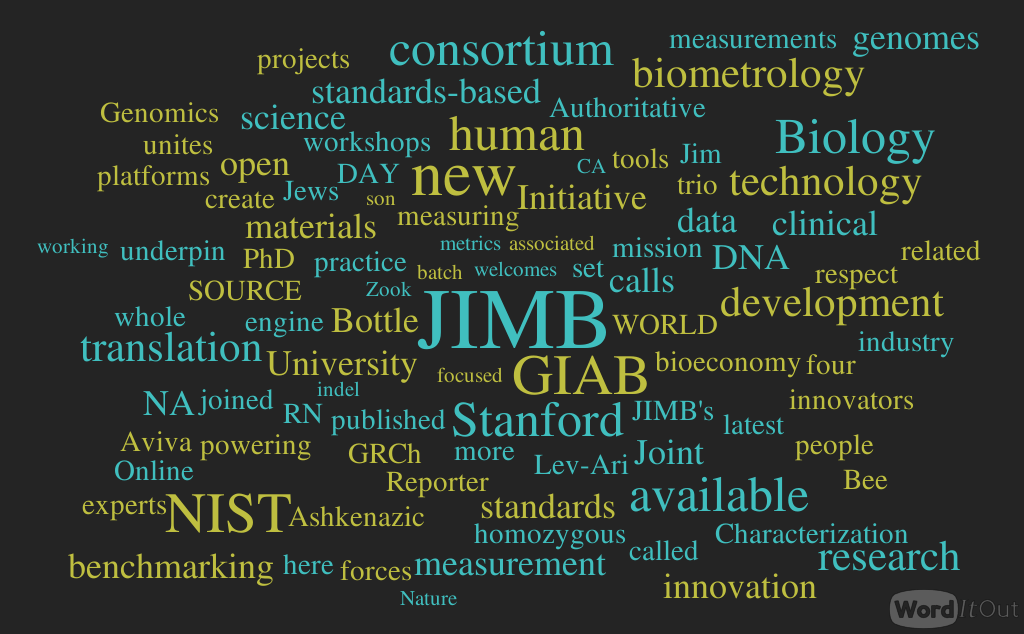
Translation of whole human genome sequencing to clinical practice: The Joint Initiative for Metrology in Biology (JIMB) is a collaboration between the National Institute of Standards & Technology (NIST) and Stanford University, Volume 2 (Volume Two: Latest in Genomics Methodologies for Therapeutics: Gene Editing, NGS and BioInformatics, Simulations and the Genome Ontology), Part 1: Next Generation Sequencing (NGS)

Translation of whole human genome sequencing to clinical practice: The Joint Initiative for Metrology in Biology (JIMB) is a collaboration between the National Institute of Standards & Technology (NIST) and Stanford University.

Reporter: Aviva Lev-Ari, PhD, RN


JIMB’s mission is to advance the science of measuring biology (biometrology). JIMB is pursuing fundamental research, standards development, and the translation of products that support confidence in biological measurements and reliable reuse of materials and results. JIMB is particularly focused on measurements and technologies that impact, are related to, or enabled by ongoing advances in and associated with the reading and writing of DNA.

Stanford innovators and industry entrepreneurs have joined forces with the measurement experts from NIST to create a new engine powering the bioeconomy. It’s called JIMB — “Jim Bee” — the Joint Initiative for Metrology in Biology. JIMB unites people, platforms, and projects to underpin standards-based research and innovation in biometrology.

Genome in a Bottle
Authoritative Characterization of
Benchmark Human Genomes


The Genome in a Bottle Consortium is a public-private-academic consortium hosted by NIST to develop the technical infrastructure (reference standards, reference methods, and reference data) to enable translation of whole human genome sequencing to clinical practice. The priority of GIAB is authoritative characterization of human genomes for use in analytical validation and technology development, optimization, and demonstration. In 2015, NIST released the pilot genome Reference Material 8398, which is genomic DNA (NA12878) derived from a large batch of the Coriell cell line GM12878, characterized for high-confidence SNPs, indel, and homozygous reference regions (Zook, et al., Nature Biotechnology 2014).

There are four new GIAB reference materials available.  With the addition of these new reference materials (RMs) to a growing collection of “measuring sticks” for gene sequencing, we can now provide laboratories with even more capability to accurately “map” DNA for genetic testing, medical diagnoses and future customized drug therapies. The new tools feature sequenced genes from individuals in two genetically diverse groups, Asians and Ashkenazic Jews; a father-mother-child trio set from Ashkenazic Jews; and four microbes commonly used in research. For more information click here.  To purchase them, visit:

Data and analyses are publicly available (GIAB GitHub). A description of data generated by GIAB is published here. To standardize best practices for using GIAB genomes for benchmarking, we are working with the Global Alliance for Genomics and Health Benchmarking Team (benchmarking tools).

High-confidence small variant and homozygous reference calls are available for NA12878, the Ashkenazim trio, and the Chinese son with respect to GRCh37.  Preliminary high-confidence calls with respect to GRCh38 are also available for NA12878.   The latest version of these calls is under the latest directory for each genome on the GIAB FTP.

The consortium was initiated in a set of meetings in 2011 and 2012, and the consortium holds open, public workshops in January at Stanford University in Palo Alto, CA and in August/September at NIST in Gaithersburg, MD. Slides from workshops and conferences are available online. The consortium is open and welcomes new participants.

SOURCE

Stanford innovators and industry entrepreneurs have joined forces with the measurement experts from NIST to create a new engine powering the bioeconomy. It’s called JIMB — “Jim Bee” — the Joint Initiative for Metrology in Biology. JIMB unites people, platforms, and projects to underpin standards-based research and innovation in biometrology.

JIMB World Metrology Day Symposium

JIMB’s mission is to motivate standards-based measurement innovation to facilitate translation of basic science and technology development breakthroughs in genomics and synthetic biology.

By advancing biometrology, JIMB will push the boundaries of discovery science, accelerate technology development and dissemination, and generate reusable resources.

 SOURCE

VIEW VIDEO

https://player.vimeo.com/video/184956195?wmode=opaque&api=1&#8243;,”url”:”https://vimeo.com/184956195&#8243;,”width”:640,”height”:360,”providerName”:”Vimeo”,”thumbnailUrl”:”https://i.vimeocdn.com/video/594555038_640.jpg&#8221;,”resolvedBy”:”vimeo”}” data-block-type=”32″>

Other related articles published in this Open Access Online Scientific Journal include the following:

“Genome in a Bottle”: NIST’s new metrics for Clinical Human Genome Sequencing

Reporter: Aviva Lev-Ari, PhD, RN

https://pharmaceuticalintelligence.com/2012/09/06/genome-in-a-bottle-nists-new-metrics-for-clinical-human-genome-sequencing/

Read Full Post »

Li -Fraumeni Syndrome and Pancreatic Cancer

Curator: Marzan Khan, B.Sc.

Li-Fraumeni syndrome (LFS) is a condition that makes individuals prone to developing a wide variety of cancers that occur early on in life, the most common types being- soft tissue sarcoma, osteosarcoma, breast cancer, brain tumors, adrenocortical carcinoma (ACC), and leukemia. (1) Pancreatic cancer is minimally associated with the condition. (2) A survey found the presence of pancreatic cancer in only 1% of 475 tumor samples collected from 91 families who were carriers of p53 mutations, with half of them having LFS. The incidence of breast cancer amongst them was the highest -24%. (2) Pancreatic carcinoma in LFS patients usually occurs in the later stages of life. (3)

The underlying cause of LFS is germline mutations in TP53 gene on chromosome 17p, that encodes the transcription factor p53, crucial in cell cycle regulation and the repair of damaged and/or abnormal cells. (4) In the majority of cases, this mutation is obtained by inheritance. (5) De-novo germline mutations in p53 occur in 7%-20% of the cases. (5)

A person showing symptoms of any type of cancer at an early age or having first or second-degree relatives with cancer are at risk of developing LFS. (5) That is why tracing family history is an important part of diagnosis in LFS patients. Genetic testing can confirm mutations present in the gene, however, there are controversial ethical issues regarding their use, particularly in children and fetuses.

In patients with LFS, it is important to control the manifestations of the disease. They should be monitored closely so that any new cancers that arise are diagnosed and treated during the early stages. (6) Patients are also at risk of developing radiation-induced second and third primary tumors. (6) Therefore, radiation and alkylating agents should be used minimally (6) People at risk can be cautioned to avoid exposure to carcinogens such as sunlight, cigarette smoke, and alcohol consumption. (5) Therapeutic approaches that are aimed at restoring wild-type p53 by gene therapy as well as reactivating non-functional p53 by the use of small-molecule drugs are currently being investigated in many cancers. (7) Unlike radiation therapy, these small-molecule drugs are non-toxic to healthy cells, thus eliminating the risk of forming new tumors.

So far, PRIMA-1 has proven to be quite effective at correcting non-functional p53. (8) PRIMA-1 is changed to its methylated form, PRIMA-1MET   that forms covalent adducts to thiol groups in the mutated protein and modifies them. (8) As a result, p53 regains its ability to destroy malignant cells. (8) A research study also found that PRIMA-1 induces apoptosis and increases the sensitivity of pancreatic cancer cells to various chemotherapeutic agents. (9)

  1. Magali Olivier, David E. Goldgar, Nayanta Sodha, Hiroko Ohgaki, Paul Kleihues, Pierre Hainaut and Rosalind A. Eeles. Li-Fraumeni and Related Syndromes. Cancer Res October 15 2003 63 (20) 6643-6650 http://cancerres.aacrjournals.org/content/63/20/6643.abstract
  2. Kleihues P, Schauble B, zur Hausen H, et al. Tumors associated with p53 germline mutations: a synopsis of 91 families. Am J Pathol 1997; 150:1-13 https://www.ncbi.nlm.nih.gov/pmc/articles/PMC1858532/
  3. John P. Neoptolemos, Raul Urrutia, James L. Abbruzzese, Markus W. Buchler. Pancreatic Cancer. 2010.1st ed, pp-6, 2010, Springer, Verlag, New York
  4. Mishra B and Patel RR. Gene Therapy for Treatment of Pancreatic Cancer. Austin Therapeutics. 2014;1(1): 10. https://books.google.ca/books?id=NmBB5ZoKkk4C&pg=PA6&lpg=PA6&dq=connection+between+li+fraumeni+and+Pancreatic+cancer&source=bl&ots=H0iCeaPP0N&sig=pqJT1tPMR6C-NIig3S_NkFKFsD0&hl=en&sa=X&ved=0ahUKEwi4nLrgzuPQAhUUIWMKHS3wBoc4ChDoAQhNMAg#v=onepage&q=connection%20between%20li%20fraumeni%20and%20Pancreatic%20cancer&f=false
  5. Schneider K, Zelley K, Nichols KE, et al. Li-Fraumeni Syndrome. 1999 Jan 19 [Updated 2013 Apr 11]. In: Pagon RA, Adam MP, Ardinger HH, et al., editors. GeneReviews® [Internet]. Seattle (WA): University of Washington, Seattle; 1993-2016. https://www.ncbi.nlm.nih.gov/pubmed/20301488
  6. Elisa Becze BA, ELS, 2011 Mar 1. An introduction to Li-Fraumeni Syndrome, Five-Minute-In-Service. http://connect.ons.org/columns/five-minute-in-service/an-introduction-to-li-fraumeni-syndrome
  7. Sorrell, A. D., Espenschied, C. R., Culver, J. O., & Weitzel, J. N. (2013).TP53Testing and Li-Fraumeni Syndrome: Current Status of Clinical Applications and Future Directions. Molecular Diagnosis & Therapy17(1), 31–47. https://www.ncbi.nlm.nih.gov/pmc/articles/PMC3627545/
  8. Emily J. Lewis. PRIMA-1 as a cancer therapy restoring mutant p53: a reviewBioscience Horizons (2015) 8: hzv006 http://biohorizons.oxfordjournals.org/content/8/hzv006.full
  9. Izetti, Patricia, Agnes Hautefeuille, Ana Lucia Abujamra, Caroline Brunetto de Farias, Juliana Giacomazzi, Bárbara Alemar, Guido Lenz, et al. ‘PRIMA-1, a Mutant p53 Reactivator, Induces Apoptosis and Enhances Chemotherapeutic Cytotoxicity in Pancreatic Cancer Cell Lines’. Investigational New Drugs 32, no. 5 (October 2014): 783–94. https://www.ncbi.nlm.nih.gov/pubmed/24838627

Izetti, Patricia, Agnes Hautefeuille, Ana Lucia Abujamra, Caroline Brunetto de Farias, Juliana Giacomazzi, Bárbara Alemar, Guido Lenz, et al. ‘PRIMA-1, a Mutant p53 Reactivator, Induces Apoptosis and Enhances Chemotherapeutic Cytotoxicity in Pancreatic Cancer Cell Lines’. Investigational New Drugs 32, no. 5 (October 2014): 783–94

Other related articles published in this Online Scientific Journal include the following:

p53 mutation – Li-Fraumeni Syndrome – Likelihood of Genetic or Hereditary conditions playing a role in Intergenerational incidence of Cancer

Reporter: Aviva Lev-Ari, PhD, RN

https://pharmaceuticalintelligence.com/2016/12/01/p53-mutation-li-fraumeni-syndrome-likelihood-of-genetic-or-hereditary-conditions-playing-a-role-in-intergenerational-incidence-of-cancer/

Pancreatic Cancer: Articles of Note @PharmaceuticalIntelligence.com

Curator: Aviva Lev-Ari, PhD, RN

https://pharmaceuticalintelligence.com/2016/05/26/pancreatic-cancer-articles-of-note-pharmaceuticalintelligence-com/

Read Full Post »

Multiple copies of the alpha tryptase gene drive Tryptase elevations may contribute to symptoms of dizziness and lightheadedness, skin flushing and itching, gastrointestinal complaints, chronic pain, and bone and joint problems


Reporter: Aviva Lev-Ari, PhD, RN


Monday, October 17, 2016

NIH scientists uncover genetic explanation for frustrating syndrome

Previously unexplained symptoms found associated with multiple copies of a single gene.

Other studies have indicated that four to six percent of the general public has high tryptase levels. While not all of these people experience symptoms, many do, raising the possibility that this mildly prevalent trait in some cases drives the symptoms, although how it does so remains unclear.

“This work suggests that multiple alpha tryptase gene copies might underlie health issues that affect a substantial number of people,” said NIAID Director Anthony S. Fauci, M.D. “Identifying one genetic cause for high tryptase opens the door for us to develop strategies for diagnosing and treating people carrying this genetic change.”

Previously,NIH’s National Institute of Allergy and Infectious Diseases (NIAID) researchers had observed that a combination of chronic and sometimes debilitating symptoms, such as hives, irritable bowel syndrome and overly flexible joints, runs in some families and is associated with high tryptase levels. Many affected family members with high tryptase also reported symptoms consistent with disorders of autonomic nervous system function (dysautonomia), including postural orthostatic tachycardia syndrome (POTS), which is characterized by dizziness, faintness and an elevated heartbeat when standing up.

SOURCE

https://www.nih.gov/news-events/news-releases/nih-scientists-uncover-genetic-explanation-frustrating-syndrome

Read Full Post »

LIVE 9/21 8AM to 10:55 AM Expoloring the Versatility of CRISPR/Cas9 at CHI’s 14th Discovery On Target, 9/19 – 9/22/2016, Westin Boston Waterfront, Boston

http://www.discoveryontarget.com/

http://www.discoveryontarget.com/crispr-therapies/

Leaders in Pharmaceutical Business Intelligence (LPBI) Group is a

Media Partner of CHI for CHI’s 14th Annual Discovery on Targettaking place September 19 – 22, 2016 in Boston.

In Attendance, streaming LIVE using Social Media

Aviva Lev-Ari, PhD, RN

Editor-in-Chief

http://pharmaceuticalintelligence.com

#BostonDOT16

@BostonDOT


COMMENTS BY Stephen J Williams, PhD

EXPLORING THE VERSATILITY OF CRISPR/Cas9


8:00 Chairperson’s Opening Remarks

TJ Cradick , Ph.D., Head of Genome Editing, CRISPR Therapeutics


@CRISPRTX


8:10 Functional Genomics Using CRISPR-Cas9: Technology and Applications

Neville Sanjana, Ph.D., Core Faculty Member, New York Genome Center and Assistant Professor, Department of Biology & Center for Genomics and Systems Biology, New York University


CRISPR Cas9 is easier to target to multiple genomic loci; RNA specifies DNA targeting; with zinc finger nucleases or TALEEN in the protein specifies DNA targeting


  • This feature of crisper allows you to make a quick big and cheap array of a GENOME SCALE Crisper Knock out (GeCKO) screening library
  • How do you scale up the sgRNA for whole genome?; for all genes in RefSeq, identify consitutive exons using RNA-sequencing data from 16 primary human tissue (alot of genes end with ‘gg’) changing the bases on 3’ side negates crisper system but changing on 5’ then crisper works fine
  • Rank sequences to be specific for target
  • Cloned array into lentiviral and put in selectable markers
  • GeCKO displays high consistency betweens reagents for the same gene versus siRNA; GeCKO has high screening sensitivity
  • 98% of genome is noncoding so what about making a library for intronic regions (miRNA, promoter regions?)
  • So you design the sgRNA library by taking 100kb of gene-adjacent regions
  • They looked at CUL3; (data will soon be published in Science)
  • Do a transcription CHIP to verify the lack of binding of transcription factor of interest
  • Can also target histone marks on promoter and enhancer elements
  • NYU wants to explore this noncoding screens
  • sanjanalab.org


@nyuniversity


8:40 Therapeutic Gene Editing With CRISPR/Cas9

TJ Cradick , Ph.D., Head of Genome Editing, CRISPR Therapeutics


NEHJ is down and dirty repair of single nonhomologous end but when have two breaks the NEHJ repair can introduce the inversions or deletions


    • High-throughput screens are fine but can limit your view of genomic context; genome searches pick unique sites so use bioinformatic programs  to design specific guide Rna
    • Bioinformatic directed, genome wide, functional screens
    • Compared COSMID and CCTOP; 320 COSMID off-target sites, 333 CCtop off target
    • Young lab GUIDESeq program genome wide assay useful to design guides
    • If shorten guide may improve specificity; also sometime better sensitivity if lengthen guide


  • Manufacturing of autologous gene corrected product ex vivo gene correction (Vertex, Bayer, are partners in this)


They need to use a clones from multiple microarrays before using the GUidESeq but GUIDEseq is better for REMOVING the off targets than actually producing the sgRNA library you want (seems the methods for library development are not fully advanced to do this)


The score sometimes for the sgRNA design programs do not always give the best result because some sgRNAs are genome context dependent

9:10 Towards Combinatorial Drug Discovery: Mining Heterogeneous Phenotypes from Large Scale RNAi/Drug Perturbations

Arvind Rao, Ph.D., Assistant Professor, Department of Bioinformatics and Computational Biology, The University of Texas MD Anderson Cancer Center


Bioinformatics in CRISPR screens:  they looked at image analysis of light microscopy of breast cancer cells and looked for phenotypic changes


  • Then they modeled in a small pilot and then used the algorithm for 20,000 images (made morphometric measurements)
  • Can formulate training statistical algorithms to make a decision tree how you classify data points
  • Although their algorithms worked well there was also human input from scientists

Aggregate ranking of hits programs available on web like LINKS


@MDAndersonNews


10:25 CRISPR in Stem Cell Models of Eye Disease

Alexander Bassuk, M.D., Ph.D., Associate Professor of Pediatrics, Department of Molecular and Cellular Biology, University of Iowa


Blind athlete Michael Stone, biathlete, had eye disease since teenager helped fund and start the clinical trial for Starbardt disease; had one bad copy of ABCA4, heterozygous (inheritable in Ahkenazi Jewish) – a recessive inheritable mutation with juvenile macular degeneration

  • Also had another male in family with disease but he had another mutation in the RPGR gene
  • December 2015 paper Precision Medicine: Genetic Repair of retinitis pigmentosa in patient derived stem cells
  • They were able to correct the iPSCs in the RPGR gene derived from patient however low efficiency of repair, scarless repair, leaves changes in DNA, need clinical grade iPSCs, and need a humanized model of RPGR

@uiowa

10:55 CRISPR in Mouse Models of Eye Disease

Vinit Mahajan, M.D., Ph.D., Assistant Professor of Ophthalmology and Visual Sciences, University of Iowa College of Medicine

  • degeneration of the retina will see brown spots, the macula will often be preserved but retinal cells damaged but with RPGR have problems with peripheral vision, retinitis pigmentosa get tunnel vision with no peripheral vision (a mouse model of PDE6 Knockout recapitulates this phenotype)
  • the PDE6 is linked to the rhodopsin GTP pathway
  • rd1 -/- mouse has something that looks like retinal pigmentosa; has mutant PDE6; is actually a nonsense mutation in rd1 so they tried a crisper to fix in mice
  • with crisper fix of rd1 nonsense mutation the optic nerve looked comparible to normal and the retina structure restored
  • photoreceptors layers- some recovery but not complete
  • sequence results show the DNA is a mosaic so not correcting 100% but only 35% but stil leads to a phenotypic recovery; NHEJ was about 12% to 25% with large deletions
  • histology is restored in crspr repaired mice
  • CRSPR off target effects: WGS and analyze for variants SNV/indels, also looked at on target and off target regions; there were no off target SNVs indels while variants that did not pass quality control screening not a single SNV
  • Rhodopsin mutation accounts for a large % of patients (RhoD190N)
  • injection of gene therapy vectors: AAV vector carrying CRSPR and cas9 repair templates

CAPN mouse models

  • family in Iowa have dominant mutation in CAPN5; retinal degenerates
  • used CRSPR to generate mouse model with mutation in CAPN5 similar to family mutation
  • compared to other transgenic methods CRSPR is faster to produce a mouse model

To Follow LIVE CONFERENCE COVERAGE PLEASE FOLLOW ON TWITTER USING

Meeting #: #BostonDOT16

Meeting @: @BostonDOT


Overall good meeting #s:

#personalizedmedicine

#innovation

#cancer

#immunology

#immunooncology

#pharmanews

#CRSPR

#geneediting

#crisper

#biotech


AND FOLLOW these @

@pharma_BI

@AVIVA_1950

@BiotechNews

@CHI

@FierceBiotech

Read Full Post »

Cardiac Hypertrophy-Associated Transcript (CHAST) as a potential lncRNA candidate that influences Cardiomyocyte Hypertrophy

Reporter: Aviva Lev-Ari, PhD, RN


Sci Transl Med. 2016 Feb 17;8(326):326ra22. doi: 10.1126/scitranslmed.aaf1475.

Long noncoding RNA Chast promotes cardiac remodeling.

Viereck J1Kumarswamy R2Foinquinos A2Xiao K2Avramopoulos P3Kunz M4Dittrich M5Maetzig T6Zimmer K2Remke J2Just A2Fendrich J2Scherf K2Bolesani E7Schambach A6Weidemann F8Zweigerdt R7de Windt LJ9Engelhardt S3Dandekar T4Batkai S2Thum T10.

Author information

Abstract

Recent studies highlighted long noncoding RNAs (lncRNAs) to play an important role in cardiac development. However, understanding of lncRNAs in cardiac diseases is still limited. Global lncRNA expression profiling indicated that several lncRNA transcripts are deregulated during pressure overload-induced cardiac hypertrophy in mice. Using stringent selection criteria, we identified Chast (cardiac hypertrophy-associated transcript) as a potential lncRNA candidate that influences cardiomyocyte hypertrophy. Cell fractionation experiments indicated that Chast is specifically up-regulated in cardiomyocytes in vivo in transverse aortic constriction (TAC)-operated mice. In accordance, CHAST homolog in humans was significantly up-regulated in hypertrophic heart tissue from aortic stenosis patients and in human embryonic stem cell-derived cardiomyocytes upon hypertrophic stimuli. Viral-based overexpression of Chast was sufficient to induce cardiomyocyte hypertrophy in vitro and in vivo. GapmeR-mediated silencing of Chast both prevented and attenuated TAC-induced pathological cardiac remodeling with no early signs on toxicological side effects. Mechanistically, Chast negatively regulated Pleckstrin homology domain-containing protein family M member 1 (opposite strand of Chast), impeding cardiomyocyte autophagy and driving hypertrophy. These results indicate that Chast can be a potential target to prevent cardiac remodeling and highlight a general role of lncRNAs in heart diseases.

Copyright © 2016, American Association for the Advancement of Science.

PMID:26888430 DOI: 10.1126/scitranslmed.aaf1475

SOURCE

http://www.ncbi.nlm.nih.gov/pubmed/26888430?utm_source=technologynetworks&utm_medium=email&utm_content=GenSil-2016-09&utm_campaign=GapmeR

Read Full Post »

Exome Aggregation Consortium (ExAC), generated the largest catalogue so far of variation in human protein-coding regions: Sequence data of 60,000 people, NOW is a publicly accessible database

Reporter: Aviva Lev-Ari, PhD, RN


UPDATED on 8/22/2016

“The ExAC resource gives us incredible insight when evaluating a patient’s genome sequence in the clinic,” said Heidi Rehm, HMS associate professor of pathology at Brigham and Women’s Hospital, medical clinical director of the Broad’s Clinical Research Sequencing Platform and chief laboratory director of the Laboratory for Molecular Medicine at Partners HealthCare Personalized Medicine.

“In our own research, using the ExAC resource has allowed us to apply novel statistical methods to identify several new severe developmental disorders,” said Matthew Hurles, a researcher at the Wellcome Trust Sanger Institute and frequent user of the ExAC database. “Resources such as ExAC exemplify the benefits that can be achieved for families coping with rare genetic diseases, as a result of the mass altruism of many research participants who allow their data to be aggregated and shared.”

SOURCE

http://hms.harvard.edu/news/going-wide-and-deep?utm_source=Silverpop&utm_medium=email&utm_content=s3&utm_campaign=08.22.16.HMS


These variant data already guide diagnoses and treatment

E. V. Minikel et al. Sci. Transl. Med. 8, 322ra9; 2016

Quantifying prion disease penetrance using large population control cohorts

Science Translational Medicine  20 Jan 2016:
Vol. 8, Issue 322, pp. 322ra9
DOI: 10.1126/scitranslmed.aad5169

and

R. Walsh et al. Genet. Med. http://dx.doi.org/10.1038/gim.2016.90; 2016).

Reassessment of Mendelian gene pathogenicity using 7,855 cardiomyopathy cases and 60,706 reference samples

Genetics in Medicine
(2016)
doi:10.1038/gim.2016.90
Published online
17 August 2016

The ExAC project plans to grow over the next year to include 120,000 exome and 20,000 whole-genome sequences. It relies on the willingness of large research consortia to cooperate, and highlights the huge value of sharing, aggregation and harmonization of genomic data. This is also true for patient variants — there is a need for databases that provide greater confidence in variant interpretation, such as the US National Center for Biotechnology Information’s ClinVar database.

SOURCE

Nature536,249(18 August 2016)doi:10.1038/536249a

Read Full Post »

« Newer Posts - Older Posts »