Feeds:
Posts
Comments

Archive for the ‘CRISPR/Cas9 & Gene Editing’ Category

CRISPR/Cas9, Familial Amyloid Polyneuropathy ( FAP) and Neurodegenerative Disease

CRISPR/Cas9, Familial Amyloid Polyneuropathy (FAP) and Neurodegenerative Disease, Volume 2 (Volume Two: Latest in Genomics Methodologies for Therapeutics: Gene Editing, NGS and BioInformatics, Simulations and the Genome Ontology), Part 2: CRISPR for Gene Editing and DNA Repair

CRISPR/Cas9, Familial Amyloid Polyneuropathy ( FAP) and Neurodegenerative Disease

Curator: Larry H. Bernstein, MD, FCAP


CRISPR/Cas9 and Targeted Genome Editing: A New Era in Molecular Biology

https://www.neb.com/tools-and-resources/feature-articles/crispr-cas9-and-targeted-genome-editing-a-new-era-in-molecular-biology

The development of efficient and reliable ways to make precise, targeted changes to the genome of living cells is a long-standing goal for biomedical researchers. Recently, a new tool based on a bacterial CRISPR-associated protein-9 nuclease (Cas9) from Streptococcus pyogenes has generated considerable excitement (1). This follows several attempts over the years to manipulate gene function, including homologous recombination (2) and RNA interference (RNAi) (3). RNAi, in particular, became a laboratory staple enabling inexpensive and high-throughput interrogation of gene function (4, 5), but it is hampered by providing only temporary inhibition of gene function and unpredictable off-target effects (6). Other recent approaches to targeted genome modification – zinc-finger nucleases [ZFNs, (7)] and transcription-activator like effector nucleases [TALENs (8)]– enable researchers to generate permanent mutations by introducing doublestranded breaks to activate repair pathways. These approaches are costly and time-consuming to engineer, limiting their widespread use, particularly for large scale, high-throughput studies.

The Biology of Cas9

The functions of CRISPR (Clustered Regularly Interspaced Short Palindromic Repeats) and CRISPR-associated (Cas) genes are essential in adaptive immunity in select bacteria and archaea, enabling the organisms to respond to and eliminate invading genetic material. These repeats were initially discovered in the 1980s in E. coli (9), but their function wasn’t confirmed until 2007 by Barrangou and colleagues, who demonstrated that S. thermophilus can acquire resistance against a bacteriophage by integrating a genome fragment of an infectious virus into its CRISPR locus (10).

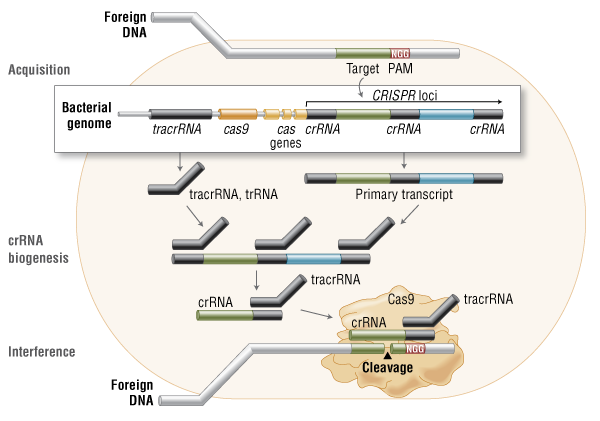
Three types of CRISPR mechanisms have been identified, of which type II is the most studied. In this case, invading DNA from viruses or plasmids is cut into small fragments and incorporated into a CRISPR locus amidst a series of short repeats (around 20 bps). The loci are transcribed, and transcripts are then processed to generate small RNAs (crRNA – CRISPR RNA), which are used to guide effector endonucleases that target invading DNA based on sequence complementarity (Figure 1) (11).

Figure 1. Cas9 in vivo: Bacterial Adaptive Immunity

https://www.neb.com/~/media/NebUs/Files/Feature%20Articles/Images/FA_Cas9_Fig1_Cas9InVivo.png

In the acquisition phase, foreign DNA is incorporated into the bacterial genome at the CRISPR loci. CRISPR loci is then transcribed and processed into crRNA during crRNA biogenesis. During interference, Cas9 endonuclease complexed with a crRNA and separate tracrRNA cleaves foreign DNA containing a 20-nucleotide crRNA complementary sequence adjacent to the PAM sequence. (Figure not drawn to scale.)

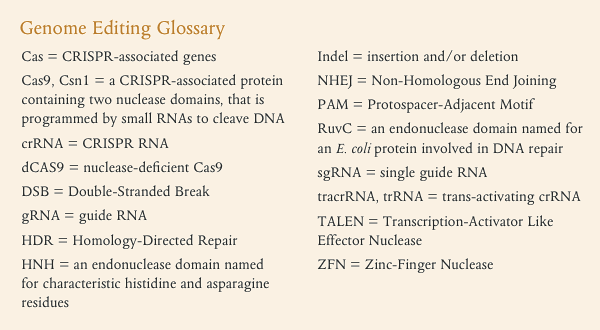
https://www.neb.com/~/media/NebUs/Files/Feature%20Articles/Images/FA_Cas9_GenomeEditingGlossary.png

One Cas protein, Cas9 (also known as Csn1), has been shown, through knockdown and rescue experiments to be a key player in certain CRISPR mechanisms (specifically type II CRISPR systems). The type II CRISPR mechanism is unique compared to other CRISPR systems, as only one Cas protein (Cas9) is required for gene silencing (12). In type II systems, Cas9 participates in the processing of crRNAs (12), and is responsible for the destruction of the target DNA (11). Cas9’s function in both of these steps relies on the presence of two nuclease domains, a RuvC-like nuclease domain located at the amino terminus and a HNH-like nuclease domain that resides in the mid-region of the protein (13).

To achieve site-specific DNA recognition and cleavage, Cas9 must be complexed with both a crRNA and a separate trans-activating crRNA (tracrRNA or trRNA), that is partially complementary to the crRNA (11). The tracrRNA is required for crRNA maturation from a primary transcript encoding multiple pre-crRNAs. This occurs in the presence of RNase III and Cas9 (12).

During the destruction of target DNA, the HNH and RuvC-like nuclease domains cut both DNA strands, generating double-stranded breaks (DSBs) at sites defined by a 20-nucleotide target sequence within an associated crRNA transcript (11, 14). The HNH domain cleaves the complementary strand, while the RuvC domain cleaves the noncomplementary strand.

The double-stranded endonuclease activity of Cas9 also requires that a short conserved sequence, (2–5 nts) known as protospacer-associated motif (PAM), follows immediately 3´- of the crRNA complementary sequence (15). In fact, even fully complementary sequences are ignored by Cas9-RNA in the absence of a PAM sequence (16).

Cas9 and CRISPR as a New Tool in Molecular Biology

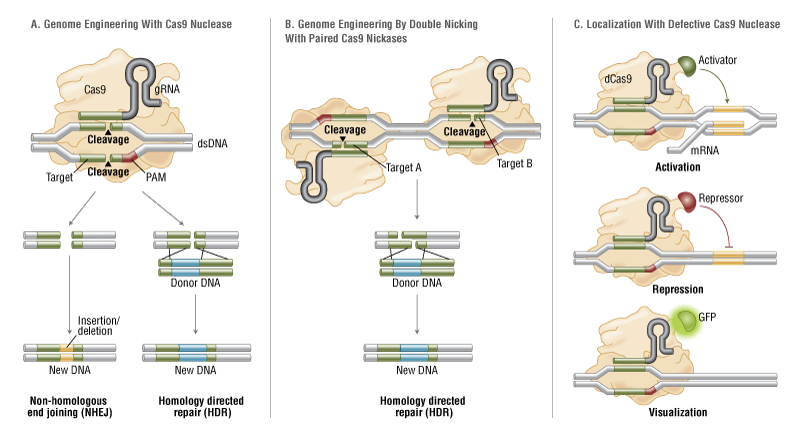
The simplicity of the type II CRISPR nuclease, with only three required components (Cas9 along with the crRNA and trRNA) makes this system amenable to adaptation for genome editing. This potential was realized in 2012 by the Doudna and Charpentier labs (11). Based on the type II CRISPR system described previously, the authors developed a simplified two-component system by combining trRNA and crRNA into a single synthetic single guide RNA (sgRNA). sgRNAprogrammed Cas9 was shown to be as effective as Cas9 programmed with separate trRNA and crRNA in guiding targeted gene alterations (Figure 2A).

To date, three different variants of the Cas9 nuclease have been adopted in genome-editing protocols. The first is wild-type Cas9, which can site-specifically cleave double-stranded DNA, resulting in the activation of the doublestrand break (DSB) repair machinery. DSBs can be repaired by the cellular Non-Homologous End Joining (NHEJ) pathway (17), resulting in insertions and/or deletions (indels) which disrupt the targeted locus. Alternatively, if a donor template with homology to the targeted locus is supplied, the DSB may be repaired by the homology-directed repair (HDR) pathway allowing for precise replacement mutations to be made (Figure 2A) (17, 18).

Cong and colleagues (1) took the Cas9 system a step further towards increased precision by developing a mutant form, known as Cas9D10A, with only nickase activity. This means it cleaves only one DNA strand, and does not activate NHEJ. Instead, when provided with a homologous repair template, DNA repairs are conducted via the high-fidelity HDR pathway only, resulting in reduced indel mutations (1, 11, 19). Cas9D10A is even more appealing in terms of target specificity when loci are targeted by paired Cas9 complexes designed to generate adjacent DNA nicks (20) (see further details about “paired nickases” in Figure 2B).

The third variant is a nuclease-deficient Cas9 (dCas9, Figure 2C) (21). Mutations H840A in the HNH domain and D10A in the RuvC domain inactivate cleavage activity, but do not prevent DNA binding (11, 22). Therefore, this variant can be used to sequence-specifically target any region of the genome without cleavage. Instead, by fusing with various effector domains, dCas9 can be used either as a gene silencing or activation tool (21, 23–26). Furthermore, it can be used as a visualization tool. For instance, Chen and colleagues used dCas9 fused to Enhanced Green Fluorescent Protein (EGFP) to visualize repetitive DNA sequences with a single sgRNA or nonrepetitive loci using multiple sgRNAs (27).

Figure 2. CRISPR/Cas9 System Applications

https://www.neb.com/~/media/NebUs/Files/Feature%20Articles/Images/FA_Cas9_Fig2_Cas9forGenomeEditing.png?device=modal

  1. Wild-type Cas9 nuclease site specifically cleaves double-stranded DNA activating double-strand break repair machinery. In the absence of a homologous repair template non-homologous end joining can result in indels disrupting the target sequence. Alternatively, precise mutations and knock-ins can be made by providing a homologous repair template and exploiting the homology directed repair pathway.
    B. Mutated Cas9 makes a site specific single-strand nick. Two sgRNA can be used to introduce a staggered double-stranded break which can then undergo homology directed repair.
    C. Nuclease-deficient Cas9 can be fused with various effector domains allowing specific localization. For example, transcriptional activators, repressors, and fluorescent proteins.

Targeting Efficiency and Off-target Mutations

Targeting efficiency, or the percentage of desired mutation achieved, is one of the most important parameters by which to assess a genome-editing tool. The targeting efficiency of Cas9 compares favorably with more established methods, such as TALENs or ZFNs (8). For example, in human cells, custom-designed ZFNs and TALENs could only achieve efficiencies ranging from 1% to 50% (29–31). In contrast, the Cas9 system has been reported to have efficiencies up to >70% in zebrafish (32) and plants (33), and ranging from 2–5% in induced pluripotent stem cells (34). In addition, Zhou and colleagues were able to improve genome targeting up to 78% in one-cell mouse embryos, and achieved effective germline transmission through the use of dual sgRNAs to simultaneously target an individual gene (35).

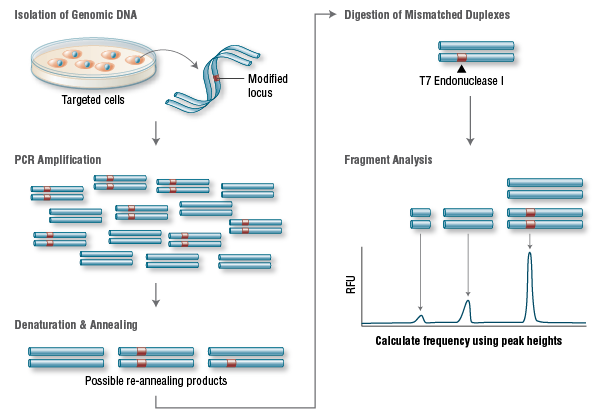
A widely used method to identify mutations is the T7 Endonuclease I mutation detection assay (36, 37) (Figure 3). This assay detects heteroduplex DNA that results from the annealing of a DNA strand, including desired mutations, with a wildtype DNA strand (37).

Figure 3. T7 Endonuclease I Targeting Efficiency Assay

https://www.neb.com/~/media/NebUs/Files/Feature%20Articles/Images/FA_Cas9_Fig3_T7Assay_TargetEfficiency.png

Genomic DNA is amplified with primers bracketing the modified locus. PCR products are then denatured and re-annealed yielding 3 possible structures. Duplexes containing a mismatch are digested by T7 Endonuclease I. The DNA is then electrophoretically separated and fragment analysis is used to calculate targeting efficiency.

Another important parameter is the incidence of off-target mutations. Such mutations are likely to appear in sites that have differences of only a few nucleotides compared to the original sequence, as long as they are adjacent to a PAM sequence. This occurs as Cas9 can tolerate up to 5 base mismatches within the protospacer region (36) or a single base difference in the PAM sequence (38). Off-target mutations are generally more difficult to detect, requiring whole-genome sequencing to rule them out completely.

Recent improvements to the CRISPR system for reducing off-target mutations have been made through the use of truncated gRNA (truncated within the crRNA-derived sequence) or by adding two extra guanine (G) nucleotides to the 5´ end (28, 37). Another way researchers have attempted to minimize off-target effects is with the use of “paired nickases” (20). This strategy uses D10A Cas9 and two sgRNAs complementary to the adjacent area on opposite strands of the target site (Figure 2B). While this induces DSBs in the target DNA, it is expected to create only single nicks in off-target locations and, therefore, result in minimal off-target mutations.

By leveraging computation to reduce off-target mutations, several groups have developed webbased tools to facilitate the identification of potential CRISPR target sites and assess their potential for off-target cleavage. Examples include the CRISPR Design Tool (38) and the ZiFiT Targeter, Version 4.2 (39, 40).

Applications as a Genome-editing and Genome Targeting Tool

Following its initial demonstration in 2012 (9), the CRISPR/Cas9 system has been widely adopted. This has already been successfully used to target important genes in many cell lines and organisms, including human (34), bacteria (41), zebrafish (32), C. elegans (42), plants (34), Xenopus tropicalis (43), yeast (44), Drosophila (45), monkeys (46), rabbits (47), pigs (42), rats (48) and mice (49). Several groups have now taken advantage of this method to introduce single point mutations (deletions or insertions) in a particular target gene, via a single gRNA (14, 21, 29). Using a pair of gRNA-directed Cas9 nucleases instead, it is also possible to induce large deletions or genomic rearrangements, such as inversions or translocations (50). A recent exciting development is the use of the dCas9 version of the CRISPR/Cas9 system to target protein domains for transcriptional regulation (26, 51, 52), epigenetic modification (25), and microscopic visualization of specific genome loci (27).

The CRISPR/Cas9 system requires only the redesign of the crRNA to change target specificity. This contrasts with other genome editing tools, including zinc finger and TALENs, where redesign of the protein-DNA interface is required. Furthermore, CRISPR/Cas9 enables rapid genome-wide interrogation of gene function by generating large gRNA libraries (51, 53) for genomic screening.

The Future of CRISPR/Cas9

The rapid progress in developing Cas9 into a set of tools for cell and molecular biology research has been remarkable, likely due to the simplicity, high efficiency and versatility of the system. Of the designer nuclease systems currently available for precision genome engineering, the CRISPR/Cas system is by far the most user friendly. It is now also clear that Cas9’s potential reaches beyond DNA cleavage, and its usefulness for genome locus-specific recruitment of proteins will likely only be limited by our imagination.


Scientists urge caution in using new CRISPR technology to treat human genetic disease

By Robert Sanders, Media relations | MARCH 19, 2015
http://news.berkeley.edu/2015/03/19/scientists-urge-caution-in-using-new-crispr-technology-to-treat-human-genetic-disease/

http://news.berkeley.edu/wp-content/uploads/2015/03/crispr350.jpg

The bacterial enzyme Cas9 is the engine of RNA-programmed genome engineering in human cells. (Graphic by Jennifer Doudna/UC Berkeley)

A group of 18 scientists and ethicists today warned that a revolutionary new tool to cut and splice DNA should be used cautiously when attempting to fix human genetic disease, and strongly discouraged any attempts at making changes to the human genome that could be passed on to offspring.

Among the authors of this warning is Jennifer Doudna, the co-inventor of the technology, called CRISPR-Cas9, which is driving a new interest in gene therapy, or “genome engineering.” She and colleagues co-authored a perspective piece that appears in the March 20 issue of Science, based on discussions at a meeting that took place in Napa on Jan. 24. The same issue of Science features a collection of recent research papers, commentary and news articles on CRISPR and its implications.    …..

A prudent path forward for genomic engineering and germline gene modification

David Baltimore1,  Paul Berg2, …., Jennifer A. Doudna4,10,*, et al.
http://science.sciencemag.org/content/early/2015/03/18/science.aab1028.full
Science  19 Mar 2015.  http://dx.doi.org:/10.1126/science.aab1028


Correcting genetic defects

Scientists today are changing DNA sequences to correct genetic defects in animals as well as cultured tissues generated from stem cells, strategies that could eventually be used to treat human disease. The technology can also be used to engineer animals with genetic diseases mimicking human disease, which could lead to new insights into previously enigmatic disorders.

The CRISPR-Cas9 tool is still being refined to ensure that genetic changes are precisely targeted, Doudna said. Nevertheless, the authors met “… to initiate an informed discussion of the uses of genome engineering technology, and to identify proactively those areas where current action is essential to prepare for future developments. We recommend taking immediate steps toward ensuring that the application of genome engineering technology is performed safely and ethically.”


Amyloid CRISPR Plasmids and si/shRNA Gene Silencers

http://www.scbt.com/crispr/table-amyloid.html

Santa Cruz Biotechnology, Inc. offers a broad range of gene silencers in the form of siRNAs, shRNA Plasmids and shRNA Lentiviral Particles as well as CRISPR/Cas9 Knockout and CRISPR Double Nickase plasmids. Amyloid gene silencers are available as Amyloid siRNA, Amyloid shRNA Plasmid, Amyloid shRNA Lentiviral Particles and Amyloid CRISPR/Cas9 Knockout plasmids. Amyloid CRISPR/dCas9 Activation Plasmids and CRISPR Lenti Activation Systems for gene activation are also available. Gene silencers and activators are useful for gene studies in combination with antibodies used for protein detection.    Amyloid CRISPR Knockout, HDR and Nickase Knockout Plasmids


CRISPR-Cas9-Based Knockout of the Prion Protein and Its Effect on the Proteome


Mehrabian M, Brethour D, MacIsaac S, Kim JK, Gunawardana C.G, Wang H, et al.
PLoS ONE 2014; 9(12): e114594. http://dx.doi.org/10.1371/journal.pone.0114594

The molecular function of the cellular prion protein (PrPC) and the mechanism by which it may contribute to neurotoxicity in prion diseases and Alzheimer’s disease are only partially understood. Mouse neuroblastoma Neuro2a cells and, more recently, C2C12 myocytes and myotubes have emerged as popular models for investigating the cellular biology of PrP. Mouse epithelial NMuMG cells might become attractive models for studying the possible involvement of PrP in a morphogenetic program underlying epithelial-to-mesenchymal transitions. Here we describe the generation of PrP knockout clones from these cell lines using CRISPR-Cas9 knockout technology. More specifically, knockout clones were generated with two separate guide RNAs targeting recognition sites on opposite strands within the first hundred nucleotides of the Prnp coding sequence. Several PrP knockout clones were isolated and genomic insertions and deletions near the CRISPR-target sites were characterized. Subsequently, deep quantitative global proteome analyses that recorded the relative abundance of>3000 proteins (data deposited to ProteomeXchange Consortium) were undertaken to begin to characterize the molecular consequences of PrP deficiency. The levels of ∼120 proteins were shown to reproducibly correlate with the presence or absence of PrP, with most of these proteins belonging to extracellular components, cell junctions or the cytoskeleton.

http://journals.plos.org/plosone/article/figure/image?size=inline&id=info:doi/10.1371/journal.pone.0114594.g001

http://journals.plos.org/plosone/article/figure/image?size=inline&id=info:doi/10.1371/journal.pone.0114594.g003


Development and Applications of CRISPR-Cas9 for Genome Engineering

Patrick D. Hsu,1,2,3 Eric S. Lander,1 and Feng Zhang1,2,*
Cell. 2014 Jun 5; 157(6): 1262–1278.   doi:  10.1016/j.cell.2014.05.010

Recent advances in genome engineering technologies based on the CRISPR-associated RNA-guided endonuclease Cas9 are enabling the systematic interrogation of mammalian genome function. Analogous to the search function in modern word processors, Cas9 can be guided to specific locations within complex genomes by a short RNA search string. Using this system, DNA sequences within the endogenous genome and their functional outputs are now easily edited or modulated in virtually any organism of choice. Cas9-mediated genetic perturbation is simple and scalable, empowering researchers to elucidate the functional organization of the genome at the systems level and establish causal linkages between genetic variations and biological phenotypes. In this Review, we describe the development and applications of Cas9 for a variety of research or translational applications while highlighting challenges as well as future directions. Derived from a remarkable microbial defense system, Cas9 is driving innovative applications from basic biology to biotechnology and medicine.

The development of recombinant DNA technology in the 1970s marked the beginning of a new era for biology. For the first time, molecular biologists gained the ability to manipulate DNA molecules, making it possible to study genes and harness them to develop novel medicine and biotechnology. Recent advances in genome engineering technologies are sparking a new revolution in biological research. Rather than studying DNA taken out of the context of the genome, researchers can now directly edit or modulate the function of DNA sequences in their endogenous context in virtually any organism of choice, enabling them to elucidate the functional organization of the genome at the systems level, as well as identify causal genetic variations.

Broadly speaking, genome engineering refers to the process of making targeted modifications to the genome, its contexts (e.g., epigenetic marks), or its outputs (e.g., transcripts). The ability to do so easily and efficiently in eukaryotic and especially mammalian cells holds immense promise to transform basic science, biotechnology, and medicine (Figure 1).

http://www.ncbi.nlm.nih.gov/pmc/articles/PMC4343198/bin/nihms659174f1.jpg

For life sciences research, technologies that can delete, insert, and modify the DNA sequences of cells or organisms enable dissecting the function of specific genes and regulatory elements. Multiplexed editing could further allow the interrogation of gene or protein networks at a larger scale. Similarly, manipulating transcriptional regulation or chromatin states at particular loci can reveal how genetic material is organized and utilized within a cell, illuminating relationships between the architecture of the genome and its functions. In biotechnology, precise manipulation of genetic building blocks and regulatory machinery also facilitates the reverse engineering or reconstruction of useful biological systems, for example, by enhancing biofuel production pathways in industrially relevant organisms or by creating infection-resistant crops. Additionally, genome engineering is stimulating a new generation of drug development processes and medical therapeutics. Perturbation of multiple genes simultaneously could model the additive effects that underlie complex polygenic disorders, leading to new drug targets, while genome editing could directly correct harmful mutations in the context of human gene therapy (Tebas et al., 2014).

Eukaryotic genomes contain billions of DNA bases and are difficult to manipulate. One of the breakthroughs in genome manipulation has been the development of gene targeting by homologous recombination (HR), which integrates exogenous repair templates that contain sequence homology to the donor site (Figure 2A) (Capecchi, 1989). HR-mediated targeting has facilitated the generation of knockin and knockout animal models via manipulation of germline competent stem cells, dramatically advancing many areas of biological research. However, although HR-mediated gene targeting produces highly precise alterations, the desired recombination events occur extremely infrequently (1 in 106–109 cells) (Capecchi, 1989), presenting enormous challenges for large-scale applications of gene-targeting experiments.

Genome Editing Technologies Exploit Endogenous DNA Repair Machinery

http://www.ncbi.nlm.nih.gov/pmc/articles/PMC4343198/bin/nihms659174f2.gif

To overcome these challenges, a series of programmable nuclease-based genome editing technologies have been developed in recent years, enabling targeted and efficient modification of a variety of eukaryotic and particularly mammalian species. Of the current generation of genome editing technologies, the most rapidly developing is the class of RNA-guided endonucleases known as Cas9 from the microbial adaptive immune system CRISPR (clustered regularly interspaced short palindromic repeats), which can be easily targeted to virtually any genomic location of choice by a short RNA guide. Here, we review the development and applications of the CRISPR-associated endonuclease Cas9 as a platform technology for achieving targeted perturbation of endogenous genomic elements and also discuss challenges and future avenues for innovation.   ……

Figure 4   Natural Mechanisms of Microbial CRISPR Systems in Adaptive Immunity

http://www.ncbi.nlm.nih.gov/pmc/articles/PMC4343198/bin/nihms659174f4.gif

……  A key turning point came in 2005, when systematic analysis of the spacer sequences separating the individual direct repeats suggested their extrachromosomal and phage-associated origins (Mojica et al., 2005Pourcel et al., 2005Bolotin et al., 2005). This insight was tremendously exciting, especially given previous studies showing that CRISPR loci are transcribed (Tang et al., 2002) and that viruses are unable to infect archaeal cells carrying spacers corresponding to their own genomes (Mojica et al., 2005). Together, these findings led to the speculation that CRISPR arrays serve as an immune memory and defense mechanism, and individual spacers facilitate defense against bacteriophage infection by exploiting Watson-Crick base-pairing between nucleic acids (Mojica et al., 2005Pourcel et al., 2005). Despite these compelling realizations that CRISPR loci might be involved in microbial immunity, the specific mechanism of how the spacers act to mediate viral defense remained a challenging puzzle. Several hypotheses were raised, including thoughts that CRISPR spacers act as small RNA guides to degrade viral transcripts in a RNAi-like mechanism (Makarova et al., 2006) or that CRISPR spacers direct Cas enzymes to cleave viral DNA at spacer-matching regions (Bolotin et al., 2005).   …..

As the pace of CRISPR research accelerated, researchers quickly unraveled many details of each type of CRISPR system (Figure 4). Building on an earlier speculation that protospacer adjacent motifs (PAMs) may direct the type II Cas9 nuclease to cleave DNA (Bolotin et al., 2005), Moineau and colleagues highlighted the importance of PAM sequences by demonstrating that PAM mutations in phage genomes circumvented CRISPR interference (Deveau et al., 2008). Additionally, for types I and II, the lack of PAM within the direct repeat sequence within the CRISPR array prevents self-targeting by the CRISPR system. In type III systems, however, mismatches between the 5′ end of the crRNA and the DNA target are required for plasmid interference (Marraffini and Sontheimer, 2010).  …..

In 2013, a pair of studies simultaneously showed how to successfully engineer type II CRISPR systems from Streptococcus thermophilus (Cong et al., 2013) andStreptococcus pyogenes (Cong et al., 2013Mali et al., 2013a) to accomplish genome editing in mammalian cells. Heterologous expression of mature crRNA-tracrRNA hybrids (Cong et al., 2013) as well as sgRNAs (Cong et al., 2013Mali et al., 2013a) directs Cas9 cleavage within the mammalian cellular genome to stimulate NHEJ or HDR-mediated genome editing. Multiple guide RNAs can also be used to target several genes at once. Since these initial studies, Cas9 has been used by thousands of laboratories for genome editing applications in a variety of experimental model systems (Sander and Joung, 2014). ……

The majority of CRISPR-based technology development has focused on the signature Cas9 nuclease from type II CRISPR systems. However, there remains a wide diversity of CRISPR types and functions. Cas RAMP module (Cmr) proteins identified in Pyrococcus furiosus and Sulfolobus solfataricus (Hale et al., 2012) constitute an RNA-targeting CRISPR immune system, forming a complex guided by small CRISPR RNAs that target and cleave complementary RNA instead of DNA. Cmr protein homologs can be found throughout bacteria and archaea, typically relying on a 5 site tag sequence on the target-matching crRNA for Cmr-directed cleavage.

Unlike RNAi, which is targeted largely by a 6 nt seed region and to a lesser extent 13 other bases, Cmr crRNAs contain 30–40 nt of target complementarity. Cmr-CRISPR technologies for RNA targeting are thus a promising target for orthogonal engineering and minimal off-target modification. Although the modularity of Cmr systems for RNA-targeting in mammalian cells remains to be investigated, Cmr complexes native to P. furiosus have already been engineered to target novel RNA substrates (Hale et al., 20092012).   ……

Although Cas9 has already been widely used as a research tool, a particularly exciting future direction is the development of Cas9 as a therapeutic technology for treating genetic disorders. For a monogenic recessive disorder due to loss-of-function mutations (such as cystic fibrosis, sickle-cell anemia, or Duchenne muscular dystrophy), Cas9 may be used to correct the causative mutation. This has many advantages over traditional methods of gene augmentation that deliver functional genetic copies via viral vector-mediated overexpression—particularly that the newly functional gene is expressed in its natural context. For dominant-negative disorders in which the affected gene is haplosufficient (such as transthyretin-related hereditary amyloidosis or dominant forms of retinitis pigmentosum), it may also be possible to use NHEJ to inactivate the mutated allele to achieve therapeutic benefit. For allele-specific targeting, one could design guide RNAs capable of distinguishing between single-nucleotide polymorphism (SNP) variations in the target gene, such as when the SNP falls within the PAM sequence.


CRISPR/Cas9: a powerful genetic engineering tool for establishing large animal models of neurodegenerative diseases

Zhuchi Tu, Weili Yang, Sen Yan, Xiangyu Guo and Xiao-Jiang Li

Molecular Neurodegeneration 2015; 10:35  http://dx.doi.org:/10.1186/s13024-015-0031-x

Animal models are extremely valuable to help us understand the pathogenesis of neurodegenerative disorders and to find treatments for them. Since large animals are more like humans than rodents, they make good models to identify the important pathological events that may be seen in humans but not in small animals; large animals are also very important for validating effective treatments or confirming therapeutic targets. Due to the lack of embryonic stem cell lines from large animals, it has been difficult to use traditional gene targeting technology to establish large animal models of neurodegenerative diseases. Recently, CRISPR/Cas9 was used successfully to genetically modify genomes in various species. Here we discuss the use of CRISPR/Cas9 technology to establish large animal models that can more faithfully mimic human neurodegenerative diseases.

Neurodegenerative diseases — Alzheimer’s disease(AD),Parkinson’s disease(PD), amyotrophic lateral sclerosis (ALS), Huntington’s disease (HD), and frontotemporal dementia (FTD) — are characterized by age-dependent and selective neurodegeneration. As the life expectancy of humans lengthens, there is a greater prevalence of these neurodegenerative diseases; however, the pathogenesis of most of these neurodegenerative diseases remain unclear, and we lack effective treatments for these important brain disorders.

CRISPR/Cas9,  Non-human primates,  Neurodegenerative diseases,  Animal model

There are a number of excellent reviews covering different types of neurodegenerative diseases and their genetic mouse models [812]. Investigations of different mouse models of neurodegenerative diseases have revealed a common pathology shared by these diseases. First, the development of neuropathology and neurological symptoms in genetic mouse models of neurodegenerative diseases is age dependent and progressive. Second, all the mouse models show an accumulation of misfolded or aggregated proteins resulting from the expression of mutant genes. Third, despite the widespread expression of mutant proteins throughout the body and brain, neuronal function appears to be selectively or preferentially affected. All these facts indicate that mouse models of neurodegenerative diseases recapitulate important pathologic features also seen in patients with neurodegenerative diseases.

However, it seems that mouse models can not recapitulate the full range of neuropathology seen in patients with neurodegenerative diseases. Overt neurodegeneration, which is the most important pathological feature in patient brains, is absent in genetic rodent models of AD, PD, and HD. Many rodent models that express transgenic mutant proteins under the control of different promoters do not replicate overt neurodegeneration, which is likely due to their short life spans and the different aging processes of small animals. Also important are the remarkable differences in brain development between rodents and primates. For example, the mouse brain takes 21 days to fully develop, whereas the formation of primate brains requires more than 150 days [13]. The rapid development of the brain in rodents may render neuronal cells resistant to misfolded protein-mediated neurodegeneration. Another difficulty in using rodent models is how to analyze cognitive and emotional abnormalities, which are the early symptoms of most neurodegenerative diseases in humans. Differences in neuronal circuitry, anatomy, and physiology between rodent and primate brains may also account for the behavioral differences between rodent and primate models.


Mitochondrial dynamics–fusion, fission, movement, and mitophagy–in neurodegenerative diseases

Hsiuchen Chen and David C. Chan
Human Molec Gen 2009; 18, Review Issue 2 R169–R176
http://dx.doi.org:/10.1093/hmg/ddp326

Neurons are metabolically active cells with high energy demands at locations distant from the cell body. As a result, these cells are particularly dependent on mitochondrial function, as reflected by the observation that diseases of mitochondrial dysfunction often have a neurodegenerative component. Recent discoveries have highlighted that neurons are reliant particularly on the dynamic properties of mitochondria. Mitochondria are dynamic organelles by several criteria. They engage in repeated cycles of fusion and fission, which serve to intermix the lipids and contents of a population of mitochondria. In addition, mitochondria are actively recruited to subcellular sites, such as the axonal and dendritic processes of neurons. Finally, the quality of a mitochondrial population is maintained through mitophagy, a form of autophagy in which defective mitochondria are selectively degraded. We review the general features of mitochondrial dynamics, incorporating recent findings on mitochondrial fusion, fission, transport and mitophagy. Defects in these key features are associated with neurodegenerative disease. Charcot-Marie-Tooth type 2A, a peripheral neuropathy, and dominant optic atrophy, an inherited optic neuropathy, result from a primary deficiency of mitochondrial fusion. Moreover, several major neurodegenerative diseases—including Parkinson’s, Alzheimer’s and Huntington’s disease—involve disruption of mitochondrial dynamics. Remarkably, in several disease models, the manipulation of mitochondrial fusion or fission can partially rescue disease phenotypes. We review how mitochondrial dynamics is altered in these neurodegenerative diseases and discuss the reciprocal interactions between mitochondrial fusion, fission, transport and mitophagy.


Applications of CRISPR–Cas systems in Neuroscience

Matthias Heidenreich  & Feng Zhang
Nature Rev Neurosci 2016; 17:36–44   http://dx.doi.org:/10.1038/nrn.2015.2

Genome-editing tools, and in particular those based on CRISPR–Cas (clustered regularly interspaced short palindromic repeat (CRISPR)–CRISPR-associated protein) systems, are accelerating the pace of biological research and enabling targeted genetic interrogation in almost any organism and cell type. These tools have opened the door to the development of new model systems for studying the complexity of the nervous system, including animal models and stem cell-derived in vitro models. Precise and efficient gene editing using CRISPR–Cas systems has the potential to advance both basic and translational neuroscience research.
Cellular neuroscience
, DNA recombination, Genetic engineering, Molecular neuroscience

Figure 3: In vitro applications of Cas9 in human iPSCs.close

http://www.nature.com/nrn/journal/v17/n1/carousel/nrn.2015.2-f3.jpg

a | Evaluation of disease candidate genes from large-population genome-wide association studies (GWASs). Human primary cells, such as neurons, are not easily available and are difficult to expand in culture. By contrast, induced pluripo…

  1. Genome-editing Technologies for Gene and Cell Therapy

Molecular Therapy 12 Jan 2016

  1. Systematic quantification of HDR and NHEJ reveals effects of locus, nuclease, and cell type on genome-editing

Scientific Reports 31 Mar 2016

  1. Controlled delivery of β-globin-targeting TALENs and CRISPR/Cas9 into mammalian cells for genome editing using microinjection

Scientific Reports 12 Nov 2015


Alzheimer’s Disease: Medicine’s Greatest Challenge in the 21st Century

https://www.physicsforums.com/insights/can-gene-editing-eliminate-alzheimers-disease/

The development of the CRISPR/Cas9 system has made gene editing a relatively simple task.  While CRISPR and other gene editing technologies stand to revolutionize biomedical research and offers many promising therapeutic avenues (such as in the treatment of HIV), a great deal of debate exists over whether CRISPR should be used to modify human embryos. As I discussed in my previous Insight article, we lack enough fundamental biological knowledge to enhance many traits like height or intelligence, so we are not near a future with genetically-enhanced super babies. However, scientists have identified a few rare genetic variants that protect against disease.  One such protective variant is a mutation in the APP gene that protects against Alzheimer’s disease and cognitive decline in old age. If we can perfect gene editing technologies, is this mutation one that we should be regularly introducing into embryos? In this article, I explore the potential for using gene editing as a way to prevent Alzheimer’s disease in future generations. Alzheimer’s Disease: Medicine’s Greatest Challenge in the 21st Century Can gene editing be the missing piece in the battle against Alzheimer’s? (Source: bostonbiotech.org) I chose to assess the benefit of germline gene editing in the context of Alzheimer’s disease because this disease is one of the biggest challenges medicine faces in the 21st century. Alzheimer’s disease is a chronic neurodegenerative disease responsible for the majority of the cases of dementia in the elderly. The disease symptoms begins with short term memory loss and causes more severe symptoms – problems with language, disorientation, mood swings, behavioral issues – as it progresses, eventually leading to the loss of bodily functions and death. Because of the dementia the disease causes, Alzheimer’s patients require a great deal of care, and the world spends ~1% of its total GDP on caring for those with Alzheimer’s and related disorders. Because the prevalence of the disease increases with age, the situation will worsen as life expectancies around the globe increase: worldwide cases of Alzheimer’s are expected to grow from 35 million today to over 115 million by 2050.

Despite much research, the exact causes of Alzheimer’s disease remains poorly understood. The disease seems to be related to the accumulation of plaques made of amyloid-β peptides that form on the outside of neurons, as well as the formation of tangles of the protein tau inside of neurons. Although many efforts have been made to target amyloid-β or the enzymes involved in its formation, we have so far been unsuccessful at finding any treatment that stops the disease or reverses its progress. Some researchers believe that most attempts at treating Alzheimer’s have failed because, by the time a patient shows symptoms, the disease has already progressed past the point of no return.

While research towards a cure continues, researchers have sought effective ways to prevent Alzheimer’s disease. Although some studies show that mental and physical exercise may lower ones risk of Alzheimer’s disease, approximately 60-80% of the risk for Alzheimer’s disease appears to be genetic. Thus, if we’re serious about prevention, we may have to act at the genetic level. And because the brain is difficult to access surgically for gene therapy in adults, this means using gene editing on embryos.

Reference https://www.physicsforums.com/insights/can-gene-editing-eliminate-alzheimers-disease/


Utilising CRISPR to Generate Predictive Disease Models: a Case Study in Neurodegenerative Disorders


Dr. Bhuvaneish.T. Selvaraj  – Scottish Centre for Regenerative Medicine

http://www.crisprsummit.com/utilising-crispr-to-generate-predictive-disease-models-a-case-study-in-neurodegenerative-disorders

  • Introducing the latest developments in predictive model generation
  • Discover how CRISPR is being used to develop disease models to study and treat neurodegenerative disorders
  • In depth Q&A session to answer your most pressing questions


Turning On Genes, Systematically, with CRISPR/Cas9

http://www.genengnews.com/gen-news-highlights/turning-on-genes-systematically-with-crispr-cas9/81250697/


Scientists based at MIT assert that they can reliably turn on any gene of their choosing in living cells. [Feng Zhang and Steve Dixon]  http://www.genengnews.com/media/images/GENHighlight/Dec12_2014_CRISPRCas9GeneActivationSystem7838101231.jpg

With the latest CRISPR/Cas9 advance, the exhortation “turn on, tune in, drop out” comes to mind. The CRISPR/Cas9 gene-editing system was already a well-known means of “tuning in” (inserting new genes) and “dropping out” (knocking out genes). But when it came to “turning on” genes, CRISPR/Cas9 had little potency. That is, it had demonstrated only limited success as a way to activate specific genes.

A new CRISPR/Cas9 approach, however, appears capable of activating genes more effectively than older approaches. The new approach may allow scientists to more easily determine the function of individual genes, according to Feng Zhang, Ph.D., a researcher at MIT and the Broad Institute. Dr. Zhang and colleagues report that the new approach permits multiplexed gene activation and rapid, large-scale studies of gene function.

The new technique was introduced in the December 10 online edition of Nature, in an article entitled, “Genome-scale transcriptional activation by an engineered CRISPR-Cas9 complex.” The article describes how Dr. Zhang, along with the University of Tokyo’s Osamu Nureki, Ph.D., and Hiroshi Nishimasu, Ph.D., overhauled the CRISPR/Cas9 system. The research team based their work on their analysis (published earlier this year) of the structure formed when Cas9 binds to the guide RNA and its target DNA. Specifically, the team used the structure’s 3D shape to rationally improve the system.

In previous efforts to revamp CRISPR/Cas9 for gene activation purposes, scientists had tried to attach the activation domains to either end of the Cas9 protein, with limited success. From their structural studies, the MIT team realized that two small loops of the RNA guide poke out from the Cas9 complex and could be better points of attachment because they allow the activation domains to have more flexibility in recruiting transcription machinery.

Using their revamped system, the researchers activated about a dozen genes that had proven difficult or impossible to turn on using the previous generation of Cas9 activators. Each gene showed at least a twofold boost in transcription, and for many genes, the researchers found multiple orders of magnitude increase in activation.

After investigating single-guide RNA targeting rules for effective transcriptional activation, demonstrating multiplexed activation of 10 genes simultaneously, and upregulating long intergenic noncoding RNA transcripts, the research team decided to undertake a large-scale screen. This screen was designed to identify genes that confer resistance to a melanoma drug called PLX-4720.

“We … synthesized a library consisting of 70,290 guides targeting all human RefSeq coding isoforms to screen for genes that, upon activation, confer resistance to a BRAF inhibitor,” wrote the authors of the Nature paper. “The top hits included genes previously shown to be able to confer resistance, and novel candidates were validated using individual [single-guide RNA] and complementary DNA overexpression.”

A gene signature based on the top screening hits, the authors added, correlated with a gene expression signature of BRAF inhibitor resistance in cell lines and patient-derived samples. It was also suggested that large-scale screens such as the one demonstrated in the current study could help researchers discover new cancer drugs that prevent tumors from becoming resistant.

More at –  http://www.genengnews.com/gen-news-highlights/turning-on-genes-systematically-with-crispr-cas9/81250697/


Susceptibility and modifier genes in Portuguese transthyretin V30M amyloid polyneuropathy: complexity in a single-gene disease
Miguel L. Soares1,2, Teresa Coelho3,6, Alda Sousa4,5, …, Maria Joa˜o Saraiva2,5 and Joel N. Buxbaum1
Human Molec Gen 2005; 14(4): 543–553   http://dx.doi.org:/10.1093/hmg/ddi051
https://www.researchgate.net/profile/Isabel_Conceicao/publication/8081351_Susceptibility_and_modifier_genes_in_Portuguese_transthyretin_V30M_amyloid_polyneuropathy_complexity_in_a_single-gene_disease/links/53e123d70cf2235f352733b3.pdf

Familial amyloid polyneuropathy type I is an autosomal dominant disorder caused by mutations in the transthyretin (TTR ) gene; however, carriers of the same mutation exhibit variability in penetrance and clinical expression. We analyzed alleles of candidate genes encoding non-fibrillar components of TTR amyloid deposits and a molecule metabolically interacting with TTR [retinol-binding protein (RBP)], for possible associations with age of disease onset and/or susceptibility in a Portuguese population sample with the TTR V30M mutation and unrelated controls. We show that the V30M carriers represent a distinct subset of the Portuguese population. Estimates of genetic distance indicated that the controls and the classical onset group were furthest apart, whereas the late-onset group appeared to differ from both. Importantly, the data also indicate that genetic interactions among the multiple loci evaluated, rather than single-locus effects, are more likely to determine differences in the age of disease onset. Multifactor dimensionality reduction indicated that the best genetic model for classical onset group versus controls involved the APCS gene, whereas for late-onset cases, one APCS variant (APCSv1) and two RBP variants (RBPv1 and RBPv2) are involved. Thus, although the TTR V30M mutation is required for the disease in Portuguese patients, different genetic factors may govern the age of onset, as well as the occurrence of anticipation.

Autosomal dominant disorders may vary in expression even within a given kindred. The basis of this variability is uncertain and can be attributed to epigenetic factors, environment or epistasis. We have studied familial amyloid polyneuropathy (FAP), an autosomal dominant disorder characterized by peripheral sensorimotor and autonomic neuropathy. It exhibits variation in cardiac, renal, gastrointestinal and ocular involvement, as well as age of onset. Over 80 missense mutations in the transthyretin gene (TTR ) result in autosomal dominant disease http://www.ibmc.up.pt/~mjsaraiv/ttrmut.html). The presence of deposits consisting entirely of wild-type TTR molecules in the hearts of 10– 25% of individuals over age 80 reveals its inherent in vivo amyloidogenic potential (1).

FAP was initially described in Portuguese (2) where, until recently, the TTR V30M has been the only pathogenic mutation associated with the disease (3,4). Later reports identified the same mutation in Swedish and Japanese families (5,6). The disorder has since been recognized in other European countries and in North American kindreds in association with V30M, as well as other mutations (7).

TTR V30M produces disease in only 5–10% of Swedish carriers of the allele (8), a much lower degree of penetrance than that seen in Portuguese (80%) (9) or in Japanese with the same mutation. The actual penetrance in Japanese carriers has not been formally established, but appears to resemble that seen in Portuguese. Portuguese and Japanese carriers show considerable variation in the age of clinical onset (10,11). In both populations, the first symptoms had originally been described as typically occurring before age 40 (so-called ‘classical’ or early-onset); however, in recent years, more individuals developing symptoms late in life have been identified (11,12). Hence, present data indicate that the distribution of the age of onset in Portuguese is continuous, but asymmetric with a mean around age 35 and a long tail into the older age group (Fig. 1) (9,13). Further, DNA testing in Portugal has identified asymptomatic carriers over age 70 belonging to a subset of very late-onset kindreds in whose descendants genetic anticipation is frequent. The molecular basis of anticipation in FAP, which is not mediated by trinucleotide repeat expansions in the TTR or any other gene (14), remains elusive.

Variation in penetrance, age of onset and clinical features are hallmarks of many autosomal dominant disorders including the human TTR amyloidoses (7). Some of these clearly reflect specific biological effects of a particular mutation or a class of mutants. However, when such phenotypic variability is seen with a single mutation in the gene encoding the same protein, it suggests an effect of modifying genetic loci and/or environmental factors contributing differentially to the course of disease. We have chosen to examine age of onset as an example of a discrete phenotypic variation in the presence of the particular autosomal dominant disease-associated mutation TTR V30M. Although the role of environmental factors cannot be excluded, the existence of modifier genes involved in TTR amyloidogenesis is an attractive hypothesis to explain the phenotypic variability in FAP. ….

ATTR (TTR amyloid), like all amyloid deposits, contains several molecular components, in addition to the quantitatively dominant fibril-forming amyloid protein, including heparan sulfate proteoglycan 2 (HSPG2 or perlecan), SAP, a plasma glycoprotein of the pentraxin family (encoded by the APCS gene) that undergoes specific calcium-dependent binding to all types of amyloid fibrils, and apolipoprotein E (ApoE), also found in all amyloid deposits (15). The ApoE4 isoform is associated with an increased frequency and earlier onset of Alzheimer’s disease (Ab), the most common form of brain amyloid, whereas the ApoE2 isoform appears to be protective (16). ApoE variants could exert a similar modulatory effect in the onset of FAP, although early studies on a limited number of patients suggested this was not the case (17).

In at least one instance of senile systemic amyloidosis, small amounts of AA-related material were found in TTR deposits (18). These could reflect either a passive co-aggregation or a contributory involvement of protein AA, encoded by the serum amyloid A (SAA ) genes and the main component of secondary (reactive) amyloid fibrils, in the formation of ATTR.

Retinol-binding protein (RBP), the serum carrier of vitamin A, circulates in plasma bound to TTR. Vitamin A-loaded RBP and L-thyroxine, the two natural ligands of TTR, can act alone or synergistically to inhibit the rate and extent of TTR fibrillogenesis in vitro, suggesting that RBP may influence the course of FAP pathology in vivo (19). We have analyzed coding and non-coding sequence polymorphisms in the RBP4 (serum RBP, 10q24), HSPG2 (1p36.1), APCS (1q22), APOE (19q13.2), SAA1 and SAA2 (11p15.1) genes with the goal of identifying chromosomes carrying common and functionally significant variants. At the time these studies were performed, the full human genome sequence was not completed and systematic singlenucleotide polymorphism (SNP) analyses were not available for any of the suspected candidate genes. We identified new SNPs in APCS and RBP4 and utilized polymorphisms in SAA, HSPG2 and APOE that had already been characterized and shown to have potential pathophysiologic significance in other disorders (16,20–22). The genotyping data were analyzed for association with the presence of the V30M amyloidogenic allele (FAP patients versus controls) and with the age of onset (classical- versus late-onset patients). Multilocus analyses were also performed to examine the effects of simultaneous contributions of the six loci for determining the onset of the first symptoms.  …..

The potential for different underlying models for classical and late onset is supported by the MDR analysis, which produces two distinct models when comparing each class with the controls. One could view the two onset classes as unique diseases. If this is the case, then the failure to detect a single predictive genetic model is consistent with two related, but different, diseases. This is exactly what would be expected in such a case of genetic heterogeneity (28). Using this approach, a major gene effect can be viewed as a necessary, but not sufficient, condition to explain the course of the disease. Analyzing the cases but omitting from the analysis of phenotype the necessary allele, in this case TTR V30M, can then reveal a variety of important modifiers that are distinct between the phenotypes.

The significant comparisons obtained in our study cohort indicate that the combined effects mainly result from two and three-locus interactions involving all loci except SAA1 and SAA2 for susceptibility to disease. A considerable number of four-site combinations modulate the age of onset with SAA1 appearing in a majority of significant combinations in late-onset disease, perhaps indicating a greater role of the SAA variants in the age of onset of FAP.

The correlation between genotype and phenotype in socalled simple Mendelian disorders is often incomplete, as only a subset of all mutations can reliably predict specific phenotypes (34). This is because non-allelic genetic variations and/or environmental influences underlie these disorders whose phenotypes behave as complex traits. A few examples include the identification of the role of homozygozity for the SAA1.1 allele in conferring the genetic susceptibility to renal amyloidosis in FMF (20) and the association of an insertion/deletion polymorphism in the ACE gene with disease severity in familial hypertrophic cardiomyopathy (35). In these disorders, the phenotypes arise from mutations in MEFV and b-MHC, but are modulated by independently inherited genetic variation. In this report, we show that interactions among multiple genes, whose products are confirmed or putative constituents of ATTR deposits, or metabolically interact with TTR, modulate the onset of the first symptoms and predispose individuals to disease in the presence of the V30M mutation in TTR. The exact nature of the effects identified here requires further study with potential application in the development of genetic screening with prognostic value pertaining to the onset of disease in the TTR V30M carriers.

If the effects of additional single or interacting genes dictate the heterogeneity of phenotype, as reflected in variability of onset and clinical expression (with the same TTR mutation), the products encoded by alleles at such loci could contribute to the process of wild-type TTR deposition in elderly individuals without a mutation (senile systemic amyloidosis), a phenomenon not readily recognized as having a genetic basis because of the insensitivity of family history in the elderly.


Safety and Efficacy of RNAi Therapy for Transthyretin Amyloidosis

Coelho T, Adams D, Silva A, et al.
N Engl J Med 2013;369:819-29.    http://dx.doi.org:/10.1056/NEJMoa1208760

Transthyretin amyloidosis is caused by the deposition of hepatocyte-derived transthyretin amyloid in peripheral nerves and the heart. A therapeutic approach mediated by RNA interference (RNAi) could reduce the production of transthyretin.

Methods We identified a potent antitransthyretin small interfering RNA, which was encapsulated in two distinct first- and second-generation formulations of lipid nanoparticles, generating ALN-TTR01 and ALN-TTR02, respectively. Each formulation was studied in a single-dose, placebo-controlled phase 1 trial to assess safety and effect on transthyretin levels. We first evaluated ALN-TTR01 (at doses of 0.01 to 1.0 mg per kilogram of body weight) in 32 patients with transthyretin amyloidosis and then evaluated ALN-TTR02 (at doses of 0.01 to 0.5 mg per kilogram) in 17 healthy volunteers.

Results Rapid, dose-dependent, and durable lowering of transthyretin levels was observed in the two trials. At a dose of 1.0 mg per kilogram, ALN-TTR01 suppressed transthyretin, with a mean reduction at day 7 of 38%, as compared with placebo (P=0.01); levels of mutant and nonmutant forms of transthyretin were lowered to a similar extent. For ALN-TTR02, the mean reductions in transthyretin levels at doses of 0.15 to 0.3 mg per kilogram ranged from 82.3 to 86.8%, with reductions of 56.6 to 67.1% at 28 days (P<0.001 for all comparisons). These reductions were shown to be RNAi mediated. Mild-to-moderate infusion-related reactions occurred in 20.8% and 7.7% of participants receiving ALN-TTR01 and ALN-TTR02, respectively.

ALN-TTR01 and ALN-TTR02 suppressed the production of both mutant and nonmutant forms of transthyretin, establishing proof of concept for RNAi therapy targeting messenger RNA transcribed from a disease-causing gene.


Alnylam May Seek Approval for TTR Amyloidosis Rx in 2017 as Other Programs Advance


https://www.genomeweb.com/rnai/alnylam-may-seek-approval-ttr-amyloidosis-rx-2017-other-programs-advance

Officials from Alnylam Pharmaceuticals last week provided updates on the two drug candidates from the company’s flagship transthyretin-mediated amyloidosis program, stating that the intravenously delivered agent patisiran is proceeding toward a possible market approval in three years, while a subcutaneously administered version called ALN-TTRsc is poised to enter Phase III testing before the end of the year.

Meanwhile, Alnylam is set to advance a handful of preclinical therapies into human studies in short order, including ones for complement-mediated diseases, hypercholesterolemia, and porphyria.

The officials made their comments during a conference call held to discuss Alnylam’s second-quarter financial results.

ATTR is caused by a mutation in the TTR gene, which normally produces a protein that acts as a carrier for retinol binding protein and is characterized by the accumulation of amyloid deposits in various tissues. Alnylam’s drugs are designed to silence both the mutant and wild-type forms of TTR.

Patisiran, which is delivered using lipid nanoparticles developed by Tekmira Pharmaceuticals, is currently in a Phase III study in patients with a form of ATTR called familial amyloid polyneuropathy (FAP) affecting the peripheral nervous system. Running at over 20 sites in nine countries, that study is set to enroll up to 200 patients and compare treatment to placebo based on improvements in neuropathy symptoms.

According to Alnylam Chief Medical Officer Akshay Vaishnaw, Alnylam expects to have final data from the study in two to three years, which would put patisiran on track for a new drug application filing in 2017.

Meanwhile, ALN-TTRsc, which is under development for a version of ATTR that affects cardiac tissue called familial amyloidotic cardiomyopathy (FAC) and uses Alnylam’s proprietary GalNAc conjugate delivery technology, is set to enter Phase III by year-end as Alnylam holds “active discussions” with US and European regulators on the design of that study, CEO John Maraganore noted during the call.

In the interim, Alnylam continues to enroll patients in a pilot Phase II study of ALN-TTRsc, which is designed to test the drug’s efficacy for FAC or senile systemic amyloidosis (SSA), a condition caused by the idiopathic accumulation of wild-type TTR protein in the heart.

Based on “encouraging” data thus far, Vaishnaw said that Alnylam has upped the expected enrollment in this study to 25 patients from 15. Available data from the trial is slated for release in November, he noted, stressing that “any clinical endpoint result needs to be considered exploratory given the small sample size and the very limited duration of treatment of only six weeks” in the trial.

Vaishnaw added that an open-label extension (OLE) study for patients in the ALN-TTRsc study will kick off in the coming weeks, allowing the company to gather long-term dosing tolerability and clinical activity data on the drug.

Enrollment in an OLE study of patisiran has been completed with 27 patients, he said, and, “as of today, with up to nine months of therapy … there have been no study drug discontinuations.” Clinical endpoint data from approximately 20 patients in this study will be presented at the American Neurological Association meeting in October.

As part of its ATTR efforts, Alnylam has also been conducting natural history of disease studies in both FAP and FAC patients. Data from the 283-patient FAP study was presented earlier this year and showed a rapid progression in neuropathy impairment scores and a high correlation of this measurement with disease severity.

During last week’s conference call, Vaishnaw said that clinical endpoint and biomarker data on about 400 patients with either FAC or SSA have already been collected in a nature history study on cardiac ATTR. Maraganore said that these findings would likely be released sometime next year.

Alnylam Presents New Phase II, Preclinical Data from TTR Amyloidosis Programs
https://www.genomeweb.com/rnai/alnylam-presents-new-phase-ii-preclinical-data-ttr-amyloidosis-programs


Amyloid disease drug approved

Nature Biotechnology 2012; (3http://dx.doi.org:/10.1038/nbt0212-121b

The first medication for a rare and often fatal protein misfolding disorder has been approved in Europe. On November 16, the E gave a green light to Pfizer’s Vyndaqel (tafamidis) for treating transthyretin amyloidosis in adult patients with stage 1 polyneuropathy symptoms. [Jeffery Kelly, La Jolla]


Safety and Efficacy of RNAi Therapy for Transthyretin …

http://www.nejm.org/…/NEJMoa1208760?&#8230;

The New England Journal of Medicine

Aug 29, 2013 – Transthyretin amyloidosis is caused by the deposition of hepatocyte-derived transthyretin amyloid in peripheral nerves and the heart.


Alnylam’s RNAi therapy targets amyloid disease

Ken Garber
Nature Biotechnology 2015; 33(577)    http://dx.doi.org:/10.1038/nbt0615-577a

RNA interference’s silencing of target genes could result in potent therapeutics.

http://www.nature.com/nbt/journal/v33/n6/images/nbt0615-577a-I1.jpg

The most clinically advanced RNA interference (RNAi) therapeutic achieved a milestone in April when Alnylam Pharmaceuticals in Cambridge, Massachusetts, reported positive results for patisiran, a small interfering RNA (siRNA) oligonucleotide targeting transthyretin for treating familial amyloidotic polyneuropathy (FAP).  …

  1. Analysis of 589,306 genomes identifies individuals resilient to severe Mendelian childhood diseases

Nature Biotechnology 11 April 2016

  1. CRISPR-Cas systems for editing, regulating and targeting genomes

Nature Biotechnology 02 March 2014

  1. Near-optimal probabilistic RNA-seq quantification

Nature Biotechnology 04 April 2016


Translational Neuroscience: Toward New Therapies

https://books.google.com/books?isbn=0262029863

Karoly Nikolich, ‎Steven E. Hyman – 2015 – ‎Medical

Tafamidis for Transthyretin Familial Amyloid Polyneuropathy: A Randomized, Controlled Trial. … Multiplex Genome Engineering Using CRISPR/Cas Systems.


Is CRISPR a Solution to Familial Amyloid Polyneuropathy?

Author and Curator: Larry H. Bernstein, MD, FCAP

Originally published as

https://pharmaceuticalintelligence.com/2016/04/13/is-crispr-a-solution-to-familial-amyloid-polyneuropathy/


http://scholar.aci.info/view/1492518a054469f0388/15411079e5a00014c3d

FAP is characterized by the systemic deposition of amyloidogenic variants of the transthyretin protein, especially in the peripheral nervous system, causing a progressive sensory and motor polyneuropathy.

FAP is caused by a mutation of the TTR gene, located on human chromosome 18q12.1-11.2.[5] A replacement of valine by methionine at position 30 (TTR V30M) is the mutation most commonly found in FAP.[1] The variant TTR is mostly produced by the liver.[citation needed] The transthyretin protein is a tetramer.    ….


Read Full Post »

CRISPR/Cas9 and HIV1, Volume 2 (Volume Two: Latest in Genomics Methodologies for Therapeutics: Gene Editing, NGS and BioInformatics, Simulations and the Genome Ontology), Part 2: CRISPR for Gene Editing and DNA Repair

CRISPR/Cas9 and HIV1

Larry H. Bernstein, MD, FCAP, Curator

LPBI

Harnessing the CRISPR/Cas9 system to disrupt latent HIV-1 provirus

Hirotaka EbinaNaoko MisawaYuka Kanemura & Yoshio Koyanagi

Scientific Reports 2013; 2510(3)   http://dx.doi.org:/10.1038/srep02510

Even though highly active anti-retroviral therapy is able to keep HIV-1 replication under control, the virus can lie in a dormant state within the host genome, known as a latent reservoir, and poses a threat to re-emerge at any time. However, novel technologies aimed at disrupting HIV-1 provirus may be capable of eradicating viral genomes from infected individuals. In this study, we showed the potential of the CRISPR/Cas9 system to edit the HIV-1 genome and block its expression. When LTR-targeting CRISPR/Cas9 components were transfected into HIV-1 LTR expression-dormant and -inducible T cells, a significant loss of LTR-driven expression was observed after stimulation. Sequence analysis confirmed that this CRISPR/Cas9 system efficiently cleaved and mutated LTR target sites. More importantly, this system was also able to remove internal viral genes from the host cell chromosome. Our results suggest that the CRISPR/Cas9 system may be a useful tool for curing HIV-1 infection.


Integration of reverse transcribed viral DNA into the host cell genome is an essential step during the HIV-1 life cycle1. The integrated retroviral DNA is termed a provirus, which serves as the fundamental source of viral protein production. HIV-1 gene expression is regulated by LTR promoter and enhancer activities, where cellular transcription factors such as NF-κB, SP-1 and TBP bind to promote RNA polymerase II processivity. Subsequently, Tat protein is expressed from early double-spliced transcripts and binds to the trans activation response (TAR) region of HIV-1 RNA for its efficient elongation2.

Latent infection occurs when the HIV-1 provirus becomes transcriptionally inactive, resulting in a latent reservoir that has become the main obstacle in preventing viral eradication from HIV-1 infected individuals. However, the mechanisms of viral silencing and reactivation remain incompletely understood3. Previous studies have suggested that the position of the integration site strongly influences viral gene expression and may be one of the determinants of HIV-1 latency4. While highly active anti-retroviral therapy (HARRT) has dramatically decreased mortality from HIV-1 infection, there is currently no effective strategy to target the latent form of HIV-1 proviruses5.

Over the last decade, novel genome-editing methods that utilize artificial nucleases such as zinc finger nucleases (ZFNs)6 and transcription activator like-effector nucleases (TALENs)7 have been developed. These molecularly engineered nucleases recognize and cleave specific nucleotide sequences in target genomes for digestion, resulting in various mutations such as substitutions, deletions and insertions induced by host DNA repair machinery. These technologies have enabled the production of genome-manipulated animals in a wide range of species such as Drosophila8, Zebrafish9 and Rat10. However, ZFNs or TALENs remain somewhat difficult and time-consuming to design, develop, and empirically test in a cellular context11. Recently, a third genome-editing method was developed based on clustered regularly interspaced short palindromic repeat (CRISPR) systems. CRISPR systems were originally identified in bacteria and archaea12 as part of an adaptive immune system, dependent on a complex consisting of CRISPR RNAs (crRNAs) and CRISPR-associated (Cas) proteins to degrade complimentary sequences of invading viral and plasmid DNA. Mali et al. created a novel version of the genome-editing tool applicable to mammalian cells, termed the CRISPR/Cas9 system, which is based on modifications of the Streptococcus pyogenes type II CRISPR system in crRNA fused to trans-encoded tracrRNA13. This CRISPR/Cas9 system is composed of guide RNA (gRNA) and a human codon-optimized Cas9 nuclease that forms an RNA-protein complex to digest unique target sequences matching those of gRNA. The CRISPR/Cas9 system can be utilized by simple transfection of designed gRNA and a humanized Cas9 (hCas9) expression plasmid into target mammalian cells, making it a promising tool for various applications.

In this study, we tested the ability of the CRISPR/Cas9 system to suppress HIV-1 expression by editing HIV-1 integrated proviral DNA. Cas9 and gRNA, designed to target HIV-1 LTR, were transfected and significantly inhibited LTR-driven expression under the control of Tat. This LTR-targeted CRISPR/Cas9 system can also excise provirus from the cellular genome.


http://www.nature.com/article-assets/npg/srep/2013/130826/srep02510/images_hires/w926/srep02510-f2.jpg

CRISPR/Cas9 system can target the latent form of HIV-1 provirus in Jurkat cell

Because the putative latently infected cells are CD4+ T cells, we next tested the genome editing potential of the CRISPR/Cas9 system in these cells.

…..


In this study, we successfully disrupted the expression of HIV-1 provirus utilizing the CRISPR/Cas9 system (Fig. 1). Importantly, this disruption not only restricted transcriptionally active provirus, it also blocked the expression of latently integrated provirus (Fig. 3). Cas9 proteins are predicted to contain RuvC and HNH motifs15, which possess autonomous ssDNA cleavage activity. Interestingly, mutants lacking one of the motifs become nicking endonucleases16. It is plausible that the independent nicking activity of each domain may enhance efficient access to the heterochromatin state of latently integrated provirus. Another possibility is that Cas9 has a highly efficient target surveillance system similar to what has been previously reported for the Cas3 system17.

T6 gRNA that targeted the NF-κB binding site, also strongly suppressed the LTR promoter activity (Fig. 1). However, the effect was weaker than that of T5 gRNA. In this study we used an LTIG vector modified from the LTR of HIV-1 strain NL4-3 that possesses two adjacent NF-κB binding sites18. The T6 target site is at the end of the 5′ NF-κB binding site, meaning that mutations may not completely render transcription inactive since the 3′ NF-κB binding site may remain functional. On the other hand, T5 gRNA that targeted TAR, is profoundly effective in disrupting HIV-1 gene expression. The putative cleavage site was positioned at the neck of the stem loop region of TAR, which is critical for Cyclin T1-Tat-TAR ternary complex formation19. Therefore, the TAR sequence may be one of the best targets for blocking HIV-1 provirus expression. Target specificity of the CRISPR/Cas system is very high and a single mutation can disrupt targeting20, meaning that some provirus may escape from this genome-editing machinery if mutations arise in target sequences. However, given that the TAR region is relatively conserved and there is little variation among HIV-1 subtypes21, it could still be an appropriate target for the elimination of latently infected provirus.

Perhaps the most important finding in this study is that we could excise provirus from the host genome of HIV-1 infected cells, which may provide a ray of hope to eradicate HIV-1 from infected individuals. However, there are numerous hurdles that must be cleared before utilizing genome editing for HIV-1 eradication therapies such as gene therapy. First, the efficiency of genome-editing and/or proviral excision should be quantified in HIV infected primary cells, including latently infected CD4+ quiescent T cells. Second, an efficient delivery system must be developed. Fortunately, the CRISPR/Cas9 system has the advantage in size compared with TALENs22. Thus, the CRISPR system has the potential to be delivered by lentivirus vectors, whereas TALENs do not because of their large size and repeat sequences23. The final hurdle concerns possible off-target effects, which are pertinent concerns for all genome-editing strategies that may lead to nonspecific gene modification events. If Cas9 has off-target effects, then removal of the off-target activity may be the best approach before utilizing CRISPR/Cas system for anti-HIV treatment.


Elimination of HIV-1 Genomes from Human T-lymphoid Cells by CRISPR/Cas9 Gene Editing

Rafal KaminskiYilan ChenTracy FischerEllen TedaldiAlessandro Napoli,Yonggang ZhangJonathan KarnWenhui Hu & Kamel Khalili

Scientific Reports 6, Article number: 22555 (2016)   http://dx.doi.org:/10.1038/srep22555


We employed an RNA-guided CRISPR/Cas9 DNA editing system to precisely remove the entire HIV-1 genome spanning between 5′ and 3′ LTRs of integrated HIV-1 proviral DNA copies from latently infected human CD4+ T-cells. Comprehensive assessment of whole-genome sequencing of HIV-1 eradicated cells ruled out any off-target effects by our CRISPR/Cas9 technology that might compromise the integrity of the host genome and further showed no effect on several cell health indices including viability, cell cycle and apoptosis. Persistent co-expression of Cas9 and the specific targeting guide RNAs in HIV-1-eradicated T-cells protected them against new infection by HIV-1. Lentivirus-delivered CRISPR/Cas9 significantly diminished HIV-1 replication in infected primary CD4+ T-cell cultures and drastically reduced viral load in ex vivo culture of CD4+ T-cells obtained from HIV-1 infected patients. Thus, gene editing using CRISPR/Cas9 may provide a new therapeutic path for eliminating HIV-1 DNA from CD4+ T-cells and potentially serve as a novel and effective platform toward curing AIDS.


AIDS remains a major public health problem, as over 35 million people worldwide are HIV-1-infected and new infections continue at steady rate of greater than two million per year. Antiretroviral therapy (ART) effectively controls viremia in virtually all HIV-1 patients and partially restores the primary host cell (CD4+ T-cells), but fails to eliminate HIV-1 from latently-infected T-cells1,2. In latently-infected CD4+ T cells, integrated proviral DNA copies persist in a dormant state, but can be reactivated to produce replication-competent virus when T-cells are activated, resulting in rapid viral rebound upon interruption of antiretroviral treatment3,4,5,6,7,8. Therefore, most HIV-1-infected individuals, even those who respond very well to ART, must maintain life-long ART due to persistence of HIV-1-infected reservoir cells. During latency HIV infected cells produce little or no viral protein, thereby avoiding viral cytopathic effects and evading clearance by the host immune system. Because the resting CD4+ memory T-cell compartment9is thought to be the most prominent latently-infected cell pool, it is a key focus of research aimed at eradicating latent HIV-1 infection.

Recent efforts to eradicate HIV-1 from this cell population have used primarily a “shock and kill” approach, with the rationale that inducing HIV reactivation in CD4+ memory T-cells may trigger elimination of virus-producing cells by cytolysis or host immune responses. For example, epigenetic modification of chromatin structure is critical for establishing viral reactivation. Consequently, inhibition of histone deacetylase (HDAC) by Trichostatin A (TSA) and vorinostat (SAHA) led to reactivation of latent virus in cell lines10,11,12. Accordingly, other HDACi, including vorinostat, valproic acid, panobinostat and rombidepsin have been tested ex vivo and have led, in the best cases, to transient increases in viremia13,14. Similarly, protein kinase C agonists, can potently reactivate HIV either singly or in combination with HDACi15,16. However, there are multiple limitations of this approach: (i) since a large fraction of HIV genomes in this reservoir are non-functional, not all integrated provirus can produce replication-competent virus17; (ii) total numbers of CD4+ T cells reactivated from resting CD4+ T cell HIV-1 reservoirs, has been found by viral outgrowth assays to be much smaller than the numbers of cells infected, as detected by PCR-based assays, suggesting that not all cells within this reservoir are reactivated18; (iii) the cytotoxic T lymphocyte (CTL) immune response is not sufficiently robust to eliminate the reactivated infected cells19 and (iv) uninfected T-cells are not protected from HIV infection and can therefore sustain viral rebound.

These observations suggest that a cure strategy for HIV-1 infection should include methods that directly eliminate the proviral genome from the majority of HIV-1-positive cells, including CD4+ T-cells, and protect cells from future infection, with little or no harm to the host. The clustered, regularly-interspaced, short palindromic repeats (CRISPR)/CRISPR-associated 9 (Cas9) nuclease has wide utility for genome editing in a broad range of organisms including yeast, Drosophila, zebrafish, C. elegans, and mice, and has been applied in a broad range of in vivo and in vitro studies toward human diseases20,21,22,23,24. Recently we modified the CRISPR/Cas9 system to enable recognition of specific DNA sequences positioned within the HIV-1 promoter spanning the 5′ long terminal sequence (LTR)25,26. Using this modified system, we now demonstrate excision of integrated copies of the proviral DNA fragment from a latently HIV-1-infected human T-lymphoid cell line, completely eliminating HDAC inhibition-elicited viral production. Results of whole-genome sequencing and comprehensive bioinformatic analysis ruled out any genotoxicity to host cell DNA. Further, we found that lentivirally-delivered CRISPR/Cas9 reduces viral replication upon HIV-1 infection of primary cultured CD4+ T-cells. The results point toward this approach as a promising potential therapeutic avenue to eradicating HIV-1 from T reservoir cells of host patients, to prevent AIDS re-emergence.


Despite its remarkable therapeutic success and efficacy, ART treatment is unable to eradicate HIV-1 from infected patients who must therefore undergo life-long treatment. A new therapeutic strategy is thus needed in order to achieve permanent remission allowing patients to stop ART and reduce it’s attendant costs and potential long-term side effects. Our findings address key barriers to this goal, as we developed CRISPR/Cas9 techniques that eradicated integrated copies of HIV-1 from human CD4+ T-cells, inhibited HIV-1 infection in primary cultured human CD4+ T-cells, and suppressed viral replication ex vivo in peripheral blood mononuclear cells (PBMCs) and CD4+ T-cells of HIV-1+ patients. They also address a further key issue, providing evidence that such gene editing effectively impedes viral replication without causing genotoxicity to host DNA or eliciting destructive effects via host cell pathways. Prior studies using gene editing based on zinc finger nuclease (ZFN), transcription activator-like effector nuclease (TALEN), and CRISPR/Cas9 systems prompted much interest in their potential abilities to suppress viral infection, either by altering virus receptors or introducing mutations in the viral genome (for review see26,30). All these studies suggest that gene editing strategies can be engineered for targeting specific regions of the viral genome and once efficiently delivered to infected cells, their robust antiviral activity effectively suppresses viral replication. However, there are several important issues that require close attention including the careful design of the targeting strategy that achieves the highest levels of specificity and safety with optimum efficiency of editing.

In this study, due to the complexity associated with determination of the sites and numbers of randomly integrated proviral HIV-1 DNA in in vitro infected primary cell culture and the difficulty in full scale characterization of the InDel/Excision by Cas9/gRNAs in these cells, as a first step, we chose to use the clonal 2D10 cell line as a human T-cell latency model to establish: (i) the ability of Cas9/gRNA in removing the entire coding sequence of the integrated copies of the HIV-1 DNA using ultradeep whole genome sequencing and (ii) investigate its safely related to off-target effects and cell viability. Once these goals were accomplished, we shifted our attention to primary cell culture as well as patient samples to examine the efficiency of the CRISPR/Cas9 in affecting viral DNA load in a laboratory setting.

We found that CRISPR/Cas9 edited multiple copies of viral DNA scattered among the chromosomes. Combined treatment of latently-infected T cells with Cas9 plus gRNAs A and B that recognize specific DNA motifs within the LTR U3 region efficiently eliminated the entire viral DNA fragment spanning between the two LTRs. The remaining 5′ LTR and 3′ LTR cleavage sites by Cas9 and gRNA B in chromosome 1, and by Cas9 and gRNAs A and B in chromosome 16, were joined by host DNA repair at sites located precisely three nucleotides upstream of the PAM. Genome-wide assessment of CRISPR/Cas9-treated HIV-1-infected 2D10 cells clearly verified complete excision of the integrated copies of viral DNA from the second intron of RSBN1 and exon 2 of MSRB1 genes. To address the critical issue related to its specificity and potential off-target and adverse effects, we analyzed this comprehensively and at an unprecedented level of detail, by whole-genome sequencing and bioinformatic analyses. These revealed many naturally-occurring mutations in the genomes of control cells and gRNAs A- and B-mediated HIV-1 DNA eradication. The mutations discovered included naturally-occurring InDels, base excisions, and base substitutions, all of which are, more or less, expected in rapidly growing cells in culture, including Jurkat 2D10 cells. The critical issue is our discovery that none of these mutations resulted from our gene-editing system, as we identified no sequence identities with either gRNA A or B within 1200 nucleotides of any such mutation site. Further, our method of HIV-1 DNA excision had no adverse effects on proximal or distal cellular genes and showed no impact on cell viability, cell cycle progression or proliferation, and did not induce apoptosis, thus strongly supporting its safety at this translational phase, by all in vitromeasures assessed in cultured cells. We found that the expression levels of Cas9 and the gRNAs diminished after several passages and eventually disappeared, but as long as Cas9 and single or multiplex gRNAs were present, cells remained protected against new HIV-1infection.

Another key translational feasibility question we addressed is whether CRISPR/Cas9-mediated HIV-1 eradication can prevent or suppress HIV-1 infection in the most relevant human and patient target cell populations. We provide a critical new advance, by observing in PBMCs and CD4+ T-cells from HIV-1 infected patients that lentivirally-delivered Cas9/gRNAs A/B significantly decreased viral copy numbers and protein levels. Using primer sets directed within the LTR, we amplified and detected residual viral DNA fragments that were not completely deleted in these cells, yet were affected by Cas9/gRNAs and contained InDel mutants near the PAM sequence. These findings verified that CRISPR/Cas9 exerted efficacious antiviral activity in the PBMCs of HIV-1 patients. We also found that introducing Cas9/gRNAs A/B via lentiviral delivery into primary cultured human CD4+ HIV-1JRFL– or HIV-1NL4-3-infected T-cells significantly reduced viral copy numbers, corroborating earlier findings by us and others that stably-integrated HIV-1-directed Cas9 and gRNAs (distinct from our gRNAs A and B used presently) conferred resistance to HIV-1 infection in cell lines31,32. With the notion that CRISPR/Cas9 can target both integrated, as well as episomal DNA sequences, as evidenced by its editing ability of various human viruses as well as plasmid DNAs in either configuration31,32,33,34,35,36, it is likely that both the integrated as well as pre-integrated, free-floating intracellular HIV-1 DNA are edited by Cas9/gRNA.

As noted, during the course of our studies no ART was included prior to the treatment with CRISPR/Cas9 as our goal in this study was to determine the extent of viral suppression during the productive stage of viral infection. We observed a significant level of suppression suggesting that CRISPR/Cas9 may effectively disable expression of the functionally active integrated copies of HIV-1 DNA in the host chromosome. This notion is supported by our observations using 2D10 CD4+ T-cells where the latent copies of HIV-1 that are integrated in chromosomes 1 and 16 were effectively eliminated by CRISPR/Cas9. Our future studies are aimed to address the impact of CRISPR/Cas9 in in vitro infected CD4+ T-cells where the virus is controlled by ART and a cohort of naïve and ART-treated patient CD4+ T-cells. Results from these studies should determine whether or not, in the context of ART, the virus enters into the latent stage and remains responsive to CRISPR/Cas9. Of note, results from these ex vivo studies using ART treated patient PBMCs and CD4+ T-cells show that CRISPR/Cas9 effectively suppresses viral replication by introducing InDel mutations.

Our findings show comprehensively and conclusively that the entire coding sequence of host-integrated HIV-1 was eradicated in human 2D10 T cells, providing a strong first step of support for potential translatability of such a system to T-cell-directed HIV-1 therapies in patients. The complete absence of genomic and off-target functional effects in all assays also provides critical support for the promise of developing this approach for future therapeutic applications.

When evaluating a therapeutic strategy based on CRISPR/Cas9, it is critical to understand that not only will HIV-1 be eliminated from latently infected cells, but the majority of uninfected cells will become resistant to HIV infection. Thus, there is a high likelihood that rebounding viral infections will be contained by the resistant cells. Still, some formidable challenges remain before this type of strategy can be implemented. First, it will be important to maximize elimination of viral sequences from patients. This will require analysis of the HIV-1 quasi-species harbored by patients’ CD4+ T-cells and design of suitable, i.e. personalized CRISPRs. Second, improved delivery of CRISPR/Cas9 will be required to target the majority of circulating T-cells. In summary, our novel ex vivo findings that our lentiviral delivery-based approach reduced HIV-1 DNA copy numbers and protein levels in PBMCs of HIV-1 infected patients provides strong proof-of-concept evidence that CRISPR/Cas9 can be effectively utilized as part of HIV Cure strategies.


The therapeutic application of CRISPR/Cas9 technologies for HIV    PreviewFull text HTML   PDF

Sheena SaaymanabStuart A AlibKevin V MorrisacMarc S Weinberg*abd

Expert Opinion on Biological Therapy 2015;  15(6): 819-830    http://dx.doi.org:/10.1517/14712598.2015.1036736

Introduction: The use of antiretroviral therapy has led to a significant decrease in morbidity and mortality in HIV-infected individuals. Nevertheless, gene-based therapies represent a promising therapeutic paradigm for HIV-1, as they have the potential for sustained viral inhibition and reduced treatment interventions. One new method amendable to a gene-based therapy is the clustered regularly interspaced short palindromic repeats (CRISPR)-associated protein-9 nuclease (Cas9) gene editing system.

Areas covered: CRISPR/Cas9 can be engineered to successfully modulate an array of disease-causing genetic elements. We discuss the diverse roles that CRISPR/Cas9 may play in targeting HIV and eradicating infection. The Cas9 nuclease coupled with one or more small guide RNAs can target the provirus to mediate excision of the integrated viral genome. Moreover, a modified nuclease-deficient Cas9 fused to transcription activation domains may induce targeted activation of proviral gene expression allowing for the purging of the latent reservoirs. These technologies can also be exploited to target host dependency factors such as the co-receptor CCR5, thus preventing cellular entry of the virus.

Expert opinion: The diversity of the CRISPR/Cas9 technologies offers great promise for targeting different stages of the viral life cycle, and have the capacity for mediating an effective and sustained genetic therapy against HIV.

Genetic therapy for HIV/AIDS

Ananthalakshmi PoluriMarc van Maanen & Richard E Sutton

Expert Opinion on Biological Therapy Sept 2003; 3(6):951-963


Towards a durable RNAi gene therapy for HIV-AIDS

Ben Berkhout & Olivier ter Brake

Expert Opinion on Biological Therapy  Feb 2009; 9(2): 161-170


Read Full Post »

Licensing deal with Regeneron to accelerate CRISPR biotech Intellia (Jennifer Doudna’s Start Up) for an IPO, Volume 2 (Volume Two: Latest in Genomics Methodologies for Therapeutics: Gene Editing, NGS and BioInformatics, Simulations and the Genome Ontology), Part 2: CRISPR for Gene Editing and DNA Repair

Licensing deal with Regeneron to accelerate CRISPR biotech Intellia (Jennifer Doudna’s Start Up) for an IPO

Reporter: Aviva Lev-Ari, PhD, RN

UPDATED on 4/27/2016

CRISPR Firm Intellia Prices IPO at $16 to $18 Per Share

NEW YORK (GenomeWeb) – Intellia Therapeutics has priced shares for its upcoming initial public offering in the range of $16 to $18, according to an amendment to its preliminary prospectus filed today with the US Securities and Exchange Commission.

The Cambridge, Massachusetts-based CRISPR/Cas9 gene-editing firm also announced in the amended prospectus that it will offer 5 million shares of common stock in the IPO, and that the Novartis Institutes for Biomedical Research has agreed to concurrently purchase $5 million in common stock in a separate private placement at a price equal to the offering price.

Intellia had previously announced that Regeneron Pharmaceuticals would purchase $50 million in stock in a similar private placement.

The share pricing places a $90 million ceiling on the offering, though the company is also making 750,000 shares available to the IPO underwriters which would bring the total value to no more than $103.5 million.

Intellia filed is preliminary prospectus with the SEC on April 9.

According to that filing, the firm had $75.8 million in cash and cash equivalents and $66.9 million in working capital as of Dec. 31, 2015.

SOURCE

https://www.genomeweb.com/gene-silencinggene-editing/crispr-firm-intellia-prices-ipo-16-18-share?utm_source=SilverpopMailing&utm_medium=email&utm_campaign=Daily%20News:%20Illumina%27s%20Overseas%20NIPT%20Patent%20Suits%20Rescheduled%20to%202017%20-%2004/27/2016%2003:50:00%20PM

UPDATED on 4/16/2016

Intellia is one of a handful of biotechs which is pioneering the use of the technology in drug development. Launched by Atlas Venture and partnered closely with Novartis ($NVS), the technology at Intellia comes from a startup–Caribou– founded by UC Berkeley’s Jennifer Doudna, who worked closely with Emmanuelle Charpentier on making CRISPR/Cas9 ready for prime time. Those two have been battling Editas over control of the foundation IP, though there have been several new advances in just the past year.

The IP didn’t come cheap. According to the IPO, Intellia handed Doudna’s Caribou a $21.5% stake in the company. Novartis has a 20.3% interest while Atlas retained 17%. 

Regeneron, which has been scoring a swift series of late-stage wins with Sanofi, is paying a $75 million upfront and promised $50 million for the next round, which follows a $70 million fundraising last fall that clearly outlined the biotech’s yearning for a public offering.

Now allied closely with a pair of the biggest players in biopharma, Intellia has laid the foundation for an IPO that will attempt to win over a wary set of investors–many of whom have steered clear of biotech as the sector was pummeled over recent months. Intellia will be banking on the allure of an emerging technology that allowed Editas to get out on the market successfully in the face of severe headwinds.

Read more at SOURCE

http://www.fiercebiotech.com/biotech/125m-regeneron-deal-hand-crispr-cas9-star-intellia-files-for-ipo?utm_medium=nl&utm_source=internal&mrkid=993697&mkt_tok=eyJpIjoiT1Roa1pEQmhaR1F4Wm1ZMyIsInQiOiJkNjZXdXI1bWlLV0h4d2I5NVozWndkZHZhV09DV0Frd1VUczFjNDNaQ3NxWDhcLzNXckR5b2J3cXI3M3VQRnpyZjZGaGY2K0tRWDFqZnRKSElpU0R4djFQbTVra0VHeGU3a0ZJRVZuZFJEWnM9In0%3D

UPDATED On 4/16/2016

April 11, 2016

Regeneron and Intellia Therapeutics Announce Collaboration to Discover and Develop CRISPR/Cas Therapeutics

TARRYTOWN, N.Y. and CAMBRIDGE, Mass., April 11, 2016 /PRNewswire/ — Regeneron Pharmaceuticals, Inc. (NASDAQ: REGN) and Intellia Therapeutics, Inc. announced today a licensing and collaboration agreement to advance CRISPR/Cas gene-editing technology for in vivo therapeutic development. In addition to the discovery, development and commercialization of new therapies, the companies will focus on technology development of the CRISPR/Cas platform.

Under the terms of the six-year agreement, Regeneron has the exclusive right to discover and develop CRISPR-based products against up to 10 targets, focused primarily on therapies for a broad range of diseases that may be treated by editing genes in the liver. Of the 10 targets, Regeneron can select up to five non-liver targets. Non-liver targets from Intellia’s ongoing and planned research, as well as targets included in another Intellia collaboration, are excluded from this collaboration.

Intellia will receive a $75 million upfront payment and is eligible to receive significant milestone and royalty payments on potential Regeneron products. Intellia and Regeneron have agreed to co-develop and co-commercialize a certain number of targets that are generated during the collaboration. Transthyretin amyloidosis is the first target to be jointly developed and potentially commercialized by the companies. Regeneron has also agreed to invest up to $50 million in Intellia’s next equity financing.

“Our industry-leading human genetics research with the Regeneron Genetics Center is already identifying important genetic targets, building on our long-standing expertise in genetic engineering,” said George D. Yancopoulos, M.D., Ph.D., Chief Scientific Officer of Regeneron and President of Regeneron Laboratories. “We believe combining these capabilities with Intellia’s technology holds real promise for serious diseases that have been historically difficult to address, and expands our ability to help patients where antibody-based therapies may not be the optimal solution.”

CRISPR/Cas9 is a gene-editing technology that can cut DNA in precise locations, providing the opportunity to selectively knock out, repair or insert specific genetic sequences. It has potential application across multiple therapeutic areas including autoimmune diseases, metabolic and blood disorders, cancer and rare and genetic-based diseases.

“We are excited to be partnering with Regeneron, an industry leader in human genetics research,” said Nessan Bermingham, Ph.D., Chief Executive Officer and Founder, Intellia Therapeutics. “Regeneron’s focus on advancing science to medicine is an excellent fit with Intellia’s approach, and together, we aim to bring potential cures to patients who are suffering from life-threatening rare diseases and genetic diseases.”

About Intellia Therapeutics
Intellia Therapeutics is a leading gene editing company focused on the development of proprietary products utilizing a recently developed biological tool known as the CRISPR/Cas9 system.

About Regeneron Pharmaceuticals, Inc.
Regeneron (NASDAQ: REGN) is a leading science-based biopharmaceutical company based in Tarrytown, New York that discovers, invents, develops, manufactures and commercializes medicines for the treatment of serious medical conditions. Regeneron commercializes medicines for high LDL cholesterol, eye diseases and a rare inflammatory condition and has product candidates in development in other areas of high unmet medical need, including oncology, rheumatoid arthritis, asthma, atopic dermatitis, pain, and infectious diseases. For additional information about the company, please visit www.regeneron.com or follow @Regeneron on Twitter.

SOURCE

http://investor.regeneron.com/releaseDetail.cfm?ReleaseID=964496


CRISPR biotech Intellia strikes licensing deal with Regeneron, readies IPO

Dive Brief:

  • Intellia Therapeutics, one of several companies working to develop CRISPR/Cas 9 technology commercially, on Monday filed to go public in an initially priced $120 million IPO. Concurrently, the biotech announced a collaboration and licensing deal with Regeneron Pharmaceuticals aimed at advancing up to 10 CRISPR-based programs, focusing primarily on liver diseases. 
  • Regeneron will pay Intellia $75 million upfront, as well as investing $50 million in Intellia’s forthcoming IPO. Additionally, the agreement includes as much as $320 million in milestone payments, according to SEC filing documents
  • The first program to be co-developed with Regeneron will target a rare genetic disorder known as ATTR, which can causes severely impaired nerve or cardiac function. 

Dive Insight:

Intellia is one of several companies developing commerical CRISPR treatments, competing with the likes of CRISPR Therapeutics, Editas Medicine, and others. Editas Medicine has already gone public, with $94 million offering in February.

The new collaboration agreement with Regeneron will help Intellia develop new in vivo therapries, where CRISPR products are delivered directly into the body. Under the six-year agreement, Regeneron will have exclusive rights to develop products against up to 10 targets, at least five of which will be focused on diseases treatable by editing genes found in the liver. 

For example, Intellia hopes CRISPR gene-editing can cure the genetic disorder ATTR, which is caused by a buildup of the transthyretin (TTR) protein in tissue. By “knocking out” TTR expression in the liver, Intellia could reduce or eliminate the disease-causing buildup.

In addition to ATTR, Intellia is developing three other liver programs and expects one to two of the programs to reach clinical trials in the next 1 to 2 years.

PARTNERSHIP WITH NOVARTIS

Prior to this new deal, Intellia and Novartis had entered into a separate partnership focusing on CAR-T cells and hematopoietic stem cells. Novartis gained exclusive rights to Intellia’s CAR-T program, and the companies will jointly advance the stem cell therapies. Unlike the deal with Regeneron, the partnership with Novartis focuses on ex vivo therapies, in which cells are taken out of the body, genetically edited, and then re-introduced. 

The Novartis partnership also comes with a hefty schedule of milestone payments. According to regulatory filings, Intellia is eligible for $230 million in milestone payments, along with single-digit royalties. However, Novartis now owns 20.3% of the company.

IP WARS

Intellia’s IPO documents also showed how the company could become embroiled in the high-stakes patent fight between the Broad Institute and UC Berkeley over CRISP/Cas 9 intellectual property.

The company sublicensed its technology from CRISPR pioneer Jennifer Doudna’s biotech startup Caribou Biosciences. One of the patents Intellia received is now the subject of interference proceedings between the Broad and Berkeley. If the Broad wins, Intellia could face patent litigation on any of its CRISPR products in development or commercialization.

Furthermore, one of Intellia’s key competitors – Editas Medicine – received its CRISPR technology IP from a deal with the Broad, raising the stakes of the ongoing patent case even higher for Intellia.

Recommended Reading

Exconomy: CRISPR Developer Intellia Deals With Regeneron, Jumps Into IPO Queue
FierceBiotech: $125M Regeneron deal in hand, CRISPR/Cas9 star Intellia files for IPO

https://pharmaceuticalintelligence.com/?s=transthyretin+

Read Full Post »

Understanding CRISPR: Mechanisms and Applications: CHI, September 19-22, 2016, Westin Boston Waterfront, Boston

Reporter: Aviva Lev-Ari, PhD, RN

PRELIMINARY AGENDA NOW AVAILABLE!

Registration & Pricing | Sponsorship & Exhibit Opportunities | Visit Website

http://www.discoveryontarget.com/crispr-therapies/

ABOUT THIS SYMPOSIUM:

Gene editing is rapidly progressing from being a research/screening tool to one that promises important applications downstream in drug development, cell and gene therapy. Cambridge Healthtech Institute’s symposium on Understanding CRISPR: Mechanisms and Applications will bring together experts from all aspects of basic science and clinical research to talk about how gene editing works and where it can be best applied. What are the different tools that can be used for gene editing, and what are their strengths and limitations? How does the CRISPR (Clustered Regularly Interspaced Short Palindromic Repeats)/Cas system compare to Transcription Activator-like Effector Nucleases (TALENs), zinc finger nucleases (ZFNs) and other alternative CRISPR-based systems? What do we now know about the biology of CRISPR and what lessons have we learnt from working with RNA interference (RNAi)-based systems? Scientists and clinicians from pharma/biotech as well as from academic and government labs will discuss the new findings in CRISPR mechanisms and share their experiences leveraging the utility of CRISPR-based gene editing for functional screening, disease modeling, and for creating cell and viral therapies.

PRELIMINARY AGENDA

SETTING UP FUNCTIONAL SCREENS USING CRISPR/CAS9

Comparing Arrayed siRNA and CRISPR Approaches Towards Functional Genomics Screening
Scott Martin, Ph.D., Group Lead, Functional Genomics, Genentech Inc.

Getting from Alpha to Omega: Successfully Conceptualizing, Starting and Finishing CRISPR/Cas Screens
Ralph Garippa, Ph.D., Director, RNAi Core Facility, Sloan-Kettering Institute, Memorial Sloan-Kettering Cancer Center

Early Lessons in Shifting Systems: RNAi and CRISPR/Cas9 Functional Genomic Screens in Lymphoma
Arthur L. Shaffer, III, Ph.D., Staff Scientist, Laboratory of Dr. Louis Staudt, Lymphoid Malignancies Branch, Center for Cancer Research, National Cancer Institute, National Institutes of Health

PANEL DISCUSSION: Will Interference from CRISPR Silence RNAi?
Participants: Session Speakers

EMERGING APPLICATIONS OF CRISPR/CAS9

Live-Cell Imaging of Genomic Loci Using CRISPR/Cas and RNA Aptamers
Adam Cawte, Postgraduate Student, MRC Clinical Science Centre, Imperial College London

MicroRNA Target Site Editing of Chondrocyte Master-Regulators in Primary Human Cells Using CRISPR-Cas9
Christine Seidl, Ph.D., Post-Doctoral Research Associate, Cell Signaling, Kennedy Institute of Rheumatology, Oxford University

GENE EDITING FOR EXPLORING NOVEL TARGETS & THERAPIES

Genome Editing-Enabled HTS Assays for Genetically Inherited Disease Drug Discovery
James Inglese, Ph.D., Head Assay Development & Screening Technologies, National Center for Advancing Translational Sciences, NIH

Massively Parallel Combinatorial Genetic Perturbation Screening with CRISPR-Cas9 in Human Cells

Cheryl H. Cui, Ph.D. Candidate, Harvard-MIT Division of Health Science and Technology, MIT

Stay on to attend back-to-back conferences (September 20-21 and September 21-22)

Advances in Gene Editing and Gene Silencing – Part 1 and Part 2

For more details on the conference, please contact:

Tanuja Koppal, Ph.D.

Conference Director

Cambridge Healthtech Institute

E: tkoppal@healthtech.com

For sponsorship and exhibit sales information including sponsored podium presentations, contact:

Jon Stroup

Sr. Business Development Manager

Cambridge Healthtech Institute

T: (+1) 781-972-5483

E: jstroup@healthtech.com

Cambridge Healthtech Institute

250 First Avenue, Suite 300 | Needham, MA 02494 | P: 781.972.5400 | E: chi@healthtech.com

www.healthtech.com

SOURCE

From: CHI Conferences <bethanyg@healthtech.com>

Date: Wednesday, April 6, 2016 at 8:45 AM

To: Aviva Lev-Ari <AvivaLev-Ari@alum.berkeley.edu>

Subject: Preliminary Agenda Available: Understanding CRISPR: Mechanisms and Applications

Read Full Post »

2nd Annual Translational Gene Editing: Exploiting CRISPR/Cas9 for Building Tools for Drug Discovery & Development: June 16, 2016, Boston, MA

Reporter: Stephen J. Williams, PhD

Translational Gene Editing – June 16-17, 2016 in Boston, MA

YouTubeLinkedInTwitter#CHIWPC16

Learn More | Sponsorship & Exhibit Details | Register by April 29 & SAVE up to $200!

IMPROVING CRISPR FOR BETTER FUNCTIONAL SCREENING

Optimized sgRNA Libraries for Genetic Screens with CRISPR-Cas9
John Doench, Ph.D., Associate Director, Genetic Perturbation Platform, Broad Institute of Harvard and MIT

Optimizing CRISPR for Pooled Genome-Wide Functional Genetic Screens
Paul Diehl, Ph.D., Director, Business Development, Cellecta, Inc.

CRISPR-Cas9 Whole Genome Screening: Going Where No Screen Has Gone Before
Ralph Garippa, Ph.D., Director, RNAi Core Facility, Sloan-Kettering Institute, Memorial Sloan-Kettering Cancer Center

Cross-Species Synthetic Lethal Screens and Applications to Drug Discovery
Norbert Perrimon, Ph.D., Professor, Department of Genetics, Harvard Medical School and Investigator, Howard Hughes Medical Institute

Interactive Breakout Discussion Groups with Continental Breakfast
This session features various discussion groups that are led by a moderator/s who ensures focused conversations around the key issues listed. Attendees choose to join a specific group and the small, informal setting facilitates sharing of ideas and active networking. Continental breakfast is available for all participants.

Topic: CRISPR/Cas9 System for In vivo Drug Discovery
Moderator: Danilo Maddalo, Ph.D., Lab Head, ONC Pharmacology, Novartis Institutes for BioMedical Research

  • Impact of CRISPR/Cas9 system on in vivo mouse models
  • Application of the CRISPR/Cas9 system in in vivo screens
  • Technical limitations/safety issues

Topic: Getting Past CRISPR Pain Points
Moderators: John Doench, Ph.D., Associate Director, Genetic Perturbation Platform, Broad Institute of Harvard and MITStephanie Mohr, Ph.D., Lecturer, Genetics & Director of the Drosophila RNAi Screening Center, Harvard Medical School

  • Challenges and solutions for CRISPR gRNA design
  • Methods for detecting engineered changes

Topic: Cellular Delivery of CRISPR/Cas9
Moderator: Daniel E Bauer M.D., Ph.D., Assistant Professor of Pediatrics, Harvard Medical School and Staff Physician in Pediatric Hematology/Oncology, Boston Children’s Hospital and Dana-Farber Cancer Institute, Principal Faculty, Harvard Stem Cell Institute

GENE EDITING FOR SCREENING DISEASE PATHWAYS AND DRUG TARGETS

Scouring the Non-Coding Genome by Saturating Edits
Daniel E. Bauer, M.D., Ph.D., Assistant Professor of Pediatrics, Harvard Medical School and Staff Physician in Pediatric Hematology/Oncology, Boston Children’s Hospital and Dana-Farber Cancer Institute, Principal Faculty, Harvard Stem Cell Institute

Parallel shRNA and CRISPR/Cas9 Screens Reveal Biology of Stress Pathways and Identify Novel Drug Targets
Michael Bassik, Ph.D., Assistant Professor, Department of Genetics, Stanford University

BUILDING THE CRISPR TOOLBOX

Beyond Cas9: Discovering Single Effector CRISPR Tools
Jonathan Gootenberg, Member, Laboratories of Dr. Aviv Regev and Dr. Feng Zhang, Department of Systems Biology, Harvard Medical School, and Broad Institute of Harvard and MIT

CRISPR-Cas9 Genome Editing Improves Sub-Cellular Localization Studies
Netanya Y. Spencer, M.D., Ph.D., Research Fellow in Medicine, Joslin Diabetes Center, Harvard Medical School

TECHNOLOGY PANEL: Trends in CRISPR Technologies
Panelists to be Announced

This panel will bring together 2-3 technical experts from leading technology and service companies to discuss trends and improvements in CRISPR libraries, reagents and platforms that users can expect to see in the near future. (Opportunities Available for Sponsoring Panelists)

APPLICATIONS OF CRISPR FOR DRUG DISCOVERY

Use of CRISPR and Other Genomic Technologies to Advance Drug Discovery
Namjin Chung, Ph.D., Head, Functional Genomics Platform, Discovery Research, AbbVie, Inc.

Application of Genome Editing Tools to Model Human Genetics Findings in Drug Discovery
Myung Shin, Ph.D., Senior Principal Scientist, Genetics and Pharmacogenomics, Merck & Co. Inc.

In vivo Application of the CRISPR/Cas9 Technology for Translational Research
Danilo Maddalo, Ph.D., Lab Head, ONC Pharmacology, Novartis Institutes for BioMedical Research

DEVELOPING TOOLS FOR BETTER TRANSLATION

Improving CRISPR-Cas9 Precision through Tethered DNA-Binding Domains
Scot A. Wolfe, Ph.D., Associate Professor, Department of Molecular, Cell and Cancer Biology, University of Massachusetts Medical School

Nucleic Acid Delivery Systems for RNA Therapy and Gene Editing
Daniel G. Anderson, Ph.D., Professor, Department of Chemical Engineering, Institute for Medical Engineering & Science, Harvard-MIT Division of Health Sciences & Technology and David H. Koch Institute for Integrative Cancer Research, Massachusetts Institute of Technology

Translating CRISPR/Cas9 into Novel Medicines
Alexandra Glucksmann, Ph.D., COO, Editas Medicine

2nd Annual Translational Gene Editing: Exploiting CRISPR/Cas9 for Building Tools for Drug Discovery & Development: June 16, 2016, Boston, MA, Volume 2 (Volume Two: Latest in Genomics Methodologies for Therapeutics: Gene Editing, NGS and BioInformatics, Simulations and the Genome Ontology), Part 2: CRISPR for Gene Editing and DNA Repair

Read Full Post »

Best in Precision Medicine: RNA May Surpass DNA in Precision Medicine

Curator: Larry H. Bernstein, MD, FCAP

2.1.5.21

2.1.5.21   Best in Precision Medicine: RNA May Surpass DNA in Precision Medicine, Volume 2 (Volume Two: Latest in Genomics Methodologies for Therapeutics: Gene Editing, NGS and BioInformatics, Simulations and the Genome Ontology), Part 2: CRISPR for Gene Editing and DNA Repair

  • “A more complicated application of CRISPR technology is to use it for gene activation,” adds Dr. Tedesco. “Cellecta plans to optimize this application to bring forth highly efficient, inexpensive, high-throughput genetic screens based on their pooled libraries.

RNA May Surpass DNA in Precision Medicine

http://www.genengnews.com/gen-news-highlights/rna-may-surpass-dna-in-precision-medicine/81252507/

http://www.genengnews.com/Media/images/GENHighlight/thumb_Mar22_2016_Rgocs_RNASeqAlignment1872484040.jpg

Scientists based at the Translational Genomics Research Institute have published a review heralding the promise of RNA sequencing (RNA-seq) for precision medicine. The scientists also note that progress will be needed on analytical, bioinformatics, and regulatory fronts, particularly in light of the transcriptome’s variety, dynamism, and wealth of detail. In this image, one aspect of RNA-seq is shown, the alignment with intron-split short reads. It reflects the alignment of mRNA sequence obtained via high-throughput sequencing and the expected behavior of the alignment to the reference genome when the read falls in an exon–exon junction. [Rgocs, Wikipedia]

It’s not an either/or situation. Both DNA sequencing and RNA sequencing hold clinical promise—diagnostically, prognostically, and therapeutically. It must be said, however, that RNA sequencing reflects the dynamic nature of gene expression, shifting with the vagaries of health and disease. Also, RNA sequencing captures more biochemical complexity, in the sense that it allows for the detection of a wide variety of RNA species, including mRNA, noncoding RNA, pathogen RNA, chimeric gene fusions, transcript isoforms, and splice variants, and provides the capability to quantify known, predefined RNA species and rare RNA transcript variants within a sample.

All these potential advantages were cited in a paper that appeared March 21 in Nature Reviews Genetics, in an article entitled, “Translating RNA Sequencing into Clinical Diagnostics: Opportunities and Challenges.” The paper, contributed by scientists based at the Translational Genomics Research Institute (TGen), was definitely optimistic about the clinical utility of RNA sequencing, but it also highlighted the advances that would have to occur if RNA sequencing is to achieve its promise.

In general, the very things that make RNA sequencing so interesting are the same things that make it so challenging. RNA sequencing would take the measure of a world—the transcriptome—that is incredibly rich. To capture all the relevant subtleties of the transcriptome, scientists will have to develop sensitive, precise, and trustworthy analytical techniques. What’s more, scientists will need to find efficient and reliable means of processing and interpreting all of the transcriptome data they will collect. Finally, they will need to continue integrating RNA-based knowledge with DNA-based knowledge. That is, RNA sequencing results can be used to guide the interpretation of DNA sequencing results.

In their Nature Reviews Genetics paper, the TGen scientists review the state of RNA sequencing and offer specific recommendations to enhance its clinical utility. The TGen scientists make a special point about the promise held by extracellular RNA (exRNA). Because exRNA can be monitored by simply taking a blood sample, as opposed to taking a tumor biopsy, it could serve as a noninvasive diagnostic indicator of disease.

“Detection of gene fusions and differential expression of known disease-causing transcripts by RNA-seq represent some of the most immediate opportunities,” wrote the authors. “However, it is the diversity of RNA species detected through RNA-seq that holds new promise for the multi-faceted clinical applicability of RNA-based measures, including the potential of extracellular RNAs as non-invasive diagnostic indicators of disease.”

The first test measuring exRNA was released earlier this year, the paper said, for use measuring specific exRNAs in lung cancer patients. And, the potential for using RNA-seq in cancer is expanding rapidly. Commercial RNA-seq tests are now available, and they provide the opportunity for clinicians to profile cancer more comprehensively and use this information to guide treatment selection for their patients.

In addition, the authors reported on several recent applications for RNA-seq in the diagnosis and management of infectious diseases, such as monitoring for drug-resistant populations during therapy and tracking the origin and spread of the Ebola virus.

Despite these advances, the authors also sounded a few cautionary notes. “There are currently few agreed upon methods for isolation or quantitative measurements and a current lack of quality controls that can be used to test platform accuracy and sample preparation quality,” they wrote. “Analytical, bioinformatics, and regulatory challenges exist, and ongoing efforts toward the establishment of benchmark standards, assay optimization for clinical conditions and demonstration of assay reproducibility are required to expand the clinical utility of RNA-seq.”

Overall, the authors remain hopeful that precision medicine will embrace RNA sequencing. For example, lead author Sara Byron, research assistant professor in TGen’s Center for Translational Innovation, said, “RNA is a dynamic and diverse biomolecule with an essential role in numerous biological processes. From a molecular diagnostic standpoint, RNA-based measurements have the potential for broad application across diverse areas of human health, including disease diagnosis, prognosis, and therapeutic selection.”

Gene Editing Casts a Wide Net   

With CRISPR, Gene Editing Can Trawl the Murk, Catching Elusive Phenotypes amidst the Epigenetic Ebb and Flow

http://www.genengnews.com/gen-articles/gene-editing-casts-a-wide-net/5713/

http://www.genengnews.com/Media/images/Article/thumb_Marusina_iStock_52289586_GeneticCodeDNA1830871003.jpg

Gene-editing advances will not only open new avenues toward curing genetic diseases but will also rapidly increase the pace of new scientific discoveries about human and other types of genomes. [iStock/adventtr]

  • Genome editing, a much-desired means of accomplishing gene knockout, gene activation, and other tasks, once seemed just beyond the reach of most research scientists and drug developers. But that was before the advent of CRISPR technology, an easy, versatile, and dependable means of implementing genetic modifications. It is in the process of democratizing genome editing.

    CRISPR stands for “clustered, regularly interspaced, short palindromic repeats,” segments of DNA that occur naturally in many types of bacteria. These segments function as part of an ancient immune system. Each segment precedes “spacer DNA,” a short base sequence that is derived from a fragment of foreign DNA. Spacers serve as reminders of past encounters with phages or plasmids.

    The CRISPR-based immune system encompasses several mechanisms, including one in which CRISPR loci are transcribed into small RNAs that may complex with a nuclease called CRISPR-associated protein (Cas). Then the RNA guides Cas, which cleaves invading DNA on the basis of sequence complementarity.

    In the laboratory, CRISPR sequences are combined with a short RNA complementary to a target gene site. The result is a complex in which the RNA guides Cas to a preselected target.

    Cas produces precise site-specific DNA breaks, which, with imperfect repair, cause gene mutagenesis. In more recent applications, Cas can serve as an anchor for other proteins, such as transcriptional factors and epigenetic enzymes. This system, it seems, has almost limitless versatility.

  • Edited Stem Cells

    The Sanger Institute Mouse Genetic Program, along with other academic institutions around the world, provides access to thousands of genetically modified mouse strains. “Genetic engineering of mouse embryonic stem (ES) cells by homologous recombination is a powerful technique that has been around since the 1980s,” says William Skarnes, Ph.D., senior group leader at the Wellcome Trust Sanger Institute.

    “A significant drawback of the ES technology is the time required to achieve a germline transmission of the modified genetic locus,” he continues. “While we have an exhaustive collection of modified ES cells, only about 5,000 knockout mice, or a quarter of mouse genome, were derived on the basis of this methodology.”

    The dominant position of the mouse ES cell engineering is now effectively challenged by the CRISPR technology. Compared with very low rates of homologous recombination in fertilized eggs, CRISPR generates high levels of mutations, and off-target effects may be so few as to be undetectable.

    “We used the whole-genome sequencing to thoroughly assess off-target mutations in the offspring of CRISPR-engineered founder animals,” informs Dr. Skarnes. “A mutated Cas9 nuclease was deployed to increase specificity, resulting in nearly perfect targeting.”

    Dr. Skarnes explains that the major mouse genome centers are now switching to CRISPR to complete the creation of the world-wide repository of mouse knockouts. His own research is now focused on genetically engineered induced pluripotent stem cells (iPSCs). These cells are adult cells that have been reprogrammed to an embryonic stem cell–like state, and are thus devoid of ethical issues associated with research on human embryonic stem cells. The ultimate goal is to establish a world-wide panel of reference iPSCs created by high-throughput genetic editing of every single human gene.

    “We are poised to begin a large-scale phenotypic analysis of human genes,” declares Dr. Skarnes. His lab is releasing the first set of functional data on 100 DNA repair genes. “By knocking out individual proteins involved in DNA repair and sequencing the genomes of mutant cells,” declares Dr. Skarnes, “we hope to better understand the mutational signatures that occur in cancer.”

  • Pooled CRISPR Libraries

    Researchers hope to gain a better understanding of the mutational signatures found in cancers by using CRISPR techniques to knock out individual proteins involved in DNA repair and then sequencing the genomes of mutant cells. [iStock/zmeel]

    Connecting a phenotype to the underlying genomics requires an unbiased screening of multiple genes at once. “Pooled CRISPR libraries provide an opportunity to cast a wide net at a reasonably low cost,” says Donato Tedesco, Ph.D., lead research scientist at Cellecta. “Screening one gene at a time on genome scale is a significant investment of time and money that not everyone can afford, especially when looking for common genetic drivers across many cell models.”

    Building on years of experience with shRNA libraries, Cellecta is uniquely positioned to prepare pooled CRISPR libraries for genome-wide or targeted screens of gene families. While shRNA interferes with gene translation, CRISPR disrupts a gene and the genomic level due to imperfections in the DNA repair mechanism.

    To determine if these different mechanisms for inactivating genes affect the results of genetic screens, the team conducted a side-by-side comparison of Cellecta’s Human Genome-Wide Module 1 shRNA Library, which expresses 50,000 shRNA targeting 6,300 human genes, with the library of 50,000 gRNA targeting the same gene set. The concordance between approaches was very high, suggesting that these technologies may be complementary and used for cross-confirmation of results.

    Also, a recently completed Phase I NIH SBIR Grant was used to create and test guiding strand RNA (sgRNA) structures to drastically improve efficiency of gene targeting. For this work, Cellecta used a pool library strategy to simultaneously test multiple sgRNA structures for their efficiency and specificity. An early customized Cellecta pooled gRNA library was successfully utilized for screening for epigenetic genes. This particular screen is highly dependent on a complete loss of function, and could not have been accomplished by shRNA inhibition.

    Scientists from Epizyme interrogated 600 genes in a panel of 100 cell lines and, in addition to finding many epigenetic genes required for proliferation in nearly all cell lines, were able to identify validate several essential epigenetic genes required only in subsets of cells with specific genetic lesions. In other words, pooled cell line screening was able to distinguish targets that are likely to produce toxic side effects in certain types of cancer cells from gene targets that are essential in most cells.

    “A more complicated application of CRISPR technology is to use it for gene activation,” adds Dr. Tedesco. “Cellecta plans to optimize this application to bring forth highly efficient, inexpensive, high-throughput genetic screens based on their pooled libraries.

  • Chemically Modified sgRNA

    Scientists based at Agilent Research Laboratories and Stanford University worked together to demonstrate that chemically modified single guide RNA can be used to enhance the genome editing of primary hepatopoietic stem cells and T cells. This image, which is from the Stanford laboratory of Matthew Porteus, M.D., Ph.D., shows CD34+ human hematopoietic stem cells that were edited to turn green. Editing involved inserting a construct for green fluorescent protein. About 1,000 cells are pictured here.

    Researchers at Agilent Technologies applied their considerable experience in DNA and RNA synthesis to develop a novel chemical synthesis method that can generate long RNAs of 100 nucleotides or more, such as single guide RNAs (sgRNAs) for CRISPR genome editing. “We have used this capability to design and test numerous chemical modifications at different positions of the RNA molecule,” said Laurakay Bruhn, Ph.D., section manager, biological chemistry, Agilent.

    Agilent Research Laboratories worked closely with the laboratory of Matthew Porteus, M.D., Ph.D., an associate professor of pediatrics and stem cell transplantation at Stanford University. The Agilent and Stanford researchers collaborated to further explore the benefits of chemically modified sgRNAs in genome editing of primary hematopoetic stem cells and T cells.

    Dr. Porteus’ lab chose three key target genes implicated in the development of severe combined immunodeficiency (SCID), sickle cell anemia, and HIV transmission. Editing these genes in the patient-derived cells offers an opportunity for novel precision therapies, as the edited cells can renew, expand, and colonize the donor’s bone marrow.

    Dr. Bruhn emphasized the importance of editing specificity, so that no other cellular function is affected by the change. The collaborators focused on three chemical modifications strategically placed at each end of sgRNAs that Agilent had previously tested to show they maintained sgRNA function. A number of other optimization strategies in cell culturing and transfection were explored to ensure high editing yields.

    “Primary cells are difficult to manipulate and edit in comparison with cell lines already adapted to cell culture,” maintains Dr. Bruhn. Widely varied cellular properties of primary cells may require experimental adaptation of editing techniques for each primary cell type.

    The resulting data showed that chemical modifications can greatly enhance efficiency of gene editing. The next step would translate these findings into animal models. Another advantage of chemical synthesis of RNA is that it can potentially be used to make large enough quantities for therapeutics.

    “We are working with Agilent’s Nucleic Acid Solution Division—a business focused on GMP manufacturing of oligonucleotides for therapeutics—to engage with customers interested in this capability and better understand how we might be able to help them accomplish their goals,” says Dr. Bruhn.

  • Customized Animal Models

    “Given their gene-knockout capabilities, zinc-finger-based technologies and CRISPR-based technologies opened the doors for creation of animal models that more closely resemble human disease than mouse models,” says Myung Shin, Ph.D., senior principal scientist, Merck & Co. Dr. Shin’s team supports Merck’s drug discovery and development program by creating animal models mimicking human genetics.

    For example, Dr. Shin’s team has worked with the Dahl salt-sensitive strain of rats, a widely studied model of hypertension. “We used zinc-finger nucleases to generate a homozygous knockout of a renal outer medullary potassium channel (ROMK) gene,” elaborates Dr. Shin. “The resulting model represents a major advance in elucidating the role of ROMK gene.”

    According to Dr. Shin, the model may also provide a bridge between genetics and physiology, particularly in studies of renal regulation and blood pressure. In one study, the model generated animal data that suggest ROMK plays a key role in kidney development and sodium absorption. Work along these lines may lead to a pharmacological strategy to manage hypertension.

    In another study, the team applied zinc-finger nuclease strategy to knockout the coagulation Factor XII, and thoroughly characterize them in thrombosis and hemostasis studies. Results confirmed and extended previous literature findings suggesting Factor XII as a potential target for antithrombotic therapies that carry minimal bleeding risk. The model can be further utilized to study safety profiles and off-target effects of such novel Factor XII inhibitors.

    “We use one-cell embryos to conduct genome editing with zinc-fingers and CRISPR,” continues Dr. Shin. “The ease of this genetic manipulation speeds up generation of animal models for testing of various hypotheses.”

    A zinc finger–generated knockout of the multidrug resistance protein MDR 1a P-glycoprotein became an invaluable tool for evaluating drug candidates for targets located in the central nervous system. For example, it demonstrated utility in pharmacological analyses.

    Dr. Shin’s future research is directed toward preclinical animal models that would contain specific nucleotide changes corresponding to those of humans. “CRISPR technology,” insists Dr. Shin, “brings an unprecedented power to manipulate genome at the level of a single nucleotide, to create gain- or loss-of-function genetic alterations, and to deeply understand the biology of a disease.”

  • Transcriptionally Active dCas9

    “Epigenome editing is important for several reasons,” says Charles Gersbach, Ph.D., an associate professor of biomedical engineering at Duke University. “It is a tool that helps us answer fundamental questions about biology. It advances disease modeling and drug screening. And it may, in the future, serve as mode of genetic therapy.”

    “One part of our research focuses on studying the function of epigenetic marks,” Dr. Gersback continues. “While many of these marks are catalogued, and some have been associated with the certain gene-expression states, the exact causal link between these marks and their effect on gene expression is not known. CRISPR technology can potentially allow for targeted direct manipulation of each epigenetic mark, one at a time.”

    Dr. Gersback’s team mutated the Cas9 nuclease to create deactivated Cas9 (dCas9), which is devoid of endonuclease activity. Although the dCas9 protein lacks catalytic activity, it may still serve as an anchor for a plethora of other important proteins, such as transcription factors and methyltransferases.

    In an elegant study, Dr. Gersbach and colleagues demonstrated that recruitment of a histone acetyltransferase by dCas9 to a genomic site activates nearby gene expression. Moreover, the activation occurred even when the acetyltransferase domain was targeted to a distal enhancer. Similarly, recruitment of KRAB repressor to a distant site silenced the target gene in a very specific manner. These findings support the important role of three-dimensional chromatin structures in gene activation.

    “Genome regulation by epigenetic markers is not static,” maintains Dr. Gersbach. “It responds to changes in the environment and other stimuli. It also changes during cell differentiation. We designed an inducible system providing us with an ability to execute dynamic control over the target genes.”

    In a light-activated CRISPR-Cas9 effector (LACE) system, blue light may be used to control the recruitment of the transcriptional factor VP64 to target DNA sequences. The system has been used to provide robust activation of four target genes with only minimal background activity. Selective illumination of culture plates created a pattern of gene expression in a population of cells, which could be used to mimic what is observed in natural tissues.

    Together with collaborators at Duke University, Dr. Gersbach intends to carry out the high-throughput analysis of all currently identified regulatory elements in the genome. “Our ultimate goal,” he declares, “is to assign function to all of these elements.”

Read Full Post »

Rice University researches develop new CRISPR-CAS9 strategy to reduce off-target gene editing effects

Reporter: Stephen J. Williams, PhD

Rice University researches develop new CRISPR-CAS9 strategy to reduce off-target gene editing effects, Volume 2 (Volume Two: Latest in Genomics Methodologies for Therapeutics: Gene Editing, NGS and BioInformatics, Simulations and the Genome Ontology), Part 2: CRISPR for Gene Editing and DNA Repair

Series B, Volume 2:

Latest in Genomics Methodologies for Therapeutics: Gene Editing, NGS & BioInformatics, Simulations and the Genome Ontology

https://www.amazon.com/dp/B08385KF87

New strategies, tools offered for genome editing

 Reported from Science Daily at  https://www.sciencedaily.com/

Bioengineer Gang Bao and team explore CRISPR-Cas9 alternatives

Date:
February 8, 2016
Source:
Rice University
Summary:
Bioengineers have studied alternative CRISPR-Cas9 systems for precision genome editing, with a focus on improving its accuracy and limiting ‘off-target’ errors.
Share:
 
FULL STORY

A Cas9 protein (light blue) with guide RNA (purple) and DNA (red) shows a DNA bulge, marking a sequence that would be considered off-target for CRISPR-Cas9 editing. The Rice University lab of bioengineer Gang Bao has developed Web-based tools to search for such off-targets.
Credit: Bao Lab/Rice University


Rice University bioengineers have found new techniques for precision genome editing that are more accurate and have fewer off-target errors.

The new strategies are shared in three papers in an upcoming special issue of the Nature journal Molecular Therapy on improving the revolutionary genome-editing technique called CRISPR-Cas9.

Bioengineering Professor Gang Bao and his colleagues present ideas for maximizing on-target gene editing with biological catalysts capable of cutting DNA called “engineered nucleases.” Several such systems have been studied for years, but for the past three, the promise of cut-and-paste editing via CRISPR-Cas9 has captured the attention of scientists worldwide.

CRISPR-Cas9, a naturally occurring defense system in bacteria, allows researchers to design a short sequence of RNA called “guide RNA” that targets a specific section of genetic code (DNA) in a cell. An associated Cas9 protein then cuts the section, disrupts it or replaces it with the desired code.

That’s how bacteria use CRISPR-Cas9 to immunize themselves from disease. Exposure to an invader causes the bacteria to adapt by adding the invader’s genetic signature to a CRISPR database. The bacteria then recognize future enemies and destroy them with an appropriate Cas9 protein.

About three years ago researchers discovered that bacterial CRISPR-Cas9 could be modified to edit DNA in human cells by, for instance, replacing mutant sequences with normal, or “wild-type,” sequences in much the same way a bacterium banks an invader’s DNA signature. The technique is seen as having great potential for disease modeling and treatment, synthetic biology and molecular pathway dissection.

But CRISPR-Cas9 is still vulnerable to snipping the wrong sequences — called “off-targets” — in addition to the right ones. In therapeutic applications, Bao said, off-target cutting by CRISPR-Cas9 could cause many detrimental effects, including cancer.

Bao, who moved to Rice’s BioScience Research Collaborative (BRC) in 2015 with a grant from the Cancer Prevention and Research Institute of Texas, is studying ways to refine CRISPR-Cas9, which he described as “nanoscissors for editing genes.”

One of his goals is to treat the hereditary disease sickle cell anemia, which he hopes CRISPR-Cas9 will eventually cure. But first the therapy must become much better at avoiding off-targets that can cause unwanted side effects.

In two of the papers, the researchers study different orthologs: Cas9 proteins from species with the same ancestors as the Streptococcus pyogenes (Spy)bacterium commonly used in CRISPR/Cas9.

“Our approach in these papers is to explore the possibility of using different Cas9 orthologs,” Bao said. “There are many possibilities.”

In the first paper, Bao and his group used experiments on mammalian cells to characterize a CRISPR-Cas9 system from the Neisseria meningitides (Nme) bacterium. It differs from Spy in a way that bioengineers can use to reduce the risk of off-target edits, he said.

That difference lies primarily in a sequence of code that is not part of the target, but close by. Known as a protospacer-adjacent motif (PAM), it’s a marker for target DNA sequences and necessary for Cas9 protein binding. InSpyCas9 editing, the PAM sequence is generally three nucleotides long. For Nme, the required PAM sequence is significantly longer — eight nucleotides. While Nme may find fewer targets, those targets are more likely to be the correct ones, according to the researchers. That, they argue, may make it a safer alternative for gene editing.

The second paper, a collaboration with colleagues at the University of Freiburg, Germany, addresses highly specific human-gene editing using yet another bacteria’s immune system. For this study, Cas9 proteins from Spy were replaced with Streptococcus thermophiles (Sth) proteins that also recognize longer PAMs. Tests carried out in human cells found Sth proteins with more stringent PAM requirements were significantly better than SpyCas9 proteins at avoiding off-targets.

Bao and company also looked at the effect of bulges in DNA and RNA that can influence targeting. Bulges appear when a sequence is one nucleotide longer or one nucleotide shorter than the expected DNA sequence targeted by guide RNA.

“We found that even with DNA or RNA bulges, the Cas9 protein can still cut,” he said. “That’s a unique contribution. Nobody saw that would be the case, but we demonstrated it. Consequently, we’ve developed a Web-based tool to search for three cases of potential off-target sites that contain base mismatches, RNA bulges and DNA bulges.”

Bao noted the Nme and Sth Cas9 proteins, unlike Spy, are small enough to be packaged within an adeno-associated virus for delivery to and treatment of specific cells in an animal. “That’s another advantage, and why we want to go on to explore these two systems,” he said.

The third paper is a review of current CRISPR-Cas9 techniques that focuses on genome-editing tools available for target selection, experimental methods and validation. Bao and his team also lay out a list of challenges yet to be solved to eliminate off-target effects.

He said there is a path forward, represented in part by his investigation of two new bacterial systems as well as the fact that CRISPR-Cas9 is a much easier technique to implement in the lab than other genome-editing systems such as TALEN and zinc finger nuclease.

Bao said that unlike those older genome-editing techniques, CRISPR-Cas9 is straightforward enough for students to learn and use in a short time.

Bao hopes to establish his lab as a focal point for genome editing in the Texas Medical Center. To that end, he brought the TMC genome-editing community together for a well-attended workshop at the BRC last December.

“We had a lot of good discussions,” he said. “One thing I would like to stimulate is the formation of a consortium among the many labs in TMC using CRISPR. They have needs to design CRISPR systems for different applications, but there are a lot of common issues. If we work together, it will be easier to address them.”


Story Source:

The above post is reprinted from materials provided by Rice University.Note: Materials may be edited for content and length.


Journal References:

  1. Ciaran M. Lee, Thomas J. Cradick, Gang Bao. The Neisseria meningitidis CRISPR-Cas9 System Enables Specific Genome Editing in Mammalian Cells. Molecular Therapy, 2016; DOI:10.1038/mt.2016.8
  2. Maximilian Müller, Ciaran M Lee, Giedrius Gasiunas, Timothy H Davis, Thomas J Cradick, Virginijus Siksnys, Gang Bao, Toni Cathomen, Claudio Mussolino. Streptococcus thermophilus CRISPR-Cas9 Systems Enable Specific Editing of the Human Genome. Molecular Therapy, 2015; DOI: 10.1038/mt.2015.218
  3. Ciaran M. Lee, Thomas J. Cradick, Eli J Fine, Gang Bao. Nuclease Target Site Selection for Maximizing On-target Activity and Minimizing Off-target Effects in Genome Editing. Molecular Therapy, 2016; DOI: 10.1038/mt.2016.1

Cite This Page:

Rice University. “New strategies, tools offered for genome editing: Bioengineer Gang Bao and team explore CRISPR-Cas9 alternatives.” ScienceDaily. ScienceDaily, 8 February 2016. <www.sciencedaily.com/releases/2016/02/160208135449.htm>.
 

Read Full Post »

Jennifer Doudna, Woman of Science Award

Larry H. Bernstein, MD, FCAP, Curator

LPBI

2.1.5.22

2.1.5.22   Jennifer Doudna, Woman of Science Award, Volume 2 (Volume Two: Latest in Genomics Methodologies for Therapeutics: Gene Editing, NGS and BioInformatics, Simulations and the Genome Ontology), Part 2: CRISPR for Gene Editing and DNA Repair

Jennifer Doudna, Ph.D., one of the brains behind the revolutionary CRISPR-Cas9 gene editing technology, started out as a self-proclaimed “nerdy, geeky type” who loved math and tried to figure out how the world works by performing experiments.

Doudna, along with five other outstanding Laureates, will be honored on March 24 for her groundbreaking work, with the L’Oreal-UNESCO For Women in Science Award in Paris.  Doudna, professor in the department of molecular and cell biology at the University of California, Berkeley and an investigator at the Howard Hughes Medical Institute, told Bioscience Technology about her early exploration into science and where she thinks CRISPR will have the biggest impact.

Before becoming a renowned scientist, Dounda was a curious kid interested in discovery. Her first introduction to biochemistry came in middle school, when her father gave her James Watson’s The Double Helix. “When I picked it up, I couldn’t put it down,” she told Bioscience Technology. “A high school chemistry class cemented my determination to become a scientist.”

During her time at Hilo High in Hawaii her interest was stoked further by a presentation from a woman from the University of Hawaii who detailed processes that took place at the molecular level and how normal cells became cancerous.

“I was just dumbstruck and so fascinated by her work,” Doudna said.  “I said to myself ‘that’s exactly what I want to do, I want to be her.’”

Doudna said she got some lab time under her belt, working at a family friend’s lab over the summer collecting samples and embedding them in resins, then examining thin slices under an electron microscope.  “I was captivated by it – looked forward to going in every day,” she said.  “I was always thinking, ‘I’m going to uncover a mystery today!’” Doudan said she credits her various experiences in Hilo with the choices that eventually led to her career.

That love of discovery is something she wants to point out to postdoctoral or younger scientists – that science is about asking questions.  She cautions, though, that one then has to be patient while figuring out the answers to questions, and to “pay attention to little details that might be unexpected in one’s research.”

Doudna, a highly accomplished scientist herself sees opportunities improving for women in STEM.  “The more women we invite into the field of science and support, the more this will change. L’Oreal-UNESCO’s For Women in Science program is doing amazing work in terms of encouraging women to pursue STEM— it’s about creating an environment that celebrates and supports the important work women in science are doing.”

CRISPR’s far-reaching implications

CRISPR, which acts like molecular scissors, is a relatively simple way to modify an organism’s DNA. It has tremendous potential, from treating and curing diseases, to agricultural uses for tweaking food.

The potential uses of CRISPR are great, but in the medium term Doudna said she thinks that we’re going to see CRISPR-Cas9 technology used to repair mutations that are well-known to cause genetic diseases, like sickle-cell anemia and other blood disorders.

“We have a pretty good idea about how we could actually introduce the Cas9 protein and its guiding RNA into those cells to create the changes that are necessary for therapeutic benefit,” she said.

In the longer term, Doudna hopes to see the technology applied to other types of genetic diseases such as diseases of the liver, the lung, and cystic fibrosis.

“Duchenne muscular dystrophy is caused by a genetic mutation, in which the mutations have been known for a while, but we have not had, until now, an effective tool to employ for correcting them.”

While CRISPR has many exciting potential applications, the new technology also comes with many ethical concerns, such as germline editing, where traits are passed down to the next generation.  Some worry that this could lead to designer babies whose genome has been edited not for disease prevention but for things like intelligence or physical traits — and Doudna has led the charge in asking scientists to consider and weigh ethical considerations.  In December a group of international scientists convened at a meeting where they called for a moratorium on making inheritable changes to the human genome.

“Science is global, and countries across the world have different perspectives on how to use CRISPR,” Doudna said.  “This is why we’ve called for a moratorium on its use, as I had a growing sense that there were profound ethical concerns where genetic changes in embryos are put into future generations.”

Doudna said she also believes that scientists should be better prepared to think about and shape the societal, ethical and ecological consequences of their work.  “Providing biology students with some training about how to discuss science with non-scientists could be transformative.”

The fame that came with the development of CRISPR has been a surprise to Doudna, but she said she’s very grateful for the attention it brings to gene editing.

“Being honored by programs such as L’Oreal-UNESCO’s For Women in Science is not just about receiving a grant or title, but it’s a privilege to be amongst a very strong group of incredibly smart and accomplished female scientists.”

Another U.S.-based scientist, postdoctoral astrophysics researcher Sabrina Steirwalt, Ph.D., from the University of Virginia, will also be honored at the event as an International Rising Talent for her work on the study of how galaxies evolve.

After being nominated by others in the field, the five 2016 Laureates were selected by an independent and international jury of scientists, and each will receive 100,000 euros.

Other related articles on CRISPR published in this Open Access Online Scientific Journal include the following:

  • Status “Interference — Initial memorandum” – CRISPR/Cas9 – The Biotech Patent Fight of the Century: UC, Berkeley and Broad Institute @MIT

Reporter: Aviva Lev-Ari, PhD, RN

http://pharmaceuticalintelligence.com/2016/01/06/status-interference-initial-memorandum-crisprcas9-the-biotech-patent-fight-of-the-century/

  • UPDATED – Medical Interpretation of the Genomics Frontier – CRISPR – Cas9:  Gene Editing Technology for New Therapeutics

Authors and Curators: Larry H Bernstein, MD, FCAP and Stephen J Williams, PhD and Curator: Aviva Lev-Ari, PhD, RN

http://pharmaceuticalintelligence.com/2015/09/07/medical-interpretation-of-the-genomics-frontier-crispr-cas9-gene-editing-technology-for-new-therapeutics/

  • 67 articles on CRISPR in PharmaceuticalIntelligence.com

http://pharmaceuticalintelligence.com/category/crisprcas9-gene-editing/

Nine Parties had come forward: Opposition Procedure to the Broad Institute’s first European CRISPR–Cas9 Patent

Lab Management: About The Doudna Lab, RNA Biology at UC Berkeley, HHMI

Jennifer Doudna, cosmology teams named 2015 Breakthrough Prize winners

Annual Margaret Pittman Lecture, honors the NIH’s first female lab chief, March 11, 2015, 3:00:00 PM by Jennifer Doudna, Ph.D., University of California, Berkeley

2:15 – 2:45, 6/13/2014, Jennifer Doudna “The biology of CRISPRs: from genome defense to genetic engineering”

Read Full Post »

Nine Parties had come forward: Opposition Procedure to the Broad Institute’s first European CRISPR–Cas9 Patent, Volume 2 (Volume Two: Latest in Genomics Methodologies for Therapeutics: Gene Editing, NGS and BioInformatics, Simulations and the Genome Ontology), Part 2: CRISPR for Gene Editing and DNA Repair

Nine Parties had come forward: Opposition Procedure to the Broad Institute’s first European CRISPR–Cas9 Patent

Curator: Aviva Lev-Ari, PhD, RN


UPDATED on 4/3/2018

January 24, 2018

The CRISPR Chronicles — Broad Institute Wins One and Loses One

By Kevin E. Noonan —

The interference between the Broad Institute and the University of California/Berkeley has been in the spotlight over the past year (see “PTAB Decides CRISPR Interference — No interference-in-fact“; “PTAB Decides CRISPR Interference in Favor of Broad Institute — Their Reasoning“; “University of California/Berkeley Appeals Adverse CRISPR Decision by PTAB“; and “Berkeley Files Opening Brief in CRISPR Appeal“).  But there have been other skirmishes between the parties, each of which has recently been (for now) resolved.

The more significant one is the decision on January 17 by the Opposition Division (OD) of the European Patent Office to revoke in its entirety Proprietors The Broad Institute, MIT, and Harvard College’s European Patent No. EP 2771468, which had been opposed by Novozymes A/S, CRISPR Therapeutics GG, and several strawmen).  Representative claims revoked by the OD are as follows:

  1. A non-naturally occurring or engineered composition comprising:
    a Clustered Regularly Interspersed Short Palindromic Repeats (CRISPR)-CRISPR associated (Cas) (CRISPR-Cas) system chimeric RNA (chiRNA) polynucleotide sequence, wherein the polynucleotide sequence comprises
    (a) a guide sequence of between 10 – 30 nucleotides in length, capable of hybridizing to a target sequence in a eukaryotic cell,
    (b) a tracr mate sequence, an
    (c) a tracrRNA sequence
    wherein (a), (b) and (c) are arranged in a 5′ to 3′ orientation,
    wherein when transcribed, the tracr mate sequence hybridizes to the tracrRNA sequence and the guide sequence directs sequence-specific binding of a CRISPR complex to the target sequence,
    wherein the CRISPR complex comprises a Type II Cas9 protein complexed with (1) the guide sequence that is hybridized to the target sequence, and (2) the tracr mate sequence that is hybridized to the tracrRNA sequence,
    wherein the tracrRNA sequence is 50 or more nucleotides in length.
  2. A Clustered Regularly Interspersed Short Palindromic Repeats (CRISPR)-CRISPR associated (Cas) (CRISPR-Cas) vector system comprising one or more vectors comprising
    I. a first regulatory element operably linked to a nucleotide sequence encoding a CRISPR-Cas system chimeric RNA (chiRNA) polynucleotide sequence as defined in claim 1, and
    II. a second regulatory element operably linked to a nucleotide sequence encoding a Type II Cas9 protein comprising one or more nuclear localization sequences, of sufficient strength to drive accumulation of said Cas9 protein in a detectable amount in the nucleus of a eukaryotic cell;
    wherein components I and II are located on the same or different vectors of the system.

SOURCE

http://www.patentdocs.org/2018/01/the-crispr-chronicles-broad-institute-wins-one-and-loses-one.html


European Patent Office (EPO) – By 11 November 2015, the deadline for objections to the Broad’s first European CRISPR–Cas9 patent, nine parties had come forward — launching an opposition procedure that can take years to resolve.

On 10 March, the US Patent and Trademark Office (USPTO) will begin an investigation into who deserves the patent on using CRISPR–Cas9 to edit genes. This ‘patent interference’ could determine who profits from CRISPR in coming years.

Will this be the only CRISPR patent interference?

Not necessarily. In its filings to the Securities and Exchange Commission, Editas Medicine highlighted a potential interference claim by a Seoul company called ToolGen. Having multiple interferences over the same patent is rare, says Conley, but possible.


How the US CRISPR patent probe will play out

Decision could determine who profits from the gene-editing technique in future.

07 March 2016
SOURCE
PDF
Nature 531, 149 (10 March 2016) doi:10.1038/531149a

CRISPR: Ask us anything

Join us on Reddit where we’ll be talking about all things CRISPR.

16 March 2016
SOURCE

Who’s who in the patent interference?

One patent claim comes from a team led by molecular biologist Jennifer Doudna at the University of California, Berkeley, and microbiologist Emmanuelle Charpentier, now at Umeå University in Sweden and the Max Planck Institute for Infection Biology in Berlin. They published a 2012 paper demonstrating that the Cas9 enzyme can be directed to cut specific sites in isolated DNA (M. Jinek et al. Science 337, 816–821; 2012), and initiated their patent application on 25 May 2012.

Another team, led by Feng Zhang at the Broad Institute of MIT and Harvard in Cambridge, Massachusetts, published a 2013 paper demonstrating the application of CRISPR–Cas9 in mammalian cells (L. Cong et al. Science 339, 819–823; 2013). Zhang’s team began a patent application on 12 December 2012.

Although the Berkeley team filed first, the Broad team submitted its application to an expedited review programme, and was awarded the patent in April 2014. The Berkeley team then requested a patent interference against the initial Broad patent plus 11 related Broad patents. On 11 January, the USPTO granted Berkeley’s request.

Other related articles on CRISPR published in this Open Access Online Scientific Journal include the following:

  • Status “Interference — Initial memorandum” – CRISPR/Cas9 – The Biotech Patent Fight of the Century: UC, Berkeley and Broad Institute @MIT

Reporter: Aviva Lev-Ari, PhD, RN

http://pharmaceuticalintelligence.com/2016/01/06/status-interference-initial-memorandum-crisprcas9-the-biotech-patent-fight-of-the-century/


  • UPDATED – Medical Interpretation of the Genomics Frontier – CRISPR – Cas9:  Gene Editing Technology for New Therapeutics

Authors and Curators: Larry H Bernstein, MD, FCAP and Stephen J Williams, PhD and Curator: Aviva Lev-Ari, PhD, RN

http://pharmaceuticalintelligence.com/2015/09/07/medical-interpretation-of-the-genomics-frontier-crispr-cas9-gene-editing-technology-for-new-therapeutics/


  • 67 articles on CRISPR in PharmaceuticalIntelligence.com

http://pharmaceuticalintelligence.com/category/crisprcas9-gene-editing/


Read Full Post »

CRISPR: A Podcast from Nature.com on Gene Editing

Reporter: Aviva Lev-Ari, PhD, RN

2.1.5.23

2.1.5.23   CRISPR: A Podcast from Nature.com on Gene Editing, Volume 2 (Volume Two: Latest in Genomics Methodologies for Therapeutics: Gene Editing, NGS and BioInformatics, Simulations and the Genome Ontology), Part 2: CRISPR for Gene Editing and DNA Repair

CRISPR: gene editing is just the beginning

The real power of the biological tool lies in exploring how genomes work.

07 March 2016

AUDIT PODCAST

http://www.nature.com/news/crispr-gene-editing-is-just-the-beginning-1.19510

READ PDF

http://www.nature.com/polopoly_fs/1.19510!/menu/main/topColumns/topLeftColumn/pdf/531156a.pdf

Nature.com Special Issue on CRISPR

http://www.nature.com/news/crispr-1.17547

CRISPR

Researchers the world over are fast adopting CRISPR-Cas9 to tinker with the genomes of humans, viruses, bacteria, animals and plants. Nature brings together research, reporting and expert opinion to keep you abreast of the frontiers of gene editing.

Image credit: K.C. Roeyer

LATEST NEWS & COMMENTARY

FEATURES

COMMENTARY

  • My whirlwind year with CRISPR

    Jennifer Doudna, a pioneer of the revolutionary genome-editing technology, reflects on how 2015 became the most intense year of her career — and what she’s learnt.

    Nature (22 December 2015)

  • Biological research: Rethink biosafety

    Tim Trevan calls on those working with organisms that are hazardous, or could be so, to take lessons from the nuclear industries, hospitals and other sectors that have established a safety culture.

    Nature (11 November 2015)

  • CRISPR: A path through the thicket

    As various advisory bodies, scientific organizations and funding agencies deliberate on genome editing in humans, Debra J. H. Mathews, Robin Lovell-Badge and colleagues lay out some key points for consideration.

    Nature (10 November 2015)

  • CRISPR: Science can’t solve it

    Democratically weighing up the benefits and risks of gene editing and artificial intelligence is a political endeavour, not an academic one, says Daniel Sarewitz.

    Nature (23 June 2015)

  • Don’t edit the human germ line

    Heritable human genetic modifications pose serious risks, and the therapeutic benefits are tenuous, warn Edward Lanphier, Fyodor Urnov and colleagues.

    Nature (12 March 2015)

SPECIAL SPONSORED SUPPLEMENT

  • Nature Outlook: Genome editing

    The term genetic engineering has been around since the 1970s, but it is only in the past few years that researchers have developed the tools to allow them to engineer the genome with the precision that they had originally envisaged. This Nature Outlook looks at the risks and benefits of genome editing.

    Nature (02 December 2015)

NEWS

Read Full Post »

« Newer Posts - Older Posts »