Feeds:
Posts
Comments

Archive for December, 2016

2016 – Top 10 Most-Read Health Affairs Articles!

Reporter: Aviva Lev-Ari, PhD, RN


Top 10 Most-Read Health Affairs Articles! This year, we are pleased to offer the #1 article on this Top 10 list for free.

If you are not a current Health Affairs subscriber, you can purchase these articles at a deeply discounted price of only $5 each at our Store

1– Medical Marijuana Laws Reduce Prescription Medication Use In Medicare Part D, by Ashley C. Bradford and W. David Bradford, July 2016
Free access through January 4, 2017. 

2– A More Detailed Understanding Of Factors Associated With Hospital Profitability, by Ge Bai and Gerard F. Anderson, May 2016

3– National Health Expenditure Projections, 2015-25: Economy, Prices, and Aging Expected To Shape Spending And Enrollment, by Sean P. Keehan, John A. Poisal, Gigi A. Cuckler, Andrea M. Sisko, Sheila D. Smith, Andrew J. Madison, Devin A. Stone, Christian J. Wolfe, and Joseph M. Lizonitz, August 2016

4– US Physician Practices Spend More Than $15.4 Billion Annually To Report Quality Measures, by Lawrence P. Casalino, David Gans, Rachel Weber, Meagan Cea, Amber Tuchovsky, Tara F. Bishop, Yesenia Miranda, Brittany A. Frankel, Kristina B. Ziehler, Meghan M. Wong, and Todd B. Evenson, March 2016

5– Variation In Health Outcomes: The Role Of Spending On Social Services, Public Health, and Health Care, 2000-09, by Elizabeth H. Bradley, Maureen Canavan, Erika Rogan, Kristina Talbert-Slagle, Chima Ndumele, Lauren Taylor, and Leslie A. Curry, May 2016

6– Return On Investment From Childhood Immunization In Low- And Middle-Income Countries, 2011-20, by Sachiko Ozawa, Samantha Clark, Allison Portnoy, Simrun Grewal, Logan Brenzel, and Damian G. Walker, February 2016

7– Mental Disorders Top The List Of The Most Costly Conditions In The United States: $201 Billion, by Charles Roehrig, June 2016

8– Modeling The Economic Burden Of Adult Vaccine-Preventable Diseases In The United States, by Sachiko Ozawa, Allison Portnoy, Hiwote Getaneh, Samantha Clark, Maria Knoll, David Bishai, H. Keri Yang, and Pallavi D. Patwardhan, November 2016

Free access courtesy of the authors.

9– Retail Clinic Visits For Low-Acuity Conditions Increase Utilization And Spending, by J. Scott Ashwood, Martin Gaynor, Claude M. Setodji, Rachel O. Reid, Ellerie Weber, and Ateev Mehrotra, March 2016

10– An Insurer’s Care Transition Program Emphasizes Medication Reconciliation, Reduces Readmissions And Costs, by Jennifer M. Polinski, Janice M. Moore, Pavlo Kyrychenko, Michael Gagnon, Olga S. Matlin, Joshua W. Fredell, Troyen A. Brennan, and William H. Shrank, July 2016

Visit our store today! 


SOURCE

From: Health Affairs <communications@healthaffairs.org>

Reply-To: Health Affairs <communications@healthaffairs.org>

Date: Wednesday, December 21, 2016 at 12:30 PM

To: Aviva Lev-Ari <AvivaLev-Ari@alum.berkeley.edu>

Subject: Health Affairs Top 10 Most-Read List – See Inside

Read Full Post »

First U.S. TAVR Patients Treated With Temporary Pacing Lead (Tempo Lead)

Reporter: Aviva Lev-Ari, PhD, RN


UPDATED on 8/2/2017

Medtronic wins FDA nod, CE Mark for Avalus aortic valve

AUGUST 2, 2017 BY FINK DENSFORD

http://www.massdevice.com/medtronic-wins-fda-nod-ce-mark-avalus-aortic-valve/?utm_source=newsletter-170802&utm_medium=email&utm_campaign=newsletter-170802&spMailingID=11611945&spUserID=MTU0MTAzNDg3OTA5S0&spJobID=1220180538&spReportId=MTIyMDE4MDUzOAS2


BioTrace Medical, Inc., a venture backed company based in San Carlos, Calif., is dedicated to reinventing temporary pacing to improve patient outcomes and reduce hospital costs.

For more information: www.biotracemedical.com


FDA Clears Temporary Pacing Technology for Transcatheter Aortic Valve and EP Procedures

The BioTrace Medical Tempo temporary pacing lead is designed to reduce complications and hospital length of stay

The Tempo Lead represents the first major advance in temporary pacing since the technology was introduced decades ago,” said Susheel Kodali, M.D., director of the Heart Valve Program at the Center for Interventional Vascular Therapy at Columbia University Medical Center in New York. “As a critical component of every TAVR procedure, temporary leads are integral to successful clinical outcomes for patients. I am excited about the potential of this technology and look forward to using it in my practice.”

Results of the first-in-human study of the technology will be presented at the annual Transcatheter Cardiac Therapeutics (TCT) conference in Washington, D.C. on Sunday, Oct. 30, at 10:59 a.m. eastern time in Room 209, Level 2.

“FDA clearance is an exciting milestone for BioTrace,” said Laura Dietch, CEO of BioTrace Medical. “We are pleased to bring this important innovation to the significant and growing number of patients needing better temporary pacing options to minimize risks and life-threatening complications. We look forward to launching in select U.S. centers in the coming weeks.”

For more information: www.biotracemedical.com

SOURCE

http://www.dicardiology.com/product/fda-clears-temporary-pacing-technology-transcatheter-aortic-valve-and-ep-procedures

December 19, 2016 — BioTrace Medical Inc. announced the first commercial use of the company’s Tempo Temporary Pacing Lead since U.S. Food and Drug Administration (FDA) 510(k) clearance in October.

The first cases involved patients undergoing transcatheter aortic valve replacement (TAVR) procedures and were performed by James Harkness, M.D., interventional cardiologist, and Brian K. Whisenant, M.D., medical director of the Structural Heart Disease Program at Intermountain Medical Center in Salt Lake City, Utah, and Susheel Kodali, M.D., director of the Heart Valve Program at Columbia University Medical Center/New York Presbyterian Hospital.

BioTrace Medical’s Tempo Lead is for use in procedures in which

  • Temporary pacing is indicated, including
  • TAVR and
  • Electrophysiology (EP) procedures.

The lead is designed for secure and stable cardiac pacing with the goal of reducing complications and allowing patients to ambulate sooner after procedures.

“The Tempo Lead is designed to alleviate the risks associated with lead dislodgement and inconsistent pacing, providing a safer option for patients.”

Temporary leads are used in more than 350,000 procedures each year, a number that is growing rapidly as the population ages and TAVR becomes increasingly common. The temporary pacing lead, a small catheter with two electrodes, is placed in the right ventricle of the heart through a vein in the groin or neck. The lead is then connected to an external pacemaker allowing a physician to monitor and control a patient’s heart rate for several days.

SOURCE

http://www.dicardiology.com/content/first-us-tavr-patients-treated-temporary-pacing-lead?eid=333021707&bid=1620839

Read Full Post »

Article ID #226: Dr. Jennifer Doudna (UC Berkeley): PMWC 2017 Luminary Award, January 22, 2017 @PMWC 2017, January 23-25, Silicon Valley. Published on 12/20/2016

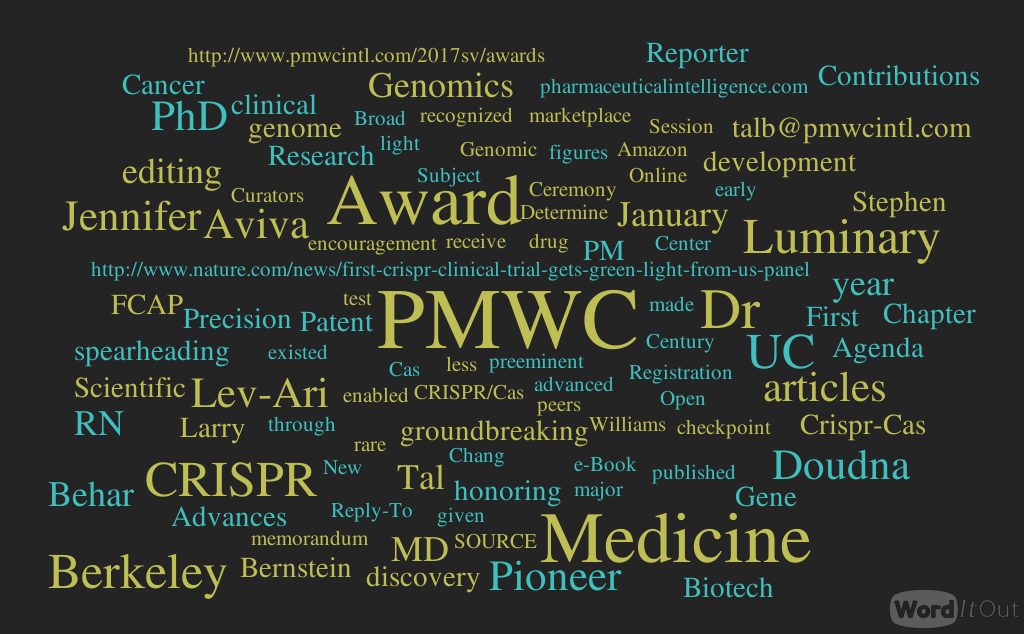
WordCloud Image Produced by Adam Tubman

Dr. Jennifer Doudna (UC Berkeley): PMWC 2017 Luminary Award, January 22, 2017 @PMWC 2017, January 23-25, Silicon Valley, Volume 2 (Volume Two: Latest in Genomics Methodologies for Therapeutics: Gene Editing, NGS and BioInformatics, Simulations and the Genome Ontology), Part 2: CRISPR for Gene Editing and DNA Repair

Dr. Jennifer Doudna (UC Berkeley): PMWC 2017 Luminary Award, January 22, 2017 @PMWC 2017, January 23-25, Silicon Valley

Reporter: Aviva Lev-Ari, PhD, RN

PMWC will be honoring Dr. Jennifer Doudna (UC Berkeley) with the Luminary Award for spearheading the development of the groundbreaking Crispr-Cas9 genome editing technology

pmwc2017sv-logo

PMWC Interview with Dr. Jennifer Doudna (UC Berkeley)

http://www.pmwcintl.com/jennifer-doudna-qa/ 

Session Themes

http://www.pmwcintl.com/2017sv/program/sessions/

Event Registration

http://www.pmwcintl.com/2017sv/registration/


Luminary & Pioneer Awards

The PMWC Luminary Award recognizes recent contributions of preeminent figures who have accelerated personalized medicine into the clinical marketplace. The PMWC Pioneer Award is given to rare individuals who presaged the advent of personalized medicine when less evolved technology and encouragement from peers existed, but still made major advances in the field.

This year, PMWC will be honoring Dr. Jennifer Doudna (UC Berkeley) with the Luminary Award for spearheading the development of the groundbreaking Crispr-Cas9 genome editing technology and Edward F. Chang for developing advanced neurophysiologic brain mapping methods. For the Pioneer Award, Dr. James Allison (MD Anderson Cancer Center) will be recognized for pioneering cancer immunotherapy through his discovery of the immune checkpoint blockade. Dr. Stephen Quake (Stanford) will receive a Pioneer Award for his prolific inventions of technologies in microfluidics and genetics that have enabled personalized medicine, drug discovery and non-invasive diagnostics.

When: January 22, 2017 at 6:30-8:30pm

http://www.pmwcintl.com/2017sv/awards/ 

SOURCE

From: Tal Behar PMWC <talb=pmwcintl.com@mail29.atl161.mcsv.net> on behalf of Tal Behar PMWC <talb@pmwcintl.com>

Reply-To: Tal Behar PMWC <talb@pmwcintl.com>

Date: Tuesday, December 20, 2016 at 1:50 PM

To: Aviva Lev-Ari <AvivaLev-Ari@alum.berkeley.edu>

Subject: Largest Biotech Patent Case in History Will Determine Who Owns CRISPR


Other related articles published on CRISPR on this Open Access Online Scientific Journal include the following:

UPDATED – Status “Interference — Initial memorandum” – CRISPR/Cas9 – The Biotech Patent Fight of the Century: UC, Berkeley and Broad Institute @MIT

Reporter: Aviva Lev-Ari, PhD, RN

First CRISPR clinical trial gets green light from US panel – The technique’s first test in people could begin as early as the end of the year, 22 June 2016

Sara Reardon

http://www.nature.com/news/first-crispr-clinical-trial-gets-green-light-from-us-panel-1.20137

We Celebrate 5,000 Scientific Articles @pharmaceuticalintelligence.com – 2016 was a GREAT Year !!!!!

CRISPR – 124 articles on 12/20/2016

https://pharmaceuticalintelligence.com/category/crisprcas9-gene-editing/

Personalized Medicine and Precision Medicine and Genomics Research – 618 articles on 12/20/2016

https://pharmaceuticalintelligence.com/category/personalized-and-precision-medicine-genomic-research/

Contributions to Personalized and Precision Medicine & Genomic Research: Larry H. Bernstein, MD, FCAP 

Genomics Orientations for Personalized Medicine

on Amazon since 11/23/2015

http://www.amazon.com/dp/B018DHBUO6

Chapter 21 in this e-Book:

Advances in Gene Editing Technology: New Gene Therapy Options in Personalized Medicine – Medical Interpretation of the Genomics Frontier – CRISPR – Cas9

Chapter Curators: Larry H Bernstein, MD, FCAP, Stephen J Williams, PhD and Aviva Lev-Ari, PhD, RN

https://pharmaceuticalintelligence.com/biomed-e-books/genomics-orientations-for-personalized-medicine/volume-one-genomics-orientations-for-personalized-medicine/
 
genomicsinpersonalizedmedicinecovervolumeone

Read Full Post »

We Celebrate 5,000 Scientific Articles @pharmaceuticalintelligence.com – 2016 was a GREAT Year !!!!!

Curator and Open Access Journal Editor-in-Chief: Aviva Lev-Ari, PhD, RN

2.1.5.7

2.1.5.7   We Celebrate 5,000 Scientific Articles @pharmaceuticalintelligence.com – 2016 was a GREAT Year – Record Articles on CRISPR !!!!! Volume 2 (Volume Two: Latest in Genomics Methodologies for Therapeutics: Gene Editing, NGS and BioInformatics, Simulations and the Genome Ontology), Part 2: CRISPR for Gene Editing and DNA Repair

April 30, 2012: Launch Date for 1st Article

December 19, 2016: Date we Celebrate 5,000 Scientific Articles and 1,118,520 e-Readers 

For 2016, Our Top Articles by e-Readers Views and Authors are:

Top Posts for 365 days ending 2016-12-19 (Summarized)

Year |

2015-12-20 to Today

Article Title
e-Views

>500

Home page / Archives 119,586

Do Novel Anticoagulants Affect the PT/INR? The Cases of XARELTO (rivaroxaban) and PRADAXA (dabigatran)

Curators: Vivek Lal, MBBS, MD, FCIR, Justin D Pearlman, MD, PhD, FACC and Article Curator: Aviva Lev-Ari, PhD, RN

2,815
Is the Warburg Effect the Cause or the Effect of Cancer: A 21st Century View?

Author: Larry H. Bernstein, MD, FCAP  

2,501
Paclitaxel vs Abraxane (albumin-bound paclitaxel)

Author: Tilda Barliya, PhD

1,949
Recent comprehensive review on the role of ultrasound in breast cancer management

Writer, Reporter and Curator: Dror Nir, PhD

1,785
Clinical Indications for Use of Inhaled Nitric Oxide (iNO) in the Adult Patient Market: Clinical Outcomes after Use, Therapy Demand and Cost of Care

Curator: Aviva Lev-Ari, PhD, RN

1,523
AstraZeneca’s WEE1 protein inhibitor AZD1775 Shows Success Against Tumors with a SETD2 mutation

Curator: Stephen J. Williams, PhD

1,380
Apixaban (Eliquis): Mechanism of Action, Drug Comparison and Additional Indications

Curator: Aviva Lev-Ari, PhD, RN

1,256
Akt inhibition for cancer treatment, where do we stand today?

Author: Ziv Raviv, PhD

1,130
Targeting the Wnt Pathway [7.11]

Writer and Curator: Larry H Bernstein, MD, FCAP 

923
Monoclonal Antibody Therapy and Market

Author and Curator: Demet Sag, PhD, CRA, GCP 

888
Mesothelin: An early detection biomarker for cancer (By Jack Andraka)

Author/ Curator:  Tilda Barliya PhD

819
Lipid Metabolism

Reporter and Curator: Larry H. Bernstein, MD, FCAP 

808
Update on FDA Policy Regarding 3D Bioprinted Material

Curator: Stephen J. Williams, PhD

716
The Centrality of Ca(2+) Signaling and Cytoskeleton Involving Calmodulin Kinases and Ryanodine Receptors in Cardiac Failure, Arterial Smooth Muscle, Post-ischemic Arrhythmia, Similarities and Differences, and Pharmaceutical Targets

Author and Curator: Larry H Bernstein, MD, FCAP

Author, and Content Consultant to e-SERIES A: Cardiovascular Diseases: Justin Pearlman, MD, PhD, FACC

and

Curator: Aviva Lev-Ari, PhD, RN

676
Sexed Semen and Embryo Selection in Human Reproduction and Fertility Treatment

Reporter and Curator: Dr. Sudipta Saha, PhD

667
In focus: Circulating Tumor Cells

Author/Curator: Ritu Saxena, PhD

642
A Primer on DNA and DNA Replication

Reporter and Curator: Larry H. Bernstein, MD, FCAP 

622
Causes and imaging features of false positives and false negatives on 18F-PET/CT in oncologic imaging

Reporter: Dror Nir, PhD

614
Our TEAM 599
Confined Indolamine 2, 3 dioxygenase (IDO) Controls the Hemeostasis of Immune Responses for Good and Bad

Curator: Demet Sag, PhD, CRA, GCP

596
Pacemakers, Implantable Cardioverter Defibrillators (ICD) and Cardiac Resynchronization Therapy (CRT)

Curators: Justin D Pearlman, MD, PhD, FACC and Aviva Lev-Ari, PhD, RN

583
LPBI Group 575
U.S. FDA advisers recommend approval of Cinqair (Reslizumab,Teva) asthma drug for adults

Reporter: Aviva Lev-Ari, PhD, RN

568
FDA Guidelines For Developmental and Reproductive Toxicology (DART) Studies for Small Molecules

Author-Writer: Stephen J. Williams, PhD

560
Biochemistry of the Coagulation Cascade and Platelet Aggregation – Part I

Curator, Editor and Writer: Larry H. Bernstein, MD, FCAP 

559
Alternative Designs for the Human Artificial Heart: Patients in Heart Failure – Outcomes of Transplant (donor)/Implantation (artificial) and Monitoring Technologies for the Transplant/Implant Patient in the Community

Authors and Curators: Larry H Bernstein, MD, FCAP and Justin D Pearlman, MD, PhD, FACC

and

Article Curator and Reporter: Aviva Lev-Ari, PhD, RN

549
7th Annual – CHI’s Inflammation Inhibitors Small Molecule and Macrocyclic Approaches, April 19-20, 2016 Hilton San Diego Resort and Spa

Reporter: Aviva Lev-Ari, PhD, RN

536
Newer Treatments for Depression: Monoamine, Neurotrophic Factor & Pharmacokinetic Hypotheses

Curator: Zohi Sternberg, PhD

525
LIK 066, Novartis, for the treatment of type 2 diabetes

Curator: Larry H. Bernstein, MD, FCAP

524
Who will be the the First to IPO: Novartis bought in to Intellia (UC, Berkeley) as well as Caribou (UC, Berkeley) vs Editas (MIT)??

Reporter: Aviva Lev-Ari, PhD, RN

516
Interaction of enzymes and hormones

Reporter and Curator: Dr. Sudipta Saha, PhD

507
Autophagy

Writer and Curator: Larry H Bernstein, MD, FCAP

500

These articles and others are in EIGHT e-Books on Amazon.com

Forthcoming SEVEN e-Books in 2016

https://www.linkedin.com/pulse/forthcoming-cover-pages-new-e-books-medicine-from-lev-ari-phd-rn?trk=prof-post

WE ARE ON AMAZON.COM

http://www.amazon.com/dp/B00DINFFYC

http://www.amazon.com/dp/B018Q5MCN8

http://www.amazon.com/dp/B018PNHJ84

http://www.amazon.com/dp/B018DHBUO6

http://www.amazon.com/dp/B013RVYR2K

http://www.amazon.com/dp/B012BB0ZF0

http://www.amazon.com/dp/B019UM909A

http://www.amazon.com/dp/B019VH97LU

BioMedical e-Books e-Series:

Cardiovascular, Genomics, Cancer, BioMed, Patient Centered Medicine

https://pharmaceuticalintelligence.com/biomed-e-books/

2013 e-Book on Amazon.com

  • Perspectives on Nitric Oxide in Disease Mechanisms, on Amazon since 6/2/12013

http://www.amazon.com/dp/B00DINFFYC

2015 e-Book on Amazon.com

http://www.amazon.com/dp/B012BB0ZF0

  • Cancer Biology & Genomics for Disease Diagnosis, on Amazon since 8/11/2015

http://www.amazon.com/dp/B013RVYR2K

  • Genomics Orientations for Personalized Medicine, on Amazon since 11/23/2015

http://www.amazon.com/dp/B018DHBUO6

  • Milestones in Physiology: Discoveries in Medicine, Genomics and Therapeutics, on Amazon.com since 12/27/2015

http://www.amazon.com/dp/B019VH97LU

  • Cardiovascular, Volume Two: Cardiovascular Original Research: Cases in Methodology Design for Content Co-Curation, on Amazon since 11/30/2015

http://www.amazon.com/dp/B018Q5MCN8

  • Cardiovascular Diseases, Volume Three: Etiologies of Cardiovascular Diseases: Epigenetics, Genetics and Genomics, on Amazon since 11/29/2015

http://www.amazon.com/dp/B018PNHJ84

  • Cardiovascular Diseases, Volume Four: Regenerative and Translational Medicine: The Therapeutics Promise for Cardiovascular Diseases, on Amazon since 12/26/2015

http://www.amazon.com/dp/B019UM909A

flyersseiesedot16future

flyer-for-series-a-dot16

flyersabcd2-dot16future

flyer2forApril2016BioWorld

flyer1forApril2016BioWorld

Read Full Post »

Evaluating the Genetic Profiles of Tumor Cells circulating in the Bloodstream could transform Cancer Care: A Blood Test for managing Lung Cancer @Stanford University Medical School

Reporter: Aviva Lev-Ari, PhD, RN


A Legacy of Innovation @Stanford University Medical School

  1. 1967

    First synthesis of biologically active DNA in test tube

  2. 1968

    First adult human heart transplant in the United States

    Norman Shumway successfully transplants a heart into 54-year-old steelworker Mike Kasperak, who survives for 14 days.


  3. 1973

    First expression of a foreign gene implanted in bacteria by recombinant DNA methods

  4. 1981

    First successful human combined heart/lung transplant in the world (fourth attempted worldwide)

  5. 1984

    Isolation of a gene coding for part of the T-cell receptor, a key to the immune system’s function

  6. 1988

    Isolation of pure hematopoietic stem cells from mice

  7. 2002

    First use of gene expression profiling to predict cancer outcomes

  8. 2007

    Application and expansion of optogenetics, a technique to control brain cell activity with light

SOURCE

Evaluating the Genetic Profiles of Tumor Cells circulating in the Bloodstream could transform Cancer Care: A Blood Test for managing Lung Cancer @Stanford University Medical School

The approach that the team developed could be used to look at mutations in three or four genes, and it requires no more than 2 milliliters of blood — about half a teaspoon. The test can be completed in about five hours, the researcher said, and costs less than $30. For comparison, a single state-of-the art biopsy of lung tissue with DNA sequencing costs about $18,000 and takes as long as three weeks to furnish results. Johnson & Johnson’s CellSearch — another blood test, already approved by the FDA — costs about $900 and takes a week to deliver results.

The researchers created a system for isolating circulating tumor cells from the blood of cancer patients and reading a handful of genes from inside each tumor cell. Thus, they were able to obtain genetic information about the original cancer tumor that resides deep in the lungs without doing a biopsy, which can be dangerous for the patient.

“We are trying to make minimally invasive technology that allows us to continuously monitor one person’s health over time,” said radiology instructor Seung-min Park, PhD, a lead author of the new study, which was published online Dec. 12 in the Proceedings of the National Academy of Sciences. Park shares lead authorship of the study with former Stanford graduate students Dawson Wong, PhD, and Chin Chun Ooi.

A MagSifter chip, shown here fastened to an acrylic holder, can purify circulating tumor cells from the blood of cancer patients.

The MagSifter is an electromagnetic sieve that can be turned on and off. When the MagSifter is on, it pulls the nanoparticle-labeled CTCs from the blood sample and allows the rest of the blood to flow through the sifter. The CTCs pulled from the blood are then deposited into a flat array of tiny wells, each large enough for only one cell. Now the tumor cells are ready for genetic analysis. Each flat of 25,600 wells looks like a miniature muffin tin, with room for a lot of tiny muffins.

SOURCE

http://med.stanford.edu/news/all-news/2016/12/blood-test-could-provide-cheaper-way-to-evaluate-lung-tumors.html

Read Full Post »

Vision and Justice: The Art of Citizenship, Harvard Art Museums, August 27, 2016–January 8, 2017, University Teaching Gallery

Reporter: Aviva Lev-Ari, PhD, RN

Exhibit of Note in Cambridge, MA


Vision and Justice

Digital publication for “Vision and Justice: The Art of Citizenship” (August 27, 2016–January 8, 2017, Harvard Art Museums) produced by graduate students enrolled in the course taught by Sarah Lewis, Assistant Professor in the Departments of History of Art and Architecture and African and African American Studies, Harvard University, Fall 2016.

SOURCE

http://www.harvardartmuseums.org/visit/exhibitions/5244/vision-and-justice

Read Full Post »

Functional Analysis of the Microbiome for Development of Potential Therapeutic Approaches to Weight Regain

Reporter: Aviva Lev-Ari, PhD, RN


Transplanting fecal microbes to prevent recurring obesity

Finally, the researchers used these insights to develop new treatments for recurrent obesity. They implanted formerly obese mice with gut microbes from mice that had never been obese. This fecal microbiome transplantation erased the “memory” of obesity in these mice when they were re-exposed to a high-calorie diet, preventing excessive recurrent obesity.

Gut Microbes Contribute to Recurrent ‘Yo-Yo’ Obesity, Study Shows

By Einat Paz-Frankel, NoCamels December 18, 2016

Researchers at Israel’s Weizmann Institute of Science have shown in mice that intestinal microbes – collectively termed the gut microbiome – play an unexpectedly important role in exacerbated post-dieting weight gain, and that this common phenomenon may in the future be prevented or treated by altering the composition or function of the microbiome.

“We’ve shown in obese mice that following successful dieting and weight loss, the microbiome retains a ‘memory’ of previous obesity,” Elinav said in a statement. “This persistent microbiome accelerated the regaining of weight when the mice were put back on a high-calorie diet or ate regular food in excessive amounts.”

http://nocamels.com/2016/12/gut-microbes-recurrent-obesity-diet/


Original Research

Persistent microbiome alterations modulate the rate of post-dieting weight regain

Nature (2016) doi:10.1038/nature20796

Corrected online

28 November 2016

Article tools

Abstract

In tackling the obesity pandemic, significant efforts are devoted to the development of effective weight reduction strategies, yet many dieting individuals fail to maintain a long-term weight reduction, and instead undergo excessive weight regain cycles. The mechanisms driving recurrent post-dieting obesity remain largely elusive. Here, we identify an intestinal microbiome signature that persists after successful dieting of obese mice, which contributes to faster weight regain and metabolic aberrations upon re-exposure to obesity-promoting conditions and transmits the accelerated weight regain phenotype upon inter-animal transfer. We develop a machine-learning algorithm that enables personalized microbiome-based prediction of the extent of post-dieting weight regain. Additionally, we find that the microbiome contributes to diminished post-dieting flavonoid levels and reduced energy expenditure, and demonstrate that flavonoid-based ‘post-biotic’ intervention ameliorates excessive secondary weight gain. Together, our data highlight a possible microbiome contribution to accelerated post-dieting weight regain, and suggest that microbiome-targeting approaches may help to diagnose and treat this common disorder.

Read Full Post »

21st Century Cures Act reforms to the Food and Drug Administration’s (FDA) regulation of the medical device and pharmaceutical industries – Medical Device Overview: Major FDA Reform Bill Becomes Law

Reporter: Aviva Lev-Ari, PhD, RN


HIGHLIGHTS

  • The 21st Century Cures Act seeks to expedite development of, and provide priority review for, “breakthrough” devices
  • The act requires FDA to provide training on the meaning and implementation of the least burdensome review standard, and requires an audit of the results
  • The act expressly excludes certain categories of medical software from FDA regulation

Major provisions of the act related to medical device regulation found in Subtitle F are listed, below.


President Obama recently signed the 996-page 21st Century Cures Act to implement a variety of reforms to the Food and Drug Administration’s (FDA) regulation of the medical device and pharmaceutical industries.

This alert summarizes the major provisions of the act related to medical device regulation found in Subtitle F.

Read more: http://www.btlaw.com/Food-Drug-and-Device-Law-Alert—Major-FDA-Reform-Bill-Becomes-Law-Medical-Device-Overview-12-13-2016/


Section 3051 – Breakthrough Devices

Section 3052 – Humanitarian Device Exemption (HDE)

Section 3053 – Recognition of Standards

Section 3054 – Certain Class 1 and Class II Devices

Section 3055 – Classification Panels

Section 3056 – Institutional Review Board Flexibility

Section 3057 – CLIA Waiver Improvements

Section 3058 – Least Burdensome Device Review

Section 3059 – Cleaning Instructions and Validation Data Requirement

Section 3060 – Clarifying Medical Software Regulation


A copy of the act can be found here.

http://docs.house.gov/billsthisweek/20161128/CPRT-114-HPRT-RU00-SAHR34.pdf


For more information, please contact the Barnes & Thornburg LLP attorney with whom you work or one of the following attorneys in the firm’s Food, Drug & Device Group: Lynn Tyler at (317) 231-7392 or lynn.tyler@btlaw.com; Beth Davis at (404) 264-4025 or beth.davis@btlaw.com; or Alicia Raines Barr at (317) 231-7398 or alicia.rainesbarr@btlaw.com.

Visit us online at www.btlaw.com/food-drug-and-device-law-practices.


SOURCE

http://www.btlaw.com/files/Uploads/Documents/2016%20Alerts/Food,%20Drug%20and%20Device/FDA%20Alert%20-%2021st%20Century%20Cures%20Act.pdf

http://www.fda.gov/downloads/MedicalDevices/DeviceRegulationandGuidance/GuidanceDocuments/UCM393978.pdf

Other related articles published in this Open Access Online Scientific Journal include the following:

Medical Devices

https://pharmaceuticalintelligence.com/category/medical-devices-rd-investment/

FDA

https://pharmaceuticalintelligence.com/category/fda-regulatory-affairs/

Read Full Post »

News from Technion Integrated Cancer Center (TICC)

Reporter: Aviva Lev-Ari, PhD, RN


Technion Integrated Cancer Center, a first-of-its-kind institution that brings together world-class clinical experts, a group of life science researchers led by a Nobel Prize winner, and top-level chemists, physicists and engineers to win the battle against cancer.

The TICC serves as a nexus for the Technion’s five affiliated hospitals that run clinical trials, the Rappaport Faculty of Medicine’s life sciences researchers, the Faculty of Computer Science’s innovations in processing large data sets, the Viterbi Faculty of Electrical Engineering’s and the Faculty of Physics’ development of devices for diagnosis and imaging, and the Faculty of Mathematics’ search for new, more powerful algorithms to quickly and effectively process complex data.

The power of diverse, accomplished researchers and practitioners is essential to advancing our ability to combat cancer.

“We have quite a few ideas about how to combat this disease, but translating those ideas into actual drugs is not easy. We have to determine if the drugs work by finding the right patient population because not all patients will respond to certain drugs. And we need to develop new strategies to determine who those patients are,” Ronai said. “We used to develop the same drugs to attack cancer, but we now know that cancer is complex and heterogeneous. Our drugs need to be smart enough to attack the different elements of each different type of cancer.”

SOURCE

https://americantechniontoday.wordpress.com/2016/11/28/technion-integrated-cancer-center-ticc-turning-big-ideas-into-action/

Other related articles published in this Open Access Online Scientific Journal include the following:

Chapter 20: Cancer Research @Technion, Israel Institute of Technology

Stephen J. Williams, PhD

in

Series C: e-Books on Cancer & Oncology

Series C Content Consultant: Larry H. Bernstein, MD, FCAP


VOLUME TWO 

Cancer Therapies:

Metabolic, Genomics, Interventional, Immunotherapy and Nanotechnology in Therapy Delivery


20.1 Recent Breakthroughs in Cancer Research at the Technion, Israel Institute of Technology, 2015

Stephen J. Williams, PhD


20.2 @Technion: Directions in Cancer Research


20.2.1 Medical Breakthrough: Israeli Researcher Predicts Where Cancer Will Spread

Evelina Cohn Budu, PhD


20.2.2 Pancreatic Cancer at the Crossroads of Metabolism

Demet Sag, PhD, CRA, GCP


20.2.3 List of Breakthroughs in Cancer Research and Oncology Drug Development by Awardees of The Israel Cancer Research Fund

Aviva Lev-Ari, PhD, RN


20.2.4 Cancer Labs at School of Medicine @ Technion: Janet and David Polak Cancer and Vascular Biology Research Center

Aviva Lev-Ari, PhD, RN


20.2.5 Immunity and Host Defense – A Bibliography of Research @Technion

Aviva Lev-Ari, PhD, RN


20.2.6 Host – Tumor Interactions during Cancer Therapy – Dr. Yuval Shaked’s Lab @Technion

Aviva Lev-Ari, PhD, RN


20.3 @Technion Deals, Partnerships, and Collaborations


20.3.1 Next-generation Universal Cell Immunotherapy startup Adicet Bio, Menlo Park, CA is launched with $51M Funding by OrbiMed

Aviva Lev-Ari, PhD, RN


20.3.2 Solutions for Multiple Myeloma – a cancer formed by Malignant Plasma Cells: Collaboration of NYU and Technion Integrative Cancer Center

Aviva Lev-Ari, PhD, RN


20.3.3 Biomarkers of Cancer detected by BreathAnalyzer – An Collaborative effort of three Universities

Aviva Lev-Ari, PhD, RN


20.3.4 Technion established the most advanced Center for Structural Biology in Israel

Aviva Lev-Ari, PhD, RN


20.3.5 Technion-Cornell Innovation Institute in NYC: Postdocs keep exclusive license to their IP and take a fixed dollar amount of Equity if the researchers create a Spinoff company

Aviva Lev-Ari, PhD, RN


Read Full Post »

Translation of whole human genome sequencing to clinical practice: The Joint Initiative for Metrology in Biology (JIMB) is a collaboration between the National Institute of Standards & Technology (NIST) and Stanford University, Volume 2 (Volume Two: Latest in Genomics Methodologies for Therapeutics: Gene Editing, NGS and BioInformatics, Simulations and the Genome Ontology), Part 1: Next Generation Sequencing (NGS)

Translation of whole human genome sequencing to clinical practice: The Joint Initiative for Metrology in Biology (JIMB) is a collaboration between the National Institute of Standards & Technology (NIST) and Stanford University.

Reporter: Aviva Lev-Ari, PhD, RN


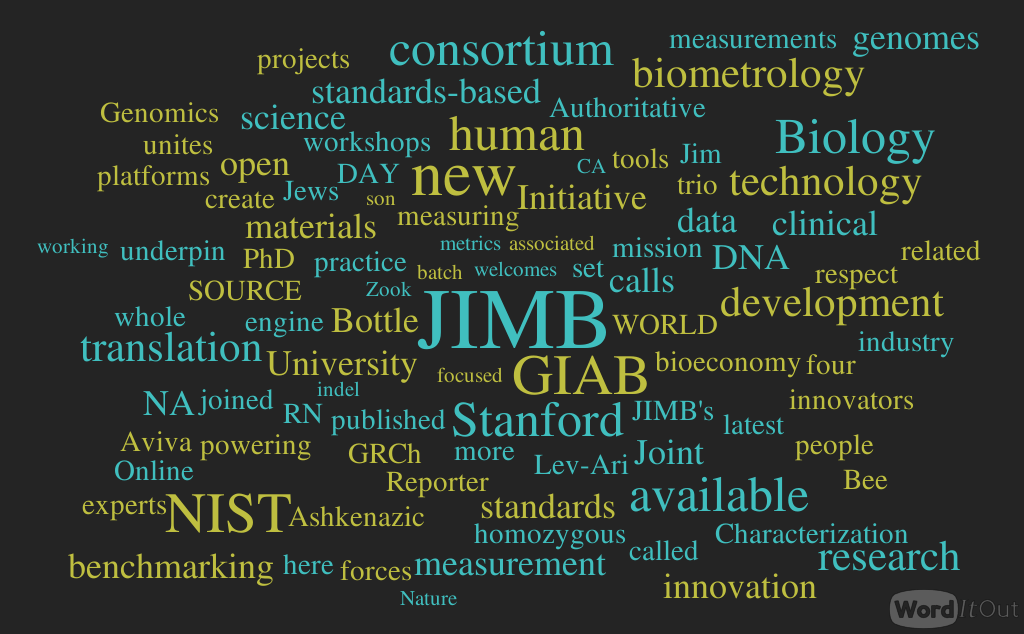
JIMB’s mission is to advance the science of measuring biology (biometrology). JIMB is pursuing fundamental research, standards development, and the translation of products that support confidence in biological measurements and reliable reuse of materials and results. JIMB is particularly focused on measurements and technologies that impact, are related to, or enabled by ongoing advances in and associated with the reading and writing of DNA.

Stanford innovators and industry entrepreneurs have joined forces with the measurement experts from NIST to create a new engine powering the bioeconomy. It’s called JIMB — “Jim Bee” — the Joint Initiative for Metrology in Biology. JIMB unites people, platforms, and projects to underpin standards-based research and innovation in biometrology.

Genome in a Bottle
Authoritative Characterization of
Benchmark Human Genomes


The Genome in a Bottle Consortium is a public-private-academic consortium hosted by NIST to develop the technical infrastructure (reference standards, reference methods, and reference data) to enable translation of whole human genome sequencing to clinical practice. The priority of GIAB is authoritative characterization of human genomes for use in analytical validation and technology development, optimization, and demonstration. In 2015, NIST released the pilot genome Reference Material 8398, which is genomic DNA (NA12878) derived from a large batch of the Coriell cell line GM12878, characterized for high-confidence SNPs, indel, and homozygous reference regions (Zook, et al., Nature Biotechnology 2014).

There are four new GIAB reference materials available.  With the addition of these new reference materials (RMs) to a growing collection of “measuring sticks” for gene sequencing, we can now provide laboratories with even more capability to accurately “map” DNA for genetic testing, medical diagnoses and future customized drug therapies. The new tools feature sequenced genes from individuals in two genetically diverse groups, Asians and Ashkenazic Jews; a father-mother-child trio set from Ashkenazic Jews; and four microbes commonly used in research. For more information click here.  To purchase them, visit:

Data and analyses are publicly available (GIAB GitHub). A description of data generated by GIAB is published here. To standardize best practices for using GIAB genomes for benchmarking, we are working with the Global Alliance for Genomics and Health Benchmarking Team (benchmarking tools).

High-confidence small variant and homozygous reference calls are available for NA12878, the Ashkenazim trio, and the Chinese son with respect to GRCh37.  Preliminary high-confidence calls with respect to GRCh38 are also available for NA12878.   The latest version of these calls is under the latest directory for each genome on the GIAB FTP.

The consortium was initiated in a set of meetings in 2011 and 2012, and the consortium holds open, public workshops in January at Stanford University in Palo Alto, CA and in August/September at NIST in Gaithersburg, MD. Slides from workshops and conferences are available online. The consortium is open and welcomes new participants.

SOURCE

Stanford innovators and industry entrepreneurs have joined forces with the measurement experts from NIST to create a new engine powering the bioeconomy. It’s called JIMB — “Jim Bee” — the Joint Initiative for Metrology in Biology. JIMB unites people, platforms, and projects to underpin standards-based research and innovation in biometrology.

JIMB World Metrology Day Symposium

JIMB’s mission is to motivate standards-based measurement innovation to facilitate translation of basic science and technology development breakthroughs in genomics and synthetic biology.

By advancing biometrology, JIMB will push the boundaries of discovery science, accelerate technology development and dissemination, and generate reusable resources.

 SOURCE

VIEW VIDEO

https://player.vimeo.com/video/184956195?wmode=opaque&api=1&#8243;,”url”:”https://vimeo.com/184956195&#8243;,”width”:640,”height”:360,”providerName”:”Vimeo”,”thumbnailUrl”:”https://i.vimeocdn.com/video/594555038_640.jpg&#8221;,”resolvedBy”:”vimeo”}” data-block-type=”32″>

Other related articles published in this Open Access Online Scientific Journal include the following:

“Genome in a Bottle”: NIST’s new metrics for Clinical Human Genome Sequencing

Reporter: Aviva Lev-Ari, PhD, RN

https://pharmaceuticalintelligence.com/2012/09/06/genome-in-a-bottle-nists-new-metrics-for-clinical-human-genome-sequencing/

Read Full Post »

« Newer Posts - Older Posts »