Feeds:
Posts
Comments

Curator: Aviva Lev-Ari, PhD, RN


Transcriptomic Biomarkers to Discriminate Bacterial from Nonbacterial Infection in Adults Hospitalized with Respiratory Illness

Published online: 26 July 2017

URMC Researchers Developing New Tool to Fight Antibiotic Resistance

Goal is to Distinguish Between Viral and Bacterial Infections, Reduce Unnecessary Use of Antibiotics

Friday, July 28, 2017

“It’s extremely difficult to interpret what’s causing a respiratory tract infection, especially in very ill patients who come to the hospital with a high fever, cough, shortness of breath and other concerning symptoms,” said Ann R. Falsey, M.D., lead study author, professor and interim chief of the Infectious Diseases Division at UR Medicine’s Strong Memorial Hospital.

“My goal is to develop a tool that physicians can use to rule out a bacterial infection with enough certainty that they are comfortable, and their patients are comfortable, foregoing an antibiotic.”

Lead researcher Ann Falsey, M.D.

Ann R. Falsey, M.D.

Falsey’s project caught the attention of the federal government; she’s one of 10 semifinalists in the Antimicrobial Resistance Diagnostic Challenge, a competition sponsored by NIH and the Biomedical Advanced Research and Development Authority to help combat the development and spread of drug resistant bacteria. Selected from among 74 submissions, Falsey received $50,000 to continue her research and develop a prototype diagnostic test, such as a blood test, using the genetic markers her team identified.

SOURCE

https://www.urmc.rochester.edu/news/story/5108/urmc-researchers-developing-new-tool-to-fight-antibiotic-resistance.aspx

Lower respiratory tract infection (LRTI)

We enrolled 94 subjects who were microbiologically classified; 53 as “non-bacterial” and 41 as “bacterial”. RNAseq and qPCR confirmed significant differences in mean expression for 10 genes previously identified as discriminatory for bacterial LRTI. A novel dimension reduction strategy selected three pathways (lymphocyte, α-linoleic acid metabolism, IGF regulation) including eleven genes as optimal markers for discriminating bacterial infection (naïve AUC = 0.94; nested CV-AUC = 0.86). Using these genes, we constructed a classifier for bacterial LRTI with 90% (79% CV) sensitivity and 83% (76% CV) specificity. This novel, pathway-based gene set displays promise as a method to distinguish bacterial from nonbacterial LRTI.

https://www.nature.com/articles/s41598-017-06738-3#Sec8

IMAGE SOURCE

https://www.nature.com/articles/s41598-017-06738-3#Sec8


SOURCES

http://sciencemission.com/site/index.php?page=news&type=view&id=microbiology-virology%2Fnew-tool-to-distinguish&filter=8%2C9%2C10%2C11%2C12%2C13%2C14%2C16%2C17%2C18%2C19%2C20%2C27&redirected=1&redirected=1

https://www.urmc.rochester.edu/news/story/5108/urmc-researchers-developing-new-tool-to-fight-antibiotic-resistance.aspx

https://www.nature.com/articles/s41598-017-06738-3

Bacterial or Viral Infection? A New Study May Help Physicians …


Other related articles published in this Open Access Online Scientific Journal include the following:

Series D, VOLUME 2:

Infectious Diseases and Therapeutics

Author, Curator and Editor: Larry H Bernstein, MD, FCAP and CuratorSudipta Saha, PhD


Series D, VOLUME 3:

The Immune System and Therapeutics

Author, Curator and Editor: Larry H Bernstein, MD, FCAP

https://pharmaceuticalintelligence.com/biomed-e-books/series-d-e-books-on-biomedicine/human-immune-system-in-health-and-in-disease/

Appellate Brief Seeking Reversal of U.S. Patent Board Decision on CRISPR/Cas9 Gene Editing, Volume 2 (Volume Two: Latest in Genomics Methodologies for Therapeutics: Gene Editing, NGS and BioInformatics, Simulations and the Genome Ontology), Part 2: CRISPR for Gene Editing and DNA Repair

Appellate Brief Seeking Reversal of U.S. Patent Board Decision on CRISPR/Cas9 Gene Editing

Reporter: Aviva Lev-Ari, PhD, RN

[Boldface added]

  • Appeal seeks reversal of Patent Trial and Appeal Board decision terminating interference without determining priority of inventorship of CRISPR/Cas9 gene editing
  • Brief asserts that the Board failed to properly apply controlling U.S. Supreme Court and Federal Circuit precedents, and ignored evidence of multiple groups readily applying CRISPR/Cas9 gene editing to eukaryotic cells following teachings of Charpentier-Doudna team

As explained in UC’s brief, application of the correct legal standards to the case is believed to require reversal of the PTAB’s decision. For these reasons, UC requests that the Federal Circuit instruct the PTAB to reinstate the interference proceeding so that it can properly determine priority of inventorship, as previously requested by UC. The PTAB’s failures to consider pertinent evidence and apply appropriate legal standards should at the very least require the matter to be remanded so that the PTAB can properly consider the evidence related to obviousness and Broad’s no-interference-in-fact motion using appropriate legal standards.
In the PTAB’s February decision terminating the interference proceeding prematurely, it had not yet considered the teachings of UC’s own prior-filed patent application with respect to using CRISPR/Cas9 in eukaryotic cells. Instead, the PTAB only addressed the threshold question of whether use in eukaryotic cells can be separately patentable from use in all settings as covered by UC’s claims. However, determinations on the underlying substantive matters have recently been made in parallel prosecution before the U.S. Patent & Trademark Office (“USPTO”). The USPTO has rejected a series of patent applications filed by Broad that are directed to uses of CRISPR/Cas9 technology in eukaryotic cells as being non-novel in view of UC’s prior-filed patent application, which the USPTO examiners considered to have effectively taught use of the CRISPR/Cas9 technology in eukaryotic cells. In addition, patent applications filed by Sigma-Aldrich and Toolgen that similarly claim use of CRISPR/Cas9 in eukaryotic cells (both of which filed applications before Broad’s application) have likewise recently been rejected as being either non-novel or obvious in view of the prior-filed UC patent application with specific respect to its teachings regarding application of the invention to use in eukaryotic cells.

SOURCES

On 7/25/2017

CRISPR Therapeutics, Intellia Therapeutics, Caribou Biosciences and ERS Genomics Announce Appellate Brief Seeking Reversal of U.S. Patent Board Decision on CRISPR/Cas9 Gene Editing

https://globenewswire.com/news-release/2017/07/25/1058142/0/en/CRISPR-Therapeutics-Intellia-Therapeutics-Caribou-Biosciences-and-ERS-Genomics-Announce-Appellate-Brief-Seeking-Reversal-of-U-S-Patent-Board-Decision-on-CRISPR-Cas9-Gene-Editing.html

On 4/13/2017:

Gene Editing Consortium of Biotech Companies: CRISPR Therapeutics $CRSP, Intellia Therapeutics $NTLA, Caribou Biosciences, ERS Genomics, UC, Berkeley (Doudna’s IP) and University of Vienna (Charpentier’s IP), is appealing the decisionruled that there was no interference between the two sides, to the U.S. Court of Appeals for the Federal Circuit, targeting patents from The Broad Institute.

Curator: Aviva Lev-Ari, PhD, RN

https://pharmaceuticalintelligence.com/2017/04/13/gene-editing-consortium-of-biotech-companies-crispr-therapeutics-crsp-intellia-therapeutics-ntla-caribou-biosciences-and-ers-genomics-uc-berkeley-doudnas-ip-and-university-of-vienna-charpe/

Gerald D Aurbach Award for Outstanding Translational Research

Reporter and Curator: Aviva Lev-Ari, PhD, RN

Article ID #240: Gerald D Aurbach Award for Outstanding Translational Research. Published on 7/31/2017

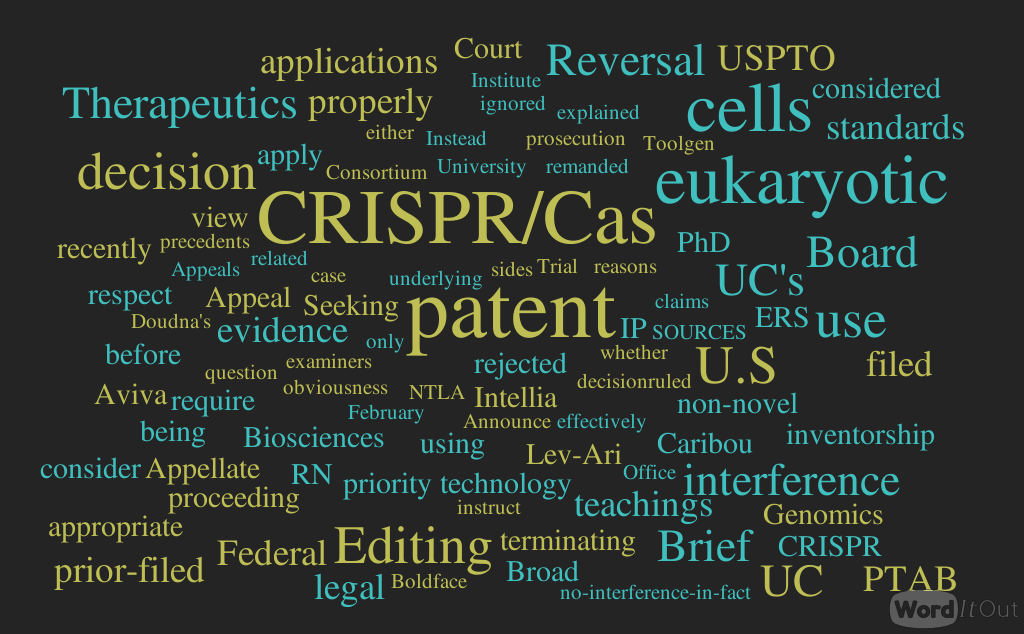
WordCloud Image Produced by Adam Tubman

Supported by the Gerald D. Aurbach Memorial Fund — Gerald D Aurbach Award for Outstanding Translational Research in the name of Gerald D. Aurbach, MD, the Endocrine Society’s 68th president, was a renowned researcher, mentor, and clinician, and his work revolutionized the understanding of bone metabolism and calcium homeostasis.

Past Award Recipients
Select Year
2017
2016
2015
By year:


Eligibility Criteria for Gerald D Aurbach Award for Outstanding Translational Research

  • This award is not limited to members of the Endocrine Society

Application Process

Updates to existing nominations must be emailed to laureate@endocrine.org.

New nominations must be submitted by the primary nominator who is responsible for collecting and merging supporting documents in a single document (PDF or Word) in the order listed below:

  1. 300-word citation (will be published as-is in Endocrine News if the nominee is selected)
  2. Letter of Support (1 page each, no more than 2)
  3. List of 10 Most Significant Publications
  4. CV (abbreviated versions will not be accepted)

SOURCE

https://www.endocrine.org/awards/laureate-awards/gerald-d-aurbach-award-for-outstanding-translational-research

Recognitions for Contributions in Genomics by Dan David Prize Awards

Reporter: Aviva Lev-Ari, PhD, RN

Article ID #239: Recognitions for Contributions in Genomics by Dan David Prize Awards. Published on 7/31/2017

WordCloud Image Produced by Adam Tubman

The Source for this List is a Search for “Genomics” on the Dan David Prize website

http://www.dandavidprize.org/component/finder/search?q=Genomics&Itemid=101

This is a compilation of all Dan David Prizes awarded in the Field of Genomics

When Will Genomics Cure Cancer?
A conversation with the biogeneticist ERIC S. LANDER [2012 laureate] about how genetic advances are transforming medical treatment “Eric S. Lander, one of the leaders of the Human Genome Project, a map of the 3 billion letters of DNA that make up a…

J. Craig Venter
Founder, Chairman, and President of the J. Craig Venter Institute, Rockville, MD and La Jolla, CA, USA and CEO of Synthetic Genomics Inc., La Jolla, CA, USA.

David Botstein
Anthony B. Evnin Professor of Genomics; Director, Lewis-Sigler Institute for Integrative Genomics; Director, Certificate Program in Quantitative and Computational Biology, Princeton University, Princeton, NJ, USA.

Laureates Announced 2012
Dan David Prize 2012 Laureates Announced Robert Conquest, Martin Gilbert – for Biography/History William Kentridge – for Plastic Arts David Botstein, Craig Venter, Eric Lander – for Genome Research Tel Aviv (February 27, 2012) —The international Dan…

Cutting Edge Genomic Research in the World’s First Carbon-Neutral Laboratory Facility
J. CRAIG VENTER, 2012 laureate, is Founder, Chairman, and President of the J. Craig Venter Institute, Rockville, MD and La Jolla, CA, USA and CEO of Synthetic Genomics Inc., La Jolla, CA, USA. “One of our quests is to help solve two troubling issues —…

Prof. David Haussler
Prof. David Haussler is a Distinguished Professor of Biomolecular Engineering at the University of California, Santa Cruz, and Scientific Director of the UC Santa Cruz Genomics Institute.

Eric Lander
Founding Director, Broad Institute Harvard and MIT and director of its Genome Biology Program, Cambridge, MA, USA.

Future – Bioinformatics
Bioinformatics is a field in which mathematics, statistics, and computer algorithms are harnessed towards novel biological discoveries. Bioinformatics methodologies have revolutionized biology, by making it more quantitative and less descriptive….

J. CRAIG VENTER – Life at the Speed of Light
The Dawn of an Era In his NEW BOOK ‘Life at the Speed of Light: From the Double Helix to the Dawn of Digital Life’ J. CRAIG VENTER, 2012 laureate, explains the coming era of discovery (see Wired interview below). What is the significance of Venter’s…

From the Press : Hebrew
The Marker, June 14, 2012 – Dan David Prize: The Next Generation Calcalist, June 14, 2012 – Dan David Prize Awarded: Thoughts of Creating Life, Boycotting Scientists, Protests, Entrepreneurs and Ceremonies Ma’ariv, June 12, 2012 – Who Attended the Dan…

Gary Ruvkun
Professor of Genetics, Department of Molecular BiologyMassachusetts General Hospital, Harvard University Gary Ruvkun has made a major contribution to the future of human health with the discovery of conserved hormonal signaling pathways with…

Selected Fields 2012
Past – HISTORY / BIOGRAPHY Biography is an important sub-discipline of history. Every progressive society makes room for achievement and excellence. Since ancient times, this has been done by immortalizing the names of heroes, role models and…

Prof. Michael S. Waterman
Prof. Michael S. Waterman is Professor of Biological Sciences, of Mathematics, of Computer Science, Department of Biological Sciences, University of Southern California.

 SOURCE
 
Other related articles published in this Open Access Online Scientific Journal include the following:

2013 Genomics: The Era Beyond the Sequencing of the Human Genome: Francis Collins, Craig Venter, Eric Lander, et al.

Curator: Aviva Lev-Ari, PhD, RN

https://pharmaceuticalintelligence.com/2013/02/11/2013-genomics-the-era-beyond-the-sequencing-human-genome-francis-collins-craig-venter-eric-lander-et-al/


Trends in Sperm Count

Reporter and Curator: Dr. Sudipta Saha, Ph.D.


There has been a genuine decline in semen quality over the past 50 years. There is lot of controversy about this as there are limitations in studies that have attempted to address it. Sperm count is of considerable public health importance for several reasons. First, sperm count is closely linked to male fecundity and is a crucial component of semen analysis, the first step to identify male factor infertility.

Reduced sperm count is associated with cryptorchidism, hypospadias and testicular cancer. It may be associated with multiple environmental influences, including endocrine disrupting chemicals, pesticides, heat and lifestyle factors, including diet, stress, smoking and BMI. Therefore, sperm count may sensitively reflect the impacts of the modern environment on male health throughout the life span.

This study provided a systematic review and meta-regression analysis of recent trends in sperm counts as measured by sperm concentration (SC) and total sperm count (TSC), and their modification by fertility and geographic group. Analyzing trends by birth cohorts instead of year of sample collection may aid in assessing the causes of the decline (prenatal or in adult life) but was not feasible owing to lack of information.

This rigorous and comprehensive analysis found that SC declined 52.4% between 1973 and 2011 among unselected men from western countries, with no evidence of a ‘leveling off’ in recent years. Declining mean SC implies that an increasing proportion of men have sperm counts below any given threshold for sub-fertility or infertility. The high proportion of men from western countries with concentration below 40 million/ml is particularly concerning given the evidence that SC below this threshold is associated with a decreased monthly probability of conception.

Declines in sperm count have implications beyond fertility and reproduction. The decline reported in this study is consistent with reported trends in other male reproductive health indicators, such as testicular germ cell tumors, cryptorchidism, onset of male puberty and total testosterone levels. The public health implications are even wider. Recent studies have shown that poor sperm count is associated with overall morbidity and mortality. While the current study is not designed to provide direct information on the causes of the observed declines, sperm count has been plausibly associated with multiple environmental (including unwanted chemical exposure in alarming levels) and lifestyle influences, both prenatally and in adult life. In particular, endocrine disruption from chemical exposures or maternal smoking during critical windows of male reproductive development may play a role in prenatal life, while lifestyle changes and exposure to pesticides may play a role in adult life.

These findings strongly suggest a significant decline in male reproductive health, which has serious implications beyond fertility concerns. Research on causes and implications of this decline is urgently needed.


REFERENCES

Temporal trends in sperm count: a systematic review and meta-regression analysis 

Hagai Levine, Niels Jørgensen, Anderson Martino‐Andrade, Jaime Mendiola, Dan Weksler-Derri, Irina Mindlis, Rachel Pinotti, Shanna H Swan. Human Reproduction Update, July 25, 2017, doi:10.1093/humupd/dmx022.

Link: https://academic.oup.com/humupd/article-lookup/doi/10.1093/humupd/dmx022.

Sperm Counts Are Declining Among Western Men – Interview with Dr. Hagai Levine

https://news.afhu.org/news/sperm-counts-are-declining-among-western-men?utm_source=Master+List&utm_campaign=dca529d919-EMAIL_CAMPAIGN_2017_07_27&utm_medium=email&utm_term=0_343e19a421-dca529d919-92801633

J Urol. 1983 Sep;130(3):467-75.

A critical method of evaluating tests for male infertility.

https://www.ncbi.nlm.nih.gov/pubmed/6688444

Hum Reprod. 1993 Jan;8(1):65-70.

Estimating fertility potential via semen analysis data.

https://www.ncbi.nlm.nih.gov/pubmed/8458929

Lancet. 1998 Oct 10;352(9135):1172-7.

Relation between semen quality and fertility: a population-based study of 430 first-pregnancy planners.

https://www.ncbi.nlm.nih.gov/pubmed/9777833

Hum Reprod Update. 2010 May-Jun;16(3):231-45. doi: 10.1093/humupd/dmp048. Epub 2009 Nov 24.

World Health Organization reference values for human semen characteristics.

https://www.ncbi.nlm.nih.gov/pubmed/19934213

J Nutr. 2016 May;146(5):1084-92. doi: 10.3945/jn.115.226563. Epub 2016 Apr 13.

Intake of Fruits and Vegetables with Low-to-Moderate Pesticide Residues Is Positively Associated with Semen-Quality Parameters among Young Healthy Men.

https://www.ncbi.nlm.nih.gov/pubmed/27075904

Reprod Toxicol. 2003 Jul-Aug;17(4):451-6.

Semen quality of Indian welders occupationally exposed to nickel and chromium.

https://www.ncbi.nlm.nih.gov/pubmed/12849857

Fertil Steril. 1996 May;65(5):1009-14.

Semen analyses in 1,283 men from the United States over a 25-year period: no decline in quality.

https://www.ncbi.nlm.nih.gov/pubmed/8612826


https://www.euronews.com/next/2022/06/10/research-into-falling-sperm-counts-finds-alarming-levels-of-chemicals-in-male-urine-sample


3-D Printed Ovaries Produce Healthy Offspring

Reporter: Irina Robu, PhD

Each year about 120,000 organs are transplanted from one human being to another and most of the time is a living volunteer. But lack of suitable donors, predominantly means the supply of such organs is inadequate. Countless people consequently die waiting for a transplant which has led researchers to study the question of how to build organs from scratch.

One promising approach is to print them, but “bioprinting” remains largely experimental. Nevertheless, bioprinted tissue is before now being sold for drug testing, and the first transplantable tissues are anticipated to be ready for use in a few years’ time. The first 3D printed organ includes bioprosthetic ovaries which are constructed of 3D printed scaffolds that have immature eggs and have been successful in boosting hormone production and restoring fertility was developed by Teresa K. Woodruff, a reproductive scientist and director of the Women’s Health Research Institute at Feinberg School of Medicine, at Northwestern University, in Illinois.

What sets apart these bioprosthetic ovaries is the architecture of the scaffold. The material is made of gelatin made from broken-down collagen that is safe to humans which is self-supporting and can lead to building multiple layers.

The 3-D printed “scaffold” or “skeleton” is implanted into a female and its pores can be used to optimize how follicles, or immature eggs, get wedged within the scaffold. The scaffold supports the survival of the mouse’s immature egg cells and the cells that produce hormones to boost production. The open construction permits room for the egg cells to mature and ovulate, blood vessels to form within the implant enabling the hormones to circulate and trigger lactation after giving birth. The purpose of this scaffold is to recapitulate how an ovary would function.
The scientists’ only objective for developing the bioprosthetic ovaries was to help reestablish fertility and hormone production in women who have suffered adult cancer treatments and now have bigger risks of infertility and hormone-based developmental issues.


SOURCES

Printed human body parts could soon be available for transplant
https://www.economist.com/news/science-and-technology/21715638-how-build-organs-scratch


3D printed ovaries produce healthy offspring giving hope to infertile women

http://www.telegraph.co.uk/science/2017/05/16/3d-printed-ovaries-produce-healthy-offspring-giving-hope-infertile/


Brave new world: 3D-printed ovaries produce healthy offspring

http://www.naturalnews.com/2017-05-27-brave-new-world-3-d-printed-ovaries-produce-healthy-offspring.html


3-D-printed scaffolds restore ovary function in infertile mice

http://www.medicalnewstoday.com/articles/317485.php


Our Grandkids May Be Born From 3D-Printed Ovaries

http://gizmodo.com/these-mice-gave-birth-using-3d-printed-ovaries-1795237820


New Treatment in Development for Glioblastoma: Hopes for Sen. John McCain

Reporter: Aviva Lev-Ari, PhD, RN

We wish all patients diagnosed with Glioblastoma to be able to benefit from the advancements in Sciences reported, below

SOURCE

Glioblastoma Is A Grim Diagnosis, But There Are Some Signs Of Hope

Karen Weintraub, July 20, 2017 Updated July 21, 2017 5:33 PM


Advancements in Crossing The Blood-Brain Barrier

Paula Hammond, of MIT’s Koch Institute of Integrative Cancer Research: “We believe we have a handle on a good stealth mechanism. Now, we’re looking at enhanced uptake,” she said. “We have to begin to think a little bit about how to get nature on our side on this one.”

At the Brigham, researchers are trying another approach to getting across the blood-brain-barrier: prying open holes in its armor with beams of ultrasound. Although normally used to take cool pictures during pregnancy, multiple beams of ultrasound aimed at the same area can make blood vessels of the brain “leakier,” according to research at the Brigham.


Advancement in Stem Cells against Tumors

There’s also a possibility that stem cells may be useful for tracking down and killing tumor cells. Khalid Shah, director for the Center for Stem Cell Therapeutics and Imaging at Brigham and Women’s Hospital, has been experimenting with delivering engineered stem cells directly to tumor sites after surgery.

William Curry at Mass. General, is that the longer a patient with glioblastoma can hang on, the better their chances of getting one of these new treatments.

“The longer you stay alive and the longer you maintain good neurological function, the more eligible you one may be to see the benefits and the fruits of a lot of the research that is really accelerating right now,” he said.

SOURCE

Glioblastoma Is A Grim Diagnosis, But There Are Some Signs Of Hope

M&A of Online health publisher, WebMD Health Corporation by KKR & Co.: Dynamics in Health Care Media, Web-Health and Health Information Markets

Reporter and Curator: Aviva Lev-Ari, PhD, RN


The New York-based WebMD Health Corp., health-information provider (WBMD) was acquired by KKR & Co., deal reached on 7/24/2017.  The deal, approved by the WebMD board, is expected to close in the fourth quarter of 2017.

New management at KKR was announced: Co-Presidents and Co-Operating Officers:

  • Joe Bae, and
  • Scott Nuttall

They are replacing Henry Kravits and George Roberts, who started KKR in 1976. 

  • J.P. Morgan Securities LLC is WebMD’s financial adviser 
  • Shearman & Sterling LLP is WebMD’s legal adviser.
  • Simpson Thacher & Bartlett LLP is KKR’s Internet Brands’ legal adviser.


WebMD’s chairman Martin Wygod said Monday’s deal was the culmination of a sale process that reached 100 possible buyers as is seen as the best possible premium for shareholders. Though Monday’s deal is struck at a substantial premium to WebMD’s beginning-of-year share price it is roughly the same price as the company’s May 2016 highs. Over the past three and five years, WebMD has returned 15% and 190% respectively, indicating the company’s volatile run on public stock markets as a midcap web health brand.

Herald Chen, head of KKR’s technology industry team, “KKR and Internet Brands are pleased to be investing behind the experienced WebMD management team and trusted WebMD platforms. The combined portfolio of leading vertical internet assets will be a powerful one.”

https://www.forbes.com/sites/antoinegara/2017/07/24/kkr-strikes-deal-to-buy-health-information-giant-webmd-for-2-8b-and-a-former-partner-scores/#6f3f567b2730

Founded in 1996, WebMD has grown into one of the most popular health websites for consumers and medical professionals, attracting more than 70 million monthly unique visitors in 2016, according to analytics company comScore Inc (SCOR.PK). WebMD was founded by Jeffrey Arnold, who became a billionaire at age 29 when the company merged with Healtheon Corp. in 1999.

https://research.tdameritrade.com/grid/public/markets/news/story.asp?docKey=1-SN20170724000559&provider=CBSMarketWatch

Internet Brands, which launched as CarsDirect.com in 1998, licenses and delivers its content and internet technology products and services to small and medium-sized businesses. It was acquired by KKR in 2014 for $1.1 billion from two other private equity firms, Hellman & Friedman LLC and JMI Equity.

Under KKR, the company has expanded its portfolio of brands to include Demandforce and Fodor’s Travel.

A deal would make WebMD the latest healthcare media company to be sold. In December, j2 Global Inc’s (JCOM.O) digital media arm Ziff Davis LLC acquired Everyday Health Inc, a U.S. operator of health-related websites, for $465 million, including debt.

SOURCE

http://uk.reuters.com/article/us-webmd-m-a-kkr-exclusive-idUKKBN1A80US

https://www.wsj.com/articles/kkr-co-near-deal-to-buy-webmd-1500851095

 Results for WebMD 4Q2016


Fourth quarter revenue was $207.5 million, compared to $192.1 million last year, an increase of 8%. Advertising and sponsorship revenue grew 8% to $171 million, compared to $158.3 million in the prior year period. Breaking down our advertising and sponsorship revenue further:

• revenue from biopharma and medical device clients increased 11% compared to the prior year period; and

• revenue from OTC, CPG and other clients was comparable to the prior year period.

Health services revenue was $28.8 million, an increase of 6% compared to $27.2 million in the prior year period. Information services revenue was $7.7 million, an increase of 16% compared to $6.6 million in the prior year period. Fourth quarter net income increased 32% to $36.2 million or $0.73 per diluted share compared to $27.5 million, or $0.60 per diluted share in the prior year period. Fourth quarter Adjusted EBITDA increased 16% to $78.1 million, or 38% of revenue, compared to $67.4 million, or 35% of revenue, in the prior year period. Capital expenditures were $5.3 million in the quarter. Operating cash flow was approximately $66.9 million in the quarter. This includes a cash tax benefit of $28 million related to the use of our tax NOL’s generated by stock based compensation which, as required by GAAP, are included in the financing section of the cash flow statement rather than in the operating section.

SOURCE

TRANSCRIPT OF Q4 2016 WEBMD EARNINGS CONFERENCE CALL – Feb. 16, 2017

http://files.shareholder.com/downloads/WBMD/4075514959x0x929898/89CBE95F-8CF1-4234-B809-D93060391CE5/WBMD_Q4_16_TRANSCRIPT.pdf

Current Portfolio of Assets in Health-related Websites: Outcome of 

M&A of WebMD by KKR 

The deal brings together WebMD’s websites, such as

with those owned by KKR unit Internet Brands Inc, including businesses serving 50,000 health practices and boast a big footprint in cloud web hosting geared towards practitioners such as dentists, chiropractors, veterinarians, eye doctors and therapists. Its operating businesses include


SOURCES

http://www.cnbc.com/2017/07/24/webmd-to-be-acquired-by-kkr-for-66-point-50-a-share-in-cash.html

https://www.forbes.com/sites/antoinegara/2017/07/24/kkr-strikes-deal-to-buy-health-information-giant-webmd-for-2-8b-and-a-former-partner-scores/#6f3f567b2730

The DEAL


…On a P/E basis the deal price represents 32.4x our 2017 GAAP EPS estimate of $2.05 and 31.7x our 2018 estimate of $2.10. EVDY received 9.6x FY1 and 7.5x FY2 Adj. EBITDA last year when it was acquired by JCOM. On an EV/Adj. EBITDA basis we estimate the deal represents 10.7x 2017E EBITDA and 10.1x 2018E EBITDA, which is well above the multiple that EVDY received. This news is a significant positive given that the deal price is slightly above the range we had been assuming, and there had been some news commentary recently that WBMD was having some challenges agreeing on a price with prospective buyers.

SOURCE

http://www.barrons.com/articles/kkr-deal-revives-webmd-shares-1500903910

WebMD Is Said Near a Sale to K.K.R.

The health publisher WebMD could soon join a stable that also houses DentalPlans.comVeinDirectory.org and AllAboutCounseling.com.

K.K.R. is near to an all-cash deal to buy WebMD Health Corporation, which owns WebMD.com,Medscape.com and MedicineNet.comReuters and The Wall Street Journal reported.

The deal would bring all the WebMD websites into K.K.R.’s company Internet Brands.

WebMD, which has a market capitalization of $2.1 billion, had said in February that it would explore its options after a slowdown in pharmaceuticals advertising.

SOURCE

From: CNBC Morning Squawk <morningsquawk@response.cnbc.com>

Reply-To: CNBC <reply-feef1278736c00-23_HTML-4897801-7204331-344@response.cnbc.com>

Date: Monday, July 24, 2017 at 8:34 AM

To: Aviva Lev-Ari <AvivaLev-Ari@alum.berkeley.edu>

Subject: Earnings, Fed hold keys to Wall Street’s recent record run


FDA: CAR-T therapy outweigh its risks tisagenlecleucel, manufactured by Novartis of Basel – 52 out of 63 participants — 82.5% — experienced overall remissions – young patients with Leukaemia [ALL]


Reporter: Aviva Lev-Ari, PhD, RN


Basel, July 12, 2017 – Novartis announced today that the US Food and Drug Administration (FDA) Oncologic Drugs Advisory Committee (ODAC) unanimously (10-0) recommended approval of CTL019 (tisagenlecleucel), an investigational chimeric antigen receptor T cell (CAR-T) therapy, for the treatment of relapsed or refractory (r/r) pediatric and young adult patients with B-cell acute lymphoblastic leukemia (ALL).

“The panel’s unanimous recommendation in favor of CTL019 moves us closer to potentially delivering the first-ever commercially approved CAR-T cell therapy to patients in need,” said Bruno Strigini, CEO, Novartis Oncology. “We’re very proud to be expanding new frontiers in cancer treatment by advancing immunocellular therapy for children and young adults with r/r B-cell ALL and other critically ill patients who have limited options. We look forward to working with the FDA as they complete their review.”

Acute lymphoblastic leukemia comprises approximately 25% of cancer diagnoses among children under 15 years old and is the most common childhood cancer in the US[1]. Effective treatment options for patients with r/r ALL are limited. In pediatric and young adult patients with B-cell ALL that have relapsed multiple times or become refractory to treatment, the five-year disease-free survival is less than 10-30%[2],[3],[4].

CTL019 was first developed by the University of Pennsylvania (Penn) and uses the 4-1BB costimulatory domain in its chimeric antigen receptor to enhance cellular responses as well as persistence of CTL019 after it is infused into the patient, which may be associated with long-lasting remissions in patients. In 2012, Novartis and Penn entered into a global collaboration to further research, develop and commercialize CAR-T cell therapies, including CTL019, for the investigational treatment of cancers. Children’s Hospital of Philadelphia (CHOP) was the first institution to investigate CTL019 in the treatment of pediatric patients and led the single site trial.

SOURCE

https://www.novartis.com/news/media-releases/novartis-car-t-cell-therapy-ctl019-unanimously-10-0-recommended-approval-fda

RISKS:

During the 2015 tisagenlecleucel trial, 47% of participants experienced an

  • extreme inflammatory reaction known as cytokine release syndrome, severe cases of which are called cytokine storms. The syndrome — characterized by symptoms such as high fevers and organ failure — can be life-threatening. But
  • Novartis says trial clinicians were able to manage the reaction successfully in all cases.
  • Neurological problems such as seizures and hallucinations were also relatively common but temporary,
  • the Novartis team reported. This is in stark contrast to some other CAR-T trials that have,
  • over the past year, reported the deaths of several participants from severe brain swelling.
  • Novartis’s therapy is not identical to the CAR-T cells used in those trials, which were administered in adults, but the deaths cast a pall over the entire field.

To generate a batch of tisagenlecleucel, white blood cells are purified from a sample of a patient’s blood and shipped to a central processing centre. There, staff use a virus to insert into the T cells genes that encode a cellular receptor — called a chimaeric antigen receptor — that will recognize leukaemia cells.

SOURCE

Engineered cell therapy for cancer gets thumbs up from FDA advisers

Treatment shows promise in young people with leukaemia, but safety risks abound.

Heidi Ledford, 12 July 2017

http://www.nature.com/news/engineered-cell-therapy-for-cancer-gets-thumbs-up-from-fda-advisers-1.22304?WT.ec_id=NEWSDAILY-20170713

UPDATED on 3/18/2022  In Europe, BigData@Heart aim to improve patient outcomes and reduce societal burden of atrial fibrillation (AF), heart failure (HF) and acute coronary syndrome (ACS).

Reporter: Aviva Lev-Ari, PhD, RN

UPDATED on 3/18/2022

Restoring Sinus Rhythm Reverses Cardiac Remodeling and Reduces Valvular Regurgitation in Patients With Atrial Fibrillation

Original Investigation

J Am Coll Cardiol, 79 (10) 951–961

Central Illustration


Abstract

Background

Cardiac chamber remodeling in atrial fibrillation (AF) reflects the progression of cardiac rhythm and may affect functional regurgitation.

Objectives

The purpose of this study was to explore the 3-dimensional echocardiographic variables of cardiac cavity remodeling and the impact on functional regurgitation in patients with AF with/without sinus rhythm restoration at 12 months.

Methods

A total of 117 consecutive patients hospitalized for AF were examined using serial 3-dimensional transthoracic echocardiography at admission, at 6 months, and at 12 months (337 examinations).

Results

During follow-up, 47 patients with active restoration of sinus rhythm (SR) (through cardioversion and/or ablation) had a decrease in all atrial indexed volumes (Vi), end-systolic (ES) right ventricular (RV) Vi, an increase in end-diastolic (ED) left ventricular Vi, and an improvement in 4-chambers function (P < 0.05). Patients with absence/failure of restoration of SR (n = 39) had an increase in ED left atrial Vi and ED/ES RV Vi without modification of 4-chambers function, except for a decrease in left atrial emptying fraction (P < 0.05). Patients with spontaneous restoration of SR (n = 31) had no changes in Vi or function. The authors found an improvement vs baseline in severity of functional regurgitation in patients with active restoration of SR (tricuspid and mitral regurgitation) and in spontaneous restoration of SR (tricuspid regurgitation) (P < 0.05). In multivariable analysis, right atrial and/or left atrial reverse remodeling exclusively correlated with intervention (cardioversion and/or ablation) during 12-month follow-up.

Conclusions

Management of AF should focus on restoration of SR to induce anatomical (all atrial Vi, ES RV Vi) and/or functional (4 chambers) cardiac cavity reverse remodeling and reduce severity of functional regurgitation. (Thromboembolic and Bleeding Risk Stratification in Patients With Non-valvular Atrial Fibrillation [FASTRHAC]; NCT02741349)


SOURCE

https://www.jacc.org/doi/full/10.1016/j.jacc.2021.12.029


PRESS RELEASE

The objective of BigData@Heart is to develop a data-driven translational research platform of unparalleled scale and phenotypical resolution, with the aim to improve patient outcomes and reduce societal burden of atrial fibrillation (AF), heart failure (HF) and acute coronary syndrome (ACS).

AF, HF and ACS are major drivers of cardiovascular disease (CVD), which causes more than 3.9 million deaths each year across Europe – accounting for 45% of all deaths (49% of deaths among women and 40% of deaths among men) – with 1.3 million of these deaths occuring before the age of 75 years. Of the total cost of CVD in the EU (€210 billion a year), around 53% (€111 billion) is due to health care costs, 26% (€54 billion) to productivity losses and 21% (€45 billion) to the informal care of people with CVD.(i)

Currently, the management of AF, HF and ACS is complicated by their complex aetiology and heterogeneous prognoses. This renders the response to therapy unpredictable, with large variations amongst individuals and, importantly, small or undetectable treatment effects in large patient trials. Also, tolerability of medications and adherence to current treatments shows wide variations. Aside from the medical need, drug development pipelines from early target validation through to late post-marketing work have proven to be slow and high-risk. The lack of high-resolution biomarkers and computable definitions frustrates progress in the development of successful CVD therapies. There is a clear need for a better definition of CVD through improved biomarkers and endpoints, as well as its outcomes and prognoses.

BigData@Heart uniquely brings together key players and stakeholders in the CVD field to address these challenges. The clinical researchers involved have been instrumental in shaping current AF, HF and ACS treatment and management in Europe. They will join forces with leading epidemiologists, big data scientists, leading cardiovascular practitioners, pharmaceutical industry scientists, experts in ethics and legal aspects, and patient organisations from across Europe. The BigData@Heart consortium will develop a data-driven translational research platform which will be aiming at delivering clinically relevant disease phenotypes, scalable insights from real-world evidence, best-practices in drug development, and personalised medicines through advanced analytics.

For the first time, BigData@Heart will assemble European-wide consented cohorts (conventional research data), electronic health records (EHRs) in population settings (e.g. CALIBER, ABUCASIS, MONDRIAAN), hospital based EHRs, disease quality improvement registries (e.g. SWEDEHEART, NICOR, SwedeHF), clinically recorded imaging data, and trial data (covering over 75,000 patients).

BigData@Heart will deliver population relevant disease-based datasets (with > 5 million cases of HF, AF and ACS and healthy population cohorts > 16 million people accruing a further > 500,000 cases on follow up) and phenotypic depth with biomarker, behavioural, clinical, imaging data and genomic information with genome-wide association study (GWAS) consortia in each disease (AFGen, HERMES, GENIUS-CHD).


This project will develop and test a framework that will enable big data driven cardiovascular research, including the development of:

  • New definitions of diseases and outcomes that are universal, computable, and relevant for patients, clinicians, industry and regulators.
  • Informatics platforms that link, visualise and harmonise data sources of varying types, completeness and structure.
  • Data science techniques to develop new definitions of disease, identify new phenotypes, and construct personalized predictive models.
  • Guidelines that allow for cross-border usage of big data sources acknowledging ethical and legal constraints as well as data security.

The ultimate expected impact of BigData@Heart on science, industry, policies, and patients includes a better understanding of heart disease, the development of new therapy targets, improved drug and device development/utilisation, and laying a scientific foundation for progress in the personalised treatment and management of CVD.


BigData@Heart is a 5-year, € 19 million project supported by the Innovative Medicines Initiative (IMI), a public-private partnership between the European Union and the European pharmaceutical industry.  The pharmaceutical industry contributes half of BigData@Heart’s budget, while the other half is funded by the European Commission.


BigData@Heart Structure and Participants

The consortium is being jointly led by Prof. Diederick E. (Rick) Grobbee from the University Medical Center Utrecht (UMCU) and Dr. Gunnar Brobert from Bayer and consists of 19 partners coming from academia, medical associations, pharmaceutical industry, SMEs and patient organisations:

  • University Medical Center Utrecht (UMCU)
  • Charité – Universitätsmedizin Berlin (Charité)
  • European Society of Cardiology (ESC)
  • European Heart Network (EHN)
  • University College London (UCL)
  • University of Cambridge (CAM)
  • International Consortium for Health Outcomes Measurement (ICHOM)
  • Fundación para la investigación del Hospital Clinico de la Comunidad Valenciana (INCLIVA)

‘BigData@Heart will show how big data can drive progress in the treatment and management of CVD’, Prof. Diederick E. (Rick) Grobbee, University Medical Center Utrecht (UMCU)


For more info: www.bigdata-heart.eu

SOURCE

From: IMI BigDataAtHeart <info=vitaltransformation.com@mail231.atl171.mcdlv.net> on behalf of IMI BigDataAtHeart <info@vitaltransformation.com>

Reply-To: <us15-13fc61bdf7-d3376746c8@conversation01.mailchimpapp.com>

Date: Monday, July 10, 2017 at 6:05 AM

To: Aviva Lev-Ari <AvivaLev-Ari@alum.berkeley.edu>

Subject: Press Release: Big Data for Better Hearts: Breaking new ground for millions of patients with heart disease in Europe