Feeds:
Posts
Comments

Archive for the ‘Pharmaceutical Analytics’ Category

C. botulinum toxin activity

Larry H. Bernstein, MD, FCAP, Curator

LPBI


The botulinum toxin as a therapeutic agent: molecular and pharmacological insights

Roshan Kukreja,1 Bal Ram Singh2
Dove  8 Dec 2015; Volume 2015: 5: 173—183
DOI http://dx.doi.org/10.2147/RRBC.S60432


Botulinum neurotoxins (BoNTs), the most potent toxins known to mankind, are metalloproteases that act on nerve–muscle junctions to block exocytosis through a very specific and exclusive endopeptidase activity against soluble N-ethylmaleimide-sensitive factor attachment protein receptor (SNARE) proteins of presynaptic vesicle fusion machinery. This very ability of the toxins to produce flaccid muscle paralysis through chemical denervation has been put to good use, and these potentially lethal toxins have been licensed to treat an ever expanding list of medical disorders and more popularly in the field of esthetic medicine. In most cases, therapeutic BoNT preparations are high-molecular-weight protein complexes consisting of BoNT, complexing proteins, and excipients. There is at least one isolated BoNT, which is free of complexing proteins in the market (Xeomin®). Each commercially available BoNT formulation is unique, differing mainly in molecular size and composition of complexing proteins, biological activity, and antigenicity. BoNT serotype A is marketed as Botox®, Dysport®, and Xeomin®, while BoNT type B is commercially available as Myobloc®. Nerve terminal intoxication by BoNTs is completely reversible, and the duration of therapeutic effects of BoNTs varies for different serotypes. Depending on the target tissue, BoNTs can block the cholinergic neuromuscular or cholinergic autonomic innervation of exocrine glands and smooth muscles. Therapeutic BoNTs exhibit a high safety and very limited adverse effects profile. Despite their established efficacy, the greatest concern with the use of therapeutic BoNTs is their propensity to elicit immunogenic reactions that might render the patient unresponsive to subsequent treatments, particularly in chronic conditions that might lead to long-term treatment and frequent injections.

Therapeutic botulinum toxins: introduction and historical background

Botulinum neurotoxins (BoNTs) produced by anaerobic, spore-forming bacteria of the genusClostridium are the most toxic proteins known with mouse lethal dose 50% (LD50) values in the range of 0.1–1 ng/kg.1 They are solely responsible for the pathophysiology of botulism, a severe neurological disease characterized by flaccid muscle paralysis, resulting from BoNT-mediated blockage of acetylcholine release at the nerve–muscle junctions.2 BoNTs constitute a family of seven structurally similar but antigenically distinct proteins (types A–G) produced by different strains ofClostridium botulinum. BoNT serotypes share a high degree of sequence homology, but they differ in their toxicity and molecular site of action.2

Botulism was first identified in the early 19th century by Justinus Kerner, a German doctor and poet, when he linked deaths from food intoxication with a poison found in smoked sausages.3 He had even speculated about a variety of potential therapeutic uses of botulinum toxin for movement disorders, hypersecretion of body fluids, ulcers, etc.4 The scientific parameters of the disease were uncovered in 1897 by Emile van Ermengem, who successfully isolated the bacterium and named it Bacillus botulinus,5,6 which was renamed C. botulinum in later years.

In 1928, Snipe and Sommer at the University of California isolated BoNT as a stable acid precipitate for the first time,7 following which, standardized preparations of BoNT and maintenance of rigorous safety standards for its therapeutic use were achieved by Edward J Schantz, Carl Lammana, and colleagues from the Department of Microbiology and Toxicology at the University of Wisconsin, Madison.810 The first documented use of BoNT for the treatment of disease was in the 1970s, approximately 150 years after Kerner’s initial observations about the potential use of BoNT as a therapeutic, when Dr Alan Scott, an ophthalmologist, used local injection of minute doses of BoNT to selectively inactivate muscle spasticity in strabismus in monkeys.11 Following the success of a series of clinical studies on humans suffering from strabismus,12 the Food and drug Administration (FDA) in 1989 approved the use of BoNT/A (BOTOX®), manufactured by Allergan pharmaceuticals, for the treatment of strabismus, blepharospasm, and hemifacial spasm. Since then the very lethal botulinum toxins, botulinum types A and B, have been extensively used for the treatment of a myriad of dystonic and nondystonic movement disorders and a host of other medical conditions, including axillary hyperhidrosis, spasticity, tremors, and pain management. The high efficacy of BoNT/A coupled with a good safety profile has prompted its empirical use in a variety of ophthalmological, urological, gastrointestinal, secretory, and dermatological disorders.13 Incredibly, the list of conditions treated with botulinum toxin is expanding at a brisk rate.

The potential use of BoNT/A in esthetics was first demonstrated in 1987 based on the observation that facial wrinkles were diminished on treatment with BoNT/A for blepharospasm.14 Dynamic facial lines and wrinkles are caused by patterns of repetitive muscle contractions or facial expressions. Injection with BoNT temporarily paralyzes the nerve impulses responsible for muscle contraction, resulting in flattened facial skin and improved cosmetic appearance.15 This effect, although temporary, is extremely popular with patients, has a low incidence of side effects, making the use of BoNT/A the most common cosmetic procedure worldwide for facial enhancement.16 Botulinum toxin injections have revolutionized the nonsurgical approach to rejuvenation of an aging face and are now widely used for several esthetic procedures, including treatment of glabella frown lines, forehead furrows, and periorbital wrinkles.17

Molecular structure of BoNTs

BoNT is produced as a single polypeptide chain with a molecular mass of ~150 kDa that displays low intrinsic activity. This precursor protein is subsequently cleaved by bacterial proteases at an exposed protein-sensitive loop generating a fully active neurotoxin, composed of a 100 kDa heavy chain (HC) and a 50 kDa light chain (LC). The HC and LC remain linked by both noncovalent protein–protein interactions and a conserved interchain disulfide bridge, called the belt, which extends from the HC and wraps around the LC.2 During intoxication process, the interchain bridge is reduced, and this is a necessary prerequisite for the intracellular action of the toxins.18 The three-dimensional structures of BoNTs reveal that they are folded into three distinct domains that are functionally related to their cell intoxication mechanism. The N-terminal domain is the 50 kDa LC, which is a Zn2+-dependent endoprotease. The 100 kDa HC consists of a N-terminal translocation domain and a C-terminal receptor-binding domain2 (Figure 1).

https://www.dovepress.com/cr_data/article_fulltext/s60000/60432/img/fig1.jpg

Figure 1 Schematic representation of different domains of BoNT/A.
Note: The heavy chain receptor binding domain is marked in red, green is the heavy chain translocation domain, and the light chain catalytic domain is colored blue.
Abbreviation: BoNT/A, botulinum neurotoxin type A.

BoNTs are secreted from C. botulinum in the form of multimeric complexes, with a set of nontoxic proteins coded for by genes adjacent to the neurotoxin gene.19 These protein complexes range in size from 300 kDa to 900 kDa. These large protein complexes consist of the 150 kDa neurotoxin moiety and the set of complexing proteins that are made of a nontoxic-nonhemagglutinin protein (or neurotoxin binding protein [NBP]) and several hemagglutinin proteins. These are known as neurotoxin-associated proteins (NAPs) and also as complexing or accessory proteins. Stabilized through noncovalent interactions, NAPs account for ~70% of the total mass.20

The nontoxic NAPs are believed to protect the neurotoxin from degradation during its passage through the low pH environment of the gastrointestinal tract.21 They are also known to assist BoNT translocation across the intestinal mucosal layer.22,23 The association of NAPs with the toxin is pH dependent, and at physiological pH, this complex is reported to rapidly dissociate allowing release of the neurotoxin in the blood stream.24,25 When used for therapeutic purposes, where BoNT/is not delivered orally, the role of these accessory proteins in protection against gastric pH extremes and proteases and in transport across the intestinal epithelium is not clear and not relevant to clinical efficiency.

Mechanism of action of BoNTs

When therapeutic BoNT preparation is injected into the target tissue, it acts as a metalloproteinase that enters peripheral cholinergic nerve terminals and cleaves proteins that are crucial components of the neuroexocytosis apparatus, causing a persistent but reversible inhibition of neurotransmitter release. The exact molecular mechanism of BoNT action still remains to be completely understood but existing experimental evidence suggests that BoNT intoxication occurs through a multistep process involving each of the functional domains of the toxin.26 These steps include binding of the neurotoxin to specific receptors at the presynaptic nerve terminal, internalization of the toxin into the nerve cell and its translocation across the endosomal membrane, and intracellular endoprotease activity against proteins crucial for neurotransmitter release.

BoNTs have a high affinity and specificity for their target cells and use two different coreceptors for binding at the neuronal cell surface. Binding of BoNTs to the neuromuscular junction involves a tight association between its receptor-binding HC domain and complex polysialogangliosides, particularly GT1b and GD1b that are known to be enriched in neurons.27,28 Upon binding to the gangliosides, the membrane-bound ganglioside–toxin complex moves to reach the toxin-specific receptor. Different BoNT serotypes bind to different protein receptors. SV2 (isoforms A–C), a synaptic vesicle glycoprotein, has been identified as a receptor for BoNT/A and BoNT/E.29,30 Synaptotagmin, a synaptic vesicle protein, has been identified as the receptor for BoNT types B and G.31,32

Following binding to neuronal cell surface receptors, BoNT is internalized into cellular compartments by receptor-mediated endocytosis.1 After BoNTs are incorporated within the early endosomes, the acidic environment of the endocytotic vesicles is believed to induce a conformational change in the neurotoxin structure. The HC is inserted into the synaptic vesicle membrane forming a transmembrane protein-conducting channel that translocates the LC into the cytosol.33

Upon internalization into the neuronal cytosol, BoNTs exert their toxic effect by virtue of the metalloprotease activity of the LC, which specifically cleave one of three soluble N-ethylmaleimide-sensitive factor attachment protein receptor (SNARE) proteins that are integral to vesicular trafficking and neurotransmitter release.2 The specific SNARE protein targeted and the site of hydrolytic cleavage vary among the seven BoNT serotypes. BoNT serotypes A and E specifically cleave SNAP-25 at a unique peptide bond. BoNT serotypes B, D, F, and G hydrolyze VAMP/synaptobrevin, at different single peptide bonds, and BoNT/C cleaves both syntaxin and SNAP-252 (Figure 2).

https://www.dovepress.com/cr_data/article_fulltext/s60000/60432/img/fig2small.jpg

Figure 2 Schematic model of mode of action of botulinum neurotoxins.
Notes: (A) Synaptic vesicles containing neurotransmitters dock and fuse with the plasma membrane through interaction of the SNARE proteins (Synaptobrevin, SNAP-25, and Syntaxin). (B) Botulinum neurotoxin binds to the presynaptic membrane through gangliosides and a protein receptor followed by internalization into the endosomes via endocytosis. Following this, the light chain is translocated across the membrane into the cytosol where it acts as a specific endopeptidase against either of the SNARE proteins. BoNTs cleave their substrates before the formation of SNARE complex. Copyright © 2009. Caister Academic Press. Reproduced from Kukreja R, Singh BR. Botulinum neurotoxins-structure and mechanism of action. In: Proft T, editor. Microbial Toxins: Current Research and Future Trends. Norfolk: Caister Academic Press; 2009:15–40.75
Abbreviations: SNARE, sensitive factor attachment protein receptor; BoNTs, botulinum neurotoxins.

The remarkable therapeutic utility of botulinum toxin lies in its ability to specifically and potently inhibit involuntary muscle activity for an extended duration. Intoxication of the nerve terminal by BoNTs is fully reversible and does not lead to neurodegeneration.34 Upon synaptic blockade of cholinergic nerve terminals by therapeutic BoNT, the neuron forms new synapses that replace its original ones in a process known as sprouting. As the nerve terminals eventually recover, original synapses are regenerated, the sprouts retreat, and the synaptic contact is reestablished leading to restoration of exocytosis.35

Depending on the target tissue, BoNT can block the cholinergic autonomic innervation of the tear, salivary, and sweat glands or the cholinergic neuromuscular innervation of striated and smooth muscles.36 After intramuscular injection, the dose-dependent paralytic effect of BoNT can be detected within 2–3 days. It reaches its maximal effect in <2 weeks and gradually begins to decline in a few months due to the ongoing turnover of the synapses at the neuromuscular junction.35 The duration of effect lasts somewhere between 3 months and 6 months, and the benefits have been observed to increase with time.37 There has been no evidence of any long-term or permanent degeneration or atrophy of muscles in patients with repeated injections of BoNTs over an extended period.35

Current therapeutic BoNT formulations

Despite a plethora of research on the molecular action and the medical uses of BoNTs, currently only two serotypes of BoNTs are commercially being used as therapeutics, type A (BoNT/A) and type B (BoNT/B). There are three preparations of BoNT/A that are approved by the FDA, namely, Botox® (onabotulinumtoxinA) manufactured by Allergan Inc., USA; Dysport® (abobotulinumtoxinA) by Ipsen Ltd, UK; and Xeomin® (incobotulinumtoxinA) manufactured by Merz Pharmaceuticals, Germany. BoNT serotype B (MYOBLOC®, rimabotulinumtoxinB; Solstice Neurosciences, USA) was approved by the FDA in year 2000.13 The remarkable therapeutic utility of BoNT lies in its ability to specifically and potently inhibit involuntary muscle activity for an extended duration. The major differences between the botulinum toxin drug preparations include the bacterial strains from which they are produced, their manufacturing processes, composition, and presence of NAPs, and the type and quantity of excipients used in each formulation.

Read Full Post »

P13K delta-gamma anticancer agent

Larry H. Bernstein, MD, FCAP, Curator

LPBI


RP 6350, Rhizen Pharmaceuticals S.A. and Novartis tieup for Rhizen’s inhaled dual Pl3K-delta gamma inhibitor

by DR ANTHONY MELVIN CRASTO Ph.D


(A)           and                         (Al)                  and                (A2)

(S)-2-(l-(9H-purin-6-ylamino)propyl)-3-(3-fluorophenyl)-4H-chromen-4-one (Compound A1 is RP 6350).


str1


RP 6350, RP6350, RP-6350

(S)-2-(l-(9H-purin-6-ylamino)propyl)-3-(3-fluorophenyl)-4H-chromen-4-one

mw 415

Rhizen Pharmaceuticals is developing RP-6530, a PI3K delta and gamma dual inhibitor, for the potential oral treatment of cancer and inflammation  In November 2013, a phase I trial in patients with hematologic malignancies was initiated in Italy ]\. In September 2015, a phase I/Ib study was initiated in the US, in patients with relapsed and refractory T-cell lymphoma. At that time, the study was expected to complete in December 2016

PATENTS……..WO 11/055215 ,  WO 12/151525.

  • Antineoplastics; Small molecules
  • Mechanism of Action Phosphatidylinositol 3 kinase delta inhibitors; Phosphatidylinositol 3 kinase gamma inhibitors
  • Phase I Haematological malignancies
  • Preclinical Multiple myeloma


Swaroop K. V. S. Vakkalanka,
COMPANY Rhizen Pharmaceuticals Sa

https://clinicaltrials.gov/ct2/show/NCT02017613


PI3K delta/gamma inhibitor RP6530 An orally active, highly selective, small molecule inhibitor of the delta and gamma isoforms of phosphoinositide-3 kinase (PI3K) with potential immunomodulating and antineoplastic activities. Upon administration, PI3K delta/gamma inhibitor RP6530 inhibits the PI3K delta and gamma isoforms and prevents the activation of the PI3K/AKT-mediated signaling pathway. This may lead to a reduction in cellular proliferation in PI3K delta/gamma-expressing tumor cells. In addition, this agent modulates inflammatory responses through various mechanisms, including the inhibition of both the release of reactive oxygen species (ROS) from neutrophils and tumor necrosis factor (TNF)-alpha activity. Unlike other isoforms of PI3K, the delta and gamma isoforms are overexpressed primarily in hematologic malignancies and in inflammatory and autoimmune diseases. By selectively targeting these isoforms, PI3K signaling in normal, non-neoplastic cells is minimally impacted or not affected at all, which minimizes the side effect profile for this agent. Check for active clinical trials using this agent. (NCI Thesaurus)

Company Rhizen Pharmaceuticals S.A.
Description Dual phosphoinositide 3-kinase (PI3K) delta and gamma inhibitor
Molecular Target Phosphoinositide 3-kinase (PI3K) delta ; Phosphoinositide 3-kinase (PI3K) gamma
Mechanism of Action Phosphoinositide 3-kinase (PI3K) delta inhibitor; Phosphoinositide 3-kinase (PI3K) gamma inhibitor
Therapeutic Modality Small molecule


Dual PI3Kδ/γ Inhibition By RP6530 Induces Apoptosis and Cytotoxicity In B-Lymphoma Cells
 Swaroop Vakkalanka, PhD*,1, Srikant Viswanadha, Ph.D.*,2, Eugenio Gaudio, PhD*,3, Emanuele Zucca, MD4, Francesco Bertoni, MD5, Elena Bernasconi, B.Sc.*,3, Davide Rossi, MD, Ph.D.*,6, and Anastasios Stathis, MD*,7
 1Rhizen Pharmaceuticals S A, La Chaux-de-Fonds, Switzerland, 2Incozen Therapeutics Pvt. Ltd., Hyderabad, India, 3Lymphoma & Genomics Research Program, IOR-Institute of Oncology Research, Bellinzona, Switzerland, 4IOSI Oncology Institute of Southern Switzerland, Bellinzona, Switzerland, 5Lymphoma Unit, IOSI-Oncology Institute of Southern Switzerland, Bellinzona, Switzerland, 6Italian Multiple Myeloma Network, GIMEMA, Italy, 7Oncology Institute of Southern Switzerland, Bellinzona, Switzerland

RP6530 is a potent and selective dual PI3Kδ/γ inhibitor that inhibited growth of B-cell lymphoma cell lines with a concomitant reduction in the downstream biomarker, pAKT. Additionally, the compound showed cytotoxicity in a panel of lymphoma primary cells. Findings provide a rationale for future clinical trials in B-cell malignancies.

POSTER SESSIONS
Blood 2013 122:4411; published ahead of print December 6, 2013
Swaroop Vakkalanka, Srikant Viswanadha, Eugenio Gaudio, Emanuele Zucca, Francesco Bertoni, Elena Bernasconi, Davide Rossi, Anastasios Stathis
  • Dual PI3K delta/gamma Inhibition By RP6530 Induces Apoptosis and Cytotoxicity
  • RP6530, a novel, small molecule PI3K delta/gamma
  • Activity and selectivity of RP6530 for PI3K delta and gamma isoforms

Introduction Activation of the PI3K pathway triggers multiple events including cell growth, cell cycle entry, cell survival and motility. While α and β isoforms are ubiquitous in their distribution, expression of δ and γ is restricted to cells of the hematopoietic system. Because these isoforms contribute to the development, maintenance, transformation, and proliferation of immune cells, dual targeting of PI3Kδ and γ represents a promising approach in the treatment of lymphomas. The objective of the experiments was to explore the therapeutic potential of RP6530, a novel, small molecule PI3Kδ/γ inhibitor, in B-cell lymphomas.

Methods Activity and selectivity of RP6530 for PI3Kδ and γ isoforms and subsequent downstream activity was determined in enzyme and cell-based assays. Additionally, RP6530 was tested for potency in viability, apoptosis, and Akt phosphorylation assays using a range of immortalized B-cell lymphoma cell lines (Raji, TOLEDO, KG-1, JEKO, OCI-LY-1, OCI-LY-10, MAVER, and REC-1). Viability was assessed using the colorimetric MTT reagent after incubation of cells for 72 h. Inhibition of pAKT was estimated by Western Blotting and bands were quantified using ImageJ after normalization with Actin. Primary cells from lymphoid tumors [1 chronic lymphocytic leukemia (CLL), 2 diffuse large B-cell lymphomas (DLBCL), 2 mantle cell lymphoma (MCL), 1 splenic marginal zone lymphoma (SMZL), and 1 extranodal MZL (EMZL)] were isolated, incubated with 4 µM RP6530, and analyzed for apoptosis or cytotoxicity by Annexin V/PI staining.

Results RP6530 demonstrated high potency against PI3Kδ (IC50=24.5 nM) and γ (IC50=33.2 nM) enzymes with selectivity over α (>300-fold) and β (>100-fold) isoforms. Cellular potency was confirmed in target-specific assays, namely anti-FcεR1-(EC50=37.8 nM) or fMLP (EC50=39.0 nM) induced CD63 expression in human whole blood basophils, LPS induced CD19+ cell proliferation in human whole blood (EC50=250 nM), and LPS induced CD45R+ cell proliferation in mouse whole blood (EC50=101 nM). RP6530 caused a dose-dependent inhibition (>50% @ 2-7 μM) in growth of immortalized (Raji, TOLEDO, KG-1, JEKO, REC-1) B-cell lymphoma cells. Effect was more pronounced in the DLBCL cell lines, OCI-LY-1 and OCI-LY-10 (>50% inhibition @ 0.1-0.7 μM), and the reduction in viability was accompanied by corresponding inhibition of pAKT with EC50 of 6 & 70 nM respectively. Treatment of patient-derived primary cells with 4 µM RP6530 caused an increase in cell death. Fold-increase in cytotoxicity as evident from PI+ staining was 1.6 for CLL, 1.1 for DLBCL, 1.2 for MCL, 2.2 for SMZL, and 2.3 for EMZL. Cells in early apotosis (Annexin V+/PI-) were not different between the DMSO blank and RP6530 samples.

Conclusions RP6530 is a potent and selective dual PI3Kδ/γ inhibitor that inhibited growth of B-cell lymphoma cell lines with a concomitant reduction in the downstream biomarker, pAKT. Additionally, the compound showed cytotoxicity in a panel of lymphoma primary cells. Findings provide a rationale for future clinical trials in B-cell malignancies.

Disclosures:Vakkalanka:Rhizen Pharmaceuticals, S.A.: Employment, Equity Ownership; Incozen Therapeutics Pvt. Ltd.: Employment, Equity Ownership.Viswanadha:Incozen Therapeutics Pvt. Ltd.: Employment. Bertoni:Rhizen Pharmaceuticals SA: Research Funding.


PI3K Dual Inhibitor (RP-6530)


Therapeutic Area Respiratory , Oncology – Liquid Tumors , Rheumatology Molecule Type Small Molecule
Indication Peripheral T-cell lymphoma (PTCL) , Non-Hodgkins Lymphoma , Asthma , Chronic Obstructive Pulmonary Disease (COPD) , Rheumatoid Arthritis
Development Phase Phase I Rt. of Administration Oral

Description

Rhizen is developing dual PI3K gamma/delta inhibitors for liquid tumors and inflammatory conditions.

Situation Overview

Dual Pl3K inhibition is strongly implicated as an intervention treatment in allergic and non-allergic inflammation of the airways and autoimmune diseases manifested by a reduction in neutrophilia and TNF in response to LPS. Scientific evidence for PI3-kinase involvement in various cellular processes underlying asthma and COPD stems from inhibitor studies and gene-targeting approaches, which makes it a potential target for treatment of respiratory disease. Resistance to conventional therapies such as corticosteroids in several patients has been attributed to an up-regulation of the PI3K pathway; thus, disruption of PI3K signaling provides a novel strategy aimed at counteracting the immuno-inflammatory response. Given the established criticality of these isoforms in immune surveillance, inhibitors specifically targeting the ? and ? isoforms would be expected to attenuate the progression of immune response encountered in most variations of airway inflammation and arthritis.

Mechanism of Action

While alpha and beta isoforms are ubiquitous in their distribution, expression of delta and gamma is restricted to circulating hematogenous cells and endothelial cells. Unlike PI3K-alpha or beta, mice lacking expression of gamma or delta do not show any adverse phenotype indicating that targeting of these specific isoforms would not result in overt toxicity. Dual delta/gamma inhibition is strongly implicated as an intervention strategy in allergic and non-allergic inflammation of the airways and other autoimmune diseases. Scientific evidence for PI3K-delta and gamma involvement in various cellular processes underlying asthma and COPD stems from inhibitor studies and gene-targeting approaches. Also, resistance to conventional therapies such as corticosteroids in several COPD patients has been attributed to an up-regulation of the PI3K delta/gamma pathway. Disruption of PI3K-delta/gamma signalling therefore provides a novel strategy aimed at counteracting the immuno-inflammatory response. Due to the pivotal role played by PI3K-delta and gamma in mediating inflammatory cell functionality such as leukocyte migration and activation, and mast cell degranulation, blocking these isoforms may also be an effective strategy for the treatment of rheumatoid arthritis as well.

Given the established criticality of these isoforms in immune surveillance, inhibitors specifically targeting the delta and gamma isoforms would be expected to attenuate the progression of immune response encountered in airway inflammation and rheumatoid arthritis.


http://www.rhizen.com/images/backgrounds/pi3k%20delta%20gamma%20ii.png

http://www.rhizen.com/images/backgrounds/pi3k%20delta%20gamma%20ii.pngtps:/

Clinical Trials

Rhizen has identified an orally active Lead Molecule, RP-6530, that has an excellent pre-clinical profile. RP-6530 is currently in non-GLP Tox studies and is expected to enter Clinical Development in H2 2013.

In December 2013, Rhizen announced the start of a Phase I clinical trial. The study entitled A Phase-I, Dose Escalation Study to Evaluate Safety and Efficacy of RP6530, a dual PI3K delta /gamma inhibitor, in patients with Relapsed or Refractory Hematologic Malignancies is designed primarily to establish the safety and tolerability of RP6530. Secondary objectives include clinical efficacy assessment and biomarker response to allow dose determination and potential patient stratification in subsequent expansion studies.


Partners by Region

Rhizen’s pipeline consists of internally discovered (with 100% IP ownership) novel small molecule programs aimed at high value markets of Oncology, Immuno-inflammtion and Metabolic Disorders. Rhizen has been successful in securing critical IP space in these areas and efforts are on for further expansion in to several indications. Rhizen seeks partnerships to unlock the potential of these valuable assets for further development from global pharmaceutical partners. At present global rights on all programs are available and Rhizen is flexible to consider suitable business models for licensing/collaboration.

In 2012, Rhizen announced a joint venture collaboration with TG Therapeutics for global development and commercialization of Rhizen’s Novel Selective PI3K Kinase Inhibitors. The selected lead RP5264 (hereafter, to be developed as TGR-1202) is an orally available, small molecule, PI3K specific inhibitor currently being positioned for the treatment of hematological malignancies.

PATENT
WO2014195888, DUAL SELECTIVE PI3 DELTA AND GAMMA KINASE INHIBITORS

This scheme provides a synthetic route for the preparation of compound of formula wherein all the variables are as described herein in above

Figure imgf000094_0001

15 14 10 12 12a

REFERENCES
April 2015, preclinical data were presented at the 106th AACR Meeting in Philadelphia, PA. RP-6530 had GI50 values of 17,028 and 22,014 nM, respectively
December 2014, data were presented at the 56th ASH Meeting in San Francisco, CA.
December 2013, preclinical data were presented at the 55th ASH Meeting in New Orleans, LA.
June 2013, preclinical data were presented at the 18th Annual EHA Congress in Stockholm, Sweden. RP-6530 inhibited PI3K delta and gamma isoforms with IC50 values of 24.5 and 33.2 nM, respectively.
  • 01 Sep 2015 Phase-I clinical trials in Hematological malignancies (Second-line therapy or greater) in USA (PO) (NCT02567656)
  • 18 Nov 2014 Preclinical trials in Multiple myeloma in Switzerland (PO) prior to November 2014
  • 18 Nov 2014 Early research in Multiple myeloma in Switzerland (PO) prior to November 2014


WO2011055215A2 Nov 3, 2010 May 12, 2011 Incozen Therapeutics Pvt. Ltd. Novel kinase modulators
WO2012151525A1 May 4, 2012 Nov 8, 2012 Rhizen Pharmaceuticals Sa Novel compounds as modulators of protein kinases
WO2013164801A1 May 3, 2013 Nov 7, 2013 Rhizen Pharmaceuticals Sa Process for preparation of optically pure and optionally substituted 2- (1 -hydroxy- alkyl) – chromen – 4 – one derivatives and their use in preparing pharmaceuticals
US20110118257 May 19, 2011 Rhizen Pharmaceuticals Sa Novel kinase modulators
US20120289496 May 4, 2012 Nov 15, 2012 Rhizen Pharmaceuticals Sa Novel compounds as modulators of protein kinases
WO 2011055215


Read Full Post »

follow-on complex drugs

Larry H. Bernstein, MD, FCAP, Curator

LPBI


Clinical development, immunogenicity, and interchangeability of follow-on complex drugs

Generics and Biosimilars Initiative Journal (GaBI Journal). 2014;3(2):71-8.       DOI: http://dx.doi.org:/10.5639/gabij.2014.0302.020


Although not derived from living sources, non-biological complex drug (NBCD) products have the immunogenicity and molecular complexity of biological drugs. NBCDs typically contain heterogenous mixtures of closely related nanoparticulate components that cannot be isolated, quantified, or entirely characterized physicochemically. Development of follow-on versions of NBCDs poses many of the same scientific challenges associated with biosimilar drugs. Like biologicals, the manufacturing methods used by the innovator to produce NBCDs ensure their identity, and consistent quality and activity. Some variation in alternate-sourced products is inevitable. Because of their complexity and because biological activity is often not correlated with serum pharmacokinetics, follow-on NBCDs can be shown to be similar, but not identical, to the originator product. Even slight variations in a follow-on NBCD can increase the risk of unwanted immunogenicity, safety problems, and/or reduced therapeutic effects. Issues related to follow-on versions of liposomal formulations, iron-carbohydrate complexes, and glatiramoids are described here to illustrate aspects of NBCDs that render the abbreviated pathway for approval of small-molecule drugs unsuitable for follow-on NBCDs. The US Food and Drug Administration has made ‘equivalence of complex drugs’ a Generic Drug User Fee Amendment priority initiative for fiscal year 2014. Experience suggests the same enhanced pre-approval scrutiny of biosimilar drugs should be applied to follow-on NBCDs. Preclinical and/or clinical data may be required to establish similar quality, immunogenicity, safety, and efficacy between a follow-on NBCD and a reference drug, and automatic switching or substitution of a follow-on NBCD for the originator should be contingent on demonstration of therapeutic equivalence.


The Biologics Price Competition and Innovation (BPCI) Act of 2009 was instituted to create an abbreviated pathway for approval of biosimilar drugs [1]. In 2014, the biosimilar pathway is still evolving; at this writing, the US Food and Drug Administration (FDA) has issued three draft guidelines for manufacturers seeking approval of biosimilar drugs [24]. Regulatory authorities agree that pre-approval evaluation of biosimilar drugs must be held to a higher standard than generic versions of small-molecule drugs because of their complexity and immunogenicity [57]. Non-biological complex drugs (NBCDs) have the molecular complexity of biological drugs, are immunogenic, and developing follow-on NBCDs poses many of the same scientific challenges associated with biosimilar drugs [810]. NBCDs typically contain heterogenous mixtures of closely related, macromolecular, nanoparticulate components that cannot be isolated, quantified, and/or entirely characterized physicochemically using available analytical technology [11]. As is true for biological drugs, consistent NBCD activity and quality typically rely on strictly controlled manufacturing procedures [1214], such that even small differences in the manufacture of a follow-on NBCD from that of the originator product can increase the risk of safety problems or reduced therapeutic efficacy [13, 15, 16].

Currently, follow-on NBCDs can be approved under the generics pathway established for traditional small-molecule drugs via an abbreviated new drug application (ANDA [505(j) application]), or under section 505(b)(2) of the Federal Food, Drug, and Cosmetic Act (FFDCA) [17]. Acknowledging that this pathway may not address the scientific challenges of ensuring the safety and efficacy of follow-on NBCDs [11, 18], FDA has made ‘equivalence of complex drugs’ a Generic Drug User Fee Amendment (GDUFA) Regulatory Science Priority Initiative for fiscal year 2014 [19].

A key aspect of pending legislation for biosimilars and follow-on NBCDs will be the development of science-based policies for interchangeability and drug substitution. The BPCI Act makes clear that biosimilarity does not imply interchangeability or substitutability [1]. Unlike generic copies of small-molecule drugs, biosimilars and follow-on NBCDs will not be identical to the innovator products. Because of their complexity and because the manufacturing method used to produce the innovator drug is often proprietary, some variation in alternate-sourced products is inevitable. Slight but clinically meaningful differences between originator and follow-on NBCDs may make interchangeability unfeasible. By law, to gain approval for interchangeability for biological drugs, the risk in terms of safety or diminished efficacy of alternating or switching between the generic product and the reference product must be no greater than continuing to use the reference product [1].

Scientific issues related to therapeutic equivalence of NBCDs

The ANDA generic drug pathway for small-molecule drugs requires proof of therapeutic equivalence of the generic to the innovator product, i.e. pharmaceutical equivalence (identical active substances, dosage form, strength, route of administration, labelling, quality, performance characteristics, and intended use), and bioequivalence (comparable pharmacokinetics in healthy humans) [17]. For some NBCDs, full proof of pharmaceutical equivalence is impossible, since two drugs cannot be shown to have identical active substances if the active substance has not been identified and the mechanism of action of the reference drug remains unknown [8, 10, 13]. Gross characterization of drug composition showing similarities in certain vectors, e.g. molar ratio or molecular weight distribution of constituents, does not guarantee similarity of other product characteristics [13, 20]. Similarly, bioequivalence cannot be established for many NBCDs because their biological activity is not correlated to serum pharmacokinetics [10, 21, 22]. These drugs typically comprise nanoparticle-size substructures that release or form the active ingredient, which is then transported to the targeted tissue.

Additionally, follow-on NBCDs cannot be presumed to have the same immunogenic profiles as innovator complex drugs [23]. The ability to predict drug-induced immunogenicity of uncharacterized NBCDs is limited, because immunogenicity is subject to influence by many variables. Patient-related factors such as genetic background, immune status, and the disease under treatment will influence the immunogenic response to treatment [24]. Autoimmune diseases can augment the immune response to immunogenic drugs. Product- and manufacturing-related factors also influence immunogenicity [5, 25, 26]; minor but key changes to the synthesis or manufacture of follow-on protein- and peptide-based NBCDs can lead to formation of aggregates or other impurities that can enhance drug-related immunogenicity and be immunogenic in their own right [26, 27].

Two products purported to be the same drug can produce antibodies with varying specificity such that one drug produces neutralizing antibodies (NABs) and the other does not [14]. When switching between a follow-on drug and the reference product (or among follow-on products), pre-existing antibodies to one NBCD could neutralize the efficacy of an analogous product. NABs that decrease drug efficacy can develop months or years after beginning treatment [28, 29]. For example, clinically important NABs associated with interferon-beta (IFNβ) therapy for MS generally develop after 12 to 18 months of treatment [30], and the clinical effects of decreased efficacy may take years to detect, resulting in irreversible disability progression that might have been avoided by performing regular antibody assessments [31].

Liposomes, iron-carbohydrate complexes, and glatiramoids

The 2014 GDUFA initiative regarding equivalence of complex drugs specifically mentions generic versions of (among others) liposomal drug formulations, e.g. Doxil (doxorubicin HCl liposome); iron-carbohydrate complexes, e.g. Venofer (iron sucrose); and products that contain complex peptide mixtures and peptides, e.g. Copaxone (glatiramer acetate) [19]. These NBCD classes exemplify challenges to the classic abbreviated pathway for generic drug approval and indicate a need for increased pre-approval assessment for follow-on NBCDs.

Liposomal drug formulations
Liposomal drug formulations act as carrier vehicles to deliver active agents to a specific body site. Nanoparticles of the bioactive agent encapsulated in vesicles composed of a phospholipid bilayer act as targeted antigen delivery systems to induce therapeutic humoral and cell-mediated immune responses [22]. As vaccines, synthetic antigenic peptides in liposomal formulation induce autoantibodies for prophylaxis of chronic conditions, such as hypertension [32]. Liposomal formulations of anticancer drugs allow antibody- or ligand-mediated targeting specifically to tumour cells, to increase therapeutic effects while reducing toxicity [33].

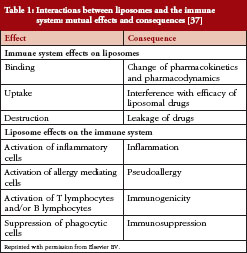
The physicochemical properties of liposomal vaccines – method of antigen attachment, lipid composition, bilayer fluidity, particle charge, and other properties – strongly influence the immune responses to them [22, 34], see Table 1. Thus, small differences in particles or complex attributes in follow-on versions of liposomal drugs could alter the activity of the drug, its distribution profile, and/or its persistence at tissue/cellular or subcellular levels to a clinically meaningful extent [35]. Currently, little is known about the cellular distribution of lipid-modified
peptides [22].

http://gabi-journal.net/wp-content/uploads/fig122.jpg

Consistent plasma concentrations of the active substance in two liposomal formulations does not guarantee similar efficacy or safety of the two products, since nanoparticles of active drug may distribute differently in tissues and cells [13, 35]. To investigate whether a conventional bioequivalence approach could ensure therapeutic equivalence of liposomal products, the pharmacokinetics, efficacy, and toxicity of six formulation variants of the originator PEGylated liposomal doxorubicin product (Doxil/Caelyx, Janssen-Cilag Pty Ltd) were prepared differing in composition and liposome size and evaluated in preclinical models for antitumour activity and toxicity [36]. Although some formulations demonstrated similar plasma pharmacokinetics and systemic exposure of doxorubicin, they exhibited different antitumour activity and toxicity profiles. Investigators concluded that a conventional bioequivalence approach is not appropriate for establishing therapeutic equivalence of a generic product.

Augmenting immunogenicity is key to the therapeutic activity of many liposomal preparations. However, some therapeutic liposomes are recognized by the immune system as foreign, likely because the phospholipid vesicles of the liposome mimic the size and shape of pathogenic microbes [37], leading to a variety of adverse immune reactions. Hypersensitivity reactions to liposomal drugs appear to be primarily mediated through complement activation triggered by an immune reaction to liposome surface charge or topography [37].

Detecting clinically meaningful differences in the therapeutic activity, toxicity, and immunogenicity of a follow-on liposomal drug may require nonclinical and clinical studies. A reflection paper issued by the European Medicines Agency (EMA) on data requirements for follow-on versions of liposomal products indicates clinical data for these products will be considered on a case-by-case basis [38]. Currently, EMA has not approved any follow-on versions of liposomal drugs.

Iron-carbohydrate drugs
Intravenous (IV) iron products are used to treat iron deficiency anaemia in patients undergoing chronic haemodialysis and receiving supplemental EPO therapy and in people with iron-deficiency anaemia associated with chronic blood loss or impaired iron absorption. The chemical structures of parenteral iron agents have not been characterized in full detail. Venofer (iron sucrose, Vifor Inc) and Ferrlecit (iron gluconate, Sanofi) comprise nanoparticle-sized iron cores surrounded by a complex carbohydrate layer. Because the physicochemical and biological properties of iron-carbohydrate compounds depend on their manufacturing processes, subtle structural modifications during manufacture may affect drug stability; if weakly bound iron dissociates prematurely it can catalyse the generation of reactive oxygen species leading to oxidative stress and inflammation [39]. Moreover, any variation in mean/median size and size distribution of the iron-carbohydrate nanoparticles can result in a generic product with different physicochemical properties and different biopharmaceutical profile with respect to pharmacokinetics and biodistribution compared with the originator drug [21]. In fact, animal studies show differences between the originator iron sucrose product (Venofer) and iron sucrose similar (ISS) products with increased markers of inflammation and increased serum iron and transferrin saturation levels in animals receiving the ISS [13, 40].

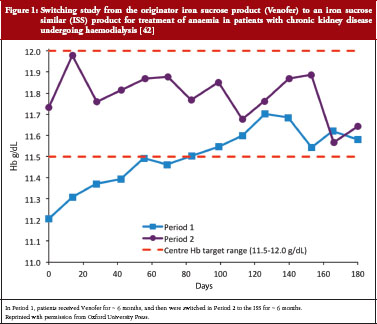
Despite these differences and the inability to completely characterize these drugs, and with no nonclinical or clinical studies to establish their therapeutic equivalence to the innovator drug, ISS products gained marketing approval via the small-molecule drug generic pathway [41]. Subsequently, in controlled trials in anaemic patients undergoing haemodialysis, ISS use was associated with reduced efficacy and the potential for increased safety risk related to iron overload [42, 43]. Clinically meaningful differences have been demonstrated when patients were switched to an ISS from Venofer. A switching study in which 75 stable haemodialysis patients taking Venofer for at least six months switched to an ISS product for six months resulted in decreased haemoglobin levels and reduced iron indices despite higher doses of the ISS [42], see Figure 1.

http://gabi-journal.net/wp-content/uploads/fig222.jpg

Iron-carbohydrate products can cause life-threatening or fatal hypersensitivity reactions, especially in pregnant women [44, 45]. The immunologic basis of allergic hypersensitivity to iron agents remains unknown [44]. Substitution of Venofer with an ISS at the pharmacy level (without physician or patient knowledge) was associated with hypersensitivity reactions and hospitalization in subjects who previously tolerated the originator drug [41]. Safety concerns surrounding all IV iron products led to recommendations of stronger measures to manage and minimize the risk of hypersensitivity [45]. The recommendations state that every dose of IV iron administered should be monitored for potential hypersensitivity reactions, even if previous administrations were well tolerated.

Both FDA and EMA have indicated that follow-on versions of iron sucrose (FDA) and nanoparticulate iron medicinal products (EMA) are not suitable for approval through the classic generic approval pathway [21, 46]. Neither agency has indicated what clinical evaluation will be required for approval of follow-on products.

Glatiramoids
The prototype glatiramoid, Copaxone, (Teva Pharmaceutical Industry) is a complex heterogenous mixture of synthetic proteins and polypeptide nanoparticles with immunomodulatory activity approved for treatment of relapsing-remitting multiple sclerosis (RRMS) [10,4750]. The active ingredient in Copaxone, glatiramer acetate, comprises a potentially incalculable number of unidentified active peptide moieties that are not characterizable with available technology [10], although the amino acid sequences in Copaxone are not entirely random [8]). The mechanism of action of Copaxone is not fully elucidated but the drug is thought to act as an antigen-based therapeutic vaccine [5153]. Pharmacokinetic data are uninformative for glatiramoids because the polypeptides in a glatiramoid mixture are hydrolysed at the drug injection site into unidentifiable peptide fragments that stimulate proliferation of glatiramoid-specific immune cells, which migrate to the central nervous system where they ameliorate auto-immune destruction of myelin [54, 55]. Therefore, blood levels of the glatiramoid or its hydrolysis products are not indicative of drug activity.

Glatiramoids appears to act as altered peptide ligands (APL) of encephalitogenic epitopes within myelin basic protein (MBP), an autoantigen implicated in MS [56]. Decades of clinical use demonstrate that Copaxone does not contain encephalitogenic epitopes and does not induce auto-reactive antibodies [48]. However, the same cannot be assumed for a follow-on glatiramer acetate product. In the last two decades, other APLs of MBP epitopes have been studied for use as therapeutic vaccines in MS. Clinical development of at least two APLs of MBP antigenic peptides was halted due to adverse events indicative of auto-reactive antibodies (i.e. immediate-type hypersensitivity reactions [57]) or substantial expansion of pro-inflammatory T cells that were cross-reactive with the MBP autoantigens [58].

Because Copaxone works as a therapeutic vaccine, anti-drug antibodies are detectable in all treated patients [48, 49, 52]. These antibodies, however, do not neutralize biological activity or clinical efficacy and are not associated with local or systemic adverse effects in RRMS patients receiving chronic treatment [49]. Anti-Copaxone antibody titers and isotypes change over time with repeated drug administration [48, 49, 59]. Although anti-Copaxone antibodies are predominantly of the IgG subclasses over time [48, 49, 60, 61], there have been rare reports of anti-Copaxone IgE antibodies associated with anaphylactic reactions that can arise up to 10 months to a year after treatment initiation, with no symptomology beforehand to signal hypersensitivity [62, 63].

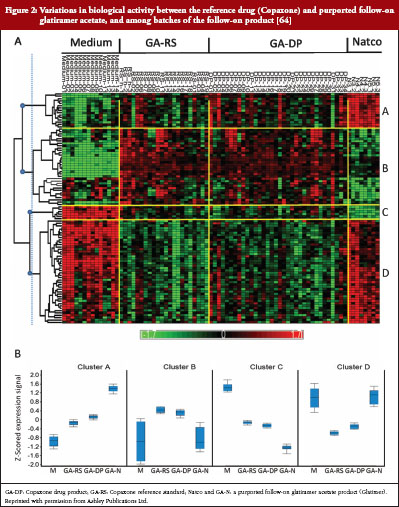
A purported follow-on product of glatiramer acetate is currently marketed in India and the Ukraine (Glatimer, Natco Pharma Ltd, Hyderabad, India). There are no published data of the safety, efficacy, or immunogenicity of this product at this writing. In analytical tests, this product demonstrated physicochemical differences from Copaxone and poor batch-to-batch reproducibility [8, 20, 64]. When activatedex vivo with Glatimer, splenocytes from GA-treated mice showed distinctly different gene transcription profiles among different batches, and between Glatimer and Copaxone, see Figure 2 [64].

http://gabi-journal.net/wp-content/uploads/fig311.jpg

A comparability trial of a generic glatiramer acetate product (GTR, Synthon VB) and Copaxone is currently underway in RRMS patients [65]. The GATE trial (ClinicalTrials.gov NCT01489254) is a 24-month study comprising a 9-month, placebo-controlled, active-comparator phase followed by a 15-month open-label phase in which all participants remaining in the study receive GTR. Characterizing the immunogenicity of GTR is not an objective of the study because the protocol suggests that anti-GTR antibodies will be the same as anti-Copaxone antibodies; specifically, that because anti-Copaxone antibodies are not neutralizing, anti-GTR antibodies will not be neutralizing either [65]. This assumption requires verification: GTR may be shown to be a close approximation to Copaxone at best and small differences in amino acid sequences or of protein folding in GTR could generate an antibody repertoire with different, isotopes, specificities, and affinities from those of anti-Copaxone antibodies, with variable consequences on patient safety and response to therapy [10, 13, 66, 67]. Accordingly, experts in the field of MS agree that the immunogenicity of follow-on versions of Copaxone cannot be assumed and should be established for each formulation [23].

According to the study protocol, the assessment of the immunogenicity of GTR is to compare proportions of subjects who develop anti-drug antibodies after receiving GTR or Copaxone [65]. As antigen-based therapeutic vaccines, antibody development to either drug would be expected in 100% of treated participants. Thus, it will not be possible to compare efficacy outcomes in patients free from anti-GTR antibodies with outcomes in GTR-antibody-positive patients to determine potential formation of NABs.

In the US, at least three manufacturers have filed ANDAs for follow-on glatiramer acetate products with FDA under the small-molecule generic pathway [6871]. The manufacturers maintain that these products will be interchangeable with Copaxone, despite the fact that the first clinical exposure to these products in MS patients will occur post-approval. Given the complexity, unknown mechanism of action, uncharacterized epitopes, and strong immunogenicity of Copaxone; the variable nature of RRMS disease activity; and the inter- and intra-patient variability of antibody responses to immunogenic drugs; adequate testing of the immunogenicity of uncharacterized follow-on glatiramoid products in MS patients should precede approval and marketing of these products.

Considerations for approval of follow-on NBCDs

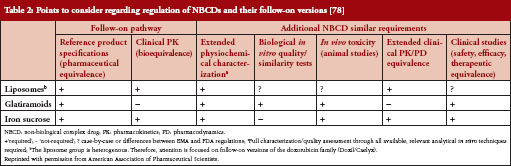
The generic approach should be limited to products that can be fully characterized and allow prediction of biological effects with pharmacokinetics data as surrogates for clinical efficacy [11]. Because NBCDs have many of the same features as biologicals, it seems prudent to extend guidelines for biosimilar products to follow-on NBCDs [2, 5, 24, 72]. When it is not possible to prove bioequivalence of follow-on NBCDs, requiring non-clinical and clinical testing can ensure therapeutic equivalence between NBCDs and the reference drug. Comparability evaluations for a follow-on NBCD should include physicochemical properties, impurities, biological activity, pharmacokinetics, efficacy, and safety, see Table 2. The extent of testing needed to establish adequate similarity between an originator drug and a follow-on product will likely depend on NBCD complexity, mode of action (if known), and the potential for toxicity. The risks of free substitution between an uncharacterized, immunogenic NBCD and a follow-on product will remain unknown without a clinical crossover study that provides direct evidence that repeated switching between the reference and the generic drug has no negative impact.

http://gabi-journal.net/wp-content/uploads/fig48.jpg

For immunogenic NBCDs, it may be necessary to ensure that the immunologic and immunogenic safety of the follow-on NBCD is comparable to that of the reference drug in clinical studies in patients with the disease under study. Considerable inter-individual variability in antibody responses warrants assessment in a sufficient number of patients to characterize variability in antibody responses. Additionally, evaluation of a follow-on NBCD should ensure that anti-drug antibodies do not neutralize drug efficacy or bind to endogenous proteins; and characterize the immunologic effects of switching between a reference NBCD and a generic product.

In many countries generic approval of a follow-on product allows automatic substitution at the pharmacy level. While there is continued pressure worldwide to reduce drug costs, a major concern is whether patient safety and well-being are compromised by automatic substitution or interchange with follow-on products [73]. Commonly, clinicians, caregivers and patients are not aware of the change in medication [11], often to the frustration of prescribing physicians [7477]. At minimum, substitution of NBCDs without the involvement of a healthcare professional should be discouraged. Generally, patients should not be automatically switched to a generic NBCD if they are doing well. If a switch is unavoidable, the safety and efficacy of the new product should be monitored [78].

In some instances, substituting a lower priced generic for an innovator drug has resulted in higher healthcare utilization and overall costs [16, 17, 25] due to decreased efficacy or adverse events. Overall, drug product replacement that is guided by acquisition cost only may increase other costs and not be cost-effective from the patient’s and payer’s perspective [11].

Conclusion

Patients, physicians, and third-party payers expect generic products to be equally safe and comparably effective to the reference drug. For follow-on NBCDs, this will likely require more thorough assessment than the current generic drug approval process. Ultimately, regulatory requirements for approval and interchangeability of follow-on NBCDs will probably require a ‘case-by-case’ approach.

As FDA approaches the challenge of developing guidelines for follow-on NBCDs, it will be important to include a variety of constituents in the process. Members of the medical community have expressed concerns about the safety and efficacy of biosimilar drugs that indicate an increasing lack of trust of the drug regulatory process, primarily due to ‘an absence of the organized medical community in the public process of creating and updating the guidelines’ [74]. The same may hold true for follow-on NBCDs. Regulators must operate in different worlds to balance legal, scientific, and public health considerations as legislation for approval of follow-on NBCD products evolves. Scientific discussion and multidisciplinary research between experts from academia, industry, the medical community, and regulatory bodies; and consensus discussions with all stakeholders on an international level will aid in development of meaningful regulatory guidelines to ensure the safety and effectiveness of follow-on NBCD products.


References
1. Biologics Price Competition and Innovation Act of 2009, Public Law 111-148, Sec. 7001-7003, 124 Stat. 119. Mar. 23, 2010.
2. U.S. Department of Health and Human Services. Guidance for industry scientific considerations in demonstrating biosimilarity to a reference product. Draft guidance. Februray 2012 [homepage on the Internet]. 2012 Feb [cited 2014 Feb 24]. Available from: http://www.fda.gov/downloads/Drugs/GuidanceComplianceRegulatoryInformation/Guidances/UCM291128.pdf
3. U.S. Department of Health and Human Services. Guidance for industry biosimilars questions and answers regarding implementation of the Biologics Price Competition Act of 2009. Draft guidance. Februray 2012 [homepage on the Internet]. 2012 Feb [cited 2014 Feb 24]. Available from: http://www.fda.gov/downloads/Drugs/Guidances/UCM273001.pdf
4. U.S. Department of Health and Human Services. Guidance for industry quality considerations in demonstrating biosimilarity to a reference protein product. Draft guidance. Februray 2012 [homepage on the Internet]. 2012 Feb [cited 2014 Feb 24]. Available from: http://www.fda.gov/downloads/Drugs/GuidanceComplianceRegulatoryInformation/Guidances/UCM291134.pdf
5. European Medicines Agency. Guideline on immunogenicity assessment of biotechnology-derived therapeutic proteins. EMEA/CHMP/BMWP/14327/2006. 13 December 2007 [homepage on the Internet]. 2008 Jan [2014 Feb 24]. Available from: http://www.ema.europa.eu/docs/en_GB/document_library/Scientific_guideline/2009/09/WC500003946.pdf
6. European Medicines Agency. Guideline on similar biological medicinal products. CHMP/437/04. 30 October 2005 [homepage on the Internet]. 2005 Nov [cited 2014 Feb 24]. Available from: http://www.ema.europa.eu/docs/en_GB/document_library/Scientific_guideline/2009/09/WC500003517.pdf
7. European Medicines Agency. Guideline on similar biological medicinal products containing biotechnology-derived proteins as active substance: non-clinical and clinical issues. EMEA/CHMP/BMWP/42832/2005 Rev. 1. 3 June 2013 [homepage on the Internet]. 2013 Jun [cited 2014 Feb 24]. Available from: http://www.ema.europa.eu/docs/en_GB/document_library/Scientific_guideline/2013/06/WC500144124.pdf
8. Nicholas JM. Complex drugs and biologics: scientific and regulatory challenges for follow-on products. Drug Inf J. 2012;46(2):197-206.
9. Schellekens H, Klinger E, Mühlebach S, Brin JF, Storm G, Crommelin DJ. The therapeutic equivalence of complex drugs. Regul Toxicol Pharmacol. 2011;59(1):176-83.
10. Varkony H, Weinstein V, Klinger E, et al. The glatiramoid class of immunomodulator drugs. Expert Opin Pharmacother. 2009;10(4):657-68.


Read Full Post »

Retromer in neurological disorders

Larry H. Bernstein, MD, FCAP, Curator

LPBI


Retromer in Alzheimer disease, Parkinson disease and other neurological disorders.

Scott A. Small and Gregory A. Petsko
Nature Reviews Neuroscience 16; 126–132 (2015)      http://dx.doi.org:/10.1038/nrn3896


As discussed in the forum (see video here), there are many cellular pathways which are believed to be perturbed in Alzheimer’s Disease. Recent work has suggested that deficits in retromer complex function may underlie impairment of endosomal trafficking in neurons and may contribute to AD pathogenesis. This recent review illustrates the function of the retromer complex and discusses how its dysfunction may contribute to neurodegeneration.

By Tim Spencer on 24 Nov, 2015


Retromer is a protein assembly that has a central role in endosomal trafficking, and retromer dysfunction has been linked to a growing number of neurological disorders. First linked to Alzheimer disease, retromer dysfunction causes a range of pathophysiological consequences that have been shown to contribute to the core pathological features of the disease. Genetic studies have established that retromer dysfunction is also pathogenically linked to Parkinson disease, although the biological mechanisms that mediate this link are only now being elucidated. Most recently, studies have shown that retromer is a tractable target in drug discovery for these and other disorders of the nervous system.


Yeast has proved to be an informative model organism in cell biology and has provided early insight into much of the molecular machinery that mediates the intracellular transport of proteins1,2. Indeed, the term ‘retromer’ was first introduced in a yeast study in 1998 (Ref. 3). In this study, retromer was referred to as a complex of proteins that was dedicated to transporting cargo in a retrograde direction, from the yeast endosome back to the Golgi.

By 2004, a handful of studies had identified the molecular4 and the functional5, 6 homologies of the mammalian retromer, and in 2005 retromer was linked to its first human disorder, Alzheimer disease (AD)7. At the time, the available evidence suggested that the mammalian retromer might match the simplicity of its yeast homologue. Since then, a dramatic and exponential rise in research focusing on retromer has led to more than 300 publications. These studies have revealed the complexity of the mammalian retromer and its functional diversity in endosomal transport, and have implicated retromer in a growing number of neurological disorders.

New evidence indicates that retromer is a ‘master conductor’ of endosomal sorting and trafficking8. Synaptic function heavily depends on endosomal trafficking, as it contributes to the presynaptic release of neurotransmitters and regulates receptor density in the postsynaptic membrane, a process that is crucial for neuronal plasticity9. Therefore, it is not surprising that a growing number of studies are showing that retromer has an important role in synaptic biology10, 11, 12, 13. These observations may account for why the nervous system seems particularly sensitive to genetic and other defects in retromer. In this Progress article, we briefly review the molecular organization and the functional role of retromer, before discussing studies that have linked retromer dysfunction to several neurological diseases — notably, AD and Parkinson disease (PD).


The endosome is considered a hub for intracellular transport. From the endosome, transmembrane proteins can be actively sorted and trafficked to various intracellular sites via distinct transport routes (Fig. 1a). Studies have shown that the mammalian retromer mediates two of the three transport routes out of endosomes. First, retromer is involved in the retrieval of cargos from endosomes and in their delivery, in a retrograde direction, to the trans-Golgi network (TGN)5,6. Retrograde transport has many cellular functions but, as we describe, it is particularly important for the normal delivery of hydrolases and proteases to the endosomal–lysosomal system. The second transport route in which retromer functions is the recycling of cargos from endosomes back to the cell surface14, 15 (Fig. 1a). It is this transport route that is particularly important for neurons, as it mediates the normal delivery of glutamate and other receptors to the plasma membrane during synaptic remodelling and plasticity10, 11, 12, 13.

Figure 1: Retromer’s endosomal transport function and molecular organization.
Retromer's endosomal transport function and molecular organization.

a | Retromer mediates two transport routes out of endosomes via tubules that extend out of endosomal membranes. The first is the retrograde pathway in which cargo is retrieved from the endosome and trafficked to the trans-Golgi network (TGN). The second is the recycling pathway in which cargo is trafficked back from the endosome to the cell surface. The degradation pathway, which is not mediated by retromer, involves the trafficking of cargo from endosomes to lysosomes for degradation. b | The retromer assembly of proteins can be organized into distinct functional modules, all of which work together as part of retromer’s transport role. The ‘cargo-recognition core’ is the central module of the retromer assembly and comprises a trimer of proteins, in which vacuolar protein sorting-associated protein 26 (VPS26) and VPS29 bind VPS35. The ‘tubulation’ module includes protein complexes that bind the cargo-recognition core and aid in the formation and stabilization of tubules that extend out of endosomes, directing the transport of cargos towards their final destinations. The ‘membrane-recruiting’ proteins recruit the cargo-recognition core to the endosomal membrane. The WAS protein family homologue (WASH) complex of proteins also binds the cargo-recognition core and is involved in endosomal ‘actin remodelling’ to form actin patches, which are important for directing cargos towards retromer’s transport pathways. Retromer cargos includes a range of receptors — which bind the cargo-recognition core — and their ligands. PtdIns3P, phosphatidylinositol-3-phosphate.

As well as extending the endosomal transport routes, recent studies have considerably expanded the number of molecular constituents and what is known about the functional organization of the mammalian retromer. Following this expansion in knowledge of the molecular diversity and organizational complexity, retromer might be best described as a multimodular protein assembly. The protein or group of proteins that make up each module can vary, but each module is defined by its distinct function, and the modules work in unison in support of retromer’s transport role.

Two modules are considered central to the retromer assembly. First and foremost is a trimeric complex that functions as a ‘cargo-recognition core’, which selects and binds to the transmembrane proteins that need to be transported and that reside in endosomal membranes5, 6. This trimeric core comprises vacuolar protein sorting-associated protein 26 (VPS26), VPS29 and VPS35; VPS35 functions as the core’s backbone to which the other two proteins bind16. VPS26 is the only member of the core that has been found to have two paralogues, VPS26a and VPS26b17,18, and studies suggest that VPS26b might be differentially expressed in the brain19, 20. Some studies suggest that VPS26a and VPS26b are functionally redundant21, whereas others suggest that they might form distinct cargo-recognition cores20, 22.

The second central module of the retromer assembly is the ‘tubulation’ module, which is made up of proteins that work together in the formation and the stabilization of tubules that extend out of endosomes and that direct the transport of cargo towards its final destination (Fig. 1b). The proteins in this module, which directly binds the cargo-recognition core, are members of the subgroup of the sorting nexin (SNX) family that are characterized by the inclusion of a carboxy-terminal BIN–amphiphysin–RVS (BAR) domain23. These members include SNX1, SNX2, SNX5 and SNX6 (Refs 24,25). As part of the tubulation module, these SNX-BAR proteins exist in different dimeric combinations, but typically SNX1 interacts with SNX5 or SNX6, and SNX2 interacts with SNX5 or SNX6 (Refs 26,27). The EPS15-homology domain 1 (EHD1) protein can be included in this module, as it is involved in stabilizing the tubules formed by the SNX-BAR proteins28.

A third module of the retromer assembly functions to recruit the cargo-recognition core to endosomal membranes and to stabilize the core once it is there (Fig. 1b). Proteins that are part of this ‘membrane-recruiting’ module include SNX3 (Ref. 29), the RAS-related protein RAB7A30, 31,32 and TBC1 domain family member 5 (TBC1D5), which is a member of the TRE2–BUB2–CDC16 (TBC) family of RAB GTPase-activating proteins (GAPs)28. In addition, the lipid phosphatidylinositol-3-phosphate (PtdIns3P), which is found on endosomal membranes, contributes to recruiting most of the retromer-related SNXs through their phox homology domains33. Interestingly, another SNX with a phox homology domain, SNX27, was recently linked to retromer and its function15, 34. SNX27 functions as an adaptor for binding to PDZ ligand-containing cargos that are destined for transport to the cell surface via the recycling pathway. Thus, according to the functional organization of the retromer assembly, SNX27 belongs to the module that engages in cargo recognition and selection.

Recent studies have identified a fourth module of the retromer assembly. The five proteins in this module — WAS protein family homologue 1 (WASH1), FAM21, strumpellin, coiled-coil domain-containing protein 53 (CCDC53) and KIAA1033 (also known as WASH complex subunit 7) — form the WASH complex and function as an ‘actin-remodelling’ module28, 35, 36 (Fig. 1b). Specifically, the WASH complex functions in the rapid polymerization of actin to create patches of actin filaments on endosomal membranes. The complex is recruited to endosomal membranes by binding VPS35 (Ref. 28), and together they divert cargo towards retromer transport pathways and away from the degradation pathway.

The cargos that are transported by retromer include the receptors that directly bind the cargo-recognition core and the ligands of these receptors that are co-transported with the receptors. The receptors that are transported by retromer that have so far been identified to be the most relevant to neurological diseases are the family of VPS10 domain-containing receptors (including sortilin-related receptor 1 (SORL1; also known as SORLA), sortilin, and SORCS1, SORCS2 and SORCS3)7; the cation-independent mannose-6-phosphate receptor (CIM6PR)6, 5; glutamate receptors10; and phagocytic receptors that mediate the clearing function of microglia37. The most disease-relevant ligand to be identified that is trafficked as retromer cargo is the β-amyloid precursor protein (APP)7, 38, 39, 40, 41, which binds SORL1 and perhaps other VPS10 domain-containing receptors42 at the endosomal membrane.

Retromer dysfunction

Guided by retromer’s established function, and on the basis of empirical evidence, there are three well-defined pathophysiological consequences of retromer dysfunction that have proven to be relevant to AD and nervous system disorders. First, retromer dysfunction can cause cargos that typically transit rapidly through the endosome to reside in the endosome for longer than normal durations, such that they can be pathogenically processed into neurotoxic fragments (for example, APP, when stalled in the endosome, is more likely to be processed into amyloid-β, which is implicated in AD43 (Fig. 2a)). Second, by reducing endosomal outflow via impairment of the recycling pathway, retromer dysfunction can lead to a reduction in the number of cell surface receptors that are important for brain health (for example, microglia phagocytic receptors37 (Fig. 2b)).

Figure 2: The pathophysiology of retromer dysfunction.
The pathophysiology of retromer dysfunction.

Retromer dysfunction has three established pathophysiological consequences. In the examples shown, the left graphic represents a cell with normal retromer function and the right graphic represents a cell with a deficit in retromer function. a | Retromer dysfunction causes increased levels of cargo to reside in endosomes. For example, in primary neurons, retromer transports the β-amyloid precursor protein (APP) out of endosomes. Accordingly, retromer dysfunction increases APP levels in endosomes, leading to accelerated APP processing, resulting in an accumulation of neurotoxic fragments of APP (namely, β-carboxy-terminal fragment (βCTF) and amyloid-β) that are pathogenic in Alzheimer disease. b | Retromer dysfunction causes decreased cargo levels at the cell surface. For example, in microglia, retromer mediates the transport of phagocytic receptors to the cell surface and retromer dysfunction results in a decrease in the delivery of these receptors. Studies suggest that this cellular phenotype might have a pathogenic role in Alzheimer disease. c | Retromer dysfunction causes decreased delivery of proteases to the endosome. Retromer is required for the normal retrograde transport of the cation-independent mannose-6-phosphate receptor (CIM6PR) from the endosome back to the trans-Golgi network (TGN). It is in the TGN that this receptor binds cathepsin D and other proteases, and transports them to the endosome, to support the normal function of the endosomal–lysosomal system. By impairing the retrograde transport of the receptor, retromer dysfunction ultimately leads to reduced delivery of cathepsin D to this system. Cathepsin D deficiency has been shown to disrupt the endosomal–lysosomal system and to trigger tau pathology either within endosomes or secondarily in the cytosol.

The third consequence (Fig. 2c) is a result of the established role that retromer has in the retrograde transport of receptors, such as CIM6PR5, 6 or sortilin44, after these receptors transport proteases from the TGN to the endosome. Once at the endosome, the proteases disengage from the receptors, are released into endosomes and migrate to lysosomes. These proteases function in the endosomal–lysosomal system to degrade proteins, protein oligomers and aggregates45. Retromer functions to transfer the ‘naked’ receptor from the endosome back to the TGN via the retrograde pathway5, 6, allowing the receptors to continue in additional rounds of protease delivery. Accordingly, by reducing the normal retrograde transport of these receptors, retromer dysfunction has been shown to reduce the proper delivery of proteases to the endosomal–lysosomal system5,6, which, as discussed below, is a pathophysiological state linked to several brain disorders.

Although requiring further validation, recent studies suggest that retromer dysfunction might be involved in two other mechanisms that have a role in neurological disease. One study suggested that retromer might be involved in trafficking the transmembrane protein autophagy-related protein 9A (ATG9A) to recycling endosomes, from where it can then be trafficked to autophagosome precursors — a trafficking step that is crucial in the formation and the function of autophagosomes46. Autophagy is an important mechanism by which neurons clear neurotoxic aggregates that accumulate in numerous neurodegenerative diseases47. A second study has suggested that retromer dysfunction might enhance the seeding and the cell-to-cell spread of intracellular neurotoxic aggregates48, which have emerged as novel pathophysiological mechanisms that are relevant to AD49, PD50 and other neurodegenerative diseases.

Alzheimer disease

Retromer was first implicated in AD in a molecular profiling study that relied on functional imaging observations in patients and animal models to guide its molecular analysis7. Collectively, neuroimaging studies confirmed that the entorhinal cortex is the region of the hippocampal circuit that is affected first in AD, even in preclinical stages, and suggested that this effect was independent of ageing (as reviewed in Ref. 51). At the same time, neuroimaging studies identified a neighbouring hippocampal region, the dentate gyrus, that is relatively unaffected in AD52. Guided by this information, a study was carried out in which the two regions of the brain were harvested post mortem from patients with AD and from healthy individuals, intentionally covering a broad range of ages. A statistical analysis was applied to the determined molecular profiles of the regions that was designed to address the following question: among the thousands of profiled molecules, which are the ones that are differentially affected in the entorhinal cortex versus the dentate gyrus, in patients versus controls, but that are not affected by age? The final results led to the determination that the brains of patients with AD are deficient in two core retromer proteins — VPS26 and VPS35 (Ref. 7).

Little was known about the receptors of the neuronal retromer, so to understand how retromer deficiency might be mechanistically linked to AD, an analysis was carried out on the molecular data set that looked for transmembrane molecules for which expression levels correlated with VPS35 expression. The top ‘hit’ was the transcript encoding the transmembrane protein SORL1 (Ref. 43). As SORL1 belongs to the family of VPS10-containing receptors and as VPS10 is the main retromer receptor in yeast3, it was postulated that SORL1 and the family of other VPS10-containing proteins (sortillin, SORCS1, SORCS2 and SORCS3) might function as retromer receptors in neurons7. In addition, SORL1 had recently been reported to bind APP53, so if SORL1 was assumed to be a receptor that is trafficked by retromer, then APP might be the cargo that is co-trafficked by retromer. This led to a model in which retromer traffics APP out of endosomes7, which are the organelles in which APP is most likely to be cleaved by βAPP-cleaving enzyme 1 (BACE1; also known as β-secretase 1)43; this is the initial enzymatic step in the pathogenic processing of APP.

Subsequent studies were required to further establish the pathogenic link between retromer and AD, and to test the proposed model. The pathogenic link was further supported by human genetic studies. First, a genetic study investigating the association between AD, the genes encoding the components of the retromer cargo-recognition core and the family of VPS10-containing receptors found that variants of SORL1 increase the risk of developing AD38. This finding was confirmed by numerous studies, including a recent large-scale AD genome-wide association study54. Other genetic studies identified AD-associated variants in genes encoding proteins that are linked to nearly all modules of the retromer assembly55, including genes encoding proteins of the retromer tubulation module (SNX1), genes encoding proteins of the retromer membrane-recruiting module (SNX3 and RAB7A) and genes encoding proteins of the retromer actin-remodelling module (KIAA1033). In addition, nearly all of the genes encoding the family of VPS10-containing retromer receptors have been found to have variants that associate with AD56. Finally, a study found that brain regions that are differentially affected in AD are deficient in PtdIns3P, which is the phospholipid required for recruiting many sorting nexins to endosomal membranes57. Thus, together with the observation that the brains of patients with AD are deficient in VPS26a and VPS35 (Refs 7,37), all modules in the retromer assembly are implicated in AD.

Studies in mice39, 58, 59, flies39 and cells in culture34, 40, 41, 60, 61 have investigated how retromer dysfunction leads to the pathogenic processing of APP. Although rare discrepancies have been observed among these studies62, when viewed in total, the most consistent findings are that retromer dysfunction causes increased pathogenic processing of APP by increasing the time that APP resides in endosomes. Moreover, these studies have confirmed that SORL1 and other VPS10-containing proteins function as APP receptors that mediate APP trafficking out of endosomes.

Retromer has unexpectedly been linked to microglial abnormalities37 — another core feature of AD — which, on the basis of recent genetic findings, seem to have an upstream role in disease pathogenesis54, 63. A recent study found that microglia harvested from the brains of individuals with AD are deficient in VPS35 and provided evidence suggesting that retromer’s recycling pathway regulates the normal delivery of various phagocytic receptors to the cell surface of microglia37, including the phagocytic receptor triggering receptor expressed on myeloid cells 2 (TREM2) (Fig. 2b). Mutations in TREM2 have been linked to AD63, and a recent study indicates that these mutations cause a reduction in its cell surface delivery and accelerate TREM2 degradation, which suggests that the mutations are linked to a recycling defect64. While they are located at the microglial cell surface, these phagocytic receptors function in the clearance of extracellular proteins and other molecules from the extracellular space65. Taken together, these recent studies suggest that defects in the retromer’s recycling pathway can, at least in part, account for the microglial defects observed in the disease.

The microtubule-associated protein tau is the key element of neurofibrillary tangles, which are the other hallmark histological features of AD. Although a firm link between retromer dysfunction and tau toxicity remains to be established, recent insight into tau biology suggests several plausible mechanisms that are worth considering. Tau is a cytosolic protein, but nonetheless, through mechanisms that are still undetermined, it is released into the extracellular space from where it gains access to neuronal endosomes via endocytosis66, 67. In fact, recent studies suggest that the pathogenic processing of tau is triggered after it is endocytosed into neurons and while it resides in endosomes67. Of note, it still remains unknown which specific tau processing step — its phosphorylation, cleavage or aggregation — is an obligate step towards tau-related neurotoxicity. Accordingly, if defects in microglia or in other phagocytic cells reduce their capacity to clear extracellular tau, this would accelerate tau endocytosis in neurons and its pathogenic processing.

A second possibility comes from the established role retromer has in the proper delivery of cathepsin D and other proteases to the endosomal–lysosomal system via CIM6PR or sortilin (Fig. 2c). Studies in sheep, mice and flies68 have shown that cathepsin D deficiency can enhance tau toxicity and that this is mediated by a defective endosomal–lysosomal system68. Whether this mechanism leads to abnormal processing of tau within endosomes or in the cytosol via caspase activation68 remains unclear. As discussed above, retromer dysfunction will lead to a decrease in the normal delivery of cathepsin D to the endosome and will result in endosomal–lysosomal system defects. Retromer dysfunction can therefore be considered as a functional phenocopy of cathepsin D deficiency, which suggests a plausible link between retromer dysfunction and tau toxicity. Nevertheless, although these recent insights establish plausibility and support further investigation into the link between retromer and tau toxicity, whether this link exists and how it may be mediated remain open and outstanding questions.

Parkinson disease

The pathogenic link between retromer and PD is singular and straightforward: exome sequencing has identified autosomal-dominant mutations in VPS35 that cause late-onset PD69, 70, one of a handful of genetic causes of late-onset disease. However, the precise mechanism by which these mutations cause the disease is less clear.

Among a group of recent studies, all46, 48, 71, 72, 73, 74, 75, 76 but one77 strongly suggest that these mutations cause a loss of retromer function. At the molecular level, the mutations do not seem to disrupt mutant VPS35 from interacting normally with VPS26 and VPS29, and from forming the cargo-recognition core. Rather, two studies suggest that the mutations have a restricted effect on the retromer assembly but reduce the ability of VPS35 to associate with the WASH complex46, 75. Studies disagree about the pathophysiological consequences of the mutations. Four studies suggest that the mutations affect the normal retrograde transport of CIM6PR71, 73, 75, 76 from the endosome back to the TGN (Fig. 2c). In this scenario, the normal delivery of cathepsin D to the endosomal–lysosomal system should be reduced and this has been empirically shown73. Cathepsin D has been shown to be the dominant endosomal–lysosomal protease for the normal processing of α-synuclein76, and mutations could therefore lead to abnormal α-synuclein processing and to the formation of α-synuclein aggregates, which are thought to have a key pathogenic role in PD.

A separate study suggested that the mutation might cause a mistrafficking of ATG9, and thereby, as discussed above, reduce the formation and the function of autophagosomes46. Autophagosomes have also been implicated as an intracellular site in which α-synuclein aggregates are cleared. Thus, although future studies are needed to resolve these discrepant findings (which may in fact not be mutually exclusive), these studies are generally in agreement that retromer defects will probably increase the neurotoxic levels of α-synuclein aggregates48.

Several studies in flies71, 74 and in rat neuronal cultures71 provide strong evidence that increasing retromer function by overexpressing VPS35 rescues the neurotoxic effects of the most common PD-causing mutations in leucine-rich repeat kinase 2 (LRRK2). Moreover, a separate study has shown that increasing retromer levels rescues the neurotoxic effect of α-synuclein aggregates in a mouse model48. These findings have immediate therapeutic implications for drugs that increase VPS35 and retromer function, as discussed in the next section, but they also offer mechanistic insight. LRRK2 mutations were found to phenocopy the transport defects caused either by theVPS35 mutations or by knocking down VPS35 (Ref. 71). Together, this and other studies78suggest that LRRK2 might have a role in retromer-dependent transport, but future studies are required to clarify this role.

Other neurological disorders

Besides AD and PD, in which a convergence of findings has established a strong pathogenic link, retromer is being implicated in an increasing number of other neurological disorders. Below, we briefly review three disorders for which the evidence of the involvement of retromer in their pathophysiology is currently the most compelling.

The first of these disorders is Down syndrome (DS), which is caused by an additional copy of chromosome 21. Given the hundreds of genes that are duplicated in DS, it has been difficult to identify which ones drive the intellectual impairments that characterize this condition. A recent elegant study provides strong evidence that a deficiency in the retromer cargo-selection protein SNX27 might be a primary driver for some of these impairments79. This study found that the brains of individuals with DS were deficient in SNX27 and that this deficiency may be caused by an extra copy of a microRNA (miRNA) encoded by human chromosome 21 (the miRNA is produced at elevated levels and thereby decreases SNX27 expression). Consistent with the known role of SNX27 in retromer function, decreased expression of this protein in mice disrupted glutamate receptor recycling in the hippocampus and led to dendritic dysfunction. Importantly, overexpression of SNX27 rescued cognitive and other defects in animal models79, which not only strengthens the causal link between retromer dysfunction and cognitive impairment in DS but also has important therapeutic implications.

Hereditary spastic paraplegia (HSP) is another disorder linked to retromer. HSP is caused by genetic mutations that affect upper motor neurons and is characterized by progressive lower limb spasticity and weakness. Although there are numerous mutations that cause HSP, most are unified by their effects on intracellular transport80. One HSP-associated gene in particular encodes strumpellin81, which is a member of the WASH complex.

The third disorder linked to retromer is neuronal ceroid lipofuscinosis (NCL). NCL is a young-onset neurodegenerative disorder that is part of a larger family of lysosomal storage diseases and is caused by mutations in one of ten identified genes — nine neuronal ceroid lipofuscinosis (CLN) genes and the gene encoding cathepsin D82. Besides cathepsin D, for which the link to retromer has been discussed above, CLN3 seems to function in the normal trafficking of CIM6PR83. However, the most direct link to retromer has been recently described for CLN5, which seems to function, at least in part, as a retromer membrane-recruiting protein84.

Retromer as a therapeutic target

As suggested by the first study implicating retromer in AD7, and in several subsequent studies71,85, increasing the levels of retromer’s cargo-recognition core enhances retromer’s transport function. Motivated by this observation and after a decade-long search86, we identified a novel class of ‘retromer pharmacological chaperones’ that can bind and stabilize retromer’s cargo-recognition core and increase retromer levels in neurons61.

Validating the motivating hypothesis, the chaperones were found to enhance retromer function, as shown by the increased transport of APP out of endosomes and a reduction in the accumulation of APP-derived neurotoxic fragments61. Although there are numerous other pharmacological approaches for enhancing retromer function, this success provides the proof-of-principle that retromer is a tractable therapeutic target.

As retromer functions in all cells, a general concern is whether enhancing its function will have toxic adverse effects. However, studies have found that in stark contrast to even mild retromer deficiencies, increasing retromer levels has no obvious negative consequences in yeast, neuronal cultures, flies or mice40, 48, 61, 71. This might make sense because unlike drugs that, for example, function as inhibitors, simply increasing the normal flow of transport through the endosome might not be cytotoxic.

If retromer drugs are safe and can effectively enhance retromer function in the nervous system — which are still outstanding issues — there are two general indications for considering their clinical application. One rests on the idea that these agents will only be efficacious in patients who have predetermined evidence of retromer dysfunction. The most immediate example is that of individuals with PD that is caused by LRRK2 mutations. As discussed above, several ‘preclinical’ studies in flies and neuronal cultures have already established that increasing retromer levels71, 74can reverse the neurotoxic effects of such mutations and, thus, if this approach is proven to be safe, LRRK2-linked PD might be an appropriate indication for clinical trials.

Alternatively, the pathophysiology of a disease might be such that retromer-enhancing drugs would be efficacious regardless of whether there is documented evidence of retromer dysfunction. AD illustrates this point. As reviewed above, current evidence suggests that retromer-enhancing drugs will, at the very least, decrease pathogenic processing of APP in neurons and enhance microglial function, even if there are no pre-existing defects in retromer.

More generally, histological studies comparing the entorhinal cortex of patients with sporadic AD to age-matched controls have documented that enlarged endosomes are a defining cellular abnormality in AD87, 88. Importantly, enlarged endosomes are uniformly observed in a broad range of patients with sporadic AD, which suggests that enlarged endosomes reflect an intracellular site at which molecular aetiologies converge87. In addition, because they are observed in early stages of the disease in regions of the brain without evidence of amyloid pathology87, enlarged endosomes are thought to be an upstream event. Mechanistically, the most likely cause of enlarged endosomes is either too much cargo flowing into endosomes — as occurs, for example, with apolipoprotein E4 (APOE4), which has been shown to accelerate endocytosis89, 90 — or too little cargo flowing out, as observed in retromer dysfunction40, 61 and related transport defects57. By any mechanism, retromer-enhancing drugs might correct this unifying cellular defect and might be expected to be beneficial regardless of the specific aetiology.

Conclusions

The fact that retromer defects, including those derived from bona fide genetic mutations, seem to differentially target the nervous system suggests that the nervous system is differentially dependent on retromer for its normal function. We think that this reflects the unique cellular properties of neurons and how synaptic biology heavily depends on endosomal transport and trafficking. Although plausible, future studies are required to confirm and to test the details of this hypothesis.

However, currently, it is the clinical rather than the basic neuroscience of retromer that is much better understood, with the established pathophysiological consequences of retromer dysfunction providing a mechanistic link to the disorders in which retromer has been implicated. Nevertheless, many questions remain. The two most interesting questions, which are in fact inversions of each other, relate to regional vulnerability in the nervous system. First, why does retromer dysfunction target specific neuronal populations? Second, how can retromer dysfunction cause diseases that target different regions of the nervous system? Recent evidence hints at answers to both questions, which must somehow be rooted in the functional and molecular diversity of retromer.

The type and the extent of retromer defects linked to different disorders might provide pathophysiological clues as well as reasons for differential vulnerability. As discussed, in AD there seem to be across-the-board defects in retromer, such that each module of the retromer assembly as well as multiple retromer cargos have been pathogenically implicated. By contrast, the profile of retromer defects in PD seems to be more circumscribed, involving selective disruption of the interaction between VPS35 and the WASH complex. These insights might agree with histological87, 88 and large-scale genetic studies54 that suggest that endosomal dysfunction is a unifying focal point in the cellular pathogenesis of AD. In contrast, genetics and other studies91suggest that the cellular pathobiology of PD is more distributed, implicating the endosome but other organelles as well, in particular the mitochondria.

Interestingly, studies suggest that the entorhinal cortex — a region that is differentially vulnerable to AD — has unique dendritic structure and function92, which are highly dependent on endosomal transport. We speculate that it is the unique synaptic biology of the entorhinal cortex that can account for why it might be particularly sensitive to defects in endosomal transport in general and retromer dysfunction in particular, and for why this region is the early site of disease. Future studies are required to investigate this hypothesis, as well as to understand why the substantia nigra or other regions that are differentially vulnerable to PD would be particularly sensitive to the more circumscribed defect in retromer.

Perhaps the most important observation for clinical neuroscience is the now well-established fact that increasing levels of retromer proteins enhances retromer function and has already proved capable of reversing defects associated with AD, PD and DS in either cell culture or in animal models. The relationships between protein levels and function are not always simple, but emerging pharmaceutical technologies that selectively and safely increase protein levels are now a tractable goal in drug discovery93. With the evidence mounting that retromer has a pathogenic role in two of the most common neurodegenerative diseases, we think that targeting retromer to increase its functional activity is an important goal that has strong therapeutic promise.

References

  1. Schekman, R. Charting the secretory pathway in a simple eukaryote. Mol. Biol. Cell 21,37813784 (2010).
  2. Henne, W. M., Buchkovich, N. J. & Emr, S. D. The ESCRT pathway. Dev. Cell 21, 7791(2011).
  3. Seaman, M. N., McCaffery, J. M. & Emr, S. D. A membrane coat complex essential for endosome-to-Golgi retrograde transport in yeast. J. Cell Biol. 142, 665681 (1998).
  4. Haft, C. R. et al. Human orthologs of yeast vacuolar protein sorting proteins Vps26, 29, and 35: assembly into multimeric complexes. Mol. Biol. Cell 11, 41054116 (2000).
  5. Seaman, M. N. Cargo-selective endosomal sorting for retrieval to the Golgi requires retromer. J. Cell Biol. 165, 111122 (2004).

Read Full Post »

Hospital Acquired Infections

Larry H. Bernstein, MD, FCAP, Curator

LPBI


Hospital infection control in the era of superbug outbreaks
By Leslie Small

http://www.fiercehealthcare.com/special-reports/hospital-infection-control-era-superbug-outbreaks-special-report


Long before superbug outbreaks tied to a specialized medical scope sickened and killed patients across the country, infection control has been a major priority for hospitals.

But the need to curb infections has become even more pressing now that the shift from a fee-for-service model to value-based payments has led the federal government to increasingly tie reimbursements to patient outcomes. An industry trend toward transparency also has made it easier for the public to see the danger of a hospital stay.

One in 25 hospital patients acquires at least one healthcare-associated infection (HAI), according to data from the Centers for Disease Control and Prevention. There were an estimated 722,000 HAIs in U.S acute care hospitals in 2011, about 75,000 hospital patients with HAIs died during their hospitalizations, and more than half of all HAIs occurred outside of the intensive care unit.

The problem has gained more attention in recent months, when reports surfaced of patients contracting a particularly lethal antibiotic-resistant superbug, carbapenem-resistant Enterobacteriaceae (CRE), after undergoing procedures that involved a device known as a duodenoscope. A Food and Drug Administration advisory panel concluded this month what hospitals involved in the outbreak already knew–that the ability of CRE and other dangerous pathogens to stay on scopes after cleaning puts patients at a significant risk.

But while the problems posed by such outbreaks are clear, finding solutions to them–particularly in a seldom-static healthcare industry–is anything but. To help chart a way forward, this special report from FierceHealthcare examines advice from experts and hospital leaders who have learned valuable lessons from the front lines of hospital infection control.


Rise of a superbug jeopardizes patient safety

Hospital infection control in the era of superbug outbreaks
By Leslie Small

The recent carbapenem-resistant Enterobacteriaceae (CRE) outbreak burst onto the scene when reports surfaced in February that it caused two patient deaths at UCLA’s Ronald Reagan Medical Center. In addition to the California outbreak–which also sickened patients at Cedars-Sinai Medical Center in Los Angeles–cases of the superbug linked to duodenoscopes also cropped up at hospitals in North Carolina, Pittsburgh, Chicago and Seattle.

The Centers for Disease Control and Prevention (CDC) has cautioned hospitals that they must do more to mitigate the threat of CRE, which it dubbed “nightmare bacteria” due to their resistance to even last-resort antibiotics. When it reaches the bloodstream, CRE can kill up to half of all patients it infects.

The Food and Drug Administration (FDA) issued a warning in February that the complex design of duodenoscopes makes them difficult to sterilize even when hospitals follow the device manufacturers’ instructions. However, the FDA has refused to take the devices off the market because they are used for the potentially life-saving procedure known as endoscopic retrograde cholangiopancreatography (ERCP), a technique that diagnoses and treats cancers and other digestive diseases. The agency estimates that 500,000 ERCPs are performed each year. A special advisory panel recently endorsed this decision, though it urged the FDA to better protect patients from the infection risk posed by duodenoscopes,FierceHealthcare has reported.

The panel was also critical of major duodenoscope manufacturer Olympus, which declined to participate in the advisory panel’s forum but says it has supplied the FDA with data to prove that its updated cleaning instructions and new cleaning brush allow for safe reprocessing.

Indeed, news surfaced recently that the company was aware of the infection risk associated with the devices in 2013, which it communicated to European hospitals two years before the UCLA outbreak. The situation has led California lawmaker, Rep. Ted Lieu (D-Los Angeles) to call for congressional hearings into the matter. Meanwhile, Olympus faces two patient-driven lawsuits, and Virginia Mason Hospital in Seattle also has pursued legal action against the manufacturer.

The outbreaks have left many hospitals wondering what to do to make sure patients are safe and still have access to important medical devices. For its part, the FDA panel did not outright endorse any specific sterilization method.

Jackie Caynon, pictured right, a lawyer with more than 18 years of health law experience, and partner and co-chair of Mirick O’Connell’s Health Law Group, told FierceHealthcare in an exclusive interview that the answer has to come from each hospital’s unique risk management assessment.

“I’ve heard some hospitals say, you know these things are really life-saving, so if we get rid of the product we won’t be able to, obviously, save lives,” he said. But for others, he said, the risk may be too great.

“To me it just seems too risky to use it,” Caynon said. “If you’re going to do informed consent, I could see you saying to the patient ‘oh you know, this could save your life, but we won’t know until we actually go in there and look, but you run the risk of having a CRE infection because we cannot guarantee that we can properly clean this device.'”

And now that the infection risk surrounding the devices has been made public, “I think you’re going to have a lot of patients that are going to say ‘I don’t want you to use that device, period,'” he said.

Regardless of what each individual facility decides to do about the scopes, it would be a mistake to hold hospitals responsible for manufacturers’ mistakes or regulatory failures, according to Caynon.

“Holding hospitals and physicians liable here is kind of going after the wrong folks,” he said, because “the hospital is just as much of a customer as patients (are).”

Read Full Post »

Drug utilization, safety, and effectiveness of exenatide, sitagliptin, and vildagliptin for type 2 diabetes

Larry H. Bernstein, MD, FCAP, Curator

LPBI


Drug utilization, safety, and effectiveness of exenatide, sitagliptin, and vildagliptin for type 2 diabetes in the real world: Data from the Italian AIFA Anti-diabetics Monitoring Registry

S. Montilla, G. Marchesini, A. Sammarco, M.P. Trotta, P.D. Siviero, C. Tomino, D. Melchiorri, L. Pani for the AIFA Anti-Diabetes Monitoring Registry
Nutrition Diabetes and Cardiovasc Dis  Dec 2014; 24(12):1346–1353     http://dx.doi.org/10.1016/j.numecd.2014.07.014

Background and aims

In Italy, the reimbursed use of incretin mimetics and incretin enhancers was subject to enrollment of patients into a web-based system recording the general demographic and clinical data of patients. We report the utilization data of glucagon-like peptide 1 (GLP1) receptor agonists and dipeptidylpeptidase-4 (DPP4) inhibitors in clinical practice as recorded by the Italian Medicines Agency (AIFA) Monitoring Registry.

Methods and results

From February 2008 to August 2010, 75,283 patients with type 2 diabetes were entered into the registry and treated with exenatide, sitagliptin, or vildagliptin. The treatment was administered to patients in a wide range of ages (≥75 years, n = 6125 cases), body mass index (BMI) (≥35 kg/m2, n = 22,015), and metabolic control (HbA1c ≥ 11% ((96 mmol/mol), n = 3151). Overall, 1116 suspected adverse drug reactions were registered, including 12 cases of acute pancreatitis (six on exenatide). Hypoglycemic episodes mainly occurred in combination with sulfonylureas. Treatment discontinuation for the three drugs (logistic regression analysis) was negatively associated with the male gender and positively with baseline HbA1c, diabetes duration, and, limitedly to DPP-4 inhibitors, with BMI. Treatment discontinuation (including loss to follow-up, accounting for 21–26%) was frequent. Discontinuation for treatment failure occurred in 7.7% of cases (exenatide), 3.8% (sitagliptin), and 4.1% (vildagliptin), respectively, corresponding to 27–40% of all discontinuations, after excluding lost to follow-up. HbA1c decreased on average by 0.9–1.0% (9 mmol/mol). Body weight decreased by 3.5% with exenatide and by 1.0–1.5% with DPP-4 inhibitors.

Conclusions

In the real world of Italian diabetes centers, prescriptions of incretins have been made in many cases outside the regulatory limits. Nevertheless, when appropriately utilized, incretins may grant results at least in line with pivotal trials.


Article Outline

  1. Introduction
  2. Methods
    1. The AIFA Anti-diabetics Monitoring registry
    2. Statistical analysis
  3. Results
    1. Patient population and baseline characteristics
    2. Adverse drug reactions
    3. Treatment switching and discontinuation
    4. Effect on glycemic control and body weight
  4. Discussion
  5. Author contributions
  6. Funding
  7. Guarantor’s name
  8. Conflicts of interest
  9. Appendix A. Supplementary data
  10. Reference


A progressive intensification of treatment is mandatory in type 2 diabetes whenever lifestyle intervention fails to maintain metabolic control [1]. All major guidelines agree on administering metformin as the initial treatment, when tolerated and not contraindicated, but there is no consensus on second-line add-on treatment, in the case of unsatisfactory metabolic control. [[2], [3], [4], [5]].

In the past decade, injectable glucagon-like peptide-1 receptor agonists (GLP-1RAs) and orally administered inhibitors of dipeptidylpeptidase-4 (DPP-4Is) entered the diabetes arena [[6], [7]]. Since the initial marketing authorization as add-on therapies, these drugs have been granted extension of indications to include first-line monotherapy and combination with insulin. However, their best place in therapy remains uncertain [8]. In controlled clinical trials, both GLP-1RAs and DPP-4Is, combined with metformin, produce similar improvements in glycemic control as other second-line treatments, with no negative effects on body weight and overall hypoglycemia [[9], [10]]. However, only a few systematic analyses of long-term clinical data are available on large patients’ cohorts [[11], [12]], capturing treatment effects and prescription trends in the community.

In February 2008, the Italian Medicines Agency (AIFA) approved the reimbursed use of exenatide, sitagliptin, and vildagliptin, subject to enrollment of patients into a web-based system to monitor the appropriateness of use, safety profile, and effects on metabolic control and body weight. We report the results of the first 30-month monitoring, as derived from the AIFA Monitoring Registry. Of note, fixed-dose associations of sitagliptin and vildagliptin with metformin were made available along the years; in the present report, their use is considered equivalent to the combination use of the individual compounds. Focus is given to the clinical characteristics of patients, drug safety, and reasons for treatment discontinuation. An analysis of the percentage of patients reaching HbA1c targets over time is also provided, to help clinicians tailor treatment on patients’ characteristics.

Patient population and baseline characteristics

A total of 77,864 records (38,811 on sitagliptin, 21,064 on exenatide, and 17,989 on vildagliptin), corresponding to 75,283 patients, were registered by 3741 diabetes specialists in 1278 centers, either hospital (n = 790) or community based (n = 488), distributed throughout Italy. On average, 16.5/10,000 inhabitants aged ≥18 were included (from 8.2 to 28.8 in different Italian regions).

The patients belonged to a fairly heterogeneous group, including a high proportion of cases scarcely represented in the trials supporting the marketing authorization of the three medicinal products. Over 50% of cases on exenatide and approximately 20% on DPP4-Is had severe obesity (BMI ≥ 35 kg/m2); exenatide patients exhibited higher median HbA1c and a greater percentage of cases with very poor metabolic control (HbA1c ≥ 11%, ≥97 mmol/mol). Elderly patients (≥75 years, n = 6125) constituted approximately 10% of the DPP-4I-treated cases (Table 1A; Supplemental Figure S2).

Table 1ABaseline demographic/clinical data of the population with diabetes enrolled in the AIFA Anti-diabetics Monitoring Registry with glucose-lowering agents.
Exenatide (n = 21,064) Sitagliptin (n = 38,811) Vildagliptin (n = 17,989)
Mean SD Mean SD Mean SD
Age (years) 58.9 9.9 61.7 10.4 61.9 10.4
Duration of diabetes (years) 10.0 15.4 9.1 7.1 8.2 6.5
Body mass index (kg/m2) 36.1 6.8 30.8 5.7 30.5 5.5
Waist circumference (cm) 115.9 14.4 104.6 13.1 104.4 12.6
Fasting glucose (mg/dL) 187.8 49.8 170.8 41.6 171.9 41.1
HbA1c (%) [mmol/mol] 8.8 [73] 1.3 [14] 8.3 [67] 1.1 [12] 8.2 [66] 1.1 [12]
Fasting C-peptide (ng/mL) 3.2 1.6 3.0 1.6 3.3 1.7
N % N % N %
Male gender 10,109 48.0 20,446 52.7 9741 54.1
Age > 75 years 723 3.4 3666 9.4 1736 9.7
BMI > 35 10,835 51.4 7870 20.3 3300 18.3
HbA1c > 11% (>97 mmol/mol) 1496 7.1 1139 2.9 516 2.9

Metformin was the background therapy in most cases, with/without concomitant sulfonylureas. Glitazones were rarely used, reflecting the Italian market. Monotherapy with sitagliptin was registered in <1% of cases (Table 1B).

Table 1BAssociation with other glucose-lowering agents.
Exenatide

(n = 21,064)

Sitagliptin

(n = 38,811)

Vildagliptin

(n = 17,989)

N % N % N %
No associationa 0 0 3.87 0.1 0
Metformin 10,691 50.8 25,116 64.7 15,289 85
Sulfonylureas 1323 6.3 1843 4.7 2062 11.5
Sulfonylureas + metformin 9050 43.0 9824 25.3 a a
Glitazones a a 1624 4.2 638 3.5
Repaglinide 1450 6.9 276 0.7 a a
Acarbose 260 1.2 225 0.5 72 0.4

In individual cases, background therapy could vary in the course of the observation. Please note that patients could be treated with more than one active principle; therefore, the sum of the percentages of cases may exceed 100%.

aOff-label according to marketing authorization.
Adverse drug reactions

During the 30-month observation period, 1116 ADRs were registered. The median time to ADR was 2.06, 2.85, and 3.87 months on exenatide, sitagliptin, and vildagliptin, respectively. Complete and partial recovery was observed in 717 and 179 cases, respectively; 103 cases did not recover, and late complications were registered in 13. No follow-up was available in 102 cases and two patients died. ADRs did not lead to treatment discontinuation only in 90 cases; after stopping the treatment, drug use was restarted in 100 cases.

ADRs were classified as severe in 77 cases (6.9%), particularly with exenatide (six acute pancreatitis, seven vomiting/nausea, and four renal failures, corresponding to an IR of 0.334, 0.390, and 0.223/1000 person-years, respectively) (Table 2). Three cases of acute pancreatitis occurred on sitagliptin and three more on vildagliptin (IRs: 0.097 and 0.221/1000 person-years, respectively). In addition, non-severe pancreatitis/elevated pancreatic enzymes were recorded in 48 cases (19 with exenatide, 16 with sitagliptin, and 13 with vildagliptin).

Table 2List of all severe ADRs and corresponding IR (in 1000 person-years) reported in the AIFA Anti-diabetics Monitoring Registry.
Event Exenatide Sitagliptin Vildagliptin
No. IRa 95% CI No. IRa 95% CI No. IRa 95% CI
Acute pancreatitis 6 0.334 (0.157–0.650) 3 0.097 (0.035–0.234) 3 0.221 (0.080–0.533)
Vomiting/nausea 7 0.390 (0.192–0.727) 1 0.032 (0.008–0.119) 0 (0.000–0.185)
Renal failure 4 0.223 (0.090–0.488) 0 (0.000–0.081) 1 0.074 (0.018–0.272)
Colon cancer 1 0.056 (0.013–0.205) 2 0.065 (0.020–0.180) 1 0.074 (0.018–0.272)
Epileptic convulsions 2 0.111 (0.034–0.310) 0 (0.000–0.081) 0 (0.000–0.185)
Abdominal pain 2 0.111 (0.034–0.310) 0 (0.000–0.081) 0 (0.000–0.185)
Severe hypoglycemia 1 0.056 (0.013–0.205) 1 0.032 (0.008–0.119) 0 (0.000–0.185)
Pneumonia 0 (0.000–0.140) 2 0.065 (0.020–0.180) 0 (0.000–0.185)
Breast cancer 1 0.056 (0.013–0.205) 2 0.065 (0.020–0.180) 0 (0.000–0.185)
Visual loss 0 (0.000–0.140) 1 0.032 (0.008–0.119) 0 (0.000–0.185)
Colon adenoma 0 (0.000–0.140) 0 (0.000–0.081) 1 0.074 (0.018–0.272)
Anaphylactic reaction/shock 1 0.056 (0.013–0.205) 1 0.032 (0.008–0.119) 0 (0.000–0.185)
Anemia 0 (0.000–0.140) 0 (0.000–0.081) 1 0.074 (0.018–0.272)
Cardiac failure 1 0.056 (0.013–0.205) 0 (0.000–0.081) 0 (0.000–0.185)
Atrioventricular block 1 0.056 (0.013–0.205) 0 (0.000–0.081) 0 (0.000–0.185)
Renal carcinoma 2 0.111 (0.034–0.310) 0 (0.000–0.081) 0 (0.000–0.185)
Cervix carcinoma 1 0.056 (0.013–0.205) 0 (0.001–0.081) 0 (0.000–0.185)
Coronary disease/Infarction 2 0.111 (0.034–0.310) 0 (0.000–0.081) 0 (0.000–0.185)
Cholecystitis 0 (0.000–0.140) 0 (0.000–0.081) 1 0.074 (0.018–0.272)
Cholestasis 0 (0.000–0.140) 1 0.032 (0.008–0.119) 0 (0.000–0.185)
Acute dermatitis 1 0.056 (0.013–0.205) 0 (0.000–0.081) 1 0.074 (0.018–0.272)
Gastric hemorrhage 0 (0.000–0.140) 1 0.032 (0.008–0.119) 0 (0.000–0.185)
Abdominal hernia 1 0.056 (0.013–0.205) 0 (0.000–0.081) 0 (0.000–0.185)
Atrial fibrillation 1 0.056 (0·013–0.205) 0 (0.000–0.081) 0 (0.000–0.185)
Liver dysfunction 0 (0.000–0.140) 0 (0.000–0.081) 2 0.147 (0.046–0.411)
Acute gastroenteritis 1 0.056 (0.013–0.205) 0 (0.000–0.081) 0 (0.000–0.185)
Congestive gastropathy 1 0.056 (0.013–0.205) 0 (0.000–0.081) 0 (0.000–0.185)
Ictus/cerebral hemorrhage/ischemia 1 0.056 (0.013–0.205) 1 0.032 (0.008–0.119) 1 0.074 (0.018–0.272)
Leukemia/lymphoma 0 (0.000–0.140) 2 0.065 (0.020–0.180) 1 0.074 (0.018–0.272)
Urticaria 2 0.111 (0.034–0.310) 0 (0.000–0.081) 0 (0.000–0.185)
Bladder cancer 0 (0.000–0.140) 0 (0.000–0.081) 1 0.074 (0.018–0.272)
Pericardial effusion 0 (0.000–0.140) 1 0.032 (0.008–0.119) 0 (0.000–0.185)
Gastric ulcer 1 0.056 (0.013–0.205) 0 (0.000–0.081) 0 (0.000–0.185)
Other 2 0.111 (0.034–0.310) 1 0.032 (0.008–0.119) 0 (0.000–0.185)
Total 43 2.397 (1.7813.162) 20 0.645 (0.4210.960) 14 1.034 (0.6191.639)
aIncidence rate (IR) = # event (N)/person-time at risk (T).

Hypoglycemic episodes were reported in 1085 exenatide-treated patients, 608 on sitagliptin, and 207 on vildagliptin, with IRs of 20.6, 6.3, and 4.6/1000 person-years, respectively. Sulfonylureas, either alone or combined with metformin, increased the risk of hypoglycemia. The RR during add-on to sulfonylureas, compared with add-on to metformin, was 2.96 (95% confidence interval (CI), 2.33–3.50) on exenatide, 2.99 (95% CI, 2.45–3.64) on sitagliptin, and 1.84 (95% CI, 1.20–2.69) on vildagliptin. In add-on to sulfonylurea + metformin, the RRs further increased to 3.76 (95% CI, 3.24–4.36) and 2.94 (95% CI, 2.39–3.61) for exenatide and sitagliptin, respectively (not authorized for vildagliptin).

……………..

Effect on glycemic control and body weight

On exenatide, absolute HbA1c decreased on average by 0.99% (0.9 mmol/mol) and body weight by 3.5% from baseline to the last available follow-up. The corresponding variations for sitagliptin and vildagliptin were −0.88% and −0.94% (0.8–0.9 mmol/mol) for HbA1c, and around −1.0% for body weight. The probability of reaching the HbA1c target of 7% (53 mmol/mol) or the secondary target of 8% (64 mmol/mol), after 3–4 or 8–9 months, decreased rapidly with increasing baseline HbA1c, with <20% probability for baseline values >9% (>75 mmol/mol) (Fig. 1). The number of cases at target with baseline HbA1c >11% was much lower for sitagliptin and vildagliptin than for exenatide, and the confidence interval of the estimate much larger.

Thumbnail image of Figure 1. Opens large image

Figure 1

Probability of achieving the targets of metabolic control (HbA1c <7%, lower lines; <8%, upper lines) at 3–4 months (continuous lines) or 8–9 months (broken lines) as function of entry HbA1c values.

In the subset of centers compliant to follow-up, the probability of achieving the desired target was not dependent on age or BMI, but it was inversely related to baseline HbA1c and to the use of incretin mimetics/DPP-4Is as third-line therapy. The add-on to metformin and treatment duration (not on vildagliptin) increased the probability of reaching the target (Supplementary Table 2).

The AIFA Monitoring Registry of exenatide, sitagliptin, and vildagliptin, collecting data on the use, safety, and effectiveness of incretin mimetics/DPP-4Is, represents a significant step forward in the post-marketing evaluation of new or innovative medicines.

The safety profiles of exenatide, sitagliptin, and vildagliptin in Italian clinical practice were similar to those recorded in registration trials and recently reviewed [12]. Although favored by online registration, the total number of ADRs was relatively low – but much higher than that usually observed in post-marketing surveillance – despite the old age of the population, and no unexpected ADRs were registered, with only one case of heart failure with DPP-4Is [13]. The decision of the regulatory Italian Agency (AIFA) to limit the reimbursement of incretin-based therapies to diabetes specialists in a well-defined monitoring system might have favored an accurate selection of patients also in the community setting, limiting adverse reactions.

Two ADRs are of particular significance: pancreatitis and hypoglycemia. The association of exenatide and sitagliptin with pancreatitis was documented since 2006 and prompted close monitoring [[14], [15]]. Later, the potential risk appeared to be increased by diabetes per se; post-approval studies have documented cases associated with incretin use, but a causal relationship between treatment and pancreatitis was neither proved nor excluded [[16], [17], [18], [19], [20]]. In the registry, a few additional reports of non-severe pancreatitis or simply raised levels of pancreatic enzymes were also recorded, without differences between drugs. When these non-adjudicated ADRs were summed up to severe pancreatitis, the total incidence of pancreatic events was in the range reported in the general population with diabetes and should be considered in the context of the notoriety bias generated by alerts. A 2013 comprehensive review of preclinical and clinical data on pancreatic safety by the European Medicines Agency concluded that the concerns on the risk of pancreatitis should not be minimized [21]. Later, the publication of two large cardiovascular outcome DPP-Is trials [[13], [22]] and epidemiological data [23] stifled the debate; a 2014 joint Food and Drug Administration (FDA)–European Medicines Agency (EMA) assessment concluded with a low-risk [24] but suggested continuous capture of data.

As expected, exenatide and DPP4-I add-ons to metformin were accompanied by low rates of hypoglycemia [25]. On the contrary, a two-to threefold increase in hypoglycemia was observed in combination with sulfonylureas, both with and without metformin, but very few cases were recorded as severe ADRs, requiring hospital admission. These data are in keeping with registration studies and with recent clinical trials showing that DPP4-Is are associated with very low rates of hypoglycemia when combined with metformin [26], despite similar or only moderately inferior glucose-lowering efficacy compared to sulfonylureas.

The analysis of discontinuation rates and metabolic effects may give hints for an appropriate use of these drugs in the community. This approach seems sound, as confirmed by a sensitivity analysis in a subset of selected centers with adherence to follow-up ≥80% (Supplementary Tables 1 and 2). As expected, the discontinuation rates of all drugs increased systematically with higher baseline HbA1c. They also increased with age for exenatide, not for gliptins, indicating a preferential use of oral agents in elderly subjects for whom a less strict metabolic target may be preferred [[3], [4], [27]]. On the contrary, weight loss might be the reason for the lower discontinuation rates of exenatide with increasing BMI, despite injections and higher baseline HbA1c.

Two subpopulations, with limited safety data in registration studies, deserve particular attention. The AIFA Registry included many patients aged ≥70; in a few of them, gastrointestinal symptoms associated with exenatide were the precipitating factors of acute renal failure, a side effect to be considered in frail patients. DPP-4Is were demonstrated to be safe in a meta-analysis on patients aged ≥65, as well as in a systematic review, and vildagliptin was shown to be effective and safe also in subjects with diabetes aged ≥75 [[6], [9],[27]]. Future analyses of the elderly Italian cohort will throw light on the efficacy of DPP-4I in the elderly. Similarly, the very large group with morbid obesity in the AIFA Registry will offer a unique opportunity to test the effects of incretin-based therapies in these patients, where metabolic control remains difficult and the use of insulin may be critical, because it further increases body weight.

In our database, the effectiveness of incretin-based add-on therapies on HbA1c and body weight was similar to that reported in a review of head-to-head trials [28], but these results should be taken with caution, considering that the high rate of L-FUs inflates effectiveness. HbA1c was reduced on average by 0.9–1.0% (9 mmol/mol) in the general dataset, also in relation to HbA1c at baseline, with much larger effects in subjects with poor metabolic control. In the AIFA Registry, exenatide and DPP-4Is were also prescribed to subjects with very poor metabolic control, above the levels where insulin is recommended by international guidelines [4]. Such prescribing approach may be explained by the opportunity to test these new drugs across the whole spectrum of disease, or as an extreme attempt before prescribing insulin. Fig. 1 provides an immediate picture of the possibility of attaining specific HbA1c targets with incretin-based therapies in clinical practice, emphasizing the predictive value of baseline metabolic control. This figure may help clinicians forecast the results of treatment in their next patient, as modulated by other variables (i.e., age, BMI, diabetes duration, and background treatment), as reported in Supplementary Table 2. The observation that several patients with HbA1c in the range 9–11% (75–97 mmol/mol) may reach an acceptable metabolic control with a low incidence of adverse reactions, including hypoglycemic events, is clinically relevant. Drug effectiveness should always be considered in the context of existing therapies [29], safety, cost, therapeutic inertia [30], and the beneficial effects of intensive lifestyle counseling, which remains mandatory at any step of intensified treatment. Notably, in frail patients, a patient-centered approach and progressively less challenging targets are proposed by international guidelines, to avoid the risk of adverse events. [4].

Our study presents limitations and strengths. First, the major limitation is an observation period of only 30 months, too short to draw definite conclusions on long-term efficacy (i.e., effects on diabetic complications). Second, due to its observational nature, baseline differences, and high rates of L-FU, any comparisons of safety, discontinuation, and effect on metabolic and weight control among the three drugs should be made with extreme caution. Third, given the purpose of the AIFA Registry, there was no comparator-treated group. Conversely, the main strength is the very large and heterogeneous diabetes cohort, including the complete dataset from an entire European nation, where drugs were used under strict regulatory access, requiring online registration for reimbursement.

In conclusion, data on the compliance, safety, and effectiveness of incretin-based therapies derived from the AIFA Registry, while not capturing any new safety signal, provide a comprehensive framework for health-care providers to regulate the use of these drugs in the community. These data might be useful to address several important points, including the independent effect of baseline HbA1c on its decline, the safety and effectiveness in subjects with diabetes over 75, and the effectiveness of incretins – also including liraglutide and saxagliptin from August 2010 – in the large cohort of obese subjects with BMI >35. These analyses will be carried out when the monitoring data will be available in the new and updated in-house web platform currently being developed. Whenever effective strategies of lifestyle changes preliminary to any further step in treatment intensification fail, the implementation of new treatments, including incretin-based therapies, should be dictated by solid data on long-term safety and effectiveness in the context of available drugs for type 2 diabetes, favoring a patient-centered approach. [4].

Read Full Post »

Dipeptydil peptidase-4 inhibitors in type 2 diabetes

Larry H. Bernstein, MD, FCAP, Curator

LPBI


Dipeptydil peptidase-4 inhibitors in type 2 diabetes: A meta-analysis of randomized clinical trials

M. Monami, I. Iacomelli, N. Marchionni, E. Mannucci
Unit of Geriatric Medicine, Department of Critical Care Medicine, University of Florence and Azienda Ospedaliera Careggi, Florence, Italy
Nutrition, Metabolism & Cardiovascular Diseases (NMCD) May 2010; 20(4):224–235  http://dx.doi.org/10.1016/j.numecd.2009.03.015

Background and Aim

The role of Dipeptidyl Peptidase-4 (DPP-4) inhibitors in the treatment of type 2 diabetes is debated; many recent trials, which were not included in previous meta-analyses, could add relevant information.

Methods and Results

All available randomized controlled trials (RCTs), either published or unpublished, performed in type 2 diabetic patients with DPP-4 inhibitors, with a duration >12 weeks were meta-analyzed for HbA1c, BMI, hypoglycemia, and other adverse events. A total of 41 RCTs (9 of which are unpublished) was retrieved and included in the analysis. Gliptins determine a significant improvement of HbA1c in comparison with a placebo (−0.7 [−0.8:−0.6]), with a low risk of hypoglycemia. DPP-4 inhibitors show a similar efficacy in monotherapy and in combination with other agents. The risk of cardiovascular events and all-cause death with DPP-4 inhibitors is 0.76 [0.46–1.28] and 0.78 [0.40–1.51], respectively.

Conclusions

DPP-4 inhibitors reduce HbA1c, although to a lesser extent than sulphonylureas, with no weight gain and no hypoglycemic risk; further data are needed to assess their long-term safety.


Oral Dipeptidyl Peptidase-4 (DPP-4) inhibitors sitagliptin [1] and vildagliptin [2], which increase circulating levels of Glucagon-Like Peptide-1 (GLP-1), have recently been approved for use in type 2 diabetes; other molecules of the same class (such as saxagliptin and alogliptin) are under development.

The role of those new drugs in the treatment of type 2 diabetes is debated. The consensus algorithm of the American Diabetes Association and the European Association for the Study of Diabetes [[3], [4]], in its revised version [4], suggests limiting the use of GLP-1 receptor agonists and DPP-4 inhibitors only in some specific cases, without considering those agents in the mainstream (“Tier 1”) of the algorithm. Conversely, DPP-4 inhibitors are not even included as a second choice, although their use is contemplated in selected patients. The reasons for this exclusion are their perceived limited efficacy on HbA1c in comparison with other agents, their poorly defined safety profile, and their cost [[3], [4]].

Efficacy and safety need to be assessed through a comprehensive review of currently available clinical trials. Some detailed reviews of published studies have been recently published [[1], [2], [5]]; furthermore, some meta-analyses have been performed [[1], [6], [7], [8]]. However, currently available meta-analyses included only published studies, without any attempt at retrieving data from completed and publicly disclosed, although not formally published, clinical trials. Furthermore, several trials have been published in the last few months, increasing in a relevant manner the available data base for the assessment of the clinical profile of DPP-4 inhibitors.

The aim of the present study is to offer a comprehensive and updated synthesis of all available clinical data on the safety and efficacy of DPP-4 inhibitors.

The trial flow is summarized in Fig. 1, and the characteristics of the trials included in the meta-analysis are summarized in Table 1. Among the trials included, 32 were described in publications in peer-reviewed journals; results of 9 unpublished trials were disclosed on different websites. Furthermore, 10 unpublished trials, the results of which were undisclosed, could be identified (Table 2). Notably, results could be retrieved for the large majority of trials on currently available DPP-4 inhibitors (sitagliptin and vildagliptin), while only results of preliminary phase II studies were available for products currently under development (saxagliptin).

Thumbnail image of Figure 1. Opens large image

Figure 1

Trial flow diagram. RCT: randomized clinical trial.

Table 1Characteristics of the studies included in the meta-analysis.
Study (Ref.) Dose (mg/die) Comparator Add-on to Description of randomization Description of blinding Reporting of drop-out Intention-to-treat
Vildagliptin
Pan [33] 100 Acarbose None NA NA A Yes
Schweizer [28] 100 Metformin None NA NA A Yes
Rosenstock [34] 50–100 Rosiglitazone None NA NA A Yes
2329 [14] 50–100 Pioglitazone None NR NR NR Yes
Bolli [21] 100 Pioglitazone Metformin NA NA A No
  • Rosenstock [35]

  • 100

  • Pioglitazone

  • None

  • NA

  • A

  • A

  • Yes

  • 50–100

  • Placebo

  • Pioglitazone

  • NA

  • A

  • A

  • Yes

Dejager [36] 50–100 Placebo None NA NA A Yes
Scherbaum [37] 50 Placebo None NA NA A Yes
Mari [38] 50 Placebo None NA NA A NR
Scherbaum [39] 50 Placebo None NA NA A Yes
Pratley [27] 50 Placebo None NA A A Yes
Pi-Sunyer [40] 50–100 Placebo None NA NA A Yes
Ristic [41] 25–100 Placebo None NA NA NA Yes
1202 [14] 20–100 Placebo None NR NR NR Yes
Ahren [42] 50 Placebo Metformin NA NA A NR
Bosi [22] 50–100 Placebo Metformin NA NA A Yes
Garber [43] 50–100 Placebo Pioglitazone NA NA A Yes
Garber [19] 50–100 Placebo Glimepiride A NA A Yes
1302 [14] 100 Placebo Glimepiride NR NR NR Yes
Fonseca [20] 100 Placebo Insulin NA NA A Yes
1303 [14] 50–100 Placebo NR NR NR NR Yes
D’Alessio [44] 100 Placebo Metf./None NA NA A Yes
Sitagliptin
PN-036 [15] 50–100 Metformin None NA A A Yes
  • Scott [45]

  • 100

  • Rosiglitazone

  • Metformin

  • NA

  • NA

  • A

  • Yes

  • 100

  • Placebo

  • Metformin

  • NA

  • NA

  • A

  • Yes

PN-035 [15] 100 Pioglitazone Glim±Met NA NA A Yes
Nauck [17] 100 Glipizide Metformin NA NA A Yes
PN-028 [15] 25–50 Placebo/Glip. OAD/Insulin NR NR NR Yes
  • Scott [18]

  • 10–100

  • Glipizide

  • None

  • A

  • A

  • A

  • Yes

  • 10–100

  • Placebo

  • None

  • A

  • A

  • A

  • Yes

Nonaka [46] 100 Placebo None NA NA A Yes
Hanefeld [16] 25–100 Placebo None NA A A No
Raz [47] 100–200 Placebo None NA NA A Yes
Goldstein [23] 50–100 Placebo None NA A A Yes
Rosenstock [35] 100 Placebo Pioglitazone NA NA A Yes
Hermansen [24] 100 Placebo Glim±Metf NA NA A Yes
Goldstein [23] 50–100 Placebo Metformin NA A A Yes
Charbonnel [48] 100 Placebo Metformin NA NA A Yes
Aschner [49] 100–200 Placebo None NA NA A Yes
Raz [50] 100 Placebo Metformin A NA A Yes
PN-040 [15] 100 Placebo OAD/None NR NR NR Yes
PN-044 [15] 25–200 Placebo OAD/None NR NR NR Yes
Saxagliptin
Rosenstock [51] 2.5–40 Placebo None NA NA A Yes

NA: not adequate or not adequately reported; A: adequate; NR: not reported; glip.: glipizide; glim±metf: glimepiride and/or metformin; metf.: metformin; OAD: oral antidiabetic drugs; and SU/metf: sulfonylureas or metformin.

Table 2Characteristics of the unpublished and undisclosed studies.
Study # Patients planned Comparator Add-on to Trial duration (weeks) Design Randomization Study end datea
DPP-4 inhibitors
Vildagliptin
 NCT00368134 [52] 370 Voglibose None 12 PS Double blind June 2007
 NCT00396227 [52] 2665 Glitazones Metformin 12 PS Open label October 2007
Sitagliptin
 NCT00411554 [52] 310 Voglibose None 12 PS Double blind August 2007
Saxagliptin
 NCT00327015 [52] 1396 Placebo Metformin 52 PS Double blind November 2007
Metformin None 52 PS Double blind
 NCT00121641 [52] 460 Placebo None 24 PS Double blind August 2007
 NCT00374907 [52] 36 Placebo None 12 PS Double blind October 2007
 NCT00295633 [52] 555 Placebo Glitazones 24 PS Double blind October 2007
 NCT00121667 [52] 720 Placebo Metformin 24 PS Double blind August 2006
 NCT00313313 [52] 780 Placebo Glyburide 24 PS Double blind September 2007
 NCT00316082 [52] 365 Placebo None 24 PS Double blind November 2007

PS: parallel series.

aFinal data collection date for primary outcome measure.

The Begg adjusted rank correlation test (Kendall tau: −74; p=0.13) and the Egger regression approach (intercept, −2.81 [CI, –6.91–1.27]) suggested no major publication bias.

…………….

Table 3Moderators and outcome variables in individual studies included in the meta-analysis.
Study (Ref.) # Patients (ID/C) Comparator Trial duration (weeks) >Agea(years) Duration of DMa(years) HbA1c baselinea(%) HbA1c endpoint (%, ID/C) BMI baselinea(Kg/m2) BMI endpoint (Kg/m2)
DPP-4 inhibitors
Vildagliptin
 Pan [33] 440/220 Acarbose 24 52 1.2 8.6 7.2/7.3 26.1 26.3/25.2
 Schweizer [28] 526/254 Metformin 52 53 1.0 8.7 7.7/7.3 32.4 32.5/31.8
 Rosenstock [34] 459/238 Rosiglitazone 24 54 2.5 8.7 7.6/7.4 32.5 32.1/33.5
 2329 [14] 218/55 Pioglitazone 12 52 2.0 10.0 NR NR NR
 Bolli [21] 295/280 Pioglitazone 24 56 6.4 8.4 7.5/7.5 32.1 32.1/32.8
  •  Rosenstock [35]

  • 154/161

  • Pioglitazone

24 51 2.0 8.7
  • 7.0/7.3

29.4
  • 29.9/29.4

  • 292/161

  • Placebo

24 52 2.0 8.7
  • 7.5/7.3

29.3
  • 29.5/29.4

 Dejager [36] 472/160 Placebo 24 54 2.1 8.4 7.6/8.1 32.9 NR
 Scherbaum [37] 67/61 Placebo 52 64 3.3 6.6 6.6/7.1 30.2 NR
 Mari [38] 156/150 Placebo 52 63 2.6 6.7 6.5/6.9 30.2 NR
 Scherbaum [39] 156/150 Placebo 52 63 2.5 6.7 6.5/6.9 30.2 30.2/29.9
 Pratley [27] 70/28 Placebo 12 55 4.0 8.0 7.4/8.1 29.9 NR
 Pi-Sunyer [40] 262/92 Placebo 24 51 2.1 8.4 7.7/8.4 32.2 31.9/32.2
 Ristic [41] 221/58 Placebo 12 56 3.0 7.7 7.2/7.7 31.1 31.0/31.4
 1202 [14] 219/72 Placebo 12 59 NR 7.4 6.7/7. 24.0 NR
 Ahren [42] 56/51 Placebo 12 57 5.5 7.8 7.1/7.8 29.7 NR
 Bosi [22] 349/171 Placebo 24 54 6.2 8.4 7.5/8.4 32.7 32.5/31.7
 Garber [43] 260/138 Placebo 24 54 4.7 8.7 7.6/8.1 32.4 NR
 Garber [19] 264/144 Placebo 16 58 7.1 8.5 7.9/8.6 31.4 31.8/31.2
 1302 102/100 Placebo 12 60 9.0 7.9 6.8/7.9 NR NR
 Fonseca [20] 144/152 Placebo 24 59 14.7 8.4 7.9/8.2 33.1 33.8/33.1
 1303 [14] 178/61 Placebo 12 60 6.5 7.4 6.5/7.7 NR NR
 D’Alessio [44] 20/19 Placebo 12 55 3.5 6.7 6.3/6.3 32.3 NR
Sitagliptin
 PN-036 [15] 179/176 Metformin 30 53 4.5 8.9 8.1/7.6 31.9 NR
  •  Scott [45]

  • 94/87

  • Rosiglitazone

18 55 5.0 7.7
  • 7.0/6.9

30.2
  • 30.1/30.9

  • 94/92

  • Placebo

18 55 5.0 7.7
  • 7.0/7.5

30.1
  • 30.1/29.8

 PN-035 [15] 91/68 Pioglitazone 30 56 8.7 8.2 7.6/8.0 31.2 NR
 Nauck [17] 576/559 Glipizide 52 57 6.3 7.7 7.2/7.0 31.2 30.7/31.7
 PN-028 [15] 65/26 Placebo/Glip 54 68 13.5 7.7 7.0/7.6 NR NR
  •  Scott [18]

  • 595/123

  • Glipizide

12 55 5.0 7.9
  • 7.5/7.1

30.8
  • NR

  • 595/125

  • Placebo

12 55 5.0 7.9
  • 7.5/8.1

31.0
  • NR

 Nonaka [46] 75/76 Placebo 12 55 4.0 7.6 6.9/8.1 25.2 NR
 Hanefeld [16] 444/111 Placebo 12 56 3.7 7.7 7.4/7.8 31.7 NR
 Raz [47] 411/110 Placebo 18 55 4.6 8.0 7.7/8.2 32.1 31.8/32.3
 Goldstein [23] 179/176 Placebo 24 53 4.5 8.7 8.2/8.9 31.9 NR
 Rosenstock [35] 175/178 Placebo 24 56 6.1 8.1 7.2/7.8 31.5 32.6/31.5
 Hermansen [24] 222/219 Placebo 24 56 8.7 8.3 7.8/8.6 31.0 31.5/31.2
 Goldstein [23] 372/364 Placebo 54 53 4.4 8.8 7.1/7.8 32.2 NR
 Charbonnel [48] 429/206 Placebo 24 54 6.3 8.0 7.3/7.9 31.3 NR
 Aschner [49] 488/253 Placebo 24 54 4.4 8.0 7.3/8.2 30.5 30.3/30.5
 Raz [50] 96/94 Placebo 30 55 8.0 9.2 8.3/9.1 30.2 NR
 PN-040 [15] 352/178 Placebo 18 NR NR 8.7 NR NR NR
 PN-044 [15] 290/73 Placebo 12 NR NR 7.6 NR NR NR
Saxagliptin
 Rosenstock [51] 271/67 Placebo 12 53 1.0 7.9 7.1/7.7 31.0 30.7/30.7

ID/C: investigational drug/comparator; DM: diabetes mellitus; and glip.: glipizide.

aMean values.
Thumbnail image of Figure 2. Opens large image

Figure 2

Standardized differences (with 95% CI) of mean HbA1c at endpoint.

……………………….

DPP-4 inhibitors have been proposed as an alternative to currently available therapies (sulphonylureas, thiazolidinediones or insulin), mainly as an add-on treatment in patients failing with metformin monotherapy. However, even the most recent version of the ADA–EASD consensus algorithm does not consider these drugs a viable option, except for selected cases [4]. The reasons for exclusion from the main treatment algorithm are scarce efficacy, limited amount of available evidence and high cost. With respect to available evidence, it should be recognized that several trials, which had not been included in previous meta-analyses [6], have been recently published [[19], [21], [22], [23], [24], [25]]. Furthermore, there are a relevant number of unpublished trials, the results of which have been disclosed on different websites, and are therefore available. The decision to publish a trial is, in most instances, performed by the sponsor which has a specific interest in pursuing the greater safety and tolerability of the new drug. This bias is unfortunate and limits the reliability of this and other meta-analysis, often based only on data provided from manufacturers; however, the retrieval of all available information should always be attempted, although the possibility of including some information of poorer methodological quality should be taken into account. The overall amount of evidence from randomized clinical trials which can be retrieved using this comprehensive approach is relevant, and probably sufficient for a reliable assessment of the clinical profile of this new class.

The overall efficacy on HbA1c of DPP-4 inhibitors in placebo-controlled trials is similar to that reported in previous meta-analyses [[1], [6], [7], [8]]. However, the greater number of available studies allowed separate analyses of trials in which DPP-4 inhibitors were used either as monotherapy or as an add-on to other agents. In fact, most currently available hypoglycemic treatments show a smaller additional effect on HbA1c when used as an add-on to metformin, in comparison with monotherapy trials [26]. Conversely, DPP-4 inhibitors produce a similar placebo-subtracted reduction of HbA1c either in monotherapy or as an add-on to other agents. This pattern resembles that of other drugs specifically active on post-prandial glucose, such as acarbose or glinides [26]. In fact, DPP-4 inhibitors, as well as GLP-1 receptor agonists, show a relevant effect on post-prandial hyperglycemia. Although data on post-prandial glucose measured through self-monitoring were not available, the results obtained in many trials with meal tests [[7], [27]] support the hypothesis of a specific action of DPP-4 inhibitors on post-prandial hyperglycemia.

Based on the considerations reported above, DPP-4 inhibitors, when used in combination with other drugs, should not be expected to be less effective on HbA1c than other agents (such as sulphonylureas, thiazolidinediones or insulin). Unfortunately, only a small number of head-to-head comparisons with other drugs are currently available. The efficacy of DPP-4 inhibitors on HbA1c, either in monotherapy or in combination with metformin, appears to be somewhat smaller than that of sulphonylureas, and similar to thiazolidinediones; the only two available comparisons with metformin, both in monotherapy, one with vildagliptin [28] and one with sitagliptin (PN-036 on www.merck.com/mrl/clinical_trials/results.html) suggest a smaller effect on HbA1c. It should be considered that most trials are of a relatively short duration and it is possible that sulphonylureas, which are known to produce a less durable effect on glucose than other available agents, [29] could provide less favorable results in the long-term.

Taken together, the present results on efficacy do not support the use of DPP-4 inhibitors in monotherapy as an alternative to metformin. On the other hand, these drugs appear to be effective as add-on treatments in patients failing with metformin monotherapy, with a specific effect on post-prandial glucose, although the short-term efficacy of sulphonylureas on HbA1c could be greater than that of DPP-4 inhibitors.

With respect to body mass index, this meta-analysis confirms the neutrality of DPP-4 inhibitors [[1], [6], [7], [8]]. In direct comparison, DPP-4 inhibitors appear to have an advantage in this respect over thiazolidinediones.

GLP-1 stimulates insulin secretion and inhibits glucagon production in a glucose-dependent manner, i.e. its effects are blunted when blood glucose reaches the lower limits of the normal range [30]. Therefore, DPP-4 inhibitors are expected to reduce glycemia with a low hypoglycemic risk. In fact, DPP-4 inhibitors do not induce any additional risk, in comparison with a placebo, either in monotherapy or in combination with sulphonylureas or insulin. This confirms the results of a recent meta-analysis performed on patient-level data from randomized clinical trials with sitagliptin [31]. Interestingly, in the only trial performed in insulin-treated patients, vildagliptin reduced the incidence of hypoglycemia in comparison with a placebo [20]. The mechanisms underlying this phenomenon need to be further elucidated. As expected, DPP-4 inhibitors do not increase the incidence of hypoglycemic episodes when compared with insulin-sensitizing drugs; on the other hand, they show a markedly reduced risk of hypoglycemia in head-to-head comparisons with sulphonylureas. This difference, which could be partly determined by a marginally greater efficacy of sulphonylureas on HbA1c, is consistent with the different mechanisms of action of the classes of drugs.

No patient experienced severe hypoglycemia during vildagliptin therapy. Unexpectedly, episodes of severe hypoglycemia occurred in five patients treated with sitagliptin, either in monotherapy or in combination with metformin, in three different trials [[16], [17], [18]]. Notably, two of those trials [[16], [18]], although published, did not report those events but since those trials were included in the registration data for drug approval in the US, the information on severe hypoglycemia can be retrieved from the FDA website. Furthermore, episodes of severe hypoglycemia were not considered in a recent meta-analysis of trials with sitagliptin, although a greater number of such events had occurred in comparator groups, which included sulphonylureas [31]. It should also be considered that some of the trials did not report any information on severe hypoglycemia, raising the possibility of a selective reporting bias. The occurrence of cases of severe hypoglycemia with DPP-4 inhibitor monotherapy is difficult to explain on the basis of the current knowledge of the mechanism of action of those drugs, and deserved further investigation.

Among other expected adverse events, the previously reported increased incidence of some infections during DPP-4 inhibitor therapy [[6], [8]] is confirmed, with sitagliptin, but not vildagliptin, associated with nasopharyngitis, and with a nonsignificant trend toward an increased risk of urinary tract infections. These results are consistent with those of a recent meta-analysis on patient-level data from trials with sitagliptin, which included only a fraction of the studies summarized in the present meta-analysis, and which showed a similar trend toward the increase of risk of nasopharyngitis with the DPP-4 inhibitor, although it failed to reach statistical significance [31]. It should be considered that DPP-4 is involved in the interaction between immune cells and that it could therefore modulate immune responses [32]; however, there is no evidence from mechanistic studies that inhibition of DPP-4 with currently available agents has an immunodepressant effect. Consistently, treatment with DPP-4 inhibitors does not appear to increase the risk of infections other than nasopharyngitis and urinary tract infections.

The introduction of a new class of drugs which are designed for long-term use always raises some concerns about safety during prolonged treatment. The possibility of rare, unexpected serious adverse events, which could not be detected in registration trials, should be considered. The number of reported deaths in available trials is still very small; however, there is no evidence suggesting an increase in mortality during treatment with DPP-4 inhibitors. The number of cardiovascular events registered in clinical trials is remarkably greater, although still inadequate to detect minor differences between groups. The two drugs which have been more thoroughly studied (sitagliptin and vildagliptin) do not seem to be associated with increased cardiovascular risk; in fact, the actual risk is lower than with comparators, although differences do not reach statistical significance. In fact, available data do not rule out the possibility of an increase of cardiovascular risk up to 28%, or of a reduction up to 54%. It should be considered that the duration of the available trials (up to one year) is insufficient to detect any effect of treatment (either detrimental or beneficial) on atherogenesis.

The addition of unpublished trials does not substantially modify the estimates of efficacy of DPP-4 inhibitors. However, the retrieval of unpublished, but publicly disclosed, information allowed the identification of some potentially interesting phenomena, such as cases of severe hypoglycemia with DPP-4 inhibitor monotherapy, which could not be detected in published papers.

The limitations of the present meta-analysis should be recognized and considered when interpreting the results. The analysis was performed on summary data, therefore lacking the accuracy of assessment which can be obtained when using patient-level data. For the very same reason, a time-to-event analysis for categorial outcomes (including cardiovascular events) could not be performed; the proportion of patients experiencing at least one event during the trial, which was used for meta-analysis, approximates the actual incidence of events only if this incidence is assumed to be constant throughout the duration of the trial. Furthermore, the number of subject studies and the duration of trials performed is insufficient to draw any definitive conclusion on the long-term cardiovascular safety of DPP-4 inhibitors.

In conclusion, DPP-4 inhibitors are effective in reducing HbA1c and post-prandial glucose; when used as an add-on to metformin, they show a medium-term efficacy on HbA1c similar to thiazolidinediones and marginally inferior to sulphonylureas, with a reassuring short- and medium-term safety profile. In fact, the hypoglycemic risk is low, and there is no evidence of detrimental effects on cardiovascular disease. In comparison with sulphonylureas or insulin, which have been proposed as first-choice agents in patients failing with metformin [4], DPP-4 inhibitors exhibit, at least in the short- and medium-term, a lower hypoglycemic risk and a more favorable action on body weight, at the price of a somewhat smaller efficacy and higher cost. The choice of the drugs to be used as add-ons to metformin in monotherapy failure largely depends on the relative weight attributed to each of these three components (safety, efficacy on HbA1c and cost).


Read Full Post »

newly developed oxazolidinone antibiotics

Larry H. Bernstein, MD, FCAP, Curator

LPBI


New Antibacterial oxazolidinones in pipeline by Wockhardt

by DR ANTHONY MELVIN CRASTO Ph.D


WCK ?

(5S)-N-{3-[3,5-difluoro-4-(4-hydroxy-4-methoxymethyl-piperidin-1-yl)-phenyl]-2-oxo-oxazolidin-5-ylmethyl}-acetamide

MF C19 H25 F2 N3 O5, MW 413.42

Acetamide, N-​[[(5S)​-​3-​[3,​5-​difluoro-​4-​[4-​hydroxy-​4-​(methoxymethyl)​-​1-​piperidinyl]​phenyl]​-​2-​oxo-​5-​oxazolidinyl]​methyl]​-

CAS 957796-51-9

Antibacterial oxazolidinones

THIS MAY BE WCK 4086?????

PATENT

WO 2015173664, US8217058, WO 2012059823, 


Oxazolidinone represent a novel chemical class of synthetic antimicrobial agents.Linezolid represents the first member of this class to be used clinically. Oxazolidinones display activity against important Gram-positive human and veterinary pathogens including Methicillin-Resistant Staphylococcus aureus (MRSA), Vancomycin Resistant Enterococci (VRE) and β-lactam Resistant Streptococcus pneumoniae (PRSP). The oxazolidinones also show activity against Gram-negative aerobic bacteria, Gram-positive and Gram-negative anaerobes. (Diekema D J et al., Lancet 2001 ; 358: 1975-82).

Various oxazolidinones and their methods of preparation are disclosed in the literature. International Publication No. WO 1995/25106 discloses substituted piperidino phenyloxazolidinones and International Publication No. WO 1996/13502 discloses phenyloxazolidinones having a multisubstituted azetidinyl or pyrrolidinyl moiety. US Patent Publication No. 2004/0063954, International Publication Nos. WO 2004/007489 and WO 2004/007488 disclose piperidinyl phenyl oxazolidinones for antimicrobial use.

Pyrrolidinyl/piperidinyl phenyl oxazohdinone antibacterial agents are also described in Kim H Y et al., Bioorg. & Med. Chem. Lett., (2003), 13:2227-2230. International Publication No. WO 1996/35691 discloses spirocyclic and bicyclic diazinyl and carbazinyl oxazolidinone derivatives. Diazepeno phenyloxazolidinone derivatives are disclosed in the International Publication No. WO 1999/24428. International Publication No. WO 2002/06278 discloses substituted aminopiperidino phenyloxazolidinone derivatives.

Various other methods of preparation of oxazolidinones are reported in US Patent No. 7087784, US Patent No. 6740754, US Patent No. 4948801 , US Patent No. 3654298, US Patent No. 5837870, Canadian Patent No. 681830, J. Med. Chem., 32, 1673 (1989), Tetrahedron, 45, 1323 (1989), J. Med. Chem., 33, 2569 (1990), Tetrahedron Letters, 37, 7937-40 (1996) and Organic Process Research and Development, 11 , 739-741(2007).

Indian Patent Application No. 2534/MUM/2007 discloses a process for the preparation of substituted piperidino phenyloxazolidinones. International Publication No. WO2012/059823 further discloses the process for the preparation of phosphoric acid mono-(L-{4-[(5)-5-(acetylaminomethyl)-2-oxo-oxazolidin-3-yl]-2,6-difluorophenyl}4-methoxymethyl piperidine-4-yl)ester.

US Patent No. 8217058 discloses (5S)-N-{3-[3,5-difluoro-4-(4-hydroxy-4-methoxymethyl-piperidin-l-yl)-phenyl]-2-oxo-oxazolidin-5-ylmethyl}-acetamide as an antibacterial agent and its process for preparation.

PATENT

WO2015173664

https://patentscope.wipo.int/search/en/detail.jsf?docId=WO2015173664&recNum=1&maxRec=&office=&prevFilter=&sortOption=&queryString=&tab=PCTDescription


PATENT

http://www.google.st/patents/WO2007132314A2?cl=en


Figure imgf000004_0001

Wockhardt Ltd,

Figure imgf000006_0001
Figure imgf000006_0002

(3) (4)


PATENT

WO 2012059823

http://www.google.co.in/patents/WO2012059823A1?cl=en

Phosphoric acid mono-(l-{4-[(S)-5-(acetylamino- methyl)-2-oxo-oxazolidin-3-yl]-2,6-difluorophenyl}-4-methoxymethyl-piperidin-4-yl) ester of Formula (A),
Figure imgf000022_0001
the process comprising the steps of:
a) Converting intermediate of Formula (1) into intermediate of Formula (3)
Figure imgf000022_0002
b) Converting intermediate of Formula (3) into intermediate of Formula (5)
Figure imgf000022_0003

c) Converting intermediate of Formula (5) into intermediate of structure (6)

Figure imgf000022_0004
(5) <6> d) Converting intermediate of Formula (6) into intermediate of Formula (10)
Figure imgf000023_0001
e) Converting intermediate of Formula (10) into intermediate of Formula (11),
Figure imgf000023_0002

f) Converting intermediate of Formula (11) into compound of Formula (A) or Pharmaceutically acceptable salts thereof

Figure imgf000023_0003


Figure imgf000006_0001
Figure imgf000006_0002
Figure imgf000006_0003


Read Full Post »

Hyper Innovations in Pharma 2015

Reporter : Gérard Henri Loiseau, ESQ


Bio Pharma 2015: Soaring to New Heights

Pharmaceutical Manufacturing, Steven E. Kuehn, Nov 10 2015


Growth Statistics

Bio Pharma is an “evolving accelerating science” (John J. Castellani, PhRMA).

R&D spending which was

$2 billion in 1980 is estimated

$51,6 billion in 2013,

it represents 1 in every 5 dollars spent on domestic R&D in the US.

90% is spent on Clinical Trials,

6199 Clinical Trials in 2013.

>$2.6 billion is the cost estimated to develop and bring a new drug on the market

In 2014 FDA approved 44 drugs, so a good year both for NCEs and NBEs, Forbes Magazine, Bernard Munos


Hyper Innovation

According to Mr. Munos the main players are

  • Novartis
  • J&J
  • GSK
  • AstraZeneca

Deloitte’s report “Advanced Biopharmaceutical Manufacturing: An Evolution, Underway” identifies several targets:

  • Continuous manufacturing
  • New process analytical tools
  • Single-use systems
  • Alternative downstream processing technique

Amgen vice president Jim Thomas points out:

  • A more competitive business environment
  • A more challenging reimbursement environment
  • A more conservative regulatory environment

There is a necessity for the highest quality manufacturing environments.

“Design the molecule. Design the Process. Design the plant,” is his credo, which generates its “transforming Biotechnology Manufacturing” initiative

  • Trends in analytical tools will support operational excellence
  • Bio therapeutics manufacturing will be centered on cell-based systems
  • A greater productivity within a smaller footprint will be allowed
  • Flexibility is the goal thanks to standardized processes across all stages

These are the keys to operational excellence.


Process Analytical Technology (PAT)

FDA’s perspective is that ”quality cannot be tested into products; it should be built-in or should be by design”

Deloitte estimates that PAT can promote fewer recalls and less scrap inventory.


Towards a continuous future?

A recognized potential for small molecule drugs, and some companies have developed this continuous technology.

Deloitte’s study says that FDA views continuous manufacturing as consistent with the FDA’s quality by design efforts.

How to define a batch in case of product recall is a true challenge, which means that new measurements methods are needed.

Continuous manufacturing opposed to efficient, well-planned and engineered facilities, which is the vision developed by Amgen and others innovative players.

SOURCE

http://www.pharmamanufacturing.com/articles/2015/bio-pharma-2015/


Read Full Post »

Experience with Trauma Surgery

Author: Larry H. Bernstein, MD, FCAP


In 1987, I went on vacation to Bermuda with my wife and two children.  It was a beautiful place, and the weather and the ocean were wonderful to experience.  One could travel by bus, which was very safe, which I preferred. My older daughter wanted to use a moped, which we allowed on the condition that she first be trained.  On the last day, she went to return the moped, but the station was out for lunch.  I was a photograper and wanted to photograph the white bird of Burmuda. I put my camera in the rear, but as I left the station my moped was hit by an oncoming moped that I failed to see, unaccustomed to the British style driving.  An ambulance arrived within a few minutes as I lay on the ground. My wife sent the kids home and made arrangements for my secretary to look after them.  I was impressed with the surgeon when I arrived at the hospital. He wheeled me to the bed I was to stay in. I had two blood transfusions.  He took me to the operating room, but I don’t recall any details. He had a McGill University resident who later wrote a thesis about the experience.  I was pretty knocked out, but there was another patient in the room who had fallen down his steps. He was a WWII RAF veteran who had bombed the Germans. He told me the stories about his experience.  We contacted the burn surgeon, Walter Pleban, who arranged to have me flown to Bridgeport, CT, and he arranged for the best orthopedic surgeons to admit me on arrival.  In my flight there was another patient who was dying of endstage HIV AIDS.

Herbert Hermele observed how serious this was because there were three fractures of the right tibia. The good news was that there was no need to amputate because I had the nervous innervation, but I lost a popliteal artery.  I was admitted, and at first there was only a small room. The nurse was a very competent young woman of Portuguese descent. She was able to move me as needed. I was moved when a better room became available.  It was very good when the night shift nurse came in because I was able to talk to her with some attachment.  The Vice President had me provided with good meals, as I was the director of blood bank and chemistry.  I also had visits by my supervisors and other staff.

It was not an easy time, but I was privileged because of my standing with the medical and laboratory staff.  I had a longer stay than usual because I had an infection with two gram negative resistant strains of bacteria –serratia marcesans and Enterobacter. I was put on a gram negative penicillin and the next morning I felt dizzy. When Dr. Pleban came to see me I told him that I was having a penicillin reaction because I was aware that my twin sister was allergic to penicillin. As a result, the prescription was changed and it was an improved situation.  I underwent 10 operative procedures in some weeks. Dr. Hermeles partner put an antibiotic plug into the wound and it healed.  It was only after the infection cleared that a superb reconstructive surgeon was called in and he made skin grafts to close the wound after he disconnected a tendon and pulled muscle over the wound.  I also had a call from IJ Good, University Professor of Statistics at Virginia Polytech, who had completed writing a program to analyze data that I had provided him 2 years earlier – of MB isoenzyme CK at 6 hours and 12 hours later for diagnosis of heart attack.  We published the work in the prestigious journal, Clinical Chemistry and the President of the College of American Pathologists took note of the paper. I was finally sent home, without needing excess stay to the hospital environment.  I had physical therapy at home, and my bed was made on the first floor.  When I returned to work my infection site oozed, so I went to the Chief of Infectious Disease.  He prescribed a new quinolone antibiotic that could be taken orally. The infection subsided and it has never returned.

My sister came from San Diego, California and she brought me a recording she made for imaging to heal.  It went on that I was climbing a step to the heavens and getting better and better.  She also emphases laughing.

I can only look back and recall how fortunate I was to have the attention and kindness at that time. It was in excess of what many patients experience.  I do recall that the Hungarian-Cuban music teacher my daughter had had thousands of musical pieces and thousands of stories so that she was one of the most entertaining patients ever admitted to Bridgeport Hospital.


Read Full Post »

« Newer Posts - Older Posts »