Feeds:
Posts
Comments

Archive for the ‘Intelligent Information Systems’ Category

OpenAI: $1 Billion to Create Artificial Intelligence Without Profit Motive by Who is Who in the Silicon Valley

Reporter: Aviva Lev-Ari, PhD, RN

3.4.12

3.4.12   OpenAI: $1 Billion to Create Artificial Intelligence Without Profit Motive by Who is Who in the Silicon Valley, Volume 2 (Volume Two: Latest in Genomics Methodologies for Therapeutics: Gene Editing, NGS and BioInformatics, Simulations and the Genome Ontology), Part 3: AI in Medicine

Silicon Valley Kingpins Commit $1 Billion to Create Artificial Intelligence Without Profit Motive

SOURCE

http://blogs.wsj.com/digits/2015/12/11/silicon-valley-kingpins-commit-1-billion-to-create-artificial-intelligence-without-profit-motive/

Elon Musk, head of electric (and increasingly autonomous) car maker Tesla, launched a non-profit artificial intelligence research firm on Dec. 11 with other Silicon Valley giants including Peter Thiel and Reid Hoffman,

The fledgling company has already attracted a handful of AI researchers. Ilya Sutskever left Google’s deep learning group to be the research director of OpenAI.

“I wish Ilya well in his new endeavor,” said Geoff Hinton, a leading AI researcher who works at Google. He declined to comment further, as did a Google spokesman.

A group of deep-pocketed Silicon Valley investors committed $1 billion to ensure that artificial intelligence serves societal needs rather than commercial interests.

The commitment announced on Friday will fund a non-profit research firm called OpenAI Inc., where researchers will be unencumbered by the pressures of for-profit companies and grant-writing duties of academia.

On its website, the group suggested that companies dedicated to pleasing shareholders should not be allowed to control the future of AI. “Our aim is to build value for everyone rather than shareholders,” the group said.

The announcement follows a string of moves on the part of commercial companies to make AI technology available on a noncommercial basis. Facebook Inc.FB +0.37%, Google, and International Business Machines Corp.IBM -0.21% recently donated portions of their formerly proprietary AI software through an open source license, which allows the technology to be freely used, shared, and modified.

At the same time, several funders of OpenAI have business interests in developing artificial intelligence. How OpenAI’s efforts would dovetail with their commercial priorities is not clear.

The group’s backers include A-list entrepreneurs including Tesla Motors Inc.TSLA +0.38% CEO Elon Musk, Y Combinator President Sam Altman, LinkedIn Corp.LNKD +0.03% co-founder Reid Hoffman, venture capitalist Peter Thiel and Jessica Livingston, a Y Combinator partner.

SOURCE

http://blogs.wsj.com/digits/2015/12/11/silicon-valley-kingpins-commit-1-billion-to-create-artificial-intelligence-without-profit-motive/

Read Full Post »

Future of Big Data for Societal Transformation, Volume 2 (Volume Two: Latest in Genomics Methodologies for Therapeutics: Gene Editing, NGS and BioInformatics, Simulations and the Genome Ontology), Part 1: Next Generation Sequencing (NGS)

Future of Big Data for Societal Transformation

Larry H. Bernstein, MD, FCAP, Curator

LPBI


Musk, others commit $1 billion to non-profit AI research company to ‘benefit humanity’

Open-sourcing AI development to prevent an AI superpower takeover
(credit: OpenAI)

Elon Musk and associates announced OpenAI, a non-profit AI research company, on Friday (Dec. 11), committing $1 billion toward their goal to “advance digital intelligence in the way that is most likely to benefit humanity as a whole, unconstrained by a need to generate financial return.”

The funding comes from a group of tech leaders including Musk, Reid Hoffman, Peter Thiel, and Amazon Web Services, but the venture expects to only spend “a tiny fraction of this in the next few years.”

The founders note that it’s hard to predict how much AI could “damage society if built or used incorrectly” or how soon. But the hope is to have a leading research institution that can “prioritize a good outcome for all over its own self-interest … as broadly and evenly distributed as possible.”

Brains trust

OpenAI’s co-chairs are Musk, who is also the principal funder of Future of Life Institute, and Sam Altman, president of  venture-capital seed-accelerator firm Y Combinator, who is also providing funding.

I think the best defense against the misuse of AI is to empower as many people as possible to have AI. If everyone has AI powers, then there’s not any one person or a small set of individuals who can have AI superpower.” — Elon Musk on Medium

The founders say the organization’s patents (if any) “will be shared with the world. We’ll freely collaborate with others across many institutions and expect to work with companies to research and deploy new technologies.”

OpenAI’s research director is machine learning expert Ilya Sutskever, formerly at Google, and its CTO is Greg Brockman, formerly the CTO of Stripe. The group’s other founding members are “world-class research engineers and scientists” Trevor Blackwell, Vicki Cheung, Andrej Karpathy, Durk Kingma, John Schulman, Pamela Vagata, and Wojciech Zaremba. Pieter Abbeel, Yoshua Bengio, Alan Kay, Sergey Levine, and Vishal Sikka are advisors to the group. The company will be based in San Francisco.


If I’m Dr. Evil and I use it, won’t you be empowering me?

“There are a few different thoughts about this. Just like humans protect against Dr. Evil by the fact that most humans are good, and the collective force of humanity can contain the bad elements, we think its far more likely that many, many AIs will work to stop the occasional bad actors than the idea that there is a single AI a billion times more powerful than anything else. If that one thing goes off the rails or if Dr. Evil gets that one thing and there is nothing to counteract it, then we’re really in a bad place.” — Sam Altman in an interview with Steven Levy on Medium.


The announcement follows recent announcements by Facebook to open-source the hardware design of its GPU-based “Big Sur” AI server (used for large-scale machine learning software to identify objects in photos and understand natural language, for example); by Google to open-source its TensorFlow machine-learning software; and by Toyota Corporation to invest $1 billion in a five-year private research effort in artificial intelligence and robotics technologies, jointly with Stanford University and MIT.

To follow OpenAI: @open_ai or info@openai.com    Topics: AI/Robotics | Survival/Defense

Spot on Elon! The threat is and currently the developments are unfortunately pointing exactly in that direction that AI will be controlled via a handful of big and powerful cooperation . None surprisingly none of those subjects are part of the OpenAI movement.

I like the sentiment, AI for all and for the common good, and at one level it seems doable but at another level it seems problematic on the scale of nation states and multinational entities.

If we all have AI systems then it will be those with control of the most energy to run their AI who will have the most influence, and that could be a “Dr. Evil”. It is the sum total of computing power on any given side of a conflict that will determine the outcome, if AI is a significant factor at all.

We could see bigger players looking at strategic questions such as, do they act now, or wait and put more resources into advancing the power of their AI so that they have better odds later, but at the risk of falling to a preemptive attack. Given this sort of thing I don’t see that AI will be a game changer, a leveller, rather it could just fit into the existing arms race type scenarios, at least until one group crosses a singularity threshold and then accelerates away from the pack while holding everyone else back so that they cannot catch up.

Not matter how I look at it I always see the scenarios running in the opposite direction to diversity, toward a singular dominant entity that “roots” all the other AI, sensor and actuator systems and then assimilates them.

How do they plan to stop this? How can one group of AIs have an ethical framework that allows them to “keep down” another group or single AI so that it does not get into a position to dominate them? How will this be any less messy than how the human super-powers have interacted in the last century?


I recommend the book “SuperIntelligence” by Nick Bostrom. Most thorough and penetrating. It covers many permutations of the intelligence explosion. The Allegory at the beginning is worth the price alone.


Elon, for goodness sake, focus! Get the big battery factory working, get space industry off the ground and America back in the ISS resupply and re-crew business, but enough with the non-profit expenditures already! Keep sinking your capital into non profits like the Hyperlink-a beautiful, high tech version of the old “I just know I can make trains profitable again outside of the northeast” dream and this non-profit AI and you’ll eventually go one financial step too far.

Both for you and for all of us who benefit from your efforts, consider this. At least change your attitude about profit; keep the option open that this AI will bring some profit, even with the open source aspect. This is a great effort, as I see you possibly becoming the “good AI” element that Ray writes about in his first essay, in the essay section on this site. There, Ray is confident that the good people with AI will out-think the bad people with AI and so good AI will prevail.

Read Full Post »

Turing Institute Engaging the Science of Big Data

Larry H. Bernstein, MD, FCAP, Curator

LPBI


Alan Turing Institute Will Lead Research in Data Science

12/08/2015 –   Duncan Roweth, Cray

Cray is partnering with the Alan Turing Institute, the new U.K. data science research organization in London, to help the U.K. as it increases research in data science to benefit research and industry.

Earlier this month Fiona Burgess, U.K. senior account manager, and I attended the launch of the institute. At the event, U.K. Minister for Science and Universities Jo Johnson paid tribute to Turing and his work. Institute director Professor Andrew Blake told the audience that the Turing Institute is about much more than just big data — it is about data science, analyzing that data and gaining a new understanding that leads to decisions and actions.

Alan Turing was a pioneering British computer scientist. He has become a household name in the U.K. following publicity surrounding his role in breaking the Enigma machine ciphers during the Second World War. This was a closely guarded secret until a few years ago, but has recently become the subject of numerous books and several films. Turing was highly influential in the development of computer science, providing a formalization of the concepts of algorithm and computation with the Turing machine. After the war, he worked at the National Physical Laboratory, where he designed ACE, one of the first stored-program computers.

The Alan Turing Institute is a joint venture between the universities of Cambridge, Edinburgh, Oxford, Warwick, University College London, and the U.K. Engineering and Physical Science Research Council (EPSRC). The Institute received initial funding in excess of £75 million ($110 million) from the U.K. government, the university partners and other business organizations, including the Lloyd’s Register Foundation.

The Turing Institute will, among other topics, research how knowledge and predictions can be extracted from large-scale and diverse digital data. It will bring together people, organizations and technologies in data science for the development of theory, methodologies and algorithms. The U.K. government is looking to this new Institute to enable the science community, commerce and industry to realize the value of big data for the U.K. economy.

Cray will be working with the Turing Institute and EPSRC to provide data analytics capability to the U.K.’s data sciences community.  EPSRC’s ARCHER supercomputer, a Cray XC30 system based at the University of Edinburgh, has been chosen for this work. Much as we worked with NERSC to port Docker to Cray systems, we will be working with ATI to port analytics software to ARCHER and then XC systems generally.

ARCHER is currently the largest supercomputer for scientific research in the U.K. — with its recent upgrade ARCHER’s 118,080 cores can access in excess of 300 TB of memory. What sort of problem might need that amount of processing power?  Genomics England is collecting around 200 GB of DNA sequence data from each of 100,000 people. Finding patterns in all this information will be a mammoth task!

ATI have put together a wide ranging programme of workshops and data science summits, details of which can be found on their Web site.

Duncan Roweth is a principal engineer in the Cray CTO Office in Bristol, U.K.  


Read Full Post »

Laboratory Automation Today, Volume 2 (Volume Two: Latest in Genomics Methodologies for Therapeutics: Gene Editing, NGS and BioInformatics, Simulations and the Genome Ontology), Part 1: Next Generation Sequencing (NGS)

Laboratory Automation Today

Larry H. Bernstein, MD, FCAP, Curator

LPBI


Clinical Laboratories Considering Total Laboratory Automation Are Increasingly Using Lean Methods to Develop Proposals, Select a Vendor, and Implement the Solution

November 23, 2015
by Robert Michel  – Dark Daily

Top-performing medical laboratories are using Lean to help craft RFPs, evaluate TLA options, then implement the automated systems to achieve optimal quality and productivity

In recent years, there’s been a big change in how clinical laboratories purchase total laboratory automation (TLA) solutions, and then integrate this automation into their lab operations. Using a strategy that is somewhat off the radar, top-performing medical laboratories will purchase and install TLA only after applying the principles of Lean to the physical layout and overall workflow within their labs.

This development demonstrates the growing acceptance of Lean, Six Sigma, andcontinuous process improvement methods at hospital-based laboratories and independent clinical laboratories.

As lab budgets get squeezed down each year and specimen volume increases, pathologists and clinical lab managers face the twin challenges of reducing costs while increasing the quality of their lab testing services.

Why Top-Performing Medical Laboratories Use Both Lean and TLA

For these reasons, Lean methods are now integral to the use of laboratory automation among top-performing clinical laboratories. These labs use a new cycle for procurement and implementation of lab automation. Steps in this cycle involve Lean methods in the creation of the RFP (request for proposal), in the pre-purchase assessment of proposals, and in implementation, followed by the use of continuous improvement designed to extract maximum quality and optimal productivity from the laboratory automation installation.

When labs are incorporating Lean methods and a culture of quality management in their operations, they change the traditional steps they followed when preparing to replace an aging, outmoded system with a new one capable of revising almost all aspects of lab operations.

Forward-looking pathologists and clinical lab directors view the installation of a new automation system as an opportunity to revise not only the automated processes but also as many other lab operations as possible.

In fact, they view the challenge of implementing a new system as a chance to address almost all of the most challenging problems in laboratory management today. These problems range from:

  • Reimbursement levels that have been declining for years and are expected to continue to decline;
  • A shrinking lab workforce;
  • An aging population with more chronic diseases;
  • To the most pressing need of testing more specimens while delivering greater value simultaneously.

Manual Processing in Clinical Laboratories Is Subject to High Error Rates

“Among the benefits of both Lean and TLA is that labs can maximize efficiency and reduce errors simultaneously,” stated Joe Ross, Senior Marketing Manager, North America Automation and Clinical Informatics, for Beckman Coulter in Brea, Calif. “Lab managers recognized that any area of the clinical laboratory that involves manual processing is subject to high error rates. This is particularly true of the pre-analytical and post-analytical phases of the lab testing workflow that humans handle. It is these areas that generate the most benefits when a lab blends Lean with new lab automation.”

Click here to see image

“In an environment saturated with total lab automation solutions to help improve quality, labs constrained by size and budget need to look for solutions to help reduce variation in manual processes—including both physical and decision-making processes. Utilizing Lean processing initiatives, which are designed to eliminate waste and improve efficiency in various processes and industries, is the first step toward identifying key areas for improvement,” stated Joe Ross (above), Senior Marketing Manager, Automation and Informatics, Beckman Coulter. (Photo and caption copyright: Clinical Lab Products Magazine.)

Other areas that benefit from both Lean and TLA are turnaround time. In general, Lean experts say, Lean labs can and should have an average TAT of less than 30 minutes. In addition, the combination of Lean and automation systems can help labs reduce variation in TAT as well.

One of the biggest challenges medical laboratories face is the ability to handle stat testing smoothly and efficiently. Lean management and the best in class automation systems can process stat tests in less than 30 minutes—meaning from the time the lab receives the sample to the time the results are sent to the ordering physician. The best in class systems beat this 30-minute TAT goal even during times of peak processing workload. Most important, rather than having a mean of 30-minutes, the top performers have driven variation below 10 minutes.

Using Lean and Lab Automation in Microbiology at DynaLIFEDx

One lab that recently combined Lean and total laboratory automation wasDynaLIFEDx Diagnostic Laboratory Services in Edmonton, Alberta, Canada. One of the largest labs in North America, DynaLIFEDx processes 900,000 microbiology specimens annually for more than 120 hospitals and health systems in Alberta, Saskatchewan, and the Northwest Territories.

When its microbiology lab combined Lean with TLA in September 2013, the lab recorded:

• Improved turnaround time;
• Reduced errors;
• Standardized specimen handling and processing;
• Streamlined operations; and,
• Enhanced antibiotic stewardship.

In addition, combining Lean and TLA helped the DynaLIFEDx microbiology lab lift productivity so much that it could handle a 15% increase in specimen volume over 18 months while also reducing staff by six full-time equivalent positions.

Lean and Automation Cut Microbiology Test TAT to Just 1 to 1.5 Days

“After the lab implemented its TLA system, the microbiology staff saw the time to report results drop from 1 to 5 days to 1.5 to 2 days,” stated Norma Page, the lab’s Vice President of Clinical Operations during a presentation at the Executive War College in New Orleans last May. “When the staff compared the number of labeling errors in one month (March 2012 versus March 2014), the number dropped from 106 out of 70,523 specimens processed (for a rate of 0.150%) to 13 errors among 77,951 specimens processed for an error rate of 0.017%.”

Click here to see image

Norma Page (above) is a medical laboratory and finance professional with hands-on experience in all aspects of laboratory medicine, including testing services, patient care, systems and support infrastructure, quality management, laboratory integration, business acquisitions, and strategic, business and financial analysis. She is a registered medical laboratory technologist and holds a Master of Business Administration degree from Heriot-Watt University in Edinburgh, Scotland. (Photo and caption copyright: Dark Intelligence Group.)

Our sister publication, The Dark Report published a seminal study that confirmed the performance advantages that Lean labs using lab automation have over non-Lean labs using automation. The study was done by Thomas Joseph, CEO of Visiun, Inc., of Ann Arbor, Mich.

Working from a database that included 100 labs, 14 of which were incorporating Lean methods, Joseph determined that Lean labs consistently outperformed non-Lean labs in the important measures of average test TAT, staff productivity, and reduction of outlier test reports, despite the fact that all labs were generally using comparable automated systems for chemistry, immunoassay, and hematology.

Click here to see image

Thomas Joseph (above), CEO of Visiun, Inc., is a seasoned consulting professional with 20 years of consulting experience and areas of expertise that include financial management, operations assessment, and improvements using Lean strategies, and research and development. Joseph’s research in the area of performance metrics has led to the development of the most comprehensive database of performance metrics in the laboratory industry.

Lean Labs with Automation Sustain TAT Even with Large Test Volume

“With Lean labs, we saw that the relationship between test volume and TAT is almost flat, meaning Lean labs are managing results regardless of volume, because larger volumes have almost no effect on TAT,” observed Joseph. “What’s more, the larger Lean labs are doing just as well. The largest lab we studied did about 1.6 million annual tests and could do a routine CBC in about nine minutes. The smaller Lean labs, with annual volume of about 400,000 tests, did a routine CBC in about eight minutes. Work processes in Lean labs allow them to handle increased workload without suffering declines in TAT the way conventional labs do.” (See The Dark Report, Volume XV, No. 1, January 21, 2008.)

For all these reasons, in vitro diagnostic manufacturers have recognized the power of combining Lean with lab automation and the latest best-in-class total automation systems are designed to accommodate Lean labs. “For these systems, manufacturers incorporate Six Sigma principles into the actual automation workflow by working to eliminate bottlenecks on the automation line,” noted Ross.

Automation Solutions Should Be Designed to Eliminate Bottlenecks in Clinical Labs

“If you look at lab automation systems that don’t have a philosophy to eliminate bottlenecks, then specimens will get held up at the centrifuge or at various analyzers,” he explained. “Then, lab test turnaround times have wide variation, which physicians don’t like because it creates unpredictability in when the lab reports results to them.

“Conversely, the modules in best-in-class automation systems are designed to move at the same speed,” added Ross. “That includes the centrifuges, analyzers, decappers, recappers, and all essential components. When you do that, you start to get very consistent turnaround times because—if you have 100 samples and each sample gets loaded every three seconds—you will get results every three seconds. Therefore, your variation in turnaround is very, very minimal. When your lab does that, physicians ordering tests will see the consistency and thus the lab will see an overall improvement in its relationships with physicians,” stated Ross.

White Paper on Combining Lean and Total Laboratory Automation

To help clinical laboratories understand all the issues when implementing Lean and a total laboratory automation system, The Dark Report and Dark Daily have produced a white paper on this topic. Titled, “Buyer’s Guide for Clinical Laboratory Automation Achieving High Production Lab Automation and Lean Workflow: What Lab Managers Should Know Before Issuing the RFP,” the report can be downloaded here.

In the report, readers will find a thorough discussion of the issues related to combining Lean and TLA, along with an examination of the questions lab directors and pathologists will want to answer before they make a decision to purchase and implement a new TLA system.

—Joseph Burns
Related Information:

Buyer’s Guide for Clinical Laboratory Automation Achieving High Production Lab Automation and Lean Workflow: What Lab Managers Should Know Before Issuing the RFP

More Clinical Pathology Laboratories Are Buying Total Laboratory Automation

Innovative Labs Combining Lean and Automation in Clever Ways

The Economic Realities of Lab Automation

Implementing a Laboratory Automation System: Experience of a Large Clinical Laboratory

Related Products:

FREE SPECIAL EDITION WHITE PAPER:
Buyer’s Guide for Clinical Laboratory Automation
Download FREE Report Now!

FREE SPECIAL EDITION WHITE PAPER:
A Lab Leader’s Guide To Pharmacogenomic Testing (PGx)
Cloud-Based Software Reporting of PGx
For Hospitals, Health Systems and Clinical Laboratories

Download FREE Report Now!

FREE Clinical Lab White Paper on Healthcare Networks
Integrating Clinical Laboratories into Healthcare Networks: Using clinical exchange and elegant workflow design to enhance service value and reduce costs
Download Free Report Now!

Read Full Post »

New Potential for Presonalized Medicine

Larry H. Bernstein, MD, FCAP, Curator

LPBI

Updated 11/22/2015

New Tool to Identify Tumor Heterogeneity Could Help Pave Way for Personalized Cancer Therapies and Help Pathologists Add Value for Oncologists

November 20, 2015

Ohio State University study shows correlation between genetic variability among cancer cells within tumors and the survival of patients with head-and-neck cancers


Anatomic pathologists and clinical laboratories may gain a tool to identify tumorheterogeneity. This would enable them to ultimately guide personalized cancer therapies if a new method for measuring genetic variability within a tumor and predicting outcomes is confirmed in future studies.

Scientists Seek Cause of Resistance to Cancer Treatment

The new tool was dubbed “MATH” by researchers at The Ohio State University Comprehensive Cancer Center–Arthur G. James Cancer Hospital and Richard J. Solove Research Institute  (OSUCCC–James). MATH is the scoring method they developed and stands for  mutant-allele tumor heterogeneity. MATH was used to measure the genetic variability among cancer cells within tumors from 305 patients with head and neck squamous cell carcinoma (HNSCC), treated at multiple institutions, from The Cancer Genome Atlas.

In announcing the study results, OSUCCC-James stated  that cancers that showed high genetic variability—called “intra-tumor heterogeneity”—correlated with lower patient survival.

James Rocco, MD, PhD, Professor in the Department of Otolaryngology-Head and Neck Surgery at The Ohio State University Wexner Medical Center, led the research team that developed a new method for measuring genetic variability within a tumor. The team showed that high MATH (mutant-allele tumor heterogeneity) scores correlated to lower patient survival. the team used MATH values “to document a relation between intra-tumor heterogeneity and overall survival in any type of cancer.”

Genetic Variability Linked with Treatment Failure

Their findings were published in the February 2015 issue of the journal PLOS Medicine.

“Genetic variability within tumors is likely why people fail treatment,” Rocco said in the statement. “In patients who have high heterogeneity tumors it is likely that there are several clusters of underlying mutations—in the same tumor—driving the cancer. So their tumors are likely to have some cells that are already resistant to any particular therapy.”

Medical News Today reported that each 10% increase in MATH score corresponded to an 8.8% increased likelihood of death.

“Our retrospective analysis showed that patients with high heterogeneity tumors were more than twice as likely to die compared to patients with low heterogeneity tumors,” Rocco told Medical News Today. “This type of information could refine the dialog about how we tackle cancer by helping us predict a patient’s treatment success and justify clinical decisions based on the unique makeup of a patient’s tumor.”

MATH Scores  of Tumor Heterogeneity in Clinical Settings to Guide Diagnostics

Until now, oncologists have been reluctant to use “tumor heterogeneity to guide clinical care decisions or assess disease prognosis because there is no single, easy-to-implement method of doing so in clinical practice,” reported the OSUCCC-James statement. The MATH score, however, overcomes that issue since it can be computed from whole-exome sequencing data obtained from a single formalin-fixed, paraffin-embedded tumor sample.

It is pathologists who take tumor tissues and produce formalin-fixed, paraffin-embedded samples in their histology  laboratories. Thus, as further clinical studies confirm that the use of the MATH tool can produce useful diagnostic and prognostic information for oncologists, pathologist will be perfectly positioned to add MATH to their menu of pathology services.

In a guest editorial in PLOS Medicine , Andrew H. Beck, MD, PhD,  of Beth Israel Deaconess Medical Center and Harvard Medical School in Boston, pointed out that Rocco’s MATH score “approach may be more easily translated into clinical use, as compared with approaches requiring multiregion sampling and more complex computational algorithms for the assessment of intratumoral heterogeneity.”

Beck also discussed the important role large sets of cancer samples have in cancer research and in the development of improved personalized therapies for the disease. He observed that open access to large-scale datasets from large populations of cancer patients is “critically important” for devising computational methods for using cancer heterogeneity in clinical settings during the diagnostic process.

“The continuing generation of high-quality, open-access Omics datasets  from large populations of cancer patients will be critically important to enable the development of computational methods to translate knowledge of cancer heterogeneity into new diagnostics and improved clinical outcomes for cancer patients,” Beck wrote.

Researchers Suggest MATH Should Be Biomarker for Treatment Decision-making

While their results must be confirmed in further studies and with other cancers, Rocco’s team believes their scoring method holds great promise as prognostic tool.

“These findings suggest that MATH should be considered a biomarker for survival in HNSCC and other tumor types, and raise the possibility that clinicians could use MATH values to decide on the best treatment for individual patients and to choose patients for inclusion in clinical trials,” they wrote in PLOS Medicine. Pathologists, particularly in academic pathology departments, might want to track the ongoing development of MATH and how it could be used in patient care.

—Andrea Downing Peck


Related Information:

Intra-tumor Genetic Heterogeneity and Mortality in Head and Neck Cancer: Analysis of Data from The Cancer Genome Atlas

New Genomics Tool Could Help Predict Tumor Aggressiveness, Treatment Outcomes


OMICs Data Analysis

Functional, or systems, analysis of OMICs data aims to identify the pathways and biological processes most affected in the datasets and point out the key genes as potential biomarkers and drug targets.

Functional analysis is widely applicable in personalized and translational medicine, drug repositioning, and patient stratification, among many practice areas.

OMICs data analysis relies on quality knowledge base of pathway maps, protein interactions, functional ontologies, gene-disease associations, for example, and advanced analytical algorithms for enrichment, interactome and network analysis. Thomson Reuters offers arguably the most comprehensive systems analysis platform on the market. Highlights:

  • High-quality systems biology content (pathway maps, protein interactions, disease biomarkers, functional ontology) will ensure accurate and reliable analysis results. Biomarkers Graphic >>
  • Validated data analysis algorithms combine power of statistical approaches and comprehensiveness of functional methods for generation of strong hypotheses for your research. Network Page Graphic >>
  • Easy-to-use interfaces, convenient exports and one-click workflows will get you up to speed with systems biology in no time. Innovative Tools Graphic >>
  • Experienced data analysts and disease biologists will help your team with analysis and interpretation of your data bringing an ultimate pathway analysis expertise to your side. OMICs Report Graphic >>


OMICs Data Analysis Table


Open Access to Large Scale Datasets Is Needed to Translate Knowledge of Cancer Heterogeneity into Better Patient Outcomes

PLOS   Published: Feb 24, 2015    DOI: http://dx.doi.org:/10.1371/journal.pmed.1001794
Citation: Beck AH (2015) Open Access to Large Scale Datasets Is Needed to Translate Knowledge of Cancer Heterogeneity into Better Patient Outcomes.
PLoS Med 12(2): e1001794.     http://dx.doi.org:/10.1371/journal.pmed.1001794

Cancer is a heterogeneous disease, which is comprised of a collection of diseases traditionally categorized by tissue type of origin. A distinct set of etiologic causes, treatments, and prognoses are associated with different cancers, and even within a given tissue type, cancer shows significant variability in molecular and clinical features across patients. This interpatient heterogeneity is a major rationale for large-scale research efforts (such as The Cancer Genome Atlas [TCGA] and the International Cancer Genome Consortium [ICGC]) to comprehensively profile the molecular landscape of patient cancer samples across all major cancers [1,2]. These efforts have been bolstered by the recent development of new genomic [3] and computational [4] technologies to enable increasingly detailed and comprehensive analyses of the molecular landscape of solid cancers. It is hoped that the comprehensive molecular characterization of large sets of cancer samples will lead to the identification of new therapeutic targets and the development of improved personalized therapies for cancer patients.

A major challenge in cancer therapy is the development of resistance to molecularly targeted therapies. Although targeted therapies may show initial benefit in the subset of patients carrying a targeted molecular alteration, most patients will nevertheless go on to develop resistance for most advanced solid cancers. Identifying and overcoming drug resistance represents one of the most significant challenges facing cancer researchers today [5]. It is increasingly recognized that cancer is not only a heterogeneous disease across patients but also a heterogeneous disease within individual patients, with different regions of a tumor showing different molecular features at the DNA, RNA, and protein levels [69]. This intratumoral molecular heterogeneity is hypothesized to be a major cause of drug resistance and treatment failure in cancer [10]. However, the clinical significance of intratumoral molecular heterogeneity is not yet well-defined, and assessment of intratumoral molecular heterogeneity is not currently used in clinical cancer medicine for assessing disease prognosis or guiding therapy. Two recent research articles published in PLOS Medicine show the potential clinical utility of measuring intratumoral genetic heterogeneity in clinical cancer samples.

In one, James Brenton, Florian Markowetz, and colleagues applied the Minimum Event Distance for Intra-tumour Copy-number Comparisons (MEDICC) algorithm they recently developed for phylogenetic quantification of intratumoral genetic heterogeneity from multiregion DNA copy number profiling data [11] to predict treatment resistance in high-grade serous ovarian cancer [12]. Their analysis suggests that multiregion tumor sampling, DNA copy number profiling, and quantification of intratumoral genetic heterogeneity with the MEDICC algorithm could be a useful approach for predicting patient survival in ovarian cancer, in which higher levels of heterogeneity associated with decreased survival. This study provides data to support the long-standing hypothesis regarding treatment resistance and intratumoral genetic heterogeneity [10]. Although these results are promising, the developed approach requires sampling multiple distinct regions of tumor, which would be more expensive and complex than molecular profiling from a single tissue sample. It is not yet known how much tumor sampling will be required to adequately quantify intratumoral heterogeneity in the clinic or if measuring intratumoral heterogeneity from multiple tumor samples will outperform other molecular approaches (e.g., prognostic expression signatures [13,14]) for predicting response to therapy in ovarian cancer. These are important research questions that will need to be answered prior to clinical translation.

The second study comes from James Rocco and colleagues [15]. Previously, these investigators used a publicly available data set of whole exome sequencing data in head and neck squamous cell carcinoma (HNSCC) from Stransky et al. [16] to develop a simple quantitative measure of intratumoral heterogeneity (mutant-allele tumor heterogeneity [MATH]) and showed that MATH scores were higher in poor outcome classes of HNSCC [17]. In the current study, the authors used publicly available whole exome sequencing data provided by TCGA and showed that the MATH score is associated with prognosis in HNSCC and contributes additional prognostic information beyond that provided by traditional clinical and molecular features. Since the MATH score can be computed from whole exome sequencing data obtained from a single tumor sample (which is a data type that can be obtained from formalin-fixed, paraffin-embedded tumor tissue, as is routinely collected in pathology laboratories [18]), this approach may be more easily translated into clinical use, as compared with approaches requiring multiregion sampling and more complex computational algorithms for the assessment of intratumoral heterogeneity. Nonetheless, establishing the utility of the MATH score as an effective prognostic and/or predictive biomarker in HNSCC will require additional studies of the MATH score on well-controlled clinical cohorts comprised of homogeneously treated patients with tumors at specific head and neck anatomic locations. It is important to note that the development and application of MATH for assessing prognosis in HNSCC was based entirely on the analysis of publically available clinically annotated whole exome sequencing data, which demonstrates the value in making these data open to the community.

The continuing generation of high-quality, open-access Omics data sets from large populations of cancer patients will be critically important to enable the development of computational methods to translate knowledge of cancer heterogeneity into new diagnostics and improved clinical outcomes for cancer patients. As one step towards this goal, the DREAM (Dialogue for Reverse Engineering Assessments and Methods) consortium will use open innovation crowd sourcing to identify top-performing computational methods for inferring genetic heterogeneity from next-generation sequencing data provided by a large multi-institutional community of cancer genomics projects, including the ICGC and TCGA [19]. If successful, this open innovation competition may identify a set of best-in-class methods for measuring intratumoral genetic heterogeneity in cancer.

In parallel with these advances in computational methods for inferring intratumoral heterogeneity from genomics data, genomics technologies for measuring intratumoral heterogeneity at increasingly fine levels of granularity continue to improve. For example, recent advances in single-cell sequencing of DNA have provided detailed portraits of intratumoral genetic heterogeneity and clonal evolution in cancer [20,21], and recent advances in single-cell RNA sequencing [22], in situ RNA sequencing [23,24], and highly multiplexed next-generation immunohistochemistry [2528] enable characterization of intratumoral heterogeneity in gene expression at a single cell level with subcellular resolution. Thus, there are now many options—both molecular and computational—for measuring and analyzing intratumoral molecular heterogeneity from clinical cancer samples.

Establishing the clinical utility of these new approaches for measuring intratumoral molecular heterogeneity will require applying these methods to large sets of archival tumor samples from randomized trials of cancer therapeutics [29] and high-quality prospective observational studies [30]. To maximize the value of the data that would be produced from such an undertaking, it is critical that infrastructure be created and supported to enable sharing of the Omics and clinical data with a large community of cancer researchers and data scientists. Ensuring open access to high-quality datasets will ensure that the largest possible community of researchers is able to address the most important problems in cancer medicine today. And in generating and sharing these data widely, we will massively increase our chances of effectively translating knowledge of intratumoral heterogeneity into meaningful advances for cancer patients.

References

  1. 1.Hudson TJ, Anderson W, Artez A, Barker AD, Bell C, et al. (2010) International network of cancer genome projects. Nature 464: 993–998. doi: 10.1038/nature08987. pmid:20393554
  2. 2.Garraway LA, Lander ES (2013) Lessons from the cancer genome. Cell 153: 17–37. doi: 10.1016/j.cell.2013.03.002. pmid:23540688
  3. 3.Meyerson M, Gabriel S, Getz G (2010) Advances in understanding cancer genomes through second-generation sequencing. Nat Rev Genet 11: 685–696. doi: 10.1038/nrg2841. pmid:20847746
  4. 4.Ding L, Wendl MC, McMichael JF, Raphael BJ (2014) Expanding the computational toolbox for mining cancer genomes. Nat Rev Genet 15: 556–570. doi: 10.1038/nrg3767. pmid:25001846
  5. 5.Garraway LA, Jänne PA (2012) Circumventing cancer drug resistance in the era of personalized medicine. Cancer Discov 2: 214–226. doi: 10.1158/2159-8290.CD-12-0012. pmid:22585993
  6. 6.Burrell RA, McGranahan N, Bartek J, Swanton C (2013) The causes and consequences of genetic heterogeneity in cancer evolution. Nature 501: 338–345. doi: 10.1038/nature12625. pmid:24048066
  7. 7.Gerlinger M, Rowan AJ, Horswell S, Larkin J, Endesfelder D, et al. (2012) Intratumor heterogeneity and branched evolution revealed by multiregion sequencing. N Engl J Med 366: 883–892. doi: 10.1056/NEJMoa1113205. pmid:22397650
  8. 8.Bashashati A, Ha G, Tone A, Ding J, Prentice LM, et al. (2013) Distinct evolutionary trajectories of primary high-grade serous ovarian cancers revealed through spatial mutational profiling. J Pathol 231: 21–34. doi: 10.1002/path.4230. pmid:23780408
  9. 9.De Bruin EC, McGranahan N, Mitter R, Salm M, Wedge DC, et al. (2014) Spatial and temporal diversity in genomic instability processes defines lung cancer evolution. Science (80-) 346: 251–256. doi: 10.1126/science.1253462
  10. 10.Burrell RA, Swanton C (2014) Tumour heterogeneity and the evolution of polyclonal drug resistance. Mol Oncol 8: 1095–1111. doi: 10.1016/j.molonc.2014.06.005. pmid:25087573

….. more

New Genomics Tool Could Help Predict Tumor Aggressiveness, Treatment Outcomes

APRIL 16, 2015

OSUCCC – James researchers Edmund Mroz, PhD, and James Rocco, MD, PhD, developed the MATH method.

http://cancer.osu.edu/news-and-media/news/new-genomics-tool-could-help-predict-tumor-aggressiveness-treatment-outcomes


COLUMBUS, Ohio — A new method for measuring genetic variability within a tumor might one day help doctors identify patients with aggressive cancers that are more likely to resist therapy, according to a study led by researchers now at The Ohio State University Comprehensive Cancer Center – Arthur G. James Cancer Hospital and Richard J. Solove Research Institute (OSUCCC – James).

Researchers used a new scoring method they developed called MATH (mutant-allele tumor heterogeneity) to measure the genetic variability among cancer cells within tumors from 305 patients with head and neck cancer. High MATH scores corresponded to tumors with many differences among the gene mutations present in different cancer cells.

Cancers that showed high genetic variability – called “intra-tumor heterogeneity” – correlated with lower patient survival. If prospective studies verify the findings, MATH scores could help identify the most effective treatment for patients and predict a patient’s prognosis.

Researchers have long hypothesized that multiple sub-populations of mutated cells within a single cancer lead to worse clinical outcomes; however, oncologists do not use tumor heterogeneity to guide clinical care decisions or assess disease prognosis because there is no single, easy-to-implement method of doing so in clinical practice.


Intra-tumor Genetic Heterogeneity and Mortality in Head and Neck Cancer: Analysis of Data from The Cancer Genome Atlas

PLOS  Published: Feb 10, 2015   DOI: http://dx.doi.org:/10.1371/journal.pmed.1001786
9 Jun 2015: The PLOS Medicine Staff (2015) Correction: Intra-tumor Genetic Heterogeneity and Mortality in Head and Neck Cancer: Analysis of Data from The Cancer Genome Atlas. PLoS Med 12(6): e1001844.
http://dx.doi.org:/10.1371/journal.pmed.1001844View correction

Although the involvement of intra-tumor genetic heterogeneity in tumor progression, treatment resistance, and metastasis is established, genetic heterogeneity is seldom examined in clinical trials or practice. Many studies of heterogeneity have had prespecified markers for tumor subpopulations, limiting their generalizability, or have involved massive efforts such as separate analysis of hundreds of individual cells, limiting their clinical use. We recently developed a general measure of intra-tumor genetic heterogeneity based on whole-exome sequencing (WES) of bulk tumor DNA, called mutant-allele tumor heterogeneity (MATH). Here, we examine data collected as part of a large, multi-institutional study to validate this measure and determine whether intra-tumor heterogeneity is itself related to mortality.

Methods and Findings

Clinical and WES data were obtained from The Cancer Genome Atlas in October 2013 for 305 patients with head and neck squamous cell carcinoma (HNSCC), from 14 institutions. Initial pathologic diagnoses were between 1992 and 2011 (median, 2008). Median time to death for 131 deceased patients was 14 mo; median follow-up of living patients was 22 mo. Tumor MATH values were calculated from WES results. Despite the multiple head and neck tumor subsites and the variety of treatments, we found in this retrospective analysis a substantial relation of high MATH values to decreased overall survival (Cox proportional hazards analysis: hazard ratio for high/low heterogeneity, 2.2; 95% CI 1.4 to 3.3). This relation of intra-tumor heterogeneity to survival was not due to intra-tumor heterogeneity’s associations with other clinical or molecular characteristics, including age, human papillomavirus status, tumor grade and TP53 mutation, and N classification. MATH improved prognostication over that provided by traditional clinical and molecular characteristics, maintained a significant relation to survival in multivariate analyses, and distinguished outcomes among patients having oral-cavity or laryngeal cancers even when standard disease staging was taken into account. Prospective studies, however, will be required before MATH can be used prognostically in clinical trials or practice. Such studies will need to examine homogeneously treated HNSCC at specific head and neck subsites, and determine the influence of cancer therapy on MATH values. Analysis of MATH and outcome in human-papillomavirus-positive oropharyngeal squamous cell carcinoma is particularly needed.

Conclusions

To our knowledge this study is the first to combine data from hundreds of patients, treated at multiple institutions, to document a relation between intra-tumor heterogeneity and overall survival in any type of cancer. We suggest applying the simply calculated MATH metric of heterogeneity to prospective studies of HNSCC and other tumor types.


Editors’ Summary

Background

Normally, the cells in human tissues and organs only reproduce (a process called cell division) when new cells are needed for growth or to repair damaged tissues. But sometimes a cell somewhere in the body acquires a genetic change (mutation) that disrupts the control of cell division and allows the cell to grow continuously. As the mutated cell grows and divides, it accumulates additional mutations that allow it to grow even faster and eventually from a lump, or tumor (cancer). Other mutations subsequently allow the tumor to spread around the body (metastasize) and destroy healthy tissues. Tumors can arise anywhere in the body—there are more than 200 different types of cancer—and about one in three people will develop some form of cancer during their lifetime. Many cancers can now be successfully treated, however, and people often survive for years after a diagnosis of cancer before, eventually, dying from another disease.

Why Was This Study Done?

The gradual acquisition of mutations by tumor cells leads to the formation of subpopulations of cells, each carrying a different set of mutations. This “intra-tumor heterogeneity” can produce tumor subclones that grow particularly quickly, that metastasize aggressively, or that are resistant to cancer treatments. Consequently, researchers have hypothesized that high intra-tumor heterogeneity leads to worse clinical outcomes and have suggested that a simple measure of this heterogeneity would be a useful addition to the cancer staging system currently used by clinicians for predicting the likely outcome (prognosis) of patients with cancer. Here, the researchers investigate whether a measure of intra-tumor heterogeneity called “mutant-allele tumor heterogeneity” (MATH) is related to mortality (death) among patients with head and neck squamous cell carcinoma (HNSCC)—cancers that begin in the cells that line the moist surfaces inside the head and neck, such as cancers of the mouth and the larynx (voice box). MATH is based on whole-exome sequencing (WES) of tumor and matched normal DNA. WES uses powerful DNA-sequencing systems to determine the variations of all the coding regions (exons) of the known genes in the human genome (genetic blueprint).

What Did the Researchers Do and Find?

The researchers obtained clinical and WES data for 305 patients who were treated in 14 institutions, primarily in the US, after diagnosis of HNSCC from The Cancer Genome Atlas, a catalog established by the US National Institutes of Health to map the key genomic changes in major types and subtypes of cancer. They calculated tumor MATH values for the patients from their WES results and retrospectively analyzed whether there was an association between the MATH values and patient survival. Despite the patients having tumors at various subsites and being given different treatments, every 10% increase in MATH value corresponded to an 8.8% increased risk (hazard) of death. Using a previously defined MATH-value cutoff to distinguish high- from low-heterogeneity tumors, compared to patients with low-heterogeneity tumors, patients with high-heterogeneity tumors were more than twice as likely to die (a hazard ratio of 2.2). Other statistical analyses indicated that MATH provided improved prognostic information compared to that provided by established clinical and molecular characteristics and human papillomavirus (HPV) status (HPV-positive HNSCC at some subsites has a better prognosis than HPV-negative HNSCC). In particular, MATH provided prognostic information beyond that provided by standard disease staging among patients with mouth or laryngeal cancers.

What Do These Findings Mean?

By using data from more than 300 patients treated at multiple institutions, these findings validate the use of MATH as a measure of intra-tumor heterogeneity in HNSCC. Moreover, they provide one of the first large-scale demonstrations that intra-tumor heterogeneity is clinically important in the prognosis of any type of cancer. Before the MATH metric can be used in clinical trials or in clinical practice as a prognostic tool, its ability to predict outcomes needs to be tested in prospective studies that examine the relation between MATH and the outcomes of patients with identically treated HNSCC at specific head and neck subsites, that evaluate the use of MATH for prognostication in other tumor types, and that determine the influence of cancer treatments on MATH values. Nevertheless, these findings suggest that MATH should be considered as a biomarker for survival in HNSCC and other tumor types, and raise the possibility that clinicians could use MATH values to decide on the best treatment for individual patients and to choose patients for inclusion in clinical trials.

Additional Information

Please access these websites via the online version of this summary athttp://dx.doi.org/10.1371/journal.pmed.1001786.


SJ Williams, PhD

There are two very important criteria which is located in the papers: First these are data from WES sequencing form the TCGA database therefore the method makes an assumption on INTRA tumoral heterogeneity as there the algorithm test cases were based on whole tumor and not compared to temporal or spatial distribution (a simple solution would be to compare the sequencing results from Dr. Sawyers studies with this algorithm). The model also assumes that the distribution of loci mutants predicts the temporal accumulation of mutants during a clonal evolution. Secondly the authors segregate out HPV positive and negative Head and neck cancers and curious why this was the observed case: is this algorithm good at analyzing the clonal evolution of cancers containing indels or just point mutants. Interesting if they do a larger prospective study where they compare their algorithm versus the multi-core biopsy method. The editor is correct is justifying the need for further larger studies, especially for tumors like lung which is hard or dangerous to biopsy.

Mood Regulation Subject to Mixed Serotonin Signals
http://www.genengnews.com/gen-news-highlights/mood-regulation-subject-to-mixed-serotonin-signals/81252009/

Gene drive, an emerging technology for ecosystem management, is being considered for a range of applications. For example, it could be used to render mosquito populations unable to transmit malaria. Prominent gene-drive researchers are calling for open, well-informed discussion of the technology, which has far-reaching implications for the shared environment, well in advance of any field tests.[Columbia University Department of Psychiatry]

A new study indicates different serotonin-producing brain regions can have opposing effects on emotional behaviors. According to this study, two brain regions in particular, the dorsal raphe nucleus (DRN) and the median raphe nucleus (MRN), appear to have a yin-and-yang relationship when it comes to mood regulation.

Specifically, one region’s serotonergic activity can offset the other region’s serotonergic activity. This finding, which emerged from pharmacogenetic research conducted at Columbia University, provides new insights into the development of mood disorders and may aid in designing improved therapies.

The Columbia University research effort was led by Mark S. Ansorge, Ph.D. “Our study breaks with the simplistic view that ‘more is good and less is bad,’ when it comes to serotonin for mood regulation,” he said. “Rather, it tells us that a more nuanced view is necessary.”

The study’s details appeared November 19 in Cell Reports, in an article entitled, “Activity of Raphé Serotonergic Neurons Controls Emotional Behaviors.” The article noted that even though serotonin signaling has a well-established role in mood regulation, the causal relationships between serotonergic neuronal activity and behavior remain unclear.

To explore these relationships, Dr. Ansorge’s team used a technique called pharmacogenetics to control the activity of serotonergic neurons in the DRN and MRN in both normal mice and in a mouse model of depression- and anxiety-like behavior. (The model was created by giving mice the drug fluoxetine shortly after birth, which produces long-lasting behavioral changes.)

“[Selectively] increasing serotonergic neuronal activity in wild-type mice is anxiogenic and reduces floating in the forced-swim test, whereas inhibition has no effect on the same measures,” wrote the authors of the Cell Reports article. “In a developmental mouse model of altered emotional behavior, increased anxiety and depression-like behaviors correlate with reduced dorsal raphé and increased median raphé serotonergic activity. These mice display blunted responses to serotonergic stimulation and behavioral rescues through serotonergic inhibition.”

In addition, the researchers identified opposing consequences of dorsal versus median raphé serotonergic neuron inhibition on floating behavior. This observation, the researchers surmised, could mean that median raphé hyperactivity increases anxiety, whereas a low dorsal/median raphé serotonergic activity ratio increases depression-like behavior.

http://www.cell.com/cell-reports/abstract/S2211-1247(15)01250-4

Anne Teissier, Alexei Chemiakine, Benjamin Inbar, Sneha Bagchi, Russell S. Ray, et al.   http://dx.doi.org/10.1016/j.celrep.2015.10.061

Figure thumbnail fx1

http://www.cell.com/cms/attachment/2040587978/2054165588/fx1.jpg

http://www.cell.com/cms/attachment/2040587978/2054165588/fx1.jpg

  • Increasing 5-HT neuronal activity increases anxiety-like behavior
  • Low DR/MR 5-HTergic activity correlates with altered emotional behavior in PNFLX mice
  • Reducing 5-HT neuronal activity normalizes emotional behavior in PNFLX mice
  • MR and DR 5-HT neuronal activity exert opposing consequences on floating behavior

Despite the well-established role of serotonin signaling in mood regulation, causal relationships between serotonergic neuronal activity and behavior remain poorly understood. Using a pharmacogenetic approach, we find that selectively increasing serotonergic neuronal activity in wild-type mice is anxiogenic and reduces floating in the forced-swim test, whereas inhibition has no effect on the same measures. In a developmental mouse model of altered emotional behavior, increased anxiety and depression-like behaviors correlate with reduced dorsal raphé and increased median raphé serotonergic activity. These mice display blunted responses to serotonergic stimulation and behavioral rescues through serotonergic inhibition. Furthermore, we identify opposing consequences of dorsal versus median raphé serotonergic neuron inhibition on floating behavior, together suggesting that median raphé hyperactivity increases anxiety, whereas a low dorsal/median raphé serotonergic activity ratio increases depression-like behavior. Thus, we find a critical role of serotonergic neuronal activity in emotional regulation and uncover opposing roles of median and dorsal raphé function.


Read Full Post »

Computer Aided Design, Volume 2 (Volume Two: Latest in Genomics Methodologies for Therapeutics: Gene Editing, NGS and BioInformatics, Simulations and the Genome Ontology), Part 1: Next Generation Sequencing (NGS)

Computer Aided Design

Larry H. Bernstein, MD, FCAP, Curator

LPBI


IBM’s Watson shown to enhance human-computer co-creativity, support biologically inspired design

Watson Engagement Advisor AI system was trained to “learn” about biologically inspired design from biology articles, then answer questions
November 13, 2015   http://www.kurzweilai.net/ibms-watson-shown-to-enhance-human-computer-co-creativity-support-biologically-inspired-design

http://www.kurzweilai.net/images/Enhancing-Human-Computer-Co-Creativity.jpg

Georgia Institute of Technology researchers, working with student teams, trained a cloud-based version of IBM’s Watson called the Watson Engagement Advisor to provide answers to questions about biologically inspired design (biomimetics), a design paradigm that uses biological systems as analogues for inventing technological systems.


Ashok Goel, a professor at Georgia Tech’s School of Interactive Computing who conducts research on computational creativity. In an experiment, he used this version of Watson as an “intelligent research assistant” to support teaching about biologically inspired design and computational creativity in the Georgia Tech CS4803/8803 class on Computational Creativity in Spring 2015. Goel found that Watson’s ability to retrieve natural language information could allow a novice to quickly “train up” about complex topics and better determine whether their idea or hypothesis is worth pursuing.

An intelligent research assistant

In the form of a class project, the students fed Watson several hundred biology articles from Biologue, an interactive biology repository, and 1,200 question-answer pairs. The teams then posed questions to Watson about the research it had “learned” regarding big design challenges in areas such as engineering, architecture, systems, and computing.

Examples of questions:

“How do you make a better desalination process for consuming sea water?” (Animals have a variety of answers for this, such as how seagulls filter out seawater salt through special glands.)

“How can manufacturers develop better solar cells for long-term space travel?” One answer: Replicate how plants in harsh climates use high-temperature fibrous insulation material to regulate temperature.

Watson effectively acted as an intelligent sounding board to steer students through what would otherwise be a daunting task of parsing a wide volume of research that may fall outside their expertise.

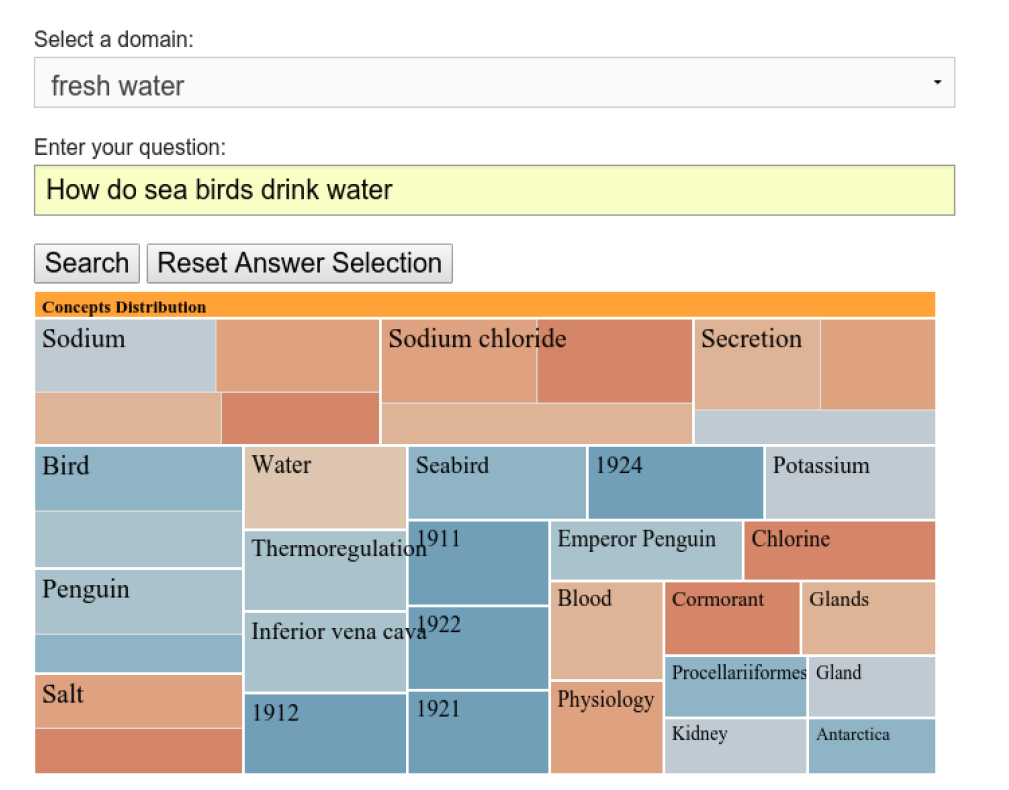
This version of Watson also prompts users with alternate ways to ask questions for better results. Those results are packaged as a “treetop” where each answer is a “leaf” that varies in size based on its weighted importance. This was intended to allow the average user to navigate results more easily on a given topic.


http://www.kurzweilai.net/images/GT-Watson-Plus-Concept-Results.png

Results from training the Watson AI system were packaged as a “treetop” where each answer is a “leaf” that varies in size based on its weighted importance. Each leaf is the starting point for a Q&A with Watson. (credit: Georgia Tech)


“Imagine if you could ask Google a complicated question and it immediately responded with your answer — not just a list of links to manually open, says Goel. “That’s what we did with Watson. Researchers are provided a quickly digestible visual map of the concepts relevant to the query and the degree to which they are relevant. We were able to add more semantic and contextual meaning to Watson to give some notion of a conversation with the AI.”


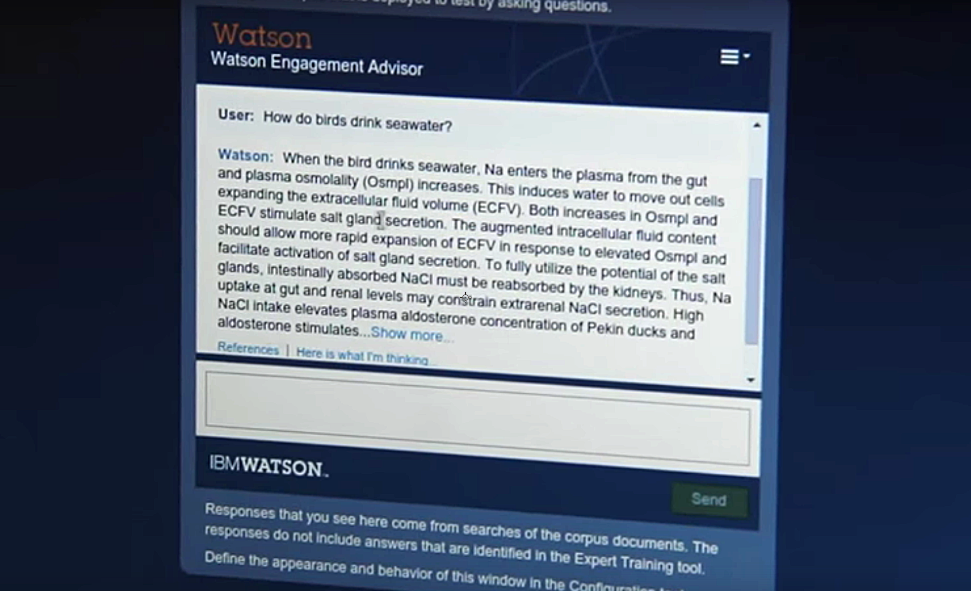
http://www.kurzweilai.net/images/Watson-Screenshot.png

Georgia Tech’s Watson Engagement Advisor (credit: Georgia Tech)


Goel believes this approach to using Watson could assist professionals in a variety of fields by allowing them to ask questions and receive answers as quickly as in a natural conversation. He plans to investigate other areas with Watson such as online learning and healthcare.

The work was presented at the Association for the Advancement of Artificial Intelligence (AAAI) 2015 Fall Symposium on Cognitive Assistance in Government, Nov. 12–14, in Arlington, Va. and was published in Procs. AAAI 2015 Fall Symposium on Cognitive Assistance (open access).


Abstract of Using Watson for Enhancing Human-Computer Co-Creativity

We describe an experiment in using IBM’s Watson cognitive system to teach about human-computer co-creativity in
a Georgia Tech Spring 2015 class on computational creativity. The project-based class used Watson to support biologically
inspired design, a design paradigm that uses biological systems as analogues for inventing technological
systems. The twenty-four students in the class self-organized into six teams of four students each, and developed semester-long projects that built on Watson to support biologically inspired design. In this paper, we describe this experiment in using Watson to teach about human-computer co-creativity, present one project in detail, and summarize the remaining five projects. We also draw lessons on building on Watson for (i) supporting biologically inspired design, and (ii) enhancing human-computer co-creativity.

sjwilliams

Interesting however Google had just announced a big AI venture of their own. Although it is curious why they needed such a defined training set. It seems, as was said in the EmTechMIT lectures that AI is still in its infancy and is nowhere near a true AI system. It is also interesting to note how rapidly China is expanding their supercomputing power (growth of supercomputers in China is dwarfing that in the US, in fact US has 20 less suipercomputers).

Read Full Post »

Clinical Laboratory Challenges

Larry H. Bernstein, MD, FCAP, Curator

LPBI


CLINICAL LABORATORY NEWS   

The Lab and CJD: Safe Handling of Infectious Prion Proteins

Body fluids from individuals with possible Creutzfeldt-Jakob disease (CJD) present distinctive safety challenges for clinical laboratories. Sporadic, iatrogenic, and familial CJD (known collectively as classic CJD), along with variant CJD, kuru, Gerstmann-Sträussler-Scheinker, and fatal familial insomnia, are prion diseases, also known as transmissible spongiform encephalopathies. Prion diseases affect the central nervous system, and from the onset of symptoms follow a typically rapid progressive neurological decline. While prion diseases are rare, it is not uncommon for the most prevalent form—sporadic CJD—to be included in the differential diagnosis of individuals presenting with rapid cognitive decline. Thus, laboratories may deal with a significant number of possible CJD cases, and should have protocols in place to process specimens, even if a confirmatory diagnosis of CJD is made in only a fraction of these cases.

The Lab’s Role in Diagnosis

Laboratory protocols for handling specimens from individuals with possible, probable, and definitive cases of CJD are important to ensure timely and appropriate patient management. When the differential includes CJD, an attempt should be made to rule-in or out other causes of rapid neurological decline. Laboratories should be prepared to process blood and cerebrospinal fluid (CSF) specimens in such cases for routine analyses.

Definitive diagnosis requires identification of prion aggregates in brain tissue, which can be achieved by immunohistochemistry, a Western blot for proteinase K-resistant prions, and/or by the presence of prion fibrils. Thus, confirmatory diagnosis is typically achieved at autopsy. A probable diagnosis of CJD is supported by elevated concentration of 14-3-3 protein in CSF (a non-specific marker of neurodegeneration), EEG, and MRI findings. Thus, the laboratory may be required to process and send CSF samples to a prion surveillance center for 14-3-3 testing, as well as blood samples for sequencing of the PRNP gene (in inherited cases).

Processing Biofluids

Laboratories should follow standard protective measures when working with biofluids potentially containing abnormally folded prions, such as donning standard personal protective equipment (PPE); avoiding or minimizing the use of sharps; using single-use disposable items; and processing specimens to minimize formation of aerosols and droplets. An additional safety consideration is the use of single-use disposal PPE; otherwise, re-usable items must be either cleaned using prion-specific decontamination methods, or destroyed.

Blood. In experimental models, infectivity has been detected in the blood; however, there have been no cases of secondary transmission of classical CJD via blood product transfusions in humans. As such, blood has been classified, on epidemiological evidence by the World Health Organization (WHO), as containing “no detectible infectivity,” which means it can be processed by routine methods. Similarly, except for CSF, all other body fluids contain no infectivity and can be processed following standard procedures.

In contrast to classic CJD, there have been four cases of suspected secondary transmission of variant CJD via transfused blood products in the United Kingdom. Variant CJD, the prion disease associated with mad cow disease, is unique in its distribution of prion aggregates outside of the central nervous system, including the lymph nodes, spleen, and tonsils. For regions where variant CJD is a concern, laboratories should consult their regulatory agencies for further guidance.

CSF. Relative to highly infectious tissues of the brain, spinal cord, and eye, infectivity has been identified less often in CSF and is considered to have “low infectivity,” along with kidney, liver, and lung tissue. Since CSF can contain infectious material, WHO has recommended that analyses not be performed on automated equipment due to challenges associated with decontamination. Laboratories should perform a risk assessment of their CSF processes, and, if deemed necessary, consider using manual methods as an alternative to automated systems.

Decontamination

The infectious agent in prion disease is unlike any other infectious pathogen encountered in the laboratory; it is formed of misfolded and aggregated prion proteins. This aggregated proteinacious material forms the infectious unit, which is incredibly resilient to degradation. Moreover, in vitro studies have demonstrated that disrupting large aggregates into smaller aggregates increases cytotoxicity. Thus, if the aim is to abolish infectivity, all aggregates must be destroyed. Disinfectant procedures used for viral, bacterial, and fungal pathogens such as alcohol, boiling, formalin, dry heat (<300°C), autoclaving at 121°C for 15 minutes, and ionizing, ultraviolet, or microwave radiation, are either ineffective or variably effective against aggregated prions.

The only means to ensure no risk of residual infectious prions is to use disposable materials. This is not always practical, as, for instance, a biosafety cabinet cannot be discarded if there is a CSF spill in the hood. Fortunately, there are several protocols considered sufficient for decontamination. For surfaces and heat-sensitive instruments, such as a biosafety cabinet, WHO recommends flooding the surface with 2N NaOH or undiluted NaClO, letting stand for 1 hour, mopping up, and rinsing with water. If the surface cannot tolerate NaOH or NaClO, thorough cleaning will remove most infectivity by dilution. Laboratories may derive some additional benefit by using one of the partially effective methods discussed previously. Non-disposable heat-resistant items preferably should be immersed in 1N NaOH, heated in a gravity displacement autoclave at 121°C for 30 min, cleaned and rinsed in water, then sterilized by routine methods. WHO has outlined several alternate decontamination methods. Using disposable cover sheets is one simple solution to avoid contaminating work surfaces and associated lengthy decontamination procedures.

With standard PPE—augmented by a few additional safety measures and prion-specific decontamination procedures—laboratories can safely manage biofluid testing in cases of prion disease.


The Microscopic World Inside Us  

Emerging Research Points to Microbiome’s Role in Health and Disease

Thousands of species of microbes—bacteria, viruses, fungi, and protozoa—inhabit every internal and external surface of the human body. Collectively, these microbes, known as the microbiome, outnumber the body’s human cells by about 10 to 1 and include more than 1,000 species of microorganisms and several million genes residing in the skin, respiratory system, urogenital, and gastrointestinal tracts. The microbiome’s complicated relationship with its human host is increasingly considered so crucial to health that researchers sometimes call it “the forgotten organ.”

Disturbances to the microbiome can arise from nutritional deficiencies, antibiotic use, and antiseptic modern life. Imbalances in the microbiome’s diverse microbial communities, which interact constantly with cells in the human body, may contribute to chronic health conditions, including diabetes, asthma and allergies, obesity and the metabolic syndrome, digestive disorders including irritable bowel syndrome (IBS), and autoimmune disorders like multiple sclerosis and rheumatoid arthritis, research shows.

While study of the microbiome is a growing research enterprise that has attracted enthusiastic media attention and venture capital, its findings are largely preliminary. But some laboratorians are already developing a greater appreciation for the microbiome’s contributions to human biochemistry and are considering a future in which they expect to measure changes in the microbiome to monitor disease and inform clinical practice.

Pivot Toward the Microbiome

Following the National Institutes of Health (NIH) Human Genome Project, many scientists noted the considerable genetic signal from microbes in the body and the existence of technology to analyze these microorganisms. That realization led NIH to establish the Human Microbiome Project in 2007, said Lita Proctor, PhD, its program director. In the project’s first phase, researchers studied healthy adults to produce a reference set of microbiomes and a resource of metagenomic sequences of bacteria in the airways, skin, oral cavities, and the gastrointestinal and vaginal tracts, plus a catalog of microbial genome sequences of reference strains. Researchers also evaluated specific diseases associated with disturbances in the microbiome, including gastrointestinal diseases such as Crohn’s disease, ulcerative colitis, IBS, and obesity, as well as urogenital conditions, those that involve the reproductive system, and skin diseases like eczema, psoriasis, and acne.

Phase 1 studies determined the composition of many parts of the microbiome, but did not define how that composition affects health or specific disease. The project’s second phase aims to “answer the question of what microbes actually do,” explained Proctor. Researchers are now examining properties of the microbiome including gene expression, protein, and human and microbial metabolite profiles in studies of pregnant women at risk for preterm birth, the gut hormones of patients at risk for IBS, and nasal microbiomes of patients at risk for type 2 diabetes.

Promising Lines of Research

Cystic fibrosis and microbiology investigator Michael Surette, PhD, sees promising microbiome research not just in terms of evidence of its effects on specific diseases, but also in what drives changes in the microbiome. Surette is Canada research chair in interdisciplinary microbiome research in the Farncombe Family Digestive Health Research Institute at McMaster University
in Hamilton, Ontario.

One type of study on factors driving microbiome change examines how alterations in composition and imbalances in individual patients relate to improving or worsening disease. “IBS, cystic fibrosis, and chronic obstructive pulmonary disease all have periods of instability or exacerbation,” he noted. Surette hopes that one day, tests will provide clinicians the ability to monitor changes in microbial composition over time and even predict when a patient’s condition is about to deteriorate. Monitoring perturbations to the gut microbiome might also help minimize collateral damage to the microbiome during aggressive antibiotic therapy for hospitalized patients, he added.

Monitoring changes to the microbiome also might be helpful for “culture negative” patients, who now may receive multiple, unsuccessful courses of different antibiotics that drive antibiotic resistance. Frustration with standard clinical biology diagnosis of lung infections in cystic fibrosis patients first sparked Surette’s investigations into the microbiome. He hopes that future tests involving the microbiome might also help asthma patients with neutrophilia, community-acquired pneumonia patients who harbor complex microbial lung communities lacking obvious pathogens, and hospitalized patients with pneumonia or sepsis. He envisions microbiome testing that would look for short-term changes indicating whether or not a drug is effective.

Companion Diagnostics

Daniel Peterson, MD, PhD, an assistant professor of pathology at Johns Hopkins University School of Medicine in Baltimore, believes the future of clinical testing involving the microbiome lies in companion diagnostics for novel treatments, and points to companies that are already developing and marketing tests that will require such assays.

Examples of microbiome-focused enterprises abound, including Genetic Analysis, based in Oslo, Norway, with its high-throughput test that uses 54 probes targeted to specific bacteria to measure intestinal gut flora imbalances in inflammatory bowel disease and irritable bowel syndrome patients. Paris, France-based Enterome is developing both novel drugs and companion diagnostics for microbiome-related diseases such as IBS and some metabolic diseases. Second Genome, based in South San Francisco, has developed an experimental drug, SGM-1019, that the company says blocks damaging activity of the microbiome in the intestine. Cambridge, Massachusetts-based Seres Therapeutics has received Food and Drug Administration orphan drug designation for SER-109, an oral therapeutic intended to correct microbial imbalances to prevent recurrent Clostridium difficile infection in adults.

One promising clinical use of the microbiome is fecal transplantation, which both prospective and retrospective studies have shown to be effective in patients with C. difficile infections who do not respond to front-line therapies, said James Versalovic, MD, PhD, director of Texas Children’s Hospital Microbiome Center and professor of pathology at Baylor College of Medicine in Houston. “Fecal transplants and other microbiome replacement strategies can radically change the composition of the microbiome in hours to days,” he explained.

But NIH’s Proctor discourages too much enthusiasm about fecal transplant. “Natural products like stool can have [side] effects,” she pointed out. “The [microbiome research] field needs to mature and we need to verify outcomes before anything becomes routine.”

Hurdles for Lab Testing

While he is hopeful that labs someday will use the microbiome to produce clinically useful information, Surette pointed to several problems that must be solved beforehand. First, molecular methods commonly used right now should be more quantitative and accurate. Additionally, research on the microbiome encompasses a wide variety of protocols, some of which are better at extracting particular types of bacteria and therefore can give biased views of communities living in the body. Also, tests may need to distinguish between dead and live microbes. Another hurdle is that labs using varied bioinfomatic methods may produce different results from the same sample, a problem that Surette sees as ripe for a solution from clinical laboratorians, who have expertise in standardizing robust protocols and in automating tests.

One way laboratorians can prepare for future, routine microbiome testing is to expand their notion of clinical chemistry to include both microbial and human biochemistry. “The line between microbiome science and clinical science is blurring,” said Versalovic. “When developing future assays to detect biochemical changes in disease states, we must consider the contributions of microbial metabolites and proteins and how to tailor tests to detect them.” In the future, clinical labs may test for uniquely microbial metabolites in various disease states, he predicted.


Automated Review of Mass Spectrometry Results  

Can We Achieve Autoverification?

Author: Katherine Alexander and Andrea R. Terrell, PhD  // Date: NOV.1.2015  // Source:Clinical Laboratory News

https://www.aacc.org/publications/cln/articles/2015/november/automated-review-of-mass-spectrometry-results-can-we-achieve-autoverification


Paralleling the upswing in prescription drug misuse, clinical laboratories are receiving more requests for mass spectrometry (MS) testing as physicians rely on its specificity to monitor patient compliance with prescription regimens. However, as volume has increased, reimbursement has declined, forcing toxicology laboratories both to increase capacity and lower their operational costs—without sacrificing quality or turnaround time. Now, new solutions are available enabling laboratories to bring automation to MS testing and helping them with the growing demand for toxicology and other testing.

What is the typical MS workflow?

A typical workflow includes a long list of manual steps. By the time a sample is loaded onto the mass spectrometer, it has been collected, logged into the lab information management system (LIMS), and prepared for analysis using a variety of wet chemistry techniques.

Most commercial clinical laboratories receive enough samples for MS analysis to batch analyze those samples. A batch consists of a calibrator(s), quality control (QC) samples, and patient/donor samples. Historically, the method would be selected (i.e. “analysis of opiates”), sample identification information would be entered manually into the MS software, and the instrument would begin analyzing each sample. Upon successful completion of the batch, the MS operator would view all of the analytical data, ensure the QC results were acceptable, and review each patient/donor specimen, looking at characteristics such as peak shape, ion ratios, retention time, and calculated concentration.

The operator would then post acceptable results into the LIMS manually or through an interface, and unacceptable results would be rescheduled or dealt with according to lab-specific protocols. In our laboratory we perform a final certification step for quality assurance by reviewing all information about the batch again, prior to releasing results for final reporting through the LIMS.

What problems are associated with this workflow?

The workflow described above results in too many highly trained chemists performing manual data entry and reviewing perfectly acceptable analytical results. Lab managers would prefer that MS operators and certifying scientists focus on troubleshooting problem samples rather than reviewing mounds of good data. Not only is the current process inefficient, it is mundane work prone to user errors. This risks fatigue, disengagement, and complacency by our highly skilled scientists.

Importantly, manual processes also take time. In most clinical lab environments, turnaround time is critical for patient care and industry competitiveness. Lab directors and managers are looking for solutions to automate mundane, error-prone tasks to save time and costs, reduce staff burnout, and maintain high levels of quality.

How can software automate data transfer from MS systems to LIMS?

Automation is not a new concept in the clinical lab. Labs have automated processes in shipping and receiving, sample preparation, liquid handling, and data delivery to the end user. As more labs implement MS, companies have begun to develop special software to automate data analysis and review workflows.

In July 2011, AIT Labs incorporated ASCENT into our workflow, eliminating the initial manual peak review step. ASCENT is an algorithm-based peak picking and data review system designed specifically for chromatographic data. The software employs robust statistical and modeling approaches to the raw instrument data to present the true signal, which often can be obscured by noise or matrix components.

The system also uses an exponentially modified Gaussian (EMG) equation to apply a best-fit model to integrated peaks through what is often a noisy signal. In our experience, applying the EMG results in cleaner data from what might appear to be poor chromatography ultimately allows us to reduce the number of samples we might otherwise rerun.

How do you validate the quality of results?

We’ve developed a robust validation protocol to ensure that results are, at minimum, equivalent to results from our manual review. We begin by building the assay in ASCENT, entering assay-specific information from our internal standard operating procedure (SOP). Once the assay is configured, validation proceeds with parallel batch processing to compare results between software-reviewed data and staff-reviewed data. For new implementations we run eight to nine batches of 30–40 samples each; when we are modifying or upgrading an existing implementation we run a smaller number of batches. The parallel batches should contain multiple positive and negative results for all analytes in the method, preferably spanning the analytical measurement range of the assay.

The next step is to compare the results and calculate the percent difference between the data review methods. We require that two-thirds of the automated results fall within 20% of the manually reviewed result. In addition to validating patient sample correlation, we also test numerous quality assurance rules that should initiate a flag for further review.

What are the biggest challenges during implementation and continual improvement initiatives?

On the technological side, our largest hurdle was loading the sequence files into ASCENT. We had created an in-house mechanism for our chemists to upload the 96-well plate map for their batch into the MS software. We had some difficulty transferring this information to ASCENT, but once we resolved this issue, the technical workflow proceeded fairly smoothly.

The greater challenge was changing our employees’ mindset from one of fear that automation would displace them, to a realization that learning this new technology would actually make them more valuable. Automating a non-mechanical process can be a difficult concept for hands-on scientists, so managers must be patient and help their employees understand that this kind of technology leverages the best attributes of software and people to create a powerful partnership.

We recommend that labs considering automated data analysis engage staff in the validation and implementation to spread the workload and the knowledge. As is true with most technology, it is best not to rely on just one or two super users. We also found it critical to add supervisor level controls on data file manipulation, such as removing a sample that wasn’t run from the sequence table. This can prevent inadvertent deletion of a file, requiring reinjection of the entire batch!


Understanding Fibroblast Growth Factor 23

Author: Damien Gruson, PhD  // Date: OCT.1.2015  // Source: Clinical Laboratory News

https://www.aacc.org/publications/cln/articles/2015/october/understanding-fibroblast-growth-factor-23

What is the relationship of FGF-23 to heart failure?

A Heart failure (HF) is an increasingly common syndrome associated with high morbidity, elevated hospital readmission rates, and high mortality. Improving diagnosis, prognosis, and treatment of HF requires a better understanding of its different sub-phenotypes. As researchers gained a comprehensive understanding of neurohormonal activation—one of the hallmarks of HF—they discovered several biomarkers, including natriuretic peptides, which now are playing an important role in sub-phenotyping HF and in driving more personalized management of this chronic condition.

Like the natriuretic peptides, fibroblast growth factor 23 (FGF-23) could become important in risk-stratifying and managing HF patients. Produced by osteocytes, FGF-23 is a key regulator of phosphorus homeostasis. It binds to renal and parathyroid FGF-Klotho receptor heterodimers, resulting in phosphate excretion, decreased 1-α-hydroxylation of 25-hydroxyvitamin D, and decreased parathyroid hormone (PTH) secretion. The relationship to PTH is important because impaired homeostasis of cations and decreased glomerular filtration rate might contribute to the rise of FGF-23. The amino-terminal portion of FGF-23 (amino acids 1-24) serves as a signal peptide allowing secretion into the blood, and the carboxyl-terminal portion (aa 180-251) participates in its biological action.

How might FGF-23 improve HF risk assessment?

Studies have shown that FGF-23 is related to the risk of cardiovascular diseases and mortality. It was first demonstrated that FGF-23 levels were independently associated with left ventricular mass index and hypertrophy as well as mortality in patients with chronic kidney disease (CKD). FGF-23 also has been associated with left ventricular dysfunction and atrial fibrillation in coronary artery disease subjects, even in the absence of impaired renal function.

FGF-23 and FGF receptors are both expressed in the myocardium. It is possible that FGF-23 has direct effects on the heart and participates in the physiopathology of cardiovascular diseases and HF. Experiments have shown that for in vitro cultured rat cardiomyocytes, FGF-23 stimulates pathological hypertrophy by activating the calcineurin-NFAT pathway—and in wild-type mice—the intra-myocardial or intravenous injection of FGF-23 resulted in left ventricular hypertrophy. As such, FGF-23 appears to be a potential stimulus of myocardial hypertrophy, and increased levels may contribute to the worsening of heart failure and long-term cardiovascular death.

Researchers have documented that HF patients have elevated FGF-23 circulating levels. They have also found a significant correlation between plasma levels of FGF-23 and B-type natriuretic peptide, a biomarker related to ventricular stretch and cardiac hypertrophy, in patients with left ventricular hypertrophy. As such, measuring FGF-23 levels might be a useful tool to predict long-term adverse cardiovascular events in HF patients.

Interestingly, researchers have documented a significant relationship between FGF-23 and PTH in both CKD and HF patients. As PTH stimulates FGF-23 expression, it could be that in HF patients, increased PTH levels increase the bone expression of FGF-23, which enhances its effects on the heart.


The Past, Present, and Future of Western Blotting in the Clinical Laboratory

Author: Curtis Balmer, PhD  // Date: OCT.1.2015  // Source: Clinical Laboratory News

https://www.aacc.org/publications/cln/articles/2015/october/the-past-present-and-future-of-western-blotting-in-the-clinical-laboratory

Much of the discussion about Western blotting centers around its performance as a biological research tool. This isn’t surprising. Since its introduction in the late 1970s, the Western blot has been adopted by biology labs of virtually every stripe, and become one of the most widely used techniques in the research armamentarium. However, Western blotting has also been employed in clinical laboratories to aid in the diagnosis of various diseases and disorders—an equally important and valuable application. Yet there has been relatively little discussion of its use in this context, or of how advances in Western blotting might affect its future clinical use.

Highlighting the clinical value of Western blotting, Stanley Naides, MD, medical director of Immunology at Quest Diagnostics observed that, “Western blotting has been a very powerful tool in the laboratory and for clinical diagnosis. It’s one of many various methods that the laboratorian brings to aid the clinician in the diagnosis of disease, and the selection and monitoring of therapy.” Indeed, Western blotting has been used at one time or the other to aid in the diagnosis of infectious diseases including hepatitis C (HCV), HIV, Lyme disease, and syphilis, as well as autoimmune disorders such as paraneoplastic disease and myositis conditions.

However, Naides was quick to point out that the choice of assays to use clinically is based on their demonstrated sensitivity and performance, and that the search for something better is never-ending. “We’re constantly looking for methods that improve detection of our target [protein],” Naides said. “There have been a number of instances where we’ve moved away from Western blotting because another method proves to be more sensitive.” But this search can also lead back to Western blotting. “We’ve gone away from other methods because there’s been a Western blot that’s been developed that’s more sensitive and specific. There’s that constant movement between methods as new tests are developed.”

In recent years, this quest has been leading clinical laboratories away from Western blotting toward more sensitive and specific diagnostic assays, at least for some diseases. Using confirmatory diagnosis of HCV infection as an example, Sai Patibandla, PhD, director of the immunoassay group at Siemens Healthcare Diagnostics, explained that movement away from Western blotting for confirmatory diagnosis of HCV infection began with a technical modification called Recombinant Immunoblotting Assay (RIBA). RIBA streamlines the conventional Western blot protocol by spotting recombinant antigen onto strips which are used to screen patient samples for antibodies against HCV. This approach eliminates the need to separate proteins and transfer them onto a membrane.

The RIBA HCV assay was initially manufactured by Chiron Corporation (acquired by Novartics Vaccines and Diagnostics in 2006). It received Food and Drug Administration (FDA) approval in 1999, and was marketed as Chiron RIBA HCV 3.0 Strip Immunoblot Assay. Patibandla explained that, at the time, the Chiron assay “…was the only FDA-approved confirmatory testing for HCV.” In 2013 the assay was discontinued and withdrawn from the market due to reports that it was producing false-positive results.

Since then, clinical laboratories have continued to move away from Western blot-based assays for confirmation of HCV in favor of the more sensitive technique of nucleic acid testing (NAT). “The migration is toward NAT for confirmation of HCV [diagnosis]. We don’t use immunoblots anymore. We don’t even have a blot now to confirm HCV,” Patibandla said.

Confirming HIV infection has followed a similar path. Indeed, in 2014 the Centers for Disease Control and Prevention issued updated recommendations for HIV testing that, in part, replaced Western blotting with NAT. This change was in response to the recognition that the HIV-1 Western blot assay was producing false-negative or indeterminable results early in the course of HIV infection.

At this juncture it is difficult to predict if this trend away from Western blotting in clinical laboratories will continue. One thing that is certain, however, is that clinicians and laboratorians are infinitely pragmatic, and will eagerly replace current techniques with ones shown to be more sensitive, specific, and effective. This raises the question of whether any of the many efforts currently underway to improve Western blotting will produce an assay that exceeds the sensitivity of currently employed techniques such as NAT.

Some of the most exciting and groundbreaking work in this area is being done by Amy Herr, PhD, a professor of bioengineering at University of California, Berkeley. Herr’s group has taken on some of the most challenging limitations of Western blotting, and is developing techniques that could revolutionize the assay. For example, the Western blot is semi-quantitative at best. This weakness dramatically limits the types of answers it can provide about changes in protein concentrations under various conditions.

To make Western blotting more quantitative, Herr’s group is, among other things, identifying losses of protein sample mass during the assay protocol. About this, Herr explains that the conventional Western blot is an “open system” that involves lots of handling of assay materials, buffers, and reagents that makes it difficult to account for protein losses. Or, as Kevin Lowitz, a senior product manager at Thermo Fisher Scientific, described it, “Western blot is a [simple] technique, but a really laborious one, and there are just so many steps and so many opportunities to mess it up.”

Herr’s approach is to reduce the open aspects of Western blot. “We’ve been developing these more closed systems that allow us at each stage of the assay to account for [protein mass] losses. We can’t do this exactly for every target of interest, but it gives us a really good handle [on protein mass losses],” she said. One of the major mechanisms Herr’s lab is using to accomplish this is to secure proteins to the blot matrix with covalent bonding rather than with the much weaker hydrophobic interactions that typically keep the proteins in place on the membrane.

Herr’s group also has been developing microfluidic platforms that allow Western blotting to be done on single cells, “In our system we’re doing thousands of independent Westerns on single cells in four hours. And, hopefully, we’ll cut that down to one hour over the next couple years.”

Other exciting modifications that stand to dramatically increase the sensitivity, quantitation, and through-put of Western blotting also are being developed and explored. For example, the use of capillary electrophoresis—in which proteins are conveyed through a small electrolyte-filled tube and separated according to size and charge before being dropped onto a blotting membrane—dramatically reduces the amount of protein required for Western blot analysis, and thereby allows Westerns to be run on proteins from rare cells or for which quantities of sample are extremely limited.

Jillian Silva, PhD, an associate specialist at the University of California, San Francisco Helen Diller Family Comprehensive Cancer Center, explained that advances in detection are also extending the capabilities of Western blotting. “With the advent of fluorescence detection we have a way to quantitate Westerns, and it is now more quantitative than it’s ever been,” said Silva.

Whether or not these advances produce an assay that is adopted by clinical laboratories remains to be seen. The emphasis on Western blotting as a research rather than a clinical tool may bias advances in favor of the needs and priorities of researchers rather than clinicians, and as Patibandla pointed out, “In the research world Western blotting has a certain purpose. [Researchers] are always coming up with new things, and are trying to nail down new proteins, so you cannot take Western blotting away.” In contrast, she suggested that for now, clinical uses of Western blotting remain “limited.”


Adapting Next Generation Technologies to Clinical Molecular Oncology Service

Author: Ronald Carter, PhD, DVM  // Date: OCT.1.2015  // Source: Clinical Laboratory News

https://www.aacc.org/publications/cln/articles/2015/october/adapting-next-generation-technologies-to-clinical-molecular-oncology-service

Next generation technologies (NGT) deliver huge improvements in cost efficiency, accuracy, robustness, and in the amount of information they provide. Microarrays, high-throughput sequencing platforms, digital droplet PCR, and other technologies all offer unique combinations of desirable performance.

As stronger evidence of genetic testing’s clinical utility influences patterns of patient care, demand for NGT testing is increasing. This presents several challenges to clinical laboratories, including increased urgency, clinical importance, and breadth of application in molecular oncology, as well as more integration of genetic tests into synoptic reporting. Laboratories need to add NGT-based protocols while still providing old tests, and the pace of change is increasing.What follows is one viewpoint on the major challenges in adopting NGTs into diagnostic molecular oncology service.

Choosing a Platform

Instrument selection is a critical decision that has to align with intended test applications, sequencing chemistries, and analytical software. Although multiple platforms are available, a mainstream standard has not emerged. Depending on their goals, laboratories might set up NGTs for improved accuracy of mutation detection, massively higher sequencing capacity per test, massively more targets combined in one test (multiplexing), greater range in sequencing read length, much lower cost per base pair assessed, and economy of specimen volume.

When high-throughput instruments first made their appearance, laboratories paid more attention to the accuracy of base-reading: Less accurate sequencing meant more data cleaning and resequencing (1). Now, new instrument designs have narrowed the differences, and test chemistry can have a comparatively large impact on analytical accuracy (Figure 1). The robustness of technical performance can also vary significantly depending upon specimen type. For example, LifeTechnologies’ sequencing platforms appear to be comparatively more tolerant of low DNA quality and concentration, which is an important consideration for fixed and processed tissues.

https://www.aacc.org/~/media/images/cln/articles/2015/october/carter_fig1_cln_oct15_ed.jpg

Figure 1 Comparison of Sequencing Chemistries

Sequence pile-ups of the same target sequence (2 large genes), all performed on the same analytical instrument. Results from 4 different chemistries, as designed and supplied by reagent manufacturers prior to optimization in the laboratory. Red lines represent limits of exons. Height of blue columns proportional to depth of coverage. In this case, the intent of the test design was to provide high depth of coverage so that reflex Sanger sequencing would not be necessary. Courtesy B. Sadikovic, U. of Western Ontario.


In addition, batching, robotics, workload volume patterns, maintenance contracts, software licenses, and platform lifetime affect the cost per analyte and per specimen considerably. Royalties and reagent contracts also factor into the cost of operating NGT: In some applications, fees for intellectual property can represent more than 50% of the bench cost of performing a given test, and increase substantially without warning.

Laboratories must also deal with the problem of obsolescence. Investing in a new platform brings the angst of knowing that better machines and chemistries are just around the corner. Laboratories are buying bigger pieces of equipment with shorter service lives. Before NGTs, major instruments could confidently be expected to remain current for at least 6 to 8 years. Now, a major instrument is obsolete much sooner, often within 2 to 3 years. This means that keeping it in service might cost more than investing in a new platform. Lease-purchase arrangements help mitigate year-to-year fluctuations in capital equipment costs, and maximize the value of old equipment at resale.

One Size Still Does Not Fit All

Laboratories face numerous technical considerations to optimize sequencing protocols, but the test has to be matched to the performance criteria needed for the clinical indication (2). For example, measuring response to treatment depends first upon the diagnostic recognition of mutation(s) in the tumor clone; the marker(s) then have to be quantifiable and indicative of tumor volume throughout the course of disease (Table 1).

As a result, diagnostic tests need to cover many different potential mutations, yet accurately identify any clinically relevant mutations actually present. On the other hand, tests for residual disease need to provide standardized, sensitive, and accurate quantification of a selected marker mutation against the normal background. A diagnostic panel might need 1% to 3% sensitivity across many different mutations. But quantifying early response to induction—and later assessment of minimal residual disease—needs a test that is reliably accurate to the 10-4 or 10-5 range for a specific analyte.

Covering all types of mutations in one diagnostic test is not yet possible. For example, subtyping of acute myeloid leukemia is both old school (karyotype, fluorescent in situ hybridization, and/or PCR-based or array-based testing for fusion rearrangements, deletions, and segmental gains) and new school (NGT-based panel testing for molecular mutations).

Chemistries that cover both structural variants and copy number variants are not yet in general use, but the advantages of NGTs compared to traditional methods are becoming clearer, such as in colorectal cancer (3). Researchers are also using cell-free DNA (cfDNA) to quantify residual disease and detect resistance mutations (4). Once a clinically significant clone is identified, enrichment techniques help enable extremely sensitive quantification of residual disease (5).

Validation and Quality Assurance

Beyond choosing a platform, two distinct challenges arise in bringing NGTs into the lab. The first is assembling the resources for validation and quality assurance. The second is keeping tests up-to-date as new analytes are needed. Even if a given test chemistry has the flexibility to add analytes without revalidating the entire panel, keeping up with clinical advances is a constant priority.

Due to their throughput and multiplexing capacities, NGT platforms typically require considerable upfront investment to adopt, and training staff to perform testing takes even more time. Proper validation is harder to document: Assembling positive controls, documenting test performance criteria, developing quality assurance protocols, and conducting proficiency testing are all demanding. Labs meet these challenges in different ways. Laboratory-developed tests (LDTs) allow self-determined choice in design, innovation, and control of the test protocol, but can be very expensive to set up.

Food and Drug Administration (FDA)-approved methods are attractive but not always an option. More FDA-approved methods will be marketed, but FDA approval itself brings other trade-offs. There is a cost premium compared to LDTs, and the test methodologies are locked down and not modifiable. This is particularly frustrating for NGTs, which have the specific attraction of extensive multiplexing capacity and accommodating new analytes.

IT and the Evolution of Molecular Oncology Reporting Standards

The options for information technology (IT) pipelines for NGTs are improving rapidly. At the same time, recent studies still show significant inconsistencies and lack of reproducibility when it comes to interpreting variants in array comparative genomic hybridization, panel testing, tumor expression profiling, and tumor genome sequencing. It can be difficult to duplicate published performances in clinical studies because of a lack of sufficient information about the protocol (chemistry) and software. Building bioinformatics capacity is a key requirement, yet skilled people are in short supply and the qualifications needed to work as a bioinformatician in a clinical service are not yet clearly defined.

Tumor biology brings another level of complexity. Bioinformatic analysis must distinguish tumor-specific­ variants from genomic variants. Sequencing of paired normal tissue is often performed as a control, but virtual normal controls may have intriguing advantages (6). One of the biggest challenges is to reproducibly interpret the clinical significance of interactions between different mutations, even with commonly known, well-defined mutations (7). For multiple analyte panels, such as predictive testing for breast cancer, only the performance of the whole panel in a population of patients can be compared; individual patients may be scored into different risk categories by different tests, all for the same test indication.

In large scale sequencing of tumor genomes, which types of mutations are most informative in detecting, quantifying, and predicting the behavior of the tumor over time? The amount and complexity of mutation varies considerably across different tumor types, and while some mutations are more common, stable, and clinically informative than others, the utility of a given tumor marker varies in different clinical situations. And, for a given tumor, treatment effect and metastasis leads to retesting for changes in drug sensitivities.

These complexities mean that IT must be designed into the process from the beginning. Like robotics, IT represents a major ancillary decision. One approach many labs choose is licensed technologies with shared databases that are updated in real time. These are attractive, despite their cost and licensing fees. New tests that incorporate proprietary IT with NGT platforms link the genetic signatures of tumors to clinically significant considerations like tumor classification, recommended methodologies for monitoring response, predicted drug sensitivities, eligible clinical trials, and prognostic classifications. In-house development of such solutions will be difficult, so licensing platforms from commercial partners is more likely to be the norm.

The Commercial Value of Health Records and Test Data

The future of cancer management likely rests on large-scale databases that link hereditary and somatic tumor testing with clinical outcomes. Multiple centers have such large studies underway, and data extraction and analysis is providing increasingly refined interpretations of clinical significance.

Extracting health outcomes to correlate with molecular test results is commercially valuable, as the pharmaceutical, insurance, and healthcare sectors focus on companion diagnostics, precision medicine, and evidence-based health technology assessment. Laboratories that can develop tests based on large-scale integration of test results to clinical utility will have an advantage.

NGTs do offer opportunities for net reductions in the cost of healthcare. But the lag between availability of a test and peer-evaluated demon­stration of clinical utility can be considerable. Technical developments arise faster than evidence of clinical utility. For example, immuno­histochemistry, estrogen receptor/progesterone receptor status, HER2/neu, and histology are still the major pathological criteria for prognostic evaluation of breast cancer at diagnosis, even though multiple analyte tumor profiling has been described for more than 15 years. Healthcare systems need a more concerted assessment of clinical utility if they are to take advantage of the promises of NGTs in cancer care.

Disruptive Advances

Without a doubt, “disruptive” is an appropriate buzzword in molecular oncology, and new technical advances are about to change how, where, and for whom testing is performed.

• Predictive Testing

Besides cost per analyte, one of the drivers for taking up new technologies is that they enable multiplexing many more analytes with less biopsy material. Single-analyte sequential testing for epidermal growth factor receptor (EGFR), anaplastic lymphoma kinase, and other targets on small biopsies is not sustainable when many more analytes are needed, and even now, a significant proportion of test requests cannot be completed due to lack of suitable biopsy material. Large panels incorporating all the mutations needed to cover multiple tumor types are replacing individual tests in companion diagnostics.

• Cell-Free Tumor DNA

Challenges of cfDNA include standardizing the collection and processing methodologies, timing sampling to minimize the effect of therapeutic toxicity on analytical accuracy, and identifying the most informative sample (DNA, RNA, or protein). But for more and more tumor types, it will be possible to differentiate benign versus malignant lesions, perform molecular subtyping, predict response, monitor treatment, or screen for early detection—all without a surgical biopsy.

cfDNA technologies can also be integrated into core laboratory instrumentation. For example, blood-based EGFR analysis for lung cancer is being developed on the Roche cobas 4800 platform, which will be a significant change from the current standard of testing based upon single tests of DNA extracted from formalin-fixed, paraffin-embedded sections selected by a pathologist (8).

• Whole Genome and Whole Exome Sequencing

Whole genome and whole exome tumor sequencing approaches provide a wealth of biologically important information, and will replace individual or multiple gene test panels as the technical cost of sequencing declines and interpretive accuracy improves (9). Laboratories can apply informatics selectively or broadly to extract much more information at relatively little increase in cost, and the interpretation of individual analytes will be improved by the context of the whole sequence.

• Minimal Residual Disease Testing

Massive resequencing and enrichment techniques can be used to detect minimal residual disease, and will provide an alternative to flow cytometry as costs decline. The challenge is to develop robust analytical platforms that can reliably produce results in a high proportion of patients with a given tumor type, despite using post-treatment specimens with therapy-induced degradation, and a very low proportion of target (tumor) sequence to benign background sequence.

The tumor markers should remain informative for the burden of disease despite clonal evolution over the course of multiple samples taken during progression of the clinical course and treatment. Quantification needs to be accurate and sensitive down to the 10-5 range, and cost competitive with flow cytometry.

• Point-of-Care Test Methodologies

Small, rapid, cheap, and single use point-of-care (POC) sequencing devices are coming. Some can multiplex with analytical times as short as 20 minutes. Accurate and timely testing will be possible in places like pharmacies, oncology clinics, patient service centers, and outreach programs. Whether physicians will trust and act on POC results alone, or will require confirmation by traditional laboratory-based testing, remains to be seen. However, in the simplest type of application, such as a patient known to have a particular mutation, the advantages of POC-based testing to quantify residual tumor burden are clear.

Conclusion

Molecular oncology is moving rapidly from an esoteric niche of diagnostics to a mainstream, required component of integrated clinical laboratory services. While NGTs are markedly reducing the cost per analyte and per specimen, and will certainly broaden the scope and volume of testing performed, the resources required to choose, install, and validate these new technologies are daunting for smaller labs. More rapid obsolescence and increased regulatory scrutiny for LDTs also present significant challenges. Aligning test capacity with approved clinical indications will require careful and constant attention to ensure competitiveness.

References

1. Liu L, Li Y, Li S, et al. Comparison of next-generation sequencing systems. J Biomed Biotechnol 2012; doi:10.1155/2012/251364.

2. Brownstein CA, Beggs AH, Homer N, et al. An international effort towards developing standards for best practices in analysis, interpretation and reporting of clinical genome sequencing results in the CLARITY Challenge. Genome Biol 2014;15:R53.

3. Haley L, Tseng LH, Zheng G, et al. Performance characteristics of next-generation sequencing in clinical mutation detection of colorectal ­cancers. [Epub ahead of print] Modern Pathol July 31, 2015 as doi:10.1038/modpathol.2015.86.

4. Butler TM, Johnson-Camacho K, Peto M, et al. Exome sequencing of cell-free DNA from metastatic cancer patients identifies clinically actionable mutations distinct from primary ­disease. PLoS One 2015;10:e0136407.

5. Castellanos-Rizaldos E, Milbury CA, Guha M, et al. COLD-PCR enriches low-level variant DNA sequences and increases the sensitivity of genetic testing. Methods Mol Biol 2014;1102:623–39.

6. Hiltemann S, Jenster G, Trapman J, et al. Discriminating somatic and germline mutations in tumor DNA samples without matching normals. Genome Res 2015;25:1382–90.

7. Lammers PE, Lovly CM, Horn L. A patient with metastatic lung adenocarcinoma harboring concurrent EGFR L858R, EGFR germline T790M, and PIK3CA mutations: The challenge of interpreting results of comprehensive mutational testing in lung cancer. J Natl Compr Canc Netw 2015;12:6–11.

8. Weber B, Meldgaard P, Hager H, et al. Detection of EGFR mutations in plasma and biopsies from non-small cell lung cancer patients by allele-specific PCR assays. BMC Cancer 2014;14:294.

9. Vogelstein B, Papadopoulos N, Velculescu VE, et al. Cancer genome landscapes. Science 2013;339:1546–58.

10. Heitzer E, Auer M, Gasch C, et al. Complex tumor genomes inferred from single circulating tumor cells by array-CGH and next-generation sequencing. Cancer Res 2013;73:2965–75.

11. Healy B. BRCA genes — Bookmaking, fortunetelling, and medical care. N Engl J Med 1997;336:1448–9.


Read Full Post »

Biomarker Development

Biomarker Development, Volume 2 (Volume Two: Latest in Genomics Methodologies for Therapeutics: Gene Editing, NGS and BioInformatics, Simulations and the Genome Ontology), Part 1: Next Generation Sequencing (NGS)

Biomarker Development

Curator: Larry H. Bernstein, MD, FCAP


NBDA’s Biomarker R&D Modules

http://nbdabiomarkers.org/

“collaboratively creating the NBDA Standards* required for end-to-end, evidence – based biomarker development to advance precision (personalized) medicine”

http://nbdabiomarkers.org/sites/all/themes/nbda/images/nbda_logo.jpg

http://nbdabiomarkers.org/about/what-we-do/pipeline-overview/assay-development


Successful biomarkers should move systematically and seamlessly through specific R&D “modules” – from early discovery to clinical validation. NBDA’s end-to-end systems approach is based on working with experts from all affected multi-sector stakeholder communities to build an in-depth understanding of the existing barriers in each of these “modules” to support decision making at each juncture.  Following extensive “due diligence” the NBDA works with all stakeholders to assemble and/or create the enabling standards (guidelines, best practices, SOPs) needed to support clinically relevant and robust biomarker development.

Mission: Collaboratively creating the NBDA Standards* required for end-to-end, evidence – based biomarker development to advance precision (personalized) medicine.
NBDA Standards include but are not limited to: “official existing standards”, guidelines, principles, standard operating procedures (SOP), and best practices.

https://vimeo.com/83266065


“The NBDA’s vision is not to just relegate the current biomarker development processes to history, but also to serve as a working example of what convergence of purpose, scientific knowledge and collaboration can accomplish.”

NBDA Workshop VII – “COLLABORATIVELY BUILDING A FOUNDATION FOR FDA BIOMARKER QUALIFICATION”
NBDA Workshop VII   December 14-15, 2015   Washington Court Hotel, Washington, DC

The upcoming meeting was preceded by an NBDA workshop held on December 1-2, 2014, “The Promising but Elusive Surrogate Endpoint:  What Will It Take?” where we explored in-depth with FDA leadership and experts in the field the current status and future vison for achieving success in surrogate endpoint development.  Through panels and workgroups, the attendees extended their efforts to pursue the FDA’s biomarker qualification pathway through the creation of sequential contexts of use models to support qualification of drug development tools – and ultimately surrogate endpoints.

Although the biomarker (drug development tools) qualification pathway (http://www.fda.gov/Drugs/DevelopmentApprovalProcess/DrugDevelopmentTools…) represents an opportunity to increase the value of predictive biomarkers, animal models, and clinical outcomes across the drug (and biologics) development continuum, there are myriad challenges.  In that regard, the lack of evidentiary standards to support contexts of use-specific biomarkers emerged from the prior NBDA workshop as the major barrier to achieving the promise of biomarker qualification.  It also became clear that overall, the communities do not understand the biomarker qualification process; nor do they fully appreciate that it is up to the stakeholders in the field (academia, non-profit foundations, pharmaceutical and biotechnology companies, and patient advocate organizations) to develop these evidentiary standards.

This NBDA workshop will feature a unique approach to address these problems.  Over the past two years, the NBDA has worked with experts in selected disease areas to develop specific case studies that feature a systematic approach to identifying the evidentiary standards needed for sequential contexts of use for specific biomarkers to drive biomarker qualification.   These constructs, and accompanying whitepapers are now the focus of collaborative discussions with FDA experts.

The upcoming meeting will feature in-depth panel discussions of 3-4 of these cases, including the case leader, additional technical contributors, and a number of FDA experts.  Each of the panels will analyze their respective case for strengths and weaknesses – including suggestions for making the biomarker qualification path for the specific biomarker more transparent and efficient. In addition, the discussions will highlight the problem of poor reproducibility of biomarker discovery results, and its impact on the qualification process.


Health Care in the Digital Age

Mobile, big data, the Internet of Things and social media are leading a revolution that is transforming opportunities in health care and research. Extraordinary advancements in mobile technology and connectivity have provided the foundation needed to dramatically change the way health care is practiced today and research is done tomorrow. While we are still in the early innings of using mobile technology in the delivery of health care, evidence supporting its potential to impact the delivery of better health care, lower costs and improve patient outcomes is apparent. Mobile technology for health care, or mHealth, can empower doctors to more effectively engage their patients and provide secure information on demand, anytime and anywhere. Patients demand safety, speed and security from their providers. What are the technologies that are allowing this transformation to take place?


https://youtu.be/WeXEa2cL3oA    Monday, April 27, 2015  Milken Institute

Moderator


Michael Milken, Chairman, Milken Institute


Speakers


Anna Barker, Fellow, FasterCures, a Center of the Milken Institute; Professor and Director, Transformative Healthcare Networks, and Co-Director, Complex Adaptive Systems Network, Arizona State University
Atul Butte, Director, Institute of Computational Health Sciences, University of California, San Francisco
John Chen, Executive Chairman and CEO, BlackBerry
Victor Dzau, President, Institute of Medicine, National Academy of Sciences; Chancellor Emeritus, Duke University
Patrick Soon-Shiong, Chairman and CEO, NantWorks, LLC


Mobile, big data, the Internet of Things and social media are leading a revolution that is transforming opportunities in health care and research. Extraordinary advancements in mobile technology and connectivity have provided the foundation needed to dramatically change the way health care is practiced today and research is done tomorrow. While we are still in the early innings of using mobile technology in the delivery of health care, evidence supporting its potential to impact the delivery of better health care, lower costs and improve patient outcomes is apparent. Mobile technology for health care, or mHealth, can empower doctors to more effectively engage their patients and provide secure information on demand, anytime and anywhere. Patients demand safety, speed and security from their providers. What are the technologies that are allowing this transformation to take place?

Read Full Post »

Best Big Data? Volume 2 (Volume Two: Latest in Genomics Methodologies for Therapeutics: Gene Editing, NGS and BioInformatics, Simulations and the Genome Ontology), Part 1: Next Generation Sequencing (NGS)

Best Big Data?

Larry H. Bernstein, MD, FCAP, Curator

LPBI


What’s The Big Data?

Google’s RankBrain Outranks the Best Brains in the Industry

Bloomberg recently broke the news that Google is “turning its lucrative Web search over to AI machines.” Google revealed to the reporter that for the past few months, a very large fraction of the millions of search queries Google responds to every second have been “interpreted by an artificial intelligence system, nicknamed RankBrain.”

The company that has tried hard to automate its mission to organize the world’s information was happy to report that its machines have again triumphed over humans. When Google search engineers “were asked to eyeball some pages and guess which they thought Google’s search engine technology would rank on top,” RankBrain had an 80% success rate compared to “the humans [who] guessed correctly 70 percent of the time.”

There you have it. Google’s AI machine RankBrain, after only a few months on the job, already outranks the best brains in the industry, the elite engineers that Google typically hires.

Or maybe not. Is RankBrain really “smarter than your average engineer” and already “living up to its AI hype,” as the Bloomberg article informs us, or is this all just, well, hype?

Desperate to find out how far our future machine overlords are already ahead of the best and the brightest (certainly not “average”), I asked Google to shed more light on the test, e.g., how do they determine the “success rate”?

“That test was fairly informal, but it was some of our top search engineers looking at search queries and potential search results and guessing which would be favored by users. (We don’t have more detail to share on how that’s determined; our evaluations are a pretty complex process).”

I guess both RankBrain and Google search engineers were given possible search results to a given query and RankBrain outperformed humans in guessing which are the “better” results, according to some undisclosed criteria.

I don’t know about you, but my TinyBrain is still confused. Wouldn’t Google search engine, with or without RankBrain, outperform any human being, including the smartest people on earth, in terms of “guessing” which search results “would be favored by users”? Haven’t they been mining the entire corpus of human knowledge for more than fifteen years and, by definition, have produced a search engine that “understands” relevance more than any individual human being?

The key to the competition, I guess, is that the “search queries” used in it were not just any search queries but complex queries containing words that have different meaning in different context. It’s the kind of queries that will stump most human beings and it’s quite surprising that Google engineers scored 70% on search queries that presumably require deep domain knowledge in all human endeavors, in addition to search expertise.

The only example of a complex query given in the Bloomberg article is “What’s the title of the consumer at the highest level of a food chain?” The word “consumer” in this context is a scientific term for something that consumes food and the label (the “title”) at highest level of the food chain is “predator.”

This explanation comes from search guru Danny Sullivan who has come to the rescue of perplexed humans like me, providing a detailed RankBrain FAQ, up to the limits imposed by Google’s legitimate reluctance to fully share its secrets. Sullivan: “From emailing with Google, I gather RankBrain is mainly used as a way to interpret the searches that people submit to find pages that might not have the exact words that were searched for.”

Sullivan points out that a lot of work done by humans is behind Google’s outstanding search results (e.g., creating a synonym list or a database with connections between “entities”—places, people, ideas, objects, etc.). But Google needs now to respond to some 450 million new queries per day, queries that have never been entered before into its search engine.

RankBrain “can see patterns between seemingly unconnected complex searches to understand how they’re actually similar to each other,” writes Sullivan. In addition, “RankBrain might be able to better summarize what a page is about than Google’s existing systems have done.”

Finding out the “unknown unknowns,” discovering previously unknown (to humans) links between words and concepts is the marriage of search technology with the hottest trend in big data analysis—deep learning. The real news about RankBrain is that it is the first time Google applied deep learning, the latest incarnation of “neural networks” and a specific type of machine learning, to its most prized asset—its search engine.

Google has been doing machine learning since its inception. The first published paper listed in the AI and  machine learning section of its research page is from 2001, and, to use just one example, Gmail is so good at detecting spam because of machine learning). But Goggle hasn’t applied machine learning to search. That there has been internal opposition to doing so we learn from a summary of a 2008 conversation between Anand Rajaraman and Peter Norvig, co-author of the most popular AI textbook and leader of Google search R&D since 2001. Here’s the most relevant excerpt:

The big surprise is that Google still uses the manually-crafted formula for its search results. They haven’t cut over to the machine learned model yet. Peter suggests two reasons for this. The first is hubris: the human experts who created the algorithm believe they can do better than a machine-learned model. The second reason is more interesting. Google’s search team worries that machine-learned models may be susceptible to catastrophic errors on searches that look very different from the training data. They believe the manually crafted model is less susceptible to such catastrophic errors on unforeseen query types.

This was written three years after Microsoft has applied machine learning to its search technology. But now, Google got over its hubris. 450 million unforeseen query types per day are probably too much for “manually crafted models” and google has decided that a “deep learning” system such as RankBrain provides good enough protection against “catastrophic errors.”

Read Full Post »

IBM’s $3 Billion Investment In Synthetic Brains And Quantum Computing

Reporter: Aviva Lev-Ari, PhD, RN

IBM thinks the future belongs to computers that mimic the human brain and use quantum physics…and they’re betting $3 billion on it.

Sourced through Scoop.it from: www.fastcompany.com

See on Scoop.itCardiovascular and vascular imaging

Read Full Post »

« Newer Posts - Older Posts »