Feeds:
Posts
Comments

Archive for March, 2023

How to Create a Twitter Space for @pharma_BI for Live Broadcasts

Right now, Twitter Spaces are available on Android and iOS operating systems ONLY.  For use on a PC desktop you must install an ANDROID EMULATOR.  This means best to set up the Twitter Space using your PHONE APP not on the desktop or laptop computer.  Right now, even though there is the ability to record a Twitter Space, that recording is not easily able to be embedded in WordPress as a tweet is (or chain of tweets).  However you can download the recording (takes a day or two) and convert to mpeg using a program like Audacity to convert into an audio format conducible to WordPress.

A while ago I had put a post where I link to a Twitter Space I created for a class on Dissemination of Scientific Discoveries.  The post

“Will Web 3.0 Do Away With Science 2.0? Is Science Falling Behind?”

can be seen at

Will Web 3.0 Do Away With Science 2.0? Is Science Falling Behind?


This online discussion was tweeted out and got a fair amount of impressions (60) as well as interactors (50).


About Twitter Spaces


Spaces is a way to have live audio conversations on Twitter. Anyone can join, listen, and speak in a Space on Twitter for iOS and Android. Currently you can listen in a Space on web.

Quick links

How to use Spaces
Spaces FAQ
Spaces Feedback Community
Community Spaces


How to use Spaces

Instructions for:

How do you start a Space?


Step 1

The creator of a Space is the host. As a host on iOS, you can start a Space by long pressing on the Tweet Composer  from your Home timeline and and then selecting the Spaces  icon.

You can also start a Space by selecting the Spaces tab on the bottom of your timeline.

Step 2

Spaces are public, so anyone can join as a listener, including people who don’t follow you. Listeners can be directly invited into a Space by DMing them a link to the Space, Tweeting out a link, or sharing a link elsewhere.

Step 3

Up to 13 people (including the host and 2 co-hosts) can speak in a Space at any given time. When creating a new Space, you will see options to Name your Space and Start your Space.

Step 4

To schedule a Space, select Schedule for later. Choose the date and time you’d like your Space to go live.

Step 5

Once the Space has started, the host can send requests to listeners to become co-hosts or speakers by selecting the people icon  and adding co-hosts or speakers, or selecting a person’s profile picture within a Space and adding them as a co-host or speaker. Listeners can request permission to speak from the host by selecting the Request icon below the microphone.

Step 6

When creating a Space, the host will join with their mic off and be the only speaker in the Space. When ready, select Start your Space.

Step 7

Allow mic access (speaking ability) to speakers by toggling Allow mic access to on.

Step 8

Get started chatting in your Space.

Step 9

As a host, make sure to Tweet out the link to your Space so other people can join. Select the  icon to Share via a Tweet.


Spaces FAQ

Where is Spaces available?

Anyone can join, listen, and speak in a Space on Twitter for iOS and Android. Currently, starting a Space on web is not possible, but anyone can join and listen in a Space.

Who can start a Space?

People on Twitter for iOS and Android can start a Space.

Who can see my Space?

For now, all Spaces are public like Tweets, which means they can be accessed by anyone. They will automatically appear at the top of your Home timeline, and each Space has a link that can be shared publicly. Since Spaces are publicly accessible by anyone, it may be possible for people to listen to a Space without being listed as a guest in the Space.

We make certain information about Spaces available through the Twitter Developer Platform, such as the title of a Space, the hosts and speakers, and whether it is scheduled, in progress, or complete. For a more detailed list of the information about Spaces we make available via the Twitter API, check out our Spaces endpoints documentation.

Can other people see my presence while I am listening or speaking in a Space?

Since all Spaces are public, your presence and activity in a Space is also public. If you are logged into your Twitter account when you are in a Space, you will be visible to everyone in the Space as well as to others, including people who follow you, people who peek into the Space without entering, and developers accessing information about the Space using the Twitter API.

If you are listening in a Space, your profile icon will appear with a purple pill at the top of your followers’ Home timelines. You have the option to change this in your settings.

Instructions for:

Manage who can see your Spaces listening activity

Step 1

On the left nav menu, select the more  icon and go to Settings and privacy.

Step 2

Under Settings, navigate to Privacy and safety.

Step 3

Under Your Twitter activity, go to Spaces.

Step 4

Choose if you want to Allow followers to see which Spaces you’re listening to by toggling this on or off.

Your followers will always see at the top of their Home timelines what Spaces you’re speaking in.

What does it mean that Spaces are public? Can anyone listen in a Space?

Spaces can be listened to by anyone on the Internet. This is part of a broader feature of Spaces that lets anyone listen to Spaces regardless of whether or not they are logged in to a Twitter account (or even have a Twitter account). Because of this, listener counts may not match the actual number of listeners, nor will the profile photos of all listeners necessarily be displayed in a Space.

How do I invite people to join a Space?

Invite people to join a Space by sending an invite via DM, Tweeting the link out to your Home timeline, or copying the invite link to send it out.

Who can join my Space?

For now, all Spaces are public and anyone can join any Space as a listener. If the listener has a user account, you can block their account. If you create a Space or are a speaker in a Space, your followers will see it at the top of their timeline.

Who can speak in my Space?

By default, your Space will always be set to Only people you invite to speak. You can also modify the Speaker permissions once your Space has been created. Select the  icon, then select Adjust settings to see the options for speaker permissions, which include EveryonePeople you follow, and the default Only people you invite to speak. These permissions are only saved for this particular Space, so any Space you create in the future will use the default setting.

Once your Space has started, you can send requests to listeners to become speakers or co-hosts by selecting the  icon and adding speakers or selecting a person’s profile picture within a Space and adding them as a co-host or speaker. Listeners can request to speak from the host.

Hosts can also invite other people outside of the Space to speak via DM.

How does co-hosting work?

Up to 2 people can become co-hosts and speak in a Space in addition to the 11 speakers (including the primary host) at one time. Co-host status can be lost if the co-host leaves the Space. A co-host can remove their own co-host status to become a Listener again.

Hosts can transfer primary admin rights to another co-host. If the original host drops from Space, the first co-host added will become the primary admin. The admin is responsible for promoting and facilitating a healthy conversation in the Space in line with the Twitter Rules.

Once a co-host is added to a Space, any accounts they’ve blocked on Twitter who are in the Space will be removed from the Space.

Can I schedule a Space?

Hosts can schedule a Space up to 30 days in advance and up to 10 scheduled Spaces. Hosts can still create impromptu Spaces in the meantime, and those won’t count toward the maximum 10 scheduled Spaces.

Before you create your Space, select the scheduler  icon and pick the date and time you’d like to schedule your Space to go live. As your scheduled start time approaches, you will receive push and in-app notifications reminding you to start your Space on time. If you don’t have notifications turned on, follow the in-app steps on About notifications on mobile devices to enable them for Spaces. Scheduled Spaces are public and people can set reminders to be notified when your scheduled Space begins.

How do I edit my scheduled Space(s)?

Follow the steps below to edit any of your scheduled Spaces.

Instructions for:

Manage your scheduled Spaces

Step 1

From your timeline, navigate to and long press on the . Or, navigate to the Spaces Tab  at the bottom of your timeline.

Step 2

Select the Spaces  icon.

Step 3

To manage your scheduled Spaces, select the scheduler  icon at the top.

Step 4

You’ll see the Spaces that you have scheduled.

Step 5

Navigate to the more  icon of the Space you want to manage. You can edit, share, or cancel the Space.

If you are editing your Space, make sure to select “Save changes” after making edits.

How do I get notified about a scheduled Space?

Guests can sign up for reminder notifications from a scheduled Space card in a Tweet. When the host starts the scheduled Space, the interested guests get notified via push and in-app notifications.

Can I record a Space?

Hosts can record Spaces they create for replay. When creating a Space, toggle on Record Space.

While recording, a recording symbol will appear at the top to indicate that the Space is being recorded by the host. Once the Space ends, you will see how many people attended the Space along with a link to share out via a Tweet. Under Notifications, you can also View details to Tweet the recording. Under host settings, you will have the option to choose where to start your recording with Edit start time. This allows you to cut out any dead air time that might occur at the beginning of a Space.

If you choose to record your Space, once the live Space ends, your recording will be immediately and publicly available for anyone to listen to whenever they want. You can always end a recording to make it no longer publicly available on Twitter by deleting your recording via the more  icon on the recording itself. Unless you delete your recording, it will remain available for replay after the live Space has ended.* As with live Spaces, Twitter will retain audio copies for 30 after they end to review for violations of the Twitter Rules. If a violation is found, Twitter may retain audio copies for up to 120 days in total. For more information on downloading Spaces, please see below FAQ, “What happens after a Space ends and is the data retained anywhere?

Co-hosts and speakers who enter a Space that is being recorded will see a recording symbol (REC). Listeners will also see the recording symbol, but they will not be visible in the recording.

Recordings will show the host, co-host(s), and speakers from the live Space.

*Note: Hosts on iOS 9.15+ and Android 9.46+ will be able to record Spaces that last indefinitely. For hosts on older app versions, recording will only be available for 30 days. For Spaces that are recorded indefinitely, Twitter will retain a copy for as long as the Space is replayable on Twitter, but for no less than 30 days after the live Space ended.


What is clipping?

Clipping is a new feature we’re currently testing and gradually rolling out that lets a limited group of hosts, speakers, and listeners capture 30 seconds of audio from any live or recorded Space and share it through a Tweet if the host has not disabled the clipping function. To start clipping a Space, follow the instructions below to capture the prior 30 seconds of audio from that Space. There is no limit to the number of clips that participants in a Space can create.

When you enter the Space as a co-host or speaker, you will be informed that the Space is clippable through a tool tip notification above the clipping  icon.

Note: Currently, creating a clip is available only on iOS and Android, while playing a clip is available on all platforms to everyone.

Instructions for:

Host instructions: How to turn off clipping


When you start your Space, you’ll receive a notification about what a clip is and how to turn it off, as clipping is on by default. You can turn off clipping at any time. To turn it off, follow the instructions below.

Step 1

Navigate to the more  icon.

Step 2

Select Adjust settings .

Step 3

Under Clips, toggle Allow clips off.

Instructions for:

Host and speaker instructions: How to create a clipping

Step 1

In a recorded or live Space that is recorded, navigate to the clipping  icon. Please note that, for live Spaces, unless the clipping function is disabled, clips will be publicly available on your Twitter profile after your live Space has ended even though the Space itself will no longer be available.

Step 2

On the Create clip pop-up, go to Next.

Step 3

Preview the Tweet and add a comment if you’d like, similarly to a Quote Tweet.

Step 4

Select Tweet to post it to your timeline.

Why is my clip not displaying captions?

What controls do hosts have over existing clips?

What controls do clip creators have over clips they’ve created?

Other controls over clips: how to report, block, or mute

What controls do I have over my Space?

The host and co-host(s) of a Space have control over who can speak. They can mute any Speaker, but it is up to the individual to unmute themselves if they receive speaking privileges. Hosts and co-hosts can also remove,  report, and block others in the Space.

Speakers and listeners can report and block others in the Space, or can report the Space. If you block a participant in the Space, you will also block that person’s account on Twitter. If the person you blocked joins as a listener, they will appear in the participant list with a Blocked label under their account name. If the person you blocked joins as a speaker, they will also appear in the participant list with a Blocked label under their account name and you will see an in-app notification stating, “An account you blocked has joined as a speaker.” If you are entering a Space that already has a blocked account as a speaker, you will also see a warning before joining the Space stating, “You have blocked 1 person who is speaking.”

If you are hosting or co-hosting a Space, people you’ve blocked can’t join and, if you’re added as a co-host during a Space, anyone in the Space who you blocked will be removed from the Space.

What are my responsibilities as a Host or Co-Host of a Space?

As a Host, you are responsible for promoting and supporting a healthy conversation in your Space and to use your tools to ensure that the Twitter Rules are followed. The following tools are available for you to use if a participant in the Space is being offensive or disruptive:

  • Revoke speaking privileges of other users if they are being offensive or disruptive to you or others
  • Block, remove or report the user.

Here are some guidelines to follow as a Host or Co-Host:

  • Always follow the Twitter Rulesin the Space you host or co-host. This also applies to the title of your Space which should not include abusive slurs, threats, or any other rule-violating content.
  • Do not encourage behavior or content that violates the Twitter Rules.
  • Do not abuse or misuse your hosting tools, such as arbitrarily revoking speaking privileges or removing users, or use Spaces to carry out activities that break our rules such as following schemes.

How can I block someone in a Space?

How can I mute a speaker in a Space?

How can I see people in my Space?

Hosts, speakers, and listeners can select the  icon to see people in a Space. Since Spaces are publicly accessible by anyone, it may also be possible for an unknown number of logged-out people to listen to a Space’s audio without being listed as a guest in the Space.

How can I report a Space?

How can I report a person in a Space?

Can Twitter suspend my Space while it’s live?

How many people can speak in a Space?

How many people can listen in a Space?


What happens after a Space ends and is the data retained anywhere?

Hosts can choose to record a Space prior to starting it. Hosts may download copies of their recorded Spaces for as long as we have them by using the Your Twitter Data download tool.

For unrecorded Spaces, Twitter retains copies of audio from recorded Spaces for 30 days after a Space ends to review for violations of the Twitter Rules. If a Space is found to contain a violation, we extend the time we maintain a copy for an additional 90 days (a total of 120 days after a Space ends) to allow people to appeal if they believe there was a mistake. Twitter also uses Spaces content and data for analytics and research to improve the service.

Links to Spaces that are shared out (e.g., via Tweet or DM) also contain some information about the Space, including the description, the identity of the hosts and others in the Space, as well as the Space’s current state (e.g., scheduled, live, or ended). We make this and other information about Spaces available through the Twitter Developer Platform. For a detailed list of the information about Spaces we make available, check out our Spaces endpoints documentation.

For full details on what data we retain, visit our Privacy Policy.

Who can end a Space?

Does Spaces work for accounts with protected Tweets?

Following the Twitter Rules in Spaces


Spaces Feedback Community

We’re opening up the conversation and turning it over to the people who are participating in Spaces. This Community is a dedicated place for us to connect with you on all things Spaces, whether it’s feedback around features, ideas for improvement, or any general thoughts.

Who can join?

Anyone on Spaces can join, whether you are a host, speaker, or listener.

How do I join the Community?

You can request to join the Twitter Spaces Feedback Community here. By requesting to join, you are agreeing to our Community rules.

Learn more about Communities on Twitter.


Community Spaces

As a Community admin or moderator, you can create and host a Space for your Community members to join.

Note:

Currently, creating Community Spaces is only available to some admins and moderators using the Twitter for iOS and Twitter for Android apps.

Instructions for:

Admins & moderators: How to create a Space

Step 1

Navigate to the Community landing page.

Step 2

Long press on the Tweet Composer  and select the Spaces  icon.

Step 3

Select Spaces and begin creating your Space by adding in a title, toggling on record Space (optional), and adding relevant topics.

Step 4

Invite admins, moderators, and other people to be a part of your Space.

Members: How to find a Community Space

If a Community Space is live, you will see the Spacebar populate at the top of your Home timeline. To enter the Space and begin listening, select the live Space in the Spacebar.

Community Spaces FAQ

What are Community Spaces?


Spaces Social Narrative


A social narrative is a simple story that describes social situations and social behaviors for accessibility.

Twitter Spaces allows me to join or host live audio-only conversations with anyone.

Joining a Space

  1. When I join a Twitter Space, that means I’ll be a listener. I can join any Space on Twitter, even those hosted by people I don’t know or follow.
  2. I can join a Space by selecting a profile photo with a purple, pulsing outline at the top of my timeline, selecting a link from someone’s Tweet, or a link in a Direct Message (DM).
  3. Once I’m in a Space, I can seethe profile photos and names of some people in the Space, including myself.
  4. I can hearone or multiple people talking at the same time. If it’s too loud or overwhelming, I can turn down my volume.
  5. As a listener, I am not able to speak. If I want to say something, I can send a request to the host. The host might not approve my request though.
  6. If the host accepts my request, I will become a speaker. It may take a few seconds to connect my microphone, so I’ll have to wait.
  7. Now I can unmute myself and speak. Everyone in the Space will be able to hear me.
  8. When someone says something I want to react to, I can choosean emoji to show everyone how I feel. I will be able to see when other people react as well.
  9. I can leave the Space at any time. After I leave, or when the host ends the Space, I’ll go back to my timeline.

Hosting a Space

  1. When I start a Space, that means I’ll be the host. Anyone can join my Space, even people I don’t know and people I don’t follow.
  2. Once I start my space, it may take a few seconds to be connected, so I’ll have to wait.
  3. Now I’m in my Space and I can seemy profile photo. If other logged-in, people have joined, I will be able to see their profile photos, too.
  4. I will start out muted, which is what the microphone with a slash through it means. I can mute and unmute myself, and anyone in my Space, at any time.
  5. I can invitepeople to join my Space by sending them a Direct Message (DM), sharing the link in a Tweet, and by copying the link and sharing it somewhere else like in an email.
  6. Up to 10 other people can have speaking privileges in my Space at the same time, and I can choosewho speaks and who doesn’t. People can also request to speak, and I can choose to approve their request or not.


Read Full Post »


The Vibrant Philly Biotech Scene: Recent Happenings & Deals

Curator: Stephen J. Williams, Ph.D.


As the office and retail commercial real estate market has been drying up since the COVID pandemic, commercial real estate developers in the Philadelphia area have been turning to the health science industry to suit their lab space needs.  This includes refurbishing old office space as well as new construction.

Gattuso secures $290M construction loan for life sciences building on Drexel campus

Source: https://www.bizjournals.com/philadelphia/news/2022/12/19/construction-loan-gattuso-drexel-life-sciences.html?utm_source=st&utm_medium=en&utm_campaign=BN&utm_content=pl&ana=e_pl_BN&j=30034971&senddate=2022-12-20


By Ryan Mulligan  –  Reporter, Philadelphia Business Journal

Dec 19, 2022

Gattuso Development Partners and Vigilant Holdings of New York have secured a $290 million construction loan for a major life sciences building set to be developed on Drexel University’s campus.

The funding comes from Houston-based Corebridge Financial, with an additional equity commitment from Boston-based Baupost Group, which is also a partner on the project. JLL’s Capital Markets group arranged the loan.

Plans for the University City project at 3201 Cuthbert St. carry a price tag of $400 million. The 11-story building will total some 520,000 square feet, making it the largest life sciences research and lab space in the city when it comes online.

The building at 3201 Cuthbert will rise on what had served as a recreation field used by Drexel and is located next to the Armory. Gattuso Development, which will lease the parcel from Drexel, expects to to complete the project by fall 2024. Robert A.M. Stern Architects designed the building.


A rendering of a $400 million lab and research facility Drexel University and Gattuso Development Partners plan to build at 3201 Cuthbert St. in Philadelphia.

Enlarge

A rendering of a $400 million lab and research facility Drexel University and Gattuso Development Partners plan to build at 3201 Cuthbert St. in Philadelphia.

The building is 45% leased by Drexel and SmartLabs, an operator of life sciences labs. Drexel plans to occupy about 60,000 square feet, while SmartLabs will lease two floors totaling 117,000 square feet.

“We believe the project validates Philadelphia’s emergence as a global hub for life sciences research, and we are excited to begin construction,” said John Gattuso, the co-founder and president of Philadelphia-based Gattuso Development.

Ryan Ade, Brett Segal and Christopher Peck of JLL arranged the financing.

The project is another play in what amounts to an arms race for life sciences space and tenants in University City. Spark Therapeutics plans to build a $575 million, 500,000-square-foot gene therapy manufacturing plant on Drexel’s campus. One uCity Square, a $280 million, 400,000-square-foot life sciences building, was recently completed at 38th and Market streets. At 3151 Market St., a $307 million, 417,000-square-foot life sciences building is proposed as part of the Schuylkill Yards development.

Tmunity CEO Usman Azam departing to lead ‘stealth’ NYC biotech firm


By John George  –  Senior Reporter, Philadelphia Business Journal

Feb 7, 2022

The CEO of one of Philadelphia’s oldest cell therapy companies is departing to take a new job in the New York City area.

Usman “Oz” Azam, who has been CEO of Tmunity Therapeutics since 2016, will lead an unnamed biotechnology company currently operating in stealth mode.

In a posting on his LinkedIn page, Azam said, “After a decade immersed in cell therapies and immuno-oncology, I am now turning my attention to a new opportunity, and will be going back to where I started my life sciences career in neurosciences.”

Tmunity, a University of Pennsylvania spinout, is looking to apply CAR T-cell therapy, which has proved to be successful in treating liquid cancers, for the treatment of solid tumors.

Last summer, Tmunity suspended clinical testing of its lead cell therapy candidate targeting prostate cancer after two patients in the study died. Azam, in an interview with the Business Journal in June, said the company, which had grown to about 50 employees since its launch in 2015, laid off an undisclosed number of employees as a result of the setback.

Azam said on LinkedIn he is still a big believer in CAR T-cell therapy, noting Tmunity co-founder Dr. Carl June and his colleagues at Penn just published in Nature the 10-year landmark clinical outcomes study with the first CD19 CAR-T patients and programs.

“It’s just the beginning,” he stated. “I’m excited about the prospect of so many new cell- and gene-based therapies emerging in the next five to 10 years to tackle many solid and liquid tumors, and I hope we all continue to see the remarkable impact this makes on patients and families around the world.”

Azam could not be reached for comment Monday. Tmunity has engaged a search firm to identify his successor.

Tmunity, which is based in Philadelphia, has its own manufacturing operations in East Norriton. Tmunity’s founders include June and fellow Penn cell therapy pioneer Bruce Levine, who led the development of a CAR T-cell therapy now marketed by Novartis as Kymriah, a treatment for certain types of blood cancers.

In therapy using CAR-T cells, a patient’s T cells — part of their immune system — are removed and genetically modified in the laboratory. After they are re-injected into a patient, the T cells are better able to attack and destroy tumors. CAR is an acronym for chimeric antigen receptor. Chimeric antigen receptors are receptor proteins that have been engineered to give T cells their improved ability to target tumors.

Source: https://www.bizjournals.com/philadelphia/news/2022/02/07/tmunity-therapeutics-philadelphia-cell-azam-oz.html?utm_source=st&utm_medium=en&utm_campaign=BN&utm_content=pl&ana=e_pl_BN&j=30034971&senddate=2022-12-20


PIDC names U.S. Department of Treasury veteran, Philadelphia native as next president

 
By   –  Reporter, Philadelphia Business Journal


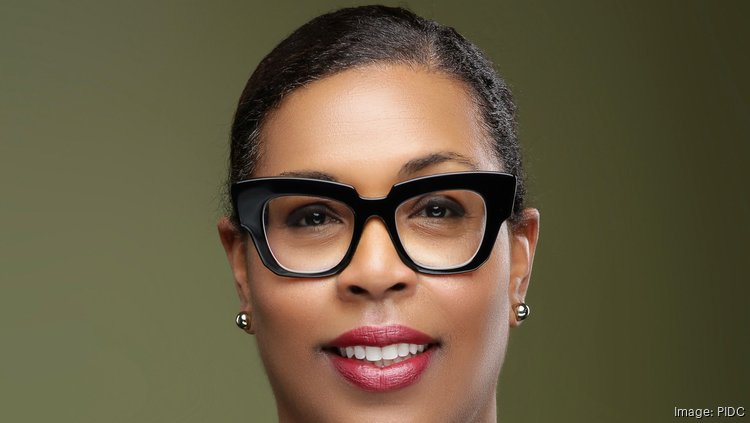
The Philadelphia Industrial Development Corp. has tapped U.S. Department of Treasury veteran Jodie Harris to be its next president.

Harris succeeds Anne Bovaird Nevins, who spent 15 years in the organization and took over as president in January 2020 before stepping down at the end of last year. Executive Vice President Sam Rhoads has been interim president.

Harris, a Philadelphia native who currently serves as director of the Community Development Financial Institutions Fund for the Department of Treasury, was picked after a regional and national search and will begin her tenure as president on June 1. She becomes the 12th head of PIDC and the first African-American woman to lead the organization.

PIDC is a public-private economic development corporation founded by the city and the Chamber of Commerce for Greater Philadelphia in 1958. It mainly uses industrial and commercial real estate projects to attract jobs, foster business opportunities and spur overall community growth. The organization has spurred over $18.5 billion in financing across its 65 years.

PIDC has its hand in development projects spanning the city, including master planning roles in expansive campuses like the Philadelphia Navy Yard and the Lower Schuylkill Biotech Campus in Southwest Philadelphia.

In a statement, Harris said that it is “a critical time for Philadelphia’s economy.”

“I’m especially excited for the opportunity to lead such an important and impactful organization in my hometown of Philadelphia,” Harris said. “As head of the CDFI Fund, I know first-hand what it takes to drive meaningful, sustainable, and equitable economic growth, especially in historically underserved communities.”

Harris is a graduate of the University of Maryland and received an MBA and master of public administration from New York University. In the Treasury Department, Harris’ most recent work aligns with PIDC’s economic development mission. At the Community Development Financial Institutions Fund, she oversaw a $331 million budget, mainly comprised of grant and administrative funding for various economic programs. Under Harris’ watch, the fund distributed over $3 billion in pandemic recovery funding, its highest level of appropriated grants ever.

Harris has been a part of the Treasury Department for 15 years, including as director of community and economic development policy.

In addition to government work, Harris has previously spent time in the private, academia and nonprofit sectors. In the beginning of her career, Harris worked at Meridian Bank and Accenture before turning to become a social and education policy researcher at New York University. She also spent two years as president of the Urban Business Assistance Corporation in New York.

Mayor Jim Kenney said that Philadelphia is “poised for long-term growth” and Harris will help drive it.

Source: https://www.bizjournals.com/philadelphia/news/2023/02/23/pidc-names-next-president-treasury.html 

$250M life sciences conversion planned for Philadelphia’s historic Quartermaster site

 
By   –  Reporter, Philadelphia Business Journal

Listen to this article     3 min

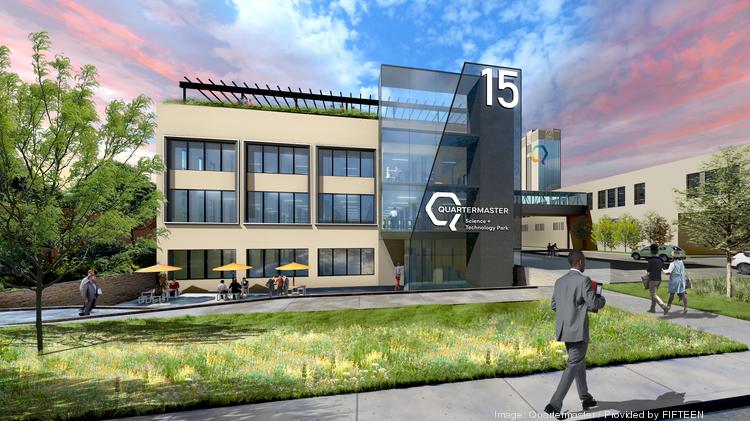
Real estate company SkyREM plans to spend $250 million converting the historic Quartermaster site in South Philadelphia to a life sciences campus with restaurants and a hotel.

The redevelopment would feature wet and dry lab space for research, development and bio-manufacturing.

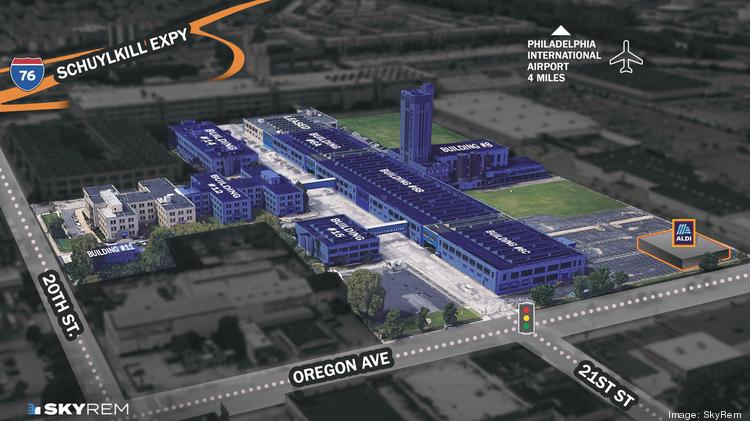
The renamed Quartermaster Science + Technology Park is near the southwest corner of Oregon Avenue and South 20th Street in the city’s Girard Estates neighborhood. It’s east of the Quartermaster Plaza retail center, which sold last year for $100 million.

The 24-acre campus is planned to have six acres of green space, an Aldi grocery store opening by March and already is the headquarters for Indego, the bicycle share program in Philadelphia.

Six buildings totaling 1 million square feet of space would be used for research and development labs. There’s 500,000 square feet of vacant space available for life sciences and high technology companies with availabilities as small as 1,000 square feet up to 250,000 square feet contiguous. There’s also 150,000 square feet of retail space available.

The office park has 200,000 square feet already occupied by tenants. The Philadelphia Job Corps Center and Delaware Valley Intelligence Center are tenants at the site.

The campus was previously used by the military as a place to produce clothing, footwear and personal equipment during World War I and II. The clothing factory closed in 1994. The Philadelphia Quartermaster Depot was listed on the National Register of Historic Places in 2010.

“We had a vision to preserve the legacy of this built-to-last historic Philadelphia landmark and transform it to create a vibrant space where the best and brightest want to innovate, collaborate, and work,” SkyREM CEO and Founder Alex Dembitzer said in a statement.

SkyREM, a real estate investor and developer, has corporate offices in New York and Philadelphia. The company acquired the site in 2001.

Vered Nohi, SkyREM’s regional executive director of new business development, called the redevelopment “transformational” for Philadelphia.


Quartermaster would join a wave of new life sciences projects being developed in the surrounding area and across the region.

The site is near both interstates 76 and 95 and is about 2 miles north of the Philadelphia Navy Yard, which has undergone a similar transformation from a military hub to a major life sciences and mixed-use redevelopment project. The Philadelphia Industrial Development Corp. is also in the process of selecting a developer to create a massive cell and gene therapy manufacturing complex across two sites totaling about 40 acres on Southwest Philadelphia’s Lower Schuylkill riverfront.

At 34th Street and Grays Ferry Avenue, the University of Pennsylvania is teaming with Longfellow Real Estate Partners on proposed a $365 million, 455,000-square-foot life sciences and biomanufacturing building at Pennovation Works.


SkyREM is working with Maryland real estate firm Scheer Partners to lease the science and technology space. Philadelphia’s MPN Realty will handle leasing of the retail space. Architecture firm Fifteen is working on the project’s design.

Scheer Partners Senior Vice President Tim Conrey said the Quartermaster conversion will help companies solve for “speed to market” as demand for life science space in the region has been strong.

Brandywine pauses new spec office development, continues to bet big on life sciences

By   –  Reporter, Philadelphia Business Journal


Brandywine Realty Trust originally planned to redevelop a Radnor medical office into lab and office space, split 50-50 between the two uses.

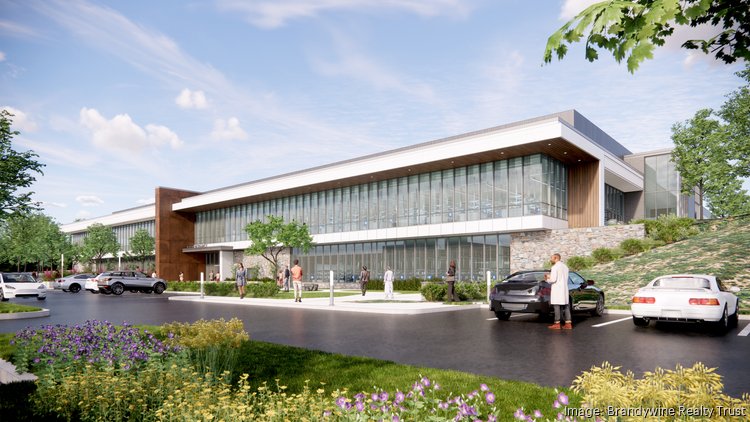
After changes in demand for lab and office space, Brandywine (NYSE: BDN) recently completed the 168,000-square-foot, four-story building at 250 King of Prussia Road in Radnor fully for life sciences.

“The pipeline is now 100% life sciences, which, while requiring more capital, is also generating longer term leases at a higher return on cost,” Brandywine CEO Jerry Sweeney of the project said during the company’s fourth-quarter earnings call on Thursday.

At the same time, Brandywine is holding off on developing new office buildings unless it has a tenant lined up in advance.

The shift reflects how Philadelphia-based Brandywine continues to lean into — and bet big — on life sciences.

Brandywine is the city’s largest owner of trophy office buildings and has several major development projects in the works. The company is planning to eventually develop 3 million square feet of life sciences space. For now, 800,000 square feet of life sciences space is under development, including a 12-story, 417,000-square-foot life sciences building at 3151 Market St. and a 29-story building with 200,000 square feet of life sciences space at 3025 John F. Kennedy Blvd. Both are part of the multi-phase Schuylkill Yards project underway near 30th Street Station in University City.

Once its existing projects are completed, Brandywine would have 800,000 square feet of life sciences space, making up 8% of its portfolio.Sweeney said the company wants to grow that figure to 21%.

Brandywine is developing a 145,000-square-foot, build-to-suit office building at 155 King of Prussia Road in Radnor for Arkema, a France-based global supplier of specialty materials. The building will be Arkema’s North American headquarters. Construction began in January and is scheduled to be completed in late 2024.

Brandywine reported that since November it raised over $705 million through fourth-quarter asset sales, an unsecured bond transaction and a secured loan. The company has “complete availability” on its $600 million unsecured line of credit, Sweeney said.

Brandywine sold a 95% leased, 86,000-square-foot office building at 200 Barr Harbor Drive in West Conshohocken for $30.5 million. The company also sold its 50% ownership interest in the 1919 Market joint venture for $83.2 million to an undisclosed buyer. 1919 Market St. is a 29-story building with apartments, office and commercial space. Brandywine co-developed the property with LCOR and the California State Teacher’s Retirement System.

Brandywine declined to comment and LCOR could not be reached.

Brandywine’s core portfolio is 91% leased.

The project at 250 King of Prussia Road cost $103.7 million and was recently completed. The renovation included 12-foot high floor-to-ceiling glass on the second floor, a new roof, lobby, elevator core, common area with a skylight and an added structured parking deck.

Located in the Radnor Life Science Center, a new campus with nearly 1 million square feet of lab, research and office space, Sweeney said it’s a “magnet” for biotech companies. Avantor, a global manufacturer and distributor of life sciences products, is headquartered in the complex.


Sweeney said Brandywine is “very confident” demand will stay strong for life sciences in Radnor. The building at 250 King of Prussia Road is projected to be fully leased by early 2024.

“Larger users we’re talking to, they just tend to take a little bit more time than we would like as they go through technical requirements and space planning requirements,” Sweeney said.

While Brandywine is aiming to increase its life sciences footprint, the company is being selective about what it builds next. The company may steer away from developments other than life sciences. The Schuylkill Yards project, for example, features a significant life sciences portion in University City.

“Other than fully leased build-to-suit opportunities, our future development starts are on hold,” Sweeney said, “pending more leasing on the existing joint venture pipeline and more clarity on the cost of debt capital and cap rates.”


Brandywine said about 70% to 75%of suburban tenants have returned to offices while that number has been around 50% in Philadelphia. At this point, though, it hasn’t yet affected demand when leasing space. Some tenants, for example, have moved out of the city while others have moved in.

In the fourth quarter, Brandywine had $55.7 million funds from operations, or 32 cents per share. That’s down from $60.4 million, or 35 cents per share, in the fourth quarter of 2021. Brandywine generated $129 million in revenue in the fourth quarter, up slightly from $125.5 in the year-ago period.

Brandywine stock is up 6.4% since the start of the year to $6.70 per share on Monday afternoon.

Many of Brandywine’s properties are in desirable locations, which have seen demand remain strong despite challenges facing offices, on par with industry trends.

Brandywine’s 12-story, 417,000-square-foot building at 3151 Market St. is on budget for $308 million and on schedule to be completed in the second quarter of 2024. Sweeney said Brandywine anticipates entering a construction loan in the second half of 2023, which would help complete the project. The building, being developed along with a global institutional investor,would be used for life sciences, innovation and office space as part of the larger Schuylkill Yards development in University City.

The company’s 29-story building at 3025 John F. Kennedy Blvd. with 200,000 square feet of life sciences space and 326 luxury apartments, is also on budget, costing $287.3 million, and on time, eyeing completion in the third quarter of this year.

Source: https://www.bizjournals.com/philadelphia/news/2023/02/06/brandywine-realty-life-sciences-development.html

Read Full Post »

Peak oxygen uptake (VO2peak) quantified fitness: Lifelong and late-onset athletes had higher VO2peak than non-athletes

Reporter: Aviva Lev-Ari, PhD, RN


Lifelong endurance sport participation is not associated with a more favorable coronary plaque composition compared to a healthy lifestyle. Lifelong endurance athletes had more coronary plaques, including more non-calcified plaques in proximal segments, than fit and healthy individuals with a similarly low cardiovascular risk profile. Longitudinal research is needed to reconcile these findings with the risk of cardiovascular events at the higher end of the endurance exercise spectrum.


  • The median age was 55 (50–60) years in all groups

191 lifelong master endurance athletes,

191 late-onset athletes (endurance sports initiation after 30 years of age), and

176 healthy non-athletes,

all male with a low cardiovascular risk profile, were included.


  • Lifelong and late-onset athletes had higher VO2peak than non-athletes

159 [143-177] vs

155 [138-169] vs

122 [108-138] % predicted).


  • Lifelong endurance sports was associated with having

≥1 coronary plaque (odds ratio [OR] 1.86, 95% confidence interval [CI] 1.17–2.94), ≥1 proximal plaque (OR 1.96, 95% CI 1.24–3.11),

≥1 calcified plaques (OR 1.58, 95% CI 1.01–2.49),

≥1 calcified proximal plaque (OR 2.07, 95% CI 1.28–3.35),

≥1 non-calcified plaque (OR 1.95, 95% CI 1.12–3.40),

≥1 non-calcified proximal plaque (OR 2.80, 95% CI 1.39–5.65) and

 ≥1 mixed plaque (OR 1.78, 95% CI 1.06–2.99) as compared to a healthy non-athletic lifestyle.

SOURCE

Lifelong endurance exercise and its relation with coronary atherosclerosis 

Ruben De Bosscher, MD, Christophe Dausin, MSc, Piet Claus, MSc PhD, Jan Bogaert, MD PhD, Steven Dymarkowski, MD PhD, Kaatje Goetschalckx, MD, Olivier Ghekiere, MD PhD, Caroline M Van De Heyning, MD PhD, Paul Van Herck, MD PhD, Bernard Paelinck, MD PhD, Haroun El Addouli, MD PhD, André La Gerche, MD PhD, Lieven Herbots, MD PhD, Rik Willems, MD PhD, Hein Heidbuchel, MD FESC FEHRA PhD, Guido Claessen, MD PhD, Master@Heart Consortium, Lifelong endurance exercise and its relation with coronary atherosclerosis, European Heart Journal, 2023;, ehad152, https://doi.org/10.1093/eurheartj/ehad152

Read Full Post »

Merck’s sotatercept overachieves, PCSK9 inhibitor passes phase 2

Reporter: Aviva Lev-Ari, PhD, RN

Entering the last day of the American College of Cardiology’s annual conference, the Big Pharma is trotting out new phase 2 data of its anti-PCSK9 drug, finding that it reduced particular kinds of cholesterol by up to 61% compared to placebo.

Meanwhile, expanded phase 3 data of sotatercept, added onto background therapy, has exceeded the expectations of Chief Medical Officer Eliav Barr, M.D. “It just hits the right receptor,” he said in an interview with Fierce Biotech. 

Sotatercept was the prized jewel in the company’s $11.5 billion purchase of Acceleron Pharma in 2021. The cardio med aimed at treating pulmonary arterial hypertension improved patients’ six-minute walk distance by more than 40 meters after 24 weeks compared to placebo, hitting the primary endpoint of the 323-patient trial.

The therapy also reduced the risk of clinical worsening or death by 84% compared to placebo for a median follow-up of 32.7 weeks, according to the conference presentation.What’s more, sotatercept had a slightly lower discontinuation rate due to treatment-related side effects than placebo patients.

While sotatercept has accrued much of the acclaim for the cardio team, Barr was also riding the high of positive phase 2 data from the company’s oral PCSK9 inhibitor to treat high cholesterol. The trial compared four doses of MK-0616 in patients with high cholesterol compared to placebo; all four were found to significantly reduce LDL cholesterol levels. 

The highest dose of the med reduced levels of this cholesterol by more than 60% compared to placebo and the number of side effects across all dose levels was consistent with placebo. 

The data is naturally a critical checkpoint as Barr and Merck tout the value of the first oral version of the therapy class currently dominated by Amgen’s Repatha and Regeneron’s Praluent. Next on the clinical docket is a phase 3 trial slated for the second half of the year, but Barr also hopes to launch a cardiovascular outcomes trial before year-end as well. 

SOURCE

https://www.fiercebiotech.com/biotech/mercks-cardiovascular-future-takes-shape-sotatercept-overachieves-and-oral-pcsk9-passes

Other related articles published in this Open Access Online Scientific Journal include the following:

61 articles found:

most recent

  • Injectable inclisiran (siRNA) as 3rd anti-PCSK9 behind mAbs Repatha and Praluent

https://pharmaceuticalintelligence.com/2019/11/18/injectable-inclisiran-sirna-as-3rd-anti-pcsk9-behind-mabs-repatha-and-praluent/

  • Cholesterol Lowering Novel PCSK9 drugs: Praluent [Sanofi and Regeneron] vs Repatha [Amgen] – which drug cuts CV risks enough to make it cost-effective?

https://pharmaceuticalintelligence.com/2018/03/12/cholesterol-lowering-novel-pcsk9-drugs-praluent-sanofi-and-regeneron-vs-repatha-amgen-which-drug-cuts-cv-risks-enough-to-make-it-cost-effective/

https://pharmaceuticalintelligence.com/2018/02/28/odyssey-outcomes-trial-evaluating-the-effects-of-a-pcsk9-inhibitor-alirocumab-on-major-cardiovascular-events-in-patients-with-an-acute-coronary-syndrome-to-be-presented-at-the-america/


Read Full Post »

Bacterial multidrug resistance problem solved by a broad-spectrum synthetic antibiotic

Reporter and Curator: Dr. Sudipta Saha, Ph.D.

There is an increasing demand for new antibiotics that effectively treat patients with refractory bacteremia, do not evoke bacterial resistance, and can be readily modified to address current and anticipated patient needs. Recently scientists described a promising compound of COE (conjugated oligo electrolytes) family, COE2-2hexyl, that exhibited broad-spectrum antibacterial activity. COE2-2hexyl effectively-treated mice infected with bacteria derived from sepsis patients with refractory bacteremia, including a CRE K. pneumoniae strain resistant to nearly all clinical antibiotics tested. Notably, this lead compound did not evoke drug resistance in several pathogens tested. COE2-2hexyl has specific effects on multiple membrane-associated functions (e.g., septation, motility, ATP synthesis, respiration, membrane permeability to small molecules) that may act together to abrogate bacterial cell viability and the evolution of drug-resistance. Impeding these bacterial properties may occur through alteration of vital protein–protein or protein-lipid membrane interfaces – a mechanism of action distinct from many membrane disrupting antimicrobials or detergents that destabilize membranes to induce bacterial cell lysis. The diversity and ease of COE design and chemical synthesis have the potential to establish a new standard for drug design and personalized antibiotic treatment.

Recent studies have shown that small molecules can preferentially target bacterial membranes due to significant differences in lipid composition, presence of a cell wall, and the absence of cholesterol. The inner membranes of Gram-negative bacteria are generally more negatively charged at their surface because they contain more anionic lipids such as cardiolipin and phosphatidylglycerol within their outer leaflet compared to mammalian membranes. In contrast, membranes of mammalian cells are largely composed of more-neutral phospholipids, sphingomyelins, as well as cholesterol, which affords membrane rigidity and ability to withstand mechanical stresses; and may stabilize the membrane against structural damage to membrane-disrupting agents such as COEs. Consistent with these studies, COE2-2hexyl was well tolerated in mice, suggesting that COEs are not intrinsically toxic in vivo, which is often a primary concern with membrane-targeting antibiotics. The COE refinement workflow potentially accelerates lead compound optimization by more rapid screening of novel compounds for the iterative directed-design process. It also reduces the time and cost of subsequent biophysical characterization, medicinal chemistry and bioassays, ultimately facilitating the discovery of novel compounds with improved pharmacological properties.

Additionally, COEs provide an approach to gain new insights into microbial physiology, including membrane structure/function and mechanism of drug action/resistance, while also generating a suite of tools that enable the modulation of bacterial and mammalian membranes for scientific or manufacturing uses. Notably, further COE safety and efficacy studies are required to be conducted on a larger scale to ensure adequate understanding of the clinical benefits and risks to assure clinical efficacy and toxicity before COEs can be added to the therapeutic armamentarium. Despite these limitations, the ease of molecular design, synthesis and modular nature of COEs offer many advantages over conventional antimicrobials, making synthesis simple, scalable and affordable. It enables the construction of a spectrum of compounds with the potential for development as a new versatile therapy for the emergence and rapid global spread of pathogens that are resistant to all, or nearly all, existing antimicrobial medicines.

References:

https://www.thelancet.com/journals/ebiom/article/PIIS2352-3964(23)00026-9/fulltext#%20

https://pubmed.ncbi.nlm.nih.gov/36801104/

https://www.sciencedaily.com/releases/2023/02/230216161214.htm

https://www.nature.com/articles/s41586-021-04045-6

https://www.nature.com/articles/d43747-020-00804-y

Read Full Post »