Feeds:
Posts
Comments

Archive for the ‘Aortic Valve: TAVR, TAVI vs Open Heart Surgery’ Category

Developments on the Frontier of Transcatheter Aortic Valve Replacement (TAVR) Devices

Reporter: Aviva Lev-Ari, PhD, RN


UPDATED on 4/28/2016

Recent TAVR approvals prompt changes to Direct Flow’s Salus trial

http://www.massdevice.com/recent-tavr-approvals-prompt-changes-direct-flow-trial/?utm_source=newsletter-160428&utm_medium=email&utm_campaign=newsletter-160428&spMailingID=8852051&spUserID=MTI2MTQxNTczMjM5S0&spJobID=902900938&spReportId=OTAyOTAwOTM4S0


acWire for Precise Transcatheter Aortic Valve Replacement Gets FDA Green Light (VIDEO)

by EDITORS on Jan 14, 2014 • 1:58 pm

acwire acWire for Precise Transcatheter Aortic Valve Replacement Gets FDA Green Light (VIDEO)MediValve, a company based in Kibbutz HaMa’apil, Israel, just received 510(k) clearance from the FDA to bring to the U.S. its acWire guidewire. The device is primarily designed to position transcatheter prosthetic heart valves with greater precision than many current delivery systems allow.

The advantage of the acWire is that once its active components are moved past the diseased valve, it’s opened up like a flower and drawn back to the valve, aligning itself snugly just past the valve opening. Three radiopaque markers on the petals help the physician visualize how the device is positioned before placing the valve.

Here’s a quick animation that demonstrates the functionality of acWire:

VIEW VIDEO

http://www.medgadget.com/2014/01/acwire-for-precise-transcatheter-aortic-valve-replacement-gets-fda-green-light.html?utm_content=buffer0c685&utm_medium=social&utm_source=twitter.com&utm_campaign=buffer#!

Product page: acWire…

Press release: MediValve, Ltd., Announces Clearance of a 510(k) Pre-Marketing Notification with the US Food and Drug Administration for the acWire™ Guidewire…

SOURCE

http://www.medgadget.com/2014/01/acwire-for-precise-transcatheter-aortic-valve-replacement-gets-fda-green-light.html?utm_content=buffer0c685&utm_medium=social&utm_source=twitter.com&utm_campaign=buffer#!

FORTY articles on TAVR, TAVI were published on this Open Access Online Scientific Journal, including the following:

http://pharmaceuticalintelligence.com/category/cardiac-and-cardiovascular-surgical-procedures/aortic-valve-tavr-tavi-vs-open-heart-surgery/

Read Full Post »

Elastin Arteriopathy: The Genetics of Supravalvular Aortic Stenosis

Reporter: Aviva Lev-Ari, PhD, RN


Supravalvular Aortic Stenosis Elastin Arteriopathy

Giuseppe Merla, PhD, Nicola Brunetti-Pierri, MD, Pasquale Piccolo, PhD, Lucia Micale, PhD and Maria Nicla Loviglio, PhD, MSc

Author Affiliations

From the Medical Genetics Unit, IRCCS Casa Sollievo Della Sofferenza Hospital, San Giovanni Rotondo, Italy (G.M., L.M., M.N.L.); Telethon Institute of Genetics and Medicine, Napoli, Italy (N.B-P., P.P.); Department of Pediatrics, Federico II University of Naples, Naples, Italy (N.B-P.); and CIG Center for Integrative Genomics, University of Lausanne, Lausanne, Switzerland (M.N.L.).

Correspondence to Giuseppe Merla, PhD, Medical Genetics Unit, IRCCS Casa Sollievo della Sofferenza, viale Cappuccini, 71013 San Giovanni Rotondo, Italy. E-mailg.merla@operapadrepio.it

Abstract

Supravalvular aortic stenosis is a systemic elastin (ELN) arteriopathy that disproportionately affects the supravalvular aorta. ELN arteriopathy may be present in a nonsyndromic condition or in syndromic conditions such as Williams–Beuren syndrome. The anatomic findings include congenital narrowing of the lumen of the aorta and other arteries, such as branches of pulmonary or coronary arteries. Given the systemic nature of the disease, accurate evaluation is recommended to establish the degree and extent of vascular involvement and to plan appropriate interventions, which are indicated whenever hemodynamically significant stenoses occur. ELN arteriopathy is genetically heterogeneous and occurs as a consequence of haploinsufficiency of the ELN gene on chromosome 7q11.23, owing to either microdeletion of the entire chromosomal region or ELN point mutations. Interestingly, there is a prevalence of premature termination mutations resulting in null alleles among ELN point mutations. The identification of the genetic defect in patients with supravalvular aortic stenosis is essential for a definitive diagnosis, prognosis, and genetic counseling.

SOURCE:

Circulation: Cardiovascular Genetics.2012; 5: 692-696

doi: 10.1161/ CIRCGENETICS.112.962860


Read Full Post »

Heart Metabolism or Metabolic Cardiology: The Role of Ribose (D-ribose) for the Ischemic Heart -The Work of John St. Cyr, M.D., Ph.D.

Reporter: Aviva Lev-Ari, PhD, RN

REVIEW

An interview with John St. Cyr, M.D., Ph.D. on Ribose : A Key to Heart Health and Energy

By Richard A. Passwater, Ph.D.


© Whole Foods Magazine

January 2005

Ribose : A Key to Heart Health and Energy

An interview with John St. Cyr, M.D., Ph.D.

By Richard A. Passwater, Ph.D.

SOURCE

http://www.drpasswater.com/nutrition_library/John_St_Cyr.html


John St. Cyr, M.D., Ph.D. — PATENTS:

Issued:

Suture removal device, USP5250052

Double layer prophylactic incorporating pharmacological fluid and spiral barrier layer, USP5623945

Compositions for increasing energy in vivo, USP6159942

Method for determining viability of a myocardial segment, USP6339716

Method for raising the hypoxic threshold, USP6218366

Use of ribose to prevent cramping and soreness in muscles, USP6159943

Compositions for increasing athletic performance in mammals, USP6429198

Dual lumen adjustable length cannulae for liquid perfusion or lavage, USP6692473

Method for treating acute mountain sickness, USP6511964

Compositions for increasing energy in vivo, USP6534480

Compositions for the storage of platelets, USP6790603

Compositions for enhancing the immune response, USP6663859

Composition methods for improving cardiovascular function, USP7553817

Rejuvenation of stored blood, USP7687468


John St. Cyr, M.D., Ph.D. — Pending applications:

Method for improving ventilatory efficiency, SN20050277598

Storage of blood SN20070111191

Ventilatory benefits of ribose in COPD, smoking, SN

Use of ribose in recovery from anesthesia, SN20070105787

Use of ribose to alleviate rhabdomyolysis and the side effects of statin drugs, SN20060135440

Use of ribose in first response to acute myocardial infarction, SN20100055206

Compositions and methods for improving cardiovascular function, SN20100009924

Use of ribose in lessening the clinical symptoms of aberrant firing of neurons, SN20090286750

Compositions for indoor tanning, SN20090232750

Compositions for improving and repairing skin, SN20090197819

Use of ribose for recovery from anesthesia, SN20090197818

Cosmetic use of D-ribose, SN20080312169

Method for improving ventilator efficiency SN20100099630

Method and compositions for improving pulmonary hypertension, SN20080146514

Storage of blood, SN20070111191

Compositions and methods for feeding poultry, SN201100221446

Use of D-ribose for fatigued subjects, SN20100189785

Fibrin sealants and platelet concentrates applied to effect hemostasis in the interface of an implantable medical device with body tissue, SN20060190017

Compositions for reducing the deleterious effects of stress and aging, SN20120045426


John St. Cyr, M.D., Ph.D. — Provisional patents:

Use of ribose in pre-slaughtering of animals

Rescue therapy for acute decompensated heart failure

Combination of D-ribose plus caffeine

Role of ribose in reducing joint swelling in mammals

Role of D-ribose in cardiac remodeling

Role of D-ribose in cachexia

Use of ribose in stem cells

Use of ribose in cardioplegia

Use of ribose for doping blood for cardioplegia

Surgical adhesive for bleeding situations

Metabolic approach with EECP

Role of ribose in mitral regurgitation

Compositions for the preservation of morphology in stored blood

Methods and nutritional supplements for improving the quality of meat


John St. Cyr, M.D., Ph.D. — Publications 2011 to 2013

This list does not include Publication #1 to #219

220. Shecterle LM, Wagner S, St.Cyr JA.  A sugar for congestive heart failure patients.  Ther Adv Cardiovasc Dis 5(2):95-97, 2011.

221. Perkowski D, Wagner S, Schneider JR, St.Cyr JA.  A targeted metabolic protocol with D-ribose for off pump coronary artery bypass procedures: A retrospective analysis.  Ther Adv Cardiovasc Dis 5(4):185-192, 2011.

222. Foker J, Berry J, Harvey B, Befera N, Tveter K, St.Cyr J, Bianco R.  Heart failure is initiated by and progresses because of normal responses of energy metabolism to stress.  Circ Res   , 2011.

223. Rakow N, Barka N, Gerhart R, Rothstein P, Green M, Schu C, Grassl E, St.Cyr JA, Kopcak MW, Jr.  Chronic aortic root pressure-loading assessment model.  J Invest Surg 25(2):137, 2012.

224. Shecterle LM, St.Cyr JA.  Chapter 11; Myocardial Ischemia: Alterations in myocardial cellular energy and diastolic function, a potential role for D-ribose. In: Novel Strategies in Ischemia Heart Disease. Lakshmanadoss U(Ed). InTech, Croatia.  219-228, 2012.

225. Addis P, Shecterle LM, St.Cyr JA.  Cellular protection during oxidative stress: a potential role for D-ribose and antioxidants.  Journal of Dietary Supplements 9(3):178-182, 2012.

226. Holsworth R, Shecterle L, St.Cyr J, Sloop G.  Letter to the Editor.  Importance of monitoring blood viscosity during cardiopulmonary bypass.  Perfusion 28(1):91-2, 2013.

227. Seifert JG, Frost J, ST.Cyr JA.  Recovery benefits of a heat and moisture exchange mask when performing sprint exercise in cold temperature environments.  Aviation, Space and Environmental Medicine.    , 2013.

228. Seifert JG, McNair M, DeClercq P, St.Cyr JA.  A heat and moisture mask attenuates cardiovascular stress during cold air exposure.  Ther Adv Cardiovasc Dis 7(3):123-129, 2013.

229. Holsworth R, Cho Y, Weldman J, Sloop G, St.Cyr, J.  Cardiovascular benefits of phlebotomy: Relationship to changes in hemorheological variables.  Perfusion,   2013.


Read Full Post »

Risks for Patients’ and Physician’s Health in the Cath Lab

Reporter and Curator: Aviva Lev-Ari, PhD, RN

On Thursday, June 27th, 2013, Bayer HealthCare, Nuance® Healthcare, and The Mount Sinai Hospital held a live webinar outlining how one of America’s leading Radiology Departments is pioneering the next generation of imaging informatics. If you were unable to watch it live, or would like to view it again, it is now available online here.
The Mount Sinai Hospital in New York has taken Contrast Dose Management and IT interoperability to a new level with two industry-leading forces – Bayer’s Certegra® Informatics Platform and Nuance’s PowerScribe® 360 | Reporting.
The FREE 60-minute webinar includes:
New Trends in Imaging Informatics & Dose Management
Emerging Contrast Dose Management Best Practices as a Standard of Care at The Mount Sinai Hospital
Experiences with Informatics including Point of Care Documentation, Injection Protocol Management for Patient-Based Dosing, Interfacing with IT Systems, and Analytics
Live Q&A panel: The Mount Sinai Hospital, Bayer and Nuance

Interfacing with the Future of Imaging:
THE MOUNT SINAI HOSPITAL’S EXPERIENCE
with Contrast Dose Management™
WEBINAR PLAYBACK


VIEW VIDEO

http://www.insite24.com/downstream/bayer%2Dcdm%2Dwebinar/


Risks for Physician’s Health in the Cath Lab

EuroIntervention. 2012 Jan;7(9):1081-6. doi: 10.4244/EIJV7I9A172.

Brain tumours among interventional cardiologists: a cause for alarm? Report of four new cases from two cities and a review of the literature.

Source

Interventional Cardiology, Rambam Medical Center, Bruce Rappaport Faculty of Medicine, the Technion, Israel Institute of Technology, Haifa, Israel. aroguin@technion.ac.il

Abstract

AIMS:

Interventional cardiologists who work in cardiac catheterisation laboratories are exposed to low doses of ionising radiation that could pose a health hazard. DNA damage is considered to be the main initiating event by which radiation damage to cells results in development of cancer.

METHODS AND RESULTS:

We report on four interventional cardiologists, all with brain malignancies in the left hemisphere. In a literature search, we found five additional cases and thus present data on six interventional cardiologist and three interventional radiologists who were diagnosed with brain tumours. All worked for prolonged periods with exposure to ionising radiation in the catheterisation laboratory.

CONCLUSIONS:

In interventional cardiologists and radiologists, the left side of the head is known to be more exposed to radiation than the right. A connection to occupational radiation exposure is biologically plausible, but risk assessment is difficult due to the small population of interventional cardiologists and the low incidence of these tumours. This may be a chance occurrence, but the cause may also be radiation exposure. Scientific study further delineating occupational risks is essential. Since interventional cardiologists have the highest radiation exposure among health professionals, major awareness of radiation safety and training in radiological protection are essential and imperative, and should be used in every procedure.

Risks for Patients’ Health in the Cath Lab

Contrast-Induced Nephropathy

  • Author: Renu Bansal, MD; Chief Editor: Vecihi Batuman, MD, FACP, FASN

SOURCE

http://emedicine.medscape.com/article/246751-medication#showall

Contrast-induced nephropathy (CIN) is defined as the impairment of renal function and is measured as either a 25% increase in serum creatinine (SCr) from baseline or 0.5 mg/dL (44 µmol/L) increase in absolute value, within 48-72 hours of intravenous contrast administration. (See Etiology.)

For renal insufficiency (RI) to be attributable to contrast administration, it should be acute, usually within 2-3 days, although it has been suggested that RI up to 7 days post–contrast administration be considered CIN; it should also not be attributable to any other identifiable cause of renal failure. A temporal link is thus implied.[1] Following contrast exposure, SCr levels peak between 2 and 5 days and usually return to normal in 14 days. (See Clinical and Workup.)

Complications

CIN is one of the leading causes of hospital-acquired acute renal failure. It is associated with a significantly higher risk of in-hospital and 1-year mortality, even in patients who do not need dialysis.

Nonrenal complications include procedural cardiac complications (eg, Q-wave MI, coronary artery bypass graft [CABG], hypotension, shock), vascular complications (eg, femoral bleeding, hematoma, pseudoaneurysm, stroke), and systemic complications (eg, acute respiratory distress syndrome [ARDS], pulmonary embolism).

There is a complicated relationship between CIN, comorbidity, and mortality. Most patients who develop CIN do not die from renal failure. Death, if it does occur, is more commonly from either a preexisting nonrenal complication or a procedural complication.

Concerns

Many physicians who refer patients for contrast procedures and some who perform the procedure themselves are not fully informed about the risk of CIN. A survey found that less than half of referring physicians were aware of potential risk factors, including diabetes mellitus. (See Differentials.)

CIN suffers from a lack of consensus regarding its definition and treatment. Studies differ in regard to the marker used for renal function (SCr vs eGFR), the day of initial measurement and remeasurement of the marker, and the percentage increase used to define CIN. This makes it difficult to compare studies, especially in terms of the efficacy of various treatment modalities. (See Treatment and Medication.)[2]

The reported incidence of CIN might be an underestimation. SCr levels normally rise by day 3 of contrast administration. Most patients do not remain hospitalized for so long and there is no specific protocol to order outpatient SCr levels 3-5 days after the procedure.

Other renal function markers

The use of SCr as a marker of renal function has its limitations. Indicators such as the estimated glomerular filtration rate (eGFR) and cystatin C are increasingly considered to be more reliable and accurate reflectors of existing renal function.[3, 4]

The eGFR can be calculated using the Modification of Diet in Renal Disease (MDRD) formula or the Cockroft-Gault formula. The Cockroft-Gault formula calculates eGFR using age, sex, and body weight, which are factors that, independent of GFR, influence SCr. The MDRD equation also includes blood urea nitrogen (BUN) and serum albumin.

The eGFR works best at low creatinine values. SCr and GFR share a curvilinear relationship. At lower SCr values, doubling SCr is associated with a corresponding 50% decrease in GFR. However, in elderly patients with chronic kidney disease(CKD) who have high SCr values at baseline, a 25% rise in SCr is actually indicative of a relatively modest reduction in GFR. Nonetheless, even a 25% increase in SCr in this situation has been shown to have great impact, especially in terms of inhospital and 1-year mortality.[5]

Serum cystatin C is a serum protein that is secreted by nucleated cells. It is freely filtered by the glomerulus and has been found to be an accurate marker of GFR. Compared with SCr, cystatin C changes much earlier after contrast administration and is not subject to confounding factors, such age, sex, and muscle mass, that influence SCr values independent of the underlying GFR. Cystatin C is increasingly being used as a marker of renal function in cardiac surgical patients.

Patient education

Patients with risk factors for CIN should be educated about the necessity of follow-up care with their physicians with a postprocedure SCr estimation, especially if the initial procedure was done on an outpatient basis.

Etiology

Contrast media (CM) act on distinct anatomic sites within the kidney and exert adverse effects via multiple mechanisms. They cause a direct cytotoxic effect on the renal proximal tubular cells, enhance cellular damage by reactive oxygen species, and increase resistance to renal blood flow. They also exacerbate renal vasoconstriction, particularly in the deeper portions of the outer medulla. This is especially important in patients with CKD, because their preexisting abnormal vascular pathobiology is made worse by the effects of CM.[6, 7]

Renal (particularly medullary) microcirculation depends on a complex interplay of neural, hormonal, paracrine and autocrine influences. Of note are the vasodilator nitric oxide (NO) and the vasoconstrictors vasopressin, adenosine (when it acts via the high affinity A1 receptors), angiotensin II, and endothelins. Prostaglandins cause a redistribution of blood flow to the juxtamedullary cortex and, therefore, are protective.

NO, in particular, seems to be very important, with antiplatelet, vasodilatory, insulin sensitizing, anti-inflammatory, and antioxidant properties. It has been suggested that plasma levels of asymmetrical dimethylarginine (ADMA), which is an endogenous inhibitor of all NO synthase isoforms, can be used as a marker of CIN, especially in patients with unfavorable outcomes.

CM-mediated vasoconstriction is the result of a direct action of CM on vascular smooth muscle and from metabolites such as adenosine and endothelin. Additionally, the osmotic property of CM, especially in the tubular lumen, decreases water reabsorption, leading to a buildup of interstitial pressure. This, along with the increased salt and water load to the distal tubules, reduces GFR and causes local compression of the vasa recta. All of this contributes to worsening medullary hypoxemia and renal vasoconstriction in patients who are already volume depleted.

Finally, CM also increase resistance to blood flow by increasing blood viscosity and by decreasing red cell deformability. This intravascular sludging generates local ischemia and causes activation of reactive oxygen species that result in tubular damage at a cellular level.

Comparison of contrast-agent nephropathy potential

The ability of different classes of CM to cause CIN is influenced by their osmolality, ionicity (the ability of the contrast media to dissociate in water), and molecular structure. Each of these characteristics, in turn, influences their behavior in body fluid and their potential to cause adverse effects. (See Table 1, below.)[8]

Agents are classified as high, low, or iso-osmolar, depending on their osmolality in relation to blood. Low-osmolarity contrast media (LOCM) is actually a misnomer, since these agents have osmolalities of 600-900 mOsm/kg and so are 2-3 times more hyperosmolar than blood. High-osmolarity contrast media (HOCM) are 5-7 times more hyperosmolar than blood, with osmolalities greater than 1500 mOsm/kg.

Molecular structure of CM refers to the number of benzene rings. Most CM that were developed in the 1990s are dimers with 2 benzene rings. Dimeric CM, while nonionic and with low osmolarity, have high viscosity, which may influence renal tubular blood flow.

The ratio of iodine to dissolved particles describes an important relationship between opacification and osmotoxicity of the contrast agent. The higher ratios are more desirable. High-osmolar agents have a ratio of 1.5, low-osmolar agents have a ratio of 3, and iso-osmolar agents have the highest ratio, 6.

While the safety of LOCM over HOCM in terms of CIN seems intuitive, clinical evidence of it came from a meta-analysis by Barrett and Carlisle.[9] They showed the benefit of using LOCM over HOCM mostly in high-risk patients. The Iohexol Cooperative Study was a large, prospective, randomized, double-blinded, multicenter trial that compared the risk of developing CIN in patients receiving the low-osmolarity agent iohexol versus the high-osmolarity agent diatrizoate. While the HOCM group was 3.3 times more likely to develop CIN compared with the LOCM group, this was seen only in patients with preexisting CKD (baseline SCr greater than or equal to 1.5 mg/dL). In addition to CKD; diabetes mellitus, male sex, and contrast volume were found to be independent risk factors.

Even within the LOCM category, the risk is not the same for all agents. High-risk patients receiving iohexol have a higher likelihood of developing CIN than do patients receiving another agent (ie, iopamidol) in the same class.

When LOCM were compared with iso-osmolar contrast media (IOCM), the Nephrotoxicity in High-Risk Patients Study of Iso-Osmolar and Low-Osmolar Non-Ionic Contrast Media (NEPHRIC study), arguably the most definitive study in this category to date, found that the odds of developing CIN in high-risk patients were almost 9 times greater for the study’s iohexol group than for the investigation’s iodixanol group (iso-osmolar contrast agent). The incidence of CIN was 3% in the iodixanol group versus 26% in the iohexol group.[10] These results, though promising, were not duplicated in some subsequent studies.

When iodixanol was used, the Rapid Protocol for the Prevention of Contrast-Induced Renal Dysfunction (RAPPID) trial found a 21% incidence of CIN,[11] and the Contrast Media and Nephrotoxicity Following Coronary Revascularization by Angioplasty (CONTRAST) trial found a 33% incidence of CIN.[12] Finally, the Renal Toxicity Evaluation and Comparison Between Visipaque (Iodixanol) and Hexabrix (Ioxaglate) in Patients With Renal Insufficiency Undergoing Coronary Angiography (RECOVER) trial compared the iso-osmolar contrast medium iodixanol to the low-osmolarity agent ioxaglate and found a significantly lower incidence of CIN with iodixanol than with ioxaglate (7.9% vs 17%, respectively).[13]

Thus, although the data are by no means uniform, they seem to suggest that the iso-osmolar contrast agent iodixanol may be associated with smaller increases in SCr and lower rates of CIN when compared with low-osmolar agents, especially in patients with CKD and in those with CKD and diabetes mellitus.[14]

Risk factors

Risk factors for CIN can be divided into patient-related, procedure-related, and contrast-related factors (although the risk factors for CIN are still being identified and remain poorly understood). Patient-related risk factors are as follows:

  • Age
  • CKD
  • Diabetes mellitus
  • Hypertension
  • Metabolic syndrome
  • Anemia
  • Multiple myeloma
  • Hypoalbuminemia
  • Renal transplant
  • Hypovolemia and decreased effective circulating volumes – As evidenced by congestive heart failure (CHF), an ejection fraction (EF) of less than 40%, hypotension, and intra-aortic balloon counterpulsation (IABP) use

Procedure-related risk factors are as follows:

  • Urgent versus elective
  • Arterial versus venous
  • Diagnostic versus therapeutic

Contrast-related risk factors are as follows:

  • Volume of contrast
  • Contrast characteristics, including osmolarity, ionicity, molecular structure, and viscosity

The single most important patient-related risk factor is preexisting CKD, even more so than diabetes mellitus.[15] Patients with CKD in the setting of diabetes mellitus have a 4-fold increase in the risk of CIN compared with patients without diabetes mellitus or preexisting CKD.

Table: Physiochemical Properties of Contrast Media

Although the data is by no means uniform, they seem to suggest that the iso-osmolar contrast agent iodixanol may be associated with smaller increases in SCr and lower rates of CIN when compared with low-osmolar agents, especially in patients with CKD and in those with CKD and diabetes mellitus.[14] Guidelines from the American Heart Association (AHA)/American College of Cardiology (ACC) for the management of acute coronary syndromes patients with CKD recommend the use of IOCM (Class I, level of Evidence).

Table 1. Physiochemical Properties of Contrast Media[16] (Open Table in a new window)

Class of Contrast Agent Type of Contrast Agent Iodine Dose(mg/mL) Iodine/Particle Ratio Viscosity(cPs at 37°C) Osmolality(mOsm/kg H2 O) Molecular Weight (Da)
High-osmolar monomers(ionic) Diatrizoate (Renografin)Ioxithalamate (Telebrix) 370350 1.51.5 2.32.5 18702130 636643
Low-osmolar dimers(ionic) Ioxaglate (Hexabrix) 320 3 7.5 600 1270
Low-osmolar monomers(nonionic) Iohexol (Omnipaque)Iopamidol (Isovue)Iomeprol (Iomeron)

Ioversol (Optiray)

Iopromide (Ultravist)

Iopentol (Imagopaque)

350370400

350

370

350

333

3

3

3

10.49.412.6

9

10

12

780790620

790

770

810

821777778

807

791

835

Iso-osmolar dimers(nonionic) Iodixanol (Visipaque)Iotrolan (Isovist) 320320 66 11.88.5 290290 15501620

Epidemiology

Occurrence in the United States

CIN is the third leading cause of hospital-acquired renal failure. Decreased renal perfusion and surgery (or in some studies, nephrotoxic medications) are the number one and number two causes, respectively.

An analysis of 15 prospective and retrospective studies from 1976-1996 report an incidence of CIN of 3.1-31%. The number varies depending on the definition used for CIN; the contrast agent characteristics, including the type, amount, duration, and route of administration; preexisting risk factors; and length of follow-up (including the day of measurement of postcontrast serum creatinine).

In patients without risk factors, the incidence may be as low as 2%. With the introduction of risk factors, like diabetes, the number rises to 9%, with incidences being as high as 90% in diabetics with CKD. Therefore, the number and the type of preexisting risk factors directly influence the incidence of renal insufficiency. It is also procedure dependant, with 14.5% overall in patients undergoing coronary interventions compared to 1.6-2.3% for diagnostic intervention, as reported in literature.[17]

Race- and age-related demographics

While African Americans with diabetic nephropathy have a faster acceleration of end-stage renal disease (ESRD), independent of other variables, race has not been found to be a risk factor for CIN.

The incidence of CIN in patients older than age 60 years has been variously reported as 8-16%. It has also been shown that in patients with acute MI who have undergone coronary intervention, an age of 75 years or older is an independent risk factor for CIN.

Prognosis

CIN is normally a transient process, with renal functions reverting to normal within 7-14 days of contrast administration. Less than one-third patients develop some degree of residual renal impairment.

Dialysis is required in less than 1% of patients, with a slightly higher incidence in patients with underlying renal impairment (3.1%) and in those undergoing primary PCI for myocardial infarction (MI) (3%). However, in patients with diabetes and severe renal failure, the rate of dialysis can be as high as 12%.

Of the patients who need dialysis, 18% end up on permanent dialysis therapy. However, many of these patients will have had advanced renal insufficiency and concomitant diabetic nephropathy and will have been destined for dialysis regardless of the episode of CIN.

A growing body of knowledge indicates that acute kidney injury after contrast medium can be a harbinger of CKD or ESRD. In one observational study, the population studied appeared representative of the general population undergoing angiography and the rate of acute kidney ingury was consonant with other studies. The finding that persistent kidney damage can occur after contrast-induced acute kidney injury highlights the potential for acceleration of the progression of kidney injury in individuals with pre-existing CKD.[18]

Mortality

Patients who require dialysis have a considerably worse mortality rate, with reported rates of 35.7% inhospital mortality (compared with 7.1% in the nondialysis group) and a 2-year survival rate of only 19%.

CIN by itself may be an independent mortality risk factor. Following invasive cardiology procedures, patients with normal baseline renal function who develop CIN have reduced survival compared with patients with baseline chronic CKD who do not develop CIN.

Gadolinium-based agents

Gadolinium-based CM (used for magnetic resonance imaging [MRI]), when compared with iodine-based CM, have a similar, if not worse, adverse effect profile in patients with moderate CKD and eGFR of less than 30 mL/min. Their use has been implicated in the development of nephrogenic systemic fibrosis, a chronic debilitating condition with no cure.

A review of 3 series and 4 case reports suggested that the risk of renal insufficiency with gadolinium is similar to that of iodinated radiocontrast dye. The reported incidence varies from 4% in stage 3 CKD to 20% in stage 4 CKD. It may even be worse, as suggested by some investigators. A prospective study of 57 patients found that acute renal failure was seen in 28% of patients in the gadolinium group, compared with 6.5% of patients in the iodine group, despite prophylactic saline and N-acetylcysteine (NAC).

The risk factor profile is similar to that for iodinated CM; increased incidence of acute renal failure is seen in older patients and in those with lower baseline creatinine clearance, diabetic nephropathy, anemia, and hypoalbuminemia.

Risk stratification scoring systems

CIN is the result of a complex interplay of many of the above risk factors. The presence of 2 or more risk factors is additive, and the likelihood of CIN rises sharply as the number of risk factors increases. Researchers have tried to objectively quantify and predict the contribution of each risk factor to the ultimate outcome of CIN.

Risk stratification scoring systems have been devised to calculate an individual patient’s risk of developing CIN. This has mostly been done in patients undergoing percutaneous coronary intervention (PCI), especially those with preexisting risk factors. Mehran et al developed the following scoring system based on points awarded to each of 7 multivariate predictors[19] :

  • Hypotension = 5 points
  • IABP use = 5 points
  • CHF = 5 points
  • SCr of greater than 1.5 mg/dL = 4 points
  • Age greater than 75 years = 4 points
  • Anemia = 3 points
  • Diabetes mellitus = 3 points
  • Contrast volume = 1 point for each 100 cc used

Based on the total calculated score, patients were divided into low-risk (score of less than or equal to 5), moderate-risk (score of 6-10), high-risk (score of 11-15), and very–high-risk (score of greater than or equal to 16) categories. The rate of CIN and the requirement for dialysis were 7.5 and 0.04%, 14 and 0.12%, 26.1 and 1.09%, and 57.3 and 12.6%, respectively, for each of the 4 groups.

Bartholomew et al worked to create another scoring system and took into consideration 8 variables, including creatinine clearance of less than 60 mL/min, IABP use, urgent coronary procedure, diabetes mellitus, CHF, hypertension, peripheral vascular disease (PVD), and volume of contrast used.[20]

History and Physical Examination

History

Patients usually present with a history of contrast administration 24-48 hours prior to presentation, having undergone a diagnostic or therapeutic procedure (eg, PCI). The renal failure is usually nonoliguric.

Physical examination

A physical examination is useful for ruling out other causes of acute nephropathy, such as cholesterol emboli (eg, blue toe, livedo reticularis) or drug-induced interstitial nephritis (eg, rash). Patients may have evidence of volume depletion or may be in decompensated CHF.

Diagnostic Considerations

Conditions to consider in the differential diagnosis of CIN include the following:

  • Atheroembolic renal failure – More than 1 week after contrast, blue toes, livedo reticularis, transient eosinophilia, prolonged course, and lower recovery
  • Acute renal failure (includes prerenal and postrenal azotemia) – There may also be associated dehydration from aggressive diuresis, exacerbated by preexisting fluid depletion; the acute renal failure is usually oliguric, and recovery is anticipated in 2-3 weeks
  • Acute interstitial nephritis (triad of fever, skin rash, and eosinophilia) – Also eosinophiluria; the nephritis is usually from drugs such as penicillin, cephalosporins, and nonsteroidal anti-inflammatory drugs (NSAIDs)
  • Acute tubular necrosis – Ischemia from prerenal causes; endogenous toxins, such as hemoglobin, myoglobin, and light chains; exogenous toxins, such as antibiotics, chemotherapeutic agents, organic solvents, and heavy metals

Approach Considerations

SCr concentration usually begins to increase within 24 hours after contrast agent administration, peaks between days 3 and 5, and returns to baseline in 7-10 days. Serum cystatin C (which has been suggested as a surrogate marker of renal function in lieu of SCr) is increased in patients with CIN.

Nonspecific formed elements can appear in the urine, including renal tubular epithelial cells, pigmented granular casts, urate crystals, and debris. However, these urine findings do not correlate with severity.

Urine osmolality tends to be less than 350 mOsm/kg. The fractional excretion of sodium (FENa) may vary widely. In the minority of patients with oliguric CIN, the FENa is low in the early stages, despite no clinical evidence of volume depletion.

Histology

CM cause direct toxic effects on renal tubular epithelial cells, characterized by cell vacuolization, interstitial inflammation, and cellular necrosis. In a study, these characteristic changes, called osmotic nephrosis, were observed in 22.3% of patients undergoing renal biopsy, within 10 days of contrast exposure.[21]

Approach Considerations

Hydration therapy is the cornerstone of CIN prevention. Renal perfusion is decreased for up to 20 hours following contrast administration. Intravascular volume expansion maintains renal blood flow, preserves nitric oxide production, prevents medullary hypoxemia, and enhances contrast elimination.

However, a number of other CIN therapies have been investigated, including the use of statins, bicarbonate, N-acetylcysteine (NAC), ascorbic acid, the adenosine antagonists theophylline and aminophylline, vasodilators, forced diuresis, and renal replacement therapy. Patients with CIN should be managed in consultation with a nephrologist.

Hydration Therapy

The first study revealing the benefit of hydration in CIN prevention came from Solomon et al.[22] They also found forced diuresis to be inferior to hydration with 0.45% saline. Fluids with different compositions and tonicity have since been studied, including bicarbonate and mannitol.

Normal saline has been found to be superior to half-normal saline in terms of its enhanced ability in intravascular volume expansion. It also causes increased delivery of sodium to the distal nephron, prevents rennin-angiotensin activation, and thus maintains increased renal blood flow. In terms of route of administration, oral fluids, while beneficial, are not as effective as intravenous hydration.[23, 24]

The CIN Consensus Working Panel found that adequate intravenous volume expansion with isotonic crystalloids (1-1.5 mL/kg/h), 3-12 hours before the procedure and continued for 6-24 hours afterward, decreases the incidence of CIN in patients at risk. The panel studied 6 clinical trials with different protocols for volume expansion. The studies differed in the type of fluid used for hydration (isotonic vs half-normal saline), route, duration, timing, and amount of fluid used.[25]

For hospitalized patients, volume expansion should begin 6 hours prior to the procedure and be continued for 6-24 hours postprocedure. For outpatients, administration of fluids can be initiated 3 hours before and continued for 12 hours after the procedure. Postprocedure volume expansion is more important than preprocedure hydration. It has been suggested that a urine output of 150 mL/h should guide the rate of intravenous fluid replacement, although the CIN Consensus Working Panel did not find it useful to recommend a target urine output.

CHF poses a particular challenge. Patients with compensated CHF should still be given volume, albeit at lower rates. Uncompensated CHF patients should undergo hemodynamic monitoring, if possible, and diuretics should be continued. In emergency situations, one’s clinical judgment should be used, and, in the absence of any baseline renal function, adequate postprocedure hydration should be carried out.

What is interesting, however, is that, while hydration remains the cornerstone for CIN prevention, a randomized, controlled trial comparing a strategy of volume expansion with no volume expansion has not been performed to date.

Statins

Statins are widely used in coronary artery disease (CAD) for their pleiotropic effects (favorable effects on endothelin and thrombus formation, plaque stabilization, and anti-inflammatory properties), and it was believed that, given the vascular nature of CIN, they might have similar renoprotective effects. The data for statin use, however, are retrospective and anecdotal; they are taken mostly from patients already on statins who underwent PCI.[26]

A significantly lower incidence of CIN was found in patients treated with statins preoperatively (CIN incidence of 4.37% in the statin group vs 5.93% in the nonstatin group). However, prospective trials looking at statin use in patients undergoing noncardiac procedures are needed to better qualify this initial promise.

Bicarbonate Therapy

Bicarbonate therapy alkalinizes the renal tubular fluid and, thus, prevents free radical injury. Hydrogen peroxide and an oxygen ion (from superoxide) react to form a hydroxide ion, all agents of free radical injury. This reaction, called the Harber-Weiss reaction, is activated in an acidic environment. Bicarbonate, by alkalinizing the environment, slows down the reaction. It also scavenges reactive oxygen species (ROS) from NO, such as peroxynitrite.

Bicarbonate protocols most often include infusion of sodium bicarbonate at the rate of 3 mL/kg/hour an hour before the procedure, continued at 1 mL/kg/hour for 6 hours after. Some investigators have used 1 mL/kg/hour for 24 hours, starting 12 hours before the procedure. The exact duration, however, remains a matter of debate. Hydration with sodium bicarbonate has been found by some researchers to be more protective than normal saline alone.

Treatment controversy

A 2008 retrospective cohort study at the Mayo Clinic assessed the risk of CIN associated with the use of sodium bicarbonate, NAC, and the combination of sodium bicarbonate with NAC and found that, compared with no treatment, sodium bicarbonate used alone was associated with an increased risk of CIN. NAC alone or in combination with sodium bicarbonate did not significantly affect the incidence of CIN. The results were obtained after adjusting for confounding factors, including total volume of hydration, medications, baseline creatinine, and contrast iodine load.[27] Given the above new information, it is recommended that the use of sodium bicarbonate to prevent CIN should be further evaluated.

N-acetylcysteine

NAC is acetylated L-cysteine, an amino acid. Its sulfhydryl groups make it an excellent antioxidant and scavenger of free oxygen radicals. It also enhances the vasodilatory properties of nitric oxide. Twelve meta-analyses covering 29 randomized, controlled trials have been published on the effect of NAC therapy in CIN. They all suffer from significant heterogeneity. The standard oral NAC regimen consists of 600 mg twice daily for 24 hours before and on the day of the procedure. Higher doses of 1 g, 1200 mg, and 1500 mg twice daily have also been studied, with no significant dose-related or route-related (oral vs intravenous) difference. NAC has very low oral bioavailability; substantial interpatient variability and inconsistency between the available oral products obscure the picture further.[3, 24, 28]

Treatment controversy

The latest controversy relating to NAC therapy questioned the parameter on which its effectiveness was based. It was suggested that the beneficial effect of NAC in CIN is related to its SCr-lowering ability rather than to improved GFR. It was believed that NAC directly reduces SCr by increasing SCr’s excretion (tubular secretion), decreasing its production (augments activity of creatine kinase), or interfering with its laboratory measurement, enzymatic or nonenzymatic (Jaffe method).

This was supported by a study that demonstrated a significant decrease in SCr after 4 doses of 600 mg of oral NAC in healthy volunteers with normal kidney function and no exposure to radiocontrast media.[29] This would bring doubt into the results of at least 13 randomized, controlled trials that showed NAC to be protective in CIN, with SCr used as the endpoint. However, Haase et al compared the effect of NAC on SCr by simultaneously studying its effect on cystatin C and found that NAC did not artifactually lower SCr when measured by the Jaffe method.[30]

The CIN Working Panel concluded that the existing data on NAC therapy in CIN is sufficiently varied to preclude a definite recommendation.[25] In the practice of medicine, though, it remains part of the standard of care and is routinely administered because of its low cost, lack of adverse effects, and potential beneficial effect, as demonstrated by the relative risk reduction of CIN, ranging from 0.37-0.73, as reported in several meta-analyses.

Renal Replacement Therapy

Less than 1% of patients with CIN ultimately go on to require dialysis, the number being slightly higher in patients with underlying renal impairment (3.1%) and in those undergoing primary PCI for MI (3%). However, in patients with diabetes and severe renal failure, the rate of dialysis can be as high as 12%. Patients who get dialyzed do considerably worse, with inhospital mortality rates of 35.7% (compared with 7.1% in the nondialysis group) and a 2-year survival rate of only 19%.

CM have molecular weights that range between 650 and 1600 mOsm/kg. They have low lipophilicity, low plasma protein binding, and minimal biotransformation. They quickly equilibrate across capillary membranes and have volumes of distribution equivalent to that of the extracellular fluid volume. In patients with normal renal function, CM are excreted with the first glomerular passage and the decrease in their plasma concentration follows a 2-part exponential function, a distribution phase and an elimination phase. However, in patients with renal impairment, the renal clearance values are reduced. For example, 50% of the low-osmolarity contrast agent iomeprol is eliminated within 2 hours in healthy subjects, compared with 16-84 hours in patients with severe renal impairment.

In patients already on dialysis, the commonly sited issues with contrast administration include volume load and direct toxicity of contrast to the remaining nonfunctional nephrons and nonrenal tissues. Thus, the perceived need for emergent dialysis and contrast removal.

Rodby attempted to address these concerns, calculating that the administration of 100 mL of hyperosmolar contrast would move 265 mL of water from the intracellular to the extracellular compartment, resulting in an increase in extracellular volume by 365 mL. The increase in intravascular space would therefore be only a third, or 120 mL. Fluid shifts with LOCM are even less. He also found that extrarenal toxicity of CM was cited in mostly single case reports, and no objective evidence could be identified in 3 prospective studies.[31]

The risk of acute damage from contrast is therefore greatest in patients with CKD. This can be explained by the increase in single nephron GFR and, thus, the filtered load of contrast per nephron. This is akin to a double hit to the remaining nephrons; increased contrast load and prolonged tubular exposure. While this may not seem to be a concern in patients with ESRD who are already on dialysis, residual renal function, in fact, plays a big role in their outcome, more so in patients on peritoneal dialysis. Its preservation is therefore important.[31]

CM can be effectively and efficiently removed by hemodialysis (HD). Factors that influence CM removal include blood flow, membrane surface area, molecular size, transmembrane pressure, and dialysis time. High-flux dialysis membranes with blood flows of between 120-200 mL/min can remove almost 50% of iodinated CM within an hour and 80% in 4 hours. Even in patients with CKD, in whom contrast excretion is delayed, it was found that 70-80% of contrast can be removed by a 4-hour HD treatment. In view of the limited benefit of therapies such as hydration, bicarbonate and NAC, dialysis may seem like the definitive answer.

However, an excellent meta-analysis by Cruz et al—8 trials (6 randomized and 2 nonrandomized, controlled studies) were included in the analysis, with a pooled sample size of 412 patients—indicated that periprocedural extracorporeal blood purification (ECBP) does not significantly reduce the incidence of CIN in comparison with standard medical therapy. ECBP in the study consisted of HD (6 trials), continuous venovenous hemofiltration (1 trial), and continuous venovenous hemodiafiltration (1 trial).[32]

Cruz et al found that the incidence of CIN in the standard medical therapy group was 35.2%, compared with 27.8% in the ECBP group. Renal death (combined endpoint of death or dialysis dependence) was 12.5% in the standard medical therapy group, compared with 7.9% in the ECBP group.

An important consideration is the role of ECBP therapy in patients with severe renal impairment (ie, stage 5 CKD) not yet on maintenance dialysis. A study by Lee et al indicated that in patients with chronic renal failure who are undergoing coronary angiography, prophylactic HD can improve renal outcome. The study included 82 patients with stage 5 CKD who were not on dialysis and who were referred for coronary angiography.[33] The patients were randomly assigned to either undergo prophylactic HD (initiated within 81 ± 32 min) or to receive intravenous normal saline (control group).

The baseline creatinine of the dialysis group was 13.2 mL/min/1.73 m2, comparable to that of the control group (12.6 mL/min/1.73 m2). The investigators’ primary endpoint was change in creatinine clearance in the 2 groups on day 4, which was found to be statistically significant (0.4 ± 0.9 mL/min/1.73 m2 in the dialysis group vs 2.2 ± 2.8 mL/min/1.73 m2 in the control group).

Lee et al found that 35% of the control group required temporary renal replacement therapy, compared with 2% of the dialysis group. In addition, long-term, postdischarge dialysis was required in 13% of the control patients but in none of the dialysis patients. Among those patients who did not require chronic dialysis, an increase in SCr at discharge of over 1 mg/dL from baseline was found in 13 patients in the control group and in 2 patients in the dialysis group.

The study, though hopeful, does raise some concerns. While the change in creatinine clearance on day 4 from baseline was statistically significant, the day 4 creatinine clearance itself was not significantly different between the 2 groups. Also, the results were not expressed as CIN incidence. This patient population is very fragile and is already on the verge of dialysis. How much time off dialysis a single HD session was able to buy these patients was not discussed. The duration of follow-up was also not clear.

Marenzi et al found better outcomes in patients who received venovenous hemofiltration both pre- and post-CM administration than in patients who received post-CM hemofiltration or no hemofiltration at all. These outcomes included a lower likelihood of CIN, no need for HD, and no 1-year mortality, in the pre-/post-CM group.[34]

The biggest confounder in studies of continuous renal replacement therapy (CRRT) is that the outcome measure (SCr) is affected by the treatment itself. While the advantage of CRRT is the lack of delay in its institution, contrast clearance rates would be 1 L/h (16.6 mL/min provided a maximal sieving coefficient for contrast across the hemofiltration membrane of 1), substantially less than standard HD.

Furthermore, continuous venovenous hemofiltration is expensive, highly invasive, and requires trained personnel; the procedure itself needs to be performed in the intensive care unit (ICU). In the face of equivocal benefit of a highly invasive and expensive procedure, the role of continuous venovenous hemofiltration has yet to be accepted as a prophylactic treatment for avoiding CIN.

Dialysis immediately after contrast administration has been suggested for patients already on long-term HD and for those at very high risk of CIN. Three studies looked at its necessity and found that LOCM can be given safely to patients with ESRD who are being maintained on HD without the added expense or inconvenience of emergent postprocedural HD.

The only condition in which HD might be argued to have a beneficial role is in patients on peritoneal dialysis who rely on their residual renal function. In this setting, HD performed soon after CM administration may provide enhanced removal and therefore protect residual renal function. It should be noted, however, that these patients on peritoneal dialysis would therefore need an additional HD procedure with concomitant vascular access, as the clearance with peritoneal dialysis would be far too slow to offer any protection.

In a study to determine if renal replacement therapy in concert with contrast administration helps, Frank et al found that although the overall clearance of contrast was significantly increased by dialysis, the peak plasma concentration of iomeprol 15 minutes after contrast administration was not significantly changed by simultaneous dialysis. In their report, the investigators prospectively studied 17 patients with chronic renal insufficiency (SCr >3 mg/dL), dialysis independent, who were then randomized to receive high-flux HD over 6 hours simultaneously with contrast administration, and[35]

In the study, Frank et al also found that to be clinically effective, simultaneous dialysis should reduce the risk of developing ESRD by 50%. If type 1 and type 2 errors are set at 0.01, the result could be accepted only if none of the 48 sequential patients with simultaneous dialysis required dialysis during the 8 weeks after contrast exposure. To reject the hypothesis, 239 sequential patients with simultaneous dialysis would have to be included. Therefore, most CIN studies, are seriously underpowered.

Studies of HD for CIN vary with respect to the definition of CIN used, the patient population, the type and volume of CM, how long after CM administration HD is started, and, finally, the dialysis treatment modality itself. While existing studies do not show HD to be superior to hydration alone for CIN prevention, if HD is used in conjunction with hydration and CIN protective therapy, such as NAC and bicarbonate, it might prove to be efficacious in some high-risk patients. However, most studies have had only an 8-week follow-up period. While the initiation of long-term dialysis was 5-15%, the progression to uremia over a long-term follow-up period is still unanswered.[16]

Other Therapies

Ascorbic acid, which has antioxidant properties, was studied for its ability to counter the effect of free radicals and reactive oxygen species. One study found that oral ascorbic acid administered in a 3-g dose preprocedure and two 2-g doses postprocedure was associated with a 62% risk reduction in CIN incidence.[36]

Theophylline and aminophylline are adenosine antagonists that counteract the intrarenal vasoconstrictor and tubuloglomerular feedback effects of adenosine. They have been found to have a statistically significant effect in preventing CIN in high-risk patients. However, their use is limited by their narrow therapeutic window and adverse effects profile.

Vasodilators, such as calcium channel blockers, dopamine/fenoldopam, atrial natriuretic peptide, and L-arginine, all with different mechanisms of action, have a favorable effect on renal hemodynamics. However, their use for CIN prevention has not been borne out by most controlled trials, and they are not routinely recommended at this point.

Forced diuresis with furosemide and mannitol was studied in the hope that this procedure would dilute CM within the tubular lumen and enhance their excretion. Furosemide and mannitol in fact worsen CIN by causing dehydration in patients who may already have intravascular volume depletion. Their use at this time is discouraged.

Deterrence and Prevention

The best therapy for CIN is prevention. Physicians need to be increasingly aware that CIN is a common and potentially serious complication. Patients at risk should be identified early, especially those with CKD (ie, eGFR < 60 mL/min/1.73 m2). A detailed history inquiring for risk factors, especially diabetes mellitus, should be ascertained.

In patients with risk factors for CIN, the possibility of alternative imaging studies that do not need contrast should be explored. MRI with gadolinium is no longer considered a safe alternative to contrast because of the risk of nephrogenic systemic fibrosis, an irreversible, debilitating condition seen mostly in patients with an eGFR of less than 30 mL/min/1.73 m2.

In patients with a moderate to severe risk of CIN, creatinine clearance rates or eGFR should be estimated by either the MDRD formula or the Cockroft-Gault formula and then measured again 24-48 hours after contrast administration.

In the emergency setting, where the benefit of very early imaging studies outweighs that of waiting, the imaging procedure can be carried out without an initial estimation of SCr or eGFR.

Intra-arterial administration of iodinated CM poses a greater risk for CIN than does the intravenous approach. For patients at an increased risk for CIN receiving intra-arterial contrast, nonionic iso-osmolar agents (iodixanol) are associated with the lowest risk of CIN.

The amount of contrast used during the procedure should be limited to as little as possible and kept under 100 mL. Most investigators have found this to be the cut-off value below which no patient needed dialysis. The risk of CIN increases by 12% for each 100 mL of contrast used beyond the first 100 mL. Most angiographic diagnostic studies usually require 100 mL of contrast, compared with 200-250 mL for angioplasty. The maximum amount of contrast that can be used safely should be individualized, taking into account the preexisting renal function.

Various formulas for calculating the maximal safe CM dose have been suggested. Two most often cited are those suggested by Cigarroa et al and the European Society of Urogenital Radiology (ESUR).[37, 38] Cigarroa et al, in a retrospective study of 115 patients undergoing cardiac catheterization and angiography, using the HOCM diatrizoate, suggested that the dose of CM should not exceed 5 mL/kg of body weight (maximum 300 mL divided by SCr [mg/dL]). The ESUR, in turn, has published maximal LOCM volumes for various SCr cut-off values.

While the formulas from Cigarroa and the ESUR take into account the SCr, it has been suggested that the eGFR (a more accurate predictor of renal function) and the iodine dose of CM should be reflected in any estimates or predictions of safe CM dosages. There exists, however, no unimpeachably safe CM dose algorithm for CIN prevention.

The length of time between 2 contrast procedures should be at least 48-72 hours. Rapid repetition of contrast administration has been found to be a univariate risk factor for CIN.

Potentially nephrotoxic drugs (eg, NSAIDs, aminoglycosides, amphotericin B, cyclosporin, tacrolimus) should be withdrawn at least 24 hours prior, in patients at risk (eGFR < 60 mL/min).

Metformin, though not nephrotoxic, should be used prudently, because if renal failure does occur, there is risk of concomitant lactic acidosis. Therefore, metformin should be stopped at the time of the procedure and resumed 48 hours later if renal function remains normal.

Angiotensin-converting enzyme (ACE) inhibitors and angiotensin receptor blockers (ARBs) cause a 10-15% rise in SCr by reducing intraglomerular pressure. While they should not be started at this time, whether they should be discontinued remains a matter of debate. Much of the literature in this area is unclear and controversial.

Minimizing contrast administration

The amount of contrast used during the procedure should be limited to as little as possible and kept under 100 mL. Most investigators have found this to be the cut-off value below which no patient needed dialysis. The risk of CIN increases by 12% for each 100 mL of contrast used beyond the first 100 mL. Most angiographic diagnostic studies usually require 100 mL of contrast, compared with 200-250 mL for angioplasty. The maximum amount of contrast that can be used safely should be individualized, taking into account the preexisting renal function.

Various formulas for calculating the maximal safe CM dose have been suggested. Two most often cited are those suggested by Cigarroa et al and the European Society of Urogenital Radiology (ESUR).[37, 38] Cigarroa et al, in a retrospective study of 115 patients undergoing cardiac catheterization and angiography, using the HOCM diatrizoate, suggested that the dose of CM should not exceed 5 mL/kg of body weight (maximum 300 mL divided by SCr [mg/dL]). The ESUR, in turn, has published maximal LOCM volumes for various SCr cut-off values.

While the formulas from Cigarroa and the ESUR take into account the SCr, it has been suggested that the eGFR (a more accurate predictor of renal function) and the iodine dose of CM should be reflected in any estimates or predictions of safe CM dosages. There exists, however, no unimpeachably safe CM dose algorithm for CIN prevention.

RAAS blockade

A prospective, 50-month Mayo study found renin-angiotensin-aldosterone system (RAAS) blockade, particularly in older patients with CHD, exacerbates CIN (43% incidence of dialysis and 29% progression to ESRD).[39] The marker used for renal function was eGFR, as calculated by the MDRD formula. The study recommended that RAAS blockade be withheld 48 hours prior to contrast exposure.

RAAS blockage, however, can improve renal perfusion and decrease proximal tubular reabsorption, including CM absorption by the tubular cells. This effect can be documented with the increase in the fractional excretion of urea seen with low-dose RAAS therapy in patients with CHF and moderate CKD (the majority of the CIN-susceptible population).[40] In this group, reduction in intraglomerular pressure and filtration fraction from RAAS therapy might decrease tubular CM concentration and therefore lessen its adverse effects.

Medication Summary

NAC is acetylated L-cysteine, an amino acid. As previously mentioned, its sulfhydryl groups make it an excellent antioxidant and scavenger of free oxygen radicals. It also enhances the vasodilatory properties of nitric oxide. Twelve meta-analyses covering 29 randomized, controlled trials have been published on the effect of NAC therapy in CIN. They all suffer from significant heterogeneity. The standard oral NAC regimen consists of 600 mg twice daily for 24 hours before and on the day of the procedure. Higher doses of 1 g, 1200 mg, and 1500 mg twice daily have also been studied, with no significant dose-related or route-related (oral vs intravenous) difference. NAC has very low oral bioavailability; substantial interpatient variability and inconsistency between the available oral products obscure the picture further.[24, 28]

Antidote, Acetaminophen

Class Summary

Used for prevention of contrast toxicity.

N-acetylcysteine (Acetadote)

Used for prevention of contrast toxicity in susceptible individuals such as those with diabetes mellitus. May provide substrate for conjugation with toxic metabolites.

Antilipemic Agents

Class Summary

These agents are used for their favorable effects on endothelin and thrombus formation, plaque stabilization and anti-inflammatory properties by improving lipid profile.

Simvastatin (Zocor)

Indicated for hyperlipoproteinemia (Type III). Inhibit 3-hydroxy-3-methylglutaryl coenzyme A (HMG-CoA reductase), which in turn inhibit cholesterol synthesis, and increases cholesterol metabolism. Increase HDL cholesterol and decrease LDL-C, total-C, apolipoprotein B, VLDL cholesterol, and plasma triglycerides.

Atorvastatin (Lipitor)

The most efficacious of the statins at high doses. Inhibits 3-hydroxy-3-methylglutaryl coenzyme A (HMG-CoA reductase), which in turn inhibits cholesterol synthesis and increases cholesterol metabolism. Reports have shown as much as a 60% reduction in LDL-C. The Atorvastatin versus Revascularization Treatment study (AVERT) compared 80 mg atorvastatin daily to standard therapy and angioplasty in patients with CHD. While events at 18 mo were the same between both groups, the length of time until the first CHD event occurred was longer with aggressive LDL-C lowering. The half-life of atorvastatin and its active metabolites is longer than that of all the other statins (ie, approximately 48 h compared to 3-4 h).

May modestly elevate HDL-C levels. Clinically, reduced levels of circulating total cholesterol, LDL-C, and serum TGs are observed.

Before initiating therapy, patients should be placed on a cholesterol-lowering diet for 3-6 mo; the diet should be continued indefinitely.

Lovastatin (Mevacor, Altoprev)

Adjunct to dietary therapy in reducing serum cholesterol. Immediate-release (Mevacor) and extended-release (Altocor) are available.

Fluvastatin (Lescol, Lescol XL)

Synthetically prepared HMG-CoA reductase inhibitor with some similarities to lovastatin, simvastatin, and pravastatin. However, structurally distinct and has different biopharmaceutical profile (eg, no active metabolites, extensive protein binding, minimal CSF penetration).

Used as an adjunct to dietary therapy in decreasing cholesterol levels.

Pravastatin (Pravachol)

Effective in reducing circulating lipid levels and improving the clinical and anatomic course of atherosclerosis.

Rosuvastatin (Crestor)

HMG-CoA reductase inhibitor that in turn decreases cholesterol synthesis and increases cholesterol metabolism. Reduces total-C, LDL-C, and TG levels and increases HDL-C level. Used adjunctively with diet and exercise to treat hypercholesterolemia.

SOURCE

Managing Your Risks: Patient and Physician Health in the Cath Lab

flouro image

In this post we’ll explore the issue of radiation exposure, occupational risks in the catheterization lab, and how that can impact your care.

I. Patient Risks in the Cath Lab

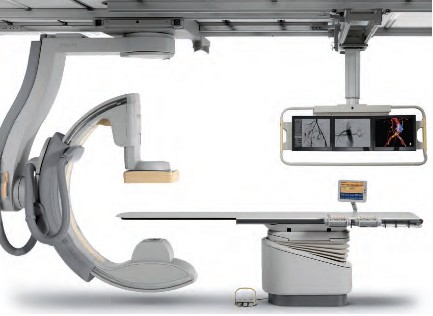
Fluoroscopy is a type of medical imaging used during percutaneous coronary interventions that displays a continuous x-ray image. Blood flow and artery blockages are not able to be seen using x-ray only imaging. Physicians inject a contrast solution into the arteries so that when an x-ray beam is passed through the tissue, the physician can get a real-time image of the coronary arteries. On average, angioplasty procedures will last about an hour, this means the patient is exposed to ionizing radiation from the fluoroscopy for a significant amount of time. Lengthy procedures lead to greater exposure to the radiation of fluoroscopy.

Radiation has a cumulative effect and leads to increased risk for many conditions, most notably, cancer.  In healthcare where radiation is required for treatment, there is a prevailing philosophy called ALARA, which stands for as low as (is) reasonably achievable.   Wherever possible, physicians should be looking for ways to limit exposure to radiation to limit the cumulative effects of radiation on patients. Along with the risks posed by radiation, patients in the cath lab also face potentially high doses of the contrast medium which can cause a condition known as contrast induced nephropathy. The contrast solution that is so valuable to imaging can be toxic to the kidneys, and when the body is unable to process the contrast, it leads to CIN in which the kidneys shut down.  While most patients who develop CIN typically recover within 1- 2 weeks, it can cause serious renal (kidney) complications in patients with certain risk factors including diabetes, prior kidney transplant, chronic kidney disease, and hypertensive disorders. Therefore, physicians need to keep a constant watch on the contrast volume used during procedures to minimize the risk of CIN.

II. Occupational Hazards in the Cath Lab

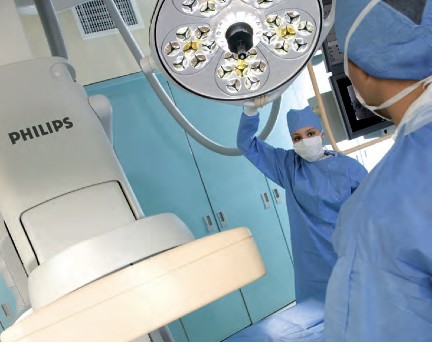
It is well documented that Interventional Cardiologists face serious dangers of long-term radiation exposure in the cath lab. Risks to clinicians include: skin damage to hands and exposed tissue, injury to the lens of the eye/ cataracts, and in some cases the development of brain tumors and other cancers. In a 2012 study, researchers found an increased incidence of left hemisphere brain tumors in a study group of interventional cardiologists that may be attributed to the prolonged exposure to ionizing radiation to the left side of the head during interventional procedures.

Via LifeScience PLUS

Physicians in the Cardiac Cath Lab (Via LifeScience PLUS)

Lead aprons are the standard convention used in Cath labs across the US to reduce radiation exposure to physicians and staff; however these protective barriers can weigh between 15-20 pounds and place up to 300 pounds per square inch of pressure on vertebral disks. In one study more than 400 interventionalists were surveyed and 71% of the study population reported some type of orthopedic disease. According to Dr. Tom Ports, Director of Interventional Cardiology at University of San Francisco, the leading cause of early retirement for interventional cardiologists is spinal injury!

Attention to the danger of radiation exposure and other risks in the cath lab for both patients and staff is on the rise. As more focus is being brought upon safety practices in the cath lab, improved procedural measures are being put in place to protect physicians and staff, and improve the quality of care for patients.

http://blog.corindus.com/?p=124

REFERENCES

SOURCE
  1. Murphy SW, Barrett BJ, Parfrey PS. Contrast nephropathy. J Am Soc Nephrol. Jan 2000;11(1):177-82.[Medline].
  2. Lakhal K, Ehrmann S, Chaari A, et al. Acute Kidney Injury Network definition of contrast-induced nephropathy in the critically ill: Incidence and outcome. J Crit Care. Jul 5 2011;[Medline].
  3. Droppa M, Desch S, Blase P, et al. Impact of N-acetylcysteine on contrast-induced nephropathy defined by cystatin C in patients with ST-elevation myocardial infarction undergoing primary angioplasty. Clin Res Cardiol. Jun 28 2011;[Medline].
  4. Ren L, Ji J, Fang Y, et al. Assessment of Urinary N-Acetyl-ß-glucosaminidase as an Early Marker of Contrast-induced Nephropathy. J Int Med Res. 2011;39(2):647-53. [Medline].
  5. Finn WF. The clinical and renal consequences of contrast-induced nephropathy. Nephrol Dial Transplant. Jun 2006;21(6):i2-10. [Medline].
  6. Lameier NH. Contrast-induced nephropathy–prevention and risk reduction. Nephrol Dial Transplant. Jun 2006;21(6):i11-23. [Medline].
  7. Department of Veteran Affairs, Department of Defense. VA/DoD clinical practice guideline for management of chronic kidney disease in primary care. Available at http://guideline.gov/content.aspx?id=15674. Accessed Jul 10 2011.
  8. Wong GT, Irwin MG. Contrast-induced nephropathy. Br J Anaesth. Oct 2007;99(4):474-83. [Medline].
  9. Barrett BJ, Carlisle EJ. Metaanalysis of the relative nephrotoxicity of high- and low-osmolality iodinated contrast media. Radiology. Jul 1993;188(1):171-8. [Medline].
  10. Aspelin P, Aubry P, Fransson SG, et al. Nephrotoxic effects in high-risk patients undergoing angiography.N Engl J Med. Feb 6 2003;348(6):491-9. [Medline].
  11. Baker CS, Wragg A, Kumar S, et al. A rapid protocol for the prevention of contrast-induced renal dysfunction: the RAPPID study. J Am Coll Cardiol. Jun 18 2003;41(12):2114-8. [Medline].
  12. Bartorelli AL, Marenzi G. Contrast-induced nephropathy. J Interv Cardiol. Feb 2008;21(1):74-85. [Medline].
  13. [Best Evidence] Jo SH, Youn TJ, Koo BK, et al. Renal toxicity evaluation and comparison between visipaque (iodixanol) and hexabrix (ioxaglate) in patients with renal insufficiency undergoing coronary angiography: the RECOVER study: a randomized controlled trial. J Am Coll Cardiol. Sep 5 2006;48(5):924-30. [Medline].
  14. Shin DH, Choi DJ, Youn TJ, et al. Comparison of contrast-induced nephrotoxicity of iodixanol and iopromide in patients with renal insufficiency undergoing coronary angiography. Am J Cardiol. Jul 15 2011;108(2):189-94. [Medline].
  15. Toprak O. Risk markers for contrast-induced nephropathy. Am J Med Sci. Oct 2007;334(4):283-90.[Medline].
  16. Guastoni C, De Servi S, D’Amico M. The role of dialysis in contrast-induced nephropathy: doubts and certainties. J Cardiovasc Med (Hagerstown). Aug 2007;8(8):549-57. [Medline].
  17. McCullough PA, Wolyn R, Rocher LL, et al. Acute renal failure after coronary intervention: incidence, risk factors, and relationship to mortality. Am J Med. Nov 1997;103(5):368-75. [Medline].
  18. Maioli M, Toso A, Leoncini M, Gallopin M, Musilli N, Bellandi F. Persistent renal damage after contrast-induced acute kidney injury: incidence, evolution, risk factors, and prognosis. Circulation. Jun 26 2012;125(25):3099-107. [Medline].
  19. Mehran R, Aymong ED, Nikolsky E, et al. A simple risk score for prediction of contrast-induced nephropathy after percutaneous coronary intervention: development and initial validation. J Am Coll Cardiol. Oct 6 2004;44(7):1393-9. [Medline].
  20. Bartholomew BA, Harjai KJ, Dukkipati S, et al. Impact of nephropathy after percutaneous coronary intervention and a method for risk stratification. Am J Cardiol. Jun 15 2004;93(12):1515-9. [Medline].
  21. Moreau JF, Noel LH, Droz D. Proximal renal tubular vacuolization induced by iodinated contrast media, or so-called “osmotic nephrosis”. Invest Radiol. Feb 1993;28(2):187-90. [Medline].
  22. Solomon R. Radiocontrast-induced nephropathy. Semin Nephrol. Sep 1998;18(5):551-7. [Medline].
  23. Mueller C. Prevention of contrast-induced nephropathy with volume supplementation. Kidney Int Suppl. Apr 2006;S16-9. [Medline].
  24. Pannu N, Wiebe N, Tonelli M. Prophylaxis strategies for contrast-induced nephropathy. JAMA. Jun 21 2006;295(23):2765-79. [Medline].
  25. Friedewald VE, Goldfarb S, Laskey WK, et al. The editor’s roundtable: contrast-induced nephropathy. Am J Cardiol. Aug 1 2007;100(3):544-51. [Medline].
  26. Pappy R, Stavrakis S, Hennebry TA, et al. Effect of statin therapy on contrast-induced nephropathy after coronary angiography: A meta-analysis. Int J Cardiol. May 31 2011;[Medline].
  27. From AM, Bartholmai BJ, Williams AW, et al. Sodium bicarbonate is associated with an increased incidence of contrast nephropathy: a retrospective cohort study of 7977 patients at Mayo Clinic. Clin J Am Soc Nephrol. Jan 2008;3(1):10-8. [Medline].
  28. Van Praet JT, De Vriese AS. Prevention of contrast-induced nephropathy: a critical review. Curr Opin Nephrol Hypertens. Jul 2007;16(4):336-47. [Medline].
  29. Hoffmann U, Fischereder M, Kruger B, et al. The value of N-acetylcysteine in the prevention of radiocontrast agent-induced nephropathy seems questionable. J Am Soc Nephrol. Feb 2004;15(2):407-10.[Medline].
  30. Haase M, Haase-Fielitz A, Ratnaike S, et al. N-Acetylcysteine does not artifactually lower plasma creatinine concentration. Nephrol Dial Transplant. May 2008;23(5):1581-7. [Medline].
  31. Rodby RA. Preventing complications of radiographic contrast media: is there a role for dialysis?. Semin Dial. Jan-Feb 2007;20(1):19-23. [Medline].
  32. [Best Evidence] Cruz DN, Perazella MA, Bellomo R, et al. Extracorporeal blood purification therapies for prevention of radiocontrast-induced nephropathy: a systematic review. Am J Kidney Dis. Sep 2006;48(3):361-71. [Medline].
  33. Lee PT, Chou KJ, Liu CP, et al. Renal protection for coronary angiography in advanced renal failure patients by prophylactic hemodialysis. A randomized controlled trial. J Am Coll Cardiol. Sep 11 2007;50(11):1015-20. [Medline].
  34. Marenzi G, Lauri G, Campodonico J, et al. Comparison of two hemofiltration protocols for prevention of contrast-induced nephropathy in high-risk patients. Am J Med. Feb 2006;119(2):155-62. [Medline].
  35. Frank H, Werner D, Lorusso V, et al. Simultaneous hemodialysis during coronary angiography fails to prevent radiocontrast-induced nephropathy in chronic renal failure. Clin Nephrol. Sep 2003;60(3):176-82.[Medline].
  36. Spargias K, Alexopoulos E, Kyrzopoulos S, et al. Ascorbic acid prevents contrast-mediated nephropathy in patients with renal dysfunction undergoing coronary angiography or intervention. Circulation. Nov 2 2004;110(18):2837-42. [Medline].
  37. Cigarroa RG, Lange RA, Williams RH, et al. Dosing of contrast material to prevent contrast nephropathy in patients with renal disease. Am J Med. Jun 1989;86(6 Pt 1):649-52. [Medline].
  38. Morcos SK, Thomsen HS, Webb JA. Contrast-media-induced nephrotoxicity: a consensus report. Contrast Media Safety Committee, European Society of Urogenital Radiology (ESUR). Eur Radiol. 1999;9(8):1602-13. [Medline].
  39. Onuigbo MA, Onuigbo NT. Worsening renal failure in older chronic kidney disease patients with renal artery stenosis concurrently on renin angiotensin aldosterone system blockade: a prospective 50-month Mayo-Health-System clinic analysis. QJM. Mar 28 2008;[Medline].
  40. Kaplan AA, Kohn OF. Fractional excretion of urea as a guide to renal dysfunction. Am J Nephrol. 1992;12(1-2):49-54. [Medline].

Read Full Post »

Myocardial Infarction: The New Definition After Revascularization

Reporter: Aviva Lev-Ari, PhD, RN


UPDATED on 7/31/2014

Myocardial Ischemia Symptoms

Reporter: Aviva Lev-Ari, PhD, RN

http://pharmaceuticalintelligence.com/2014/07/29/myocardial-ischemia-symptoms/


VIEW VIDEO

Gregg Stone, MD

Co-DIrector, Medical Research & Education Division Cardiovascular Research Foundation

http://www.medpagetoday.com/Cardiology/MyocardialInfarction/42256?xid=nl_mpt_DHE_2013-10-15&goback=%2Egmr_4346921%2Egde_4346921_member_5795830612724035588#%21

Primary source: Journal of the American College of Cardiology
Source reference: Moussa I, et al “Consideration of a new definition of clinically relevant myocardial infarction after coronary revascularization: an expert consensus document from the Society for Cardiovascular Angiography and Interventions (SCAI)” J Am Coll Cardiol2013; 62: 1563-1570.

Additional source: Journal of the American College of Cardiology
Source reference:White H “Avatar of the universal definition of periprocedural myocardial infarction” J Am Coll Cardiol 2013; 62: 1571-1574.

Moussa reported that he had no conflicts of interest.

Stone is a consultant for Boston Scientific, Eli Lilly, Daiichi Sankyo, and AstraZeneca. The other authors reported relationships with Guerbet, The Medicines Company, Bristol-Myers Squibb/Sanofi, Merck, Maya Medical, AstraZeneca, Abbott Vascular, Regado Biosciences, Janssen Pharma, Lilly/Daiichi Sankyo, St. Jude Medical, Medtronic, Terumo, Bridgepoint/Boston Scientific, Gilead, Boston Scientific, Eli Lilly, and Daiichi Sankyo.

White is co-chairman for the Task Force for the Universal Definiton of Myocardial Infarction; has received research grants from sanofi-aventis, Eli Lilly, The Medicines Company, the NIH, Pfizer, Roche, Johnson & Johnson, Schering-Plough, Merck Sharpe & Dohme, AstraZeneca, GlaxoSmithKline, Daiichi Sankyo Pharma Development, and Bristol-Myers Squibb; and has served on advisory boards for AstraZeneca, Merck Sharpe & Dohme, Roche, and Regado Biosciences.

WASHINGTON, DC — A “clinically meaningful” definition of MI following PCI or CABG is urgently needed to replace the arbitrarily chosen “universal definition” proposed in recent years that has no relevance to patients and may be muddying clinical-trial results. Those are the conclusions of a new expert consensus document released Monday by the Society of Cardiovascular Angiography and Interventions (SCAI)[1].

The notion of a “universal definition of MI” was first proposed in 2000 and updated in 2007 and 2012. The 2012 document defines a PCI-related MI as an increase in cardiac troponin (cTn) of more than five times the upper limit of normal (ULN) during the first 48 hours postprocedure plus specific clinical or ECG features. Post-CABG, the definition is a cTn increase of >10 times the ULN, plus different clinical or ECG features.

The problem, lead author Dr Issam Moussa (Mayo Clinic, Jacksonville, FL) told heartwire , is that these cutoffs were arbitrarily chosen and not based on any hard evidence that these biomarker levels spelled a poor prognosis. Moreover, “overnight, the rate of MI went from 5% following these procedures to 20% to 30%!” he said.

The SCAI committee, in its new document, focuses on post-PCI procedures and highlights the importance of acquiring baseline cardiac biomarkers and differentiating between patients with elevated baseline CK-MB (or cTn) in whom biomarker levels are stable or falling, as well as those in whom it hasn’t been established whether biomarkers are changing.

SCAI’s Proposed Clinically Meaningful MI Definitions

Group Definition
Normal baseline CK-MB CK-MB rise of >10x ULN or >5x ULN with new pathologic Q-waves in at least 2 contiguous leads or new persistent left bundle branch block
OR
In the absence of baseline CK-MB, a cTn rise of >70x ULN or a rise of>35 ULN plus new pathologic Q-waves in at least 2 contiguous leads or new persistent left bundle branch block
Elevated baseline biomarkers that are stable or falling A CK-MB or cTn rise that is equal (by an absolute increment) to the definitions described for patients with normal CK-MB at baseline.
Elevated baseline biomarkers that have not been shown to be stable or falling A CK-MB or cTn rise that is equal (by an absolute increment) to the definitions described for patients with normal CK-MB at baseline
Plus
New ST-segment elevation or depression
Plus
New-onset or worsening heart failure or sustained hypotension or other signs of a clinically relevant MI.

Moussa is quick to emphasize that these new clinically meaningful definitions have limited evidence to support them—and most of what exists supports CK-MB definitions, not cTn—but that the new document is based on the best scientific evidence available.

“We don’t want to come out with a definitive statement” saying this is the final word on MI definitions,” he stressed. “There is more science that needs to be done and there remains more uncertainty. We framed this to be inclusive and also to open the field for discussion.”

His hope is that this will lead to important changes in how patients are managed and money is spent. Currently, patients with clinically meaningless biomarker elevations may become unnecessarily panicked over news that they’ve had a “heart attack,” while hospital stays may be extended and further tests ordered on the basis of these results.

Moussa et al’s proposal also has important implications for clinical trials, he continued. Currently, for studies that include periprocedural MIs as an individual end point or as part of a composite end point, the very high number of biomarker-defined “MIs” collected in the trial could potentially overwhelm the true impact of any given therapy. “You are really using an end point that is truly not relevant to patients. . . . This could really affect the whole hypothesis.”

He’s expecting some push-back from cardiologists and academics, particularly those who championed the need for the universal definition in the first place, but believes most people will welcome a clinically meaningful definition.

“I think many in the medical community will accept this because they have not really been using the universal definition in their day-to-day practice anyhow.” What’s more, the National Cardiovascular Data Registry (NCDR) does not include the reporting of MI postangiography, in part because of concerns that the universal definition of MI overestimates the true incidence of this problem. “I think many in the community will look at this definition as more reflective of the true incidence of MI after angioplasty, and if it’s accepted, they are more likely to report it to databases like NCDR and use it to reflect quality-of-care processes.”

http://www.medscape.com/viewarticle/812533?nlid=35983_2105&src=wnl_edit_medp_card&uac=93761AJ&spon=2

  • ESC/ACCF/AHA/WHF Expert Consensus Document

Circulation.2012; 126: 2020-2035  Published online before print August 24, 2012,doi: 10.1161/​CIR.0b013e31826e1058

Third Universal Definition of Myocardial Infarction

  1. Kristian Thygesen;
  2. Joseph S. Alpert;
  3. Allan S. Jaffe;
  4. Maarten L. Simoons;
  5. Bernard R. Chaitman;
  6. Harvey D. White
  7. the Writing Group on behalf of the Joint ESC/ACCF/AHA/WHF Task Force for the Universal Definition of Myocardial Infarction
  1. *Corresponding authors/co-chairpersons: Professor Kristian Thygesen, Department of Cardiology, Aarhus University Hospital, Tage-Hansens Gade 2, DK-8000 Aarhus C, Denmark. Tel: +45 7846-7614; fax: +45 7846-7619: E-mail: kristhyg@rm.dk. Professor Joseph S. Alpert, Department of Medicine, Univ. of Arizona College of Medicine, 1501 N. Campbell Ave., P.O. Box 245037, Tucson AZ 85724, USA, Tel: +1 520 626 2763, Fax: +1 520 626 0967, E-mail: jalpert@email.arizona.edu. Professor Harvey D. White, Green Lane Cardiovascular Service, Auckland City Hospital, Private Bag 92024, 1030 Auckland, New Zealand. Tel: +64 9 630 9992, Fax: +64 9 630 9915, E-mail: harveyw@adhb.govt.nz.

Table of Contents

  • Abbreviations and Acronyms. . . . . . . . . . . . . . . . . . . .2021

  • Definition of Myocardial Infarction. . . . . . . . . . . . . . .2022

  • Criteria for Acute Myocardial Infarction. . . . . . . . . . . .2022

  • Criteria for Prior Myocardial Infarction. . . . . . . . . . . .2022

  • Introduction. . . . . . . . . . . . . . . . . . . . . . . . . . . . . . . . . .2022

  • Pathological Characteristics of Myocardial Ischaemia and Infarction. . . . . . . . . . . . . . . . . . . . . . . . . . . . . . . .2023

  • Biomarker Detection of Myocardial Injury With Necrosis. . .2023

  • Clinical Features of Myocardial Ischaemia and Infarction. . .2024

  • Clinical Classification of Myocardial Infarction. . . .2024
    • Spontaneous Myocardial Infarction (MI Type 1). . . .2024

    • Myocardial Infarction Secondary to an Ischaemic Imbalance (MI Type 2). . . . . . . . . . . . . . . . . . . . . . . .2024

    • Cardiac Death Due to Myocardial Infarction (MI Type 3). .2025

    • Myocardial Infarction Associated With Revascularization Procedures (MI Types 4 and 5). . . . . . . . . . . . . . . . . . …

New Definition for MI After Revascularization

Published: Oct 14, 2013 | Updated: Oct 15, 2013

By Todd Neale, Senior Staff Writer, MedPage Today
Reviewed by Zalman S. Agus, MD; Emeritus Professor, Perelman School of Medicine at the University of Pennsylvania and Dorothy Caputo, MA, BSN, RN, Nurse Planner

The Society for Cardiovascular Angiography and Interventions (SCAI) has released a new definition for myocardial infarction (MI) following coronary revascularization aimed at identifying only those events likely to be related to poorer patient outcomes.

In the new criteria — published as an expert consensus document inCatheterization and Cardiovascular Interventions and the Journal of the American College of Cardiology — creatine kinase-myocardial band (CK-MB) is the preferred cardiac biomarker over troponin, and much greater elevations are required to define a clinically relevant MI compared with the universal definition of MI proposed in 2007 and revised in 2012.

Also, the new definition uses the same biomarker elevation thresholds to identify MIs following both percutaneous coronary intervention (PCI) and coronary artery bypass grafting (CABG), whereas the universal definition has different thresholds for events following the two procedures.

“What we’ve really tried to emphasize in this classification scheme is the primary link between biomarker elevations and prognosis,” according to Gregg Stone, MD, of Columbia University Medical Center and the Cardiovascular Research Foundation in New York City, one of the authors of the document.

“In the universal definition of MI, they even acknowledged that their criteria were arbitrary,” Stone said in an interview. “We’ve tried to reduce the arbitrariness of the cutoff values that we selected so that the researcher, academician, clinician, hospital administrator, etc., can be confident that these levels that we’re recommending are the ones that are associated with a worse prognosis for patients suffering periprocedural complications.”

The Change

The existing universal definition for MI defines events following PCI according to an increase in cardiac troponin to greater than five times the 99th percentile upper reference limit (URL) within 48 hours when baseline levels are normal, with confirmation by electrocardiogram (ECG), imaging, or symptoms.

For CABG-related MI, the increase must be more than 10 times the 99th percentile URL within 48 hours when baseline levels are normal, with confirmation by ECG, angiography, or imaging.

But, Stone and colleagues wrote, the relationship between that degree of troponin elevation after a revascularization procedure and prognosis is not as strong as the association between a CK-MB elevation and patient outcomes.

Using a small elevation in troponin to define a post-procedure MI could find myocardial necrosis that is unlikely to be associated with poor clinical outcomes, which could have far-reaching implications, they wrote.

“Widespread adoption of an MI definition not clearly linked to subsequent adverse events such as mortality or heart failure may have serious consequences for the appropriate assessment of devices and therapies, may affect clinical care pathways, and may result in misinterpretation of physician competence,” they wrote.

To address that issue, the expert panel convened by SCAI sought to define clinically relevant MI after PCI or CABG.

A clinically relevant MI is defined in the new document based on an increase of at least 10 times the upper limit of normal in the level of CK-MB within 48 hours after a revascularization procedure when baseline levels are normal.

When the CK-MB level is not available, then an increase in troponin I or T of at least 70 times the upper limit of normal can be used to define a clinically relevant MI, according to the authors.

However, if an ECG shows new pathologic Q-waves in at least two contiguous leads or a new persistent left bundle branch block, then the thresholds can be lowered to at least five times and at least 35 times the upper limit of normal for CK-MB and troponin, respectively.

Further guidance is provided for identifying clinically relevant post-procedure MIs when the cardiac biomarker levels are elevated at baseline.

Dueling Definitions

Co-chairman of the Task Force for the Universal Definition of Myocardial Infarction, Harvey White, DSc, of Auckland City Hospital in Auckland, New Zealand, noted some limitations of the new definition, including the lack of a requirement for ischemic symptoms.

“Ischemic symptoms have always been a basic tenet of the diagnosis of MI, and it should be no different for a [PCI-related] MI,” he wrote in an accompanying editorial.

In addition, with the use of such large elevations in biomarker levels in the new definition, “there will be very few PCI-related events identified, and an opportunity to improve patient outcomes may be lost,” he wrote.

Troponin should remain the preferred biomarker over CK-MB, White argued, pointing to variability in and analytical issues with CK-MB assays, the need for sex-specific cutoffs for CK-MB levels, the need for higher thresholds of CK-MB to determine abnormalities because all individuals have circulating levels of the biomarker, and the reduced sensitivity and specificity of CK-MB.

Also, he said, CK-MB is becoming increasingly unavailable at medical centers.

“With CK-MB becoming obsolete, troponin will become the gold standard, and CK-MB will no longer have a role in defining PCI injury and infarction in clinical practice,” White wrote.

Stone admitted that troponin ultimately might be preferable to CK-MB because of its greater specificity, although the evidence does not yet support it.

“I think there’s a general desirability to move to troponins, although when you look at the data that’s out there it’s much stronger correlating CK-MB elevations to subsequent prognosis,” he said. “I think a lot of the troponin elevations are just noise or troponins are just too sensitive.”

Room for Both?

White noted in his editorial that “the rationale for the SCAI definition has been well articulated by its authors and may be appropriate in an individual trial, but it should not supplant the universal definition of MI,” he wrote.

When asked whether the new definition would replace the universal definition, Stone said there is a place for both sets of criteria.

“We would propose the clinically relevant definition be the one that is used to make most substantial decisions right now, [such as] trade-offs between efficacy and safety for new drugs and devices, in judging hospital systems and physicians, etc.,” he said. “But I do think there’s value in both, and they will both continue to evolve over time as new data becomes evident.”

http://www.medpagetoday.com/Cardiology/MyocardialInfarction/42256?xid=nl_mpt_DHE_2013-10-15&goback=%2Egmr_4346921%2Egde_4346921_member_5795830612724035588#%21 

Articles citing 

Third Universal Definition of Myocardial Infarction

  • Improved long-term clinical outcomes in patients with ST-elevation myocardial infarction undergoing remote ischaemic conditioning as an adjunct to primary percutaneous coronary interventionEur Heart J. 2013;0:eht369v1-eht369

  • The role of myeloperoxidase (MPO) for prognostic evaluation in sensitive cardiac troponin I negative chest pain patients in the emergency departmentEuropean Heart Journal: Acute Cardiovascular Care. 2013;2:203-210,
  • Coronary artery bypass grafting or percutaneous revascularization in acute myocardial infarction?Interact CardioVasc Thorac Surg. 2013;0:ivt381v1-ivt381,
  • Ischemic Conditioning as an Adjunct to Percutaneous Coronary InterventionCirc Cardiovasc Interv. 2013;6:484-492,
  • High sensitivity cardiac troponin in patients with chest painBMJ. 2013;347:f4222,
  • Chest Pain and Palpitations: Taking a Closer LookCirculation. 2013;128:271-277,
  • An Updated Definition of Stroke for the 21st Century: A Statement for Healthcare Professionals From the American Heart Association/American Stroke AssociationStroke. 2013;44:2064-2089,
  • Factors Influencing the 99th Percentile of Cardiac Troponin I Evaluated in Community-Dwelling Individuals at 70 and 75 Years of AgeClin. Chem.. 2013;59:1068-1073,
  • Detection and management of asymptomatic myocardial injury after noncardiac surgeryEuropean Journal of Preventive Cardiology.2013;0:2047487313494294v1-2047487313494294,
  • Postoperative Troponin Screening: A Cardiac Cassandra?Circulation. 2013;127:2253-2256,
  • Remote Ischemic Preconditioning Improves Outcome at 6 Years After Elective Percutaneous Coronary Intervention: The CRISP Stent Trial Long-term Follow-upCirc Cardiovasc Interv. 2013;6:246-251,
  • Outcomes for Clinical Studies Assessing Drug and Revascularization Therapies for Claudication and Critical Limb Ischemia in Peripheral Artery DiseaseCirculation. 2013;127:1241-1250,
  • Prevalence, Incidence, and Implications of Silent Myocardial Infarctions in Patients With Diabetes MellitusCirculation. 2013;127:965-967,
  • 2013 ACCF/AHA Key Data Elements and Definitions for Measuring the Clinical Management and Outcomes of Patients With Acute Coronary Syndromes and Coronary Artery Disease: A Report of the American College of Cardiology Foundation/American Heart Association Task Force on Clinical Data Standards (Writing Committee to Develop Acute Coronary Syndromes and Coronary Artery Disease Clinical Data Standards)Circulation. 2013;127:1052-1089,
  • Clin. Chem.. 2013;59:574-576,
  • Percutaneous Coronary Intervention Versus Optimal Medical Therapy for Prevention of Spontaneous Myocardial Infarction in Subjects With Stable Ischemic Heart DiseaseCirculation. 2013;127:769-781,
  • Frequency of Myocardial Infarction and Its Relationship to Angiographic Collateral Flow in Territories Supplied by Chronically Occluded Coronary ArteriesCirculation. 2013;127:703-709,
  • The Power of More Than OneCirculation. 2013;127:665-667,
  • The curious life of the biomarkerJournal of the American Dental Association. 2013;144:126-128,
  • Persistent Increases in Cardiac Troponin Concentrations As Measured with High-Sensitivity Assays after Acute Myocardial InfarctionClin. Chem.. 2013;59:443-445,
  • 2013 ACCF/AHA Guideline for the Management of ST-Elevation Myocardial Infarction: A Report of the American College of Cardiology Foundation/American Heart Association Task Force on Practice GuidelinesCirculation. 2013;127:e362-e425,

Read Full Post »

Advanced Topics in Sepsis and the Cardiovascular System at its End Stage

Author: Larry H Bernstein, MD, FCAP

http://pharmaceuticalintelligence.com/2013/08/18/advanced-topics-in-Sepsis-and-the-Cardiovascular-System-at-its-End-Stage/

This article was written in continuation to and it is addressing additional scientific matters to the content presented on this subject in the third Section titled

III. Incidence of Sepsis (circulation infection with serious consequences)

of the 7/23/2013 article on:

Cardiovascular Complications: Death from Reoperative Sternotomy after prior CABG, MVR, AVR, or Radiation; Complications of PCI; Sepsis from Cardiovascular Interventions

Justin D Pearlman, MD, PhD, FACC and Aviva Lev-Ari, PhD, RN

Cardiovascular Complications: Death from Reoperative Sternotomy after prior CABG, MVR, AVR, or Radiation; Complications of PCI; Sepsis from Cardiovascular Interventions

The Cardiac Dysfunction Attributable to Sepsis, Hemodynamic Collapse, and the Search for Therapeutic Options

Sepsis and the Heart – Cardiovascular Involvement in General Medical Conditions
M.W. Merx, MD; C. Weber, MD
University Hospital (C.W.), RWTH Aachen University, Aachen, Germany.
Circulation.2007; 116: 793-802doi: 10.1161/​CIRCULATIONAHA.106.678359
http://circ.ahajournals.org/content/116/7/793.full

Sepsis is generally viewed as a disease aggravated by an inappropriate immune response encountered in the afflicted individual. As an important organ system frequently compromised by sepsis and always affected by septic shock, the cardiovascular system and its dysfunction during sepsis have been studied in clinical and basic research for more than 5 decades. Although a number of mediators and pathways have been shown to be associated with myocardial depression in sepsis, the precise cause remains unclear to date. There is currently no evidence supporting global ischemia as an underlying cause of myocardial dysfunction in sepsis.  A circulating myocardial depressant factor in septic shock has long been proposed, and potential candidates for a myocardial depressant factor include cytokines, prostanoids, and nitric oxide, among others.  Endothelial activation and induction of the coagulatory system also contribute to the pathophysiology in sepsis.

Prompt and adequate antibiotic therapy accompanied by surgical removal of the infectious focus, if indicated and feasible, is the mainstay and also the only strictly causal line of therapy. In the presence of severe sepsis and septic shock, supportive treatment in addition to causal therapy is mandatory.  We delineate some characteristics of septic myocardial dysfunction, to assess the most commonly cited and reported underlying mechanisms of cardiac dysfunction in sepsis, and to briefly outline current therapeutic strategies and possible future approaches.

Sepsis, defined by consensus conference as “the systemic inflammatory response syndrome (SIRS) that occurs during infection,” is generally viewed as a disease aggravated by the inappropriate immune response encountered in the affected individual.  Morbidity and mortality are high, resulting in sepsis and septic shock being the 10th most common cause of death in the United States.  The total national hospital cost invoked by severe sepsis in the United States was estimated at approximately $16.7 billion with 215 000 associated deaths annually. A study from Britain documented a 46% in-hospital mortality rate for patients presenting with severe sepsis on admission to the intensive care unit.

Current Criteria for Establishment of the Diagnosis of SIRS, Sepsis, and Septic Shock

The cardiovascular system is an important organ system frequently affected by sepsis and always affected by septic shock.  Waisbren was the first to describe cardiovascular .dysfunction due to sepsis in 1951.  He recognized a hyperdynamic state with full bounding pulses, flushing, fever, oliguria, and hypotension.  He also described a second, smaller patient group who presented clammy, pale, and hypotensive with low volume pulses and who appeared more severely ill. The latter group might well have been volume underresuscitated, and indeed, timely and adequate volume therapy has been demonstrated to be one of the most effective supportive measures in sepsis therapy.

Under conditions of adequate volume resuscitation, the profoundly reduced systemic vascular resistance typically encountered in sepsis leads to a concomitant elevation in cardiac index that obscures the myocardial dysfunction that also occurs. As early as the mid-1980s, significant reductions in both stroke volume and ejection fraction in septic patients were observed with normal total cardiac output. The presence of cardiovascular dysfunction in sepsis is associated with a significantly increased mortality rate of 70% to 90% compared with 20% in septic patients without cardiovascular impairment.

Characteristics of Myocardial Dysfunction in Sepsis

Using portable radionuclide cineangiography, Calvin et al. were the first to demonstrate myocardial dysfunction in adequately volume-resuscitated septic patients who had decreased ejection fraction and increased end-diastolic volume index. Adding pulmonary artery catheters to serial radionuclide cineangiography, Parker and colleagues extended these observations with the 2 major findings that

(1) survivors of septic shock were characterized by increased end-diastolic volume index and decreased ejection fraction, whereas nonsurvivors typically maintained normal cardiac volumes, and

(2) these acute changes in end-diastolic volume index and ejection fraction, although sustained for several days, were reversible.

More recently, echocardiographic studies have demonstrated impaired left ventricular systolic and diastolic function in septic patients. These human studies, in conjunction with experimental studies have clearly established decreased contractility and impaired myocardial compliance as major factors that cause myocardial dysfunction in sepsis. Similar functional alterations, as discussed above, have been observed for the right ventricle.

Myocardial dysfunction in sepsis has also been analyzed with respect to its prognostic value. Parker et al. reviewing septic patients on initial presentation and at 24 hours to determine prognostic indicators, found a heart rate of <106 bpm to be the only cardiac parameter on presentation that predicted a favorable outcome.  At 24 hours after presentation, a systemic vascular resistance index > 1529 dyne · s−1 · cm−5 · m−2, a heart rate < 95 bpm or a reduction in heart rate >18 bpm, and a cardiac index > 0.5 L · min−1 · m−2 suggested survival.  In a prospective study, Rhodes et al. demonstrated the feasibility of a dobutamine stress test for outcome stratification, with nonsurvivors being characterized by an attenuated inotropic response.

The well-established biomarkers in myocardial ischemia and heart failure, cardiac troponin I and T, as well as B-type natriuretic peptide, have also been evaluated with regard to sepsis-associated myocardial dysfunction. B-type natriuretic peptide studies have delivered conflicting results in septic patients, confounded by pre-existing heart failure early in the course. Several small studies have reported a relationship between elevated cardiac troponin T and I and left ventricular dysfunction in sepsis, as assessed by echocardiographic ejection fraction or pulmonary artery catheter–derived left ventricular stroke work index.  Cardiac troponin levels also correlated with the duration of hypotension and the intensity of vasopressor therapy. In addition, increased sepsis severity, measured by global scores such as the Simplified Acute Physiology Score II (SAPS II) or the Acute Physiology And Chronic Health Evaluation II score (APACHE II), was associated with increased cardiac troponin levels, as was poor short-term prognosis.

Despite the heterogeneity of study populations and type of troponin studied, the mentioned studies were unequivocal in concluding that elevated troponin levels in septic patients reflect higher disease severity, myocardial dysfunction, and worse prognosis. In a recent meta-analysis of 23 observational studies, Lim et al. found cardiac troponin levels to be increased in a large percentage of critically ill patients. Furthermore, in a subset of studies that permitted adjusted analysis and comprised 1706 patients, this troponin elevation was associated with an increased risk of death (odds ratio, 2.5; 95% CI, 1.9 to 3.4, P<0.001). Thus, it appears reasonable to recommend inclusion of cardiac troponins in the monitoring of patients with severe sepsis and septic shock to facilitate prognostic stratification and to increase alertness to the presence of cardiac dysfunction in individual patients.

Mechanisms Underlying Myocardial Dysfunction in Sepsis

Cardiac depression during sepsis is probably multifactorial. Nevertheless, it is important to identify individual contributing factors and mechanisms to generate worthwhile therapeutic targets. As a consequence, a vast array of mechanisms, pathways, and disruptions in cellular homeostasis have been examined in septic myocardium.

An early theory of myocardial depression in sepsis based on the hypothesis of global myocardial ischemia has no support. Septic patients have been shown to have high coronary blood flow and diminished coronary artery–coronary sinus oxygen difference.  Coronary sinus blood studies in patients with septic shock have demonstrated complex metabolic alterations in septic myocardium, including increased lactate extraction, decreased free fatty acid extraction, and decreased glucose uptake.  Several magnetic resonance studies in animal models of sepsis have demonstrated the presence of normal high-energy phosphate levels in the myocardium.  CAD-aggravating factors encountered in sepsis encompass generalized inflammation and the activated coagulatory system. The endothelium plays a prominent role in sepsis, but little is known of the impact of preexisting, CAD-associated endothelial dysfunction in this context. In a postmortem study of 21 fatal cases of septic shock, previously undiagnosed myocardial ischemia at least contributed to death in 7 of the 21 cases (all 21 patients were males, with a mean age of 60.4 years

Myocardial Depressant Substance

Parrillo et al. first proposed  a circulating myocardial depressant factor in septic shock  more than 50 years ago. They quantitatively linked the clinical degree of septic myocardial dysfunction with the effect that serum, taken from respective patients, had on rat cardiac myocytes, with clinical severity correlating well with the decrease in extent and velocity of myocyte shortening. These effects were not seen when serum from convalescent patients whose cardiac function had returned to normal was applied or when serum was obtained from other critically ill, nonseptic patients. These findings were extended when ultrafiltrates from patients with severe sepsis and simultaneously reduced left ventricular stroke work index (< 30 g · m−1 · m−2) displayed cardiotoxic effects and contained significantly increased concentrations of interleukin (IL)-1, IL-8, and C3a. Recently, Mink et al. demonstrated that lysozyme c, a bacteriolytic agent believed to originate mainly from disintegrating neutrophilic granulocytes and monocytes, mediates cardiodepressive effects during Escherichia coli sepsis and, importantly, that competitive inhibition of lysozyme c can prevent myocardial depression in the respective experimental sepsis model. Additional potential candidates for myocardial depressant substance include other cytokines, prostanoids, and nitric oxide (NO).

Cytokines

Infusion of lipopolysaccharide (LPS, an obligatory component of Gram-negative bacterial cell walls) into both animals and humans partially mimics the hemodynamic effects of septic shock. Only a minority of patients with septic shock have detectable LPS levels, and the prolonged time course of septic myocardial dysfunction make the role of LPS inconsistent with LPS representing the sole myocardial depressant substance. Tumor necrosis factor-α (TNF-α) is an important early mediator of endotoxin-induced shock. TNF-α is mainly derived from activated macrophages. Studies using monoclonal antibodies directed against TNF-α or soluble TNF-α receptors failed to improve survival in septic patients. IL-1 is synthesized by monocytes, macrophages, and neutrophils in response to TNF-α and plays a crucial role in the systemic immune response. IL-1 depresses cardiac contractility by stimulating NO synthase (NOS). Transcription of IL-1 is followed by delayed transcription of IL-1 receptor antagonist (IL-1-ra), which functions as an endogenous inhibitor of IL-1. Recombinant IL-1-ra was evaluated in phase III clinical trials, which showed a tendency toward improved survival and increased survival time in a retrospective analysis of the patient subgroup with the most severe sepsis; but this initially promising therapy failed to deliver a survival benefit. IL-6, another proinflammatory cytokine, has also been implicated in the pathogenesis of sepsis and is considered a more consistent predictor of sepsis than TNF-α because of its prolonged elevation in the circulation. Although cytokines may very well play a key role in the early decrease in contractility, they cannot explain the prolonged duration of myocardial dysfunction in sepsis, unless they result in the induction or release of additional factors that in turn alter myocardial function, such as prostanoids or NO.

Prostanoids

Prostanoids are produced by the cyclooxygenase enzyme from arachidonic acid (an omega-6 derivative). The expression of cyclooxygenase enzyme-2 is induced, among other stimuli, by LPS and cytokines (cyclooxygenase enzyme-1 is expressed constitutively). Elevated levels of prostanoids such as thromboxane and prostacyclin that alter coronary autoregulation, coronary endothelial function, and intracoronary leukocyte activation, have been demonstrated in septic patients. Early animal studies with cyclooxygenase inhibitors such as indomethacin yielded very promising results. Along with other positive results, these led to an important clinical study involving 455 septic patients who were randomized to receive intravenous ibuprofen or placebo, but that study did not demonstrate improved survival for the treatment arm. Similarly, a smaller study on the effects of lornoxicam failed to provide evidence for a survival benefit through cyclooxygenase inhibition in sepsis.

Endothelin-1

Endothelin-1 upregulation has been demonstrated within 6 hours of LPS-induced septic shock. Cardiac overexpression of ET-1 triggers an increase in inflammatory cytokines (among others, TNF-α, IL-1, and IL-6), interstitial inflammatory infiltration, and an inflammatory cardiomyopathy that results in heart failure and death. The involvement of ET-1 in septic myocardial dysfunction is supported by the observation that tezosentan, a dual endothelin-A and endothelin-B receptor antagonist, improved cardiac index, stroke volume index, and left ventricular stroke work index in endotoxemic shock. However, higher doses of tezosentan exhibited cardiotoxic effects and led to increased mortality. Although ET-1 has been demonstrated to be of pathophysiological importance in a wide array of cardiac diseases through autocrine, endocrine, or paracrine effects, its biosynthesis, receptor-mediated signaling, and functional consequences in septic myocardial dysfunction warrant further investigation to assess the therapeutic potential of ET-1 receptor antagonists.

Free Radicals and Antioxidants: an Overview

The presence of free radicals in biological materials was discovered about 50 years ago. Today, there is a large body of evidence indicating that patients in hospital intensive care units (ICUs) are exposed to excessive free radicals from drugs and other substances that alter cellular reduction -oxidation (redox) balance, and disrupt normal biological functions. However, low levels of free radicals are also vital for many cell signaling events and are essential for proper cell function.

Normal cellular metabolism involves the production of ROS, and in humans, superoxide (O2 -) is the most commonly produced free radical. Phagocytic cells such as macrophages and neutrophils are prominent sources of O2 -. During an inflammatory response, these cells generate free radicals that attack invading pathogens such as bacteria and, because of this, the production of O2- by activated phagocytic cells in response to inflammation is one of the most studied free radical producing systems.

Excess free radicals can result from a variety of conditions such as tissue damage and hypoxia (limiting oxygen levels), overexposure to environmental factors (tobacco smoke, ultraviolet radiation, and pollutants), a lack of antioxidants, or destruction of free radical scavengers. When the production of damaging free radicals exceeds the capacity of the body’s antioxidant defenses to detoxify them, a condition known as oxidative stress occurs.

The hydroxyl radical (.OH) is the most reactive of the free radical molecules. OH- damages cell membranes and lipoproteins by a process termed lipid peroxidation. In fact, lipid peroxidation can be defined as the process whereby free radicals “steal” electrons from the lipids in our cell membranes, resulting in cell damage and increased production of ROS.

Catalase and glutathione peroxidase both work to detoxify O2-reactive radicals by catalyzing the formation of H2O2 derived from O2 -. The liver, kidney, and red blood cells possess high levels of catalase, which helps to detoxify chemicals in the body. The water-soluble tripeptide-thiol glutathione also plays an important role in a variety of detoxification processes. Glutathione is found in millimolar concentrations in the cell cytosol and other aqueous phases, and readily interacts with free radicals, especially the hydroxyl radical, by donating a hydrogen atom.

Adhesion Molecules

Surface-expression upregulation of intercellular adhesion molecule-1 and vascular cell adhesion molecule-1 has been demonstrated in murine coronary endothelium and cardiomyocytes after LPS and TNF-α stimulation. After cecal ligation and double puncture, myocardial intercellular adhesion molecule-1 expression increases in rats. Vascular cell adhesion molecule-1 blockade with antibodies has been shown to prevent myocardial dysfunction and decrease myocardial neutrophil accumulation, whereas both knockout and antibody blockade of intercellular adhesion molecule-1 ameliorate myocardial dysfunction in endotoxemia without affecting neutrophil accumulation. But neutrophil depletion does not protect against septic cardiomyopathy, which suggests that the cardiotoxic potential of neutrophils infiltrating the myocardium is of lesser importance in this context.

Cells and signaling pathways

It is believed that sepsis and therefore septic shock are due to the inappropriate increase in the innate immune response via circulating and tissue inflammatory cells, such as monocytes/macrophages and neutrophils. These cells normally exist in a nonactivated state but are rapidly activated in response to bacteria. Sepsis induces a dysfunction in immune cells that contributes to the development of injuries by producing mediators such as cytokines and ROS.

LPS of Gram-negative organisms induces macrophages to secrete cytokines, which in turn activate T, and B cells to upregulate the adaptive immune responses. Toll-like receptor 4 (TLR4) is the LPS receptor and its stimulation induces nuclear factor kB (NF-kB) activation. The activation of NF-kB involves phosphorylation and degradation of IkB, an inhibitor of NF-kB. The NF-kB/IkB system exerts transcriptional regulation on proinflammatory genes encoded for various adhesion molecules and cytokines. Activation of NF-kB leads to the induction of NF-kB binding elements in their promoter regions and also leads to the induction of NF-kB dependent effector genes, which produce modifications in blood flow, and aggregation of neutrophils, and platelets. This results in damaged endothelium and also coagulation abnormalities often seen in patients with sepsis and septic shock. Therefore, NF-kB is reported to be an O2 sensor in LPS-induced endotoxemia.

The sources of ROS during sepsis are:

  • the mitochondrial respiratory chain.
  • the metabolic cascade of arachidonic acid.
  • the protease-mediated enzyme xanthine oxidase.
  • granulocytes and other phagocytes activated by complement, bacteria, endotoxin, lysosomal enzymes, etc.
  • Other oxidases mainly NADPH oxidase.

Activated immune cells produce O2 – as a cytotoxic agent as part of the respiratory burst via the action of membrane-bound NADPH oxidase on O2.

The increase of ROS after LPS challenge has been demonstrated in different models of septic shock in peritoneal macrophages and lymphocytes. This disturbance in the balance between pro-oxidants (ROS) and antioxidants in favor of the former is characteristic of oxidative stress in immune cells in response to endotoxin. In this context,

a typical behavior of these cells under an oxidative stress situation implies changes in different immune functions such as an increase in adherence and phagocytosis and a decrease in chemotaxis.  Neutrophils play a crucial role in the primary immune defense against infectious agents,which includes phagocytosis and the production of ROS. In addition, endogenous antioxidant defenses exist in a number of locations, namely intracellularly, on the cell membrane and extracellularly. The immune system is highly reliant on accurate cell-cell communication for optimal function, and any damage to the signaling systems involved will result in an impaired immune responsiveness.

Oxidative stress and modulation on GSH/GSSG (GSSG=oxidized GSH) levels also up-regulate gene expression of several other antioxidant proteins, such as manganese SOD, glutathione peroxidase, thioredoxin (Trx) and metallothionein.

Nitric Oxide

The current understanding of sepsis is a cascade of events that involves the microcirculation unevenly because of a differential effect on the large and contiguous intestinal epithelium, secondary effects on cardiopulmonary blood flows and cardiac output. This leads to a substantial body of work on therapeutic targets, either aimed at total inhibition or selective inhibition of NO synthase, and the special role of iNOS.

NO is synthesized from L-arginine by different isoenzymes of (NOS), and is implicated in a wide range of disease processes, exerting both detrimental and beneficial effects at the cellular and vascular levels. To date, three main isoforms of NOS are known:

  • neuronal NOS (NOS-1 or nNOS),
  • inducible NOS (NOS-2 or iNOS), and
  • endothelial NOS (NOS-3 or eNOS).

NO has been shown to play a key role in the pathogenesis of septic shock

Hyperproduction of NO induces

  • excessive vasodilation,
  • changes in vascular permeability, and
  • inhibition of noradrenergic nerve transmission,
  • all characteristics of human septic shock.

The recogniton of NO production by activated macrophages as part of the inflammatory process was an important milestone for assesing both the biological production of NO and the phenomenon of induction of NOS activity. The observation has been extended to neutrophils, lymphocytes, and other cell types. The role of NO in the pathophysiology of endotoxic shock was advanced by Thiemermann and Vane, who observed that administration of the specific NOS inhibitor N-methyl-L-arginine (L-NMMA) decreased the severe hypotension produced by administration of LPS. Other groups simultaneously reported similar results indicating that endotoxin increases NO production and prompted the idea that pharmacological inhibition of NOS may be useful in the treatment of inflammation and septic shock. However, clinical trials using L-NMMA failed to show a beneficial effect in septic shock patient. The major limitation for the use of NOS inhibitors in clinical studies is the development of pulmonary hypertension as a side effect of NOS blockade, which can be alleviated by the use of inhaled NO.

However, several compounds which modulate NO synthesis have been patented in recent years, such as various inflammatory mediators that have been implicated in the induction and activation of iNOS, particularly IFNg, TNFa, IL-1b, and platelet-activating factor (PAF) alone or synergistically. In addition to the activation of iNOS, cytokines and endotoxin may increase NO release by increasing arginine availability through the opening of the specific y+ channels and the expression of the cationic amino acid transporter (CAT), or by increasing tetrahydrobiopterin levels, a key cofactor in NO synthesis. Several experimental studies have demonstrated a decrease in NOS activity resulting in an impairment in endothelial-dependent relaxation during endotoxemia and experimental sepsis, possibly as the result of a cytokine-or hypoxia-induced shortened half-life of NOS mRNA, or of altered calcium mobilization.

Advanced Topics in Sepsis and the Cardiovascular System –  Augmentation for the third Section titled:

III. Incidence of Sepsis (circulation infection with serious consequences)

of the 7/23/2013 article on: Cardiovascular Complications: Death from Reoperative Sternotomy after prior CABG, MVR, AVR, or Radiation; Complications of PCI; Sepsis from Cardiovascular Interventions

NO exerts in vitro toxic effects including nuclear damage, protein and membrane phospholipid alterations, and the inhibition of mitochondrial respiration in several cell types. Mitochondrial impairment could also be considered as an adaptive phenomenon, decreasing cellular metabolism when the energy supply is limited. The toxicity of NO itself may be enhanced by the formation of ONOO- from the reaction of NO with O-2. Therefore, the multiple organ failure syndrome (MOFS) that often accompanies severe sepsis may be related to the cellular effects of excess NO or ONOO-.

Involvement of Nitrogen Species

NO reacts rapidly with ferrous iron, and at physiological concentrations, NO also binds to soluble guanylate cyclase and to another hemoprotein, cytochrome c oxidase (Complex IV), the terminal enzyme of the mitochondrial respiratory chain. NO can therefore control cellular functions via the reversible inhibition of respiration. There are a number of reactive NO species, such as

N2O3 and
ONOO-
that can also alter critical cellular components.

During the first hours after injury, iNOS-mediated NO production is upregulated, producing a burst of NO that far exceeds basal levels. This overabundance of NO produces significant cellular injury via several mechanisms.

NO may directly promote overwhelming peripheral vasodilation, resulting in vascular decomposition;

NO may upregulate the transcription NF-kB initiating an inflammatory signaling pathway that, in turn, triggers numerous inflammatory cytokines.

NO also interacts with the O-2 to yield ONOO-, a highly reactive compound that exacerbates the injury produced by either O-2 alone or NO alone.

The ONOO- generation which occurs during fluid resuscitation in the injured subject produces cellular death by enhancing DNA single strand breakage, activates the nuclear enzyme polyADP ribose synthetase (PARS), leading to cellular energy depletion and cellular necrosis. The detrimental effects of ONOO- in shock and resuscitation have been attributed to oxidation of sulfhydryl groups, the nitration of tyrosine, tryptophane, and guanine, as well as inhibition of the membrane sodium-potassium adenosine triphosphatase. PARS activation depletes NAD and thus alters electron transport, ATP synthesis, and glycolysis; and leads to DNA fragmentation and cellular apoptosis.

The activation of monocytes, macrophages and endothelial cells by LPS results in the expression of iNOS, and consequently increases the transformation of L-arginine to NO, which can combine with O2- to form ONOO-, causing tissue injury during shock, inflammation and ischemia reperfusion. NO stimulates H2O2 and O-2 production by mitochondria, increasing leakage of electrons from the respiratory chain. H2O2, in turn, participates in the upregulation of iNOS expression via NFkB activation. ONOO- has been shown to stimulate H2O2 production by isolated mitochondria. On the other hand, NO can decrease ROS-produced damage that occurs at physiological levels of NO. The high reactivity of NO with radicals might be beneficial in vivo by scavenging peroxyl radicals and inhibiting peroxidation. ONOO- may also be a signal transmitter and can mediate vasorelaxation, similarly to NO.

In sepsis, NO may exert direct and indirect effects on cardiac function. Sustained generation of NO occurs in systemic inflammatory reactions, such as septic shock with involvement in circulatory failure. In fact, myocardial iNOS activity has been reported in response to endotoxin and cytokines and inversely correlated with myocardial performance. Low-to-moderate doses of iNOS inhibitors restore myocardial contractility in hearts exposed to proinflammatory cytokines, whereas at higher doses, the effects are reversed. This finding may indicate that small amounts of NO produced by iNOS may be necessary to maintain contractility and can be cardio-protective in experimental sepsis.

A list of effects of NO in sepsis is as follows:

  • Inhibition of nitric oxide synthesis causes myocardial ischemia in endotoxemic rats
  • Nitric oxide causes dysfunction of coronary autoregulation in endotoxemic rats
  • Prolonged inhibition of nitric oxide synthesis in severe septic shock

Effect of L-NAME, an inhibitor of nitric oxide synthesis, on cardiopulmonary function in human septic shock:  Pulmonary hypertension and reduced cardiac output during inhibition of nitric oxide synthesis in human septic shock

Effect of L-NAME, an inhibitor of nitric oxide synthesis, on plasma levels of IL-6, IL-8, TNF-a and nitrite/nitrate in human septic shock

Endothelin-1 and blood pressure after inhibition of nitric oxide synthesis in human septic shock

Distribution and metabolism of NO-nitro-L-arginine methyl ester in patients with septic shock

Pulmonary hypertension and reduced cardiac output can be major side effects of continuous NO synthase inhibition. Pulmonary vasoconstriction is undesirable because it may compromise pulmonary gas exchange and because it increases the workload on the right ventricle.

Blood pressure and systemic vascular resistance increased during infusion of the NO synthase inhibitor L-NAME, and the dosage of catecholamines was reduced. The vasoconstrictive response to L-NAME most likely was the result of blocking the NO system . In addition to the systemic effects of L-NAME, severe pulmonary vasoconstriction was observed with L-NAME.

S-Methylisothiourea sulfate (SMT) is at least 10- to 30-fold more potent as an inhibitor of inducible NOS (iNOS) in immuno-stimulated cultured macrophages (EC50, 6 ,AM) and vascular smooth muscle cells (EC50, 2 ,uM) than NG-methyl-L-arginine (MeArg) or any other NOS inhibitor yet known. The effect of SMT on iNOS activity can be reversed by excess L-arginine in a concentration-dependent manner.  SMT, a potent and selective inhibitor of iNOS, may have considerable value in the therapy of circulatory shock of various etiologies and other pathophysiological conditions associated with induction of iNOS. SMT, or other iNOS-selective inhibitors, are likely to have fewer side effects which are related to the inhibition of eNOS, such as excessive vasoconstriction and organ ischemia), increased platelet and neutrophil adhesion and accumulation, and microvascular leakage.

Administration of the iron (III) complex of diethylenetriamine pentaacetic acid (DTPA iron (III), prevented death in Corynebacterium parvum 1 LPS-treated mice. Using electrochemistry, the binding of NO to DTPA iron (II) is confirmed.  Treatment with DTPA iron (III) resulted in a significant decrease in mortality compared to the untreated controls. The efficacy of DTPA iron (III) increased when given to mice 2 h or more after infection. The best results were observed when DTPA iron (III) was given 5 h after infection.  The iron (III) complex of diethylenetriamine pentaacetic acid (DTPA iron [III]) protected mice and baboons from the lethal effects of an infusion with live LD 100 Escherichia coli. In mice, optimal results were obtained when DTPA iron (III) was administered two or more hours after infection.

PJ34, a novel, potent PARP-1 inhibitor was found to protect against LPS induced tissue damage. PARP inhibitors protected Langendorff-perfused hearts against ischemia-reperfusion induced damages by activating the PI3-kinase–Akt pathway. The importance of the PI3-kinase–Akt pathway in LPS induced inflammatory mechanisms has gained support, raising the question whether this pathway was involved in the effect of PJ34 on LPS-induced septic shock.
Activation of the PI3-kinase–Akt/protein kinase B cytoprotective pathway is likely to contribute to the protective effects of PARP inhibitors in shock and inflammation.

Asymmetrical dimethyl arginine (ADMA) is an endogenous non-selective inhibitor of nitric oxide synthase that may influence the severity of organ failure and the occurrence of shock secondary to an infectious insult. Levels may be genetically determined by a promoter polymorphism in a regulatory gene encoding dimethylarginine dimethylaminohydrolase II (DDAH II).

ADMA levels and Sequential Organ Failure Assessment scores were directly associated on day one (p = 0.0001) and day seven (p = 0.002). The degree of acidaemia and lactaemia was directly correlated with ADMA levels at both time points (p < 0.01). On day seven, IL-6 was directly correlated with ADMA levels (p = 0.006). The variant allele with G at position -449 in the DDAH II gene was associated with increased ADMA concentrations at both time points (p < 0.05).
http://pharmaceuticalintelligence.com/2012/10/20/nitric-oxide-and-sepsis-hemodynamic-collapse-and-the-search-for-therapeutic-options/  larryhbern

Sepsis, Multi-organ Dysfunction Syndrome, and Septic Shock: A Conundrum of Signaling Pathways Cascading Out of Control   larryhbern
http://pharmaceuticalintelligence.com/2012/10/13/sepsis-multi-organ-dysfunction-syndrome-and-septic-shock-a-conundrum-of-signaling-pathways-cascading-out-of-control/

During sepsis, the inflammation triggers widespread coagulation in the bloodstream. A severe form of acute lung injury features pulmonary inflammation and increased capillary leak, is associated with a high mortality rate, and accounts for 100,000 deaths annually in the United States, especially associated with  sepsis. Neutrophils are major effector cells at the frontier of innate immune responses, and they play a critical role in host defense against invading .microorganisms. The tissue injury appears to be related to proteases and toxic reactive oxygen radicals released from activated neutrophils. Excessive procoagulant activity is of pathophysiological significance in these disease settings. This is consistent with a pneumonia or lung injury preceding sepsis. Indeed, it is not surprising that abdominal, cardiac bypass, and post cardiac revascularization may also lead to events resembling sepsis and/or cardiovascular collapse.

The activation of the coagulation cascade is one of the earliest events initiated following tissue injury. The prime function of this complex and highly regulated proteolytic system is to generate insoluble, crosslinked fibrin strands, which bind and stabilize weak platelet hemostatic plugs, formed at sites of tissue injury. The tissue factor-dependent extrinsic pathway is the predominant mechanism by which the coagulation cascade is locally activated. The cellular effects mediated via activation of proteinase-activated receptors (PARs) may be of particular importance. In this regard, studies in PAR1 knockout mice have shown that this receptor plays a major role in orchestrating the interplay between coagulation, inflammation and lung fibrosis.  The systemic inflammatory response syndrome (SIRS) is the massive inflammatory reaction resulting from systemic mediator release that may lead to multiple organ dysfunction.

For signal transduction, 01TREM-1 couples to the ITAM-containing adapter DNAX activation protein of 12 kDa (23DAP12 ). MARV and EBOV activate TREM-1 on human neutrophils, resulting in 12DAP12 phosphorylation, TREM-1 shedding, mobilization of intracellular calcium, secretion of proinflammatory cytokines, and phenotypic changes. TREM-1 is the best-characterized member of a growing family of 12DAP12-associated receptors that regulate the function of myeloid cells in innate and adaptive responses. TREM-1 (triggering receptor expressed on myeloid cells), a recently discovered receptor of the immunoglobulin superfamily, activates neutrophils and monocytes/macrophages by signaling through the adapter protein 12DAP12.

Circulating and organ-specific cell populations are activated to produce proinflammatory mediators during sepsis. Neutrophils and PBMCs bear TLR2 and TLR4, as well as other receptors, such as protein —coupled receptor, that induce increased generation of cytokines and other immunoregulatory proteins, as well as enhance release of proinflammatory mediators, including reactive oxygen species.

The expression of cytokines such as TNF-α and IL-1β is increased in sepsis, and engagement of TNF-α with type I(p55) and type II(p75) TNF receptors or IL-1β with IL-1 receptors belonging to the TLR/IL-1 receptor family produces activation of kinases (including Src, p38, extracellular signal—regulated kinase, and phosphoinositide 3–kinase) and transcriptional factors (such as nuclear factor [NF]–κB) important for further up-regulation of inflammatory proteins.

Identification of patients with cellular phenotypes characterized by increased activation of NF-κB, Akt, and protein 38, as well as discrete patterns of gene activation, may permit identification of patients with sepsis who are likely to have a worse clinical outcome In support of the hypothesis, greater nuclear accumulation of NF-κB is accompanied by higher mortality and worse clinical course in patients with sepsis. Persistent activation of NF-κB was found in nonsurvivors, with surviving patients having lower nuclear concentrations of NF-κB at early time points in their septic course than did nonsurvivors as well as more rapid return of nuclear accumulation of NF-κB. A study of surgical patients without sepsis supports the hypothesis that neutrophil phenotypes defined by NF-κB activation patterns predict clinical outcome. In that clinical series of patients undergoing repair of aortic aneurysms, higher preoperative levels of NF-κB in peripheral neutrophils were associated with death and with the development of postoperative organ dysfunction.

Insulin alleviates degradation of skeletal muscle protein by inhibiting the ubiquitin-proteasome system in septic rats

Qiyi Chen, Ning Li, Weiming Zhu, Weiqin Li, Shaoqiu Tang, et al. Chen et al. Journal of Inflammation 2011, 8:13

http://www.journal-inflammation.com/content/8/1/13

Hypercatabolism is common under septic conditions. Skeletal muscle is the main target organ for hypercatabolism, and this phenomenon is a vital factor in the deterioration of recovery in septic patients. In skeletal muscle, activation of the ubiquitin-proteasome system plays an important role in hypercatabolism under septic status. Insulin is a vital anticatabolic hormone and previous evidence suggests that insulin administration inhibits various steps in the ubiquitin-proteasome system. However, whether insulin can alleviate the degradation of skeletal muscle protein by inhibiting the ubiquitin-proteasome system under septic condition is unclear. This paper confirmed that mRNA and protein levels of the ubiquitin-proteasome system were upregulated and molecular markers of skeletal muscle proteolysis (tyrosine and 3-methylhistidine) simultaneously increased in the skeletal muscle of septic rats. We concluded that the ubiquitin-proteasome system is important skeletal muscle hypercatabolism in septic rats. Infusion of insulin can reverse the detrimental metabolism of skeletal muscle by inhibiting the ubiquitin-proteasome system, and the effect is proportional to the insulin infusion dose.

The International Sepsis Forum’s frontiers in sepsis: high cardiac output should be maintained in severe sepsis

Jean-Louis Vincent
Erasme Hospital, University of Brussels, Brussels, Belgium
Critical Care 2003; 7:276-278 (DOI 10.1186/cc2349)

Despite a usually normal or high cardiac output, severe sepsis is associated with inadequate tissue oxygenation, leading to organ failure and death. Some authors have suggested that raising cardiac output and oxygen delivery to predetermined supranormal values may be associated with improved

survival. While this may be of benefit in certain patients, bringing all patients to similar, supranormal values, is simplistic. It is much preferable to titrate therapy according to the needs of each individual patient. A combination of variables should be used for this purpose, in addition to a careful clinical evaluation, including not only cardiac  output but also the mixed venous oxygen saturation and the blood lactate concentrations. The concept is to assess the adequacy of the cardiac output in patients with severe sepsis, enabling management strategies aimed at optimizing cardiac output to be tailored to the individual patient.

The State of US Health, 1990-2010:  Burden of Diseases, Injuries, and Risk Factors

JAMA Aug 14, 2013, Vol 310, No. 6
US Burden of Disease Collaborators

We used the systematic analysis of descriptive epidemiology of 291 diseases and injuries, 1160 sequelae of these diseases and injuries, and 67 risk factors or clusters of risk factors from 1990 to 2010 for 187 countries developed for the Global Burden of Disease 2010. Disability-adjusted life-years (DALYs) were estimated as the sum of YLDs and YLLs. Deaths and DALYs related to risk factors were based on systematic reviews and meta-analyses of exposure data and relative risks for risk-outcome pairs. Healthy life expectancy (HALE) was used to summarize overall population health, accounting for both length of life and levels of ill health experienced at different ages.  From 1990 to 2010, US life expectancy at birth and HALE increased, all-cause death rates at all ages decreased, and age-specific rates of years lived with disability remained stable. However, morbidity and chronic disability now account for nearly half of the US health burden, and improvements in population health in the United States have not kept pace with advances in population health in other wealthy nations. http://jama.jamanetwork.com/article.aspx?articleid=1710486HYPERLINK “http://jama.jamanetwork.com/article.aspx?articleid=1710486&goback=.gde_3267353_member_265629812#%21″&HYPERLINK “http://jama.jamanetwork.com/article.aspx?articleid=1710486&goback=.gde_3267353_member_265629812#%21″goback=%2Egde_3267353_member_265629812#%21

The Evolution of an Inflammatory Response.

Stephen F Lowry
Surgical Infections 09/2009; 10(5):419-25. · 1.80 Impact Factor

An understanding of patient-specific variation and adaptability could direct individualized biologic and management interventions for severe injury and infection. Despite more detailed appreciation of the molecular mechanisms of danger and pathogen recognition and response biology, we have much to learn about the complexity of severe injury and infection. There is a great need to extend our investigation of these mechanisms to experimental and stress-modified clinical scenarios.

Frailty and Heart Disease.

Stephan von Haehling, Stefan D Anker, Wolfram Doehner, John E Morley, Bruno Vellas
Department of Cardiology, Campus Virchow-Klinikum, Berlin, Germany.
Int j cardiol (impact factor: 7.08). 08/2013; DOI:10.1016/j.ijcard.2013.07.068

Frailty is emerging as a syndrome of pre-disability that can identify persons at risk for negative outcomes. Its presence places the individual at risk for rapid deterioration when a major event such as myocardial infarction or hospitalization occurs. In patients with cardiovascular disease, frailty is about three times more prevalent than among elderly persons without.

Pro-atrial natriuretic peptide is a prognostic marker in sepsis, similar to the APACHE II score: an observational study

Nils G Morgenthaler1, Joachim Struck1, Mirjam Christ-Crain2, Andreas Bergmann1 and Beat Müller2

1Research Department, BRAHMS AG, Biotechnology Center, Hennigsdorf/Berlin, Germany

2Department of Internal Medicine, University Hospital, Basel, Switzerland
Critical Care 2005, 9:R37-R45 (DOI 10.1186/cc3015)

This article is online at: http://ccforum.com/content/9/1/R37

Additional biomarkers in sepsis are needed to tackle the challenges of determining prognosis and optimizing selection of high-risk patients for application of therapy. In the present study, conducted in a cohort of medical intensive care unit patients, our aim was to compare the prognostic

value of mid-regional pro-atrial natriuretic peptide (ANP) levels with those of other biomarkers and physiological scores.  Blood samples obtained in a prospective observational study conducted in 101 consecutive critically ill patients admitted to the intensive care unit were analyzed. The prognostic value of pro-ANP levels was compared with that of the Acute Physiology and Chronic Health Evaluation (APACHE) II score and with those of various biomarkers (i.e. C-reactive protein, IL-6 and procalcitonin). Mid-regional pro-ANP was detected in EDTA plasma from all patients using a new sandwich immunoassay.  The median pro-ANP value in the survivors was 194 pmol/l (range 20–2000 pmol/l), which was significantly lower than in the nonsurvivors (median 853.0 pmol/l, range 100–2000 pmol/l; P < 0.001). On the day of admission, pro-ANP levels, but not levels of other biomarkers, were significantly higher in surviving than in nonsurviving sepsis patients (P = 0.001). In a receiver operating characteristic curve analysis for the survival of patients with sepsis, the area under the curve (AUC) for pro-ANP was 0.88, which was significantly greater than the AUCs for procalcitonin and C-reactive protein, and similar to the AUC for the APACHE II score.

Bench-to-Bedside Review: Significance and Interpretation of Elevated Troponin in Septic Patients

Raphael Favory1,2 and Remi Neviere1
1Physiology Department, School of Medicine, EA2689 University of Lille, France

2Medical Intensive Care Unit, Universitary Hospital of Lille, France

Critical Care 2006, 10:224 (doi:10.1186/cc4991)  http://ccforum.com/content/10/4/224

Because no bedside method is currently available to evaluate myocardial contractility independent of loading conditions, a biological marker that could detect myocardial dysfunction in the early stage of severe sepsis would be a helpful tool in the management of septic patients. Clinical and experimental studies have reported that plasma cardiac troponin levels are increased in

sepsis and could indicate myocardial dysfunction and poor outcome. The high prevalence of elevated levels of cardiac troponins in sepsis raises the question of what mechanism results in their release into the circulation.
(Note: This study is prior to the hs-troponins)
The presence of microvascular failure and regional wall motion abnormalities, which are frequently observed in positive-troponin patients, also suggest ventricular wall strain and cardiac cell necrosis. Altogether, the available studies

support the contention that cardiac troponin release is a valuable marker of myocardial injury in patients with septic shock.

Myocardial Protection in Sepsis

Simon Shakar and Brian D Lowes
University of Colorado Denver, Aurora, CO 80045, USA
Critical Care 2008, 12:177 (doi:10.1186/cc6978)  http://ccforum.com/content/12/5/177

Sepsis with myocardial dysfunction is seen commonly. Beta-blockers have been used successfully to treat chronic heart failure based on the premise that chronically elevated adrenergic drive is detrimental to the myocardium. However, recent reports on the acute use of beta-blockers in situations with potential hemodynamic compromise have shown the risks associated with this approach.

Myocardial injury and depression are common during sepsis and are likely multi-factorial in etiology. The adrenergic nervous system is activated in sepsis and pharmacological doses of agonists are commonly utilized during goal directed therapy to support oxygen delivery and maintain perfusion pressure. There is a large body of evidence suggesting that excessive adrenergic levels can cause myocardial damage.

Recent large prospective trials would mandate caution when using beta-blockers in acute settings of hemodynamic compromise. The COMMIT trial in acute myocardial infarction showed that metoprolol’s benefit in reducing reinfarction and arrhythmia (10 per 1,000) was offset by an increase in cardiogenic shock (11 per 1,000). This was most prominent in the first day of therapy in elderly patients with tachycardia and low blood pressure, a population reminiscent

of the one discussed in the current series. The POISE trial showed that metoprolol, started 2 to 4 hours before surgery in high risk cardiac patients, led to increased rates of death and stroke. The rates of myocardial infarction were

reduced. Hypotension was very instrumental in causing the adverse events. Interestingly, sepsis and infection were also clearly more common on metoprolol.

Myocardial depression with beta-blockers could explain the need to escalate therapy with vasoactive drugs in the current series. Gore and colleagues showed that esmolol acutely reduced cardiac output by 20% in septic patients. There was also a reduction in blood pressure and oxygen delivery. Kukin

and colleagues studied low dose beta-blockers in chronic heart failure patients. They found that even 6.25 mg of metoprolol, given orally, acutely decreased cardiac output, stroke volume and stroke work index. After 3 months and uptitration to 50 mg bid, the administration of the drug continued to cause a decrease in cardiac output and stroke work index.

Bench-to-Bedside Review: Beta-Adrenergic Modulation in Sepsis

Etienne de Montmollin, Jerome Aboab, Arnaud Mansart and Djillali Annane
Service de Réanimation Polyvalente de l’hôpital Raymond Poincaré,  Garches, France
Critical Care 2009, 13:230 (doi:10.1186/cc8026  http://ccforum.com/content/13/5/230
Sepsis, despite recent therapeutic progress, still carries unacceptably high mortality rates. The adrenergic system, a key modulator of organ function and cardiovascular homeostasis, could be an interesting new therapeutic target for septic shock. beta-adrenergic regulation of the immune function in sepsis is complex and is time dependent. However, beta-2 activation as well as beta-1 blockade seems to downregulate proinflammatory response by modulating the

cytokine production profile. beta-1 blockade improves cardiovascular homeostasis in septic animals, by lowering myocardial oxygen consumption without altering organ perfusion, and perhaps by restoring normal cardiovascular variability. Beta-Blockers could also be of interest in the systemic catabolic response to sepsis, as they oppose epinephrine which is known to promote hyperglycemia, lipid and protein catabolism. Beta-1 blockade may reduce platelet aggregation and normalize the depressed fibrinolytic status induced by adrenergic stimulation. Therefore, beta-2 blockade as well as beta-2 activation improves sepsis-induced immune, cardiovascular and coagulation

dysfunctions. Beta-2 blocking, however, seems beneficial in the metabolic field. Enough evidence has been accumulated in the literature to propose beta-2 adrenergic modulation, beta-1 blockade and beta-2 activation in particular, as new promising therapeutic targets for septic dyshomeostasis, modulating favorably immune, cardiovascular, metabolic and coagulation systems.

Brain Natriuretic Peptide for Prediction of Mortality in Patients with Sepsis: a Systematic Review and Meta-Analysis

Fei Wang1†, Youping Wu1†, Lu Tang2,3†, Weimin Zhu1, Feng Chen1, et al.
Critical Care 2012, 16:R74    http://ccforum.com/content/16/3/R74

The prognostic role of brain natriuretic peptide (BNP) or N-terminal pro-B-type natriuretic peptide (NT-proBNP) in septic patients remains controversial. The purpose of this systematic review and meta-analysis was to investigate the value of elevated BNP or NT-proBNP in predicting mortality in septic patients.
PubMed, Embase and the Cochrane Central Register of Controlled Trials were searched (up to February 18, 2011). Studies were included if they had prospectively collected data on all-cause mortality in adult septic patients with either plasma BNP or NT-proBNP measurement. 12 studies with a total of 1,865 patients were included.
Elevated natriuretic peptides were significantly associated with increased risk of mortality (odds ratio (OR) 8.65, 95% confidence interval (CI) 4.94 to 15.13, P < 0.00001). The association was consistent for BNP (OR 10.44, 95% CI 4.99 to 21.58, P < 0.00001) and NT-proBNP (OR 6.62, 95% CI 2.68 to 16.34, P < 0.0001). The pooled sensitivity, specificity, positive likelihood ratio, and negative

likelihood ratio were 79% (95% CI 75 to 83), 60% (95% CI 57 to 62), 2.27 (95% CI 1.83 to 2.81) and 0.32 (95% CI 0.22 to 0.46), respectively.

Genetic Variation in Vitamin D Biosynthesis is associated with Increased Risk of Heart Failure

Genetic variation in CYP27B1 is associated with congestive heart failure in patients with hypertension.
RA Wilke, RU Simpson, BN Mukesh, SV Bhupathi, et al.
Pharmacogenomics 2009; 10(11): 1789-1797. http://dx.doi.org/10.2217/pgs.09.101

Genetic variation in vitamin D-dependent signaling is associated with congestive heart failure in human subjects with hypertension. Functional polymorphisms were selected from five candidate genes:

CYP27B1, CYP24A1, VDR, REN and ACE.

Using the Marshfield Clinic Personalized Medicine Research Project,
205 subjects with hypertension and congestive heart failure,
206 subjects with hypertension alone and
206 controls (frequency matched by age and gender) were genotyped.

In the context of hypertension, a SNP in CYP27B1 was associated with congestive heart failure (odds ratio: 2.14 for subjects homozygous for the C allele; 95% CI: 1.05–4.39).

Novel Mechanism for Disease Etiology for the Cardiac Phenotype: Modulation of Nuclear and Cytoskeletal Actin Polymerization.
Lamin A/C and emerin regulate MKL1–SRF activity by modulating actin dynamics

Chin Yee Ho, Diana E. Jaalouk, Maria K. Vartiainen & Jan Lammerding
Nature (2013) doi:10.1038/nature12105  http://www.nature.com/nature/journal/vaop/ncurrent/full/nature121

Laminopathies, caused by mutations in the LMNA gene encoding the nuclear envelope proteins lamins A and C, represent a diverse group of diseases that include Emery–Dreifuss muscular dystrophy (EDMD), dilated cardiomyopathy (DCM), limb-girdle muscular dystrophy, and Hutchison–Gilford progeria syndrome1. Most LMNA mutations affect skeletal and cardiac muscle by mechanisms that remain incompletely understood. Loss of structural function and altered interaction of mutant lamins with (tissue-specific) transcription factors have been proposed to explain the tissue-specific phenotypes.

Altered nucleo-cytoplasmic shuttling of MKL1 was caused by altered actin dynamics in Lmna−/− and Lmna N195K/N195K mutant cells. Ectopic expression of the nuclear envelope protein emerin, which is mislocalized in Lmna mutant cells and also linked to EDMD and DCM, restored MKL1 nuclear translocation and rescued actin dynamics in mutant cells.

These findings present a novel mechanism that could provide insight into the disease aetiology for the cardiac phenotype in many laminopathies, whereby lamin A/C and emerin regulate gene expression through modulation of nuclear and cytoskeletal actin polymerization.

Heart Disease and Stroke Statistics—2011 Update

A Report From the American Heart Association
American Heart Association Statistics Committee and Stroke Statistics Subcommittee
Circulation. 2011;123:e18-e209DOI: 10.1161/CIR.0b013e3182009701


● On the basis of 2007 mortality rate data, more than 2200 Americans die of CVD each day, an average of 1 death every 39 seconds. More than 150 000 Americans killed by CVD (I00 –I99) in 2007 were  65 years of age. In 2007,

nearly 33% of deaths due to CVD occurred before the age of 75 years, which is well before the average life expectancy of 77.9 years.

● Coronary heart disease caused  1 of every 6 deaths in the United States in 2007. Coronary heart disease mortality in 2007 was 406 351. Each year, an estimated 785 000 Americans will have a new coronary attack, and  470 000 will have a recurrent attack. It is estimated that an additional 195 000 silent first myocardial infarctions occur each year. Approximately every 25 seconds, an American will have a coronary event, and approximately every minute, someone will die of one.

Prevalence and Control of Traditional Risk Factors Remains an Issue for Many Americans

● Data from the National Health and Nutrition Examination Survey (NHANES) 2005–2008 indicate that 33.5% of US adults 20 years of age have hypertension (Table 7-1). This amounts to an estimated 76 400 000 US adults with hypertension. The prevalence of hypertension is nearly equal between men and women. African American adults have among the highest rates of hypertension in the world, at 44%. Among hypertensive adults, ~ 80% are aware of their condition, 71% are using antihypertensive medication, and only 48% of those aware that they have hypertension have their condition controlled.

● Despite 4 decades of progress, in 2008, among Americans ­­>18 years of age, 23.1% of men and 18.3% of women continued to be cigarette smokers. In 2009, 19.5% of students in grades 9 through 12 reported current tobacco use. The percentage of the nonsmoking population with detectable serum cotinine (indicating exposure to secondhand smoke) was 46.4% in 1999 to 2004, with declines occurring, and was highest for those 4 to 11 years of age (60.5%) and those 12 to 19 years of age (55.4%).

● An estimated 33 600 000 adults > 20 years of age have total serum cholesterol levels > 240 mg/dL, with a prevalence of 15.0% (Table 13-1).

● In 2008, an estimated 18 300 000 Americans had diagnosed diabetes mellitus, representing 8.0% of the adult population. An additional 7 100 000 had undiagnosed diabetes mellitus, and 36.8% had prediabetes, with abnormal

fasting glucose levels. African Americans, Mexican Americans, Hispanic/Latino individuals, and other ethnic minorities bear a strikingly disproportionate burden of diabetes mellitus in the United States (Table 16-1).

Commentary on Other Related Articles on this topic published on this Open Access Online Scientific Journal:

Automated Inferential Diagnosis of SIRS, sepsis, septic shock
http://pharmaceuticalintelligence.com/2012/08/01/automated-inferential-diagnosis-of-sirs-sepsis-septic-shock/  larryhbern

The role of biomarkers in the diagnosis of sepsis and patient management
http://pharmaceuticalintelligence.com/2012/07/28/the-role-of-biomarkers-in-the-diagnosis-of-sepsis-and-patient-management/   larryhbern

The SIRS reaction involves hormonally driven changes in liver glycogen reserves, triggering of  lipolysis, lean body proteolysis, and reprioritization of hepatic protein synthesis. The SIRS reaction unabated leads to a recurring cycle with hemodynamic collapse from septic shock, indistinguishable from cardiogenic shock, and death.
Alternative Designs for the Human Artificial Heart: Patients in Heart Failure –  Outcomes of Transplant (donor)/Implantation (artificial) and Monitoring Technologies for the Transplant/Implant Patient in the Community
http://pharmaceuticalintelligence.com/2013/08/05/alternative-designs-for-the-human-artificial-heart-the-patients-in-heart-failure-outcomes-of-transplant-donorimplantation-artificial-and-monitoring-technologies-for-the-transplantimplant-pat/

LH Bernstein, J Pearlman, A Lev-Ari

Postoperative Results

No injury (2324) Injury (231) P
PRCs 4.5 7.2 6.5 8.9 0.046
ICU stay (h) 102.3 228.6 146.3 346.9 < 0.001
Reoperation 127 5.5% 21 9.1% 0.024
sepsis 86 3.7% 16 6.9% 0.017
stroke 56 2.4% 11 4.8% 0.033
Prolonged
ventilation
505 21.7% 97 42.0% <0.001
Pneumonia 123 5.3% 25 10.8% <0.001
ARDS 32 1.4% 8 3.5% 0.015
Postop RenalFailure 237 10.2% 51 22.1% <0.001
MODS 45 1.9% 13 5.6% <0.001
Hosp Death 151 6.5% 43 18.6 <0.001

Confined Indolamine 2, 3 dioxygenase (IDO) Controls the Hemostasis of Immune Responses for Good and Bad
http://pharmaceuticalintelligence.com/2013/07/31/confined-indolamine-2-3-dehydrogenase-controls-the-hemostasis-of-immune-responses-for-good-and-bad/ Demet Sag

The immune response mechanism is the holy grail of the human defense system for health.   IDO, indolamine 2, 3-dioxygenase, is a key gene for homeostasis of immune responses and producing an enzyme catabolizing the first rate-limiting step in tryptophan degradation metabolism. The hemostasis of immune system is complicated.  IDO belongs to globin gene family to carry oxygen and heme.

The main function and genesis of IDO comes from the immune responses during host-microbial invasion and choice between tolerance and immunogenicity. In addition IDO has a role in vascular tone as well.  In human there are three kinds of IDOs, which are IDO1, IDO2, and TDO, with distinguished mechanisms and expression profiles. , IDO mechanism includes three distinguished pathways: enzymatic acts through IFNgamma, non-enzymatic acts through TGFbeta-IFNalpha/IFNbeta and moonlighting acts through AhR/Kyn.

IDO is a key homeostatic regulator and confined in immune system mechanism for the balance between tolerance and immunity.  This gene encodes indoleamine 2, 3-dioxygenase (IDO) – a heme enzyme (EC=1.13.11.52) that catalyzes the first rate-limiting step in tryptophan catabolism to N-formyl-kynurenine and acts on multiple tryptophan substrates including D-tryptophan, L-tryptophan, 5-hydroxy-tryptophan, tryptamine, and serotonin (1; 2; 3; 4).

Expression of IDO is common in antigen presenting cells (APCs), monocytes (MO), macrophages (MQs), DCs, T-cells, and some B-cells. IDO presentation in APCs is related to its role in the hierarchy and level of DC expression, but includes MOs in three DC cell subsets, CD14+CD25+, CD14++CD25+ and CD14+CD25++.

There are three types of IDO, pro-IDO like, IDO1, and IDO2.  In addition, another enzyme called TDO, tryptophan 2, 3, dehydrogenase solely degrades L-Trp by a rate-limiting mechanism in liver and brain.

The IDO1 mechanism is the target for immunotherapy applications. The initial discovery of IDO in human physiology is protection of pregnancy since lack of IDO results in premature recurrent abortion.   The initial rate-limiting step of tryptophan metabolism is catalyzed by either IDO or tryptophan 2, 3-dioxygenase (TDO), but the two are regulated with different mechanisms due to a His55 in TDO and a Ser167b in IDO.

IDO binds to only immune response cells, and TDO relates to NAD biosynthesis and is expressed solely in liver and brain.  It has been shown that knowledge on NADH/NAD, Kyn/Trp or Trp/Kyn ratios as well as Th1/Th2, CD4/CD8 or Th17/Th_reg are equally important for assessing the metabolic state.

DCs are the orchestrator of the immune response  with list of functions in uptake, processing, and presentation of antigens; activation of effector cells, such as T-cells and NK-cells; and secretion of cytokines and other immune-modulating molecules to direct the immune response.

Systemic inflammation (pneumonia, sepsis, malaria) creates hypotension and IDO expression has the effect of decreased vascular tone.  Moreover, inflammation activates the endothelial coagulation activation system causing coagulopathies on patients.  This reaction is namely endothelial cell activation of IDO by IFNgamma inducing Trp to Kyn conversion. Inflammation induces IDO expression in endothelial cells producing Kyn causing decrease of trp, arterial relaxation, and hypotension.

IDO for Commitment of a Life Time: The Origins and Mechanisms of IDO, indolamine 2, 3-dioxygenase
http://pharmaceuticalintelligence.com/2013/08/04/ido-for-commitment-of-a-life-time-the-origins-and-mechanisms-of-ido-indolamine-2-3-dioxygenase/

IDO, indolamine 2, 3-dioxygenase, is a key gene for homeostasis of immune responses and producing an enzyme catabolizing the first rate-limiting step in tryptophan degradation metabolism.

The mechanism of microbial response and origination of IDO is based on duplication of microbial IDO .  During microbial responses, Toll-like receptors (TLRs) play a role to differentiate and determine the microbial structures as a ligand to initiate production of cytokines and pro-inflammatory agents to activate specific T helper cells. Uniqueness of TLR comes from four major characteristics of each individual TLR by ligand specificity, signal transduction pathways, expression profiles and cellular localization . Thus, TLRs are important part of the immune response signaling mechanism to initiate and design adoptive responses from innate (naïve) immune system to defend the host.

The modification of IDO+ monocytes manage towards a specific subset of T cell activation with specific TLRs are significantly important.  The type of cell with correct TLR and stimuli improves or decreases the effectiveness of stimuli. .

3D Cardiovascular Theater – Hybrid Cath Lab/OR Suite, Hybrid Surgery, Complications Post PCI and Repeat Sternotomy/  A Lev-Ari
http://pharmaceuticalintelligence.com/2013/07/19/3d-cardiovascular-theater-hybrid-cath-labor-suite-hybrid-surgery-complications-post-pci-and-repeat-sternotomy/

Treatment options for LV failure, temporary circulatory support, IABP, impella recover.
http://pharmaceuticalintelligence.com/2013/07/17/treatment-options-for-left-ventricular-failure-temporary-circulatory-support-intra-aortic-balloon-pump-iabp-impella-recover-ldlp-5-0-and-2-5-pump-catheters-non-surgical-vs-bridge-therapy/  larryhbern

Clinical Indications for Use of Inhaled Nitric Oxide (iNO) in the Adult Patient Market: Clinical Outcomes after Use, Therapy Demand and Cost of Care/ A Lev-Ari
http://pharmaceuticalintelligence.com/2013/06/03/clinical-indications-for-use-of-inhaled-nitric-oxide-ino-in-the-adult-patient-market-clinical-outcomes-after-use-therapy-demand-and-cost-of-care/

Inhaled nitric oxide is a selective pulmonary vasodilator that improves ventilation–perfusion matching at low doses in patients with acute respiratory failure, potentially improving oxygenation and lowering pulmonary vascular resistance.

Treatment Goals for Inhaled Nitric Oxide

  • Improved oxygenation
  • Decreased pulmonary vascular resistance
  • Decreased pulmonary edema
  • Reduction or prevention of inflammation
  • Protection against infection

Dose-Response for Respiratory Failure in the Adult Patient – a response is defined as a 20 percent increase in oxygenation.
Dose-Response for Pulmonary Hypertension in the Adult Patient – a 30 percent decrease in pulmonary vascular resistance during the inhalation of nitric oxide (10 ppm for 10 minutes) has been used to identify an association with vascular responsiveness to agents that can be helpful in the long term.

Diagnosis of Cardiovascular Disease, Treatment and Prevention: Current & Predicted Cost of Care and the Promise of Individualized Medicine Using Clinical Decision Support Systems
http://pharmaceuticalintelligence.com/2013/05/15/diagnosis-of-cardiovascular-disease-treatment-and-prevention-current-predicted-cost-of-care-and-the-promise-of-individualized-medicine-using-clinical-decision-support-systems-2/  JPearlman, LH Bernstein, A lev-Ari

among older Americans, more are hospitalized for HF than for any other medical condition.

Prevalence estimates for HF were determined from 1999–2008 National Health and Nutrition Examination Survey (NHANES) and US Census Bureau projected population counts for years 2012 to 2030. HF is a clinical syndrome that results from a variety of cardiac disorders.

In the Western world the top 3 causes of HF are:

  • coronary artery disease
  • valvular disease
  • hypertension

Stages C and D represent the symptomatic phases of HF, with stage C manageable and stage D failing medical management, resulting in marked symptoms at rest or with minimal activity despite optimal medical therapy.

Classic demographic risk factors for the development of HF include:

  • older age,
  • male gender,
  • ethnicity, and
  • low socioeconomic status.
  • comorbid disease states contribute to the development of HF
  • Ischemic heart disease
  • Hypertension

Diabetes mellitus, insulin resistance, and obesity are also linked to HF development,
with diabetes mellitus increasing the risk of HF by +2-fold in men and up to 5-fold in women.
Smoking remains the single largest preventable cause of disease and premature death in the United States.

Hypertension caused by Arterial Stiffening is Ineffectively Treated by Diuretics and Vasodilatation Antihypertensives
Dr Reuven Zimlichman (Tel Aviv University, Israel)
http://www.theheart.org/article/1502067.do
the definitions of hypertension, as well as the risk-factor tables used to guide treatment, are no longer appropriate for a growing number of patients. New ambulatory blood-pressure-monitoring devices also measure arterial elasticity. “Unquestionably, these will improve our ability to diagnose both the status of the arteries and the changes of the arteries with time as a result of our treatment. So if we treat the patient and we see no improvement in arterial elasticity, something is not working—either the patient is not taking the medication, or our choice of medication is not appropriate, or the dose is insufficient, etc.”

Hypertension and Vascular Compliance: 2013 Thought Frontier – An Arterial Elasticity Focus
http://pharmaceuticalintelligence.com/2013/05/11/arterial-elasticity-in-quest-for-a-drug-stabilizer-isolated-systolic-hypertension-caused-by-arterial-stiffening-ineffectively-treated-by-vasodilatation-antihypertensives/   J Pearlman & A Lev-Ari

Conceptual development of the subject is presented in the following nine parts:
1.            Physiology of Circulation and Role of Arterial Elasticity
2.            Isolated Systolic Hypertension caused by Arterial Stiffening may be inadequately treated by Diuretics or Vasodilatation Antihypertensive Medications
3.            Physiology of Circulation and Compensatory Mechanism of Arterial Elasticity
4.            Vascular Compliance – The Potential for Novel Therapies Novel Mechanism for Disease Etiology: Modulation of Nuclear and Cytoskeletal Actin Polymerization. Genetic Therapy targeting Vascular Conductivity, Regenerative Medicine for Vasculature Protection
5.            In addition to curtailing high pressures, stabilizing BP variability is a potential target for management of hypertension
6.            Mathematical Modeling: Arterial stiffening explains much of primary hypertension
7.            Classification of Blood Pressure and Hypertensive Treatment Best Practice of Care in US
8.            Genetic Risk for High Blood Pressure
9.            Is it Hypertension or Physical Inactivity: Cardiovascular Risk and Mortality – New results in 3/2013.

Elastance in a cyclic pressure system of systole-diastole (contraction-dilation) presents impedance as a pulsatile load on the heart. Chronic exposure to elevated vascular impedance leads to impairment of lusiotropy (diastolic failure, stiff heart) and inotropy (systolic failure, weak heart).

Stiff or “lead pipe” blood vessels drop pressure precipitously to dangerously low levels in response to diuretics.
Stiff walls due to fibrosis or scar tissue have limited ability to dilate

Physiology of Circulation and Compensatory Mechanism of Arterial Elasticity

Arguably, HMG-CoA reductase inhibitors,  statin therapy is a second example of a medication that helps protect vascular elasticity, both by its lipid effects and its anti-inflammatory effects.

http://pharmaceuticalintelligence.com/2012/11/28/special-considerations-in-blood-lipoproteins-viscosity-assessment-and-treatment/

http://pharmaceuticalintelligence.com/2012/11/28/what-is-the-role-of-plasma-viscosity-in-hemostasis-and-vascular-disease-risk/

While among other reasons for Hypertension increasing prevalence with aging, arterial stiffening is one.

Yet, stiffer vessels are more efficient at transmitting pressure to distal targets. With aging, muscle mass diminishes markedly and the contribution to circulation from skeletal muscle tissue compressions combined with competent venous valves fades.

http://pharmaceuticalintelligence.com/2012/08/27/endothelial-dysfunction-diminished-availability-of-cepcs-increasing-cvd-risk-for-macrovascular-disease-therapeutic-potential-of-cepcs/

http://pharmaceuticalintelligence.com/2012/10/19/clinical-trials-results-for-endothelin-system-pathophysiological-role-in-chronic-heart-failure-acute-coronary-syndromes-and-mi-marker-of-disease-severity-or-genetic-determination/

http://pharmaceuticalintelligence.com/2012/11/13/peroxisome-proliferator-activated-receptor-ppar-gamma-receptors-activation-pparγ-transrepression-for-angiogenesis-in-cardiovascular-disease-and-pparγ-transactivation-for-treatment-of-dia/

With aging heart contractility diminishes. These issues can cause under perfusion of tissues, inadequate nutrient blood delivery (ischemia), lactic acidosis, tissue dysfunction and multi-organ failure. Hardened arteries may compensate. Thus, pharmacotherapy to increase Arterial Elasticity may be counter-indicated for patients with mild to progressive CHF.

http://pharmaceuticalintelligence.com/2013/05/05/bioengineering-of-vascular-and-tissue-models/

http://pharmaceuticalintelligence.com/2012/10/20/nitric-oxide-and-sepsis-hemodynamic-collapse-and-the-search-for-therapeutic-options/

http://pharmaceuticalintelligence.com/2012/10/17/chronic-heart-failure-personalized-medicine-two-gene-test-predicts-response-to-beta-blocker-bucindolol/

http://pharmaceuticalintelligence.com/2013/04/28/genetics-of-conduction-disease-atrioventricular-av-conduction-disease-block-gene-mutations-transcription-excitability-and-energy-homeostasis/

http://pharmaceuticalintelligence.com/2013/04/14/mitochondrial-metabolism-and-cardiac-function/

http://pharmaceuticalintelligence.com/2012/10/28/mitochondrial-damage-and-repair-under-oxidative-stress/

The hypothesis that we should focus on cellular therapies to increase vascular compliance may decrease the circulation efficiency and result in worsening of cardiac right ventricular morphology and development of Dilated cardiomyopathy and hypertrophic cardiomyopathy (muscle thickening and diastolic failure), an undesirable outcome resulting from an attempt to treat the hypertension.

http://pharmaceuticalintelligence.com/2012/10/01/ngs-cardiovascular-diagnostics-long-qt-genes-sequenced-a-potential-replacement-for-molecular-pathology/

http://pharmaceuticalintelligence.com/2012/08/29/positioning-a-therapeutic-concept-for-endogenous-augmentation-of-cepcs-therapeutic-indications-for-macrovascular-disease-coronary-cerebrovascular-and-peripheral/

http://pharmaceuticalintelligence.com/2012/08/28/cardiovascular-outcomes-function-of-circulating-endothelial-progenitor-cells-cepcs-exploring-pharmaco-therapy-targeted-at-endogenous-augmentation-of-cepcs/

http://pharmaceuticalintelligence.com/2013/02/28/the-heart-vasculature-protection-a-concept-based-pharmacological-therapy-including-thymosin/

Mitochondrial Dysfunction and Cardiac Disorders   larryhbern
http://pharmaceuticalintelligence.com/2013/04/14/mitochondrial-dysfunction-and-cardiac-disorders/

Mitochondria and Cardiovascular Disease: A Tribute to Richard Bing, Larry H Bernstein, MD, FACP http://pharmaceuticalintelligence.com/2013/04/14/chapter-5-mitochondria-and-cardiovascular-disease/

Mitochondrial Metabolism and Cardiac Function, Larry H Bernstein, MD, FACP http://pharmaceuticalintelligence.com/2013/04/14/mitochondrial-metabolism-and-cardiac-function/

Reversal of Cardiac mitochondrial dysfunction, Larry H Bernstein, MD, FACP http://pharmaceuticalintelligence.com/2013/04/14/reversal-of-cardiac-mitochondrial-dysfunction/

Read Full Post »

Normal and Anomalous Coronary Arteries: Dual Source CT in Cardiothoracic Imaging

Reporters: Justin D Pearlman, MD, PhD, FACC and Aviva Lev-Ari, PhD, RN

Coronary anatomy and anomalies

“Coronary” describes the crown-like position of arteries on the heart that provide its nutrient blood supply. The heart does not live off of the blood in its chambers, but rather receives its nutrient perfusion from branches of the aorta, like all other organs. The most relied on method to exam coronary artery anatomy is angiography – xray image movies obtained while the blood is opacified by injection of iodine (high atomic number to block xrays) to provide a contrast between arterial flow channel (the lumen) and the surrounding tissues. Computed tomography is providing a second-best alternative with 3D reconstructions that can be obtained less invasively (no catheters), but it often fails to see the posterior descending artery (PDA) well, and is lower in resolution (point-discrimination detail) than xray angiography (XRA). Magnetic resonance angiography (MRA) comes in as a distant third place method for examining coronary anatomy (lower quality, lower reliability), but non-invasive with no ionizing radiation. A major goal of defining coronary anatomy in individual patients is to identify coronary artery disease (CAD) and to clarify best options for management – to relieve angina and to avoid adverse consequences, e.g., heart attacks (myocardial infarction), heart failure (CHF) and death. The COURAGE trial showed that for many, aggressive medical management with statins and blood pressure control may obviate need for percutaneous or surgical interventions to control angina and minimize the risk of adverse outcomes. Patients with blockage of the left main coronary artery, or two vessel blockage including proximal left anterior descending (LAD) especially with below normal ejection fraction may be better off in the long run with bypass surgery. Therefore less invasive imaging sufficient to rule out left main disease and proximal LAD disease may suffice for decision making (except that the BARI trial results have not been overturned in favoring bypass surgery for diabetics).

On the left an overview of the coronary arteries in the anterior projection.

Coronary anatomy and anomalies

  • Left Main or left coronary artery (LCA)
    • Left anterior descending (LAD)
      • diagonal branches (D1, D2)
      • septal branches
    • Circumflex (Cx)
      • Marginal branches (M1,M2)
  • Right coronary artery
    • Acute marginal branch (AM)
    • AV node branch
    • Posterior descending artery (PDA)
RCA, LAD and Cx in the anterior projection

On the left an overview of the coronary arteries in the lateral projection.

  • Left Main or left coronary artery (LCA)
    • Left anterior descending (LAD)
      • diagonal branches (D1, D2)
      • septal branches
    • Circumflex (Cx)
      • Marginal branches (M1,M2)
  • Right coronary artery
    • Acute marginal branch (AM)
    • AV node branch
    • Posterior descending artery (PDA)

RCA, LAD and Cx in the right anterior oblique projection
On the left an overview of the coronary arteries in the lateral projection.

  • Left Main or left coronary artery (LCA)
    • Left anterior descending (LAD)
      • diagonal branches (D1, D2)
      • septal branches
    • Circumflex (Cx)
      • Marginal branches (M1,M2)
  • Right coronary artery
    • Acute marginal branch (AM)
    • AV node branch
    • Posterior descending artery (PDA)

RCA, LAD and Cx in the lateral projection

Left Coronary Artery (LCA)

The left coronary artery (LCA) is also known as the left main.
The LCA arises from the left coronary cusp.

The aortic valve has three leaflets, each having a cusp or cup-like configuration.
These are known as the left coronary cusp (L), the right coronary cusp (R) and the posterior non-coronary cusp (N).
Just above the aortic valves there are anatomic dilations of the ascending aorta, also known as the sinus of Valsalva. The left aortic sinus gives rise to the left coronary artery.
The right aortic sinus which lies anteriorly, gives rise to the right coronary artery.
The non-coronary sinus is postioned on the right side.

Left coronary (LC), right coronary (RC) and posterior non-coronary (NC) cusp
The LCA divides almost immediately into the circumflex artery (Cx) and left anterior descending artery (LAD).
On the left an axial CT-image.
The LCA travels between the right ventricle outflow tract anteriorly and the left atrium posteriorly and divides into LAD and Cx.

On the image on the left we see the left main artery dividing into

  • Cx with obtuse marginal branch (OM)
  • LAD with diagonal branches (DB)

On volume rendered images the left atrial appendage needs to be removed to get a good look on the LCA.
In 15% of cases a third branch arises in between the LAD and the Cx, known as the ramus intermedius or intermediate branch.
This intermediate branche behaves as a diagonal branch of the Cx.
Left Anterior Descending (LAD)
The LAD travels in the anterior interventricular groove and continues up to the apex of the heart.
The LAD supplies the anterior part of the septum with septal branches and the anterior wall of the left ventricle with diagonal branches.
The LAD supplies most of the left ventricle and also the AV-bundle.Mnemonic: Diagonal branches arise from the LAD.

CT image of the LAD in RAO projection
The diagonal branches come off the LAD and run laterally to supply the antero-lateral wall of the left ventricle.
The first diagonal branch serves as the boundary between the proximal and mid portion of the LAD (2).
There can be one or more diagonal branches: D1, D2 , etc.
Circumflex (Cx)
The Cx lies in the left AV groove between the left atrium and left ventricle and supplies the vessels of the lateral wall of the left ventricle.
These vessels are known as obtuse marginals (M1, M2…), because they supply the lateral margin of the left ventricle and branch off with an obtuse angle.
In most cases the Cx ends as an obtuse marginal branch, but 10% of patients have a left dominant circulation in which the Cx also supplies the posterior descending artery (PDA).Mnemonic: Marginal branches arise from the Cx and supply the lateral Margin of the left ventricle.

Circumflex and LAD seen in Lateral projection
Right Coronary Artery (RCA)
The right coronary artery arises from the anterior sinus of Valsalva and courses through the right atrioventricular (AV) groove between the right artium and right ventricle to the inferior part of the septum.
In 50-60% the first branch of the RCA is the small conus branch, that supplies the right ventricle outflow tract.
In 20-30% the conus branch arises directly from the aorta.
In 60% a sinus node artery arises as second branch of the RCA, that runs posteriorly to the SA-node (in 40% it originates from the Cx).
The next branches are some diagonals that run anteriorly to supply the anterior wall of the right ventricle.
The large acute marginal branch (AM) comes off with anacute angle and runs along the margin of the right ventricle above the diaphragm.
The RCA continues in the AV groove posteriorly and gives off a branch to the AV node.
In 65% of cases the posterior descending artery (PDA) is a branch of the RCA (right dominant circulation).
The PDA supplies the inferior wall of the left ventricle and inferior part of the septum.
RCA, LAD and LCx in Anterior projection
On the image on the far left we see the most common situation, in which the RCA comes off the right cusp and will provide the conus branch at a lower level (not shown).
On the image next to it, we see a conus branch, that comes off directly from the aorta.
LEFT: RCA comes off the right sinus of Valsalva
RIGHT: Conus artery comes off directly from the aorta
The large acute marginal branch (AM) supplies the lateral wall of the right ventricle.
In this case there is a right dominant circulation, because the posterior descending artery (PDA) comes off the RCA.
Coronary Anomalies

Coronary anomalies are uncommon with a prevalence of 1%.
Early detection and evaluation of coronary artery anomalies is essential because of their potential association with myocardial ischemia and sudden death (3).
With the increased use of cardiac-CT, we will see these anomalies more frequently.

Coronary anomalies can be differentiated into anomalies of the origin, the course and termination (Table).

The illustration in the left upper corner is the most common and clinically significant anomaly.
There is an anomalous origin of the LCA from the right sinus of Valsalva and the LCA courses between the aorta and pulmonary artery.
This interarterial course can lead to compression of the LCA (yellow arrows) resulting in myocardial ischemia.

The other anomalies in the figure on the left are not hemodynamically significant.

Interarterial LCA

On the left images of a patient with an anomalous origin of the LCA from the right sinus of Valsalva and coursing between the aorta and pulmonary artery.
Sudden death is frequently observed in these patients.

ALCAPA

On the left images of a patient with an anomalous origin of the LCA from the pulmonary artery, also known as ALCAPA.
ALCAPA results in the left ventricular myocardium being perfused by relatively desaturated blood under low pressure, leading to myocardial ischemia.
ALCAPA is a rare, congenital cardiac anomaly accounting for approximately 0.25-0.5% of all congenital heart diseases.
Approximately 85% of patients present with clinical symptoms of CHF within the first 1-2 months of life.

Myocardial bridging

Myocardial bridging is most commonly observed of the LAD (figure).
The depth of the vessel under the myocardium is more important that the lenght of the myocardial bridging.
There is debate, whether some of these myocardial bridges are hemodynamically significant.

Fistula

On the image on the left we see a large LAD giving rise to a large septal branch that terminates in the right ventricle (blue arrow).

Left to right shunt: septal branch of LAD teminates in right ventricle
REFERENCES
  1. Introduction to cardiothoracic imaging
    by Carl Jaffe and Patrick J. Lynch
  2. Cardiology Site
    by M. Abdulla
    This site includes instructional movies, 3-D animation, panoramic views, online quiz, interactive video-clips, interactive heart sounds & murmurs and interactive echocardiograms.
  3. Visualization of Anomalous Coronary Arteries on Dual Source Computed Tomography
    by G.J. de Jonge et al
    European Radiology, Volume 18, Number 11 / November, 2008, 2425-2432

SOURCE

Robin Smithuis and Tineke Wilems
Radiology department of the Rijnland Hospital Leiderdorp and the University Medical Centre Groningen, the Netherlands.
http://rad.desk.nl/en/48275120e2ed5 


Read Full Post »

Cardiovascular Complications: Death from Reoperative Sternotomy after prior CABG, MVR, AVR, or Radiation; Complications of PCI; Sepsis from Cardiovascular Interventions

Author, Introduction and Summary: Justin D Pearlman, MD, PhD, FACC

and

Article Curator: Aviva Lev-Ari, PhD, RN

The Curator recommends the e-Reader to read the following book on Surgical Complications:

Complications
“Essential Reading For Anyone Involved In Medicine”–Amazon.com –  2002

Cardiovascular Complications:

I. Reoperative Sternotomy after prior CABG, MVR, AVR, or radiation therapy

IIa. PCI, and

IIb. PAD Endovascular Interventions: Carotid Artery Endarterectomy

III. Incidence of Sepsis (circulation infection with serious consequences)

UPDATED 11/2/2013

As minimally interventional techniques improve, patients are offered a choice of invasive surgical remedies or less invasive procedures (video assisted, robotic, or percutaneous). The decision should not rest on the size of the scar or even the up front risk and discomfort, but rather should weigh all aspects of the risks and benefits. In addition to the risks and benefits for the current problem, one should also consider why the problem occurred and its likelihood of recurrence. Open chest surgery has a clear disadvantage when it comes to recurrences, as the scars from first surgery interfere with second surgery. Opening the chest (sternotomy) for a second or third time poses elevated risks analyzed herein. This article reviews data from major centers addressing the risks from repeat sternotomy and from minimally invasive cardiovascular surgeries. Any invasion of the body elevates risk of infection, which can lead to sepsis and possible death, so that risk is also addressed.

I. Risk of Injury During Repeat Sternotomy for CABG or Aortic Valve Replacement, Open Heart Surgery

II. Complications After Percutaneous Coronary intervention (PCI) and endovascular surgery for Peripheral Artery Disease (PAD)

  • (a) Post PCIand 
  • (b) PAD Endovascular Interventions: Carotid Artery Endarterectomy

III. Cardiac Failure During Systemic Sepsis

This article addresses specific reports of complications but does not cover numerous other complications that may occur, such as lung collapse, cardiogenic shock, blood loss, local infection, emboli, thrombus, stroke.

I. Risk of Injury During Open Heart Surgery after prior Coronary Artery Bypass Grafting (CABG), Aortic Valve Replacement, Mitral Valve Replacement, or Radiation Therapy 

Conclusions of a Study conducted @Mayo Clinic on Reoperative (Repeat) Sternotomy (opening of the chest through the sternum):

Chan B. Park, MD,a,b Rakesh M. Suri, MD,a Harold M. Burkhart, MD,a Kevin L. Greason, MD,a

Joseph A. Dearani, MD,a Hartzell V. Schaff, MD,a and Thoralf M. Sundt III, MDa

Identifying patients at particular risk of injury during repeat sternotomy: Analysis of 2555 cardiac reoperations

Authors Affiliations: From the Division of Cardiovascular Surgery,

a Mayo Clinic, Rochester, Minn; and the Department of Thoracic and Cardiovascular Surgery,

b St. Paul’s Hospital, The Catholic University of Korea, Seoul, Korea.

Disclosures: None.

Read at the 90th Annual Meeting of The American Association for Thoracic Surgery, Toronto, Ontario, Canada, May 1–5, 2010. Received for publication April 6, 2010; revisions received July 19, 2010; accepted for publication July 30, 2010.

doi:10.1016/j.jtcvs.2010.07.086

Particular attention to protective strategies should be considered during reoperative sternotomy among patients with multiple previous sternotomies, previous mediastinal radiotherapy, and those with patent internal thoracic artery grafts. (J Thorac Cardiovasc Surg 2010;140:1028-35)

Of the 2555 patients,

  • 1537 (60%) had undergone previous coronary artery bypass grafting,
  • 700 (27%) previous mitral valve surgery, and
  • 643 (25%) previous aortic valve replacement (AVR).
  • 61 (2%) had prior mediastinal radiotherapy, and
  • 424 (17%) had more than one previous sternotomy.

 Injury Analysis – 9% events in 231 Patient in the study

In 231 patients, 267 injuries (9.0%) occurred.

Injury occurred

  • during sternotomy in 87 patients (33%) and
  • during prepump dissection in 135 (51%).

Hospital mortality rate was

6.5% among those without injury and

18.5% among those with injury (P < .001);

25% when injury occurred during sternal division

Injuries were more common

1. after previous coronary artery bypass grafting

  • 11% with previous coronary artery bypass grafting vs
  • 7% without, (P = .0012)

but not

  • previous aortic valve surgery,
  • previous mitral valve surgery, or
  • previous aorta surgery.

2.  Injury was also more common when the current operation was aortic valve replacement (AVR)

  • 10% with AVR vs
  • 8% without, (P = .04) or

3.  aorta surgery

  • 14% vs
  • 8% (P = .004).

Predicted injury by multivariate analysis –

Injury was an independent risk factor of hospital death (odds ratio, 2.6).

4.   previous radiotherapy (odds ratio, 4.9)

5.  a greater number of previous sternotomies (odds ratio 1.7), and

6.  a patent internal thoracic artery (odds ratio, 1.8)

J Thorac Cardiovasc Surg. 2010 Nov;140(5):1028-35. doi: 10.1016/j.jtcvs.2010.07.086.

Identifying patients at particular risk of injury during repeat sternotomy: analysis of 2555 cardiac reoperations.

Source

Division of Cardiovascular Surgery, Mayo Clinic, Rochester, MN 55905, USA.

Abstract

OBJECTIVES:

A variety of protective strategies during repeat sternotomy been proposed; however, it remains unclear for which patients they are warranted.

METHODS:

We identified adults undergoing repeat median sternotomy for routine cardiac surgery at our institution between January 1, 1996, and December 31, 2007. The operative notes and perioperative outcomes were reviewed.

RESULTS:

Of the 2555 patients, 1537 (60%) had undergone previous coronary artery bypass grafting, 700 (27%) previous mitral valve surgery, and 643 (25%) previous aortic valve replacement (AVR). Sixty-one patients (2%) had prior mediastinal radiotherapy, and 424 (17%) had more than one previous sternotomy. In 231 patients, 267 injuries (9.0%) occurred. Injury occurred during sternotomy in 87 patients (33%) and during prepump dissection in 135 (51%). The hospital mortality rate was 6.5% among those without injury and 18.5% among those with injury (P < .001); when injury occurred during sternal division, the mortality rate was 25%. Injuries were more common after previous coronary artery bypass grafting (11% with previous coronary artery bypass grafting vs 7% without, P = .0012) but not previous AVR, mitral valve surgery, or aortic surgery. Injury was also more common when the current operation was AVR (10% with AVR vs 8% without, P = .04) or aortic surgery (14% vs 8%, P = .004). On multivariate analysis, previous radiotherapy (odds ratio, 4.9), a greater number of previous sternotomies (odds ratio 1.7), and a patent internal thoracic artery (odds ratio, 1.8) predicted injury. Injury was an independent risk factor of hospital death (odds ratio, 2.6).

CONCLUSIONS:

Particular attention to protective strategies should be considered during reoperative sternotomy among patients with multiple previous sternotomies, previous mediastinal radiotherapy, and those with patent internal thoracic artery grafts.

Copyright © 2010 The American Association for Thoracic Surgery. Published by Mosby, Inc. All rights reserved.

Comment in

TABLE 2. Hospital mortality according to Timing of Injury

Timing Mortality rate with injury P value

  • Re-entry 19/76 (25.0%) <.001
  • Prepump 20/121 (16.5%) <.001
  • Cardiopulmonary bypass (CPB)  3/14 (21.4%) .05
  • Aortic CrossClamp (ACC 1/11) (9.1%) .85
  • Closing 5/17 (29.4%) <.001

TABLE 1. Preoperative patient characteristics

Characteristic No injury (n 1/4 2324) Injury (n 1/4 231) P value

Age (y) 66.9  12.4 67.7  11.5 .509

Men 1583 (68.1%) 167 (72.3%) .192

Diabetes mellitus 499 (21.5%) 61 (26.4%) .084

Hypertension 1536 (66.2%) 158 (68.4%) .490

Hypercholesterolemia 1656 (71.4%) 171 (74.0%) .395

Myocardial infarction 633 (27.3%) 68 (29.4%) .480

Congestive heart failure 758 (32.6%) 89 (38.5%) .069

NYHA .064

I-II 492 (21.2%) 37 (16.0%)

III-IV 1830 (78.8%) 184 (84.0%)

Previous operation No injury (n 1/4 2324) Injury (n 1/4 231) P value

CABG 1375 (59.2%) 162 (70.1%) .001

Aortic valve surgery 586 (25.2%) 57 (24.7%) .857

Mitral valve surgery 645 (27.8%) 55 (23.8%) .200

Tricuspid valve surgery 64 (2.8%) 9 (3.9%) .320

Aorta surgery 167 (7.2%) 20 (8.7%) .413

Current operation No injury (n 1/4 2324) Injury (n 1/4 231) P value

CABG 897 (38.6%) 104 (45.0%) .056

Aortic valve surgery 1020 (43.9%) 118 (51.1%) .036

Mitral valve surgery 821 (35.3%) 80 (34.6%) .833

Tricuspid valve surgery 414 (17.8%) 52 (22.5%) .078

Aortic surgery 232 (10.0%) 37 (16.0%) .004

DISCUSSION

The results of the present study have confirmed the significant risk of cardiovascular injury during reoperative cardiac surgery. The death rate from such injury can be 10-30%, particularly  when occurring during division of the sternum. These risks are greatest among patients with multiple previous sternotomies or prior chest radiotherapy.

Current PROTOCOL at Virginia University, now suggested to be considered for adoption @Mayo Clinic:

The Mayo Clinic’s Authors write: Our findings are more consistent with those reported by Roselli and colleagues.2 The explanation of these institutional differences is unclear, although a number of practice differences are likely present between these institutions in terms of both patient substrate and surgical practice. Compared with the series from the University of Virginia, the Mayo series we have reported represents a greater percentage of total cases performed at the institution (13.5% vs 7.8%), with a somewhat greater percentage of those reoperations being for CABG (41% vs 60%). In the Mayo series, a lower percentage were first-time repeat sternotomies (83% vs 90%) and a greater percentage were the fourth time or more (2.7% vs 1.1%).

The incidence of previous radiotherapy in the University of Virginia series was not reported.

It is also unclear to what degree the differences in surgical practice, including the role of the assistant surgeons in performing the repeat sternotomy, could account for these differences. In the present retrospective study, we were unable to demonstrate an effect of experience or expertise in either the occurrence of injury or the outcome. However, it is clear to all practicing surgeons that, when injury occurs, the judgment and expertise of the operating surgeon is critical to expeditious institution of CPB or other ‘‘rescue’’ maneuvers.

Perhaps of more practical value and broad applicability, however, is the standardized approach to repeat sternotomy advocated by the group at the University of Virginia, including routine preoperative CT scanning if the procedure is the third or fourth sternotomy and insertion of a femoral arterial line by which emergent percutaneous arterial inflow cannulation can be accomplished, if necessary. In their series, emergent institution of CPB using the femoral route was instituted in 1.8% of reoperative patients, constituting 19% of the patients with injury. Most notably, in their series, no deaths occurred among these patients. Serious consideration should be given to adopting such protocols.

Our high mortality rate associated with SVG injury during sternotomy, however, supports the  recommendation by others to carefully assess the course of bypass grafts by preoperative angiography. Routine preoperative CT imaging of all patients with more than one previous sternotomy has been advocated by Morishita and colleagues,3 with a demonstrable reduction in operative complications. Roselli and colleagues2 identified a lack of preparative imaging as the most common ‘‘lapse’’ in the preventive strategy among patients with injury. Our data suggest that CT scanning might be particularly helpful in the subset of patients with multiple previous sternotomies or radiotherapy and would support the institution of a policy of routine scanning for these patients.

FIGURE 1. Hospital mortality according to emergent cardiopulmonary bypass (CPB) in The Journal of Thoracic and Cardiovascular Surgery c November 2010, pp. 1032

TABLE 5. Postoperative results

No injury (n 1/4 2324) —  Injury (n 1/4 231) — P value

Postoperative transfusion (U)

PRCs 4.5  7.2 6.5  8.9 .046

ICU stay (h) 102.3  228.6 146.3 +/- 346.9 <.001

Reoperation for bleeding 127 (5.5%) 21 (9.1%) .024

Sepsis 86 (3.7%) 16 (6.9%) .017

Stroke 56 (2.4%) 11 (4.8%) .033

Prolonged ventilation 505 (21.7%) 97 (42.0%) <.001

Pneumonia 123 (5.3%) 25 (10.8%) <.001

ARDS 32 (1.4%) 8 (3.5%) .015

Postoperative renal failure 237 (10.2%) 51 (22.1%) <.001

Multisystem failure 45 (1.9%) 13 (5.6%) <.001

Perioperative MI 9 (0.4%) 2 (0.9%) .289

Hospital death 151 (6.5%) 43 (18.6%) <.001

Abbreviations:

IABP, intra-aortic balloon pump; ICU, intensive care unit; ARDS, acute respiratory

distress syndrome; MI, myocardial infarction.

SOURCE
The Journal of Thoracic and Cardiovascular Surgery c November 2010, pp. 1032

Independent predictors for injury during repeat median sternotomy

The structures injured and the timing of injury in our study were similar to those reported by Roselli and colleagues.2  Bypass grafts were the most commonly injured and, perhaps in contrast to expectations, most injuries occurred during dissection, not during sternal division. Unlike their study, however, we found injury during sternal division to carry a greater mortality risk. We observed a remarkably high mortality rate associated with injury to the right ventricle, as did Roselli and colleagues.2  This may be particularly true in the presence of pulmonary hypertension, when attempts to repair the injury are hampered by inadequate access, progressive tearing of the ventricle secondary to traction injury, and what can be a relatively thin and friable free wall. The incidence of injury to the Internal thoracic artery (ITA) in our series (4.9%) was comparable to the 4.4%–5.3% reported by other investigators.11-14 Because the ITA was damaged more often during prepump dissection (20.7%) than during re-entry (11.5%), these data support the trend to avoid dissecting and isolating the ITA during AVR after previous CABG.12,13

FOUR CONCLUSIONS

1. On the basis of these data, we would advocate preoperative axial CT imaging to define the proximity of cardiovascular structures to the sternum of patients who have undergone more than one previous sternotomy and those who have undergone radiotherapy because these patients statistically have the greatest risk of injury.

2. We would also advocate considering percutaneous or open access of the femoral vessels, if not the institution of CPB, before sternotomy in these same patients, as well as those with significant pulmonary hypertension.

3. Because injury is common during prepump dissection, we support a philosophy of leaving patent ITA grafts undisturbed by attempts to gain control during AVR after previous CABG.

4. Finally, given the mortality rate associated with graft injury, patients with previous CABG should be considered for graft angiography or high-resolution CT.

Summary 

This is a very important study  on the Outcomes and the Complications involved in Cardiac Surgery @Mayo Clinic.

Study’s Objectives: A variety of protective strategies during repeat sternotomy been proposed; however, it remains unclear for which patients they are warranted.

Authors @Mayo Clinic reported:

We were unable to definitively assess the effect of any specific protective strategies on the incidence of injury. Because we do not have standardized or uniform prospective institutional policies in this regard, it was not possible to account for the confounding factor of the clinician’s judgment in the decision to use these strategies in particularly highrisk patients.

Our high mortality rate associated with saphenous vein graft (SVG) injury during sternotomy, however, supports the  recommendation by others to carefully assess the course of bypass grafts by preoperative angiography. Routine preoperative CT imaging of all patients with more than one previous sternotomy has been advocated by Morishita and colleagues,3 with a demonstrable reduction in operative complications.

The reader is advised to review another article Co-Curated by us on the following related study by Mayo Clinic researches, This article examines 10-year to 15-year survivals from arterial bypass grafts using arterial vs saphenous venous grafts.

CABG Survival in Multivessel Disease Patients: Comparison of Arterial Bypass Grafts vs Saphenous Venous Grafts

The conclusions in this article are:

In patients undergoing isolated coronary artery bypass graft surgery with LIMA to left anterior descending artery,

  • arterial grafting of the non-left anterior descending vessels conferred a survival advantage at 15 years compared with Saphenous Venous grafting (SVG).

It is still unproven whether these results apply to higher-risk subgroups of patients.

Related study

Coronary Artery Disease – Medical Devices Solutions: From First-In-Man Stent Implantation, via Medical Ethical Dilemmas to Drug Eluting Stents,

REFERENCES

1. Sabik JF III, Blackstone EH, Houghtaling PL,Walts PA, LytleBW. Is reoperation

still a risk factor in coronary artery bypass surgery? Ann Thorac Surg. 2005;80:

1719-27.

2. Roselli EE, Pettersson GB, Blackstone EH, Brizzio ME, Houghtaling PL,

Lauck R, et al. Adverse events during reoperative cardiac surgery: Frequency,

characterization, and rescue. J Thorac Cardiovasc Surg. 2008;135:316-23.

3. Morishita K, Kawaharada N, Fukada J, Yamada A, Masaru T, Kuwaki K, et al.

Three or more median sternotomies for patients with valve disease: Role of computed

tomography. Ann Thorac Surg. 2003;75:1476-81.

4. Luciani N, Anselmi A, De Geest R, Martinelli L, Perisano M, Possati G. Extracorporeal

circulation by peripheral cannulation before redo sternotomy: Indications

and results. J Thorac Cardiovasc Surg. 2008;136:572-7.

5. Potter DD, Sundt TM III, Zehr KJ, Dearani JA, Daly RC, Mullany CJ, et al. Risk

of repeat mitral valve replacement for failed mitral valve prostheses. Ann Thorac

Surg. 2004;78:67-72.

6. Potter DD, Sundt TM III, Zehr KJ, Dearani JA, Daly RC, Mullany CJ, et al. Operative

risk of reoperative aortic valve replacement. J Thorac Cardiovasc Surg.

2005;129:94-103.

7. Sundt TM III, Murphy SF, Barzilai B, Schuessler RB, Mendeloff EN,

Huddleston CB, et al. Previous coronary artery bypass grafting is not a risk factor

for aortic valve replacement. Ann Thorac Surg. 1997;64:651-7.

8. Ellman PI, Smith RL, Girotti ME, Thompson PW, Peeler BB, Kern JA, et al. Cardiac

injury during resternotomy does not affect perioperative mortality. JAm Coll

Surg. 2008;206:993-9.

9. Chang ASY, Smedira NG, Chang CL, Benavides MM, Myhre U, Feng J, et al.

Cardiac surgery after mediastinal radiation: Extent of exposure influences outcome.

J Thorac Cardiovasc Surg. 2007;133:404-13.

10. Schmuziger M, Christenson JT, Maurice J, Mosimann E, Simonet F, Velebit V.

Reoperative myocardial revascularization: An analysis of 458 reoperations and

2645 single operations. Cardiovasc Surg. 1994;2:623-9.

11. Gillinov AM, Casselman FP, Lytle BW, Blackstone EH, Parsons EM, Loop FD,

et al. Injury to a patent left internal thoracic artery graft at coronary reoperation.

Ann Thorac Surg. 1999;67:382-6.

12. Byrne JG, Karavas AN, Filsoufi F, Mihaljevic T, Aklog L, Adams DH, et al. Aortic

valve surgery after previous coronary artery bypass grafting with functioning

internal mammary artery grafts. Ann Thorac Surg. 2002;73:779-84.

13. Smith RL, Ellman PI, Thompson PW, Girotti ME, Mettler BA, Ailawadi G, et al.

Do you need to clamp a patent left internal thoracic artery—Left anterior descending

graft in reoperative cardiac surgery? Ann Thorac Surg. 2009;87:742-7.

14. Coltharp WH, Decker MD, Lea JWIV, Petracek MR, Glassford DM,

Thormas CS, et al. Internal mammary artery graft at reoperation: Risks, benefits,

and methods of preservation. Ann Thorac Surg. 1991;52:225-9.

15. O’Brien MF, Harrocks S, Clarke A, Garlick B, Barnett AG. How to do safe sternal

reentry and the risk factors of redo cardiac surgery: A 21-year review with

zero major cardiac injury. J Cardiac Surg. 2002;17:4-13.

16. Klein G. Naturalistic decision making. Human Factors. 2008;50:456-60.

II. Complications After Percutaneous Coronary intervention (PCI) and endovascular surgery for Peripheral Artery Disease (PAD)

(a) after prior PCI, and

(b) after prior PAD Endovascular Interventions: Carotid Artery Endarterectomy

II(a)  PCI  After Prior PCI – Major occurring Complications include the following:


  • Hematoma (a firm collection of blood greater than 2 cm around or in the proximity of the access site).
  • Pseudoaneurysm / dissection,
  • A-V fistula and ischemic leg were also considered along with
  • Retroperitoneal bleed. Retroperitoneal bleeding was defined by any amount of bleeding in the retroperitoneum diagnosed by computer tomography.
  • Inflammation of the Lower extremity on the side of the access site to the femoral artery

UPDATED 11/2/2013

VIEW VIDEO

Impact of Intra-procedural Stent Thrombosis during Percutaneous Coronary Intervention: Insights from the CHAMPION PHOENIX Trial ONLINE FIRST

Philippe Généreux, MD1; Gregg W. Stone, MD1; Robert A. Harrington, MD4; C. Michael Gibson, MD5; Ph. Gabriel Steg, MD6; Sorin J. Brener, MD10; Dominick J. Angiolillo, MD, PhD11; Matthew J. Price, MD12; Jayne Prats, PhD13; Laura LaSalle, MPH2; Tiepu Liu, MD, PhD12; Meredith Todd, B.Sc12; Simona Skerjanec, Pharm.D12; Christian W. Hamm, MD14; Kenneth W. Mahaffey, MD4; Harvey D. White, DSc15; Deepak L. Bhatt, MD, MPH16
J Am Coll Cardiol. 2013;():. doi:10.1016/j.jacc.2013.10.022

Abstract

Objective  We sought to evaluate the clinical impact of intra-procedural stent thrombosis (IPST), a relatively new endpoint.

Background  In the prospective, double-blind, active-controlled CHAMPION PHOENIX trial, cangrelor significantly reduced periprocedural and 30-day ischemic events in patients undergoing percutaneous coronary intervention (PCI), including IPST.

Methods  An independent core laboratory blinded to treatment assignment performed a frame-by-frame angiographic analysis in 10,939 patients for the development of IPST, defined as new or worsening thrombus related to stent deployment anytime during the procedure. Adverse events were adjudicated by an independent, blinded clinical events committee.

Results  IPST developed in 89 patients (0.8%), including 35/5470 (0.6%) and 54/5469 (1.0%) in the cangrelor and clopidogrel arms, respectively (OR [95%CI] = 0.65 [0.42,0.99], p=0.04). Compared to patients without IPST, IPST was associated with a marked increase in composite ischemia (death, myocardial infarction [MI], ischemia-driven revascularization, or new onset out-of-lab stent thrombosis [ARC]) at 48 hours and at 30 days (29.2% vs. 4.5% and 31.5% vs. 5.7%, P<0.0001 for both). After controlling for potential confounders, IPST remained a strong predictor of all adverse ischemic events at both time points.

Conclusion  In the large-scale CHAMPION PHOENIX trial, the occurrence of IPST was strongly predictive of subsequent adverse cardiovascular events. The potent intravenous ADP antagonist cangrelor substantially reduced IPST, contributing to its beneficial effects at 48 hours and 30 days.

Clinical trial info  CHAMPION PHOENIX; NCT01156571

Bleeding and Vascular Complications at the Femoral Access Site Following Percutaneous Coronary Intervention (PCI): An Evaluation of Hemostasis Strategies

Author(s):

Dale R. Tavris, MD, MPH1, Yongfei Wang, MS2, Samantha Jacobs, BS1, Beverly Gallauresi, MPH, RN1, Jeptha Curtis, MD2, John Messenger, MD3, Frederic S. Resnic, MD, MSc4, Susan Fitzgerald, MS, RN5

Authors Affiliation

From the 1US Food and Drug Administration (FDA), Silver Spring, Maryland, 2Yale University, New Haven, Connecticut, 3University of Colorado, Boulder, Colorado, 4Brigham and Women’s Hospital, Boston, Massachusetts, and 5the American College of Cardiology, Bethesda, Maryland.

Abstract: Background. Previous research found at least one vascular closure device (VCD) to be associated with excess vascular complications, compared to manual compression (MC) controls, following cardiac catheterization. Since that time, several more VCDs have been approved by the Food and Drug Administration (FDA). This research evaluates the safety profiles of current frequently used VCDs and other hemostasis strategies. Methods. Of 1089 sites that submitted data to the CathPCI Registry from 2005 through the second quarter of 2009, a total of 1,819,611 percutaneous coronary intervention (PCI) procedures performed via femoral access site were analyzed. Assessed outcomes included bleeding, femoral artery occlusion, embolization, artery dissection, pseudoaneurysm, and arteriovenous fistula. Seven types of hemostasis strategy were evaluated for rate of “any bleeding or vascular complication” compared to MC controls, using hierarchical multiple logistic regression analysis, controlling for demographic factors, type of hemostasis, several indices of co-morbidity, and other potential confounding variables. Rates for different types of hemostasis strategy were plotted over time, using linear regression analysis.Results. Four of the VCDs and hemostasis patches demonstrated significantly lower bleeding or vascular complication rates than MC controls: Angio-Seal (odds ratio [OR], 0.68; 95% confidence interval [CI], 0.65-0.70); Perclose (OR, 0.54; CI, 0.51-0.57); StarClose (OR, 0.77; CI, 0.72-0.82); Boomerang Closure Wire (OR, 0.63; CI, 0.53-0.75); and hemostasis patches (OR, 0.70; CI, 0.67-0.74). All types of hemostasis strategy, including MC, exhibited reduced complication rates over time. All trends were statistically significant except one. Conclusions. This large, nationally representative observational study demonstrated better safety profiles for most of the frequently used VCDs, compared to MC controls.

J INVASIVE CARDIOL 2012;24(7):328-334

Key words: hemostasis patch, mechanical compression, vascular closure device

Problems and Complications of the Transradial Approach for Coronary Interventions: A Review

The Journal of invasive Cardiology

Elizabeth Bazemore, BS and J. Tift Mann, III, MD

The benefits of the transradial approach have clearly been documented in numerous studies in the past ten years.1–9 Access site bleeding complication rates are lower and early ambulation results in a significant reduction in patient morbidity and a lower total procedure cost.3,4 Both patients undergoing the procedure and staff caring for these patients overwhelmingly prefer the transradial approach.10
As a result of these benefits, there has been an increase in the use of the radial artery for interventional procedures worldwide in the past several years. This experience has led to an understanding of the problems and complications that can result from the transradial approach. The purpose of the present manuscript is to review these issues.
Radial artery occlusion. Although this complication is a major concern, the consequences of radial artery occlusion are usually benign. The dual blood supply to the hand is an extremely protective mechanism (Figure 1). Hand ischemia with necrosis has occurred following prolonged cannulation of the radial artery for hemodynamic monitoring in critically ill patients; however, this complication has not been reported thus far after transradial coronary procedures.
The absence of ischemic complications is largely the result of the original recommendation by Kiemeneij that the transradial procedure be performed only in patients with a documented patent ulnar artery and palmar arch.1 This has traditionally been evaluated using the Allen’s test, but ultrasound, Doppler, and plethysmography prior to the procedure are more accurate methods.11
Plethysmography is probably the simplest and most effective method. A pulse oximetry test is performed with the probe placed on the patient’s thumb (Figure 2). The persistence of waveform and high oximetry readings after digital occlusion of the radial artery is very strong evidence that the patient will have sufficient collateral flow to prevent hand ischemia if the radial artery should become occluded as a result of the procedure. Barbeau has demonstrated the reappearance of the waveform and a high oximetry reading two minutes after initial negative results.11 This delayed recruitment of collaterals may be an additional explanation for the absence of hand ischemia with radial occlusion.
Several variables influence the incidence of radial artery occlusion. Adequate anticoagulation is extremely important. This is usually not an issue in patients undergoing interventional procedures, but the incidence of radial occlusion was as high as 30% in patients receiving only 1,000 units of heparin during diagnostic catheterization.12 The incidence of radial occlusion is reduced significantly by administering at least 5,000 units of heparin during the procedure.12,13 Due to this risk of radial occlusion, we tend to reserve the use of the radial artery for interventional procedures and “look-see” diagnostic catheterization. Elective diagnostic catheterizations are performed transradially only when there is an increased risk of femoral complications.
Catheter size has been shown to be an important predictor of post-procedure radial artery occlusion. Saito has studied the ratio of the radial artery internal diameter to the external diameter of the arterial sheath.14 The incidence of occlusion was 4% in patients with a ratio of greater than 1, as compared to 13% in those with a ratio of less than 1. Radial procedures have traditionally been performed using 6 Fr catheters, and most patients have an internal radial artery diameter larger than the 2.52 mm external 6 Fr sheath diameter.14 The incidence of radial occlusion following 6 Fr procedures is less than 5%, but the rate increases with larger sheath sizes.4,13 Virtually all interventional procedures can now be performed through large-bore, 6 Fr guide catheters, and larger-sized catheters are rarely necessary. For straightforward procedures, 5 Fr guide catheters may be utilized and are particularly useful in smaller women.
When the radial artery is utilized for hemodynamic monitoring in critically ill patients, the incidence of radial occlusion is significantly higher in patients with cannulation times greater than 24 hours, as compared to those under 20 hours.15 Since catheters are virtually always removed at the conclusion of a catheterization or interventional procedure, the time of cannulation may not be a factor. However, prolonged post-procedure compression times, particularly with high pressure using a mechanical device, may be a factor. We use sufficient pressure only to achieve hemostasis and try to remove the device as quickly as possible. Even in patients with intensive anticoagulation, it is rarely necessary to maintain mechanical compression for longer than one to two hours. A compression dressing using non-occlusive pressures can then be applied.
In summary, post-procedure radial occlusion occurs only in a small percentage of patients and is virtually always asymptomatic because of the dual blood supply to the hand. Patients with generalized vascular disease, diabetes mellitus, and those undergoing repeat procedures are more susceptible. The incidence can be minimized with appropriate anticoagulation, proper sheath selection, and avoiding prolonged high-pressure compression following the procedure.
Non-occlusive radial artery injury. Recent studies have demonstrated that permanent radial artery injury without occlusion may occur following transradial intervention in some patients. Mean radial artery internal diameter as measured by ultrasound was smaller in patients undergoing repeat transradial interventional procedures as compared to the initial procedure.16 This smaller diameter was not present on the day following the procedure, but developed during a mean follow up of 4.5 months. Wakeyama et al. demonstrated with intravascular ultrasound that this progressive narrowing is due to intimal hyperplasia, presumably induced by trauma from the cannulation sheath or catheter.17 The studies in our laboratory show that this hyperplasia is usually segmental rather than diffuse and is not present in all patients with a previous transradial procedure (Figure 3). The incidence of subsequent intimal hyperplasia in patients undergoing radial procedures is yet to be determined.
The ramifications of this injury are important not only in patients undergoing repeat interventional procedures, but also in patients in whom the radial artery may be used as a conduit for coronary artery bypass surgery. At our center, this is not an issue as most procedures are performed from the right radial artery and surgeons use the left radial artery for bypass graft purposes. At present, it would seem prudent not to use a radial artery that previously has been used for a catheterization as a bypass graft.
Radial artery spasm. Much of the morbidity of the transradial procedure is related to vasospasm induced by the introduction of a sheath or catheter into the radial artery. The vessel has a prominent medial layer that is largely dominated by alpha-1 adenoreceptor function.18 Thus, increased levels of circulating catecholamines are a cause of radial artery spasm. Local anesthesia and adequate sedation to control anxiety during catheter insertion are important preventative measures.
It has been demonstrated in isolated radial artery ring segments that nitroglycerin and verapamil are effective agents in preventing arterial spasm.19 Indeed, a vasodilator cocktail consisting of 3–6 mg of verapamil injected intra-arterially prior to sheath insertion is extremely effective in preventing radial artery spasm. The effect of the drug is immediate and significant arterial dilatation can be seen within minutes of its administration (Figure 4).
Intra-arterial verapamil and nitroglycerin have virtually eliminated vasospasm as a cause of significant morbidity of the procedure. It is now possible to perform transradial procedures using short sheaths and arm discomfort generally occurs only in patients with very small or tortuous radial arteries, particularly if guide catheter manipulation is excessive.
Spasm distal to the access site may be a cause of access failure. Occasionally, guide wire or guide catheter induced focal spasm may occur in a tortuous segment. Angiographic visualization of these areas is important as they generally respond to repeat verapamil administration and can be traversed with an angled hydrophilic coated guide wire. A soft-tipped coronary guide wire may also be used to cross these areas (Figure 5).
Sheath-induced spasm is also minimized by the use of sheaths with hydrophilic coating. Kiemeneij has documented that both patient discomfort and the force required to remove a sheath as measured by an automatic pull-back device was significantly less with hydrophilic coated sheaths as opposed to non-coated sheaths.20
Local access bleeding. The most important benefit of transradial procedures is the elimination of access site bleeding complications.1–4 The radial artery puncture site is located over bone and can easily be compressed with minimal pressure. Thus, bleeding from the radial access site can virtually always be prevented. Although manual pressure from an experienced operator is the ideal method to obtain hemostasis, several compression devices have been developed in an attempt to maximize operator and staff efficiency. Local hematomas may occur as a result of improper device application or device failure. It is important to emphasize that compression of the radial artery both proximally and distally to the puncture site must be performed because of retrograde flow from the palmar arch collaterals.
Forearm hematoma. Bleeding may occur from a site in the radial artery remote from the access site. The most common cause is perforation of a small side branch by the guide wire in patients receiving a platelet glycoprotein IIb/IIIa inhibitor (Figure 6). Avulsion of a small radial recurrent artery arising from a radial loop is another important cause of this syndrome.21,22 Hydrophilic guidewires preferentially select this small arterial remnant in patients with a radial loop and forceful advancement of the guide catheter can result in avulsion of the vessel. Radial artery perforation has been described in 1% of patients although in our experience the incidence is substantially lower. A low threshold to perform a radial artery arteriogram when any resistance to guide wire or catheter insertion is encountered will help prevent this complication.
Recognition of this bleeding remote from the access site is important as hemostatic pressure must be applied to an area other than the access site. Hemostasis is usually easily accomplished by the application of an Ace bandage to the forearm. A blood pressure sphygmomanometer may also be utilized. The latter is inflated to systolic pressure and then gradually released over a period of one to two hours. Sealing of a perforation with a long sheath is also an option, but this is rarely necessary.22
Compartment syndrome is the most dreaded complication of radial artery hemorrhage. A large hematoma causes hand ischemia due to pressure-induced occlusion of both the radial and ulnar arteries. Fasciotomy with hematoma evacuation must be performed as an emergency procedure to prevent chronic ischemic injury. This complication is rare, occurring only once in our early experience; it should always be preventable.

Access failure. Failure to cannulate the radial artery using a 20 gauge needle and a 0.025 mm straight Terumo guide wire occurs in less than 5% of patients with an experienced operator. The importance of adequate patient sedation and local anesthesia in the prevention of radial artery spasm has previously been emphasized. In addition, meticulous attention to detail is important as the probability of failure increases as the number of unsuccessful attempts to puncture the artery increases. It should be emphasized that the puncture site is proximal to the styloid process of the radius bone. The radial artery distally usually bifurcates and becomes less superficial and attempting to puncture the vessel too distally is a common cause of access failure (Figure 7).
The radial loop is the most common congenital anomaly of the radial artery and may be a cause of access failure. It occurs in 1–2% of patients and may be unilateral or bilateral.21 Wide loops can occasionally be traversed with hydrophilic guidewires and 5 Fr catheters without excessive patient discomfort.23 However, in most cases, it is preferable to consider an alternative access site.
Radial arteries that are smaller than 2 mm in diameter are difficult to access. These are generally seen in smaller women and patients with previous radial procedures. The use of a 5 Fr guide in this situation may be an option. However, complex or difficult procedures cannot be performed through a 5 Fr guide catheter.
Miscellaneous complications. Pseudoaneurysm formation may rarely occur at the radial artery access site. This is usually easily managed with thrombin injection and/or mechanical compression. However, surgery may be required. Radial artery avulsion due to intense spasm has been described but this complication should virtually never occur using contemporary techniques. Sterile abscesses rarely occur with the use of hydrophilic coated sheaths.24
Conclusion. The radial artery is an excellent access site for coronary interventions. Although technically more challenging with a definite learning curve, there are significant advantages to this approach. Complications are infrequent and many are preventable with careful technique.

 http://www.invasivecardiology.com/article/3821

J Invasive Cardiol. 2010 Apr;22(4):175-8.

Vascular complications after percutaneous coronary intervention following hemostasis with the Mynx vascular closure device versus the AngioSeal vascular closure device.

Source

Department Cardiology, New York Medical College, Macy Pavilion, Valhalla, NY 10595, USA.

Abstract

We investigated the prevalence of vascular complications after PCI following hemostasis in 190 patients (67% men and 33% women, mean age 64 years) treated with the AngioSeal vascular closure device (St. Jude Medical, Austin, Texas) versus 238 patients (67% men and 33% women, mean age 64 years) treated with the Mynx vascular closure device (AccessClosure, Mountain View, California).

RESULTS:

Death, myocardial infarction or stroke occurred in none of the 190 patients (0%) treated with the AngioSeal versus none of 238 patients (0%) treated with the Mynx. Major vascular complications occurred in 4 of 190 patients (2.1%) treated with the AngioSeal versus 5 of 238 patients (2.1%) treated with the Mynx (p not significant). Major vascular complications in patients treated with the AngioSeal included removal of a malfunctioning device (1.1%), hemorrhage requiring intervention (0.5%) and hemorrhage with a loss of > 3g Hgb (0.5%). The major vascular complications in patients treated with the Mynx included retroperitoneal bleeding requiring surgical intervention (0.8%), pseudoaneurysm with surgical repair (0.8%) and hemorrhage with a loss of > 3g Hgb (0.4%). These complications were not significantly different between the two vascular closure devices (p = 0.77). Minor complications included hematoma > 5 cm (0.5%, n = 1) within the AngioSeal group, as well as procedure failure requiring > 30 minutes of manual compression after device deployment, which occurred in 7 out of 190 patients (3.7%) treated with the AngioSeal versus 22 of 238 patients with the Mynx (9.2%) (p = 0.033).

CONCLUSIONS:

Major vascular complications after PCI following hemostasis with vascular closure devices occurred in 2.1% of 190 patients treated with the AngioSeal vascular closure device versus 2.1% of 238 patients treated with the Mynx vascular closure device (p not significant). The Mynx vascular closure device appears to have a higher rate of device failure.

Comment in

http://www.ncbi.nlm.nih.gov/pubmed/20351388

Z Kardiol. 2005 Jun;94(6):392-8.

Incications and complications of invasive diagnostic procedures and percutaneous coronary interventions in the year 2003. Results of the quality control registry of the Arbeitsgemeinschaft Leitende Kardiologische Krankenhausarzte (ALKK).

Source

Herzzentrum Ludwigshafen, Bremserstrasse 79, 67063 Ludwigshafen, Germany. Uwe.Zeymer@t-online.de

Abstract

BACKGROUND:

The ALKK registry contains about 20% of the invasive and interventional cardiological procedures performed in Germany.

METHODS:

In 2003 a total of 82,282 consecutive diagnostic invasive and 30,689 interventional procedures from 75 hospitals were centrally collected and analyzed.

RESULTS:

The main indication for an invasive diagnostic procedure was coronary artery disease in 92.5% of cases, myocardial disease in 1.6%, impaired left ventricular function in 4.0%, valve disease in 4% and other indications in 1.9%. An acute coronary syndrome was present in 25% of the patients. The rate of severe complications in patients with a lone diagnostic invasive procedure was low (<0.5%). The indication for percutaneous coronary intervention (n=30,689) was stable angina in 44.1%, ST elevation myocardial infarction in 22.3%, non ST elevation myocardial infarction in 14.8%, unstable angina in 10.0%, silent ischemia in 2.2%, prognostic in 5.2% of patients. The majority of interventions were performed directly after the diagnostic procedure (n=23,887=78.6%). The intervention was successful in 94.6% of cases. Stent implantation was performed in 77.2%, with 1 stent in 88.4%, two stents in 7.6% and 3 or more stents in 3.3%. A drug-eluting stent was implanted in 3.6% of the cases. The complication rate after PCI was influenced by the indication for the intervention. The in-hospital mortality in patients with cardiogenic shock was 33%, while in patients with stable angina, silent ischemia and prognostic indication only 0.2% died.

CONCLUSION:

There is an increase of invasive diagnostic and interventional procedures in patients with acute coronary syndromes, with 47% of PCIs performed in these patient. PCIs were performed in 75% of the cases directly after the diagnostic procedure. The rate of stent implantation seems to have reached a plateau at around 80%, while drug-eluting stents were implanted only in a minority of cases. The complication rate is mainly dependent on the clinical presentation of the patients and the indication for PCI.

http://www.ncbi.nlm.nih.gov/pubmed/15940439

Coronary arterial complications after percutaneous coronary intervention in Behçet’s disease

Authors: Kinoshita T, Fujimoto S, Ishikawa Y, Yuzawa H, Fukunaga S, Toda M, Wagatsuma K, Akasaka Y, Ishii T, Ikeda T

Published Date February 2013 Volume 2013:4 Pages 9 – 12

DOI: http://dx.doi.org/10.2147/RRCC.S41240,

Published: 05 February 2013
Toshio Kinoshita,1 Shinichiro Fujimoto,Yukio Ishikawa,2 Hitomi Yuzawa,1 Shunji Fukunaga,1Mikihito Toda,3 Kenji Wagatsuma,3 Yoshikiyo Akasaka,2 Toshiharu Ishii,2 Takanori Ikeda1
1Department of Cardiovascular Medicine, 2Department of Pathology, 3Division of Interventional Cardiology, Toho University Faculty of Medicine, Ohta City, Tokyo, Japan

Abstract: Behçet’s disease is a multisystemic vascular inflammatory disease, but concurrent cardiac diseases, such as acute myocardial infarction, are rare. Several complications may arise after coronary intervention for coronary lesions that interfere with treatment, and the incidence of coronary arterial complications due to invasive therapy remains unclear. Further, the long-term outcomes in patients with Behçet’s disease after stenting for acute myocardial infarction have not been described. The present report describes a 35-year-old Japanese man with Behçet’s disease who developed acute myocardial infarction. A coronary aneurysm developed at the stenting site of the left anterior descending coronary artery, along with stenosis in the left anterior descending segment proximal to the site. Although invasive therapy was considered, medication including immunosuppressants was selected because of the high risk of vascular complications after invasive therapy. The coronary artery disease has remained asymptomatic for the 4 years since the patient started medication. This case underscores the importance of considering the incidence of coronary arterial complications and of conservative treatment when possible.

Keywords: Behçet’s disease, myocardial infarction, coronary arterial complications, percutaneous coronary intervention, immunosuppressants

http://www.dovepress.com/coronary-arterial-complications-after-percutaneous-coronary-interventi-peer-reviewed-article-RRCC-recommendation1

REFERENCES

  1. Marso SP, Amin AP, House JA, et al; on behalf of the National Cardiovascular Data Registry. Association between use of bleeding avoidance strategies and risk of periprocedural bleeding among patients undergoing percutaneous coronary intervention. JAMA. 2010;303(21):2156-2164.
  2. Heart Disease and Stroke Statistics — 2011 Update. American Heart Association, 2011.
  3. Tavris DR, Gallauresi BA, Dey S, Brindis R, Mitchel K. Risk of local adverse events by gender following cardiac catheterization. Pharmacoepidemiol Drug Saf. 2007;16(2):125-131.
  4. United States Food and Drug Administration (US FDA). Manufacturer and user facility device experience; MAUDE Database, 2001: Accessed atwww.accessdata.fda.gov/scripts/cdrh/cfdocs/cfmaude/TextResults.cfm
  5. Tavris DR, Dey S, Gallauresi B, et al. Risk of local adverse events following cardiac catheterization by hemostasis device use — phase II. J Invasive Cardiol. 2005;17(12):644-650.
  6. An initiative of the American College of Cardiology Foundation, the NCDR, National Cardiovascular Data Registry, is a comprehensive, outcomes-based suite of registries focused on quality improvement. www.ncdr.com. 
  7. Applegate RJ, Sacrinty MT, Kutcher MA, et al. Propensity score analysis of vascular complications after diagnostic cardiac catheterization and percutaneous coronary intervention 1998-2003. Catheter Cardiovasc Interv. 2006;67(4):556-562.
  8. Applegate RJ, Sacrinty M, Kutcher MA, et al. Vascular complications with newer generations of Angio-Seal vascular closure devices. J Interv Cardiol. 2006;19(1):67-74.
  9. Applegate RJ, Sacrinty MT, Kutcher MA, et al. Propensity score analysis of vascular complications after diagnostic cardiac catheterization and percutaneous coronary intervention using thrombin hemostatic patch-facilitated manual compression. J Invasive Cardiol. 2007;19(4):164-170.
  10. Sulzbach-Hoke LM, Ratcliffe SJ, Kimmel SE, et al. Predictors of complications following sheath removal with percutaneous coronary intervention. J Cardiovasc Nurs. 2010;25(3):E1-E8.
  11. Legrand V, Doneux P, Martinez C, et al. Femoral access management: comparison between two different vascular closure devices after percutaneous coronary intervention. Acta Cardiol. 2005;60(5):482-488.
  12. Hermiller JB, Simonton C, Hinohara T, et al. The StarClose Vascular Closure System: interventional results from the CLIP study. Catheter Cardiovasc Interv. 2006;68(5):677-683.
  13. Martin JL, Pratsos A, Magargee E, et al. A randomized trial comparing compression, Perclose Proglide and Angio-Seal VIP for arterial closure following percutaneous coronary intervention: the CAP trial. Catheter Cardiovasc Interv. 2008;71(1):1-5.
  14. Deuling JH, Vermeulen RP, Anthonio RA, et al. Closure of the femoral artery after cardiac catheterization: a comparison of Angio-Seal, StarClose, and manual compression. Catheter Cardiovasc Interv. 2008;71(4):518-523.
  1. Wong SC, Bachinsky W, Cambier P, et al; ECLIPSE Trial Investigators. A randomized comparison of a novel bioabsorbable vascular closure device versus manual compression in the achievement of hemostasis after percutaneous femoral procedures: the ECLIPSE (Ensure’s Vascular Closure Device Speeds Hemostasis Trial). JACC Cardiovasc Interv. 2009;2(8):785-793.
  2. Arora N, Matheny ME, Sepke C, Resnic FS. A propensity analysis of the risk of vascular complications after cardiac catheterization procedures with the use of vascular closure devices. Am Heart J. 2007;153(4):606-611.
  3. Castillo-Sang M, Tsang AW, Almaroof B, et al. Femoral artery complications after cardiac catheterization: a study of patient profile. Ann Vasc Surg. 2010;24(3):328-335.
  4. Sanborn TA, Ebrahimi R, Manoukian SV, et al. Impact of femoral vascular closure devices and antithrombotic therapy on access site bleeding in acute coronary syndromes: the Acute Catheterization and Urgent Intervention Triage Strategy (ACUITY) trial. Circ Cardiovasc Interv. 2010;3(1):57-62.
  5. Iqtidar AF, Li D, Mather J, McKay RG. Propensity matched analysis of bleeding and vascular complications associated with vascular closure devices vs standard manual compression following percutaneous coronary intervention. Conn Med. 2011;75(1):5-10.
  6. Marso SP, Amin AP, House JA, et al; National Cardiovascular Data Registry. Association between use of bleeding avoidance strategies and risk of periprocedural bleeding among patients undergoing percutaneous coronary intervention. JAMA. 2010;303(21):2156-2164.
  7. Ahmed B, Piper WD, Malenka D, et al. Significantly improved vascular complications among women undergoing percutaneous coronary intervention: a report from the Northern New England Percutaneous Coronary Intervention Registry. Circ Cardiovasc Interv. 2009;2(5):423-429.
  8. Trimarchi S, Smith DE, Share D, et al; BMC2 Registry. Retroperitoneal hematoma after percutaneous coronary intervention: prevalence, risk factors, management, outcomes, and predictors of mortality: a report from the BMC2 (Blue Cross Blue Shield of Michigan Cardiovascular Consortium) registry. JACC Cardiovasc Interv. 2010;3(8):845-850.
  9. Vaitkus PT. A meta-analysis of percutaneous vascular closure devices after diagnostic catheterization and percutaneous coronary intervention. J Invasive Cardiol. 2004;16(5):243-246.
  10. Koreny M, Riedmuller E, Nikfardjam M, et al. Arterial puncture closing devices compared with standard manual compression after cardiac catheterization — systematic review and meta-analysis. JAMA. 2004;291(3):350-357.
  11. Nikolsky E, Mehran R, Halkin A, et al. Vascular complications associated with arteriotomy closure devices in patients undergoing percutaneous coronary procedures: a meta-analysis. J Am Coll Cardiol. 2004;44(6):1200-1209.
  12. Biancari F, D’Andrea V, Di Marco C, et al. Meta-analysis of randomized trials on the efficacy of vascular closure devices after diagnostic angiography and angioplasty. Am Heart J. 2010;159(4):518-531.
  13. Tavris DR, Dey S, Gallauresi B, et al. Risk of local adverse events following cardiac catheterization by hemostasis device use — phase II. J Invasive Cardiol. 2005;17(12): 644-650.

Frequency and Costs of Ischemic and Bleeding Complications After Percutaneous Coronary Interventions: Rationale for New Antithrombotic Therapy

Journal of Invasive Cardiology

http://www.invasivecardiology.com/article/2489

Author(s):

Mauro Moscucci, MD

Recent advances in catheter technology and antithrombotic therapy have led to a continuous improvement in outcomes of percutaneous coronary intervention (PCI). These improved outcomes have been associated with broadening of the indications for PCI, with an exponential growth in number of procedures performed, but they have also been paralleled by incremental procedure costs. The estimated costs of PCI currently range from $8,000–$13,000.1 With over 800,000 cases performed each year in the United States (US) alone, this represents over $10 billion annually for the US Healthcare System.2 Roughly half of these costs are incurred by the Center for Medicare and Medicaid Services (CMS, formerly known as the Health Care Financing Administration).3 Total costs of PCI include disposable equipment used during the procedure (balloons, catheters, stents, etc.), cardiac catheterization laboratory overhead and depreciation, nursing and pharmacy costs, laboratory costs and physician services. In addition, factors that have been found to be associated with increased PCI costs include the use of special devices such as atherectomy or vascular closure devices, the use of multiple stents, the use of platelet glycoprotein (GP) IIb/IIIa inhibitors, and the presence of certain patient demographic characteristics including advanced age, gender and other comorbidities.1,4,5 Finally, complications related to the procedure have been identified in several studies as the single most significant contributor to increased costs of PC.5–7

Methods to reduce the cost of PCI include re-use of balloon catheters,8 percutaneous revascularization performed at the same time as diagnostic catheterization,9 reduced anticoagulation, the use of new devices or pharmacological interventions to reduce restenosis and complications, and the use of competitive bidding for cardiac cath lab supplies.10 For example, the evolution of anticoagulation therapy in stented patients from a regime of post-procedural heparin and warfarin to one of thienopyridines and aspirin,11 and the subsequent reduction of length of stay from 4 days in 1995 to 2 days in 2000, have helped keep total procedure costs down.12 In addition, a reduction in complication rates appears to be a key target for cost reduction efforts. In support of this statement, in the economic assessment of the Evaluation of 7E3 for the Prevention of Ischemic Complications (EPIC) trial in high-risk patients, Mark et al. identified bleeding complications, urgent and non-urgent coronary artery bypass graft surgery (CABG), and urgent and non-urgent percutaneous transluminal coronary angioplasty (PTCA) as important correlates of incremental costs.7 Unfortunately, standard aggressive antithrombotic therapy aimed toward a reduction of ischemic complications is often associated with an increase in bleeding complications. In the analysis of the EPIC trial, the benefits of abciximab in decreasing procedure costs through a reduction of ischemic complications were offset by drug acquisition costs and by an increase in bleeding complications.7 Thus, with ischemic complications becoming more rare as a result of improvement in PCI technology and more aggressive antithrombotic therapy, bleeding has become a rather common and costly complication of PCI, with a blood transfusion estimated to add up to $8,000 to the cost of care for the PCI patient.13

Based on these premises, it appears that the next challenge in the care of PCI patients will be to determine how to continue to prevent ischemic complications without increasing the risk of bleeding. This paper examines the frequency of PCI complications in both recent clinical trials and actual practice, discusses the costs of complications, and explores improvements in patient management and particularly changes in anticoagulation therapy that might impact total costs of PCI.

Complication rates in clinical trials

Ischemic complications in clinical trials. Despite advances in PCI technology and adjunctive pharmacotherapy, data from clinical trials indicate that ischemic complications still occur in 5–15% of patients.14–19 Typically, clinical trials define ischemic complications as a combination of death, myocardial infarction (MI; both Q-wave and non-Q wave) and either urgent or any target vessel revascularization (TVR). Different definitions of MI or revascularization can make comparisons across trials difficult. However, comparisons may still be possible through the application of strict meta-analysis methodology. A recent meta-analysis combined data from 6 double-blind PCI trials conducted predominantly in North America between 1993 and 1998.20 A total of 16,546 patients were enrolled in these trials (Table 1). Protocols and case report forms for trials included in the analysis were compared to ensure reasonable consistency of study methods, patient management, data reporting and data structure. Integration of the databases from the trials enabled a direct comparison of key event rates at 7 days, using standard classifications and criteria for severity. The meta-analysis showed that the use of high-dose heparin (175 U/kg) was associated with significantly less frequent clinical ischemic events (8.1%) than lower doses of heparin (100 U/kg; 10.3%). In this same meta-analysis, event rates in patients treated with low-dose heparin (70 U/kg) plus a GP IIb/IIIa inhibitor was 6.5%.20 Although not included in this meta-analysis, it is worth noting that the incidence of death, MI and revascularization in the ESPRIT trial was 9.3% in patients treated with low-dose heparin alone (60 U/kg).21

Bleeding complications in clinical trials. In clinical trials of antiplatelet and anti-thrombotic therapy in PCI, bleeding complications are generally defined using either thrombolysis in myocardial infarction (TIMI)22 or global utilization of streptokinase or tPA outcomes (GUSTO)23 criteria (Table 2). Rates of major bleeding in clinical trials using these criteria are generally less than 2% (Table 3).14–19,21,24,25 However, these restrictive definitions may not capture all clinically significant bleeding. For example, neither the TIMI nor the GUSTO major bleeding definition includes the need for a blood transfusion as part of the criteria. Thus, a broader measure of bleeding using a combination of both major and minor bleeding defined by TIMI or GUSTO criteria appears more likely to be representative of bleeding rates in clinical practice.

In the meta-analysis of contemporary PCI trials, TIMI criteria were used to classify hemorrhagic events, permitting direct comparisons between trials. In the high-dose heparin group, the combination of TIMI major and minor bleeding occurred in 10.5% of patients compared with a rate of 10.7% in the low-dose heparin group, while the bleeding rate was 14.3% in patients receiving a combination of GP IIb/IIIa inhibitors and low-dose heparin.

As shown in Table 3, when both TIMI major and minor bleeding are combined in contemporary PCI trials, bleeding complications average 4–14%, depending on patient characteristics and the drug regime used. In addition, when transfusions are included in the definition, the frequency of bleeding complications increases substantially. For example, in NICE-3, bleeding complications were 10.5% when transfusions were included in the criteria, but only 2% of the patients experienced TIMI major bleeding.26

Notably, the only adjunctive anti-thrombotic agent shown to reduce both ischemic and bleeding complications in PCI is bivalirudin. In the Bivalirudin Angioplasty Trial,27 the risk of bleeding was decreased 62% in the bivalirudin group compared with high-dose heparin. The combined rate of TIMI major and TIMI minor bleeding in bivalirudin patients (n = 2,161) was found to be 4.3% in the meta-analysis of contemporary PCI trials with a corresponding ischemic event rate of 6.6%.20

Complications in practice

Ischemic complications in practice. Rates of ischemic complications in clinical practice are difficult to determine. Although several investigators have published data from multicenter databases, these data tend to be 3–5 years old by the time manuscripts are in print. Since trends in the published literature do show continued reduction in PCI complications over time, the frequency of complications noted in these publications may overestimate the actual rate of complications in clinical practice today. In addition, rates of complications can vary widely across institutions due to differences in practice patterns, definitions, operator skills and resource utilization. For example, in the Society for Cardiac Angiography and Interventions (SCA&I) registry, stent use among laboratories varied from 29–95%.28 Others have found lower complication rates in patients whose procedure was performed by a high-volume operator or in a high-volume institution.29 We identified 6 published reports of PCI complications in clinical practice reporting a variety of ischemic outcomes.1,28–31

Saucedo et al. prospectively collected data on 900 patients undergoing successful elective stent placement in native coronary arteries between January 1994 and December 1995.30 The purpose of this study was to evaluate the incidence and long-term clinical consequences of patients with creatine kinase (CK) myocardial isoenzyme band (CK-MB) elevations after stenting. By design, all patients in this observational study had a successful procedure defined as an increase of > 20% in luminal diameter with final percent diameter stenosis of < 50%, without the occurrence of any major complications (death, Q-wave MI and CABG). Nevertheless, 26.4% of patients had CK-MB elevations 1–5 times the upper limit of normal (ULN) and 8.5% had CK-MB elevations > 5 times ULN. In total, 3.9% of patients required a repeat diagnostic catheterization for recurrent ischemia and 1.2% required urgent target vessel revascularization. In this study, patients requiring the use of GP IIb/IIIa inhibitors were excluded.

The Northern New England group (NNE) collected data on 14,498 patients undergoing PCI between 1994 and 1996.29 In this study, outcomes included the in-hospital occurrence of death; emergency CABG (eCABG) or non-eCABG; or new MI (defined as chest pain, diaphoresis, dyspnea or hypotension associated with the development of new Q-waves or ST-T wave changes and a rise in CK to at least twice normal with a positive CK-MB). Overall, death occurred in 1.2% of patients, CABG in 2.6% (0.8% eCABG and 1.8% non-eCABG), and MI in 2%. Stents were used in 22% of patients enrolled in this registry.

In the National Cardiovascular Network database (NCN), Batchelor et al. reported complications of PCI in 109,708 patients who underwent PCI between 1994 and 1997.31 In this observational study, in-hospital mortality was defined as the occurrence of death after the procedure, MI was defined as the appearance of new Q-waves in 2 contiguous leads on a 12-lead electrocardiogram (ECG) for up to 30 days post-PCI, and repeat revascularization was defined as the need for CABG or additional PCI prior to discharge. In this study, death occurred in 1.3% of patients, Q-wave MI in 1.4% and repeat revascularization in 4.5%. Half of the patients underwent stenting in this study. Notably, this database did not record myocardial enzymes or the use of GP IIb/IIIa inhibitors.

Aronow and colleagues observed outcomes in a cohort of consecutive registry patients undergoing coronary stent placement between 1995 and 1997.32 A total of 373 patients underwent PCI during this time period, with death occurring in 9 patients (2.4%), CABG in 3 (0.8%) and MI in 19 (5.1%, including both QWMI and NQWMI). Repeat diagnostic catheterization was performed in 3.2% of patients and repeat PCI in 0.8%.

The SCA&I registry evaluated outcomes in 16,811 patients undergoing either balloon angioplasty (n = 6,121) or stenting (n = 10,690) between July 1996 and December 1998.28 In this observational analysis, 12.9% of patients received a GP IIb/IIIa inhibitor, 87% of patients enrolled in the database underwent PCI between 1997 and 1998, and 60% of the stent patients were enrolled in 1998. Outcomes reported included in-hospital death (occurring at any time during the hospitalization) and eCABG, defined as CABG occurring immediately after PCI. Death occurred in 0.4% of patients and eCABG in 0.5%.

Finally, Cohen and others recorded in-laboratory complications in 26,421 patients at 70 different centers undergoing PCI in 1998.1 In-laboratory complications were rare, with death occurring in 0.17%, cardiac arrest in 0.32%, stroke in 0.03%, ventricular fibrillation or tachycardia in 0.94%, abrupt closure in 0.71%, and eCABG in 0.53%. Overall, 72% of patients received stents and 20% received GP IIb/IIIa inhibitors.

In addition to published reports of PCI complications, data from unpublished sources can be used to determine outcomes in a more contemporary cohort of patients undergoing PCI.33 The MQ-Profile (MQ-Pro) Database [Cardinal Information Corporation (CIC), Marlborough, Massachusetts] is maintained by CIC, which sells and distributes software to US acute-care hospitals for the collection of detailed clinical and administrative data. Data from 5,373 PCI procedures performed between July 1, 1998 and June 30, 1999 were obtained from the database using International Classification of Diseases 9th Edition (ICD-9) procedure codes for PCI (36.01, 36.02, 36.05). Demographic, clinical and economic data were collected on each patient using a combination of database retrieval and chart review. In this analysis, death was defined as discharge disposition of “deceased”, MI as the presence of ECG changes consistent with MI (new Q-waves or ST-segment changes) or an increase in CK-MB of at least 2 times the testing facility’s ULN. CABG was identified by the presence of ICD-9 procedure code 36.1 and repeat PCI by either code 36.01, 36.02, or 36.05. Failed PCI was defined by the term “failed PTCA” in chart notes (for patients without a previous history of PCI) and recurrent ischemia documented by ECG changes. Death occurred in 2.0% of patients, MI in 3.1%, CABG in 1.3% and repeat PCI in 5.5%. Translated into a combined endpoint similar to those used in clinical trials, the rate of death/MI/revascularization was 11.9%.

Data from these published and unpublished observations of contemporary PCI practice indicate that while in-laboratory ischemic complications are exceedingly rare, in-hospital ischemic complications still occur in a substantial number of patients. Using an approximation of outcomes from these published and unpublished reports, mortality averages 1%, Q-wave MI occurs in 2% of patients, NQWMI in 6%, CABG in 2% and repeat PCI occurs in 3–5% of patients. It is important to underscore that although most deaths following PCI are due to underlying comorbidities (i.e., acute MI, cardiogenic shock, etc.) rather than to the procedure itself, few deaths still occur as a complication of the procedure.34,35 Extrapolated to the estimated PCI population of 800,000 cases per year, then 8,000 people will die and 64,000 will experience an MI. In addition, approximately 16,000 will require CABG and as many as 40,000 will need a repeat PCI before hospital discharge.

II(b) PAD Endovascular Interventions: Carotid Artery Endarterectomy

  • Original Contributions

Medical Complications Associated With Carotid Endarterectomy

Stroke.1999; 30: 1759-1763  doi: 10.1161/​01.STR.30.9.1759

  1. Maurizio Paciaroni, MD;
  2. Michael Eliasziw, PhD;
  3. L. Jaap Kappelle, MD;
  4. Jane W. Finan, BScN;
  5. Gary G. Ferguson, MD;
  6. Henry J. M. Barnett, MD;
  7. for the North American Symptomatic Carotid Endarterectomy Trial (NASCET) Collaborators

+Author Affiliations


  1. From the John P. Robarts Research Institute (M.P., M.E., L.J.K., J.W.F., H.J.M.B) and the Departments of Epidemiology and Biostatistics (M.E.) and Clinical Neurological Sciences (M.E., G.G.F., H.J.M.B.), University of Western Ontario, London, Ontario, Canada.
  1. Correspondence to Dr H.J.M. Barnett, John P. Robarts Research Institute, PO Box 5015, 100 Perth Dr, London, ON N6A 5K8, Canada. E-mail barnett@rri.on.ca

Abstract

Background and Purpose—Carotid endarterectomy (CE) has been shown to be beneficial in patients with symptomatic high-grade (70% to 99%) internal carotid artery stenosis. To achieve this benefit, complications must be kept to a minimum. Complications not associated with the procedure itself, but related to medical conditions, have received little attention.

Methods—Medical complications that occurred within 30 days after CE were recorded in 1415 patients with symptomatic stenosis (30% to 99%) of the internal carotid artery. They were compared with 1433 patients who received medical care alone. All patients were in the North American Symptomatic Carotid Endarterectomy Trial (NASCET).

Results—One hundred fifteen patients (8.1%) had 142 medical complications: 14 (1%) myocardial infarctions, 101 (7.1%) other cardiovascular disorders, 11 (0.8%) respiratory complications, 6 (0.4%) transient confusions, and 10 (0.7%) other complications. Of the 142 complications, 69.7% were of short duration, and only 26.8% prolonged hospitalization. Five patients died: 3 from myocardial infarction and 2 suddenly. Medically treated patients experienced similar complications with one third the frequency. Endarterectomy was ≈1.5 times more likely to trigger medical complications in patients with a history of myocardial infarction, angina, or hypertension (P<0.05).

Conclusions—Perioperative medical complications were observed in slightly fewer than 1 of every 10 patients who underwent CE. The majority of these complications completely resolved. Most complications were cardiovascular and occurred in patients with 1 or more cardiovascular risk factors. In this selected population, the occurrence of perioperative myocardial infarction was uncommon.

Key Words:

The North American Symptomatic Carotid Endarterectomy Trial (NASCET) and the European Carotid Endarterectomy Trial showed unequivocal benefit of carotid endarterectomy (CE) in symptomatic patients with high-grade internal carotid artery (ICA) stenosis (70% to 99%).1 2 The parallel study dealing with symptomatic patients with moderate-grade stenosis (30% to 69%) showed benefits of CE only in a carefully selected group of patients.3 Currently, CE is the most common elective peripheral vascular procedure, which in 1997 was performed in ≈130 000 patients in the United States.4

Despite benefit in the long term, CE may cause complications either by the operation itself or by concomitant medical conditions. The challenge for the future is to reduce the perioperative risk as much as possible. The incidence and type of complications that are directly related to the surgical procedure have been the subject of many reports,5 6 7 8 910 whereas medical complications that are not directly caused by the procedure have received less attention. The aim of the present study is to describe the incidence and type of medical complications that occurred in patients randomized into NASCET and to determine their association with baseline risk factors.

Subjects and Methods

The methods of the NASCET have been described in detail elsewhere.1 11 Briefly, NASCET was a randomized clinical trial designed to compare the benefit of best medical therapy alone with best medical therapy plus CE in patients with recent transient or nondisabling neurological deficit caused by cerebral or retinal ischemia in the territory of the ICA. Among the exclusions were patients with recent history (6 months) of myocardial infarction, unstable angina pectoris, atrial fibrillation, recent congestive heart failure, and valvular heart disease. For inclusion, the ICA had to have a 30% to 99% stenosis as assessed by selective carotid angiography and to be technically suitable for CE. Baseline evaluations included a detailed medical history and complete physical and neurological examination.

Surgeons were invited to join NASCET if the center had a documented CE stroke and death rate of ≤6% in a minimum of 50 consecutive cases over a 2-year period. Surgery was completed at the earliest opportunity after randomization, and patients underwent a second complete physical and neurological examination 30 days after surgery. All medical and surgical complications that caused transient or permanent disability within the 30-day period were recorded.

Medical complications consisted of myocardial infarction (based on ECG and cardiac enzyme changes), arrhythmia (requiring antiarrhythmic medication), congestive heart failure, angina pectoris, hypertension (diastolic blood pressure >100 mm Hg requiring intravenous medication), hypotension (systolic pressure <90 mm Hg requiring administration of vasopressor agent), sudden death, respiratory problems (pneumonia, atelectasis, pulmonary edema, or exacerbation of chronic obstructive pulmonary disease), renal failure (doubling of preoperative urea and/or creatinine), depression, and confusion (requiring restraint). Complications were considered mild if they were transient and did not prolong hospital stay, moderate if they were transient but caused delay in hospital discharge, and severe if they were associated with permanent disability or death.

In the present study, patients were excluded from the analyses if they had serious complications that were directly attributable to the surgical procedure, such as those due to anesthesia, thrombosis at the operative site, wound hematomas requiring surgical intervention, or deficits from a vagus nerve injury interfering with swallowing. These surgical complications are described in detail elsewhere.12 For comparative purposes, a list of complications that occurred in the medically treated arm of NASCET was compiled for the 32-day period after randomization (ie, the 30-day period plus the average 2 days that lapsed from randomization to CE in the surgical arm). In both the surgical and medical arms, patients were censored at the time of a stroke, since the subsequent medical complications are commonly the result of the stroke.

Cox proportional hazards regression modeling was used to identify baseline factors that increased the risk of perioperative medical complications. Adjusted hazard rates and adjusted hazard ratios were used to summarize the results. The estimated hazard ratio (or relative hazard) is a measure of association that can be interpreted as a relative risk. Hazard ratios with corresponding probability value of <0.05 were considered statistically significant. Adjusted hazard rates were obtained from the regression model by using the mean value for a factor being adjusted.

The modeling strategy consisted of initially fitting a “full” model, which included all factors. A “final” model was determined by eliminating all factors that were not significantly predictive of the medical complications, using a backward selection approach. The “change-in-estimate” strategy was used to determine whether the remaining factors in the final model were independent risk factors. A factor was considered an independent risk factor if the change in hazard ratios between the full and final models was <10%.

Results

A total of 1436 eligible patients were randomized to the surgical arm and 1449 to the medical arm of the NASCET. In the surgical arm, 21 patients were not operated on for various reasons.12 In the medical arm 16 patients crossed over to surgical therapy within 30 days, leaving 1433 patients for analysis. CE was performed in 1415 patients (328 patients with severe stenosis and 1087 with moderate stenosis). Of the 1415, 59 (4.2%) patients had serious surgical complications that excluded them from further analyses, and 115 (8.1%) had medical complications (Table 1). Of the 142 complications, 69.7% were mild, 26.8% were moderate, and 3.5% were severe. Twenty patients had ≥2 complications. No patient had pulmonary embolus, renal failure, or depression requiring medication. Cardiovascular disorders were >4 times as common as all other conditions combined. All 5 severe complications were fatal and were caused by cardiovascular disorders: 3 patients had fatal myocardial infarction, and 2 patients died suddenly. Of the patients with fatal myocardial infarction, 2 patients had massive myocardial infarctions on the day of surgery. In the other patient, CE was prolonged (7 hours) because of intraoperative occlusion of the ICA. Twenty-four hours after CE, the patient had a myocardial infarction followed by cardiac arrest, leaving the patient in a vegetative state. The patient died 2 months later. Two patients died suddenly on days 3 and 6 after CE, and both had a history of previous myocardial infarction. All patients with fatal medical complications were male, and all had multiple cardiovascular risk factors.

http://stroke.ahajournals.org/content/30/9/1759.full

REFERENCES

  1. North American Symptomatic Carotid Endarterectomy Trial (NASCET). Beneficial effect of carotid endarterectomy in symptomatic patients with high-grade carotid stenosis. N Engl J Med. 1991;325:445–453.
  2. European Carotid Surgery Trialists’ Collaborative Group. MRC European Carotid Surgery Trial: interim results for symptomatic patients with severe (70–99%) or with mild (0–29%) carotid stenosis. Lancet. 1991;337:1235–1243.
  3. Barnett HJM, Taylor DW, Eliasziw M, Fox AJ, Ferguson GG, Haynes RB, Rankin RN, Clagett GP, Hachinski VC, Sackett DL, Thorpe KE, Meldrum HE, for the North American Symptomatic Carotid Endarterectomy Trial Collaborators. Benefit of carotid endarterectomy in patients with symptomatic moderate or severe stenosis. N Engl J Med. 1998;339:1415–1425.
  4. Kozak LJ, Owings MF. Ambulatory and inpatient procedures in the United States, 1995. National Center for Health Statistics. Vital Health Stat 13. 1998;135:1–116.
  5. Hertzer NR. Early complications of carotid endarterectomy: incidence, diagnosis, and management. In: Moore WS, ed. Surgery for Cerebrovascular Disease. Philadelphia, Pa: WB Saunders Co; 1996:625–649.
  6. Fode NC, Sundt TM, Robertson JT, Peerless SJ, Shields CB. Multicenter retrospective review of results and complications of carotid endarterectomy in 1981.Stroke. 1986;17:370–375.
  7. Goldstein LB, Moore WS, Robertson JT, Chaturvedi S. Complication rates for carotid endarterectomy: a call to action. Stroke. 1997;28:889–890.
  8. Young B, Moore WS, Robertson JT, Toole JF, Ernst CB, Cohen SN, Broderick JP, Dempsey RJ, Hosking JD. An analysis of perioperative surgical mortality and morbidity in the Asymptomatic Carotid Atherosclerosis Study. Stroke.1996;27:2216–2224.
  9. McCrory DC, Goldstein LB, Samsa GP, Oddone EZ, Landsman PB, Moore WS, Matchar DB. Predicting complications of carotid endarterectomy. Stroke.1993;24:1285–1291.
  10. Rothwell PM, Slattery J, Warlow CP. Clinical and angiographic predictors of stroke and death from carotid endarterectomy: systemic review. BMJ.1997;315:1571–1517.
  11. North American Symptomatic Carotid Endarterectomy Trial (NASCET) Steering Committee. North American Symptomatic Carotid Endarterectomy Trial: methods, patient characteristics, and progress. Stroke. 1991;22:711–720.
  12. Ferguson GG, Barnett HJM, Eliasziw M, Finan JW, Clagett GP, Barnes R, Barr H, Wallace C, for the North American Symptomatic Carotid Endarterectomy Trial (NASCET) Collaborators. North American Symptomatic Carotid Endarterectomy Trial (NASCET): surgical results in 1415 patients. Stroke. In press.
  13. Hertzer NR, Young JR, Beven EG, Graor RA, O’Hara PJ, Ruschaupt WF, deWolfe VG, Maljovec LC. Coronary angiography in 506 patients with extracranial cerebrovascular disease. Arch Intern Med. 1985;145:849–852.
  14. Mangano DT. Perioperative cardiac morbidity. Anesthesiology. 1990;72:153–184.
  15. Goldstein LB, McCrory DC, Landsman PB, Samsa GP, Auncukiewicz M, Oddone EZ, Matchar DB. Multicenter review of preoperative risk factors for carotid endarterectomy in patients with ipsilateral symptoms. Stroke. 1994;24:1116–1121.
  16. Musser DJ, Nicholas GG, Reed JF III. Death and adverse cardiac events after carotid endarterectomy. J Vasc Surg. 1994;19:615–622.
  17. Urbinati S, Di Pasquale G, Andreoli A, Lusa AM, Carini G, Grazi P, Labanti G, Passarelli P, Corbelli C, Pinelli G. Preoperative non-invasive coronary risk stratification in candidates for carotid endarterectomy. Stroke. 1994;25:2022–2027.
  18. Adams HP Jr, Brott TG, Crowell RM, Furlan AJ, Gomez CR, Grotta J, Helgason CM, Marler JR, Woolson RF, Zivin JA, Feinberg W, Mayberg M. Guidelines for the management of patients with acute ischemic stroke: a statement for healthcare professionals from a special writing group of the Stroke Council, American Heart Association. Stroke. 1994;25:1901–1914.
  19. Feinberg WM, Albers GW, Barnett HJ, Biller J, Caplan LR, Carter LP, Hart RG, Hobson RW II, Kronmal RA, Moore WS, Robertson JT, Adams HP, Mayberg M. Guidelines for the management of transient ischemic attacks: from the Ad Hoc Committee on Guidelines for the Management of Transient Ischemic Attacks of the Stroke Council of the American Heart Association. Circulation. 1994;89:2950–2965.
  20. Hankey GJ, Warlow CP. Cost-effective investigation of patients with suspected transient ischaemic attacks. J Neurol Neurosurg Psychiatry. 1992;55:171–176.
  21. Wong JH, Findlay JM, Suarez-Almazor ME. Regional performance of carotid endarterectomy: appropriateness, outcomes, and risk factors for complications.Stroke. 1997;28:891–898.
  22. Holton P, Wood JB. The effect of bilateral removal of the carotid bodies and denervation of the carotid sinuses in two human subjects. J Physiol (Lond).1965;181:365–378.
  23. Lilly MP, Brunner MJ, Wehberg KE, Rudolphi DM, Queral LA. Jugular venous vasopressin increases during carotid endarterectomy after cerebral reperfusion. J Vasc Surg. 1992;16:1–9.
  24. Smith BL. Hypertension following carotid endarterectomy: the role of cerebral renin production. J Vasc Surg. 1984;1:623–627.
  25. Eliasziw M, Spence JD, Barnett HJM. Carotid endarterectomy does not affect long-term blood pressure: observations from the NASCET. Cerebrovasc Dis.1998;8:20–24.
  26. Solomon RA, Loftus CM, Quest DO, Correll JW. Incidence and etiology if intracerebral hemorrhage following carotid endarterectomy. J Neurosurg.1986;64:29–34.
  27. Hafner DH, Smith RB, King OW, Perdue GD, Stewart MT, Rosenthal D, Jordan WD. Massive intracerebral hemorrhage following carotid endarterectomy. Arch Surg.1987;122:305–307.
  28. Piepgras DG, Morgan MK, Sundt TM, Yanagihara T, Mussman LM. Intracerebral hemorrhage after carotid endarterectomy. J Neurosurg. 1988;68:532–536.
  29. Jansen C, Sprengers AM, Moll FL, Vermeulen FE, Hamerlijnck RP, van Gijn J, Ackerstaff RG. Prediction of intracerebral hemorrhage after carotid endarterectomy by clinical criteria and intraoperative transcranial Doppler monitoring. Eur J Vasc Surg. 1994;8:303–308.
  30. Chambers BR, Smidt U, Koh O. Hyperperfusion post-endarterectomy.Cerebrovasc Dis. 1994;4:32–37.
  31. Penn AA, Schomer DF, Steinberg GK. Imaging studies of cerebral hyperperfusion after carotid endarterectomy: case report. J Neurosurg. 1995;83:133–137.
  32. Baptista MV, Maeder P, Dewarrat A, Bogousslavsky J. Conflicting images.Lancet. 1998;351:414.

Intraoperative use of dextran is associated with cardiac complications after carotid endarterectomy.

J Vasc Surg. 2013 Mar;57(3):635-41. doi: 10.1016/j.jvs.2012.09.017. Epub 2013 Jan 18.

Source

Section of Vascular and Endovascular Surgery, Boston University Medical Center, Boston, MA, USA. Alik.Farber@bmc.org

Abstract

OBJECTIVE:

Although dextran has been theorized to diminish the risk of stroke associated with carotid endarterectomy (CEA), variation exists in its use. We evaluated outcomes of dextran use in patients undergoing CEA to clarify its utility.

METHODS:

We studied all primary CEAs performed by 89 surgeons within the Vascular Study Group of New England database (2003-2010). Patients were stratified by intraoperative dextran use. Outcomes included perioperative death, stroke, myocardial infarction (MI), and congestive heart failure (CHF). Group and propensity score matching was performed for risk-adjusted comparisons, and multivariable logistic and gamma regressions were used to examine associations between dextran use and outcomes.

RESULTS:

There were 6641 CEAs performed, with dextran used in 334 procedures (5%). Dextran-treated and untreated patients were similar in age (70 years) and symptomatic status (25%). Clinical differences between the cohorts were eliminated by statistical adjustment. In crude, group-matched, and propensity-matched analyses, the stroke/death rate was similar for the two cohorts (1.2%). Dextran-treated patients were more likely to suffer postoperative MI (crude: 2.4% vs 1.0%; P = .03; group-matched: 2.4% vs 0.6%; P = .01; propensity-matched: 2.4% vs 0.5%; P = .003) and CHF (2.1% vs 0.6%; P = .01; 2.1% vs 0.5%; P = .01; 2.1% vs 0.2%; P < .001). In multivariable analysis of the crude sample, dextran was associated with a higher risk of postoperative MI (odds ratio, 3.52; 95% confidence interval, 1.62-7.64) and CHF (odds ratio, 5.71; 95% confidence interval, 2.35-13.89).

CONCLUSIONS:

Dextran use was not associated with lower perioperative stroke but was associated with higher rates of MI and CHF. Taken together, our findings suggest limited clinical utility for routine use of intraoperative dextran during CEA.

J Vasc Surg. 2008 Nov;48(5):1139-45. doi: 10.1016/j.jvs.2008.05.013. Epub 2008 Jun 30.

Factors associated with stroke or death after carotid endarterectomy in Northern New England.

Source

Section of Vascular Surgery Dartmouth-Hitchcock Medical Center, Lebanon, NH 03765, USA. philip.goodney@hitchcock.org

Abstract

OBJECTIVE:

This study investigated risk factors for stroke or death after carotid endarterectomy (CEA) among hospitals of varying type and size participating in a regional quality improvement effort.

METHODS:

We reviewed 2714 patients undergoing 3092 primary CEAs (excluding combined procedures or redo CEA) at 11 hospitals in Northern New England from January 2003 through December 2007. Hospitals varied in size (25 to 615 beds) and comprised community and teaching hospitals. Fifty surgeons reported results to the database. Trained research personnel prospectively collected >70 demographic and clinical variables for each patient. Multivariate logistic regression models were used to generate odds ratios (ORs) and prediction models for the 30-day postoperative stroke or death rate.

RESULTS:

Across 3092 CEAs, there were 38 minor strokes, 14 major strokes, and eight deaths (5 stroke-related) < or =30 days of the index procedure (30-day stroke or death rate, 1.8%). In multivariate analyses, emergency CEA (OR, 7.0; 95% confidence interval [CI], 1.8-26.9; P = .004), contralateral internal carotid artery occlusion (OR, 2.8; 95% CI, 1.3-6.2; P = .009), preoperative ipsilateral cortical stroke (OR, 2.4; 95% CI, 1.1-5.1; P = .02), congestive heart failure (OR, 1.6; 95% CI, 1.1-2.4, P = .03), and age >70 (OR, 1.3; 95% CI, 0.8-2.3; P = .315) were associated with postoperative stroke or death. Preoperative antiplatelet therapy was protective (OR, 0.4; 95% CI, 0.2-0.9; P = .02). Risk of stroke or death varied from <1% in patients with no risk factors to nearly 5% with patients with > or =3 risk factors. Our risk prediction model had excellent correlation with observed results (r = 0.96) and reasonable discriminative ability (area under receiver operating characteristic curve, 0.71). Risks varied from <1% in asymptomatic patients with no risk factors to nearly 4% in patients with contralateral internal carotid artery occlusion (OR, 3.2; 95% CI, 1.3-8.1; P = .01) and age >70 (OR, 2.9; 95% CI, 1.0-4.9, P = .05). Two hospitals performed significantly better than expected. These differences were not attributable to surgeon or hospital volume.

CONCLUSION:

Surgeons can “risk-stratify” preoperative patients by considering the variables (emergency procedure, contralateral internal carotid artery occlusion, preoperative ipsilateral cortical stroke, congestive heart failure, and age), reducing risk with antiplatelet agents, and informing patients more precisely about their risk of stroke or death after CEA. Risk prediction models can also be used to compare risk-adjusted outcomes between centers, identify best practices, and hopefully, improve overall results.

III. Cardiac Failure During Systemic Sepsis

CHANGES IN HEART FUNCTION DURING SEPSIS

The patient with sepsis has severely altered physiology in a number of ways, which can influence cardiac function. Firstly, there is a

  • Loss of intravascular volume due to excessive third space loss that results in a decrease in preload. Systemic vascular resistance is decreased which results in a fall in afterload. In addition,
  • end diastolic volumes often increase and
  • ejection fraction falls. However, many of these changes are overcome by an
  • increase in heart rate that may result in an increase in cardiac output. However, it should be remembered that even in the presence of high cardiac outputs it is usually always possible to demonstrate
  • ventricular dysfunction in patients with sepsis. Echocardiographic studies consistently confirm that there is decreased left ventricular systolic function in humans with sepsis.

In addition, there have been many studies in animals and a few in humans which have confirmed the presence of

  • diastolic dysfunction – particularly in those patients that go on to die from sepsis.

In the presence of adequate fluid resuscitation there is an increase in end diastolic volume and this is probably a normal response to a decrease in contractility. However, in the non-survivors of sepsis there is a normal or low end diastolic volume that is the result of a decrease in ventricular diastolic compliance. Thus, there is a decreased end diastolic volume at the same filling pressure.

During sepsis, a

  • decrease in contractility results in a shift to the right of the end-systolic pressure / volume curve and if this is not compensated for results in a
  • decrease in stroke volume and cardiac output.

When patients with sepsis are appropriately fluid resuscitated there is an

  • increase in end diastolic pressure that increases stroke volume. In addition, the
  • decrease in afterload will also increase stroke volume and will prevent a decrease in ejection fraction.

Alas, because there is a decrease in systolic contractility it would be expected that there would also be a decrease in diastolic stiffness which would allow cardiac output to be maintained despite the relatively low filling pressures. However, if this diastolic compliance change does not occur (as in the nonsurvivors of sepsis) then it is apparent  that the ability of the ventricle to generate a stroke volume is impaired at both ends of the curve.

The cause of the altered cardiac function in sepsis remains unknown although there are many theoretical explanations. Clearly, one of the most important mechanisms which can be readily corrected is hypovolaemia.

  • Myocardial oedema may contribute to a decrease in contractility.
  • Increased circulating catecholamines can result in a decrease in diastolic compliance, particularly important since these agents are often used to improve myocardial contractility.
  • Increased intrathoracic pressure caused by positive pressure ventilation can also result in decreased diastolic compliance. In addition, many of the
  • mediators of the inflammatory response, including products of activated endothelial cells and polymorphonuclear leucocytes (e.g. nitric oxide, tumour necrosis factor and interleukins 1 and 2) have all been postulated as negative inotropes and negative lusitropes.

Another, as yet, unidentified agent which is believed to be released from the splanchnic bed –

  • myocardial depressant factor – is postulated to play a role.

Treatments aimed at correcting the effects of these various inflammatory mediators may be eventually found but until these approaches have been proven to be beneficial the septic patient will continue to be managed according to the physiological principles outlined by Starling.

http://www.rcsed.ac.uk/RCSEDBackIssues/journal/vol46_1/4610005.htm

Sepsis and the Heart – Cardiovascular Involvement in General Medical Conditions

  1. M.W. Merx, MD;
  2. C. Weber, MD

+Author Affiliations


  1. From the Department of Medicine (M.W.M.), Division of Cardiology, Pulmonary Diseases and Vascular Medicine and the Institute of Molecular Cardiovascular Research (IMCAR) at the University Hospital (C.W.), RWTH Aachen University, Aachen, Germany.
  1. Correspondence to Marc W. Merx, MD, Medizinische Klinik I, Universitätsklinikum der RWTH Aachen, Pauwelstraße 30, 52057 Aachen, Germany (e-mailmmerx@ukaachen.de), or Christian Weber, MD, Institut für Kardiovaskuläre Molekularbiologie, Universitätsklinikum der RWTH Aachen, Pauwelstraße 30, 52057 Aachen, Germany (e-mail cweber@ukaachen.de).
Circulation.2007; 116: 793-802doi: 10.1161/​CIRCULATIONAHA.106.678359

Abstract

Sepsis is generally viewed as a disease aggravated by an inappropriate immune response encountered in the afflicted individual. As an important organ system frequently compromised by sepsis and always affected by septic shock, the cardiovascular system and its dysfunction during sepsis have been studied in clinical and basic research for more than 5 decades. Although a number of mediators and pathways have been shown to be associated with myocardial depression in sepsis, the precise cause remains unclear to date. There is currently no evidence supporting global ischemia as an underlying cause of myocardial dysfunction in sepsis; however, in septic patients with coexistent and possibly undiagnosed coronary artery disease, regional myocardial ischemia or infarction secondary to coronary artery disease may certainly occur.

A circulating myocardial depressant factor in septic shock has long been proposed, and potential candidates for a myocardial depressant factor include

  • cytokines,
  • prostanoids, and
  • nitric oxide, among others.
  • Endothelial activation and
  • induction of the coagulatory system also contribute to the pathophysiology in sepsis.

Prompt and adequate antibiotic therapy accompanied by surgical removal of the infectious focus, if indicated and feasible, is the mainstay and also the only strictly causal line of therapy. In the presence of severe sepsis and septic shock, supportive treatment in addition to causal therapy is mandatory. The purpose of this review is to delineate some characteristics of septic myocardial dysfunction, to assess the most commonly cited and reported underlying mechanisms of cardiac dysfunction in sepsis, and to briefly outline current therapeutic strategies and possible future approaches.

Key Words:

Sepsis, defined by consensus conference as “the systemic inflammatory response syndrome (SIRS) that occurs during infection,”1 is generally viewed as a disease aggravated by the inappropriate immune response encountered in the affected individual (for review, see Hotchkiss and Karl2 and Riedemann et al,3). The Table gives the current criteria for the establishment of the diagnosis of systemic inflammatory response syndrome, sepsis, and septic shock.1,4 Morbidity and mortality are high, resulting in sepsis and septic shock being the 10th most common cause of death in the United States.5 The incidence of sepsis and sepsis-related deaths appears to be increasing by 1.5% per year.6 In a recent study,6 the total national hospital cost invoked by severe sepsis in the United States was estimated at approximately $16.7 billion on the basis of an estimated severe sepsis rate of 751 000 cases per year with 215 000 associated deaths annually. A recent study from Britain documented a 46% in-hospital mortality rate for patients presenting with severe sepsis on admission to the intensive care unit.7

Current Criteria for Establishment of the Diagnosis of SIRS, Sepsis, and Septic Shock1,4

As an important organ system frequently affected by sepsis and always affected by septic shock, the cardiovascular system and its dysfunction during sepsis have been studied in clinical and basic research for more than 5 decades. In 1951, Waisbren was the first to describe cardiovascular dysfunction due to sepsis.8 He recognized a hyperdynamic state with full bounding pulses, flushing, fever, oliguria, and hypotension. In addition, he described a second, smaller patient group who presented clammy, pale, and hypotensive with low volume pulses and who appeared more severely ill. With hindsight, the latter group might well have been volume underresuscitated, and indeed, timely and adequate volume therapy has been demonstrated to be one of the most effective supportive measures in sepsis therapy.9

Under conditions of adequate volume resuscitation, the profoundly reduced systemic vascular resistance typically encountered in sepsis10 leads to a concomitant elevation in cardiac index that obscures the myocardial dysfunction that also occurs. However, as early as the mid-1980s, significant reductions in both stroke volume and ejection fraction in septic patients were observed despite normal total cardiac output.11 Importantly, the presence of cardiovascular dysfunction in sepsis is associated with a significantly increased mortality rate of 70% to 90% compared with 20% in septic patients without cardiovascular impairment.12 Thus, myocardial dysfunction in sepsis has been the focus of intense research activity. Although a number of mediators and pathways have been shown to be associated with myocardial depression in sepsis, the precise cause remains unclear.

The purpose of the present review is to delineate some characteristics of septic myocardial dysfunction, to assess the most commonly cited and reported underlying mechanisms of cardiac dysfunction in sepsis, and to briefly outline current therapeutic strategies and possible future approaches. This review is not intended to be all inclusive.

Characteristics of Myocardial Dysfunction in Sepsis

Using portable radionuclide cineangiography, Calvin et al13 were the first to demonstrate myocardial dysfunction in adequately volume-resuscitated septic patients with decreased ejection fraction and increased end-diastolic volume index. Adding pulmonary artery catheters to serial radionuclide cineangiography, Parker and colleagues11 extended these observations with the 2 major findings that (1) survivors of septic shock were characterized by increased end-diastolic volume index and decreased ejection fraction, whereas nonsurvivors typically maintained normal cardiac volumes, and (2) these acute changes in end-diastolic volume index and ejection fraction, although sustained for several days, were reversible. More recently, echocardiographic studies have demonstrated impaired left ventricular systolic and diastolic function in septic patients.14–16 These human studies, in conjunction with experimental studies ranging from the cellular level17 to isolated heart studies18,19 and to in vivo animal models,20–22 have clearly established decreased contractility and impaired myocardial compliance as major factors that cause myocardial dysfunction in sepsis.

Notwithstanding the functional and structural differences between the left and right ventricle, similar functional alterations, as discussed above, have been observed for the right ventricle, which suggests that right ventricular dysfunction in sepsis closely parallels left ventricular dysfunction.23–26 However, the relative contribution of the right ventricle to septic cardiomyopathy remains unknown.

Myocardial dysfunction in sepsis has also been analyzed with respect to its prognostic value. Parker et al,27 reviewing septic patients on initial presentation and at 24 hours to determine prognostic indicators, found a heart rate of <106 bpm to be the only cardiac parameter on presentation that predicted a favorable outcome. At 24 hours after presentation, a systemic vascular resistance index >1529 dyne · s−1 · cm−5 · m−2, a heart rate <95 bpm or a reduction in heart rate >18 bpm, and a cardiac index >0.5 L · min−1 · m−2 suggested survival.27 In a prospective study, Rhodes et al28 demonstrated the feasibility of a dobutamine stress test for outcome stratification, with nonsurvivors being characterized by an attenuated inotropic response. The well-established biomarkers in myocardial ischemia and heart failure, cardiac troponin I and T, as well as B-type natriuretic peptide, have also been evaluated with regard to sepsis-associated myocardial dysfunction. Although B-type natriuretic peptide studies have delivered conflicting results in septic patients (for review, see Maeder et al29), several small studies have reported a relationship between elevated cardiac troponin T and I and left ventricular dysfunction in sepsis, as assessed by echocardiographic ejection fraction30–33 or pulmonary artery catheter–derived left ventricular stroke work index.34 Cardiac troponin levels also correlated with the duration of hypotension35 and the intensity of vasopressor therapy.34In addition, increased sepsis severity, measured by global scores such as the Simplified Acute Physiology Score II (SAPS II) or the Acute Physiology And Chronic Health Evaluation II score (APACHE II), was associated with increased cardiac troponin levels,31,33 as was poor short-term prognosis.32,33,35,36 Despite the heterogeneity of study populations and type of troponin studied, the mentioned studies were univocal in concluding that elevated troponin levels in septic patients reflect higher disease severity, myocardial dysfunction, and worse prognosis. In a recent meta-analysis of 23 observational studies, Lim et al37 found cardiac troponin levels to be increased in a large percentage of critically ill patients. Furthermore, in a subset of studies that permitted adjusted analysis and comprised 1706 patients, this troponin elevation was associated with an increased risk of death (odds ratio, 2.5; 95% CI, 1.9 to 3.4, P<0.001)37; however, the underlying mechanisms clearly require further research.

Thus, it appears reasonable to recommend inclusion of cardiac troponins in the monitoring of patients with severe sepsis and septic shock to facilitate prognostic stratification and to increase alertness to the presence of cardiac dysfunction in individual patients. However, it remains to be shown whether risk stratification based on cardiac troponins can identify patients in whom aggressive therapeutic regimens might reap the greatest benefit and so translate into a survival benefit.

Mechanisms Underlying Myocardial Dysfunction in Sepsis

Cardiac depression during sepsis is probably multifactorial (Figure). Nevertheless, it is important to identify individual contributing factors and mechanisms to generate worthwhile therapeutic targets. As a consequence, a vast array of mechanisms, pathways, and disruptions in cellular homeostasis have been examined in septic myocardium.

Figure

View larger version:

Synopsis of potential underlying mechanisms in septic myocardial dysfunction. MDS indicates myocardial depressant substance.

Global Ischemia

An early theory of myocardial depression in sepsis was based on the hypothesis of global myocardial ischemia; however, septic patients have been shown to have high coronary blood flow and diminished coronary artery–coronary sinus oxygen difference.38 As in the peripheral circulation, these alterations can be attributed to disturbed flow autoregulation or disturbed oxygen utilization.39,40 Coronary sinus blood studies in patients with septic shock have also demonstrated complex metabolic alterations in septic myocardium, including increased lactate extraction, decreased free fatty acid extraction, and decreased glucose uptake.41 Furthermore, several magnetic resonance studies in animal models of sepsis have demonstrated the presence of normal high-energy phosphate levels in the myocardium.42,43 It has also been proposed that myocardial dysfunction in sepsis may reflect hibernating myocardium.44 To reach this conclusion, Levy et al44 studied a murine cecal ligation and double-puncture model and observed diminished cardiac performance, increased myocardial glucose uptake, and deposits of glycogen in a setting of preserved arterial oxygen tension and myocardial perfusion. Although all of the above-mentioned findings reflect important alterations in coronary flow and myocardial metabolism, mirroring effects observed in peripheral circulation during sepsis, there is no evidence supporting global ischemia as an underlying cause of myocardial dysfunction in sepsis. However, in septic patients with coexistent and possibly undiagnosed coronary artery disease (CAD), regional myocardial ischemia or infarction secondary to CAD may certainly occur. The manifestation of myocardial ischemia due to CAD might even be facilitated by the volatile hemodynamics in sepsis, as well as by the generalized microvascular dysfunction so frequently observed in sepsis.45 Additional CAD-aggravating factors encountered in sepsis encompass generalized inflammation and the activated coagulatory system. Furthermore, the endothelium plays a prominent role in sepsis (see below), but little is known of the impact of preexisting, CAD-associated endothelial dysfunction in this context. In a postmortem study of 21 fatal cases of septic shock, previously undiagnosed myocardial ischemia at least contributed to death in 7 of the 21 cases (all 21 patients were males, with a mean age of 60.4 years).46 It certainly appears prudent to remain wary of CAD complications while treating sepsis, especially in patients with identifiable risk factors and in view of the ever-increasing mean age of intensive care unit patients and including septic patients.

Myocardial Depressant Substance

A circulating myocardial depressant factor in septic shock was first proposed more than 50 years ago.47 Parrillo et al48 quantitatively linked the clinical degree of septic myocardial dysfunction with the effect the serum, taken from respective patients, had on rat cardiac myocytes, with clinical severity correlating well with the decrease in extent and velocity of myocyte shortening. These effects were not seen when serum from convalescent patients whose cardiac function had returned to normal was applied or when serum was obtained from other critically ill, nonseptic patients.48 In extension of these findings, ultrafiltrates from patients with severe sepsis and simultaneously reduced left ventricular stroke work index (<30 g · m−1 · m−2) displayed cardiotoxic effects and contained significantly increased concentrations of interleukin (IL)-1, IL-8, and C3a.49Recently, Mink et al50 demonstrated that lysozyme c, a bacteriolytic agent believed to originate mainly from disintegrating neutrophilic granulocytes and monocytes, mediates cardiodepressive effects during Escherichia coli sepsis and, importantly, that competitive inhibition of lysozyme c can prevent myocardial depression in the respective experimental sepsis model. Additional potential candidates for myocardial depressant substance include other cytokines, prostanoids, and nitric oxide (NO). Some of these will be discussed below.

Cytokines

Infusion of lipopolysaccharide (LPS, an obligatory component of Gram-negative bacterial cell walls) into both animals and humans51 partially mimics the hemodynamic effects of septic shock.51,52 However, only a minority of patients with septic shock have detectable LPS levels, and the prolonged time course of septic myocardial dysfunction and the chemical characteristics of LPS are not consistent with LPS representing the sole myocardial depressant substance.48,53 Tumor necrosis factor-α (TNF-α) is an important early mediator of endotoxin-induced shock.54 TNF-α is derived from activated macrophages, but recent studies have shown that TNF-α is also secreted by cardiac myocytes in response to sepsis.55 Although application of anti-TNF-α antibodies improved left ventricular function in patients with septic shock,56 subsequent studies using monoclonal antibodies directed against TNF-α or soluble TNF-α receptors failed to improve survival in septic patients.57–59 IL-1 is synthesized by monocytes, macrophages, and neutrophils in response to TNF-α and plays a crucial role in the systemic immune response. IL-1 depresses cardiac contractility by stimulating NO synthase (NOS).60 Transcription of IL-1 is followed by delayed transcription of IL-1 receptor antagonist (IL-1-ra), which functions as an endogenous inhibitor of IL-1. Recombinant IL-1-ra was evaluated in phase III clinical trials, which showed a tendency toward improved survival61 and increased survival time in a retrospective analysis of the patient subgroup with the most severe sepsis62; however, to date, this initially promising therapy has failed to deliver a statistically significant survival benefit. IL-6, another proinflammatory cytokine, has also been implicated in the pathogenesis of sepsis and is considered a more consistent predictor of sepsis than TNF-α because of its prolonged elevation in the circulation.63 Although cytokines may very well play a key role in the early decrease in contractility, they cannot explain the prolonged duration of myocardial dysfunction in sepsis, unless they result in the induction or release of additional factors that in turn alter myocardial function, such as prostanoids or NO.64,65

Prostanoids

Prostanoids are produced by the cyclooxygenase enzyme from arachidonic acid. The expression of cyclooxygenase enzyme-2 is induced, among other stimuli, by LPS and cytokines (cyclooxygenase enzyme-1 is expressed constitutively).66 Elevated levels of prostanoids such as thromboxane and prostacyclin, which have the potential to alter coronary autoregulation, coronary endothelial function, and intracoronary leukocyte activation, have been demonstrated in septic patients.67 Early animal studies with cyclooxygenase inhibitors such as indomethacin yielded very promising results.68,69Along with other positive results, these led to an important clinical study involving 455 septic patients who were randomized to receive intravenous ibuprofen or placebo.70Unfortunately, that study did not demonstrate improved survival for the treatment arm. Similarly, a more recent, smaller study on the effects of lornoxicam failed to provide evidence for a survival benefit through cyclooxygenase inhibition in sepsis.71 Animal studies aimed at elucidating possible benefits of isotype-selective cyclooxygenase inhibition have so far produced conflicting results.72,73

Endothelin-1

Endothelin-1 (ET-1; for an in-depth review of endothelin in sepsis, see Gupta et al74) upregulation has been demonstrated within 6 hours of LPS-induced septic shock.75Cardiac overexpression of ET-1 triggers an increase in inflammatory cytokines (among others, TNF-α, IL-1, and IL-6), interstitial inflammatory infiltration, and an inflammatory cardiomyopathy that results in heart failure and death.76 The involvement of ET-1 in septic myocardial dysfunction is supported by the observation that tezosentan, a dual endothelin-A and endothelin-B receptor antagonist, improved cardiac index, stroke volume index, and left ventricular stroke work index in endotoxemic shock.77 However, higher doses of tezosentan exhibited cardiotoxic effects and led to increased mortality.77Although ET-1 has been demonstrated to be of pathophysiological importance in a wide array of cardiac diseases through autocrine, endocrine, or paracrine effects, its biosynthesis, receptor-mediated signaling, and functional consequences in septic myocardial dysfunction warrant further investigation to assess the therapeutic potential of ET-1 receptor antagonists.

Nitric Oxide

NO exerts a plethora of biological effects in the cardiovascular system.78 It has been shown to modulate cardiac function under physiological and a multitude of pathophysiological conditions. In healthy volunteers, low-dose NO increases LV function, whereas inhibition of endogenous NO release by intravenous infusion of the NO synthase (NOS) inhibitor NG-monomethyl-L-arginine reduced the stroke volume index.79 Higher doses of NO have been shown to induce contractile dysfunction by depressing myocardial energy generation.80 The absence of the important NO scavenger myoglobin (Mb) in Mb knockout mice results in impaired cardiac function that is partially reversible by NOS inhibition.81 Endogenous NO contributes to hibernation in response to myocardial ischemia by reducing oxygen consumption and preserving calcium sensitivity and contractile function.82 NO also represents a potent modulator of myocardial ischemia/reperfusion injury. However, as in sepsis-related NO research, the reported effects of NO on ischemia/reperfusion injury are inconsistent owing to a multitude of confounding experimental factors.83

Sepsis leads to the expression of inducible NOS (iNOS) in the myocardium,84,85 followed by high-level NO production, which in turn importantly contributes to myocardial dysfunction, in part through the generation of cytotoxic peroxynitrite, a product of NO and superoxide (for an excellent review, see Pacher et al86). In iNOS-deficient mice, cardiac function is preserved after endotoxin challenge.87 Nonspecific NOS inhibition restores cardiac output and stroke volume after LPS injection.88 Strikingly, in septic patients, infusion of methylene blue, a nonspecific NOS inhibitor, improves mean arterial pressure, stroke volume, and left ventricular stroke work and decreases the requirement for inotropic support but, unfortunately, does not alter outcome.89 An interesting study comparing the inhibition of NO superoxide and peroxynitrite in cytokine-induced myocardial contractile failure found peroxynitrite to indeed be the most promising therapeutic target.90 It has also been proposed that the constitutively expressed mitochondrial isoform of NOS (mtNOS), the expression of which can be augmented by induction, controls rates of oxidative phosphorylation by inhibiting various steps of the respiratory chain.91 Although this hypothesis would provide a plausible explanation for the reduced coronary oxygen extraction observed during sepsis (see above), the effects of sepsis on expression of mtNOS and NO generation remain to be explored. Furthermore, the constitutively expressed endothelial NOS (eNOS), previously neglected in the context of sepsis, has been shown to be an important regulator of iNOS expression, resulting in a more stable hemodynamic status in eNOS-deficient mice after endotoxemia.92 Very recently, a functional NOS in red blood cells (rbcNOS) was identified that regulates deformability of erythrocyte membranes and inhibits activation of platelets.93 With both effect targets thus far demonstrated for rbcNOS lying at the core of microvascular dysfunction in sepsis, this discovery opens a whole new window to NO-related sepsis research. Given the existence of different NOS isoforms and their various modulating interactions, dose-dependent NO effects, and the precise balance of NO, superoxide, and thus peroxynitrite generated in subcellular compartments, further advances in our understanding of the complex NO biology and its derived reactive nitrogen species hold the promise of revealing new, more specific and effective therapeutic targets.

Adhesion Molecules

Surface-expression upregulation of intercellular adhesion molecule-1 and vascular cell adhesion molecule-1 has been demonstrated in murine coronary endothelium and cardiomyocytes after LPS and TNF-α stimulation.94 After cecal ligation and double puncture, myocardial intercellular adhesion molecule-1 expression increases in rats.95Vascular cell adhesion molecule-1 blockade with antibodies has been shown to prevent myocardial dysfunction and decrease myocardial neutrophil accumulation,94,96 whereas both knockout and antibody blockade of intercellular adhesion molecule-1 ameliorate myocardial dysfunction in endotoxemia without affecting neutrophil accumulation.94 In addition, neutrophil depletion does not protect against septic cardiomyopathy, which suggests that the cardiotoxic potential of neutrophils infiltrating the myocardium is of lesser importance in this context.94 Other aspects of adhesion molecules are discussed in conjunction with possible statin effects below.

The e-Reader is advised to consider the following expansion on the subject matter carrying the discussion to additional related clinical issues:

Advanced Topics in Sepsis and the Cardiovascular System at its End Stage

Author: Larry H Bernstein, MD, FCAP

http://pharmaceuticalintelligence.com/2013/08/18/advanced-topics-in-sepsis-and-the-cardiovascular-system-at-its-end-stage/

Therapeutic Approaches: The Present and the Future

A detailed discussion of therapeutic options in septic patients would clearly be beyond the scope of this review, and readers are kindly referred to the multiple excellent reviews published on the subject (eg, Hotchkiss and Karl,2 Annane et al,4 and Dellinger et al97). Although a number of preventive measures, such as prophylactic antibiotics, maintenance of normoglycemia, selective digestive tract decontamination, vaccines, and intravenous immunoglobulin, have shown benefit in distinct patient populations, preventive strategies with a broader aim remain elusive. Once sepsis is manifest (see the Table for criteria), prompt and adequate antibiotic therapy accompanied by surgical removal of the infectious focus, if indicated and feasible, is the mainstay and also the only strictly causal line of therapy. In the presence of severe sepsis and septic shock, supportive treatment in addition to causal therapy is mandatory. Supportive therapy encompasses early and goal-directed fluid resuscitation,9 vasopressor and inotropic therapy, red blood cell transfusion, mechanical ventilation, and renal support when indicated. It is very likely beneficial to monitor cardiac performance in these patients. A wide array of techniques are available for this purpose, ranging from echocardiography to pulmonary catheters, thermodilution techniques, and pulse pressure analysis.98 Because none of these techniques have demonstrated superiority, physicians should use the method with which they are most familiar. Whichever method is chosen, it should be applied frequently to tailor supportive therapy to the individual patient and to achieve the “gold standard” of early goal-directed therapy. In recent years, several attempts have been made to therapeutically address myocardial dysfunction in sepsis. Although the combination of norepinephrine as vasopressor and dobutamine as inotropic agent is probably the most frequently applied in septic shock, there is currently no evidence to recommend one catecholamine over the other.97 In human endotoxemia, epinephrine has been demonstrated to inhibit proinflammatory pathways and coagulation activation, as well as to augment antiinflammatory pathways,99,100 whereas no immunomodulatory or coagulant effects could be demonstrated for dobutamine in a similar setting.101 Isoproterenol has recently been applied successfully in a small group of patients with septic shock, no known history of CAD, and inappropriate mixed venous oxygen concentration despite correction of hypoxemia and anemia.102 In a cecal ligation and double-puncture model of sepsis, the β-blocker esmolol given continuously after sepsis induction improved myocardial oxygen utilization and attenuated myocardial dysfunction,103 which suggests that therapeutic strategies proven in ischemic heart failure might also hold promise in septic cardiomyopathy. However, the optimal mode of β-receptor stimulation (or indeed inhibition) to limit myocardial dysfunction remains a wide-open field for inspired investigation.

Given the generally accepted view of sepsis as a disease largely propelled by an inappropriate immune response, numerous basic research and clinical trials have been undertaken to curb the lethal toll of sepsis through modulation of this uncontrolled immune response.2,3 To date, activated protein C104 and low-dose hydrocortisone105 have emerged as the only inflammation-modulating substances that have been confirmed to be of benefit in patients with severe sepsis and septic shock. Over the past years, increasing evidence has accumulated that suggests that inhibitors of 3-hydroxy-3-methylglutaryl coenzyme A reductase, or statins, have therapeutic benefits independent of cholesterol lowering, termed “pleiotropic” effects. These have added a wide scope of potential targets for statin therapy that range from decreasing renal function loss106 and lowering mortality in patients with diastolic heart failure107 to prevention and treatment of stroke,108 to name just a few. These pleiotropic effects include antiinflammatory and antioxidative properties, improvement of endothelial function, and increased NO bioavailability and thus might contribute to the benefit observed with statin therapy. Notably, these important immunomodulatory effects of statins have been demonstrated to be independent of lipid lowering109 and appear to be mediated via interference with the synthesis of mevalonate metabolites (nonsteroidal isoprenoid products). Blockade of the mevalonate pathway has been shown to suppress T-cell responses,110 reduce expression of class II major histocompatibility complexes on antigen presenting cells,109 and inhibit chemokine synthesis in peripheral blood mononuclear cells.111 Furthermore, CD11b integrin expression and CD11b-dependent adhesion of monocytes have been found to be attenuated by the initiation of statin treatment in hypercholesterolemic patients.112 In this context, Yoshida et al113 have reported that statins reduce the expression of both monocytic and endothelial adhesion molecules, eg, the integrin leukocyte function-associated antigen-1 (LFA-1), via an inhibition of Rho GTPases, in particular their membrane anchoring by geranylation. In addition, mechanisms for antiinflammatory actions of statins have been revealed that are not related to the isoprenoid metabolism. For instance, Weitz-Schmidt et al114 have identified that some statins act as direct antagonists of LFA-1 owing to their capacity to bind to the regulatory site in the LFA-1 i-domain. In addition to these multifaceted antiinflammatory effects, statins may interfere with activation of the coagulation cascade, as illustrated by the suppression of LPS-induced monocyte tissue factor in vitro.115 Beyond their immunomodulatory functions, statins have been shown to exert direct antichlamydial effects during pulmonary infection with Chlamydia pneumoniae in mice,116 and a recent report suggests the benefit of statins may also extend to viral pathogens.117

Given the strong impact of statins on inflammation, statins might represent a welcome enforcement in the battle against severe infectious diseases such as sepsis. Consequently, several investigators have evaluated the role of statins in the prevention and treatment of sepsis. In a retrospective analysis, Liappis et al118 demonstrated a reduced overall and attributable mortality in patients with bacteremia who were treated concomitantly with statins. Pretreatment with simvastatin has been shown to profoundly improve survival in a polymicrobial murine model of sepsis by preservation of cardiovascular function and inhibition of inflammatory alterations.19 Encouraged by these findings, the same model was used to successfully treat sepsis in a clinically feasible fashion, ie, treatment was initiated several hours after the onset of sepsis. With different statins (atorvastatin, pravastatin, and simvastatin) being effective, the therapeutic potential of statins in sepsis appears to be a class effect.22 Recently, Steiner et al119observed that pretreatment with simvastatin can suppress the inflammatory response induced by LPS in healthy human volunteers. Furthermore, in a prospective observational cohort study in patients with acute bacterial infections performed by Almog et al,120previous treatment with statins was associated with a considerably reduced rate of severe sepsis and intensive care unit admissions. A total of 361 patients were enrolled in that study, and 82 of these patients had been treated with statins for at least 4 weeks before their admission. Severe sepsis developed in 19% of patients in the no-statin group compared with only 2.4% in patients who were taking statins. The intensive care unit admission rates were 12.2% for the no-statin group and 3.7% for the statin group. Because of the number of patients enrolled, the study was not powered to detect differences in mortality, although the large effect on sepsis rate and intensive care unit admission were at least suggestive. As the most recent development in this field, Hackam et al121 have produced an impressive observational study by initial evaluation of 141 487 cardiovascular patients, which resulted in a well-paired and homogenous study cohort of 69 168 patients after propensity-based matching. Drawing from this solid base, Hackam and coauthors were able to support the conclusion that statin therapy is associated with a considerably decreased rate of sepsis (hazard ratio, 0.81; 95% CI, 0.72 to 0.90), severe sepsis (hazard ratio, 0.83; 95% CI, 0.70 to 0.97), and fatal sepsis (hazard ratio, 0.75; 95% CI, 0.61 to 0.93). This protective effect prevailed at both high and low statin doses and for several clinically important subpopulations, such as diabetic and heart failure patients.

As has been suggested previously,122 statins might provide cumulative benefit by reducing mortality from cardiovascular and infectious diseases such as sepsis. However, statins may have detrimental effects in distinct subsets of patients. Therefore, caution should prevail, and the use of statins in patients with sepsis must be accompanied by meticulous monitoring of unexpected side effects and well-designed randomized, controlled clinical trials.

Beyond an apparent rationale for randomized trials on statins in sepsis, it is notable that the results with other immunomodulatory approaches in sepsis have yielded rather limited success. For instance, use of the anti-TNF antibody F(ab′)2 fragment afelimomab led to a significant but rather modest reduction in risk of death and to improved organ-failure scores in patients with severe sepsis and elevated IL-6 levels.123 Moreover, a selective inhibitor of group IIA secretory phospholipase A2 failed to improve clinical outcome for patients with severe sepsis, with a negative trend most pronounced among patients with cardiovascular failure.124 Hence, because none of the available strategies proven to be effective in sepsis are designed specifically to target myocardial dysfunction, one might conclude that strategies that preferentially address cardiac morbidity in sepsis may be a promising area for investigation. For instance, lipoteichoic acid, a major virulence factor in Gram-positive sepsis, causes cardiac depression by activating myocardial TNF-α synthesis via CD14 and induces coronary vascular disturbances by activating thromboxane 2 synthesis. It thus contributes to cardiac depression and may therefore be a worthwhile and cardiac-specific target.125 The implications of intensified efforts in the search for successful novel approaches to the treatment of myocardial dysfunction in sepsis may be considerable with regard to improved patient care that results in reduced mortality. This is of major significance in view of the substantial economic consequences of increasing sepsis morbidity in an aging population.

REFERENCES

in Circulation.2007; 116: 793-802 doi: 10.1161/​CIRCULATIONAHA.106.678359

  1. Bone RC, Balk RA, Cerra FB, Dellinger RP, Fein AM, Knaus WA, Schein RMH, Sibbald WJ. Definitions for sepsis and organ failure and guidelines for the use of innovative therapies in sepsis. Chest1992; 101: 1644–1655.
  2. Hotchkiss RS, Karl IE. The pathophysiology and treatment of sepsis. N Engl J Med2003; 348: 138–150.
  3. Riedemann NC, Guo R, Ward PA. Novel strategies for the treatment of sepsis.Nat Med2003; 9: 517–524.
  4. Annane D, Bellissant E, Cavaillon JM. Septic shock. Lancet2005; 365: 63–78.
  5. Martin GS, Mannino DM, Eaton S, Moss M. The epidemiology of sepsis in the United States from 1979 through 2000. N Engl J Med2003; 348: 1546–1554.
  6. Angus DC, Linde-Zwirble WT, Lidicker J, Clermont G, Carcillo J, Pinsky MR. Epidemiology of severe sepsis in the United States: analysis of incidence, outcome, and associated costs of care. Crit Care Med2001; 29: 1303–1310.
  7. Padkin A, Goldfrad C, Brady AR, Young D, Black N, Rowan K. Epidemiology of severe sepsis occurring in the first 24 hrs in intensive care units in England, Wales, and Northern Ireland. Crit Care Med2003; 31: 2332–2338.
  8. Waisbren BA. Bacteremia due to gram-negative bacilli other than the Salmonella: a clinical and therapeutic study. AMA Arch Intern Med1951; 88: 467–488.
  9. Rivers E, Nguyen B, Havstad S, Ressler J, Muzzin A, Knoblich B, Peterson E, Tomlanovich M; Early Goal-Directed Therapy Collaborative Group. Early goal-directed therapy in the treatment of severe sepsis and septic shock. N Engl J Med.2001; 345: 1368–1377.
  10. Bone RC. Gram-negative sepsis: background, clinical features, and intervention.Chest1991; 100: 802–808.
  11. Parker MM, Shelhamer JH, Bacharach SL, Green MV, Natanson C, Frederick TM, Damske BA, Parrillo JE. Profound but reversible myocardial depression in patients with septic shock. Ann Intern Med1984; 100: 483–490.
  12. Parrillo JE, Parker MM, Natanson C, Suffredini AF, Danner RL, Cunnion RE, Ognibene FP. Septic shock in humans: advances in the understanding of pathogenesis, cardiovascular dysfunction, and therapy. Ann Intern Med1990; 113:227–242.
  13. Calvin JE, Driedger AA, Sibbald WJ. An assessment of myocardial function in human sepsis utilizing ECG gated cardiac scintigraphy. Chest1981; 80: 579–586.
  14. Jafri SM, Lavine S, Field BE, Bahorozian MT, Carlson RW. Left ventricular diastolic function in sepsis. Crit Care Med1990; 18: 709–714.
  15. Munt B, Jue J, Gin K, Fenwick J, Tweeddale M. Diastolic filling in human severe sepsis: an echocardiographic study. Crit Care Med1998; 26: 1829–1833.
  16. Poelaert J, Declerck C, Vogelaers D, Colardyn F, Visser CA. Left ventricular systolic and diastolic function in septic shock. Intensive Care Med1997; 23: 553–560.
  17. Ren J, Ren BH, Sharma AC. Sepsis-induced depressed contractile function of isolated ventricular myocytes is due to altered calcium transient properties. Shock.2002; 18: 285–288.
  18. McDonough KH, Smith T, Patel K, Quinn M. Myocardial dysfunction in the septic rat heart: role of nitric oxide. Shock1998; 10: 371–376.
  19. Merx MW, Liehn EA, Janssens U, Lütticken R, Schrader J, Hanrath P, Weber C. HMG-CoA reductase inhibitor simvastatin profoundly improves survival in a murine model of sepsis. Circulation2004; 109: 2560–2565.
  20. Natanson C, Fink MP, Ballantyne HK, Mac Vittie TJ, Conklin JJ, Parrillo JE. Gram-negative bacteremia produces both severe systolic and diastolic cardiac dysfunction in a canine model that simulates human septic shock. J Clin Invest.1986; 78: 259–270.
  21. Stahl TJ, Alden PB, Ring WS, Madoff RC, Cerra FB. Sepsis-induced diastolic dysfunction in chronic canine peritonitis. Am J Physiol Heart Circ Physiol1990;258: H625–H633.
  22. Merx MW, Liehn EA, Graf J, van de Sandt A, Schaltenbrand M, Schrader J, Hanrath P, Weber C. Statin treatment after onset of sepsis in a murine model improves survival. Circulation2005; 112: 117–124.
  23. Vincent JL, Thirion M, Brimioulle S, Lejeune P, Kahn RJ. Thermodilution measurement of right ventricular ejection fraction with a modified pulmonary artery catheter. Intensive Care Med1986; 12: 33–38.
  24. Dhainaut JF, Brunet F, Monsaillier JF, Villemant D, Devaux JY, Konno M, De Gournay JM, Armaganidis A, Iotti G, Huyghebaert MF. Bedside evaluation of right ventricular performance using a rapid computerized thermodilution method. Crit Care Med1987; 15: 148–152.
  25. Dhainaut JF, Lanore JJ, de Gournay JM, Huyghebaert MF, Brunet F, Villemant D, Monsallier JF. Right ventricular dysfunction in patients with septic shock.Intensive Care Med1988; 14: 488–491.
  26. Parker MM, McCarthy KE, Ognibene FP, Parrillo JE. Right ventricular dysfunction and dilatation, similar to left ventricular changes, characterize the cardiac depression of septic shock in humans. Chest1990; 97: 126–131.
  27. Parker MM, Shelhamer JH, Natanson C, Alling DW, Parrillo JE. Serial cardiovascular variables in survivors and nonsurvivors of human septic shock: heart rate as an early predictor of prognosis. Crit Care Med1987; 15: 923–929.
  28. Rhodes A, Lamb FJ, Malagon I, Newman PJ, Grounds RM, Bennett ED. A prospective study of the use of a dobutamine stress test to identify outcome in patients with sepsis, severe sepsis, or septic shock. Crit Care Med1999; 27: 2361–2366.
  29. Maeder M, Fehr T, Rickli H, Ammann P. Sepsis-associated myocardial dysfunction: diagnostic and prognostic impact of cardiac troponins and natriuretic peptides. Chest2006; 129: 1349–1366.
  30. Fernandes CJ, Akamine N, Knobel E. Cardiac troponin: a new serum marker of myocardial injury in sepsis. Intensive Care Med1999; 25: 1165–1168.
  31. ver Elst KM, Spapen HD, Nguyen DN, Garbar C, Huyghens LP, Gorus FK. Cardiac troponins I and T are biological markers of left ventricular dysfunction in septic shock. Clin Chem2000; 46: 650–657.
  32. Ammann P, Fehr T, Minder EI, Gunter C, Bertel O. Elevation of troponin I in sepsis and septic shock. Intensive Care Med2001; 27: 965–969.
  33. Mehta NJ, Khan IA, Gupta V, Jani K, Gowda RM, Smith PR. Cardiac troponin I predicts myocardial dysfunction and adverse outcome in septic shock. Int J Cardiol.2004; 95: 13–17.
  34. Turner A, Tsamitros M, Bellomo R. Myocardial cell injury in septic shock. Crit Care Med1999; 27: 1775–1780.
  35. Arlati S, Brenna S, Prencipe L, Marocchi A, Casella GP, Lanzani M, Gandini C. Myocardial necrosis in ICU patients with acute non-cardiac disease: a prospective study. Intensive Care Med2000; 26: 31–37.
  36. Spies C, Haude V, Fitzner R, Schroder K, Overbeck M, Runkel N, Schaffartzik W. Serum cardiac troponin T as a prognostic marker in early sepsis. Chest1998;113: 1055–1063.
  37. Lim W, Qushmag I, Devereaux PJ, Heels-Ansdell D, Lauzier F, Ismaila AS, Crowther MA, Cook DJ. Elevated cardiac troponin measurements in critically ill patients. Arch Intern Med2006; 166: 2446–2454.
  38. Cunnion RE, Schaer GL, Parker MM, Natanson C, Parrillo JE. The coronary circulation in human septic shock. Circulation1986; 73: 637–644.
  39. Herbertson MJ, Werner HA, Russell JA, Iversen K, Walley KR. Myocardial oxygen extraction ratio is decreased during endotoxemia in pigs. J Appl Physiol.1995; 79: 479–486.
  40. Powell RJ, Machiedo GW, Rush BF, Dikdan G. Oxygen free radicals: effect on red cell deformability in sepsis. Crit Care Med1991; 19: 732–735.
  41. Dhainaut JF, Huyghebaert MF, Monsallier JF, Lefevre G, Dall’Ava-Santucci J, Brunet F, Villemant D, Carli A, Raichvarg D. Coronary hemodynamics and myocardial metabolism of lactate, free fatty acids, glucose, and ketones in patients with septic shock. Circulation1987; 75: 533–541.
  42. Solomon MA, Correa R, Alexander HR, Koev LA, Cobb JP, Kim DK, Roberts WC, Quezado ZM, Scholz TD, Cunnion RE, Hoffman WD, Bacher J, Yatsiv I, Danner RL, Banks SM, Ferrans VJ, Balaban RS, Natanson C. Myocardial energy metabolism and morphology in a canine model of sepsis. Am J Physiol Heart Circ Physiol1994; 266: H757–H768.
  43. Van Lambalgen AA, van Kraats AA, Mulder MF, Teerlink T, van den Bos GC. High-energy phosphates in heart, liver, kidney, and skeletal muscle of endotoxemic rats. Am J Physiol Heart Circ Physiol1994; 266: H1581–H1587.
  44. Levy RJ, Piel DA, Acton PD, Zhou R, Ferrari VA, Karp JS, Deutschman CS. Evidence of myocardial hibernation in the septic heart. Crit Care Med2005; 33:2752–2756.
  45. Hinshaw LB. Sepsis/septic shock: participation of the microcirculation: an abbreviated review. Crit Care Med1996; 24: 1072–1078.
  46. Hoffmann R. Tissue Doppler echocardiography: already of clinical significance? Z Kardiol2002; 91: 677–684.
  47. Wiggers CJ. Myocardial depression in shock: a survey of cardiodynamic studies.Am Heart J1947; 33: 633–650.
  48. Parrillo JE, Burch C, Shelhamer JH, Parker MM, Natanson C, Schuette W. A circulating myocardial depressant substance in humans with septic shock: septic shock patients with a reduced ejection fraction have a circulating factor that depresses in vitro myocardial cell performance. J Clin Invest1985; 76: 1539–1553.
  49. Hoffmann JN, Werdan K, Hartl WH, Jochum M, Faist E, Inthorn D. Hemofiltrate from patients with severe sepsis and depressed left ventricular contractility contains cardiotoxic compounds. Shock1999; 13: 174–180.
  50. Mink SN, Jacobs H, Duke K, Bose D, Cheng ZQ, Light RB. N,N′,N″-triacetylglucosamine, an inhibitor of lysozyme, prevents myocardial depression in Escherichia coli sepsis in dogs. Crit Care Med2004; 32: 184–193.
  51. Suffredini AF, Fromm RE, Parker MM, Brenner M, Kovacs JA, Wesley RA, Parrillo JE. The cardiovascular response of normal humans to the administration of endotoxin. N Engl J Med1989; 321: 280–287.
  52. Danner RL, Elin RJ, Hosseini JM, Wesley RA, Reilly JM, Parrillo JE. Endotoxemia in human septic shock. Chest1991; 99: 169–175.
  53. Reilly JM, Cunnion RE, Burch-Whitman C, Parker MM, Shelhamer JH, Parrillo JE. A circulating myocardial depressant substance is associated with cardiac dysfunction and peripheral hypoperfusion (lactic acidemia) in patients with septic shock. Chest1989; 95: 1072–1080.
  54. Sharma AC, Motew SJ, Farias S, Alden KJ, Bosmann HB, Law WR, Ferguson JL. Sepsis alters myocardial and plasma concentrations of endothelin and nitric oxide in rats. J Mol Cell Cardiol1997; 29: 1469–1477.
  55. Horton JW, Maass D, White J, Sanders B. Nitric oxide modulation of TNF-alpha-induced cardiac contractile dysfunction is concentration dependent. Am J Physiol Heart Circ Physiol2000; 278: H1955–H1965.
  56. Vincent JL, Bakker J, Marecaux G, Schandene L, Kahn RJ, Dupont E. Administration of anti-TNF antibody improves left ventricular function in septic shock patients: results of a pilot study. Chest1992; 101: 810–815.
  57. Fisher CJ, Agosti JM, Opal SM, Lowry SF, Balk RA, Sadoff JC, Abraham E, Schein RM, Benjamin E; the Soluble TNF Receptor Sepsis Study Group. Treatment of septic shock with the tumor necrosis factor receptor:Fc fusion protein. N Engl J Med1996; 334: 1697–1702.
  58. Abraham E, Glauser MP, Butler T, Garbino J, Gelmont D, Laterre PF, Kudsk K, Bruining HA, Otto C, Tobin E, Zwingelstein C, Lesslauer W, Leighton A; Ro 45-2081 Study Group. p55 Tumor necrosis factor receptor fusion protein in the treatment of patients with severe sepsis and septic shock: a randomized controlled multicenter trial. JAMA1997; 277: 1531–1538.
  59. Abraham E, Anzueto A, Gutierrez G, Tessler S, San Pedro G, Wunderink R, Dal Nogare A, Nasraway S, Berman S, Cooney R, Levy H, Baughman R, Rumbak M, Light RB, Poole L, Allred R, Constant J, Pennington J, Porter S; NORASEPT II Study Group. Double-blind randomised controlled trial of monoclonal antibody to human tumour necrosis factor in treatment of septic shock. Lancet1998; 351: 929–933.
  60. Francis SE, Holden H, Holt CM, Duff GW. Interleukin-1 in myocardium and coronary arteries of patients with dilated cardiomyopathy. J Mol Cell Cardiol1998;30: 215–223.
  61. Opal SM, Fisher CJ Jr, Dhainaut JF, Vincent JL, Brase R, Lowry SF, Sadoff JC, Slotman GJ, Levy H, Balk RA, Shelly MP, Pribble JP, LaBrecque JF, Lookabaugh J, Donovan H, Dubin H, Baughman R, Norman J, DeMaria E, Matzel K, Abraham E, Seneff M; Interleukin-1 Receptor Antagonist Sepsis Investigator Group. Confirmatory interleukin-1 receptor antagonist trial in severe sepsis: a phase III, randomized, double-blind, placebo-controlled, multicenter trial. Crit Care Med1997; 25: 1115–1124.
  62. Fisher CJ Jr, Dhainaut JF, Opal SM, Pribble JP, Balk RA, Slotman GJ, Iberti TJ, Rackow EC, Shapiro MJ, Greenman RL; Phase III rhIL-1ra Sepsis Syndrome Study Group. Recombinant human interleukin 1 receptor antagonist in the treatment of patients with sepsis syndrome: results from a randomized, double-blind, placebo-controlled trial. JAMA1994; 271: 1836–1843.
  63. Damas P, Ledoux D, Nys M, Vrindts Y, De Groote D, Franchimont P, Lamy M. Cytokine serum level during severe sepsis in human IL-6 as a marker of severity.Ann Surg1992; 215: 356–362.
  64. Schulz R, Nava E, Moncada S. Induction and potential biological relevance of a Ca2+-independent nitric oxide synthase in the myocardium. Br J Pharmacol1992;105: 575–580.
  65. Finkel MS, Oddis CV, Jacob TD, Watkins SC, Hattler BG, Simmons RL. Negative inotropic effects of cytokines on the heart mediated by nitric oxide.Science1992; 257: 387–389.
  66. Liu SF, Newton R, Evans TW, Barnes PJ. Differential regulation of cyclo-oxygenase-1 and cyclo-oxygenase-2 gene expression by lipopolysaccharide treatment in vivo in the rat. Clin Sci (Lond)1996; 90: 301–306.
  67. Reines HD, Halushka PV, Cook JA, Wise WC, Rambo W. Plasma thromboxane concentrations are raised in patients dying with septic shock. Lancet1982; 2: 174–175.
  68. Fletcher JR, Ramwell PW. Modification, by aspirin and indomethacin, of the haemodynamic and prostaglandin releasing effects of E. coli endotoxin in the dog.Br J Pharmacol1977; 61: 175–181.
  69. Parratt JR, Sturgess RM. E. coli endotoxin shock in the cat; treatment with indomethacin. Br J Pharmacol1975; 53: 485–488.
  70. Bernard GR, Wheeler AP, Russel JA, Schein R, Summer WR, Steinberg KP, Fulkerson WJ, Wright PE, Christmann BW, Dupont WD, Higgins SB, Swindell BB; The Ibuprofen in Sepsis Study Group. The effects of ibuprofen on the physiology and survival of patients with sepsis. N Engl J Med1997; 336: 912–918.
  71. Memis D, Karamanlioglu B, Turan A, Koyuncu O, Pamukcu Z. Effects of lornoxicam on the physiology of severe sepsis. Crit Care2004; 8: R474–R482.
  72. Tunctan B, Altug S, Uludag O, Demirkay B, Abacioglu N. Effects of cyclooxygenase inhibitors on nitric oxide production and survival in a mice model of sepsis. Pharmacol Res2003; 48: 37–48.
  73. Reddy RC, Chen GH, Tateda K, Tsai WC, Phare SM, Mancuso P, Peters-Golden M, Standiford TJ. Selective inhibition of COX-2 improves early survival in murine endotoxemia but not in bacterial peritonitis. Am J Physiol Lung Cell Mol Physiol.2001; 281: L537–L543.
  74. Gupta A, Brahmbhatt S, Kapoor R, Loken L, Sharma AC. Chronic peritoneal sepsis: myocardial dysfunction, endothelin and signaling mechanisms. Front Biosci.2005; 10: 3183–3205.
  75. Shindo T, Kurihara H, Kurihara Y, Morita H, Yazaki Y. Upregulation of endothelin-1 and adrenomedullin gene expression in the mouse endotoxin shock model. J Cardiovasc Pharmacol1998; 31: S541–S544.
  76. Yang LL, Gros R, Kabir MG, Sadi A, Gotlieb AI, Husain M, Stewart DJ. Conditional cardiac overexpression of endothelin-1 induces inflammation and dilated cardiomyopathy in mice. Circulation2004; 109: 255–261.
  77. Konrad D, Oldner A, Rossi P, Wanecek M, Rudehill A, Weitzberg E. Differentiated and dose-related cardiovascular effects of a dual endothelin receptor antagonist in endotoxin shock. Crit Care Med2004; 32: 1192–1199.
  78. Schulz R, Rassaf T, Massion PB, Kelm M, Balligand JL. Recent advances in the understanding of the role of nitric oxide in cardiovascular homeostasis. Pharmacol Ther2005; 108: 225–256.
  79. Rassaf T, Poll LW, Brouzos P, Lauer T, Totzeck M, Kleinbongard P, Gharini P, Andersen K, Schulz R, Heusch G, Modder U, Kelm M. Positive effects of nitric oxide on left ventricular function in humans. Eur Heart J2006; 27: 1699–1705.
  80. Kelm M, Schafer S, Dahmann R, Dolu B, Perings S, Decking UK, Schrader J, Strauer BE. Nitric oxide induced contractile dysfunction is related to a reduction in myocardial energy generation. Cardiovasc Res1997; 36: 185–194.
  81. Merx MW, Godecke A, Flogel U, Schrader J. Oxygen supply and nitric oxide scavenging by myoglobin contribute to exercise endurance and cardiac function.FASEB J2005; 19: 1015–1017.
  82. Heusch G, Post H, Michel MC, Kelm M, Schulz R. Endogenous nitric oxide and myocardial adaptation to ischemia. Circ Res2000; 87: 146–152.
  83. Schulz R, Kelm M, Heusch G. Nitric oxide in myocardial ischemia/reperfusion injury. Cardiovasc Res2004; 61: 402–413.
  84. Preiser JC, Zhang H, Vray B, Hrabak A, Vincent JL. Time course of inducible nitric oxide synthase activity following endotoxin administration in dogs. Nitric Oxide2001; 5: 208–211.
  85. Khadour FH, Panas D, Ferdinandy P, Schulze C, Csont T, Lalu MM, Wildhirt SM, Schulz R. Enhanced NO and superoxide generation in dysfunctional hearts from endotoxemic rats. Am J Physiol Heart Circ Physiol2002; 283: H1108–H1115.
  86. Pacher P, Beckman JS, Liaudet L. Nitric oxide and peroxynitrite in health and disease. Physiol Rev2007; 87: 315–424.
  87. Ullrich R, Scherrer-Crosbie M, Bloch KD, Ichinose F, Nakajima H, Picard MH, Zapol WM, Quezado ZM. Congenital deficiency of nitric oxide synthase 2 protects against endotoxin-induced myocardial dysfunction in mice. Circulation2000; 102:1440–1446.
  88. Hwang TL, Yeh CC. Hemodynamic and hepatic microcirculational changes in endotoxemic rats treated with different NOS inhibitors. Hepatogastroenterology.2003; 50: 188–191.
  89. Kirov MY, Evgenov OV, Evgenov NV, Egorina EM, Sovershaev MA, Sveinbjornsson B, Nedashkovsky EV, Bjertanaes LJ. Infusion of methylene blue in human septic shock: a pilot, randomized, controlled study. Crit Care Med2001; 29:1860–1867.
  90. Ferdinandy P, Danial H, Ambrus I, Rothery RA, Schulz R. Peroxynitrite is a major contributor to cytokine-induced myocardial contractile failure. Circ Res2000;87: 241–247.
  91. Elfering SL, Sarkela TM, Giulivi C. Biochemistry of mitochondrial nitric-oxide synthase. J Biol Chem2002; 277: 38079–38086.
  92. Connelly L, Madhani M, Hobbs AJ. Resistance to endotoxic shock in endothelial nitric-oxide synthase (eNOS) knock-out mice: a pro-inflammatory role for eNOS-derived NO in vivo. J Biol Chem2005; 280: 10040–10046.
  93. Kleinbongard P, Schulz R, Rassaf T, Lauer T, Dejam A, Jax TW, Kumara I, Gharini P, Kabanova S, Ozuyaman B, Schnurch H-G, Gödecke A, Weber A-A, Robenek M, Robenek H, Bloch W, Rosen P, Kelm M. Red blood cells express a functional endothelial nitric oxide synthase. Blood2006; 107: 2943–2951.
  94. Raeburn CD, Calkins CM, Zimmerman MA, Song Y, Ao L, Banerjee A, Harken AH, Meng X. ICAM-1 and VCAM-1 mediate endotoxemic myocardial dysfunction independent of neutrophil accumulation. Am J Physiol Regul Integr Comp Physiol.2002; 283: R477–R486.
  95. Neviere R, Guery B, Mordon S, Zerimech F, Charre S, Wattel F, Chopin C. Inhaled NO reduces leukocyte-endothelial cell interactions and myocardial dysfunction in endotoxemic rats. Am J Physiol Heart Circ Physiol2000; 278:H1783–H1790.
  96. Raeburn CD, Calkins CM, Zimmerman MA, Song Y, Ao L, Banerjee A, Meng X, Harken AH. Vascular cell adhesion molecule-1 expression is obligatory for endotoxin-induced myocardial neutrophil accumulation and contractile dysfunction.Surgery2001; 130: 319–325.
  97. Dellinger RP, Carlet JM, Masur H, Gerlach H, Calandra T, Cohen J, Gea-Banacloche J, Keh D, Marshall JC, Parker MM, Ramsay G, Zimmerman JL, Vincent JL, Levy MM. Surviving sepsis campaign guidelines for management of severe sepsis and septic shock. Crit Care Med2004; 32: 858–873.
  98. Hollenberg SM, Ahrens TS, Annane D, Astiz ME, Chalfin DB, Dasta JF, Heard SO, Martin C, Napolitano LM, Susla GM, Totaro R, Vincent JL, Zanotti-Cavazzoni S. Practice parameters for hemodynamic support of sepsis in adult patients: 2004 update. Crit Care Med2004; 32: 1928–1948.
  99. van der Poll T, Coyle SM, Barbosa K, Braxton CC, Lowry SF. Epinephrine inhibits tumor necrosis factor-alpha and potentiates interleukin 10 production during human endotoxemia. J Clin Invest1996; 97: 713–719.
  100. van der Poll T, Levi M, Dentener M, Jansen PM, Coyle SM, Braxton CC, Buurman WA, Hack CE, ten Cate JW, Lowry SF. Epinephrine exerts anticoagulant effects during human endotoxemia. J Exp Med1997; 185: 1143–1148.
  101. Lemaire L, de Kruif M, Giebelen IA, Levi M, van der Poll T, Heesen M. Dobutamine does not influence inflammatory pathways during human endotoxemia.Crit Care Med2006; 34: 1365–1371.
  102. Leone M, Boyadjiev I, Boulos E, Antonini F, Visintini P, Albanese J, Martin C. A reappraisal of isoproterenol in goal-directed therapy of septic shock. Shock2006;26: 353–357.
  103. Suzuki T, Morisaki H, Serita R, Yamamoto M, Kotake Y, Ishizaka A, Takeda J. Infusion of the beta-adrenergic blocker esmolol attenuates myocardial dysfunction in septic rats. Crit Care Med2005; 33: 2294–2301.
  104. Bernard GR, Vincent JL, Laterre PF, LaRosa SP, Dhainaut JF, Lopez-Rodriguez A, Steingrub JS, Garber GE, Helterbrand JD, Ely EW, Fisher CJ Jr; Recombinant Human Protein C Worldwide Evaluation in Severe Sepsis (PROWESS) Study Group. Efficacy and safety of recombinant human activated protein C for severe sepsis. N Engl J Med2001; 344: 699–709.
  105. Annane D. Corticosteroids for septic shock. Crit Care Med2001; 29: S117–S120.
  106. Tonelli M, Isles C, Craven T, Tonkin A, Pfeffer MA, Shepherd J, Sacks FM, Furberg C, Cobbe SM, Simes J, West M, Packard C, Curhan GC. Effect of pravastatin on rate of kidney function loss in people with or at risk for coronary disease. Circulation2005; 112: 171–178.
  107. Fukuta H, Sane DC, Brucks S, Little WC. Statin therapy may be associated with lower mortality in patients with diastolic heart failure: a preliminary report.Circulation2005; 112: 357–363.
  108. Zhang L, Zhang ZG, Ding GL, Jiang Q, Liu X, Meng H, Hozeska A, Zhang C, Li L, Morris D, Zhang RL, Lu M, Chopp M. Multitargeted effects of statin-enhanced thrombolytic therapy for stroke with recombinant human tissue-type plasminogen activator in the rat. Circulation2005; 112: 3486–3494.
  109. Kwak B, Mulhaupt F, Myit S, Mach F. Statins as a newly recognized type of immunomodulator. Nat Med2000; 6: 1399–1402.
  110. Kurakata S, Kada M, Shimada Y, Komai T, Nomoto K. Effects of different inhibitors of 3-hydroxy-3-methylglutaryl coenzyme A (HMG-CoA) reductase, pravastatin sodium and simvastatin, on sterol synthesis and immunological functions in human lymphocytes in vitro. Immunopharmacology1996; 34: 51–61.
  111. Romano M, Diomede L, Sironi M, Massimiliano L, Sottocorno M, Polentarutti N, Guglielmotti A, Albani D, Bruno A, Fruscella P, Salmona M, Vecchi A, Pinza M, Mantovani A. Inhibition of monocyte chemotactic protein-1 synthesis by statins. Lab Invest2000; 80: 1095–1100.
  112. Weber C, Erl W, Weber KS, Weber PC. HMG-CoA reductase inhibitors decrease CD11b expression and CD11b-dependent adhesion of monocytes to endothelium and reduce increased adhesiveness of monocytes isolated from patients with hypercholesterolemia. J Am Coll Cardiol1997; 30: 1212–1217.
  113. Yoshida M, Sawada T, Ishii H, Gerszten RE, Rosenzweig A, Gimbrone MA Jr, Yasukochi Y, Numano F. HMG-CoA reductase inhibitor modulates monocyte-endothelial cell interaction under physiological flow conditions in vitro: involvement of Rho GTPase-dependent mechanism. Arterioscler Thromb Vasc Biol2001; 21:1165–1171.
  114. Weitz-Schmidt G, Welzenbach K, Brinkmann V, Kamata T, Kallen J, Bruns C, Cottens S, Takada Y, Hommel U. Statins selectively inhibit leukocyte function antigen-1 by binding to a novel regulatory integrin site. Nat Med2001; 7: 687–692.
  115. Colli S, Eligini S, Lalli M, Camera M, Paoletti R, Tremoli E. Vastatins inhibit tissue factor in cultured human macrophages: a novel mechanism of protection against atherothrombosis. Arterioscler Thromb Vasc Biol1997; 17: 265–272.
  116. Erkkila L, Jauhiainen M, Laitinen K, Haasio K, Tiirola T, Saikku P, Leinonen M. Effect of simvastatin, an established lipid-lowering drug, on pulmonary Chlamydia pneumoniae infection in mice. Antimicrob Agents Chemother2005; 49: 3959–3962.
  117. del Real G, Jimenez-Baranda S, Mira E, Lacalle RA, Lucas P, Gomez-Mouton C, Alegret M, Pena JM, Rodriguez-Zapata M, Alvarez-Mon M, Martinez A, Manes S. Statins inhibit HIV-1 infection by down-regulating Rho activity. J Exp Med2004;200: 541–547.
  118. Liappis AP, Kan VL, Rochester CG, Simon GL. The effect of statins on mortality in patients with bacteremia. Clin Infect Dis2001; 33: 1352–1357.
  119. Steiner S, Speidl WS, Pleiner J, Seidinger D, Zorn G, Kaun C, Wojta J, Huber K, Minar E, Wolzt M, Kopp CW. Simvastatin blunts endotoxin-induced tissue factor in vivo. Circulation2005; 111: 1841–1846.
  120. Almog Y, Shefer A, Novack V, Maimon N, Barski L, Eizinger M, Friger M, Zeller L, Danon A. Prior statin therapy is associated with a decreased rate of severe sepsis. Circulation2004; 110: 880–885.
  121. Hackam DG, Mamdani M, Li P, Redelmeier DA. Statins and sepsis in patients with cardiovascular disease: a population-based cohort analysis. Lancet2006; 367:413–418.
  122. Merx MW, Weber C. Statins: a preventive strike against sepsis in patients with cardiovascular disease? Lancet2006; 367: 372–373.
  123. Panacek EA, Marshall JC, Alberson TE, Johnson DH, Johnson S, MacArthur RD, Miller M, Barchuk WT, Fischkoff S, Kaul M, Teoh L, Van Meter L, Daum L, Lemeshow S, Hicklin G, Doig C. Efficacy and safety of the monoclonal anti-tumor necrosis factor antibody F(ab′)2 fragment afelimomab in patients with severe sepsis and elevated interleukin-6 levels. Crit Care Med2004; 32: 2173–2182.
  124. Zeiher BG, Steingrub J, Laterre PF, Dmitrienko A, Fukiishi Y, Abraham E; EZZI Study Group. LY315920NA/S-5920, a selective inhibitor of group IIA secretory phospholipase A2, fails to improve clinical outcome for patients with severe sepsis.Crit Care Med2005; 33: 1741–1748.
  125. Grandel U, Hopf M, Buerke M, Hattar K, Heep M, Fink L, Bohle RM, Morath S, Hartung T, Pullamsetti S, Schermuly RT, Seeger W, Grimminger F, Sibelius U. Mechanisms of cardiac depression caused by lipoteichoic acids from Staphylococcus aureus in isolated rat hearts. Circulation2005; 112: 691–698.
    SOURCE

Circulation.2007; 116: 793-802doi: 10.1161/​CIRCULATIONAHA.106.678359

Other articles on Sepsis published on this Open Access Online Scientific Journal, include the following:

Advanced Topics in Sepsis and the Cardiovascular System at its End Stage

Larry H Bernstein, MD, FCAP

http://pharmaceuticalintelligence.com/2013/08/18/advanced-topics-in-sepsis-and-the-cardiovascular-system-at-its-end-stage/

Nitric Oxide and Sepsis, Hemodynamic Collapse, and the Search for Therapeutic Options

Larry H Bernstein, MD, FCAP

http://pharmaceuticalintelligence.com/2012/10/20/nitric-oxide-and-sepsis-hemodynamic-collapse-and-the-search-for-therapeutic-options/

Sepsis, Multi-organ Dysfunction Syndrome, and Septic Shock: A Conundrum of Signaling Pathways Cascading Out of Control

Larry H Bernstein, MD, FCAP

http://pharmaceuticalintelligence.com/2012/10/13/sepsis-multi-organ-dysfunction-syndrome-and-septic-shock-a-conundrum-of-signaling-pathways-cascading-out-of-control/

Automated Inferential Diagnosis of SIRS, sepsis, septic shock

Larry H Bernstein, MD, FCAP

http://pharmaceuticalintelligence.com/2012/08/01/automated-inferential-diagnosis-of-sirs-sepsis-septic-shock/

The role of biomarkers in the diagnosis of sepsis and patient management

Larry H Bernstein, MD, FCAP

http://pharmaceuticalintelligence.com/2012/07/28/the-role-of-biomarkers-in-the-diagnosis-of-sepsis-and-patient-management/

Bernstein, HL, Pearlman, JD and A. Lev-Ari  Alternative Designs for the Human Artificial Heart: The Patients in Heart Failure – Outcomes of Transplant (donor)/Implantation (artificial) and Monitoring Technologies for the Transplant/Implant Patient in the Community

http://pharmaceuticalintelligence.com/2013/08/05/alternative-designs-for-the-human-artificial-heart-the-patients-in-heart-failure-outcomes-of-transplant-donorimplantation-artificial-and-monitoring-technologies-for-the-transplantimplant-pat/

Pearlman, JD and A. Lev-Ari 7/22/2013 Cardiac Resynchronization Therapy (CRT) to Arrhythmias: Pacemaker/Implantable Cardioverter Defibrillator (ICD) Insertion

http://pharmaceuticalintelligence.com/2013/07/22/cardiac-resynchronization-therapy-crt-to-arrhythmias-pacemakerimplantable-cardioverter-defibrillator-icd-insertion/

Lev-Ari, A. 7/19/2013 3D Cardiovascular Theater – Hybrid Cath Lab/OR Suite, Hybrid Surgery, Complications Post PCI and Repeat Sternotomy

http://pharmaceuticalintelligence.com/2013/07/19/3d-cardiovascular-theater-hybrid-cath-labor-suite-hybrid-surgery-complications-post-pci-and-repeat-sternotomy/

Pearlman, JD and A. Lev-Ari 7/17/2013 Emerging Clinical Applications for Cardiac CT: Plaque Characterization, SPECT Functionality, Angiogram’s and Non-Invasive FFR

http://pharmaceuticalintelligence.com/2013/07/17/emerging-clinical-applications-for-cardiac-ct-plaque-characterization-spect-functionality-angiograms-and-non-invasive-ffr/

Lev-Ari, A. 7/14/2013 Vascular Surgery: International, Multispecialty Position Statement on Carotid Stenting, 2013 and Contributions of a Vascular Surgeon at Peak Career – Richard Paul Cambria, MD

http://pharmaceuticalintelligence.com/2013/07/14/vascular-surgery-position-statement-in-2013-and-contributions-of-a-vascular-surgeon-at-peak-career-richard-paul-cambria-md-chief-division-of-vascular-and-endovascular-surgery-co-director-thoracic/

Lev-Ari, A. 7/9/2013 Heart Transplant (HT) Indication for Heart Failure (HF): Procedure Outcomes and Research on HF, HT @ Two Nation’s Leading HF & HT Centers

http://pharmaceuticalintelligence.com/2013/07/09/research-programs-george-m-linda-h-kaufman-center-for-heart-failure-cleveland-clinic/

Lev-Ari, A. 7/8/2013 Becoming a Cardiothoracic Surgeon: An Emerging Profile in the Surgery Theater and through Scientific Publications 

http://pharmaceuticalintelligence.com/2013/07/08/becoming-a-cardiothoracic-surgeon-an-emerging-profile-in-the-surgery-theater-and-through-scientific-publications/

Pearlman, JD and A. Lev-Ari  7/4/2013 Fractional Flow Reserve (FFR) & Instantaneous wave-free ratio (iFR): An Evaluation of Catheterization Lab Tools (Software Validation) for Ischemic Assessment (Diagnostics) – Change in Paradigm: The RIGHT vessel not ALL vessels

http://pharmaceuticalintelligence.com/2013/07/04/fractional-flow-reserve-ffr-instantaneous-wave-free-rario-ifr-an-evaluation-of-catheterization-lab-tools-for-ischemic-assessment/

Lev-Ari, A. 7/1/22013 Endovascular Lower-extremity Revascularization Effectiveness: Vascular Surgeons (VSs), Interventional Cardiologists (ICs) and Interventional Radiologists (IRs)

http://pharmaceuticalintelligence.com/2013/07/01/endovascular-lower-extremity-revascularization-effectiveness-vascular-surgeons-vss-interventional-cardiologists-ics-and-interventional-radiologists-irs/

Lev-Ari, A. 6/10/2013 No Early Symptoms – An Aortic Aneurysm Before It Ruptures – Is There A Way To Know If I Have it?

http://pharmaceuticalintelligence.com/2013/06/10/no-early-symptoms-an-aortic-aneurysm-before-it-ruptures-is-there-a-way-to-know-if-i-have-it/

Lev-Ari, A. 6/9/2013 Congenital Heart Disease (CHD) at Birth and into Adulthood: The Role of Spontaneous Mutations

http://pharmaceuticalintelligence.com/2013/06/09/congenital-heart-disease-at-birth-and-into-adulthood-the-role-of-spontaneous-mutations-the-genes-and-the-pathways/

Lev-Ari, A. 6/3/2013 Clinical Indications for Use of Inhaled Nitric Oxide (iNO) in the Adult Patient Market: Clinical Outcomes after Use, Therapy Demand and Cost of Care

http://pharmaceuticalintelligence.com/2013/06/03/clinical-indications-for-use-of-inhaled-nitric-oxide-ino-in-the-adult-patient-market-clinical-outcomes-after-use-therapy-demand-and-cost-of-care/

Lev-Ari, A. 6/2/2013 Inhaled Nitric Oxide in Adults: Clinical Trials and Meta Analysis Studies – Recent Findings

http://pharmaceuticalintelligence.com/2013/06/02/inhaled-nitric-oxide-in-adults-with-acute-respiratory-distress-syndrome/

Pearlman, JD and A. Lev-Ari 5/24/2013 Imaging Biomarker for Arterial Stiffness: Pathways in Pharmacotherapy for Hypertension and Hypercholesterolemia Management

http://pharmaceuticalintelligence.com/2013/05/24/imaging-biomarker-for-arterial-stiffness-pathways-in-pharmacotherapy-for-hypertension-and-hypercholesterolemia-management/

Pearlman, JD and A. Lev-Ari 5/22/2013 Acute and Chronic Myocardial Infarction: Quantification of Myocardial Perfusion Viability – FDG-PET/MRI vs. MRI or PET alone

http://pharmaceuticalintelligence.com/2013/05/22/acute-and-chronic-myocardial-infarction-quantification-of-myocardial-viability-fdg-petmri-vs-mri-or-pet-alone/

Lev-Ari, A. 5/17/2013 Synthetic Biology: On Advanced Genome Interpretation for Gene Variants and Pathways: What is the Genetic Base of Atherosclerosis and Loss of Arterial Elasticity with Aging

http://pharmaceuticalintelligence.com/2013/05/17/synthetic-biology-on-advanced-genome-interpretation-for-gene-variants-and-pathways-what-is-the-genetic-base-of-atherosclerosis-and-loss-of-arterial-elasticity-with-aging/

Justin D Pearlman, HL Bernstein and A. Lev-Ari 5/15/2013 Diagnosis of Cardiovascular Disease, Treatment and Prevention: Current & Predicted Cost of Care and the Promise of Individualized Medicine Using Clinical Decision Support Systems

http://pharmaceuticalintelligence.com/2013/05/15/diagnosis-of-cardiovascular-disease-treatment-and-prevention-current-predicted-cost-of-care-and-the-promise-of-individualized-medicine-using-clinical-decision-support-systems-2/

Pearlman, JD and A. Lev-Ari 5/11/2013 Hypertension and Vascular Compliance: 2013 Thought Frontier – An Arterial Elasticity Focus

http://pharmaceuticalintelligence.com/2013/05/11/arterial-elasticity-in-quest-for-a-drug-stabilizer-isolated-systolic-hypertension-caused-by-arterial-stiffening-ineffectively-treated-by-vasodilatation-antihypertensives/

Pearlman, JD and A. Lev-Ari 5/7/2013 On Devices and On Algorithms: Arrhythmia after Cardiac Surgery Prediction and ECG Prediction of Paroxysmal Atrial Fibrillation Onset

http://pharmaceuticalintelligence.com/2013/05/07/on-devices-and-on-algorithms-arrhythmia-after-cardiac-surgery-prediction-and-ecg-prediction-of-paroxysmal-atrial-fibrillation-onset/

Pearlman, JD and A. Lev-Ari 5/4/2013 Cardiovascular Diseases: Decision Support Systems for Disease Management Decision Making

http://pharmaceuticalintelligence.com/2013/05/04/cardiovascular-diseases-decision-support-systems-for-disease-management-decision-making/

Lev-Ari, A. 5/3/2013 Gene, Meis1, Regulates the Heart’s Ability to Regenerate after Injuries.

http://pharmaceuticalintelligence.com/2013/05/03/gene-meis1-regulates-the-hearts-ability-to-regenerate-after-injuries/

Lev-Ari, A. 4/30/2013 Prostacyclin and Nitric Oxide: Adventures in Vascular Biology – A Tale of Two Mediators

http://pharmaceuticalintelligence.com/2013/04/30/prostacyclin-and-nitric-oxide-adventures-in-vascular-biology-a-tale-of-two-mediators/

Lev-Ari, A. 4/28/2013 Genetics of Conduction Disease: Atrioventricular (AV) Conduction Disease (block): Gene Mutations – Transcription, Excitability, and Energy Homeostasis

http://pharmaceuticalintelligence.com/2013/04/28/genetics-of-conduction-disease-atrioventricular-av-conduction-disease-block-gene-mutations-transcription-excitability-and-energy-homeostasis/

Lev-Ari, A. 4/25/2013 Economic Toll of Heart Failure in the US: Forecasting the Impact of Heart Failure in the United States – A Policy Statement From the American Heart Association

http://pharmaceuticalintelligence.com/2013/04/25/economic-toll-of-heart-failure-in-the-us-forecasting-the-impact-of-heart-failure-in-the-united-states-a-policy-statement-from-the-american-heart-association/

Lev-Ari, A. 4/24/2013 Harnessing New Players in Atherosclerosis to Treat Heart Disease

http://pharmaceuticalintelligence.com/2013/04/25/harnessing-new-players-in-atherosclerosis-to-treat-heart-disease/

Lev-Ari, A. 4/25/2013 Revascularization: PCI, Prior History of PCI vs CABG

http://pharmaceuticalintelligence.com/2013/04/25/revascularization-pci-prior-history-of-pci-vs-cabg/

Lev-Ari, A. 4/7/2013 Cholesteryl Ester Transfer Protein (CETP) Inhibitor: Potential of Anacetrapib to treat Atherosclerosis and CAD

http://pharmaceuticalintelligence.com/2013/04/07/cholesteryl-ester-transfer-protein-cetp-inhibitor-potential-of-anacetrapib-to-treat-atherosclerosis-and-cad/

Lev-Ari, A. 4/4/2013 Hypertriglyceridemia concurrent Hyperlipidemia: Vertical Density Gradient Ultracentrifugation a Better Test to Prevent Undertreatment of High-Risk Cardiac Patients

http://pharmaceuticalintelligence.com/2013/04/04/hypertriglyceridemia-concurrent-hyperlipidemia-vertical-density-gradient-ultracentrifugation-a-better-test-to-prevent-undertreatment-of-high-risk-cardiac-patients/

Lev-Ari, A. 4/3/2013 Fight against Atherosclerotic Cardiovascular Disease: A Biologics not a Small Molecule – Recombinant Human lecithin-cholesterol acyltransferase (rhLCAT) attracted AstraZeneca to acquire AlphaCore

http://pharmaceuticalintelligence.com/2013/04/03/fight-against-atherosclerotic-cardiovascular-disease-a-biologics-not-a-small-molecule-recombinant-human-lecithin-cholesterol-acyltransferase-rhlcat-attracted-astrazeneca-to-acquire-alphacore/

Lev-Ari, A. 3/31/2013 High-Density Lipoprotein (HDL): An Independent Predictor of Endothelial Function & Atherosclerosis, A Modulator, An Agonist, A Biomarker for Cardiovascular Risk

http://pharmaceuticalintelligence.com/2013/03/31/high-density-lipoprotein-hdl-an-independent-predictor-of-endothelial-function-artherosclerosis-a-modulator-an-agonist-a-biomarker-for-cardiovascular-risk/

Lev-Ari, A. 3/10/2013 Acute Chest Pain/ER Admission: Three Emerging Alternatives to Angiography and PCI

http://pharmaceuticalintelligence.com/2013/03/10/acute-chest-painer-admission-three-emerging-alternatives-to-angiography-and-pci/

Lev-Ari, A. and L H Bernstein 3/7/2013 Genomics & Genetics of Cardiovascular Disease Diagnoses: A Literature Survey of AHA’s Circulation Cardiovascular Genetics, 3/2010 – 3/2013

http://pharmaceuticalintelligence.com/2013/03/07/genomics-genetics-of-cardiovascular-disease-diagnoses-a-literature-survey-of-ahas-circulation-cardiovascular-genetics-32010-32013/

Lev-Ari, A. 2/28/2013 The Heart: Vasculature Protection – A Concept-based Pharmacological Therapy including THYMOSIN

http://pharmaceuticalintelligence.com/2013/02/28/the-heart-vasculature-protection-a-concept-based-pharmacological-therapy-including-thymosin/

Lev-Ari, A. 2/27/2013 Arteriogenesis and Cardiac Repair: Two Biomaterials – Injectable Thymosin beta4 and Myocardial Matrix Hydrogel

http://pharmaceuticalintelligence.com/2013/02/27/arteriogenesis-and-cardiac-repair-two-biomaterials-injectable-thymosin-beta4-and-myocardial-matrix-hydrogel/

Lev-Ari, A. 12/29/2012. Coronary artery disease in symptomatic patients referred for coronary angiography: Predicted by Serum Protein Profiles

http://pharmaceuticalintelligence.com/2012/12/29/coronary-artery-disease-in-symptomatic-patients-referred-for-coronary-angiography-predicted-by-serum-protein-profiles/

Bernstein, HL and Lev-Ari, A. 11/28/2012. Special Considerations in Blood Lipoproteins, Viscosity, Assessment and Treatment

http://pharmaceuticalintelligence.com/2012/11/28/special-considerations-in-blood-lipoproteins-viscosity-assessment-and-treatment/

Lev-Ari, A. 11/13/2012 Peroxisome proliferator-activated receptor (PPAR-gamma) Receptors Activation: PPARγ transrepression for Angiogenesis in Cardiovascular Disease and PPARγ transactivation for Treatment of Diabetes

http://pharmaceuticalintelligence.com/2012/11/13/peroxisome-proliferator-activated-receptor-ppar-gamma-receptors-activation-pparγ-transrepression-for-angiogenesis-in-cardiovascular-disease-and-pparγ-transactivation-for-treatment-of-dia/

Lev-Ari, A. 10/19/2012 Clinical Trials Results for Endothelin System: Pathophysiological role in Chronic Heart Failure, Acute Coronary Syndromes and MI – Marker of Disease Severity or Genetic Determination?

http://pharmaceuticalintelligence.com/2012/10/19/clinical-trials-results-for-endothelin-system-pathophysiological-role-in-chronic-heart-failure-acute-coronary-syndromes-and-mi-marker-of-disease-severity-or-genetic-determination/

Lev-Ari, A. 10/4/2012 Endothelin Receptors in Cardiovascular Diseases: The Role of eNOS Stimulation

http://pharmaceuticalintelligence.com/2012/10/04/endothelin-receptors-in-cardiovascular-diseases-the-role-of-enos-stimulation/

Lev-Ari, A. 10/4/2012 Inhibition of ET-1, ETA and ETA-ETB, Induction of NO production, stimulation of eNOS and Treatment Regime with PPAR-gamma agonists (TZD): cEPCs Endogenous Augmentation for Cardiovascular Risk Reduction – A Bibliography

http://pharmaceuticalintelligence.com/2012/10/04/inhibition-of-et-1-eta-and-eta-etb-induction-of-no-production-and-stimulation-of-enos-and-treatment-regime-with-ppar-gamma-agonists-tzd-cepcs-endogenous-augmentation-for-cardiovascular-risk-reduc/

Lev-Ari, A. 8/29/2012 Positioning a Therapeutic Concept for Endogenous Augmentation of cEPCs — Therapeutic Indications for Macrovascular Disease: Coronary, Cerebrovascular and Peripheral

http://pharmaceuticalintelligence.com/2012/08/29/positioning-a-therapeutic-concept-for-endogenous-augmentation-of-cepcs-therapeutic-indications-for-macrovascular-disease-coronary-cerebrovascular-and-peripheral/

Lev-Ari, A. 8/28/2012 Cardiovascular Outcomes: Function of circulating Endothelial Progenitor Cells (cEPCs): Exploring Pharmaco-therapy targeted at Endogenous Augmentation of cEPCs

http://pharmaceuticalintelligence.com/2012/08/28/cardiovascular-outcomes-function-of-circulating-endothelial-progenitor-cells-cepcs-exploring-pharmaco-therapy-targeted-at-endogenous-augmentation-of-cepcs/

Lev-Ari, A. 8/27/2012 Endothelial Dysfunction, Diminished Availability of cEPCs, Increasing CVD Risk for Macrovascular Disease – Therapeutic Potential of cEPCs

http://pharmaceuticalintelligence.com/2012/08/27/endothelial-dysfunction-diminished-availability-of-cepcs-increasing-cvd-risk-for-macrovascular-disease-therapeutic-potential-of-cepcs/

Lev-Ari, A. 8/24/2012 Vascular Medicine and Biology: CLASSIFICATION OF FAST ACTING THERAPY FOR PATIENTS AT HIGH RISK FOR MACROVASCULAR EVENTS Macrovascular Disease – Therapeutic Potential of cEPCs

http://pharmaceuticalintelligence.com/2012/08/24/vascular-medicine-and-biology-classification-of-fast-acting-therapy-for-patients-at-high-risk-for-macrovascular-events-macrovascular-disease-therapeutic-potential-of-cepcs/

Lev-Ari, A. 7/19/2012 Cardiovascular Disease (CVD) and the Role of agent alternatives in endothelial Nitric Oxide Synthase (eNOS) Activation and Nitric Oxide Production

http://pharmaceuticalintelligence.com/2012/07/19/cardiovascular-disease-cvd-and-the-role-of-agent-alternatives-in-endothelial-nitric-oxide-synthase-enos-activation-and-nitric-oxide-production/

Lev-Ari, A. 4/30/2012 Resident-cell-based Therapy in Human Ischaemic Heart Disease: Evolution in the PROMISE of Thymosin beta4 for Cardiac Repair

http://pharmaceuticalintelligence.com/2012/04/30/93/

Lev-Ari, A. 5/29/2012 Triple Antihypertensive Combination Therapy Significantly Lowers Blood Pressure in Hard-to-Treat Patients with Hypertension and Diabetes

http://pharmaceuticalintelligence.com/2012/05/29/445/

Lev-Ari, A. 7/2/2012 Macrovascular Disease – Therapeutic Potential of cEPCs: Reduction Methods for CV Risk

http://pharmaceuticalintelligence.com/2012/07/02/macrovascular-disease-therapeutic-potential-of-cepcs-reduction-methods-for-cv-risk/


Read Full Post »

Reporter: Aviva Lev-Ari, PhD, RN


The technology functionality of da Vinci Surgical Robot of Intuitive Surgical is described in

3D Cardiovascular Theater – Hybrid Cath Lab/OR Suite, HybridSurgery, Complications Post PCI and Repeat Sternotomy


FDA Letter for Inspection dates 04/01/2013 – 05/30/2013

Observation 1:

A correction or removal, conducted to reduce a risk to health posed by a device, was not reported in writing to FDA.

Observation 2:

Illnesses or injuries that have occurred with use of devices subject to corrections or removals have not been reported

Observation 3:

Procedures for design change have not been adequately established.

Observation 4:

Design input requirements were not adequately documented.

http://assets.fiercemarkets.com/public/lifesciences/intuitive483new.pdf

Intuitive Surgical Declines on Warning Letter From FDA

By Robert Langreth – Jul 19, 2013 4:07 PM ET
BSIP/UIG via Getty Images
At the Lyon Hospital in France, they use a surgical robotic system called Da Vinci Surgical System, made by Intuitive Surgical, designed to facilitate complex surgery using a minimally invasive approach.

Intuitive Surgical Inc. (ISRG), the robot surgery company, has lost about $7 billion in value over five months after disclosures about adverse events with its products, a recent recall and, now, a regulatory warning it hasn’t adequately reported on issues concerning the devices.

In February, Bloomberg News reported that the FDA was surveying surgeons on the robots following a rise in reports that included as many as 70 deaths since 2009. A review of Food and Drug Administration records now shows the reports of injuries involving robot procedures have doubled in the first six months of 2013, compared with a year earlier.

On July 8, the Sunnyvale, California-based company reported that sales slowed for its robots in the second quarter, and four days later Intuitive said that 30 of its devices were recalled because they may not have been properly tested. Yesterday’s announcement, coming after the close of trading, prompted JMP Securities LLC to cut its rating on Intuitive to market underperform with a target of $275, a drop from yesterday’s closing price of $421.27.

“We see little reason to own shares at the current levels,” J.T. Haresco, a San Francisco-based analyst at JMP Securities, said today in a note to investors.

Intuitive’s shares fell 6.8 percent to $392.67 at the close in New York after Chief Executive Officer Gary Guthart yesterday advised investors about the July 17 warning in a conference call. The company has lost 32 percent of its market value, or about $7 billion, since Feb. 27, the day before Bloomberg News reported that the FDA was surveying surgeons about the safety of its robot products.

FDA Inspections

FDA inspections in April and May found the most recent deficiencies, according to a report dated May 30. Guthart said the agency is asking for additional steps to resolve two of the observations in the inspection report.

“We believe these issues are addressable and will continue to work with the FDA to ensure this is resolved to their satisfaction,” Angela Wonson, a company spokeswoman, said in an e-mail after the call.

Safety and cost effectiveness of the company’s da Vinci robot devices have been under scrutiny since the disclosure that the FDA was studying how the robot surgeons were being used.

“Rates of adverse events have remained low and in line with historical trends,” Wonson said today in an e-mail.

Robot Use

The robots, in more than 1,300 U.S. hospitals, cost $1.5 million each and were used in 367,000 U.S. procedures in 2012. They are the company’s primary product and have been the subject of negligence lawsuits alleging that patients were injured during surgeries. Cancer surgery, hysterectomies and gall bladder removals are among the procedures conducted with the robot.

Yesterday, Calvin Darling, the company’s senior director of finance, said 2013 revenue is expected to range from unchanged to an increase of 7 percent from 2012. Intuitive in Januaryforecast annual sales growth of 16 percent to 19 percent and in April said it expected the higher end of the range.

“The company will survive but maybe not as-is,” said Erik Gordon, a business professor at the University of Michigan in Ann Arbor. “The pounding down of the share price is fresh bait for activist investors like Carl Icahn and for strategic acquirers. The warning letter puts a dent in the reputation of a company that had once been viewed as a shiny new Porsche.

‘‘They enjoyed some easier, boom years when doctors and patients were awed by the thought of surgical robotics turning surgeons into super-surgeons,’’ Gordon said in an e-mail today. ‘‘Now, the people who pay for the surgery are stepping in and questioning whether the robots are worth the extra cost.’’

‘Money-Losing’

With more changes approaching from the Affordable Care Act, community hospitals are likely to reconsider whether it makes sense to do ‘‘money-losing procedures’’ on the pricey robot, Suraj Kalia, an analyst for Northland Securities, wrote today in a report to clients. In particular, using the robot for simple gall bladder surgeries is ‘‘prohibitively expensive,’’ he wrote.

Intuitive’s forecasts suggests new installations of the expensive robot in the U.S. are ‘‘hitting a brick wall,’’ Kalia wrote.

JMP’s Haresco also questioned the company’s future, saying that more use of personalized medicine will make it easier for physicians to tailor medical therapy and treat patients conservatively, that insurers will continue to drive procedures to outpatient settings, limiting the need for robotics, and that recent declines in benign hysterectomy appear to be the start of a long-term decline.

‘Outright Invalid’

‘‘While we still believe that robotic surgery will play a central role in the delivery of medicine, we also believe that some of the underlying assumptions that define the market potential are questionable, if not outright invalid,” Haresco said today in his note.

One of the two issues Intuitive has been asked to respond to by the agency in its warning letter is the observation that some device corrections hadn’t been adequately reported, Wonson said. She couldn’t provide a copy of the agency’s letter.

In the inspection report, FDA officials also said the company didn’t document the need for surgeons to sometimes clean robotic instruments during procedures. Intuitive has received complaints about arcing of energized surgical instruments after some surgeons cleaned off instruments by scraping them against each other during surgery, the agency said.

The scraping “led to tears or holes in protective tip covers that led to arcing that in turn led to injuries to patients,” the agency said in the report.

Intuitive Surgical also yesterday reported second-quarter net income rose 2.7 percent to $159.1 million, or $3.90 a share, from $154.9 million, or $3.75 a share. Revenue gained 7.8 percent to $578.5 million, missing the average of $596 million of 17 analysts’ estimates compiled by Bloomberg.

While sales of instruments and accessories increased 18 percent during the quarter, revenue from systems declined 6 percent, the company said.

To contact the reporter on this story: Robert Langreth in New York at rlangreth@bloomberg.net

To contact the editor responsible for this story: Reg Gale at rgale5@bloomberg.net

http://www.bloomberg.com/news/2013-07-18/intuitive-surgical-declines-on-warning-letter-from-fda.html


Intuitive Surgical’s ($ISRG) share price plunged more than 13% in extended trading after the company disclosed July 18 it had received an FDA warning letter, adding to the cracks beginning to form in its da Vinci surgical robot track record.


The stock price listed at $363.91 in pre-market trading on July 19, down a whopping 13.6% from its $421.47 closing price at the end of trading on July 18. It had gained a healthy amount at the end of trading, in the wake of Intuitive’s generally positive 2013 second quarter earnings release.


But as Bloomberg reports, the company’s stock price went into a spiral after CEO Gary Guthard disclosed Intuitive’s July 17 warning letter during an analyst conference call held late afternoon to discuss second-quarter earnings. Regulators inspected the company in April and May, after which they cited Intuitive for not adequately reporting device corrections to regulators or patient “adverse events.” (Regulators detailed their initial concerns in a Form 483 issued earlier this year, which generally precedes a formal warning letter.) Additionally, the FDA faulted Intuitive for not documenting the need for surgeons using the da Vinci system to sometimes have to scrape instruments against each other during a procedure in order to clean them. This causes arcing and injured some patients, according to FDA concerns detailed in the story.


An Intuitive spokeswoman told Bloomberg that the issues cited with the FDA are “addressable” and that the company will continue working with regulators to solve the problem.


But investors are watching closely to see if company obstacles become more widespread. As The Wall Street Journal reported before Intuitive’s earning release, some hospitals and surgeons have said they are more heavily scrutinizing their use of da Vinci products in the wake of controversies over their safety and price tag (an average $1.55 million apiece).  Experts are questioning da Vinci’s benefits compared to standard hysterectomy procedures, for example, versus the extra cost of the machine and procedure.


Observers predicted that Intuitive’s stock would take major hits if its growth momentum slowed any more, the article noted. The new warning letter against the company pointed to a “growth momentum” risk, and investors reacted accordingly.


While 2013 second quarter results are generally good, there are signs of trouble. Sure, second-quarter revenue hit the $579 million mark, up 8% from the $537 million figure generated by the company over the 2012 second quarter. But analysts had expected much higher than this, The Wall Street Journal notes. And net income reached $159 million ($3.90 per diluted share), a moderate rise from $155 million in net revenue a year ago ($3.75 per diluted share).


Broken down, it’s more of a mixed bag.


Second-quarter systems revenue for 2013 dipped 6% to $216 million, versus $229 million over the same period last year, as the California company sold fewer da Vinci Surgical Systems, a trend it blamed in part on hospitals cutting back their spending. But more da Vinci surgical procedures and greater demand for new products bumped instruments and accessories to $265 million, an 18% jump over $224 million in revenue generated during the 2012 second quarter. Service revenue also enjoyed a double-digit jump, thanks to a greater installed base of the company’s surgical robots.


Spencer Nam, an equity analyst at Janney Montgomery Scott, noted to The Wall Street Journal that this was the first time since mid-2009 that Intuitive sold fewer da Vinci systems than it did in the previous year.


When Intuitive released its preliminary second-quarter results a week ago, Guthart said in a statement that the company was “disappointed” in its performance during the quarter but remained confident in the value Intuitive’s products offered. Meanwhile, the company’s stock closed July 18 at $421.57, up nearly 1.5%, after some wild fluctuation during the day.

http://www.fiercemedicaldevices.com/story/intuitives-surgical-robot-juggernaut-shows-some-cracks-q2/2013-07-18?utm_medium=nl&utm_source=internal


Read Full Post »

3D Cardiovascular Theater – Hybrid Cath Lab/OR Suite, Hybrid Surgery, Complications Post PCI and Repeat Sternotomy

Curator: Aviva Lev-Ari, PhD, RN

Article ID #70: Cardiovascular Original Research: Cases in Methodology Design for Content Curation and Co-Curation. Published on 7/19/2013

WordCloud Image Produced by Adam Tubman

This article has THREE Parts: 

Part One:  Hybrid Cath Lab/OR Suite for Hybrid Surgery

Part Two: Cardiac Surgery 

Part Three: Invasive Interventions with Complications

1. Repeat Sternotomy Post CABG and/or Aortic Valve Replacement

2. Complications Post PCI – Pump Catheter in Use

The voice of Series A Content Consultant, Justin D Pearlman, MD, PhD, FACC

The leading cause of death and disability from any cause is cardiovascular disease, principally, heart attacks and strokes. Both the heart and brain typically allow only 10 minutes or so of inadequate blood supply before starting a committed course of permanent tissue injury, progressing in severity as time goes by without successful interruption of the disease process. Thus there is great time urgency to get patients to a definitive treatment that can stop the injury and restore adequate nutrient blood supply. Many patients can benefit from a catheterization to identify blockages and insert a small balloon within the blockage to expand the narrow channel, often followed by placement of a stent (wire cage) to maintain the expanded vessel diameter. Chemicals released over time from drug-eluting stents can prevent tissue in growth that may obstruct stents. These emergeny interventions are not always successful. There may be complications from the attempt to access an entry artery, and the blockages may not be amenable to a balloon. When such limitations are encountered, the next chance to help is surgical, with continued time pressure.

The fastest way to make the transition from a diagnostic catheterization to a timely intervention is a hybrid intervention suite that offers non-invasive imaging, catheterization and surgery all in one location. The following articles present the current state of hybrid “do it all” intervention suites. Additional articles address the risks of bad outcomes from such interventions.

Part One 

Hybrid Cath Lab/OR Suite for Hybrid Surgery

In ACC.10 and i2 Summit, 59th Annual Scientific Session, 3/14-3/16, 2010, Alfred A. Bove, M.D., Ph.D., F.A.C.C., ACC President addressed the conference attendees:

Welcome to the all-new Hybrid Cath Lab/OR and 3D CV Theater. Recent developments in cardiac surgery and interventional cardiology have led to the creation of integrated, hybrid cath lab/operating rooms (OR), which provide significant advantages in the diagnosis and treatment of patients requiring cardiac procedures—helping to facilitate a rapid-response approach. These multimodality rooms are designed to support a variety of integrated surgical and endovascular procedures. We are excited to provide you with this opportunity to get a first-hand look—and feel—of the latest technologies. We hope you take the time to explore this interactive, multivendor venue. Learning is at the core of the ACC Annual Scientific Session and we invite you to expand your educational experience in this dynamic learning environment.

In the Hybrid Cath Lab/OR Suite, you’ll discover how integrating cutting edge angiographic and surgical equipment and technologies can facilitate a broad range of procedures within one location. Additionally, you will learn how hybrid suites are providing solutions that enable interventionalists and surgeons to work collaboratively to provide the best treatment options for patients. The adjoining 3D CV Theater features presentations by physicians currently performing intravascular and surgical procedures in hybrid suites. Each live presentation pairs a cardiologist with a surgeon, allowing you to hear perspectives from both sides on a variety of hybrid suite procedures and cases. In addition, the Theater offers video presentations of cases from around the world.

The ACC thanks the supporters of the Hybrid Suite for providing us with the opportunity to share this unique learning destination with you.

http://www.expo.acc.org/acc12/CUSTOM/images/ACC12/ACC.10%20Hybrid%20Suite%20Directory.pdf

Hybrid Cath Lab/OR Suite for Hybrid Surgery

Procedures Performed in a Hybrid Suite

The treatment of cardiovascular diseases has undergone a paradigm shift within the last few years, from

  • open surgery to minimally invasive surgical procedures and from
  • limited percutaneous catheter-based interventions to hybrid interventions for the entire cardiovascular tree.

The Hybrid Suite

are perfect examples of procedures that could, and should, be carried out in a hybrid OR. High-risk patients who require less invasive interventions are the best candidates for treatment in a hybrid suite.

As cardiac surgery becomes less invasive, incisions are becoming smaller and smaller, and even totally endoscopic heart surgery is now possible. Cardiac surgeons have started to perform procedures that include catheter-based skills, such as transapical valve replacement. For these operations, surgeons need more sophisticated imaging techniques, fluoroscopy and contrast injections. The hybrid OR offers all these facilities. Perhaps the most obvious and easiest procedure that can be performed in a hybrid OR is coronary revascularization combining coronary artery bypass grafting with on-table intra-operative completion angiography for quality control. If the surgeon detects a problem during the procedure, he or she can revise the graft immediately and thereby prevent potential perioperative and long-term complications. Currently, cardiologists and cardiovascular surgeons have shown special interest in so-called hybrid coronary interventions, which are combinations of minimally invasive coronary artery bypass grafting and percutaneous coronary interventions. In these procedures, cardiovascular surgeons place a left-internal mammary artery bypass graft to the left-anterior descending artery through small incisions (MIDCAB) or completely endoscopically (TECAB), while any remaining obstructed coronary arteries are treated with stents by an interventional cardiologist. This procedure is an attractive alternative to multivessel open coronary artery bypass grafting. Transcatheter heart-valve replacement and repair are especially suited to a hybrid suite because percutaneous transfemoral and transapical aortic valve repairs include risks that can only be treated successfully by immediate surgical intervention, such as coronary artery obstruction, aortic dissection and aortic perforations.

In addition, endovascular aortic stent grafting for the repair of abdominal aortic aneurysms is a suitable procedure for a hybrid operating room. Endovascular aneurysm repair has become an established alternative to open repair and is increasingly used for thoracic aorta repair as well. Some

  • emergency procedures for traumatic lesions of the thoracic aorta and
  • fulminant pulmonary embolism may also be performed in a hybrid OR. Several
  • pediatric interventions can be carried out in a hybrid suite as well, such as implantation of closure devices for atrial and ventricular septal defects in small children and
  • treatments for hypoplastic left-heart syndrome.

http://www.expo.acc.org/acc12/CUSTOM/images/ACC12/ACC.10%20Hybrid%20Suite%20Directory.pdf

In a recent article we reported on the Change in Requirement for Surgical Support by Cath Labs for performance of Nonemergent PCI without Surgical Backup, that increases the autonomy of Interventional Cardiologists. In the Hybrid OR that change is irrelevant since the presence of a Cardiac Surgeon is a fact of the division of labor between the two types of specialties. Cardiac Surgeons are involved with  percutaneous transfemoral and transapical aortic valve repairs and intervention for endoscopic aorta, AAA and Thoracic AA grafting.

AHA, ACC Change in Requirement for Surgical Support:  Class IIb -> Class III, Level of Evidence A: Supports Nonemergent PCI without Surgical Backup (Change of class IIb, level of Evidence B).

What is a Cardiovascular Hybrid Suite?

Cardiovascular hybrid suite is a state-of-the-art operating room equipped with a fully functional catheterization laboratory, thus allowing surgical procedures and catheter-based interventions to be carried out in the same room. Hybrid suites provide a place where treatments traditionally available only in a cath lab and procedures only available in an operating room can be performed together to provide patients with the best available combination of therapies for cardiovascular disease. These multidisciplinary, integrated cardiovascular procedural suites bring the best of two worlds together by combining all the advantages of a modern cath lab with an up-to-date cardiovascular surgery operating room (OR).

Hybrid suites began to evolve in the mid to late 1990s, when some groups of interventional cardiologists started sharing operating rooms with cardiovascular surgeons. The appeal of the hybrid suite concept has grown as have catheter based devices (stents, coils, balloons and lasers) have been developed that enable interventional cardiologists to advance the invasiveness and effectiveness and applications of percutaneous transcatheter interventions. The interest in these suites has also increased as cardiovascular surgeons have developed a variety of techniques for

  • Minimally invasive procedures, such as minimally invasive direct coronary artery bypass grafting (MIDCAB) or
  • Totally endoscopic coronary artery bypass grafting (TECAB).

With the advent of more tools, interventional cardiologists are becoming more like surgeons, and with less invasive tools, cardiovascular surgeons are becoming more like interventionalists. Rather than separating surgical procedures from interventional procedures performed in traditional operating rooms and cath labs, hybrid suites provide a high-tech environment that allows cardiologists and surgeons to work together to offer patients complex, minimally invasive therapies.

Some experts believe that hybrid suites represent the wave of the future in cardiovascular care and that most heart centers will eventually install hybrid suites to offer patients the latest cardiovascular procedures safely and effectively with minimal surgical trauma. The rooms can be costly to build and equip, but if a medical center is considering building a new operating room or cath lab, setting up a hybrid suite makes sense. Medical centers that have a hybrid suite available can clearly differentiate themselves in a positive way from centers that do not have such capabilities.

The Benefits of a Hybrid Suite for Medical Centers

While building a hybrid suite is more expensive than building a traditional operating room or cath lab, a hybrid suite can potentially be used for all types of cardiovascular procedures, including

  • traditional cardiac and vascular surgery,
  • interventional coronary procedures,
  • endovascular aortic procedures and
  • electrophysiology procedures.

Hybrid suites reinforce the trend in cardiovascular care toward less invasive, comprehensive hybrid procedures. Once a hybrid suite is in place, the demand for its use will likely grow due to increasing indications and referrals for these innovative treatments, many of which are increasingly covered by third-party payers.

http://www.expo.acc.org/acc12/CUSTOM/images/ACC12/ACC.10%20Hybrid%20Suite%20Directory.pdf

What Equipment is Needed?

Interventional cath labs usually have excellent imaging capabilities but lack the sterile facilities and staff needed for a formal OR, while operating rooms frequently lack high-level imaging equipment. Some of the essential equipment for a hybrid suite includes:

• A state-of-the-art imaging system capable of performing 3D rotational angiography, CT scanning, and ultrasound is advantageous. Floor-mounted and ceiling-mounted systems are available, but many hospitals use ceiling-mounted systems because access to the patient is slightly easier. Some ceiling-mounted systems provide 3D imaging from the surgeon’s position perpendicular to the patient. However, some hospitals prefer floor-mounted systems because having mechanical parts running above the operative field may cause dust to fall, resulting in infections. An important aspect is that the C-arm can be parked away when it is not used. This especially enhances access of the anesthesia team to the patient.

• An operating table that meets the needs of both surgeons and interventionalists by electronically integrating the table with the imaging system is also essential. These tables should have retractable rails for retractors and other surgical tools. To perform 3D imaging on the operating table, the C-arm of the imaging system should allow fast and precise rotation around the patient.

• A variety of other surgical and interventional systems and equipment may also be needed, including a robotic surgical system, a heart-lung machine, an image integration system, an endoscopic imaging system, a radiology display system, an audiovisual system to move images to different monitors and an anesthesia monitoring system, including transesophageal echocardiography. Some equipment like the integrated OR table and the angiography unit need to be fixed parts of the hybrid OR. Some equipment will be mobile in order to maintain some flexibility in workflow.

Hybrid1

Hybrid2

Hybrid3

Hybrid4

Hybrid5

Who are the Equipment Vendors?

Philips Healthcare

Phone: 800-934-7372

Email: healthcare@philips.com

Web: http://www.philips.com/healthcare

Philips is one of the world’s leading technology companies, with a long history of practical innovation and visionary design. In healthcare, we are committed to understanding the human and technological needs of patients and caregivers. We believe this understanding will help us deliver solutions that not only enable more confident diagnoses and more efficient delivery of care, but also improve the overall experience of care. We offer equipment, software and services for imaging, patient monitoring, resuscitation and much more.  A Hybrid OR can help make life simpler for the interdisciplinary teams who operate in this environment every day. As a world leader in cardiovascular X-ray, Philips has the experience and expertise to deliver the first class technology you need to perform minimally invasive procedures with speed, accuracy and confidence. A long history of innovation has enabled Philips to develop pioneering imaging solutions that really make a difference.

For example, Philips Allura Xper cardiovascular X-ray systems are designed to deliver enhanced imaging with superb performance for all cardiac projections, and our iE33 ultrasound system with Live 3D TEE and QLAB can assist interventional procedures and provide comprehensive quantitative information to support critical decisions. Our cardiology informatics solutions help you manage patient information throughout the cardiovascular care continuum. Philips solutions allow minimally invasive and catheter-based procedures to take place in the same suite as conventional cardiac surgery.

Phillips EchoNavigator – X-Ray and 3-D Ultrasound is described in:

Minimally Invasive Structural CVD Repairs: FDA grants 510(k) Clearance to Philips’ EchoNavigator – X-ray and 3-D Ultrasound Image Fused.

Intuitive Surgical, Inc. 

da Vinci.Surgery by Intuitive Surgical, Inc. 

Phone: 800-876-1310

Email: info@intusurg.com

Web: http://www.intuitivesurgical.com

Intuitive Surgical, Inc. is the global technology leader in robotic-assisted, minimally invasive surgery. The company’s da Vinci® Surgical System offers breakthrough capabilities that enable cardiac surgeons to use a minimally invasive approach and avoid median sternotomy.

Content of FDA Warning Letter, following  FDA Inspection on dates 04/01/2013 – 05/30/2013 – it discussed in

Hybrid Cath Lab/OR Suite’s da Vinci Surgical Robot of Intuitive Surgical gets FDA Warning Letter on Robot Track Record


MAVIG GmbH 

Phone: 631-266-2229,

585-247-1212 ext. 60

Email: info@mavig.com

Web: http://www.mavig.com

MAVIG’s specialty is ceiling/boom suspension systems for lighting (exam, surgical and LED), monitor-suspension systems—single, multibank (one to eight) systems and widescreen, overhead radiation shielding and contrast injector adapters. MAVIG also manufactures radiation protection products such as aprons, gloves, table-attachable lower body shields, adjustable- and fixed-height mobile and modular barriers.

Toshiba America Medical Systems, Inc.

Phone: 714-730-5000

Email: mktgcomm@tams.com

Web: http://www.medical.toshiba.com

Creating a hybrid lab may be complicated, but having an experienced partner that listens makes all the difference. Toshiba’s unique blend of hybrid experience and industry recognized Infinix™-i imaging systems for the Cath Lab.

Hybrid Cath Lab/OR Suite in Leading Hospitals in the US

  • The  Hybrid Cath Lab/OR Suite at New York Presbyterian Hospital/Columbia University Medical Center, New York, NY is presented in

Becoming a Cardiothoracic Surgeon: An Emerging Profile in the Surgery Theater and through Scientific Publications

  • The  Hybrid Cath Lab/OR Suite at Cleveland Clinic, Cleveland, Ohio is presented in

Heart Transplant (HT) Indication for Heart Failure (HF): Procedure Outcomes and Research on HF, HT @ Two Nation’s Leading HF & HT Centers

Speakers at 3D CV Theater, 2010 are working in Hospitals where Hybrid Cath Lab/OR Suite are in operations at the present time. The list include the following Hospitals with a Hybrid Cath Lab/OR Suite:

  • Vanderbilt Medical Center, Nashville, TN
  • University of Maryland Heart Center, Baltimore, MD
  • The Heart Center at Nationwide Children’s Hospital, Columbus, Ohio
  • The Robotic Surgical Center, East Carolina University Department of Surgery, Greenville, N.C.
  • University of Washington Medicine Regional Heart Center, Seattle, WA
  • Brigham and Women’s Hospital, Boston, MA
  • Saint Joseph’s Hospital and Peachtree Cardiovascular and Thoracic Surgery, Atlanta, GA
  • Emory University Hospital, Atlanta, GA
  • Beth Israel Deaconess Medical Center, Boston, MA
  • Boston Medical Center, Boston, MA
  • Mayo Graduate School of Medicine, Mayo Clinic, Rochester, MN
  • Lankenau Hospital, Lancaster, PA
  • Cardiac Non-Invasive Laboratory at Cedars-Sinai Medical Center, Los Angeles, CA
  • Robotic Surgery at St. Joseph’s Hospital, Atlanta, GA

Speakers at 3D CV Theater, 2010, included the following Cardiovascular Interventionists leading the adoption process of Hybrid Surgery in Hybrid Cath Lab/OR Suite into care modalities for cardiovascular disease:

Johannes O. Bonatti, M.D., is professor of surgery and director of coronary surgery and advanced coronary interventions at the University of Maryland Heart Center, Baltimore. He received his training in general surgery and cardiac surgery at the department of surgery at Innsbruck Medical University in Austria. Prior to his arrival at the University of Maryland, he worked at this institution as an attending surgeon and associate professor. Dr. Bonatti’s main interest is the development of minimally invasive, totally endoscopic coronary artery bypass grafting (TECAB) procedures using robotic technology.

As one of the international leaders in this field, he performed the largest series of robotic TECAB on the arrested heart, including single-, double- and triple-vessel TECAB. He has published significantly on procedure development and the implementation process of completely endoscopic coronary surgery using the da Vinci robotic system. Together with colleagues from interventional cardiology, Dr. Bonatti is working on integrated concepts for treatment of coronary artery disease. He was the first to perform a simultaneous hybrid coronary intervention using TECAB and placement of a coronary stent. He is organizing international meetings on hybrid interventions in cardiovascular medicine (http://www.icrworkshop.com). He has trained heart surgeons from around the world in the use of the da Vinci robot for heart surgery and he has introduced TECAB procedures in Austria, the Czech Republic, Greece, Turkey, India and Australia.

John G. Byrne, M.D., is the William S. Stoney Professor of Cardiac Surgery at Vanderbilt University School of Medicine and chair of the department of cardiac surgery at Vanderbilt Medical Center, Nashville, TN.

Before moving to Vanderbilt, he was associate chief and residency program director in the division of cardiac surgery at Brigham and Women’s Hospital, and associate professor of surgery at Harvard Medical School, Cambridge, MA. A graduate of the University of California, Davis, he received his medical degree in 1987 from Boston University. His postdoctoral training was completed at the University of Illinois affiliated hospitals and Brigham and Women’s Hospital in Boston.

Dr. Byrne is the author of more than 100 scientific articles on cardiac surgery and related areas. His patient care emphasis is

  • aortic root surgery,
  • coronary artery disease and
  • valve surgery

He is board-certified in general surgery and thoracic surgery.

John P. Cheatham, M.D., is director of cardiac catheterization and interventional therapy and codirector of The Heart Center at Nationwide Children’s Hospital, Columbus, Ohio. He is also the George H. Dunlap Endowed Chair in Interventional Cardiology and professor of pediatrics and internal medicine at The Ohio State University College of Medicine. Dr. Cheatham’s area of expertise is transcatheter intervention and hybrid therapy of newborns, children and adults with complex congenital heart disease. He has pioneered several new techniques and devices in non-surgical intervention and is a leader in developing hybrid therapies. He has been a principal investigator in numerous FDA-sponsored clinical trials evaluating non-surgical closure devices and stent therapy over the past two decades. Additionally, Dr. Cheatham designed the first hybrid cardiac catheterization suites and advanced imaging equipment at Nationwide Children’s Hospital. He serves as a consultant to various medical companies and proctors new transcatheter techniques and devices to other physicians around the world. Dr. Cheatham has implemented a formal physician exchange program with two of the leading medical institutions in China. In cooperation with China Red Cross, he is also the foreign director of the International Training Center for treatment of congenital heart disease in poor children. Dr. Cheatham has written more than 120 manuscripts, 16 book chapters, 300 national and international presentations and is co-editor of the book, Complications in Percutaneous Interventions for Congenital and Structural Heart Disease. After graduating from the University of Oklahoma College of Medicine, he completed his residency at Boston Children’s Hospital, followed by a fellowship in Pediatric Cardiology at Texas Children’s Hospital in Houston.

W. Randolph Chitwood, Jr., M.D., is senior associate vice chancellor for health sciences and chief of cardiovascular services at East Carolina University Department of Surgery, Greenville, N.C. Dr. Chitwood is a leading international pioneer in minimally invasive and robotic heart surgery. The Robotic Surgical Center at East Carolina University has trained more than 350 surgeons. His research activities relate to myocardial preservation, simulation in surgery and endoscopic/robotic cardiac surgery. He was the principal investigator of the FDA robotic mitral valve trials that led to approval for use in the U.S. He is the son and grandson of “southwestern Virginia mountain doctors” who set the guidelines for his professional life. He graduated from Hampden-Sydney College and received his medical degree from the University of Virginia. After medical school, he completed the surgical residency at Duke University Medical Center under David C. Sabiston, M.D., an influential surgical educator of the era. At Duke he spent 10 years training in general and cardiothoracic surgery, as well as basic science research.

After his chief residency at Duke in 1984, he was selected to begin and head the new cardiac surgery program at the East Carolina University School of Medicine. Because of his prolific publication record as a resident and clinical acumen, his initial appointment was as a full professor of surgery. Except for a two-year hiatus as the chief of cardiothoracic surgery at the University of Kentucky, he has spent his entire career at East Carolina University, where he also served as chairman of the department of surgery. In 2003, he was named to be in charge of the development of the East Carolina Heart Institute, which now includes an integrated department of cardiovascular sciences as well as a $200 million heart hospital, outpatient, research and education center.

Larry S. Dean, M.D., is director of the University of Washington Medicine Regional Heart Center and is professor of medicine and of surgery at the University of Washington School of Medicine, Seattle. In addition to general cardiology, he is an expert in cardiac catheterization and interventional cardiology. He also conducts research on stents to keep blocked heart arteries open and on ways to prevent restenosis after stents are inserted. He is currently involved in the evaluation of percutaneous aortic valve replacement. Dr. Dean earned his M.D. from the University of Alabama School of Medicine, Birmingham, and served his internship and residency at the University of Washington. He then returned to the University of Alabama Hospital for fellowships in cardiovascular disease and in angioplasty. After nearly 15 years as a faculty member at the University of Alabama, he returned to the University of Washington to direct the Regional Heart Center. He is a fellow of the American College of Cardiology and is board-certified in internal medicine, cardiovascular disease and interventional cardiology. He is also a fellow of the American Heart Association and president-elect of the Society of Cardiovascular Angiography and Interventions.

Andrew Craig Eisenhauer, M.D., is director of the interventional cardiovascular medicine service at Brigham and Women’s Hospital and assistant professor of medicine at Harvard Medical School. His specialties are

  • interventional cardiology,
  • vascular medicine and
  • congenital and inherited diseases.

He earned his medical degree at New York University School of Medicine and served a residency at Peter Bent Brigham Hospital and a fellowship at Massachusetts General Hospital. He is certified in internal medicine, cardiovascular disease and interventional cardiology. His clinical interests are

  • endovascular therapy,
  • complex coronary disease,
  • peripheral vascular disease,
  • cerebrovascular disease,
  • congenital heart disease and structural heart disease

Douglas A. Murphy, M.D., is chief of cardiothoracic surgery at Saint Joseph’s Hospital and a cardiothoracic surgeon at Peachtree Cardiovascular and Thoracic Surgery, Atlanta. His areas of interest are robotically assisted heart surgery with an emphasis on repairing the mitral valve rather than replacing it. A graduate of the University of Pennsylvania Medical School, Philadelphia, he served an internship and residency at Massachusetts General Hospital, Boston, and at Emory University, Atlanta.

Khusrow Niazi, M.D., is an assistant professor at Emory University School of Medicine and director of peripheral and carotid intervention at Emory University Hospital Midtown, Atlanta. He earned his medical degree at King Edward Medical College, Lahore, Pakistan, and served an internship at Kettering Medical Center, Dayton, Ohio, and a fellowship at William Beaumont Hospital, Royal Oak, MI. He has published papers on stenting following rotational atherectomy, small vessel stenting for coronary arteries, imaging of lower extremities and treatment of peripheral arterial disease.

Jeffrey J. Popma, M.D., is director of innovations in interventional cardiology, a senior attending physician at Beth Israel Deaconess Medical Center and an associate professor of medicine at Harvard Medical School in Boston. Dr. Popma received his bachelor’s degree in economics from Stanford University, and his M.D. from Indiana University School of Medicine. He completed his internship, residency, chief residency and fellowship at University of Texas Southwestern Medical Center. He also completed an interventional cardiology fellowship at the University of Michigan. Dr. Popma is the past president of the Society for Cardiac Angiography and Intervention and is the co-chair of the ACC Interventional Council. He sits on the editorial boards of several publications, and reviews for several cardiology periodicals. Dr. Popma has more than 300 published peer-reviewed manuscripts.

Dr. Popma also directs the BIDMC Angiographic Core Laboratory and is principal investigator for more than 65 ongoing multicenter device studies within the research laboratory. Over the past 15 years, these trials have included a broad array of new technology, including bare-metal stents, drug-eluting stents, distal-protection devices, total-occlusion devices and carotid and peripheral revascularization procedures. His primary clinical interest currently is the use of percutaneous aortic valve replacement for patients with high-risk aortic stenosis.

Robert S. Poston, M.D., is chief of cardiac surgery at Boston Medical Center and associate professor of cardiothoracic surgery at Boston University School of Medicine. He has a strong background in minimally invasive cardiac bypass surgery and is a pioneer in using robotics, specifically the da Vinci Surgical System, to treat coronary artery disease. A graduate of the Johns Hopkins School of Medicine, Baltimore, Dr. Poston completed a residency in general surgery at the University of California, San Francisco, and continued his training with a research fellowship in cardiothoracic surgery at Stanford University School of Medicine, Palo Alto, CA, and a cardiothoracic residency at the University of Pittsburgh Medical Center.

Charanjit S. Rihal, M.D., is professor of medicine and director of the cardiac catheterization laboratory at Mayo Graduate School of Medicine, Mayo Clinic, Rochester, MN. A graduate of the University of Winnipeg, Dr. Rihal did his residency and fellowship at the Mayo Graduate School of Medicine and also earned an MBA at the Carlson School of Management, University of Minnesota. His medical interests are interventional cardiology, structural heart disease interventions and the management of quality and costs in healthcare.

Timothy A. Shapiro, M.D., is director of the Interventional Cardiology Fellowship Program and campus chief, interventional cardiology, at Lankenau Hospital, Lancaster, PA. A graduate of Yale University School of Medicine, he served his residency and a fellowship at the Hospital of the University of Pennsylvania.

Robert J. Siegel, M.D., is director of the Cardiac Non-Invasive Laboratory at Cedars-Sinai Medical Center, cardiology director of the Cedars-Sinai Marfan Center, and Rexford S. Kennamer, M.D., chair in cardiac ultrasound at Cedars-Sinai Medical Center, Los Angeles. Dr. Siegel is also professor of medicine in residence at the David Geffen School of Medicine at University of California, Los Angeles. He previously served as senior staff fellow in cardiac pathology at the Heart, Lung and Blood Institute of the National Institutes of Health, Bethesda, MD. Internationally recognized as one of the leading experts in the field of cardiovascular ultrasound, Dr. Siegel specializes in cardiovascular ultrasound, including transthoracic, transesophageal and intravascular methodologies. His research interests include

  • valvular heart disease,
  • therapeutic applications of ultrasound energy,
  • transesophageal and intraoperative echocardiography, and the
  • development and use of hand-held portable echocardiographic systems for clinical innovations.

In addition, he is involved with clinical research studies related to the diagnosis, assessment and management of patients with

  • Marfan syndrome,
  • hypertrophic cardiomyopathy and
  • pericardial and valvular heart disease.

Dr. Siegel is a fellow, and has previously served as the president of the California Chapter of the American College of Cardiology and president of the Los Angeles Society of Echocardiography. He has been active in numerous cardiovascular societies, including the American Heart Association, the American College of Cardiology and the American Society of Echocardiography. Dr. Siegel received his medical degree at Baylor College of Medicine, Houston, where he developed an interest in cardiology. He completed his medical residency at Emory University and at Los Angeles County + USC Medical Center. He completed his cardiology fellowship at Harbor-UCLA Medical Center.

Over the last two years Dr. Siegel has worked extensively with live 3D transesophageal echo in the cardiac intervention center and the operating room. He and his echocardiologist colleagues, doctors Shiota, Biner, Tolstrup and Gurudevan, have worked closely at Cedars-Sinai Medical Center in Los Angeles with the interventional cardiologists, doctors Kar and Makkar, as well as with the cardiac surgeons, doctors Trento and Fontana. They use live 3D TEE extensively for the assessment of structural heart disease. In addition, it is used on a regular basis for the guidance of percutaneous procedures for mitral valve e-clip repair, mitral balloon valvuloplasty, aortic and pulmonic valve replacement, left atrial appendage exclusion by the Watchman device as well as for ASD closure.

Sudhir P. Srivastava, M.D., president of the International College of Robotic Surgery at St. Joseph’s Hospital, Atlanta, is a pioneer in performing beating heart totally endoscopic coronary artery bypass surgeries. Previously, he was assistant professor of surgery and director of robotic and minimally invasive cardiac surgery at the University of Chicago Medical Center. Dr. Srivastava specializes in robotically assisted totally endoscopic coronary artery bypass surgery. He has performed approximately 1,000 robotic cardiothoracic surgical procedures, of which 450  have been single- and multivessel beating heart totally endoscopic coronary bypass (BH TECAB) procedures. He has keen interest in hybrid coronary revascularization in TECAB patients to achieve complete revascularization.

Dr. Srivastava has helped launch robotic revascularization programs throughout the world. He has performed numerous live BH TECAB demonstrations both in the U.S. and abroad, and continues to be a presenter and invited speaker at numerous national and international scientific meetings. He earned his medical degree at the Jawahar Lal Nehru Medical College in Ajmer, India and immigrated to the U.S. in 1972. He completed his cardiothoracic surgery residency at the hospitals associated with the University of British Columbia, Vancouver, Canada.

Francis P. Sutter, D.O., F.A.C.S., is clinical professor of surgery at Thomas Jefferson University-Jefferson Medical College, Philadelphia, and chief of cardiothoracic surgery at Lankenau Hospital, Main Line Health System, Wynnewood, PA. A graduate of Philadelphia College of Osteopathic Medicine, his surgical residency and a cardiothoracic fellowship were completed at Thomas Jefferson University Hospital.

Mark R. Vesely, M.D., is an assistant professor of medicine at the University of Maryland School of Medicine. He completed medical school at the George Washington University and postgraduate training—an internal medicine residency and fellowships in cardiovascular disease and interventional cardiology—at the University of Maryland. He is board-certified in internal medicine, cardiovascular disease, nuclear cardiology and interventional cardiology. Dr. Vesely is the associate program director of the Interventional Cardiology fellowship at University of Maryland. His special interests include the partnered approach (interventional cardiologists and cardiac surgeons) for hybrid coronary revascularization and structural heart disease interventions. Additional research interests include investigation of techniques to minimize acute myocardial infarction injury with ventricular-assist devices and adult stem cell therapies.

David X. M. Zhao, M.D., Ph.D., is an associate professor of medicine and cardiac surgery, Harry and Shelley Page Chair in Interventional Cardiology, director of the Cardiac Catheterization Laboratories and interventional cardiology director of the Interventional Cardiology Fellowship Training Program, Vanderbilt University School of Medicine, Nashville, TN. He earned his medical degree at Shanghai Medical University, Shanghai, P.R. China, and his Ph.D. in immunology at Queensland University, Brisbane, Australia. His postdoctoral training was at Zhongshan Hospital, Shanghai Medical University, Shanghai, P.R. China, The Prince Charles Hospital, Brisbane, Australia, and Brigham and Women’s Hospital, Boston.

http://www.expo.acc.org/acc12/CUSTOM/images/ACC12/ACC.10%20Hybrid%20Suite%20Directory.pdf

Part Two

Cardiac Surgery


Cardiac Surgery @ Cleveland Clinic: Traditional OR & Hybrid Cath Lab/OR Suite

Nation #1 for 19 consecutive years – The Heart Center: Miller Family Heart & Vascular Institute @ Cleveland Clinic

The Sydell and Arnold Miller Family Heart & Vascular Institute is one of the largest, most experienced cardiovascular specialty groups in the world. Our physicians are committed to providing the most advanced diagnostic and treatment options, better outcomes and improved quality of life. U.S.News & World Reporthas ranked Cleveland Clinic as the No.1 heart program in America every year since 1995.

Departments & Centers:

Below we present two articles on Cardiac Surgery @ Mayo Clinic 

Cardiac Surgery @ Mayo Clinic: Traditional OR & Hybrid Cath Lab/OR Suite 

Coronary Reperfusion Therapies: CABG vs PCI – Mayo Clinic preprocedure Risk Score (MCRS) for Prediction of in-Hospital Mortality after CABG or PCI

Larry H. Bernstein, MD, FCAP and Aviva Lev-Ari, PhD, RN

Comparison of the 10-year and 15-year survivals after CABG demonstrated benefit from a change in graft sources used at the Mayo Clinic and widely adapted by others: vascular grafts from the left internal mammary artery (LIMA) instead of just leg veins, for multiple grafts (up to 3), LIMA-to-LAD plus grafts using LIMA or radial artery vs LIMA/saphenous vein (SV).

CABG Survival in Multivessel Disease Patients: Comparison of Arterial Bypass Grafts vs Saphenous Venous Grafts

Larry H. Bernstein, MD, FCAP and Aviva Lev-Ari, PhD, RN

Part Three 

Invasive Interventions with Complications

In the following article we covered multiple etiologies for cardiovascular complications related to invasive interventions: cardiovascular and peripheral arterial or peri- and post- cardiac surgery of the open heart type.

Cardiovascular Complications: Death from Reoperative Sternotomy after prior CABG, MVR, AVR, or Radiation; Complications of PCI; Sepsis from Cardiovascular Interventions

Justin D Pearlman, MD, PhD, FACC and Aviva Lev-Ari, PhD, RN

http://pharmaceuticalintelligence.com/2013/07/23/cardiovascular-complications-of-multiple-etiologies-repeat-sternotomy-post-cabg-or-avr-post-pci-pad-endoscopy-andor-resultant-of-systemic-sepsis/

This article covers types of Cardiovascular Complications derived from the following THREE types of assault on the Human body, two related to cardiac invasive interventions, the last due to its systemic nature is taking a fatal Cardiac toll: the Sepsis condition causing cardiac failure.

Three types of Cardiovascular Complications:

I. Risk of Injury During Repeat Sternotomy – following CABG orAortic Valve Replacement, both done in Open Heart Surgery

II. Complications After Percutaneous Coronary intervention (PCI) and endovascular surgery for Peripheral Artery Disease (PAD)

  • (a) Post PCI, and
  • (b) PAD Endovascular Interventions: Carotid Artery Endarterectomy

III. Cardiac Failure During Systemic Sepsis

This article does NOT cover the following two types of Cardiovascular Complications:

1. Trauma Injury causing cardiac arrest, lung collapse or cardiogenic shock

2. Surgical Complication of Non-cardiac surgery type causing cardiac arrest, i.e, Surgery of Joint Replacement causing sepsis causing death or death caused by complications of surgery i.e., blood loss, viral infection, emboli, thrombus, stroke, or cardiogenic shock not related to Cardiovascular and Cardiac invasive interventions

The e-Reader is advised to consider the following expansion on the subject matter carrying the discussion to additional related clinical issues:

Larry H Bernstein, Advanced Topics in Sepsis and the Cardiovascular System at its End Stage

http://pharmaceuticalintelligence.com/2013/08/18/advanced-topics-in-sepsis-and-the-cardiovascular-system-at-its-end-stage/

Bernstein, HL, Pearlman, JD and A. Lev-Ari  Alternative Designs for the Human Artificial Heart: The Patients in Heart Failure – Outcomes of Transplant (donor)/Implantation (artificial) and Monitoring Technologies for the Transplant/Implant Patient in the Community

http://pharmaceuticalintelligence.com/2013/08/05/alternative-designs-for-the-human-artificial-heart-the-patients-in-heart-failure-outcomes-of-transplant-donorimplantation-artificial-and-monitoring-technologies-for-the-transplantimplant-pat/

Pearlman, JD and A. Lev-Ari Cardiac Resynchronization Therapy (CRT) to Arrhythmias: Pacemaker/Implantable Cardioverter Defibrillator (ICD) Insertion

http://pharmaceuticalintelligence.com/2013/07/22/cardiac-resynchronization-therapy-crt-to-arrhythmias-pacemakerimplantable-cardioverter-defibrillator-icd-insertion/

Read Full Post »

« Newer Posts - Older Posts »