Feeds:
Posts
Comments

Archive for the ‘Mitral Valve: Repair and Replacement’ Category

MedTech (Cardiac Imaging) and Medical Devices for Cardiovascular Repair – Curations, Co-Curations and Reporting by Aviva Lev-Ari, PhD, RN

MedTech (Cardiac Imaging) and Medical Devices for Cardiovascular Repair – Curations, Co-Curations and Reporting by Aviva Lev-Ari, PhD, RN

Cardiac Imaging and Cardiovascular Medical Devices in use for

Cardiac Surgery, Cardiothoracic Surgical Procedures and Percutaneous Coronary Intervention (PCI) / Coronary Angioplasty

List of Publications updated on 8/13/2018


Single-Author Curation by Aviva Lev-Ari, PhD, RN


42c       Experimental Therapy (Left inter-atrial shunt implant device) for Heart Failure: Expert Opinion on a Preliminary Study on Heart Failure with preserved Ejection Fraction

Article Curator: Aviva Lev-Ari, PhD, RN

https://pharmaceuticalintelligence.com/2018/05/09/experimental-therapy-left-inter-atrial-shunt-implant-device-for-heart-failure-expert-opinion-on-a-preliminary-study-on-heart-failure-with-preserved-ejection-fraction/


41c       Spectranetics, a Technology Leader in Medical Devices for Coronary Intervention, Peripheral Intervention, Lead Management to be acquired by Philips for 1.9 Billion Euros

Reporter and Curator: Aviva Lev-Ari, PhD, RN

https://pharmaceuticalintelligence.com/2017/06/28/spectranetics-a-technology-leader-in-medical-devices-for-coronary-intervention-peripheral-intervention-lead-management-to-be-acquired-by-philips-for-1-9-billion-euros/


40c       Moderate Ischemic Mitral Regurgitation: Outcomes of Surgical Treatment during CABG vs CABG without Mitral Valve Repair

Curator: Aviva Lev-Ari, PhD, RN

https://pharmaceuticalintelligence.com/2016/04/04/moderate-ischemic-mitral-regurgitation-outcomes-of-surgical-treatment-during-cabg-vs-cabg-without-mitral-valve-repair/


39c       Patients with Heart Failure & Left Ventricular Dysfunction: Life Expectancy Increased by coronary artery bypass graft (CABG) surgery: Medical Therapy alone and had Poor Outcomes

Curator: Aviva Lev-Ari, PhD, RN

https://pharmaceuticalintelligence.com/2016/04/04/patients-with-heart-failure-left-ventricular-dysfunction-life-expectancy-increased-by-coronary-artery-bypass-graft-cabg-surgery/


38c       Mapping the Universe of Pharmaceutical Business Intelligence: The Model developed by LPBI and the Model of Best Practices LLC

Author and Curator of Model A: Aviva Lev-Ari, PhD, RN and Reporter on Model B: Aviva Lev-Ari, PhD, RN

https://pharmaceuticalintelligence.com/2014/10/13/mapping-the-universe-of-pharmaceutical-business-intelligence-the-model-developed-by-lpbi-and-the-model-of-best-practices-llc/


37c     MedTech & Medical Devices for Cardiovascular Repair – Curations by

Curator: Aviva Lev-Ari, PhD, RN

MedTech (Cardiac Imaging) and Medical Devices for Cardiovascular Repair – Curations, Co-Curations and Reporting by Aviva Lev-Ari, PhD, RN


36c     Stem Cells and Cardiac Repair: Scientific Reporting by: Aviva Lev-Ari, PhD, RN

Curator: Aviva Lev-Ari, PhD, RN

https://pharmaceuticalintelligence.com/2014/04/17/stem-cells-and-cardiac-repair-content-curation-scientific-reporting-aviva-lev-ari-phd-rn/


35c       CVD Prevention and Evaluation of Cardiovascular Imaging Modalities: Coronary Calcium Score by CT Scan Screening to justify or not the Use of Statin

Curator: Aviva Lev-Ari, PhD, RN

https://pharmaceuticalintelligence.com/2014/03/03/cvd-prevention-and-evaluation-of-cardiovascular-imaging-modalities-coronary-calcium-score-by-ct-scan-screening-to-justify-or-not-the-use-of-statin/


34c       “Sudden Cardiac Death,” SudD is in Ferrer inCode’s Suite of Cardiovascular Genetic Tests to be Commercialized in the US

Curator: Aviva Lev-Ari, PhD, RN

https://pharmaceuticalintelligence.com/2014/02/10/sudden-cardiac-death-sudd-is-in-ferrer-incodes-suite-of-cardiovascular-genetic-tests-to-be-commercialized-in-the-us/


33c       Transcatheter Valve Competition in the United States: Medtronic CoreValve infringes on Edwards Lifesciences Corp. Transcatheter Device Patents

Curator: Aviva Lev-Ari, PhD, RN

https://pharmaceuticalintelligence.com/2014/01/26/transcatheter-valve-competition-in-the-united-states-medtronic-corevalve-infringes-on-edwards-lifesciences-corp-transcatheter-device-patents/


32c       Developments on the Frontier of Transcatheter Aortic Valve Replacement (TAVR) Devices

Curator: Aviva Lev-Ari, PhD, RN

https://pharmaceuticalintelligence.com/2014/01/26/developments-on-the-frontier-of-transcatheter-aortic-valve-replacement-tavr-devices/


31c       Market Impact on Global Suppliers of Renal Denervation Systems by Pivotal US Trial: Metronics’ Symplicity Renal Denervation System FAILURE at Efficacy Endpoint

Curator and Reporter: Aviva Lev-Ari, PhD, RN

https://pharmaceuticalintelligence.com/2014/01/09/market-impact-on-global-suppliers-of-renal-denervation-systems-by-pivotal-us-trial-metronics-symplicity-renal-denervation-system-failure-at-efficacy-endpoint/


30c     Stenting for Proximal LAD Lesions

Curator: Aviva Lev-Ari, PhD, RN

https://pharmaceuticalintelligence.com/2013/08/18/stenting-for-proximal-lad-lesions/


29c       Stent Design and Thrombosis:  Bifurcation Intervention, Drug Eluting Stents (DES) and Biodegrable Stents

Curator: Aviva Lev-Ari, PhD, RN

https://pharmaceuticalintelligence.com/2013/08/06/stent-design-and-thrombosis-bifurcation-intervention-drug-eluting-stents-des-and-biodegrable-stents/


28c       Calcium Cycling (ATPase Pump) in Cardiac Gene Therapy: Inhalable Gene Therapy for Pulmonary Arterial Hypertension and Percutaneous Intra-coronary Artery Infusion for Heart Failure: Contributions by Roger J. Hajjar, MD

Curator: Aviva Lev-Ari, PhD, RN

https://pharmaceuticalintelligence.com/2013/08/01/calcium-molecule-in-cardiac-gene-therapy-inhalable-gene-therapy-for-pulmonary-arterial-hypertension-and-percutaneous-intra-coronary-artery-infusion-for-heart-failure-contributions-by-roger-j-hajjar/


27c       Call for the abandonment of the Off-pump CABG surgery (OPCAB) in the On-pump / Off-pump Debate, +100 Research Studies

Curator: Aviva Lev-Ari, PhD, RN

https://pharmaceuticalintelligence.com/2013/07/31/call-for-the-abandonment-of-the-off-pump-cabg-surgery-opcab-in-the-on-pump-off-pump-debate-100-research-studies/


26c       3D Cardiovascular Theater – Hybrid Cath Lab/OR Suite, Hybrid Surgery, Complications Post PCI and Repeat Sternotomy

Curator: Aviva Lev-Ari, PhD, RN

https://pharmaceuticalintelligence.com/2013/07/19/3d-cardiovascular-theater-hybrid-cath-labor-suite-hybrid-surgery-complications-post-pci-and-repeat-sternotomy/


25c       Vascular Surgery: International, Multispecialty Position Statement on Carotid Stenting, 2013 and Contributions of a Vascular Surgeon at Peak Career – Richard Paul Cambria, MD

Curator: Aviva Lev-Ari, PhD, RN

https://pharmaceuticalintelligence.com/2013/07/14/vascular-surgery-position-statement-in-2013-and-contributions-of-a-vascular-surgeon-at-peak-career-richard-paul-cambria-md-chief-division-of-vascular-and-endovascular-surgery-co-director-thoracic/


24c       Heart Transplant (HT) Indication for Heart Failure (HF): Procedure Outcomes and Research on HF, HT @ Two Nation’s Leading HF & HT Centers

Curator: Aviva Lev-Ari, PhD, RN

https://pharmaceuticalintelligence.com/2013/07/09/research-programs-george-m-linda-h-kaufman-center-for-heart-failure-cleveland-clinic/


23c       Becoming a Cardiothoracic Surgeon: An Emerging Profile in the Surgery Theater and through Scientific Publications 

Curator: Aviva Lev-Ari, PhD, RN

https://pharmaceuticalintelligence.com/2013/07/08/becoming-a-cardiothoracic-surgeon-an-emerging-profile-in-the-surgery-theater-and-through-scientific-publications/


22c       Fractional Flow Reserve (FFR) & Instantaneous wave-free ratio (iFR): An Evaluation of Catheterization Lab Tools (Software Validation) for Endovascular Lower-extremity Revascularization Effectiveness: Vascular Surgeons (VSs), Interventional Cardiologists (ICs) and Interventional Radiologists (IRs)

Curator: Aviva Lev-Ari, PhD, RN

https://pharmaceuticalintelligence.com/2013/07/01/endovascular-lower-extremity-revascularization-effectiveness-vascular-surgeons-vss-interventional-cardiologists-ics-and-interventional-radiologists-irs/


21c       No Early Symptoms – An Aortic Aneurysm Before It Ruptures – Is There A Way To Know If I Have it?

Curator: Aviva Lev-Ari, PhD, RN

https://pharmaceuticalintelligence.com/2013/06/10/no-early-symptoms-an-aortic-aneurysm-before-it-ruptures-is-there-a-way-to-know-if-i-have-it/


20c       Synthetic Biology: On Advanced Genome Interpretation for Gene Variants and Pathways: What is the Genetic Base of Atherosclerosis and Loss of Arterial Elasticity with Aging

Curator: Aviva Lev-Ari, PhD, RN

https://pharmaceuticalintelligence.com/2013/05/17/synthetic-biology-on-advanced-genome-interpretation-for-gene-variants-and-pathways-what-is-the-genetic-base-of-atherosclerosis-and-loss-of-arterial-elasticity-with-aging/


19c       Revascularization: PCI, Prior History of PCI vs CABG

Curator: Aviva Lev-Ari, PhD, RN

https://pharmaceuticalintelligence.com/2013/04/25/revascularization-pci-prior-history-of-pci-vs-cabg/


18c       Minimally Invasive Structural CVD Repairs: FDA grants 510(k) Clearance to Philips’ EchoNavigator – X-ray and 3-D Ultrasound Image Fused.

Curator: Aviva Lev-Ari, PhD, RN

https://pharmaceuticalintelligence.com/2013/03/21/minimally-invasive-structural-cvd-repairs-fda-grants-510k-to-philips-echonavigator-x-ray-and-3-d-ultrasound-image-fused/


17c       Acute Chest Pain/ER Admission: Three Emerging Alternatives to Angiography and PCI

Curator: Aviva Lev-Ari, PhD, RN

https://pharmaceuticalintelligence.com/2013/03/10/acute-chest-painer-admission-three-emerging-alternatives-to-angiography-and-pci/


16c       Clinical Trials on Transcatheter Aortic Valve Replacement (TAVR) to be conducted by American College of Cardiology and the Society of Thoracic Surgeons

Curator: Aviva Lev-Ari, PhD, RN

https://pharmaceuticalintelligence.com/2013/02/12/american-college-of-cardiologys-and-the-society-of-thoracic-surgeons-entrance-into-clinical-trials-is-noteworthy-read-more-two-medical-societies-jump-into-clinical-trial-effort-for-tavr-tech-f/


15c       FDA Pending 510(k) for The Latest Cardiovascular Imaging Technology

Curator: Aviva Lev-Ari, PhD, RN

https://pharmaceuticalintelligence.com/2013/01/28/fda-pending-510k-for-the-latest-cardiovascular-imaging-technology/


14c       The ACUITY-PCI score: Will it Replace Four Established Risk Scores — TIMI, GRACE, SYNTAX, and Clinical SYNTAX

Curator: Aviva Lev-Ari, PhD, RN   https://pharmaceuticalintelligence.com/2013/01/03/the-acuity-pci-score-will-it-replace-four-established-risk-scores-timi-grace-syntax-and-clinical-syntax/

13c       Renal Sympathetic Denervation: Updates on the State of Medicine

Curator: Aviva Lev-Ari, PhD, RN

https://pharmaceuticalintelligence.com/2012/12/31/renal-sympathetic-denervation-updates-on-the-state-of-medicine/


12c       Coronary artery disease in symptomatic patients referred for coronary angiography: Predicted by Serum Protein Profiles

Curator: Aviva Lev-Ari, PhD, RN

https://pharmaceuticalintelligence.com/2012/12/29/coronary-artery-disease-in-symptomatic-patients-referred-for-coronary-angiography-predicted-by-serum-protein-profiles/


11c       CABG or PCI: Patients with Diabetes – CABG Rein Supreme

Curator: Aviva Lev-Ari, PhD, RN
https://pharmaceuticalintelligence.com/2012/11/05/cabg-or-pci-patients-with-diabetes-cabg-rein-supreme/


10c       Clinical Trials Results for Endothelin System: Pathophysiological role in Chronic Heart Failure, Acute Coronary Syndromes and MI – Marker of Disease Severity or Genetic Determination?

Curator: Aviva Lev-Ari, PhD, RN

https://pharmaceuticalintelligence.com/2012/10/19/clinical-trials-results-for-endothelin-system-pathophysiological-role-in-chronic-heart-failure-acute-coronary-syndromes-and-mi-marker-of-disease-severity-or-genetic-determination/


9c         Imbalance of Autonomic Tone: The Promise of Intravascular Stimulation of Autonomics

Curator: Aviva Lev-Ari, PhD, RN

https://pharmaceuticalintelligence.com/2012/09/02/imbalance-of-autonomic-tone-the-promise-of-intravascular-stimulation-of-autonomics/


8c         New Drug-Eluting Stent Works Well in STEMI

Curator: Aviva Lev-Ari, PhD, RN
https://pharmaceuticalintelligence.com/2012/08/22/new-drug-eluting-stent-works-well-in-stemi/


7c         Coronary Artery Disease – Medical Devices Solutions: From First-In-Man Stent Implantation, via Medical Ethical Dilemmas to Drug Eluting Stents

Curator: Aviva Lev-Ari, PhD, RN

https://pharmaceuticalintelligence.com/2012/08/13/coronary-artery-disease-medical-devices-solutions-from-first-in-man-stent-implantation-via-medical-ethical-dilemmas-to-drug-eluting-stents/


6c         DELETED, identical to 7r


5c         Percutaneous Endocardial Ablation of Scar-Related Ventricular Tachycardia

Curator: Aviva Lev-Ari, PhD, RN

https://pharmaceuticalintelligence.com/2012/07/18/percutaneous-endocardial-ablation-of-scar-related-ventricular-tachycardia/


4c         Global Supplier Strategy for Market Penetration & Partnership Options (Niche Suppliers vs. National Leaders) in the Massachusetts Cardiology & Vascular Surgery Tools and Devices Market for Cardiac Operating Rooms and Angioplasty Suites

Curator: Aviva Lev-Ari, PhD, RN

https://pharmaceuticalintelligence.com/2012/06/22/global-supplier-strategy-for-market-penetration-partnership-options-niche-suppliers-vs-national-leaders-in-the-massachusetts-cardiology-vascular-surgery-tools-and-devices-market-for-car/


3c         Competition in the Ecosystem of Medical Devices in Cardiac and Vascular Repair: Heart Valves, Stents, Catheterization Tools and Kits for Open Heart and Minimally Invasive Surgery (MIS)

Curator: Aviva Lev-Ari, PhD, RN

https://pharmaceuticalintelligence.com/2012/06/22/competition-in-the-ecosystem-of-medical-devices-in-cardiac-and-vascular-repair-heart-valves-stents-catheterization-tools-and-kits-for-open-heart-and-minimally-invasive-surgery-mis/


2c         Executive Compensation and Comparator Group Definition in the Cardiac and Vascular Medical Devices Sector: A Bright Future for Edwards Lifesciences Corporation in the Transcatheter Heart Valve Replacement Market

Curator: Aviva Lev-Ari, PhD, RN

https://pharmaceuticalintelligence.com/2012/06/19/executive-compensation-and-comparator-group-definition-in-the-cardiac-and-vascular-medical-devices-sector-a-bright-future-for-edwards-lifesciences-corporation-in-the-transcatheter-heart-valve-replace/


1c         Treatment of Refractory Hypertension via Percutaneous Renal Denervation

Curator: Aviva Lev-Ari, PhD, RN

https://pharmaceuticalintelligence.com/2012/06/13/treatment-of-refractory-hypertension-via-percutaneous-renal-denervation/


Lev-Ari, A. (2006b). First-In-Man Stent Implantation Clinical Trials & Medical Ethical Dilemmas.

Bouve College of Health Sciences, Northeastern University, Boston, MA 02115


Co-Curation Articles on MedTech and Cardiac Medical Devices by LPBI Group’s Team Members and Aviva Lev-Ari, PhD, RN

67co     ATP – the universal energy carrier in the living cell: Reflections on the discoveries and applications in Medicine

Curators: Larry H. Bernstein, MD, FCAP and Aviva Lev-Ari, PhD, RN

https://pharmaceuticalintelligence.com/2016/12/27/atp-the-universal-energy-carrier-in-the-living-cell-reflections-on-the-discoveries-and-applications-in-medicine/

66co     Eric Topol, M.D.

Curators: Larry H Bernstein, MD, FCAP and Aviva Lev-Ari, PhD, RN

https://pharmaceuticalintelligence.com/2015/09/22/eric-topol-m-d/


65co     Summary of Translational Medicine – e-Series A: Cardiovascular Diseases, Volume Four – Part 1

Author and Curator: Larry H Bernstein, MD, FCAP and Curator: Aviva Lev-Ari, PhD, RN

https://pharmaceuticalintelligence.com/2014/04/28/summary-of-translational-medicine-cardiovascular-diseases-part-1/


64co     Introduction to e-Series A: Cardiovascular Diseases, Volume Four Part 2: Regenerative Medicine

Author and Curator: Larry H Bernstein, MD, FCAP and Curator: Aviva Lev-Ari, PhD, RN

https://pharmaceuticalintelligence.com/2014/04/27/larryhbernintroduction_to_cardiovascular_diseases-translational_medicine-part_2/


63co     Epilogue: Volume 4 – Translational, Post-Translational and Regenerative Medicine in Cardiology

Larry H Bernstein, MD, FCAP, Author and Curator, Consultant for Series B,C,D,E

Justin Pearlman, MD, PhD, FACC, Content Consultant for Series A: Cardiovascular Diseases

Aviva Lev-Ari, PhD, RN, Co-Editor and Editor-in-Chief, BioMed e-Series

https://pharmaceuticalintelligence.com/2014/05/12/epilogue-volume-4-post-translational-and-transformative-cardiology/


62co     Introduction to Translational Medicine (TM) – Part 1: Translational Medicine

Author and Curator: Larry H Bernstein, MD, FCAP and Curator: Aviva Lev-Ari, PhD, RN

https://pharmaceuticalintelligence.com/2014/04/25/introduction-to-translational-medicine-tm-part-1/


61co     Acute Myocardial Infarction: Curations of Cardiovascular Original Research A Bibliography

Curators: Aviva Lev-Ari, PhD, RN and Larry H Bernstein, MD, FCAP

https://pharmaceuticalintelligence.com/2014/01/22/acute-myocardial-infarction-curations-of-cardiovascular-original-research-a-bibliography/

60co     Mitral Valve Repair: Who is a Patient Candidate for a Non-Ablative Fully Non-Invasive Procedure?

Author, and Content Consultant to e-SERIES A: Cardiovascular Diseases: Justin Pearlman, MD, PhD, FACC and Article Curator: Aviva Lev-Ari, PhD, RN

https://pharmaceuticalintelligence.com/2013/11/04/mitral-valve-repair-who-is-a-candidate-for-a-non-ablative-fully-non-invasive-procedure/


59co     Coronary Circulation Combined Assessment: Optical Coherence Tomography (OCT), Near-Infrared Spectroscopy (NIRS) and Intravascular Ultrasound (IVUS) – Detection of Lipid-Rich Plaque and Prevention of Acute Coronary Syndrome (ACS)

Author, and Content Consultant to e-SERIES A: Cardiovascular Diseases: Justin Pearlman, MD, PhD, FACC and Article Curator: Aviva Lev-Ari, PhD, RN

https://pharmaceuticalintelligence.com/2013/08/25/coronary-circulation-combined-assessment-optical-coherence-tomography-oct-near-infrared-spectroscopy-nirs-and-intravascular-ultrasound-ivus-detection-of-lipid-rich-plaque-and-prevention-of-a/


58co     Normal and Anomalous Coronary Arteries: Dual Source CT in Cardiothoracic Imaging

Reporters: Justin D Pearlman, MD, PhD, FACC and Aviva Lev-Ari, PhD, RN

https://pharmaceuticalintelligence.com/2013/08/18/normal-and-anomalous-coronary-arteries-dual-source-ct-in-cardiothoracic-imaging/


57co     Alternative Designs for the Human Artificial Heart: Patients in Heart Failure –  Outcomes of Transplant (donor)/Implantation (artificial) and Monitoring Technologies for the Transplant/Implant Patient in the Community

Authors and Curators: Larry H Bernstein, MD, FCAP and Justin D Pearlman, MD, PhD, FACC and Article Curator and Reporter: Aviva Lev-Ari, PhD, RN

https://pharmaceuticalintelligence.com/2013/08/05/alternative-designs-for-the-human-artificial-heart-the-patients-in-heart-failure-outcomes-of-transplant-donorimplantation-artificial-and-monitoring-technologies-for-the-transplantimplant-pat/


56co     Cardiovascular Complications: Death from Reoperative Sternotomy after prior CABG, MVR, AVR, or Radiation; Complications of PCI; Sepsis from Cardiovascular Interventions

Author, Introduction and Summary: Justin D Pearlman, MD, PhD, FACC, and Article Curator: Aviva Lev-Ari, PhD, RN

https://pharmaceuticalintelligence.com/2013/07/23/cardiovascular-complications-of-multiple-etiologies-repeat-sternotomy-post-cabg-or-avr-post-pci-pad-endoscopy-andor-resultant-of-systemic-sepsis/


55co     The Cardiorenal Syndrome in Heart Failure: Cardiac? Renal? syndrome?

Author and Curator: Larry H. Bernstein, MD, FCAP and Curator: Aviva Lev-Ari, PhD, RN

https://pharmaceuticalintelligence.com/2013/06/30/the-cardiorenal-syndrome-in-heart-failure/


54co     Mechanical Circulatory Assist Devices as a Bridge to Heart Transplantation or as “Destination Therapy“: Options for Patients in Advanced Heart Failure

Author and Curator: Larry H. Bernstein, MD, FCAP and Curator: Aviva Lev-Ari, PhD, RN

https://pharmaceuticalintelligence.com/2013/06/30/advanced-heart-failure/


53co     Heart Transplantation: NHLBI’s Ten year Strategic Research Plan to Achieving Evidence-based Outcomes

Author and Curator: Larry H Bernstein, MD, FCAP and Curator: Aviva Lev-Ari, PhD, RN

https://pharmaceuticalintelligence.com/2013/06/30/heart-transplantation-research-in-the-next-decade-a-goal-to-achieving-evidence-based-outcomes/


52co     After Cardiac Transplantation: Sirolimus acts as immunosuppressant Attenuates Allograft Vasculopathy

Author and Curator: Larry H Bernstein, MD, FCAP and Curator: Aviva Lev-Ari, PhD, RN

https://pharmaceuticalintelligence.com/2013/06/30/sirolimus-as-primary-immunosuppression-attenuates-allograft-vasculopathy/

51co     Orthotropic Heart Transplant (OHT): Effects of Autonomic Innervation / Denervation on Atrial Fibrillation (AF) Genesis and Maintenance

Author and Curator: Larry H. Bernstein, MD, FCAP and

Curator: Aviva Lev-Ari, PhD, RN

https://pharmaceuticalintelligence.com/2013/06/30/decreased-postoperative-atrial-fibrillation-following-cardiac-transplantation/


50co     CABG Survival in Multivessel Disease Patients: Comparison of Arterial Bypass Grafts vs Saphenous Venous Grafts

Author and Curator: Larry H. Bernstein, MD, FCAP and Curator: Aviva Lev-Ari, PhD, RN

https://pharmaceuticalintelligence.com/2013/06/30/multiple-arterial-grafts-improve-late-survival-of-patients-with-multivessel-disease/

49co     Coronary Reperfusion Therapies: CABG vs PCI – Mayo Clinic preprocedure Risk Score (MCRS) for Prediction of in-Hospital Mortality after CABG or PCI

Author and Curator: Larry H. Bernstein, MD, FCAP and Curator: Aviva Lev-Ari, PhD, RN

https://pharmaceuticalintelligence.com/2013/06/30/mayo-risk-score-for-percutaneous-coronary-intervention/


48co     Pre-operative Risk Factors and Clinical Outcomes Associated with Vasoplegia in Recipients of Orthotopic Heart Transplantation in the Contemporary Era

Writer and Curator: Larry H. Bernstein, MD, FCAP and Curator: Aviva Lev-Ari, PhD, RN

https://pharmaceuticalintelligence.com/2013/06/30/vasoplegia-in-orthotopic-heart-transplants/


47co     Carotid Endarterectomy (CEA) vs. Carotid Artery Stenting (CAS): Comparison of CMMS high-risk criteria on the Outcomes after Surgery:  Analysis of the Society for Vascular Surgery (SVS) Vascular Registry Data

Writer and Curator: Larry H. Bernstein, MD, FCAP and Curator: Aviva Lev-Ari, PhD, RN

https://pharmaceuticalintelligence.com/2013/06/28/effect-on-endovascular-carotid-artery-repair-outcomes-of-the-cmms-high-risk-criteria/


46co     Improved Results for Treatment of Persistent type 2 Endoleak after Endovascular Aneurysm Repair: Onyx Glue Embolization

Author and Curator: Larry H Bernstein, MD, FCAP and Curator: Aviva Lev-Ari, PhD, RN

https://pharmaceuticalintelligence.com/2013/06/28/onyx-glue-for-the-treatment-of-persistent-type-2-endoleak/


45co     DELETED, was identical to 47co


44co     Open Abdominal Aortic Aneurysm (AAA) repair (OAR) vs. Endovascular AAA Repair (EVAR) in Chronic Kidney Disease (CKD) Patients – Comparison of Surgery Outcomes

Author and Curator: Larry H. Bernstein, MD, FCAP and Curator: Aviva Lev-Ari, PhD, RN

https://pharmaceuticalintelligence.com/2013/06/28/the-effect-of-chronic-kidney-disease-on-outcomes-after-abdominal-aortic-aneurysm-repair/


43co     Effect of Hospital Characteristics on Outcomes of Endovascular Repair of Descending Aortic Aneurysms in US Medicare Population

Author and Curator: Larry H. Bernstein, MD, FCAP and Curator: Aviva Lev-Ari, PhD, RN

https://pharmaceuticalintelligence.com/2013/06/27/effect-of-hospital-characteristics-on-outcomes-of-endovascular-repair-of-descending-aortic-aneurysms-in-us-medicare-population/


42co     First case in the US: Valve-in-Valve (Aortic and  Mitral) Replacements with Transapical Transcatheter Implants – The Use of Transfemoral Devices

Author: Larry H Bernstein, MD, FCAP and Curator: Aviva Lev-Ari, PhD, RN

https://pharmaceuticalintelligence.com/2013/06/23/valve-in-valve-replacements-with-transapical-transcatheter-implants/


41co     Survivals Comparison of Coronary Artery Bypass Graft (CABG) and Percutaneous Coronary Intervention (PCI) / Coronary Angioplasty

Curators: Larry H Bernstein, MD, FCAP and Aviva Lev-Ari, PhD, RN

https://pharmaceuticalintelligence.com/2013/06/23/comparison-of-cardiothoracic-bypass-and-percutaneous-interventional-catheterization-survivals/


40co     Ventricular Assist Device (VAD): A Recommended Approach to the Treatment of Intractable Cardiogenic Shock

Author: Larry H Bernstein, MD, FCAP and Curator: Aviva Lev-Ari, PhD, RN

https://pharmaceuticalintelligence.com/2013/06/18/a-recommended-approach-to-the-treatmnt-of-intractable-cardiogenic-shock/

39co     Trans-apical Transcatheter Aortic Valve Replacement in a Patient with Severe and Complex Left Main Coronary Artery Disease (LMCAD)

Author: Larry H Bernstein, MD, FCAP and Curator: Aviva Lev-Ari, PhD, RN

https://pharmaceuticalintelligence.com/2013/06/17/management-of-difficult-trans-apical-transcatheter-aortic-valve-replacement-in-a-patient-with-severe-and-complex-arterial-disease/


38co     Transcatheter Aortic Valve Replacement (TAVR): Postdilatation to Reduce Paravalvular Regurgitation During TAVR with a Balloon-expandable Valve

Curator: Larry H Bernstein, MD, FCAP and Curator: Aviva Lev-Ari, PhD, RN

https://pharmaceuticalintelligence.com/2013/06/17/postdilatation-to-reduce-paravalvular-regurgitation-during-transcatheter-aortic-valve-replacement/


37co     Acute and Chronic Myocardial Infarction: Quantification of Myocardial Perfusion Viability – FDG-PET/MRI vs. MRI or PET alone

Justin Pearlman, MD, PhD and Aviva Lev-Ari, PhD, RN
https://pharmaceuticalintelligence.com/2013/05/22/acute-and-chronic-myocardial-infarction-quantification-of-myocardial-viability-fdg-petmri-vs-mri-or-pet-alone/


36co     On Devices and On Algorithms: Arrhythmia after Cardiac SurgeryPrediction and ECG Prediction of Paroxysmal Atrial Fibrillation Onset

Author, and Content Consultant to e-SERIES A: Cardiovascular Diseases: Justin Pearlman, MD, PhD, FACC and Article Curator: Aviva Lev-Ari, PhD, RN

https://pharmaceuticalintelligence.com/2013/05/07/on-devices-and-on-algorithms-arrhythmia-after-cardiac-surgery-prediction-and-ecg-prediction-of-paroxysmal-atrial-fibrillation-onset/


35co     Vascular Repair: Stents and Biologically Active Implants

Author and Curator: Larry H Bernstein, MD, FACP and Curator: Aviva Lev-Ari, PhD, RN

https://pharmaceuticalintelligence.com/2013/05/04/stents-biologically-active-implants-and-vascular-repair/


34co     Drug Eluting Stents: On MIT‘s Edelman Lab’s Contributions to Vascular Biology and its Pioneering Research on DES

Author: Larry H Bernstein, MD, FACP and Curator: Aviva Lev-Ari, PhD, RN

https://pharmaceuticalintelligence.com/2013/04/25/contributions-to-vascular-biology/


33co     Mitral Valve Repair: Who is a Patient Candidate for a Non-Ablative Fully Non-Invasive Procedure?

Author, and Content Consultant to e-SERIES A: Cardiovascular Diseases: Justin Pearlman, MD, PhD, FACC and Article Curator: Aviva Lev-Ari, PhD, RN

https://pharmaceuticalintelligence.com/2013/11/04/mitral-valve-repair-who-is-a-candidate-for-a-non-ablative-fully-non-invasive-procedure/


32co     Source of Stem Cells to Ameliorate Damaged Myocardium (Part 2)

Author and Curator: Larry H. Bernstein, MD, FCAP and Curator: Aviva Lev-Ari, PhD, RN

https://pharmaceuticalintelligence.com/2013/10/29/source-of-stem-cells-to-ameliorate-damaged-myocardium/


31co     State of Cardiology on Wall Stress, Ventricular Workload and Myocardial Contractile Reserve: Aspects of Translational Medicine (TM)

Curators: Justin D. Pearlman, MD, PhD, FACC and Aviva Lev-Ari, PhD, RN

https://pharmaceuticalintelligence.com/2013/09/30/state-of-cardiology-on-wall-stress-ventricular-workload-and-myocardial-contractile-reserve-aspects-of-translational-medicine/


30co  DELETED identical to 58co


29co  DELETED identical to 58co


28co  DELETED identical to 57co


27co  DELETED identical to 47co


26co     Cardiac Resynchronization Therapy (CRT) to Arrhythmias: Pacemaker/Implantable Cardioverter Defibrillator (ICD) Insertion

Curators: Justin D. Pearlman, MD, PhD, FACC and Aviva Lev-Ari, PhD, RN

https://pharmaceuticalintelligence.com/2013/07/22/cardiac-resynchronization-therapy-crt-to-arrhythmias-pacemakerimplantable-cardioverter-defibrillator-icd-insertion/


25co     Emerging Clinical Applications for Cardiac CT: Plaque Characterization, SPECT Functionality, Angiogram’s and Non-Invasive FFR

Curators: Justin D. Pearlman, MD, PhD, FACC and Aviva Lev-Ari, PhD, RN

https://pharmaceuticalintelligence.com/2013/07/17/emerging-clinical-applications-for-cardiac-ct-plaque-characterization-spect-functionality-angiograms-and-non-invasive-ffr/


24co     Fractional Flow Reserve (FFR) & Instantaneous wave-free ratio (iFR): An Evaluation of Catheterization Lab Tools (Software Validation) for Ischemic Assessment (Diagnostics) – Change in Paradigm: The RIGHT vessel not ALL vessels

Reporters: Justin D Pearlman, MD, PhD, FACC and Aviva Lev-Ari, PhD, RN

https://pharmaceuticalintelligence.com/2013/07/04/fractional-flow-reserve-ffr-instantaneous-wave-free-rario-ifr-an-evaluation-of-catheterization-lab-tools-for-ischemic-assessment/


23co  DELETED identical to 24co


22co  DELETED identical to 49co


21co  DELETED identical to 52co


20co  DELETED identical to 50co


19co  DELETED identical to 57co


18co     Open Abdominal Aortic Aneurysm (AAA) repair (OAR) vs. Endovascular AAA Repair (EVAR) in Chronic Kidney Disease (CKD) Patients – Comparison of Surgery Outcomes

Author and Curator: Larry H. Bernstein, MD, FCAP and Curator: Aviva Lev-Ari, PhD, RN

https://pharmaceuticalintelligence.com/2013/06/28/the-effect-of-chronic-kidney-disease-on-outcomes-after-abdominal-aortic-aneurysm-repair/


17co     Improved Results for Treatment of Persistent type 2 Endoleak after Endovascular Aneurysm Repair: Onyx Glue Embolization

Author & Curator: Larry H Bernstein, MD, FCAP and Curator: Aviva Lev-Ari, PhD, RN

https://pharmaceuticalintelligence.com/2013/06/28/onyx-glue-for-the-treatment-of-persistent-type-2-endoleak/

16co     Effect of Hospital Characteristics on Outcomes of Endovascular Repair of Descending Aortic Aneurysms in US Medicare Population

Author and Curator: Larry H. Bernstein, MD, FCAP and Curator: Aviva Lev-Ari, PhD, RN

https://pharmaceuticalintelligence.com/2013/06/27/effect-of-hospital-characteristics-on-outcomes-of-endovascular-repair-of-descending-aortic-aneurysms-in-us-medicare-population/


15co     Comparison of Coronary Artery Bypass Graft (CABG) and Percutaneous Coronary Intervention (PCI) / Coronary Angioplasty

Curators: Larry H. Bernstein, MD, FCAP and Aviva Lev-Ari, PhD, RN

https://pharmaceuticalintelligence.com/2013/06/23/comparison-of-cardiothoracic-bypass-and-percutaneous-interventional-catheterization-survivals/


14co     First case in the US: Valve-in-Valve (Aortic and Mitral) Replacements with Transapical Transcatheter Implants – The Use of Transfemoral Devices.

Curators: Larry H. Bernstein, MD, FCAP and Aviva Lev-Ari, PhD, RN

https://pharmaceuticalintelligence.com/2013/06/23/valve-in-valve-replacements-with-transapical-transcatheter-implants/


13co     Phrenic Nerve Stimulation in Patients with Cheyne-Stokes Respiration and Congestive Heart Failure

Curators: Larry H. Bernstein, MD, FCAP and Aviva Lev-Ari, PhD, RN

https://pharmaceuticalintelligence.com/2013/06/20/phrenic-nerve-stimulation-in-patients-with-cheyne-stokes-respiration-and-congestive-heart-failure/


12co  DELETED identical to 40co

11co  DELETED identical to 38co

10co  DELETED identical to 39co


9co       Imaging Biomarker for Arterial Stiffness: Pathways in Pharmacotherapy for Hypertension and Hypercholesterolemia Management

Curators: Justin D. Pearlman, MD, PhD, FACC and Aviva Lev-Ari, PhD, RN

https://pharmaceuticalintelligence.com/2013/05/24/imaging-biomarker-for-arterial-stiffness-pathways-in-pharmacotherapy-for-hypertension-and-hypercholesterolemia-management/


8co       DELETED identical to 37co


7co       Treatment, Prevention and Cost of Cardiovascular Disease: Current & Predicted Cost of Care and the Potential for Improved Individualized Care Using Clinical Decision Support Systems

Author, and Content Consultant to e-SERIES A: Cardiovascular Diseases: Justin Pearlman, MD, PhD, FACC, Author and Curator: Larry H Bernstein, MD, FACP and Curator: Aviva Lev-Ari, PhD, RN

https://pharmaceuticalintelligence.com/2013/05/15/diagnosis-of-cardiovascular-disease-treatment-and-prevention-current-predicted-cost-of-care-and-the-promise-of-individualized-medicine-using-clinical-decision-support-systems-2/


6co       Hypertension and Vascular Compliance: 2013 Thought Frontier – An Arterial Elasticity Focus

Curators: Justin D. Pearlman, MD, PhD, FACC and Aviva Lev-Ari, PhD, RN

https://pharmaceuticalintelligence.com/2013/05/11/arterial-elasticity-in-quest-for-a-drug-stabilizer-isolated-systolic-hypertension-caused-by-arterial-stiffening-ineffectively-treated-by-vasodilatation-antihypertensives/


5co       DELETED identical to 36co


4co       Biomaterials Technology: Models of Tissue Engineering for Reperfusion and Implantable Devices for Revascularization

Author and Curator: Larry H Bernstein, MD, FACP and Curator: Aviva Lev-Ari, PhD, RN

https://pharmaceuticalintelligence.com/2013/05/05/bioengineering-of-vascular-and-tissue-models/


3co       Cardiovascular Diseases: Decision Support Systems for Disease Management Decision Making

Curators: Justin D. Pearlman, MD, PhD, FACC and Aviva Lev-Ari, PhD, RN

https://pharmaceuticalintelligence.com/2013/05/04/cardiovascular-diseases-decision-support-systems-for-disease-management-decision-making/


2co    DELETED identical to 35co


1co    DELETED identical to 34co


Single-Author Reporting on MedTech and Cardiac Medical Devices by

Aviva Lev-Ari, PhD, RN


162r Rhythm Management Device Hardware (Dual-chamber Pacemaker) coupled with BackBeat’s Cardiac Neuromodulation Therapy (CNT) bioelectronic therapy for Lowering Systolic Blood Pressure for patients with Pacemakers

Reporter: Aviva Lev-Ari, PhD, RN

https://pharmaceuticalintelligence.com/2018/10/03/rhythm-management-device-hardware-dual-chamber-pacemaker-coupled-with-backbeats-cardiac-neuromodulation-therapy-cnt-bioelectronic-therapy-for-lowering-systolic-blood-pressure-for-patients-w/


161r Pulmonary Valve Replacement and Repair: Valvuloplasty Device – Tissue (bioprosthetic) or mechanical valve;  Surgery type – Transcatheter Pulmonary Valve Replacement (TPVR) vs Open Heart, Valve Repair – Commissurotomy, Valve-ring Annuloplasty

Reporter: Aviva Lev-Ari, PhD, RN

https://pharmaceuticalintelligence.com/2018/09/30/pulmonary-valve-replacement-and-repair-valvuloplasty-device-tissue-bioprosthetic-or-mechanical-valve-surgery-type-transcatheter-pulmonary-valve-replacement-tpvr-vs-open-heart-valve-re/


160r Are TAVR volume requirements limiting rural and minority access to this life-saving procedure, or are they still necessary for patient safety?

Reporter: Aviva Lev-Ari, PhD, RN

https://pharmaceuticalintelligence.com/2018/09/20/are-tavr-volume-requirements-limiting-rural-and-minority-access-to-this-life-saving-procedure-or-are-they-still-necessary-for-patient-safety/

159r Top 100 of 415 articles published on PubMed in 2018 on TAVR

Reporter: Aviva Lev-Ari, PhD, RN

https://pharmaceuticalintelligence.com/2018/08/14/top-100-of-415-articles-published-on-pubmed-in-2018-on-tavr/

158r Aortic Stenosis (AS): Managed Surgically by Transcatheter Aortic Valve Replacement (TAVR) – Search Results for “TAVR” on NIH.GOV website, Top 16 pages

Reporter: Aviva Lev-Ari, PhD, RN

https://pharmaceuticalintelligence.com/2018/08/14/aortic-stenosis-as-managed-surgically-by-transcatheter-aortic-valve-replacement-tavr-search-results-for-tavr-on-nih-gov-website-top-16-pages/


157r Comparison of four methods in diagnosing acute myocarditis: The diagnostic performance of native T1, T2, ECV to LLC

Reporter: Aviva Lev-Ari, PhD, RN

https://pharmaceuticalintelligence.com/2018/08/08/comparison-of-four-methods-in-diagnosing-acute-myocarditis-the-diagnostic-performance-of-native-t1-t2-ecv-to-llc/


156r   Left ventricular outflow tract (LVOT) obstruction (LVOTO): The Role of CT in TAVR and in TMVR

Reporter: Aviva Lev-Ari, PhD, RN

https://pharmaceuticalintelligence.com/2018/07/25/left-ventricular-outflow-tract-lvot-obstruction-lvoto-the-role-of-ct-in-tavr-and-in-tmvr/


155r   CABG: a Superior Revascularization Modality to PCI in Patients with poor LVF, Multivessel disease and Diabetes, Similar Risk of Stroke between 31 days and 5 years, post intervention

Reporter: Aviva Lev-Ari, PhD, RN

https://pharmaceuticalintelligence.com/2018/07/25/cabg-a-superior-revascularization-modality-to-pci-in-patients-with-poor-lvf-multivessel-disease-and-diabetes-similar-risk-of-stroke-between-31-days-and-5-years-post-intervention/


154r   Stanford University researchers have developed a scanner that unites optical, radioluminescence, and photoacoustic imaging to evaluate for Thin-Cap Fibro Atheroma (TCFA)

Reporter: Aviva Lev-Ari, RN

https://pharmaceuticalintelligence.com/2018/07/23/stanford-university-researchers-have-developed-a-scanner-that-unites-optical-radioluminescence-and-photoacoustic-imaging-to-evaluate-for-thin-cap-fibro-atheroma-tcfa/


153r   An Overview of the Heart Surgery Specialty: heart transplant, lung transplant, heart-lung transplantation, aortic valve surgery, bypass surgery, minimally invasive cardiac surgery, heart valve surgery, removal of cardiac tumors, reoperation valve surgery

Reporter: Aviva Lev-Ari, PhD, RN

https://pharmaceuticalintelligence.com/2018/07/11/the-heart-surgery-specialty-heart-transplant-lung-transplant-heart-lung-transplantation-aortic-valve-surgery-bypass-surgery-minimally-invasive-cardiac-surgery-heart-valve-surgery-removal-of-ca/


152r   PCI, CABG, CHF, AMI – Two Payment Methods: Bundled payments (hospitalization costs, up to 90 days of post-acute care, nursing home care, complications, and rehospitalizations) vs Diagnosis-related groupings cover only what happens in the hospital.

Reporter: Aviva Lev-Ari, PhD, RN

https://pharmaceuticalintelligence.com/2018/07/10/pci-cabg-chf-ami-two-payment-methods-bundled-payments-hospitalization-costs-up-to-90-days-of-post-acute-care-nursing-home-care-complications-and-rehospitalizations-vs-diagnosis-related-gro/


151r   Expanded Stroke Thrombectomy Guidelines: FDA expands treatment window for use (Up to 24 Hours Post-Stroke) of clot retrieval devices (Stryker’s Trevo Stent) in certain stroke patients

Reporter: Aviva Lev-Ari, PhD, RN

https://pharmaceuticalintelligence.com/2018/02/27/expanded-stroke-thrombectomy-guidelines-fda-expands-treatment-window-for-use-up-to-24-hours-post-stroke-of-clot-retrieval-devices-strykers-trevo-stent-in-certain-stroke-patients/


150r   What is the Role of Noninvasive Diagnostic Fractional Flow Reserve (FFR) CT vs Invasive FFR for PCI?

Reporter: Aviva Lev-Ari, PhD, RN

https://pharmaceuticalintelligence.com/2018/02/27/what-is-the-role-of-noninvasive-diagnostic-fractional-flow-reserve-ffr-ct-vs-invasive-ffr-for-pci/


149r   Renowned Electrophysiologist Dr. Arthur Moss Died on February 14, 2018 at 86

Reporter: Aviva Lev-Ari, PhD, RN

https://pharmaceuticalintelligence.com/2018/02/27/renowned-electrophysiologist-dr-arthur-moss-died-on-february-14-2018-at-86/


148r   Mitral Valve Repair Global Leader: Edwards LifeSciences acquired Harpoon Medical for $250 in 12/2017 followed by $690 million buyout of Valtech Cardio 1/2017 and $400 million acquisition of CardiAQ Valve Technologies in 8/2017

Reporter: Aviva Lev-Ari, PhD

https://pharmaceuticalintelligence.com/2017/12/08/mitral-valve-repair-global-leader-edwards-lifesciences-acquired-harpoon-medical-for-250-in-12-2017-followed-by-690-million-buyout-of-valtech-cardio-1-2017-and-400-million-acquisitio/


147r   2017 American Heart Association Annual Meeting: Sunday’s Science at #AHA17 – Presidential Address

Reporter: Aviva Lev-Ari, PhD, RN

https://pharmaceuticalintelligence.com/2017/11/13/2017-american-heart-association-annual-meeting-sundays-science-at-aha17-presidential-address/


146r   Medical Devices Early Feasibility FDA’s Pathway – Accelerated Recruitment for Randomized Clinical Trials: Replacement and Repair of Mitral Valves

Reporter: Aviva Lev-Ari, PhD, RN

https://pharmaceuticalintelligence.com/2017/11/13/medical-devices-early-feasibility-fdas-pathway-accelerated-recruitment-for-randomized-clinical-trials-replacement-and-repair-of-mitral-valves/


145r   Arrhythmias Detection: Speeding Diagnosis and Treatment – New deep learning algorithm can diagnose 14 types of heart rhythm defects by sifting through hours of ECG data generated by some REMOTELY iRhythm’s wearable monitors

Reporter: Aviva Lev-Ari, PhD, RN

https://pharmaceuticalintelligence.com/2017/07/10/arrhythmias-detection-speeding-diagnosis-and-treatment-new-deep-learning-algorithm-can-diagnose-14-types-of-heart-rhythm-defects-by-sifting-through-hours-of-ecg-data-generated-by-some-remotely-irhy/


144r   Cleveland Clinic: Change at the Top, Tomislav “Tom” Mihaljevic, M.D., as its next CEO and President to succeed Toby Cosgrove, M.D., effective Jan. 1, 2018

Reporter: Aviva Lev-Ari, PhD, RN

https://pharmaceuticalintelligence.com/2017/09/01/cleveland-clinic-change-at-the-top-tomislay-tom-mihaljevic-m-d-as-its-next-ceo-and-president-to-succeed-toby-cosgrove-m-d-effective-jan-1-2018/


143r   Off-Label TAVR Procedures: 1 in 10 associated with higher in-hospital 30-day mortality, 1-year mortality was similar in the Off-Label and the On-Label groups

Reporter: Aviva Lev-Ari, PhD, RN

https://pharmaceuticalintelligence.com/2017/06/22/off-label-tavr-procedures-1-in-10-associated-with-higher-in-hospital-30-day-mortality-1-year-mortality-was-similar-in-the-off-lavel-and-the-on-label-groups/


142r   Right Internal Carotid Artery Clot Aspiration: 4.5 Minute Thrombectomy Using the ADAPT-FAST Technique and the ACE68 Catheter

Reporter: Aviva Lev-Ari, PhD, RN

https://pharmaceuticalintelligence.com/2017/05/17/right-internal-carotid-artery-clot-aspiration-4-5-minute-thrombectomy-using-the-adapt-fast-technique-and-the-ace68-catheter/


141r   Less is More: Minimalist Mitral Valve Repair: Expert Opinion of Prem S. Shekar, MD, Chief, Division of Cardiac Surgery, BWH – #7, 2017 Disruptive Dozen at #WMIF17

Reporter: Aviva Lev-Ari, PhD, RN

https://pharmaceuticalintelligence.com/2017/05/17/less-is-more-minimalist-mitral-valve-repair-expert-opinion-of-prem-s-shekar-md-chief-division-of-cardiac-surgery-bwh-7-2017-disruptive-dozen-at-wmif17/

140r   What is the history of STEMI? What is the current treatment for Cardiogenic Shock? The Case Study of Detroit Cardiogenic Shock Initiative

Reporter: Aviva Lev-Ari, PhD, RN

https://pharmaceuticalintelligence.com/2017/05/07/what-is-the-history-of-stemi-what-is-the-current-treatment-for-cardiogenic-shock-the-case-study-of-detroit-cardiogenic-shock-initiative/


139r   ACC 2017, 3/30/2017 – Poor Outcomes for Bioresorbable Stents in Small Coronary Arteries

Reporter: Aviva Lev-Ari, PhD, RN

https://pharmaceuticalintelligence.com/2017/04/02/acc-2017-3302017-poor-outcomes-for-bioresorbable-stents-in-small-coronary-arteries/


138r   Edwards Lifesciences closes $690m a buy of Valtech Cardio and most of the heart valve repair technologies it’s developing

Reporter: Aviva Lev-Ari, PhD, RN

https://pharmaceuticalintelligence.com/2017/01/25/edwards-lifesciences-closes-690m-a-buy-of-valtech-cardio-and-most-of-the-heart-valve-repair-technologies-its-developing/


137r   First U.S. TAVR Patients Treated With Temporary Pacing Lead (Tempo Lead)

Reporter: Aviva Lev-Ari, PhD, RN

https://pharmaceuticalintelligence.com/2016/12/21/first-u-s-tavr-patients-treated-with-temporary-pacing-lead-tempo-lead/


136r   2017 World Medical Innovation Forum: Cardiovascular, May 1-3, 2017, Partners HealthCare, Boston, at the Westin Hotel, Boston

Reporter: Aviva Lev-Ari, PhD, RN

https://pharmaceuticalintelligence.com/2016/12/14/2017-world-medical-innovation-forum-cardiovascular-may-1-3-2017-partners-healthcare-boston-at-the-westin-hotel-boston/


135r   Advanced Peripheral Artery Disease (PAD): Axillary Artery PCI for Insertion and Removal of Impella Device

Reporter: Aviva Lev-Ari, PhD, RN

https://pharmaceuticalintelligence.com/2016/12/13/advanced-peripheral-artery-disease-pad-axillary-pci-for-insertion-and-removal-of-impella-device/


134r   CorPath robotic system for bifurcation lesions with placement of the Absorb GT1 Bioresorbable Vascular Scaffold (BVS) (Abbott Vascular)

Reporter: Aviva Lev-Ari, PhD, RN

https://pharmaceuticalintelligence.com/2016/12/07/corpath-robotic-system-for-bifurcation-lesions-with-placement-of-the-absorb-gt1-bioresorbable-vascular-scaffold-bvs-abbott-vascular/


133r   Hadassah Opens Israel’s First Heart Valve Disease Clinic

Reporter: Aviva Lev-Ari, PhD, RN

https://pharmaceuticalintelligence.com/2016/12/06/hadassah-opens-israels-first-heart-valve-disease-clinic/


132r   Left Main Coronary Artery Disease (LMCAD): Stents vs CABG – The less-invasive option is Equally Safe and Effective

Reporter: Aviva Lev-Ari, PhD, RN

https://pharmaceuticalintelligence.com/2016/12/06/left-main-coronary-artery-disease-lmcad-stents-vs-cabg-the-less-invasive-option-is-equally-safe-and-effective/


131r   Advances and Future Directions for Transcatheter Valves – Mitral and tricuspid valve repair technologies now in development

Reporter: Aviva Lev-Ari, PhD, RN

https://pharmaceuticalintelligence.com/2016/12/06/advances-and-future-directions-for-transcatheter-valves-mitral-and-tricuspid-valve-repair-technologies-now-in-development/


130r   New method for performing Aortic Valve Replacement: Transmural catheter procedure developed at NIH, Minimally-invasive tissue-crossing – Transcaval access, abdominal aorta and the inferior vena cava

Reporter: Aviva Lev-Ari, PhD, RN

https://pharmaceuticalintelligence.com/2016/10/31/new-method-for-performing-aortic-valve-replacement-transmural-catheter-procedure-developed-at-nih-minimally-invasive-tissue-crossing-transcaval-access-abdominal-aorta-and-the-inferior-vena-cava/


129r   Robot-assisted coronary intervention program @MGH – The first CorPath Vascular Robotic System, lets Interventional Cardiologists position the right stent in the right place at reduces radiation exposure by 95%

Reporter: Aviva Lev-Ari, PhD, RN

https://pharmaceuticalintelligence.com/2016/10/17/robot-assisted-coronary-intervention-program-mgh-the-first-corpath-vascular-robotic-system-lets-interventional-cardiologists-position-the-right-stent-in-the-right-place-at-reduces-radiation-exposu/


128r   Second in the United States to implant Edwards Newly FDA-Approved Aortic Valve “Intuity Elite” Sutureless Valve at Northwestern Medicine

Reporter: Aviva Lev-Ari, PhD, RN

https://pharmaceuticalintelligence.com/2016/10/13/second-in-the-united-states-to-implant-edwards-newly-fda-approved-aortic-valve-intuity-elite-sutureless-valve-at-northwestern-medicine/


127r   First-in-Man Mitral Valve Repairs Device used for Tricuspid Valve Repair: Cardioband used by University Hospital Zurich Heart Team

Reporter: Aviva Lev-Ari, PhD, RN

https://pharmaceuticalintelligence.com/2016/10/13/first-in-man-mitral-valve-repairs-device-used-for-tricuspid-valve-repair-cardioband-used-by-university-hospital-zurich-heart-team/


126r   Inferior Vena Cava Filters: Device for Prevention of Pulmonary Embolism and Thrombosis

Reporter: Aviva Lev-Ari, PhD, RN

https://pharmaceuticalintelligence.com/2016/10/04/vena-caval-filters-device-for-prevention-of-pulmonary-embolism-and-thrombosis/


125r   Chest Radiation Therapy causes Collateral Damage to the Human Heart

Reporter: Aviva Lev-Ari, PhD, RN

https://pharmaceuticalintelligence.com/2016/08/28/chest-radiation-therapy-causes-collateral-damage-to-the-human-heart/


124r   Clinical Trials for Transcatheter Mitral Valves Annulus Repairs and TAVR: CT Structural Software for Procedural Planning and Anatomical Assessments

Reporter: Aviva Lev-Ari, PhD, RN

https://pharmaceuticalintelligence.com/2016/08/15/clinical-trials-for-transcatheter-mitral-valves-annulus-repairs-and-tavr-ct-structural-software-for-procedural-planning-and-anatomical-assessments/


123r   Lysyl Oxidase (LOX) gene missense mutation causes Thoracic Aortic Aneurysm and Dissection (TAAD) in Humans because of inadequate cross-linking of collagen and elastin in the aortic wall

Mutation carriers may be predisposed to vascular diseases because of weakened vessel walls under stress conditions.

Reporter: Aviva Lev-Ari, PhD, RN

https://pharmaceuticalintelligence.com/2016/07/19/lysyl-oxidase-lox-gene-missense-mutation-causes-thoracic-aortic-aneurysm-and-dissection-taad-in-humans-because-of-inadequate-cross-linking-of-collagen-and-elastin-in-the-aortic-wall/


122r   SAPIEN 3 Transcatheter Aortic Valve Replacement in High-Risk and Inoperable Patients with Severe Aortic Stenosis: One-Year Clinical Outcomes

Reporter: Aviva Lev-Ari, PhD, RN

https://pharmaceuticalintelligence.com/2016/07/14/sapien-3-transcatheter-aortic-valve-replacement-in-high-risk-and-inoperable-patients-with-severe-aortic-stenosis-one-year-clinical-outcomes/


121r   Entire Family of Impella Abiomed Impella® Therapy Left Side Heart Pumps: FDA Approved To Enable Heart Recovery

Reporter: Aviva Lev-Ari, PhD, RN

https://pharmaceuticalintelligence.com/2016/07/06/entire-family-of-impella-abiomed-impella-therapy-left-side-heart-pumps-fda-approved-to-enable-heart-recovery/


120r   DELETED identical to 121r


119r   FDA approved Absorb GT1 Bioresorbable Vascular Scaffold System (BVS), Everolimus releasing and Absorbed by the body in 3 years

Reporter: Aviva Lev-Ari, PhD, RN

https://pharmaceuticalintelligence.com/2016/07/05/fda-approved-absorb-gt1-bioresorbable-vascular-scaffold-system-bvs-everolimus-releasing-and-absorbed-by-the-body-in-3-years/


118r   TAVR with Sapien 3: combined all-cause death & disabling stroke rate was 8.4% and 16.6% for the surgery arm

Reporter: Aviva Lev-Ari, PhD, RN

https://pharmaceuticalintelligence.com/2016/04/05/tavr-with-sapien-3-combined-all-cause-death-disabling-stroke-rate-was-8-4-and-16-6-for-the-surgery-arm/


117r   Boston Scientific implant designed to occlude the heart’s left atrial appendage implicated with embolization – Device Sales in Europe halts

Reporter: Aviva Lev-Ari, PhD, RN

https://pharmaceuticalintelligence.com/2016/04/05/boston-scientific-implant-designed-to-occlude-the-hearts-left-atrial-appendage-implicated-with-embolization-device-sales-in-europe-halts/


116r   Issue with Delivery System Deployment Process: MitraClip Clip Recalled by Abbott Vascular

Reporter: Aviva Lev-Ari, PhD, RN

https://pharmaceuticalintelligence.com/2016/03/21/issue-with-delivery-system-deployment-process-mitraclip-clip-recalled-by-abbott-vascular/


115r   Prospects for First-in-man Implantation of Transcatheter Mitral Valve by Direct Flow Medical

Reporter: Aviva Lev-Ari, PhD, RN

https://pharmaceuticalintelligence.com/2016/03/03/prospects-for-first-in-man-implantation-of-transcatheter-mitral-valve-by-direct-flow-medical/


114r   Steps to minimise replacement of cardiac implantable electronic devices

Reporter: Aviva Lev-Ari, PhD, RN

https://pharmaceuticalintelligence.com/2016/02/04/steps-to-minimise-replacement-of-cardiac-implantable-electronic-devices/


113r Atrial Fibrillation Surgery Market worth $1.73 Billion by 2020

Reporter: Aviva Lev-Ari, PhD, RN

https://pharmaceuticalintelligence.com/2015/12/15/atrial-fibrillation-surgery-market-worth-1-73-billion-by-2020/


112r   Abbott’s Bioabsorbable Stent met its Primary Endpoint in a U.S. Clinical Trial, applications for FDA Approval follows

Reporter: Aviva Lev-Ari, PhD, RN

https://pharmaceuticalintelligence.com/2015/10/13/abbotts-bioabsorbable-stent-met-its-primary-endpoint-in-a-u-s-clinical-trial-applications-for-fda-approval-follows/


111r   Low-dose and High-resolution Cardiac Imaging with Revolution™ CT

Reporter: Aviva Lev-Ari, PhD, RN

https://pharmaceuticalintelligence.com/2015/08/23/low-dose-and-high-resolution-cardiac-imaging-with-revolution-ct/


110r   Hybrid Imaging 3D Model of a Human Heart by Cardiac Imaging Techniques: CT and Echocardiography

Reporter: Aviva Lev-Ari, PhD, RN

https://pharmaceuticalintelligence.com/2015/08/03/hybrid-imaging-3d-model-of-a-human-heart-by-cardiac-imaging-techniques-ct-and-echocardiography/


109r   Premature Ventricular Contraction percentage predicts new Systolic Dysfunction and clinically diagnosed CHF and overall Mortality

Reporter: Aviva Lev-Ari, PhD, RN

https://pharmaceuticalintelligence.com/2015/07/14/premature-ventricular-contraction-percentage-predicts-new-systolic-dysfunction-and-clinically-diagnosed-chf-and-overall-mortality/


108r   ‘Mammogram for the heart’ can predict heart attack by Dr. James Min, Director of the Dalio Institute of Cardiovascular Imaging at New York-Presbyterian Hospital and Weill Cornell Medical College

Reporter: Aviva Lev-Ari, PhD, RN

https://pharmaceuticalintelligence.com/2015/07/07/mammogram-for-the-heart-can-predict-heart-attack-by-dr-james-min-director-of-the-dalio-institute-of-cardiovascular-imaging-at-new-york-presbyterian-hospital-and-weill-cornell-medic/


107r   Abbott’s percutaneous MitraClip mitral valve repair device SUPERIOR to Pacemaker or Implantable Cardioverter Defibrillator (ICD) for reduction of Ventricular Tachyarrhythmia (VT) episodes

Reporter: Aviva Lev-Ari, PhD, RN

https://pharmaceuticalintelligence.com/2015/05/19/abbotts-percutaneous-mitraclip-mitral-valve-repair-device-superior-to-pacemaker-or-implantable-cardioverter-defibrillator-for-reduction-of-ventricular-tachyarrhythmia-vt-episodes/


106r   No evidence to change current transfusion practices for adults undergoing complex cardiac surgery: RECESS evaluated 1,098 cardiac surgery patients received red blood cell units stored for short or long periods

Reporter: Aviva Lev-Ari, PhD, RN

https://pharmaceuticalintelligence.com/2015/04/08/no-evidence-to-change-current-transfusion-practices-for-adults-undergoing-complex-cardiac-surgery-recess-evaluated-1098-cardiac-surgery-patients-received-red-blood-cell-units-stored-for-short-or-lon/


105r   3-D BioPrinting in use to create Cardiac Living Tissue: Print Your Heart Out

Reporter: Aviva Lev-Ari, PhD, RN

https://pharmaceuticalintelligence.com/2015/03/16/3-d-bioprinting-in-use-to-create-cardiac-living-tissue-print-your-heart-out/


104r   Fractional Flow Reserve vs. Angiography in Non-ST-segment Elevation Myocardial Infarction

Reporter: Aviva Lev-Ari, PhD, RN

https://pharmaceuticalintelligence.com/2015/02/24/fractional-flow-reserve-vs-angiography-in-non-st-segment-elevation-myocardial-infarction/


103r   Transradial PCI Bests Transfemoral PCI in UK Analysis, regardless of Patient’s Age

Reporter: Aviva Lev-Ari, PhD, RN

https://pharmaceuticalintelligence.com/2015/02/24/transradial-pci-bests-transfemoral-pci-in-uk-analysis-regardless-of-patients-age/


102r   DELETED, identical to 101r


101r   Protein Clue to Sudden Cardiac Death: Research @Oxford University

Reporter: Aviva Lev-Ari, PhD, RN

https://pharmaceuticalintelligence.com/2015/02/19/protein-clue-to-sudden-cardiac-death-research-oxford-university/


100r   Culprit-Lesion Over Multivessel PCI in STEMI Patients

Reporter: Aviva Lev-Ari, PhD, RN

https://pharmaceuticalintelligence.com/2014/11/07/culprit-lesion-over-multivessel-pci-in-stemi-patients/


99r     Convergent Procedure addresses the progressive nature of A-Fib

Reporter: Aviva Lev-Ari, PhD, RN

https://pharmaceuticalintelligence.com/2014/10/29/convergent-procedure-addresses-the-progressive-nature-of-a-fib/


98r     Paul Zoll, MD: Originator of Modern Electrocardiac Therapy – A Biography by Stafford Cohen, MD, BIDMC

Reporter: Aviva Lev-Ari, PhD, RN

https://pharmaceuticalintelligence.com/2014/10/16/paul-zoll-md-originator-of-modern-electrocardiac-therapy-a-biography-by-stafford-cohen-md-bidmc/


97r     Surgical Options for Left Atrial Appendage (LAA) Removal for A-Fib Patients without Indication for Anticoagulant Therapy

Reporter: Aviva Lev-Ari, PhD, RN

https://pharmaceuticalintelligence.com/2014/10/15/surgical-options-for-left-atrial-appendage-laa-removal-for-a-fib-patients-without-indication-for-anticoagulant-therapy/


96r     Intracranial Vascular Stenosis: Comparison of Clinical Trials: Percutaneous Transluminal Angioplasty and Stenting (PTAS) vs. Clot-inhibiting Drugs: Aspirin and Clopidogrel (dual antiplatelet therapy) – more Strokes if Stenting

Reporter: Aviva Lev-Ari, PhD, RN

https://pharmaceuticalintelligence.com/2014/10/15/intracranial-vascular-stenosis-comparison-of-clinical-trials-percutaneous-transluminal-angioplasty-and-stenting-ptas-vs-clot-inhibiting-drugs-aspirin-and-clopidogrel-dual-antiplatelet-therapy/

95r     New Era for PAD as FDA approval in the US of 1st Drug-coated Balloon (DCB) for PDA – CAD Indication for DCB will follow

Reporter: Aviva Lev-Ari, PhD, RN

https://pharmaceuticalintelligence.com/2014/10/15/new-era-for-pad-as-fda-approval-in-the-us-of-1st-drug-coated-balloon-dcb-for-pda-cad-indication-for-dcb-will-follow/


94r     Tethered–Liquid Perfluorocarbon surface (TLP): Biocoating Prevents Blood from Clotting on Implantables

Reporter: Aviva Lev-Ari, PhD, RN

https://pharmaceuticalintelligence.com/2014/10/13/tethered-liquid-perfluorocarbon-surface-tlp-biocoating-prevents-blood-from-clotting-on-implantables/


93r     Medtronic’s CoreValve System Sustains Positive Outcomes Through Two Years in Extreme Risk Patients

Reporter: Aviva Lev-Ari, PhD, RN

https://pharmaceuticalintelligence.com/2014/09/15/medtronics-corevalve-system-sustains-positive-outcomes-through-two-years-in-extreme-risk-patients/


92r     Thrombus Aspiration for Myocardial Infarction: What are the Outcomes One Year After

Reporter: Aviva Lev-Ari, PhD, RN

https://pharmaceuticalintelligence.com/2014/09/04/thrombus-aspiration-for-myocardial-infarction-what-are-the-outcomes-one-year-after/


91r     Fractional Flow Reserve–Guided PCI vs Drug Therapy for Stable Coronary Artery Disease

Reporter: Aviva Lev-Ari, PhD, RN

Fractional Flow Reserve–Guided PCI vs Drug Therapy for Stable Coronary Artery Disease

90r     Capillaries: A Mapping Geometrical Method using Organ 3D Printing

Reporter: Aviva Lev-Ari, PhD, RN

https://pharmaceuticalintelligence.com/2014/08/22/capillaries-a-mapping-geometrical-method-using-organ-3d-printing/


89r     One year Post-Intervention Mortality Rate: TAVR and AVR – Aortic Valve Procedures 6.7% in AVR, 11.0% in AVR with CABG, 20.7 in Transvascular (TV-TAVT) and 28.0% in Transapical (TA-TAVR) Patients

Reporter: Aviva Lev-Ari, PhD, RN

https://pharmaceuticalintelligence.com/2014/08/04/one-year-post-intervention-mortality-rate-tavr-and-avr-aortic-valve-procedures-6-7-in-avr-11-0-in-avr-with-cabg-20-7-in-transvascular-tv-tavt-and-28-0-in-transapical-ta-tavr-patients/


88r     CEO of PolyNova: The Paradigm Shift in Heart Valve

Reporter: Aviva Lev-Ari, PhD, RN

https://pharmaceuticalintelligence.com/2014/06/16/ceo-of-polynova-the-paradigm-shift-in-heart-valve/


87r     An FDA advisory committee unanimously recommended approval of the Lutonix drug-coated balloon PTA catheter for the treatment of patients with femoropopliteal occlusive disease.

Reporter: Aviva Lev-Ari, PhD, RN

https://pharmaceuticalintelligence.com/2014/06/16/an-fda-advisory-committee-unanimously-recommended-approval-of-the-lutonix-drug-coated-balloon-pta-catheter-for-the-treatment-of-patients-with-femoropopliteal-occlusive-disease/


86r     Patent Dispute over Heart Defect Repair Technology: Appeals court Upholds Gore win over St. Jude Medical – Helex septal occluder competes with the Amplatzer device made by AGA/St. Jude

Reporter: Aviva Lev-Ari, PhD, RN

https://pharmaceuticalintelligence.com/2014/06/12/patent-dispute-over-heart-defect-repair-technology-appeals-court-upholds-gore-win-over-st-jude-medical-helex-septal-occluder-competes-with-the-amplatzer-device-made-by-agast-jude/

85r     Chest Pain: Cardiac MRI provides the Picture of MI

Reporter: Aviva Lev-Ari, PhD, RN

https://pharmaceuticalintelligence.com/2014/06/03/chest-pain-cardiac-mri-provides-the-picture-of-mi/


84r     CardioMEMS sold to St. Jude Medical: Boston Millennia Partners announced that St. Jude Medical (NYSE: STJ) is acquiring the remaining 81 percent of CardioMEMS, Inc. it does not own for $375 million

Reporter: Aviva Lev-Ari,  PhD, RN

https://pharmaceuticalintelligence.com/2014/06/02/implantable-device-cardiomems-hf-system-for-heart-failure-patients-fda-approved/


83r     Cardiovascular Biology  – A Bibliography of Research @Technion

Reporter: Aviva Lev-Ari, PhD, RN

https://pharmaceuticalintelligence.com/2014/05/27/cardiovascular-biology-a-bibliography-of-research-technion/


82r     Asymptomatic Patients After Percutaneous Coronary Intervention: Low Yield of Stress Imaging – Population-Based Study

Reporter: Aviva Lev-Ari, PhD, RN

https://pharmaceuticalintelligence.com/2014/05/27/asymptomatic-patients-after-percutaneous-coronary-intervention-low-yield-of-stress-imaging-population-based-study/


81r     Transcatheter Mitral Valve (TMV) Procedures: Centers for Medicare & Medicaid Services (CMS) proposes to cover Transcatheter Mitral Valve Repair (TMVR)

Reporter: Aviva Lev-Ari, PhD, RN

https://pharmaceuticalintelligence.com/2014/05/19/transcatheter-mitral-valve-tmv-procedures-centers-for-medicare-medicaid-services-cms-proposes-to-cover-transcatheter-mitral-valve-repair-tmvr/


80r     Minimally Invasive Valve Therapy Programs: Recommendations by SCAI, AATS, ACC, STS

Reporter: Aviva Lev-Ari, PhD, RN

https://pharmaceuticalintelligence.com/2014/05/19/minimally-invasive-valve-therapy-programs-recommendations-by-scai-aats-acc-sts/


79r     Among those 26 exams deemed low-value, 12 involve medical imaging, in tests that range from preoperative chest radiography to carotid artery screening for asymptomatic patients, imaging for back pain, and CT for headache and rhinosinusitis (JAMA Internal Medicine, May 12, 2014)

Reporter: Aviva Lev-Ari, PhD, RN

https://pharmaceuticalintelligence.com/2014/05/13/among-26-exams-deemed-low-value-12-involve-medical-imaging-preoperative-chest-radiography-carotid-artery-screening-imaging-for-back-pain-and-ct-for-headache-and-rhinosinusitis-jama-im-may-12-2/


78r     FDA on Medical Devices: Part 1 – User Fee Act (MDUFA) III and Part 2 – Expedited Access Program for Medical Devices that Address Unmet Medical Needs

Reporter: Aviva Lev-Ari, PhD, RN

https://pharmaceuticalintelligence.com/2014/04/28/fda-on-medical-devices-part-1-user-fee-act-mdufa-iii-and-part-2-expedited-access-program-for-medical-devices-that-address-unmet-medical-needs/


77r     Settled Heart Valve Lawsuit: Medtronic to Pay Edwards: Edwards Lifesciences’ Sapien XT beat out Medtronic’s CoreValve

Reporter: Aviva Lev-Ari, PhD, RN

https://pharmaceuticalintelligence.com/2014/04/16/first-head-to-head-trial-finds-edwards-tavr-superior-to-medtronics/


76r     Replacement of the Mitral Valve: Using the Edwards’ Sapien Aortic Valve Device

Reporter: Aviva Lev-Ari, PhD, RN

https://pharmaceuticalintelligence.com/2014/04/10/replacement-of-the-mitral-valve-using-the-edwards-sapien-aortic-valve-device/


75r     Stem-Cell Therapy for Ischemic Heart Failure: Clinical Trial MSC Demonstrates Efficacy

Reporter: Aviva Lev-Ari, PhD, RN

https://pharmaceuticalintelligence.com/2014/04/08/stem-cell-therapy-for-ischemic-heart-failure-clinical-trial-msc-demonstrates-efficacy/


74r     ATVB (Arteriosclerosis, Thrombosis and Vascular Biology) 2014 Conference  5/1 – 5/3/2014, Sheraton Centre Toronto – Toronto, Ontario

Reporter: Aviva Lev-Ari, PhD, RN

https://pharmaceuticalintelligence.com/2014/03/05/atvb-arteriosclerosis-thrombosis-and-vascular-biology-2014-conference-51-532014-sheraton-centre-toronto-toronto-ontario/


73r     Endovascular Aortic Repair: A New Tool for Procedure Planning

Reporter: Aviva Lev-Ari, PhD, RN

https://pharmaceuticalintelligence.com/2014/02/25/endovascular-aortic-repair-a-new-tool-for-procedure-planning/


72r     Females and Non-Atherosclerotic Plaque: Spontaneous Coronary Artery Dissection – New Insights from Research and DNA Ongoing Study

Reporter: Aviva Lev-Ari, PhD, RN

https://pharmaceuticalintelligence.com/2014/02/12/female-and-non-atherosclerotic-plaque-spontaneous-coronary-artery-dissection-new-insights-from-research-and-dna-ongoing-study/

71r     Of the Cardiac-specific Deaths, Deaths from Heart Attack and Sudden Heart Rhythm Disturbances declined steeply, no decline in Deaths from Heart Failure in a 20,000 PCI patients Study @ Mayo Clinic

Reporter: Aviva Lev-Ari, PhD, RN

https://pharmaceuticalintelligence.com/2014/02/12/of-the-cardiac-specific-deaths-deaths-from-heart-attack-and-sudden-heart-rhythm-disturbances-declined-steeply-but-there-was-no-decline-in-deaths-from-heart-failure-in-a-20000-pci-patients-study/


70r     Cardiac Perfusion Exam, Rapid Heart Scanner, CT, MRI and PET imaging – Innovations in Radiology @ Beth Israel Deaconess Medical Center

Reporter: Aviva Lev-Ari, PhD, RN

https://pharmaceuticalintelligence.com/2014/02/12/cardiac-perfusion-exam-rapid-heart-scanner-ct-mri-and-pet-imaging-innovations-in-radiology-beth-israel-deaconess-medical-center/


69r     Maladaptive Vascular Remodeling found by four-dimensional (4D) flow MRI: Outflow Patterns, Wall Shear Stress, and Expression of Aortopathy are caused by Congenital bicuspid aortic valve (BAV) Cusp Fusion

Reporter: Aviva Lev-Ari, PhD, RN

https://pharmaceuticalintelligence.com/2014/02/12/maladaptive-vascular-remodeling-found-by-four-dimensional-4d-flow-mri-outflow-patterns-wall-shear-stress-and-expression-of-aortopathy-are-caused-by-congenital-bicuspid-aortic-valve-bav-cusp-fus/


68r     “Medicine Meets Virtual Reality” – NextMed-MMVR21 Conference 2/19 – 2/22/2014, Manhattan Beach Marriott, Manhattan Beach, CA

Reporter: Aviva Lev-Ari, PhD, RN

https://pharmaceuticalintelligence.com/2014/02/09/medicine-meets-virtual-reality-nextmed-mmvr21-conference-219-2222014-manhattan-beach-marriott-manhattan-beach-ca/


67r     Preserved vs Reduced Ejection Fraction: Available and Needed Therapies

Reporter: Aviva Lev-Ari, PhD, RN

https://pharmaceuticalintelligence.com/2014/02/03/preserved-vs-reduced-ejection-fraction-available-and-needed-therapies/


66r     Developments on the Frontier of Transcatheter Aortic Valve Replacement (TAVR) Devices

Reporter: Aviva Lev-Ari, PhD, RN

https://pharmaceuticalintelligence.com/2014/01/26/developments-on-the-frontier-of-transcatheter-aortic-valve-replacement-tavr-devices/


65r     On-Hours vs Off-Hours: Presentation to ER with Acute Myocardial Infarction – Lower Survival Rate if Off-Hours

Reporter: Aviva Lev-Ari, PhD, RN

https://pharmaceuticalintelligence.com/2014/01/22/on-hours-vs-off-hours-presentation-to-er-with-acute-myocardial-infarction-lower-survival-rate-if-off-hours/


64r     Elastin Arteriopathy: The Genetics of Supravalvular Aortic Stenosis

Reporter: Aviva Lev-Ari, PhD, RN

https://pharmaceuticalintelligence.com/2013/12/30/elastin-arteriopathy-the-genetics-of-supravalvular-aortic-stenosis/


63r     Abdominal Aortic Aneurysm: Matrix Metalloproteinase-9 Genotype as a Potential Genetic Marker

Reporter: Aviva Lev-Ari, PhD, RN

https://pharmaceuticalintelligence.com/2013/12/30/abdominal-aortic-aneurysm-matrix-metalloproteinase-9-genotype-as-a-potential-genetic-marker/


62r     Genetics of Aortic and Carotid Calcification: The Role of Serum Lipids

Reporter: Aviva Lev-Ari, PhD, RN

https://pharmaceuticalintelligence.com/2013/12/12/genetics-of-aortic-and-carotid-calcification-the-role-of-serum-lipids/


61r     St. Jude’s CEO is still betting on EnligHTN IV Study Renal Denervation System, despite Medtronic’s setback related to SYMPLICITY Phase IV

Reporter: Aviva Lev-Ari, PhD, RN

https://pharmaceuticalintelligence.com/2013/12/10/renal-denervation-enlightn-iv-study-called-off-and-potential-novel-indications-diastolic-heart-failure/


60r     Ischemic Stable CAD: Medical Therapy and PCI no difference in End Point: Meta-Analysis of Contemporary Randomized Clinical Trials

Reporter: Aviva Lev-Ari, PhD, RN

https://pharmaceuticalintelligence.com/2013/12/03/ischemic-stable-cad-ffr-in-5000-patients-medical-therapy-and-pci-no-difference-in-end-point-meta-analysis-of-contemporary-randomized-clinical-trials/


59r     Resistance Hypertension: Renal Artery Intervention using Stenting

Reporter: Aviva Lev-Ari, PhD, RN

https://pharmaceuticalintelligence.com/2013/12/02/pad-and-resistance-hypertension-renal-artery-intervention-using-stenting/


58r   For Accomplishments in Cardiology and Cardiovascular Diseases: 2015 The Arrigo Recordati International Prize for Scientific Research

Reporter: Aviva Lev-Ari, PhD, RN

https://pharmaceuticalintelligence.com/2013/11/22/for-accomplishments-in-cardiology-and-cardiovascular-diseases-the-arrigo-recordati-international-prize-for-scientific-research/


57r   Dalio Institute of Cardiovascular Imaging @ NewYork-Presbyterian Hospital and Weill Cornell Medical College

Reporter: Aviva Lev-Ari, PhD, RN

https://pharmaceuticalintelligence.com/2013/11/12/dalio-institute-of-cardiovascular-imaging-newyork-presbyterian-hospital-and-weill-cornell-medical-college/


56r   ACC/AHA Guidelines for Coronary Artery Bypass Graft Surgery

Reporter: Aviva Lev-Ari, PhD, RN

https://pharmaceuticalintelligence.com/2013/11/05/accaha-guidelines-for-coronary-artery-bypass-graft-surgery/


55r     Risks for Patients’ and Physician’s Health in the Cath Lab

Reporter and Curator: Aviva Lev-Ari, PhD, RN

https://pharmaceuticalintelligence.com/2013/10/17/risks-for-patients-contrast-induced-nephropathy-and-physicians-health-radiation-exposure-in-the-cath-lab/


54r     Myocardial Infarction: The New Definition After Revascularization

Reporter: Aviva Lev-Ari, PhD, RN

https://pharmaceuticalintelligence.com/2013/10/15/myocardial-infarction-the-new-definition-after-revascularization/

53r     Echocardiogram Quantification: Quest for Reproducibility and Dependability

Reporter: Aviva Lev-Ari, PhD, RN

https://pharmaceuticalintelligence.com/2013/10/12/echocardiogram-quantification-quest-for-reproducibility-and-dependability/

52r     Myocardial Strain and Segmental Synchrony: Age and Gender in Speckle-tracking-based Echocardiographic Study

Reporter: Aviva Lev-Ari, PhD, RN

https://pharmaceuticalintelligence.com/2013/08/05/myocardial-strain-and-segmental-synchrony-age-and-gender-in-speckle-tracking-based-echocardiographic-study/

51r   Hybrid Cath Lab/OR Suite’s da Vinci Surgical Robot of Intuitive Surgical gets FDA Warning Letter on Robot Track Record

Reporter: Aviva Lev-Ari, PhD, RN

https://pharmaceuticalintelligence.com/2013/07/19/hybrid-cath-labor-suites-da-vinci-surgical-robot-of-intuitive-surgical-gets-fda-warning-letter-on-robot-track-record/


50r     Abdominal Aortic Aneurysms (AAA): Albert Einstein’s Operation by Dr. Nissen

Reporter: Aviva Lev-Ari, PhD, RN

https://pharmaceuticalintelligence.com/2013/06/11/abdominal-aortic-aneurysms-aaa-albert-einsteins-operation-by-dr-nissen/

49r     Transposon-mediated Gene Therapy improves Pulmonary Hemodynamics and attenuates Right Ventricular Hypertrophy: eNOS gene therapy reduces Pulmonary vascular remodeling and Arterial wall hyperplasia

Reporter: Aviva Lev-Ari, PhD, RN

https://pharmaceuticalintelligence.com/2013/05/31/transposon-mediated-gene-therapy-improves-pulmonary-hemodynamics-and-attenuates-right-ventricular-hypertrophy-enos-gene-therapy-reduces-pulmonary-vascular-remodeling-and-arterial-wall-hyperplasia/


48r   First-of-Its-Kind FDA Approval for ‘AUI’ Device with Endurant II AAA Stent Graft: Medtronic Expands in Endovascular Aortic Repair in the United States

Reporter: Aviva Lev-Ari, PhD, RN

https://pharmaceuticalintelligence.com/2013/05/30/first-of-its-kind-fda-approval-for-aui-device-with-endurant-ii-aaa-stent-graft-medtronic-expands-in-endovascular-aortic-repair-in-the-united-states/


47r     Bioabsorbable Drug Coating Scaffolds, Stents and Dual Antiplatelet Therapy

Reporter: Aviva Lev-Ari, PhD, RN
https://pharmaceuticalintelligence.com/2013/05/29/bioabsorbable-drug-coating-scaffolds-stents-and-dual-antiplatelet-therapy/


46r     Svelte Medical Systems’ Drug-Eluting Stent: 0% Clinically-Driven Events Through 12-Months in First-In-Man Study

Reporter: Aviva Lev-Ari, PhD, RN

https://pharmaceuticalintelligence.com/2013/05/28/svelte-medical-systems-drug-eluting-stent-0-clinically-driven-events-through-12-months-in-first-in-man-study/


45r   Echo vs Cardiac Magnetic Resonance Imaging (CMRI): CMRI may be a useful adjunct in Hypertrophic Cardiomyopathy (HCM) family screening in higher risk

Reporter: Aviva Lev-Ari, PhD, RN

https://pharmaceuticalintelligence.com/2013/05/20/echo-vs-cardiac-magnetic-resonance-imaging-cmri-cmri-may-be-a-useful-adjunct-in-hypertrophic-cardiomyopathy-hcm-family-screening-in-higher-risk/


44r   iElastance: Calculates Ventricular Elastance, Arterial Elastance and Ventricular-Arterial Coupling using Echocardiographic derived values in a single beat determination

Reporter: Aviva Lev-Ari, PhD, RN

https://pharmaceuticalintelligence.com/2013/05/19/ielastance-calculates-ventricular-elastance-arterial-elastance-and-ventricular-arterial-coupling-using-echocardiographic-derived-values-in-a-single-beat-determination/


43r   CT Angiography (CCTA) Reduced Medical Resource Utilization compared to Standard Care reported in JACC

Reporter: Aviva Lev-Ari, PhD, RN

https://pharmaceuticalintelligence.com/2013/05/16/ct-angiography-ccta-reduced-medical-resource-utilization-compared-to-standard-care-reported-in-jacc/


42r   Texas Heart Institute: 50 Years of Accomplishments

Reporter: Aviva Lev-Ari, PhD, RN

https://pharmaceuticalintelligence.com/2013/05/04/texas-heart-institute-50-years-of-accomplishments/


41r   Economic Toll of Heart Failure in the US: Forecasting the Impact of Heart Failure in the United States – A Policy Statement From the American Heart Association

Reporter: Aviva Lev-Ari, PhD, RN

https://pharmaceuticalintelligence.com/2013/04/25/economic-toll-of-heart-failure-in-the-us-forecasting-the-impact-of-heart-failure-in-the-united-states-a-policy-statement-from-the-american-heart-association/


40r   Sudden Cardiac Death invisible at Autopsy: Forensic Power of Postmortem MRI

Reporter: Aviva Lev-Ari, PhD, RN

https://pharmaceuticalintelligence.com/2013/04/18/sudden-cardiac-death-invisible-at-autopsy-forensic-power-of-postmortem-mri/


39r   Advanced CT Reconstruction: Plaque Estimation Algorithm for Fewer Errors and Semiautomation

Reporter: Aviva Lev-Ari, PhD, RN

https://pharmaceuticalintelligence.com/2013/04/18/advanced-ct-reconstruction-plaque-estimation-algorithm-for-fewer-errors-and-semiautomation/


38r     Dilated Cardiomyopathy: Decisions on implantable cardioverter-defibrillators (ICDs) using left ventricular ejection fraction (LVEF) and Midwall Fibrosis: Decisions on Replacement using late gadolinium enhancement cardiovascular MR (LGE-CMR)

Reporter: Aviva Lev-Ari, PhD, RN

https://pharmaceuticalintelligence.com/2013/03/10/dilated-cardiomyopathy-decisions-on-implantable-cardioverter-defibrillators-icds-using-left-ventricular-ejection-fraction-lvef-and-midwall-fibrosis-decisions-on-replacement-using-late-gadolinium/


37r     Clinical Trials on transcatheter aortic valve replacement (TAVR) to be conducted by American College of Cardiology and the Society of Thoracic Surgeons

Reporter: Aviva Lev-Ari, PhD, RN

https://pharmaceuticalintelligence.com/2013/02/12/american-college-of-cardiologys-and-the-society-of-thoracic-surgeons-entrance-into-clinical-trials-is-noteworthy-read-more-two-medical-societies-jump-into-clinical-trial-effort-for-tavr-tech-f/


36r     Direct Flow Medical Wins European Clearance for Catheter Delivered Aortic Valve

Reporter: Aviva Lev-Ari, PhD, RN

https://pharmaceuticalintelligence.com/2013/01/29/direct-flow-medical-wins-european-clearance-for-catheter-delivered-aortic-valve/


35r     DELETED, identical to 15c


34r     PCI Outcomes, Increased Ischemic Risk associated with Elevated Plasma Fibrinogen not Platelet Reactivity

Reporter: Aviva Lev-Ari, PhD, RN

https://pharmaceuticalintelligence.com/2013/01/10/pci-outcomes-increased-ischemic-risk-associated-with-elevated-plasma-fibrinogen-not-platelet-reactivity/


33r     Cardiac Surgery Theatre in China vs. in the US: Cardiac Repair Procedures, Medical Devices in Use, Technology in Hospitals, Surgeons’ Training and Cardiac Disease Severity

Reporter: Aviva Lev-Ari, PhD, RN

https://pharmaceuticalintelligence.com/2013/01/08/cardiac-surgery-theatre-in-china-vs-in-the-us-cardiac-repair-procedures-medical-devices-in-use-technology-in-hospitals-surgeons-training-and-cardiac-disease-severity/


32r     DELETED, identical to 14c

31r     DELETED, identical to 12c


30r     Heart Renewal by pre-existing Cardiomyocytes: Source of New Heart Cell Growth Discovered

Reporter: Aviva Lev-Ari, PhD, RN

http://pharmaceuticalintelligence.com/2012/12/23/heart-renewal-by-pre-existing-cardiomyocytes-source-of-new-heart-cell-growth-discovered/


29r     Ablation Devices Market to 2016 – Global Market Forecast and Trends Analysis by Technology, Devices & Applications

Reporter: Aviva Lev-Ari, PhD, RN

https://pharmaceuticalintelligence.com/2012/12/23/ablation-devices-market-to-2016-global-market-forecast-and-trends-analysis-by-technology-devices-applications/


28r     Abdominal Aortic Aneurysm: Endovascular repair and open repair resulted in similar long-term survival

Reporter: Aviva Lev-Ari, PhD, RN

https://pharmaceuticalintelligence.com/2012/12/03/abdominal-aortic-aneurysm-endovascular-repair-and-open-repair-resulted-in-similar-long-term-survival/


27r     Renal Denervation Technology of Vessix Vascular, Inc. been acquired by Boston Scientific Corporation (BSX) to pay up to $425 Million

Reporter: Aviva Lev-Ari, PhD, RN

https://pharmaceuticalintelligence.com/2012/11/08/renal-denervation-technology-of-vessix-vascular-inc-been-acquired-by-boston-scientific-corporation-bsx-to-pay-up-to-425-million/


26r     DELETED, identical to 11c


25r     To Stent or Not? A Critical Decision

Reporter: Aviva Lev-Ari, PhD, RN

https://pharmaceuticalintelligence.com/2012/10/23/to-stent-or-not-a-critical-decision/


24r     FDA Approval for Under-Skin Defibrillator goes to Boston Scientific Corporation

Reporter: Aviva Lev-Ari, PhD, RN

https://pharmaceuticalintelligence.com/2012/10/01/fda-approval-for-under-skin-defibrillator-goes-to-boston-scientific-corporation/


23r     Absorb™ Bioresorbable Vascular Scaffold: An International Launch by Abbott Laboratories

Reporter: Aviva Lev-Ari, PhD, RN

https://pharmaceuticalintelligence.com/2012/09/29/absorb-bioresorbable-vascular-scaffold-an-international-launch-by-abbott-laboratories/


22r     Carotid Stenting: Vascular surgeons have pointed to more minor strokes in the stenting group and cardiologists to more myocardial infarctions in the CEA cohort.

Reporter: Aviva Lev-Ari, PhD, RN

https://pharmaceuticalintelligence.com/2012/09/21/carotid-stenting-vascular-surgeons-have-pointed-to-more-minor-strokes-in-the-stenting-group-and-cardiologists-to-more-myocardial-infarctions-in-the-cea-cohort/


21r     FDA: Strengthening Our National System for Medical Device Post-market Surveillance

Reporter: Aviva Lev-Ari, PhD, RN

https://pharmaceuticalintelligence.com/2012/09/07/fda-strengthening-our-national-system-for-medical-device-post-market-surveillance/


20r     Transcatheter Aortic-Valve Replacement for Inoperable Severe Aortic Stenosis

Reporter: Aviva Lev-Ari, PhD, RN

https://pharmaceuticalintelligence.com/2012/09/03/transcatheter-aortic-valve-replacement-for-inoperable-severe-aortic-stenosis/


19r     Evidence for Overturning the Guidelines in Cardiogenic Shock

Reporter: Aviva Lev-Ari, PhD, RN

https://pharmaceuticalintelligence.com/2012/09/03/evidence-for-overturning-the-guidelines-in-cardiogenic-shock/


18r     Imbalance of Autonomic Tone: The Promise of Intravascular Stimulation of Autonomics

Reporter: Aviva Lev-Ari, PhD, RN

https://pharmaceuticalintelligence.com/2012/09/02/imbalance-of-autonomic-tone-the-promise-of-intravascular-stimulation-of-autonomics/

17r     Intravascular Stimulation of Autonomics: A Letter from Dr. Michael Scherlag

Letter received by Aviva Lev-Ari, PhD, RN on September 1, 2012

https://pharmaceuticalintelligence.com/2012/09/02/intravascular-stimulation-of-autonomics-a-letter-from-dr-michael-scherlag/


16r     New Definition of MI Unveiled, Fractional Flow Reserve (FFR)CT for Tagging Ischemia

Reporter: Aviva Lev-Ari, PhD, RN

https://pharmaceuticalintelligence.com/2012/08/27/new-definition-of-mi-unveiled-fractional-flow-reserve-ffrct-for-tagging-ischemia/


15r     DELETED, identical to 8c


14r     Expected New Trends in Cardiology and Cardiovascular Medical Devices

Reporter: Aviva Lev-Ari, PhD, RN

https://pharmaceuticalintelligence.com/2012/08/17/expected-new-trends-in-cardiology-and-cardiovascular-medical-devices/


13r     Patient Access to Medical Devices — A Comparison of U.S. and European Review Processes

Reporter: Aviva Lev-Ari, PhD, RN

https://pharmaceuticalintelligence.com/2012/08/09/patient-access-to-medical-devices-a-comparison-of-u-s-and-european-review-processes/


12r   Coronary CT Angiography versus Standard Evaluation in Acute Chest Pain

Reporter: Aviva Lev-Ari, PhD, RN

https://pharmaceuticalintelligence.com/2012/08/09/coronary-ct-angiography-versus-standard-evaluation-in-acute-chest-pain/


11r     Updated Transcatheter Aortic Valve Implantation (TAVI): risk for stroke and suitability for surgery

Reporter: Aviva Lev-Ari, PhD, RN

https://pharmaceuticalintelligence.com/2012/08/07/transcatheter-aortic-valve-implantation-tavi-risky-and-costly-2/


10r     Transcatheter Aortic Valve Implantation (TAVI): FDA approves expanded indication for two transcatheter heart valves for patients at intermediate risk for death or complications associated with open-heart surgery

Reporter: Aviva Lev-Ari, PhD, RN

https://pharmaceuticalintelligence.com/2012/08/02/transcatheter-aortic-valve-implantation-tavi-risky-and-costly/


9r      Early Surgery May Benefit Some With Heart Infection

Reporter: Aviva Lev-Ari, RN

https://pharmaceuticalintelligence.com/2012/08/02/early-surgery-may-benefit-some-with-heart-infection/


8r      Gaps, Tensions, and Conflicts in the FDA Approval Process: Implications for Clinical Practice

Reporter: Aviva Lev-Ari, PhD, RN

https://pharmaceuticalintelligence.com/2012/07/31/gaps-tensions-and-conflicts-in-the-fda-approval-process-implications-for-clinical-practice/


7r      Heart Remodeling by Design – Implantable Synchronized Cardiac Assist Device: Abiomed’s Symphony

Reporter: Aviva Lev-Ari, PhD, RN

https://pharmaceuticalintelligence.com/2012/07/23/heart-remodeling-by-design-implantable-synchronized-cardiac-assist-device-abiomeds-symphony/


6r      Percutaneous Endocardial Ablation of Scar-Related Ventricular Tachycardia

Reporter: Aviva Lev-Ari, PhD, RN

https://pharmaceuticalintelligence.com/2012/07/18/percutaneous-endocardial-ablation-of-scar-related-ventricular-tachycardia/


5r      Implantable Synchronized Cardiac Assist Device Designed for Heart Remodeling: Abiomed’s Symphony

Reporter: Aviva Lev-Ari, PhD, RN

https://pharmaceuticalintelligence.com/2012/07/11/implantable-synchronized-cardiac-assist-device-designed-for-heart-remodeling-abiomeds-symphony/


4r      Percutaneous Transluminal Angioplasty and Stenting (PTAS) – Stenting versus Aggressive Medical Therapy for Intracranial Arterial Stenosis

Reporter: Aviva Lev-Ari, PhD, RN

https://pharmaceuticalintelligence.com/2012/07/05/percutaneous-transluminal-angioplasty-and-stenting-ptas-stenting-versus-aggressive-medical-therapy-for-intracranial-arterial-stenosis/


3r      The Centers for Medicare & Medicaid Services (CMS) covers transcatheter aortic valve replacement (TAVR) under Coverage with Evidence Development (CED)

Reporter: Aviva Lev-Ari, PhD, RN

https://pharmaceuticalintelligence.com/2012/06/19/the-centers-for-medicare-medicaid-services-cms-covers-transcatheter-aortic-valve-replacement-tavr-under-coverage-with-evidence-development-ced/


2r     Investigational Devices: Edwards Sapien Transcatheter Aortic Heart Valve Replacement Transfemoral Deployment

Reporter: Aviva Lev-Ari, PhD, RN

https://pharmaceuticalintelligence.com/2012/06/10/investigational-devices-edwards-sapien-transcatheter-aortic-heart-valve-replacement-transfemoral-deployment/


1r     Investigational Devices: Edwards Sapien Transcatheter Aortic Valve Transapical Deployment

Reporter: Aviva Lev-Ari, PhD, RN
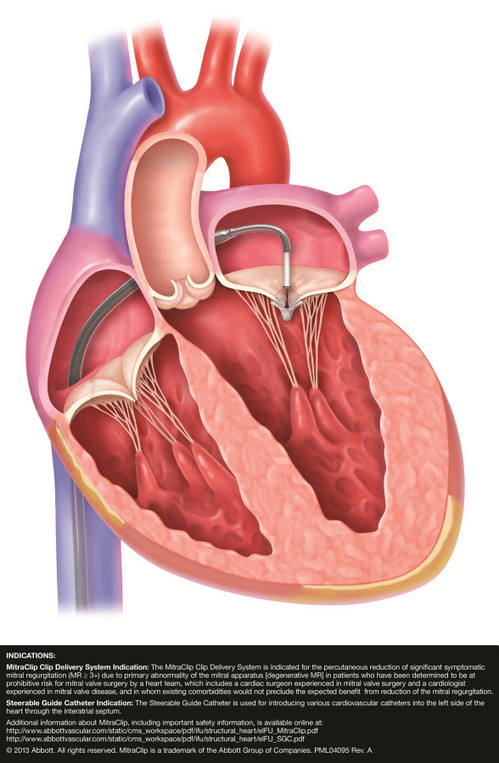
https://pharmaceuticalintelligence.com/2012/06/04/investigational-devices-edwards-sapien-transcatheter-heart-valve/


Read Full Post »

Replacement of the Mitral Valve: Using the Edwards’ Sapien Aortic Valve Device

Reporter: Aviva Lev-Ari, PhD, RN

The Off Beat: Aortic Valve Used to Replace the Mitral Valve

 Henry Ford Hospital in Detroit uses an Edwards Sapien device to replace a mitral valve

There have been big advances in transcatheter aortic valve replacement (TAVR) technology in recent years and now two such valves are on the U.S. market, but there has been little progress toward a transcatheter mitral valve. The U.S. Food and Drug Administration (FDA) cleared the Mitraclip mitral valve leaflet repair system last fall, but for patients requiring a full valve replacement, there is no FDA-cleared option. Due to the complexity of the mitral valve anatomy, development of transcatheter treatments for mitral regurgitation has been lacking in comparison to transcatheter aortic valve devices. This did not stop cardiologists at Henry Ford Hospital in Detroit, who recently used an Edwards Lifesciences Sapien TAVR device to replace a mitral valve that was narrowed with calcium buildup. William O’Neill, M.D., medical director of the Center for Structural Heart Disease at Henry Ford Hospital, estimates this new technique could help thousands of patients a year.

“The success of this innovative procedure, developed by my team member Dr. Mayra Guerrero, brings new options to physicians for mitral valve repair,” O’Neill said in a statement. “Not only did our team implant a different replacement valve than would normally be used in this part of the heart, but we needed to develop a new technique to do it. We were able to implant a different valve, as it was the only way to save the patient.” 

An FDA-approved trial is being planned at Henry Ford Hospital to further investigate using the Sapien in the mitral valve position. The patient, Lee Young, 72, of Detroit, has diabetes and had two previous open-heart surgeries. With calcific mitral stenosis, the narrowed mitral valve of his heart was causing shortness of breath, but he was not a candidate for a third open-heart surgery, so the heart team devised a procedure using a Sapien valve.

The team of specialists modified the route that is usually used for mitral valvuloplasty, a balloon procedure to open narrowed heart valves. The procedure had been attempted on Young, with little success at sufficiently opening the mitral valve. However, the balloon allowed the team to measure the valve annulus to ensure that the new valve would fit before placement. 

The route involves threading a catheter from the femoral vein, passing through the right ventricle into the right atrium and through the septum into the left atrium. The balloon-expandable Sapien valve is delivered through the catheter to the mitral valve. A minimally invasive incision allowed a wire to pass through the chest to the mitral valve, providing stability during the placement of the new valve. Young was feeling well for the six weeks following his procedure.

Similar Sapien procedures to replace the mitral valve have been performed in Europe since 2011. The next generation Edwards Lifesciences Sapien XT is cleared in Europe for TAVR and for use in the mitral valve and for valve-in-valve mitral procedures. 

Neovasc has developed the Tiara device, a dedicated mitral valve replacement device using a selfexpanding frame with attached bovine pericardial tissue leaflets mounted inside, similar to a Medtronic CoreValve device. It is delivered through the apex of the heart. The first-in-human implantation of the Tiara was successfully performed in January at St. Paul’s Hospital in Vancouver.

CardiAQ Valve Technologies is also developing a transcatheter mitral valve that uses a foreshortening frame designed to address the challenges of the mitral anatomy. It uses numerous proximal and distal anchors, which upon radial expansion causes the ends of the anchors on both ends to draw closer together.

SOURCE

Read Full Post »

Minnesota surgeons use MitraClip for the first time to do a heart valve repair without open heart surgery

Reporter: Aviva Lev-Ari, PhD, RN

UPDATED on 7/26/2022

Cardiothoracic surgeons at UC San Francisco performed the first robotically assisted mitral valve prolapse surgery in San Francisco.

Reporter: Aviva Lev-Ari, PhD, RN

https://pharmaceuticalintelligence.com/2022/07/22/cardiothoracic-surgeons-at-uc-san-francisco-performed-the-first-robotically-assisted-mitral-valve-prolapse-surgery-in-san-francisco/


See on Scoop.itCardiovascular and vascular imaging

This woman became the first patient in Minnesota to receive a MitraClip for a mitral heart valve repair.

See on medcitynews.com

Read Full Post »

Mitral Valve Repair or Replacement: On The Cardiology Show with Dr. Valentin Fuster

Reporter: Aviva Lev-Ari, PhD, RN

Article ID #87: Mitral Valve Repair or Replacement: On The Cardiology Show with Dr. Valentin Fuster. Published on 11/22/2013

WordCloud Image Produced by Adam Tubman

VIEW VIDEO

http://www.medscape.com/editorial/series/6005867?nlid=39483_1984&src=wnl_edit_medn_card&uac=93761AJ&spon=2

Mortality ~x3 higher in Repair (42%) vs in Replacement (17%)

Read Full Post »

Mitral Valve Repair: Who is a Patient Candidate for a Non-Ablative Fully Non-Invasive Procedure?

Author, and Content Consultant to e-SERIES A: Cardiovascular Diseases: Justin Pearlman, MD, PhD, FACC

and

Article Curator: Aviva Lev-Ari, PhD, RN


UPDATED on 9/24/2018

TCT: MitraClip Saves Lives in Functional Mitral Regurgitation

Positive COAPT results may overwrite neutral MITRA-FR findings
https://www.medpagetoday.com/meetingcoverage/tct/75260?xid=nl_mpt_ACC_Reporter_2018-09-23&eun=g5099207d2r

UPDATED on 8/31/2018

Don’t Ignore the Many Lessons of the MitraClip Failure

John M. Mandrola, MD

August 30, 2018

Comments

It would be wrong to say that use of this device for this indication provided no benefit to patients. The more accurate conclusion is that the MitraClip caused net harm. That’s because in addition to no benefit in the efficacy endpoints, patients in the device group endured a procedural complication rate of more than 10%, including a sevenfold higher rate of stroke.

Once again, we can learn both specific lessons about the treatment of people with heart failure and more general lessons on the acceptance of untested therapeutics.

Other comments

  • Dr. MIGUEL QUINTANA|  Cardiology, General

A bad day for interventional cardiology. I do believe that interventional cardiologist are aware about the mechanisms of severe MR in dilated hearts, however when a point of no return in those ventricles is reached, something has to be done.

I do agree with Dr. Mandrola regarding the behaviour of the industry to drive new devices in medical practice without performing RCT. However the main responsible  are the institutions approving the devices (FDA and European Commission for drugs and devices).

I wish to hear some comments of Dr. Mandrola regarding the new trends in performing RCT using just the non-inferiority criteria and the growing trends of using the “big data” of mega data registries to establish guidelines for clinical treatments and not only to test new hypothesis.

  • Dr. James Rittelmeyer|  Cardiology, Interventional

When the point of no return has been reached palliative care is a great plan. It causes no harm and is relatively inexpensive.

  • Dr. Johannes Schaar|  Cardiology, General

Right!!!!!! We should stay away from interventional cardiologists, who have know idea what they do and are on the payroll of the industry

  • Dr. Steve Soldo|  Cardiology, General

Are you being sincere or cynical?

SOURCE

https://www.medscape.com/viewarticle/901378?nlid=124808_3802&src=WNL_mdplsnews_180831_mscpedit_card&uac=93761AJ&spon=2&impID=1727175&faf=1

https://www.medscape.com/viewarticle/901378?nlid=124808_3802&src=WNL_mdplsnews_180831_mscpedit_card&uac=93761AJ&spon=2&impID=1727175&faf=1#vp_2


UPDATED on 8/30/2018

From European Society of Cardiology, Aug 28, 2018, Munich

MITRA-FR: No Benefit of MitraClip in Functional MR

https://www.tctmd.com/news/mitra-fr-no-benefit-mitraclip-functional-mr

This link suggests that the only FDA approved device may have a more limited indication, but is still helping the very sickest patients, with the ‘negative’ outcome for the quoted study.   Functional Mitral Regurgitation (6 M patients in the US) still has no approved viable transcatheter therapy, and the interpretations of the latest study results suggest a more restricted patient selection for the MitraClip® device. 

  • Edward Hlozek, Chairman and CEO, ValveCure, LLC, on 8/30/2018

www.valvecure.com

BarrelEye portends to be available to all classes of patients with Functional MR and significantly improve quality of life and extend lives, offering future non-invasive repeatability of the therapy, without an implant. 


UPDATED on 8/20/2018

In a new study

Gammie J.S., Chikwe J., Badhwar V., et al. “Isolated Mitral Valve Surgery: The Society of Thoracic Surgeons Adult Cardiac Surgery Database Analysis.” Annals of Thoracic Surgery, published online July 18, 2018. https://doi.org/10.1016/j.athoracsur.2018.03.086

Earlier Intervention for Mitral Valve Disease May Lead to Improved Outcomes

Slow progression of disease may mask symptoms until damage cannot be fully repaired

In this study, the data showed that the overall repair rate was 65.6 percent (57,244) and the replacement rate was 34.4 percent (29,970). Overall operative mortality was 2 percent (1,762).

“We found that the number of operations performed for mitral valve disease is growing faster than any other category of heart operation and that the results were excellent with low risks of death and complications,” said Gammie.

The researchers also revealed that while the prevalence of mitral valve disease and the number of mitral valve operations performed per year are increasing, overall aortic valve operations were performed 1.6 times more commonly than mitral valve operations during the study period.

“This may suggest important under-referral and under-treatment of mitral valve disease, which may be related to the slower progression of signs and symptoms of mitral compared to aortic disease, as well as potential lack of adherence to guidelines for intervention,” said Gammie. “So although contemporary outcomes are excellent, there remains an important and substantial opportunity to improve results for patients with mitral valve disease by following established guidelines and encouraging earlier referral for operation.”

For more information: www.annalsthoracicsurgery.org


UPDATED on 4/8/2017

Percutaneous repair or replacement for mitral regurgitation?

by Ted E. Feldman, MD

  • by Nicole Lou
    Contributing Writer, MedPage TodayApril 04, 2017

Mitral repair is still a relatively youthful field at 14 years, but now operators are taking it further and developing methods for mitral valve replacement, says Ted E. Feldman, MD, of Evanston Hospital in Illinois, where mitral repair first got its start.

In this exclusive MedPage Today video, the interventionist shares his insight into the limitations of the device synonymous with mitral repair, the MitraClip, and discusses the current challenges of outright percutaneous replacement of the valve.

“100 patients underwent Mitral valve repair vs 1000s of Aortic valve the TAVR.”

WATCH VIDEO

http://www.medpagetoday.com/cardiology/chf/64332

Voice of Edward Hlozek, CEO, ValveCure:

MV repair via transcatheter valve implant (TMVR) will be extremely difficult to get right because of the complex nature of the anatomy versus the simple circle that is the aortic valve (TAVR)…and MitraClip is limited because leaflets sometime cannot be caught right for the device to be implanted.  Think of ValveCure’s platform device that is not an implant and tightens up the valve biologically.

Aortic and Pulmonic are basically planar circular shapes.  The shape of the Mitral and Tricuspid are parabolic ellipsoidal.  This unique shape makes designing a transcatheter mitral valve implant challenging, especially considering that most are of a unique shape and dimension.  And the aortic is more calcified, which lends to a better attachment of a transcatheter implant because it is more rigid and planar.

MitraClip Issues, Outcomes Come to Fore in US Registry Experience

 Patrice Wendling

March 23, 2017

http://www.medscape.com/viewarticle/877629?nlid=113592_3802&src=WNL_mdplsnews_170324_mscpedit_card&spon=2&impID=1314983&faf=1


UPDATED on 12/6/2016

Edwards To Acquire Transcatheter Mitral, Tricuspid Valve Repair Company Valtech Cardio

Acquisition enables entry into transcatheter valve repair segment of interventional structural heart

NEWS | HEART VALVE TECHNOLOGY | DECEMBER 02, 2016

http://www.dicardiology.com/content/edwards-acquire-transcatheter-mitral-tricuspid-valve-repair-company-valtech-cardio

The Cardioband System is not approved for sale in the United States.

Read the related article “Advances and Future Directions for Transcatheter Valves – Mitral and tricuspid valve repair technologies now in development.”

For more information: www.Edwards.com, www.valtechcardio.com

  • can used as a non-surgical form on annuloplasty repair.


Cardioband, valtech, Edwards Lifesciences, transcatheter mitral repair, transcatheter tricuspid valve repair, transcatheter annuloplasty

Cardioband, valtech, Edwards Lifesciences, transcatheter mitral repair, transcatheter tricuspid valve repair, transcatheter annuloplasty

An illustration of how the transcatheter Cardioband System can used as a non-surgical form on annuloplasty repair.

SOURCE

http://www.dicardiology.com/content/edwards-acquire-transcatheter-mitral-tricuspid-valve-repair-company-valtech-cardio


UPDATED On 11/28/2016

Edwards Lifesciences to acquire Valtech Cardio in $690m deal

NOVEMBER 28, 2016 BY BRAD PERRIELLO

Valtech makes the Cardioband device, which is designed to reshape the mitral valve using specially designed anchors. The Or Yehuda, Israel-based company was the target of a previous takeover attempt by HeartWare International that was spiked early this year after a proxy war. (HeartWare itself was acquired by Medtronic (NYSE:MDT) for $1.1 billion in August.) Valtech won CE Mark approval in the European Union for Cardioband in September 2015 but the device is not approved for the U.S. market.

http://www.massdevice.com/edwards-lifesciences-acquire-valtech-cardio-690m-deal/?utm_source=newsletter-161128&utm_medium=email&utm_campaign=newsletter-161128&spMailingID=9950276&spUserID=MTU0MTAzNjIxODMyS0&spJobID=1042200257&spReportId=MTA0MjIwMDI1NwS2


UPDATED on 10/4/2016

Novel Mitral Valve-Cinching Device Slashes Backflow Without Surgery – Promising feasibility results for Cardioband, but survival effect still unclear

0 6 Google +0 0 0 Valtech‘s new Cardioband technology may eliminate the need for open-heart surgeries to repair leaky mitral and tricuspid valves. The Cardioband can be implanted transfemorally and is guided via fluoroscopy and ultrasound.

by Nicole Lou
Reporter, MedPage Today/CRTonline.org

10.03.2016

  • Reviewed by F. Perry Wilson, MD, MSCE Assistant Professor, Section of Nephrology, Yale School of Medicine and Dorothy Caputo, MA, BSN, RN, Nurse Planner

Cardioband is a product of Valtech acquired by Heartware in 2015. Medtronic completed acquisition of Heartware in August 2016. See Updates, below

A novel surgical-style transcatheter device showed promise for the treatment of functional mitral regurgitation, investigators reported.

The Cardioband direct annuloplasty device was associated with no periprocedural deaths and had a 1-month mortality rate of 5%, according to Georg Nickenig, MD, of Heart Center Bonn in Germany, and colleagues in their study published online in JACC: Cardiovascular Interventions. By 6 months, the death rate had climbed to 9.6%.

Annular septolateral dimensions fell from 3.7 cm at baseline to 2.5 cm at 1 month and 2.4 cm after 6 months (P<0.001) with the device, which is implanted in a transvenous, transseptal procedure to encircle the valve annulus and, secured with small anchors, cinch it until the valve closes fully again.
In addition, the proportion of patients with grade 3 or worse mitral regurgitation also dropped from 77.4% to 10.7% at 1 month (P<0.001) and was recorded at 13.6% after 6 months (P<0.001). The proportion still categorized as being in New York Heart Association functional class III or IV dropped from 95.5% at baseline to 18.2% (P<0.001).

Over the 6-month follow-up in the study, exercise capacity generally improved (332 m in a 6-minute walking test versus 250 m at baseline, P<0.001), as did patients’ quality of life (Minnesota Living With Heart Failure Questionnaire score 18.1 versus 38.2 at baseline,P<0.001).

SOURCE

http://www.medpagetoday.com/Cardiology/PCI/60589?xid=nl_mpt_DHE_2016-10-04&eun=g99985d0r&pos=2

https://www.sciencedaily.com/releases/2016/09/160926100000.htm


UPDATED on 10/4/2016

Medtronic Completes Acquisition of HeartWare International

Broadens Heart Failure Leadership Into Growing Circulatory Support Sector

DUBLIN – Aug. 23, 2016 – Medtronic plc (NYSE: MDT), the global leader in medical technology, has completed its acquisition of HeartWare International, Inc., a leading innovator of less-invasive, miniaturized, mechanical circulatory support technologies (MCS) for treating patients with advanced heart failure. HeartWare will become part of the Heart Failure business within the Medtronic Cardiac Rhythm and Heart Failure division. Under the terms of the transaction, each outstanding share of HeartWare common stock has been converted into the right to receive $58.00 in cash, without interest, subject to any required withholding of taxes.

HeartWare develops and manufactures miniaturized implantable heart pumps, or ventricular assist devices (VAD), to treat patients around the world suffering from advanced heart failure. Its flagship product, the HVAD® System, features the world’s smallest full-support VAD and is indicated for refractory end-stage left-ventricular heart failure patients in the U.S. who are awaiting a heart transplant, as well as approved in Europe for long-term use in patients at risk of death from refractory, end-stage heart failure.

Medtronic estimates that the global VAD market is approximately $800 million currently, and worldwide is expected to grow in the mid-to-high single digits for calendar years 2016-17, and accelerate to high-single/low-double digits beyond calendar year 2017.

“Not only does the current HeartWare portfolio expand Medtronic leadership across the heart failure continuum, its product pipeline – when married with our expertise – can result in progressively less-invasive heart pumps that have the potential to benefit even more patients,” said David Steinhaus, M.D., vice president and general manager of the Heart Failure business, and medical director for the Cardiac Rhythm and Heart Failure division at Medtronic. “Today, Medtronic offers the industry’s leading cardiac resynchronization therapy devices, including MR-conditional CRT-defibrillators; MCS therapy for advanced heart failure patients; heart failure diagnostics; and meaningful expert analysis through Medtronic Care Management Services, including the recently launched Beacon Heart Failure Management Service.”

The acquisition of HeartWare broadens the Medtronic portfolio of therapies, diagnostic tools and services for patients suffering from heart failure, aligning with Medtronic’s Mission of alleviating pain, restoring health and extending life. The acquisition is part of the Company’s therapy innovation strategy to surround the physician with innovative products while focusing on patients and disease states.

“This is an exciting moment, as more than 600 HeartWare employees are now part of the broader Medtronic organization,” said Doug Godshall, who served as president and chief executive of HeartWare for the past decade. “HeartWare has delivered incredible advancements for patients suffering from heart failure, through the commercialization of the HVAD system and pipeline development, and I am convinced that being part of Medtronic will allow us to accelerate meaningful innovations even more quickly.”

Heart failure, also known as congestive heart failure, is a condition in which the heart isn’t pumping enough blood to meet the body’s needs. Heart failure usually develops slowly after an injury to the heart. Some injuries may include a progressive deterioration of the heart muscle, heart attack, untreated high blood pressure, or heart valve disease. Heart failure remains a leading cause of hospitalization and death in the United States, and its prevalence continues to increase, affecting more than 5 million people in the U.S. alone. The cost of heart failure is high. Healthcare expenditures in the U.S. on heart failure are estimated to be approximately $39 billion per year, making it one of the largest expenses to the healthcare system. With the aging of the population, Medtronic estimates that the number of patients with heart failure could exceed 8 million by 2030.

This transaction is expected to meet Medtronic’s long-term financial metrics for acquisitions. Medtronic does not intend to modify its fiscal year 2017 revenue outlook or earnings per share (EPS) guidance as a result of this transaction, although it is expected to provide increased confidence in the company’s ability to deliver on its FY17 revenue growth outlook. In addition, Medtronic expects minimal to no net EPS dilution from this transaction for the first two years as the company intends to offset the expected dilutive impact. The acquisition is expected to be earnings accretive in year three.

In collaboration with leading clinicians, researchers and scientists worldwide, Medtronic offers the broadest range of innovative medical technology for the interventional and surgical treatment of cardiovascular disease and cardiac arrhythmias. The company strives to offer products and services of the highest quality that deliver clinical and economic value to healthcare consumers and providers around the world.

The Tender Offer and Merger
The tender offer for all of the outstanding shares of HeartWare common stock expired as scheduled immediately after 11:59 p.m. Eastern time on August 22, 2016. Computershare Trust Company, N.A., the depositary and paying agent for the tender offer, has advised Medtronic that 14,952,817 shares of HeartWare common stock were validly tendered and not properly withdrawn in the tender offer, representing approximately 85.15% of the outstanding shares. All of the conditions to the tender offer have been satisfied, and on August 23, 2016, Medtronic Acquisition Corp., a subsidiary of Medtronic, accepted for payment and will promptly pay for all shares validly tendered and not properly withdrawn in the tender offer.

Following acceptance of the tendered shares, Medtronic completed its acquisition of HeartWare through the merger of Medtronic Acquisition Corp. with and into HeartWare without a vote of HeartWare’s stockholders pursuant to Section 251(h) of the Delaware General Corporation Law. As a result of the merger, HeartWare became a wholly-owned subsidiary of Medtronic. In connection with the merger, all HeartWare shares not validly tendered into the tender offer (other than shares (i) owned by HeartWare as treasury stock or owned by Medtronic, Inc. or Medtronic Acquisition Corp., which shares were cancelled and retired and cease to exist or (ii) held by any person who was entitled to and has properly demanded statutory appraisal of his or her shares) have been cancelled and converted into the right to receive the same $58.00 per share in cash, without interest, subject to any required withholding of taxes, as will be paid for all shares that were validly tendered and not properly withdrawn in the tender offer. HeartWare common stock will cease to be traded on The NASDAQ Stock Market LLC.

About Medtronic
Medtronic plc (www.medtronic.com), headquartered in Dublin, Ireland, is among the world’s largest medical technology, services and solutions companies – alleviating pain, restoring health and extending life for millions of people around the world. Medtronic employs more than 85,000 people worldwide, serving physicians, hospitals and patients in approximately 160 countries. The company is focused on collaborating with stakeholders around the world to take healthcare Further, Together.

SOURCE

http://newsroom.medtronic.com/phoenix.zhtml?c=251324&p=irol-newsArticle&ID=2196837


UPDATED 11/11/2015

SOURCE

http://www.medscape.com/viewarticle/854107?nlid=91384_2562&src=wnl_edit_medp_card&uac=93761AJ&spon=2&impID=884540&faf=1#vp_1

Two-year outcomes from the National Institutes of Health (NIH)–sponsored Cardiac Surgery Clinical Research Network (CTSN) trial suggest that patients with severe ischemic mitral regurgitation (MR) fare just as well when the valve is repaired or replaced, at least when it comes to measures of left ventricular reverse remodeling and survival, but that replacing the mitral valve provides a more durable correction of MR[1].

Presenting the results of the CTSN trial here at the American Heart Association (AHA) 2015 Scientific Sessions, the researchers reported no significant difference in the mean left ventricular end-systolic volume index (LVESVI) among 251 patients randomized to mitral-valve repair or chordal-sparing mitral-valve replacement.

In addition, there was no mortality advantage with either approach. The 2-year mortality rate was 19.0% in the repair arm and 23.2% in the replacement group, a difference that was not statistically significant (hazard ratio 0.79; 95% CI 0.46–1.35).

Despite the equivocal results, investigators, including lead researcher Dr Daniel Goldstein (Montefiore Medical Center/Albert Einstein College of Medicine, New York), did observe significantly higher recurrence rates among patients who underwent surgical repair. At 2 years, 59% of patients in the repair arm and 3.8% in the replacement arm were diagnosed with moderate or severe MR (P<0.001).

“Recurrence was rather striking,” said Goldstein during a press conference announcing the results. “Interestingly, most of the recurrences were moderate, were not severe.”

This difference in MR translated into a significantly increased risk of heart failure at 2 years among patients undergoing mitral-valve repair (24.0% vs 15.2% in the repair and replacement arms, respectively; P=0.05) as well as an increased readmission rate to hospital for cardiovascular causes (48.3% vs 32.2%, respectively;P=0.01).

Dr Daniel Goldstein

“There was no difference in the total readmissions to the hospital between groups,” said Goldstein. “However, if you look at just cardiovascular readmissions, there was a striking difference, with repair patients requiring many more heart-failure readmissions than replacement patients. What were those heart-failure readmissions for? They were for true heart failure or for the placement of an ICD or biventricular pacers, which in essence are also heart-failure readmissions because the people who are getting those technologies are people with advanced heart failure.”

The bottom line, say investigators, is that the 2-year data reveal a divergence in clinical outcomes not evident at 1 year. The deficiency in the durability of correction of MR with surgical repair is “disconcerting,” they add, noting that MR recurrence predisposes patients to heart failure, atrial fibrillation, increased hospitalizations, and other adverse outcomes.

The 2-year results are published November 9, 2015 in the New England Journal of Medicine to coincide with the late-breaking clinical-trials presentation. One-year outcomes presented at the AHA 2013 meeting and reported by heartwire from Medscape at that time.

Who Should Get Repair? Who Replacement?

Dr Alain Carpentier (Descartes University, Paris, France), one of the world leaders in mitral-valve repair, said the findings are particularly important for younger, less experienced surgeons. “If these results are confirmed, it means that the young surgeon with little experience in valve repair shouldn’t feel guilty for replacing a valve because he or she will be certain that the result will be as good.”

Valve repair, added Carpentier, is a “question of experience” and should be done only by surgeons with a large amount of clinical practice in the surgical technique. The present study is unique as the surgeons performing the procedure in BEAT-HF were experienced surgeons, a component of the trial that partially explains why repair and replace both fared as well in terms of the primary end point.

Speaking with the media, Goldstein said physicians who support valve repair believe it is associated with lower morbidity and mortality, noting that it results in the preservation of the entire mitral subvalvular apparatus. MR recurrence is a known problem, however, and this can lead to functional mitral stenosis if the ring is very small. Replacement, on the other hand, is associated with higher perioperative morbidity and mortality, but it does provide a more durable correction of MR.

Goldstein said that even though there was no difference in LVESVI at 2 years or in mortality either, recurrence is a factor that will weigh in a decision over whether or not to repair or replace the mitral valve. Right now, he is comfortable performing a mitral-valve replacement as first-line treatment in a majority of patients. “I think we still need to follow these patients a little longer, because you have to remember you have a prosthesis in there,” he said. “The prosthesis can give you problems. There’s thromboembolic complications, it can get infected, it can deteriorate and need rereplacement, so the balance of those issues awaits more time.”

That said, in the absence of reliable predictors of a successful mitral-valve repair, surgical replacement of the mitral valve is a viable option. “Based on experience, I think a lot of people want to start thinking a little more liberally about replacing the valve in general just because of these data,” he said. Optimal valve-replacement candidates would include individuals with a basal aneurysm or basal dyskinesia, he noted.

Goldstein reports grant support from the National Institutes of Health and consulting fees from Medtronic. Disclosures for the coauthors are listed on the journal website.

SOURCE

UPDATED 9/18/2015

HeartWare pauses MVAD trial

September 9, 2015 by Brad Perriello

UPDATED Sept. 10, 2015, with details on MVAD trial pause, expanded field action and Valtech acquisition.

HeartWare International (NSDQ:HTWR) today said it’s pausing enrollment in a clinical trial of its next-generation MVAD heart pump while it looks to fix an issue with the manufacturing process for the left ventricular assist device’s controller.

“Feeding frenzy” drove Valtech buy

The pending acquisition of mitral valve replacement maker Valtech, which pushed HTWR shares down -21% after it was announced last week, was HeartWare’s only shot at the red-hot mitral valve market, Godshall said.

“There was a feeding frenzy starting to develop around Valtech. We agreed with them that we would put in a 2nd investment earlier this year that would buy us an exclusivity period that expired mid-September. It was quite clear from the communications we were getting from the company that they were having to fend off interest from others. It was also quite clear from the company that they are an R&D powerhouse that doesn’t really want to build a commercial organization,” he said. “Frankly if we couldn’t do Valtech, we weren’t going to do mitral because we believe we need the ability to repair surgically and repair interventionally and we believe we need a portfolio.”

Interest in the mitral space was fueled by a pair of recent acquisitions, with Edwards Lifesciences (NYSE:EW) last month closing the $400 million buyout of CardiAQ Valve Technologies and Medtronic (NYSE:MDT) agreeing to pony up as much as $458 million for Twelve Inc.


UPDATED on 9/6/2015

  • VIEW VIDEO on Mitral Annual Calcification – Nonextirpative, Infra-annular Mitral valve Replacement with Medtronic’s ring

Mitral Valve Replacement: How to Handle the Big MAC. Arie Blitz, MD – YouTube


  • VIEW VIDEO on ValveCure.com – “Platform device in an animation that will change repairs completely.” ValveCure’s CEO, Edward Hlozek on 9/5/2015

Mitral Valve Transcatheter Repair using ValveCure RF technology – Barrel Eye

https://drive.google.com/file/d/0B_L5zN_6WU0yczctRXFuVFhOUDg/view

 Barrel Eye Animation Final.mov

  • Valtech Cardio’s mitral and tricuspid valves bought by HeartWare – Israeli Start Up was acquired by MA Medical Devices Company

HeartWare inks $929m deal for Valtech Cardio’s mitral and tricuspid valves ­ by MassDevice

http://www.massdevice.com/heartware-inks-929m-deal-for-valtech-cardios-mitral-and-tricuspid-valves/

The Voice of Aviva Lev-Ari, PhD, RN – Key Opinion Leader


Implications of this M&A on the Global EcoSystem for Carviovascular Repair Tools Segment

September 6, 2015

It is my strong belief that HeartWare inked $929m deal for Valtech Cardio’s mitral and tricuspid valves Is creating a new constellation of concentration among players, thus M&A could be the optimal solution as a fallout from the new reality of $1Billion investment in Israeli Valtech, for many Early stage Start Ups in the Mitral Valve Repair and Replacement Segment.

What implications this deal has on the Mitral Valve Repair Technology Start Ups vs Mitral Valve Replacement OEM of Artificial Valves?

Percutaneous Annuloplasty May Offer Safe, Effective Alternative to Surgery for HF Patients With MR

http://www.medscape.com/viewarticle/845676

What are the Market implications of this announcement on

  • Medtronic
  • Edwards LifeSciences
  • St. Jude (new announcement)
  • Abbot

In addition,

Lev-Ari, A. 6/22/2012 Competition in the Ecosystem of Medical Devices in Cardiac and Vascular Repair: Heart Valves, Stents, Catheterization Tools and Kits for Open Heart and Minimally Invasive Surgery (MIS)

http://pharmaceuticalintelligence.com/2012/06/22/competition-in-the-ecosystem-of-medical-devices-in-cardiac-and-vascular-repair-heart-valves-stents-catheterization-tools-and-kits-for-open-heart-and-minimally-invasive-surgery-mis/

Lev-Ari, A. 6/19/2012 Executive Compensation and Comparator Group Definition in the Cardiac and Vascular Medical Devices Sector: A Bright Future for Edwards Lifesciences Corporation in the Transcatheter Heart Valve Replacement Market

http://pharmaceuticalintelligence.com/2012/06/19/executive-compensation-and-comparator-group-definition-in-the-cardiac-and-vascular-medical-devices-sector-a-bright-future-for-edwards-lifesciences-corporation-in-the-transcatheter-heart-valve-replace/

Lev-Ari, A. 6/22/2012 Global Supplier Strategy for Market Penetration & Partnership Options (Niche Suppliers vs. National Leaders) in the Massachusetts Cardiology & Vascular Surgery Tools and Devices Market for Cardiac Operating Rooms and Angioplasty Suites

http://pharmaceuticalintelligence.com/2012/06/22/global-supplier-strategy-for-market-penetration-partnership-options-niche-suppliers-vs-national-leaders-in-the-massachusetts-cardiology-vascular-surgery-tools-and-devices-market-for-car/

UPDATED on 8/30/2015

TMVI heats up: Medtronic to drop $458m on Twelve’s mitral valve

MedtronicMedtronic (NYSE:MDT) said today that it agreed to pony up as much as $458 million for Twelve Inc. and its transcatheter mitral valve implant, as the race to get a TMVI device to market heats up.

Twelve, a spinout from the Foundry incubator that’s based in Redwood City, Calif., is backed by Domain Associates, Versant Ventures, Morgenthaler Ventures, Longitude Capital, Emergent Medical Partners, Vertex Venture Management, and Capital Group, Fridley, Minn.-based Medtronic said.

The deal calls for a $408 million payment once the deal closes, expected in October, and another $50 million pegged to CE Mark approval in the European Union for the Twelve TMVI device.

“Upon close, this acquisition will strategically augment our existing capabilities in the transcatheter mitral space, which represents an important growth opportunity for Medtronic,” coronary & structural heart president Sean Salmon said in prepared remarks. “We have followed the transcatheter mitral valve space closely and firmly believe that Twelve has the most novel technology along with a strong, proven team. The combined strengths of our organizations will significantly accelerate our ability to deliver an exciting and differentiated therapy to patients, physicians and healthcare systems around the world.”

http://www.massdevice.com/tmvi-heats-up-medtronic-to-drop-458m-on-twelves-mitral-valve/


UPDATED on 7/14/2015

Edwards Lifesciences to drop $400m on CardiAQ Valve

Edwards Lifesciences acquires CardiAQ Valve TechnologiesEdwards Lifesciences (NYSE:EW) last week said it agreed to pay $400 million for CardiAQ Valve Technologies and its transcatheter mitral valve implant, saying it also reached a deal to revise the protocol for restarting a trial of its own Fortis mitral valve.

The deal for CardiAQ Valve, which like Edwards is based in Irvine, Calif., calls for an up-front payment of $350 million in cash and another $50 million pegged to “achievement of a European regulatory milestone,” Edwards said. The deal is expected to be “slightly dilutive” to 2015 earnings, the company said.

“Edwards’ primary strategy is to create valuable therapies that transform patient care. We believe the acquisition and integration of CardiAQ will advance our development of a transformational therapy for patients with mitral valve disease who aren’t well-served today,” chairman & CEO Michael Mussallem said in prepared remarks. “While still early in the development of this therapy, the progress of the team of employees and clinicians working on our Fortis mitral replacement system has reinforced our confidence in a catheter-based approach. We believe the experiences and technologies of Fortis and CardiAQ are complementary and that this combination will enable important advancements for patients.”

“CardiAQ is proud of our pioneering efforts in the early development of this transcatheter mitral valve therapy conceived by cardiac surgeon Dr. Arshad Quadri. We believe our technology, which incorporates multiple delivery approaches with a single valve, shows great promise for patients,” added CardiAQ CEO Rob Michiels.

In April, CardiAQ won an investigational device exemption from the FDA for a 20-patient feasibility trial of its as-yet-unnamed TMVI candidate, with a protocol calling for 10 subjects to be treated transfemorally and another 10 treated via the transapical approach.

“We look forward to joining Edwards, whose experience and leadership as a developer of breakthrough therapies for heart valve disease will advance our work,” co-founder, president & COO Brent Ratz said in a statement.

Edwards also said it reached a deal with the investigators in its Fortis trial for changes to study’s protocol, after blood clots in some of the 20 patients implanted with the device prompted a temporary halt for the trial.

SOURCE

http://www.massdevice.com/edwards-lifesciences-to-drop-400m-on-cardiaq-valve/?utm_source=newsletter-150714&utm_medium=email&utm_campaign=newsletter-150714


UPDATED on 5/19/2015

Abbott’s percutaneous MitraClip mitral valve repair device SUPERIOR to Pacemaker or Implantable Cardioverter Defibrillator (ICD) for reduction of Ventricular Tachyarrhythmia (VT) episodes

http://pharmaceuticalintelligence.com/2015/05/19/abbotts-percutaneous-mitraclip-mitral-valve-repair-device-superior-to-pacemaker-or-implantable-cardioverter-defibrillator-for-reduction-of-ventricular-tachyarrhythmia-vt-episodes/


UPDATED on 7/14/2014

  • Website

    http://www.harpoonmedical.com

  • Industry

    Medical Devices

  • Type

    Privately Held

  • Headquarters

    198 Log Canoe Circle Stevensville,MD 21666 United States

  • Company Size

    1-10 employees

  • Founded

    2013

SOURCE

https://www.linkedin.com/company/3619218?trk=vsrp_companies_res_name&trkInfo=VSRPsearchId%3A875971405362109390%2CVSRPtargetId%3A3619218%2CVSRPcmpt%3Aprimary


UPDATED on 2/4/2014

Mitral-Valve Repair versus Replacement for Severe Ischemic Mitral Regurgitation

Michael A. Acker, M.D., Michael K. Parides, Ph.D., Louis P. Perrault, M.D., Alan J. Moskowitz, M.D., Annetine C. Gelijns, Ph.D., Pierre Voisine, M.D., Peter K. Smith, M.D., Judy W. Hung, M.D., Eugene H. Blackstone, M.D., John D. Puskas, M.D., Michael Argenziano, M.D., James S. Gammie, M.D., Michael Mack, M.D., Deborah D. Ascheim, M.D., Emilia Bagiella, Ph.D., Ellen G. Moquete, R.N., T. Bruce Ferguson, M.D., Keith A. Horvath, M.D., Nancy L. Geller, Ph.D., Marissa A. Miller, D.V.M., Y. Joseph Woo, M.D., David A. D’Alessandro, M.D., Gorav Ailawadi, M.D., Francois Dagenais, M.D., Timothy J. Gardner, M.D., Patrick T. O’Gara, M.D., Robert E. Michler, M.D., and Irving L. Kron, M.D. for the CTSN

N Engl J Med 2014; 370:23-32 January 2, 2014DOI: 10.1056/NEJMoa1312808

BACKGROUND

Ischemic mitral regurgitation is associated with a substantial risk of death. Practice guidelines recommend surgery for patients with a severe form of this condition but acknowledge that the supporting evidence for repair or replacement is limited.

METHODS

We randomly assigned 251 patients with severe ischemic mitral regurgitation to undergo either mitral-valve repair or chordal-sparing replacement in order to evaluate efficacy and safety. The primary end point was the left ventricular end-systolic volume index (LVESVI) at 12 months, as assessed with the use of a Wilcoxon rank-sum test in which deaths were categorized below the lowest LVESVI rank.

RESULTS

At 12 months, the mean LVESVI among surviving patients was 54.6±25.0 ml per square meter of body-surface area in the repair group and 60.7±31.5 ml per square meter in the replacement group (mean change from baseline, −6.6 and −6.8 ml per square meter, respectively). The rate of death was 14.3% in the repair group and 17.6% in the replacement group (hazard ratio with repair, 0.79; 95% confidence interval, 0.42 to 1.47; P=0.45 by the log-rank test). There was no significant between-group difference in LVESVI after adjustment for death (z score, 1.33; P=0.18). The rate of moderate or severe recurrence of mitral regurgitation at 12 months was higher in the repair group than in the replacement group (32.6% vs. 2.3%, P<0.001). There were no significant between-group differences in the rate of a composite of major adverse cardiac or cerebrovascular events, in functional status, or in quality of life at 12 months.

CONCLUSIONS

We observed no significant difference in left ventricular reverse remodeling or survival at 12 months between patients who underwent mitral-valve repair and those who underwent mitral-valve replacement. Replacement provided a more durable correction of mitral regurgitation, but there was no significant between-group difference in clinical outcomes.

(Funded by the National Institutes of Health and the Canadian Institutes of Health; ClinicalTrials.gov number, NCT00807040.)

 SOURCE

UPDATED on 1/9/2014

Minnesota surgeons use MitraClip for the first time to do a heart valve repair without open heart surgery

December 28, 2013 9:15 am by 

NeoChord mitral valve repair simulation


Verna Hoy knew something wasn’t right; she was coughing a lot and running out of breath. Both her mother and a sister had heart murmurs — which doctors heard in Hoy’s chest, too — so she wasn’t surprised to be referred to a cardiologist.What cardiologists found would not be so simple to fix, however. At least, it didn’t use to be. Hoy had two problems: a leaky mitral valve in her heart, which caused blood to back up into her left atria, and something called hypertrophic cardiomyopathy (HCM) that obstructed blood flow in her heart. And the only way to fix it, before, was risky and invasive open heart surgery. But doctors didn’t want to do that to the 87-year-old from Richfield.Instead, her cardiologist turned to a just-approved device called a MitraClip that could be deployed via a catheter snaked up to her heart through a vein in her leg.On Dec. 11, Hoy became the first patient in Minnesota to receive the MitraClip to repair a leaky mitral valve. Turns out, Hoy also is the first person in the world to also have her HCM treated with the same device.“They decided they would try this procedure to see if it would work,” Hoy said recently. Its seems to be working just fine. A week after her procedure, Hoy was washing clothes, running errands to the grocery store and drugstore and heading out to lunch.”We’re all very excited about it,” said Dr. Paul ?Sorajja, an interventional cardiologist at the Minneapolis Heart Institute Foundation and Abbott Northwestern Hospital. “This is a new advance in the management of patients with HCM.”The combination of HCM and a faulty mitral valve affects 400,000 Americans. The MitraClip, developed by Abbott Laboratories, won approval from the Food and Drug Administration in October. It has been available in Europe for several years.

The MitraClip is the only commercially available mitral valve repair device that can be placed into the heart through a blood vessel, a much less-invasive process that speeds patient healing.

Sorajja and Dr. Wes Pedersen, director of the Transcatheter Valve Therapy Program at the Minneapolis Heart Institute, were investigators into the safety and effectiveness of the procedure during clinical trials.

“The device has proved its effectiveness in research studies and we are excited to see this device commercially available and improving and extending the lives of thousands of people,” Sorajja said. “When we looked at how this device can be used to treat mitral regurgitation, we felt that it could also be used to simultaneously treat obstruction due to HCM.”

HCM is a condition in which the walls of the heart thicken, interfering with the heart’s activities. In Hoy’s case, a thick wall in her left ventricle slowed the flow of blood out of the ventricle. At the same time, the thickening caused the mitral valve in her heart to leak blood into her left atrium — called mitral regurgitation. That combination was hurting Hoy.

For patients with HCM, doctors usually open the chest to remove part of the thickened heart wall. In some cases, they inject alcohol into the tissue to kill it, causing a small heart attack. But the MitraClip, which essentially clips the middle of the leaky mitral valve, also keeps that valve from further obstructing blood flow, Sorajja said. One device, two problems solved.

According to the FDA, repairing the valve during open heart surgery still is the preferred method. But MitraClip is now acceptable for patients who are not considered healthy enough for the surgery.

Sorajja, who came to Abbott Northwestern from the Mayo Clinic, said, “We had our suspicions that this would work. It was a great day. It was a really great day for us. We are so happy.”

Hoy, who was discharged from the hospital just two days after the procedure, said she still gets a little breathless.

“I seem to be OK,” she said. “I was told not to lift anything over 10 pounds and I watch it.”

She said trying a new device didn’t worry her. Besides, she likes the idea of maybe helping others with what doctors learn from her.

“There are a lot of people on this Earth,” she said. “If it is my time, so be it. But I thought if it would help other people, I would take a shot.” ___

(c)2013 the Star Tribune (Minneapolis)

Visit the Star Tribune (Minneapolis) at www.startribune.com

Distributed by MCT Information Services

SOURCE
http://medcitynews.com/2013/12/minnesota-surgeons-use-mitraclip-first-time-heart-valve-repair-without-open-heart-surgery/#ixzz2puilblos


This article has the following structure:

Part 1 – Mitral Valve Repair: Non-Ablative Fully Non-Invasive Procedure

A. Who is a Patient Candidate for a Non-Ablative Fully Non-Invasive Procedure?

B. The Market

B.1 Market size for Mitral Valve Repair

B.2 Percutaneous MVR and MVRepair Technologies

B.3 Percutaneous MVR Technologies

B.4 Percutaneous MVRepair Technologies

C. Pearlman – Lev-Ari, aka

“LPBI Proposals for Precision Mitral Annuloplasty: Extensions to RF Solutions and MRI Methods and Devices”

Part 2 – Current Frontier in Invasive Mitral Valve Repair: Ring Implantation

A. Making the Diagnosis

B. Outcomes of Mitral Valve Repair

Part 3 – Alternative Treatments

A.  Approaches in “Minimally Invasive Surgery

B.  Non-surgical Management

Part 1

Mitral Valve Repair:

Non-Ablative Fully Non-Invasive Procedure

A. Who is a Patient Candidate for a Non-Ablative Fully Non-Invasive Procedure?

A.1 Patient Segments by Medical Diagnosis

If a patient is disqualified for CABG then the patient is likely to be disqualified for Open Heart Surgery for Mitral Valve Repair and Replacement.

For all cases that a percutaneous Transcatheter for Mitral Valve Repair is deemed to be non indicated – the patient’s SOLE choice is the proposed Non-Ablative Fully Non-Invasive Procedure – a novel technology under development by Dr. Pearlman.

Special Patient Subsets

A. Elderly Patients

Elderly patients being considered for CABG have a higher average risk for mortality and morbidity in a direct relation to age, LV function, extent of coronary disease, and comorbid conditions and whether the procedure is urgent, emergent, or a reoperation. Nonetheless, functional recovery and sustained improvement in the quality of life can be achieved in the majority of such patients. The patient and physician together must explore the potential benefits of improved quality of life with the attendant risks of surgery versus alternative therapies that take into account baseline functional capacities and patient preferences. Age alone should not be a contraindication to CABG if it is thought that long-term benefits outweigh the procedural risk.

B. Women

A number of earlier reports had suggested that female sex was an independent risk factor for mortality and morbidity after CABG. More recent studies have suggested that women on average have a disadvantageous, preoperative clinical profile that accounts for much of this perceived difference. Thus, the issue is not necessarily sex itself but the comorbid conditions that are particularly associated with the later age at which women present for coronary surgery. Thus, CABG should not be delayed in or denied to women who have appropriate indications.

C. Diabetic Patients

D. Patients With Chronic Obstructive Pulmonary Disease

E. Patients With End-Stage Renal Disease

F. Reoperative Patients

G. Concomitant Peripheral Vascular Disease

H. Poor LV Function

I. CABG in Acute Coronary Syndromes

SOURCE

ACC/AHA Practice Guidelines, ACC/AHA Guidelines for Coronary Artery Bypass Graft Surgery: Executive Summary and Recommendations. A Report of the American College of Cardiology/American Heart Association Task Force on Practice Guidelines (Committee to Revise the 1991 Guidelines for Coronary Artery Bypass Graft Surgery)

http://circ.ahajournals.org/content/100/13/1464.long

Summary

  • No pharmacological therapy in existence for Mitral Valve Disease
  • Elderly patients,
  • Patients with very diseased arteries, and
  • Patients with a very weakly contracting heart
  • Patients with CHF or in Heart Failure

Research Results on the Patients diagnosed with Mitral Regorgitation

SOURCE

http://www.mitralvalverepair.org/content/view/72/

  • Current existing guidelines do not recommend surgery for asymptomatic or mildy symptomatic patients1, there is a large cohort of patients with significant mitral regurgitation that do not undergo surgery, thus allowing for observational studies of outcomes in non-surgically treated patients.
  • Before expanded application of mitral valve repair in the 1990s, cohorts of symptomatic patients with mitral valve prolapse were followed on medical therapy allowing determination of natural history of mitral regurgitation.
  • Mitral valve prolapse with severe regurgitation reduces long-term survival irrespective of medical therapy. It appears that the prolapse itself is not the cause of mortality or morbidity (cardiac event rates are extremely low for the entire population with prolapse), but it is
  • severe regurgitation and consequent left ventricular dilatation that results in morbidity2, 3. Heart failure, arrhythmia, endocarditis and stroke are the leading causes of death.
  • Enriquez-Sarano and colleagues have performed analyses to define which group of patients with mitral regurgitation are at greatest risk of cardiac events4, 5, 6.
  • Notably, when considering asymptomatic patients, the greater the severity of mitral regurgitation (preferably determined by quantitative echocardiography), the higher the frequency of cardiac events irrespective of a normal ventricular function (Figure 1).
  • Other risk factors for cardiovascular morbidity include
  1. atrial fibrillation,
  2. left atrial enlargement,
  3. age > 50 years and
  4. thickening of mitral leaflets7
  • Presence of these factors implies a reduced life expectancy if mitral regurgitation is uncorrected. Current evidence from surgical cohorts, suggests that mitral valve repair (assuming an operative mortality below 1%) yields a better outcome (survival and freedom from cardiac events) compared to the outcomes observed in non-surgically treated patients with severe regurgitation. For example
  • Mitral valve repair in patients with good ventricular function has a long term survival similar to expected survival in age matched cohorts5, 8, 9, whereas long term follow-up of patients with mitral valve prolapse treated medically shows a reduced survival compared to expected survival10 (Figure 2).

B. The Market

B.1 Market size for Mitral Valve Repair

In the U.S. over 5 million patients are estimated to suffer from moderate to severe mitral regurgitation with an additional 300,000+ new patients diagnosed annually.  In Western Europe the number is comparable and other medically advanced countries around the world add to this addressable patient population. The rest of the world market has been assumed to be equal to twice the size of the US market.

Of these over 5 million patients in the US, about 130,000 have annuloplasty surgeries every year (about 65% repair and 35% replacement). Another 700,000 are deemed high risk. These high risk patients represent a non-served market because there is no non-implantable device/simpler surgical procedure available.

Due to the surgical probe and lateral device’s inherent simplicity of application compared to current implantable techniques, ValveCure forecasts that in addition to capturing some of the current annuloplasty procedures, a large number of currently unserved mitral regurgitation patients will avail themselves of this new technology.

Addressable Long-Term Annual Market

Surgical Probe

Lateral Device

US

Rest of World

World

US

Rest of World

World

Procedures

50,000

100,000

150,000

250,000

500,000

750,000

SOURCE

ValveCure, LLC (www.valvecure.com)

B.2 Percutaneous MVR and MVRepair Technologies

State-Of-The-Art Paper | January 2011

Percutaneous Transcatheter Mitral Valve RepairA Classification of the Technology

Paul T.L. Chiam, MBBS?; Carlos E. Ruiz, MD, PhD
J Am Coll Cardiol Intv. 2011;4(1):1-13. doi:10.1016/j.jcin.2010.09.023

Surgical treatment of mitral regurgitation (MR) has evolved from mitral valve replacement (MVR) to repair (MVRe), because MVRe produces superior long-term outcomes. In addition, MVRe can be achieved through minimally invasive approaches. This desire for less invasive approaches coupled with the fact that a significant proportion of patients—especially elderly persons or those with significant comorbidities or severe left ventricular (LV) dysfunction, are not referred for surgery, has driven the field of percutaneous MVRe. Various technologies have emerged and are at different stages of investigation. A classification of percutaneous MVRe technologies on the basis of functional anatomy is proposed that groups the devices into those targeting the leaflets (percutaneous leaflet plication, percutaneous leaflet coaptation, percutaneous leaflet ablation), the annulus (indirect: coronary sinus approach or an asymmetrical approach; direct: true percutaneous or a hybrid approach), the chordae (percutaneous chordal implantation), or the LV (percutaneous LV remodeling). The percutaneous edge-to-edge repair technology has been shown to be noninferior to open repair in a randomized clinical trial (EVEREST II [Endovascular Valve Edge-to-Edge REpair Study]). Several other technologies employing the concepts of direct and indirect annuloplasty and LV remodeling have achieved first-in-man results. Most likely a combination of these technologies will be required for satisfactory MVRe. However, MVRe is not possible for many patients, and MVR will be required. Surgical MVR is the standard of care in such patients, although percutaneous options are under development.

SOURCE

J Am Coll Cardiol Intv 2011;4:1–13

B.3 Percutaneous MVR Technologies

SIte of Action: Valve implants

Mechanism of Action:

  • Right mini-thoracotomy

Device:

  • Endovalve-Herrmann prosthesis

Status:

  • Animal models

Major Limitations:

Anchoring challenges. LV outflow obstruction. Paravalvular leaks.

Mechanism of Action:

  • Transapical  – Lutter prosthesis  Animal models  As above
  • Transseptal  – CardiaQ prosthesis  Pre-clinical development  As above


B.4 Percutaneous MVRepair Technologies

Site of Action

1. Leaflets

Mechanism of Action: Edge-to-Edge plication

MitraClip,

– MitraFlex

Minnesota surgeons use MitraClip for the first time to do a heart valve repair without open heart surgery, December 28, 2013 9:15 am by James Walsh

SOURCE

http://medcitynews.com/2013/12/minnesota-surgeons-use-mitraclip-first-time-heart-valve-repair-without-open-heart-surgery/#ixzz2pulJC8
dY

1.1 Space occupier (leaflet coaptation)

 Percu-Pro

1.2 Leaflet ablation

– Thermocool

2. Annulus

2.1     Indirect Annuloplasty

2.1.1   Coronary Sinus Approach (CS Reshaping)

–  Monarc,

–  Carilon,

–  Viacor

2.1.2   Asymmetrical approach

–  St. Jude,
–  NIH-Cerclage Technology

2.2    Direct Annuloplasty

2.2.1 Percutaneous mechanical clinching

Mitraline (FIM)
–  Accuclinch GDS
(FIM)
–  Millipede ring system
(Pre-Clinical)

2.2.1   Percutaneous Energy-Mediated Clinching

QuantumCor (Animal Models)

Major Limitations
: Scarring not precise. Possible residual MR or iatragenic MS. Risk of cardiac structure perforation

Recor (pre-clinical development)

Major Limitations: Scarring not precise. Possible residual MR or iatragenic MS. Risk of cardiac structure perforation

Hybrid – all in pre-clinical development

Recor,

– Mitral Solutions,

– MiCardia

3. Chordal Inplants

Transapical
– Artificial Chord
Neochord, MitraFlex – both in pre-clinical

Transapical-Transeptal – Artificial Chord
Babic (pre-clinical)

4. LV – LV (and Mitral Annulus) remodeling

Mardil-BACE Temporary Human Implant

SOURCE

J Am Coll Cardiol Intv 2011;4:1–13

C. Pearlman – Lev-Ari, aka

“LPBI Proposals for Precision Mitral Annuloplasty: Extensions to RF Solutions and MRI Methods and Devices”

Inventor and Author:  Justin D Pearlman, MD, PhD, FACC


The primary goal for therapy of mitral regurgitation is reduction in the leakage without causing stenosis (excessive flow resistance), prior to the development of fibrosis of heart muscle secondary to abnormal workload. The specific treatment can be adapted to the specific mechanism of the valve leakage. Mechanisms of mitral regurgitation include prolapse (leaflet inversion) due to a large excessively flexible leaflet and/or excessive length of chordae, malcoaptation/incomplete valve closure assocated with relatively large or dilated annular support, or rarely, perforation of a leaflet. Shrinkage of excessive tissue can be achieved surgically or non-surgically. Under non-disclosure we can elaborate on proprietary methods that can achieve these goals surgically or non-surgically, either with direct contact (invasive) but without requiring cardiac bypass, robotic catheter (minimally invasive) or with no skin breach at all (completely non-invasive).

C.1 Three extensions of ValveCure Non-Hardware Surgical Mitral Annuloplasty

C.2 Three non-Surgical Alternatives to RF Mitral Annuloplasty: Response Modulated Excitation – MRi Methods and Devices

C.3 Features of Novel Technology: MRI Methods and Devices

  • Three extensions of Current Non-Hardware Surgical Mitral Annuloplasty
  • Three Less Invasive methods

For the full presentation go to the link, below and request access for the PASSWORD PROTECTED Article by e-mailing to the inventor

jdpmdphd@gmail.com

Part 2

Current Frontier in Invasive Mitral Valve Repair:

Ring Implantation

Dr. David H. Adams is the Marie-Josée and Henry R. Kravis Professor and Chairman of the Department of Cardiothoracic Surgery at The Mount Sinai Medical Center. Dr. Adams is a leader in the field of mitral valve reconstruction and heart valve surgery. As Program Director of Mount Sinai’s Mitral Valve Repair Reference Center, he has set national benchmarks for the specialty with a repair success rate of more than 99 percent in patients with degenerative mitral valve disease, while running one of the largest and most respected valve programs in the United States.

Dr. Adams’ impact extends far beyond his own operating room. As the holder of multiple patents, he carries out a prodigious research agenda to develop new techniques and tools to push frontiers in complex valve surgeries and make procedures safer for patients. He is the co-inventor of two mitral valve annuloplasty repair rings (the Carpentier-Edwards Physio II Annuloplasty Ring and the Carpentier-McCarthy-Adams IMR ETlogix Ring), and inventor of a new tricuspid annuloplasty ring (Medtronic Tri-Ad Tricuspid Annuloplasty Ring) and has royalty agreements with Edwards Lifesciences andMedtronic. Dr. Adams has performed the first successful implantations of the IMR ETlogixPhysio II, and Tri-Ad Rings in the United States. All of these rings are now used extensively throughout the world.

He is a co-author with Professor Alain Carpentier of the internationally acclaimed textbook Carpentier’s Reconstructive Valve Surgery, and is a Co-Director of the annual American College of Cardiology/American Association for Thoracic Surgery (AATS) Heart Valve Summit and the Director of the new biennial AATS Mitral Conclave, the largest meeting focused on mitral valve disease held in the world.

In 2009 Dr. David H. Adams received the American Heart Association Award for Achievement in Cardiovascular Science and Medicine.

Dr. Adams is a much sought after speaker both nationally and internationally and has given over 300 invited lectures and operated on patients in multiple teaching courses throughout the world. His desire to share knowledge and collaborate with other cardiac surgeons led him to develop one of the world’s largest video libraries of techniques in valve reconstruction. He is the author of over 200 publications, and is recognized as a leading surgeon scientist and medical expert, serving on the Editorial Boards of several medical journals, including Cardiology and The Annals of Thoracic Surgery. He is currently the Co-Editor of Seminars in Thoracic and Cardiovascular Surgery. Dr. Adams has served in an advisory capacity to essentially all industry leaders in cardiovascular surgery. He also serves as the National Co-Principal Investigator of the United States FDA pivotal trial of the Medtronic CoreValve Transcatheter Aortic Valve replacement device.

 VIEW VIDEO

http://www.mitralvalverepair.org/content/view/17/
Dr. David Adams and Professor Alain Carpentier performing mitral valve surgery.

Dr. Adams’ clinical interests include all aspects of heart valve surgery, with a special emphasis on mitral valve reconstruction and multiple valve surgery. His major research interests include outcomes related to mitral valve repair, novel mitral valve repair strategies, and percutaneous valve replacement. Past research honors include the Alton Ochsner Research Scholarship from the American Association for Thoracic Surgery and the Paul Dudley White Research Fellowship from the American Heart Association. He has also received honorary Professorships from Capital University in Beijing and Keio University in Tokyo. In 2009, he received the New York American Heart Association Award for Achievement in Cardiovascular Science and Medicine.

Dr. Adams received his undergraduate and medical education at Duke University and completed his internship and residency in general and cardiothoracic surgery at Brigham and Women’s Hospital and at Harvard Medical School. Dr. Adams followed that with a fellowship in London under Professor Sir Magdi Yacoub. In addition, he completed a two-year research fellowship under Professor Morris Karnovsky in the Department of Pathology at Harvard Medical School. He later served at Brigham and Women’s Hospital as the Associate Chief of Cardiac Surgery. He has been Chairman of the Department of Cardiothoracic Surgery at The Mount Sinai Medical Center since 2002.

 David H. Adams, MD
Marie-Josée and Henry R. Kravis
Professor and Chairman
Department of Cardiothoracic Surgery
The Mount Sinai Medical Center
New York, NY 10029
212-659-6820

http://www.mitralvalverepair.org/content/view/17/

A. Making the Diagnosis

SOURCE for Part 2

http://www.mitralvalverepair.org/content/view/58/

Echocardiography with Doppler

Essentially, all degenerative mitral valves are repairable. By matching echocardiographic findings to the appropriate surgical skill level required to consistently deliver a repair, valve replacement for degenerative mitral valve disease should be infrequent.

Most patients with mitral regurgitation remain asymptomatic for long periods of time. The most common presenting signs and symptoms include fatigue, decreased exercise capacity, shortness of breath, and palpitations or supra-ventricular arrhythmias such as atrial fibrillation. Auscultatory examination usually reveals a high-pitched systolic murmur radiating from the apex to the axilla. A holosytolic murmur suggests prolapse simultaneous with ejection typical of chordal rupture, whereas a murmur beginning in mid- or late systole favors billowing or chordal elongation. Radiographic findings may include left atrial and ventricular dilatation and prominent pulmonary vasculature in patients with long standing severe mitral regurgitation. The electrocardiogram may be normal, or show evidence of left atrial enlargement or atrial fibrillation.

Selected ranges for grading severity of mitral regurgitation.
Table 1: Selected ranges for grading severity of mitral regurgitation. Rvol, regurgitation volume, ERO, effective regurgitant orifice1, 2.

Two dimensional echocardiography with doppler is essential to determine the mechanism (dysfunction) and severity of mitral regurgitation. Semi-quantitative assessment of regurgitant flow using maximal jet length, area, and ratio of jet to left atrial area is recommended to assess the severity of mitral regurgitation1. Regurgitant jet geometry and area are assessed in multiple views and mitral regurgitation severity is graded typically as a rank order variable (e.g. 1+ trace, 2+ mild, 3+ moderate and 4+ severe mitral regurgitation). The direction of the jet provides evidence of segmental involvement as it is typically opposite to the prolapsing segment. Quantitative doppler grading of mitral regurgitation is gaining in popularity and is based on the calculation of regurgitant volume (the difference between the mitral and aortic stroke volumes) and effective regurgitant orifice (ratio of regurgitant volume to regurgitant time velocity integral). Table 1 shows the correlation between the semi-quantitative and quantitative grading of mitral regurgitation in degenerative mitral disease. Transesophageal echocardiography (TEE) is a useful adjunct to confirm the diagnosis and understand the mechanism of degenerative valve disease in the case of a non-definitive transthoracic examination. Experience is also gaining with three dimensional echocardiography in the assessment of annular geometry and leaflet dysfunction in the setting of mitral regurgitation, and can be predicted to have a more significant role in planning reparative procedures in the future.

(1)  Zoghbi WA, Enriquez-Sarano M, Foster E et al. Recommendations for evaluation of the severity of native valvular regurgitation with two-dimensional and Doppler echocardiography. J Am Soc Echocardiogr 2003 July;16(7):777-802.
(2)  Dujardin KS, Enriquez-Sarano M, Bailey KR, et al: Grading of mitral regurgitation by quantitative Doppler echocardiography: calibration by left ventricular angiography in routine clinical practice. Circulation 96(10):3409-15 1997.

SOURCE

http://www.mitralvalverepair.org/content/view/59/

A.1 Degenerative Mitral Valve Disease

In the hands of reference mitral valve-repair surgeons, 95–100% of degenerative valves are repairable, regardless of etiology; however, in the general cardiac surgical community, the repair rates are around 50%. In contrast to fibroelastic deficiency, Barlow’s valves have more complex pathology and require advanced techniques to effect a repair.

Mitral valve regurgitation is present when the valve does not close completely, causing blood to leak back into the left atrium. Mitral valve stenosis is present when the valve does not open completely, causing a relative obstruction to blood flow. Both of these conditions increase the workload on the heart and are very serious conditions. If left untreated, they can lead to debilitating symptoms including cardiac arrhythmia, congestive heart failure, and irreversible heart damage.

Carpentier's functional classification
Figure 1: Carpentier’s functional classification. Type I, normal leaflet motion; Type II, increased leaflet motion (leaflet prolapse); Type IIIa restricted leaflet motion during diastole and systole; Type IIIb restricted leaflet motion predominantly during systole.*

Carpentier refers to the confusion surrounding classification and description of mitral valve disease as “the Babel Syndrome,” in reference to the Biblical story of what happens when workers do not speak the same language1. Degenerative mitral valve disease is the best example of this phenomenon, where terms such as prolapse, flail, partial flail, billowing, Barlow’s disease, floppy valve, and myxomatous valve disease are often used inter-changeably by different specialists, blurring the distinction between valve dysfunction and disease.  Carpentier’s pathophysiologic triad1describes the inter-relationship between etiology (the cause of the disease), lesions (the result of the disease) and leaflet motion dysfunction (which results from the lesions). Carpentier’s classification of dysfunction is based on the opening and closing motions of the mitral leaflets in relation to the annular plane (Figure 1).   It is in this context that degenerative mitral valve disease is best understood.

Degenerative mitral valve disease
Figure 2: Degenerative mitral valve disease. A, Barlow’s disease; B, fibroelastic deficiency.*

The most common leaflet dysfunction in degenerative valve disease is Type II, excess motion of the margin of the leaflet in relation to the annular plane.  The lesions in degenerative valve disease that result in the Type II dysfunction are usually chordae elongation or rupture.  Annular dilatation is almost always an associated finding.  The most common diseases that cause degenerative mitral valve disease are Barlow’s disease and fibroelastic deficiency (Figure 2).  Barlow’s disease, first  described in the 1960s2, is characterized by several distinguishing features.  Excess leaflet tissue with large billowing and thickened leaflets is a hallmark of Barlow’s disease, and the annular size is quite large.  The chordae tendinae tend to be thickened and have a mesh type appearance in their insertion in the body of the leaflets.  Chordal elongation is the most common cause of prolapse, and multiple leaflet segments are usually involved.   It generally occurs in younger patients (aged

In contrast, fibroelastic deficiency is a degenerative disease of older individuals (usually >60 years of age), with a shorter history of valve regurgitation3.   Rupture, often of a single chord, is the most common cause of leaflet dysfunction in fibroelastic deficiency, and in most cases the only abnormal leaflet tissue is found in the prolapsing segment.  The other leaflet segments are often thin and translucent, and of normal height. The posterior annulus may be dilated, but the size of the anterior leaflet and valve are most often normal.

Type I dysfunction with normal leaflet motion and pure annular dilatation is a less common form of degenerative valve disease.  It may be associated with conditions that result in significant atrial dilatation such as long-standing atrial fibrillation, or may occur in patients with connective tissue disorders.

(*) Modified from Carpentier A, Adams DH, Filsoufi F. Carpentier’s Reconstructive Valve Surgery. From Valve Analysis to Valve Reconstruction. 2010 Saunders Elsevier.

(1)  Carpentier A. Cardiac valve surgery–the “French correction”. J Thorac Cardiovasc Surg 1983 September;86(3):323-37.
(2) Barlow JB, Pocock WA. The significance of late systolic murmurs and mid-late systolic clicks. Md State Med J1963 February;12:76-7.
(3) Carpentier A, Chauvaud S, Fabiani JN et al. Reconstructive surgery of mitral valve incompetence: ten-year appraisal. J Thorac Cardiovasc Surg 1980 March;79(3):338-48.
Portions excerpted, with permission, Adams DH, Anyanwu AC. The cardiologist’s role in increasing the rate of mitral valve repair in degenerative disease. Current Opinion in Cardiology 2008, 23:105–110.

A.2  Barlow Mitral Valve Disease

The syndrome of mid-systolic click accompanying a systolic murmur was first described in the late 1800s, but it was in the early 1960s that its association with mitral regurgitation was demonstrated by Barlow and colleagues using cine-ventriculography1. Criley et al.2 correctly identified the mechanism of the regurgitation as posterior leaflet prolapse due to excess leaflet motion, coining the phrase ‘mitral valve prolapse’. Carpentier and co-workers later characterized the surgical lesions resulting from the myxoid degeneration present in Barlow’s disease, which included leaflet thickening, large redundant leaflets, chordal elongation or rupture, and annular dilatation. As the myxoid degenerative process often affects the entire valve, patients with Barlow’s disease generally have complex valve pathology and dysfunction, which is most often multisegmental (i.e. involves more than one segment of the posterior or anterior leaflet).

Clinical Presentation

Figure 1: ((a) Transesophageal echocardiography 4 chamber view showing bileaflet billowing with prolapse, large valve size, and thickened leaflet, all hallmarks of Barlow’s disease. (b) Surgical view of the same valve shows thickened tall prolapsing leaflets with excess tissue. (c) Valve has been successfully repaired after ‘complex’ bi-leaflet plasty. Repairs of this nature can only be reproducibly undertaken by reference mitral surgeons – in nonreference settings this valve would generally be replaced.

Patients with Barlow mitral-valve disease are generally adults around the age of 50 years who have known for a long period of time, often decades, that they ‘have a murmur’. Often asymptomatic, patients may have been followed by an internist for years, and referral to a cardiologist and subsequently to a cardiac surgeon is usually triggered by the development of symptoms or signs such as atrial fibrillation, shortness of breath and fatigue, or echocardiographic documentation of ventricular or atrial enlargement, or a decline in ventricular function, often accompanied by varying degrees of pulmonary hypertension. Physical examination most often reveals the presence of a mid-systolic click and a mid to late systolic murmur, which reflects the timing of prolapse in the setting of excess tissue and chordal elongation without chordal rupture (i.e. flail leaflet)2.

Echocardiographic Findings

Echocardiography is a sensitive tool in the differentiation of degenerative mitral valve disease. A striking feature of the patient with Barlow’s disease is the size of the valve apparatus – the leaflets are usually thick, bulky, elongated, and distended; the chords thickened and elongated, often mesh-like in nature; and the annulus dilated and enlarged, often times greater than 36mm in the intercommissural distance (Figure 1). The prolapse is often multisegmental, and involves both leaflets in up to 40% of patients3. The insertion of the posterior leaflet is often displaced toward the left atrium away from its normal insertion in the atrio-ventricular groove, creating a cul-de-sac at the base of the leaflet. The bodies of distended leaflet segments often billow above the plane of the annulus, and the margin of the leaflet segments prolapse in mid-systole in the setting of chordal elongation, or in early systole if chordal rupture has occurred. Calcification of the annulus and papillary muscles may be present. Real time three-dimensional echocardiography is allowing additional clarity of the segmental nature of the billowing, as well as prolapse, in Barlow’s disease4,5,6 and may play a critical role in the preoperative work up of these patients in the future.

Surgical Considerations

The complexity of surgical lesions in Barlow mitral-valve disease is consistent with the echocardiographic findings (Figure 1). Lesions include excessively thick and billowing leaflet segments, chordal elongation and chordal rupture, calcification of the papillary muscles and/or annulus with chordae restriction, and severe annular dilatation with giant valve size. It is important that the cardiologist as well as the surgeon has an appreciation for these lesions, as the complexity of techniques required to achieve a successful repair then becomes obvious in this subset of degenerative mitral-disease patients. Dealing with excess tissue height is an important consideration to reduce the likelihood of postoperative systolic anterior motion. Repair of Barlow valves is thus more complicated and, in our experience, often requires multiple different techniques and 2–3 hours to remove all of the diseased tissue, and reconstruct the leaflets to a normal configuration3.

Table 1: Targeting referral pattern to optimize repair rates.

To achieve a Barlow repair, the surgeon therefore needs to be well versed with various advanced mitral repair techniques, such as extensive leaflet resection, sliding leaflet plasty, chordal transfer, neochordoplasty, commissuroplasty, annular decalcification and use of large annuloplasty rings. Patients with advanced forms of Barlow’s disease will therefore likely have a high probability of successful valve repair only if done in reference centers by mitral subspecialists (Table 1).

Excerpted, with permission, Adams DH, Anyanwu AC. The cardiologist’s role in increasing the rate of mitral valve repair in degenerative disease. Current Opinion in Cardiology 2008, 23:105–110.
(1)  Barlow JB, Pocock WA, Marchand P, Denny M. The significance of late systolic murmurs. Am Heart J 1963; 66:443–452.
(2)  Criley JM, Lewis KB, Humphries JO, Ross RS. Prolapse of the mitral valve: clinical and cine-angiocardiographic findings. Br Heart J 1966; 28:488–496.
(3)  Adams DH, Anyanwu AC, Rahmanian PB, et al. Large annuloplasty rings facilitate mitral valve repair in Barlow’s disease. Ann Thorac Surg 2006; 82:2096–2100.
(4)  Sharma R, Mann J, Drummond L, et al. The evaluation of real-time 3-dimensional transthoracic echocardiography for the preoperative functional assessment of patients with mitral valve prolapse: a comparison with 2-dimensional transesophageal echocardiography. J Am Soc Echocardiogr 2007; 20:934– 940.
(5)  Patel V, Hsiung MC, Nanda NC, et al. Usefulness of live/real time threedimensional transthoracic echocardiography in the identification of individual segment/scallop prolapse of the mitral valve. Echocardiography2006; 23:513–518. (6)  Muller S, Muller L, Laufer G, et al. Comparison of three-dimensional imaging to transesophageal echocardiography for preoperative evaluation in mitral valve prolapse. Am J Cardiol 2006; 98:243–248.

A.3 Fibroelastic Deficiency

In contrast to Barlow’s disease, patients with mitral regurgitation due to fibroelastic deficiency have a lack of connective tissue as the pathological mechanism that triggers leaflet and chordal thinning and eventual chordal rupture1. Carpentier’s group characterized the typical findings in fibroelastic deficiency, noting that the chordal rupture resulting in mitral valve prolapse was often isolated, usually leading to prolapse of a single leaflet segment2.

Clinical Presentation

Figure 1: (a) Transesophageal echocardiography 4 chamber view shows single segment prolapse in a normal sized valve with isolated ruptured chord. The leaflets do not billow. (b) Valve analysis shows an otherwise normal-looking valve with a single chordal rupture to the P2 segment. (c) This valve was easily repaired with a limited triangular resection and ring annuloplasty, techniques that can be reproducibly performed by most experienced cardiac surgeons.

The typical patient with fibroelastic deficiency is over the age of 60 years, and does not have a long history of a heart murmur. Often asymptomatic until the time of chordal rupture, the patient often presents with palpitations or shortness of breath of limited duration. Patients may remain asymptomatic after chordal rupture, and present as a new-onset murmur or abnormal echocardiogram, but this is less frequent than in the setting of Barlow’s disease. Physical examination is remarkable for a holosystolic murmur, often harsh in nature.

Echocardiographic Findings

In contrast to Barlow’s disease, echocardiographic signatures of fibroelastic deficiency include normal or near-normal valve size, thin leaflets and chordae, and typically single segment prolapse, most commonly of the middle scallop of the posterior leaflet (P2) (Figure 1). The prolapsing segment may appear to be distended, thickened, and elongated, while the adjacent segments appear normal in height and consistency. Billowing of nonprolapsing segments is not observed, and bi-leaflet dysfunction is uncommon.

Surgical Considerations

In contradistinction to Barlow’s disease, patients with fibroelastic deficiency often present with minimal, as opposed to excess, tissue (Figure 1), so extensive leaflet resection or complex leaflet remodeling procedures are rarely indicated. In general, a limited quadrangular or triangular resection, or simple leaflet resuspension with a chordal transfer or artificial chord, is all that is required to correct leaflet prolapse. For posterior leaflet prolapse, although the prolapsing segment may look very abnormal, the remainder of the valve is relatively unaffected, so that the surgeon does not usually require advanced techniques to achieve a successful mitral valve reconstruction.

Table 1: Targeting referral pattern to optimize repair rates.

It should, however, be noted that ‘complex’ prolapse can occur in fibroelastic deficiency, usually involving an anterior leaflet segment or a commissural segment, and in this setting more advanced techniques and surgical skill are generally required to perform a successful reconstruction. Otherwise, simple fibroelastic deficiency with P2 prolapse is a condition associated with high repair rates in most experienced surgeons’ hands, and a virtually 100% repair rate within a reference center setting with a mitral repair subspecialist (Table 1).

Excerpted, with permission, Adams DH, Anyanwu AC. The cardiologist’s role in increasing the rate of mitral valve repair in degenerative disease. Current Opinion in Cardiology 2008, 23:105–110.
(1)  Anyanwu AC, Adams DH. Etiologic Classification of Degenerative Mitral Valve Disease: Barlow’s Disease and Fibroelastic Deficiency. Semin Thorac Cardiovasc Surg 2007; 19:90–96.
(2)  Carpentier A, Chauvaud S, Fabiani JN, et al. Reconstructive surgery of mitral valve incompetence: ten-year appraisal. J Thorac Cardiovasc Surg 1980; 79:338–348.

B. Outcomes of Mitral Valve Repair

SOURCE for B

http://www.mitralvalverepair.org/content/view/72/

B.1 Mitral Valve Repair vs. Replacement Rates

Numerous studies that have compared long term-survival of patients undergoing mitral valve repair or replacement have consistently shown a survival benefit with mitral valve repair. The ‘repair rate’ is thus an important variable. The ideal repair technique should be applicable to over 90% of cases. Repair rate statistics are not integral to the technique and vary from surgeon to surgeon. Unfortunately, most series do not include repair rates and prospective databases generally do not differentiate etiologies of mitral disease, such that it is not possible to accurately define repair rates for degenerative disease. We believe that the overall replacement rate in degenerative disease may be as high as 50%. In a review of United States practice in 1999 and 2000, 42.4% of patients having isolated mitral valve surgery for valve regurgitation had a valve repair (all etiologies of mitral disease)1. Similarly, in the United Kingdom, 35% of mitral procedures were repairs in 2000-20012. In the United Kingdom, more mechanical mitral valve replacements were performed than mitral repairs (ratio 6:5). We believe that as degenerative disease often occurs in young patients (who are the usual candidates for mechanical valves), and as the incidence of rheumatic disease has declined substantially in western countries, a considerable number of these mechanical mitral valve replacements are likely performed for degenerative disease. Indeed a review of contemporary mitral valve replacement literature shows substantial proportions of replacements for degenerative disease. For example, Bouchard and associates3 in a series examining outcomes of mitral valve replacement, include 213 replacements for degenerative disease over a ten-year period. In another recent study, Yun et al4 randomized 47 patients over two years to two forms of chordal sparing valve replacement; 31 of these patients had degenerative disease. Finally in a series of 154 bioprosthetic implants reported by Rizzoli et al, 34 were performed for degenerative disease5. Repair rates in large published series generally range from 85% to 90%, although most include historical patients from the 1980s. Our philosophy is that repair should be attempted in all degenerative valves. Using this approach we have achieved a 99.5% repair rate over a 4 year period. For mitral valve repair to be the standard of care for degenerative disease, it should be available and applicable to all patients. Certainly any surgeon performing surgery for asymptomatic degenerative disease should have > 95% repair rate for the lesion present, as mitral repair is the only therapy currently advisable in this group6. Current national repair rates, however, suggest that there remains a considerable body of surgical practice that has not embraced systematic repair of degenerative valves.


(1)  Savage EB, Ferguson TB, Jr., DiSesa VJ. Use of mitral valve repair: analysis of contemporary United States experience reported to the Society of Thoracic Surgeons National Cardiac Database. Ann Thorac Surg 2003 March;75(3):820-5.
(2)  Keogh BE, Kinsman R. Fifth National Adult Cardiac Surgical Database Report 2003. Henley-on-Thames: Dendrite; 2004.
(3)  Bouchard D, Pellerin M, Carrier M et al. Results following valve replacement for ischemic mitral regurgitation.Can J Cardiol 2001 April;17(4):427-31.
(4)  Yun KL, Sintek CF, Miller DC et al. Randomized trial comparing partial versus complete chordal-sparing mitral valve replacement: effects on left ventricular volume and function. J Thorac Cardiovasc Surg 2002 April;123(4):707-14.
(5)  Rizzoli G, Bottio T, Vida V et al. Intermediate results of isolated mitral valve replacement with a Biocor porcine valve. J Thorac Cardiovasc Surg 2005 February;129(2):322-9.
(6)  Hayek E, Gring CN, Griffin BP. Mitral valve prolapse. Lancet 2005 February 5;365(9458):507-18.

B.2 Long Term Survival

When interpreting data on long-term survival, it should be appreciated that available data refer to the outcomes of mitral repair and cardiac surgery as practiced 10 to 20 years previously1. Cardiac surgery has, however, since improved in several ways; for example, the widespread adoption of blood cardioplegia has likely reduced the ventricular damage during surgery which in turn will impact long-term survival (as left ventricular function is a major determinant of long-term survival). There is therefore no way of knowing the long-term survival outcomes of mitral valve surgery as currently practiced. Based on existing data, it appears that if surgery is undertaken before onset of symptoms and where left ventricular function is preserved, the life expectancy should be similar to that of the general population2, 3, 4. When significant symptoms of heart failure have developed (NYHA III – IV) before mitral valve surgery is undertaken, the long term survival is significantly reduced (Figure 1), regardless of the left ventricular function5. Similarly, patients with an impaired left ventricular ejection fraction at time of surgery have a reduced long-term survival (Figure 2).

Figure 1: Comparison of observed and expected survival after mitral valve surgery in patients in NYHA classes I-II (left) and classes III-IV (right).Figure 1: Comparison of observed and expected survival after mitral valve surgery in patients in NYHA classes I-II (left) and classes III-IV (right). Numbers underneath indicate percentage of expected survival achieved.*
Figure 2: Survival after mitral valve surgery according to preoperative echocardiographic ejection fractionFigure 2: Survival after mitral valve surgery according to preoperative echocardiographic ejection fraction (EF). Numbers at bottom indicate patients at risk.**

(1)  Adams DH, Anyanwu A. Pitfalls and limitations in measuring and interpreting the outcomes of mitral valve repair. J Thorac Cardiovasc Surg 2006 March;131(3):523-9.
(2)  Enriquez-Sarano M. Timing of mitral valve surgery. Heart 2002 January;87(1):79-85.
(3)  Mohty D, Orszulak TA, Schaff HV, Avierinos JF, Tajik JA, Enriquez-Sarano M. Very long-term survival and durability of mitral valve repair for mitral valve prolapse. Circulation 2001 September 18;104(12 Suppl 1):I1-I7.
(4)  Braunberger E, Deloche A, Berrebi A et al. Very long-term results (more than 20 years) of valve repair with carpentier’s techniques in nonrheumatic mitral valve insufficiency. Circulation 2001 September 18;104(12 Suppl 1):I8-11.
(5)  Tribouilloy CM, Enriquez-Sarano M, Schaff HV et al. Impact of preoperative symptoms on survival after surgical correction of organic mitral regurgitation: rationale for optimizing surgical indications. Circulation 1999 January 26;99(3):400-5.
(*)  Modified from Tribouilloy CM, Enriquez-Sarano M, Schaff HV, et al: Impact of preoperative symptoms on survival after surgical correction of organic mitral regurgitation: rationale for optimizing surgical indications.Circulation 99 (3):400-5, 1999. Lippincott Williams & Wilkins
(**)  Modified from Enriquez-Sarano M, Tajik AJ, Schaff HV, et al: Echocardiographic prediction of survival after surgical correction of organic mitral regurgitation. Circulation; 90(2):830-7, 1994. Lippincott Williams & Wilkins

B.3 Failures and Re-operations

Figure 1: Outcome after mitral valve repair
Figure 1: Outcome after mitral valve repair. A,freedom from reoperation in patients with posterior, anterior and bileaflet prolapse. B,freedom from recurrent moderate (3+) or severe (4+) MR according to prolapsing leaflet. AL, anterior leaflet, PL, posterior leaflet, BL, bileaflet prolapse.*

Failure of repair, defined by recurrence of moderate or severe mitral regurgitation, or re-operation for mitral regurgitation are principal endpoints to evaluate the long-term outcomes of mitral valve repair. Failure rates of mitral valve repair are determined principally by the original dysfunction (posterior leaflet, anterior leaflet and bi leaflet) and by repair technique. The longest term follow-up available is for conventional ‘Carpentier’ techniques. Braunberger and colleagues1reported in 2001 on the long term outcomes of 162 non-rheumatic patients (of whom 90% were degenerative) who underwent a Carpentier repair between 1970 and 1984. They observed that 97% of patients with posterior leaflet, 86% with anterior leaflet and 83% of patients with bileaflet prolapse were free of re-operation at 20 years (Figure 1a). They also found 74% were free from cardiac events at 20 years. The difference between freedom from reoperation and freedom from cardiac event rates, however highlights the limitations of re-operation rate as an outcome measure for mitral repair. Because the decision to undergo reoperation is physician and patient dependent, at least some of those patients with cardiac symptoms had recurrent mitral regurgitation, but never underwent reoperation. In the absence of echocardiographic follow-up, there is no way of quantifying the true long-term failure rate. David and colleagues2 also presented 20 year follow-up for patients (operated between 1981 and 2001) using a variety of repair techniques, including conventional Carpentier techniques and gortex neochordoplasty, and found 96%, 88% and 94% freedom from re-operation rates at 12 years for posterior, anterior and bileaflet prolapse respectively. They also reported on freedom from moderate or severe mitral regurgitation – 80%, 65% and 67% respectively at 12 years (Figure 1b) – however, follow-up echocardiographic data was available for only half of the patients. The lack of systematic echocardiographic follow-up is the major limiting factor in determining the true durability of all mitral repair techniques3; most series have focused on survival and re-operation rates which may not necessarily be reflective of the durability of repair.

Figure 2: Freedom from recurrent mitral regurgitation after mitral valve repair.
Figure 2: Freedom from recurrent mitral regurgitation after mitral valve repair. Kaplan-Meier estimates of freedom from non-trivial MR (MR>1/4) and failing repair (MR>2/4). A linearized recurrence rate per year of 8.3% is found for MR grade >1/4. The rate grade >2/4 is 3.4%.**

The most complete and elaborate follow-up for mitral repair in contemporary literature is probably the series of Flameng and associates4 who report a series of 242 consecutive mitral repairs with serial follow-up echocardiography done at 6 month intervals. They found a freedom from moderate or severe mitral regurgitation of 71% at 7 years and found that new recurrent mitral regurgitation appeared at a rate of 3.7% per year (Figure 2). The data of Flameng and colleagues4 suggest that durability of many mitral repairs is limited; the linear recurrence rate implies that recurrent mitral regurgitation is likely a reflection of progression of underlying valve disease. This hypothesis is supported by data from mitral re-operations after previous repair, as the previous repairs are found to be intact in two-thirds of patients, with recurrent regurgitation usually due to new valve lesions (chordal rupture, fibrosis, calcification, leaflet perforation)5. Technical failure can be a major cause of recurrence, particularly with early failures6, but should be minimal in experienced hands. Some surgical factors that predispose to recurrence of mitral regurgitation include the non-use of an annuloplasty ring, and the technique of chordal shortening.

The edge-to-edge technique is a relatively new repair strategy with limited follow-up compared to Carpentier techniques. One large published series from De Bonis and colleagues7 included 133 patients, followed for a median of 3 years, in whom anterior leaflet prolapse was treated with the edge-to-edge technique; they estimated a 10 year freedom from re-operation of 96.5%, but do not include data that allow computation of the freedom from mitral regurgitation rate.


(1)  Braunberger E, Deloche A, Berrebi A et al. Very long-term results (more than 20 years) of valve repair with carpentier’s techniques in nonrheumatic mitral valve insufficiency. Circulation 2001 September 18;104(12 Suppl 1):I8-11.
(2)  David TE, Ivanov J, Armstrong S, Christie D, Rakowski H. A comparison of outcomes of mitral valve repair for degenerative disease with posterior, anterior, and bileaflet prolapse. J Thorac Cardiovasc Surg 2005 November;130(5):1242-9.
(3)  Adams DH, Anyanwu A. Pitfalls and limitations in measuring and interpreting the outcomes of mitral valve repair. J Thorac Cardiovasc Surg 2006 March;131(3):523-9.
(4)  Flameng W, Herijgers P, Bogaerts K. Recurrence of mitral valve regurgitation after mitral valve repair in degenerative valve disease. Circulation 2003 April 1;107(12):1609-13.
(5)  Cerfolio RJ, Orzulak TA, Pluth JR, Harmsen WS, Schaff HV. Reoperation after valve repair for mitral regurgitation: early and intermediate results. J Thorac Cardiovasc Surg 1996 June;111(6):1177-83.
(6)  Shekar PS, Couper GS, Cohn LH. Mitral valve re-repair. J Heart Valve Dis 2005 September;14(5):583-7.
(7)  De BM, Lorusso R, Lapenna E et al. Similar long-term results of mitral valve repair for anterior compared with posterior leaflet prolapse. J Thorac Cardiovasc Surg 2006 February;131(2):364-70.
(*)  Modified from A, Braunberger E, Deloche A, Berrebi A, et al: Very long-term results (more than 20 years) of valve repair with carpentier’s techniques in nonrheumatic mitral valve insufficiency. Circulation 104(12 Suppl 1):I8-11 2001 Lippincott Williams & Wilkins and B, Reprinted from J Thorac Cardiovasc Surg 130(5), David TE, Ivanov J, Armstrong S, et al, A comparison of outcomes of mitral valve repair for degenerative disease with posterior, anterior, and bileaflet prolapse, 1242-9, Copyright 2005, with permission from the American Association for Thoracic Surgery.
(**)  Modified from Flameng W, Herijgers P, Bogaerts K: Recurrence of mitral valve regurgitation after mitral valve repair in degenerative valve disease. Circulation 107(12):1609-13 2003. Lippincott Williams & Wilkins

B.4 Operative Mortality and Morbidity

The operative mortality rate for mitral valve surgery has steadily declined over the past decade, with the current mortality rates reported to the Society of Thoracic Surgery Database in the region of 1.5% for mitral valve repair and 5.5% for mitral valve replacement. There is a suggestion that centers doing large numbers of repairs for degenerative mitral valve disease deliver especially low mortality. For example, David and colleagues1 had only five operative deaths in a series of 701 repairs over 20 years, De Bonis and associates2 reported 2 deaths in a series of 738 repairs over 13 years, while Gillinov and colleagues reported 3 deaths in 1072 repairs for degenerative disease over a-12 year period3. Performing a tricuspid repair at time of mitral valve repair does not appear to increase mortality risk4, but mortality rises to above 3% with concomitant coronary artery bypass surgery5. Complications rates are low for elective mitral valve repair for degenerative valve disease. In our series of 67 consecutive Barlow patients we observed one patient with mediastinitis, one re-operation for bleeding and no strokes6. Major neurological complications should be uncommon in the 1% range, although there are recent data suggesting that patients having surgery via minimally invasive approaches may have a higher incidence of stroke7. Meticulous myocardial preservation is imperative to obtaining good results as the period of aortic clamping is lengthy for complex repairs (in our Barlow’s series we had a mean cardiopulmonary bypass time of 191 minutes)6.

(1)  David TE, Ivanov J, Armstrong S, Christie D, Rakowski H. A comparison of outcomes of mitral valve repair for degenerative disease with posterior, anterior, and bileaflet prolapse. J Thorac Cardiovasc Surg 2005 November;130(5):1242-9.
(2)  De BM, Lorusso R, Lapenna E et al. Similar long-term results of mitral valve repair for anterior compared with posterior leaflet prolapse. J Thorac Cardiovasc Surg 2006 February;131(2):364-70.
(3)  Gillinov AM, Cosgrove DM, Blackstone EH et al. Durability of mitral valve repair for degenerative disease. J Thorac Cardiovasc Surg 1998 November;116(5):734-43.
(4)  Dreyfus GD, Corbi PJ, Chan KM, Bahrami T. Secondary tricuspid regurgitation or dilatation: which should be the criteria for surgical repair? Ann Thorac Surg 2005 January;79(1):127-32.
(5)  Gillinov AM, Blackstone EH, Rajeswaran J et al. Ischemic versus degenerative mitral regurgitation: does etiology affect survival? Ann Thorac Surg 2005 September;80(3):811-9.
(6)  Adams DH, Anyanwu A, Rahmanian PB, Abascal V, Salzberg SP, Filsoufi F. Larger Annuloplasty Rings Facilitate Mitral Valve Repair in Barlow’s Syndrome. Ann Thorac Surg. 2006;82:2096-2101.
(7)  Cheema FH, Martens TP, Duong JK et al. Comparison of Minimally Invasive Versus standard Approach to Mitral Valve Surgery: Results from an Audited State-Wide mandatory Database. Ann Thorac Surg. In press 2006.

Part 3

Alternative Treatments

SOURCES  for Part 3

http://www.mitralvalverepair.org/content/view/16/

http://www.mitralvalverepair.org/content/view/76/

A.  Approaches in “Minimally Invasive Surgery”

Most complex mitral valve repair surgery can be performed through a 4 inch sternotomy.

Our Minimally Invasive Heart Surgery Center offers minimally invasive heart valve surgery to selected patients. Not all patients are suitable for minimally invasive surgery. Patients who require additional cardiac procedures like coronary artery bypass surgery, elderly patients, patients with very diseased arteries, and patients with a very weakly contracting heart will not be suitable for this approach. Our paramount objective is to ensure a good valve repair, with no residual leakage, at a low operative risk.Our surgeons will only perform a repair through a small incision when they believe they can do a good quality valve repair at a low risk to the patient; if the valve disease is complicated (as assessed by the echocardiogram) then we recommend a full incision as we believe a larger scar is preferable to an imperfect repair.

Ask the surgeon if this is an option for you.

Different Approaches to Minimally Invasive Heart Surgery

Dr. David Adams and Dr. Ani Anyanwu use special instruments to perform minimally invasive heart valve surgery.

The term “minimally invasive surgery” covers a spectrum of approaches. The goal is to perform surgery through a smaller incision without compromising the safety and long-term results of conventional mitral valve repair. The advantage of a small incision is mainly cosmetic (the scars are smaller and less visible). In some patients, the pain after surgery may be reduced and recovery from surgery is faster when surgery is done through a smaller incision. Operating through small incisions is however more technically demanding and in some cases could reduce the safety of the procedure. This page describes the various incisions, and you can read more about the associated benefits and disadvantages of each.

Lower Sternotomy

Dr. David Adams with Mary D., five weeks after surgery, whose minimally invasive valve repair was performed with a sternotomy.

In this approach the surgeon makes a 4 inch incision over the lower aspect of the midline of the chest and divides only the lower portion of the breast bone to gain access to the valve. This limits the actual amount of opening, and thus chest wall trauma. Through this incision we can easily access the heart and all the major vessels and can perform most complex mitral valve repairs along with aortic valve replacement or coronary artery bypass grafting. This incision has the advantage that if the surgeon encounters problems, he or she can easily extend the incision and divide the remaining breast-bone and convert to the standard approach. When fully healed the lower sternotomy scar is concealed by clothing, even when the patient wears low-necked clothing. In some women the scar is well concealed by their brassiere. It is the most flexible approach to the heart, and it is the approach we use in most patients.

Mini-Thoracotomy

The mini-thoracotomy is a 2-3 inch incision, usually under the right breast.

Mitral valve surgery can be carried out through a 2-3 inch incision, usually under the right breast, which allows the surgical team to see and work on the mitral valve directly. The patient is placed on the heart-lung machine either through the same chest incision or through the vessels in the groin via a 1 inch incision. Durable, simple and more complex mitral repairs can be performed, eliminating mitral regurgitation in a wide range of patients.

Thoracotomy

Dr. David Adams shows a thoracotomy incision from a minimally invasive heart valve repair, eight days after surgery.

In this approach the surgeon makes a 4 to 6 inch incision in the right side (instead of middle) of the chest and gains access to the heart by going through the ribs. Some women prefer this incision because the scar may be placed underneath the breast crease and is therefore largely concealed. Access to the heart may be difficult in some cases making it more difficult to achieve a perfect repair.

Low Skin Incisions

Patients who are concerned about cosmesis, but who are not suitable for minimally invasive surgery, can request a low incision. The surgeon can make the standard skin incision start an inch lower and yet perform full division of the breastbone. The scar will therefore not be visible when wearing normal clothing. Patients who cannot have a minimally invasive operation, but who are concerned about the scar, can also request the services of our plastic surgeon to cosmetically close the incision.

Robotic Surgery and Endoscopic Surgery

In these approaches the surgeon performs the operation through several mini-incisions or “port sites”, the largest being about 2 inches. Robotic mitral valve repair is performed using the assistance of a ‘robot’ and specially designed instruments to perform the operation. The surgeon sits at a console and controls the instruments which are mounted on the arms of a robot by another surgeon. Endoscopic mitral valve repair is performed using long instruments placed through the port sites. The patient is placed on the heart-lung machine via blood vessels in the groin. In both cases, the surgeon uses video cameras to see inside the chest cavity.

Although cosmetically superior, these approaches limit the complexity of repair that can be undertaken by the surgeon, and in some cases may compromise on the quality of repair. For this reason, we do not offer these two approaches at Mount Sinai as we cannot guarantee the same high standards of mitral valve repair as we can with other approaches.

B. Non-surgical Management

  • Asymptomatic mitral regurgitation and
  • Medical management according to the effective regurgitant orifice (ERO)

Figure 1: Cardiac events among patients with asymptomatic mitral regurgitation and medical management according to the effective regurgitant orifice (ERO).
Figure 1: Cardiac events among patients with asymptomatic mitral regurgitation and medical management according to the effective regurgitant orifice (ERO). Kaplan-Meier estimates of means ± standard deviation. Cardiac events were defined as death due cardiac causes, congestive heart failure, or new onset of atrial fibrillation.*

As current existing guidelines do not recommend surgery for asymptomatic or mildy symptomatic patients1, there is a large cohort of patients with significant mitral regurgitation that do not undergo surgery, thus allowing for observational studies of outcomes in non-surgically treated cohorts. Additionally, before expanded application of mitral valve repair in the 1990s, cohorts of symptomatic patients with mitral valve prolapse were followed on medical therapy allowing determination of natural history of mitral regurgitation. Mitral valve prolapse with severe regurgitation reduces long-term survival irrespective of medical therapy. It appears that the prolapse itself is not the cause of mortality or morbidity (cardiac event rates are extremely low for the entire population with prolapse), but it is severe regurgitation and consequent left ventricular dilatation that results in morbidity2, 3. Heart failure, arrhythmia, endocarditis and stroke are the leading causes of death. Enriquez-Sarano and colleagues have performed analyses to define which group of patients with mitral regurgitation are at greatest risk of cardiac events4, 5, 6. Notably, when considering asymptomatic patients, the greater the severity of mitral regurgitation (preferably determined by quantitative echocardiography), the higher the frequency of cardiac events irrespective of a normal ventricular function (Figure 1). Other risk factors for cardiovascular morbidity include atrial fibrillation, left atrial enlargement, age > 50 years and thickening of mitral leaflets7 – presence of these factors implies a reduced life expectancy if mitral regurgitation is uncorrected. Current evidence from surgical cohorts, suggests that mitral valve repair (assuming an operative mortality below 1%) yields a better outcome (survival and freedom from cardiac events) compared to the outcomes observed in non-surgically treated patients with severe regurgitation. For example mitral valve repair in patients with good ventricular function has a long term survival similar to expected survival in age matched cohorts5, 8, 9, whereas long term follow-up of patients with mitral valve prolapse treated medically shows a reduced survival compared to expected survival10 (Figure 2).

Figure 2: Long-term survival with medical treatment compared with expected durations of survival for patients with mitral regurgitation due to flailing leaflets.Figure 2: Long-term survival with medical treatment compared with expected durations of survival for patients with mitral regurgitation due to flailing leaflets. Kaplan-Meier curve of survival.**

It should be emphasized that the alternative to surgical therapy is, strictly speaking, not medical therapy, but observation, as there are no pharmacological options for treatment of severe mitral regurgitation. Data supporting the role of any medical treatment – particularly vasodilators – in the management of severe regurgitation due to degenerative mitral valve disease is scant11. Indeed it has been suggested that vasodilator therapy can lead to paradoxical worsening in mitral regurgitation by shifting the prolapse earlier in the cardiac cycle12. Vasodilator therapy can also mask left ventricular dysfunction and result in (potentially deleterious) delay to mitral valve surgery. According to current guidelines, there is little role for pharmacological treatment in the management of severe mitral regurgitation1.


(1)  Bonow RO, Carabello B, de Leon AC et al. ACC/AHA Guidelines for the Management of Patients With Valvular Heart Disease. Executive Summary. A report of the American College of Cardiology/American Heart Association Task Force on Practice Guidelines (Committee on Management of Patients With Valvular Heart Disease). J Heart Valve Dis 1998 November;7(6):672-707.
(2)  St John SM, Weyman AE. Mitral valve prolapse prevalence and complications: an ongoing dialogue.Circulation 2002 September 10;106(11):1305-7.
(3)  Enriquez-Sarano M, Tajik AJ. Natural history of mitral regurgitation due to flail leaflets. Eur Heart J 1997 May;18(5):705-7.
(4)  Zoghbi WA, Enriquez-Sarano M, Foster E et al. Recommendations for evaluation of the severity of native valvular regurgitation with two-dimensional and Doppler echocardiography. J Am Soc Echocardiogr 2003 July;16(7):777-802.
(5)  Enriquez-Sarano M. Timing of mitral valve surgery. Heart 2002 January;87(1):79-85.
(6)  Enriquez-Sarano M, Avierinos JF, Messika-Zeitoun D et al. Quantitative determinants of the outcome of asymptomatic mitral regurgitation. N Engl J Med 2005 March 3;352(9):875-83.
(7)  Avierinos JF, Gersh BJ, Melton LJ, III et al. Natural history of asymptomatic mitral valve prolapse in the community. Circulation 2002 September 10;106(11):1355-61.
(8)  Mohty D, Orszulak TA, Schaff HV, Avierinos JF, Tajik JA, Enriquez-Sarano M. Very long-term survival and durability of mitral valve repair for mitral valve prolapse. Circulation 2001 September 18;104(12 Suppl 1):I1-I7.
(9)  Braunberger E, Deloche A, Berrebi A et al. Very long-term results (more than 20 years) of valve repair with carpentier’s techniques in nonrheumatic mitral valve insufficiency. Circulation 2001 September 18;104(12 Suppl 1):I8-11.
(10)  Ling LH, Enriquez-Sarano M, Seward JB et al. Clinical outcome of mitral regurgitation due to flail leaflet. N Engl J Med 1996 November 7;335(19):1417-23.
(11)  Hayek E, Gring CN, Griffin BP. Mitral valve prolapse. Lancet 2005 February 5;365(9458):507-18.
(12)  Kizilbash AM, Willett DL, Brickner ME, Heinle SK, Grayburn PA. Effects of afterload reduction on vena contracta width in mitral regurgitation. J Am Coll Cardiol 1998 August;32(2):427-31.
(*)  Modified from Enriquez-Sarano M, Avierinos JF, Messika-Zeitoun D, et al: Quantitative determinants of the outcome of asymptomatic mitral regurgitation. New Engl J Med 352(9):875-83 2005. Copyright © 2005 Massachusetts Medical Society. All rights reserved.
(**)  Modified from Ling LH, Enriquez-Sarano M.M, Long-term outcomes of patients with flail mitral valve leaflets. Coron Artery Dis. 2000 Feb;11(1):3-9. Review. Lippincott Williams & Wilkins

Read Full Post »

This content is password-protected. To view it, please enter the password below.

Read Full Post »

Heart Metabolism or Metabolic Cardiology: The Role of Ribose (D-ribose) for the Ischemic Heart -The Work of John St. Cyr, M.D., Ph.D.

Reporter: Aviva Lev-Ari, PhD, RN

REVIEW

An interview with John St. Cyr, M.D., Ph.D. on Ribose : A Key to Heart Health and Energy

By Richard A. Passwater, Ph.D.


© Whole Foods Magazine

January 2005

Ribose : A Key to Heart Health and Energy

An interview with John St. Cyr, M.D., Ph.D.

By Richard A. Passwater, Ph.D.

SOURCE

http://www.drpasswater.com/nutrition_library/John_St_Cyr.html


John St. Cyr, M.D., Ph.D. — PATENTS:

Issued:

Suture removal device, USP5250052

Double layer prophylactic incorporating pharmacological fluid and spiral barrier layer, USP5623945

Compositions for increasing energy in vivo, USP6159942

Method for determining viability of a myocardial segment, USP6339716

Method for raising the hypoxic threshold, USP6218366

Use of ribose to prevent cramping and soreness in muscles, USP6159943

Compositions for increasing athletic performance in mammals, USP6429198

Dual lumen adjustable length cannulae for liquid perfusion or lavage, USP6692473

Method for treating acute mountain sickness, USP6511964

Compositions for increasing energy in vivo, USP6534480

Compositions for the storage of platelets, USP6790603

Compositions for enhancing the immune response, USP6663859

Composition methods for improving cardiovascular function, USP7553817

Rejuvenation of stored blood, USP7687468


John St. Cyr, M.D., Ph.D. — Pending applications:

Method for improving ventilatory efficiency, SN20050277598

Storage of blood SN20070111191

Ventilatory benefits of ribose in COPD, smoking, SN

Use of ribose in recovery from anesthesia, SN20070105787

Use of ribose to alleviate rhabdomyolysis and the side effects of statin drugs, SN20060135440

Use of ribose in first response to acute myocardial infarction, SN20100055206

Compositions and methods for improving cardiovascular function, SN20100009924

Use of ribose in lessening the clinical symptoms of aberrant firing of neurons, SN20090286750

Compositions for indoor tanning, SN20090232750

Compositions for improving and repairing skin, SN20090197819

Use of ribose for recovery from anesthesia, SN20090197818

Cosmetic use of D-ribose, SN20080312169

Method for improving ventilator efficiency SN20100099630

Method and compositions for improving pulmonary hypertension, SN20080146514

Storage of blood, SN20070111191

Compositions and methods for feeding poultry, SN201100221446

Use of D-ribose for fatigued subjects, SN20100189785

Fibrin sealants and platelet concentrates applied to effect hemostasis in the interface of an implantable medical device with body tissue, SN20060190017

Compositions for reducing the deleterious effects of stress and aging, SN20120045426


John St. Cyr, M.D., Ph.D. — Provisional patents:

Use of ribose in pre-slaughtering of animals

Rescue therapy for acute decompensated heart failure

Combination of D-ribose plus caffeine

Role of ribose in reducing joint swelling in mammals

Role of D-ribose in cardiac remodeling

Role of D-ribose in cachexia

Use of ribose in stem cells

Use of ribose in cardioplegia

Use of ribose for doping blood for cardioplegia

Surgical adhesive for bleeding situations

Metabolic approach with EECP

Role of ribose in mitral regurgitation

Compositions for the preservation of morphology in stored blood

Methods and nutritional supplements for improving the quality of meat


John St. Cyr, M.D., Ph.D. — Publications 2011 to 2013

This list does not include Publication #1 to #219

220. Shecterle LM, Wagner S, St.Cyr JA.  A sugar for congestive heart failure patients.  Ther Adv Cardiovasc Dis 5(2):95-97, 2011.

221. Perkowski D, Wagner S, Schneider JR, St.Cyr JA.  A targeted metabolic protocol with D-ribose for off pump coronary artery bypass procedures: A retrospective analysis.  Ther Adv Cardiovasc Dis 5(4):185-192, 2011.

222. Foker J, Berry J, Harvey B, Befera N, Tveter K, St.Cyr J, Bianco R.  Heart failure is initiated by and progresses because of normal responses of energy metabolism to stress.  Circ Res   , 2011.

223. Rakow N, Barka N, Gerhart R, Rothstein P, Green M, Schu C, Grassl E, St.Cyr JA, Kopcak MW, Jr.  Chronic aortic root pressure-loading assessment model.  J Invest Surg 25(2):137, 2012.

224. Shecterle LM, St.Cyr JA.  Chapter 11; Myocardial Ischemia: Alterations in myocardial cellular energy and diastolic function, a potential role for D-ribose. In: Novel Strategies in Ischemia Heart Disease. Lakshmanadoss U(Ed). InTech, Croatia.  219-228, 2012.

225. Addis P, Shecterle LM, St.Cyr JA.  Cellular protection during oxidative stress: a potential role for D-ribose and antioxidants.  Journal of Dietary Supplements 9(3):178-182, 2012.

226. Holsworth R, Shecterle L, St.Cyr J, Sloop G.  Letter to the Editor.  Importance of monitoring blood viscosity during cardiopulmonary bypass.  Perfusion 28(1):91-2, 2013.

227. Seifert JG, Frost J, ST.Cyr JA.  Recovery benefits of a heat and moisture exchange mask when performing sprint exercise in cold temperature environments.  Aviation, Space and Environmental Medicine.    , 2013.

228. Seifert JG, McNair M, DeClercq P, St.Cyr JA.  A heat and moisture mask attenuates cardiovascular stress during cold air exposure.  Ther Adv Cardiovasc Dis 7(3):123-129, 2013.

229. Holsworth R, Cho Y, Weldman J, Sloop G, St.Cyr, J.  Cardiovascular benefits of phlebotomy: Relationship to changes in hemorheological variables.  Perfusion,   2013.


Read Full Post »

Risks for Patients’ and Physician’s Health in the Cath Lab

Reporter and Curator: Aviva Lev-Ari, PhD, RN

On Thursday, June 27th, 2013, Bayer HealthCare, Nuance® Healthcare, and The Mount Sinai Hospital held a live webinar outlining how one of America’s leading Radiology Departments is pioneering the next generation of imaging informatics. If you were unable to watch it live, or would like to view it again, it is now available online here.
The Mount Sinai Hospital in New York has taken Contrast Dose Management and IT interoperability to a new level with two industry-leading forces – Bayer’s Certegra® Informatics Platform and Nuance’s PowerScribe® 360 | Reporting.
The FREE 60-minute webinar includes:
New Trends in Imaging Informatics & Dose Management
Emerging Contrast Dose Management Best Practices as a Standard of Care at The Mount Sinai Hospital
Experiences with Informatics including Point of Care Documentation, Injection Protocol Management for Patient-Based Dosing, Interfacing with IT Systems, and Analytics
Live Q&A panel: The Mount Sinai Hospital, Bayer and Nuance

Interfacing with the Future of Imaging:
THE MOUNT SINAI HOSPITAL’S EXPERIENCE
with Contrast Dose Management™
WEBINAR PLAYBACK


VIEW VIDEO

http://www.insite24.com/downstream/bayer%2Dcdm%2Dwebinar/


Risks for Physician’s Health in the Cath Lab

EuroIntervention. 2012 Jan;7(9):1081-6. doi: 10.4244/EIJV7I9A172.

Brain tumours among interventional cardiologists: a cause for alarm? Report of four new cases from two cities and a review of the literature.

Source

Interventional Cardiology, Rambam Medical Center, Bruce Rappaport Faculty of Medicine, the Technion, Israel Institute of Technology, Haifa, Israel. aroguin@technion.ac.il

Abstract

AIMS:

Interventional cardiologists who work in cardiac catheterisation laboratories are exposed to low doses of ionising radiation that could pose a health hazard. DNA damage is considered to be the main initiating event by which radiation damage to cells results in development of cancer.

METHODS AND RESULTS:

We report on four interventional cardiologists, all with brain malignancies in the left hemisphere. In a literature search, we found five additional cases and thus present data on six interventional cardiologist and three interventional radiologists who were diagnosed with brain tumours. All worked for prolonged periods with exposure to ionising radiation in the catheterisation laboratory.

CONCLUSIONS:

In interventional cardiologists and radiologists, the left side of the head is known to be more exposed to radiation than the right. A connection to occupational radiation exposure is biologically plausible, but risk assessment is difficult due to the small population of interventional cardiologists and the low incidence of these tumours. This may be a chance occurrence, but the cause may also be radiation exposure. Scientific study further delineating occupational risks is essential. Since interventional cardiologists have the highest radiation exposure among health professionals, major awareness of radiation safety and training in radiological protection are essential and imperative, and should be used in every procedure.

Risks for Patients’ Health in the Cath Lab

Contrast-Induced Nephropathy

  • Author: Renu Bansal, MD; Chief Editor: Vecihi Batuman, MD, FACP, FASN

SOURCE

http://emedicine.medscape.com/article/246751-medication#showall

Contrast-induced nephropathy (CIN) is defined as the impairment of renal function and is measured as either a 25% increase in serum creatinine (SCr) from baseline or 0.5 mg/dL (44 µmol/L) increase in absolute value, within 48-72 hours of intravenous contrast administration. (See Etiology.)

For renal insufficiency (RI) to be attributable to contrast administration, it should be acute, usually within 2-3 days, although it has been suggested that RI up to 7 days post–contrast administration be considered CIN; it should also not be attributable to any other identifiable cause of renal failure. A temporal link is thus implied.[1] Following contrast exposure, SCr levels peak between 2 and 5 days and usually return to normal in 14 days. (See Clinical and Workup.)

Complications

CIN is one of the leading causes of hospital-acquired acute renal failure. It is associated with a significantly higher risk of in-hospital and 1-year mortality, even in patients who do not need dialysis.

Nonrenal complications include procedural cardiac complications (eg, Q-wave MI, coronary artery bypass graft [CABG], hypotension, shock), vascular complications (eg, femoral bleeding, hematoma, pseudoaneurysm, stroke), and systemic complications (eg, acute respiratory distress syndrome [ARDS], pulmonary embolism).

There is a complicated relationship between CIN, comorbidity, and mortality. Most patients who develop CIN do not die from renal failure. Death, if it does occur, is more commonly from either a preexisting nonrenal complication or a procedural complication.

Concerns

Many physicians who refer patients for contrast procedures and some who perform the procedure themselves are not fully informed about the risk of CIN. A survey found that less than half of referring physicians were aware of potential risk factors, including diabetes mellitus. (See Differentials.)

CIN suffers from a lack of consensus regarding its definition and treatment. Studies differ in regard to the marker used for renal function (SCr vs eGFR), the day of initial measurement and remeasurement of the marker, and the percentage increase used to define CIN. This makes it difficult to compare studies, especially in terms of the efficacy of various treatment modalities. (See Treatment and Medication.)[2]

The reported incidence of CIN might be an underestimation. SCr levels normally rise by day 3 of contrast administration. Most patients do not remain hospitalized for so long and there is no specific protocol to order outpatient SCr levels 3-5 days after the procedure.

Other renal function markers

The use of SCr as a marker of renal function has its limitations. Indicators such as the estimated glomerular filtration rate (eGFR) and cystatin C are increasingly considered to be more reliable and accurate reflectors of existing renal function.[3, 4]

The eGFR can be calculated using the Modification of Diet in Renal Disease (MDRD) formula or the Cockroft-Gault formula. The Cockroft-Gault formula calculates eGFR using age, sex, and body weight, which are factors that, independent of GFR, influence SCr. The MDRD equation also includes blood urea nitrogen (BUN) and serum albumin.

The eGFR works best at low creatinine values. SCr and GFR share a curvilinear relationship. At lower SCr values, doubling SCr is associated with a corresponding 50% decrease in GFR. However, in elderly patients with chronic kidney disease(CKD) who have high SCr values at baseline, a 25% rise in SCr is actually indicative of a relatively modest reduction in GFR. Nonetheless, even a 25% increase in SCr in this situation has been shown to have great impact, especially in terms of inhospital and 1-year mortality.[5]

Serum cystatin C is a serum protein that is secreted by nucleated cells. It is freely filtered by the glomerulus and has been found to be an accurate marker of GFR. Compared with SCr, cystatin C changes much earlier after contrast administration and is not subject to confounding factors, such age, sex, and muscle mass, that influence SCr values independent of the underlying GFR. Cystatin C is increasingly being used as a marker of renal function in cardiac surgical patients.

Patient education

Patients with risk factors for CIN should be educated about the necessity of follow-up care with their physicians with a postprocedure SCr estimation, especially if the initial procedure was done on an outpatient basis.

Etiology

Contrast media (CM) act on distinct anatomic sites within the kidney and exert adverse effects via multiple mechanisms. They cause a direct cytotoxic effect on the renal proximal tubular cells, enhance cellular damage by reactive oxygen species, and increase resistance to renal blood flow. They also exacerbate renal vasoconstriction, particularly in the deeper portions of the outer medulla. This is especially important in patients with CKD, because their preexisting abnormal vascular pathobiology is made worse by the effects of CM.[6, 7]

Renal (particularly medullary) microcirculation depends on a complex interplay of neural, hormonal, paracrine and autocrine influences. Of note are the vasodilator nitric oxide (NO) and the vasoconstrictors vasopressin, adenosine (when it acts via the high affinity A1 receptors), angiotensin II, and endothelins. Prostaglandins cause a redistribution of blood flow to the juxtamedullary cortex and, therefore, are protective.

NO, in particular, seems to be very important, with antiplatelet, vasodilatory, insulin sensitizing, anti-inflammatory, and antioxidant properties. It has been suggested that plasma levels of asymmetrical dimethylarginine (ADMA), which is an endogenous inhibitor of all NO synthase isoforms, can be used as a marker of CIN, especially in patients with unfavorable outcomes.

CM-mediated vasoconstriction is the result of a direct action of CM on vascular smooth muscle and from metabolites such as adenosine and endothelin. Additionally, the osmotic property of CM, especially in the tubular lumen, decreases water reabsorption, leading to a buildup of interstitial pressure. This, along with the increased salt and water load to the distal tubules, reduces GFR and causes local compression of the vasa recta. All of this contributes to worsening medullary hypoxemia and renal vasoconstriction in patients who are already volume depleted.

Finally, CM also increase resistance to blood flow by increasing blood viscosity and by decreasing red cell deformability. This intravascular sludging generates local ischemia and causes activation of reactive oxygen species that result in tubular damage at a cellular level.

Comparison of contrast-agent nephropathy potential

The ability of different classes of CM to cause CIN is influenced by their osmolality, ionicity (the ability of the contrast media to dissociate in water), and molecular structure. Each of these characteristics, in turn, influences their behavior in body fluid and their potential to cause adverse effects. (See Table 1, below.)[8]

Agents are classified as high, low, or iso-osmolar, depending on their osmolality in relation to blood. Low-osmolarity contrast media (LOCM) is actually a misnomer, since these agents have osmolalities of 600-900 mOsm/kg and so are 2-3 times more hyperosmolar than blood. High-osmolarity contrast media (HOCM) are 5-7 times more hyperosmolar than blood, with osmolalities greater than 1500 mOsm/kg.

Molecular structure of CM refers to the number of benzene rings. Most CM that were developed in the 1990s are dimers with 2 benzene rings. Dimeric CM, while nonionic and with low osmolarity, have high viscosity, which may influence renal tubular blood flow.

The ratio of iodine to dissolved particles describes an important relationship between opacification and osmotoxicity of the contrast agent. The higher ratios are more desirable. High-osmolar agents have a ratio of 1.5, low-osmolar agents have a ratio of 3, and iso-osmolar agents have the highest ratio, 6.

While the safety of LOCM over HOCM in terms of CIN seems intuitive, clinical evidence of it came from a meta-analysis by Barrett and Carlisle.[9] They showed the benefit of using LOCM over HOCM mostly in high-risk patients. The Iohexol Cooperative Study was a large, prospective, randomized, double-blinded, multicenter trial that compared the risk of developing CIN in patients receiving the low-osmolarity agent iohexol versus the high-osmolarity agent diatrizoate. While the HOCM group was 3.3 times more likely to develop CIN compared with the LOCM group, this was seen only in patients with preexisting CKD (baseline SCr greater than or equal to 1.5 mg/dL). In addition to CKD; diabetes mellitus, male sex, and contrast volume were found to be independent risk factors.

Even within the LOCM category, the risk is not the same for all agents. High-risk patients receiving iohexol have a higher likelihood of developing CIN than do patients receiving another agent (ie, iopamidol) in the same class.

When LOCM were compared with iso-osmolar contrast media (IOCM), the Nephrotoxicity in High-Risk Patients Study of Iso-Osmolar and Low-Osmolar Non-Ionic Contrast Media (NEPHRIC study), arguably the most definitive study in this category to date, found that the odds of developing CIN in high-risk patients were almost 9 times greater for the study’s iohexol group than for the investigation’s iodixanol group (iso-osmolar contrast agent). The incidence of CIN was 3% in the iodixanol group versus 26% in the iohexol group.[10] These results, though promising, were not duplicated in some subsequent studies.

When iodixanol was used, the Rapid Protocol for the Prevention of Contrast-Induced Renal Dysfunction (RAPPID) trial found a 21% incidence of CIN,[11] and the Contrast Media and Nephrotoxicity Following Coronary Revascularization by Angioplasty (CONTRAST) trial found a 33% incidence of CIN.[12] Finally, the Renal Toxicity Evaluation and Comparison Between Visipaque (Iodixanol) and Hexabrix (Ioxaglate) in Patients With Renal Insufficiency Undergoing Coronary Angiography (RECOVER) trial compared the iso-osmolar contrast medium iodixanol to the low-osmolarity agent ioxaglate and found a significantly lower incidence of CIN with iodixanol than with ioxaglate (7.9% vs 17%, respectively).[13]

Thus, although the data are by no means uniform, they seem to suggest that the iso-osmolar contrast agent iodixanol may be associated with smaller increases in SCr and lower rates of CIN when compared with low-osmolar agents, especially in patients with CKD and in those with CKD and diabetes mellitus.[14]

Risk factors

Risk factors for CIN can be divided into patient-related, procedure-related, and contrast-related factors (although the risk factors for CIN are still being identified and remain poorly understood). Patient-related risk factors are as follows:

  • Age
  • CKD
  • Diabetes mellitus
  • Hypertension
  • Metabolic syndrome
  • Anemia
  • Multiple myeloma
  • Hypoalbuminemia
  • Renal transplant
  • Hypovolemia and decreased effective circulating volumes – As evidenced by congestive heart failure (CHF), an ejection fraction (EF) of less than 40%, hypotension, and intra-aortic balloon counterpulsation (IABP) use

Procedure-related risk factors are as follows:

  • Urgent versus elective
  • Arterial versus venous
  • Diagnostic versus therapeutic

Contrast-related risk factors are as follows:

  • Volume of contrast
  • Contrast characteristics, including osmolarity, ionicity, molecular structure, and viscosity

The single most important patient-related risk factor is preexisting CKD, even more so than diabetes mellitus.[15] Patients with CKD in the setting of diabetes mellitus have a 4-fold increase in the risk of CIN compared with patients without diabetes mellitus or preexisting CKD.

Table: Physiochemical Properties of Contrast Media

Although the data is by no means uniform, they seem to suggest that the iso-osmolar contrast agent iodixanol may be associated with smaller increases in SCr and lower rates of CIN when compared with low-osmolar agents, especially in patients with CKD and in those with CKD and diabetes mellitus.[14] Guidelines from the American Heart Association (AHA)/American College of Cardiology (ACC) for the management of acute coronary syndromes patients with CKD recommend the use of IOCM (Class I, level of Evidence).

Table 1. Physiochemical Properties of Contrast Media[16] (Open Table in a new window)

Class of Contrast Agent Type of Contrast Agent Iodine Dose(mg/mL) Iodine/Particle Ratio Viscosity(cPs at 37°C) Osmolality(mOsm/kg H2 O) Molecular Weight (Da)
High-osmolar monomers(ionic) Diatrizoate (Renografin)Ioxithalamate (Telebrix) 370350 1.51.5 2.32.5 18702130 636643
Low-osmolar dimers(ionic) Ioxaglate (Hexabrix) 320 3 7.5 600 1270
Low-osmolar monomers(nonionic) Iohexol (Omnipaque)Iopamidol (Isovue)Iomeprol (Iomeron)

Ioversol (Optiray)

Iopromide (Ultravist)

Iopentol (Imagopaque)

350370400

350

370

350

333

3

3

3

10.49.412.6

9

10

12

780790620

790

770

810

821777778

807

791

835

Iso-osmolar dimers(nonionic) Iodixanol (Visipaque)Iotrolan (Isovist) 320320 66 11.88.5 290290 15501620

Epidemiology

Occurrence in the United States

CIN is the third leading cause of hospital-acquired renal failure. Decreased renal perfusion and surgery (or in some studies, nephrotoxic medications) are the number one and number two causes, respectively.

An analysis of 15 prospective and retrospective studies from 1976-1996 report an incidence of CIN of 3.1-31%. The number varies depending on the definition used for CIN; the contrast agent characteristics, including the type, amount, duration, and route of administration; preexisting risk factors; and length of follow-up (including the day of measurement of postcontrast serum creatinine).

In patients without risk factors, the incidence may be as low as 2%. With the introduction of risk factors, like diabetes, the number rises to 9%, with incidences being as high as 90% in diabetics with CKD. Therefore, the number and the type of preexisting risk factors directly influence the incidence of renal insufficiency. It is also procedure dependant, with 14.5% overall in patients undergoing coronary interventions compared to 1.6-2.3% for diagnostic intervention, as reported in literature.[17]

Race- and age-related demographics

While African Americans with diabetic nephropathy have a faster acceleration of end-stage renal disease (ESRD), independent of other variables, race has not been found to be a risk factor for CIN.

The incidence of CIN in patients older than age 60 years has been variously reported as 8-16%. It has also been shown that in patients with acute MI who have undergone coronary intervention, an age of 75 years or older is an independent risk factor for CIN.

Prognosis

CIN is normally a transient process, with renal functions reverting to normal within 7-14 days of contrast administration. Less than one-third patients develop some degree of residual renal impairment.

Dialysis is required in less than 1% of patients, with a slightly higher incidence in patients with underlying renal impairment (3.1%) and in those undergoing primary PCI for myocardial infarction (MI) (3%). However, in patients with diabetes and severe renal failure, the rate of dialysis can be as high as 12%.

Of the patients who need dialysis, 18% end up on permanent dialysis therapy. However, many of these patients will have had advanced renal insufficiency and concomitant diabetic nephropathy and will have been destined for dialysis regardless of the episode of CIN.

A growing body of knowledge indicates that acute kidney injury after contrast medium can be a harbinger of CKD or ESRD. In one observational study, the population studied appeared representative of the general population undergoing angiography and the rate of acute kidney ingury was consonant with other studies. The finding that persistent kidney damage can occur after contrast-induced acute kidney injury highlights the potential for acceleration of the progression of kidney injury in individuals with pre-existing CKD.[18]

Mortality

Patients who require dialysis have a considerably worse mortality rate, with reported rates of 35.7% inhospital mortality (compared with 7.1% in the nondialysis group) and a 2-year survival rate of only 19%.

CIN by itself may be an independent mortality risk factor. Following invasive cardiology procedures, patients with normal baseline renal function who develop CIN have reduced survival compared with patients with baseline chronic CKD who do not develop CIN.

Gadolinium-based agents

Gadolinium-based CM (used for magnetic resonance imaging [MRI]), when compared with iodine-based CM, have a similar, if not worse, adverse effect profile in patients with moderate CKD and eGFR of less than 30 mL/min. Their use has been implicated in the development of nephrogenic systemic fibrosis, a chronic debilitating condition with no cure.

A review of 3 series and 4 case reports suggested that the risk of renal insufficiency with gadolinium is similar to that of iodinated radiocontrast dye. The reported incidence varies from 4% in stage 3 CKD to 20% in stage 4 CKD. It may even be worse, as suggested by some investigators. A prospective study of 57 patients found that acute renal failure was seen in 28% of patients in the gadolinium group, compared with 6.5% of patients in the iodine group, despite prophylactic saline and N-acetylcysteine (NAC).

The risk factor profile is similar to that for iodinated CM; increased incidence of acute renal failure is seen in older patients and in those with lower baseline creatinine clearance, diabetic nephropathy, anemia, and hypoalbuminemia.

Risk stratification scoring systems

CIN is the result of a complex interplay of many of the above risk factors. The presence of 2 or more risk factors is additive, and the likelihood of CIN rises sharply as the number of risk factors increases. Researchers have tried to objectively quantify and predict the contribution of each risk factor to the ultimate outcome of CIN.

Risk stratification scoring systems have been devised to calculate an individual patient’s risk of developing CIN. This has mostly been done in patients undergoing percutaneous coronary intervention (PCI), especially those with preexisting risk factors. Mehran et al developed the following scoring system based on points awarded to each of 7 multivariate predictors[19] :

  • Hypotension = 5 points
  • IABP use = 5 points
  • CHF = 5 points
  • SCr of greater than 1.5 mg/dL = 4 points
  • Age greater than 75 years = 4 points
  • Anemia = 3 points
  • Diabetes mellitus = 3 points
  • Contrast volume = 1 point for each 100 cc used

Based on the total calculated score, patients were divided into low-risk (score of less than or equal to 5), moderate-risk (score of 6-10), high-risk (score of 11-15), and very–high-risk (score of greater than or equal to 16) categories. The rate of CIN and the requirement for dialysis were 7.5 and 0.04%, 14 and 0.12%, 26.1 and 1.09%, and 57.3 and 12.6%, respectively, for each of the 4 groups.

Bartholomew et al worked to create another scoring system and took into consideration 8 variables, including creatinine clearance of less than 60 mL/min, IABP use, urgent coronary procedure, diabetes mellitus, CHF, hypertension, peripheral vascular disease (PVD), and volume of contrast used.[20]

History and Physical Examination

History

Patients usually present with a history of contrast administration 24-48 hours prior to presentation, having undergone a diagnostic or therapeutic procedure (eg, PCI). The renal failure is usually nonoliguric.

Physical examination

A physical examination is useful for ruling out other causes of acute nephropathy, such as cholesterol emboli (eg, blue toe, livedo reticularis) or drug-induced interstitial nephritis (eg, rash). Patients may have evidence of volume depletion or may be in decompensated CHF.

Diagnostic Considerations

Conditions to consider in the differential diagnosis of CIN include the following:

  • Atheroembolic renal failure – More than 1 week after contrast, blue toes, livedo reticularis, transient eosinophilia, prolonged course, and lower recovery
  • Acute renal failure (includes prerenal and postrenal azotemia) – There may also be associated dehydration from aggressive diuresis, exacerbated by preexisting fluid depletion; the acute renal failure is usually oliguric, and recovery is anticipated in 2-3 weeks
  • Acute interstitial nephritis (triad of fever, skin rash, and eosinophilia) – Also eosinophiluria; the nephritis is usually from drugs such as penicillin, cephalosporins, and nonsteroidal anti-inflammatory drugs (NSAIDs)
  • Acute tubular necrosis – Ischemia from prerenal causes; endogenous toxins, such as hemoglobin, myoglobin, and light chains; exogenous toxins, such as antibiotics, chemotherapeutic agents, organic solvents, and heavy metals

Approach Considerations

SCr concentration usually begins to increase within 24 hours after contrast agent administration, peaks between days 3 and 5, and returns to baseline in 7-10 days. Serum cystatin C (which has been suggested as a surrogate marker of renal function in lieu of SCr) is increased in patients with CIN.

Nonspecific formed elements can appear in the urine, including renal tubular epithelial cells, pigmented granular casts, urate crystals, and debris. However, these urine findings do not correlate with severity.

Urine osmolality tends to be less than 350 mOsm/kg. The fractional excretion of sodium (FENa) may vary widely. In the minority of patients with oliguric CIN, the FENa is low in the early stages, despite no clinical evidence of volume depletion.

Histology

CM cause direct toxic effects on renal tubular epithelial cells, characterized by cell vacuolization, interstitial inflammation, and cellular necrosis. In a study, these characteristic changes, called osmotic nephrosis, were observed in 22.3% of patients undergoing renal biopsy, within 10 days of contrast exposure.[21]

Approach Considerations

Hydration therapy is the cornerstone of CIN prevention. Renal perfusion is decreased for up to 20 hours following contrast administration. Intravascular volume expansion maintains renal blood flow, preserves nitric oxide production, prevents medullary hypoxemia, and enhances contrast elimination.

However, a number of other CIN therapies have been investigated, including the use of statins, bicarbonate, N-acetylcysteine (NAC), ascorbic acid, the adenosine antagonists theophylline and aminophylline, vasodilators, forced diuresis, and renal replacement therapy. Patients with CIN should be managed in consultation with a nephrologist.

Hydration Therapy

The first study revealing the benefit of hydration in CIN prevention came from Solomon et al.[22] They also found forced diuresis to be inferior to hydration with 0.45% saline. Fluids with different compositions and tonicity have since been studied, including bicarbonate and mannitol.

Normal saline has been found to be superior to half-normal saline in terms of its enhanced ability in intravascular volume expansion. It also causes increased delivery of sodium to the distal nephron, prevents rennin-angiotensin activation, and thus maintains increased renal blood flow. In terms of route of administration, oral fluids, while beneficial, are not as effective as intravenous hydration.[23, 24]

The CIN Consensus Working Panel found that adequate intravenous volume expansion with isotonic crystalloids (1-1.5 mL/kg/h), 3-12 hours before the procedure and continued for 6-24 hours afterward, decreases the incidence of CIN in patients at risk. The panel studied 6 clinical trials with different protocols for volume expansion. The studies differed in the type of fluid used for hydration (isotonic vs half-normal saline), route, duration, timing, and amount of fluid used.[25]

For hospitalized patients, volume expansion should begin 6 hours prior to the procedure and be continued for 6-24 hours postprocedure. For outpatients, administration of fluids can be initiated 3 hours before and continued for 12 hours after the procedure. Postprocedure volume expansion is more important than preprocedure hydration. It has been suggested that a urine output of 150 mL/h should guide the rate of intravenous fluid replacement, although the CIN Consensus Working Panel did not find it useful to recommend a target urine output.

CHF poses a particular challenge. Patients with compensated CHF should still be given volume, albeit at lower rates. Uncompensated CHF patients should undergo hemodynamic monitoring, if possible, and diuretics should be continued. In emergency situations, one’s clinical judgment should be used, and, in the absence of any baseline renal function, adequate postprocedure hydration should be carried out.

What is interesting, however, is that, while hydration remains the cornerstone for CIN prevention, a randomized, controlled trial comparing a strategy of volume expansion with no volume expansion has not been performed to date.

Statins

Statins are widely used in coronary artery disease (CAD) for their pleiotropic effects (favorable effects on endothelin and thrombus formation, plaque stabilization, and anti-inflammatory properties), and it was believed that, given the vascular nature of CIN, they might have similar renoprotective effects. The data for statin use, however, are retrospective and anecdotal; they are taken mostly from patients already on statins who underwent PCI.[26]

A significantly lower incidence of CIN was found in patients treated with statins preoperatively (CIN incidence of 4.37% in the statin group vs 5.93% in the nonstatin group). However, prospective trials looking at statin use in patients undergoing noncardiac procedures are needed to better qualify this initial promise.

Bicarbonate Therapy

Bicarbonate therapy alkalinizes the renal tubular fluid and, thus, prevents free radical injury. Hydrogen peroxide and an oxygen ion (from superoxide) react to form a hydroxide ion, all agents of free radical injury. This reaction, called the Harber-Weiss reaction, is activated in an acidic environment. Bicarbonate, by alkalinizing the environment, slows down the reaction. It also scavenges reactive oxygen species (ROS) from NO, such as peroxynitrite.

Bicarbonate protocols most often include infusion of sodium bicarbonate at the rate of 3 mL/kg/hour an hour before the procedure, continued at 1 mL/kg/hour for 6 hours after. Some investigators have used 1 mL/kg/hour for 24 hours, starting 12 hours before the procedure. The exact duration, however, remains a matter of debate. Hydration with sodium bicarbonate has been found by some researchers to be more protective than normal saline alone.

Treatment controversy

A 2008 retrospective cohort study at the Mayo Clinic assessed the risk of CIN associated with the use of sodium bicarbonate, NAC, and the combination of sodium bicarbonate with NAC and found that, compared with no treatment, sodium bicarbonate used alone was associated with an increased risk of CIN. NAC alone or in combination with sodium bicarbonate did not significantly affect the incidence of CIN. The results were obtained after adjusting for confounding factors, including total volume of hydration, medications, baseline creatinine, and contrast iodine load.[27] Given the above new information, it is recommended that the use of sodium bicarbonate to prevent CIN should be further evaluated.

N-acetylcysteine

NAC is acetylated L-cysteine, an amino acid. Its sulfhydryl groups make it an excellent antioxidant and scavenger of free oxygen radicals. It also enhances the vasodilatory properties of nitric oxide. Twelve meta-analyses covering 29 randomized, controlled trials have been published on the effect of NAC therapy in CIN. They all suffer from significant heterogeneity. The standard oral NAC regimen consists of 600 mg twice daily for 24 hours before and on the day of the procedure. Higher doses of 1 g, 1200 mg, and 1500 mg twice daily have also been studied, with no significant dose-related or route-related (oral vs intravenous) difference. NAC has very low oral bioavailability; substantial interpatient variability and inconsistency between the available oral products obscure the picture further.[3, 24, 28]

Treatment controversy

The latest controversy relating to NAC therapy questioned the parameter on which its effectiveness was based. It was suggested that the beneficial effect of NAC in CIN is related to its SCr-lowering ability rather than to improved GFR. It was believed that NAC directly reduces SCr by increasing SCr’s excretion (tubular secretion), decreasing its production (augments activity of creatine kinase), or interfering with its laboratory measurement, enzymatic or nonenzymatic (Jaffe method).

This was supported by a study that demonstrated a significant decrease in SCr after 4 doses of 600 mg of oral NAC in healthy volunteers with normal kidney function and no exposure to radiocontrast media.[29] This would bring doubt into the results of at least 13 randomized, controlled trials that showed NAC to be protective in CIN, with SCr used as the endpoint. However, Haase et al compared the effect of NAC on SCr by simultaneously studying its effect on cystatin C and found that NAC did not artifactually lower SCr when measured by the Jaffe method.[30]

The CIN Working Panel concluded that the existing data on NAC therapy in CIN is sufficiently varied to preclude a definite recommendation.[25] In the practice of medicine, though, it remains part of the standard of care and is routinely administered because of its low cost, lack of adverse effects, and potential beneficial effect, as demonstrated by the relative risk reduction of CIN, ranging from 0.37-0.73, as reported in several meta-analyses.

Renal Replacement Therapy

Less than 1% of patients with CIN ultimately go on to require dialysis, the number being slightly higher in patients with underlying renal impairment (3.1%) and in those undergoing primary PCI for MI (3%). However, in patients with diabetes and severe renal failure, the rate of dialysis can be as high as 12%. Patients who get dialyzed do considerably worse, with inhospital mortality rates of 35.7% (compared with 7.1% in the nondialysis group) and a 2-year survival rate of only 19%.

CM have molecular weights that range between 650 and 1600 mOsm/kg. They have low lipophilicity, low plasma protein binding, and minimal biotransformation. They quickly equilibrate across capillary membranes and have volumes of distribution equivalent to that of the extracellular fluid volume. In patients with normal renal function, CM are excreted with the first glomerular passage and the decrease in their plasma concentration follows a 2-part exponential function, a distribution phase and an elimination phase. However, in patients with renal impairment, the renal clearance values are reduced. For example, 50% of the low-osmolarity contrast agent iomeprol is eliminated within 2 hours in healthy subjects, compared with 16-84 hours in patients with severe renal impairment.

In patients already on dialysis, the commonly sited issues with contrast administration include volume load and direct toxicity of contrast to the remaining nonfunctional nephrons and nonrenal tissues. Thus, the perceived need for emergent dialysis and contrast removal.

Rodby attempted to address these concerns, calculating that the administration of 100 mL of hyperosmolar contrast would move 265 mL of water from the intracellular to the extracellular compartment, resulting in an increase in extracellular volume by 365 mL. The increase in intravascular space would therefore be only a third, or 120 mL. Fluid shifts with LOCM are even less. He also found that extrarenal toxicity of CM was cited in mostly single case reports, and no objective evidence could be identified in 3 prospective studies.[31]

The risk of acute damage from contrast is therefore greatest in patients with CKD. This can be explained by the increase in single nephron GFR and, thus, the filtered load of contrast per nephron. This is akin to a double hit to the remaining nephrons; increased contrast load and prolonged tubular exposure. While this may not seem to be a concern in patients with ESRD who are already on dialysis, residual renal function, in fact, plays a big role in their outcome, more so in patients on peritoneal dialysis. Its preservation is therefore important.[31]

CM can be effectively and efficiently removed by hemodialysis (HD). Factors that influence CM removal include blood flow, membrane surface area, molecular size, transmembrane pressure, and dialysis time. High-flux dialysis membranes with blood flows of between 120-200 mL/min can remove almost 50% of iodinated CM within an hour and 80% in 4 hours. Even in patients with CKD, in whom contrast excretion is delayed, it was found that 70-80% of contrast can be removed by a 4-hour HD treatment. In view of the limited benefit of therapies such as hydration, bicarbonate and NAC, dialysis may seem like the definitive answer.

However, an excellent meta-analysis by Cruz et al—8 trials (6 randomized and 2 nonrandomized, controlled studies) were included in the analysis, with a pooled sample size of 412 patients—indicated that periprocedural extracorporeal blood purification (ECBP) does not significantly reduce the incidence of CIN in comparison with standard medical therapy. ECBP in the study consisted of HD (6 trials), continuous venovenous hemofiltration (1 trial), and continuous venovenous hemodiafiltration (1 trial).[32]

Cruz et al found that the incidence of CIN in the standard medical therapy group was 35.2%, compared with 27.8% in the ECBP group. Renal death (combined endpoint of death or dialysis dependence) was 12.5% in the standard medical therapy group, compared with 7.9% in the ECBP group.

An important consideration is the role of ECBP therapy in patients with severe renal impairment (ie, stage 5 CKD) not yet on maintenance dialysis. A study by Lee et al indicated that in patients with chronic renal failure who are undergoing coronary angiography, prophylactic HD can improve renal outcome. The study included 82 patients with stage 5 CKD who were not on dialysis and who were referred for coronary angiography.[33] The patients were randomly assigned to either undergo prophylactic HD (initiated within 81 ± 32 min) or to receive intravenous normal saline (control group).

The baseline creatinine of the dialysis group was 13.2 mL/min/1.73 m2, comparable to that of the control group (12.6 mL/min/1.73 m2). The investigators’ primary endpoint was change in creatinine clearance in the 2 groups on day 4, which was found to be statistically significant (0.4 ± 0.9 mL/min/1.73 m2 in the dialysis group vs 2.2 ± 2.8 mL/min/1.73 m2 in the control group).

Lee et al found that 35% of the control group required temporary renal replacement therapy, compared with 2% of the dialysis group. In addition, long-term, postdischarge dialysis was required in 13% of the control patients but in none of the dialysis patients. Among those patients who did not require chronic dialysis, an increase in SCr at discharge of over 1 mg/dL from baseline was found in 13 patients in the control group and in 2 patients in the dialysis group.

The study, though hopeful, does raise some concerns. While the change in creatinine clearance on day 4 from baseline was statistically significant, the day 4 creatinine clearance itself was not significantly different between the 2 groups. Also, the results were not expressed as CIN incidence. This patient population is very fragile and is already on the verge of dialysis. How much time off dialysis a single HD session was able to buy these patients was not discussed. The duration of follow-up was also not clear.

Marenzi et al found better outcomes in patients who received venovenous hemofiltration both pre- and post-CM administration than in patients who received post-CM hemofiltration or no hemofiltration at all. These outcomes included a lower likelihood of CIN, no need for HD, and no 1-year mortality, in the pre-/post-CM group.[34]

The biggest confounder in studies of continuous renal replacement therapy (CRRT) is that the outcome measure (SCr) is affected by the treatment itself. While the advantage of CRRT is the lack of delay in its institution, contrast clearance rates would be 1 L/h (16.6 mL/min provided a maximal sieving coefficient for contrast across the hemofiltration membrane of 1), substantially less than standard HD.

Furthermore, continuous venovenous hemofiltration is expensive, highly invasive, and requires trained personnel; the procedure itself needs to be performed in the intensive care unit (ICU). In the face of equivocal benefit of a highly invasive and expensive procedure, the role of continuous venovenous hemofiltration has yet to be accepted as a prophylactic treatment for avoiding CIN.

Dialysis immediately after contrast administration has been suggested for patients already on long-term HD and for those at very high risk of CIN. Three studies looked at its necessity and found that LOCM can be given safely to patients with ESRD who are being maintained on HD without the added expense or inconvenience of emergent postprocedural HD.

The only condition in which HD might be argued to have a beneficial role is in patients on peritoneal dialysis who rely on their residual renal function. In this setting, HD performed soon after CM administration may provide enhanced removal and therefore protect residual renal function. It should be noted, however, that these patients on peritoneal dialysis would therefore need an additional HD procedure with concomitant vascular access, as the clearance with peritoneal dialysis would be far too slow to offer any protection.

In a study to determine if renal replacement therapy in concert with contrast administration helps, Frank et al found that although the overall clearance of contrast was significantly increased by dialysis, the peak plasma concentration of iomeprol 15 minutes after contrast administration was not significantly changed by simultaneous dialysis. In their report, the investigators prospectively studied 17 patients with chronic renal insufficiency (SCr >3 mg/dL), dialysis independent, who were then randomized to receive high-flux HD over 6 hours simultaneously with contrast administration, and[35]

In the study, Frank et al also found that to be clinically effective, simultaneous dialysis should reduce the risk of developing ESRD by 50%. If type 1 and type 2 errors are set at 0.01, the result could be accepted only if none of the 48 sequential patients with simultaneous dialysis required dialysis during the 8 weeks after contrast exposure. To reject the hypothesis, 239 sequential patients with simultaneous dialysis would have to be included. Therefore, most CIN studies, are seriously underpowered.

Studies of HD for CIN vary with respect to the definition of CIN used, the patient population, the type and volume of CM, how long after CM administration HD is started, and, finally, the dialysis treatment modality itself. While existing studies do not show HD to be superior to hydration alone for CIN prevention, if HD is used in conjunction with hydration and CIN protective therapy, such as NAC and bicarbonate, it might prove to be efficacious in some high-risk patients. However, most studies have had only an 8-week follow-up period. While the initiation of long-term dialysis was 5-15%, the progression to uremia over a long-term follow-up period is still unanswered.[16]

Other Therapies

Ascorbic acid, which has antioxidant properties, was studied for its ability to counter the effect of free radicals and reactive oxygen species. One study found that oral ascorbic acid administered in a 3-g dose preprocedure and two 2-g doses postprocedure was associated with a 62% risk reduction in CIN incidence.[36]

Theophylline and aminophylline are adenosine antagonists that counteract the intrarenal vasoconstrictor and tubuloglomerular feedback effects of adenosine. They have been found to have a statistically significant effect in preventing CIN in high-risk patients. However, their use is limited by their narrow therapeutic window and adverse effects profile.

Vasodilators, such as calcium channel blockers, dopamine/fenoldopam, atrial natriuretic peptide, and L-arginine, all with different mechanisms of action, have a favorable effect on renal hemodynamics. However, their use for CIN prevention has not been borne out by most controlled trials, and they are not routinely recommended at this point.

Forced diuresis with furosemide and mannitol was studied in the hope that this procedure would dilute CM within the tubular lumen and enhance their excretion. Furosemide and mannitol in fact worsen CIN by causing dehydration in patients who may already have intravascular volume depletion. Their use at this time is discouraged.

Deterrence and Prevention

The best therapy for CIN is prevention. Physicians need to be increasingly aware that CIN is a common and potentially serious complication. Patients at risk should be identified early, especially those with CKD (ie, eGFR < 60 mL/min/1.73 m2). A detailed history inquiring for risk factors, especially diabetes mellitus, should be ascertained.

In patients with risk factors for CIN, the possibility of alternative imaging studies that do not need contrast should be explored. MRI with gadolinium is no longer considered a safe alternative to contrast because of the risk of nephrogenic systemic fibrosis, an irreversible, debilitating condition seen mostly in patients with an eGFR of less than 30 mL/min/1.73 m2.

In patients with a moderate to severe risk of CIN, creatinine clearance rates or eGFR should be estimated by either the MDRD formula or the Cockroft-Gault formula and then measured again 24-48 hours after contrast administration.

In the emergency setting, where the benefit of very early imaging studies outweighs that of waiting, the imaging procedure can be carried out without an initial estimation of SCr or eGFR.

Intra-arterial administration of iodinated CM poses a greater risk for CIN than does the intravenous approach. For patients at an increased risk for CIN receiving intra-arterial contrast, nonionic iso-osmolar agents (iodixanol) are associated with the lowest risk of CIN.

The amount of contrast used during the procedure should be limited to as little as possible and kept under 100 mL. Most investigators have found this to be the cut-off value below which no patient needed dialysis. The risk of CIN increases by 12% for each 100 mL of contrast used beyond the first 100 mL. Most angiographic diagnostic studies usually require 100 mL of contrast, compared with 200-250 mL for angioplasty. The maximum amount of contrast that can be used safely should be individualized, taking into account the preexisting renal function.

Various formulas for calculating the maximal safe CM dose have been suggested. Two most often cited are those suggested by Cigarroa et al and the European Society of Urogenital Radiology (ESUR).[37, 38] Cigarroa et al, in a retrospective study of 115 patients undergoing cardiac catheterization and angiography, using the HOCM diatrizoate, suggested that the dose of CM should not exceed 5 mL/kg of body weight (maximum 300 mL divided by SCr [mg/dL]). The ESUR, in turn, has published maximal LOCM volumes for various SCr cut-off values.

While the formulas from Cigarroa and the ESUR take into account the SCr, it has been suggested that the eGFR (a more accurate predictor of renal function) and the iodine dose of CM should be reflected in any estimates or predictions of safe CM dosages. There exists, however, no unimpeachably safe CM dose algorithm for CIN prevention.

The length of time between 2 contrast procedures should be at least 48-72 hours. Rapid repetition of contrast administration has been found to be a univariate risk factor for CIN.

Potentially nephrotoxic drugs (eg, NSAIDs, aminoglycosides, amphotericin B, cyclosporin, tacrolimus) should be withdrawn at least 24 hours prior, in patients at risk (eGFR < 60 mL/min).

Metformin, though not nephrotoxic, should be used prudently, because if renal failure does occur, there is risk of concomitant lactic acidosis. Therefore, metformin should be stopped at the time of the procedure and resumed 48 hours later if renal function remains normal.

Angiotensin-converting enzyme (ACE) inhibitors and angiotensin receptor blockers (ARBs) cause a 10-15% rise in SCr by reducing intraglomerular pressure. While they should not be started at this time, whether they should be discontinued remains a matter of debate. Much of the literature in this area is unclear and controversial.

Minimizing contrast administration

The amount of contrast used during the procedure should be limited to as little as possible and kept under 100 mL. Most investigators have found this to be the cut-off value below which no patient needed dialysis. The risk of CIN increases by 12% for each 100 mL of contrast used beyond the first 100 mL. Most angiographic diagnostic studies usually require 100 mL of contrast, compared with 200-250 mL for angioplasty. The maximum amount of contrast that can be used safely should be individualized, taking into account the preexisting renal function.

Various formulas for calculating the maximal safe CM dose have been suggested. Two most often cited are those suggested by Cigarroa et al and the European Society of Urogenital Radiology (ESUR).[37, 38] Cigarroa et al, in a retrospective study of 115 patients undergoing cardiac catheterization and angiography, using the HOCM diatrizoate, suggested that the dose of CM should not exceed 5 mL/kg of body weight (maximum 300 mL divided by SCr [mg/dL]). The ESUR, in turn, has published maximal LOCM volumes for various SCr cut-off values.

While the formulas from Cigarroa and the ESUR take into account the SCr, it has been suggested that the eGFR (a more accurate predictor of renal function) and the iodine dose of CM should be reflected in any estimates or predictions of safe CM dosages. There exists, however, no unimpeachably safe CM dose algorithm for CIN prevention.

RAAS blockade

A prospective, 50-month Mayo study found renin-angiotensin-aldosterone system (RAAS) blockade, particularly in older patients with CHD, exacerbates CIN (43% incidence of dialysis and 29% progression to ESRD).[39] The marker used for renal function was eGFR, as calculated by the MDRD formula. The study recommended that RAAS blockade be withheld 48 hours prior to contrast exposure.

RAAS blockage, however, can improve renal perfusion and decrease proximal tubular reabsorption, including CM absorption by the tubular cells. This effect can be documented with the increase in the fractional excretion of urea seen with low-dose RAAS therapy in patients with CHF and moderate CKD (the majority of the CIN-susceptible population).[40] In this group, reduction in intraglomerular pressure and filtration fraction from RAAS therapy might decrease tubular CM concentration and therefore lessen its adverse effects.

Medication Summary

NAC is acetylated L-cysteine, an amino acid. As previously mentioned, its sulfhydryl groups make it an excellent antioxidant and scavenger of free oxygen radicals. It also enhances the vasodilatory properties of nitric oxide. Twelve meta-analyses covering 29 randomized, controlled trials have been published on the effect of NAC therapy in CIN. They all suffer from significant heterogeneity. The standard oral NAC regimen consists of 600 mg twice daily for 24 hours before and on the day of the procedure. Higher doses of 1 g, 1200 mg, and 1500 mg twice daily have also been studied, with no significant dose-related or route-related (oral vs intravenous) difference. NAC has very low oral bioavailability; substantial interpatient variability and inconsistency between the available oral products obscure the picture further.[24, 28]

Antidote, Acetaminophen

Class Summary

Used for prevention of contrast toxicity.

N-acetylcysteine (Acetadote)

Used for prevention of contrast toxicity in susceptible individuals such as those with diabetes mellitus. May provide substrate for conjugation with toxic metabolites.

Antilipemic Agents

Class Summary

These agents are used for their favorable effects on endothelin and thrombus formation, plaque stabilization and anti-inflammatory properties by improving lipid profile.

Simvastatin (Zocor)

Indicated for hyperlipoproteinemia (Type III). Inhibit 3-hydroxy-3-methylglutaryl coenzyme A (HMG-CoA reductase), which in turn inhibit cholesterol synthesis, and increases cholesterol metabolism. Increase HDL cholesterol and decrease LDL-C, total-C, apolipoprotein B, VLDL cholesterol, and plasma triglycerides.

Atorvastatin (Lipitor)

The most efficacious of the statins at high doses. Inhibits 3-hydroxy-3-methylglutaryl coenzyme A (HMG-CoA reductase), which in turn inhibits cholesterol synthesis and increases cholesterol metabolism. Reports have shown as much as a 60% reduction in LDL-C. The Atorvastatin versus Revascularization Treatment study (AVERT) compared 80 mg atorvastatin daily to standard therapy and angioplasty in patients with CHD. While events at 18 mo were the same between both groups, the length of time until the first CHD event occurred was longer with aggressive LDL-C lowering. The half-life of atorvastatin and its active metabolites is longer than that of all the other statins (ie, approximately 48 h compared to 3-4 h).

May modestly elevate HDL-C levels. Clinically, reduced levels of circulating total cholesterol, LDL-C, and serum TGs are observed.

Before initiating therapy, patients should be placed on a cholesterol-lowering diet for 3-6 mo; the diet should be continued indefinitely.

Lovastatin (Mevacor, Altoprev)

Adjunct to dietary therapy in reducing serum cholesterol. Immediate-release (Mevacor) and extended-release (Altocor) are available.

Fluvastatin (Lescol, Lescol XL)

Synthetically prepared HMG-CoA reductase inhibitor with some similarities to lovastatin, simvastatin, and pravastatin. However, structurally distinct and has different biopharmaceutical profile (eg, no active metabolites, extensive protein binding, minimal CSF penetration).

Used as an adjunct to dietary therapy in decreasing cholesterol levels.

Pravastatin (Pravachol)

Effective in reducing circulating lipid levels and improving the clinical and anatomic course of atherosclerosis.

Rosuvastatin (Crestor)

HMG-CoA reductase inhibitor that in turn decreases cholesterol synthesis and increases cholesterol metabolism. Reduces total-C, LDL-C, and TG levels and increases HDL-C level. Used adjunctively with diet and exercise to treat hypercholesterolemia.

SOURCE

Managing Your Risks: Patient and Physician Health in the Cath Lab

flouro image

In this post we’ll explore the issue of radiation exposure, occupational risks in the catheterization lab, and how that can impact your care.

I. Patient Risks in the Cath Lab

Fluoroscopy is a type of medical imaging used during percutaneous coronary interventions that displays a continuous x-ray image. Blood flow and artery blockages are not able to be seen using x-ray only imaging. Physicians inject a contrast solution into the arteries so that when an x-ray beam is passed through the tissue, the physician can get a real-time image of the coronary arteries. On average, angioplasty procedures will last about an hour, this means the patient is exposed to ionizing radiation from the fluoroscopy for a significant amount of time. Lengthy procedures lead to greater exposure to the radiation of fluoroscopy.

Radiation has a cumulative effect and leads to increased risk for many conditions, most notably, cancer.  In healthcare where radiation is required for treatment, there is a prevailing philosophy called ALARA, which stands for as low as (is) reasonably achievable.   Wherever possible, physicians should be looking for ways to limit exposure to radiation to limit the cumulative effects of radiation on patients. Along with the risks posed by radiation, patients in the cath lab also face potentially high doses of the contrast medium which can cause a condition known as contrast induced nephropathy. The contrast solution that is so valuable to imaging can be toxic to the kidneys, and when the body is unable to process the contrast, it leads to CIN in which the kidneys shut down.  While most patients who develop CIN typically recover within 1- 2 weeks, it can cause serious renal (kidney) complications in patients with certain risk factors including diabetes, prior kidney transplant, chronic kidney disease, and hypertensive disorders. Therefore, physicians need to keep a constant watch on the contrast volume used during procedures to minimize the risk of CIN.

II. Occupational Hazards in the Cath Lab

It is well documented that Interventional Cardiologists face serious dangers of long-term radiation exposure in the cath lab. Risks to clinicians include: skin damage to hands and exposed tissue, injury to the lens of the eye/ cataracts, and in some cases the development of brain tumors and other cancers. In a 2012 study, researchers found an increased incidence of left hemisphere brain tumors in a study group of interventional cardiologists that may be attributed to the prolonged exposure to ionizing radiation to the left side of the head during interventional procedures.

Via LifeScience PLUS

Physicians in the Cardiac Cath Lab (Via LifeScience PLUS)

Lead aprons are the standard convention used in Cath labs across the US to reduce radiation exposure to physicians and staff; however these protective barriers can weigh between 15-20 pounds and place up to 300 pounds per square inch of pressure on vertebral disks. In one study more than 400 interventionalists were surveyed and 71% of the study population reported some type of orthopedic disease. According to Dr. Tom Ports, Director of Interventional Cardiology at University of San Francisco, the leading cause of early retirement for interventional cardiologists is spinal injury!

Attention to the danger of radiation exposure and other risks in the cath lab for both patients and staff is on the rise. As more focus is being brought upon safety practices in the cath lab, improved procedural measures are being put in place to protect physicians and staff, and improve the quality of care for patients.

http://blog.corindus.com/?p=124

REFERENCES

SOURCE
  1. Murphy SW, Barrett BJ, Parfrey PS. Contrast nephropathy. J Am Soc Nephrol. Jan 2000;11(1):177-82.[Medline].
  2. Lakhal K, Ehrmann S, Chaari A, et al. Acute Kidney Injury Network definition of contrast-induced nephropathy in the critically ill: Incidence and outcome. J Crit Care. Jul 5 2011;[Medline].
  3. Droppa M, Desch S, Blase P, et al. Impact of N-acetylcysteine on contrast-induced nephropathy defined by cystatin C in patients with ST-elevation myocardial infarction undergoing primary angioplasty. Clin Res Cardiol. Jun 28 2011;[Medline].
  4. Ren L, Ji J, Fang Y, et al. Assessment of Urinary N-Acetyl-ß-glucosaminidase as an Early Marker of Contrast-induced Nephropathy. J Int Med Res. 2011;39(2):647-53. [Medline].
  5. Finn WF. The clinical and renal consequences of contrast-induced nephropathy. Nephrol Dial Transplant. Jun 2006;21(6):i2-10. [Medline].
  6. Lameier NH. Contrast-induced nephropathy–prevention and risk reduction. Nephrol Dial Transplant. Jun 2006;21(6):i11-23. [Medline].
  7. Department of Veteran Affairs, Department of Defense. VA/DoD clinical practice guideline for management of chronic kidney disease in primary care. Available at http://guideline.gov/content.aspx?id=15674. Accessed Jul 10 2011.
  8. Wong GT, Irwin MG. Contrast-induced nephropathy. Br J Anaesth. Oct 2007;99(4):474-83. [Medline].
  9. Barrett BJ, Carlisle EJ. Metaanalysis of the relative nephrotoxicity of high- and low-osmolality iodinated contrast media. Radiology. Jul 1993;188(1):171-8. [Medline].
  10. Aspelin P, Aubry P, Fransson SG, et al. Nephrotoxic effects in high-risk patients undergoing angiography.N Engl J Med. Feb 6 2003;348(6):491-9. [Medline].
  11. Baker CS, Wragg A, Kumar S, et al. A rapid protocol for the prevention of contrast-induced renal dysfunction: the RAPPID study. J Am Coll Cardiol. Jun 18 2003;41(12):2114-8. [Medline].
  12. Bartorelli AL, Marenzi G. Contrast-induced nephropathy. J Interv Cardiol. Feb 2008;21(1):74-85. [Medline].
  13. [Best Evidence] Jo SH, Youn TJ, Koo BK, et al. Renal toxicity evaluation and comparison between visipaque (iodixanol) and hexabrix (ioxaglate) in patients with renal insufficiency undergoing coronary angiography: the RECOVER study: a randomized controlled trial. J Am Coll Cardiol. Sep 5 2006;48(5):924-30. [Medline].
  14. Shin DH, Choi DJ, Youn TJ, et al. Comparison of contrast-induced nephrotoxicity of iodixanol and iopromide in patients with renal insufficiency undergoing coronary angiography. Am J Cardiol. Jul 15 2011;108(2):189-94. [Medline].
  15. Toprak O. Risk markers for contrast-induced nephropathy. Am J Med Sci. Oct 2007;334(4):283-90.[Medline].
  16. Guastoni C, De Servi S, D’Amico M. The role of dialysis in contrast-induced nephropathy: doubts and certainties. J Cardiovasc Med (Hagerstown). Aug 2007;8(8):549-57. [Medline].
  17. McCullough PA, Wolyn R, Rocher LL, et al. Acute renal failure after coronary intervention: incidence, risk factors, and relationship to mortality. Am J Med. Nov 1997;103(5):368-75. [Medline].
  18. Maioli M, Toso A, Leoncini M, Gallopin M, Musilli N, Bellandi F. Persistent renal damage after contrast-induced acute kidney injury: incidence, evolution, risk factors, and prognosis. Circulation. Jun 26 2012;125(25):3099-107. [Medline].
  19. Mehran R, Aymong ED, Nikolsky E, et al. A simple risk score for prediction of contrast-induced nephropathy after percutaneous coronary intervention: development and initial validation. J Am Coll Cardiol. Oct 6 2004;44(7):1393-9. [Medline].
  20. Bartholomew BA, Harjai KJ, Dukkipati S, et al. Impact of nephropathy after percutaneous coronary intervention and a method for risk stratification. Am J Cardiol. Jun 15 2004;93(12):1515-9. [Medline].
  21. Moreau JF, Noel LH, Droz D. Proximal renal tubular vacuolization induced by iodinated contrast media, or so-called “osmotic nephrosis”. Invest Radiol. Feb 1993;28(2):187-90. [Medline].
  22. Solomon R. Radiocontrast-induced nephropathy. Semin Nephrol. Sep 1998;18(5):551-7. [Medline].
  23. Mueller C. Prevention of contrast-induced nephropathy with volume supplementation. Kidney Int Suppl. Apr 2006;S16-9. [Medline].
  24. Pannu N, Wiebe N, Tonelli M. Prophylaxis strategies for contrast-induced nephropathy. JAMA. Jun 21 2006;295(23):2765-79. [Medline].
  25. Friedewald VE, Goldfarb S, Laskey WK, et al. The editor’s roundtable: contrast-induced nephropathy. Am J Cardiol. Aug 1 2007;100(3):544-51. [Medline].
  26. Pappy R, Stavrakis S, Hennebry TA, et al. Effect of statin therapy on contrast-induced nephropathy after coronary angiography: A meta-analysis. Int J Cardiol. May 31 2011;[Medline].
  27. From AM, Bartholmai BJ, Williams AW, et al. Sodium bicarbonate is associated with an increased incidence of contrast nephropathy: a retrospective cohort study of 7977 patients at Mayo Clinic. Clin J Am Soc Nephrol. Jan 2008;3(1):10-8. [Medline].
  28. Van Praet JT, De Vriese AS. Prevention of contrast-induced nephropathy: a critical review. Curr Opin Nephrol Hypertens. Jul 2007;16(4):336-47. [Medline].
  29. Hoffmann U, Fischereder M, Kruger B, et al. The value of N-acetylcysteine in the prevention of radiocontrast agent-induced nephropathy seems questionable. J Am Soc Nephrol. Feb 2004;15(2):407-10.[Medline].
  30. Haase M, Haase-Fielitz A, Ratnaike S, et al. N-Acetylcysteine does not artifactually lower plasma creatinine concentration. Nephrol Dial Transplant. May 2008;23(5):1581-7. [Medline].
  31. Rodby RA. Preventing complications of radiographic contrast media: is there a role for dialysis?. Semin Dial. Jan-Feb 2007;20(1):19-23. [Medline].
  32. [Best Evidence] Cruz DN, Perazella MA, Bellomo R, et al. Extracorporeal blood purification therapies for prevention of radiocontrast-induced nephropathy: a systematic review. Am J Kidney Dis. Sep 2006;48(3):361-71. [Medline].
  33. Lee PT, Chou KJ, Liu CP, et al. Renal protection for coronary angiography in advanced renal failure patients by prophylactic hemodialysis. A randomized controlled trial. J Am Coll Cardiol. Sep 11 2007;50(11):1015-20. [Medline].
  34. Marenzi G, Lauri G, Campodonico J, et al. Comparison of two hemofiltration protocols for prevention of contrast-induced nephropathy in high-risk patients. Am J Med. Feb 2006;119(2):155-62. [Medline].
  35. Frank H, Werner D, Lorusso V, et al. Simultaneous hemodialysis during coronary angiography fails to prevent radiocontrast-induced nephropathy in chronic renal failure. Clin Nephrol. Sep 2003;60(3):176-82.[Medline].
  36. Spargias K, Alexopoulos E, Kyrzopoulos S, et al. Ascorbic acid prevents contrast-mediated nephropathy in patients with renal dysfunction undergoing coronary angiography or intervention. Circulation. Nov 2 2004;110(18):2837-42. [Medline].
  37. Cigarroa RG, Lange RA, Williams RH, et al. Dosing of contrast material to prevent contrast nephropathy in patients with renal disease. Am J Med. Jun 1989;86(6 Pt 1):649-52. [Medline].
  38. Morcos SK, Thomsen HS, Webb JA. Contrast-media-induced nephrotoxicity: a consensus report. Contrast Media Safety Committee, European Society of Urogenital Radiology (ESUR). Eur Radiol. 1999;9(8):1602-13. [Medline].
  39. Onuigbo MA, Onuigbo NT. Worsening renal failure in older chronic kidney disease patients with renal artery stenosis concurrently on renin angiotensin aldosterone system blockade: a prospective 50-month Mayo-Health-System clinic analysis. QJM. Mar 28 2008;[Medline].
  40. Kaplan AA, Kohn OF. Fractional excretion of urea as a guide to renal dysfunction. Am J Nephrol. 1992;12(1-2):49-54. [Medline].

Read Full Post »

Myocardial Infarction: The New Definition After Revascularization

Reporter: Aviva Lev-Ari, PhD, RN


UPDATED on 7/31/2014

Myocardial Ischemia Symptoms

Reporter: Aviva Lev-Ari, PhD, RN

http://pharmaceuticalintelligence.com/2014/07/29/myocardial-ischemia-symptoms/


VIEW VIDEO

Gregg Stone, MD

Co-DIrector, Medical Research & Education Division Cardiovascular Research Foundation

http://www.medpagetoday.com/Cardiology/MyocardialInfarction/42256?xid=nl_mpt_DHE_2013-10-15&goback=%2Egmr_4346921%2Egde_4346921_member_5795830612724035588#%21

Primary source: Journal of the American College of Cardiology
Source reference: Moussa I, et al “Consideration of a new definition of clinically relevant myocardial infarction after coronary revascularization: an expert consensus document from the Society for Cardiovascular Angiography and Interventions (SCAI)” J Am Coll Cardiol2013; 62: 1563-1570.

Additional source: Journal of the American College of Cardiology
Source reference:White H “Avatar of the universal definition of periprocedural myocardial infarction” J Am Coll Cardiol 2013; 62: 1571-1574.

Moussa reported that he had no conflicts of interest.

Stone is a consultant for Boston Scientific, Eli Lilly, Daiichi Sankyo, and AstraZeneca. The other authors reported relationships with Guerbet, The Medicines Company, Bristol-Myers Squibb/Sanofi, Merck, Maya Medical, AstraZeneca, Abbott Vascular, Regado Biosciences, Janssen Pharma, Lilly/Daiichi Sankyo, St. Jude Medical, Medtronic, Terumo, Bridgepoint/Boston Scientific, Gilead, Boston Scientific, Eli Lilly, and Daiichi Sankyo.

White is co-chairman for the Task Force for the Universal Definiton of Myocardial Infarction; has received research grants from sanofi-aventis, Eli Lilly, The Medicines Company, the NIH, Pfizer, Roche, Johnson & Johnson, Schering-Plough, Merck Sharpe & Dohme, AstraZeneca, GlaxoSmithKline, Daiichi Sankyo Pharma Development, and Bristol-Myers Squibb; and has served on advisory boards for AstraZeneca, Merck Sharpe & Dohme, Roche, and Regado Biosciences.

WASHINGTON, DC — A “clinically meaningful” definition of MI following PCI or CABG is urgently needed to replace the arbitrarily chosen “universal definition” proposed in recent years that has no relevance to patients and may be muddying clinical-trial results. Those are the conclusions of a new expert consensus document released Monday by the Society of Cardiovascular Angiography and Interventions (SCAI)[1].

The notion of a “universal definition of MI” was first proposed in 2000 and updated in 2007 and 2012. The 2012 document defines a PCI-related MI as an increase in cardiac troponin (cTn) of more than five times the upper limit of normal (ULN) during the first 48 hours postprocedure plus specific clinical or ECG features. Post-CABG, the definition is a cTn increase of >10 times the ULN, plus different clinical or ECG features.

The problem, lead author Dr Issam Moussa (Mayo Clinic, Jacksonville, FL) told heartwire , is that these cutoffs were arbitrarily chosen and not based on any hard evidence that these biomarker levels spelled a poor prognosis. Moreover, “overnight, the rate of MI went from 5% following these procedures to 20% to 30%!” he said.

The SCAI committee, in its new document, focuses on post-PCI procedures and highlights the importance of acquiring baseline cardiac biomarkers and differentiating between patients with elevated baseline CK-MB (or cTn) in whom biomarker levels are stable or falling, as well as those in whom it hasn’t been established whether biomarkers are changing.

SCAI’s Proposed Clinically Meaningful MI Definitions

Group Definition
Normal baseline CK-MB CK-MB rise of >10x ULN or >5x ULN with new pathologic Q-waves in at least 2 contiguous leads or new persistent left bundle branch block
OR
In the absence of baseline CK-MB, a cTn rise of >70x ULN or a rise of>35 ULN plus new pathologic Q-waves in at least 2 contiguous leads or new persistent left bundle branch block
Elevated baseline biomarkers that are stable or falling A CK-MB or cTn rise that is equal (by an absolute increment) to the definitions described for patients with normal CK-MB at baseline.
Elevated baseline biomarkers that have not been shown to be stable or falling A CK-MB or cTn rise that is equal (by an absolute increment) to the definitions described for patients with normal CK-MB at baseline
Plus
New ST-segment elevation or depression
Plus
New-onset or worsening heart failure or sustained hypotension or other signs of a clinically relevant MI.

Moussa is quick to emphasize that these new clinically meaningful definitions have limited evidence to support them—and most of what exists supports CK-MB definitions, not cTn—but that the new document is based on the best scientific evidence available.

“We don’t want to come out with a definitive statement” saying this is the final word on MI definitions,” he stressed. “There is more science that needs to be done and there remains more uncertainty. We framed this to be inclusive and also to open the field for discussion.”

His hope is that this will lead to important changes in how patients are managed and money is spent. Currently, patients with clinically meaningless biomarker elevations may become unnecessarily panicked over news that they’ve had a “heart attack,” while hospital stays may be extended and further tests ordered on the basis of these results.

Moussa et al’s proposal also has important implications for clinical trials, he continued. Currently, for studies that include periprocedural MIs as an individual end point or as part of a composite end point, the very high number of biomarker-defined “MIs” collected in the trial could potentially overwhelm the true impact of any given therapy. “You are really using an end point that is truly not relevant to patients. . . . This could really affect the whole hypothesis.”

He’s expecting some push-back from cardiologists and academics, particularly those who championed the need for the universal definition in the first place, but believes most people will welcome a clinically meaningful definition.

“I think many in the medical community will accept this because they have not really been using the universal definition in their day-to-day practice anyhow.” What’s more, the National Cardiovascular Data Registry (NCDR) does not include the reporting of MI postangiography, in part because of concerns that the universal definition of MI overestimates the true incidence of this problem. “I think many in the community will look at this definition as more reflective of the true incidence of MI after angioplasty, and if it’s accepted, they are more likely to report it to databases like NCDR and use it to reflect quality-of-care processes.”

http://www.medscape.com/viewarticle/812533?nlid=35983_2105&src=wnl_edit_medp_card&uac=93761AJ&spon=2

  • ESC/ACCF/AHA/WHF Expert Consensus Document

Circulation.2012; 126: 2020-2035  Published online before print August 24, 2012,doi: 10.1161/​CIR.0b013e31826e1058

Third Universal Definition of Myocardial Infarction

  1. Kristian Thygesen;
  2. Joseph S. Alpert;
  3. Allan S. Jaffe;
  4. Maarten L. Simoons;
  5. Bernard R. Chaitman;
  6. Harvey D. White
  7. the Writing Group on behalf of the Joint ESC/ACCF/AHA/WHF Task Force for the Universal Definition of Myocardial Infarction
  1. *Corresponding authors/co-chairpersons: Professor Kristian Thygesen, Department of Cardiology, Aarhus University Hospital, Tage-Hansens Gade 2, DK-8000 Aarhus C, Denmark. Tel: +45 7846-7614; fax: +45 7846-7619: E-mail: kristhyg@rm.dk. Professor Joseph S. Alpert, Department of Medicine, Univ. of Arizona College of Medicine, 1501 N. Campbell Ave., P.O. Box 245037, Tucson AZ 85724, USA, Tel: +1 520 626 2763, Fax: +1 520 626 0967, E-mail: jalpert@email.arizona.edu. Professor Harvey D. White, Green Lane Cardiovascular Service, Auckland City Hospital, Private Bag 92024, 1030 Auckland, New Zealand. Tel: +64 9 630 9992, Fax: +64 9 630 9915, E-mail: harveyw@adhb.govt.nz.

Table of Contents

  • Abbreviations and Acronyms. . . . . . . . . . . . . . . . . . . .2021

  • Definition of Myocardial Infarction. . . . . . . . . . . . . . .2022

  • Criteria for Acute Myocardial Infarction. . . . . . . . . . . .2022

  • Criteria for Prior Myocardial Infarction. . . . . . . . . . . .2022

  • Introduction. . . . . . . . . . . . . . . . . . . . . . . . . . . . . . . . . .2022

  • Pathological Characteristics of Myocardial Ischaemia and Infarction. . . . . . . . . . . . . . . . . . . . . . . . . . . . . . . .2023

  • Biomarker Detection of Myocardial Injury With Necrosis. . .2023

  • Clinical Features of Myocardial Ischaemia and Infarction. . .2024

  • Clinical Classification of Myocardial Infarction. . . .2024
    • Spontaneous Myocardial Infarction (MI Type 1). . . .2024

    • Myocardial Infarction Secondary to an Ischaemic Imbalance (MI Type 2). . . . . . . . . . . . . . . . . . . . . . . .2024

    • Cardiac Death Due to Myocardial Infarction (MI Type 3). .2025

    • Myocardial Infarction Associated With Revascularization Procedures (MI Types 4 and 5). . . . . . . . . . . . . . . . . . …

New Definition for MI After Revascularization

Published: Oct 14, 2013 | Updated: Oct 15, 2013

By Todd Neale, Senior Staff Writer, MedPage Today
Reviewed by Zalman S. Agus, MD; Emeritus Professor, Perelman School of Medicine at the University of Pennsylvania and Dorothy Caputo, MA, BSN, RN, Nurse Planner

The Society for Cardiovascular Angiography and Interventions (SCAI) has released a new definition for myocardial infarction (MI) following coronary revascularization aimed at identifying only those events likely to be related to poorer patient outcomes.

In the new criteria — published as an expert consensus document inCatheterization and Cardiovascular Interventions and the Journal of the American College of Cardiology — creatine kinase-myocardial band (CK-MB) is the preferred cardiac biomarker over troponin, and much greater elevations are required to define a clinically relevant MI compared with the universal definition of MI proposed in 2007 and revised in 2012.

Also, the new definition uses the same biomarker elevation thresholds to identify MIs following both percutaneous coronary intervention (PCI) and coronary artery bypass grafting (CABG), whereas the universal definition has different thresholds for events following the two procedures.

“What we’ve really tried to emphasize in this classification scheme is the primary link between biomarker elevations and prognosis,” according to Gregg Stone, MD, of Columbia University Medical Center and the Cardiovascular Research Foundation in New York City, one of the authors of the document.

“In the universal definition of MI, they even acknowledged that their criteria were arbitrary,” Stone said in an interview. “We’ve tried to reduce the arbitrariness of the cutoff values that we selected so that the researcher, academician, clinician, hospital administrator, etc., can be confident that these levels that we’re recommending are the ones that are associated with a worse prognosis for patients suffering periprocedural complications.”

The Change

The existing universal definition for MI defines events following PCI according to an increase in cardiac troponin to greater than five times the 99th percentile upper reference limit (URL) within 48 hours when baseline levels are normal, with confirmation by electrocardiogram (ECG), imaging, or symptoms.

For CABG-related MI, the increase must be more than 10 times the 99th percentile URL within 48 hours when baseline levels are normal, with confirmation by ECG, angiography, or imaging.

But, Stone and colleagues wrote, the relationship between that degree of troponin elevation after a revascularization procedure and prognosis is not as strong as the association between a CK-MB elevation and patient outcomes.

Using a small elevation in troponin to define a post-procedure MI could find myocardial necrosis that is unlikely to be associated with poor clinical outcomes, which could have far-reaching implications, they wrote.

“Widespread adoption of an MI definition not clearly linked to subsequent adverse events such as mortality or heart failure may have serious consequences for the appropriate assessment of devices and therapies, may affect clinical care pathways, and may result in misinterpretation of physician competence,” they wrote.

To address that issue, the expert panel convened by SCAI sought to define clinically relevant MI after PCI or CABG.

A clinically relevant MI is defined in the new document based on an increase of at least 10 times the upper limit of normal in the level of CK-MB within 48 hours after a revascularization procedure when baseline levels are normal.

When the CK-MB level is not available, then an increase in troponin I or T of at least 70 times the upper limit of normal can be used to define a clinically relevant MI, according to the authors.

However, if an ECG shows new pathologic Q-waves in at least two contiguous leads or a new persistent left bundle branch block, then the thresholds can be lowered to at least five times and at least 35 times the upper limit of normal for CK-MB and troponin, respectively.

Further guidance is provided for identifying clinically relevant post-procedure MIs when the cardiac biomarker levels are elevated at baseline.

Dueling Definitions

Co-chairman of the Task Force for the Universal Definition of Myocardial Infarction, Harvey White, DSc, of Auckland City Hospital in Auckland, New Zealand, noted some limitations of the new definition, including the lack of a requirement for ischemic symptoms.

“Ischemic symptoms have always been a basic tenet of the diagnosis of MI, and it should be no different for a [PCI-related] MI,” he wrote in an accompanying editorial.

In addition, with the use of such large elevations in biomarker levels in the new definition, “there will be very few PCI-related events identified, and an opportunity to improve patient outcomes may be lost,” he wrote.

Troponin should remain the preferred biomarker over CK-MB, White argued, pointing to variability in and analytical issues with CK-MB assays, the need for sex-specific cutoffs for CK-MB levels, the need for higher thresholds of CK-MB to determine abnormalities because all individuals have circulating levels of the biomarker, and the reduced sensitivity and specificity of CK-MB.

Also, he said, CK-MB is becoming increasingly unavailable at medical centers.

“With CK-MB becoming obsolete, troponin will become the gold standard, and CK-MB will no longer have a role in defining PCI injury and infarction in clinical practice,” White wrote.

Stone admitted that troponin ultimately might be preferable to CK-MB because of its greater specificity, although the evidence does not yet support it.

“I think there’s a general desirability to move to troponins, although when you look at the data that’s out there it’s much stronger correlating CK-MB elevations to subsequent prognosis,” he said. “I think a lot of the troponin elevations are just noise or troponins are just too sensitive.”

Room for Both?

White noted in his editorial that “the rationale for the SCAI definition has been well articulated by its authors and may be appropriate in an individual trial, but it should not supplant the universal definition of MI,” he wrote.

When asked whether the new definition would replace the universal definition, Stone said there is a place for both sets of criteria.

“We would propose the clinically relevant definition be the one that is used to make most substantial decisions right now, [such as] trade-offs between efficacy and safety for new drugs and devices, in judging hospital systems and physicians, etc.,” he said. “But I do think there’s value in both, and they will both continue to evolve over time as new data becomes evident.”

http://www.medpagetoday.com/Cardiology/MyocardialInfarction/42256?xid=nl_mpt_DHE_2013-10-15&goback=%2Egmr_4346921%2Egde_4346921_member_5795830612724035588#%21 

Articles citing 

Third Universal Definition of Myocardial Infarction

  • Improved long-term clinical outcomes in patients with ST-elevation myocardial infarction undergoing remote ischaemic conditioning as an adjunct to primary percutaneous coronary interventionEur Heart J. 2013;0:eht369v1-eht369

  • The role of myeloperoxidase (MPO) for prognostic evaluation in sensitive cardiac troponin I negative chest pain patients in the emergency departmentEuropean Heart Journal: Acute Cardiovascular Care. 2013;2:203-210,
  • Coronary artery bypass grafting or percutaneous revascularization in acute myocardial infarction?Interact CardioVasc Thorac Surg. 2013;0:ivt381v1-ivt381,
  • Ischemic Conditioning as an Adjunct to Percutaneous Coronary InterventionCirc Cardiovasc Interv. 2013;6:484-492,
  • High sensitivity cardiac troponin in patients with chest painBMJ. 2013;347:f4222,
  • Chest Pain and Palpitations: Taking a Closer LookCirculation. 2013;128:271-277,
  • An Updated Definition of Stroke for the 21st Century: A Statement for Healthcare Professionals From the American Heart Association/American Stroke AssociationStroke. 2013;44:2064-2089,
  • Factors Influencing the 99th Percentile of Cardiac Troponin I Evaluated in Community-Dwelling Individuals at 70 and 75 Years of AgeClin. Chem.. 2013;59:1068-1073,
  • Detection and management of asymptomatic myocardial injury after noncardiac surgeryEuropean Journal of Preventive Cardiology.2013;0:2047487313494294v1-2047487313494294,
  • Postoperative Troponin Screening: A Cardiac Cassandra?Circulation. 2013;127:2253-2256,
  • Remote Ischemic Preconditioning Improves Outcome at 6 Years After Elective Percutaneous Coronary Intervention: The CRISP Stent Trial Long-term Follow-upCirc Cardiovasc Interv. 2013;6:246-251,
  • Outcomes for Clinical Studies Assessing Drug and Revascularization Therapies for Claudication and Critical Limb Ischemia in Peripheral Artery DiseaseCirculation. 2013;127:1241-1250,
  • Prevalence, Incidence, and Implications of Silent Myocardial Infarctions in Patients With Diabetes MellitusCirculation. 2013;127:965-967,
  • 2013 ACCF/AHA Key Data Elements and Definitions for Measuring the Clinical Management and Outcomes of Patients With Acute Coronary Syndromes and Coronary Artery Disease: A Report of the American College of Cardiology Foundation/American Heart Association Task Force on Clinical Data Standards (Writing Committee to Develop Acute Coronary Syndromes and Coronary Artery Disease Clinical Data Standards)Circulation. 2013;127:1052-1089,
  • Clin. Chem.. 2013;59:574-576,
  • Percutaneous Coronary Intervention Versus Optimal Medical Therapy for Prevention of Spontaneous Myocardial Infarction in Subjects With Stable Ischemic Heart DiseaseCirculation. 2013;127:769-781,
  • Frequency of Myocardial Infarction and Its Relationship to Angiographic Collateral Flow in Territories Supplied by Chronically Occluded Coronary ArteriesCirculation. 2013;127:703-709,
  • The Power of More Than OneCirculation. 2013;127:665-667,
  • The curious life of the biomarkerJournal of the American Dental Association. 2013;144:126-128,
  • Persistent Increases in Cardiac Troponin Concentrations As Measured with High-Sensitivity Assays after Acute Myocardial InfarctionClin. Chem.. 2013;59:443-445,
  • 2013 ACCF/AHA Guideline for the Management of ST-Elevation Myocardial Infarction: A Report of the American College of Cardiology Foundation/American Heart Association Task Force on Practice GuidelinesCirculation. 2013;127:e362-e425,

Read Full Post »

Advanced Topics in Sepsis and the Cardiovascular System at its End Stage

Author: Larry H Bernstein, MD, FCAP

http://pharmaceuticalintelligence.com/2013/08/18/advanced-topics-in-Sepsis-and-the-Cardiovascular-System-at-its-End-Stage/

This article was written in continuation to and it is addressing additional scientific matters to the content presented on this subject in the third Section titled

III. Incidence of Sepsis (circulation infection with serious consequences)

of the 7/23/2013 article on:

Cardiovascular Complications: Death from Reoperative Sternotomy after prior CABG, MVR, AVR, or Radiation; Complications of PCI; Sepsis from Cardiovascular Interventions

Justin D Pearlman, MD, PhD, FACC and Aviva Lev-Ari, PhD, RN

Cardiovascular Complications: Death from Reoperative Sternotomy after prior CABG, MVR, AVR, or Radiation; Complications of PCI; Sepsis from Cardiovascular Interventions

The Cardiac Dysfunction Attributable to Sepsis, Hemodynamic Collapse, and the Search for Therapeutic Options

Sepsis and the Heart – Cardiovascular Involvement in General Medical Conditions
M.W. Merx, MD; C. Weber, MD
University Hospital (C.W.), RWTH Aachen University, Aachen, Germany.
Circulation.2007; 116: 793-802doi: 10.1161/​CIRCULATIONAHA.106.678359
http://circ.ahajournals.org/content/116/7/793.full

Sepsis is generally viewed as a disease aggravated by an inappropriate immune response encountered in the afflicted individual. As an important organ system frequently compromised by sepsis and always affected by septic shock, the cardiovascular system and its dysfunction during sepsis have been studied in clinical and basic research for more than 5 decades. Although a number of mediators and pathways have been shown to be associated with myocardial depression in sepsis, the precise cause remains unclear to date. There is currently no evidence supporting global ischemia as an underlying cause of myocardial dysfunction in sepsis.  A circulating myocardial depressant factor in septic shock has long been proposed, and potential candidates for a myocardial depressant factor include cytokines, prostanoids, and nitric oxide, among others.  Endothelial activation and induction of the coagulatory system also contribute to the pathophysiology in sepsis.

Prompt and adequate antibiotic therapy accompanied by surgical removal of the infectious focus, if indicated and feasible, is the mainstay and also the only strictly causal line of therapy. In the presence of severe sepsis and septic shock, supportive treatment in addition to causal therapy is mandatory.  We delineate some characteristics of septic myocardial dysfunction, to assess the most commonly cited and reported underlying mechanisms of cardiac dysfunction in sepsis, and to briefly outline current therapeutic strategies and possible future approaches.

Sepsis, defined by consensus conference as “the systemic inflammatory response syndrome (SIRS) that occurs during infection,” is generally viewed as a disease aggravated by the inappropriate immune response encountered in the affected individual.  Morbidity and mortality are high, resulting in sepsis and septic shock being the 10th most common cause of death in the United States.  The total national hospital cost invoked by severe sepsis in the United States was estimated at approximately $16.7 billion with 215 000 associated deaths annually. A study from Britain documented a 46% in-hospital mortality rate for patients presenting with severe sepsis on admission to the intensive care unit.

Current Criteria for Establishment of the Diagnosis of SIRS, Sepsis, and Septic Shock

The cardiovascular system is an important organ system frequently affected by sepsis and always affected by septic shock.  Waisbren was the first to describe cardiovascular .dysfunction due to sepsis in 1951.  He recognized a hyperdynamic state with full bounding pulses, flushing, fever, oliguria, and hypotension.  He also described a second, smaller patient group who presented clammy, pale, and hypotensive with low volume pulses and who appeared more severely ill. The latter group might well have been volume underresuscitated, and indeed, timely and adequate volume therapy has been demonstrated to be one of the most effective supportive measures in sepsis therapy.

Under conditions of adequate volume resuscitation, the profoundly reduced systemic vascular resistance typically encountered in sepsis leads to a concomitant elevation in cardiac index that obscures the myocardial dysfunction that also occurs. As early as the mid-1980s, significant reductions in both stroke volume and ejection fraction in septic patients were observed with normal total cardiac output. The presence of cardiovascular dysfunction in sepsis is associated with a significantly increased mortality rate of 70% to 90% compared with 20% in septic patients without cardiovascular impairment.

Characteristics of Myocardial Dysfunction in Sepsis

Using portable radionuclide cineangiography, Calvin et al. were the first to demonstrate myocardial dysfunction in adequately volume-resuscitated septic patients who had decreased ejection fraction and increased end-diastolic volume index. Adding pulmonary artery catheters to serial radionuclide cineangiography, Parker and colleagues extended these observations with the 2 major findings that

(1) survivors of septic shock were characterized by increased end-diastolic volume index and decreased ejection fraction, whereas nonsurvivors typically maintained normal cardiac volumes, and

(2) these acute changes in end-diastolic volume index and ejection fraction, although sustained for several days, were reversible.

More recently, echocardiographic studies have demonstrated impaired left ventricular systolic and diastolic function in septic patients. These human studies, in conjunction with experimental studies have clearly established decreased contractility and impaired myocardial compliance as major factors that cause myocardial dysfunction in sepsis. Similar functional alterations, as discussed above, have been observed for the right ventricle.

Myocardial dysfunction in sepsis has also been analyzed with respect to its prognostic value. Parker et al. reviewing septic patients on initial presentation and at 24 hours to determine prognostic indicators, found a heart rate of <106 bpm to be the only cardiac parameter on presentation that predicted a favorable outcome.  At 24 hours after presentation, a systemic vascular resistance index > 1529 dyne · s−1 · cm−5 · m−2, a heart rate < 95 bpm or a reduction in heart rate >18 bpm, and a cardiac index > 0.5 L · min−1 · m−2 suggested survival.  In a prospective study, Rhodes et al. demonstrated the feasibility of a dobutamine stress test for outcome stratification, with nonsurvivors being characterized by an attenuated inotropic response.

The well-established biomarkers in myocardial ischemia and heart failure, cardiac troponin I and T, as well as B-type natriuretic peptide, have also been evaluated with regard to sepsis-associated myocardial dysfunction. B-type natriuretic peptide studies have delivered conflicting results in septic patients, confounded by pre-existing heart failure early in the course. Several small studies have reported a relationship between elevated cardiac troponin T and I and left ventricular dysfunction in sepsis, as assessed by echocardiographic ejection fraction or pulmonary artery catheter–derived left ventricular stroke work index.  Cardiac troponin levels also correlated with the duration of hypotension and the intensity of vasopressor therapy. In addition, increased sepsis severity, measured by global scores such as the Simplified Acute Physiology Score II (SAPS II) or the Acute Physiology And Chronic Health Evaluation II score (APACHE II), was associated with increased cardiac troponin levels, as was poor short-term prognosis.

Despite the heterogeneity of study populations and type of troponin studied, the mentioned studies were unequivocal in concluding that elevated troponin levels in septic patients reflect higher disease severity, myocardial dysfunction, and worse prognosis. In a recent meta-analysis of 23 observational studies, Lim et al. found cardiac troponin levels to be increased in a large percentage of critically ill patients. Furthermore, in a subset of studies that permitted adjusted analysis and comprised 1706 patients, this troponin elevation was associated with an increased risk of death (odds ratio, 2.5; 95% CI, 1.9 to 3.4, P<0.001). Thus, it appears reasonable to recommend inclusion of cardiac troponins in the monitoring of patients with severe sepsis and septic shock to facilitate prognostic stratification and to increase alertness to the presence of cardiac dysfunction in individual patients.

Mechanisms Underlying Myocardial Dysfunction in Sepsis

Cardiac depression during sepsis is probably multifactorial. Nevertheless, it is important to identify individual contributing factors and mechanisms to generate worthwhile therapeutic targets. As a consequence, a vast array of mechanisms, pathways, and disruptions in cellular homeostasis have been examined in septic myocardium.

An early theory of myocardial depression in sepsis based on the hypothesis of global myocardial ischemia has no support. Septic patients have been shown to have high coronary blood flow and diminished coronary artery–coronary sinus oxygen difference.  Coronary sinus blood studies in patients with septic shock have demonstrated complex metabolic alterations in septic myocardium, including increased lactate extraction, decreased free fatty acid extraction, and decreased glucose uptake.  Several magnetic resonance studies in animal models of sepsis have demonstrated the presence of normal high-energy phosphate levels in the myocardium.  CAD-aggravating factors encountered in sepsis encompass generalized inflammation and the activated coagulatory system. The endothelium plays a prominent role in sepsis, but little is known of the impact of preexisting, CAD-associated endothelial dysfunction in this context. In a postmortem study of 21 fatal cases of septic shock, previously undiagnosed myocardial ischemia at least contributed to death in 7 of the 21 cases (all 21 patients were males, with a mean age of 60.4 years

Myocardial Depressant Substance

Parrillo et al. first proposed  a circulating myocardial depressant factor in septic shock  more than 50 years ago. They quantitatively linked the clinical degree of septic myocardial dysfunction with the effect that serum, taken from respective patients, had on rat cardiac myocytes, with clinical severity correlating well with the decrease in extent and velocity of myocyte shortening. These effects were not seen when serum from convalescent patients whose cardiac function had returned to normal was applied or when serum was obtained from other critically ill, nonseptic patients. These findings were extended when ultrafiltrates from patients with severe sepsis and simultaneously reduced left ventricular stroke work index (< 30 g · m−1 · m−2) displayed cardiotoxic effects and contained significantly increased concentrations of interleukin (IL)-1, IL-8, and C3a. Recently, Mink et al. demonstrated that lysozyme c, a bacteriolytic agent believed to originate mainly from disintegrating neutrophilic granulocytes and monocytes, mediates cardiodepressive effects during Escherichia coli sepsis and, importantly, that competitive inhibition of lysozyme c can prevent myocardial depression in the respective experimental sepsis model. Additional potential candidates for myocardial depressant substance include other cytokines, prostanoids, and nitric oxide (NO).

Cytokines

Infusion of lipopolysaccharide (LPS, an obligatory component of Gram-negative bacterial cell walls) into both animals and humans partially mimics the hemodynamic effects of septic shock. Only a minority of patients with septic shock have detectable LPS levels, and the prolonged time course of septic myocardial dysfunction make the role of LPS inconsistent with LPS representing the sole myocardial depressant substance. Tumor necrosis factor-α (TNF-α) is an important early mediator of endotoxin-induced shock. TNF-α is mainly derived from activated macrophages. Studies using monoclonal antibodies directed against TNF-α or soluble TNF-α receptors failed to improve survival in septic patients. IL-1 is synthesized by monocytes, macrophages, and neutrophils in response to TNF-α and plays a crucial role in the systemic immune response. IL-1 depresses cardiac contractility by stimulating NO synthase (NOS). Transcription of IL-1 is followed by delayed transcription of IL-1 receptor antagonist (IL-1-ra), which functions as an endogenous inhibitor of IL-1. Recombinant IL-1-ra was evaluated in phase III clinical trials, which showed a tendency toward improved survival and increased survival time in a retrospective analysis of the patient subgroup with the most severe sepsis; but this initially promising therapy failed to deliver a survival benefit. IL-6, another proinflammatory cytokine, has also been implicated in the pathogenesis of sepsis and is considered a more consistent predictor of sepsis than TNF-α because of its prolonged elevation in the circulation. Although cytokines may very well play a key role in the early decrease in contractility, they cannot explain the prolonged duration of myocardial dysfunction in sepsis, unless they result in the induction or release of additional factors that in turn alter myocardial function, such as prostanoids or NO.

Prostanoids

Prostanoids are produced by the cyclooxygenase enzyme from arachidonic acid (an omega-6 derivative). The expression of cyclooxygenase enzyme-2 is induced, among other stimuli, by LPS and cytokines (cyclooxygenase enzyme-1 is expressed constitutively). Elevated levels of prostanoids such as thromboxane and prostacyclin that alter coronary autoregulation, coronary endothelial function, and intracoronary leukocyte activation, have been demonstrated in septic patients. Early animal studies with cyclooxygenase inhibitors such as indomethacin yielded very promising results. Along with other positive results, these led to an important clinical study involving 455 septic patients who were randomized to receive intravenous ibuprofen or placebo, but that study did not demonstrate improved survival for the treatment arm. Similarly, a smaller study on the effects of lornoxicam failed to provide evidence for a survival benefit through cyclooxygenase inhibition in sepsis.

Endothelin-1

Endothelin-1 upregulation has been demonstrated within 6 hours of LPS-induced septic shock. Cardiac overexpression of ET-1 triggers an increase in inflammatory cytokines (among others, TNF-α, IL-1, and IL-6), interstitial inflammatory infiltration, and an inflammatory cardiomyopathy that results in heart failure and death. The involvement of ET-1 in septic myocardial dysfunction is supported by the observation that tezosentan, a dual endothelin-A and endothelin-B receptor antagonist, improved cardiac index, stroke volume index, and left ventricular stroke work index in endotoxemic shock. However, higher doses of tezosentan exhibited cardiotoxic effects and led to increased mortality. Although ET-1 has been demonstrated to be of pathophysiological importance in a wide array of cardiac diseases through autocrine, endocrine, or paracrine effects, its biosynthesis, receptor-mediated signaling, and functional consequences in septic myocardial dysfunction warrant further investigation to assess the therapeutic potential of ET-1 receptor antagonists.

Free Radicals and Antioxidants: an Overview

The presence of free radicals in biological materials was discovered about 50 years ago. Today, there is a large body of evidence indicating that patients in hospital intensive care units (ICUs) are exposed to excessive free radicals from drugs and other substances that alter cellular reduction -oxidation (redox) balance, and disrupt normal biological functions. However, low levels of free radicals are also vital for many cell signaling events and are essential for proper cell function.

Normal cellular metabolism involves the production of ROS, and in humans, superoxide (O2 -) is the most commonly produced free radical. Phagocytic cells such as macrophages and neutrophils are prominent sources of O2 -. During an inflammatory response, these cells generate free radicals that attack invading pathogens such as bacteria and, because of this, the production of O2- by activated phagocytic cells in response to inflammation is one of the most studied free radical producing systems.

Excess free radicals can result from a variety of conditions such as tissue damage and hypoxia (limiting oxygen levels), overexposure to environmental factors (tobacco smoke, ultraviolet radiation, and pollutants), a lack of antioxidants, or destruction of free radical scavengers. When the production of damaging free radicals exceeds the capacity of the body’s antioxidant defenses to detoxify them, a condition known as oxidative stress occurs.

The hydroxyl radical (.OH) is the most reactive of the free radical molecules. OH- damages cell membranes and lipoproteins by a process termed lipid peroxidation. In fact, lipid peroxidation can be defined as the process whereby free radicals “steal” electrons from the lipids in our cell membranes, resulting in cell damage and increased production of ROS.

Catalase and glutathione peroxidase both work to detoxify O2-reactive radicals by catalyzing the formation of H2O2 derived from O2 -. The liver, kidney, and red blood cells possess high levels of catalase, which helps to detoxify chemicals in the body. The water-soluble tripeptide-thiol glutathione also plays an important role in a variety of detoxification processes. Glutathione is found in millimolar concentrations in the cell cytosol and other aqueous phases, and readily interacts with free radicals, especially the hydroxyl radical, by donating a hydrogen atom.

Adhesion Molecules

Surface-expression upregulation of intercellular adhesion molecule-1 and vascular cell adhesion molecule-1 has been demonstrated in murine coronary endothelium and cardiomyocytes after LPS and TNF-α stimulation. After cecal ligation and double puncture, myocardial intercellular adhesion molecule-1 expression increases in rats. Vascular cell adhesion molecule-1 blockade with antibodies has been shown to prevent myocardial dysfunction and decrease myocardial neutrophil accumulation, whereas both knockout and antibody blockade of intercellular adhesion molecule-1 ameliorate myocardial dysfunction in endotoxemia without affecting neutrophil accumulation. But neutrophil depletion does not protect against septic cardiomyopathy, which suggests that the cardiotoxic potential of neutrophils infiltrating the myocardium is of lesser importance in this context.

Cells and signaling pathways

It is believed that sepsis and therefore septic shock are due to the inappropriate increase in the innate immune response via circulating and tissue inflammatory cells, such as monocytes/macrophages and neutrophils. These cells normally exist in a nonactivated state but are rapidly activated in response to bacteria. Sepsis induces a dysfunction in immune cells that contributes to the development of injuries by producing mediators such as cytokines and ROS.

LPS of Gram-negative organisms induces macrophages to secrete cytokines, which in turn activate T, and B cells to upregulate the adaptive immune responses. Toll-like receptor 4 (TLR4) is the LPS receptor and its stimulation induces nuclear factor kB (NF-kB) activation. The activation of NF-kB involves phosphorylation and degradation of IkB, an inhibitor of NF-kB. The NF-kB/IkB system exerts transcriptional regulation on proinflammatory genes encoded for various adhesion molecules and cytokines. Activation of NF-kB leads to the induction of NF-kB binding elements in their promoter regions and also leads to the induction of NF-kB dependent effector genes, which produce modifications in blood flow, and aggregation of neutrophils, and platelets. This results in damaged endothelium and also coagulation abnormalities often seen in patients with sepsis and septic shock. Therefore, NF-kB is reported to be an O2 sensor in LPS-induced endotoxemia.

The sources of ROS during sepsis are:

  • the mitochondrial respiratory chain.
  • the metabolic cascade of arachidonic acid.
  • the protease-mediated enzyme xanthine oxidase.
  • granulocytes and other phagocytes activated by complement, bacteria, endotoxin, lysosomal enzymes, etc.
  • Other oxidases mainly NADPH oxidase.

Activated immune cells produce O2 – as a cytotoxic agent as part of the respiratory burst via the action of membrane-bound NADPH oxidase on O2.

The increase of ROS after LPS challenge has been demonstrated in different models of septic shock in peritoneal macrophages and lymphocytes. This disturbance in the balance between pro-oxidants (ROS) and antioxidants in favor of the former is characteristic of oxidative stress in immune cells in response to endotoxin. In this context,

a typical behavior of these cells under an oxidative stress situation implies changes in different immune functions such as an increase in adherence and phagocytosis and a decrease in chemotaxis.  Neutrophils play a crucial role in the primary immune defense against infectious agents,which includes phagocytosis and the production of ROS. In addition, endogenous antioxidant defenses exist in a number of locations, namely intracellularly, on the cell membrane and extracellularly. The immune system is highly reliant on accurate cell-cell communication for optimal function, and any damage to the signaling systems involved will result in an impaired immune responsiveness.

Oxidative stress and modulation on GSH/GSSG (GSSG=oxidized GSH) levels also up-regulate gene expression of several other antioxidant proteins, such as manganese SOD, glutathione peroxidase, thioredoxin (Trx) and metallothionein.

Nitric Oxide

The current understanding of sepsis is a cascade of events that involves the microcirculation unevenly because of a differential effect on the large and contiguous intestinal epithelium, secondary effects on cardiopulmonary blood flows and cardiac output. This leads to a substantial body of work on therapeutic targets, either aimed at total inhibition or selective inhibition of NO synthase, and the special role of iNOS.

NO is synthesized from L-arginine by different isoenzymes of (NOS), and is implicated in a wide range of disease processes, exerting both detrimental and beneficial effects at the cellular and vascular levels. To date, three main isoforms of NOS are known:

  • neuronal NOS (NOS-1 or nNOS),
  • inducible NOS (NOS-2 or iNOS), and
  • endothelial NOS (NOS-3 or eNOS).

NO has been shown to play a key role in the pathogenesis of septic shock

Hyperproduction of NO induces

  • excessive vasodilation,
  • changes in vascular permeability, and
  • inhibition of noradrenergic nerve transmission,
  • all characteristics of human septic shock.

The recogniton of NO production by activated macrophages as part of the inflammatory process was an important milestone for assesing both the biological production of NO and the phenomenon of induction of NOS activity. The observation has been extended to neutrophils, lymphocytes, and other cell types. The role of NO in the pathophysiology of endotoxic shock was advanced by Thiemermann and Vane, who observed that administration of the specific NOS inhibitor N-methyl-L-arginine (L-NMMA) decreased the severe hypotension produced by administration of LPS. Other groups simultaneously reported similar results indicating that endotoxin increases NO production and prompted the idea that pharmacological inhibition of NOS may be useful in the treatment of inflammation and septic shock. However, clinical trials using L-NMMA failed to show a beneficial effect in septic shock patient. The major limitation for the use of NOS inhibitors in clinical studies is the development of pulmonary hypertension as a side effect of NOS blockade, which can be alleviated by the use of inhaled NO.

However, several compounds which modulate NO synthesis have been patented in recent years, such as various inflammatory mediators that have been implicated in the induction and activation of iNOS, particularly IFNg, TNFa, IL-1b, and platelet-activating factor (PAF) alone or synergistically. In addition to the activation of iNOS, cytokines and endotoxin may increase NO release by increasing arginine availability through the opening of the specific y+ channels and the expression of the cationic amino acid transporter (CAT), or by increasing tetrahydrobiopterin levels, a key cofactor in NO synthesis. Several experimental studies have demonstrated a decrease in NOS activity resulting in an impairment in endothelial-dependent relaxation during endotoxemia and experimental sepsis, possibly as the result of a cytokine-or hypoxia-induced shortened half-life of NOS mRNA, or of altered calcium mobilization.

Advanced Topics in Sepsis and the Cardiovascular System –  Augmentation for the third Section titled:

III. Incidence of Sepsis (circulation infection with serious consequences)

of the 7/23/2013 article on: Cardiovascular Complications: Death from Reoperative Sternotomy after prior CABG, MVR, AVR, or Radiation; Complications of PCI; Sepsis from Cardiovascular Interventions

NO exerts in vitro toxic effects including nuclear damage, protein and membrane phospholipid alterations, and the inhibition of mitochondrial respiration in several cell types. Mitochondrial impairment could also be considered as an adaptive phenomenon, decreasing cellular metabolism when the energy supply is limited. The toxicity of NO itself may be enhanced by the formation of ONOO- from the reaction of NO with O-2. Therefore, the multiple organ failure syndrome (MOFS) that often accompanies severe sepsis may be related to the cellular effects of excess NO or ONOO-.

Involvement of Nitrogen Species

NO reacts rapidly with ferrous iron, and at physiological concentrations, NO also binds to soluble guanylate cyclase and to another hemoprotein, cytochrome c oxidase (Complex IV), the terminal enzyme of the mitochondrial respiratory chain. NO can therefore control cellular functions via the reversible inhibition of respiration. There are a number of reactive NO species, such as

N2O3 and
ONOO-
that can also alter critical cellular components.

During the first hours after injury, iNOS-mediated NO production is upregulated, producing a burst of NO that far exceeds basal levels. This overabundance of NO produces significant cellular injury via several mechanisms.

NO may directly promote overwhelming peripheral vasodilation, resulting in vascular decomposition;

NO may upregulate the transcription NF-kB initiating an inflammatory signaling pathway that, in turn, triggers numerous inflammatory cytokines.

NO also interacts with the O-2 to yield ONOO-, a highly reactive compound that exacerbates the injury produced by either O-2 alone or NO alone.

The ONOO- generation which occurs during fluid resuscitation in the injured subject produces cellular death by enhancing DNA single strand breakage, activates the nuclear enzyme polyADP ribose synthetase (PARS), leading to cellular energy depletion and cellular necrosis. The detrimental effects of ONOO- in shock and resuscitation have been attributed to oxidation of sulfhydryl groups, the nitration of tyrosine, tryptophane, and guanine, as well as inhibition of the membrane sodium-potassium adenosine triphosphatase. PARS activation depletes NAD and thus alters electron transport, ATP synthesis, and glycolysis; and leads to DNA fragmentation and cellular apoptosis.

The activation of monocytes, macrophages and endothelial cells by LPS results in the expression of iNOS, and consequently increases the transformation of L-arginine to NO, which can combine with O2- to form ONOO-, causing tissue injury during shock, inflammation and ischemia reperfusion. NO stimulates H2O2 and O-2 production by mitochondria, increasing leakage of electrons from the respiratory chain. H2O2, in turn, participates in the upregulation of iNOS expression via NFkB activation. ONOO- has been shown to stimulate H2O2 production by isolated mitochondria. On the other hand, NO can decrease ROS-produced damage that occurs at physiological levels of NO. The high reactivity of NO with radicals might be beneficial in vivo by scavenging peroxyl radicals and inhibiting peroxidation. ONOO- may also be a signal transmitter and can mediate vasorelaxation, similarly to NO.

In sepsis, NO may exert direct and indirect effects on cardiac function. Sustained generation of NO occurs in systemic inflammatory reactions, such as septic shock with involvement in circulatory failure. In fact, myocardial iNOS activity has been reported in response to endotoxin and cytokines and inversely correlated with myocardial performance. Low-to-moderate doses of iNOS inhibitors restore myocardial contractility in hearts exposed to proinflammatory cytokines, whereas at higher doses, the effects are reversed. This finding may indicate that small amounts of NO produced by iNOS may be necessary to maintain contractility and can be cardio-protective in experimental sepsis.

A list of effects of NO in sepsis is as follows:

  • Inhibition of nitric oxide synthesis causes myocardial ischemia in endotoxemic rats
  • Nitric oxide causes dysfunction of coronary autoregulation in endotoxemic rats
  • Prolonged inhibition of nitric oxide synthesis in severe septic shock

Effect of L-NAME, an inhibitor of nitric oxide synthesis, on cardiopulmonary function in human septic shock:  Pulmonary hypertension and reduced cardiac output during inhibition of nitric oxide synthesis in human septic shock

Effect of L-NAME, an inhibitor of nitric oxide synthesis, on plasma levels of IL-6, IL-8, TNF-a and nitrite/nitrate in human septic shock

Endothelin-1 and blood pressure after inhibition of nitric oxide synthesis in human septic shock

Distribution and metabolism of NO-nitro-L-arginine methyl ester in patients with septic shock

Pulmonary hypertension and reduced cardiac output can be major side effects of continuous NO synthase inhibition. Pulmonary vasoconstriction is undesirable because it may compromise pulmonary gas exchange and because it increases the workload on the right ventricle.

Blood pressure and systemic vascular resistance increased during infusion of the NO synthase inhibitor L-NAME, and the dosage of catecholamines was reduced. The vasoconstrictive response to L-NAME most likely was the result of blocking the NO system . In addition to the systemic effects of L-NAME, severe pulmonary vasoconstriction was observed with L-NAME.

S-Methylisothiourea sulfate (SMT) is at least 10- to 30-fold more potent as an inhibitor of inducible NOS (iNOS) in immuno-stimulated cultured macrophages (EC50, 6 ,AM) and vascular smooth muscle cells (EC50, 2 ,uM) than NG-methyl-L-arginine (MeArg) or any other NOS inhibitor yet known. The effect of SMT on iNOS activity can be reversed by excess L-arginine in a concentration-dependent manner.  SMT, a potent and selective inhibitor of iNOS, may have considerable value in the therapy of circulatory shock of various etiologies and other pathophysiological conditions associated with induction of iNOS. SMT, or other iNOS-selective inhibitors, are likely to have fewer side effects which are related to the inhibition of eNOS, such as excessive vasoconstriction and organ ischemia), increased platelet and neutrophil adhesion and accumulation, and microvascular leakage.

Administration of the iron (III) complex of diethylenetriamine pentaacetic acid (DTPA iron (III), prevented death in Corynebacterium parvum 1 LPS-treated mice. Using electrochemistry, the binding of NO to DTPA iron (II) is confirmed.  Treatment with DTPA iron (III) resulted in a significant decrease in mortality compared to the untreated controls. The efficacy of DTPA iron (III) increased when given to mice 2 h or more after infection. The best results were observed when DTPA iron (III) was given 5 h after infection.  The iron (III) complex of diethylenetriamine pentaacetic acid (DTPA iron [III]) protected mice and baboons from the lethal effects of an infusion with live LD 100 Escherichia coli. In mice, optimal results were obtained when DTPA iron (III) was administered two or more hours after infection.

PJ34, a novel, potent PARP-1 inhibitor was found to protect against LPS induced tissue damage. PARP inhibitors protected Langendorff-perfused hearts against ischemia-reperfusion induced damages by activating the PI3-kinase–Akt pathway. The importance of the PI3-kinase–Akt pathway in LPS induced inflammatory mechanisms has gained support, raising the question whether this pathway was involved in the effect of PJ34 on LPS-induced septic shock.
Activation of the PI3-kinase–Akt/protein kinase B cytoprotective pathway is likely to contribute to the protective effects of PARP inhibitors in shock and inflammation.

Asymmetrical dimethyl arginine (ADMA) is an endogenous non-selective inhibitor of nitric oxide synthase that may influence the severity of organ failure and the occurrence of shock secondary to an infectious insult. Levels may be genetically determined by a promoter polymorphism in a regulatory gene encoding dimethylarginine dimethylaminohydrolase II (DDAH II).

ADMA levels and Sequential Organ Failure Assessment scores were directly associated on day one (p = 0.0001) and day seven (p = 0.002). The degree of acidaemia and lactaemia was directly correlated with ADMA levels at both time points (p < 0.01). On day seven, IL-6 was directly correlated with ADMA levels (p = 0.006). The variant allele with G at position -449 in the DDAH II gene was associated with increased ADMA concentrations at both time points (p < 0.05).
http://pharmaceuticalintelligence.com/2012/10/20/nitric-oxide-and-sepsis-hemodynamic-collapse-and-the-search-for-therapeutic-options/  larryhbern

Sepsis, Multi-organ Dysfunction Syndrome, and Septic Shock: A Conundrum of Signaling Pathways Cascading Out of Control   larryhbern
http://pharmaceuticalintelligence.com/2012/10/13/sepsis-multi-organ-dysfunction-syndrome-and-septic-shock-a-conundrum-of-signaling-pathways-cascading-out-of-control/

During sepsis, the inflammation triggers widespread coagulation in the bloodstream. A severe form of acute lung injury features pulmonary inflammation and increased capillary leak, is associated with a high mortality rate, and accounts for 100,000 deaths annually in the United States, especially associated with  sepsis. Neutrophils are major effector cells at the frontier of innate immune responses, and they play a critical role in host defense against invading .microorganisms. The tissue injury appears to be related to proteases and toxic reactive oxygen radicals released from activated neutrophils. Excessive procoagulant activity is of pathophysiological significance in these disease settings. This is consistent with a pneumonia or lung injury preceding sepsis. Indeed, it is not surprising that abdominal, cardiac bypass, and post cardiac revascularization may also lead to events resembling sepsis and/or cardiovascular collapse.

The activation of the coagulation cascade is one of the earliest events initiated following tissue injury. The prime function of this complex and highly regulated proteolytic system is to generate insoluble, crosslinked fibrin strands, which bind and stabilize weak platelet hemostatic plugs, formed at sites of tissue injury. The tissue factor-dependent extrinsic pathway is the predominant mechanism by which the coagulation cascade is locally activated. The cellular effects mediated via activation of proteinase-activated receptors (PARs) may be of particular importance. In this regard, studies in PAR1 knockout mice have shown that this receptor plays a major role in orchestrating the interplay between coagulation, inflammation and lung fibrosis.  The systemic inflammatory response syndrome (SIRS) is the massive inflammatory reaction resulting from systemic mediator release that may lead to multiple organ dysfunction.

For signal transduction, 01TREM-1 couples to the ITAM-containing adapter DNAX activation protein of 12 kDa (23DAP12 ). MARV and EBOV activate TREM-1 on human neutrophils, resulting in 12DAP12 phosphorylation, TREM-1 shedding, mobilization of intracellular calcium, secretion of proinflammatory cytokines, and phenotypic changes. TREM-1 is the best-characterized member of a growing family of 12DAP12-associated receptors that regulate the function of myeloid cells in innate and adaptive responses. TREM-1 (triggering receptor expressed on myeloid cells), a recently discovered receptor of the immunoglobulin superfamily, activates neutrophils and monocytes/macrophages by signaling through the adapter protein 12DAP12.

Circulating and organ-specific cell populations are activated to produce proinflammatory mediators during sepsis. Neutrophils and PBMCs bear TLR2 and TLR4, as well as other receptors, such as protein —coupled receptor, that induce increased generation of cytokines and other immunoregulatory proteins, as well as enhance release of proinflammatory mediators, including reactive oxygen species.

The expression of cytokines such as TNF-α and IL-1β is increased in sepsis, and engagement of TNF-α with type I(p55) and type II(p75) TNF receptors or IL-1β with IL-1 receptors belonging to the TLR/IL-1 receptor family produces activation of kinases (including Src, p38, extracellular signal—regulated kinase, and phosphoinositide 3–kinase) and transcriptional factors (such as nuclear factor [NF]–κB) important for further up-regulation of inflammatory proteins.

Identification of patients with cellular phenotypes characterized by increased activation of NF-κB, Akt, and protein 38, as well as discrete patterns of gene activation, may permit identification of patients with sepsis who are likely to have a worse clinical outcome In support of the hypothesis, greater nuclear accumulation of NF-κB is accompanied by higher mortality and worse clinical course in patients with sepsis. Persistent activation of NF-κB was found in nonsurvivors, with surviving patients having lower nuclear concentrations of NF-κB at early time points in their septic course than did nonsurvivors as well as more rapid return of nuclear accumulation of NF-κB. A study of surgical patients without sepsis supports the hypothesis that neutrophil phenotypes defined by NF-κB activation patterns predict clinical outcome. In that clinical series of patients undergoing repair of aortic aneurysms, higher preoperative levels of NF-κB in peripheral neutrophils were associated with death and with the development of postoperative organ dysfunction.

Insulin alleviates degradation of skeletal muscle protein by inhibiting the ubiquitin-proteasome system in septic rats

Qiyi Chen, Ning Li, Weiming Zhu, Weiqin Li, Shaoqiu Tang, et al. Chen et al. Journal of Inflammation 2011, 8:13

http://www.journal-inflammation.com/content/8/1/13

Hypercatabolism is common under septic conditions. Skeletal muscle is the main target organ for hypercatabolism, and this phenomenon is a vital factor in the deterioration of recovery in septic patients. In skeletal muscle, activation of the ubiquitin-proteasome system plays an important role in hypercatabolism under septic status. Insulin is a vital anticatabolic hormone and previous evidence suggests that insulin administration inhibits various steps in the ubiquitin-proteasome system. However, whether insulin can alleviate the degradation of skeletal muscle protein by inhibiting the ubiquitin-proteasome system under septic condition is unclear. This paper confirmed that mRNA and protein levels of the ubiquitin-proteasome system were upregulated and molecular markers of skeletal muscle proteolysis (tyrosine and 3-methylhistidine) simultaneously increased in the skeletal muscle of septic rats. We concluded that the ubiquitin-proteasome system is important skeletal muscle hypercatabolism in septic rats. Infusion of insulin can reverse the detrimental metabolism of skeletal muscle by inhibiting the ubiquitin-proteasome system, and the effect is proportional to the insulin infusion dose.

The International Sepsis Forum’s frontiers in sepsis: high cardiac output should be maintained in severe sepsis

Jean-Louis Vincent
Erasme Hospital, University of Brussels, Brussels, Belgium
Critical Care 2003; 7:276-278 (DOI 10.1186/cc2349)

Despite a usually normal or high cardiac output, severe sepsis is associated with inadequate tissue oxygenation, leading to organ failure and death. Some authors have suggested that raising cardiac output and oxygen delivery to predetermined supranormal values may be associated with improved

survival. While this may be of benefit in certain patients, bringing all patients to similar, supranormal values, is simplistic. It is much preferable to titrate therapy according to the needs of each individual patient. A combination of variables should be used for this purpose, in addition to a careful clinical evaluation, including not only cardiac  output but also the mixed venous oxygen saturation and the blood lactate concentrations. The concept is to assess the adequacy of the cardiac output in patients with severe sepsis, enabling management strategies aimed at optimizing cardiac output to be tailored to the individual patient.

The State of US Health, 1990-2010:  Burden of Diseases, Injuries, and Risk Factors

JAMA Aug 14, 2013, Vol 310, No. 6
US Burden of Disease Collaborators

We used the systematic analysis of descriptive epidemiology of 291 diseases and injuries, 1160 sequelae of these diseases and injuries, and 67 risk factors or clusters of risk factors from 1990 to 2010 for 187 countries developed for the Global Burden of Disease 2010. Disability-adjusted life-years (DALYs) were estimated as the sum of YLDs and YLLs. Deaths and DALYs related to risk factors were based on systematic reviews and meta-analyses of exposure data and relative risks for risk-outcome pairs. Healthy life expectancy (HALE) was used to summarize overall population health, accounting for both length of life and levels of ill health experienced at different ages.  From 1990 to 2010, US life expectancy at birth and HALE increased, all-cause death rates at all ages decreased, and age-specific rates of years lived with disability remained stable. However, morbidity and chronic disability now account for nearly half of the US health burden, and improvements in population health in the United States have not kept pace with advances in population health in other wealthy nations. http://jama.jamanetwork.com/article.aspx?articleid=1710486HYPERLINK “http://jama.jamanetwork.com/article.aspx?articleid=1710486&goback=.gde_3267353_member_265629812#%21″&HYPERLINK “http://jama.jamanetwork.com/article.aspx?articleid=1710486&goback=.gde_3267353_member_265629812#%21″goback=%2Egde_3267353_member_265629812#%21

The Evolution of an Inflammatory Response.

Stephen F Lowry
Surgical Infections 09/2009; 10(5):419-25. · 1.80 Impact Factor

An understanding of patient-specific variation and adaptability could direct individualized biologic and management interventions for severe injury and infection. Despite more detailed appreciation of the molecular mechanisms of danger and pathogen recognition and response biology, we have much to learn about the complexity of severe injury and infection. There is a great need to extend our investigation of these mechanisms to experimental and stress-modified clinical scenarios.

Frailty and Heart Disease.

Stephan von Haehling, Stefan D Anker, Wolfram Doehner, John E Morley, Bruno Vellas
Department of Cardiology, Campus Virchow-Klinikum, Berlin, Germany.
Int j cardiol (impact factor: 7.08). 08/2013; DOI:10.1016/j.ijcard.2013.07.068

Frailty is emerging as a syndrome of pre-disability that can identify persons at risk for negative outcomes. Its presence places the individual at risk for rapid deterioration when a major event such as myocardial infarction or hospitalization occurs. In patients with cardiovascular disease, frailty is about three times more prevalent than among elderly persons without.

Pro-atrial natriuretic peptide is a prognostic marker in sepsis, similar to the APACHE II score: an observational study

Nils G Morgenthaler1, Joachim Struck1, Mirjam Christ-Crain2, Andreas Bergmann1 and Beat Müller2

1Research Department, BRAHMS AG, Biotechnology Center, Hennigsdorf/Berlin, Germany

2Department of Internal Medicine, University Hospital, Basel, Switzerland
Critical Care 2005, 9:R37-R45 (DOI 10.1186/cc3015)

This article is online at: http://ccforum.com/content/9/1/R37

Additional biomarkers in sepsis are needed to tackle the challenges of determining prognosis and optimizing selection of high-risk patients for application of therapy. In the present study, conducted in a cohort of medical intensive care unit patients, our aim was to compare the prognostic

value of mid-regional pro-atrial natriuretic peptide (ANP) levels with those of other biomarkers and physiological scores.  Blood samples obtained in a prospective observational study conducted in 101 consecutive critically ill patients admitted to the intensive care unit were analyzed. The prognostic value of pro-ANP levels was compared with that of the Acute Physiology and Chronic Health Evaluation (APACHE) II score and with those of various biomarkers (i.e. C-reactive protein, IL-6 and procalcitonin). Mid-regional pro-ANP was detected in EDTA plasma from all patients using a new sandwich immunoassay.  The median pro-ANP value in the survivors was 194 pmol/l (range 20–2000 pmol/l), which was significantly lower than in the nonsurvivors (median 853.0 pmol/l, range 100–2000 pmol/l; P < 0.001). On the day of admission, pro-ANP levels, but not levels of other biomarkers, were significantly higher in surviving than in nonsurviving sepsis patients (P = 0.001). In a receiver operating characteristic curve analysis for the survival of patients with sepsis, the area under the curve (AUC) for pro-ANP was 0.88, which was significantly greater than the AUCs for procalcitonin and C-reactive protein, and similar to the AUC for the APACHE II score.

Bench-to-Bedside Review: Significance and Interpretation of Elevated Troponin in Septic Patients

Raphael Favory1,2 and Remi Neviere1
1Physiology Department, School of Medicine, EA2689 University of Lille, France

2Medical Intensive Care Unit, Universitary Hospital of Lille, France

Critical Care 2006, 10:224 (doi:10.1186/cc4991)  http://ccforum.com/content/10/4/224

Because no bedside method is currently available to evaluate myocardial contractility independent of loading conditions, a biological marker that could detect myocardial dysfunction in the early stage of severe sepsis would be a helpful tool in the management of septic patients. Clinical and experimental studies have reported that plasma cardiac troponin levels are increased in

sepsis and could indicate myocardial dysfunction and poor outcome. The high prevalence of elevated levels of cardiac troponins in sepsis raises the question of what mechanism results in their release into the circulation.
(Note: This study is prior to the hs-troponins)
The presence of microvascular failure and regional wall motion abnormalities, which are frequently observed in positive-troponin patients, also suggest ventricular wall strain and cardiac cell necrosis. Altogether, the available studies

support the contention that cardiac troponin release is a valuable marker of myocardial injury in patients with septic shock.

Myocardial Protection in Sepsis

Simon Shakar and Brian D Lowes
University of Colorado Denver, Aurora, CO 80045, USA
Critical Care 2008, 12:177 (doi:10.1186/cc6978)  http://ccforum.com/content/12/5/177

Sepsis with myocardial dysfunction is seen commonly. Beta-blockers have been used successfully to treat chronic heart failure based on the premise that chronically elevated adrenergic drive is detrimental to the myocardium. However, recent reports on the acute use of beta-blockers in situations with potential hemodynamic compromise have shown the risks associated with this approach.

Myocardial injury and depression are common during sepsis and are likely multi-factorial in etiology. The adrenergic nervous system is activated in sepsis and pharmacological doses of agonists are commonly utilized during goal directed therapy to support oxygen delivery and maintain perfusion pressure. There is a large body of evidence suggesting that excessive adrenergic levels can cause myocardial damage.

Recent large prospective trials would mandate caution when using beta-blockers in acute settings of hemodynamic compromise. The COMMIT trial in acute myocardial infarction showed that metoprolol’s benefit in reducing reinfarction and arrhythmia (10 per 1,000) was offset by an increase in cardiogenic shock (11 per 1,000). This was most prominent in the first day of therapy in elderly patients with tachycardia and low blood pressure, a population reminiscent

of the one discussed in the current series. The POISE trial showed that metoprolol, started 2 to 4 hours before surgery in high risk cardiac patients, led to increased rates of death and stroke. The rates of myocardial infarction were

reduced. Hypotension was very instrumental in causing the adverse events. Interestingly, sepsis and infection were also clearly more common on metoprolol.

Myocardial depression with beta-blockers could explain the need to escalate therapy with vasoactive drugs in the current series. Gore and colleagues showed that esmolol acutely reduced cardiac output by 20% in septic patients. There was also a reduction in blood pressure and oxygen delivery. Kukin

and colleagues studied low dose beta-blockers in chronic heart failure patients. They found that even 6.25 mg of metoprolol, given orally, acutely decreased cardiac output, stroke volume and stroke work index. After 3 months and uptitration to 50 mg bid, the administration of the drug continued to cause a decrease in cardiac output and stroke work index.

Bench-to-Bedside Review: Beta-Adrenergic Modulation in Sepsis

Etienne de Montmollin, Jerome Aboab, Arnaud Mansart and Djillali Annane
Service de Réanimation Polyvalente de l’hôpital Raymond Poincaré,  Garches, France
Critical Care 2009, 13:230 (doi:10.1186/cc8026  http://ccforum.com/content/13/5/230
Sepsis, despite recent therapeutic progress, still carries unacceptably high mortality rates. The adrenergic system, a key modulator of organ function and cardiovascular homeostasis, could be an interesting new therapeutic target for septic shock. beta-adrenergic regulation of the immune function in sepsis is complex and is time dependent. However, beta-2 activation as well as beta-1 blockade seems to downregulate proinflammatory response by modulating the

cytokine production profile. beta-1 blockade improves cardiovascular homeostasis in septic animals, by lowering myocardial oxygen consumption without altering organ perfusion, and perhaps by restoring normal cardiovascular variability. Beta-Blockers could also be of interest in the systemic catabolic response to sepsis, as they oppose epinephrine which is known to promote hyperglycemia, lipid and protein catabolism. Beta-1 blockade may reduce platelet aggregation and normalize the depressed fibrinolytic status induced by adrenergic stimulation. Therefore, beta-2 blockade as well as beta-2 activation improves sepsis-induced immune, cardiovascular and coagulation

dysfunctions. Beta-2 blocking, however, seems beneficial in the metabolic field. Enough evidence has been accumulated in the literature to propose beta-2 adrenergic modulation, beta-1 blockade and beta-2 activation in particular, as new promising therapeutic targets for septic dyshomeostasis, modulating favorably immune, cardiovascular, metabolic and coagulation systems.

Brain Natriuretic Peptide for Prediction of Mortality in Patients with Sepsis: a Systematic Review and Meta-Analysis

Fei Wang1†, Youping Wu1†, Lu Tang2,3†, Weimin Zhu1, Feng Chen1, et al.
Critical Care 2012, 16:R74    http://ccforum.com/content/16/3/R74

The prognostic role of brain natriuretic peptide (BNP) or N-terminal pro-B-type natriuretic peptide (NT-proBNP) in septic patients remains controversial. The purpose of this systematic review and meta-analysis was to investigate the value of elevated BNP or NT-proBNP in predicting mortality in septic patients.
PubMed, Embase and the Cochrane Central Register of Controlled Trials were searched (up to February 18, 2011). Studies were included if they had prospectively collected data on all-cause mortality in adult septic patients with either plasma BNP or NT-proBNP measurement. 12 studies with a total of 1,865 patients were included.
Elevated natriuretic peptides were significantly associated with increased risk of mortality (odds ratio (OR) 8.65, 95% confidence interval (CI) 4.94 to 15.13, P < 0.00001). The association was consistent for BNP (OR 10.44, 95% CI 4.99 to 21.58, P < 0.00001) and NT-proBNP (OR 6.62, 95% CI 2.68 to 16.34, P < 0.0001). The pooled sensitivity, specificity, positive likelihood ratio, and negative

likelihood ratio were 79% (95% CI 75 to 83), 60% (95% CI 57 to 62), 2.27 (95% CI 1.83 to 2.81) and 0.32 (95% CI 0.22 to 0.46), respectively.

Genetic Variation in Vitamin D Biosynthesis is associated with Increased Risk of Heart Failure

Genetic variation in CYP27B1 is associated with congestive heart failure in patients with hypertension.
RA Wilke, RU Simpson, BN Mukesh, SV Bhupathi, et al.
Pharmacogenomics 2009; 10(11): 1789-1797. http://dx.doi.org/10.2217/pgs.09.101

Genetic variation in vitamin D-dependent signaling is associated with congestive heart failure in human subjects with hypertension. Functional polymorphisms were selected from five candidate genes:

CYP27B1, CYP24A1, VDR, REN and ACE.

Using the Marshfield Clinic Personalized Medicine Research Project,
205 subjects with hypertension and congestive heart failure,
206 subjects with hypertension alone and
206 controls (frequency matched by age and gender) were genotyped.

In the context of hypertension, a SNP in CYP27B1 was associated with congestive heart failure (odds ratio: 2.14 for subjects homozygous for the C allele; 95% CI: 1.05–4.39).

Novel Mechanism for Disease Etiology for the Cardiac Phenotype: Modulation of Nuclear and Cytoskeletal Actin Polymerization.
Lamin A/C and emerin regulate MKL1–SRF activity by modulating actin dynamics

Chin Yee Ho, Diana E. Jaalouk, Maria K. Vartiainen & Jan Lammerding
Nature (2013) doi:10.1038/nature12105  http://www.nature.com/nature/journal/vaop/ncurrent/full/nature121

Laminopathies, caused by mutations in the LMNA gene encoding the nuclear envelope proteins lamins A and C, represent a diverse group of diseases that include Emery–Dreifuss muscular dystrophy (EDMD), dilated cardiomyopathy (DCM), limb-girdle muscular dystrophy, and Hutchison–Gilford progeria syndrome1. Most LMNA mutations affect skeletal and cardiac muscle by mechanisms that remain incompletely understood. Loss of structural function and altered interaction of mutant lamins with (tissue-specific) transcription factors have been proposed to explain the tissue-specific phenotypes.

Altered nucleo-cytoplasmic shuttling of MKL1 was caused by altered actin dynamics in Lmna−/− and Lmna N195K/N195K mutant cells. Ectopic expression of the nuclear envelope protein emerin, which is mislocalized in Lmna mutant cells and also linked to EDMD and DCM, restored MKL1 nuclear translocation and rescued actin dynamics in mutant cells.

These findings present a novel mechanism that could provide insight into the disease aetiology for the cardiac phenotype in many laminopathies, whereby lamin A/C and emerin regulate gene expression through modulation of nuclear and cytoskeletal actin polymerization.

Heart Disease and Stroke Statistics—2011 Update

A Report From the American Heart Association
American Heart Association Statistics Committee and Stroke Statistics Subcommittee
Circulation. 2011;123:e18-e209DOI: 10.1161/CIR.0b013e3182009701


● On the basis of 2007 mortality rate data, more than 2200 Americans die of CVD each day, an average of 1 death every 39 seconds. More than 150 000 Americans killed by CVD (I00 –I99) in 2007 were  65 years of age. In 2007,

nearly 33% of deaths due to CVD occurred before the age of 75 years, which is well before the average life expectancy of 77.9 years.

● Coronary heart disease caused  1 of every 6 deaths in the United States in 2007. Coronary heart disease mortality in 2007 was 406 351. Each year, an estimated 785 000 Americans will have a new coronary attack, and  470 000 will have a recurrent attack. It is estimated that an additional 195 000 silent first myocardial infarctions occur each year. Approximately every 25 seconds, an American will have a coronary event, and approximately every minute, someone will die of one.

Prevalence and Control of Traditional Risk Factors Remains an Issue for Many Americans

● Data from the National Health and Nutrition Examination Survey (NHANES) 2005–2008 indicate that 33.5% of US adults 20 years of age have hypertension (Table 7-1). This amounts to an estimated 76 400 000 US adults with hypertension. The prevalence of hypertension is nearly equal between men and women. African American adults have among the highest rates of hypertension in the world, at 44%. Among hypertensive adults, ~ 80% are aware of their condition, 71% are using antihypertensive medication, and only 48% of those aware that they have hypertension have their condition controlled.

● Despite 4 decades of progress, in 2008, among Americans ­­>18 years of age, 23.1% of men and 18.3% of women continued to be cigarette smokers. In 2009, 19.5% of students in grades 9 through 12 reported current tobacco use. The percentage of the nonsmoking population with detectable serum cotinine (indicating exposure to secondhand smoke) was 46.4% in 1999 to 2004, with declines occurring, and was highest for those 4 to 11 years of age (60.5%) and those 12 to 19 years of age (55.4%).

● An estimated 33 600 000 adults > 20 years of age have total serum cholesterol levels > 240 mg/dL, with a prevalence of 15.0% (Table 13-1).

● In 2008, an estimated 18 300 000 Americans had diagnosed diabetes mellitus, representing 8.0% of the adult population. An additional 7 100 000 had undiagnosed diabetes mellitus, and 36.8% had prediabetes, with abnormal

fasting glucose levels. African Americans, Mexican Americans, Hispanic/Latino individuals, and other ethnic minorities bear a strikingly disproportionate burden of diabetes mellitus in the United States (Table 16-1).

Commentary on Other Related Articles on this topic published on this Open Access Online Scientific Journal:

Automated Inferential Diagnosis of SIRS, sepsis, septic shock
http://pharmaceuticalintelligence.com/2012/08/01/automated-inferential-diagnosis-of-sirs-sepsis-septic-shock/  larryhbern

The role of biomarkers in the diagnosis of sepsis and patient management
http://pharmaceuticalintelligence.com/2012/07/28/the-role-of-biomarkers-in-the-diagnosis-of-sepsis-and-patient-management/   larryhbern

The SIRS reaction involves hormonally driven changes in liver glycogen reserves, triggering of  lipolysis, lean body proteolysis, and reprioritization of hepatic protein synthesis. The SIRS reaction unabated leads to a recurring cycle with hemodynamic collapse from septic shock, indistinguishable from cardiogenic shock, and death.
Alternative Designs for the Human Artificial Heart: Patients in Heart Failure –  Outcomes of Transplant (donor)/Implantation (artificial) and Monitoring Technologies for the Transplant/Implant Patient in the Community
http://pharmaceuticalintelligence.com/2013/08/05/alternative-designs-for-the-human-artificial-heart-the-patients-in-heart-failure-outcomes-of-transplant-donorimplantation-artificial-and-monitoring-technologies-for-the-transplantimplant-pat/

LH Bernstein, J Pearlman, A Lev-Ari

Postoperative Results

No injury (2324) Injury (231) P
PRCs 4.5 7.2 6.5 8.9 0.046
ICU stay (h) 102.3 228.6 146.3 346.9 < 0.001
Reoperation 127 5.5% 21 9.1% 0.024
sepsis 86 3.7% 16 6.9% 0.017
stroke 56 2.4% 11 4.8% 0.033
Prolonged
ventilation
505 21.7% 97 42.0% <0.001
Pneumonia 123 5.3% 25 10.8% <0.001
ARDS 32 1.4% 8 3.5% 0.015
Postop RenalFailure 237 10.2% 51 22.1% <0.001
MODS 45 1.9% 13 5.6% <0.001
Hosp Death 151 6.5% 43 18.6 <0.001

Confined Indolamine 2, 3 dioxygenase (IDO) Controls the Hemostasis of Immune Responses for Good and Bad
http://pharmaceuticalintelligence.com/2013/07/31/confined-indolamine-2-3-dehydrogenase-controls-the-hemostasis-of-immune-responses-for-good-and-bad/ Demet Sag

The immune response mechanism is the holy grail of the human defense system for health.   IDO, indolamine 2, 3-dioxygenase, is a key gene for homeostasis of immune responses and producing an enzyme catabolizing the first rate-limiting step in tryptophan degradation metabolism. The hemostasis of immune system is complicated.  IDO belongs to globin gene family to carry oxygen and heme.

The main function and genesis of IDO comes from the immune responses during host-microbial invasion and choice between tolerance and immunogenicity. In addition IDO has a role in vascular tone as well.  In human there are three kinds of IDOs, which are IDO1, IDO2, and TDO, with distinguished mechanisms and expression profiles. , IDO mechanism includes three distinguished pathways: enzymatic acts through IFNgamma, non-enzymatic acts through TGFbeta-IFNalpha/IFNbeta and moonlighting acts through AhR/Kyn.

IDO is a key homeostatic regulator and confined in immune system mechanism for the balance between tolerance and immunity.  This gene encodes indoleamine 2, 3-dioxygenase (IDO) – a heme enzyme (EC=1.13.11.52) that catalyzes the first rate-limiting step in tryptophan catabolism to N-formyl-kynurenine and acts on multiple tryptophan substrates including D-tryptophan, L-tryptophan, 5-hydroxy-tryptophan, tryptamine, and serotonin (1; 2; 3; 4).

Expression of IDO is common in antigen presenting cells (APCs), monocytes (MO), macrophages (MQs), DCs, T-cells, and some B-cells. IDO presentation in APCs is related to its role in the hierarchy and level of DC expression, but includes MOs in three DC cell subsets, CD14+CD25+, CD14++CD25+ and CD14+CD25++.

There are three types of IDO, pro-IDO like, IDO1, and IDO2.  In addition, another enzyme called TDO, tryptophan 2, 3, dehydrogenase solely degrades L-Trp by a rate-limiting mechanism in liver and brain.

The IDO1 mechanism is the target for immunotherapy applications. The initial discovery of IDO in human physiology is protection of pregnancy since lack of IDO results in premature recurrent abortion.   The initial rate-limiting step of tryptophan metabolism is catalyzed by either IDO or tryptophan 2, 3-dioxygenase (TDO), but the two are regulated with different mechanisms due to a His55 in TDO and a Ser167b in IDO.

IDO binds to only immune response cells, and TDO relates to NAD biosynthesis and is expressed solely in liver and brain.  It has been shown that knowledge on NADH/NAD, Kyn/Trp or Trp/Kyn ratios as well as Th1/Th2, CD4/CD8 or Th17/Th_reg are equally important for assessing the metabolic state.

DCs are the orchestrator of the immune response  with list of functions in uptake, processing, and presentation of antigens; activation of effector cells, such as T-cells and NK-cells; and secretion of cytokines and other immune-modulating molecules to direct the immune response.

Systemic inflammation (pneumonia, sepsis, malaria) creates hypotension and IDO expression has the effect of decreased vascular tone.  Moreover, inflammation activates the endothelial coagulation activation system causing coagulopathies on patients.  This reaction is namely endothelial cell activation of IDO by IFNgamma inducing Trp to Kyn conversion. Inflammation induces IDO expression in endothelial cells producing Kyn causing decrease of trp, arterial relaxation, and hypotension.

IDO for Commitment of a Life Time: The Origins and Mechanisms of IDO, indolamine 2, 3-dioxygenase
http://pharmaceuticalintelligence.com/2013/08/04/ido-for-commitment-of-a-life-time-the-origins-and-mechanisms-of-ido-indolamine-2-3-dioxygenase/

IDO, indolamine 2, 3-dioxygenase, is a key gene for homeostasis of immune responses and producing an enzyme catabolizing the first rate-limiting step in tryptophan degradation metabolism.

The mechanism of microbial response and origination of IDO is based on duplication of microbial IDO .  During microbial responses, Toll-like receptors (TLRs) play a role to differentiate and determine the microbial structures as a ligand to initiate production of cytokines and pro-inflammatory agents to activate specific T helper cells. Uniqueness of TLR comes from four major characteristics of each individual TLR by ligand specificity, signal transduction pathways, expression profiles and cellular localization . Thus, TLRs are important part of the immune response signaling mechanism to initiate and design adoptive responses from innate (naïve) immune system to defend the host.

The modification of IDO+ monocytes manage towards a specific subset of T cell activation with specific TLRs are significantly important.  The type of cell with correct TLR and stimuli improves or decreases the effectiveness of stimuli. .

3D Cardiovascular Theater – Hybrid Cath Lab/OR Suite, Hybrid Surgery, Complications Post PCI and Repeat Sternotomy/  A Lev-Ari
http://pharmaceuticalintelligence.com/2013/07/19/3d-cardiovascular-theater-hybrid-cath-labor-suite-hybrid-surgery-complications-post-pci-and-repeat-sternotomy/

Treatment options for LV failure, temporary circulatory support, IABP, impella recover.
http://pharmaceuticalintelligence.com/2013/07/17/treatment-options-for-left-ventricular-failure-temporary-circulatory-support-intra-aortic-balloon-pump-iabp-impella-recover-ldlp-5-0-and-2-5-pump-catheters-non-surgical-vs-bridge-therapy/  larryhbern

Clinical Indications for Use of Inhaled Nitric Oxide (iNO) in the Adult Patient Market: Clinical Outcomes after Use, Therapy Demand and Cost of Care/ A Lev-Ari
http://pharmaceuticalintelligence.com/2013/06/03/clinical-indications-for-use-of-inhaled-nitric-oxide-ino-in-the-adult-patient-market-clinical-outcomes-after-use-therapy-demand-and-cost-of-care/

Inhaled nitric oxide is a selective pulmonary vasodilator that improves ventilation–perfusion matching at low doses in patients with acute respiratory failure, potentially improving oxygenation and lowering pulmonary vascular resistance.

Treatment Goals for Inhaled Nitric Oxide

  • Improved oxygenation
  • Decreased pulmonary vascular resistance
  • Decreased pulmonary edema
  • Reduction or prevention of inflammation
  • Protection against infection

Dose-Response for Respiratory Failure in the Adult Patient – a response is defined as a 20 percent increase in oxygenation.
Dose-Response for Pulmonary Hypertension in the Adult Patient – a 30 percent decrease in pulmonary vascular resistance during the inhalation of nitric oxide (10 ppm for 10 minutes) has been used to identify an association with vascular responsiveness to agents that can be helpful in the long term.

Diagnosis of Cardiovascular Disease, Treatment and Prevention: Current & Predicted Cost of Care and the Promise of Individualized Medicine Using Clinical Decision Support Systems
http://pharmaceuticalintelligence.com/2013/05/15/diagnosis-of-cardiovascular-disease-treatment-and-prevention-current-predicted-cost-of-care-and-the-promise-of-individualized-medicine-using-clinical-decision-support-systems-2/  JPearlman, LH Bernstein, A lev-Ari

among older Americans, more are hospitalized for HF than for any other medical condition.

Prevalence estimates for HF were determined from 1999–2008 National Health and Nutrition Examination Survey (NHANES) and US Census Bureau projected population counts for years 2012 to 2030. HF is a clinical syndrome that results from a variety of cardiac disorders.

In the Western world the top 3 causes of HF are:

  • coronary artery disease
  • valvular disease
  • hypertension

Stages C and D represent the symptomatic phases of HF, with stage C manageable and stage D failing medical management, resulting in marked symptoms at rest or with minimal activity despite optimal medical therapy.

Classic demographic risk factors for the development of HF include:

  • older age,
  • male gender,
  • ethnicity, and
  • low socioeconomic status.
  • comorbid disease states contribute to the development of HF
  • Ischemic heart disease
  • Hypertension

Diabetes mellitus, insulin resistance, and obesity are also linked to HF development,
with diabetes mellitus increasing the risk of HF by +2-fold in men and up to 5-fold in women.
Smoking remains the single largest preventable cause of disease and premature death in the United States.

Hypertension caused by Arterial Stiffening is Ineffectively Treated by Diuretics and Vasodilatation Antihypertensives
Dr Reuven Zimlichman (Tel Aviv University, Israel)
http://www.theheart.org/article/1502067.do
the definitions of hypertension, as well as the risk-factor tables used to guide treatment, are no longer appropriate for a growing number of patients. New ambulatory blood-pressure-monitoring devices also measure arterial elasticity. “Unquestionably, these will improve our ability to diagnose both the status of the arteries and the changes of the arteries with time as a result of our treatment. So if we treat the patient and we see no improvement in arterial elasticity, something is not working—either the patient is not taking the medication, or our choice of medication is not appropriate, or the dose is insufficient, etc.”

Hypertension and Vascular Compliance: 2013 Thought Frontier – An Arterial Elasticity Focus
http://pharmaceuticalintelligence.com/2013/05/11/arterial-elasticity-in-quest-for-a-drug-stabilizer-isolated-systolic-hypertension-caused-by-arterial-stiffening-ineffectively-treated-by-vasodilatation-antihypertensives/   J Pearlman & A Lev-Ari

Conceptual development of the subject is presented in the following nine parts:
1.            Physiology of Circulation and Role of Arterial Elasticity
2.            Isolated Systolic Hypertension caused by Arterial Stiffening may be inadequately treated by Diuretics or Vasodilatation Antihypertensive Medications
3.            Physiology of Circulation and Compensatory Mechanism of Arterial Elasticity
4.            Vascular Compliance – The Potential for Novel Therapies Novel Mechanism for Disease Etiology: Modulation of Nuclear and Cytoskeletal Actin Polymerization. Genetic Therapy targeting Vascular Conductivity, Regenerative Medicine for Vasculature Protection
5.            In addition to curtailing high pressures, stabilizing BP variability is a potential target for management of hypertension
6.            Mathematical Modeling: Arterial stiffening explains much of primary hypertension
7.            Classification of Blood Pressure and Hypertensive Treatment Best Practice of Care in US
8.            Genetic Risk for High Blood Pressure
9.            Is it Hypertension or Physical Inactivity: Cardiovascular Risk and Mortality – New results in 3/2013.

Elastance in a cyclic pressure system of systole-diastole (contraction-dilation) presents impedance as a pulsatile load on the heart. Chronic exposure to elevated vascular impedance leads to impairment of lusiotropy (diastolic failure, stiff heart) and inotropy (systolic failure, weak heart).

Stiff or “lead pipe” blood vessels drop pressure precipitously to dangerously low levels in response to diuretics.
Stiff walls due to fibrosis or scar tissue have limited ability to dilate

Physiology of Circulation and Compensatory Mechanism of Arterial Elasticity

Arguably, HMG-CoA reductase inhibitors,  statin therapy is a second example of a medication that helps protect vascular elasticity, both by its lipid effects and its anti-inflammatory effects.

http://pharmaceuticalintelligence.com/2012/11/28/special-considerations-in-blood-lipoproteins-viscosity-assessment-and-treatment/

http://pharmaceuticalintelligence.com/2012/11/28/what-is-the-role-of-plasma-viscosity-in-hemostasis-and-vascular-disease-risk/

While among other reasons for Hypertension increasing prevalence with aging, arterial stiffening is one.

Yet, stiffer vessels are more efficient at transmitting pressure to distal targets. With aging, muscle mass diminishes markedly and the contribution to circulation from skeletal muscle tissue compressions combined with competent venous valves fades.

http://pharmaceuticalintelligence.com/2012/08/27/endothelial-dysfunction-diminished-availability-of-cepcs-increasing-cvd-risk-for-macrovascular-disease-therapeutic-potential-of-cepcs/

http://pharmaceuticalintelligence.com/2012/10/19/clinical-trials-results-for-endothelin-system-pathophysiological-role-in-chronic-heart-failure-acute-coronary-syndromes-and-mi-marker-of-disease-severity-or-genetic-determination/

http://pharmaceuticalintelligence.com/2012/11/13/peroxisome-proliferator-activated-receptor-ppar-gamma-receptors-activation-pparγ-transrepression-for-angiogenesis-in-cardiovascular-disease-and-pparγ-transactivation-for-treatment-of-dia/

With aging heart contractility diminishes. These issues can cause under perfusion of tissues, inadequate nutrient blood delivery (ischemia), lactic acidosis, tissue dysfunction and multi-organ failure. Hardened arteries may compensate. Thus, pharmacotherapy to increase Arterial Elasticity may be counter-indicated for patients with mild to progressive CHF.

http://pharmaceuticalintelligence.com/2013/05/05/bioengineering-of-vascular-and-tissue-models/

http://pharmaceuticalintelligence.com/2012/10/20/nitric-oxide-and-sepsis-hemodynamic-collapse-and-the-search-for-therapeutic-options/

http://pharmaceuticalintelligence.com/2012/10/17/chronic-heart-failure-personalized-medicine-two-gene-test-predicts-response-to-beta-blocker-bucindolol/

http://pharmaceuticalintelligence.com/2013/04/28/genetics-of-conduction-disease-atrioventricular-av-conduction-disease-block-gene-mutations-transcription-excitability-and-energy-homeostasis/

http://pharmaceuticalintelligence.com/2013/04/14/mitochondrial-metabolism-and-cardiac-function/

http://pharmaceuticalintelligence.com/2012/10/28/mitochondrial-damage-and-repair-under-oxidative-stress/

The hypothesis that we should focus on cellular therapies to increase vascular compliance may decrease the circulation efficiency and result in worsening of cardiac right ventricular morphology and development of Dilated cardiomyopathy and hypertrophic cardiomyopathy (muscle thickening and diastolic failure), an undesirable outcome resulting from an attempt to treat the hypertension.

http://pharmaceuticalintelligence.com/2012/10/01/ngs-cardiovascular-diagnostics-long-qt-genes-sequenced-a-potential-replacement-for-molecular-pathology/

http://pharmaceuticalintelligence.com/2012/08/29/positioning-a-therapeutic-concept-for-endogenous-augmentation-of-cepcs-therapeutic-indications-for-macrovascular-disease-coronary-cerebrovascular-and-peripheral/

http://pharmaceuticalintelligence.com/2012/08/28/cardiovascular-outcomes-function-of-circulating-endothelial-progenitor-cells-cepcs-exploring-pharmaco-therapy-targeted-at-endogenous-augmentation-of-cepcs/

http://pharmaceuticalintelligence.com/2013/02/28/the-heart-vasculature-protection-a-concept-based-pharmacological-therapy-including-thymosin/

Mitochondrial Dysfunction and Cardiac Disorders   larryhbern
http://pharmaceuticalintelligence.com/2013/04/14/mitochondrial-dysfunction-and-cardiac-disorders/

Mitochondria and Cardiovascular Disease: A Tribute to Richard Bing, Larry H Bernstein, MD, FACP http://pharmaceuticalintelligence.com/2013/04/14/chapter-5-mitochondria-and-cardiovascular-disease/

Mitochondrial Metabolism and Cardiac Function, Larry H Bernstein, MD, FACP http://pharmaceuticalintelligence.com/2013/04/14/mitochondrial-metabolism-and-cardiac-function/

Reversal of Cardiac mitochondrial dysfunction, Larry H Bernstein, MD, FACP http://pharmaceuticalintelligence.com/2013/04/14/reversal-of-cardiac-mitochondrial-dysfunction/

Read Full Post »

« Newer Posts - Older Posts »