Feeds:
Posts
Comments

Archive for the ‘BioSimilars’ Category

Paclitaxel vs Abraxane (albumin-bound paclitaxel)

Author: Tilda Barliya PhD

Paclitaxel vs Abraxane (albumin-bound paclitaxel)

Word Cloud by Daniel Menzin

Taxanes, are  diterpenes produced by the plants of the genus Taxus (yews), and are widely used as chemotherapy agents. Taxane agents include paclitaxel (Taxol) and docetaxel (Taxotere). The taxane class of drugs inhibit the microtubules by stabilizing GDP-bound tubulin in the microtubule, thereby inhibiting the process of cell division. Paclitaxel (trade name Taxol) is dissolved in Cremophor EL and ethanol, as a delivery agent and much of the clinical toxicity of paclitaxel is associated with the solvent Cremophor EL in which it is dissolved.

Albumin-bound paclitaxel (trade name Abraxane, also called nab-paclitaxel) is an alternative formulation where paclitaxel is bound to albumin nano-particles (particle size of approximately 130 nanometers). nab-Paclitaxel utilises the natural properties of albumin to reversibly bind paclitaxel, transport it across the endothelial cell and concentrate it in areas of tumour. The proposed mechanism of drug delivery involves, in part, glycoprotein 60-mediated endothelial cell transcytosis of paclitaxel-bound albumin and accumulation in the area of tumor by albumin binding to SPARC (secreted protein, acidic and rich in cysteine).

When evaluating paclitaxel vs the albumin-bound paclitaxel in Pharmacokinetics (PK) clinical trials, few important questions are raised:

  • What is the total paclitaxel?
  • How much  FREE  paclitaxel is generated by each type of drug (Taxol vs Abraxane)?
  • Do they have a linear or non-linear PK curves?

Few differences between Taxol (paclitaxel) and Abraxane (albumin-bound paclitaxel) are:

  • Time of administration; Taxol (3hrs) and Abraxane (30min)
  • PK curves; Taxol (non-linear and therefore less predictable) and Abraxane (linear and therefore more predictable)
  • Doses; Taxol (175 mg/m2) and Abraxane (260 mg/m2)

These differences affect the analysis of the results obtained from many clinical trials conducted in multiple clinical centers and need to be taken into consideration.

In 2006: single arm phase II safety study was conducted to support the approval of adjuvant breast cancer. The FDA published the Clinical PK Comparison of Total Paclitaxel Study c008-0
Sparreboom A. et al  Clin Cancer Res 2005; 11:4136-4143
Study Design:
  • Randomized, Phase 3, open label
  • Sample size: 460 patients
  • 70 sites: Russia (77%), UK (15%), Canada and US (9%)
  • 2 Arm: Abraxane 260 mg/m2 as a 30-minute infusion and Taxol 175 mg/m2  as a 3-hour infusion
  • 59% second line or greater and 77% previous anthracycline exposure
  • Designed to show non inferiority in RR
Parameter

(mean ± %CV)

Abraxane

260 mg/m2

(n=14)

Taxol

175 mg/m2

(n=12)

Abraxane/taxol

Ratio

Abraxane*

Dose-adjusted

(n=14)


Taxol*

Dose-adjusted

(n=12)

Abraxane/taxol

Ratio

Cmax

(ng/ml)

22969 3543 6.5 x 89 20 4.4 X
AUC0-∞

(ng-hr/ml)

14789 12603 1.17 x 57 72 0.80 x
CL

(L/hr*m2)

21 15 1.43 x

(43%)

21 15 1.43 x

(43%)

Vz

(L/m2)

664 433 1.53 x

(53%)

664 433 1.53 x

(53%)

FREE paclitaxel was NOT measured!!!!

Toxicity profile:

  • Taxol has a higher incidence of neutropenia and hypersensitivity reactions
  • Abraxane has a higher incidence of peripheral neuropathy, nausea, vomiting, diarrhea and asthenia

Overall Survival:

  • There was no difference in overall survival between the Abraxane and Taxol treatment groups. HR (Abraxane/Taxol) was 0.90, p=0.348 (log rank).
  • No conclusions can be drawn from a subgroup analysis when the main analysis was not statistically significant.
  • Multiple subgroup analyses using different criteria without p value adjustments
  • P-values are not interpretable

In the presentation at the American Society of Clinical Oncology (ASCO) meeting in Chicago, many eyebrows have been raised over Abraxane vs Paclitaxel study (http://www.pharmatimes.com/article/12-06 05/Eyebrows_raised_at_ASCO_over_Abraxane_vs_paclitaxel_study.aspx)

The Phase III study enrolled 799 patients with locally advanced or metastatic breast cancer who were randomised to receive one of the three therapies – paclitaxel (the standard of care), Abraxane (nanoparticle albumin bound -‘nab’ – paclitaxel) or Ixempra (ixabepilone) – on a weekly basis with each cycle consisting of three weeks of treatment followed by a one-week break. Some 98% of patients also received Roche’s Avastin (bevacizumab), which had its approval for breast cancer revoked by the US Food and Drug Administration in November 2011.

The data from the study, presented at ASCO by lead investigator Hope Rugo at the University of California, San Francisco, stated that median progression-free survival was 10.6 months for those receiving paclitaxel, 9.2 months for nab-paclitaxel, and 7.6 months for ixabepilone.       Abraxane was NO better than paclitaxel !  The major surprise was over the  150mg high does chosen for the Abraxane arm, well above the 100mg for which Abraxane is approved in over 40 or so countries,

However, when searching the literature and evaluating multiple publications, Abraxane seems to be more efficacious over Taxol

Benefits of Abraxane vs. Taxol or Onxal are:
– more effective at treating tumors because a higher dosage can be delivered.
– decrease in side effects from solvent related hypersensitivity reactions.
– decreased use of medications to combat the solvent related hypersensitivity reactions.
– decreased time of administration.

In summary,

Abraxane (the albumin-bound paclitaxel) seems to have better benefits over the free paclitaxel as stated above. However, due to the differences in PK properties and lack of FREE drug measurements, more clinical studies needs to be conducted in order the understand the true values and differences between the two drug.

Read Full Post »

Reported: Aviva Lev-Ari, PhD, RN

Dr. Lev-Ari agrees with Mr. Chris Gladwin:

“Chris thinks that first-to-file and the new Act will better enable new technology businesses and new technology jobs.”

Leahy-Smith America Invents Act Implementation

Beginning on September 16, 2012, the inventor’s oath or declaration provision became effective.  This provision simplifies several of the requirements for filing an inventor’s oath or declaration.  We have summarized the changes relating to the content required to be included in an inventor’s oath or declaration, the situations when an AIA-compliant inventor’s oath or declaration is required, the use of an Application Data Sheet (ADS), delayed submission of an inventor’s oath or declaration, and the process for taking advantage of a combination assignment-statement document.  Stayed tune for more guidance regarding other aspects of the inventor’s oath or declaration provision in the coming weeks concerning the use of various USPTO forms for the inventor’s oath or declaration provision, correction of inventorship, and substitute statements.

Content for an AIA Compliant Inventor’s Oath or Declaration

Section 115 of Title 35, as amended by the AIA, coupled with new USPTO rules, requires an applicant to provide less information in an inventor’s oath or declaration than required by
pre-AIA law.  Specifically, the AIA eliminated the need for identification of the inventor’s country citizenship and a statement that the inventor is the first inventor. The list below identifies the current requirements for an inventor’s oath or declaration based on the AIA:

  • Inventor’s name (in the case of joint inventorship, each inventor may sign his/her own oath or declaration provided that an ADS is filed with the application naming the complete inventive entity), residence, and mailing address;
  • Identification of the relevant application to which the oath or declaration relates;
  • Statement that the application was made or was authorized to be made by the declarant;
  • Statement that such individual believes himself/herself to be an original inventor/joint inventor of a claimed invention in the application; and
  • An acknowledgement of penalties that any willful false statement made in such oath or declaration is punishable under 18 U.S.C. 1001 by fine or imprisonment of not more than 5 years, or both

When to File an AIA-Compliant Inventor’s Oath or Declaration 

An AIA-compliant inventor’s oath or declaration is required for any application filed on or after September 16, 2012.  This covers non-provisional applications, including continuing applications (i.e., continuation, continuation-in-part, divisional, and “bypass” applications) and reissue applications.  A “bypass” application refers to an international (PCT) application filed as a continuing application under 35 U.S.C. 111(a) and 37 C.F.R. 1.53(b) and thus “bypassing” national stage entry under 35 U.S.C. 371.  For an international (PCT) application filed before September 16, 2012, and entering the national stage on or after September 16, 2012, an
AIA-compliant inventor’s oath or declaration is not required.  But for an international (PCT) application filed after September 16, 2012, and entering the national stage after September 16, 2012, an AIA-compliant inventor’s oath or declaration is required.  The table below summarizes the situations when an AIA-compliant inventor’s oath or declaration is needed.

Type of Application Filing Date AIA-Compliant Inventor’s Oath or Declaration Required?
U.S. Application
(non-provisional applications, including continuing and reissue applications)
U.S. filing on or after 9/16/2012 Yes
International “Bypass” Applications
(filed under 35 U.S.C. 111(a))
U.S. filing on or after 9/16/2012
International PCT Applications
(entering National Stage under 35 U.S.C. 371)
PCT filing on or after 9/16/2012

Use of an Application Data Sheet (ADS)

An ADS is a document containing bibliographic information regarding an application, such as the identity of the named inventors, the identity of the applicant if different from the inventors, and any foreign priority or domestic benefit information.

An ADS must be filed with an application where: (i) submission of the inventor’s oath or declaration is to be postponed; (ii) each inventor’s oath or declaration identifies only the inventor (or person) executing that particular oath or declaration and not all of the inventors; (iii) there is a claim for domestic benefit (37 C.F.R. 1.78), or foreign priority claim (37 C.F.R. 1.55)(except foreign priority for national stage applications); or (iv) there is an identification of applicants other than the inventors under 37 C.F.R. 1.46 (except for national stage applications, where the applicant is the person identified in the international stage).

As to situations (i) and (ii), the Office must know the names of all of the inventors before examination begins in order to apply the correct prior art and to make a proper double patenting determination.

As to situation (iii), the Office has centralized the location of foreign priority and domestic benefit claims to the ADS.  This benefits applicants, the public, and the Office by making it easier to find this information.  Further, the Office will recognize such claims only if they appear in the ADS.

As to situation (iv), the Office needs to know who the applicant is, particularly where a power of attorney is being submitted by other than the inventors.

Finally, even when an ADS is not required, it is a best practice to use an ADS to aid in the correct identification of bibliographic information on the filing receipt.  An ADS must be signed by the applicant or the applicant’s representative.

Postponed Submission of an Inventor’s Oath or Declaration

Where an inventor’s oath or declaration or a signed ADS is not submitted on filing of the application, the Office will mail a notice to file missing parts requiring either an oath or declaration, or an ADS.  Surcharge practice has not changed.  Submission of an inventor’s oath or declaration later than the filing date of the application will cause the Office to mail a notice to file missing parts requiring a surcharge if not already paid, even where an ADS is submitted with the application on filing.  Where an ADS has been submitted, the Office will not mail a missing parts notice requiring submission of the inventor’s oath or declaration.  The Office may, however, mail an informational notice to notify the applicant that an inventor’s oath or declaration has not been submitted for each named inventor or that the submitted oath or declaration is non-compliant.  Where the application is otherwise in condition for allowance, the Office will mail a Notice of Allowability with a 3 month non-extendable period to submit the required inventor’s oath or declaration.

Combination Assignment and Inventor’s Oath or Declaration

An assignment document may contain the statements required to be included in an inventor’s oath or declaration and thereby serve as the inventor’s oath or declaration.  The Office reference to such a dual purpose document as an “assignment-statement.”  If an applicant chooses to file an assignment-statement and reduce the number of documents to be submitted to the USPTO for a particular application, the applicant must record the assignment-statement in the USPTO Assignment Database.

To record an assignment-statement in the Office’s Assignment Database, the assignment recordation cover sheet must set forth the application number.  Additionally, the assignment-statement must identify the application to which it relates, such as by name of the inventors, title of the invention, and the attorney docket number on the specification as filed.  See MPEP 602 VI.

The best practice is to file an assignment-statement electronically per the following steps.  First, the applicant should file the application via EFS-Web and immediately obtain the application number.  Second, on the same day that the applicant files the application, the applicant should submit the assignment-statement for recording via the Electronic Patent Assignment System (EPAS).  In EPAS, the applicant should check the box on the assignment recordation cover sheet to indicate that the document is intended to have a dual purpose (i.e., as both an assignment and the inventor’s oath or declaration).  Checking the box on the assignment recordation cover sheet will trigger the Office to place a copy of the assignment-statement into the application file as well as record it in the assignment database.  If the assignment-statement is recorded on the same day that the application is filed, the applicant can avoid paying the surcharge for the delayed filing of the inventor’s oath or declaration.

SOURCE:

http://www.uspto.gov/aia_implementation/index.jsp

FORBES reported on November 13, 2012

The new patent law put into place by the America Invents Act on September 16, 2011, goes into effect Spring 2013. This marks a fundamental change in US patent protection, moving away from the current first-to-invent rule to the international standard, first-to-file.

English: United States Patent Cover from a rea...Will the new patent law endanger American entrepreneurs? (Photo credit: Wikipedia)

“Effectively, this creates a race to the patent office,” according to Patrick Richards of Richards Patent Law PC. “In a race of established, well-funded businesses with defined intellectual property protection strategies (and patent attorneys in-house or working closely with the business) versus entrepreneurs that may not have any experience with the patent system and the funds to pursue robust patent strategies, the advantage clearly goes to the businesses,” Richards said.

Although some aspects of the change are positive, including a reduced fee structure, the entrepreneur, who above all wants to “gain more certainty about their business plan at an early stage,” is likely to find the changes a net negative, Richards said.

“There are a lot of people that think (first-to-file) might favor large businesses, but no one knows how it’s going to affect” the business climate, according to Chas Rampenthal, general counsel at online legal services provider LegalZoom.com.

A solo entrepreneur who follows the rules carefully in acquiring a patent “has a pretty good leg up,” Rampenthal said, noting the law change actually reduces patent fees and possibly quickens the process.

Although companies with more resources can certainly win the race to getting in line, it “doesn’t get them a leg up on doing the inventing themselves.” He said the solo entrepreneur with a great idea remains ahead of the patent game.

What will be the impact on new business creation?

Anna Prata, an interim and turnaround executive who has worked with both Fortune 500 corporations and startups, sees trouble for entrepreneurs and investors alike. Prata says “this shift favors big companies with broad reach, resources and capabilities. They can quickly file while startups without cash on hand will not be able to protect their idea.” Prata thinks that thus far most early stage entrepreneurs didn’t need to make filing a top priority, especially not prior to fundraising, knowing they invented something and could prove it. But with the new law that’s no longer the case. “Why keep innovating if you do not have the resources to file first and claim ownership? It could really inhibit new company creation,” she said.

Prata thinks the impact of the new patent law on venture funding could also be pronounced: “VCs invest on the future promise of technology that will be patented at some point, knowing that if the start up failed they could retain the patented technology as an asset.” If that promise is threatened, she sees less investment dollars on ideas alone.

The End of Entrepreneurs?

Prata is also concerned about the potential effect on the American dream. Historically an entrepreneur could create and a large corporation would buy the entrepreneur’s company – it was cheaper to buy the little guy’s patent than attempt to re-invent it themselves. But what if corporations became a threat to entrepreneurs instead of their salvation as a rich class of buyers?  Why would a corporation buy the entrepreneur’s company if it could come up with a variation on the theme and quickly file its own patent?

Veteran Entrepreneurs Say Bring it On

Veteran entrepreneur Chris Gladwin, founder and CEO of Cleversafe, knows a thing or two about patents, having authored 300+ issued and pending patents relating to dispersed storage technology. His take is that the patent reform act is a good idea. “In addition to aligning with international patent offices that are all on a first-to-file system, it is materially easier to operate.  First-to-invent is just too hard to measure.  It is practically impossible to know if a prior invention is lurking that hasn’t yet been filed; as a result, a first-to-invent system inhibits investment in new technology areas.” Chris thinks that first-to-file and the new Act will better enable new technology businesses and new technology jobs.

Neil Kane, founder of Advanced Diamond Technologies and now CEO of GlucoSentient, agrees with Gladwin: “I think it’s a net positive. There is a huge misconception about first-to-file. People incorrectly assume that if you give a presentation about an invention or idea, someone in the audience can run to the USPTO with your idea and patent it before you do.” Kane says that’s not the case, that in fact your public disclosure becomes what is known as “prior art” and would invalidate a patent filing.

Sure There’s the Law, But What About Patent Trolls?

Venture capitalist Matt McCall of New World Ventures in Chicago is among those who think the new patent law is a net plus. “Patents are not core in our process. Patents don’t keep players out but can help from being sued.” McCall hopes the new law hinders patent aggregators, often called “patent trolls”, who sue firms they claim infringe on their patents.  “We’ve had too many companies victimized by trolls who have no intent to commercialize, just tax tech firms.”

Nancy Hill, president of the American Association of Advertising Agencies, says the new law “doesn’t solve the problem in our industry.” Ad agencies are a prime example of the creation of new intellectual property, building web-based products and services on top of open source code for clients and believing they are free and clear of patent claims. Hill says agencies believe they are building products “in the public domain” but continue to face legal challenges from patent trolls, making for an impossible situation that won’t be improved by the new law taking effect.

SOURCE:
Patent Law and Innovations in the Pharmaceutical Industry is addressed on this Open Access OnLine Scientific Journal as follows:

Lev-Ari, A., (2012O). Biosimilars: Intellectual Property Creation and Protection by Pioneer and by Biosimilar Manufacturers

http://pharmaceuticalintelligence.com/2012/07/30/biosimilars-intellectual-property-creation-and-protection-by-pioneer-and-by-biosimilar-manufacturers/

Lev-Ari, A., (2012P). Biosimilars: Financials 2012 vs. 2008

http://pharmaceuticalintelligence.com/2012/07/30/biosimilars-financials-2012-vs-2008/

Lev-Ari, A., (2012Q). Biosimilars: CMC Issues and Regulatory Requirements

http://pharmaceuticalintelligence.com/2012/07/29/biosimilars-cmc-issues-and-regulatory-requirements/


The AIA is the First Universally Equal Patent Law in the World

Written by Ken-Ichi Hattori
Partner, Westerman Hattori Daniels & Adrian, LLP
Posted: October 14, 2012 @ 9:07 pm

Tell A Friend!


All member countries of the Paris Convention and the PCT approve the novelty of an invention claimed in the patent application going back to the priority date in the origin country.  Therefore, as to the novelty of a claimed invention, all member countries treat foreign and domestic patent applications equally.  Still, the member countries’ treatment of the “grace period” poses a serious issue: no patent law in any country recognizes the grace period as starting from the priority date, but only from the domestic filing date.

Thus, if a U.S. inventor publishes his invention, files a U.S. patent application within one year, and files a Japanese patent application within one year from the U.S. filing date claiming priority, he will get a U.S. patent but not a Japanese patent.  This is so because the Japanese Patent Law allows a six-month grace period from the Japanese filing date, not U.S. priority date. This six-month grace period is same in the rest of world except for the United States and Korea.

The AIA broke this barrier by giving both the novelty and the grace period on an effective filing date which goes back to the original filing date, so long as there is priority claim to the original foreign application date.  Thus, under AIA, both U.S. and foreign applications are completely equal with respect to both novelty and grace period.

This is extremely unusual, since no other country provides a grace period commencing from the priority date. In this respect, the AIA is the first and sole universally equal patent law in the world.


Public Disclosure Before Filing and Its Potential Abuse

There is a new unique prior art exception (grace period) under §102(b)(1)(A), (B) and (b)(2)(B) of the AIA.

If U.S. inventor A publicly discloses his invention and files a U.S. patent application within one year, his disclosure is not a prior art against his own U.S. application (for convenience, I’ll call this grace period as a standard grace period since other countries’ patent offices also have similar (six-month) grace period). Moreover, even if a third party B publicly publishes same subject matter prior to A’s patent application, or even if B files a patent application on same subject matter prior to A’s patent application, B’s subject matter disclosed in his publication or in B’s patent application is not prior art (for convenience, I’ll call this period as an absolute grace period since this is completely different from the standard grace period).  Thus, U.S. inventor A can obtain a patent regardless of B’s prior act is either publication or patent application.

However, if U.S. inventor A files a foreign application within one year from the U.S. application date claiming priority, he cannot obtain a foreign patent since no foreign countries recognize a grace period from the priority date.

In contrast, a foreign inventor has a huge advantage created by the AIA.  If a Japanese inventor publicly publishes an invention, files a patent application in the Japanese Patent Office within six months (the standard grace period under Japanese Patent Law), and files a U.S. application claiming priority within one year, the Japanese inventor can get a patent both in Japan and in the U.S.  This is so because the AIA recognizes a grace period from the earliest effective filing date which is the priority date.

Even if the Japanese inventor publicly publishes the invention one year before his Japanese application and files a U.S. application within one year from the Japanese filing date, the Japanese inventor can still get a U.S. patent although he cannot get a Japanese patent due to his own publication.

Thus, a Japanese inventor or an inventor in any other foreign country can publicly disclose his invention almost two years before the U.S. filing date!  As such, the AIA works better for a foreign applicant than for a U.S applicant.

Moreover, the prior art exception under AIA §102(b)(1)(A), (B) and (b)(2)(B), does not specify languages for the public disclosure.  Suppose an inventor A in a remote foreign country publicly discloses an invention in an unusual foreign language, files a patent application in his county within one year, and files a U.S. application claiming priority within one year, the foreign inventor A can get a U.S. patent by removing as prior art a third party’s disclosure or U.S. patent application concerning the same subject matter disclosed which was filed immediately after the foreign inventor A’s public disclosure.  The foreign inventor A’s U.S. patent application may be filed almost two years from the foreign inventor A’s public disclosure.

And it is quite possible that someone in a remote foreign country might try to abuse this prior art exception.

There is a further unique advantage by foreign inventors. Suppose a foreign inventor files a foreign application but not files a U.S. application for some reasons. The foreign application will be published as a laid-open publication after 18 months of the filing. Then, the foreign inventor all of sudden changed his mind and files a U.S. application within one year from the laid-open publication. Will the laid-open publication be given the absolute grace period by excluding subsequent third party’s disclosure or a U.S. patent application? Since the Federal Court traditionally treats the foreign patent publication as an inventor’s own publication for the purpose of pre-AIA §102 (b), it appears it is quite likely so.

Potential Conflict with Paris Convention

As explained above, under AIA §102(b)(2)(B), once a foreign inventor publishes a subject matter, due to the absolute grace period, he can exclude subsequent U.S. patent application describing same subject matter for almost two years.  It seems that he can extend priority date for almost two years, perhaps conflicting with Paris Convention Article 11 which defines as follows:

(1)  The countries of the Union shall, in conformity with their domestic legislation, grant temporary protection (Authors’ note: grace period) to patentable inventions, utility models, industrial designs, and trademarks, in respect of goods exhibited at official or officially recognized international exhibitions held in the territory of any of them.

(2)  Such temporary protection shall not extend the periods provided by Article A (Authors’ note: one year priority period). If, later, the right of priority is invoked, the authorities of any country may provide that the period shall start from the date of introduction of the goods into the exhibition.

Article 11 (1) allows the Union countries to provide temporary protector, i.e., a grace period, however, (2) also requires that it shall not extend one year priority period as defined in Article 4.

AIA §102 (b)(2)(B)provides not just a standard grace period but the absolute grace period on the foreign filing date since the foreign investor’s public disclosures exclude subsequent U.S. application for almost two years.

Although Paris Convention Article 4 and 11 depict a particular situation in which an inventor disclosed his invention in an exhibition and then files a patent application, it is still covered by AIA §102 (b)(2)(B), and whether or not AIA §102 (b)(2)(B) conflicts with Paris Convention Articles 4 and 11 is a future question for the Federal courts.

 Hybrid Patent Law

AIA is a first-to-file system if an inventor files a patent application without disclosing his invention prior to filing the patent application since a patent is granted to the applicant who has filed the patent application having the earliest effective filing date.

However, due to the absolute grace period, AIA has essentially the nature of a first-to-publish or even first-to-invent aspect since the publication date can often be the invention date.

The USPTO publishes an examination guideline which states that the subject matter the inventor published must be identical to the subject matter disclosed by the third party to mitigate the first-to-publish effect. More precisely, it proposes that if there is “insubstantial change, or only trivial or obvious variation” in the two subject matters, the exception does not apply. Some say that, in order to apply §102(b)(1)(B), not only must the subject matter be identical, but also the disclosures (the way how the subject matter is published) must be identical as well.

I believe this is wrong in view of §102(b)(1)(B).  Section 102(b)(2)(B) concerns the situation where a first inventor publicly published a subject matter and filed a first patent application, it excludes another inventor’s second patent application disclosing the same subject matter which was filed before the first patent application.

The USPTO also proposes in the above examination guideline that if there is “mere insubstantial change or only trivial or obvious variation” in the two subject matters, the exception does not apply. Thus, the USPTO treats §102(b)(1)(B) and (b)(2)(B) same as to the sameness between the two subject matters.

However, under §102(b)(2)(B), the first inventor’s disclosure is always different from the second inventor’s disclosure since the former is either a printed publication, or public use, or on sale while the latter is always a patent specification.

Thus, unless it is the subject matter which must be identical, §102(b)(2)(B) will never be applied. Therefore, same should be true under §102(b)(1)(B).

U.S. Patent With Priority Claim is a Strong Prior Art

Under Pre-AIA §102(e), the reference date of a U.S. patent with priority claim is the U.S. filing date unless the foreign patent application is published in English.

However, under AIA §102(d), the reference date is the earliest effective filing date which should be the foreign application date. Thus, the U.S. patents with priority claim become extremely strong prior art. This is especially so, since strict §112 is not required to the description in the foreign specification.

 AIA is Tough Patent Law for the U.S. Inventors

This means that the AIA is the tough patent law for the U.S. because of the following reasons:

  • U.S. applicant cannot get benefit of the standard and absolute grace periods on the earliest effective filing date in a foreign countries whereas foreign applicant can get benefit of their own standard grace period (usually six months) and complete benefit of AIA’s standard and absolute grace periods in the U.S. on the earliest effective filing date.
  • U.S. patent claiming foreign priority becomes stronger prior art under AIA §102 (d); and
  • Prior art of public use and on sale is now worldwide activity.

Thus, unless foreign countries adapt both standard and absolute grace period at the earliest effective filing date, U.S. applicants will get less benefit.

The big question for the U.S. is whether or not the foreign patent offices will adopt the AIA grace periods. Korea Patent Office has extended its standard grace period from six months to one year  from the Korean filing date but not from the foreign priority date.  No other countries have indicated thus far that it would adapt the AIA grace period.

A Big Mystery of AIA Application

The first-to-file provision of §102 will be applied to a new patent application filed on or after March 16, 2013.

AIA provides as follows:

—Except as otherwise provided in this section, the amendments made by this section shall take effect upon the expiration of the 18-month period beginning on the date of the enactment of this Act, and shall apply to any application for patent, and to any patent issuing thereon, that contains or contained at any time—

(A) a claim to a claimed invention that has an effective filing date as defined in section 100 (i) of title 35, United States Code, that is on or after the effective date described in this paragraph; or

(B) (omitted here)

Thus, if a new application filed on or after the effective date has one claim having the effective filing date on or after the effective date, AIA § 102 is applied to the entire application. If so, AIA § 102 is also applied to other claims having the effective filing date BEFORE the effective date and how those claims will be examined?

Suppose a Japanese applicant publicly published subject matter A on June 30, 2012, filed a Japanese application claiming subject matter A on October 30, 2012, and then files a U.S. application having claims A and B respectively on March 16, 2013, claiming priority to the Japanese application.

The U.S. application is considered as AIA application because of new matter claim B. Thus, claim A is also examined under AIA § 102.

If so, will the public publication on June 30, 2012, have effects of § 102 (b)(1)(B) and (b)(2)(B)? Will it exclude third party’s disclosure of same subject matter A or U.S. application disclosing same subject matter A which was filed after June 30, 2012, but before October 30, 2012?

If AIA § 102 takes effect ONLY after the effective date, it is possible to argue that there will be no application of AIA § 102 before the effective date for any claims.

However, how can one argue that, while AIA § 102 is applied to examine the retroactive claims, but, § 102 (b)(1)(B) and (b)(2)(B) are not applied?

USPTO’s examination guideline draft does not address on this issue. This is also a question that the Federal Court should resolve.

About the Author

Ken-Ichi Hattori is a partner in the Washington, DC law firm of Westerman Hattori Daniels & Adrian, LLP.

SOURCE:

http://www.ipwatchdog.com/2012/10/14/the-aia-is-the-first-universally-equal-patent-law-in-the-world/id=28850/

Read Full Post »

Author and Reporter: Anamika Sarkar, Ph.D.

Nitric Oxide (NO) is highly regulated in the blood such that it can be released as vasodilator when needed. The importance and pathway of Nitric Oxide has been nicely reviewed by. “Discovery of NO and its effects of vascular biology”. Other articles which are good readings for the importance of NO are  – a) regulation of glycolysis b) NO in cardiovascular disease c) NO and Immune responses Part I and Part II d) NO signaling pathways. The  effects of NO in diseased states have been reviewed by the articles – “Crucial role of Nitric Oxide in Cancer”, “Nitric Oxide and Sepsis, Hemodynamic Collapse, and the Search for Therapeutic Options”.. (Also, please see Source for more articles on NO and its significance).

Computational models are very efficient tools to understand complex reactions like NO towards physiological conditions. Among them wall shear stress is one of the major factors which is reviewed in the article – “Differential Distribution of Nitric Oxide – A 3-D Mathematical Model”.

Moreover, decrease in availability of NO can lead to many complications like pulmonary hypertension. Some of the causes of decrease in NO have been identified as clinical hypertension, right ventricular overload which can lead to cardiac heart failure, low levels of zinc and high levels of cardiac necrosis.

Sickle Cell disease patients, a hereditary disease, are also known to have decreased levels of NO which can become physiologically challenging. In USA alone, there are 90,000 people who are affected by Sickle cell disease.

Sickle cell disease is breakage of red blood cells (RBC) membrane and resulting release of the hemoglobin (Hb) into blood plasma. This process is also known as Hemolysis. Sickle cell disease is caused by single mutation of Hb which changes RBC from round shape to sickle or crescent shapes (Figure 1).

Image

Figure 1 (A) shows normal red blood cells flowing freely through veins. The inset shows a cross section of a normal red blood cell with normal hemoglobin. Figure 1 (B) shows abnormal, sickled red blood cells The inset image shows a cross-section of a sickle cell with long polymerized HbS strands stretching and distorting the cell shape. Image Source: http://en.wikipedia.org/wiki/Sickle-cell_disease

Sickle Cell RBCs has much shorter life span of 10-20 days when compared with normal RBCs 100-120 days lifespan. Shorter life span of Sickle cell disease RBC’s are compensated by bone marrow generation of new RBCs. However, many times new blood generation cannot cope with the small life span of Sickle cell RBCs and causes pathological condition of Anemia.

RBCs generally breakdown and release Hbs in blood plasma after they reach their end of life span. Thus, in case of Sickle cell disease, there is more cell free Hb than normal. Furthermore, it is known that NO has a very high affinity towards Hbs, which is one of the ways free NO is regulated in blood. As a result presence of larger amounts of cell free Hb in Sickle cell disease lead to less availability of NO.

However, the question remained “what is the quantitative relationship between cell free Hb and depletion of NO. Deonikar and Kavdia (J. Appl. Physiol., 2012) addressed this question by developing a 2 dimensional Mathematical Model of a single idealized arteriole, with different layers of blood vessels diffusing nutrients to tissue layers (Figure 2:  Deonikar and Kavdia Figure 1).

Image

cell free Hb in 2 dimensional representations of blood vessels.

The authors used steady state partial differential equation of circular geometry to represent diffusion of NO in blood and in tissues. They used first and second order biochemical reactions to represent the reactions between NO and RBC and NO autooxidation processes. Some of their reaction model parameters were obtained from literature, rest of them were fitted to experimental results from literature. The model and its parameters are explained in the previously published paper by same authors Deonikar and Kavdia, Annals of Biomed., 2010. The authors found that the reaction rate between NO and RBC is 0.2 x 10⁵, M-1 s-1 than 1.4 x 10⁵, M-1 s-1 as reported before by Butler et.al., Biochim. Biophys. Acta, 1998.

Their results show that even small increase in cell free Hb, 0.5uM, can decrease NO concentrations by 3-7 folds approximately (comparing Fig1(b) and 1(d) of Deonikar and Kavdia, 2012, as shown in Figure 2 of this article). Moreover, their mathematical analysis shows that the increase in diffusion resistance of NO from vascular lumen to cell free zone has no effect on NO distribution and concentration with available levels of cell free Hb.

Deonikar and Kavdia’s mathematical model is a simple representation of actual physiological scenario. However, their model results show that for Sickle cell disease patients, decrease in levels of bioavailable NO is an attribute to cell free Hb, which is in abundant for these patients. Their results show that small increase by 0.5 uM in cell free Hb can cause large decrease in NO concentrations.

These interesting insights from the model can help in further understanding in the context of physiological conditions, by replicating experiments in-vivo and then relating them to other known diseases of Sickle cell disease patients like Anemia, Pulmonary Hypertension. Further, drugs can be targeted towards decreasing free cell Hbs to keep balance in availability of NO, which in turn may help in other related disease like Pulmonary Hypertension of Sickle Cell disease patients.

Sources:

Deonikar and Kavdia (2012) :http://www.ncbi.nlm.nih.gov/pubmed/22223452

Previous model explaining mathematical representation and parameters used in the model :Deonikar and Kavdia, Annals of Biomed., 2010.

Previous paper stating reaction rate of Hb and NO: Butler et.al., Biochim. Biophys. Acta, 1998.

Causes of decrease in NO

Clinical Hypertension : http://www.ncbi.nlm.nih.gov/pubmed/11311074

Right ventricular overload : http://www.ncbi.nlm.nih.gov/pubmed/9559613

Low levels of zinc and high levels of cardiac necrosis : http://www.ncbi.nlm.nih.gov/pubmed/11243421

Sickle Cell Source:

http://en.wikipedia.org/wiki/Sickle-cell_disease

http://www.nhlbi.nih.gov/health/health-topics/topics/sca/

NO Source:

Differential Distribution of Nitric Oxide – A 3-D Mathematical Model:

Discovery of NO and its effects of vascular biology

Nitric Oxide has a ubiquitous role in the regulation of glycolysis -with a concomitant influence on mitochondrial function

Nitric oxide: role in Cardiovascular health and disease

NO signaling pathways

Nitric Oxide and Immune Responses: Part 1

Nitric Oxide and Immune Responses: Part 2

Statins’ Nonlipid Effects on Vascular Endothelium through eNOS Activation

http://pharmaceuticalintelligence.com/2012/10/08/statins-nonlipid-effects-on-vascular-endothelium-through-enos-activation/

Inhibition of ET-1, ETA and ETA-ETB, Induction of NO production, stimulation of eNOS and Treatment Regime with PPAR-gamma agonists (TZD): cEPCs Endogenous Augmentation for Cardiovascular Risk Reduction – A Bibliography

Nitric Oxide, Platelets, Endothelium and Hemostasis

Crucial role of Nitric Oxide in Cancer

The rationale and use of inhaled NO in Pulmonary Artery Hypertension and Right Sided Heart Failure

Nitric Oxide and Sepsis, Hemodynamic Collapse, and the Search for Therapeutic Options

NO Nutritional remedies for hypertension and atherosclerosis. It’s 12 am: do you know where your electrons are?

Clinical Trials Results for Endothelin System: Pathophysiological role in Chronic Heart Failure, Acute Coronary Syndromes and MI – Marker of Disease Severity or Genetic Determination?

Endothelial Function and Cardiovascular Disease

Interaction of Nitric Oxide and Prostacyclin in Vascular Endothelium

Endothelial Dysfunction, Diminished Availability of cEPCs,  Increasing  CVD Risk – Macrovascular Disease – Therapeutic Potential of cEPCs

Cardiovascular Disease (CVD) and the Role of agent alternatives in endothelial Nitric Oxide Synthase (eNOS) Activation and Nitric Oxide Production


Read Full Post »

Lung Cancer (NSCLC), drug administration and nanotechnology

Author: Tilda Barliya PhD

Dr. Saxena has greatly introduced us to lung cancer , the associated drug treatments and their market share in the post titled ” NSCLC and where the future lie?”. Since lung cancer is the most leading cause of death in both man and women, and have gained lots of attention I am interested in elaborating on NSCLC and explore the potential use of nanotechnology in this matter.

As previously mentioned, there are 3 common types of lung cancer:

  • Adenocarcinomas are often found in an outer area of the lung. (Most common)
  • Squamous cell carcinomas are usually found in the center of the lung next to an air tube (bronchus).
  • Large cell carcinomas can occur in any part of the lung. They tend to grow and spread faster than the other two types. (Least common).

Figure 1. The Signs and symptoms of lung cancer anatomy.

Image

Since each type develops in different areas/part of the lung, it is hypothesized that they might need different routs of administration. The possible routes of administration are:

  • IV (systemic)————->through the blood
  • Inhaled aerosols (more localized)———–>through the airways

In order to understand what does “different routs of administration” refers to, we need to dig into the anatomy of the lung, i.e, airways and blood circulation as well as understand the lung-blood barriers components that may affect drug absorption.

The Blood Circulation

Two different circulatory systems, the bronchial and the pulmonary, supply the lungs with blood (Staub, 1991). The bronchial circulation is a part of the systemic circulation and is under high pressure. It receives about 1% of the cardiac output and supplies the airways (from the trachea to the terminal bronchioles), pulmonary blood vessels and lymph nodes with oxygenated blood and nutrients and conditions the inspired air (Staub, 1991). In addition, it may be important to the distribution of systemically administered drugs to the airways and to the absorption of inhaled drugs from the airways (Chediak et al., 1990). The pulmonary circulation comprise an extensive low pressure vascular bed, which receives the entire cardiac output. It perfuses the alveolar capillaries to secure efficient gas exchange and supplies nutrients to the alveolar walls. Anastomoses between bronchial and pulmonary arterial circulations have been found in the walls of medium-sized bronchi and bronchioles (Chediak et al., 1990; Kröll et al.,1987)

Image

Advantages:

  • Fast: 15–30 seconds to 1-2 hours
  • suitable for drugs not absorbed by the digestive system
  • IV can deliver continuous medication

Disadvantages:

  • Patients are not typically able to self-administer
  • It is the most dangerous route of administration because it bypasses most of the body’s natural defenses, exposing the user to health problems, known as chemo side affects.
  • Finally dose at the organ site is much lower than the administrated dose

Most of the conventional chemotherapy are mainly administrated IV (Docetaxel, Paxlitaxel, Gemcitiabine, Avastin etc).

The Airways

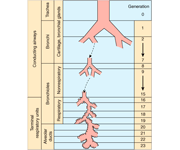
The human respiratory system can be divided in two functional regions: the conducting airways and the respiratory region. The conducting airways, which are composed of the nasal cavity and associated sinuses, the pharynx, larynx, trachea, bronchi, and bronchioles, filter and condition the inspired air. From trachea to the periphery of the airway tree, the airways repeatedly branch dichotomously into two daughter branches with smaller diameters and shorter length than the parent branch (Weibel, 1991). For each new generation of airways, the number of branches is doubled and the crosssectional area is exponentially increased. The conducting region of the airways generally constitutes generation 0 (trachea) to 16 (terminal bronchioles). The respiratory region, where gas exchange takes place, generally constitutes generation 17-23 and is composed of respiratory bronchioles, the alveolar ducts, and the alveolar sacs.

The air-blood barrier of the gas exchange area is composed of the alveolar epithelial cells (surface area 140 m2) on one side and the capillary bed (surface area 130 m2) on the other side of a thin basement membrane (Simionescu, 1991; Stone et al., 1992). The extensive surface area of the air-blood barrier in combination with its extreme thinness (0.1-0.5 μm) permit rapid gas exchange by passive diffusion (Plopper, 1996).

Image

The lung is a very attractive target for drug delivery. It provides direct access to disease in the treatment of respiratory diseases, while providing an enormous surface area and a relatively low enzymatic, controlled environment for systemic absorption of medications. (http://www.ncbi.nlm.nih.gov/pmc/articles/PMC1884307/)

Advantages:

  • Can be self medicated
  • Easy to use
  • Reduced side effects associated with systemic delivery

Disadvantages:

  • Slower route of action
  • Potential problem of deposition to the deeper alveolar (higher generations, like G 8-10)
  • Immuno-defense system
  • Difficulty in measuring the exact dose inside the lung
  • inhaled aerosol is entrapped in the mucus in the conducting airways

Need to be reminded that in addition, a drug’s efficacy may be affected by where in the respiratory tract it is deposited, its delivered dose and the disease it may be trying to treat.

Major components of the lung – barriers to drug absorption
As one of the primary interfaces between the organism and the environment, the respiratory system is constantly exposed to airborne particles, potential pathogens, and toxic gases in the inspired air (Plopper, 1996). As a result a sophisticated respiratory host defense system, present from the nostrils to the alveoli, has evolved to clear offending agents (Twigg, 1998).

The system comprises of:

  • mechanical (i.e. air filtration,cough, sneezing, and mucociliary clearance),
  • chemical (antioxidants, antiproteases and surfactant lipids),
  • immunological defense mechanisms and is tightly regulated to minimize inflammatory reactions that could impair the vital gas-exchange

**Intratracheal inhalation is another  administration option but will be left out of the discussion for now

From a drug delivery perspective, the components of the host defense system comprise barriers that must be overcome to ensure efficient drug deposition and absorption from the respiratory tract.

Generally, lung physiological investigations show that the airway and alveolar epithelia, not the interstitium and the endothelium, constitute the main barrier that restricts the movement of drugs and solutes from the airway lumen into the cells or the blood circulation.

Aerosols are defined as An aerosol is a suspensions of fine solid particles or liquid droplets in a gas.The major aspect affect the efficacy of aerosols as a drug delivery system is Drug Deposition.

Aerosol Drug deposition is affected by:

  • particle properties (e.g. size, shape, density, and charge),
  • respiratory tract morphology,
  • the breathing pattern (e.g. airflow rate and tidal volume)

These parameters determine not only the quantity of particles that are deposited but also in what region of the respiratory tract the particles are deposited.

Particle properties

As the cross-sectional area of the airways increases, the airflow rate rapidly decreases, and consequently the residence time of the particles in the lung increases from the large conducting airways towards the lung periphery. The most important mechanisms of particle deposition in the respiratory tract are (1) inertial impaction, (2) sedimentation, and (3) diffusion.

  • Inertial impaction – Inertial impaction occurs predominantly in the extrathoracic airways and in the tracheobronchial tree, where the airflow velocity is high and rapid changes in airflow direction occurs. Generally, particles with a diameter larger than 10 μm are most likely deposited in the extrathoracic region, whereas 2- to 10-μm particles are deposited in the tracheobronchial tree by inertial impaction. A long residence time of the inspired air favors particle deposition by sedimentation and diffusion.
  • Sedimentation – Sedimentation is of greatest importance in the small airways and alveoli and is most pronounced for particles with a diameter of 0.5-2 μm, Ultrafine particles (<0.5 μm in diameter) are deposited mainly by diffusional transport in the small airways and lung parenchyma where there is a maximal residence time of the inspired air.

Most therapeutic aerosols are almost always heterodisperse, consisting of a wide range of particle sizes and described by the log-normal distribution with the log of the particle diameters plotted against particle number, surface area or volume (mass) on a linear or probability scale and expressed as absolute values or cumulative percentage (http://www.ncbi.nlm.nih.gov/pmc/articles/PMC1884307/)

Optimal drug delivery to the lungs depends on an interaction between;

  • the inhaler device,
  • the drug formulation properties,
  • the inhalation maneuver

The devices currently available for pulmonary drug administration of pharmaceutical aerosols in clinical therapy include nebulizers, pressurized metered dose inhalers (pMDIs), and dry powder inhalers (DPIs).

However, much effort is put into the development of new inhaler devices and formulations to optimize the pulmonary delivery system for local or systemic drug targeting.

One of the major problems in aerosol delivery is

One disadvantage of the aerosol inhalation is, however, that a substantial portion of the aerosolized drug is not delivered to the lungs (i.e. delivered to the nose, mouth, skin, exhaled). only 10–15% of the emitted dose in the lungs.

In general the aerosol exposure techniques have a low dosing effectiveness, which often requires longer exposure times to administer the target dose and renders investigations of rapid kinetic events difficult. In addition, aerosol exposure requires an advanced equipment for exposure and ml-quantities of test formulation to fill up the device.

Airway geometry and humidity

Progressive branching and narrowing of the airways encourage impaction of particles. The larger the particle size, the greater the velocity of incoming air, the greater the bend angle of bifurcations and the smaller the airway radius, the greater the probability of deposition by impaction. The lung has a relative humidity of approximately 99.5%. The addition and removal of water can significantly affect the particle size of a hygroscopic aerosol and thus deposition. Drug particles are known to be hygroscopic and grow or shrink in size in high humidity, such as in the lung. A hygroscopic aerosol that is delivered at relatively low temperature and humidity into one of high humidity and temperature would be expected to increase in size when inhaled into the lung. The rate of growth is a function of the initial diameter of the particle, with the potential for the diameter of fine particles <1 µm to increase five-fold compared with two-to-three-fold for particles >2 µm. he increase in particle size above the initial size should affect the amount of drug deposited and particularly, the distribution of the aerosolized drug within the lung,

Lung Clearance Mechanism

Once deposited in the lungs, inhaled drugs are either cleared from the lungs, absorbed into the systemic circulation or degraded via drug metabolism. Drug particles deposited in the conducting airways are primarily removed through mucociliary clearance and, to a lesser extent, are absorbed through the airway . epithelium into the blood or lymphatic system. a low-viscosity periciliary or sol layer covered by a high-viscosity gel layer. Insoluble particles are trapped in the gel layer and are moved toward the pharynx (and ultimately to the gastrointestinal tract) by the upward movement of mucus generated by the metachronous beating of cilia. In the normal lung, the rate of mucus movement varies with the airway region and is determined by the number of ciliated cells and their beat frequency. Movement is faster in the trachea than in the small airways and is affected by factors influencing ciliary functioning and the quantity and quality of mucus.

Drugs deposited in the alveolar region may be phagocytosed and cleared by alveolar macrophages or absorbed into the pulmonary circulation. Alveolar macrophages are the predominant phagocytic cell for the lung defence against inhaled microorganisms, particles and other toxic agents. There are approximately five to seven alveolar macrophages per alveolus in the lungs of healthy nonsmokers. Macrophages phagocytose insoluble particles that are deposited in the alveolar region and are either cleared by the lymphatic system or moved into the ciliated airways along currents in alveolar fluid and then cleared via the mucociliary escalator.

Very little is known about how the drug-metabolizing activities of the lung affect the concentration and therapeutic efficacy of inhaled drugs. All metabolizing enzymes found in the liver are found to a lesser extent in the lung. Therefore assuming, drug deposition could have been calculated it would be hard to impossible to evaluate it’s metabolism.

In summary:

As the end organ for the treatment of local diseases or as the route of administration for systemic therapies, the lung is a very attractive target for drug delivery. It provides direct access the site of disease for the treatment of respiratory diseases without the inefficiencies and unwanted effects of systemic drug delivery. It provides an enormous surface area and a relatively low enzymatic, controlled environment for systemic absorption of medications. But it is not without barriers. Airway geometry, humidity, clearance mechanisms and presence of lung disease influence the deposition of aerosols and therefore influence the therapeutic effectiveness of inhaled medications. A drug’s efficacy may be affected by the site of deposition in the respiratory tract and the delivered dose to that site. To provide an efficient and effective inhalant therapy, these factors must be considered. Aerosol particle size characteristics can play an important role in avoiding the physiological barriers of the lung, as well as targeting the drug to the appropriate lung region.

Drug formulations and chemo drug delivery will be further discussed in a another post.

Ref:

1. N R Labiris and M B Dolovich. “Pulmonary drug delivery. Part I: Physiological factors affecting therapeutic effectiveness of aerosolized medications”. Br J Clin Pharmacol. 2003 December; 56(6): 588–599. http://www.ncbi.nlm.nih.gov/pmc/articles/PMC1884307/.

2. Tronde A. “Pulmonary drug absorption”. Acta Universities Upsalninesis Uppsala 2002. uu.diva-portal.org/smash/get/diva2:161887/FULLTEXT01

3. Naushad Khan Ghilzai. Pulmonary drug delivery. http://www.drugdel.com/Pulm_review.pdf.

Read Full Post »

Report on the Fall Mid-Atlantic Society of Toxicology Meeting “Reproductive Toxicology of Biologics: Challenges and Considerations.  Author, Reporter: Stephen J. Williams, Ph.D.

The fall 2012 Meeting of the Mid-Atlantic Society of Toxicology (MASOT) focused on the challenges and solutions in developing proper Development and Reproductive Toxicology (DART) studies with regards to the newer classes of bio-therapeutics such as vaccines, antibody-based therapies, and viral-based therapies.  The full meeting and MASOT links can be found at http://www.masot.org.   The overall synopsis of the meeting talks agreed, that although the general aim and design of DART studies for biological are very similar to DART studies for small molecule therapeutics, it is more necessary to take into consideration the pharmacodynamics, pharmacokinetic differences between biologics and small molecules.   In addition it is imperative to use pharmacologically-relevant species, such as non-rodent (guinea pig and non-human primate). The meeting was highlighted by the keynote speaker, Dr. A. Wallace Hayes, renowned board-certified toxicologist, committee and expert panel member for National Academy of Sciences, NIEHS, EPA and Department of Defense, and editor of well-known textbooks including Principles and Methods of Toxicology.  Dr. Hayes discussed a timeline of milestones in the field of toxicology.

The following are the meeting talk abstracts as well as notes for each presenter.

What’s So Different About DART Assessment of Biologics? Christopher Bowman Ph.D., DABT (Pfizer, Inc.)

Abstract:  The aim of developmental and reproductive toxicity (DART) safety assessment of a biologic is no different from that of a small molecule. Both cases consist of evaluating the potential for maternal toxicity, pre- and postnatal development toxicity (including juvenile toxicity) and effects of fertility (reproduction).  The differences lie in the in the product attributes of a specific biologic, the pharmacological response, the potential for undesirable toxicities and how these product attributes influence and are influenced by the biology.  Thus the primary challenge for developing a DART strategy for a biologic are derived from the complexities of these biomolecules and how that dictates a case-by-case strategy for appropriately evaluating the potential for developmental and reproductive toxicity. Most protein biologics have very limited potential for off-target toxicities, but this is not necessarily the case for other modalities such as anti-sense oligonucleotides and antibody-drug-conjugates.  In these cases, off-target toxicities can be a major feature of the DART safety assessment.  The most noticeable difference in DART assessment of biologics is the need to conduct these studies in pharmacologically relevant species and how that can influence the overall nonclinical strategy (including DART).  This has led to increased use of non-human primates as a model system and led to optimizations of this model for this purpose and revisions to international guidelines.

Notes:   Dr. Bowman emphasized the need to understand the type of biological you are testing and to both devise DART studies based on this information, additional endpoint you may want, as well as carefully choosing the correct species most relevant to the biologic.  He highlighted general differences between small molecules versus a biologic with respect to their pharmacology.  These differences are summarized in the Table below:

  Small Molecule Biologic-based therapy
Species specificity Low High
Route of administration Usually oral Parental
ADME (PK, bio-distribution etc.) Wide distribution Low distribution

He noted that clinical trials for biologics rarely include reproductive toxicity so the preclinical DART study is of utmost importance.  He also emphasized that currently, the FDA requires two species for DART testing of small molecule therapies (usually one rodent and one non-rodent).  However this is not possible with many biologics as species is to be taken in consideration when designing a meaningful DART study.  Study designs can be like most DART studies but want to have a steady exposure during fetal organogenesis, use high doses (10 times the clinical dose) to achieve maximal pharmacology, confirm exposure to fetus and to F1 generation, and determine embryolethality.  Some biologics like interferon and insulin-growth factor receptor (IGFR) antagonists are fetal abortifactants. In fact Lucentis (Ranibizumab) and Macugen (Pegaptanib) were approved with no or little DART studies, however these drugs showed reproductive toxicity, resulting in warning concerning pregnancy on the label. Also important is the effect on the immune system and reproductive system of offspring, as well as the pharmacodynamics profile in the offspring.

Species Selection for Reproductive and Developmental Toxicity Testing of Biologics; Elise M. Lewis, Ph.D. (Charles River Preclinical Services)

Abstract:  Regulatory guidelines for developmental and reproductive toxicology studies require selection of “relevant” animal models as determined by kinetic, pharmacological, and preceding toxicological data.  Rats, mice, and rabbits are the preferred animal models for these studies based on historical experience and well-established procedures and study protocols.  However, due to species specificity and immunogenicity issues, developmental and reproductive toxicology testing for biologics is limited to a pharmacologically relevant animal model as described in the ICH s6 guideline.

Notes:  Dr. Lewis notes that DART studies in guinea pigs and hamsters represent a cost effective alternative to large animal models as well as the benefit of shorter duration and ability to assess mating behavior.  She also notes that reproductive toxicology of vaccines should be done in an animal model that can elicit an immune-response to the vaccine, especially to determine any maternal-fetal interaction.  For example, a vaccine may be directed to a maternal protein which when suppressed, may negatively impact the developing fetus.  However it is important to remember that guinea pigs can spontaneously abort so it is good to have proper control arms of a substantial size in order to statistically determine the impact of those spontaneous abortions.


Placental Transfer of an Adnectin Protein During Organogenesis in Guinea Pigs Using a Radiolabeled Methodology; Lakshmi Sivaraman, Ph.D. (Bristol-Myers Squibb)

Abstract:  Knowledge regarding the placental transfer of large molecular weight therapeutics is important to support the enrollment of women of childbearing potential in clinical trials.  There is limited information in the scientific literature that reports the extent to which the conceptus is exposed to these large molecules during organogenesis.  Placental transfer of large therapeutics has been difficult to quantify, due to limited blood volumes that can be obtained from the embryo, as well as insufficient assay sensitivity.  Thus, it is possible that embryos are exposed to pharmacologically active concentrations after maternal drug exposure. We have adopted a radiolabeled approach to quantitate embryo-fetal exposure of a novel protein therapeutic platform (adnectins). Adnectins are fibronectin-based proteins containing domains engineered to bind to targets of therapeutic interests.

Notes: Adnectins molecular weight is typically less than monoclonal antibodies and while IgG is not transferred in great quantity past the placental barrier there have been studies in human indicating maternal-fetal transfer of monoclonal antibodies.  This is particularly important for two reasons:  the monoclonal interacts with a target important in development, or the fetal immune system could be augmented.  Their work will be published in Drug Metabolism and Disposition.  In general Dr. Siveraman engineered a radiolabel on adnectin and used different detection methods to quantify the fetal exposure to a single maternal dose.  Dr. Siverman was able to detect radiolabel in the fetus however it is not clear whether this is a significant amount.

Reproductive Toxicity Testing for Biological Products in Nonhuman Primates: Evolution and Current Perspectives: Gary J. Chellman, Ph.D., DABT (Charles River Preclinical Services)

Notes:  Dr. Chellman gave a review of the current trends being driven by regulatory agencies with regard to nonhuman primate DART studies of biopharmaceuticals.  He noted that an advantage using nonhuman primates were the close physiologic resemblance to humans and because a large animal could monitor pregnancy over time using ultrasound technology.  In general, Dr. Chellman spoke about new study designs which not only reduce the number of animals required but also significantly reduce costs.  For example, a DART study which cost upward of $750,000 now can be done for as little as $350,000.  Dr. Kary Thompson of Bristol Myers Squibb then gave a talk about use of these new enhanced designs to determine reproductive toxicity issues with ipilimumab (Yervoy).

Other research papers on Pharmaceutical Intelligence and Reproductive Biology, Bio Insrumentation, Endocrinology Genetics were published on this Scientific Web site as follows

Non-small Cell Lung Cancer drugs – where does the Future lie?

Reboot evidence-based medicine and reconsider the randomized, placebo-controlled clinical trial

Every sperm is sacred: Sequencing DNA from individual cells vs “humans as a whole.”

Leptin and Puberty

Gene Trap Mutagenesis in Reproductive Research

Genes involved in Male Fertility and Sperm-egg Binding

Hope for Male Contraception: A small molecule that inhibits a protein important for chromatin organization can cause reversible sterility in male mice

Pregnancy with a Leptin-Receptor Mutation

The contribution of comparative genomic hybridization in reproductive medicine

Sperm collide and crawl the walls in chaotic journey to the ovum

Impact of evolutionary selection on functional regions: The imprint of evolutionary selection on ENCODE regulatory elements is manifested between species and within human populations

Biosimilars: CMC Issues and Regulatory Requirements

Biosimilars: Intellectual Property Creation and Protection by Pioneer and by Biosimilar Manufacturers

Assisted Reproductive Technology Cycles and Cumulative Birth Rates

Innovations in Bio instrumentation in Reproductive Clinical and Male Fertility Labs in the US

Increased risks of obesity and cancer, Decreased risk of type 2 diabetes: The role of Tumor-suppressor phosphatase and tensin homologue (PTEN)

Guidelines for the welfare and use of animals in cancer research

Every sperm is sacred: Sequencing DNA from individual cells vs “humans as a whole.”


Read Full Post »

Author: Tilda Barliya PhD.

I recently read this beautiful paper by Fredrik Nederberg from the IBM Almaden Research Center  and A*STAR Institute of Bioengineeringtitled “Biodegradable nanostructures with selective lysis of microbial membranes” (http://www.nature.com/nchem/journal/v3/n5/full/nchem.1012.html)

This paper gained a lot of attention as it merged as an innovation in nanotechnology and antibacterial therapeutics and therefore I have decided to introduce it here to the audience.

“Bacteria are increasingly resistant to conventional antibiotics and, as a result, macromolecular peptide-based antimicrobial agents are now receiving a significant level of attention. Most conventional antibiotics (such as ciprofloxacin, doxycycline and ceftazidime) do not physically damage the cell wall, but penetrate into the target microorganism and act on specific targets (for example, causing the breakage of double-stranded DNA due to inhibition of DNA gyrase, blockage of cell division and triggering of intrinsic autolysins). Bacterial morphology is preserved and, as a consequence, the bacteria can easily develop resistance. In contrast, many cationic peptides (for example, magainins, alamethicin, protegrins and defensins) do not have a specific target in the microbes, and instead interact with the microbial membranes through an electrostatic interaction, causing damage to the membranes by forming pores in them3. It is the physical nature of this action that prevents the microbes from developing resistance to the peptides. Indeed, it has been proven that cationic antimicrobial peptides can overcome bacterial resistance”.

“Most antimicrobial peptides have cationic and amphiphilic features, and their antimicrobial activities largely depend on the formation of facially amphiphilic a-helical or b-sheet-like tubular structures when interacting with negatively charged cell walls, followed by diffusion through the cell walls and insertion into the lipophilic domain of the cell membrane after recruiting additional
peptide monomers. The disintegration of the cell membrane eventually leads to cell death. Over the last two decades, efforts have been made to design peptides with a variety of structures, but there has been limited success in clinical settings, and only a few cationic synthetic peptides have entered phase III clinical trials. This is largely due to the cytotoxicity (for example, haemolysis) resulting from their cationic nature, their short half-lives in vivo (they are labile to proteases) and their high manufacturing costs”

A number of cationic polymers thatmimic the facially amphiphilic structure and antimicrobial functionalities of peptides have been proposed as a better approach, because they can be prepared more easily and their synthesis can be more readily scaled up compared with peptides.

The authors Yang, Hedrick and their co-workers have developed a polymer-based peptide alternative which avoids all of these problems. The polymer incorporates three key components: a non-polar hydrophobic head and tail, which drives the polymer to self-assemble into a nanoparticle; a positively charged block that selectively interacts with the bacterial cell membrane; and a carbonate backbone that slowly breaks down inside the cell, ensuring good biocompatibility. “The starting materials of our synthesis are inexpensive, and the synthesis of the antimicrobial nanoparticles is simple and can be scaled up easily for future clinical application.

“Polycarbonates are attractive biomaterials because of their biocompatibility, biodegradability, low inherent toxicity and tunable mechanical properties”


In general, Preclinical results confirm that the nanoparticles can efficiently kill fungi and multidrug-resistant bacteria such as methicillin-resistant Staphylococcus aureus (MRSA) and vancomycin-resistant Enterococcus (VRE), even at low concentrations. The nanoparticles also showed insignificant activity against red blood cells, and no significant toxicity was observed during the in vivo studies in mice, even at concentrations well above their effective dose.

In more specific, the authors evaluated the minimal inhibitory concentrations (MICs) of the polymers against Gram-positive bacteria such as Bacillus subtilis, Enterococcus faecalis, Staphylococcus aureus and methicillin-resistant S. aureus (MRSA), and the fungus Cryptococcus neoformans. MIC is an important parameter commonly used to evaluate the activity of new antimicrobial agents, and is generally defined as the minimum concentration of an antimicrobial agent at which no visible growth of microbes is observed

Some of the MIC were evaluated against conventional antimicrobial agents that are used in clinical settings to treat infections caused by these microbes, such as vancomycin for S. aureus, MRSA and E. faecalis, and amphotericin B for C. neoformans.  When compared with these conventional antimicrobial agents, the polymers demonstrated comparable antimicrobial activities against all the microbes except for E. faecalis. This is important, because vancomycin-resistant E. faecalis, and S. aureus, as well as amphotericin B-resistant C. neoformans have been reported, and the resistant strains of these microbes are not susceptible to conventional antimicrobial agents. This suggests that there is an urgent need to develop safe and efficient macromolecular antimicrobial agents.

The hypothesis was that the cationic micelles can interact easily with the negatively charged cell wall by means of an electrostatic interaction, and the steric hindrance imposed by the mass of micelles in the cell wall and the hydrogen-binding/electrostatic interaction between the cationic micelle and the cell wall may inhibit cell wall synthesis and/or damage the cell wall, resulting in cell lysis. In addition, the micelles may easily permeate the cytoplasmic membrane of the organisms due to the relatively large volume of the micelle, destabilizing the membrane as a result of electroporation and/or the sinking raft model, leading to cell death.

Haemolysis is a major harmful side effect of many cationic antimicrobial peptides and polymers. The haemolysis of mouse red blood cells was evaluated after incubation with polymers 1 and 3 at various concentrations. Although the polymers disrupt microbial walls/membranes efficiently, they do not damage red blood cell membranes.

Toxicity tests in vivo showed that the micelles do not cause significant acute damage to liver and kidney functions, nor do they interfere with the electrolyte balance in the blood. Importantly, these parameters remain unchanged, even at 14 days post-injection.

In addition, no mouse treated with the polymer died, and no colour change was observed in the serum samples and urine of the mice treated with the polymer when compared with the control group. These findings demonstrate that the polymer did not induce significant toxicity to the mice during the period of testing. Nonetheless, preclinical studies should be conducted in the future to further evaluate potential long-term toxicity of the antimicrobial polymers before clinical applications.

In summary, the authors  have designed and synthesized novel biodegradable, cationic and amphiphilic polycarbonates that can easily self-assemble into cationic micellar nanoparticles by direct dissolution in water. The cationic nanoparticles formed from the polymers, with optimal compositions, can efficiently kill Gram positive bacteria, MRSA and fungi, even at low concentrations. Importantly, they have no significant haemolytic activity over a wide range of concentrations, and cause no obvious acute toxicity to the major organs and the electrolyte balance in the blood of mice at a concentration well above the MICs. These antimicrobial polycarbonate nanoparticles could be promising as antimicrobial drugs for the decolonization of MRSA and for the treatment of various infectious diseases, including MRSA associated infections.

The data presented by the authors is very promising and open a new door to antimicrobial therapy. Several questions and new avenues comes in minds:

  • Can these polymers be proven for there efficiency in specific disease animal models?
  • Can these NPs or similar approach can be applied to gram-negative bacteria?
  • Can these polycarbonate  affect massive biofilms?!

Looking forward to reading more news and results from this research group.


Read Full Post »

Reporter: Aviva Lev-Ari, PhD, RN

In researching Intracanalicular Meningiomas, Vestibular Schwannomas — we presented on 10/15/2012 the following article:

Facial Nerve, Intracanalicular Meningiomas, Vestibular Schwannomas: Surgical Planning

http://pharmaceuticalintelligence.com/2012/10/15/facial-nerve-intracanalicular-meningiomas-vestibular-schwannomas-surgical-planning/

Our research continues by tracing all Clinical Trials – active for Schwannoma

1 Recruiting Intraarterial Cerebral Infusion of Avastin for Vestibular Schwannoma (Acoustic Neuroma)

Condition: Vestibular Schwannoma
Intervention: Drug: Bevacizumab (Avastin)
2 Active, not recruiting Bevacizumab for Symptomatic Vestibular Schwannoma in Neurofibromatosis Type 2 (NF2)

Conditions: Neurofibromatosis 2;   Vestibular Schwannoma;   Acoustic Neuroma
Intervention: Drug: bevacizumab
3 Active, not recruiting Stereotactic Radiation in Vestibular Schwannoma

Condition: Vestibular Schwannoma
Interventions: Radiation: stereotactic radiotherapy;   Radiation: stereotactic radiosurgery
4 Not yet recruiting Study of RAD001 for Treatment of NF2-related Vestibular Schwannoma

Conditions: Neurofibromatosis Type 2;   Neuroma, Acoustic
Intervention: Drug: RAD001, everolimus
5 Active, not recruiting Efficacy and Safety Study of RAD001 in the Growth of the Vestibular Schwannoma(s) in Neurofibromatosis 2 (NF2) Patients

Condition: Neurofibromatosis 2
Intervention: Drug: RAD001
6 Recruiting Concentration and Activity of Lapatinib in Vestibular Schwannomas

Conditions: Vestibular Schwannoma;   NF2;   Neurofibromatosis 2;   Acoustic Neuroma;   Auditory Tumor
Intervention: Drug: lapatinib
7 Recruiting Hearing Outcomes Using Fractionated Proton Radiation Therapy for Vestibular Schwannoma

Conditions: Vestibular Schwannoma;   Acoustic Neuroma
Intervention: Radiation: Fractionated proton radiation
8 Recruiting A Study of Nilotinib in Growing Vestibular Schwannomas

Conditions: Volumetric Tumor Response and Lack of Tumor Progression;   Quality of Life of Patients on Nilotinib Versus Not
Intervention: Drug: Nilotinib
9 Active, not recruiting Lapatinib Study for Children and Adults With Neurofibromatosis Type 2 (NF2) and NF2-Related Tumors

Conditions: Neurofibromatosis 2;   Vestibular Schwannoma
Intervention: Drug: Lapatinib
10 Recruiting Stereotactic Body Radiotherapy for Spine Tumors

Conditions: Spinal Metastases;   Vertebral Metastases;   Benign Spinal Tumors;   Chordoma;   Meningioma;   Schwannoma;   Neurofibroma;   Paragangliomas;   Arteriovenous Malformations
Intervention: Radiation: stereotactic body radiotherapy
11 Recruiting Natural History Study of Patients With Neurofibromatosis Type 2

Conditions: Spinal Cord Disease;   Intracranial Central Nervous System Disorder;   Neurologic Disorders;   Brain Neoplasms
Intervention:
12 Recruiting Using Positron Emission Tomography to Predict Intracranial Tumor Growth in Neurofibromatosis Type II Patients

Conditions: Neoplasms;   Nervous System Disease;   Vestibular Disease
Intervention:
13 Unknown  Hippocampal Radiation Exposure and Memory

Conditions: Arteriovenous Malformation;   Schwannoma;   Trigeminal Neuralgia
Intervention:
14 Completed Recovery of Visual Acuity in People With Vestibular Deficits

Conditions: Vestibular Neuronitis;   Vestibular Neuronitis, Bilateral;   Vestibular Schwannoma
Interventions: Other: Control exercises;   Other: gaze stabilization exercises
15 Recruiting Bevacizumab in Treating Patients With Recurrent or Progressive Meningiomas

Conditions: Acoustic Schwannoma;   Adult Anaplastic Meningioma;   Adult Ependymoma;   Adult Grade I Meningioma;   Adult Grade II Meningioma;   Adult Meningeal Hemangiopericytoma;   Adult Papillary Meningioma;   Neurofibromatosis Type 1;   Neurofibromatosis Type 2;   Recurrent Adult Brain Tumor
Intervention: Biological: bevacizumab
16 Unknown  NF2 Natural History Consortium

Conditions: Schwannoma, Vestibular;   Neurofibromatosis 2;   Meningioma
Intervention:
17 Completed Analysis of NF2 Mutations in Radiation-Related Neural Tumors

Condition: Neural Tumors
Intervention:
18 Completed Corticosteroids in Prevention of Facial Palsy After Cranial Base Surgery

Condition: Facial Palsy
Intervention: Drug: methylprednisolone
19 Recruiting Phase II Study of Everolimus (RAD001) in Children and Adults With Neurofibromatosis Type 2

Condition: Neurofibromatosis Type II
Intervention: Drug: Everolimus (RAD001) , Afinitor®
20 Completed Phase II Study of Imatinib Mesylate in Patients With Life Threatening Malignant Rare Diseases

Condition: Life Threatening Diseases
Intervention: Drug: Imatinib mesylate
21 Recruiting Taste Disorders in Middle Ear Disease and After Middle Ear Surgery

Condition: Taste Disturbance
Interventions: Other: taste measurement;   Other: Symptom questionnaire;   Behavioral: Quality of life questionnaire;   Other: Nerve sample
22 Completed Vasopressin and V2 Receptor in Meniere’s Disease

Condition: Meniere Disease
Intervention: Genetic: vasopressin, V2 receptor and cyclic AMP
23 Recruiting Gemcitabine and Docetaxel in Combination With Pazopanib (Gem/Doce/Pzb) for the Neoadjuvant Treatment of Soft Tissue Sarcoma (STS)

Conditions: Sarcoma;   Leiomyosarcoma;   Malignant Peripheral Nerve Sheath Tumor;   Malignant Fibrous;   Histiocytoma/Undifferentiated Pleomorphic Sarcoma
Intervention: Drug: Gemcitabine and Docetaxel in Combination with Pazopanib
24 Recruiting Pazopanib Hydrochloride Followed By Chemotherapy and Surgery in Treating Patients With Soft Tissue Sarcoma

Conditions: Adult Alveolar Soft-part Sarcoma;   Adult Angiosarcoma;   Adult Desmoplastic Small Round Cell Tumor;   Adult Epithelioid Hemangioendothelioma;   Adult Epithelioid Sarcoma;   Adult Extraskeletal Chondrosarcoma;   Adult Fibrosarcoma;   Adult Leiomyosarcoma;   Adult Liposarcoma;   Adult Malignant Fibrous Histiocytoma;   Adult Malignant Hemangiopericytoma;   Adult Malignant Mesenchymoma;   Adult Neurofibrosarcoma;   Adult Synovial Sarcoma;   Dermatofibrosarcoma Protuberans;   Stage IIA Adult Soft Tissue Sarcoma;   Stage III Adult Soft Tissue Sarcoma;   Stage IV Adult Soft Tissue Sarcoma
Interventions: Drug: pazopanib hydrochloride;   Drug: doxorubicin hydrochloride;   Drug: ifosfamide;   Other: placebo;   Procedure: therapeutic conventional surgery;   Radiation: external beam radiation therapy;   Other: pharmacological study;   Other: laboratory biomarker analysis
25 Active, not recruiting Trial of Dasatinib in Advanced Sarcomas

Conditions: Rhabdomyosarcoma;   Malignant Peripheral Nerve Sheath Tumors;   Chondrosarcoma;   Sarcoma, Ewing’s;   Sarcoma, Alveolar Soft Part;   Chordoma;   Epithelioid Sarcoma;   Giant Cell Tumor of Bone;   Hemangiopericytoma;   Gastrointestinal Stromal Tumor (GIST)
Intervention: Drug: Dasatinib
26 Active, not recruiting Sorafenib and Dacarbazine in Soft Tissue Sarcoma

Conditions: Sarcoma;   Synovial Sarcoma;   Leiomyosarcoma;   Malignant Peripheral Nerve Sheath Tumor
Intervention: Drug: Sorafenib and Dacarbazine
27 Recruiting Safety Study of PLX108-01 in Patients With Solid Tumors

Conditions: Solid Tumors;   Mucoepidermal Carcinoma (MEC) of the Salivary Gland;   Pigmented Villo-nodular Synovitis (PVNS);   Gastrointestinal Stromal Tumors (GIST);   Anaplastic Thyroid Carcinoma (ATC);   Solid Tumors With Documented Malignant Pleural or Peritoneal Effusions;   Malignant Peripheral Nerve Sheath Tumor (MPNST);   Neurofibromatosis Type I (NF-1);   Melanoma
Intervention: Drug: PLX3397
28 Active, not recruiting Depsipeptide (Romidepsin) in Treating Patients With Metastatic or Unresectable Soft Tissue Sarcoma

Conditions: Adult Alveolar Soft-part Sarcoma;   Adult Angiosarcoma;   Adult Epithelioid Sarcoma;   Adult Extraskeletal Chondrosarcoma;   Adult Extraskeletal Osteosarcoma;   Adult Fibrosarcoma;   Adult Leiomyosarcoma;   Adult Liposarcoma;   Adult Malignant Fibrous Histiocytoma;   Adult Malignant Hemangiopericytoma;   Adult Malignant Mesenchymoma;   Adult Neurofibrosarcoma;   Adult Rhabdomyosarcoma;   Adult Synovial Sarcoma;   Gastrointestinal Stromal Tumor;   Metastatic Ewing Sarcoma/Peripheral Primitive Neuroectodermal Tumor;   Recurrent Adult Soft Tissue Sarcoma;   Recurrent Ewing Sarcoma/Peripheral Primitive Neuroectodermal Tumor;   Stage III Adult Soft Tissue Sarcoma;   Stage IV Adult Soft Tissue Sarcoma
Intervention: Drug: romidepsin
29 Completed S0330 Erlotinib in Treating Patients With Unresectable or Metastatic Malignant Peripheral Nerve Sheath Tumor

Condition: Sarcoma
Intervention: Drug: erlotinib hydrochloride
30 Recruiting IMC-A12 and Doxorubicin Hydrochloride in Treating Patients With Unresectable, Locally Advanced, or Metastatic Soft Tissue Sarcoma

Conditions: Adult Angiosarcoma;   Adult Desmoplastic Small Round Cell Tumor;   Adult Epithelioid Sarcoma;   Adult Extraskeletal Chondrosarcoma;   Adult Extraskeletal Osteosarcoma;   Adult Fibrosarcoma;   Adult Leiomyosarcoma;   Adult Liposarcoma;   Adult Malignant Fibrous Histiocytoma of Bone;   Adult Malignant Hemangiopericytoma;   Adult Malignant Mesenchymoma;   Adult Neurofibrosarcoma;   Adult Rhabdomyosarcoma;   Adult Synovial Sarcoma;   Childhood Angiosarcoma;   Childhood Desmoplastic Small Round Cell Tumor;   Childhood Epithelioid Sarcoma;   Childhood Fibrosarcoma;   Childhood Leiomyosarcoma;   Childhood Liposarcoma;   Childhood Malignant Hemangiopericytoma;   Childhood Malignant Mesenchymoma;   Childhood Neurofibrosarcoma;   Childhood Synovial Sarcoma;   Dermatofibrosarcoma Protuberans;   Metastatic Childhood Soft Tissue Sarcoma;   Mixed Childhood Rhabdomyosarcoma;   Pleomorphic Childhood Rhabdomyosarcoma;   Previously Treated Childhood Rhabdomyosarcoma;   Previously Untreated Childhood Rhabdomyosarcoma;   Recurrent Adult Soft Tissue Sarcoma;   Recurrent Childhood Rhabdomyosarcoma;   Recurrent Childhood Soft Tissue Sarcoma;   Stage III Adult Soft Tissue Sarcoma;   Stage IV Adult Soft Tissue Sarcoma
Interventions: Biological: cixutumumab;   Drug: doxorubicin hydrochloride;   Other: laboratory biomarker analysis
31 Active, not recruiting Combination Chemotherapy in Treating Patients With Stage III or Stage IV Malignant Peripheral Nerve Sheath Tumors

Conditions: Neurofibromatosis Type 1;   Sarcoma
Interventions: Biological: filgrastim;   Drug: doxorubicin hydrochloride;   Drug: etoposide;   Drug: ifosfamide;   Procedure: conventional surgery;   Radiation: radiation therapy
32 Terminated Imatinib Mesylate Treatment of Patients With Malignant Peripheral Nerve Sheath Tumors

Condition: Malignant Peripheral Nerve Sheath Tumors
Intervention: Drug: imatinib mesylate
33 Recruiting Study of Everolimus With Bevacizumab to Treat Refractory Malignant Peripheral Nerve Sheath Tumors

Conditions: Malignant Peripheral Nerve Sheath Tumors;   MPNST;   Sarcoma
Interventions: Drug: everolimus;   Drug: bevacizumab
34 Recruiting Gemcitabine Hydrochloride With or Without Pazopanib Hydrochloride in Treating Patients With Refractory Soft Tissue Sarcoma

Conditions: Adult Alveolar Soft-part Sarcoma;   Adult Angiosarcoma;   Adult Desmoplastic Small Round Cell Tumor;   Adult Epithelioid Hemangioendothelioma;   Adult Epithelioid Sarcoma;   Adult Extraskeletal Chondrosarcoma;   Adult Extraskeletal Osteosarcoma;   Adult Fibrosarcoma;   Adult Leiomyosarcoma;   Adult Liposarcoma;   Adult Malignant Fibrous Histiocytoma;   Adult Malignant Hemangiopericytoma;   Adult Malignant Mesenchymoma;   Adult Neurofibrosarcoma;   Adult Rhabdomyosarcoma;   Adult Synovial Sarcoma;   Childhood Alveolar Soft-part Sarcoma;   Childhood Angiosarcoma;   Childhood Desmoplastic Small Round Cell Tumor;   Childhood Epithelioid Hemangioendothelioma;   Childhood Epithelioid Sarcoma;   Childhood Fibrosarcoma;   Childhood Leiomyosarcoma;   Childhood Liposarcoma;   Childhood Malignant Hemangiopericytoma;   Childhood Malignant Mesenchymoma;   Childhood Neurofibrosarcoma;   Childhood Synovial Sarcoma;   Dermatofibrosarcoma Protuberans;   Metastatic Childhood Soft Tissue Sarcoma;   Nonmetastatic Childhood Soft Tissue Sarcoma;   Recurrent Adult Soft Tissue Sarcoma;   Recurrent Childhood Soft Tissue Sarcoma;   Stage III Adult Soft Tissue Sarcoma;   Stage IV Adult Soft Tissue Sarcoma
Interventions: Drug: gemcitabine hydrochloride;   Drug: pazopanib hydrochloride;   Other: placebo;   Other: laboratory biomarker analysis
35 Recruiting Proton Therapy for Spinal Tumors

Conditions: Malignant Peripheral Nerve Sheath Tumors of the Spine;   Neurofibroma
Intervention: Radiation: Proton Therapy
36 Recruiting Natural History Study of Patients With Neurofibromatosis Type I

Conditions: Neurofibromatosis Type 1;   Malignant Peripheral Nerve Sheath Tumor;   Plexiform Neurofibroma;   Optic Glioma;   Neurofibroma
Intervention:
37 Completed Phase II Study of the Multichannel Auditory Brain Stem Implant for Deafness Following Surgery for Neurofibromatosis 2

Condition: Neurofibromatosis 2
Intervention: Device: Multichannel Auditory Brain Stem Implant
38 Completed An Implant for Hearing Loss Due to Removal of Neurofibromatosis 2 Tumors

Condition: Neurofibromatosis 2
Intervention: Device: Penetrating auditory brainstem implant
39 Suspended PTC299 for Treatment of Neurofibromatosis Type 2

Condition: Neurofibromatosis 2
Intervention: Drug: PTC299
40 Unknown  Sunitinib in Treating Patients With Recurrent or Unresectable Meningioma, Intracranial Hemangiopericytoma, or Intracranial Hemangioblastoma

Conditions: Brain and Central Nervous System Tumors;   Neurofibromatosis Type 1;   Neurofibromatosis Type 2;   Precancerous Condition
Intervention: Drug: sunitinib malate

SOURCE:

http://clinicaltrials.gov/ct2/results?term=schwannoma&pg=1

http://clinicaltrials.gov/ct2/results?term=schwannoma&pg=2

Benign Intracranial Tumors Radiosurgery Treatment

Points to remember

  • Radiosurgery is focused delivery of radiation to an image-defined target performed in 1 to 5 sessions.
  • When used as an alternative to or in conjunction with open neurosurgical techniques, radiosurgery is an effective, less invasive option for treating many benign intracranial tumors, including meningiomas, vestibular schwannomas, and pituitary adenomas.

The challenge

Benign intracranial tumors occur about as often as primary malignant brain tumors. Most benign tumors are noninvasive, well defined and well visualized on MRI, and have a slow rate of progression. Each of these features makes them good candidates for radiosurgery.

Radiosurgery can deliver a destructive dose of radiation to the target with little or no radiation effects on adjacent structures. Proper patient selection for this procedure is critical.

Defining selection criteria

With 2 decades of experience performing radiosurgery, Mayo Clinic neurosurgeons have accumulated a depth of expertise and a vast database that includes patient characteristics, radiosurgical dosimetry, and outcomes.

After reviewing more than 1,400 cases of meningiomas, vestibular schwannomas, and pituitary adenomas, Mayo clinicians observe that radiosurgery is an excellent choice when these types of benign tumors are small, occur in critical locations, or have recurred following previous surgery.

Radiosurgery is also well tolerated and of particular utility in elderly patients with medical conditions that put them at risk for an open procedure. Additionally, radiosurgery does not preclude an open procedure, should that be necessary at a later time.

Radiosurgery for meningiomas

The rate of recurrence for a surgically removed meningioma is about 18% to 25% at 10 years. For this reason, Mayo neurosurgeons recommend maintaining extended surveillance of meningiomas. In contrast, radiosurgery has been found to reduce the risk of recurrence or progression.

Tumor progression outside the field of radiation and tumor histology can affect both long- and short-term outcomes. Tumors that can be clearly imaged and those that are benign and without atypical histology have a far greater rate of 5-year progression-free survival.

Radiosurgery is also an effective therapy for cavernous sinus meningiomas, except when there is symptomatic mass effect, an unusual clinical presentation, or nontypical features on imaging.

Radiosurgery is typically not recommended for convexity and parasagittal meningiomas.

Radiosurgery for vestibular schwannomas

Several studies report that radiosurgery for small to moderate-sized vestibular schwannomas is associated with higher rates of hearing preservation and improved facial nerve outcomes when compared to surgical removal. This conclusion was supported by a Mayo Clinic study comparing surgical resection and radiosurgery for vestibular schwannomas with an average diameter of less than 3 cm. These Mayo investigators also found that the radiosurgical patients experienced less postprocedure dizziness.

Image of MRI of patient's brain with parathyroid carcinoma before radiosurgery

MRI of patient’s brain with parathyroid carcinoma before radiosurgery

Enlarge

Image of MRI of patient's brain with parathyroid carcinoma 12 years after radiosurgery

MRI of patient’s brain with parathyroid carcinoma 12 years after radiosurgery

Enlarge

Radiosurgery for pituitary adenomas

Radiosurgery is considered safe and effective for hormone-secreting pituitary adenomas. When compared with radiotherapy, radiosurgery appears to shorten by more than half the time required to achieve biochemical remission and normal hormone levels.

Controversy remains over whether pituitary-suppressive medications at the time of surgery have a negative impact on tumor control. Several studies, however, including a series of 46 acromegaly cases at Mayo Clinic, found that patients were more than 4 times as likely to reach normal hormone levels if they were taken off such medications before surgery.

At Mayo Clinic, patients with oversecretion of growth hormone or adrenocorticotropic hormone and patients who experience new or progressing visual field deficits are referred for surgical resection. Patients with tumors that extend into the cavernous sinuses and patients with recurrent tumors after prior surgery, however, are generally treated with radiosurgery if the tumor does not directly involve the optic nerves and chiasm.

Across Mayo Clinic’s 3 sites in Arizona, Florida, and Minnesota, patients are seen by neurosurgeons with expertise in both open procedures and radiosurgery. When used as an alternative to or in conjunction with traditional neurosurgery, radiosurgery is an effective, noninvasive option for treating benign intracranial tumors.

Source:

http://www.mayoclinic.org/medicalprofs/radiosurgery-for-benign-intracranial-tumors.html

http://www.mayoclinic.org/mcitems/mc2000-mc2099/mc2024-0410.pdf

Radiosurgery Treatment is  Radiotherapy in following versions:

  • single-session stereotactic radiosurgery,
  • fractionated conventional radiotherapy,
  • fractionated stereotactic radiotherapy, and
  • proton beam therapy.

Radiotherapy for vestibular schwannomas: a critical review.

Murphy ESSuh JH.

Source

Department of Radiation Oncology, Taussig Cancer Institute, Cleveland Clinic, Cleveland, OH 44195, USA. murphye3@ccf.org

Abstract

Vestibular schwannomas are slow-growing tumors of the myelin-forming cells that cover cranial nerve VIII. The treatment options for patients with vestibular schwannoma include active observation, surgical management, and radiotherapy. However, the optimal treatment choice remains controversial. We have reviewed the available data and summarized the radiotherapeutic options, including single-session stereotactic radiosurgery, fractionated conventional radiotherapy, fractionated stereotactic radiotherapy, and proton beam therapy. The comparisons of the various radiotherapy modalities have been based on single-institution experiences, which have shown excellent tumor control rates of 91-100%. Both stereotactic radiosurgery and fractionated stereotactic radiotherapy have successfully improved cranial nerve V and VII preservation to >95%. The mixed data regarding the ideal hearing preservation therapy, inherent biases in patient selection, and differences in outcome analysis have made the comparison across radiotherapeutic modalities difficult. Early experience using proton therapy for vestibular schwannoma treatment demonstrated local control rates of 84-100% but disappointing hearing preservation rates of 33-42%. Efforts to improve radiotherapy delivery will focus on refined dosimetry with the goal of reducing the dose to the critical structures. As future randomized trials are unlikely, we suggest regimented pre- and post-treatment assessments, including validated evaluations of cranial nerves V, VII, and VIII, and quality of life assessments with long-term prospective follow-up. The results from such trials will enhance the understanding of therapy outcomes and improve our ability to inform patients.

SOURCE:

Below, seminal papers on the subject

Meningioma of the internal auditory canal.

Laudadio PCanani FBCunsolo E.

Source

Department of Otolaryngology–Head and Neck Surgery, Maggiore Hospital, Bologna, Italy.

Abstract

A comprehensive literature search identified only 14 well-documented cases of intracanalicular meningioma. A case is presented of meningioma confined to the internal auditory canal which was excised using a sub-occipital retrosigmoid approach. Preoperative MRI and CT scans were suggestive of intracanalicular vestibular schwannoma. Only the intraoperative findings, which were confirmed by the histological data, revealed that the tumor was a meningioma. We review the literature and discuss the diagnostic and therapeuticissues relating to these tumors.

Facial nerve paralysis and meningioma of the internal auditory canal.

Hilton MPKaplan DMAng LChen JM.

Source

Department of Otorhinolaryngology, Sunnybrook and Women’s College Health Science Centre, University of Toronto, Canada. malcolmhilton@hotmail.com

Abstract

Pathological lesions confined to the internal auditory canal (IAC) commonly present with cochleovestibular symptoms; sensorineural hearing loss, tinnitus and balance disturbance. The commonest lesion of the IAC is vestibular schwannoma. Other lesions include meningioma, facial neuroma, cavernous haemangioma, lipoma and arachnoid cyst. Presentation with facial palsy and an intracanalicular lesion is suggestive of pathology other than acoustic neuroma. Magnetic resonance imaging (MRI) cannot reliably distinguish intracanalicular vestibular schwannomas from meningiomas. Particular care is required for surgery of these lesions: the facial nerve typically does not lie in a protected anterior position within the IAC.

Meningiomas of the internal auditory canal.

Nakamura MRoser FMirzai SMatthies CVorkapic PSamii M.

Source

Department of Neurosurgery, Nordstadt Hospital, Teaching Hospital Hannover Medical School, Hannover, Germany. mnakamura@web.de

Abstract

OBJECTIVE:

Meningiomas arising primarily within the internal auditory canal (IAC) are notably rare. By far the most common tumors that are encountered in this region are neuromas. We report a series of eight patients with meningiomas of the IAC, analyzing the clinical presentations, surgical management strategies, and clinical outcomes.

METHODS:

The charts of the patients, including histories and audiograms, imaging studies, surgical records, discharge letters, histological records, and follow-up records, were reviewed.

RESULTS:

One thousand eight hundred meningiomas were operated on between 1978 and 2002 at the Neurosurgical Department of Nordstadt Hospital. Among them, there were 421 cerebellopontine angle meningiomas; 7 of these (1.7% of cerebellopontine angle meningiomas) were limited to the IAC. One additional patient underwent surgery at the Neurosurgical Department of the International Neuroscience Institute, where a total of 21 cerebellopontine angle meningiomas were treated surgically from 2001 to 2003. As a comparison, the incidence of intrameatal vestibular schwannomas during the same period, 1978 to 2002, was 168 of 2400 (7%). There were five women and three men, and the mean age was 49.3 years (range, 27-59 yr). Most patients had signs and symptoms of vestibulocochlear nerve disturbance at presentation. One patient had sought treatment previously for total hearing loss before surgery. No patient had a facial paresis at presentation. The neuroradiological workup revealed a homogeneously contrast-enhancing tumor on magnetic resonance imaging in all patients with hypointense or isointense signal intensity on T1- and T2-weighted images. Some intrameatal meningiomas showed broad attachment, and some showed a dural tail at the porus. In all patients, the tumor was removed through the lateral suboccipital retrosigmoid approach with drilling of the posterior wall of the IAC. Total removal was achieved in all cases. Severe infiltration of the facial and vestibulocochlear nerve was encountered in two patients. There was no operative mortality. Hearing was preserved in five of seven patients; one patient was deaf before surgery. Postoperative facial weakness was encountered temporarily in one patient.

CONCLUSION:

Although intrameatal meningiomas are quite rare, they must be considered in the differential diagnosis of intrameatal mass lesions. The clinical symptoms are very similar to those of vestibular schwannomas. A radiological differentiation from vestibular schwannomas is not always possible. Surgical removal of intrameatal meningiomas should aim at wide excision, including involved dura and bone, to prevent recurrences. The variation in the anatomy of the faciocochlear nerve bundle in relation to the tumor has to be kept in mind, and preservation of these structures should be the goal in every case.

Surgical management of jugular foramen schwannomas with hearing and facial nerve function preservation: a series of 23 cases and review of the literature.

Sanna MBacciu AFalcioni MTaibah A.

Source

Gruppo Otologico, Piacenza-Rome, Rome, Italy. mario.sanna@gruppotologico.it

Abstract

OBJECTIVE:

Schwannomas of the jugular foramen are rare lesions and controversy regarding their management still exists. The objective of this retrospective study was to analyze the management and outcome in a series of 23 cases collected at a single center.

SETTING:

This study was conducted at a quaternary private otology and skull base center.

METHODS:

Charts belonging to patients with a diagnosis of jugular foramen schwannoma attending our center between May 1988 and April 2006 were examined retrospectively.

RESULTS:

The study group consisted of 23 patients. One patient (a 73-year-old woman) with normal lower cranial nerves function was managed with watchful expectancy and regular clinical and radiologic follow ups. The infratemporal fossa approach-type A (IFTA-A) was performed in 3 cases. One patient underwent a transcochlear-transjugular approach. Of the 22 patients surgically treated, 12 patients were operated on by the petrooccipital transsigmoid approach (POTS). In one patient with a preoperative dead ear, a combined POTS-translabyrinthine approach was adopted. Two patients were operated on through the POTS approach combined with the transotic approach. In another case (a 67-year-old woman), a subtotal tumor removal through a transcervical approach was planned to resect a 10-cm mass in the neck. One patient underwent a first-stage combined transcervical-subtotal petrosectomy approach to remove a huge tumor in the neck; the second-stage intradural removal of the tumor was accomplished through a translabyrinthine-transsigmoid-transjugular approach. The last patient underwent a first-stage combined transcervical-subtotal petrosectomy approach to remove the neck tumor component; this patient is now waiting for the second-stage intradural removal of the tumor. Complete tumor removal was accomplished in 21 cases and in one case, a residual schwannoma was left in place in the area of the jugular foramen. The 3 patients who were operated on by IFTA-A underwent permanent anterior transposition of the facial nerve. At 1-year follow up, 2 of these patients had House-Brackmann grade I and 1 reached grade IV. The patient who underwent a transcochlear-transjugular approach had a permanent posterior transposition of the facial nerve. At 1-year follow up, he had grade III facial nerve function. Postoperative facial nerve function was normal (House-Brackmann grade I) in all patients operated on by the POTS approach. Twelve patients had hearing-preserving surgery using the POTS approach. Good hearing was preserved in 10 cases (83.3%), the majority of whom (58.3%) maintained their preoperative hearing level. There was no perioperative mortality. One patient (4.5%) experienced a postoperative cerebrospinal fluid leak. After surgery, all patients did not recover the function of the preoperatively paralyzed lower cranial nerves. A new deficit of one or more of the lower cranial nerves was recorded in 50% of cases. So far, no patient has experienced recurrence during the follow-up period as ascertained by computed tomography or magnetic resonance imaging.

CONCLUSIONS:

Surgical resection is the treatment of choice for jugular foramen schwannomas. The POTS approach allowed single-stage, total tumor removal with preservation of the facial nerve and of the middle and inner ear functions in the majority of cases. Despite the advances in skull base surgery, new postoperative lower cranial nerve deficits still represent a challenge.

Meningiomas and schwannomas: molecular subgroup classification found by expression arrays.

Martinez-Glez VFranco-Hernandez CAlvarez LDe Campos JMIsla AVaquero JLassaletta LCasartelli CRey JA.

Source

Unidad de Investigación, Hospital Universitario La Paz, 28046 Madrid, Spain. vmartinezg.hulp@salud.madrid.org

Abstract

Microarray gene expression profiling is a high-throughput system used to identify differentially expressed genes and regulation patterns, and to discover new tumor markers. As the molecular pathogenesis of meningiomas and schwannomas, characterized by NF2 gene alterations, remains unclear and suitable molecular targets need to be identified, we used low density cDNA microarrays to establish expression patterns of 96 cancer-related genes on 23 schwannomas, 42 meningiomas and 3 normal cerebral meninges. We also performed a mutational analysis of the NF2 gene (PCR, dHPLC, Sequencing and MLPA), a search for 22q LOH and an analysis of gene silencing by promoter hypermethylation (MS-MLPA). Results showed a high frequency of NF2 gene mutations (40%), increased 22q LOH as aggressiveness increased, frequent losses and gains by MLPA in benign meningiomas, and gene expression silencing by hypermethylation. Array analysis showed decreased expression of 7 genes in meningiomas. Unsupervised analyses identified 2 molecular subgroups for both meningiomas and schwannomas showing 38 and 20 differentially expressed genes, respectively, and 19 genes differentially expressed between the two tumor types. These findings provide a molecular subgroup classification for meningiomas and schwannomas with possible implications for clinical practice.

Histological classification and molecular genetics of meningiomas.

Riemenschneider MJPerry AReifenberger G.

Source

Department of Neuropathology, Heinrich-Heine-University, Duesseldorf, Germany.

Abstract

Meningiomas account for up to 30% of all primary intracranial tumours. They are histologically classified according to the World Health Organization (WHO) classification of tumours of the nervous system. Most meningiomas are benign lesions of WHO grade I, whereas some meningioma variants correspond with WHO grades II and III and are associated with a higher risk of recurrence and shorter survival times. Mutations in the NF2 gene and loss of chromosome 22q are the most common genetic alterations associated with the initiation of meningiomas. With increase in tumour grade, additional progression-associated molecular aberrations can be found; however, most of the relevant genes are yet to be identified. High-throughput techniques of global genome and transcriptome analyses and new meningioma models provide increasing insight into meningioma biology and will help to identify common pathogenic pathways that may be targeted by new therapeutic approaches.

The neurofibromatosis type 2 gene is inactivated in schwannomas.

Twist ECRuttledge MHRousseau MSanson MPapi LMerel PDelattre OThomas GRouleau GA.

Source

Centre for Research in Neuroscience, McGill University, Montreal, Canada.

Abstract

Schwannomas are tumors arising from schwann cells surrounding peripheral nerves. Although most schwannomas are sporadic, they are seen in approximately 90% of individuals with neurofibromatosis type 2 (NF2), an autosomal dominantly inherited disease with an incidence of 1:40000 live births. The NF2 gene has recently been isolated on chromosome 22 and encodes a putative membrane organizing protein named schwannomin. It is believed to act as a tumor suppressor gene based on the high frequency of loss of heterozygosity (LOH) on this autosome in both sporadic and NF2 associated schwannomas and meningiomas and the identification of inactivating mutation in NF2 patients. In this study we examined 61 schwannomas including 48 sporadic schwannomas (46 of which are vestibular schwannomas) and 12 schwannomas obtained from NF2 patients, for mutations in 10 of the 16 coding exons of the NF2 gene. Twelve inactivating mutations were identified, 8 in sporadic tumours and 4 in tumors from people with NF2. These results support the hypothesis that loss of function of schwannomin is a frequent and fundamental event in the genesis of schwannomas.

Read Full Post »

Immunoreactivity of Nanoparticles

Author: Tilda Barliya PhD

As nanotechnology progresses from research and development to commercialization and use, it is likely that manufactured nanomaterials and nanoproducts will be released into the environment.

Adverse effects of nanoparticles on human health depend on individual factors such as genetics and existing disease, as well as exposure, and nanoparticle chemistry, size, shape, agglomeration state, and electromagnetic properties. Animal and human studies show that inhaled nanoparticles are lessefficiently removed than larger particles by the macrophage clearance mechanisms in the lung,causing lung damage, and that nanoparticles can translocate through the circulatory, lymphatic, and nervous systems to many tissues and organs, including the brain.

The key to understanding the toxicity of nanoparticles is that their minute size, smaller than cells and cellular organelles, allows them to penetrate these basic biological structures, disrupting their normal function. Examples of toxic effects include tissue inflammation, and altered cellular redox balance toward oxidation, causing abnormal function or cell death. http://arxiv.org/ftp/arxiv/papers/0801/0801.3280.pdf

Some NPs happen to be toxic to biological systems, others are relatively benign, while others confer health benefits. As current knowledge of the toxicology of ‘bulk’ materials may not suffice in reliably predicting toxic forms of nanoparticles, ongoing and expanded study of ‘nanotoxicity’ will be necessary. For nanotechnologies with clearly associated health risks, intelligent design of materials and devices is needed to derive the benefits of these new technologies while limiting adverse health impacts.

Human skin, lungs, and the gastro-intestinal tract are in constant contact with the environment. While the skin is generally an effective barrier to foreign substances, the lungs and gastro-intestinal tract are more vulnerable. These three ways are the most likely points of entry for natural or anthropogenic nanoparticles. Injections and implants are other possible routes of exposure, primarily limited to engineered materials. Due to their small size, nanoparticles can translocate from these entry portals into the circulatory and lymphatic systems, and ultimately to body tissues and organs. Some nanoparticles, depending on their composition and size, can produce irreversible damage to cells by oxidative stress or/and organelle injury.

Are they biocompatible? Do the nanoparticles enter the lymphatic and circulatory systems? If not, do they accumulate in the skin and what are the long-term effects of accumulation? Do they produce inflammation? If they enter the lymphatic and circulatory system, is the amount significant? What are the long-term effects of this uptake? Related to the beneficial antioxidant properties of some nanomaterials, long-term effect need to be studied, in addition to the short-term antioxidant effect. What is the long-

term fate of these nanoparticles? Are they stored in the skin? Do they enter circulation? What happens when the nanoparticles undergo chemical reactions and lose their antioxidant properties?

For a full view of the questions needed to be addressed please visit. http://bdds.fudan.edu.cn/…/fdfa2aa9-df2b-4c9f-a2a5-a33ee29acb76.pdf

The answers to some of these questions are known, and will be presented in the chapter dedicated to nanoparticles toxicity, however most of the remaining questions still remain unanswered.

The immunostimulatory properties of nanoparticles discussed here include their antigenicity, adjuvant properties, inflammatory responses and the mechanisms through which nanoparticles are recognized by the immune system. Since this is a very complicated mechanism , the factors affecting the immune response are summaried here:

Size

  • Th1/Th2 stimulation
  • Adjuvent properties
  • Internalization/phagocytic uptake
  • Hapten properties
  • Particle clearance

Charge

  • Toxicity to immune cells
  • Binding plasma proteins
  • Particle clearance
  • Immune cell stimulation

Hydrophobicity

  • Interaction with plasma proteins
  • Internalization/phagocytic uptake
  • Immune cell stimulation
  • Particle clearance

Targeting

  • Immunogenicity

For example: In general, cationic (positively-charged) particles are more likely to induce inflammatory reactions than anionic (negativelycharged) and neutral species. For example, anionic generation- 4.5 PAMAM dendrimers did not cause human leukocytes (white blood cells) to secrete cytokines53 but cationic liposomes induced secretion of cytokines such as TNF, IL-12 and IFNγ. Systemic administration of another cationic nanoliposome alone or in combination with bacterial DNA did not induce cytokine production but increased the expression of DC surface markers, CD80/CD86, which are important in the inflammatory response.

Trace impurities within the nanomaterial formulation can also frequently induce an inflammatory response. Early studies suggest that carbon nanotubes induce inflammatory reactions, but a more recent study shows that they don’t when they are purified.

Another consideration in the inflammatory response is maintaining the Th1/Th2 response — the inflammatory reaction.  triggered by Th cells that direct and activate other immune cells such as B and T cells and macrophages to secrete different cytokines. This response is important for protecting against cancer cells and pathogens and to avoid hypersensitivity (undesirable and exaggerated immune response) reactions. Several studies have addressed the influence of nanoparticles on Th1 and Th2 responses. Large (>1 μm) industrialized particles induced the Th1 response, whereas smaller ones (<500 nm) were associated with Th2.

In contrast, some small engineered nanoparticles such as 500 nm PLGA, 270 nm PLGA65, 80 nm and 100 nm nanoemulsions, 95 nm and 112 nm PEG–PHDA nanoparticles, and 123 nm dendrosome induced the Th1 response, while 5mn 5th generation PAMAM dendrimers didn’t cause overall inflammatory reaction in vivo but weakly induced Th2 cytokine production.

Therefore, more structure–activity relationship studies are required to understand how size, surface modification and charge of engineered particles influence the Th1/Th2 balance

Particle stimulation of adaptive (acquired) immunity has also been described. For example, small (<100 nm) polystyrene particles promoted CD8 and CD4 T-cell responses and were associated with higher antibody levels than larger (>500 nm) particles. Understanding the mechanisms requires further investigation, and is important for nanovaccine formulation development.

Phagosome-mediated processing and presentation of nanoparticles may differ from that of ‘canonical’ antigens. Certain biodegradable nanoparticles can be taken up through conventional pathogen-specific routes and can stimulate inflammatory reactions just like pathogens

More mechanistic studies are required to understand how the immune system manages non-biodegradable components of nanoparticles (for example, metallic cores). Many questions remain regarding processing of multi-component and multi functional nanoparticles. Are the individual components (the coating, core, and so on) stable inside the phagosome or do they separate? Are the biodegradable and non-biodegradable components processed together or individually?

Immunotoxicological analysis of new molecular entities is not a straightforward process, and there is no universal guide for immunotoxicity.

Conclusions:

The mechanism of cellular uptake of nanoparticles and the biodistribution depend on the physico-chemical properties of the particles and in particular on their surface characteristics. Moreover, as particles are mainly recognized and engulfed by immune cells special attention should be paid to nano–immuno interactions. It is also important to use primary cells for testing of the biocompatibility of nanoparticles, as they are closer to the in vivo situation when compared to transformed cell lines.

Understanding the unique characteristics of engineered nanomaterials and their interactions with biological systems is key to the safe implementation of these materials in novel biomedical diagnostics and therapeutics.

The main challenge in immunological studies of nanomaterials is choosing an experimental approach that is free of falsepositive or false-negative readouts. The majority of the standard immunotoxicological methods are applicable to nanomaterials. However, as nanoparticles represent physically and chemically diverse materials, the classical methods cannot always be applied without modification, and novel approaches may be required. For example, many nanoparticles absorb in the UV–Vis range and some particles may catalyse enzyme reactions or quench fluorescent dyes commonly used as detection reagents in various end-point or kinetic assays. These and other methodological

challenges in preclinical evaluation of nanoparticles are reviewed in detail elsewhere.

Both ‘classical’ and novel imunotoxicological assessments of nanomaterials clearly need a scrupulous stepwise validation, standardization, and demonstration of their physiological relevance.

Industry, academics, and federal agencies are now collaborating to identify critical parameters in nanoparticles characterization and to establish acceptance criteria for nanomaterial-specific assays.

Ref.

1.Cristina Buzea, Ivan. I. Pacheco Blandino, and Kevin Robbie. Nanomaterials and nanoparticles:Sources and toxicity. Biointerphases vol. 2, issue 4 (2007) pages MR17 – MR172 http://arxiv.org/ftp/arxiv/papers/0801/0801.3280.pdf

2. Marina A. Dobrovolskaia* and Scott E. McNeil. Immunological properties of engineered nanomaterials. Nature Nanotechnology 2007; 2; 469-479.  http:// bdds.fudan.edu.cn/…/fdfa2aa9-df2b-4c9f-a2a5-a33ee29acb76.pdf

3.  Kunzmanna A,  Anderssonb B, Thurnherrc T, Krugc H, Scheyniusb A,  Fadeel B. Toxicology of engineered nanomaterials: Focus on biocompatibility, biodistribution and biodegradation. Biochimica et Biophysica Acta (BBA) – General Subjects. Volume 1810, Issue 3, March 2011, Pages 361–373 http://www.sciencedirect.com/science/article/pii/S0304416510001145

Read Full Post »

Stephen J. Williams, Ph.D. Writer, Curator

Rational Design of Allosteric Inhibitors and Activators Using the Population-Shift Model: In Vitro Validation and Application to an Artificial Biosensor.(1)

The population-shift mechanism allows for the re-engineering of biosensors utilizing the concept of allosterism to allow for a structure-based switching on/off capacity into biosensors, “smart-biomaterials, and other artificial biotechnologies.  A fundamental problem in the design of valuable biosensors has been limited number of biomolecules that produce enough signal (for example emission of light, etc.) upon binding to its target.  However this issue has been resolved with the development of biosensors in which target binding is transduced into a quantifiable optical or electrochemical signal after coupling with conformational changes in the receptor (for review see (2)).

There are a few advantages to this biosensor design:

  • Works well in complex samples, such as blood, serum; Low background noise from nonspecific adsorption from interfering biomolecules
  • Supports real-time monitoring- allosteric biosensors do not rely on additional reagents and are rapidly reversible
  • Binding of the receptors is dependent on an unfavorable conformational change, so there is possibility to fine tune this conformational switch.

Concept of allosterism

Allosterism is generally defined as a change in the activity and conformation of an enzyme/protein resulting from the binding of a compound at a site on the enzyme other than the active binding site.  Allosterism plays a critical role in the control and integration of molecular events in biological systems.  Frequently, allosterism is seen with multisubunit proteins/enzymes, where subunit interaction is necessary for allosteric effects, and is distal to the binding site.  Examples of allosteric systems include hemoglobin, phosphofructose kinase and many

NAD+ -dependent dehydrogenases.  For example, the binding of O2 to hemoglobin is enhanced the binding of addition O2, the Bohr effect (the affinity of hemoglobin to O2 depends on H+), and the metabolic product diphosphoglycerate regulates O2 binding.

Types of DNA Biosensors

DNA-based biosensors rely on the hybridization of complementary DNA.  Many optical biosensors based on the phenomenon of surface plasmon resonance (SPR) utilize a property of and other materials; specifically that a thin layer of gold on a high refractive index glass surface can absorb laser light, producing electron waves (surface plasmons) on the gold surface. This occurs only at a specific angle and wavelength of incident light and is highly dependent on the surface of the gold, such that binding of a target analyte to a receptor on the gold surface produces a measurable signal.

Electrochemical biosensors are normally based on enzymatic catalysis of a reaction that produces or consumes electrons (such enzymes are rightly called redox enzymes). The sensor substrate usually contains three electrodes; a reference electrode, a working electrode and a counter electrode. The target analyte is involved in the reaction that takes place on the active electrode surface, and the reaction may cause either electron transfer across the double layer (producing a current) or can contribute to the double layer potential (producing a voltage). We can either measure the current (rate of flow of electrons is now proportional to the analyte concentration) at a fixed potential or the potential can be measured at zero current (this gives a logarithmic response). The label-free and direct electrical detection of small peptides and proteins is possible by their intrinsic charges using bio-functional ion-sensitive field-effect transistors.

Piezoelectric sensors utilize crystals which undergo an elastic deformation when an electrical potential is applied to them. An alternating potential produces a standing wave in the crystal at a characteristic frequency. This frequency is highly dependent on the elastic properties of the crystal, such that if a crystal is coated with a biological recognition element the binding of a (large) target analyte to a receptor will produce a change in the resonance frequency, which gives a binding signal. In a mode that uses surface acoustic waves (SAW), the sensitivity is greatly increased.

Type Biological Element Transducer
OpticalFiber Optics

Surface plasmon resonance

Biomolecular interactionAnalysis

Raman spectroscopy

DNA Optical fiberResonant mirror

BIAcore

SERG probe

Electrochemical DNA Carbon paste electrodes
Piezoelectric     FrequencyAcoustics DNA CrystalsCrystals

The most popular of optical DNA biosensors is molecular beacons, DNA probes containing a fluorescent moiety and a quencher of on the same DNA strand. This probe has an internal complementary sequence so as the DNA folds into a secondary structure, most likely a stem-loop or hairpin structure, so the fluor and quencher are held in close proximity, quenching the fluorescent signal.  Target hybridization opens up the stem-loop structure, thereby emitting the fluorescent signal. A typical molecular beacon probe is 25 nucleotides long. A typical molecular beacon structure can be divided in 4 parts:

  • Loop: This is the 18–30 base pair region of the molecular beacon which is complementary to the target sequence.
  • Stem: The beacon stem is formed by the attachment, to both termini of the loop, of two short (5 to 7 nucleotide residues) oligonucleotides that are complementary to each other.
  • 5′ fluorophore: At the 5′ end of the molecular beacon, a fluorescent dye is covalently attached.
  • 3′ quencher (non fluorescent): The quencher dye is covalently attached to the 3′ end of the molecular beacon. When the beacon is in closed loop shape, the quencher resides in proximity to the fluorophore, which results in quenching the fluorescent emission of the latter.

Structure of a molecular beacon. Description and figure from Wikipedia (5).

Common applications of DNA biosensors include cDNA microarray and Affymetrix GeneChip™ technology.

Ricci et al. provide a proof-of –principle paper to demonstrate how allosteric switching can be introduced into biosensors(1). The authors engineered allosteric inhibition into a molecular beacon by the addition of two single-stranded tails that serve as an allosteric site where binding of an inhibitor sequence would bridge the two tails and prevent target binding (holding the probe in the inactivated state).  Using this approach the authors demonstrated over a three-fold increase in the dynamic range of the beacon.

The authors also demonstrated this effect, with an allosterically activated biosensor in which “allosteric activation was engineered into a molecular beacon using one single-stranded tail as an allosteric binding site.  The activator sequence binding to this tail partially invades the stem, destabilizing the nonbinding state and thus improving the target affinity.”  Thus this population-shift mechanism allows for the design of sensors that can be allosterically activated using activators that destabilize the beacon’s nonbinding conformation, increasing the beacon’s dynamic range without compromising target specificity. Finally the authors suggest that population-shift mechanisms can be engineered into many different types of “switching” biosensors including aptamer-based and protein-based sensors (3,4).

1.            Ricci, F., Vallee-Belisle, A., Porchetta, A., and Plaxco, K. W. (2012) Journal of the American Chemical Society 134, 15177-15180

2.            Vallee-Belisle, A., and Plaxco, K. W. (2010) Current opinion in structural biology 20, 518-526

3.            White, R. J., Rowe, A. A., and Plaxco, K. W. (2010) The Analyst 135, 589-594

4.            Kohn, J. E., and Plaxco, K. W. (2005) Proceedings of the National Academy of Sciences of the United States of America 102,   10841-10845

5.            http://en.wikipedia.org/wiki/Molecular_beacon

Other research papers on Biosensors were published on this Scientific Web site as follows:

Measuring glucose without needle pricks: nano-sized biosensors made the test easy

New Definition of MI Unveiled, Fractional Flow Reserve (FFR)CT for Tagging Ischemia

New Drug-Eluting Stent Works Well in STEMI

Sensor detects glucose in saliva, tears for diabetes testing

Synthesizing Synthetic Biology: PLOS Collections

Competition in the Ecosystem of Medical Devices in Cardiac and Vascular Repair: Heart Valves, Stents, Catheterization Tools and Kits for Open Heart and Minimally Invasive Surgery (MIS)

Read Full Post »

Reporter: Aviva Lev-Ari, PhD, RN

Reform, Regulation, and Pharmaceuticals — The Kefauver–Harris Amendments at 50

Jeremy A. Greene, M.D., Ph.D., and Scott H. Podolsky, M.D.

N Engl J Med 2012; 367:1481-1483 October 18, 2012DOI: 10.1056/NEJMp1210007


Fifty years ago this month, President John F. Kennedy signed into law the Kefauver–Harris Amendments to the Federal Food, Drug, and Cosmetic Act (see photoPresident John F. Kennedy Signing the 1962 Kefauver–Harris Amendments.). With the stroke of a pen, a threadbare Food and Drug Administration (FDA) was given the authority to require proof of efficacy (rather than just safety) before approving a new drug — a move that laid the groundwork for the phased system of clinical trials that has since served as the infrastructure for the production of knowledge about therapeutics in this country. We often remember the Kefauver–Harris Amendments for the thalidomide scandal that drove their passage in 1962. But there is much we have collectively forgotten about Senator Estes Kefauver (D-TN) and his hearings on administered prices in the drug industry. Many parts of the bill left on Congress’s cutting-room floor in 1962 — and left out of our memories since — have not disappeared but continue to confront those who would ensure access to innovative, safe, efficacious, and affordable therapeutics.

By the time Kefauver began his investigation into the pharmaceutical industry in the late 1950s, the escalating expense of lifesaving prescription drugs was illustrating that the free-market approach to medical innovation had costs as well as benefits. From the development of insulin in the 1920s, through the “wonder drug” revolutions of sulfa drugs, steroids, antibiotics, tranquilizers, antipsychotics, and cardiovascular drugs in the ensuing decades, the American pharmaceutical industry had come to play a dominant role in the public understanding of medical science, the economics of patient care, and the rising politics of consumerism. For Kefauver, the “captivity” of the prescription-drug consumer in the face of price gouging and dubious claims of efficacy under-scored the need for the state to ensure that innovative industries worked to the benefit of the average American.

After 17 months of hearings, in which pharmaceutical executives were openly berated for profiteering and doctors were portrayed as dupes of pharmaceutical companies’ marketing departments, Kefauver presented his bill, S.1552. Perhaps its least controversial components were its calls for ensuring that the FDA review claims of efficacy before drug approval, monitor pharmaceutical advertising, and ensure that all drugs had readable generic names. More radically, Kefauver proposed completely overhauling the relationship between patents and therapeutic innovation. First, he proposed a compulsory licensing provision so that all important new drugs would generate competitive markets after 3 years. Second, and more controversial still, Kefauver wanted to eliminate “me-too drugs” and “molecular modifications” by insisting that a new drug be granted a patent only if it produced a therapeutic effect “significantly greater than that of the drug before modification.”1 Proving that a drug worked, according to Kefauver, was not enough: he wanted proof that a drug worked better than its predecessors. In contemporary terms, he wanted to know its comparative effectiveness.

Kefauver’s bill met strong resistance as it made its way through the Subcommittee on Antitrust and Monopoly.2 The American Medical Association firmly opposed the regulation of efficacy by a government agency, arguing that “the only possible final determination as to the efficacy and ultimate use of a drug is the extensive clinical use of that drug by large numbers of the medical profession over a long period of time.”3 The editors of the Journal, on the other hand, supported the efficacy provision and the expansion of generic drug names but opposed the patent provisions (considering them an “arbitrary discrimination” against the pharmaceutical industry) and the comparative effectiveness provisions (considering “proof of superiority” necessary only if superiority was actually being “claimed by the manufacturer”).4 The pharmaceutical industry amplified such concerns about comparative effectiveness, arguing that any a priori determination of which medicines were “me-too” and which were true innovations would be arbitrary. Efficacy was hard enough to prove, they suggested; proving comparative efficacy would be “completely impracticable.”3

Kefauver initially stuck to his guns on issues of compulsory licensing and patents, but his persistence ultimately cost him control of his own bill. In June of 1962, officials from the Kennedy administration and the pharmaceutical industry presented the subcommittee with an alternate bill — with no regulatory language about patents included. Kefauver cried foul, the Kennedy administration eased off its support, and S.1552 seemed to all observers to be a dead letter. It was only by chance timing that the summer of 1962 also produced a highly visible tragedy (thalidomide), a hero (Frances Kelsey), and enough ensuing public outcry to persuade Kefauver and Kennedy to embrace the gutted bill.

The amendments granted the FDA the power to demand proof of efficacy — in the form of “adequate and well-controlled investigations” — before approving a new drug for the U.S. market. They also led to a retrospective review of all drugs approved between 1938 and 1962 (the Drug Efficacy Study Implementation program), which by the early 1970s had categorized approximately 600 medicines as “ineffective” and forced their removal from the market. These market-making and unmaking powers were also tied to a new structure of knowledge generation: the orderly sequence of phase 1, phase 2, and phase 3 trials now seen as a natural part of any pharmaceutical life cycle.

However, a well-circulated grievance pointed to one unanticipated consequence of the amendments: the new burden of proof appeared to make the process of drug development both more expensive and much longer, leading to increasing drug prices and a “drug lag” in which innovative compounds reached markets in Europe long before they reached the U.S. market. Industry agitation surrounding the “drug lag” finally led to modification of the drug patenting system in the Drug Price Competition and Patent Term Restoration Act of 1984 — through further extension of drug patents. Indirectly, then, Kefauver’s amendments ultimately affected both pharmaceutical pricing and patenting — in a manner diametrically opposed to the one he intended.

Another unintended consequence of the amendments was that the new structures of proof changed not only the behavior of the pharmaceutical industry but also the conceptual categories used by biomedical researchers around the world.5 Pharmaceutical research came to be overwhelmingly organized around the placebo-controlled, randomized, controlled trial. Although this system has greatly helped researchers gauge the efficacy of an individual drug, it has also rendered data on comparative efficacy much more difficult — and much more expensive — to find or produce.

Renewed attention to comparative effectiveness research in the 21st century illustrates the consequences of sidelining Kefauver’s initial demand for comparative data for evaluating the promotion of novel therapeutics. By 2000, pharmaceutical expenditures had become one of the fastest-growing parts of the budget of many U.S. states and third-party insurers. But the kind of knowledge required for entry into the U.S. drug market offers consumers and payers little information relevant to choosing between subtly different “me-too” drugs within the same therapeutic class — whose therapeutic effect may or may not be the same. Only in the past decade, through the action of the Reforming States Group, the Drug Effectiveness Review Project, and most recently funding of comparative effectiveness research through the American Recovery and Reinvestment Act, the Affordable Care Act, and now the Patient-Centered Outcomes Research Institute, have we begun to catch up on the vital project of comparing therapeutics so that American consumers and their physicians can make meaningful treatment decisions — the project that motivated Kefauver’s original investigations a half century ago.

Disclosure forms provided by the authors are available with the full text of this article at NEJM.org.

SOURCE INFORMATION

From the Departments of Medicine and the History of Medicine, Johns Hopkins University School of Medicine, Baltimore (J.A.G.); and the Department of Global Health and Social Medicine, Harvard Medical School, and the Center for the History of Medicine, Francis Countway Library of Medicine — both in Boston (S.H.P.).

REFERENCES

  1. 1

    Congressional Record. Washington, DC: United States Senate, 1961;107:5639.

  2. 2

    Tobbell D. Pills, power, and policy: the struggle for drug reform in Cold War America and its consequences. Berkeley: University of California Press, 2012.

  3. 3

    Drug Industry Antitrust Act. 87th Congress, Session 1, 1961.

  4. 4

    Ethical drugs — reflections on the inquiry. N Engl J Med 1961;265:1015-1016
    Full Text | Web of Science

  5. 5

    Carpenter D. Reputation and power: organizational image and pharmaceutical regulation at the FDA. Princeton, NJ: Princeton University Press, 2010.


Read Full Post »

« Newer Posts - Older Posts »