Feeds:
Posts
Comments

Transthyretin and Lean Body Mass in Stable and Stressed State

Curator: Larry H Bernstein, MD, FCAP

Chapter 20
Plasma Transthyretin Reflects the Fluctuations
of Lean Body Mass in Health and Disease
Yves Ingenbleek
Abstract

Transthyretin (TTR) is a 55-kDa protein secreted mainly by the choroid plexus and the liver. Whereas its intracerebral production appears as a stable secretory process allowing even distribution of intrathecal thyroid hormones, its hepatic synthesis is influenced by nutritional and inflammatory circumstances working concomitantly. Both morbid conditions are governed by distinct pathogenic mechanisms leading to the reduction in size of lean body mass (LBM). The liver production of TTR integrates the dietary and stressful components of any disease spectrum, explaining why it is the sole plasma protein whose evolutionary patterns closely follow the shape outlined by LBM fluctuations. Serial measurement of TTR therefore provides unequalled information on the alterations affecting overall protein nutritional status. Recent advances in TTR physiopathology emphasize the detecting power and preventive role played by the protein in hyperhomocysteinemic states, acquired metabolic disorders currently ascribed to dietary restriction in water-soluble vitamins. Sulfur (S)-deficiency is proposed as an additional causal factor in the sizeable proportion of hyperhomocysteinemic patients characterized by adequate vitamin intake but experiencing varying degrees of nitrogen (N)-depletion. Owing to the fact that N and S coexist in plant and animal tissues within tightly related concentrations, decreasing LBM as an effect of dietary shortage and/or excessive hypercatabolic losses induces proportionate S-losses. Regardless of water-soluble vitamin status, elevation of homocysteine plasma levels is negatively correlated with LBM reduction and declining TTR plasma levels. These findings occur as the result of impaired cystathionine-b-synthase activity, an enzyme initiating the transsulfuration pathway and whose suppression promotes the upstream accumulation and remethylation of homocysteine molecules. Under conditions of N- and S-deficiencies,the maintenance of methionine homeostasis indicates high metabolic priority.
Y. Ingenbleek
Laboratory of Nutrition, University Louis Pasteur Strasbourg
e-mail: yves.ingenbleek@wanadoo.fr
S.J. Richardson and V. Cody (eds.), Recent Advances in Transthyretin Evolution, 329
Structure and Biological Functions,
DOI: 10.1007/978‐3‐642‐00646‐3_20, # Springer‐Verlag Berlin Heidelberg 2009

Cardiology, Genomics and Individualized Heart Care

Curator: Aviva Lev-Ari, PhD, RN

Article ID #90: Cardiology, Genomics and Individualized Heart Care: Framingham Heart Study (65 y-o study) & Jackson Heart Study (15 y-o study). Published on 12/1/2014

WordCloud Image Produced by Adam Tubman


The topic of Cardiology, Genomics and Individualized Heart Care is been developed in the following forthcoming e-Book on a related subject matter:

Curators: Larry H Bernstein, MD, FCAP and Aviva Lev-Ari, PhD, RN

This e-Book has the following Parts:

PART 1
Genomics and Medicine

Introduction to Volume Three
1.1: Genomics and Medicine: The Physician’s View
1.2: Ribozymes and RNA Machines – Work of Jennifer A. Doudn
1.3: Genomics and Medicine: The Geneticist’s View
1.4: Genomics in Medicine – Establishing a Patient-Centric View of Genomic Data

PART 2
Epigenetics- Modifiable Factors Causing Cardiovascular Diseases

2.1 Diseases Etiology

2.1.1 Environmental Contributors Implicated as Causing Cardiovascular Diseases
2.1.2 Diet: Solids and Fluid Intake
2.1.3 Physical Activity and Prevention of Cardiovascular Diseases
2.1.4 Psychological Stress and Mental Health: Risk for Cardiovascular Diseases
2.1.5 Correlation between Cancer and Cardiovascular Diseases
2.1.6 Medical Etiologies for Cardiovascular Diseases: Evidence-based Medicine – Leading DIAGNOSES of Cardiovascular Diseases, Risk Biomarkers and Therapies
2.1.7 Signaling Pathways
2.1.8 Proteomics and Metabolomics

2.2 Assessing Cardiovascular Disease with Biomarkers

2.2.1 Issues in Genomics of Cardiovascular Diseases
2.2.2 Endothelium, Angiogenesis, and Disordered Coagulation
2.2.3 Hypertension BioMarkers
2.2.4 Inflammatory, Atherosclerotic and Heart Failure Markers
2.2.5 Myocardial Markers

2.3  Therapeutic Implications: Focus on Ca(2+) signaling, platelets, endothelium

2.3.1 The Centrality of Ca(2+) Signaling and Cytoskeleton Involving Calmodulin Kinases and Ryanodine Receptors

2.3.2 Platelets in Translational Research ­ 2

2.3.3 The Final Considerations of the Role of Platelets and Platelet Endothelial Reactions in Atherosclerosis

2.3.4 Nitric Oxide Synthase Inhibitors (NOS-I)

2.3.5 Resistance to Receptor of Tyrosine Kinase

2.3.6 Oxidized Calcium Calmodulin Kinase and Atrial Fibrillation

2.3.7 Advanced Topics in Sepsis and the Cardiovascular System at its End Stage

2.4 Comorbidity of Diabetes and Aging

PART 3
Determinants of Cardiovascular Diseases
Genetics, Heredity and Genomics Discoveries

Introduction
3.1 Why cancer cells contain abnormal numbers of chromosomes (Aneuploidy)
3.2 Functional Characterization of Cardiovascular Genomics: Disease Case Studies @ 2013 ASHG
3.3 Leading DIAGNOSES of Cardiovascular Diseases covered in Circulation: Cardiovascular Genetics, 3/2010 – 3/2013
3.4  Commentary on Biomarkers for Genetics and Genomics of Cardiovascular Disease

PART 4
Individualized Medicine Guided by Genetics and Genomics Discoveries

4.1 Preventive Medicine: Cardiovascular Diseases
4.2 Gene-Therapy for Cardiovascular Diseases
4.3 Congenital Heart Disease/Defects
4.4 Pharmacogenomics for Cardiovascular Diseases

SOURCE

http://pharmaceuticalintelligence.com/biomed-e-books/series-a-e-books-on-cardiovascular-diseases/volume-three-etiologies-of-cardiovascular-diseases-epigenetics-genetics-genomics/

The Next Frontier in Heart Care

Research Aims to Personalize Treatment With Genetics

Nov. 25, 2013 7:18 p.m. ET

VIEW VIDEO

http://online.wsj.com/news/articles/SB10001424052702304281004579220373600912930#!

Two influential heart studies are joining forces to bring the power of genetics and other 21st century tools to battle against heart disease and stroke. Ron Winslow and study co-director Dr. Vasan Ramachandran explain. Photo: Shubhangi Ganeshrao Kene/Corbis.

Scientists from two landmark heart-disease studies are joining forces to wield the power of genetics in battling the leading cause of death in the U.S.

Cardiologists have struggled in recent years to score major advances against heart disease and stroke. Although death rates have been dropping steadily since the 1960s, progress combating the twin diseases has plateaued by other measures.

Genetics has had a profound impact on cancer treatment in recent years. Now, heart-disease specialists hope genetics will reveal fresh insight into the interaction between a

  • person’s biology,
  • living habits and
  • medications

that can better predict who is at risk of a heart attack or stroke.

“There’s a promise of new treatments with this research,” said Daniel Jones, chancellor of the University of Mississippi and former principal investigator of the 15-year-old Jackson Heart Study, a co-collaborator in the new genetics initiative.

Scienc e Source /Photo Researchers Inc. (hearts); below, l-r: Boston University; Robert Jordan/Univ. of Miss.; Jay Ferchaud/Univ. of Miss Medical Center

Prevention efforts also could improve with the help of genetics research, Dr. Jones said. For example, an estimated 75 million Americans currently have high blood pressure, or hypertension, but only about half of those are able to control it with medication. It can take months of trial-and-error for a doctor to get the right dose or combination of pills for a patient. Researchers hope genetic and other information might enable doctors to identify subgroups of hypertension that respond to specific treatments and target patients with an appropriate therapy.

Also collaborating on the genetics project is the 65-year-old Framingham Heart Study. Its breakthrough findings decades ago linked heart disease to such factors as smoking, high blood pressure and high cholesterol. Framingham findings have been a foundation of cardiovascular disease prevention policy for a half-century.

More than 15,000 people have participated in the Framingham study. The Jackson study, with more than 5,000 participants, was launched in 1998 to better understand risk factors in African-Americans, who were underrepresented in Framingham and who bear a higher burden of cardiovascular disease than the rest of the population. Both studies are funded by the National Heart, Lung, and Blood Institute, part of the National Institutes of Health.

Exactly how the collaboration, announced last week, will proceed hasn’t been determined. One promising area is the “biobank,” the collection of more than one million blood and other biological samples gathered during biennial checkups of Framingham study participants going back more than a half century.

The samples are stored in freezers in an underground earthquake-proof facility in Massachusetts, said Vasan Ramachandran, a Boston University scientist who takes over at the beginning of next year as principal investigator of the Framingham Heart Study. Another 40,000 samples from the Jackson study are kept in freezers in Vermont. By subjecting samples to DNA sequencing and other tests, researchers say they may be able to identify variations linked to progression of cardiovascular disease—or protection from it.

Each study is likely to enroll new participants as part of the collaboration to allow tracking of risk factors and diet and exercise habits, for instance, in real time instead of only during infrequent checkups.

Heart disease is linked to about 800,000 deaths a year in the U.S. In 2010, some 200,000 of those deaths could have been avoided, including more than 112,300 deaths among people younger than 65, according to a recent analysis by the Centers for Disease Control and Prevention. But those avoidable deaths reflected a 3.8% per year decline in mortality rates during the previous 10 years.

Now, widespread prevalence of obesity and diabetes threatens to undermine such gains. And a large gap remains between how white patients and minorities—especially African-Americans—benefit from effective strategies.

There have been few new transformative cardiovascular treatments since the mid-1980s to early 1990s, when a stream of large-scale trials of new agents ranging from clot-busters to treat heart attacks to the mega class of statins electrified the cardiology field with evidence of significant improvements in survival from the disease. One reason: Some of those remedies have proven tough to beat with new treatments.

What’s more, use of the current menu of medicines for reducing heart risk remains an imprecise art. Besides

  • blood pressure drugs,
  • cholesterol-lowering statins

also are widely prescribed. Drug-trial statistics show that to prevent a single first heart attack in otherwise healthy patients can require prescribing a statin to scores of patients, but no one knows for sure who actually benefits and who doesn’t.

“It would be great if we could make some more paradigm-shifting discoveries,” said Michael Lauer, director of cardiovascular sciences at the NHLBI, which is a part of the National Institutes of Health.

Finding new treatments isn’t the only aim of the new project. “You could use existing therapies smarter,” said Joseph Loscalzo, chairman of medicine at Brigham and Women’s Hospital in Boston.

The American Heart Association launched the initiative and has committed $30 million to it over the next five years. The AHA sees the project as critical to its goal to achieve a 20% improvement in cardiovascular health in the U.S. while also reducing deaths from heart disease and stroke by 20% for the decade ending in 2020, said Nancy Brown, the nonprofit organization’s chief executive.

The Jackson study has already identified characteristics of cardiovascular risk among African-American patients “that may have promise for new insights” in a collaborative effort, said Adolfo Correa, professor of medicine and pediatrics at University of Mississippi Medical Center and interim director of the Jackson study.

For instance, there is a higher prevalence of obesity among Jackson participants than seen in the Framingham cohorts. Obesity is associated with high blood pressure, diabetes and cardiovascular risk. Diabetes is also more prevalent among blacks than whites.

But African-Americans of normal weight appear to have higher rates of hypertension and diabetes than whites of normal weight. “The question is, should [measures] for defining diabetes be different or the same for the [different] populations and are they associated with the same risk of cardiovascular disease?” said Dr. Correa. The collaboration, he said, may provide better comparisons.

Researchers, who plan to use tools other than genetics, think more might be learned about blood pressure and heart and stroke risk by monitoring patients in real time using mobile devices rather than taking readings only in periodic office visits. For example, high blood pressure during sleep or spikes during exercise could indicate risks that don’t show up in a routine measurement in the doctors’ office.

A big challenge is making sense of the huge amounts of data involved in sequencing DNA and linking it to

  • medical records,
  • diet and
  • exercise habits and other variables that influence risk.

“The analytical methods for sorting out these complex relationships are still in evolution,” said Dr. Loscalzo, of Brigham and Women’s Hospital. “The cost of sequencing is getting cheaper and cheaper. The hard part is analyzing the data.”

Write to Ron Winslow at ron.winslow@wsj.com

SOURCE

http://online.wsj.com/news/articles/SB10001424052702304281004579220373600912930#!

The e-Reader is advised to to review tightly related articles in

http://pharmaceuticalintelligence.com/biomed-e-books/series-a-e-books-on-cardiovascular-diseases/volume-three-etiologies-of-cardiovascular-diseases-epigenetics-genetics-genomics/

Searchable Genome for Drug Development

Reporter: Aviva Lev-Ari, PhD, RN

The Druggable Genome Is Now Googleable

By Aaron Krol

November 22, 2013 | Relationships between human genetic variation and drug responses are being documented at an accelerating rate, and have become some of the most promising avenues of research for understanding the molecular pathways of diseases and pharmaceuticals alike. Drug-gene interactions are a cornerstone of personalized medicine, and learning about the drugs that mediate gene expression can point the way toward new therapeutics with more targeted effects, or novel disease targets for existing drugs. So it may seem surprising that, until October of this year, a researcher interested in pharmacogenetics generally needed the help of a dedicated bioinformatician just to access the known background on a gene’s drug associations.

Obi and Malachi Griffith are particularly dedicated bioinformaticians, who specialize in applying data analytics to cancer research, a rich field for drug-gene information. Like many professionals in their budding field, the Griffiths pursued doctoral research in bioinformatics applications at a time when this was not quite recognized as a distinct discipline, and quickly found their data-mining talents in hot demand. “We found ourselves answering the same questions over and over again,” says Malachi. “A clinician or researcher, who perhaps wasn’t a bioinformatician, would have a list of genes, and would ask, ‘Well, which of these genes are kinases? Which of these genes has a known drug or is potentially druggable?’ And we would spend time writing custom scripts and doing ad hocanalyses, and eventually decided that you really shouldn’t need a bioinformatics expert to answer this question for you.”

The Griffiths – identical twin brothers, though Malachi helpfully sports a beard – had by this time joined each other at one of the world’s premiere genomic research centers, the Genome Institute at Washington University in St. Louis, and figured they had the resources to improve this state of affairs. The Genome Institute is generously funded by the NIH and was a major contributor to the Human Genome Project; the Griffiths had congregated there deliberately after completing post-doctoral fellowships at the Lawrence Berkeley National Laboratory in California (Obi) and the Michael Smith Genome Sciences Centre in Vancouver (Malachi). “When we finished our PhDs, we knew we would like to set up a lab together,” says Obi. At the Genome Institute, they pitched the idea of building a free, searchable online database of drug-gene associations, and soon the Drug Gene Interaction Database (DGIdb) was under development.

In Search of the Druggable Genome

Existing public databases, like DrugBank, the Therapeutic Target Database, and PharmGKB, were the first ports of call, where a wealth of information was waiting to be re-aggregated in a searchable format. “For their use cases [these databases] are quite powerful,” says Obi. “They were just missing that final component, which is user accessibility for the non-informatics expert.” Getting all this data into DGIdb was and remains the most labor-intensive part of the project. At least two steps removed from the original sources establishing each interaction, the Griffiths felt they had to reexamine each data point, tracing it back to publication and scrutinizing its reliability. “It’s sort of become a rite of passage in our group,” says Malachi. “When new people join the lab, they have to really dig into this resource, learn what it’s all about, and then contribute some of their time toward manual curation.”

The website’s main innovation, however, is its user interface, which presents itself like Google but returns results a little more like a good medical records system. The homepage lets you enter a gene or panel of genes into a search box, and if desired, add a few basic filters. Entering search terms brings up a chart that quickly summarizes any known drug interactions, which can then be further filtered or tracked back to the original sources. The emphasis is not on a detailed breakdown of publications or molecular behavior, but on immediately viewing which drugs affect a given gene’s expression and how. “We did try to place quite a bit of emphasis on creating something that was intuitive and easy to use,” says Malachi. Beta testing involved watching unfamiliar users navigate the website and taking notes on how they interacted with the platform.

DGIdb went live in February of this year, followed by a publication in Nature Methods this October, and the database is now readily accessible at http://dgidb.org/. The code is open source and can be modified for any specific use case, using the Perl, Ruby, Shell, or Python programming languages, and the Genome Institute has also made available their internal API for users who want to run documents through the database automatically, or perform more sophisticated search functions. User response will be key to sustaining and expanding the project, and the Griffiths are looking forward to an update that draws on outside researchers’ knowledge. “A lot of this information [on drug-gene interactions] really resides in the minds of experts,” says Malachi, “and isn’t in a form that we can easily aggregate it from… We’re really motivated to have a crowdsourcing element, so that we can start to harness all of that information.” In the meantime, the bright orange “Feedback” button on every page of the site is being bombarded with requests to add specific interactions to the database.

Not all these interactions are easy to validate. “Another area that we’re really actively trying to pursue,” adds Malachi, “is getting information out of sources where text mining is required, where information is really not in a form where the interaction between genes and drugs is laid out quickly.” He cites the example of clinicaltrials.gov, where the results of all registered clinical trials in the United States are made available online. This surely includes untapped material on drug-gene interactions, but nowhere are those results neatly summarized. “You either have a huge manual curation problem on your hands – there’s literally hundreds of thousands of clinical trial records – or you have to come up with some kind of machine learning, text-mining approach.” So far, the Genome Institute has been limited to manual curation for this kind of scenario, but with a resource as large as the clinical trials registry, the Griffiths hope to bring their programming savvy to bear on a more efficient attack.

In the meantime, new resources are continuously being brought into the database, rising from eleven data sources on launch to sixteen now, with more in the curation pipeline. DGIdb is already regularly incorporated in the Genome Institute’s research. Every cancer patient sequenced at Washington University has her genetic data run first through an analytics pipeline to find genes with unusual variants or levels of expression, and then through DGIdb to see whether any of these genes are known to be druggable. This is an ideal use case for the database, which is presently biased toward cancer-related interactions, the Griffiths’ own area of research.

The twins have a personal investment in advancing cancer therapeutics. Their mother died in her forties from an aggressive case of breast cancer, while Obi and Malachi were still in high school, and their family has continued to suffer disproportionately from cancer ever since. Says Obi, “We’ve had the opportunity to see [everything from] terrible, tragic outcomes… to the other end of the spectrum, where advances in the way cancer is treated were able to really make a huge difference to both our cousin and our brother,” both in remission after life-threatening cases of childhood leukemia and Ewing’s sarcoma, respectively. “Everyone can tell these stories,” Malachi adds, “but we’ve had a little more than our fair share.”

DGIdb can’t influence cancer care directly – most of the data available on drug-gene interactions is too tentative for clinical use – but it can spur research into more personalized treatments for genetically distinct cancers, and increasingly for other diseases as more information is brought inside. Meanwhile, companies like Foundation Medicine and MolecularHealth are drawing on similar drug-gene datasets, narrowed down to the most actionable information, to tailor clinical action to individual cancer patients. The Griffiths are cautiously optimistic that research like the Genome Institute’s is approaching the crucial tipping point where finely tuned clinical decisions could be made based on a patient’s genetic profile. “We’re still firmly on the academic research side,” says Malachi, but “we’re definitely at the stage where this idea needs to be pursued aggressively.”

SOURCE

See on Scoop.itCardiovascular and vascular imaging

Journal of Cardiovascular Pharmacology

See on www.mdlinx.com

Ultrasound pulses could replace daily injections for diabetics

Reporter: Aviva Lev-Ari, PhD, RN


See on Scoop.itCardiovascular Disease: PHARMACO-THERAPY

There could be hope for diabetics who are tired of giving themselves insulin injections on a daily basis. Researchers at North Carolina State University and the University of North Carolina at Chapel Hill are developing a system in which a single injection of nanoparticles could deliver insulin internally for days at a time – with a little help from pulses of ultrasound.


The biocompatible and biodegradable nanoparticles are made of poly(lactic-co-glycolic acid), and contain a payload of insulin. Each particle has either a positively-charged chitosan coating, or a negatively-charged alginate coating. When the two types of particles are mixed together, these oppositely-charged coatings cause them to be drawn to each other by electrostatic force.


See on www.gizmag.com

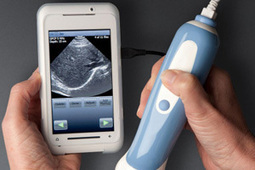
Smartphone Physicals Are Taking Off With Explosion of Apps, Attachments

Reported: Aviva Lev-Ari, PhD, RN


See on Scoop.itCardiovascular Disease: PHARMACO-THERAPY

There’s no shortage of smartphone appsto help people track their health. And in recent months, medical apps have started growing up, leaving behind the novelty of attaching probes to a smartphone to offer, they hope, serious clinical tools.


Last month in a Ted Talk, Shiv Gaglani showed that a standard physical exam can now be done using only smartphone apps and attachments. From blood pressure cuff to stethoscope and otoscope — the thing the doctor uses to look in your ears — all of the doctor’s basic instruments are now available in “smart” format.


See on singularityhub.com

See on Scoop.itCardiovascular Disease: PHARMACO-THERAPY

DALLAS — Two studies evaluating therapeutic hypothermia strategies in patients who had experienced an out-of-hospital cardiac arrest — one looking at the timing of induction and one looking at diffe…

See on www.medpagetoday.com

CRISPR-Cas: A powerful new tool for precise genetic engineering

Reporter: Aviva Lev-Ari, PhD, RN


UPDATED on 7/26/2022

The Nobel Prize in Chemistry 2020: Emmanuelle Charpentier & Jennifer A. Doudna

Reporters: Stephen J. Williams, Ph.D. and Aviva Lev-Ari, PhD, RN

https://pharmaceuticalintelligence.com/2020/10/08/the-nobel-prize-in-chemistry-2020-emmanuelle-charpentier-jennifer-a-doudna/


See on Scoop.itCardiovascular Disease: PHARMACO-THERAPY

Viruses cannot only cause illnesses in humans, they also infect bacteria. Those protect themselves with a kind of ‘immune system’ which – simply put – consists of specific sequences in the genetic material of the bacteria and a suitable enzyme. It detects foreign DNA, which may originate from a virus, cuts it up and thus makes the invaders harmless. Scientists from the Helmholtz Centre for Infection Research (HZI) in Braunschweig have now shown that the dual-RNA guided enzyme Cas9 which is involved in the process has developed independently in various strains of bacteria. This enhances the potential of exploiting the bacterial immune system for genome engineering.


Even though it has only been discovered in recent years the immune system with the cryptic name ‘CRISPR-Cas’ has been attracting attention of geneticists and biotechnologists as it is a promising tool for genetic engineering. CRISPR is short for Clustered Regularly Interspaced Palindromic Repeats, whereas Cas simply stands for the CRISPR-associated protein. Throughout evolution, this molecule has developed independently in numerous strains of bacteria. This is now shown by Prof Emmanuelle Charpentier and her colleagues at the Helmholtz Centre for Infection Research (HZI) who published their finding in the international open access journal Nucleic Acids Research.


The CRISPR-Cas-system is not only valuable for bacteria but also for working in the laboratory. It detects a specific sequence of letters in the genetic code and cuts the DNA at this point. Thus, scientists can either remove or add genes at the interface. By this, for instance, plants can be cultivated which are resistant against vermins or fungi. Existing technologies doing the same thing are often expensive, time consuming or less accurate. In contrast to them the new method is faster, more precise and cheaper, as fewer components are needed and it can target longer gene sequences.


Additionally, this makes the system more flexible, as small changes allow the technology to adapt to different applications. “The CRISPR-Cas-system is a very powerful tool for genetic engineering,“ says Emmanuelle Charpentier, who came to the HZI from Umeå and was awarded with the renowned Humboldt Professorship in 2013. “We have analysed and compared the enzyme Cas9 and the dual-tracrRNAs-crRNAs that guide this enzyme site-specifically to the DNA in various strains of bacteria.” Their findings allow them to classify the Cas9 proteins originating from different bacteria into groups. Within those the CRISPR-Cas systems are exchangeable which is not possible between different groups.


This allows for new ways of using the technology in the laboratory: The enzymes can be combined and thereby a variety of changes in the target-DNA can be made at once. Thus, a new therapy for genetic disorders caused by different mutations in the DNA of the patient could be on the horizon. Furthermore, the method could be used to fight the AIDS virus HIV which uses a receptor of the human immune cells to infect them. Using CRISPR-Cas, the gene for the receptor could be removed and the patients could become immune to the virus. However, it is still a long way until this aim will be reached.


Still those examples show the huge potential of the CRISPR-Cas technology. “Some of my colleagues already compare it to the PCR,” says Charpentier. This method, developed in the 1980s, allows scientists to ‘copy’ nucleic acids and therefore to manifold small amounts of DNA to such an extent that they can be analysed biochemically. Without this ground-breaking technology a lot of experiments we consider to be routine would have never been possible.


Charpentier was not looking for new molecular methods in the first place. “Originally, we were looking for new targets for antibiotics. But we found something completely different,” says Charpentier. This is not rare in science. In fact some of the most significant scientific discoveries have been made incidentally or accidentally.


Reference:

Ines Fonfara, Anaïs Le Rhun, Krzysztof Chylinski, Kira Makarova, Anne-Laure Lécrivain, Janek Bzdrenga, Eugene V. Koonin, Emmanuelle Charpentier: Phylogeny of Cas9 determines functional exchangeability of dual-RNA and Cas9 among orthologous type II CRISPR-Cas systems.


Nucleic Acids Research, 2013, DOI: 10.1093/nar/gkt1074

See on www.helmholtz-hzi.de