Feeds:
Posts
Comments

Archive for the ‘Tissue Engineering’ Category

Contribution to Inflammatory Bowel Disease (IBD) of bacterial overgrowth in gut on a chip

Larry H. Bernstein, MD, FCAP, Curator

LPBI


Contributions of microbiome and mechanical deformation to intestinal bacterial overgrowth and inflammation in a 

human gut-on-a-chip 
Gut-On-a-Chip Holds Clues for Treating Inflammatory Bowel Diseases
Greg Watry
Human intestinal epithelial cells cultured in the Wyss Institute's human gut-on-a-chip form differentiated intestinal villi when cultured in the presence of lifelike fluid flow and rhythmic, peristalsis-like motions. Here the villi are visible using a traditional microscope (left) or a confocal microscope (right); when the same villi are stained with fluorescent antibodies, it clearly reveals the nuclei in the intestinal cells (blue) and their specialized apical membranes when they contact the intestinal lumen (green). Credit: Wyss Institute at Harvard University
Human intestinal epithelial cells cultured in the Wyss Institute’s human gut-on-a-chip form differentiated intestinal villi when cultured in the presence of lifelike fluid flow and rhythmic, peristalsis-like motions. Here the villi are visible using a traditional microscope (left) or a confocal microscope (right); when the same villi are stained with fluorescent antibodies, it clearly reveals the nuclei in the intestinal cells (blue) and their specialized apical membranes when they contact the intestinal lumen (green). Credit: Wyss Institute at Harvard University

Roughly the size of a computer memory stick and made of clear flexible polymer, the human gut-on-a-chip was created by Harvard Univ.’s Wyss Institute in 2012. Three years later, researchers are utilizing the technology in hopes of creating new therapies for inflammatory bowel diseases (IBD).

The Centers for Disease Control and Prevention estimates that between 1 and 1.3 million people suffer from IBD, including such diseases as ulcerative colitis and Crohn’s disease. With origins still mysterious, IBD is currently incurable.

“It has not been possible to study…human intestinal inflammatory diseases, because it is not possible to independently control these parameters in animal studies or in vitro models,” wrote the researchers in Proceedings of the National Academy of the Sciences. “In particular, given the recent recognition of the central role of the intestinal microbiome in human health and disease, including intestinal disorders, it is critical to incorporate commensal microbes into experimental models, however, this has not been possible using conventional culture systems.”

Additionally, static in vitro methods fail to replicate the pathophysiology of human IBD.

But the hollow-channeled microfluidic gut-on-a-chip successfully simulates the human intestine’s physical structure, microenvironment, peristalsis-like motion, and fluid flow.

“With our human gut-on-a-chip, we can not only culture the normal gut microbiome for extended times, but we can also analyze contributions of pathogens, immune cells, and vascular and lymphatic endothelium, as well as model specific diseases to understand the complex pathophysiological responses of the intestinal tract,” said Donald Ingber, founding director of the Wyss Institute.

The device was “used to co-culture multiple commensal microbes in contact with living human intestinal epithelial cells for more than a week in vitro and to analyze how gut microbiome, inflammatory cells, and peristalsis-associated mechanical deformations independently contribute to intestinal bacterial overgrowth and inflammation,” the researchers wrote.

Thus far, use of the device has yielded two interesting observations.

Four proteins—called cytokines—work together to trigger an inflammatory responses that exacerbate the bowel, the researchers found. Potentially, this new discovery could lead to the development of treatments that block the cytokine interaction.

Another observation, the researchers noted, is that “by ceasing peristalsis-like motions while maintaining luminal flow, lack of epithelial deformation was shown to trigger bacterial overgrowth similar to that observed in patients with ileus and inflammatory bowel disease,” according to the researchers.

The researchers believe the micro-device may one day be applicable to precision medicine. Eventually, a custom treatment may arise from scientists using a patient’s gut microbiota and cells on a human gut-on-a-chip.


Contributions of microbiome and mechanical deformation to intestinal bacterial overgrowth and inflammation in a human gut-on-a-chip
Hyun Jung Kima,1, Hu Lia,2, James J. Collinsa,b,c,d,e,f,3, and Donald E. Ingbera,g,h,
http://www.pnas.org/content/early/2015/12/09/1522193112.full.pdf

A human gut-on-a-chip microdevice was used to coculture multiple commensal microbes in contact with living human intestinal epithelial cells for more than a week in vitro and to analyze how gut microbiome, inflammatory cells, and peristalsis-associated mechanical deformations independently contribute to intestinal bacterial overgrowth and inflammation. This in vitro model replicated results from past animal and human studies, including demonstration that probiotic and antibiotic therapies can suppress villus injury induced by pathogenic bacteria. By ceasing peristalsis-like motions while maintaining luminal flow, lack of epithelial deformation was shown to trigger bacterial overgrowth similar to that observed in patients with ileus and inflammatory bowel disease. Analysis of intestinal inflammation on-chip revealed that immune cells and lipopolysaccharide endotoxin together stimulate epithelial cells to produce four proinflammatory cytokines (IL-8, IL-6, IL-1β, and TNF-α) that are necessary and sufficient to induce villus injury and compromise intestinal barrier function. Thus, this human gut-on-a-chip can be used to analyze contributions of microbiome to intestinal pathophysiology and dissect disease mechanisms in a controlled manner that is not possible using existing in vitro systems or animal models.


Significance The main advance of this study is the development of a microengineered model of human intestinal inflammation and bacterial overgrowth that permits analysis of individual contributors to the pathophysiology of intestinal diseases, such as ileus and inflammatory bowel disease, over a period of weeks in vitro. By studying living human intestinal epithelium, with or without vascular and lymphatic endothelium, immune cells, and mechanical deformation, as well as living microbiome and pathogenic microbes, we identified previously unknown contributions of specific cytokines, mechanical motions, and microbiome to intestinal inflammation, bacterial overgrowth, and control of barrier function. We provide proof-of-principle to show that the microfluidic gut-on-a-chip device can be used to create human intestinal disease models and gain new insights into gut pathophysiology.


Various types of inflammatory bowel disease (IBD), such as Crohn’s disease and ulcerative colitis, involve chronic inflammation of human intestine with mucosal injury and villus destruction (1), which is believed to be caused by complex interactions between gut microbiome (including commensal and pathogenic microbes) (2), intestinal mucosa, and immune components (3). Suppression of peristalsis also has been strongly associated with intestinal pathology, inflammation (4, 5), and small intestinal bacterial overgrowth (5, 6) in patients with Crohn’s disease (7) and ileus (8). However, it has not been possible to study the relative contributions of these different potential contributing factors to human intestinal inflammatory diseases, because it is not possible to independently control these parameters in animal studies or in vitro models. In particular, given the recent recognition of the central role of the intestinal microbiome in human health and disease, including intestinal disorders (2), it is critical to incorporate commensal microbes into experimental models; however, this has not been possible using conventional culture systems. Most models of human intestinal inflammatory diseases rely either on culturing an intestinal epithelial cell monolayer in static Transwell culture (9) or maintaining intact explanted human intestinal mucosa ex vivo (10) and then adding live microbes and immune cells to the apical (luminal) or basolateral (mucosal) sides of the cultures, respectively. These static in vitro methods, however, do not effectively recapitulate the pathophysiology of human IBD. For example, intestinal epithelial cells cultured in Transwell plates completely fail to undergo villus differentiation, produce mucus, or form the various specialized cell types of normal intestine. Although higher levels of intestinal differentiation can be obtained using recently developed 3D organoid cultures (11), it is not possible to expose these cells to physiological peristalsis-like motions or living microbiome in long-term culture, because bacterial overgrowth occurs rapidly (within ∼1 d) compromising the epithelium (12). This is a major limitation because establishment of stable symbiosis between the epithelium and resident gut microbiome as observed in the normal intestine is crucial for studying inflammatory disease initiation and progression (13), and rhythmical mechanical deformations driven by peristalsis are required to both maintain normal epithelial differentiation (14) and restrain microbial overgrowth in the intestine in vivo (15).

Thus, we set out to develop an experimental model that would overcome these limitations. To do this, we adapted a recently described human gut-on-a-chip microfluidic device that enables human intestinal epithelial cells (Caco-2) to be cultured in the presence of physiologically relevant luminal flow and peristalsislike mechanical deformations, which promotes formation of intestinal villi lined by all four epithelial cell lineages of the small intestine (absorptive, goblet, enteroendocrine, and Paneth) (12, 16). These villi also have enhanced barrier function, drug-metabolizing cytochrome P450 activity, and apical mucus secretion compared with the same cells grown in conventional Transwell cultures, which made it possible to coculture a probiotic gut microbe (Lactobacillus rhamnosus GG) in direct contact with the intestinal epithelium for more than 2 wk (12), in contrast to static Transwell cultures (17) or organoid cultures (11) that lose viability within hours under similar conditions. In the present study, we leveraged this human gut-on-a-chip to develop a disease model of small intestinal bacterial overgrowth (SIBO) and inflammation. We analyzed how probiotic and pathogenic bacteria, lipopolysaccharide (LPS), immune cells, inflammatory cytokines, vascular endothelial cells and mechanical forces contribute individually, and in combination, to intestinal inflammation, villus injury, and compromise of epithelial barrier function. We also explored whether we could replicate the protective effects of clinical probiotic and antibiotic therapies on-chip to demonstrate its potential use as an in vitro tool for drug development, as well as for dissecting fundamental disease mechanisms.


Fig. 1. The human gut-on-a-chip microfluidic device and changes in phenotype resulting from different culture conditions on-chip, as measured using genome-wide gene profiling. (A) A photograph of the device. Blue and red dyes fill the upper and lower microchannels, respectively. (B) A schematic of a 3D cross-section of the device showing how repeated suction to side channels (gray arrows) exerts peristalsis-like cyclic mechanical strain and fluid flow (white arrows) generates a shear stress in the perpendicular direction. (C) A DIC micrograph showing intestinal basal crypt (red arrow) and villi (white arrow) formed by human Caco-2 intestinal epithelial cells grown for ∼100 h in the gut-on-achip under medium flow (30 μL/h) and cyclic mechanical stretching (10%, 0.15 Hz). (Scale bar, 50 μm.) (D) A confocal immunofluorescence image showing a horizontal cross-section of intestinal villi similar to those shown in Fig. 1C, stained for F-actin (green) that labels the apical brush border of these polarized intestinal epithelial cells (nuclei in blue). (Scale bar, 50 μm.) (E) Hierarchical clustering analysis of genome-wide transcriptome profiles (Top) of Caco-2 cells cultured in the static Transwell, the gut-on-a-chip (with fluid flow at 30 μL/h and mechanical deformations at 10%, 0.15 Hz) (Gut Chip), or the mechanically active gut-on-a-chip cocultured with the VSL#3 formulation containing eight probiotic gut microbes (Gut Chip + VSL#3) for 72 h compared with normal human small intestinal tissues (Duodenum, Jejunum, and Ileum; microarray data from the published GEO database). The dendrogram was generated based on the averages calculated across all replicates, and all branches in the cluster have the approximately unbiased (AU) P value equal to 100. The y axis next to the dendrogram represents the metric for Euclidean distance between samples. Corresponding pseudocolored GEDI maps analyzing profiles of 650 metagenes between samples described above (Bottom).


Fig. 2. Reconstitution of pathological intestinal injury induced by interplay between nonpathogenic or pathogenic enteroinvasive E. coli bacteria or LPS endotoxin with immune cells. (A) DIC images showing that the normal villus morphology of the intestinal epithelium cultured on-chip (Control) is lost within 24 h after EIEC (serotype O124:NM) are added to the apical channel of the chip (+EIEC; red arrows indicate bacterial colonies). (B) Effects of GFP-EC, LPS (15 μg/mL), EIEC, or no addition (Control) on intestinal barrier function (Left). Right shows the TEER profiles in the presence of human PBMCs (+PBMC). GFP-EC, LPS, and EIEC were added to the apical channel (intestinal lumen) at 4, 12, and 35 h, respectively, and PBMCs were subsequently introduced through the lower capillary channel at 44 h after the onset of experiment (0 h) (n = 4). (C) Morphological analysis of intestinal villus damage in response to addition of GFP-EC, LPS, and EIEC in the absence (−PBMC) or the presence of immune components (+PBMC). Schematics (experimental setup), phase contrast images (horizontal view, taken at 57 h after onset), and fluorescence confocal micrographs (vertical cross-sectional views at 83 h after onset) were sequentially displayed. F-actin and nuclei were coded with magenta and blue, respectively. (D) Quantification of intestinal injury evaluated by measuring changes in lesion area (Top; n = 30) and the height of the villi (Bottom; n = 50) in the absence (white) or the presence (gray) of PBMCs. Intestinal villi were grown in the gut-on-a-chip under trickling flow (30 μL/h) with cyclic deformations (10%, 0.15 Hz) during the preculture period for ∼100 h before stimulation (0 h, onset). Asterisks indicate statistical significance compared with the control at the same time point (*P < 0.001, **P < 0.05). (Scale bars, 50 μm.)


Recapitulating Organ-Level Intestinal Inflammatory Responses. During inflammation in the intestine, pathophysiological recruitment of circulating immune cells is regulated via activation of the underlying vascular endothelium. To analyze this organ-level inflammatory response in our in vitro model, a monolayer of human microvascular endothelial cells (Fig. 3 C and D and Fig. S6 A and C) or lymphatic endothelial cells (Fig. S6 B and C) was cultured on the opposite (abluminal) side of the porous ECM-coated membrane in the lower microchannel of the device to effectively create a vascular channel (Fig. 3C). To induce intestinal inflammatory responses, LPS (Fig. 3 C and D) or TNF-α (Fig. S6) was flowed through the upper epithelial channel for 24 h, and then PBMCs were added to the vascular channel for 1 h without flow (Fig. 3 C and D). Treatment with both LPS (or TNF-α) and PBMCs resulted in the activation of intercellular adhesion molecule-1 (ICAM-1) expression on the surface of the endothelium (Fig. 3 C and D, Left, and Fig. S6) and a significant increase (P < 0.001) in the number of PBMCs that adhered to the surface of the capillary endothelium compared with controls (Fig. 3D). These results are consistent with our qPCR results, which also showed up-regulation of genes involved in immune cell trafficking (Fig. S5). Neither addition of LPS nor PBMCs alone was sufficient to induce ICAM-1 expression in these cells (Fig. 3D), which parallels the effects of LPS and PBMCs on epithelial production of inflammatory cytokines (Fig. 3A) as well as on villus injury (Fig. 2 B and D).

Evaluating Antiinflammatory Probiotic and Antibiotic Therapeutics On-Chip. To investigate how the gut microbiome modulates these inflammatory reactions, we cocultured the human intestinal villi with the eight strains of probiotic bacteria in the VSL#3 formulation that significantly enhanced intestinal differentiation (Fig. 1E and Fig. S1B). To mimic the in vivo situation, we colonized our microengineered gut on a chip with the commensal microbes (VSL#3) first and then subsequently added immune cells (PBMCs), pathogenic bacteria (EIEC), or both in combination. The VSL#3 microbial cells inoculated into the germ-free lumen of the epithelial channel primarily grew as discrete microcolonies in the spaces between adjacent villi (Fig. 4A and Movie S3) for more than a week in culture (Fig. S7A), and no planktonic growth was detected. These microbes did not overgrow like the EIEC (Fig. 2A and Movie S2), although occasional microcolonies also appeared at different spatial locations in association with the tips of the villi (Fig. S7 B and C). The presence of these living components of the normal gut microbiome significantly enhanced (P < 0.001) intestinal barrier function, producing more than a 50% increase in TEER relative to control cultures (Fig. 4B) without altering villus morphology (Fig. 4C). This result is consistent with clinical studies suggesting that probiotics, including VSL#3, can significantly enhance intestinal barrier function in vivo (18).

To mimic the effects of antibiotic therapies that are sometimes used clinically in patients with intestinal inflammatory disease (29), we identified a dose and combination of antibiotics (100 units per mL penicillin and 100 μg/mL streptomycin) that produced effective killing of both EIEC and VSL#3 microbes in liquid cultures (Fig. S9) and then injected this drug mixture into the epithelial channel of guton-a-chip devices infected with EIEC. When we added PBMCs to these devices 1 h later, intestinal barrier function (Fig. 4B) and villus morphology (Fig. 4C) were largely protected from injury, and there was a significant reduction in lesion area (Fig. 4D). Thus, the gut-on-a-chip was able to mimic suppression of injury responses previously observed clinically using other antibiotics that produce similar bactericidal effects.

Analyzing Mechanical Contributions to Bacterial Overgrowth. Finally, we used the gut-on-a-chip to analyze whether physical changes in peristalsis or villus motility contribute to intestinal pathologies, such as the small intestinal bacterial overgrowth (SIBO) (5, 6) observed in patients with ileus (8) and IBD (7). When the GFPEC bacteria were cultured on the villus epithelium under normal flow (30 μL/h), but in the absence of the physiological cyclic mechanical deformations, the number of colonized bacteria was significantly higher (P < 0.001) compared with gut chips that experienced mechanical deformations (Fig. 5A). Bacterial cell densities more than doubled within 21 h when cultured under conditions without cyclic stretching compared with gut chips that experienced physiological peristalsis-like mechanical motions, even though luminal flow was maintained constant (Fig. 5B). Thus, cessation of epithelial distortion appears to be sufficient to trigger bacterial overgrowth, and motility-induced luminal fluid flow is not the causative factor as assumed previously (7).


Discussion One of the critical prerequisites for mimicking the living human intestine in vitro is to establish a stable ecosystem containing physiologically differentiated intestinal epithelium, gut bacteria, and immune cells that can be cultured for many days to weeks. Here we leveraged a mechanically active gut-on-a-chip microfluidic device to develop an in vitro model of human intestinal inflammation that permits stable long-term coculture of commensal microbes of the gut microbiome with intestinal epithelial cells. The synthetic model of the human living intestine we built recapitulated the minimal set of structures and functions necessary to mimic key features of human intestinal pathophysiology during chronic inflammation and bacterial overgrowth including epithelial and vascular inflammatory processes and destruction of intestinal villi.

Read Full Post »

Surgical Separation of Conjoined Twins been Computer-Aided with CT and 3D BioPrinting

Reporter: Aviva Lev-Ari, PhD, RN


From: “PR Newswire for Journalists” <push_services@prnewswire.com>

Sent: Wednesday, December 02, 2015 4:04 PM

To: info@newmedinc.com

Subject: CT and 3-D Printing Aid Surgical Separation of Conjoined Twins


CT and 3-D Printing Aid Surgical Separation of Conjoined Twins

CHICAGO, Dec. 2, 2015 /PRNewswire-USNewswire/ — A combination of detailed CT imaging and 3-D printing technology has been used for the first time in the surgical planning for separation of conjoined twins, according to a study presented today at the annual meeting of the Radiological Society of North America (RSNA).

Conjoined twins, or twins whose bodies are connected, account for approximately one of every 200,000 live births. Survival rates are low and separating them through surgery is extremely difficult because they often share organs and blood vessels.

Specialists at Texas Children’s Hospital in Houston brought a new approach to these challenges when they set out to surgically separate Knatalye Hope and Adeline Faith Mata, conjoined twins from Lubbock, Texas. Knatalye and Adeline were born on April 11, 2014, connected from the chest all the way down to the pelvis.

“This case was unique in the extent of fusion,” said the study’s lead author, Rajesh Krishnamurthy, M.D., chief of radiology research and cardiac imaging at Texas Children’s Hospital. “It was one of the most complex separations ever for conjoined twins.”

To prepare for the separation surgery, Dr. Krishnamurthy and colleagues performed volumetric CT imaging with a 320-detector scanner, administering intravenous contrast separately to both twins to enhance views of vital structures and help plan how to separate them to ensure survival of both children. They used a technique known as target mode prospective EKG gating to freeze the motion of the hearts on the images and get a more detailed view of the cardiovascular anatomy, while keeping the radiation exposure low.

“The CT scans showed that the babies’ hearts were in the same cavity but were not fused,” Dr. Krishnamurthy said. “Also, we detected a plane of separation of the liver that the surgeons would be able to use.”

The team translated the CT imaging results into a color-coded physical 3-D model with skeletal structures and supports made in hard plastic resin, and organs built from a rubber-like material. The livers were printed as separate pieces of the transparent resin, with major blood vessels depicted in white for better visibility. The models were designed so that they could be assembled together or separated during the surgical planning process. The surgical team used the models during the exhaustive preparation process leading up to the surgery.

On February 17, a little more than 10 months after they were born, the Mata twins underwent surgical separation by a team of more than 26 clinicians, including 12 surgeons, six anesthesiologists and eight surgical nurses. The official separation took place approximately 18 hours into the 26-hour surgery.

The 3-D models proved to be an excellent source of information, as there were no major discrepancies between the models and the twins’ actual anatomy.

“The surgeons found the landmarks for the liver, hearts and pelvic organs just as we had described,” Dr. Krishnamurthy said. “The concordance was almost perfect.”

Dr. Krishnamurthy expects the combination of volumetric CT, 3-D modeling, and 3-D printing to become a standard part of preparation for surgical separation of conjoined twins, although barriers remain to its adoption.

“The 3-D printing technology has advanced quite a bit, and the costs are declining. What’s limiting it is a lack of reimbursement for these services,” he said. “The procedure is not currently recognized by insurance companies, so right now hospitals are supporting the costs.”

Besides assisting clinicians prepare for surgery, the 3-D model also served another important function: helping the twins’ parents, Elysse and John Eric Mata, understand the process.

“When I showed the mother the model and explained the procedure, she held my hand and thanked me,” Dr. Krishnamurthy recalled. “They said, ‘For the first time, we understand what is going to happen with our babies.'”

Knatalye Hope returned home in May 2015 and her sister Adeline Faith came home a month later. They are both doing well and have a Facebook page, “Helping Faith & Hope Mata,” with updates on their progress.

Co-authors on the study are Nicholas Dodd, B.S., Darrell Cass, M.D., Amrita Murali and Jayanthi Parthasarathy, B.D.S., M.S., Ph.D.

Note: Copies of RSNA 2015 news releases and electronic images will be available online at RSNA.org/press15 beginning Monday, Nov. 30.

RSNA is an association of more than 54,000 radiologists, radiation oncologists, medical physicists and related scientists, promoting excellence in patient care and health care delivery through education, research and technologic innovation. The Society is based in Oak Brook, Ill. (RSNA.org)

For patient-friendly information on CT, visit RadiologyInfo.org.

SOURCE Radiological Society of North America (RSNA)

Radiological Society of North America (RSNA)

CONTACT: RSNA Newsroom, 1-312-791-6610; Before 11/28/15 or after 12/3/15: RSNA Media Relations, 1-630-590-7762; Linda Brooks, 1-630-590-7738, lbrooks@rsna.org; Maureen Morley, 1-630-590-7754, mmorley@rsna.org

Web Site: http://www.rsna.org

SOURCE

From: “Dr. Katie Katie Siafaca” <info@newmedinc.com>

Reply-To: “Dr. Katie Katie Siafaca” <info@newmedinc.com>

Date: Thursday, December 3, 2015 at 2:00 PM

To: Aviva Lev-Ari <AvivaLev-Ari@alum.berkeley.edu>

Subject: fw: CT and 3-D Printing Aid Surgical Separation of Conjoined Twins


Read Full Post »

3-D Thyroid Bioprinted

Curator: Larry H Bernstein, MD, FCAP

3D-Printed Thyroid Gland

http://www.3dbioprintingconference.com/3d-bioprinting/russian-scientists-successfully-implant-3d-printed-thyroid-gland/

10/11/2015

A Russian company announced a successful experiment implanting 3D-printed thyroid glands into mice, and the results will be published next week, said Dmitri Fadin, development director at 3D Printing Solutions.

“We had some difficulties during the study, but in the end the thyroid gland turned out to be functional,” Mr. Fadin told RBTH.

3D Bioprinting Solutions printed the thyroid gland – or to be exact, the gland’s organ construct – in March of this year. At that time, scientific laboratories were saying that they will start printing human thyroid glands if the experiment is successful.

3D Bioprinting Solutions uses existing 3D print technology that makes items from plastic, ceramic and metals, but it had to make adaptations for biological material, that is, for cells. Before transplanting the artificial gland, scientists “carved out” a thyroid in the mice using radioactive iodine.

Vladimir Mironov founded 3D Bioprinting Solutions in 2013. He a tissue engineer, and co-founder of two startups in the U.S., Cardiovascular Tissue Technology, and Cuspis.

Source: rbth.com

Organ printing

3D Biopr

“We had some difficulties during the study, but in the end the thyroid gland turned out to be functional,” Mr. Fadin told RBTH.

Printing Solutions printed the thyroid gland in March 2015

http://rbth.com/science_and_tech/2015/11/02/rusian-scientists-succesfully-implant-the-first-3d-printed-thyroid-gland_536205

http://nl.media.rbth.ru/468×312/all/2015/11/02/organ_printing_invitro-3dbio-reportage-97739_468.jpg

Russian scientists successfully implant the first 3D-printed thyroid gland

November 2, 2015 VICTORIA ZAVYÁLOVA, RBTH
A thyroid gland printed last March by 3D Printing Solutions is now proven to be fully functional, and experts say the results will revolutionize medicine.

Read Full Post »

Osteo Putty

Larry H. Bernstein, MD, FCAP, Curator

LPBI


Xtant Medical Announces First Surgical Use Of OsteoSelect® PLUS DBM Putty

http://www.laboratorynetwork.com/doc/xtant-medical-announces-first-surgical-use-of-osteoselect-0001


Belgrade, Mt (GLOBE NEWSWIRE) – Xtant Medical Holdings, Inc. (NYSE MKT:XTNT), a leader in the development of regenerative medicine products and medical devices, today announced the first surgical implantation of OsteoSelect PLUS Demineralized Bone Matrix (DBM) Putty, developed by its wholly owned subsidiary, Bacterin International, Inc.

OsteoSelect PLUS is a next-generation DBM putty, comprised of OsteoSelect DBM Putty and demineralized cortical chips, designed to provide superior handling for surgeon end users during surgery. Dr. Ali Araghi, DO, Director of the Spine Division at The CORE Institute was the first surgeon to utilize OsteoSelect® PLUS DBM Putty in a spinal fusion procedure.

“OsteoSelect PLUS is aligned with Xtant’s commitment to patient safety and superior clinical outcomes,” stated Dan Goldberger, CEO of Xtant. “OsteoSelect PLUS provides a sterile grafting solution to meet the needs of surgeons and expands our offering in the DBM market space.”

OsteoSelect PLUS was developed in response to surgeon demand. Utilizing surgeon input for design allowed Bacterin to create an additional first class, bone graft substitute in the DBM space and strengthen its comprehensive product portfolio.

About Xtant Medical Holdings
Xtant Medical Holdings, Inc. (NYSE MKT:XTNT) develops, manufactures and markets class-leading regenerative medicine products and medical devices for domestic and international markets. Xtant products serve the specialized needs of orthopedic and neurological surgeons, including orthobiologics for the promotion of bone healing, implants and instrumentation for the treatment of spinal disease, tissue grafts for the treatment of orthopedic disorders, and biologics to promote healing following cranial, and foot and ankle surgeries. With core competencies in both biologic and non-biologic surgical technologies, Xtant can leverage its resources to successfully compete in global neurological and orthopedic surgery markets. For further information, please visit http://www.xtantmedical.com.

Important Cautions Regarding Forward-looking Statements
This press release contains certain disclosures that may be deemed forward-looking statements within the meaning of the Private Securities Litigation Reform Act of 1995 that are subject to significant risks and uncertainties. Forward-looking statements include statements that are predictive in nature, that depend upon or refer to future events or conditions, or that include words such as “continue,” “efforts,” “expects,” “anticipates,” “intends,” “plans,” “believes,” “estimates,” “projects,” “forecasts,” “strategy,” “will,” “goal,” “target,” “prospects,” “potential,” “optimistic,” “confident,” “likely,” “probable” or similar expressions or the negative thereof. Statements of historical fact also may be deemed to be forward-looking statements. We caution that these statements by their nature involve risks and uncertainties, and actual results may differ materially depending on a variety of important factors, including, among others: the Company’s ability to successfully integrate the acquisition of X-spine; the ability of the Company’s sales force to achieve expected results; the Company’s ability to meet its existing and anticipated contractual obligations, including financial covenant and other obligations contained in the Company’s secured lending facility; the Company’s ability to manage cash flow; the Company’s ability to develop, market, sell and distribute desirable applications, products and services and to protect its intellectual property; the ability of the Company’s customers to pay and the timeliness of such payments; the Company’s ability to obtain financing as and when needed; changes in consumer demands and preferences; the Company’s ability to attract and retain management and employees with appropriate skills and expertise; the impact of changes in market, legal and regulatory conditions and in the applicable business environment, including actions of competitors; and other factors. Additional risk factors are listed in the Company’s Annual Report on Form 10-K and Quarterly Reports on Form 10-Q under the heading “Risk Factors.” The Company undertakes no obligation to release publicly any revisions to any forward-looking statements to reflect events or circumstances after the date hereof or to reflect the occurrence of unanticipated events, except as required by law.

© Copyright 2015, GlobeNewswire, Inc. All Rights Reserved.

SOURCE: Xtant Medical Holdings, Inc.

Read Full Post »

FDA Cellular & Gene Therapy Guidances: Implications for CRSPR/Cas9 Trials, Volume 2 (Volume Two: Latest in Genomics Methodologies for Therapeutics: Gene Editing, NGS and BioInformatics, Simulations and the Genome Ontology), Part 2: CRISPR for Gene Editing and DNA Repair

FDA Cellular & Gene Therapy Guidances: Implications for CRSPR/Cas9 Trials

Reporter: Stephen J. Williams, PhD

The recent announcement by Editas CEO Katrine Bosley to pursue a CRSPR/Cas9 gene therapy trial to correct defects in an yet to be disclosed gene to treat one form of a rare eye disease called Leber congenital amaurosis (multiple mutant genes have been linked to the disease) have put an interesting emphasis on the need for a regulatory framework to initiate these trials. Indeed at the 2015 EmTechMIT Conference Editas CEO Katrine Bosley had mentioned this particular issue: the need for discourse with FDA and regulatory bodies to establish guidelines for design of clinical trials using the CRSPR gene editing tool.

See the LIVE NOTES from Editas CEO Katrine Bosley on using CRSPR as a gene therapy from the 2015 EmTechMIT Conference at http://pharmaceuticalintelligence.com/2015/11/03/live-1132015-130pm-the-15th-annual-emtech-mit-mit-media-lab-top-10-breakthrough-technologies-2015-innovators-under-35/

To this effect, I have listed below, the multiple FDA Guidance Documents surrounding gene therapy to show that, in the past year, the FDA has shown great commitment to devise a regulatory framework for this therapeutic area.

Cellular & Gene Therapy Guidance Documents

Withdrawn Guidance Documents

Three other posts on this site goes into detail into three of the above-mentioned Guidance Documents

FDA Guidance on Use of Xenotransplanted Products in Human: Implications in 3D Printing

New FDA Draft Guidance On Homologous Use of Human Cells, Tissues, and Cellular and Tissue-Based Products – Implications for 3D BioPrinting of Regenerative Tissue

FDA Guidance Documents Update Nov. 2015 on Devices, Animal Studies, Gene Therapy, Liposomes


Read Full Post »

New FDA Draft Guidance On Homologous Use of Human Cells, Tissues, and Cellular and Tissue-Based Products – Implications for 3D BioPrinting of Regenerative Tissue

Reporter: Stephen J. Williams, Ph.D.

The FDA recently came out with a Draft Guidance on use of human cells, tissues and cellular and tissue-based products (HCT/P) {defined in 21 CFR 1271.3(d)} and their use in medical procedures. Although the draft guidance was to expand on previous guidelines to prevent the introduction, transmission, and spread of communicable diseases, this updated draft may have implications for use of such tissue in the emerging medical 3D printing field.

A full copy of the PDF can be found here for reference but the following is a summary of points of the guidance.FO508ver – 2015-373 HomologousUseGuidanceFinal102715

In 21 CFR 1271.10, the regulations identify the criteria for regulation solely under section 361 of the PHS Act and 21 CFR Part 1271. An HCT/P is regulated solely under section 361 of the PHS Act and 21 CFR Part 1271 if it meets all of the following criteria (21 CFR 1271.10(a)):

  • The HCT/P is minimally manipulated;
  • The HCT/P is intended for homologous use only, as reflected by the labeling, advertising, or other indications of the manufacturer’s objective intent;
  • The manufacture of the HCT/P does not involve the combination of the cells or tissues with another article, except for water, crystalloids, or a sterilizing, preserving, or storage agent, provided that the addition of water, crystalloids, or the sterilizing, preserving, or storage agent does not raise new clinical safety concerns with respect to the HCT/P; and
  • Either:
  1. The HCT/P does not have a systemic effect and is not dependent upon the metabolic activity of living cells for its primary function; or
  2. The HCT/P has a systemic effect or is dependent upon the metabolic activity of living cells for its primary function, and:
  3. Is for autologous use;
  4. Is for allogeneic use in a first-degree or second-degree blood relative; or
  5. Is for reproductive use.

If an HCT/P does not meet all of the criteria in 21 CFR 1271.10(a), and the establishment that manufactures the HCT/P does not qualify for any of the exceptions in 21 CFR 1271.15, the HCT/P will be regulated as a drug, device, and/or biological product under the Federal Food, Drug and Cosmetic Act (FD&C Act), and/or section 351 of the PHS Act, and applicable regulations, including 21 CFR Part 1271, and pre-market review will be required.

1 Examples of HCT/Ps include, but are not limited to, bone, ligament, skin, dura mater, heart valve, cornea, hematopoietic stem/progenitor cells derived from peripheral and cord blood, manipulated autologous chondrocytes, epithelial cells on a synthetic matrix, and semen or other reproductive tissue. The following articles are not considered HCT/Ps: (1) Vascularized human organs for transplantation; (2) Whole blood or blood components or blood derivative products subject to listing under 21 CFR Parts 607 and 207, respectively; (3) Secreted or extracted human products, such as milk, collagen, and cell factors, except that semen is considered an HCT/P; (4) Minimally manipulated bone marrow for homologous use and not combined with another article (except for water, crystalloids, or a sterilizing, preserving, or storage agent, if the addition of the agent does not raise new clinical safety concerns with respect to the bone marrow); (5) Ancillary products used in the manufacture of HCT/P; (6) Cells, tissues, and organs derived from animals other than humans; (7) In vitro diagnostic products as defined in 21 CFR 809.3(a); and (8) Blood vessels recovered with an organ, as defined in 42 CFR 121.2 that are intended for use in organ transplantation and labeled “For use in organ transplantation only.” (21 CFR 1271.3(d))

Contains Nonbinding Recommendations
Draft – Not for Implementation

Section 1271.10(a)(2) (21 CFR 1271.10(a)(2)) provides that one of the criteria for an HCT/P to be regulated solely under section 361 of the PHS Act is that the “HCT/P is intended for homologous use only, as reflected by the labeling, advertising, or other indications of the manufacturer’s objective intent.” As defined in 21 CFR 1271.3(c), homologous use means the repair, reconstruction, replacement, or supplementation of a recipient’s cells or tissues with an HCT/P that performs the same basic function or functions in the recipient as in the donor. This criterion reflects the Agency’s conclusion that there would be increased safety and effectiveness concerns for HCT/Ps that are intended for a non-homologous use, because there is less basis on which to predict the product’s behavior, whereas HCT/Ps for homologous use can reasonably be expected to function appropriately (assuming all of the other criteria are also met).2 In applying the homologous use criterion, FDA will determine what the intended use of the HCT/P is, as reflected by the the labeling, advertising, and other indications of a manufacturer’s objective intent, and will then apply the homologous use definition.

FDA has received many inquiries from manufacturers about whether their HCT/Ps meet the homologous use criterion in 21 CFR 1271.10(a)(2). Additionally, transplant and healthcare providers often need to know this information about the HCT/Ps that they are considering for use in their patients. This guidance provides examples of different types of HCT/Ps and how the regulation in 21 CFR 1271.10(a)(2) applies to them, and provides general principles that can be applied to HCT/Ps that may be developed in the future. In some of the examples, the HCT/Ps may fail to meet more than one of the four criteria in 21 CFR 1271.10(a).

III. QUESTIONS AND ANSWERS

  1. What is the definition of homologous use?

Homologous use means the repair, reconstruction, replacement, or supplementation of a recipient’s cells or tissues with an HCT/P that performs the same basic function or functions in the recipient as in the donor (21 CFR 1271.3(c)), including when such cells or tissues are for autologous use. We generally consider an HCT/P to be for homologous use when it is used to repair, reconstruct, replace, or supplement:

  • Recipient cells or tissues that are identical (e.g., skin for skin) to the donor cells or tissues, and perform one or more of the same basic functions in the recipient as the cells or tissues performed in the donor; or,
  • Recipient cells that may not be identical to the donor’s cells, or recipient tissues that may not be identical to the donor’s tissues, but that perform one or more of the same basic functions in the recipient as the cells or tissues performed in the donor.3

2 Proposed Approach to Regulation of Cellular and Tissue-Based Products, FDA Docket. No. 97N-0068 (February. 28, 1997) page 19. http://www.fda.gov/downloads/biologicsbloodvaccines/guidancecomplianceregulatoryinformation/guidances/tissue/ ucm062601.pdf.

3“Establishment Registration and Listing for Manufacturers of Human Cellular and Tissue-Based Products” 63 FR 26744 at 26749 (May 14, 1998).

Contains Nonbinding Recommendations
Draft – Not for Implementation

1-1. A heart valve is transplanted to replace a dysfunctional heart valve. This is homologous use because the donor heart valve performs the same basic function in the donor as in the recipient of ensuring unidirectional blood flow within the heart.

1-2. Pericardium is intended to be used as a wound covering for dura mater defects. This is homologous use because the pericardium is intended to repair or reconstruct the dura mater and serve as a covering in the recipient, which is one of the basic functions it performs in the donor.

Generally, if an HCT/P is intended for use as an unproven treatment for a myriad of

diseases or conditions, the HCT/P is likely not intended for homologous use only.4

  1. What does FDA mean by repair, reconstruction, replacement, or supplementation of a recipient’s cells or tissues?

Repair generally means the physical or mechanical restoration of tissues, including by covering or protecting. For example, FDA generally would consider skin removed from a donor and then transplanted to a recipient in order to cover a burn wound to be a homologous use. Reconstruction generally means surgical reassembling or re-forming. For example, reconstruction generally would include the reestablishment of the physical integrity of a damaged aorta.5 Replacement generally means substitution of a missing tissue or cell, for example, the replacement of a damaged or diseased cornea with a healthy cornea or the replacement of donor hematopoietic stem/progenitor cells in a recipient with a disorder affecting the hematopoietic system that is inherited, acquired, or the result of myeloablative treatment. Supplementation generally means to add to, or complete. For example, FDA generally would consider homologous uses to be the implantation of dermal matrix into the facial wrinkles to supplement a recipient’s tissues and the use of bone chips to supplement bony defects. Repair, reconstruction, replacement, and supplementation are not mutually exclusive functions and an HCT/P could perform more than one of these functions for a given intended use.

  1. What does FDA mean by “the same basic function or functions” in the definition of homologous use?

For the purpose of applying the regulatory framework, the same basic function or functions of HCT/Ps are considered to be those basic functions the HCT/P performs in the body of the donor, which, when transplanted, implanted, infused, or transferred, the HCT/P would be expected to perform in the recipient. It is not necessary for the HCT/P in the recipient to perform all of the basic functions it performed in the donor, in order to

4 “Human Cells, Tissues, and Cellular and Tissue-Based Products; Establishment Registration and Listing” 66 FR 5447 at 5458 (January 19, 2001).

5 “Current Good Tissue Practice for Human Cell, Tissue, and Cellular and Tissue-Based Product Establishments; Inspection and Enforcement” 69 FR 68612 at 68643 (November 24, 2004) states, “HCT/Ps with claims for “reconstruction or repair” can be regulated solely under section 361 of the PHS Act, provided the HCT/P meets all the criteria in § 1271.10, including minimal manipulation and homologous use.”

Contains Nonbinding Recommendations
Draft – Not for Implementation

meet the definition of homologous use. However, to meet the definition of homologous use, any of the basic functions that the HCT/P is expected to perform in the recipient must be a basic function that the HCT/P performed in the donor.

A homologous use for a structural tissue would generally be to perform a structural function in the recipient, for example, to physically support or serve as a barrier or conduit, or connect, cover, or cushion.

A homologous use for a cellular or nonstructural tissue would generally be a metabolic or biochemical function in the recipient, such as, hematopoietic, immune, and endocrine functions.

3-1. The basic functions of hematopoietic stem/progenitor cells (HPCs) include to form and to replenish the hematopoietic system. Sources of HPCs include cord blood, peripheral blood, and bone marrow.6

  1. HPCs derived from peripheral blood are intended for transplantation into an individual with a disorder affecting the hematopoietic system that is inherited, acquired, or the result of myeloablative treatment. This is homologous use because the peripheral blood product performs the same basic function of reconstituting the hematopoietic system in the recipient.
  2. HPCs derived from bone marrow are infused into an artery with a balloon catheter for the purpose of limiting ventricular remodeling following acute myocardial infarction. This is not homologous use because limiting ventricular remodeling is not a basic function of bone marrow.
  3. A manufacturer provides HPCs derived from cord blood with a package insert stating that cord blood may be infused intravenously to differentiate into neuronal cells for treatment of cerebral palsy. This is not homologous use because there is insufficient evidence to support that such differentiation is a basic function of these cells in the donor.

3-2. The basic functions of the cornea include protecting the eye by forming its outermost layer and serving as the refracting medium of the eye. A corneal graft is transplanted to restore sight in a patient with corneal blindness. This is homologous use because a corneal graft performs the same basic functions in the donor as in the recipient.

3-3. The basic functions of a vein or artery include serving as a conduit for blood flow throughout the body. A cryopreserved vein or artery is used for arteriovenous access during hemodialysis. This is homologous use because the vein or artery is supplementing the vessel as a conduit for blood flow.

3-4. The basic functions of amniotic membrane include covering, protecting, serving as a selective barrier for the movement of nutrients between the external and in utero

6 Bone marrow meets the definition of an HCT/P only if is it more than minimally manipulated; intended by the manufacturer for a non-homologous use, or combined with certain drugs or devices.

Contains Nonbinding Recommendations
Draft – Not for Implementation

environment, and to retain fluid in utero. Amniotic membrane is used for bone tissue replacement to support bone regeneration following surgery to repair or replace bone defects. This is not a homologous use because bone regeneration is not a basic function of amniotic membrane.

3-5. The basic functions of pericardium include covering, protecting against infection, fixing the heart to the mediastinum, and providing lubrication to allow normal heart movement within chest. Autologous pericardium is used to replace a dysfunctional heart valve in the same patient. This is not homologous use because facilitating unidirectional blood flow is not a basic function of pericardium.

  1. Does my HCT/P have to be used in the same anatomic location to perform the same basic function or functions?

An HCT/P may perform the same basic function or functions even when it is not used in the same anatomic location where it existed in the donor.7 A transplanted HCT/P could replace missing tissue, or repair, reconstruct, or supplement tissue that is missing or damaged, either when placed in the same or different anatomic location, as long as it performs the same basic function(s) in the recipient as in the donor.

4-1. The basic functions of skin include covering, protecting the body from external force, and serving as a water-resistant barrier to pathogens or other damaging agents in the external environment. The dermis is the elastic connective tissue layer of the skin that provides a supportive layer of the integument and protects the body from mechanical stress.

  1. An acellular dermal product is used for supplemental support, protection, reinforcement, or covering for a tendon. This is homologous use because in both anatomic locations, the dermis provides support and protects the soft tissue structure from mechanical stress.
  2. An acellular dermal product is used for tendon replacement or repair. This is not homologous use because serving as a connection between muscle and bone is not a basic function of dermis.

4-2. The basic functions of amniotic membrane include serving as a selective barrier for the movement of nutrients between the external and in utero environment and to retain fluid in utero. An amniotic membrane product is used for wound healing of dermal ulcers and defects. This is not homologous use because wound healing of dermal lesions is not a basic function of amniotic membrane.

4-3. The basic functions of pancreatic islets include regulating glucose homeostasis within the body. Pancreatic islets are transplanted into the liver through the portal vein,

7 “Human Cells, Tissues, and Cellular and Tissue-Based Products; Establishment Registration and Listing” 66 FR 5447 at 5458 (January 19, 2001).

6

Contains Nonbinding Recommendations
Draft – Not for Implementation

for preservation of endocrine function after pancreatectomy. This is homologous use because the regulation of glucose homeostasis is a basic function of pancreatic islets.

  1. What does FDA mean by “intended for homologous use” in 21 CFR 1271.10(a)(2)?

The regulatory criterion in 21 CFR 1271.10(a)(2) states that the HCT/P is intended for homologous use only, as reflected by the labeling, advertising, or other indications of the manufacturer’s objective intent.

Labeling includes the HCT/P label and any written, printed, or graphic materials that supplement, explain, or are textually related to the product, and which are disseminated by or on behalf of its manufacturer.8 Advertising includes information, other than labeling, that originates from the same source as the product and that is intended to supplement, explain, or be textually related to the product (e.g., print advertising, broadcast advertising, electronic advertising (including the Internet), statements of company representatives).9

An HCT/P is intended for homologous use when its labeling, advertising, or other indications of the manufacturer’s objective intent refer to only homologous uses for the HCT/P. When an HCT/P’s labeling, advertising, or other indications of the manufacturer’s objective intent refer to non-homologous uses, the HCT/P would not meet the homologous use criterion in 21 CFR 1271.10(a)(2).

  1. What does FDA mean by “manufacturer’s objective intent” in 21 CFR 1271.10(a)(2)?

A manufacturer’s objective intent is determined by the expressions of the manufacturer or its representatives, or may be shown by the circumstances surrounding the distribution of the article. A manufacturer’s objective intent may, for example, be shown by labeling claims, advertising matter, or oral or written statements by the manufacturer or its representatives. It may be shown by the circumstances that the HCT/P is, with the knowledge of the manufacturer or its representatives, offered for a purpose for which it is neither labeled nor advertised.

Read Full Post »

3D BioPrinted Carbon Nanotubes used to Stimulate Bone Regrowth

Reporter: Irina Robu, PhD

Bone disorders are of significant concern due to increase in the median age of our population and at this present time bone grafts have are used to restore damaged bone. However, synthetic biomaterials are now being used as bone graft substitutes and they are selected for structural restoration based on their biomechanical properties. Lately, scaffolds are engineered to be bioactive to enhance tissue growth. These scaffolds are usually porous, made of biodegradable factors, drugs or stem cells.

The research group led by Dr. Maria Vallet-Regi at Faculty of Pharmacy-Universidad Complutense de Madrid showed that carbon nanotubes to the mix to create 3D electrical network within the bone tissue can stimulate bone cell regrowth. The polymer they used was polycarpolactone (PCL), which is rather easy to 3D print. According to Mercedes Vila, the Principal Investigator in charge of the project, the carbon nanotubes were added to the bio-printable material mixture to create a three-dimensional electrical conducting network all through the volume of the scaffold, which would allow the application of this stimulation to the scaffold once implanted on the damaged bone site.

“In this sense, electrical stimulation has been explored since the discovery of the presence of electrical potentials in mechanically loaded bones,” Mercedes pointed out. “Certain types of cell behavior, such as adhesion and differentiation, can be affected by the application of electrical stimulation. Thus, the creation of a permanent charge on the material surface, positive or negative, as well as a direct electrical stimulation can promote the attraction of charged ions from the environment to the cells. This would modify their protein adsorption with the subsequent influence on the cells’ metabolic activity. Therefore, the use of electrical stimulation after biomaterial implantation to favor cell adhesion and differentiation and, consequently, induce bone healing seems a smart approach to accelerate the osteointegration process.”

Adding CNTs into the bio-printed polymer and mineral prosthetic bone can stimulate regrowth of the actual bone cells. However, bio-printing CNTs created no extra difficulties, as they are so thin that they can be extruded with ease through any pneumatic syringe. Most of the complications are related to finding the correct viscosity in the combination of CPL and hydroxypatite.

“Finding the right right viscosity to be extruded through the syringe while keeping enough robustness to get the 3D scaffold printed at room temperature, was complicated,” Mercedes admitted. “At the same time as the slurry was prepared in dichloromethane solution for diluting the PCL, achieving the right viscosity while evaporating the solvent was tricky. Moreover, once the PCL and the hydroxyapatite were mixed together, the addition of the CNTs was performed and reaching a proper dispersion took a bit of stirring time.”

Using EnvisionTEC’s 3D bioplotter, the researchers were able to create very complex 3D structures which would enhance the future for tissue replacements as it allows tailored solutions by capturing the anatomical information of the patient’s wound by computed tomography and magnetic resonance, for example, to obtain a personalized and unique implant.

As with many other 3D printing applications, it appears we are only starting to scratch the surface of the possibilities that are ahead for bioprinting.

Source

https://lockerdome.com/3dprintingindustry/8020474642838036

Other related articles published in this Open Access Online Scientific Journal include the following:

search for Bone related articles, please place here references

Read Full Post »

Gene Editing by creation of a complement without transcription error

Larry H. Bernstein, MD, FCAP, Curator

LPBI

2.2.19

2.2.19   Gene Editing by Creation of a Complement without Transcription Error, Volume 2 (Volume Two: Latest in Genomics Methodologies for Therapeutics: Gene Editing, NGS and BioInformatics, Simulations and the Genome Ontology), Part 2: CRISPR for Gene Editing and DNA Repair

Nanoparticle-Based Artificial Transcription Factor  

NanoScript: A Nanoparticle-Based Artificial Transcription Factor for Effective Gene Regulation

Abstract Image

Transcription factor (TF) proteins are master regulators of transcriptional activity and gene expression. TF-based gene regulation is a promising approach for many biological applications; however, several limitations hinder the full potential of TFs. Herein, we developed an artificial, nanoparticle-based transcription factor, termed NanoScript, which is designed to mimic the structure and function of TFs. NanoScript was constructed by tethering functional peptides and small molecules called synthetic transcription factors, which mimic the individual TF domains, onto gold nanoparticles. We demonstrate that NanoScript localizes within the nucleus and initiates transcription of a reporter plasmid by over 15-fold. Moreover, NanoScript can effectively transcribe targeted genes on endogenous DNA in a nonviral manner. Because NanoScript is a functional replica of TF proteins and a tunable gene-regulating platform, it has great potential for various stem cell applications.

NanoScript_emulates_TF_Structure_and_Function_large.jpg

http://www.energyigert.rutgers.edu/sites/default/files/faculty/kibumlee/NanoScript_emulates_TF_Structure_and_Function_large.jpg

HIGHLIGHTS

  • Transcription Factors (TF) are proteins that regulate transcription and gene expression
  • NanoScript is an versatile, nanoparticle-based platform that mimics TF structure and biological function
  • NanoScript is stable in physiological environments and localizes within the nucleus
  • NanoScript initiates targeted gene expression by over 15-fold to 30 fold, which would be critical for stem cell differentiation and cellular reprogramming
  • NanoScript transcribes endogenous genes on native DNA in a non-viral manner

Transcription factor (TF) proteins are master regulators of transcriptional activity and gene expression. TF-based gene regulation is an essential approach for many biological applications such as stem cell differentiation and cellular programming, however, several limitations hinder the full potential of TFs.

To address this challenge, researchers in Prof. KiBum Lee’s group (Sahishnu Patel and Perry Yin) developed an artificial, nanoparticle-based transcription factor, termed NanoScript, which is designed to mimic the structure and function of TFs. NanoScript was constructed by tethering functional peptides and small molecules called synthetic transcription factors, which mimic the individual TF domains, onto gold nanoparticles. They demonstrated that NanoScript localizes within the nucleus and initiates transcription of a targeted gene with high efficiency. Moreover, NanoScript can effectively transcribe targeted genes on endogenous DNA in a non-viral manner.

NanoScript is a functional replica of TF proteins and a tunable gene-regulating platform. NanoScript has two attractive features that make this the perfect platform for stem cell-based application. First, because gene regulation by NanoScript is non-viral, it serves as an attractive alternative to current differentiation methods that use viral vectors. Second, by simply rearranging the sequence of one molecule on NanoScript, NanoScript can target any differentiation-specific genes and induce differentiation, and thus has excellent prospect for applications in stem cell biology and cellular reprogramming.

Perry To-tien Yin
PhD Candidate, Rutgers University
Prospects for graphene–nanoparticle-based hybrid sensors

PT Yin, TH Kim, JW Choi, KB Lee
Physical Chemistry Chemical Physics 15 (31), 12785-12799
31 2013
Axonal Alignment and Enhanced Neuronal Differentiation of Neural Stem Cells on Graphene‐Nanoparticle Hybrid Structures

A Solanki, STD Chueng, PT Yin, R Kappera, M Chhowalla, KB Lee
Advanced Materials 25 (38), 5477-5482
22 2013
Label‐Free Polypeptide‐Based Enzyme Detection Using a Graphene‐Nanoparticle Hybrid Sensor

S Myung, PT Yin, C Kim, J Park, A Solanki, PI Reyes, Y Lu, KS Kim, …
Advanced Materials 24 (45), 6081-6087
22 2012
Guiding Stem Cell Differentiation into Oligodendrocytes Using Graphene‐Nanofiber Hybrid Scaffolds

S Shah, PT Yin, TM Uehara, STD Chueng, L Yang, KB Lee
Advanced materials 26 (22), 3673-3680
21 2014
Design, Synthesis, and Characterization of Graphene–Nanoparticle Hybrid Materials for Bioapplications

PT Yin, S Shah, M Chhowalla, KB Lee
Chemical reviews 115 (7), 2483-2531
16 2015
Multimodal Magnetic Core–Shell Nanoparticles for Effective Stem‐Cell Differentiation and Imaging

B Shah, PT Yin, S Ghoshal, KB Lee
Angewandte Chemie 125 (24), 6310-6315
16 2013
Nanotopography-mediated reverse uptake for siRNA delivery into neural stem cells to enhance neuronal differentiation

A Solanki, S Shah, PT Yin, KB Lee
Scientific reports 3
14 2013
Combined Magnetic Nanoparticle‐based MicroRNA and Hyperthermia Therapy to Enhance Apoptosis in Brain Cancer Cells

PT Yin, BP Shah, KB Lee
small 10 (20), 4106-4112
11 2014

A highly robust, efficient nanoparticle-based platform to advance stem cell therapeutics

(Nanowerk News) Associate Professor Ki-Bum Lee has developed patent-pending technology that may overcome one of the critical barriers to harnessing the full therapeutic potential of stem cells.
One of the major challenges facing researchers interested in regenerating cells and growing new tissue to treat debilitating injuries and diseases such as Parkinson’s disease, heart disease, and spinal cord trauma, is creating an easy, effective, and non-toxic methodology to control differentiation into specific cell lineages. Lee and colleagues at Rutgers and Kyoto University in Japan have invented a platform they call NanoScript, an important breakthrough for researchers in the area of gene expression. Gene expression is the way information encoded in a gene is used to direct the assembly of a protein molecule, which is integral to the process of tissue development through stem cell therapeutics.
Stem cells hold great promise for a wide range of medical therapeutics as they have the ability to grow tissue throughout the body. In many tissues, stem cells have an almost limitless ability to divide and replenish other cells, serving as an internal repair system.
Nanoscript

Schematic representation of NanoScript’s design and function. (a) By assembling individual STF molecules, including the DBD (DNA-binding domain), AD (activation domain), and NLS (nuclear localization signal), onto a single 10 nm gold nanoparticle, we have developed the NanoScript platform to replicate the structure and function of TFs. This NanoScript penetrates the cell membrane and enters the nucleus through the nuclear receptor with the help of the NLS peptide. Once in the nucleus, NanoScript interacts with DNA to initiate transcriptional activity and induce gene expression. (b) When comparing the structure of NanoScript to representative TF proteins, the three essential domains are effectively replicated. The linker domain (LD) fuses the multidomain protein together and is replicated by the gold nanoparticle (AuNP). (c) The DBD binds to complementary DNA sequences, while the AD recruits transcriptional machinery components such as RNA polymerase II (RNA Pol II), mediator complex, and general transcription factors (GTFs). The synergistic function of the DBD and AD moieties on NanoScript initiates transcriptional activity and expression of targeted genes. (d) The AuNPs are monodisperse and uniform. The NanoScript constructs are shown to effectively localize within the nucleus, which is important because transcriptional activity occurs only in the nucleus. (Reprinted with permission y American Chemical Society) (click on image to enlarge)

Read more: Using nanotechnology to regulate gene expression at the transcriptional level

Transcription factor (TF) proteins are master regulators of gene expression. TF proteins play a pivotal role in regulating stem cell differentiation. Although some have tried to make synthetic molecules that perform the functions of natural transcription factors, NanoScript is the first nanomaterial TF protein that can interact with endogenous DNA.
ACS Nano, a publication of the American Chemical Society (ACS), has published Lee’s research on NanoScript (“NanoScript: A Nanoparticle-Based Artificial Transcription Factor for Effective Gene Regulation”). The research is supported by a grant from the National Institutes of Health (NIH).
“Our motivation was to develop a highly robust, efficient nanoparticle-based platform that can regulate gene expression and eventually stem cell differentiation,” said Lee, who leads a Rutgers research group primarily focused on developing and integrating nanotechnology with chemical biology to modulate signaling pathways in cancer and stem cells. “Because NanoScript is a functional replica of TF proteins and a tunable gene-regulating platform, it has great potential to do exactly that. The field of stem cell biology now has another platform to regulate differentiation while the field of nanotechnology has demonstrated for the first time that we can regulate gene expression at the transcriptional level.”
NanoScript was constructed by tethering functional peptides and small molecules called synthetic transcription factors, which mimic the individual TF domains, onto gold nanoparticles.
“NanoScript localizes within the nucleus and initiates transcription of a reporter plasmid by up to 30-fold,” said Sahishnu Patel, Rutgers Chemistry graduate student and co-author of the ACS Nano publication. “NanoScript can effectively transcribe targeted genes on endogenous DNA in a nonviral manner.”
Lee said the next step for his research is to study what happens to the gold nanoparticles after NanoScript is utilized, to ensure no toxic effects arise, and to ensure the effectiveness of NanoScript over long periods of time.
“Due to the unique tunable properties of NanoScript, we are highly confident this platform not only will serve as a desirable alternative to conventional gene-regulating methods,” Lee said, “but also has direct employment for applications involving gene manipulation such as stem cell differentiation, cancer therapy, and cellular reprogramming. Our research will continue to evaluate the long-term implications for the technology.”
Lee, originally from South Korea, joined the Rutgers faculty in 2008 and has earned many honors including the NIH Director’s New Innovator Award. Lee received his Ph.D. in Chemistry from Northwestern University where he studied with Professor Chad. A. Mirkin, a pioneer in the coupling of nanotechnology and biomolecules. Lee completed his postdoctoral training at The Scripps Research Institute with Professor Peter G. Schultz. Lee has served as a Visiting Scholar at both Princeton University and UCLA Medical School.
The primary interest of Lee’s group is to develop and integrate nanotechnologies and chemical functional genomics to modulate signaling pathways in mammalian cells towards specific cell lineages or behaviors. He has published more than 50 articles and filed for 17 corresponding patents.
Source: Rutgers University

Read more: A highly robust, efficient nanoparticle-based platform to advance stem cell therapeutics

Nanoparticle-based transcription factor mimics

http://nanomedicine.ucsd.edu/blog/article/nanoparticle-based-transcription-factor-mimics

Biologists have been enhancing expression of specific genes with plasmids and viruses for decades, which has been essential to uncovering the function of numerous genes and the relationships among the proteins they encode. However, tools that allow enhancement of expression of endogenous genes at the transcriptional level could be a powerful complement to these strategies. Many chemical biologists have made enormous progress developing molecular tools for this purpose; recent work by a group at Rutgers suggests how nanotechnology might allow application of this strategy in living organisms, and perhaps one day in patients.

In a paper published in ACS Nano, researchers led by KiBum Lee synthesized gold nanoparticles bearing synthetic or shortened versions of the three essential components of transcription factors (TFs), the proteins that “turn on” expression of specific genes in cells. Specifically, polyamides previously designed to bind to a specific promoter sequence, transactivation peptides, and nuclear localization peptides were conjugated to the nanoparticle surface. These nanoparticles enhanced expression of both a reporter plasmid (by ~15-fold) and several endogenous genes (by up to 65%). This enhancement is much greater than that possible using previous constructs lacking nuclear localization sequences; the team incorporated a high proportion of those peptides to ensure efficient delivery to the nucleus.

Nanoscript, a synthetic transciption factor
Diagram of the synthetic TF mimic (termed NanoScript). Decorated particles are ~35 nm in diameter. Letters are amino acid sequences; Py-Im, N-methylpyrrole-N-methylimidazole.

These nanoparticles offer an alternative to delivering protein TFs, which remains extremely challenging despite considerable effort towards the development of delivery systems that transport cargo into cells. Among other barriers to the use of native TFs, incorporating them into polymeric or lipid-based carriers often alters their shape, which would likely reduce their function.

While the group suggests future generations of these nanoparticles might one day be used to treat diseases caused by defects in TF genes, many questions remain. First, the duration of gene expression enhancement is not known; the study only assesses effects at 48 h post-administration. Further, whether gold is the best material for the core remains unclear, as its non-biodegradability means the particles would likely accumulate in the liver over time; synthetic TFs with biodegradable cores might also be considered.

Patel S et al., NanoScript: a nanoparticle-based artificial transcription factor for effective gene regulation,ACS Nano 2014; published online Sep 3.

http://www.wtec.org/bem/docs/BEM-FinalReport-Web.pdf

Biocompatibility and Toxicity of Nanobiomaterials

“Biocompatibility and Toxicity of Nanobiomaterials” is an annual special issue published in “Journal of Nanomaterials.”

http://www.hindawi.com/journals/jnm/toxicity.nanobiomaterials/

Porous Ti6Al4V Scaffold Directly Fabricated by Sintering: Preparation and In Vivo Experiment
Xuesong Zhang, Guoquan Zheng, Jiaqi Wang, Yonggang Zhang, Guoqiang Zhang, Zhongli Li, and Yan Wang
Department of Orthopaedics, Chinese People’s Liberation Army General Hospital, Beijing 100853, China AcademicEditor:XiaomingLi
The interface between the implant and host bone plays a key role in maintaining primary and long-term stability of the implants. Surface modification of implant can enhance bone in growth and increase bone formation to create firm osseo integration between the implant and host bone and reduce the risk of implant losing. This paper mainly focuses on the fabricating of 3-dimensiona interconnected porous titanium by sintering of Ti6Al4V powders, which could be processed to the surface of the implant shaft and was integrated with bone morphogenetic proteins (BMPs). The structure and mechanical property of porous Ti6Al4V was observed and tested. Implant shaft with surface of porous titanium was implanted into the femoral medullary cavity of dog after combining with BMPs. The results showed that the structure and elastic modulus of 3D interconnected porous titanium was similar to cancellous bone; porous titanium combined with BMP was found to have large amount of fibrous tissue with fibroblastic cells; bone formation was significantly greater in 6 weeks postoperatively than in 3 weeks after operation. Porous titanium fabricated by powders sintering and combined with BMPs could induce tissue formation and increase bone formation to create firm osseo integration between the implant and host bone.

Journal of Materials Chemistry B   Issue 39, 2013

Materials for biology and medicine
Synthesis of nanoparticles, their biocompatibility, and toxicity behavior for biomedical applications
J. Mater. Chem. B, 2013,1, 5186-5200    DOI: http://dx.doi.org:/10.1039/C3TB20738B

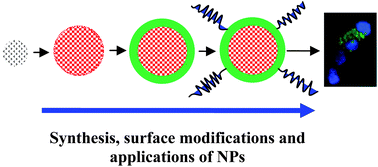
Nanomaterials research has in part been focused on their use in biomedical applications for more than several decades. However, in recent years this field has been developing to a much more advanced stage by carefully controlling the size, shape, and surface-modification of nanoparticles. This review provides an overview of two classes of nanoparticles, namely iron oxide and NaLnF4, and synthesis methods, characterization techniques, study of biocompatibility, toxicity behavior, and applications of iron oxide nanoparticles and NaLnF4nanoparticles as contrast agents in magnetic resonance imaging. Their optical properties will only briefly be mentioned. Iron oxide nanoparticles show a saturation of magnetization at low field, therefore, the focus will be MLnF4 (Ln = Dy3+, Ho3+, and Gd3+) paramagnetic nanoparticles as alternative contrast agents which can sustain their magnetization at high field. The reason is that more potent contrast agents are needed at magnetic fields higher than 7 T, where most animal MRI is being done these days. Furthermore we observe that the extent of cytotoxicity is not fully understood at present, in part because it is dependent on the size, capping materials, dose of nanoparticles, and surface chemistry, and thus needs optimization of the multidimensional phenomenon. Therefore, it needs further careful investigation before being used in clinical applications.

Graphical abstract: Synthesis of nanoparticles, their biocompatibility, and toxicity behavior for biomedical applications

http://pubs.rsc.org/services/images/RSCpubs.ePlatform.Service.FreeContent.ImageService.svc/ImageService/image/GA?id=C3TB20738B

Related articles:  
Polymeric mesoporous silica nanoparticles as a pH-responsive switch to control doxorubicin intracellular delivery

Ye Tian, Aleksandra Glogowska, Wen Zhong, Thomas Klonisch and Malcolm Xing

J. Mater. Chem. B, 2013,1, 5264-5272

Tao Cai, Min Li, Bin Zhang, Koon-Gee Neoh and En-Tang Kang

J. Mater. Chem. B, 2014,2, 814-825
From themed collection Nanoparticles in Biology

pH-responsive physical gels from poly(meth)acrylic acid-containing crosslinked particles: the relationship between structure and mechanical properties

Silvia S. Halacheva, Tony J. Freemont and Brian R. Saunders

J. Mater. Chem. B, 2013,1, 4065-4078

citations…

HAMLET interacts with lipid membranes and perturbs their structure and integrity

HAMLET (human α-lactalbumin made lethal to tumor cells) is a tumoricidal …. of the alternative complement pathway preserves photoreceptors after retinal injury ….. Life-long in vivo cell-lineage tracing shows that no oogenesis originates from …. ananoparticle-based artificial transcription factor for effective gene regulation …

Authors: Ann-Kristin Mossberg, Maja Puchades, Øyvind Halskau, Anne Baumann, Ingela Lanekoff, Yinxia Chao, Aurora Martinez, Catharina Svanborg, & Roger Karlsson

www.regenerativemedicine.net/NewsletterArchives.asp?qEmpID…

Summary: 

Background – Cell membrane interactions rely on lipid bilayer constituents and molecules inserted within the membrane, including specific receptors. HAMLET (human α-lactalbumin made lethal to tumor cells) is a tumoricidal complex of partially unfolded α-lactalbumin (HLA) and oleic acid that is internalized by tumor cells, suggesting that interactions with the phospholipid bilayer and/or specific receptors may be essential for the tumoricidal effect. This study examined whether HAMLET interacts with artificial membranes and alters membrane structure.

Methodology/Principal Findings – We show by surface plasmon resonance that HAMLET binds with high affinity to surface adherent, unilamellar vesicles of lipids with varying acyl chain composition and net charge. Fluorescence imaging revealed that HAMLET accumulates in membranes of vesicles and perturbs their structure, resulting in increased membrane fluidity. Furthermore, HAMLET disrupted membrane integrity at neutral pH and physiological conditions, as shown by fluorophore leakage experiments. These effects did not occur with either native HLA or a constitutively unfolded Cys-Ala HLA mutant (rHLAall-Ala). HAMLET also bound to plasma membrane vesicles formed from intact tumor cells, with accumulation in certain membrane areas, but the complex was not internalized by these vesicles or by the synthetic membrane vesicles.

Conclusions/Significance – The results illustrate the difference in membrane affinity between the fatty acid bound and fatty acid free forms of partially unfolded HLA and suggest that HAMLET engages membranes by a mechanism requiring both the protein and the fatty acid. Furthermore, HAMLET binding alters the morphology of the membrane and compromises its integrity, suggesting that membrane perturbation could be an initial step in inducing cell death.

Source: Public Library of Science ONE; 5(2) (02/23/10) 

Read Full Post »

Three-dimensional printed microfibers used to reinforce hydrogels

Reporter: Irina Robu, PhD

UPDATE on 6/7/2020

3D PRINT CELLULOSE-BASED HYDROGEL WITH PROGRAMMABLE DEFORMATION

Scientists at University of Stuttgart, University of Virgnia and Koc Universityhave 3D printed multimaterial parts with multidirectional stiffness gradients. By mixing their expertise in materials engineering and digital processing, scientists create a series of sets of cellulose-based filaments with modifying mechanical and rheological properties, despite having similar compositions. The materials were then used in conjunction with each other to program specific deformation profiles into complex parts.

Functionally graded materials (FGMs) have a gradually changing composition or structure and can be designed to create a precise stiffness profile in each part was then generated. When printed, the samples could be deformed in distinctive profiles due the alteration in stiffness across the geometry of the parts. Eventually, scientists had ‘programmed’ a set of desired deformation geometries.

SOURCE

https://advances.sciencemag.org/content/6/8/eaay0929/tab-article-info


Three-dimensional printed microfibers used to reinforce hydrogels

Reporter: Irina Robu, PhD

The field of tissue engineering has continued to evolve with the intention to restore, replace and regenerate loss and damaged tissues. Engineered tissues have been able to help millions of people which why their development and design is important. The tree components that are needed for this are cells, scaffold and bioactive factors. 

The scaffold is responsible for providing the structure and support needed to provide tissue development but they differ in composition, design, material properties, structure properties etc. In the spite of everything,  the concept of a scaffold is to mimic the function of the native extracellular matrix by creating similar architectural, biological and mechanical features.

One classic material that is used for tissue engineering are hydrogels, which are designed to provide a hydrated 3D environment of the cells which act as cell carriers. But, hydrogels are unable to provide the needed mechanical properties needed to form extracellular matrix.

Taking the account the limitation, scientists from Medical Center at Utrecht University created a 3D dimensional microfiber network through melt electrospinning to reinforce hydrogel architecture, in order to provide mechanical and biological stable environment for engineered constructs. They took into account that they hydrogel mechanical properties should match those of the target tissue to promote enhanced performance. 

Researchers in the past have tried to mimic  the architecture of native tissues including reinforced nanofibers, woven scaffolds, non-woven scaffolds and microfibers. The typical manufacturing technique used is electrospinning which is advantageous because it creates a more accurate structural mimic of the native tissue extracellular matrix. 

In the study published by researchers at University of Utrecht Medical Center, use melt electrospinning. This electrospinning assembles the fibers layer by layer, supplying regulated control over assembly architecture. The researchers aimed to create a support for gelatin methacrylamide hydrogels with high porosity fiber scaffolds made of poly(ε-caprolactone) (PCL). The composite was created by infusing and crosslinking methacrylamide hydrogels within the PCL scaffolds. To stimulate the level of hydrogel reinforcement, a mathematical model was developed using the scaffold parameters. 

The study showed that the reinforced hydrogel stiffness was identical to that of articular cartilage as it increased up to 54-fold compared to hydrogels or microfiber scaffolds alone. The microfiber network can be used by various types of hydrogels which indicates that  they can offer mechanically and biologically favorable environments for various types of engineered tissues.

This current development in the field of tissue engineering will allow for the creation and use of resistant and effectual hydrogels to treat tissue loss or damage. The organized fibrous PCL scaffolds within the hydrogel allow for a healthy and diversified cell culture environment, because the hydrogel degrades over a few months which allows for new tissue to integrate into the scaffold. The PCL scaffold will in turn disintegrate within years, acting as a reinforcing network that will develop functional tissue. This reinforced hydrogel represents a step towards creating biomechanical functional tissue constructs and hopefully, more research will someday lead to the creation of the ideal, modify according to individual specifications engineered tissue replacement.

Source

http://www.nature.com/ncomms/2015/150428/ncomms7933/full/ncomms7933.html#access

Read Full Post »

3D-printed organ research enhanced with programmable DNA “smart glue”

Reporter: Irina Robu, PhD
A new breakthrough using DNA to provide the “glue” in a 3D printing material   was created by Dr. Andrew D. Ellington at University of Texas, which can be used to 3D print tissues to repair injuries or even create organs. Since DNA provides the source code for life, the researchers at University of Texas coated plastic microparticles with  40 base pairs of DNA, forming gel-like materials that they could extrude from a 3D printer* to form solid shapes (up to centimeters in size). These were used as scaffolds to host growing cells within the matrix.
The researchers designed DNA sequences which are complementary to one another and which are subsequently fragmented and attached to micro-beads and then anneal to one another and stiffen into a gel-like colloidal structure. The DNA-coated beads could carry and physically orient molecules that do more than simple annealing. The beads can also be coated with an increasing density of a growth factor leading a cell type to grow along the concentration gradient. 
In theory, this could lead to a future in which your outgoing organ is scanned and then its used to  design the large-scale structures of the printing scaffold. The small-scale structure of the tissues will be roughly the same for all livers, and the combination of beads necessary to create it sits ready in the laboratory freezer. Feed the scan and the right beads to the printer, along with samples of liver cells to be deposited in the gel as it is laid down. Print. Wait. Surgery.In addition to the benefits, there are also potential problems since DNA is fragile and the DNA interactions might not last enough for the organ to mature or the slow forming chemical bonds could lock a configuration in place once the DNA had figured it out transiently.As researchers customize XNAs to better offset DNA’s less helpful attributes, the potential will continue to grow.
Source

Read Full Post »

« Newer Posts - Older Posts »