Feeds:
Posts
Comments

Archive for the ‘Tissue Engineering’ Category

Superresolution Microscopy

Larry H. Bernstein, MD, FCAP, Curator

LPBI

Lens-Free 3-D Microscope Sharp Enough for Pathology

LOS ANGELES, Dec. 18, 2014 —

http://www.photonics.com/Article.aspx?AID=57019&refer=TechMicroscopy&utm_source=TechMicroscopy_2015_10_13

A computational lens-free, holographic on-chip microscope could provide a faster and cheaper means of diagnosing cancer and other diseases at the cellular level.

Developed by researchers at the University of California, Los Angeles, the compact system illuminates tissue or blood samples with a laser or LED, while a sensor records the pattern of shadows created by the sample.

The device processes these patterns as a series of holograms using the transport-of-intensity equation, multiheight iterative phase retrieval and rotational field transformations. Computer algorithms correct for imaging artifacts and enhance contrast in the reconstructed 3-D images, which can be focused to any depth within the field of view even after image capture.
A tissue sample image created by a new chip-based, lens-free microscope. Images courtesy of Aydogan Ozcan/UCLA.
With a field of view several hundred times larger than that of an optical microscope, the lens-free device could considerably speed up diagnostic imaging. It is also much smaller than conventional microscopes.

“While mobile health care has expanded rapidly with the growth of consumer electronics — cellphones in particular — pathology is still, by and large, constrained to advanced clinical laboratory settings,” said professor Dr. Aydogan Ozcan. “Accompanied by advances in its graphical user interface, this platform could scale up for use in clinical, biomedical, scientific, educational and citizen-science applications, among others.”

The researchers tested the device using Pap smears that indicated cervical cancer, tissue specimens containing cancerous breast cells and blood samples containing sickle cell anemia.

In a blind test, a board-certified pathologist analyzed sets of specimen images created by the lens-free technology and by conventional microscopes. The pathologist’s diagnoses using the lens-free microscopic images were accurate 99 percent of the time, the researchers said.

“By providing high-resolution images of large-area pathology samples with 3-D digital focus adjustment, lens-free on-chip microscopy can be useful in resource-limited and point-of-care settings,” the researchers wrote in Science Translational Medicine (doi: 10.1126/scitranslmed.3009850).

Funding for the project came from the Presidential Early Career Award for Scientists and Engineers, the National Science Foundation, the National Institutes of Health, the U.S. Army Research Office, the Office of Naval Research and the Howard Hughes Medical Institute.

Smartphone DNA measurements

Ozcan’s lab also recently demonstrated an optomechanical attachment that enables smartphones to perform fluorescence microscopy measurements on DNA.

The 3-D-printed device augments the phone’s camera by creating a high-contrast darkfield imaging setup with an inexpensive external lens, thin-film interference filters, a miniature dovetail stage and a laser diode for oblique excitation of fluorescent labels. The molecules are labeled and stretched on disposable chips that fit into the smartphone attachment.
A smartphone add-on enables imaging of DNA in the field.
The device also includes an app that transmits data to a server at UCLA, which measures the lengths of the individual DNA molecules.

This project was funded by the National Science Foundation. The results were published in ACS Nano (doi: 10.1021/nn505821y).

For more infromation, visit www.ucla.edu.

Expanded Tissues Show Confocal Microscopes More Detail

CAMBRIDGE, Mass., Jan. 26, 2015 —

http://www.photonics.com/Article.aspx?AID=57140&refer=TechMicroscopy&utm_source=TechMicroscopy_2015_10_13

Nobel Prize-winning superresolution microscopy techniques circumvent the diffraction limit of light to image the smallest details of cells. But there is another way.

Researchers at MIT have developed a method for making biological tissue samples physically larger, rendering their nanoscale features visible to conventional confocal microscopes.

Using inexpensive, commercially available chemicals and microscopes commonly found in research labs, the technique could give more scientists access to 3-D superresolution imaging.

“Instead of acquiring a new microscope to take images with nanoscale resolution, you can take the images on a regular microscope,” said MIT professor Dr. Edward Boyden. “You physically make the sample bigger, rather than trying to magnify the rays of light that are emitted by the sample.”

The process involves meshes of sodium polyacrylate, the superabsorbent chemical used in disposable diapers. When exposed to water, these meshes expand, and the cellular structures around them expand too.

Cells in rodent brain slices, as well as cells grown in vitro, are first fixed in formaldehyde and then gently stripped of their fatty membranes before being labeled with fluorescent markers.

A precursor is then added and heated to form the polyacrylate gel. Proteins that hold the specimen together are digested, allowing it to expand uniformly. Finally, the sample is washed in salt-free water to trigger the expansion.

Even though the proteins have been broken apart, the original location of each fluorescent label stays the same relative to the overall structure of the tissue because it is anchored to the polyacrylate gel by antibodies.
Scientists modified the superabsorbant diaper compound sodium polyacrylate to enlarge brain tissue and image it in 3-D using fluorescent tags and confocal microscopes. Courtesy of the Boyden Lab/MIT.
Samples were imaged before expansion using superresolution microscopes, and imaged afterward using confocal microscopes. Expansion gave the confocal microscopes an effective 70-nm lateral resolution — sharp enough to resolve details of the cell protein complexes, the spaces between rows of skeletal microtubule filaments and the two sides of synapses.

Trade-offs

The diffraction limit means standard microscopes can’t resolve objects smaller than about 250 nm. “Unfortunately, in biology that’s right where things get interesting,” Boyden said.

Three inventors of superresolution microscopy won the 2014 Nobel Prize in chemistry. Superresolution techniques, however, have their own limitation: They work best with small, thin samples, and take a long time to image large samples. They can also be hampered by optical scattering in thick samples.

“If you want to map the brain, or understand how cancer cells are organized in a metastasizing tumor, or how immune cells are configured in an autoimmune attack, you have to look at a large piece of tissue with nanoscale precision,” Boyden said.

The MIT technique allowed imaging of samples approximately 500 × 200 × 100 µm in volume.

“The other methods currently have better resolution, but are harder to use, or slower,” said graduate student Paul Tillberg. “The benefits of our method are the ease of use and, more importantly, compatibility with large volumes, which is challenging with existing technologies.”

Funding came from the National Institutes of Health, National Science Foundation, New York Stem Cell Foundation, Jeremy and Joyce Wertheimer and the Fannie and John Hertz Foundation.

The research was published in Science (doi: 10.1126/science.1260088).

For more information, visit www.mit.edu.

Microscope Takes 3-D Images From Inside Moving Subjects

NEW YORK, Jan. 19, 2015 —

http://www.photonics.com/Article.aspx?AID=57106&refer=TechMicroscopy&utm_source=TechMicroscopy_2015_10_13

A new kind of microscope enables rapid 3-D imaging of living and moving samples, potentially offering advantages over laser-scanning confocal, two-photon and light-sheet microscopy.

Developed by Columbia University professor Dr. Elizabeth Hillman and graduate student Matthew Bouchard, swept confocally aligned planar excitation (SCAPE) microscopy involves simplified equipment and does not require sample mounting or translation. The microscope scans a sheet of light through the sample, making it unnecessary to position the sample or the microscope’s single objective.

“The ability to perform real-time, 3-D imaging at cellular resolution in behaving organisms is a new frontier for biomedical and neuroscience research,” Hillman said. “With SCAPE, we can now image complex, living things, such as neurons firing in the rodent brain, crawling fruit fly larvae and single cells in the zebrafish heart while the heart is actually beating spontaneously.”
SCAPE yields data equivalent to conventional light-sheet microscopy, but using a single, stationary objective lens; no sample translation; and high-speed 3-D imaging. This unique configuration permitted volumetric imaging of cortical dendrites in the awake, behaving mouse brain. Courtesy of Elizabeth Hillman/Columbia Engineering.
Conventional light-sheet microscopes use two orthogonal objectives and require that samples be in a fixed position. Confocal and two-photon microscopes can image a single plane within a living sample, but cannot generate 3-D images quickly enough to capture events like neurons firing.

SCAPE does have one drawback: Using a 488-nm laser, it cannot penetrate tissue as deeply as two-photon microscopy.

The new technique could be combined with optogenetics and other tissue manipulations, the researchers said. It could also be used for imaging cellular replication, function and motion in intact tissues, 3-D cell cultures and engineered tissue constructs; as well as imaging 3-D dynamics in microfluidics and flow-cell cytometry systems.

Hillman next plans to explore clinical applications of SCAPE, such as video-rate 3-D microendoscopy and intrasurgical imaging.

Funding for the project came from the National Institutes of Health, Human Frontier Science Program, Wallace H. Coulter Foundation, Dana Foundation and the U.S. Department of Defense.

The research was published in Nature Photonics (doi:10.1038/nphoton.2014.323).

For more information, visit www.engineering.columbia.edu.

Read Full Post »

Rat Hearts Healed by a Protein-rich Gel

Reporter: Irina Robu, PhD

John Hopkins researchers  created a sticky protein rich gel which appear to help stem cells stay on or in rat hearts and have the ability to restore metabolism after transplantation in addition to improving cardiac function after simulated heart attacks.  When the heart beats, it pushes cells injected into the heart wall out in the lungs before they get a chance to attach to the wall.  John Hopkins researchers applied a hydrogel to the beating rat hearts to improve cell stem uptake to the heart muscle and speed up tissue healing after the heart attack.

In an effort solve the difficulties, M. Roselle Abraham, M.D. along with  Angel Chan, M.D., Ph.D. and  Jennifer Elisseeff, Ph.D. developed a hydrogel that combines serum, a protein-filled component of blood that contains everything cells need to survive, with hyaluronic acid, a molecule already present in the heart and in the matrix that surrounds and supports cells.

By mixing these two components, the researchers created a sticky gel that functioned as a synthetic stem cell niche: It encapsulated stem cells while nurturing them and rapidly restored their metabolism.

Their tests showed that encapsulated stem embryonic and adult stem cells survived at levels near 100 percent but still proliferated and survived for days.  According to their article being published in December 2015 issue of Biomaterials, when cell-gel combination was injected into the living hearts about 73% of cells were retained in the hearts after an hour and for the seven days the cells encapsulated into the hydrogel increased in number.

In rat models of heart attack damage, Abraham’s team shows that the hydrogel with encapsulated cells improved pumping efficiency of the left ventricle over the four weeks after injection by 15 percent, compared with 8 percent from cells in solution.  Abraham’s group showed that even injections of the hydrogel by itself improved heart function and increased the number of blood vessels in the region of the heart attack.

SOURCE

http://www.mdtmag.com/news/2015/09/sticky-gel-helps-stem-cells-heal-rat-hearts?et_cid=4839332&et_rid=461755519&location=top

Read Full Post »

Lab-grown kidneys work in animals – BBC News

Reporter: Aviva Lev-Ari, PhD, RN


Scientists say they are a step closer to growing fully functioning replacement kidneys, after promising results in animals. When transplanted into pigs and rats, the kidneys worked, passing urine just like natural ones. Getting the urine out has been a problem for earlier prototypes, causing them to balloon under the pressure. The Japanese team got round this by growing extra plumbing for the kidney to stop the backlog, PNAS reports.


Although still years off human trials, the research helps guide the way towards the end goal of making organs for people, say experts. In the UK, more than 6,000 people are waiting for a kidney – but because of a shortage of donors, fewer than 3,000 transplants are carried out each year. More than 350 people die a year, almost one a day, waiting for a transplant. Growing new kidneys using human stem cells could solve this problem.


Dr Takashi Yokoo and colleagues at the Jikei University School of Medicine in Tokyo used a stem cell method, but instead of just growing a kidney for the host animal, they set about growing a drainage tube too, along with a bladder to collect and store the urine.


They used rats as the incubators for the growing embryonic tissue. When they connected up the new kidney and its plumbing to the animal’s existing bladder, the system worked. Urine passed from the transplanted kidney into the transplanted bladder and then into the rat bladder. And the transplant was still working well when they checked again eight weeks later. They then repeated the procedure on a much larger mammal – a pig – and achieved the same results.


Prof Chris Mason, an expert in stem cells and regenerative medicine at University College London, said: “This is an interesting step forward. The science looks strong and they have good data in animals. “But that’s not to say this will work in humans. We are still years off that. It’s very much mechanistic. It moves us closer to understanding how the plumbing might work. “At least with kidneys, we can dialyze patients for a while so there would be time to grow kidneys if that becomes possible.”

Sourced through Scoop.it from: www.bbc.com

See on Scoop.itCardiovascular and vascular imaging

Read Full Post »


Cell_Ts3


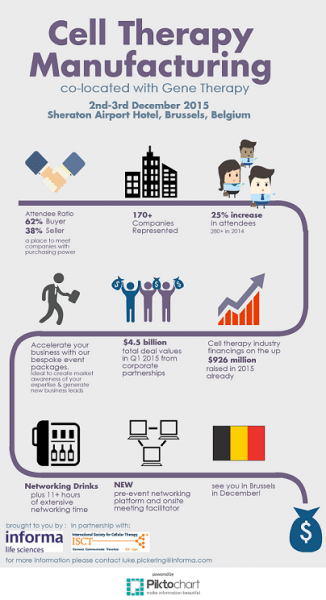
Cell Therapy Manufacturing and Gene Therapy Conference, December 2-3, 2015, Sheraton Airpost Hotel, Brussels, Belgium

Reporter: Aviva Lev-Ari, PhD, RN


Exclusive Site Visit to South Brussels Biopark


AGENDA

http://www.informa-ls.com/appdata/downloads/celltherapy15/CQ3554_Cell_Therapy_and_Gene_Therapy_2.pdf

Day One Wednesday 2 December 2015

Joint PLENARY SESSION: Regulatory Updates and Recent Progress


Day Two Thursday 3 December 2015

Plenary Session: Manufacturing Genetically Modified T-Cells

SPEAKERS

Jonathan Appleby
GSK, UK
Jonathan ApplebyMDL and CSO, Rare Diseases Gene TherapyGSK, UK


Lothar Germeroth,
Juno Therapeutics GmbH
Lothar Germeroth,SVP, Managing DirectorJuno Therapeutics GmbH


Christian-Homsy
Celyad, Belgium
Christian-HomsyCEOCelyad, Belgium


Dr Anthony Davies,
Dark Horse Consulting Inc, USA
Dr Anthony Davies,President,Dark Horse Consulting Inc, USA


Ms Bernadette Keane,
Bluebird bio, USA
Ms Bernadette Keane,Vice President, Quality,Bluebird bio, USA


Dr Knut Niss,
Novartis, USA
Dr Knut Niss,Senior Technical Project Leader, Global Biopharm Operations,Novartis, USA


Dr Ohad Karnieli
Pluristem Therapeutics, Israel
Dr Ohad KarnieliVP, Development and ManufacturingPluristem Therapeutics, Israel


Christopher Bravery
Consulting on Advanced Biologicals, UK
Christopher BraveryDirectorConsulting on Advanced Biologicals, UK


Dr Harald Petry
uniQure, The Netherlands
Dr Harald PetryCSOuniQure, The Netherlands


James Miskin
Oxford Biomedica
James MiskinCTOOxford Biomedica


Robert Kotin,
Voyager Therapeutics, USA
Robert Kotin,Vice President, Production,Voyager Therapeutics, USA


Guang Qu,
Spark Therapeutics, USA
Guang Qu,Head, Process Development,Spark Therapeutics, USA


Abraham Scaria,
Sanofi-Genzyme, USA
Abraham Scaria,Senior Scientific Director, Gene Therapy/Ophthalmology,Sanofi-Genzyme, USA


Dr Matthias Hebben,
Genenthon, France
Dr Matthias Hebben,Head, Bioprocess,Genenthon, France


Read Full Post »

Join These Medical 3D Printing Groups on Twitter and LinkedIn for great up to date news

Curator: Stephen J. Williams, Ph.D.

Below is a list with links to great groups on Twitter and LinkedIn that focus on the Medical 3D Printing Industry and Breaking News.  These are Great resources for news, information, investment opportunities, and conference announcements!

Twitter Groups on Medical 3D Printing

3D Printing Industry

@3dprintindustry

Leading source for #3DPrinting news & information – industry reports, business directory, jobs board, 3DPI.tv and more.

3D Printing News

@My3DPrinting

All the latest 3D Printing News from around the World.

3D Printing

@3DPrintBoardcom

http://3DPrintBoard.com  – The one forum for all your 3D Printing needs!

3D Printing News

@3DPrintGirl

Your source for The Latest 3D printing News

3D Printing Fans

@3DPrintingFans follows you

We cover all the latest, breaking news surrounding 3D printing and 3D scanning

TeVido BioDevices

@TeVidoBioDevice follows you

The convergence of #3Dprinting with biotechnology to #reconstructhope for #breast cancer #survivors

LinkedIN Groups on Medical 3D Printing

Medical Additive Manufacturing & 3D Printing

This group aims show the possibilities of Additive Manufacturing & 3D Printing technologies for the medical field.

299 discussions

1,966 members

View

  • ·

Medical 3D Printing

Sharing knowledge and expertise in Medical 3D printing.

139 discussions

739 members

View

  • ·

3D Printing Medical Devices

Members OnlyThe use of 3D printing in the Medical Device Field is growing at an exponential rate. Use this group to network with …

104 discussions

199 members

Join

3D Printing in Hospitals

Members Only3D printing is seen by some as the next generation of medical imaging. The goal of this group is to discuss and learn from…

51 discussions

161 members

Join

3D printing industry Finland

3D printing Finland is a group that disseminates information of 3D printing and enlightens its effects on Finnish …

22 discussions

34 members

View

  • ·

Chicago 3D Printing forum

A group discussion forum to help foster the relationship between additive manufacturing (3D Printing), and manufacturing …

7 members

View

3D Medical

3D Bio-Printing advancements.

7 members

View

3D Development in Ireland

This group is connecting those in Ireland interested in 3D printing for all its possible uses; design, building, gaming, …

5 members

View

Creatz3D Medical Luncheon

Members OnlyThis members only group facilitates the discussion between medical practitioners as well as the speakers present at Creatz3D …

1 member

Join

Protoform Rapid Prototyping

Members OnlyProtoform is a South African based 3D printing and prototyping company. Although Industrial Designers we have created …

20 discussions

16 members

Join

Read Full Post »

Global 3D Bioprinting Market: Industry Size, Share and Segments Analysis to 2015 – 2021

Reporter: Irina Robu, PhD

“3D bioprinting is a process of creating spatially-controlled cell patterns in 3D, where viability and cell function are conserved within printed construct. The 3D bioprinting industry that is currently at the embryonic stage of generating replacement human tissue has been forecast to be worth billion dollars by 2019. 3D bioprinting at present largely involves the creation of simple tissue structures in lab settings, but is estimated to be scaled up to involve the creation of complete organs for transplants. This technology is expected to be used for more speedy and accurate drug testing, as potential drug compounds could be tested on bioprinted tissue before human trials commenced.

3D bioprinting is steadily emerging as an area that is gathering attention from a lot of academicians. Some of the researchers have recently opened start-up firms with aim of commercializing the technology in coming years. A number of start-ups have recently sprung up to build up products based on bioprinting. Some are spin outs from university research. The market at present has 14 industry sponsored bioprinters, focused on variety of commercial applications. The widen supply-demand gap for organ transplants is an unmet need; the ultimate goal of researchers is to be able to create bioprinted organs for organ transplants. The focus of this market is expected to shift from research to commercialization. At this stage, the applications such as tissue engineering (skin and cartilage) and drug testing (skin and cartilage) are expected to be popular.

In coming years, 3D bioprinting to be a multi-billion dollar industry owning to early success of bioprinted organ transplants is expected to offer additional boost in subsequent years. The next generation of bioprinters is to offer additional features such as multiple arms and is expected to be comparatively more affordable driving wider adoption. Aspect Biosystems would dramatically cut the cost and time it takes to develop and test the drugs leading to cures for presently incurable diseases and cheaper treatment options. The companies in bioprinting market include SkinPrint that is developing a replacement skin for the burns patients or for those suffering from skin disorders. Aspect Biosystems that is developing printed tissue for drug testing.

Some of the major players for 3D bioprinting market are Advanced Biomatrix, 3D Biotek, 3D Systems, Avita Medical, Bespoke Innovations, Autodesk, EnvisionTEC, Cyfuse Biomedical, CMC Microsystems, Digilab, United Therapeutics, TeVido BioDevices, DTM, Bio3D Technologies, Helisys Inc. CMC Microsystems, InSphero AG and BD Biosciences among others.”

Source

https://www.persistencemarketresearch.com/market-research/3d-bioprinting-market.asp


Read Full Post »

Organs-on-Chips: An Alternative to 3D Bioprinting?

Reporter: Irina Robu, PhD

“Human “organs-on-chips” are composed of a clear, flexible polymer about the size of a computer memory stick, and contain hollow microfluidic channels lined by living human cells. These 3D organ and tissue models allow researchers to recreate the physiological and mechanical functions of the organ, and have the potential to eliminate the need to use animals for drug development and toxin testing. While saving animals has a certain feel good element to it, it is more likely the cost savings that will appeal to pharmaceuticals looking for alternatives to existing drug testing methods. Scientists test potential pharmaceuticals on animals because it is too dangerous to perform initial tests on humans. The problem with this method is that more often than not, the predictions gleaned from animal tests will fail when a compound is tested on humans.”

Source

http://www.nanalyze.com/2014/07/organs-on-chips-an-alternative-to-3d-bioprinting/

Human-on-a-chip

Read Full Post »

« Newer Posts