Feeds:
Posts
Comments

Reporter and Curator: Dr. Sudipta Saha, Ph.D.

Researchers have classified a brand-new organ inside human body. Known as the mesentery, the new organ is found in our digestive systems, and was long thought to be made up of fragmented, separate structures. But recent research has shown that it’s actually one, continuous organ. The evidence for the organ’s reclassification is now published in The Lancet Gastroenterology & Hepatology. Although we now know about the structure of this new organ, its function is still poorly understood, and studying it could be the key to better understanding and treatment of abdominal and digestive disease.

mesentery

J Calvin Coffey, a researcher from the University Hospital Limerick in Ireland, who first discovered that the mesentery was an organ. In 2012, Coffey and his colleagues showed through detailed microscopic examinations that the mesentery is actually a continuous structure. Over the past four years, they’ve gathered further evidence that the mesentery should actually be classified as its own distinct organ, and the latest paper makes it official. Mesentery is a double fold of peritoneum – the lining of the abdominal cavity – that holds our intestine to the wall of our abdomen. It was described by the Italian polymath Leanardo da Vinci in 1508, but it has been ignored throughout the centuries, until now. Although there are generally considered to be five organs in the human body, there are in fact now 79, including the mesentery. The heart, brain, liver, lungs and kidneys are the vital organs, but there are another 74 that play a role in keeping us healthy. The distinctive anatomical and functional features of mesentery have been revealed that justify designation of the mesentery as an organ. Accordingly, the mesentery should be subjected to the same investigatory focus that is applied to other organs and systems. This provides a platform from which to direct future scientific investigation of the human mesentery in health and disease.

References:

http://www.thelancet.com/journals/langas/article/PIIS2468-1253(16)30026-7/abstract

http://www.sciencealert.com/it-s-official-a-brand-new-human-organ-has-been-classified

http://www.bbc.com/news/health-38506708

http://www.independent.co.uk/news/science/new-organ-mesentery-found-human-body-digestive-system-classified-abdominal-grays-anatomy-a7507396.html

https://in.news.yahoo.com/scientists-discover-human-organ-064207997.html

https://en.wikipedia.org/wiki/Mesentery

One blood sample can be tested for a comprehensive array of cancer cell biomarkers: R&D at WPI

Curator: Marzan Khan, B.Sc


A team of mechanical engineers at Worcester Polytechnic Institute (WPI) have developed a fascinating technology – a liquid biopsy chip that captures and detects metastatic cancer cells, just from a small blood sample of cancer patients(1). This device is a recent development in the scientific field and holds tremendous potential that will allow doctors to spot signs of metastasis for a variety of cancers at an early stage and initiate an appropriate course of treatment(1).

Metastasis occurs when cancer cells break away from their site of origin and spread to other parts of the body via the lymph or the bloodstream, where they give rise to secondary tumors(2). By this time, the cancer is at an advanced stage and it becomes increasingly difficult to fight the disease. The cells that are shed by primary and metastatic cancers are called circulating tumor cells (CTCs) and their numbers lie in the range of 1–77,200/m(3). The basis of the liquid biopsy chip test is to capture these circulating tumor cells in the patient’s blood and identify the cell type through specific interaction with antibodies(4).

The chip is comprised of individual test units or small elements, about 3 millimeters wide(4). Each small element contains a network of carbon nanotube sensors in a well which are functionalized with antibodies(4). These antibodies will bind cell-surface antigens or protein markers unique for each type of cancer cell. Specific interaction between a cell surface protein and its corresponding antibody is a thermodynamic event that causes a change in free energy which is transduced into electricity(3). This electrical signature is picked up by the semi-conducting carbon nanotubes and can be seen as electrical spikes(4). Specific interactions create an increase in electrical signal, whereas non-specific interactions cause a decrease in signal or no change at all(4). Capture efficiency of cancer cells with the chip has been reported to range between 62-100%(4).

The liquid biopsy chip is also more advanced than microfluidics for several reasons. Firstly, the nanotube-chip arrays can capture as well as detect cancer cells, while microfluidics can only capture(4). Samples do not need to be processed for labeling or fixation, so the cell structures are preserved(4). Unlike microfluidics, these nanotubes will also capture tiny structures called exosomes spanning the nanometer range that are produced from cancer cells and carry the same biomarkers(4).

Pancreatic cancer is the fourth leading cause of cancer-associated deaths in the United states, with a survival window of 5 years in only 6% of the cases with treatment(5). In most patients, the disease has already metastasized at the time of diagnosis due to the lack of early-diagnostic markers, affecting some of the major organs such as liver, lungs and the peritoneum(5,6). Despite surgical resection of the primary tumor, the recurrence of local and metastatic tumors is rampant(5). Metastasis is the major cause of mortality in cancers(5). The liquid biopsy chip, that identifies CTCs can thus become an effective diagnostic tool in early detection of cancer as well as provide information into the efficacy of treatment(3). At present, ongoing experiments with this device involve testing for breast cancers but Dr. Balaji Panchapakesan and his team of engineers at WPI are optimistic about incorporating pancreatic and lung cancers into their research.

REFERENCES

1.Nanophenotype. Researchers build liquid biopsy chip that detects metastatic cancer cells in blood: One blood sample can be tested for a comprehensive array of cancer cell biomarkers. 27 Dec 2016. Genesis Nanotechnology,Inc

https://genesisnanotech.wordpress.com/2016/12/27/researchers-build-liquid-biopsy-chip-that-detects-metastatic-cancer-cells-in-blood-one-blood-sample-can-be-tested-for-a-comprehensive-array-of-cancer-cell-markers/

2.Martin TA, Ye L, Sanders AJ, et al. Cancer Invasion and Metastasis: Molecular and Cellular Perspective. In: Madame Curie Bioscience Database [Internet]. Austin (TX): Landes Bioscience; 2000-2013.

https://www.ncbi.nlm.nih.gov/books/NBK164700/

3.F Khosravi, B King, S Rai, G Kloecker, E Wickstrom, B Panchapakesan. Nanotube devices for digital profiling of cancer biomarkers and circulating tumor cells. 23 Dec 2013. IEEE Nanotechnology Magazine 7 (4), 20-26

Nanotube devices for digital profiling of cancer biomarkers and circulating tumor cells

4.Farhad Khosravi, Patrick J Trainor, Christopher Lambert, Goetz Kloecker, Eric Wickstrom, Shesh N Rai and Balaji Panchapakesan. Static micro-array isolation, dynamic time series classification, capture and enumeration of spiked breast cancer cells in blood: the nanotube–CTC chip. 29 Sept 2016. Nanotechnology. Vol 27, No.44. IOP Publishing Ltd

http://iopscience.iop.org/article/10.1088/0957-4484/27/44/44LT03/meta

5.Seyfried, T. N., & Huysentruyt, L. C. (2013). On the Origin of Cancer Metastasis. Critical Reviews in Oncogenesis18(1-2), 43–73.

https://www.ncbi.nlm.nih.gov/pmc/articles/PMC3597235/

6.Deeb, A., Haque, S.-U., & Olowoure, O. (2015). Pulmonary metastases in pancreatic cancer, is there a survival influence? Journal of Gastrointestinal Oncology6(3), E48–E51. http://doi.org/10.3978/j.issn.2078-6891.2014.114

https://www.ncbi.nlm.nih.gov/pmc/articles/PMC4397254/

Other related articles published in this Open Access Online Scientific Journal include the following:


Liquid Biopsy Chip detects an array of metastatic cancer cell markers in blood – R&D @Worcester Polytechnic Institute, Micro and Nanotechnology Lab

Reporters: Tilda Barliya, PhD and Aviva Lev-Ari, PhD, RN

https://pharmaceuticalintelligence.com/2016/12/28/liquid-biopsy-chip-detects-an-array-of-metastatic-cancer-cell-markers-in-blood-rd-worcester-polytechnic-institute-micro-and-nanotechnology-lab/


Trovagene’s ctDNA Liquid Biopsy urine and blood tests to be used in Monitoring and Early Detection of Pancreatic Cancer

Reporters: David Orchard-Webb, PhD and Aviva Lev-Ari, PhD, RN

https://pharmaceuticalintelligence.com/2016/07/06/trovagenes-ctdna-liquide-biopsy-urine-and-blood-tests-to-be-used-in-monitoring-and-early-detection-of-pancreatic-cancer/


Liquid Biopsy Assay May Predict Drug Resistance

Curator: Larry H. Bernstein, MD, FCAP

https://pharmaceuticalintelligence.com/2015/11/06/liquid-biopsy-assay-may-predict-drug-resistance/


New insights in cancer, cancer immunogenesis and circulating cancer cells

Larry H. Bernstein, MD, FCAP, Curator

New insights in cancer, cancer immunogenesis and circulating cancer cells


Prognostic biomarker for NSCLC and Cancer Metastasis

Larry H. Bernstein, MD, FCAP, Curato

https://pharmaceuticalintelligence.com/2016/03/24/prognostic-biomarker-for-nsclc-and-cancer-metastasis/


Monitoring AML with “cell specific” blood test

Larry H. Bernstein, MD, FCAP, Curator

https://pharmaceuticalintelligence.com/2016/01/23/monitoring-aml-with-cell-specific-blood-test/


Diagnostic Revelations

Larry H. Bernstein, MD, FCAP, Curator

https://pharmaceuticalintelligence.com/2015/11/02/diagnostic-revelations/


Circulating Biomarkers World Congress, March 23-24, 2015, Boston: Exosomes, Microvesicles, Circulating DNA, Circulating RNA, Circulating Tumor Cells, Sample Preparation

Reporter: Aviva Lev-Ari, PhD, RN

https://pharmaceuticalintelligence.com/2015/03/03/circulating-biomarkers-world-congress-march-23-24-2015-boston-exosomes-microvesicles-circulating-dna-circulating-rna-circulating-tumor-cells-sample-preparation/


Four patents and one patent application on Nanopore Sequencing and methods of trapping a molecule in a nanopore assigned to Genia, is been claimed in a Law Suit by The Regents of the University of California, should be assigned to UCSC, Volume 2 (Volume Two: Latest in Genomics Methodologies for Therapeutics: Gene Editing, NGS and BioInformatics, Simulations and the Genome Ontology), Part 1: Next Generation Sequencing (NGS)

Four patents and one patent application on Nanopore Sequencing and methods of trapping a molecule in a nanopore assigned to Genia, is been claimed in a Law Suit by The Regents of the University of California, should be assigned to UCSC

Reporter: Aviva Lev-Ari, PhD, RN


The university claims that while at UCSC Roger Chen’s research focused on nanopore sequencing, and that he along with others developed technology that became the basis of patent applications filed by the university. However, when Chen left the university in 2008 and cofounded Genia, he was awarded patents for technology developed while he was at UCSC, but those patents were assigned to Genia and not the university, according to the suit.

In the suit, the university notes four patents and one patent application assigned to Genia that it claims should be assigned to UCSC: US Patent Nos., 8,324,914; 8,461,854; 9,041,420; and 9,377,437; and US Patent Application 15/079,322. The patents and patent applications all relate to nanopore sequencing and specifically to methods of trapping a molecule in a nanopore and characterizing it based on the electrical stimulus required to move the molecule through the pore.

Genia was founded in 2009, and in 2014, Roche acquired the startup for $125 million in cash and up to $225 million in milestone payments. Earlier this year, the company published a proof-of-principle study of its technology in the Proceedings of the National Academy of Sciences.

Roche’s head of sequencing solutions, Neil Gunn, said that Roche would announce a commercialization timeline in 2017.

It’s unclear how the lawsuit will impact that commercialization, but Mick Watson, director of ARK-Genomics at the Roslin Institute in the UK, speculated in a blog post that if the suit is decided in favor of UCSC, it could result in a very large settlement and potentially even the end of Genia.


SOURCE

https://www.genomeweb.com/sequencing/university-california-files-suit-against-genia-cofounder

http://www.opiniomics.org/university-of-california-makes-legal-move-against-roger-chen-and-genia/


The 35th Annual J.P. Morgan Healthcare Conference, January 9, 2017 to January 13, 2017, Westin St. Francis Hotel, San Francisco

Reporter: Aviva Lev-Ari, PhD, RN


BioPharm Insight Exclusive Event


Panel Discussion 5:30 – 6:30 PM 
Immuno-Oncology: Filtering the hype for the next wave of targets

Panel discussion as key opinion leaders (KOLs) and industry experts take on the tough questions in the field. Topics to be discussed include next-generation I/O therapeutics, pricing and reimbursement expectations, and more.

Panelists: 
Axel Hoos, MD, PhD, SVP Oncology R&D, GSK
Ira Mellman, PhD, VP Cancer Immunology, Genentech
Lindee Goh, Partner, Tapestry Networks
Omid Hamid, MD, Chief, Translational Research and Immunotherapy / Director, Melanoma Therapeutics, The Angeles Clinic
Ramy Ibrahim, MD, VP and Head of R&D, Parker Institute for Cancer Immunotherapy
Moderated by Querida Anderson, Editor in Chief at BioPharm Insight

*This panel is brought to you by BioPharm Insight and The Immuno-Oncology 360° team at The Conference Forum

Networking Reception 6:30 – 8:30 PM

You’re invited to join us for a networking reception following the panel discussion. We know how busy this week is, so feel free to pop-in after the panel for cocktails and light fare. Mix and mingle with the BioPharm Insight team, industry experts and fellow peers.

JANUARY 9, 2017

Chandran Art Gallery

459 Geary St

San Francisco, CA


SOURCE

http://www.biopharminsight.com/events/35th-annual-jp-morgan-healthcare-conference

Dr. Doudna: RNA synthesis capabilities of Synthego’s team represent a significant leap forward for Synthetic Biology, Volume 2 (Volume Two: Latest in Genomics Methodologies for Therapeutics: Gene Editing, NGS and BioInformatics, Simulations and the Genome Ontology), Part 1: Next Generation Sequencing (NGS)

Dr. Doudna: RNA synthesis capabilities of Synthego’s team represent a significant leap forward for Synthetic Biology

Reporter: Aviva Lev-Ari, PhD, RN


Synthego Raises $41 Million From Investors, Including a Top Biochemist

Synthego also drew in Dr. Doudna, who had crossed paths with the company’s head of synthetic biology at various industry conferences. According to Mr. Dabrowski, the money from her trust represents the single-biggest check from a non-institutional investor that the start-up has raised.

Synthego’s new funds will help the company take its products to a more global customer base, as well as broaden its offerings. The longer-term goal, Mr. Dabrowski said, is to help fully automate biotech research and take care of much of the laboratory work that scientists currently handle themselves.

The model is cloud technology, where companies rent out powerful remote server farms to handle their computing needs rather than rely on their own hardware.

“We’ll be able to do their full research workflow,” he said. “If you look at how cloud computing developed, it used to be that every company handled their server farm. Now it’s all handled in the cloud.”

SOURCE

Other related articles published in this Open Access Online Scientific Journal include the following:

UPDATED – Status “Interference — Initial memorandum” – CRISPR/Cas9 – The Biotech Patent Fight of the Century: UC, Berkeley and Broad Institute @MIT

Reporter: Aviva Lev-Ari, PhD, RN

https://pharmaceuticalintelligence.com/2016/01/06/status-interference-initial-memorandum-crisprcas9-the-biotech-patent-fight-of-the-century/


2017 Wolf Prize, aka “Israeli Nobel Prize,” for achievements in the arts and sciences by The Wolf Foundation

Reporter: Aviva Lev-Ari, PhD, RN

Article ID #228: 2017 Wolf Prize, aka “Israeli Nobel Prize,” for achievements in the arts and sciences by The Wolf Foundation. Published on 1/4/17

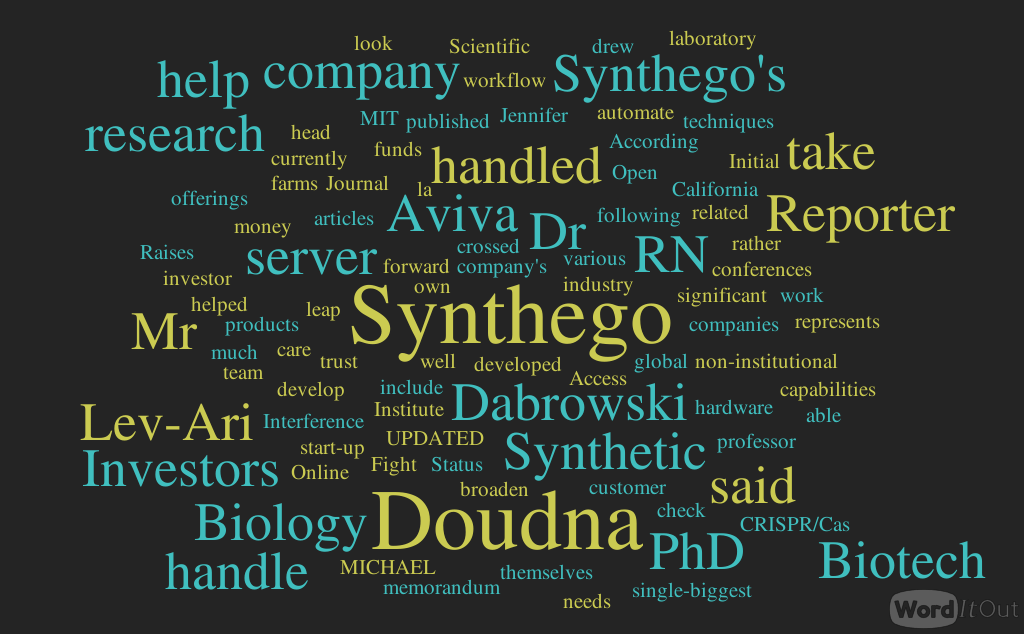
WordCloud Image Produced by Adam Tubman

The Wolf Prize is distributed annually in five out of eight disciplines (the disciplines change on a rotating basis). The Wolf Foundation began its activities in 1976 with an initial endowment fund of $10 million donated by the Wolf family. Since its inception, the foundation has awarded prizes 312 laureates, 12 of whom are women. Over the years 21 Israelis have won the prize, with 172 laureates coming from the US – the biggest number of laureates — followed by the UK with 28.

The Wolf Prize for Chemistry will be awarded to Prof. Robert G. Bergman from Berkeley University in California for the discovery of the activation of C-H bonds of hydrocarbons by soluble transition metal complexes.

The Wolf Prize for Mathematics will be shared by two laureates: Prof. Richard Schoen from Stanford University and Prof. Charles Fefferman from Princeton University, “for their striking contributions to analysis and geometry.

The Wolf Prize for Physics will be shared by two laureates, Prof. Michel Mayor from the University of Geneva, Switzerland, and Professor Didier Queloz from Cambridge University and University of Geneva, Switzerland for the first discovery of an exoplanet orbiting a solar-type star.

Prof. Jim Allison, recepient of the 2017 Wolf Prize for Medicine (Courtesy)

Prof. Jim Allison, recepient of the 2017 Wolf Prize for Medicine (Courtesy)

The Wolf Prize for Medicine will be awarded to Prof. Jim Allison from the University of Texas MD Anderson Cancer Center, for “sparking a revolution in cancer therapy” through his discovery of an immune checkpoint blockade. Allison’s “brilliant insight that blocking the function of inhibitory receptors on T lymphocytes could result in activation of anti-tumor immunity forever transformed the field of immunotherapy,” the Wolf foundation said in a statement.

The Wolf Prize for Arts will be shared by Lawrence Weiner and Laurie Anderson from New York, for the “radicalism and avant-garde at the core of their work, and for inspiring generations to come.” Anderson’s work is “a significant example of the essence of multi-disciplinary art” that has developed since the 1970s, the foundation said. Her work is manifested in music, performance, films, poetry and visual art, “while breaking the boundaries between media and expanding the range of creativity. She paved the path to a new kind of artwork, discovering new territories for art while combining different media, aesthetics and technologies. She can be characterized as a symbol of our time — always trying new options and challenging norms.” Weiner, one of the “leading figures in the art world of the last decade” is recognized as a pioneer of conceptual art, displaying an “unprecedented use of language as material” and using a variety of languages.

SOURCE

http://www.timesofisrael.com/stargazers-cancer-researcher-among-pre-nobel-winners/?utm_source=dlvr.it&utm_medium=twitter

Projected Sales in 2020 of World’s Top Ten Oncology Drugs

Reporter: Aviva Lev-Ari, PhD, RN


UPDATED on 8/29/2020

The top 10-selling cancer drugs generated a combined $63.58 billion in sales in 2018, up 17.5% from $54.126 billion in 2017. Seven of this year’s top 10 showed year-over-year increases in sales, of which six enjoyed double-digit gains.

Ranking #15 through #11 among cancer best-sellers are Takeda/Johnson & Johnson’s Velcade® (bortezomib); Incyte/Novartis’ Jakafi®/Jakavi® (ruxolitinib); Genentech (Roche)’s Perjeta (pertuzumab); Merck & Co.’s Gardasil/Gardasil 9; and J&J’s Zytiga® (abiraterone acetate). The treatments generated between $2.274 billion and $3.498 billion last year.


10. Xtandi® (enzalutamide)

Astellas Pharma and Pfizer

Type of Drug: Androgen receptor inhibitor
2018 Sales: $3.624 billion (¥327.8 billion [$2.925 billion Astellas + $0.699 billion Pfizer)
2017 Sales: $3.116 billion (¥282.8 billion [$2.526 billion Astellas + $0.590 billion Pfizer)
% Change: 16.3%


9. Ibrance® (palbociclib)

Pfizer

Type of Drug: Kinase inhibitor
2018 Sales: $4.118 billion 1
2017 Sales: $3.126 billion 1
% Change: 31.7%


8. Neulasta/Peglasta (pegfilgrastim)

Amgen and Kyowa Hakko Kirin

Type of Drug: Leukocyte growth factor
2018 Sales: $4.684 billion ($4.475 billion Amgen + $0.209 billion [¥23.1 billion] Kyowa Hakko Kirin)
2017 Sales: $4.716 billion ($4.534 billion Amgen + $0.182 billion [¥20.1 billion] Kyowa Hakko Kirin)
% Change: -0.7%


7. Imbruvica® (ibrutinib) 

Pharmacyclics (AbbVie) and Johnson & Johnson (J&J)

Type of Drug: Kinase inhibitor
2018 Sales: $6.205 billion ($3.590 billion Pharmacyclics [AbbVie] + $2.615 billion J&J)
2017 Sales: $4.466 billion ($2.573 billion Pharmacyclics [AbbVie] + $1.893 billion J&J)
% Change: 38.9%


6. Rituxan®/MabThera (rituximab)

Genentech (Roche) and Biogen 2

Type of Drug: CD20-directed cytolytic antibody
2018 Sales: $6.750 billion [CHF 6.752 billion] 2
2017 Sales: $7.298 billion [CHF 7.300 billion] 2
% Change: -7.5%


5. Avastin

Roche

Type of Drug: Vascular endothelial growth factor–directed antibody
2018 Sales: $6.822 billion (CHF 6.849 billion)
2017 Sales: $6.662 billion (CHF 6.688 billion)
% Change: 2.4%


4. Herceptin

Roche (Genentech)

Type of Drug: HER2/neu receptor antagonist
2018 Sales: $6.951 billion (CHF 6.982 billion)
2017 Sales: $6.983 billion (CHF 7.014 billion)
% Change: -0.5%


3. Keytruda

Merck & Co.

Type of Drug: Programmed death receptor-1 (PD-1)-blocking antibody
2018 Sales: $7.171 billion
2017 Sales: $3.809 billion
% Change: 88.3%


2. Opdivo

Bristol-Myers Squibb (BMS) and Ono Pharmaceutical

Type of Drug: Programmed death receptor-1 (PD-1) blocking antibody
2018 Sales: $7.570 billion ($6.735 billion BMS + $835 million [¥92.5 billion] Ono)
2017 Sales: $5.763 billion ($4.948 billion BMS + $815 million [¥90.2 billion] Ono)
% Change: 31.4%


1. Revlimid

Celgene

Type of Drug: Thalidomide analogue
2018 Sales: $9.685 billion
2017 Sales: $8.187 billion
% Change: 18.3%


References
1. Despite the year-over-year sales increase, Pfizer said international Ibrance revenues were negatively impacted by a one-time price adjustment to full-year 2017 revenues related to finalizing reimbursement agreements in certain developed Europe markets
2. Biogen receives a share of U.S. pre-tax profits on sales of Rituxan, which is marketed by Genentech (Roche). Sales figures do not include U.S. pre-tax profits generated by Biogen, since the company only discloses those profits combined with profits from Gazyva® (obinutuzumab), and does not break out each product separately. Biogen reported combined Rituxan-Gazyva pre-tax profits of $1.432 billion for 2018, and $1.316 billion for 2017.

SOURCE

https://www.genengnews.com/a-lists/top-10-best-selling-cancer-drugs-of-2018/


UPDATED on 1/17/2017

The top 15 best-selling cancer drugs in 2022

All told, by 2022, the top 15 cancer drugs are expected to collectively make almost $90 billion in sales. To put that in perspective, that represents about one-fourth of the entire U.S. pharma market in 2014, according to QuintilesIMS data. It’s also bigger than pharma’s haul in Japan or China that year.

It will likely be no revelation that three drugs among the top six on our list—provided courtesy of EvaluatePharma and Chempetitive—come from the highly touted PD-1/PD-L1 or checkpoint inhibitor class.

The top 15 best-selling cancer drugs in 2022

SOURCE

http://www.fiercepharma.com/special-report/special-report-top-15-best-selling-cancer-drugs-2022?utm_medium=nl&utm_source=internal&mrkid=993697&mkt_tok=eyJpIjoiWW1aa1kyRmpaV1poTlRZMiIsInQiOiJkSEU3WFdzNHd4cnhmc2NQN0tSUjNVbEY4NDQyUUdHZ29NY2cwWEM1OHRxRmdWWHowVDY5eDMxWkdhZ1ZucHAxTjk5ZmJRWERKT2V4UExCUFd3U25vTkdQWk9ZQWVPQkszUVlVeUFjTjVqcXJJVDB1a1ZDWmNJZ0U4UHhEQUhHdiJ9

Projected Sales in 2020 of World’s Top Ten Oncology Drugs


Top Oncology Medicines

Projected Sales in 2020

Revlimid (Celgene)

Generic Name: Lenalidomide

$10,110 Million


Imbruvica (AbbVie/J&J)

Generic Name: Ibrutinib

$8,213 Million


Avastin (Roche)

Generic Name: Bevacizumab

$ 6,733 Million


Opdivo (BMS)

Generic Name: Nivolumab

$ 6,201 Million


Xtandi (Medivation & Astellas)

Generic Name: Enzalutamide

$5,700 Million


Rituxan (Roche)

Generic Name: Rituximab

$5,407 Million


Ibrance (Pfizer)

Generic Name: Palbociclib

$4,722 Million


Perjeta (Roche)

Generic Name: Pertuzumab

$4,669 Million


Herceptin (Roche)

Generic Name: Trastuzumab

$4,573 Million


Keytruda (Merck)

Generic Name: Pembrolizumab

$3,560 Million


SOURCE

https://igeahub.com/2016/04/01/worlds-top-ten-cancer-drugs-by-2020/

World’s Top Ten Cancer Drugs by 2020

Igea gives professionals, patients and investors interested in pharmaceuticals, biotechnology, healthcare technology, diagnostics and medical devices the most relevant, actionable news, information and analysis available anywhere. Our goal is to provide expert insights, analysis and information from industry leaders with a deep understanding of life sciences, medicine and healthcare. Created and curated by Luca Dezzani, MD, Global Medical Director at Novartis Oncology*, Igea offers an insider’s view on the most important developments in life sciences, healthcare technology, digital health and more.


Reversing Heart Disease: Combination of PCSK9 Inhibitors and Statins – Opinion by Steven Nissen, MD, Chairman of Cardiovascular Medicine at Cleveland Clinic

Reporter: Aviva Lev-Ari, PhD, RN

UPDATED on 1/31/2024

Lipoprotein(a) Is Markedly More Atherogenic Than LDL: An Apolipoprotein B-Based Genetic Analysis

Original Research

J Am Coll Cardiol, 83 (3) 385–395

Lipoprotein(a) (Lp(a)) is recognized as a causal factor for coronary heart disease (CHD) but its atherogenicity relative to that of low-density lipoprotein (LDL) on a per-particle basis is indeterminate.

Conclusions

We conclude that the atherogenicity of Lp(a) (CHD risk quotient per unit increase in particle number) is substantially greater than that of LDL. Therefore, Lp(a) represents a key target for drug-based intervention in a significant proportion of the at-risk population.

SOURCE

https://www.jacc.org/doi/10.1016/j.jacc.2023.10.039

The term “atherogenicity” is used since 1986 [5] referring to the accumulation of intracellular lipids, which is a trigger of cellular atherogenesis

Atherogenic dyslipidemia (AD) refers to elevated levels of triglycerides (TG) and small-dense low-density lipoprotein and low levels of high-density lipoprotein cholesterol (HDL-C). In addition, elevated levels of large TG rich very low-density lipoproteins, apolipoprotein B and oxidised low-density lipoprotein (LDL), and reduced levels of small high-density lipoproteins plays a critical role in AD. All three elements of AD per se have been recognised as independent risk factor for cardiovascular disease. LDL-C/HDL-C ratio has shown excellent risk prediction of coronary heart disease than either of the two risk markers. Asian Indians have a higher prevalence of AD than western population due to higher physical inactivity, low exercise and diet deficient in polyunsaturated fatty acids (PUFA).

SOURCE

https://www.ncbi.nlm.nih.gov/pmc/articles/PMC3872713/

UPDATED on 2/25/2019
https://www.medpagetoday.com/cardiology/prevention/78202?xid=nl_mpt_SRCardiology_2019-02-25&eun=g99985d0r&utm_source=Sailthru&utm_medium=email&utm_campaign=CardioUpdate_022519&utm_term=NL_Spec_Cardiology_Update_Active

While nearly 10% of middle-age adults in China have high risk for cardiovascular disease, only 0.6% of these high-risk individuals use statins and 2.4% take aspirin, a national screening project reported in the Annals of Internal Medicine.

UPDATED on 5/5/2017

Europeans Mull PCSK9i Post-FOURIER Fallout on Clinical Practice

Patrice Wendling, May 04, 2017

But it was panelist Dr Stephen Nicholls (University of Adelaide, Australia) who took aim at the elephant in the packed auditorium. At an annual cost of about $14,100 for evolocumab and $14,600 for alirocumab (Praluent, Sanofi/Regeneron), the important question facing cardiologists is who will be eligible for these drugs “in a world where we can’t just write a scrip for every FOURIER-type patient; we won’t be allowed to.”

He suggested initially this will include patients with familial hypercholesterolemia and only those with established atherosclerotic CVD whose LDL-C remains unacceptably high despite therapy. Future FOURIER subanalyses may define other eligible high-risk groups.

http://www.medscape.com/viewarticle/879523?nlid=114642_3802&src=WNL_mdplsnews_170505_mscpedit_card&uac=93761AJ&spon=2&impID=1342003&faf=1#vp_2


UPDATED on 3/14/2017

PCSK9 Inhibitor Access Snarled in Red Tape, Rejections

Patrice Wendling, March 21, 2017

To determine whether this experience is happening nationwide, Navar and colleagues examined first PCSK9 prescriptions in 45,029 patients (median age 66 years; 51% female) between August 1, 2015 and July 31, 2016 in the Symphony Health Solutions database, which covers 90% of retail, 70% of specialty, and 60% of mail-order pharmacies in the US.

Nearly half (48%) of prescribers were cardiologists, and 37% were general practitioners. Most patients (52%) had government insurance, typically Medicare, and 40% had commercial insurance.

In the first 24 hours after being submitted to the pharmacy, 79.2% of prescriptions were rejected. Ultimately, 52.8% of all PCSK9 prescriptions were rejected.

Of special note, 34.7% of prescriptions for the pricy lipid-lowering drugs were abandoned at the pharmacy.

http://www.medscape.com/viewarticle/877515?nlid=113592_3802&src=WNL_mdplsnews_170324_mscpedit_card&uac=93761AJ&spon=2&impID=1314983&faf=1


How 2 Drugs Lower Cholesterol Remarkably — and Reverse Heart Disease

Study shows promise for combination of newer drug and statins

How 2 Drugs Lower Cholesterol Remarkably --- and Reverse Heart Disease

Newer cholesterol-lowering drugs combined with more conventional medicine reduces bad cholesterol to incredibly low levels, a new study shows. Perhaps even more important, the combination also reduces the heart-attack-inducing plaque that forms inside the arteries, the study says.

The study was led by cardiologist Steven Nissen, MD, Chairman of Cardiovascular Medicine at Cleveland Clinic. Results appeared recently in the Journal of the American Medical Association (JAMA).

The study looked at the use of a drug called evolocumab by people who took statins to lower the amount of LDL, or bad, cholesterol in their blood. Evolocumab is a drug called a PCSK9 inhibitor. This is a newer kind of medicine that can make LDL cholesterol levels plummet.

The people who took statins and evolocumab had greater reductions in atherosclerosis compared with people who took statins and a placebo.  Atherosclerosis is  a disease in which plaque builds up inside your arteries.  The condition can lead to serious problems, including heart attack, stroke, or even death.

The results are an intriguing indicator — rather than definite proof — that evolocumab may have benefit for patients taking statins, Dr. Nissen says. Researchers are still awaiting the results of large clinical trials investigating whether evolocumab is safe and will prevent heart attack, stroke or death. The first results of these studies are expected in April 2017.

Special ultrasound

In the study, researchers treated for 18 months 968 high-risk people who had extremely high levels of blood cholesterol.

Participants were randomly assigned to take either a statin and a placebo, or a statin and evolocumab.

Researchers monitored the participants’ cholesterol levels. They also used a special ultrasound probe to measure the amount of plaque in their arteries at the beginning and the end of the study. 

“We were able to show that getting the bad cholesterol levels down to really low levels, down to the 20s and 30s, can actually remove plaque from the coronary arteries,” Dr. Nissen says. “This going to levels that we’ve never been able to achieve before.”           

Low cholesterol, less plaque

Results show the group treated with statins and a placebo reduced their LDL cholesterol levels to 93 on average. At the same time, the group treated with the combination of the statin plus evolocumab got down to an average bad cholesterol level of 36.6.

“No one’s ever reached levels that low in a clinical trial,” Dr. Nissen says.

Participants who took evolocumab also had less plaque in their arteries at the end of the study — essentially reversing their heart disease.

“We, for the first time now, have shown that this new class of drugs, the PCSK9 inhibitors, has a favorable effect on the development of plaques on the coronary artery and can actually regress those plaques,” Dr. Nissen says. “And it turns out about two-thirds of patients actually had less plaque at the end of 18 months than they started with.” 

PCSK9 inhibitors, which are expensive, are not for everybody, Dr. Nissen says. Currently, the drug is used in addition to statins for the highest-risk patients with particularly high cholesterol.

SOURCE

SBI’s Exosome Research Technologies

Reporter: Aviva Lev-Ari, PhD, RN

Welcome to the Fascinating World of Exosomes and Microvesicles

Just learning about exosomes?

The team at SBI has put together this brief overview to help get you started in the growing field of exosome research.


Why are exosomes important?

Once thought to be little more than a way for cells to offload waste, the past decade has seen a huge shift in the way we think about exosomes. We’ve begun to recognize that exosomes are deliberately released from the cell, functioning as signal carriers and tissue reshapers through their cargo of RNA, proteins, lipids, and DNA. Involved in a wide range of healthy and pathogenic processes such as cancer, inflammation, immunity, CNS function, cardiac cell function, to name a few – exosomes are being studied for their role in these basic biological processes as well as for their use as biomarkers (see Applications) and even as tools for targeted delivery of biomolecules such as therapeutics (see Engineering).

What are exosomes?

Exosomes are 60 – 180 nm membrane vesicles secreted by most cell types in vivo and in vitro. These extracellular vesicles are endocytic in origin, produced by the inward budding of multivesicular bodies (MVBs). They are released from the cell into the microenvironment following fusion of MVBs with the plasma membrane.

What aren’t exosomes?

Exosomes are not the only small, membrane-bound extracellular vesicle that can be found. They are distinct in origin from apoptotic blebs or apoptotic bodies, which are 50 nm to 5 um in size, carry DNA, RNA, and histones, and display surface markers targeting them for clearance by macrophages. And they are also different from microparticles (also known as microvesicles, ectosomes, shedding vesicles, microparticles, plasma membrane-derived vesicles, and exovesicles), which can range from 50-1000 nm in size and are derived directly from the plasma membrane rather than endocytic bodies within the cell.8 These distinctions and labeling conventions are not always used consistently in the literature and between different groups, leading to some ambiguity in the literature. When isolating exosomes, it’s important to remember that these other types of vesicles may also be present and interpret results accordingly.

What else are exosomes called?

Adding to the confusion, exosomes are sometimes referred to by the source of the sample material. For example, dendritic cell exosomes are also called dexosomes, and cancer cell exosomes may be called oncosomes. Researchers are starting to move towards more standardized nomenclature, but those searching through older literature should be aware of other names for exosomes.

Where are exosomes normally found?

Exosomes have been found in blood, urine, amniotic fluid, breast milk, malignant ascites fluids, and seminal fluid. They contain distinct subsets of molecules depending upon the cell type from which they are secreted, making them useful for biomarker discovery.

How do I study exosomes?

SBI is the only vendor to offer reagents and kits that support all apsects of exosome research-covering isolation, detection and measurement, discovery (characterization and analysis), and even exosome engineering. With a comprehensive set of tools and services to accelerate the study of exosomes and exosome RNA biomarkers, SBI puts the power of exosomes into researchers’ hands.

SBI’s Exosome Research Technologies

ISOLATION

DETECTION

DISCOVERY

ENGINEERING

ExoQuick

Exosome FACS

Purified exosomes

Package miRNAs into exosomes

Exosome FACS and IP

Antibodies and ELISAs

RNA-Seq NGS kit

Transfect exosomes

Exosome depleted FBS

EXOCET assay

Mass Spec library kit

Engineer Exosome Protein Cargo

Label exosome cargo

miRNA qPCR kits


SOURCE

https://www.systembio.com/exosome-knowledge

https://www.systembio.com/products

https://www.systembio.com/services


Prostate Cancer Patient: Consider Monitoring vs Surgery or Radiation, only if Life Expectancy is less than a Decade

Reporter: Aviva Lev-Ari, PhD, RN

Boldface by ALA


Rethinking Prostate Cancer, in THE MOST NOTABLE MEDICAL FINDINGS OF 2016

For many years, American physicians have screened their older male patients for prostate cancer by looking at the level of a particular protein in the blood. The protein, called prostate-specific antigen (P.S.A.), can indicate the presence of a tumor long before any symptoms materialize. Recently, though, there has been a movement within the medical community against P.S.A. testing; since prostate cancers typically grow very slowly and rarely cause discomfort, the thinking goes, early screening may not be all that useful. The U.S. Preventive Services Task Force, based on data from two large clinical trials, currently recommends against routine screening, but other expert groups (using the same evidence) have countered that men should be allowed to choose for themselves.

Now the dispute has become even more fraught. In October, The New England Journal of Medicine published a study by a group of British researchers that examined three classes of prostate-cancer patients: those who had received surgery, those who had received radiation therapy, and those whose disease had been carefully monitored without intervention. After ten years, there was no difference in survival rates among the three groups. Active treatment does not change the over-all risk of death, and this was the headline in most news reports. But largely overlooked in the press was that metastases, meaning spread of the cancer beyond the prostate gland to tissues in the pelvis and to bone, occurred three times more frequently in those being monitored than in those who received surgery or radiation. Not surprisingly, the cancer also progressed more quickly in these men.

In an editorial that accompanied the study, Anthony D’Amico, a radiation oncologist at Boston’s Dana-Farber Cancer Institute, argued that men should be informed of the risk of metastasis and of its consequences, particularly pelvic tumors and bone pain and fracture. D’Amico advises that men who wish to avoid metastases should consider monitoring, rather than surgery or radiation, only if their life expectancy is less than a decade. Having cared for many men with prostate cancer that metastasized—an incurable situation often marked by severe suffering—I strongly concur.

SOURCE

http://www.newyorker.com/tech/elements/the-most-notable-medical-findings-of-2016?mbid=nl_TNY%20Template%20-%20With%20Photo%20(122)&CNDID=22119822&spMailingID=10139434&spUserID=MTMzMTc5ODE3NDQwS0&spJobID=1062494562&spReportId=MTA2MjQ5NDU2MgS2


REFERENCES

10-Year Outcomes after Monitoring, Surgery, or Radiotherapy for Localized Prostate Cancer

Freddie C. Hamdy, F.R.C.S.(Urol.), F.Med.Sci., Jenny L. Donovan, Ph.D., F.Med.Sci., J. Athene Lane, Ph.D., Malcolm Mason, M.D., F.R.C.R., Chris Metcalfe, Ph.D., Peter Holding, R.G.N., M.Sc., Michael Davis, M.Sc., Tim J. Peters, Ph.D., F.Med.Sci., Emma L. Turner, Ph.D., Richard M. Martin, Ph.D., Jon Oxley, M.D., F.R.C.Path., Mary Robinson, M.B., B.S., F.R.C.Path., John Staffurth, M.B., B.S., M.D., Eleanor Walsh, M.Sc., Prasad Bollina, M.B., B.S., F.R.C.S.(Urol.), James Catto, Ph.D., F.R.C.S.(Urol.), Andrew Doble, M.S., F.R.C.S.(Urol.), Alan Doherty, F.R.C.S.(Urol.), David Gillatt, M.S., F.R.C.S.(Urol.), Roger Kockelbergh, D.M., F.R.C.S.(Urol.), Howard Kynaston, M.D., F.R.C.S.(Urol.), Alan Paul, M.D., F.R.C.S.(Urol.), Philip Powell, M.D., F.R.C.S., Stephen Prescott, M.D., F.R.C.S.(Urol.), Derek J. Rosario, M.D., F.R.C.S.(Urol.), Edward Rowe, M.D., F.R.C.S.(Urol.), and David E. Neal, F.R.C.S., F.Med.Sci., for the ProtecT Study Group*

N Engl J Med 2016; 375:1415-1424 October 13, 2016 DOI: 10.1056/NEJMoa1606220


Treatment or Monitoring for Early Prostate Cancer

Anthony V. D’Amico, M.D., Ph.D.

N Engl J Med 2016; 375:1482-1483 October 13, 2016 DOI: 10.1056/NEJMe1610395

CITING ARTICLES

  1. Matthew R. Cooperberg. . (2016) Re: 10-Year Outcomes After Monitoring, Surgery, or Radiotherapy for Localized Prostate Cancer. European Urology.
    CrossRef

  2. Jean-Jacques Mazeron. . (2016) Cancer de la prostate : to treat or not to treat ?. Bulletin du Cancer.
    CrossRef