Feeds:
Posts
Comments

Archive for October, 2020

Artificial pancreas effectively controls type 1 diabetes in children age 6 and up

Reporter: Irina Robu, PhD

A new trial funded by National Institute of Diabetes and Digestive and Kidney Diseases (NIDDK), part of the National Institute of Health created a clinical trial at four pediatric diabetes centers in the US of a new artificial pancreas system, which monitors and regulates blood glucose levels automatically. The artificial pancreas technology, the Control-IQ system has an insulin pump programmed with advanced control algorithms based on a mathematical model using the person’s glucose monitoring information to automatically adjust the insulin dose, and it was originally developed at University of Virginia (UVA), Charlottesville with funding support from NIDDK.

The artificial pancreas closed-loop control is all in one diabetes management system which monitors and tracks blood glucose levels using a continuous glucose monitor and at the same time delivers the insulin when needed via an insulin pump. The system is not only useful in children age 6 and up, but it also replaces reliance on testing by fingerstick or delivering insulin via injection multiple times a day.

The study contains 101 children between ages of 6 and 13 and the children are assigned either to the control or experimental group. The control group uses a standard injection method and separate insulin pump and the experimental uses the artificial pancreas system. Data was conducted every week for four months, while the participants continue on daily lives.

The results of the study showed that using an artificial pancreas system has a 7% improvement in keeping blood glucose in range during the daytime, and a 26% improvement in nighttime control compared to the control group. However, night time control group is important in people with type 1 diabetes, since unchecked hypoglycemia can lead to seizure, coma or even death. The artificial pancreas system shows about 11 % improvement to the standard method and it shows that the improvement in blood glucose control is impressive and safer for kids. No severe case of hypoglycemia or diabetic ketoacidosis occurred during the study, only some minor issues with the equipment.

After the clinical trial and based on the data received, Tandem Diabetes Care has received clearance from the U.S. FDA for use of the Control-IQ system in children as young as age 6 years.

SOURCE
https://www.nih.gov/news-events/news-releases/artificial-pancreas-effectively-controls-type-1-diabetes-children-age-6


Read Full Post »

The Nobel Prize in Chemistry 2020: Emmanuelle Charpentier & Jennifer A. Doudna

Reporters: Stephen J. Williams, Ph.D. and Aviva Lev-Ari, PhD, RN

Article ID #283: The Nobel Prize in Chemistry 2020: Emmanuelle Charpentier & Jennifer A. Doudna. Published on 10/8/2020

WordCloud Image Produced by Adam Tubman

The Royal Swedish Academy of Sciences has decided to award the Nobel Prize in Chemistry 2020 to

Emmanuelle Charpentier
Max Planck Unit for the Science of Pathogens, Berlin, Germany

Jennifer A. Doudna
University of California, Berkeley, USA

“for the development of a method for genome editing”

https://www.nobelprize.org/prizes/chemistry/2020/popular-information/#:~:text=Emmanuelle%20Charpentier%20and%20Jennifer%20Doudna,microorganisms%20with%20extremely%20high%20precision.

Genetic scissors: a tool for rewriting the code of life

Emmanuelle Charpentier and Jennifer A. Doudna have discovered one of gene technology’s sharpest tools: the CRISPR/Cas9 genetic scissors. Using these, researchers can change the DNA of animals, plants and microorganisms with extremely high precision. This technology has had a revolutionary impact on the life sciences, is contributing to new cancer therapies and may make the dream of curing inherited diseases come true.

Researchers need to modify genes in cells if they are to find out about life’s inner workings. This used to be time-consuming, difficult and sometimes impossible work. Using the CRISPR/Cas9 genetic scissors, it is now possible to change the code of life over the course of a few weeks.

“There is enormous power in this genetic tool, which affects us all. It has not only revolutionised basic science, but also resulted in innovative crops and will lead to ground-breaking new medical treatments,” says Claes Gustafsson, chair of the Nobel Committee for Chemistry.

As so often in science, the discovery of these genetic scissors was unexpected. During Emmanuelle Charpentier’s studies of Streptococcus pyogenes, one of the bacteria that cause the most harm to humanity, she discovered a previously unknown molecule, tracrRNA. Her work showed that tracrRNA is part of bacteria’s ancient immune system, CRISPR/Cas, that disarms viruses by cleaving their DNA.

Charpentier published her discovery in 2011. The same year, she initiated a collaboration with Jennifer Doudna, an experienced biochemist with vast knowledge of RNA. Together, they succeeded in recreating the bacteria’s genetic scissors in a test tube and simplifying the scissors’ molecular components so they were easier to use.

In an epoch-making experiment, they then reprogrammed the genetic scissors. In their natural form, the scissors recognise DNA from viruses, but Charpentier and Doudna proved that they could be controlled so that they can cut any DNA molecule at a predetermined site. Where the DNA is cut it is then easy to rewrite the code of life.

Since Charpentier and Doudna discovered the CRISPR/Cas9 genetic scissors in 2012 their use has exploded. This tool has contributed to many important discoveries in basic research, and plant researchers have been able to develop crops that withstand mould, pests and drought. In medicine, clinical trials of new cancer therapies are underway, and the dream of being able to cure inherited diseases is about to come true. These genetic scissors have taken the life sciences into a new epoch and, in many ways, are bringing the greatest benefit to humankind.

Illustrations

The illustrations are free to use for non-commercial purposes. Attribute ”© Johan Jarnestad/The Royal Swedish Academy of Sciences”

Illustration: Using the genetic scissors (pdf)
Illustration: Streptococcus’ natural immune system against viruses:CRISPR/Cas9 pdf)
Illustration: CRISPR/Cas9 genetic scissors (pdf)

Read more about this year’s prize

Popular information: Genetic scissors: a tool for rewriting the code of life (pdf)
Scientific Background: A tool for genome editing (pdf)

Emmanuelle Charpentier, born 1968 in Juvisy-sur-Orge, France. Ph.D. 1995 from Institut Pasteur, Paris, France. Director of the Max Planck Unit for the Science of Pathogens, Berlin, Germany.

Jennifer A. Doudna, born 1964 in Washington, D.C, USA. Ph.D. 1989 from Harvard Medical School, Boston, USA. Professor at the University of California, Berkeley, USA and Investigator, Howard Hughes Medical Institute.


Other Articles on the Nobel Prize in this Open Access Journal Include:

2020 Nobel Prize for Physiology and Medicine for Hepatitis C Discovery goes to British scientist Michael Houghton and US researchers Harvey Alter and Charles Rice

CONTAGIOUS – About Viruses, Pandemics and Nobel Prizes at the Nobel Prize Museum, Stockholm, Sweden 

AACR Congratulates Dr. William G. Kaelin Jr., Sir Peter J. Ratcliffe, and Dr. Gregg L. Semenza on 2019 Nobel Prize in Physiology or Medicine

2018 Nobel Prize in Physiology or Medicine for contributions to Cancer Immunotherapy to James P. Allison, Ph.D., of the University of Texas, M.D. Anderson Cancer Center, Houston, Texas. Dr. Allison shares the prize with Tasuku Honjo, M.D., Ph.D., of Kyoto University Institute, Japan

2017 Nobel prize in chemistry given to Jacques Dubochet, Joachim Frank, and Richard Henderson  for developing cryo-electron microscopy

2016 Nobel Prize in Chemistry awarded for development of molecular machines, the world’s smallest mechanical devices, the winners: Jean-Pierre Sauvage, J. Fraser Stoddart and Bernard L. Feringa

Correspondence on Leadership in Genomics and other Gene Curations: Dr. Williams with Dr. Lev-Ari

Programming life: An interview with Jennifer Doudna by Michael Chui, a partner of the McKinsey Global Institute

Read Full Post »

Tweets & Retweets by @pharma_BI and @AVIVA1950 at #BioIT20, 19th Annual Bio-IT World 2020 Conference, October 6-8, 2020 in Boston

Reporter: Aviva Lev-Ari, PhD, RN


Virtual Conference coverage in Real Time: Aviva Lev-Ari, PhD, RN


Amazing conference ended at 2PM on October 8, 2020

e-Proceedings 19th Annual Bio-IT World 2020 Conference, October 6-8, 2020 Boston

Virtual Conference coverage in Real Time: Aviva Lev-Ari, PhD, RN

https://pharmaceuticalintelligence.com/2020/03/26/19th-annual-bio-it-world-2020-conference-october-6-8-2020-in-boston/

Review Tweets and Retweets

and 2 others liked your Tweet

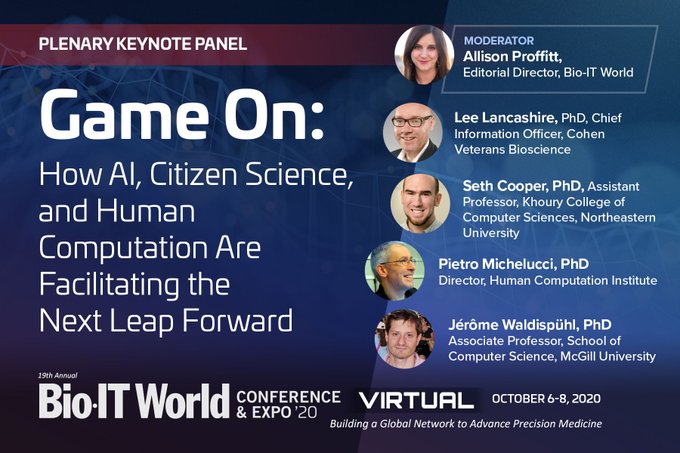
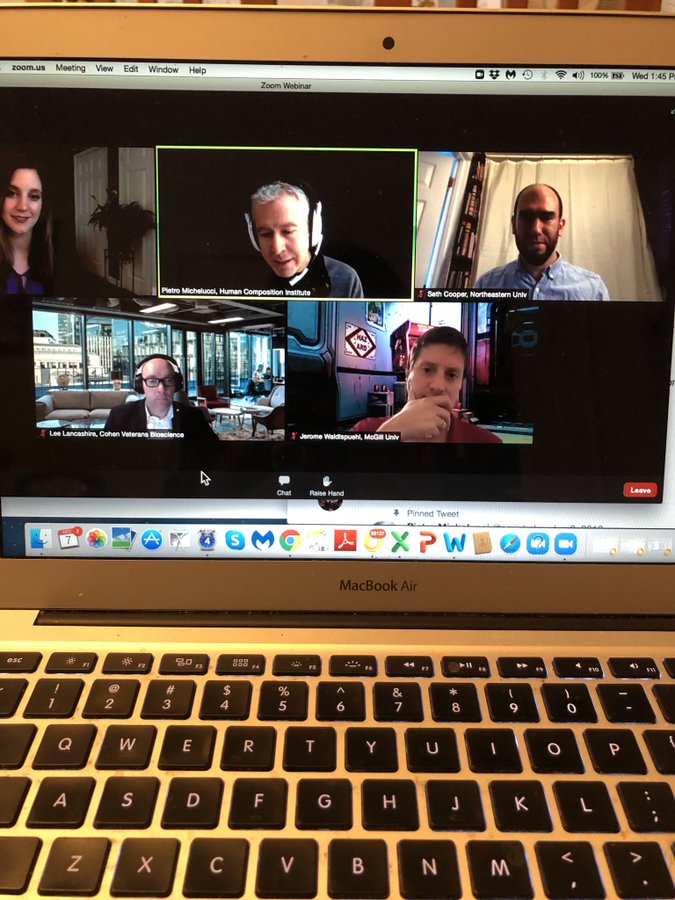
#BioIT20 Plenary Keynote: cutting innovative approach to #Science #Game On: How #AI, #CitizenScience #HumanComputation are facilitating the next leap forward in #Genomics and in #Biology may be in #PrecisionMedicine in the Future @pharma_BI @AVIVA1950 pic.twitter.com/L52qktkeYc

Retweeted your Tweet
#BioIT20 Plenary Keynote: cutting innovative approach to #Science #Game On: How #AI, #CitizenScience #HumanComputation are facilitating the next leap forward in #Genomics and in #Biology may be in #PrecisionMedicine in the Future @pharma_BI @AVIVA1950 pic.twitter.com/L52qktkeYc

and

liked your Tweet

#BioIT20 Plenary Keynote: cutting innovative approach to #Science #Game On: How #AI, #CitizenScience #HumanComputation are facilitating the next leap forward in #Genomics and in #Biology may be in #PrecisionMedicine in the Future @pharma_BI @AVIVA1950 pic.twitter.com/L52qktkeYc

NIH Office of Data Science Strategy
@NIHDataScience

We’ve made progress with #FAIRData, but we still have a ways to go and our future is bright. #BioIT20 #NIHData

Image

3

Aviva Lev-Ari
@AVIVA1950

#BioIT20

Driving Scientific Discovery with Data Digitization great ideas shared by moderator Timothy Gardner

#CEO Inspiration from History Total Quality Implementation is key for BioScience Data #AI won’t solve the problem #Data #Quality will

Image

Rob Lalonde
@HPC_Cloud_Rob

My #BioIT20 talk, “#Bioinformatics in the #Cloud Age,” is tomorrow at 3:30pm. I discuss cloud migration trends in life sciences and #HPC. Join us! A panel with

and

follows the talk.

1
16

Jean Marois
@JeanMarois

My team is participating in Bio-IT World Virtual 2020, October 6-8. Join me! Use discount code 20NUA to save 20%! invt.io/1tdbae9s8lp

#BioIT20

I’m going to Bio-IT World 2020, Oct 6-8, from home! Its a virtual event. Join me!
My team is participating in Bio-IT World Virtual 2020, October 6-8. Join me! Use discount code 20NUA to save 20%! @bioitworld #BioIT20
invt.io
2

NIH Office of Data Science Strategy
@NIHDataScience

One of the challenges we face today: we need an algorithm that can search across the 36+ PB of Sequence Read Archive (SRA) data now in the cloud. Imagine what we could do! #BioIT20 #NIHdata #SRAdata

Image

2

NCBI Staff
@NCBI

NCBI’s virtual #BioIT20 booth will open in 15 minutes. There, you can watch videos, grab some flyers and even speak with an expert! bio-itworld.pathable.co/organizations/ The booth will close at 4:15 PM, but we’ll be back tomorrow, Oct 7 and Thursday, Oct 8 at 9AM.
Bio-IT World
Welcome to Bio-IT World Virtual
bio-itworld.pathable.co
1
6
Show this thread

PERCAYAI
@percayai

Happening soon at #BioIT20: Join our faculty inventor Professor Rich Head’s invited talk “CompBio: An Augmented Intelligence System for Comprehensive Interpretation of Biological Data.”
4

Wendy Anne Warr
@WendyAnneWarr

This was a good discussion
Quote Tweet
Cambridge Innovation
@CIInstitute
·
RT percayai: We’ve put together what’s sure to be a thought-provoking discussion group for #BioIT20 “Why Current Approaches Using #AI in #…
1
2

Cambridge Innovation
@CIInstitute

RT VishakhaSharma_: Excited to speak and moderate a panel on Emerging #AI technologies bioitworld #BioIT20
1

Titian Software
@TitianSoftware

Meet Titian at #BioIT20 on 6-8th October and discover the latest research, science and solutions for exploring the world of precision medicine and the technologies that are powering it: bit.ly/2GjCj4B

Image

1

PERCAYAI
@percayai

Thanks for joining us, Wendy! You’ve done a great job summing up key points from the discussion. #BioIT20
1

Aviva Lev-Ari
@AVIVA1950

#NIHhealthInitiative #BioItWorld20

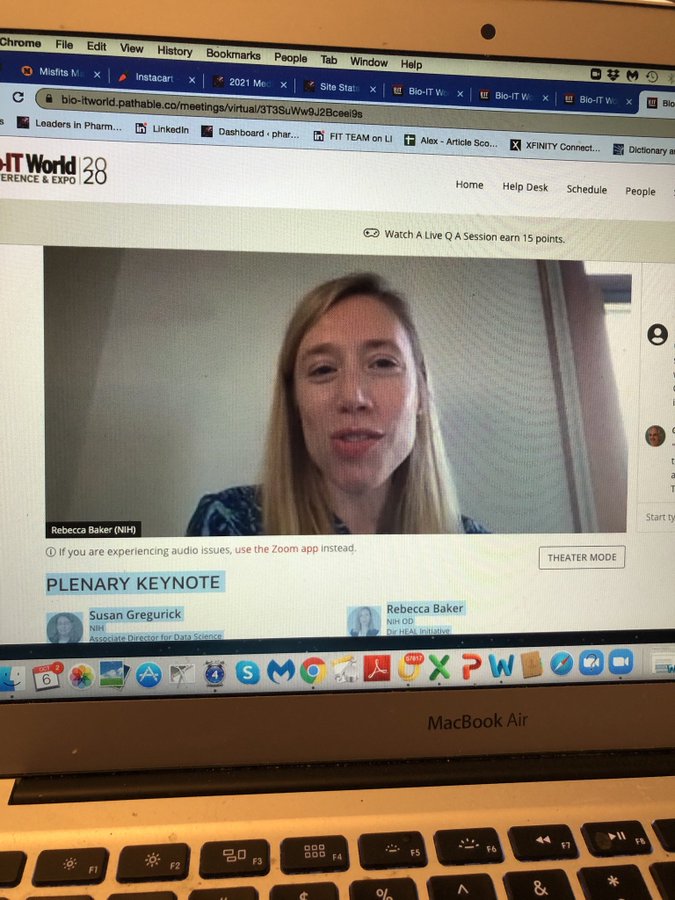
Out standing Plenary Keynote on #DataScience

CONNECTED DATA ECOSYSTEM FAIR Foundable, Accessible, Interoperable, reusable

Image

2

Read Full Post »

2020 Nobel Prize for Physiology and Medicine for Hepatitis C Discovery goes to British scientist Michael Houghton and US researchers Harvey Alter and Charles Rice

Reporter: Aviva Lev-Ari, PhD, RN

Article ID #282: 2020 Nobel Prize for Physiology and Medicine for Hepatitis C Discovery goes to British scientist Michael Houghton and US researchers Harvey Alter and Charles Rice. Published on 10/5/2020

WordCloud Image Produced by Adam Tubman

The Nobel Prize in Physiology or Medicine 2020

Harvey J. Alter

Ill. Niklas Elmehed. © Nobel Media.

Harvey J. Alter

Prize share: 1/3

Michael Houghton


Ill. Niklas Elmehed. © Nobel Media.

Michael Houghton

Prize share: 1/3

Charles M. Rice


Ill. Niklas Elmehed. © Nobel Media.

Charles M. Rice

Prize share: 1/3

The Nobel Prize in Physiology or Medicine 2020 was awarded jointly to Harvey J. Alter, Michael Houghton and Charles M. Rice “for the discovery of Hepatitis C virus.”

Nobel Prize for Medicine goes to Hepatitis C discovery

The winners are British scientist Michael Houghton and US researchers Harvey Alter and Charles Rice.

The Nobel Prize committee said their discoveries ultimately “saved millions of lives”. The virus is a common cause of liver cancer and a major reason why people need a liver transplant.

In the 1960s, there was huge concern that people receiving donated blood were getting chronic hepatitis (liver inflammation) from an unknown, mysterious disease. The Nobel Prize committee said a blood transfusion at the time was like “Russian roulette”. Highly sensitive blood tests mean such cases have now been eliminated in many parts of the world, and effective anti-viral drugs have also been developed. “For the first time in history, the disease can now be cured, raising hopes of eradicating Hepatitis C virus from the world,” the prize committee said. However, the 70 million people are currently living with the virus, which still kills around 400,000 a year.

The mystery killer

The viruses Hepatitis A and Hepatitis B had been discovered by the mid-1960s.

But Prof Harvey Alter, while studying transfusion patients at the US National Institutes of Health in 1972, showed there was another, mystery, infection at work. Patients were still getting sick after receiving donated blood. He showed that giving blood from infected patients to chimpanzees led to them developing the disease.

The mysterious illness became known as “non-A, non-B” hepatitis in and the hunt was now on.

Prof Michael Houghton, while at the pharmaceutical firm Chiron, managed to isolated the genetic sequence of the virus in 1989. This showed it was a type of flavivirus and it was named Hepatitis C.

And Prof Charles Rice, while at Washington University in St. Louis, applied the finishing touches in 1997. He injected a genetically engineered Hepatitis C virus into the liver of chimpanzees and showed this could lead to hepatitis.

SOURCE

https://www.bbc.com/news/health-54418463


2014, 2015, 2016, 2017, 2019 Nobel Prize in Medicine went to:


Read Full Post »

Rare earth-doped nanoparticles applications in biological imaging and tumor treatment

Reporter: Irina Robu, PhD

Bioimaging  aims to interfere as little as possible with life processes and can be used to gain information on the 3-D structure of the observed specimen from the outside. Bioimaging ranges from  the observation of subcellular structures and the entire cells over tissues up to entire multicellular organisms. The technology uses light, fluorescence, ultrasound, X-ray, magnetic resonance as sources of imaging. The more common imaging is fluorescence imaging which is used to monitor the dynamic interaction between the drug molecules and tumor cells and the ability to monitor the real time dynamic process in biological tissues.

Researchers from the Xi’an Institute of Optics and Precision Mechanics (XIOPM) of the Chinese Academy of Sciences (CAS) described the recent progress they made in the rare earth-doped nanoparticles in the field of bio-engineering and tumor treatment. It is well known that producing small nanoparticles with good dispersion and exploitable optical coherence properties is highly challenging. According to them, these rare earth-doped nanoparticles can be vested with additional capabilities such as water solubility, biocompatibility, drug-loading ability and the target ability for different tumors by surface functionalization. The luminescent properties and structure design were also looked at.

According to the Chinese researchers, for applying the RE-doped NPs to the diagnosis and treatment of tumors, their first goal is to improve water solubility and biocompatibility.  The second goal would be to give the nanoparticles the ability to target tumors by surface functionalization. Lastly, biocompatible water-soluble tumor-targeting NPs can be used as carriers to load drugs for treatment of tumor cells. All things considered, the recent research progress on the development of fluorescence intensity of NPs, surface modification, and tumor targeted diagnosis and treatment has also been emphasized.

SOURCE

https://nano-magazine.com/news/2020/8/20/application-of-rare-earth-doped-nanoparticles-in-biological-imaging-and-tumor-treatment?ss_source=sscampaigns

Read Full Post »

Coronavirus mutation-does it matter?

Reporter : Irina Robu, PhD

Soon after SARS-CoV-2 was detected in China, scientists began analyzing viral sample and posting the genetic codes online. Mutations allowed researchers to track the spread by linking closely related viruses to understand how SARS-CoV-2 infects humans.  They recognized that SARS-CoV-2 encode their genome in RNA and tends to pick up mutations quickly as they are copied inside their hosts.  Yet,  sequencing data suggest that coronaviruses change more slowly than most RNA viruses, probably because of a proofreading enzyme that corrects fatal copying mutations.  In spite of the virus slow mutation rate, scientists have been able to classified more than 12,000 mutations in SARS-CoV-2 genomes.

Many scientists such as David Montefiori, a virologist who spent much of his career studying how chance mutations in HIV helps it evade the immune system thought that COVID-19 might cause the same thing.  His laboratory in collaboration with Dr. Bette Korber investigated several thousands of coronavirus sequences for mutations that might have changed virus properties around the world.

Compared to HIV, SARS-CoV-2 seems to be changing slower than it spreads, but one mutation is obvious. That mutation  includes a gene encoding the spike protein, which helps the virus particles penetrate cells. According to Korber, the 614th amino acid position of the spike protein, the amino acid aspartate was replaced by glycine, because of a mutation, D614G that altered a single nucleotide in the virus’s 29,903-letter RNA code.

To observe whether D614G  mutation made the virus more transmissible, Montefiori evaluated its effects under laboratory conditions but he couldn’t study the natural SARS-CoV-2 virus in his lab, because of the biosafety containment required. So, he studied a genetically modified form of HIV that used the SARS-CoV-2 spike protein to infect cells. Such ‘pseudo virus’ particles are a workhorse of virology labs: they enable the safe study of deadly pathogens such as the Ebola virus, and they make it simpler to test the effects of mutations.

The strongest sign that D614G has a consequence on the spread of SARS-CoV-2 in humans comes from an ambitious UK effort called the COVID-19 Genomics UK Consortium, which has analyzed genomes of around 25,000 viral samples. From these data, researchers have identified more than 1,300 instances in which a virus entered the United Kingdom and spread, including examples of D- and G-type viruses.

What is clearly known is that D614G is an adaptation that helps the virus infect cells or compete with viruses that don’t carry the change, while at the same time altering a bit of information about how SARS-CoV-2 spreads between people and through a population.  Some scientists believe that D614G mutation should explain how SARS-CoV-2 fuses with cells and can use that process to develop a more efficient vaccine. 

At the present time, the evidence suggests that D614G doesn’t stop the immune system’s neutralizing antibodies from recognizing SARS-CoV-2, partly because the mutation is not in the spike protein’s receptor-binding domain.

SOURCE

https://www.nature.com/articles/d41586-020-02544-6?utm_source=Nature+Briefing

Read Full Post »

« Newer Posts