Mitochondrial Metabolism and Cardiac Function
Curator: Larry H Bernstein, MD, FACP
This article is the SECOND in a four-article Series covering the topic of the Roles of the Mitochondria in Cardiovascular Diseases. They include the following;
- Mitochondria and Cardiovascular Disease: A Tribute to Richard Bing, Larry H Bernstein, MD, FACP http://pharmaceuticalintelligence.com/2013/04/14/chapter-5-mitochondria-and-cardiovascular-disease/
- Mitochondrial Metabolism and Cardiac Function, Larry H Bernstein, MD, FACP http://pharmaceuticalintelligence.com/2013/04/14/mitochondrial-metabolism-and-cardiac-function/
- Mitochondrial Dysfunction and Cardiac Disorders, Larry H Bernstein, MD, FACP http://pharmaceuticalintelligence.com/2013/04/14/mitochondrial-dysfunction-and-cardiac-disorders/
- Reversal of Cardiac mitochondrial dysfunction, Larry H Bernstein, MD, FACP http://pharmaceuticalintelligence.com/2013/04/14/reversal-of-cardiac-mitochondrial-dysfunction/
The mitochondrion serves a critical role as a platform for
- energy transduction,
- signaling, and
- cell death pathways
relevant to common diseases of the myocardium such as heart failure. This review focuses on the molecular regulatory events involved in mitochondrial energy metabolism.
This is followed by the derangements known to occur in the development of heart failure.
All
cellular processes are driven by
ATP-dependent pathways. The heart has perpetually high energy demands related to
- the maintenance of specialized cellular processes, including
- ion transport,
- sarcomeric function, and
- intracellular Ca2+ homeostasis.
Myocardial workload (
energy demand) and
energy substrate availability (supply) are in continual flux. Thus, ATP-generating pathways must
- respond proportionately to dynamic fluctuations in physiological demands and fuel delivery.
In order to support contractile activity, the human heart requires
- a daily synthesis of approximately 30kg of ATP, via
- oxidative phosphorylation at
- the inner mitochondrial membrane.
These metabolic processes are regulated, involving
- allosteric control of enzyme activity,
- signal transduction events, and
- the activity of genes encoding
- rate-limiting enzymes and proteins.
Catabolism of exogenous substrates ,such as
- fatty acids,
- glucose,
- pyruvate,
- lactate and
- ketone bodies,
generates most of the reduced compounds,
- NADH (nicotinamide adenine dinucleotide, reduced) and
- FADH2 (flavin adenine dinucleotide, reduced),
which are necessary for mitochondrial electron transport (Fig. 1).
- nicotinamide adenine dinucleotide, reduced (NADH) and
- flavin adenine dinucleotide, reduced(FADH2),
which are oxidized by complexes I and II, respectively, of
Electrons are transferred through the chain to the final acceptor, namely oxygen(O2).
The free energy from electron transfer
- is used to pump hydrogen out of the mitochondria and
- generate an electrochemical gradient across the inner mitochondrial membrane.
This gradient is the driving force for
ATP synthesis via the
ATP synthase. Alternatively,
H can enter the mitochondria by a mechanism not coupled to ATP synthesis, via
- the uncoupling proteins(UCPs), which results in the dissipation of energy.
[ANT, adenine nucleotide translocase; CoA, coenzymeA; FAT, fatty acid transporter; GLUT, glucose transporter;
NAD, nicotinamide adenine dinucleotide; TCA, tricarboxylic acid].
Cardiac Energy Metabolic Pathways
Oxidation of free fatty acids (FFAs) and glucose in mitochondria
- accounts for the vast majority of ATP generation in the healthy adult heart.
FFAs are the preferred substrate in the adult myocardium,
- supplying 70-90% of total ATP.
FAs derived from circulating
triglyceride-rich lipoproteins and
albumin bound nonesterified FAs
- are oxidized in the mitochondrial matrix by the process of beta-oxidation (FAO), whereas
pyruvate derived from glucose and lactate
- is oxidized by the pyruvate-dehydrogenase (PDH) complex,
- localized within the inner mitochondrial membrane.
- enters the tricarboxylic acid (TCA) cycle.
- substrate flux through the
The reducing equivalents enter the electron transport (ET) chain,
- producing an electrochemical gradient across the mitochondrial membrane
- that drives ATP synthesis in the presence of molecular oxygen (oxidative phosphorylation).
The relative contributions of each of these substrates are determined
- by their availability
- cardiac workload and
- hormonal status
In the healthy, normal heart, the ATP requirement is largely met in the actively metabolic mitochondria by
- the catabolism of free fatty acids (FFAs) via beta-oxidation,
- the tricarboxylic acid cycle and
- oxidative phosphorylation
giving rise to a greater ATP yield per C2 unit than with glucose.
The relative contribution of glucose to the mitochondrial acetyl-coenzyme A (CoA) pool increases
- during the postprandial period,
- when the heart is insulin stimulated, and
- during exercise
- hypoxia, or
- ischemia
when glucose is favored as a more oxygen-efficient substrate than
- FFAs (greater ATP yield per oxygen molecule consumed).
Substrate switching in the heart can also be achieved by
- acute alterations in transcriptional regulation of key metabolic enzymes
- in response to alterations in substrate levels and oxygen availability, or
- indeed by the intracellular circadian clock.
This continual process of fine adjustment in fuel selection
- allows cardiac mitochondria to function
- under a range of metabolic conditions to meet the high energy demands of the heart.
Mitochondrial enzymes are encoded by both nuclear and mitochondrial genes.
All of the enzymes of
- beta-oxidation and the TCA cycle, and
- most of the subunits of Electron Transfer/Oxidative Phosphorylation,
- are encoded by nuclear genes.
The mitochondrial genome is comprised of
- 1 circular double-stranded chromosome that encodes
- 13 ET chain subunits within complexes I, III, and IV.
Since mitochondrial number and function require both nuclear and mitochondrial-encoded genes,
- coordinated mechanisms exist to regulate the 2 genomes and
- determine overall cardiac oxidative capacity.
In addition, distinct pathways exist to coordinately regulate
- nuclear genes encoding component mitochondrial pathways.
JC de Oliveira, S Grassiolli, C Gravena, PCF de Mathias Nutr Metab. 2012;9(80)
The developmental origins of health and disease (DOHaD) hypothesis stipulates that adult metabolic disease
- may be programmed during the perinatal stage.
A large amount of evidence suggests that the etiology of obesity is not only related to food abundance
- but also to food restriction during early life.
Protein restriction during lactation has been used as a rat model of metabolic programming
- to study the impact of perinatal malnutrition on adult metabolism.
In contrast to protein restriction during fetal life, protein restriction during lactation did not appear to cause
- either obesity or the hallmarks of metabolic syndrome, such as hyperinsulinemia, when individuals reached adulthood.
Protein restriction provokes body underweight and hypoinsulinemia.
Hypoinsulinemia programs adult rats to maintain normoglycemia,
- pancreatic β-cells are less sensitive to secretion stimuli:
- glucose and
- cholinergic agents.
These pancreatic dysfunctions are attributed to an imbalance of ANS activity
- recorded in adult rats that experienced maternal protein restriction
Several studies have reported that the ANS activity is altered in under- or malnourished organisms. After weaning,
- rats fed a chronically protein-deficient diet exhibited low activity of the vagus nerve,
- whereas high sympathetic activity was recorded
These data were in agreement with a low insulin response to glucose.
Pancreatic islets isolated from protein-restricted rats showed
- weak glucose and cholinergic insulin tropic responses
- suggesting that pancreatic β-cell dysfunction may be attributed to altered ANS activity
Food abundance or restriction with regard to body weight control involves changes in
- metabolic homeostasis and ANS balance activity.
Although the secretion of insulin by the pancreatic β-cells is increased in people who were overweight,
- it is diminished in people who were underweight.
Changes in the ANS activity may constitute the mechanisms underlying the β-cell dysfunction:
- the high PNS tonus observed in obese individuals constantly potentiates insulin secretion,
- whereas the low activity reported in underweight individuals is associated with a weak cholinergic insulin tropic effect.
Under Nutrition Early in Life and Epigenetic Modifications, Association With Metabolic Diseases Risk
relevant to this issue is the role of epigenetic changes in the increased risk of developing metabolic diseases,
- such as type 2 diabetes and obesity, later in life.
Epigenetic mechanisms, such as DNA methylation and/or nucleoprotein acetylation/methylation, are
- crucial to the normal/physiological development of several tissues in mammals, and
- they involve several mechanisms to guarantee fluctuations of enzymes and other proteins that regulate the metabolism.
The intrauterine phase of development is particularly important for the genomic processes related to genes associated with metabolic pathways.
This phase of life may be particularly important for nutritional disturbance. In humans who experienced the Dutch famine Winter in 1944–1945 and
in rats that were deprived of food in utero, epigenetic modifications were detected in
- the insulin-like growth factor 2 (IGF2) and
- pancreatic and duodenal home box 1 (Pdx1),
the major factors involved in pancreas development and pancreatic β-cell maturation.
The pancreas and the pancreatic β-cells develop during the embryonic phase, but the postnatal life is also crucial for
- the maintenance processes that control the β-cell mass:
- proliferation,
- neogenesis
- apoptosis.
Nutritional Restriction to the Fetus: A Risk of Obesity Onset
If an abundant diet is offered to people who have been undernourished during the perinatal life,
- this opportunity induces a metabolic shift toward the storage of energy and high fat tissue accumulation
The concept of Developmental Origins of Health and Disease extends to any type of stressful situations that may
- predispose babies or pups to develop metabolic disorders when they reach adulthood.
Programmed Metabolism and Insulin Secretion-coupling Process
What are the mechanisms involved in the low glucose insulin tropic response observed in low protein-programmed lean rats?
The pancreatic β-cells secrete insulin when stimulated mostly by glucose. However, several nutrients, such as
- amino acids,
- fatty acids,
- and their metabolites,
stimulate cellular metabolism and increase ATP production.
ATP-sensitive potassium channels (KATP) are inactivated by an increased ATP/ADP ratio. This provokes
- membrane depolarization and
- the activation of voltage-dependent calcium channels.
These ionic changes increase the intracellular calcium concentration, which is involved in
- the export of insulin to the bloodstream.
Glucose may also stimulate insulin secretion by alternative pathways involving KATP channels.
Programmed Metabolism and Insulin Tropic Effects of Neurotransmitters
Insulin release is modulated by non-nutrient secretagogues, such as neurotransmitters, which
- enhance or inhibit glucose-stimulated insulin secretion.
Pancreatic β-cells contain several receptors for neurotransmitters and Neuropeptide, such as
- adrenoceptors and cholinergic muscarinic receptors (mAChRs).
These receptors are stimulated by efferent signals from the central nervous system, including the ANS,
- throughout their neural ends for pancreatic β-cells.
During blood glucose level oscillations, the β-cells receive inputs from
- the parasympathetic and sympathetic systems to participate in glycemic regulation.
Overall, acetylcholine promotes the potentiation of glucose-induced insulin secretion,
- whereas noradrenaline and adrenaline inhibit this response.
Functional studies of mAChR subtypes have revealed that M1 and particularly M3 are the receptors that are involved in
- the insulin tropic effect of acetylcholine.
Interestingly, it was reported that M3mAChR gene knockout mice are
- underweight,
- hypophagic and
- hypoinsulinemic,
as are adult rats that were protein-restricted during lactation.
The pancreatic islets from M3mAChR mice (-/-) showed a reduced secretory response to cholinergic agonists.
In studies using transgenic mice in which the pancreatic β-cell M3mAChRs are chronically stimulated,
- an improvement of glycemic control has been observed
Adult male rat offspring from whose mothers were protein-restricted during lactation
- exhibit a low PNS activity.
Evidence suggests that ANS changes may contribute to the impairment of glycemic homeostasis in metabolically programmed rats.
Pathways involved in cardiac energy metabolism.
FA and glucose oxidation are the main ATP-generating pathways in the adult mammalian heart.
Acetyl-CoA derived from FA and glucose oxidation is
- further oxidized in the TCA cycle to generate NADH and FADH2, which
- enter the ET/oxidative phosphorylation pathway and drive ATP synthesis.
Genes encoding enzymes involved at multiple steps of these metabolic pathways
- uptake,
- esterification,
- mitochondrial transport,
- and oxidation
are transcriptionally regulated by PGC-1a
- with its nuclear receptor partners, including PPARs and ERRs .
Glucose uptake/oxidation and electron transport/oxidative phosphorylation pathways are also regulated by PGC-1a via
- other transcription factors, such as MEF-2 and NRF-1.
[Cyt c, cytochrome c]
Fetal metabolism of carbohydrate utilization
This reviewer poses the question of whether the fetal cardiac metabolism, which is characterized by a (facultative) anaerobic glycolysis,
- results in lactate production that is not redirected into the TCA cycle.
An unexamined, but related question is whether there is an associated change in the ratio of
- mitochondrial to cytoplasmic malate dehydrogenase isoenzyme activity (m-MDH:c-MDH).
The fetal heart operates without oxygenation from a functioning lung, bathed in amniotic fluid.
An enzymatic feature might be expressed in a facultative anaerobic cytplasmic glycolytic pathway characterized by
- a decrease in the h-type lactate dehydrogenase (LD) isoenzyme(s) (LD1, LD2) with a predominance of
- the m-type LD isoenzymes (LD3, LD4, LD5).
The observation here is that the heart muscle is a syncytium, and it functions at a highly regulated rate,
- not with the spurts of activity seen in skeletal muscle.
In another article in this series, there are morphological changes that occur in the heart mitochondria, and
- there are three locations, as if the organelle itself were an organ.
The normal functioning myocardium can utilize lactic acid accumulated in the bloodstream during extreme exercise as fuel.
This is a virtue of mitochondrial function. There is a significant functional difference between the roles of the h- and m-type LD isoenzymes.
The h-type is a regulatory enzyme that forms a complex as NADH is converted to NAD+ between the
- LD (H4, H3M; LD1, LD2),
- oxidized pyridine nucleotide coenzyme, and
- pyruvate
The complex forms in 200 msec as observed in the Aminco-Morrow stop-flow analyzer. This is not the case for the m-type isoenzyme.
I presume that it is not a factor in embryonic heart. It would become a factor after birth with the expansion of the lungs.
This would also bring to the discussion the effect of severe restrictive lung disease on cardiac metabolism.
Related References:
LH Bernstein, patents: Malate dehydrogenase method, The lactate dehydrogenase method
LH Bernstein, J Everse, N Shioura, PJ Russell. Detection of cardiac damage using a steady state assay for lactate dehydrogenase isoenzymes in serum.
J Mol Cell Cardiol 1974; 6(4):297-315 ICID: 825597
LH Bernstein, MB Grisham, KD Cole, J Everse . Substrate inhibition of the mitochondrial and cytoplasmic malate dehydrogenases.
J Biol Chem 1978; 253(24):8697-8701. ICID: 825513
J Adan, L H Bernstein, J Babb. Lactate dehydrogenase isoenzyme-1/total ratio: accurate for determining the existence of myocardial infarction.
Clin Chem 1986; 32(4):624-628. ICID: 825540
MB Grisham, LH Bernstein, J Everse. The cytoplasmic malate dehydrogenase in neoplastic tissues; presence of a novel isoenzyme?
Br J Cancer 1983; 47(5):727-731. ICID: 825551
PGC-1a: an inducible integrator of transcriptional circuits
The PPAR³ coactivator-1 (PGC-1) family of transcriptional coactivators is involved in regulating mitochondrial metabolism and biogenesis.
PGC-1a was the first member discovered through its functional interaction with the nuclear receptor PPAR³ in brown adipose tissue (BAT).
There are two PGC-1a related coactivators,
- PGC-1² (also called PERC) and
- PGC-1–related coactivator (PRC).
PRC coactivates transcription in mitochondrial biogenesis, with PGC-1a and PGC-1² . Both are expressed in tissues with high oxidative capacity, such as
- heart
- slow-twitch skeletal muscle, and
- BAT
They serve critical roles in the regulation of mitochondrial functional capacity. PGC-1a also regulates
- hepatic gluconeogenesis and
- skeletal muscle glucose uptake.
PGC-1² appears to be important in regulating energy metabolism in the heart, but
- PGC-1a is distinct from other PGC-1 family members, indeed from most coactivators, in its broad responsiveness to
- developmental alterations in energy metabolism and
- physiological and pathological cues at the level of expression and transactivation.
In the heart, PGC-1a expression increases at birth coincident with an increase in cardiac oxidative capacity and
- a perinatal shift from reliance on glucose metabolism to the oxidation of fats for energy.
PGC-1a is induced by physiological stimuli that increase ATP demand and
- stimulate mitochondrial oxidation, including
- cold exposure,
- fasting, and
- exercise.
Activation of this regulatory cascade increases cardiac mitochondrial oxidative capacity in the heart. In cardiac myocytes in culture, it
- increases mitochondrial number,
- upregulates expression of mitochondrial enzymes, and
- increases rates of FA oxidation and coupled respiration.
Thus, PGC-1a is an inducible coactivator that coordinately regulates
- cardiac fuel selection and
- mitochondrial ATP-producing capacity.
PGC-1a activates expression of nuclear respiratory factor-1 (NRF-1) and NRF-2 and
- directly coactivates NRF-1 on its target gene promoters.
NRF-1 and NRF-2 regulate expression of mitochondrial transcription factor A (Tfam),
- a nuclear-encoded transcription factor that binds regulatory sites on mitochondrial DNA and is essential for
- replication,
- maintenance, and
- transcription of the mitochondrial genome.
Furthermore, NRF-1 and NRF-2 regulate the expression of nuclear genes encoding
- respiratory chain subunits and other proteins required for mitochondrial function.
PGC-1a also
- coactivates the PPAR and ERR nuclear receptors, critical regulators of myocardial FFA utilization.
- regulates genes involved in the cellular uptake and mitochondrial oxidation of FFAs.
- is an integrator of the transcriptional network regulating mitochondrial biogenesis and function.
Numerous signaling pathways, by increasing either PGC-1a expression or activity, such as –
- Ca2+-dependent,
- NO,
- MAPK, and
- beta-adrenergic pathways (beta3/cAMP),
- activate the PGC-1a directly
Additionally, the p38_MAPK pathway
- selectively activates PPARa, which may bring about synergistic activation in the presence of PGC-1a,
- whereas ERK-MAPK has the opposite effect.
These signaling pathways transduce physiological stimuli to the PGC-1a pathway:
PGC-1a, in turn, coactivates transcriptional partners,which regulate mitochondrial biogenesis and FA-oxidation pathways:
- NRF-1 and -2,
- ERRa, and
- PPARa,
Insights into the physiological responsiveness of the PGC-1a pathway come from
- identification of signal transduction pathways that modulate the activity of PGC-1a and its downstream partners.
PGC-1a is upregulated in response to beta-adrenergic signaling, consistent with the involvement of this pathway in thermogenesis.
The stress-activated p38_MAPK activates PGC-1a by increasing PGC-1a protein stability and promoting dissociation of a repressor.
p38 increases mitochondrial FAO through selective activation of the PGC-1a partner, PPARa. Conversely, the ERK-MAPK pathway
- inactivates the PPARa/RXRa complex via direct phosphorylation.
Therefore, distinct limbs of the MAPK pathway exert
- opposing regulatory influences on the PGC-1a cascade.
Recently, NO has emerged as a novel signaling molecule proposed to integrate pathways involved in
- regulating mitochondrial biogenesis by inducing mitochondrial proliferation.
A Paradox
Mitochondria are like little cells within our cells. They are the energy producing organelles of the body. The more energy a certain tissue requires
- such as the brain and the heart
- the more mitochondria those cells contain.
Conventional transmission electron microscopy of mammalian cardiac tissue reveals mitochondria to be
- elliptical individual organelles situated either in clusters beneath the sarcolemma (subsarcolemmal mitochondria, SSM) or
- in parallel, longitudinal rows ensconced within the contractile apparatus (interfibrillar mitochondria, IFM).
The two mitochondrial populations differ in their cristae morphology, with
- a lamelliform orientation in SSM, whereas
- the cristae orientation in IFM is tubular.
The morphology of mitochondria is responsive to changes in cardiomyocytes.
Mitochondrial oxidative phosphorylation relies
- not only on the activities of individual complexes, but also on
- the coordinated action of supramolecular assemblies (respirasomes) of the electron transport chain (ETC) complexes
in both normal and failing heart.
Mitochondria have their own set of DNA and
- the more energy they generate,
- the more DNA-damaging free radicals they produce.
Mitochondrial DNA damage is incurred by generation of energy in ATP production, so that
- the process that sustains life also is the source of toxic damage that causes the dysfunction and mitogeny in the cell.
In human mtDNA mutant cybrids with impaired mitochondrial respiration, the recovery of mitochondrial function
- correlates with the formation of respirasomes suggesting that
- respirasomes represent regulatory units of mitochondrial oxidative phosphorylation
- by facilitating the electron transfer between the catalytic sites of the ETC.
We recently reported a decrease in mitochondrial respirasomes in CHF that fits in the category of a new mitochondrial cytopathy.
ATP utilized by the heart is synthesized mainly by means of oxidative phosphorylation in the inner mitochondrial membrane,
- a process that involves the coupling of electron transfer and oxygen consumption with phosphorylation of ADP to ATP.
The catabolism of exogenous substrates (FAs, glucose, pyruvate, lactate, and ketone bodies) provides the reduced intermediates,
- NADH (nicotinamide adenine dinucleotide, reduced) and
- FADH2 (flavin adenine dinucleotide, reduced),
as donors for mitochondrial electron transport.
The contribution of glucose to the acetyl CoA pool in the heart is
- increased by insulin during the postprandial period and during exercise.
All cells and tissues require
- adenine,
- pyridine, and
- flavin nucleotides for energy
by way of Krebs cycle metabolism of fatty acids and carbohydrate substrates.
If DNA holds the blueprint for the proper function of a cell, then any change in the blueprint will change how the cell functions.
If the mitochondria do not function properly, then they cannot fulfill their role in producing energy:
- the cell will lose its ability to function adequately.
Related articles
References
Mitochondrial dynamics and cardiovascular diseases Ritu Saxena
http://pharmaceuticalintelligence.com/2012/11/14/mitochondrial-dynamics-and-cardiovascular-diseases/
Mitochondrial Damage and Repair under Oxidative Stress larryhbern
http://pharmaceuticalintelligence.com/2012/10/28/mitochondrial-damage-and-repair-under-oxidative-stress/
Mitochondria: Origin from oxygen free environment, role in aerobic glycolysis, metabolic adaptation larryhbern
http://pharmaceuticalintelligence.com/2012/09/26/mitochondria-origin-from-oxygen-free-environment-role-in-aerobic-glycolysis-metabolic-adaptation/ Ca2+ signaling: transcriptional control larryhbern
http://pharmaceuticalintelligence.com/2013/03/06/ca2-signaling-transcriptional-control/ MIT Scientists on Proteomics: All the Proteins in the Mitochondrial Matrix identified Aviva Lev-Ari
http://pharmaceuticalintelligence.com/2013/02/03/mit-scientists-on-proteomics-all-the-proteins-in-the-mitochondrial-matrix-identified/
Nitric Oxide has a ubiquitous role in the regulation of glycolysis -with a concomitant influence on mitochondrial function larryhbern
http://pharmaceuticalintelligence.com/2012/09/16/nitric-oxide-has-a-ubiquitous-role-in-the-regulation-of-glycolysis-with-a-concomitant-influence-on-mitochondrial-function/
Ubiquinin-Proteosome pathway, autophagy, the mitochondrion, proteolysis and cell apoptosis larryhbern
http://pharmaceuticalintelligence.com/2013/02/14/ubiquinin-proteosome-pathway-autophagy-the-mitochondrion-proteolysis-and-cell-apoptosis-reconsidered/
Low Bioavailability of Nitric Oxide due to Misbalance in Cell Free Hemoglobin in Sickle Cell Disease – A Computational Model Anamika Sarkar
http://pharmaceuticalintelligence.com/2012/11/09/low-bioavailability-of-nitric-oxide-due-to-misbalance-in-cell-free-hemoglobin-in-sickle-cell-disease-a-computational-model/
The rationale and use of inhaled NO in Pulmonary Artery Hypertension and Right Sided Heart Failure larryhbern
http://pharmaceuticalintelligence.com/2012/08/20/the-rationale-and-use-of-inhaled-no-in-pulmonary-artery-hypertension-and-right-sided-heart-failure/
Mitochondria and Cardiovascular Disease: A Tribute to Richard Bing, Larry H Bernstein, MD, FACP
http://pharmaceuticalintelligence.com/2013/04/14/chapter-5-mitochondria-and-cardiovascular-disease/
Mitochondrial Metabolism and Cardiac Function, Larry H Bernstein, MD, FACP
http://pharmaceuticalintelligence.com/2013/04/14/mitochondrial-metabolism-and-cardiac-function/
Mitochondrial Dysfunction and Cardiac Disorders, Larry H Bernstein, MD, FACP
http://pharmaceuticalintelligence.com/2013/04/14/mitochondrial-dysfunction-and-cardiac-disorders/
Reversal of Cardiac mitochondrial dysfunction, Larry H Bernstein, MD, FACP
http://pharmaceuticalintelligence.com/2013/04/14/reversal-of-cardiac-mitochondrial-dysfunction/
Clinical Trials Results for Endothelin System: Pathophysiological role in Chronic Heart Failure, Acute Coronary Syndromes and MI – Marker of Disease Severity or Genetic Determination? Aviva Lev-Ari, PhD, RN 10/19/2012
http://pharmaceuticalintelligence.com/2012/10/19/clinical-trials-results-for-endothelin-system-pathophysiological-role-in-chronic-heart-failure-acute-coronary-syndromes-and-mi-marker-of-disease-severity-or-genetic-determination/
Endothelin Receptors in Cardiovascular Diseases: The Role of eNOS Stimulation, Aviva Lev-Ari, PhD, RN 10/4/2012
http://pharmaceuticalintelligence.com/2012/10/04/endothelin-receptors-in-cardiovascular-diseases-the-role-of-enos-stimulation/
Inhibition of ET-1, ETA and ETA-ETB, Induction of NO production, stimulation of eNOS and Treatment Regime with PPAR-gamma agonists (TZD): cEPCs Endogenous Augmentation for Cardiovascular Risk Reduction – A Bibliography, Aviva Lev-Ari, PhD, RN 10/4/2012
http://pharmaceuticalintelligence.com/2012/10/04/inhibition-of-et-1-eta-and-eta-etb-induction-of-no-production-and-stimulation-of-enos-and-treatment-regime-with-ppar-gamma-agonists-tzd-cepcs-endogenous-augmentation-for-cardiovascular-risk-reduc/
Genomics & Genetics of Cardiovascular Disease Diagnoses: A Literature Survey of AHA’s Circulation Cardiovascular Genetics, 3/2010 – 3/2013, L H Bernstein, MD, FACP and Aviva Lev-Ari,PhD, RN 3/7/2013
http://pharmaceuticalintelligence.com/2013/03/07/genomics-genetics-of-cardiovascular-disease-diagnoses-a-literature-survey-of-ahas-circulation-cardiovascular-genetics-32010-32013/
Cardiovascular Disease (CVD) and the Role of agent alternatives in endothelial Nitric Oxide Synthase (eNOS) Activation and Nitric Oxide Production, Aviva Lev-Ari, PhD, RN 7/19/2012
http://pharmaceuticalintelligence.com/2012/07/19/cardiovascular-disease-cvd-and-the-role-of-agent-alternatives-in-endothelial-nitric-oxide-synthase-enos-activation-and-nitric-oxide-production/
Cardiovascular Risk Inflammatory Marker: Risk Assessment for Coronary Heart Disease and Ischemic Stroke – Atherosclerosis. Aviva Lev-Ari, PhD, RN 10/30/2012
http://pharmaceuticalintelligence.com/2012/10/30/cardiovascular-risk-inflammatory-marker-risk-assessment-for-coronary-heart-disease-and-ischemic-stroke-atherosclerosis/
Cholesteryl Ester Transfer Protein (CETP) Inhibitor: Potential of Anacetrapib to treat Atherosclerosis and CAD, Aviva Lev-Ari, PhD, RN 4/7/2013
http://pharmaceuticalintelligence.com/2013/04/07/cholesteryl-ester-transfer-protein-cetp-inhibitor-potential-of-anacetrapib-to-treat-atherosclerosis-and-cad/
Hypertriglyceridemia concurrent Hyperlipidemia: Vertical Density Gradient Ultracentrifugation a Better Test to Prevent Undertreatment of High-Risk Cardiac Patients, Aviva Lev-Ari, PhD, RN 4/4/2013 http://pharmaceuticalintelligence.com/2013/04/04/hypertriglyceridemia-concurrent-hyperlipidemia-vertical-density-gradient-ultracentrifugation-a-better-test-to-prevent-undertreatment-of-high-risk-cardiac-patients/
Fight against Atherosclerotic Cardiovascular Disease: A Biologics not a Small Molecule – Recombinant Human lecithin-cholesterol acyltransferase (rhLCAT) attracted AstraZeneca to acquire AlphaCore, Aviva Lev-Ari, PhD, RN 4/3/2013
http://pharmaceuticalintelligence.com/2013/04/03/fight-against-atherosclerotic-cardiovascular-disease-a-biologics-not-a-small-molecule-recombinant-human-lecithin-cholesterol-acyltransferase-rhlcat-attracted-astrazeneca-to-acquire-alphacore/
High-Density Lipoprotein (HDL): An Independent Predictor of Endothelial Function & Atherosclerosis, A Modulator, An Agonist, A Biomarker for Cardiovascular Risk, Aviva Lev-Ari, PhD, RN 3/31/2013
http://pharmaceuticalintelligence.com/2013/03/31/high-density-lipoprotein-hdl-an-independent-predictor-of-endothelial-function-artherosclerosis-a-modulator-an-agonist-a-biomarker-for-cardiovascular-risk/
Peroxisome proliferator-activated receptor (PPAR-gamma) Receptors Activation: PPARγ transrepression for Angiogenesis in Cardiovascular Disease and PPARγ transactivation for Treatment of Diabetes, Aviva Lev-Ari, PhD, RN 11/13/2012
http://pharmaceuticalintelligence.com/2012/11/13/peroxisome-proliferator-activated-receptor-ppar-gamma-receptors-activation-pparγ-transrepression-for-angiogenesis-in-cardiovascular-disease-and-pparγ-transactivation-for-treatment-of-dia/
Sulfur-Deficiciency and Hyperhomocysteinemia, L H Bernstein, MD, FACP
http://pharmaceuticalintelligence.com/2013/04/04/sulfur-deficiency-and-hyperhomocusteinemia/
Related articles

Mitochondria structure: 1 : inner membrane 2 : outer membrane 3 : cristae 4 : matrix (Photo credit: Wikipedia)

English: mechanism of fatty acids and L-carnitine going through mitochondrial membrane (Photo credit: Wikipedia)
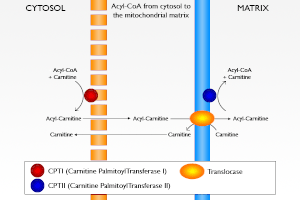
English: Acyl-CoA from the cytosol to the mitochondrial matrix. Français : Transport de l’Acyl-CoA du Cytosol jusqu’à la matrice mitochondriale. (Photo credit: Wikipedia)
Read Full Post »


 2012pharmaceutical
 sjwilliamspa