Feeds:
Posts
Comments

Precision Medicine Market to surpass USD 96.6 Bn by 2024, study by Global Market Insights, Inc.

Reporter: Aviva Lev-Ari, PhD, RN


Precision Medicine Market to surpass USD 96.6 Bn by 2024

The Precision Medicine Market is set to grow from its current market value of more than $47.8 billion to over $96.6 billion by 2024; as reported in the latest study by Global Market Insights, Inc.

Advancements in cancer biology will ensure development in gene sequencing technique and other platforms available for cancer treatment. Furthermore, rising development in field of bioinformatics that support gene sequencing to initiate formulations of precision medicines will enhance the precision medicine market growth in foreseeable future.

Increase in adoption rate of gene therapy in developed economies with relatively high-income level will further enhance the precision medicine market growth. Rising incidences of genetic disorders has positively influenced the business growth. According to WHO, sickle cell anemia affects around millions of people globally every year. Along with sickle cell anemia, there are many other genetic diseases such as thalassemia, hemophilia and others that are prevalent globally. Moreover, increase in research and development activities that boosts the production and manufacturing of precision medicine in emerging countries such as Africa and Brazil will augment the industry growth in future. However, high cost of precision medicines may restrain the market growth.

Precision Medicine Market
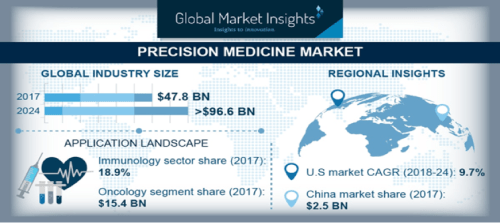


Bioinformatics segment was valued at USD 7.4 billion in 2017 and is expected to have considerable growth during the forecast timeframe. Bioinformatics is composed of information that includes data for gene sequencing, amino acid sequences of proteins and structural classification of protein enabling efficient drug development process for treating diseases such as cancer at molecular level. Additionally, bioinformatics is also used to determine the treatment for hereditary metabolic disorders that will drive the segmental growth in forthcoming years.

Oncology segment will experience 11.1% CAGR during the forecast timeframe. High segmental growth can be attributed to the increasing prevalence of cancer globally. According to Globocan 2018, the number of new cancer cases are estimated to be 18.1 million cases. Development of target novel therapies and precision medicines has drastically reduced the mortality rates and hence, high demand for precision medicine in cancer treatment will drive the segmental growth in foreseeable future.

Pharmaceutical companies segment of precision medicine market accounted for 37.1% in 2017 owing to the increasing R&D efforts for drug development activities. Pharmaceutical companies are currently trying to develop precision medicines for rare genetic diseases. According to Global genes, there are around 7,000 rare genetic diseases discovered.

U.S. precision market will experience 9.7% CAGR during the forecast timeframe. Enormous market growth will be due to increasing cases of rare genetic diseases. Furthermore, certain initiatives undertaken by the regulatory bodies have also positively impacted availability of precision medicines.

U.S. Precision Medicine Market Size, By Technology, 2017 & 2024 (USD Million)

Germany precision medicine market was valued at USD 2.6 billion in 2017 and high segmental growth will be due to the growing pediatric as well as adult population susceptible to metabolic diseases such as diabetes. According to NCBI, prevalence of Type 2 diabetes is high in the German population. Researchers and scientists have geared up efforts to develop precision medicines that are altered according to patient’s genome ensuring efficient treatment of genetic disorders.

Prominent industry players operational in the precision medicines market include Biocrates Life Sciences AG, Eagle Genomics Ltd, Ferrer inCode, Intomics, Laboratory Corporation of America Holdings, NanoString Technologies, Novartis, Pfizer, Qiagen, Quest Diagnostics, F. Hoffmann-La Roche, Silicon Biosystems, Tepnel Pharma Services, Teva Pharmaceuticals.

Source: https://www.gminsights.com/industry-analysis/precision-medicine-market


SOURCE for Request to Publish in pharmaceuticalintelligence.com

From: Shankar Khatkale <shankar.k@gminsights.com>

Date: Tuesday, November 27, 2018 at 6:48 AM

To: Aviva Lev-Ari <AvivaLev-Ari@alum.berkeley.edu>

Subject: Article Submission Request

Dear Editor,

An industry news titled ‘Precision Medicine Market Size worth $96.6bn by 2024’ by Global Market Insights is relevant to your esteemed website https://pharmaceuticalintelligence.com. This email is a suggestion to publish this news (content attached in word format or can be picked from link mentioned below) on your website with an objective to share the information with your audiences.

News Link: https://www.gminsights.com/pressrelease/precision-medicine-market

Looking forward to hear from you.

On behalf of and as instructed by Global Market Insights, Inc.

Best Regards,

Shankar Khatkale |SEO Executive


Jennifer Doudna and NPR science correspondent Joe Palca, several interviews

Reporter: Aviva Lev-Ari, PhD, RN

2.1.3.5

2.1.3.5   Jennifer Doudna and NPR science correspondent Joe Palca, several interviews, Volume 2 (Volume Two: Latest in Genomics Methodologies for Therapeutics: Gene Editing, NGS and BioInformatics, Simulations and the Genome Ontology), Part 2: CRISPR for Gene Editing and DNA Repair

UPDATED on 11/27/2018

SAVE

The ethical red flags of genetically edited babies

Driving the news: Chinese scientist He Jiankui announced Sunday night that a pair of twin girls had been born from embryos he modified using the gene-editing tool known as CRISPR.

  • He hasn’t provided solid proof, but if it‘s true, it would be the first time the technology has been used to engineer a human.

What they’re saying: The inventors of CRISPR technology did not seem pleased with the development — one called for a moratorium on implantation edited embryos into potential mothers.

  • “I hope we will be more cautious in the next thing we try to do, and think more carefully about when you should use technology versus when you could use technology,” said Jessica Berg, a bioethicist at Case Western Reserve University.

Between the lines: Several specific factors in He’s work sent up ethical red flags.

  • Many scientists had assumed that, when this technology was first used in humans, it would edit out mutations tied to a single gene that were certain to cause a child pain and suffering once it was born — essentially, as a last resort.
  • But He used CRISPR to, as he put it, “close a door” that HIV could have one day traveled through. That has prompted some speculation that this project was more about testing the technology than serving an acute medical need.
  • “That should make us very uneasy about the whole situation,” Berg said. “Of all the things to have started with, it does make you a little suspicious about this particular choice.”

The intrigue: There’s a lot we still don’t know about He’s work, and that’s also contributing to an attitude of skepticism.

  • How many embryos did he edit and implant before these live births?
  • How will he know it worked? As the children age, they’ll likely have their blood drawn and those samples will be exposed to HIV in a lab, but researchers aren’t going to tell them to go out and have unprotected sex or use intravenous drugs — another reason HIV seems like an odd starting place for human gene editing.
  • How did this even happen? The university where He worked said he was on leave, and Chinese officials have said he’s under investigation. But gene editing is a pretty hard thing to freelance.

The other side: He defended his work in a video message, saying, “I understand my work will be controversial but I believe families need this technology and I’m willing to take the criticism for them.”

  • “Their parents don’t want a designer baby, just a child who won’t suffer from a disease which medicine can now prevent,” He said.

Yes, but: Now that this threshold may have been crossed, attempts to create “designer babies” — within the limitations of what CRISPR can do — probably aren’t far off, some experts fear.

  • There are “likely to be places that are less regulated than others, where people are going to attempt to see what they can do,” Berg said. “I wouldn’t say everything in the world has changed now, but it’s certainly the next step.”
SOURCE

https://www.axios.com/genetic-editing-baby-china-ethics-controversy-b33f8414-8b83-445c-bad5-d8407f8841f4.html

UPDATED on 11/26/2018

  1. CRISPR pioneer Jennifer Doudna explains gene-editing …

    news.harvard.edu/gazette/story/2018/05/crispr…

    Doudna, who spoke at Harvard’s Science Center, explained the work that led to the development of CRISPR/Cas9 geneediting technology, which was described in a paper in the journal Science in 2012. A sign of how quickly the techniques would be adopted by her scientific colleagues came within months.

  2. Eventbrite – Science History Institute presents Jennifer A. Doudna, “CRISPR Biology and Biotechnology: the Future of Genome Editing” – Friday, November 16, 2018 at Science History Institute, Philadelphia, PA.

  3. A pioneer of the Crispr geneediting technology that’s taken Wall Street by storm says the field is probably five to 10 years away from having an approved therapy for patients.

  4. A Crack in Creation: Gene Editing and the Unthinkable Power …

    thehumanist.com/magazine/november-december-2017/…

    BOOK BY JENNIFER DOUDNA AND SAMUEL STERNBERG HOUGHTON MIFFLIN HARCOURT, 2017 304 PP.; $28.00 (HARDCOVER) $14.99 (KINDLE) CRISPR is the basis of a genome editingtechnology—the latest breakthrough in the grand tradition that began over 400 generations ago when we started to grow wheat and rice instead of just picking its wild cousins.

  5. The CRISPR-Cas9 gene editing technology was discovered in 2012 by campus professor of chemistry, molecular biology and biochemistry Jennifer Doudna and Emmanuelle Charpentier, director at the Max …

  6. 2 hours ago · The International Summit on Human Genome Editing begins here on Tuesday and many researchers, ethicists, and policymakers attending the meeting first learned of He’s claim through media reports.

Video of Conversation With Jennifer Doudna and NPR’s Joe Palca

WATCH VIDEO

https://today.lbl.gov/2018/01/26/video-of-conversation-with-jennifer-doudna-and-nprs-joe-palca/

Published on Jan 24, 2018

SUBSCRIBE 13K
This conversation between Berkeley Lab researcher Jennifer Doudna and NPR science correspondent Joe Palca took place on on Monday, Nov. 20, 2017. The event was the first in the Director’s Distinguished Women in Science speaker series, a venue for women scientists to share their work and perspectives with the Lab community. Instagram: https://www.instagram.com/berkeleylab/ Twitter: https://twitter.com/berkeleylab Facebook: https://www.facebook.com/BerkeleyLab/ More Berkeley Lab news: http://bit.ly/BerkeleyLabNews Subscribe: https://youtube.com/berkeleylab
SOURCE

Jennifer Doudna Talks CRISPR Origins, Implications with NPR’s Joe Palca

SOURCE

http://biosciences.lbl.gov/2017/12/01/jennifer-doudna-talks-crispr-origins-implications-nprs-joe-palca/

Jennifer Doudna featured on NPR’s Morning Edition for her work on CRISPR/Cas9 — a tool for editing genes

October 13, 2014
Jennifer Doudna. Jennifer Doudna. Photo: Roy Kaltschmidt, Berkeley Lab Public Affairs

UC Berkeley’s Jennifer Doudna was featured on NPR’s Morning Edition for her work on CRISPR/Cas9 — a tool for editing genes. Jennifer Doudna and her colleagues showed that CRISPR/Cas9, can be used with great precision to selectively disable or add several genes at once in human cells, offering a potent new tool to understand and treat complex genetic diseases.

Read more and listen to the full story, “In Hopes Of Fixing Faulty Genes, One Scientist Starts With the Basics.”

SOURCE

https://vcresearch.berkeley.edu/news/jennifer-doudna-featured-nprs-morning-edition-her-work-crisprcas9-tool-editing-genes

VIDEO: Editor’s Choice of the Most Innovative New Cardiac Technology at AHA 2018

Heart Murmur Detection done by AI Algorithm (Eko Core and Eko Duo) Devices Outperform most Auscultatory Skills of Cardiologists

Reporter: Aviva Lev-Ari, PhD, RN


AI Algorithm Outperforms Most Cardiologists in Heart Murmur Detection

Eko’s heart murmur detection algorithm outperformed four out of five cardiologists in recent clinical study

“Artificial Intelligence Detects Pediatric Heart Murmurs With Cardiologist-Level Accuracy,” the study demonstrates the power of machine learning and artificial intelligence (AI) to enhance cardiac care.

The neural network AI algorithm was trained on thousands of heart sound recordings. The algorithm was then tested on an independent dataset of pediatric heart sounds and compared to gold-standard echocardiogram imagery. Five pediatric cardiologists also listened to the heart sound recordings and independently made a determination whether a recording contained a murmur. This advancement will help narrow the clinical skill gap between the 27,000 cardiologists in the U.S. — the experts at murmur detection — and the 3.8 million other clinicians who are less experienced in the identification of heart murmurs through a stethoscope.

A study published in the Journal of the American Medical Association revealed that, on average, internal medicine and family practice physician residents misdiagnose 80 percent of common cardiac events.1 Cardiologists on the other hand, can effectively diagnose 90 percent of cardiac events using a stethoscope.2

Eko’s murmur screening algorithm, when coupled with the company’s U.S. Food and Drug Administration (FDA)-cleared Eko Core and Eko Duo devices, will enable any and all clinicians to more accurately screen for heart murmurs.

Eko is currently pursuing FDA clearance for the algorithm and will be rolling it out with its existing cardiac monitoring devices upon securing regulatory clearance.

For more information: http://www.ekohealth.com

References

1. Mangione S., Nieman L.Z. Cardiac auscultatory skills of internal medicine and family practice trainees. A comparison of diagnostic proficiency. Journal of the American Medical Association, Sept. 3, 1997. doi:10.1001/jama.1997.03550090041030

2. Thompson W.R. In defence of auscultation: a glorious future? Heart Asia, Feb. 1, 2017. doi:  [10.1136/heartasia-2016-010796]


SOURCE

https://www.dicardiology.com/content/ai-algorithm-outperforms-most-cardiologists-heart-murmur-detection?eid=333021707&bid=2308309

Tweeter and Real Time Conference Press Coverage: Aviva Lev-Ari, PhD, RN
  1. LIVE eProceeding Day Two – The 14th Annual Personalized Medicine Conference: The Business of Personalization, November 15, 2018, HMS, Boston via

  2. Cary Pfeffer, M.D., Partner, Third Rock Ventures IP can’t be reduced by other country unfair trade

  3. Pellini – CMS will take the lead partnerships early and often in clinical trials,

  4. Michael Pellini, M.D., Managing Partner, Section 32; Board Member, Personalized Medicine Coalition Patients and Consumers will force in five years figuring out – every diagnosis of cancer will be sequenced to interpret results and paid for

  5. Salveen Richter, Goldman Sachs Sequencing cost plunged, public investors placing funding in start ups even without return in the horizon, companies with multiple modalities spurring innovation – Europe vs US, China has no FDA ,talent from US China

  6. Michael Pellini, M.D., Managing Partner, Section 32; Board Member, Personalized Medicine Coalition Diagnostics component inside 4.8 Trillion in the therapeutics selection in the system as a whole Foundation Medicine saw Roche for International reach

  7. William A. Sahlman, Ph.D., Baker Foundation Professor, Harvard Business School Biotech IPO, VC, windows slam shut, drug failure – drivers and non Increasing return to scale: AI, NGS, screening, – foreign money, Tsinghua went back to China from CA

  8. William A. Sahlman, Ph.D., Baker Foundation Professor, Harvard Business School market – can it sustain the opportunity – winners and losers innovative financial models Biotech IPO, VC, windows slam shut, drug failure – drivers and non

  9. Salveen Richter, C.F.A., Vice President, Research Division, Goldman Sachs Europe successful in financing Health care in the US system must change – investment will flee, to fund pricing drug is key in changing the system CART Pricing is key

  10. Michael Pellini, M.D., Managing Partner, Section 32; Board Member, Personalized Medicine Coalition Impasse or Inflection Point? it s Inflection Point NOT an Impasse Diagnostics component inside 4.8 Trillion in the therapeutics selection in system

  11. Cary Pfeffer, M.D., Partner, Third Rock Ventures MS drug efficacy was in 50% non respondents 25% Genomic sequencing to identify patient populations – target therapy Mayocardia – drug in CVD for patients identified by Genomics Genomics develop drugs

  12. Michael Pellini, M.D., Managing Partner, Section 32; Board Member, Personalized Medicine Coalition Impasse or Inflection Point? it s Inflection Point NOT an Impasse

  13. Kristine Bordenave, M.D., F.A.C.P., Corporate Medical Director, Humana CMS Guideline: every test ordered must guide treatment otherwise not covered

  14. Kristine Bordenave, M.D., F.A.C.P., Corporate Medical Director, Humana Guidelines on ordering genomic testing, AI can assist providers, MDs need to catch up on a weekly basis companion diagnostics and pharmaceutical paid together SOCare is paid

  15. Kristine Bordenave, M.D., F.A.C.P., Corporate Medical Director, Humana show us any value as good value – avoiding patient going to MDs Office, Hospital, ER – cost increase due to Pharmacogenomics testing $5K per test

  16. Scott Ramsey, M.D., Ph.D., Full Member, Fred Hutchinson Cancer Research Center; Director, Hutchinson Institute for Cancer Outcomes Research Pricing of Testing NGS and Targeted therapy represent a threat to adoption of Genomics in Medicine

  17. Kristine Bordenave, M.D., F.A.C.P., Corporate Medical Director, Humana What test needed to be ordered? Patient stay healthy NGS $650 – $2000 in 2018, in 2016 it was $25,000 cost of testing, cost of drugs

  18. Kristine Bordenave, M.D., F.A.C.P., Corporate Medical Director, Humana cost of doing the test vs not doing this test – assess value CMS – provide data on what is covered and what is not Humana: any missed opportunities, MD order tests of no impact MR

  19. Dr. Ramsey – Survival in this cohort NGS vs EGFR – improved survival 6 month longer, Increased survivals, why? cost of sequencing – #14 most influential – cost does not drive value #1 drug cost, out of pocket expense was the factor #2 survival

  20. Scott Ramsey, M.D., Ph.D., Full Member, Fred Hutchinson Cancer Research Center; Director, Hutchinson Institute for Cancer Outcomes Research Value and utility are interconnected cost effectiveness of NGS in melanoma: single gene testing, EGFR vs NGS

  21. Kristine Bordenave, M.D., F.A.C.P., Corporate Medical Director, Humanalabs, payers, providers, pharma — the GAP to be bridged opportunities to prevent and treat disease Payers, MDs, cost and impact, markers, Humana has a research division Use Tests

  22. MODERATOR | Daryl Pritchard, Ph.D., Senior Vice President, Science Policy, Personalized Medicine Coalition genetic profiling, adopt policy for mass deployment of NGS demonstrate value, payers needs little more that evidence exist for payer to cover

  23. Luba Greenwood, J.D., Strategic Business Development and Corporate Ventures, Verily (an Alphabet company) Patient need to own the genome data not a Databank

  24. Birgit Funke, Ph.D., F.A.C.M.G., Vice President, Clinical Affairs, Veritas Genetics; Associate Professor of Pathology (Part-Time), Harvard Medical School Risk prevention, driving DOWN operating cost curation of the Genome

  25. Luba Greenwood, J.D., Strategic Business Development and Corporate Ventures, Verily (an Alphabet company) Diagnostics in use to keep patients OUT of hospitals – management of chronic diseases

  26. Luba Greenwood, J.D., Strategic Business Development and Corporate Ventures, Verily (an Alphabet company) treatment solution therapeutics except og Oncology threatment is a strugle in the genomics field and pharmacogenomics General Medicine: CVD DM

  27. Keith Stewart, M.B., CH.B., Carlson and Nelson Endowed Director, Center for Individualized Medicine, Mayo Clinic genomics for detection of predisposition, inherited Barriers to deploy genomics: Knowledge, readiness of providers, cost of uninsured,

  28. Ellen Sigal Recipient of 14th PMC Award

  29. Sigal: Patient deserve right answers right choices, calls doctors on behave of patients treatments done out of the community in Academic hospitals – patients are scared to death. Patients are asking for options: Right testing, access to testing

  30. The 14th Annual Leadership in Personalized Medicine Award to Ellen V. Sigal, Ph.D., Chairperson, Founder, Friends of Cancer Research Patient Challenges: 90% are treated Community and they need a second opinion, insurance, access, clinical trials

  31.  Retweeted

    Frederick Banting, awarded the Nobel Prize for the discovery of insulin, was born on this day in 1891. The discovery of insulin is one of the biggest breakthroughs in medicine and has saved millions of lives.

  32. Amy Abernethy, M.D., Ph.D., Chief Medical Officer, Chief Scientific Officer, Senior Vice President, Oncology, Flatiron Health Technologies: AI, Countries with platforms Regulatory framework, reproducibility of results Taking care of people,

  33.   Retweeted

    I am covering this Conference at Harvard Medical School in Real Time, 11/14-11/15/2018 ⁦

  34. Edward Tepporn, Executive Vice President, Asian & Pacific Islander American Health Forum 1985 minorities education all surveys conducted in English, Asian American access to affordable health care services to accommodate services for communities

  35. Adolph P. Falcón, Executive Vice President, National Alliance for Hispanic Health community based organization 50 million improving healthcare access improve inclusion in science, no advancement in 45 years Hard to reach through – academic language

  36. Alex J. Carlisle, Ph.D., Chairman, CEO, National Alliance Against Disparities in Patient Health PM with focus on disparities, racialbiologic, socioecological Patient centered – raise health education Translation for interpretation Physicians&Patients

  37. Vence L. Bonham, Jr., J.D., Senior Advisor, Director on Genomics and Health Disparities, U.S. NHGRI Genomics data is of European dissents no diversity minority populations not represente sland populations not represented hispanics not

  38. Kimberly Popovits, proprietary test vs. test offered by all labs — different markets Utility agreed upon like “” demonstrate a pathway of product development that was already followed

  39. Kimberly Popovits, Chairman of the Board, CEO, President, Genomic Health – Oncology, Breast cancer molecular diagnostics Genomic testing saved the Health care System billions of dollars Genomic testing will not be placebo, 12 years study controlled

  40. Julie Khani, President, American Clinical Laboratory Association FDA will establish a center for Diagnostics, proposal for pre-certification like in Medical devices congress is involved in the decision making

  41. Michael Doherty, Senior Vice President, Head of Product Development, Head of Research & Development, Foundation Medicine – ex Genetech/Roche Operate in regulated environment, how to establish a company for long term companion diagnostics

  42. Joseph V. Ferrara, CEO, Boston Healthcare Associates Regulatory action for reimbursement of test new categories of tests: new payment if Innovation, PLA codes, 45 months approval, CPT codes

  43. Best Talk like last year by David King , keynote at

  44. David King, J.D., Chairman, CEO, LabCorp Non respondent – further researched MDs understanding, confidence of results PM Promise: close education GAP, convene on VALUE for individual cases not populations assess value among initiatives PM

  45. Tom Miller, Managing Partner, GreyBird Ventures LLC algorithms are behind the firewall of the Hospital, for privacy. the patient’s identity is not of central point, privacy is the key

  46. Radiology: SW used in detection of disease Personalized Medicine and AI Data mining of Text using AI Vital signs monitoring – providers can spot Arrhythmias earlier tagging images is a matual process

  47. Darrell M. West, Ph.D., Vice President of Governance Studies and Director of Center for Technology Innovation, Douglas Dillon Chair in Governance Studies, Interest in AI and in particular: Health care large part of the economy

  48. Gregg Talbert, Ph.D., Global Head of Digital and Personalized Health Care Partnering, Roche – Data on mutations Data falls short on Patient follow up (longitudinal data on Patients) curation of EMR IS NOT AN EASY OR AUTOMATED PROCESS i.e., IMAGES

  49. Tom Miller, Managing Partner, GreyBird Ventures LLC AI applied to capture unusual movement allowing to detect a forthcoming neurological event. Technologies used now

  50. Colin Hill, Chairman, CEO, Co-Founder, GNS Healthcare is moderator for and Medicine, panelists from , and The ⁦⁩ ⁦⁩ ⁦

  51. Bryce Olson, Global Marketing Director, Health and Life Sciences Group, Intel Corporation; stage IV prostate cancer patient Patient engage in their care, involvement in interpretation og ONES OWN Genome sequence is ate most engaging

  52. Emily Kramer-Golinkoff, Co-Founder, Emily’s Entourage, cystic fibrosis patient “Better for a is the Patient him/herself”

  53. Great Panel moderation by Toni Andreu scientific director of

  54.   Retweeted

    can help cancer patients live longer, healthier lives. Learn more about how we’re working to advance the field ‘s 11/15 when Ellen Sigal receives the 14th Annual Leadership in Personalized Medicine Award:

  55. Enjoyed most learning about the leading evolution in Genomics in Israel, UK, Canada and Finland

  56.   Retweeted

    In 14th Annual Elizabeth Nabel- made an excellent overview exploring the Promise of Personalized Medicine: Healthcare state-of-the-art; Digital health; Professionals-Payers-Providers relationships and next future challenges

  57. Amazing International Panel: UE, Israel, UK, Canada, Finland

  58. Great talk of a visionary in Management of Academic

  59. Great Confernec, 14th in one row

  60. Antonio L. Andreu, M.D., Ph.D., Scientific Director, EATRIS European Infrastructure for Translational Medicine General Medicine: Metabolomics, biological systems vs GENOMICS Medical care w/genomic testing, MDs will call to tell patients future news

    Translate Tweet

  61. Ora Dar, Ph.D., Senior Expert, Medical Sciences, consultant to the Israel Innovation Authority $300Miliion R&D sponsored clinical data on genomics, MDs are trained to place genomics data on EMR, epidemiology, sequencing of genetic diseases

  62. Liisa-Maria Voipio-Pulkki, M.D., Ph.D., Director General, Chief Medical Officer, Ministry of Social Affairs and Health, Finland Public sector is the majority of Health care systems, Expertise is as high as can be, entrepreneurship is on the rise

  63. Marc LePage, President, CEO, Genome Canada Social impact, adoption systems for focusing on rare diseases, following UK and US trends, 10 sites in Canada, aggregate the datethe National level, extract clinical data securely implementation expertise

  64. Tom Fowler, Ph.D., Deputy Chief Scientist, Building infrastructure, education, future, National approach to genomic testing, built in a National lab, scaling research

Viral peek-a-boo

Reporter and Curator: Dr. Sudipta Saha, Ph.D.


Once herpes simplex infects a person, the virus goes into hiding inside nerve cells, hibernating there for life, periodically waking up from its sleep to reignite infection, causing cold sores or genital lesions to recur. Research from Harvard Medical School showed that the virus uses a host protein called CTCF, or cellular CCCTC-binding factor, to display this type of behavior. Researchers revealed with experiments on mice that CTCF helps herpes simplex regulate its own sleep-wake cycle, enabling the virus to establish latent infections in the body’s sensory neurons where it remains dormant until reactivated. Preventing that latency-regulating protein from binding to the virus’s DNA, weakened the virus’s ability to come out of hiding.


Herpes simplex virus’s ability to go in and out of hiding is a key survival strategy that ensures its propagation from one host to the next. Such symptom-free latency allows the virus to remain out of the reach of the immune system most of the time, while its periodic reactivation ensures that it can continue to spread from one person to the next. On one hand, so-called latency-associated transcript genes, or LAT genes, turn off the transcription of viral RNA, inducing the virus to go into hibernation, or latency. On the other hand, a protein made by a gene called ICP0 promotes the activity of genes that stimulate viral replication and causes active infection.


Based on these earlier findings, the new study revealed that this balancing act is enabled by the CTCF protein when it binds to the viral DNA. Present during latent or dormant infections, CTCF is lost during active, symptomatic infections. The researchers created an altered version of the virus that lacked two of the CTCF binding sites. The absence of the binding sites made no difference in early-stage or acute infections. Similar results were found in infected cultured human nerve cells (trigeminal ganglia) and infected mice model. The researchers concluded that the mutant virus was found to have significantly weakened reactivation capacity.


Taken together, the experiments showed that deleting the CTCF binding sites weakened the virus’s ability to wake up from its dormant state thereby establishing the evidence that the CTCF protein is a key regulator of sleep-wake cycle in herpes simplex infections.


References:


https://www.ncbi.nlm.nih.gov/pubmed/29437926


https://hms.harvard.edu/news/viral-hideout?utm_source=Silverpop


https://www.ncbi.nlm.nih.gov/pubmed/30110885


https://www.ncbi.nlm.nih.gov/pubmed/30014861


https://www.ncbi.nlm.nih.gov/pubmed/18264117


LIVE eProceedings Day Two – The 14th Annual Personalized Medicine Conference: The Business of Personalization, November 15, 2018, HMS, Boston

Real Time Coverage: Aviva Lev-Ari, PhD, RN


PART II


The Business of Personalization

The successful implementation of [personalized medicine] will depend on the embrace of [its] principles in the business community.

 RAJU KUCHERLAPATI, PH.D.
Paul C. Cabot Professor of Genetics, Harvard Medical School

*** Speakers will be added to the schedule on a rolling basis as they are confirmed. ***

7:00 a.m.
Registration and Continental Breakfast

Joseph B. Martin Conference Center at Harvard Medical School
77 Avenue Louis Pasteur, Boston, MA 02115

8:00 a.m.
Opening Remarks

SPEAKER | Stephen L. Eck, M.D., Ph.D., Chief Medical Officer, Immatics U.S. Inc; Board Chair, Personalized Medicine Coalition

8:10 a.m.
Pioneering Precision: Inside the Pharmaceutical Industry’s Push Toward Personalized Medicine — A Fireside Chat

MODERATOR | Meg Tirrell, Reporter, CNBC

Daniel O’Day, CEO, Roche Pharmaceuticals

8:55 a.m.
Considering Costs: Evaluating Emerging Pharmaceutical and Insurance Industry Business Models in Personalized Medicine

The pharmaceutical industry is deeply invested in commercializing personalized therapies that must recoup fixed development costs from smaller patient populations covered by health insurance companies that are increasingly concerned about rising health care costs. In that context, this diverse panel will explore the viability of the business model for developing and paying for personalized medicines, tackling issues related to costs, prices, and access.

MODERATOR | Meg Tirrell, Reporter, CNBC

Peter Juhn, M.D., M.P.H., Global Head of Value-Based Partnerships, Amgen

Nick Leschly, CEO, Bluebird Bio

Michael Sherman, M.D., Chief Medical Officer, Senior Vice President, Harvard Pilgrim Health Care

Sean Tunis, M.D., Founder, CEO, Center for Medical Technology Policy

9:55 a.m.
Networking Break

Light refreshments provided.

Sponsored By

10:25 a.m.
Reinventing Research: Are Adaptive Platform Trials the Model of the Future? (A Harvard Business School Case Study)

Recognizing that traditional randomized controlled clinical trials can only study the safety and efficacy of a single therapy in one large population of patients, researchers in personalized medicine increasingly hope that “adaptive platform trials,” which employ advanced statistical techniques to simultaneously test the effectiveness of several personalized treatments in multiple sub-populations of patients, may be the key to new drug approvals in the future. Adaptive platform trials may make drug development more efficient by revealing which of several drug candidates are most promising for which patients, but maximizing the potential of these trials requires unprecedented collaboration among the institutions conducting and sponsoring research on various personalized treatments — and no obvious business models have emerged.

During this interactive case study discussion, professors from Harvard Business School will help us examine how researchers at the Dana-Farber Cancer Institute considered and addressed myriad challenges in their effort to design and operationalize an adaptive platform trial for glioblastoma patients, a deadly disease state for which there are few existing treatment options.

PRESENTED BY

Richard Hamermesh, D.B.A., Co-Faculty Chair, Harvard Business School Kraft Precision Medicine Accelerator; and

Ariel D. Stern, Ph.D., Assistant Professor, Technology and Operations Management Unit, Harvard Business School

11:40 a.m.
The 14th Annual Leadership in Personalized Medicine Award

INTRODUCTION | Steven D. Averbuch, M.D., Vice President, Head of Precision Medicine, Bristol-Myers Squibb

  • Ellen V. Sigal head of Friends of Cancer Research
  • Advanced science by Diagnostics Tests
  • Cancer Moonshot Program
  • Revolution therapies brought to market by Sigel’s sponsorship

AWARDEE | Ellen V. Sigal, Ph.D., Chairperson, Founder, Friends of Cancer Research

Friendly conversation:

  • Thanks to PMC
  • sister die on breast cancer at 40 with child of 4 1/2.
  • appointed to celebrate 20th year of American Cancer Association – Funding for Research, money spend in Washington is for Patients.
  • After ten years, interested in measurement of achieving evaluation, FDA structure was of interest.
  • Precision Medicine: biomarkers and targets for patients to define success for each patient, WHat is the right population for any drug, responders to drug therapy, if no response, change the drug.
  • Patient perspective: Challenges: 90% are treated in the Community and they need a second opinion, insurance, access, clinical trials done out of the community in Academic hospitals – patients are scared to death. Patients are asking for options: Right testing, access to testing involve insurance
  • combination therapy  – 6-8 months in advance,
12:10 p.m.
Bag Lunch
1:10 p.m.
Predicting and Preventing: Evaluating Progress Toward Personalized Medicine

The original architects of the personalized medicine paradigm envisioned an era in which clinicians could predict, prevent and treat disease based on an improved understanding of how human biology interacts with external environments. During this session, a panel of experts will examine our progress on each of these fronts during a wide-ranging conversation about personalized medicine’s past, present and future.

MODERATOR | Cynthia Casson Morton, Ph.D., William Lambert Richardson Professor of Obstetrics, Gynecology and Reproductive Biology, Harvard Medical School

  • 1 Million volunteer participants for genome sequencing and microbiome data
  • PM Past, Present and Future
  • Issues that are rapidly evolving: Physician, Patients

Birgit Funke, Ph.D., F.A.C.M.G., Vice President, Clinical Affairs, Veritas Genetics; Associate Professor of Pathology (Part-Time), Harvard Medical School

  • Risk prevention,
  • driving DOWN operating cost curation of the Genome

Luba Greenwood, J.D., Strategic Business Development and Corporate Ventures, Verily (an Alphabet company)

  • view on diagnostics from Roche, CHemist and lawyer, Venture capital, beyond Genomics, from diagnosis to prognosis,at Verily projects tapping into the entire life span aspect of health
  • treatment solution therapeutics except og Oncology threatment is a strugle in the genomics field and pharmaco-genomics
  • Power the patients vs Genomics in Diabetes
  • Diagnostics in use to keep patients OUT of hospitals – management of chronic diseases
  • Patient need to own the genome data not a Databank

Keith Stewart, M.B., CH.B., Carlson and Nelson Endowed Director, Center for Individualized Medicine, Mayo Clinic

  • Hematologist, genomics apply genomics for detection of predisposition, inherited , Health genome sequencing,
  • Barriers to deploy genomics: Knowledge, readiness of providers, cost of uninsured,
  • Diagnostics high value low cost
  • drug adherence, pharmacists to be involved in drug adherence before refill
2:10 p.m.
Assessing the Assays: Determining the Clinical and Economic Utility of Genomic Sequencing

Advocates for personalized medicine have contended that genomic sequencing can deliver clinical and economic value to patients and the health system by allowing providers to more efficiently diagnose disease and develop treatment plans. Following increased use of genomic sequencing in clinical settings, many stakeholders, including payers, have begun to examine that value proposition more closely. During this session, a pharmaceutical industry representative, a payer, and a health economist will discuss the status and future of the emerging evidence regarding the clinical and economic utility of genomic sequencing, including studies recently commissioned by the Personalized Medicine Coalition.

MODERATOR Daryl Pritchard, Ph.D., Senior Vice President, Science Policy, Personalized Medicine Coalition

  • genetic profiling, adopt policy and procedures for mass deployment of NGS
  • show that it works – demonstrate value, payers and providers
  • a little more that evidence exist for payer to cover
  • rare diagnosed disease

Kristine Bordenave, M.D., F.A.C.P., Corporate Medical Director, Humana

  • labs, payers, providers, pharma — the GAP to be bridged
  • opportunities to prevent and treat disease
  • Payer, MDs, cost and impact, markers,
  • Humana has a research division Use Testing to find value, pharmacogenomics  – on Medicare, Medicaid patients
  • cost of doing the test vs not doing this test – assess value
  • pharmacisit, economist, statisticians – CMS – provide data on what is covered and what is not Humana: any missed opportunities, MD order tests of no impact per medical record
  • What test needed to be ordered? Patient stay healthy
  • NGS $650 – $2000 in 2018, in 2016 it was $25,000 cost of testing, cost of drugs
  • show us any value as good value – avoiding patient going to MDs Office, Hospital, ER – cost increase due to Pharmacogenomics testing $5K per test
  • Guidelines on ordering genomic testing, AI can assist providers, MDs need to catch up on a weekly basis
  • CMS Guideline: every test ordered must guide treatment otherwise not covered

Scott Ramsey, M.D., Ph.D., Full Member, Fred Hutchinson Cancer Research Center; Director, Hutchinson Institute for Cancer Outcomes Research

  • Value and utility are interconnected
  • cost effectiveness of NGS in melanoma: single gene testing – EGFR vs NGS – help clinicians to evaluate Lung Cancer
  • Flariton Database, 300 centers  – 140,000 – Patients got NGS – 7% ADDITIONAL patients founded mutations beyond EGFR
  • Survival in this cohort NGS vs EGFR – improved survival 6 month longer, mean survival 3 weeks long, not significant.
  • Increased survivals, why? cost of sequencing  – #14 most influential – cost does not drive value
  • #1 drug cost was the factor
  • #2 survival
  • marginal cost in platform comparison
  • Pricing of Testing NGS and Targeted therapy represent a threat to adoption of Genomics in Medicine
  • disparities and access – cost and patients: Partners and Mayo clinic patients are lucky


3:10 p.m.
PhRMA Foundation Challenge Awards: Developing Value Assessment Strategies That Align With Personalized Medicine

INTRODUCTION | Daryl Pritchard, Ph.D., Senior Vice President, Science Policy, Personalized Medicine Coalition

PRESENTER | Shreeram Aradhye, M.D., Head of Global Medical Affairs, Chief Medical Officer, Pharmaceuticals, Novartis; Board Member, PhRMA Foundation

#1 Prize $50,000 – Dr. Garrison, UK

#2 Prize $25,000 – Dr. Robim Hayeems, Hospital for Sick Children Institute, Toronto, Canada

#3 Prize @ $10,000  – Dr. A Le, PharmD., PhD, Western University of Health Sciences

3:20 p.m.
Networking Break

Light refreshments provided.

3:50 p.m.
Impasse or Inflection Point? — An Investment Analysis

Sustaining the pace of innovation in personalized medicine will require continued investment in new initiatives, but the financial outlook for the field remains unclear. In that context, this panel of investors will examine whether personalized medicine is at an impasse, an inflection point or somewhere in between.

MODERATOR | William A. Sahlman, Ph.D., Baker Foundation Professor, Harvard Business School

  • market – can it sustain the opportunity – winners and losers
  • innovative financial models
  • Biotech IPO, VC, windows slam shut, drug failure – drivers and non
  • Increasing return to scale: AI, NGS, screening, – foreign money, China
  • Tsinghua University went back to China from Silicon Valley

Cary Pfeffer, M.D., Partner, Third Rock Ventures

  • was a decade at Biogen, MS indication drug, no biomarkers for patients – efficacy was in 50% non respondents 25%
  • Genomic sequencing to identify patient populations – no good effective medicine without target therapy
  • Mayocardia – drug in CVD for patients identified by Genomics
  • Genomics information needed to develop drugs

Michael Pellini, M.D., Managing Partner, Section 32; Board Member, Personalized Medicine Coalition

  • Impasse or Inflection Point? it s Inflection Point NOT an Impasse
  • Diagnostics component inside 4.8 Trillion in the therapeutics selection in the system as a whole
  • Foundation Medicine saw Roche as Big brother with International reach
  • Patients and Consumers will force in five years figuring out – every diagnosis of cancer will be sequenced and the infrastructure to interpret results and paid for

Salveen Richter, C.F.A., Vice President, Research Division, Goldman Sachs

  • innovative and disruptive, orphan drugs, Health IT, US Market 3 trillion – size of the opportunity 80% genetically driven
  • Cancer, CART therapy, easier to pay by performance, cost of the drug itself. profit in the 1st generation od Pharma manufacturers
  • One time pricing vs further indications, annuity type system, Hemophilia – $19Million market,
  • Europe successful in financing Health care — in the US — system must change – investment will flee, to fund pricing drug is key in changing the system CART Pricing is still difficult to pay for
  • Sequencing cost plunged, public investors placing funding in start ups even without return in the horizon, companies with multiple modalities spurring innovation – confusing in the investment side, technologies become obsolete very fast
  • Europe vs US, China is different no regulation like FDA,talent from US Pharma went back to China


4:50 p.m.
Closing Remarks

SPEAKER | Edward Abrahams, Ph.D., President, Personalized Medicine Coalition

Reporter and Curator: Dr. Sudipta Saha, Ph.D.


MRI-guided focused ultrasound (MRgFUS) surgery is a noninvasive thermal ablation method that uses magnetic resonance imaging (MRI) for target definition, treatment planning, and closed-loop control of energy deposition. Ultrasound is a form of energy that can pass through skin, muscle, fat and other soft tissue so no incisions or inserted probes are needed. High intensity focused ultrasound (HIFU) pinpoints a small target and provides a therapeutic effect by raising the temperature high enough to destroy the target with no damage to surrounding tissue. Integrating FUS and MRI as a therapy delivery system allows physicians to localize, target, and monitor in real time, and thus to ablate targeted tissue without damaging normal structures. This precision makes MRgFUS an attractive alternative to surgical resection or radiation therapy of benign and malignant tumors.


Hypothalamic hamartoma is a rare, benign (non-cancerous) brain tumor that can cause different types of seizures, cognitive problems or other symptoms. While the exact number of people with hypothalamic hamartomas is not known, it is estimated to occur in 1 out of 200,000 children and teenagers worldwide. In one such case at Nicklaus Children’s Brain Institute, USA the patient was able to return home the following day after FUS, resume normal regular activities and remained seizure free. Patients undergoing standard brain surgery to remove similar tumors are typically hospitalized for several days, require sutures, and are at risk of bleeding and infections.


MRgFUS is already approved for the treatment of uterine fibroids. It is in ongoing clinical trials for the treatment of breast, liver, prostate, and brain cancer and for the palliation of pain in bone metastasis. In addition to thermal ablation, FUS, with or without the use of microbubbles, can temporarily change vascular or cell membrane permeability and release or activate various compounds for targeted drug delivery or gene therapy. A disruptive technology, MRgFUS provides new therapeutic approaches and may cause major changes in patient management and several medical disciplines.


References:


https://www.ncbi.nlm.nih.gov/pmc/articles/PMC4005559/


https://www.mayoclinic.org/tests-procedures/focused-ultrasound-surgery/about/pac-20384707


https://www.mdtmag.com/news/2017/04/nicklaus-childrens-hospital-performs-worlds-first-focused-ultrasound-surgery-hypothalamic-hamartoma?et_cid=5922034&et_rid=765461457&location=top&et_cid=5922034&et_rid=765461457&linkid=https%3a%2f%2fwww.mdtmag.com%2fnews%2f2017%2f04%2fnicklaus-childrens-hospital-performs-worlds-first-focused-ultrasound-surgery-hypothalamic-hamartoma%3fet_cid%3d5922034%26et_rid%3d%%subscriberid%%%26location%3dtop


https://www.ncbi.nlm.nih.gov/pmc/articles/PMC3097768/


https://stanfordhealthcare.org/medical-treatments/m/mr-guided-focused-ultrasound.html


Individuals without angiographic CAD but with hiPRS remain at significantly elevated risk of mortality after cardiac catheterization

Reporter: Aviva Lev-Ari, PhD, RN


A genome-wide Polygenic risk scores (PRS) improves risk stratification when added to traditional risk factors and coronary angiography. Individuals without angiographic CAD but with hiPRS remain at significantly elevated risk of mortality.


Background:

Coronary artery disease (CAD) is influenced by genetic variation and traditional risk factors. Polygenic risk scores (PRS), which can be ascertained before the development of traditional risk factors, have been shown to identify individuals at elevated risk of CAD. Here, we demonstrate that a genome-wide PRS for CAD predicts all-cause mortality after accounting for not only traditional cardiovascular risk factors but also angiographic CAD itself.

Methods:

Individuals who underwent coronary angiography and were enrolled in an institutional biobank were included; those with prior myocardial infarction or heart transplant were excluded. Using a pruning-and-thresholding approach, a genome-wide PRS comprised of 139 239 variants was calculated for 1503 participants who underwent coronary angiography and genotyping. Individuals were categorized into high PRS (hiPRS) and low-PRS control groups using the maximally selected rank statistic. Stratified analysis based on angiographic findings was also performed. The primary outcome was all-cause mortality following the index coronary angiogram.

Results:

Individuals with hiPRS were younger than controls (66 years versus 69 years; P=2.1×10⁻⁵) but did not differ by sex, body mass index, or traditional risk-factor profiles. Individuals with hiPRS were at significantly increased risk of all-cause mortality after cardiac catheterization, adjusting for traditional risk factors and angiographic extent of CAD (hazard ratio, 1.6; 95% CI, 1.2–2.2; P=0.004). The strongest increase in risk of all-cause mortality conferred by hiPRS was seen among individuals without angiographic CAD (hazard ratio, 2.4; 95% CI, 1.1–5.5; P=0.04). In the overall cohort, adding hiPRS to traditional risk assessment improved prediction of 5-year all-cause mortality (area under the receiver-operating curve 0.70; 95% CI, 0.66–0.75 versus 0.66; 95% CI, 0.61–0.70; P=0.001).

Conclusions:

A genome-wide PRS improves risk stratification when added to traditional risk factors and coronary angiography. Individuals without angiographic CAD but with hiPRS remain at significantly elevated risk of mortality.

Footnotes

https://www.ahajournals.org/journal/circgen

*A list of all Regeneron Genetics Center members is given in the Data Supplement.

Guest Editor for this article was Christopher Semsarian, MBBS, PhD, MPH.

The Data Supplement is available at https://www.ahajournals.org/doi/suppl/10.1161/CIRCGEN.118.002352.

Scott M. Damrauer, MD, Department of Surgery, Hospital of the University of Pennsylvania, 3400 Spruce St, Silverstein 4, Philadelphia, PA 19104. Email 
SOURCE

The HFE H63D variant confers an increased risk for hypertension, no increased risk for adverse cardiovascular events or substantial left ventricular remodeling

Reporter: Aviva Lev-Ari, PhD, RN

Conclusion:

The HFE H63D variant confers an increased risk for hypertension per allele and, given its frequency, accounts for a significant number of cases of hypertension. However, there was no increased risk for adverse cardiovascular events or substantial left ventricular remodeling.


HFE H63D Polymorphism and the Risk for Systemic Hypertension, Myocardial Remodeling, and Adverse Cardiovascular Events in the ARIC Study

Originally publishedHypertension. 2018;0:HYPERTENSIONAHA.118.11730

H63D has been identified as a novel locus associated with the development of hypertension. The quantitative risks for hypertension, cardiac remodeling, and adverse events are not well studied. We analyzed white participants from the ARIC study (Atherosclerosis Risk in Communities) with H63D genotyping (N=10 902). We related genotype status to prevalence of hypertension at each of 5 study visits and risk for adverse cardiovascular events. Among visit 5 participants (N=4507), we related genotype status to echocardiographic features. Frequencies of wild type (WT)/WT, H63D/WT, and H63D/H63D were 73%, 24.6%, and 2.4%. The average age at baseline was 54.9±5.7 years and 47% were men. Participants carrying the H63D variant had higher systolic blood pressure (P=0.004), diastolic blood pressure (0.012), and more frequently had hypertension (P<0.001). Compared with WT/WT, H63D/WT and H63D/H63D participants had a 2% to 4% and 4% to 7% absolute increase in hypertension risk at each visit, respectively. The population attributable risk of H63D for hypertension among individuals aged 45 to 64 was 3.2% (95% CI, 1.3–5.1%) and 1.3% (95% CI, 0.0–2.4%) among individuals >65 years. After 25 years of follow-up, there was no relationship between genotype status and any outcome (P>0.05). H63D/WT and H63D/H63D genotypes were associated with small differences in cardiac remodeling. In conclusion, the HFE H63D variant confers an increased risk for hypertension per allele and, given its frequency, accounts for a significant number of cases of hypertension. However, there was no increased risk for adverse cardiovascular events or substantial left ventricular remodeling.

Footnotes

The online-only Data Supplement is available with this article at https://www.ahajournals.org/doi/suppl/10.1161/HYPERTENSIONAHA.118.11730.

Correspondence to Scott D. Solomon, Department of Medicine, Brigham and Women’s Hospital, Harvard Medical School, 75 Francis St, Boston, MA 02115. Email