Feeds:
Posts
Comments

Archive for the ‘Personalized and Precision Medicine & Genomic Research’ Category

Reporter: Aviva Lev-Ari, PhD, RN

Moving Beyond Plavix PGx

Before it lost patent protection this year, clopidogrel was known under the brand name Plavix and marketed by Bristol-Myers Squibb. The Food and Drug Administration first updated the label for Plavix in 2009 to inform doctors that CYP2C19 poor metabolizers experienced diminished response to the drug and that PGx tests could be used to identify genotypes linked to variable treatment response. Then, in 2010, the FDA added a “black box” warning to Plavix’s label to highlight that poor metabolizers, or patients with the CYP2C19*2/*2 genotype, “exhibit higher cardiovascular event rates following acute coronary syndrome or percutaneous coronary intervention than patients with normal CYP2C19 function.” (PGx Reporter 3/17/2010)

Despite FDA’s vote of confidence in the association between certain CYP2C19 loss-of-function alleles and reduced response to Plavix, there is disagreement among healthcare providers about whether PGx testing in this setting is ready for broad implementation.

Scripps Health was an early adopter of PGx testing for Plavix. When in 2009, Scripps Health and Quest Diagnostics inked a deal to offer CYP2C19 testing to patients undergoing stent procedures, many doctors felt the program was premature given the evolving nature of the science (PGx Reporter 10/28/2009). The controversy has only gotten more contentious as several published meta-analyses have yielded conflicting results as to the validity of the association between genotype and drug response (PGx Reporter 3/28/2012).

The FDA has maintained that the available evidence supports its genetic testing recommendation for Plavix. In this regard, it is perhaps fitting that a forward-looking genetic testing program for Plavix is being launched at UF. Lawrence Lesko, former director of the Office of Clinical Pharmacology at FDA’s Center for Drug Evaluation and Research, who played a leadership role in adding PGx information to Plavix’s label, currently heads UF’s Center for Pharmacometrics and Systems Pharmacology and plays a leadership role in the university’s personalized medicine activities.

According to Johnson, UF launched its personalized medicine program with Plavix PGx testing because the black box warning on the drug’s label provided regulatory backing for implementing such testing. Additionally, “the things you potentially can impact with testing, such as major cardiovascular events, are clinically important,” she added. “We also felt that [since] the CYP2C19-clopidogrel effect is strongest in patients who are post percutaneous coronary interventions, that would allow us to focus on a very small patient population and a small number of physicians.”

Although UF’s genetic testing program is currently focused on cardiac patients who could potentially be treated with Plavix, the university has much bigger personalized medicine plans. “As we begin to roll out other pharmacogenomic indications [for cardiology patients] … we will also move past the cath lab … to the heart failure or electrophysiology clinic,” Johnson said, adding that the university intends to eventually implement genetic testing programs for gastroenterology patients.

“CYP2C19 testing for Plavix is just our starting point, so we can really work out the kinks, figure out how to educate the clinicians, figure out the barriers in a relatively confined setting,” she said. “But really, our goal is that we would run this chip on everybody presenting to the health system.”

http://www.genomeweb.com//node/1096991?hq_e=el&hq_m=1303351&hq_l=9&hq_v=e1df6f3681

Read Full Post »

Reporter: Aviva Lev-Ari, PhD, RN

The Price of Togetherness

Is togetherness the latest drug? Will touchy feeliness be the answer to the pharmaceutical industry’s crisis of productivity? Collaboration certainly isn’t anything new in the life sciences, but the nature and structure of partnerships is evolving to the point that many companies are now contemplating pooling their resources…and diluting their returns.

Certainly the past decade has been marked by more partnerships between industry and academia, where there has been an effort to find a win-win solution to academia’s funding deficits and pharma’s desire to get more helping hands in early innovation.

Out of this have grown “open-source” research efforts that use pharma’s financial backing to create or aggregate data any researcher can use. Sage Bionetworks, a three-year-old Seattle-based non-profit, offers a “commons” of pooled data and resources. Merck has contributed many human and mouse disease models for open consumption. Eli Lilly has opened up its doors to compounds created at academic labs through its PD2 and other Open Innovation Drug Discovery efforts. In 2008, GlaxoSmithKline released over 300 cell lines to the National Cancer Institute’s Cancer Bioinformatics Grid, open for academics to mine. The Structural Genomics Consortium is an open-access database of 3-D protein structures that counts Lilly, GSK, NovartisPfizer, and most recently Takeda among its members and financial backers.

While these kinds of open efforts come with a series of challenges concerning ownership, consent and disclosure, and many other issues, they exist because industry increasingly recognizes that biology is too complex for any one company, even a large one, to tackle on its own.

Major drug companies have also started to innovate the way they work with venture capitalists to help nurture early research. Johnson & Johnson announced back in January that it is partnering with Polaris Venture Partners to scout out and co-invest in biotech startups–presumably structuring deals such that venture backers can find an exit without relying on the lousy IPO market. And they’re hardly alone–as I highlighted a few months ago..

But now drug companies are starting to do the unthinkable–work directly with each other. They’ve taken baby steps in this direction before, often with a focus on emerging markets and diseases not viewed as critical profit-drivers. For example, 13 major drug companies joined the Bill and Melinda Gates Foundation earlier this year to combat tropical diseases. But rather than just contributing medicine, some of the companies– Abbott, Johnson & Johnson and Pfizer–are actually collaborating on research as part of the Drugs for Neglected Diseases Initiative. All the companies are sharing compound libraries.

That’s not entirely unprecedented, but companies that have wanted to work closely together in the past have formally launched joint ventures, like the HIV-focused ViiV Healthcare venture between Pfizer and GlaxoSmithKline.

Now these cooperative efforts are broadening. One announcement made at the recent Biotechnology Industry Organization (BIO)convention is the formation of a consortium for neuroscience research between seven companies including Biogen, Abbott Labs and Merck. The stakes a fairly small, at least money-wise–each company is only pledging $250,000 at this point. But it is symbolically important that they are sharing all the costs of basic research, as well as their expertise, to try to quickly and efficiently get R&D off the ground.

While some of this newfound camaraderie might be difficult for companies dreaming of developing blockbusters and keeping all the profits to themselves, there is a silver lining. The growing demand for drugs in emerging markets means that some of these collaboratively developed drugs may eventually reach much broader audiences–meaning larger populations over which to recoup development costs, bigger opportunities for rare disease indications, and acceptable profits even if prices are forced lower. That should be some consolation.

-Karl Thiel

http://www.biospace.com/news_story.aspx?NewsEntityId=264902&type=email&source=BE_062712

More by Karl Thiel

http://www.biospace.com/news_subject_all_results.aspx?CatagoryId=40094

Picturing US-Trained PhDs’ Paths

While the US National Institutes of Health Advisory Committee to the Director’s Biomedical Workforce Working Group issued a draft report this month, detailing data it collected as well as its recommendations for the federal agency, Sally Rockey really breaks it down at her NIH Office of Extramural Research blog. “I plan to highlight some of the specific data in future posts, but first, I’d like to discuss the outcome — the conceptual framework that presents a snapshot of the biomedical research workforce, incorporating the latest available data,” she says. And she does, in an infographic that follows the career paths of the 9,000 biomedical PhDs who graduated in the US in 2009. Seventy percent of them went on to do postdoctoral research, Rockey notes.

Down the line, “looking at the career paths taken by these US-trained biomedical PhDs, we can see that fewer than half end up in academia, either in research or in teaching, and only 23 percent of the total are in tenured or tenure-track positions,” she adds. “Many other people are conducting research, however, with 18 percent in industry and 6 percent in government.”

Overall, Rockey says, the non-academic biomedical workforce is huge. “If you’re a graduate student or postdoc looking at these numbers, particularly the proportion of people in industry and government settings, it makes sense to learn as much about these career paths as possible,” she writes at Rock Talk.

http://www.genomeweb.com/careers

NIH Advisory Committee to the Director’s Biomedical Workforce Working Group Issues Draft Report

 The US National Institutes of Health Advisory Committee to the Director’s Biomedical Workforce Working Group issued a draft report this week that summarizes data it has collected and includes recommendations “that can inform decisions about training the optimal number of people for the appropriate types of positions that will advance science and promote health,” it reads.In its report, the working group emphasizes the overall purpose of its research efforts and resulting recommendations, namely “to ensure future US competitiveness and innovation in biomedical research” through proper undergraduate, graduate, and postdoctoral training and to “attract and retain the best and most diverse scientists, engineers, and physicians from around the world,” as well as domestically.When it comes to graduate education, the working group suggests that NIH cap the total number of years a grad student can be supported by NIH funds, in order to encourage timely completion of PhD studies.As for graduate career training, the working group says that because around 30 percent of biomedical PhDs work in the biotech and pharmaceutical industries — in both research and non-research positions — “their transition would be more effective if their training was better aligned with the required skill-sets for these careers.” In addition, “institutions also could be encouraged to develop other degree programs — e.g. master’s degrees designed for specific science-oriented career outcomes, such as industry or public policy … as stand-alone programs or provide sound exit pathways for PhD students who do not wish to continue on the research career track,” the group continues.For PhDs who do wish to continue on with a postdoctoral fellowship, the working group suggests that NIH “create a pilot program for institutional postdoctoral offices to compete for funding to experiment in enriching and diversifying postdoctoral training,” and adjust the current stipends for the postdocs it supports to better reflect their years of training.In addition, the group recommends that NIH double the number of Pathway to Independence (K99/R00) awards it issues and shorten the eligibility period for applying to this program from five to three years of postdoc experience to encourage more PhDs to swiftly move into independent research positions. Likewise, the group suggests that NIH also double the number of NIH Director’s Early Independence awards “to facilitate the skip-the-postdoc career path for those who are ready immediately after graduate school.”More generally, the Biomedical Workforce Working Group recommends that institutions receiving NIH funds ramp up their efforts to collect information on career outcomes of the grad students and postdocs supported by federal research grants.

Finally, the group suggests that NIH create a permanent unit in the Office of the Director that would work with the extramural research community, the National Science Foundation, and the agency’s other institutes and centers “to coordinate data collection activities and provide ongoing analysis of the workforce and evaluation of NIH policies so that they better align with the workforce needs.”

http://www.genomeweb.com/nih-advisory-committee-directors-biomedical-workforce-working-group-issues-draft

Rock Talk

Helping connect you with the NIH perspective


So, What Does the Biomedical Research Workforce Look Like?

Posted on June 22, 2012 by Sally Rockey

Update 6/27/12: The full report is now posted on the ACD website.

As I blogged last week, and most of you have heard by now, a working group of the Advisory Committee to the NIH Director (ACD) that I co-chaired with Shirley Tilghman from Princeton just completed a study of the biomedical research workforce. We reported our findings to the ACD last Thursday (you can find a link to the videocasthere).

We gathered a lot of data during this study, which are included in the report (see the ACD site for the executive summary and instructions for obtaining a copy of the full report). The data also are posted on an accompanying website. I plan to highlight some of the specific data in future posts, but first, I’d like to discuss the outcome—the conceptual framework that presents a snapshot of the biomedical research workforce, incorporating the latest available data. The framework of the PhD workforce is presented below, and a companion framework for MDs and MD/PhDs in the biomedical research workforce can be seen in the report and on the website.

First, 9,000 biomedical PhDs graduated in the US in 2009 (including basic biomedical and clinical sciences), and 70% of these went on to do postdoctoral research. As we conducted our analysis, it became clear that there are few reliable data on the number of biomedical postdoctoral researchers in the US. We lack solid information on foreign-trained postdoctoral researchers, and many postdoctoral researchers change their title as they proceed through their training, complicating the data collection. That’s why the estimate of postdoctoral researchers ranges from 37,000 to 68,000.

Looking at the career paths taken by these US-trained biomedical PhDs, we can see that fewer than half end up in academia, either in research or in teaching, and only 23% of the total are in tenured or tenure-track positions. Many other people are conducting research, however, with 18% in industry and 6% in government.

The science related non-research box includes individuals working in industry, government, or other settings who do not conduct research but are part of the scientific enterprise. Many of the career paths represented by this box contribute to the scientific research enterprise and require graduate training in biomedical science. For example, program and review officers at NIH and managers in many biotechnology companies would be included in this group. This is my box too. It’s interesting to note the 18% included in this group is made up of PhDs employed in industry (13% of the total workforce), in government (2.5%), and in other settings (2.5%). This means that all individuals working in industry (research plus non-research occupations) represent about 30% of the workforce, and all those working in government represent about 9% (more than 10,000 individuals).

That leaves 13% in non-science related occupations and 2% unemployed (this does not include retirees or those who choose not to work). These are 2008 data, the latest available from the NSF Survey of Doctoral Recipients.

If you’re a graduate student or postdoc looking at these numbers, particularly the proportion of people in industry and government settings, it makes sense to learn as much about these career paths as possible. I’m very proud that we were able to develop this framework, as it seems that for the first time we have an idea of where domestically trained biomedical researchers are going. I was quite surprised by the idea that the majority of our trainees do not end up in academia. Did this surprise you?

diagram shows the flow of college graduates through graduate and postgraduate training and into the workforce

Notes on the figure

The main sources of the original data, from which the graphs in the report were made and these numbers were derived, come from three NSF surveys: the Survey of Graduate Students and Postdoctorates, the Survey of Earned Doctorates, and the Survey of Doctorate Recipients. You can see the specific sources of each number by clicking on the relevant box on the website.

The color of the numbers reflects our confidence in the accuracy of the data: high (green), medium (yellow), or low (red). For more details see colors. In this case, the red numbers in the post-training workforce box are accurate, but the color reflects the fact that we know almost nothing about the distribution of foreign-trained PhDs in the workforce, so the overall picture is an under-estimate.

The post-training workforce boxes are color coded, with light blue denoting those in research positions and academic teaching positions. The science related non-research box is colored dark blue to indicate that many of the careers represented in this box are closely related to the conduct of biomedical research.

http://nexus.od.nih.gov/all/2012/06/22/so-what-does-the-biomedical-research-workforce-look-like/

Live Chat: Are We Training Too Many Scientists?

by Jocelyn Kaiser on 27 June 2012, 8:30 AM |
Too many graduate students and postdocs chasing too few academic jobs has led to a dysfunctional biomedical research system. That’s the conclusion of a draft report on the biomedical workforce released this month by an advisory panel to the National Institutes of Health (NIH). The panel urged taking steps to shorten young scientists’ career paths, including capping how long graduate students can receive NIH support and better preparing them for non-academic careers. The report also encourages university labs to rely more on staff scientists rather than trainees.

But is it a good idea to tinker with the research system at a time when NIH funding is tighter than ever? And given that most biomedical Ph.D.s will find a job, are there really too many?

NIH Panel Urges Steps to Control Growth in Biomedical Research Trainees

by Jocelyn Kaiser on 14 June 2012, 5:50 PM |
A glut of trainees and a dearth of academic positions in the United States is creating a dysfunctional biomedical research system, an advisory group to the National Institutes of Health (NIH) concluded today. It urged several steps be taken to bring the problem under control. NIH should cap how many years it will support graduate students, pay postdoctoral researchers more, and encourage universities to fund staff scientist positions.

The changes may appear to make research labs less productive, but in the long run will result in “a more vibrant workforce,” said Shirley Tilghman, president of Princeton University and co-chair of the panel that delivered the draft report.

The widely anticipated report comes from a working group of the NIH Advisory Committee to the Director (ACD) co-led by NIH Deputy Director for Extramural Research Sally Rockey. The panel spent a year examining available data on the number and fate of biomedical researchers through different stages of their careers, focusing on the slow pace of advancement and the often-cited fact that the average age for an investigator winning the first independent grant from NIH is 42. (The panel’s economists abandoned a plan to model the workforce—there wasn’t time or sufficient data.)

 Live Chat: Are We Training Too Many Scientists? 

In the executive summary of their draft report, the panel found that a steep rise in U.S. biomedical Ph.D.s in the past decade, more foreign postdocs, and the aging of academic faculty members make it increasingly hard for young biomedical researchers to find academic jobs. Biomedical researchers are paid less than scientists in other fields, and the low pay and long training period may make the field unattractive to the best and brightest.

To address the problem, NIH needs to make some changes, the panel says. The agency should provide supplements to training grants that help students prepare for alternatives to academic careers, such as a master’s degree geared toward an industry position. It should cap how long a graduate student can receive NIH funding at 6 years (the average length of a biomedical Ph.D. including all funding is now 6.5 years, says Rockey). NIH should find ways to shift the funding source for graduate students, most of whom are now paid out of investigators’ grants, to training grants and fellowships. The reason: such programs provide higher quality training, and their graduates tend to be more successful than those funded from grants.

Postdoctoral researchers should also be supported to a greater extent by fellowships and training grants, the panel says. And postdoc stipends should be increased—starting with the entry level, now $39,264, which should rise to $42,000—and they should receive better benefits. “We think it is scandalous how [little] postdoctoral fellows are paid,” Tilghman said.

NIH should also encourage study sections to look favorably upon research projects that employ staff scientists, and institutions should create more of these positions. There is an “urban myth” that staff scientists are less productive than graduate students, Tilghman said. In fact, she said, graduate students are productive for a couple of years but are otherwise a “drain on the system.” Staff scientists, by contrast, are “often the glue that holds your lab together.”

Although the panel did not say the overall number of trainees should decline, the recommendations, if adopted, should make the growth in the number of trainees at least slow down because “we’re making it more expensive to have those individuals,” Tilghman said.

The recommendations drew concern from at least one ACD member. Biologist Robert Horvitz, of the Massachusetts Institute of Technology in Cambridge, questioned whether NIH should make “risky” changes to the system at a time when NIH is struggling with flat budgets and record-low success rates. “Some of this makes me very nervous,” he said. But Tilghman, who headed a National Research Council panel 14 years ago that she said came to “identical conclusions,” disagreed. “The only time it’s possible to make hard decisions … is actually during tough times,” she said.

NIH Director Francis Collins said he would like see some “experiments” before making “more systemically disruptive” changes to the funding system. But, he added, this time the Tilghman panel’s recommendations “will go somewhere. I promise you that.”

Tomorrow, ScienceInsider will post a story on another draft report presented later in the ACD meeting on diversity in the biomedical research workforce.

http://news.sciencemag.org/scienceinsider/2012/06/nih-panel-urges-steps-to-control.html

Can NIH Renovate the Biomedical Workforce?

By Michael Price

June 22, 2012

“The most effective training dollars that the NIH has to expend are those in their training grants.” —Shirley Tilghman

When molecular biologist and Princeton University President Shirley M. Tilghman first sounded the alarm about the need for major overhauls to the way the United States trains its biomedical workforce in the 1998 National Academies of Science report Trends in the Early Careers of Life Scientists, many of her proposals fell on deaf ears. Fourteen years later, Tilghman is arguing again for training reform, this time as chair of the National Institutes of Health (NIH) Biomedical Research Workforce Working Group.

Last week, Tilghman presented a draft of her group’s latest report to NIH’s Advisory Committee to the Director (ACD) at NIH headquarters in Bethesda, Maryland. In the report, the group calls on NIH to divert funding from research grants to training grants for graduate students, support more postdocs on training grants, increase pay and improve benefits for postdocs, and boost the prestige and remuneration of staff scientist positions in academic labs.

At the presentation, Tilghman and the other members of the working group argued that in its present state, the graduate training system at our nation’s universities and the workforce that graduates enter into are dysfunctional and unsustainable. At the root of that dysfunction, Tilghman said, is a mismatch between the training most graduate students receive and the careers most Ph.D. graduates end up in.

Shirley Tilghman

The number of academic jobs has shrunk dramatically compared to the number of new graduates. NIH estimates that 26% of biomedical Ph.D. recipients end up in tenure-track academic positions, down from 34% in 1993; meanwhile, the proportion of nontenure-track academic positions has remained constant. The growth in jobs for Ph.D. biomedical scientists, the working group concluded, is outside academia, so new graduates must be prepared to work in other roles: in industry, in government, or in positions tangentially related to their degrees, such as science writing or policy, Tilghman said.

Shifting funds toward training

How can universities prepare graduate students better for the careers they’re most likely to wind up in? One way, Tilghman said, would be for NIH to shift funding from R01 research grants, which currently support the majority of graduate students in biomedical sciences, to NIH training grants, which are peer-reviewed by NIH for their training-related virtues. The total number of graduate students supported by NIH, the report says, should remain constant.

While the number of graduate students supported by research grants has been higher than the number supported on training grants since the early 1980s, the gap steadily widened as NIH’s research budget grew—then shot up in the early 2000s when NIH’s budget doubled over 5 years (see graph below).

CREDIT: National Institutes of Health

Research grants are far and away the most common source of funding for graduate students today. Click here to enlarge image.

The report’s authors argue that many graduate students are ill-served by this approach because it limits the ability of NIH to hold principal investigators (PIs) accountable in their roles as mentors. Without oversight, Tilghman argued, it’s easy for PIs to see and treat their graduate students as laborers rather than scientists in training. If a larger proportion of the graduate student population were supported on training grants, she said, NIH could better monitor students’ training and ensure broader exposure to careers outside of academia—and better training in the skills needed to perform well in those careers.

The members of the working group “are, I think, unanimously of the view that the most effective training dollars that the NIH has to expend are those in their training grants,” Tilghman said. “Training grants are immensely effective at inducing good behavior on the part of graduate programs. … It is the only mechanism we have to really peer review the quality of graduate training.”

Robert Horvitz

Some members of the ACD weren’t buying it. Biologist Robert Horvitz of the Massachusetts Institute of Technology in Cambridge argued that shifting funding away from R01s takes away too much autonomy from PIs. “One wants to be sure that the principal investigators, who are supposed to be doing the research, continue to have enough flexibility to be able to support the research they want to do,” he said. Taking away that flexibility, he argued, could reduce research productivity.

Other ACD members, including Haile Debas, director of the University of California Global Health Institute in San Francisco, were more supportive of the recommendations. While such a shift would be bold, Debas said, “you can also do harm by doing nothing.” He proposed that NIH launch experiments to determine whether graduate students who get industry experience during their traineeships, for example, go on to have successful careers in industry.

Judith Bond, incoming president of the Federation of American Societies for Experimental Biology (FASEB) and a biochemist at Pennsylvania State University, Hershey, also disagrees with this recommendation, saying in an interview with Science Careers that “oversight of student training should be left to the universities, not the federal government.” Bond is not a member of the ACD.

Upping postdoc pay

The situation is equally grim, if not grimmer, for postdoctoral researchers, Tilghman and her colleagues argue in the report. The report recommends that more postdocs be supported by training grants and fewer by PIs’ research grants, with the total number of NIH-supported postdocs remaining constant or perhaps decreasing.

One way of reducing the number of postdocs—and decreasing the intense competition for jobs—would be to increase postdoc salaries from $39,264 to $42,000 and provide benefits equal to those of employees at their institutions, the report says. It also recommends that NIH mandate a 4% raise before the third year of postdoctoral work and a 6% raise before the seventh. The idea, Tilghman said, would be to motivate PIs to help their postdocs move as quickly as possible into jobs rather than toil away as a postdoc.

“One of the things the committee really grappled with is: To what degree are these [people] trainees … and to what extent are they worker bees who are the producers of the research in our lab?” Tilghman said. The working group felt strongly, she said, that emphasizing training is the best way to produce well-trained future PIs.

Cato Laurencin, an ACD member and CEO of the Connecticut Institute for Clinical and Translational Science in Farmington, agreed with the working group’s postdoc recommendations. “We’ve gotten into a mindset where postdocs last 5, 6, 7 years,” he said. “After 5 or 6 years of Ph.D. training, people are spending their careers in training. I am very concerned about that.”

Bond, too, agreed with the postdoc salary recommendation. “In general, FASEB is in favor of increasing postdoc salaries. … Postdocs are essential to work in the lab, and they should be paid a living wage,” she said.

But ACD member Horvitz was skeptical. The money to raise postdoc salaries “has to come from somewhere,” he said, and given NIH’s current budget woes, it might be impractical to raise postdoc pay. If PIs were forced to make do with fewer (but better paid) postdocs, he argued, lab productivity would probably decline.

Improving the staff scientist position

One way to provide more job opportunities for Ph.D. scientists would be to increase the number and stature of staff scientists in university labs. (See “A Hidden Academic Workforce.”) One way this could be accomplished would be to have universities shoulder a larger percentage of researcher salaries than most currently do, Tilghman said. That would make the positions more stable and less vulnerable to changes in NIH budgets and competitive grant renewals.

Those salaries should also be increased, the report argues, to be commensurate with the training levels of staff scientists and their value to the lab. If the number of postdocs drops as a result of raising postdoc salaries, staff scientists could fill the gap, which should help attract talented scientists to these positions.

Finally, Tilghman recommended that NIH award grants preferentially to PIs who employ staff scientists. “When I think about the tradeoff of a graduate student for a staff scientist who is already extremely well trained, who can work without constant supervision, who can really help train the younger people in the laboratory, … I actually think we’ll be more productive,” she said.

Tough times afford opportunity

Two of the key recommendations of the report—shifting funding away from R01s to create more training grants and increasing postdoc pay and benefits—met with resistance from members of the ACD. Yet Tilghman believes that these recommendations will gain more traction with NIH leadership than when she proposed similar reforms in 1998. Times are much tougher now, she said, which makes it easier to make larger changes. “The only time when it’s going to be possible to make hard decisions that would … have a long-term, beneficial effect on all the players in the biomedical workforce is … during tough times,” Tilghman said. “Doing nothing, in my view, is not an option.”

NIH Director Francis Collins said that the ACD appeared generally supportive of the report and that NIH would collect more data, build models, and run pilot programs so that they can better predict the impact of implementing the report’s recommendations. “I do think the NIH will want to take some action here,” he said. “I like the idea of doing some experiments to get some early indications of whether the interventions are achieving the goals that we hope for. It would be a very good thing before we do something more systematically disruptive in ways that we didn’t intend.”

Michael Price is a staff writer for Science Careers.http://sciencecareers.sciencemag.org/career_magazine/previous_issues/articles/201206_22/caredit.a1200069

A Hidden Academic Workforce

 By Siri Carpenter

June 08, 2012

The staff scientist role is not just a boon for universities. It is also a career destination for some of the tens of thousands of highly trained researchers who wish to remain in or close to academic research—a cadre that’s far too large for the number of available faculty positions.

On university campuses, students, postdocs, and professors are so ubiquitous that it would be easy not to notice the other Ph.D.-level professional scientists—often dubbed staff scientists—who roam the halls. Some of them work as lab managers or project directors; others direct or help operate university core facilities. Despite their low profile, staff scientists are numerous and make a major contribution to their institutions.

At the University of Wisconsin (UW), Madison, between 700 and 800 members of the academic staff are Ph.D.-level scientists, estimates Heather Daniels, chair of the university’s Academic Staff Executive Committee. For comparison, the university has 2137 faculty members in all disciplines, with a number of staff scientists comparable to the number of science faculty members. The same may well be true at other, similar universities.

Many staff scientists write grants. In fact, UW Madison staff scientists brought in $120 million to the university last year, out of a total grant portfolio worth just over $1 billion. When you include grants on which staff scientists serve as co–principal investigators (co-PIs), that figure rises to $240 million.

The staff scientist role is not just a boon for universities. It is also a career destination for some of the tens of thousands of highly trained researchers who wish to remain in or close to academic research—a cadre that’s far too large for the number of available faculty positions.

Such positions typically pay better than postdocs and sometimes about as well as assistant professor positions. At UW Madison, the minimum starting salary for an academic staff scientist is $40,055. Unfortunately, there is no mechanism for annual merit-based increases, so staff scientists typically receive raises only when the state pay plan calls for an across-the-board increase. As a result, “the longer you’re here, the more your salary tends to fall behind,” Daniels says.

Most staff scientists are grant supported, a fact that, in addition to creating job insecurity, limits the ability of staff-scientist PIs to perpetuate their own careers. According to federal rules, researchers are not allowed to use time supported by federal grants to write grants. Government auditors have interpreted the rules to stipulate that grant-funded researchers are on the clock 100% of the time, Daniels says, even if they work much longer weeks than the 40-hour standard. So whenever a staff scientist’s salary comes entirely from federal grants, federal grant writing is effectively forbidden. The solution, usually, is to find non-federal money to pay part of that salary. “It’s been a struggle for a lot of universities,” she says, “to come up with non-grant dollars to give folks time to write grants. I think researchers are feeling really constrained by this.”

On the positive side, the role of staff scientist has several benefits. Staff scientists typically travel less, work fewer nights and weekends, spend less time writing grants, and have fewer administrative responsibilities than faculty members. They seldom have formal teaching responsibilities, which some staff scientists consider a perk. Much more than postdocs, staff scientists tend to have a hand in more than one scientific project at a time.

A nonfaculty career path can also provide geographic stability, notes Alexander Pico, a staff research scientist at the Gladstone Institutes, a group of research institutes closely affiliated with the University of California, San Francisco (UCSF). “If you go with the traditional route, you have to move a lot. You have to prove yourself as a Ph.D. student in one institution, then prove yourself in another as a postdoc, and then you’re expected to continue that as faculty, proving yourself in one environment after another before you get tenure,” Pico says. “The staff position is a little more stable. I really like the working culture at Gladstone, and I would really hate to have to leave just because it’s a convention in the career path.”

Here, we profile a sampling of staff scientists from two universities—UW Madison and UCSF—who have foregone the tenure track while remaining deeply rooted in university life.

Read Full Post »

Reported by: Dr. Venkat S. Karra, Ph.D

An interesting Interview by Dr. Miller with renowned OncoMeds on ASCO 2012 annual meeting:

American Society of Clinical Oncology

Kathy D. Miller, MD: Hello. I am Kathy Miller, Associate Professor of Medicine at the Indiana University School of Medicine in Indianapolis. I would like to welcome you to Medscape Oncology Insights, our annual wrap-up of the 2012 meeting of the American Society of Clinical Oncology (ASCO®). I am joined today by several of my colleagues: Dr. David Kerr, Professor of Cancer Medicine from the University of Oxford and former President of the European Society of Medical Oncology; Dr. Bruce Cheson, Deputy Chief of Hematology and Oncology, and Head of Hematology at the Georgetown University Hospital and Lombardi Comprehensive Cancer Center in Washington, DC; and last but not least, Dr. Maurie Markman, Vice President, Patient Oncology Services, and National Director for Medical Oncology, Cancer Treatment Centers of America, based in Philadelphia. Thank you all for joining us today.

Maurie, let’s start with you. When you think about highlights of this year’s ASCO® meeting for genitourinary (GU) and ovarian cancers, what are you taking home?

Ovarian Cancer: Clear Benefit With Bevacizumab

Maurie Markman, MD: There was a very interesting session, because of what was seen and what was not seen. The surprise for me was the randomized phase 3 trial[1] that looked at the question of bevacizumab plus chemotherapy vs chemotherapy alone in platinum-resistant ovarian cancer. Everyone would have predicted, on the basis of 30-plus years of research in this area, that it would be a negative trial, as all past trials have been. In fact, I was convinced it would be a negative trial because there were no press releases ahead of time. That usually tells you the story.

It turns out that the combination of bevacizumab and chemotherapy substantially improved progression-free survival in this setting — the first time this has ever been seen. I would suspect, however, that what most people take away from it is the fact that there was a tripling of the objective response rate, and clear evidence of patient benefit. This was very much a surprise; I don’t think anyone expected this.

The next question is going to be, what happens next? Is this drug going to receive regulatory approval on this basis? This is clearly an unmet need. That was a real positive.

On the other hand, one could argue that in contrast to other things that we will hear about, there is still no target of therapy in any of the gynecologic cancers. We haven’t found anything that would suggest an epidermal growth factor receptor (EGFR) mutation, or anything to suggest a KRAS mutation or anything that could point to where we need to go in this area. On the one hand, that is a very interesting finding, from the perspective of biology. But it is quite discouraging from the perspective of drug development.

Dr. Miller: The Cancer Genome Atlas (TCGA) data had to be discouraging. Essentially, every ovarian tumor is a different ovarian tumor.

Dr. Markman: Absolutely.

Dr. Miller: You have 10,000 rare diseases.

Dr. Markman: Other than p53, and we have known of that mutation for decades. It is universal, certainly in the high-grade cancers. But we don’t know how to deal with it. Other than that, the number of mutations found per tumor is enormous, and there are no patterns. So we have to do a lot of thinking. That is, the smart biologists have to do a lot of thinking.

Lymphoma: Chemotherapy? Enough Is Enough

Dr. Miller: Bruce, you spend a lot of your time focusing on the hematology side of malignancies. With the American Society of Hematology (ASH) and a whole separate meeting, sometimes it seems as though hematology doesn’t get as much attention at ASCO®. Was there any big news in the hematologic malignancies that people need to know about?

Bruce D. Cheson, MD: There were not. However, this has the potential to be an historic meeting, because we are going to finally learn that “enough is enough” with chemotherapy, and we are at that point.

We saw some very historic presentations. We saw rituximab, cyclophosphamide, doxorubicin, vincristine, and prednisone (R-CHOP), vs rituximab, cyclophosphamide, vincristine, and prednisone (R-CVP), vs rituximab, fludarabine, and mitoxantrone (RFM) — where basically the only difference is in toxicity.[2]

Dr. Miller: “Pick your poison” — toxicity, but you will get to the same place.

Dr. Cheson: Yes. We also saw that R-bendamustine was better than R-CHOP,[3] but there are questions about the R-CHOP arm looking kind of lame. We were thinking, where are we going in follicular lymphoma?

Where we are going is what John Leonard and colleagues[4] presented in the relapse setting, and that’s biological agents. We have lots of those. We have lots of targeted agents. I predict that in the next year, instead of hearing more about R-CHOP and R-bendamustine, we are going to be hearing more about the GS-1101s; the PI3-kinase inhibitors; ibrutinib, the Bruton tyrosine kinase (BTK) inhibitor; and those drugs which we in the Cancer and Leukemia Group B (CLGB) (now Alliance) have been planning on combining with biological strategies. We are going to be trying to get rid of chemotherapy. This may be, hopefully, the last meeting we hear about regimen A vs regimen B. It’s kind of sickening.

We have the same situation in Hodgkin lymphoma — where we cure, depending on the stage, up to 90% of people, and at this meeting we see adriamycin, bleomycin, vinblastine, and dacarbazine (ABVD) vs bleomycin, etoposide, adriamycin, cyclophosphamide, vincristine, procarbazine, and prednisone (BEACOPP) again for about the fourth iteration. Lo and behold, there is no survival difference.

We saw lots of that, but now we have other drugs. We have brentuximab vedotin, which is an antibody/drug conjugate. It is anti-CD30, linked to auristatin, a tubulin poison, which in transplant-refractory patients had a 75% response rate. There weren’t any data at this meeting. The data on that drug were presented at ASH. But there are now trials incorporating brentuximab/vedotin, not only in second-line treatment, but we are now moving it up into front-line.

So, we have the tools; it’s just a question of being smart enough, and figuring out how to put them together in a coherent fashion, on the basis of scientific rationale. The most important thing I took away from this meeting is, enough is enough. You can pick your poison, as you put it. But don’t hold on to it for dear life, because there are new, very exciting drugs coming along that are being combined in a biological fashion.

Breast Cancer: Targeted Therapies Are Clear Winners

Dr. Miller: You might have snuck into a breast cancer session, because that is how I would summarize the breast cancer world this year as well. We saw adjuvant trials, metastatic trials, comparing one chemotherapy regimen with another. To summarize a lot of data, pick your third-generation adjuvant chemotherapy regimen and the toxicity will differ, depending on the drugs, but the efficacy doesn’t differ at all. In the metastatic setting, newer wasn’t better. It brought more toxicity, which then led to more dose reductions, which hampered efficacy.

So when we thought we were getting newer and better drugs, they didn’t actually do better for our patients. It sounded a little bit like ABVD vs BEACOPP in Hodgkin disease.

Dr. Cheson: We have to get rid of chemotherapy.

Dr. Miller: Targeted therapies, either with direct molecular targets or antibody/ drug conjugates, were the clear winners, with major improvements in efficacy and substantially less toxicity. I would be quite happy if I didn’t have to look at another basic chemotherapy study in breast cancer again. Was that the case in the gastrointestinal (GI) studies as well, David?

GI Phenotypes and 5 Daughters of Eve

David J. Kerr, MD: It was. We are seeing mildly disappointing and moderately good results. The big, well-designed study, REAL 3,[5] looking at the role of panitumumab with combination chemotherapy, had negative findings. Panitumumab seemed to do a bit worse, which was somewhat disappointing.

Some positives are coming out in colorectal cancer. The antiangiogenic therapies look as if they are here to stay. A nice randomized trial[6] looking at discontinuation or continuation of bevacizumab following progression in first-line chemotherapy shows that the bevacizumab follow-through has significant advantages, in terms of progression-free survival.

An interesting, clever, genetically designed drug, aflibercept, which is a vascular endothelial growth factor (VGEF) trap, showed very promising activity in second- line therapy.[7] So something is holding true there. We have a new drug, regorafenib, which is one of these oral multitargeted kinase inhibitors, that seems to have an important clinically useful role to play in third-line chemotherapy.

For me, the take-home message, in contradistinction to Maurie, is that we are starting to get a feel for the different molecular phenotypes for colorectal cancer. It looks as though there may be 5 daughters of Eve, and it needs to be confirmed. We need to internationalize what we are doing. It looks as though some patterns are starting to emerge that will allow us to make prognostic inferences, possibly treatment-wise, and so on. Things are starting to stack up for us, in terms of driver mutations, therapeutics, and providing the patient with better information, so this is somewhat luckier than the situation with ovarian just now.

How Do We Eliminate Chemotherapy?

Dr. Miller: When we look ahead, we would all love to get rid of chemotherapy. How do we do that? By understanding the biology, which is the easy answer. Bruce, you mentioned that we do tend to cling to our chemotherapy regimens. We have been having discussions about how to do this in breast cancer, and there is a great reluctance to give up the regimens that have gotten us to where we are.

Dr. Cheson: Reluctance from the doctor, but not from the patient.

Dr. Miller: So how do we move forward?

Dr. Cheson: There are a couple of ways. First is a better understanding of tumor biology. We have been sitting around doing what we do for so long. Now we have some tools, but we need to know how to apply them. At every clinical trial in CLGB (now Alliance), we have correlative science. We are doing natural killer (NK) cell numbers and functions. We are doing microarrays so that we can understand which regimen works in which patient. It may not be like your field (gynecologic cancer), where every patient has their own disease, which is what I get accused of saying in lymphoma all the time. I am glad someone else has that problem.

We have the drugs. We need to know how to put them together, but which patients should we target? Then, we need to figure out how to move them up front — such drugs as brentuximab, the Hodgkin drug, and anti-CD30, which in anaplastic large cell lymphoma has an 86% response rate in relapsed patients. In a good clinical trial, we need to take a risk and just do it. If a drug is 86% effective in the refractory setting, it is not going to be worse up front.

There are those who will say, “Well, the response may not last as long.” But there are several ways you can introduce these drugs in an up-front setting, such as window-of-opportunity studies, Or, you can first tack them on to some chemotherapy and then try and wean off the chemotherapy.

There are a number of ways to do it. You just have to do it. You have to take a risk and view it as a challenge. You have to say, “We have had enough of this; let’s move on.” We have the tools; let’s do it.

I-SPY: New Paradigm for Clinical Trials?

Dr. Miller: Maurie, you know I can’t resist, because this issue of clinical trials came up last year when we were talking about melanoma data, with striking activity reported by the BRAF investigators. Are you going to do those trials? Are you willing to take that risk?

Dr. Markman: Obviously, you have to look at the individual cancers. Consider the report that said breast cancer had 10 different cancers, maybe more. It is going to be harder and harder to do randomized trials in 10 subsets, even in a disease that is as common as breast cancer.

Dr. Miller: We are actually closer to your problem, where each patient is an individual disease, than to Bruce’s situation.

Dr. Markman: We do have to come up with a different clinical trial paradigm as we get to smaller subsets. Of course, the tsunami that many have predicted is here. It wasn’t part of the meeting directly, but a half-dozen or dozen companies are now offering whole-genome sequencing. We have to figure out how to use all these things. It may not be as simple as a particular molecular abnormality, but it may be, as many people are saying, particular systems.

For example, in the ovarian cancer area, there are BRCA1 and BRCA2, and there are some drugs that affect those mutations. But a very important study from last year looked at maintenance therapy in the second-line setting with olaparib[8] in tumors that were said to have a BRCA-ness profile. In other words, there is a molecular profile that is similar to that of BRCA1 and BRCA2, and in fact, it was a very positive trial, at least from the perspective of progression-free survival. You may not be able to find a particular molecular abnormality, but there may be patterns. And that may be (in our area, where you can’t find an abnormality) much more complicated than just finding a mutation. That may be the way forward in such diseases as ovarian cancer.

Dr. Cheson: Maybe I did wander into the breast meeting, but we need to reconsider how many phase 3 trials we want to do. The I-SPY concept is where we need to be going. You take a regimen that should work in a subset of patients, and you test that and see if it does. Then you can figure out who responded and who didn’t, doing various molecular techniques, and then you take the patients who responded and put them in one pile, and enrich that pile. You take the patients who didn’t respond, figure out why they didn’t respond, and retarget them. After a while, you have high response rates in this one, and you start to improve the outcome in the other one. We need to do this. There is no way around it. It’s coming.

I hate to say this, but I think maintenance is for losers, because if you are going to do right, you have to do it up front. Progression-free survival doesn’t necessarily correlate with overall survival. It is nice. You don’t see the doctor as often. But we need to do this right the first time. I thoroughly agree with you, Maurie — it is going to be a conglomerate of things, and that is why we have new, exciting drugs coming down the pipeline, such as these PI3-kinase mammalian target of rapamycin (mTOR) hybrid inhibitors. We need to block multiple pathways, because the tumors are damn smart. If you block one, it has all these other ways of getting around you.

More Fun With Something vs Nothing Trials

Dr. Kerr: Indeed, and that comes back to Maurie’s point about thinking in systems and programmatically. The answer to Kathy’s question — can we get rid of chemotherapy? — is no. But can we do better? Think about the huge focus that we have in trying to map biomarkers to the new drugs, often mechanistic. We are not doing enough with the conventional cytotoxic drugs that we have.

We could do a lot more. Genome-wide association studies, looking at patterns of toxicity, so that we can use polymorphisms to say “you get full dose of the drug, you get the reduced dose.” We could be using the tools of trade that we have much better. With the new platform technologies, we should be able select patients who do better with 5-fluorouracil (5-FU), with taxane, and so on.

Dr. Cheson: So, how do you study that in randomized trials?

Dr. Kerr: We are lucky in that we have been collecting material from the old days. Makes us something like Dickensian characters. We have hoarded a lot of material from something vs nothing-type trials, and that gives us the opportunity, in that large randomized setting, to develop some of these predictive markers for “yes or no 5-FU, yes or no taxane.” So, it is going back to our youths, when we did all that stuff.

Dr. Miller: That is how we made advances in breast cancer. The predecessors in my field collected tumors long before the technology that we now use to interrogate them was even a glint in someone’s eye. That may actually have a bigger global impact.

Dr. Kerr: I think so.

Dr. Miller: Although this is the American Society of Clinical Oncology, one third of our members are from outside the United States, one half of the attendees are from outside the United States, and most of the fabulous molecular things we have been talking about are not within reach of most patients globally. But some of our old things are cheap. Perhaps using them in a more intelligent way may actually have more benefit on a global scale.

A Question of Value

Dr. Kerr: Exactly. So you have segued into the concept of value. I was delighted to see the brief stance that ASCO® has taken toward value, and saying that there are some things that we do that don’t add value to the care of the patients that we look after. I am a huge fan of US medicine at its the very best, but there’s a lot of waste in what we do. The fact that ASCO® is trying to identify this — 17.5% of the gross domestic product (GDP) is being spent in health now — I thought that was fantastic. Yes, there is value out there, and we should seek it. We should mine old databases, fiddle with new drugs and old drugs, teach old drugs new tricks, and so on.

Dr. Cheson: Five years from now, you are going to look at this video, and you had a whole list of “mabs and mibs” that you are going to figure out and put together, and all of a sudden, FOLFOX, FOLFIRI will be “pffft.” You are going to be combining those biologic agents intelligently, and you are going to get rid of those chemotherapy drugs, I predict.

Dr. Miller: We are out of time for this year, but I am going to book you both for 5 years from now to see whose prediction of the future comes true, where the value lies, and where we can make improvements, because I’m not so sure that they are mutually exclusive. But that’s all from this year’s Medscape Oncology wrap-up of the Annual Oncology Society Meeting. Thank you again for joining me.

References

  1. Pujade-Lauraine E, Hilpert F, Weber B, et al. AURELIA: a randomized phase III trial evaluating bevacizumab (BEV) plus chemotherapy (CT) for platinum (PT)-resistant recurrent ovarian cancer (OC). Program and abstracts of the American Society of Clinical Oncology Annual Meeting and Exposition; June 1-5, 2012; Chicago, Illinois. Abstract LBA5002.
  2. Federico M, Luminari S, Dondi A, et al. R-CVP versus R-CHOP versus R-FM as first-line therapy for advanced-stage follicular lymphoma: Final results of FOLL05 trial from the Fondazione Italiana Linfomi (FIL). Program and abstracts of the American Society of Clinical Oncology Annual Meeting and Exposition; June 1-5, 2012; Chicago, Illinois. Abstract 8006.
  3. Rummel MJ, Niederle N, Maschmeyer G, et al. Bendamustine plus rituximab (B-R) versus CHOP plus rituximab (CHOP-R) as first-line treatment in patients with indolent and mantle cell lymphomas (MCL): updated results from the StiL NHL1 study. Program and abstracts of the American Society of Clinical Oncology Annual Meeting and Exposition; June 1-5, 2012; Chicago, Illinois. Abstract 3.
  4. Leonard J, Jung SH, Johnson JL, et al. CALGB 50401: a randomized trial of lenalidomide alone versus lenalidomide plus rituximab in patients with recurrent follicular lymphoma. Program and abstracts of the American Society of Clinical Oncology Annual Meeting and Exposition; June 1-5, 2012; Chicago, Illinois. Abstract 8000.
  5. Waddell TS, Chau I, Barbachano Y, et al. A randomized, multicenter trial of epirubicin, oxaliplatin, and capecitabine (EOC) plus panitumumab in advanced esophagogastric cancer (REAL3). Program and abstracts of the American Society of Clinical Oncology Annual Meeting and Exposition; June 1-5, 2012; Chicago, Illinois. Abstract LBA4000.
  6. Arnold D, Andre T, Bennouna J, et al. Bevacizumab (BEV) plus chemotherapy (CT) continued beyond first progression in patients with metastatic colorectal cancer (mCRC) previously treated with BEV plus CT: results of a randomized phase III intergroup study (TML study). Program and abstracts of the American Society of Clinical Oncology Annual Meeting and Exposition; June 1-5, 2012; Chicago, Illinois. Abstract CRA3503.
  7. Allegra CJ, Lakomy R, Tabernero J, et al. Effects of prior bevacizumab (B) use on outcomes from the VELOUR study: a phase III study of aflibercept (Afl) and FOLFIRI in patients (pts) with metastatic colorectal cancer (mCRC) after failure of an oxaliplatin regimen. Program and abstracts of the American Society of Clinical Oncology Annual Meeting and Exposition; June 1-5, 2012; Chicago, Illinois. Abstract 3505.
  8. Ledermann JA, Harter P, Gourley C, et al. Phase II randomized placebo-controlled study of olaparib (AZD2281) in patients with platinum-sensitive relapsed serous ovarian cancer (PSR SOC). Program and abstracts of the American Society of Clinical Oncology; June 3-7, 2011; Chicago, Illinois. Abstract 5003.

Source

Article(s) of Relevance:

I-SPY 2 Clinical Trial Design Promises to Accelerate FDA Approvals

Reported by: Dr. Venkat S. Karra, Ph.D

Read Full Post »

Curated by: Dr. V. S. Karra, Ph.D.

Pain is a major symptom in many medical conditions, and can significantly interfere with a person’s quality of life and general functioning.[1]. It is often caused by intense or damaging stimuli, such as stubbing a toe, burning a finger, putting alcohol on a cut, and bumping the “funny bone.”

English: Illustration of the pain pathway in R...

Pain is an absolutely unpleasant one. Knowing the time of onset, location, intensity, pattern of occurrence (continuous, intermittent, etc.), exacerbating and relieving factors, and quality (burning, sharp, etc.) of the pain will help the examining physician to accurately diagnose the problem. For example, chest pain described as extreme heaviness may indicate myocardial infarction, while chest pain described as tearing may indicate aortic dissection.

Acute pain is usually managed with medications such as analgesics and anesthetics. Management of chronic pain, however, is much more difficult and may require an interdisciplinary approach for treating or easing the suffering and improving the quality of life. Psychological factors such as social support, hypnotic suggestion, excitement, or distraction can significantly modulate pain’s intensity or unpleasantness.

The International Association for the Study of Pain (IASP) states that “Pain is an unpleasant sensory and emotional experience associated with actual or potential tissue damage, or described in terms of such damage”.[2].

Following is the IASP’s classification of pain:

(1) region of the body involved (e.g., abdomen, lower limbs),

(2) system whose dysfunction may be causing the pain (e.g., nervous, gastrointestinal),

(3) duration and pattern of occurrence,

(4) intensity and time since onset, and

(5) etiology

This system has been criticized by Clifford J. Woolf and others as inadequate for guiding research and treatment.

According to Woolf, there are three classes of pain :

Nociceptive pain: is caused by stimulation of peripheral nerve fibers and the stimulants could be Thermal, Mechanical and/ or Chemical. For example “heat or cold” (thermal), “crushing, tearing, etc.” (mechanical) and “iodine in a cut, chili powder in the eyes” (chemical).

Inflammatory pain: is associated with tissue damage and the infiltration of immune cells, and

Pathological pain: is a disease state caused by damage to the nervous system (neuropathic pain) or by its abnormal function (dysfunctional pain, like in fibromyalgia, irritable bowel syndrome, tension type headache, etc.).[3]

Pain will have a very detrimental effect on the quality of life. Experimental subjects challenged by acute pain and patients in chronic pain experience impairments in attention control, working memory, mental flexibility, problem solving, and information processing speed.[4]. Acute and chronic pain are also associated with increased depression, anxiety, fear, and anger.[5].

Patients who often have a background level of pain controlled by medications and whos pain periodically “breaks through” the medication is called breathrough pain and it is common in cancer patients . The characteristics of breakthrough cancer pain vary from person to person and according to the cause.

Harold Merskey said: “If I have matters right, the consequences of pain will include direct physical distress, unemployment, financial difficulties, marital disharmony, and difficulties in concentration and attention…”

Pain perception (point at which the stimulus begins to hurt) and tolerance thresholds (point at which the individual can’t tolerate the pain any more and when the subject acts to stop the pain) are not the same. The perception of pain is influenced by a multitude of variables including gender, age, mood, ethnicity and genetic factors [6],

Thus it is important to:

  • understand mechanisms of susceptibility to (chronic) pain,
  • Explore the genetics, emphasizing the conservation of pain-related genes, their functions and their advantages if any
  • Understand the role of gene polymorphisms in normal and pathological modulation of pain in models, humans, and as future drug targets
  • Explore the latest findings from human genome-wide investigation of genomic variability and gene expression on pain
  • Understand genetic and genomic techniques to study genetic contribution to (human) pain.
  • Study the progress of cutting-edge clinical trials and translate research findings to clinical practice
  • develop preventative approaches and novel treatment strategies

Advances in molecular, statistical and behavioral methodologies have suddenly allowed genetic investigations of complex biological phenomena, including pain. Genetic studies of pain are already showing their power to identify new molecular targets for drug development and create new animal models of pain pathology, says Jeffrey S. Mogil, PhD who is currently the E.P. Taylor Professor of Pain Studies and the Canada Research Chair in the Genetics of Pain and wrote a book on “The Genetics of Pain“.

Pain genetics can explain why we’re not all alike with respect to pain – why some people hurt more, and receive less benefit from existing analgesics. The knowledge gained holds the promise of allowing truly individualized pain therapy, says Mogil.

Algorithms for accessing and integrating available public data to examine disease-relevant mechanisms are of growing interest as publically available data sets grow at an ever-increasing rate. A meta-analysis of publicly available microarray data from rodents exposed to neuropathic or inflammatory pain was able to efficiently prioritize pain-related genes [7].

A similar approach using human gene expression data could be highly beneficial in generating data-driven hypotheses for pain genetics.

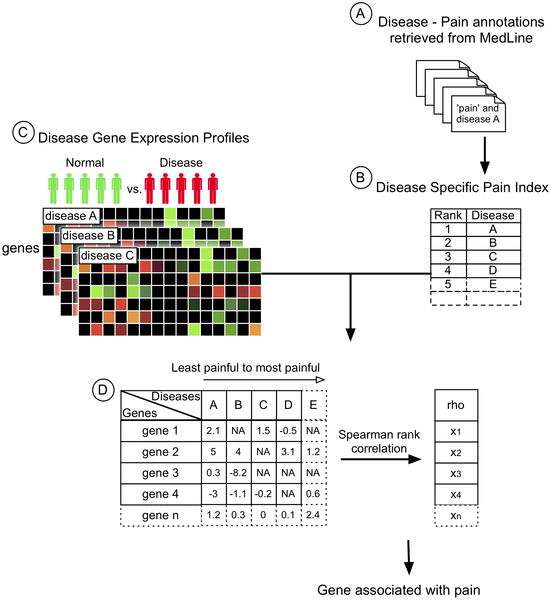
Most recent article, published on June 7, 2012, in open access journal  PLoS Computational Biology, on “Integrative Approach to Pain Genetics Identifies Pain Sensitivity Loci across Diseases” presented a novel integrative approach that combines publicly available molecular data and automatically extracted knowledge regarding pain contained in the literature to assist the discovery of novel pain genes. This study was approved by the Institutional Review Boards of Stanford University and SRI International.

In this meta-analysis, they took advantage of the vast amount of existing disease-related clinical literature and gene expression microarray data stored in large international repositories and

  • Ranked thousands of diseases according to the Figure shown below.

  • Obtained gene expression profiles of 121 of these human diseases from public sources.
  • Selected ‘genes with expression variation significantly correlated with DSPI across diseases’ as candidate pain genes.
  • Genotyped selected candidate pain genes in an independent human cohort, and finally
  • Evaluated for significant association between variants and measures of pain sensitivity.

In this study, the genes were chosen based on their high correlation with the DSPI and plausible biology as assessed by the available literature and human expression profile across tissue using The Scripps Research Institute BioGPS database [8].

The selected genes were:

  • ABLIM3 (actin binding LIM protein family, member 3),
  • PDE2A (phosphodiesterase 2A, cGMP-stimulated),
  • CREB1 (cAMP responsive element binding protein 1),
  • NAALAD2 (N-acetylated alpha-linked acidic dipeptidase 2), and
  • NCALD (neurocalcin delta).

These genes were selected from the candidate list and were prospectively tested for variants that may be associated with differential pain sensitivity in an independent human cohort.

ABLIM3 was selected as the top candidate as it showed the highest correlation with the DSPI. ABLIM3 is a newly characterized protein-coding gene. ABLIM3 is expressed in various tissues, most prominently in muscle and neuronal tissue [9], [10].

Polymorphisms in ABLIM3 (rs4512126) and NCALD (rs12548828, rs7826700, and rs1075791) showed significant association with the cold pressor pain threshold

The strongest signal was with rs4512126 (5q32, ABLIM3, P = 1.3×10⁻¹⁰)  for the sensitivity to cold pressor pain in males, but not in females – a sex-specific association.”

Significant associations were also observed with rs12548828, rs7826700 and rs1075791 on 8q22.2 within NCALD (P = 1.7×10⁻⁴, 1.8×10⁻⁴, and 2.2×10⁻⁴ respectively).

Authors said that, “This data-derived list of pain gene candidates enables additional focused and efficient biological studies validating additional candidates.”

Authors have demonstrated the utility of a novel paradigm that integrates publicly available disease-specific gene expression data with clinical data curated from MEDLINE to facilitate the discovery of pain-relevant genes. This approach was validated through a targeted genetic association study in an independent human cohort, where variants of selected pain gene candidates were evaluated for associations with experimental pain sensitivity measures in humans.

Authors hope that “the outlined approach can complement existing research efforts by assisting the formulation of data-driven hypotheses, and may serve as a template to discover genetic components of other clinically important phenotypes.

Further Reading:

Pain Gene Database (PGD)[11]

MeSH: Medical Subject Heading is a comprehensive vocabulary thesaurus organized in a hierarchical structure allowing the indexing of publications with various levels of specificity.

The 20 diseases with the highest disease-pain ratio from the DSPI are listed out of a total of 2962 diseases are

 .

Curated by: Dr. V. S. Karra, Ph.D.

Read Full Post »

Alzheimers’s and possible Combination Therapy to Improve the Quality of Life.

via Alzheimers’s and possible Combination Therapy to Improve the Quality of Life.

Read Full Post »

A recent study by researchers at Case Western Reserve University is likely to promise a new life to Alzheimer’s victims and their loved ones.

Alzheimer’s disease (AD) is associated with impaired clearance of β-amyloid (Aβ) from the brain, a process normally facilitated by apolipoprotein E (apoE). Oral administration of the retinoid X receptors (RXRs) agonist bexarotene to a mouse model of AD resulted in enhanced clearance of soluble within hours in an apoE-dependent manner. Aβ plaque area was reduced more than 50% within just 72 hours. Furthermore, bexarotene stimulated the rapid reversal of cognitive, social, and olfactory deficits and improved neural circuit function.

Thus, researchers hope and believe that, RXR activation stimulates physiological Aβ clearance mechanisms, resulting in the rapid reversal of a broad range of Aβ-induced deficits in humans as well.

Bexarotene has been approved for the treatment of cancer by the U.S. Food and Drug Administration for more than a decade. It has a good safety and side-effect profile, which researchers hope will help speed the transition to clinical trials of the drug.

source

Reported by: Dr. V. S. Karra, Ph.D

Read Full Post »

In our recent article on “Amyloidosis” we discussed about its causes and forms. One such form is familial amyloidosis (ATTR) a most common form of inherited amyloidoses.

Transthyretin protein structure

Transthyretin protein structure (Photo credit: Wikipedia)

ATTR is caused by a mutation in the transthyretin (TTR) gene that produces abnormal transthyretin protein which deposits as amyloid fibrils.

Symptoms of disease are usually:

Neuropathy (numbness and tingling in the arms and legs, dizziness upon standing, and alternating constipation and diarrhea), and

Cardiomyopathy and occur in mid to late life.

The standard treatment is liver transplantation since the transthyretin protein which causes familial amyloidosis is made in the liver, replacing this organ removes the source of mutant protein production. A new liver will make only normal transthyretin.

It is known that the transthyretin amyloidoses (ATTR) are invariably fatal diseases characterized by above mentioned progressive neuropathy and/or cardiomyopathy. The early onset TTR amyloidoses are caused by inherited TTR mutations that weaken the tetramers’ ability to stick together, producing monomers which are  more likely to aggregate into amyloids and other aggregate structures.

Transthyretin (TTR) is a tetrameric protein involved in the transport of thyroxine and the vitamin A–retinol-binding protein complex. Mutations within TTR that cause autosomal dominant forms of disease facilitate tetramer dissociation, monomer misfolding, and aggregation, although wild-type TTR can also form amyloid fibrils in elderly patients. Because tetramer dissociation is the rate-limiting step in TTR amyloidogenesis, targeted therapies have focused on small molecules that kinetically stabilize the tetramer, inhibiting TTR amyloid fibril formation.

Scientists from The Scripps Research Institute and Pfizer Inc. have published a new study showing how this type of amyloidosis can be inhibited. A new drug called tafamidis (Vyndaqel®)) has been developed to treat this deadly nerve disease caused by transthyretin (TTR) amyloid fibril formation, or the accumulation of abnormal assemblies of the TTR protein. Researchers have designed tafamidis to grab either of those thyroxine-binding sites, in a way that bridges the seam and helps keep the tetramer from coming apart.

Tafamidis binds to the natural, functional TTR structure (mutant and wild type), in a way that prevents it from deviating from this natural, functional form into the amyloid state. TTR’s natural, functional form is a “tetramer”made from four copies of the protein. Amyloidosis occurs when these tetramers come apart and the individual TTR proteins (“monomers”) undergo shape changes enabling them to misassemble into dysfunctional amyloid aggregates. Included in the TTR aggregate distribution are amyloid fibrils—protein stacks made from millions of TTR monomers—although researchers suspect that smaller, shorter-lived pre-amyloid aggregates do more direct damage to nerve cells and nerve fibers.

Tafamidis  treats ATTR by reducing the rate of amyloid formation, and clinical trials have shown that it delays the typical progression of nerve destruction in polyneuropathy patients.

This drug is approved for use in Europe and currently under review by the US Food and Drug Administration (FDA), and it is the first medication approved by a major regulatory agency to treat an amyloid disease, a class of conditions that include Alzheimer’s.

 Source:

http://www.scripps.edu/newsandviews/e_20120604/tafamidis.html

http://www.pnas.org/content/suppl/2012/05/29/1121005109.DCSupplemental/sapp.pdf

Curated by: Dr. Venkat S. Karra, Ph.D.

Read Full Post »

HBV and HCV-associated Liver Cancer: Important Insights from the Genome

Author: Ritu Saxena, PhD

UPDATED on 7/21/2022

HBV drug shifts to next-gen approaches

“While we respect Assembly’s decision to discontinue clinical development of VBR, we believe that it is premature to make any conclusions about any results in this triple combination clinical trial,” Arbutus CEO William Collier said in a separate release, referring to the study that involved his company’s drug. “We intend, in collaboration with Assembly, to continue the clinical trial in order to fully and accurately assess the results.”

So as Assembly shuts the door to future trials and wraps

Study 203 — a Phase II study testing VBR plus NrtI (nucleoside analogue reverse transcriptase inhibitor) plus interferon —

Study 204 will go on, with primary endpoints being safety and tolerability.

Patients are given either

  1. VBR, NrtI and Arbutus’ AB-729,
  2. VBR plus NrtI, or
  3. NrtI plus AB-729.

The RNAi drug is designed to reduce all HBV viral proteins and antigens.

For Assembly Bio, the focus now shifts to two next-generation core inhibitors that it hopes could prove potent treatments for HBV. At the same time, it’s also working on earlier-stage research programs, including

  • a hepatitis D virus entry inhibitor,
  • a liver-focused interferon-α receptor agonist and
  • new antivirals to be introduced later.

With CMO Luisa Stamm and CFO Michael Samar set to leave in the next few weeks, McHutchison — a former Gilead CSO — will now lead a remaining team of 70.

Meanwhile, Michele Anderson, SVP of development operations, is being promoted to chief development officer; and COO Jason Okazaki will add president to his title and finance to his slate of duties. The company now expects to have a cash runway into the first half of 2024.

SOURCE

https://endpts.com/john-mchutchison-throws-in-the-towel-on-hbv-drug-triggering-layoffs-as-assembly-shifts-to-next-gen-approaches/


Updated on July 5, 2013

(research article published in New England Journal of Medicine regarding the role of SALL4 gene in aggressive hepatocellular carcinoma)

Hepatocellular carcinoma (HCC) is one of the most common malignant tumors in the world. The incidence of HCC varies considerably with the geographic area because of differences in the major causative factors. Chronic hepatitis B and C, mostly in the cirrhotic stage, are responsible for the great majority of cases of HCC worldwide.

Hepatitis B and C viruses (HBV/HCV) can be implicated in the development of HCC in an indirect way, through induction of chronic inflammation, or directly by means of viral proteins or, in the case of HBV, by creation of mutations by integration into the genome of the hepatocyte.http://www.wjso.com/content/3/1/27

With the advent of genome sequencing methodologies, it was about time that the scientists look clues within the genome of HCC tumor cells that would provide clues for disease progression via virus integration into the liver cells.

Two studies published in the recent issue of Nature Genetics (May 2012) explored the genome of HCC cells for genetic mutations that might be related to HBV and HCV highlighting the types of genetic mutations that underlie the liver cancer hepatocellular carcinoma, including forms of the disease related to hepatitis B and hepatitis C virus infection.

In the first study, Sung et al performed an extensive whole genome analysis using a large sample size of 88 Chinese individuals with HCC http://www.ncbi.nlm.nih.gov/pubmed?term=Genome-wide%20survey%20of%20recurrent%20HBV This was in the fact first unbiased, genome-wide, HBV-integration map in HCC leading to new recurrent integration sites and molecular mechanisms.

Although integration of viral DNA sequence within HCC genome has been reported in several studies, however, fewer cases of recurring mutations within genes during these integrations have been studied. The reason might be limited sample size in these studies. Tumor and non-tumor adjacent liver cells were surveyed in 81 HBV positive and 7 HBV negative HCC tumor samples. After the survey of whole genome of the 88 patients, several viral integration sites were discovered referred to as breakpoints. The breakpoints were found to be much more common in tumor than normal samples. Although the observed breakpoints were randomly distributed across the genome, a handful or frequently occurring sites referred to as ‘hotspots’ were discovered. The frequency of integration revealed that there were five genes with recurring integrations in HBV tumors- TERT, MLL4, CCNE5, SENP1, and ROCK1.

Apart from genome analysis, expression levels of the 5 genes implicated in the study were determined. In other words, the levels of proteins formed from the genes were compared and it was observed that samples with HBV integration had significantly higher level of protein expression of TERT, MLL4 and CCNE5 than the samples harboring no HBV integration sites. Although not statistically significant, overexpression of SENP1 and ROCK1 genes was also observed in HBV integration samples. This lead to an important conclusion from the study that the five genes that harbor recurrent HBV integrations might be implicated in HCC tumor development and that overexpression of these proteins is a probable molecular mechanism of tumorigenesis.

Interestingly, analysis of the HBV analysis revealed that almost 40% of the HBV genomes were cleaved at approximately 1,800 bp and then integrated into the human genome. The cleaved HBV sites had the necessary machinery (enhancers and ORF replication sites) for protein formation.

The study also confirmed the popular belief that HBV integrations might worsen the prognosis of HCC patients revealing a significant correlation between the number of HBV integrations and the survival of patients.An interesting observation from the study that had not been reported before was that HBV integration was associated with the occurrence of HCC at a younger age.

The study presented convincing evidence that chromosomal instability of HCC genome may originate from HBV integration.

A parallel study published in the same issue of Nature Genetics explored the genome of HCC tumors to gain insights into HBV and HCV-related genomic alterations. The research team sequenced whole-exon (protein forming genomic regions) of 27 liver tumors from 25 patients and compared with the corresponding genome sequences from matched white blood cell samples.

The study involved both HBV-related and HCV-related tumors along with two samples of tumors from individuals without HBV or HCV infection. The genome wide sequencing of HCC tumor cells revealed several mutations that included deletions and mutations of genes with predicted functional consequences. “Considering the high complexity and heterogeneity of [hepatocellular carcinomas] of both etiological and genetic aspects,” they concluded, “further molecular classification is required for appropriate diagnosis and therapy in personalized medicine.” Additionally, recurrent alterations were observed in the four genes – ARID1ARPS6KA3NFE2L2 and IRF2 that had not been previously described in HCC. The comprehensive mutation pattern observed in the study might be indicative of specific mutagenesis mechanisms occurring in tumor cells.

Authors said “Although no common somatic mutations were identified in the multicentric tumor pairs,” further stating “their whole-genome substitution patterns were similar, suggesting that these tumors developed from independent mutations, although their shared etiological backgrounds may have strongly influenced their somatic mutation patterns.”The researchers suggested a major role of chromatin remodeling complexes and involvement of both interferon and oxidative stress pathways in hepatocellular malignant proliferation and transformation based on the genes showing recurrent mutations in the observed genes.

http://www.genomeweb.com/sequencing/studies-explore-genetics-behind-hepatitis-b-and-c-virus-associated-liver-cancers

http://www.ncbi.nlm.nih.gov/pubmed?term=Genome-wide%20survey%20of%20recurrent%20HBV

Thus, in both the studies new genes recurrently altered in HCC were identified along with uncovering some important clues relating to the molecular mechanism of virus-associated HCC.

Role of SALL4 in HCC

The oncofetal gene SALL4 is a marker of a subtype of HCC with progenitor-like features and is associated with a poor prognosis. Investigators at Cancer Science Institute of Singapore, National University of Singapore studied the role of oncofetal gene, SALL4 in HCC and the results were published were in a recent issue of New England Journal of Medicine ((Yong KJ, et al, Oncofetal Gene SALL4 in Aggressive Hepatocellular Carcinoma. http://www.ncbi.nlm.nih.gov/pubmed/23758232). Yong and colleagues (2013) screened specimens from patients with primary HCC for the expression of SALL4 and carried out a clinicopathological analysis. Loss-of-function studies were then performed to evaluate the role of SALL4 in hepatocarcinogenesis and its potential as a molecular target for therapy. Furthermore, in vitro functional and in vivo xenograft assays were performed to assess the therapeutic effects of a peptide that targets SALL4.

According to the results, SALL4 is an oncofetal protein that is expressed in the human fetal liver and silenced in the adult liver, but it is reexpressed in a subgroup of patients who have HCC and an unfavorable prognosis. Gene-expression analysis showed the enrichment of progenitor-like gene signatures with overexpression of proliferative and metastatic genes in SALL4-positive HCC. Loss-of-function studies confirmed the critical role of SALL4 in cell survival and tumorigenicity. The peptide targeting SALL4 blocked ­SALL4-corepressor interactions that released suppression of PTEN and inhibited tumor formation in xenograft assays in vivo. In conclusion, the results from the study indicate that SALL4 is a marker for a progenitor subclass of HCC with an aggressive phenotype. The absence of SALL4 expression in the healthy adult liver enhances the potential of SALL4 as a treatment target in HCC.

Read Full Post »

Heart Patients’ Skin Cells Turned into Healthy Heart Muscle Cells

Reporter: Aviva Lev-Ari, PhD, RN


In a scientific first, researchers at the Technion-Israel Institute of Technology have succeeded in taking skin cells from heart failure patients and reprogramming them to transform into healthy, new heart muscle cells capable of integrating with existing heart tissue.

The research, published online yesterday in the European Heart Journal, opens up the prospect of treating heart failure patients with their own, human-induced pluripotent stem cells (hiPSCs) to repair their damaged hearts. Since the reprogrammed cells would be derived from the patients themselves, the problem of the patients’ immune systems rejecting the cells as “foreign” could be avoided.  The researchers caution there are obstacles to overcome before it would be possible to use hiPSCs this way in humans, and it could take at least five to ten years before clinical trials could start.

“What is new and exciting about our research is that we have shown that it’s possible to take skin cells from an elderly patient with advanced heart failure and end up with his own beating cells in a laboratory dish that are healthy and young – the equivalent to the stage of his heart cells when he was just born,” said lead researcher Professor Lior Gepstein, of the Technion Faculty of Medicine, the Sohnis Research Laboratory for Cardiac Electrophysiology and Regenerative Medicine, and Rambam Medical Center.

Limor Zwi-Dantsis, a PhD student in the Technion’s Sohnis Research Laboratory, Prof. Gepstein, and their colleagues took skin cells from two male heart failure patients (aged 51 and 61) and reprogrammed them by delivering three genes or “transcription factors” (Sox2, Klf4 and Oct4), followed by a small molecule, called valproic acid, to the cell nucleus. It is important to note that this reprogramming cocktail did not include a transcription factor called c-Myc, which has been used for creating stem cells, but which is a known cancer-causing gene.

“One of the obstacles to using hiPSCs clinically in humans is the potential for the cells to develop out of control and become tumors,” explained Prof. Gepstein. “This potential risk may stem from several reasons, including the oncogenic factor c-Myc, and the random integration into the cell’s DNA of the virus that is used to carry the transcription factors – a process known as insertional oncogenesis.”

official news release issued by theEuropean Heart Journal, Thursday, May 24, 2012

http://www.ats.org/site/News2?page=NewsArticle&id=7359&news_iv_ctrl=1161

Read Full Post »

β-amyloid fibrils.

β-amyloid fibrils. (Photo credit: Wikipedia)

Extracellular deposition of insoluble fibrillar proteins in tissues and organs lead to a condition known as amyloidosis which is thought to be caused by misfolding of proteins. There are several types of amyloidosis, but the unifying feature of the amyloidoses is that the deposits share a common ß-pleated sheet structural conformation that confers unique staining properties.

There are several types of amyloidosis and the most common form is the primary amyloidosis (AL) for amyloid of light chain composition. Symptoms can occur in any organ of the body and the organs most often involved include the heart, kidneys, nervous system, and gastrointestinal tract.

Amyloid deposits in these organs can cause

shortness of breath,

fatigue,

edema (swelling of ankles and legs),

dizziness upon standing,

a feeling of fullness in the stomach (especially after eating),

diarrhea,

weight loss,

enlarged tongue,

numbness of the legs and arms,

protein in the urine (proteinurea) and

enlarged liver (hepatomegaly).

Primary amyloidosis (AL) is an acquired plasma cell disorder in which a monoclonal immunoglobulin light chain is produced in the bone marrow and usually found in the blood or urine. AL amyloidosis occasionally occurs with multiple myeloma. The amyloid fibrils in this type of amyloidosis are made up of immunoglobulin light chain proteins (kappa or lambda).

Amyloidosis caused by infection or inflammation is known as Secondary Amyloidosis (also known as AA amyloidosis) in which elevation of an acute phase protein, SAA, a portion of which (AA protein) deposits as amyloid fibrils. AA amyloidosis usually begins as disease in the kidneys, but other organs can be affected, and may cause protein in the urine, edema, and fatigue.

Medical or surgical treatment of the underlying chronic infection or inflammatory disease can slow down or stop the progression of this type of amyloid where as in case of AL chemotherapy is the standard practice.

Other forms of amyloidosis are familial amyloidosis (ATTR) a most common form of inherited amyloidoses caused by a mutation in the transthyretin (TTR) gene that produces abnormal transthyretin protein which deposits as amyloid fibrils. Symptoms of disease are usually neuropathy (numbness and tingling in the arms and legs, dizziness upon standing, and diarrhea) and cardiomyopathy and occur in mid to late life. The standard treatment is liver transplantation since the transthyretin protein which causes familial amyloidosis is made in the liver, replacing this organ removes the source of mutant protein production. A new liver will make only normal transthyretin. Each family has its own pattern of organ involvement and associated symptoms and the mode of transmission is autosomal dominant.

Other rare forms of inherited amyloidosis include apolipoprotein A-I (AApoAI), apolipoprotein A-II (AApoAII) gelsolin (AGel), fibrinogen (AFib), and lysozyme (ALys).

Beta-2 microglobulin amyloidosis is caused by chronic renal failure and often occurs in patients who are on dialysis for many years. Amyloid deposits are made of the beta-2 microglobulin protein that accumulated in tissues, particularly around joints, when it cannot be excreted by the kidney because of renal failure.

There are many types of localized amyloidoses. The most common and best known is Alzheimer’s disease.

Localized amyloid deposits in the airway (trachea or bronchus), eye, or urinary bladder are made up of light chain proteins, similar to those in AL amyloidosis. However, in localized amyloidosis the abnormal plasma cells producing the amyloid light chains are in the tissues, not in the bone marrow. Other localized types of amyloidosis are associated with hormone proteins, aging, or specific areas of the body, and have not been found to develop into systemic amyloidosis

Diagnosis of this disease is sometimes difficult as many of the sysmptoms are general and can occur in other diseases. Symptoms in each patient depend on the type of amyloidosis and on the type of involved organ systems.

Amyloidosis can only be diagnosed by a positive biopsy (i.e., an identification of the amyloid deposits in a piece of tissue). Initial biopsies are most commonly obtained from the abdominal fat. image from BMCIf amyloid is suspected in other organs, however, a biopsy may be needed from these specific areas. Tissue biopsies must be stained properly with Congo red, a dye which will color the amyloid if it is present and cause it to have a unique appearance when viewed under a special microscope. If amyloid is present in a tissue biopsy, further tests can be done to determine the type of the amyloid.

The Amyloid Treatment & Research Program (ATRP) at Boston Medical Center (BMC) is an international referral center that treats amyloidosis with stem cell transplantation. The Program offers a multi-disciplinary approach to diagnosis and treatment of this multi-organ disorder. Amyloid doctors specializing in cardiology, pulmonary, nephrology, gastroenterology, neurology, and other systems participate in patient evaluation and care.

The ATRP at BMC studies the systemic types of amyloidoses defined under amyloid types. Other forms of amyloidosis include Alzheimer’s and other neurodegenerative diseases, prion diseases, serpinopathies, some of the cystic fibroses, and others.

They have developed Amyloid Light Chain Database, called ALBase, with the support of an NHLBI P01 award, HL68705. ALBase is a curated database and collection of analytical and graphical tools designed to facilitate the analysis of amyloidogenic immunoglobulin (Ig) light chains (LC) occurring in patients with AL amyloidosis. ALBase is designed to compile and analyze Ig LC sequences from patients with AL amyloidosis, to compare their predicted protein sequence and structure to non-amyloidogenic LC sequences from patients with multiple myeloma or health controls. The hypothesis underlying this is that the primary sequence of the LC is likely to be a major determinant of secondary structure and of propensity to unfold, oligomerize, and form fibrils.

“ALBase is available to the scientific community for research purposes. Please reference the site if you make use of it.”

Two patients of Dr. David Seldin are diagnosed with systemic amyloidosis and they shared their experiences from diagnosis to treatment and recovery (You can listen to an audio of this broadcast by clicking here: Rare Disease Feature (WAER 88.3 FM)).

Both patients credit their physicians for investigating abnormal tests and nonspecific symptoms, and for referring them to amyloid specialists early in the disease course.

http://www.bu.edu/amyloid/david-c-seldin-m-d-ph-d/

http://www.bu.edu/amyloid/2012/03/08/npr-interview/

http://www.bmc.org/amyloid.htm#2012gala

Curated by: Dr. Venkat S. Karra, Ph.D

Read Full Post »

« Newer Posts - Older Posts »