Resported By: Dr. Venkat S Karra
Combination Therapy to Starve Cancer Cells to Death.
via Combination Therapy to Starve Cancer Cells to Death.
Posted in Bio Instrumentation in Experimental Life Sciences Research, CANCER BIOLOGY & Innovations in Cancer Therapy, Cell Biology, Signaling & Cell Circuits, Computational Biology/Systems and Bioinformatics, Genome Biology, tagged Cancer - General, Cell, cell death, glucose, sweet on June 29, 2012| Leave a Comment »
Posted in Biological Networks, Gene Regulation and Evolution, CANCER BIOLOGY & Innovations in Cancer Therapy, Cell Biology, Signaling & Cell Circuits, Chemical Biology and its relations to Metabolic Disease, Chemical Genetics, Computational Biology/Systems and Bioinformatics, Genome Biology, Personalized and Precision Medicine & Genomic Research, Pharmaceutical R&D Investment, Proteomics, tagged American Society of Clinical Oncology, Cancer - General, Cancer Treatment Centers of America, Georgetown University Hospital, health, Indiana University School of Medicine, oncology, ovarian cancer on June 26, 2012| 2 Comments »

Kathy D. Miller, MD: Hello. I am Kathy Miller, Associate Professor of Medicine at the Indiana University School of Medicine in Indianapolis. I would like to welcome you to Medscape Oncology Insights, our annual wrap-up of the 2012 meeting of the American Society of Clinical Oncology (ASCO®). I am joined today by several of my colleagues: Dr. David Kerr, Professor of Cancer Medicine from the University of Oxford and former President of the European Society of Medical Oncology; Dr. Bruce Cheson, Deputy Chief of Hematology and Oncology, and Head of Hematology at the Georgetown University Hospital and Lombardi Comprehensive Cancer Center in Washington, DC; and last but not least, Dr. Maurie Markman, Vice President, Patient Oncology Services, and National Director for Medical Oncology, Cancer Treatment Centers of America, based in Philadelphia. Thank you all for joining us today.
Maurie, let’s start with you. When you think about highlights of this year’s ASCO® meeting for genitourinary (GU) and ovarian cancers, what are you taking home?
Maurie Markman, MD: There was a very interesting session, because of what was seen and what was not seen. The surprise for me was the randomized phase 3 trial[1] that looked at the question of bevacizumab plus chemotherapy vs chemotherapy alone in platinum-resistant ovarian cancer. Everyone would have predicted, on the basis of 30-plus years of research in this area, that it would be a negative trial, as all past trials have been. In fact, I was convinced it would be a negative trial because there were no press releases ahead of time. That usually tells you the story.
It turns out that the combination of bevacizumab and chemotherapy substantially improved progression-free survival in this setting — the first time this has ever been seen. I would suspect, however, that what most people take away from it is the fact that there was a tripling of the objective response rate, and clear evidence of patient benefit. This was very much a surprise; I don’t think anyone expected this.
The next question is going to be, what happens next? Is this drug going to receive regulatory approval on this basis? This is clearly an unmet need. That was a real positive.
On the other hand, one could argue that in contrast to other things that we will hear about, there is still no target of therapy in any of the gynecologic cancers. We haven’t found anything that would suggest an epidermal growth factor receptor (EGFR) mutation, or anything to suggest a KRAS mutation or anything that could point to where we need to go in this area. On the one hand, that is a very interesting finding, from the perspective of biology. But it is quite discouraging from the perspective of drug development.
Dr. Miller: The Cancer Genome Atlas (TCGA) data had to be discouraging. Essentially, every ovarian tumor is a different ovarian tumor.
Dr. Markman: Absolutely.
Dr. Miller: You have 10,000 rare diseases.
Dr. Markman: Other than p53, and we have known of that mutation for decades. It is universal, certainly in the high-grade cancers. But we don’t know how to deal with it. Other than that, the number of mutations found per tumor is enormous, and there are no patterns. So we have to do a lot of thinking. That is, the smart biologists have to do a lot of thinking.
Dr. Miller: Bruce, you spend a lot of your time focusing on the hematology side of malignancies. With the American Society of Hematology (ASH) and a whole separate meeting, sometimes it seems as though hematology doesn’t get as much attention at ASCO®. Was there any big news in the hematologic malignancies that people need to know about?
Bruce D. Cheson, MD: There were not. However, this has the potential to be an historic meeting, because we are going to finally learn that “enough is enough” with chemotherapy, and we are at that point.
We saw some very historic presentations. We saw rituximab, cyclophosphamide, doxorubicin, vincristine, and prednisone (R-CHOP), vs rituximab, cyclophosphamide, vincristine, and prednisone (R-CVP), vs rituximab, fludarabine, and mitoxantrone (RFM) — where basically the only difference is in toxicity.[2]
Dr. Miller: “Pick your poison” — toxicity, but you will get to the same place.
Dr. Cheson: Yes. We also saw that R-bendamustine was better than R-CHOP,[3] but there are questions about the R-CHOP arm looking kind of lame. We were thinking, where are we going in follicular lymphoma?
Where we are going is what John Leonard and colleagues[4] presented in the relapse setting, and that’s biological agents. We have lots of those. We have lots of targeted agents. I predict that in the next year, instead of hearing more about R-CHOP and R-bendamustine, we are going to be hearing more about the GS-1101s; the PI3-kinase inhibitors; ibrutinib, the Bruton tyrosine kinase (BTK) inhibitor; and those drugs which we in the Cancer and Leukemia Group B (CLGB) (now Alliance) have been planning on combining with biological strategies. We are going to be trying to get rid of chemotherapy. This may be, hopefully, the last meeting we hear about regimen A vs regimen B. It’s kind of sickening.
We have the same situation in Hodgkin lymphoma — where we cure, depending on the stage, up to 90% of people, and at this meeting we see adriamycin, bleomycin, vinblastine, and dacarbazine (ABVD) vs bleomycin, etoposide, adriamycin, cyclophosphamide, vincristine, procarbazine, and prednisone (BEACOPP) again for about the fourth iteration. Lo and behold, there is no survival difference.
We saw lots of that, but now we have other drugs. We have brentuximab vedotin, which is an antibody/drug conjugate. It is anti-CD30, linked to auristatin, a tubulin poison, which in transplant-refractory patients had a 75% response rate. There weren’t any data at this meeting. The data on that drug were presented at ASH. But there are now trials incorporating brentuximab/vedotin, not only in second-line treatment, but we are now moving it up into front-line.
So, we have the tools; it’s just a question of being smart enough, and figuring out how to put them together in a coherent fashion, on the basis of scientific rationale. The most important thing I took away from this meeting is, enough is enough. You can pick your poison, as you put it. But don’t hold on to it for dear life, because there are new, very exciting drugs coming along that are being combined in a biological fashion.
Dr. Miller: You might have snuck into a breast cancer session, because that is how I would summarize the breast cancer world this year as well. We saw adjuvant trials, metastatic trials, comparing one chemotherapy regimen with another. To summarize a lot of data, pick your third-generation adjuvant chemotherapy regimen and the toxicity will differ, depending on the drugs, but the efficacy doesn’t differ at all. In the metastatic setting, newer wasn’t better. It brought more toxicity, which then led to more dose reductions, which hampered efficacy.
So when we thought we were getting newer and better drugs, they didn’t actually do better for our patients. It sounded a little bit like ABVD vs BEACOPP in Hodgkin disease.
Dr. Cheson: We have to get rid of chemotherapy.
Dr. Miller: Targeted therapies, either with direct molecular targets or antibody/ drug conjugates, were the clear winners, with major improvements in efficacy and substantially less toxicity. I would be quite happy if I didn’t have to look at another basic chemotherapy study in breast cancer again. Was that the case in the gastrointestinal (GI) studies as well, David?
David J. Kerr, MD: It was. We are seeing mildly disappointing and moderately good results. The big, well-designed study, REAL 3,[5] looking at the role of panitumumab with combination chemotherapy, had negative findings. Panitumumab seemed to do a bit worse, which was somewhat disappointing.
Some positives are coming out in colorectal cancer. The antiangiogenic therapies look as if they are here to stay. A nice randomized trial[6] looking at discontinuation or continuation of bevacizumab following progression in first-line chemotherapy shows that the bevacizumab follow-through has significant advantages, in terms of progression-free survival.
An interesting, clever, genetically designed drug, aflibercept, which is a vascular endothelial growth factor (VGEF) trap, showed very promising activity in second- line therapy.[7] So something is holding true there. We have a new drug, regorafenib, which is one of these oral multitargeted kinase inhibitors, that seems to have an important clinically useful role to play in third-line chemotherapy.
For me, the take-home message, in contradistinction to Maurie, is that we are starting to get a feel for the different molecular phenotypes for colorectal cancer. It looks as though there may be 5 daughters of Eve, and it needs to be confirmed. We need to internationalize what we are doing. It looks as though some patterns are starting to emerge that will allow us to make prognostic inferences, possibly treatment-wise, and so on. Things are starting to stack up for us, in terms of driver mutations, therapeutics, and providing the patient with better information, so this is somewhat luckier than the situation with ovarian just now.
Dr. Miller: When we look ahead, we would all love to get rid of chemotherapy. How do we do that? By understanding the biology, which is the easy answer. Bruce, you mentioned that we do tend to cling to our chemotherapy regimens. We have been having discussions about how to do this in breast cancer, and there is a great reluctance to give up the regimens that have gotten us to where we are.
Dr. Cheson: Reluctance from the doctor, but not from the patient.
Dr. Miller: So how do we move forward?
Dr. Cheson: There are a couple of ways. First is a better understanding of tumor biology. We have been sitting around doing what we do for so long. Now we have some tools, but we need to know how to apply them. At every clinical trial in CLGB (now Alliance), we have correlative science. We are doing natural killer (NK) cell numbers and functions. We are doing microarrays so that we can understand which regimen works in which patient. It may not be like your field (gynecologic cancer), where every patient has their own disease, which is what I get accused of saying in lymphoma all the time. I am glad someone else has that problem.
We have the drugs. We need to know how to put them together, but which patients should we target? Then, we need to figure out how to move them up front — such drugs as brentuximab, the Hodgkin drug, and anti-CD30, which in anaplastic large cell lymphoma has an 86% response rate in relapsed patients. In a good clinical trial, we need to take a risk and just do it. If a drug is 86% effective in the refractory setting, it is not going to be worse up front.
There are those who will say, “Well, the response may not last as long.” But there are several ways you can introduce these drugs in an up-front setting, such as window-of-opportunity studies, Or, you can first tack them on to some chemotherapy and then try and wean off the chemotherapy.
There are a number of ways to do it. You just have to do it. You have to take a risk and view it as a challenge. You have to say, “We have had enough of this; let’s move on.” We have the tools; let’s do it.
Dr. Miller: Maurie, you know I can’t resist, because this issue of clinical trials came up last year when we were talking about melanoma data, with striking activity reported by the BRAF investigators. Are you going to do those trials? Are you willing to take that risk?
Dr. Markman: Obviously, you have to look at the individual cancers. Consider the report that said breast cancer had 10 different cancers, maybe more. It is going to be harder and harder to do randomized trials in 10 subsets, even in a disease that is as common as breast cancer.
Dr. Miller: We are actually closer to your problem, where each patient is an individual disease, than to Bruce’s situation.
Dr. Markman: We do have to come up with a different clinical trial paradigm as we get to smaller subsets. Of course, the tsunami that many have predicted is here. It wasn’t part of the meeting directly, but a half-dozen or dozen companies are now offering whole-genome sequencing. We have to figure out how to use all these things. It may not be as simple as a particular molecular abnormality, but it may be, as many people are saying, particular systems.
For example, in the ovarian cancer area, there are BRCA1 and BRCA2, and there are some drugs that affect those mutations. But a very important study from last year looked at maintenance therapy in the second-line setting with olaparib[8] in tumors that were said to have a BRCA-ness profile. In other words, there is a molecular profile that is similar to that of BRCA1 and BRCA2, and in fact, it was a very positive trial, at least from the perspective of progression-free survival. You may not be able to find a particular molecular abnormality, but there may be patterns. And that may be (in our area, where you can’t find an abnormality) much more complicated than just finding a mutation. That may be the way forward in such diseases as ovarian cancer.
Dr. Cheson: Maybe I did wander into the breast meeting, but we need to reconsider how many phase 3 trials we want to do. The I-SPY concept is where we need to be going. You take a regimen that should work in a subset of patients, and you test that and see if it does. Then you can figure out who responded and who didn’t, doing various molecular techniques, and then you take the patients who responded and put them in one pile, and enrich that pile. You take the patients who didn’t respond, figure out why they didn’t respond, and retarget them. After a while, you have high response rates in this one, and you start to improve the outcome in the other one. We need to do this. There is no way around it. It’s coming.
I hate to say this, but I think maintenance is for losers, because if you are going to do right, you have to do it up front. Progression-free survival doesn’t necessarily correlate with overall survival. It is nice. You don’t see the doctor as often. But we need to do this right the first time. I thoroughly agree with you, Maurie — it is going to be a conglomerate of things, and that is why we have new, exciting drugs coming down the pipeline, such as these PI3-kinase mammalian target of rapamycin (mTOR) hybrid inhibitors. We need to block multiple pathways, because the tumors are damn smart. If you block one, it has all these other ways of getting around you.
Dr. Kerr: Indeed, and that comes back to Maurie’s point about thinking in systems and programmatically. The answer to Kathy’s question — can we get rid of chemotherapy? — is no. But can we do better? Think about the huge focus that we have in trying to map biomarkers to the new drugs, often mechanistic. We are not doing enough with the conventional cytotoxic drugs that we have.
We could do a lot more. Genome-wide association studies, looking at patterns of toxicity, so that we can use polymorphisms to say “you get full dose of the drug, you get the reduced dose.” We could be using the tools of trade that we have much better. With the new platform technologies, we should be able select patients who do better with 5-fluorouracil (5-FU), with taxane, and so on.
Dr. Cheson: So, how do you study that in randomized trials?
Dr. Kerr: We are lucky in that we have been collecting material from the old days. Makes us something like Dickensian characters. We have hoarded a lot of material from something vs nothing-type trials, and that gives us the opportunity, in that large randomized setting, to develop some of these predictive markers for “yes or no 5-FU, yes or no taxane.” So, it is going back to our youths, when we did all that stuff.
Dr. Miller: That is how we made advances in breast cancer. The predecessors in my field collected tumors long before the technology that we now use to interrogate them was even a glint in someone’s eye. That may actually have a bigger global impact.
Dr. Kerr: I think so.
Dr. Miller: Although this is the American Society of Clinical Oncology, one third of our members are from outside the United States, one half of the attendees are from outside the United States, and most of the fabulous molecular things we have been talking about are not within reach of most patients globally. But some of our old things are cheap. Perhaps using them in a more intelligent way may actually have more benefit on a global scale.
Dr. Kerr: Exactly. So you have segued into the concept of value. I was delighted to see the brief stance that ASCO® has taken toward value, and saying that there are some things that we do that don’t add value to the care of the patients that we look after. I am a huge fan of US medicine at its the very best, but there’s a lot of waste in what we do. The fact that ASCO® is trying to identify this — 17.5% of the gross domestic product (GDP) is being spent in health now — I thought that was fantastic. Yes, there is value out there, and we should seek it. We should mine old databases, fiddle with new drugs and old drugs, teach old drugs new tricks, and so on.
Dr. Cheson: Five years from now, you are going to look at this video, and you had a whole list of “mabs and mibs” that you are going to figure out and put together, and all of a sudden, FOLFOX, FOLFIRI will be “pffft.” You are going to be combining those biologic agents intelligently, and you are going to get rid of those chemotherapy drugs, I predict.
Dr. Miller: We are out of time for this year, but I am going to book you both for 5 years from now to see whose prediction of the future comes true, where the value lies, and where we can make improvements, because I’m not so sure that they are mutually exclusive. But that’s all from this year’s Medscape Oncology wrap-up of the Annual Oncology Society Meeting. Thank you again for joining me.
Article(s) of Relevance:
I-SPY 2 Clinical Trial Design Promises to Accelerate FDA Approvals
Reported by: Dr. Venkat S. Karra, Ph.D
Posted in Biological Networks, Gene Regulation and Evolution, CANCER BIOLOGY & Innovations in Cancer Therapy, Disease Biology, Small Molecules in Development of Therapeutic Drugs, Genome Biology, Liver & Digestive Diseases Research, tagged biomarkers, Birc3, Cancer - General, cell cycle protein, cyclin B1, HBV, HCC, Hepatocellular carcinoma, immunohistochemistry, microarray, PBMC, RT-PCR, Sec62, surgery, tumor on June 25, 2012| 2 Comments »
Author and Reporter: Ritu Saxena, Ph.D.
On June 4, 2012, I authored a post on HBV and HCV-associated Liver Cancer: Important Insights from the Genome http://pharmaceuticalintelligence.com/2012/06/04/hbv-and-hcv-associated-liver-cancer-important-insights-from-the-genome/ reporting about the major role of chromatin remodeling complexes and involvement of both interferon and oxidative stress pathways in hepatocellular malignant proliferation and transformation based on the genes showing recurrent mutations in the observed genes.
In this post, I have discussed the latest research on cyclin B1 and Sec62 expression in PBMCs of HCC patients and how their elevated expression correlates to significantly to negative prognostic value in terms of recurrence-free survival.
Researchers at the Changhai and Gongli Hospital in Shanghai, Military Medical University, People’s Republic of China recently identified the candidate biomarkers for HBV-related HCC recurrence after surgery. The research was published in the June 2012 issue of Molecular Cancer journal. According to the group findings, Cyclin B1 and Sec62 may serve as effective biomarkers and potential therapeutic targets for HBV-related HCC recurrence after surgery.
Research article: Identification of cyclin B1 and Sec62 as biomarkers for recurrence in patients with HBV-related hepatocellular carcinoma after surgical resection. http://www.ncbi.nlm.nih.gov/pubmed/22682366
HCC background and Research Problem: Hepatocellular carcinoma is cancer of the liver. It is different from Metastaticc liver cancer, which starts in another organ (such as the breast or colon) and spreads to the liver. The most frequent factors causing HCC include chronic viral hepatitis (types B and C), alcohol intake and afla- toxin exposure.
In most cases, scarring of the liver referred to as cirrhosis is an important risk factor for HCC. Cirrhosis may be caused by:
http://www.ncbi.nlm.nih.gov/pubmedhealth/PMH0001325/.
However, patients with hepatitis B or C are at risk for liver cancer, even if they have not developed cirrhosis.
According to the data from International Agency for Research on Cancer, hepatocellular carcinoma (HCC) is the third leading cause of cancer-related deaths worldwide, with over a half million deaths per annum. http://www-dep.iarc.fr/
In China, a very high infection rates with HBV have been reported. According to the recent statistics reported by Jemal et al in 2011, HCC cases occurring in China account for 55% of the total cases reported in the world. http://www.ncbi.nlm.nih.gov/pubmed?term=Global%20Cancer%20Statistics%20Jemal
Surgical resection, although provides an opportunity for cure, however, frequent recurrence post surgery has posed a major challenge to longterm survival. Pertinent to their research, authors state “Frequent tumor recurrence after surgery is related to its poor prognosis. Although gene expression signatures have been associated with outcome, the molecular basis of HCC recurrence is not fully understood..”.
Research: To determine the molecular basis of HCC, authors used the Peripheral blood mononuclear cells (PBMCs) to predict the recurrence of HCC after surgery. Use of PBMCs was in contrast to previous studies that used just the liver tissues. PBMCs have the advantage of being easily obtained in the clinical setting. Thus, identification of biomarkers using PBMCs would be a great way to predict the recurrence of HCC post surgery.
A microarray-based gene expression profiling was performed to indentify candidate genes related to HCC recurrence. In all, mRNA derived from 6 HCC cases (3 cases with recurrence and 3 without recurrence) were subjected to genome-wide analysis. Some critical genes were indentified including cyclin B1 (CCNB1), SEC62 homolog (S. cerevisiae) (SEC62), and baculoviral IAP repeat-containing 3 (BIRC3), suggesting that they probably play important roles in the pathogenesis of HCC recurrence. To confirm the results of microarray analysis, the mRNA and protein expressions of these 3 genes were measured in 80 HCC samples from HCC cases and 30 samples from healthy cases. The authors found that the transcriptional and protein expressions of cyclin B1, Sec62, and Birc3 in the PBMCs were significantly higher in HCC samples than those in the non-recurrent and normal samples.
Furthermore, to determine the clinicopathologic significance of cyclin B1, Sec62, and Birc3 in HCC, immunohistochemical analysis from 35 recurrent tissues and 45 nonrecurrent revealed that the protein levels of cyclin B1, Sec62, and Birc3 were substantially higher in the recurrent tissues than those in the non-recurrent samples. Thus, the immunohistochemical results from tissues were consistent with the previous transcriptional and protein results in PBMCs.
Conclusion of study: The authors discussed that “In recent years, studies on malignant tumors has primarily focused on cell proliferation, migration, and apoptosis. Cyclin B1, Sec62, and Birc3, chosen in this study according to our microarray analysis, likely play important roles in cell proliferation and migration. They can exert a tumor-promoting effect on HCC by regulating cell cycle and protein translocation.” As derived from the statistical methods employed in the research, elevated cyclin B1 and Sec62 expression in PBMCs had a significantly negative prognostic value in terms of recurrence-free survival, which hints the potential use of these molecular markers to predict the risk of tumor recurrence after surgery and to act as therapeutic targets to reduce tumor recurrence and improve clinical therapies.
Thus, these results revealed that cyclin B1 and Sec62 may be candidate biomarkers and potential therapeutic targets for HBV-related HCC recurrence after surgery.
Posted in Bone Disease and Musculoskeletal Disease, CANCER BIOLOGY & Innovations in Cancer Therapy, Disease Biology, Small Molecules in Development of Therapeutic Drugs, tagged anabolic agents, bone loss, bone mineral density, Cancer - General, fracture, LIV, low intensity vibtration, mechanosensitive, osteoblastogenesis, osteoblasts, osteopenia, osteoporosis, ovarian cancer, stem cells on June 19, 2012| Leave a Comment »
Curator and Reporter: Ritu Saxena, Ph.D.

Recently, an article published in the journal Bone described that the low magnitude vibrations might be helpful in mitigating osteopenia in spontaneous granulosa cell ovarian cancer.
Osteopenia is defined as the bone mineral density (BMD) that is lower than normal peak BMD but not low enough to be classified as the diseased condition called osteoporosis. Bone mineral density is a measurement of the level of minerals in the bones, that shows how dense and strong they are. Having osteopenia means there is a greater risk that, as time passes, you may develop BMD that is very low compared to normal, known as osteoporosis
Cancer progression is often paralleled by a decline in bone mass, raising risk of fracture. Loss in bone mass can be therapeutically treated by using bone anabolic agents that increase the process of bone formation compared to bone resorption thus leading to an overall increase in bone mass. However, use of anabolic agents for preventing cancer associated bone loss presents a lot of concern as they may exacerbate cancer tissue expansion.
Bone is a mechanosensitive organ. Osteoblastogenesis, or the process of differentiation of precursor cells to bone forming cells (osteoblasts) is encouraged by low intensity vibration (LIV) via a mechanical signal. Rubin et al explored the possibility of slow cancer-associated bone loss, but this goal must be achieved without fostering disease progression. The hypothesis was tested in the murine model.
Seventy female F1-SWRxSWXJ-9 mice, a strain prone to developing granulosa cell tumors, were divided into three groups – baseline control (BC: n=10), age-matched control (AC: n=30), and LIV (n=30), which received mechanical signals (90Hz @ 0.3g) for 15m/day, 5day/w over the course of 1year. Survival curves observed in the three groups indicated that longevity was unperturbed by LIV. Rubin et al stated that “1year, bone volume of proximal tibiae in LIV mice was 25% greater than AC while bone volume of L5 vertebrae was 16% higher in LIV over AC (p<0.02). Primary lesions and peripheral metastases were apparent in both LIV and AC; however, overall tumor incidence was approximately 30% less in LIV (p=0.27) and, when disease was evident, involved fewer organ systems (p=0.09).”
These experiments indicate that LIV helps protect bone mass in mice inherently susceptible to cancer without compromising life expectancy, perhaps through mechanical control of stem cell fate. Further, these data reflect the numerous system-level benefits of exercise in general, and mechanical signals in particular, in the preservation of bone density and the suppression of cancer progression.
Source: Journal article- http://www.thebonejournal.com/article/S8756-3282(12)00867-8/abstract, http://www.webmd.com/osteoporosis/tc/osteopenia-overview
Posted in Bone Disease and Musculoskeletal Disease, CANCER BIOLOGY & Innovations in Cancer Therapy, Cardiovascular Pharmacogenomics, Cell Biology, Signaling & Cell Circuits, Chemical Biology and its relations to Metabolic Disease, Chemical Genetics, Computational Biology/Systems and Bioinformatics, Genome Biology, Personalized and Precision Medicine & Genomic Research, Pharmacotherapy of Cardiovascular Disease, Uncategorized, tagged Chronic pain, Clifford J. Woolf, health, intensity pattern, medicine, myocardial infarction, Pain, Pain management, peripheral nerve fibers, Quality of life on June 12, 2012| 5 Comments »
Curated by: Dr. V. S. Karra, Ph.D.
Pain is a major symptom in many medical conditions, and can significantly interfere with a person’s quality of life and general functioning.[1]. It is often caused by intense or damaging stimuli, such as stubbing a toe, burning a finger, putting alcohol on a cut, and bumping the “funny bone.”

Pain is an absolutely unpleasant one. Knowing the time of onset, location, intensity, pattern of occurrence (continuous, intermittent, etc.), exacerbating and relieving factors, and quality (burning, sharp, etc.) of the pain will help the examining physician to accurately diagnose the problem. For example, chest pain described as extreme heaviness may indicate myocardial infarction, while chest pain described as tearing may indicate aortic dissection.
Acute pain is usually managed with medications such as analgesics and anesthetics. Management of chronic pain, however, is much more difficult and may require an interdisciplinary approach for treating or easing the suffering and improving the quality of life. Psychological factors such as social support, hypnotic suggestion, excitement, or distraction can significantly modulate pain’s intensity or unpleasantness.
The International Association for the Study of Pain (IASP) states that “Pain is an unpleasant sensory and emotional experience associated with actual or potential tissue damage, or described in terms of such damage”.[2].
Following is the IASP’s classification of pain:
(1) region of the body involved (e.g., abdomen, lower limbs),
(2) system whose dysfunction may be causing the pain (e.g., nervous, gastrointestinal),
(3) duration and pattern of occurrence,
(4) intensity and time since onset, and
(5) etiology
 This system has been criticized by Clifford J. Woolf and others as inadequate for guiding research and treatment.
According to Woolf, there are three classes of pain :
Nociceptive pain: is caused by stimulation of peripheral nerve fibers and the stimulants could be Thermal, Mechanical and/ or Chemical. For example “heat or cold” (thermal), “crushing, tearing, etc.” (mechanical) and “iodine in a cut, chili powder in the eyes” (chemical).
Inflammatory pain: is associated with tissue damage and the infiltration of immune cells, and
Pathological pain: is a disease state caused by damage to the nervous system (neuropathic pain) or by its abnormal function (dysfunctional pain, like in fibromyalgia, irritable bowel syndrome, tension type headache, etc.).[3]

Pain will have a very detrimental effect on the quality of life. Experimental subjects challenged by acute pain and patients in chronic pain experience impairments in attention control, working memory, mental flexibility, problem solving, and information processing speed.[4]. Acute and chronic pain are also associated with increased depression, anxiety, fear, and anger.[5].
Patients who often have a background level of pain controlled by medications and whos pain periodically “breaks through” the medication is called breathrough pain and it is common in cancer patients . The characteristics of breakthrough cancer pain vary from person to person and according to the cause.
Harold Merskey said: “If I have matters right, the consequences of pain will include direct physical distress, unemployment, financial difficulties, marital disharmony, and difficulties in concentration and attention…”
Pain perception (point at which the stimulus begins to hurt) and tolerance thresholds (point at which the individual can’t tolerate the pain any more and when the subject acts to stop the pain) are not the same. The perception of pain is influenced by a multitude of variables including gender, age, mood, ethnicity and genetic factors [6],
Thus it is important to:
Advances in molecular, statistical and behavioral methodologies have suddenly allowed genetic investigations of complex biological phenomena, including pain. Genetic studies of pain are already showing their power to identify new molecular targets for drug development and create new animal models of pain pathology, says Jeffrey S. Mogil, PhD who is currently the E.P. Taylor Professor of Pain Studies and the Canada Research Chair in the Genetics of Pain and wrote a book on “The Genetics of Pain“.
Pain genetics can explain why we’re not all alike with respect to pain – why some people hurt more, and receive less benefit from existing analgesics. The knowledge gained holds the promise of allowing truly individualized pain therapy, says Mogil.
Algorithms for accessing and integrating available public data to examine disease-relevant mechanisms are of growing interest as publically available data sets grow at an ever-increasing rate. A meta-analysis of publicly available microarray data from rodents exposed to neuropathic or inflammatory pain was able to efficiently prioritize pain-related genes [7].
A similar approach using human gene expression data could be highly beneficial in generating data-driven hypotheses for pain genetics.
Most recent article, published on June 7, 2012, in open access journal PLoS Computational Biology, on “Integrative Approach to Pain Genetics Identifies Pain Sensitivity Loci across Diseases” presented a novel integrative approach that combines publicly available molecular data and automatically extracted knowledge regarding pain contained in the literature to assist the discovery of novel pain genes. This study was approved by the Institutional Review Boards of Stanford University and SRI International.
In this meta-analysis, they took advantage of the vast amount of existing disease-related clinical literature and gene expression microarray data stored in large international repositories and
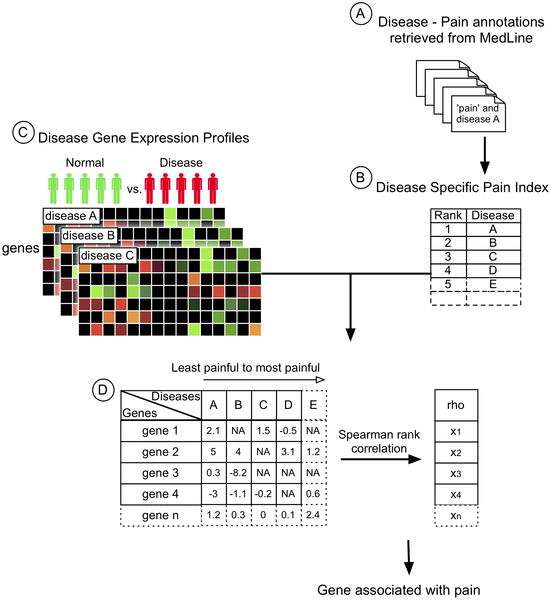
In this study, the genes were chosen based on their high correlation with the DSPI and plausible biology as assessed by the available literature and human expression profile across tissue using The Scripps Research Institute BioGPS database [8].
The selected genes were:
These genes were selected from the candidate list and were prospectively tested for variants that may be associated with differential pain sensitivity in an independent human cohort.
ABLIM3 was selected as the top candidate as it showed the highest correlation with the DSPI. ABLIM3 is a newly characterized protein-coding gene. ABLIM3 is expressed in various tissues, most prominently in muscle and neuronal tissue [9], [10].
Polymorphisms in ABLIM3 (rs4512126) and NCALD (rs12548828, rs7826700, and rs1075791) showed significant association with the cold pressor pain threshold
“The strongest signal was with rs4512126 (5q32, ABLIM3, P = 1.3×10⁻¹⁰) for the sensitivity to cold pressor pain in males, but not in females – a sex-specific association.”
Significant associations were also observed with rs12548828, rs7826700 and rs1075791 on 8q22.2 within NCALD (P = 1.7×10⁻⁴, 1.8×10⁻⁴, and 2.2×10⁻⁴ respectively).
Authors said that, “This data-derived list of pain gene candidates enables additional focused and efficient biological studies validating additional candidates.”
Authors have demonstrated the utility of a novel paradigm that integrates publicly available disease-specific gene expression data with clinical data curated from MEDLINE to facilitate the discovery of pain-relevant genes. This approach was validated through a targeted genetic association study in an independent human cohort, where variants of selected pain gene candidates were evaluated for associations with experimental pain sensitivity measures in humans.
Authors hope that “the outlined approach can complement existing research efforts by assisting the formulation of data-driven hypotheses, and may serve as a template to discover genetic components of other clinically important phenotypes.“
Further Reading:
Pain Gene Database (PGD)[11]
MeSH: Medical Subject Heading is a comprehensive vocabulary thesaurus organized in a hierarchical structure allowing the indexing of publications with various levels of specificity.
The 20 diseases with the highest disease-pain ratio from the DSPI are listed out of a total of 2962 diseases are
 .
.
Curated by: Dr. V. S. Karra, Ph.D.
Posted in Biological Networks, Gene Regulation and Evolution, CANCER BIOLOGY & Innovations in Cancer Therapy, Genome Biology, Personalized and Precision Medicine & Genomic Research, tagged breakpoints, genome, HBV, HCC, HCV, hepatitis B, hepatitis C, Hepatocellular carcinoma, integration, liver cancer, mutations, sequencing on June 4, 2012| 6 Comments »
Author: Ritu Saxena, PhD
UPDATED on 7/21/2022
HBV drug shifts to next-gen approaches
“While we respect Assembly’s decision to discontinue clinical development of VBR, we believe that it is premature to make any conclusions about any results in this triple combination clinical trial,” Arbutus CEO William Collier said in a separate release, referring to the study that involved his company’s drug. “We intend, in collaboration with Assembly, to continue the clinical trial in order to fully and accurately assess the results.”
So as Assembly shuts the door to future trials and wraps
Study 203 — a Phase II study testing VBR plus NrtI (nucleoside analogue reverse transcriptase inhibitor) plus interferon —
Study 204 will go on, with primary endpoints being safety and tolerability.
Patients are given either
- VBR, NrtI and Arbutus’ AB-729,
- VBR plus NrtI, or
- NrtI plus AB-729.
The RNAi drug is designed to reduce all HBV viral proteins and antigens.
For Assembly Bio, the focus now shifts to two next-generation core inhibitors that it hopes could prove potent treatments for HBV. At the same time, it’s also working on earlier-stage research programs, including
- a hepatitis D virus entry inhibitor,
- a liver-focused interferon-α receptor agonist and
- new antivirals to be introduced later.
With CMO Luisa Stamm and CFO Michael Samar set to leave in the next few weeks, McHutchison — a former Gilead CSO — will now lead a remaining team of 70.
Meanwhile, Michele Anderson, SVP of development operations, is being promoted to chief development officer; and COO Jason Okazaki will add president to his title and finance to his slate of duties. The company now expects to have a cash runway into the first half of 2024.
SOURCE
Updated on July 5, 2013
(research article published in New England Journal of Medicine regarding the role of SALL4 gene in aggressive hepatocellular carcinoma)
Hepatocellular carcinoma (HCC) is one of the most common malignant tumors in the world. The incidence of HCC varies considerably with the geographic area because of differences in the major causative factors. Chronic hepatitis B and C, mostly in the cirrhotic stage, are responsible for the great majority of cases of HCC worldwide.
Hepatitis B and C viruses (HBV/HCV) can be implicated in the development of HCC in an indirect way, through induction of chronic inflammation, or directly by means of viral proteins or, in the case of HBV, by creation of mutations by integration into the genome of the hepatocyte.http://www.wjso.com/content/3/1/27
With the advent of genome sequencing methodologies, it was about time that the scientists look clues within the genome of HCC tumor cells that would provide clues for disease progression via virus integration into the liver cells.
Two studies published in the recent issue of Nature Genetics (May 2012) explored the genome of HCC cells for genetic mutations that might be related to HBV and HCV highlighting the types of genetic mutations that underlie the liver cancer hepatocellular carcinoma, including forms of the disease related to hepatitis B and hepatitis C virus infection.
In the first study, Sung et al performed an extensive whole genome analysis using a large sample size of 88 Chinese individuals with HCC http://www.ncbi.nlm.nih.gov/pubmed?term=Genome-wide%20survey%20of%20recurrent%20HBV This was in the fact first unbiased, genome-wide, HBV-integration map in HCC leading to new recurrent integration sites and molecular mechanisms.
Although integration of viral DNA sequence within HCC genome has been reported in several studies, however, fewer cases of recurring mutations within genes during these integrations have been studied. The reason might be limited sample size in these studies. Tumor and non-tumor adjacent liver cells were surveyed in 81 HBV positive and 7 HBV negative HCC tumor samples. After the survey of whole genome of the 88 patients, several viral integration sites were discovered referred to as breakpoints. The breakpoints were found to be much more common in tumor than normal samples. Although the observed breakpoints were randomly distributed across the genome, a handful or frequently occurring sites referred to as ‘hotspots’ were discovered. The frequency of integration revealed that there were five genes with recurring integrations in HBV tumors- TERT, MLL4, CCNE5, SENP1, and ROCK1.
Apart from genome analysis, expression levels of the 5 genes implicated in the study were determined. In other words, the levels of proteins formed from the genes were compared and it was observed that samples with HBV integration had significantly higher level of protein expression of TERT, MLL4 and CCNE5 than the samples harboring no HBV integration sites. Although not statistically significant, overexpression of SENP1 and ROCK1 genes was also observed in HBV integration samples. This lead to an important conclusion from the study that the five genes that harbor recurrent HBV integrations might be implicated in HCC tumor development and that overexpression of these proteins is a probable molecular mechanism of tumorigenesis.
Interestingly, analysis of the HBV analysis revealed that almost 40% of the HBV genomes were cleaved at approximately 1,800 bp and then integrated into the human genome. The cleaved HBV sites had the necessary machinery (enhancers and ORF replication sites) for protein formation.
The study also confirmed the popular belief that HBV integrations might worsen the prognosis of HCC patients revealing a significant correlation between the number of HBV integrations and the survival of patients.An interesting observation from the study that had not been reported before was that HBV integration was associated with the occurrence of HCC at a younger age.
The study presented convincing evidence that chromosomal instability of HCC genome may originate from HBV integration.
A parallel study published in the same issue of Nature Genetics explored the genome of HCC tumors to gain insights into HBV and HCV-related genomic alterations. The research team sequenced whole-exon (protein forming genomic regions) of 27 liver tumors from 25 patients and compared with the corresponding genome sequences from matched white blood cell samples.
The study involved both HBV-related and HCV-related tumors along with two samples of tumors from individuals without HBV or HCV infection. The genome wide sequencing of HCC tumor cells revealed several mutations that included deletions and mutations of genes with predicted functional consequences. “Considering the high complexity and heterogeneity of [hepatocellular carcinomas] of both etiological and genetic aspects,” they concluded, “further molecular classification is required for appropriate diagnosis and therapy in personalized medicine.” Additionally, recurrent alterations were observed in the four genes – ARID1A, RPS6KA3, NFE2L2 and IRF2 that had not been previously described in HCC. The comprehensive mutation pattern observed in the study might be indicative of specific mutagenesis mechanisms occurring in tumor cells.
Authors said “Although no common somatic mutations were identified in the multicentric tumor pairs,” further stating “their whole-genome substitution patterns were similar, suggesting that these tumors developed from independent mutations, although their shared etiological backgrounds may have strongly influenced their somatic mutation patterns.”The researchers suggested a major role of chromatin remodeling complexes and involvement of both interferon and oxidative stress pathways in hepatocellular malignant proliferation and transformation based on the genes showing recurrent mutations in the observed genes.
http://www.ncbi.nlm.nih.gov/pubmed?term=Genome-wide%20survey%20of%20recurrent%20HBV
Thus, in both the studies new genes recurrently altered in HCC were identified along with uncovering some important clues relating to the molecular mechanism of virus-associated HCC.
Role of SALL4 in HCC
The oncofetal gene SALL4 is a marker of a subtype of HCC with progenitor-like features and is associated with a poor prognosis. Investigators at Cancer Science Institute of Singapore, National University of Singapore studied the role of oncofetal gene, SALL4 in HCC and the results were published were in a recent issue of New England Journal of Medicine ((Yong KJ, et al, Oncofetal Gene SALL4 in Aggressive Hepatocellular Carcinoma. http://www.ncbi.nlm.nih.gov/pubmed/23758232). Yong and colleagues (2013) screened specimens from patients with primary HCC for the expression of SALL4 and carried out a clinicopathological analysis. Loss-of-function studies were then performed to evaluate the role of SALL4 in hepatocarcinogenesis and its potential as a molecular target for therapy. Furthermore, in vitro functional and in vivo xenograft assays were performed to assess the therapeutic effects of a peptide that targets SALL4.
According to the results, SALL4 is an oncofetal protein that is expressed in the human fetal liver and silenced in the adult liver, but it is reexpressed in a subgroup of patients who have HCC and an unfavorable prognosis. Gene-expression analysis showed the enrichment of progenitor-like gene signatures with overexpression of proliferative and metastatic genes in SALL4-positive HCC. Loss-of-function studies confirmed the critical role of SALL4 in cell survival and tumorigenicity. The peptide targeting SALL4 blocked SALL4-corepressor interactions that released suppression of PTEN and inhibited tumor formation in xenograft assays in vivo. In conclusion, the results from the study indicate that SALL4 is a marker for a progenitor subclass of HCC with an aggressive phenotype. The absence of SALL4 expression in the healthy adult liver enhances the potential of SALL4 as a treatment target in HCC.
Posted in CANCER BIOLOGY & Innovations in Cancer Therapy, Cell Biology, Signaling & Cell Circuits, Chemical Biology and its relations to Metabolic Disease, Chemical Genetics, Disease Biology, Small Molecules in Development of Therapeutic Drugs, Genome Biology, Personalized and Precision Medicine & Genomic Research, Pharmacotherapy of Cardiovascular Disease, tagged Alzheimer, Alzheimers Disease, Amyloid precursor protein, Cholesterol, Conditions and Diseases, Electron paramagnetic resonance, Gamma secretase, health on June 1, 2012| 2 Comments »

Enzymes act on the APP (Amyloid precursor protein) and cut it into fragments of protein, one of which is called beta-amyloid and its crucial in the formation of senile plaques in Alzheimer (Photo credit: Wikipedia)
C99 is the transmembrane carboxyl-terminal domain of the amyloid precursor protein that is cleaved by γ-secretase to release the amyloid-β polypeptides, which are associated with Alzheimer’s disease. Nuclear magnetic resonance and electron paramagnetic resonance spectroscopy show that the extracellular amino terminus of C99 includes a surface-embedded “N-helix” followed by a short “N-loop” connecting to the transmembrane domain (TMD). The TMD is a flexibly curved α helix, making it well suited for processive cleavage by γ-secretase. Titration of C99 reveals a binding site for cholesterol, providing mechanistic insight into how cholesterol promotes amyloidogenesis. Membrane-buried GXXXG motifs (G, Gly; X, any amino acid), which have an established role in oligomerization, were also shown to play a key role in cholesterol binding. The structure and cholesterol binding properties of C99 may aid in the design of Alzheimer’s therapeutics.
Reported by: Dr. V. S. Karra, Ph.D
Posted in CANCER BIOLOGY & Innovations in Cancer Therapy, Cell Biology, Signaling & Cell Circuits, Disease Biology, Small Molecules in Development of Therapeutic Drugs, tagged BP, Cancer - General, Chemotherapy, Lung cancer, protein, STAT3, University of Hawaii on May 30, 2012| 1 Comment »
Reporter: Prabodh Kandala, PhD
A team of University of Hawaii Cancer Center scientists led by James Turkson, Ph.D. have created a new type of anti-cancer drug named BP-1-102. The drug, which can be orally administered, targets a key protein that triggers the development of many types of cancer including lung, breast and skin cancers.
The development of BP-1-102 was guided by the research teams computer based molecular analysis of the cancer causing Stat 3 protein that causes cancer by promoting abnormal cell growth in otherwise healthy cells.
“The molecular structure of the hyperactive Stat3 protein basically resembles two cars that are joined together side-by-side,” said Professor Turkson. “We then utilized a computer program that creates molecular models of potential drugs engaging in binding to the Stat3 protein to craft the BP-1-102 drug which literally pulls apart the Stat3 protein rendering it ineffective in causing cancer.”
A unique feature of BP-1-102 is that it remains highly effective against cancer even when administered in oral form. Presently, most anti-cancer drugs require intravenous (IV) administration in a clinic or hospital setting which increases the financial, physical and emotional burdens on cancer patients. In its experimental form, BP-1-102 has shown promise in treating breast and lung cancers.
Currently, breast and lung cancers are two of the most commonly diagnosed cancers accounting for nearly half a million cases per year in the United States with over 200,000 deaths attributed to these diseases. In Hawaii, there is an average of 1500 cases diagnosed and over 600 deaths attributed to breast and lung cancers every year.
Professor Turkson is a recent and welcomed addition to the UH Cancer Center faculty. His innovative and ground breaking research focuses on developing novel anticancer drugs based on targeting signal transduction and apoptosis pathways.
Ref:
http://www.sciencedaily.com/releases/2012/05/120522115252.htm
 2012pharmaceutical
 sjwilliamspa