Curator: Aviva Lev-Ari, PhD, RN
Sunitinib brings Adult acute lymphoblastic leukemia (ALL) to Remission – RNA Sequencing – FLT3 Receptor Blockade
Posted in Bio Instrumentation in Experimental Life Sciences Research, Bone Disease and Musculoskeletal Disease, CANCER BIOLOGY & Innovations in Cancer Therapy, Chemical Genetics, Computational Biology/Systems and Bioinformatics, Disease Biology, Small Molecules in Development of Therapeutic Drugs, Genome Biology, Personalized and Precision Medicine & Genomic Research, tagged Chromosome 13, DNA Sequencing, FLT3 receptor blockage, Kidney Cancer Drug Sutent, Pfizer, Remission in ALL, RNA sequencing, Sutent on July 10, 2012| 1 Comment »
Curator: Aviva Lev-Ari, PhD, RN
Sunitinib brings Adult acute lymphoblastic leukemia (ALL) to Remission – RNA Sequencing – FLT3 Receptor Blockade
Posted in Bio Instrumentation in Experimental Life Sciences Research, CANCER BIOLOGY & Innovations in Cancer Therapy, Genome Biology, Personalized and Precision Medicine & Genomic Research, tagged Adult ALL, Cancer - General, DNA Sequencing, FLT3 gene on CHromosome 13, FLT3 receptor blockage, Kidney Cancer Drug Sutent, RNA sequencing on July 10, 2012| 2 Comments »
Curator: Aviva Lev-Ari, PhD, RN
Sunitinib brings Adult acute lymphoblastic leukemia (ALL) to Remission – RNA Sequencing – FLT3 Receptor Blockade

Word Cloud By Danielle Smolyar
Posted in CANCER BIOLOGY & Innovations in Cancer Therapy, Genome Biology, tagged DNA Sequencing, FLT3 gene on CHromosome 13, FLT3 receptor blockage, Pfizer, RNA sequencing, Suntinib, Sutent on July 10, 2012| 1 Comment »
Curator: Aviva Lev-Ari, PhD, RN
Sunitinib brings Adult acute lymphoblastic leukemia (ALL) to Remission – RNA Sequencing – FLT3 Receptor Blockade
Posted in Bio Instrumentation in Experimental Life Sciences Research, Biological Networks, Gene Regulation and Evolution, Bone Disease and Musculoskeletal Disease, CANCER BIOLOGY & Innovations in Cancer Therapy, Cell Biology, Signaling & Cell Circuits, Chemical Biology and its relations to Metabolic Disease, Chemical Genetics, Computational Biology/Systems and Bioinformatics, Disease Biology, Small Molecules in Development of Therapeutic Drugs, Genome Biology, Health Economics and Outcomes Research, Interviews with Scientific Leaders, Medical and Population Genetics, Nephrology, Nephrology & Regenerative medicine, Personalized and Precision Medicine & Genomic Research, Pharmaceutical Analytics, Pharmaceutical Industry Competitive Intelligence, Pharmaceutical R&D Investment, Population Health Management, Genetics & Pharmaceutical, tagged Acute lymphoblastic leukemia, Cancer - General, Chromosome 13, compassionate use program, DNA, DNA Sequencing, FLT3 gene on CHromosome 13, FLT3 receptor blockage, kidney cancer, New York Times, progression-free survival, RNA sequencing, sequencing, Sunitinib, Washington University in St. Louis on July 9, 2012| 12 Comments »
Curator: Aviva Lev-Ari, PhD, RN

Article ID #1: Sunitinib brings Adult Acute Lymphoblastic Leukemia (ALL) to Remission – RNA Sequencing – FLT3 Receptor Blockade. Published on 7/9/2012
WordCloud Image Produced by Adam Tubman

Word Cloud by Daniel Menzin
Updated 11/13/2013
N Engl J Med 2013; 369:1968-1970November 14, 2013DOI: 10.1056/NEJMc1311795
Cancer treatments are expensive. The estimation of the total cost can be challenging because of several factors such as efficacy, toxicity, and the costs and duration of supportive care and end-of-life care. Motzer et al. (Aug. 22 issue)1 report similar efficacy but a favorable safety and quality-of-life profile and less medical resource utilization with pazopanib as compared with sunitinib in first-line therapy for metastatic renal cancer. Since oncology is becoming an increasingly value-based specialty, we wanted to highlight another important aspect of this trial. Pazopanib appears to be favorable not only in terms of safety and quality of life, but also in terms of overall cost. A 30-day supply of pazopanib (at a dose of 800 mg daily) ranges from $3,500 to $8,556, whereas a 30-day supply of sunitinib (at a dose of 50 mg daily) ranges from $4,500 to $13,559.2 The total cost of pazopanib during the median progression-free survival of 8.4 months is $29,400 to $71,870, and the total cost of sunitinib during the median progression-free survival of 9.5 months is $42,750 to $127,454. Less toxicity and less medical resource utilization with pazopanib will most likely further lower the overall costs of treatment with this agent. Comparative-effectiveness trials hold great promise for maximizing patient safety, improving treatment outcomes, and reducing costs.
Ryan Ramaekers, M.D.
Mark Tharnish, Pharm.D.
M. Sitki Copur, M.D.
Saint Francis Cancer Treatment Center, Grand Island, NE
mcopur@sfmc-gi.org
No potential conflict of interest relevant to this letter was reported.
Motzer et al. report a combined analysis of two open-label noninferiority trials (927 patients in the original trial and 183 patients in a second trial), each of which compared pazopanib with sunitinib with respect to progression-free survival in renal-cell carcinoma. Quality-of-life outcomes were subjective.
Analysis of noninferiority trials is notoriously difficult.1,2 The authors’ analysis of the trials, which was open-label because of the different administration schedules of the drugs, presents problems in interpreting progression-free survival and quality of life. The studies define disease progression differently. The larger study defined progression-free survival according to independent review. The protocol for the smaller study states that progression-free survival “will be summarized . . . based on the investigator assessment.” Inference from subjective outcomes in unmasked trials (e.g., quality of life in both studies and progression-free survival in the smaller study and therefore in the combined analysis) is subject to well-known bias. Moreover, the article does not state how many of the 379 participants (34%) who discontinued the intervention before death or disease progression (see Fig. S2 in the Supplementary Appendix, available with the full text of the article at NEJM.org) were assessed for progression-free survival. A fair comparison must use rigorous methods to handle missing data.3 Since the article did not deal appropriately with missing data, its conclusions regarding noninferiority are uninterpretable.
Janet Wittes, Ph.D.
Statistics Collaborative, Washington, DC
janet@statcollab.com
Dr. Wittes reports that her company, Statistics Collaborative, has consulting agreements with both GlaxoSmithKline and Pfizer, the manufacturers of the drugs discussed in the article by Motzer et al. In addition, Statistics Collaborative has contracts with several other companies that produce drugs for patients with cancer. No other potential conflict of interest relevant to this letter was reported.
Motzer et al. state that “the results of the progression-free survival analysis in the per-protocol population were consistent with the results of the primary analysis.” However, the predefined margin of noninferiority (<1.25) was not met. The upper limit of the confidence interval (1.255) was clearly above the defined threshold.1 In a noninferiority trial, the use of the intention-to-treat population is generally nonconservative,2 the full analysis set and the per-protocol analysis set are considered to have equal importance, and the use of the intention-to-treat population should lead to similar conclusions for a robust interpretation.3 Thus, it is surprising that the authors did not come to or discuss the same conclusions as that of the French National Authority for Health4: “serious doubt exists about the noninferiority result of pazopanib compared to sunitinib” and “the clinical significance of the noninferiority threshold defined in the protocol was an efficacy loss of 2.2 months in the median progression-free survival. This is too large for patients.”
Jochen Casper, M.D.
Silke Schumann-Binarsch, M.D.
Claus-Henning Köhne, M.D.
Klinikum Oldenburg, Oldenburg, Germany
casper.jochen@klinikum-oldenburg.de
Dr. Casper reports receiving consulting fees from Bayer, Novartis, and Pfizer and speaking fees from Novartis and Pfizer. No other potential conflict of interest relevant to this letter was reported.
The authors reply: In reply to Ramaekers et al.: we agree that decisions regarding the provision of health care include economic evaluations to identify treatments that provide the best clinical benefit at an acceptable cost.
To clarify a point in the letter by Wittes: the primary end point of this phase 3 trial was progression-free survival evaluated by an independent review committee; these data were assessed for all 1110 patients from both trials. This is specified in the protocol. The consistency of the quality-of-life results with the observed differences in the safety profiles for the two drugs speaks to the absence of bias in the quality-of-life outcome. The number of patients in whom follow-up ended before progression was assessed by the independent review committee was balanced between the two groups: 156 patients in the pazopanib group (28%) and 168 patients in the sunitinib group (30%). To Wittes’s final point regarding rigorous methods to handle missing data: the algorithm for assigning disease-progression and censoring dates followed the Guidance for Industry of the Food and Drug Administration1 and is included in the protocol of our article.
In reply to Casper et al.: there is no consensus regarding whether the per-protocol population is more conservative than the intention-to-treat population for the noninferiority analysis.2,3Reviews of noninferiority trials indicate that the per-protocol population is not generally more conservative than the intention-to-treat population, and there are scenarios in which the per-protocol analysis itself could introduce bias.3 A systematic review indicated that more than 70% of published findings from noninferiority trials in oncology show results in only the intention-to-treat population and not in the per-protocol population.4 Our phase 3 trial had a single primary analysis in the intention-to-treat population, with the per-protocol population included as a key sensitivity analysis, as supported by Fleming et al.5 No formal hypothesis testing was planned for the per-protocol population, nor was the trial powered for this. Consistency of the point estimates was desired to show an absence of bias due to the analysis population. This absence of bias was shown by the consistency of the hazard ratios (1.07 in the per-protocol analysis vs. 1.05 in the primary analysis). For an underpowered per-protocol comparison, it is inappropriate for Casper et al. to interpret that the upper bound that barely exceeded 1.25 in our per-protocol analysis is an indication of inconsistency of results across the two populations. The noninferiority margin was selected in consultation with oncology experts, and justification of the margin is in the protocol.
Robert J. Motzer, M.D.
Memorial Sloan-Kettering Cancer Center, New York, NY
motzerr@mskcc.org
Lauren McCann, Ph.D.
Keith Deen, M.S.
GlaxoSmithKline, Collegeville, PA
Since publication of their article, the authors report no further potential conflict of interest.
REFERENCES
Original Article Published on 7/9/2012
July 6, 2012 NY Times reports on a new approach based on DNA and RNA sequencing and a cancer drug for kidney cancer to bring REMISSION to Adult acute lymphoblastic leukemia (ALL).
On the lower left corner of this page – Watch the VIDEO
Dr. Lukas Wartman, is a Cancer Researcher specializing in Leukemia. He suspected he had Leukemia, the very disease he had devoted his medical career to studying.
After years of treatment and two relapses of ALL, he has exhaused all conventional approaches to his disease. At Washington University in St. Louis, his colleagues in the lab, decoded Dr. Wartman’s genetic information by genome sequencing techniques t determine the genetic cause of his ALL. The team found an overactive gne, FLT3 on Chromosome 13. The gene was treated with pfizer’s Suntinib drug for advanced kidney cancer.
Blood samples free of ALL found in days after using the drug. As results were very promising, Pfizer, the drug’s maker who has turned down Dr. Wartman’s request for the drug under their compassionate use program, though he explained that his entire salary was only enough to pay for 7 1/2 months of Sutent (Suntinib). While he does not know why Pfizer gave him the drug finally, he suspects it was the plea of his Nurse Practitioner, Stephanie Bauer, NP.
Identification of the genetic cause for his ALL, thus discovering a breakthough in understanding and treatment for ALL in other patients, involved the following steps:
SAMPLE
two tissue samples taken from Dr. Wartman’s Bone marrow and skin cells
SEQUENCE
Extracts of DNA and RNA from Dr. Wartman’s cells, two types of genetic material tested
COMPARISON
DNA sequesnces showed genetic mutations possibly related to his ALL, none seemed treatable. However, RNA sequencing revealed that a normal Gene, FLT3, on cheomozome 13, was overactive in his leukemia cells
TARGETING
The FLT3 gene helps create new white blod cells in the bone marrow. Dr. Wartman’s marrow bone cells were covered with an extreme number of FLT3 receptors which possibly caused the growth of his leukemia.
TREATMENT – Receptor Blockade
Drug known to block FLT3 receptor, Sunitinib, used for kedney cancer treatment, was given to Dr. Wartman. Two weeks after Dr, Wartman began taking the drug, tests revealed that his leukenia was in remission.
NEW MARKETS FOR FLT3 GENE BLOCKADE DRUG – KIDNEY CANCER AND LEUKEMIA
Pfizer has NOW a NEW market for Sunitinib — All CANCER PATIENTS DIAGNOSED WITH Adult acute lymphoblastic leukemia (ALL) where an overactive FLT3 gene on chomosome 13 is found.
NEW TREATMENT OPTIONS FOR Adult acute lymphoblastic leukemia (ALL)
Thus, any (ALL) diagnosed patient needs to be tested for Chromosome 13, ONLY rather then the entire genome sequencing of the Patient. If FLT3 is not found overactive, THEN proceed with entire genome sequencing of the Patient. IF another gene is overactive FIND DRUG FOR RECEPTOR BLOCKADE.
SIZING THE MARKET FOR FLT3 BLOCKADE DRUGS: KIDNEY CANCER vs LEUKEMIA
The Market for Adult ALL is much bigger than the market for kidney cancer. Thus, this discovery regarding the remission of Dr. Wartman’s remission following two relapses is so significant for Pfizer and for any patient with the diagnosis of Adult ALL.
I recommend the reader to click on the links and follow the reactions of the public to this article in The New York Times.
Read HUNDREDS of Comments by Cancer Patients and the readers of The New York Times Health Section
Posted in Biological Networks, Gene Regulation and Evolution, CANCER BIOLOGY & Innovations in Cancer Therapy, Cell Biology, Signaling & Cell Circuits, Disease Biology, Small Molecules in Development of Therapeutic Drugs, tagged Boston University School of Medicine, Doxorubicin, Inflammatory bowel disease, Massachusetts General Hospital, National University of Singapore, Spinal muscular atrophy on July 8, 2012| 2 Comments »
Reporter: Prabodh Kandala, PhD.
Zebrafish, popular as aquarium fish, now have an important place in research labs as a model organism for studying human diseases.
At the 2012 International Zebrafish Development Conference, held June 20-24 in Madison, Wisconsin, numerous presentations highlighted the utility of the zebrafish for examining the basic biological mechanisms underlying human disorders and identifying potential treatment approaches for an impressive array of organ and systemic diseases.
Inflammatory bowel disease (IBD), while rarely fatal, can have a substantial negative impact on an individual’s quality of life due to abdominal pain, diarrhea, vomiting, bleeding, and severe cramps. The causes of this chronic inflammatory disorder are largely unknown and existing treatments, usually anti-inflammatory drugs, are often not effective. In addition, IBD is often associated with increased risk of developing intestinal cancer.
Researchers from the University of Pittsburgh are using zebrafish to study the biological mechanisms that lead to intestinal inflammation, as often seen in IBD, providing additional understanding that may allow development of better therapies. Prakash Thakur, a research associate working with Nathan Bahary, M.D., Ph.D., described a mutant zebrafish strain that shows many pathological characteristics similar to IBD, including inflammation, abnormal villous architecture, disorganized epithelial cells, increased bacterial growth and high numbers of dying cells in the intestine. “Most of the hallmark features of the disease are seen in this mutant. We are utilizing this fish as a tool to unravel fundamental mechanisms of intestinal pathologies that may contribute to intestinal inflammatory disorders, ” Mr. Thakur said.
The fish have a genetic mutation that disrupts de novo synthesis of an important signaling molecule called phosphatidylinositol (PI). The lack of de novo PI synthesis, Mr. Thakur and his colleagues found, leads to chronic levels of cellular stress, particularly the endoplasmic reticum stress and, ultimately, inflammation. Drugs or other interventions targeting the cellular stress response pathway, rather than just inflammation, helped restore a healthy intestinal structure and increase cell survival in the fish intestine, suggesting this mechanism as a potential therapeutic target for patients with inflammatory disorders, including IBD.
Doxorubicin-Induced Heart Failure
Doxorubicin is a potent chemotherapy drug used to treat many types of cancer, including leukemia, lymphoma, carcinoma, soft tissue sarcoma, and bladder, breast, lung, stomach and ovarian cancers. Unfortunately, drug-induced cardiomyopathy is a common side effect and can lead to heart failure in cancer patients, not only during treatment, but months or years later.
“We hope to identify some drug which only blocks the side effect of doxorubicin but preserves the therapeutic effect,” said Yan Liu, Ph.D., a postdoctoral researcher working in Dr. Randall Peterson’s lab at the Massachusetts General Hospital.
Dr. Liu developed a zebrafish model of doxorubicin-induced cardiomyopathy. The fish experience heart failure within two days of treatment with symptoms similar to those seen in humans, including fewer heart muscle cells, ventricular collapse, and ineffective heartbeats.
The researchers used the model to screen through thousands of potential drug compounds and identified two — visnagin and diphenylurea — that both improved cardiac function and reduced doxorubicin-induced cell death in the heart. Importantly, both compounds specifically protected heart tissue, but not tumor cells, from the toxic effects of doxorubicin. Both seem to act through the suppression of a particular signaling pathway, the c-Jun N-terminal kinase pathway, in the heart cells but not tumor cells.
Dr. Liu also reported promising preliminary results with mice showing reduced cell death and improved cardiac function, indicating that these compounds may also be active in mammals and giving hope for therapies that specifically treat doxorubicin’s side effects without negating its anti-tumor activity.
Spinal muscular atrophy (SMA) is a group of progressive neurodegenerative diseases that affect the nerves in the spinal cord that control muscles, leading to weakness, movement difficulties, poor posture, and trouble breathing and eating.
SMA is linked to mutations in a specific motor neuron survival gene, SMN1. Though mouse studies have reported immature and ineffective synaptic connections between motor neurons and muscles, little is known about the molecular mechanisms leading to those problems or how they might be fixed.
Graduate student Kelvin See, working with Associate Professor Christoph Winkler, Ph.D., at the National University of Singapore used zebrafish with activity-sensitive fluorescence to provide a visual readout of motor neuron activation. They confirmed that low SMN1 levels are associated with low neuronal influx of calcium ions, which play a critical role in triggering neurotransmitter release and thus stimulating the muscles. With their zebrafish model, Mr. See and Dr. Winkler also identified another gene with a similar effect, neurexin, which is important in synaptic structure but had never been implicated in SMA.
In a surprise discovery, the researchers found they could use the same sensor to see activation of a neighboring cell type called Schwann cells. “This gives us the unique opportunity to look at the role of SMN1 not just in motor neurons but also in the surrounding tissue,” said Mr. See.
They saw reduced excitability in Schwann cells also, suggesting that a full understanding of SMA will require a broader view of the affected cell populations. Their results provide several new insights into the fundamental processes disrupted in SMA.
Acute T-cell Lymphoblastic Leukemia and Lymphoma (T-ALL/T-LBL)
Human acute T-cell lymphoblastic leukemias (ALL) and lymphomas (LBL) have high relapse rates in pediatric patients and high mortality rates in adults. Hui Feng, M.D., Ph.D., currently at the Pharmacology Department and Center for Cancer Research at Boston University School of Medicine, is using a zebrafish model of leukemia to search for promising targets for new molecular treatments for these diseases.
To date, studies have identified several biological pathways involved in ALL and LBL, all with a known oncogene in common called c-Myc. However, Myc is so common, involved in regulating more than 15 percent of all genes, that it is very hard to study.
“Because this is a huge list of downstream targets, it is very challenging to predict which genes in the pathway to target to treat Myc-related cancers,” said Dr. Feng.
In work performed in collaboration with Thomas Look, M.D., at the Dana-Farber Cancer Institute, Dr. Feng is combining the power of zebrafish genetics with human clinical studies to hone in on potential genes of interest.
Using a fish strain that reliably develops T-cell lymphoma by two months of age, they identified a novel gene called DLST that is involved in metabolism and energy production in cells. Evidence from human cancer cell lines and patients indicate that abnormally high levels of the protein may be involved in the human disease as well.
Reducing DLST activity in the fish significantly delayed tumor progression and growth, suggesting it is a promising target for developing new therapies for ALL and LBL.
Ref:
http://www.sciencedaily.com/releases/2012/07/120706184348.htm
Posted in Biological Networks, Gene Regulation and Evolution, CANCER BIOLOGY & Innovations in Cancer Therapy, Cell Biology, Signaling & Cell Circuits, tagged Brigham and Women's Hospital, Cancer - General, Common gamma chain, Melanoma, national cancer institute on July 8, 2012| 2 Comments »
Reporter: Prabodh Kandala, PhD.
Researchers from Brigham and Women’s Hospital (BWH) have made a groundbreaking discovery that will shape the future of melanoma therapy. The team, led by Thomas S. Kupper, MD, chair of the BWH Department of Dermatology, and Rahul Purwar, PhD, found that high expression of a cell-signaling molecule, known as interleukin-9, in immune cells inhibits melanoma growth.
After observing mice without genes responsible for development of an immune cell called T helper cell 17 (TH17), researchers found that these mice had significant resistance to melanoma tumor growth, suggesting that blockade of the TH17 cell pathway favored tumor inhibition. The researchers also noticed that the mice expressed high amounts of interleukin-9.
“These were unexpected results, which led us to examine a possible contribution of interleukin-9 to cancer growth suppression.” said Purwar.
The researchers next treated melanoma-bearing mice with T helper cell 9 (TH9), an immune cell that produces interleukin-9. They saw that these mice also had a profound resistance to melanoma growth. This is the first reported finding showing an anti-tumor effect of TH9 cells.
Moreover, the researchers were able to detect TH9 cells in both normal human blood and skin, specifically in skin-resident memory T cells and memory T cells in peripheral blood mononuclear cells. In contrast, TH9 cells were either absent or present at very low levels in human melanoma. This new finding paves the way for future studies that will assess the role of interleukin-9 and TH9 cells in human cancer therapy.
“Immunotherapy of cancer is coming of age, and there have been exciting recent results in patients with melanoma treated with drugs that stimulate the immune system,” said Kupper. “We hope that our results will also translate to the treatment of melanoma patients, but much work still needs to be done.”
According to the researchers, other cell-signaling molecules have been used in treating melanoma; however, this study is the first to investigate the role of interleukin-9 in melanoma tumor immunity.
Melanoma is the most dangerous form of skin cancer. The National Cancer Institute estimates that in 2012, there will be more than 76,000 new cases of melanoma in the United States and 9,180 deaths. Melanoma is curable if recognized and treated early.
Abstract:
Interleukin-9 (IL-9) is a T cell cytokine that acts through a γC-family receptor on target cells and is associated with inflammation and allergy. We determined that T cells from mice deficient in the T helper type 17 (TH17) pathway genes encoding retinoid-related orphan receptor γ (ROR-γ) and IL-23 receptor (IL-23R) produced abundant IL-9, and we found substantial growth inhibition of B16F10 melanoma in these mice. IL-9–blocking antibodies reversed this tumor growth inhibition and enhanced tumor growth in wild-type (WT) mice. Il9r−/− mice showed accelerated tumor growth, and administration of recombinant IL-9 (rIL-9) to tumor-bearing WT and Rag1−/− mice inhibited melanoma as well as lung carcinoma growth. Adoptive transfer of tumor-antigen–specific TH9 cells into both WT and Rag1−/− mice suppressed melanoma growth; this effect was abrogated by treatment with neutralizing antibodies to IL-9. Exogenous rIL-9 inhibited tumor growth in Rag1−/− mice but not in mast-cell–deficient mice, suggesting that the targets of IL-9 in this setting include mast cells but not T or B cells. In addition, we found higher numbers of TH9 cells in normal human skin and blood compared to metastatic lesions of subjects with progressive stage IV melanoma. These results suggest a role for IL-9 in tumor immunity and offer insight into potential therapeutic strategies.
Ref:
http://www.sciencedaily.com/releases/2012/07/120708162314.htm.
http://www.nature.com/nm/journal/vaop/ncurrent/full/nm.2856.html
Posted in Biological Networks, Gene Regulation and Evolution, CANCER BIOLOGY & Innovations in Cancer Therapy, Cell Biology, Signaling & Cell Circuits, tagged Baylor College of Medicine, Methodist Hospital, Nature Immunology, Progenitor cell, Stem cell on July 8, 2012| 2 Comments »
Reporter: Prabodh Kandala, PhD.
A transcription factor called Lyl-1 is necessary for production of the earliest cells that can become T-cells, critical cells born in the thymus that coordinate the immune response to cancer or infections, said a consortium of researchers led by those from Baylor College of Medicine in a report in the journal Nature Immunology.
These earliest progenitors (called early T lineage progenitor cells) are the first cells that can be identified as being on the road to becoming T-cells, said Dr. Margaret Goodell, director of the Stem Cells and Regenerative Medicine Center of Baylor College of Medicine. Without Lyl-1, only a few of these early T lineage progenitor cells get made.
“This finding gives us insight into the biology of these progenitor cells,” said Goodell, a professor of pediatrics at BCM and a member of the Center for Cell and Gene Therapy at BCM, Texas Children¹s Hospital and The Methodist Hospital.
Dr. Fabian Zohren, a post-doctoral student in Goodell¹s laboratory, found that mice lacking the gene for this factor had a T-cell deficiency and in particular, too few of these early progenitor cells.
“It showed that those early T lineage progenitor cells are really dependent on Lyl-1 for their generation,” said Goodell, who is also corresponding author of the report. “We think that Lyl-1 controls a program that allows survival and expansion of these critical progenitors.”
The finding may have particular import in understanding a form of leukemia known as T-cell acute lymphoblastic leukemia. The researchers found that the forms of the disease that have the worst prognosis are those in which the cancer cells resemble these early T lineage progenitor cells. These cells also have high levels of Lyl-1.
One possibility is the T-cell progenitors in patients with this type of T-cell leukemia continue to express Lyl-1, so continue to be programmed to expand. The excess Lyl-1 prevents the early T lineage progenitor cells from differentiating into active T-cells. Goodell said a recent grant from the Alex¹s Lemonade Stand Foundation will help test that hypothesis.
Abstract:
Thymopoiesis depends on the recruitment and expansion of bone marrow–derived progenitor populations; tight regulation of these processes is required for maintenance of the homeostasis of the T lineage. Lyl-1, a transcription factor that regulates hematopoietic progenitors, is expressed in thymocyte progenitors until T cell commitment. Here we demonstrate a requirement for Lyl-1 in lymphoid specification and the maintenance of early T lineage progenitors (ETPs). Lyl-1 deficiency resulted in profound defects in the generation of lymphoid-primed multipotent progenitors (LMPPs), common lymphoid progenitors (CLPs) and ETPs. Lyl-1-deficient ETPs and thymocyte progenitors at the CD4−CD8− double-negative 2 (DN2) stage showed more apoptosis, blocked differentiation and impaired population expansion. We identified Gfi1 as a critical transcriptional target of Lyl-1-mediated lymphopoiesis of T cells. Thus, Lyl-1 is a pivotal component of a transcriptional program that controls the lymphoid specification and maintenance of ETPs.
Ref:
http://www.sciencedaily.com/releases/2012/07/120708162320.htm
http://www.nature.com/ni/journal/vaop/ncurrent/full/ni.2365.html.
Posted in Alzheimer's Disease, Biological Networks, Gene Regulation and Evolution, CANCER BIOLOGY & Innovations in Cancer Therapy, Cardiovascular Pharmacogenomics, Cell Biology, Signaling & Cell Circuits, Chemical Biology and its relations to Metabolic Disease, Chemical Genetics, Genome Biology, Infectious Disease & New Antibiotic Targets, Innovations in Neurophysiology & Neuropsychology, Liver & Digestive Diseases Research, Origins of Cardiovascular Disease, Personalized and Precision Medicine & Genomic Research, Pharmacotherapy of Cardiovascular Disease, Proteomics, tagged ACTH, harmone, inflammation, kidney disease, Lipids, melanocortin, SLE, steroids on July 8, 2012| 7 Comments »
Curated by: Dr. Venkat S. Karra, Ph.D.
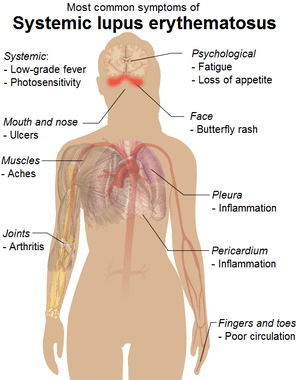 Systemic lupus erythematosus (SLE) is a systemic autoimmune disease resulting in chronic activation of self-reactive lymphocytes and pro-inflammatory myeloid cells. SLE may also be caused by certain drugs called drug-induced lupus erythematosus. People with SLE have abnormal deposits in the kidney cells. This leads to a condition called lupus nephritis. Patients with this condition may eventually develop kidney failure and need dialysis or a kidney transplant. The underlying cause of autoimmune diseases is not fully known and so far there is no cure for SLE.
SLE effects multiple end organs including the kidneys, brain, joints and skin and causes damage to many different parts of the body, including:
1. Blood clots in the legs (deep vein thrombosis) or lungs (pulmonary embolism)
2. Destruction of red blood cells (hemolytic anemia) or anemia of chronic disease
3. Fluid around the heart, pericarditis, endocarditis or inflammation of the heart (myocarditis)
4. Fluid around the lungs (pleural effusions) and damage to lung tissue
5. Pregnancy complications, including miscarriage
6. Stroke
7. Severely low blood platelets (thrombocytopenia)
8. Inflammation of the blood vessels
The molecular basis for the various manifestations of this autoimmune disease and the impact of the systemic autoimmune process on basic metabolic processes in the body are currently obscure.
However, recently a metabolomic study was executed first to understand the metabolic disturbances that underlie systemic lupus erythematosus (SLE). The study compared the sera of 20 SLE patients against that of healthy controls, using LC/MS and GC/MS platforms. Validation of key differences was performed using an independent cohort of 38 SLE patients and orthogonal assays.
The SLE metabolome exhibited profound lipid peroxidation, reflective of oxidative damage. Deficiencies were noted in the cellular anti-oxidant, glutathione, and all methyl group donors, including cysteine, methionine, and choline, as well as phosphocholines.
SLE sera showed evidence of profoundly dampened glycolysis, Krebs cycle, fatty acid β oxidation and amino acid metabolism, alluding to reduced energy biogenesis from all sources.
Whereas long-chain fatty acids, including the n3 and n6 essential fatty acids, were significantly reduced, medium chain fatty acids and serum free fatty acids were elevated.
The best discriminators of SLE included elevated lipid peroxidation products, MDA, gamma-glutamyl peptides, GGT, leukotriene B4 and 5-HETE.
Comprehensive profiling of the SLE metabolome reveals evidence of heightened oxidative stress, inflammation, reduced energy generation, altered lipid profiles and a pro-thrombotic state.
From this study it is evident that first supplementing the diet with essential fatty acids, vitamins and methyl group donors offers novel opportunities for disease modulation in this disabling systemic autoimmune ailment.
Second quickly identifying selected molecules/ therapies is another opportunity to resetting the SLE metabolome. One such opportunity is to use adrenocorticotropic hormone (ACTH) analogue.
With Prednisone, up to 90% of adults with minimal change disease (MCD) will respond to initial therapy and may require further immunosuppression. But with diseases such as idiopathic membranous nephropathy (iMN) and focal segmental glomerulosclerosis (FSGS), for which first-line therapies produce substantially lower response rates than for MCD and physicians are often compelled to use second-, third-, and even fourth-line therapies to achieve remission.
ACTH usage is not new, it was widely used way back in 1950s for the treatment of childhood nephrotic syndrome. Now there is a renewed interest in using ACTH as treatment for nephrotic syndrome as a second, third or even fourth line treatment, particularly in patients who are resistant to conventional therapies.
Subsequent clinical studies demonstrated that ACTH has prominent antiproteinuric and renoprotective effects that are not entirely explained by steroidogenic actions.
Adrenocorticotropic hormone (ACTH), also known as corticotropin, is a polypeptide tropic hormone produced and secreted by the anterior pituitry gland. It is an important component of the hypothalamic-pituitary-adrenal axis (HPA) and is often produced in response to biological stress. Its principal effects are increased production and release of corticosteriods. HPA is a complex set of direct influences and feedbackk interactions among the hypothalamus, the pituitary gland and the adrenal glands.
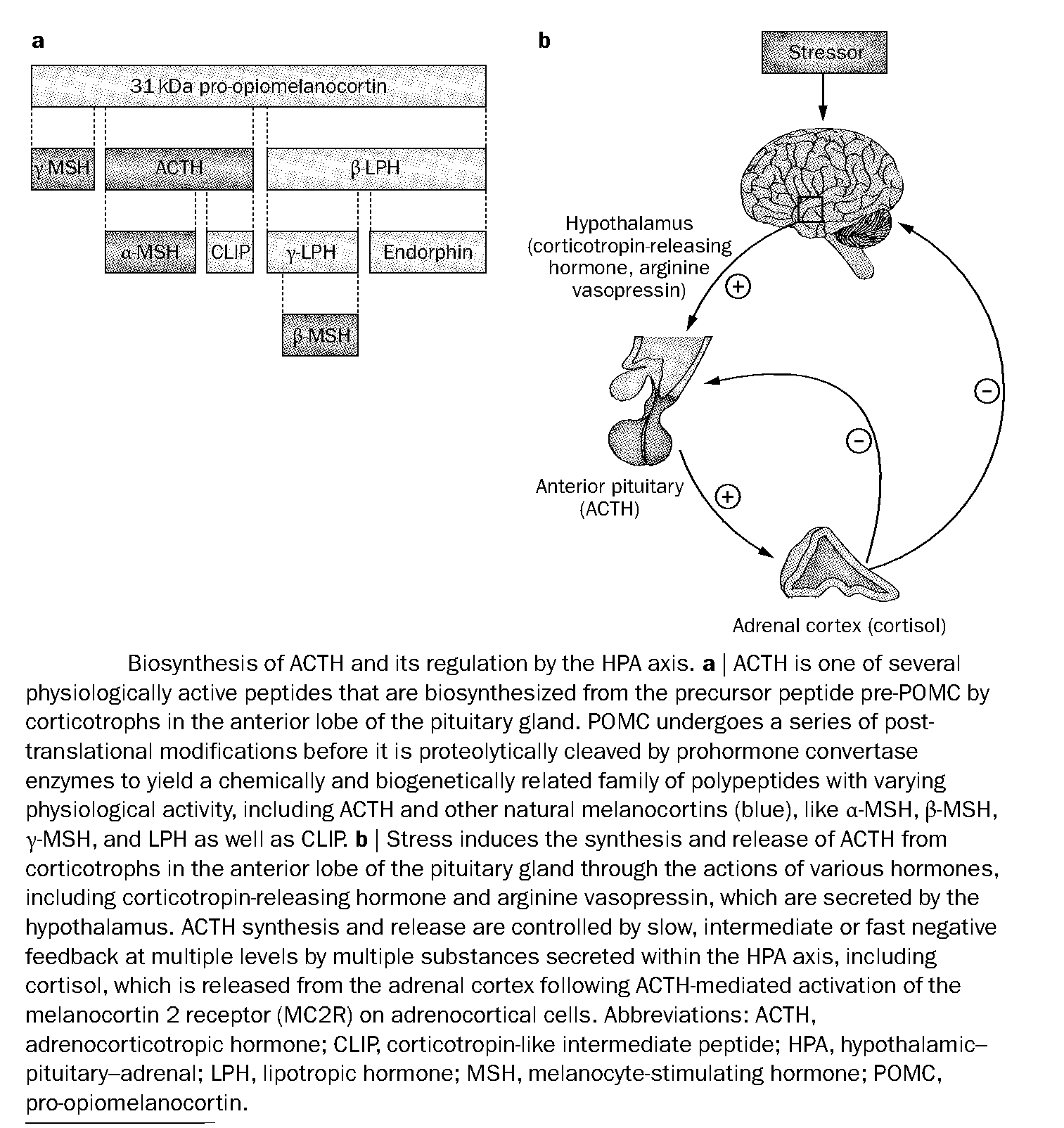
A deficiency of ACTH is a cause of secondary adrenal insufficiency and an excess of it is a cause of Cushing’s syndrome.
Steroid hormones ( steriod that acts as a hormone) can be grouped into five groups by the receptors to which they bind: glycocorticoids, mineralcarticoids, androgens, estrogens, and progestrogens.
Steroid hormones help control metabolism, inflammation, immune functions, salt and water balance, development of sexual characteristics, and the ability to withstand illness and injury.
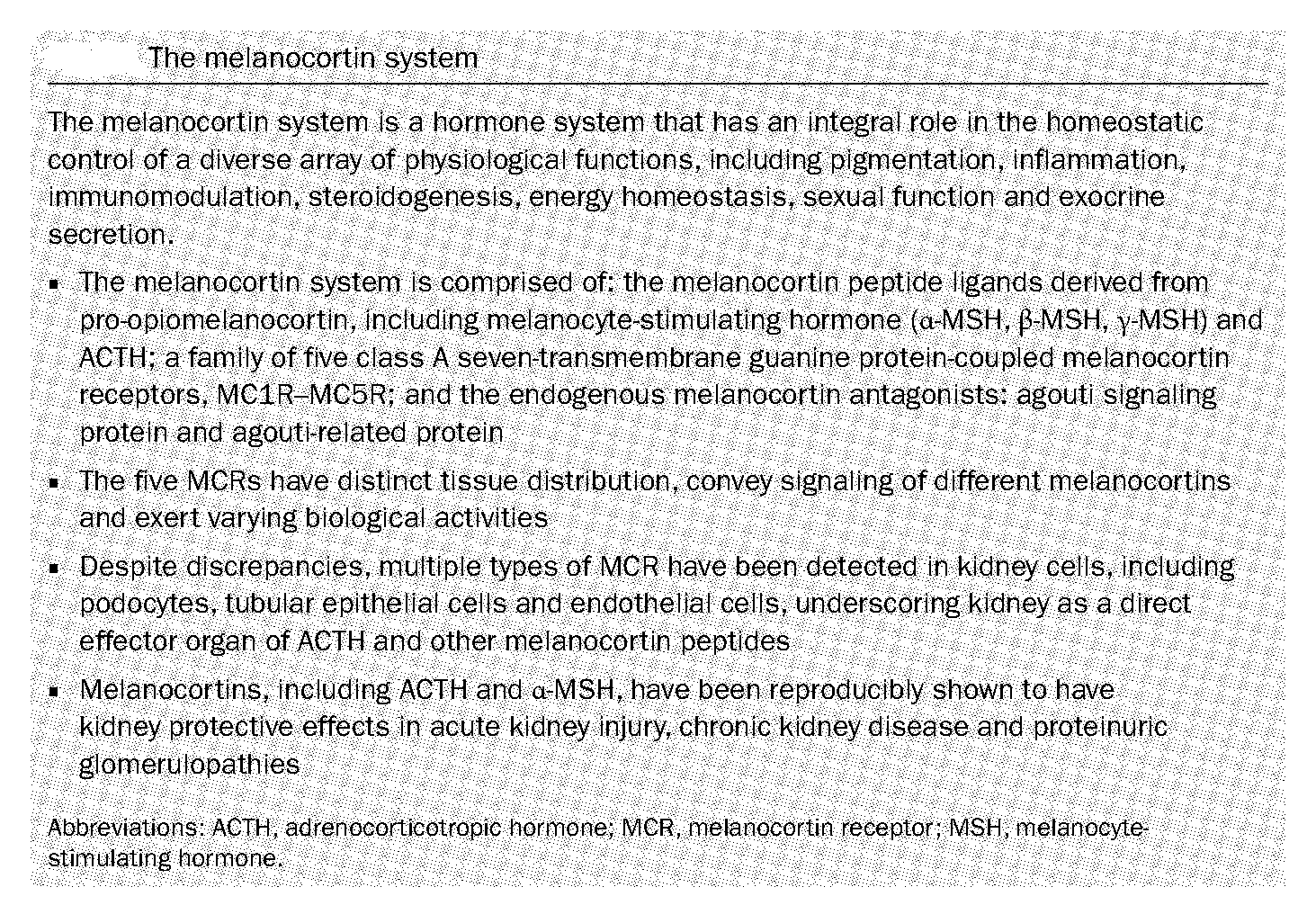
As a potent physiological agonist of melanocortin system that could directly target renal parenchymal cells, such as podocytes, ACTH might serve as a promising therapy for nephrotic glomerulopathies (a disease affecting the renal glomeruli – inflammatory or non-inflammatory).
Mineralocorticoids are hormones that were involved in the retention of sodium. The primary endogenous mineralocorticoid is aldosterone. Aldosterone acts on the kidneys to provide active reabsorption of sodium and an associated passive reabsorption of water, as well as the active secretion of potassium in the principal cells of the cortical collecting tubule and active secretion of protons via proton ATPases in the lumenal membrane of the intercalated cells of the collecting tubule. This in turn results in an increase of blood pressure and blood volume.
Aldosterone is produced in the cortex of the adrenal gland and its secretion is mediated principally by angiotensin II but also by adrenocorticotropic hormone (ACTH) and local potassium levels.
Aldosterone and cortisol (a glucosteroid) have similar affinity for the mineralocorticoid receptor; however, glucocorticoids circulate at roughly 100 times the level of mineralocorticoids. Glucocorticoid concentrations are a balance between production under the negative feedback control and diurnal rhythm of the HPA axis, and peripheral metabolism, for example by the enzyme 11beta-hydroxysteroid dehydrogenase type1 (11B-HSD1), which catalyses the reduction of inactive cortisone (11-DHC in mice) to cortisol (corticosterone in mice). Reductase activity is conferred upon 11B-HSD1 by hexose-6-phosphate dehydrogenase (H6PDH). 11B-HSD1 is implicated in the development of obesity.
Knock out of H6PDH resulted in a substantial increase in urinary DHC metabolites in males (65%) and females (61%). Knock out of 11B-HSD1 alone or in combination with H6PDH led to a significant increase (36% and 42% respectively) in urinary DHC metabolites in females only. Intermediate 11B-HSD1/H6PDH heterozygotes maintained a normal HPA axis.
Urinary steroid metabolite profile by GC/MS as a biomarker assay may be beneficial in assaying HPA axis status clinically in cases of congenital and acquired 11B-HSD1/H6PDH deficiency
ACTH acts through the stimulation of cell surface ACTH receptors, which are located primarily on adrenocortical cells of the adrenal cortex. This results in the synthesis and secretion of gluco- and mineralo-corticosteriods and androgenic steroids.
An enzyme exists in mineralocorticoid target tissues to prevent overstimulation by glucocorticoids. This enzyme, 11-beta hydroxysteriod dehydrogenase type II (protein: HSD11B2), catalyzes the deactivation of glucocorticoids to 11-dehydro metabolites.
ACTH acts at several key steps to influence the steroidogenic pathway in the adrenal cortex:
ACTH stimulates lipoprotein uptake into cortical cells. This increases the bio-availability of cholestrol in the cells of the adrenal cortex.
ACTH increases the transport of cholesterol into the mitochondria and activates its hydrolysis.
ACTH Stimulates cholesterol side-chain cleavage enzyme, which makes the rate-limiting step in steroidogenesis. This results in the production of pregnenolone.
Receptor-binding studies have revealed that mineralcorticoids show a strong affinity for ACTH thereby establishing the potential for this hormone to activate mineralocorticoid receptors (MCRs). There are five MCRs and all of them show affinity for ACTH.
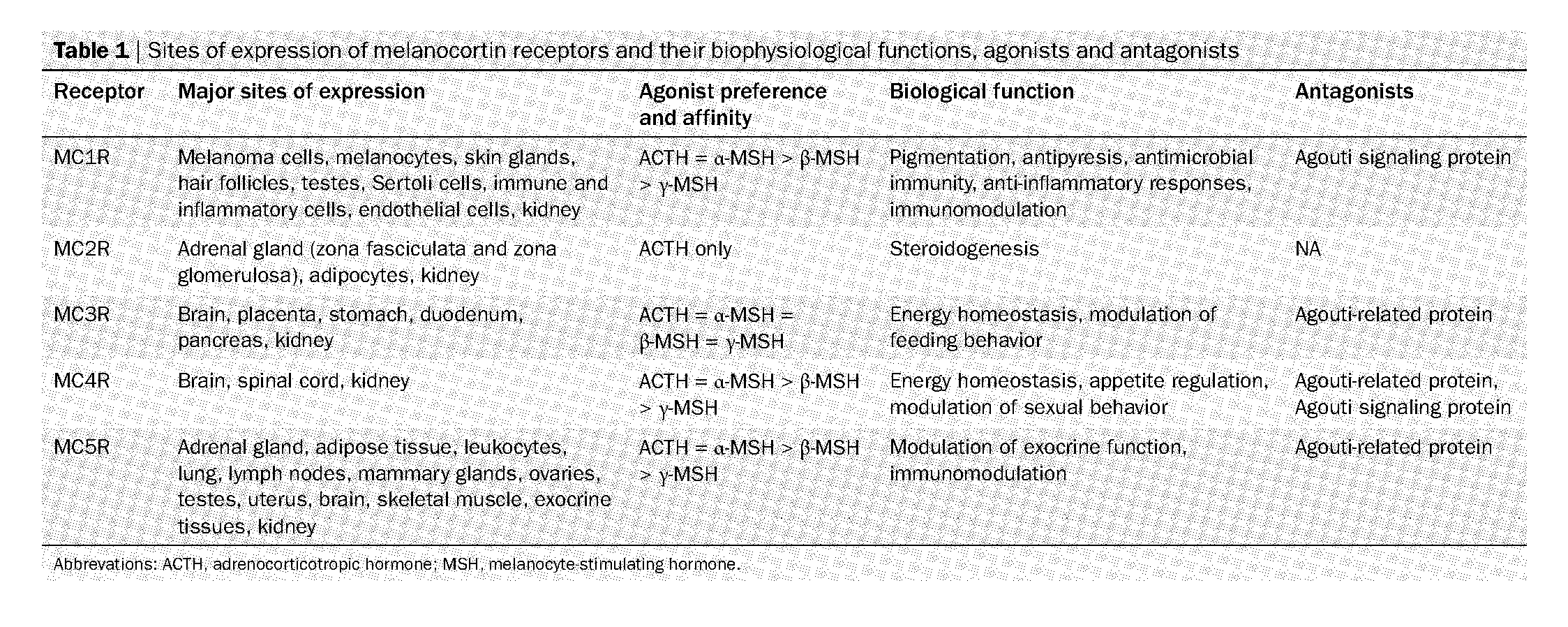
MCRs are expressed in kidney cells and that indicates that kidney is a target organ for the affects of ACTH.
Functions include:
1. Steroidogenic and adrenotropic activity
2. A multifaceted extra adrenal action that is mediated by the different MCRs present in the peripheral tissues and CNS
3. Has a lipostatic effect and stimulates lipolysis – (thus ACTH deficiency leads to obesity)
4. Its administration lowers levels of plasma lipids including Triglycerides, Total cholestrol, LDL-cholestrol and phospholipids
5. Its administration (complete ACTH molecule) rapidly increases the plasma insulin

Other activities include:
1. regulation of skin and hair pigmentation,
2. modulation of sebacious gland function and
3. anti-inflammatory and immunomodulatory functions
The total adrenocorticotropic hormone (ACTH) analogue is available as H.P. Acthar Gel (repository corticotropin injection) and is used for:
1. Monotherapy treatment of infantile spasms (IS) in infants and children under 2 years of age.
2. The treatment of exacerbations of multiple sclerosis in adults.
3. For inducing a diuresis or a remission of proteinuria in the nephrotic syndrome without uremia of the idiopathic type or that due to lupus erythematosus.
4. Also:: rheumatic disorders; collagen diseases; dermatologic diseases; allergic states; ophthalmic diseases and respiratory diseases.
FDA approved indications for the above prodcut are available at the following URL:
http://www.ncbi.nlm.nih.gov/pmc/articles/PMC2697107/table/t1-ptj34_5p250/
Disclaimer: This is for information purpose only, not a medical advise.
For a full list of warnings, precautions, and adverse events related to Acthar, please refer to the full Prescribing Information including the Medication Guide for the treatment of Infantile Spasms and discuss this information with your healthcare provider.
Literature:
The renaissance of corticotropin therapy in proteinuric nephropathies
Metabolic Disturbances Associated with Systemic Lupus Erythematosus
H.P. Acthar Gel and Cosyntropin Review
Childhood nephrotic syndrome—current and future therapies
Posted in CANCER BIOLOGY & Innovations in Cancer Therapy, Frontiers in Cardiology and Cardiovascular Disorders, Health Economics and Outcomes Research, Infectious Disease & New Antibiotic Targets, Medical and Population Genetics, Population Health Management, Genetics & Pharmaceutical, tagged Allan M. Brandt, Ether Dome, John Collins Warren, Massachusetts General Hospital, Massachusetts Medical Society, Medical Knowledge, New England, New England Journal of Medicine, Science and Medicine, Therapeutic innovations on July 2, 2012| 1 Comment »
http://www.nejm.org/doi/full/10.1056/NEJMp1112812
Reporter: Aviva Lev-Ari PhD, RN
With this issue, the New England Journal of Medicine marks its 200th anniversary. In January 1812, as the first issue came off the handset letterpress, few of its founders could have predicted such continuity and success. (See Figure 1FIGURE 1 Illustration from “Cases of Organic Diseases of the Heart and Lungs,” by John C. Warren, April 1, 1812, Issue of the Journal., from an 1812 issue.) John Collins Warren, the renowned Boston surgeon, his colleague James Jackson, a founder of Massachusetts General Hospital, and the small group of distinguished colleagues who joined them in starting the New England Journal of Medicine and Surgery, and the Collateral Branches of Science expressed modest and largely local aspirations for the enterprise. Boston, a growing urban center, and the wider New England environs had no medical journal of their own, although much medical knowledge and practice was considered region-specific. Although the name and format of the Journal would vary until 1928, 7 years after its ownership passed to the Massachusetts Medical Society, it remains the longest continuously published medical periodical in the world. The prospectus for the Journal, a call for papers issued in late 1811, explained the goals of Warren and his collaborators: “The editors have been encouraged to attempt this publication by the opinion, that a taste for medical literature has greatly increased in New England within a few years past. New methods of practice, good old ones which are not sufficiently known, and occasional investigations of the modes in common use, when thus distributed among our medical brethren in the country, will promote a disposition for inquiry and reflection, which cannot fail to produce the most happy results.”1
At a time of intense debate and controversy regarding the causes of disease, the nature of therapeutics, and the basis of professional authority, the young Journal worked to steer a middle course. This was certainly advisable from a commercial point of view, since it could easily alienate diverse medical readers by endorsing a particular therapeutic system or theory. But this approach also established the ecumenical temper of theJournal, which based its early publications on a commitment to empirical observation and an outlook skeptical of conventional medical wisdoms. As the editors explained in 1837, “It has been a point of ambition with us . . . to make these pages the vehicle of useful intelligence, rather than the field of warfare. . . . The Journal is to all intents and purposes, designed to be a record of medical and surgical facts. It is the medium through which the profession may interchange sentiments and publish the results of their experience” (see Historical Journal Articles Cited).
The observation and investigation of disease is perhaps the most salient consistent feature of theJournal. From the meticulous description of angina pectoris in the first issue to the early descriptions of AIDS in the early 1980s, there has been an ongoing recognition that therapeutic approaches must await the sharp articulation of symptoms. The first decades of the Journal‘s history reflected the intensive concern with the epidemics affecting New England and the new nation, and it was not unusual during the early years for authors to direct attention to the environment as a critical variable in the production of disease. John Gorham, an editor writing in 1828, offered a “Medical Report of the Weather and Prevalent diseases for the last Three months.” Such articles may appear both quaint and humorous from our contemporary scientific perch, but they reveal a serious commitment to understanding more fully the vagaries of epidemic disease that could devastate town and country in short order. Furthermore, they offer a complex notion of causality that characterized much 19th-century medicine, in which disease was seen as the result of interactions of the patient’s individual “constitution” with an ever-changing and often dangerous environment.2 By the late 20th century, many observers would renew concerns voiced more than a century earlier about the environment’s relationship to disease.
The Journal provides a powerful record of the course taken by medical science and its applications over a 200-year period. It quickly became a conduit for reporting new investigations and findings and for summarizing and disseminating evolving medical knowledge across the widest range of practice. After issuing favorable reports on bloodletting, herbal treatments, and other “heroic” practices of the early 19th century, the Journal began to reflect a growing skepticism toward such approaches. Authors increasingly pointed to the benefits of the healing powers of nature — vis medicatrix naturae — as physicians came to recognize some of the iatrogenic effects of their interventions that had previously been difficult to differentiate from the course of serious disease.3Therapeutics based on ancient notions of humoral excess and depletion gave way to a renewed emphasis on empirical observation and experiment. The first demonstration of surgical anesthesia, conducted at Massachusetts General Hospital in 1846 in an amphitheater soon to be renamed the “Ether Dome,” was first reported in the Journal (Figure 2FIGURE 2 “First Operation under Ether,” 1846, with Related Journal Report.). Others quickly began using ether in their practices. One surgeon wrote in the Journal, “I performed the amputation of an arm, the second under the use of ether, while the patient was dreaming of her harvest labors in Ireland, and felt grating but not painful sensations, `as if a reaping-hook was in her arm’” (1850).
From the beginning, the Journal has critically covered essential debates about the character and quality of medical education. The editors considered one of their primary goals to be educating the profession, so assessment of medical school programs was in harmony with their mission; after all, these schools produced their readers. In the late 19th century, the Journal frequently noted the great inconsistencies in educational standards and quality. A decade before the publication of the Flexner reforms, prominent Boston physician Henry Bowditch anticipated many key aspects of the report when he called for linking medical education to universities, lengthening the course of study, and demanding deeper preparation in the sciences and wider domains of knowledge (1900). He argued for active learning to replace didactics, a theme that would echo through the debates about medical education. As late as 1900, when Bowditch proposed his reforms in the Journal, less than half the students at Harvard Medical School had completed a college education. After the publication of the Flexner Report in 1910 and the massive changes that followed, the Journalapplauded the consolidation of medical education on a new scientific foundation.
With the radical expansion and shifting of the scientific basis of medicine at the turn of the 20th century, the Journal recorded growing interest in and concern about specialization. From a largely undifferentiated notion of medical training and expertise, many new and specific divisions of the medical profession developed.6 Whereas the Journal came to view specialization as the inevitable result of exploding medical knowledge, the creation of medical “specializm” was viewed with considerable skepticism and lamentation, if not outright hostility. Much ink was spilled in attempts to determine the relationship of general knowledge and practice to increasingly specific (and limited) areas of expertise. How would the “whole patient” be treated when specialties had divided the body into organ systems and medicine into categories of disease and authority over various technologies and techniques?
Despite the Journal‘s deep commitment to empirical reasoning and scientific rationality, cultural and political beliefs and values are ever apparent in its pages. In some instances, professional prerogatives and social assumptions are exposed. For example, when the introduction of women students at Harvard Medical School was debated in 1878, the Journal expressed concern: “It would . . . be impossible to avoid an indiscriminate mingling of the sexes in the dissecting or autopsy rooms, and in the amphitheatres, to witness exercises which justly have hitherto been thought of a character to be witnessed by one sex alone.” Harvard would ultimately admit women in 1945, when the war caused a shortage of male candidates. In the 1950s, the Journal expressed regret that some women physicians with children “have found it impossible to carry on their practices” (1954).
While the Journal embraced new science and the critical apparatus of peer review, it rejected a narrow notion of specialism, continuing to cover the widest range of contributions to medical knowledge. In an increasingly atomized medical world, the commitment to publish on cross-cutting educational, professional, ethical, and policy issues pulled together diverse readers, including physicians and other health care providers, public health experts, and policymakers, around issues that were often beyond their immediate expertise. The radical growth of teaching hospitals, federal funding for basic science and clinical research, and academic medical centers (all developments reflected in the Journal) have been crucially linked to the Journal‘s growth, stability, and success.
During the Journal’s first 200 years of publication, medicine and health care moved from the social periphery to become dominant aspects of our science, culture, and economy. The Journalunquestionably owes its success and stability to this monumental shift in the status, authority, and impact of biomedicine. But the Journal has also played a critical role in these developments. By combining a commitment to publishing papers of scrupulous scientific merit across wide-ranging domains, with a recognition of the central questions and values uniting the profession, the Journalhas remained true to its founders’ vision. It has recognized that advances in medical science can finally be assessed only in the context of delivery, care, and outcome. The Journal reflects today, as at its inception, a view that medical science and its applications are fundamentally tied to patient care and public health. It therefore continues to draw a range of readers wider than Warren could have imagined. Today, the ability to disseminate publications so widely through digital technologies promises to bring innovations in medical knowledge to a new set of global constituents. The first hundred issues of Warren’s journal were, of course, distributed on horseback.
New England Journal of Medicine and Surgery, and the Collateral Branches of Science
1812. Warren J. Remarks on Angina Pectoris. 1:1-11.
The Boston Medical and Surgical Journal
1832. Editorials and Medical Intelligence. 6:401-2.
1837. Editorials and Medical Intelligence. 16:16-17.
1846. Bigelow HJ. Insensibility during surgical operations produced by inhalation. 35:309-17.
1850. Peirson AL. Anæsthetic agents. 42:229-32.
1871. Seaverns J. Recent advances in medicine and their influence on therapeutics. 85:113-20.
1878. Reports of Meetings. Female medical students at Harvard. 98:786-7.
1891. Ernst HC. Records for cases of tuberculosis treated with Koch’s parataloid. 124:75.
1900. Bowditch HP. The medical school of the future. 142:445-53.
1919. Editorial. Science and medical teaching. 180:108-9.
1923. Phippen WG. The relation of the specialist to the general practitioner. 189:204-6.
1924. Specialism versus Competence. 190:475-6.
1926. Editorial. The teaching of medicine. 195:1124-5.
1928. Appel KE. Medical education: the retrospect of a recent graduate. 197:1265-7.
The New England Journal of Medicine
1928. Editorial. Sterilization of defectives. 199:1225-6.
1934. Editorial. Sterilization and its possible accomplishments. 211:379-80.
1935. Henderson LJ. Physician and patient as a social system. 212:819-23.
1939. Mallory TB. Richard Clarke Cabot and the clinicopathologic conference. 220:880.
1948. The Case Records of the Massachusetts General Hospital. 239:690.
1949. Alexander L. Medical science under dictatorship. 241:39-47.
1954. Editorial. Practice of medicine by married women. 250:486.
1966. Beecher HK. Ethics and clinical research. 274:1354-60.

 2012pharmaceutical
 sjwilliamspa