See on Scoop.it – Cardiovascular and vascular imaging
An analysis of CT utilization data at a large health insurance plan suggests (more)
See on www.auntminnie.com
See on Scoop.it – Cardiovascular and vascular imaging
An analysis of CT utilization data at a large health insurance plan suggests (more)
See on www.auntminnie.com
Posted in Uncategorized | Leave a Comment »
See on Scoop.it – Cardiovascular and vascular imaging
Kaiser Permanente plans to use $7 million to build a data network aimed at improving cancer, obesity and heart diseases outcomes this year, the health system announced this week.
See on www.fiercehealthit.com
Posted in Uncategorized | Leave a Comment »
See on Scoop.it – Cardiovascular and vascular imaging
See on mobihealthnews.com
Posted in Uncategorized | Leave a Comment »
See on Scoop.it – Cardiovascular and vascular imaging
Prasad V, Cifu A.
Cardiovasc Diagn Ther. . 2012; 3(4):228-235.
See on www.thepreparedminds.com
Posted in Uncategorized | Leave a Comment »
See on Scoop.it – Cardiovascular and vascular imaging
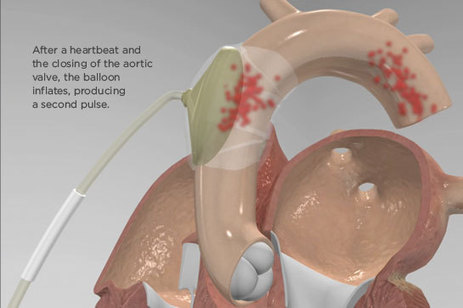
A Minnesota medical device company is developing a device to help people with class three and four heart failure without increasing the risk of blood clots.
See on medcitynews.com
Posted in Uncategorized | Leave a Comment »
Reporter: Aviva Lev-Ari, PhD, RN
See on Scoop.it – Cardiovascular and vascular imaging
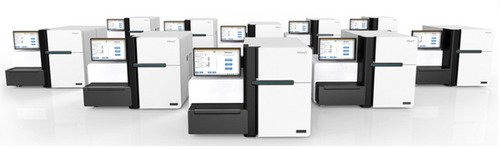
Illumina, Inc. announced Tuesday that its new HiSeq X Ten Sequencing System has broken the “sound barrier” of human genomics by enabling the $1,000 genome. “This platform includes dramatic technology breakthroughs that enable researchers to undertake studies of unprecedented scale by providing the throughput to sequence tens of thousands of human whole genomes in a single year in a single lab,” Illumina stated.
Initial customers for the HiSeq X Ten System, which will ship in Q1 2014, include Macrogen, based in Seoul, South Korea and its CLIA laboratory in Rockville, Maryland, the Broad Institute in Cambridge, Massachusetts, and the Garvan Institute of Medical Research in Sydney, Australia.
“For the first time, it looks like it will be possible to deliver the $1,000 genome, which is tremendously exciting,” said Eric Lander, founding director of the Broad Institute and a professor of biology at MIT. “The HiSeq X Ten should give us the ability to analyze complete genomic information from huge sample populations. Over the next few years, we have an opportunity to learn as much about the genetics of human disease as we have learned in the history of medicine.”
“The HiSeq X Ten is an ideal platform for scientists and institutions focused on the discovery of genotypic variation to enable a deeper understanding of human biology and genetic disease,” Illumina stated. “It can sequence tens of thousands of samples annually with high-quality, high-coverage sequencing, delivering a comprehensive catalog of human variation within and outside coding regions.”
HiSeq X Ten utilizes a number of advanced design features to generate massive throughput. Patterned flow cells, which contain billions of nanowells at fixed locations, combined with a new clustering chemistry deliver a significant increase in data density (6 billion clusters per run). Using state-of-the art optics and faster chemistry, HiSeq X Ten can process sequencing flow cells more quickly than ever before — generating a 10x increase in daily throughput when compared to current HiSeq 2500 performance.
The HiSeq X Ten is sold as a set of 10 or more ultra-high throughput sequencing systems, each generating up to 1.8 terabases (Tb) of sequencing data in less than three days or up to 600 gigabases (Gb) per day, per system, providing the throughput to sequence tens of thousands of high-quality, high-coverage genomes per year.
Illumina Introduces the HiSeq X™ Ten Sequencing System
Nature: Is the $1000 Genome for real?
See on www.kurzweilai.net
Posted in Advanced Computing Platform, BioIT: BioInformatics, BioIT: BioInformatics, NGS, Clinical & Translational, Pharmaceutical R&D Informatics, Clinical Genomics, Cancer Informatics | Leave a Comment »
Reporter: Aviva Lev-Ari, PhD, RN
See on Scoop.it – Cardiovascular and vascular imaging
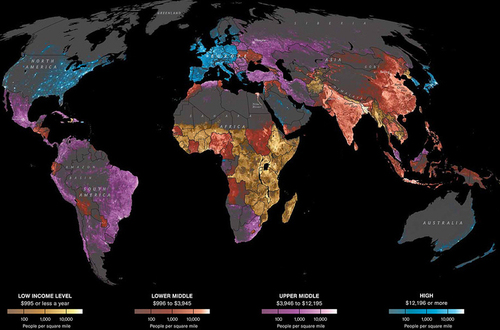
I’ve searched wide and far for maps that can reveal and surprise and inform in ways that the daily headlines might not.
See on www.washingtonpost.com
Posted in Global Market of Medical Devices Technology, Global Medical Publishers by Country, Global Partnering & Biotech Investment | Leave a Comment »
See on Scoop.it – Cardiovascular and vascular imaging
Journal of Electrocardiology
See on www.mdlinx.com
Posted in Uncategorized | Leave a Comment »
See on Scoop.it – Cardiovascular and vascular imaging
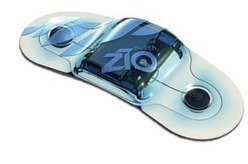
A Nashville entrepreneur is hoping his smaller and smarter 12 lead EKG device will make it easier for doctors to share information and for patients to get care.
See on medcitynews.com
Posted in Uncategorized | Leave a Comment »

Those records may be created as electronic or physical paper forms which need to be completed by the authorized person. However, a much better way is to implement an automatic workflow that makes it easier for the team to create, follow, and document all the various tasks they need to do. Such a workflow can automatically schedule tasks, remind and alert, thus triggering better compliance to the quality system and at the same time automatically creating the required records. This is a double win. JIRA® is our tool of choice and it provides a state-of-the-art solution to everything related to forms and workflows.
| Requirement (Article) | Requirement type |
| 4.Quality management system – 1.General requirements | Non specific |
| 4.Quality management system – 2.Documentation requirements – 1.General | Document management |
| 4.Quality management system – 2.Documentation requirements – 2.Quality manual | Document management |
| 4.Quality management system – 2.Documentation requirements – 3.Control of documents | Document management |
| 4.Quality management system – 2.Documentation requirements – 4.Control of records | Procedures and records |
| 5.Management responsibility – 1.Management commitment | Document management |
| 5.Management responsibility – 2.Customer focus | Non specific |
| 5.Management responsibility – 3.Quality policy | Monitoring and ongoing improvement |
| 5.Management responsibility – 4.Planning – 1.Quality objectives | Monitoring and ongoing improvement |
| 5.Management responsibility – 4.Planning – 2.Quality management system planning | Monitoring and ongoing improvement |
| 5.Management responsibility – 5.Responsibility, authority and communication – 1.Responsibility and authority | Document management |
| 5.Management responsibility – 5.Responsibility, authority and communication – 2.Management representative | Monitoring and ongoing improvement |
| 5.Management responsibility – 5.Responsibility, authority and communication – 3.Internal communication | Monitoring and ongoing improvement |
| 5.Management responsibility – 6.Management review – 1.General | Monitoring and ongoing improvement |
| 5.Management responsibility – 6.Management review – 2.Review input | Monitoring and ongoing improvement |
| 5.Management responsibility – 6.Management review – 3.Review output | Monitoring and ongoing improvement |
| 6.Resource management – 1.Provision of resources | Non specific |
| 6.Resource management – 2.Human resources – 1.General | Procedures and records |
| 6.Resource management – 2.Human resources – 2.Competence, awareness and training | Procedures and records |
| 6.Resource management – 3.Infrastructure | Manufacturing and product traceability |
| 6.Resource management – 4.Work environment | Non specific |
| 7.Product realization – 1.Planning of product realization | Design control |
| 7.Product realization – 2.Customer-related processes – 1.Determination of requirements related to the product | Design control |
| 7.Product realization – 2.Customer-related processes – 2.Review of requirements related to the product | Design control |
| 7.Product realization – 2.Customer-related processes – 3.Customer communication | Design control |
| 7.Product realization – 3.Design and development – 1.Design and development planning | Design control |
| 7.Product realization – 3.Design and development – 1.Design and development input | Design control |
| 7.Product realization – 3.Design and development – 3.Design and development outputs | Design control |
| 7.Product realization – 3.Design and development – 4.Design and development review | Design control |
| 7.Product realization – 3.Design and development – 5.Design and development verification | Design control |
| 7.Product realization – 3.Design and development – 6.Design and development validation | Design control |
| 7.Product realization – 3.Design and development – 7.Control of design and development changes | Design control |
| 7.Product realization – 4.Purchasing – 1.Purchasing process | Procedures and records |
| 7.Product realization – 4.Purchasing – 2.Purchasing information | Procedures and records |
| 7.Product realization – 4.Purchasing – 3.Verification of purchased product | Procedures and records |
| 7.Product realization – 5.Production and service provision – 1.Control of production and service provision – 1.General requirements | Procedures and records |
| 7.Product realization – 5.Production and service provision – 1.Control of production and service provision – 2.Control of production and service provision: Specific requirements – 1.Cleanliness of product and contamination control | Manufacturing and product traceability |
| 7.Product realization – 5.Production and service provision – 1.Control of production and service provision – 2.Control of production and service provision: Specific requirements – 2.Installation ativities | Procedures and records |
| 7.Product realization – 5.Production and service provision – 1.Control of production and service provision – 2. – 3.Servicing activities | Procedures and records |
| 7.Product realization – 5.Production and service provision – 1.Control of production and service provision – 3.Particular requirements for sterile medical devices | Manufacturing and product traceability |
| 7.Product realization – 5.Production and service provision – 2.Validation of processes for production and service provision – 1.General requirements | Manufacturing and product traceability |
| 7.Product realization – 5.Production and service provision – 2.Validation of processes for production and service provision – 2.Particular requirements for sterile medical devices | Manufacturing and product traceability |
| 7.Product realization – 5.Production and service provision – 3. Identification and traceability – 1.Identification | Manufacturing and product traceability |
| 7.Product realization – 5.Production and service provision – 3. Identification and traceability – 2.Traceability – 1.General | Manufacturing and product traceability |
| 7.Product realization – 5.Production and service provision – 3. Identification and traceability – 2.Particular requirements for active implantable medical devices and implantable medical devices | Manufacturing and product traceability |
| 7.Product realization – 5.Production and service provision – 3. Identification and traceability – 3.Status identification | Manufacturing and product traceability |
| 7.Product realization – 5.Production and service provision – 4.Customer property | Non specific |
| 7.Product realization – 5.Production and service provision – 5.Preservation of product | Procedures and records |
| 7.Product realization – 6.Control of monitoring and measuring devices | Manufacturing and product traceability |
| 8.Measurement, analysis and improvement – 1.General | Monitoring and ongoing improvement |
| 8.Measurement, analysis and improvement – 2.Monitoring and measurement – 1.Feedback | Monitoring and ongoing improvement |
| 8.Measurement, analysis and improvement – 2.Monitoring and measurement – 2.Internal audit | Procedures and records |
| 8.Measurement, analysis and improvement – 2.Monitoring and measurement – 3.Monitoring and measurement of processes | Monitoring and ongoing improvement |
| 8.Measurement, analysis and improvement – 2.Monitoring and measurement – 4.Monitoring and measurement of product – 1. General requirements | Design control |
| 8.Measurement, analysis and improvement – 2.Monitoring and measurement – 4.Monitoring and measurement of product – 2.Particular requirement for active implantable medical devices and implantable medical devices | Procedures and records |
| 8.Measurement, analysis and improvement – 3.Control of nonconforming product | Procedures and records |
| 8.Measurement, analysis and improvement – 4.Aalysis of data | Monitoring and ongoing improvement |
| 8.Measurement, analysis and improvement – 5.Improvement – 1.General | Monitoring and ongoing improvement |
| 8.Measurement, analysis and improvement – 5.Improvement – 2.Corrective action | Procedures and records |
| 8.Measurement, analysis and improvement – 5.Improvement – 3.Preventive action | Procedures and records |
Posted in Academic Publishing, Advanced Drug Manufacturing Technology, Bio Instrumentation in Experimental Life Sciences Research, Biological Networks, Gene Regulation and Evolution, Biomarkers & Medical Diagnostics, Biomedical Measurement Science, CANCER BIOLOGY & Innovations in Cancer Therapy, Cancer Prevention: Research & Programs, Cardiac and Cardiovascular Surgical Procedures, Drug Delivery Platform Technology, Ecosystems & Industrial Concentration in the Medical Device Sector, FDA Regulatory Affairs, FDA, CE Mark & Global Regulatory Affairs: process management and strategic planning - GCP, GLP, ISO 14155, Health Economics and Outcomes Research, HealthCare IT, Imaging-based Cancer Patient Management, International Global Work in Pharmaceutical, ISO 10993 for Product Registration: FDA & CE Mark for Development of Medical Devices and Diagnostics, Medical Devices R&D Investment, Medical Imaging Technology, Image Processing/Computing, MRI, CT, Nuclear Medicine, Ultra Sound, Melatonin & Circadian Regulation, Personalized and Precision Medicine & Genomic Research, Pharmaceutical Industry Competitive Intelligence, Pharmaceutical R&D Investment, Population Health Management, Genetics & Pharmaceutical, Quality Assurance, Regulated Clinical Trials: Design, Methods, Components and IRB related issues, Technology Transfer: Biotech and Pharmaceutical, Translational Research, Translational Science | Tagged CE, Confluence, Design control, Document management, European medical device directive, FDA, ISO, ISO 13485, JIRA, product traceability, QA Procedures, Quality Assurance, Records, regulations, Reimbursement | 1 Comment »


 2012pharmaceutical
 sjwilliamspa