Feeds:
Posts
Comments

Archive for the ‘Digital HealthCare – biotech & internet joint ventures’ Category

How Wearable Startups Can Win Big In The Medical Industry

Reporter: Aviva Lev-Ari, PhD, RN


As attention shines down on fitness trackers and smart watches, one of the biggest opportunities for wearable devices remains shadowed in the corner –..

Source: techcrunch.com

See on Scoop.itCardiovascular and vascular imaging

Read Full Post »

Twitter is Becoming a Powerful Tool in Science and Medicine

 Curator: Stephen J. Williams, Ph.D.

Article ID #159: Twitter is Becoming a Powerful Tool in Science and Medicine. Published on 11/6/2014

WordCloud Image Produced by Adam Tubman

Updated 4/2016

Life-cycle of Science 2

A recent Science article (Who are the science stars of Twitter?; Sept. 19, 2014) reported the top 50 scientists followed on Twitter. However, the article tended to focus on the use of Twitter as a means to develop popularity, a sort of “Science Kardashian” as they coined it. So the writers at Science developed a “Kardashian Index (K-Index) to determine scientists following and popularity on Twitter.

Now as much buzz Kim Kardashian or a Perez Hilton get on social media, their purpose is solely for entertainment and publicity purposes, the Science sort of fell flat in that it focused mainly on the use of Twitter as a metric for either promotional or public outreach purposes. A notable scientist was mentioned in the article, using Twitter feed to gauge the receptiveness of his presentation. In addition, relying on Twitter for effective public discourse of science is problematic as:

  • Twitter feeds are rapidly updated and older feeds quickly get buried within the “Twittersphere” = LIMITED EXPOSURE TIMEFRAME
  • Short feeds may not provide the access to appropriate and understandable scientific information (The Science Communication Trap) which is explained in The Art of Communicating Science: traps, tips and tasks for the modern-day scientist. “The challenge of clearly communicating the intended scientific message to the public is not insurmountable but requires an understanding of what works and what does not work.” – from Heidi Roop, G.-Martinez-Mendez and K. Mills

However, as highlighted below, Twitter, and other social media platforms are being used in creative ways to enhance the research, medical, and bio investment collaborative, beyond a simple news-feed.  And the power of Twitter can be attributed to two simple features

  1. Ability to organize – through use of the hashtag (#) and handle (@), Twitter assists in the very important task of organizing, indexing, and ANNOTATING content and conversations. A very great article on Why the Hashtag in Probably the Most Powerful Tool on Twitter by Vanessa Doctor explains how hashtags and # search may be as popular as standard web-based browser search. Thorough annotation is crucial for any curation process, which are usually in the form of database tags or keywords. The use of # and @ allows curators to quickly find, index and relate disparate databases to link annotated information together. The discipline of scientific curation requires annotation to assist in the digital preservation, organization, indexing, and access of data and scientific & medical literature. For a description of scientific curation methodologies please see the following links:

Please read the following articles on CURATION

The Methodology of Curation for Scientific Research Findings

Power of Analogy: Curation in Music, Music Critique as a Curation and Curation of Medical Research Findings – A Comparison

Science and Curation: The New Practice of Web 2.0

  1. Information Analytics

Multiple analytic software packages have been made available to analyze information surrounding Twitter feeds, including Twitter feeds from #chat channels one can set up to cover a meeting, product launch etc.. Some of these tools include:

Twitter Analytics – measures metrics surrounding Tweets including retweets, impressions, engagement, follow rate, …

Twitter Analytics – Hashtags.org – determine most impactful # for your Tweets For example, meeting coverage of bioinvestment conferences or startup presentations using #startup generates automatic retweeting by Startup tweetbot @StartupTweetSF.


  1. Tweet Sentiment Analytics

Examples of Twitter Use

A. Scientific Meeting Coverage

In a paper entitled Twitter Use at a Family Medicine Conference: Analyzing #STFM13 authors Ranit Mishori, MD, Frendan Levy, MD, and Benjamin Donvan analyzed the public tweets from the 2013 Society of Teachers of Family Medicine (STFM) conference bearing the meeting-specific hashtag #STFM13. Thirteen percent of conference attendees (181 users) used the #STFM13 to share their thoughts on the meeting (1,818 total tweets) showing a desire for social media interaction at conferences but suggesting growth potential in this area. As we have also seen, the heaviest volume of conference-tweets originated from a small number of Twitter users however most tweets were related to session content.

However, as the authors note, although it is easy to measure common metrics such as number of tweets and retweets, determining quality of engagement from tweets would be important for gauging the value of Twitter-based social-media coverage of medical conferences.

Thea authors compared their results with similar analytics generated by the HealthCare Hashtag Project, a project and database of medically-related hashtag use, coordinated and maintained by the company Symplur.  Symplur’s database includes medical and scientific conference Twitter coverage but also Twitter usuage related to patient care. In this case the database was used to compare meeting tweets and hashtag use with the 2012 STFM conference.

These are some of the published journal articles that have employed Symplur (www.symplur.com) data in their research of Twitter usage in medical conferences.

B. Twitter Usage for Patient Care and Engagement

Although the desire of patients to use and interact with their physicians over social media is increasing, along with increasing health-related social media platforms and applications, there are certain obstacles to patient-health provider social media interaction, including lack of regulatory framework as well as database and security issues. Some of the successes and issues of social media and healthcare are discussed in the post Can Mobile Health Apps Improve Oral-Chemotherapy Adherence? The Benefit of Gamification.

However there is also a concern if social media truly engages the patient and improves patient education. In a study of Twitter communications by breast cancer patients Tweeting about breast cancer, authors noticed Tweeting was a singular event. The majority of tweets did not promote any specific preventive behavior. The authors concluded “Twitter is being used mostly as a one-way communication tool.” (Using Twitter for breast cancer prevention: an analysis of breast cancer awareness month. Thackeray R1, Burton SH, Giraud-Carrier C, Rollins S, Draper CR. BMC Cancer. 2013;13:508).

In addition a new poll by Harris Interactive and HealthDay shows one third of patients want some mobile interaction with their physicians.

Some papers cited in Symplur’s HealthCare Hashtag Project database on patient use of Twitter include:

C. Twitter Use in Pharmacovigilance to Monitor Adverse Events

Pharmacovigilance is the systematic detection, reporting, collecting, and monitoring of adverse events pre- and post-market of a therapeutic intervention (drug, device, modality e.g.). In a Cutting Edge Information Study, 56% of pharma companies databases are an adverse event channel and more companies are turning to social media to track adverse events (in Pharmacovigilance Teams Turn to Technology for Adverse Event Reporting Needs). In addition there have been many reports (see Digital Drug Safety Surveillance: Monitoring Pharmaceutical Products in Twitter) that show patients are frequently tweeting about their adverse events.

There have been concerns with using Twitter and social media to monitor for adverse events. For example FDA funded a study where a team of researchers from Harvard Medical School and other academic centers examined more than 60,000 tweets, of which 4,401 were manually categorized as resembling adverse events and compared with the FDA pharmacovigilance databases. Problems associated with such social media strategy were inability to obtain extra, needed information from patients and difficulty in separating the relevant Tweets from irrelevant chatter.  The UK has launched a similar program called WEB-RADR to determine if monitoring #drug_reaction could be useful for monitoring adverse events. Many researchers have found the adverse-event related tweets “noisy” due to varied language but had noticed many people do understand some principles of causation including when adverse event subsides after discontinuing the drug.

However Dr. Clark Freifeld, Ph.D., from Boston University and founder of the startup Epidemico, feels his company has the algorithms that can separate out the true adverse events from the junk. According to their web site, their algorithm has high accuracy when compared to the FDA database. Dr. Freifeld admits that Twitter use for pharmacovigilance purposes is probably a starting point for further follow-up, as each patient needs to fill out the four-page forms required for data entry into the FDA database.

D. Use of Twitter in Big Data Analytics

Published on Aug 28, 2012

http://blogs.ischool.berkeley.edu/i29…

Course: Information 290. Analyzing Big Data with Twitter
School of Information
UC Berkeley

Lecture 1: August 23, 2012

Course description:
How to store, process, analyze and make sense of Big Data is of increasing interest and importance to technology companies, a wide range of industries, and academic institutions. In this course, UC Berkeley professors and Twitter engineers will lecture on the most cutting-edge algorithms and software tools for data analytics as applied to Twitter microblog data. Topics will include applied natural language processing algorithms such as sentiment analysis, large scale anomaly detection, real-time search, information diffusion and outbreak detection, trend detection in social streams, recommendation algorithms, and advanced frameworks for distributed computing. Social science perspectives on analyzing social media will also be covered.

This is a hands-on project course in which students are expected to form teams to complete intensive programming and analytics projects using the real-world example of Twitter data and code bases. Engineers from Twitter will help advise student projects, and students will have the option of presenting their final project presentations to an audience of engineers at the headquarters of Twitter in San Francisco (in addition to on campus). Project topics include building on existing infrastructure tools, building Twitter apps, and analyzing Twitter data. Access to data will be provided.

Other posts on this site on USE OF SOCIAL MEDIA AND TWITTER IN HEALTHCARE and Conference Coverage include:

Methodology for Conference Coverage using Social Media: 2014 MassBio Annual Meeting 4/3 – 4/4 2014, Royal Sonesta Hotel, Cambridge, MA

Strategy for Event Joint Promotion: 14th ANNUAL BIOTECH IN EUROPE FORUM For Global Partnering & Investment 9/30 – 10/1/2014 • Congress Center Basel – SACHS Associates, London

REAL TIME Cancer Conference Coverage: A Novel Methodology for Authentic Reporting on Presentations and Discussions launched via Twitter.com @ The 2nd ANNUAL Sachs Cancer Bio Partnering & Investment Forum in Drug Development, 19th March 2014 • New York Academy of Sciences • USA

PCCI’s 7th Annual Roundtable “Crowdfunding for Life Sciences: A Bridge Over Troubled Waters?” May 12 2014 Embassy Suites Hotel, Chesterbrook PA 6:00-9:30 PM

CRISPR-Cas9 Discovery and Development of Programmable Genome Engineering – Gabbay Award Lectures in Biotechnology and Medicine – Hosted by Rosenstiel Basic Medical Sciences Research Center, 10/27/14 3:30PM Brandeis University, Gerstenzang 121

Tweeting on 14th ANNUAL BIOTECH IN EUROPE FORUM For Global Partnering & Investment 9/30 – 10/1/2014 • Congress Center Basel – SACHS Associates, London

http://pharmaceuticalintelligence.com/press-coverage/

Statistical Analysis of Tweet Feeds from the 14th ANNUAL BIOTECH IN EUROPE FORUM For Global Partnering & Investment 9/30 – 10/1/2014 • Congress Center Basel – SACHS Associates, London

1st Pitch Life Science- Philadelphia- What VCs Really Think of your Pitch

What VCs Think about Your Pitch? Panel Summary of 1st Pitch Life Science Philly

How Social Media, Mobile Are Playing a Bigger Part in Healthcare

Can Mobile Health Apps Improve Oral-Chemotherapy Adherence? The Benefit of Gamification.

Medical Applications and FDA regulation of Sensor-enabled Mobile Devices: Apple and the Digital Health Devices Market

E-Medical Records Get A Mobile, Open-Sourced Overhaul By White House Health Design Challenge Winners

Read Full Post »

Remote Care Management of CHF Patients by Home Digital Technology and Continuous Access to NP – A Partnership of an Insurer with a Technology Company


Reporter: Aviva Lev-Ari, PhD, RN


CIGNA-HEALTHSPRING AND INTEL-GE CARE INNOVATIONS™ EXPAND REMOTE CARE MANAGEMENT PROGRAM TO REDUCE CONGESTIVE HEART FAILURE-RELATED COMPLICATIONS IN TENNESSEE

02 October 2014
  • Completion of successful pilot prompts statewide program expansion in TN
  • Program helps monitor and educate participants, promotes self-monitoring and empowers patient engagement with their health
  • Participants receive interactive tablet, blood pressure cuff and scale at no extra cost
  • Key to program success is customer’s direct access to dedicated Cigna-HealthSpring nurse practitioner with virtual connection enabled through interactive tablet

NASHVILLE – October 2, 2014 – In partnership with Intel-GE Care Innovations™, Cigna-HealthSpring® is expanding its population health program that utilizes interactive tablets – the Intel-GE Care Innovations™ Guide – and virtual connection to Cigna-HealthSpring nurse practitioners to partner and engage with patients diagnosed with congestive heart failure (CHF) to successfully manage their condition at home. Based on a successful pilot in Middle Tennessee that engaged 50 patients, the innovative remote patient management program is now being implemented with 250 patients statewide with potential for further expansion.

“We are dedicated to helping our customers get more from life and the success of the pilot program shows what an invaluable opportunity we have to truly make a positive impact in our customers’ lives,” said Dr. Jim Lancaster, senior medical director for Cigna-HealthSpring of Tennessee. “Many people with congestive heart failure find themselves back in the hospital within a matter of weeks after returning home so it’s important that we continue to seek new and innovative solutions to help them better manage their health. We are pleased by the early success of the pilot program and excited to implement it statewide to help more of our customers take control of their health with the convenience of virtual yet personalized medicine at home.”

Under the expanded program, participating Cigna-HealthSpring customers will be given a blood pressure cuff, scale and interactive tablet for a minimum of 90 days which will enable them to interact virtually with their Cigna-HealthSpring nurse practitioner, track their daily biometrics and complete an educational program to help them manage their CHF at home. Once they achieve specific milestones, participants will transition away from the tablet to a less intensive program where they will continue to monitor and log their weight and blood pressure with the help of a case manager. At the end of the program, customers should be able to recognize symptoms of CHF exacerbation and understand the impact of diet, education and medication on their condition. To participate in the program, customers must have received a CHF diagnosis and a previous ER visit or hospital admission. There is no cost to the customer to participate in the program but using the tablet requires a landline or internet connectivity.

“We have seen dramatic reductions in the need for hospitalization in our first year of the program pilot with Cigna-HealthSpring. We also recently worked with many hospitals across the country to create successful remote care management programs and have seen as high as a 75 percent reduction in hospital readmissions,” said Sean Slovenski, CEO of Intel-GE Care Innovations. “We’ve learned that a successful program is as much about the logistical details as it is about the technology. Helping consumers engage proactively in their own health is our mission at Care Innovations. By monitoring and engaging CHF patients as they go about their daily lives, we are able to catch problems early, involve the doctor immediately and ultimately avoid unnecessary ER visits, hospital stays and worsening of the patients’ health.”

Cigna-HealthSpring customer success examples:

When Elizabeth*, 74, started the program her blood pressure was extremely high, she was overweight and she had struggled with hospital admissions due to CHF complications. Since starting the program, she has lost 25 pounds, consistently had her blood pressure and heart rate in a healthy range and avoided the hospital. She says the program has helped give her better awareness of her condition and made her realize the positive impact she can make from simple daily monitoring of her biometrics. Elizabeth’s improvement has also helped her husband, who acts as her caregiver, gain more comfort and assurance that she has personal and direct access to her Cigna-HealthSpring nurse practitioner.

Margery*, 72, had struggled with controlling her CHF and frequently found herself in the hospital. Cigna-HealthSpring worked together with her cardiologist to enroll her in the program and create a personalized care plan to better manage her CHF. She says she now knows what to do and the program has helped educate and empower her to take better care of her herself and control her CHF. The program has helped her improve her biometrics, avoid the hospital for CHF-related complications and allowed her nurse practitioner to intervene early to prevent CHF exacerbation or a trip to the hospital.

*Names changed for privacy.

CHF is a chronic condition that affects 5.1 million people in the U.S.[1] and costs Medicare $17.4 billion per year in avoidable hospital readmissions.[2]. A companion piece to a recent study by Dartmouth University listed some of the reasons for hospital readmissions regardless of the condition, including patients not fully understanding their condition and being confused about medications.[3]

“What makes this program so special is that customers know they have easy and direct access to a Cigna-HealthSpring nurse practitioner, someone who truly cares about them and their health,” added Dr. Lancaster. “They feel empowered to learn how they can impact their own health.”

About Cigna-HealthSpring
Cigna-HealthSpring, a Cigna company (NYSE:CI), is one of the country’s leading health plans focused on delivering care to the senior population, predominately through Medicare Advantage and other Medicare and Medicaid products.  Based in Nashville, Tennessee, Cigna-HealthSpring offers a national stand-alone prescription drug plan and operates health plans in Alabama, Arizona, Arkansas, Delaware, Florida, Georgia, Illinois, Indiana, Maryland, Mississippi, North Carolina, Oklahoma, Pennsylvania, South Carolina, Tennessee, Texas and Washington, D.C. For more information, visitwww.cignahealthspring.com.

About Intel-GE Care Innovations™ 
Intel-GE Care Innovations, a joint venture between Intel Corporation and GE Healthcare, connects the care continuum to the home and makes it easier for patients, family caregivers, and professional caregivers to interact and achieve better health at home.

Experts in technology and behavior change, Care Innovations identifies the best methods for health care providers and health plans to capture and integrate real-time data from the home into care delivery. The company’s third-generation remote care management solution, Connect RCM, delivers insights for timely intervention and superior patient engagement with patients outside the formal care setting. The Connect RCM application is built with a smart filter and predictive analytics platform that sorts the complex array of aggregated data captured from a wide array of sensors and sources present in the daily lives of consumers. Visit www.careinnovations.com  to learn more.


[2] CMS National Medicare Readmission Findings. Available athttp://www.academyhealth.org/files/2012/sunday/brennan.pdf 
[3] Care About Your Care: Tips for Patients When They Leave the Hospital. Available atwww.dartmouthatlas.org/downloads/reports/Atlas_CAYC_092811.pdf 


Read Full Post »

Lift Labs Acquisition by Google: A sign of Persistence of the BioTech Pursuit

Reporter: Aviva Lev-Ari, PhD, RN  

Google Inc. Dives Deeper Into Biotech With Lift Labs Acquisition

9/11/2014 6:36:45 AM

September 11, 2014

By Mark Terry, BioSpace.com Breaking News Staff

Google Inc. (GOOGL) announced Wednesday that it has acquired San Francisco-based Lift Labs for an undisclosed amount as it doubles down on biotech.

Lift Labs is a medical technology and device company that manufactures a vibrating spoon and fork that makes it easier for individuals with tremors, like those seen in Parkinson’s disease, easier to eat.

The Lift Labs products, Liftware, retails for $295. It was developed with assistance from an NIH grant.

This follows recent news that a Google startup, Calico, had signed a collaboration agreement with pharmaceutical company AbbVie (ABBV). Calico is a biopharmaceutical company that focuses on drug development to deal with age-related illnesses, including neurodegeneration and cancer. The Lift Labs acquisition is an expansion into medical hardware, as opposed to drug R&D, but does emphasize Google’s continued expansion into the healthcare arena.

Lift Labs will join Google X’s Life Sciences team. Other health technology-related investments included sensor-enhanced contact lenses to help diabetic patients monitor their glucose levels.

“We’re also going to explore how their technology could be used in other ways to improve the understanding and management of neurodegenerative diseases such as Parkinson’s disease and essential tremor,” said Google in a statement.

The Liftware device utilizes a small onboard computer that detects and counteracts hand tremors. A spoon or other utensil attaches to one end. The company plans to develop other attachments, such as a key holder.

Lift Lab’s founder Anupam Pathak noted that they can envision a wide assortment of hand-held devices, including makeup applicators and handheld tools. “Once you start to lose the ability to function independently, there’s a huge emotional toll,” he said.

University of Michigan neurology professor Kelvin Chou, who has worked with Lift Labs on their technology, noted in a New York Times blog that the uses for assistance technology are varied and helpful.

“A lot of social interaction revolves around eating,” said Chou. “It’s embarrassing for them, and they feel like people are watching them all the time. I’ve had patients say ‘Someone came up to me and said I should stop drinking.’ Things like that.”

In the United States, there are between 50,000 and 60,000 new cases of Parkinson’s disease (PD) diagnosed each year. It is the 14th leading cause of death in the U.S., and afflicts approximately four to six million people worldwide. PD is a neurodegenerative brain disorders that progresses slowly and affects the brain cells that produce dopamine.

Essential Tremor (ET) is a separate disorder and typically presents as a bilateral tremor of hand and forearm. It can occur at any age, though it usually shows up in the mid-teens or between the ages of 50 and 65. Approximately half of ET patients have a family history of the condition. Treatments for Parkinson’s tremors are not effective for ET.


SOURCE

http://www.biospace.com/News/google-inc-dives-deeper-into-biotech-with-lift/346153?type=email&source=DD_091114#sthash.Mqv49Mr0.dpuf

Read Full Post »

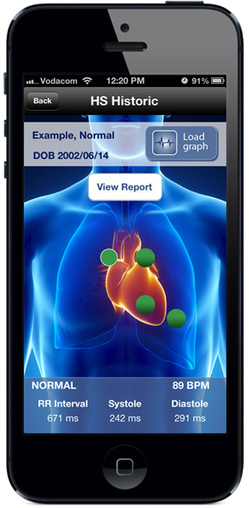
SensiCardiac for iPhone Supercharges Electronic Stethoscopes (w/video)

Reporter: Aviva Lev-Ari, PhD, RN


See on Scoop.itCardiovascular and vascular imaging

SensiCardiac out of Stellenbosch, South Africa has released a free iPhone app that turns your now old and boring electronic stethoscope into a powerful au

See on www.medgadget.com

Read Full Post »

Smartphone Physicals Are Taking Off With Explosion of Apps, Attachments

Reported: Aviva Lev-Ari, PhD, RN


See on Scoop.itCardiovascular Disease: PHARMACO-THERAPY

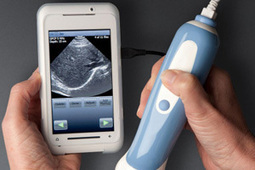
There’s no shortage of smartphone appsto help people track their health. And in recent months, medical apps have started growing up, leaving behind the novelty of attaching probes to a smartphone to offer, they hope, serious clinical tools.


Last month in a Ted Talk, Shiv Gaglani showed that a standard physical exam can now be done using only smartphone apps and attachments. From blood pressure cuff to stethoscope and otoscope — the thing the doctor uses to look in your ears — all of the doctor’s basic instruments are now available in “smart” format.


See on singularityhub.com

Read Full Post »

10 Sensor innovations driving the digital health revolution

Reporter: Aviva Lev-Ari, PhD, RN


See on Scoop.itCardiovascular Disease: PHARMACO-THERAPY

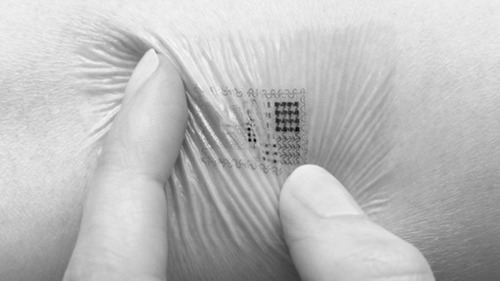
This year IBM dedicated its Five in Five series (an annual list of five technologies that are likely to advance dramatically) solely to sensors.


Digital sensors of the touch, sight,hearing, taste and smell kind along with their potential are all profiled by IBM Sensor technology is going through a renaissance as companies develop smart and innovative new ways to track data using them.


Sensor innovation is in-part driving the Digital Health Revolution as digital health companies find ingenius ways to integrate them in to apps, devices and other peripherals. The smartphone will play an increasing important role in all of this as they go from having six built-in sensors currently to having sixteen in the next five years.


If these predictions are correct then the next five years will be half-a-decade of sensor proliferation meaning the Digital Health Ecosystem will grow exponentially. In the meantime though there are already a plethora of digital health sensors in use or in the pipeline that are helping people improve and, in some instances, save lives.

See on bionic.ly

Read Full Post »

« Newer Posts