Healthcare analytics, AI solutions for biological big data, providing an AI platform for the biotech, life sciences, medical and pharmaceutical industries, as well as for related technological approaches, i.e., curation and text analysis with machine learning and other activities related to AI applications to these industries.
W. Gerald “Jerry” Austen, MD influential in the design and creation of a cardiopulmonary (heart-lung) bypass machine and the intra-aortic balloon pump at MGH as renowned cardiac surgeon
Curator and reporter: Aviva Lev-Ari, PhD, RN
This article is classified in the ontology of LPBI Group’s Journal PharmaceuticalIntelligence.com under the Category of Research
Interviews with Scientific Leaders
This category includes 300 articles. LPBI Group’s will publish in July 2023 its Library of Audio Podcasts on “Interviews with Scientific Leaders.”
The presentations in the video below, about W. Gerald “Jerry” Austen, MD contributions to cardiac surgery are considered to be testimonials as well as qualify as “Interviews with a Scientific Leader” in the domains of cardiac surgery and cardiac repair medical devices with a special focus on:
cardiopulmonary (heart-lung) bypass machine, and
the intra-aortic balloon pump
On these two domains, LPBI Group had published extensively as the sources cited, below: Articles, e-Books in English and Spanish and Chapters in these book on the very specialty of Dr. Austen as included in the title of this article.
Recently, Mass General celebrated the life and legacy of W. Gerald “Jerry” Austen, MD — a renowned cardiac surgeon, beloved family man and visionary leader.
SOURCE
In Memoriam: W. Gerald Austen, MD – Mass General Giving
For 70 years, Dr. Austen was part of the Mass General community, having completed his residency at the hospital and continuing to become one of the most distinguished and well-regarded physicians in the hospital’s more than 200-year history. At 39 years old, he was named Mass General’s chief of surgical services — a position he held for nearly 29 years. Under his leadership, the Department of Surgery became one of the greatest academic departments of surgery in the country. Among his many contributions, he was influential in the design and creation of a cardiopulmonary (heart-lung) bypass machine and the intra-aortic balloon pump.
Hundreds of Dr. Austen’s closest friends, colleagues and family members gathered at Boston Symphony Hall to commemorate his legacy. A variety of speakers — from current Mass General President David F. M. Brown, MD, to former hospital President Peter Slavin, MD, and retired Chairman, President and CEO of Abiomed Mike Minogue — shared fond memories of Dr. Austen, further illustrating his unmatched and lasting impact on others.
The Mass General community will continue to mourn the loss of such a giant in the medical world and will carry on Dr. Austen’s legacy through compassionate care and an unparalleled commitment to all patients.
Susan Hockfield, ex-President of MIT delivered a speech about mechanical engineering and biomedicine, medical devices and cardiac repair devices. How proud Dr. Austen was about his MIT education and functions he fulfilled for this institutions and others.
Other related contributions on the specialty of Dr.W. Gerald “Jerry” Austen, MD – cardiac surgery are covered in e-books and articles on this Open Access Online Scientific Journal, include the following:
Articles
319 articles in the Cardiac and Cardiovascular Surgical Procedures Category
98 articles in the Aortic Valve Category
Among patients with aortic stenosis who were at intermediate surgical risk, there was no significant difference in the incidence of death or disabling stroke at 5 years after TAVR as compared with surgical aortic-valve replacement
Chapter 13: Valve Replacement, Valve Implantation and Valve Repair
13.2 Aortic Valve
13.2.1 New method for performing Aortic Valve Replacement: Transmural catheter procedure developed at NIH, Minimally-invasive tissue-crossing – Transcaval access, abdominal aorta and the inferior vena cava
13.2.4 Surgical Aortic Valve Replacement (SAVR) vs Transcatheter Aortic Valve Implantation (TAVI): Results Comparison for Prosthesis-Patient Mismatch (PPM) – adjusted outcomes, including mortality, heart failure (HF) rehospitalization, stroke, and quality of life, at 1 year
13.2.6 Off-Label TAVR Procedures: 1 in 10 associated with higher in-hospital 30-day mortality, 1-year mortality was similar in the Off-Label and the On-Label groups
13.2.11 One year Post-Intervention Mortality Rate: TAVR and AVR – Aortic Valve Procedures 6.7% in AVR, 11.0% in AVR with CABG, 20.7 in Transvascular (TV-TAVR) and 28.0% in Transapical (TA-TAVR) Patients
13.2.16 The Centers for Medicare & Medicaid Services (CMS) covers transcatheter aortic valve replacement (TAVR) under Coverage with Evidence Development (CED)
Chapter 7: Ventricular Failure: Assist Devices, Surgical and Non-Surgical
7.1 Trends in the Industry
The Voice of Series A Content Consultant: Justin D. Pearlman, MD, PhD, FACC
In addition to minimally invasive treatments for coronary disease and valve disease, there are minimally invasive alternatives to heart transplant for the dangerously weak heart (extreme heart failure) which can otherwise result in Cardiogenic Shock. These involve various means to augment or complement the pumping function of the heart, such as a Ventricular Assist Device (VAD) .
With respect to the performance of Mitral Valve Replacement, the current practice favors bioprosthetic valves over mechanical valve replacement for most patients, initially just used for elderly to avoid need for coumadin, but now used at younger ages due to improvements in longevity of the bioprosthetic valves, plus less damage to red cells.
7.1.2 Percutaneous Endocardial Ablation of Scar-Related Ventricular Tachycardia
7.2.4 Experimental Therapy (Left inter-atrial shunt implant device) for Heart Failure: Expert Opinion on a Preliminary Study on Heart Failure with preserved Ejection Fraction
7.3.1 Dilated Cardiomyopathy: Decisions on implantable cardioverter-defibrillators (ICDs) using left ventricular ejection fraction (LVEF) and Midwall Fibrosis: Decisions on Replacement using late gadolinium enhancement cardiovascular MR (LGE-CMR)
Chapter 11: Comparison of Coronary Artery Bypass Graft (CABG) and Percutaneous Coronary Intervention (PCI) / Coronary Angioplasty
11.1 Hybrid Cath Lab/OR Suite
The Voice of Series A Content Consultant: Justin D. Pearlman, MD, PhD, FACC
In an uncommon reversal of opinion, the combined forces of the American Heart Association (AHA) and the American College of Cardiology (ACC) reviewed compelling data and reversed a prior assessment on the need for an on-site cardiovascular surgery support for sites offering interventional cardiac catheterization. The data show that sites offering the intervention without a surgeon achieve better results that sites that ship patients out for the interventions, and that the risk without on-site thoracic surgery backup is negligible.
AHA, ACC Change in requirement for surgical support: Class IIb -> Class IIa Level of Evidence A: Supports Nonemergent PCI without Surgical Backup (Change of class IIb, level of Evidence B).
Larry H Bernstein, MD, FCAP and Justin D Pearlman, MD, PhD, FACC
11.1.2 Coronary Reperfusion Therapies: CABG vs PCI – Mayo Clinic preprocedure Risk Score (MCRS) for Prediction of in-Hospital Mortality after CABG or PCI
Author and Curator: Larry H. Bernstein, MD, FCAP and Curator: Aviva Lev-Ari, PhD, RN
11.1.6 Patients with Heart Failure & Left Ventricular Dysfunction: Life Expectancy Increased by coronary artery bypass graft (CABG) surgery: Medical Therapy alone and had Poor Outcomes
11.2.8 CABG: a Superior Revascularization Modality to PCI in Patients with poor LVF, Multivessel disease and Diabetes, Similar Risk of Stroke between 31 days and 5 years, post intervention
Aortic Valve Transplant Via Carotid Artery at Hadassah – An Israel First
Curator and Reporter: Aviva Lev-Ari, PhD, RN
The transplant using the carotid artery as the point of entry was selected. The technique of trans-carotid access, Dr. Planer, Director of Hadassah’s Catheterization Department says, “is not performed in “the majority of medical centers worldwide.”
The Medical Case
A 76-year-old man with a history of critical stenosis of his aortic valve arrived at Hadassah Hospital Ein Kerem in severe cardiac shock. It was clear he needed a valve transplant urgently, but the traditional surgical options were not suitable for him because he also had severe vascular disease, anatomical limitations and had undergone previous heart bypass surgery.
Dr. Planer explains, “Until two decades ago, patients who required an aortic valve replacement had to have surgery that involved opening the chest. The recovery was long and difficult.”
This procedure, says Dr. Planer, “is performed using a hybrid approach, with catheterization specialists and cardiac surgeons.” Using this collaborative approach, Dr. Planer, Dr. Gabby Elbaz-Greener, senior catheterization specialist and head of the Structural Heart Intervention Program; Dr. Amit Korach, senior cardiac surgeon; Prof. Ronen Beeri, director of the Echocardiography Unit and senior anesthesiologist; and Dr. Tamer Abu Jreis, anesthesiology resident, successfully replaced the valve.
“Beyond choosing the right patient and the high technical capacity of the team, in a procedure such as this, it is of utmost importance for us to work harmoniously, despite coming from different disciplines,” says Dr. Planer. “Thankfully, the operation went smoothly and without complications. We are proud to be the first team in Israel to carry it out and pave the way for an additional therapeutic option for these seriously ill patients. Our patient has now been discharged to begin rehabilitation, and we wish him a full recovery.”
The optimal access for patients undergoing transcatheter aortic valve replacement (TAVR) who are not candidates for a transfemoral approach has not been elucidated. The purpose of this study was to compare the safety, feasibility, and early clinical outcomes of transcarotid TAVR compared with thoracic approaches.
Methods and Results
From a multicenter consecutive cohort of 329 alternative-access TAVR patients (2012–2017), we identified 101 patients who underwent transcarotid TAVR and 228 patients who underwent a transapical or transaortic TAVR. Preprocedural success and 30-day clinical outcomes were compared using multivariable propensity score analysis to account for between-group differences in baseline characteristics. All transcarotid cases were performed under general anesthesia, mainly using the left common carotid artery (97%). Propensity-matched groups had similar rates of 30-day all-cause mortality (2.1% versus 4.6%; P=0.37), stroke (2.1% versus 3.5%; P=0.67; transcarotid versus transapical/transaortic, respectively), new pacemaker implantation, and major vascular complications. Transcarotid TAVR was associated with significantly less new-onset atrial fibrillation (3.2% versus 19.0%; P=0.002), major or life-threatening bleeding (4.3% versus 19.9%; P=0.002), acute kidney injury (none versus 12.1%; P=0.002), and shorter median length of hospital stay (6 versus 8 days; P<0.001).
Conclusions
Transcarotid vascular access for TAVR is safe and feasible and is associated with encouraging short-term clinical outcomes. Our data suggest a clinical benefit of transcarotid TAVR with respect to atrial fibrillation, major bleeding, acute kidney injury, and length of stay compared with the more invasive transapical or transaortic strategies. Randomized studies are required to ascertain whether transcarotid TAVR yields equivalent results to other alternative vascular access routes.
This is the first report of a multicenter propensity score-matched comparison between transcarotid and transthoracic access. The main findings are (1) transcarotid TAVR is safe and feasible in appropriately selected patients with a high rate of device success (87%); (2) compared with transapical and transaortic TAVR, the transcarotid approach was associated with no significant difference in rates of 30-day all-cause mortality, stroke, new pacemaker implantation, major vascular complications, and hemodynamic performance; (3) transcarotid TAVR is associated with significantly less new-onset atrial fibrillation, acute kidney injury, major or life-threatening bleeding, and shorter hospital stay.
TAVR technology has evolved considerably in the last few years allowing for the treatment of 85% to 90% of patients via the transfemoral route.4,15,16 Until recently, the transapical and transaortic approaches were considered the main alternative nontransfemoral routes, with comparable short- and long-term outcomes.17–19 Despite their advantage of simplifying valve positioning, major surgical manipulation of the chest wall is required. Furthermore, these techniques are limited by relative contraindications, such as significant respiratory failure in case of transapical, and porcelain aorta, as well as previous heart surgery, in cases of transaortic. Transcarotid TAVR was first performed in France in 2009,20 and then was subsequently adopted by several other centers.7–9,21,22 These experiences demonstrated that the surgical approach to the carotid artery is safe and relatively uncomplicated because of its superficial location, and operative experience with the carotid arteries is widespread among cardiovascular surgeons. We prefer performing transcarotid TAVR using the left common carotid because it allows superior coaxial alignment of the THV with the aortic annulus, although both sides can be used.9,10,21
In the current study, the 30-day crude stroke or TIA rate in the transcarotid group was 3% (2 disabling and 1 nondisabling stroke), with no significant difference compared with the transapical/transaortic group (as previously described in smaller studies).10,11 This stroke rate is lower than that observed in the cohort of patients included in the multicenter French Transcarotid TAVR Registry and others.8,9 As previously described,8,21 these neurological events are not always localized ipsilateral to the CCA used for TAVR. This suggests that there are other phenomena at play in addition to carotid arterial manipulation, such as new-onset postprocedural atrial fibrillation, periprocedural hypotension, inadequate contralateral carotid perfusion, and the THV deployment itself. Although the rates of preimplant and postimplant balloon valvuloplasty were significantly higher in the transapical/transaortic group even after adjustment, this did not translate to a higher risk of stroke or TIA among the transapical/transaortic patients. The low rate of stroke observed in this study may be attributed to careful patient selection and the intraoperative assessment of the functional integrity of the circle of Willis as used in one center in this study, using indirect methods, such as backflow blood pressure during carotid clamping and cerebral oximetry monitoring.7 However, the optimal preprocedural evaluation and periprocedural neurological monitoring during transcarotid TAVR are yet to be determined. Also, the optimal antithrombotic regimen and the role of embolic protection devices23–25 require further study to determine efficacy in the reduction of the risk of cerebral ischemia, specifically in patients undergoing transcarotid TAVR as literature is scarce in these patients.
Other major findings of this study were that transcarotid TAVR was significantly associated with a reduction in major or life-threatening bleeding and shorter LOS, compared with transapical/transaortic TAVR. This could be explained by (1) less-invasive access site exposure in the case of transcarotid TAVR compared with a minithoracotomy or hemisternotomy in the transapical/transaortic approach; (2) less ventilator use and shorter intensive care unit stay in transcarotid TAVR10; and (3) less pain during the postprocedural recovery and earlier patient mobilization. The lower incidence of new-onset atrial fibrillation among transcarotid TAVR patients may also partly explain shorter LOS. Any incision of the thoracic cavity is associated with various forms of supraventricular arrhythmia, most commonly atrial fibrillation, which may then translate to a prolonged hospital stay.26,27 A reduction of LOS is a critical component of current strategies to control overall costs associated with TAVR and may be the primary driver of reduced expenditure associated with transfemoral TAVR compared with alternative-access TAVR.28–30 Furthermore, severe bleeding may be associated with postprocedural hypovolemia and may explain, in part, the reduction in the rates of severe acute kidney injury in transcarotid cases compared with the transapical/transaortic approach.31,32 Similar findings were previously reported when comparing transapical or transaortic with transfemoral access. Blackstone et al33 reported their results in 501 propensity score-matched patients undergoing transapical versus transfemoral TAVR. More patients in the transapical group experienced adverse procedural events, longer length of stay, slower recovery, and higher transfusion rates. Similar results were published by Arai et al,34 who reported significantly higher rates of life-threatening bleeding when comparing transaortic (n=289) with transfemoral TAVR (n=467; 6% versus 3%, respectively; P=0.021) without a significant difference in other major outcomes. Our data also suggest that the risk of major vascular complications are decreased with a transcarotid TAVR approach (matched analysis, 3.2% versus 10.7%; P=0.05), although the study was underpowered for this specific end point and did not reach statistical significance.
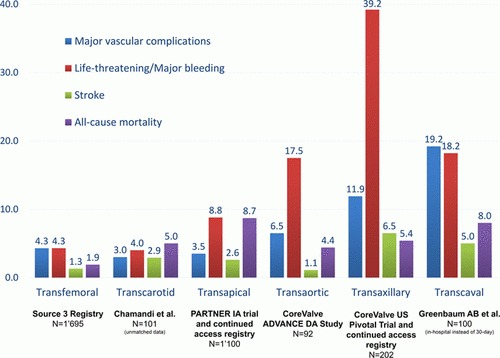
Postoperative echocardiographic data showed favorable results in both groups, as either access provides direct aortic annular access and may allow superior positioning in particular anatomies (Figure). The observed 30-day mortality in the adjusted analysis (2.1% versus 4.6%; P=0.37; transcarotid versus transapical/transaortic, respectively) was also statistically comparable between groups and lower than that previously reported in transcarotid TAVR cohorts.8,9
Study Limitations
This report consists of a retrospective analysis of prospectively acquired data and is subject to the limitations inherent in this study design. Selection of patients was not random and may not be generalizable to other centers. Other alternative approaches, such as the subclavian route, were not evaluated because of the limited number of patients undergoing TAVR by subclavian access at the participating centers. The superficial position of the carotid artery coupled with the more complex exposure of the subclavian and its proximity to the brachial plexus, and the risks associated with its use if an ipsilateral internal mammary artery was used as a coronary bypass graft, have lead us to favor transcarotid over the subclavian approach. As well, specific end points, such as mortality, stroke, and major vascular complications, may have not reached statistical significance because of the small sample size and short-term follow-up. However, this is the largest multicenter study evaluating the transcarotid approach using a risk-adjusted comparator arm. Small numbers did not permit us to ascertain device-specific outcomes. However, adjusting the analysis for type of THV, we found that the association between decreased major bleeding and the transcarotid approach was modulated, in part, by the use of newer valve types with their lower profile delivery systems but was not entirely explained by this feature of the newer THVs (Appendix in the Data Supplement). Taken further, this association may also be access site specific and not entirely device specific. Accessing proximal high-pressure structures, such the left ventricular apex and ascending aorta, may be associated with less ability to adequately control bleeding compared with distal arterial sites, such as the carotid artery. Device-specific features of the newer TAVR prostheses, such as improved sealing skirts, did not influence postprocedural aortic regurgitation, need for a permanent pacemaker, pressure gradients, and overall procedural success rates in our study, which were similar between the transcarotid and transapical/transaortic groups.
Periprocedural cerebral monitoring was variable among institutions during transcarotid TAVR, reflecting a lack of consensus in the literature, and the rates of neurological events may have been underestimated because systematic evaluation by magnetic resonance imaging was not routinely performed following TAVR. However, the incidence of stroke/TIA was low and did not differ among centers (Table VII in the Data Supplement); the optimal perioperative neuromonitoring technique remains to be prospectively elucidated. However, all clinically significant neurological changes were identified, and all sites had a low-threshold trigger for consultation by a neurologist and the performance of neuroimaging post-TAVR. Preprocedural and postprocedural antiplatelet and anticoagulation therapy were not consistently captured across the study centers, which may confound the association between the approaches studied and outcomes, such as bleeding, cerebrovascular events, and mortality. However, all centers stopped the second antiplatelet agent at least 48 hours before the procedure for patients undergoing transapical or transaortic TAVR. We, therefore, cannot attribute the increased bleeding rates associated with transapical/transaortic solely to preoperative double antiplatelet therapy.
Conclusions
Transcarotid vascular access for TAVR is safe, feasible, and associated with encouraging short-term clinical outcomes in terms of mortality, stroke, and major vascular complications in patients who are not candidates to transfemoral TAVR. Furthermore, the transcarotid approach was associated with lower rates of major or life-threatening bleeding, new-onset atrial fibrillation, acute kidney injury, and shorter LOS compared with transapical or transaortic access. Larger prospective studies with longer follow-up are needed to confirm the safety and clinical efficacy of transcarotid TAVR compared with alternative approaches.
Figure.Comparative 30-day/in-hospital outcomes of different access routes for transcatheter aortic valve replacement ( TAVR) according to the VARC definitions.
Volume Six: Interventional Cardiology for Disease Diagnosis and Cardiac Surgery for Condition Treatment. On com since 12/24/2018 https://lnkd.in/e_CTb4R
Surgical Aortic Valve Replacement (SAVR) vs Transcatheter Aortic Valve Implantation (TAVI): Results Comparison for Prosthesis-Patient Mismatch (PPM) – adjusted outcomes, including mortality, heart failure (HF) rehospitalization, stroke, and quality of life, at 1 year
Reporter: Aviva Lev-Ari, PhD, RN
UPDATED on 4/13/2023
TAVR vs. SAVR in patients with pure aortic regurgitation: Key insights from a new Cleveland Clinic study
Overall, TAVR and SAVR patients were linked to comparable in-hospital mortality, 30-day mortality and 30-day stroke rates. After a median follow-up period of 31 months, however, TAVR patients were associated with a higher mortality rate and higher risk of redo aortic valve replacement.
“The poorer intermediate-term outcomes with TAVR in our study could potentially be due to residual unmeasured differences and surgical risk between the two groups, but could also be related to the anatomical differences between pure severe AR and aortic stenosis,” the authors wrote. “The increased prevalence of bicuspid leaflets and annular/aortic root dilation in AR patients, with relatively less leaflet and annular calcification, pose a challenge with transcatheter heart valve anchoring and adequate positioning and increase the risk of paravalvular leak and device embolization. Abnormal hemodynamics across prosthetic valves and paravalvular leakage, whether mild or moderate/severe, are known predictors of poor outcomes, including death. The recommendation to oversize the THV during implantation is also associated with increased risk of aortic rupture and conversion to open heart surgery, a complication that was observed in 1% of TAVR patients in our study.”
5-Year Outcomes of Self-Expanding Transcatheter Versus Surgical Aortic Valve Replacement in High-Risk Patients
Thomas G. Gleason, Michael J. Reardon, Jeffrey J. Popma, G. Michael Deeb, Steven J. Yakubov, Joon S. Lee, Neal S. Kleiman, Stan Chetcuti, James B. Hermiller Jr., John Heiser, William Merhi, George L. Zorn III, Peter Tadros, Newell Robinson, George Petrossian, G. Chad Hughes, J. Kevin Harrison, John V. Conte, Mubashir Mumtaz, Jae K. Oh, Jian Huang, David H. Adams and for the CoreValve U.S. Pivotal High Risk Trial Clinical Investigators
Abstract
Background The CoreValve U.S. Pivotal High Risk Trial was the first randomized trial to show superior 1-year mortality of transcatheter aortic valve replacement (TAVR) compared with surgical aortic valve replacement (SAVR) among high operative mortality–risk patients.
Objectives The authors sought to compare TAVR to SAVR for mid-term 5-year outcomes of safety, performance, and durability.
Methods Surgical high-risk patients were randomized (1:1) to TAVR with the self-expanding bioprosthesis or SAVR. VARC-1 (Valve Academic Research Consortium I) definitions were applied. Severe hemodynamic structural valve deterioration was defined as a mean gradient ≥40 mm Hg or a change in gradient ≥20 mm Hg or new severe aortic regurgitation. Five-year follow-up was planned.
Results A total of 797 patients were randomized at 45 U.S. centers, of whom 750 underwent an attempted implant (TAVR = 391, SAVR = 359). The overall mean age was 83 years, and the STS score was 7.4%. All-cause mortality rates at 5 years were 55.3% for TAVR and 55.4% for SAVR. Subgroup analysis showed no differences in mortality. Major stroke rates were 12.3% for TAVR and 13.2% for SAVR. Mean aortic valve gradients were 7.1 ± 3.6 mm Hg for TAVR and 10.9 ± 5.7 mm Hg for SAVR. No clinically significant valve thrombosis was observed. Freedom from severe SVD was 99.2% for TAVR and 98.3% for SAVR (p = 0.32), and freedom from valve reintervention was 97.0% for TAVR and 98.9% for SAVR (p = 0.04). A permanent pacemaker was implanted in 33.0% of TAVR and 19.8% of SAVR patients at 5 years.
Conclusions This study shows similar mid-term survival and stroke rates in high-risk patients following TAVR or SAVR. Severe structural valve deterioration and valve reinterventions were uncommon. (Safety and Efficacy Study of the Medtronic CoreValve® System in the Treatment of Symptomatic Severe Aortic Stenosis in High Risk and Very High Risk Subjects Who Need Aortic Valve Replacement; NCT01240902)
Prosthesis-patient mismatch (PPM) after surgical aortic valve replacement (AVR) for aortic stenosis is generally associated with worse outcomes. Transcatheter AVR (TAVR) can achieve a larger valve orifice and the effects of PPM after TAVR are less well studied.
OBJECTIVES:
The authors utilized the Society of Thoracic Surgeons/American College of Cardiology TVT (Transcatheter Valve Therapy) registry to examine the frequency, predictors, and association with outcomes of PPM after TAVR in 62,125 patients enrolled between 2014 and 2017.
METHODS:
On the basis of the discharge echocardiographic effective valve area indexed to body surface area, PPM was classified as severe (<0.65 cm2/m2), moderate (0.65 to 0.85 cm2/m2), or none (>0.85 cm2/m2). Multivariable regression models were utilized to examine predictors of severe PPM as well as adjusted outcomes, including mortality, heart failure (HF) rehospitalization, stroke, and quality of life, at 1 year in 37,470 Medicare patients with claims linkage.
RESULTS:
Severe and moderate PPM were present following TAVR in 12% and 25% of patients, respectively. Predictors of severe PPM included small (≤23-mm diameter) valve prosthesis, valve-in-valve procedure, larger body surface area, female sex, younger age, non-white/Hispanic race, lower ejection fraction, atrial fibrillation, and severe mitral or tricuspid regurgitation.
At 1 year, mortality was 17.2%, 15.6%, and 15.9% in severe, moderate, and no PPM patients, respectively (p = 0.02).
HF rehospitalization had occurred in 14.7%, 12.8%, and 11.9% of patients with severe, moderate, and no PPM, respectively (p < 0.0001).
There was no association of severe PPM with stroke or quality of life score at 1 year.
CONCLUSIONS:
Severe PPM after TAVR was present in 12% of patients and was associated with higher mortality and HF rehospitalization at 1 year. Further investigation is warranted into the prevention of severe PPM in patients undergoing TAVR.
We reviewed currently available studies that investigated prosthesis-patient mismatch (PPM) in transcatheter aortic valve implantation (TAVI) with a systematic literature search and meta-analytic estimates.
METHODS:
To identify all studies that investigated PPM in TAVI, MEDLINE and EMBASE were searched through August 2015. Studies considered for inclusion met the following criteria: the study population included patients undergoing TAVI and outcomes included at least post-procedural PPM prevalence. We performed three quantitative meta-analyses about (1) PPM prevalence after TAVI, (2) PPM prevalence after TAVI versus surgical aortic valve replacement (SAVR), and (3) late all-cause mortality after TAVI in patients with PPM versus patients without PPM.
RESULTS:
We identified 21 eligible studies that included data on a total of 4,000 patients undergoing TAVI. The first meta-analyses found moderate PPM prevalence of 26.7%, severe PPM prevalence of 8.0%, and overall PPM prevalence of 35.1%. The second meta-analyses of six studies, including 745 patients, found statistically significant reductions in moderate (p = 0.03), severe (p = 0.0003), and overall (p = 0.02) PPM prevalence after TAVI relative to SAVR. The third meta-analyses of five studies, including 2,654 patients, found no statistically significant differences in late mortality between patients with severe PPM and patients without PPM (p = 0.44) and between patients with overall PPM and patients without PPM (p = 0.97).
CONCLUSIONS:
Overall, moderate, and severe PPM prevalence after TAVI was 35%, 27%, and 8%, respectively, which may be less than that after SAVR. In contrast to PPM after SAVR, PPM after TAVI may not impair late survival.
Other related studies published on TAVR, TAVI in this Open Access Online Scientific Journal include the following:
New method for performing Aortic Valve Replacement: Transmural catheter procedure developed at NIH, Minimally-invasive tissue-crossing – Transcaval access, abdominal aorta and the inferior vena cava
One year Post-Intervention Mortality Rate: TAVR and AVR – Aortic Valve Procedures 6.7% in AVR, 11.0% in AVR with CABG, 20.7 in Transvascular (TV-TAVR) and 28.0% in Transapical (TA-TAVR) Patients
Off-Label TAVR Procedures: 1 in 10 associated with higher in-hospital 30-day mortality, 1-year mortality was similar in the Off-Label and the On-Label groups
Mangieri A, Lanzillo G, Bertoldi L, Jabbour RJ, Regazzoli D, Ancona MB, Tanaka A, Mitomo S, Garducci S, Montalto C, Pagnesi M, Giannini F, Giglio M, Montorfano M, Chieffo A, Rodès-Cabau J, Monaco F, Paglino G, Della Bella P, Colombo A, Latib A.
JACC Cardiovasc Interv. 2018 Aug 13;11(15):1519-1526. doi: 10.1016/j.jcin.2018.06.014.
Rodés-Cabau J, Urena M, Nombela-Franco L, Amat-Santos I, Kleiman N, Munoz-Garcia A, Atienza F, Serra V, Deyell MW, Veiga-Fernandez G, Masson JB, Canadas-Godoy V, Himbert D, Castrodeza J, Elizaga J, Francisco Pascual J, Webb JG, de la Torre JM, Asmarats L, Pelletier-Beaumont E, Philippon F.
Kim WK, Hengstenberg C, Hilker M, Kerber S, Schäfer U, Rudolph T, Linke A, Franz N, Kuntze T, Nef H, Kappert U, Zembala MO, Toggweiler S, Walther T, Möllmann H.
Wernly B, Zappe AK, Unbehaun A, Sinning JM, Jung C, Kim WK, Fichtlscherer S, Lichtenauer M, Hoppe UC, Alushi B, Beckhoff F, Wewetzer C, Franz M, Kretzschmar D, Navarese E, Landmesser U, Falk V, Lauten A.
Clin Res Cardiol. 2018 Jul 12. doi: 10.1007/s00392-018-1326-z. [Epub ahead of print]
Musa TA, Treibel TA, Vassiliou VS, Captur G, Singh A, Chin C, Dobson LE, Pica S, Loudon M, Malley T, Rigolli M, Foley JRJ, Bijsterveld P, Law GR, Dweck MR, Myerson SG, McCann GP, Prasad SK, Moon JC, Greenwood JP.
Damluji AA, Murman M, Byun S, Moscucci M, Resar JR, Hasan RK, Alfonso CE, Carrillo RG, Williams DB, Kwon CC, Cho PW, Dijos M, Peltan J, Heldman AW, Cohen MG, Leroux L.
Tang GHL, Zaid S, George I, Khalique OK, Abramowitz Y, Maeno Y, Makkar RR, Jilaihawi H, Kamioka N, Thourani VH, Babaliaros V, Webb JG, Htun NM, Attinger-Toller A, Ahmad H, Kaple R, Sharma K, Kozina JA, Kaneko T, Shah P, Hirji SA, Desai ND, Anwaruddin S, Jagasia D, Herrmann HC, Basra SS, Szerlip MA, Mack MJ, Mathur M, Tan CW, Don CW, Sharma R, Gafoor S, Zhang M, Kapadia SR, Mick SL, Krishnaswamy A, Amoroso N, Salemi A, Wong SC, Kini AS, Rodés-Cabau J, Leon MB, Kodali SK.
Steinvil A, Buchanan KD, Kiramijyan S, Bond E, Rogers T, Koifman E, Shults C, Xu L, Torguson R, Okubagzi PG, Pichard AD, Satler LF, Ben-Dor I, Waksman R.
Am Heart J. 2018 Jun;200:11-16. doi: 10.1016/j.ahj.2018.01.007. Epub 2018 Jan 31.
Liebetrau C, Gaede L, Kim WK, Arsalan M, Blumenstein JM, Fischer-Rasokat U, Wolter JS, Kriechbaum S, Huber MT, van Linden A, Berkowitsch A, Dörr O, Nef H, Hamm CW, Walther T, Möllmann H.
Int J Cardiol. 2018 Aug 15;265:40-46. doi: 10.1016/j.ijcard.2018.02.037.
Aortic Stenosis (AS): Managed Surgically by Transcatheter Aortic Valve Replacement (TAVR) – Search Results for “TAVR” on NIH.GOV website, Top 16 pages
Reporter: Aviva Lev-Ari, PhD, RN
UPDATED on 9/24/2018
Sapien 3, CoreValve Evolut R on Par for Aortic Stenosis
Head-to-head trial also shows local, general anesthesia outcomes similar
by Ashley Lyles, Staff Writer, MedPage Today
This article is a collaboration between MedPage Today® and:
SAN DIEGO — Transfemoral transcatheter aortic valve replacement (TAVR) with the balloon-expandable Edwards Sapien 3 valve yields the same early outcomes as the self-expanding CoreValve Evolut R, regardless of anesthesia strategy, a two-by-two randomized trial showed.
In the valve comparison, the primary endpoint of all-cause mortality, stroke, moderate or severe prosthetic valve regurgitation, and permanent pacemaker implantation at 30 days met criteria for equivalence, with a composite rate of 27.2% with Evolut R and 26.1% with Sapien 3, Holger Thiele, MD, of University Hospital in Leipzig, Germany, reported here at the Transcatheter Cardiovascular Therapeutics meeting.
The researchers also evaluated the effects of anesthesia used during these procedures and found no significant difference. The composite endpoint at 30 days came out 27.0% for local anesthesia and 25.5% for general anesthesia.
“The SOLVE-TAVI trial is the first adequately powered randomized trial comparing local versus general anesthesia in patients with symptomatic aortic valve stenosis undergoing TAVR,” said Thiele in a press release. “Results indicate that local anesthesia is both safe and effective and may be a good option for those patients undergoing TAVR with an intermediate or high surgical risk.”
In the majority of aortic stenosis cases, it doesn’t matter which valve you choose, although there are still some cases, like heavy calcification, when it may be better to choose one valve over the other, noted panel discussant Molly Szerlip, MD, of Baylor Scott & White The Heart Group in McKinney, Texas.
The researchers evaluated 447 patients who were receiving care at German medical centers for severe symptomatic aortic stenosis and were at an intermediate- to high-surgical risk. The patients were randomized to have the Sapien 3 valve or CoreValve Evolut R and to either receive general or local anesthesia with conscious sedation.
The individual valve strategy findings again showed equivalence without superiority between Evolut R and Sapien 3 for mortality (2.8% vs 2.3%) and moderate or severe valve regurgitation (1.9% vs 1.4%). But for stroke Evolut R came out superior (0.5% vs 4.7%), and the two didn’t meet criteria for equivalence on pacemaker implantation (22.9% vs 19.0%, P=0.06 for equivalence).
“The rate of relevant valve regurgitation was low whereas permanent pacemaker rates are still relatively high,” the researchers wrote.
The anesthesia comparison endpoints all met the criteria for equivalence without superiority of general anesthesia over local anesthesia:
The concept of transcatheter balloon expandable valves was first introduced in the 1980s by a Danish researcher by the name of H. R. Anderson who began testing this idea on pigs. In 2002, Dr. Alain Cribier performed the first successful percutaneous aortic valve replacement on an inoperable patient. The first approval of TAVR for the indication of severe AS in prohibitive risk patients came in 2011. In 2012, the FDA approved TAVR in patients at high surgical risk. In 2015 the indication was expanded to include “valve-in-valve” procedure for failed surgical bioprosthetic valves. Most recently, in 2016 the FDA approved the SAPIEN valve for use in patients with severe AS at intermediate risk.
4 months ago – Scientists developed a novel technique that prevents a rare but often fatal complication that can arise during a heart valve procedure called …
Transcaval TAVR was developed at the NHLBI Cardiovascular Intervention Program and applied to patient care in collaboration with Dr. Adam Greenbaum at …
Mandatory Reporting of Clinical Trial Identifier Numbers on Claims . Q: Do organizations bill Medicare for all services related to the clinical trial …
de Biasi AR, Worku B, Skubas NJ, Salemi A. Transcatheter aortic valve replacement (TAVR) continues to garner considerable attention, especially as the …
Díez JG, Schechter M, Dougherty KG, Preventza O, Coselli JS. Transcatheter aortic valve replacement (TAVR) is a well-established method for replacing …
PubMed comprises more than 28 million citations for biomedical literature from MEDLINE, life science journals, and online books. Citations may include …
Cardiac rehabilitation after transcatheter aortic valve implantation compared to patients after valve replacement. Tarro Genta F(1), Tidu M, Bouslenko …
Heart surgery is done to correct problems with the heart. Many heart surgeries are done each year in the United States for various heart problems. The …
NIH study also shows that overall stroke risk is down from 10 years ago. Aspirin combined with the antiplatelet drug clopidogrel is no better than asp …
NIH study also shows that overall stroke risk is down from 10 years ago. Aspirin combined with the antiplatelet drug clopidogrel is no better than asp …
Cardiac catheterization (KATH-eh-ter-ih-ZA-shun) is a medical procedure used to diagnose and treat some heart conditions. A long, thin, flexible tube …
TCT-712 “Cusp Overlap” View Facilitates Accurate Fluoro-Guided Implantation of Self-Expanding Valve in TAVR. Zaid S, Raza A, Michev I, Ahmad H, Kaple …
Balloon expandable sheath for transfemoral aortic valve implantation: a viable option for patients with challenging access. Dimitriadis Z(1), Scholtz …
Author information: (1)Hôpital du Sacré-Coeur de Montréal, Montréal, Québec, Canada; Morristown Medical Center, Morristown, New Jersey; Cardiovascular …
Intraprocedural TAVR Annulus Sizing Using 3D TEE and the “Turnaround Rule”. Wiley BM, Kovacic JC, Basnet S, Makoto A, Chaudhry FA, Kini AS, Sharma SK …
1. Curr Pharm Des. 2016;22(13):1911-7. Bivalirudin or Heparin Treatment During Transcatheter Valve Interventions: Where are we Now? Mastoris I, Dangas …
Author information: (1)Hôpital du Sacré-Coeur de Montréal, Montréal, Québec, Canada; Morristown Medical Center, Morristown, New Jersey; Cardiovascular …
Intraprocedural TAVR Annulus Sizing Using 3D TEE and the “Turnaround Rule”. Wiley BM, Kovacic JC, Basnet S, Makoto A, Chaudhry FA, Kini AS, Sharma SK …
Clinical Trial Registry Numbers in MEDLINE ® /PubMed ® Records. A clinical trial is a research study using human volunteers to answer specific health …
Zhao A(1), Minhui H(2), Li X(1), Zhiyun X(1). Author information: (1)Department of Cardiothoracic Surgery, Changhai Hospital, Second Military Medical …
Zhao A(1), Minhui H(2), Li X(1), Zhiyun X(1). Author information: (1)Department of Cardiothoracic Surgery, Changhai Hospital, Second Military Medical …
PubMed comprises more than 26 million citations for biomedical literature from MEDLINE, life science journals, and online books. Citations may include …



 2012pharmaceutical
 sjwilliamspa