Feeds:
Posts
Comments

Archive for November, 2015

Primary Care Practitioners’ Perspectives

Larry H. Bernstein, MD, FCAP, Curator

LPBI


Primary Care Practitioners’ Perspectives on Delivery System Changes

VISUALIZING HEALTH POLICY    JAMA Infographic |

Liz Hamel; Mira Norton, MPH; Anne Jankiewicz; David Rousseau, MPH ; for the Kaiser Family Foundation

JAMA. 2015;314(20):2120.      http://dx.doi.org:/10.1001/jama.2015.14715.


This Visualizing Health Policy infographic is based on a survey of primary care clinicians in early 2015 and delves into primary care practitioners’ (PCPs’) perspectives on recent changes to the health care delivery system. While physicians view the increased reliance on nurse practitioners and physician assistants as more negative than positive for their ability to deliver quality care, their opinions are mixed on the effect of accountable care organizations and medical homes. Half of physicians say quality of care is positively affected by the increased use of health information technology; however, similar shares of physicians say quality of care is negatively affected by quality metrics and by financial penalties for unnecessary hospital readmissions. Generally, physicians rate private insurers more highly than public insurers on payment and ease of reimbursement. Nearly half say they are considering early retirement because of health care trends.

ARTICLE INFORMATION

Source: Kaiser Family Foundation analysis. Original data and detailed source information are available athttp://kff.org/JAMA_11-24-2015.

Acknowledgment: Jamie Ryan, MPH, of the Commonwealth Fund contributed to the survey design, analysis, and presentation.


Read Full Post »

Socioeconomic factors involved in chronic illness

Larry H. Bernstein, MD, FCAP, Curator

LPBI


I have discussed a number of features of the health care system that are available to individuals and are becoming integrated over the last decade to a much greater extent than at the end of the last century.
Part of this has come because of an emergent view of health care markets and the patient base as a customer patient base.  Related to this view is the emergence over a quarter of a century of greater consolidation of heath care providers.  The first significant attempt to rationalize healthcare payments was with the development of diagnostic related groups by studies and proposals at Yale University School of Management under Robert Fetter. The first implementation was in New Jersey, prematurely supported by the Healthcare Financing Administration. As healthcare financing is usually predicated on HCFA, the insurance agencies, which includes negotiated for-profit entities follow suit.  However, it takes a large patient base to support any insurance provider, and with the not-for profit providers negotiating with large for-profit organizations, there is a tension and a balance that has to come with such a plan.  The existing system doesn’t support a fully nationalized system as exists elsewhere, and a two tiered system is almost inevitable.  In addition, our society, built by two centuries of immigration, and having a model system from the Kaiser Project in building the San Francisco bridge, that also influence IBM, employment-based insurance had a good start.  Government provision had to wait, with real success in the mid-twentieth century.

I have pointed out that the healthcare system has been in a remodeling process for the last quarter of a century aligned very much with business interests and the workforce. Even retirement insurance has been a worker innovation.  However, what is the underlying situation that arises from this arrangement.
The power of labor-unions has been eroded, which erodes an element of leverage.

At the beginning of the industrial revolution in England there was a seminal study that showed that the workers developed stress related illness that was not seen at the management level. In the US we have had streams of immigration and seemingly boundless innovation that has contributed to an impressive economic image of a country.  However, the story is also bimodal.  There is a strong cultural factor and family structure factor in both upward mobility and in resilience of the individual under stress.  This has been evident from observing the emergence of a former slavery descendent negro population and suppression of this people for a half century after the civil war, and more recently from migrations from Mexico, South America, and Cuba.  We have had a selective migration of educated people from India and Asia, being that they were of a more mobile class of achievers.  America, the home of the brave has been limited in representation.

What are the effects of this class disequilibrium?  As the country has growth and as companies have moved offshore for cheap labor, the power of labor declined, and the benefits of labor have been pushed down.  This resulted in a decline of the middle class, and levels of poverty and over the poverty line pushing families into considerable tension.  This is characterized by high divorce rates, and there are single mothers working two shifts, or both parents trying to balance the time available.

The problem here is like a compound fractured society.  The clustered neighborhoods are not just black, as a generation moved out and up, and property values dropped in once desirable neighborhoods.  The existence of a close community of common culture is workable as it is held together by common lineage. However, the fissures occur where the parents have no time for family, and the parents have no time to play with or read to their children.  This problem can be carried over from one generation to the next by failure in child development to gain basic living and society skills.  What we don’t happen to recognize is that as this multiplies, compounded by the highest level of incarceration in the Western world, there is uncontrolled violence, hatred, suicide, anger, and shortened lifespan.  This has a huge cost, and the cost weighs on the individuals affected and the communities they live in.  The cost includes the health burden.  Moreover, even though we have a large service sector with sports and exercise therapy, it may not be included in healthcare benefits, but is provided as add on to unreimbursed costs.


Read Full Post »

Einstein and General Theory of Relativity

Larry H. Bernstein, MD, FCAP, Curator

LPBI


General Relativity And The ‘Lone Genius’ Model Of Science

Chad Orzel

http://www.forbes.com/sites/chadorzel/2015/11/24/general-relativity-and-the-lone-genius-model-of-science/


(Credit: AP)


One hundred years ago this Wednesday, Albert Einstein gave the last of a series of presentations to the Prussian Academy of Sciences, which marks the official completion of his General Theory of Relativity. This anniversary is generating a good deal of press and various celebratory events, such as the premiere of a new documentary special. If you prefer your physics explanations in the plainest language possible, there’s even an “Up Goer Five” version (personally, I don’t find these all that illuminating, but lots of people seem to love it).

Einstein is, of course, the most iconic scientist in history, and much of the attention to this week’s centennial will center on the idea of his singular genius. Honestly, general relativity is esoteric enough that were it not for Einstein’s personal fame, there probably wouldn’t be all that much attention paid to this outside of the specialist science audience.

But, of course, while the notion of Einstein as a lone, unrecognized genius is a big part of his myth, he didn’t create relativity entirely on his own, asthis article in Nature News makes clear. The genesis of relativity is a single simple idea, but even in the early stages, when he developed Special Relativity while working as a patent clerk, he honed his ideas through frequent discussions with friends and colleagues. Most notable among these was probably Michele Besso, who Einstein later referred to as “the best sounding board in Europe.”

And most of the work on General Relativity came not when Einstein was toiling in obscurity, but after he had begun to climb the academic ladder in Europe. In the ten years between the Special and General theories, he went through a series of faculty jobs of increasing prestige. He also laboriously learned a great deal of mathematics in order to reach the final form of the theory, largely with the assistance of his friend Marcel Grossmann. The path to General Relativity was neither simple nor solitary, and the Nature piece documents both the mis-steps along the way and the various people who helped out.

While Einstein wasn’t working alone, though, the Nature piece also makes an indirect case for his status as a genius worth celebrating. Not because of the way he solved the problem, but through the choice of problem to solve. Einstein pursued a theory that would incorporate gravitation into relativity with dogged determination through those years, but he was one of a very few people working on it. There were a couple of other theories kicking around, particularly Gunnar Nordström’s, but these didn’t generate all that much attention. The mathematician David Hilbert nearly scooped Einstein with the final form of the field equations in November of 1915 (some say he did get there first), but Hilbert was a latecomer who only got interested in the problem of gravitation after hearing about it from Einstein, and his success was a matter of greater familiarity with the necessary math. One of the books I used when I taught a relativity class last year quoted Hilbert as saying that “every child in the streets of Göttingen knows more about four-dimensional geometry than Einstein,” but that Einstein’s physical insight got him to the theory before superior mathematicians.


History: Einstein was no lone genius

Michel Janssen & Jürgen Renn   

16 November 2015 Corrected:   17 November 2015    Nature Nov 2015; 527(7578)

Lesser-known and junior colleagues helped the great physicist to piece together his general theory of relativity, explain Michel Janssen and Jürgen Renn.

http://www.nature.com/news/history-einstein-was-no-lone-genius-1.18793


http://www.nature.com/polopoly_fs/7.31357.1447429421!/image/Comment2.jpg_gen/derivatives/landscape_630/Comment2.jpg

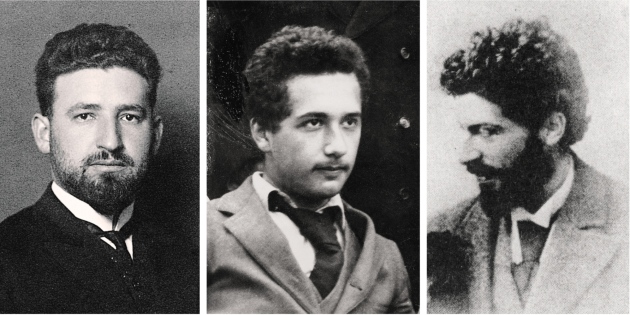
Marcel Grossmann (left) and Michele Besso (right), university friends of Albert Einstein (centre), both made important contributions to general relativity.


A century ago, in November 1915, Albert Einstein published his general theory of relativity in four short papers in the proceedings of the Prussian Academy of Sciences in Berlin1. The landmark theory is often presented as the work of a lone genius. In fact, the physicist received a great deal of help from friends and colleagues, most of whom never rose to prominence and have been forgotten2, 3, 4, 5. (For full reference details of all Einstein texts mentioned in this piece, seeSupplementary Information.)

Here we tell the story of how their insights were woven into the final version of the theory. Two friends from Einstein’s student days — Marcel Grossmann and Michele Besso — were particularly important. Grossmann was a gifted mathematician and organized student who helped the more visionary and fanciful Einstein at crucial moments. Besso was an engineer, imaginative and somewhat disorganized, and a caring and lifelong friend to Einstein. A cast of others contributed too.

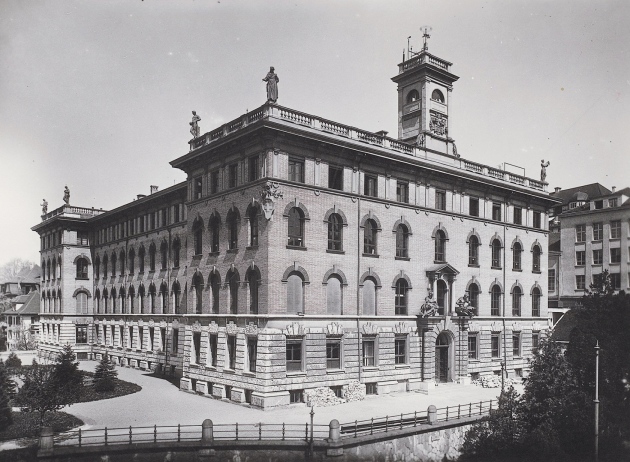
Einstein met Grossmann and Besso at the Swiss Federal Polytechnical School in Zurich6 — later renamed the Swiss Federal Institute of Technology (Eidgenössische Technische Hochschule; ETH) — where, between 1896 and 1900, he studied to become a school teacher in physics and mathematics. Einstein also met his future wife at the ETH, classmate Mileva Marić. Legend has it that Einstein often skipped class and relied on Grossmann’s notes to pass exams.


http://www.nature.com/polopoly_fs/7.31485.1447758022!/image/entanglement.jpg_gen/derivatives/fullsize/entanglement.jpg


Grossmann’s father helped Einstein to secure a position at the patent office in Berne in 1902, where Besso joined him two years later. Discussions between Besso and Einstein earned the former the sole acknowledgment in the most famous of Einstein’s 1905 papers, the one introducing the special theory of relativity. As well as publishing the papers that made 1905 his annus mirabilis, Einstein completed his dissertation that year to earn a PhD in physics from the University of Zurich.

In 1907, while still at the patent office, he started to think about extending the principle of relativity from uniform to arbitrary motion through a new theory of gravity. Presciently, Einstein wrote to his friend Conrad Habicht — whom he knew from a reading group in Berne mockingly called the Olympia Academy by its three members — saying that he hoped that this new theory would account for a discrepancy of about 43˝ (seconds of arc) per century between Newtonian predictions and observations of the motion of Mercury’s perihelion, the point of its orbit closest to the Sun.

Einstein started to work in earnest on this new theory only after he left the patent office in 1909, to take up professorships first at the University of Zurich and two years later at the Charles University in Prague. He realized that gravity must be incorporated into the structure of space-time, such that a particle subject to no other force would follow the straightest possible trajectory through a curved space-time.

In 1912, Einstein returned to Zurich and was reunited with Grossmann at the ETH. The pair joined forces to generate a fully fledged theory. The relevant mathematics was Gauss’s theory of curved surfaces, which Einstein probably learned from Grossmann’s notes. As we know from recollected conversations, Einstein told Grossmann7: “You must help me, or else I’ll go crazy.”

Their collaboration, recorded in Einstein’s ‘Zurich notebook‘, resulted in a joint paper published in June 1913, known as the Entwurf (‘outline’) paper. The main advance between this 1913 Entwurf theory and the general relativity theory of November 1915 are the field equations, which determine how matter curves space-time. The final field equations are ‘generally covariant’: they retain their form no matter what system of coordinates is chosen to express them. The covariance of the Entwurf field equations, by contrast, was severely limited.


http://www.nature.com/polopoly_fs/7.31488.1447759403!/image/einstein_lost.jpg_gen/derivatives/fullsize/einstein_lost.jpg

Einstein’s lost theory uncovered


Two Theories

In May 1913, as he and Grossmann put the finishing touches to their Entwurf paper, Einstein was asked to lecture at the annual meeting of the Society of German Natural Scientists and Physicians to be held that September in Vienna, an invitation that reflects the high esteem in which the 34-year-old was held by his peers.

In July 1913, Max Planck and Walther Nernst, two leading physicists from Berlin, came to Zurich to offer Einstein a well-paid and teaching-free position at the Prussian Academy of Sciences in Berlin, which he swiftly accepted and took up in March 1914. Gravity was not a pressing problem for Planck and Nernst; they were mainly interested in what Einstein could do for quantum physics.  (It was Walther Nernst who advised that Germany could not engage in WWI and win unless it was a short war).

Several new theories had been proposed in which gravity, like electromagnetism, was represented by a field in the flat space-time of special relativity. A particularly promising one came from the young Finnish physicist Gunnar Nordström. In his Vienna lecture, Einstein compared his own Entwurf theory to Nordström’s theory. Einstein worked on both theories between May and late August 1913, when he submitted the text of his lecture for publication in the proceedings of the 1913 Vienna meeting.

In the summer of 1913, Nordström visited Einstein in Zurich. Einstein convinced him that the source of the gravitational field in both their theories should be constructed out of the ‘energy–momentum tensor’: in pre-relativistic theories, the density and the flow of energy and momentum were represented by separate quantities; in relativity theory, they are combined into one quantity with ten different components.


http://www.nature.com/polopoly_fs/7.31358.1447420168!/image/Comment4.jpg_gen/derivatives/landscape_630/Comment4.jpg

ETH-Bibliothek Zürich, Bildarchiv

ETH Zurich, where Einstein met friends with whom he worked on general relativity.


This energy–momentum tensor made its first appearance in 1907–8 in the special-relativistic reformulation of the theory of electrodynamics of James Clerk Maxwell and Hendrik Antoon Lorentz by Hermann Minkowski. It soon became clear that an energy–momentum tensor could be defined for physical systems other than electromagnetic fields. The tensor took centre stage in the new relativistic mechanics presented in the first textbook on special relativity, Das Relativitätsprinzip, written by Max Laue in 1911. In 1912, a young Viennese physicist, Friedrich Kottler, generalized Laue’s formalism from flat to curved space-time. Einstein and Grossmann relied on this generalization in their formulation of the Entwurf theory. During his Vienna lecture, Einstein called for Kottler to stand up and be recognized for this work8.

Einstein also worked with Besso that summer to investigate whether the Entwurf theory could account for the missing 43˝ per century for Mercury’s perihelion. Unfortunately, they found that it could only explain 18˝. Nordström’s theory, Besso checked later, gave 7˝ in the wrong direction. These calculations are preserved in the ‘Einstein–Besso manuscript‘ of 1913.

Besso contributed significantly to the calculations and raised interesting questions. He wondered, for instance, whether the Entwurf field equations have an unambiguous solution that uniquely determines the gravitational field of the Sun. Historical analysis of extant manuscripts suggests that this query gave Einstein the idea for an argument that reconciled him with the restricted covariance of the Entwurf equations. This ‘hole argument’ seemed to show that generally covariant field equations cannot uniquely determine the gravitational field and are therefore inadmissible9.

Einstein and Besso also checked whether the Entwurf equations hold in a rotating coordinate system. In that case the inertial forces of rotation, such as the centrifugal force we experience on a merry-go-round, can be interpreted as gravitational forces. The theory seemed to pass this test. In August 1913, however, Besso warned him that it did not. Einstein did not heed the warning, which would come back to haunt him.


http://www.nature.com/polopoly_fs/7.31486.1447758069!/image/integrity.jpg_gen/derivatives/fullsize/integrity.jpg

Scientific method: Defend the integrity of physics


In his lecture in Vienna in September 1913, Einstein concluded his comparison of the two theories with a call for experiment to decide. The Entwurf theory predicts that gravity bends light, whereas Nordström’s does not. It would take another five years to find out. Erwin Finlay Freundlich, a junior astronomer in Berlin with whom Einstein had been in touch since his days in Prague, travelled to Crimea for the solar eclipse of August 1914 to determine whether gravity bends light but was interned by the Russians just as the First World War broke out. Finally, in 1919, English astronomer Arthur Eddington confirmed Einstein’s prediction of light bending by observing the deflection of distant stars seen close to the Sun’s edge during another eclipse, making Einstein a household name10.

Back in Zurich, after the Vienna lecture, Einstein teamed up with another young physicist, Adriaan Fokker, a student of Lorentz, to reformulate the Nordström theory using the same kind of mathematics that he and Grossmann had used to formulate the Entwurf theory. Einstein and Fokker showed that in both theories the gravitational field can be incorporated into the structure of a curved space-time. This work also gave Einstein a clearer picture of the structure of the Entwurf theory, which helped him and Grossmann in a second joint paper on the theory. By the time it was published in May 1914, Einstein had left for Berlin.


http://www.nature.com/polopoly_fs/7.31489.1447761264!/image/Einstein_frontal_small.jpg_gen/derivatives/fullsize/Einstein_frontal_small.jpg

Snapshots explore Einstein’s unusual brain


The Breakup

Turmoil erupted soon after the move. Einstein’s marriage fell apart and Mileva moved back to Zurich with their two young sons. Albert renewed the affair he had started and broken off two years before with his cousin Elsa Löwenthal (née Einstein). The First World War began. Berlin’s scientific elite showed no interest in the Entwurf theory, although renowned colleagues elsewhere did, such as Lorentz and Paul Ehrenfest in Leiden, the Netherlands. Einstein soldiered on.

By the end of 1914, his confidence had grown enough to write a long exposition of the theory. But in the summer of 1915, after a series of his lectures in Göttingen had piqued the interest of the great mathematician David Hilbert, Einstein started to have serious doubts. He discovered to his dismay that the Entwurf theory does not make rotational motion relative. Besso was right. Einstein wrote to Freundlich for help: his “mind was in a deep rut”, so he hoped that the young astronomer as “a fellow human being with unspoiled brain matter” could tell him what he was doing wrong. Freundlich could not help him.

“Worried that Hilbert might beat him to the punch, Einstein rushed new equations into print.”

The problem, Einstein soon realized, lay with the Entwurf field equations. Worried that Hilbert might beat him to the punch, Einstein rushed new equations into print in early November 1915, modifying them the following week and again two weeks later in subsequent papers submitted to the Prussian Academy. The field equations were generally covariant at last.

In the first November paper, Einstein wrote that the theory was “a real triumph” of the mathematics of Carl Friedrich Gauss and Bernhard Riemann. He recalled in this paper that he and Grossmann had considered the same equations before, and suggested that if only they had allowed themselves to be guided by pure mathematics rather than physics, they would never have accepted equations of limited covariance in the first place.

Other passages in the first November paper, however, as well as his other papers and correspondence in 1913–15, tell a different story. It was thanks to the elaboration of the Entwurf theory, with the help of Grossmann, Besso, Nordström and Fokker, that Einstein saw how to solve the problems with the physical interpretation of these equations that had previously defeated him.

In setting out the generally covariant field equations in the second and fourth papers, he made no mention of the hole argument. Only when Besso and Ehrenfest pressed him a few weeks after the final paper, dated 25 November, did Einstein find a way out of this bind — by realizing that only coincident events and not coordinates have physical meaning. Besso had suggested a similar escape two years earlier, which Einstein had brusquely rejected2.

In his third November paper, Einstein returned to the perihelion motion of Mercury. Inserting the astronomical data supplied by Freundlich into the formula he derived using his new theory, Einstein arrived at the result of 43″ per century and could thus fully account for the difference between Newtonian theory and observation. “Congratulations on conquering the perihelion motion,” Hilbert wrote to him on 19 November. “If I could calculate as fast as you can,” he quipped, “the hydrogen atom would have to bring a note from home to be excused for not radiating.”

Einstein kept quiet on why he had been able to do the calculations so fast. They were minor variations on the ones he had done with Besso in 1913. He probably enjoyed giving Hilbert a taste of his own medicine: in a letter to Ehrenfest written in May 1916, Einstein characterized Hilbert’s style as “creating the impression of being superhuman by obfuscating one’s methods”.

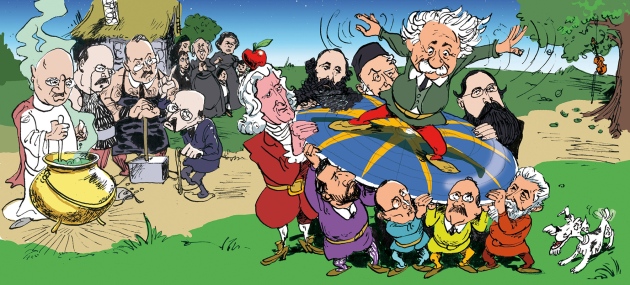
Einstein emphasized that his general theory of relativity built on the work of Gauss and Riemann, giants of the mathematical world. But it also built on the work of towering figures in physics, such as Maxwell and Lorentz, and on the work of researchers of lesser stature, notably Grossmann, Besso, Freundlich, Kottler, Nordström and Fokker. As with many other major breakthroughs in the history of science, Einstein was standing on the shoulders of many scientists, not just the proverbial giants4.


http://www.nature.com/polopoly_fs/7.31375.1447420557!/image/cartoon.jpg_gen/derivatives/landscape_630/cartoon.jpg

Berlin’s physics elite (Fritz Haber, Walther Nernst, Heinrich Rubens, Max Planck) and Einstein’s old and new family (Mileva Einstein-Marić and heir sons Eduard and Hans Albert; Elsa Einstein-Löwenthal and her daughters Ilse and Margot) are watching as Einstein is pursuing his new theory of gravity and his idée fixeof generalizing the relativity principle while carried by giants of both physics and mathematics (Isaac Newton, James Clerk Maxwell, Carl Friedrich Gauss, Bernhard Riemann) and scientists of lesser stature (Marcel Grossmann, Gunnar Nordström, Erwin Finlay Freundlich, Michele Besso).

Nature 527, 298–300 (19 Nov 2015)       http://dx.doi.org:/10.1038/527298a


Read Full Post »

An ambiguous course of psychosis

Larry H. Bernstein, MD, FCAP, Curator

LPBI


It is not always clear what the diagnosis is when a young person develops a psychosis, which is usually a clear break, but the features are not typical.  In the New York Times Opinion Page of Nov 17, 2015, Norman Ornstein describes the development of such in his son – How to help save the mentally ill from themselves.  He describes legislation in process to deal with the problem of when you institutionalize a potentially suicidal patient.  This was the situation that I described in the murder of Rabbi Adler on the podium by Richard Wishnetsky so many years ago.  In the case of Ornstein, his oldest son Mathhew died at 34 of carbon monoxide poisoning 10 years after his problem was discovered.

The son was a brilliant student, and he excelled in debating.  He was compassionate and empathetic.  This young man was a standup comedian and after graduating from Princeton wh went to Hollywood. The father describes his son’s condition as anosognosia, meaning lack of recognition of his illness.  I recall that a prominent cancer surgeon who was manic depressive psychotic and required lithium might have behaved that way when he failed to take his medication. He had a tragic surgical failure that ended his career when he was doing a rectal dissection and got into the posterior vascular bed and was in trouble, needing the assistance of the Chief of Urology.  The patient who died received over 100 units of blood. This very intelligent surgeon would throw the specimen he removed to the pathologist who entered the operating room in poor judgement.  I also recall a valued colleague of mine, a mathematical genius with MD and PhD tell me how the great surgeon and father of kidney transplantation could work tirelessly, but he died in a plane crash – himself as the pilot. I’m not in a position to disagree with Norman Ornstein’s conclusion that the son had a serious mood disorder, but the presentation he describes is similar to the two cases I mention.  In addition, I did not mention that my dear colleague was himself manic depressive, and he would work tirelessly, except when he was down and out.  He wrote an incredible program to diagnose heart attach from the serum enzymes for the IBM PC-XT in apl.  He sailed through difficult mathematics classes without taking notes.  He bacame interested in Shannon Information Theory when he heard a lecture by a microbiologist colleague who had done seminal work in classifying organisms by their biochemical features, which led to extending the use of feature extraction and combinatorial classes.

Ornstein points out that his son was over age 18, so that neither the family or professionals had any legal authority to make a decision about his hospitalization or related matters.  This is not quite like what I had seen with my brother.  But in my brother’s case, he was completely fractured, but he also was in no way belligerent.  In the case of Mathew Ornstein, he was never belligerent, but he was unkempt, kept himself poorly, and grew a beard.  He also becaame ultra religious.  The religiosity was also a feature of my own brother’s illness.  Matthew took a position that he could not take medication.  What is not clear is what medication he would have been on, which might be informative.

see more at – http://www.nytimes.com/2015/11/17/opinion/how-to-help-save-the-mentally-ill-from-themselves


Read Full Post »

Malaria Resistant Mosquitos by Design

Larry H. Bernstein, MD, FCAP, Curator

Curator


CRISPR-Powered Malaria Mosquito Gene Drive

Using the precision gene-editing tool, researchers demonstrate an ability to create large populations of malaria parasite–resistant mosquitoes.

By Tracy Vence | November 24, 2015    http://www.the-scientist.com//?articles.view/articleNo/44609/title/CRISPR-Powered-Malaria-Mosquito-Gene-Drive/

Using CRISPR, investigators at the Universities of California (UC) in San Diego and Irvine have engineered transgenic Anopheles stephensimosquitoes carrying an anti-malaria parasite effector gene “capable of introgressing the genes throughout wild vector populations,” they wrote in a PNAS paper published this week (November 23). The resulting gene-drive system could help wipe out the malaria pathogen (Plasmodium falciparum) within a targeted population of A. stephensi vectors, Anthony James of UC Irvine and his colleagues wrote.

“We know the gene works,” James said in a statement. “The mosquitoes we created are not the final brand, but we know this technology allows us to efficiently create large populations.”

As Nature noted, this study is not the first to report engineered Anopheles that stifle the malaria parasite but, until now, “researchers lacked a way to ensure that the resistance genes would spread rapidly through a wild population.” CRISPR/Cas9 gene-editing enabled this feat. “Males and females derived from transgenic females . . . produce progeny with a high frequency of mutations in the targeted genome sequence, resulting in near-Mendelian inheritance ratios of the transgene,” James and his colleagues wrote in their paper. (See “Reining in Gene Drives,” The Scientist, November 2015.)

“This work suggests that we’re a hop, skip, and jump away from actual gene-drive candidates for eventual release,” Kevin Esvelt of the Wyss Institute who was not involved in the work told Nature. “This is a major advance because it shows that gene drives will likely be effective in mosquitoes,” Esvelt told MIT Technology Review. “Technology is no longer the limitation.”

In the UC Irvine statement, study coauthor Ethan Bier of UC San Diego added that “the ability of this system to carry large genetic payloads should have broad applications to the future use of related CRISPR-based ‘active genetic’ systems.”

Reining in Gene Drives

Researchers have developed two methods to avoid the unchecked spread of engineered genes through wild populations.

By Karen Zusi | November 18, 2015    http://www.the-scientist.com/?articles.view/articleNo/44501/title/Reining-in-Gene-Drives/

“Gene drive” is a phenomenon that causes a gene to be inherited at a rate faster than Mendelian principles would dictate. It relies on genes that can copy themselves onto a corresponding location in a paired chromosome, thereby overriding typical allele inheritance patterns. In conjunction with CRISPR/Cas9, gene drives can be created with almost any DNA sequence, raising questions about the risk of engineered genes spreading quickly through a population. But a team of researchers from Harvard University published a study this week (November 16) in Nature Biology that offers some safety constraints on the system.

A description of the first CRISPR/Cas9 gene drive system was published in March by a team at the University of California, San Diego, and showed rapid spreading of a normally recessive phenotype inDrosophila. Other labs are researching the system’s potential to wipe out insect-borne diseases such as malaria by spreading mutated genes throughout a mosquito population. But the strategy carries the risk of accidental contamination of wild populations.

“We have a responsibility to keep our experiments confined to the laboratory,” Kevin Esvelt, an evolutionary engineer and coauthor on the paper, told Nature. “The basic lesson is: if you don’t have to build a gene drive that can spread through a wild population, then don’t.”


‘Gene drive’ mosquitoes engineered to fight malaria

Mutant mozzies could rapidly spread through wild populations.

Heidi Ledford & Ewen Callaway      http://www.nature.com/news/gene-drive-mosquitoes-engineered-to-fight-malaria-1.18858

http://www.nature.com/polopoly_fs/7.31719.1448290628!/image/1.18858%20.jpg_gen/derivatives/landscape_630/1.18858%20.jpg

The Anopheles stephensi mosquito can spread the malaria parasite to humans.

Mutant mosquitoes engineered to resist the parasite that causes malaria could wipe out the disease in some regions — for good.

Humans contract malaria from mosquitoes that are infected by parasites from the genusPlasmodium. Previous work had shown that mosquitoes could be engineered to rebuff the parasiteP. falciparum1, but researchers lacked a way to ensure that the resistance genes would spread rapidly through a wild population.

In work published on 23 November in the Proceedings of the National Academy of Sciences, researchers used a controversial method called ‘gene drive’ to ensure that an engineered mosquito would pass on its new resistance genes to nearly all of its offspring2 — not just half, as would normally be the case.

The result: a gene that could spread through a wild population like wildfire.

“This work suggests that we’re a hop, skip and jump away from actual gene-drive candidates for eventual release,” says Kevin Esvelt, an evolutionary engineer at Harvard University in Cambridge, Massachusetts, who studies gene drive in yeast and nematodes.

For Anthony James, a molecular biologist at the University of California, Irvine, and an author of the paper, such a release would spell the end of a 30-year quest to use mozzie genetics to squash malaria.

James and his laboratory have painstakingly built up the molecular tools to reach this goal. They have worked out techniques for creating transgenic mosquitoes — a notoriously challenging endeavour — and isolated genes that could confer resistance to P. falciparum. But James lacked a way to ensure that those genes would take hold in a wild population.

Fast forward

The concept of engineering a gene drive has been around for about a decade, and James’s laboratory had tried to produce them in the past. The process was agonizingly slow.

Then, in January, developmental biologists Ethan Bier and Valentino Gantz at the University of California, San Diego, contacted James with a stunning finding: they had engineered a gene drive in fruit flies, and wondered whether the same system might work in mosquitoes. James jumped at the opportunity to find out.

Bier and Gantz had used a gene-editing system called CRISPR–Cas9 to engineer a gene drive. They inserted genes encoding the components of the system that were designed to insert a specific mutation in their fruit flies. The CRISPR–Cas9 system then copied that mutation from one chromosome to the other3. James used that system in mosquitoes to introduce two genes that his past work showed would cause resistance to the malaria pathogen.

The resulting mosquitoes passed on the modified genes to more than 99% of their offspring. Although the researchers stopped short of confirming that all the insects were resistant to the parasite, they did show that the offspring expressed the genes.

“It’s a very significant development,” says Kenneth Oye, a political scientist who studies emerging technologies at the Massachusetts Institute of Technology in Cambridge. “Things are moving rapidly in this field.”

Other teams are developing gene drives that could control malaria. A team at Imperial College London has developed a CRISPR-based gene drive in Anopheles gambiae, the mosquito species that transmits malaria in sub-Saharan Africa. The group’s gene drive inactivates genes involved in egg production in female mosquitoes, which could be used to reduce mosquito populations, according to team member Austin Burt, an evolutionary geneticist. Their results will be published inNature Biotechnology next month, Burt says.

Oye notes that such technological advances are outpacing the regulatory and policy discussionsthat surround the use of gene drive to engineer wild populations. Gene drives are controversial because of the potential that they hold for altering entire ecosystems.

Before testing gene drive in the field, Oye hopes that researchers will study the long-term consequences of the changes, such as their stability and potential to spread to other species, as well as methods to control them. “I’m less worried about malevolence than getting something wrong,” he says.

Esvelt says that the US-based researchers made a wise decision in selecting a non-native mosquito species for their experiments. (The team worked with Anopheles stephensi, which is native to the Indian subcontinent.) “Even if they escaped the lab, there’d be no one to mate with and spread the drive,” Esvelt says.

James predicts that it will take his team less than a year to prepare mosquitoes that would be suitable for field tests, but he is in no rush to release them. “It’s not going to go anywhere until the social science advances to the point where we can handle it,” he says. “We’re not about to do anything foolish.”

Nature    http://dx.doi.org:/10.1038/nature.2015.18858

References

  1. Isaacs, A. T. et al. PLoS Pathog. 7, e1002017 (2011).
  2. Gantz, V. M. et al. Proc. Natl Acad. Sci. USA http://dx.doi.org/10.1073/pnas.1521077112(2015).


With This Genetic Engineering Technology, There’s No Turning Back

Designers of a “selfish” gene able to spread among mosquitoes say it could wipe out malaria, but the scientific community is at odds over whether or not we should do it.

The students in Anthony James’s basement insectary at the University of California, Irvine, knew they’d broken the laws of evolution when they looked at the mosquitoes’ eyes.

By rights, the bugs, born from fathers with fluorescent red eyes and mothers with normal ones, should have come out only about half red. Instead, as they counted them, first a few and then by the hundreds, they found 99 percent had glowing eyes.

More important than the eye color is that James’s mosquitoes also carry genes that stop the malaria parasite from growing. If these insects were ever released in the wild, their “selfish” genetic cargo would spread inexorably through mosquito populations, and potentially stop the transmission of malaria.

The technology, called a “gene drive,” was built using the gene-editing technology known as CRISPR and is being reported by James, a specialist in mosquito biology, and a half dozen colleagues today in the Proceedings of the National Academy of Sciences.

A functioning gene drive in mosquitoes has been anticipated for more than a decade by public health organizations as a revolutionary novel way to fight malaria. Now that it’s a reality, however, the work raises questions over whether the technology is safe enough to ever be released into the wild.

“This is a major advance because it shows that gene drives will likely be effective in mosquitoes,” says Kevin Esvelt, a gene drive researcher at Harvard University’s Wyss Institute. “Technology is no longer the limitation.”


Highly efficient Cas9-mediated gene drive for population modification of the malaria vector mosquito Anopheles stephensi

Significance

Malaria continues to impose enormous health and economic burdens on the developing world. Novel technologies proposed to reduce the impact of the disease include the introgression of parasite-resistance genes into mosquito populations, thereby modifying the ability of the vector to transmit the pathogens. Such genes have been developed for the human malaria parasite Plasmodium falciparum. Here we provide evidence for a highly efficient gene-drive system that can spread these antimalarial genes into a target vector population. This system exploits the nuclease activity and target-site specificity of the Clustered Regularly Interspaced Short Palindromic Repeats (CRISPR) system, which, when restricted to the germ line, copies a genetic element from one chromosome to its homolog with ≥98% efficiency while maintaining the transcriptional activity of the genes being introgressed.

Genetic engineering technologies can be used both to create transgenic mosquitoes carrying antipathogen effector genes targeting human malaria parasites and to generate gene-drive systems capable of introgressing the genes throughout wild vector populations. We developed a highly effective autonomous Clustered Regularly Interspaced Short Palindromic Repeats (CRISPR)-associated protein 9 (Cas9)-mediated gene-drive system in the Asian malaria vector Anopheles stephensi, adapted from the mutagenic chain reaction (MCR). This specific system results in progeny of males and females derived from transgenic males exhibiting a high frequency of germ-line gene conversion consistent with homology-directed repair (HDR). This system copies an ∼17-kb construct from its site of insertion to its homologous chromosome in a faithful, site-specific manner. Dual anti-Plasmodium falciparum effector genes, a marker gene, and the autonomous gene-drive components are introgressed into ∼99.5% of the progeny following outcrosses of transgenic lines to wild-type mosquitoes. The effector genes remain transcriptionally inducible upon blood feeding. In contrast to the efficient conversion in individuals expressing Cas9 only in the germ line, males and females derived from transgenic females, which are expected to have drive component molecules in the egg, produce progeny with a high frequency of mutations in the targeted genome sequence, resulting in near-Mendelian inheritance ratios of the transgene. Such mutant alleles result presumably from nonhomologous end-joining (NHEJ) events before the segregation of somatic and germ-line lineages early in development. These data support the design of this system to be active strictly within the germ line. Strains based on this technology could sustain control and elimination as part of the malaria eradication agenda.

Read Full Post »

Targeting Neuronal Cell Growth

Larry H. Bernstein, MD, FCAP, Curator

LPBI


Remote Mind Control

Using chemogenetic tools to spur the brain into action

By Kelly Rae Chi | November 1, 2015     http://www.the-scientist.com//?articles.view/articleNo/44321/title/Remote-Mind-Control/

http://www.the-scientist.com/November2015/LT_2_opener.jpg

A MATTER OF TIME: Optogenetics methods, which work on the millisecond timescale, allow for the finest level of temporal control over neuron excitation and inhibition. The chemogenetic tools, DREADDs and PSAMs-PSEMs, are ideal for the study of longer-lasting behaviors such as appetite, thirst, or anxiety because they work over a scale of the minutes-to-hours. The receptors are incorporated into specific neurons or cells using viruses. Ligands—CNO or salvinorin B (for DREADD receptors) or PSEMs—are administered via injection or drinking water. Both receptors and ligands are orthogonal, meaning they do not bind to anything else in the body.
REDRAWN WITH PERMISSION OF SCOTT STERNSON FROM SCIENCE, 333:1292, 2011; NEUROENDOCRINOLOGY, 100:98, 2014

In a pharmacology lab at the University of North Carolina at Chapel Hill, doctoral student Reid Olsen, working with brain tissue harvested from a mouse just a few hours earlier, readies half a dozen dime-size slices for live calcium imaging. This mouse’s brain contains a genetically engineered receptor that Olsen has targeted to cells thought to control the making of new neurons in adult mice. He is about to use a synthetic drug to activate this receptor in the tissue. When it indeed works—just as he has predicted—he turns his attention to attempting to stimulate neurogenesis in a freely moving mouse that has the same engineered receptors in its brain.

Less than a decade ago, such precise control over neuronal activity in a dish, let alone in a living brain, was impossible. The drugs available to repress neurons or encourage them to fire would produce off-target effects or eliminate cell populations indiscriminately.

Working in the lab of Juan Song, Olsen is using a “designer receptor exclusively activated by a designer drug,” or DREADD. These modified G protein–coupled receptors (GPCRs) are usually either virally administered or bred into animals, then activated by a specific ligand that’s either injected or taken orally. Both the receptor and the ligand are designed to be orthogonal, effectively meaning they bind to each other but to nothing else.

Along with DREADDs, recently developed orthogonal ligand-gated ion channels called “pharmacologically selective actuator molecules” and “pharmacologically selective effector molecules” (PSAMs-PSEMs), are allowing researchers to dial up or dial down neuronal activity in living animals, with the goal of clarifying the brain wiring that controls appetite, thirst, anxiety, and many other behaviors.

Along with DREADDs, recently developed orthogonal ligand-gated ion channels called “pharmacologically selective actuator molecules” and “pharmacologically selective effector molecules” (PSAMs-PSEMs), are allowing researchers to dial up or dial down neuronal activity in living animals, with the goal of clarifying the brain wiring that controls appetite, thirst, anxiety, and many other behaviors.

“[DREADDs and PSAMs–PSEMs] are completely complementary methods, and they can in principle be used together in the same animal.—Scott Sternson, HHMI Janelia Research Campus”

These are not the only so-called chemical genetic, or “chemogenetic,” tools for controlling cells. Orthogonal kinases have been used in the brain to deduce the mechanisms underlying epilepsy, memory, and neuronal development. And inducible genetic systems, now in wide use for two decades—for example, tetracycline-dependent transcriptional promoters—are incredibly powerful for expressing specific genes at a particular point in an animal’s development, says Bruce Conklin, senior investigator at the University of California, San Francisco–affiliated Gladstone Institute of

Cardiovascular Disease, whose group pioneered the development of engineered GPCRs. At the other extreme of temporal control from inducible genetic systems, optogenetics—a set of methods that use light to activate genetically encoded opsins—is widely used for controlling brain cells on the millisecond time scale in vivo.

As tools, DREADDs and PSAMs-PSEMs allow control of neuronal activity over a middle ground—from minutes to hours. “These are the time scales that are most useful, in my opinion, for neurobiology experiments,” says Scott Sternson of the Howard Hughes Medical Institute’s Janelia Research Campus in Ashburn, Virginia, who has developed PSAMs-PSEMs but who also regularly uses DREADDs and optogenetics. (For a review, see Ann Rev Neurosci, 37:387-407, 2014.)

The Scientist talked to developers about the basics behind DREADDs and PSAMs-PSEMs. Here’s what they said.

DREADDs and PSAMs-PSEMs: A history

In 1991, scientists showed that engineering orthogonal GPCRs was possible, and first iterations of such tools, dubbed “receptor activated solely by a synthetic ligand”  or RASSLs, came onto the scene in 1998.

Bryan Roth, of the UNC School of Medicine, made the second generation of RASSLs, which he called DREADDs, using an engineered muscarinic GPCR and, importantly, a ligand that was chemically inert (PNAS, 104:5163-68, 2007). Since the publication of that first paper on DREADDs, hundreds of labs have administered them in vivo, Roth says. This chemical genetic technique has the advantage of being easier to implement and less invasive than optogenetics, he adds.

Ligand-gated ion channel–based chemical genetic tools have their own history, but were not used in vivo in animals until 2011, when Sternson developed PSAMs-PSEMs. The researchers mutated ligand-binding domains and mixed and matched them to different ion-pore domains. But they altered the receptors and their ligands further so that they don’t interact with anything in the body. “As I was thinking about that system, I imagined I would want it to have easily optimizable, nontoxic ligands and the ability to tune the ion[-pore] or ligand-binding domain easily,” Sternson says.

DREADDs and PSAM-PSEM combinations in action

There are five different classes of DREADDs available, each designed for a different purpose:

  • hM3Dq raises calcium levels in a cell, causing burst firing;
  • hM4Di lowers cAMP and the activation of a particular potassium channel, causing neuronal silencing; also inhibits presynaptic neurotransmitter release;
  • GsD enhances cAMP, causing modulation signaling;
  • Rq(R165L) enhances arrestin signaling, a specific pathway that has been linked to the mechanisms of psychoactive drugs;
  • κ-opioid receptor DREADD or  KORD quiets neurons and also inhibits presynaptic neurotransmitter release.

The synthetic ligand for each of the first four DREADDs is clozapine-N-oxide (CNO), whereas KORDs are activated by salvinorin B. That means combining DREADDs is now possible: Roth’s group showed recently that they could insert the hM3Dq and KORD to be able to activate and silence the same neurons (Neuron, 86:936-46, 2015).

Roth’s lab has also made light-activated (photocaged) CNO, which allows for more-precise control over the timing of DREADD receptor activation. He has not published any papers using this yet, but will provide the caged ligand to interested researchers upon request. To make use of photocaged CNO, however, you will need to surgically implant an optic cable to provide light to the brain region of interest. If you’re going to go to the trouble, you might consider optogenetics, Roth adds.

Scientists have paired different PSAMs with various ion channels and PSEMs in order to control neurons. Among the most popular:

  • PSAML141F, Y115F– 5HT3 HC is activated by the ligand PSEM89S, allowing cations to flow into the cell and boost excitability;
  • PSAML141F, Y115F – GlyR is activated by the ligand PSEM89S, silencing neurons;
  • PSAMQ79G, L141S-nAChR V13 is activated by the ligand PSEM9S, enhancing calcium signaling. (Because there are two different PSEM ligands, PSAMs-PSEMs can also be combined in the same animal.)

When to opt for optogenetics

The single biggest consideration in your choice of, and among, these technologies is the temporal control needed for your experiment. Optogenetics, for example, offers the finest level of control, on the order of milliseconds to seconds. If you’re examining decision-making behaviors, for example, then optogenetics (or electrical stimulation) is for you.

If you’re studying behaviors—such as eating or drinking—or physiological changes that occur over minutes to hours, then either optogenetics, chemogenetics, or both might work.

For long-lasting behaviors being measured over the course of hours to days, a chemogenetic approach such as DREADDs or PSAMs-PSEMs is the clear winner. The ligands linger longer than short light pulses and can even be dissolved into the animals’ drinking water. The chemogenetic approach is also superior for investigating larger swaths of brain, which are challenging to illuminate using optogenetics methods, Roth says.

Researchers have also successfully combined the approaches, typically using an optogenetic approach to turn on neurons and chemogenetic approaches to switch them off in the same animal. The inhibitory DREADD hM4Di targets presynaptic terminals, which could be especially helpful if you’re investigating a region of the brain where long-range projection neurons terminate.

Use DREADDs or PSAMs-PSEMs first?

TWOFERS: In 2015, researchers announced a new DREADD: KORD. Because it is activated by a different ligand than the one for previously developed DREADDs, the engineered receptors can now be combined in the same animal. BRYAN ROTH

Researchers tend to start with DREADDs simply because they have been around longer, Sternson says. But some will turn to PSAMs if DREADDs have been ineffective. “Most cell types will respond to [DREADDs] as they’re supposed to, but not all,” Sternson says. That’s because DREADDs tap into a complex signaling pathway that eventually results in neuronal activation or silencing. In contrast, PSAMs work by controlling the gating of an ion channel. On the other hand, ligand-gated ion channels may affect some types of cells, such as developing neurons, differently than they do adult cells, says Olsen, who coauthored the Neuronpaper describing KORD, the newest DREADD. But in general, Sternson says, “they’re completely complementary methods, and they can in principle be used together in the same animal.”

Another consideration is that PSEMs tend to take slightly longer to work—15 minutes, compared with the DREADD ligand CNO, which takes 5–10 minutes. On the other hand, PSEMs tend to take less time to clear from the body, 1–2 hours (vs. about 2 hours for CNO). Salvinorin B, the ligand of the new KOR-based DREADD, works almost instantaneously, and the effects last less than an hour. Although these differences are minor, they may factor into your experiment.

Experimental procedure

The operational steps are similar for both tools. Most people inject viruses carrying the engineered receptors into the brain area of interest and wait two to three weeks for expression. They then administer the ligand and make their measurements.
If you’ve already performed stereotactically guided brain surgery, there’s nothing new to learn. For newcomers, a Journal of Visualized Experiments protocol describes the surgery and injection of the virally ferried chemogenetic tools (100:e52859, 2015), though it’s best to learn by shadowing someone with experience, Roth says.

Viral constructs for both DREADDs and PSAMs are available from Addgene. For DREADDs, the UNC Vector Core sells high-titer virus stocks. CNO is available for free or at a reduced price for NIH-funded investigators through the National Institute of Drug Abuse’s Drug Supply Program. For PSAMs, you make your own receptor-carrying virus. Sternson provides PSEMs to researchers for their pilot experiments, and they are available for purchase through Apex Scientific for about $15 for 10 mg, he says.

You don’t necessarily need to do surgery if you can afford mutant mice whose DREADDs are under the control of an inducible promoter, such as Cre. Such mice are available through Jackson Labs. In general, just be sure to use validated Cre driver lines, Roth says.

You should make sure the receptor is expressed and working in vitro before you move to whole animals. Expression of both DREADDs and PSAMs is linked to the translation of a fluorescent protein. On his blog, chemogenetic.blogspot.com, Roth gives more specific advice on immunofluorescent staining for visualization of DREADDs.

To make sure that the receptors are actually working involves more-detailed studies, such as the calcium imaging Olsen used to ascertain whether his activating DREADD responded to the ligand, or electrophysiological studies in slices, but the particulars depend on what mechanism your receptor-ligand uses.

“One thing that’s important to know when using these receptors is that they’re not completely off when expressed at high levels,” Conklin says, referring to DREADDs. “[Simply] by expressing them, one cannot be sure.” To get around potential abnormal background activity, you have to include a control without the receptor. Also, having a good label on the receptor is helpful. Using DREADDs in combination with an inducible transcription system, such as Cre, allows you to measure receptor expression before and after inducing it.

Future uses

Although DREADDs and PSAMs-PSEMs are proving to be useful research tools for cell biologists and neurobiologists, both Roth and Sternson are actively developing orthogonal systems for potential clinical use, either as gene-based therapies that would go directly into humans or to be used in stem cell–based therapies.


Chemogenetic tools to interrogate brain functions.

Annu Rev Neurosci. 2014;37:387-407. doi: 10.1146/annurev-neuro-071013-014048. Epub 2014 Jun 16.

Elucidating the roles of neuronal cell types for physiology and behavior is essential for understanding brain functions. Perturbation of neuron electrical activity can be used to probe the causal relationship between neuronal cell types and behavior. New genetically encoded neuron perturbation tools have been developed for remotely controlling neuron function using small molecules that activate engineered receptors that can be targeted to cell types using genetic methods. Here we describe recent progress for approaches using genetically engineered receptors that selectively interact with small molecules. Called “chemogenetics,” receptors with diverse cellular functions have been developed that facilitate the selective pharmacological control over a diverse range of cell-signaling processes, including electrical activity, for molecularly defined cell types. These tools have revealed remarkably specific behavioral physiological influences for molecularly defined cell types that are often intermingled with populations having different or even opposite functions.


A Method for Remotely Silencing Neural Activity in Rodents During Discrete Phases of Learning.

J Vis Exp. 2015 Jun 22;(100):e52859. doi: 10.3791/52859.

This protocol describes how to temporarily and remotely silence neuronal activity in discrete brain regions while animals are engaged in learning and memory tasks. The approach combines pharmacogenetics (Designer-Receptors-Exclusively-Activated-by-Designer-Drugs) with a behavioral paradigm (sensory preconditioning) that is designed to distinguish between different forms of learning. Specifically, viral-mediated delivery is used to express a genetically modified inhibitory G-protein coupled receptor (the Designer Receptor) into a discrete brain region in the rodent. Three weeks later, when designer receptor expression levels are high, a pharmacological agent (the Designer Drug) is administered systemically 30 min prior to a specific behavioral session. The drug has affinity for the designer receptor and thus results in inhibition of neurons that express the designer receptor, but is otherwise biologically inert. The brain region remains silenced for 2-5 hr (depending on the dose and route of administration). Upon completion of the behavioral paradigm, brain tissue is assessed for correct placement and receptor expression. This approach is particularly useful for determining the contribution of individual brain regions to specific components of behavior and can be used across any number of behavioral paradigms.
It is important to indicate that after the protein has being made it acts in fast form (milliseconds etc,) as protein do…

Read Full Post »

Forced feeding of the geriatric patient

Larry H. Bernstein, MD, FCAP, Curator

LPBI


The New York Times of 11/24/2015 carried an Op-Ed “Stop Force-Feeding the Elderly”. The article is reminiscent of the experience of my Uncle Herman, in a nursing home at age 98.  He was not really incapable of taking care of himself, but he had lived in the same place the his recently deceased wife had been.  A nurse tried to place a feeding tube and he refused, and when she said he needed it, he smacked her down.  That was a year before he died.

In important issue that is not stated is that nutritional care is important in nursing homes, and there is very poor assessment of nutritional status of these patients.  It was many years ago that I was unable to provide the support for testing of transthyretin testing at a nursing home in New Haven, mainly because it was not in contract with Bridgeport Hospital.  However, I knew someone in another state who was formerly a representative of a major pharmaceutical company and she took a position at a nursing home.  She was thoroughly familiar with my publications on transthyretin and cachexia.  It is not only an issue with hospitalized patients who are hypermetabolic, mainly posttraumatic, postoperative, or burn patients, but is also seen in the geriatric patient unable to carry out the activities of daily living.

The NY Times article informs us that there is excessive forced feeding in nursing homes because they may have poorly prepared nursing and ancillary staff who are also not well paid.  It points out that tube feeding is often given to patients with dementia who should not even be offered such treatment.

The experience described is a viscous nutritional formula pumped into a feeding tube inserted into the stomach via nasopharyngeal passage.  The well trained pathologist is quite familiar with the epithelial erosion that occurs from tube placement into the esophagus.

The author, Haider Javed Warraich, describes an experience  as follows: “The nearest I ever came to experiencing what I might feel like was last winter when I came down with the sniffles and went to the clinic for a nasopharyngeal swab to rule out the flu. The swab inserted in my nose was perhaps a tenth the size of the smallest feeding tube, and I felt as if it were tearing all the way into my brain stem.”

Furthermore, even if food supplementation is required, a protein shake can be given orally, and if the oral route is not accessible, a small port of entry can be made for temporary use directly to the stomach.

The writer describes the incident of a demented, glassy eyed patient who stared at the ceiling. He had a chest tube draining fluid because of pneumonia.  The family requested that a feeding tube be placed.  The intern started the placement with care.  The patient spoke the first words he expressed in months:
“Kill me”.  This became a screaming : “killmekillme…”.


Read Full Post »

An Emotional and Thoughtful Decision Over BRAC1 and Surgery

Curator: Larry H. Bernstein, MD, FCAP


In the last several years, no celebrity decision has been more instructive and influential than the decision after childbirth and many child adoptions than that of Angelina Jolie Pitt.  She was celebrated for for her many movies at a still young age prior to moving to directing movies, known for unflinting courage in action movies by a woman gifted and excelling at actions considered to be done by a substitute.  The athleticism might recall that of Lucille Ball or of Katharine Hepburn in another generation.   She developed a small resectable breast lesion not so long after her marriage, and her mother had had breast cancer previously.  Genetic testing revealed that she had a BAC1 genetic typing.  Having consulted with the best physician advice available and with discussions with her husband, Brad Pitt, she undertook a double mastectomy.  This was still not the end of the story.  Her mutation, which is associated usually with a jewish heritage, is also associated with risk of ovarian cancer.  This led to a later decision to have an oophorectomy.  She made two of the most difficult decisions that women face, especially if they are of childbearing age.


http://www.huffingtonpost.com/entry/brad-pitt-angelina-jolie-strength_5637abc7e4b0631799132888


Angelina Jolie and Brad Pitt sat down for an emotional interview with the “Today” show to discuss their new movie “By the Sea” and her decision to undergo a double mastectomy and have her ovaries and fallopian tubes removed to avoid cancer. During the moving discussion, Pitt praised his wife’s braveness.

“I just remember there was no vanity to my wife’s approach,” he said, after explaining how he found out about the blood test results that showed she could have signs of early-stage ovarian cancer while away in France. “It was mature. [There] was an excitement to where this is our life, we’re gonna make the best of it. There was a strength in that. It’s just another one of those things in life that makes you tighter. She was doing it for her kids, and she was doing it for her family, so we can be together. It trumped everything, everything and anything.”

The mother of six said her husband’s support was paramount.

“He made it very, very clear to me that what he loved and what was a woman to him was somebody who was smart and capable and cared about her family. It’s not about your physical body. I knew through the surgeries that he was on my side and that that wasn’t somewhere where I was going to feel like less of a woman, because my husband wasn’t going to let that happen.”

Jolie used the same doctor as her late mother, Marcheline Bertrand, to remove her ovaries. Bertrand, who died in 2007 after an eight-year battle with ovarian cancer, made the doctors and nurses “promise” to remove her daughter’s ovaries.


Brad Pitt & Angelina Jolie: When is it Time to Seek Help?

http://www.huffingtonpost.com/dr-jane-greer/brad-pitt-angelina-jolie-_1_b_7242196.html

Brad Pitt and Angelina Jolie’s marriage has been reinvigorated by couples’ counseling. Although things are on the mend now, there was trouble in paradise less than a year after they tied the knot. Not only did Brad see ex Jennifer Aniston alone, but he alsodidn’t accompany Angelina to the Critics’ Choice Awards in January. After months of fighting, they decided to seek out the help of a therapist. Now they plan to always keep counseling in their lives, because they say it has transformed their marriage and helped them fall in love with each other again. And they are not alone. Cameron Diazand Benji Madden have enlisted some outside support after just five months of marriage, as they work to put a strong foundation underneath them. This proves that it is never too early to get help.

The secret to having a lasting relationship is to not let the anger and resentment build up to the point where it drives you apart. A lot of people don’t realize that a lasting union is full of angry and questioning feelings which go hand in hand with the adoring ones, not unlike a seesaw. I call them “love you, mean it” and “hate you, mean it” moments, which I talk about in my book What About Me? Stop Selfishness From Ruining Your Relationship. It is natural to shift in and out of these emotions. The challenge is to make sure the positive ones always balance the negative ones so that they don’t consume you. The goal is always to continue to or to get back to loving and feeling connected to your partner. What happens, though, when that becomes more and more difficult to do, and you aren’t able to get past the anger anymore? How do you know when it is time to bring in a trained professional to help you sort out the issues?

Even in today’s sophisticated age, people are often reluctant to air their marital problems with an outsider, especially when it comes to sexual troubles. There are many reasons for this which include feeling embarrassed, the fear that you think something is really wrong with you or your partner, the concern that you will be told there is something wrong with your relationship that is unfixable, or maybe you do want to go but your partner doesn’t. There are also those people who think that because the idea of divorce hasn’t come up things can’t be that bad, so you don’t really need help.

http://www.imdb.com/name/nm0001401/

Angelina Jolie is an Oscar-winning actress who became popular after playing the title role in the “Lara Croft” blockbuster movies, as well as Mr. & Mrs. Smith (2005),Wanted (2008), Salt (2010) and Maleficent (2014). Off-screen, Jolie has become prominently involved in international charity projects, especially those involving refugees.


Speaking to the Daily Telegraph, she said, “I actually love being in menopause,” shocking women worldwide. The star said she’s “very fortunate” that her experience with menopause hasn’t been all that bad.

Jolie-Pitt had a double mastectomy in 2013 and then decided in March to have her ovaries and fallopian tubes removed to decrease her chance of getting cancer, as she carries the BRCA1 gene mutation. Her most recent surgery is one that “puts women into a forced menopause,” she wrote in a heartfelt New York Times op-ed publicly announcing her decision.

“I feel older, and I feel settled being older. I feel happy that I’ve grown up,” she said. “I don’t want to be young again.”

Her husband, Brad Pitt, has been helped her overcome the physical effects of the surgery.


She described her experience in two op-ed articles in the New York Times. These articles have been highly influential in the lives of other women.


Angelina Jolie PittDiary of a Surgery – The New York Times

http://www.nytimes.com/2015/03/24/opinion/angelina-jolie-pitt-diary-of-a-surgery.html

Angelina Jolie Pitt Diary of a … Surgery YouTube

https://www.youtube.com/watch%3Fv%3DpzGYLJddQrE

Experts Back Angelina Jolie Pitt in Choices for Cancer Prevention 

http://www.nytimes.com/2015/03/25/science/experts-back-angelina-jolie-pitt-in-choices-for-cancer-prevention.html

Read Full Post »

Collaboration

Larry H. Bernstein, MD, FCAP, Curator

LPBI


  1. </div>
    ” data-relevance-type=”popular” data-component-context=”tweet” data-you-follow=”false” data-follows-you=”false” data-you-block=”false”>

    The surprising ties between Denmark and China’s most innovative company in the Nature Index

  2. PhotosView all

    Image gallery thumbnail

    Image gallery thumbnail

    Image gallery thumbnail

    Image gallery thumbnail

    1. Explore global partnerships for science with this Nature Index interactive

      Embedded image permalink
  3. </div>
    ” data-component-context=”tweet” data-you-follow=”false” data-follows-you=”false” data-you-block=”false”>

    Explore how the world’s scientists collaborate in one giant graphic

    1. China’s research strength by subject areas according to

      Embedded image permalink
  4. Explore como os cientistas do mundo colaboram em um gráfico gigante

  5. Discover patterns of partnerships in scientific research

    1. 【Nature Japan】国における共同研究のパターンを Nature Index が分析

      Embedded image permalink

Read Full Post »

Tweets by @pharma_BI and by @AVIVA1950: Real Time Coverage and eProceedings of The 11th Annual Personalized Medicine Conference, November 18-19, 2015, Joseph B. Martin Conference Center of the Harvard New Research Building at Harvard Medical School

Curator: Aviva Lev-Ari, PhD, RN


pharma_bi-background0238


Aviva Lev-Ari ‏@AVIVA1950  Nov 19

Genomics England, Innovators in Personalized Medicine, Value of Care @AZ, 11… http://wp.me/p2kEDv-8Nc  via @Pharma_BI #PMConf @HarvardPMConf

  1. Aviva Lev-Ari‏@AVIVA1950  Nov 19

11/19/2015 noon Keynote Genomics England, Innovators in Personalized Medicine, Value of Care @AZ, 11… http://wp.me/p2kEDv-8Nc  via @Pharma_BI

More

  1. Aviva Lev-Ari‏@AVIVA1950  Nov 19

PMC Award: Francis S. Collins, M.D., Ph.D. ex-Director, NIH, 11th Annual Perso… http://wp.me/p2kEDv-8N8  via @Pharma_BI#PMConf @HarvardPMConf

  1. Aviva Lev-Ari‏@AVIVA1950  Nov 19

11/19/2015 10:30 a.m. PMC Award: Francis S. Collins, M.D., Ph.D. ex-Director, NIH, 11th Annual Perso… http://wp.me/p2kEDv-8N8  via @Pharma_BI

  1. Aviva Lev-Ari‏@AVIVA1950  Nov 19

Personalized Medicine in Keynote: President, Worldwide R&D, Pfiz… http://wp.me/p2kEDv-8N6  via @Pharma_BI#PMConf @HarvardPMConf

More

  1. Aviva Lev-Ari‏@AVIVA1950  Nov 19

11/19/2015 8 a.m. Building a Personalized Medicine Company & Keynote: President, Worldwide R&D, Pfiz… http://wp.me/p2kEDv-8N6  via @Pharma_BI


  1. Aviva Lev-Ari‏@AVIVA1950  Nov 18

Perspectives From Professional Societies, Personalized Medicine Around the W… http://wp.me/p2kEDv-8N4  via @Pharma_BI #PMConf @HarvardPMConf

More

  1. Aviva Lev-Ari‏@AVIVA1950  Nov 18

11/18/2015 3:15 p.m. Perspectives From Professional Societies and Personalized Medicine Around the W… http://wp.me/p2kEDv-8N4  via @Pharma_BI

More

  1. Aviva Lev-Ari‏@AVIVA1950  Nov 18

Keynote Speaker: Deputy Commissioner, US FDA – Annual Personalized Medicin… http://wp.me/p2kEDv-8N2  via @Pharma_BI #PMCCOnf @HarvardPMConf

More

  1. Aviva Lev-Ari‏@AVIVA1950  Nov 18

11/18/2015 1:00 p.m. Keynote Speaker: Deputy Commissioner, US FDA – 11th Annual Personalized Medicin… http://wp.me/p2kEDv-8N2  via @Pharma_BI

More

  1. Aviva Lev-Ari‏@AVIVA1950  Nov 18

“Precision Trials Challenge” 11th Annual Personalized Medi… http://wp.me/p2kEDv-8N0  via @Pharma_BI #PMConf @HarvardPMConf

More

  1. Aviva Lev-Ari‏@AVIVA1950  Nov 18

11/18/2015 10:30 a.m. – Keynote Speakers: “Precision Trials Challenge” 11th Annual Personalized Medi… http://wp.me/p2kEDv-8N0  via @Pharma_BI

  1. Aviva Lev-Ari‏@AVIVA1950  Nov 18

Keynote Address: Kathy Hudson, Ph.D. NIH – 11th Annual Personalized Medicine … http://wp.me/p2kEDv-8MY  via @Pharma_BI #PMConf @HarvardPMConf

More

  1. Aviva Lev-Ari‏@AVIVA1950  Nov 18

11/18/2015 8:30 a.m. – Keynote Address: Kathy Hudson, Ph.D. NIH – 11th Annual Personalized Medicine … http://wp.me/p2kEDv-8MY  via @Pharma_BI

More

  1. Aviva Lev-Ari‏@AVIVA1950  Nov 18

LIVE – 11/18/2015 8:00 a.m. -Personalized Medicine Conferenc… http://wp.me/p2kEDv-8MW  via @Pharma_BI #PMConf @HarvardPMConf

Moe

  1. Aviva Lev-Ari‏@AVIVA1950  Nov 18

LIVE – 11/18/2015 8:00 a.m. – Welcome & Opening Remarks: 11th Annual Personalized Medicine Conferenc… http://wp.me/p2kEDv-8MW  via @Pharma_BI


  1. @pharma_BI‏@Pharma_BI
     13m13 minutes ago

Real Time Coverage and eProceedings of The 11th Annual Personalized Medicine Conference, November 18-19, 2015,… http://pharmaceuticalintelligence.com/2015/11/23/real-time-coverage-and-eproceedings-of-the-11th-annual-personalized-medicine-conference-november-18-19-2015-joseph-b-martin-conference-center-of-the-harvard-new-research-building-at-harvard-medica …

    1. Aviva Lev-Ari‏@AVIVA1950  Nov 19

11/19/2015 noon Keynote Genomics England, Innovators in Personalized Medicine, Value of Care @AZ, 11… http://wp.me/p2kEDv-8Nc  via @Pharma_BI

More

    1. Aviva Lev-Ari‏@AVIVA1950  Nov 19

PMC Award: Francis S. Collins, M.D., Ph.D. ex-Director, NIH, 11th Annual Perso… http://wp.me/p2kEDv-8N8  via @Pharma_BI#PMConf @HarvardPMConf

More

    1. Aviva Lev-Ari‏@AVIVA1950  Nov 19

Personalized Medicine in Keynote: President, Worldwide R&D, Pfiz… http://wp.me/p2kEDv-8N6  via @Pharma_BI#PMConf @HarvardPMConf

  1. Aviva Lev-Ari‏@AVIVA1950 Nov 19

11/19/2015 8 a.m. Building a Personalized Medicine Company & Keynote: President, Worldwide R&D, Pfiz… http://wp.me/p2kEDv-8N6  via @Pharma_BI

More

  1. @pharma_BI‏@Pharma_BI Nov 18

GREAT https://lnkd.in/e33HWKd 

    1. Aviva Lev-Ari‏@AVIVA1950  Nov 18

11/18/2015 3:15 p.m. Perspectives From Professional Societies and Personalized Medicine Around the W… http://wp.me/p2kEDv-8N4  via @Pharma_BI

More

    1. Aviva Lev-Ari‏@AVIVA1950  Nov 18

11/18/2015 1:00 p.m. Keynote Speaker: Deputy Commissioner, US FDA – 11th Annual Personalized Medicin… http://wp.me/p2kEDv-8N2  via @Pharma_BI

    1. Aviva Lev-Ari‏@AVIVA1950  Nov 18

“Precision Trials Challenge” 11th Annual Personalized Medi… http://wp.me/p2kEDv-8N0  via @Pharma_BI #PMConf @HarvardPMConf


  1. Aviva Lev-Ari‏@AVIVA1950  Nov 18

11/18/2015 10:30 a.m. – Keynote Speakers: “Precision Trials Challenge” 11th Annual Personalized Medi… http://wp.me/p2kEDv-8N0  via @Pharma_BI

More

    1. Aviva Lev-Ari‏@AVIVA1950  Nov 18

Keynote Address: Kathy Hudson, Ph.D. NIH – 11th Annual Personalized Medicine … http://wp.me/p2kEDv-8MY  via @Pharma_BI #PMConf @HarvardPMConf

More

    1. Aviva Lev-Ari‏@AVIVA1950  Nov 18

LIVE – 11/18/2015 8:00 a.m. -Personalized Medicine Conferenc… http://wp.me/p2kEDv-8MW  via @Pharma_BI #PMConf @HarvardPMConf


Read Full Post »

« Newer Posts - Older Posts »