Feeds:
Posts
Comments

Archive for the ‘Acute Myocardial Infarction’ Category


Effect of Coronary Atherosclerosis and Myocardial Ischemia on Plasma Levels of High-Sensitivity Troponin T and NT-proBNP in Patients With Stable Angina

Reporter: Aviva Lev-Ari, PhD, RN

UPDATED on 5/19/2023

Myocardial Injury Thresholds for 4 High-Sensitivity Troponin Assays in U.S. Adults

Original Investigation

J Am Coll Cardiol, 81 (20) 2028–2039

Abstract

Background

Myocardial injury is currently defined as a cardiac troponin above the sex-specific 99th percentile of a healthy reference population (upper reference limit [URL]).

Objectives

The purpose of this study was to estimate high-sensitivity (hs) troponin URLs in a representative sample of the U.S. adult population; overall and by sex, race/ethnicity, and age group.

Methods

Among adults participating in the 1999-2004 National Health and Nutrition Examination Survey (NHANES), we measured hs-troponin T using 1 assay (Roche) and hs-troponin I using 3 assays (Abbott, Siemens, and Ortho). In a strictly defined healthy reference subgroup, we estimated 99th percentile URLs for each assay using the recommended nonparametric method.

Results

Of 12,545 participants, 2,746 met criteria for the healthy subgroup (mean age 37 years, 50% men). The NHANES 99th percentile URL for hs-troponin T (19 ng/L) matched the manufacturer-reported URL (19 ng/L). NHANES URLs were 13 ng/L (95% CI: 10-15 ng/L) for Abbott hs-troponin I (manufacturer: 28 ng/L), 5 ng/L (95% CI: 4-7 ng/L) for Ortho hs-troponin I (manufacturer: 11 ng/L), and 37 ng/L (95% CI: 27-66 ng/L) for Siemens hs-troponin I (manufacturer: 46.5 ng/L). There were significant differences in URLs by sex, but none by race/ethnicity. Furthermore, the 99th percentile URLs for all 4 hs-troponin assays were statistically significantly lower in healthy adults aged <40 years compared with healthy adults ≥60 years (all P < 0.001 by rank sum testing).

Conclusions

We found URLs for hs-troponin I assays that were substantially lower than currently listed 99th percentile URLs. There were significant differences in hs-troponin T and I URLs by sex and by age group in healthy U.S. adults but none by race/ethnicity.

SOURCE
@@@@

@JuhaniKnuuti et al: #Atherosclerosis and Ischemia affect plasma levels of high-sensitivity troponin T and NT-proBNP https://t.co/8A9xCQ8hE1

Sourced through Scoop.it from: atvb.ahajournals.org

See on Scoop.itCardiovascular and vascular imaging

Read Full Post »

In One-Hour: A  Diagnosis of Heart Attack made possible by one Blood Test

Reporter: Larry H Bernstein, MD, FCAP


Voice of Dr. Larry:

This presents a dilemma for medicine with the pressure to discharge patients, and to save money for the system.  The practice of decision-making is still quite elemental.

TRAPID-AMI is a prospective observational study supported by Roche and investigated more than 1,200 patients with acute chest pain during 2011-2014. The study was conducted in twelve institutions from nine countries and three continents, led by Professors Christian Mueller, University of Basel (Switzerland), and Bertil Lindahl, University of Uppsala (Sweden). 

I have great respect for Mueller and Lindahl.  This is a prospective observational study and does not carry the same weight as a randomized study.   Moreover, there is nothing new in this, as you must know.

I think that the Roche hsTNT is the best method out there, but the study will not spur laboratories to switch from hsTnI.  The only condition for such a decision would be performing the test in the ED, which might be the case here. POCT is not without problems.

Only in the last 5 years we have seen much confusion about interpreting the hsTnT and hsTnI.  There is a sensitivity not achieved in earlier methods of the same proteins.  However, there was a tradeoff in specificity and accuracy of diagnosis.  It was great for cardiologists, and the measurement of a second assay in 3 hours was warranted.  However, it was certainly reasonable to carry out the one hour study because patients arrive at the ED perhaps 6 hrs after onset.  There was a time that while the CK-MB was increased and the second assay was in decline, The LD1 assay was needed for a late arrival because of placement on the curve. LD1 is no longer done, and patient awareness is much better than 15-20 years ago.  I had a patent on an LD1 assay that could be done on a centrifugal fast analyzer using the forward reaction PYR–LAC, with NADH oxdation rather than LAC–PYR.

This study indicates that a validation of the suspect diagnosis can be done in 1 hour based on the increase in a shorter time span.  It resolves some of the problem of hsTn’s. I’m not at all convinced that it is sufficient.  I would have to see something more definitive.

There is consensus on the reclassification of Acute Coronary Syndrome into plaque rupture and not plaque rupture.

This creates a problem for relying on a so called “magic bullet” approach.  It would certainly indicate that in order to classify correctly there has to be a minimum of two tests.  All patients with CKD would fall into the not plaque rupture category.  There are other patients who might have 50-60% narrowing and experience precordial symptoms, pressure, but without elevation. Are they very early AMI presentation, as my grandfather some 48 years ago?  

SOURCE

http://www.mdtmag.com/news/2016/01/blood-test-makes-one-hour-diagnosis-heart-attack-possible?et_cid=5054745&et_rid=461755519&type=cta

Read Full Post »


Beta-blocker use in ST-segment elevation myocardial infarction in the reperfusion era (GRACE). – PubMed – NCBI

Reporter: Aviva Lev-Ari, PhD, RN


Am J Med. 2014 Jun;127(6):503-11. doi: 10.1016/j.amjmed.2014.02.009. Epub 2014 Feb 18. Multicenter Study; Observational Study; Research Support, Non-U.S. Gov’t

Beta-blocker use in ST-segment elevation myocardial infarction in the reperfusion era (GRACE)

Affiliations 

Abstract

Background: Current guidelines recommend early oral beta-blocker administration in the management of acute coronary syndromes for patients who are not at high risk of complications.

Methods: Data from patients enrolled between 2000 and 2007 in the Global Registry of Acute Coronary Events (GRACE) were used to evaluate hospital outcomes in 3 cohorts of patients admitted with ST-elevation myocardial infarction, based on beta-blocker use (early [first 24 hours] intravenous (IV) [± oral], only early oral, or delayed [after first 24 hours]).

Results: Among 13,110 patients with ST-elevation myocardial infarction, 21% received any early IV beta-blockers, 65% received only early oral beta-blockers, and 14% received delayed (>24 hours) beta-blockers. Higher systolic blood pressure, higher heart rate, and chronic beta-blocker use were independent predictors of early beta-blocker use. Early beta-blocker use was less likely in older patients, patients with moderate to severe left ventricular dysfunction, and in those presenting with inferior myocardial infarction or Killip class II or III heart failure. IV beta-blocker use and delayed beta-blocker use were associated with higher rates of cardiogenic shock, sustained ventricular fibrillation/ventricular tachycardia, and acute heart failure, compared with oral beta-blocker use. In-hospital mortality was increased with IV beta-blocker use (propensity score adjusted odds ratio, 1.41; 95% confidence interval, 1.03-1.92) but significantly reduced with delayed beta-blocker administration (propensity adjusted odds ratio, 0.44; 95% confidence interval, 0.26-0.74).

Conclusions: Early beta-blocker use is common in patients presenting with ST-elevation myocardial infarction, with oral administration being the most prevalent. Oral beta-blockers were associated with a decrease in the risk of cardiogenic shock, ventricular arrhythmias, and acute heart failure. However, the early receipt of any form of beta-blockers was associated with an increase in hospital mortality.

Keywords: Clinical outcomes; Intravenous beta-blockers; Oral beta-blockers; ST-elevation myocardial infarction.

Sourced through Scoop.it from: www.ncbi.nlm.nih.gov

See on Scoop.itCardiovascular Disease: PHARMACO-THERAPY

Read Full Post »

Calcium Channel Blocker Potential for Angina

Larry H. Bernstein, MD, FCAP, Curator

LPBI


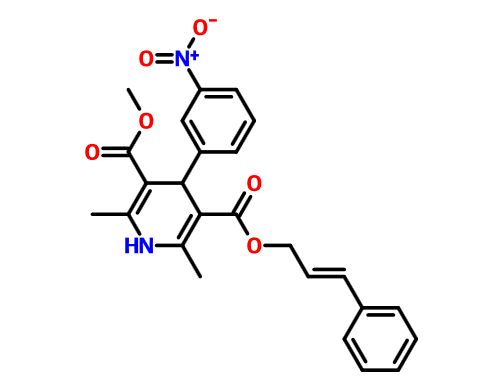
Pranidipine    

ANTHONY MELVIN CRASTO, PhD

str1

https://newdrugapprovals.files.wordpress.com/2015/12/str116.jpg


File:Pranidipine structure.svg

Pranidipine , OPC-13340, FRC 8411

Acalas®

NDA Filing in Japan

A calcium channel blocker potentially for the treatment of angina pectoris and hypertension.


CAS No. 99522-79-9

  • Molecular FormulaC25H24N2O6
  • Average mass 448.468


see dipine series………..http://organicsynthesisinternational.blogspot.in/p/dipine-series.html

manidipine


PAPER

Der Pharmacia Sinica, 2014, 5(1):11-17

https://newdrugapprovals.files.wordpress.com/2015/12/str113.jpg

pelagiaresearchlibrary.com/der-pharmacia-sinica/vol5-iss1/DPS-2014-5-1-11-17.pdf


Names
IUPAC name

methyl (2E)-phenylprop-2-en-1-yl 2,6-dimethyl-4-(3-nitrophenyl)-1,4-dihydropyridine-3,5-dicarboxylate
Other names

2,6-dimethyl-4-(3-nitrophenyl)-1,4-dihydropyridine-3,5-dicarboxylic acid O5-methyl O3-[(E)-3-phenylprop-2-enyl] ester
Identifiers
99522-79-9 Yes
ChEMBL ChEMBL1096842 
ChemSpider 4940726 
Jmol interactive 3D Image
MeSH C048161
PubChem 6436048
UNII 9DES9QVH58 Yes


PATENT SUBMITTED GRANTED
Process for the preparation of 1,4 – dihydropyridines and novel 1,4-dihydropyridines useful as therapeutic agents [US2003230478] 2003-12-18
Advanced Formulations and Therapies for Treating Hard-to-Heal Wounds [US2014357645] 2014-08-19 2014-12-04
METHODS OF TREATING CARDIOVASCULAR AND METABOLIC DISEASES [US2014322199] 2012-08-06 2014-10-30
Protein Carrier-Linked Prodrugs [US2014323402] 2012-08-10 2014-10-30
sGC STIMULATORS [US2014323448] 2014-04-29 2014-10-30
TREATMENT OF ARTERIAL WALL BY COMBINATION OF RAAS INHIBITOR AND HMG-CoA REDUCTASE INHIBITOR [US2014323536] 2012-12-07 2014-10-30
Agonists of Guanylate Cyclase Useful For the Treatment of Gastrointestinal Disorders, Inflammation, Cancer and Other Disorders [US2014329738] 2014-03-28 2014-11-06
METHODS, COMPOSITIONS, AND KITS FOR THE TREATMENT OF CANCER [US2014335050] 2012-05-25 2014-11-13
ROR GAMMA MODULATORS [US2014343023] 2012-09-18 2014-11-20
High-Loading Water-Soluable Carrier-Linked Prodrugs [US2014296257] 2012-08-10 2014-10-02 


Synthesis, isolation and use of a common key intermediate for calcium antagonist inhibitors

Neelakandan K.a,b, Manikandan H.b , B. Prabhakarana*, Santosha N.a , Ashok Chaudharia *, Mukund Kulkarnic , Gopalakrishnan Mannathusamyb and Shyam Titirmarea
a API Research Centre, Emcure Pharmaceutical Limited, Hinjawadi, Pune, India bDepartment of Chemistry, Annamalai University, Chidhambaram, India cDepartment of Chemistry, Pune University, Pune, India _________________________________________________________________________________

Pelagia Research Library     www.pelagiaresearchlibrary.com      Der Pharmacia Sinica, 2014, 5(1):11-17


The compound (3) synthesized from Nitrobenzaldehyde, tertiary butyl acetoacetate and piperidine can be used as a common intermediate for the production of calcium channel blockers like Nicardipine hydrochloride (1) and Pranidipine hydrochloride (2) with high purity.


The last twenty years have witnessed discoveries of calcium antagonists associated with multicoated pharmacodynamics potential which include not only antihypertensive and antiarrhythmic effects of the drugs but also action against excessive calcium entry in the cell of cardiovascular system and subsequent cell damage. Among many classes of calcium channel blockers, 1,4-dihydropyrimidine based drug molecules represented by Felodipine, Clevidipine, Benidipine, Nicardipine and Pranidipine are by far the best to reduce systemic vascular resistance and arterial pressure.

The reported synthetic approaches however proceed with complicated work ups, laborious purification procedures, highly expensive chemicals and low overall yields. (Scheme-I).

Synthetic scheme of Nicardipine and Pranidipine In view of the draw backs associated with previous synthetic approaches there is a strong need for environmentfriendly high yielding process applicable to the multi-kilogram production of calcium antagonist inhibitors. Herein, we report a scalable synthesis for Nicardipine hydrochloride (1) and Pranidipine hydrochloride (2) in fairly high overall yield using key intermediate 3-nitro benzylidene acid (3).Compound (3) was synthesized in two steps using 3-nitrobenzaldehyde, tertiary butyl acetoacetate and piperidine as a base to furnish tertiary butyl ester derivative (10). This was followed by hydrolysis of (10) in TFA and DCM to furnish compound (3) which would serve as a precursor for synthesis of versatile calcium antagonist inhibitors (Scheme-II).

Reported routes for synthesis of Benidipine,1,2 Lercanadipine,3-6 Nimodipine,7-11 Barnidipine12-14 and Manidipine15-16 were explored in our laboratory which involve reaction of nitro benzaldehyde with tertiary butyl acetoacetate using piperidine as a base to get tertiary butyl ester derivative (10). This is further treated with respective reagents to get various calcium channel blockers as shown in scheme 4. Since reported procedures involve in-situ generation of intermediate (3) and its reaction with corresponding fragments, it results in the formation of by-products which ultimately decrease the yield and increase the cost of API.

A novel process of manufacturing benzylidine acid derivative (3) was developed. Use of this intermediate was demonstrated by synthesis of Nicardipine and Pranidipine. This protocol may be employed for synthesis of other calcium channel blockers. In conclusion, a highly efficient, reproducible and scalable process for the synthesis of calcium channel blockers has been developed using (3) as the key intermediate.


[1] US 63 365 (Kyowa Hakko; appl.15.4.1982; J-prior.17.4.1981). [2] US 4 448 964 (Kyowa Hakko;15.5.1984; J-prior.17.4.1981). [3] Leonardi, A. et al.: Eur. J. Med.Chem. (EJMCA5) 33,399 (1988). [4] EP 153 016 (Recordati Chem. and Pharm.; appl. 21.1.1985; GB-prior. 14.2.1984). [5] US 4 705 797 (Recordati;10.11.1987; GB-prior. 14.2.1984). [6] WO 9 635 668 (Recordati Chem. and Pharm.; appl. 9.5.1996; I-prior. 12.5.1995). [7] DOS 2 117 571 (Bayer; appl. 10.4.1971). [8] DE 2 117 573 (Bayer; prior.10.4.1971) [9] US 3 799 934 (Bayer;26.3.1974;D-prior.10.4.1971). [10] US 3 932 645 (Bayer;13.1.1976;D-prior.10.4.1971). [11] Meyer, H. et al.: Arzneim.-Forsch. (ARZNAD) 31, 407 (1981); 33, 106 (1983). [12] DE 2 904 552 (Yamanouchi Pharm.; appl. 7.2.1979; J-prior.14.2.1978). [13] US 4 220 649 (Yamanouchi;2.9.1980; J-prior.14.2.1978). [14] CN 85 107 590( Faming Zhuanli Sheqing Gonhali S.; appl. 11.10.1985; J-prior.24.1.1985). [15] EP 94 159 (Takeda; appl. 15.4.1983; J-prior. 10.5.1982). [16] US 4 892 875 (Takeda;9.1.1990; J-prior. 10.5.1982, 11.1.1983).


Read Full Post »

HDL oxidation in type 2 diabetic patients

Larry H. Bernstein, MD, FCAP, Curator

LPBI


High-density lipoprotein oxidation in type 2 diabetic patients and young patients with premature myocardial infarction

G. SartoreaR. SeragliabS. Burlinaa, , A. BolisaR. MarinaE. ManzatoaE. RagazzicP. TraldibA. Lapollaa
N
utr Metab Cardiovasc Dis April 2015; 25(4): 418–425       http://dx.doi.org:/10.1016/j.numecd.2014.12.004

Highlights

•  Oxidative damage can generate dysfunctional HDL reducing its anti-atherogenic role.
•  Increased MetO levels in ApoA-I in patients with premature MI and in type 2 DM.
•  An increase in MetO levels in ApoA-I could result in HDL dysfunction.


Background and aims

ApoA-I can undergo oxidative changes that reduce anti-atherogenic role of HDL. The aim of this study was to seek any significant differences in methionine sulfoxide (MetO) content in the ApoA-I of HDL isolated from young patients with coronary heart disease (CHD), type 2 diabetics and healthy subjects.

Methods and results

We evaluated the lipid profile of 21 type 2 diabetic patients, 23 young patients with premature MI and 21 healthy volunteers; we determined in all patients the MetO content of ApoA-I in by MALDI/TOF/TOF technique. The typical MALDI spectra of the tryptic digest obtained from HDL plasma fractions all patients showed a relative abundance of peptides containing Met112O in ApoA-I in type 2 diabetic and CHD patients. This relative abundance is given as percentages of oxidized ApoA-I (OxApoA-I). OxApoA-I showed no significant correlations with lipoproteins in all patients studied, while a strong correlation emerged between the duration of diabetic disease and OxApoA-I levels in type 2 diabetic patients.

Conclusions

The most remarkable finding of our study lies in the evidence it produced of an increased HDL oxidation in patients highly susceptible to CHD. Levels of MetO residues in plasma ApoA-I, measured using an accurate, specific method, should be investigated and considered in prospective future studies to assess their role in CHD.


No more than 25% of the risk of coronary heart disease (CHD) can be explained by known risk factors, despite their high prevalence [1].

High-density lipoprotein (HDL) protects artery wall from atherosclerosis, in particular they remove excess cholesterol from artery wall macrophages and carries it back to the liver for excretion in bile [2]. Apolipoprotein A-I (ApoA-I) is the main protein of HDL and it plays a crucial part in the first cholesterol transport reversal step by enhancing sterol efflux from macrophages [3].

Epidemiological studies have demonstrated that plasma HDL independently predict the risk of developing atherosclerosis and cardiovascular disease [4]. More recently, however, it has emerged that HDL quality also seems to be an important parameter in atheroprotection, though there is little data in the literature to support it [5].

An increasing body of evidence shows that HDL isolated from atheromas and the plasma of patients with established CHD lacks these anti-atherogenic properties [6]. HDL can be functionally deficient in populations at high risk of CHD, as in type 2 diabetes mellitus, due to glycation and oxidative changes in their HDL, apolipoproteins, and/or enzymes[7].

ApoA-I in particular can undergo oxidative changes that reduce its anti-atherogenic role[8]. Oxidation of the Tyr and Met residues in ApoA-I by myeloperoxidase drastically impairs the protein’s ability to promote cholesterol efflux via the ABCA1 pathway [9]. Levine and colleagues [10] suggested that Met residues in protein serve as endogenous antioxidants, protecting functionally important amino acids against oxidation. In ApoA-I in particular, Met86 and Met112 are thought to be important for cholesterol efflux, and Met148is believed to be involved in LCAT activation [11].

Brock et al. recently examined the extent and sites of methionine sulfoxide (MetO) formation in the ApoA-I of HDL isolated from the plasma of healthy controls and type 1 diabetic subjects, demonstrating that MetO formation was significantly greater in diabetic patients than in a control group at all three sites considered (Met86, Met112, and Met148)[12].

Considering the relevant role of HDL oxidation in the onset of atherosclerotic processes, we ran a pilot study on a small group of type 2 diabetic patients and young people prematurely experiencing acute myocardial infarction (MI): in both these groups we found higher levels of Met112O than in healthy controls [13]. That investigation was carried out by microfluidic-LC/ESI-MS measurements. In a further study the determination of MetO content of ApoA-I in type 2 diabetic patients was performed by MALDI/MS [14] and the results obtained perfectly overlap those achieved in the previous LC/MS investigation. These results proved that possible oxidation phenomena, sometimes observed in MALDI conditions [15], are in this case absent.

The aim of this study was to assess larger study groups to seek any significant differences in MetO between patients with premature MI, type 2 diabetics and healthy subjects, and to identify any correlations with these individuals’ lipoproteins. A secondary aim was to see whether the duration of the diabetic patients’ disease correlated with HDL oxidation.

MALDI/MS

MALDI/time of flight (TOF) and MALDI/TOF/TOF measurements were performed using a MALDI/TOF/TOF UltrafleXtreme instrument (Bruker Daltonics, Bremen, Germany), equipped with a 1 kHz smartbeam II laser (λ = 355 nm) and operating in the positive reflectron ion mode. The instrumental conditions were: IS1 = 25 kV; IS2 = 21.65 kV; reflectron potential = 26.3 kV; delay time = 0 nsec. The matrix was α-cyano-4-hydroxycinnamic acid (HCCA) (saturated solution in H2O/acetonitrile (50:50; v/v) containing 0.1% TFA). Five μL of purified tryptic digest and 5 μL of matrix solution were mixed together, then 1 μL of the resulting mixture was deposited on the stainless steel sample holder and allowed to dry before placing it in the mass spectrometer. External mass calibration (Peptide Calibration Standard) was based on monoisotopic values of [M+H]+ of angiotensin II, angiotensin I, substance P, bombesin, ACTH clip [1], [2], [3], [4],[5], [6], [7], [8], [9], [10], [11], [12], [13], [14], [15], [16] and [17], ACTH clip (18–39), somatostatin 28 at m/z 1046.5420, 1296.6853, 1347.7361, 1619.8230, 2093.0868, 2465.1990 and 3147.4714. TOF/TOF experiments were performed using the LIFT device in the following experimental conditions: IS1: 7.5 kV; IS2: 6.75 kV; Lift1: 19 kV; Lift2: 3.7 kV; Reflector1: 29.5 kV; delay time: 70 ns.

Table 1 shows the demographic and clinical characteristics of patients and controls. The three groups were matched for age and smoke; the controls and diabetics were also matched for gender, while the premature MI group consisted almost entirely of men, with only one female patient. Type 2 diabetic patients were not in a situation of good metabolic control, their HbA1c levels being a mean 8.22 ± 0.84% and their FPG 156.7 ± 29.7 mg/dl.

Table 1.Clinical characteristics of type 2 diabetic patients, young patients with premature CHD and controls. Data are expressed as mean ± standard deviation. To assess statistical differences between groups, ANOVA followed by Tukey’spost-hoc test was used. ●●● p < 0.001; ●● p < 0.01; ● p < 0.05; ns: not significant;:not applied. Abbreviations: FPG = fasting plasma glucose; TC = total cholesterol; LDL = low-density lipoprotein; HDL = high-density lipoprotein; OxApoAI = oxidized Apolipoprotein AI; MI = myocardial infarction.

Control subjects (C)
(n = 21)
CHD patients (CHD)
(n = 23)
Type 2 diabetic patients (D)
(n = 21)
P


C vsCHD CvsD CHDvs D
Gender (M/F) 6/15 22/1 10/11
Age (yrs) 41.4 ± 2.8 40.7 ± 3.4 51.8 ± 3.5 ns ns ns
Diabetes duration (yrs) 8.5 ± 3.9
FPG (mg/dl) 83.5 ± 4.8 89.1 ± 7.4 156.7 ± 29.7 ns ●●● ●●●
HbA1c (%) 5.2 ± 0.2 5.3 ± 0.2 8.2 ± 0.8 ns ●●● ●●●
TC (mg/dl) 203.2 ± 33.3 205.3 ± 26.3 203.2 ± 37.0 ns ns ns
LDL (mg/dl) 117.5 ± 30.6 143.7 ± 24.7 118.3 ± 30.6 ●● ns
HDL (mg/dl) 68.7 ± 11.2 38.3 ± 10.4 49.7 ± 14.0 ●●● ●●● ●●
Triglycerides (mg/dl) 85.4 ± 21.6 146.3 ± 55.9 178.0 ± 91.8 ●● ●●● ns
ApoA1 (mg/dl) 148.2 ± 31.3 117.2 ± 14.5 128.9 ± 14.7 ns
OX ApoA1 (%) 1.7 ± 1.3 4.8 ± 2.6 10.6 ± 5.3 ●●● ●●●
MI (no/yes) 21/0 0/23 21/0
Statin therapy (yes/no) 0/21 23/0 18/3 ns
Anti-platelet agents (yes/no) 0/21 23/0 17/4 ns
Antihypertensive drugs (yes/no) 0/21 23/0 20/1 ns
Smokers (yes/no/ex) 4/15/2 5/16/2 6/14/1 ns ns ns

The three groups had similar total cholesterol levels. The group of patients with a premature MI had the highest levels of LDL cholesterol and the lowest levels of HDL cholesterol. Their triglycerides were also higher than in the healthy controls, but lower than in the diabetic patients.

Characterization of Met112 and Met112-O containing peptides

The typical MALDI spectra of the tryptic digest obtained from HDL plasma fractions of healthy subjects, diabetics and CHD patients are given in Fig. 1. MS/MS experiments performed on the two ions at m/z 1283.6 and 2645.4 showed that the sequences of the corresponding peptides are W108QEEM112ELYR and V97QPYLDDFQKKWQEEM112ELYR, both of which contain the methionine residue in position 112 (Met112). Looking at selected regions of the spectra related to the two above-mentioned ions, some differences appear between the healthy controls vs the diabetic patients and CHD patients. In the case of the diabetics and CHD patients, the two peaks at m/z 1299 and 2661 become more evident than those detected in the case of healthy subjects. These two peptides, differing from the above-described species by 16 Da, can be justified by the presence of the previously-mentioned peptides containing a Met112O moiety (see Fig. 2). MS/MS experiments performed on these two ions confirms this hypothesis, based on the presence of a fragment ion due to the loss of CH3SOH. This result confirms that oxidation occurs at Met112 in both the peptides. The above-described relative abundance of peptides containing Met112O- and Met112 was ascertained for all samples. The percentages of OxApoA-I were calculated dividing the sum of the abundances of the peaks at m/z 1299 and 2661 (originating from oxidation of Met112) to the sum of the abundances of the four peaks of interest: the results so obtained are shown in Table 1. Both the diabetic and the CHD patients showed significantly higher OxApoA-I levels than controls. We did not observe any significant correlation between the levels of ApoA-I and OxApoA-I in all groups (controls: r = −0.031; diabetics: r = 0.092; CHD patients: r = 0.20, respectively).

The typical MALDI spectra of the tryptic digest obtained from HDL plasma ...
Figure 1.

The typical MALDI spectra of the tryptic digest obtained from HDL plasma fractions of healthy subjects, diabetic and CHD patients.

Expanded view (A: m/z 1283–1299; B: m/z 2635–2690) of the MALDI mass spectra of ...
Figure 2.

Expanded view (A: m/z 1283–1299; B: m/z 2635–2690) of the MALDI mass spectra of tryptic digests from healthy subjects, diabetic patients and CHD patients.

It is to underline that the possible ex-vivo oxidation of methionine residue was checked analyzing the lyophilized HDL samples after two and four months of storage at −30 °C. No significant variation in the content of Met112O was observed, indicating that ex-vivo oxidation is inhibited at storage temperature.

Correlations

OxApoA-I showed no significant correlations with lipoproteins, while there were inverse significant correlations between HDL cholesterol and triglycerides in both the diabetic and the CHD patients (p < 0.02), but not in the healthy controls, as shown in Table 2. No correlation emerged between the OxApoA-I and HbA1c levels in the diabetic patients (r = 0.0344).

Table 2.Linear correlation between oxidized ApoA-I (Ox-ApoA-I) and serum cholesterol in the three groups of patients. Data are the Pearson product–moment correlation coefficient (Pearson’s r) with the lower and upper 95% confidence intervals (in parentheses).*p < 0.02.

Correlation between variables Control subjects, n = 21
(Lower and upper 95% C.I.)
CHD patients, n = 23
(Lower and upper 95% C.I.)
Diabetic patients, n = 21
(Lower and upper 95% C.I.)
Ox-ApoA-1 vs total cholesterol 0.3757
(−0.0669 ÷ 0.6947)
0.0519
(−0.3681 ÷ 0.4544)
−0.3287
(−0.6659 ÷ 0.1200)
Ox-ApoA-1 vs LDL-cholesterol 0.3557
(−0.0897 ÷ 0.6826)
−0.1688
(−0.5432 ÷ 0.2616)
−0.3193
(−0.6600 ÷ 0.1303)
Ox-ApoA-1 vs HDL-cholesterol 0.0745
(−0.3690 ÷ 0.4904)
0.3130
(−0.1139 ÷ 0.6423)
0.0839
(−0.3608 ÷ 0.4976)
Ox-ApoA-1vs triglycerides 0.1965
(−0.2570 ÷ 0.5790)
0.0434
(−0.3755 ÷ 0.4476)
−0.1953
(−0.5782÷0.2581)
Triglycerides vs HDL-cholesterol −0.3973
(−0.7076 ÷ 0.0415)
−0.4898*
(−0.7505 ÷ −0.0972)
−0.5413*
(−0.7887 ÷ −0.1431)

In order to evaluate with a more integrated approach the presence of interrelationships among variables, the non-parametric technique of PCA was considered. The analysis was extended to the three groups as a whole, in order to check any distribution among the individuals, and the respective role of the considered variables. As the biplot of Fig. 3shows, it was confirmed the previously found lack of any relationship between the OxApoA-I levels and HDL cholesterol or triglycerides, and it was confirmed also the presence of an inverse correlation between HDL cholesterol or triglycerides; moreover, from this analysis a strong direct correlation between the duration of diabetic disease and OxApoA-I levels emerged.

In order to evaluate with a more integrated approach the presence of interrelationships among variables, the non-parametric technique of PCA was considered. The analysis was extended to the three groups as a whole, in order to check any distribution among the individuals, and the respective role of the considered variables. As the biplot of Fig. 3shows, it was confirmed the previously found lack of any relationship between the OxApoA-I levels and HDL cholesterol or triglycerides, and it was confirmed also the presence of an inverse correlation between HDL cholesterol or triglycerides; moreover, from this analysis a strong direct correlation between the duration of diabetic disease and OxApoA-I levels emerged.

Biplot of the first two principal components (PC1 and PC2) obtained by PCA ...
Figure 3.

Biplot of the first two principal components (PC1 and PC2) obtained by PCA conducted on the most representative variables from diabetic patients, CHD patients and controls.

In the present, small cross-sectional study, our data analyses support the impression that the atheroprotective effect of HDL may be deficient in patients experiencing a premature MI and in cases of type 2 DM, both models of accelerated atherosclerosis [23]. This HDL dysfunction could be due to an increase in MetO levels in ApoA-I. We demonstrated, not only that type 2 diabetic patients and young patients with premature acute MI share the same ApoA-I oxidation, but also and more importantly they both have a greater HDL oxidation than controls, irrespective of their HDL levels. This feature was recently observed in type 1 diabetic patients compared with healthy controls, and it may contribute to an accelerated atherosclerosis [12]. These findings provide a new clinical perspective compared to preliminary results obtained by microfluidic-LC/ESI-MS [13], this time using an alternative technique (MALDI/MS), that makes the analysis far less time-consuming, as we previously showed in type 2 diabetic patients and healthy controls [14]. Our group of type 2 diabetic patients showed no signs of CHD despite their more severely oxidized HDL. We surmise that they offset the higher levels of oxidized HDL with higher levels of HDL, so the ratio of HDL to oxidized HDL might be a better marker of CHD than low HDL levels. Unfortunately, since our method only allowed for a semiquantitative assessment of the oxidation of the above-described peptides, these data cannot be used to calculate the HDL/oxidized-HDL ratio.

It is worth noting that no correlation emerged between MetO levels in ApoA-I and HbA1c, indicating that ApoA-I oxidation appears unrelated to the degree of glycemic control. This finding is in agreement with previous observations that have shown no correlation between glyco-oxidation products, such as glyoxal and methylglyoxal, which better represent the real glyco-oxidative stress experienced by patients [24].

On the other hand, our data suggest that duration of disease might be the parameter most closely related to MetO levels in ApoA-I in type 2 diabetes. In this contest, the antioxidant system could play an important part in the onset of cardiovascular complications by counter-regulating the increased oxidative stress, as we found in various phenotypes of type 2 diabetic patients with and without micro- and macrovascular complications [25] and [26]. Several studies have also demonstrated that decreased levels of antioxidants favor cardiovascular disease in subjects without diabetes [27]. As regards our data on HDL oxidation, we hypothesized that the increase of Apo-AI oxidation could be due to the decreased levels of antioxidant defenses that characterized type 2 diabetic patients with long duration of disease and patient with premature MI. Recent observations, in fact, showed that serum myeloperoxidase/paraoxonase 1 ratio is a potential indicator of dysfunctional HDL and risk stratification in CHD [28]. At the end HDL oxidation process could be partially independent from oxidative stress burden, but affected by decreased antioxidant capacity.

As for the higher triglyceride levels found in our type 2 DM and CHD patients, we surmise that hypertriglyceridemia could be a prognostic marker even in young patients with premature MI, irrespective of other cardiovascular risk factors, as previously reported[29]. Both our groups of patients showed a strong inverse relationship between their HDL and triglyceride levels, a situation typical of insulin resistance and found associated with MI occurring before 40 years of age [30].

As regards LDL cholesterol, we found the highest level in young CHD patients who were all in statin therapy. Considering the very short period of statin therapy and knowing that to reach the full effect it needs at still a month, CHD patients showed LDL cholesterol levels not still at target. On the other side, statin therapy hardly have had an impact on the oxidation of HDL. In any case statin protective effect on the oxidation strengthen our conclusions.

All these quantitative and qualitative lipoprotein features (higher oxidized HDL, higher triglycerides and lower HDL levels) suggest the feasibility of characterizing patients at high risk of CHD in terms of their lipid profile, as illustrated in the integrated biplot ofFig. 3.

In conclusion, the most remarkable finding of our study lies in the evidence it produced of an increased HDL oxidation in patients highly susceptible to CHD. Levels of MetO residues in plasma ApoA-I, measured using an accurate, specific method, should be investigated and considered in prospective future studies in order to assess their possible role as a novel risk factor – and eventually as a therapeutic target – to reduce the burden of cardiovascular complications.

Read Full Post »

This content is password-protected. To view it, please enter the password below.

Read Full Post »

Premature Ventricular Contraction percentage predicts new Systolic Dysfunction and clinically diagnosed CHF and overall Mortality

Reporter: Aviva Lev-Ari, PhD, RN


Cardiovascular Health Study (CHS)

This study has been completed. ClinicalTrials.gov processed this record on July 13, 2015
Sponsor:
Information provided by:
National Heart, Lung, and Blood Institute (NHLBI)
ClinicalTrials.gov Identifier:
NCT00005133
First received: May 25, 2000
Last updated: May 1, 2009
Last verified: May 2009
  Purpose

To determine the extent to which known risk factors predict coronary heart disease and stroke in the elderly, to assess the precipitants of coronary heart disease and stroke in the elderly, and to identify the predictors of mortality and functional impairments in clinical coronary disease or stroke.

SOURCE

https://clinicaltrials.gov/ct2/show/NCT00005133?term=Cardiovascular+Health+Study&rank=2

Although links between frequent PVCs and ongoing heart failure have been observed, the current analysis, based on a cohort from the Cardiovascular Health Study (CHS), provides “the first evidence that PVC percentage predicts new systolic dysfunction, as well as clinically diagnosed CHF and overall mortality,” say the authors in their report, published in the July 14, 2015 issue of the Journal of the American College of Cardiology. It also raises the issue of whether PVCs might sometimes be an appropriate target for treatments aimed at preventing heart failure.

The observational study can’t demonstrate causality, note the authors, led by Dr Jonathan W Dukes (University of California, San Francisco). But overall, the findings “suggest that PVCs might be an important cause of occult or ‘idiopathic’ cardiomyopathy and might be an important determinant of incident CHF among those with other established CHF risk factors.”

Ablate PVCs in HF, LVEF Can Improve

“There’s this general notion that PVCs are very benign, which is certainly what I was taught, even in my general cardiology fellowship, before the more recent data that came out of the electrophysiology labs,” senior author Dr Gregory M Marcus (UCSF) said in an interview with heartwire from Medscape.

In recent years, he said, it’s been appreciated that ablation of PVCs in patients with lots of them can improve quality of life by alleviating symptoms such as syncope. And there are series of patients with PVCs and primarily nonischemic cardiomyopathy in the EP literature suggesting that “if you ablate those PVCs, their heart failure improves and often their reduced ejection fraction normalizes,” according to Marcus. “Many of us have seen that and witnessed it firsthand in many of our own patients.”

Although the analysis tried to control for such factors, she said, the question remains “whether PVCs are causing deterioration in EF and HF or if they are simply a marker of underlying disease. If the former is true, then treating PVCs would help. But if the latter is true, then treating PVCs may not make a difference.”

Marcus acknowledges that PVCs may be simply a risk marker in people with sick hearts. “But even if that’s the case, I think it’s potentially a very useful marker.” He said he hopes the report will help “motivate future research in potentially two different directions. One, might ablation be an effective therapy to prevent heart failure in the right patients? Alternatively, could this be used to help predict heart failure and implement other strategies, such as beta-blockers, to prevent heart failure in those patients?”

CASTing a New Light on Treatment of PVCs

The Cardiac Arrhythmia Suppression Trial (CAST), Marcus noted, “taught us a lot of important lessons. More generally, it was a great example of the need to look at hard outcomes rather than secondary or surrogate outcomes.”

As cardiology textbooks have since noted, CAST randomized about 2300 patients who had asymptomatic or only mildly symptomatic PVCs after acute MI to receive one of three antiarrhythmic agents or placebo. The drugs, which included the class Ic agents encainide and flecainide, were mostly effective at suppressing PVCs. But over a mean 10 months of follow-up, patients who had received those drugs showed steep rise in rate of arrhythmic death (the primary end point) as well as nonfatal cardiac arrest, almost certainly due to proarrhythmic effects.

The widely learned lesson: post-MI suppression of PVCs, a surrogate for the pathology behind sudden cardiac death in ischemic heart disease, doesn’t lower its risk; in fact, treatment of surrogate markers can make things a lot worse. (Importantly, CAST was conducted in the early days of arrhythmia ablation and implantable defibrillators, which were not options for its patients.)

As a result, according to Marcus, class Ic agents are generally avoided in patients with structural heart disease. “I think that while the proarrhythmic effects of those drugs were known, they weren’t fully appreciated, and CAST taught us to be wary of them.”


The CHS is sponsored by the National Heart, Lung, and Blood Institute. Dukes and Marcus report that they have no relevant financial relationships; disclosures for the other authors are in the report. Santangeli and Marchlinski report that they have no relevant financial relationships. Al-Khatib says she has no relevant financial relationships with industry.


SOURCE

http://www.medscape.com/viewarticle/847859?nlid=84244_2562&src=wnl_edit_medp_card&uac=93761AJ&spon=2&impID=760872&faf=1

Read Full Post »

News Picks | Hs-Troponin T, Silent Cerebral Ischemia and Complications in Afib

Reporter: Aviva Lev-Ari, PhD, RN

View Video

https://www.youtube.com/v/W3X3bMT_F-M?fs=1&hl=fr_FR

High-sensitivity troponin T outperformed other assays in chest pain patients. Silent cerebral ischemia in Afib. Acute cardioversion.

Sourced through Scoop.it from: www.youtube.com

See on Scoop.itCardiovascular and vascular imaging

Read Full Post »

EMBRACE-STEMI: Drug targeting mitochondria does not reduce infarct size – Healio

Reporter: Aviva Lev-Ari, PhD, RN


SAN DIEGO — The novel drug Bendavia did not meet any of its primary or secondary endpoints in a trial assessing its use prior to primary PCI in patients with STEMI, according to data presented at the American College of Cardiology Scientific Sessions.Patients…

Source: www.healio.com

See on Scoop.itCardiovascular Disease: PHARMACO-THERAPY

Read Full Post »

Cardiac arrest research dominates Eagles conference – EMS1.com

Reporter: Aviva Lev-Ari, PhD, RN


Cardiac arrest research dominates Eagles conference
EMS1.com
Slovis said there is more than enough evidence to suggest using fentanyl to treat pain in acute MI patients. “Morphine sucks for STEMIs,” Slovis told the audience.

Source: www.ems1.com

See on Scoop.itCardiovascular and vascular imaging

Read Full Post »

« Newer Posts - Older Posts »