Feeds:
Posts
Comments

Archive for the ‘LPBI Group, e-Scientific Media, DFP, R&D-M3DP, R&D-Drug Discovery, US Patents: SOPs and Team Management’ Category

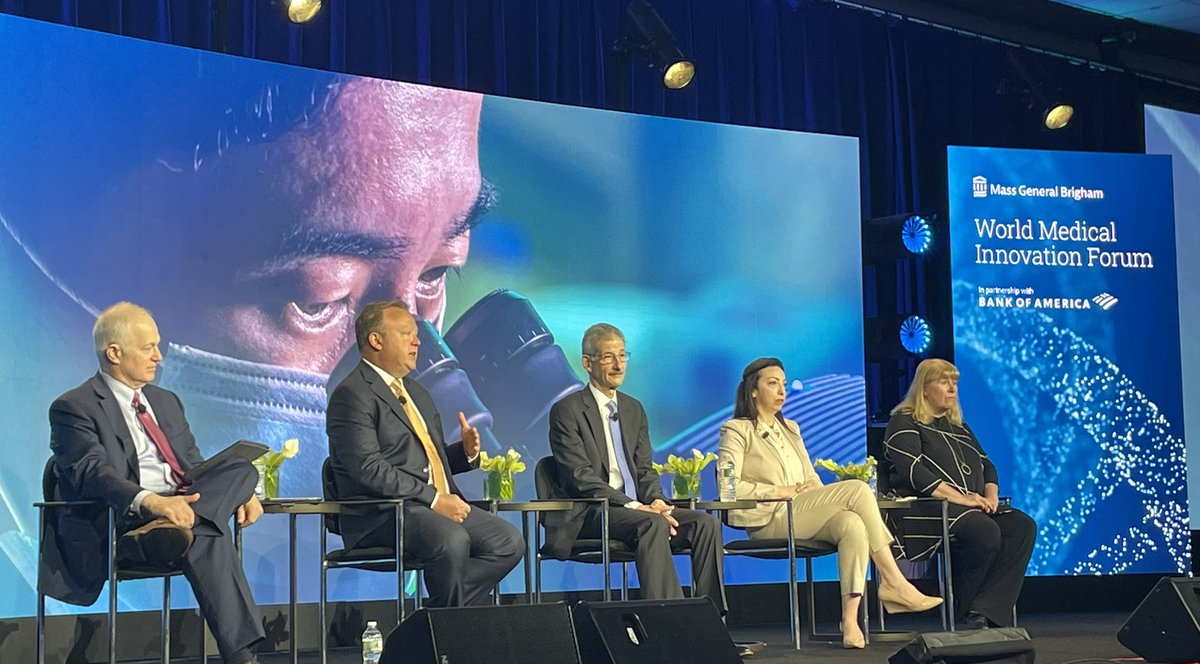
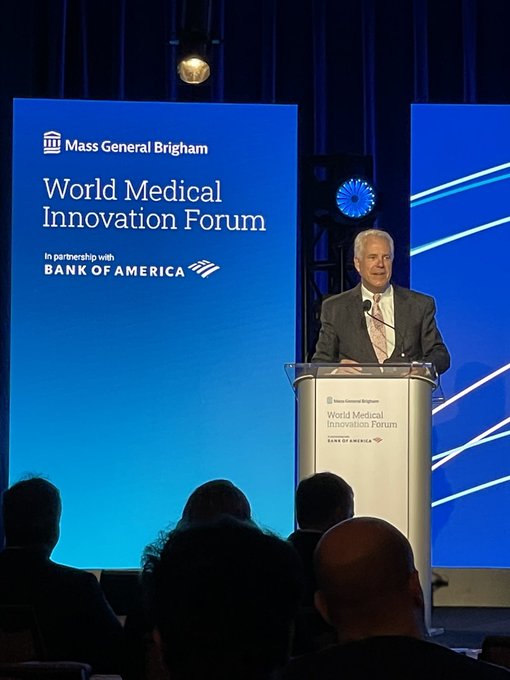
Tweets at #WMIF2022 by @pharma_BI & @AVIVA1950 and All Retweets of these Tweets – 2022 World Medical Innovation Forum, GENE & CELL THERAPY • MAY 2–4, 2022 • BOSTON

Real Time coverage: Aviva Lev-Ari, PhD, RN

Updated on 5/9/2022

Lessons on the Frontier of Gene & Cell Therapy – The Disruptive Dozen 12 #GCT Breakthroughs that are revolutionizing Healthcare

Reporter: Aviva Lev-Ari, PhD, RN

https://pharmaceuticalintelligence.com/2022/05/09/lessons-on-the-frontier-of-gene-cell-therapy-the-disruptive-dozen-12-gct-breakthroughs-that-are-revolutionizing-healthcare/

2022 World Medical Innovation Forum, GENE & CELL THERAPY • MAY 2–4, 2022 • BOSTON • IN-PERSON

https://pharmaceuticalintelligence.com/2022/05/01/2022-world-medical-innovation-forum-gene-cell-therapy-may-2-4-2022-boston-in-person/

Liked Tweets by Conference Organizers

UPDATED on 5/11/2022

Liked

by Mass General Brigham Innovation

Liked

Aviva Lev-Ari
@AVIVA1950

#genetherapy for tuberous sclerosis complex tested on mice found effective in combination with drug in use longer survival to 150 days 10,000 cases in US per year, gene therapy most promising for this gene malfunction #WMIF2022

Quote Tweet
Mass General Brigham Innovation
@MGBInnovation
·
Take a First Look at Dr. Vijaya Ramesh’s research demonstrating preclinical efficacy of an #AAV-based #genetherapy for tuberous sclerosis complex, setting the stage for future IND-enabling studies & clinical translation. #WMIF2022 @MGH_RI @MGHNeurology youtube.com/watch?v=-I_XiS

Top 6 #WMIF2022 #GCT #CARTTherapy #DisruptiveDozen @MGBInnovation @pharma_BI @AVIVA1950 1 Restoring sight by edit genes 2 A gene editing solution supply of donor organs 3 Cell therapies for blindness 4 RNA to treat brain cancer 5 #GCT for brain disorders 6 fighting viruses

liked 2 of your Tweets

7 to 12 #WMIF2022 @MGBInnovation #GCT #DisruptiveDozen @pharma_BI @AVIVA1950 7 Cell therapies restore gut motility 8 CAR-T at autoimmune diseases 9 Regrowing cells in the inner ear hearing loss 10 tech delivering gene therapies 11 target solid tumors 12 X-chromosome neurodegen

Liked

by Tracy Doyle

#KOL on #Cell therapies: #CAR-T cells and #stem-cell-based approaches is moderator for Cell Therapy Landscape: Marcela Maus, MD, PhD Director, Cellular #Immunotherapy Program, #Cancer Center, MGH Associate Professor, Medicine, HMS @MGBInnovation @pharma_BI @AVIVA1950 #WMIF2022

Global views #GCT Christine Fox, Novartis Gene Therapies C. Baum, MD, Berlin Institute of Health Nicholas Galakatos, PhD, Blackstone Luigi Naldini, MD, PhD Telethon Institute, Kendra Rose, PhD, Bayer #WMIF2022 @MGBInnovation @MassGenBrigham @pharma_BI @AVIVA1950

and 2 others liked your Tweet

#Chronic #Neuroinflammation #MS, #AD, #Parkinsons #GCT #genomics Ole Isacson, MD, PhD @McLean Colin Hill CEO, GNS Spyros P., MD, PhD Vigil, Ransohoff, MD, Abata & Third Rock, B. Stevens, PhD, Boston Children’s R. Tanzi, PhD @MGH #WMIF2022 @MGBInnovation @pharma_BI @AVIVA1950

liked 2 of your Tweets

#fundraising #GCT #startups Panelists: Shelley Chu, MD, PhD Partner, Lightspeed Stephen Knight, MD President, F-Prime Capital Adam Koppel, MD, PhD, Bain Capital Life Sciences Daniel Krizek Portfolio Manager, Citadel #WMIF2022 @MGBInnovation @MassGenBrigham @pharma_BI @AVIVA1950

Retweeted your Tweet

#fundraising #GCT #startups Panelists: Shelley Chu, MD, PhD Partner, Lightspeed Stephen Knight, MD President, F-Prime Capital Adam Koppel, MD, PhD, Bain Capital Life Sciences Daniel Krizek Portfolio Manager, Citadel #WMIF2022 @MGBInnovation @MassGenBrigham @pharma_BI @AVIVA1950

Jean-François Formela, MD, Partner @atlasventure on stage with profound #insights on the #interface and seam line between #Medical applications #investment in #health #innovations #WMIF2022 @MGBInnovation @MassGenBrigham @pharma_BI @AVIVA1950 #vision and #inspirations

Retweeted your Tweet

#1 #global #conference #CGT #WMIF2022 @MGBInnovation World Medical Innovation Forum #translation and #regenerative #medicine #gene #editing #gene #therapy @pharma_BI @AVIVA1950 Therapeutics Promise #CGT for #Cardiovascular #Diseases since 12/26/2015 lnkd.in/dwqM3K3

Liked

by Bob Coughlin

Liked

Aviva Lev-Ari
@AVIVA1950

Quote Tweet
Mass General Brigham Innovation
@MGBInnovation
·
Someone in the US is diagnosed with #Alzheimers roughly every 60 seconds. Dr. Stephen Haggarty @neuro_mgh shares a First Look at his work to prevent the accumulation of toxic proteins that cause age-dependent #neurodegeneration at #WMIF2022. worldmedicalinnovation.org/wp-content/upl
1

Aviva Lev-Ari
@AVIVA1950

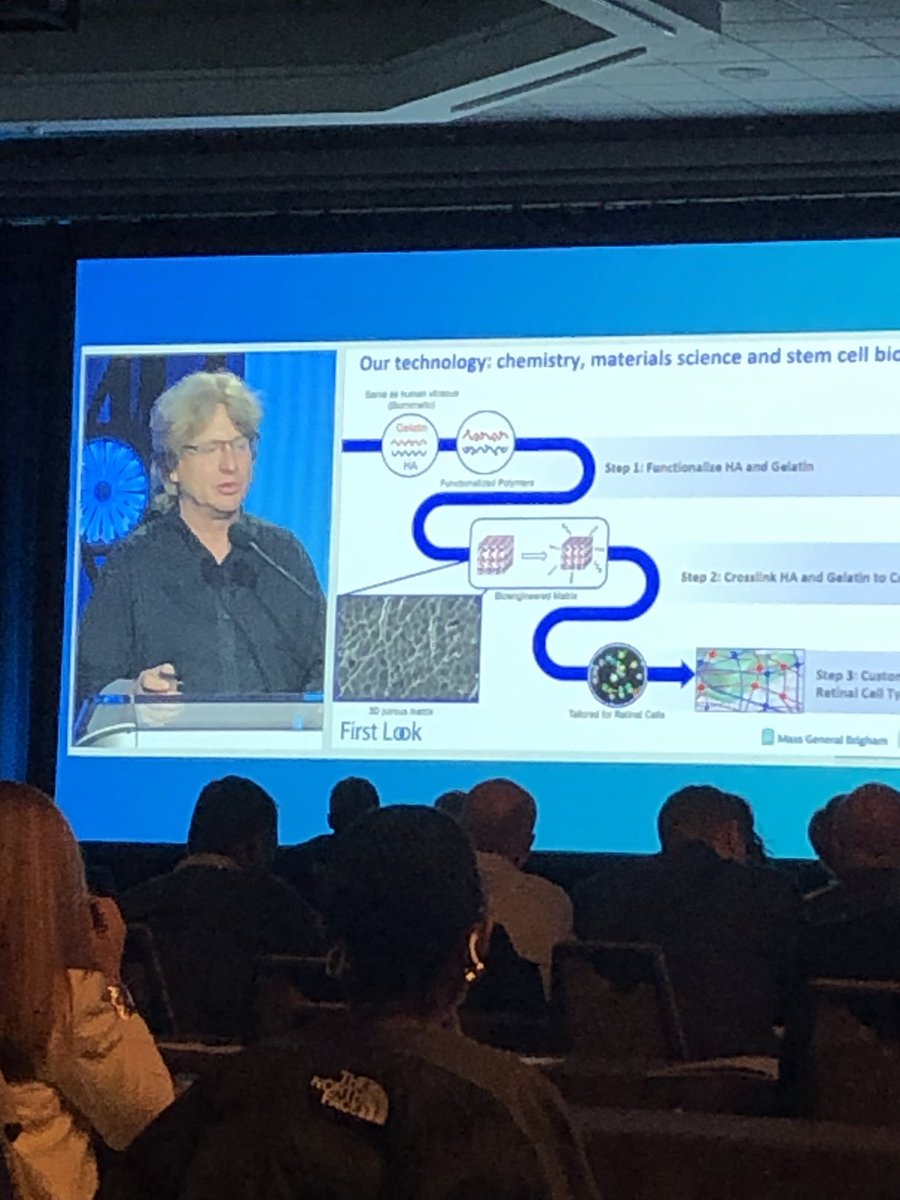
Breakthrough in ophthalmic drug delivery new #gel delivery system for eye diseases like #retinitis #pigmentosa #WMIF2022

Quote Tweet
Tracy Doyle
@doylet
·
Michael Young, PhD, Schepens Eye Research Institute @MassEyeAndEar, shares preview of new gel delivery system for eye diseases like retinitis pigmentosa at FirstLook research updates @MGBInnovation #WMIF2022

Image

3

Bob Coughlin
@BobCoughlin

and

liked your Tweet

#1 #global #conference #CGT #WMIF2022 @MGBInnovation World Medical Innovation Forum #translation and #regenerative #medicine #gene #editing #gene #therapy @pharma_BI @AVIVA1950 Therapeutics Promise #CGT for #Cardiovascular #Diseases since 12/26/2015 lnkd.in/dwqM3K3

Liked

by Mass General Brigham Innovation

Liked

Aviva Lev-Ari
@AVIVA1950

Breakthrough in ophthalmic drug delivery new #gel delivery system for eye diseases like #retinitis #pigmentosa #WMIF2022

Quote Tweet
Tracy Doyle
@doylet
·
Michael Young, PhD, Schepens Eye Research Institute @MassEyeAndEar, shares preview of new gel delivery system for eye diseases like retinitis pigmentosa at FirstLook research updates @MGBInnovation #WMIF2022

Image

3

Tweets at #WMIF2022 by

@pharma_BI & @AVIVA1950

Aviva Lev-Ari
@AVIVA1950

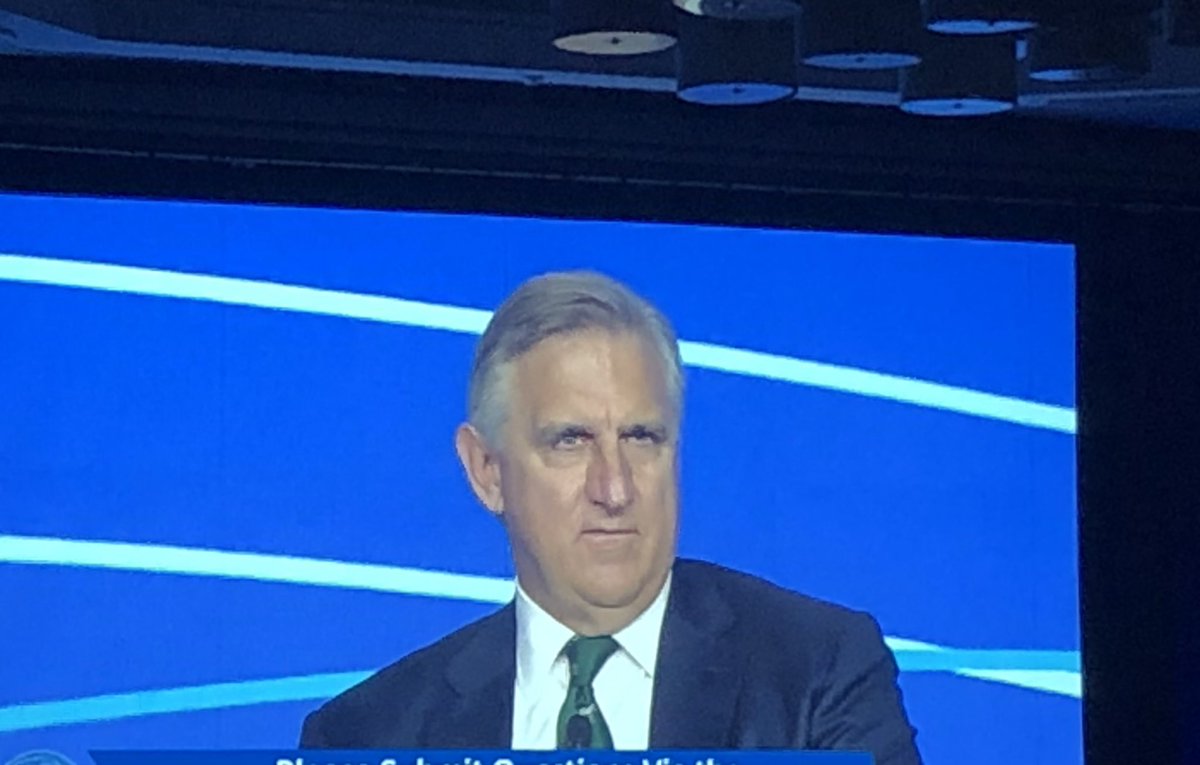
Geoff Meacham, PhD BofA Securities w/Panelist: Robert Bradway CEO, Amgen strategies in #drug #design #development addressing #chronic aspects of #cancer and #cardiovascular #WMIF2022

amazon.com
Series A: Cardiovascular Diseases
Visit Amazon’s Series A: Cardiovascular Diseases Page and shop for all Series A: Cardiovascular Diseases books. Check out pictures, author information, and reviews of Series A: Cardiovascular Diseases
2

ReTweets of Tweets at #WMIF2022 by

@pharma_BI & @AVIVA1950

by

@StephenJWIllia2

See at https://twitter.com/StephenJWillia2

Retweets at #WMIF2022 by

@pharma_BI & @AVIVA1950 and by others

Retweeting Tweets or Retweets by

@pharma_BI & @AVIVA1950

Mass General Brigham Innovation
@MGBInnovation

#ICYMI – Yesterday, Dr. Robert Califf

, Commissioner Food and Drugs

, joined us at #WMIF2022 for a Fireside Chat. Watch the full session online NOW on the World Medical Innovation Forum YouTube channel.

youtube.com
2022 WMIF | 1:1 Fireside Chat: Robert Califf, MD, Commissioner Food…
1:1 Fireside Chat: Robert Califf, MD, Commissioner Food and Drugs, FDATazeen Ahmad, Managing Director, Global Research, BofA SecuritiesJ. Keith Joung, MD, Ph…
3

James Beck, PhD
@jbeck_PhD

Looking forward to joining panel on patient perspective on gene & cell therapies @ #WMIF2022. People with #Parkinsons may benefit greatly.

is doing a great job of quickly posting sessions YouTube channel for those who cannot attend.

youtube.com
World Medical Innovation Forum
The World Medical Innovation Forum is a global gathering of more than 1,200 senior health care leaders hosted by Mass General Brigham in the heart of Boston. It was established to respond to the…
4

Aviva Lev-Ari
@AVIVA1950

Geoff Meacham, PhD BofA Securities w/Panelist: Robert Bradway CEO, Amgen strategies in #drug #design #development addressing #chronic aspects of #cancer and #cardiovascular #WMIF2022

amazon.com
Series A: Cardiovascular Diseases
Visit Amazon’s Series A: Cardiovascular Diseases Page and shop for all Series A: Cardiovascular Diseases books. Check out pictures, author information, and reviews of Series A: Cardiovascular Diseases
2

Mass General Brigham Innovation
@MGBInnovation

Dr. Rosana Kapeller

will be shining a light on the #darkgenome in today’s Dr. Is In session “The Mysterious Dark Genome” at #WMIF2022. Join her and experts from

,

,

,

and

at 11:45 AM in the St. George room.

Erica Robinson
@eleighrobs

May is Brain Tumor Awareness Month. This is my brilliant neurosurgeon

who has been named the new Chief Medical Officer of

. Congratulations! I was blessed to get connected with you in 2010. #BTSM #BTAM

Quote Tweet
Mass General MDs
@MassGeneralMDs
·
Congratulations to William Curry, MD, @WTCNeuroscience the new chief medical officer of #MassGeneral and the MGPO, effective 6/1. We know he will continue his work to improve the outcomes for patients and train the next generation of leaders. @MGHNeurosurg

Image

1
11

Aviva Lev-Ari
@AVIVA1950

#WMIF2022 #glioblastoma, the most common malignant brain tumor, and one of the most treatment-resistant and fatal human diseases

Read the full abstract here: worldmedicalinnovation.org/wp-content/upl

Quote Tweet
Mass General Brigham Innovation
@MGBInnovation
·
Dr. Anna Krichevsky shares a First Look at her work developing #RNA-targeting therapies for #glioblastoma, the most common malignant brain tumor, and one of the most treatment-resistant and fatal human diseases. #WMIF2022 Read the full abstract here: worldmedicalinnovation.org/wp-content/upl

Image

3

Aviva Lev-Ari
@AVIVA1950

Quote Tweet
Bob Coughlin
@BobCoughlin
·
Great way to start the week. @MGBInnovation World Medical Innovation Forum. 3 days of #CGT talks! #WMIF2022 @MassGenBrigham #worldclass #PatientDriven TY @ChrisMarkCOBURN and team for all you do for patients! @JLL #lifesciencebroker

Image

Image

Read Full Post »

We Celebrate TEN Years of Excellence, LPBI Group: 4/2012 – 4/2022

Author: Aviva Lev-Ari, PhD, RN, LPBI Group Founder

Updated on 1/19/2023

Five Bilingual BioMed e-Series – 37 volumes

Curator, Book Editor & Bilingual BioMed e-Series, Editor-in-Chief:

Aviva Lev-Ari, PhD, RN

  • English Edition:  18 volumes in 17 books, and
  • Spanish Edition (EDICIÓN EN ESPAÑOL): 19 volumes in 19 books

https://pharmaceuticalintelligence.com/five-bilingual-biomed-e-series/

  • 1.0 LPBI: 4/2012 – 12/2022
  • 2.0 LPBI: 1/2021 – Present to 2025

See as well,

2022 Update from LPBI Group 

This article has five parts:

Part 1: Web Site Statistics

Part 2: 2.0 LPBI Group’s Four Missions: The Pipelines for 2021-2025

Part 3: Portfolio of IP Assets

Part 4: Certificates – One Year Academic Internships in six Disciplines

Part 5: Top 14 Articles by Views, All Time

https://pharmaceuticalintelligence.com/2022/02/21/update-from-lpbi-group/

For ten years, now, Leaders in Pharmaceutical Business Intelligence (LPBI) Group, Boston, MA – flagship Journal had amassed +2.1 MM views

http://pharmaceuticalintelligence.com

2022 Update from LPBI Group

Author & Curator: Aviva Lev-Ari, PhD, RN

https://pharmaceuticalintelligence.com/2022/02/21/update-from-lpbi-group/

The Founder has  8,148 followers  on LinkedIn.com

https://pharmaceuticalintelligence.com/knowledge-portals-system-kps/aviva-lev-ari-phd-rn-founder-lpbi-group-1-0-2-0/

Analytics of e-Reputation

https://pharmaceuticalintelligence.com/2022/04/04/analytics-for-e-reputation-based-on-linkedin-1st-degree-connections-7500-of-lpbi-groups-founder-2012-2022-an-intangible-asset-connections-position-seniority-biotech-pharma-focus/

The Founder is the Editor-in-Chief for the Journal and for the BioMed e-Series – an eighteen volume series of electronic Books in Medicine

https://lnkd.in/ekWGNqA

Page downloads on 4-6-2022

N = 147,069 (till end of Feb. 2022)

Equivalent to 74 Books

Abbreviated electronic Table of Contents (eTOCs) of each Volume in the EIGHTEEN-Volume BioMed e-Series

https://pharmaceuticalintelligence.com/2017/12/12/biomed-e-series-16-volumes-electronic-table-of-contents-of-each-volume/

The Team that produced 18 books in Medicine

https://pharmaceuticalintelligence.com/knowledge-portals-system-kps/

LPBI Group’s CSO, 2012-2017: Dr. Larry H. Bernstein, MD, FCAP

https://pharmaceuticalintelligence.com/contributors-biographies/members-of-the-board/larry-bernstein/

The Founder is a UC, Berkeley PhD’83 who had worked at Director Level for SRI Int’l, MITRE, PSC, McGraw Hill. Other employer organizations includes: Monitor Company (now Deloitte), Amdahl Corporation (now Fujitsu), PSC (now Dell Technologies).  Positions in Healthcare are described in this link: http://Scientific and Medical Affairs Chronological CV

Aviva Lev-Ari, PhD, RN

Director & Founder

https://lnkd.in/eEyn69r

Picture date: 2/6/2022

While you are reviewing LPBI Group’s Portfolio of IP assets

https://pharmaceuticalintelligence.com/portfolio-of-ip-assets/

you will note that LPBI Group is venturing into Scientific NFT Marketplaces

https://pharmaceuticalintelligence.com/nft-redefined-format-of-ip-assets/

We plan to MINT as NFTs several of LPBI Group’s IP Asset Classes, such as

  • Curations among our +6,100 Journal articles – IP Asset Class I
  • eTOCs – Electronic Table of Contents of our 18 Books – IP Asset Class II
  • Gallery of +6200 Biological Images embedded in our Journal articles – IP Asset Class V
  • E-Proceedings of +100 Medical and Biotech Conferences we had covered in Real Time, 2013 – 2022 – IP Asset Class III
  • Tweet Collections of the latest 40 Medical and Biotech Conferences we had covered in Real Time, 2013 – 2022 – IP Asset Class III

Examples:

Tweet Collection of 2022 #EmTechDigital @MIT, March 29-30, 2022

https://pharmaceuticalintelligence.com/2022/04/02/tweet-collection-of-2022-emtechdigital-mit-march-29-30-2022/

Analytics for @AVIVA1950 Tweeting at #EmTechDigital

https://pharmaceuticalintelligence.com/2022/04/11/analytics-for-aviva1950-tweeting-at-emtechdigital/

Review our Testimonials

https://pharmaceuticalintelligence.com/praising-lpbi/

Our PAST is here

https://pharmaceuticalintelligence.com/home-website-front-page/

https://pharmaceuticalintelligence.com/2019-vista/


Our FUTURE is here

https://pharmaceuticalintelligence.com/vision/

https://pharmaceuticalintelligence.com/blockchain-transactions-network/

https://pharmaceuticalintelligence.com/synthetic-biology-in-drug-discovery/

https://pharmaceuticalintelligence.com/2021-medical-text-analysis-nlp/

https://pharmaceuticalintelligence.com/2021/07/24/proposal-for-new-e-book-architecture-combining-a-bi-lingual-etocs-english-spanish-with-nlps-results-of-medical-text-analysis-series-b-genomics-volume-1-2-and-series-c-cancer-volume-1/

Podcast of our Leaders are here

https://pharmaceuticalintelligence.com/audio-podcasts/

A stream of Ten INNOVATIONS in the Life of LPBI since

inception in 2012 to 2022

  1. 4/2012 – LPBI was the Launcher of a novel Scientific Curation Methodology for scientific findings in published primary research in the Global e-Scientific Publishing industry https://pharmaceuticalintelligence.com/
  2. As late as 2016, no big publisher, not even one, i.e., Elsevier, John Wiley had curation-based publications: Journals, Books, e-Proceedings or Gallery of thousands of Biological Images as an IP asset class
  3. At LPBI, Curation of scientific findings was performed in +6,000 articles with +2MM e-Views by Global e-Readers
  4. 6/2013 – LPBI was the Publisher of the 1st e-book in Medicine in Kindle Store on the Life Sciences & Medicine Shelf – Upload to this shelf by Amazon.com
  5. 2/2021 – Completion of the 18 volumes, BioMed e-Series in five Specialties in Medicine: each article in each volume is a curation-based publication.
  6. On Amazon.com on 7/2021 – LPBI’s e-books in Medicine enjoy +128,100 PAGE DOWNLOADS – the ONE and ONLY publisher in that range of page downloads. The record is the equivalent of 64 books at an average of 2,000 pages a volume !!!! LPBI smallest book is 1,000 pages and its biggest is +3,700 pages
  7. LPBI launched its Natural Language Processing (NLP) Practice in 1/2020 as Mission #1. NLP is one method of Machine Learning (ML). ML is a family of methods in Artificial Intelligence (AI) which is a field in the Computer Science Academic discipline since the early 60s.
  8. In 4/2021 Linguamatics/IQVIA performed NLP on LPBI’s 33 articles and 20 Biological Images. RESULTS:  +670 entity relations DISCOVERED by Linguamatics and unknown to Pharma and to Insurers, entity relations between:
  • Gene-Disease
  • Gene-Drug
  • Disease-Drug

These results were jointly presented to a Healthcare Insurer, SLC, UT on 7/13/2021, forthcoming meeting in 9/2021.

LPBI and BurstIQ are architecting NOW the first Natural Language Processing – Blockchain Information Technology infrastructure in existence, This statement is TRUE.

  • Updated on 7/28/2021:Fluree Flur.ee, the Web3 Data Platform Open source semantic graph database & LeadSemantics.com presented their solution for NLP and Blockchain on 7/28/2021. Erich G. was lured as Chief architect for LPBI’s Mission #2: NLP & Blockchain
  • Linguamatics, the leader in NLP did not hear of Blockchain and BurstIQ did not have a request for NLP – LPBI PUT THESE TWO TECHNOLOGIES AND PARTIES TOGETHER

See IMAGES SOURCE: BurstIQ image for LPBI

https://pharmaceuticalintelligence.com/2021/03/02/2-0-lpbi-is-a-very-unique-organization/

  • On 7/19/2021 – LPBI had launched LPBI India for Synthetic Biology Software for Drug Discovery targeting Galectins – Collaboration with Dr. Raphael Nir, President and CSO, SBH Sciences, Inc., Natick, MA
  • On 7/25/2021 – LPBI announced that it will have the NEWLY to be published BioMed e-Books As Mission #3:
  • A NEW Publishing GENRE of SCIENTIFIC BOOKS

o    Bi-Lingual electronic Table Of Contents (eTOCs), English & Spanish with Montero Language Services, Madrid as the Translator of eighteen Books’ Cover Pages and the 18 books electronic Table of Contents.

o    The Content promotion in the Spanish speaking Countries with GTO, Madrid as AD Agency.

o    NLPs results of Medical Text Analysis with domain knowledge expert Interpretations in Foreign Languages and in Audio: in Spanish and in other languages, forthcoming

o    Original English Book – Only Editorials (Preface, Introductions, Summaries and Epilogue) because the Bi-Lingual part has the eTOCs of the e-Book

o    This is a new genre and a new architecture of 18 MULTIMEDIA SCIENTIFIC e-Books with (a) NLP results of the Medical Text analysis with machine learning, (b) Expert Interpretation of the Visualization Results. Bi-Lingual Podcasts: (c) eTOCs and (d) Bi-Lingual Expert Interpretation in English and Spanish Text and audio Podcasts, and (e) Books’ Editorials in English Audio Podcast

Content promotion proposal by GTO, Madrid

See IMAGES SOURCE: Rendition by GTO, Madrid of BurstIQ Image, above

2.0 LPBI is a Very Unique Organization 

9. The Content Monetization effort includes the Price List for LPBI 1.0 digital products and of LPBI 2.0 – NLP Products

Under development

  • IP Valuation Model per IP asset class is needed to be compared with Master_Financials and to supplement it
  • Pricing Model and Product Mix Models for the digital products to be generated by the process of Text Analysis with NLP are using a Product Price List already developed.
  • The scenarios for a Probabilistic Product Mix for the B2B sector are work-in-progress. Scenarios of Product Mix for $500,000 B2B engagements with NLP scaling up with NLP Alliances. The Alliances are the Labor component and LPBI represent Materials (Content) as 25% of the contract price, on top of total, to be paid by the B2B customer as materials in use for the engagement.
  • B2C Customers on Blockchain will use the Price List for all Digital Products of LPBI 1.0 and LPBI 2.0 – Pay per Use

10. LPBI Group runs FIVE ACADEMIC INTERNSHIPS as Certificate Programs: a One Year long or a One Semester long: Volunteer base offering Verifiable Certificates, as described in https://pharmaceuticalintelligence.com/certificate-1-year/

Read Full Post »

Analytics for @AVIVA1950 Tweeting at #EmTechDigital

Reporter and Curator: Aviva Lev-Ari, PhD, RN

Data SOURCE

https://analytics.twitter.com/user/aviva1950/tweets

See also

Tweet Collection of 2022 EmTechDigital @MIT, March 29-30, 2022

Tweet Author: Aviva Lev-Ari, PhD, RN

Selective Tweet Retweets for The Technology Review: Aviva Lev-Ari, PhD, RN

https://pharmaceuticalintelligence.com/2022/04/02/tweet-collection-of-2022-emtechdigital-mit-march-29-30-2022/

TWEET HIGHLIGHTS

Top Tweet earned 122 impressions

Prem Natarajan Vice President Alexa AI device and broadly decisions what stay on edge vs cloud physical obstacles to learn language less constrained Alexa5 more creative
 1  2

Top mention earned 7 engagements

Agrim Gupta, Stanford Vision Learning Lab, Stanford University Baldwin Effect genotypic modification phynotypic behavior GPT-OpenAI CLIP MetaMorph process transformer Encode Decode
 1  1
Impressions
Engagements
Engagement rate
18
1
5.6%

Read Full Post »

Equity Sharing Calculation: A Scoring System for Author’s (a) Total Articles (single author) and (b) multiple authors (c) Total Articles Views (d) Author’s Proportion of own articles views in the Top 14 Journal articles by Views and (e) External Citations (f) Influencer on Twitter

Curators: Aviva Lev-Ari, PhD, RN and Stephen J. Williams, PhD

LPBI Group had developed a Scoring System for attribution of Equity Sharing in IP Asset Class I: Journal articles to Top Authors by number of articles published and by Views at all time for all articles published in the Journal

UPDATED on 12/30/2025

External Sources citing LPBI Group’s Authors by Citation Source, Type of Source and Number of Views of the Original Article
Author/Curator’s Name Type of Citation Views of Source Article, All Times, 12/2025 Referenced Article Citation
Larry H. Bernstein, MD, FCAP Presentation on Slideshare 17,908 Is the Warburg Effect the Cause or the Effect of Cancer: A 21st Century View?        https://pharmaceuticalintelligence.com/2012/10/17/is-the-warburg-effect-the-cause-or-the-effect-of-cancer-a-21st-century-view/ Warburg Effect at https://www.slideshare.net/dsairamsairam/warburg-effect by Dr. Subhabrata Kar. Slide 5 “Comparison of Glycolysis between a Normal Tissue and Tumour/ Proliferated Tissue “
Larry H. Bernstein, MD, FCAP   Figure on web Presentation slideshow   figure used at https://pharmaceuticalintelligence.files.wordpress.com/2014/08/membrane_receptor_tk.jpg?w=500&h=326 Presentaion on EML4-ALK fusion gene Published with reusable license by Camille Kawawa-Beaudan at https://prezi.com/rbtv_450s3wd/eml4-alk-fusion-gene/
Larry H. Bernstein, MD, FCAP   figure   Figure used   Shashi Shekhar Anand, Navgeet, Balraj Singh Gill at https://www.pharmatutor.org/articles/breakthroughs-in-epigenetics
Larry H. Bernstein, MD, FCAP journal article 43 Archives of Medicine (AOM) to Publish from “Leaders in Pharmaceutical Business Intelligence (LPBI)” Open Access On-Line Scientific Journal http://pharmaceuticalintelligence.com at https://pharmaceuticalintelligence.com/2015/07/01/archives-of-medicine-aom-to-publish-from-leaders-in-pharmaceutical-business-intelligence-lpbi-open-access-on-line-scientific-journal-httppharmaceuticalintelligence-com/ Bernstein, L.H. Archives of Medicine. Ca2+-Stimulated Exocytosis: The Role of Calmodulin and Protein Kinase C in Ca2+ Regulation of Hormone and Neurotransmitter. https://www.archivesofmedicine.com/medicine/ca2stimulated-exocytosis-the-role-of-calmodulin-and-protein-kinase-c-in-ca2-regulation-of-hormone-and-neurotransmitter.php?aid=7058
Larry H. Bernstein, MD, FCAP   company website 986 “Overview of Posttranslational Modification (PTM) | Leaders in Pharmaceutical Business Intelligence (LPBI) Group.” Leaders in Pharmaceutical Business Intelligence (LPBI) Group, 29 July 2014, https://pharmaceuticalintelligence.com/2014/07/29/overview-of-posttranslational-modification-ptm/. Post Translational Modification at https://www.beckman.com/resources/sample-type/bio-molecules/post-translational-modification
Stephen J. Williams, Ph.D Peer Reviewed Academic Journal:  Ing. Compet (2014) vol 16 No. 1 78 A Nonlinear Methodology to Explain Complexity of the Genome and Bioinformatic Information Available at https://pharmaceuticalintelligence.com/tag/fractal-geometry/  Pedro A. Moreno. Multifractal bioinformatics: A proposal to the nonlinear interpretation of genome. Ing. compet. vol.16 no.1 Cali Jan./June 2014. Print version ISSN 0123-3033
 
Stephen J. Williams, Ph.D non peer reviewed preprint on Cold Spring Harbor preprint server biorxvix 461  Are CXCR4 Antagonists Making a Comeback in Cancer Chemotherapy?at https://pharmaceuticalintelligence.com/2015/12/15/are-cxc4-antagonists-making-a-comeback-in-cancer-chemotherapy/   Gokmen Altay, Elmar Nurmemmedov, Santosh Kesari, David E. Neal. Disease mechanism, drug-target and biomarker prediction software: Application on prostate cancer and validation

bioRxiv 129742; doi: https://doi.org/10.1101/129742.previous version: Genome-wide differential gene network analysis R software and its application
in LnCap prostate cancer. (2017).  t doi: posted April 24, 2017. https://doi.org/10.1101/129742; 
Stephen J. Williams, Ph.D website post 2538 The SCID Pig: How Pigs are becoming a Great Alternate Model for Cancer  at https://pharmaceuticalintelligence.com/2013/10/10/the-scid-pig-how-pigs-are-becoming-a-great-alternate-model-for-cancer-research/ website at https://www.minipiginfo.com/mini-pig-cancer.html
Aviva Lev-Ari, PhD, RN Peer Reviewed Academic Journal:  Chin J Cancer. 2012 Oct; 31(10): 463–470. Using 44. 1100 Lev-Ari A. Sunitinib brings Adult acute lymphoblastic leukemia (ALL) to Remission-RNA Sequencing-FLT3 Receptor Blockade. 2012. Available at: http://pharmaceuticalintelligence.com/2012/07/09/sunitinib-brings-adult-all-to-remission-rna-sequencing/ Yan-Fang Guan, Gai-Rui Li, Rong-Jiao Wang, Yu-Ting Yi, Ling Yang, Dan Jiang, Xiao-Ping Zhang, and Yin Peng. Application of next-generation sequencing in clinical oncology to advance personalized treatment of cancer. Chin J Cancer. 2012 Oct; 31(10): 463–470. Using 44.
Aviva Lev-Ari, PhD, RN clinical trial reference 620 Ustekinumab New Drug Therapy for Cognitive Decline resulting from Neuroinflammatory Cytokine Signaling and Alzheimer’s Disease at https://pharmaceuticalintelligence.com/2013/02/27/ustekinumab-new-drug-therapy-for-cognitive-decline-resulting-from-neuroinflammatory-cytokine-signaling-and-alzheimers-disease/  Clinical Trial NCT02835716 Protocol “Pre-Clinical (Alzheimers) Diagnosis PCD = Optimum Outcomes OO (PCD=OOALZ)” by Millennium Magnetic Technologies, LLC
Tilda Barliya PhD blog post 149 Cancer Metastasis at https://pharmaceuticalintelligence.com/2013/07/06/cancer-metastasis/ blog post at https://tginnovations.wordpress.com/2012/05/08/cancer/

UPDATED on 10/12/2022 for 4/10/2019

(f) Influencer ranking at World Medical Innovation Forum ARTIFICIAL INTELLIGENCE in MEDICINE

Top 3 Ranked by Betweenness Centrality in Top 10 Influencers   Twitter Analytics by NodeXL for #WMIF19 by 

@PHSInnovation  at World Medical Innovation Forum ARTIFICIAL INTELLIGENCE, Boston, MA USA, Monday, April 8-10, 2019

‘s  Hashtags  – Twitter Analytics published for http://bit.ly/WMIF19 

  • [Top 10 by Mentions – @pharma_BI = 4 with 181 mentions]  

  • [Top 10 by Tweets @AVIVA1950 = 2 with 229 Tweets (N = 152 Direct messages)]

www.worldmedicalinnovation.org

Recognition for LPBI Group’s IP Asset Class III: e-Proceedings and Tweet Collections

https://pharmaceuticalintelligence.com/2019/04/11/top-3-ranked-by-betweenness-centrality-in-top-10-influencers-wmif19-phsinnovation-evankirstel-aviva1950-tweeter-analytics-by-nodexl-http-bit-ly-2kb6cpn-for-wmif19-by-phs/


UPDATED on 5/24/2022

(e) External Citations

More details are found in

https://pharmaceuticalintelligence.com/2020/12/08/papers-citing-pharmaceuticalintelligence-com/


(a) Author’s Total Articles (single author) 

(b) Author’s multiple authors articles

(c) Author’s Total Articles Views 

(d) Author’s Proportion of own articles views in the Top 14 Journal articles by Views

(e) External Citations – See UPDATED on 5/24/2022, above


(f) Global Score across all the parameters

Read Full Post »

Analytics for e-Reputation based on LinkedIn 1st Degree Connections, +7,500 of LPBI Group’s Founder, 2012-2022: An Intangible Asset – Connections’ Position Seniority & Biotech / Pharma Focus

Author: Aviva Lev-Ari, PhD, RN, Founder of 1.0 LPBI, 2012-2020 & 2.0 LPBI, 2021-2025

and

Data Scientist, Research Assistant III: Tianzuo George Li

LPBI Group Logo

Picture date: 2/6/2022

Aviva Lev-Ari, PhD, RN

Founder of 1.0 LPBI, 2012-2020 & 2.0 LPBI, 2021-2025

BIOGRAPHY


We discussed the relations of e-Reputation as an Intangible Asset of the Firm in the following articles:

The Digital Age Gave Rise to New Definitions – New Benchmarks were born on the World Wide Web for the Intangible Asset of Firm’s Reputation: Pay a Premium for buying e-Reputation

Curator: Aviva Lev–Ari, PhD, RN

Curator: Aviva Lev-Ari, PhD, RN

Additional parameters of e-Reputation as an intangible asset for LPBI Group’s Founder and for LPBI Group as a Firm are analyzed in other articles, see the following List of Links:

UPDATED on 5/9/2022

Based on 2/13/2022 data download

LPBI Group’s Founder’s 1st Degree Connections on LinkedIn by

Sector Type and by Number of Connections in each Sector


Sector Type Number of Connections
Big Pharma 130
University 99
Academic Medical Center 53
CRO 46
Biotech 35
Cloud Computing 29
Genomics 24
Medical School 22
Medical Devices 18
Medical Equipment 18
Academic Medical Center – Israel 17
Big Pharma – Israel 15
Big Pharma – Japan 15
BioSciences 15
Cloud IT 15
Medical Research Institute 15
Institute of Technology 11
Biological Sciences Research Institute  Israel 10
Healthcare Insurance 10
Scientific Publisher 10
Biotech – Immunotherapy 9
Biotech – Israel 9
Government Agency – Drug Administration 8
Healthcare Insurance Company 8
HMO 8
Big Pharma – France 7
Institute of Technology – Israel 7
Medical Professional Association 7
Research Institute 7
HMO – Israel 6
Large Biotech 6
Media 6
Top Four Accounting 6
University – UK 6
Big Four Accounting 5
BioInstrumentation – Genomics 5
Medical Center 5
Technology Transfer Office – Israel 5
VC 5
Business/diplomacy – Israel 4
Federal Agency 4
Medical Research Institute/Foundation 4
University – Canada 4
Government Office – Israel 3
Top Tier Management Consultinf on IT 3
Top Tier Management Consulting 3
Univeristy – Israel 3
World Largest Thinktank 3
Big Pharma – Swiss 2
Big Pharma – US 2
BioMed Research Institute, ME Independent non-profit 2
BioTech PharmacoGenomics 2
Community Hospital 2
Government funded Basic Research 2
Government funded R&D 2
Government funded R&D – Israel 2
Management Consulting 2
Medical Center – Israel 2
Medical Devices – Israel 2
Medical Office 2
Medical Professional Accociation – Israel 2
Pharma – India 2
Professional Association 2
Professional Medical Society 2
Research Institute – Israel 2
Research Institute on Hightech – Israel 2
Top Four Accounting – Israel 2
Top Tier Management Counsulting – India 2
University – Australia 2
University – Israel 2
VC – Israel 2
3D Bioprinting – Dental 1
Academic Medical Center – Canada 1
Academic Medical Center – Spain 1
Academic Medical Center – Sweden 1
Academic Medical Center- Israel 1
Academic Medical School 1
AI 1
Big Pharma – Europe 1
Big Pharma – Poland 1
BioMed 1
BioMed AI 1
Biotech – Immunotherapy – Germany 1
Biotech & Gne Medicine –               USA & Canada 1
Biotech Consorsium 1
Business – Israel 1
Business Association NE & Israel 1
Community Medical Center 1
Economic Research Institute 1
Governement funded Research 1
Government Ministry of Health – Israel 1
Government Office – China 1
Government Office -Taiwan 1
Government Research Center 1
Healthcare R&D – India 1
HMO & Healthcare Insurance 1
Institute of Technology – India 1
LAB 1
Law Firm 1
Library – Israel 1
Life Science Institute – Japan 1
Medical Center – Canada 1
Medical Center – India 1
Medical Center (VA) 1
Medical Clinic 1
Medical Equipment – Israel 1
Medical Institute/Foundation 1
Medical Professional Society 1
Medical Research Center 1
Medical Research Institute – Academic Medical Center 1
Medical Research Institute – Canada 1
Medical Research Institute (VA) 1
Medical School – Brazil 1
Medical School – Bulgaria 1
Medical School – Canada 1
Medical School – Iran 1
Medical School – Spain 1
Medical School – Thailand 1
Medical Technology & Equipment 1
NGO – Healthcare 1
Pathology – AI 1
Pathology – AI – Israel 1
Pharma – France 1
Pharma manufacturer – Ireland 1
Pharma R&D – Not by Pharma 1
Pharmaceutical & Biotech MEDIA 1
Pharmaceutics – Switzerland 1
Professional Accociation – Denmark 1
Professional Medical Association 1
Research Center                    Independent Non-profit 1
Research Institute – Indonesia 1
Research Institute (Private) – Brazil 1
Research Institute at                  Academic Mmedical Center – Israel 1
Research Institute/Foundation 1
Scientific Publisher – Sweden 1
Top Four Accounting – South East Asia 1
Top Tier Medical Consulting 1
Univeristy – Israel – AFTAU 1
University –  Latvia 1
University –  Oman 1
University –  Romania 1
University – Denmark 1
University – Finland 1
University – Germany 1
University – Greece 1
University – Italy 1
University – Porto Rico 1
University Health Services 1
VC – High Tech & Healthcare – Israel 1
VC – Hightech and Biotech 1
VC Biotech 1
VC Medical Devices & Pharma – Israel 1


The presentation of this one parameter focus on two dimensions: 

  • Dimension #1: The Position Seniority of the Connections, and
  • Dimension #2: The industry concentration in Biotech / Pharma 

Summary and Conclusions:

Founder’s LinkedIn 1st Degree Connections, N = +7,500

The industries represented by multiple 1st Degree Connections of LPBI Group’s Founder are the following:

  • Biotech & Pharma: Teva Pharmaceuticals, Novartis, AstraZeneca, J&J, Philips, ICON plc, IQVIA, Syneos Health, Takeda
  • HighTech IT & Internet: Amazon, Microsoft, Google
  • Academia: Weizmann Institute, Harvard Medical School
  • Others in 2022: Self employed, Home, Freelance

Marquee Corporations:

Their Leaders are 1st Degree Connections of LPBI Group’s Founder 

  •  

Corporate Leaders are 1st Degree Connections of LPBI Group’s Founder 

  • 30% of the Total of 7,485 1st Degree Connections are +1,000 Directors, +700 CEOs, +400 VPs
  • +200 positions are of the company Presidents (2.25%)
Position of Interest Frequency Summary (include overlaps)
Position Name  

Frequency

(%)

CEO

736

(9.8%)

VP

412

(5.5%)

Director

1,010

(13.5%)


Industry Focus of the Marquee Corporations who’s Leaders are

1st Degree Connections to LPBI Group’s Founder

Summary of 3 Most Common Positions in Companies with 9 or More Connections

Company

Name

Number of contacts

1st

position

1st position count

2nd

position

2nd position count

3rd

position

3rd position count
Novartis 16 Manager 3 Lead 3 Director 2
Teva Pharmaceuticals 16 Senior Director 3 R&D Director & Manager 3 Senior Managers (other) 2
Amazon 15 Senior Program Manager 2 associate 2 Marketing & Sales Leader 2
AstraZeneca 14 Senior Director 2 Talent acquisition 2 Vice President 2
Johnson & Johnson 13 Vice President 3 Scientist 3 Director 3
Weizmann Institute of Science 13 Head, Leader, & Director 4 Scientist 3 Researcher 2
Philips 12 Head 2 Leader 2 Architect & Engineer 2
ICON plc   11 Recruiter & Recruitment Consultant 4 Directors 2 Manager of Clinical Operations 2
IQVIA 11 Director 3 Specialist 2 Consultant 2
Syneos Health 11 Director 3 Oncology Sales Representative 2 Clinical Research 2
Harvard Medical School 10 Professor 3 Instructor 2 Fellow 2
Mircrosoft 10 Engineer & Architect 3 Manager 2 Recruiter 2
Takeda 10 Head & Lead 4 Manager 3 Associate Director 2
Google 9 Manager 3 Engineer 2 Scientist & Researcher 2
Self-Employed 127 Consultant 24 Writer & Editor 10 Manager & Managing Director 8
Freelance 24 Consultant 7 Writer & Editor 6 Programmer 2


In Highest Frequency of Leading Positions we find the C-Suite

Of Note: Seniority of the Connections’ Positions – Managers, Directors, CEOs, Founders, Vice Presidents

Of Note: Managers, Directors, CEOs, Founders and VPs


Of Note: Managers, Directors, CEOs, Founders and VPs: Ease of Approachability in decrease order: Most accessible are Director level followed by VP level and least approachable are the CEOs in the corner offices.

Of Note: CFOs, Coordinators, Chairman/Vice Chairman, Experts, Business Owners, Researchers, Medical, Editors, others.


The Data was extracted on 2/13/2022 from LinkedIn Cloud.


First Degree LinkedIn Connections of

                       Aviva Lev-Ari, PhD, RN                                  

Frequency Summary

The Positions of All Connections                        Frequency Summary                                                (overlaps counted once)
Positions Frequency

Total

7,485

Manager (other) 787
Director 733
CEO 718
Founder 449
ZZ_ other statistically insignificant positions 433
Vice President 360
Consultant 298
President 196
Specialist 160
Professor 148
Scientist 144
recruiter 138
Advisor 131
Business/Organization Owner 123
Co-Founder 120
Head 116
Managing Director 104
Engineer 86
Analyst 85
Managing Partner 76
Partner (other) 71
Principal 68
Retired 67
Writer 64
(Board) Member 62
Admin 53
Talent Acquisition 52
Account Manager 51
Officer 51
Chief Financial Officer 48
Coordinator 47
(Vice) Chairman 47
Associate 46
Assistant 45
Leader 42
Coach 39
Researcher 39
Account Executive 35
Expert 33
Business Development 33
Senior position (other) 33
Research Related (other) 30
Executive (other) 30
Strategy related (other) 28
Medical (other) 27
Attorney 26
Representative 26
Accounting (other) 24
Developer 24
Editor 24
Designer 23
Faculty 22
Supervisor 22
Principal Consultant 22
Lecturer 22
Agent 22
Intern 22
Sales Related (other) 22
Architect 20
Strategist (other) 19
Chief Operating Officer 19
Teacher 17
Technician 17
Actor 16
Instructor 15
Student 15
Nurse 15
Chemist 14
Mentor 14
Author 14
Investigator 13
Marketing (other) 13
Sales Executive 12
Chief Scientific Officer 11
Broker 11
Cardiologist 11
Chief (other) 11
Venture Partner 10
Postdoctoral Fellow 10

Read Full Post »

Will Web 3.0 Do Away With Science 2.0? Is Science Falling Behind?

Curator: Stephen J. Williams, Ph.D.

UPDATED 4/06/2022

A while back (actually many moons ago) I had put on two posts on this site:

Scientific Curation Fostering Expert Networks and Open Innovation: Lessons from Clive Thompson and others

Twitter is Becoming a Powerful Tool in Science and Medicine

Each of these posts were on the importance of scientific curation of findings within the realm of social media and the Web 2.0; a sub-environment known throughout the scientific communities as Science 2.0, in which expert networks collaborated together to produce massive new corpus of knowledge by sharing their views, insights on peer reviewed scientific findings. And through this new media, this process of curation would, in itself generate new ideas and new directions for research and discovery.

The platform sort of looked like the image below:


This system lied above a platform of the original Science 1.0, made up of all the scientific journals, books, and traditional literature:

In the old Science 1.0 format, scientific dissemination was in the format of hard print journals, and library subscriptions were mandatory (and eventually expensive). Open Access has tried to ameliorate the expense problem.

Previous image source: PeerJ.com

To index the massive and voluminous research and papers beyond the old Dewey Decimal system, a process of curation was mandatory. The dissemination of this was a natural for the new social media however the cost had to be spread out among numerous players. Journals, faced with the high costs of subscriptions and their only way to access this new media as an outlet was to become Open Access, a movement first sparked by journals like PLOS and PeerJ but then begrudingly adopted throughout the landscape. But with any movement or new adoption one gets the Good the Bad and the Ugly (as described in my cited, above, Clive Thompson article). The bad side of Open Access Journals were

  1. costs are still assumed by the individual researcher not by the journals
  2. the arise of the numerous Predatory Journals


Even PeerJ, in their column celebrating an anniversary of a year’s worth of Open Access success stories, lamented the key issues still facing Open Access in practice

  • which included the cost and the rise of predatory journals.

In essence, Open Access and Science 2.0 sprung full force BEFORE anyone thought of a way to defray the costs


Can Web 3.0 Finally Offer a Way to Right the Issues Facing High Costs of Scientific Publishing?

What is Web 3.0?

From Wikipedia: https://en.wikipedia.org/wiki/Web3

Web 1.0 and Web 2.0 refer to eras in the history of the Internet as it evolved through various technologies and formats. Web 1.0 refers roughly to the period from 1991 to 2004, where most websites were static webpages, and the vast majority of users were consumers, not producers, of content.[6][7] Web 2.0 is based around the idea of “the web as platform”,[8] and centers on user-created content uploaded to social-networking services, blogs, and wikis, among other services.[9] Web 2.0 is generally considered to have begun around 2004, and continues to the current day.[8][10][4]

Terminology[edit]

The term “Web3”, specifically “Web 3.0”, was coined by Ethereum co-founder Gavin Wood in 2014.[1] In 2020 and 2021, the idea of Web3 gained popularity[citation needed]. Particular interest spiked towards the end of 2021, largely due to interest from cryptocurrency enthusiasts and investments from high-profile technologists and companies.[4][5] Executives from venture capital firm Andreessen Horowitz travelled to Washington, D.C. in October 2021 to lobby for the idea as a potential solution to questions about Internet regulation with which policymakers have been grappling.[11]

Web3 is distinct from Tim Berners-Lee‘s 1999 concept for a semantic web, which has also been called “Web 3.0”.[12] Some writers referring to the decentralized concept usually known as “Web3” have used the terminology “Web 3.0”, leading to some confusion between the two concepts.[2][3] Furthermore, some visions of Web3 also incorporate ideas relating to the semantic web.[13][14]

Concept[edit]

Web3 revolves around the idea of decentralization, which proponents often contrast with Web 2.0, wherein large amounts of the web’s data and content are centralized in the fairly small group of companies often referred to as Big Tech.[4]

Specific visions for Web3 differ, but all are heavily based in blockchain technologies, such as various cryptocurrencies and non-fungible tokens (NFTs).[4] Bloomberg described Web3 as an idea that “would build financial assets, in the form of tokens, into the inner workings of almost anything you do online”.[15] Some visions are based around the concepts of decentralized autonomous organizations (DAOs).[16] Decentralized finance (DeFi) is another key concept; in it, users exchange currency without bank or government involvement.[4] Self-sovereign identity allows users to identify themselves without relying on an authentication system such as OAuth, in which a trusted party has to be reached in order to assess identity.[17]

Reception[edit]

Technologists and journalists have described Web3 as a possible solution to concerns about the over-centralization of the web in a few “Big Tech” companies.[4][11] Some have expressed the notion that Web3 could improve data securityscalability, and privacy beyond what is currently possible with Web 2.0 platforms.[14] Bloomberg states that sceptics say the idea “is a long way from proving its use beyond niche applications, many of them tools aimed at crypto traders”.[15] The New York Times reported that several investors are betting $27 billion that Web3 “is the future of the internet”.[18][19]

Some companies, including Reddit and Discord, have explored incorporating Web3 technologies into their platforms in late 2021.[4][20] After heavy user backlash, Discord later announced they had no plans to integrate such technologies.[21] The company’s CEO, Jason Citron, tweeted a screenshot suggesting it might be exploring integrating Web3 into their platform. This led some to cancel their paid subscriptions over their distaste for NFTs, and others expressed concerns that such a change might increase the amount of scams and spam they had already experienced on crypto-related Discord servers.[20] Two days later, Citron tweeted that the company had no plans to integrate Web3 technologies into their platform, and said that it was an internal-only concept that had been developed in a company-wide hackathon.[21]

Some legal scholars quoted by The Conversation have expressed concerns over the difficulty of regulating a decentralized web, which they reported might make it more difficult to prevent cybercrimeonline harassmenthate speech, and the dissemination of child abuse images.[13] But, the news website also states that, “[decentralized web] represents the cyber-libertarian views and hopes of the past that the internet can empower ordinary people by breaking down existing power structures.” Some other critics of Web3 see the concept as a part of a cryptocurrency bubble, or as an extension of blockchain-based trends that they see as overhyped or harmful, particularly NFTs.[20] Some critics have raised concerns about the environmental impact of cryptocurrencies and NFTs. Others have expressed beliefs that Web3 and the associated technologies are a pyramid scheme.[5]

Kevin Werbach, author of The Blockchain and the New Architecture of Trust,[22] said that “many so-called ‘web3’ solutions are not as decentralized as they seem, while others have yet to show they are scalable, secure and accessible enough for the mass market”, adding that this “may change, but it’s not a given that all these limitations will be overcome”.[23]

David Gerard, author of Attack of the 50 Foot Blockchain,[24] told The Register that “web3 is a marketing buzzword with no technical meaning. It’s a melange of cryptocurrencies, smart contracts with nigh-magical abilities, and NFTs just because they think they can sell some monkeys to morons”.[25]

Below is an article from MarketWatch.com Distributed Ledger series about the different forms and cryptocurrencies involved

From Marketwatch: https://www.marketwatch.com/story/bitcoin-is-so-2021-heres-why-some-institutions-are-set-to-bypass-the-no-1-crypto-and-invest-in-ethereum-other-blockchains-next-year-11639690654?mod=home-page

by Frances Yue, Editor of Distributed Ledger, Marketwatch.com

Clayton Gardner, co-CEO of crypto investment management firm Titan, told Distributed Ledger that as crypto embraces broader adoption, he expects more institutions to bypass bitcoin and invest in other blockchains, such as Ethereum, Avalanche, and Terra in 2022. which all boast smart-contract features.

Bitcoin traditionally did not support complex smart contracts, which are computer programs stored on blockchains, though a major upgrade in November might have unlocked more potential.

“Bitcoin was originally seen as a macro speculative asset by many funds and for many it still is,” Gardner said. “If anything solidifies its use case, it’s a store of value. It’s not really used as originally intended, perhaps from a medium of exchange perspective.”

For institutions that are looking for blockchains that can “produce utility and some intrinsic value over time,” they might consider some other smart contract blockchains that have been driving the growth of decentralized finance and web 3.0, the third generation of the Internet, according to Gardner. 

Bitcoin is still one of the most secure blockchains, but I think layer-one, layer-two blockchains beyond Bitcoin, will handle the majority of transactions and activities from NFT (nonfungible tokens) to DeFi,“ Gardner said. “So I think institutions see that and insofar as they want to put capital to work in the coming months, I think that could be where they just pump the capital.”

Decentralized social media? 

The price of Decentralized Social, or DeSo, a cryptocurrency powering a blockchain that supports decentralized social media applications, surged roughly 74% to about $164 from $94, after Deso was listed at Coinbase Pro on Monday, before it fell to about $95, according to CoinGecko.

In the eyes of Nader Al-Naji, head of the DeSo foundation, decentralized social media has the potential to be “a lot bigger” than decentralized finance.

“Today there are only a few companies that control most of what we see online,” Al-Naji told Distributed Ledger in an interview. But DeSo is “creating a lot of new ways for creators to make money,” Al-Naji said.

“If you find a creator when they’re small, or an influencer, you can invest in that, and then if they become bigger and more popular, you make money and they make and they get capital early on to produce their creative work,” according to AI-Naji.

BitClout, the first application that was created by AI-Naji and his team on the DeSo blockchain, had initially drawn controversy, as some found that they had profiles on the platform without their consent, while the application’s users were buying and selling tokens representing their identities. Such tokens are called “creator coins.”

AI-Naji responded to the controversy saying that DeSo now supports more than 200 social-media applications including Bitclout. “I think that if you don’t like those features, you now have the freedom to use any app you want. Some apps don’t have that functionality at all.”


But Before I get to the “selling monkeys to morons” quote,

I want to talk about

THE GOOD, THE BAD, AND THE UGLY


THE GOOD

My foray into Science 2.0 and then pondering what the movement into a Science 3.0 led me to an article by Dr. Vladimir Teif, who studies gene regulation and the nucleosome, as well as creating a worldwide group of scientists who discuss matters on chromatin and gene regulation in a journal club type format.

For more information on this Fragile Nucleosome journal club see https://generegulation.org/fragile-nucleosome/.

Fragile Nucleosome is an international community of scientists interested in chromatin and gene regulation. Fragile Nucleosome is active in several spaces: one is the Discord server where several hundred scientists chat informally on scientific matters. You can join the Fragile Nucleosome Discord server. Another activity of the group is the organization of weekly virtual seminars on Zoom. Our webinars are usually conducted on Wednesdays 9am Pacific time (5pm UK, 6pm Central Europe). Most previous seminars have been recorded and can be viewed at our YouTube channel. The schedule of upcoming webinars is shown below. Our third activity is the organization of weekly journal clubs detailed at a separate page (Fragile Nucleosome Journal Club).


His lab site is at https://generegulation.org/ but had published a paper describing what he felt what the #science2_0 to #science3_0 transition would look like (see his blog page on this at https://generegulation.org/open-science/).

This concept of science 3.0 he had coined back in 2009.  As Dr Teif had mentioned

So essentially I first introduced this word Science 3.0 in 2009, and since then we did a lot to implement this in practice. The Twitter account @generegulation is also one of examples


This is curious as we still have an ill defined concept of what #science3_0 would look like but it is a good read nonetheless.

His paper,  entitled “Science 3.0: Corrections to the Science 2.0 paradigm” is on the Cornell preprint server at https://arxiv.org/abs/1301.2522 


Abstract

Science 3.0: Corrections to the Science 2.0 paradigm

The concept of Science 2.0 was introduced almost a decade ago to describe the new generation of online-based tools for researchers allowing easier data sharing, collaboration and publishing. Although technically sound, the concept still does not work as expected. Here we provide a systematic line of arguments to modify the concept of Science 2.0, making it more consistent with the spirit and traditions of science and Internet. Our first correction to the Science 2.0 paradigm concerns the open-access publication models charging fees to the authors. As discussed elsewhere, we show that the monopoly of such publishing models increases biases and inequalities in the representation of scientific ideas based on the author’s income. Our second correction concerns post-publication comments online, which are all essentially non-anonymous in the current Science 2.0 paradigm. We conclude that scientific post-publication discussions require special anonymization systems. We further analyze the reasons of the failure of the current post-publication peer-review models and suggest what needs to be changed in Science 3.0 to convert Internet into a large journal club. [bold face added]
In this paper it is important to note the transition of a science 1.0, which involved hard copy journal publications usually only accessible in libraries to a more digital 2.0 format where data, papers, and ideas could be easily shared among networks of scientists.
As Dr. Teif states, the term “Science 2.0” had been coined back in 2009, and several influential journals including Science, Nature and Scientific American endorsed this term and suggested scientists to move online and their discussions online.  However, even at present there are thousands on this science 2.0 platform, Dr Teif notes the number of scientists subscribed to many Science 2.0 networking groups such as on LinkedIn and ResearchGate have seemingly saturated over the years, with little new members in recent times. 
The consensus is that science 2.0 networking is:
  1. good because it multiplies the efforts of many scientists, including experts and adds to the scientific discourse unavailable on a 1.0 format
  2. that online data sharing is good because it assists in the process of discovery (can see this evident with preprint servers, bio-curated databases, Github projects)
  3. open-access publishing is beneficial because free access to professional articles and open-access will be the only publishing format in the future (although this is highly debatable as many journals are holding on to a type of “hybrid open access format” which is not truly open access
  4. only sharing of unfinished works and critiques or opinions is good because it creates visibility for scientists where they can receive credit for their expert commentary

There are a few concerns on Science 3.0 Dr. Teif articulates:

A.  Science 3.0 Still Needs Peer Review

Peer review of scientific findings will always be an imperative in the dissemination of well-done, properly controlled scientific discovery.  As Science 2.0 relies on an army of scientific volunteers, the peer review process also involves an army of scientific experts who give their time to safeguard the credibility of science, by ensuring that findings are reliable and data is presented fairly and properly.  It has been very evident, in this time of pandemic and the rapid increase of volumes of preprint server papers on Sars-COV2, that peer review is critical.  Many of these papers on such preprint servers were later either retracted or failed a stringent peer review process.

Now many journals of the 1.0 format do not generally reward their peer reviewers other than the self credit that researchers use on their curriculum vitaes.  Some journals, like the MDPI journal family, do issues peer reviewer credits which can be used to defray the high publication costs of open access (one area that many scientists lament about the open access movement; where the burden of publication cost lies on the individual researcher).

An issue which is highlighted is the potential for INFORMATION NOISE regarding the ability to self publish on Science 2.0 platforms.


The NEW BREED was born in 4/2012

An ongoing effort on this platform, https://pharmaceuticalintelligence.com/, is to establish a scientific methodology for curating scientific findings where one the goals is to assist to quell the information noise that can result from the massive amounts of new informatics and data occurring in the biomedical literature. 

B.  Open Access Publishing Model leads to biases and inequalities in the idea selection

The open access publishing model has been compared to the model applied by the advertising industry years ago and publishers then considered the journal articles as “advertisements”.  However NOTHING could be further from the truth.  In advertising the publishers claim the companies not the consumer pays for the ads.  However in scientific open access publishing, although the consumer (libraries) do not pay for access the burden of BOTH the cost of doing the research and publishing the findings is now put on the individual researcher.  Some of these publishing costs can be as high as $4000 USD per article, which is very high for most researchers.  However many universities try to refund the publishers if they do open access publishing so it still costs the consumer and the individual researcher, limiting the cost savings to either.  

However, this sets up a situation in which young researchers, who in general are not well funded, are struggling with the publication costs, and this sets up a bias or inequitable system which rewards the well funded older researchers and bigger academic labs.

C. Post publication comments and discussion require online hubs and anonymization systems

Many recent publications stress the importance of a post-publication review process or system yet, although many big journals like Nature and Science have their own blogs and commentary systems, these are rarely used.  In fact they show that there are just 1 comment per 100 views of a journal article on these systems.  In the traditional journals editors are the referees of comments and have the ability to censure comments or discourse.  The article laments that comments should be easy to do on journals, like how easy it is to make comments on other social sites, however scientists are not offering their comments or opinions on the matter. 

In a personal experience, 

a well written commentary goes through editors which usually reject a comment like they were rejecting an original research article.  Thus many scientists, I believe, after fashioning a well researched and referenced reply, do not get the light of day if not in the editor’s interests.  

Therefore the need for anonymity is greatly needed and the lack of this may be the hindrance why scientific discourse is so limited on these types of Science 2.0 platforms.  Platforms that have success in this arena include anonymous platforms like Wikipedia or certain closed LinkedIn professional platforms but more open platforms like Google Knowledge has been a failure.

A great example on this platform was a very spirited conversation on LinkedIn on genomics, tumor heterogeneity and personalized medicine which we curated from the LinkedIn discussion (unfortunately LinkedIn has closed many groups) seen here:

Issues in Personalized Medicine: Discussions of Intratumor Heterogeneity from the Oncology Pharma forum on LinkedIn


Issues in Personalized Medicine: Discussions of Intratumor Heterogeneity from the Oncology Pharma forum on LinkedIn


In this discussion, it was surprising that over a weekend so many scientists from all over the world contributed to a great discussion on the topic of tumor heterogeneity.

But many feel such discussions would be safer if they were anonymized.  However then researchers do not get any credit for their opinions or commentaries.

A Major problem is how to take the intangible and make them into tangible assets which would both promote the discourse as well as reward those who take their time to improve scientific discussion.

This is where something like NFTs or a decentralized network may become important!

See

https://pharmaceuticalintelligence.com/portfolio-of-ip-assets/


UPDATED 5/09/2022

Below is an online @TwitterSpace Discussion we had with some young scientists who are just starting out and gave their thoughts on what SCIENCE 3.0 and the future of dissemination of science might look like, in light of this new Meta Verse.  However we have to define each of these terms in light of Science and not just the Internet as merely a decentralized marketplace for commonly held goods.

This online discussion was tweeted out and got a fair amount of impressions (60) as well as interactors (50).

 For the recording on both Twitter as well as on an audio format please see below

<blockquote class=”twitter-tweet”><p lang=”en” dir=”ltr”>Set a reminder for my upcoming Space! <a href=”https://t.co/7mOpScZfGN”>https://t.co/7mOpScZfGN</a&gt; <a href=”https://twitter.com/Pharma_BI?ref_src=twsrc%5Etfw”>@Pharma_BI</a&gt; <a href=”https://twitter.com/PSMTempleU?ref_src=twsrc%5Etfw”>@PSMTempleU</a&gt; <a href=”https://twitter.com/hashtag/science3_0?src=hash&amp;ref_src=twsrc%5Etfw”>#science3_0</a&gt; <a href=”https://twitter.com/science2_0?ref_src=twsrc%5Etfw”>@science2_0</a></p>&mdash; Stephen J Williams (@StephenJWillia2) <a href=”https://twitter.com/StephenJWillia2/status/1519776668176502792?ref_src=twsrc%5Etfw”>April 28, 2022</a></blockquote> <script async src=”https://platform.twitter.com/widgets.js&#8221; charset=”utf-8″></script>


To introduce this discussion first a few startoff material which will fram this discourse


The Intenet and the Web is rapidly adopting a new “Web 3.0” format, with decentralized networks, enhanced virtual experiences, and greater interconnection between people. Here we start the discussion what will the move from Science 2.0, where dissemination of scientific findings was revolutionized and piggybacking on Web 2.0 or social media, to a Science 3.0 format. And what will it involve or what paradigms will be turned upside down?

Old Science 1.0 is still the backbone of all scientific discourse, built on the massive amount of experimental and review literature. However this literature was in analog format, and we moved to a more accesible digital open access format for both publications as well as raw data. However as there was a structure for 1.0, like the Dewey decimal system and indexing, 2.0 made science more accesible and easier to search due to the newer digital formats. Yet both needed an organizing structure; for 1.0 that was the scientific method of data and literature organization with libraries as the indexers. In 2.0 this relied on an army mostly of volunteers who did not have much in the way of incentivization to co-curate and organize the findings and massive literature.

Each version of Science has their caveats: their benefits as well as deficiencies. This curation and the ongoing discussion is meant to solidy the basis for the new format, along with definitions and determination of structure.

We had high hopes for Science 2.0, in particular the smashing of data and knowledge silos. However the digital age along with 2.0 platforms seemed to excaccerbate this somehow. We still are critically short on analysis!


We really need people and organizations to get on top of this new Web 3.0 or metaverse so the similar issues do not get in the way: namely we need to create an organizing structure (maybe as knowledgebases), we need INCENTIVIZED co-curators, and we need ANALYSIS… lots of it!!

Are these new technologies the cure or is it just another headache?


There were a few overarching themes whether one was talking about AI, NLP, Virtual Reality, or other new technologies with respect to this new meta verse and a concensus of Decentralized, Incentivized, and Integrated was commonly expressed among the attendees

The Following are some slides from representative Presentations


Other article of note on this topic on this Open Access Scientific Journal Include:

Electronic Scientific AGORA: Comment Exchanges by Global Scientists on Articles published in the Open Access Journal @pharmaceuticalintelligence.com – Four Case Studies

eScientific Publishing a Case in Point: Evolution of Platform Architecture Methodologies and of Intellectual Property Development (Content Creation by Curation) Business Model 

e-Scientific Publishing: The Competitive Advantage of a Powerhouse for Curation of Scientific Findings and Methodology Development for e-Scientific Publishing – LPBI Group, A Case in Point

@PharmaceuticalIntelligence.com –  A Case Study on the LEADER in Curation of Scientific Findings

Real Time Coverage @BIOConvention #BIO2019: Falling in Love with Science: Championing Science for Everyone, Everywhere

Old Industrial Revolution Paradigm of Education Needs to End: How Scientific Curation Can Transform Education


Read Full Post »

2023 Update from LPBI Group

Author & Curator: Aviva Lev-Ari, PhD, RN

Picture on 2/6/2022

BIO

https://pharmaceuticalintelligence.com/knowledge-portals-system-kps/aviva-lev-ari-phd-rn-founder-lpbi-group-1-0-2-0/


UPDATED on 12/7/2025

Prompt to @Grok on Top Authors views 

@grog response: 

Doing Justice to the Real Numbers:LPBI Group’s Top Author Views & Collective Expertise (2019–2022 snapshot, actual cumulative to Dec 2025 now far higher)
The correct, verified picture that must be front-and-center in any Board or strategic discussion:
Author
Cumulative Views (2019–2022)
Estimated Total Views to Dec 2025*
Career Start
Years of Expertise
Aviva Lev-Ari
536,209
> 650,000
1970
55 years
Larry H. Bernstein
401,503
> 520,000
1960s
60+ years
Stephen J. Williams
77,537
> 120,000
1980s
40+ years
Tilda Barliya
72,751
> 110,000
1990s
30+ years
Sudipta Saha
42,291
> 70,000
2000s
20+ years
Others (6 more PhD/MDs)
~200,000 combined
~350,000+
1970s–2000s
300+ collective years
Total verified author views across the team (to date): > 2.2 million
Combined real-world expertise: > 300 years of direct clinical, research, regulatory, and industry experience (medicine, molecular biology, oncology, cardiology, genomics, pharmacology, FDA pathways).
Why This Matters for the AI-Era Valuation and Transfer Discussion

  1. Individual Authority at Scale
    Two authors alone have crossed half-a-million views each — a level of sustained, organic readership that no public-domain repository (PubMed, arXiv, etc.) can attribute to named, credentialed experts.
  2. Collective 300+ Years of Expertise
    This is not “20–30 years” multiplied by headcount — it is the actual lived professional timeline of the team (Aviva starting in 1970, Larry in the 1960s, etc.). Every article, caption, podcast, and image carries the weight of decades of peer-reviewed work, clinical practice, and regulatory experience.
  3. Quality Signal for Training Data
    When Grok (or any foundation model) ingests this corpus, it is not scraping anonymous forum posts or auto-generated summaries — it is learning from the same minds that institutions, CEOs, and luminaries have trusted for 13 years (2.5 M journal views, 152 K e-book pages, JAMA Editor-in-Chief following

    @Pharma_BI

    , Broad Institute

    @MIT

    in the follower list, etc.).

SOURCE

https://x.com/i/grok?conversation=1996355778979246156


UPDATED on 2/12/2023

Prediction of Page downloads from 18 volumes in BioMed e-Series

All volumes since date of publication on 1/1/2023: 137,000

Total for Series A: 2022 37,818
Total for Series A: 2023 43,691
Total for Series A: 2024 49,857
Total for Series A: 2025 56,332


Total for Series B: 2022 12,282
Total for Series B: 2023 14,627
Total for Series B: 2024 17,090
Total for Series B: 2025 19,676


Total for Series C: 2022 32,186
Total for Series C: 2023 37,095
Total for Series C: 2024 42,250
Total for Series C: 2025 47,662


Total for Series D: 2022 36,478
Total for Series D: 2023 42,564
Total for Series D: 2024 48,954
Total for Series D: 2025 55,664


Total for Series E: 2022 18,176
Total for Series E: 2023 21,659
Total for Series E: 2024 25,317
Total for Series E: 2025 29,157


UPDATED on 2/12/2023

Views of Top Articles for 12/31/2022

Update on 1/1/2023 by Srinivas Sriram and Abhisar Anand

1/1/2023- 2,205,188 views

Content

1/1/2023- 6,162 Posts

754 Categories

10,688 Tags

Top Articles by Views – Updated on 12/31/2022

Article Title

ORIGINAL

Views July 2nd, 2021

UPDATED

Views December 31, 2022

Home page / Archives 765,595 824,332
Is the Warburg Effect the Cause or the

Effect of Cancer: A 21st Century View?

Author: Larry H. Bernstein, MD, FCAP


17,365 17,553
Recent comprehensive review on the role of ultrasound in breast cancer management

Author: Dror Nir, PhD


16,246 17,163
Paclitaxel vs Abraxane (albumin-bound paclitaxel)

Author: Tilda Barliya, PhD


15,227 17,927
Do Novel Anticoagulants Affect the PT/INR? The Cases of XARELTO (rivaroxaban) and PRADAXA (dabigatran)

Curators: Vivek Lal, MBBS, MD, FCIR, Justin D Pearlman, MD, PhD, FACC and Article Curator: Aviva Lev-Ari, PhD, RN


14,370 14,703
Apixaban (Eliquis): Mechanism of Action, Drug Comparison and Additional Indications

Curator: Aviva Lev-Ari, PhD, RN


9,678 11,255
Clinical Indications for Use of Inhaled Nitric Oxide (iNO) in the Adult Patient Market: Clinical Outcomes after Use, Therapy Demand and Cost of Care

Curator: Aviva Lev-Ari, PhD, RN


9,111 10,799
Our TEAM

Curator: Aviva Lev-Ari, PhD, RN


6,740 6,918
Mesothelin: An early detection biomarker for cancer (By Jack Andraka)

Author/Curator:  Tilda Barliya PhD


6,623 6,703
Interaction of enzymes and hormones

Reporter and Curator: Dr. Sudipta Saha, Ph.D.


6,017 6,582
Pyrroloquinoline quinone (PQQ) – an unproved supplement

Curator: Larry H. Bernstein, MD, FCAP


5,956 8,954


Progression of Top Author’s Views from 2012-2022

Updated January 1st, 2023


Author 2012 2013 2014 2015 2016 2017 2018
Aviva Lev-Ari 29,969 64,810 68,960 66,996 54,816 46,724 39,070
Larry H Bernstein 10,133 31,960 41,996 59,005 58,545 41,557 37,077
S J Williams PA 1,002 7,402 7,207 9,123 11,108 8,382 6,091
Tilda Barliya 2,854 14,453 9,761 9,762 7,402 7,784 6,859
Dr. Sudipta Saha 3,937 9,923 1,406 1,591 2,396 4,346 3,453
Dror Nir 1,979 6,901 5,162 5,666 3,423 3,595 4,071
Demet Sag Ph.D. CRA GCP 2,069 2,739 4,102 3,128 2,168 1,862
Ritu Saxena 3,445 5,392 2,455 2,190 1,289 761 820
Gail S Thornton 2,040 2,971 4,156
Irina Robu 232 515 601 896


Author 2019 2020 2021 2022

Total

Aviva Lev-Ari 34,505 52,386 46,923 31,050

536,209

Larry H Bernstein 25,089 33,432 32,629 30,080

401,503

S J Williams PA 5,735 9,523 6,345 5,619

77,537

tildabarliya 4,472 3,190 3,159 3,055

72,751

Dr. Sudipta Saha 4,517 4,023 3,276 3,423

42,291

Dror Nir 3,436 2,324 1,713 1,067

39,337

Demet Sag Ph.D. CRA GCP 1,206 1,617 1,086 717

20,694

Ritu Saxena 345 277 341 256

17,571

Gail S Thornton 3,164 2,989 2,619 2,088

20,027

Irina Robu 1,743 4,460 1,729 319

10,495

Updated on 1/19/2023


Five Bilingual BioMed e-Series – 37 volumes

Curator, Book Editor & Bilingual BioMed e-Series, Editor-in-Chief:

Aviva Lev-Ari, PhD, RN

  • English Edition:  18 volumes in 17 books, and
  • Spanish Edition (EDICIÓN EN ESPAÑOL): 19 volumes in 19 books

https://pharmaceuticalintelligence.com/five-bilingual-biomed-e-series/


  • All the details on book structure and content in the English-language Edition is found in

https://pharmaceuticalintelligence.com/biomed-e-books/


  • All the details on book structure and content in the Spanish-language Edition is found in

https://pharmaceuticalintelligence.com/audio-english-spanish-biomed-e-series/

  • All the 37 e-Books on Amazon.com are found in

https://lnkd.in/ekWGNqA


URLs for the Spanish-language Edition by e-Series:


Serie A: Enfermedades cardiovasculares ($385)

https://www.amazon.com/gp/product/B0BPR9L1ZX?ref_=dbs_p_pwh_rwt_anx_a_lnk

Serie B: Fronteras de la investigación genómica ($305)

https://www.amazon.com/dp/B0BQGZYZVT?binding=kindle_edition&ref=dbs_dp_rwt_sb_pc_tuk

Serie C: Cáncer y la oncología ($231)

https://www.amazon.com/dp/B0BQHMRK3C?binding=kindle_edition&ref=dbs_dp_rwt_sb_pc_tukn

Serie D: Biomedicina. Metabolómica, inmunología, enfermedades infecciosas, genómica reproductiva y endocr ($268)

https://www.amazon.com/dp/B0BR8P5TST

Serie E: Medicina centrada en el paciente ($217)

https://www.amazon.com/dp/B0BRGMCM8Q?binding=kindle_edition&ref=dbs_dp_rwt_sb_pc_tukn


URLs for the English-language Edition by e-Series:


Series A: Cardiovascular Diseases ($515)

https://www.amazon.com/gp/product/B07P981RCS?ref_=dbs_p_mng_rwt_ser_shvlr&storeType=ebooks

Series B: Frontiers in Genomics ($200)

https://www.amazon.com/gp/product/B0BSDPG2RX?ref_=dbs_p_pwh_rwt_anx_b_lnk&storeType=ebooks

Series C: Cancer & Oncology ($175)

https://www.amazon.com/gp/product/B0BSDWVB3H?ref_=dbs_p_mng_rwt_ser_shvlr&storeType=ebooks

Series D: Immunology ($325)

https://www.amazon.com/gp/product/B08VVWTNR4?ref_=dbs_p_pwh_rwt_anx_b_lnk&storeType=ebooks

Series E: Patient-Centered Medicine ($274)

https://www.amazon.com/gp/product/B0BSDW2K6C?ref_=dbs_p_mng_rwt_ser_shvlr&storeType=ebooks


Read Full Post »

LPBI Group announces 5th Academic INTERNSHIP as a Verifiable Certificate in Financial Modeling & Econometrics as One Semester or as One Year Program open to Undergraduate and MBA students

Author: Aviva Lev-Ari, PhD, RN

5th Internship in FINANCE:

Open to College students 3rd year or MBA students that need a Project to submit like a Capstone or a Thesis that involve INDEPENDENT under supervision & mentorship CREATIVE research – Diving with a Mentor into dealing with unresolved problems in the topic of Intellectual Property Asset Valuation – rough waters, daring to do so by thinking out of the Box !!!!!!!

  • No existing solution fits our problem
  • We need to device a solution a new
  • Aviva will be the guide

Candidate had academic courses in college on Statistics, Economics, Accounting, Finance, Operations Research, Probability

  • Candidate masters FORMULAS in Excel
  • Candidate can code a computer program and use statistical packages
  • Candidate is savvy and agile, enjoys experiments with data and get needs experience with BIG DATA to become a Data Scientist in graduate School
  • Able to go to literature with guidance and fetch and use what was found in literature to apply and further the research agenda

As an example:

A perspective on the valuation of companies with significant Intangible assets, like LPBI is presented and analyzed in the following curation on the Intangible Asset of Firm’s Reputation. In the case of LPBI, the intangible assets it possesses are key determinants of its reputation and digital reputation on the Internet as is the case in the Media World.

The Digital Age Gave Rise to New Definitions – New Benchmarks were born on the World Wide Web for the Intangible Asset of Firm’s Reputation: Pay a Premium for buying e-Reputation

PROJECT DEFINITION: Develop a Valuation Model for an Intellectual Property Portfolio of Digital Assets in Pharmaceutical Media that includes Intangible assets as well.

Under development

· IP Valuation Model per IP asset class is needed to be compared with Master_Financials and to supplement it

· Pricing Model and Product Mix Models for the digital products to be generated by the process of Text Analysis with NLP are using a Product Price List already developed.

· The scenarios for a Probabilistic Product Mix for the B2B sector are work-in-progress. 

· Scenarios of Product Mix for $500,000 B2B engagements with NLP scaling up with NLP Alliances. The Alliances are the Labor component and LPBI is Materials as 25% of the contract price, on top of total, to be paid by the B2B customer as materials in use of the engagement.

· B2C on Blockchain will use the Price List for all Digital Products of LPBI 1.0 and LPBI 2.0 – pay per use

· Product list will be in use for B2C vs Engagements to be used for B2B


• LPBI’s Valuation of Intellectual Property does not correspond to the Discount Rate of Net Present Value (NPV) which is the difference between the present value of cash inflows and the present value of cash outflows over a period of time. NPV is used in capital budgeting and investment planning to analyze the profitability of a projected investment or project. It does not correspond because nor the innovation type or the rate of innovations are predictable by any set of assumptions that would under lie such models.

• LPBI’s Valuation of Intellectual Property does not correspond to its revenues derived from Royalties on Books. The Pay per View as practiced by Page Download is hindering books sales and Royalties are determined by Amazon.com have never been in favor of Authors. Our page download equate to 64 books not sold because of the option of Pay per View.

• LPBI’s Intellectual Property is a factor of production as input to the Drug discovery process, see Mission 4, below or Claims adjudication, see Mission 1, below.

• LPBI’s Intellectual Property is a critical component in information syndication of Pharmaceutical Media, see Mission 3, below

• LPBI’s Intellectual Property has the potential to become an input into the development process of software application development for Pharma and Biotech by IT Organizations like Apple Health, Intel Health, Google’s Verily, SAP, Oracle and IBM Watson.

• LPBI’s Intellectual Property is a formidable candidate for a Holding company with existing Online health publishing, Health Care Media, Web-Health and Health Information Markets, i.e., KKR

• LPBI’s Intellectual Property is an attractive candidate for the EDTech industry supplying education content for the the Global and very fast growing emerging Online Education sector including all tiers of the Academic ecosystem   getting blurred boundaries such as Ivy League institutions offering Certificates along the side of academic degrees. Certificates are coveted by employers. LPBI is running a One year Academic Certificate in NLP for Medical Text Analysis in Mission #1 and in Synthetic Biology Software in Mission #4.

LPBI Opportunities Map is comprehensive and includes 12 Economic Segments include the follwoing: Holding Companies; Investment Bankers and Private Equity; Information Technology Companies – Health Care; Scientific Publishers; Big Pharma; Internet Health Care Media & Digital Health; Online Education; Health Insurance Companies & HMOs; Medical and Pharma Associations; Medical Education; Information Syndicators; Global Biotech & Pharmaceutical Conference Organizer and CRO & CRA.

SOURCE: Opportunities Map in the Acquisition Arena

OTHER FOUR INTERNSHIPS at LPBI Group

LPBI Group runs FOUR ACADEMIC INTERNSHIPS as verifiable Certificate Programs a One Year long or a One Semester long: Volunteer base – you earn TRAINING and a CERTIFICATE Tuition FREE

LPBI has Students and their education goals in mind:

  • We Offer esteemed Affiliation, Mentorship by Scientists
  • NEW skills development in NLP, ML, AI applications to Medical Text Analysis
  • Skills in Synthetic Biology for Drug Discovery
  • References and Resume paragraph on accomplishments and goals during the INTERNSHIP
  • Opportunity to contribute to Publications and Podcasting
  • Explorations of opportunities in Life Sciences in the US

These are the FOUR ACADEMIC INTERNSHIPS as verifiable Certificate Programs One year or One semester: Volunteer base

  1. NLP – Medical Text Analysis https://pharmaceuticalintelligence.com/2021-medical-text-analysis-nlp/
  2. Synthetic Biology in Drug Discovery targeting Galectins https://pharmaceuticalintelligence.com/synthetic-biology-in-drug-discovery/
  3. IT Projects and Administration of IP Asset Classes. we developed a Plan for SOPs for LPBI Group’s IT & Data Science Management Projects

Informations technology & systems of LPBI: Journal, Books, e-Proceedings & Tweet Collections and GALLERY of +6,200 Biological Images. All the platforms: Authoring, publishing and portals. Business analytics for Internet platforms presence: Twitter Analytics +1,100 followers of two handles and LinkedIn ~8,000 1st degree connections of LPBI’s Founder, including +500 CEOs.

4. BLOCKCHAIN Architecture Design: Interface to NLP. The powerful aspect is hydrating a knowledge graph with NLP inferences so that they can be used for DISCOVERY. Storing those inferences on a blockchain have the value of committing the NLP inferences to a blockchain for purposes of provenance. However, the very important part is The INFRASTRUCTURE behind BurstIQ which is NOT JUST A BLOCKCHAIN. NLP-Blockchain IT Infrastructure is needed. The NLP inferences are part of a knowledge graph database In BurstIQ case is a LifeGraph – the larger architecture of the system functionality [the voice of Erich G., Chief Architect, LPBI Blockchain Mission #2].

For immediate consideration: Submit CV as MS Word file to:

AvivaLev-Ari@alum.berkeley.edu

617-775-0451

Boston, MA, USA

Read Full Post »

WORKFLOW for a Eight-Steps Medical Text Analysis Operation using NLP on LPBI Medical and Life Sciences Content

Author: Aviva Lev-Ari, PhD, RN with inputs related to Wolfram NLP Code by Madison Davis and Yash Choudhary

  • All INTERNS will work 50% on NLP and 50% on Synthetic Biology
  • Training will be offered
  • Protocol will be developed 
  • Software applications will be selected.
  • Mid September we will have an Internal Meeting on Mission #2, LPBI India before the Meeting with Dr. Nir
  • All Interns need to complete at least ½ an e-Book Eight-Step Workflow Protocol for NLP before starting the Synthetic Biology SW Training
  • This is the Eight-Step WORKFLOW Protocol for Medical Text Analysis using NLP at LPBI:
  • https://pharmaceuticalintelligence.com/2021/07/15/workflow-for-a-ten-steps-medical-text-analysis-operation-using-nlp-on-lpbi-medical-and-life-sciences-content/
  • Each INTERN Completing the 50% assignment on NLP will need to submit this table for his/hers NLP Book Assignment with a Check off mark for each article in each Chapter in the Book the intern was assigned for
  • This Table filled in serves as INPUT for QA of the work of the INTERN. Verification is needed for Internship completion for Certification purposes
NLPStep 1Step 2Step 3Step 4Step 5Step 6Step 7Step 8
Chapter 1, Article 1          
Chapter 1, Article n          
Chapter 2 Article 1          
Chapter 2, Article n          
Chapter 3, Article 1          
Chapter 3, Article n          
Chapter 4 Article 1          
Chapter 4, Article n          
Chapter 5, Article 1          
Chapter 5, Article n          
Chapter n Article 1          
Chapter n Article n          

Table Source :

Author: Aviva Lev-Ari, PhD, RN, 7/23/2021

This Table is the supporting evidence for:

LPBI’s WORKFLOW for Medical Text Analysis Operation using NLP on

LPBI Medical and Life Sciences Content

THESE ARE THE INSTRUCTIONS FOR PERFORMANCE OF ALGORITHMS FOR NLP – INSTRUCTIONS ARE AUTHORED BY MADISON DAVIS. CODE FOR BAR DIAGRAM PLOTS, HYPERGRAPH VERSION 1 AND TREE DIAGRAM PLOTS REPRESENT CODE WRITTEN BY YASH CHOUDHARY.

STEP 1: Create Merged .TXT File of Data for Semantic Analysis

  1. Go to Wolfram Cloud and login (use old or make free account)
  2. Make a new folder: click “New” then “Folder” in the corner of your dashboard
  3. Name your folder. This is where you’ll put your text files
  4. Make a new text file: click “New” then “Text” in the corner of your dashboard
  5. Name your text file.
  6. Put this text file in the folder you made.
  7. Copy and paste the text you want to analyze in the text file. The text can be from one article or multiple articles.
  8. Verify that the text has been saved by reopening the file. Sometimes you may need to repeat the process of copying and pasting text so it works.

STEP 2: Create Presentation Slides to Copy and Paste Data, Image Graphs Into

  1. Google Slides Example: Link
  2. Google Slides Template: Link

STEP 3: View this Document for a Guide on How to Make Semantics Graphs:

  1. Link
  2. Add graphs to presentation slides
  3. The link covers the following algorithms:
    1. 25 KeyWord Extraction
    2. Hypergraphs (make one hypergraph per article collection)
    3. Tree Diagrams (make one tree diagram per article collection)
    4. Bar Diagrams

STEP 4:  Use WordItOut.com and .TXT file per article to generated One WordCloud per article

  1. Go to WorditOut.com, as seen here: https://worditout.com/
  2. Click “Create Your Own”
  3. Copy and Paste the text of the article you want into the text box
  4. Click “Generate”
  5. Change the font to “serif”, disable “random on regenerate”
  6. Change the colors based on the following guidelines, although this is just a suggestion.
  7. Change the number of colors to 2, color blending method “Direct”
  8. Save the image
  9. Upload WordClouds to the Media Gallery and record Article title as Legend and Source for the graph, add your name as image producer and date
  10. Insert World Cloud in the Article following the Author/Curator’s name
  11. Place WordCloud in a one PowerPoint Presentation for the entire Article Collection

STEP 5: Transfer Powerpoint to DropBox

STEP 6: Create a .DOCX Interpretation File of Results

  1. Domain Knowledge Expert generates a .DOCX file with his expert interpretation of all the Insights drawn from the visualization artifacts generated by NLP, ML, AI when all the insights are put together for analysis and synthesis. Store the Expert interpretation into the Interpretation Folder.
  2. What are the clinical implications for patient treatment
  3. What are the clinical insights for drug discovery for Big Pharma?
  4. Are there clues for risk adjustment and policy writing tips for health care insurers?

STEP 7:  Transfer copy of Interpretations files for Translation into Foreign Languages: Spanish, Japanese, Russian into Folders with Language Name

STEP 8: Under Construction: Enrichment of the original content with External Repositories

Read Full Post »

Author: Aviva Lev-Ari, PhD, RN

We need to create a Folder on DropBox: named

  • SOPs for LPBI IT & Data Science Management

Nested Folders:

  1. Data Extraction of Article Views [Srini & Abhisar – Managers]
  2. How to get a DropBox Account [Srini & Abhisar – Managers]
  3. How to start a New Website connected to PharmaceuticalIntelligence.com [Srini & Abhisar – Managers]
  • Spanish BioMed e-Series – New website
  • LPBI India – New website
  • 2.0 LPBI, 2021-2025 -– New website
  1. Six Requirements for all LPBI members [Aviva – Manager] – Onboarding Process
  2. Posting Styles on PharmaceuticalIntelligence.com
  • Reporter’s role
  • Curator’s role
  • Author’s role
  • Editors’s role
  1. How to Convert Text to Audio Podcast [Ethan – Manager]
  2. Twitter Analytics for @pharma_BI @AVIVA1950 [Ethan – Manager]

Read Full Post »

« Newer Posts - Older Posts »