Feeds:
Posts
Comments

Archive for the ‘Patient Outlook’ Category

An ambiguous course of psychosis

Larry H. Bernstein, MD, FCAP, Curator

LPBI


It is not always clear what the diagnosis is when a young person develops a psychosis, which is usually a clear break, but the features are not typical.  In the New York Times Opinion Page of Nov 17, 2015, Norman Ornstein describes the development of such in his son – How to help save the mentally ill from themselves.  He describes legislation in process to deal with the problem of when you institutionalize a potentially suicidal patient.  This was the situation that I described in the murder of Rabbi Adler on the podium by Richard Wishnetsky so many years ago.  In the case of Ornstein, his oldest son Mathhew died at 34 of carbon monoxide poisoning 10 years after his problem was discovered.

The son was a brilliant student, and he excelled in debating.  He was compassionate and empathetic.  This young man was a standup comedian and after graduating from Princeton wh went to Hollywood. The father describes his son’s condition as anosognosia, meaning lack of recognition of his illness.  I recall that a prominent cancer surgeon who was manic depressive psychotic and required lithium might have behaved that way when he failed to take his medication. He had a tragic surgical failure that ended his career when he was doing a rectal dissection and got into the posterior vascular bed and was in trouble, needing the assistance of the Chief of Urology.  The patient who died received over 100 units of blood. This very intelligent surgeon would throw the specimen he removed to the pathologist who entered the operating room in poor judgement.  I also recall a valued colleague of mine, a mathematical genius with MD and PhD tell me how the great surgeon and father of kidney transplantation could work tirelessly, but he died in a plane crash – himself as the pilot. I’m not in a position to disagree with Norman Ornstein’s conclusion that the son had a serious mood disorder, but the presentation he describes is similar to the two cases I mention.  In addition, I did not mention that my dear colleague was himself manic depressive, and he would work tirelessly, except when he was down and out.  He wrote an incredible program to diagnose heart attach from the serum enzymes for the IBM PC-XT in apl.  He sailed through difficult mathematics classes without taking notes.  He bacame interested in Shannon Information Theory when he heard a lecture by a microbiologist colleague who had done seminal work in classifying organisms by their biochemical features, which led to extending the use of feature extraction and combinatorial classes.

Ornstein points out that his son was over age 18, so that neither the family or professionals had any legal authority to make a decision about his hospitalization or related matters.  This is not quite like what I had seen with my brother.  But in my brother’s case, he was completely fractured, but he also was in no way belligerent.  In the case of Mathew Ornstein, he was never belligerent, but he was unkempt, kept himself poorly, and grew a beard.  He also becaame ultra religious.  The religiosity was also a feature of my own brother’s illness.  Matthew took a position that he could not take medication.  What is not clear is what medication he would have been on, which might be informative.

see more at – http://www.nytimes.com/2015/11/17/opinion/how-to-help-save-the-mentally-ill-from-themselves


Read Full Post »

A Cousin’s Experience with a Pituitary Acromegaly

Author: Larry H. Bernstein, MD, FCAP


I have been given the need to think about resilience in the face of serious conditions, such that they require special surgery.  How do we account for the resilience?  I can’t quite get my hands around this question.  My grandfather lived a long life and retired at age 70 years as a mechanic so that a younger person could take the job.  He looked after my loving grandmother with dementia with great care.  He woke up early every morning and walked a good several miles before embarking on his day.  He loved to have his grandchildren visit at least every Friday.  He also loved to come to Detroit from Cleveland and fix anything in our house that could use fixing.

His younger son was a brilliant scholar, always reading, and a top student in his school in Hungary, so that he tutored the school principal’s children.  He was unable to finish his medical school studies because of the incursion of WW II.  He came to Cleveland and had a good career in selling insurance, and he could manage difficult calculations in his head.  He could recite the prologue to the Iliad throughout his life.  He lived to 99 years.  He liked to dance and enjoy himself.

My Uncle Herman had an only daughter.  I nickname her Lulu.  She and her husband have lived in Georgia for many years.  My sister was visiting her and told her that she was not like her younger pictures and was masculinizing in her features.  She had a serious anterior pituitary tumor called acromegaly that secretes growth hormone. She has used the Cleveland Clinic all her life and she was referred to a former NIH physician in Los Angeles who is recognized as a world authority.  She has had two surgical procedures in about two decades and is followed assiduously.  There have been complicated events that were related to her present condition, but she has managed it all well.  I get a call from time to time for assistance in a second opinion to review the radiology and pathology reports.  Despite her condition, she has an ability to take it all in stride.  I had made a recommendation many years ago on a diet that included sufficient omega 3.  The downside was that when visited by relatives the use of a good restaurant is not as enjoyable.   However, as I still recall, going to dinner in Florida with Herman’s brother was an experience because Dave’s wife was a far better cook.

When I was handling my own thyroid condition in the last two years I heard from Lulu. She encouraged me and said that I was a Schwartz.  That was the story.  Our only living aunt is 95 and doing quite well except for her macular degeneration.  She lives in upstate New York near her daughter, my cousin Barbara and her husband Stanley.  Barbara had a motorcycle accident many years ago, and she was afflicted with an enduring pain that she managed well.  It was difficult to visit when she was younger because she was so busy raising her children and taking them to activities.

One might look at this as having good genes, or is it good Jeans.  The significant factor is a healthy world view.


Read Full Post »

Pilates

Larry H. Bernstein, MD, FCAP, Curator

LPBI


Mind-body*. Core Strength. Core Stability.

You’ve heard those terms before but what are they? Well, they are much more than the latest fitness buzzwords – they are keys to a healthier lifestyle through mindful movement and Pilates.

Pilates is an innovative and safe system of mind-body exercise using a floor mat or a variety of equipment. It evolved from the principles of Joseph Pilates and can dramatically transform the way your body looks, feels and performs. Pilates builds strength without excess bulk, capable of creating a sleek, toned body with slender thighs and a flat abdomen. (Yeah, we know – who doesn’t want that?)

It is a safe, sensible exercise system that will help you look and feel your very best. It teaches body awareness, good posture and easy, graceful movement. Pilates also improves flexibility, agility and economy of motion. It can even help alleviate back pain.

No matter what your age or condition, it will work for you, but don’t just take our word for it. According to the SGMA, in the U.S. alone nearly nine million people participated in Pilates in 2009 – a staggering 456% increase from 2000.


A group experience

Does working out with others help you stay motivated and focused? Do you need the camaraderie (and discipline) of scheduled classes to keep you on track? If so, group reformer or mat classes at a localstudio or club may be the best fit. Many clubs offer free mat classes to introduce their members to Pilates. Most group Reformer classes typically carry a fee.

To find a studio, club, rehab clinic or wellness center near you that offers Pilates, visit our Pilates Studio Finder.


Pilates and physical therapy

In addition, Pilates is now offered at many rehabilitation clinics and wellness centers. If you’ve been injured or are seeking physical therapy for chronic neck and back pain, hip/knee replacements, multiple sclerosis, fibromyalgia, scoliosis or other conditions, research is showing that Pilates can be an effective treatment. Discuss any treatment program with your healthcare team.

For more on Pilates for rehabilitation and sports medicine applications, our Library may be helpful.


Good Pilates technique includes intricacies of both movement and breathing that are best explained and demonstrated by a qualified instructor.


For all of us in this community, it’s about movement and how it can change people’s lives. And that’s what we are – a community. We’re all partners in this and when you do well, we do well, so we want you know you have our unwavering support.

We’re a diverse bunch – different nationalities, different styles, perhaps even different philosophies. But the big picture remains the same. We are all trying to make this world a healthier place. Whether it’s our own health, a friend’s, or a client’s, we’ve made a conscious decision: we believe in Pilates and mindful movement and the life-altering benefits they can bestow.

Read Full Post »

Yoga Principles and Benefits

Larry H. Bernstein, MD, FCAP, Curator

LPBI


Top 10 Yoga Benefits

http://www.artofliving.org/yoga/yoga-benefits/top-ten-yoga-benefits


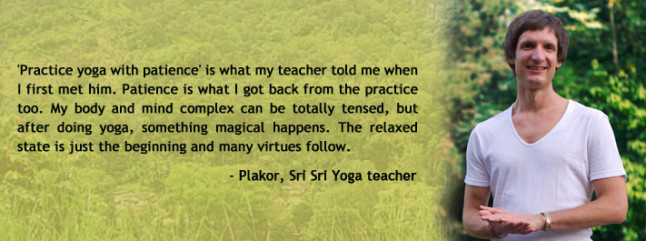
http://cdn.artofliving.org/sites/www.artofliving.org/files/styles/unity_carousel_inner/public/plakor-benefit-of-yoga.jpg


Weight loss, a strong and flexible body, glowing beautiful skin, peaceful mind, good health – whatever you may be looking for, yoga has it on offer. However, very often, yoga is only partially understood as being limited to asanas (yoga poses). As such, its benefits are only perceived to be at the body level and we fail to realize the immense benefits yoga offers in uniting the body, mind and breath. When you are in harmony, the journey through life is calmer, happier and more fulfilling.

With all this and much more to offer, the benefits of yoga are felt in a profound yet subtle manner. Here, we look at the top 10 benefits of regular yoga practice.

1. All-round fitness. You are truly healthy when you are not just physically fit but also mentally and emotionally balanced. As Sri Sri Ravi Shankar puts it, “Health is not a mere absence of disease. It is a dynamic expression of life – in terms of how joyful, loving and enthusiastic you are.” This is where yoga helps: postures, pranayama (breathing techniques) and meditation are a holistic fitness package.

2. Weight loss. What many want! Yoga benefits here too. Sun Salutations and Kapal Bhati pranayama are some ways to help lose weight with yoga. Moreover, with regular practice of yoga, we tend to become more sensitive to the kind of food our body asks for and when. This can also help keep a check on weight.

3. Stress relief. A few minutes of yoga during the day can be a great way to get rid of stress that accumulates daily – in both the body and mind. Yoga postures, pranayama and meditation are effective techniques to release stress. You can also experience how yoga helps de-tox the body and de-stress the mind at the Art of Living Yoga Level 2 Course.

4. Inner peace. We all love to visit peaceful, serene spots, rich in natural beauty. Little do we realize that peace can be found right within us and we can take a mini-vacation to experience this any time of the day! Benefit from a small holiday every day with yoga and meditation. Yoga is also one of the best ways to calm a disturbed mind.

5. Improved immunity. Our system is a seamless blend of the body, mind and spirit. An irregularity in the body affects the mind and similarly unpleasantness or restlessness in the mind can manifest as an ailment in the body. Yoga poses massage organs and stregthen muscles; breathing techniques and meditation release stress and improve immunity.

6. Living with greater awareness. The mind is constantly involved in activity – swinging from the past to the future – but never staying in the present. By simply being aware of this tendency of the mind, we can actually save ourselves from getting stressed or worked up and relax the mind. Yoga and pranayama help create that awareness and bring the mind back to the present moment, where it can stay happy and focused.

7. Better relationships. Yoga can even help improve your relationship with your spouse, parents, friends or loved ones! A mind that is relaxed, happy and contented is better able to deal with sensitive relationship matters. Yoga and meditation work on keeping the mind happy and peaceful; benefit from the strengthened special bond you share with people close to you.

8. Increased energy. Do you feel completely drained out by the end of the day? Shuttling between multiple tasks through the day can sometimes be quite exhausting. A few minutes of yoga everyday provides the secret to feeling fresh and energetic even after a long day. A 10-minute online guided meditation benefits you immensely, leaving you refreshed and recharged in the middle of a hectic day.

9. Better flexibility & posture. You only need to include yoga in your daily routine to benefit from a body that is strong, supple and flexible. Regular yoga practice stretches and tones the body muscles and also makes them strong. It also helps improve your body posture when you stand, sit, sleep or walk. This would, in turn, help relieve you of body pain due to incorrect posture.

10. Better intuition. Yoga and meditation have the power to improve your intuitive ability so that you effortlessly realize what needs to be done, when and how, to yield positive results. It works. You only need to experience it yourself.

Remember, yoga is a continuous process. So keep practicing! The deeper you move into your yoga practice, the more profound are its benefits.

Yoga practice helps develop the body and mind bringing a lot of health benefits yet is not a substitute for medicine. It is important to learn and practice yoga postures under the supervision of a trained Art of Living Yoga teacher. In case of any medical condition, practice yoga postures after consulting a doctor and an Art of Living Yoga teacher. Find an Art of Living Yoga course at an Art of Living Center near you. Do you need information on courses or share feedback? Write to us at info@artoflivingyoga.in.

Read Full Post »

Occupational Therapy

Larry H. Bernstein, MD, FCAP, Curator

LPBI


Definition of Occupational Therapy

Occupational therapy is a client-centred health profession concerned with promoting health and well being through occupation. The primary goal of occupational therapy is to enable people to participate in the activities of everyday life. Occupational therapists achieve this outcome by working with people and communities to enhance their ability to engage in the occupations they want to, need to, or are expected to do, or by modifying the occupation or the environment to better support their occupational engagement.(WFOT 2012)

Read the Statement on Occupational Therapy

In occupational therapy, occupations refer to the everyday activities that people do as individuals, in families and with communities to occupy time and bring meaning and purpose to life. Occupations include things people need to, want to and are expected to do.

Definition of Occupational Therapy Practice for the AOTA Model Practice Act

http://www.aota.org/-/media/Corporate/Files/Advocacy/State/Resources/PracticeAct/Model%20Definition%20of%20OT%20Practice%20%20Adopted%2041411.ashx

The practice of occupational therapy means the therapeutic use of occupations, including everyday life activities with individuals, groups, populations, or organizations to support participation, performance, and function in roles and situations in home, school, workplace, community, and other settings. Occupational therapy services are provided for habilitation, rehabilitation, and the promotion of health and wellness to those who have or are at risk for developing an illness, injury, disease, disorder, condition, impairment, disability, activity limitation, or participation restriction. Occupational therapy addresses the physical, cognitive, psychosocial, sensory-perceptual, and other aspects of performance in a variety of contexts and environments to support engagement in occupations that affect physical and mental health, well-being, and quality of life. The practice of occupational therapy includes:

A. Evaluation of factors affecting activities of daily living (ADL), instrumental activities of daily living (IADL), rest and sleep, education, work, play, leisure, and social participation, including:

1. Client factors, including body functions (such as neuromusculoskeletal, sensory-perceptual, visual, mental, cognitive, and pain factors) and body structures (such as cardiovascular, digestive, nervous, integumentary, genitourinary systems, and structures related to movement), values, beliefs, and spirituality.

2. Habits, routines, roles, rituals, and behavior patterns.

3. Physical and social environments, cultural, personal, temporal, and virtual contexts and activity demands that affect performance.

4. Performance skills, including motor and praxis, sensory-perceptual, emotional regulation, cognitive, communication and social skills.

B. Methods or approaches selected to direct the process of interventions such as:

1. Establishment, remediation, or restoration of a skill or ability that has not yet developed, is impaired, or is in decline.

2. Compensation, modification, or adaptation of activity or environment to enhance performance, or to prevent injuries, disorders, or other conditions.

3. Retention and enhancement of skills or abilities without which performance in everyday life activities would decline.

4. Promotion of health and wellness, including the use of self-management strategies, to enable or enhance performance in everyday life activities.

5. Prevention of barriers to performance and participation, including injury and disability prevention.

C. Interventions and procedures to promote or enhance safety and performance in activities of daily living (ADL), instrumental activities of daily living (IADL), rest and sleep, education, work, play, leisure, and social participation, including:

1. Therapeutic use of occupations, exercises, and activities.

2. Training in self-care, self-management, health management and maintenance, home management, community/work reintegration, and school activities and work performance.

3. Development, remediation, or compensation of neuromusculoskeletal, sensory-perceptual, visual, mental, and cognitive functions, pain tolerance and management, and behavioral skills.

4. Therapeutic use of self, including one’s personality, insights, perceptions, and judgments, as part of the therapeutic process.

5. Education and training of individuals, including family members, caregivers, groups, populations, and others.

6. Care coordination, case management, and transition services.

7. Consultative services to groups, programs, organizations, or communities.

8. Modification of environments (home, work, school, or community) and adaptation of processes, including the application of ergonomic principles.

9. Assessment, design, fabrication, application, fitting, and training in seating and positioning, assistive technology, adaptive devices, and orthotic devices, and training in the use of prosthetic devices.

10. Assessment, recommendation, and training in techniques to enhance functional mobility, including management of wheelchairs and other mobility devices.

11. Low vision rehabilitation.

12. Driver rehabilitation and community mobility.

13. Management of feeding, eating, and swallowing to enable eating and feeding performance.

14. Application of physical agent modalities, and use of a range of specific therapeutic procedures (such as wound care management; interventions to enhance sensory-perceptual, and cognitive processing; and manual therapy) to enhance performance skills.

15. Facilitating the occupational performance of groups, populations, or organizations through the modification of environments and the adaptation of processes.

Adopted by the Representative Assembly 4/14/11 (Agenda A13, Charge 18)

Read Full Post »

Art Therapy

Larry H. Bernstein, MD, FCAP, Curator

LPBI

Art Therapy Studio (ATS) and Art Therapy Undergraduate Program

Ursuline hires full-time Department Chair of Art Therapy Undergraduate Program

July 18, 2014

The Board of Trustees of the Art Therapy Studio (ATS) announced Jennifer Schwartz Wright has accepted a full-time position as Department Chair of the Art Therapy Undergraduate Program at her alma mater, Ursuline College, starting this fall.

Schwartz Wright joined the Art Therapy Studio in 2011 as Program Manager with more than 15 years of clinical experience and 20 years of volunteerism with ATS. She was named Interim Director in June 2012 and Executive Director in January 2013. Schwartz Wright is a board certified art therapist, art therapy educator, and community organizer and advocate among art therapists. Prior to coming to ATS, she served as President of the Buckeye Art Therapy Association and Chair of the Local Arrangements Committee for the American Art Therapy Association’s 2008 national conference held in Cleveland. – See more at: http://www.ursuline.edu/news/wright_department_chair#sthash.DIB22D5o.dpuf

The Art Therapy Studio is a non-profit organization that provides innovative therapeutic art
programs in a variety of settings, where people can benefit from the healing power of art. We
use the expressive arts to help children and adults communicate their feelings, tell their
stories and experience themselves as unique individuals. Because our focus is on personal
expression and image making, art centered therapy is especially helpful for people who
cannot use words to express themselves. Incorporated in 1967, the Art Therapy Studio is the
oldest arts therapy program of its kind in the country. We currently provide comprehensive
art therapy services that range from programs for Metrohealth inpatients to community
based wellness classes.

Our History
The Art Therapy Studio was founded in 1967 by George Streeter, M.D., a psychiatrist/artist,
and Mickie McGraw, ATR-BC, an artist/therapist. Both had used art as a way to cope with
serious physical illness, he with tuberculosis and she with polio, so they had a personal
understanding of the healing power of art.

The first Art Studio was established in collaboration with Highland View Rehabilitation
Hospital (now MetroHealth Medical Center) as a creative arts program to help patients and
their families cope with the life changing effects of trauma, chronic illness, medical treatment
and permanent disability. The Studio was a place to congregate, relax and be involved in the
creative process. Patients had choices in the Art Studio-they could choose when to visit the
studio, what art projects to work on (or not), and what colors to use. The control was left in
the hand of the artist.

In 1977, the mission was enriched to include community programming to serve patients after
their release from the hospital, recognizing that people needed a touchstone, somewhere to
continue to have socialization, and to continue to learn new artistic skills.

Our major programs today include:

Hospital Based – providing art therapy services to brain injury and stroke patients as part of
the MetroHealth Rehabilitation Institute of Ohio’s team.

Community Based – a creative therapeutic arts program providing watercolor, acrylic,
drawing, collage, and clay classes. We invite people with special physical, emotional,
cognitive or behavioral needs, and individuals seeking a wellness approach to healing to
come “Discover the Artist Within You”. Classes are held at Fairhill Partners near Shaker
Square (our administrative offices are also located here), on the campus of Ursuline College
in Pepper Pike, at River’s Edge on the west side near Kamm’s Corner and at MetroHealth
Medical Center.

Off-Site and Contracted Services –  we will send an Art Therapist off-site to provide services
directly to clients (individually or in groups) with a wide range of institutions (such as the
Cleveland Clinic, New Directions, Mentor High School, United Cerebral Palsy and VA Medical
Center). This has proven especially beneficial for agencies interested in enriching their
existing programs and for frail elders and physically challenged clients who cannot
participate in programming outside of their institution.

Professional Education – we provide programs such as our “Making a Creative Connection
Workshop” and “Art & Health Symposium” for Social Workers, Activity Professionals,
Counselors, and other professionals to earn Continuing Education Units. Workshop
participants learn about expressive arts (art, poetry, and movement) and gain ideas how to
implement a more creative environment for themselves and their clients.

Our Philosophy
From the beginning, the Art Therapy Studio programs have been developed around the
philosophy that art making is central to the healing process. In the safe, creative space of the
studio, a person is invited, encouraged and shown how to rediscover him or herself through
art. The emphasis is on the art, not words and control is left in the hands of artist. According
to Dr. Streeter, “Art offers uncontaminated opportunity for being yourself; for revealing your
identity as a person…the world of art therapy offers patients a chance to be that utilizes a
broader spectrum of opportunities than words alone make available.”

Read Full Post »

Factors in Patient Experience

Larry H. Bernstein, MD, FCAP, Curator

LPBI

Defining Patient Experience

http://www.theberylinstitute.org/?page=definingpatientexp

“The definition will allow me as a driver in improving the patient experience at our organization to include those key elements (interactions, current culture, perceptions, across the continuum of care) in our discussions to encourage a more integrated, quality experience that exceeds the expectations of each patient.”

To develop the Institute’s definition of patient experience, we formed a work group of patient experience leaders from a cross-section of healthcare organizations. The group shared perspectives, insights and backgrounds on what patient experience means to them and collaboratively created this definition. We believe it provides a terrific starting point for the conversation around this important issue.

Critical to the understanding and application of this definition is a broader explanation of its key elements:

Interactions Culture Perceptions Continuum of Care
The orchestrated touch-points of people, processes, policies, communications, actions, and environment The vision, values, people (at all levels and in all parts of the organization) and community What is recognized, understood and remembered by patients and support people. Perceptions vary based on individual experiences such as beliefs, values, cultural background, etc. Before, during and after the delivery of care

The History of Patient Experience

Hear perspectives from two leading Patient Experience thought leaders. Wendy Leebov, Partner at Language of Caring, and Mary Malone, President of Malone Advisory Services, discuss the history of patient experience and its growth in the healthcare industry. Perfect as tools to share with growing patient experience professionals or to reenergize efforts for experienced leaders, learn about the many influences that led to the existing patient experience movement and how we all have an impact in this emerging field.

Learn more about the history of patient experience in the PX Body of Knowledge History course where you will grasp the core foundation of patient experience and review the evolving role of patient experience in healthcare today.

https://youtu.be/_kwZ-xeOj8Y

Defining Patient Experience

Authors: Jason A. Wolf PhD, Victoria Niederhauser DrPH, RN, Dianne Marshburn PhD, RN, NE-BC, Sherri L. LaVela PhD, MPH, MBA
Publication: Patient Experience Journal

In recent years, perceptions of performance and quality of healthcare organizations have begun to move beyond examining the provision of excellent clinical care, alone, and to consider and embrace the patient experience as an important indicator. There is a need to determine the extent to which clear and formal definitions exist, have common overarching themes, and/or have unique, but important constructs that should be considered more widely. In this article, we provide a 14-year synthesis of existing literature and other sources (2000-2014) that have been used to define patient experience. A total of 18 sources (articles or organizational websites) were identified that provided a tangible, explicit definition of patient experience. A narrative synthesis was undertaken to categorize literature (and other sources) according to constructs of the definitions provided. The objectives of the synthesis were to: (1) identify the key elements, constructs, and themes that were commonly and frequently cited in existing definitions of ‘patient experience,’ (2) summarize these findings into what might be considered a common shared definition, and (3) identify important constructs that may be missing from and may enhance existing definition(s). The overarching premise was to identify and promote a working definition of patient experience that is applicable and practical for research, quality improvement efforts, and general clinical practice. Our findings identified several concepts and recommendations to consider with regard to the definition of patient experience. First, the patient experience reflects occurrences and events that happen independently and collectively across the continuum of care. Also, it is important to move beyond results from surveys, for example those that specifically capture concepts such as ‘patient satisfaction,’ because patient experience is more than satisfaction alone. Embedded within patient experience is a focus on individualized care and tailoring of services to meet patient needs and engage them as partners in their care. Next, the patient experience is strongly tied to patients’ expectations and whether they were positively realized (beyond clinical outcomes or health status). Finally, the patient experience is integrally tied to the principles and practice of patient- and family- centered care. As patient experience continues to emerge as an important focus area across healthcare globally, the need for a standard consistent definition becomes even more evident, making it critical to ensure patient experience remains a viable, respected, and highly embraced part of the healthcare conversation.

Patient Experience Journal 2014;  1:(1), Article 3.
Available at: http://pxjournal.org/journal/vol1/iss1/3

In practice and research the concept of patient experience has had varied uses and is often discussed with little more explanation than the term itself. Although very little has been published about the complexities with regard to defining patient experience, the 2009 HealthLeaders Media Patient Experience Leadership Survey 3 discovered that when it comes to defining patient experience, there are widely divergent views within the healthcare industry. They found that 35% of respondents agreed that patient experience equals “patient-centered care,” 29% agreed it was “an orchestrated set of activities that is meaningfully customized for each patient,” and 23% said it involved “providing excellent customer service.” The remaining responses reflected patient experience meant, “creating a healing environment,” being “consistent with what’s measured by HCAHPS,” or “other” than the options provided in the survey. In asking the question, “Does your organization have a formal definition of patient experience?” of healthcare organizations in its recent Patient Experience Benchmarking Study, The Beryl Institute discovered that on average 45% of US-based hospitals1 and 35% of non US-based healthcare organizations reported having a formal definition. The question this raises is that as patient experience is identified as a priority item, would healthcare efforts be best served by having a formally accepted definition of patient experience?

The efforts that shaped The Beryl Institute’s definition came from the voices of practice and a review of current research and use in 2010. A workgroup of healthcare leaders from a variety of patient experience roles identified the key elements shaping their work in the patient experience. Within individual organizations, inquiries were made of peers and patients to identify key themes and these larger concepts were pulled together in collective data that was aligned around main themes. The four themes that emerged were personal interactions, organization culture, patient and family perceptions, and across the care continuum. From the themes, a definition was created and then validated through the broader Institute community for further feedback and refinement. The definition is currently being used (with or without adaptations) by a number of healthcare facilities globally as their own definition of patient experience. However, there is much ground yet to be covered in moving towards alignment around a clear and shared definition of patient experience. The purpose of this article was to provide a 14-year synthesis of existing literature and other sources that have been used to define patient experience. Given the breadth and depth of information, we aimed to examine key concepts and compare/contrast multiple definitions, and ultimately to recommend a working definition that we feel can be used to across healthcare settings to capture the patient experience.

Need for Definition We identified 18 sources (websites or articles) that explicitly provide a definition for the patient experience (Table 1). The latest data from both the most recent HeathLeader’s survey and The Beryl Institute’s State of Patient Experience benchmarking research identified patient experience as a top priority; however they also identify there is a divergent nature of patient experience and need for a clear and concise definition. In the article “What is the Patient Experience”? from the Gallup Business Journal, the authors’ suggest that the ideal patient experience is created by meeting four basic emotional needs: confidence, integrity, pride and passion, ultimately asserting that experience is about engaging patients. The author offers in closing, “Engaged healthcare is better healthcare, for everyone. And that’s the best definition of the patient experience”.6

Continuum of Care Several authors argue that the patient experience is not just one encounter, but spans over time and includes many touch points. In a recent publication, Deloitte LLP’s Health Sciences Practice7 contends that organizations need to focus on the patient experience to gain and maintain a competitive advantage. They define the patient experience as much broader than the care itself, describing specific touch points or times when there is interaction with the organization and the patient. Their definition, “The Patient Experience refers to the quality and value of all of the interactions—direct and indirect, clinical and nonclinical—spanning the entire duration of the patient/provider relationship” represents a continuum of interactions. In a recent article, although Stempniak8 does not define patient experience directly, he does offer two quotes that provide some insight. The first from Pat Ryan, CEO of Press Ganey who said, “Let’s look at the patient experience in total as reducing suffering and reducing anxiety… across the entire continuum of care, from the first phone call to the patient’s being discharged.” The second is a statement from Dr. Jim Merlino, Chief Experience Officer at the Cleveland Clinic who admits, the biggest challenge in this effort is figuring out where to start, and defining exactly what the “patient experience” means. Pemberton & Richardson9 provide an overview of a development process of a patient experience vision, told through a story and framed by a series of six active steps a patient goes through during an episode of care, which included: reputation, arrival, contract, stay, treatment and after stay. While there is no direct statement of how they defined the patient experience, they identified the importance of culture and staff engagement in driving an effective patient experience effort.

Beyond Survey Results Several articles argue that the patient experience should be defined more broadly than just using the Hospital Consumer Assessment of Healthcare Providers and Systems (HCAHPS) survey domains.

Aligned with Patient-Centered Care Principles Other definitions focus on patient-centered care principles. Weiss and Tyink13 discuss the opportunity to provide the ideal patient experience through creating a patient-centric culture. The components of a patientcentric culture encompass competent, high-quality care, personalized care, timely responses, care coordination, and are reliable and responsive. They suggest that the patient experience is about a brand experience and is driven by what happens at the point of contact between the patient, the practice, and the provider.

Focus on Expectations

Focus on Individualized Care

More than Satisfaction

As our review of literature and sources showed, there is an absence of a commonly used definition around patient experience in healthcare. While there has been increasing numbers of articles, research and writing on the subject in recent years, little has been seen in the way of coalescing around an accepted statement. Much of this is due to the reality that in all but a few cases a truly concise, applicable and replicable definition was not offered. Other influences may be the competing interests that influence the day-today operations of healthcare overall.

Read Full Post »

Patient Satisfaction with Hospital Experience

Curator: Larry H. Bernstein, MD, FCAP


Getting It Right: The Link Between the Patient Experience and Hospital Reputation

Katie Johnson, Ph.D., Director of Research and Analytics, National Research: 02/21/2014 –
See more at: http://www.nationalresearch.com/blog/33/#sthash.z8OlwguT.dpuf


When you get your daily vanilla latte, you know what to expect every single time—a great cup of Joe. And because of your positive morning (or afternoon) experience, you’ll keep going back. Does this same notion apply in healthcare? Absolutely.

But if you had a poor experience at your hospital, would you go back? Probably not.

It’s not rocket science that when you have a positive, favorable consumer experience with a product or service, you will keep going back for more—you may even adopt brand loyalty. However, as simple as this sounds, healthcare providers are not always “getting it right.”

According to a study by the National Research Corporation Market Insights Survey, the largest healthcare consumer survey in the U.S., eight percent of patients said their hospital experience was poor enough to not recommend the healthcare facility to family or friends. In addition, nine percent of patients rated their overall hospital care and services poorly.

When patients have a highly engaged, positive experience with their hospital, it’s a win-win situation. Hospital reputation is everything. And this rings true even more so today, since the patient experience is tied to hospital reimbursements. Below is a list of research-based evidence that explains why reputation matters:

    • Patient experience is important. It’s important because treating patients well is the right thing to do. It’s important because a positive patient experience is related to better health outcomes (including lower readmission rates). It’s important because Value Based Purchasing has tied Medicare reimbursement to HCAHPS scores. It’s also important, we have found, because of its impact on hospital reputation.


    • Hospital reputation is important. Why should hospitals care about their reputations? Hospital reputation plays a part in the selection process among would-be patients. Approximately nine in 10 people indicate that reputation is important when selecting a hospital. Further, once an individual selects and utilizes a hospital, he or she is more likely to utilize that same facility for future healthcare needs (pending a positive experience, of course).


    • Hospital reputation is related to patient experience. Our research has shown that hospitals providing positive patient experiences have better reputations. In other words, hospitals that are rated highly by their discharged patients are also rated highly by the general public (whether they’ve had a direct hospital experience or not).


    • We’ve found evidence to support an important chain of events. Patient experience drives reputation. Reputation drives utilization. Utilization drives future utilization.


    • Some aspects of reputation are more closely related to patient experience than others. The top five correlates, in descending order, are:
      • most personalized care
      • best accommodations
      • highest patient safety
      • best nurses
      • best overall quality


    • Today’s patient experience is related to tomorrow’s reputation. It takes time for reputations to form and change, and there is evidence of lag-time in the relationship between patient experience and hospital reputation. Correlations are strongest when patient experience is measured at the first time, and reputation is measured at the second time and six months later. This lag relationship indicates that the quality of the patient experience being administered in a hospital today is significantly related to the reputation of that hospital six months from now.


    • “Bad” hospital reputations are even more important. Facilities delivering poor patient experiences are four times more likely to have poor reputations than facilities delivering good patient experiences. Bad news travels fast and wide. In order to improve a poor reputation brought on by a poor patient experience, facilities would be wise to turn their attention inward and focus on improving the experiences they provide their patients.


  • We have a roadmap. The figure below is designed for healthcare leaders who would like to explore potential improvement strategies based on where their facilities are situated on the continuum of patient experience and reputation. While all strive to be in the top right category, scoring well on both patient experience and reputation, the reality is that the majority of facilities will find themselves located in one of the other three groups. Facilities in the top or bottom groups on the left side would do well to focus on the patient experience first and foremost. As we’ve learned, if the quality of patient experience is low, there is little that can be done effectively in terms of marketing and advertising. Facilities in the bottom right quadrant (high quality patient experience, but with reputations not reflective of that), should put resources into spreading the word and advertise the strength of their patient experience. It’s important that those in the community are made aware of the high-caliber care being delivered.


http://www.nationalresearch.com/uploads/Image/blog/BlogPic2-21-14.jpg


Research Brief: The Link Between the Patient Experience and Hospital Reputation

Hospitals and health systems across the United States are focusing increased effort on the delivery of superior patient experience, and with good reason. The provision of top-notch patient care translates to tangible benefits to both patients and their families, as well as to the healthcare facility itself.

In a research brief published by National Research Corporation in February 2014, The Link Between Patient Experience and Hospital Reputation, Dr. Katie Johnson presents findings showing how the patient experience is directly tied to a hospital or health system’s reputation. Research is derived from the National Research Market Insights Survey, the largest online healthcare consumer survey in the United States.


Read Full Post »

« Newer Posts