Feeds:
Posts
Comments

Archive for December, 2013

In Two-thirds of Waking Hours Older Women are Sedentary

Reporter: Aviva Lev-Ari, PhD, RN


Older women sedentary two-thirds of waking hours

By: MARY ANN MOON, Family Practice News Digital Network

Older women are sedentary for approximately two-thirds of their waking hours, usually in bouts lasting about 30 minutes each punctuated by brief periods of activity, according to a report published Dec. 18, 2013 in JAMA.

Recent studies suggest a high volume of sedentary behavior may be a risk factor for adverse health outcomes. However, few data exist on how this behavior is patterned (for example, does most sedentary behavior occur in a few long bouts or in many short bouts?)

In a research letter to the editor, investigators presented data collected from 7,247 older women (mean age, 71 years) participating in an ancillary study of the Women’s Health Study who wore accelerometers for 1 week to track their physical activity. Overall, the women spent 65.5% of their waking hours – the equivalent of 9.7 hours per day – in sedentary behavior, said Eric J. Shiroma of Harvard School of Public Health, Boston, and his associates.

The mean number of sedentary intervals was 85.9/day, with a mean of 9 breaks per sedentary hour. Most sedentary time occurred in short rather than long intervals, with approximately one-third of the sedentary bouts lasting roughly 30 minutes, the researchers said (JAMA 2013;310:2562-3).

Accelerometers cannot convey whether the women were sitting, standing, or lying down during sedentary periods, but it is most likely that they were sitting. “If future studies confirm the health hazards of sedentary behavior and guidelines are warranted, these data may be useful to inform recommendations on how to improve such behavior,” Mr. Shiroma and his associates said.

They noted that most participants in the Women’s Health Study were white and of higher socioeconomic statusso these findings may not apply to women of other backgrounds.

This study was supported by the National Institutes of Health. No relevant financial conflicts of interest were reported.

SOURCE

http://www.familypracticenews.com/single-view/older-women-sedentary-two-thirds-of-waking-hours/0e9af152ff0d6f3fb1f085ae175489e3.html


Read Full Post »

Multivitamins – Don’t help Extend Life or ward off Heart Disease and Improve state of Memory Loss

Reporter: Aviva Lev-Ari, PhD, RN


Experts: Don’t Waste Your Money on Multivitamins – Three studies find the supplements don’t help extend life or ward off heart disease and memory loss

http://www.nlm.nih.gov/medlineplus/news/fullstory_143473.html

Monday, December 16, 2013

HealthDay news image 

MONDAY, Dec. 16, 2013 (HealthDay News) — With three new studies finding that a daily multivitamin won’t help boost the average American’s health, the experts behind the research are urging people to abandon use of the supplements.

The studies found that popping a daily multivitamin didn’t ward off heart problems or memory loss, and wasn’t tied to a longer life span.

The studies, published in the Dec. 17 issue of the journal Annals of Internal Medicine, found that multivitamin and mineral supplements did not work any better than placebo pills.

Dietary supplements are a multibillion-dollar industry in the United States, and multivitamins account for nearly half of all vitamin sales, according to the U.S. Office of Dietary Supplements.

But a growing body of evidence suggests that multivitamins offer little or nothing in the way of health benefits, and some studies suggest that high doses of certain vitamins might cause harm.

As a result, the authors behind the new research said it’s time for most people to stop taking them.

“We believe that it’s clear that vitamins are not working,” said Dr. Eliseo Guallar, a professor of epidemiology at the Johns Hopkins Bloomberg School of Public Health.

In a strongly worded editorial on the three studies, Guallar and his co-authors urged people to stop spending money on multivitamins.

Even a representatives of the vitamin industry asked people to temper their hopes about dietary supplements.

“We all need to manage our expectations about why we’re taking multivitamins,” Duffy MacKay, vice president of scientific and regulatory affairs for the Council for Responsible Nutrition, a trade group that represents supplement manufacturers, said in a prepared statement.

“Research shows that the two main reasons people take multivitamins are for overall health and wellness and to fill in nutrient gaps,” MacKay said. “Science still demonstrates that multivitamins work for those purposes, and that alone provides reason for people to take a multivitamin.”

However, Guallar said, it’s not clear that taking supplements to fill gaps in a less-than-perfect diet really translates into any kind of health boost.

“It would be great if all dietary problems could be solved with a pill,” he said. “Unfortunately, that’s not the case.”

For the first study, researchers randomly assigned almost 6,000 male doctors over the age of 65 to take either a daily Centrum Silver multivitamin or a look-alike placebo pill. Every few years, the researchers gave the men a battery of tests over the telephone to check their memories.

The men in the study were in pretty good health to begin with, and 84 percent said they faithfully took their pills each day.

After 12 years, there was no difference in memory problems between the two groups.

“No matter which way we broke it down, there was a null effect,” said study author Jacqueline O’Brien, a research associate at Brigham and Women’s Hospital in Boston. “Supplements are often marketed to have benefits for brain health and things like that, and this is a pretty clear takeaway message.”

The same study, however, had previously found that multivitamins might modestly reduce the risk of cancer and cataracts. Cancer risk was reduced by 8 percent, while the risk of cataracts dropped by 9 percent, compared to a placebo.

In the second study, researchers randomly assigned 1,700 heart attack survivors enrolled in a trial of therapy known as intravenous chelation to a daily regimen of high doses of vitamins and minerals or placebo pills.

Participants were asked to take six large pills a day, and researchers think many developed pill fatigue. Nearly half the participants in each part of the study stopped taking their medication before the end of the study. The average time people stuck with it was about two and a half years.

After an average of 55 months, there was no significant difference between the two groups in a composite measure that counted the number of deaths, second heart attacks, strokes, episodes of serious chest pain and procedures to open blocked arteries.

The third study, a research review, assessed the evidence from 27 studies on vitamin and mineral supplements that included more than 450,000 people. That study, conducted for the U.S. Preventive Services Task Force, found no evidence that supplements offer a benefit for heart disease or that they delay death from any cause. They found only a minimal benefit for cancer risk.

The results of the studies are so clear and consistent, the editorial writers said, that it’s time to stop wasting research money looking for evidence of a benefit.

“The probability of a meaningful effect is so small that it’s not worth doing study after study and spending research dollars on these questions,” Guallar said.

SOURCES: Eliseo Guallar, M.D., professor of epidemiology, Johns Hopkins Bloomberg School of Public Health, Baltimore; Jacqueline O’Brien, Sc.D., research associate, Brigham and Women’s Hospital, Boston; Dec. 16, 2013, news release, Council for Responsible Nutrition, Washington, D.C.; Dec. 17, 2013, Annals of Internal Medicine

HealthDay
Copyright (c) 2013 HealthDay. All rights reserved.
SOURCES
http://www.nlm.nih.gov/medlineplus/news/fullstory_143473.html

http://consumer.healthday.com/cognitive-health-information-26/brain-health-news-80/experts-don-t-waste-your-money-on-multivitamins-683104.html


Read Full Post »

Increased Consumption of Dietary Fiber is associated with a significantly Lower Risk of CVD and CHD

Reporter: Aviva Lev-Ari, PhD, RN

LEEDS, UK — Aside from keeping you “regular,” eating fiber also appears to be good for your heart. A new review has shown that increased consumption of dietary fiber is associated with a significantly lower risk of CVD and CHD.

For every 7 g of dietary fiber eaten daily—which can be achieved by eating two to four servings of fruits and vegetables or a serving of whole grains plus a portion of beans or lentils—the risks of CVD and CHD were each lowered by 9%, according to a new meta-analysis published December 19, 2013 in BMJ [1].

“Lower risk of cardiovascular disease was also seen with greater intakes of insoluble, cereal, fruit, and vegetable fiber,” write Diane Threapleton (University of Leeds, UK), a PhD student, and colleagues. “In addition, reduced risk for CHD was associated with greater intake of insoluble fiber and fiber from cereal or vegetable food.”

A cardioprotective effect of dietary fiber was first suggested in the 1970s, and numerous studies have attempted to investigate the link, including the effects of fiber on CV risk factors.

In the present meta-analysis, Threapleton et al analyzed 22 cohort studies that reported total dietary-fiber intake, fiber subtypes, and fiber from food sources and CVD or CHD events. CVD events included CHD along with fatal and incident stroke. Five studies suggested that each 7-g/day increase in insoluble fiber lowered the risk of CVD and CHD by 18%, respectively. Fiber consumption from cereals lowered the risk of CVD and CHD, as did fiber from vegetables. Fiber sourced from fruit lowered the risk of CVD only.

How much do physicians in private practice give their staff for raises and bonuses?
View Report >

Putting these results in perspective, Dr Robert Baron(University of California, San Francisco) gets straight to the point in his editorial, “Eat More Fiber”[2]. Although the study is limited by the potential for confounding—there is the possibility of an association between high fiber intake and other healthy behaviors—”clinicians should enthusiastically and skilfully recommend that patients consume more dietary fiber,” writes Baron. This includes a mix of soluble and insoluble fiber and fiber from multiple food sources, he adds.

Although the evidence for recommending higher fiber intake comes from “imperfect evidence,” including observational studies and expert opinion, the updated meta-analysis by Threapleton et al increases confidence in the recommendation, writes Baron.

The study was funded by the UK Department of Health. Threapleton reports that her PhD studentship receives funding from Kellogg’s. Baron reported no relevant financial disclosures.

References

  1. Threapleton DE, Greenwood DC, Evans CE, et al. Dietary fiber intake and risk of cardiovascular disease: systematic review and meta-analysis. BMJ 2013; 347:f6879. Available at: http://www.bmj.com.
  2. Baron RB. Eat more fiber. BMJ 2013; 347:f7401. Available at: http://www.bmj.com.

SOURCE

http://www.medscape.com/viewarticle/818385?nlid=43303_2105&src=wnl_edit_medp_card&uac=93761AJ&spon=2


Read Full Post »


Bioinformatics

Track 4 explores technologies and tools that bring together relevant -omic data from multiple physical locations for analysis. Case studies and results will be presented to illustrate how virtual data integration across multiple research initiatives can be applied to any disease. Other topics covered include collaboration tools, biomarker research, imaging, computational models, clinically actionable variants, and gene mapping and expression.

Final Agenda


Download Brochure | Pre-Conference Workshops


TUESDAY, APRIL 29


7:00 am Workshop Registration and Morning Coffee

8:00 – 11:30 Recommended Morning Pre-Conference Workshops*

Data Visualization in Biology: From the Basics to Big Data
Analyzing NGS Data in Galaxy

12:30 – 4:00 pm Recommended Afternoon Pre-Conference Workshops*

Big Data Analytics
Running a Local Galaxy Instance

*Separate Registration Required. Click here for detailed information.


2:00 – 7:00 pm Main Conference Registration

4:00 Event Chairperson’s Opening Remarks

Cindy Crowninshield, RD, LDN, Conference Director, Cambridge Healthtech Institute


4:05 PLENARY KEYNOTE SESSION

Click here for detailed information.


5:00 – 7:00 Welcome Reception in the Exhibit Hall with Poster Viewing

iPad® mini & Bose® QuietComfort 15 Noise Cancelling Headphones Raffle! Drawing held at 6:30pm!*


*Apple® & Bose® are not sponsors or participants in this program.


WEDNESDAY, APRIL 30

7:00 am Registration Open and Morning Coffee

8:00 Chairperson’s Opening Remarks

Phillips Kuhl, Co-Founder and President, Cambridge Healthtech Institute


8:05 PLENARY KEYNOTE SESSION

Click here for detailed information.


9:00 Benjamin Franklin Award & Laureate Presentation

9:30 Best Practices Awards Program

9:45 Coffee Break in the Exhibit Hall with Poster Viewing


BIOINFORMATICS FOR BIG DATA

10:50 Chairperson’s Remarks

11:00 Data Management Best Practices for Genomics Service Providers

Vas Vasiliadis, Director, Products, Computation Institute, University of Chicago and Argonne National Laboratory

Genomics research teams in academia and industry are increasingly limited at all stages of their work by large and unwieldy datasets, poor integration between the computing facilities they use for analysis, and difficulty in sharing analysis results with their customers and collaborators. We will discuss issues with current approaches and describe emerging best practices for managing genomics data through its lifecycle.

11:30 NGS Analysis to Drug Discovery: Impact of High-Performance Computing in Life Sciences

Bhanu Rekepalli, Ph.D., Assistant Professor and Research Scientist, Joint Institute for Computational Sciences, The University of Tennessee, Oak Ridge National Laboratory

We are working with small-cluster-based applications most widely used by the scientific community on the world’s premier supercomputers. We incorporated these parallel applications into science gateways with user-friendly, web-based portals. Learn how the research at UTK-ORNL will help to bridge the gap between the rate of big data generation in life sciences and the speed and ease at which biologists and pharmacists can study this data.

RemedyMD

12:00 pm The Future of Biobank Informatics

Bruce Pharr, Vice President, Product Marketing, Laboratory Systems, Remedy Informatics

As biobanks become increasingly essential to basic, translational, and clinical research for genetic studies and personalized medicine, biobank informatics must address areas from biospecimen tracking, privacy protection, and quality management to pre-analytical and clinical collection/identification of study data elements. This presentation will examine specific requirements for third-generation biobanks and how biobank informatics will meet those requirements.

YarcData

12:15 Learn How YarcData’s High Performance Hadoop and Graph Analytics Appliances Make It Easy to Use Big Data in Life Sciences

Ted Slater, Senior Solutions Architect, Life Sciences, YarcData, a division of Cray

YarcData, a division of Cray, offers high performance solutions for big data using Hadoop and graph analytics at scale, finally giving researchers the power to leverage all the data they need to stratify patients, discover new drug targets, accelerate NGS analysis, predict biomarkers, and better understand diseases and their treatments.

12:30 Luncheon Presentations (Sponsorship Opportunities Available) or Lunch on Your Own

1:50 Chairperson’s Remarks

1:55 Integration of Multi-Omic Data Using Linked Data Technologies

Aleksandar Milosavljevic, Ph.D., Professor, Human Genetics; Co-Director, Program in Structural & Computational Biology and Molecular Biophysics; Co-Director, Computational and Integrative Biomedical Research Center, Baylor College of Medicine

By virtue of programmatic interoperability (uniform REST APIs), Genboree servers enable virtual integration of multi-omic data that is distributed across multiple physical locations. Linked Data technologies of the Semantic Web provide an additional “logical” layer of integration by enabling distributed queries across the distributed data and by bringing multi-omic data into the context of pathways and other background knowledge required for data interpretation.

2:25 Building Open Source Semantic Web-Based Biomedical Content Repositories to Facilitate and Speed Up Discovery and Research

Bhanu Bahl, Ph.D., Director, Clinical and Translational Science Centre, Harvard Medical School

Douglas MacFadden, CIO, Harvard Catalyst at Harvard Medical School

Eagle-i open source network at Harvard provides a state-of-the-art informatics platform to support the quality control and annotation of resources establishing a sound foundation for a well-curated resource collection in accordance with Semantic Web and Linked Open Data principles. Learn how this ontology-centric architecture is used to efficiently store, create, and search data.

TessellaNEW

2:55 Data Experts: Improving Translational Drug-Development Efficiency

Jamie MacPherson, Ph.D., Consultant, Tessella

We report on a novel approach to translational informatics support: embedding ‘Data Experts’ within drug-project teams. Data experts combine first-line informatics support and Business Analysis. They help teams exploit data sources that are diverse in type, scale and quality; analyse user-requirements and prototype potential software solutions. We then explore scaling this approach from a specific drug development team to all.

3:25 Refreshment Break in the Exhibit Hall with Poster Viewing


BIOLOGICAL NETWORKS

4:00 Network Verification Challenge: A Reputation-Based Crowd-Sourced Peer Review Platform for Network Biology

William Hayes, Ph.D., Senior Vice President, Platform Development, IT/Informatics, Selventa

Anselmo DiFabio, Vice President, Technology, Applied Dynamic Solutions

The Network Verification Challenge proposes a new approach for peer review for Network biology. The use of a reputation-based crowd-sourced platform can make previously overwhelming efforts in capturing large-scale network biology and validating it possible. The same approach for peer review can also be applied inside bioPharma for internal collaboration and validation of network biology in and across therapeutic areas.

4:30 NDEx, the Network Data Exchange: Bridging the Knowledge Gap for Commercial and Academic Collaboration on Biological Networks

Dexter Pratt, Project Director, NDEx, Cytoscape Consortium

NDEx is a public portal for collaboration and publication for scientists and organizations working with biological networks of multiple types and in multiple formats. This talk presents key features of the NDEx portal and the underlying open-source server software. The status of NDEx in collaborations with other organizations and the use (or development) of standards will be summarized.

5:00 Sponsored Presentations (Opportunities Available)

5:30 – 6:30 Best of Show Awards Reception in the Exhibit Hall

THURSDAY, MAY 1

7:15 am Registration Open

7:15 Breakfast Presentation (Sponsorship Opportunity Available) or Morning Coffee

8:30 Chairperson’s Opening Remarks

Kevin Davies, Ph.D., Vice President Business Development & Publisher C&EN, American Chemical Society; Founding Editor, Bio-IT World


8:35 PLENARY KEYNOTE SESSION

Click here for detailed information.


10:00 Coffee Break in the Exhibit Hall and Poster Competition Winners Announced


BIOINFORMATICS ACROSS MULTIPLE RESEARCH INITIATIVES

10:30 Chairperson’s Opening Remarks

10:35 Analysis of Genomics Data in an Internal Cloud Computing Environment

Philip Groth, Ph.D., IT Business Partner Genomics, R&D IT – Research, Bayer HealthCare

This talk presents the technical set-up of vCloud, an in-house cloud solution, maintenance and running an internal cloud-computing environment, and how this set-up enables fast & secure analysis of large-scale genomics data. Results of analyzing genomic data from over 4,000 cancer patients will be presented.

11:05 Genome-Wide Multi-Omics Profiling of Colorectal Cancer Identifies Immune Determinants Strongly Associated with Relapse

Subha Madhavan, Ph.D., Director, Innovation Center for Biomedical Informatics, Oncology, Georgetown University

This presentation demonstrates the use of novel informatics methods and data integration approaches in identifying prognostic markers of cancer. The use and benefit of adjuvant chemotherapy to treat patients with state II colorectal cancer (CRC) is not well understood since the majority of these patients are cured by surgery alone.

11:35 Sponsored Presentations (Opportunities Available)

12:05 pm Luncheon Presentations (Sponsorship Opportunities Available) or Lunch on Your Own

1:15 Dessert Refreshment Break in the Exhibit Hall with Poster Viewing

1:55 Chairperson’s Remarks

2:00 An Algorithm to Access Human Memory Showing Alzheimer Symptoms When Distorted

Simon Berkovich, Ph.D., Professor, Computer Science, The George Washington University

This talk presents a novel theoretical framework for bioinformatics. Access to a holographic model of the brain encounters a particular problem of multiple responses resolution. For the given milieu, we employ a digital-analog adjustment of a streaming algorithm for finding a predominant element. Receptacles deterioration incurs preferential recall of prior life stages akin to Alzheimer’s disease.


MACHINE LEARNING MODELS

2:30 Accurate Prediction of Clinical Stroke Scales from Robotic Measurements

Dimitris K. Agrafiotis, Ph.D., FRSC, Vice President and Chief Data Officer, Covance

Here, we describe a novel approach that combines robotic devices and advanced machine learning algorithms to derive predictive models of clinical assessments of motor function following stroke. We show that it is possible to derive sensitive biomarkers of motor impairment using a few easily obtained robotic measurements, which can then be used to improve the efficiency and cost of clinical trials.

3:00 GPS Engineering: Machine Learning Approaches to Biological Engineering

Drew Regitsky, Scientist, Bioengineering, Calysta Energy

This talk presents a potential new approach to computational representations of biological systems and applying multidimensional analysis to predicting the behavior of complex systems. Several case studies will be presented to demonstrate applications of the methods and examples of the output of data analysis.

3:30 A Multiclass Extreme-Learning-Machine Approach to the Discovery of Multiple Cancer Biomarkers: Using Binary Coded Genetic Algorithm and IPA Analysis

Saras Saraswathi, Ph.D., Clinical Instructor, Pediatrics, Ohio State University; Postdoctoral Research Associate, Battelle Center for Mathematical Medicine, Research Institute, Nationwide Children’s Hospital

The neural network-based Extreme Learning Machine is combined with a Binary Coded Genetic Algorithm to select a small set of 92 genes which simultaneously classify 14 different types of cancers simultaneously, to high accuracy. IPA analysis of the selected genes reveals that over 60% of the selected genes are related to many cancers that are being classified.

4:00 Conference Adjourns

SOURCE

http://www.bio-itworldexpo.com/Bioinformatics/


Read Full Post »

See on Scoop.itCardiotoxicity

CORTICO STEROIDS – These steroids are the group of hormones that perform a Cortisone-like action. Cortico steroids are man-made steroids that mimic the activity of cortisone that is produced naturally in the body and is …

See on www.arthritisinfoblog.com

Read Full Post »

See on Scoop.itCardiotoxicity

Ocular adverse effects of common psychotropic agents: a review. A psychiatric medication is a licensed psychoactive drug taken to exert an effect on the chemical makeup of the brain and nervous system.

See on lawxchange.org

Read Full Post »

See on Scoop.itCardiovascular and vascular imaging

International Journal of Cardiology

See on www.mdlinx.com

Read Full Post »

See on Scoop.itCardiovascular and vascular imaging

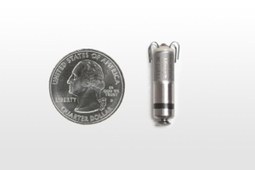
Back in November, we wrote about a tiny pacemaker made by Silicon Valley startup Nanostim.

See on singularityhub.com

Read Full Post »

UC Berkeley Researchers Propose “Neural Dust” Brain-Computer Interface

Reporter: Aviva Lev-Ari, PhD, RN


See on Scoop.itCardiovascular and vascular imaging

Advances in brain imaging and neural activity detection technologies, such as fMRI and EEG, have allowed us to learn much about the brain over the years, and neural implants have offered the ability to stimulate and all but control activity in certain parts of the brain. However, these brain-computer interfaces are limited in that they offer finite resolution, are hard to apply to many brain regions, and usually can only stay directly connected to the brain for a short period of time due to their invasiveness.


Engineers at the University of California, Berkeley, have proposed an ultra-small, ultrasound-based neural recording system that they call “neural dust”. Neural dust consists of thousands of sensors that are 10-100 micrometers in size containing CMOS circuits and sensors to detect and report local extracellular electrophysiological data. The neural dust is powered by ultrasonic waves via a transducer that is implanted just below the dura. The sub-dural unit also interrogates the neural dust and sends information to another receiver outside the body.


If neural dust becomes a reality, it could give us a much higher resolution look at what is going on inside the brain, as it will be able to record from thousands of sites within the brain, in contrast to the hundreds of channels that current technology allows. Moreover, because these tiny sensors are literally the size of dust particles, they could cause far less damage to the surrounding brain tissue and could stay embedded in the brain for long periods of time.


Journal article: arXiv: Neural Dust: An Ultrasonic, Low Power Solution for Chronic Brain-Machine Interfaces

See on www.medgadget.com

Read Full Post »

Scientists discover how AIDS virus enters key immune cells

Reporter: Aviva Lev-Ari, PhD, RN


See on Scoop.itCardiovascular and vascular imaging

One of the reasons why we still do not have a cure for HIV infection yet is that the virus infects cells of the immune system that activate the response that should stop infection. In concrete terms, the main HIV targets are a sort of white cells named CD4 T lymphocytes, so called because they have the protein CD4 on their membrane.

While we have more than 20 different drugs available today in the market, all of them act blocking the cycle that HIV follows to infect those CD4 T lymphocytes, but do not cure because they do not manage to eliminate all the viruses from the organism. One of the possible explanations for that fact is that the available treatments do not fully act on another kind of immune cells, called dendritic cells, where HIV also penetrates and remains almost fully infectious. Dendritic cells are responsible for activating the immune response, but when they do it, they also infect CD4 T lymphocytes in parallel. Therefore, the proliferation of the infection is more efficient when dendritic cells harboring viruses are around.

Now, scientists from the AIDS Research Institute IrsiCaixa, funded by “la Caixa” Foundation and the Health Department of the Generalitat de Catalunya (the autonomous catalan government), have identified the entry door that HIV uses to hide into dendritic cells, an enigma that the scientific community had been trying to solve for years. The work has just been published in the international scientific journal PLoS Biology, and it has been supported by the HIVACAT Program for the research and development of a vaccine against AIDS.


Siglec-1 is the molecule that can be found on the surface of dendritic cells that allows the entry of HIV into cells. It acts as a gateway for HIV to mature dendritic cells when are joined by the gangliosides of the virus, functioning as a key. Thus, dendritic cells accumulate large amounts of virus inside and become Trojan horses, allowing the infection of the CD4 + T cells, the main target of HIV, and contributing to spread HIV through the body.

See on www.irsicaixa.org

Read Full Post »

Older Posts »