Feeds:
Posts
Comments

Archive for the ‘Heart Failure (HF)’ Category

Heart-Failure–Related Mortality Rate: CDC Reports comparison of 2000, 2012, 2014  – the decease is steadily reversed

Reporter: Aviva Lev-Ari, PhD, RN


The report, which examined heart-failure trends between 2000 and 2014, showed that the age-adjusted rate for HF-related mortality was 105.4 per 100,000 population in 2000 and only 81.4 per 100,000 in 2012 (P<0.05). However, the rate then started a slow but steady climb, reaching 84.0 per 100,000 in 2014.

Not so surprising: men of all ages still had a higher death rate vs women in 2014, and black individuals had a higher rate than whites (91.5 vs 87.3 deaths per 100,000) and Hispanics (53.3 per 100,000).


CDC: Heart-Failure–Related Mortality Rate Climbs After Decade-Long Decrease

Deborah Brauser

January 04, 2016

http://www.medscape.com/viewarticle/856704?nlid=95763_3866&src=wnl_edit_medp_card&uac=93761AJ&spon=2&impID=944924&faf=1

NCHS Data Brief

Number 231, December 2015

Recent Trends in Heart Failure-related Mortality: United States, 2000–2014

PDF Version Adobe PDF file (351 KB)

Hanyu Ni, Ph.D.; and Jiaquan Xu, M.D.


Key findings

Data from the National Vital Statistics System, Mortality

  • The age-adjusted rate for heart failure-related deaths decreased from 2000 through 2012 but increased from 2012 through 2014.
  • The death rate for heart failure was higher for the
    non-Hispanic black population than for the non-Hispanic white and Hispanic populations.
  • The death rate was higher for men than for women in all age groups. The gap in the death rate for adults aged 45–64 and 85 and over increased over time.
  • The percentage of heart failure-related deaths that occurred in a hospital decreased from 2000 through 2014.
  • The percentage of heart failure-related deaths for adults aged 45 and over with coronary heart disease as the underlying cause of death decreased 32%, from 34.9% in 2000 to 23.9% in 2014.

Heart failure is a major public health problem associated with significant hospital admission rates, mortality, and costly health care expenditures, despite advances in the treatment and management of heart failure and heart failure-related risk factors (1–4). Using data from the multiple cause of death files, this report describes the trends in heart failure-related mortality from 2000 through 2014 for the U.S. population, by age, sex, race and Hispanic origin, and place of death. Heart failure-related deaths were identified as those with heart failure reported anywhere on the death certificate, either as an underlying or contributing cause of death. Changes in the underlying causes of heart failure-related deaths are also described in this report.

Keywords: mortality, heart failure, trend, National Vital Statistics System

SOURCE

http://www.cdc.gov/nchs/data/databriefs/db231.htm


Read Full Post »

First Reported Case of Myopericarditis With Common BP Med – Monthly Prescribing Reference (registration)

Reporter: Aviva Lev-Ari, PhD, RN


UPDATED on 12/7/2022

Long Term Complications of Recurrent Pericarditis

Presenters: Janet Kloos, RN, PhD, APRN-CCNS, CCRN; Allen Luis, MD; C. Barton Gillombardo, MD; Brian Hoit, MD

Recurrent Pericarditis in Systemic Autoinflammatory and Autoimmune Disease – Clinical Recognition and Management


Presenters: Tevfik Ismail, MB, BS, PhD, FRCP, FACC, FAHA; Claire Peet, MD; Shreyasee Amin, MD, CM, MPH

While healthcare providers may initiate corticosteroids in patients with recurrent pericarditis, patients with autoimmune rheumatic disease and cardiac involvement should also be managed in collaboration with a rheumatologist particularly. In this podcast, experts explore in more detail the diagnosis and clinical features of monogenic autoinflammatory diseases many of which can present with recurrent pericarditis. In addition, discussion will include the spectrum of autoimmune diseases complicated by pericarditis, how to recognize these clinically, and when to call for help. Listen Now!


Recurrent Pericarditis: The Role of IL-1 Blockade


Presenters: Allen Luis, MD; Anene Ukaigwe, MD; Cyrille K. Cornelio, Pharm.D., BCCP

In 2021, the FDA-approved Rilonacept to treat recurrent pericarditis and reduce the risk of recurrence. In this podcast learn more about the role interleukin-1 (IL-1) plays in the pathophysiology of pericarditis. Listen Now!


Pathophysiology of Recurrent Pericarditis


Presenters: Paul Cremer, MD; Aisha Siraj, MD, FACC; Antonio Abbate, MD, PhD

Listen to this podcast to better understand the triggers causing recurrent episodes of pericarditis. Experts discuss how to assess those triggers to direct optimal therapy.


Beyond Acute – Recurrent Pericarditis


Presenters: Katherine E. Di Palo, PharmD, FAHA, FHFSA, BCACP, BCGP; Farshad Forouzandeh, MD, PhD, FACC, FSCAI; David Lin, MD

In this podcast, Drs. Forouzandeh, Lin, and Di Palo discuss initial management of recurrent pericarditis. Learn how to distinguish acute pericarditis from recurrent pericarditis. They will also explore diagnostic criteria and initial pharmacotherapy for recurrent pericarditis. Listen now to get more insight on care delivery strategies to improve patient outcomes and decrease associated health care costs due to recurrent pericarditis.


Treatment of Acute Pericarditis


Presenters: Tevfik F Ismail, MB, BS, PhD, FRCP, FACC, FAHA; Antonio Brucato, MD; Robert Barcelona, Pharm.D., BCPS

In this podcast, Drs. Tevfik Ismail, Antonio Brucato, and Robert Barcelona will focus on the treatment of acute pericarditis and review the relevant clinical pharmacology of the agents used. Learn more on the use of drugs that are off-label for acute pericarditis in the United States and other jurisdictions and some practical tips and tricks and pointers towards pitfalls to avoid when managing this condition.


Complications of Acute Pericarditis


Presenters: Christine L. Jellis, MD PhD FACC FASE; Tim Simpson, MD, Pharm D, and Sadeer Al-Kindi, MD, FACC.

Summary: Learn more in this podcast on the causes, complications and treatments of acute pericarditis and explore how to prevent an initial episode of acute pericarditis from evolving into recurrent pericarditis.


What is Acute Pericarditis: Signs and Signals


Presenters: S. Allen Luis, MD, PhD, FRACP, FACC, FASE; James Lloyd, MD; Janet A. Kloos, RN, PhD, APRN-CCNS, CCRN

Summary: Pericarditis is inflammation of the fibroelastic pericardial sac. Acute pericarditis has been observed in ≈0.1% of hospitalized patients and 5% of patients admitted to the emergency department with a diagnosis of noncardiac chest pain. In this podcast, learn the clinical features of Acute Pericarditis.


SOURCE

https://professional.heart.org/en/education/recurrent-pericarditis-for-professionals/?utm_source=owned&utm_medium=email&utm_campaign=recurperi&utm_content=podcast#autoinflammatory


Additional SOURCE

Hypersensitivity reactions to hydrochlorothiazide HCTZ typically have low incidence rates, but a case study in Case Reports in Medicine highlights the first reported case of probable hydrochlorothiazide HCTZ induced myopericarditis to increase…

Sourced through Scoop.it from: www.empr.com

See on Scoop.itCardiovascular Disease: PHARMACO-THERAPY

Read Full Post »


7 Risks of Beta-Blockers Your Doctor Doesn’t Tell You

Reporter: Aviva Lev-Ari, PhD, RN


By Jerry Shaw    |   Monday, 06 April 2015 11:59 AM EDT

According to Patient, beta-blockers are drugs prescribed to many patients to lower blood pressure, treat angina, control abnormal heart rhythms and prevent heart attack. The medication is effective and powerful but there are still beta-blocker risks you should discuss with your doctor.

Beta-blockers slow the heart by blocking adrenaline your body produces naturally. According to WebMD, although many people who take beta-blockers will not have side effects, others may experience fatigue, dizziness or shortness of breath, as well as headache, upset stomach, constipation or diarrhea, or other minor discomforts.

Here are seven risks of beta-blockers your doctor doesn’t tell you:

1. People with asthma or COPD should not take beta-blockers, which may trigger severe asthma attacks or otherwise worsen symptoms, according to the Mayo Clinic. Doctors don’t normally prescribe them for those conditions.

2. If you have diabetes, beta-blockers could prevent warning signs of low blood sugar like a rapid heartbeat. Be sure to monitor your blood sugar as directed if you take beta-blockers, reports the Mayo Clinic.

3. Beta-blockers may trigger a modest increase in triglycerides, fats in the blood, while slightly decreasing high-density lipoprotein, the “good” cholesterol that cleans the arteries of unhealthy cholesterol, according to the Mayo Clinic. Although these effects are generally temporary, be sure you have regular cholesterol checks.

4 Hidden Symptoms Could Cause a Heart Attack; Take This Test to Reveal Them — Click Here Now

4. Beta blockers are occasionally prescribed for other conditions not related to blood pressure. Doctors don’t usually prescribe them for low blood pressure or a slow pulse, which can lower the heart rate, causing dizziness and lightheadedness, according to WebMD. Patients should record their pulse regularly and contact their doctor if the pulse is slower than normal.

5. Beta blockers stimulate the muscles that surround the air passages so they contract and lead to difficulty in breathing, according to MedicineNet.com.

6. Talk to your doctor about all other medications you take, including those sold over the counter. Aspirin, for example, may interact with your prescribed beta-blockers and reduce the effects.

7. Suddenly stopping the medication could increase beta-blocker risks such as heart troubles or even a heart attack. A doctor will advise you on stopping the medication by slowly decreasing the dosage.

SOURCE

https://www.newsmax.com/FastFeatures/beta-blocker-risks/2015/04/06/id/636670/

Sourced through Scoop.it from: www.newsmax.com

See on Scoop.itCardiovascular Disease: PHARMACO-THERAPY

Read Full Post »

Beta-blocker withdrawal linked to negative outcomes in patients with acute … – Healio

Reporter: Aviva Lev-Ari, PhD, RN


Patients with acute decompensated HF who discontinue beta-blockers may have an increased risk for mortality and rehospitalization, according to results of a new systematic review and meta-analysis.

Sourced through Scoop.it from: www.healio.com

See on Scoop.itCardiovascular Disease: PHARMACO-THERAPY

Read Full Post »


High Concordance Between Mental Stress-Induced and Adenosine-Induced Myocardial Ischemia Assessed Using SPECT in Heart Failure Patients: Hemodynami… – PubMed – NCBI

Reporter: Aviva Lev-Ari, PhD, RN


J Nucl Med. 2015 Jul 23. pii: jnumed.115.157990. [Epub ahead of print]

Sourced through Scoop.it from: www.ncbi.nlm.nih.gov

See on Scoop.itCardiovascular and vascular imaging

High Concordance Between Mental Stress-Induced and Adenosine-Induced Myocardial Ischemia Assessed Using SPECT in Heart Failure Patients: Hemodynamic and Biomarker Correlates

Affiliations 

Free PMC article

Abstract

Mental stress can trigger myocardial ischemia, but the prevalence of mental stress-induced ischemia in congestive heart failure (CHF) patients is unknown. We characterized mental stress-induced and adenosine-induced changes in myocardial perfusion and neurohormonal activation in CHF patients with reduced left-ventricular function using SPECT to precisely quantify segment-level myocardial perfusion.

Methods: Thirty-four coronary artery disease patients (mean age±SD, 62±10 y) with CHF longer than 3 mo and ejection fraction less than 40% underwent both adenosine and mental stress myocardial perfusion SPECT on consecutive days. Mental stress consisted of anger recall (anger-provoking speech) followed by subtraction of serial sevens. The presence and extent of myocardial ischemia was quantified using the conventional 17-segment model.

Results: Sixty-eight percent of patients had 1 ischemic segment or more during mental stress and 81% during adenosine. On segment-by-segment analysis, perfusion with mental stress and adenosine were highly correlated. No significant differences were found between any 2 time points for B-type natriuretic peptide, tumor necrosis factor-α, IL-1b, troponin, vascular endothelin growth factor, IL-17a, matrix metallopeptidase-9, or C-reactive protein. However, endothelin-1 and IL-6 increased, and IL-10 decreased, between the stressor and 30 min after stress. Left-ventricular end diastolic dimension was 179±65 mL at rest and increased to 217±71 after mental stress and 229±86 after adenosine (P<0.01 for both). Resting end systolic volume was 129±60 mL at rest and increased to 158±66 after mental stress (P<0.05) and 171±87 after adenosine (P<0.07), with no significant differences between adenosine and mental stress. Ejection fraction was 30±12 at baseline, 29±11 with mental stress, and 28±10 with adenosine (P=not significant).

Conclusion: There was high concordance between ischemic perfusion defects induced by adenosine and mental stress, suggesting that mental stress is equivalent to pharmacologic stress in eliciting clinically significant myocardial perfusion defects in CHF patients. Cardiac dilatation suggests clinically important changes with both conditions. Psychosocial stressors during daily life may contribute to the ischemic burden of CHF patients with coronary artery disease.

Keywords: adenosine; heart failure; ischemia; mental stress; myocardial perfusion; single-photon emission computed tomography.

SOURCE

https://pubmed.ncbi.nlm.nih.gov/26205303/

Read Full Post »

YM758 Monophosphate, A Novel If Channel Inhibitor

Reporter: Larry H. Bernstein, MD, FCAP

YM758 is a novel If channel inhibitor for the treatment of stable angina and atrial fibrillation. A novel cardiovascular agent.
YM758 monophosphate (R)-1·H3PO4 has an inhibitory action for If current and shows a strong and specific activity selectively lowering a heart beat and decreasing oxygen consumption of heart muscle in a selective manner, whereby it is useful as a preventive and/or treating agent for diseases of circulatory system such as ischemic heart diseases (e.g., angina pectoris and myocardial infarction), congestive heart failure, arrhythmia, etc.
U.S. Patent No. 6,573,279, incorporated herein by reference, describes isoquinoline compounds with 1 channel blocker activity and their use in treating a variety of cardiovascular diseases. U.S. Patent Application Publication Nos. 20060084807 and

20070129357, each of which is incorporated herein by reference, describe methods for making those isoquinoline compounds as well as crystals of certain fluorobenzamide derivatives of them. U.S. Patent Publication No. 20090247572, incorporated herein by reference, relates to the use of one of these isoquinoline fluorobenzamide derivatives, (-)-N- {2-[(i?)-3-(6,7-dimethoxy-l ,2,3,4-tetrahydroisoquinoline-2-carbonyl)piperidino]ethyl}-4- fluorobenzamide monophosphate (referred to in that patent publication as “compound A” and “chemical formulation I” and referred to herein as “YM758″), for treating atrial fibrillation.

Read Full Post »

Queen of Hearts – Research Program to improve diagnosis of cardiovascular disease in women

Reporter: Aviva Lev-Ari, PhD, RN


Queen of Hearts: consortium studying mechanisms diastolic heart failure and cardiac ischemia in females #QOH_research

http://t.co/NYQS2WS4uy

Source: www.queen-of-hearts.eu

See on Scoop.itCardiovascular and vascular imaging

Read Full Post »

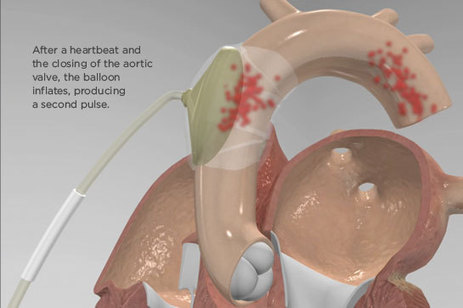
C-Pulse device designed to help patients with advanced heart failure

Reporter: Aviva Lev-Ari, PhD, RN


See on Scoop.itCardiovascular and vascular imaging

A Minnesota medical device company is developing a device to help people with class three and four heart failure without increasing the risk of blood clots.

See on medcitynews.com

Read Full Post »

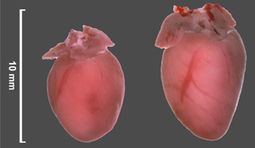
Scientists prevent heart failure in mice

Reporter: Aviva Lev-Ari, PhD, RN


See on Scoop.itCardiovascular and vascular imaging

Cardiac stress, for example a heart attack or high blood pressure, frequently leads to pathological heart growth and subsequently to heart failure. Two tiny RNA molecules play a key role in this detrimental development in mice, as researchers at the Hannover Medical School and the Göttingen Max Planck Institute for Biophysical Chemistry have now discovered. When they inhibited one of those two specific molecules, they were able to protect the rodent against pathological heart growth and failure. With these findings, the scientists hope to be able to develop therapeutic approaches that can protect humans against heart failure.


The scientists involved in this study had observed that these microRNAs are more prevalent in the cardiac muscle cells of mice suffering from cardiac hypertrophy. To determine the role that the two microRNAs play, the scientists bred genetically modified mice that had an abnormally large number of these molecules in their heart muscle cells. “These rodents developed cardiac hypertrophy and lived for only three to six months, whereas their healthy conspecifics had a normal healthy life-span of several years,” explained Kamal Chowdhury, researcher in the Department of Molecular Cell Biology at the Max Planck Institute for Biophysical Chemistry. “For comparison, we also selectively switched off these microRNAs in other mice. These animals had a slightly smaller heart than their healthy conspecifics, but did not differ from them in behaviour or life-span,” continued the biologist. The crucial point is when the scientists subjected the hearts of these mice to stress by narrowing the aorta, the mice did not develop cardiac hypertrophy – in contrast to normal mice.


The scientists were also able to protect normal mice against the disease. When they gave them a substance that selectively inhibits microRNA-132, no pathological cardiac growth occurred – even when the hearts of these mice were subjected to stress. “Thus, for the first time ever, we have found a molecular approach for treating pathological cardiac growth and heart failure in mice,” said the cardiologist Thomas Thum, MD, Director of the Institute for Molecular and Translational Therapy Strategies (IMTTS) at the Hannover Medical School. With these findings, the researchers hope that they will be able to develop therapeutic approaches that can also protect humans against heart failure. “Such microRNA inhibitors, alone or in combination with conventional treatments, could represent a promising new therapeutic approach,” said Thum.


“In mice with an overdosage of the two microRNAs in their heart muscle cells, the cellular ‘recycling program’ is curbed,” explained Ahmet Ucar, who together with Shashi K. Gupta was responsible for the experiments. In this recycling process, the cell breaks down components that are damaged or no longer required and reuses their constituents – a vital process that, for example, ensures the organism’s survival under stress conditions. In mice without the microRNAs -212 and 132, this recycling program is more active than in their normal conspecifics. Conceivably, the reduced cellular recycling could be a cause of the observed cardiac hypertrophy.

See on www.mpibpc.mpg.de

Read Full Post »

Stenosis, ischemia and heart failure

Reporter: Aviva Lev-Ari, PhD, RN


See on Scoop.itCardiovascular and vascular imaging

Learn more: http://www.khanacademy.org/video?v=3858MaULDdI Clarifying a bunch of medical terms around heart disease (Stenosis, ischemia and heart failure http://t.co/jokVvUsfTF)…

See on www.youtube.com

Read Full Post »

« Newer Posts - Older Posts »