
Women Helped by CRT More Than Men
MedPage Today
QMED provided monitors free of charge to the NHLBI-sponsored Women’s Ischemia Syndrome Evaluation. Support was also provided by the Edythe L.
Source: www.medpagetoday.com
Posted in Scoop.it on July 1, 2014| Leave a Comment »
Women Helped by CRT More Than Men
MedPage Today
QMED provided monitors free of charge to the NHLBI-sponsored Women’s Ischemia Syndrome Evaluation. Support was also provided by the Edythe L.
Source: www.medpagetoday.com
Posted in Scoop.it on July 1, 2014| Leave a Comment »

Variation in use of imaging tests in newly diagnosed heart failure Medical Xpress “Variations in testing were greatest for assessment of ischemia, in which testing guidelines are less certain.” One of the authors disclosed financial ties to a…
Source: medicalxpress.com
Posted in Scoop.it on July 1, 2014| Leave a Comment »
Seattle ECG Criteria: What’s Normal in an Athlete?
Medscape
He showed pictures of these remarkable patterns and noted they can be mistaken for anterior-wall ischemia.
Source: login.medscape.com
Posted in Scoop.it on July 1, 2014| Leave a Comment »
Ischemic stroke is a major cause of death and long-term disability world wide. Development of effective therapy has been the target of intense research. Accumulating preclinical literature has show…
Source: journal.frontiersin.org
Posted in Scoop.it on July 1, 2014| Leave a Comment »

Do you need reports for Diabetic Foot Ulcers, Peripheral Artery Disease and Critical Limb Ischemia? http://t.co/OShdlWtRBp #Medtech #Device
Source: thesagegroup.us
Posted in Scoop.it on July 1, 2014| Leave a Comment »
These lectures are presented for the education of healthcare professionals with a primary audience of pharmacy students. No recommendations are made and shou…
Source: www.youtube.com
Posted in Scoop.it on July 1, 2014| Leave a Comment »
Medscape
Statins in Very Elderly Adults (Debate)
Medscape
It contrasted the effects of intensive statin therapy with those of moderate statin therapy on reduction of myocardial ischemia in participants.
Source: login.medscape.com
Posted in Scoop.it on July 1, 2014| Leave a Comment »

Strategy of Potent Anticoagulation with Rapid Post-PCI Reversal Appears Safe …
Source: www.tctmd.com
Posted in Scoop.it on February 16, 2014| Leave a Comment »
See on Scoop.it – Cardiovascular and vascular imaging
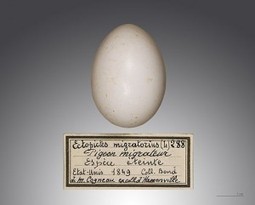
Birds are a huge challenge for de-extinction for two big reasons. The first is because less genomic research has been performed on birds than on mammals (but reptiles, amphibians, fish, invertebrates and plants are even less understood). We don’t know how precisely how the majority of gene pathways in birds work on the cellular levels and up.
Also, birds have no uterus. The reason that the absence of a uterus is a problem for cloning relates to how cloning is done. When you take the nucleus out of an egg cell you kill that cell, it is completely dead. Even after you put a new nucleus in it, the cell is still dead. You have to bring the cell back to life, just like when you shock someone’s heart into beating again. You run electricity through the newly cloned cell to get it to divide. The problem here is that you have to keep stimulating cell division for many generations, up to several hundred and even a few thousand cells before the embryo will develop on its own without assistance. Therefore you cannot take a single cloned cell and implant it into an ovary, oviduct, uterus or any reproductive organ and get it to grow – you have to grow it in the lab and then implant a partially developed embryo. This is okay in a uterus because the embryo implants and develops in a fixed place. In a bird, the embryo is in constant motion within the female’s body – literally tumbling down the oviduct as the oviduct coats the eggshell around the embryo. To implant a cloned embryo one would have to take out the developing embryo from within a developing hard shelled egg within the female’s body and replace it with the cloned embryo – and hope that the embryo integrates into the yolk of the egg and that all the puncturing doesn’t deform the egg or harm the female. So you can see it’s very very tricky.
Are there ways to introduce an extinct bird’s genetics into an embryo without cloning? You can introduce cells into the embryo, which will integrate and create a chimeric bird – a bird that has a patchwork of tissues made of cells of both the original embryo and the cells that were introduced. This can be done after the egg is laid, avoiding tampering with the mother’s internal organ systems. The problem for de-extinction is that adult stem cells (or induced Pluripotent Stem cells, iPCs) cannot contribute to the germ line, only Embryonic stem cells can contribute to the germ line. We can’t easily use embryonic stem cells to recreate the passenger pigeon genome. After as few as seven days in a lab culture, embryonic stem cells have undergone enough cell division to be adult stem cells, and lose the ability to become germ cells. A process to use embryonic stem cells would require introducing a mutation to a band-tailed pigeon embryonic stem cell in less than a matter of a few days, then put it into an embryo and hatch a chimera. This would then require hundreds to even thousands of generations of chimeric birds until we have a passenger pigeon. It would be far more efficient to introduce the thousands of mutations in cell lines, then create a bird. But by the time all the mutations were added, the cells would be adult stem cells. You could make as many chimeras as you want from these “de-extinct” stem cells, but they would never form a breeding line. This does not mean that stem cells cannot become germ cells under experimental conditions, what this means is that they do not naturally become germ cells when placed inside a developing bird embryo. It may be possible in the future to program iPSCs to become germ cells, but currently this is not possible.
See on longnow.org
 2012pharmaceutical
 sjwilliamspa