Feeds:
Posts
Comments

Archive for June, 2013

Improved Results for Treatment of Persistent type 2 Endoleak after Endovascular Aneurysm Repair: Onyx Glue Embolization

Writer, Curator: Larry H Bernstein, MD, FCAP

and

Curator: Aviva Lev-Ari, PhD, RN 


This report is an evaluation of onyx glue use in endovascular aneurysm repair. Onyx® is a non-adhesive liquid embolic agent used for the pre-surgical embolization of brain Arteriovenous malformations (bAVM).
Onyx is comprised of EVOH (ethylene vinyl alcohol) copolymer dissolved in DMSO (dimethyl sulfoxide), and suspended micronized tantalum powder to provide contrast for visualization under fluoroscopy.
A DMSO compatible delivery micro catheter that is indicated for use in the neuro vasculature (e.g. Marathon™, Rebar® or UltraFlow™ HPC catheters) is used to access the embolization site.
Onyx is available in two product formulations, Onyx 18 (6% EVOH) and Onyx 34 (8% EVOH).
ONYX glue

Improved results using Onyx glue for the treatment of persistent type 2 endoleak after endovascular aneurysm repair. 

Abularrage CJ, Patel VI, Conrad MF, Schneider EB, Cambria RP, Kwolek CJ
Division of Vascular and Endovascular Surgery, Massachusetts General Hospital and Harvard Medical School, Boston, Mass 02114, USA.
J Vasc Surg. 2012 Sep;56(3):630-6.  http://dx.doi.org/10.1016/j.jvs.2012.02.038.  Epub 2012 May 8.
Persistent type 2 (PT2) endoleaks (present ≥ 6 months) after endovascular aneurysm repair are associated with adverse outcomes, and
  • selective secondary intervention is indicated in those patients with an expanding aneurysm sac.

This study evaluated the outcomes of secondary intervention for PT2.

From 1999 to 2007, 136 patients who underwent endovascular aneurysm repair developed PT2 and comprised the study cohort. Primary end points included
  • PT2 resolution (secondary interventional success) and
  • survival
 both  were evaluated using multiple logistic regression and Kaplan-Meier analyses
Fifty-one patients underwent a total of 68 secondary interventions for PT2 with expanding aneurysm sacs
  • with a median postsecondary interventional follow-up of 13.7 months.

Secondary interventions included

  • 20 inferior mesenteric artery coil embolizations,
  • 17 Onyx glue embolizations,
  • 11 aneurysm sac coil embolizations,
  • 10 non-Onyx glue embolizations,
  • 7 lumbar artery coil embolizations,
  • 2 open lumbar ligations, and 1 graft explant.
The overall secondary interventional success rate was 43% (29 of 68). Onyx glue embolization was associated with
  • a greater success rate when used as the initial secondary intervention (odds ratio, 59.61; 95% confidence interval, 4.78-742.73; P < .001). 
There was no difference in success between the different techniques when multiple secondary interventions were required. Five-year survival was 72% ± 0.08% and
  • was unrelated to any of the secondary interventional techniques.
Secondary intervention for PT2 is associated with success in less than half of all cases. Onyx glue embolization was associated with greater long-term success
  • when used as the initial secondary intervention.
Competition in the Ecosystem of Medical Devices in Cardiac and Vascular Repair: Heart Valves, Stents, Catheterization Tools and Kits for Open Heart and Minimally Invasive Surgery (MIS)  (Aviva Lev-Ari)
Vascular Repair: Stents and Biologically Active Implants (larryhbern)
Drug Eluting Stents: On MIT’s Edelman Lab’s Contributions to Vascular Biology and its Pioneering Research on DES  (larryhbern)
Coronary Artery Disease – Medical Devices Solutions: From First-In-Man Stent Implantation, via Medical Ethical Dilemmas to Drug Eluting Stents  (Aviva Lev-Ari)
Trans-apical Transcatheter Aortic Valve Replacement in a Patient with Severe and Complex Left Main Coronary Artery Disease (LMCAD) (larryhbern)
Transcatheter Aortic Valve Replacement (TAVR): Postdilatation to Reduce Paravalvular Regurgitation During TAVR with a Balloon-expandable Valve  (larryhbern)
Svelte Medical Systems’ Drug-Eluting Stent: 0% Clinically-Driven Events Through 12-Months in First-In-Man Study  (Aviva Lev-Ari)
Acute and Chronic Myocardial Infarction: Quantification of Myocardial Perfusion Viability – FDG-PET/MRI vs. MRI or PET alone  (Justin Pearlman, Aviva Lev-Ari)
Biomaterials Technology: Models of Tissue Engineering for Reperfusion and Implantable Devices for Revascularization (larryhbern)
Revascularization: PCI, Prior History of PCI vs CABG  (A Lev-Ari)
The ACUITY-PCI score: Will it Replace Four Established Risk Scores — TIMI, GRACE, SYNTAX, and Clinical SYNTAX  (A Lev-Ari)
Absorb™ Bioresorbable Vascular Scaffold: An International Launch by Abbott Laboratories (Aviva Lev-Ari)
Carotid Stenting: Vascular surgeons have pointed to more minor strokes in the stenting group and cardiologists to more myocardial infarctions in the CEA cohort. (A Lev-Ari)
Endovascular repair of cerebral aneurysm.

Endovascular repair of cerebral aneurysm. (Photo credit: Wikipedia)

Read Full Post »

Carotid Endarterectomy (CEA) vs. Carotid Artery Stenting (CAS): Comparison of CMMS high-risk criteria on the Outcomes after Surgery:  Analysis of the Society for Vascular Surgery (SVS) Vascular Registry Data

Writer and Curator: Larry H. Bernstein, MD, FCAP

and

Curator: Aviva Lev-Ari, PhD, RN 

UPDATED on 1/30/2024

The Texas Heart Institute

WATCH Video

https://youtu.be/KobPZLWmLfQ?si=LUxy1gD9fCptj1E7

This week on Inside the Studio, both Dr. Joseph Rogers and Dr. Zvonimir Krajcer sit down with the 2024 Ray C. Fish Award Recipient Dr. Gary S. Roubin to discuss “Carotid Stenting: State of the Art.” Don’t miss out on our upcoming live talks, or catch up on previous recordings at https://www.texasheart.org/grandrounds.

Show the Transcript

UPDATED on 9/25/2021

1-Year Results From a Prospective Experience on CAS Using the CGuard Stent System: The IRONGUARD 2 Study

Peripheral

J Am Coll Cardiol Intv, 14 (17) 1917–1923

Abstract

Objectives

The aim of this study was to evaluate the 1-year safety and efficacy of a dual-layered stent (DLS) for carotid artery stenting (CAS) in a multicenter registry.

Background

DLS have been proved to be safe and efficient during short-term follow-up. Recent data have raised the concern that the benefit of CAS performed with using a DLS may be hampered by a higher restenosis rate at 1 year.

Methods

From January 2017 to June 2019, a physician-initiated, prospective, multispecialty registry enrolled 733 consecutive patients undergoing CAS using the CGuard embolic prevention system at 20 centers. The primary endpoint was the occurrence of death and stroke at 1 year. Secondary endpoints were 1-year rates of transient ischemic attack, acute myocardial infarction, internal carotid artery (ICA) restenosis, in-stent thrombosis, and external carotid artery occlusion.

Results

At 1 year, follow-up was available in 726 patients (99.04%). Beyond 30 days postprocedure, 1 minor stroke (0.13%), four transient ischemic attacks (0.55%), 2 fatal acute myocardial infarctions (0.27%), and 6 noncardiac deaths (1.10%) occurred. On duplex ultrasound examination, ICA restenosis was found in 6 patients (0.82%): 2 total occlusions and 4 in-stent restenoses. No predictors of target ICA restenosis and/or occlusion could be detected, and dual-antiplatelet therapy duration (90 days vs 30 days) was not found to be related to major adverse cardiovascular event or restenosis occurrence.

Conclusions

This real-world registry suggests that DLS use in clinical practice is safe and associated with minimal occurrence of adverse neurologic events up to 12-month follow-up.

SOURCE

UPDATED on 8/5/2020

USPSTF advises against carotid artery stenosis screening

By Theresa Pablos, AuntMinnie staff writer

August 5, 2020 — The U.S. Preventive Services Task Force (USPSTF) is poised to once again recommend against screening for asymptomatic carotid artery stenosis. The task force reaffirmed its D rating in a draft recommendation statement published on August 4.

The USPSTF last weighed in on the topic in 2014, concluding with moderate certainty that the harms of screening for carotid artery stenosis in the general population outweighed the benefits. In its new draft recommendation statement, the agency reaffirmed that position, stating there was not enough new evidence to change its previous recommendation against screening with either carotid duplex ultrasound, CT angiography, or MR angiography.

“The USPSTF found no new substantial evidence that could change its recommendation and therefore reaffirms its recommendation,” the task force wrote.

In theory, screening the general population for stenosis could lead to early detection of narrowed blood vessels, thus enabling medical professionals to conduct potentially life-saving interventions, such as carotid endarterectomy (CEA) and carotid artery stenting (CAS). But the USPSTF concluded that the evidence it reviewed didn’t readily support that hypothesis.

The task force has consistently found limited evidence in favor of asymptomatic carotid artery stenosis screening, especially when compared with other medical therapies, such as statins and antihypertensive agents. And the evidence has been particularly lacking since the USPSTF’s last review in 2014.

USPSTF draft recommendation rationale for asymptomatic carotid artery stenosis
Detection Ultrasonography has reasonable sensitivity and specificity for detecting clinically relevant carotid artery stenosis, but it also yields many false-positive results in the general population.
Scanning the neck for carotid bruits has poor accuracy for clinically relevant carotid artery stenosis.
Benefits Direct evidence does not indicate that screening for asymptomatic carotid artery stenosis can improve stroke, mortality, or other adverse health outcomes.
Carotid endarterectomy (CEA) or carotid artery angioplasty and stenting (CAS) provides little or no benefit for improving stroke, myocardial infarction, mortality, or other adverse outcomes compared with current medical therapy.
Harms While direct evidence does not show that screening for asymptomatic carotid artery stenosis can cause harm, there are known harms with confirmatory testing and interventions.
Direct evidence supports that treating asymptomatic patients with CEA or CAS could cause harms, including stroke or death.
Harms related to screening and treating asymptomatic carotid artery stenosis have small-to-moderate magnitude.

After searching the scientific literature, USPSTF investigators found no recent eligible studies that directly investigated the benefits or harms of asymptomatic carotid artery stenosis screening. The two studies that were conducted on the topic in the past six years were both prematurely terminated and produced mixed results.

When looking at the benefits and harms of CEA or CAS, the authors found an additional two national datasets and three surgical registries that met their inclusion criteria. Rates of 30-day postoperative stroke or death after CEA ranged from 1.4% to 3.5% depending on the registry or database. Similarly, 30-day stroke or death after CAS ranged from 2.6% to 5.1%.

Based on the evidence — or lack thereof — the investigators concluded there wasn’t enough new information to change the D rating for asymptomatic carotid artery stenosis screening. However, they pointed out that two clinical trials are currently underway, which may shed light on the topic in the future.

“There were few new trials, all with methodologic concerns, examining the important question of the comparative effectiveness and harms of revascularization plus best medical treatment compared with best medical treatment alone,” they wrote. “The ongoing CREST-2 and ECST-2 trials will be the largest trials to address this issue.”

The draft recommendation is available for public comment through August 31. After the comment period has ended, the task force will publish its final recommendation.

USPSTF opens review of carotid stenosis screening
The U.S. Preventive Services Task Force (USPSTF) has posted a draft research plan on screening for asymptomatic carotid artery stenosis, an exam that…
USPSTF still against US carotid artery stenosis screening
The U.S. Preventive Services Task Force (USPSTF) has finalized its draft recommendation advising against the use of widespread ultrasound screening for…
USPSTF advises against carotid artery screening
The U.S. Preventive Services Task Force (USPSTF) has issued a draft recommendation against ultrasound screening for asymptomatic carotid artery stenosis…
USPSTF to revisit carotid artery stenosis screening
The U.S. Preventive Services Task Force (USPSTF) plans to review its guidelines on the use of imaging to screen patients for asymptomatic carotid artery…

SOURCE

https://www.auntminnie.com/index.aspx?sec=sup&sub=ult&pag=dis&ItemID=129787

UPDATED on 8/20/2018

Transcarotid Artery Revascularization Shows Favorable Outcomes in Patients With Carotid Artery Disease

First large body of real-world clinical evidence showing benefits of TCAR versus surgery presented at SVS 2018 Annual Meeting

Transcarotid Artery Revascularization Shows Favorable Outcomes in Patients With Carotid Artery Disease

July 30, 2018 — Silk Road Medical Inc. recently announced the presentation of real-world data for the treatment of patients with carotid artery disease at risk for stroke at the Society for Vascular Surgery 2018 Vascular Annual Meeting (VAM), June 20-23 in Boston. In a headline presentation, Marc Schermerhorn, M.D., of Beth Israel Deaconess Medical Center (Boston) shared, for the first time, results from the ongoing TransCarotid Artery Revascularization (TCAR) Surveillance Project, a key initiative of the Society for Vascular Surgery’s Vascular Quality Initiative (VQI).

The trial evaluated patients over a two-year period, with 1,182 patients receiving TCAR compared to 10,797 patients receiving carotid endarterectomy (CEA).

“Our overall findings showed that while patients receiving TCAR were sicker and more likely to be symptomatic with a higher degree of stenosis, the stroke and death rate compared to CEA was the same,” Schermerhorn said. “With TCAR, there were significantly lower cranial nerve injuries, less time spent in the operating room and fewer patients with a prolonged length of stay. I believe that clinicians should more widely adopt the TCAR technology as it has demonstrated both safety and efficacy and is an excellent alternative to CEA.”

Significant findings from the study showed TCAR to have:

  • Comparable rates of in-hospital stroke or death to CEA (TCAR, 1.6 percent; CEA, 1.4 percent, p=.33);
  • Lower rates of acute cranial nerve injury (TCAR, 0.6 percent; CEA, 1.8 percent, p<.001);
  • Shorter operative times (TCAR, 78 min; CEA, 111 min, p<.001); and
  • Shorter hospital stays, despite patients being older and sicker (percent of hospitals stays longer than one night: TCAR, 27%; CEA, 30%, p=0.046).

TCAR is a clinically proven procedure combining surgical principles of neuroprotection with minimally invasive endovascular techniques to treat blockages in the carotid artery at risk of causing a stroke. The TCAR Surveillance Project is the largest single body of evidence reported since the launch of TCAR in 2016.

Additional TCAR presentations highlighted at SVS VAM 2018 demonstrated similar results:

“Vascular Live: Latest Stroke Prevention Data Signals Standard of Care Potential in Carotid Revascularization” provided an interim update on the ROADSTER 2 Per Protocol data set. The ROADSTER 2 trial is a post-market study intended to enroll a minimum of 600 patients and with at least 70 percent enrollment completed by newly trained operators. Peter Schneider, M.D., of Kaiser Permanente (Honolulu) and co-principal investigator for the ROADSTER 2 trial, presented interim results on 470 patients. Schneider highlighted a 30-day stroke rate of 0.6 percent and a stroke/death rate of 0.9 percent, consistent with the outcomes seen in the pivotal ROADSTER trial.

“A Multi-Institutional Analysis of Contemporary Outcomes after TransCarotid Artery Revascularization versus Carotid Endarterectomy” compared outcomes of TCAR to CEA across four institutions. Alex King of University Hospitals Cleveland Medical Center (Ohio) presented results showing that patients undergoing TCAR (n=292), had similar 30-day stroke rates (TCAR, 1 percent; CEA, 1.1 percent, p=1.00) compared with patients undergoing CEA (n=371), despite being more likely to have significant comorbidities. Acute (TCAR, 0.3 percent; CEA, 4.1 percent, p<.01) and six-month cranial nerve injury rates (TCAR, 0 percent; CEA: 1.9 percent, p=0.02) were shown to be lower with TCAR vs CEA.

The Enroute Transcarotid Stent is intended to be used in conjunction with the Enroute Transcarotid Neuroprotection System (NPS) during the TCAR procedure. The Enroute Transcarotid NPS is used to directly access the common carotid artery and initiate high rate temporary blood flow reversal to protect the brain from stroke while delivering and implanting the Enroute Transcarotid Stent.

For more information: www.silkroadmed.com

This is a review of the impact of the Centers for Medair and Medicaid Services on carotid artery endovascular outcomes carried out by the Division of Vascular and Endovascular Surgery at Harvard Medical School, Partners.

The impact of Centers for Medicare and Medicaid Services high-risk criteria on outcome after carotid endarterectomy and carotid artery stenting in the SVS Vascular Registry.

Schermerhorn ML, Fokkema M, Goodney P, Dillavou ED, Jim J, Kenwood CT, Siami FS, White RA; SVS Outcomes Committee.
 J Vasc Surg. 2013 May;57(5):1318-24.   http://dx.doi.org/10.1016/j.jvs.2012.10.107. Epub 2013 Feb 11.
The Centers for Medicare and Medicaid Services (CMS) require high-risk (HR) criteria for carotid artery stenting (CAS) reimbursement. The impact of these criteria on outcomes after carotid endarterectomy (CEA) and CAS remains uncertain. Additionally, if these HR criteria are associated with more adverse events after CAS, then existing comparative effectiveness analysis of CEA vs CAS may be biased. We sought to elucidate this using data from the SVS Vascular Registry.
We analyzed 10,107 patients undergoing CEA (6370) and CAS (3737), stratified by CMS HR criteria. The primary endpoint was composite death, stroke, and myocardial infarction (MI) (major adverse cardiovascular event [MACE]) at 30 days. We compared baseline characteristics and outcomes using univariate and multivariable analyses.
CAS patients were more likely than CEA to have
  • preoperative stroke (26% vs 21%) or
  • transient ischemic attack (23% vs 19%) .
Although age ≥ 80 years was similar, CAS patients were more likely to have all other HR criteria.
For CEA, HR patients had higher MACEs than normal risk in both
  • symptomatic (7.3% vs 4.6%; P < .01) and
  • asymptomatic patients (5% vs 2.2%; P < .0001).
For CAS, HR status was not associated with a significant increase in MACE for
  • symptomatic (9.1% vs 6.2%; P = .24) or
  • asymptomatic patients (5.4% vs 4.2%; P = .61).
All CAS patients had MACE rates similar to HR CEA. After multivariable risk adjustment, CAS had higher rates than CEA
  • for MACE (odds ratio [OR], 1.2; 95% confidence interval [CI], 1.0-1.5),
  • death (OR, 1.5; 95% CI, 1.0-2.2), and
  • stroke (OR, 1.3; 95% CI,1.0-1.7),
whereas there was no difference in MI (OR, 0.8; 95% CI, 0.6-1.3).
Among CEA patients, MACE was predicted by:
  • age ≥ 80 (OR, 1.4; 95% CI, 1.02-1.8),
  • congestive heart failure (OR, 1.7; 95% CI, 1.03-2.8),
  • EF <30% (OR, 3.5; 95% CI, 1.6-7.7),
  • angina (OR, 3.9; 95% CI, 1.6-9.9),
  • contralateral occlusion (OR, 3.2; 95% CI, 2.1-4.7), and
  • high anatomic lesion (OR, 2.7; 95% CI, 1.33-5.6).
Among CAS patients, recent MI (OR, 3.2; 95% CI, 1.5-7.0) was predictive, and
  • radiation (OR, 0.6; 95% CI, 0.4-0.8) and
  • restenosis (OR, 0.5; 95% CI, 0.3-0.96) …..were protective for MACE
Although CMS HR criteria can successfully discriminate a group of patients at HR for adverse events after CEA, certain CMS HR criteria are more important than others. However, CEA appears safer for the majority of patients with carotid disease. Among patients undergoing CAS, non-HR status may be limited to restenosis and radiation.
This study was preceded by another publication 5-years earlier involving ML Schermerhorn, of the study above.

Risk-adjusted 30-day outcomes of carotid stenting and endarterectomy: results from the SVS Vascular Registry.

Sidawy AN, Zwolak RM, White RA, Siami FS, Schermerhorn ML, Sicard GA; Outcomes Committee for the Society for Vascular Surgery.
Department of Surgery, Washington VA Medical Center, Washington, DC, USA.
J Vasc Surg. 2009 Jan;49(1):71-9. http:/dx.doi.org/10.1016/j.jvs.2008.08.039. Epub 2008 Nov 22.
As of December 26, 2007, 6403 procedures with discharge data were entered by 287 providers at 56 centers on 2763 CAS patients (1450 with 30-day outcomes, 52.5%) and 3259 CEA patients (1368 with 30-day outcomes, 42%).
Of the total cohort, 98% of CEA and 70.7% of CAS (P < .001) were performed for atherosclerotic disease.
  • Restenosis accounted for 22.3% and
  • post-radiation induced stenosis in 4.5% of CAS patients.
Preprocedure lateralizing neurologic symptoms were present in a greater proportion of – CAS patients (49.2%) than CEA patients (42.4%, P < .001).
CAS patients also had higher preprocedure prevalence of
  1. coronary artery disease (CAD),
  2. MI,
  3. congestive heart failure (CHF),
  4. chronic obstructive pulmonary disease (COPD), and
  5. cardiac arrhythmia.
For CAS, death/stroke/MI at 30 days was
  • 7.13% for symptomatic patients and 4.60% for asymptomatic patients (P = .04).
For CEA, death/stroke/MI at 30 days was
  • 3.75% in symptomatic patients and 1.97% in asymptomatic patients (P = .05).
After risk-adjustment for age, history of stroke, diabetes, and American Society of Anesthesiologists (ASA) grade (ie, factors found to be significant confounders in outcomes using backwards elimination),
logistic regression analysis suggested better outcomes following CEA.
When CAS and CEA were compared in the treatment of atherosclerotic disease only, the difference in outcomes between the two procedures was more pronounced, with
  • death/stroke/MI 6.42% after CAS vs 2.62% following CEA, P < .0001.
With continued enrollment and follow-up, analysis of SVS-VR will supplement randomized trials by providing real-world comparisons of CAS and CEA with sufficient numbers to serve as an outcome assessment tool of important patient subsets and across the spectrum of peripheral vascular procedures.
J Vasc Surg. 2012 May;55(5):1313-20; discussion 1321. doi: 10.1016/j.jvs.2011.11.128. Epub 2012 Mar 28.

Society for Vascular Surgery (SVS) Vascular Registry evaluation of comparative effectiveness of carotid revascularization procedures stratified by Medicare age.

Jim JRubin BGRicotta JJ 2ndKenwood CTSiami FSSicard GASVS Outcomes Committee.

Source

Washington University School of Medicine, St. Louis, Mo., USA.

Abstract

OBJECTIVE:

Recent randomized controlled trials have shown that age significantly affects the outcome of carotid revascularization procedures. This study used data from the Society for Vascular Surgery Vascular Registry (VR) to report the influence of age on the comparative effectiveness of carotid endarterectomy (CEA) and carotid artery stenting (CAS).

METHODS:

VR collects provider-reported data on patients using a Web-based database. Patients were stratified by age and symptoms. The primary end point was the composite outcome of death, stroke, or myocardial infarction (MI) at 30 days.

RESULTS:

As of December 7, 2010, there were 1347 CEA and 861 CAS patients aged < 65 years and 4169 CEA and 2536 CAS patients aged ≥ 65 years. CAS patients in both age groups were more likely to have a disease etiology of radiation or restenosis, be symptomatic, and have more cardiac comorbidities. In patients aged <65 years, the primary end point (5.23% CAS vs 3.56% CEA; P = .065) did not reach statistical significance. Subgroup analyses showed that CAS had a higher combined death/stroke/MI rate (4.44% vs 2.10%; P < .031) in asymptomatic patients but there was no difference in the symptomatic (6.00% vs 5.47%; P = .79) group. In patients aged ≥ 65 years, CEA had lower rates of death (0.91% vs 1.97%; P < .01), stroke (2.52% vs 4.89%; P < .01), and composite death/stroke/MI (4.27% vs 7.14%; P < .01). CEA in patients aged ≥ 65 years was associated with lower rates of the primary end point in symptomatic (5.27% vs 9.52%; P < .01) and asymptomatic (3.31% vs 5.27%; P < .01) subgroups. After risk adjustment, CAS patients aged ≥ 65 years were more likely to reach the primary end point.

CONCLUSIONS:

Compared with CEA, CAS resulted in inferior 30-day outcomes in symptomatic and asymptomatic patients aged ≥ 65 years. These findings do not support the widespread use of CAS in patients aged ≥ 65 years.

Related articles

Other related articles published in this Open Access Online Scientific Journal

Abdominal Aortic Aneurysm: Endovascular repair and open repair resulted in similar long-term survival  (Aviva Lev-Ari)
Competition in the Ecosystem of Medical Devices in Cardiac and Vascular Repair: Heart Valves, Stents, Catheterization Tools and Kits for Open Heart and Minimally Invasive Surgery (MIS)  (Aviva Lev-Ari)
Bioabsorbable Drug Coating Scaffolds, Stents and Dual Antiplatelet Therapy (Aviva Lev-Ari)
Vascular Repair: Stents and Biologically Active Implants (larryhbern)
Drug Eluting Stents: On MIT’s Edelman Lab’s Contributions to Vascular Biology and its Pioneering Research on DES  (larryhbern)
Transcatheter Aortic Valve Replacement (TAVR): Postdilatation to Reduce Paravalvular Regurgitation During TAVR with a Balloon-expandable Valve  (larryhbern)
Acute and Chronic Myocardial Infarction: Quantification of Myocardial Perfusion Viability – FDG-PET/MRI vs. MRI or PET alone  (Justin Pearlman, Aviva Lev-Ari)
Biomaterials Technology: Models of Tissue Engineering for Reperfusion and Implantable Devices for Revascularization (larryhbern)
Revascularization: PCI, Prior History of PCI vs CABG  (A Lev-Ari)
Accurate Identification and Treatment of Emergent Cardiac Events (larryhbern)
FDA Pending 510(k) for The Latest Cardiovascular Imaging Technology (A Lev-Ari)
The ACUITY-PCI score: Will it Replace Four Established Risk Scores — TIMI, GRACE, SYNTAX, and Clinical SYNTAX  (A Lev-Ari)
http://pharmaceuticalintelligence.com/2013/01/03/the-acuity-pci-score-will-it-replace-four-established-risk-scores-timi-grace-syntax-and-clinical-syntax/
Absorb™ Bioresorbable Vascular Scaffold: An International Launch by Abbott Laboratories (Aviva Lev-Ari)
Carotid Stenting: Vascular surgeons have pointed to more minor strokes in the stenting group and cardiologists to more myocardial infarctions in the CEA cohort. (A Lev-Ari)
Global Supplier Strategy for Market Penetration & Partnership Options (Niche Suppliers vs. National Leaders) in the Massachusetts Cardiology & Vascular Surgery Tools and Devices Market for Cardiac Operating Rooms and Angioplasty Suites (A Lev-Ari)
English: FIG. 513 – The internal carotid and v...

English: FIG. 513 – The internal carotid and vertebral arteries. Right side. Deutsch: Rechte Arteria carotis (Photo credit: Wikipedia)

Carotid Plaque Atherosclerotic plaque from a c...

Carotid Plaque Atherosclerotic plaque from a carotid endarterectomy specimen. This shows the bifurcation of the common into the internal and external carotid arteries. (Photo credit: Wikipedia)

Right common carotid artery - The Anatomy of t...

Right common carotid artery – The Anatomy of the Arteries Visual Guide, page 5 (of 57) (Photo credit: Rob Swatski)

Read Full Post »

Open Abdominal Aortic Aneurysm (AAA) repair (OAR) vs. Endovascular AAA Repair (EVAR) in Chronic Kidney Disease (CKD) Patients –  Comparison of Surgery Outcomes

Writer and Curator: Larry H. Bernstein, MD, FCAP

and

Curator: Aviva Lev-Ari, PhD, RN 

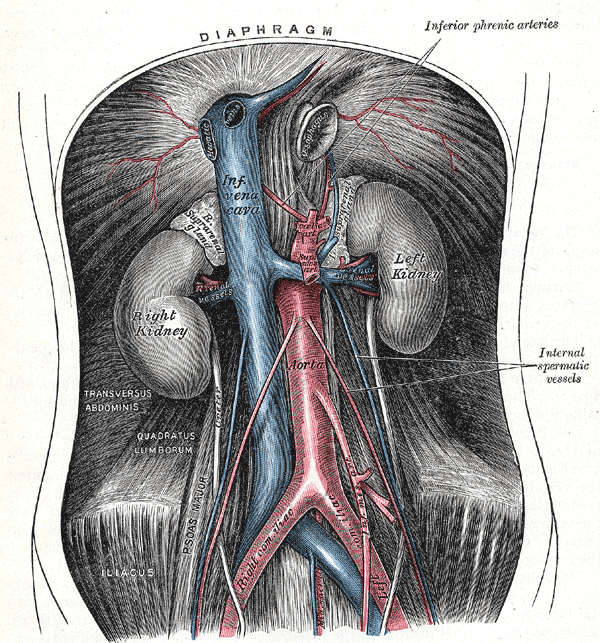
This is a review of the effects of CKD on increased morbidity and mortality of abdominal aortic aneurysm repair.   The abdominal aorta has branches to the superior mesenteric arteries proximally, and below that both renal arteries, which also supply the adrenals (suprarenal).
Severe atherosclerosis with plaque buildup and separation of the media from the endothelium, can migrate down the addominal aorta before frank rupture of an aneurysm.   Abdominal aortic aneurysm often extends from below the the renal arteries, to the internal spermatic vessels, or as far as the iliacs.

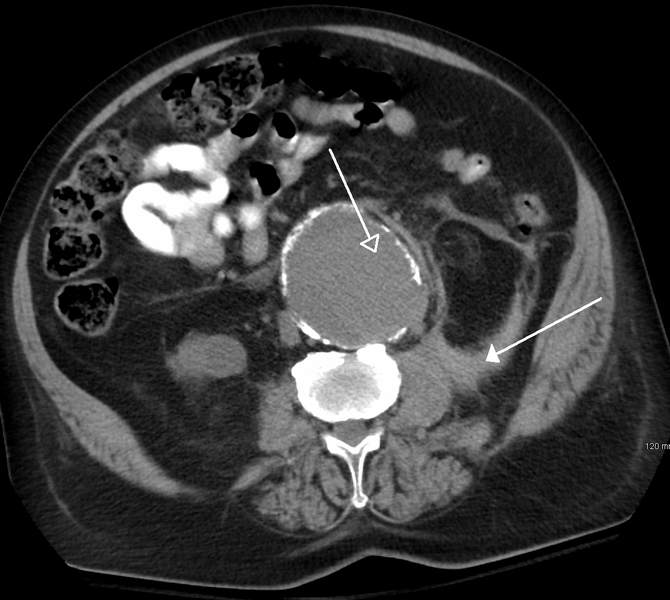
220px-Aortadiagramgray           Contrast-enhanced_CT_scan_demonstrating_abdominal_aortic_aneurysm

http://upload.wikimedia.org/wikipedia/commons/thumb/4/4a/Contrast-enhanced_CT_scan_demonstrating_abdominal_aortic_aneurysm.jpg/120px-Contrast-enhanced_CT_scan_demonstrating_abdominal_aortic_aneurysm.jpg

Of the visceral branches, the celiac artery and the superior and inferior mesenteric arteries are unpaired, while the suprarenals, renals, internal spermatics, and ovarian are paired. Of the parietal branches the inferior phrenics and lumbars are paired; the middle sacral is unpaired. The terminal branches are paired.
AAA is most common in men over age 65 years.  If it is expanding AAA causes sudden, severe, and constant low back, flank, abdominal, or groin pain (internal spermatic branch).  The presence of a pulsatile abdominal mass is virtually diagnostic but is found in less than half of all cases.  At least 65% of patients with a ruptured AAA die from sudden cardiovascular collapse before arriving at a hospital.
670px-RupturedAAA

EVAR for ruptured AAA

A study by Mehta et al assessed the effect of hemodynamic status on outcomes in 136 patients undergoing EVAR for ruptured AAAs.[1] The patients were divided into 2 groups:
(1) Hd-stable (systolic BP ≥80 mm Hg; n = 92 [68%]) and
(2) Hd-unstable (systolic BP < 80 mm Hg for >10 minutes; n = 44 [32%]).
The 30-day mortality, postoperative complications, need for secondary reinterventions, and midterm mortality were recorded. The 2 groups were found to be similar with respect to
  • comorbidities,
  • mean AAA maximum diameter (6.6 vs 6.4 cm),
  • need for on-the-table conversion to open repair (3% vs 7%), and
  • incidence of nonfatal complications (43% vs 38%) and secondary interventions (23% vs 25%).
  1. intraoperative need for aortic occlusion balloon,
  2.  mean estimated blood loss,
  3. incidence of developing abdominal compartment syndrome (ACS), and
  4. mortality
were all increased in the Hd-unstable group ([1]40% vs 6%, [2]744 vs 363 mL,[3] 29% vs 4%, and [4]33% vs 18%, respectively).

Open Surgery

Requires direct access to the aorta through an abdominal or retroperitoneal approach
Endovascular: Involves gaining access to the lumen of the abdominal aorta, usually via small incisions over the femoral vessels; an endograft, typically a cloth graft with a stent exoskeleton, is placed within the lumen of the AAA, extending distally into the iliac arteries.  Approximately 90% of abdominal aortic aneurysms are infrarenal.
The important surgical and endovascular anatomic considerations include associated renal and visceral artery involvement (either occlusive disease or involved in the aneurysm process) and the iliac artery (either occlusive disease or aneurysms). The length of the infrarenal aortic neck is important in helping determine the surgical approach (retroperitoneal vs transabdominal) and the location of the aortic cross clamp.

Endovascular Aneurysm Repair

Endovascular repair first became practical in the 1990s and although it is now an established alternative to open repair, its role is yet to be clearly defined. It is generally indicated in older, high-risk patients or patients unfit for open repair. However, endovascular repair is feasible for only a proportion of AAAs, depending on the morphology of the aneurysm. The main advantages over open repair are that there is less peri-operative mortality, less time in intensive care, less time in hospital overall and earlier return to normal activity. Disadvantages of endovascular repair include a requirement for more frequent ongoing hospital reviews, and a higher chance of further procedures being required.  According to the latest studies, the EVAR procedure does not offer any benefit for overall survival or health-related quality of life compared to open surgery, although aneurysm-related mortality is lower.

Aorta Anatomy and Pathology in AAA

The diameter of the aorta decreases in size from its thoracic portion to the abdominal and infrarenal portions. A normal aorta shows a reduction in medial elastin layers from the thoracic area to the abdominal portion. Elastin and collagen content are also reduced.  AAAs develop following degeneration of the media. The degeneration ultimately may lead to widening of the vessel lumen and loss of structural integrity.  
A multidisciplinary research program supported by the US National Heart, Lung, and Blood Institute identified proteolytic degradation of aortic wall connective tissue, inflammation and immune responses, biomechanical wall stress, and molecular genetics as mechanisms important in the development of AAA.  Similarly, surgical specimens of AAA reveal inflammation, with infiltration by lymphocytes and macrophages; thinning of the media; and marked loss of elastin.
Through gene microarray analysis, various genes involved in extracellular matrix degradation, inflammation, and other processes observed in AAA formation have been shown to be up-regulated, while others that may serve to prevent this occurrence are down-regulated. The combination of proteolytic degradation of aortic wall connective tissue, inflammation and immune responses, biomechanical wall stress, and molecular genetics represents a dynamic process that leads to aneurysmal deterioration of aortic tissue.
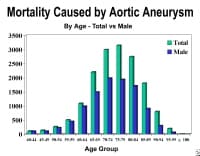
mortality caused by aortic aneurysm
1.  Mehta M, Paty PS, Byrne J, Roddy SP, Taggert JB, Sternbach Y, et al. The impact of hemodynamic status on outcomes of endovascular abdominal aortic aneurysm repair for rupture. J Vasc Surg. May 2013;57(5):1255-60. [Medline].
2.  Blanchard JF, Armenian HK, Friesen PP. Risk factors for abdominal aortic aneurysm: results of a case-control study. Am J Epidemiol. Mar 15 2000;151(6):575-83. [Medline].
3.  Lederle FA, Johnson GR, Wilson SE, Chute EP, Littooy FN, Bandyk D, et al. Prevalence and associations of abdominal aortic aneurysm detected through screening. Aneurysm Detection and Management (ADAM) Veterans Affairs Cooperative Study Group. Ann Intern Med. Mar 15 1997;126(6):441-9. [Medline].
4.   Wassef M, Baxter BT, Chisholm RL, Dalman RL, Fillinger MF, Heinecke J, et al. Pathogenesis of abdominal aortic aneurysms: a multidisciplinary research program supported by the National Heart, Lung, and Blood Institute. J Vasc Surg. Oct 2001;34(4):730-8. [Medline].
5.   [Guideline] U.S. Preventive Services Task Force. Screening for abdominal aortic aneurysm: recommendation statement. Ann Intern Med. Feb 1 2005;142(3):198-202. [Medline]. [Full Text].

Impact of chronic kidney disease on outcomes after abdominal aortic aneurysm repair

Patel VI, Lancaster RT, Mukhopadhyay S, Aranson NJ, Conrad MF, et al.
J Vasc Surg. 2012 Nov;56(5):1206-13.      http://dx.doi.org/10.1016/j.jvs.2012.04.037. Epub 2012 Aug 1.
Chronic kidney disease (CKD) is associated with increased morbidity and death after open abdominal aortic aneurysm (AAA) repair (OAR). This study highlights the effect of CKD on outcomes after endovascular AAA (EVAR) and OAR in contemporary practice.
The National Surgical Quality Improvement Program (NSQIP) Participant Use File (2005-2008) was queried by Current Procedural Terminology (American Medical Association, Chicago, Ill) code to identify EVAR or OAR patients, who were grouped by CKD class as having mild (CKD class 1 or 2), moderate (CKD class 3), or severe (CKD class 4 or 5) renal disease. Propensity score analysis was performed to match OAR and EVAR patients with mild CKD with those with moderate or severe CKD. Comparative analysis of mortality and clinical outcomes was performed based on CKD strata.
We identified 8701 patients who were treated with EVAR (n = 5811) or OAR (n = 2890) of intact AAAs. Mild, moderate, and severe CKD was present in 63%, 30%, and 7%, respectively. CKD increased (P < .01) overall mortality, with rates of 1.7% (mild), 5.3% (moderate), and 7.7% (severe) in unmatched patients undergoing EVAR or OAR. Operative mortality rates in patients with severe CKD were as high as 6.2% for EVAR and 10.3% for OAR.
Severity of CKD was associated with increasing frequency of risk factors; therefore, propensity matching to control for comorbidities was performed, resulting in similar baseline clinical and demographic features of patients with mild compared with those with moderate or severe disease.
In propensity-matched cohorts, moderate CKD increased the risk of 30-day mortality
  • for EVAR (1.9% mild vs 3.2% moderate; P = .013) and
  • OAR (3.1% mild vs 8.4% moderate; P < .0001).
Moderate CKD was also associated with increased morbidity in patients treated with
  • EVAR (8.3% mild vs 12.8% moderate; P < .0001) or
  • OAR (25.2% mild vs 32.4% moderate; P = .001).
Similarly, severe CKD increased the risk of 30-day mortality
  • for EVAR (2.6% mild vs 5.7% severe; P = .0081) and
  • OAR (4.1% mild vs 9.9% severe; P = .0057).
Severe CKD was also associated with increased morbidity in patients treated with
  • EVAR (10.6% mild vs 19.2% severe; P < .0001) or
  • OAR (31.1% mild vs 39.6% severe; P = .04).
The presence of moderate or severe CKD in patients considered for AAA repair is associated with significantly increased mortality and therefore should figure prominently in clinical decision making. The high mortality of AAA repair in patients with severe CKD is such that elective repair in such patients is not advised, except in extenuating clinical circumstances.

Related articles published on this Open Access Online Scientific Journal 

Effect of Hospital Characteristics on Outcomes of Endovascular Repair of Descending Aortic Aneurysms in US Medicare Population

Larry H. Bernstein, MD, FCAP 

http://pharmaceuticalintelligence.com/2013/06/27/effect-of-hospital-characteristics-on-outcomes-of-endovascular-repair-of-descending-aortic-aneurysms-in-us-medicare-population/

Abdominal Aortic Aneurysms (AAA): Albert Einstein’s Operation by Dr. Nissen
Aviva Lev-Ari, PhD, RN
No Early Symptoms – An Aortic Aneurysm Before It Ruptures – Is There A Way To Know If I Have it?
Justin D Pearlman, MD, PhD, FACC and Aviva Lev-Ari, PhD, RN
First-of-Its-Kind FDA Approval for ‘AUI’ Device with Endurant II AAA Stent Graft: Medtronic Expands in Endovascular Aortic Repair in the United States
Aviva Lev-Ari, PhD, RN
Abdominal Aortic Aneurysm: Endovascular repair and open repair resulted in similar long-term survival
Aviva Lev-Ari, PhD, RN
EUROPCR 2013, Paris 5/21-5/24, 2013 Conference for Cardiolovascular Intervention and Interventional Medicine
Aviva Lev-Ari, PhD, RN
Genomics & Genetics of Cardiovascular Disease Diagnoses: A Literature Survey of AHA’s Circulation Cardiovascular Genetics, 3/2010 – 3/2013
Aviva Lev-Ari, PhD, RN and Larry Bernstein, MD, FCAP
Competition in the Ecosystem of Medical Devices in Cardiac and Vascular Repair: Heart Valves, Stents, Catheterization Tools and Kits for Open Heart and Minimally Invasive Surgery (MIS)
Aviva Lev-Ari, PhD, RN
Bioabsorbable Drug Coating Scaffolds, Stents and Dual Antiplatelet Therapy
Aviva Lev-Ari, PhD, RN
Vascular Repair: Stents and Biologically Active Implants
Larry  Bernstein, MD, FCAP
Drug Eluting Stents: On MIT’s Edelman Lab’s Contributions to Vascular Biology and its Pioneering Research on DES
Larry H. Bernstein, MD, FCAP 
Coronary Artery Disease – Medical Devices Solutions: From First-In-Man Stent Implantation, via Medical Ethical Dilemmas to Drug Eluting Stents
Aviva Lev-Ari, PhD, RN
Survivals Comparison of Coronary Artery Bypass Graft (CABG) and Percutaneous Coronary Intervention (PCI) / Coronary Angioplasty
Larry Bernstein, MD, FCAP and Aviva Lev-Ari, PhD, RN
Trans-apical Transcatheter Aortic Valve Replacement in a Patient with Severe and Complex Left Main Coronary Artery Disease (LMCAD)
Larry Bernstein, MD, FCAP and Aviva Lev-Ari, PhD, RN
Transcatheter Aortic Valve Replacement (TAVR): Postdilatation to Reduce Paravalvular Regurgitation During TAVR with a Balloon-expandable Valve
Larry Bernstein, MD, FCAP and Aviva Lev-Ari, PhD, RN
Svelte Medical Systems’ Drug-Eluting Stent: 0% Clinically-Driven Events Through 12-Months in First-In-Man Study
Aviva Lev-Ari, PhD, RN
Acute and Chronic Myocardial Infarction: Quantification of Myocardial Perfusion Viability – FDG-PET/MRI vs. MRI or PET alone  (Justin Pearlman, Aviva Lev-Ari)
Biomaterials Technology: Models of Tissue Engineering for Reperfusion and Implantable Devices for Revascularization
Larry Bernstein, MD, FCAP and Aviva Lev-Ari, PhD, RN
Revascularization: PCI, Prior History of PCI vs CABG
Aviva Lev-Ari, PhD, RN
Accurate Identification and Treatment of Emergent Cardiac Events
Larry Bernstein, MD, FCAP
FDA Pending 510(k) for The Latest Cardiovascular Imaging Technology
Aviva Lev-Ari, PhD, RN
The ACUITY-PCI score: Will it Replace Four Established Risk Scores — TIMI, GRACE, SYNTAX, and Clinical SYNTAX
Aviva Lev-Ari, PhD, RN
Nitric Oxide and it’s impact on Cardiothoracic Surgery
Tilda Barliya, PhD
CABG or PCI: Patients with Diabetes – CABG Rein Supreme
Aviva Lev-Ari, PhD, RN
To Stent or Not? A Critical Decision
Aviva Lev-Ari, PhD, RN
Endothelin Receptors in Cardiovascular Diseases: The Role of eNOS Stimulation
Aviva Lev-Ari, PhD, RN
Absorb™ Bioresorbable Vascular Scaffold: An International Launch by Abbott Laboratories
Aviva Lev-Ari, PhD, RN
Carotid Stenting: Vascular surgeons have pointed to more minor strokes in the stenting group and cardiologists to more myocardial infarctions in the CEA cohort.
Aviva Lev-Ari, PhD, RN
New Drug-Eluting Stent Works Well in STEMI
Aviva Lev-Ari, PhD, RN
Global Supplier Strategy for Market Penetration & Partnership Options (Niche Suppliers vs. National Leaders) in the Massachusetts Cardiology & Vascular Surgery Tools and Devices Market for Cardiac Operating Rooms and Angioplasty Suites
Aviva Lev-Ari, PhD, RN
Abdominal Aortic Aneurysm in Computer Tomography

Abdominal Aortic Aneurysm in Computer Tomography (Photo credit: Wikipedia)

Read Full Post »

Effect of Hospital Characteristics on Outcomes of Endovascular Repair of Descending Aortic Aneurysms in US Medicare Population

Writer and Curator: Larry H. Bernstein, MD, FCAP 

and

Curator: Aviva Lev-Ari, PhD, RN 

Impact of hospital volume and type on outcomes of open and endovascular repair of descending thoracic aneurysms in the United States Medicare population.

Patel VI, Mukhopadhyay S, Ergul E, Aranson N, …., Cambria RP.
Journal of vascular surgery 2013;    http://dx.doi.org/10.1016/j.jvs.2013.01.035


Open surgery for thoracic aortic aneurysm has had success, but it carries complication risks.  In 2004, a much less invasive procedure, thoracic endovascular repair (TEVAR) was introduced. It eliminated a need for open surgery in many patients, but not all were suitable candidtes .  The advances in endovascular technology and procedural breakthroughs  since it was introduced has contributed to a dramatic transformation of the specialty of thoracic aortic surgery. The decision of which patients require open surgery is necessarily determined by the limitations of the procedure and the condition of the patient.
Thoracic endovascular aortic repair (TEVAR) is a minimally invasive alternative to conventional open surgical reconstruction for the treatment of thoracic aortic aneurysm. TEVAR procedures can be challenging and, at times, extraordinarily difficult.  Meticulous assessment of anatomy and preoperative procedure planning are absolutely paramount to produce optimal outcomes. The rapidly Increased use of TEVAR has produced favorable outcomes of TEVAR compared with open abdominal repair for descending thoracic aortic aneurysms (DTAs).   But the success of these procedure depends on requisite skills, and following guidelines intended for use in quality-improvement programs that assess the standard of care expected from all physicians who perform TEVAR procedures.
Currently, there is a diverse array of endografts that are commercially available to treat the thoracic aorta. Multiple studies have demonstrated excellent outcomes of thoracic endovascular aortic repair for the treatment of thoracic aortic aneurysms, with less reported perioperative morbidity and mortality in comparison with conventional open repair. Additionally, similar outcomes have been demonstrated for the treatment of type B dissections. However, the technology remains relatively novel, and larger studies with longer term outcomes are necessary to more fully evaluate the role of endovascular therapy for the treatment of thoracic aortic disease.
The MGH/Partners vascular surgeons evaluated the effect of case volume and hospital teaching status on clinical outcomes of intact DTA repair to gain an insight into whether there was a variability in DTAs outcomes based on hospital size, patient mix, number of procedures, staff characteristics, and teaching status.  This study was needed for establishing the type of procedure most suited to the type of patient, and to obtain the most accurate analysis of cost requirements based on resource allocation for reimbursement purposes.
The Medicare Provider Analysis and Review (MEDPAR) data set (2004 to 2007) was queried to identify open repair or TEVAR for DTA. Hospitals were stratified by DTA volume into high volume (HV; ≥8 cases/y) or low volume (LV; <8 cases/y) and teaching or nonteaching. The effect of hospital variables on the primary study end point of 30-day mortality and secondary end points of 30-day complications and long-term survival after open repair and TEVAR DTA repair were studied using univariate testing, multivariable regression modeling, Kaplan-Meier survival analysis, and Cox proportional hazards regression modeling.
They identified 763 hospitals performing 3554 open repairs and 3517 TEVARs. Overall DTA repair increased (P < .01) from 1375 in 2004 to 1987 in 2007. The proportion of hospitals performing open repair significantly decreased from 95% in 2004 to 57% in 2007 (P < .01), whereas
  • those performing TEVAR increased (P < .01) from 24% to 76%.
Overall repair type shifted from open (74% in 2004, the year before initial commercial availability of TEVAR) to TEVAR (39% open in 2007; P < .01). The fraction of open repairs at LV hospitals
  • decreased from 56% in 2004 to 44% in 2007 (P < .01), whereas
  • TEVAR increased from 24% in 2004 to 51% in 2007 (P < .01).
Overall mortality during the study interval for
  •  open repair was 15% at LV hospitals vs 11% at HV hospitals (P < .01), whereas
  • TEVAR mortality was similar, at 3.9% in LV vs 5.5% in HV hospitals (P = .43).
LV was independently associated with increased mortality after open repair (odds ratio, 1.4; 95% confidence interval, 1.1-1.8; P < .01) but not after TEVAR. There was no independent effect of hospital teaching status on mortality or complications after open repair or TEVAR repair.
The total number of DTA repairs significantly increased after the introduction of TEVAR for DTA. Operative mortality for TEVAR is independent of hospital volume and type, whereas
  • mortality after open surgery is lower at HV hospitals.
While the TEVAR mortality is significantly less than that of open surgery, the mortality in open surgery is higher for LV hospitals.  The data suggests that TEVAR can be safely performed across a spectrum of hospitals, whereas open surgery should be performed only at HV hospitals.
  1. Standard of Practice for the Endovascular Treatment of Thoracic Aortic Aneurysms and Type B Dissections. Fanelli F, and  Dake MD.  Cardiovasc Intervent Radiol. 2009 September; 32(5): 849–860.  http://dx.doi.org/10.1007/s00270-009-9668-6  PMCID: PMC2744786
  2. Thoracic aortic aneurysms and dissections: endovascular treatment. Baril DT, Cho JS, Chaer RA, Makaroun MS. Division of Vascular Surgery, University of Pittsburgh Medical Center, Pittsburgh, PAMt Sinai J Med. 2010 May-Jun;77(3):256-69.  http://dx.doi.org/10.1002/msj.20178.

Related Articles in Pharmaceuticval Intelligence

Abdominal Aortic Aneurysms (AAA): Albert Einstein’s Operation by Dr. Nissen   (Aviva Lev-Ari)
http://pharmaceuticalintelligence.com/2013/06/11/abdominal-aortic-aneurysms-aaa-albert-einsteins-operation-by-dr-nissen/

The Heart Surgery Specialty: heart transplant, lung transplant, heart-lung transplantation, aortic valve surgery, bypass surgery, minimally invasive cardiac surgery, heart valve surgery, removal of cardiac tumors, reoperation valve surgery  (Aviva Lev-Ari)
http://pharmaceuticalintelligence.com/?p=14092&preview=true

No Early Symptoms – An Aortic Aneurysm Before It Ruptures – Is There A Way To Know If I Have it?
(Aviva Lev-Ari)
http://pharmaceuticalintelligence.com/2013/06/10/no-early-symptoms-an-aortic-aneurysm-before-it-ruptures-is-there-a-way-to-know-if-i-have-it/

First-of-Its-Kind FDA Approval for ‘AUI’ Device with Endurant II AAA Stent Graft: Medtronic Expands in Endovascular Aortic Repair in the United States   (Aviva Lev-Ari)
http://pharmaceuticalintelligence.com/2013/05/30/first-of-its-kind-fda-approval-for-aui-device-with-endurant-ii-aaa-stent-graft-medtronic-expands-in-endovascular-aortic-repair-in-the-united-states/

Abdominal Aortic Aneurysm: Endovascular repair and open repair resulted in similar long-term survival
(Aviva Lev-Ari)
http://pharmaceuticalintelligence.com/2012/12/03/abdominal-aortic-aneurysm-endovascular-repair-and-open-repair-resulted-in-similar-long-term-survival/

EUROPCR 2013, Paris 5/21-5/24, 2013 Conference for Cardiolovascular Intervention and Interventional Medicine  (Aviva Lev-Ari)
http://pharmaceuticalintelligence.com/2013/05/29/europcr-2013-paris-521-524-2013-conference-for-cardiolovascular-intervention-and-interventional-medicine/

Genomics & Genetics of Cardiovascular Disease Diagnoses: A Literature Survey of AHA’s Circulation Cardiovascular Genetics, 3/2010 – 3/2013  (Aviva Lev-Ari)
http://pharmaceuticalintelligence.com/2013/03/07/genomics-genetics-of-cardiovascular-disease-diagnoses-a-literature-survey-of-ahas-circulation-cardiovascular-genetics-32010-32013/

Competition in the Ecosystem of Medical Devices in Cardiac and Vascular Repair: Heart Valves, Stents, Catheterization Tools and Kits for Open Heart and Minimally Invasive Surgery (MIS)  (Aviva Lev-Ari)
http://pharmaceuticalintelligence.com/2012/06/22/competition-in-the-ecosystem-of-medical-devices-in-cardiac-and-vascular-repair-heart-valves-stents-catheterization-tools-and-kits-for-open-heart-and-minimally-invasive-surgery-mis/

Bioabsorbable Drug Coating Scaffolds, Stents and Dual Antiplatelet Therapy (Aviva Lev-Ari)
http://pharmaceuticalintelligence.com/2013/05/29/bioabsorbable-drug-coating-scaffolds-stents-and-dual-antiplatelet-therapy/

Vascular Repair: Stents and Biologically Active Implants (larryhbern)
http://pharmaceuticalintelligence.com/2013/05/04/stents-biologically-active-implants-and-vascular-repair/

Drug Eluting Stents: On MIT’s Edelman Lab’s Contributions to Vascular Biology and its Pioneering Research on DES  (larryhbern)
http://pharmaceuticalintelligence.com/2013/04/25/contributions-to-vascular-biology/

Coronary Artery Disease – Medical Devices Solutions: From First-In-Man Stent Implantation, via Medical Ethical Dilemmas to Drug Eluting Stents  (Aviva Lev-Ari)
http://pharmaceuticalintelligence.com/2012/08/13/coronary-artery-disease-medical-devices-solutions-from-first-in-man-stent-implantation-via-medical-ethical-dilemmas-to-drug-eluting-stents/

Survivals Comparison of Coronary Artery Bypass Graft (CABG) and Percutaneous Coronary Intervention (PCI) / Coronary Angioplasty (larryhbern)
http://pharmaceuticalintelligence.com/2013/06/23/comparison-of-cardiothoracic-bypass-and-percutaneous-interventional-catheterization-survivals/

Trans-apical Transcatheter Aortic Valve Replacement in a Patient with Severe and Complex Left Main Coronary Artery Disease (LMCAD) (larryhbern)
http://pharmaceuticalintelligence.com/2013/06/17/management-of-difficult-trans-apical-transcatheter-aortic-valve-replacement-in-a-patient-with-severe-and-complex-arterial-disease/

Transcatheter Aortic Valve Replacement (TAVR): Postdilatation to Reduce Paravalvular Regurgitation During TAVR with a Balloon-expandable Valve  (larryhbern)
http://pharmaceuticalintelligence.com/2013/06/17/postdilatation-to-reduce-paravalvular-regurgitation-during-transcatheter-aortic-valve-replacement/

Svelte Medical Systems’ Drug-Eluting Stent: 0% Clinically-Driven Events Through 12-Months in First-In-Man Study  (Aviva Lev-Ari)
http://pharmaceuticalintelligence.com/2013/05/28/svelte-medical-systems-drug-eluting-stent-0-clinically-driven-events-through-12-months-in-first-in-man-study/

Acute and Chronic Myocardial Infarction: Quantification of Myocardial Perfusion Viability – FDG-PET/MRI vs. MRI or PET alone  (Justin Pearlman, Aviva Lev-Ari)
http://pharmaceuticalintelligence.com/2013/05/22/acute-and-chronic-myocardial-infarction-quantification-of-myocardial-viability-fdg-petmri-vs-mri-or-pet-alone/

Biomaterials Technology: Models of Tissue Engineering for Reperfusion and Implantable Devices for Revascularization (larryhbern)
http://pharmaceuticalintelligence.com/2013/05/05/bioengineering-of-vascular-and-tissue-models/

Revascularization: PCI, Prior History of PCI vs CABG  (A Lev-Ari)
http://pharmaceuticalintelligence.com/2013/04/25/revascularization-pci-prior-history-of-pci-vs-cabg/

Accurate Identification and Treatment of Emergent Cardiac Events (larryhbern)
http://pharmaceuticalintelligence.com/2013/03/15/accurate-identification-and-treatment-of-emergent-cardiac-events/

FDA Pending 510(k) for The Latest Cardiovascular Imaging Technology (A Lev-Ari)
http://pharmaceuticalintelligence.com/2013/01/28/fda-pending-510k-for-the-latest-cardiovascular-imaging-technology/

The ACUITY-PCI score: Will it Replace Four Established Risk Scores — TIMI, GRACE, SYNTAX, and Clinical SYNTAX  (A Lev-Ari)
http://pharmaceuticalintelligence.com/2013/01/03/the-acuity-pci-score-will-it-replace-four-established-risk-scores-timi-grace-syntax-and-clinical-syntax/

Nitric Oxide and it’s impact on Cardiothoracic Surgery  (tildabarliya)
http://pharmaceuticalintelligence.com/2012/12/15/nitric-oxide-and-its-impact-on-cardiothoracic-surgery/

CABG or PCI: Patients with Diabetes – CABG Rein Supreme (A Lev-Ari)
http://pharmaceuticalintelligence.com/2012/11/05/cabg-or-pci-patients-with-diabetes-cabg-rein-supreme/

To Stent or Not? A Critical Decision (A Lev-Ari)
http://pharmaceuticalintelligence.com/2012/10/23/to-stent-or-not-a-critical-decision/

Endothelin Receptors in Cardiovascular Diseases: The Role of eNOS Stimulation (A Lev-Ari)
http://pharmaceuticalintelligence.com/2012/10/04/endothelin-receptors-in-cardiovascular-diseases-the-role-of-enos-stimulation/

Absorb™ Bioresorbable Vascular Scaffold: An International Launch by Abbott Laboratories
(Aviva Lev-Ari)
http://pharmaceuticalintelligence.com/2012/09/29/absorb-bioresorbable-vascular-scaffold-an-international-launch-by-abbott-laboratories/

Carotid Stenting: Vascular surgeons have pointed to more minor strokes in the stenting group and cardiologists to more myocardial infarctions in the CEA cohort. (A Lev-Ari)
http://pharmaceuticalintelligence.com/2012/09/21/carotid-stenting-vascular-surgeons-have-pointed-to-more-minor-strokes-in-the-stenting-group-and-cardiologists-to-more-myocardial-infarctions-in-the-cea-cohort/

New Drug-Eluting Stent Works Well in STEMI (A Lev-Ari)
http://pharmaceuticalintelligence.com/2012/08/22/new-drug-eluting-stent-works-well-in-stemi/

lobal Supplier Strategy for Market Penetration & Partnership Options (Niche Suppliers vs. National Leaders) in the Massachusetts Cardiology & Vascular Surgery Tools and Devices Market for Cardiac Operating Rooms and Angioplasty Suites (A Lev-Ari)
http://pharmaceuticalintelligence.com/2012/06/22/global-supplier-strategy-for-market-penetration-partnership-options-niche-suppliers-vs-national-leaders-in-the-massachusetts-cardiology-vascular-surgery-tools-and-devices-market-for-car/

Histopathological image of dissecting aneurysm...

Histopathological image of dissecting aneurysm of thoracic aorta in a patient without evidence of Marfan syndrome. The damaged aorta was surgically removed and replaced by artificial vessel. Victoria blue & HE stain. (Photo credit: Wikipedia)

Diagram of aortic aneurysm Figure A shows a no...

Diagram of aortic aneurysm Figure A shows a normal aorta. Figure B shows a thoracic aortic aneurysm (which is located behind the heart). Figure C shows an abdominal aortic aneurysm located below the arteries that supply blood to the kidneys. (Photo credit: Wikipedia)

Thoracic aorta

Thoracic aorta (Photo credit: Wikipedia)

Open Heart Surgery

Open Heart Surgery (Photo credit: Wikipedia)

Read Full Post »

Reporter: Aviva Lev-Ari, PhD, RN

The Consumer Genetics Conference (CGC) is a one-of-a-kind event that draws together a dynamic community of scientists, clinicians, technology innovators, and patients to discuss the burning issues around the analysis and delivery of genomics results directly to patients and consumers. Over three days, attendees will hear about disruptive diagnostic technologies, cognitive barriers to patients (and medical professionals), ethical/regulatory/privacy issues, the thorny issue of reimbursement, and the challenges of building relationships to realize the potential of personal genomics and individualized medicine. CGC provides an opportunity for all stakeholders to come together at one venue, share viewpoints and engage in an honest dialogue, and together learn how to move the elephant of change. Program topics will include:
  • Whole Genome Debates
  • Translational Genomics
  • Clinical & Third-Generation Sequencing
  • Personal Genome Analysis & Interpretation
  • Empowering Patients: Companies & Technologies
  • Molecular Diagnostics & Point-of-Care
  • Investment & Funding Opportunities
  • Reimbursement Models
  • Five-Year Plan for Consumer Genomics
  • Data Analysis & Management
  • Ethics, Privacy & Regulation
  • Digital Health Tracking Apps

SPEAKERS

2013 Distinguished Faculty

Bonnie Ancone, Vice President, Molecular Diagnostics, XIFIN, Inc.
Bonnie Ancone has 25 years experience in the medical industry of which 15 years have been directly related to medical billing and collections. Prior to coming to XIFIN, Ms. Ancone worked in Anatomic Pathology Reference laboratory settings for 10 years. She held multiple positions including Billing Supervisor, Billing Manager and Director of Billing & Collections. She was also a partner in a medical billing company. Ms. Ancone’s prior experience includes 10 years in outpatient substance abuse clinics as a nurse and Assistant Director. In this capacity, she interacted with regulatory bodies such as DEA, FDA and multiple state behavioral health agencies dealing with licensing, auditing and regulations. She participated in the development of state methadone regulations and the state methadone coalition for Arizona and Nevada. She started her career on the operations side of banking.

Nazneen Aziz, Ph.D., Director, Molecular Medicine, Transformation Program Office, College of American Pathologists
Nazneen Aziz is the Director of Molecular Medicine at the College of American Pathologists. In this role, Dr. Aziz is guiding strategies and leading projects related to genomic medicine at CAP. Currently, she leads a committee that focuses on critical issues surrounding next generation sequencing. She is a member of the Association for Molecular Pathology Workgroup for Whole Genome Analysis and the Center for Disease Control Nex-StoCT-II Workgroup on next generation sequencing bioinformatics and the Interpretation of Sequence Variant Work Group at the College of American College of Medical Genetics. In her prior positions, Dr. Aziz was Vice President of Research and Development at Interleukin Genetics, Vice President of External Research at Point Therapeutics and Director of Translational Research at Novartis Institute of Biomedical Research. In her industry career, she has focused on personalized medicine, biomarkers, genetic tests, and development of drugs in cancer and diabetes. Prior to joining the biotechnology industry Dr. Aziz was an Assistant Professor at Harvard Medical School and Children’s Hospital in Boston where she discovered and characterized the function of novel genes involved in recessive polycystic kidney disease. Nazneen received her Ph.D. in molecular genetics and Masters Degree in biochemistry at the Massachusetts Institute of Technology and her Bachelor’s Degree from Wellesley College.

Pam Baker, Senior Director, Market Access, CardioDx
Ms. Pam Baker is Senior Director of Market Access & Policy with Cardio Dx. She is a life sciences professional with 17 years of experience in pharma, biotech and diagnostics in a series of commercial roles across marketing, new product commercialization, reimbursement, pipeline and sales management. She started her healthcare career 17 years ago, beginning with Johnson & Johnson (Janssen, Ortho and Mc Neil), followed by Genentech. Ms Baker started out in sales, then moved into sales training, sales leadership and to multiple marketing roles, from product launch, to in-line marketing. She then moved into the reimbursement arena, leading the Program Strategy & Management team for Genentech Access Solutions, and has recently joined a molecular diagnostics company in Palo Alto, CA called CardioDx. Ms Baker received a Bachelor of Arts, Political Science and Asian Studies from Northwestern University and a Master, International Management from Thunderbird School of Global Management. She is a mom of 5 year old twin girls.

Shawn C. Baker, Ph.D., CSO, BlueSEQ
Dr. Shawn C. Baker is the Chief Science Officer and co-founder of BlueSEQ, an independent guide for researchers outsourcing their DNA sequencing. Having received his Ph.D. at the University of California – Davis, he started his career as a Research Scientist at Illumina when it was a 15-person startup. After spending several years at the bench developing gene expression array products, he transitioned to Product Marketing where he led a team in charge of Illumina’s Expression and Regulation sequencing portfolio. Dr. Baker started working with BlueSEQ in 2011, helping to establish an online marketplace for life science researchers to gain access to the best sequencing technology for their projects. In addition, BlueSEQ has created the Knowledge Bank, a neutral source of information on the various sequencing technologies, platforms and applications.

Cinnamon S. Bloss, Ph.D., Director, Social Sciences & Bioethics, Assistant Professor, Scripps Translational Science Institute

Dr. Bloss is an Assistant Professor, as well as Director of Social Sciences and Bioethics at the Scripps Translational Science Institute. Her research is funded by the National Institutes of Health and is focused on investigating individuals’ behavioral and psychological responses to disclosure of personal genomic information. She is the lead researcher on STSI’s Scripps Genomic Health Initiative, and her work on this project was recently published in the New England Journal of Medicine and has been highlighted at a number of national and international scientific meetings. She has also presented invited testimony on consumer genomics before the Food and Drug Administration Advisory Panel. Dr. Bloss’ other research interests include developing ways of combining genomics with traditional disease risk factors to make predictions about disease development, progression and response to treatment, as well as designing effective health interventions that leverage genomic information. She also conducts genetic association studies and has several collaborations to investigate the genetic underpinnings of neurological, behavioral, and other health-related phenotypes. Dr. Bloss received her B.A. in Psychology from Smith College, her Ph.D. in Clinical Psychology from the University of California, San Diego, and completed a predoctoral internship in clinical neuropsychology at the University of Florida. Dr. Bloss completed a post-doctoral fellowship in statistical genetics and genomic medicine at The Scripps Research Institute. At STSI, Dr. Bloss directs the Summer Undergraduate Research Internship and is an instructor in the TSRI Graduate Program. She is also a California-licensed clinical psychologist and has worked with adults and children with a wide range of neurological and psychiatric conditions.
John Boyce, President and CEO, GnuBIO
John Boyce is President, CEO and Co-Founder of GnuBIO. Prior to starting GnuBIO, John co-founded Delphi Bio, LLC, a strategic consulting company that serves startup and fortune 500 companies within the life sciences market. Using his proven ability to drive companies to commercial success, John served as the Business Development head for a number of clients, including Affomix. Over a two year period, John developed the business plan for Affomix, oversaw all commercial activities, as well as initiated and drove the sale of the company to a multi-billion dollar sequencing corporation in July 2010. Prior to Delphi and Affomix, John served as Head of Business Development for Helicos BioSciences (HLCS), where he was responsible for identifying new market opportunities. Prior to Helicos, John was the Senior Director of Commercial Development for Parallele Biosciences, Inc. where he played an integral role of building the company leading to an acquisition of the company by Affymetrix (AFFY). He was the Senior Director of Business Development for Genomics Collaborative where he was responsible for putting in place and building the Sales, Marketing, and Business Development infrastructure. John executed several key deals and played a key role in the acquisition by SeraCare Life Sciences, Inc. Prior to Genomics Collaborative, John led the successful expansion of Sequenom’s MassARRAY system as Director, United States Sales at Sequenom Inc. (SQNM), from 2000 to 2003.

Catherine Brownstein, Ph.D., Project Manager, The Gene Partnership, Boston Children’s Hospital; Instructor, Pediatrics, Harvard Medical School
Catherine Brownstein, PhD, MPH is the Project Manager for The Gene Partnership at Boston Children’s Hospital and an Instructor in Pediatrics at Harvard Medical School. For the last two years, Catherine has worked to establish and develop new sequencing and pharmacogenomics programs at the hospital. Before coming to BCH and HMS, Catherine was a toxicologist at the Massachusetts Department of Public Health, and spent four years in the world of Health 2.0, creating online patient communities for individuals with chronic and terminal diseases. Catherine’s interests and expertise lie with the intersection of genotype and phenotype, and the integration of patient-reported outcomes with genomics and medicine.

Kenneth Chahine, Ph.D., J.D., Senior Vice President and General Manager, DNA, ancestry.com
Ken Chahine has served as Senior Vice President and General Manager for Ancestry DNA, LLC since 2011. Prior to joining us he held several positions, including as Chief Executive Officer of Avigen, a biotechnology company, in the Department of Human Genetics at the University of Utah, and at Parke-Davis Pharmaceuticals (currently Pfizer). Mr. Chahine also teaches a course focused on new venture development, intellectual property, and licensing at the University of Utah’s College of Law. He earned a Ph.D. in Biochemistry from the University of Michigan, a J.D. from the University of Utah College of Law, and a B.A. in Chemistry from Florida State University.

Mick Correll, COO, Genospace
Mick Correll is the Co-Founder and Chief Operating Officer of GenoSpace, a Cambridge, Massachusetts-based company that is pioneering a bold and innovative software platform for advancing 21st-century genomic medicine. Prior to launching GenoSpace, Mick was the Associate Director of the Center for Cancer Computational Biology (CCCB) at the Dana-Farber Cancer Institute, overseeing the Center’s next-generation sequencing facility, bioinformatics consulting service and software development efforts.Mick started his career as a Bioinformatician at Lion Bioscience Research Inc, where he was the principle architect of a globally distributed gene annotation and analysis platform, and subsequently served asHead of Professional Services for Lion Bioscience Inc in North America, and Director of Healthcare Product Management at InforSense LLC.

Steven Dickman, President & Owner, CBT Advisors
Steven Dickman is President & Owner of CBT Advisors, a boutique life sciences consulting firm in Cambridge, Massachusetts. CBT Advisors works with over 20 clients a year on product positioning and corporate strategy; communications and fund-raising materials; and market analysis based on research and expert interviews. Clients include public and private biotech companies and life science venture funds. Before founding CBT Advisors in 2003, Mr. Dickman spent four years in venture capital with TVM Capital. There, Mr. Dickman’s deals included Sirna Therapeutics, sold to Merck in 2006 for $1.1 billion. Earlier, he was a Knight Science Journalism Fellow at MIT, a freelance contributor to The Economist, Discover, Science, GEO and Die Zeit and the founding bureau chief for Nature in Munich, Germany. Fluent in German, Mr. Dickman received his biochemistry degree cum laude from Princeton University.
Lynn Doucette-Stamm, Ph.D., Vice President, Development and Clinical Operations, Interleukin Genetics, Inc.
Lynn Doucette-Stamm has served as Vice President of Development and Clinical Operations at Interleukin Genetics since 2011. Prior to joining Interleukin she has worked in numerous capacities in Life Sciences for greater than 25 years. Key positions she has held prior to Interleukin include Vice President of Business Development at Beckman Coulter Genomics and Agencourt Bioscience, and Vice President and General Manager of the GenomeVisionTM Services Business Unit at Genome Therapeutics. She earned a Ph.D. in Cell Biology and Genetics from Cornell University Graduate School of Medical Sciences and a B.S. in Biology from McMaster University.
Yaniv Erlich, Ph.D., Principal Investigator and Whitehead Fellow, Whitehead Institute for Biomedical Research 
Dr. Yaniv Erlich is Andria and Paul Heafy Family Fellow and Principal Investigator at the Whitehead Institute for Biomedical Research at the Massachusetts Institute of Technology. He received a bachelor’s degree from Tel-Aviv University at Israel and his PhD from the Watson School of Biological Sciences at Cold Spring Harbor Laboratory. Dr. Erlich’s research interests are computational human genetics. He has extensive experience in developing new algorithms for high throughputs sequencing and to detect disease genes. In two of his studies, he identified the genetic basis of devastating genetic disorders. His lab works on a wide range of topics including developing compressed sensing approach to identify rare genetic variations, devising new algorithms for personal genomics, and using Web 2.0 information for genetic studies. Dr. Erlich is the recipient of the Harold M. Weintraub award, the IEEE/ACM-CS HPC award, Goldberg-Lindsay Fellowship, Wolf foundation scholarship for Excellence in exact science, and Emmanuel Ax scholarship, and he was selected as one of 2010 Tomorrow’s PIs team of Genome Technology.

Kyle Fetter, Associate Vice President, Molecular Diagnostics, XIFIN, Inc.
Kyle Fetter has overseen the commercialization, billing, and reimbursement processes for more than 10 molecular diagnostic companies releasing new high complexity laboratory testing services into the healthcare market. He currently manages billing processes for more than 10 companies at various stages of commercialization and third party payer contracting. In addition to overseeing a large molecular diagnostic billing department, Mr. Fetter consults with molecular diagnostic companies on projecting cash flow for non-covered services, implementing successful appeals strategies, and the relationship between sales and reimbursement for new medical technology. He came to the healthcare industry with a background in private equity and technology commercialization. Mr. Fetter has a B.A. in History and Journalism from the University of Southern California and an M.B.A from the University of Utah.
Birgit Funke, Ph.D., FACMG, Assistant Molecular Pathologist and Director of Clinical Research and Development, Laboratory for Molecular Medicine, Massachusetts General Hospital; Assistant Professor in Pathology, Harvard Medical School
Birgit Funke, Ph.D., FACMG is an Associate Laboratory Director of the Laboratory for Molecular Medicine (LMM) at PCPGM and is an Instructor in Pathology at Harvard Medical School. She currently oversees genetic testing and test development in the area of cardiovascular disease at the LMM. She has authored and co-authored many publications focusing on a wide array of topics, most recently incentive learning and memory in mice. Currently, Dr. Funke focuses on genetic testing with emphasis on genetically heterogeneous cardiovascular diseases, with the goal of defining the genetic basis for these disorders and developing comprehensive tests using new emerging molecular technologies. In addition, she is interested in developing genetic tests for common, complex disorders, working to understand the genetic variants that have been linked with psychotic and affective disorders.

Amanda Gammon, MS, CGC, Licensed Genetic Counselor, Huntsman Cancer Institute, University of Utah 
Amanda Gammon is a board-certified genetic counselor with a master’s degree in genetic counseling from University of Colorado at Denver Health Sciences Center. She received her bachelor’s degree from the University of Colorado at Boulder in molecular, cellular, and developmental biology and English literature. While completing her education, Amanda worked at Rocky Mountain Cancer Centers. She began working at Huntsman Cancer Institute in July 2007. She provides genetic counseling to patients in the Family Cancer Assessment Clinic and the research-oriented High Risk Breast Cancer Clinic. She also provides counseling for two National Institutes of Health-funded studies. For one study, she discusses familial colorectal cancer risk with individuals by telephone in rural Utah and Idaho to assess effectiveness of telephone intervention versus written risk information in encouraging individuals to pursue colonoscopy. In the other, she provides hereditary breast and ovarian cancer counseling to women in rural Utah both by phone and in-person to assess equivalency. Her main research interests include hereditary breast cancer and provision of genetic counseling through alternative modes for individuals with limited access to genetic counseling centers.

Manuel L. Gonzalez-Garay, Ph.D., Assistant Professor, The University of Texas Health Science Center at Houston
Dr. Gonzalez-Garay obtained his B.S. from the University of Nuevo Leon, Mexico in 1988. He wrote a bachelor’s research dissertation “Papillomavirus and cervical cancer in Mexican population” under the supervision of Dr. Barrera-Saldana and Dr. Gariglio. After a pre-doctoral fellowship at University of Texas, he joined the doctoral program in 1990. In 1996, Dr. Gonzalez-Garay completed his Ph.D. at the University of Texas, writing a dissertation about the regulation of the stoichiometry of tubulin. After a two-year Post-Doctoral Fellowship in the lab of Dr. Fernando Cabral, he joined Lexicon Genetics as a Bioinformatician. He was subsequently promoted to manager of Bioinformatics Group. During his stay at Lexicon Genetics, Dr. Gonzalez-Garay developed a large number of proprietary software and databases to support the gene knockout and drug discovery pipelines. During 2002, Dr. Gonzalez-Garay moved to Baylor College of Medicine, Human Genome Sequencing Center (HGSC) where he working as a Senior Scientific Programmer and team leader. During his stay at the HGSC he developed “Genboree discovery system” and participated as a bioinformatician in a large number of sequencing projects including the sequencing of the Human chromosome 3 and 12, the complete genomes of Rat and Sea Urchin. Dr. Gonzalez-Garay was instrumental in the development of pipelines for the re-sequencing of candidate genes at HGSC. From 2007 to 2009 he actively participated in the Tumor Sequencing Project (TSP) and the cancer genome atlas (TCGA) project. In January, 2010, The IMM recruited Dr. Gonzalez-Garay as Research Assistant Professor for The Brown Foundation Institute of Molecular Medicine for the Prevention of Human Diseases. Dr. Gonzalez-Garay is currently developing the pipelines to analyze whole genome and exome sequences and he is currently participating in three main projects: The identification of the causal mutations for tuberous sclerosis, cardiomyopathy and schizophrenia.

Robert Green, M.D., M.P.H., Associate Professor of Medicine, Division of Genetics, Department of Medicine, Brigham and Women’s Hospital and Harvard Medical School 
Robert C. Green, MD, MPH is a medical geneticist and a clinical researcher who directs the G2P research program (genomes2people.org) in translational genomics and health outcomes in the Division of Genetics at Brigham and Women’s Hospital and Harvard Medical School. Dr. Green is principal investigator of the NIH-funded REVEAL Study, in which a cross-disciplinary team has conducted 4 separate multi-center randomized clinical trials collectively enrolling 1100 individuals to disclose a genetic risk factor for Alzheimer’s disease in order to explore emerging themes in translational genomics. Dr. Green also co-directs the NIH-funded PGen Study, the first prospective study of direct-to-consumer genetic testing services and leads the MedSeq Project, the first NIH-funded research study to explore the use of whole genome sequencing in preventive medicine. Dr. Green is currently Associate Director for Research of the Partners Center for Personalized Genetic Medicine, a Board Member of the Council for Responsible Genetics and a member of the Informed Cohort Oversight Boards for both the Children’s Hospital Boston Gene Partnership Program and the Coriell Personalized Medicine Collaborative. He co-chairs the ACMG working group that is currently developing recommendations for management of incidental findings in clinical sequencing.

Steve Gullans, Managing Director, Excel Venture Management
Dr. Gullans is an experienced investor, entrepreneur and scientist. At Excel, he focuses on life science technology companies with a particular interest in disruptive platforms that can impact multiple industries. Steve is currently a Director at Tetraphase Pharmaceuticals, PathoGenetix, nanoMR, Cleveland HeartLab, and Catch.com. He was previously a board member of Activate Networks as well as BioTrove which was acquired by Life Technologies (LIFE) in 2009 and Biocius Life Sciences which was acquired by Agilent Technologies (A) in 2011. Prior to Excel, Steve co-founded RxGen, Inc., a pharma services company where he served as CEO from 2004-2008. In 2002, Steve stepped in as a senior executive at U.S. Genomics to direct operations, recruit a new CEO, and assist with fundraising. In the 1990s, he co-developed the technology that launched CellAct Pharma GmbH, a drug development company. Steve’s experience with venture investing began in the late 1980s when he became an active advisor to small biotechs and venture investors, including being a Senior Advisor to CB Health Ventures for 10 years. Dr. Gullans is an expert in advanced life science technologies and was a faculty member at Harvard Medical School and Brigham and Women’s Hospital for nearly 20 years. He has published more than 130 scientific papersin many leading journals, lectured internationally, and co-invented numerous patents. He recently co-authored with Juan Enriquez an eBook entitled, Homo evolutis: A Short Tour of Our New Species, and a comment in Nature entitled, “Genetically Enhanced Olympics Are Coming,” which describe a world where humans increasingly shape their environment, themselves, and other species. Steve received his B.S. at Union College, Ph.D. at Duke University, and postdoctoral training at the Yale School of Medicine. He is a Fellow of the AAAS and the AHA.

Tina Hambuch, Senior Scientist, Illumina, Inc.
Tina Hambuch earned her Bachelor’s degree from UC Riverside and her doctorate from UC Berkeley, focusing on genetic analyses of genes that control the immune system. She continued her studies of genetic variation as a post-doctoral fellow at the Centers for Disease Control and an assistant professor at the Ludwig Maximillians University in Munich. After her academic career, Tina used her understanding of genetics and genetic variation to help identify and design diagnostic sequencing tests for clinical application at Ambry Genetics. Tina joined Illumina in 2008 where she combined her experience in genetics, genomics, and clinical diagnostics to contribute to the development of the CLIA-certified, CAP-accredited Illumina Clinical Services Laboratory (ICSL). In 2010, she launched a California-certified Clinical Genetic Molecular Biologist Scientist training program in which she serves as the Education Coordinator and Director. Tina is currently active in the development and validation of genetic testing, as well as clinical tools for doctor support and education. Tina is a member of the American College of Medical Genetics and the American Society of Human Genetics.

Michael Hawley, Chief Design Officer, Mad*Pow

As leader of the Mad*Pow Experience Design team, Michael leverages expertise in usability and user experience to help clients achieve their goals through design. Michael holds his MS in Human Factors in Information Design from Bentley College McCallum Graduate School of Business, and BA in Cellular and Molecular Biology from the University of Michigan. He is an active member of the professional design community, serving as an officer in the User Experience Professional’s Association and contributing ideas as a speaker and author, exploring trends within the UX discipline as a published columnist in publications such as UXMatters, iMedia, TMCNet and CPWire.
Caleb J Kennedy, Ph.D., Lead Scientist, Good Start Genetics, Inc.
Caleb currently leads an amazing group of scientist-engineers developing high-performance analytical tools for next-generation advances in genetic testing and research. He holds a Ph.D. in genetics from Harvard University, as well as M.S. and B.S. degrees in molecular and cellular biology from Texas A&M University. Caleb has two beautiful boys, one with Down syndrome.
Ayub Khattak, CEO, ruubix
Ayub Khattak, CEO or ruubix inc., uses his background in biochemistry, programming and electronics in the development of the ruubix digital diagnostic platform. He has his degree in Mathematics from UCLA and developed a NSF funded project in the genetic engineering of RNAi systems before founding ruubix.

Wendy Kohlmann, MS, CGC, Licensed Genetic Counselor, Huntsman Cancer Institute, University of Utah 
Wendy Kohlmann is a board-certified genetic counselor with a master’s degree in genetic counseling from the University of Cincinnati and a bachelor’s degree in zoology from the University of Wisconsin. She has worked as a genetic counselor at the University of Texas-M.D. Anderson Cancer Center in Houston and the University of Michigan Comprehensive Cancer Center in Ann Arbor. She began working at Huntsman Cancer Institute as a research associate in 2006. Wendy Kohlmann’s research interests include the inherited basis of melanoma and pancreatic cancer, psychosocial and behavioral outcomes of genetic counseling, and issues for children and adolescents with hereditary cancer syndromes.

Antoinette F. Konski, J.D., Partner, Foley & Lardner LLP
Antoinette F. Konski is a partner with Foley & Lardner LLP where her practice focuses on intellectual property. She works with life science clients, creating and optimizing value in intellectual property portfolios encompassing technologies that include personalized medicine, regenerative and stem cell biology, antibodies, immunology, gene therapy, nanotechnology, diagnostics, small molecules and drug delivery. She represents public and private companies and universities. Ms. Konski currently serves as the firm’s Silicon Valley IP office chairperson and co-chair of the Life Sciences Industry Team.

Gary J. Kurtzman, MD, Managing Director, Healthcare, Safeguard
Gary has 25+ years of experience in operations and investments, leveraging his medical expertise to enable businesses to enhance their products and grow their services, as well as to discover new partnering potential in developing entrepreneurial companies. Gary joined Safeguard in 2006, where he is responsible for identifying, deploying capital in and supporting emerging healthcare companies in molecular and point-of-care diagnostics, medical devices and healthcare IT. He targets companies with solutions that address the high cost of medical care, and safer and more effective treatments. Gary is a board member of Safeguard partner companies Alverix, Crescendo Bioscience, Good Start Genetics, Medivo, and PixelOptics. Gary has realized value for companies through a series of successful IPOs, M&A and turnaround transactions—most recently Shire’s acquisition of Safeguard’s partner company Advanced BioHealing for $750 million, in cash, representing a 13x cash-on-cash return for Safeguard; and Eli Lilly’s acquisition of Safeguard’s partner company Avid Radiopharmaceuticals for $300 million, up front, with an additional $500 million payout dependent upon the achievement of future regulatory and commercial milestones, representing an initial 3x cash-on-cash return for Safeguard with the potential to realize up to 8x. Gary joined Safeguard from BioAdvance, a state initiative committed to funding early-stage life sciences companies, where he served as Managing Director and Chief Operating Officer. Previously, he was Chief Executive Officer at Pluvita Corporation, a company developing biological and bioinformatic solutions for drug and diagnostic development. Gary also previously served as Chief Operating Officer at Genovo, Inc., a gene therapy start-up company. He was also employed as head of research & development by Avigen, Inc., an early-stage gene therapy company located in San Francisco. Gary began his career with Gilead Sciences, Inc.—at the time, a pre-IPO biotechnology company—as virology group leader. A board-certified internist from Barnes Hospital in St. Louis, MO, with a hematology sub-specialty, Gary has authored more than 40 research articles, book chapters and reviews, and is credited as inventor on twelve issued United States patents. Presently, Gary serves on various academic and biomedical committees and boards along with the editorial board of Biotechnology Healthcare. Presently, Gary is a lecturer in the Health Care Systems Department at the Wharton School at the University of Pennsylvania where he teaches entrepreneurship in life sciences.

Gholson Lyon, M.D., Ph.D., Assistant Professor of Human Genetics, Cold Spring Harbor Laboratory; Research Scientist, Utah Foundation for Biomedical Research
Gholson Lyon is an assistant professor in human genetics at Cold Spring Harbor Laboratory and a research scientist at the Utah Foundation for Biomedical Research. He is also a board-certified child, adolescent and adult psychiatrist. He earned an M.Phil. in Genetics at the University of Cambridge, England, then received a Ph.D. and M.D. through the combined Cornell/Sloan-Kettering/Rockefeller University training program. He started his independent research career in 2009, after finishing clinical residencies in child, adolescent and adult psychiatry. In addition to his research on the genetics of neuropsychiatric illnesses, Dr. Lyon is focusing on the genetic basis of rare Mendelian diseases.

Daniel MacArthur, Ph.D., Assistant Professor, Massachusetts General Hospital; Co-founder, Genomes Unzipped 
Daniel MacArthur is a group leader at the Analytic and Translational Genetics Unit at Massachusetts General Hospital, an assistant professor at Harvard Medical School, and a research affiliate at the Broad Institute of Harvard and MIT. His research focuses on understanding the functional impact of genetic variation using genome sequencing data. His writing on personal genomics is archived at Wired Science, and his research is described on his lab page at http://www.macarthurlab.org/.

Ellen T. Matloff, M.S., Research Scientist, Department of Genetics and Director, Cancer Genetic Counseling, Yale Cancer Center
Ellen T. Matloff, M.S., C.G.C., received her Bachelor’s degree in Biology from Union College, her Master’s degree in Genetic Counseling from Northwestern University, and her board certification from the American Board of Genetic Counseling. She specializes in hereditary breast and ovarian cancer syndrome (BRCA1, BRCA2), hereditary colon cancer syndromes (HNPCC, FAP), and rare cancer syndromes. Her interests include patient and provider issues in genetic counseling, sexuality and cancer patients, and the impact of patents on clinical practice.

Martin Mendiola, M.D., MPH, Director, Clinical Program Development, Happtique
Martin Mendiola is responsible for clinical needs assessments of mHealth technology for the purposes of enhancing the provision of care and patient engagement and satisfaction. He is involved in the clinical implementation of Happtique’s solutions within client health systems while serving as a liaison to its healthcare providers. He has also created the medical, health, and wellness library intellectual property offered to Happtique’s members. Prior to joining Happtique, Martin worked in the direct delivery of care within several hospital systems and through international humanitarian relief efforts, and has conducted extensive clinical research. He earned his MD from the Ponce School of Medicine and MPH in Health Policy from Columbia University Mailman School of Public Health.

Peter S. Miller, COO, Genomic Healthcare Strategies
Peter Miller is Chief Operating Officer of Genomic Healthcare Strategies, a company focused on the changes in healthcare resulting from advances in molecular medicine. Peter spent his career building companies which have operated in expanding markets driven by new technology. He has a track record of spotting trends and successful implementation. He did his undergraduate work at MIT. While working on his MBA at MIT’s Sloan School, he was a founding member of Abt Associates Inc, and over a period of 17 years worked as COO and Board member as the company grew from 3 people to 800. Peter has been a key advisor to firms facing a variety of transitional events (external or internal), entering new markets, and facing choices around mergers/acquisitions/going public. He has helped build successful companies in software and professional services, three of which were sold to public companies. He has served on a number of boards of innovative technology companies, helping build their success, both organizationally and in their markets. He has a long term interest in health care. He established the original health care research group at Abt Associates. He has helped teach a course at Harvard School of Public Health, working with Dr. John Bryant, later Dean of Columbia’s School of Public Health. He has worked on physician education with the American Association of Medical Colleges and has been a board member of several health care services firms. He has extensive experience with entrepreneurial companies, having successfully worked with firms raising money seven times, both as an employee and as a business plan quarterback. He is involved in M&A activities on both the buy and sell sides. In addition he has been a licensed (NASD) broker/dealer. Peter is a frequent invited speaker on the changing healthcare landscape, writing and speaking on Personalized Medicine for many years as a thought leader. He has been invited to speak at the Molecular Medicine Tri-Conference, LabCompete, the University of California at Santa Barbara’s Technology Management Program, among others. Peter is co-author with Keith Batchelder of GHS of an invited Nature Biotechnology commentary: “A Change in the Market – Investing in Diagnostics.” He is active with his alma mater, having been Board Chairman of the Global MIT Enterprise Forum, a past board member of the MIT Alumni Association, and currently helps fledgling startups as Co-Director of the MIT Venture Mentoring Service.

Georgia Mitsi, MSc, Ph.D., MBA, Founder and CEO, Apptomics LLC 
Georgia Mitsi MSc, PhD, MBA is the Founder and CEO of Apptomics LLC ,a health technology firm specializing in the design and validation of quality medical mobile applications for selected conditions with high unmet need focusing primarily in CNS. Georgia received her PhD in Health Sciences and MSc in Applied Medical Sciences from University of Patras, Greece and her MBA from University of Miami. She has extensive experience in Pharmaceutical Industry and Healthcare Consulting where she has been involved in positions of increased responsibility in areas such as Clinical Research, Health Outcomes and Health Economics. She often played an instrumental role in uncovering and fostering new business opportunities and developing a strategic roadmap for product’s value proposition. Georgia also worked at the Health Services Research Center (HSRC), a joint venture between Humana and University of Miami and among other responsibilities she led the scientific effort for Games for Health initiative. She has completed successfully many research projects of high complexity and has collaborated with pharmaceutical companies as well as academic institutions. She has co-authored several scientific publications and presented in conferences such as ISPOR and DIA. Georgia is also a published novelist in her native language, Greek.

David Mittelman, Ph.D., Associate Professor, Virginia Bioinformatics Institute, Virginia Tech Department of Biological Sciences, and VTC School of Medicine
Dr. Mittelman is an Associate Professor at the Virginia Bioinformatics Institute, the Virginia Tech Department of Biological Sciences, and the VTC School of Medicine. David Mittelman holds a PhD in Molecular Biophysics through the Department of Biochemistry at Baylor College of Medicine (BCM). Dr. Mittelman completed his postdoctoral training in the Department of Molecular and Human Genetics at BCM. In 2009, Dr. Mittelman was awarded the Ruth L. Kirschstein National Research Service Award, and began an independent research program in population-scale genomics at BCM’s Human Genome Sequencing Center (HGSC). Currently, Dr. Mittelman leads the Genetics and Genomic Medicine Laboratory at Virginia Tech, combining experimental and computational approaches to characterizing personal genomes.

Anne Morriss, Founder and CEO, Genepeeks
Anne is the founder and CEO of Genepeeks, a genetic information company that helps families to protect their future children. She has helped to launch and grow multiple technology companies, and is the best-selling co-author of Uncommon Service: How to Win By Putting Customers at the Core of Your Business (Harvard Business Review Press). Anne received her B.A in American Studies from Brown University and an M.B.A from Harvard Business School.

Julia Oh, Chief Science Officer, 1eq

Heidi L. Rehm, Ph.D., FACMG, Chief Laboratory Director, Molecular Medicine, Partners HealthCare Center for Personalized Genetic Medicine (PCPGM); Assistant Professor of Pathology, Harvard Medical School
Heidi Rehm, Ph.D. was recruited in 2001 to build the Laboratory for Molecular Medicine at PCPGM and serves as its Laboratory Director. She is a board-certified clinical molecular geneticist and Assistant Professor of Pathology at Harvard Medical School with appointments at BWH, MGH and Children’s Hospital Boston. Her undergraduate degree is from Middlebury College, her graduate degree in Genetics is from Harvard University and her postdoctoral and fellowship training was at HMS. Heidi has served as the Director of the ABMG Clinical Molecular Genetics Training Program at HMS since 2006. In addition to running the LMM and the molecular training program, she also conducts research in hearing loss, Usher syndrome, cardiomyopathy and the use of IT in enabling personalized medicine.
Jessica Richman, CEO and Co-Founder, uBiome

Gabe Rudy, Vice President, Product Development, Golden Helix and Author “A Hitchhikers Guide to Next Generation Sequencing”
Gabe Rudy has been GHI’s Vice President of Product Development and team member since 2002. Gabe thrives in the dynamic and fast-changing field of bioinformatics and genetic analysis. Leading a killer team of Computer Scientists and Statisticians in building powerful products and providing world-class support, Gabe puts his passion into enabling Golden Helix’s customers to accelerate their research. When not reading or blogging, Gabe enjoys the outdoor Montana lifestyle. But most importantly, Gabe truly loves spending time with his sons and wife.

Meredith Salisbury, Senior Consultant, Bioscribe
Prior to becoming a consultant for Bioscribe, Meredith was CEO and Editor-in-Chief of GenomeWeb, the leading news and information service for scientists in the systems biology field. During her 11 years with the company, Meredith honed her knowledge of the genomics market, with a particular focus on next-gen DNA sequencing. She is the co-founder of the Consumer Genetics Conference held annually in Boston. Before joining GenomeWeb, Meredith had an extended internship in the busy newsroom at Newsweek in New York City. Meredith brings her industry knowledge and connections to oversee editorial strategy for Bioscribe clients. Meredith enjoys hot-air ballooning and is based in the NYC metropolitan area.

Anish Sebastian, Co-Founder and CEO, 1eq

Juhan Sonin, Creative Director, Involution Studios, MIT
Juhan Sonin is an emeritus of some of the finest software organizations in the world: Apple, the National Center for Supercomputing Applications (NCSA) and the Massachusetts Institute of Technology (MIT). He has been a creative director for almost two decades with his work being featured in the New York Times, Newsweek, BBC International, Billboard Magazine and National Public Radio (NPR). He is also a lecturer on design and rapid prototyping at the Massachusetts Institute of Technology (MIT).

Vasisht Tadigotla, Ph.D., Senior Bioinformatics Scientist, Courtagen Life Sciences, Inc.
Vasisht is currently working as a Senior Bioinformatics Scientist at Courtagen Life Sciences. Previously, he has worked as a Staff Scientist at Life Technologies helping develop the SOLiD and Ion Torrent sequencing technologies and at the Department of Physics at Boston University. Vasisht earned a Ph.D. in Biophysics and Computational Biology from Rutgers University and a B.Tech. in Biochemical Engineering from Indian Institute of Technology, New Delhi.

Spencer Wells, Ph.D., Explorer-in-Residence and Director, The Genographic Project, National Geographic Society
Spencer Wells is a leading population geneticist and director of the Genographic Project from National Geographic and IBM. His fascination with the past has led the scientist, author, and documentary filmmaker to the farthest reaches of the globe in search of human populations who hold the history of humankind in their DNA. By studying humankind’s family tree he hopes to close the gaps in our knowledge of human migration. A National Geographic explorer-in-residence, Wells is spearheading the Genographic Project, calling it “a dream come true.” His hope is that the project, which builds on Wells’s earlier work (featured in his book and television program, The Journey of Man) and is being conducted in collaboration with other scientists around the world, will capture an invaluable genetic snapshot of humanity before modern-day influences erase it forever. Wells’s own journey of discovery began as a child whose zeal for history and biology led him to the University of Texas, where he enrolled at age 16, majored in biology, and graduated Phi Beta Kappa three years later. He then pursued his Ph.D. at Harvard University under the tutelage of distinguished evolutionary geneticist Richard Lewontin. Beginning in 1994, Wells conducted postdoctoral training at Stanford University’s School of Medicine with famed geneticist Luca Cavalli-Sforza, considered the “father of anthropological genetics.” It was there that Wells became committed to studying genetic diversity in indigenous populations and unraveling age-old mysteries about early human migration. Wells’s field studies began in earnest in 1996 with his survey of Central Asia. In 1998 Wells and his colleagues expanded their study to include some 25,000 miles of Asia and the former Soviet republics. His landmark research findings led to advances in the understanding of the male Y chromosome and its ability to trace ancestral human migration. Wells then returned to academia where, at Oxford University, he served as director of the Population Genetics Research Group of the Wellcome Trust Centre for Human Genetics at Oxford. Following a stint as head of research for a Massachusetts-based biotechnology company, Wells made the decision in 2001 to focus on communicating scientific discovery through books and documentary films. From that was born The Journey of Man: A Genetic Odyssey, an award-winning book and documentary that aired on PBS in the U.S. and National Geographic Channel internationally. Written and presented by Wells, the film chronicled his globe-circling, DNA-gathering expeditions in 2001-02 and laid the groundwork for the Genographic Project. Since the Genographic Project began, Wells’s work has taken him to over three dozen countries, including Chad, Tajikistan, Morocco, Papua New Guinea, and French Polynesia, and he recently published his second book, Deep Ancestry: Inside the Genographic Project. He lives with his wife, a documentary filmmaker, in Washington, D.C.
Eric P. Williams, Ph.D., Senior Bioinformatics Scientist, National Marrow Donor Program
Dr. Eric Williams is Senior Bioinformatics Scientist at the National Marrow Donor Program (NMDP) which is entrusted to operate the C.W. Bill Young Cell Transplantation Program, including the Be The Match Registry. Eric has 9 years of experience working in research related to aspects of biology, histocompatibility and population genetics associated with finding matching donors for patients needing stem cell therapies. His interests include the utilization of genetic information to further medicine, infer ancestry, and aid in family history research. He has led development of systems utilized by worldwide transplant centers to access population HLA frequency and ancestry information critical to the process of finding matching, unrelated donors for patients. Other activities have included utilizing Geographic Information Systems to map global frequencies of HLA haplotypes and a US market area capacity analysis resulting in increased funding to develop facilities at medical institutions supporting stem cell therapy programs. Prior to his work with the NMDP, Eric has 18 years experience supporting marker assisted plant breeding programs at Pioneer Hi-Bred, Mycogen Seeds and Syngenta Seeds. Dr. Williams received a Ph.D. in Plant Breeding and Genetics and a MS in Plant Physiology from the University of Nebraska-Lincoln and a BA in Agronomy from Brigham Young University.
Rina Wolf, Vice President, Commercialization Strategies, XIFIN, Inc.
Rina Wolf is a nationally recognized expert in the field of laboratory commercialization and reimbursement, with over 20 years of experience in the diagnostic laboratory industry, specializing in Molecular Diagnostic Laboratories. She lectures extensively on these topics and has consulted for major laboratories and laboratory associations throughout the U.S.. She is a former President and board member of the California Clinical Laboratory Association and is an active participant with the ACLA (American Clinical Laboratory Association) and the Personalized Medicine Coalition. Ms. Wolf also advises and presents to investor audiences, recent speaking engagements include Piper Jaffray, Cowen Group and Bloomberg’s G2 Intelligence Lab Investment Forum. Most recently Ms. Wolf held the position of Vice President of Reimbursement and Regulatory Affairs at Axial Biotech, Inc. where she was responsible for creating and implementing their successful reimbursement strategies. Prior to joining Axial Biotech, Inc., Ms. Wolf held executive positions in the area of commercialization and reimbursement at RedPath Integrated Pathology, Inc., Genomic Health, Inc., and Esoterix (now LabCorp). Ms. Wolf has a Bachelor of Arts degree from UCLA and a Masters of HealthCare Administration.

http://www.consumergeneticsconference.com/cgc_content.aspx?id=116061
 

Read Full Post »

Reporter: Aviva Lev-Ari, PhD, RN


Scripps Research Institute Scientists Discover Key Signaling Pathway that Makes Young Neurons Connect

LA JOLLA, CA – June 20, 2013 – Neuroscientists at The Scripps Research Institute (TSRI) have filled in a significant gap in the scientific understanding of how neurons mature, pointing to a better understanding of some developmental brain disorders.

In the new study, the researchers identified a molecular program that controls an essential step in the fast-growing brains of young mammals. The researchers found that this signaling pathway spurs the growth of neuronal output connections by a mechanism called “mitochondrial capture,” which has never been described before.

“Mutations that may affect this signaling pathway already have been found in some autism cases,” said TSRI Professor Franck Polleux, who led the research, published June 20, 2013 in the journal Cell.

Branching Out

Polleux’s laboratory is focused on identifying the signaling pathways that drive neural development, with special attention to the neocortex—a recently evolved structure that handles the “higher” cognitive functions in the mammalian brain and is highly developed in humans.

In a widely cited study published in 2007, Polleux’s team identified a trigger of an early step in the development of the most important class of neocortical neurons. As these neurons develop following asymmetric division of neural stem cells, they migrate to their proper place in the developing brain. Meanwhile they start to sprout a root-like mesh of input branches called dendrites from one end, and, from the other end, a long output stalk called an axon. Polleux and his colleagues found that the kinase LKB1 provides a key signal for the initiation of axon growth in these immature cortical neurons.

In the new study, Polleux’s team followed up this discovery and found that LKB1 also is crucially important for a later stage of these neurons’ development: the branching of the end of the axon onto the dendrites of other neurons.

“In experiments with mice, we knocked the LKB1 gene out of immature cortical neurons that had already begun growing an axon, and the most striking effect was a drastic reduction in terminal branching,” said Julien Courchet, a research associate in the Polleux laboratory who was a lead co-author of the study. “We saw this also in lab dish experiments, and when we overexpressed the LKB1 gene, the result was a dramatic increase in axon branching.”

Further experiments by Courchet showed that LKB1 drives axonal branching by activating another kinase, NUAK1. The next step was to try to understand how this newly identified LKB1-NUAK1 signaling pathway induced the growth of new axon branches.

Stopping the Train in Its Tracks

Following a thin trail of clues, the researchers decided to look at the dynamics of microtubules. These tiny railway-like tracks are laid down within axons for the efficient transport of molecular cargoes and are altered and extended during axonal branching. Although they could find no major change in microtubule dynamics within immature axons lacking LKB1 or NUAK1, the team did discover one striking abnormality in the transport of cargoes along these microtubules. Tiny oxygen-reactors called mitochondria, which are the principal sources of chemical energy in cells, were transported along axons much more actively—and by contrast, became almost immobile when LKB1 and NUAK1 were overexpressed.

But the LKB1-NUAK1 signals weren’t just immobilizing mitochondria randomly. They were effectively inducing their capture at points on the axons where axons form synaptic connections with other neurons. “When we removed LKB1 or NUAK1 in cortical neurons, the mitochondria were no longer captured at these points,” said Tommy Lewis, Jr., a research associate in the Polleux Laboratory who was co-lead author of the study.

“We argue that there must be an active ‘homing factor’ that specifies where these mitochondria stop moving,” said Polleux. “And we think that this is essentially what the LKB1-NAUK1 signaling pathway does here.”

Looking Ahead

Precisely how the capture of mitochondria at nascent synapses promotes axonal branching is the object of a further line of investigation in the Polleux laboratory. “We think that we have uncovered something very interesting about mitochondrial function at synapses,” Polleux said.

In addition to its basic scientific importance, the work is likely to be highly relevant medically. Developmentally related brain disorders such as epilepsy, autism and schizophrenia typically involve abnormalities in neuronal connectivity. Recent genetic surveys have found NUAK1-related gene mutations in some children with autism, for example. “Our study is the first one to identify that NUAK1 plays a crucial role during the establishment of cortical connectivity and therefore suggests why this gene might play a role in autistic disorder,” Polleux says.

He notes, too, that declines in normal mitochondrial transport within axons have been observed in neurodegenerative disorders such as Alzheimer’s and Parkinson’s diseases. “In the light of our findings, we wonder if the decreased mitochondrial mobility observed in these cases might be due not to a transport defect, but instead to a defect in mitochondrial capture in aging neurons,” he said. “We’re eager to start doing experiments to test such possibilities.”

Other contributors to the study, “Terminal Axon Branching Is Regulated by the LKB1-NUAK1 Kinase Pathway via Presynaptic Mitochondrial Capture,” were Sohyon Lee, Virginie Courchet and Deng-Yuan Liou of TSRI, and Shinichi Aizawa of the RIKEN Institute of Kobe, Japan.

The study was funded in part by the National Institutes of Health (grants R01AG031524 and 5F32NS080464), ADI-Novartis, Fondation pour la Recherche Medicale, and the Philippe Foundation.

About The Scripps Research Institute

The Scripps Research Institute (TSRI) is one of the world’s largest independent, not-for-profit organizations focusing on research in the biomedical sciences. TSRI is internationally recognized for its contributions to science and health, including its role in laying the foundation for new treatments for cancer, rheumatoid arthritis, hemophilia, and other diseases. An institution that evolved from the Scripps Metabolic Clinic founded by philanthropist Ellen Browning Scripps in 1924, the institute now employs about 3,000 people on its campuses in La Jolla, CA, and Jupiter, FL, where its renowned scientists—including three Nobel laureates—work toward their next discoveries. The institute’s graduate program, which awards PhD degrees in biology and chemistry, ranks among the top ten of its kind in the nation. For more information, see www.scripps.edu.

# # #

For information:
Office of Communications
Tel: 858-784-2666
Fax: 858-784-8136
press@scripps.edu

http://www.scripps.edu/news/press/2013/20130620polleux.html?elq=a37dd39263d54de38cea68188c307bf6&elqCampaignId=17

Read Full Post »

See on Scoop.itCardiotoxicity

Waste and Harm in the Treatment of Mild Hypertension MedPage Today “The 2012 COCHRANE Review on “Pharmacotherapy for Mild Hypertension”1 concluded that antihypertensive drugs used in the treatment of otherwise healthy adults with mild hypertension…

See on www.medpagetoday.com

Read Full Post »

See on Scoop.itCardiotoxicity

Better use of medicines could save billions
Harvard Health Publications (blog)
Take antihypertensive medications. They are used to lower blood pressure.

See on www.health.harvard.edu

Read Full Post »

See on Scoop.itCardiotoxicity

NPR Weight loss does not reduce heart, stroke woes in overweight Type 2 diabetics UAB News Use of antihypertensive medications, statins and insulin was lower in the intervention group than in the control group, so the intensive group had at least…

See on www.uab.edu

Read Full Post »

See on Scoop.itCardiovascular Disease: PHARMACO-THERAPY

Toronto NewsFIX
Pacemakers , rather than beta blockers , could be a better treatment for heart …

See on www.newsfix.ca

Read Full Post »

« Newer Posts - Older Posts »